WO2020127884A1 - PROTEINE DE LIAISON SPECIFIQUE CAPABLE DE SE LIER SPECIFIQUEMENT A L'ONCOSTATINE M HUMAINE (hOSM) ET SES UTILISATIONS - Google Patents
PROTEINE DE LIAISON SPECIFIQUE CAPABLE DE SE LIER SPECIFIQUEMENT A L'ONCOSTATINE M HUMAINE (hOSM) ET SES UTILISATIONS Download PDFInfo
- Publication number
- WO2020127884A1 WO2020127884A1 PCT/EP2019/086545 EP2019086545W WO2020127884A1 WO 2020127884 A1 WO2020127884 A1 WO 2020127884A1 EP 2019086545 W EP2019086545 W EP 2019086545W WO 2020127884 A1 WO2020127884 A1 WO 2020127884A1
- Authority
- WO
- WIPO (PCT)
- Prior art keywords
- seq
- cdr
- specific binding
- binding protein
- oncostatin
- Prior art date
- Legal status (The legal status is an assumption and is not a legal conclusion. Google has not performed a legal analysis and makes no representation as to the accuracy of the status listed.)
- Ceased
Links
Classifications
-
- A—HUMAN NECESSITIES
- A61—MEDICAL OR VETERINARY SCIENCE; HYGIENE
- A61K—PREPARATIONS FOR MEDICAL, DENTAL OR TOILETRY PURPOSES
- A61K39/00—Medicinal preparations containing antigens or antibodies
- A61K39/395—Antibodies; Immunoglobulins; Immune serum, e.g. antilymphocytic serum
- A61K39/39533—Antibodies; Immunoglobulins; Immune serum, e.g. antilymphocytic serum against materials from animals
- A61K39/3955—Antibodies; Immunoglobulins; Immune serum, e.g. antilymphocytic serum against materials from animals against proteinaceous materials, e.g. enzymes, hormones, lymphokines
-
- A—HUMAN NECESSITIES
- A61—MEDICAL OR VETERINARY SCIENCE; HYGIENE
- A61P—SPECIFIC THERAPEUTIC ACTIVITY OF CHEMICAL COMPOUNDS OR MEDICINAL PREPARATIONS
- A61P17/00—Drugs for dermatological disorders
- A61P17/06—Antipsoriatics
-
- A—HUMAN NECESSITIES
- A61—MEDICAL OR VETERINARY SCIENCE; HYGIENE
- A61P—SPECIFIC THERAPEUTIC ACTIVITY OF CHEMICAL COMPOUNDS OR MEDICINAL PREPARATIONS
- A61P29/00—Non-central analgesic, antipyretic or antiinflammatory agents, e.g. antirheumatic agents; Non-steroidal antiinflammatory drugs [NSAID]
-
- A—HUMAN NECESSITIES
- A61—MEDICAL OR VETERINARY SCIENCE; HYGIENE
- A61P—SPECIFIC THERAPEUTIC ACTIVITY OF CHEMICAL COMPOUNDS OR MEDICINAL PREPARATIONS
- A61P35/00—Antineoplastic agents
-
- A—HUMAN NECESSITIES
- A61—MEDICAL OR VETERINARY SCIENCE; HYGIENE
- A61P—SPECIFIC THERAPEUTIC ACTIVITY OF CHEMICAL COMPOUNDS OR MEDICINAL PREPARATIONS
- A61P35/00—Antineoplastic agents
- A61P35/04—Antineoplastic agents specific for metastasis
-
- C—CHEMISTRY; METALLURGY
- C07—ORGANIC CHEMISTRY
- C07K—PEPTIDES
- C07K16/00—Immunoglobulins [IG], e.g. monoclonal or polyclonal antibodies
- C07K16/18—Immunoglobulins [IG], e.g. monoclonal or polyclonal antibodies against material from animals or humans
- C07K16/24—Immunoglobulins [IG], e.g. monoclonal or polyclonal antibodies against material from animals or humans against cytokines, lymphokines or interferons
- C07K16/244—Interleukins [IL]
-
- C—CHEMISTRY; METALLURGY
- C07—ORGANIC CHEMISTRY
- C07K—PEPTIDES
- C07K2317/00—Immunoglobulins specific features
- C07K2317/70—Immunoglobulins specific features characterized by effect upon binding to a cell or to an antigen
- C07K2317/76—Antagonist effect on antigen, e.g. neutralization or inhibition of binding
Definitions
- the present invention relates to specific binding proteins, such as antibodies, which specifically bind to oncostatin M (OSM), in particular human OSM (hOSM) and modulate the interaction between oncostatin M and gp130, and / or the OSM receiver, and / or the LIF receiver.
- OSM oncostatin M
- hOSM human OSM
- the invention also relates to pharmaceutical compositions and their uses in the prevention and / or treatment of diseases associated with an abnormal level of oncostatin M and / or diseases associated with an abnormal level of receptor oncostatin M (OSMR), and in particular inflammatory skin diseases and cancer and associated metastases.
- OSMR oncostatin M
- the invention also relates to a diagnostic method for detecting diseases associated with an abnormal level of oncostatin M and / or diseases associated with an abnormal level of receptor oncostatin M (OSMR).
- OSMR abnormal level of receptor oncostatin M
- the invention also relates to a diagnostic method for detecting diseases associated with an abnormal level of
- Oncostatin M is a cytokine of the interleukin 6 (IL-6) family of cytokines, which includes IL-1 1, IL-27, the leukemia inhibiting factor ( LIF), ciliary neurotropic factor (CNTF), cardiotrophin-1, cardiotrophin-like cytokine factor (CLCF1) with which oncostatin M shares the transmembrane receptor for the protein gp130. Its gene, located on chromosome 22, is close to that of the leukemia inhibiting factor (LIF).
- the molecular mass of oncostatin is 28 kDa and is produced mainly by macrophages, polynuclear neutrophils, eosinophils, activated T cells and dendritic cells.
- Human oncostatin M is understood to mean, within the meaning of the present invention, the protein accessible under the reference NP_065391 (oncostatin-M isoform 1 preproprotein [Homo sapiens]) and having the following nucleic acid sequence SEQ ID No.65:
- Human oncostatin M differs from other IL-6 cytokines in that it can form complexes with gp130 and one of two co-receptors, the leukemia inhibiting factor receptor (LIFR) and the oncostatin receptor (OSMR).
- Human oncostatin M is highly overexpressed in the inflammatory skin of patients suffering in particular from psoriasis, atopic dermatitis and necrotic angiodermitis and epidermal cutaneous carcinomas, directly responsible for the appearance of cutaneous lesions and thus creating inflammation chronic.
- Its functional receptor (gp130 / OSIV ⁇ ) is present on keratinocytes, fibroblasts and epidermal tumor cells.
- the OSM exerts significant pro-inflammatory effects on keratinocytes and induces thickening of the epidermis.
- OSM induces the proliferation and migration of tumor cells, as well as the inhibition of apoptosis.
- inflammatory skin diseases such as psoriasis, atopic dermatitis and necrotic angiodermitis, but some patients are not responders to these treatments or even escape treatment.
- the OSM is also overexpressed and plays a pro-inflammatory role in liver fibrosis, chronic hepatitis, rheumatoid arthritis, pulmonary inflammation and, most recently reported, in chronic bowel disease (IBD).
- inflammatory skin diseases means diseases such as psoriasis, atopic dermatitis, necrotic angiodermitis and epidermoid skin carcinomas.
- Cancer is understood to mean the foci of primary tumors, but also the migration and proliferation of cancer cells and the associated metastases.
- the cancer can be chosen from one of the following cancers: breast cancer, prostate cancer, lung cancer, colon cancer, epidermoid skin cancer, melanoma, skin cancer, pancreatic cancer , squamous cell cancer of the oropharynx, liver cancer, leukemia, lymphoma, myeloma, stomach cancer, cervical cancer, bladder cancer, kidney cancer, osteosarcoma and glioma.
- the present invention therefore relates to a specific binding protein capable of specifically binding to human oncostatin M (hOSM), said specific binding protein comprising: a variable domain of the heavy chain (VH) comprising: a CDR-H1 chosen from the amino acid sequences SEQ ID No.1, SEQ ID No.17, SEQ ID No. 33, and SEQ ID No. 49, a CDR-H2 chosen from the amino acid sequences SEQ ID No.2 , SEQ ID No.18, SEQ ID No. 34, and SEQ ID No. 50 and a CDR-H3 chosen from the amino acid sequences SEQ ID No.3, SEQ ID No.19, SEQ ID No. 35, and SEQ ID No.
- VH variable domain of the heavy chain
- VL domain comprising: a CDR-L1 chosen from the amino acid sequences SEQ ID No.4, SEQ ID No.20, SEQ ID No. 36, and SEQ ID No. 52, a CDR-L2 chosen from the amino acid sequences SEQ ID No.5, SEQ ID No.21, SEQ ID No. 37, and SEQ ID No. 53 and a CDR-L3 chosen from the amino acid sequences SEQ ID No.6, SEQ ID No.22, SEQ ID No. 38, and SEQ ID No. 54.
- the specific binding protein according to the invention is capable of specifically binding to human oncostatin M.
- the specific binding protein according to the invention is capable of inhibiting the binding of human oncostatin M to the heterodimeric receptor composed of the gp130 protein and of the oncostatin M receptor or of the gp130 protein and the LIF receptor, thus making it possible to inhibit the phosphorylation of the signal molecules involved in the inflammatory process, such as for example the STAT-3 protein, the PI3 Kinase protein, the MAP Kinase protein and to inhibit the production of proteins of binding to calcium S100A7-9 and anti-bacterial beta defensin peptides (BD2) in human keratinocytes but also to inhibit the synthesis of haptoglobin induced by oncostatin in HEPG-2 cells.
- the signal molecules involved in the inflammatory process such as for example the STAT-3 protein, the PI3 Kinase protein, the MAP Kinase protein and to inhibit the production of proteins of binding to calcium S100A7-9
- the specific binding protein according to the invention is capable of lifting the inhibition of markers for differentiation of keratinocytes, such as cytokeratins 1 and 10 (CK1 and CK10) and desmocollin 1 (DSC1) , thus making it possible to avoid hyperplasia of the layer of spinous keratinocytes resulting from the action of oncostatin, and thus to avoid increasing the thickness of the human epidermis.
- the specific binding protein according to the invention is capable of lifting the inhibition of the expression of a-actin from fibroblasts (a-SMA).
- the specific binding protein according to the invention is capable of inhibiting the synthesis of the marker S100A7 and of lifting the inhibition of the expression of involucrine induced by oncostatin M in cells of epidermal carcinoma, the overexpression of the marker S100A7 and the inhibition of involucrine being linked to inflammation, the proliferation of tumor cells and the inhibition of cell differentiation.
- a “specific binding protein” is a member of a pair of molecules which have binding specificity for each other.
- the members of a specific binding pair can be naturally derived or totally or partially produced by synthesis.
- a member of the pair of molecules has a region on its surface, characterized by a projection or cavity, which specifically binds to and which is therefore complementary to a particular spatial and polar organization of the other member of the pair of molecules .
- the members of the pair have the property to bind specifically to each other.
- Examples of specific types of binding pairs are antigen-antibody, biotin-avidin, hormone-hormone receptor, receptor-ligand, enzyme substrate.
- the present invention generally relates to antigen-antibody type reactions.
- the specific binding protein of the present invention binds with greater affinity to the human oncostatin M protein than to other molecules, i.e., it specifically binds to the human oncostatin M protein.
- Specific binding molecules that bind to human oncostatin M protein include anti-human oncostatin M protein antibodies.
- the specific binding protein binds with an affinity (KD) of approximately less than 10 7 M, more particularly approximately less than 10 8 M, or less than 10 9 M or less than 10 1 M or even less.
- KD refers to the dissociation equilibrium constant of a particular protein-antigen interaction.
- the specific binding protein of the invention binds to its target antigen with a dissociation equilibrium constant (KD) of less than approximately 10 7 M, more particularly less than approximately 10 8 M or less than 10 9 M or less than 10 1 ° M or even lower, as determined for example using Biacore, which uses surface plasmon resonance (SPR) or determined using BioLayer Interferometry (BLI) technology in an HTX Byte instrument.
- the specific binding protein according to the invention binds to its antigen, human oncostatin M, with an affinity (KD) of 7.66 ⁇ 10 10 M.
- CDR means “complementary determining regions” and is used to denote an amino acid sequence of a variable domain of a heavy chain or of a light chain. CDRs are necessary for binding to the antigen, in particular to human oncostatin M, and determine the specificity of the specific binding protein.
- Each variable region generally has three CDRs identified as CDR1 (CDR-H1 or CDR-L1, where “H” indicates the heavy chain CDR1 and “L” indicates the light chain CDR1), CDR2 (CDR-H2 or CDR-L2, where “ H “indicates the heavy chain CDR2 and” L “the light chain CDR2) and CDR3 (CDR-H3 or CDR-L3, where” H “indicates the heavy chain CDR3 and” L “the light chain CDR3).
- the specific binding protein capable of binding specifically to human oncostatin M comprises a variable domain of the heavy chain (VH) comprising CDR-H 1, CDR-H2 and CDR- H3 having respectively the amino acid sequences SEQ ID No.1, SEQ ID No. 2 and SEQ ID No. 3 and a variable domain of the light chain (VL) comprising CDR-L1, CDR-L2 and CDR-L3 having respectively the amino acid sequences SEQ ID No.4, SEQ ID No.5 and SEQ ID No.6.
- VH variable domain of the heavy chain
- VL variable domain of the light chain
- the specific binding protein capable of specifically binding to human oncostatin M comprises a variable domain of the heavy chain (VH) comprising CDR-H1, CDR-H2 and CDR-H3 having respectively the amino acid sequences SEQ ID No.17, SEQ ID No. 18 and SEQ ID No. 19 and a variable domain of the light chain (VL) comprising CDR-L1, CDR-L2 and CDR-L3 having respectively the amino acid sequences SEQ ID No. 20, SEQ ID No.21 and SEQ ID No.22.
- VH variable domain of the heavy chain
- VL variable domain of the light chain
- the specific binding protein capable of specifically binding to human oncostatin M comprises a variable domain of the heavy chain (VH) comprising CDR-H1, CDR-H2 and CDR-H3 having respectively the amino acid sequences SEQ ID No.33, SEQ ID No. 34 and SEQ ID No. 35 and a variable light chain (VL) domain comprising CDR-L1, CDR-L2 and CDR-L3 having respectively the amino acid sequences SEQ ID No.36, SEQ ID No.37 and SEQ ID No.38.
- VH variable domain of the heavy chain
- VL variable light chain
- the specific binding protein capable of specifically binding to human oncostatin M comprises a variable domain of the heavy chain (VH) comprising CDR-H1, CDR-H2 and CDR-H3 having respectively the amino acid sequences SEQ ID No.49, SEQ ID No. 50 and SEQ ID No. 51 and a light chain variable domain (VL) comprising CDR-L1, CDR-L2 and CDR-L3 having respectively the amino acid sequences SEQ ID No.52, SEQ ID No.53 and SEQ ID No. 54.
- VH variable domain of the heavy chain
- VL light chain variable domain
- the specific binding protein can be an antibody or an antibody fragment.
- the term “antibody” designates immunoglobulin molecules, whatever the class of immunoglobulin (lgG1, lgG2, lgG3 or lgG4) and immunologically active portions of immunoglobulin molecules, it that is, molecules which contain an antigen binding site which specifically binds an antigen, whether natural or partially or wholly synthetically produced.
- the term also covers any polypeptide or protein having a binding domain which is, or is homologous to, an antibody binding domain. These can come from natural sources, or be produced in part or in whole by synthesis.
- An antibody is a molecule composed of two heavy polypeptide chains and two light polypeptide chains linked together by disulfide bonds. Each heavy chain is composed of a variable domain ("VH domain”) and 3 constant domains (domains "CH 1", “CH2” and “CH3"), while each light chain is composed of a variable domain ( "VL domain”) and a constant domain (“CL domain”).
- VH domain variable domain
- CL domain constant domain
- each variable domain (VH or VL domain) is composed of 4 "framework regions” (FR1, FR2, FR3 and FR4), which have less sequence variability among the antibodies and are involved in the formation of beta sheets, and 3 hypervariable regions, commonly called “complementary determining regions" 1, 2 and 3 (CDR1, CDR2, CDR3), which correspond to 3 loops separating each beta sheet.
- the 3 CDR regions, juxtaposed in space at the end of the variable domain, are crucial for determining an antibody (or antibody fragment) specificity, since they are the part of the variable domain mainly at contact of the antigen, in particular the CDR3 region of each chain, corresponding to the rearranged region of the heavy and light chains, which is even more variable and more directly in contact with the specific antigen.
- antibodies are the immunoglobulin isotypes (eg, IgG, IgE, IgM, IgD and IgA) and their isotypic subclasses.
- the antibody according to the invention can be a polyclonal antibody or a monoclonal antibody.
- a monoclonal antibody can be referred to herein as "mAb”.
- the antibody of the invention is a monoclonal antibody. Since antibodies can be modified in a number of ways, the term "antibody” should be interpreted as covering any specific binding element or substance having a binding domain with the required specificity. Thus, this term covers fragments of antibodies, derivatives, functional equivalents and homologs of antibodies, humanized antibodies, including any polypeptide comprising an immunoglobulin binding domain, whether natural or totally or partially synthetic. Chimeric molecules comprising an immunoglobulin binding domain, or equivalent, fused to another polypeptide are therefore included.
- the antibodies of the invention are humanized monoclonal antibodies.
- the monoclonal antibodies of the invention can be humanized by modifying the amino acid sequence of the antibody. Methods for reducing the immunogenicity of specific binding proteins of the invention include grafting CDRs onto an appropriate antibody framework structure or remodeling of variable surface residues, e.g. by site-directed mutagenesis or by other commonly used molecular biology techniques.
- a humanized antibody can be a modified antibody having the variable regions of a non-human antibody, e.g. murine, and the constant region of a human antibody.
- the antibodies of the present invention are humanized monoclonal antibodies.
- the specific binding protein according to the invention can be an antibody fragment. Fragments of a whole antibody have been shown to perform the function of binding to the antigen.
- antibody fragments are:
- CDR-H1 SEQ ID No.1 or SEQ ID No.17 or SEQ ID No.33 or SEQ ID No.49
- CDR-H2 SEQ ID No.2 or SEQ ID No.18 or SEQ ID No.34 or SEQ ID No.50
- CDR-H3 SEQ ID No.3 or SEQ ID No.19 or SEQ ID No.35 or SEQ ID No.51
- CDR-L1 SEQ ID No.4 or SEQ ID No.20 or SEQ ID No.36 or SEQ ID No.52
- CDR-L2 SEQ ID No.5 or SEQ ID No.21 or SEQ ID No.37 or SEQ ID No.53
- CDR-L3 SEQ ID No.6 or SEQ ID No.22 or SEQ ID No.38 or SEQ ID No.54
- fragment F (ab ’) obtained from a fragment F (ab ') 2 by cutting the disulfide bridge in the hinge region;
- fragments F (ab ') 2 a bivalent fragment comprising two linked Fab fragments
- CH1 domain corresponds to the first constant region domain of the heavy chain of an immunoglobulin which extends, for example, from positions 114-223 in the Kabat numbering system. (EU positions 118-215).
- the CH1 domain is adjacent to the VH domain and the N-terminal region of the hinge region of the immunoglobulin heavy chain, but is not part of the Fc region of the immunoglobulin heavy chain.
- CL domain includes the constant region of an immunoglobulin light chain which extends, e.g. from Kabat position 107A-216 (EU positions 108-214 (kappa)).
- the CL domain is adjacent to the VL domain and includes the C-terminal region of the immunoglobulin light chain.
- the antibody according to the invention can be a single chain variable fragment molecule (scFv).
- scFv single chain variable fragment molecule
- the term "single-stranded variable fragment” or “scFv molecule” or “scFv fragment” or “scFv antibody” or “scFv” designates a single folded polypeptide comprising the VH and VL domains of a bound antibody through a peptide linker.
- the VH and VL domains can be in the order VH-linker-VL or VL-linker-VH.
- an scFv molecule may contain a label molecule linked to scFv via a spacer.
- a scFv molecule thus includes the VH and VL domains involved in the recognition of the antigen but not the immunogenic constant domains of the corresponding antibody.
- the specific binding protein is an antibody or an antibody fragment which binds specifically to human oncostatin M, said antibody comprising: a variable domain of the heavy chain (VH) comprising:
- VL variable domain of the light chain
- the specific binding protein is an antibody, advantageously a humanized monoclonal antibody, which binds specifically to human oncostatin M, said antibody comprising: a variable domain of the heavy chain (VH) comprising:
- VL variable domain of the light chain
- the specific binding protein comprises a variable domain of the heavy chain (VH) having at least 90% identity with the amino acid sequence SEQ ID No.7 and a variable domain of the light chain (VL) having at least 90% identity with the amino acid sequence SEQ ID No.8.
- the variable domain of the heavy chain (VH) of amino acid sequence SEQ ID No.7 comprises CDR-H1, CDR-H2 and CDR-H3, respectively of acid sequences amino acids SEQ ID No. 1, SEQ ID No. 2, and SEQ ID No. 3.
- Identity is known to those of skill in the art as the relationship between two or more amino acid sequences or between two or more nucleic acid sequences, as determined by comparing the sequences. Identity also means the degree of kinship sequence relationship between amino acid sequences or nucleic acid sequences, as the case may be, as determined by the correspondence between the chains of these sequences. Although there are a number of methods for measuring the identity between two amino acid sequences or between two nucleic acid sequences, the methods commonly used to determine identity are codified in computer programs.
- Preferred computer programs for determining identity between two sequences include, but are not limited to EMBOSS (The European Molecular Biology Open Software Suite (2000) - Rice, P. Longden, l. And Bleasby.A., Trends in Genetics 16, (6) pp276-277), Clustal Omega, Needle).
- EMBOSS European Molecular Biology Open Software Suite (2000) - Rice, P. Longden, l. And Bleasby.A., Trends in Genetics 16, (6) pp276-277
- Clustal Omega Needle
- the determination of the percentage of identity between two sequences can be carried out using a mathematical algorithm well known to those skilled in the art.
- An example of a mathematical algorithm allowing two sequences to be compared is the algorithm of Karlin and Altschul (1990) Proc. Natl. Acad. Sci. USA 87: 2264-2268, modified as in Karlin and Altschul (1993) Proc. Natl. Acad. Sci. USA 90: 5873-5877.
- the NBLAST and XBLAST programs of AltschuI et al. (1990) J. Mol. Biol. 215: 403-410 have incorporated such an algorithm.
- the specific binding protein comprises a variable domain of the heavy chain (VH) having an amino acid sequence having at least 91% identity with the sequence SEQ ID No .7, advantageously at least 92% identity with the sequence SEQ ID No.7, advantageously at least 93% identity with the sequence SEQ ID No.7, advantageously at least 94% identity with the sequence SEQ ID No.7, advantageously at least 95% identity with the sequence SEQ ID No.7, advantageously at least 96% identity with the sequence SEQ ID No.7, advantageously at least 97% identity with the sequence SEQ ID No.7, advantageously at least 98% identity with the sequence SEQ ID No.7, advantageously at least 99% identity with the sequence SEQ ID No.7, advantageously at least 100% identity with the sequence SEQ ID No.7.
- VH variable domain of the heavy chain
- the specific binding protein comprises a variable domain of the heavy chain (VH) having the amino acid sequence SEQ ID No.7.
- VH variable domain of the heavy chain
- the specific binding protein comprises a variable domain of the light chain (VL) having an amino acid sequence having at least 91% identity with the sequence SEQ ID No .8, advantageously at least 92% identity with the sequence SEQ ID No.8, advantageously at least 93% identity with the sequence SEQ ID No.8, advantageously at least 94% identity with the sequence SEQ ID No.8, advantageously at least 95% identity with the sequence SEQ ID No.8, advantageously at least 96% identity with the sequence SEQ ID No.8, advantageously at least 97% identity with the sequence SEQ ID No.8, advantageously at least 98% identity with the sequence SEQ ID No.8, advantageously at least 99% identity with the sequence SEQ ID No.8, advantageously at least 100% identity with the sequence SEQ ID No.8.
- the specific binding protein comprises a variable domain of the light chain (VL) having the amino acid sequence SEQ ID No.8.
- the specific binding protein is an antibody or an antibody fragment which binds specifically to human oncostatin M, said antibody comprising: a variable domain of the heavy chain (VH) comprising:
- VRYDWFAY variable domain of the light chain
- the specific binding protein is an antibody, advantageously a humanized monoclonal antibody, which binds specific to human oncostatin M, said antibody comprising: a variable domain of the heavy chain (VH) comprising:
- VL variable domain of the light chain
- the specific binding protein comprises a variable domain of the heavy chain (VH) having at least 90% identity with the amino acid sequence SEQ ID No.23 and a variable domain of the light chain (VL) having at least 90% identity with the amino acid sequence SEQ ID No.24.
- the variable domain of the heavy chain (VH) of amino acid sequence SEQ ID No.23 comprises the CDR-H1, CDR-H2 and CDR-H3, respectively of acid sequences amines SEQ ID No. 17, SEQ ID No. 18, and SEQ ID No. 19.
- the variable domain of the light chain (VL) of amino acid sequence SEQ ID No. 24 includes CDR-L1, CDR-L2 and CDR-L3, respectively of amino acid sequences SEQ ID No. 20, SEQ ID No. 21, and SEQ ID No. 22.
- the specific binding protein comprises a variable domain of the heavy chain (VH) having an amino acid sequence having at least 91% identity with the sequence SEQ ID No .23, advantageously at least 92% identity with the sequence SEQ ID No.23, advantageously at least 93% identity with the sequence SEQ ID No.23, advantageously at least 94% identity with the sequence SEQ ID No.23, advantageously at least 95% identity with the sequence SEQ ID No.23, advantageously at least 96% identity with the sequence SEQ ID No.23, advantageously at least 97% identity with the sequence SEQ ID No.23, advantageously at least 98% identity with the sequence SEQ ID No.23, advantageously at least 99% identity with the sequence SEQ ID No.23, advantageously at least 100% identity with the sequence SEQ ID No.23.
- the specific binding protein comprises a variable domain of the heavy chain (VH) having the amino acid sequence SEQ ID No.23.
- the specific binding protein comprises a variable domain of the light chain (VL) having an amino acid sequence having at least 91% identity with the sequence SEQ ID No .24, advantageously at least 92% identity with the sequence SEQ ID No.24, advantageously at least 93% identity with the sequence SEQ ID No.24, advantageously at least 94% identity with the sequence SEQ ID No.24, advantageously at least 95% identity with the sequence SEQ ID No.24, advantageously at least 96% identity with the sequence SEQ ID No.24, advantageously at least 97% identity with the sequence SEQ ID No.24, advantageously at least 98% identity with the sequence SEQ ID No.24, advantageously at least 99% identity with the sequence SEQ ID No.24, advantageously at least 100% identity with the sequence SEQ ID No.24
- the specific binding protein comprises a variable domain of the light chain (VL) ayan t the amino acid sequence SEQ ID No.24.
- the specific binding protein is an antibody or an antibody fragment which binds specifically to human oncostatin M, said antibody comprising: a variable domain of the heavy chain (VH) comprising:
- VRYDWFVY variable domain of the light chain
- the specific binding protein is an antibody, advantageously a humanized monoclonal antibody, which binds specific to human oncostatin M, said antibody comprising: a variable domain of the heavy chain (VH) comprising:
- VL variable domain of the light chain
- the specific binding protein comprises a variable domain of the heavy chain (VH) having at least 90% identity with the amino acid sequence SEQ ID No.39 and a variable domain of the light chain (VL) having at least 90% identity with the amino acid sequence SEQ ID No.40.
- the variable domain of the heavy chain (VH) of amino acid sequence SEQ ID No.39 comprises the CDR-H1, CDR-H2 and CDR-H3, respectively of acid sequences amino acids SEQ ID No. 33, SEQ ID No. 34, and SEQ ID No. 35.
- the variable domain of the light chain (VL) of amino acid sequence SEQ ID No. 40 includes CDR-L1, CDR-L2 and CDR-L3, respectively of amino acid sequences SEQ ID No. 36, SEQ ID No. 37, and SEQ ID No. 38.
- the specific binding protein comprises a variable domain of the heavy chain (VH) having an amino acid sequence having at least 91% identity with the sequence SEQ ID No .39, advantageously at least 92% identity with the sequence SEQ ID No.39, advantageously at least 93% identity with the sequence SEQ ID No.39, advantageously at least 94% identity with the sequence SEQ ID No.39, advantageously at least 95% identity with the sequence SEQ ID No.39, advantageously at least 96% identity with the sequence SEQ ID No.39, advantageously at least 97% identity with the sequence SEQ ID No.39, advantageously at least 98% identity with the sequence SEQ ID No.39, advantageously at least 99% identity with the sequence SEQ ID No.39, advantageously at least 100% identity with the sequence SEQ ID No.39.
- the specific binding protein comprises a variable domain of the heavy chain (VH) having the amino acid sequence SEQ ID No.39.
- the specific binding protein comprises a variable domain of the light chain (VL) having an amino acid sequence having at least 91% identity with the sequence SEQ ID No .40, advantageously at least 92% identity with the sequence SEQ ID No.40, advantageously at least 93% identity with the sequence SEQ ID No.40, advantageously at least 94% identity with the sequence SEQ ID No.40, advantageously at least 95% identity with the sequence SEQ ID No.40, advantageously at least 96% identity with the sequence SEQ ID No.40, advantageously at least 97% identity with the sequence SEQ ID No.40, advantageously at least 98% identity with the sequence SEQ ID No.40, advantageously at least 99% identity with the sequence SEQ ID No.40, advantageously at least 100% identity with the sequence SEQ ID No.40
- the specific binding protein comprises a variable domain of the light chain (VL) ayan t the amino acid sequence SEQ ID No.40.
- the specific binding protein is an antibody or an antibody fragment which binds specifically to human oncostatin M, said antibody comprising: a variable domain of the heavy chain (VH) comprising:
- VRYDWFVY variable domain of the light chain
- the specific binding protein is an antibody, advantageously a humanized monoclonal antibody, which binds specific to human oncostatin M, said antibody comprising: a variable domain of the heavy chain (VH) comprising:
- VL variable domain of the light chain
- the specific binding protein comprises a variable domain of the heavy chain (VH) having at least 90% identity with the amino acid sequence SEQ ID No.55 and a variable domain of the light chain (VL) having at least 90% identity with the amino acid sequence SEQ ID No.55.
- the variable domain of the heavy chain (VH) of amino acid sequence SEQ ID No.55 comprises CDR-H1, CDR-H2 and CDR-H3, respectively of acid sequences amines SEQ ID No. 49, SEQ ID No. 50, and SEQ ID No. 51.
- the variable domain of the light chain (VL) of amino acid sequence SEQ ID No. 56 includes CDR-L1, CDR-L2 and CDR-L3, respectively of amino acid sequences SEQ ID No. 52, SEQ ID No. 53, and SEQ ID No. 54.
- the specific binding protein comprises a variable domain of the heavy chain (VH) having an amino acid sequence having at least 91% identity with the sequence SEQ ID No .55, advantageously at least 92% identity with the sequence SEQ ID No.55, advantageously at least 93% identity with the sequence SEQ ID No.55, advantageously at least 94% identity with the sequence SEQ ID No.55, advantageously at least 95% identity with the sequence SEQ ID No.55, advantageously at least 96% identity with the sequence SEQ ID No.55, advantageously at least 97% identity with the sequence SEQ ID No.55, advantageously at least 98% identity with the sequence SEQ ID No.55, advantageously at least 99% identity with the sequence SEQ ID No.55, advantageously at least 100% identity with the sequence SEQ ID No.55.
- the specific binding protein comprises a variable domain of the heavy chain (VH) having the amino acid sequence SEQ ID No.55.
- the specific binding protein comprises a variable domain of the light chain (VL) having an amino acid sequence having at least 91% identity with the sequence SEQ ID No .56, advantageously at least 92% identity with the sequence SEQ ID No.56, advantageously at least 93% identity with the sequence SEQ ID No.56, advantageously at least 94% identity with the sequence SEQ ID No.56, advantageously at least 95% identity with the sequence SEQ ID No.56, advantageously at least 96% identity with the sequence SEQ ID No.56, advantageously at least 97% identity with the sequence SEQ ID No.56, advantageously at least 98% identity with the sequence SEQ ID No.56, advantageously at least 99% identity with the sequence SEQ ID No.56, advantageously at least 100% identity with the sequence SEQ ID No.56
- the specific binding protein comprises a variable domain of the light chain (VL) ayan t the amino acid sequence SEQ ID No.56.
- Another subject of the invention also relates to an isolated nucleic acid encoding the specific binding protein as defined above.
- the isolated nucleic acid comprises a nucleic acid sequence coding for the variable domain of the heavy chain (VH) of the specific binding protein of SEQ ID No.7 and a sequence of nucleic acids encoding the variable domain of the light chain (VL) of the specific binding protein of SEQ ID No.8.
- the isolated nucleic acid according to the invention comprises: a) a nucleic acid sequence encoding a heavy chain of the specific binding protein, in which the heavy chain of the protein specific binding comprises a variable domain comprising CDR-H1, CDR-H2 and CDR-H3, in which: - CDR-H1 is SEQ ID No.1,
- - CDR-H3 is SEQ ID No.3;
- - CDR-L3 is SEQ ID No.6.
- the nucleic acid sequence coding for the variable domain of the heavy chain of the specific binding protein comprises a nucleic acid sequence SEQ ID No. 9 or an acid sequence Nucleic nuclei having at least 90% identity with the sequence SEQ ID No. 9.
- the nucleic acid sequence coding for the variable domain of the heavy chain of the specific binding protein comprises a nucleic acid sequence having at least at least 91% identity with the sequence SEQ ID No. 9, at least 92% identity with the sequence SEQ ID No. 9, at least 93% identity with the sequence SEQ ID No. 9, at least 94 % identity with the sequence SEQ ID No. 9, at least 95% identity with the sequence SEQ ID No. 9, at least 96% identity with the sequence SEQ ID No.
- nucleic acid sequence coding for the variable domain of the heavy chain of the specific binding protein is the nucleic acid sequence SEQ ID No. 9.
- nucleic acid sequence ATAAGCTACAGTGGTAGCACT (SEQ ID No. 12) codes for the CDR-H2 of SEQ ID No.2.
- nucleic acid sequence is SEQ.
- GCAAGAGAT AGGT ACGAGGCT AT GGACT AT (SEQ ID No. 13) code for CDR-H3 of SEQ ID No.3.
- the nucleic acid sequence coding for the variable domain of the light chain of the specific binding protein comprises a nucleic acid sequence SEQ ID No. 10 or an acid sequence nucleic acids having at least 90% identity with the sequence SEQ ID No. 10.
- the nucleic acid sequence coding for the variable domain of the light chain of the specific binding protein comprises a nucleic acid sequence having at least 91% identity with the sequence SEQ ID No. 10, at least 92 % identity with the sequence SEQ ID No. 10, at least 93% identity with the sequence SEQ ID No. 10, at least 94% identity with the sequence SEQ ID No. 10, at least 95% d with the sequence SEQ ID No. 10, at least 96% identity with the sequence SEQ ID No. 10, at least 97% identity with the sequence SEQ ID No. 10, at least 98% identity with the sequence SEQ ID No. 10, at least 99% identity with the sequence SEQ ID No. 10, due to the degeneracy of the genetic code.
- the nucleic acid sequence coding for the variable domain of the light chain of the specific binding protein is the nucleic acid sequence SEQ ID No. 10.
- nucleic acid sequence (SEQ ID No. 10)
- nucleic acid sequence (SEQ ID No. 10)
- nucleic acid sequence GGGGCTTCC (SEQ ID No. 15) codes for the CDR-L2 of SEQ ID No.5.
- nucleic acid sequence is SEQ.
- CAGAAT GAT CAT AGTTATCCGCTCACG (SEQ ID No. 16) code for CDR-L3 of SEQ ID No.6.
- the isolated nucleic acid comprises a nucleic acid sequence coding for the variable domain of the heavy chain (VH) of the specific binding protein of SEQ ID No.23 and a sequence of nucleic acids encoding the variable domain of the light chain (VL) of the specific binding protein of SEQ ID No.24.
- the isolated nucleic acid according to the invention comprises: a) a nucleic acid sequence encoding a heavy chain of the specific binding protein, in which the heavy chain of the protein specific binding comprises a variable domain comprising CDR-H1, CDR-H2 and CDR-H3, in which:
- - CDR-H2 is SEQ ID No.18 and
- - CDR-L3 is SEQ ID No.22.
- the nucleic acid sequence coding for the variable domain of the heavy chain of the specific binding protein comprises a nucleic acid sequence SEQ ID No. 25 or an acid sequence nucleic acids having at least 90% identity with the sequence SEQ ID No. 25.
- the nucleic acid sequence coding for the variable domain of the heavy chain of the specific binding protein comprises nucleic acid sequence having at least 91% identity with the sequence SEQ ID No. 25, at least 92% identity with the sequence SEQ ID No. 25, at least 93% identity with the sequence SEQ ID No. 25, at least 94% identity with the sequence SEQ ID No. 25, at least 95% identity with the sequence SEQ ID No. 25, at least 96% identity with the sequence SEQ ID No.
- nucleic acid sequence coding for the variable domain of the heavy chain of the specific binding protein is the nucleic acid sequence SEQ ID No. 25.
- nucleic acid sequence GGATTCACCTTCAATACCTACGCC (SEQ ID No. 27) codes for the CDR-H1 of SEQ ID No.17.
- nucleic acid sequence is SEQ.
- nucleic acid sequence GTGCGTTACGACTGGTTTGCTTAC (SEQ ID No. 29) codes for the CDR-H3 of SEQ ID No.19.
- the nucleic acid sequence coding for the variable domain of the light chain of the specific binding protein comprises a nucleic acid sequence SEQ ID No. 26 or an acid sequence nucleic acids having at least 90% identity with the sequence SEQ ID No. 26.
- the nucleic acid sequence coding for the variable domain of the light chain of the specific binding protein comprises an acid sequence nucleic acids having at least 91% identity with the sequence SEQ ID No. 26, at least 92% identity with the sequence SEQ ID No. 26, at least 93% identity with the sequence SEQ ID No. 26, at least 94% identity with the sequence SEQ ID No. 26, at least 95% identity with the sequence SEQ ID No. 26, at least 96% identity with the sequence SEQ ID No. 26, at least 97% identity with the sequence SEQ ID No. 26, at least 98% identity with the sequence SEQ ID No. 26, at least 99% identity with the sequence SEQ ID No. 26, due to the degeneration of the genetic code.
- the nucleic acid sequence coding for the variable domain of the light chain of the specific binding protein is the nucleic acid sequence SEQ ID No. 26.
- nucleic acid sequence is SEQ.
- AAAAGT GTCAGT ACATCT GT CT AT AATT A (SEQ ID No. 30) code for CDR-L1 of SEQ ID No.20.
- nucleic acid sequence CTTGCATCC (SEQ ID No. 31) codes for the CDR-L2 of SEQ ID No.21.
- nucleic acid sequence is SEQ.
- CAGCACAGTAGGGAGCTTCCGTGGACG (SEQ ID No. 32) code for CDR-L3 of SEQ ID No.22.
- the isolated nucleic acid comprises a nucleic acid sequence coding for the variable domain of the heavy chain (VH) of the specific binding protein of SEQ ID No.39 and a sequence of nucleic acids encoding the variable domain of the light chain (VL) of the specific binding protein of SEQ ID No.40.
- the isolated nucleic acid according to the invention comprises: a) a nucleic acid sequence encoding a heavy chain of the specific binding protein, in which the heavy chain of the protein specific binding comprises a variable domain comprising CDR-H1, CDR-H2 and CDR-H3, in which: - CDR-H1 is SEQ ID No.33,
- - CDR-L2 is SEQ ID No.37
- - CDR-L3 is SEQ ID No.38.
- the nucleic acid sequence coding for the variable domain of the heavy chain of the specific binding protein comprises a nucleic acid sequence SEQ ID No. 41 or an acid sequence Nucleic acids having at least 90% identity with the sequence SEQ ID No. 41.
- the nucleic acid sequence coding for the variable domain of the heavy chain of the specific binding protein comprises a sequence having at least 91% of identity with the sequence SEQ ID No. 41, at least 92% identity with the sequence SEQ ID No. 41, at least 93% identity with the sequence SEQ ID No. 41, at least 94% identity with the sequence SEQ ID No. 41, at least 95% identity with the sequence SEQ ID No. 41, at least 96% identity with the sequence SEQ ID No.
- nucleic acid sequence coding for the variable domain of the heavy chain of the specific binding protein is the nucleic acid sequence SEQ ID No. 41.
- nucleic acid sequence GGATTCACCTTCAATACCTACGCC (SEQ ID No. 43) codes for the CDR-H1 of SEQ ID No.33.
- nucleic acid sequence GGATTCACCTTCAATACCTACGCC (SEQ ID No. 43) codes for the CDR-H1 of SEQ ID No.33.
- nucleic acid sequence GTGCGTTACGACTGGTTTGTTTAC (SEQ ID No. 45) codes for the CDR-H3 of SEQ ID No.35.
- the nucleic acid sequence coding for the variable domain of the light chain of the specific binding protein comprises a nucleic acid sequence SEQ ID No. 42 or an acid sequence nucleic acids having at least 90% identity with the nucleic acid sequence SEQ ID No. 42.
- the nucleic acid sequence coding for the variable domain of the light chain of the specific binding protein comprises a nucleic acid sequence having at least 91% identity with the sequence SEQ ID No. 42, at least 92 % identity with the sequence SEQ ID No. 42, at least 93% identity with the sequence SEQ ID No. 42, at least 94% identity with the sequence SEQ ID No. 42, at least 95% d with the sequence SEQ ID No. 42, at least 96% identity with the sequence SEQ ID No. 42, at least 97% identity with the sequence SEQ ID No. 42, at least 98% identity with the sequence SEQ ID No. 42, at least 99% identity with the sequence SEQ ID No. 42, due to the degeneracy of the genetic code.
- the nucleic acid sequence coding for the variable domain of the light chain of the specific binding protein is the nucleic acid sequence SEQ ID No. 42.
- nucleic acid sequence is SEQ.
- AAAAGT GTCAGTT CATCT GTCTAT AATT AT (SEQ ID No. 46) code for CDR-L1 of SEQ ID No.36.
- nucleic acid sequence CTTGCATCC (SEQ ID No. 47) codes for the CDR-L2 of SEQ ID No.37.
- nucleic acid sequence CTTGCATCC (SEQ ID No. 47) codes for the CDR-L2 of SEQ ID No.37.
- CAGCACAGTAGGGAGCTTCCGTGGACG (SEQ ID No. 48) code for CDR-L3 of SEQ ID No.38.
- the isolated nucleic acid comprises a nucleic acid sequence coding for the variable domain of the heavy chain (VH) of the specific binding protein of SEQ ID No.55 and a sequence of nucleic acids encoding the variable domain of the light chain (VL) of the specific binding protein of SEQ ID No.56.
- the isolated nucleic acid according to the invention comprises: a) a nucleic acid sequence encoding a heavy chain of the specific binding protein, in which the heavy chain of the protein specific binding comprises a variable domain comprising CDR-H1, CDR-H2 and CDR-H3, in which:
- - CDR-L2 is SEQ ID No.53
- - CDR-L3 is SEQ ID No.54.
- the nucleic acid sequence coding for the variable domain of the heavy chain of the specific binding protein comprises a nucleic acid sequence SEQ ID No. 57 or a sequence having at least 90% identity with the nucleic acid sequence SEQ ID No. 57.
- the nucleic acid sequence coding for the variable domain of the heavy chain of the specific binding protein comprises nucleic acid sequence having at least 91% identity with the sequence SEQ ID No. 57, at least 92% identity with the sequence SEQ ID No. 57, at least 93% identity with the sequence SEQ ID No. 57, at least 94% identity with the sequence SEQ ID No. 57, at least 95% identity with the sequence SEQ ID No.
- nucleic acid sequence coding for the variable domain of the heavy chain of the specific binding protein is the nucleic acid sequence SEQ ID No. 57.
- nucleic acid sequence GGATTCACCTTCAATACCTACGCC (SEQ ID No. 59) codes for the CDR-H1 of SEQ ID No.49.
- nucleic acid sequence is SEQ.
- nucleic acid sequence GTGCGTTACGACTGGTTTGTTTAT (SEQ ID No. 61) codes for the CDR-H3 of SEQ ID No.51.
- the nucleic acid sequence coding for the variable domain of the light chain of the specific binding protein comprises a nucleic acid sequence SEQ ID No. 58 or an acid sequence nucleic acids having at least 90% identity with the nucleic acid sequence SEQ ID No. 58.
- the nucleic acid sequence coding for the variable domain of the light chain of the specific binding protein comprises a nucleic acid sequence having at least 91% identity with the sequence SEQ ID No. 58, at least 92 % identity with the sequence SEQ ID No. 58, at least 93% identity with the sequence SEQ ID No. 58, at least 94% identity with the sequence SEQ ID No. 58, at least 95% d identity with the sequence SEQ ID No. 58, at least 96% identity with the sequence SEQ ID No. 58, at least 97% identity with the sequence SEQ ID No. 58, at least 98% identity with the sequence SEQ ID No. 58, at least 99% identity with the sequence SEQ ID No. 58, due to the degeneracy of the genetic code.
- the nucleic acid sequence coding for the variable domain of the light chain of the specific binding protein is the nucleic acid sequence SEQ ID No. 58.
- nucleic acid sequence is SEQ.
- AAAAGT GTCAGTT CATCT GTCTAT AATT AT (SEQ ID No. 62) code for CDR-L1 of SEQ ID No.52.
- nucleic acid sequence CTTGCATCC (SEQ ID No. 63) codes for the CDR-L2 of SEQ ID No. 53.
- nucleic acid sequence is SEQ.
- Another subject of the invention relates to an expression vector, for example a viral vector or a plasmid, comprising the isolated nucleic acid encoding the specific binding protein as defined above.
- vector designates a polynucleotide sequence containing a desired coding sequence (the isolated nucleic acid as defined above) and control sequences in functional connection, so that the hosts transformed with these sequences are capable of producing the encoded proteins, in particular the specific binding protein.
- the binding protein specific for human oncostatin M according to the invention can be produced by recombination in a host cell, transformed with one or more vector (s) which allow expression and / or secretion of the nucleotide sequences coding for the heavy chain and / or the light chain of the specific binding protein.
- the vector generally includes a promoter, translation initiation and termination signals, as well as appropriate regions for transcription regulation. It is stably maintained in the host cell and may possibly have particular signals which specify the secretion of the translated protein. These different elements are chosen and optimized by a person skilled in the art in function of the host cell used.
- Such vectors are prepared by methods commonly used by those skilled in the art, and the resulting clones can be introduced into an appropriate host by standard methods, such as lipofection, electroporation, the use of polycationic agents, thermal shock, or chemical methods.
- the host cell can be chosen from prokaryotic or eukaryotic systems, for example bacterial cells such as E. coli, but also plant, yeast, insect cells, animal cells, in particular non-mammalian cells. -human or human cells, of the HeLa type.
- the preferred yeast cells for the production of the specific binding protein are Saccharomyces, Kluyverimyces or Pichia pastoris.
- the preferred mammalian cells for the production of the specific binding protein are the rat line YB2 / 0, the mouse line, in particular 3T3 or C127, the hamster line CHO, in particular the lines CHO dhfr- and CHO Lec13 , PER.C6 TM, EB66, HEK293, K562, NSO, SP2 / 0, BHK5 or COS. It is also possible to use insect cells such as S2, Sf9, Sf21 cells or non-human mammalian mammary epithelial cells. In a particularly advantageous embodiment, the host cell is the hybridoma AN-H4-F49.
- Another subject of the invention relates to a process for the production and purification of the specific binding protein capable of specifically binding to human oncostatin M (OSM) from a host cell, and in particular from l AN-H4-F49 hybridoma comprising the culture of the host cell as such under conditions allowing the expression and production of the specific binding protein and the isolation and purification of the specific binding protein from the culture medium.
- the culture medium used is composed of a RPMI 1640 type culture medium supplemented with 10% fetal calf serum (SVF), which can be gradually reduced to 0.05% fetal calf serum for the collection of supernatants for purification.
- the culture medium used can be a serum-free medium suitable for the culture of hybridomas.
- the method for producing and purifying the specific binding protein capable of specifically binding to human oncostatin M (OSM) from a host cell can comprise the culture of the host cell such under conditions allowing the expression and the production of the specific binding protein and the lysis of the host cell and the purification specific binding protein from lysate cellular.
- the isolation and purification of the specific binding protein present in the culture medium or obtained from cell lysate can be carried out by any method well known to those skilled in the art, and for example by: precipitation by fractionation, and in particular by precipitation with ammonium sulphate, by electrophoresis, by gel filtration, by affinity chromatography, etc.
- the purification method chosen will include several steps including precipitation with ammonium sulfate, followed by a step of coupling to G proteins, themselves coupled to a support, the purification of the specific binding protein present in the medium.
- culture or obtained from cell lysate can be performed by any method well known to those skilled in the art.
- Another subject of the invention relates to the specific binding protein as defined above for its use as a medicament.
- the present invention relates to the specific binding protein as defined above for its use in the prevention and / or treatment of diseases associated with an abnormal level of human oncostatin M and / or diseases associated with an abnormal level of receptors to human oncostatin M, in particular inflammatory skin diseases, in particular psoriasis, atopic dermatitis, necrotic angiodermitis and cancer and associated metastases.
- the cancer can be chosen from one of the following cancers: breast cancer, prostate cancer, lung cancer, colon cancer, epidermoid skin cancer, melanoma, skin cancer, pancreatic cancer , squamous cell cancer of the oropharynx, liver cancer, leukemia, lymphoma, myeloma, stomach cancer, cervical cancer, bladder cancer, kidney cancer, osteosarcoma and glioma.
- the invention relates to the specific binding protein as defined above for its use in the prevention and / or treatment of inflammatory skin diseases.
- the present invention relates to the specific binding protein as defined above for its use in the prevention and / or treatment of cancers and associated metastases.
- abnormal level of human oncostatin M means a level of messenger RNA of human oncostatin M contained in a given biological tissue originating from a subject which is greater than at least 5 times the level of messenger RNA of oncostatin M detected in this same biological sample in a healthy subject, that is to say having no abnormality in the level of human oncostatin M.
- the level of human oncostatin M detected in a subject is considered to be abnormal if his level of messenger RNA of human oncostatin M contained in the biological sample is 5 to 10 times greater than the level of messenger RNA of oncostatin M detected in the same sample in a healthy subject.
- RNA level messenger of human oncostatin M contained in a serum sample from a subject to be controlled is greater than at least 5 times the level of messenger RNA of oncostatin M detected in the tissue of a healthy subject, then the level of human M oncostatin in the test subject is considered to be abnormal.
- a level of oncostatin M is considered abnormal if its concentration in a biological sample is greater than 10 pg / ml.
- abnormal level of human oncostatin M receptors means a number of human oncostatin M receptors contained in a given biological tissue originating from a subject which is greater than at least 2 times the number of oncostatin M receptors detected in this same biological sample in a healthy subject, that is to say showing no abnormality in the level of human oncostatin M receptor.
- the number of human oncostatin M receptors detected in a subject is considered to be abnormal if the number of human oncostatin M receptors contained in the biological sample is twice the number of oncostatin receptors Human M detected in the same sample in a healthy subject.
- the number of human oncostatin M receptors contained in a tissue sample from a subject to be checked is greater than at least twice the number of human oncostatin M receptors detected in the tissue of a healthy subject, then the number of human oncostatin M receptors in the subject to be monitored is considered abnormal.
- prevention or “prophylaxis” or “preventive treatment” or “prophylactic treatment” includes a treatment leading to the prevention of a disease as well as a treatment reducing and / or delaying the incidence of a disease or the risk of occurrence of the disease.
- the specific binding protein is particularly effective in inhibiting the binding of oncostatin M to a heterodimeric receptor composed of the gp130 protein and the OSM receptor or of the gp130 protein and of the LIF receptor, thus making it possible to inhibit phosphorylation of signal molecules involved in the inflammatory process, such as STAT-3 protein, PI3 Kinase protein, MAP Kinase protein and inhibiting the production of calcium binding proteins S100A7-9 and anti peptides bacterial beta defensins (BD2 and proteins of the acute phase) involved in the inflammatory process and tumorogenesis.
- the specific binding protein is particularly effective in removing the inhibition of keratinocyte differentiation markers, such as cytokeratins 1 and 10 (CK1 and CK10) and desmocollin 1 (DSC1), thus making it possible to avoid hyperplasia of the layer of spinous keratinocytes resulting from the action of oncostatin, and thus to avoid increasing the thickness of the human epidermis.
- the specific binding protein according to the invention is particularly effective in lifting the inhibition of the expression of a-actin from fibroblasts (a-SMA).
- the specific binding protein according to the invention is particularly effective in inhibiting the synthesis of the marker S100A7 and lifting the inhibition of the expression of involucrine induced by oncostatin M in epidermal carcinoma cells, the overexpression of the marker S100A7 and the inhibition of involucrine being responsible for the proliferation of tumor cells and the inhibition of cell differentiation.
- treatment or “curative treatment” is defined as a treatment leading to a cure or a treatment which alleviates, improves and / or eliminates, reduces and / or stabilizes the symptoms of a disease or the suffering it causes.
- the specific binding protein according to the invention is particularly useful for preventing and / or treating diseases associated with an abnormal level of human oncostatin M and / or diseases associated with a abnormal level of human M oncostatin receptors.
- the specific binding protein according to the invention is particularly useful for preventing and / or treating inflammatory skin diseases, and in particular psoriasis, atopic dermatitis, necrotic angiodermitis.
- the specific binding protein according to the invention is particularly useful for preventing and / or treating psoriasis.
- the specific binding protein according to the invention is particularly useful for preventing and / or treating atopic dermatitis.
- the specific binding protein according to the invention is particularly useful for preventing and / or treating necrotic angiodermitis.
- the specific binding protein according to the invention is particularly useful for preventing and / or treating cancers and associated metastases.
- the cancers are chosen from the following cancers: breast cancer, prostate cancer, lung cancer, colon cancer, epidermoid skin cancer, melanoma, skin cancer, pancreatic cancer, epidermoid cancers of the oropharynx, cancer liver, leukemia, lymphoma, myeloma, stomach cancer, cervical cancer, bladder cancer, kidney cancer, osteosarcoma and glioma
- the specific binding protein according to the invention is particularly useful for preventing and / or treating cancers and associated metastases.
- the specific binding protein according to the invention is particularly useful for preventing and / or treating epidermal cutaneous carcinomas.
- compositions comprising the specific binding protein according to the invention as active ingredient and at least one pharmaceutically acceptable excipient.
- the pharmaceutical composition according to the invention comprises a therapeutically effective amount of specific binding protein as active ingredient and at least one pharmaceutically acceptable excipient.
- the pharmaceutical composition comprising a therapeutically effective amount of specific binding protein as active principle and at least one pharmaceutically acceptable excipient as defined above is particularly useful for preventing and / or treating diseases associated with an abnormal level of human M oncostatin and / or diseases associated with an abnormal level of human M oncostatin receptors.
- the pharmaceutical composition comprising a therapeutically effective amount of specific binding protein as active ingredient and at least one pharmaceutically acceptable excipient as defined above is administered to a patient suffering or suspected of suffering from a disease associated with an abnormal level. of human M oncostatin.
- the pharmaceutical composition comprising a therapeutically effective amount of specific binding protein as active ingredient and at least one pharmaceutically acceptable excipient as defined above is given to a patient with or suspected of having a disease associated with an abnormal level of human M oncostatin receptors.
- the pharmaceutical composition comprising a therapeutically effective amount of specific binding protein as active principle and at least one pharmaceutically acceptable excipient as defined above is particularly useful for preventing and / or treating inflammatory skin diseases, and in particular psoriasis, atopic dermatitis, necrotic angiodermitis.
- the pharmaceutical composition comprising a therapeutically effective amount of specific binding protein as active ingredient and at least one pharmaceutically acceptable excipient as defined above is administered to a patient suffering or suspected of suffering from an inflammatory skin disease.
- the inflammatory skin disease is chosen from the group comprising psoriasis, atopic dermatitis and necrotic angiodermitis.
- the pharmaceutical composition comprising a therapeutically effective amount of specific binding protein as active principle and at least one pharmaceutically acceptable excipient as defined above is particularly useful for preventing and / or treating psoriasis.
- the pharmaceutical composition comprising a therapeutically effective amount of specific binding protein as active ingredient and at least one pharmaceutically acceptable excipient as defined above is administered to a patient suffering from or suspected of suffering from psoriasis.
- the pharmaceutical composition comprising a therapeutically effective amount of specific binding protein as active principle and at least one pharmaceutically acceptable excipient as defined above is particularly useful for preventing and / or treating atopic dermatitis.
- the pharmaceutical composition comprising a therapeutically effective amount of specific binding protein as active principle and at least one pharmaceutically acceptable excipient as defined above is administered to a patient suffering or suspected of suffering from atopic dermatitis.
- the pharmaceutical composition comprising a therapeutically effective amount of specific binding protein as active principle and at least one pharmaceutically acceptable excipient as defined above is particularly useful for preventing and / or treating necrotic angiodermitis.
- the pharmaceutical composition comprising a therapeutically effective amount of specific binding protein as active ingredient and at least one pharmaceutically acceptable excipient as defined above is administered to a patient suffering from or suspected of suffering from necrotic angiodermitis.
- the pharmaceutical composition comprising a therapeutically effective amount of specific binding protein as active principle and at least one pharmaceutically acceptable excipient as defined above is particularly useful for preventing and / or treating cancer and its associated metastases.
- the cancer is chosen from the following cancers: breast cancer, prostate cancer, lung cancer, colon cancer, epidermoid skin cancer, melanoma, skin cancer, pancreatic cancer, epidermoid cancers of the oropharynx, cancer liver, leukemia, lymphoma, myeloma, stomach cancer, cervical cancer, bladder cancer, kidney cancer, osteosarcoma and glioma.
- the pharmaceutical composition comprising a therapeutically effective amount of specific binding protein as active ingredient and at least one pharmaceutically acceptable excipient as defined above is administered to a patient suffering or suspected of suffering from cancer, in particular of a skin cancer.
- skin cancer is an epidermal skin carcinoma.
- the pharmaceutical composition comprising a therapeutically effective amount of specific binding protein as active principle and at least one pharmaceutically acceptable excipient as defined above is particularly useful for preventing and / or treating epidermal skin carcinomas.
- the pharmaceutical composition comprising a therapeutically effective amount of specific binding protein as active ingredient and at at least one pharmaceutically acceptable excipient as defined above is administered to a patient suffering from or suspected of suffering from epidermal cutaneous carcinomas.
- the patient can be a human, male or female, regardless of age.
- the terms "therapeutically effective” or “effective amount to be treated” or “pharmaceutically effective” denote the amount of specific binding protein necessary to inhibit or reverse a disease, advantageously a disease associated with an abnormal level of oncostatin M human, and in particular to treat an inflammatory skin disease and / or cancer, in particular in its metastatic aspect. Determination of a therapeutically effective amount depends specifically on factors such as the toxicity and efficacy of the drug. These factors will differ depending on other factors such as activity, relative bioavailability, patient body weight, severity of unwanted side effects and preferred method of administration. Toxicity can be determined using methods well known in the art. The same goes for efficiency. A pharmaceutically effective amount is, therefore, an amount that the clinician considers toxicologically tolerable but effective.
- Dosage can be appropriately adjusted to achieve the desired drug levels (e.g., specific binding protein, especially anti-human OSM antibody or human anti-OSM antibody fragment), local or systemic , depending on the mode of administration. In the event that the response in a patient is insufficient at such doses, even higher doses (or more effective doses by a different, more localized route of administration) may be used insofar as the patient's tolerance is allows. Multiple doses per day can also be used to achieve appropriate levels of antibodies or antibody fragments. "Dose” and “dosage” are used interchangeably here.
- the amount of specific binding protein contained in the pharmaceutical composition administered to the patient is from 2 mg / kg to approximately 20 mg / kg of body weight, ie from approximately 110 mg to approximately 1.6 g by injection for a person of 55 to 80 kg of body weight.
- the assay for the specific binding protein and in particular the assay for human anti-OSM antibody or the human anti-OSM antibody fragment is in the range of about 0.5 mg / kg to approximately 5 mg / kg bodyweight, or approximately 27.5 mg to about 0.4 g per injection.
- the assay for the specific binding protein and in particular the assay for human anti-OSM antibody or the human anti-OSM antibody fragment is in the range of about 0.2 mg / kg to approximately 2 mg / kg of body weight, i.e. from approximately 11 mg to approximately 0.16 g per injection.
- the frequency of injection is related to the half-life of the antibody.
- the pharmaceutical composition according to the invention is administered to the patient one, two, three, four times a month.
- the pharmaceutical composition according to the invention is administered to the patient at the rate of 2 times per month.
- the pharmaceutical composition according to the invention is administered to the patient once a month.
- the pharmaceutical composition is used for in vivo applications.
- the pharmaceutical composition used can be in the form of a solid, semi-solid or liquid dosage such as, for example, tablets, pills, powders, capsules, gels, ointments, liquids, suspensions or the like.
- the pharmaceutical compositions are administered in unit dosage forms suitable for single administration of precise dosage amounts.
- the pharmaceutical compositions can also comprise, depending on the desired formulation, at least one pharmaceutically acceptable carrier or diluent, which are defined as aqueous-based vehicles commonly used for formulations intended for animal or human administration.
- the diluent is chosen so as not to affect the biological activity of the active compounds present in the pharmaceutical combination of the invention.
- examples of such diluents are distilled water, saline, Ringer's solution, dextrose solution and Hank's solution.
- the same diluents can be used to reconstitute the lyophilized pharmaceutical composition of interest.
- the pharmaceutical composition can also include other medicinal agents, pharmaceutical agents, carriers, adjuvants, non-toxic, non-therapeutic, non-immunogenic stabilizers, etc. Effective amounts of such diluent or carrier are amounts effective to obtain a pharmaceutically acceptable formulation in terms of solubility of the components, biological activity, etc.
- the pharmaceutical compositions provided herein are sterile.
- the administration of the pharmaceutical composition can be by any route of administration, including oral, topical, parenteral, intramuscular, intranasal, sublingual, intratracheal, inhalation, ocular, vaginal and rectal.
- Intracapsular, intravenous and intraperitoneal routes of administration may also be used. Those skilled in the art will know how to choose the appropriate route of administration according to the disorder to be treated.
- the specific binding composition or protein according to the present invention can be administered to a subject by oral, parenteral or topical administration.
- the specific binding protein or compositions of the present invention are administered by intravenous infusion.
- compositions when it is desirable to administer them systemically, can be formulated for parenteral administration by injection, for example, by bolus injection or continuous infusion.
- Formulations for injection may be presented in unit dosage form, for example in ampoules or in multiple dose containers, with an added preservative.
- the compositions can take forms such as suspensions, solutions or emulsions in oily or aqueous vehicles, and can contain formulating agents such as suspending agents, stabilizers and / or dispersants.
- compositions for parenteral administration include aqueous solutions of the active compositions in water soluble form.
- suspensions of the active compositions can be prepared in the form of suitable oily injection suspensions.
- suitable lipophilic solvents or vehicles include fatty oils such as sesame oil, or esters of synthetic fatty acids, such as ethyl oleate or triglycerides, or liposomes.
- Aqueous injection suspensions may contain substances which increase the viscosity of the suspension, such as sodium carboxymethylcellulose, sorbitol or dextran.
- the suspension may also contain appropriate stabilizers or agents which increase the solubility of the compositions to allow the preparation of highly concentrated solutions.
- the active compositions can be in powder form to constitute an appropriate vehicle, for example pyrogen-free sterile water, before use.
- the pharmaceutical compositions may take the form, for example, of tablets or capsules prepared by conventional means with pharmaceutically acceptable excipients such as binding agents (for example, pregelatinized corn starch, polyvinylpyrrolidone or hydroxypropylmethylcellulose) ; fillers (e.g. lactose, microcrystalline cellulose or calcium hydrogen phosphate); lubricants (for example magnesium stearate, talc or silica); disintegrants (for example potato starch or sodium starch glycolate); or wetting agents (for example, sodium lauryl sulfate).
- binding agents for example, pregelatinized corn starch, polyvinylpyrrolidone or hydroxypropylmethylcellulose
- fillers e.g. lactose, microcrystalline cellulose or calcium hydrogen phosphate
- lubricants for example magnesium stearate, talc or silica
- disintegrants for example potato starch or sodium starch glycolate
- wetting agents for example, sodium lauryl sulfate
- Liquid preparations for oral administration may take the form, for example, of solutions, syrups or suspensions, or may be presented as a dry product for constitution with water or other suitable vehicle before use.
- These liquid preparations can be prepared by conventional means with pharmaceutically acceptable additives such as suspending agents (for example, sorbitol syrup, cellulose derivatives or hydrogenated edible fats); emulsifying agents (for example lecithin or gum arabic); non-aqueous vehicles (e.g. almond oil, oily esters, ethyl alcohol or fractionated vegetable oils); and preservatives (for example, methyl or propyl-p-hydroxybenzoates or sorbic acid).
- the preparations may also contain buffer salts, flavors, colors and sweeteners, as appropriate.
- the component or components can be chemically modified so that oral administration of the specific binding molecule or the human anti-OSM antibody is effective.
- the chemical modification envisaged is the attachment of at least one molecule to the specific binding molecule or to the anti-human OSM antibody, said molecule allowing (a) the inhibition of proteolysis; and (b) absorption into the blood stream from the stomach or intestine. It is also desired to increase the overall stability of the specific binding molecule or of the human anti-OSM antibody and to increase the circulation time in the body.
- examples of such molecules include: polyethylene glycol, copolymers of ethylene glycol and propylene glycol, carboxymethyl cellulose, dextran, polyvinyl alcohol, polyvinyl pyrrolidone and polyproline.
- the place of release can be the stomach, the small intestine (duodenum, jejunum or ileum) or the large intestine.
- the release will avoid the deleterious effects of the gastric environment, either by the protection of the antibody, or by the release of the biologically active material beyond the stomach environment, for example in the intestine.
- the compositions can take the form of tablets or lozenges formulated in a conventional manner.
- the compositions to be used according to the present invention can be suitably delivered in the form of an aerosol spray from pressurized packages or a nebulizer, using a suitable propellant, for example dichlorodifluoromethane, trichlorofluoromethane, dichlorotetrafluoroethane dioxide or other suitable gas.
- a suitable propellant for example dichlorodifluoromethane, trichlorofluoromethane, dichlorotetrafluoroethane dioxide or other suitable gas.
- the dosage unit can be determined by providing a valve to deliver a measured amount.
- Gelatin capsules and cartridges for use in an inhaler or insufflator can be formulated with a powder mixture of the compositions and a suitable powder base such as lactose or starch.
- the present invention also relates to pulmonary administration.
- the compositions can be delivered to the lungs of a mammal while inhaling and passing through the epithelial lining of the lung to the blood stream.
- a wide range of mechanical devices designed for the pulmonary delivery of therapeutic products including, but not limited to, nebulizers, metered dose inhalers and powder inhalers, all known to those skilled in the art, are contemplated for use in the present invention.
- nasal route of a pharmaceutical composition as defined above is also envisaged.
- Administration via the nasal route allows the pharmaceutical composition according to the present invention to pass directly into the blood stream directly after the administration of the therapeutic product into the patient's nose, without it being necessary to deposit the product in the lungs.
- Formulations for nasal administration include in particular dextran or cyclodextran.
- compositions according to the invention can also be formulated in the form of rectal or vaginal compositions such as suppositories or retention enemas, for example containing bases of conventional suppositories such as cocoa butter or other glycerides.
- the pharmaceutical compositions according to the invention can be in particular in the form of aqueous, hydroalcoholic or oily solutions, or dispersions of the lotion or serum type, of emulsions of liquid or semi-liquid consistency of the milk type, obtained by dispersion of a fatty phase in an aqueous phase (Oil in Water) or vice versa (Water in Oil), or of suspensions or emulsions of soft, semi-solid or solid consistency of the cream or gel type, of microemulsions, or alternatively of microcapsules, microparticles, or vesicular dispersions of the ionic and / or nonionic type.
- aqueous, hydroalcoholic or oily solutions or dispersions of the lotion or serum type, of emulsions of liquid or semi-liquid consistency of the milk type, obtained by dispersion of a fatty phase in an aqueous phase (Oil in Water) or vice versa (Water in Oil), or of suspensions or emulsions of soft, semi-solid or solid consistency
- compositions for aerosol or spray also containing a propellant under pressure can also be packaged in the form of compositions for aerosol or spray also containing a propellant under pressure.
- These compositions are prepared according to the usual methods. It can also be used for the scalp in the form of aqueous, alcoholic or hydroalcoholic solutions, or in the form of creams, gels, emulsions, foam, or even an aerosol composition.
- the specific binding protein can be an anti-human OSM antibody or a fragment of human anti-OSM antibody. The use of a fragment of human anti-OSM antibody will allow better distribution of the pharmaceutical composition through the skin and in particular the dermis and epidermis.
- compositions according to the invention can also comprise suitable solid or gel carriers or excipients.
- suitable solid or gel carriers or excipients include, without being limiting, calcium carbonate, calcium phosphate, various sugars, starches, cellulose derivatives, gelatin and polymers such as polyethylene glycols.
- Suitable liquid or solid pharmaceutical preparation forms can in particular comprise aqueous or saline solutions for inhalation, said aqueous or saline solutions being able to be microencapsulated, notched, applied to microscopic gold particles, contained in liposomes, nebulized in aerosols, applied in lozenges for implantation in the skin.
- the pharmaceutical compositions also include granules, powders, tablets, coated tablets, (micro) capsules, suppositories, syrups, emulsions, suspensions, creams, skin or transdermal patches, drops or preparations sustained release of active compositions and / or auxiliaries such as disintegrants, binders, coating agents, swelling agents, lubricants, flavors, sweeteners or solubilizers usually used as described above.
- the pharmaceutical compositions according to the invention are suitable for use in all types of drug delivery systems.
- Another subject of the invention relates to a method for the preventive treatment of an inflammatory skin disease, comprising the administration to the patient of a specific binding protein or of a pharmaceutical composition comprising a therapeutically effective amount of a binding protein.
- a specific binding protein or of a pharmaceutical composition comprising a therapeutically effective amount of a binding protein.
- specific as active ingredient and at least one pharmaceutically acceptable excipient as defined above.
- the inflammatory skin disease is psoriasis, atopic dermatitis or necrotic angiodermitis.
- the present invention relates to a method for the preventive treatment of psoriasis, comprising the administration to the patient of a specific binding protein or of a pharmaceutical composition comprising a therapeutically effective amount of a binding protein specific as active ingredient and at least one pharmaceutically acceptable excipient as defined above.
- the present invention relates to a method for the preventive treatment of atopic dermatitis, comprising the administration to the patient of a specific binding protein or of a pharmaceutical composition comprising a therapeutically effective amount of a protein specific binding agent as active ingredient and at least one pharmaceutically acceptable excipient as defined above.
- the present invention relates to a method for the preventive treatment of necrotic angiodermitis, comprising the administration to the patient of a specific binding protein or of a pharmaceutical composition comprising a therapeutically effective amount of a specific binding protein as active ingredient and at least one pharmaceutically acceptable excipient as defined above.
- the present invention relates to the use of a pharmaceutical composition comprising a therapeutically effective amount of a specific binding protein as an active ingredient in the manufacture of a medicament intended for the prevention of diseases associated with an abnormal level of human M oncostatin.
- the present invention relates to the use of a pharmaceutical composition comprising a therapeutically effective amount of a specific binding protein as an active ingredient in the manufacture of a medicament intended for the prevention of diseases associated with an abnormal level of human M oncostatin receptors.
- the present invention relates to the use of a pharmaceutical composition comprising a therapeutically amount effective of a specific binding protein as an active ingredient in the manufacture of a medicament for the prevention of inflammatory skin diseases.
- the present invention relates to the use of a pharmaceutical composition comprising a therapeutically effective amount of a specific binding protein as an active ingredient in the manufacture of a medicament intended for the prevention of psoriasis .
- the present invention relates to the use of a pharmaceutical composition comprising a therapeutically effective amount of a specific binding protein as active ingredient in the manufacture of a medicament intended for the prevention of atopic dermatitis.
- the present invention relates to the use of a pharmaceutical composition comprising a therapeutically effective amount of a specific binding protein as active ingredient in the manufacture of a medicament intended for the prevention of necrotic angiodermatitis.
- Another subject of the invention relates to a method for the curative treatment of a disease associated with an abnormal level of human oncostatin M in patients requiring administration, comprising the administration to said patients of a specific binding protein or a pharmaceutical composition comprising a therapeutically effective amount of a specific binding protein as an active ingredient and at least one pharmaceutically acceptable excipient as defined above.
- Another subject of the invention relates to a method for the curative treatment of a disease associated with an abnormal level of human M oncostatin receptors in patients requiring administration, comprising the administration to said patients of a specific binding protein. or of a pharmaceutical composition comprising a therapeutically effective amount of a specific binding protein as an active principle and at least one pharmaceutically acceptable excipient as defined above.
- Another subject of the invention relates to a method for the curative treatment of an inflammatory skin disease in patients requiring administration, comprising the administration to said patients of a specific binding protein or of a pharmaceutical composition comprising a therapeutically effective amount.
- a specific binding protein as active ingredient and at least one pharmaceutically excipient acceptable as defined above.
- the inflammatory skin disease is psoriasis, atopic dermatitis or necrotic angiodermitis.
- the present invention relates to the use of a pharmaceutical composition comprising a therapeutically effective amount of a specific binding protein as an active ingredient in the manufacture of a medicament intended for the treatment of inflammatory diseases skin.
- the present invention relates to the use of a pharmaceutical composition comprising a therapeutically effective amount of a specific binding protein as an active ingredient in the manufacture of a medicament intended for the treatment of psoriasis.
- the present invention relates to the use of a pharmaceutical composition comprising a therapeutically effective amount of a specific binding protein as an active ingredient in the manufacture of a medicament intended for the treatment of dermatitis atopic.
- the present invention relates to the use of a pharmaceutical composition comprising a therapeutically effective amount of a specific binding protein as active ingredient in the manufacture of a medicament intended for the treatment of necrotic angiodermitis.
- Another subject of the invention relates to a method for the preventive treatment of cancer and the associated metastases in patients, comprising the administration to said patients of a specific binding protein or of a pharmaceutical composition comprising a therapeutically effective amount of 'a specific binding protein as active ingredient and at least one pharmaceutically acceptable excipient as defined above.
- the cancer is chosen from the following cancers: breast cancer, prostate cancer, lung cancer, colon cancer, epidermoid skin cancer, melanoma, skin cancer, pancreatic cancer, epidermoid cancers of the oropharynx, cancer liver, leukemia, lymphoma, myeloma, stomach cancer, cervical cancer, bladder cancer, kidney cancer, osteosarcoma and glioma.
- Another subject of the invention relates to a method for the preventive treatment of cancer and the associated metastases, in particular of skin cancer in patients, comprising the administration to said patients of a specific binding protein or of a pharmaceutical composition comprising a therapeutically effective amount of a specific binding protein as an active ingredient and at least one pharmaceutically excipient acceptable as defined above.
- skin cancer is epidermal skin carcinoma.
- the present invention relates to the use of a pharmaceutical composition comprising a therapeutically effective amount of a specific binding protein as an active ingredient in the manufacture of a medicament intended for the prevention of cancers and associated metastases.
- the cancer is chosen from the following cancers: breast cancer, prostate cancer, lung cancer, colon cancer, epidermoid skin cancer, melanoma, skin cancer, pancreatic cancer, epidermoid cancers of the oropharynx, cancer liver, leukemia, lymphoma, myeloma, stomach cancer, cervical cancer, bladder cancer, kidney cancer, osteosarcoma and glioma.
- the present invention relates to the use of a pharmaceutical composition comprising a therapeutically effective amount of a specific binding protein as active ingredient in the manufacture of a medicament intended for the prevention of carcinoma epidermal skin.
- Another subject of the invention relates to a method for the curative treatment of cancer and the associated metastases in patients requiring administration, comprising the administration to said patients of a specific binding protein or of a pharmaceutical composition comprising an amount therapeutically effective of a specific binding protein as active ingredient and at least one pharmaceutically acceptable excipient as defined previously.
- the cancer is chosen from the following cancers: breast cancer, prostate cancer, lung cancer, colon cancer, epidermoid skin cancer, melanoma, skin cancer, pancreatic cancer, epidermoid cancers of the oropharynx, cancer liver, leukemia, lymphoma, myeloma, stomach cancer, cervical cancer, bladder cancer, kidney cancer, osteosarcoma and glioma.
- the present invention relates to the use of a pharmaceutical composition comprising a therapeutically effective amount of a specific binding protein as an active ingredient in the manufacture of a medicament intended for the treatment of cancers and associated metastases.
- the cancer is chosen from the following cancers: breast cancer, prostate cancer, lung cancer, colon cancer, epidermoid skin cancer, melanoma, skin cancer, pancreatic cancer, epidermoid cancers of the oropharynx, cancer of liver, leukemia, lymphoma, myeloma, stomach cancer, cervical cancer, bladder cancer, kidney cancer, osteosarcoma and glioma.
- the present invention relates to the use of a pharmaceutical composition comprising a therapeutically effective amount of a specific binding protein as active ingredient in the manufacture of a medicament intended for the treatment of cutaneous carcinoma epidermal.
- Another object of the present invention relates to a specific binding protein as defined above, intended to be used as a diagnostic agent.
- the present invention relates to a specific binding protein as defined above for its use in an in vitro or ex-vivo diagnostic method.
- the specific binding protein as defined above can be used as an antigen in an in vitro diagnostic method for detection of oncostatin M and / or its receptor in a biological sample.
- the biological sample may be a blood sample, a urine sample, a plasma sample, an amniotic fluid sample or an organ and / or lymph node biopsy sample or a supernatant of culture.
- the biological sample can be of human or animal origin.
- the diagnostic method is carried out by immunological assay.
- Immunoassays are techniques well known to those skilled in the art and include in particular radio immunology assays, immunofluorescence assays, electrophoresis assays, western blot assays, ELISA assays and solid phase immunoassays .
- the specific binding protein according to the invention is particularly effective in detecting abnormal levels of oncostatin M, and in particular abnormally high levels.
- the specific binding protein according to the invention is particularly effective in detecting abnormal levels of oncostatin M receptors, and in particular abnormally high levels.
- abnormally high level of oncostatin M is meant a concentration of human oncostatin M in a biological sample greater than 10 pg / mL.
- abnormally high level of M oncostatin receptors is meant an expression of the human M oncostatin receptor in a biological sample greater than twice that detected in a healthy subject.
- Another object of the present invention relates to a method for detecting and / or measuring the amount of oncostatin M present in a biological sample, comprising the following steps: bringing the biological sample into contact with the specific binding protein according to the invention,
- Another object of the present invention relates to a method for detecting and / or measuring the quantity of oncostatin M receptors present in a biological sample, comprising the following steps: bringing the biological sample into contact with the protein specific binding according to the invention,
- Another subject of the present invention relates to a method of in vitro or ex-vivo diagnosis of a disease associated with an abnormal level of human oncostatin M in a patient, comprising: bringing the biological sample into contact with the specific binding protein according to the invention, under conditions allowing the formation of a complex between the human oncostatin M and the specific binding protein according to the invention, the measurement of the amount of human oncostatin M present in the biological sample, and
- a reference human oncostatin M concentration is meant a concentration of human oncostatin M in the biological sample less than or equal to 10 pg / ml.
- the disease associated with an abnormal level of human oncostatin M can be an inflammatory skin disease, and in particular psoriasis, atopic dermatitis, necrotic angiodermitis or cancer and associated metastases.
- the cancer is chosen from the following cancers: breast cancer, prostate cancer, lung cancer, colon cancer, epidermoid skin cancer, melanoma, skin cancer, pancreatic cancer, epidermoid cancers of the oropharynx, cancer Liver, leukemia, lymphoma, myeloma, stomach cancer, cervical cancer, bladder cancer, kidney cancer, osteosarcoma and glioma
- the present invention relates to a specific binding protein as defined above for its use in a method of in vitro or ex-vivo diagnosis of inflammatory skin diseases, and in particular psoriasis, atopic dermatitis, necrotic angiodermitis or cancer and the associated metastases, in particular epidermal skin carcinomas.
- an abnormal concentration of human oncostatin M relative to the reference human concentration of oncostatin M corresponds to a concentration greater than 10 pg / ml
- Another subject of the present invention relates to a method of in vitro or ex-vivo diagnosis of a disease associated with an abnormal level of human oncostatin M receptors in a patient, comprising: bringing the sample into contact biological with the specific binding protein according to the invention, under conditions allowing the formation of a complex between the human oncostatin M receptor and the specific binding protein according to the invention,
- abnormal level of oncostatin M receptors is meant an expression of the human oncostatin M receptor in a biological sample greater than twice that detected in a healthy subject.
- Another subject of the present invention relates to a diagnostic kit for the detection of human oncostatin M, preferably in patients suffering from or susceptible to suffer from a disease associated with an abnormal level of human oncostatin M, said kit comprising the specific binding protein as defined above.
- Another subject of the present invention relates to a diagnostic kit for the detection of human oncostatin M, preferably in patients suffering or likely to suffer from a disease associated with an abnormal level of receptors for human M oncostatin, said kit comprising the specific binding protein as defined above.
- the present invention also relates to a diagnostic kit for the detection of human oncostatin M, preferably in patients suffering or likely to suffer from an inflammatory skin disease, said kit comprising the protein of specific bond as defined above.
- the present invention also relates to a diagnostic kit for the detection of human oncostatin M, preferably in patients suffering or likely to suffer from cancer and the associated metastases, said kit comprising the protein of specific bond as defined above.
- the cancer is chosen from the following cancers: breast cancer, prostate cancer, lung cancer, colon cancer, epidermoid skin cancer, melanoma, skin cancer, pancreatic cancer, epidermoid cancers of the oropharynx, cancer liver, leukemia, lymphoma, myeloma, stomach cancer, cervical cancer, bladder cancer, kidney cancer, osteosarcoma and glioma.
- the diagnostic kit comprises the following elements: the specific binding protein as defined above, optionally labeled or optionally coupled to a solid support, such as a tissue culture plate or beads , advantageously sepharose beads;
- this reagent can also carry a marker, or be capable of being recognized in turn by a labeled reagent, more particularly in the case where said specific binding protein is not labeled;
- reagents for carrying out the lysis of the cells of the test sample are reagents for carrying out the lysis of the cells of the test sample.
- reagents of chromophores, fluorescent, radioactive or chemofluorescent type are examples of reagents of chromophores, fluorescent, radioactive or chemofluorescent type.
- the labeling of the specific binding protein can in particular be carried out with a detectable molecule, such as a fluorescent molecule, a radioactive molecule, a radical probe, also called a “spin marker” for detection by nuclear magnetic resonance imaging. (NMR) or any other type of molecule well known to those skilled in the art.
- a detectable molecule such as a fluorescent molecule, a radioactive molecule, a radical probe, also called a “spin marker” for detection by nuclear magnetic resonance imaging. (NMR) or any other type of molecule well known to those skilled in the art.
- radioactive molecules include iodine 123, iodine 124, indium 11 1, rhenium 186, fluorine 19, carbon 13, nitrogen 15, oxygen 17, gadolinium, manganese or iron, the list is not exhaustive.
- the specific binding protein can also be coupled to a molecule making it possible to prolong its half-life time in the organism, such as polyethylene glycol.
- Figure 1A is a direct binding test to human oncostatin M by ELISA. Comparison of the binding of the specific binding proteins according to the invention, namely the anti-OSM antibody H4, the anti-OSM antibody H6, the anti-OSM antibody H7 and the anti-OSM antibody H9 to human oncostatin M.
- Figure 1B is a direct interleukin 31 (IL-31) binding test by ELISA (control).
- FIG. 2 represents the kinetic parameters of the specific binding protein according to the invention (anti-OSM antibody).
- FIG. 3 relates to the inhibition of the phosphorylation of STAT-3 induced by oncostatin M in glioblastoma cells Go-GUVM by the specific binding protein according to the invention (anti-OSM H4 antibody).
- the contents of STAT-3 protein and phosphorylated STAT-3 protein (STAT-3-P) were determined by Western blot.
- FIG. 4 relates to the inhibition of the synthesis of haptoglobin induced by oncostatin M in HEPG-2 cells by the specific binding protein according to the invention (anti-OSM H4 antibody).
- the haptoglobin contents were determined by ELISA.
- FIG. 5 relates to the inhibition of the proliferation of BAF / 3 cells transfected with the gpl 30 / OSM receptor complex, induced by oncostatin M by the specific binding proteins according to the invention, namely the anti-OSM antibody H4, the anti-OSM antibody H6, the anti-OSM antibody H7 and the anti-OSM antibody H9.
- the incorporation of radioactivity is measured by counting by scintigraphy.
- FIG. 6A relates to the capacities of the specific binding proteins according to the invention, namely the anti-OSM antibody H4, the anti-OSM antibody H6, the anti-OSM antibody H7 and the anti-OSM antibody H9 to remove the inhibition induced by oncostatin M on the inflammatory indicator CK1 in the cells of epidermal keratinocytes NHEK.
- the results are obtained by the DDOT method.
- FIG. 6B relates to the capacities of the specific binding proteins according to the invention, namely the anti-OSM antibody H4, the anti-OSM antibody H6, the anti-OSM antibody H7 and the anti-OSM antibody H9 to remove the inhibition induced by oncostatin M on the inflammatory indicator CK10 in the cells of NHEK epidermal keratinocytes.
- the results are obtained by the DDOT method.
- FIG. 6C relates to the capacities of the specific binding proteins according to the invention, namely the anti-OSM antibody H4, the anti-OSM antibody H6, the anti-OSM antibody H7 and the anti-OSM antibody H9 to remove the inhibition induced by oncostatin M on the inflammatory indicator DSG1 in the cells of NHEK epidermal keratinocytes.
- the results are obtained by the DDOT method.
- FIG. 6D relates to the inhibition of the inflammatory indicator S100A9 induced by oncostatin M in NHEK cells by the specific binding proteins according to the invention, namely the anti-OSM antibody H4, the anti-OSM antibody H6, the anti-OSM antibody H7 and the anti-OSM antibody H9.
- the results are obtained by the DDOT method.
- FIG. 6E relates to the inhibition of the inflammatory indicator BD2 induced by oncostatin M in NHEK cells by the specific binding proteins according to the invention, namely the anti-OSM antibody H4, the anti-OSM antibody H6, the anti-OSM antibody H7 and the anti-OSM antibody H9.
- the results are obtained by the DDOT method.
- FIG. 7 A relates to the inhibition of the synthesis of S100A7 induced by oncostatin M in cells of A431 epidermal carcinomas by the specific binding proteins according to the invention, namely the anti-OSM H4 antibody, the antibody anti-OSM H6, anti-OSM antibody H7 and anti-OSM antibody H9. The results are obtained by the DDOT method.
- FIG. 7B relates to the lifting of the inhibition of involucrine induced by oncostatin M in cells of A431 epidermal carcinomas by the specific binding proteins according to the invention, namely the anti-OSM antibody H4, anti-OSM antibody H6, anti-OSM antibody H7 and anti-OSM antibody H9. The results are obtained by the DDOT method.
- FIG. 8 relates to the lifting of the inhibition of the expression of SMA induced by oncostatin M in the cells of TGF fibroblasts activated by the specific binding proteins according to the invention, namely the anti-OSM antibody H4, anti-OSM antibody H6, anti-OSM antibody H7 and anti-OSM antibody H9.
- the results are obtained by the DDOT method.
- FIG. 9A relates to the level of expression of the OSM in the human bone marrow.
- the results were obtained by hybridization of pan-genomic chips Illumina Human HT12 v3.
- the level of expression was measured in acute myeloid leukemia (AML) with an inversion of chromosome 16 (eosinophilic LAM4 in general) (left part of the graph), in acute myeloid leukemia (AML) with a translocation t (8 ; 21) (LAM2 with myelemia in general) (AML-t (8; 21)) (central part of the graph) and in normal marrow (NBM) (right part of the graph).
- AML acute myeloid leukemia
- AML acute myeloid leukemia
- LAM2 translocation t
- AML-t (8; 21) central part of the graph
- NBM normal marrow
- Figure 9B relates to the identification of genes co-expressed positively or negatively with transcription of the OSM gene.
- the results were obtained by hybridization of pan-genomic chips Illumina Human HT12 v3.
- the level of expression was measured in acute myeloid leukemia (AML) with an inversion of chromosome 16 (eosinophilic LAM4 in general), in acute myeloid leukemia (LAM) with a translocation t (8; 21) (LAM2 with myelemia in general) (AML-t (8; 21)) and in normal marrow (NBM).
- AML acute myeloid leukemia
- LAM2 acute myeloid leukemia
- NBM normal marrow
- FIG. 9C concerns the identification of genes co-expressed positively or negatively with the transcription of the OSM gene.
- the results were obtained by hybridization of pan-genomic chips Illumina Human HT12 v3.
- the level of expression was measured in acute myeloid leukemia (AML) with an inversion of chromosome 16 (eosinophilic LAM4 in general), in acute myeloid leukemia (LAM) with a translocation t (8; 21) (LAM2 with myelemia in general) (AML-t (8; 21)) and in normal marrow (NBM).
- AML acute myeloid leukemia
- LAM2 acute myeloid leukemia
- NBM normal marrow
- DOT 10 relates to the levels of expression of the OSM receptors (mGP130, MIL-6R, mL1F-R and mOSM Rb) in the tumor lines MOC1, MOC2, B16F10, LLC1, PDVC57 and NMEK. Expression was normalized against two independent reference genes (G3PDH and ACTB) and reported using the sample DOT / reference DOT method.
- OSM receptors mGP130, MIL-6R, mL1F-R and mOSM Rb
- Figure 11 shows the phosphorylation of STAT-3 in response to stimulation by the OSM.
- the amounts of total STAT-3 and of phosphorylated STAT-3 were determined by Western blot.
- FIG. 12 relates to the transcriptional modifications induced by the OSM on the murine tumor lines MOC1, MOC2, B16F10 and LLC1.
- the total RNAs were isolated and retrotranscribed, then the expression of target genes analyzed by quantitative PCR and expressed in induction factor according to the DDOT method: 2 DDOT sample / 2DOT reference.
- FIG. 13 relates to the migration of the murine tumor line MOC-1 in response to stimulation at the OSM.
- the migration distance was measured and evaluated using Image J software.
- FIG. 14 relates to the in vivo tumor growth of the B16-F10 (melanoma) and LLC1 (lung) lines in wild (WT) or OSM-deficient (OSM - / -) mice.
- the maximum tolerated tumor volume of 2 cm 3 is represented by the dotted line.
- mice were immunized by intra-splenic injection five times with oncostatin M produced and purified from Escherichia Coli.
- the splenocytes were fused with the Sp2 / 0 myeloma following conventional protocols.
- the supernatants were screened by Elisa according to a routine protocol.
- H4, H6, H7 and H9 - Tables 1 to 4 The oncostatin M binding properties of anti-OSM antibodies (hereinafter called H4, H6, H7 and H9 - Tables 1 to 4) were tested by ELISA.
- Table 1 Sequences of the H4 antibody.
- Table 4 Sequences of the H9 antibody.
- a 96-well plate was covered with recombinant oncostatin M at a concentration of 1 to 10 ⁇ g / ml in 10 mM of carbonate buffer, at pH 9.5.
- Part of the wells were covered with a non-relevant protein, interleukin 31 (IL-31), in order to be able to determine the specific component of the signal measured.
- IL-31 interleukin 31
- Mouse sera are added in duplicate with serial dilutions.
- the AN-H4-F49 hybridoma cells producing the anti-OSM antibody are used for the production of antibody ascites (H4).
- the mice are treated by injection of 0.5 ml of pristane, eight days before the injection of 10 7 hybridoma cells. Two weeks later, the five ascites were removed and the antibody purified by fractional precipitation with caprylic acid.
- Caprylic acid precipitates proteins with a molecular weight below 100-120 kDa. The precipitates are subjected to a centrifugation step and the anti-OSM antibodies present in the supernatant are precipitated using ammonium sulphate to a final concentration of 45% (m / v).
- the anti-OSM antibodies thus obtained satisfy the conventional characteristics of immunoglobulins, with a heavy chain of 50 kDa and a light chain of 25 kDa, as determined by SDS page under reducing conditions.
- the purified anti-OSM antibody (H4) is an lgG1 kappa.
- the affinity constant of the anti-OSM antibody (H4) is 7.66 ⁇ 1 Q- 10 M.
- Go-G-UVM glioblastoma cells were stimulated for 15 minutes in the presence or absence of oncostatin M at a concentration of 10ng / mL and at different concentrations of anti-OSM (H4) antibodies.
- the contents of STAT-3 protein and phosphorylated STAT-3 protein were determined by Western blot.
- the HEPG-2 cells were placed in a 96-well plate in triplicate at a concentration of 50 ⁇ 10 3 cells / well, in 200 ml of RPMI medium containing 10% fétai calf serum, 10 6 M dexamethasone, 10 ng / ml d oncostatin M.
- Anti-OSM antibodies H4 and H7 were added to each well at different concentrations. After 20 h, the culture supernatants were harvested and the haptoglobin content was measured by ELISA.
- the inhibitory capacities of the anti-OSM antibody of the invention to neutralize the proliferative response were studied using a transfected BAF / 3 murine hematopoietic cell line to express the appropriate human receptor to allow a response to oncostatin M.
- BAF / 3 cells stably expressing the protein gp130 and the OSM receptor were seeded in 96-well plates at a concentration of 5 ⁇ 10 3 cells / well in RPMI 1640 medium containing 5% fétai calf serum and 10 ng / ml d 'oncostatin M.
- H4 antibody according to the invention
- H6, H7 and H9 were tested in triplicate. After 72 hours of incubation, 0.5 ⁇ Ci of thymidine ([ 3 H] Tdr) was added to each well for at least 4 hours of culture and the incorporated radioactivity was determined by counting by scintigraphy.
- the anti-OSM antibody according to the invention (H4) is capable of neutralizing the proliferative response of BAF / 3 cells more effectively than the anti-human OSM antibodies H6, H7 and H9.
- Example 4 Functional properties of the anti-OSM antibody according to the invention on epidermal keratinocytes.
- the test implemented consists in demonstrating the capacity of the anti-OSM antibody to lift the inhibition of the expression of factors CK1, CK10 and DSG1 induced by oncostatin M in NHEK cells and in demonstrating the capacity of l anti-OSM antibody to inhibit the synthesis of inflammatory indicators S100A9 and BD2 induced by oncostatin M in NHEK cells.
- the total RNAs of the NHEK cells were isolated and transcribed inversely.
- Quantitative real-time PCR was performed using the LightCycler-FastStartDNAMasterPlus SYBR Green I kit and the LightCycler 480 (Roche Diagnostics, Meylan, France).
- the anti-OSM antibody according to the invention (H4) is capable of lifting the inhibition of the expression of factors CK1, CK10 and DSG1 induced by oncostatin M in NHEK cells (see FIGS. 6A, 6B and 6C).
- the anti-OSM antibody according to the invention (H4) is capable of inhibiting the synthesis of S100A9 and BD2 induced by oncostatin M in NHEK cells (see FIGS. 6D and 6E).
- Example 5 Functional properties of the anti-OSM antibody according to the invention on cells of epidermal carcinomas.
- the test implemented consists in demonstrating the capacity of the anti-OSM antibody to inhibit the synthesis of the inflammatory indicators S100A7 induced by oncostatin M in the cells of epidermal carcinoma A431 and to lift the inhibition of the expression of l oncostatin-induced involucrine in A431 epidermal carcinoma cells.
- A431 cells are cultured in the presence or absence of 10 ng / ml of oncostatin M and / or of 10 ⁇ g / ml of anti-OSM antibody (H4 (antibody according to the invention), H6, H7 and H9) for 24 hours.
- the total RNAs of the N H EK cells were isolated and reverse transcribed.
- the anti-OSM antibody according to the invention is capable of inhibiting the synthesis of S100A7 induced by oncostatin M in A431 epidermal carcinoma cells (less than 0.2 AU) (see Figure 7A), and that the anti-OSM antibody according to the invention (H4) is capable of lifting the inhibition of the expression of involucrine induced by oncostatin M in epidermal carcinoma cells A431 (greater than 0.001 AU) (see Figure 7B).
- Example 6 Functional properties of the anti-OSM antibody according to the invention on fibroblasts.
- the test implemented consists in demonstrating the capacity of the anti-OSM antibody to lift the inhibition of the expression of SMA (alpha-smooth muscle actin) induced by oncostatin M in fibroblasts activated by TGF.
- SMA alpha-smooth muscle actin
- Fibroblasts activated by TGF are cultured in the presence or absence of e10ng / ml of oncostatin M and / or 10pg / ml of anti-OSM antibody (H4) for 24 hours.
- the total RNAs of the NHEK cells were isolated and reverse transcribed.
- the anti-OSM antibody according to the invention (H4) is capable of lifting the inhibition of the expression of SMA induced by oncostatin M in the cells of activated TGF fibroblast cells, by a factor of 5.
- Table 5 Summary of the inhibitory capacities of the anti-OSM antibodies tested (ND: Not determined).
- Example 7 Implication of oncostatin M in metastatic phenomena.
- Oncostatin M is known to strongly reshape the structure of cells that express, in particular are specific receptors. This results in morphological modifications, which will play on cell adhesion systems or on the activation of temporary differentiation programs for certain tumor types (hence its initial name) without, however, killing cells unlike effect of the Tumor Necrosis Factor, for example.
- CLEC1 1A which has opposite expression
- PLAUR / uPAR which co-expresses strongly with the OSM, compared to all 23,000 genes that make up the genome.
- CLEC1 1A is a secreted glycoprotein from the type C lectin superfamily, a growth factor for hematopoietic stem cells, and whose expression is specific to bone marrow. The OSM therefore intervenes most likely to neutralize this cytokine.
- PLAUR which is more commonly known as urokinase-type plasminogen activator receptor or uPAR, is therefore the only gene to associate in order to co-express very strongly with the OSM in bone marrow.
- the uPAR system has been shown to be highly expressed in many malignant tumors, indicating that tumors are capable of hijacking the system and using it in metastases.
- uPAR is also involved in various other non-proteolytic cancer-related processes, such as cell migration, cell cycle regulation and cell adhesion.
- Example 8 Implication of Oncostatin M in the Development of Tumors in Mice.
- oncostatin M has been studied in murine tumor lines of squamous cell carcinomas of the oropharynx (MOC-1, MOC-2), melanomas (B16-F10) and lung tumors (LLC1).
- MOC-1, MOC-2 squamous cell carcinomas of the oropharynx
- B16-F10 melanomas
- LLC1 lung tumors
- the skin epidermoid carcinoma line PDVC57 sensitive to oncostatin M is presented as a positive control (Simonneau et al, 2018).
- RNAs of the cells MOC-1, MOC-2, B16-F10 and LLC1 were isolated and transcribed. Then a quantitative PCR was carried out using the LightCycler-FastStartDNAMasterPlus SYBR Green I kit (Roche Diagnostics, Meylan, France). Expression was normalized against two independent reference genes (G3PDH and ACTB) and reported using the sample ACT / reference ACT method.
- the MOC-1, MOC-2, B16-F10 and LLC1 lines constitutively express high levels of the gpl 30 and OSMRb subunits, constituting the type II receptor to the OSM (FIG. 10).
- the murine tumor lines MOC-1, MOC-2, B16-F10, LLC1 and PDVC57 were stimulated for 15 minutes and 30 minutes in the presence or absence of 10 ng / ml of Oncostatin M.
- the amounts of STAT- 3 total and phosphorylated STAT-3 were determined by Western blot.
- the addition of OSM to these murine tumor lines activates the phosphorylation of STAT-3 after 15 minutes and this activation is maintained after 30 minutes (FIG. 11), demonstrating the functionality of the OSM receptor expressed by these tumor lines.
- the murine tumor lines MOC-1, MOC-2, B16-F10 and LLC1 were stimulated in the presence or absence of 10 ng / ml of OSM for 24 hours.
- the total RNAs were isolated and retrotranscribed, then the expression of target genes analyzed by quantitative PCR and expressed in induction factor according to the AACT method: 2 AACT sample / 2ACT reference.
- OSM induces overexpression of the OSMF ⁇ subunit on all murine tumor lines MOC-1, MOC-2, B16-F10 and LLC1, thus making them more sensitive to OSM.
- OSM induces overexpression of cytokines IL-6 and IL-10 on all murine tumor lines MOC-1, MOC-2, B16-F10 and LLC1, thus generating a permissive tumor microenvironment.
- OSM induces overexpression of factor TGM2 in the murine tumor lines MOC-1, MOC-2 and B16-F10. This factor is involved in the epithelio-mesenchymal transition frequently activated during tumor progression, generating cells endowed with motility and cell invasion capacities.
- the OSM induces the migration of murine tumor lines.
- the murine tumor line MOC-1 was cultured around silicone separators placed at the bottom of the wells of a 6-well plate. The silicone inserts were removed and the cells stimulated or not with 10 ng / ml of oncostatin M for 48 hours. The migration distance was measured and evaluated using Image J software. It is observed that the addition of the OSM to the MOC-1 tumor line stimulates cell migration (see Figure 13).
- the OSM promotes tumor growth in vivo.
- the murine tumor lines B16-F10 and LLC1 were injected (1x10 6 cells subcutaneously) on the back of wild mice and mice deficient in oncostatin M (OSM A ). The tumor growth was followed for four weeks by calculating the tumor volume according to the formula: TT / 6 X Length x Width 2 (Tomayko and reynolds, 1989). It is observed that in the absence of OSM the tumor volume is reduced by 59% after 14 days for B16-F10 tumors and by 26% after 16 days for LLC1 tumors, demonstrating in vivo the pro-tumor role of OSM for these lines (see Figure 14).
Landscapes
- Health & Medical Sciences (AREA)
- Chemical & Material Sciences (AREA)
- Life Sciences & Earth Sciences (AREA)
- Medicinal Chemistry (AREA)
- Organic Chemistry (AREA)
- General Health & Medical Sciences (AREA)
- Veterinary Medicine (AREA)
- Pharmacology & Pharmacy (AREA)
- Public Health (AREA)
- Animal Behavior & Ethology (AREA)
- General Chemical & Material Sciences (AREA)
- Chemical Kinetics & Catalysis (AREA)
- Nuclear Medicine, Radiotherapy & Molecular Imaging (AREA)
- Immunology (AREA)
- Bioinformatics & Cheminformatics (AREA)
- Engineering & Computer Science (AREA)
- Biochemistry (AREA)
- Biophysics (AREA)
- Mycology (AREA)
- Endocrinology (AREA)
- Dermatology (AREA)
- Oncology (AREA)
- Epidemiology (AREA)
- Microbiology (AREA)
- Genetics & Genomics (AREA)
- Molecular Biology (AREA)
- Proteomics, Peptides & Aminoacids (AREA)
- Pain & Pain Management (AREA)
- Rheumatology (AREA)
- Peptides Or Proteins (AREA)
Abstract
La présente invention concerne des protéines de liaison spécifiques, telles que des anticorps qui se lient spécifiquement à l'oncostatine M (OSM), notamment l'OSM humaine (hOSM) et modulent l'interaction entre l'oncostatine M et gp130 et/ou le récepteur LIF. L'invention concerne également des compositions pharmaceutiques et leurs utilisations dans la prévention et/ou le traitement des maladies associées à un niveau anormal d'oncostatine M et en particulier des maladies inflammatoires cutanées et du cancer. L'invention concerne également des compositions de diagnostic et leurs utilisations dans la détection des maladies associées à un niveau anormal d'oncostatine M et/ou des maladies associées à un niveau anormal de récepteurs à Toncostatine M, et en particulier des maladies inflammatoires cutanées et du cancer.
Description
Protéine de liaison spécifique capable de se lier spécifiquement à l’oncostatine M humaine (hOSM) et ses utilisations.
La présente invention concerne des protéines de liaison spécifiques, telles que des anticorps, qui se lient spécifiquement à l'oncostatine M (OSM), notamment l'OSM humaine (hOSM) et modulent l'interaction entre l'oncostatine M et gp130, et/ou le récepteur OSM, et/ou le récepteur LIF. L'invention concerne également des compositions pharmaceutiques et leurs utilisations dans la prévention et/ou le traitement des maladies associées à un niveau anormal d’oncostatine M et/ou des maladies associées à un niveau anormal d’oncostatine M récepteur (OSMR), et en particulier des maladies inflammatoires cutanées et du cancer et les métastases associées. L'invention concerne également une méthode de diagnostic permettant la détection des maladies associées à un niveau anormal d’oncostatine M et/ou des maladies associées à un niveau anormal d’oncostatine M récepteur (OSMR). L'invention concerne également une méthode de diagnostic permettant la détection des maladies associées à un niveau anormal d’oncostatine M en particulier les maladies inflammatoires cutanées, les cancers et les métastases associées.
L’oncostatine M (OSM) est une cytokine de la famille des cytokines de l'interleukine 6 (IL- 6), qui comprend l’IL-1 1 , l’IL-27, le facteur d'inhibition de la leucémie (LIF), le facteur neurotrope ciliaire (CNTF), la cardiotrophine-1 , le cardiotrophine-like cytokine facteur (CLCF1) avec qui l’oncostatine M partage le récepteur transmembranaire de la protéine gp130. Son gène, situé sur le chromosome 22, est proche de celui du facteur d'inhibition de la leucémie (LIF). La masse moléculaire de l’oncostatine est de 28 kDa et elle est produite principalement par les macrophages, les neutrophiles polynucléaires, les éosinophiles, les lymphocytes T activés et les cellules dendritiques. On entend par « oncostatine M humaine » au sens de la présente invention, la protéine accessible sous la référence NP_065391 (oncostatin-M isoform 1 preproprotein [Homo sapiens]) ét ayant la séquence d’acides nucléiques SEQ ID No.65 suivante :
ATGGGGGTACTGCTCACACAGAGGACGCTGCTCAGTCTGGTCCTTGCACTCCTGTTT
CCAAGCATGGCGAGCATGGCGGCTATAGGCAGCTGCTCGAAAGAGTACCGCGTGCT
CCTTGGCCAGCTCCAGAAGCAGACAGATCTCATGCAGGACACCAGCAGACTCCTGG
ACCCCT AT AT ACGT ATCCAAGGCCT GGAT GTTCCT AAACT GAGAGAGCACTGCAGGG
AGCGCCCCGGGGCCTTCCCCAGTGAGGAGACCCTGAGGGGGCTGGGCAGGCGGG
GCTTCCTGCAGACCCTCAATGCCACACT GGGCTGCGTCCT GCACAGACTGGCCGAC
TTAGAGCAGCGCCTCCCCAAGGCCCAGGATTTGGAGAGGTCTGGGCTGAACATCGA
GGACTTGGAGAAGCTGCAGATGGCGAGGCCGAACATCCTCGGGCTCAGGAACAACA
TCTACTGCATGGCCCAGCTGCTGGACAACTCAGACACGGCTGAGCCCACGAAGGCT
GGCCGGGGGGCCTCTCAGCCGCCCACCCCCACCCCTGCCTCGGATGCTTTTCAGC
GCAAGCTGGAGGGCTGCAGGTTCCTGCATGGCTACCATCGCTTCATGCACTCAGTG
GGGCGGGTCTTCAGCAAGTGGGGGGAGAGCCCGAACCGGAGCCGGAGACACAGC
CCCCACCAGGCCCTGAGGAAGGGGGTGCGCAGGACCAGACCCTCCAGGAAAGGCA AGAGACTCATGACCAGGGGACAGCTGCCCCGGTAG (SEQ ID No.65)
Comme d'autres cytokines de la famille des IL-6, l'OSM se lie à la glycoprotéine transmembranaire gp130. L'oncostatine M humaine (hOSM) diffère des autres cytokines de l'IL-6 en ce qu'elle peut former des complexes avec la gp130 et l'un des deux co-récepteurs, le récepteur du facteur d'inhibition de la leucémie (LIFR) et le récepteur de l'oncostatine (OSMR). L'oncostatine M humaine (hOSM) est fortement surexprimée dans les peaux inflammatoires de patients atteints notamment de psoriasis, de dermatite atopique et d’angiodermite nécrotique et de carcinomes cutanés épidermiques, directement responsable de l'apparition des lésions cutanées et créant ainsi une inflammation chronique. Son récepteur fonctionnel (gp130/OSIV^) est présent sur les kératinocytes, les fibroblastes et les cellules de tumeurs épidermiques. In vitro et in vivo, l'OSM exerce des effets pro-inflammatoires importants sur les kératinocytes et induit l’épaississement de l’épiderme. Sur les cellules tumorales épidermiques, l’OSM induit la prolifération et la migration des cellules tumorales, ainsi que l’inhibition de l’apoptose. Il existe actuellement des traitements permettant de traiter les maladies inflammatoires cutanées, telles que le psoriasis, la dermatite atopique et l’angiodermite nécrotique, mais certains patients ne sont pas répondeurs à ces traitements ou encore échappent au traitement. À ce jour, il n’existe actuellement pas de traitements efficaces permettant de traiter en particulier les carcinomes cutanés épidermiques. L’OSM est également surexprimée et joue un rôle pro inflammatoire dans la fibrose hépatique, l’hépatite chronique, la polyarthrite rhumatoïde, l’inflammation pulmonaire et, tout récemment rapporté, dans les maladies chroniques de l’intestin (MICI).
Ainsi, il existe un besoin de nouvelles formes efficaces de diagnostic ou de traitement des maladies associées à un niveau anormal d’oncostatine M humaine, en particulier des traitements pouvant fournir une thérapie contrôlée et soutenue, seule ou en combinaison avec d’autres thérapies. Afin de prévenir, traiter et diagnostiquer une maladie associée à un niveau anormal d’oncostatine M humaine et/ou les maladies associées à un niveau anomal du récepteur de l’oncostatine M humaine, et en particulier les maladies inflammatoires cutanées et/ou les cancers, les inventeurs ont mis au point une nouvelle protéine de liaison spécifique qui se lie spécifiquement à l’oncostatine M humaine.
On entend par « maladies inflammatoires cutanées », des maladies telles que le psoriasis, la dermatite atopique, l’angiodermite nécrotique et les carcinomes cutanés épidermoïdes.
On entend par « cancer », les foyers de tumeurs primaires mais aussi les migrations et proliférations des cellules cancéreuses et les métastases associées. Au sens de la présente invention, le cancer peut être choisi parmi l’un des cancers suivants : cancer du sein, cancer de la prostate, cancer du poumon, cancer du côlon, cancer épidermoïde cutané, mélanome, cancer du peau , cancer du pancréas, cancers épidermoïdes de l’oropharynx, cancer du foie, leucémie, lymphome, myélome, cancer du estomac, cancer du col utérus, cancer de la vessie, cancer du rein, ostéosarcome et le gliome.
La présente invention a donc pour objet une protéine de liaison spécifique capable de se lier spécifiquement à l’oncostatine M humaine (hOSM), ladite protéine de liaison spécifique comprenant : un domaine variable de la chaîne lourde (VH) comprenant : un CDR-H1 choisi parmi les séquences d’acides aminés SEQ ID No.1 , SEQ ID No.17, SEQ ID No. 33, et SEQ ID No. 49, un CDR-H2 choisi parmi les séquences d’acides aminés SEQ ID No.2, SEQ ID No.18, SEQ ID No. 34, et SEQ ID No. 50 et un CDR-H3 choisi parmi les séquences d’acides aminés SEQ ID No.3, SEQ ID No.19, SEQ ID No. 35, et SEQ ID No. 51 , et un domaine variable de la chaîne légère (VL) comprenant : un CDR-L1 choisi parmi les séquences d’acides aminés SEQ ID No.4, SEQ ID No.20, SEQ ID No. 36, et SEQ ID No. 52, un CDR- L2 choisi parmi les séquences d’acides aminés SEQ ID No.5, SEQ ID No.21 , SEQ ID No. 37, et SEQ ID No. 53 et un CDR-L3 choisi parmi les séquences d’acides aminés SEQ ID No.6, SEQ ID No.22, SEQ ID No. 38, et SEQ ID No. 54.
En particulier, les inventeurs ont montré que la protéine de liaison spécifique selon l’invention est capable de se lier spécifiquement à l’oncostatine M humaine. Avantageusement, les inventeurs ont montré que la protéine de liaison spécifique selon l’invention est capable d’inhiber la liaison de l’oncostatine M humaine au récepteur hétérodimérique composé de la protéine gp130 et du récepteur à l’oncostatine M ou de la protéine gp130 et du récepteur LIF, permettant ainsi d’inhiber la phosphorylation des molécules signales impliquées dans le processus inflammatoire, comme par exemple de la protéine STAT-3, de la protéine PI3 Kinase, de la protéine MAP Kinase et d’inhiber la production des protéines de liaison au calcium S100A7-9 et des peptides anti bactériens béta défensines (BD2) dans les kératinocytes humains mais également d’inhiber la synthèse d’haptoglobine induite par l’oncostatine dans les cellules HEPG-2. De plus, les inventeurs ont montré que la protéine de liaison spécifique selon l’invention est capable de lever l’inhibition des marqueurs de différenciation des kératinocytes, tels que les cytokératines 1 et 10 (CK1 et CK10) et la desmocolline 1 (DSC1), permettant ainsi d’éviter l’hyperplasie de la couche de kératinocytes épineux résultante de l’action de l’oncostatine, et ainsi éviter l’augmentation de l’épaisseur de l’épiderme humain. De plus, les inventeurs
ont montré que la protéine de liaison spécifique selon l’invention est capable de lever l’inhibition de l’expression de l’a-actine des fibroblastes (a-SMA). Par ailleurs, les inventeurs ont montré que la protéine de liaison spécifique selon l’invention est capable d’inhiber la synthèse du marqueur S100A7 et de lever l’inhibition de l’expression d’involucrine induite par l’oncostatine M dans des cellules de carcinome épidermique, la surexpression du marqueur S100A7 et l’inhibition de l’involucrine étant liées à l’inflammation, la prolifération des cellules tumorales et de l’inhibition de la différentiation cellulaire.
Au sens de la présente invention, une « protéine de liaison spécifique » est un membre d'une paire de molécules qui ont une spécificité de liaison l'une pour l'autre. Les membres d'une paire de liaison spécifique peuvent être naturellement dérivés ou totalement ou partiellement produits par synthèse. Un membre de la paire de molécules a une région à sa surface, caractérisée par une saillie ou une cavité, qui se lie spécifiquement à et qui est donc complémentaire d'une organisation spatiale et polaire particulière de l'autre membre de la paire de molécules. Ainsi, les membres de la paire ont la propriété de se lier spécifiquement les uns aux autres. Des exemples de types de paires de liaison spécifiques sont l'antigène-anticorps, la biotine-avidine, le récepteur hormonal-hormone, le récepteur- ligand, le substrat enzymatique. La présente invention concerne généralement des réactions de type antigène-anticorps. La protéine de liaison spécifique de la présente invention se lie avec une plus grande affinité à la protéine oncostatine M humaine qu'à d'autres molécules, c'est-à-dire qu'elle se lie spécifiquement à la protéine oncostatine M humaine. Des molécules de liaison spécifiques qui se lient à la protéine oncostatine M humaine comprennent des anticorps anti-protéine d’oncostatine M humaine. Typiquement, la protéine de liaison spécifique se lie avec une affinité (KD) d'approximativement moins de 10 7 M, plus particulièrement d'environ moins de 10 8 M, ou moins de 10 9 M ou moins de 10 1° M ou même moins.
Le terme « KD » désigne la constante d'équilibre de dissociation d'une interaction protéine- antigène particulière. Typiquement, la protéine de liaison spécifique de l'invention se lie à son antigène cible avec une constante d'équilibre de dissociation (KD) inférieure à environ 10 7 M, plus particulièrement inférieure à environ 10 8 M ou inférieure à 10 9 M ou inférieure à 10 1°M ou même plus bas, tel que déterminé par exemple, à l'aide de Biacore, qui utilise la résonance des plasmons de surface (SPR) ou déterminé à l'aide de la technologie BioLayer Interferometry (BLI) dans un instrument Octet HTX. Avantageusement, la protéine de liaison spécifique selon l’invention se lie à son antigène, l’oncostatine M humaine, avec une affinité (KD) de 7,66x10 10 M.
Au sens de la présente invention, le terme « CDR » signifie « régions déterminantes complémentaires » et est utilisé pour désigner une séquence d’acides aminés d’un domaine variable d’une chaîne lourde ou d’une chaîne légère. Les CDR sont nécessaires pour la liaison à l’antigène, en particulier à l’oncostatine M humaine, et déterminent la spécificité de la protéine de liaison spécifique. Chaque région variable a généralement trois CDR identifié comme CDR1 (CDR-H1 ou CDR-L1 , où « H » indique la chaîne lourde CDR1 et « L » la chaîne légère CDR1), CDR2 (CDR-H2 ou CDR-L2, où « H » indique la chaîne lourde CDR2 et « L » la chaîne légère CDR2) et CDR3 (CDR-H3 ou CDR-L3, où « H » indique la chaîne lourde CDR3 et « L » la chaîne légère CDR3).
Dans un mode de réalisation particulièrement avantageux, la protéine de liaison spécifique capable de se lier spécifiquement à l’oncostatine M humaine (hOSM) comprend un domaine variable de la chaîne lourde (VH) comprenant CDR-H 1 , CDR-H2 et CDR-H3 ayant respectivement les séquences d’acides aminés SEQ ID No.1 , SEQ ID No. 2 et SEQ ID No. 3 et un domaine variable de la chaîne légère (VL) comprenant CDR-L1 , CDR-L2 et CDR- L3 ayant respectivement les séquences d’acides aminés SEQ ID No.4, SEQ ID No.5 et SEQ ID No.6.
Dans un mode de réalisation particulièrement avantageux, la protéine de liaison spécifique capable de se lier spécifiquement à l’oncostatine M humaine (hOSM) comprend un domaine variable de la chaîne lourde (VH) comprenant CDR-H1 , CDR-H2 et CDR-H3 ayant respectivement les séquences d’acides aminés SEQ ID No.17, SEQ ID No. 18 et SEQ ID No. 19 et un domaine variable de la chaîne légère (VL) comprenant CDR-L1 , CDR-L2 et CDR-L3 ayant respectivement les séquences d’acides aminés SEQ ID No.20, SEQ ID No.21 et SEQ ID No.22.
Dans un mode de réalisation particulièrement avantageux, la protéine de liaison spécifique capable de se lier spécifiquement à l’oncostatine M humaine (hOSM) comprend un domaine variable de la chaîne lourde (VH) comprenant CDR-H1 , CDR-H2 et CDR-H3 ayant respectivement les séquences d’acides aminés SEQ ID No.33, SEQ ID No. 34 et SEQ ID No. 35 et un domaine variable de la chaîne légère (VL) comprenant CDR-L1 , CDR-L2 et CDR-L3 ayant respectivement les séquences d’acides aminés SEQ ID No.36, SEQ ID No.37 et SEQ ID No.38.
Dans un mode de réalisation particulièrement avantageux, la protéine de liaison spécifique capable de se lier spécifiquement à l’oncostatine M humaine (hOSM) comprend un domaine variable de la chaîne lourde (VH) comprenant CDR-H1 , CDR-H2 et CDR-H3 ayant respectivement les séquences d’acides aminés SEQ ID No.49, SEQ ID No. 50 et SEQ ID
No. 51 et un domaine variable de la chaîne légère (VL) comprenant CDR-L1 , CDR-L2 et CDR-L3 ayant respectivement les séquences d’acides aminés SEQ ID No.52, SEQ ID No.53 et SEQ ID No.54.
Dans un mode de réalisation particulièrement avantageux de l’invention, la protéine de liaison spécifique peut être un anticorps ou un fragment d’anticorps.
Au sens de la présente invention, le terme "anticorps" désigne des molécules d'immunoglobuline, quelle que soit la classe de l’immunoglobuline (lgG1 , lgG2, lgG3 ou lgG4) et des portions immunologiquement actives de molécules d'immunoglobuline, c'est- à-dire des molécules qui contiennent un site de liaison d'antigène qui lie spécifiquement un antigène, qu'il soit naturel ou partiellement ou entièrement synthétiquement produit. Le terme couvre également tout polypeptide ou protéine ayant un domaine de liaison qui est, ou est homologue à, un domaine de liaison d'anticorps. Ceux-ci peuvent provenir de sources naturelles, ou bien être produits en partie ou en totalité par synthèse.
Un anticorps est une molécule composée de deux chaînes polypeptidiques lourdes et de deux chaînes polypeptidiques légères liées entre elles par des liaisons disulfure. Chaque chaîne lourde est composée d'un domaine variable ("domaine VH") et de 3 domaines constants (domaines "CH 1", "CH2" et "CH3"), tandis que chaque chaîne légère est composée d'un domaine variable ("domaine VL") et un domaine constant ("domaine CL"). De plus, chaque domaine variable (domaine VH ou VL) est composé de 4 "régions charpente" (FR1 , FR2, FR3 et FR4), qui présentent moins de variabilité de séquence parmi les anticorps et sont impliquées dans la formation de feuillets beta, et de 3 régions hypervariables, communément appelées "régions déterminantes complémentaires" 1 , 2 et 3 (CDR1 , CDR2, CDR3), qui correspondent à 3 boucles séparant chaque feuillet beta. Les 3 régions CDR, juxtaposées dans l’espace à l’extrémité du domaine variable, sont cruciales pour la détermination d'une spécificité d’anticorps (ou de fragment d'anticorps), puisqu'elles sont la partie du domaine variable principalement au contact de l'antigène, en particulier la région CDR3 de chaque chaîne, correspondant à la région réarrangée des chaînes lourdes et légères, qui est encore plus variable et plus directement au contact de l'antigène spécifique. Des exemples d'anticorps sont les isotypes d'immunoglobuline (par exemple, IgG, IgE, IgM, IgD et IgA) et leurs sous-classes isotypiques. Avantageusement, l’anticorps selon l’invention peut être un anticorps polyclonal ou un anticorps monoclonal. Un anticorps monoclonal peut être désigné ici par "mAb". Dans un mode de réalisation particulièrement avantageux de l’invention, l’anticorps de l’invention est un anticorps monoclonal.
Comme les anticorps peuvent être modifiés d'un certain nombre de façons, le terme "anticorps" doit être interprété comme couvrant tout élément de liaison spécifique ou substance ayant un domaine de liaison avec la spécificité requise. Ainsi, ce terme couvre des fragments d'anticorps, des dérivés, des équivalents fonctionnels et des homologues d'anticorps, des anticorps humanisés, y compris tout polypeptide comprenant un domaine de liaison d'immunoglobuline, qu'il soit naturel ou bien totalement ou partiellement synthétique. Des molécules chimériques comprenant un domaine de liaison d'immunoglobuline, ou équivalent, fusionnées à un autre polypeptide sont donc incluses.
Dans un mode de réalisation, les anticorps de l’invention sont des anticorps monoclonaux humanisés. Les anticorps monoclonaux de l’invention peuvent être humanisés en modifiant la séquence d'acides aminés de l'anticorps. Des procédés pour réduire l'immunogénicité des protéines de liaison spécifiques de l'invention comprennent le greffage de CDR sur une structure charpente d'anticorps appropriée ou un remodelage de résidus de surface variable, par ex. par mutagenèse dirigée ou par d'autres techniques de biologie moléculaire couramment utilisées. Un anticorps humanisé peut être un anticorps modifié ayant les régions variables d'un anticorps non-humain, par ex. murine, et la région constante d'un anticorps humain. Dans un mode de réalisation, les anticorps de la présente invention sont des anticorps monoclonaux humanisés.
Dans un autre mode de réalisation avantageux, la protéine de liaison spécifique selon l'invention peut être un fragment d'anticorps. Il a été montré que des fragments d'un anticorps entier peuvent remplir la fonction de liaison à l’antigène.
Des exemples de fragments d’anticorps sont:
(i) le fragment Fab constitué des domaines VL, VH, CL et CH1 ;
(ii) le fragment Fd constitué des domaines VH et CH 1 ;
(iii) le fragment Fv constitué des domaines VL et VH d'un seul anticorps ou un
fragment dsFv;
(iv) le fragment dAb, qui consiste en un domaine VH;
(v) des régions CDR isolées, comme par exemple l’un des CDRs définis
précédemment, à savoir le CDR-H1 (SEQ ID No.1 ou SEQ ID No.17 ou SEQ ID No.33 ou SEQ ID No.49) ou le CDR-H2 (SEQ ID No.2 ou SEQ ID No.18 ou SEQ ID No.34 ou SEQ ID No.50) ou le CDR-H3 (SEQ ID No.3 ou SEQ ID No.19 ou SEQ ID No.35 ou SEQ ID No.51) ou le CDR-L1 (SEQ ID No.4 ou SEQ ID No.20 ou SEQ ID No.36 ou SEQ ID No.52) ou le CDR-L2 (SEQ ID No.5 ou SEQ ID
No.21 ou SEQ ID No.37 ou SEQ ID No.53) ou encore le CDR-L3 (SEQ ID No.6 ou SEQ ID No.22 ou SEQ ID No.38 ou SEQ ID No.54);
(vi) le fragment F(ab’) obtenu à partir d’un fragment F(ab') 2 par coupure du pont disulfure dans la région charnière ;
(vii) des fragments F(ab') 2, un fragment bivalent comprenant deux fragments Fab liés;
(viii) des fragments variables simple chaîne (scFv), dans lesquels un domaine VH et un domaine VL sont liés par un lieur peptidique qui permet aux deux domaines de s'associer pour former un site de liaison d'antigène;
(ix) dimères Fv monocaténaires bispécifiques ;
(x) "diabodies", fragments multivalents ou multispécifiques construits par fusion de gènes;
(xi) une molécule scFv.
Au sens de la présente invention, le terme "domaine CH1" correspond au premier domaine de région constante de la chaîne lourde d'une immunoglobuline qui s'étend, par exemple, à partir des positions 114-223 dans le système de numérotation de Kabat (positions EU 118-215). Le domaine CH1 est adjacent au domaine VH et à la région N-terminale de la région charnière de la chaîne lourde de l'immunoglobuline, mais ne fait pas partie de la région Fc de la chaîne lourde de l'immunoglobuline.
Au sens de la présente invention, le terme "domaine CL" comprend la région constante d'une chaîne légère d'immunoglobuline qui s'étend, par ex. à partir de la position Kabat 107A-216 (positions de l'UE 108-214 (kappa)). Le domaine CL est adjacent au domaine VL et comprend la région C-terminale de la chaîne légère de l'immunoglobuline.
Dans un mode de réalisation particulièrement avantageux, l’anticorps selon l'invention peut être une molécule à fragment variable à une seule chaîne (scFv). Dans le contexte de l'invention, le terme "fragment variable monocaténaire" ou "molécule scFv" ou "fragment scFv" ou "anticorps scFv" ou "scFv" désigne un seul polypeptide replié comprenant les domaines VH et VL d'un anticorps lié à travers un lieur peptidique. Dans une telle molécule scFv, les domaines VH et VL peuvent être dans l'ordre VH-linker-VL ou VL-linker-VH. En plus de faciliter sa production, une molécule scFv peut contenir une molécule d'étiquette liée au scFv via un espaceur. Une molécule scFv comprend ainsi les domaines VH et VL impliqués dans la reconnaissance de l'antigène mais pas les domaines constants immunogènes de l'anticorps correspondant.
Dans un mode de réalisation particulièrement avantageux, la protéine de liaison spécifique est un anticorps ou un fragment d’anticorps qui se lie spécifique à l’oncostatine M humaine, ledit anticorps comprenant : un domaine variable de la chaîne lourde (VH) comprenant :
o un CDR-H1 de séquence SEQ ID No.1 (GYSITSDYA)
o un CDR-H2 de séquence SEQ ID No.2 (ISYSGST), et
o un CDR-H3 de séquence SEQ ID No.3 (ARDRYEAMDY), et un domaine variable de la chaîne légère (VL) comprenant :
o un CDR-L1 de séquence SEQ ID No.4 (QSLLSSGNQKNY),
o un CDR-L2 de séquence SEQ ID No.5 (GAS), et
o un CDR-L3 de séquence SEQ ID No.6 (QNDHSYPLT).
Dans un mode de réalisation particulièrement avantageux, la protéine de liaison spécifique est un anticorps, avantageusement un anticorps monoclonal humanisé, qui se lie spécifique à l’oncostatine M humaine, ledit anticorps comprenant : un domaine variable de la chaîne lourde (VH) comprenant :
o un CDR-H1 de séquence SEQ ID No.1 ,
o un CDR-H2 de séquence SEQ ID No.2, et
o un CDR-H3 de séquence SEQ ID No.3, et
un domaine variable de la chaîne légère (VL) comprenant :
o un CDR-L1 de séquence SEQ ID No.4,
o un CDR-L2 de séquence SEQ ID No.5, et
o un CDR-L3 de séquence SEQ ID No.6.
Dans un mode de réalisation particulièrement avantageux de l’invention, la protéine de liaison spécifique comprend un domaine variable de la chaîne lourde (VH) ayant au moins 90% d’identité avec la séquence d’acides aminés SEQ ID No.7 et un domaine variable de la chaîne légère (VL) ayant au moins 90% d’identité avec la séquence d’acides aminés SEQ ID No.8. Dans un mode de réalisation particulièrement avantageux, le domaine variable de la chaîne lourde (VH) de séquence d’acides aminés SEQ ID No.7, comprend les CDR-H1 , CDR-H2 et CDR-H3, respectivement de séquences d’acides aminés SEQ ID No. 1 , SEQ ID No. 2, et SEQ ID No. 3. Dans un mode de réalisation particulièrement avantageux, le domaine variable de la chaîne légère (VL) de séquence d’acides aminés SEQ ID No.8, comprend les CDR-L1 , CDR-L2 et CDR-L3, respectivement de séquences d’acides aminés SEQ ID No. 4, SEQ ID No. 5, et SEQ ID No. 6.
L’« identité » est connue de l’homme du métier comme étant la relation entre deux ou plusieurs séquences d’acides aminés ou entre deux ou plusieurs séquences d’acides nucléiques, telle que déterminée en comparant les séquences. L'identité signifie également le degré de relation de séquence de parenté entre des séquences d’acides aminés ou des séquences d’acides nucléiques, selon le cas, tel que déterminé par la correspondance entre les chaînes de ces séquences. Bien qu'il existe un certain nombre de procédés pour mesurer l'identité entre deux séquences d’acides aminés ou entre deux séquences d’acides nucléiques, les procédés couramment utilisés pour déterminer l'identité sont codifiés dans des programmes informatiques. Les programmes informatiques préférés pour déterminer l’identité entre deux séquences incluent, mais ne sont pas limités à EMBOSS (The European Molecular Biology Open Software Suite (2000) - Rice,P. Longden,l. and Bleasby.A., Trends in Genetics 16, (6) pp276— 277), Clustal Oméga, Needle).
La détermination du pourcentage d'identité entre deux séquences peut être réalisée en utilisant un algorithme mathématique bien connu de l'homme du métier. Un exemple d'algorithme mathématique permettant de comparer deux séquences est l'algorithme de Karlin et Altschul (1990) Proc. Natl. Acad. Sci. USA 87: 2264-2268, modifié comme dans Karlin et Altschul (1993) Proc. Natl. Acad. Sci. USA 90: 5873-5877. Les programmes NBLAST et XBLAST d’AltschuI et al. (1990) J. Mol. Biol. 215: 403-410 ont incorporé un tel algorithme.
Dans un mode de réalisation encore plus avantageux de l’invention, la protéine de liaison spécifique comprend un domaine variable de la chaîne lourde (VH) ayant une séquence d’acides aminés ayant au moins 91 % d’identité avec la séquence SEQ ID No.7, avantageusement au moins 92% d’identité avec la séquence SEQ ID No.7, avantageusement au moins 93% d’identité avec la séquence SEQ ID No.7, avantageusement au moins 94% d’identité avec la séquence SEQ ID No.7, avantageusement au moins 95% d’identité avec la séquence SEQ ID No.7, avantageusement au moins 96% d’identité avec la séquence SEQ ID No.7, avantageusement au moins 97% d’identité avec la séquence SEQ ID No.7, avantageusement au moins 98% d’identité avec la séquence SEQ ID No.7, avantageusement au moins 99% d’identité avec la séquence SEQ ID No.7, avantageusement au moins 100% d’identité avec la séquence SEQ ID No.7. Avantageusement, la protéine de liaison spécifique comprend un domaine variable de la chaîne lourde (VH) ayant la séquence d’acides aminés SEQ ID No.7.
EVQLQESGPGLVKPSQSLSLTCTVTGYSITSDYAWNWIRQFPGNKLEWMGYISYSGSTS YNPSLKSRISITRDTSKNQFFLQLNSVTTEDTATYYCARDRYEAMDYWGQGTSVTVSS
(SEQ ID No.7)
Dans un mode de réalisation encore plus avantageux de l’invention, la protéine de liaison spécifique comprend un domaine variable de la chaîne légère (VL) ayant une séquence d’acides aminés ayant au moins 91 % d’identité avec la séquence SEQ ID No.8, avantageusement au moins 92% d’identité avec la séquence SEQ ID No.8, avantageusement au moins 93% d’identité avec la séquence SEQ ID No.8, avantageusement au moins 94% d’identité avec la séquence SEQ ID No.8, avantageusement au moins 95% d’identité avec la séquence SEQ ID No.8, avantageusement au moins 96% d’identité avec la séquence SEQ ID No.8, avantageusement au moins 97% d’identité avec la séquence SEQ ID No.8, avantageusement au moins 98% d’identité avec la séquence SEQ ID No.8, avantageusement au moins 99% d’identité avec la séquence SEQ ID No.8, avantageusement au moins 100% d’identité avec la séquence SEQ ID No.8. Avantageusement, la protéine de liaison spécifique comprend un domaine variable de la chaîne légère (VL) ayant la séquence d’acides aminés SEQ ID No.8.
DIVMTQTPSSLSVSAGEKVTMSCKSSQSLLSSGNQKNYLAWYQQKPGQPPKLLIFGAST RESGVPDRFTGSGSGTDFTLTISSVQAEDLAVYYCQNDHSYPLTFGAGTKLELK (SEQ ID No.8).
Dans un mode de réalisation particulièrement avantageux, la protéine de liaison spécifique est un anticorps ou un fragment d’anticorps qui se lie spécifique à l’oncostatine M humaine, ledit anticorps comprenant : un domaine variable de la chaîne lourde (VH) comprenant :
o un CDR-H1 de séquence SEQ ID No.17 (GFTFNTYA)
o un CDR-H2 de séquence SEQ ID No.18 (IRSKSDNYAT), et
o un CDR-H3 de séquence SEQ ID No.19 (VRYDWFAY), et un domaine variable de la chaîne légère (VL) comprenant :
o un CDR-L1 de séquence SEQ ID No.20 (KSVSTSVYNY), o un CDR-L2 de séquence SEQ ID No.21 (LAS), et
o un CDR-L3 de séquence SEQ ID No.22 (QHSRELPWT).
Dans un mode de réalisation particulièrement avantageux, la protéine de liaison spécifique est un anticorps, avantageusement un anticorps monoclonal humanisé, qui se lie spécifique à l’oncostatine M humaine, ledit anticorps comprenant : un domaine variable de la chaîne lourde (VH) comprenant :
o un CDR-H1 de séquence SEQ ID No.17,
o un CDR-H2 de séquence SEQ ID No.18, et
o un CDR-H3 de séquence SEQ ID No.19, et
un domaine variable de la chaîne légère (VL) comprenant :
o un CDR-L1 de séquence SEQ ID No.20,
o un CDR-L2 de séquence SEQ ID No.21 , et
o un CDR-L3 de séquence SEQ ID No.22.
Dans un mode de réalisation particulièrement avantageux de l’invention, la protéine de liaison spécifique comprend un domaine variable de la chaîne lourde (VH) ayant au moins 90% d’identité avec la séquence d’acides aminés SEQ ID No.23 et un domaine variable de la chaîne légère (VL) ayant au moins 90% d’identité avec la séquence d’acides aminés SEQ ID No.24. Dans un mode de réalisation particulièrement avantageux, le domaine variable de la chaîne lourde (VH) de séquence d’acides aminés SEQ ID No.23, comprend les CDR- H1 , CDR-H2 et CDR-H3, respectivement de séquences d’acides aminés SEQ ID No. 17, SEQ ID No. 18, et SEQ ID No. 19. Dans un mode de réalisation particulièrement avantageux, le domaine variable de la chaîne légère (VL) de séquence d’acides aminés SEQ ID No.24, comprend les CDR-L1 , CDR-L2 et CDR-L3, respectivement de séquences d’acides aminés SEQ ID No. 20, SEQ ID No. 21 , et SEQ ID No. 22.
Dans un mode de réalisation encore plus avantageux de l’invention, la protéine de liaison spécifique comprend un domaine variable de la chaîne lourde (VH) ayant une séquence d’acides aminés ayant au moins 91 % d’identité avec la séquence SEQ ID No.23, avantageusement au moins 92% d’identité avec la séquence SEQ ID No.23, avantageusement au moins 93% d’identité avec la séquence SEQ ID No.23, avantageusement au moins 94% d’identité avec la séquence SEQ ID No.23, avantageusement au moins 95% d’identité avec la séquence SEQ ID No.23, avantageusement au moins 96% d’identité avec la séquence SEQ ID No.23, avantageusement au moins 97% d’identité avec la séquence SEQ ID No.23, avantageusement au moins 98% d’identité avec la séquence SEQ ID No.23, avantageusement au moins 99% d’identité avec la séquence SEQ ID No.23, avantageusement au moins 100% d’identité avec la séquence SEQ ID No.23.
Avantageusement, la protéine de liaison spécifique comprend un domaine variable de la chaîne lourde (VH) ayant la séquence d’acides aminés SEQ ID No.23.
EVQLQESGGGLVQPKGSLKLSCAASGFTFNTYAMNWVRQAPGKGLEWVARIRSKSDNY ATYYADSVKDRFTISRDDSQSMLYLQMNNLKTEDTAMYYCVRYDWFAYWGQGTLVTVS
A (SEQ ID No.23)
Dans un mode de réalisation encore plus avantageux de l’invention, la protéine de liaison spécifique comprend un domaine variable de la chaîne légère (VL) ayant une séquence d’acides aminés ayant au moins 91 % d’identité avec la séquence SEQ ID No.24, avantageusement au moins 92% d’identité avec la séquence SEQ ID No.24, avantageusement au moins 93% d’identité avec la séquence SEQ ID No.24, avantageusement au moins 94% d’identité avec la séquence SEQ ID No.24, avantageusement au moins 95% d’identité avec la séquence SEQ ID No.24, avantageusement au moins 96% d’identité avec la séquence SEQ ID No.24, avantageusement au moins 97% d’identité avec la séquence SEQ ID No.24, avantageusement au moins 98% d’identité avec la séquence SEQ ID No.24, avantageusement au moins 99% d’identité avec la séquence SEQ ID No.24, avantageusement au moins 100% d’identité avec la séquence SEQ ID No.24 Avantageusement, la protéine de liaison spécifique comprend un domaine variable de la chaîne légère (VL) ayant la séquence d’acides aminés SEQ ID No.24.
DIVLTQSPASLAVSLGQRATISCRASKSVSTSVYNYLHWYQQKPGQPPKLLIYLASNLES GVPARFSGSGSGTDFTLNIHPVEEEDAATYYCQHSRELPWTFGGGTKLEIK (SEQ ID No.24).
Dans un mode de réalisation particulièrement avantageux, la protéine de liaison spécifique est un anticorps ou un fragment d’anticorps qui se lie spécifique à l’oncostatine M humaine, ledit anticorps comprenant : un domaine variable de la chaîne lourde (VH) comprenant :
o un CDR-H1 de séquence SEQ ID No.33 (GFTFNTYA)
o un CDR-H2 de séquence SEQ ID No.34 (IRSKSDNYAT), et
o un CDR-H3 de séquence SEQ ID No.35 (VRYDWFVY), et un domaine variable de la chaîne légère (VL) comprenant :
o un CDR-L1 de séquence SEQ ID No.36 (KSVSSSVYNY), o un CDR-L2 de séquence SEQ ID No.37 (LAS), et
o un CDR-L3 de séquence SEQ ID No.38 (QHSRELPWT).
Dans un mode de réalisation particulièrement avantageux, la protéine de liaison spécifique est un anticorps, avantageusement un anticorps monoclonal humanisé, qui se lie spécifique à l’oncostatine M humaine, ledit anticorps comprenant : un domaine variable de la chaîne lourde (VH) comprenant :
o un CDR-H1 de séquence SEQ ID No.33,
o un CDR-H2 de séquence SEQ ID No.34, et
o un CDR-H3 de séquence SEQ ID No.35, et
un domaine variable de la chaîne légère (VL) comprenant :
o un CDR-L1 de séquence SEQ ID No.36,
o un CDR-L2 de séquence SEQ ID No.37, et
o un CDR-L3 de séquence SEQ ID No.38.
Dans un mode de réalisation particulièrement avantageux de l’invention, la protéine de liaison spécifique comprend un domaine variable de la chaîne lourde (VH) ayant au moins 90% d’identité avec la séquence d’acides aminés SEQ ID No.39 et un domaine variable de la chaîne légère (VL) ayant au moins 90% d’identité avec la séquence d’acides aminés SEQ ID No.40. Dans un mode de réalisation particulièrement avantageux, le domaine variable de la chaîne lourde (VH) de séquence d’acides aminés SEQ ID No.39, comprend les CDR- H1 , CDR-H2 et CDR-H3, respectivement de séquences d’acides aminés SEQ ID No. 33, SEQ ID No. 34, et SEQ ID No. 35. Dans un mode de réalisation particulièrement avantageux, le domaine variable de la chaîne légère (VL) de séquence d’acides aminés SEQ ID No.40, comprend les CDR-L1 , CDR-L2 et CDR-L3, respectivement de séquences d’acides aminés SEQ ID No. 36, SEQ ID No. 37, et SEQ ID No. 38.
Dans un mode de réalisation encore plus avantageux de l’invention, la protéine de liaison spécifique comprend un domaine variable de la chaîne lourde (VH) ayant une séquence d’acides aminés ayant au moins 91 % d’identité avec la séquence SEQ ID No.39, avantageusement au moins 92% d’identité avec la séquence SEQ ID No.39, avantageusement au moins 93% d’identité avec la séquence SEQ ID No.39, avantageusement au moins 94% d’identité avec la séquence SEQ ID No.39, avantageusement au moins 95% d’identité avec la séquence SEQ ID No.39, avantageusement au moins 96% d’identité avec la séquence SEQ ID No.39, avantageusement au moins 97% d’identité avec la séquence SEQ ID No.39, avantageusement au moins 98% d’identité avec la séquence SEQ ID No.39, avantageusement au moins 99% d’identité avec la séquence SEQ ID No.39, avantageusement au moins 100% d’identité avec la séquence SEQ ID No.39.
Avantageusement, la protéine de liaison spécifique comprend un domaine variable de la chaîne lourde (VH) ayant la séquence d’acides aminés SEQ ID No.39.
EVQLQESGGGLVQPKGSLKLSCAASGFTFNTYAMNWVRQAPGKGLEWVARIRSKSDNY ATYYADSVKDRFTISRDDSQNMLYLQMNNLKTDDTGMYYCVRYDWFVYWGQGTLVTVS
A (SEQ ID No.39)
Dans un mode de réalisation encore plus avantageux de l’invention, la protéine de liaison spécifique comprend un domaine variable de la chaîne légère (VL) ayant une séquence d’acides aminés ayant au moins 91 % d’identité avec la séquence SEQ ID No.40, avantageusement au moins 92% d’identité avec la séquence SEQ ID No.40, avantageusement au moins 93% d’identité avec la séquence SEQ ID No.40, avantageusement au moins 94% d’identité avec la séquence SEQ ID No.40, avantageusement au moins 95% d’identité avec la séquence SEQ ID No.40, avantageusement au moins 96% d’identité avec la séquence SEQ ID No.40, avantageusement au moins 97% d’identité avec la séquence SEQ ID No.40, avantageusement au moins 98% d’identité avec la séquence SEQ ID No.40, avantageusement au moins 99% d’identité avec la séquence SEQ ID No.40, avantageusement au moins 100% d’identité avec la séquence SEQ ID No.40 Avantageusement, la protéine de liaison spécifique comprend un domaine variable de la chaîne légère (VL) ayant la séquence d’acides aminés SEQ ID No.40.
DIVMTQTPASLAVSLGQRATISCRASKSVSSSVYNYLHWYQQKPGQPPKLLIYLASNLES GVPARFSGSGSGTDFTLNIHPVEEEDAATYYCQHSRELPWT (SEQ ID No.40).
Dans un mode de réalisation particulièrement avantageux, la protéine de liaison spécifique est un anticorps ou un fragment d’anticorps qui se lie spécifique à l’oncostatine M humaine, ledit anticorps comprenant : un domaine variable de la chaîne lourde (VH) comprenant :
o un CDR-H1 de séquence SEQ ID No.49 (GFTFNTYA)
o un CDR-H2 de séquence SEQ ID No.50 (IRSKSDNYAT), et
o un CDR-H3 de séquence SEQ ID No.51 (VRYDWFVY), et un domaine variable de la chaîne légère (VL) comprenant :
o un CDR-L1 de séquence SEQ ID No.52 (KSVSSSVYNY), o un CDR-L2 de séquence SEQ ID No.53 (LAS), et
o un CDR-L3 de séquence SEQ ID No.54 (QHSRELPWT).
Dans un mode de réalisation particulièrement avantageux, la protéine de liaison spécifique est un anticorps, avantageusement un anticorps monoclonal humanisé, qui se lie spécifique à l’oncostatine M humaine, ledit anticorps comprenant : un domaine variable de la chaîne lourde (VH) comprenant :
o un CDR-H1 de séquence SEQ ID No.49,
o un CDR-H2 de séquence SEQ ID No.50, et
o un CDR-H3 de séquence SEQ ID No.51 , et
un domaine variable de la chaîne légère (VL) comprenant :
o un CDR-L1 de séquence SEQ ID No.52,
o un CDR-L2 de séquence SEQ ID No.53, et
o un CDR-L3 de séquence SEQ ID No.54.
Dans un mode de réalisation particulièrement avantageux de l’invention, la protéine de liaison spécifique comprend un domaine variable de la chaîne lourde (VH) ayant au moins 90% d’identité avec la séquence d’acides aminés SEQ ID No.55 et un domaine variable de la chaîne légère (VL) ayant au moins 90% d’identité avec la séquence d’acides aminés SEQ ID No.55. Dans un mode de réalisation particulièrement avantageux, le domaine variable de la chaîne lourde (VH) de séquence d’acides aminés SEQ ID No.55, comprend les CDR- H1 , CDR-H2 et CDR-H3, respectivement de séquences d’acides aminés SEQ ID No. 49, SEQ ID No. 50, et SEQ ID No. 51. Dans un mode de réalisation particulièrement avantageux, le domaine variable de la chaîne légère (VL) de séquence d’acides aminés SEQ ID No.56, comprend les CDR-L1 , CDR-L2 et CDR-L3, respectivement de séquences d’acides aminés SEQ ID No. 52, SEQ ID No. 53, et SEQ ID No. 54.
Dans un mode de réalisation encore plus avantageux de l’invention, la protéine de liaison spécifique comprend un domaine variable de la chaîne lourde (VH) ayant une séquence d’acides aminés ayant au moins 91 % d’identité avec la séquence SEQ ID No.55, avantageusement au moins 92% d’identité avec la séquence SEQ ID No.55, avantageusement au moins 93% d’identité avec la séquence SEQ ID No.55, avantageusement au moins 94% d’identité avec la séquence SEQ ID No.55, avantageusement au moins 95% d’identité avec la séquence SEQ ID No.55, avantageusement au moins 96% d’identité avec la séquence SEQ ID No.55, avantageusement au moins 97% d’identité avec la séquence SEQ ID No.55, avantageusement au moins 98% d’identité avec la séquence SEQ ID No.55, avantageusement au moins 99% d’identité avec la séquence SEQ ID No.55, avantageusement au moins 100% d’identité avec la séquence SEQ ID No.55.
Avantageusement, la protéine de liaison spécifique comprend un domaine variable de la chaîne lourde (VH) ayant la séquence d’acides aminés SEQ ID No.55.
EVQLQESGGGLVQPKGSLKLSCAASGFTFNTYAMNWVRQAPGKGLEWVARIRSKSDNY ATYYADSVKDRFTISRDDSQSILYLQMNNLKTEDTAMYYCVRYDWFVYWGQGTLVTVSA
(SEQ ID No.55)
Dans un mode de réalisation encore plus avantageux de l’invention, la protéine de liaison spécifique comprend un domaine variable de la chaîne légère (VL) ayant une séquence d’acides aminés ayant au moins 91 % d’identité avec la séquence SEQ ID No.56, avantageusement au moins 92% d’identité avec la séquence SEQ ID No.56, avantageusement au moins 93% d’identité avec la séquence SEQ ID No.56, avantageusement au moins 94% d’identité avec la séquence SEQ ID No.56, avantageusement au moins 95% d’identité avec la séquence SEQ ID No.56, avantageusement au moins 96% d’identité avec la séquence SEQ ID No.56, avantageusement au moins 97% d’identité avec la séquence SEQ ID No.56, avantageusement au moins 98% d’identité avec la séquence SEQ ID No.56, avantageusement au moins 99% d’identité avec la séquence SEQ ID No.56, avantageusement au moins 100% d’identité avec la séquence SEQ ID No.56 Avantageusement, la protéine de liaison spécifique comprend un domaine variable de la chaîne légère (VL) ayant la séquence d’acides aminés SEQ ID No.56.
DIVLTQSPASLAVSLGQRATISCRASKSVSSSVYNYLHWYQQKPGQPPKLLIYLASNLES GVPARFSGSGSGTDFTLNIHPVEEEDAATYYCQHSRELPWTFG (SEQ ID No.56).
Un autre objet de l’invention concerne également un acide nucléique isolé codant pour la protéine de liaison spécifique telle que définie précédemment.
Dans un mode de réalisation particulier de l’invention, l’acide nucléique isolé comprend une séquence d’acides nucléiques codant pour le domaine variable de la chaîne lourde (VH) de la protéine de liaison spécifique de SEQ ID No.7 et une séquence d’acides nucléiques codant pour le domaine variable de la chaîne légère (VL) de la protéine de liaison spécifique de SEQ ID No.8. Dans un mode de réalisation particulièrement avantageux de l’invention, l’acide nucléique isolé selon l’invention comprend : a) une séquence d'acides nucléiques codant une chaîne lourde de la protéine de liaison spécifique, dans laquelle la chaîne lourde de la protéine de liaison spécifique comprend un domaine variable comprenant CDR-H1 , CDR-H2 et CDR-H3, dans lequel :
- CDR-H1 est SEQ ID No.1 ,
- CDR-H2 est SEQ ID No.2 et
- CDR-H3 est SEQ ID No.3 ; et
b) une séquence d'acides nucléiques codant une chaîne légère de la protéine de liaison spécifique, dans laquelle la chaîne légère de la protéine de liaison spécifique comprend un domaine variable comprenant CDR-L1 , CDR-L2 et CDR-L3, dans lequel :
- CDR-L1 est SEQ ID No.4,
- CDR-L2 est SEQ ID No.5, et
- CDR-L3 est SEQ ID No.6.
Dans un mode de réalisation particulier de l’invention, la séquence d’acides nucléiques codant pour le domaine variable de la chaîne lourde de la protéine de liaison spécifique comprend une séquence d’acides nucléiques SEQ ID No. 9 ou une séquence d’acides nucléiques ayant au moins 90% d’identité avec la séquence SEQ ID No. 9. Avantageusement, la séquence d’acides nucléiques codant pour le domaine variable de la chaîne lourde de la protéine de liaison spécifique comprend une séquence d’acides nucléiques ayant au moins 91 % d’identité avec la séquence SEQ ID No. 9, au moins 92% d’identité avec la séquence SEQ ID No. 9, au moins 93% d’identité avec la séquence SEQ ID No. 9, au moins 94% d’identité avec la séquence SEQ ID No. 9, au moins 95% d’identité avec la séquence SEQ ID No. 9, au moins 96% d’identité avec la séquence SEQ ID No. 9, au moins 97% d’identité avec la séquence SEQ ID No. 9, au moins 98% d’identité avec la séquence SEQ ID No. 9, au moins 99% d’identité avec la séquence SEQ ID No. 9, en raison de la dégénérescence du code génétique. Avantageusement, la séquence d’acides nucléiques codant pour le domaine variable de la chaîne lourde de la protéine de liaison spécifique est la séquence d’acides nucléiques SEQ ID No. 9.
GAGGTGCAGCTGCAGGAGTCTGGACCTGGCCTGGTGAAACCTTCTCAGTCTCTGTC CCTCACCTGCACT GTCACTGGCT ACTCAATCACCAGT GATT AT GCCT GGAACTGGAT CCGGCAGTTTCCAGGAAACAAACTGGAGTGGATGGGCTACATAAGCTACAGTGGTA GCACT AGCT AC AACCCAT CT CT CAAAAGTCG AAT CT CT AT CACTCGAG ACACATCCAA G AACCAGTT CTTCCT GCAGTT GAATT CT GT G ACT ACT G AGG ACACAGCCACAT ATT AC T GT GCAAGAGAT AGGT ACGAGGCT ATGGACT ATTGGGGTCAAGGAACCTCAGTCAC CGTCTCCTCAG (SEQ ID NO. 9)
Avantageusement, la séquence d’acides nucléiques
GGCT ACT C AAT CACCAGT GATT ATGCC (SEQ ID No. 11) code pour le CDR-H1 de SEQ ID No.1.
Avantageusement, la séquence d’acides nucléiques ATAAGCTACAGTGGTAGCACT (SEQ ID No. 12) code pour le CDR-H2 de SEQ ID No.2.
Avantageusement, la séquence d’acides nucléiques
GCAAGAGAT AGGT ACGAGGCT AT GGACT AT (SEQ ID No. 13) code pour le CDR-H3 de SEQ ID No.3.
Dans un mode de réalisation particulier de l’invention, la séquence d’acides nucléiques codant pour le domaine variable de la chaîne légère de la protéine de liaison spécifique comprend une séquence d’acides nucléiques SEQ ID No. 10 ou une séquence d’acides nucléiques ayant au moins 90% d’identité avec la séquence SEQ ID No. 10.
Avantageusement, la séquence d’acides nucléiques codant pour le domaine variable de la chaîne légère de la protéine de liaison spécifique comprend une séquence d’acides nucléiques ayant au moins 91 % d’identité avec la séquence SEQ ID No. 10, au moins 92% d’identité avec la séquence SEQ ID No. 10, au moins 93% d’identité avec la séquence SEQ ID No. 10, au moins 94% d’identité avec la séquence SEQ ID No. 10, au moins 95% d’identité avec la séquence SEQ ID No. 10, au moins 96% d’identité avec la séquence SEQ ID No. 10, au moins 97% d’identité avec la séquence SEQ ID No. 10, au moins 98% d’identité avec la séquence SEQ ID No. 10, au moins 99% d’identité avec la séquence SEQ ID No. 10, en raison de la dégénérescence du code génétique. Avantageusement, la séquence d’acides nucléiques codant pour le domaine variable de la chaîne légère de la protéine de liaison spécifique est la séquence d’acides nucléiques SEQ ID No. 10.
G ACATT GT GAT G ACCCAG ACTCCATCCTCCCT GAGT GT GTCAGCAGGAGAG AAGGT CACT AT G AGCTGCAAGTCCAGT CAG AGTCT GTTAAGTAGTGGT AAT CAAAAG AACT A CTTGGCCT GGT ACCAGCAGAAACCAGGGCAGCCTCCT AAACT GTT GATCTTCGGGG CTTCCACTAGGGAATCTGGGGTCCCTGATCGCTTCACAGGCAGTGGATCTGGAACC GATTT CACTCTT ACCATCAGCAGT GTGCAGGCT GAAGACCTGGCAGTTT ATT ACT GTC AGAATGATCATAGTTATCCGCTCACGTTCGGTGCTGGGACCAAGCTGGAGCTGAAAC
(SEQ ID No. 10)
Avantageusement, la séquence d’acides nucléiques
CAGAGTCT GTT AAGTAGTGGT AAT CAAAAGAACT AC (SEQ ID No. 14) code pour le CDR-L1 de SEQ ID No.4.
Avantageusement, la séquence d’acides nucléiques GGGGCTTCC (SEQ ID No. 15) code pour le CDR-L2 de SEQ ID No.5.
Avantageusement, la séquence d’acides nucléiques
CAGAAT GAT CAT AGTTATCCGCTCACG (SEQ ID No. 16) code pour le CDR-L3 de SEQ ID No.6.
Dans un mode de réalisation particulier de l’invention, l’acide nucléique isolé comprend une séquence d’acides nucléiques codant pour le domaine variable de la chaîne lourde (VH) de la protéine de liaison spécifique de SEQ ID No.23 et une séquence d’acides nucléiques codant pour le domaine variable de la chaîne légère (VL) de la protéine de liaison spécifique de SEQ ID No.24. Dans un mode de réalisation particulièrement avantageux de l’invention, l’acide nucléique isolé selon l’invention comprend : a) une séquence d'acides nucléiques codant une chaîne lourde de la protéine de liaison spécifique, dans laquelle la chaîne lourde de la protéine de liaison spécifique comprend un domaine variable comprenant CDR-H1 , CDR-H2 et CDR-H3, dans lequel :
- CDR-H1 est SEQ ID No.17 ,
- CDR-H2 est SEQ ID No.18 et
- CDR-H3 est SEQ ID No.19 ; et
b) une séquence d'acides nucléiques codant une chaîne légère de la protéine de liaison spécifique, dans laquelle la chaîne légère de la protéine de liaison spécifique comprend un domaine variable comprenant CDR-L1 , CDR-L2 et CDR-L3, dans lequel :
- CDR-L1 est SEQ ID No.20,
- CDR-L2 est SEQ ID No.21 , et
- CDR-L3 est SEQ ID No.22.
Dans un mode de réalisation particulier de l’invention, la séquence d’acides nucléiques codant pour le domaine variable de la chaîne lourde de la protéine de liaison spécifique comprend une séquence d’acides nucléiques SEQ ID No. 25 ou une séquence d’acides nucléiques ayant au moins 90% d’identité avec la séquence SEQ ID No. 25.
Avantageusement, la séquence d’acides nucléiques codant pour le domaine variable de la chaîne lourde de la protéine de liaison spécifique comprend séquence d’acides nucléiques ayant au moins 91 % d’identité avec la séquence SEQ ID No. 25, au moins 92% d’identité avec la séquence SEQ ID No. 25, au moins 93% d’identité avec la séquence SEQ ID No. 25, au moins 94% d’identité avec la séquence SEQ ID No. 25, au moins 95% d’identité avec la séquence SEQ ID No. 25, au moins 96% d’identité avec la séquence SEQ ID No. 25, au moins 97% d’identité avec la séquence SEQ ID No. 25, au moins 98% d’identité avec la séquence SEQ ID No. 25, au moins 99% d’identité avec la séquence SEQ ID No. 25, en raison de la dégénérescence du code génétique. Avantageusement, la séquence d’acides nucléiques codant pour le domaine variable de la chaîne lourde de la protéine de liaison spécifique est la séquence d’acides nucléiques SEQ ID No. 25.
GAGGT GCAGCT GCAGGAGTCT GGT GGAGGATT GGTGCAGCCT AAAGGGTCATT GAA ACTCTCATGTGCAGCCTCTGGATTCACCTTCAATACCTACGCCATGAACTGGGTCCG CCAGGCTCCAGGAAAGGGTTTGGAATGGGTTGCTCGTATAAGAAGTAAAAGTGATAA TT AT GCAAC AT ATT ATGCCG ATT CAGT GAAAG ACAGGTT CACCAT CTCCAGAGAT G AT T CACAAAGCATGCT CTATCT GCAAAT G AACAACTT G AAAACT G AGG ACACAGCCAT GT ATT ACT GT GTGCGTT ACGACTGGTTTGCTT ACT GGGGCCAAGGGACTCTGGTCACT G TCTCTGCAG (SEQ ID NO. 25)
Avantageusement, la séquence d’acides nucléiques GGATTCACCTTCAATACCTACGCC (SEQ ID No. 27) code pour le CDR-H1 de SEQ ID No.17.
Avantageusement, la séquence d’acides nucléiques
AT AAGAAGT AAAAGT G AT AATT ATGCAACA (SEQ ID No. 28) code pour le CDR-H2 de SEQ ID No.18.
Avantageusement, la séquence d’acides nucléiques GTGCGTTACGACTGGTTTGCTTAC (SEQ ID No. 29) code pour le CDR-H3 de SEQ ID No.19.
Dans un mode de réalisation particulier de l’invention, la séquence d’acides nucléiques codant pour le domaine variable de la chaîne légère de la protéine de liaison spécifique comprend une séquence d’acides nucléiques SEQ ID No. 26 ou une séquence d’acides nucléiques ayant au moins 90% d’identité avec la séquence SEQ ID No. 26.
Avantageusement, la séquence d’acides nucléiques codant pour le domaine variable de la chaîne légère de la protéine de liaison spécifique comprend une séquence d’acides
nucléiques ayant au moins 91 % d’identité avec la séquence SEQ ID No. 26, au moins 92% d’identité avec la séquence SEQ ID No. 26, au moins 93% d’identité avec la séquence SEQ ID No. 26, au moins 94% d’identité avec la séquence SEQ ID No. 26, au moins 95% d’identité avec la séquence SEQ ID No. 26, au moins 96% d’identité avec la séquence SEQ ID No. 26, au moins 97% d’identité avec la séquence SEQ ID No. 26, au moins 98% d’identité avec la séquence SEQ ID No. 26, au moins 99% d’identité avec la séquence SEQ ID No. 26, en raison de la dégénérescence du code génétique. Avantageusement, la séquence d’acides nucléiques codant pour le domaine variable de la chaîne légère de la protéine de liaison spécifique est la séquence d’acides nucléiques SEQ ID No. 26.
GACATTGTGCTGACACAGTCTCCTGCTTCCTTAGCTGTATCTCTGGGGCAGAGGGCC ACCAT CT C ATGCAGGGCCAGCAAAAGT GTCAGT ACAT CT GT CT AT AATT ATTT ACACT GGTACCAACAGAAACCAGGACAGCCACCCAAACTCCTCATCTATCTTGCATCCAACC TAGAATCTGGGGTCCCTGCCAGGTTCAGTGGCAGTGGGTCTGGGACAGACTTCACC CT CAACATCCATCCT GT GG AGG AGG AGG AT GCTGCAACCT ATT ACT GTCAGCACAGT AGGGAGCTTCCGTGGACGTTCGGTGGAGGCACCAAGCTGGAAATCAAAC (SEQ ID No. 26)
Avantageusement, la séquence d’acides nucléiques
AAAAGT GTCAGT ACATCT GT CT AT AATT A (SEQ ID No. 30) code pour le CDR-L1 de SEQ ID No.20.
Avantageusement, la séquence d’acides nucléiques CTTGCATCC (SEQ ID No. 31) code pour le CDR-L2 de SEQ ID No.21.
Avantageusement, la séquence d’acides nucléiques
CAGCACAGTAGGGAGCTTCCGTGGACG (SEQ ID No. 32) code pour le CDR-L3 de SEQ ID No.22.
Dans un mode de réalisation particulier de l’invention, l’acide nucléique isolé comprend une séquence d’acides nucléiques codant pour le domaine variable de la chaîne lourde (VH) de la protéine de liaison spécifique de SEQ ID No.39 et une séquence d’acides nucléiques codant pour le domaine variable de la chaîne légère (VL) de la protéine de liaison spécifique de SEQ ID No.40. Dans un mode de réalisation particulièrement avantageux de l’invention, l’acide nucléique isolé selon l’invention comprend : a) une séquence d'acides nucléiques codant une chaîne lourde de la protéine de liaison spécifique, dans laquelle la chaîne lourde de la protéine de liaison spécifique comprend un domaine variable comprenant CDR-H1 , CDR-H2 et CDR-H3, dans lequel :
- CDR-H1 est SEQ ID No.33 ,
- CDR-H2 est SEQ ID No.34 et
- CDR-H3 est SEQ ID No.35 ; et
b) une séquence d'acides nucléiques codant une chaîne légère de la protéine de liaison spécifique, dans laquelle la chaîne légère de la protéine de liaison spécifique comprend un domaine variable comprenant CDR-L1 , CDR-L2 et CDR-L3, dans lequel :
- CDR-L1 est SEQ ID No.36,
- CDR-L2 est SEQ ID No.37, et
- CDR-L3 est SEQ ID No.38.
Dans un mode de réalisation particulier de l’invention, la séquence d’acides nucléiques codant pour le domaine variable de la chaîne lourde de la protéine de liaison spécifique comprend une séquence d’acides nucléiques SEQ ID No. 41 ou une séquence d’acides nucléiques ayant au moins 90% d’identité avec la séquence SEQ ID No. 41. Avantageusement, la séquence d’acides nucléiques codant pour le domaine variable de la chaîne lourde de la protéine de liaison spécifique comprend séquence ayant au moins 91 % d’identité avec la séquence SEQ ID No. 41 , au moins 92% d’identité avec la séquence SEQ ID No. 41 , au moins 93% d’identité avec la séquence SEQ ID No. 41 , au moins 94% d’identité avec la séquence SEQ ID No. 41 , au moins 95% d’identité avec la séquence SEQ ID No. 41 , au moins 96% d’identité avec la séquence SEQ ID No. 41 , au moins 97% d’identité avec la séquence SEQ ID No. 41 , au moins 98% d’identité avec la séquence SEQ ID No. 41 , au moins 99% d’identité avec la séquence SEQ ID No. 41 , en raison de la dégénérescence du code génétique. Avantageusement, la séquence d’acides nucléiques codant pour le domaine variable de la chaîne lourde de la protéine de liaison spécifique est la séquence d’acides nucléiques SEQ ID No. 41.
GAGGT GCAGCT GCAGGAGTCT GGT GGAGGATT GGTGCAGCCT AAAGGGTCATT GAA ACTCTCATGTGCAGCCTCTGGATTCACCTTCAATACCTACGCCATGAACTGGGTCCG CCAGGCTCCAGGAAAGGGTTTGGAATGGGTTGCTCGCATAAGAAGTAAAAGTGATAA TT AT GCAACAT ATT ATGCCG ATT CAGT G AAAG ACAGGTTC ACCAT CTCCAGAGAT G AT TCACAAAACATGCTCT ATCTGCAAAT GAACAACTT GAAAACT GACGACACAGGCAT GT ATT ACT GT GT GCGTT ACGACTGGTTT GTTT ACT GGGGCCAAGGGACTCTGGTCACT G TCTCTGCAG (SEQ ID NO. 41)
Avantageusement, la séquence d’acides nucléiques GGATTCACCTTCAATACCTACGCC (SEQ ID No. 43) code pour le CDR-H1 de SEQ ID No.33.
Avantageusement, la séquence d’acides nucléiques
AT AAGAAGT AAAAGT GAT AATT ATGCAACA (SEQ ID No. 44) code pour le CDR-H2 de SEQ ID No.34.
Avantageusement, la séquence d’acides nucléiques GTGCGTTACGACTGGTTTGTTTAC (SEQ ID No. 45) code pour le CDR-H3 de SEQ ID No.35.
Dans un mode de réalisation particulier de l’invention, la séquence d’acides nucléiques codant pour le domaine variable de la chaîne légère de la protéine de liaison spécifique comprend une séquence d’acides nucléiques SEQ ID No. 42 ou une séquence d’acides nucléiques ayant au moins 90% d’identité avec la séquence d’acides nucléiques SEQ ID No. 42.
Avantageusement, la séquence d’acides nucléiques codant pour le domaine variable de la chaîne légère de la protéine de liaison spécifique comprend une séquence d’acides nucléiques ayant au moins 91 % d’identité avec la séquence SEQ ID No. 42, au moins 92% d’identité avec la séquence SEQ ID No. 42, au moins 93% d’identité avec la séquence SEQ ID No. 42, au moins 94% d’identité avec la séquence SEQ ID No. 42, au moins 95% d’identité avec la séquence SEQ ID No. 42, au moins 96% d’identité avec la séquence SEQ ID No. 42, au moins 97% d’identité avec la séquence SEQ ID No. 42, au moins 98% d’identité avec la séquence SEQ ID No. 42, au moins 99% d’identité avec la séquence SEQ ID No. 42, en raison de la dégénérescence du code génétique. Avantageusement, la séquence d’acides nucléiques codant pour le domaine variable de la chaîne légère de la protéine de liaison spécifique est la séquence d’acides nucléiques SEQ ID No. 42.
GACATT GT GAT GACACAGACTCCTGCTTCCTT AGCT GT ATCTCTGGGGCAGAGGGCC ACCATCTCATGCAGGGCCAGCAAAAGT GTCAGTT CAT CTGTCT AT AATT ATTT ACACT GGTACCAACAGAAACCAGGACAGCCACCCAAACTCCTCATCTATCTTGCATCCAACC TAGAATCTGGGGTCCCTGCCAGGTTCAGTGGCAGTGGGTCTGGGACAGACTTCACC CT CAAC ATCCATCCT GTGGAGG AGG AGG AT GCTGCAACCT ATT ACT GTCAGCACAGT AGGGAGCTTCCGTGGACG (SEQ ID No. 42)
Avantageusement, la séquence d’acides nucléiques
AAAAGT GTCAGTT CATCT GTCTAT AATT AT (SEQ ID No. 46) code pour le CDR-L1 de SEQ ID No.36.
Avantageusement, la séquence d’acides nucléiques CTTGCATCC (SEQ ID No. 47) code pour le CDR-L2 de SEQ ID No.37.
Avantageusement, la séquence d’acides nucléiques
CAGCACAGTAGGGAGCTTCCGTGGACG (SEQ ID No. 48) code pour le CDR-L3 de SEQ ID No.38.
Dans un mode de réalisation particulier de l’invention, l’acide nucléique isolé comprend une séquence d’acides nucléiques codant pour le domaine variable de la chaîne lourde (VH) de la protéine de liaison spécifique de SEQ ID No.55 et une séquence d’acides nucléiques codant pour le domaine variable de la chaîne légère (VL) de la protéine de liaison spécifique de SEQ ID No.56. Dans un mode de réalisation particulièrement avantageux de l’invention, l’acide nucléique isolé selon l’invention comprend : a) une séquence d'acides nucléiques codant une chaîne lourde de la protéine de liaison spécifique, dans laquelle la chaîne lourde de la protéine de liaison spécifique comprend un domaine variable comprenant CDR-H1 , CDR-H2 et CDR-H3, dans lequel :
- CDR-H1 est SEQ ID No.49 ,
- CDR-H2 est SEQ ID No.50 et
- CDR-H3 est SEQ ID No.51 ; et
b) une séquence d'acides nucléiques codant une chaîne légère de la protéine de liaison spécifique, dans laquelle la chaîne légère de la protéine de liaison spécifique comprend un domaine variable comprenant CDR-L1 , CDR-L2 et CDR-L3, dans lequel :
- CDR-L1 est SEQ ID No.52,
- CDR-L2 est SEQ ID No.53, et
- CDR-L3 est SEQ ID No.54.
Dans un mode de réalisation particulier de l’invention, la séquence d’acides nucléiques codant pour le domaine variable de la chaîne lourde de la protéine de liaison spécifique comprend une séquence d’acides nucléiques SEQ ID No. 57 ou une séquence ayant au moins 90% d’identité avec la séquence d’acides nucléiques SEQ ID No. 57. Avantageusement, la séquence d’acides nucléiques codant pour le domaine variable de la chaîne lourde de la protéine de liaison spécifique comprend séquence d’acides nucléiques ayant au moins 91 % d’identité avec la séquence SEQ ID No. 57, au moins 92% d’identité avec la séquence SEQ ID No. 57, au moins 93% d’identité avec la séquence SEQ ID No. 57, au moins 94% d’identité avec la séquence SEQ ID No. 57, au moins 95% d’identité avec la séquence SEQ ID No. 57, au moins 96% d’identité avec la séquence SEQ ID No.
57, au moins 97% d’identité avec la séquence SEQ ID No. 57, au moins 98% d’identité avec la séquence SEQ ID No. 57, au moins 99% d’identité avec la séquence SEQ ID No. 57, en raison de la dégénérescence du code génétique. Avantageusement, la séquence d’acides nucléiques codant pour le domaine variable de la chaîne lourde de la protéine de liaison spécifique est la séquence d’acides nucléiques SEQ ID No. 57.
GAGGTGCAGCTGCAGGAGTCTGGTGGAGGATTGGTACAGCCTAAAGGGTCATTGAA ACTCTCATGTGCGGCCTCTGGATTCACCTTCAATACCTACGCCATGAACTGGGTCCG CCAGGCTCCAGGAAAGGGTTTGGAATGGGTTGCTCGCATAAGAAGTAAAAGTGATAA TT AT GCAAC AT ATT ATGCCG ATT CAGT GAAAG ACAGGTT CACCATTTCCAGAG AT G AT T CACAAAGCATCCT CT AT CTGCAAAT GAACAACTT G AAAACT GAGG ACACAGCCAT GT ATT ACT GT GT GCGTT ACGACTGGTTT GTTT ATTGGGGCCAAGGGACTCTGGTCACT G TCTCTGCAG (SEQ ID NO. 57)
Avantageusement, la séquence d’acides nucléiques GGATTCACCTTCAATACCTACGCC (SEQ ID No. 59) code pour le CDR-H1 de SEQ ID No.49.
Avantageusement, la séquence d’acides nucléiques
AT AAGAAGT AAAAGT G AT AATT ATGCAACA (SEQ ID No. 60) code pour le CDR-H2 de SEQ ID No.50.
Avantageusement, la séquence d’acides nucléiques GTGCGTTACGACTGGTTTGTTTAT (SEQ ID No. 61) code pour le CDR-H3 de SEQ ID No.51.
Dans un mode de réalisation particulier de l’invention, la séquence d’acides nucléiques codant pour le domaine variable de la chaîne légère de la protéine de liaison spécifique comprend une séquence d’acides nucléiques SEQ ID No. 58 ou une séquence d’acides nucléiques ayant au moins 90% d’identité avec la séquence d’acides nucléiques SEQ ID No. 58.
Avantageusement, la séquence d’acides nucléiques codant pour le domaine variable de la chaîne légère de la protéine de liaison spécifique comprend une séquence d’acides nucléiques ayant au moins 91 % d’identité avec la séquence SEQ ID No. 58, au moins 92% d’identité avec la séquence SEQ ID No. 58, au moins 93% d’identité avec la séquence SEQ ID No. 58, au moins 94% d’identité avec la séquence SEQ ID No. 58, au moins 95% d’identité avec la séquence SEQ ID No. 58, au moins 96% d’identité avec la séquence SEQ ID No. 58, au moins 97% d’identité avec la séquence SEQ ID No. 58, au moins 98%
d’identité avec la séquence SEQ ID No. 58, au moins 99% d’identité avec la séquence SEQ ID No. 58, en raison de la dégénérescence du code génétique. Avantageusement, la séquence d’acides nucléiques codant pour le domaine variable de la chaîne légère de la protéine de liaison spécifique est la séquence d’acides nucléiques SEQ ID No. 58.
GACATTGTGCTGACACAGTCTCCTGCTTCCTTAGCTGTATCTCTGGGGCAGAGGGCC ACCATCTCATGCAGGGCCAGCAAAAGT GT CAGTT CATCT GT CT AT AATT ATTT AC ACT GGTACCAACAGAAACCAGGACAGCCACCCAAACTCCTCATCTATCTTGCATCCAACC TAGAATCTGGGGTCCCTGCCAGGTTCAGTGGCAGTGGGTCTGGGACAGACTTCACC CTCAACATCCATCCT GTGGAGGAGGAGGATGCT GCAACCT ATT ACT GTCAGCACAGT AGGGAACTTCCGTGGACGTTCGGT (SEQ ID No. 58)
Avantageusement, la séquence d’acides nucléiques
AAAAGT GTCAGTT CATCT GTCTAT AATT AT (SEQ ID No. 62) code pour le CDR-L1 de SEQ ID No.52.
Avantageusement, la séquence d’acides nucléiques CTTGCATCC (SEQ ID No. 63) code pour le CDR-L2 de SEQ ID No.53.
Avantageusement, la séquence d’acides nucléiques
CAGCACAGT AGGGAACTTCCGTGGACG (SEQ ID No. 64) code pour le CDR-L3 de SEQ ID No.54.
Un autre objet de l’invention concerne un vecteur d’expression, par exemple un vecteur viral ou un plasmide, comprenant l’acide nucléique isolé codant pour la protéine de liaison spécifique telle que définie précédemment.
Au sens de la présente invention, le terme « vecteur » désigne une séquence polynucléotidique contenant une séquence codante souhaitée (l’acide nucléique isolé tel défini précédemment) et des séquences de contrôle en liaison fonctionnelle, de sorte que les hôtes transformés avec ces séquences sont capables de produire les protéines codées, en particulier la protéine de liaison spécifique.
Dans un mode de réalisation particulier, la protéine de liaison spécifique à l’oncostatine M humaine selon l’invention peut être produite par recombinaison dans une cellule hôte, transformée avec un ou des vecteur(s) qui permettent l'expression et/ou la sécrétion des séquences nucléotidiques codant pour la chaîne lourde et/ou la chaîne légère de la protéine de liaison spécifique. Le vecteur comporte généralement un promoteur, des signaux d'initiation et de terminaison de la traduction, ainsi que des régions appropriées de régulation de la transcription. Il est maintenu de façon stable dans la cellule hôte et peut éventuellement posséder des signaux particuliers qui spécifient la sécrétion de la protéine traduite. Ces différents éléments sont choisis et optimisés par l'homme du métier en
fonction de la cellule hôte utilisé. De tels vecteurs sont préparés par des méthodes couramment utilisées par l'homme du métier, et les clones résultant peuvent être introduits dans un hôte approprié par des méthodes standard, telles que la lipofection, l'électroporation, l'utilisation d'agents polycationiques, le choc thermique, ou des méthodes chimiques.
Un autre objet de l'invention concerne une cellule hôte comprenant le vecteur d’expression. La cellule hôte peut être choisi parmi des systèmes procaryotes ou eucaryotes, par exemple des cellules bactériennes telles qu’E.coli, mais également des cellules de plante, de levure, d’insecte, des cellules animales, en particulier des cellules de mammifères non-humain ou des cellules humaines, de type HeLa. Les cellules de levure préférées pour la production de la protéine de liaison spécifique sont Saccharomyces, Kluyverimyces ou Pichia pastoris. Les cellules de mammifère préférées pour la production de la protéine de liaison spécifique sont la lignée de rat YB2/0, la lignée de souris, en particulier 3T3 ou C127, la lignée de hamster CHO, en particulier les lignées CHO dhfr- et CHO Lec13, PER.C6™, EB66, HEK293, K562, NSO, SP2/0, BHK5 ou COS. On peut également utiliser des cellules d'insectes telles que les cellules S2, Sf9, Sf21 ou des cellules épithéliales mammaires de mammifère non-humain. Dans un mode de réalisation particulièrement avantageux, la cellule hôte est l’hybridome AN-H4-F49.
Un autre objet de l'invention concerne un procédé de production et de purification de la protéine de liaison spécifique capable de se lie spécifiquement à l’oncostatine M (OSM) humaine à partir d’une cellule hôte, et en particulier à partir de l’hybridome AN-H4-F49, comprenant la culture de la cellule hôte telle dans des conditions permettant l’expression et la production de la protéine de liaison spécifique et l’isolation et la purification de la protéine de liaison spécifique du milieu de culture. Avantageusement, le milieu de culture utilisé est composé d’un milieu de culture type RPMI 1640 additionné de 10% de sérum de veau fœtal (SVF), que l’on peut réduire progressivement jusqu’à 0,05% de sérum de veau foetal en vue de la collecte des surnageants pour purification. Avantageusement, le milieu de culture utilisé peut être un milieu sans sérum adapté à la culture des hybridomes.
Dans un autre mode de réalisation, le procédé de production et de purification de la protéine de liaison spécifique capable de se lie spécifiquement à l’oncostatine M (OSM) humaine à partir d’une cellule hôte, et en particulier à partir de l’hybridome AN-H4-F49, peut comprendre la culture de la cellule hôte telle dans des conditions permettant l’expression et la production de la protéine de liaison spécifique et la lyse de la cellule hôte et la purification protéine de liaison spécifique à partir de lysat cellulaire.
L’isolation et la purification de la protéine de liaison spécifique présente dans le milieu de culture ou obtenu à partir de lysat cellulaire peut être réalisée par toute méthode bien connue de l’homme du métier, et par exemple par : précipitation par fractionnement, et notamment par précipitation avec du sulfate d’ammonium, par électrophorèse, par filtration sur gel, par chromatographie d’affinité, etc. La méthode de purification choisie inclura plusieurs étapes dont notamment la précipitation avec du sulfate d’ammonium, suivi d’une étape de couplage à des protéines G, elles-mêmes couplées à un support la purification de la protéine de liaison spécifique présente dans le milieu de culture ou obtenu à partir de lysat cellulaire peut être réalisée par toute méthode bien connue de l’homme du métier.
Un autre objet de l’invention concerne la protéine de liaison spécifique telle que définie précédemment pour son utilisation comme médicament. En particulier, la présente invention concerne la protéine de liaison spécifique telle que définie précédemment pour son utilisation dans la prévention et/ou le traitement des maladies associées à un niveau anormal d’oncostatine M humaine et/ou les maladies associées à un niveau anormal de récepteurs à l’oncostatine M humaine, en particulier les maladies inflammatoires cutanées, notamment le psoriasis, la dermatite atopique, l’angiodermite nécrotique et le cancer et les métastases associées. Au sens de la présente invention, le cancer peut être choisi parmi l’un des cancers suivants : cancer du sein, cancer de la prostate, cancer du poumon, cancer du côlon, cancer épidermoïde cutané, mélanome, cancer du peau , cancer du pancréas, cancers épidermoïdes de l’oropharynx, cancer du foie, leucémie, lymphome, myélome, cancer du estomac, cancer du col utérus, cancer de la vessie, cancer du rein, ostéosarcome et le gliome. Avantageusement, l’invention concerne la protéine de liaison spécifique telle que définie précédemment pour son utilisation dans la prévention et/ou le traitement de maladies inflammatoires cutanées. Avantageusement, la présente invention concerne la protéine de liaison spécifique telle que définie précédemment pour son utilisation dans la prévention et/ou le traitement des cancers et des métastases associées.
Au sens de la présente invention, on entend par « niveau anormal d’oncostatine M humaine », un taux d’ARN messager de l’oncostatine M humaine contenu dans un tissu biologique donné provenant d’un sujet qui est supérieur à au moins 5 fois le taux d’ARN messager de l’oncostatine M détecté dans ce même échantillon biologique chez un sujet sain, c’est-à-dire ne présentant pas d’anomalie du niveau d’oncostatine M humaine. Avantageusement, le niveau d’oncostatine M humaine détecté chez un sujet est considéré comme anomal si son taux d’ARN messager de l’oncostatine M humaine contenu dans l’échantillon biologique est supérieur de 5 à 10 fois le taux d’ARN messager de l’oncostatine M détecté dans le même échantillon chez un sujet sain. A titre d’exemple, si le taux d’ARN
messager de l’oncostatine M humaine contenu dans un échantillon de sérum provenant d’un sujet à contrôler est supérieur à au moins 5 fois le taux d’ARN messager de l’oncostatine M détecté dans le tissu d’un sujet sain, alors le niveau d’oncostatine M humaine chez le sujet à contrôler est considéré comme anormal. En d’autres termes, un niveau en oncostatine M est considéré comme anormal si sa concentration dans un échantillon biologique est supérieure à 10 pg/ml.
Au sens de la présente invention, on entend par « niveau anormal de récepteurs à l’oncostatine M humaine », un nombre de récepteur de l’oncostatine M humaine contenu dans un tissu biologique donné provenant d’un sujet qui est supérieur à au moins 2 fois le nombre de récepteurs de l’oncostatine M détecté dans ce même échantillon biologique chez un sujet sain, c’est-à-dire ne présentant pas d’anomalie du niveau de récepteur de l’oncostatine M humaine. Avantageusement, le nombre de récepteur de l’oncostatine M humaine détecté chez un sujet est considéré comme anomal si le nombre de récepteur de l’oncostatine M humaine contenu dans l’échantillon biologique est supérieur de 2 fois le nombre de récepteur de l’oncostatine M humaine détecté dans le même échantillon chez un sujet sain. A titre d’exemple, si le nombre de récepteur de l’oncostatine M humaine contenu dans un échantillon de tissus provenant d’un sujet à contrôler est supérieur à au moins 2 fois le nombre de récepteur de l’oncostatine M humaine détecté dans le tissu d’un sujet sain, alors le nombre de récepteur de l’oncostatine M humaine chez le sujet à contrôler est considéré comme anormal.
Au sens de la présente invention, le terme « prévention » ou « prophylaxie » ou « traitement préventif » ou « traitement prophylactique » comprend un traitement conduisant à la prévention d’une maladie ainsi qu’un traitement réduisant et/ou retardant l’incidence d’une maladie ou le risque de survenue de la maladie.
Selon la présente invention, la protéine de liaison spécifique est particulièrement efficace pour inhiber la liaison de l’oncostatine M à récepteur hétérodimérique composé de la protéine gp130 et du récepteur OSM ou de la protéine gp130 et du récepteur LIF, permettant ainsi d’inhiber la phosphorylation des molécules signales impliquées dans le processus inflammatoire, comme par exemple de la protéine STAT-3, de la protéine PI3 Kinase, de la protéine MAP Kinase et d’inhiber la production des protéines de liaison au calcium S100A7-9 et des peptides anti bactériens béta défensines (BD2 et protéines de la phase aigüe) impliquées dans le processus inflammatoire et tumorogenèse.
La protéine de liaison spécifique est particulièrement efficace pour lever l’inhibition des marqueurs de différenciation des kératinocytes, tels que les cytokératines 1 et 10 (CK1 et
CK10) et la desmocolline 1 (DSC1), permettant ainsi d’éviter l’hyperplasie de la couche de kératinocytes épineux résultante de l’action de l’oncostatine, et ainsi éviter l’augmentation de l’épaisseur de l’épiderme humain. De plus, la protéine de liaison spécifique selon l’invention est particulièrement efficace pour lever l’inhibition de l’expression de l’a-actine des fibroblastes (a-SMA). Par ailleurs, la protéine de liaison spécifique selon l’invention est particulièrement efficace pour inhiber la synthèse du marqueur S100A7 et lever l’inhibition de l’expression d’involucrine induite par l’oncostatine M dans des cellules de carcinome épidermique, la surexpression du marqueur S100A7 et l’inhibition de l’involucrine étant responsable de la prolifération des cellules tumorales et de l’inhibition de la différentiation cellulaire.
Au sens de la présente invention, le terme "traitement" ou "traitement curatif" est défini comme un traitement conduisant à une guérison ou un traitement qui allège, améliore et/ou élimine, réduit et/ou stabilise les symptômes d'une maladie ou la souffrance qu'elle provoque.
Selon un mode de réalisation particulièrement avantageux de l’invention, la protéine de liaison spécifique selon l’invention est particulièrement utile pour prévenir et/ou traiter les maladies associées à un niveau anormal d’oncostatine M humaine et/ou les maladies associées à un niveau anormal de récepteurs à l’oncostatine M humaine.
Selon un mode de réalisation particulièrement avantageux de l’invention, la protéine de liaison spécifique selon l’invention est particulièrement utile pour prévenir et/ou traiter les maladies inflammatoires cutanées, et en particulier le psoriasis, la dermatite atopique, l’angiodermite nécrotique.
Selon un mode de réalisation particulièrement avantageux de l’invention, la protéine de liaison spécifique selon l’invention est particulièrement utile pour prévenir et/ou traiter le psoriasis.
Selon un mode de réalisation particulièrement avantageux de l’invention, la protéine de liaison spécifique selon l’invention est particulièrement utile pour prévenir et/ou traiter la dermatite atopique.
Selon un mode de réalisation particulièrement avantageux de l’invention, la protéine de liaison spécifique selon l’invention est particulièrement utile pour prévenir et/ou traiter l’angiodermite nécrotique.
Selon un autre mode de réalisation particulièrement avantageux de l’invention, la protéine de liaison spécifique selon l’invention est particulièrement utile pour prévenir et/ou traiter
les cancers et les métastases associées. Avantageusement, les cancers sont choisis parmi les cancers suivants : cancer du sein, cancer de la prostate, cancer du poumon, cancer du côlon, cancer épidermoïde cutané, mélanome, cancer du peau , cancer du pancréas, cancers épidermoïdes de l’oropharynx, cancer du foie, leucémie, lymphome, myélome, cancer du estomac, cancer du col utérus, cancer de la vessie, cancer du rein, ostéosarcome et le gliome
Selon un autre mode de réalisation particulièrement avantageux de l’invention, la protéine de liaison spécifique selon l’invention est particulièrement utile pour prévenir et/ou traiter les cancers et les métastases associées.
Selon un autre mode de réalisation particulièrement avantageux de l’invention, la protéine de liaison spécifique selon l’invention est particulièrement utile pour prévenir et/ou traiter les carcinomes cutanés épidermiques.
Un autre objet de l'invention concerne une composition pharmaceutique comprenant la protéine de liaison spécifique selon l’invention comme principe actif et au moins un excipient pharmaceutiquement acceptable. Dans un mode de réalisation particulier de l’invention, la composition pharmaceutique selon l’invention comprend une quantité thérapeutiquement efficace de protéine de liaison spécifique comme principe actif et au moins un excipient pharmaceutiquement acceptable.
Selon un mode de réalisation particulièrement avantageux de l’invention, la composition pharmaceutique comprenant une quantité thérapeutiquement efficace de protéine de liaison spécifique comme principe actif et au moins un excipient pharmaceutiquement acceptable telle que définie ci-dessus est particulièrement utile pour prévenir et/ou traiter les maladies associées à un niveau anormal d’oncostatine M humaine et/ou les maladies associées à un niveau anormal de récepteurs à l’oncostatine M humaine.
Avantageusement, la composition pharmaceutique comprenant une quantité thérapeutiquement efficace de protéine de liaison spécifique comme principe actif et au moins un excipient pharmaceutiquement acceptable telle que définie ci-dessus est administrée à un patient souffrant ou suspecté de souffrir d'une maladie associée à un niveau anormal d’oncostatine M humaine.
Avantageusement, la composition pharmaceutique comprenant une quantité thérapeutiquement efficace de protéine de liaison spécifique comme principe actif et au moins un excipient pharmaceutiquement acceptable telle que définie ci-dessus est
administrée à un patient souffrant ou suspecté de souffrir d'une maladie associée à un niveau anormal de récepteurs à l’oncostatine M humaine.
Selon un mode de réalisation particulièrement avantageux de l’invention, la composition pharmaceutique comprenant une quantité thérapeutiquement efficace de protéine de liaison spécifique comme principe actif et au moins un excipient pharmaceutiquement acceptable telle que définie ci-dessus est particulièrement utile pour prévenir et/ou traiter les maladies inflammatoires cutanées, et en particulier le psoriasis, la dermatite atopique, l’angiodermite nécrotique.
Avantageusement, la composition pharmaceutique comprenant une quantité thérapeutiquement efficace de protéine de liaison spécifique comme principe actif et au moins un excipient pharmaceutiquement acceptable telle que définie ci-dessus est administrée à un patient souffrant ou suspecté de souffrir d'une maladie inflammatoire cutanée. De manière avantageuse, la maladie inflammatoire cutanée est choisie parmi le groupe comprenant le psoriasis, la dermatite atopique et l’angiodermite nécrotique.
Selon un mode de réalisation particulièrement avantageux de l’invention, la composition pharmaceutique comprenant une quantité thérapeutiquement efficace de protéine de liaison spécifique comme principe actif et au moins un excipient pharmaceutiquement acceptable telle que définie ci-dessus est particulièrement utile pour prévenir et/ou traiter le psoriasis.
Avantageusement, la composition pharmaceutique comprenant une quantité thérapeutiquement efficace de protéine de liaison spécifique comme principe actif et au moins un excipient pharmaceutiquement acceptable telle que définie ci-dessus est administrée à un patient souffrant ou suspecté de souffrir de psoriasis.
Selon un mode de réalisation particulièrement avantageux de l’invention, la composition pharmaceutique comprenant une quantité thérapeutiquement efficace de protéine de liaison spécifique comme principe actif et au moins un excipient pharmaceutiquement acceptable telle que définie ci-dessus est particulièrement utile pour prévenir et/ou traiter la dermatite atopique.
Avantageusement, la composition pharmaceutique comprenant une quantité thérapeutiquement efficace de protéine de liaison spécifique comme principe actif et au moins un excipient pharmaceutiquement acceptable telle que définie ci-dessus est administrée à un patient souffrant ou suspecté de souffrir de dermatite atopique.
Selon un mode de réalisation particulièrement avantageux de l’invention, la composition pharmaceutique comprenant une quantité thérapeutiquement efficace de protéine de liaison spécifique comme principe actif et au moins un excipient pharmaceutiquement acceptable telle que définie ci-dessus est particulièrement utile pour prévenir et/ou traiter l’angiodermite nécrotique.
Avantageusement, la composition pharmaceutique comprenant une quantité thérapeutiquement efficace de protéine de liaison spécifique comme principe actif et au moins un excipient pharmaceutiquement acceptable telle que définie ci-dessus est administrée à un patient souffrant ou suspecté de souffrir d’angiodermite nécrotique.
Selon un mode de réalisation particulièrement avantageux de l’invention, la composition pharmaceutique comprenant une quantité thérapeutiquement efficace de protéine de liaison spécifique comme principe actif et au moins un excipient pharmaceutiquement acceptable telle que définie ci-dessus est particulièrement utile pour prévenir et/ou traiter le cancer et ses métastases associées. Avantageusement, le cancer est choisi parmi les cancers suivants : cancer du sein, cancer de la prostate, cancer du poumon, cancer du côlon, cancer épidermoïde cutané, mélanome, cancer du peau , cancer du pancréas, cancers épidermoïdes de l’oropharynx, cancer du foie, leucémie, lymphome, myélome, cancer du estomac, cancer du col utérus, cancer de la vessie, cancer du rein, ostéosarcome et le gliome.
Avantageusement, la composition pharmaceutique comprenant une quantité thérapeutiquement efficace de protéine de liaison spécifique comme principe actif et au moins un excipient pharmaceutiquement acceptable telle que définie ci-dessus est administrée à un patient souffrant ou suspecté de souffrir d'un cancer, notamment d’un cancer cutané. De manière avantageuse, le cancer cutané est un carcinome cutané épidermique.
Selon un mode de réalisation particulièrement avantageux de l’invention, la composition pharmaceutique comprenant une quantité thérapeutiquement efficace de protéine de liaison spécifique comme principe actif et au moins un excipient pharmaceutiquement acceptable telle que définie ci-dessus est particulièrement utile pour prévenir et/ou traiter les carcinomes cutanés épidermiques.
Avantageusement, la composition pharmaceutique comprenant une quantité thérapeutiquement efficace de protéine de liaison spécifique comme principe actif et au
moins un excipient pharmaceutiquement acceptable telle que définie ci-dessus est administrée à un patient souffrant ou suspecté de souffrir de carcinomes cutanés épidermiques.
Dans un mode de réalisation, le patient peut être un être humain, homme ou femme, quel que soit l'âge.
Au sens de la présente invention, les termes "thérapeutiquement efficace" ou "quantité efficace à traiter" ou "pharmaceutiquement efficace" désignent la quantité de protéine de liaison spécifique nécessaire pour inhiber ou inverser une maladie, avantageusement une maladie associée à un niveau anormal d’oncostatine M humaine, et en particulier pour traiter une maladie inflammatoire cutanée et/ ou un cancer, notamment dans son aspect métastatique. La détermination d'une quantité thérapeutiquement efficace dépend spécifiquement de facteurs tels que la toxicité et l'efficacité du médicament. Ces facteurs différeront en fonction d'autres facteurs tels que l'activité, la biodisponibilité relative, le poids corporel du patient, la sévérité des effets secondaires indésirables et le mode d'administration préféré. La toxicité peut être déterminée en utilisant des méthodes bien connues dans l'art. Il en est de même pour l’efficacité. Une quantité pharmaceutiquement efficace est, par conséquent, une quantité qui est considérée par le clinicien comme tolérable sur le plan toxicologique, mais efficace.
Le dosage peut être ajusté de manière appropriée pour atteindre les niveaux de médicament (par exemple, de protéine de liaison spécifique, en particulier de l’anticorps anti-OSM humaine ou du fragment d'anticorps anti-OSM humaine) souhaités, locaux ou systémiques, en fonction du mode d'administration. Dans le cas où la réponse chez un patient est insuffisante à de telles doses, des doses encore plus élevées (ou des doses plus efficaces par une voie d'administration différente, plus localisée) peuvent être utilisées dans la mesure où la tolérance du patient le permet. Des doses multiples par jour peuvent également être utilisées pour atteindre des niveaux appropriés d'anticorps ou de fragments d'anticorps. "Dose" et "dosage" sont utilisés de manière interchangeable ici.
Dans un mode de réalisation avantageux, la quantité de protéine de liaison spécifique contenue dans la composition pharmaceutique administrée au patient est de 2 mg/kg à environ 20 mg/kg de poids corporel, soit d'environ 110 mg à environ 1 ,6 g par injection pour une personne de 55 à 80 kg de poids corporel. Dans un mode de réalisation encore plus avantageux, le dosage de la protéine de liaison spécifique et en particulier le dosage de l'anticorps anti-OSM humaine ou du fragment d'anticorps anti-OSM humaine est dans la gamme d'environ 0,5 mg/kg à environ 5 mg/kg de poids corporel, soit d'environ 27,5 mg à
environ 0,4 g par injection. Dans un mode de réalisation encore plus avantageux, le dosage de la protéine de liaison spécifique et en particulier le dosage de l'anticorps anti-OSM humaine ou du fragment d'anticorps anti-OSM humaine est dans la gamme d'environ 0,2 mg/kg à environ 2 mg/kg de poids corporel, soit d'environ 1 1 mg à environ 0,16 g par injection. La fréquence d’injection étant liée à la demi-vie de l’anticorps.
Dans un mode de réalisation avantageux, la composition pharmaceutique selon l’invention est administrée au patient à raison d’une, deux, trois, quatre, fois par mois.
Avantageusement, la composition pharmaceutique selon l’invention est administrée au patient à raison de 2 fois par mois. Avantageusement, la composition pharmaceutique selon l’invention est administrée au patient à raison d'une fois par mois.
Dans un mode de réalisation particulièrement avantageux de l’invention, la composition pharmaceutique est utilisée pour des applications in vivo. En fonction du mode d'administration prévu in vivo, la composition pharmaceutique utilisée peut être sous la forme de dosage solide, semi-solide ou liquide comme par exemple des comprimés, des pilules, des poudres, des capsules, des gels, des pommades, des liquides, des suspensions ou similaires. De préférence, les compositions pharmaceutiques sont administrées sous des formes posologiques unitaires appropriées pour une administration unique de quantités posologiques précises. Les compositions pharmaceutiques peuvent également comprendre, en fonction de la formulation souhaitée, au moins un support ou diluant pharmaceutiquement acceptable, qui sont définis comme des véhicules à base aqueuse couramment utilisés pour les formulations destinées à une administration animale ou humaine. Le diluant est choisi de manière à ne pas affecter l'activité biologique des composés actifs présents dans la combinaison pharmaceutique de l'invention. Des exemples de tels diluants sont l'eau distillée, le sérum physiologique, la solution de Ringer, la solution de dextrose et la solution de Hank. Les mêmes diluants peuvent être utilisés pour reconstituer la composition pharmaceutique lyophilisée d'intérêt. En outre, la composition pharmaceutique peut également comprendre d'autres agents médicinaux, agents pharmaceutiques, supports, adjuvants, stabilisants non-toxiques, non- thérapeutiques, non-immunogènes, etc. Des quantités efficaces d'un tel diluant ou support sont des quantités efficaces pour obtenir une formulation pharmaceutiquement acceptable en termes de solubilité des composants, d'activité biologique, etc. Dans certains modes de réalisation, les compositions pharmaceutiques fournies ici sont stériles.
L’administration de la composition pharmaceutique peut se faire par n’importe quelle voie d’administration, y compris par voie orale, topique, parentérale, intramusculaire,
intranasale, sublinguale, intratrachéale, par inhalation, oculaire, vaginale et rectale. Des voies d'administration intracapsulaire, intraveineuse et intrapéritonéale peuvent également être utilisées. L'homme du métier saura choisir la voie d'administration appropriée en fonction du trouble à traiter.
Par exemple, la composition ou la protéine de liaison spécifique selon la présente invention peuvent être administrées à un sujet par administration orale, parentérale ou topique. Dans un mode de réalisation, les compositions ou la protéine de liaison spécifique de la présente invention sont administrées par perfusion intraveineuse.
Les compositions, lorsqu'il est souhaitable de les administrer par voie systémique, peuvent être formulées pour une administration parentérale par injection, par exemple, par injection de bolus ou perfusion continue. Les formulations pour injection peuvent être présentées sous une forme posologique unitaire, par exemple dans des ampoules ou dans des récipients à doses multiples, avec un conservateur ajouté. Les compositions peuvent prendre des formes telles que des suspensions, des solutions ou des émulsions dans des véhicules huileux ou aqueux, et peuvent contenir des agents de formulation tels que des agents de suspension, des stabilisants et / ou des dispersants.
Les formulations pharmaceutiques pour administration parentérale comprennent des solutions aqueuses des compositions actives sous forme soluble dans l'eau. De plus, des suspensions des compositions actives peuvent être préparées sous forme de suspensions pour injection huileuse appropriées. Les solvants ou véhicules lipophiles appropriés comprennent les huiles grasses telles que l'huile de sésame, ou les esters d'acides gras synthétiques, tels que l'oléate d'éthyle ou les triglycérides, ou les liposomes. Les suspensions d'injection aqueuses peuvent contenir des substances qui augmentent la viscosité de la suspension, telles que la carboxyméthylcellulose de sodium, le sorbitol ou le dextrane. De manière optionnelle, la suspension peut également contenir des stabilisants ou agents appropriés qui augmentent la solubilité des compositions pour permettre la préparation de solutions fortement concentrées. En variante, les compositions actives peuvent être sous forme de poudre pour constituer un véhicule approprié, par exemple de l'eau stérile apyrogène, avant utilisation.
Pour l'administration orale, les compositions pharmaceutiques peuvent prendre la forme, par exemple, de comprimés ou de capsules préparés par des moyens classiques avec des excipients pharmaceutiquement acceptables tels que des agents liants (par exemple, amidon de maïs prégélatinisé, polyvinylpyrrolidone ou hydroxypropylméthylcellulose); des charges (par exemple, du lactose, de la cellulose microcristalline ou de
l'hydrogénophosphate de calcium); des lubrifiants (par exemple du stéarate de magnésium, du talc ou de la silice); des délitants (par exemple l'amidon de pomme de terre ou le glycolate d'amidon sodique); ou des agents mouillants (par exemple, le laurylsulfate de sodium). Les comprimés peuvent être enrobés par des procédés bien connus dans la technique. Les préparations liquides pour l'administration orale peuvent prendre la forme, par exemple, de solutions, de sirops ou de suspensions, ou peuvent être présentées sous forme de produit sec pour constitution avec de l'eau ou un autre véhicule approprié avant utilisation. Ces préparations liquides peuvent être préparées par des moyens classiques avec des additifs pharmaceutiquement acceptables tels que des agents de suspension (par exemple, sirop de sorbitol, dérivés de cellulose ou graisses comestibles hydrogénées); des agents émulsifiants (par exemple la lécithine ou la gomme arabique); des véhicules non aqueux (par exemple de l'huile d'amande, des esters huileux, de l'alcool éthylique ou des huiles végétales fractionnées); et des conservateurs (par exemple, méthyl ou propyl-p- hydroxybenzoates ou acide sorbique). Les préparations peuvent également contenir des sels tampons, des arômes, des colorants et des édulcorants, selon le cas. Le composant ou les composants peuvent être modifiés chimiquement de sorte que l'administration orale de la molécule de liaison spécifique ou de l’anticorps anti-OSM humaine soit efficace. Généralement, la modification chimique envisagée est la fixation d'au moins une molécule à la molécule de liaison spécifique ou à l’anticorps anti-OSM humaine, ladite molécule permettant (a) l'inhibition de la protéolyse; et (b) l'absorption dans le flux sanguin de l'estomac ou de l'intestin. On souhaite également augmenter la stabilité globale de la molécule de liaison spécifique ou de l’anticorps anti-OSM humaine et augmenter le temps de circulation dans le corps. Des exemples de telles molécules comprennent: le polyéthylène glycol, les copolymères d'éthylène glycol et de propylène glycol, la carboxyméthyl cellulose, le dextrane, l'alcool polyvinylique, la polyvinyl pyrrolidone et la polyproline. D'autres polymères pouvant être utilisés sont le poly-1 ,3-dioxolane et le poly- 1 ,3,6-tioxocane. Comme indiqué ci-dessus, les molécules de polyéthylèneglycol sont préférées pour un usage pharmaceutique. Pour les compositions orales, le lieu de libération peut être l'estomac, l'intestin grêle (duodénum, jéjunum ou iléon) ou le gros intestin. L'homme du métier dispose de formulations qui ne se dissoudront pas dans l'estomac, mais qui libéreront le matériau dans le duodénum ou ailleurs dans l'intestin. De préférence, la libération évitera les effets délétères de l'environnement gastrique, soit par la protection de l'anticorps, soit par la libération du matériau biologiquement actif au-delà du milieu stomacal, par exemple dans l'intestin.
Pour l'administration buccale, les compositions peuvent prendre la forme de comprimés ou de pastilles formulés de manière classique.
Pour une administration par inhalation, les compositions à utiliser selon la présente invention peuvent être délivrées de manière appropriée sous la forme d'une pulvérisation aérosol à partir d'emballages sous pression ou d'un nébuliseur, en utilisant un agent propulseur approprié, par exemple dichlorodifluorométhane, trichlorofluorométhane, dichlorotétrafluoroéthane dioxyde ou autre gaz approprié. Dans le cas d'un aérosol sous pression, l'unité de dosage peut être déterminée en fournissant une valve pour délivrer une quantité mesurée. Des capsules et des cartouches de la gélatine destinée à être utilisée dans un inhalateur ou un insufflateur peuvent être formulés avec un mélange en poudre des compositions et une base en poudre appropriée telle que le lactose ou l'amidon.
La présente invention concerne également l'administration pulmonaire. Les compositions peuvent être délivrées aux poumons d'un mammifère tout en inspirant et traversant la muqueuse épithéliale du poumon jusqu'au flux sanguin. Une gamme étendue de dispositifs mécaniques conçus pour la délivrance pulmonaire de produits thérapeutiques, comprenant, mais sans s'y limiter, les nébuliseurs, les inhalateurs-doseurs et les inhalateurs de poudre, tous connus des spécialistes de la technique, sont envisagés pour être utilisés dans la présente invention.
L’administration par voie nasale d'une composition pharmaceutique telle définie précédemment est également envisagée. L’administration par voie nasale permet le passage de la composition pharmaceutique selon la présente invention directement dans le flux sanguin directement après l'administration du produit thérapeutique dans le nez du patient, sans qu'il soit nécessaire de déposer le produit dans les poumons. Les formulations pour administration nasale comprennent notamment du dextrane ou du cyclodextrane.
Les compositions pharmaceutiques selon l’invention peuvent également être formulées sous forme de compositions rectales ou vaginales telles que des suppositoires ou des lavements de rétention, par exemple contenant des bases de suppositoires classiques tels que le beurre de cacao ou d'autres glycérides.
Pour une application topique, les compositions pharmaceutiques selon l’invention peuvent se présenter notamment sous forme de solutions aqueuses, hydroalcooliques ou huileuses, ou de dispersions du type lotion ou sérum, d'émulsions de consistance liquide ou semi- liquide du type lait, obtenues par dispersion d'une phase grasse dans une phase aqueuse (Huile dans Eau) ou inversement (Eau dans Huile), ou de suspensions ou émulsions de consistance molle, semi-solide ou solide du type crème ou gel, de microémulsions, ou encore de microcapsules, de microparticules, ou de dispersions vésiculaires de type ionique et/ou non ionique. Elles peuvent être aussi conditionnées sous forme de
compositions pour aérosol ou spray contenant également un agent propulseur sous pression. Ces compositions sont préparées selon les méthodes usuelles. Elle peut être également utilisée pour le cuir chevelu sous forme de solutions aqueuses, alcooliques ou hydroalcooliques, ou sous forme de crèmes, de gels, d'émulsions, de mousse, ou encore de composition pour aérosol. Avantageusement, lorsque les compositions pharmaceutiques selon l’invention sont appliquées par voie topique, la protéine de liaison spécifique peut être un anticorps anti-OSM humaine ou un fragment d’anticorps anti-OSM humaine. L’utilisation d”un fragment d’anticorps anti-OSM humaine permettra une meilleure diffusion de la composition pharmaceutique à travers la peau et notamment le derme et l’épiderme.
Les compositions pharmaceutiques selon l’invention peuvent également comprendre des supports ou excipients solides ou en phase de gel appropriés. Des exemples de tels supports ou excipients comprennent, sans toutefois être limitatif, le carbonate de calcium, le phosphate de calcium, divers sucres, les amidons, les dérivés de la cellulose, la gélatine et les polymères tels que les polyéthylèneglycols.
Des formes de préparation pharmaceutique liquides ou solides convenables peuvent notamment comprendre des solutions aqueuses ou salines pour inhalation, lesdites solutions aqueuses ou salines pouvant être microencapsulées, encochées, appliquées sur des particules d'or microscopiques, contenues dans des liposomes, nébulisées dans des aérosols, appliquées dans des pastilles pour implantation dans la peau.
Les compositions pharmaceutiques comprennent également des granules, des poudres, des comprimés, des comprimés enrobés, des (micro)capsules, des suppositoires, des sirops, des émulsions, des suspensions, des crèmes, des timbres cutanés ou transdermiques, des gouttes ou des préparations à libération prolongée de compositions actives et/ou des auxiliaires tels que des délitants, des liants, des agents de revêtement, des agents gonflants, des lubrifiants, des arômes, des édulcorants ou des solubilisants habituellement utilisés comme décrit ci-dessus. Les compositions pharmaceutiques selon l’invention conviennent à une utilisation dans tout type de systèmes d'administration de médicaments.
Un autre objet de l'invention concerne un procédé de traitement préventif d'une maladie inflammatoire cutanée, comprenant l'administration au patient d'une protéine de liaison spécifique ou d'une composition pharmaceutique comprenant une quantité thérapeutiquement efficace d'une protéine de liaison spécifique en tant que principe active et au moins un excipient pharmaceutiquement acceptable tel que défini précédemment.
Avantageusement, la maladie inflammatoire cutanée est le psoriasis, la dermatite atopique ou l’angiodermite nécrotique.
Dans un mode de réalisation particulièrement avantageux, la présente invention concerne un procédé de traitement préventif du psoriasis, comprenant l'administration au patient d'une protéine de liaison spécifique ou d'une composition pharmaceutique comprenant une quantité thérapeutiquement efficace d'une protéine de liaison spécifique en tant que principe active et au moins un excipient pharmaceutiquement acceptable tel que défini précédemment.
Dans un mode de réalisation particulièrement avantageux, la présente invention concerne un procédé de traitement préventif de la dermatite atopique, comprenant l'administration au patient d'une protéine de liaison spécifique ou d'une composition pharmaceutique comprenant une quantité thérapeutiquement efficace d'une protéine de liaison spécifique en tant que principe active et au moins un excipient pharmaceutiquement acceptable tel que défini précédemment.
Dans un mode de réalisation particulièrement avantageux, la présente invention concerne un procédé de traitement préventif de l’angiodermite nécrotique, comprenant l'administration au patient d'une protéine de liaison spécifique ou d'une composition pharmaceutique comprenant une quantité thérapeutiquement efficace d'une protéine de liaison spécifique en tant que principe active et au moins un excipient pharmaceutiquement acceptable tel que défini précédemment.
Dans un mode de réalisation particulièrement avantageux, la présente invention concerne l'utilisation d'une composition pharmaceutique comprenant une quantité thérapeutiquement efficace d'une protéine de liaison spécifique en tant que principe actif dans la fabrication d'un médicament destiné à la prévention des maladies associées à un niveau anormal d’oncostatine M humaine.
Dans un mode de réalisation particulièrement avantageux, la présente invention concerne l'utilisation d'une composition pharmaceutique comprenant une quantité thérapeutiquement efficace d'une protéine de liaison spécifique en tant que principe actif dans la fabrication d'un médicament destiné à la prévention des maladies associées à un niveau anormal de récepteurs à l’oncostatine M humaine.
Dans un mode de réalisation particulièrement avantageux, la présente invention concerne l'utilisation d'une composition pharmaceutique comprenant une quantité thérapeutiquement
efficace d'une protéine de liaison spécifique en tant que principe actif dans la fabrication d'un médicament destiné à la prévention des maladies inflammatoires cutanées.
Dans un mode de réalisation particulièrement avantageux, la présente invention concerne l'utilisation d'une composition pharmaceutique comprenant une quantité thérapeutiquement efficace d'une protéine de liaison spécifique en tant que principe actif dans la fabrication d'un médicament destiné à la prévention du psoriasis.
Dans un mode de réalisation particulièrement avantageux, la présente invention concerne l'utilisation d'une composition pharmaceutique comprenant une quantité thérapeutiquement efficace d'une protéine de liaison spécifique en tant que principe actif dans la fabrication d'un médicament destiné à la prévention de la dermatite atopique.
Dans un mode de réalisation particulièrement avantageux, la présente invention concerne l'utilisation d'une composition pharmaceutique comprenant une quantité thérapeutiquement efficace d'une protéine de liaison spécifique en tant que principe actif dans la fabrication d'un médicament destiné à la prévention de l’angiodermite nécrotique.
Un autre objet de l'invention concerne un procédé de traitement curatif d'une maladie associée à un niveau anormal d’oncostatine M humaine chez des patients nécessitant une administration, comprenant l'administration auxdits patients d'une protéine de liaison spécifique ou d'une composition pharmaceutique comprenant une quantité thérapeutiquement efficace d'une protéine de liaison spécifique en tant que principe active et au moins un excipient pharmaceutiquement acceptable tel que défini précédemment.
Un autre objet de l'invention concerne un procédé de traitement curatif d'une maladie associée à un niveau anormal de récepteurs à l’oncostatine M humaine chez des patients nécessitant une administration, comprenant l'administration auxdits patients d'une protéine de liaison spécifique ou d'une composition pharmaceutique comprenant une quantité thérapeutiquement efficace d'une protéine de liaison spécifique en tant que principe active et au moins un excipient pharmaceutiquement acceptable tel que défini précédemment.
Un autre objet de l'invention concerne un procédé de traitement curatif d'une maladie inflammatoire cutanée chez des patients nécessitant une administration, comprenant l'administration auxdits patients d'une protéine de liaison spécifique ou d'une composition pharmaceutique comprenant une quantité thérapeutiquement efficace d'une protéine de liaison spécifique en tant que principe active et au moins un excipient pharmaceutiquement
acceptable tel que défini précédemment. Avantageusement, la maladie inflammatoire cutanée est le psoriasis, la dermatite atopique ou l’angiodermite nécrotique.
Dans un mode de réalisation particulièrement avantageux, la présente invention concerne l'utilisation d'une composition pharmaceutique comprenant une quantité thérapeutiquement efficace d'une protéine de liaison spécifique en tant que principe actif dans la fabrication d'un médicament destiné au traitement des maladies inflammatoires cutanées.
Dans un mode de réalisation particulièrement avantageux, la présente invention concerne l'utilisation d'une composition pharmaceutique comprenant une quantité thérapeutiquement efficace d'une protéine de liaison spécifique en tant que principe actif dans la fabrication d'un médicament destiné au traitement du psoriasis.
Dans un mode de réalisation particulièrement avantageux, la présente invention concerne l'utilisation d'une composition pharmaceutique comprenant une quantité thérapeutiquement efficace d'une protéine de liaison spécifique en tant que principe actif dans la fabrication d'un médicament destiné au traitement de la dermatite atopique.
Dans un mode de réalisation particulièrement avantageux, la présente invention concerne l'utilisation d'une composition pharmaceutique comprenant une quantité thérapeutiquement efficace d'une protéine de liaison spécifique en tant que principe actif dans la fabrication d'un médicament destiné au traitement de l’angiodermite nécrotique.
Un autre objet de l'invention concerne un procédé de traitement préventif d’un cancer et les métastases associées chez des patients, comprenant l'administration auxdits patients d'une protéine de liaison spécifique ou d'une composition pharmaceutique comprenant une quantité thérapeutiquement efficace d'une protéine de liaison spécifique en tant que principe actif et au moins un excipient pharmaceutiquement acceptable tel que défini précédemment. Avantageusement, le cancer est choisi parmi les cancers suivants : cancer du sein, cancer de la prostate, cancer du poumon, cancer du côlon, cancer épidermoïde cutané, mélanome, cancer du peau , cancer du pancréas, cancers épidermoïdes de l’oropharynx, cancer du foie, leucémie, lymphome, myélome, cancer du estomac, cancer du col utérus, cancer de la vessie, cancer du rein, ostéosarcome et le gliome.
Un autre objet de l'invention concerne un procédé de traitement préventif d’un cancer et les métastases associées, en particulier d’un cancer cutané chez des patients, comprenant l'administration auxdits patients d'une protéine de liaison spécifique ou d'une composition pharmaceutique comprenant une quantité thérapeutiquement efficace d'une protéine de liaison spécifique en tant que principe actif et au moins un excipient pharmaceutiquement
acceptable tel que défini précédemment. Avantageusement, le cancer cutané est le carcinome cutané épidermique.
Dans un mode de réalisation particulièrement avantageux, la présente invention concerne l'utilisation d'une composition pharmaceutique comprenant une quantité thérapeutiquement efficace d'une protéine de liaison spécifique en tant que principe actif dans la fabrication d'un médicament destiné à la prévention des cancers et les métastases associées. Avantageusement, le cancer est choisi parmi les cancers suivants : cancer du sein, cancer de la prostate, cancer du poumon, cancer du côlon, cancer épidermoïde cutané, mélanome, cancer du peau , cancer du pancréas, cancers épidermoïdes de l’oropharynx, cancer du foie, leucémie, lymphome, myélome, cancer du estomac, cancer du col utérus, cancer de la vessie, cancer du rein, ostéosarcome et le gliome.
Dans un mode de réalisation particulièrement avantageux, la présente invention concerne l'utilisation d'une composition pharmaceutique comprenant une quantité thérapeutiquement efficace d'une protéine de liaison spécifique en tant que principe actif dans la fabrication d'un médicament destiné à la prévention du carcinome cutané épidermique.
Un autre objet de l'invention concerne un procédé de traitement curatif d’un cancer et les métastases associées chez des patients nécessitant une administration, comprenant l'administration auxdits patients d'une protéine de liaison spécifique ou d'une composition pharmaceutique comprenant une quantité thérapeutiquement efficace d'une protéine de liaison spécifique en tant que principe actif et au moins un excipient pharmaceutiquement acceptable tel que défini précédemment. Avantageusement, le cancer est choisi parmi les cancers suivants : cancer du sein, cancer de la prostate, cancer du poumon, cancer du côlon, cancer épidermoïde cutané, mélanome, cancer du peau , cancer du pancréas, cancers épidermoïdes de l’oropharynx, cancer du foie, leucémie, lymphome, myélome, cancer du estomac, cancer du col utérus, cancer de la vessie, cancer du rein, ostéosarcome et le gliome.
Dans un mode de réalisation particulièrement avantageux, la présente invention concerne l'utilisation d'une composition pharmaceutique comprenant une quantité thérapeutiquement efficace d'une protéine de liaison spécifique en tant que principe actif dans la fabrication d'un médicament destiné au traitement des cancers et les métastases associées. Avantageusement, le cancer est choisi parmi les cancers suivants : cancer du sein, cancer de la prostate, cancer du poumon, cancer du côlon, cancer épidermoïde cutané, mélanome, cancer du peau , cancer du pancréas, cancers épidermoïdes de l’oropharynx, cancer du
foie, leucémie, lymphome, myélome, cancer du estomac, cancer du col utérus, cancer de la vessie, cancer du rein, ostéosarcome et le gliome.
Dans un mode de réalisation particulièrement avantageux, la présente invention concerne l'utilisation d'une composition pharmaceutique comprenant une quantité thérapeutiquement efficace d'une protéine de liaison spécifique en tant que principe actif dans la fabrication d'un médicament destiné au traitement du carcinome cutané épidermique.
Un autre objet de la présente invention concerne une protéine de liaison spécifique telle que définie ci-dessus, destinée à être utilisée comme agent de diagnostic.
Dans un mode de réalisation particulièrement avantageux de l’invention, la présente invention concerne une protéine de liaison spécifique telle que définie précédemment pour son utilisation dans une méthode de diagnostic in vitro ou ex-vivo. Avantageusement, la protéine de liaison spécifique telle que définie précédemment peut être utilisée comme antigène dans une méthode de diagnostic in vitro pour détection d’oncostatine M et/ou de son récepteur dans un échantillon biologique. Au sens de la présente invention, l’échantillon biologique peut être un échantillon de sang, un échantillon d’urine, un échantillon de plasma, un échantillon de fluides amniotiques ou un échantillon de biopsie d’organe et/ou de ganglions ou un surnageant de culture. Avantageusement, l’échantillon biologique peut être d’origine humaine ou animale. Avantageusement, la méthode de diagnostic est réalisée par dosage immunologique. Les dosages immunologiques sont des techniques bien connues de l’homme du métier et incluent notamment les dosages par radio immunologie, les dosages par immunofluorescence, les dosages par électrophorèse, les dosages parwestern-blot, les dosages par ELISA et les dosages immunologiques en phase solide.
Avantageusement, la protéine de liaison spécifique selon l’invention est particulièrement efficace pour détecter des niveaux anormaux d’oncostatine M, et en particulier des niveaux anormalement élevés. Avantageusement, la protéine de liaison spécifique selon l’invention est particulièrement efficace pour détecter des niveaux anormaux de récepteurs à l’oncostatine M, et en particulier des niveaux anormalement élevés.
Par « niveau anormalement élevé en oncostatine M », on entend une concentration en oncostatine M humaine dans un échantillon biologique supérieure à 10 pg/mL.
Par « niveau anormalement élevé de récepteurs de l’oncostatine M », on entend une expression du récepteur de l’oncostatine M humaine dans un échantillon biologique supérieure à 2 fois celle détectée chez un sujet sain.
Un autre objet de la présente invention concerne une méthode de détection et/ou de mesure de la quantité d’oncostatine M présente dans un échantillon biologique, comprenant les étapes suivantes : la mise en contact de l’échantillon biologique avec la protéine de liaison spécifique selon l’invention,
l’incubation du mélange dans des conditions permettant la formation d’un complexe entre l’oncostatine M et la protéine de liaison spécifique selon l’invention, et la détection et/ou la mesure des complexes immuns formés.
Un autre objet de la présente invention concerne une méthode de détection et/ou de mesure de la quantité de récepteurs de l’oncostatine M présente dans un échantillon biologique, comprenant les étapes suivantes : la mise en contact de l’échantillon biologique avec la protéine de liaison spécifique selon l’invention,
l’incubation du mélange dans des conditions permettant la formation d’un complexe entre le récepteur de l’oncostatine M et la protéine de liaison spécifique selon l’invention, et
la détection et/ou la mesure des complexes immuns formés.
Un autre objet de la présente invention concerne une méthode de diagnostic in vitro ou ex- vivo, d’une maladie associée à un niveau anormal d’oncostatine M humaine chez un patient, comprenant: la mise en contact de l’échantillon biologique avec la protéine de liaison spécifique selon l’invention, dans des conditions permettant la formation d’un complexe entre l’oncostatine M humaine et la protéine de liaison spécifique selon l’invention, la mesure de la quantité d’oncostatine M humaine présente dans l’échantillon biologique, et
comparaison à une concentration d’oncostatine M humain de référence obtenue à partir d’un patient sain.
Par « une concentration d’oncostatine M humaine de référence », on entend une concentration d’oncostatine M humaine dans l’échantillon biologique inférieure ou égale à 10 pg/mL.
Avantageusement, la maladie associée à un niveau anormal d’oncostatine M humaine peut être une maladie inflammatoire cutanée, et notamment le psoriasis, la dermatite atopique, l’angiodermite nécrotique ou un cancer et les métastases associées. Avantageusement, le cancer est choisi parmi les cancers suivants : cancer du sein, cancer de la prostate, cancer du poumon, cancer du côlon, cancer épidermoïde cutané, mélanome, cancer du peau , cancer du pancréas, cancers épidermoïdes de l’oropharynx, cancer du foie, leucémie, lymphome, myélome, cancer du estomac, cancer du col utérus, cancer de la vessie, cancer du rein, ostéosarcome et le gliome Avantageusement, la présente invention concerne une protéine de liaison spécifique telle que définie précédemment pour son utilisation dans une méthode de diagnostic in vitro ou ex-vivo des maladies inflammatoires cutanées, et en particulier le psoriasis, la dermatite atopique, l’angiodermite nécrotique ou un cancer et les métastases associées, en particulier les carcinomes cutanés épidermiques.
Avantageusement, une concentration d’oncostatine M humaine anormale par rapport à la concentration d’oncostatine M humaine de référence correspond à une concentration supérieure 10 pg/mL
Un autre objet de la présente invention concerne une méthode de diagnostic in vitro ou ex- vivo, d’une maladie associée à un niveau anormal de récepteurs de T’oncostatine M humaine chez un patient, comprenant: la mise en contact de l’échantillon biologique avec la protéine de liaison spécifique selon l’invention, dans des conditions permettant la formation d’un complexe entre le récepteur de l’oncostatine M humaine et la protéine de liaison spécifique selon l’invention,
la mesure de la quantité de récepteur de l”oncostatine M humaine présente dans l’échantillon biologique, et
comparaison à une concentration de récepteur de l’oncostatine M humain de référence obtenue à partir d’un patient sain.
Avantageusement, par « niveau anormal de récepteurs de l’oncostatine M », on entend une expression du récepteur de l’oncostatine M humaine dans un échantillon biologique supérieure à 2 fois celle détectée chez un sujet sain.
Un autre objet de la présente invention concerne un kit de diagnostic pour la détection de l’oncostatine M humaine, de préférence chez des patients souffrants ou susceptibles de
souffrir d’une maladie associée à un niveau anormal d’oncostatine M humaine, ledit kit comprenant la protéine de liaison spécifique telle que définie précédemment.
Un autre objet de la présente invention concerne un kit de diagnostic pour la détection de l’oncostatine M humaine, de préférence chez des patients souffrants ou susceptibles de souffrir d’une maladie associée à un niveau anormal de récepteurs à l’oncostatine M humaine, ledit kit comprenant la protéine de liaison spécifique telle que définie précédemment.
Dans un mode de réalisation particulièrement avantageux, la présente invention concerne également un kit de diagnostic pour la détection de l’oncostatine M humaine, de préférence chez des patients souffrants ou susceptibles de souffrir d’une maladie inflammatoire cutanée, ledit kit comprenant la protéine de liaison spécifique telle que définie précédemment.
Dans un mode de réalisation particulièrement avantageux, la présente invention concerne également un kit de diagnostic pour la détection de l’oncostatine M humaine, de préférence chez des patients souffrants ou susceptibles de souffrir du cancer et les métastases associées, ledit kit comprenant la protéine de liaison spécifique telle que définie précédemment. Avantageusement, le cancer est choisi parmi les cancers suivants : cancer du sein, cancer de la prostate, cancer du poumon, cancer du côlon, cancer épidermoïde cutané, mélanome, cancer du peau , cancer du pancréas, cancers épidermoïdes de l’oropharynx, cancer du foie, leucémie, lymphome, myélome, cancer du estomac, cancer du col utérus, cancer de la vessie, cancer du rein, ostéosarcome et le gliome. Dans un mode de réalisation particulier selon l’invention, le kit de diagnostic comprend les éléments suivants : la protéine de liaison spécifique telle que définie précédemment, éventuellement marquée ou éventuellement couplée à un support solide, tel que une plaque de culture tissulaire ou des billes, avantageusement des billes de sépharose ;
le cas échéant, un réactif pour la constitution du milieu propice à la réalisation de la réaction immunologique ;
le cas échéant, un réactif permettant la détection des complexes antigène-protéine de liaison spécifique produits par la réaction immunologique, ce réactif pouvant également porter un marqueur, ou être susceptible d'être reconnu à son tour par un réactif marqué, plus particulièrement dans le cas où ladite protéine de liaison spécifique n'est pas marquée ;
le cas échéant, des réactifs pour effectuer la lyse des cellules de l'échantillon testé.
Avantageusement, on peut citer comme exemple de réactif permettant la détection des complexes antigène-protéine de liaison spécifique produits par la réaction immunologique, des réactifs de type chromophores, fluorescent, radioactif ou chimio-fluorescent.
Avantageusement, le marquage de la protéine de liaison spécifique peut notamment être réalisé avec une molécule détectable, telles qu’une molécule fluorescente, une molécule radioactive, une sonde radicalaire, appelée également « marqueur de spin » pour la détection par imagerie par résonance magnétique nucléaire (RMN) ou tout autre type de molécule bien connue de l’homme du métier. À titre exemple de molécule radioactive, on peut notamment citer l’iode 123, l’iode 124, l’indium 11 1 , le rhénium 186, le fluor 19, le carbone 13, l’azote 15, l’oxygène 17, le gadolinium, le manganèse ou le fer, la liste n’étant pas limitative.
Avantageusement, la protéine de liaison spécifique peut également être couplée à une molécule permettant de prolonger son temps de demi-vie dans l’organisme, telle que le polyéthylène glycol.
Avantageusement, l’homme du métier saura choisir les réactifs nécessaires pour effectuer la lyse des cellules de l'échantillon biologique testé.
FIGURES
La Figure 1A est un test de liaison directe à l’oncostatine M humaine par ELISA. Comparaison de la liaison des protéines de liaison spécifiques selon l’invention, à savoir l’anticorps anti-OSM H4, l’anticorps anti-OSM H6, l’anticorps anti-OSM H7 et l’anticorps anti-OSM H9 à l’oncostatine M humaine.
La Figure 1 B est un test de liaison directe à l’interleukine 31 (IL-31) par ELISA (contrôle).
La Figure 2 représente les paramètres cinétiques de la protéine de liaison spécifique selon l’invention (anticorps anti-OSM).
La Figure 3 concerne l’inhibition de la phosphorylation des STAT-3 induite par l’oncostatine M dans les cellules de glioblastomes Go-GUVM par la protéine de liaison spécifique selon l’invention (anticorps anti-OSM H4). Les teneurs en protéines STAT-3 et protéine STAT-3 phosphorylée (STAT-3-P) ont été déterminées par Western blot.
La Figure 4 concerne l’inhibition de la synthèse d’haptoglobine induite par l’oncostatine M dans les cellules HEPG-2 par la protéine de liaison spécifique selon l’invention (anticorps anti-OSM H4). Les teneurs en haptoglobine ont été déterminées par ELISA.
La Figure 5 concerne l’inhibition de la prolifération des cellules BAF/3 transfectées avec le complexe gpl 30/récepteur OSM, induite par l’oncostatine M par les protéines de liaison spécifiques selon l’invention, à savoir l’anticorps anti-OSM H4, l’anticorps anti-OSM H6, l’anticorps anti-OSM H7 et l’anticorps anti-OSM H9. L’incorporation de la radioactivité est mesurée par comptage par scintigraphie.
La Figure 6A concerne les capacités des protéines de liaison spécifiques selon l’invention, à savoir l’anticorps anti-OSM H4, l’anticorps anti-OSM H6, l’anticorps anti-OSM H7 et l’anticorps anti-OSM H9 à lever l’inhibition induite par l’oncostatine M sur l’indicateur inflammatoire CK1 dans les cellules de kératinocytes épidermiques NHEK. Les résultats sont obtenus par la méthode DDOT.
La Figure 6B concerne les capacités des protéines de liaison spécifiques selon l’invention, à savoir l’anticorps anti-OSM H4, l’anticorps anti-OSM H6, l’anticorps anti-OSM H7 et l’anticorps anti-OSM H9 à lever l’inhibition induite par l’oncostatine M sur l’indicateur inflammatoire CK10 dans les cellules de kératinocytes épidermiques NHEK. Les résultats sont obtenus par la méthode DDOT.
La Figure 6C concerne les capacités des protéines de liaison spécifiques selon l’invention, à savoir l’anticorps anti-OSM H4, l’anticorps anti-OSM H6, l’anticorps anti-OSM H7 et l’anticorps anti-OSM H9 à lever l’inhibition induite par l’oncostatine M sur l’indicateur inflammatoire DSG1 dans les cellules de kératinocytes épidermiques NHEK. Les résultats sont obtenus par la méthode DDOT.
La Figure 6D concerne l’inhibition de l’indicateur inflammatoire S100A9 induit par l’oncostatine M dans les cellules NHEK par les protéines de liaison spécifiques selon l’invention, à savoir l’anticorps anti-OSM H4, l’anticorps anti-OSM H6, l’anticorps anti-OSM H7 et l’anticorps anti-OSM H9. Les résultats sont obtenus par la méthode DDOT.
La Figure 6E concerne l’inhibition de l’indicateur inflammatoire BD2 induit par l’oncostatine M dans les cellules NHEK par les protéines de liaison spécifiques selon l’invention, à savoir l’anticorps anti-OSM H4, l’anticorps anti-OSM H6, l’anticorps anti-OSM H7 et l’anticorps anti-OSM H9. Les résultats sont obtenus par la méthode DDOT.
La figure 7 A concerne l’inhibition de la synthèse de S100A7 induit par l’oncostatine M dans les cellules de carcinomes épidermiques A431 par les protéines de liaison spécifiques selon l’invention, à savoir l’anticorps anti-OSM H4, l’anticorps anti-OSM H6, l’anticorps anti-OSM H7 et l’anticorps anti-OSM H9. Les résultats sont obtenus par la méthode DDOT.
La Figure 7B concerne la levée de l’inhibition de l’involucrine induite par l’oncostatine M dans les cellules de carcinomes épidermiques A431 par les protéines de liaison spécifiques selon l’invention, à savoir l’anticorps anti-OSM H4, l’anticorps anti-OSM H6, l’anticorps anti- OSM H7 et l’anticorps anti-OSM H9. Les résultats sont obtenus par la méthode DDOT.
La figure 8 concerne la levée de l’inhibition de l’expression de SMA induite par l’oncostatine M dans les cellules de fibroblastes TGF activés par les protéines de liaison spécifiques selon l’invention, à savoir l’anticorps anti-OSM H4, l’anticorps anti-OSM H6, l’anticorps anti- OSM H7 et l’anticorps anti-OSM H9. Les résultats sont obtenus par la méthode DDOT.
La figure 9A concerne le niveau d’expression de l’OSM dans la moelle osseuse humaine. Les résultats ont été obtenus par des hybridations de puces pan-génomiques Illumina Human HT12 v3. Le niveau d’expression a été mesuré dans des leucémies aigües myéloïdes (LAM) avec une inversion du chromosome 16 (LAM4 à éosinophiles en général) (partie gauche du graphique), dans des leucémies aigües myéloïdes (LAM) avec une translocation t(8;21) (LAM2 avec myélémie en général) (AML-t(8;21)) (partie centrale du graphique) et dans des moelles normales (NBM) (partie droite du graphique). (Données d’expression génique non log transformées).
La figure 9B concerne l’identification des gènes co-exprimés de façon positive ou négative avec la transcription du gène de l’OSM. Les résultats ont été obtenus par des hybridations de puces pan-génomiques Illumina Human HT12 v3. Le niveau d’expression a été mesuré dans des leucémies aigües myéloïdes (LAM) avec une inversion du chromosome 16 (LAM4 à éosinophiles en général), dans des leucémies aigües myéloïdes (LAM) avec une translocation t(8;21) (LAM2 avec myélémie en général) (AML-t(8;21)) et dans des moelles normales (NBM). Le coefficient de corrélation en valeur absolue est > 90%. En colonnes, les échantillons étudiés, en lignes les gènes corrélés à OSM en termes de niveaux d’expression. (Données d’expression génique log transformées).
La figure 9C concerne l’identification des gènes co-exprimés de façon positive ou négative avec la transcription du gène de l’OSM. Les résultats ont été obtenus par des hybridations de puces pan-génomiques Illumina Human HT12 v3. Le niveau d’expression a été mesuré dans des leucémies aigües myéloïdes (LAM) avec une inversion du chromosome 16 (LAM4 à éosinophiles en général), dans des leucémies aigües myéloïdes (LAM) avec une translocation t(8;21) (LAM2 avec myélémie en général) (AML-t(8;21)) et dans des moelles normales (NBM). Le coefficient de corrélation en valeur absolue est > 93%. En colonnes, les échantillons étudiés, en lignes les gènes corrélés à OSM en termes de niveaux d’expression. (Données d’expression génique log transformées).
La figure 10 concerne les niveaux d’expression des récepteurs à l’OSM (mGP130, MIL-6R, mLlF-R et mOSM Rb) dans les lignées tumorales MOC1 , MOC2, B16F10, LLC1 , PDVC57 et NMEK. L’expression a été normalisée par rapport à deux gènes de référence indépendants (G3PDH et ACTB) et rapportés selon la méthode DOT échantillon / DOT de référence.
La figure 1 1 concerne la phosphorylation de STAT-3 en réponse à la stimulation par l’OSM. Les quantités de STAT-3 totale et de STAT-3 phosphorylée ont été déterminées par Western blot.
La figure 12 concerne les modifications transcriptionnelles induites par l’OSM sur les lignées tumorales murines MOC1 , MOC2, B16F10 et LLC1. Les ARNs totaux ont été isolés et rétrotranscrits, puis l’expression de gènes cibles analysée par PCR quantitative et exprimés en facteur d’induction selon la méthode DDOT : 2 DDOT échantillon / 2DOT de référence.
La figure 13 concerne la migration de la lignée tumorale murine MOC-1 en réponse à une stimulation à l’OSM. La distance de migration a été mesurée et évaluée grâce au logiciel Image J.
La figure 14 concerne la croissance tumorale in vivo des lignées B16-F10 (mélanome) et LLC1 (poumon) chez les souris sauvages (WT) ou déficientes en OSM (OSM-/-). Le volume tumoral maximal toléré de 2 cm3 est représenté par la ligne pointillée.
EXEMPLES
Exemple 1 : Production et caractérisation de l’anticorps murin anti-OSM
Les souris BALB/C ont été immunisées par injection intra-splénique à cinq reprises avec de l’oncostatine M produite et purifiée à partir d’Escherichia Coli. À l’issue du processus d’immunisation, les splénocytes ont été fusionnées avec le myélome Sp2/0 en suivant les protocoles conventionnels. Entre le i oème et le I 5ème jour de culture, les surnageants ont été criblés par Elisa en suivant un protocole de routine.
Les propriétés de liaison à l’oncostatine M des anticorps anti-OSM (ci-après dénommés H4, H6, H7 et H9 - Tableaux 1 à 4) ont été testées par ELISA.
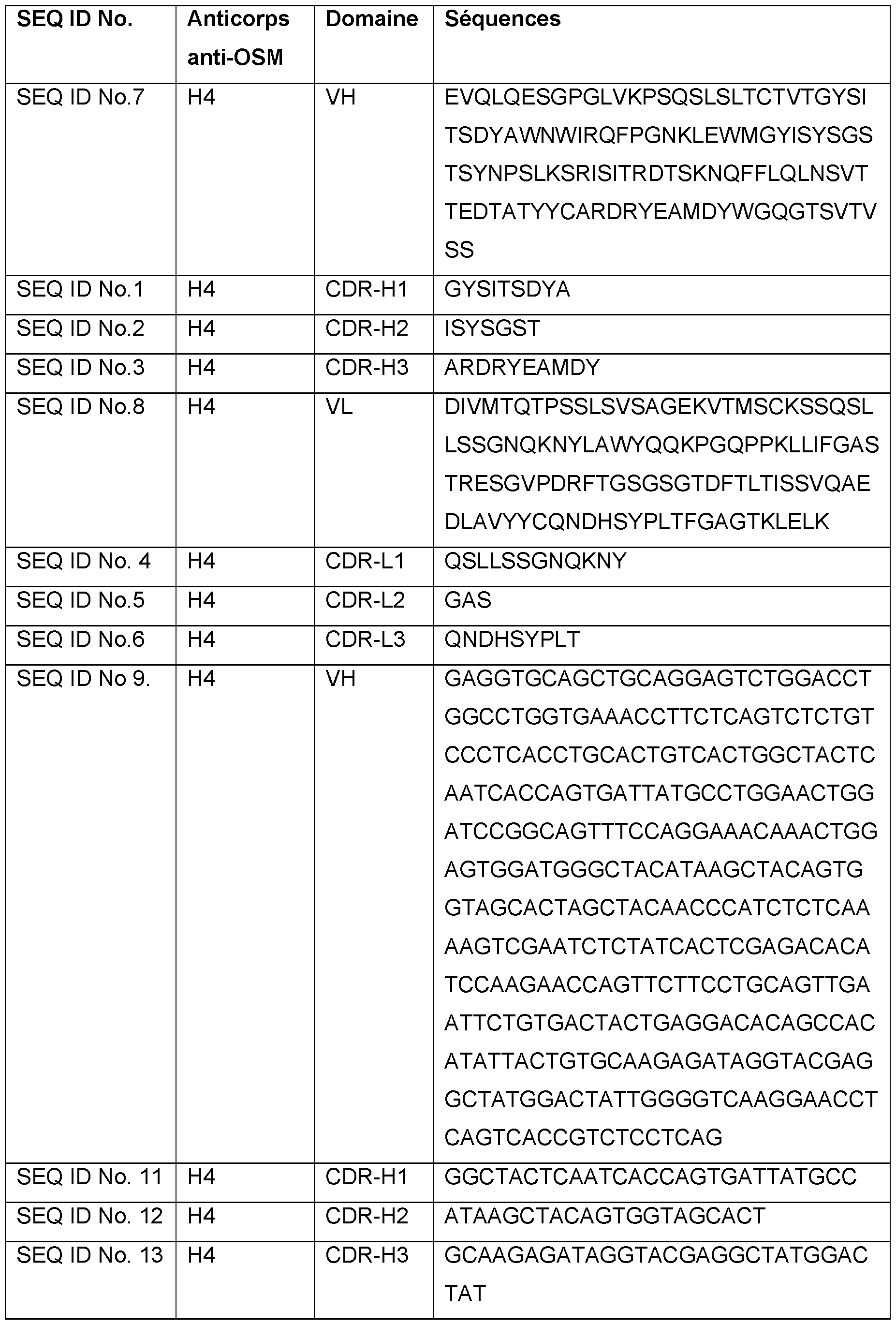

Tableau 1 : Séquences de l’anticorps H4.


Tableau 2 : Séquences de l’anticorps H6.


Tableau 3 : Séquences de l’anticorps H7.


Tableau 4 : Séquences de l’anticorps H9.
Une plaque 96 puits a été recouverte d’oncostatine M recombinante à une concentration de 1 à 10pg/ml dans 10mM de tampon carbonate, à pH 9,5. Une partie des puits a été recouverte avec une protéine non relevante, l’interleukine 31 (IL-31), afin d’être en mesure de déterminer la composante spécifique du signal mesuré. Après une nuit d’incubation, les puits sont lavés trois fois avec une solution de PBS/0,05% polysorbate 20 (Tween20), puis saturés avec une solution à 0, 1 M de Tris 20%, de sucrose, à un pH de 7,8. Les sérums de souris sont ajoutés en double avec des dilutions en série. Après 6 heures d’incubation, les puits sont lavés trois fois avec une solution de PBS/0,05% polysorbate 20 (Tween20). L’anticorps anti-souris couplé à la peroxydase (Biosource), dilué à 1/5000 dans du PBS, 0,1 % BSA, 0,01 % Tween 20 est ensuite ajouté dans chaque puit et puis les puits sont incubés pendant 2 heures. La liaison de l’anticorps est révélée en utilisant de l’acide 2,2’- azino-bis-(3-ethylbenzthiazoline-6 sulfonique) (ABTS) comme substrat et la lecture est réalisée à 405 nm. Les résultats obtenus sont présentés en Figure 1.
Les résultats obtenus montrent que les anticorps anti-OMS (H4, H6, H7 et H9) se lient spécifiquement à l’oncostatine M humaine sans toutefois se lier à l’IL-31.
Les cellules de l’hybridome AN-H4-F49 produisant l’anticorps anti-OSM sont utilisées pour la production d’ascites des anticorps (H4). Les souris sont traitées par injection de 0,5 ml de pristane, huit jours avant l’injection de 107 cellules d’hybridome. Deux semaines plus tard, les cinq ascites sont retirées et l’anticorps purifié par précipitation fractionnée à l’acide caprylique. L’acide caprylique précipite les protéines ayant un poids moléculaire inférieur à 100-120 kDa. Les précipités sont soumis à une étape de centrifugation et les anticorps anti- OSM présents dans le surnageant sont précipités en utilisant le sulfate d’ammonium à une concentration finale de 45% (m/v). Ces deux précipitations successives rendent possible d’obtenir, à partir de deux souris, plusieurs milligrammes d’anticorps anti-OSM purifiés. Les anticorps anti-OSM ainsi obtenus satisfont aux caractéristiques conventionnelles des immunoglobulines, avec une chaîne lourde de 50 kDa et une chaîne légère de 25 kDa, telles que déterminée par SDS page dans des conditions réductrices.
L’anticorps anti-OSM (H4) purifié est une lgG1 kappa.
Exemple 2 : Mesure de l’affinité de l’anticorps murin anti-OSM (H4) pour l’oncostatine
M humaine
Pour estimer la constante d’affinité « KD » de l’anticorps et les interactions antigène- anticorps, des mesures de résonance des plasmons de surface (SPR) ont été réalisées par
Biacore 2000. L’oncostatine M humaine a été greffée sur une puce CM5 recouverte de carboxylméthyle-dextran à une concentration de 5pg/ml dans un tampon maléate (pH 6,2) jusqu’au obtenir un signal de réponse de 300RU. Plusieurs concentrations d’anticorps ont été injectées à 4 minutes à une concentration de 60pl/ml et la dissociation a été suivie pendant 12 minutes. La cytokine de surface a été régénérée par injection au bout de 30 secondes d’une solution de glycine à 10 mM, pH 1.8.
Les données ont été analysées avec le logiciel BIAevaluation 3.0.
Les résultats obtenus sont présentés sur la Figure 2. La constante d’affinité de l’anticorps anti-OSM (H4) est de 7,66x1 Q-10M.
Exemple 3 : Évaluation des propriétés fonctionnelles de l’anticorps anti-OSM
1. Capacité de l’anticorps anti-OSM à inhiber la phosphorylation des STAT-3 induite par l’oncostatine M dans les cellules de glioblastomes Go-G-UVM
Les cellules de glioblastomes Go-G-UVM ont été stimulées pendant 15 minutes en présence ou en l’absence d’oncostatine M à une concentration de 10ng/mL et à différentes concentrations d’anticorps anti-OSM (H4). Les teneurs en protéines STAT-3 et protéine STAT-3 phosphorylée ont été déterminée par Western blot.
Les résultats sont présentés en Figure 3.
On observe que l’ajout de l’anticorps anti-OSM (H4) sur les cellules de glioblastomes Go- G-UVM avant la stimulation par l’oncostatine M permet de réduire la phosphorylation des STAT-3.
2. Capacité de l’anticorps anti-OSM à inhiber la production d’haptoglobine chez les cellules HEPG-2
Les cellules HEPG-2 ont été placées dans une plaque 96 puits en trois exemplaires à une concentration de 50x103 cellules/puit, dans 200mI de milieu RPMI contenant 10% de sérum de veau fêtai, 10 6M de dexaméthasone, 10ng/ml d’oncostatine M. Les anticorps anti-OSM (H4 et H7) ont été ajoutés dans chaque puit à des concentrations différentes. Après 20h, les surnageants de culture ont été récoltés et la teneur en haptoglobine a été mesurée par ELISA.
Les résultats sont présentés en Figure 4.
On observe que l’ajout des anticorps anti-OSM (H4 et H7) sur les cellules HEPG-2 avant la stimulation par l’oncostatine M permet d’inhiber la synthèse d’haptoglobine.
3. Neutralisation de la réponse prolifératrice des cellules BAF/3 par l’anticorps anti- OSM selon l’invention
Les capacités inhibitrices de l’anticorps anti-OSM de l’invention à neutraliser la réponse prolifératrice ont été étudiées en utilisant une lignée cellulaire hématopoïétique murine BAF/3 transfectée pour exprimer le récepteur humain approprié pour permettre une réponse à l’oncostatine M. Les cellules BAF/3 exprimant de manière stable la protéine gp130 et le récepteur OSM ont été ensemencées dans des plaques 96 puits à une concentration de 5x10³ cellules/puit dans un milieu RPMI 1640 contenant 5% de sérum de veau fêtai et 10ng/ml d’oncostatine M. Plusieurs dilutions de l’anticorps anti-OSM (H4 (anticorps selon l’invention), H6, H7 et H9) ont été testées en trois exemplaires. Après 72h d’incubation, 0,5pCi de thymidine ([3H]Tdr) ont été ajoutés dans chaque puit pour au moins 4 heures de culture et la radioactivité incorporée a été déterminée par comptage par scintigraphie.
Les résultats sont présentés en Figure 5.
On observe que l’anticorps anti-OSM selon l’invention (H4) est capable de neutraliser la réponse prolifératrice des cellules BAF/3 de manière plus efficace que les anticorps anti- OSM humaine H6, H7 et H9.
Exemple 4 : Propriétés fonctionnelles de l’anticorps anti-OSM selon l’invention sur les kératinocytes épidermiques.
Le test mis en œuvre consiste à démontrer la capacité de l’anticorps anti-OSM à lever l’inhibition de l’expression des facteurs CK1 , CK10 et DSG1 induite par l’oncostatine M dans les cellules NHEK et à démontrer la capacité de l’anticorps anti-OSM à inhiber la synthèse des indicateurs inflammatoires S100A9 et BD2 induite par l’oncostatine M dans les cellules NHEK.
Les cellules NHEK sont cultivées en présence ou en l’absence de10ng/ml d’oncostatine M et/ou de 10pg/ml d’anticorps anti-OSM (H4=1 (anticorps anti-OSM selon l’invention), H6=2, H7=3 et H9=4) pendant 24 heures. Les ARNs totaux des cellules NHEK ont été isolés et transcrits à l’inverse. Une PCR quantitative en temps réel (QRT-PCR) a été réalisée en utilisant le kit LightCycler-FastStartDNAMasterPlus SYBR Green I et le LightCycler 480 (Roche Diagnostics, Meylan, France). Les échantillons ont été normalisés par rapport à
trois gènes de référence indépendants (G3PDH, RPL13A et ACTB) et rapportés selon la méthode DDOT : 2 DDOT= 2DOT échantillon / 2DOT de référence.
Les résultats sont présentés aux Figures 6A à 6E.
On observe que : l’anticorps anti-OSM selon l’invention (H4) est capable de lever l’inhibition de l’expression des facteurs CK1 , CK10 et DSG1 induite par l’oncostatine M dans les cellules NHEK (voir Figures 6A, 6B et 6C).
l’anticorps anti-OSM selon l’invention (H4) est capable d’inhiber la synthèse de S100A9 et BD2 induite par l’oncostatine M dans les cellules NHEK (voir Figures 6D et 6E).
Exemple 5 : Propriétés fonctionnelles de l’anticorps anti-OSM selon l’invention sur des cellules de carcinomes épidermiques.
Le test mis en œuvre consiste à démontrer la capacité de l’anticorps anti-OSM à inhiber la synthèse des indicateurs inflammatoires S100A7 induite par l’oncostatine M dans les cellules de carcinome épidermique A431 et à lever l’inhibition de l’expression de l’involucrine induite par l’oncostatine M dans les cellules de carcinome épidermique A431.
Les cellules A431 sont cultivées en présence ou en l’absence de10ng/ml d’oncostatine M et/ou de 10pg/ml d’anticorps anti-OSM (H4 (anticorps selon l’invention), H6, H7 et H9) pendant 24 heures. Les ARNs totaux des cellules N H EK ont été isolés et transcrits à l’inverse. Une PCR quantitative en temps réel (QRT-PCR) a été réalisée en utilisant le kit LightCycler-FastStartDNAMasterPlus SYBR Green I et le LightCycler 480 (Roche Diagnostics, Meylan, France). Les échantillons ont été normalisés par rapport à trois gènes de référence indépendants (G3PDH, RPL13A et ACTB) et rapportés selon la méthode DDOT : 2 DDOT= 2DOT échantillon / 2DOT de référence.
Les résultats sont présentés en Figure 7A et Figure 7B.
On observe que : l’anticorps anti-OSM selon l’invention (H4) est capable d’inhiber la synthèse de S100A7 induite par l’oncostatine M dans les cellules de carcinome épidermique A431 (inférieure à 0,2 AU) (voir Figure 7A), et que
l’anticorps anti-OSM selon l’invention (H4) est capable de lever l’inhibition de l’expression de l’involucrine induite par l’oncostatine M dans les cellules de carcinome épidermique A431 (supérieure à 0,001 AU) (voir Figure 7B).
Exemple 6 : Propriétés fonctionnelles de l’anticorps anti-OSM selon l’invention sur des fibroblastes.
Le test mis en œuvre consiste à démontrer la capacité de l’anticorps anti-OSM à lever l’inhibition de l’expression de SMA (alpha-smooth muscle actin) induite par l’oncostatine M dans les fibroblastes activés par TGF.
Les fibroblastes activés par TGF sont cultivées en présence ou en l’absence d e10ng/ml d’oncostatine M et/ou de 10pg/ml d’anticorps anti-OSM (H4) pendant 24 heures. Les ARNs totaux des cellules NHEK ont été isolés et transcrits à l’inverse. Une PCR quantitative en temps réel (QRT-PCR) a été réalisée en utilisant le kit LightCycler-FastStartDNAMasterPlus SYBR Green I et le LightCycler 480 (Roche Diagnostics, Meylan, France). Les échantillons ont été normalisés par rapport à trois gènes de référence indépendants (G3PDH, RPL13A et ACTB) et rapportés selon la méthode DDOT : 2 DDOT= 2DOT échantillon / 2DOT de référence.
Les résultats sont présentés en Figure 8.
On observe que l’anticorps anti-OSM selon l’invention (H4) est capable de lever l’inhibition de l’expression de SMA induite par l’oncostatine M dans les cellules de fibroblastes TGF activés, d’un facteur 5.
L’ensemble des résultats obtenus dans les exemples 1 à 6 sont synthétisés dans les tableaux 5 et 6 ci-dessous.

Tableau 5 : Synthèse des capacités inhibitrices des anticorps anti-OSM testés (ND : Non déterminé).

Exemple 7 : Implication de l’oncostatine M dans les phénomènes métastatiques.
L’oncostatine M est connue pour remodeler fortement la structure des cellules qui expriment, notamment sont récepteur spécifique. Ceci se traduit par des modifications morphologiques, qui vont jouer sur les systèmes d’adhésion cellulaire ou bien sur l’activation de programmes temporaires de différenciation de certains type tumoraux (d’où son nom initial) sans toutefois tuer les cellules contrairement à l’effet du Tumor Necrosis Factor, par exemple.
1. Recherche de gènes co-exprimés à l’oncostatine M dans la moelle osseuse
Les expérimentations ci-après ont été mises en œuvre afin de déterminer si une source riche en cellules myelo-monocytaires (source principale de production naturelle d’OSM), pouvait donner des informations sur des co-expressions avec des molécules connues pour leur implication dans la plasticité cellulaire, et notamment sur leur effet pro-métastatique.
L’analyse a été réalisée par des hybridations de puces pan-génomiques Illumina Human HT12 v3, en partant de moelles osseuses normales (Figure 9A). Les résultats indiquent une expression robuste d’OSM dans ces cellules. Les résultats ont ensuite été criblés en introduisant une contrainte de co-expression positive (ou négative) de 90% de chance d’avoir des évènements co-ségrégés (Figure 9B). Une trentaine de gènes sont co-exprimés de façon positive avec la transcription du gène de l’OSM, et une dizaine présentent un profil symétrique de régulation négative. La contrainte de probabilité a été accrue pour passer de 90à 93%, afin d’obtenir des résultats plus pertinents (Figure 9C).
Résultats obtenus : Seuls deux gènes co-ségrégent, avec une pertinence >93% : CLEC1 1A, qui a une expression opposée, et PLAUR/uPAR qui se co-exprime fortement avec l’OSM, par rapport à l’ensemble des 23 000 gènes qui composent le génome.
CLEC1 1A est une glycoprotéine secrétée de la superfamille des lectines de type C, un facteur de croissance pour les cellules souches hématopoïétiques, et dont l’expression est spécifique de la moelle osseuse. L’OSM intervient donc fort probablement pour neutraliser cette cytokine.
PLAUR, qui plus connu sous le nom d’urokinase-type plasminogen activator receptor ou uPAR est donc le seul gène à s’associer pour se co-exprimer très fortement avec l’OSM dans la moelle osseuse. Le système uPAR s’est révélés être fortement exprimés dans de nombreuses tumeurs malignes, ce qui indique que les tumeurs sont capables de détourner le système et de l'utiliser dans les métastases. uPAR est aussi impliqué dans divers autres processus non protéolytiques liés au cancer, tels que la migration cellulaire, la régulation du cycle cellulaire et l'adhésion cellulaire.
2. Co-expression d’OSM et d’uPAR dans différents types de leucémies
Les fonctions de l’OSM sur la migration cellulaire, et les phénomènes d’adhésions, notamment sur tissus tumoraux, recouvrent largement celles du système uPAR. Leur co expression avec une probabilité de 93% indiquent qu’il existe selon toute évidence un lien fonctionnel fort, pour que tant l’OSM que l’uPAR soient conjointement impliqués dans les phénomènes de remodelage tissulaire tumoral et le développement de métastases, au travers de leurs capacités à faciliter la migration cellulaire.
La co-expression de ces deux gènes (OSM et uPAR) a ensuite été analysée dans des séries de différents types de leucémies humaines (dont certaines capables de donner des métastases tissulaires solides).
Les résultats obtenus montrent que OSM et uPAr sont co-exprimés, quelques soit le type de leucémies avec un facteur de corrélation de 0.8. Notons aussi que dans les leucémies myeloïdes chroniques, les taux d’expression des deux gènes est accru par rapport au tissu sain (résultats non présentés)
Ces résultats montrent une implication plus que probable au vu des connaissances in vitro sur l’OSM, dans l’établissement de phénomènes métastatiques conjointement avec uPAR.
Exemple 8 : Implication de l’oncostatine M dans le développement de tumeurs chez la souris.
Les effets biologiques de l’oncostatine M ont été étudiés sur des lignées tumorales murines de carcinomes épidermoïdes de l’oropharynx (MOC-1 , MOC-2), de mélanomes (B16-F10)
et de tumeurs pulmonaires (LLC1). La lignée de carcinome épidermoïde cutané PDVC57 sensible à l’oncostatine M est présentée en contrôle positif (Simonneau et al, 2018).
1. Expression des récepteurs à l’OSM dans différentes lignées tumorales murines.
Pour étudier l’expression des récepteurs à l’OSM, les ARNs totaux des cellules MOC-1 , MOC-2, B16-F10 et LLC1 , ont été isolés et rétrotranscrits. Puis une PCR quantitative a été réalisée en utilisant le kit LightCycler-FastStartDNAMasterPlus SYBR Green I (Roche Diagnostics, Meylan, France). L’expression a été normalisée par rapport à deux gènes de référence indépendants (G3PDH et ACTB) et rapportés selon la méthode ACT échantillon / ACT de référence. Les lignées MOC-1 , MOC-2, B16-F10 et LLC1 expriment constitutivement de forts niveaux des sous unités gpl 30 et OSMRb, constituant le récepteur de type II à l’OSM (figure 10). Ces niveaux sont comparables au contrôle positif constitué de kératinocytes murins normaux (NMEK) et de la lignée PDVC57 préalablement décrits pour exprimer ces récepteurs et répondre fortement à l’OSM (Pohin et al., Eur J Immunol 2016 ; Simonneau et al, Oncotarget 2018).
2. Phosphorylation de STAT-3 en réponse à la stimulation par l’OSM.
Afin d’étudier la capacité de lignées tumorales à répondre à l’OSM, une analyse de la phosphorylation de STAT-3, impliquée dans la signalisation du récepteur de l’OSM, a été réalisée. Les lignées tumorales murines MOC-1 , MOC-2, B16-F10, LLC1 et PDVC57 ont été stimulées pendant 15 minutes et 30 minutes en présence ou en l’absence de 10 ng/ml d’Oncostatine M. Les quantités de STAT-3 totale et de STAT-3 phosphorylée ont été déterminées par Western blot. L’ajout d’OSM sur ces lignées tumorales murines actives la phosphorylation de STAT-3 après 15 minutes et cette activation est maintenue après 30 minutes (figure 11), démontrant la fonctionnalité du récepteur à l’OSM exprimé par ces lignées tumorales.
3. Modifications transcriptionnelles de gènes cibles induites par l’OSM sur les lignées tumorales murines.
Les lignées tumorales murines MOC-1 , MOC-2, B16-F10 et LLC1 ont été stimulées en présence ou en l’absence de 10 ng/ml d’OSM pendant 24 heures. Les ARNs totaux ont été isolés et rétrotranscrits, puis l’expression de gènes cibles analysée par PCR quantitative et exprimés en facteur d’induction selon la méthode AACT : 2 AACT échantillon / 2ACT de référence.
Résultats obtenus :
Les résultats sont présentés en Figure 12.
Il a été observé que :
L’OSM induit la surexpression de la sous unité OSMF^ sur toutes les lignées tumorales murines MOC-1 , MOC-2, B16-F10 et LLC1 , les rendant ainsi plus sensibles à l’OSM.
L’OSM induit la surexpression des cytokines IL-6 et IL-10 sur toutes les lignées tumorales murines MOC-1 , MOC-2, B16-F10 et LLC1 , générant ainsi un microenvironnement tumoral permissif.
L’OSM induit la surexpression du facteur TGM2 sur les lignées tumorales murines MOC-1 , MOC-2 et B16-F10. Ce facteur est impliqué dans la transition épithélio- mésenchymateuse fréquemment activée au cours de la progression tumorale, générant des cellules douées de capacités de motilité et d’invasion cellulaire.
4. L’OSM induit la migration de lignées tumorales murines.
La lignée tumorale murine MOC-1 a été cultivée autour de séparateurs en silicone placés au fond des puits d’une plaque 6 puits. Les inserts en silicone ont été retirés et les cellules stimulées ou non avec 10 ng/ml d’oncostatine M pendant 48 heures. La distance de migration a été mesurée et évaluée grâce au logiciel Image J. On observe que l’ajout de l’OSM sur la lignée tumorale MOC-1 stimule la migration cellulaire (voir Figure 13).
5. L’OSM favorise la croissance tumorale in vivo.
Les lignées tumorales murines B16-F10 et LLC1 ont été injectées (1x10⁶ cellules en sous- cutané) sur le dos de souris sauvages et de souris déficientes en oncostatine M (OSM A). La croissance tumorale a été suivi pendant quatre semaines en calculant le volume tumoral selon la formule : TT/6 X Longueur x Largeur2 (Tomayko and reynolds, 1989). On observe qu’en absence d’OSM le volume tumoral est réduit de 59% après 14 jours pour les tumeurs B16-F10 et de 26% après 16 jours pour les tumeurs LLC1 , démontrant in vivo le rôle pro tumoral de l’OSM pour ces lignées (voir Figure 14).
Ces résultats ont permis d’identifier 4 lignées tumorales exprimant le récepteur de l’OSM et sensibles à l’OSM. Les expériences in vitro montrent que l’OSM exerce un rôle pro-tumoral sur ces 4 lignées. Les analyses in vivo confirment que l’OSM endogène présente dans le microenvironnement tumoral participe de façon importante à la croissance tumorale. Ces résultats confirment donc que l’OSM est une cible potentielle pour le développement de nouvelles stratégies thérapeutiques anti-tumorales des cancers de la peau (épidermoïde et mélanome), de l’oropharynx et du poumon. Il ressort également de ces résultats que les
tumeurs d’autres origines (prostate, sein, foie, pancréas, colon, sang) sont également dépendantes de l’OSM et constituent des cibles thérapeutiques potentielles de notre anticorps anti-OSM.
Claims
1. Protéine de liaison spécifique capable de se lier spécifiquement à l’oncostatine M humaine (hOSM), ladite protéine de liaison spécifique étant un anticorps ou un fragment d’anticorps comprenant :
(a) un domaine variable de la chaîne lourde (VH) comprenant CDR-H1 , CDR- H2 et CDR-H3 ayant respectivement les séquences d’acides aminés SEQ ID No.1 , SEQ ID No. 2 et SEQ ID No. 3 et un domaine variable de la chaîne légère (VL) comprenant CDR-L1 , CDR-L2 et CDR-L3 ayant respectivement les séquences d’acides aminés SEQ ID No.4, SEQ ID No.5 et SEQ ID No.6 ; ou
(b) un domaine variable de la chaîne lourde (VH) comprenant CDR-H1 , CDR- H2 et CDR-H3 ayant respectivement les séquences d’acides aminés SEQ ID No.17, SEQ ID No. 18 et SEQ ID No. 19 et un domaine variable de la chaîne légère (VL) comprenant CDR-L1 , CDR-L2 et CDR-L3 ayant respectivement les séquences d’acides aminés SEQ ID No.20, SEQ ID No.21 et SEQ ID No.22 ; ou
(c) un domaine variable de la chaîne lourde (VH) comprenant CDR-H 1 , CDR- H2 et CDR-H3 ayant respectivement les séquences d’acides aminés SEQ ID No.33, SEQ ID No. 34 et SEQ ID No. 35 et un domaine variable de la chaîne légère (VL) comprenant CDR-L1 , CDR-L2 et CDR-L3 ayant respectivement les séquences d’acides aminés SEQ ID No.36, SEQ ID No.37 et SEQ ID No.38 ; ou
(d) un domaine variable de la chaîne lourde (VH) comprenant CDR-H 1 , CDR- H2 et CDR-H3 ayant respectivement les séquences d’acides aminés SEQ ID No.49, SEQ ID No. 50 et SEQ ID No. 51 et un domaine variable de la chaîne légère (VL) comprenant CDR-L1 , CDR-L2 et CDR-L3 ayant respectivement les séquences d’acides aminés SEQ ID No.52, SEQ ID No.53 et SEQ ID No.54.
2. Protéine de liaison spécifique selon la revendication 1 , caractérisée en ce que la protéine de liaison spécifique est capable d’inhiber la phosphorylation des molécules signales impliquées dans le processus inflammatoire, ou en ce que la protéine de liaison spécifique est capable d’inhiber la synthèse d’haptoglobine stimulée par l’oncostatine M humaine, ou en ce que la protéine de liaison spécifique est capable d’inhiber l’hyperplasie de la couche de kératinocytes épineux résultante de l’action de l’oncostatine M humaine.
3. Protéine de liaison spécifique selon l’une des revendications 1 à 2, caractérisé en ce que l’anticorps est un anticorps monoclonal, de préférence un anticorps humanisé.
4. Protéine de liaison spécifique selon l’une des revendications 1 à 2, caractérisé en ce que le fragment d’anticorps est un fragment Fab, un fragment Fd, un fragment F(ab’), un fragment F(ab’)2, un fragment Fv, un fragment dAb, des régions CDR isolées, un fragment dsFv, un dimère Fv monocaténaire bispécifique, un diabodies ou une molécule scFv.
5. Protéine de liaison spécifique selon l’une des revendications 1 à 4, ladite protéine de liaison spécifique comprenant un domaine variable de la chaîne lourde (VH) comprenant les CDR-H1 , CDR-H2 et CDR-H3 ayant respectivement les séquences d’acides aminés SEQ ID No.1 , SEQ ID No. 2 et SEQ ID No. 3 et un domaine variable de la chaîne légère (VL) comprenant les CDR-L1 , CDR-L2 et CDR-L3 ayant respectivement les séquences d’acides aminés SEQ ID No.4, SEQ ID No.5 et SEQ ID No.6.
6. Protéine de liaison spécifique selon la revendication 5, dans laquelle le domaine variable de la chaîne lourde (VH) a la séquence d’acides aminés SEQ ID No.7 et le domaine variable de la chaîne légère (VL) a la séquence d’acides aminés SEQ ID No.8.
7. Acide nucléique isolé codant pour la protéine de liaison spécifique selon l’une des revendications 1 à 6.
8. Acide nucléique isolé selon la revendication 7, comprenant une séquence d’acides nucléiques codant pour le domaine variable de la chaîne lourde (VH) de la protéine de liaison spécifique et une séquence d’acides nucléiques codant pour le domaine variable de la chaîne légère (VL) de la protéine de liaison spécifique.
9. Acide nucléique isolé selon l’une des revendications 7 à 8, dans lequel la séquence d’acides nucléiques codant pour la chaîne lourde comprend une séquence d’acides nucléiques SEQ ID No. 9 ou une séquence d’acides nucléiques ayant au moins 90% d’identité avec la séquence SEQ ID No.9.
10. Acide nucléique isolé selon l’une des revendications 7 à 8, dans lequel la séquence d’acides nucléiques codant pour le domaine variable de la chaîne comprend une séquence d’acides nucléiques SEQ ID No. 10 ou une séquence d’acides nucléiques ayant au moins 90% d’identité avec la séquence SEQ ID No. 10.
1 1. Protéine de liaison selon l’une des revendications 1 à 6 pour son utilisation comme médicament.
12. Protéine de liaison spécifique selon l’une des revendications 1 à 6 pour son utilisation dans la prévention et/ou le traitement des maladies associées à un niveau anormal d’oncostatine M et/ou des maladies associées à un niveau anormal de récepteurs à Toncostatine M.
13. Protéine de liaison spécifique selon l’une des revendications 1 à 6 pour son utilisation dans la prévention et/ou le traitement des maladies inflammatoires cutanées.
14. Protéine de liaison spécifique selon l’une des revendications 1 à 6 pour son utilisation dans la prévention et/ou le traitement du cancer et les métastases associées.
15. Composition pharmaceutique comprenant une quantité efficace de protéine de liaison spécifique selon l’une des revendications 1 à 6 comme principe actif et au moins un excipient pharmaceutiquement acceptable.
16. Protéine de liaison spécifique selon l’une des revendications 1 à 6 pour son utilisation comme agent de diagnostic.
17. Protéine de liaison spécifique selon l’une des revendications 1 à 6 pour son utilisation comme antigène dans une méthode de diagnostic in vitro pour la détection d’oncostatine M dans un échantillon biologique.
18. Kit de diagnostic pour la détection de l’oncostatine M humaine, de préférence chez des patients souffrants ou susceptibles de souffrir d’une maladie associée à un niveau anormal d’oncostatine M humaine et/ou des maladies associées à un niveau anormal de récepteurs à Toncostatine M, ledit kit comprenant : - la protéine de liaison spécifique selon les revendications 1 à 6, éventuellement
marquée ou éventuellement couplée à un support solide,
- un réactif pour la constitution du milieu propice à la réalisation de la réaction immunologique
- un réactif permettant la détection des complexes antigène-protéine de liaison spécifique produits par la réaction immunologique, et
- des réactifs pour effectuer la lyse des cellules de l'échantillon testé.
19. Kit de diagnostic pour la détection de l’oncostatine M humaine, de préférence chez des patients souffrants ou susceptibles de souffrir d’une maladie inflammatoire cutanée et/ou d’un cancer et de ses métastases associées, ledit kit comprenant :
- la protéine de liaison spécifique selon les revendications 1 à 6, éventuellement marquée ou éventuellement couplée à un support solide,
- un réactif pour la constitution du milieu propice à la réalisation de la réaction immunologique
- un réactif permettant la détection des complexes antigène-protéine de liaison spécifique produits par la réaction immunologique, et
- des réactifs pour effectuer la lyse des cellules de l'échantillon testé.
Applications Claiming Priority (2)
| Application Number | Priority Date | Filing Date | Title |
|---|---|---|---|
| FRFR1874071 | 2018-12-21 | ||
| FR1874071A FR3090637A1 (fr) | 2018-12-21 | 2018-12-21 | Protéine de liaison spécifique capable de se lier spécifiquement à l’oncostatine M humaine (hOSM) et ses utilisations. |
Publications (1)
| Publication Number | Publication Date |
|---|---|
| WO2020127884A1 true WO2020127884A1 (fr) | 2020-06-25 |
Family
ID=67107603
Family Applications (1)
| Application Number | Title | Priority Date | Filing Date |
|---|---|---|---|
| PCT/EP2019/086545 Ceased WO2020127884A1 (fr) | 2018-12-21 | 2019-12-20 | PROTEINE DE LIAISON SPECIFIQUE CAPABLE DE SE LIER SPECIFIQUEMENT A L'ONCOSTATINE M HUMAINE (hOSM) ET SES UTILISATIONS |
Country Status (2)
| Country | Link |
|---|---|
| FR (1) | FR3090637A1 (fr) |
| WO (1) | WO2020127884A1 (fr) |
Citations (4)
| Publication number | Priority date | Publication date | Assignee | Title |
|---|---|---|---|---|
| US7858753B2 (en) * | 2004-03-30 | 2010-12-28 | Glaxo Group Limited | Immunoglobulins |
| US20120093833A1 (en) * | 2010-10-13 | 2012-04-19 | Juan Carlos Almagro | Human Oncostatin M Antibodies and Methods of Use |
| WO2012069433A2 (fr) * | 2010-11-23 | 2012-05-31 | Glaxo Group Limited | Protéines de liaison à l'antigène |
| US20150093391A1 (en) * | 2013-09-05 | 2015-04-02 | Boise State University | Oncostatin m (osm) antagonists for preventing cancer metastasis and il-6 related disorders |
-
2018
- 2018-12-21 FR FR1874071A patent/FR3090637A1/fr not_active Withdrawn
-
2019
- 2019-12-20 WO PCT/EP2019/086545 patent/WO2020127884A1/fr not_active Ceased
Patent Citations (4)
| Publication number | Priority date | Publication date | Assignee | Title |
|---|---|---|---|---|
| US7858753B2 (en) * | 2004-03-30 | 2010-12-28 | Glaxo Group Limited | Immunoglobulins |
| US20120093833A1 (en) * | 2010-10-13 | 2012-04-19 | Juan Carlos Almagro | Human Oncostatin M Antibodies and Methods of Use |
| WO2012069433A2 (fr) * | 2010-11-23 | 2012-05-31 | Glaxo Group Limited | Protéines de liaison à l'antigène |
| US20150093391A1 (en) * | 2013-09-05 | 2015-04-02 | Boise State University | Oncostatin m (osm) antagonists for preventing cancer metastasis and il-6 related disorders |
Non-Patent Citations (7)
| Title |
|---|
| CHIARA ZECCHIN ET AL: "Quantitative modelling to assess target engagement and pharmacology in early clinical development of an anti-OSM humanised mAb", ABSTRACTS OF THE ANNUAL MEETING OF THE POPULATION APPROACH GROUP IN EUROPE, 1 January 2017 (2017-01-01), pages 26, XP055633541, Retrieved from the Internet <URL:https://www.page-meeting.org/pdf_assets/6538-Zecchin_Zamuner_PAGE2017_2portrait_v2.pdf> [retrieved on 20191017] * |
| KARLINALTSCHUL, PROC. NATL. ACAD. SCI. USA, vol. 87, 1990, pages 2264 - 2268 |
| KARLINALTSCHUL, PROC. NATL. ACAD. SCI. USA, vol. 90, 1993, pages 5873 - 5877 |
| NBLASTXBLAST D'ALTSCHUL ET AL., J. MOL. BIOL., vol. 215, 1990, pages 403 - 410 |
| POHIN ET AL., EUR J IMMUNOL, 2016 |
| RICEP. LONGDEN,L.BLEASBY,A.: "The European Molecular Biology Open Software Suite", TRENDS IN GENETICS, vol. 16, no. 6, 2000, pages 276 - 277, XP004200114, DOI: 10.1016/S0168-9525(00)02024-2 |
| SIMONNEAU ET AL., ONCOTARGET, 2018 |
Also Published As
| Publication number | Publication date |
|---|---|
| FR3090637A1 (fr) | 2020-06-26 |
Similar Documents
| Publication | Publication Date | Title |
|---|---|---|
| CN111201240B (zh) | 特异性地结合muc1的抗体及其用途 | |
| CN101379086B (zh) | 抗gdf-8的拮抗剂抗体以及在als和其他gdf-8-相关病症治疗中的用途 | |
| RU2662671C2 (ru) | АНТИТЕЛО К АДРЕНОМЕДУЛЛИНУ (ADM) ИЛИ ФРАГМЕНТ АНТИ-ADM АНТИТЕЛА, ИЛИ АНТИ-ADM HE-Ig КАРКАС ДЛЯ ПРИМЕНЕНИЯ В ТЕРАПИИ | |
| JP2020529863A (ja) | 抗ror1抗体とその作製及び使用方法 | |
| US20250074978A1 (en) | Antibodies for il-17c | |
| JP2022514693A (ja) | Muc18に特異的な抗体 | |
| MX2010011955A (es) | Inmunoglobulinas de dominio variable doble y usos de las mismas. | |
| KR20210031645A (ko) | Il-11ra 항체 | |
| EP3180356B1 (fr) | Anticorps anti-fgfr4 humain | |
| EP4223785A1 (fr) | Composition pharmaceutique comprenant un conjugué anticorps-médicament, et utilisation de la composition pharmaceutique | |
| JP2022514786A (ja) | Muc18に特異的な抗体 | |
| CN110087686A (zh) | 认知功能改善剂 | |
| EP2793942B1 (fr) | Nouvelles compositions pharmaceutiques comprenant un anticorps liant le recepteur humain de l'hormone anti-mullerienne de type ii | |
| CN120981485A (zh) | 抗ptk7抗体及其用途 | |
| WO2021219872A1 (fr) | Anticorps et ses utilisations | |
| WO2022179466A1 (fr) | Anticorps anti-siglec15 et utilisation associée | |
| JP7722989B2 (ja) | がんを治療するための方法及び組成物 | |
| FR3090637A1 (fr) | Protéine de liaison spécifique capable de se lier spécifiquement à l’oncostatine M humaine (hOSM) et ses utilisations. | |
| JP7357347B2 (ja) | 細胞外のPKCδを標的とする肝癌細胞増殖抑制剤及びそれを含む新規肝癌治療薬 | |
| RU2853818C9 (ru) | Способ лечения заболеваний с применением антагонистов GREMLIN1 | |
| WO2025201493A1 (fr) | Molécule de liaison à dll3 et son utilisation | |
| CN120590531A (zh) | 抗FGFR2b抗体、其抗体药物偶联物及其用途 | |
| WO2025114496A1 (fr) | Anticorps monoclonaux anti-vegf-nf (lvrf) | |
| HK40115552A (en) | Anti-ptk7 antibody and uses thereof | |
| TW202323289A (zh) | 抗生長激素抗體 |
Legal Events
| Date | Code | Title | Description |
|---|---|---|---|
| 121 | Ep: the epo has been informed by wipo that ep was designated in this application |
Ref document number: 19829583 Country of ref document: EP Kind code of ref document: A1 |
|
| NENP | Non-entry into the national phase |
Ref country code: DE |
|
| 122 | Ep: pct application non-entry in european phase |
Ref document number: 19829583 Country of ref document: EP Kind code of ref document: A1 |