WO2020082840A1 - 过氧化氢在制备幽门螺杆菌感染根除治疗药物中的应用及制备的药物 - Google Patents
过氧化氢在制备幽门螺杆菌感染根除治疗药物中的应用及制备的药物 Download PDFInfo
- Publication number
- WO2020082840A1 WO2020082840A1 PCT/CN2019/098129 CN2019098129W WO2020082840A1 WO 2020082840 A1 WO2020082840 A1 WO 2020082840A1 CN 2019098129 W CN2019098129 W CN 2019098129W WO 2020082840 A1 WO2020082840 A1 WO 2020082840A1
- Authority
- WO
- WIPO (PCT)
- Prior art keywords
- helicobacter pylori
- hydrogen peroxide
- pylori
- drugs
- wild
- Prior art date
- Legal status (The legal status is an assumption and is not a legal conclusion. Google has not performed a legal analysis and makes no representation as to the accuracy of the status listed.)
- Ceased
Links
Images


Classifications
-
- A—HUMAN NECESSITIES
- A61—MEDICAL OR VETERINARY SCIENCE; HYGIENE
- A61K—PREPARATIONS FOR MEDICAL, DENTAL OR TOILETRY PURPOSES
- A61K33/00—Medicinal preparations containing inorganic active ingredients
- A61K33/40—Peroxides
-
- A—HUMAN NECESSITIES
- A61—MEDICAL OR VETERINARY SCIENCE; HYGIENE
- A61P—SPECIFIC THERAPEUTIC ACTIVITY OF CHEMICAL COMPOUNDS OR MEDICINAL PREPARATIONS
- A61P1/00—Drugs for disorders of the alimentary tract or the digestive system
- A61P1/04—Drugs for disorders of the alimentary tract or the digestive system for ulcers, gastritis or reflux esophagitis, e.g. antacids, inhibitors of acid secretion, mucosal protectants
-
- A—HUMAN NECESSITIES
- A61—MEDICAL OR VETERINARY SCIENCE; HYGIENE
- A61P—SPECIFIC THERAPEUTIC ACTIVITY OF CHEMICAL COMPOUNDS OR MEDICINAL PREPARATIONS
- A61P31/00—Antiinfectives, i.e. antibiotics, antiseptics, chemotherapeutics
- A61P31/04—Antibacterial agents
-
- A—HUMAN NECESSITIES
- A61—MEDICAL OR VETERINARY SCIENCE; HYGIENE
- A61P—SPECIFIC THERAPEUTIC ACTIVITY OF CHEMICAL COMPOUNDS OR MEDICINAL PREPARATIONS
- A61P35/00—Antineoplastic agents
Definitions
- the invention belongs to the field of medicine, and relates to the application of hydrogen peroxide in the preparation of drugs for eradication of Helicobacter pylori infection and the prepared drugs.
- Helicobacter pylori is a Gram-negative, micro-aerobic, coryneform coryneform bacterium with stringent requirements on growth conditions. Since the discovery of it by Australian researchers Warren and Marshall in 1983, Helicobacter pylori has been proven to be the main causative agent of chronic gastritis, peptic ulcer and gastric mucosa-associated lymphoma globally, especially in the development of gastric cancer. In 1994, the World Health Organization listed Helicobacter pylori as a class I carcinogen (1. Peleteiro B, Bastos A, Ferro A, et al.
- Helicobacter pylori vaccine such as recombinant Helicobacter pylori vaccine, Helicobacter pylori whole bacteria Vaccines, etc.
- Hydrogen peroxide is an oxidizing agent.
- the aqueous solution is commonly known as hydrogen peroxide. It is a colorless and transparent liquid. Its aqueous solution is widely used for disinfection of medical wounds, food, and the environment.
- the present invention provides the application of hydrogen peroxide in the preparation of drugs for eradication of Helicobacter pylori infection and the prepared drugs.
- the H. pylori includes H. pylori international standard strain and H. pylori wild-type strain.
- the wild-type strains of Helicobacter pylori include Helicobacter pylori wild type strain I, Helicobacter pylori wild type II and Helicobacter pylori wild type III.
- the site of Helicobacter pylori infection is the digestive tract.
- the digestive tract includes stomach and duodenum.
- a medicine for eradicating Helicobacter pylori infection which is obtained by preparing hydrogen peroxide into oral liquid, tablet, capsule, powder or granule.
- the mass concentration of hydrogen peroxide is 0.2% to 1%.
- the present invention has the following beneficial technical effects:
- Helicobacter pylori As an obligate microaerobic bacteria, Helicobacter pylori has the most suitable oxygen concentration in the growth environment of 5% -6%. Increasing the oxygen concentration (such as atmospheric oxygen concentration) will lead to the rapid death of Helicobacter pylori. Therefore, the appropriate concentration of hydrogen peroxide quickly decomposes in the stomach to release a large amount of oxygen, significantly increasing the concentration of oxygen in the stomach, so that Helicobacter pylori infection can be effectively eradicated.
- Hydrogen peroxide solution is catalyzed by catalase in the stomach to rapidly decompose to generate a large amount of oxygen and water, both of which are harmless to the human body, and due to the low concentration, the oxidation is weak, which is insufficient to cause damage to the human gastric mucosa. Therefore, the present invention adopts the "oxygen environment" strategy to transform the problem of "Helicobacter pylori eradication” into the problem of "deprivation of Helicobacter pylori growth conditions", effectively avoiding the defects of existing therapies, and providing new methods for clinical prevention and treatment of Helicobacter pylori infection Ideas.
- Liquid culture medium determines the minimum inhibitory concentration of hydrogen peroxide
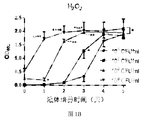
- FIG. 1A show that the minimum inhibitory concentration of hydrogen peroxide on the Helicobacter pylori international standard strain ATCC43504 is 0.21%. When the hydrogen peroxide concentration is greater than 0.21%, none of the Helicobacter pylori standard strains grow.
- Figure 1B show that when the Helicobacter pylori international standard strains ATCC43504 with concentrations of 10 6 , 10 7 , 10 8 , and 10 9 CFU / mL were inoculated into a liquid medium containing 0.21% hydrogen peroxide, the four groups of strains had The growth curve was different. The group with the highest inoculation concentration of 10 9 CFU / mL was the longest, followed by 10 8 , 10 7 , and 10 6 CFU / mL.
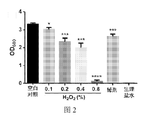
- the Helicobacter pylori international standard strain ATCC43504 was prepared into a 1.0 ⁇ 10 8 CFU / mL bacterial suspension, and the Helicobacter pylori solid medium containing concentration gradient hydrogen peroxide and bismuth was poured respectively. Pipette 0.1 mL of bacterial suspension into H. pylori solid medium containing hydrogen peroxide with a concentration gradient, and spread the sterile inoculation ring evenly. Incubator at 37 °C, incubated for 5 days in microaerophilic environment, all colonies were eluted in sterile saline 2mL determine colony eluate OD 600.
- the Helicobacter pylori standard strain ATCC43504 was made into a 1.0 ⁇ 10 8 CFU / mL bacterial suspension, and a Helicobacter pylori liquid medium containing a concentration gradient of hydrogen peroxide (concentration higher than the minimum inhibitory concentration), blank Helicobacter pylori was prepared Bacteria solid medium. Add 0.12 mL of bacterial suspension to 11.88 mL of liquid medium containing a concentration gradient of hydrogen peroxide, place in a constant temperature shaking incubator at 37 ° C, and cultivate at 150 r / min in a micro-aerobic environment for 3 days.
- Table 1 The minimum bactericidal concentration of hydrogen peroxide on Helicobacter pylori ATCC43504
- Liquid culture medium determines the minimum inhibitory concentration of hydrogen peroxide
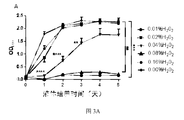
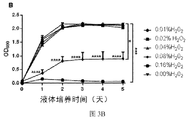
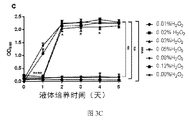
- the wild-type strains of Helicobacter pylori-I, II, and III were prepared into 1.0 ⁇ 10 8 CFU / mL bacterial suspension, and the liquid culture medium of Helicobacter pylori containing concentration gradient hydrogen peroxide was prepared at the same time.
- Draw 0.12mL of three bacterial suspensions respectively and add 11.88mL of Helicobacter pylori liquid medium containing hydrogen peroxide with a concentration gradient to make the entire liquid medium volume 12mL (bacterial liquid: medium 1: 100).
- results of A, B, and C in Fig. 3 show that the minimum inhibitory concentrations of wild-type H. pylori strains I, II, and III are 0.08%, 0.16%, and 0.05%, respectively.
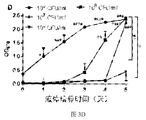
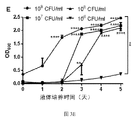
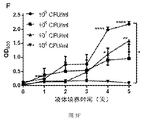
- results of D, E, and F in Figure 3 show that the wild-type H. pylori strains I, II, and III with concentrations of 10 6 , 10 7 , 10 8 , and 10 9 CFU / mL were inoculated with 0.04% and 0.08%, respectively.
- the liquid medium of 0.04% hydrogen peroxide was used, the growth curves of the strains in each group were different. The highest inoculation concentration was 10 9 CFU / mL group leader, followed by approximately 10 8 , 10 7 , 10 6 CFU / mL group.
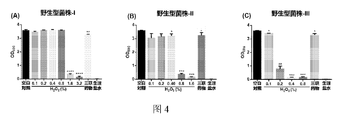
- the wild-type strains of Helicobacter pylori-I, II, and III were prepared into 1.0 ⁇ 10 8 CFU / mL bacterial suspension, respectively, and the solid culture medium of Helicobacter pylori containing concentration gradient hydrogen peroxide and bismuth was poured respectively. Pipette 0.1 mL of bacterial suspension into H. pylori solid medium containing hydrogen peroxide with a concentration gradient, and spread the sterile inoculation ring evenly. Placed in a constant temperature incubator at 37 °C, after 5 days of cultivation in a micro-aerobic environment, all colonies were eluted in 2mL sterile physiological saline, and the colony eluent OD 600 was measured.
- the Helicobacter pylori wild-type strains-I, II, and III were made into 1.0 ⁇ 10 8 CFU / mL bacterial suspension, and the liquid culture medium of Helicobacter pylori with concentration gradient hydrogen peroxide (concentration higher than the minimum inhibitory concentration) was prepared. 3. Blank Helicobacter pylori solid medium. Add 0.12 mL of bacterial suspension to 11.88 mL of liquid medium containing a concentration gradient of hydrogen peroxide, place in a constant temperature shaking incubator at 37 ° C, and cultivate at 150 r / min in a micro-aerobic environment for 3 days.
- Table 2 The minimum bactericidal concentration of hydrogen peroxide on three wild-type strains of Helicobacter pylori
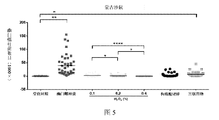
- Each group was administered by intragastric administration at 15 mL / kg, once a day, and was sacrificed after 2 consecutive weeks, stained with Giemsa, and the number of Helicobacter pylori was counted under the microscope.
- the results in Figure 5 show that compared with the blank control group, the model group was significantly infected with Helicobacter pylori; the hydrogen peroxide treatment group had no significant difference compared with the blank control group, and the 0.4% hydrogen peroxide group had better bactericidal effect The 0.2% hydrogen peroxide group, while the bactericidal effect of the hydrogen peroxide group is better than the triple drug group.
- mice 81 Kunming mice aged 6-8 weeks, weighing 15-22g, and keep them adaptively for 1 week.
- the Helicobacter pylori international standard strain ATCC43504 was made into a 1.0 ⁇ 10 8 CFU / mL bacterial suspension, which was intragastrically administered at 20 mL / kg once a day for 10 consecutive days.
- Kunming mice were divided into groups: 1 blank control group, 2 model group, 3 hydrogen peroxide group, 4 Livzon triple group (bismuth potassium citrate, metronidazole, clarithromycin). Each group was administered by intragastric administration, 20 mL / kg, once a day for 14 consecutive days.
- One third of the animals were sacrificed on days 4, 7, and 14 respectively, stained with Giemsa, and the number of Helicobacter pylori was counted under the microscope.
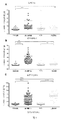
- the results in Figure 6A show that the number of Helicobacter pylori in the stomach of the model group Kunming mice is significantly higher than that of the blank control group, indicating successful modeling; the number of Helicobacter pylori in the stomach of the Kunming mice in the hydrogen peroxide group after 4 days of treatment is no different from the blank control group ; The number of Helicobacter pylori in the stomach of Kunming mice in the triple drug group is still higher than that in the blank control group, and the sterilization effect of the triple drug is weaker than that in the hydrogen peroxide group.
- the results in Figure 6B show that after 7 days of treatment, the bactericidal effect of the hydrogen peroxide group is better than that of the triple drug group.
- the results in Figure 6C show that after 14 days of treatment, the bactericidal effect of the hydrogen peroxide group is significantly better than that of the triple drug group.
- Kunming mice aged 6-8 weeks, weighing 15-22g, were selected and kept adaptively for 1 week.
- the Helicobacter pylori international standard strain ATCC43504 was made into a 1.0 ⁇ 10 8 CFU / mL bacterial suspension, which was intragastrically administered at 20 mL / kg once a day for 10 consecutive days.
- Kunming mice were divided into groups: 1 blank control group, 2 model group, 3 hydrogen peroxide group, 4 triple drug group. Each group was administered by intragastric administration, 20 mL / kg, once a day for 10 consecutive days.
- One-third of animals were killed at 5 and 10 days by intragastric administration, and Helicobacter pylori was detected separately. After 14 days of normal feeding without the administration of the remaining animals, observe whether Helicobacter pylori relapses.
- the human body weight is calculated by 60kg, and the dosages of the above three drugs are: 7.3, 16.7, 8.3mg / kg.
- the dose of Kunming mice is calculated as 9 times the human dose.
- the doses of potassium bismuth citrate, metronidazole and clarithromycin are: 65, 150, 75mg / kg.
- Figure 7A shows that the number of Helicobacter pylori in the model group is significantly higher than that in the blank control group, indicating successful modeling; the number of Helicobacter pylori in the hydrogen peroxide group after 5 days of treatment is not significantly different from the blank control group The number of Helicobacter pylori in the stomach of Kunming mice in the triple drug group is still higher than that in the blank control group, and the sterilization effect of the triple drug is weaker than that in the hydrogen peroxide group.
- 7B shows that after 10 days of treatment, there is no difference in the number of H. pylori between the hydrogen peroxide group and the blank control group, while the triple drug group still has H. pylori infection compared with the blank control group.
- the bactericidal effect is better than the triple drug group.
- the result of Figure 7C shows that after 14 days of administration, the number of Helicobacter pylori in the triple drug group is significantly increased compared with the blank control group, while the number of Helicobacter pylori in the hydrogen peroxide group is not different from the blank control group, indicating hydrogen peroxide Helicobacter pylori had no recurrence in the group, and Helicobacter pylori in the triple drug group had significant recurrence of infection.
- hydrogen peroxide is made into oral liquid, powder, tablet, capsule, and the mass concentration of hydrogen peroxide is 0.2% -1%, preferably 0.4%.
- the oral solution includes the following raw materials: purified water, 30% hydrogen peroxide solution (medicinal), xylitol, and citric acid.
- the powder includes the following raw materials: starch, solid hydrogen peroxide (2Na 2 CO 3 .3H 2 O 2 ), anhydrous citric acid.
- the tablet includes the following raw materials: lactose, sodium bicarbonate, magnesium stearate, solid hydrogen peroxide (2Na 2 CO 3 .3H 2 O 2 ), citric acid.
- the capsule includes the following raw materials: starch, solid hydrogen peroxide (2Na 2 CO 3 .3H 2 O 2 ), anhydrous citric acid.
- each capsule weighs 0.3g, that is, the finished capsule.
- the invention relates to a new use of hydrogen peroxide in eradication of Helicobacter pylori.
- the hydrogen peroxide has a good killing effect on Helicobacter pylori, in particular, it can effectively prevent Helicobacter pylori from producing drug resistance and recurring infection.
- the minimum inhibitory concentration range of hydrogen peroxide against Helicobacter pylori international standard strains and clinical wild-type strains is 0.05% -0.21%. After 30 generations of H. pylori acting on hydrogen peroxide, the minimum inhibitory concentration range is 0.08% -0.40%.
- the mouse Helicobacter pylori infection model had no recurrence after treatment with hydrogen oxide.
- the new use of hydrogen peroxide provides a new option for eradicating Helicobacter pylori drugs, which can be used to treat diseases caused by Helicobacter pylori infection, including chronic gastritis, peptic ulcer, gastric mucosa-associated lymphoma and gastric cancer.
Landscapes
- Health & Medical Sciences (AREA)
- Pharmacology & Pharmacy (AREA)
- Veterinary Medicine (AREA)
- Chemical & Material Sciences (AREA)
- Public Health (AREA)
- General Health & Medical Sciences (AREA)
- Medicinal Chemistry (AREA)
- Animal Behavior & Ethology (AREA)
- Life Sciences & Earth Sciences (AREA)
- General Chemical & Material Sciences (AREA)
- Organic Chemistry (AREA)
- Nuclear Medicine, Radiotherapy & Molecular Imaging (AREA)
- Chemical Kinetics & Catalysis (AREA)
- Engineering & Computer Science (AREA)
- Bioinformatics & Cheminformatics (AREA)
- Inorganic Chemistry (AREA)
- Epidemiology (AREA)
- Communicable Diseases (AREA)
- Oncology (AREA)
- Pharmaceuticals Containing Other Organic And Inorganic Compounds (AREA)
Abstract
Description

| 菌株 | 过氧化氢的最小杀菌浓度(%) |
| 菌株Ⅰ | 0.24 |
| 菌株Ⅱ | 0.32 |
| 菌株Ⅲ | 0.32 |
| 诱导数(次) | MIC(%) |
| 0 | 0.21 |
| 10 | 0.25 |
| 20 | 0.29 |
| 30 | 0.37 |


Claims (8)
- 过氧化氢在制备幽门螺杆菌感染根除治疗药物中的应用。
- 根据权利要求1所述的应用,其特征在于,所述幽门螺杆菌包括幽门螺杆菌国际标准菌株和幽门螺杆菌野生型菌株。
- 根据权利要求2所述的应用,其特征在于,所述幽门螺杆菌野生型菌株包括幽门螺杆菌野生型菌株Ⅰ、幽门螺杆菌野生型Ⅱ和幽门螺杆菌野生型Ⅲ。
- 根据权利要求1所述的应用,其特征在于,所述幽门螺杆菌感染的部位为消化道。
- 根据权利要求4所述的应用,其特征在于,所述消化道包括胃和十二指肠。
- 过氧化氢在制备根除治疗幽门螺杆菌感染性疾病药物中的应用,其特征在于,所述幽门螺杆菌感染性疾病包括慢性胃炎、消化性溃疡、胃粘膜相关淋巴瘤和胃癌。
- 一种根除治疗幽门螺杆菌感染的药物,其特征在于,将过氧化氢制成口服液、片剂、胶囊剂、粉剂或颗粒剂得到。
- 根据权利要求7所述的根除治疗幽门螺杆菌感染的药物,其特征在于,过氧化氢的质量浓度为0.2%~1%。
Applications Claiming Priority (2)
| Application Number | Priority Date | Filing Date | Title |
|---|---|---|---|
| CN201811230316.4A CN109223825A (zh) | 2018-10-22 | 2018-10-22 | 过氧化氢在制备幽门螺杆菌感染根除治疗药物中的应用及制备的药物 |
| CN201811230316.4 | 2018-10-22 |
Publications (1)
| Publication Number | Publication Date |
|---|---|
| WO2020082840A1 true WO2020082840A1 (zh) | 2020-04-30 |
Family
ID=65081199
Family Applications (1)
| Application Number | Title | Priority Date | Filing Date |
|---|---|---|---|
| PCT/CN2019/098129 Ceased WO2020082840A1 (zh) | 2018-10-22 | 2019-07-29 | 过氧化氢在制备幽门螺杆菌感染根除治疗药物中的应用及制备的药物 |
Country Status (2)
| Country | Link |
|---|---|
| CN (1) | CN109223825A (zh) |
| WO (1) | WO2020082840A1 (zh) |
Families Citing this family (1)
| Publication number | Priority date | Publication date | Assignee | Title |
|---|---|---|---|---|
| CN109223825A (zh) * | 2018-10-22 | 2019-01-18 | 西安交通大学 | 过氧化氢在制备幽门螺杆菌感染根除治疗药物中的应用及制备的药物 |
Citations (2)
| Publication number | Priority date | Publication date | Assignee | Title |
|---|---|---|---|---|
| CN107519201A (zh) * | 2017-07-08 | 2017-12-29 | 陈加良 | 过氧化氢、冰醋酸、次氯酸三个化学合成强氧化剂 |
| CN109223825A (zh) * | 2018-10-22 | 2019-01-18 | 西安交通大学 | 过氧化氢在制备幽门螺杆菌感染根除治疗药物中的应用及制备的药物 |
-
2018
- 2018-10-22 CN CN201811230316.4A patent/CN109223825A/zh active Pending
-
2019
- 2019-07-29 WO PCT/CN2019/098129 patent/WO2020082840A1/zh not_active Ceased
Patent Citations (2)
| Publication number | Priority date | Publication date | Assignee | Title |
|---|---|---|---|---|
| CN107519201A (zh) * | 2017-07-08 | 2017-12-29 | 陈加良 | 过氧化氢、冰醋酸、次氯酸三个化学合成强氧化剂 |
| CN109223825A (zh) * | 2018-10-22 | 2019-01-18 | 西安交通大学 | 过氧化氢在制备幽门螺杆菌感染根除治疗药物中的应用及制备的药物 |
Non-Patent Citations (2)
| Title |
|---|
| 任滨成等 (REN, BINCHENG ET AL.): "双氧水治疗消化性溃疡21例 (Non-official translation: Treatment of 21 Cases of Peptic Ulcer with Hydrogen Peroxide)", 实用内科杂志 (CHINESE JOURNAL OF PRACTICAL INTERNAL MEDICINE), vol. 9, no. 7, 31 December 1989 (1989-12-31), DOI: 20191016142851X * |
| 刘玉珠等 (LIU, YUZHU ET AL.): "立体化治疗消化性溃疡173例临床分析 (The Effect of Three-dimensional Operation for 173 Patients with Peptic Ucer)", 中国医学创新 (MEDICAL INNOVATION OF CHINA), vol. 6, no. 35, 31 December 2009 (2009-12-31), DOI: 20191016143002A * |
Also Published As
| Publication number | Publication date |
|---|---|
| CN109223825A (zh) | 2019-01-18 |
Similar Documents
| Publication | Publication Date | Title |
|---|---|---|
| ES2436620T3 (es) | Método para reducir la inflamación gastro-intestinal usando la bacteria Bifidobacterium animalis o un producto lácteo fermentado que comprende dicha bacteria | |
| CA2280715C (en) | Oral preparation for the prophylactic and therapeutic treatment of helicobacter sp.infection | |
| CN102470117B (zh) | 一种以苯甲酸和有机酸防腐剂相联合作为有效成分的组合物及其用途 | |
| ES2927070T3 (es) | Composición bacteriana de ácido láctico para el tratamiento de infecciones vaginales bacterianas por Gardnerella vaginalis y, si están presentes, infecciones fúngicas concurrentes | |
| KR100333113B1 (ko) | 헬리코박터피롤리관련위십이지장질환의치료방법 | |
| Sydnor et al. | Comparative evaluation of cefuroxime axetil and cefaclor for treatment of acute bacterial maxillary sinusitis | |
| WO2018192501A1 (zh) | 一种预防肿瘤化疗肠道毒性的微生物菌剂 | |
| WO2013029297A1 (zh) | 广藿香醇在制备抗幽门螺旋杆菌的药物中的应用 | |
| RU2667122C2 (ru) | Применение тиосульфата для усиления антипатогенного действия лактобацилл | |
| CN109985069B (zh) | 益生菌组合物及其用途 | |
| CN119074775A (zh) | 一种防治抗肿瘤治疗相关性腹泻的益生菌组合物及其应用 | |
| CN101690734B (zh) | 一种乳酸菌阴道胶囊及其制备方法 | |
| WO2020082840A1 (zh) | 过氧化氢在制备幽门螺杆菌感染根除治疗药物中的应用及制备的药物 | |
| Pecquet et al. | Kinetics of Saccharomyces cerevisiae elimination from the intestines of human volunteers and effect of this yeast on resistance to microbial colonization in gnotobiotic mice | |
| JPH07188030A (ja) | 薬剤の製造のためのモエノマイシンおよびその誘導体並びにこれらを含有する薬剤 | |
| KR20130096088A (ko) | 백지 추출물을 유효성분으로 함유하는 장출혈성 대장균 감염증의 예방 또는 치료용 약학 조성물 | |
| CN102100687B (zh) | 聚赖氨酸在制备杀灭口腔螺旋杆菌药物的应用 | |
| CN111419829B (zh) | 和厚朴酚在抑制猪链球菌或其生物被膜中的用途 | |
| JP5794754B2 (ja) | 乳酸菌含有抗ヘリコバクター・ピロリ活性を有する経口剤 | |
| JP5108068B2 (ja) | 口腔内の細菌群を改善するラクトバシラス・ファーメンタムSG−A95(LactobacillusfermentumSG−A95)及びその保健組成物 | |
| CN113679750A (zh) | 一种洋甘菊纯露提取物在抗幽门螺杆菌中的应用 | |
| CN102429180A (zh) | 一种食用组合物及其制备方法与应用 | |
| CN104083361B (zh) | 一种用于制备抗念珠菌药物的中药组合物 | |
| AU749509B2 (en) | Use of triclosan for the treatment of helicobacter pylori infections | |
| CN110974822B (zh) | 吡咯烷二硫代氨基甲酸铵的制药用途 |
Legal Events
| Date | Code | Title | Description |
|---|---|---|---|
| 121 | Ep: the epo has been informed by wipo that ep was designated in this application |
Ref document number: 19877486 Country of ref document: EP Kind code of ref document: A1 |
|
| NENP | Non-entry into the national phase |
Ref country code: DE |
|
| 122 | Ep: pct application non-entry in european phase |
Ref document number: 19877486 Country of ref document: EP Kind code of ref document: A1 |
|
| 122 | Ep: pct application non-entry in european phase |
Ref document number: 19877486 Country of ref document: EP Kind code of ref document: A1 |
|
| 32PN | Ep: public notification in the ep bulletin as address of the adressee cannot be established |
Free format text: NOTING OF LOSS OF RIGHTS PURSUANT TO RULE 112(1) EPC (EPO FORM 1205A DATED 16.11.2021) |
|
| 122 | Ep: pct application non-entry in european phase |
Ref document number: 19877486 Country of ref document: EP Kind code of ref document: A1 |