WO2020071178A1 - 半導電性セラミック部材 - Google Patents
半導電性セラミック部材Info
- Publication number
- WO2020071178A1 WO2020071178A1 PCT/JP2019/037299 JP2019037299W WO2020071178A1 WO 2020071178 A1 WO2020071178 A1 WO 2020071178A1 JP 2019037299 W JP2019037299 W JP 2019037299W WO 2020071178 A1 WO2020071178 A1 WO 2020071178A1
- Authority
- WO
- WIPO (PCT)
- Prior art keywords
- oxide
- mass
- content
- terms
- region
- Prior art date
- Legal status (The legal status is an assumption and is not a legal conclusion. Google has not performed a legal analysis and makes no representation as to the accuracy of the status listed.)
- Ceased
Links
Images


Classifications
-
- H—ELECTRICITY
- H10—SEMICONDUCTOR DEVICES; ELECTRIC SOLID-STATE DEVICES NOT OTHERWISE PROVIDED FOR
- H10P—GENERIC PROCESSES OR APPARATUS FOR THE MANUFACTURE OR TREATMENT OF DEVICES COVERED BY CLASS H10
- H10P72/00—Handling or holding of wafers, substrates or devices during manufacture or treatment thereof
- H10P72/70—Handling or holding of wafers, substrates or devices during manufacture or treatment thereof for supporting or gripping
-
- C—CHEMISTRY; METALLURGY
- C04—CEMENTS; CONCRETE; ARTIFICIAL STONE; CERAMICS; REFRACTORIES
- C04B—LIME, MAGNESIA; SLAG; CEMENTS; COMPOSITIONS THEREOF, e.g. MORTARS, CONCRETE OR LIKE BUILDING MATERIALS; ARTIFICIAL STONE; CERAMICS; REFRACTORIES; TREATMENT OF NATURAL STONE
- C04B35/00—Shaped ceramic products characterised by their composition; Ceramics compositions; Processing powders of inorganic compounds preparatory to the manufacturing of ceramic products
- C04B35/01—Shaped ceramic products characterised by their composition; Ceramics compositions; Processing powders of inorganic compounds preparatory to the manufacturing of ceramic products based on oxide ceramics
- C04B35/10—Shaped ceramic products characterised by their composition; Ceramics compositions; Processing powders of inorganic compounds preparatory to the manufacturing of ceramic products based on oxide ceramics based on aluminium oxide
- C04B35/111—Fine ceramics
- C04B35/117—Composites
-
- C—CHEMISTRY; METALLURGY
- C04—CEMENTS; CONCRETE; ARTIFICIAL STONE; CERAMICS; REFRACTORIES
- C04B—LIME, MAGNESIA; SLAG; CEMENTS; COMPOSITIONS THEREOF, e.g. MORTARS, CONCRETE OR LIKE BUILDING MATERIALS; ARTIFICIAL STONE; CERAMICS; REFRACTORIES; TREATMENT OF NATURAL STONE
- C04B35/00—Shaped ceramic products characterised by their composition; Ceramics compositions; Processing powders of inorganic compounds preparatory to the manufacturing of ceramic products
- C04B35/01—Shaped ceramic products characterised by their composition; Ceramics compositions; Processing powders of inorganic compounds preparatory to the manufacturing of ceramic products based on oxide ceramics
- C04B35/10—Shaped ceramic products characterised by their composition; Ceramics compositions; Processing powders of inorganic compounds preparatory to the manufacturing of ceramic products based on oxide ceramics based on aluminium oxide
- C04B35/111—Fine ceramics
- C04B35/117—Composites
- C04B35/119—Composites with zirconium oxide
-
- C—CHEMISTRY; METALLURGY
- C04—CEMENTS; CONCRETE; ARTIFICIAL STONE; CERAMICS; REFRACTORIES
- C04B—LIME, MAGNESIA; SLAG; CEMENTS; COMPOSITIONS THEREOF, e.g. MORTARS, CONCRETE OR LIKE BUILDING MATERIALS; ARTIFICIAL STONE; CERAMICS; REFRACTORIES; TREATMENT OF NATURAL STONE
- C04B35/00—Shaped ceramic products characterised by their composition; Ceramics compositions; Processing powders of inorganic compounds preparatory to the manufacturing of ceramic products
- C04B35/622—Forming processes; Processing powders of inorganic compounds preparatory to the manufacturing of ceramic products
- C04B35/626—Preparing or treating the powders individually or as batches ; preparing or treating macroscopic reinforcing agents for ceramic products, e.g. fibres; mechanical aspects section B
- C04B35/63—Preparing or treating the powders individually or as batches ; preparing or treating macroscopic reinforcing agents for ceramic products, e.g. fibres; mechanical aspects section B using additives specially adapted for forming the products, e.g.. binder binders
- C04B35/632—Organic additives
- C04B35/634—Polymers
- C04B35/63404—Polymers obtained by reactions only involving carbon-to-carbon unsaturated bonds
- C04B35/63416—Polyvinylalcohols [PVA]; Polyvinylacetates
-
- C—CHEMISTRY; METALLURGY
- C04—CEMENTS; CONCRETE; ARTIFICIAL STONE; CERAMICS; REFRACTORIES
- C04B—LIME, MAGNESIA; SLAG; CEMENTS; COMPOSITIONS THEREOF, e.g. MORTARS, CONCRETE OR LIKE BUILDING MATERIALS; ARTIFICIAL STONE; CERAMICS; REFRACTORIES; TREATMENT OF NATURAL STONE
- C04B35/00—Shaped ceramic products characterised by their composition; Ceramics compositions; Processing powders of inorganic compounds preparatory to the manufacturing of ceramic products
- C04B35/622—Forming processes; Processing powders of inorganic compounds preparatory to the manufacturing of ceramic products
- C04B35/626—Preparing or treating the powders individually or as batches ; preparing or treating macroscopic reinforcing agents for ceramic products, e.g. fibres; mechanical aspects section B
- C04B35/63—Preparing or treating the powders individually or as batches ; preparing or treating macroscopic reinforcing agents for ceramic products, e.g. fibres; mechanical aspects section B using additives specially adapted for forming the products, e.g.. binder binders
- C04B35/632—Organic additives
- C04B35/634—Polymers
- C04B35/63404—Polymers obtained by reactions only involving carbon-to-carbon unsaturated bonds
- C04B35/63424—Polyacrylates; Polymethacrylates
-
- C—CHEMISTRY; METALLURGY
- C04—CEMENTS; CONCRETE; ARTIFICIAL STONE; CERAMICS; REFRACTORIES
- C04B—LIME, MAGNESIA; SLAG; CEMENTS; COMPOSITIONS THEREOF, e.g. MORTARS, CONCRETE OR LIKE BUILDING MATERIALS; ARTIFICIAL STONE; CERAMICS; REFRACTORIES; TREATMENT OF NATURAL STONE
- C04B35/00—Shaped ceramic products characterised by their composition; Ceramics compositions; Processing powders of inorganic compounds preparatory to the manufacturing of ceramic products
- C04B35/622—Forming processes; Processing powders of inorganic compounds preparatory to the manufacturing of ceramic products
- C04B35/626—Preparing or treating the powders individually or as batches ; preparing or treating macroscopic reinforcing agents for ceramic products, e.g. fibres; mechanical aspects section B
- C04B35/63—Preparing or treating the powders individually or as batches ; preparing or treating macroscopic reinforcing agents for ceramic products, e.g. fibres; mechanical aspects section B using additives specially adapted for forming the products, e.g.. binder binders
- C04B35/632—Organic additives
- C04B35/634—Polymers
- C04B35/63448—Polymers obtained otherwise than by reactions only involving carbon-to-carbon unsaturated bonds
- C04B35/63488—Polyethers, e.g. alkylphenol polyglycolether, polyethylene glycol [PEG], polyethylene oxide [PEO]
-
- C—CHEMISTRY; METALLURGY
- C04—CEMENTS; CONCRETE; ARTIFICIAL STONE; CERAMICS; REFRACTORIES
- C04B—LIME, MAGNESIA; SLAG; CEMENTS; COMPOSITIONS THEREOF, e.g. MORTARS, CONCRETE OR LIKE BUILDING MATERIALS; ARTIFICIAL STONE; CERAMICS; REFRACTORIES; TREATMENT OF NATURAL STONE
- C04B35/00—Shaped ceramic products characterised by their composition; Ceramics compositions; Processing powders of inorganic compounds preparatory to the manufacturing of ceramic products
- C04B35/622—Forming processes; Processing powders of inorganic compounds preparatory to the manufacturing of ceramic products
- C04B35/64—Burning or sintering processes
-
- G—PHYSICS
- G01—MEASURING; TESTING
- G01N—INVESTIGATING OR ANALYSING MATERIALS BY DETERMINING THEIR CHEMICAL OR PHYSICAL PROPERTIES
- G01N23/00—Investigating or analysing materials by the use of wave or particle radiation, e.g. X-rays or neutrons, not covered by groups G01N3/00 – G01N17/00, G01N21/00 or G01N22/00
- G01N23/22—Investigating or analysing materials by the use of wave or particle radiation, e.g. X-rays or neutrons, not covered by groups G01N3/00 – G01N17/00, G01N21/00 or G01N22/00 by measuring secondary emission from the material
- G01N23/227—Measuring photoelectric effect, e.g. photoelectron emission microscopy [PEEM]
- G01N23/2273—Measuring photoelectron spectrum, e.g. electron spectroscopy for chemical analysis [ESCA] or X-ray photoelectron spectroscopy [XPS]
-
- C—CHEMISTRY; METALLURGY
- C04—CEMENTS; CONCRETE; ARTIFICIAL STONE; CERAMICS; REFRACTORIES
- C04B—LIME, MAGNESIA; SLAG; CEMENTS; COMPOSITIONS THEREOF, e.g. MORTARS, CONCRETE OR LIKE BUILDING MATERIALS; ARTIFICIAL STONE; CERAMICS; REFRACTORIES; TREATMENT OF NATURAL STONE
- C04B2235/00—Aspects relating to ceramic starting mixtures or sintered ceramic products
- C04B2235/02—Composition of constituents of the starting material or of secondary phases of the final product
- C04B2235/30—Constituents and secondary phases not being of a fibrous nature
- C04B2235/32—Metal oxides, mixed metal oxides, or oxide-forming salts thereof, e.g. carbonates, nitrates, (oxy)hydroxides, chlorides
- C04B2235/3201—Alkali metal oxides or oxide-forming salts thereof
-
- C—CHEMISTRY; METALLURGY
- C04—CEMENTS; CONCRETE; ARTIFICIAL STONE; CERAMICS; REFRACTORIES
- C04B—LIME, MAGNESIA; SLAG; CEMENTS; COMPOSITIONS THEREOF, e.g. MORTARS, CONCRETE OR LIKE BUILDING MATERIALS; ARTIFICIAL STONE; CERAMICS; REFRACTORIES; TREATMENT OF NATURAL STONE
- C04B2235/00—Aspects relating to ceramic starting mixtures or sintered ceramic products
- C04B2235/02—Composition of constituents of the starting material or of secondary phases of the final product
- C04B2235/30—Constituents and secondary phases not being of a fibrous nature
- C04B2235/32—Metal oxides, mixed metal oxides, or oxide-forming salts thereof, e.g. carbonates, nitrates, (oxy)hydroxides, chlorides
- C04B2235/3205—Alkaline earth oxides or oxide forming salts thereof, e.g. beryllium oxide
- C04B2235/3208—Calcium oxide or oxide-forming salts thereof, e.g. lime
-
- C—CHEMISTRY; METALLURGY
- C04—CEMENTS; CONCRETE; ARTIFICIAL STONE; CERAMICS; REFRACTORIES
- C04B—LIME, MAGNESIA; SLAG; CEMENTS; COMPOSITIONS THEREOF, e.g. MORTARS, CONCRETE OR LIKE BUILDING MATERIALS; ARTIFICIAL STONE; CERAMICS; REFRACTORIES; TREATMENT OF NATURAL STONE
- C04B2235/00—Aspects relating to ceramic starting mixtures or sintered ceramic products
- C04B2235/02—Composition of constituents of the starting material or of secondary phases of the final product
- C04B2235/30—Constituents and secondary phases not being of a fibrous nature
- C04B2235/32—Metal oxides, mixed metal oxides, or oxide-forming salts thereof, e.g. carbonates, nitrates, (oxy)hydroxides, chlorides
- C04B2235/3231—Refractory metal oxides, their mixed metal oxides, or oxide-forming salts thereof
- C04B2235/3232—Titanium oxides or titanates, e.g. rutile or anatase
-
- C—CHEMISTRY; METALLURGY
- C04—CEMENTS; CONCRETE; ARTIFICIAL STONE; CERAMICS; REFRACTORIES
- C04B—LIME, MAGNESIA; SLAG; CEMENTS; COMPOSITIONS THEREOF, e.g. MORTARS, CONCRETE OR LIKE BUILDING MATERIALS; ARTIFICIAL STONE; CERAMICS; REFRACTORIES; TREATMENT OF NATURAL STONE
- C04B2235/00—Aspects relating to ceramic starting mixtures or sintered ceramic products
- C04B2235/02—Composition of constituents of the starting material or of secondary phases of the final product
- C04B2235/30—Constituents and secondary phases not being of a fibrous nature
- C04B2235/32—Metal oxides, mixed metal oxides, or oxide-forming salts thereof, e.g. carbonates, nitrates, (oxy)hydroxides, chlorides
- C04B2235/3231—Refractory metal oxides, their mixed metal oxides, or oxide-forming salts thereof
- C04B2235/3232—Titanium oxides or titanates, e.g. rutile or anatase
- C04B2235/3237—Substoichiometric titanium oxides, e.g. Ti2O3
-
- C—CHEMISTRY; METALLURGY
- C04—CEMENTS; CONCRETE; ARTIFICIAL STONE; CERAMICS; REFRACTORIES
- C04B—LIME, MAGNESIA; SLAG; CEMENTS; COMPOSITIONS THEREOF, e.g. MORTARS, CONCRETE OR LIKE BUILDING MATERIALS; ARTIFICIAL STONE; CERAMICS; REFRACTORIES; TREATMENT OF NATURAL STONE
- C04B2235/00—Aspects relating to ceramic starting mixtures or sintered ceramic products
- C04B2235/02—Composition of constituents of the starting material or of secondary phases of the final product
- C04B2235/30—Constituents and secondary phases not being of a fibrous nature
- C04B2235/32—Metal oxides, mixed metal oxides, or oxide-forming salts thereof, e.g. carbonates, nitrates, (oxy)hydroxides, chlorides
- C04B2235/3231—Refractory metal oxides, their mixed metal oxides, or oxide-forming salts thereof
- C04B2235/3244—Zirconium oxides, zirconates, hafnium oxides, hafnates, or oxide-forming salts thereof
-
- C—CHEMISTRY; METALLURGY
- C04—CEMENTS; CONCRETE; ARTIFICIAL STONE; CERAMICS; REFRACTORIES
- C04B—LIME, MAGNESIA; SLAG; CEMENTS; COMPOSITIONS THEREOF, e.g. MORTARS, CONCRETE OR LIKE BUILDING MATERIALS; ARTIFICIAL STONE; CERAMICS; REFRACTORIES; TREATMENT OF NATURAL STONE
- C04B2235/00—Aspects relating to ceramic starting mixtures or sintered ceramic products
- C04B2235/02—Composition of constituents of the starting material or of secondary phases of the final product
- C04B2235/30—Constituents and secondary phases not being of a fibrous nature
- C04B2235/34—Non-metal oxides, non-metal mixed oxides, or salts thereof that form the non-metal oxides upon heating, e.g. carbonates, nitrates, (oxy)hydroxides, chlorides
- C04B2235/3418—Silicon oxide, silicic acids or oxide forming salts thereof, e.g. silica sol, fused silica, silica fume, cristobalite, quartz or flint
-
- C—CHEMISTRY; METALLURGY
- C04—CEMENTS; CONCRETE; ARTIFICIAL STONE; CERAMICS; REFRACTORIES
- C04B—LIME, MAGNESIA; SLAG; CEMENTS; COMPOSITIONS THEREOF, e.g. MORTARS, CONCRETE OR LIKE BUILDING MATERIALS; ARTIFICIAL STONE; CERAMICS; REFRACTORIES; TREATMENT OF NATURAL STONE
- C04B2235/00—Aspects relating to ceramic starting mixtures or sintered ceramic products
- C04B2235/02—Composition of constituents of the starting material or of secondary phases of the final product
- C04B2235/30—Constituents and secondary phases not being of a fibrous nature
- C04B2235/42—Non metallic elements added as constituents or additives, e.g. sulfur, phosphor, selenium or tellurium
- C04B2235/428—Silicon
-
- C—CHEMISTRY; METALLURGY
- C04—CEMENTS; CONCRETE; ARTIFICIAL STONE; CERAMICS; REFRACTORIES
- C04B—LIME, MAGNESIA; SLAG; CEMENTS; COMPOSITIONS THEREOF, e.g. MORTARS, CONCRETE OR LIKE BUILDING MATERIALS; ARTIFICIAL STONE; CERAMICS; REFRACTORIES; TREATMENT OF NATURAL STONE
- C04B2235/00—Aspects relating to ceramic starting mixtures or sintered ceramic products
- C04B2235/02—Composition of constituents of the starting material or of secondary phases of the final product
- C04B2235/30—Constituents and secondary phases not being of a fibrous nature
- C04B2235/44—Metal salt constituents or additives chosen for the nature of the anions, e.g. hydrides or acetylacetonate
- C04B2235/442—Carbonates
-
- C—CHEMISTRY; METALLURGY
- C04—CEMENTS; CONCRETE; ARTIFICIAL STONE; CERAMICS; REFRACTORIES
- C04B—LIME, MAGNESIA; SLAG; CEMENTS; COMPOSITIONS THEREOF, e.g. MORTARS, CONCRETE OR LIKE BUILDING MATERIALS; ARTIFICIAL STONE; CERAMICS; REFRACTORIES; TREATMENT OF NATURAL STONE
- C04B2235/00—Aspects relating to ceramic starting mixtures or sintered ceramic products
- C04B2235/02—Composition of constituents of the starting material or of secondary phases of the final product
- C04B2235/50—Constituents or additives of the starting mixture chosen for their shape or used because of their shape or their physical appearance
- C04B2235/54—Particle size related information
- C04B2235/5418—Particle size related information expressed by the size of the particles or aggregates thereof
- C04B2235/5436—Particle size related information expressed by the size of the particles or aggregates thereof micrometer sized, i.e. from 1 to 100 micron
-
- C—CHEMISTRY; METALLURGY
- C04—CEMENTS; CONCRETE; ARTIFICIAL STONE; CERAMICS; REFRACTORIES
- C04B—LIME, MAGNESIA; SLAG; CEMENTS; COMPOSITIONS THEREOF, e.g. MORTARS, CONCRETE OR LIKE BUILDING MATERIALS; ARTIFICIAL STONE; CERAMICS; REFRACTORIES; TREATMENT OF NATURAL STONE
- C04B2235/00—Aspects relating to ceramic starting mixtures or sintered ceramic products
- C04B2235/02—Composition of constituents of the starting material or of secondary phases of the final product
- C04B2235/50—Constituents or additives of the starting mixture chosen for their shape or used because of their shape or their physical appearance
- C04B2235/54—Particle size related information
- C04B2235/5418—Particle size related information expressed by the size of the particles or aggregates thereof
- C04B2235/5445—Particle size related information expressed by the size of the particles or aggregates thereof submicron sized, i.e. from 0,1 to 1 micron
-
- C—CHEMISTRY; METALLURGY
- C04—CEMENTS; CONCRETE; ARTIFICIAL STONE; CERAMICS; REFRACTORIES
- C04B—LIME, MAGNESIA; SLAG; CEMENTS; COMPOSITIONS THEREOF, e.g. MORTARS, CONCRETE OR LIKE BUILDING MATERIALS; ARTIFICIAL STONE; CERAMICS; REFRACTORIES; TREATMENT OF NATURAL STONE
- C04B2235/00—Aspects relating to ceramic starting mixtures or sintered ceramic products
- C04B2235/02—Composition of constituents of the starting material or of secondary phases of the final product
- C04B2235/50—Constituents or additives of the starting mixture chosen for their shape or used because of their shape or their physical appearance
- C04B2235/54—Particle size related information
- C04B2235/5418—Particle size related information expressed by the size of the particles or aggregates thereof
- C04B2235/5454—Particle size related information expressed by the size of the particles or aggregates thereof nanometer sized, i.e. below 100 nm
-
- C—CHEMISTRY; METALLURGY
- C04—CEMENTS; CONCRETE; ARTIFICIAL STONE; CERAMICS; REFRACTORIES
- C04B—LIME, MAGNESIA; SLAG; CEMENTS; COMPOSITIONS THEREOF, e.g. MORTARS, CONCRETE OR LIKE BUILDING MATERIALS; ARTIFICIAL STONE; CERAMICS; REFRACTORIES; TREATMENT OF NATURAL STONE
- C04B2235/00—Aspects relating to ceramic starting mixtures or sintered ceramic products
- C04B2235/02—Composition of constituents of the starting material or of secondary phases of the final product
- C04B2235/50—Constituents or additives of the starting mixture chosen for their shape or used because of their shape or their physical appearance
- C04B2235/54—Particle size related information
- C04B2235/5463—Particle size distributions
- C04B2235/5472—Bimodal, multi-modal or multi-fraction
-
- C—CHEMISTRY; METALLURGY
- C04—CEMENTS; CONCRETE; ARTIFICIAL STONE; CERAMICS; REFRACTORIES
- C04B—LIME, MAGNESIA; SLAG; CEMENTS; COMPOSITIONS THEREOF, e.g. MORTARS, CONCRETE OR LIKE BUILDING MATERIALS; ARTIFICIAL STONE; CERAMICS; REFRACTORIES; TREATMENT OF NATURAL STONE
- C04B2235/00—Aspects relating to ceramic starting mixtures or sintered ceramic products
- C04B2235/60—Aspects relating to the preparation, properties or mechanical treatment of green bodies or pre-forms
- C04B2235/602—Making the green bodies or pre-forms by moulding
-
- C—CHEMISTRY; METALLURGY
- C04—CEMENTS; CONCRETE; ARTIFICIAL STONE; CERAMICS; REFRACTORIES
- C04B—LIME, MAGNESIA; SLAG; CEMENTS; COMPOSITIONS THEREOF, e.g. MORTARS, CONCRETE OR LIKE BUILDING MATERIALS; ARTIFICIAL STONE; CERAMICS; REFRACTORIES; TREATMENT OF NATURAL STONE
- C04B2235/00—Aspects relating to ceramic starting mixtures or sintered ceramic products
- C04B2235/60—Aspects relating to the preparation, properties or mechanical treatment of green bodies or pre-forms
- C04B2235/604—Pressing at temperatures other than sintering temperatures
-
- C—CHEMISTRY; METALLURGY
- C04—CEMENTS; CONCRETE; ARTIFICIAL STONE; CERAMICS; REFRACTORIES
- C04B—LIME, MAGNESIA; SLAG; CEMENTS; COMPOSITIONS THEREOF, e.g. MORTARS, CONCRETE OR LIKE BUILDING MATERIALS; ARTIFICIAL STONE; CERAMICS; REFRACTORIES; TREATMENT OF NATURAL STONE
- C04B2235/00—Aspects relating to ceramic starting mixtures or sintered ceramic products
- C04B2235/65—Aspects relating to heat treatments of ceramic bodies such as green ceramics or pre-sintered ceramics, e.g. burning, sintering or melting processes
- C04B2235/656—Aspects relating to heat treatments of ceramic bodies such as green ceramics or pre-sintered ceramics, e.g. burning, sintering or melting processes characterised by specific heating conditions during heat treatment
- C04B2235/6567—Treatment time
-
- C—CHEMISTRY; METALLURGY
- C04—CEMENTS; CONCRETE; ARTIFICIAL STONE; CERAMICS; REFRACTORIES
- C04B—LIME, MAGNESIA; SLAG; CEMENTS; COMPOSITIONS THEREOF, e.g. MORTARS, CONCRETE OR LIKE BUILDING MATERIALS; ARTIFICIAL STONE; CERAMICS; REFRACTORIES; TREATMENT OF NATURAL STONE
- C04B2235/00—Aspects relating to ceramic starting mixtures or sintered ceramic products
- C04B2235/65—Aspects relating to heat treatments of ceramic bodies such as green ceramics or pre-sintered ceramics, e.g. burning, sintering or melting processes
- C04B2235/658—Atmosphere during thermal treatment
-
- C—CHEMISTRY; METALLURGY
- C04—CEMENTS; CONCRETE; ARTIFICIAL STONE; CERAMICS; REFRACTORIES
- C04B—LIME, MAGNESIA; SLAG; CEMENTS; COMPOSITIONS THEREOF, e.g. MORTARS, CONCRETE OR LIKE BUILDING MATERIALS; ARTIFICIAL STONE; CERAMICS; REFRACTORIES; TREATMENT OF NATURAL STONE
- C04B2235/00—Aspects relating to ceramic starting mixtures or sintered ceramic products
- C04B2235/65—Aspects relating to heat treatments of ceramic bodies such as green ceramics or pre-sintered ceramics, e.g. burning, sintering or melting processes
- C04B2235/658—Atmosphere during thermal treatment
- C04B2235/6582—Hydrogen containing atmosphere
-
- C—CHEMISTRY; METALLURGY
- C04—CEMENTS; CONCRETE; ARTIFICIAL STONE; CERAMICS; REFRACTORIES
- C04B—LIME, MAGNESIA; SLAG; CEMENTS; COMPOSITIONS THEREOF, e.g. MORTARS, CONCRETE OR LIKE BUILDING MATERIALS; ARTIFICIAL STONE; CERAMICS; REFRACTORIES; TREATMENT OF NATURAL STONE
- C04B2235/00—Aspects relating to ceramic starting mixtures or sintered ceramic products
- C04B2235/65—Aspects relating to heat treatments of ceramic bodies such as green ceramics or pre-sintered ceramics, e.g. burning, sintering or melting processes
- C04B2235/66—Specific sintering techniques, e.g. centrifugal sintering
- C04B2235/661—Multi-step sintering
-
- C—CHEMISTRY; METALLURGY
- C04—CEMENTS; CONCRETE; ARTIFICIAL STONE; CERAMICS; REFRACTORIES
- C04B—LIME, MAGNESIA; SLAG; CEMENTS; COMPOSITIONS THEREOF, e.g. MORTARS, CONCRETE OR LIKE BUILDING MATERIALS; ARTIFICIAL STONE; CERAMICS; REFRACTORIES; TREATMENT OF NATURAL STONE
- C04B2235/00—Aspects relating to ceramic starting mixtures or sintered ceramic products
- C04B2235/65—Aspects relating to heat treatments of ceramic bodies such as green ceramics or pre-sintered ceramics, e.g. burning, sintering or melting processes
- C04B2235/66—Specific sintering techniques, e.g. centrifugal sintering
- C04B2235/661—Multi-step sintering
- C04B2235/662—Annealing after sintering
- C04B2235/664—Reductive annealing
-
- C—CHEMISTRY; METALLURGY
- C04—CEMENTS; CONCRETE; ARTIFICIAL STONE; CERAMICS; REFRACTORIES
- C04B—LIME, MAGNESIA; SLAG; CEMENTS; COMPOSITIONS THEREOF, e.g. MORTARS, CONCRETE OR LIKE BUILDING MATERIALS; ARTIFICIAL STONE; CERAMICS; REFRACTORIES; TREATMENT OF NATURAL STONE
- C04B2235/00—Aspects relating to ceramic starting mixtures or sintered ceramic products
- C04B2235/70—Aspects relating to sintered or melt-casted ceramic products
- C04B2235/80—Phases present in the sintered or melt-cast ceramic products other than the main phase
- C04B2235/85—Intergranular or grain boundary phases
-
- H—ELECTRICITY
- H10—SEMICONDUCTOR DEVICES; ELECTRIC SOLID-STATE DEVICES NOT OTHERWISE PROVIDED FOR
- H10P—GENERIC PROCESSES OR APPARATUS FOR THE MANUFACTURE OR TREATMENT OF DEVICES COVERED BY CLASS H10
- H10P72/00—Handling or holding of wafers, substrates or devices during manufacture or treatment thereof
- H10P72/70—Handling or holding of wafers, substrates or devices during manufacture or treatment thereof for supporting or gripping
- H10P72/76—Handling or holding of wafers, substrates or devices during manufacture or treatment thereof for supporting or gripping using mechanical means, e.g. clamps or pinches
- H10P72/7604—Handling or holding of wafers, substrates or devices during manufacture or treatment thereof for supporting or gripping using mechanical means, e.g. clamps or pinches the wafers being placed on a susceptor, stage or support
- H10P72/7616—Handling or holding of wafers, substrates or devices during manufacture or treatment thereof for supporting or gripping using mechanical means, e.g. clamps or pinches the wafers being placed on a susceptor, stage or support characterised by a coating, a hardness or a material
Definitions
- the present invention relates to a semiconductive ceramic member.
- Semiconductive ceramic members are used for holding and transporting wafers in exposure apparatuses and the like.
- the semiconductive ceramic member has a low electric resistance capable of releasing static electricity in order to prevent dust and suspended particles from adhering to the wafer in addition to high mechanical strength.
- an aluminum oxide ceramic containing aluminum oxide (Al 2 O 3 ) as a main component and titanium oxide (TiO 2 ) is known. Then, such aluminum oxide ceramics are given conductivity by firing in a reducing atmosphere (for example, see Patent Document 1).
- the semiconductive ceramic member of the present disclosure contains a plurality of aluminum oxide crystal particles and a plurality of titanium oxide crystal particles. Further, out of 100% by mass of all components, the sum of aluminum oxide and titanium oxide is 99% by mass or more. In addition, of the total of 100% by mass of the aluminum oxide and the titanium oxide, the aluminum oxide is from 86% by mass to 96% by mass, and the titanium oxide is from 4% by mass to 14% by mass. In the measurement by X-ray photoelectron spectroscopy, a peak of TiO x (0 ⁇ x ⁇ 2) exists in a range of a binding energy of 456 eV to 462 eV.
- the first region surrounded by two aluminum oxide crystal particles and one titanium oxide crystal particle contains silicon, and the content of the silicon in terms of oxide in the first region is the aluminum oxide crystal. More than the content of silicon in the grain boundary of the particles and the titanium oxide crystal particles in terms of oxide.
- 1 is an example of an enlarged view of a cross section of a semiconductive ceramic member of the present disclosure.
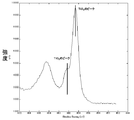
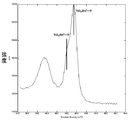
- 1 is an example of an X-ray photoelectron spectroscopy (XPS) chart of a semiconductive ceramic member of the present disclosure.
- XPS X-ray photoelectron spectroscopy
- 9 is another example of the XPS chart of the semiconductive ceramic member of the present disclosure.
- 9 is another example of the XPS chart of the semiconductive ceramic member of the present disclosure.
- the semiconductive ceramic member 10 of the present disclosure contains a plurality of aluminum oxide crystal particles 1 and a plurality of titanium oxide crystal particles 2.
- FIG. 1 is an example of an enlarged view of a cross section of the semiconductive ceramic member 10, in which two aluminum oxide crystal particles 1, one titanium oxide crystal particle 2, a first region 3 formed by these, and A grain boundary 4 between each crystal grain is shown.
- the total of aluminum oxide and titanium oxide is 99% by mass or more of 100% by mass of all components constituting the semiconductive ceramic member 10.
- the semiconductive ceramic member 10 of the present disclosure has high mechanical strength.
- aluminum oxide is 86% by mass or more and 96% by mass or less
- titanium oxide is 4% by mass or more and 14% by mass or less.
- the semiconductive ceramic member 10 has a TiO x (0 ⁇ x) in the range of 456 eV or more and 462 eV or less in the measurement by X-ray photoelectron spectroscopy (XPS). The peak of ⁇ 2) exists.
- TiO x (0 ⁇ x ⁇ 2) is a state in which TiO 2 is oxygen-deficient. Note that there is a case where TiO 2 that is not oxygen-deficient is partially present and TiO x (0 ⁇ x ⁇ 2) and TiO 2 coexist. In this case, the peak of TiO 2 exists in the range of the binding energy of 456 eV or more and 462 eV or less, and the peak of TiO x (0 ⁇ x ⁇ 2) is located on the higher energy side than the peak of TiO 2 . Specifically, in FIGS.
- the horizontal axis represents the binding energy (eV) and the vertical axis represents the intensity of the number of photoelectrons (c / s; count / second), and the peak of TiO 2 is about 458. 0.6 eV, and the peak of TiO x (0 ⁇ x ⁇ 2) appears at about 459.8 eV.
- the semiconductive ceramic member 10 of the present disclosure has a low electric resistance.
- the low electric resistance means that the volume resistivity is from 10 3 ⁇ ⁇ cm to 10 10 ⁇ ⁇ cm.
- the volume resistivity may be measured by cutting out the semiconductive ceramic member 10 into a shape conforming to JIS C # 2141 (1992) by a three-terminal method.
- a super insulation resistance meter 8340A manufactured by ADC Corporation can be used.
- the sum of aluminum oxide and titanium oxide is 99% by mass or more, and of the total 100% by mass of aluminum oxide and titanium oxide, aluminum oxide is If it is less than 86% by mass, the volume resistivity may be less than 10 3 ⁇ ⁇ cm.
- the sum of aluminum oxide and titanium oxide is 99% by mass or more, and of the total 100% by mass of aluminum oxide and titanium oxide, aluminum oxide is If it exceeds 96% by mass, the volume resistivity may exceed 10 10 ⁇ ⁇ cm.
- the volume resistivity may exceed 10 10 ⁇ ⁇ cm.
- the sum of aluminum oxide and titanium oxide is 99% by mass or more, and of the total 100% by mass of aluminum oxide and titanium oxide, titanium oxide is If it exceeds 14% by mass, the volume resistivity may be less than 10 3 ⁇ ⁇ cm.
- the peak of TiO x (0 ⁇ x ⁇ 2) does not exist in the range of the binding energy of 456 eV or more and 462 eV or less, the electric resistance increases, and the electric resistance may exceed 10 10 ⁇ ⁇ cm.
- the presence of the peak of TiO x (0 ⁇ x ⁇ 2) means that the peak of TiO x (0 ⁇ x ⁇ 2) appears only when the peak of TiO x (0 ⁇ x ⁇ 2) clearly appears as shown in FIGS.
- FIG. 4 a case where the peak swells on the high energy side of the TiO 2 peak is included.
- the content of each component constituting the semiconductive ceramic member 10 of the present disclosure is measured by using a fluorescent X-ray analyzer (XRF) or a high-frequency inductively coupled plasma emission analyzer (ICP-AES). Then, the content of each element can be determined, and the content of each element can be converted into the content of each oxide from the determined content of the element.
- XRF fluorescent X-ray analyzer
- ICP-AES high-frequency inductively coupled plasma emission analyzer
- the content of each element can be determined, and the content of each element can be converted into the content of each oxide from the determined content of the element.
- the content of Al may be obtained by measurement with XRF or ICP-AES, and converted into Al 2 O 3 .
- the content of Ti may be obtained by measurement with XRF or ICP-AES, and converted into TiO 2 .
- Whether or not a peak of TiO x (0 ⁇ x ⁇ 2) exists in a range of a binding energy of 456 eV to 462 eV can be measured by the following method.
- the measuring device for example, an X-ray photoelectron spectroscopy (XPS) device (PHIMQuantera SXM) manufactured by ULVAC-PHI, Inc. is used, and the semiconductive ceramic member 10 of the present disclosure may be measured under the following measuring conditions.
- XPS X-ray photoelectron spectroscopy
- PHIMQuantera SXM X-ray photoelectron spectroscopy
- the semiconductive ceramic member 10 of the present disclosure may be measured under the following measuring conditions.
- the X-rays for irradiation AlK ⁇ rays monochromatized by a monochromator are used. Further, the output of the X-ray is 25 W, the acceleration voltage is 15 kV, the measurement area is about 100 ⁇ m in diameter, the measurement interval of the binding energy is 0.100 eV, and the measurement range of the binding energy is 448 to 470 eV.
- the semiconductive ceramic member 10 of the present disclosure further contains silicon (Si), and the first region 3 (surrounded by two aluminum oxide crystal particles 1 and one titanium oxide crystal particle 2).
- silicon oxide (SiO 2 ) in the first region 3 in terms of oxide (SiO 2 ) is determined by the grain boundaries 4 of the aluminum oxide crystal particles 1 and the titanium oxide crystal particles 2 (hereinafter simply referred to as the grain boundaries 4).
- the content is larger than the content in terms of oxide of silicon (SiO 2 ) in the following.
- the semiconductive ceramic member 10 of the present disclosure a current flows from one titanium oxide crystal particle 2 to the other titanium oxide crystal particle 2 through the first region 3 and the grain boundary 4.
- the shorter the flow path the smaller the variation in electrical resistance. Therefore, by satisfying such a structure, the electric resistance of the first region 3 becomes higher than the electric resistance of the grain boundary 4, and it becomes difficult for a current to flow through the first region 3 having a large volume.
- the path through which the current flows becomes shorter. Therefore, the semiconductive ceramic member 10 of the present disclosure has a low electric resistance and a small variation in the electric resistance.
- the variation of the electric resistance of the semiconductive ceramic member 10 of the present disclosure may be measured by the following method. First, the semiconductive ceramic member 10 is divided into three or more pieces. Then, the volume resistivity of each of the divided samples is measured by a three-terminal method according to JIS C # 2141 (1992). Then, the difference between the maximum value of the volume resistivity and the minimum value of the volume resistivity in each sample is calculated. Then, when this difference is divided by the average value of the volume resistivity of each sample, it is the value of the variation of the electric resistance.
- the semiconductive ceramic member 10 of the present disclosure contains, for example, 0.02 parts by mass or more and 0.3 parts by mass or less of silicon in terms of oxides based on 100 parts by mass of aluminum oxide and titanium oxide in total. You may.
- the content of silicon in the first region 3 in terms of oxide is 0.5% by mass or more than the content of silicon in the grain boundary 4 in terms of oxide. May be more. If such a configuration is satisfied, the difference between the electric resistance of the first region 3 and the electric resistance of the grain boundary 4 increases, and it becomes more difficult for a current to flow through the first region 3.
- the conductive ceramic member 10 has a smaller variation in electric resistance.
- the first region 3 may have a silicon oxide content of 1% by mass or more and 6% by mass or less, for example, of 100% by mass of all components constituting the first region 3.
- the first region 3 has, for example, a content in terms of an aluminum oxide (Al 2 O 3 ) and a titanium oxide (TiO 2 ) of 100% by mass of all components constituting the first region 3. May be 70% by mass or more.
- the grain boundary 4 may have, for example, a content in terms of oxide of silicon of 2% by mass or less based on 100% by mass of all components constituting the grain boundary 4. Further, the grain boundary 4 is, for example, the content in terms of aluminum oxide (Al 2 O 3 ) and titanium oxide (TiO 2 ) in 100% by mass of all components constituting the grain boundary 4. The total content may be 70% by mass or more.
- the semiconductive ceramic member 10 of the present disclosure further contains calcium (Ca), and the content of the calcium oxide (CaO) in the first region 3 in terms of calcium oxide (CaO) is It may be higher than the content in terms of CaO).
- the electric resistance of the first region 3 becomes higher than the electric resistance of the grain boundary 4, and the current hardly flows through the first region 3.
- the ceramic member 10 has a smaller variation in electric resistance.
- the semiconductive ceramic member 10 of the present disclosure contains, for example, 0.03 parts by mass or more and 0.2 parts by mass or less of calcium in terms of oxide based on 100 parts by mass of the total of aluminum oxide and titanium oxide. You may.
- the content of calcium in the first region 3 in terms of oxide is 0.6% by mass or more than the content of calcium in the grain boundary 4 in terms of oxide. May be more.
- the conductive ceramic member 10 has a smaller variation in electric resistance.
- the first region 3 may have, for example, a content of calcium oxide equivalent of 0.2% by mass or more and 3% by mass or less of 100% by mass of all components constituting the first region 3. .
- the grain boundary 4 may have, for example, a content of calcium of 0.6% by mass or less in terms of oxide of 100% by mass of all components constituting the grain boundary 4.
- the content of each component constituting the first region 3 and the grain boundary 4 may be measured and calculated by the following method.
- the semiconductive ceramic member 10 of the present disclosure is cut, and the cut surface is observed with a transmission electron microscope (TEM). Then, it is determined whether the crystal particles are aluminum oxide crystal particles 1 or titanium oxide crystal particles 2 by electron beam diffraction using a TEM.
- TEM transmission electron microscope
- the crystal particles can also be determined by using an energy dispersive X-ray spectrometer (EDS) attached to the TEM.
- EDS energy dispersive X-ray spectrometer
- the composition of crystal grains is quantitatively analyzed by EDS, if the total content of aluminum (Al) and oxygen (O) is 90% by mass or more, the crystal grains are aluminum oxide crystal grains 1.
- the composition of the crystal particles is quantitatively analyzed by EDS, if the total content of titanium (Ti) and oxygen (O) is 90% by mass or more, the crystal particles are titanium oxide crystal particles 2.
- the first region 3 surrounded by the two aluminum oxide crystal grains 1 and the one titanium oxide crystal grain 2 and the grain boundary 4 of the aluminum oxide crystal grains 1 and the titanium oxide crystal grains 2 are subjected to EDS. Quantitative analysis may be performed. The total amount of each component measured by the quantitative analysis by EDS may be 100% by mass of all components constituting the first region 3 and the grain boundary 4.
- the first region 3 and the grain boundary 4 may have zirconium (Zr).
- the content of zirconium in the first region 3 in terms of oxide may be smaller than the content of zirconium in the grain boundary 4 in terms of oxide.
- Zirconium oxide generally has a property of easily forming oxygen vacancies. When there are many oxygen vacancies, the electric resistance tends to decrease. Therefore, when the zirconium content in the grain boundaries 4 is large, oxygen vacancies in the grain boundaries 4 increase, and the electrical resistance tends to decrease. Further, when the zirconium content in the first region is small, oxygen vacancies are reduced, so that the electric resistance in the first region 3 tends to increase. Therefore, the electric resistance of the first region 3 becomes higher than the electric resistance of the grain boundary 4, so that the current hardly flows through the first region 3 having a large volume, and the current easily flows through the grain boundary 4. As a result, the path through which the current flows becomes shorter. Therefore, variation in the electrical resistance of the semiconductive ceramic member 10 of the present disclosure is small.
- the content of zirconium in the first region 3 in terms of oxide may be smaller than the content of zirconium in the grain boundary 4 in terms of oxide by 0.3% by mass or more.
- Semiconductive ceramic member 10 described above may be created by using a large amount of ZrO2 in fine powder than ZrO 2 powder and coarse powder as a raw material. Even when the zirconium content is constant, when both the fine powder ZrO 2 powder and the coarse powder ZrO 2 powder are used as raw materials, the zirconium content of the grain boundary 4 is increased by increasing the proportion of the fine powder ZrO 2 . It tends to be larger than the zirconium content in the region 3. In other words, the zirconium content of the first region 3 tends to be smaller than the zirconium content of the grain boundary 4.
- the fine powder ZrO 2 powder means a particle diameter of 0.1 ⁇ m or more and 0.3 ⁇ m or less when the particle diameter of the powder is measured by a laser diffraction method and the cumulative volume ratio from small particles is 50% by volume. It may be a powder.
- the coarse powder ZrO 2 powder may be a powder having a size of 0.8 ⁇ m or more and 2 ⁇ m or less in the same measurement.
- first region 3 and the grain boundary 4 may have sodium (Na).
- the content of sodium in the first region 3 in terms of oxide may be larger than the content of sodium in the grain boundary 4 in terms of oxide.
- the content of sodium in the first region in terms of oxide may be 0.2% by mass or more larger than the content of sodium in the grain boundary 4 in terms of oxide.
- the above-mentioned semiconductive ceramic member 10 may be made by using a larger proportion of NaCl powder than Na 2 CO 3 powder as a raw material. Even when the content in terms of Na 2 O is constant, if the proportion of the NaCl powder is larger than that of the Na 2 CO 3 powder as the raw material, the proportion of the sodium in the first region 3 is greater than the proportion of the sodium in the grain boundaries 4. More likely to be.
- the ratio between the Na 2 CO 3 powder and the NaCl powder may be a comparison between the mole% of Na 2 CO 3 and the mole% of NaCl.
- ⁇ -alumina ( ⁇ -Al 2 O 3 ) powder, rutile-type titanium dioxide (TiO 2 ) powder, silicon oxide (SiO 2 ) powder, and a colloidal silica solution having an average particle diameter in the range of 10 nm to 100 nm are prepared.
- the ⁇ -alumina powder is weighed to be 86% by mass or more and 96% by mass or less, and the titanium dioxide (TiO 2 ) powder is weighed by 4% by mass or more and 14% by mass or less. Further, the silicon oxide powder and the colloidal silica solution were mixed with each other so that silicon became 0.02 parts by mass or more and 0.3 parts by mass or less in terms of oxide with respect to 100 parts by mass of ⁇ -alumina powder and titanium dioxide powder in total. Weigh.
- the compounding ratio of the silicon oxide powder and the colloidal silica solution is included in the colloidal silica solution in a total of 100% by mass of the silicon oxide powder and the content of silicon contained in the colloidal silica solution in terms of oxide.
- the content of silicon in terms of oxide should be 2% by mass or more, and the remainder should be silicon oxide powder.
- the content of silicon contained in the colloidal silica solution in terms of oxide was 3% by mass or more.
- the content of silicon in the first region in terms of oxide becomes larger than the content of silicon in the grain boundary in terms of oxide by 0.5% by mass or more.
- mixing raw materials the weighed ⁇ -alumina powder, titanium dioxide powder, silicon oxide powder, and colloidal silica solution (hereinafter, these may be referred to as mixing raw materials) are put into a ball mill, and further added to 100 parts by mass of the mixing raw materials.
- 100 to 200 parts by mass of water as a solvent and 0.02 to 0.5 parts by mass of a dispersant are added and pulverized until a predetermined average particle size is reached.
- a binder such as PEG (polyethylene glycol), PVA (polyvinyl alcohol), or an acrylic resin is added so that the solid content is 4 parts by mass or more and 10 parts by mass or less, and a slurry is obtained by mixing.
- granules are obtained by spray-drying the obtained slurry using a spray drier.
- the obtained granules are used as a raw material for molding, and a molded body having a desired shape is formed by a powder press molding method, an isostatic pressing method or the like, and a cutting process is performed as necessary.
- the molded body is fired in an air atmosphere at a temperature of 1500 ° C. or more and 1600 ° C. or less for 2 hours or more and 12 hours or less to obtain a sintered body. If necessary, the obtained sintered body may be subjected to grinding.
- the obtained sintered body is held at a temperature of 1300 ° C. or more and 1400 ° C. or less for 1 hour or more and 5 hours or less in a reducing gas having a hydrogen: nitrogen ratio of 1: 3.
- a peak of TiO x (0 ⁇ x ⁇ 2) exists in a binding energy range of 456 eV to 462 eV in the measurement by XPS.
- the semiconductive ceramic member of the present disclosure is obtained.
- a first calcium carbonate (CaCO 3 ) powder having an average particle diameter of 1 ⁇ m to 3 ⁇ m and a second calcium carbonate powder having an average particle diameter of 0.5 ⁇ m or less are prepared.
- the first calcium carbonate was prepared so that calcium was 0.03 parts by mass or more and 0.2 parts by mass or less in terms of oxide based on 100 parts by mass of the total of ⁇ -alumina powder and titanium dioxide powder in the raw material for preparation.
- the powder and the second calcium carbonate powder are weighed and added.
- the mixing ratio of the first calcium carbonate powder and the second calcium carbonate powder is such that the second calcium carbonate powder is 2% by mass or more of the total 100% by mass of the first calcium carbonate powder and the second calcium carbonate powder, and the balance is Is the first calcium carbonate powder.
- the fine second calcium carbonate powder forms a solid solution in the first region more than the grain boundary, and the content of calcium in the first region in terms of oxides is reduced. It is larger than the content in terms of oxide.
- the second calcium carbonate powder is blended so as to be 3% by mass or more of the total 100% by mass of the first calcium carbonate powder and the second calcium carbonate powder, calcium in the first region in terms of oxide of calcium can be obtained.
- the content is 0.6% by mass or more than the content of calcium in the grain boundary in terms of oxide.
- ⁇ -alumina powder having an average particle size of 3 ⁇ m determined by a laser diffraction / scattering method, rutile titanium dioxide powder having an average particle size of 3 ⁇ m, silicon oxide powder having an average particle size of 2 ⁇ m, and average particle size
- a colloidal silica solution having a particle size of 20 nm was prepared.
- ⁇ -alumina powder was weighed so as to be 91% by mass and titanium dioxide powder was weighed so as to be 9% by mass.
- the silicon oxide powder and the colloidal silica solution were weighed so that silicon had the value shown in Table 1 in terms of oxide with respect to 100 parts by mass of the total of ⁇ -alumina powder and titanium dioxide powder.
- the mixing ratio of the silicon oxide powder and the colloidal silica solution is included in the colloidal silica solution in a total of 100% by mass of the silicon oxide powder and the content of silicon contained in the colloidal silica solution in terms of oxide.
- the content of silicon in terms of oxide was adjusted to the value shown in Table 1. Then, these were blended to obtain a blending raw material.
- a compact having a shape of 130 mm ⁇ 130 mm ⁇ 12 mm was obtained by a powder press molding method.
- the compact was fired in an air atmosphere at a temperature of 1550 ° C. for 5 hours to obtain a sintered body.
- the obtained sintered body was subjected to cutting to obtain a processed body having a shape of 100 mm ⁇ 100 mm ⁇ 3 mm.
- each sample is held in a reducing gas having a hydrogen: nitrogen ratio of 1: 3 at a temperature of 1380 ° C. for 3 hours and further at 1100 ° C. for 12 hours to perform a reduction treatment.
- each sample was measured using an XPS apparatus manufactured by ULVAC-PHI, Inc.
- AlK ⁇ rays monochromatized by a monochromator were used as the X-rays to be irradiated, the output of the X-rays was 25 W, the acceleration voltage was 15 kV, the measurement area was about 100 ⁇ m in diameter, and the binding energy was The measurement interval was 0.100 eV, and the measurement range of the binding energy was 448 to 470 eV.
- a peak of TiO x (0 ⁇ x ⁇ 2) was present in a range where the binding energy was 456 eV or more and 462 eV or less.
- a TEM was attached to a first region surrounded by two aluminum oxide crystal particles and one titanium oxide crystal particle, and a grain boundary of the aluminum oxide crystal particle and the titanium oxide crystal particle. was subjected to quantitative analysis by EDS.
- each sample was divided into four measurement samples having a size of about 50 mm ⁇ 50 mm ⁇ 3 mm.
- the volume resistivity of each of the divided measurement samples was measured by a three-terminal method using a super insulation resistance meter 8340A manufactured by ADC Corporation in accordance with JIS C 2141 (1992).
- the average value R, the maximum value, and the minimum value of the volume resistivity of each measurement sample were determined.
- the maximum value-minimum value (denoted by ⁇ R) was obtained.
- the ⁇ R / R was calculated by dividing the ⁇ R by the average value R.
- the average value R of the volume resistivity of each sample was from 10 3 ⁇ ⁇ cm to 10 10 ⁇ ⁇ cm.
- Example 1 As a method for preparing each sample, a first calcium carbonate powder having an average particle size of 2 ⁇ m and a second calcium carbonate powder having an average particle size of 0.2 ⁇ m were prepared, and ⁇ -alumina powder was used as a raw material for preparation. And the first calcium carbonate powder and the second carbonate so that calcium has the value shown in Table 2 in terms of oxide and the second calcium carbonate powder has the value shown in Table 2 with respect to a total of 100 parts by mass of the titanium dioxide powder.
- Example 1 was repeated except that calcium powder was weighed and added. It was manufactured by the same manufacturing method as in Example 3. Table 2 shows the sample No. of Example 1. Sample No. 3 9 is described.
- the variation of the electric resistance of 12 to 17 was as small as 0.18 or less. From this fact, if the calcium oxide content in the first region is 0.6% by mass or more larger than the calcium oxide content in the grain boundary, the variation in electric resistance is smaller. I understood.
Landscapes
- Chemical & Material Sciences (AREA)
- Engineering & Computer Science (AREA)
- Ceramic Engineering (AREA)
- Manufacturing & Machinery (AREA)
- Organic Chemistry (AREA)
- Structural Engineering (AREA)
- Materials Engineering (AREA)
- Inorganic Chemistry (AREA)
- Chemical Kinetics & Catalysis (AREA)
- Physics & Mathematics (AREA)
- Composite Materials (AREA)
- Analytical Chemistry (AREA)
- Pathology (AREA)
- Immunology (AREA)
- General Physics & Mathematics (AREA)
- General Health & Medical Sciences (AREA)
- Biochemistry (AREA)
- Life Sciences & Earth Sciences (AREA)
- Health & Medical Sciences (AREA)
- Spectroscopy & Molecular Physics (AREA)
- Compositions Of Oxide Ceramics (AREA)
- Container, Conveyance, Adherence, Positioning, Of Wafer (AREA)
Abstract
本開示の半導電性セラミック部材は、酸化アルミニウム結晶粒子および酸化チタン結晶粒子をそれぞれ複数含有する。また、全成分100質量%のうち、酸化アルミニウムおよび酸化チタンの合計が99質量%以上である。また、前記酸化アルミニウムおよび前記酸化チタンの合計100質量%のうち、前記酸化アルミニウムが86質量%以上96質量%以下であり、前記酸化チタンが4質量%以上14質量%以下である。また、X線光電子分光による測定において、結合エネルギーが456eV以上462eV以下の範囲にTiOx(0<x<2)のピークが存在する。さらに、珪素を含有しており、第1領域における前記珪素の酸化物換算での含有量が、粒界における前記珪素の酸化物換算での含有量よりも多い。
Description
本発明は、半導電性セラミック部材に関する。
露光装置等におけるウエハの保持および搬送に、半導電性セラミック部材が用いられている。半導電性セラミック部材は、高い機械的強度に加えて、塵および浮遊粒子等がウエハに静電付着することを防止するため、静電気を逃がすことができる低い電気抵抗を有している。
このような半導電性セラミック部材として、例えば、酸化アルミニウム(Al2O3)を主成分とし、酸化チタン(TiO2)を含む酸化アルミニウム質セラミックスが知られている。そして、このような酸化アルミニウム質セラミックスは、還元雰囲気中で焼成することにより導電性が付与される(例えば、特許文献1を参照)。
本開示の半導電性セラミック部材は、酸化アルミニウム結晶粒子および酸化チタン結晶粒子をそれぞれ複数含有する。また、全成分100質量%のうち、酸化アルミニウムおよび酸化チタンの合計が99質量%以上である。また、前記酸化アルミニウムおよび前記酸化チタンの合計100質量%のうち、前記酸化アルミニウムが86質量%以上96質量%以下であり、前記酸化チタンが4質量%以上14質量%以下である。また、X線光電子分光による測定において、結合エネルギーが456eV以上462eV以下の範囲にTiOx(0<x<2)のピークが存在する。さらに、珪素を含有しており、2個の前記酸化アルミニウム結晶粒子および1個の前記酸化チタン結晶粒子に囲まれた第1領域における前記珪素の酸化物換算での含有量が、前記酸化アルミニウム結晶粒子および前記酸化チタン結晶粒子の粒界における前記珪素の酸化物換算での含有量よりも多い。
本開示の半導電性セラミック部材について、図面を参照しながら、以下に詳細に説明する。
本開示の半導電性セラミック部材10は、酸化アルミニウム結晶粒子1および酸化チタン結晶粒子2をそれぞれ複数含有している。なお、図1は、半導電性セラミック部材10の断面の拡大図の一例であり、2個の酸化アルミニウム結晶粒子1と、1個の酸化チタン結晶粒子2と、これらによる第1領域3と、それぞれの結晶粒子間にあたる粒界4とを示している。
そして、本開示の半導電性セラミック部材10は、半導電性セラミック部材10を構成する全成分100質量%のうち、酸化アルミニウムおよび酸化チタンの合計が99質量%以上である。このような構成を満足していることで、本開示の半導電性セラミック部材10は、高い機械的強度を有する。
また、酸化アルミニウムおよび酸化チタンの合計100質量%のうち、酸化アルミニウムが86質量%以上96質量%以下であり、酸化チタンが4質量%以上14質量%以下である。
さらに、本開示の半導電性セラミック部材10は、図2~図4に示すように、X線光電子分光(XPS)による測定において、結合エネルギーが456eV以上462eV以下の範囲にTiOx(0<x<2)のピークが存在する。
ここで、TiOx(0<x<2)とは、TiO2が酸素欠損した状態である。なお、酸素欠損していないTiO2が一部存在し、TiOx(0<x<2)とTiO2とが共存している場合がある。この場合、結合エネルギーが456eV以上462eV以下の範囲には、TiO2のピークが存在し、TiOx(0<x<2)のピークはTiO2のピークよりも高エネルギー側に位置する。具体的には、図2~図4において、横軸は結合エネルギー(eV)、縦軸は光電子数の強度(c/s;カウント/秒)を示しているが、TiO2のピークは約458.6eVに現れ、TiOx(0<x<2)のピークは約459.8eVに現れている。
よって、このような構成を満足していることで、本開示の半導電性セラミック部材10は、低い電気抵抗を有する。ここで、低い電気抵抗とは、体積固有抵抗が103Ω・cm以上1010Ω・cm以下であることである。
ここで、体積固有抵抗は、JIS C 2141(1992年)に準拠した形状に半導電性セラミック部材10を切り出し、3端子法により測定すればよい。なお、3端子法による測定には、例えば、エーデーシー株式会社製の超絶縁抵抗計8340Aを用いることができる。
また、半導電性セラミック部材10を構成する全成分100質量%のうち、酸化アルミニウムおよび酸化チタンの合計が99質量%以上であり、酸化アルミニウムおよび酸化チタンの合計100質量%のうち、酸化アルミニウムが86質量%未満であれば、体積固有抵抗が103Ω・cm未満となるおそれがある。一方、半導電性セラミック部材10を構成する全成分100質量%のうち、酸化アルミニウムおよび酸化チタンの合計が99質量%以上であり、酸化アルミニウムおよび酸化チタンの合計100質量%のうち、酸化アルミニウムが96質量%を超えると、体積固有抵抗が1010Ω・cmを超えるおそれがある。
また、半導電性セラミック部材10を構成する全成分100質量%のうち、酸化アルミニウムおよび酸化チタンの合計が99質量%以上であり、酸化アルミニウムおよび酸化チタンの合計100質量%のうち、酸化チタンが4質量%未満であれば、体積固有抵抗が1010Ω・cmを超えるおそれがある。一方、半導電性セラミック部材10を構成する全成分100質量%のうち、酸化アルミニウムおよび酸化チタンの合計が99質量%以上であり、酸化アルミニウムおよび酸化チタンの合計100質量%のうち、酸化チタンが14質量%を超えると、体積固有抵抗が103Ω・cm未満となるおそれがある。
また、結合エネルギーが456eV以上462eV以下の範囲にTiOx(0<x<2)のピークが存在しない場合は、電気抵抗が高くなり、電気抵抗が1010Ω・cmを超えるおそれがある。なお、TiOx(0<x<2)のピークが存在するというのは、図2および図3に示すように、TiOx(0<x<2)のピークが明確に現れている場合のみならず、図4に示すように、TiO2のピークの高エネルギー側において、ピークに膨らみがある場合を含む。
ここで、本開示の半導電性セラミック部材10を構成する各成分の含有量は、蛍光X線分析装置(XRF)または高周波誘導結合プラズマ発光分析装置(ICP-AES)を用いて測定を行なうことで、各元素の含有量を求め、求めた元素の含有量から各酸化物の含有量に換算することにより求めることができる。具体的には、XRFまたはICP-AESでの測定によりAlの含有量を求め、Al2O3に換算すればよい。また、XRFまたはICP-AESでの測定によりTiの含有量を求め、TiO2に換算すればよい。
そして、半導電性セラミック部材10を構成する全成分100質量%のうち99質量%であるか否かは、ここで得られたAl2O3への換算値と、TiO2への換算値との合計で確認できる。また、酸化アルミニウムおよび酸化チタンの合計100質量%のうちの含有量は、ここで得られたAl2O3への換算値またはTiO2への換算値の一方を分子とし、Al2O3への換算値とTiO2への換算値との合計を分母として百分率で算出すれば一方の含有量を確認でき、100から差し引くことで他方の含有量を確認することができる。
また、結合エネルギーが456eV以上462eV以下の範囲にTiOx(0<x<2)のピークが存在するか否かについては、以下に示す方法で測定することができる。
まず、測定装置として、例えばアルバック・ファイ株式会社製のX線光電子分光(XPS)装置(PHI Quantera SXM)を使用し、以下の測定条件で本開示の半導電性セラミック部材10を測定すればよい。照射するX線としては、モノクロメーターにより単色化されたAlKα線を使用する。また、X線の出力は25W、加速電圧は15kV、1回の測定領域は直径約100μmの範囲、結合エネルギーの測定間隔は0.100eV、結合エネルギーの測定範囲は448~470eVとする。
また、本開示の半導電性セラミック部材10は、さらに珪素(Si)を含有しており、2個の酸化アルミニウム結晶粒子1および1個の酸化チタン結晶粒子2に囲まれた第1領域3(以下、単に第1領域3と記載する)における珪素の酸化物(SiO2)換算での含有量が、酸化アルミニウム結晶粒子1および酸化チタン結晶粒子2の粒界4(以下、単に粒界4と記載する)における珪素の酸化物(SiO2)換算での含有量よりも多い。
本開示の半導電性セラミック部材10において、電流は、ある酸化チタン結晶粒子2から第1領域3および粒界4を通って、他の酸化チタン結晶粒子2に流れていくが、このとき電流が流れる経路が短い程、電気抵抗のばらつきが小さくなる。よって、このような構造を満足することで、第1領域3の電気抵抗が粒界4の電気抵抗よりも高くなり、体積の大きい第1領域3に電流が流れにくくなることから、結果として、電流が流れる経路が短くなる。よって、本開示の半導電性セラミック部材10は、低い電気抵抗を有するとともに、電気抵抗のばらつきが小さい。
ここで、本開示の半導電性セラミック部材10の電気抵抗のばらつきは、以下の方法で測定すればよい。まず、半導電性セラミック部材10を3個以上に分割する。そして、分割した各試料の体積固有抵抗を、JIS C 2141(1992年)に準拠して、3端子法により測定する。そして、各試料における、体積固有抵抗の最大値と体積固有抵抗の最小値との差を算出する。そして、この差を、各試料の体積固有抵抗の平均値で割れば、それが電気抵抗のばらつきの値である。
なお、本開示の半導電性セラミック部材10は、例えば、酸化アルミニウムおよび酸化チタンの合計100質量部に対して、珪素を酸化物換算で0.02質量部以上0.3質量部以下含有していてもよい。
また、本開示の半導電性セラミック部材10において、第1領域3における珪素の酸化物換算での含有量は、粒界4における珪素の酸化物換算での含有量よりも0.5質量%以上多くてもよい。このような構成を満足するならば、第1領域3の電気抵抗と粒界4の電気抵抗との差が大きくなり、第1領域3に電流がより流れにくくなることから、本開示の半導電性セラミック部材10は、電気抵抗のばらつきがより小さくなる。
なお、第1領域3は、例えば、第1領域3を構成する全成分100質量%のうち、珪素の酸化物換算での含有量が1質量%以上6質量%以下であってもよい。また、第1領域3は、例えば、第1領域3を構成する全成分100質量%のうち、アルミニウムの酸化物(Al2O3)換算での含有量およびチタンの酸化物(TiO2)換算での含有量の合計が70質量%以上であってもよい。
また、粒界4は、例えば、粒界4を構成する全成分100質量%のうち、珪素の酸化物換算での含有量が2質量%以下であってもよい。また、粒界4は、例えば、粒界4を構成する全成分100質量%のうち、アルミニウムの酸化物(Al2O3)換算での含有量およびチタンの酸化物(TiO2)換算での含有量の合計が70質量%以上であってもよい。
また、本開示の半導電性セラミック部材10は、さらにカルシウム(Ca)を含有し、第1領域3におけるカルシウムの酸化物(CaO)換算での含有量は、粒界4におけるカルシウムの酸化物(CaO)換算での含有量よりも多くてもよい。
このような構成を満足するならば、第1領域3の電気抵抗が粒界4の電気抵抗よりもさらに高くなり、第1領域3に電流がより流れにくくなることから、本開示の半導電性セラミック部材10は、電気抵抗のばらつきがより小さくなる。
なお、本開示の半導電性セラミック部材10は、例えば、酸化アルミニウムおよび酸化チタンの合計100質量部に対して、カルシウムを酸化物換算で0.03質量部以上0.2質量部以下含有していてもよい。
また、本開示の半導電性セラミック部材10において、第1領域3におけるカルシウムの酸化物換算での含有量は、粒界4におけるカルシウムの酸化物換算での含有量よりも0.6質量%以上多くてもよい。
このような構成を満足するならば、第1領域3の電気抵抗と粒界4の電気抵抗との差が大きくなり、第1領域3に電流がより流れにくくなることから、本開示の半導電性セラミック部材10は、電気抵抗のばらつきがより小さくなる。
なお、第1領域3は、例えば、第1領域3を構成する全成分100質量%のうち、カルシウムの酸化物換算での含有量が0.2質量%以上3質量%以下であってもよい。
また、粒界4は、例えば、粒界4を構成する全成分100質量%のうち、カルシウムの酸化物換算での含有量が0.6質量%以下であってもよい。
ここで、第1領域3および粒界4を構成する各成分の含有量は、以下の方法で測定し算出すればよい。まず、本開示の半導電性セラミック部材10を切断し、切断面を透過型電子顕微鏡(TEM)で観察する。そして、TEMによる電子線回折により、結晶粒子が酸化アルミニウム結晶粒子1であるか、酸化チタン結晶粒子2であるか判別する。
なお、結晶粒子の判別は、TEMに付設されているエネルギー分散形X線分光分析装置(EDS)を用いても可能である。例えば、EDSで結晶粒子の組成を定量分析した場合に、アルミニウム(Al)および酸素(O)の合計含有量が90質量%以上であれば、その結晶粒子は酸化アルミニウム結晶粒子1である。また、EDSで結晶粒子の組成を定量分析した場合に、チタン(Ti)および酸素(O)の合計含有量が90質量%以上であれば、その結晶粒子は酸化チタン結晶粒子2である。
そして、2個の酸化アルミニウム結晶粒子1および1個の酸化チタン結晶粒子2に囲まれた第1領域3、酸化アルミニウム結晶粒子1および酸化チタン結晶粒子2の粒界粒界4に対して、EDSによる定量分析を行なえばよい。なお、EDSによる定量分析により測定された各成分の合計量を、第1領域3や粒界4を構成する全成分100質量%とすればよい。
また、第1領域3および粒界4はジルコニウム(Zr)を有していてもよい。第1領域3におけるジルコニウムの酸化物換算での含有量は、粒界4におけるジルコニウムの酸化物換算での含有量よりも少なくてもよい。
本開示の半導電性セラミック部材10が上記の構成を有する場合、半導電性セラミック部材10における電気抵抗のバラツキが小さい。
酸化ジルコニウムは、一般的に、酸素欠陥を形成しやすい性質を有する。酸素欠陥が多いと、電気抵抗が小さくなる傾向がある。そのため、粒界4におけるジルコニウム含有量が多いと粒界4における酸素欠陥が増加し、電気抵抗が小さくなりやすい。また、第1領域のジルコニウム含有量が少ないと、酸素欠陥が少なくなるので、第1領域3における電気抵抗が大きくなりやすい。したがって、第1領域3の電気抵抗が粒界4の電気抵抗よりも高くなり、体積の大きい第1領域3に電流が流れにくくなり、粒界4に電流が流れやすくなる。結果として、電流が流れる経路が短くなる。よって、本開示の半導電性セラミック部材10における電気抵抗のばらつきが小さい。
また、第1領域3におけるジルコニウムの酸化物換算での含有量は、粒界4におけるジルコニウムの酸化物換算での含有量よりも0.3質量%以上少なくてもよい。
上記の半導電性セラミック部材10は、原料として粗粉のZrO2粉末よりも微粉のZrO2を多く用いることで作成してもよい。ジルコニウムの含有量が一定でも、原料として微粉のZrO2粉末と、粗粉のZrO2粉末の両方を用いた場合に、微粉のZrO2の割合を多くすると、粒界4のジルコニウム含有量が第1領域3のジルコニウム含有量よりも多くなりやすい。言い換えれば、第1領域3のジルコニウム含有量が粒界4のジルコニウム含有量よりも少なくなりやすい。一例として、微粉のZrO2粉末とは、粉末の粒子径をレーザ回折法により測定した場合、小さい粒子からの累積体積割合が50体積%のときの粒径で0.1μm以上0.3μm以下である粉末であってもよい。粗粉のZrO2粉末とは、同様の測定で0.8μm以上2μm以下の粉末であってもよい。
また、また、第1領域3および粒界4はナトリウム(Na)を有していてもよい。第1領域3におけるナトリウムの酸化物換算での含有量は、粒界4におけるナトリウムの酸化物換算での含有量よりも多くてもよい。
本開示の半導電性セラミック部材10が上記の構成を有する場合、半導電性セラミック部材10における電気抵抗のバラツキが小さい。
チタン存在下では、Na含有量が多いほどナトリウムによるイオン伝導が抑制されやすい。そのため、チタン存在下では、Na含有量が多いほど電気抵抗が高くなりやすい。したがって、第1領域3におけるNa含有量が粒界4におけるNa含有量よりも多いため、第1領域3における電気抵抗は粒界4における電気抵抗よりも高くなりやすい。そのため、体積の大きい第1領域3に電流が流れにくくなり、粒界4に電流が流れやすくなる。結果として、電流が流れる経路が短くなる。よって、本開示の半導電性セラミック部材10における電気抵抗のばらつきが小さい。
第1領域におけるナトリウムの酸化物換算での含有量は、粒界4におけるナトリウムの酸化物換算での含有量よりも0.2質量%以上多くてもよい。
上記の半導電性セラミック部材10は、原材料としてのNa2CO3粉末よりもNaCl粉末の割合を多く用いることで作成してもよい。Na2O換算での含有量が一定でも、原材料としてのNa2CO3粉末よりもNaCl粉末の割合を多く用いると、第1領域3のナトリウム量の割合が粒界4のナトリウムの割合よりも多くなりやすい。Na2CO3粉末とNaCl粉末の割合は、Na2CO3のモル%とNaClのモル%を比較してもよい。
次に、本開示の半導電性セラミック部材の製造方法の一例を説明する。
まず、α-アルミナ(α-Al2O3)粉末、ルチル型の二酸化チタン(TiO2)粉末、酸化珪素(SiO2)粉末、平均粒径が10nm以上100nm以下の範囲にあるコロイダルシリカ溶液を準備する。
次に、α-アルミナ粉末が86質量%以上96質量%以下、二酸化チタン(TiO2)粉末が4質量%以上14質量%以下となるように秤量する。また、α-アルミナ粉末および二酸化チタン粉末の合計100質量部に対して、珪素が酸化物換算で0.02質量部以上0.3質量部以下となるように、酸化珪素粉末およびコロイダルシリカ溶液を秤量する。
ここで、酸化珪素粉末とコロイダルシリカ溶液との配合割合は、酸化珪素粉末とコロイダルシリカ溶液に含まれる珪素の酸化物換算での含有量との合計100質量%のうち、コロイダルシリカ溶液に含まれる珪素の酸化物換算での含有量が2質量%以上、残部が酸化珪素粉末となるようにする。このように配合することで、コロイダルシリカ溶液に含まれる微粒の珪素は、粒界よりも第1領域に固溶しやすく、第1領域における珪素の酸化物換算での含有量が、粒界における珪素の酸化物換算での含有量よりも多くなる。
なお、酸化珪素粉末とコロイダルシリカ溶液に含まれる珪素の酸化物換算での含有量との合計100質量%のうち、コロイダルシリカ溶液に含まれる珪素の酸化物換算での含有量が3質量%以上となるように配合すれば、第1領域における珪素の酸化物換算での含有量が、粒界における珪素の酸化物換算での含有量よりも0.5質量%以上多くなる。
次に、秤量したα-アルミナ粉末、二酸化チタン粉末、酸化珪素粉末、コロイダルシリカ溶液(以下、これらを調合用原料と記載する場合がある)をボールミルへ入れ、さらに、調合用原料100質量部に対して、100質量部以上200質量部以下の溶媒としての水と、0.02質量部以上0.5質量部以下の分散剤とを添加し、所定の平均粒径となるまで粉砕する。
その後、PEG(ポリエチレングリコール)、PVA(ポリビニルアルコール)、アクリル樹脂等のバインダーを固形分で4質量部以上10質量部以下となるように添加し、混合することでスラリーを得る。次に、得られたスラリーを、スプレードライヤーを用いて噴霧乾燥することにより顆粒を得る。
次に、得られた顆粒を成形原料とし、粉末プレス成形法または静水圧プレス法等により所望の形状の成形体とし、必要に応じて切削加工を施す。次に、成形体を、大気雰囲気において、1500℃以上1600℃以下の温度で2時間以上12時間以下保持することで焼成し、焼結体を得る。なお、必要に応じて、得られた焼結体に研削加工を施してもよい。
次に、得られた焼結体を、水素:窒素比=1:3の還元用ガス中において、1300℃以上1400℃以下の温度で1時間以上5時間以下保持し、さらに、1050℃以上1150℃以下の温度で1時間以上30時間以下保持して還元処理をすることにより、XPSによる測定において、結合エネルギーが456eV以上462eV以下の範囲にTiOx(0<x<2)のピークが存在するようになり、本開示の半導電性セラミック部材を得る。
また、カルシウムを含有し、第1領域におけるカルシウムの酸化物換算での含有量を、粒界におけるカルシウムの酸化物換算での含有量よりも多くするには、次のようにすればよい。
まず、平均粒径が1μm以上3μm以下の第1炭酸カルシウム(CaCO3)粉末と、平均粒径が0.5μm以下の第2炭酸カルシウム粉末とを準備する。そして、調合用原料に、α-アルミナ粉末および二酸化チタン粉末の合計100質量部に対して、カルシウムが酸化物換算で0.03質量部以上0.2質量部以下となるように第1炭酸カルシウム粉末および第2炭酸カルシウム粉末を秤量し添加する。
ここで、第1炭酸カルシウム粉末および第2炭酸カルシウム粉末の配合割合は、第1炭酸カルシウム粉末および第2炭酸カルシウム粉末の合計100質量%のうち、第2炭酸カルシウム粉末が2質量%以上、残部が第1炭酸カルシウム粉末となるようにする。このように配合することで、微粒の第2炭酸カルシウム粉末が、粒界よりも第1領域に多く固溶し、第1領域におけるカルシウムの酸化物換算での含有量が、粒界におけるカルシウムの酸化物換算での含有量よりも多くなる。
なお、第1炭酸カルシウム粉末および第2炭酸カルシウム粉末の合計100質量%のうち、第2炭酸カルシウム粉末が3質量%以上となるように配合すれば、第1領域におけるカルシウムの酸化物換算での含有量が、粒界におけるカルシウムの酸化物換算での含有量よりも0.6質量%以上多くなる。
以下、本開示の実施例を具体的に説明するが、本開示はこの実施例に限定されるものではない。
第1領域と粒界とにおける、珪素の酸化物換算での含有量が異なる試料を作製し、電気抵抗のばらつきを評価した。
まず、レーザ回折・散乱法により求めた平均粒径が3μmであるα-アルミナ粉末、平均粒径が3μmであるルチル型の二酸化チタン粉末、平均粒径が2μmである酸化珪素粉末、平均粒径が20nmであるコロイダルシリカ溶液を準備した。
次に、α-アルミナ粉末が91質量%、二酸化チタン粉末が9質量%となるように秤量した。また、α-アルミナ粉末および二酸化チタン粉末の合計100質量部に対して、珪素が酸化物換算で表1の値になるように、酸化珪素粉末およびコロイダルシリカ溶液を秤量した。このとき、酸化珪素粉末とコロイダルシリカ溶液との配合割合は、酸化珪素粉末とコロイダルシリカ溶液に含まれる珪素の酸化物換算での含有量との合計100質量%のうち、コロイダルシリカ溶液に含まれる珪素の酸化物換算での含有量が表1の値となるようにした。そして、これらを調合して調合用原料を得た。
次に、調合用原料100質量部に対して、150質量部の水と、0.05質量部の分散剤とを添加し、ボールミルにて所定の平均粒径となるまで粉砕した。その後、PEG、PVA、アクリル樹脂を固形分で合計6質量部となるように添加し、混合することによりスラリーを得た。次に、得られたスラリーを、スプレードライヤーを用いて噴霧乾燥することにより顆粒を得た。
次に、得られた顆粒を成形原料とし、粉末プレス成形法により130mm×130mm×12mmの形状の成形体を得た。次に、大気雰囲気において、1550℃の温度で5時間保持して成形体を焼成し、焼結体を得た。そして、得られた焼結体に切削加工を施し、100mm×100mm×3mmの形状の加工体を得た。
次に、加工体を、水素:窒素比=1:3の還元用ガス中において、1380℃の温度で3時間保持し、さらに、1100℃で12時間保持して還元処理をすることにより各試料を得た。
次に、アルバック・ファイ株式会社製のXPS装置を使用し、各試料を測定した。測定条件としては、照射するX線としてモノクロメーターにより単色化されたAlKα線を使用し、X線の出力を25W、加速電圧を15kV、1回の測定領域を直径約100μmの範囲、結合エネルギーの測定間隔を0.100eV、結合エネルギーの測定範囲を448~470eVとした。この結果、各試料には、結合エネルギーが456eV以上462eV以下の範囲にTiOx(0<x<2)のピークが存在していた。
次に、各試料において、2個の酸化アルミニウム結晶粒子および1個の酸化チタン結晶粒子に囲まれた第1領域、酸化アルミニウム結晶粒子および酸化チタン結晶粒子の粒界粒界に対して、TEM付設のEDSによる定量分析を行なった。
次に、各試料の電気抵抗および電気抵抗のばらつきを測定した。まず、各試料を約50mm×50mm×3mmの大きさの測定用試料4個に分割した。次に、分割した各測定用試料の体積固有抵抗を、JIS C 2141(1992年)に準拠して、エーデーシー株式会社製の超絶縁抵抗計8340Aを用いて、3端子法により測定した。そして、各測定用試料の体積固有抵抗の平均値R、最大値、最小値を求めた。次に、最大値-最小値(△Rと表記する。)を求めた。そして、この△Rを平均値Rで割ることで、電気抵抗のばらつきΔR/Rを算出した。なお、各試料の体積固有抵抗の平均値Rは、103Ω・cm以上1010Ω・cm以下であった。
結果を表1に示す。

表1に示すように、試料No.1に比べて、試料No.2~8の電気抵抗のばらつきは、0.28以下と小さかった。このことから、第1領域における珪素の酸化物換算での含有量が、粒界における珪素の酸化物換算での含有量よりも多ければ、電気抵抗のばらつきが小さいことがわかった。
また、試料No.2~8の中でも、試料No.3~8の電気抵抗のばらつきは、0.26以下と小さかった。このことから、第1領域における珪素の酸化物換算での含有量が、粒界における珪素の酸化物換算での含有量よりも0.5質量%以上多ければ、電気抵抗のばらつきがより小さいことがわかった。
第1領域と粒界とにおける、カルシウムの酸化物換算での含有量が異なる試料を作製し、電気抵抗のばらつきを評価した。
なお、各試料の作製方法としては、平均粒径が2μmの第1炭酸カルシウム粉末と、平均粒径が0.2μmの第2炭酸カルシウム粉末とを準備し、調合用原料に、α-アルミナ粉末および二酸化チタン粉末の合計100質量部に対して、カルシウムが酸化物換算で表2に示す値となり、第2炭酸カルシウム粉末が表2の値となるように、第1炭酸カルシウム粉末および第2炭酸カルシウム粉末を秤量して添加したこと以外は、実施例1のNo.3と同じ作製方法で作製した。また、表2には、実施例1の試料No.3を、試料No.9として記載している。
そして、各試料に対して、実施例1と同じ方法で、第1領域および粒界の成分の確認、電気抵抗ばらつきの測定を行なった。
結果を表2に示す。
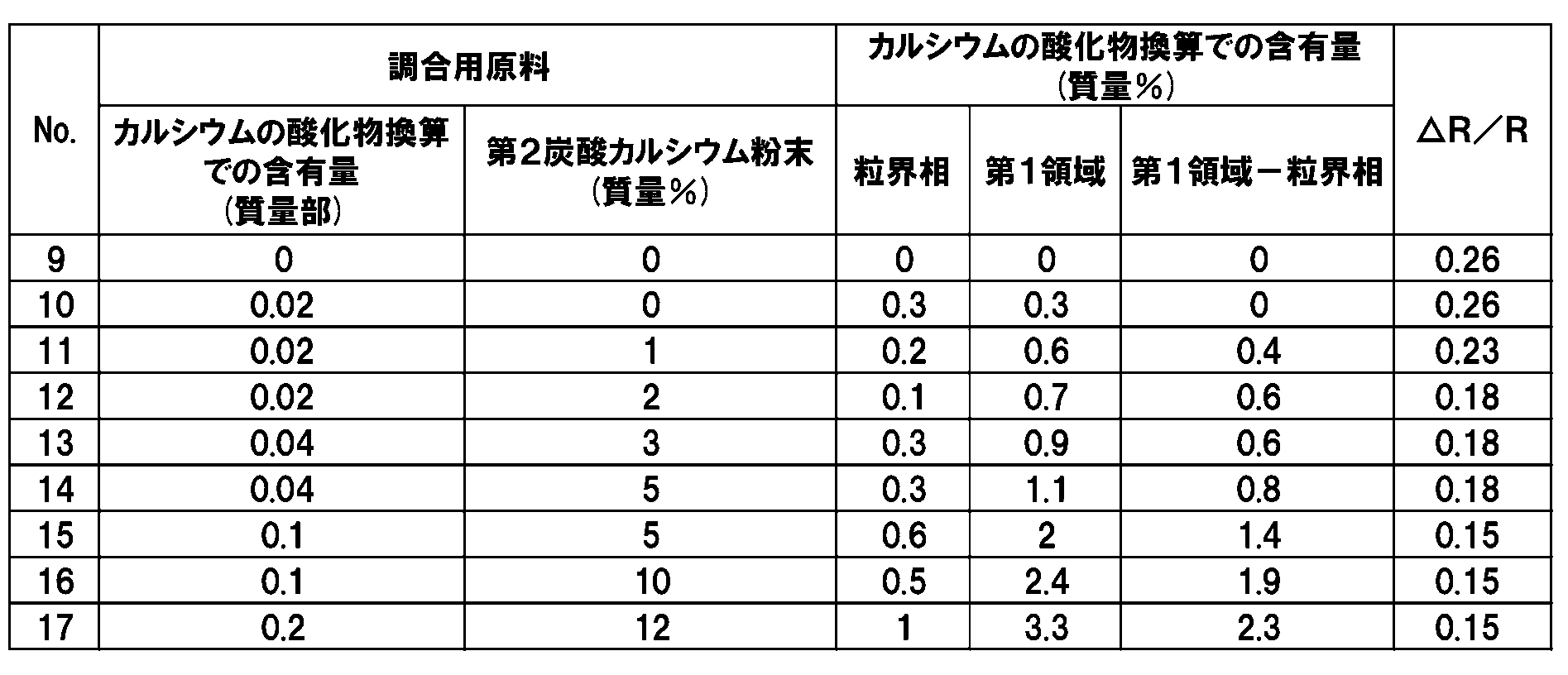
表2に示すように、試料No.11~17の電気抵抗のばらつきは、0.23以下と小さかった。このことから、第1領域におけるカルシウムの酸化物換算での含有量が、粒界におけるカルシウムの酸化物換算での含有量よりも多ければ、電気抵抗のばらつきがより小さくなることがわかった。
また、試料No.11~17の中でも、試料No.12~17の電気抵抗のばらつきは、0.18以下と小さかった。このことから、第1領域におけるカルシウムの酸化物換算での含有量が、粒界におけるカルシウムの酸化物換算での含有量よりも0.6質量%以上多ければ、電気抵抗のばらつきがより小さいことがわかった。
1、1a、1b:酸化アルミニウム結晶粒子
2:酸化チタン結晶粒子
3:第1領域
4、4a、4b:粒界
10:半導電性セラミック部材
2:酸化チタン結晶粒子
3:第1領域
4、4a、4b:粒界
10:半導電性セラミック部材
Claims (6)
- 酸化アルミニウム結晶粒子および酸化チタン結晶粒子をそれぞれ複数含有し、
全成分100質量%のうち、酸化アルミニウムおよび酸化チタンの合計が99質量%以上であり、
前記酸化アルミニウムおよび前記酸化チタンの合計100質量%のうち、前記酸化アルミニウムが86質量%以上96質量%以下であり、前記酸化チタンが4質量%以上14質量%以下であり、
X線光電子分光による測定において、結合エネルギーが456eV以上462eV以下の範囲にTiOx(0<x<2)のピークが存在し、
さらに珪素を含有しており、
2個の前記酸化アルミニウム結晶粒子および1個の前記酸化チタン結晶粒子に囲まれた第1領域における前記珪素の酸化物換算での含有量が、前記酸化アルミニウム結晶粒子および前記酸化チタン結晶粒子の粒界における前記珪素の酸化物換算での含有量よりも多い、半導電性セラミック部材。 - 前記第1領域における前記珪素の酸化物換算での含有量は、前記粒界における前記珪素の酸化物換算での含有量よりも0.5質量%以上多い、請求項1に記載の半導電性セラミック部材。
- さらにカルシウムを含有し、
前記第1領域における前記カルシウムの酸化物換算での含有量が、前記粒界における前記カルシウムの酸化物換算での含有量よりも多い、請求項1または請求項2に記載の半導電性セラミック部材。 - 前記第1領域における前記カルシウムの酸化物換算での含有量は、前記粒界における前記カルシウムの酸化物換算での含有量よりも0.6質量%以上多い、請求項3に記載の半導電性セラミック部材。
- 前記第1領域におけるジルコニウムの酸化物換算での含有量は、前記粒界におけるジルコニウムの酸化物換算での含有量よりも少ない、請求項1乃至請求項4のいずれかに記載の半導電性セラミック部材。
- 前記第1領域におけるナトリウムの酸化物換算での含有量が、前記粒界におけるナトリウムの酸化物換算での含有量よりも多い、請求項1乃至請求項5のいずれかに記載の半導電性セラミック部材。
Priority Applications (2)
| Application Number | Priority Date | Filing Date | Title |
|---|---|---|---|
| US17/279,203 US12027405B2 (en) | 2018-10-02 | 2019-09-24 | Semiconductive ceramic member |
| JP2020550314A JP7036938B2 (ja) | 2018-10-02 | 2019-09-24 | 半導電性セラミック部材 |
Applications Claiming Priority (2)
| Application Number | Priority Date | Filing Date | Title |
|---|---|---|---|
| JP2018187535 | 2018-10-02 | ||
| JP2018-187535 | 2018-10-02 |
Publications (1)
| Publication Number | Publication Date |
|---|---|
| WO2020071178A1 true WO2020071178A1 (ja) | 2020-04-09 |
Family
ID=70055694
Family Applications (1)
| Application Number | Title | Priority Date | Filing Date |
|---|---|---|---|
| PCT/JP2019/037299 Ceased WO2020071178A1 (ja) | 2018-10-02 | 2019-09-24 | 半導電性セラミック部材 |
Country Status (3)
| Country | Link |
|---|---|
| US (1) | US12027405B2 (ja) |
| JP (1) | JP7036938B2 (ja) |
| WO (1) | WO2020071178A1 (ja) |
Citations (2)
| Publication number | Priority date | Publication date | Assignee | Title |
|---|---|---|---|---|
| JP2017183470A (ja) * | 2016-03-30 | 2017-10-05 | 京セラ株式会社 | 載置用部材 |
| WO2018139673A1 (ja) * | 2017-01-30 | 2018-08-02 | 京セラ株式会社 | 半導電性セラミック部材およびウエハ搬送用保持具 |
Family Cites Families (4)
| Publication number | Priority date | Publication date | Assignee | Title |
|---|---|---|---|---|
| US6641939B1 (en) * | 1998-07-01 | 2003-11-04 | The Morgan Crucible Company Plc | Transition metal oxide doped alumina and methods of making and using |
| JP2007091488A (ja) | 2005-09-27 | 2007-04-12 | Toto Ltd | アルミナ焼結体 |
| EP2495225A4 (en) * | 2009-10-29 | 2013-05-01 | Kyocera Corp | DIELECTRIC CERAMICS AND RESONATOR THEREFOR |
| KR20210008038A (ko) | 2018-06-28 | 2021-01-20 | 교세라 가부시키가이샤 | 반도체 제조 장치용 부재의 제조 방법 및 반도체 제조 장치용 부재 |
-
2019
- 2019-09-24 JP JP2020550314A patent/JP7036938B2/ja active Active
- 2019-09-24 US US17/279,203 patent/US12027405B2/en active Active
- 2019-09-24 WO PCT/JP2019/037299 patent/WO2020071178A1/ja not_active Ceased
Patent Citations (2)
| Publication number | Priority date | Publication date | Assignee | Title |
|---|---|---|---|---|
| JP2017183470A (ja) * | 2016-03-30 | 2017-10-05 | 京セラ株式会社 | 載置用部材 |
| WO2018139673A1 (ja) * | 2017-01-30 | 2018-08-02 | 京セラ株式会社 | 半導電性セラミック部材およびウエハ搬送用保持具 |
Also Published As
| Publication number | Publication date |
|---|---|
| US20220020626A1 (en) | 2022-01-20 |
| JPWO2020071178A1 (ja) | 2021-09-02 |
| JP7036938B2 (ja) | 2022-03-15 |
| US12027405B2 (en) | 2024-07-02 |
Similar Documents
| Publication | Publication Date | Title |
|---|---|---|
| Srivastava et al. | Tuning the thermoelectric properties of A-site deficient SrTiO 3 ceramics by vacancies and carrier concentration | |
| JP6885972B2 (ja) | ウエハ搬送用保持具 | |
| Kebbede et al. | Anisotropic grain growth in α‐Al2O3 with SiO2 and TiO2 additions | |
| Kupp et al. | Particle size effects on yttrium aluminum garnet (YAG) phase formation by solid-state reaction | |
| EP3770135A1 (en) | Zirconia sintered body and method for producing same | |
| Sutorik et al. | The comparative influences of structural ordering, grain size, Li-content, and bulk density on the Li+-conductivity of Li0. 29La0. 57TiO3 | |
| KR102205178B1 (ko) | 마그네시아 및 그 제조 방법, 및 고열전도성 마그네시아 조성물, 이를 이용한 마그네시아 세라믹스 | |
| Brodnikovska et al. | Grains, grain boundaries and total ionic conductivity of 10Sc1CeSZ and 8YSZ solid electrolytes affected by crystalline structure and dopant content | |
| Amorese et al. | 4 f excitations in Ce Kondo lattices studied by resonant inelastic x-ray scattering | |
| Clark et al. | Understanding the effects of fabrication process on BaZr 0.9 Y 0.1 O 3− δ grain-boundary chemistry using atom probe tomography | |
| Thomas et al. | Characterization and Crystallization of Y‐Si‐Al‐O‐N Glass | |
| JP7267831B2 (ja) | 黒色セラミックス | |
| WO2020071178A1 (ja) | 半導電性セラミック部材 | |
| TWI501936B (zh) | Semi - conductive ceramic sintered body | |
| KR20220087425A (ko) | 산화물 스퍼터링 타깃 | |
| JP7643696B2 (ja) | セラミックス材料、圧粉体、焼結体、及び物品 | |
| KR101925215B1 (ko) | 다결정체 지르코니아 화합물 및 이의 제조 방법 | |
| JP7242699B2 (ja) | 黒色セラミックス | |
| US9548142B2 (en) | High-withstanding-voltage alumina sintered compact and high-withstanding-voltage member | |
| JP2008288428A (ja) | 静電チャック | |
| JP7787945B2 (ja) | アルミナ質焼結体、および静電チャック | |
| Schmid | The role of TiN in the intergranular phase‐forming process in TiN‐dispersed Si3N4 nanocomposites | |
| Kobayashi et al. | Conductivity of tazheranite ceramics synthesized by controlling composition | |
| Kolman et al. | Chemical inhomogeneity of silicates treated by plasma spraying | |
| US20250174402A1 (en) | Dielectric ceramic and ceramic capacitor using the same |
Legal Events
| Date | Code | Title | Description |
|---|---|---|---|
| 121 | Ep: the epo has been informed by wipo that ep was designated in this application |
Ref document number: 19868892 Country of ref document: EP Kind code of ref document: A1 |
|
| ENP | Entry into the national phase |
Ref document number: 2020550314 Country of ref document: JP Kind code of ref document: A |
|
| NENP | Non-entry into the national phase |
Ref country code: DE |
|
| 122 | Ep: pct application non-entry in european phase |
Ref document number: 19868892 Country of ref document: EP Kind code of ref document: A1 |