WO2020069028A1 - Dll3 binding proteins and methods of use - Google Patents
Dll3 binding proteins and methods of use Download PDFInfo
- Publication number
- WO2020069028A1 WO2020069028A1 PCT/US2019/053017 US2019053017W WO2020069028A1 WO 2020069028 A1 WO2020069028 A1 WO 2020069028A1 US 2019053017 W US2019053017 W US 2019053017W WO 2020069028 A1 WO2020069028 A1 WO 2020069028A1
- Authority
- WO
- WIPO (PCT)
- Prior art keywords
- dll3
- protein
- seq
- domain
- binding
- Prior art date
- Legal status (The legal status is an assumption and is not a legal conclusion. Google has not performed a legal analysis and makes no representation as to the accuracy of the status listed.)
- Ceased
Links
Classifications
-
- C—CHEMISTRY; METALLURGY
- C07—ORGANIC CHEMISTRY
- C07K—PEPTIDES
- C07K16/00—Immunoglobulins [IGs], e.g. monoclonal or polyclonal antibodies
- C07K16/46—Hybrid immunoglobulins
- C07K16/468—Immunoglobulins having two or more different antigen binding sites, e.g. multifunctional antibodies
-
- C—CHEMISTRY; METALLURGY
- C12—BIOCHEMISTRY; BEER; SPIRITS; WINE; VINEGAR; MICROBIOLOGY; ENZYMOLOGY; MUTATION OR GENETIC ENGINEERING
- C12N—MICROORGANISMS OR ENZYMES; COMPOSITIONS THEREOF; PROPAGATING, PRESERVING, OR MAINTAINING MICROORGANISMS; MUTATION OR GENETIC ENGINEERING; CULTURE MEDIA
- C12N15/00—Mutation or genetic engineering; DNA or RNA concerning genetic engineering, vectors, e.g. plasmids, or their isolation, preparation or purification; Use of hosts therefor
- C12N15/09—Recombinant DNA-technology
- C12N15/11—DNA or RNA fragments; Modified forms thereof; Non-coding nucleic acids having a biological activity
- C12N15/62—DNA sequences coding for fusion proteins
- C12N15/625—DNA sequences coding for fusion proteins containing a sequence coding for a signal sequence
-
- A—HUMAN NECESSITIES
- A61—MEDICAL OR VETERINARY SCIENCE; HYGIENE
- A61K—PREPARATIONS FOR MEDICAL, DENTAL OR TOILETRY PURPOSES
- A61K39/00—Medicinal preparations containing antigens or antibodies
- A61K39/395—Antibodies; Immunoglobulins; Immune serum, e.g. antilymphocytic serum
- A61K39/39591—Stabilisation, fragmentation
-
- A—HUMAN NECESSITIES
- A61—MEDICAL OR VETERINARY SCIENCE; HYGIENE
- A61P—SPECIFIC THERAPEUTIC ACTIVITY OF CHEMICAL COMPOUNDS OR MEDICINAL PREPARATIONS
- A61P35/00—Antineoplastic agents
-
- C—CHEMISTRY; METALLURGY
- C07—ORGANIC CHEMISTRY
- C07K—PEPTIDES
- C07K16/00—Immunoglobulins [IGs], e.g. monoclonal or polyclonal antibodies
- C07K16/18—Immunoglobulins [IGs], e.g. monoclonal or polyclonal antibodies against material from animals or humans
-
- C—CHEMISTRY; METALLURGY
- C07—ORGANIC CHEMISTRY
- C07K—PEPTIDES
- C07K16/00—Immunoglobulins [IGs], e.g. monoclonal or polyclonal antibodies
- C07K16/18—Immunoglobulins [IGs], e.g. monoclonal or polyclonal antibodies against material from animals or humans
- C07K16/28—Immunoglobulins [IGs], e.g. monoclonal or polyclonal antibodies against material from animals or humans against receptors, cell surface antigens or cell surface determinants
-
- C—CHEMISTRY; METALLURGY
- C07—ORGANIC CHEMISTRY
- C07K—PEPTIDES
- C07K16/00—Immunoglobulins [IGs], e.g. monoclonal or polyclonal antibodies
- C07K16/18—Immunoglobulins [IGs], e.g. monoclonal or polyclonal antibodies against material from animals or humans
- C07K16/28—Immunoglobulins [IGs], e.g. monoclonal or polyclonal antibodies against material from animals or humans against receptors, cell surface antigens or cell surface determinants
- C07K16/2803—Immunoglobulins [IGs], e.g. monoclonal or polyclonal antibodies against material from animals or humans against receptors, cell surface antigens or cell surface determinants against the immunoglobulin superfamily
- C07K16/2809—Immunoglobulins [IGs], e.g. monoclonal or polyclonal antibodies against material from animals or humans against receptors, cell surface antigens or cell surface determinants against the immunoglobulin superfamily against the T-cell receptor (TcR)-CD3 complex
-
- C—CHEMISTRY; METALLURGY
- C07—ORGANIC CHEMISTRY
- C07K—PEPTIDES
- C07K16/00—Immunoglobulins [IGs], e.g. monoclonal or polyclonal antibodies
- C07K16/18—Immunoglobulins [IGs], e.g. monoclonal or polyclonal antibodies against material from animals or humans
- C07K16/28—Immunoglobulins [IGs], e.g. monoclonal or polyclonal antibodies against material from animals or humans against receptors, cell surface antigens or cell surface determinants
- C07K16/30—Immunoglobulins [IGs], e.g. monoclonal or polyclonal antibodies against material from animals or humans against receptors, cell surface antigens or cell surface determinants from tumour cells
-
- C—CHEMISTRY; METALLURGY
- C12—BIOCHEMISTRY; BEER; SPIRITS; WINE; VINEGAR; MICROBIOLOGY; ENZYMOLOGY; MUTATION OR GENETIC ENGINEERING
- C12N—MICROORGANISMS OR ENZYMES; COMPOSITIONS THEREOF; PROPAGATING, PRESERVING, OR MAINTAINING MICROORGANISMS; MUTATION OR GENETIC ENGINEERING; CULTURE MEDIA
- C12N15/00—Mutation or genetic engineering; DNA or RNA concerning genetic engineering, vectors, e.g. plasmids, or their isolation, preparation or purification; Use of hosts therefor
- C12N15/09—Recombinant DNA-technology
- C12N15/63—Introduction of foreign genetic material using vectors; Vectors; Use of hosts therefor; Regulation of expression
-
- A—HUMAN NECESSITIES
- A61—MEDICAL OR VETERINARY SCIENCE; HYGIENE
- A61K—PREPARATIONS FOR MEDICAL, DENTAL OR TOILETRY PURPOSES
- A61K39/00—Medicinal preparations containing antigens or antibodies
- A61K2039/505—Medicinal preparations containing antigens or antibodies comprising antibodies
-
- A—HUMAN NECESSITIES
- A61—MEDICAL OR VETERINARY SCIENCE; HYGIENE
- A61K—PREPARATIONS FOR MEDICAL, DENTAL OR TOILETRY PURPOSES
- A61K39/00—Medicinal preparations containing antigens or antibodies
- A61K39/395—Antibodies; Immunoglobulins; Immune serum, e.g. antilymphocytic serum
-
- C—CHEMISTRY; METALLURGY
- C07—ORGANIC CHEMISTRY
- C07K—PEPTIDES
- C07K2317/00—Immunoglobulins specific features
- C07K2317/20—Immunoglobulins specific features characterized by taxonomic origin
- C07K2317/22—Immunoglobulins specific features characterized by taxonomic origin from camelids, e.g. camel, llama or dromedary
-
- C—CHEMISTRY; METALLURGY
- C07—ORGANIC CHEMISTRY
- C07K—PEPTIDES
- C07K2317/00—Immunoglobulins specific features
- C07K2317/20—Immunoglobulins specific features characterized by taxonomic origin
- C07K2317/24—Immunoglobulins specific features characterized by taxonomic origin containing regions, domains or residues from different species, e.g. chimeric, humanized or veneered
-
- C—CHEMISTRY; METALLURGY
- C07—ORGANIC CHEMISTRY
- C07K—PEPTIDES
- C07K2317/00—Immunoglobulins specific features
- C07K2317/30—Immunoglobulins specific features characterized by aspects of specificity or valency
- C07K2317/31—Immunoglobulins specific features characterized by aspects of specificity or valency multispecific
-
- C—CHEMISTRY; METALLURGY
- C07—ORGANIC CHEMISTRY
- C07K—PEPTIDES
- C07K2317/00—Immunoglobulins specific features
- C07K2317/50—Immunoglobulins specific features characterized by immunoglobulin fragments
- C07K2317/55—Fab or Fab'
-
- C—CHEMISTRY; METALLURGY
- C07—ORGANIC CHEMISTRY
- C07K—PEPTIDES
- C07K2317/00—Immunoglobulins specific features
- C07K2317/50—Immunoglobulins specific features characterized by immunoglobulin fragments
- C07K2317/56—Immunoglobulins specific features characterized by immunoglobulin fragments variable (Fv) region, i.e. VH and/or VL
- C07K2317/565—Complementarity determining region [CDR]
-
- C—CHEMISTRY; METALLURGY
- C07—ORGANIC CHEMISTRY
- C07K—PEPTIDES
- C07K2317/00—Immunoglobulins specific features
- C07K2317/50—Immunoglobulins specific features characterized by immunoglobulin fragments
- C07K2317/56—Immunoglobulins specific features characterized by immunoglobulin fragments variable (Fv) region, i.e. VH and/or VL
- C07K2317/569—Single domain, e.g. dAb, sdAb, VHH, VNAR or nanobody®
-
- C—CHEMISTRY; METALLURGY
- C07—ORGANIC CHEMISTRY
- C07K—PEPTIDES
- C07K2317/00—Immunoglobulins specific features
- C07K2317/60—Immunoglobulins specific features characterized by non-natural combinations of immunoglobulin fragments
- C07K2317/62—Immunoglobulins specific features characterized by non-natural combinations of immunoglobulin fragments comprising only variable region components
-
- C—CHEMISTRY; METALLURGY
- C07—ORGANIC CHEMISTRY
- C07K—PEPTIDES
- C07K2317/00—Immunoglobulins specific features
- C07K2317/60—Immunoglobulins specific features characterized by non-natural combinations of immunoglobulin fragments
- C07K2317/62—Immunoglobulins specific features characterized by non-natural combinations of immunoglobulin fragments comprising only variable region components
- C07K2317/622—Single chain antibody (scFv)
-
- C—CHEMISTRY; METALLURGY
- C07—ORGANIC CHEMISTRY
- C07K—PEPTIDES
- C07K2317/00—Immunoglobulins specific features
- C07K2317/70—Immunoglobulins specific features characterized by effect upon binding to a cell or to an antigen
- C07K2317/73—Inducing cell death, e.g. apoptosis, necrosis or inhibition of cell proliferation
-
- C—CHEMISTRY; METALLURGY
- C07—ORGANIC CHEMISTRY
- C07K—PEPTIDES
- C07K2317/00—Immunoglobulins specific features
- C07K2317/70—Immunoglobulins specific features characterized by effect upon binding to a cell or to an antigen
- C07K2317/76—Antagonist effect on antigen, e.g. neutralization or inhibition of binding
-
- C—CHEMISTRY; METALLURGY
- C07—ORGANIC CHEMISTRY
- C07K—PEPTIDES
- C07K2317/00—Immunoglobulins specific features
- C07K2317/90—Immunoglobulins specific features characterized by (pharmaco)kinetic aspects or by stability of the immunoglobulin
- C07K2317/92—Affinity (KD), association rate (Ka), dissociation rate (Kd) or EC50 value
-
- C—CHEMISTRY; METALLURGY
- C07—ORGANIC CHEMISTRY
- C07K—PEPTIDES
- C07K2319/00—Fusion polypeptide
- C07K2319/31—Fusion polypeptide fusions, other than Fc, for prolonged plasma life, e.g. albumin
Definitions
- NK natural killer
- CTLs cytotoxic T lymphocytes
- One embodiment provides a DLL3 targeting trispecific protein, wherein said protein comprises (a) a first domain (A) which is a single chain variable fragment that specifically binds to a human CD3; (b) a second domain (B) which is a single domain antibody that specifically binds to a human serum albumin protein; and (c) a third domain (C) which is a single domain antibody that specifically binds to a DLL3 protein.
- One embodiment provides a DLL3 targeting trispecific protein, wherein said protein comprises (a) a first domain (A) which is a single chain variable fragment that specifically binds to a human CD3; (b) a second domain (B) which is a single domain antibody that specifically binds to a human serum albumin protein; and (c) a third domain (C) which is a single domain antibody that specifically binds to DLL3, wherein the third domain comprises the sequence of SEQ ID No.68 or SEQ ID No. 75, or is derived from SEQ ID No.68 or SEQ ID No. 75.
- J 2 is A, D, E, G, H, I, K, L, N, P, Q, R, S, T, V, or Y;
- J 3 is A, D, E, G, H, N, R, or T;
- J 4 is H, P, R, or S
- J 7 is A, F, I, L, M, R, S, T, V, or Y;
- Z 2 is D, E, G, H, K, N, Q, R, S, T, V, or Y;
- Z 3 is Q, or W
- Z 4 is A, D, E, G, H, I, K, L, M, P, R, S, T, or V;
- Z 5 is A, D, E, G, N, R, S, T, or Y;
- Z 6 is A, P, R, or S
- Z 7 is A, D, F, G, H, L, M, N, Q, R, S, T, V, or Y;
- Z 8 is A, G, I, K, P, Q, R, S, or T;
- Z 9 is F, H, or Y.
- the linkers Ll and L2 are each independently selected from (GS) n (SEQ ID No.1809), (GGS) n (SEQ ID No.1810), (GGGS) n (SEQ ID No.1811), (GGSG) n (SEQ ID No.1812), (GGSGG) n (SEQ ID No.1813), or (GGGGS) n (SEQ ID No.1814), wherein n is 1, 2, 3, 4, 5, 6, 7, 8, 9, or 10, or GGGGSGGGS (SEQ ID No. 1808).
- the domains are linked in the order H2N-(A)-(B)-(C)-COOH or by linkers Ll and L2 in the order of H2N-(A)-Ll-(B)-L2-(C)-COOH.
- DLL3 binding protein comprising the following formula:
- domains are linked in the order H2N-(A)-(B)-(C)- COOH, H2N-(A)-(C)-(B)-COOH, H2N-(B)-(A)-(C)-COOH, H2N-(B)-(C)-(A)-COOH, H2N-
- the phage display library expresses one or more molecules derived from the parental molecule.
- affinity matured binding molecule is selected from the one or more molecules derived from the parental molecule.
- the affinity matured DLL3 binding molecule has a greater binding affinity toward the DLL3 protein than a binding affinity of the parental molecule toward the DLL3 protein.
- the affinity matured binding DLL3 binding molecule has a binding affinity toward the DLL3 protein that is about 2-fold about 50-fold greater than the binding affinity of the parental molecule toward the DLL3 protein.
- the affinity matured binding DLL3 binding molecule has a binding affinity toward the DLL3 protein that is about 3 -fold greater than the binding affinity of the parental molecule toward the DLL3 protein.
- the third domain (C) comprises a sequence that is at least about 75% identical to a sequence selected from the group consisting of SEQ ID Nos. 1-442 and 1886. In some embodiments, the third domain (C) comprises a sequence that is at least about 75% identical to a sequence selected from the group consisting of SEQ ID Nos. 1-52. In some embodiments, the third domain (C) comprises a CDR1, a CDR2, and a CDR3.
- the CDR1 comprises a sequence selected from the group consisting of SEQ ID Nos. 495-528, or one or more amino acid substitutions relative to a sequence selected from the group consisting of SEQ ID Nos.495-528.
- the CDR2 comprises a sequence selected from the group consisting of SEQ ID Nos. 937-970, or one or more amino acid substitutions relative to a sequence selected from the group consisting of SEQ ID Nos. 937- 970.
- the CDR3 comprises a sequence selected from the group consisting of SEQ ID Nos. 1379-1412, or one or more amino acid substitutions relative to a sequence selected from the group consisting of SEQ ID Nos. 1379 to 1412.
- the third domain (C) comprises a sequence that is at least about 80% identical to a sequence selected from the group consisting of SEQ ID Nos. 53-86.
- the CDR1 comprises a sequence selected from the group consisting of SEQ ID Nos. 529-809, or more amino acid substitutions relative to a sequence selected from the group consisting of SEQ ID Nos. 529-809.
- the CDR2 comprises a sequence that has one or more amino acid substitutions relative to a sequence selected from the group consisting of SEQ ID Nos. 971 to 1251.
- the CDR3 comprises a sequence selected from the group consisting of SEQ ID Nos.
- the third domain (C) comprises a sequence that is at least about 75% identical to a sequence selected from the group consisting of SEQ ID Nos. 87-367.
- the CDR1 comprises a sequence selected from the group consisting of SEQ ID Nos. 810-884, or one or more amino acid substitutions relative to a sequence selected from the group consisting of SEQ ID Nos. 810 to 884.
- the CDR2 comprises a sequence selected from the group consisting of SEQ ID Nos.
- the CDR3 comprises a sequence selected from the group consisting of SEQ ID Nos. 1692 to 1768, or one or more amino acid substitutions relative to a sequence selected from the group consisting of SEQ ID Nos. 1692 to 1768.
- One embodiment provides a DLL3 targeting trispecific protein, wherein said protein comprises (a) a first domain (A) which specifically binds to human CD3; (b) a second domain (B) which is a half-life extension domain; and (c) a third domain (C) which specifically binds to DLL3, wherein the third domain comprises the sequence of SEQ ID No.68 or is derived from SEQ ID No.68.
- the third domain (C) is derived from SEQ ID No.68.
- SEQ ID No.68 comprises a CDR1, a CDR2, and a CDR3.
- the CDR1 comprises the following sequence: GX1X2X3X4X5NX6X7X8.
- the CDR2 comprises the following sequence: GJ1 SJ2J3J4J5J6J7J8J9J10SJ11KJ12 (SEQ ID No. 1895).
- Xi is A, E, F, G, I, K, L, N, Q, R, S, T, V, or Y;
- X 2 is A, G, I, K, P, R, S, T, or V;
- X 3 is A, D, F, K, L, N, P, Q, R, S, T, or Y;
- X 5 is F, I, K, L, M, N, R, S, T, or V;
- X 6 is A, or G
- X 7 is F, I, L, M, T, V, or Y;
- X 8 is A, or G.
- Ji is I, or V
- h is A, K, P, R, or S;
- J 3 is D, or N;
- J 5 is S, or T;
- Jv is A, I, L, M, V, or Y;
- J 8 is D, F, H, I, L, N, S, T, V, or Y;
- J10 is A, D, E, G, K, Q, S, or V;
- J11 is A, or V
- J12 is G, or V.
- Zi is F, or Y;
- Z 2 is G, H, I, K, N, R, S, or T;
- Z 3 is A, F, H, I, K, L, M, N, P, Q, R, S, T, or Y;
- Z 4 is A, E, F, G, H, I, K, L, M, N, Q, R, S, T, V, or Y;
- Z 6 is G, K, L, R, or T;
- Z 7 is A, G, H, L, Q, R, S, T, V, or Y;
- Z 8 is A, D, E, G, H, P, Q, S, T, W, or Y;
- Z10 is A, G, K, P, R, S, T, or V;
- One embodiment provides a DLL3 targeting trispecific protein, wherein said protein comprises (a) a first domain (A) which specifically binds to human CD3; (b) a second domain (B) which is a half-life extension domain; and (c) a third domain (C) which specifically binds to DLL3, wherein the third domain comprises the sequence of SEQ ID No.75 or is derived from SEQ ID No.75.
- SEQ ID No.75 comprises a CDR1, a CDR2, and a CDR3, wherein the CDR1 comprises the following sequence: X I X 2 X3X4X 5 X6X7SX 8 A, the CDR2 comprises the following sequence: GJiSEEGRJsEYEJxSVKG (SEQ ID No. 1894), and the CDR3 comprises the following sequence: ZiZ 2 Z3Z4Z5Z 6 Z7Z 8 Z 9.
- Xi is A, D, E, F, G, H, K, L, M, N, Q, R, S, V, W, or Y;
- X 2 is D, E, H, K, M, P, R, S, T, or Y
- X 3 is A, D, G, H, K, N, P, Q, R, S, T, V, or Y;
- X 5 is A, F, G, H, K, L, M, N, Q, R, S, T, V, W, or Y;
- X 7 is L, or M
- X 8 is I, L, M, S, T, or V.
- J 3 is A, D, E, G, H, N, R, or T;
- J 4 is H, P, R, or S
- J 5 is A, H, I, K, M, N, Q, R, T, or V;
- J 6 is A, D, G, H, I, L, M, N, S, T, V, or Y;
- Jv is A, F, I, L, M, R, S, T, V, or Y;
- J 8 is A, D, E, G, H, K, L, N, R, S, or V;
- Zi is L, or Y;
- Z 2 is D, E, G, H, K, N, Q, R, S, T, V, or Y;
- Z 3 is Q, or W
- Z 4 is A, D, E, G, H, I, K, L, M, P, R, S, T, or V;
- Z 8 is A, G, I, K, P, Q, R, S, or T;
- Z 9 is F, H, or Y.
- the third domain (C) comprises a humanized antibody or an antigen binding fragment thereof.
- the third domain (C) comprises a single domain antibody, a VHH domain, a scFv, a VH domain, a VL domain, a Fab, a Fab’, a non-Ig domain, a ligand, a knottin, or a small molecule entity that specifically binds to DLL3.
- the third domain (C) comprises the single domain antibody.
- the bulk serum protein comprises albumin, transferrin, IgGl, IgG2, IgG4, IgG3, IgA monomer, Factor XIII, Fibrinogen, IgE, pentameric IgM, or IgK free light chain.
- the bulk serum protein comprises the albumin.
- the second domain (B) comprises a sequence that is at least about 75% identical to a sequence selected from the group consisting of SEQ ID Nos. 1769-1778. In some embodiments, the second domain (B) comprises a sequence that is at least about 75% identical to SEQ ID No.1774.
- the first domain (A) comprises a single domain antibody, a VHH domain, a scFv, a VH domain, a VL domain, a Fab, a Fab’, a non-Ig domain, a ligand, a knottin, or a small molecule entity that specifically binds to CD3.
- the first domain (A) comprises a sequence selected from the group consisting of SEQ ID Nos. 1793-1807.
- the third domain (C) comprises the following formula:
- the third domain (C) comprises a sequence that is at least 75% identical to a sequence selected from the group consisting of SEQ ID Nos.
- the domains C and B are connected by linker Ll and domains B and A are connected by linker L2.
- the linkers Ll and L2 are each independently selected from (GS) n (SEQ ID No.1809), (GGS) n (SEQ ID No.1810), (GGGS) n (SEQ ID NO.
- the linkers Ll and L2 are each independently (GGGGS) 4 (SEQ ID No.1817) or (GGGGS (SEQ ID No.1818).
- the protein binds to DLL3 with a binding affinity (Kd) of about 0.1 nM to about 50 nM.
- the protein binds to human DLL3, cynomolgus DLL3, or both human and cynomolgus DLL3. In some embodiments, the protein is less than about 80 kDa. In some embodiments, the protein is about 50 to about 75 kDa. In some embodiments, the protein is less than about 60 kDa. In some embodiments, the protein has an elimination half-time of at least about 50 hours. In some embodiments, the protein has an elimination half-time of at least about 100 hours. In some embodiments, the protein has increased tissue penetration as compared to an IgG to the same DLL3. In some embodiments, the domains are linked in the order H2N-(A)-(B)-(C)-COOH.
- One embodiment provides a pharmaceutical composition comprising (i) the DLL3 targeting trispecific protein according to any one of above embodiments or a DLL3 binding protein according to this disclosure, and (ii) a pharmaceutically acceptable carrier.
- One embodiment provides a method for preparing a DLL3 targeting trispecific binding protein according to any one of above embodiments, the method comprising: i) providing a DLL3 protein or a fragment thereof; ii) exposing a recombinant library of DLL3 binding proteins to the DLL3 protein or a fragment thereof ; iii) selecting from the library a DLL3 binding protein which specifically binds to said oligomer or derivative thereof; and (iv) preparing the DLL3 targeting trispecific protein using the DLL3 binding protein identified in step (iii).
- the recombinant library of DLL3 binding proteins is exposed to the DLL3 protein in vitro by screening the recombinant library with said DLL3 protein.
- the recombinant library is expressed on the surface of a bacteriophage.
- the recombinant library is expressed on the surface of yeast cells.
- the recombinant library is expressed on the surface of bacterial cells.
- the recombinant library is expressed as RNA-protein fusions.
- One embodiment provides a process for the production of a DLL3 targeting trispecific protein according to any one of above embodiments, said process comprising culturing a host transformed or transfected with a vector comprising a nucleic acid sequence encoding the DLL3 trispecific protein according to any one of above embodiments under conditions allowing the expression of the DLL3 targeting trispecific protein and recovering and purifying the produced protein from the culture.
- the DLL3 binding protein comprises a sequence that is at least about 75% identical to a sequence selected from the group consisting of SEQ ID Nos. 1-442 and 1886. In some embodiments, the DLL3 binding protein comprises a sequence that is at least about 75% identical to a sequence selected from the group consisting of SEQ ID Nos. 1-52. In some embodiments, the DLL3 binding protein comprises a sequence that is at least about 75% identical to a sequence selected from the group consisting of SEQ ID Nos. 53-86. In some embodiments, the DLL3 binding protein comprises a sequence that is at least about 75% identical to a sequence selected from the group consisting of SEQ ID Nos. 87-367.
- the DLL3 binding protein comprises a sequence that is at least about 75% identical to a sequence selected from the group consisting of SEQ ID Nos. 368-442.
- One embodiment provides a DLL3 binding protein that is derived from a parental DLL3 binding protein comprising the sequence of SEQ ID No. 68.
- One embodiment provides a DLL3 binding protein that is derived from a parental DLL3 binding protein comprising the sequence of SEQ ID No. 75 or comprises the sequence of SEQ ID No. 75.
- One embodiment provides a method for preparing a DLL3 binding protein according to this disclosure, the method comprising: i) providing a DLL3 protein or a fragment thereof;
- the recombinant library of DLL3 binding proteins is exposed to the DLL3 protein in vitro by screening the recombinant library with said DLL3 protein.
- the recombinant library is expressed on the surface of a bacteriophage.
- the recombinant library is expressed on the surface of yeast cells.
- the recombinant library is expressed on the surface of bacterial cells.
- the recombinant library is expressed as RNA-protein fusions. In some embodiments, the recombinant library is an scFv library or an Fab library. In some embodiments, the recombinant antibody library is a single domain library.
- One embodiment provides a method for the treatment or amelioration of a proliferative disease, or a tumorous disease, comprising the administration of the DLL3 targeting trispecific protein according to any one of above embodiments, a DLL3 binding protein according to this disclosure, or a pharmaceutical composition as provided herein, to a subject in need thereof.
- the subject is human.
- the method further comprises administration of an agent in combination with the DLL3 targeting trispecific protein according to any one of above embodiments, the DLL3 binding protein according to this disclosure, or the pharmaceutical composition as provided herein.
- the DLL3 targeting trispecific protein or the DLL3 binding protein selectively binds to tumor cells expressing DLL3.
- the DLL3 targeting trispecific protein mediates T cell killing of tumor cells expressing DLL3.
- the tumorous disease comprises a solid tumor disease.
- the solid tumor disease comprises lung cancer, gastric cancer, ovarian cancer, or triple negative breast cancer. In some embodiments, in the solid tumor disease is metastatic.
- One embodiment provides a method for the treatment or amelioration of a proliferative disease, or a tumorous disease, comprising administration of a DLL3 binding domain comprising a sequence as set forth in SEQ ID No. 68 or 75 or a DLL3 binding protein comprising a sequence as set forth in SEQ ID No. 68 or 75.
- the DLL3 targeting trispecific protein or the DLL3 binding protein at a dose of up to 10 mg/kg.
- the protein is administered at least once a week.
- the protein is administered twice per week.
- the protein is administered every other week.
- DLL3 binding protein comprising an amino acid sequence as set forth in SEQ ID No. 1890 or SEQ ID No. 1891.
- One embodiment provides a DLL3 targeting trispecific protein, wherein said protein comprises
- a second domain which is a single domain antibody that specifically binds to a human serum albumin protein
- the domains are linked in the order H2N-(A)-(B)-(C)-COOH, H2N-(A)-(C)-(B)-COOH, H2N-(B)-(A)-(C)-COOH, H2N-(B)-(A)-COOH, H2N-(C)-(B)- (A)-COOH, or H2N-(C)-(A)-(B)-COOH, or by linkers Ll and L2, in the order H2N-(A)-Ll-(B)- L2-(C)-COOH, H2N-(A)-Ll-(C)-L2-(B)-COOH, H2N-(B)-Ll-(A)-L2-(C)-COOH, H2N-(B)-Ll-(A)-L2-(C)-COOH, H2N-(B)-Ll- (C)-L2-(A)-COOH, H2N
- the third domain (C) is an affinity matured binding molecule derived from a parental molecule that specifically binds to the DLL3 protein.
- the affinity matured binding DLL3 binding molecule has a binding affinity toward the DLL3 protein that is about 2-fold about 50-fold greater than the binding affinity of the parental molecule toward the DLL3 protein.
- the third domain (C) comprises a sequence selected from the group consisting of SEQ ID Nos. 1-442 and 1886. In some embodiments, the third domain (C) comprises a sequence that is selected from the group consisting of SEQ ID Nos. 1-52. In some embodiments, the third domain (C) comprises a CDR1, a CDR2, and a CDR3, wherein the CDR1 comprises a sequence selected from the group consisting of SEQ ID Nos. 443-884 and 1887, wherein the CDR2 comprises a sequence selected from the group consisting of SEQ ID Nos. 885-1326 and 1888, and wherein the CDR3 comprises a sequence selected from the group consisting of SEQ ID Nos.
- the third domain (C) comprises a CDR1, a CDR2, and a CDR3, and wherein the CDR1 comprises a sequence selected from the group consisting of SEQ ID Nos. 529-809.
- the CDR2 comprises a sequence selected from the group consisting of SEQ ID Nos. 971 to 1251.
- the CDR3 comprises a sequence selected from the group consisting of SEQ ID Nos. 1379-1412.
- the third domain (C) comprises a sequence selected from the group consisting of SEQ ID Nos. 87-367.
- the third domain (C) comprises a CDR1, a CDR2, and a CDR3, and wherein the CDR1 comprises a sequence selected from the group consisting of SEQ ID Nos. 810-884.
- the CDR2 comprises a sequence selected from the group consisting of SEQ ID Nos. 1252 to 1326.
- the CDR3 comprises a sequence selected from the group consisting of SEQ ID Nos. 1692 to 1768.
- the third domain (C) comprises a sequence selected from the group consisting of SEQ ID Nos. 368-442.
- the first domain (A) comprises a sequence selected from the group consisting of SEQ ID Nos. 1793 to 1807 and 1897-1898.
- the domains are linked in the order H2N-(A)-(B)-(C)-COOH or by linkers Ll and L2 in the order of H2N-(A)-L 1 -(B)-L2-(C)-COOH.
- the linkers Ll and L2 independently comprise the sequence of GGGGSGGGS (SEQ ID No. 1808).
- the DLL3 targeting trispecific protein comprises the sequence of SEQ ID No. 1890 or SEQ ID No. 1891.
- One embodiment provides a DLL3 targeting trispecific protein, wherein said protein comprises (a) a first domain (A) which is a single chain variable fragment that specifically binds to a human CD3; (b) a second domain (B) which is a single domain antibody that specifically binds to a human serum albumin protein; and (c) a third domain (C) which is a single domain antibody that specifically binds to DLL3, wherein the third domain comprises the sequence of SEQ ID No.68 or SEQ ID No. 75, or is derived from SEQ ID No.68 or SEQ ID No. 75. In some embodiments, the third domain (C) is derived from SEQ ID No. 68 or from SEQ ID No. 75. In some embodiments, the third domain (C) comprises the sequence of SEQ ID No. 68 or the sequence of SEQ ID No. 75.
- DLL3 binding protein comprising the following formula:
- the CDR1 comprises a sequence selected from the group consisting of SEQ ID Nos. 443-884 and 1887
- the CDR2 comprises a sequence selected from the group consisting of SEQ ID Nos. 885-1326 and 1888
- the CDR3 comprises a sequence selected from the group consisting of SEQ ID Nos. 1327-1768 and 1889.
- a DLL3 targeting trispecific protein wherein said protein comprises
- a second domain which is a single domain antibody that specifically binds to a human serum albumin protein
- One embodiment provides, a DLL3 targeting trispecific protein, wherein said protein comprises
- a second domain which is a single domain antibody that specifically binds to a human serum albumin protein
- a third domain which is a single domain antibody that specifically binds to DLL3, wherein the third domain comprises a CDR1 that has an amino acid sequence selected from the group consisting of SEQ ID Nos. 851, 867, 871, 872, 873, 874, and 1887; a CDR2 that has an amino acid sequence selected from the group consisting of SEQ ID Nos. 1293, 1309, 1313, 1314, 1315, 1316 and 1888; and a CDR3 that has an amino acid sequence selected from the group consisting of SEQ ID Nos. 1735, 1751, 1755, 1756, 1757, 1758, and 1889.
- the third domain (C) comprises a sequence that is at least 80% identical to a sequence selected from the group consisting of SEQ ID Nos. 408, 425, 432, 430, 431, and 1886. In some embodiments, the third domain (C) comprises a sequence selected from the group consisting of SEQ ID Nos. 408, 425, 432, 430, 431, and 1886.
- the domains are linked in the order H2N-(A)-(B)-(C)-COOH, H2N-(A)-(C)-(B)-COOH, H2N-(B)-(A)-(C)-COOH, H2N-(B)-(A)-COOH, H2N-(C)-(B)- (A)-COOH, or H2N-(C)-(A)-(B)-COOH, or by linkers Ll and L2, in the order H2N-(A)-Ll-(B)- L2-(C)-COOH, H2N-(A)-Ll-(C)-L2-(B)-COOH, H2N-(B)-Ll-(A)-L2-(C)-COOH, H2N-(B)-Ll-(A)-L2-(C)-COOH, H2N-(B)-Ll- (C)-L2-(A)-COOH, H2N
- the domains are linked in the order H2N-(A)-(B)-(C)-COOH or by linkers Ll and L2 in the order of H2N-(A)-Ll-(B)-L2-(C)-COOH. In some embodiments, the domains are linked in the order H2N-(C)-(B)-(A)-COOH or by linkers Ll and L2 in the order of H2N-(C)-Ll-(B)-L2-(A)-COOH. In some embodiments, the third domain (C) is an affinity matured binding molecule derived from a parental molecule that specifically binds to the DLL3 protein.
- the affinity matured binding DLL3 binding molecule has a binding affinity toward the DLL3 protein that is about 2-fold about 50-fold greater than the binding affinity of the parental molecule toward the DLL3 protein.
- the parental molecule comprises the amino acid sequence of SEQ ID No. 68 or SEQ ID No. 75.
- the linkers Ll and L2 are each independently selected from the group consisting of (GS) n (SEQ ID No.1809), (GGS) n (SEQ ID No.1810), (GGGS) n (SEQ ID No.1811), (GGSG) n (SEQ ID No.1812), (GGSGG) n (SEQ ID No.l8l3), or (GGGGS) n (SEQ ID No.1814), wherein n is 1, 2, 3, 4, 5, 6, 7, 8, 9, or 10.
- the linkers Ll and L2 independently comprises the sequence of GGGGSGGGS (SEQ ID No. 1808).
- One embodiment provides a DLL3 binding protein comprising a CDR1 that has the amino acid sequence of SEQ ID No. 874, a CDR2 that has the amino acid sequence of SEQ ID No. 1316, and a CDR3 that has the amino acid sequence of SEQ ID No. 1758.
- the DLL3 binding protein comprises a sequence that is at least 80% identical to the amino acid sequence of SEQ ID No. 432.
- One embodiment provides a DLL3 binding protein comprising a CDR1 that has an amino acid sequence selected from the group consisting of SEQ ID Nos. 851, 867, 871, 872, 873, 874, and 1887; a CDR2 that has an amino acid sequence selected from the group consisting of SEQ ID Nos. 1293, 1309, 1313, 1314, 1315, 1316 and 1888; and a CDR3 that has an amino acid sequence selected from the group consisting of SEQ ID Nos. 1735, 1751, 1755, 1756, 1757,
- the DLL3 binding protein comprises a sequence that is at least 80% identical to a sequence selected from the group consisting of SEQ ID Nos. 408, 425, 432, 430, 431, and 1886.
- One embodiment provides a method of treating or ameliorating a disease, comprising administering an effective amount of a DLL3 targeting trispecific protein according to any one of the above embodiments.
- Fig. 1 illustrates the various domains of an exemplary DLL3 targeting trispecific protein of this disclosure.
- FIG. 3 illustrates results of a TDCC assay on DMS-153 cells, using exemplary DLL3 targeting trispecific proteins containing exemplary DLL3 binding domains of this disclosure DH2, DH43, DH10, and DH6.
- Fig. 4 illustrates results of a TDCC assay on DMS-153 cells, using exemplary DLL3 targeting trispecific proteins containing exemplary DLL3 binding domains of this disclosure DH82, DH23, DH89, and DH17.
- Fig. 5 illustrates results of a TDCC assay on DMS-153 cells, using exemplary DLL3 targeting trispecific proteins containing exemplary DLL3 binding domains of this disclosure DH83, DH12, DH61, and DH29.
- Fig. 6 illustrates results of a TDCC assay on DMS-153 cells, using exemplary DLL3 targeting trispecific proteins containing exemplary DLL3 binding domains of this disclosure DH58, and DH70, and a control trispecific protein.
- Fig. 7 illustrates results of a TDCC assay on DMS-153 cells, using exemplary affinity matured DLL3 targeting trispecific proteins containing exemplary DLL3 targeting domains of this disclosure 1A011, 2E05, 1H012, 2E02, and 1C03.
- Fig. 10 illustrates results of a TDCC assay on DMS-153 cells, using exemplary affinity matured DLL3 binding trispecific proteins containing exemplary DLL3 targeting domains of this disclosure 4B07, 4E02, 4C06, 3H011, and 3D07.
- Fig. 11 illustrates results of a TDCC assay on DMS-153 cells, using exemplary affinity matured DLL3 targeting trispecific proteins containing exemplary DLL3 binding domains of this disclosure 3H06, and 4B011, and parental DLL binder domains DH43, DH6, and a control trispecific protein.
- Fig. 12 illustrates results of a TDCC assay on DMS-153 cells, using exemplary purified affinity matured CHO expressed DLL3 binding tri specific proteins containing exemplary DLL3 targeting domains of this disclosure 2E05-M106Y, 2E05-M106Q, 4D09-M34L, and 4H11- M34L.
- Fig. 13 illustrates results of a TDCC assay on DMS-153 cells, using exemplary purified affinity matured CHO expressed DLL3 targeting trispecific proteins containing exemplary DLL3 binding domains of this disclosure 1A011 (labelled as 1A11 on Fig. 13), 1H012 (labelled as 1H12 on Fig. 13), 2E02, and 2E05.
- Fig. 14 illustrates results of a TDCC assay on DMS-153 cells, using exemplary purified affinity matured CHO expressed DLL3 targeting trispecific proteins containing exemplary DLL3 binding domains of this disclosure 2H02, 3C04, 4D09, and 4H11.
- Fig. 15 illustrates results of a TDCC assay on DMS-153 cells, using exemplary purified DLL3 targeting trispecific proteins containing parental exemplary DLL3 binding domains DH43 and DH6, and a control trispecific protein that targets GFP.
- Fig. 16 illustrates results of a TDCC assay DMS-153 cells, using exemplary DLL3 targeting trispecific proteins containing exemplary DLL3 binding domains of this disclosure from second round of affinity maturation.
- Fig. 19 illustrates results of a TDCC assay on DMS-153 cells, using exemplary purified affinity matured CHO expressed DLL3 targeting trispecific proteins of this disclosure, containing exemplary DLL3 binding domains of this disclosure 51G2, 51G10, 51H5, 51X5, 52B1, 52C4, 52D4, 51A2, and parental DLL3 binder domain DH6, and a control binding trispecific protein that targets GFP.
- Fig. 20 provides a schematic illustration of a DLL3 targeting trispecific protein containing an exemplary DLL3 binding protein of this disclosure (DLL3 binder), a CD3 binding domain (anti-CD3 epsilon scFv), and an albumin binding (anti-ALB) domain, in an anti-DLL3 : anti-ALB: anti-CD3 orientation (TAC orientation).
- DLL3 binder an exemplary DLL3 binding protein of this disclosure
- anti-CD3 epsilon scFv CD3 binding domain
- anti-ALB albumin binding domain
- FIG. 21 provides a schematic illustration of a DLL3 targeting trispecific protein containing an exemplary DLL3 binding protein of this disclosure (DLL3 binder), a CD3 binding domain (anti-CD3 epsilon scFv), and an albumin binding (anti-ALB) domain, in an anti-CD3 : anti-ALB: anti-DLL3 orientation (CAT orientation).
- DLL3 binder an exemplary DLL3 binding protein of this disclosure
- anti-CD3 epsilon scFv CD3 binding domain
- anti-ALB albumin binding domain
- Fig. 23 illustrates results of a T cell dependent cellular cytotoxicity (TDCC) assay on DMS-79 cells, using exemplary DLL3 targeting trispecific proteins containing a DLL3 binding domain of this disclosure, 52D04, in an anti-CD3 : anti-ALB: anti -DLL3 (CAT) configuration or in an anti-DLL3 :anti-ALB:anti-CD3 (TAC) configuration, tested in the presence or absence of human serum albumin (HSA).
- TDCC T cell dependent cellular cytotoxicity
- Fig. 24 illustrates results of a T cell dependent cellular cytotoxicity (TDCC) assay on SHP77 cells, using exemplary DLL3 trispecific proteins containing a DLL3 binding domain of this disclosure, 52D04, in an anti-CD3 :anti-ALB:anti-DLL3 (CAT) configuration or in an anti- DLL3:anti-ALB:anti-CD3 (TAC) configuration, tested in the presence of human serum albumin (HSA) or bovine serum albumin (BSA).
- TDCC T cell dependent cellular cytotoxicity
- Fig. 25 illustrates results of a T cell dependent cellular cytotoxicity (TDCC) assay on WM2664 cells, using exemplary DLL3 trispecific proteins containing a DLL3 binding domain of this disclosure, 52D04, in an anti-CD3:anti-ALB:anti-DLL3 (CAT) configuration or in an anti- DLL3:anti-ALB:anti-CD3 (TAC) configuration, tested in the presence of human serum albumin (HSA) or bovine serum albumin (BSA).
- HSA human serum albumin
- BSA bovine serum albumin
- Fig. 26 depicts binding of an exemplary DLL3 targeting trispecific proteins containing DLL3 binding domain of this disclosure, 52D04, in an anti-DLL3: anti -ALB :anti-CD3 (TAC) configuration to human T cells from four different donors as compared to that of a controls with secondary antibody alone or cells without any antibody or trispecific molecule.
- TAC anti-DLL3: anti -ALB :anti-CD3
- Fig. 27 depicts binding of an exemplary DLL3 targeting trispecific proteins containing DLL3 binding domain of this disclosure, 52D04, in an anti-CD3:anti-ALB:anti-DLL3 (CAT) configuration to human T cells from four different donors as compared to that of a controls with secondary antibody alone or cells without any antibody or trispecific molecule.
- CAT anti-CD3:anti-ALB:anti-DLL3
- Fig. 28 depicts binding of an exemplary DLL3 targeting trispecific proteins containing DLL3 binding domain of this disclosure, 52D04, in an anti-DLL3: anti -ALB :anti-CD3 (TAC) configuration to human DLL3 expressing cell lines NCI-H82 (top left), SHP77 (top right), DMS53 (bottom left) or NCI-H2171 (bottom right) compared to a trispecific molecules with an GFP binding domain.
- TAC anti-DLL3: anti -ALB :anti-CD3
- Fig. 29 depicts binding of an exemplary DLL3 targeting trispecific proteins containing DLL3 binding domain of this disclosure, 52D04, in an anti-CD3:anti-ALB:anti-DLL3 (CAT) configuration to human DLL3 expressing cell lines NCI-H82 (top left), SHP77 (top right), DMS53 (bottom left) or NCI-H2171 (bottom right) compared to a trispecific molecules with an GFP binding domain.
- CAT anti-CD3:anti-ALB:anti-DLL3
- Fig. 30 illustrates the results of a TDCC assay on NCI-H82 cells, using exemplary DLL3 targeting trispecific proteins containing DLL3 binding domain of this disclosure, 52D04, in an anti-DLL3:anti-ALB:anti-CD3 (TAC) configuration, tested in the presence of human serum albumin (HSA), using T cells from four different donors.
- TAC anti-DLL3:anti-ALB:anti-CD3
- Fig. 31 illustrates the results of a TDCC assay on SHP77 cells, using exemplary DLL3 targeting trispecific proteins containing DLL3 binding domain of this disclosure, 52D04, in an anti-DLL3:anti-ALB:anti-CD3 (TAC) configuration, tested in the presence of human serum albumin (HSA), using T cells from four different donors.
- TAC anti-DLL3:anti-ALB:anti-CD3
- Fig. 32 illustrates the results of a TDCC assay on DMS53 cells, using exemplary DLL3 targeting trispecific proteins containing DLL3 binding domain of this disclosure, 52D04, in an anti-DLL3:anti-ALB:anti-CD3 (TAC) configuration, tested in the presence of human serum albumin (HSA), using T cells from four different donors.
- TAC anti-DLL3:anti-ALB:anti-CD3
- Fig. 34 illustrates the results of a TDCC assay on NCI-H82 cells, using exemplary DLL3 targeting trispecific proteins containing DLL3 binding domain of this disclosure, 52D04, in an anti-CD3:anti-ALB:anti-DLL3 (CAT) configuration, tested in the presence of human serum albumin (HSA), using T cells from four different donors.
- HSA human serum albumin
- Fig. 36 illustrates the results of a TDCC assay on DMS53 cells, using exemplary DLL3 targeting trispecific proteins containing DLL3 binding domain of this disclosure, 52D04, in an anti-CD3:anti-ALB:anti-DLL3 (CAT) configuration, tested in the presence of human serum albumin (HSA), using T cells from four different donors.
- HSA human serum albumin
- Fig. 37 illustrates the results of a TDCC assay on NCI-H2171 cells, using exemplary DLL3 targeting trispecific proteins containing DLL3 binding domain of this disclosure, 52D04, in an anti-CD3:anti-ALB:anti-DLL3 (CAT) configuration, tested in the presence of human serum albumin (HSA), using T cells from four different donors.
- HSA human serum albumin
- Fig. 38 illustrates the results of a flow cytometry measurements of CD69 expression on T cells co-cultured with NCI-H82 cells with a titration of an exemplary DLL3 targeting trispecific proteins containing DLL3 binding domain of this disclosure, 52D04, in an anti -DLL3 : anti - ALB:anti-CD3 (TAC) configuration, tested in the presence of human serum albumin (HSA), using T cells from four different donors.
- TAC human serum albumin
- Fig. 39 illustrates the results of a flow cytometry measurements of CD25 expression on T cells co-cultured with NCI-H82 cells with a titration of an exemplary DLL3 targeting trispecific proteins containing DLL3 binding domain of this disclosure, 52D04, in an anti -DLL3: anti - ALB:anti-CD3 (TAC) configuration, tested in the presence of human serum albumin (HSA), using T cells from four different donors.
- TAC human serum albumin
- Fig. 40 illustrates the results of a flow cytometry measurements of CD69 expression on T cells co-cultured with DMS53 cells with a titration of an exemplary DLL3 targeting trispecific proteins containing DLL3 binding domain of this disclosure, 52D04, in an anti -DLL3: anti- ALB:anti-CD3 (TAC) configuration, tested in the presence of human serum albumin (HSA , using T cells from four different donors.
- TAC human serum albumin
- Fig. 41 illustrates the results of a flow cytometry measurements of CD25 expression on T cells co-cultured with DMS53 cells with a titration of an exemplary DLL3 targeting trispecific proteins containing DLL3 binding domain of this disclosure, 52D04, in an anti -DLL3: anti - ALB:anti-CD3 (TAC) configuration, tested in the presence of human serum albumin (HSA).
- HSA human serum albumin
- Fig. 43 illustrates the results of a flow cytometry measurements of CD25 expression on T cells co-cultured with NCI-H82 cells with a titration of an exemplary DLL3 targeting trispecific proteins containing DLL3 binding domain of this disclosure, 52D04, in an anti-CD3:anti- ALB:anti-DLL3 (CAT) configuration, tested in the presence of human serum albumin (HSA), using T cells from four different donors.
- HSA human serum albumin
- Fig. 45 illustrates the results of a flow cytometry measurements of CD25 expression on T cells co-cultured with DMS53 cells with a titration of an exemplary DLL3 targeting trispecific proteins containing DLL3 binding domain of this disclosure, 52D04, in an anti-CD3:anti-ALB:anti-DLL3 (CAT) configuration, tested in the presence of human serum albumin (HSA).
- HSA human serum albumin
- Fig. 46 illustrates the results of IFNy measurements in conditioned media from co-cultures of T cells and NCI-H82 cells incubated with a titration of an exemplary DLL3 targeting trispecific proteins containing DLL3 binding domain of this disclosure, 52D04, in an anti-DLL3:anti-ALB:anti-CD3 (TAC) configuration, tested in the presence of human serum albumin (HSA).
- HSA human serum albumin
- Fig. 47 illustrates the results of IFNy measurements in conditioned media from co-cultures of T cells and SHP77 cells incubated with a titration of an exemplary DLL3 targeting trispecific proteins containing DLL3 binding domain of this disclosure, 52D04, in an anti- DLL3:anti-ALB:anti-CD3 (TAC) configuration, tested in the presence of human serum albumin (HSA).
- HSA human serum albumin
- Fig. 49 illustrates the results of IL-2 measurements in conditioned media from co cultures of T cells and SHP77 cells incubated with a titration of an exemplary DLL3 targeting trispecific proteins containing DLL3 binding domain of this disclosure, 52D04, in an anti- DLL3:anti-ALB:anti-CD3 (TAC) configuration, tested in the presence of human serum albumin (HSA).
- HSA human serum albumin
- Fig. 50 illustrates the results of TNFa measurements in conditioned media from co-cultures of T cells and NCI-H82 cells incubated with a titration of an exemplary DLL3 targeting trispecific proteins containing DLL3 binding domain of this disclosure, 52D04, in an anti-DLL3:anti-ALB:anti-CD3 (TAC) configuration, tested in the presence of human serum albumin (HSA).
- HSA human serum albumin
- Fig. 51 illustrates the results of TNFa measurements in conditioned media from co-cultures of T cells and SHP77 cells incubated with a titration of an exemplary DLL3 targeting trispecific proteins containing DLL3 binding domain of this disclosure, 52D04, in an anti- DLL3:anti-ALB:anti-CD3 (TAC) configuration, tested in the presence of human serum albumin (HSA).
- HSA human serum albumin
- Fig. 52 illustrates the results of IFNy measurements in conditioned media from co-cultures of T cells and NCI-H82 cells incubated with a titration of an exemplary DLL3 targeting trispecific proteins containing DLL3 binding domain of this disclosure, 52D04, in an anti-CD3:anti-ALB:anti-DLL3 (CAT) configuration, tested in the presence of human serum albumin (HSA).
- HSA human serum albumin
- Fig. 57 illustrates the results of TNFa measurements in conditioned media from co-cultures of T cells and SHP77 cells incubated with a titration of an exemplary DLL3 targeting trispecific proteins containing DLL3 binding domain of this disclosure, 52D04, in an anti- CD3:anti-ALB:anti-DLL3 (CAT) configuration, tested in the presence of human serum albumin (HSA).
- HSA human serum albumin
- Fig. 59 depicts that an exemplary DLL3 targeting trispecific proteins containing DLL3 binding domain of this disclosure, 52D04, in an anti-CD3:anti-ALB:anti-DLL3 (CAT) configuration, was able to eliminate NCI-H82 xenograft tumors growth in mice injected with human T cells at dosages of 10 pg/kg and 100 pg/kg.
- CAT anti-CD3:anti-ALB:anti-DLL3
- Fig. 60 depicts that an exemplary DLL3 targeting trispecific proteins containing DLL3 binding domain of this disclosure, 52D04, in an anti-CD3:anti-ALB:anti-DLL3 (CAT) configuration, was able to inhibit tumor growth in mice injected with a mixture of human T cells and SHP77 small cell lung cancer cells at dosages 10 pg/kg and 100 pg/kg.
- CAT anti-CD3:anti-ALB:anti-DLL3
- Fig. 62 depicts pharmacokinetic profile of an exemplary DLL3 targeting trispecific proteins containing DLL3 binding domain of this disclosure, 52D04, in an anti- CD3:anti-ALB:anti-DLL3 (CAT) configuration, at various time points following injection into cynomolgus monkeys, at 1 mg/kg or 10 mg/kg, are shown in the plot.
- CAT anti- CD3:anti-ALB:anti-DLL3
- Fig. 64 illustrates the results of a TDCC assay on DMS53 cells, using exemplary DLL3 targeting trispecific proteins containing DLL3 binding domain of this disclosure, 52D04, in an anti-CD3:anti-ALB:anti-DLL3 (CAT) configuration, using freshly thawed protein, or using protein present in a serum sample from a cynomolgus monkey collected 168 h after dosing with 10 mg/kg DLL3 targeting trispecific protein, measured in the presence of 8.4% cynomolgus monkey serum.
- CAT anti-CD3:anti-ALB:anti-DLL3
- the CH1 and CH2 domains are separated by a flexible hinge region, which is a proline and cysteine rich segment of variable length (generally from about 10 to about 60 amino acids in IgG).
- the variable domains in both the light and heavy chains are joined to the constant domains by a“J” region of about 12 or more amino acids and the heavy chain also has a“D” region of about 10 additional amino acids.
- Each class of antibody further comprises inter-chain and intra-chain disulfide bonds formed by paired cysteine residues. There are two types of native disulfide bridges or bonds in immunoglobulin molecules: interchain and intrachain disulfide bonds.
- interchain disulfide bonds vary according to the immunoglobulin class and species. Interchain disulfide bonds are located on the surface of the immunoglobulin, are accessible to solvent and are usually relatively easily reduced. In the human IgGl isotype there are four interchain disulfide bonds, one from each heavy chain to the light chain and two between the heavy chains. The interchain disulfide bonds are not required for chain association. As is well known the cysteine rich IgGl hinge region of the heavy chain has generally been held to consist of three parts: an upper hinge, a core hinge, and a lower hinge.
- the IgGl hinge region contain the cysteines in the heavy chain that comprise the interchain disulfide bonds (two heavy/heavy, two heavy/light), which provide structural flexibility that facilitates Fab movements.
- the interchain disulfide bond between the light and heavy chain of IgGl are formed between C214 of the kappa or lambda light chain and C220 in the upper hinge region of the heavy chain.
- the interchain disulfide bonds between the heavy chains are at positions C226 and C229 (all numbered per the EU index according to Kabat, et ah, infra.)
- the term“antibody” includes polyclonal antibodies, multiclonal antibodies, monoclonal antibodies, chimeric antibodies, humanized and primatized antibodies, CDR grafted antibodies, human antibodies, recombinantly produced antibodies, intrabodies, multispecific antibodies, bispecific antibodies, monovalent antibodies, multivalent antibodies, anti -idiotypic antibodies, synthetic antibodies, including muteins and variants thereof, immunospecific antibody fragments such as Fd, Fab, F(ab')2, F(ab') fragments, single-chain fragments ( e.g ., ScFv and ScFvFc), disulfide-linked Fvs (sdFv), a Fd fragment consisting of the VH and CH1 domains, linear antibodies, single domain antibodies such as sdAb (VH, VL, or VHH domains); and derivatives thereof including Fc fusions and other modifications, and any other immunoreactive molecule so long as it comprises a domain having a binding site for preferential association or
- the term further comprises all classes of antibodies (i.e. IgA, IgD, IgE, IgG, and IgM) and all subclasses (i.e., IgGl, IgG2, IgG3, IgG4, IgAl, and IgA2).
- Heavy-chain constant domains that correspond to the different classes of antibodies are typically denoted by the corresponding lower case Greek letter alpha , delta, epsilon , gamma , and mu , respectively.
- Light chains of the antibodies from any vertebrate species can be assigned to one of two clearly distinct types, called kappa (kappa ) and lambda (lambda ), based on the amino acid sequences of their constant domains.
- the DLL3 binding domain of the DLL3 targeting trispecific proteins of this disclosure comprise a heavy chain only antibody, such as a VH or a VHH domain.
- the DLL3 binding proteins comprise a heavy chain only antibody that is an engineered human VH domain.
- the engineered human VH domain is produced by panning of phage display libraries.
- the DLL3 binding domain of the DLL3 targeting trispecific proteins of this disclosure comprise a VHH.
- VHH refers to single chain antibody binding domain devoid of light chain.
- a VHH is derived from an antibody of the type that can be found in Camelidae or cartilaginous fish which are naturally devoid of light chains or to a synthetic and non-immunized VHH which can be constructed accordingly. Each heavy chain comprises a variable region encoded by V-, D- and J exons.
- a VHH in some cases, is a natural VHH, such as a Camelid- derived VHH, or a recombinant protein comprising a heavy chain variable domain.
- the VHH is derived from a species selected from the group consisting of camels, llamas, vicugnas, guanacos, and cartilaginous fish (such as, but not limited to, sharks).
- the VHH is derived from an alpaca (such as, but not limited to, a Huacaya Alpaca or a Suri alpaca).
- variable domains of native heavy and light chains each comprise four FR regions, largely adopting a b-sheet configuration, connected by three CDRs, which form loops connecting, and in some cases forming part of, the b sheet structure.
- the CDRs in each chain are held together in close proximity by the FR regions and, with the CDRs from the other chain, contribute to the formation of the antigen-binding site of antibodies (see Rabat et ak, Sequences of Proteins of Immunological Interest, Fifth Edition, National Institute of Health, Bethesda, Md. (1991)).
- the constant domains are not involved directly in binding an antibody to an antigen, but exhibit various effector functions, such as participation of the antibody in antibody-dependent cellular toxicity.
- ScFv fragments (for single chain fragment variable), which in some cases are obtained by genetic engineering, associates in a single polypeptide chain, the VH and the VL region of an antibody, separated by a peptide linker.
- the DLL3 binding domain such as the DLL3 binding domain of the DLL3 targeting trispecific proteins comprise a single domain antibody, such as heavy chain only antibodies, such as VH or VHH domains, and comprise three CDRs.
- heavy chain only antibodies in some embodiments, bind DLL3 as a monomer with no dependency on dimerisation with a VL (light chain variable) region for optimal binding affinity.
- the CD3 binding domain of the DLL3 targeting trispecific proteins comprises an scFv.
- the albumin binding domain of the DLL3 targeting trispecific proteins comprise a heavy chain only antibody, such as a single domain antibody comprising a VH domain or a VHH domain.
- the DLL3 binding proteins comprise single domain antibodies, such as heavy chain only antibodies, such as VH or VHH domains, and comprise three CDRs.
- heavy chain only antibodies in some embodiments, bind DLL3 as a monomer with no dependency on dimerisation with a VL (light chain variable) region for optimal binding affinity.
- a heavy chain variable domain may include a single amino acid insert (residue 52a according to Rabat) after residue 52 of H2 and inserted residues ( e.g ., residues 82a, 82b, and 82c, etc according to Rabat) after heavy chain FR residue 82.
- the Rabat numbering of residues may be determined for a given antibody by alignment at regions of homology of the sequence of the antibody with a“standard” Rabat numbered sequence.
- A“Framework” or“FR” residues (or regions) refer to variable domain residues other than the CDR or hypervariable region residues as herein defined.
- A“human consensus framework” is a framework which represents the most commonly occurring amino acid residue in a selection of human immunoglobulin VL or VH framework sequences.
- Percent (%) amino acid sequence identity with respect to a sequence is defined as the percentage of amino acid residues in a candidate sequence that are identical with the amino acid residues in the specific sequence, after aligning the sequences and introducing gaps, if necessary, to achieve the maximum percent sequence identity, and not considering any conservative substitutions as part of the sequence identity. Alignment for purposes of determining percent amino acid sequence identity can be achieved in various ways that are within the skill in the art, for instance, using publicly available computer softwares such as EMBOSS MATCHER, EMBOSS WATER, EMBOSS STRETCHER, EMBOSS NEEDLE, EMBOSS LALIGN, BLAST, BLAST-2, ALIGN or Megalign (DNASTAR) software. Those skilled in the art can determine appropriate parameters for measuring alignment, including any algorithms needed to achieve maximal alignment over the full length of the sequences being compared.
- the rate of an exponential process may be expressed by its rate constant, k, which expresses the fractional change per unit of time, or by its half-time, tl/2 the time required for 50% completion of the process.
- the units of these two constants are time-l and time, respectively.
- binding affinity refers to the affinity of the proteins described in the disclosure to their binding targets, and is expressed numerically using“Rd” values. If two or more proteins are indicated to have comparable binding affinities towards their binding targets, then the Kd values for binding of the respective proteins towards their binding targets, are within ⁇ 2 -fold of each other. If two or more proteins are indicated to have comparable binding affinities towards single binding target, then the Kd values for binding of the respective proteins towards said single binding target, are within ⁇ 2 -fold of each other. If a protein is indicated to bind two or more targets with comparable binding affinities, then the Kd values for binding of said protein to the two or more targets are within ⁇ 2 -fold of each other.
- the ligand e.g ., biotinylated human or cynomolgus DLL3
- the OCTET® streptavidin capillary sensor tip surface which streptavidin tips are then activated according to manufacturer's instructions using about 20-50 pg/ml human or cynomolgus DLL3 protein.
- a solution of PBS/Casein is also introduced as a blocking agent.
- DLL3 binding protein variants are introduced at a concentration ranging from about 10 ng/mL to about 100 pg/mL, about 50 ng/mL to about 5 pg/mL, or about 2 ng/mL to about 20 pg/mL.
- the DLL3 binding single domain proteins are used at a concentration ranging from about 2 ng/mL to about 20 pg/mL. Complete dissociation is observed in case of the negative control, assay buffer without the binding proteins.
- the kinetic parameters of the binding reactions are then determined using an appropriate tool, e.g. , ForteBio software.
- DLL3 binding protein also referred to herein as an DLL3 binding domain, such as the DLL3 binding domain of a DLL3 trispecific antibody of this disclosure
- a DLL3 binding protein that comprises a single domain antibody, comprising a CDR1 sequence comprising a sequence selected from the group consisting of SEQ ID Nos. 443-884 and 1887, a CDR2 sequence comprising a sequence selected from the group consisting of SEQ ID Nos. 885-1326 and 1888, and a CDR3 sequence comprising a sequence selected from the group consisting of SEQ ID Nos. 1327-1768 and 1889.
- the DLL3 binding protein of this disclosure is fairly small and no more than 25 kD, no more than 20 kDa, no more than 15 kDa, or no more than 10 kDa in some embodiments.
- the EGFR binding is 5 kDa or less if it is a peptide or a small molecule entity.
- the DLL3 targeting trispecific protein (also referred to herein as a DLL3 binding trispecific protein, a DLL3 trispecific protein, or a DLL3 TriTACTM) comprises (a) a first domain (A) which specifically binds to human CD3; (b) a second domain (B) which is a half-life extension domain; and (c) a third domain (C) which specifically binds to DLL3.
- the three domains in DLL3 targeting tri specific proteins are arranged in any order.
- the domain order of the DLL3 targeting trispecific proteins are:
- the DLL3 targeting trispecific proteins have a domain order of H 2 N-(A)-(B)-(C)-COOH. In some embodiments, the DLL3 targeting trispecific proteins have a domain order of H 2 N-(A)-(C)-(B)-COOH. In some embodiments, the DLL3 targeting trispecific proteins have a domain order of H 2 N-(B)-(A)-(C)-COOH. In some embodiments, the DLL3 targeting trispecific proteins have a domain order of H 2 N-(B)-(C)-(A)-COOH.
- the DLL3 targeting trispecific proteins have a domain order of H 2 N-(C)-(B)-(A)- COOH. In some embodiments, the DLL3 targeting trispecific proteins have a domain order of H 2 N-(C)-(A)-(B)-COOH.
- the DLL3 targeting trispecific proteins have the HSA (also referred to herein as ALB) binding domain as the middle domain, such that the domain order is H 2 N-(A)-(B)-(C)-COOH or H 2 N-(C)-(B)-(A)-COOH. It is contemplated that in such HSA (also referred to herein as ALB) binding domain as the middle domain, such that the domain order is H 2 N-(A)-(B)-(C)-COOH or H 2 N-(C)-(B)-(A)-COOH. It is contemplated that in such HSA (also referred to herein as ALB) binding domain as the middle domain, such that the domain order is H 2 N-(A)-(B)-(C)-COOH or H 2 N-(C)-(B)-(A)-COOH. It is contemplated that in such HSA (also referred to herein as ALB) binding domain as the middle domain, such that the domain order is H 2
- the CD3 and DLL3 binding domains are afforded additional flexibility to bind to their respective targets.
- the trispecific binding protein comprises a third domain that specifically binds DLL3, which third domain is in some cases a DLL3 binding single domain antibody, which binds to DLL3 with equivalent or better affinity as that of a reference DLL3 binding parental molecule.
- the third domain in some embodiments comprises an affinity matured DLL3 binding molecule (e.g ., an affinity matured DLL3 binding single domain antibody), and is derived from the DLL3 binding parental molecule, comprising one or more amino acid mutations (e.g., a stabilizing mutation, a destabilizing mutation) with respect to the DLL3 binding parental molecule.
- the affinity matured DLL3 binding molecule has superior stability with respect to selected destabilizing agents, as that of a reference DLL3 binding parental molecule.
- the affinity matured DLL3 binding molecule is identified in a process comprising panning of one or more pre-candidate DLL3 binding molecules derived from one or more DLL3 binding parental molecule, expressed in a phage display library, against a DLL3 protein, such as a human DLL3 protein.
- the pre-candidate DLL3 binding molecule comprises, in some embodiments, amino acid substitutions in the variable regions, CDRs, or framework residues, relative to a parental molecule.
- “Phage display” refers to a technique by which variant polypeptides are displayed as fusion proteins to at least a portion of a coat protein on the surface of phage, filamentous phage, particles.
- a utility of phage display lies in the fact that large libraries of randomized protein variants can be rapidly and efficiently selected for those sequences that bind to a target molecule with high affinity. Display of peptide and protein libraries on phage has been used for screening millions of polypeptides for ones with specific binding properties. Polyvalent phage display methods have been used for displaying small random peptides and small proteins through fusions to either gene IP or gene VIII of filamentous phage. Wells and Lowman, Curr. Opin. Struct.
- phagemid vectors are used, which simplify DNA manipulations. Lowman and Wells, Methods: A companion to Methods in Enzymology, 3:205-0216 (1991).
- the panning comprises using varying binding times and concentrations to identify DLL3 binding molecules with increased or decreased on-rates, from pre-candidate DLL3 binding molecules. In some embodiments, the panning comprises using varying wash times to identify DLL3 binding molecules with increased or decreased off-rates, from pre-candidate DLL3 molecules. In some embodiments, the panning comprises using both varying binding times and varying wash times. In some embodiments, one or more stabilizing mutations are combined to increase the stability of the affinity matured DLL3 binding molecule, for example, by shuffling to create a second-stage combinatorial library from such mutants and conducting a second round of panning followed by a binding selection.
- the affinity matured DLL3 binding molecule comprises an equivalent or better affinity to a DLL3 protein (such as human DLL3 protein) as that of a DLL3 binding parental molecule, but that has reduced cross reactivity, or in some embodiments, increased cross reactivity, with selected substances, such as ligands, proteins, antigens, or the like, other than the DLL3 epitope for which the DLL3 binding parental molecule is specific, or is designed to be specific for.
- a DLL3 protein such as human DLL3 protein
- selected substances such as ligands, proteins, antigens, or the like
- an affinity matured DLL3 binding molecule in some embodiments, is more successfully tested in animal models if the affinity matured DLL3 binding molecule is reacted with both human DLL3 and the corresponding target of the animal model, mouse DLL3 or cynomolgus DLL3.
- the parental DLL3 binding molecule binds to human DLL3 with an affinity of about 10 nM or less, and to cynomolgus DLL3 with an affinity of about 15 nM or less.
- the affinity matured DLL3 binding molecule identified after one round of panning, binds to human DLL3 with an affinity of about 5 nM or less, and to cynomolgus DLL3 with an affinity of about 7.5 nM or less. In some embodiments, the affinity matured DLL3 binding molecule, identified after two rounds of panning, binds to human DLL3 with an affinity of about 2.5 nM or less, and to cynomolgus DLL3 with an affinity of about 3.5 nM or less.
- the antigen-specific binding domains include antibodies, heavy chain only antibodies, including single chain antibodies, Fabs, Fv, T-cell receptor binding domains, ligand binding domains, receptor binding domains, domain antibodies, single domain antibodies, minibodies, nanobodies, peptibodies, or various other antibody mimics (such as affimers, affitins, alphabodies, atrimers, CTLA4-based molecules, adnectins, anticalins, Kunitz domain-based proteins, avimers, knottins, fynomers, darpins, affibodies, affilins, monobodies and armadillo repeat protein-based proteins).
- targets such as targets on diseased cells, or targets on other cells that support the diseased state, such as targets on stromal cells that support tumor growth or targets on immune cells that support disease-mediated immunosuppression.
- the antigen-specific binding domains include antibodies, heavy chain only antibodies, including single chain antibodies, Fabs, Fv, T-cell
- the DLL3 targeting trispecific proteins described herein comprise a DLL binding polypeptide having a sequence selected from the group consisting of SEQ ID Nos. 1-442 and 1886, subsequences thereof, and variants thereof.
- the trispecific antigen binding protein comprises a DLL3 binding polypeptide ⁇ i.e., the third domain (C)) having at least 70%-95% or more homology to a sequence selected from SEQ ID Nos. 1-442 and 1886, subsequences thereof, and variants thereof.
- C the third domain
- the trispecific antigen binding protein comprises a DLL3 binding polypeptide (i.e., the third domain (C)) having at least 70%, 75%, 80%, 85%, 90%, 95%, 96%, 97%, 98%, 99%, or more homology to a sequence selected from the group consisting of SEQ ID Nos. 1-442 and 1886, subsequences thereof, and variants thereof.
- the trispecific antigen binding protein comprises a DLL3 binding polypeptide (i.e., the third domain (C)) having at least 70%-95% or more identity to a sequence selected from SEQ ID Nos. 1-442 and 1886, subsequences thereof, and variants thereof.
- the trispecific antigen binding protein comprises a DLL3 binding polypeptide (i.e., the third domain (C)) having at least 70%, 75%, 80%, 85%, 90%, 91%, 92%, 93%, 94%, 95%, 96%, 97%, 98%, 99% or more identity to a sequence selected from the group consisting of SEQ ID Nos. 1-442 and 1886, subsequences thereof, and variants thereof.
- DLL3 binding polypeptide i.e., the third domain (C) having at least 70%, 75%, 80%, 85%, 90%, 91%, 92%, 93%, 94%, 95%, 96%, 97%, 98%, 99% or more identity to a sequence selected from the group consisting of SEQ ID Nos. 1-442 and 1886, subsequences thereof, and variants thereof.
- the DLL3 targeting trispecific proteins described herein are designed to allow specific targeting of cells expressing DLL3 by recruiting cytotoxic T cells.
- this improves efficacy compared to ADCC (antibody dependent cell-mediated cytotoxicity), which is using full length antibodies directed to a sole antigen and is not capable of directly recruiting cytotoxic T cells.
- ADCC antibody dependent cell-mediated cytotoxicity
- the DLL3 targeting trispecific proteins can crosslink cytotoxic T cells with cells expressing DLL3 in a highly specific fashion, thereby directing the cytotoxic potential of the T cell towards the target cell.
- the DLL3 targeting trispecific proteins described herein engage cytotoxic T cells via binding to the surface-expressed CD3 proteins, which form part of the TCR.
- DLL3 targeting trispecific proteins are contemplated to display strong, specific and efficient target cell killing.
- the DLL3 targeting trispecific proteins described herein stimulate target cell killing by cytotoxic T cells to eliminate pathogenic cells (e.g ., tumor cells expressing DLL3). In some of such embodiments, cells are eliminated selectively, thereby reducing the potential for toxic side effects.
- DLL3 targeting trispecific proteins described herein confer further therapeutic advantages over traditional monoclonal antibodies and other smaller bispecific molecules.
- the effectiveness of recombinant protein pharmaceuticals depends heavily on the intrinsic pharmacokinetics of the protein itself.
- the DLL3 targeting trispecific proteins described herein have extended pharmacokinetic elimination half-time due to having a half-life extension domain such as a domain that specifically binds to a serum albumin protein (e.g., a human serum albumin protein, HSA).
- the DLL3 targeting trispecific proteins described herein have an extended serum elimination half-time of about two, three, about five, about seven, about 10, about 12, or about 14 days in some embodiments. This contrasts to other binding proteins such as BiTE or DART molecules which have relatively much shorter elimination half-times.
- the DLL3 targeting trispecific proteins described herein also have an optimal size for enhanced tissue penetration and tissue distribution. Larger sizes limit or prevent penetration or distribution of the protein in the target tissues.
- the DLL3 targeting trispecific proteins described herein avoid this by having a small size that allows enhanced tissue penetration and distribution. Accordingly, the DLL3 targeting trispecific proteins described herein, in some embodiments have a size of about 50 kDa to about 80 kDa, about 50 kDa to about 75 kDa, about 50 kDa to about 70 kDa, or about 50 kDa to about 65 kDa. In some embodiments, the size of the DLL3 targeting trispecific protein is smaller than about 60 kDa. Thus, the size of the DLL3 targeting trispecific proteins is advantageous over IgG antibodies which are about 150 kDa and the BiTE and DART diabody molecules which are about 55 kDa but are not half-life extended and therefore cleared quickly through the kidney.
- the DLL3 targeting trispecific proteins described herein have an optimal size for enhanced tissue penetration and distribution.
- the DLL3 targeting trispecific proteins are constructed to be as small as possible, while retaining specificity toward its targets. Accordingly, in these embodiments, the DLL3 targeting trispecific proteins described herein have a size of about 20 kDa to about 40 kDa or about 25 kDa to about 35 kDa to about 40 kDa, to about 45 kDa, to about 50 kDa, to about 55 kDa, to about 60 kDa, to about 65 kDa.
- the DLL3 targeting trispecific proteins described herein have a size of about 50kDa, 49, kDa, 48 kDa, 47 kDa, 46 kDa, 45 kDa, 44 kDa, 43 kDa, 42 kDa, 41 kDa, 40 kDa, about 39 kDa, about 38 kDa, about 37 kDa, about 36 kDa, about 35 kDa, about 34 kDa, about 33 kDa, about 32 kDa, about 31 kDa, about 30 kDa, about 29 kDa, about 28 kDa, about 27 kDa, about 26 kDa, about 25 kDa, about 24 kDa, about 23 kDa, about 22 kDa, about 21 kDa, or about 20 kDa.
- sdAb single domain antibody
- a particular DLL3 trispecific antigen-binding protein has an anti-CD3 sdAb, anti -ALB sdAb and an sdAb for DLL3. This reduces the size of the exemplary DLL3 trispecific antigen-binding protein to under 60 kDa.
- the domains of the DLL3 targeting trispecific proteins are all single domain antibody (sdAb) fragments.
- the DLL3 binding protein is fairly small and no more than 25 kDa, no more than 20 kDa, no more than 15 kDa, or no more than 10 kDa in some embodiments. In certain instances, the DLL3 binding protein is 5 kDa or less if it is a peptide or small molecule entity.
- the DLL3 targeting trispecific proteins described herein comprise small molecule entity (SME) binders for ALB , DLL3, CD3, or all.
- SME binders are small molecules averaging about 500 to 2000 Da in size and are attached to the DLL3 targeting trispecific proteins by known methods, such as sortase ligation or conjugation.
- one of the domains of DLL3 trispecific antigen-binding protein is a sortase recognition sequence, LPETG (SEQ ID No: 1896).
- the domains are, in some embodiments, linked by internal linkers Ll and L2, where Ll links the first and second domain of the DLL3 targeting trispecific proteins and L2 links the second and third domains of the DLL3 targeting trispecific proteins.
- Linkers Ll and L2 have an optimized length and/or amino acid composition. In some embodiments, linkers Ll and L2 are the same length and amino acid composition. In other embodiments, Ll and L2 are different. In certain
- internal linkers Ll and/or L2 are“short,” z.e., consist of 0, 1, 2, 3, 4, 5, 6, 7, 8, 9, 10, 11 or 12 amino acid residues. Thus, in certain instances, the internal linkers consist of about 12 or less amino acid residues. In the case of 0 amino acid residues, the internal linker is a peptide bond. In certain embodiments, internal linkers Ll and/or L2 are“long,” /. e. , consist of 15, 20 or 25 amino acid residues. In some embodiments, these internal linkers consist of about 3 to about 15, for example 8, 9 or 10 contiguous amino acid residues.
- peptides are selected with properties that confer flexibility to the DLL3 targeting trispecific proteins, do not interfere with the binding domains as well as resist cleavage from proteases.
- glycine and serine residues generally provide protease resistance.
- internal linkers suitable for linking the domains in the DLL3 targeting trispecific proteins include but are not limited to (GS) n (SEQ ID No. 1809), (GGS) n (SEQ ID No. 1810), (GGGS) n (SEQ ID No. 1811), (GGSG) n (SEQ ID No. 1812), (GGSGG) n (SEQ ID No. 1813), (GGGGS) n (SEQ ID No.
- internal linker Ll and/or L2 is (GGGGS) 4 (SEQ ID No. 1817) or (GGGGS (SEQ ID No. 1818). In another embodiment, internal linker Ll and/or L2 is GGGGSGGGS (SEQ ID No. 1808).
- the domains within the DLL3 targeting trispecific protein are conjugated using an enzymatic site-specific conjugation method which involves the use of a mammalian or bacterial transglutaminase enzyme.
- Microbial transglutaminases mTGs
- GTP calcium and guanosine-5’- triphosphate
- mTGs are used in many applications to attach proteins and peptides to small molecules, polymers, surfaces, DNA, as well as to other proteins. See, , Pavel Strp, Veracity of microbial transglutaminase, Bioconjugate Chem. 25, 5, 855-862).
- DLL3 targeting trispecific protein wherein one of the domains comprises an acceptor glutamine in a constant region, which can then be conjugated to another domain via a lysine-based linker (e.g, any primary amine chain which is a substrate for TGase, comprising an alkylamine, oxoamine) wherein the conjugation occurs exclusively on one or more acceptor glutamine residues present in the targeting moiety outside of the antigen combining site (e.g, outside a variable region, in a constant region). Conjugation thus does not occur on a glutamine, an at least partly surface exposed glutamine, within the variable region.
- a lysine-based linker e.g, any primary amine chain which is a substrate for TGase, comprising an alkylamine, oxoamine
- the trispecific protein in some examples, is formed by reacting one of the domains with a lysine-based linker in the presence of a TGase.
- the DLL3 targeting trispecific proteins described herein comprise a domain which specifically binds to CD3. In one aspect, the DLL3 targeting trispecific proteins described herein comprise a domain which specifically binds to human CD3. In some embodiments, the DLL3 targeting trispecific proteins described herein comprise a domain which specifically binds to CD3y. In some embodiments, the DLL3 targeting trispecific proteins described herein comprise a domain which specifically binds to CD35. In some embodiments, the DLL3 targeting trispecific proteins described herein comprise a domain which specifically binds to CD3e.
- the DLL3 targeting trispecific proteins described herein comprise a domain which specifically binds to the TCR. In certain instances, the DLL3 targeting trispecific proteins described herein comprise a domain which specifically binds the a chain of the TCR. In certain instances, the DLL3 targeting trispecific proteins described herein comprise a domain which specifically binds the b chain of the TCR.
- the CD3 binding domain of the DLL3 targeting trispecific proteins described herein exhibit not only potent CD3 binding affinities with human CD3, but show also excellent cross reactivity with the respective cynomolgus monkey CD3 proteins.
- the CD3 binding domain of the DLL3 trispecific antigen binding protein can be any domain that binds to CD3 including but not limited to domains from a monoclonal antibody, a polyclonal antibody, a recombinant antibody, a human antibody, a humanized antibody.
- the antigen-binding domain comprises a humanized or human antibody or an antibody fragment, or a murine antibody or antibody fragment.
- the humanized or human anti-CD3 binding domain comprises a humanized or human light chain variable region specific to CD3 where the light chain variable region specific to CD3 comprises human or non-human light chain CDRs in a human light chain framework region.
- the light chain framework region is a l (lamda) light chain framework. In other instances, the light chain framework region is a k (kappa) light chain framework.
- the humanized or human anti-CD3 binding domain comprises a humanized or human heavy chain variable region specific to CD3 where the heavy chain variable region specific to CD3 comprises human or non-human heavy chain CDRs in a human heavy chain framework region.
- the complementary determining regions of the heavy chain and/or the light chain are derived from known anti-CD3 antibodies, such as, for example, muromonab-CD3 (OKT3), otelixizumab (TRX4), teplizumab (MGA031), visilizumab (Nuvion), SP34, TR-66 or X35-3, VIT3, BMA030 (BW264/56), CLB-T3/3, CRIS7, YTH12.5, Fl 11-409, CLB-T3.4.2, TR-66, WT32, SPv-T3b, 11D8, XIII-141, XIII-46, XIII-87, 12F6, T3/RW2-8C8, T3/RW2-4B6, OKT3D, M-T301, SMC2, F101.01, UCHT-l and WT-31.
- known anti-CD3 antibodies such as, for example, muromonab-CD3 (OKT3), otelixizumab (TR
- the anti-CD3 binding domain is a single chain variable fragment (scFv) comprising a light chain and a heavy chain of an amino acid sequence provided herein.
- scFv single chain variable fragment
- “single chain variable fragment” or“scFv” refers to an antibody fragment comprising a variable region of a light chain and at least one antibody fragment comprising a variable region of a heavy chain, wherein the light and heavy chain variable regions are contiguously linked via a short flexible polypeptide linker, and capable of being expressed as a single polypeptide chain, and wherein the scFv retains the specificity of the intact antibody from which it is derived.
- the anti-CD3 binding domain comprises: a light chain variable region comprising an amino acid sequence having at least one, two or three
- substitutions of an amino acid sequence of a light chain variable region provided herein, or a sequence with 95-99% identity with an amino acid sequence provided herein; and/or a heavy chain variable region comprising an amino acid sequence having at least one, two or three modifications (e.g, substitutions) but not more than 30, 20 or 10 modifications (e.g,
- the anti-CD3 binding domain comprises a sequence selected from SEQ ID Nos. 1793-1807, or a sequence that is at least about 60%, about 70%, about 75%, about 80%, about 85%, about 90%, about 91%, about 92%, about 93%, about 94%, about 95%, about 96%, about 97%, about 98%, about 99%, or about 100% identity to a sequence selected from SEQ ID Nos. 1793-1807.
- the anti-CD3 binding domain comprises three heavy chain CDRs (HC CDR1,
- the heavy chain CDRl(HC CDR1) of the CD3 binding domain comprises a sequence selected from SEQ ID Nos. 1820-1831, or a sequence comprising one or more modifications or substitutions in a sequence selected from SEQ ID Nos. 1820-1831, or at least about 80% to about 99% .
- the heavy chain CDR2 (HC CDR2) of the CD3 binding domain comprises a sequence selected from SEQ ID Nos. 1832-1841, or a sequence comprising one or more modifications or substitutions in a sequence selected from SEQ ID Nos. 1832-1841.
- the heavy chain CDR3 (HC CDR3) of the CD3 binding domain comprises a sequence selected from SEQ ID Nos.
- the light chain CDR1 (LC CDR1) of the CD3 binding domain comprises a sequence selected from SEQ ID Nos. 1852-1864, or a sequence comprising one or more modifications or substitutions in a sequence selected from SEQ ID Nos. 1852-1864.
- the light chain CDR2 (LC CDR2) of the CD3 binding domain comprises a sequence selected from SEQ ID Nos. 1865-1877, or a sequence comprising one or more modifications or substitutions in a sequence selected from SEQ ID Nos. 1865-1877.
- the light chain CDR3 (LC CDR3) of the CD3 binding domain comprises a sequence selected from SEQ ID Nos.
- the humanized or human anti-CD3 binding domain is a scFv, and a light chain variable region comprising an amino acid sequence described herein, is attached to a heavy chain variable region comprising an amino acid sequence described herein, via a scFv linker.
- the light chain variable region and heavy chain variable region of a scFv can be in any of the following orientations: light chain variable region- scFv linker-heavy chain variable region or heavy chain variable region- scFv linker-light chain variable region.
- scFvs which bind to CD3 are prepared according to known methods.
- scFv molecules can be produced by linking VH and VL regions together using flexible polypeptide linkers.
- the scFv molecules comprise a scFv linker (e.g., a Ser-Gly linker) with an optimized length and/or amino acid composition.
- the length of the scFv linker is such that the VH or VL domain can associate intermolecularly with the other variable domain to form the CD3 binding site.
- such scFv linkers are "short", i.e. consist of 0, 1, 2, 3, 4, 5, 6, 7, 8, 9, 10, 11 or 12 amino acid residues.
- the scFv linkers consist of about 12 or less amino acid residues. In the case of 0 amino acid residues, the scFv linker is a peptide bond. In some embodiments, these scFv linkers consist of about 3 to about 15, for example 8, 9 or 10
- scFv linkers comprising glycine and serine residues generally provide protease resistance.
- linkers in a scFv comprise glycine and serine residues.
- the amino acid sequence of the scFv linkers can be optimized, for example, by phage- display methods to improve the CD3 binding and production yield of the scFv.
- Examples of peptide scFv linkers suitable for linking a variable light domain and a variable heavy domain in a scFv include but are not limited to (GS) n (SEQ ID No. 1809), (GGS) n (SEQ ID No. 1810), (GGGS) n (SEQ ID No. 1811), (GGSG) n (SEQ ID No. 1812), (GGSGG) n (SEQ ID No. 1813), (GGGGS) n (SEQ ID No. 1814), (GGGGG) n (SEQ ID No. 1815), or (GGG) n (SEQ ID No. 1816), wherein n is 1, 2, 3, 4, 5, 6, 7, 8, 9, or 10.
- CD3 binding domain of DLL3 targeting trispecific antigen-binding protein has an affinity to CD3 on CD3 expressing cells with a K D of 1000 nM or less, 500 nM or less, 200 nM or less, 100 nM or less, 80 nM or less, 50 nM or less, 20 nM or less, 10 nM or less, 5 nM or less, 1 nM or less, or 0.5 nM or less.
- the CD3 binding domain of DLL3 targeting trispecific antigen-binding protein has an affinity to CD3e, g, or d with a KD of 1000 nM or less, 500 nM or less, 200 nM or less, 100 nM or less, 80 nM or less, 50 nM or less, 20 nM or less, 10 nM or less, 5 nM or less, 1 nM or less, or 0.5 nM or less.
- CD3 binding domain of DLL3 targeting trispecific antigen-binding protein has low affinity to CD3, z.e., about 100 nM or greater.
- the affinity to bind to CD3 can be determined, for example, by the ability of the DLL3 targeting trispecific antigen-binding protein itself or its CD3 binding domain to bind to CD3 coated on an assay plate; displayed on a microbial cell surface; in solution; etc.
- the binding activity of the DLL3 targeting trispecific antigen-binding protein itself or its CD3 binding domain of the present disclosure to CD3 can be assayed by immobilizing the ligand (e.g.,CD3) or the DLL3 targeting trispecific antigen-binding protein itself or its CD3 binding domain, to a bead, substrate, cell, etc.
- Agents can be added in an appropriate buffer and the binding partners incubated for a period of time at a given temperature. After washes to remove unbound material, the bound protein can be released with, for example, SDS, buffers with a high pH, and the like and analyzed, for example, by Surface Plasmon Resonance (SPR).
- SPR Surface Plasmon Resonance
- domains which extend the half-life of an antigen-binding domain.
- Such domains are contemplated to include but are not limited to Albumin binding domains, Fc domains, small molecules, and other half-life extension domains known in the art.
- Human albumin (molecular mass 67 kDa) is the most abundant protein in plasma, present at about 50 mg/ml (600 mM), and has a half-life of around 20 days in humans.
- ALB serves to maintain plasma pH, contributes to colloidal blood pressure, functions as carrier of many metabolites and fatty acids, and serves as a major drug transport protein in plasma.
- Noncovalent association with albumin extends the elimination half-time of short lived proteins.
- a recombinant fusion of an albumin binding domain to a Fab fragment resulted in an in vivo clearance of 25- and 58-fold and a half-life extension of 26- and 37-fold when administered intravenously to mice and rabbits respectively as compared to the administration of the Fab fragment alone.
- insulin is acylated with fatty acids to promote association with albumin
- a protracted effect was observed when injected subcutaneously in rabbits or pigs. Together, these studies demonstrate a linkage between albumin binding and prolonged action.
- the DLL3 targeting trispecific proteins described herein comprise a half-life extension domain, for example a domain which specifically binds to ALB.
- the ALB binding domain of the DLL3 targeting trispecific antigen-binding protein can be any domain that binds to ALB including but not limited to domains from a monoclonal antibody, a polyclonal antibody, a recombinant antibody, a human antibody, a humanized antibody.
- the ALB binding domain is a single chain variable fragments (scFv), single-domain antibody such as a heavy chain variable domain (VH), a light chain variable domain (VL) and a variable domain (VHH) of camelid derived single domain antibody, peptide, ligand or small molecule entity specific for HSA.
- the ALB binding domain is a single-domain antibody.
- the HSA binding domain is a peptide.
- the HSA binding domain is a small molecule.
- the HSA binding domain of DLL3 trispecific antigen-binding protein is fairly small and no more than 25 kD, no more than 20 kDa, no more than 15 kDa, or no more than 10 kDa in some embodiments. In certain instances, the ALB binding is 5 kDa or less if it is a peptide or small molecule entity.
- the half-life extension domain of DLL3 targeting trispecific antigen-binding protein provides for altered pharmacodynamics and pharmacokinetics of the DLL3 targeting trispecific antigen-binding protein itself. As above, the half-life extension domain extends the elimination half-time. The half-life extension domain also alters pharmacodynamic properties including alteration of tissue distribution, penetration, and diffusion of the trispecific antigen binding protein. In some embodiments, the half-life extension domain provides for improved tissue (including tumor) targeting, tissue distribution, tissue penetration, diffusion within the tissue, and enhanced efficacy as compared with a protein without a half-life extension domain. In one embodiment, therapeutic methods effectively and efficiently utilize a reduced amount of the trispecific antigen-binding protein, resulting in reduced side effects, such as reduced non-tumor cell cytotoxicity.
- the binding affinity of the half-life extension domain can be selected so as to target a specific elimination half-time in a particular trispecific antigen-binding protein.
- the half-life extension domain has a high binding affinity.
- the half-life extension domain has a medium binding affinity.
- the half-life extension domain has a low or marginal binding affinity.
- Exemplary binding affinities include KD concentrations at 10 nM or less (high), between 10 nM and 100 nM (medium), and greater than 100 nM (low).
- binding affinities to ALB are determined by known methods such as Surface Plasmon Resonance (SPR).
- ALB binding domains described herein comprise a single domain antibody.
- the half-life extension domain comprises a sequence selected from SEQ ID Nos. 1769-1778, or a sequence that is at least about 70%, about 75%, about 80%, about 85%, about 90%, about 95%, about 96%, about 97%, about 98%, about 99%, or 100% identical to a sequence selected from SEQ ID Nos. 1769-1778.
- the half-life extension comprises three heavy chain CDRs (HC CDR1, HC CDR2, and HC CDR3), and three light chain CDRs.
- the half-life extension comprises three heavy chain CDRs (HC CDR1, HC CDR2, and HC CDR3), or three light chain CDRs.
- the heavy chain CDRl(HC CDR1) of the half-life extension domain comprises a sequence selected from SEQ ID Nos.. 1782-1784, or a sequence comprising one or more modifications or substitutions in a sequence selected from SEQ ID Nos. 1782-1784, or at least about 80% to about 99%.
- the heavy chain CDR2 (HC CDR2) of the half-life extension domain in some embodiments, comprises a sequence selected from SEQ ID Nos. 1785-1790, or a sequence comprising one or more modifications or substitutions in a sequence selected from SEQ ID Nos. 1785-1790.
- the heavy chain CDR3 (HC CDR3) of the CD3 binding domain comprises a sequence selected from SEQ ID Nos. 1791 or 1792, or a sequence comprising one or more modifications or substitutions in a sequence selected from SEQ ID Nos. 1791 or 1792.
- DLL3 (also known as Delta-like Ligand 3 or SCDOl) is a member of the Delta like family of Notch DSL ligands.
- Representative DLL3 protein orthologs include, but are not limited to, human (Accession Nos. NP_058637 and NP_982353), chimpanzee (Accession No. XP_003316395), mouse (Accession No. NP_031892), and rat (Accession No. NP_446l 18).
- the DLL3 gene consists of 8 exons spanning 9.5 kbp located on chromosome l9ql3.
- the former transcript encodes a 618 amino acid protein (Accession No. NP 058637), whereas the latter encodes a 587 amino acid protein (Accession No. NP 982353).
- These two protein isoforms of DLL3 share overall 100% identity across their extracellular domains and their transmembrane domains, differing only in that the longer isoform contains an extended cytoplasmic tail containing 32 additional residues at the carboxy terminus of the protein.
- the EGF-like domains are termed, in some embodiments, as EGF1 to EGF6 with EGF1 being closest to the N-terminal portion of the protein.
- DSL ligands are composed of a series of structural domains: a unique N- terminal domain, followed by a conserved DSL domain, multiple tandem epidermal growth factor (EGF)-like repeats, a transmembrane domain, and a cytoplasmic domain not highly conserved across ligands but one which contains multiple lysine residues that are potential sites for ubiquitination by unique E3 ubiquitin ligases.
- the DSL domain is a degenerate EGF-domain that is necessary but not sufficient for interactions with Notch receptors. Additionally, the first two EGF-like repeats of most DSL ligands contain a smaller protein sequence motif known as a DOS domain that co-operatively interacts with the DSL domain when activating Notch signaling.
- the disclosed DLL3 trispecific binding proteins of this disclosure are generated, fabricated, engineered or selected so as to react with a selected domain, motif or epitope within a DLL3 protein.
- the DLL3 targeting trispecific protein binds to the DSL domain and, in some embodiments, binds to an epitope comprising G203, R205, P206 within the DSL domain.
- the DLL3 binding domain of the DLL3 targeting trispecific proteins of the present disclosure are, in some embodiments, engineered fabricated and/or selected to react with both isoform(s) of DLL3 or a single isoform of the protein or, conversely, comprise a pan-DLL binding domain that reacts or associates with at least one additional DLL family member in addition to DLL3.
- the DLL3 binding domain, such as DLL3 binding domain are engineered, fabricated, and/or selected so that they react with domains (or epitopes therein) that are exhibited by DLL3 only or with domains that are at least somewhat conserved across multiple or all DLL family members.
- the DLL3 binding domain associates or binds to a specific epitope, portion, motif or domain of DLL3.
- Both DLL3 isoforms incorporate an identical extracellular region comprising at least an N-terminal domain, a DSL (Delta/Serrate/lag-2) domain and six EGF-like domains (i.e., EGF1-EGF6).
- the DLL3 binding domain binds or associate with the N-terminal domain of DLL3 (amino acids 27- 175 in the mature protein) while in other embodiments the DLL3 binding domain associates with the DSL domain (amino acids 176-215) or epitope therein.
- the DLL3 binding domain associates or bind to a specific epitope located in a particular EGF-like domain of DLL3.
- the DLL3 binding domain associates or binds to an epitope located in EGF1 (amino acids 216-249), EGF2 (amino acids 274-310), EGF3 (amino acids 312-351), EGF4 (amino acids 353-389), EGF5 (amino acids 391.427) or EGF6 (amino acids 429-465).
- each of the aforementioned domains comprises more than one epitope and/or more than one bin.
- the DLL3 binding domain binds, reacts or associates with the DSL domain or an epitope therein. In other embodiments the DLL3 binding domain binds, reacts or associates with a particular EGF- like domain or an epitope therein. In some embodiments the DLL3 binding domain binds, reacts or associates with the N-terminal domain or an epitope therein. [00177] In some embodiments, the DLL3 binding proteins of this disclosure, such as the DLL3 binding domain of the trispecific proteins of this disclosure binds to the full length DLL3 protein or to a fragment thereof, such as epitope containing fragments within the full length DLL3 protein, as described above.
- Derivatives of DLL3 include, in some embodiments, variants on the sequence in which one or more (e.g 1-20 such as 15 amino acids, or up to 20% such as up to 10% or 5% or 1% by number of amino acids based on the total length of the protein) deletions, insertions or substitutions have been made to the DLL3 sequence provided in SEQ ID No. 1885 (UniProtKB Accession Q9NYJ7).
- one or more e.g 1-20 such as 15 amino acids, or up to 20% such as up to 10% or 5% or 1% by number of amino acids based on the total length of the protein
- substitutions comprise conservative substitutions.
- Derivatives and variants of DLL3 in some examples, have essentially the same biological function as the DLL3 protein from which they are derived.
- derivatives and variants of DLL3 are, in some cases, comparably antigenic or immunogenic to the protein from which they are derived, have either the ligand-binding activity, or the active receptor-complex forming ability, or preferably both, of the protein from which they are derived, and have the same tissue distribution as DLL3.
- the design of the DLL3 targeting trispecific proteins described herein allows the binding domain to DLL3 to be flexible in that the binding domain to DLL3 can be any type of binding domain, including but not limited to, domains from a monoclonal antibody, a polyclonal antibody, a recombinant antibody, a human antibody, a humanized antibody.
- the binding domain to DLL3 can be any type of binding domain, including but not limited to, domains from a monoclonal antibody, a polyclonal antibody, a recombinant antibody, a human antibody, a humanized antibody.
- the DLL3 binding domain binds to a protein comprising the sequence of SEQ ID No. 1892 or SEQ ID No. 1893 (which is the mature extracellular domain of a DLL3 protein). In some embodiments, the DLL3 binding domain binds to a protein comprising amino acids 47-492 of SEQ ID No. 1892. In some embodiments, the DLL3 binding domain recognizes an epitope within amino acids 47-4492 of SEQ ID No. 1892.
- the DLL3 binding domain is an anti-DLL3 antibody or an antibody variant.
- antibody variant refers to variants and derivatives of an antibody described herein.
- amino acid sequence variants of the anti- DLL3 antibodies described herein are contemplated.
- amino acid sequence variants of anti-DLL3 antibodies described herein are contemplated to improve the binding affinity and/or other biological properties of the antibodies. Exemplary method for preparing amino acid variants include, but are not limited to, introducing appropriate
- modifications into the nucleotide sequence encoding the antibody include, for example, deletions from, and/or insertions into and/or substitutions of residues within the amino acid sequences of the antibody.
- antibody variants having one or more amino acid substitutions are provided.
- Sites of interest for substitution mutagenesis include the CDRs and framework regions. Examples of such substitutions are described below.
- Amino acid substitutions may be introduced into an antibody of interest and the products screened for a desired activity, retained/improved antigen binding, decreased immunogenicity, or improved T-cell mediated cytotoxicity (TDCC). Both conservative and non-conservative amino acid substitutions are contemplated for preparing the antibody variants.
- Single domain antibody as used herein in its broadest sense is not limited to a specific biological source or to a specific method of preparation.
- Single domain antibodies are antibodies whose complementary determining regions are part of a single domain polypeptide. Examples include, but are not limited to, heavy chain antibodies, antibodies naturally devoid of light chains, single domain antibodies derived from conventional 4-chain antibodies, engineered antibodies and single domain scaffolds other than those derived from antibodies.
- Single domain antibodies may be any of the art, or any future single domain antibodies.
- Single domain antibodies may be derived from any species including, but not limited to mouse, human, camel, llama, goat, rabbit, bovine.
- the single domain antibodies of the disclosure are obtained: (1) by isolating the VHH domain of a naturally occurring heavy chain antibody; (2) by expression of a nucleotide sequence encoding a naturally occurring VHH domain; (3) by“humanization” of a naturally occurring VHH domain or by expression of a nucleic acid encoding a such humanized VHH domain; (4) by“camelization” of a naturally occurring VH domain from any animal species, and in particular from a species of mammal, such as from a human being, or by expression of a nucleic acid encoding such a camelized VH domain; (5) by“camelisation” of a“domain antibody” or“Dab,” or by expression of a nucleic acid encoding such a camelized VH domain; (6) by using synthetic or semi-synthetic techniques for preparing proteins, polypeptides or other amino acid sequences; (7) by preparing a nucleic acid encoding a single domain antibody using techniques for
- a single domain antibody corresponds to the VHH domains of naturally occurring heavy chain antibodies directed against DLL3.
- VHH sequences can generally be generated or obtained by suitably immunizing a species of Llama with DLL3, (z.e., so as to raise an immune response and/or heavy chain antibodies directed against DLL3), by obtaining a suitable biological sample from said Llama (such as a blood sample, serum sample or sample of B-cells), and by generating VHH sequences directed against DLL3, starting from said sample, using any suitable technique known in the field.
- VHH domains against DLL3 are obtained from naive libraries of Camelid VHH sequences, for example by screening such a library using DLL3, or at least one part, fragment, antigenic determinant or epitope thereof using one or more screening techniques known in the field.
- libraries and techniques are for example described in WO 99/37681, WO 01/90190, WO 03/025020 and WO 03/035694.
- improved synthetic or semi-synthetic libraries derived from naive VHH libraries are used, such as VHH libraries obtained from naive VHH libraries by techniques such as random mutagenesis and/or CDR shuffling, as for example described in WO 00/43507.
- yet another technique for obtaining VHH sequences directed against DLL3 involves suitably immunizing a transgenic mammal that is capable of expressing heavy chain antibodies ⁇ i.e., so as to raise an immune response and/or heavy chain antibodies directed against DLL3), obtaining a suitable biological sample from said transgenic mammal (such as a blood sample, serum sample or sample of B-cells), and then generating VHH sequences directed against DLL3, starting from said sample, using any suitable technique known in the field.
- a suitable biological sample such as a blood sample, serum sample or sample of B-cells
- the heavy chain antibody-expressing rats or mice and the further methods and techniques described in WO 02/085945 and in WO 04/049794 can be used.
- humanized anti- DLL3 single domain antibodies of the disclosure are obtained in any suitable manner known per se (i.e., as indicated under points (l)-(8) above) and thus are not strictly limited to polypeptides that have been obtained using a polypeptide that comprises a naturally occurring VHH domain as a starting material.
- a single domain anti-DLL3 antibody comprises a single domain antibody with an amino acid sequence that corresponds to the amino acid sequence of a naturally occurring VH domain, but that has been “camelized,” i.e., by replacing one or more amino acid residues in the amino acid sequence of a naturally occurring VH domain from a conventional 4-chain antibody by one or more of the amino acid residues that occur at the corresponding position(s) in a VHH domain of a heavy chain antibody.
- Such“camelizing” substitutions are preferably inserted at amino acid positions that form and/or are present at the VH-VL interface, and/or at the so-called Camelidae hallmark residues (see for example WO 94/04678 and Davies and Riechmann (1994 and 1996)).
- the VH sequence that is used as a starting material or starting point for generating or designing the camelized single domain is preferably a VH sequence from a mammal, more preferably the VH sequence of a human being, such as a VH3 sequence.
- camelized anti-DLL3 single domain antibodies of the disclosure are obtained in any suitable manner known in the field (i.e., as indicated under points (l)-(8) above) and thus are not strictly limited to polypeptides that have been obtained using a polypeptide that comprises a naturally occurring VH domain as a starting material.
- both“humanization” and“camelization” is performed by providing a nucleotide sequence that encodes a naturally occurring VHH domain or VH domain, respectively, and then changing, one or more codons in said nucleotide sequence in such a way that the new nucleotide sequence encodes a“humanized” or“camelized” single domain antibody, respectively.
- This nucleic acid can then be expressed, so as to provide a desired anti-DLL3 single domain antibody of the disclosure.
- the amino acid sequence of the desired humanized or camelized anti-DLL3 single domain antibody of the disclosure are designed and then synthesized de novo using known techniques for peptide synthesis.
- a nucleotide sequence encoding the desired humanized or camelized anti-DLL3 single domain antibody of the disclosure, respectively is designed and then synthesized de novo using known techniques for nucleic acid synthesis, after which the nucleic acid thus obtained is expressed in using known expression techniques, so as to provide the desired anti-DLL3 single domain antibody of the disclosure.
- VHH sequences for example comprises combining one or more parts of one or more naturally occurring VH sequences (such as one or more framework (FR) sequences and/or complementarity determining region (CDR) sequences), one or more parts of one or more naturally occurring VHH sequences (such as one or more FR sequences or CDR sequences), and/or one or more synthetic or semi-synthetic sequences, in a suitable manner, so as to provide an anti-DLL3 single domain antibody of the disclosure or a nucleotide sequence or nucleic acid encoding the same.
- VH sequences such as one or more framework (FR) sequences and/or complementarity determining region (CDR) sequences
- CDR complementarity determining region
- the DLL3 binding domain is an anti-DLL3 specific antibody comprising a heavy chain variable complementarity determining region CDR1, a heavy chain variable CDR2, a heavy chain variable CDR3, a light chain variable CDR1, a light chain variable CDR2, and a light chain variable CDR3.
- the DLL3 binding domain comprises any domain that binds to DLL3 including but not limited to domains from a monoclonal antibody, a polyclonal antibody, a recombinant antibody, a human antibody, a humanized antibody, or antigen binding fragments such as single domain antibodies (sdAb), Fab, Fab', F(ab)2, and Fv fragments, fragments comprised of one or more CDRs, single-chain antibodies (e.g ., single chain Fv fragments (scFv)), disulfide stabilized (dsFv) Fv fragments, heteroconjugate antibodies (e.g., bispecific antibodies), pFv fragments, heavy chain monomers or dimers, light chain monomers or dimers, and dimers consisting of one heavy chain and one light chain.
- the DLL3 binding domain is a single domain antibody.
- the anti-DLL3 single domain antibody comprises heavy chain variable
- CDR complementarity determining regions
- the DLL3 binding domain is a polypeptide comprising an amino acid sequence that is comprised of four framework regions/sequences (fl-f4) interrupted by three complementarity determining regions/sequences, as represented by the formula: fl-rl- f2-r2-f3-r3-f4, wherein rl, r2, and r3 are complementarity determining regions CDR1, CDR2, and CDR3, respectively, and fl, f2, b, and f4 are framework residues.
- the framework residues of the DLL3 binding protein of the present disclosure comprise, for example, 75, 76, 77, 78, 79, 80, 81, 82, 83, 84, 85, 86, 87, 88, 89, 90, 91, 92, 93, or 36 amino acid residues.
- the DLL3 binding domain comprises an amino acid sequence selected from SEQ ID Nos. 1-442 and 1886.
- CDR1 of the DLL3 binding domain comprises a sequence selected from SEQ ID Nos.
- CDR2 comprises a sequence selected from the group consisting of SEQ ID Nos. 885-1326 and 1888, or one or more amino acid substitutions relative to a sequence selected from the group consisting of SEQ ID Nos. 885-1326 and 1888.
- the CDR3 comprises a sequence selected from the group consisting of SEQ ID Nos. 1327-1768 and 1889, or one or more substitutions relative to a sequence selected from SEQ ID Nos. 1327-1768 and 1889.
- the CDR1 comprises an amino acid sequence selected from SEQ ID Nos. 443-884 and 1887 or a variant having one, two, three, four, five, six, seven, eight, nine, or ten amino acid substitutions in an amino acid selected from SEQ ID Nos. 443-884 and 1887.
- the CDR2 comprises an amino acid sequence selected from SEQ ID Nos. 885-1326 and 1888 or a variant having one, two, three, four, five, six, seven, eight, nine, or ten amino acid substitutions in an amino acid sequence selected from SEQ ID Nos. 885- 1326 and 1888.
- the CDR3 comprises an amino acid sequence selected from SEQ ID Nos. 1327-1768 and 1889 or a variant having one, two, three, four, five, six, seven, eight, nine, or ten amino acid substitutions in a sequence selected from SEQ ID Nos. 1327-1768 and 1889.
- the CDR1 comprises an amino acid sequence selected from SEQ ID Nos. 495-528 or a variant having one, two, three, four, five, six, seven, eight, nine, or ten amino acid substitutions in an amino acid selected from SEQ ID Nos. 495-528.
- the CDR2 comprises an amino acid sequence selected from SEQ ID Nos. 937-970 or a variant having one, two, three, four, five, six, seven, eight, nine, or ten amino acid substitutions in an amino acid sequence selected from SEQ ID Nos. 937-970.
- the CDR3 comprises an amino acid sequence selected from SEQ ID Nos. 1379- 1412 or a variant having one, two, three, four, five, six, seven, eight, nine, or ten amino acid substitutions in a sequence selected from SEQ ID Nos. 1379-1412.
- the CDR1 comprises an amino acid sequence selected from SEQ ID Nos. 529-809 or a variant having one, two, three, four, five, six, seven, eight, nine, or ten amino acid substitutions in an amino acid selected from SEQ ID Nos. 529-809.
- the CDR2 comprises an amino acid sequence selected from SEQ ID Nos. 971 to 1251 or a variant having one, two, three, four, five, six, seven, eight, nine, or ten amino acid substitutions in an amino acid sequence selected from SEQ ID Nos. 971 to 1251.
- the CDR3 comprises an amino acid sequence selected from SEQ ID Nos. 1379 to 1412 or a variant having one, two, three, four, five, six, seven, eight, nine, or ten amino acid substitutions in a sequence selected from SEQ ID Nos. 1379-1412.
- the CDR1 comprises an amino acid sequence selected from SEQ ID Nos. 810-884 or a variant having one, two, three, four, five, six, seven, eight, nine, or ten amino acid substitutions in an amino acid selected from SEQ ID Nos. 810-884.
- the CDR2 comprises an amino acid sequence selected from SEQ ID Nos. 1252 to 1326 or a variant having one, two, three, four, five, six, seven, eight, nine, or ten amino acid substitutions in an amino acid sequence selected from SEQ ID Nos. 1252 to 1326.
- the CDR3 comprises an amino acid sequence selected from SEQ ID Nos.
- the DLL3 binding domain of the present disclosure is at least about 75%, about 76%, about 77%, about 78%, about 79%, about 80%, about 81%, about 82%, about 83%, about 84%, about 85%, about 86%, about 87%, about 88%, about 89%, about
- the DLL3 binding domain of the present disclosure is at least about 75%, about 76%, about 77%, about 78%, about 79%, about 80%, about 81%, about 82%, about 83%, about 84%, about 85%, about 86%, about 87%, about 88%, about 89%, about
- the DLL3 binding domain of the present disclosure is at least about 75%, about 76%, about 77%, about 78%, about 79%, about 80%, about 81%, about 82%, about 83%, about 84%, about 85%, about 86%, about 87%, about 88%, about 89%, about
- the DLL3 binding domain of the present disclosure is at least about 75%, about 76%, about 77%, about 78%, about 79%, about 80%, about 81%, about 82%, about 83%, about 84%, about 85%, about 86%, about 87%, about 88%, about 89%, about
- the DLL3 binding domain of the present disclosure is at least about 75%, about 76%, about 77%, about 78%, about 79%, about 80%, about 81%, about 82%, about 83%, about 84%, about 85%, about 86%, about 87%, about 88%, about 89%, about
- the DLL3 binding domain of the DLL3 targeting trispecific binding protein is cross-reactive with human and cynomolgus DLL3.
- the DLL3 binding domain is specific for human DLL3.
- the DLL3 binding domain disclosed herein binds to human DLL3 with a human Kd (hKd).
- the DLL3 binding domain disclosed herein binds to cynomolgus DLL3 with a cynomolgus Kd (cKd).
- the DLL3 binding domain disclosed herein binds to both cynomolgus DLL3 and a human DLL3,with a cyno Kd (cKd) and a human Kd, respectively (hKd).
- the DLL3 binding protein binds to human and cynomolgus DLL3 with comparable binding affinities (i.e., hKd and cKd values do not differ by more than ⁇ 10%).
- the hKd and the cKd range from about 0.001 nM to about 500 nM.
- the hKd and the cKd range from about 0.001 nM to about 450 nM.
- the hKd and the cKd range from about 0.001 nM to about 400 nM. In some embodiments, the hKd and the cKd range from about 0.001 nM to about 350 nM.
- the hKd and the cKd range from about 0.001 nM to about 300 nM . In some embodiments, the hKd and the cKd range from about 0.001 nM to about 250 nM. In some embodiments, the hKd and the cKd range from about 0.001 nM to about 200 nM. In some embodiments, the hKd and the cKd range from about 0.001 nM to about 150 nM. In some embodiments, the hKd and the cKd range from about 0.001 nM to about 100 nM. In some embodiments, the hKd and the cKd range from about 0. 1 nM to about 90 nM.
- the hKd and the cKd range from about 0. 2 nM to about 80 nM. In some embodiments, the hKd and the cKd range from about 0. 3 nM to about 70 nM. In some embodiments, the hKd and the cKd range from about 0. 4 nM to about 50 nM. In some embodiments, the hKd and the cKd range from about 0.5 nM to about 30 nM. In some embodiments, the hKd and the cKd range from about 0.6 nM to about 10 nM. In some embodiments, the hKd and the cKd range from about 0.7 nM to about 8 nM.
- the hKd and the cKd range from about 0.8 nM to about 6 nM. In some embodiments, the hKd and the cKd range from about 0.9 nM to about 4 nM. In some embodiments, the hKd and the cKd range from about 1 nM to about 2 nM.
- the DLL3 binding domains of the present disclosure preferentially bind membrane bound DLL3 over soluble DLL3.
- Membrane bound DLL3 refers to the presence of DLL3 in or on the cell membrane surface of a cell that expresses DLL3.
- Soluble DLL3 refers to DLL3 that is no longer on in or on the cell membrane surface of a cell that expresses or expressed DLL3.
- the soluble DLL3 is present in the blood and/or lymphatic circulation in a subject.
- the DLL3 binding proteins bind membrane-bound DLL3 at least 5 fold, 10 fold, 15 fold, 20 fold, 25 fold, 30 fold, 40 fold, 50 fold, 100 fold, 500 fold, or 1000 fold greater than soluble DLL3.
- the antigen binding proteins of the present disclosure preferentially bind membrane-bound DLL3 30 fold greater than soluble DLL3. Determining the preferential binding of an antigen binding protein to membrane bound DLL3 over soluble DLL3 can be readily determined using assays well known in the art. [00202] In some embodiments, any of the foregoing DLL3 binding domains (e.g ., anti-
- DLL3 single domain antibodies of SEQ ID Nos. 1-442 and 1886 are affinity peptide tagged for ease of purification.
- the affinity peptide tag is six consecutive histidine residues, also referred to as 6X-his (SEQ ID No. 1819).
- DLL3 single domain antibodies of SEQ ID Nos. 1-442 and 1886 are affinity peptide tagged for ease of purification.
- the affinity peptide tag is six consecutive histidine residues, also referred to as 6X-his (SEQ ID No. 1819).
- the DLL3 targeting trispecific antigen binding proteins of the present disclosure can, in certain examples, be incorporated into a chimeric antigen receptor (CAR).
- An engineered immune effector cell, a T cell or NK cell can be used to express a CAR that includes an anti- DLL3 targeting trispecific protein containing an anti-DLL3 single domain antibody as described herein.
- the CAR including an anti-DLL3 targeting trispecific protein as described herein is connected to a transmembrane domain via a hinge region, and further a costimulatory domain, a functional signaling domain obtained from 0X40, CD27, CD28, CD5, ICAM-l, LFA-l (CD 11 a/CD 18), ICOS (CD278), or 4-1BB.
- the CAR further comprises a sequence encoding an intracellular signaling domain, such as 4-1BB and/or CD3 zeta.
- administration of the trispecific proteins of the disclosure results in a reduction of in vivo growth of tumor cells as compared to a control antigen binding agent by at least about 10%, 20%, 30%, 40%, 50%, 60%, 70%, 80%, 90% or 100%, with an about 100% reduction in tumor growth indicating a complete response and disappearance of the tumor.
- administration of the trispecific proteins of the disclosure results in a reduction of in vivo growth of tumor cells as compared to a control antigen binding agent by about 50-100%, about 75-100% or about 90-100%.
- administration of the trispecific proteins of the disclosure results in a reduction of in vivo growth of tumor cells as compared to a control antigen binding agent by about 50-60%, about 60-70%, about 70-80%, about 80-90%, or about 90-100%.
- the DLL3 targeting trispecific proteins described herein encompass derivatives or analogs in which (i) an amino acid is substituted with an amino acid residue that is not one encoded by the genetic code, (ii) the mature polypeptide is fused with another compound such as polyethylene glycol, or (iii) additional amino acids are fused to the protein, such as a leader or secretory sequence or a sequence for purification of the protein.
- Typical modifications include, but are not limited to, acetylation, acylation, ADP- ribosylation, amidation, covalent attachment of flavin, covalent attachment of a heme moiety, covalent attachment of a nucleotide or nucleotide derivative, covalent attachment of a lipid or lipid derivative, covalent attachment of phosphatidylinositol, cross-linking, cyclization, disulfide bond formation, demethyl ati on, formation of covalent crosslinks, formation of cystine, formation of pyroglutamate, formylation, gamma carboxyl ati on, glycosylation, GPI anchor formation, hydroxyl ati on, iodination, methylation, myristoylation, oxidation, proteolytic processing, phosphorylation, prenylation, racemization, selenoylation, sulfation, transfer-RNA mediated addition of amino acids to proteins such as arginylation, and ubiquit
- Modifications are made anywhere in DLL3 targeting trispecific proteins described herein, including the peptide backbone, the amino acid side-chains, and the amino or carboxyl termini.
- Certain common peptide modifications that are useful for modification of DLL3 targeting trispecific proteins include glycosylation, lipid attachment, sulfation, gamma- carboxylation of glutamic acid residues, hydroxyl ati on, blockage of the amino or carboxyl group in a polypeptide, or both, by a covalent modification, and ADP-ribosylation.
- a derivative of the DLL3 targeting trispecific protein as described herein comprises immunoreactive modulator derivatives and antigen binding molecules comprising one or more modifications.
- the trispecific DLL3 binding molecules of the disclosure are monovalent or multivalent, bivalent, trivalent, etc.
- valency refers to the number of potential target binding sites associated with an antibody. Each target binding site specifically binds one target molecule or specific position or locus on a target molecule. When an antibody is monovalent, each binding site of the molecule will specifically bind to a single antigen position or epitope. When an antibody comprises more than one target binding site (multivalent), each target binding site may specifically bind the same or different molecules (e.g ., may bind to different ligands or different antigens, or different epitopes or positions on the same antigen).
- the DLL3 targeting trispecific proteins of this disclosure contain inter alia one or more additional amino acid residue substitutions, mutations and/or modifications which result in a compound with preferred characteristics including, but not limited to: altered pharmacokinetics, increased serum half-life, increase binding affinity, reduced immunogenicity, increased production, altered Fc ligand binding to an Fc receptor (FcR), enhanced or reduced“ADCC” (antibody-dependent cell mediated cytotoxicity) or“CDC” (complement-dependent cytotoxicity) activity, altered glycosylation and/or disulfide bonds and modified binding specificity.
- FcR Fc receptor
- ADCC antibody-dependent cell mediated cytotoxicity
- CDC complement-dependent cytotoxicity
- the DLL3 targeting trispecific proteins of the disclosure have half-lives in a mammals, such as in a human, or in a cynomolgus monkey of less than about 5 days, about 5 days, greater than about 5 days, greater than 10 days, greater than about 15 days, greater than about 20 days, greater than about 25 days, greater than about 30 days, greater than about 35 days, greater than about 40 days, greater than about 45 days, greater than about 2 months, greater than about 3 months, greater than about 4 months, or greater than about 5 months.
- the increased half-life results in a higher serum titer which thus reduces the frequency of the administration of the DLL3 targeting trispecific proteins, reduces the concentration of the antibodies to be administered, or both.
- Still other embodiments comprise one or more engineered glycoforms, /. e. , a DLL3 targeting trispecific binding protein comprising an altered glycosylation pattern or altered carbohydrate composition that is covalently attached to the protein.
- Engineered glycoforms are useful, in some cases, for a variety of purposes, including but not limited to enhancing or reducing effector function, increasing the affinity of the trispecific protein for a target or facilitating production of the trispecific protein.
- the molecule is engineered to express an aglycosylated form. Substitutions that result in elimination of one or more variable region framework glycosylation sites to thereby eliminate glycosylation at that site, are included in some embodiments.
- enhanced effector functions or improved binding is imparted to the Fc containing tri specific proteins of this disclosure by engineering in one or more additional glycosylation sites, in some cases.
- the DLL3 targeting trispecific proteins are differentially modified during or after production, by glycosylation, acetylation, phosphorylation, amidation, derivatization by known protecting/blocking groups, proteolytic cleavage, linkage to an antibody molecule or other cellular ligand, etc. Any of numerous chemical modifications are carried out by techniques, including but not limited, to specific chemical cleavage by cyanogen bromide, trypsin, chymotrypsin, papain, V8 protease, NaBH4, acetylation, formylation, oxidation, reduction, metabolic synthesis in the presence of tunicamycin etc.
- Various post-translational modifications also encompassed by the disclosure include, for example, N-linked or O-linked carbohydrate chains, processing of N-terminal or C- terminal ends, attachment of chemical moieties to the amino acid backbone, chemical modifications of N-linked or O-linked carbohydrate chains, and addition or deletion of an N- terminal methionine residue as a result of prokaryotic host cell expression.
- the DLL3 targeting trispecific binding proteins are, in some cases, modified with a detectable label, such as an enzymatic, fluorescent, radioisotopic or affinity label to allow for detection and isolation of the modulator.
- polynucleotide molecules are provided as a DNA construct. In other embodiments, the polynucleotide molecules are provided as a messenger RNA transcript.
- the polynucleotide is inserted into a vector, preferably an expression vector, which represents a further embodiment.
- This recombinant vector can be constructed according to known methods.
- Vectors of particular interest include plasmids, phagemids, phage derivatives, virii (e.g ., retroviruses, adenoviruses, adeno-associated viruses, herpes viruses, lentiviruses, and the like), and cosmids.
- the DLL3 targeting trispecific proteins as described herein are produced by introducing a vector encoding the protein as described above into a host cell and culturing said host cell under conditions whereby the protein domains are expressed, may be isolated and, optionally, further purified.
- compositions comprising an anti-DLL3 trispecific binding protein described herein, a vector comprising the polynucleotide encoding the polypeptide of the DLL3 targeting trispecific proteins or a host cell transformed by this vector and at least one pharmaceutically acceptable carrier.
- pharmaceutically acceptable carrier includes, but is not limited to, any carrier that does not interfere with the effectiveness of the biological activity of the ingredients and that is not toxic to the patient to whom it is administered. Examples of suitable pharmaceutical carriers are well known in the art and include phosphate buffered saline solutions, water, emulsions, such as oil/water emulsions, various types of wetting agents, sterile solutions etc.
- compositions can be formulated by conventional methods and can be administered to the subject at a suitable dose.
- the compositions are sterile.
- These compositions may also contain adjuvants such as preservative, emulsifying agents and dispersing agents.
- the DLL3 targeting trispecific proteins described herein are contemplated for use as a medicament.
- Administration is effected by different ways, by intravenous, intraperitoneal, subcutaneous, intramuscular, topical or intradermal administration.
- the route of administration depends on the kind of therapy and the kind of compound contained in the pharmaceutical composition.
- the dosage regimen will be determined by the attending physician and other clinical factors. Dosages for any one patient depends on many factors, including the patient's size, body surface area, age, sex, the particular compound to be administered, time and route of administration, the kind of therapy, general health and other drugs being administered concurrently.
- An“effective dose” refers to amounts of the active ingredient that are sufficient to affect the course and the severity of the disease, leading to the reduction or remission of such pathology and may be determined using known methods.
- the dosage is about 0.1 mg/kg to about 0.2 mg/kg; about 0.25 mg/kg to about 0.5 mg/kg, about 0.45 mg/kg to about 1 mg/kg, about 0.75 mg/kg to about 3 mg/kg, about 2.5 mg/kg to about 4 mg/kg, about 3.5 mg/kg to about 5 mg/kg, about 4.5 mg/kg to about 6 mg/kg, about 5.5 mg/kg to about 7 mg/kg, about 6.5 mg/kg to about 8 mg/kg, about 7.5 mg/kg to about 9 mg/kg, or about 8.5 mg/kg to about 10 mg/kg.
- the frequency of administration in some embodiments, is about less than daily, every other day, less than once a day, twice a week, weekly, once in 7 days, once in two weeks, once in two weeks, once in three weeks, once in four weeks, or once a month. In some cases, the frequency of administration is weekly. In some cases, the frequency of administration is weekly and the dosage is up to 10 mg/kg. In some cases, duration of administration is from about 1 day to about 4 weeks or longer.
- Neoplastic conditions are benign or malignant; solid tumors or other blood neoplasia; and, in some embodiments, are selected from the group including, but not limited to: adrenal gland tumors, AIDS-associated cancers, alveolar soft part sarcoma, astrocytic tumors, autonomic ganglia tumors, bladder cancer (squamous cell carcinoma and transitional cell carcinoma), blastocoelic disorders, bone cancer (adamantinoma, aneurismal bone cysts, osteochondroma, osteosarcoma), brain and spinal cord cancers, metastatic brain tumors, breast cancer including triple negative breast cancer, carotid body tumors, cervical cancer, chondrosarcoma, chordoma, chromophobe renal cell carcinoma, clear cell carcinoma, colon cancer, colorectal cancer, cutaneous benign fibr
- the DLL3 binding proteins, or the DLL3 targeting trispecific proteins of the present disclosure is used as a front line therapy and administered to subjects who have not previously been treated for the cancerous condition.
- the DLL3 targeting trispecific proteins of the present disclosure are used to treat subjects that have previously been treated (with a DLL3 targeting trispecific protein of this disclosure or with other anti-cancer agent) and have relapsed or determined to be refractory to the previous treatment.
- the DLL3 targeting trispecific proteins of the present disclosure are used to treat subjects that have recurrent tumors.
- the DLL3 binding proteins, or the DLL3 targeting trispecific proteins of the present disclosure are administered to treat a proliferative disorder comprising a solid tumor including, but not limited to, adrenal, liver, kidney, bladder, breast, gastric, ovarian, cervical, uterine, esophageal, colorectal, prostate, pancreatic, lung (both small cell and non-small cell), thyroid, carcinomas, sarcomas, glioblastomas and various head and neck tumors.
- a proliferative disorder comprising a solid tumor including, but not limited to, adrenal, liver, kidney, bladder, breast, gastric, ovarian, cervical, uterine, esophageal, colorectal, prostate, pancreatic, lung (both small cell and non-small cell), thyroid, carcinomas, sarcomas, glioblastomas and various head and neck tumors.
- the DLL3 binding proteins, or the DLL3 targeting trispecific proteins of the present disclosure are administered to a subject suffering from melanoma. In some embodiments, the DLL3 targeting trispecific proteins of the present disclosure are used to diagnose, monitor, treat or prevent melanoma.
- melanoma includes all types of melanoma including, but not limited to, primary melanoma, malignant melanoma, cutaneous melanoma, extracutaneous melanoma, superficial spreading melanoma, polypoid melanoma, melanocarcinomas, melanoepitheliomas, melanosarcomas, melanoma in situ, nodular malignant melanoma, lentigo maligna melanoma, lentiginous melanoma, lentiginous malignant melanoma, mucosal lentiginous melanoma, mucosal melanoma, acral lentiginous melanoma, soft tissue melanoma, ocular melanoma, invasive melanoma, familial atypical mole and melanoma (FAM-M) syndrome, desmoplastic malignant melanoma or
- DLL3 is an effective tumor marker that is expressed on a number of different cancers and has been found to be associated with cancer stem cells.
- the resulting“DLL3 sensitized lymphocytes” e.g ., natural killer cells or T cells that immunospecifically recognize a DLL3 determinant
- the resulting“DLL3 sensitized lymphocytes” are able to effectively mount an immune response directed to aberrant DLL3 positive cells including cancer stem cells.
- This ability to effectively eliminate tumorigenic“seed” cells is often critical in reducing the possibility of tumor recurrence or metastasis.
- such DLL3 sensitized lymphocytes are used in combination with other therapeutic agents or as part of a maintenance regimen following standard of care treatments.
- T-cells expressing DLL3 CARs the ability to recognize tumorigenic DLL3 independent of antigen processing, thus bypassing a major mechanism of tumor escape.
- CARs when expressed in T-cells, CARs advantageously do not dimerize with endogenous T cell receptor (TCR) alpha and beta chains.
- the DLL3 binding proteins, or the DLL3 targeting trispecific proteins of the disclosure is incorporated into a chimeric antigen receptor (CAR) and the DLL3 CAR is administered in a CAR based therapy effective at treating lung cancer, including the following subtypes: small cell lung cancer, non-small cell lung cancer (e.g., squamous cell non- small cell lung cancer or squamous cell small cell lung cancer) and large cell neuroendocrine carcinoma (LCNEC).
- CAR chimeric antigen receptor
- the DLL3 binding proteins, or the DLL3 sensitive lymphocytes are administered to patients exhibiting limited stage disease or extensive stage disease.
- the disclosed DLL3 targeting trispecific antibodies are
- the disclosed DLL3 CAR treatments are effective at treating ovarian cancer, including ovarian-serous carcinoma and ovarian-papillary serous carcinoma.
- the disclosed DLL3 targeting trispecific antibodies are advantageously used to treat neuroendocrine tumors, and in some embodiments they are used to treat, prevent or diagnose pseudo neuroendocrine tumors (pNETs) that genotypically or phenotypically mimic, resemble or exhibit common traits with canonical neuroendocrine tumors.
- Pseudo neuroendocrine tumors or tumors with neuroendocrine features are tumors that arise from cells of the diffuse neuroendocrine system or from cells in which a neuroendocrine
- pNETs commonly share certain phenotypic or biochemical characteristics with traditionally defined neuroendocrine tumors, including the ability to produce subsets of biologically active amines, neurotransmitters, and peptide hormones. Histologically, such tumors (NETs and pNETs) share a common appearance often showing densely connected small cells with minimal cytoplasm of bland cytopathology and round to oval stippled nuclei.
- histological markers or genetic markers that are used to define neuroendocrine and pseudo neuroendocrine tumors include, but are not limited to, chromogranin A, CD56, synaptophysin, PGP9.5, ASCL1 and neuron-specific enolase (NSE).
- the DLL3 targeting trispecific protein of the disclosure, the DLL3 CAR, or the DLL3 sensitized lymphocytes, or any combination thereof, of the present disclosure are beneficially used to treat both pseudo neuroendocrine tumors and canonical neuroendocrine tumors, such as to treat neuroendocrine tumors (both NET and pNET) arising in the kidney, genitourinary tract (bladder, prostate, ovary, cervix, and endometrium),
- the DLL3 targeting trispecific protein of the disclosure, the DLL3 CAR, or the DLL3 sensitized lymphocytes, or any combination thereof are used to treat tumors expressing one or more markers such as NSE, CD56, synaptophysin, chromogranin A, ASCL1, or PGP9.5 (ETCHL1).
- the DLL3 targeting trispecific protein of the disclosure, the DLL3 CAR, or the DLL3 sensitized lymphocytes, or any combination thereof are used to treat a subject suffering from a tumor that is NSE+ or CD56+ or PGP9.5+ or ASCL1+ or SYP+ or CHGA+ or any combination thereof.
- the DLL3 targeting trispecific protein of the disclosure, the DLL3 CAR, or the DLL3 sensitized lymphocytes, or any combination thereof are used in maintenance therapy to reduce or eliminate the chance of tumor recurrence following the initial presentation of the disease.
- the disorder has been treated and the initial tumor mass eliminated, reduced or otherwise ameliorated so the patient is asymptomatic or in remission.
- the subject is administered pharmaceutically effective amounts of the disclosed the DLL3 binding proteins, the DLL3 targeting trispecific protein of the disclosure, the DLL3 CAR, or the DLL3 sensitized lymphocytes, or any combination thereof one or more times regardless of if there is little or no indication of disease using standard diagnostic procedures.
- the DLL3 binding proteins, the DLL3 targeting trispecific protein of the disclosure, the DLL3 CAR, or the DLL3 sensitized lymphocytes, or any combination thereof are used to prophylactically or as an adjuvant therapy to prevent or reduce the possibility of tumor metastasis following a debulking procedure.
- a“debulking procedure” is defined broadly and means any procedure, technique or method that eliminates, reduces, treats or ameliorates a tumor or tumor proliferation. Exemplary debulking procedures include, but are not limited to, surgery, radiation treatments ⁇ i.e., beam radiation), chemotherapy, immunotherapy or ablation.
- the DLL3 binding proteins, the DLL3 targeting trispecific protein of the disclosure, the DLL3 CAR, or the DLL3 sensitized lymphocytes, or any combination thereof are administered as suggested by clinical, diagnostic or theranostic procedures to reduce tumor metastasis.
- the dosing regimen is accompanied by appropriate diagnostic or monitoring techniques that allow it to be modified.
- Yet other embodiments of the disclosure comprise administering the DLL3 binding proteins, the DLL3 targeting trispecific protein of the disclosure, the DLL3 CAR, or the DLL3 sensitized lymphocytes, or any combination thereof to subjects that are asymptomatic but at risk of developing a proliferative disorder.
- the DLL3 binding proteins, the DLL3 targeting trispecific protein of the disclosure, the DLL3 CAR, or the DLL3 sensitized lymphocytes, or any combination thereof are used in preventative sense and given to patients that have been examined or tested and have one or more noted risk factors (e.g ., genomic indications, family history, in vivo or in vitro test results, etc.) but have not developed neoplasia. In such cases those skilled in the art would be able to determine an effective dosing regimen through empirical observation or through accepted clinical practices.
- risk factors e.g ., genomic indications, family history, in vivo or in vitro test results, etc.
- “treatment” or“treating” or“treated” refers to therapeutic treatment wherein the object is to slow (lessen) an undesired physiological condition, disorder or disease, or to obtain beneficial or desired clinical results.
- beneficial or desired clinical results include, but are not limited to, alleviation of symptoms; diminishment of the extent of the condition, disorder or disease; stabilization ⁇ i.e., not worsening) of the state of the condition, disorder or disease; delay in onset or slowing of the progression of the condition, disorder or disease; amelioration of the condition, disorder or disease state; and remission (whether partial or total), whether detectable or undetectable, or enhancement or improvement of the condition, disorder or disease.
- the DLL3 binding proteins, the DLL3 targeting trispecific proteins, or compositions as described herein are administered in combination with an agent for treatment of the particular disease, disorder or condition.
- Agents include but are not limited to, therapies involving antibodies, small molecules (e.g., chemotherapeutics), hormones (steroidal, peptide, and the like), radiotherapies (g-rays, X- rays, and/or the directed delivery of radioisotopes, microwaves, UV radiation and the like), gene therapies (e.g, antisense, retroviral therapy and the like) and other immunotherapies.
- an anti-DLL3 binding protein, or an anti-DLL3 targeting tri specific protein as described herein is administered in combination with anti-diarrheal agents, anti-emetic agents, analgesics, opioids and/or non-steroidal anti-inflammatory agents.
- an anti-DLL3 binding protein, or an anti-DLL3 targeting trispecific protein as described herein is administered in combination with anti-cancer agents.
- anti-cancer agents include: acivicin; aclarubicin;
- acodazole hydrochloride acronine; adozelesin; aldesleukin; altretamine; ambomycin;
- ametantrone acetate aminoglutethimide; amsacrine; anastrozole; anthramycin; asparaginase; asperlin; azacitidine; azetepa; azotomycin; batimastat; benzodepa; bicalutamide; bisantrene hydrochloride; bisnafide dimesylate; bizelesin; bleomycin sulfate; brequinar sodium;
- bropirimine busulfan; cactinomycin; calusterone; caracemide; carbetimer; carboplatin;
- carmustine carubicin hydrochloride; carzelesin; cedefmgol; chlorambucil; cirolemycin; cisplatin; cladribine; crisnatol mesylate; cyclophosphamide; cytarabine; dacarbazine; dactinomycin;
- daunorubicin hydrochloride decitabine; dexormaplatin; dezaguanine; dezaguanine mesylate; diaziquone; docetaxel; doxorubicin; doxorubicin hydrochloride; droloxifene; droloxifene citrate; dromostanolone propionate; duazomycin; edatrexate; eflornithine hydrochloride; elsamitrucin; enloplatin; enpromate; epipropidine; epirubicin hydrochloride; erbulozole; esorubicin
- estramustine estramustine phosphate sodium; etanidazole; etoposide; etoposide phosphate; etoprine; fadrozole hydrochloride; trasrabine; fenretinide; floxuridine; fludarabine phosphate; fluorouracil; flurocitabine; fosquidone; fostriecin sodium; gemcitabine; gemcitabine hydrochloride; hydroxyurea; idarubicin hydrochloride; ifosfamide; ilmofosine; interleukin II (including recombinant interleukin II, or r ⁇ L2), interferon alpha-2a; interferon alpha-2b;
- mitindomide mitocarcin; mitocromin; mitogillin; mitomalcin; mitomycin; mitosper; mitotane; mitoxantrone hydrochloride; mycophenolic acid; nocodazole; nogalamycin; ormaplatin;
- oxisuran paclitaxel; pegaspargase; peliomycin; pentamustine; peplomycin sulfate; perfosfamide; pipobroman; piposulfan; piroxantrone hydrochloride; plicamycin; plomestane; porfimer sodium; porfiromycin; prednimustine; procarbazine hydrochloride; puromycin; puromycin hydrochloride; pyrazofurin; riboprine; rogletimide; safmgol; safmgol hydrochloride; semustine; suppressrazene; sparfosate sodium; sparsomycin; spirogermanium hydrochloride; spiromustine; spiroplatin;
- thiotepa tiazofurin; tirapazamine; toremifene citrate; trestolone acetate; triciribine phosphate; trimetrexate; trimetrexate glucuronate; triptorelin; tubulozole hydrochloride; uracil mustard; uredepa; vapreotide; verteporfm; vinblastine sulfate; vincristine sulfate; vindesine; vindesine sulfate; vinepidine sulfate; vinglycinate sulfate; vinleurosine sulfate; vinorelbine tartrate;
- anti -cancer drugs include, but are not limited to: 20-epi-l,25
- adozelesin aldesleukin; ALL-TK antagonists; altretamine; ambamustine; amidox; amifostine; aminolevulinic acid; amrubicin; amsacrine; anagrelide; anastrozole; andrographolide;
- angiogenesis inhibitors antagonist D; antagonist G; antarelix; anti-dorsalizing morphogenetic protein-l; antiandrogen, prostatic carcinoma; antiestrogen; antineoplaston; antisense
- oligonucleotides oligonucleotides; aphidi colin glycinate; apoptosis gene modulators; apoptosis regulators; apurinic acid; ara-CDP-DL-PTBA; arginine deaminase; asulacrine; atamestane; atrimustine; axinastatin 1; axinastatin 2; axinastatin 3; azasetron; azatoxin; azatyrosine; baccatin III derivatives; balanol; batimastat; BCR/ABL antagonists; benzochlorins; benzoylstaurosporine; beta lactam derivatives; beta-alethine; betaclamycin B; betulinic acid; bFGF inhibitor; bicalutamide; bisantrene;
- buthionine sulfoximine calcipotriol
- calphostin C camptothecin derivatives
- canarypox IL-2 canarypox IL-2
- capecitabine carboxamide-amino-triazole; carboxyamidotriazole; CaRest M3; CARN 700;
- cladribine clomifene analogues; clotrimazole; collismycin A; collismycin B; combretastatin A4; combretastatin analogue; conagenin; crambescidin 816; crisnatol; cryptophycin 8; cryptophycin A derivatives; curacin A; cyclopentanthraquinones; cycloplatam; cypemycin; cytarabine ocfosfate; cytolytic factor; cytostatin; dacliximab; decitabine; dehydrodidemnin B; deslorelin; dexamethasone; dexifosfamide; dexrazoxane; dexverapamil; diaziquone; didemnin B; didox; diethylnorspermine; dihydro-5-azacytidine; dihydrotaxol, 9-; dioxamycin; di
- spiromustine spiromustine
- docetaxel docosanol
- dolasetron doxifluridine
- droloxifene dronabinol
- etanidazole etoposide phosphate; exemestane; fadrozole; trasrabine; fenretinide; filgrastim; finasteride; flavopiridol; flezelastine; fluasterone; fludarabine; fluorodaunorunicin hydrochloride; forfenimex; formestane; fostriecin; fotemustine; gadolinium texaphyrin; gallium nitrate;
- galocitabine ganirelix; gelatinase inhibitors; gemcitabine; glutathione inhibitors; hepsulfam; heregulin; hexamethylene bisacetamide; hypericin; ibandronic acid; idarubicin; idoxifene;
- idramantone ilmofosine; ilomastat; imidazoacridones; imiquimod; immunostimulant peptides; insulin-like growth factor-I receptor inhibitor; interferon agonists; interferons; interleukins;
- iobenguane iododoxorubicin; ipomeanol, 4-; iroplact; irsogladine; isobengazole;
- isohomohalicondrin B itasetron; jasplakinolide; kahalalide F; lamellarin-N triacetate; lanreotide; leinamycin; lenograstim; lentinan sulfate; leptolstatin; letrozole; leukemia inhibiting factor;
- metoclopramide MIF inhibitor; mifepristone; miltefosine; mirimostim; mismatched double stranded RNA; mitoguazone; mitolactol; mitomycin analogues; mitonafide; mitotoxin fibroblast growth factor-saporin; mitoxantrone; mofarotene; molgramostim; monoclonal antibody, human chorionic gonadotrophin; monophosphoryl lipid A+myobacterium cell wall sk; mopidamol; multiple drug resistance gene inhibitor; multiple tumor suppressor 1 -based therapy; mustard anticancer agent; mycaperoxide B; mycobacterial cell wall extract; myriaporone; N- acetyldinaline; N-substituted benzamides; nafarelin; nagrestip; naloxone+pentazocine; napavin; naphterpin; nartograstim; nedaplatin
- piritrexim placetin A; placetin B; plasminogen activator inhibitor; platinum complex; platinum compounds; platinum-triamine complex; porfimer sodium; porfiromycin; prednisone; propyl bis- acridone; prostaglandin J2; proteasome inhibitors; protein A-based immune modulator; protein kinase C inhibitor; protein kinase C inhibitors, microalgal; protein tyrosine phosphatase inhibitors; purine nucleoside phosphorylase inhibitors; purpurins; pyrazoloacridine;
- pyridoxylated hemoglobin polyoxyethylene conjugate raf antagonists; raltitrexed; ramosetron; ras famesyl protein transferase inhibitors; ras inhibitors; ras-GAP inhibitor; retelliptine demethylated; rhenium Re 186 etidronate; rhizoxin; ribozymes; RII retinamide; rogletimide; rohitukine; romurtide; roquinimex; rubiginone Bl; ruboxyl; safmgol; saintopin; SarCNU;
- sarcophytol A sargramostim; Sdi 1 mimetics; semustine; senescence derived inhibitor 1; sense oligonucleotides; signal transduction inhibitors; signal transduction modulators; single chain antigen binding protein; sizofiran; sobuzoxane; sodium borocaptate; sodium phenylacetate; solverol; somatomedin binding protein; sonermin; sparfosic acid; spicamycin D; spiromustine; splenopentin; spongistatin 1; squalamine; stem cell inhibitor; stem-cell division inhibitors;
- stipiamide stromelysin inhibitors
- sulfmosine superactive vasoactive intestinal peptide antagonist
- suradista suramin
- suramin suramin
- swainsonine synthetic glycosaminoglycans
- Additional anti cancer drugs are 5-fluorouracil and leucovorin. These two agents are particularly useful when used in methods employing thalidomide and a topoisomerase inhibitor.
- the DLL3 targeting trispecific protein of the present disclosure is used in combination with gemcitabine.
- the DLL3 targeting trispecific protein as described herein is administered before, during, or after surgery.
- kits for detecting expression of DLL3 in vitro or in vivo include the foregoing DLL3 binding proteins, DLL3 targeting trispecific proteins (e.g ., a trispecific protein containing a labeled anti-DLL3 single domain antibody or antigen binding fragments thereof), and one or more compounds for detecting the label.
- the label is selected from the group consisting of a fluorescent label, an enzyme label, a radioactive label, a nuclear magnetic resonance active label, a luminescent label, and a chromophore label.
- DLL3 expression is detected in a biological sample.
- the sample can be any sample, including, but not limited to, tissue from biopsies, autopsies and pathology specimens.
- Biological samples also include sections of tissues, for example, frozen sections taken for histological purposes.
- Biological samples further include body fluids, such as blood, serum, plasma, sputum, spinal fluid or urine.
- a biological sample is typically obtained from a mammal, such as a human or non-human primate.
- a method of determining if a subject has cancer by contacting a sample from the subject with an anti-DLL3 single domain antibody or an anti- DLL3 trispecific protein as disclosed herein; and detecting binding of the single domain antibody to the sample.
- An increase in binding of the antibody to the sample as compared to binding of the antibody to a control sample identifies the subject as having cancer.
- a method of confirming a diagnosis of cancer in a subject by contacting a sample from a subject diagnosed with cancer with an anti-DLL3 single domain antibody or an anti-DLL3 trispecific protein as disclosed herein; and detecting binding of the antibody to the sample.
- An increase in binding of the antibody to the sample as compared to binding of the antibody to a control sample confirms the diagnosis of cancer in the subject.
- the DLL3 binding protein, or the DLL3 binding single domain antibody of the trispecific protein is directly labeled.
- the methods further include contacting a second antibody that specifically binds an anti-DLL3 single domain antibody or an anti-DLL3 trispecific protein with the sample; and detecting the binding of the second antibody.
- An increase in binding of the second antibody to the sample as compared to binding of the second antibody to a control sample detects cancer in the subject or confirms the diagnosis of cancer in the subject.
- the cancer is a neuroendocrine cancer, prostate cancer, lung cancer, stomach cancer, squamous cell carcinoma, pancreatic cancer, cholangiocarcinoma, triple negative breast cancer or ovarian cancer, or any other type of cancer that expresses DLL3.
- the control sample is a sample from a subject without cancer.
- the sample is a blood or tissue sample.
- the antibody that binds (for example specifically binds) DLL3 is directly labeled with a detectable label.
- the antibody that binds (for example, specifically binds) DLL3 (the first antibody) is unlabeled and a second antibody or other molecule that can bind the antibody that specifically binds DLL3 is labeled.
- a second antibody is chosen such that it is able to specifically bind the specific species and class of the first antibody. For example, if the first antibody is a llama IgG, then the secondary antibody may be an anti-llama-IgG.
- Other molecules that can bind to antibodies include, without limitation,
- Suitable labels for the antibody or secondary antibody include various enzymes, prosthetic groups, fluorescent materials, luminescent materials, magnetic agents and radioactive materials.
- suitable enzymes include horseradish peroxidase, alkaline
- Non-limiting examples of suitable prosthetic group complexes include streptavidin/biotin and avidin/biotin.
- suitable fluorescent materials include umbelliferone, fluorescein, fluorescein isothiocyanate, rhodamine, dichlorotriazinylamine fluorescein, dansyl chloride or phycoerythrin.
- a non-limiting exemplary luminescent material is luminol; a non-limiting exemplary a magnetic agent is gadolinium, and non-limiting exemplary radioactive labels include 1251, 1311, 35S or 3H.
- DLL3 can be assayed in a biological sample by a competition immunoassay utilizing DLL3 standards labeled with a detectable substance and an unlabeled antibody that specifically binds DLL3.
- a competition immunoassay utilizing DLL3 standards labeled with a detectable substance and an unlabeled antibody that specifically binds DLL3.
- the biological sample, the labeled DLL3 standards and the antibody that specifically bind DLL3 are combined and the amount of labeled DLL3 standard bound to the unlabeled antibody is determined.
- the amount of DLL3 in the biological sample is inversely proportional to the amount of labeled DLL3 standard bound to the antibody that specifically binds DLL3.
- the antibody that specifically binds DLL3 may be used to detect the production of DLL3 in cells in cell culture.
- the antibody can be used to detect the amount of DLL3 in a biological sample, such as a tissue sample, or a blood or serum sample.
- the DLL3 is cell-surface DLL3.
- the DLL3 is soluble DLL3 (e.g ., DLL3 in a cell culture supernatant or soluble DLL3 in a body fluid sample, such as a blood or serum sample).
- kits for detecting DLL3 in a biological sample such as a blood sample or tissue sample.
- a biological sample such as a blood sample or tissue sample.
- a biopsy can be performed to obtain a tissue sample for histological examination.
- a blood sample can be obtained to detect the presence of soluble DLL3 protein or fragment.
- Kits for detecting a polypeptide will typically comprise a single domain antibody, according to the present disclosure, that specifically binds DLL3.
- an antibody fragment such as an scFv fragment, a VH domain, or a Fab is included in the kit.
- the antibody is labeled (for example, with a fluorescent, radioactive, or an enzymatic label).
- kits includes instructional materials disclosing means of use of an antibody that binds DLL3.
- the instructional materials may be written, in an electronic form (such as a computer diskette or compact disk) or may be visual (such as video files), or provided through an electronic network, for example, over the internet, World Wide Web, an intranet, or other network.
- the kits may also include additional components to facilitate the particular application for which the kit is designed.
- the kit may additionally contain means of detecting a label (such as enzyme substrates for enzymatic labels, filter sets to detect fluorescent labels, appropriate secondary labels such as a secondary antibody, or the like).
- the kits may additionally include buffers and other reagents routinely used for the practice of a particular method. Such kits and appropriate contents are well known to those of skill in the art.
- the diagnostic kit comprises an immunoassay.
- the method of detecting DLL3 in a biological sample generally includes the steps of contacting the biological sample with an antibody which specifically reacts, under immunologically reactive conditions, to a DLL3 polypeptide.
- the antibody is allowed to specifically bind under immunologically reactive conditions to form an immune complex, and the presence of the immune complex (bound antibody) is detected directly or indirectly.
- the antibodies can be conjugated to other compounds including, but not limited to, enzymes, magnetic beads, colloidal magnetic beads, haptens, fluorochromes, metal compounds, radioactive compounds or drugs.
- the antibodies can also be utilized in immunoassays such as but not limited to radioimmunoassays (RIAs), ELISA, or
- Llamas were immunized with purified DLL3 protein expressed in EXPI293TM cells.
- a phage display library for expression of heavy chain variable antibody domains was constructed from circulating B cells (see van der Linden , de Geus , Stok , Bos ,van Wassenaar, Verrips, and Frenken. 2000. J Immunol Methods 240: 185-195).
- Phage clones were screening for binding to DLL3 by expressing the clones in E coli , preparing periplasmic extracts, and screening the clones for DLL3 binding activity by ELISA.
- Fifty-two unique heavy chain only single domain antibodies were identified that produced a signal in the ELISA screening (SEQ ID Nos. 1 to 52).
- the CDR1, CDR2, and CDR3 sequences for these heavy variable domains were, respectively, SEQ ID Nos. 443 to 494, SEQ ID Nos.885 to 936, and SEQ ID Nos.1327 to 1378
- the humanized anti-DLL3 sequences were cloned into an expression vector, in an expression construct comprising a signal domain followed by an anti-DLL3 heavy chain only variable domain followed by a GGGGSGGGS linker (SEQ ID No. 1808) followed by anti human albumin single domain antibody 10G (SEQ ID No. 1774) followed by a GGGGSGGGS linker (SEQ ID No. 1808) followed by anti-human CD3 antibody 2B2 (SEQ ID No.1793) followed by a HHHHHH tag (SEQ ID No. 1819), to generate anti-DLL3 trispecific constructs.
- conditioned media were also tested in a T-cell dependent cellular cytotoxicity assay (see Nazarian AA, Archibeque IL, Nguyen YH, Wang P, Sinclair AM, Powers DA. 2015. J Biomol Screen. 20:519-27).
- luciferase labelled DMS-153 cells small-cell lung carcinoma cell line; ATCC No. ATCC® CRL-2064TM
- purified human T cells from a donor, and a titration of the anti-DLL3 trispecific proteins being tested.
- Fig. 4 shows results of the TDCC assay for DLL3 trispecific protein comprises DLL3 binding domains DH82 (SEQ ID No. 81), DH23 (SEQ ID No. 62), DH89 (SEQ ID No. 84), and DH17 (SEQ ID No. 58).
- Fig. 5 shows results of the TDCC assay for DLL3 trispecific protein comprises DLL3 binding domains DH83 (SEQ ID No. 82), DH12 (SEQ ID No. 56), DH61 (SEQ ID No. 76), and DH29 (SEQ ID No. 64).
- TDCC assay 6 shows results of the TDCC assay for DLL3 trispecific protein comprises DLL3 binding domains DH58 (SEQ ID No. 74) and DH70 (SEQ ID No. 79).
- a negative control for the TDCC assays was a trispecific protein targeting GFP instead of DLL3 (as shown in Fig. 6) which did not direct the T cells to kills the DMS-153 cells.
- ECso values from the TDCC assay are also listed in Table 1. These values ranged from 69 pM to 11 nM.
- Table 1 Activity of Humanized Anti-DLL3 Trispecific Proteins in DMS-153 TDCC Assays and Their Affinities for Human and Cynomolgus DLL3 Protein. The KD measurements were made using a single concentration of anti-DLL3 trispecific protein. The TDCC assay was performed using human T cells, n/d indicates binding was not detected.
- DH43 SEQ ID No. 68
- DH6 SEQ ID No. 75
- the anti-DLL3 sequences from this panning were subsequently cloned into an expression vector, in an expression construct comprising a signal domain followed by an anti-DLL3 heavy chain only variable domain followed by a
- GGGGSGGGS linker SEQ ID No. 1808 followed by an anti-human albumin single domain antibody domain followed by a GGGGSGGGS linker (SEQ ID No. 1808) followed by an anti human CD3 antibody fragment followed by a HHHHHH tag (SEQ ID No. 1819), to generate anti-DLL3 trispecific proteins.
- These constructs were transfected into EXPI293TM cells, and the expressed anti-DLL3 trispecific proteins were quantitated as described in Example 2.
- the sequences of the clones identified from the panning are SEQ ID Nos. 87 to 367. Table 2 provides CDR variations obtained in the DH43 DLL3 binder sequences after phage display selection. Three of the clones identified from the panning, SEQ ID Nos.
- 199 (2E05), 330 (4D09), and 365 (4H011) were engineered to generate variants, where each variant had a single amino acid change from the parental sequence, for example, to remove potential metabolic liabilities of the parental sequence.
- the DLL3 binding domains comprising SEQ ID Nos. 227 (2E05-M106Y), 228 (2E05-M106Q) were engineered variants of SEQ ID No. 199 (2E05);
- SEQ ID No. 366 (4D09-M34L) was an engineered variant of SEQ ID No. 330 (4D09);
- SEQ ID No. 367 (4H11-M34L) was an engineered variant of SEQ ID No. 365 (4H011).
- the CDR1 sequences of these DLL3 binding clones identified by the panning are SEQ ID Nos. 529 to 809
- the CDR2 sequences of the clones identified by the panning are SEQ ID Nos. 971 to 1251
- the CDR3 sequences of the clones identified by the panning are SEQ ID Nos. 1413 to 1691.
- the binding affinities of the anti-DLL3 trispecific proteins toward human DLL3 protein were measured using a method where biotinylated version of human DLL3 protein were expressed as a human IgGl fusion protein, and the binding affinity measurement was carried out in an Octet instrument with streptavidin tips.
- the KD measurements were made using a single 50 nM concentration of the anti-DLL3 trispecific proteins, which allowed for rank ordering potency.
- the relative KD values of the affinity matured clones ranged from 2.3 nM to 64 nM, as listed in Table 3.
- the parental binder, DH43 had a KD value of 8.9 nM, whereas the highest affinity daughter molecule, 1H012 (SEQ ID No. 162), had an affinity of 2.9 nM. Furthermore, 1H012 (SEQ ID No. 162) retained an ability to bind to cynomolgus DLL3 as well. Also in this study, the parental binder, DH6, had a KD value of 9.0 nM, whereas the highest affinity daughter molecule, 4H011 (SEQ ID No. 365), had an affinity of 3.9 nM. Furthermore, 4H01 l(SEQ ID No. 365) retained an ability to bind to cynomolgus DLL3 as well.
- the most potent daughter molecule of DH6 was 4H011 (SEQ ID No. 365) with an EC50 value of 36 nM, thereby showing greater than 8-fold increase in TDCC potency, compared to the parental DLL3 binder molecule.
- Table 4 Binding constants for human DLL3 determined using three different concentrations of anti-DLL3 Trispecific proteins and binding constants for cynomolgus DLL3 determine using a single concentration of anti-DLL3 Trispecific proteins
- Table 5 DMS-153 TDCC values of affinity matured anti-DLL3 Trispecific protein in conditioned medium tested in triplicate using human T cells
- Example 4 Cloning of Select DLL3 Binding Molecules from Example 3 into Mammalian
- Anti-DLL3 trispecific proteins described in Example 3, as well as the parental DLL3 binder molecules were subcloned into a CHO cell expression vector and were stably transfected in CHO cells (see, , Running Deer and Allison 2004. Biotechnol. Prog. 20: 880-889).
- the DLL3 binder molecules were: 2E05-M106Q (SEQ ID No. 228); 2C04 (SEQ ID No. 181); 4D09-M34L(SEQ ID No. 366); 4D09 (SEQ ID No. 330); 2E05-M106Y (SEQ ID No.
- 1H012 (SEQ ID No.162) (also referred to herein as 1H12); 2E05 (SEQ ID No. 199) ; 2H02 (SEQ ID No. 221); 4D011 (SEQ ID No. 332) (also referred to herein as 4D11); 2E02 (SEQ ID No.
- the anti-DLL3 trispecific proteins were purified after expression in CHO cells, in conditioned medium from pools of stable clones, using protein A and ion exchange chromatography. The purified proteins were tested in TDCC assay using the same method as described in Example 2. The ECso values from the TDCC assay of the instant example are listed in Table 6, and the graphs of the data are in Figs. 12-15.
- the most potent molecule, 2E05-M106Q (SEQ ID No.
- DH6 had an ECso value of 41 nM, which is 6.6 fold more potent than the parental molecule, DH43.
- the most potent molecule derived from DH6 was 4D09-M34L (SEQ ID No. 366), which had an ECso value of 54 nM and is 4.4 fold more potent than the parental molecule, DH6.
- Example 5 Affinity Maturation to Obtain Anti-DLL3 Binders of Improved Affinity
- the affinity matured anti-DLL3 sequences identified as above were cloned into an expression vector, in an expression construct comprising a signal domain followed by an anti- DLL3 sequence followed by a GGGGSGGGS linker (SEQ ID No. 1808) followed by anti -human albumin single domain antibody 10G (SEQ ID No. 1774) followed by a GGGGSGGGS linker (SEQ ID No. 1808) followed by anti -human CD3 antibody 2B2 (SEQ ID No.1793) followed by a HHHHHH tag (SEQ ID No. 1819), to generate anti-DLL3 trispecific constructs.
- the anti-DLL3 trispecific constructs containing the affinity matured anti-DLL3 binding sequences were then transfected into EXPI293TM cells. These anti-DLL3 trispecific constructs were subsequently engineered with a protein A binding site, and the amount of anti- DLL3 trispecific construct in the conditioned media from the transfected EXP 1293TM cells was quantitated using an Octet instrument with protein A tips. A control trispecific protein of similar molecular weight as the anti-DLL3 trispecific proteins was used as a standard.
- the relative binding affinities of the anti-DLL3 trispecific proteins toward human DLL3 protein were measured using a method where biotinylated version of human DLL3 protein were expressed as a human IgGl fusion protein, and the binding affinity measurement was carried out in an Octet instrument with streptavidin tips.
- the KD measurements were made using a single 50 nM concentration of anti-DLL3 trispecific protein, which allowed for rank ordering potency.
- the measured affinities are listed in Table 8. All of the tested sequences were found to bind human DLL3, with KD values ranging from 0.3 nM to 34 nM.
- the conditioned medium was also tested in a T-cell dependent cellular cytotoxicity assay (see Nazarian AA, Archibeque IL, Nguyen YH, Wang P, Sinclair AM, Powers DA. 2015. J Biomol Screen. 20:519-27).
- luciferase labelled DMS-153 cells were combined with purified human T cells and a titration of anti-DLL3 trispecific proteins. It was hypothesized that if an anti-DLL3 trispecific protein directed T cells to kill the DLL3 -expression DMS-153 cells, then the viability of the DMS-153 cells, as determined by running a luciferase assay at 48 hours after starting the experiment, should decrease.
- FIG. 16 illustrates a graph of representative TDCC data for anti-DLL3 trispecific proteins containing the following DLL3 binding domains: 51A02 (SEQ ID No. 409), 51G02 (SEQ ID No. 425), 52B01 (SEQ ID No. 430), 52C04 (SEQ ID No.43 l), 51A05 (SEQ ID No. 411), 52D04 (SEQ ID No. 432), 51E05 (SEQ ID No. 420), 51H05 (SEQ ID No. 429), and for purified DH43 protein (SEQ ID No. 68), and purified DH6 protein (SEQ ID No. 75).
- ECso values from the TDCC assay are listed in Table 9. The values ranged from 4.2 pM to 1.5 nM.
- a negative control for the TDCC assays was a trispecific protein targeting GFP (as shown in Fig. 16) which did not direct the T cells to kills the DMS-153 cells.
- Table 9 DMS-153 TDCC values of affinity matured anti-DLL3 Trispecific Proteins in conditioned medium tested in triplicate using human T cells
- Example 6 Affinity Maturation to Obtain Anti-DLL3 Binders of Improved Affinity
- the trispecific proteins were purified into conditioned medium from pools of stable clones using protein A and ion exchange chromatography. An SDS-PAGE image of the purified proteins is provided in Fig. 17.
- anti-DLL3 trispecific containing DH6 the parental DLL3 binder sequence to the affinity matured DLL3 binder sequences, had KD values of 13.5 nM for human DLL3 and 11 nM for cynomolgus DLL3.
- the improvements in affinity range from 6.1 to 15 fold for human DLL3 and from 3.2 to 7.9 fold for cynomolgus DLL3.
- the purified proteins were tested in TDCC assays, using the same method as described in Example 2 except that two additional DLL3 expressing cell lines were included in the assay, DMS-53 and NCI-H510A.
- the ECso values from these TDCC assays are listed in Table 11, and the graphs of the DMS-53 and DMS-153 TDCC data are provided, respectively, in Figs. 18-19 A trispecific molecule targeting GFP had no activity in these assays (as shown in Figs. 18-19).
- the ECso values improved 2.3 to 12.1 fold in DMS-153 cells, 4.5 to 31.5 fold in NCI-H510A cells, and 8.1 to 26.1 fold in DMS-153 cells.
- Example 7 T Cell Dependent Cellular Cytotoxicity Assay using Exemplary DLL3 Targeting Trispecific Proteins comprising a DLL3 Binding Protein of this Disclosure
- DLL3 trispecific proteins containing a DLL3 binding domain of this disclosure 52D04 (SEQ ID NO. 432) were tested in a T cell dependent cellular cytotoxicity (TDCC) assay (seeNazarian AA, Archibeque IL, Nguyen YH, Wang P, Sinclair AM, Powers DA. 2015. J Biomol Screen. 20:519-27), the results are shown in Figs. 22-24.
- the trispecific proteins contained a DLL3 binding domain, an albumin binding domain (anti-ALB), and a CD3 binding domain (anti-CD3), in an anti-DLL3 : anti-ALB :anti-CD3 configuration (TAC), as shown in Fig.
- TDCC assay was carried out in the presence or absence of 15 mg/ml human serum albumin (HSA).
- HSA human serum albumin
- luciferase labelled NCI-H2171 (Fig. 22), DMS-79 (Fig. 23), SHP77 (Fig. 24), or WM2664 (Fig. 25) cells were combined with purified human T cells and a titration of the exemplary DLL3 binding trispecific proteins, in the presence or absence of albumin.
- Fig. 22 illustrates a graph of representative TDCC data, using NCI- H2171 cells, for the DLL3 binding trispecific proteins in the TAC or CAT configurations, containing the following DLL3 binding domains.
- Fig. 23 illustrates a graph of representative TDCC data, using DMS-79 cells, for the DLL3 binding trispecific proteins in the TAC or CAT configurations, containing the following DLL3 binding domains.
- Fig. 24 illustrates a graph of representative TDCC data, using SHP77 cells, for the DLL3 binding trispecific proteins in the TAC or CAT configurations, containing the following DLL3 binding domains.
- Fig. 25 illustrates a graph of representative TDCC data, using WM2664 cells, for the DLL3 binding trispecific proteins in the TAC or CAT configurations, containing the following DLL3 binding domains.
- EC 50 values from the TDCC assay are listed in Table 12. As shown in the graphs and indicated by the EC 50 values, in the presence of human serum albumin (HSA) the DLL3 binding trispecific proteins having the CAT orientation (Fig. 21) were more potent in the TDCC assays than the DLL3 binding trispecific proteins having the TAC configuration.
- HSA human serum albumin
- Table 12 TDCC Activity of exemplary anti-DLL3 trispecific proteins with NCI-H2171, DMS- 79, SHP77, and cell lines and human T cells
- human T cells were incubated in the presence or absence of an exemplary DLL3 targeting trispecific protein (in either anti-DLL3: anti -ALB :anti-CD3 (TAC) configuration (SEQ ID No. 1891; or anti-CD3:anti-ALB:anti-DLL3 (CAT) configuration (SEQ ID No. 1890).
- TAC anti-DLL3: anti -ALB :anti-CD3
- CAT anti-CD3:anti-ALB:anti-DLL3
- the human T cells were further incubated with a secondary antibody (anti trispecific antibody), which is able to recognize the anti-albumin domain in the exemplary trispecific molecules, conjugated to Alexa Fluor 647. Binding of the anti-trispecific antibody was measured by flow cytometry.
- Example 9 Binding of exemplary DLL3 targeting trispecific proteins to DLL3 expressing cancer cell lines
- DLL3 expressing cancer cells [NCI-H82 (lung cancer cell line), SHP77 (lung cancer cell line), DMS53 (lung carcinoma), or NCI-H2171 (lung cancer cell line)] were incubated with exemplary DLL3 targeting trispecific molecules (in CAT or TAC configuration; SEQ ID No. 1890 and SEQ ID No. 1891) or a control trispecific molecule that targets GFP. Following incubation, the cells were washed to remove unbound trispecific molecules and further incubated with a secondary antibody, which is able to recognize the anti albumin domain in the trispecific molecules, conjugated to Alexa Fluor 647 or FITC.
- Binding of the exemplary DLL3 targeting trispecific molecules or that of the control tri specific molecules to the cells was measured by flow cytometry. Robust binding of DLL3 targeting trispecific (in TAC configuration) to each cell line was observed (right peaks in the plots in Fig. 28) compared to cells incubated with a control trispecific molecule targeting GFP (left peaks in the plots in Fig. 28). Robust binding of DLL3 targeting trispecific (in CAT configuration) to each cell line was also observed (right peaks in the plots in Fig. 29) compared to cells incubated with a control trispecific molecule targeting GFP (left peaks in the plots in Fig. 29).
- Example 10 Ability of exemplary DLL3 targeting trispecific proteins to direct T cell mediated killing of DLL3 expressing cancer cell lines
- the aim of this study was to assess if exemplary DLL3 targeting trispecific molecules were able to direct T cells to kill the DLL3 -expressing cell lines NCI-H82, SHP77, DMS53, and NCI-H2171.
- the DLL3 -expressing cells used in this study were engineered to express luciferase.
- T cells from four healthy donors donor 2; donor 47; donor 81; donor 86
- DLL3 -expressing cells were mixed and varying amounts of exemplary DLL3 targeting trispecific proteins (in CAT or TAC configurations; SEQ ID No. 1890 and SEQ ID No. 1891) was added to the mixture.
- the mixture was incubated for 48 hours at 37 °C.
- parallel experiments were performed using a control trispecific molecule targeting GFP.
- the remaining viable DLL3- expressing cells were quantified using a luminescence assay. It was observed that the DLL3- targeting trispecific molecules (in both TAC and CAT configurations) were able to efficiently direct T cells from all four healthy donors to kill all four DLL3 expressing cell lines (see Figs.
- Table 13 ECso values for TDCC assays performed using exemplary DLL3 targeting trispecific proteins containing DLL3 binding domain of this disclosure, 52D04, in an anti-DLL3:anti- ALB:anti-CD3 (TAC) configuration, tested in the presence of human serum albumin (HSA), using T cells from four different donors.
- TAC anti-DLL3:anti- ALB:anti-CD3
- Table 14 ECso values for TDCC assays performed using exemplary DLL3 targeting trispecific proteins containing DLL3 binding domain of this disclosure, 52D04, in an anti-CD3:anti- ALB:anti-DLL3 (CAT) configuration, tested in the presence of human serum albumin (HSA), using T cells from four different donors.
- HSA human serum albumin
- Example 11 DLL3 dependent activation of T cells by exemplary DLL3 targeting trispecific proteins
- T cells from 4 different healthy donors donor 2; donor 35; donor 47; and donor 86
- NCI-H82 or DMS53 cells were incubated with exemplary DLL3 targeting trispecific proteins (in CAT or TAC configurations; SEQ ID No. 1890 and SEQ ID No. 1891) for 48 hours at 37 °C.
- T cells from the same donors were also incubated for 48 hours at 37 °C with a control trispecific molecule, GFP TriTAC, which targets GFP and NCI-H82 or DMS53 cells.
- GFP TriTAC a control trispecific molecule
- Example 12 DLL3 dependent cytokine production by T cells induced by exemplary DLL3 targeting trispecific proteins
- T cells from a healthy donor and NCI-H82 or SHP77 cells were incubated with exemplary DLL3 targeting trispecific molecules (in CAT or TAC configuration; SEQ ID No. 1890 and SEQ ID No. 1891) for 48 hours at 37 °C.
- T cells from the same donor were also incubated for 48 hours at 37 °C with a control trispecific molecule, GFP TriTAC, which targets GFP and NCI-H82 or DMS53 cells.
- GFP TriTAC a control trispecific molecule
- conditioned media were collected, and the amount of various cytokines present in the conditioned media were measured using an electrochemiluminscent assay (Meso Scale Discovery).
- IFNy, IL-2, and TNFa were secreted into the medium in presence of NCI-H82 or SHP77 cells and DLL3 targeting trispecific molecules but not in presence the control GFP-targeting TriTAC molecule.
- DLL3 targeting trispecific molecule in TAC configuration IFNy production is shown in Figs. 46 and 47; IL-2 production is shown in Figs. 48 and 49; TNFa production is shown in Figs. 50 and 51.
- DLL3 targeting trispecific molecule in CAT configuration IFNy production is shown in Figs. 52 and 53; IL-2 production is shown in Figs. 54 and 55; TNFa production is shown in Figs. 56 and 57.
- mice were injected daily intraperitoneally (i.p.) with exemplary DLL3 targeting trispecific molecules (in CAT or TAC configurations; SEQ ID No. 1890 and SEQ ID No. 1891) at doses of 20, 100, or 500 pg/kg or negative control GFP- targeting TriTAC at a dose of 500 pg/kg.
- Tumor volumes were measured after every few days starting at day 7 and ending on day 24.
- Significant inhibition of tumor growth was observed in the mice injected with the DLL3 -targeting trispecific proteins at all doses compared to mice dosed with the GFP-targeting TriTAC dosed at 500 pg/kg, as shown in Fig. 58.
- Example 14 Elimination NCI-H82 xenografts by exemplary DLL3 targeting trispecific proteins
- Example 16 Pharmacokinetic profile of exemplary DLL3 targeting trispecific proteins
- DLL 3 -targeting trispecific proteins have a half-life of ⁇ 3 to ⁇ 3.9 days in cynomolgus monkeys when dosed at 0.3 g/kg
- cynomolgus monkeys were injected with 0.3 mg/kg doses of exemplary DLL3 -targeting trispecific molecules (in CAT or TAC configurations; SEQ ID No. 1890 and SEQ ID No. 1891), intravenously, and serum samples were collected at various time points after the injection. Two monkeys were injected for each dose. The amount of DLL3 targeting trispecific molecule in the serum was measured using anti-idiotype antibodies recognizing the trispecific molecule, in an electrochemiluminescient assay.
- Fig. 61 shows a plot for the serum DLL3 targeting trispecific molecule levels at various time points. The data was then used to calculate the pharmacokinetic properties of the DLL3 targeting trispecific molecules, as provided in Table 15. Human dosing schedule of once or twice a week is contemplated based on the pharmacokinetic data.
- DLL3 targeting trispecific protein has a half-life of ⁇ 2.8 to ⁇ 3.3 days in cynomolgus monkeys when dosed at 1 or 10 mg/kg:
- cynomolgus monkeys were injected with 1 mg/kg or 10 mg/kg dose of exemplary DLL3 targeting trispecific molecules, intravenously, and serum samples were collected at various time points after the injection. Two monkeys were injected for each dose. The amount of DLL3 -targeting TriTAC in the serum was measured using anti-idiotype antibodies recognizing the TriTAC molecule, in an electrochemiluminescient assay.
- Fig. 62 shows a plot for the serum DLL3 targeting trispecific molecule levels at various time points. The data was then used to calculate the pharmacokinetic properties of the TriTAC molecule, as provided in Table 16. The pharmacokinetic data suggest that once or twice weekly dosing in humans.
- Exemplary DLL 3 targeting trispecific proteins were tolerated in cynomolgus monkeys when given as a single dose up to 10 mg/kg:
- a transient increase in serum cytokine levels were observed, mainly at 10 mg/kg dosage of administration of exemplary DLL3 targeting trispecific protein (in CAT configuration) (Fig. 63; IFNy-Fig. 63 top panel, IL-6 Fig. 63 second panel; IL-10 Fig. 63 third panel).
- An exemplary anti-DLL3 targeting trispecific protein of this disclosure is evaluated in a xenograft model.
- mice Female immune-deficient NOD/scid mice are sub-lethally irradiated (2 Gy) and subcutaneously inoculated with lx 10 6 NCI-H28 cells into their right dorsal flank. When tumors reach 100 to 200 mm 3 , animals are allocated into 3 treatment groups. Groups 2 and 3 (8 animals each) are intraperitoneally injected with l.5xl0 7 activated human T-cells. Three days later, animals from Group 3 are subsequently treated with a total of 9 intravenous doses of exemplary DLL3 trispecific antigen-binding protein (such as 1, 10, 50, or 100 pg/kg) (qdx9d). Groups 1 and 2 are only treated with vehicle. Body weight and tumor volume are determined for 30 days.
- exemplary DLL3 trispecific antigen-binding protein such as 1, 10, 50, or 100 pg/kg
- Example 18 Proof-of-Concept clinical trial protocol for administration of an exemplary DLL3 trispecific antigen-binding protein (anti-DLL3 Trispecific Protein) to
- MTD maximum tolerated dose
- the goal is to identify the highest dose of the exemplary anti-DLL3 trispecific protein that can be administered safely without severe or unmanageable side effects in participants.
- the dose given will depend on the number of participants who have been enrolled in the study prior and how well the dose was tolerated. Not all participants will receive the same dose.
- a subsequent phase II section will be treated at the MTD with a goal of determining if therapy with therapy of the exemplary DLL3 targeting trispecific proteins results in at least a 20% response rate.
- Eligibility Biopsy proven neuroendocrine tumor, which is somatostatin receptor positive as demonstrated on somatostatin receptor PET.
Landscapes
- Health & Medical Sciences (AREA)
- Chemical & Material Sciences (AREA)
- Immunology (AREA)
- Organic Chemistry (AREA)
- Life Sciences & Earth Sciences (AREA)
- Genetics & Genomics (AREA)
- General Health & Medical Sciences (AREA)
- Medicinal Chemistry (AREA)
- Molecular Biology (AREA)
- Biophysics (AREA)
- Biochemistry (AREA)
- Proteomics, Peptides & Aminoacids (AREA)
- Engineering & Computer Science (AREA)
- Bioinformatics & Cheminformatics (AREA)
- Animal Behavior & Ethology (AREA)
- Veterinary Medicine (AREA)
- Public Health (AREA)
- Pharmacology & Pharmacy (AREA)
- Biomedical Technology (AREA)
- Cell Biology (AREA)
- Biotechnology (AREA)
- General Engineering & Computer Science (AREA)
- Microbiology (AREA)
- Wood Science & Technology (AREA)
- Zoology (AREA)
- Nuclear Medicine, Radiotherapy & Molecular Imaging (AREA)
- General Chemical & Material Sciences (AREA)
- Chemical Kinetics & Catalysis (AREA)
- Physics & Mathematics (AREA)
- Plant Pathology (AREA)
- Mycology (AREA)
- Epidemiology (AREA)
- Peptides Or Proteins (AREA)
- Medicines That Contain Protein Lipid Enzymes And Other Medicines (AREA)
- Micro-Organisms Or Cultivation Processes Thereof (AREA)
- Preparation Of Compounds By Using Micro-Organisms (AREA)
- Medicines Containing Antibodies Or Antigens For Use As Internal Diagnostic Agents (AREA)
- Pharmaceuticals Containing Other Organic And Inorganic Compounds (AREA)
Abstract
Description





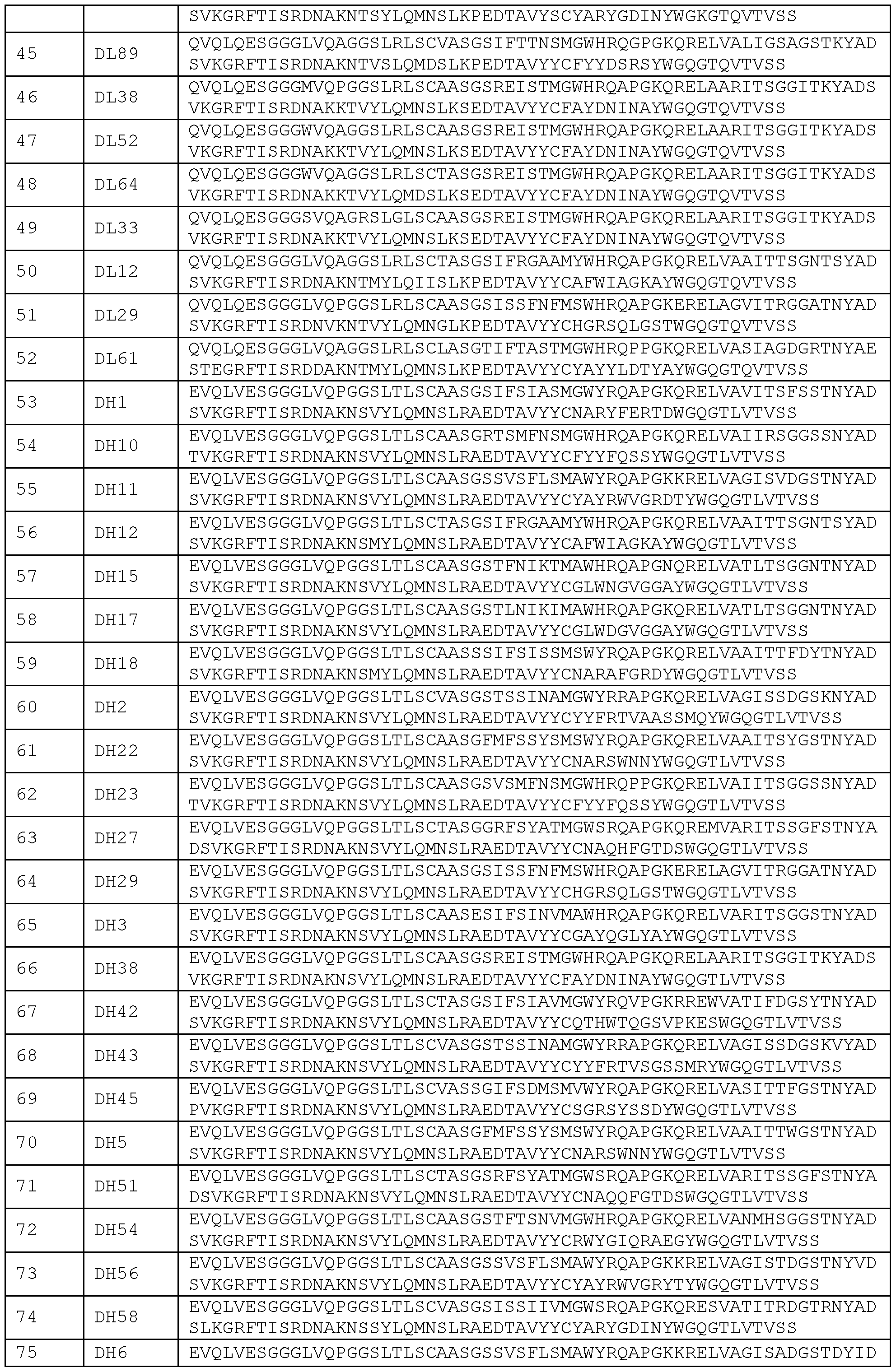


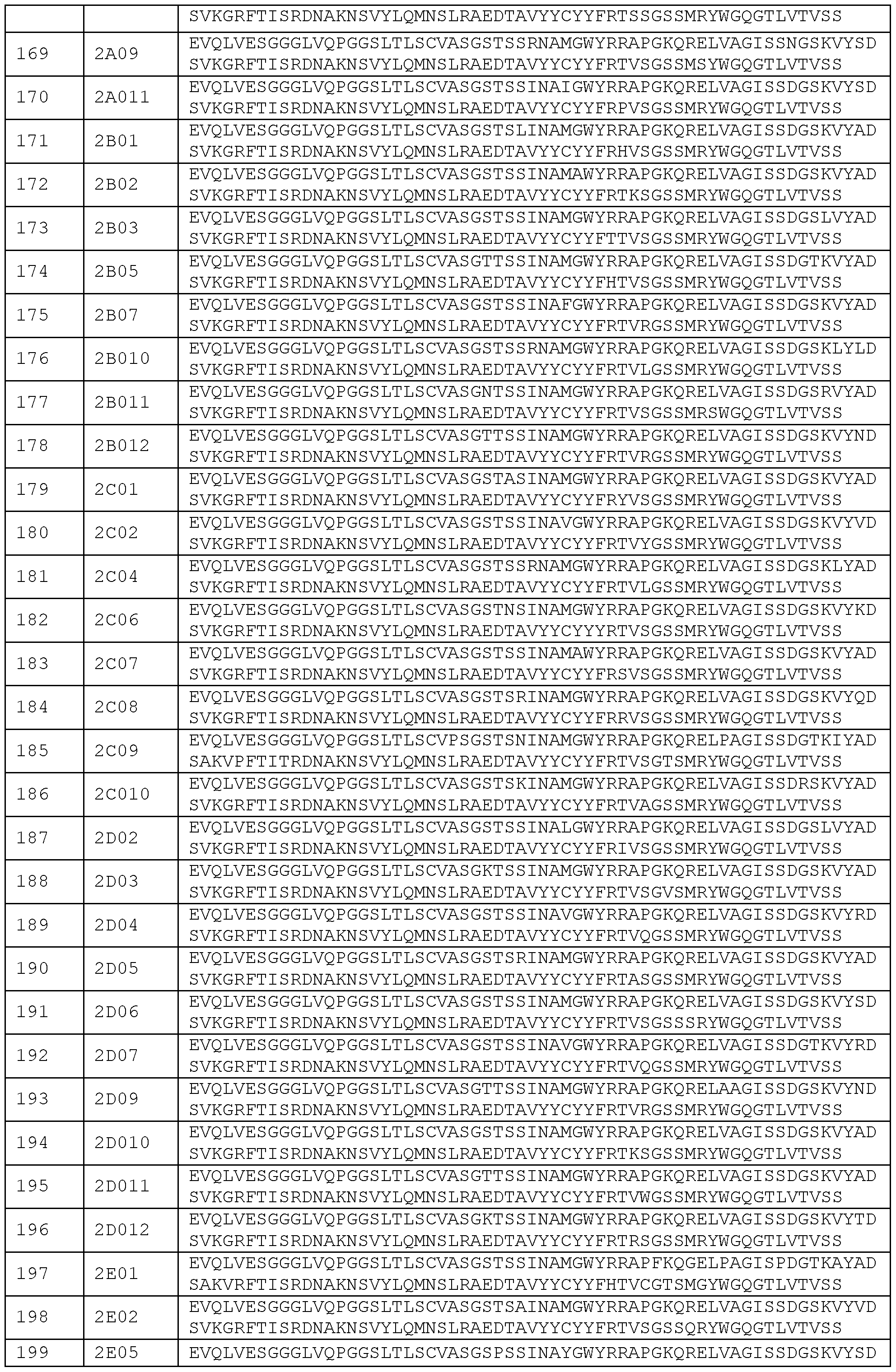


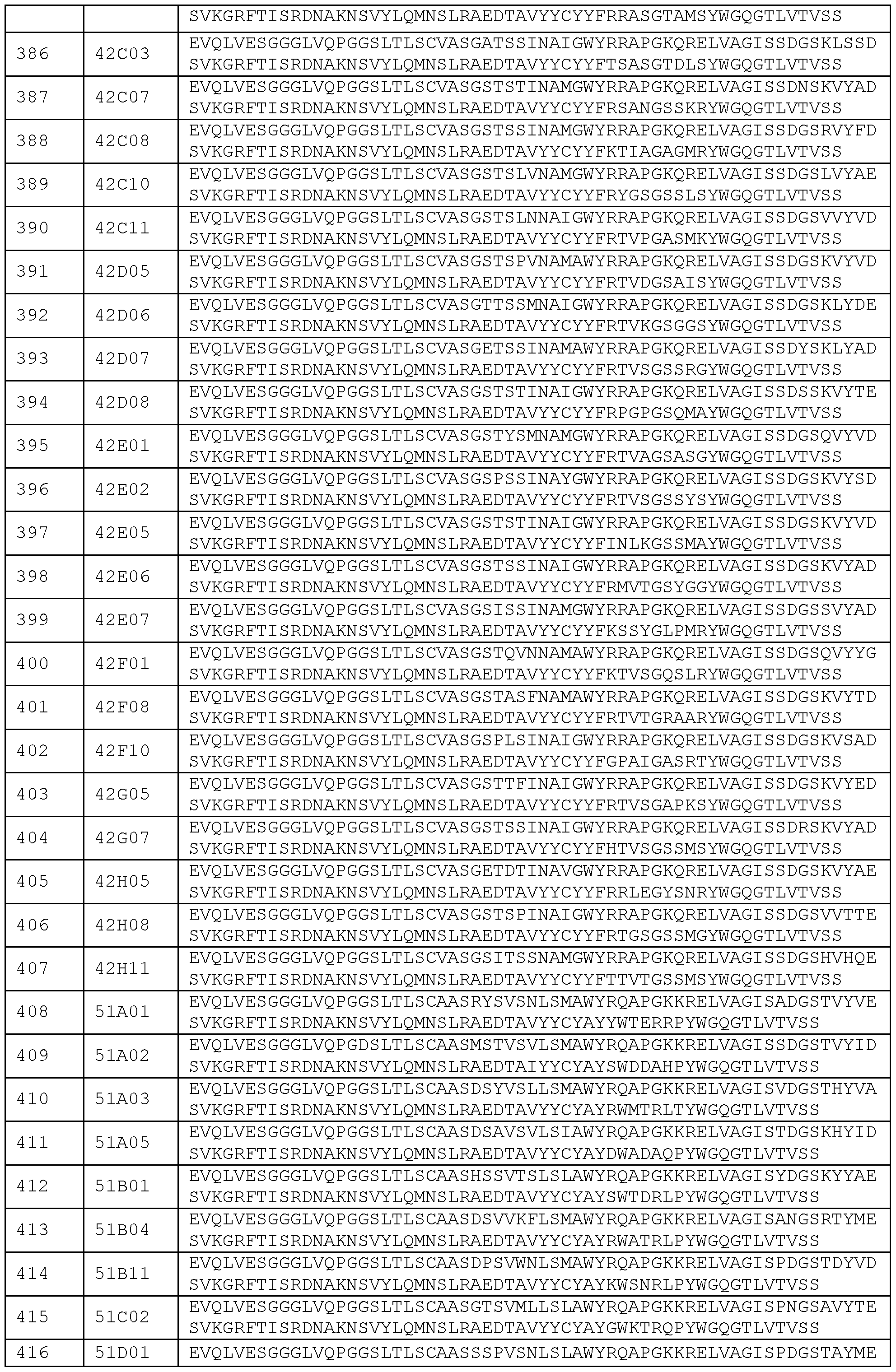


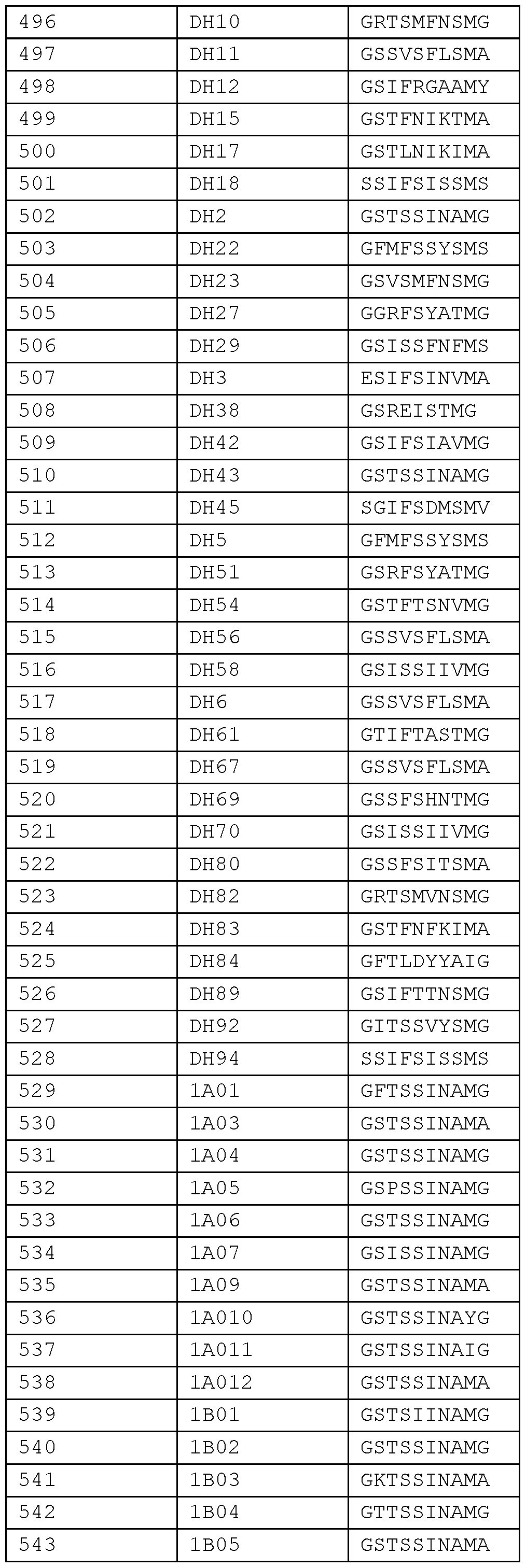


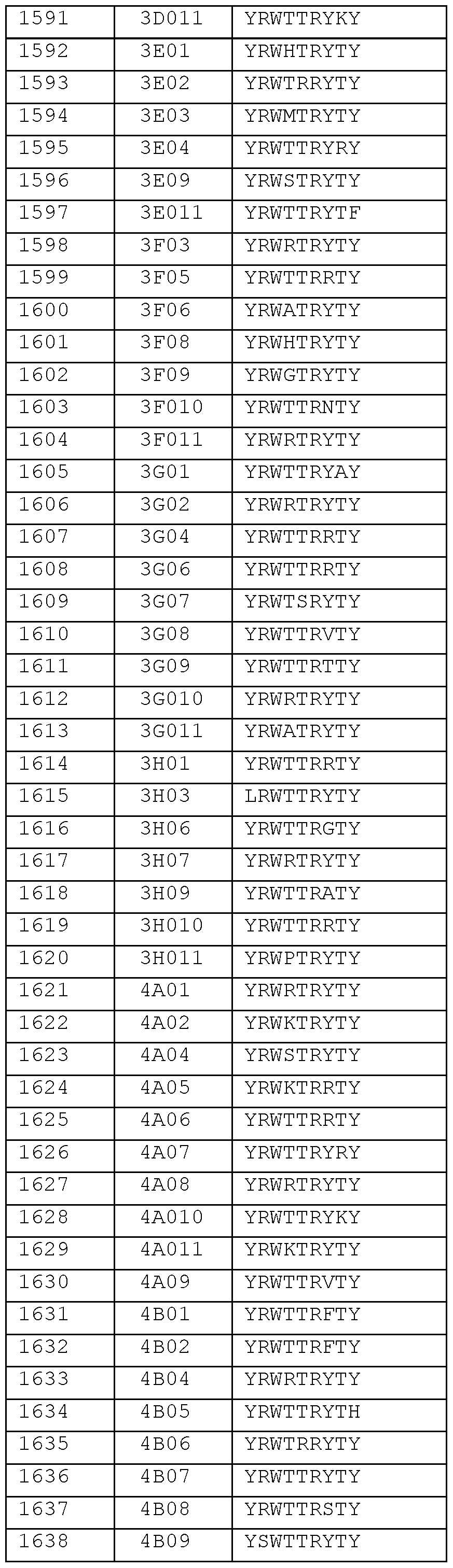


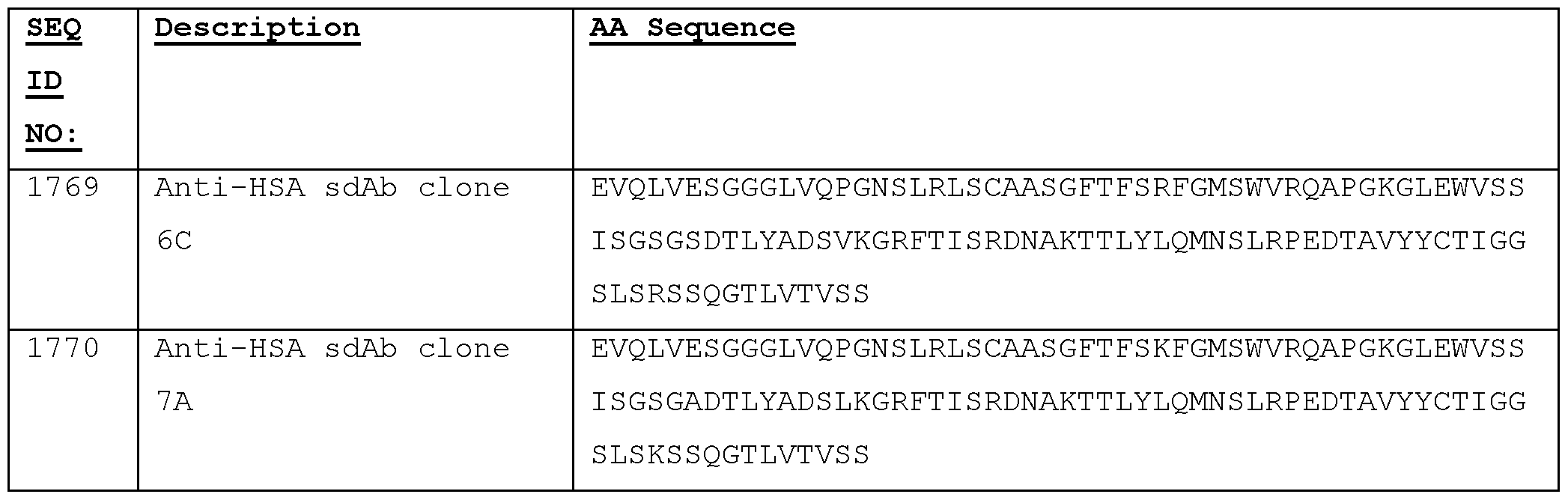


Claims
Priority Applications (16)
| Application Number | Priority Date | Filing Date | Title |
|---|---|---|---|
| CN201980077649.4A CN113286817B (en) | 2018-09-25 | 2019-09-25 | DLL3 binding proteins and methods of use |
| AU2019346466A AU2019346466A1 (en) | 2018-09-25 | 2019-09-25 | DLL3 binding proteins and methods of use |
| IL281683A IL281683B2 (en) | 2018-09-25 | 2019-09-25 | Dll3 binding proteins and methods of use |
| EP19864883.4A EP3856771A4 (en) | 2018-09-25 | 2019-09-25 | Dll3 binding proteins and methods of use |
| JP2021516484A JP7425049B2 (en) | 2018-09-25 | 2019-09-25 | DLL3 binding protein and method of use |
| SG11202103022WA SG11202103022WA (en) | 2018-09-25 | 2019-09-25 | Dll3 binding proteins and methods of use |
| EA202190853A EA202190853A1 (en) | 2019-07-22 | 2019-09-25 | DLL3 BINDING PROTEINS AND APPLICATIONS |
| CA3114038A CA3114038A1 (en) | 2018-09-25 | 2019-09-25 | Dll3 binding proteins and methods of use |
| MX2021003554A MX2021003554A (en) | 2018-09-25 | 2019-09-25 | DLL3-BINDING PROTEINS AND METHODS OF USE. |
| KR1020217012207A KR20210086623A (en) | 2018-09-25 | 2019-09-25 | DDL3 Binding Proteins and Methods of Use |
| IL297931A IL297931B2 (en) | 2018-09-25 | 2019-09-25 | Dll3 binding proteins and methods of use |
| CN202411439678.XA CN119306844A (en) | 2018-09-25 | 2019-09-25 | DLL3 binding proteins and methods of use |
| IL314988A IL314988A (en) | 2018-09-25 | 2019-09-25 | DLL3 binding proteins and methods of use |
| BR112021005769A BR112021005769A2 (en) | 2018-09-25 | 2019-09-25 | dll3 binding proteins and methods of use |
| JP2024006288A JP7659669B2 (en) | 2018-09-25 | 2024-01-18 | DLL3 binding proteins and methods of use |
| JP2025054633A JP2025111463A (en) | 2018-09-25 | 2025-03-27 | DLL3 binding proteins and methods of use |
Applications Claiming Priority (6)
| Application Number | Priority Date | Filing Date | Title |
|---|---|---|---|
| US201862736368P | 2018-09-25 | 2018-09-25 | |
| US201862736358P | 2018-09-25 | 2018-09-25 | |
| US62/736,368 | 2018-09-25 | ||
| US62/736,358 | 2018-09-25 | ||
| US201962877227P | 2019-07-22 | 2019-07-22 | |
| US62/877,227 | 2019-07-22 |
Publications (1)
| Publication Number | Publication Date |
|---|---|
| WO2020069028A1 true WO2020069028A1 (en) | 2020-04-02 |
Family
ID=69885316
Family Applications (1)
| Application Number | Title | Priority Date | Filing Date |
|---|---|---|---|
| PCT/US2019/053017 Ceased WO2020069028A1 (en) | 2018-09-25 | 2019-09-25 | Dll3 binding proteins and methods of use |
Country Status (12)
| Country | Link |
|---|---|
| US (3) | US10815311B2 (en) |
| EP (1) | EP3856771A4 (en) |
| JP (3) | JP7425049B2 (en) |
| KR (1) | KR20210086623A (en) |
| CN (2) | CN119306844A (en) |
| AU (1) | AU2019346466A1 (en) |
| BR (1) | BR112021005769A2 (en) |
| CA (1) | CA3114038A1 (en) |
| IL (3) | IL297931B2 (en) |
| MX (1) | MX2021003554A (en) |
| SG (1) | SG11202103022WA (en) |
| WO (1) | WO2020069028A1 (en) |
Cited By (29)
| Publication number | Priority date | Publication date | Assignee | Title |
|---|---|---|---|---|
| US10844134B2 (en) | 2016-11-23 | 2020-11-24 | Harpoon Therapeutics, Inc. | PSMA targeting trispecific proteins and methods of use |
| US10849973B2 (en) | 2016-11-23 | 2020-12-01 | Harpoon Therapeutics, Inc. | Prostate specific membrane antigen binding protein |
| US10927180B2 (en) | 2017-10-13 | 2021-02-23 | Harpoon Therapeutics, Inc. | B cell maturation antigen binding proteins |
| US10954311B2 (en) | 2015-05-21 | 2021-03-23 | Harpoon Therapeutics, Inc. | Trispecific binding proteins and methods of use |
| WO2021119551A1 (en) * | 2019-12-11 | 2021-06-17 | Cullinan Oncology, Inc. | Anti-cd19 antibodies and multi-specific binding proteins |
| WO2021119531A1 (en) * | 2019-12-11 | 2021-06-17 | Cullinan Management, Inc. | Anti-serum albumin antibodies |
| US11136403B2 (en) | 2017-10-13 | 2021-10-05 | Harpoon Therapeutics, Inc. | Trispecific proteins and methods of use |
| US11180563B2 (en) | 2020-02-21 | 2021-11-23 | Harpoon Therapeutics, Inc. | FLT3 binding proteins and methods of use |
| US20210380679A1 (en) * | 2018-10-11 | 2021-12-09 | Inhibrx, Inc. | Dll3 single domain antibodies and therapeutic compositions thereof |
| WO2022060901A1 (en) | 2020-09-16 | 2022-03-24 | Amgen Inc. | Methods for administering therapeutic doses of bispecific t-cell engaging molecules for the treatment of cancer |
| US11453716B2 (en) | 2016-05-20 | 2022-09-27 | Harpoon Therapeutics, Inc. | Single domain serum albumin binding protein |
| WO2022237647A1 (en) * | 2021-05-08 | 2022-11-17 | 上海齐鲁制药研究中心有限公司 | Binding molecule against dll3 and use thereof |
| US11535668B2 (en) | 2017-02-28 | 2022-12-27 | Harpoon Therapeutics, Inc. | Inducible monovalent antigen binding protein |
| WO2022256500A3 (en) * | 2021-06-03 | 2023-01-19 | Harpoon Therapeutics, Inc. | Dll3 targeting trispecific proteins and methods of use |
| US11607453B2 (en) | 2017-05-12 | 2023-03-21 | Harpoon Therapeutics, Inc. | Mesothelin binding proteins |
| US11623958B2 (en) | 2016-05-20 | 2023-04-11 | Harpoon Therapeutics, Inc. | Single chain variable fragment CD3 binding proteins |
| WO2023164474A1 (en) | 2022-02-23 | 2023-08-31 | Amgen Inc. | Cancer treatment targeting dll3 |
| US11807692B2 (en) | 2018-09-25 | 2023-11-07 | Harpoon Therapeutics, Inc. | DLL3 binding proteins and methods of use |
| US12037391B2 (en) | 2018-05-08 | 2024-07-16 | Phanes Therapeutics, Inc. | Anti-DLL3 antibodies and uses thereof |
| WO2024240635A1 (en) | 2023-05-19 | 2024-11-28 | Boehringer Ingelheim International Gmbh | Uses of t cell engaging proteins in the treatment of cancer |
| US12195544B2 (en) | 2018-09-21 | 2025-01-14 | Harpoon Therapeutics, Inc. | EGFR binding proteins and methods of use |
| US12344675B2 (en) | 2022-08-22 | 2025-07-01 | Abdera Therapeutics Inc. | Polypeptide comprising a single-domain antibody variable region that binds delta-like ligand 3 (DLL3) and method of use thereof to make a radionuclide complex |
| WO2025163083A1 (en) * | 2024-01-31 | 2025-08-07 | Molecular Partners Ag | Recobminant dll3 binding proteins and their use |
| US12415860B2 (en) | 2018-05-14 | 2025-09-16 | Harpoon Therapeutics, Inc. | Binding moiety for conditional activation of immunoglobulin molecules |
| WO2025193578A1 (en) | 2024-03-11 | 2025-09-18 | Amgen Inc. | Method of treating brain metastases in subjects with a dll3-positive cancer |
| WO2025217101A2 (en) | 2024-04-09 | 2025-10-16 | Amgen Inc. | Agonistic anti-il-2rbg heavy‑chain antibodies |
| EP4453001A4 (en) * | 2021-12-20 | 2025-11-26 | Amgen Inc | DLL3-BINDING PEPTIDES AND USES THEM |
| US12516128B2 (en) | 2019-05-14 | 2026-01-06 | Harpoon Therapeutics, Inc. | EpCAM binding proteins and methods of use |
| US12528859B2 (en) | 2022-09-19 | 2026-01-20 | Harpoon Therapeutics, Inc. | Single domain serum albumin binding protein |
Families Citing this family (11)
| Publication number | Priority date | Publication date | Assignee | Title |
|---|---|---|---|---|
| EP3737692A4 (en) | 2018-01-09 | 2021-09-29 | Elstar Therapeutics, Inc. | CALRETICULIN-BINDING CONSTRUCTS AND GENERALLY MODIFIED T-CELLS FOR THE TREATMENT OF DISEASES |
| CN112955465A (en) | 2018-07-03 | 2021-06-11 | 马伦戈治疗公司 | anti-TCR antibody molecules and uses thereof |
| SG11202109061YA (en) | 2019-02-21 | 2021-09-29 | Marengo Therapeutics Inc | Multifunctional molecules that bind to t cell related cancer cells and uses thereof |
| CA3130508A1 (en) | 2019-02-21 | 2020-08-27 | Marengo Therapeutics, Inc. | Antibody molecules that bind to nkp30 and uses thereof |
| AU2020416273A1 (en) | 2020-01-03 | 2022-07-28 | Marengo Therapeutics, Inc. | Anti-TCR antibody molecules and uses thereof |
| TWI847270B (en) * | 2021-09-17 | 2024-07-01 | 大陸商上海藥明生物技術有限公司 | D3 binding molecules and their uses |
| CA3231586A1 (en) * | 2021-09-17 | 2023-03-23 | Yunying CHEN | D3-binding molecules and uses thereof |
| CN119213019A (en) * | 2022-04-15 | 2024-12-27 | 瓦利托尔有限公司 | Humanized multivalent protein conjugates |
| WO2025067338A1 (en) * | 2023-09-26 | 2025-04-03 | Nanjing Legend Biotech Co., Ltd. | Dll3 binding moieties and uses thereof |
| WO2025085761A1 (en) * | 2023-10-19 | 2025-04-24 | Harpoon Therapeutics, Inc. | Dll3 targeting trispecific proteins and methods of use |
| WO2025201493A1 (en) * | 2024-03-29 | 2025-10-02 | 诺纳生物(苏州)有限公司 | Dll3 binding molecule and use thereof |
Citations (12)
| Publication number | Priority date | Publication date | Assignee | Title |
|---|---|---|---|---|
| US5061620A (en) | 1990-03-30 | 1991-10-29 | Systemix, Inc. | Human hematopoietic stem cell |
| WO1994004678A1 (en) | 1992-08-21 | 1994-03-03 | Casterman Cecile | Immunoglobulins devoid of light chains |
| WO1999037681A2 (en) | 1998-01-26 | 1999-07-29 | Unilever Plc | Method for producing antibody fragments |
| WO2000043507A1 (en) | 1999-01-19 | 2000-07-27 | Unilever Plc | Method for producing antibody fragments |
| WO2001090190A2 (en) | 2000-05-26 | 2001-11-29 | National Research Council Of Canada | Single-domain antigen-binding antibody fragments derived from llama antibodies |
| WO2002085945A2 (en) | 2001-04-24 | 2002-10-31 | Erasmus Universiteit Rotterdam | Vhh single heavy chain antibody and a method for its preparation in a mammal |
| WO2003025020A1 (en) | 2001-09-13 | 2003-03-27 | Institute For Antibodies Co., Ltd. | Method of constructing camel antibody library |
| WO2003035694A2 (en) | 2001-10-24 | 2003-05-01 | Vlaams Interuniversitair Instituut Voor Biotechnologie Vzw | Functional heavy chain antibodies, fragments thereof, library thereof and methods of production thereof |
| WO2004049794A2 (en) | 2002-12-03 | 2004-06-17 | The Babraham Institute | Single chain antibodies produced in a transgenic mouse |
| WO2011039368A2 (en) * | 2009-10-02 | 2011-04-07 | Boehringer Ingelheim International Gmbh | Dll4-binding molecules |
| US20160130331A1 (en) * | 2012-02-24 | 2016-05-12 | Stemcentrx, Inc. | Multivalent dll3 antibodies |
| WO2016187101A2 (en) | 2015-05-21 | 2016-11-24 | Full Spectrum Genetics, Inc. | Method of improving characteristics of proteins |
Family Cites Families (401)
| Publication number | Priority date | Publication date | Assignee | Title |
|---|---|---|---|---|
| FR901228A (en) | 1943-01-16 | 1945-07-20 | Deutsche Edelstahlwerke Ag | Ring gap magnet system |
| US4816567A (en) | 1983-04-08 | 1989-03-28 | Genentech, Inc. | Recombinant immunoglobin preparations |
| US4943533A (en) | 1984-03-01 | 1990-07-24 | The Regents Of The University Of California | Hybrid cell lines that produce monoclonal antibodies to epidermal growth factor receptor |
| GB8607679D0 (en) | 1986-03-27 | 1986-04-30 | Winter G P | Recombinant dna product |
| US6548640B1 (en) | 1986-03-27 | 2003-04-15 | Btg International Limited | Altered antibodies |
| US5225539A (en) | 1986-03-27 | 1993-07-06 | Medical Research Council | Recombinant altered antibodies and methods of making altered antibodies |
| US6355476B1 (en) | 1988-11-07 | 2002-03-12 | Advanced Research And Technologyinc | Nucleic acid encoding MIP-1α Lymphokine |
| US6362325B1 (en) | 1988-11-07 | 2002-03-26 | Advanced Research And Technology Institute, Inc. | Murine 4-1BB gene |
| US6303121B1 (en) | 1992-07-30 | 2001-10-16 | Advanced Research And Technology | Method of using human receptor protein 4-1BB |
| US6905680B2 (en) | 1988-11-23 | 2005-06-14 | Genetics Institute, Inc. | Methods of treating HIV infected subjects |
| US5858358A (en) | 1992-04-07 | 1999-01-12 | The United States Of America As Represented By The Secretary Of The Navy | Methods for selectively stimulating proliferation of T cells |
| US6534055B1 (en) | 1988-11-23 | 2003-03-18 | Genetics Institute, Inc. | Methods for selectively stimulating proliferation of T cells |
| US6352694B1 (en) | 1994-06-03 | 2002-03-05 | Genetics Institute, Inc. | Methods for inducing a population of T cells to proliferate using agents which recognize TCR/CD3 and ligands which stimulate an accessory molecule on the surface of the T cells |
| US5530101A (en) | 1988-12-28 | 1996-06-25 | Protein Design Labs, Inc. | Humanized immunoglobulins |
| US5703055A (en) | 1989-03-21 | 1997-12-30 | Wisconsin Alumni Research Foundation | Generation of antibodies through lipid mediated DNA delivery |
| US5399346A (en) | 1989-06-14 | 1995-03-21 | The United States Of America As Represented By The Department Of Health And Human Services | Gene therapy |
| US5585362A (en) | 1989-08-22 | 1996-12-17 | The Regents Of The University Of Michigan | Adenovirus vectors for gene therapy |
| GB8928874D0 (en) | 1989-12-21 | 1990-02-28 | Celltech Ltd | Humanised antibodies |
| US5859205A (en) | 1989-12-21 | 1999-01-12 | Celltech Limited | Humanised antibodies |
| DE69233482T2 (en) | 1991-05-17 | 2006-01-12 | Merck & Co., Inc. | Method for reducing the immunogenicity of antibody variable domains |
| US5199942A (en) | 1991-06-07 | 1993-04-06 | Immunex Corporation | Method for improving autologous transplantation |
| WO1992022653A1 (en) | 1991-06-14 | 1992-12-23 | Genentech, Inc. | Method for making humanized antibodies |
| US5851795A (en) | 1991-06-27 | 1998-12-22 | Bristol-Myers Squibb Company | Soluble CTLA4 molecules and uses thereof |
| US5565332A (en) | 1991-09-23 | 1996-10-15 | Medical Research Council | Production of chimeric antibodies - a combinatorial approach |
| AU2764792A (en) | 1991-10-04 | 1993-05-03 | Iit Research Institute | Conversion of plastic waste to useful oils |
| GB9125768D0 (en) | 1991-12-04 | 1992-02-05 | Hale Geoffrey | Therapeutic method |
| US5766886A (en) | 1991-12-13 | 1998-06-16 | Xoma Corporation | Modified antibody variable domains |
| US6005079A (en) | 1992-08-21 | 1999-12-21 | Vrije Universiteit Brussels | Immunoglobulins devoid of light chains |
| US5350674A (en) | 1992-09-04 | 1994-09-27 | Becton, Dickinson And Company | Intrinsic factor - horse peroxidase conjugates and a method for increasing the stability thereof |
| US5639641A (en) | 1992-09-09 | 1997-06-17 | Immunogen Inc. | Resurfacing of rodent antibodies |
| DE122004000036I1 (en) | 1992-11-13 | 2005-07-07 | Biogen Idec Inc | Therapeutic use of chimeric and labeled antibodies to human B lymphocyte limited differentiation antigen for the treatment of B-cell lymphoma. |
| US5844093A (en) | 1994-03-17 | 1998-12-01 | Merck Patent Gesellschaft Mit Beschrankter Haftung | Anti-EGFR single-chain Fvs and anti-EGFR antibodies |
| US7175843B2 (en) | 1994-06-03 | 2007-02-13 | Genetics Institute, Llc | Methods for selectively stimulating proliferation of T cells |
| US5731168A (en) | 1995-03-01 | 1998-03-24 | Genentech, Inc. | Method for making heteromultimeric polypeptides |
| US6692964B1 (en) | 1995-05-04 | 2004-02-17 | The United States Of America As Represented By The Secretary Of The Navy | Methods for transfecting T cells |
| US7067318B2 (en) | 1995-06-07 | 2006-06-27 | The Regents Of The University Of Michigan | Methods for transfecting T cells |
| US5773292A (en) | 1995-06-05 | 1998-06-30 | Cornell University | Antibodies binding portions, and probes recognizing an antigen of prostate epithelial cells but not antigens circulating in the blood |
| US7060808B1 (en) | 1995-06-07 | 2006-06-13 | Imclone Systems Incorporated | Humanized anti-EGF receptor monoclonal antibody |
| US6051227A (en) | 1995-07-25 | 2000-04-18 | The Regents Of The University Of California, Office Of Technology Transfer | Blockade of T lymphocyte down-regulation associated with CTLA-4 signaling |
| US5811097A (en) | 1995-07-25 | 1998-09-22 | The Regents Of The University Of California | Blockade of T lymphocyte down-regulation associated with CTLA-4 signaling |
| US6136311A (en) | 1996-05-06 | 2000-10-24 | Cornell Research Foundation, Inc. | Treatment and diagnosis of cancer |
| US6107090A (en) | 1996-05-06 | 2000-08-22 | Cornell Research Foundation, Inc. | Treatment and diagnosis of prostate cancer with antibodies to extracellur PSMA domains |
| DK0826696T3 (en) | 1996-09-03 | 2002-09-23 | Gsf Forschungszentrum Umwelt | Use of bi- and trispecific antibodies to induce a tumor immunity |
| WO1998016249A1 (en) | 1996-10-11 | 1998-04-23 | Bristol-Myers Squibb Company | Methods and compositions for immunomodulation |
| EP1027439B1 (en) | 1997-10-27 | 2010-03-17 | Bac Ip B.V. | Multivalent antigen-binding proteins |
| CZ121599A3 (en) | 1998-04-09 | 1999-10-13 | Aventis Pharma Deutschland Gmbh | A single chain molecule binding several antigens, a method for its preparation, and a drug containing the molecule |
| US6682736B1 (en) | 1998-12-23 | 2004-01-27 | Abgenix, Inc. | Human monoclonal antibodies to CTLA-4 |
| AU7072700A (en) | 1999-08-23 | 2001-03-19 | Dana-Farber Cancer Institute, Inc. | Pd-1, a receptor for b7-4, and uses therefor |
| US7605238B2 (en) | 1999-08-24 | 2009-10-20 | Medarex, Inc. | Human CTLA-4 antibodies and their uses |
| KR20020047132A (en) | 1999-08-24 | 2002-06-21 | 메다렉스, 인코포레이티드 | Human ctla-4 antibodies and their uses |
| DE50002293D1 (en) | 1999-10-28 | 2003-06-26 | Hofbauer Reinhold | USE OF CSF-1 INHIBITORS |
| US6326193B1 (en) | 1999-11-05 | 2001-12-04 | Cambria Biosciences, Llc | Insect control agent |
| US20060228364A1 (en) | 1999-12-24 | 2006-10-12 | Genentech, Inc. | Serum albumin binding peptides for tumor targeting |
| AU2001233027A1 (en) | 2000-01-27 | 2001-08-07 | Genetics Institute, Llc | Antibodies against ctla4 (cd152), conjugates comprising same, and uses thereof |
| US6867041B2 (en) | 2000-02-24 | 2005-03-15 | Xcyte Therapies, Inc. | Simultaneous stimulation and concentration of cells |
| US7572631B2 (en) | 2000-02-24 | 2009-08-11 | Invitrogen Corporation | Activation and expansion of T cells |
| AU2001243288B2 (en) | 2000-02-24 | 2005-11-24 | Life Technologies Corporation | Simultaneous stimulation and concentration of cells |
| US6797514B2 (en) | 2000-02-24 | 2004-09-28 | Xcyte Therapies, Inc. | Simultaneous stimulation and concentration of cells |
| ES2287130T3 (en) | 2000-05-12 | 2007-12-16 | Amgen Inc. | POLYPEPTIDES TO INHIBIT THE PROLIFERATION OF CELLS B AND T INDUCED BY APRIL. |
| WO2001096584A2 (en) | 2000-06-12 | 2001-12-20 | Akkadix Corporation | Materials and methods for the control of nematodes |
| GB0100621D0 (en) | 2001-01-10 | 2001-02-21 | Vernalis Res Ltd | Chemical compounds VI |
| CN1294148C (en) | 2001-04-11 | 2007-01-10 | 中国科学院遗传与发育生物学研究所 | Single-stranded cyctic trispecific antibody |
| CN1195779C (en) | 2001-05-24 | 2005-04-06 | 中国科学院遗传与发育生物学研究所 | Double-specificity antibody resisting human ovary cancer and human CD3 |
| US7666414B2 (en) | 2001-06-01 | 2010-02-23 | Cornell Research Foundation, Inc. | Methods for treating prostate cancer using modified antibodies to prostate-specific membrane antigen |
| AU2002345673B2 (en) | 2001-06-13 | 2007-04-26 | Genmab A/S | Human monoclonal antibodies to epidermal growth factor receptor (EGFR) |
| US7595378B2 (en) | 2001-06-13 | 2009-09-29 | Genmab A/S | Human monoclonal antibodies to epidermal growth factor receptor (EGFR) |
| US20050215472A1 (en) | 2001-10-23 | 2005-09-29 | Psma Development Company, Llc | PSMA formulations and uses thereof |
| ES2606537T3 (en) | 2001-10-23 | 2017-03-24 | Psma Development Company L.L.C. | Antibodies against PSMA |
| US7745140B2 (en) | 2002-01-03 | 2010-06-29 | The Trustees Of The University Of Pennsylvania | Activation and expansion of T-cells using an engineered multivalent signaling platform as a research tool |
| AU2003224604B2 (en) | 2002-01-28 | 2007-06-14 | Medarex, Inc. | Human monoclonal antibodies to prostate specific membrane antigen (PSMA) |
| US20040132101A1 (en) | 2002-09-27 | 2004-07-08 | Xencor | Optimized Fc variants and methods for their generation |
| US8153768B2 (en) | 2002-05-02 | 2012-04-10 | Wyeth Holdings Corporation | Calicheamicin derivative-carrier conjugates |
| EP1517921B1 (en) | 2002-06-28 | 2006-06-07 | Domantis Limited | Dual specific ligands with increased serum half-life |
| US9321832B2 (en) | 2002-06-28 | 2016-04-26 | Domantis Limited | Ligand |
| AU2003259294A1 (en) | 2002-07-30 | 2004-02-16 | Bristol-Myers Squibb Company | Humanized antibodies against human 4-1bb |
| EP1558648B1 (en) | 2002-10-17 | 2012-01-11 | Genmab A/S | Human monoclonal antibodies against cd20 |
| NZ539395A (en) | 2002-11-07 | 2009-01-31 | Immunogen Inc | Anti-CD33 antibodies and method for treatment of acute myeloid leukemia using the same |
| CA2505515C (en) | 2002-11-07 | 2013-08-27 | Erasmus Universiteit Rotterdam | Fret probes and methods for detecting interacting molecules |
| AU2003283137B8 (en) | 2002-11-08 | 2010-07-29 | Ablynx N.V. | Camelidae antibodies against immunoglobulin E and use thereof for the treatment of allergic disorders |
| US9320792B2 (en) | 2002-11-08 | 2016-04-26 | Ablynx N.V. | Pulmonary administration of immunoglobulin single variable domains and constructs thereof |
| NZ563471A (en) | 2002-11-08 | 2009-04-30 | Ablynx Nv | Camelidae antibodies against imminoglobulin E and use thereof for the treatment of allergic disorders |
| US20070178082A1 (en) | 2002-11-08 | 2007-08-02 | Ablynx N.V. | Stabilized single domain antibodies |
| UA89350C2 (en) | 2002-12-16 | 2010-01-25 | Дженентек, Інк. | Humanized antibody that specifically binds human cd20 |
| EP1576014B1 (en) | 2002-12-23 | 2011-06-29 | Wyeth LLC | Antibodies against pd-1 and uses thereof |
| EP1629011B1 (en) | 2003-05-31 | 2010-01-13 | Micromet AG | Human anti-human cd3 binding molecules |
| AU2004255216B2 (en) | 2003-07-01 | 2010-08-19 | Immunomedics, Inc. | Multivalent carriers of bi-specific antibodies |
| ES2393485T3 (en) | 2003-07-02 | 2012-12-21 | Innate Pharma | NK pan-kir2dl receptor antibodies and their use in diagnosis and therapy |
| JP5642328B2 (en) | 2003-07-24 | 2014-12-17 | イナート・ファルマ・ソシエテ・アノニムInnate Pharma Pharma S.A. | Methods and compositions for increasing the effectiveness of therapeutic antibodies using NK cell enhancing compounds |
| ES2458636T3 (en) | 2003-08-18 | 2014-05-06 | Medimmune, Llc | Humanization of antibodies |
| US20050042664A1 (en) | 2003-08-22 | 2005-02-24 | Medimmune, Inc. | Humanization of antibodies |
| US7288638B2 (en) | 2003-10-10 | 2007-10-30 | Bristol-Myers Squibb Company | Fully human antibodies against human 4-1BB |
| BRPI0415457A (en) | 2003-10-16 | 2006-12-05 | Micromet Ag | cytotoxically active cd3 specific binding construct, its production process, composition comprising the same, nucleic acid sequence, vector, host, its uses in the preparation of a pharmaceutical composition and kit comprising the same |
| CN100376599C (en) | 2004-04-01 | 2008-03-26 | 北京安波特基因工程技术有限公司 | Recombining single chained three specific antibodies of anti CCA, anti CD 3, anti CD 28 through genetic engineering |
| EP3363907A1 (en) | 2004-05-27 | 2018-08-22 | The Trustees of the University of Pennsylvania | Novel artificial antigen presenting cells and uses therefor |
| MXPA06014031A (en) | 2004-06-01 | 2007-10-08 | Domantis Ltd | Drug compositions, fusions and conjugates. |
| JP2008512352A (en) | 2004-07-17 | 2008-04-24 | イムクローン システムズ インコーポレイティド | Novel tetravalent bispecific antibody |
| EP1634603A1 (en) | 2004-08-26 | 2006-03-15 | Eberhard-Karls-Universität Tübingen Universitätsklinikum | Treatment of transformed or infected biologic Cells |
| US20080069772A1 (en) | 2004-08-26 | 2008-03-20 | Eberhard-Karls-Universitaet Tuebingen Universitaetsklinikum | Treatment of transformed or infected biological cells |
| FR2879605B1 (en) | 2004-12-16 | 2008-10-17 | Centre Nat Rech Scient Cnrse | PRODUCTION OF ANTIBODY FORMATS AND IMMUNOLOGICAL APPLICATIONS OF THESE FORMATS |
| EP1752471B9 (en) | 2005-01-05 | 2009-04-15 | f-star Biotechnologische Forschungs- und Entwicklungsges.m.b.H. | Synthetic immunoglobulin domains with binding properties engineered in regions of the molecule different from the complementarity determining regions |
| CN101103043A (en) | 2005-01-06 | 2008-01-09 | 诺和诺德公司 | KIR binders and methods of using the same |
| US20090196850A1 (en) | 2005-01-06 | 2009-08-06 | Novo Nordisk A/S | Anti-Kir Combination Treatments and Methods |
| WO2006105021A2 (en) | 2005-03-25 | 2006-10-05 | Tolerrx, Inc. | Gitr binding molecules and uses therefor |
| US7833979B2 (en) | 2005-04-22 | 2010-11-16 | Amgen Inc. | Toxin peptide therapeutic agents |
| US20060252096A1 (en) | 2005-04-26 | 2006-11-09 | Glycofi, Inc. | Single chain antibody with cleavable linker |
| EP2161336B2 (en) | 2005-05-09 | 2017-03-29 | ONO Pharmaceutical Co., Ltd. | Human monoclonal antibodies to programmed death 1(PD-1) and methods for treating cancer using anti-PD-1 antibodies alone or in combination with other immunotherapeutics |
| RU2464276C2 (en) | 2005-05-18 | 2012-10-20 | Аблинкс Н.В. | Improved nanobodies against tumour necrosis factor-alpha |
| SI2444424T1 (en) | 2005-05-20 | 2018-10-30 | Ablynx N.V. | Improved nanobodies tm for the treatment of aggregation-mediated disorders |
| EP1726650A1 (en) | 2005-05-27 | 2006-11-29 | Universitätsklinikum Freiburg | Monoclonal antibodies and single chain antibody fragments against cell-surface prostate specific membrane antigen |
| AU2006265108C1 (en) | 2005-07-01 | 2013-01-17 | E. R. Squibb & Sons, L.L.C. | Human monoclonal antibodies to programmed death ligand 1 (PD-L1) |
| NZ597168A (en) | 2005-08-19 | 2013-07-26 | Abbott Lab | Dual variable domain immunoglobin and uses thereof |
| EP1940881B1 (en) | 2005-10-11 | 2016-11-30 | Amgen Research (Munich) GmbH | Compositions comprising cross-species-specific antibodies and uses thereof |
| CA2623109C (en) | 2005-10-14 | 2019-02-19 | Innate Pharma | Nk cell-depleting antibodies for treating immunoproliferative disorders |
| GB0521991D0 (en) | 2005-10-28 | 2005-12-07 | Univ Dundee | Siglec-9 binding agents |
| PT1951759E (en) | 2005-11-12 | 2010-04-01 | Lilly Co Eli | Anti-egfr antibodies |
| EP1962961B1 (en) | 2005-11-29 | 2013-01-09 | The University Of Sydney | Demibodies: dimerisation-activated therapeutic agents |
| US7498142B2 (en) | 2006-01-31 | 2009-03-03 | Yeda Research And Development Co., Ltd. | Methods of identifying combinations of antibodies with an improved anti-tumor activity and compositions and methods using the antibodies |
| WO2007115230A2 (en) | 2006-03-30 | 2007-10-11 | University Of Medicine And Dentistry Of New Jersey | A strategy for homo- or hetero-dimerization of various proteins in solutions and in cells |
| WO2007113648A2 (en) | 2006-04-05 | 2007-10-11 | Pfizer Products Inc. | Ctla4 antibody combination therapy |
| US20070269422A1 (en) | 2006-05-17 | 2007-11-22 | Ablynx N.V. | Serum albumin binding proteins with long half-lives |
| US8629244B2 (en) | 2006-08-18 | 2014-01-14 | Ablynx N.V. | Interleukin-6 receptor binding polypeptides |
| EP2069402A2 (en) | 2006-09-08 | 2009-06-17 | Ablynx N.V. | Serum albumin binding proteins with long half-lives |
| CN101557817A (en) * | 2006-09-14 | 2009-10-14 | 人类基因科学公司 | Albumin fusion proteins |
| US20100166734A1 (en) | 2006-12-20 | 2010-07-01 | Edward Dolk | Oral delivery of polypeptides |
| CN101578113B (en) | 2007-01-11 | 2015-04-22 | 诺和诺德公司 | Anti-KIR antibodies, formulations, and uses thereof |
| HUE040467T2 (en) | 2007-04-03 | 2019-03-28 | Amgen Res Munich Gmbh | Cross-species specific binding domain |
| JP2008278814A (en) | 2007-05-11 | 2008-11-20 | Igaku Seibutsugaku Kenkyusho:Kk | Release of immune control by agonistic anti-human GITR antibody and its application |
| CA2687903C (en) | 2007-05-24 | 2016-09-13 | Ablynx N.V. | Amino acid sequences directed against rank-l and polypeptides comprising the same for the treatment of bone diseases and disorders |
| AU2008266951C1 (en) | 2007-06-18 | 2025-06-19 | Merck Sharp & Dohme B.V. | Antibodies to human programmed death receptor PD-1 |
| EP2014680A1 (en) | 2007-07-10 | 2009-01-14 | Friedrich-Alexander-Universität Erlangen-Nürnberg | Recombinant, single-chain, trivalent tri-specific or bi-specific antibody derivatives |
| WO2009009116A2 (en) | 2007-07-12 | 2009-01-15 | Tolerx, Inc. | Combination therapies employing gitr binding molecules |
| EP2170960B1 (en) | 2007-07-13 | 2015-07-29 | Bac Ip B.V. | Single-domain antigen-binding proteins that bind mammalian igg |
| US20090304719A1 (en) | 2007-08-22 | 2009-12-10 | Patrick Daugherty | Activatable binding polypeptides and methods of identification and use thereof |
| EP2195342A1 (en) | 2007-09-07 | 2010-06-16 | Ablynx N.V. | Binding molecules with multiple binding sites, compositions comprising the same and uses thereof |
| US7982016B2 (en) | 2007-09-10 | 2011-07-19 | Amgen Inc. | Antigen binding proteins capable of binding thymic stromal lymphopoietin |
| ES2667729T3 (en) | 2007-09-26 | 2018-05-14 | Ucb Biopharma Sprl | Fusions of antibodies with double specificity |
| CA2712220A1 (en) | 2008-01-24 | 2009-07-30 | Novo Nordisk A/S | Humanized anti-human nkg2a monoclonal antibody |
| WO2009101611A1 (en) | 2008-02-11 | 2009-08-20 | Curetech Ltd. | Monoclonal antibodies for tumor treatment |
| EP2262837A4 (en) | 2008-03-12 | 2011-04-06 | Merck Sharp & Dohme | BINDING PROTEINS WITH PD-1 |
| CN102112155B (en) | 2008-06-05 | 2016-08-10 | 埃博灵克斯股份有限公司 | For the aminoacid sequence of virus envelope protein with for treating the polypeptide comprising it of virus disease |
| US20100122358A1 (en) | 2008-06-06 | 2010-05-13 | Crescendo Biologics Limited | H-Chain-only antibodies |
| AU2009266873A1 (en) | 2008-07-02 | 2010-01-07 | Emergent Product Development Seattle, Llc | TGF-beta antagonist multi-target binding proteins |
| US8444976B2 (en) | 2008-07-02 | 2013-05-21 | Argen-X B.V. | Antigen binding polypeptides |
| DE102008036127A1 (en) | 2008-08-01 | 2010-02-04 | Emitec Gesellschaft Für Emissionstechnologie Mbh | Method for operating an exhaust system with lambda control |
| AR072999A1 (en) | 2008-08-11 | 2010-10-06 | Medarex Inc | HUMAN ANTIBODIES THAT JOIN GEN 3 OF LYMPHOCYTARY ACTIVATION (LAG-3) AND THE USES OF THESE |
| WO2010027827A2 (en) | 2008-08-25 | 2010-03-11 | Amplimmune, Inc. | Targeted costimulatory polypeptides and methods of use to treat cancer |
| WO2010027423A2 (en) | 2008-08-25 | 2010-03-11 | Amplimmune, Inc. | Compositions of pd-1 antagonists and methods of use |
| JP6126782B2 (en) | 2008-10-01 | 2017-05-10 | アムゲン リサーチ (ミュンヘン) ゲーエムベーハー | Cross-species specific PSMA × CD3 bispecific single chain antibody |
| US10981998B2 (en) | 2008-10-01 | 2021-04-20 | Amgen Research (Munich) Gmbh | Cross-species-specific single domain bispecific single chain antibody |
| CA2738566C (en) | 2008-10-01 | 2024-04-30 | Micromet Ag | Bispecific single chain antibodies with specificity for high molecular weight target antigens |
| WO2010043057A1 (en) | 2008-10-14 | 2010-04-22 | National Research Counsil Of Canada | Bsa-specific antibodies |
| WO2010065939A1 (en) | 2008-12-05 | 2010-06-10 | Indiana University Research & Technology Corporation | Combination therapy to enhace nk cell mediated cytotoxicty |
| JP2012511033A (en) | 2008-12-08 | 2012-05-17 | テゴファーム コーポレーション | Masking ligand for reversible inhibition of multivalent compounds |
| KR20190069615A (en) | 2008-12-09 | 2019-06-19 | 제넨테크, 인크. | Anti-pd-l1 antibodies and their use to enhance t-cell function |
| US20100189651A1 (en) | 2009-01-12 | 2010-07-29 | Cytomx Therapeutics, Llc | Modified antibody compositions, methods of making and using thereof |
| EP2210902A1 (en) | 2009-01-14 | 2010-07-28 | TcL Pharma | Recombinant monovalent antibodies |
| US8741295B2 (en) | 2009-02-09 | 2014-06-03 | Universite De La Mediterranee | PD-1 antibodies and PD-L1 antibodies and uses thereof |
| NZ594514A (en) | 2009-03-05 | 2013-06-28 | Abbott Lab | Interleukin-17 BINDING PROTEINS |
| CN102574924A (en) | 2009-09-03 | 2012-07-11 | 先灵公司 | Anti-gitr antibodies |
| WO2011051327A2 (en) | 2009-10-30 | 2011-05-05 | Novartis Ag | Small antibody-like single chain proteins |
| WO2011066342A2 (en) | 2009-11-24 | 2011-06-03 | Amplimmune, Inc. | Simultaneous inhibition of pd-l1/pd-l2 |
| CN102770456B (en) | 2009-12-04 | 2018-04-06 | 弗·哈夫曼-拉罗切有限公司 | Multispecific antibodies, antibody analogs, compositions and methods |
| EP2332994A1 (en) | 2009-12-09 | 2011-06-15 | Friedrich-Alexander-Universität Erlangen-Nürnberg | Trispecific therapeutics against acute myeloid leukaemia |
| KR101434070B1 (en) | 2009-12-10 | 2014-08-25 | 에프. 호프만-라 로슈 아게 | Antibodies binding preferentially human csf1r extracellular domain 4 and their use |
| US20130089554A1 (en) | 2009-12-29 | 2013-04-11 | Emergent Product Development Seattle, Llc | RON Binding Constructs and Methods of Use Thereof |
| GB2476681B (en) | 2010-01-04 | 2012-04-04 | Argen X Bv | Humanized camelid VH, VK and VL immunoglobulin domains |
| HRP20180952T1 (en) * | 2010-01-29 | 2018-07-27 | Chugai Seiyaku Kabushiki Kaisha | Anti-dll3 antibody |
| WO2011107553A1 (en) | 2010-03-05 | 2011-09-09 | F. Hoffmann-La Roche Ag | Antibodies against human csf-1r and uses thereof |
| KR101647871B1 (en) | 2010-03-05 | 2016-08-11 | 에프. 호프만-라 로슈 아게 | Antibodies against human csf-1r and uses thereof |
| US10706955B2 (en) | 2010-03-23 | 2020-07-07 | Iogenetics, Llc | Bioinformatic processes for determination of peptide binding |
| WO2011117423A1 (en) | 2010-03-26 | 2011-09-29 | Ablynx N.V. | Immunoglobulin single variable domains directed against cxcr7 |
| US9556273B2 (en) | 2010-03-29 | 2017-01-31 | Vib Vzw | Anti-macrophage mannose receptor single variable domains for targeting and in vivo imaging of tumor-associated macrophages |
| EP3357510B1 (en) | 2010-05-04 | 2020-08-05 | Five Prime Therapeutics, Inc. | Antibodies that bind csf1r |
| ES2682078T3 (en) | 2010-06-11 | 2018-09-18 | Kyowa Hakko Kirin Co., Ltd. | Anti-TIM-3 antibody |
| CN105734678B (en) | 2010-07-16 | 2019-11-05 | 阿迪马布有限责任公司 | Synthetic polyribonucleotides library |
| CA2807664A1 (en) | 2010-08-12 | 2012-02-16 | Theraclone Sciences, Inc. | Anti-hemagglutinin antibody compositions and methods of use thereof |
| EP2609112B1 (en) | 2010-08-24 | 2017-11-22 | Roche Glycart AG | Activatable bispecific antibodies |
| CA2807278A1 (en) | 2010-08-24 | 2012-03-01 | F. Hoffmann - La Roche Ag | Bispecific antibodies comprising a disulfide stabilized - fv fragment |
| EP2621953B1 (en) | 2010-09-30 | 2017-04-05 | Ablynx N.V. | Biological materials related to c-met |
| US20130273055A1 (en) | 2010-11-16 | 2013-10-17 | Eric Borges | Agents and methods for treating diseases that correlate with bcma expression |
| TWI664191B (en) | 2010-11-22 | 2019-07-01 | 天賜製藥公司 | Nk cell modulating treatments and methods for treatment of hematological malignancies |
| JP6322413B2 (en) | 2011-03-10 | 2018-05-09 | プロヴェクタス ファーマテック,インク. | Combination of local and systemic immunomodulatory therapy for improved cancer treatment |
| EP2684953B1 (en) | 2011-03-11 | 2017-06-28 | Kaneka Corporation | Modified aminotransferase, gene thereof, and method for producing optically active amino compound using same |
| JP6130350B2 (en) | 2011-03-30 | 2017-05-17 | アブリンクス エン.ヴェー. | Methods of treating immune disorders with single domain antibodies against TNFα |
| AU2012240562B2 (en) | 2011-04-08 | 2016-12-01 | The United States Of America, As Represented By The Secretary, Department Of Health And Human Services | Anti-epidermal growth factor receptor variant III chimeric antigen receptors and use of same for the treatment of cancer |
| RS57324B1 (en) | 2011-04-20 | 2018-08-31 | Medimmune Llc | Antibodies and other molecules that bind b7-h1 and pd-1 |
| EP2710042A2 (en) | 2011-05-16 | 2014-03-26 | Fabion Pharmaceuticals, Inc. | Multi-specific fab fusion proteins and methods of use |
| CA2837184C (en) | 2011-05-25 | 2021-09-21 | Innate Pharma, S.A. | Anti-kir antibodies for the treatment of inflammatory and autoimmune disorders |
| SI3415531T1 (en) | 2011-05-27 | 2023-12-29 | Glaxo Group Limited | BCMA (CD269/TNFRSF17) - BINDING PROTEINS |
| EP2723771B1 (en) | 2011-06-23 | 2019-09-11 | Ablynx NV | Serum albumin binding proteins |
| WO2013006490A2 (en) | 2011-07-01 | 2013-01-10 | Cellerant Therapeutics, Inc. | Antibodies that specifically bind to tim3 |
| UA117901C2 (en) | 2011-07-06 | 2018-10-25 | Ґенмаб Б.В. | METHOD FOR STRENGTHENING THE EFFECTORAL FUNCTION OF THE ORIGINAL POLYEPEPTIDE, ITS OPTIONS AND THEIR APPLICATIONS |
| US20150158934A1 (en) | 2011-09-09 | 2015-06-11 | Ucl Business Plc | Broadly neutralizing vhh against hiv-1 |
| US20130108641A1 (en) | 2011-09-14 | 2013-05-02 | Sanofi | Anti-gitr antibodies |
| WO2013041730A1 (en) | 2011-09-23 | 2013-03-28 | Universität Stuttgart Please note that the status of the person identified in Box 1 changed from Applicant for all designated States except US to Applicant for all designated States. | Serum half-life extension using immunoglobulin binding domains |
| JP6219287B2 (en) | 2011-09-30 | 2017-10-25 | アブリンクス エン.ヴェー. | Biological substances related to c-Met |
| TWI679212B (en) | 2011-11-15 | 2019-12-11 | 美商安進股份有限公司 | Binding molecules for e3 of bcma and cd3 |
| WO2013079174A1 (en) | 2011-11-28 | 2013-06-06 | Merck Patent Gmbh | Anti-pd-l1 antibodies and uses thereof |
| CN104159921B (en) | 2011-12-15 | 2018-05-04 | 霍夫曼-拉罗奇有限公司 | Antibody for people CSF-1R and application thereof |
| KR20140107413A (en) | 2011-12-16 | 2014-09-04 | 화이자 인코포레이티드 | Combination of inotuzumab ozogamicin and torisel for the treatment of cancer |
| PL2802607T3 (en) | 2012-01-13 | 2018-03-30 | Julius-Maximilians-Universität Würzburg | Dual antigen-induced bipartite functional complementation |
| WO2013110531A1 (en) | 2012-01-23 | 2013-08-01 | Ablynx Nv | Sequences directed against hepatocyte growth factor (hgf) and polypeptides comprising the same for the treatment of cancers and/or tumors |
| WO2013119716A1 (en) | 2012-02-06 | 2013-08-15 | Genentech, Inc. | Compositions and methods for using csf1r inhibitors |
| CA3084919A1 (en) | 2012-02-22 | 2013-08-29 | The Trustees Of The University Of Pennsylvania | Compositions and methods for generating a persisting population of t cells useful for the treatment of cancer |
| GB201203442D0 (en) | 2012-02-28 | 2012-04-11 | Univ Birmingham | Immunotherapeutic molecules and uses |
| CA2864177C (en) | 2012-03-01 | 2019-11-26 | Amgen Research (Munich) Gmbh | Prolonged half-life albumin-binding protein fused bispecific antibodies |
| AR090263A1 (en) | 2012-03-08 | 2014-10-29 | Hoffmann La Roche | COMBINED ANTIBODY THERAPY AGAINST HUMAN CSF-1R AND USES OF THE SAME |
| KR20150030639A (en) | 2012-03-30 | 2015-03-20 | 바이엘 헬스케어 엘엘씨 | Protease-regulated antibodies |
| RU2673153C2 (en) | 2012-04-20 | 2018-11-22 | АПТЕВО РИСЁРЧ ЭНД ДИВЕЛОПМЕНТ ЭлЭлСи | Polypeptides binding to cd3 |
| CA2871445C (en) | 2012-05-11 | 2020-07-07 | Five Prime Therapeutics, Inc. | Methods of treating conditions with antibodies that bind colony stimulating factor 1 receptor (csf1r) |
| KR20240135058A (en) | 2012-05-15 | 2024-09-10 | 브리스톨-마이어스 스큅 컴퍼니 | Cancer immunotherapy by disrupting pd-1/pd-l1 signaling |
| KR101566539B1 (en) | 2012-06-08 | 2015-11-05 | 국립암센터 | Novel epitope for switching to Th2 cell and use thereof |
| US9856314B2 (en) | 2012-06-22 | 2018-01-02 | Cytomx Therapeutics, Inc. | Activatable antibodies having non-binding steric moieties and methods of using the same |
| US20140004121A1 (en) | 2012-06-27 | 2014-01-02 | Amgen Inc. | Anti-mesothelin binding proteins |
| UY34887A (en) | 2012-07-02 | 2013-12-31 | Bristol Myers Squibb Company Una Corporacion Del Estado De Delaware | OPTIMIZATION OF ANTIBODIES THAT FIX THE LYMPHOCYTE ACTIVATION GEN 3 (LAG-3) AND ITS USES |
| CN104640562A (en) | 2012-07-13 | 2015-05-20 | 酵活有限公司 | Bispecific asymmetric heterodimers comprising anti-CD3 constructs |
| CN112587658A (en) | 2012-07-18 | 2021-04-02 | 博笛生物科技有限公司 | Targeted Immunotherapy for Cancer |
| IN2015DN00138A (en) | 2012-08-31 | 2015-06-12 | Argen X Bv | |
| HK1212214A1 (en) | 2012-08-31 | 2016-06-10 | 戊瑞治疗有限公司 | Methods of treating conditions with antibodies that bind colony stimulating factor 1 receptor (csf1r) |
| KR101963231B1 (en) | 2012-09-11 | 2019-03-28 | 삼성전자주식회사 | Protein complex for preparing bispecific antibodies and method using thereof |
| JOP20200236A1 (en) | 2012-09-21 | 2017-06-16 | Regeneron Pharma | Anti-cd3 antibodies, bispecific antigen-binding molecules that bind cd3 and cd20, and uses thereof |
| WO2014052064A1 (en) | 2012-09-27 | 2014-04-03 | The United States Of America, As Represented By The Secretary, Department Of Health And Human Services | Mesothelin antibodies and methods for eliciting potent antitumor activity |
| HRP20171788T1 (en) | 2012-10-02 | 2017-12-29 | Bristol-Myers Squibb Company | Combination of anti-kir antibodies and anti-pd-1 antibodies to treat cancer |
| US9243058B2 (en) | 2012-12-07 | 2016-01-26 | Amgen, Inc. | BCMA antigen binding proteins |
| PT2931752T (en) | 2012-12-17 | 2019-11-20 | Trillium Therapeutics Inc | Treatment of cd47+ disease cells with sirp alpha-fc fusions |
| JO3519B1 (en) | 2013-01-25 | 2020-07-05 | Amgen Inc | Antibody combinations for CDH19 and CD3 |
| GB201302447D0 (en) * | 2013-02-12 | 2013-03-27 | Oxford Biotherapeutics Ltd | Therapeutic and diagnostic target |
| JP2016510977A (en) | 2013-02-28 | 2016-04-14 | ユニバーシティ コート オブ ザ ユニバーシティ オブ エディンバラUniversity Court Of The University Of Edinburgh | CSF1 therapeutic agent |
| WO2014138306A1 (en) | 2013-03-05 | 2014-09-12 | Baylor College Of Medicine | Engager cells for immunotherapy |
| DK2971045T3 (en) | 2013-03-13 | 2019-09-16 | Health Research Inc | Compositions and Methods for Using Recombinant T-Cell Receptors for Direct Recognition of Tumor Antigen |
| US9725520B2 (en) | 2013-03-14 | 2017-08-08 | The Board Of Regents Of The University Of Texas System | HER3 specific monoclonal antibodies for diagnostic and therapeutic use |
| EP2968552B1 (en) | 2013-03-14 | 2020-03-11 | The Scripps Research Institute | Targeting agent antibody conjugates and uses thereof |
| UY35459A (en) | 2013-03-15 | 2014-10-31 | Bayer Healthcare Llc | PROPHARM ANTIBODIES AGAINST THE INHIBITOR OF THE TISSULAR FACTOR ROAD |
| AR095596A1 (en) * | 2013-03-15 | 2015-10-28 | Amgen Res Munich Gmbh | UNIQUE CHAIN UNION MOLECULES UNDERSTANDING N-TERMINAL ABP |
| EP3424952A1 (en) | 2013-03-15 | 2019-01-09 | Amgen, Inc | Heterodimeric bispecific antibodies |
| US20140302037A1 (en) | 2013-03-15 | 2014-10-09 | Amgen Inc. | BISPECIFIC-Fc MOLECULES |
| TWI654206B (en) | 2013-03-16 | 2019-03-21 | 諾華公司 | Treatment of cancer with a humanized anti-CD19 chimeric antigen receptor |
| KR102182485B1 (en) | 2013-05-28 | 2020-11-25 | 카오슝 메디칼 유니버시티 | Antibody locker for the inactivation of protein drug |
| PT3406633T (en) | 2013-07-25 | 2022-05-04 | Cytomx Therapeutics Inc | Multispecific antibodies, multispecific activatable antibodies and methods of using the same |
| EP3786187A1 (en) | 2013-08-01 | 2021-03-03 | Université catholique de Louvain | Antibody binding a complex of human glycoprotein a repetitions predominant (garp) and latent tgf-beta-1 |
| AR097306A1 (en) | 2013-08-20 | 2016-03-02 | Merck Sharp & Dohme | MODULATION OF TUMOR IMMUNITY |
| TW201605896A (en) | 2013-08-30 | 2016-02-16 | 安美基股份有限公司 | GITR antigen binding proteins |
| CN108715615B (en) | 2013-09-13 | 2020-11-27 | 百济神州(广州)生物科技有限公司 | anti-PD 1 antibodies and their use as therapeutic and diagnostic agents |
| KR20210141789A (en) | 2013-09-20 | 2021-11-23 | 브리스톨-마이어스 스큅 컴퍼니 | Combination of anti-lag-3 antibodies and anti-pd-1 antibodies to treat tumors |
| US9688727B2 (en) | 2013-09-24 | 2017-06-27 | University Of Washington | Desmoglein 2 (DSG2) binding proteins and uses therefor |
| JP6721503B2 (en) | 2013-09-26 | 2020-07-15 | アブリンクス エン.ヴェー. | Bispecific Nanobody |
| US9126984B2 (en) | 2013-11-08 | 2015-09-08 | Iteos Therapeutics | 4-(indol-3-yl)-pyrazole derivatives, pharmaceutical compositions and methods for use |
| US20160263087A1 (en) | 2013-11-08 | 2016-09-15 | Iteos Therapeutics | Novel 4-(indol-3-yl)-pyrazole derivatives, pharmaceutical compositions and methods for use |
| US9931347B2 (en) | 2013-12-03 | 2018-04-03 | Iomet Pharma Ltd. | Pharmaceutical compound |
| WO2015103072A1 (en) | 2013-12-30 | 2015-07-09 | Epimab Biotherapeutics | Fabs-in-tandem immunoglobulin and uses thereof |
| EP3105225A1 (en) | 2014-02-12 | 2016-12-21 | iTeos Therapeutics | Novel 3-(indol-3-yl)-pyridine derivatives, pharmaceutical compositions and methods for use |
| EP3593812A3 (en) | 2014-03-15 | 2020-05-27 | Novartis AG | Treatment of cancer using chimeric antigen receptor |
| EP3119763A1 (en) | 2014-03-18 | 2017-01-25 | Iteos Therapeutics | Novel 3-indol substituted derivatives, pharmaceutical compositions and methods for use |
| CN113912723A (en) | 2014-03-24 | 2022-01-11 | 癌症研究技术有限公司 | Modified antibodies comprising a modified IgG2 domain that elicit agonistic or antagonistic properties and uses thereof |
| JPWO2015146437A1 (en) | 2014-03-25 | 2017-04-13 | 国立大学法人東北大学 | Highly functional IgG2 bispecific antibody |
| UA117289C2 (en) | 2014-04-02 | 2018-07-10 | Ф. Хоффманн-Ля Рош Аг | MULTISPECIFIC ANTIBODY |
| HRP20201621T1 (en) | 2014-04-04 | 2021-03-05 | Iomet Pharma Ltd. | Indole derivatives for use in medicine |
| SG11201607070VA (en) | 2014-05-02 | 2016-11-29 | Momenta Pharmaceuticals Inc | Compositions and methods related to engineered fc constructs |
| WO2015173764A1 (en) | 2014-05-15 | 2015-11-19 | Iteos Therapeutics | Pyrrolidine-2,5-dione derivatives, pharmaceutical compositions and methods for use as ido1 inhibitors |
| PH12022550194A1 (en) | 2014-05-28 | 2022-09-19 | Agenus Inc | Anti-gitr antibodies and methods of use thereof |
| AU2015266797C1 (en) | 2014-05-29 | 2019-04-04 | Macrogenics, Inc. | Tri-Specific Binding Molecules that specifically bind to multiple Cancer Antigens and methods of use thereof |
| HUE047385T2 (en) | 2014-06-06 | 2020-04-28 | Bristol Myers Squibb Co | Antibodies to glucocorticoid-induced tumor necrosis factor receptor (GITR) and its uses |
| GB201412659D0 (en) | 2014-07-16 | 2014-08-27 | Ucb Biopharma Sprl | Molecules |
| AU2015292744C1 (en) | 2014-07-21 | 2021-01-21 | Novartis Ag | Treatment of cancer using humanized anti-BCMA chimeric antigen receptor |
| CN107108738A (en) | 2014-07-25 | 2017-08-29 | 西托姆克斯治疗公司 | Anti-cd 3 antibodies, it anti-cd 3 antibodies, polyspecific anti-cd 3 antibodies, polyspecific can be activated can activate anti-cd 3 antibodies and its application method |
| WO2016016415A1 (en) | 2014-07-31 | 2016-02-04 | Amgen Research (Munich) Gmbh | Bispecific single chain antibody construct with enhanced tissue distribution |
| UY36245A (en) | 2014-07-31 | 2016-01-29 | Amgen Res Munich Gmbh | ANTIBODY CONSTRUCTS FOR CDH19 AND CD3 |
| GB201414730D0 (en) | 2014-08-19 | 2014-10-01 | Tpp Global Dev Ltd | Pharmaceutical compound |
| EP3186282A1 (en) | 2014-08-28 | 2017-07-05 | Academisch Ziekenhuis Leiden h.o.d.n. LUMC | Cd94/nkg2a and/or cd94/nkg2b antibody, vaccine combinations |
| JO3568B1 (en) | 2014-09-05 | 2020-07-05 | Janssen Pharmaceutica Nv | CD123 binding agents and their uses |
| CN109842529B (en) | 2014-09-05 | 2021-10-26 | 华为技术有限公司 | Method, device and network system for configuring service |
| US20170306014A1 (en) | 2014-09-10 | 2017-10-26 | Innate Pharma | Cross reactive siglec antibodies |
| PL3193929T3 (en) | 2014-09-16 | 2019-12-31 | Innate Pharma | Treatment regimens using anti-nkg2a antibodies |
| WO2016046778A2 (en) | 2014-09-25 | 2016-03-31 | Amgen Inc | Protease-activatable bispecific proteins |
| CN107109368A (en) | 2014-10-07 | 2017-08-29 | 塞勒克提斯公司 | For the method for the immunologic cellular activity for adjusting CAR inductions |
| GB201419579D0 (en) | 2014-11-03 | 2014-12-17 | Iomet Pharma Ltd | Pharmaceutical compound |
| CN111943890B (en) | 2014-11-03 | 2023-10-31 | 艾欧米制药有限公司 | Pharmaceutical compounds |
| LT3218406T (en) | 2014-11-10 | 2021-06-25 | Medimmune Limited | BINDING MOLECULARS, SPECIFIC CD73 AND THEIR USES |
| SG11201704274QA (en) | 2014-11-26 | 2017-06-29 | Xencor Inc | Heterodimeric antibodies that bind cd3 and cd38 |
| EP3029068A1 (en) | 2014-12-03 | 2016-06-08 | EngMab AG | Bispecific antibodies against CD3epsilon and BCMA for use in the treatment of diseases |
| WO2016094602A1 (en) | 2014-12-10 | 2016-06-16 | Tufts University | Vhh based binding antibodies for anthrax and botulinum toxins and methods of making and using therefor |
| EP3237449A2 (en) | 2014-12-22 | 2017-11-01 | Xencor, Inc. | Trispecific antibodies |
| WO2016125017A1 (en) | 2015-02-03 | 2016-08-11 | Universite Catholique De Louvain | Anti-garp protein and uses thereof |
| JP6772157B2 (en) | 2015-02-05 | 2020-10-21 | ヤンセン ファッシンズ アンド プリベンション ベーフェーJanssen Vaccines & Prevention B.V. | Binding molecule to influenza hemagglutinin and its use |
| CA2976360A1 (en) | 2015-02-11 | 2016-08-18 | Aptevo Research And Development Llc | Compositions and methods for combination therapy with prostate-specific membrane antigen binding proteins |
| KR102669294B1 (en) | 2015-02-19 | 2024-05-23 | 컴퓨젠 엘티디. | Anti-PVRIG antibodies and methods of use |
| WO2016134335A2 (en) | 2015-02-19 | 2016-08-25 | Compugen Ltd. | Pvrig polypeptides and methods of treatment |
| MX2017011951A (en) | 2015-03-17 | 2018-06-15 | Pfizer | Novel 3-indol substituted derivatives, pharmaceutical compositions and methods for use. |
| KR20170138549A (en) | 2015-04-22 | 2017-12-15 | 아그바이오메, 인크. | Insect Genes and How to Use |
| HK1250997A1 (en) | 2015-05-01 | 2019-01-18 | 基因泰克公司 | Masked anti-cd3 antibodies and methods of use |
| KR20180002782A (en) | 2015-05-06 | 2018-01-08 | 얀센 바이오테크 인코포레이티드 | Prostate specific membrane antigen (PSMA) bispecific binding agents and uses thereof |
| CN114920847A (en) * | 2015-05-13 | 2022-08-19 | 埃博灵克斯股份有限公司 | T cell recruitment polypeptides based on CD3 responsiveness |
| US11400157B2 (en) | 2015-05-13 | 2022-08-02 | Chugai Seiyaku Kabushiki Kaisha | Multiple antigen binding molecular fusion, pharmaceutical composition, method for identifying linear epitope, and method for preparing multiple antigen binding molecular fusion |
| TW201705954A (en) | 2015-05-14 | 2017-02-16 | 輝瑞大藥廠 | Combination therapies comprising a pyrrolidine-2,5-dione IDO1 inhibitor |
| MX383614B (en) * | 2015-05-21 | 2025-03-14 | Harpoon Therapeutics Inc | TRISPECIFIC BINDING PROTEINS AND METHODS OF USE. |
| CA2987598A1 (en) | 2015-06-03 | 2016-12-08 | AgBiome, Inc. | Pesticidal genes and methods of use |
| DK3313874T3 (en) | 2015-06-26 | 2021-05-03 | Univ Southern California | MASKING OF CHIMARY ANTIGEN RECEPTOR T CELLS FOR TUMOR-SPECIFIC ACTIVATION |
| GB201511790D0 (en) | 2015-07-06 | 2015-08-19 | Iomet Pharma Ltd | Pharmaceutical compound |
| AU2016293942B2 (en) * | 2015-07-10 | 2022-06-16 | Merus N.V. | Human CD3 binding antibody |
| JP2018524373A (en) * | 2015-07-15 | 2018-08-30 | ザイムワークス,インコーポレイテッド | Drug-conjugated bispecific antigen-binding construct |
| TW202346349A (en) * | 2015-07-31 | 2023-12-01 | 德商安美基研究(慕尼黑)公司 | Antibody constructs for dll3 and cd3 |
| TWI796283B (en) | 2015-07-31 | 2023-03-21 | 德商安美基研究(慕尼黑)公司 | Antibody constructs for msln and cd3 |
| TWI829617B (en) | 2015-07-31 | 2024-01-21 | 德商安美基研究(慕尼黑)公司 | Antibody constructs for flt3 and cd3 |
| PL3331910T3 (en) | 2015-08-03 | 2020-05-18 | Engmab Sàrl | Monoclonal antibodies against human b cell maturation antigen (bcma) |
| EP3331913A1 (en) | 2015-08-07 | 2018-06-13 | Novartis AG | Treatment of cancer using chimeric cd3 receptor proteins |
| WO2017025868A1 (en) | 2015-08-10 | 2017-02-16 | Pfizer Inc. | 3-indol substituted derivatives, pharmaceutical compositions and methods for use |
| CN105384825B (en) | 2015-08-11 | 2018-06-01 | 南京传奇生物科技有限公司 | A kind of bispecific chimeric antigen receptor and its application based on single domain antibody |
| WO2017025698A1 (en) | 2015-08-11 | 2017-02-16 | Queen Mary University Of London | Bispecific, cleavable antibodies |
| RS60755B1 (en) | 2015-08-17 | 2020-10-30 | Janssen Pharmaceutica Nv | Anti-bcma antibodies, bispecific antigen binding molecules that bind bcma and cd3, and uses thereof |
| CN106519037B (en) | 2015-09-11 | 2019-07-23 | 科济生物医药(上海)有限公司 | Activable Chimerical receptor |
| CA2999819A1 (en) | 2015-09-24 | 2017-03-30 | Daiichi Sankyo Company, Limited | Anti-garp antibody |
| KR20180084817A (en) | 2015-10-29 | 2018-07-25 | 알렉터 엘엘씨 | Anti-SIGLEC-9 antibodies and methods of using the same |
| CN108697735A (en) | 2015-11-05 | 2018-10-23 | 希望之城公司 | The method for being used to prepare the cell for adoptive T cell therapy |
| PL3377103T5 (en) | 2015-11-19 | 2025-07-07 | Revitope Limited | FUNCTIONAL ANTIBODY FRAGMENT COMPLEMENTATION FOR A TWO-COMPONENT SYSTEM FOR RE-REGULATED KILLING OF UNWANTED CELLS |
| EP3377107B1 (en) | 2015-11-19 | 2020-08-12 | H. Hoffnabb-La Roche Ag | Methods of treating cancer using b-raf inhibitors and immune checkpoint inhibitors |
| NZ782855A (en) | 2015-12-04 | 2025-08-29 | Novartis Ag | Compositions and methods for immunooncology |
| EP3402516A4 (en) | 2016-01-12 | 2020-01-08 | Palleon Pharmaceuticals Inc. | Use of siglec-7 or siglec-9 antibodies for the treatment of cancer |
| US9624185B1 (en) | 2016-01-20 | 2017-04-18 | Yong Xu | Method for preparing IDO inhibitor epacadostat |
| CN105968204B (en) | 2016-02-03 | 2020-01-21 | 中国人民解放军第三军医大学第一附属医院 | Single-domain heavy chain antibody for resisting prostate specific membrane antigen |
| EP3411380A4 (en) | 2016-02-03 | 2020-01-22 | Youhealth Biotech, Limited | COMPOUNDS FOR THE TREATMENT OF EYE DISORDERS OR DISEASES |
| CN105968201A (en) | 2016-02-03 | 2016-09-28 | 南昌大学 | Single-domain heavy-chain antibody aiming at prostate specific membrane antigen |
| TN2018000263A1 (en) | 2016-02-03 | 2020-01-16 | Amgen Inc | BCMA and CD3 Bispecific T Cell Engaging Antibody Constructs |
| TW201808990A (en) | 2016-03-08 | 2018-03-16 | 馬弗瑞克療法公司 | Inducible binding proteins and methods of use |
| CA3017776A1 (en) | 2016-03-15 | 2017-09-21 | Generon (Shanghai) Corporation Ltd. | Multispecific fab fusion proteins and use thereof |
| WO2017161206A1 (en) | 2016-03-16 | 2017-09-21 | Halozyme, Inc. | Conjugates containing conditionally active antibodies or antigen-binding fragments thereof, and methods of use |
| SG11201808085WA (en) | 2016-03-22 | 2018-10-30 | Hoffmann La Roche | Protease-activated t cell bispecific molecules |
| WO2017173091A1 (en) | 2016-03-30 | 2017-10-05 | Musc Foundation For Research Development | Methods for treatment and diagnosis of cancer by targeting glycoprotein a repetitions predominant (garp) and for providing effective immunotherapy alone or in combination |
| US11623958B2 (en) | 2016-05-20 | 2023-04-11 | Harpoon Therapeutics, Inc. | Single chain variable fragment CD3 binding proteins |
| WO2017201488A1 (en) | 2016-05-20 | 2017-11-23 | Harpoon Therapeutics, Inc. | Single domain serum albumin binding protein |
| PT3461261T (en) | 2016-05-20 | 2025-07-31 | Harpoon Therapeutics Inc | Single chain variable fragment cd3 binding proteins |
| US20170349660A1 (en) | 2016-06-01 | 2017-12-07 | Xencor. Inc. | Bispecific antibodies that bind cd123 and cd3 |
| EP3471754A1 (en) | 2016-06-20 | 2019-04-24 | Kymab Limited | Anti-pd-l1 antibodies |
| WO2018017864A2 (en) | 2016-07-20 | 2018-01-25 | Oncomed Pharmaceuticals, Inc. | Pvrig-binding agents and uses thereof |
| US20190309092A1 (en) | 2016-07-21 | 2019-10-10 | Development Center For Biotechnology | Modified antigen-binding fab fragments and antigen-binding molecules comprising the same |
| WO2018026953A1 (en) | 2016-08-02 | 2018-02-08 | TCR2 Therapeutics Inc. | Compositions and methods for tcr reprogramming using fusion proteins |
| US11773162B2 (en) | 2016-08-05 | 2023-10-03 | Allakos, Inc. | Anti-Siglec-7 antibodies for the treatment of cancer |
| WO2018031472A1 (en) | 2016-08-08 | 2018-02-15 | Acetylon Pharmaceuticals Inc. | Pharmaceutical combinations of histone deacetylase 6 inhibitors and cd20 inhibitory antibodies and uses thereof |
| US10751415B2 (en) | 2016-08-17 | 2020-08-25 | Compugen Ltd. | Anti-TIGIT antibodies, anti-PVRIG antibodies and combinations thereof |
| US20190218294A1 (en) | 2016-09-09 | 2019-07-18 | Bristol-Myers Squibb Company | Use of an anti-pd-1 antibody in combination with an anti-mesothelin antibody in cancer treatment |
| GB2564823B8 (en) | 2016-10-07 | 2022-06-29 | Tcr2 Therapeutics Inc | Compositions and methods for TCR reprogramming using fusion proteins |
| US20190225702A1 (en) | 2016-10-14 | 2019-07-25 | Harpoon Therapeutics, Inc. | Innate immune cell trispecific binding proteins and methods of use |
| WO2018075359A1 (en) | 2016-10-18 | 2018-04-26 | Boger Henry William | Wireless power transfer for process control |
| KR20190098741A (en) | 2016-11-01 | 2019-08-22 | 아납티스바이오, 아이엔씨. | Antibodies to T Cell Immunoglobulins and Mucin Protein 3 (TIM-3) |
| EA201990787A1 (en) | 2016-11-02 | 2019-12-30 | Энгмаб Сарл | SPECIFIC ANTIBODY TO BCMA AND CD3 AND IMMUNOLOGICAL MEDICINE FOR COMBINED USE IN TREATMENT OF MULTIPLE MYELOMA |
| JP6812551B2 (en) | 2016-11-23 | 2021-01-13 | ハープーン セラピューティクス,インク. | Prostate-specific membrane antigen-binding protein |
| JP7215997B2 (en) * | 2016-11-23 | 2023-01-31 | ハープーン セラピューティクス,インク. | Trispecific proteins targeting prostate specific membrane antigen (PSMA) and methods of use |
| JOP20190133A1 (en) | 2016-12-08 | 2019-06-02 | Innovent Biologics Suzhou Co Ltd | Anti-tim-3 antibodies for combination with anti-pd-1 antibodies |
| WO2018106529A1 (en) | 2016-12-08 | 2018-06-14 | Eli Lilly And Company | Anti-tim-3 antibodies for combination with anti-pd-l1 antibodies |
| US11180554B2 (en) | 2016-12-13 | 2021-11-23 | Astellas Pharma Inc. | Anti-human CD73 antibody |
| WO2018115859A1 (en) | 2016-12-20 | 2018-06-28 | Kymab Limited | Multispecific antibody with combination therapy for immuno-oncology |
| WO2018136725A1 (en) | 2017-01-19 | 2018-07-26 | Harpoon Therapeutics, Inc. | Innate immune cell inducible binding proteins and methods of use |
| US11525006B2 (en) | 2017-01-23 | 2022-12-13 | Crage Medical Co., Limited | BCMA-targeting antibody and use thereof |
| US11535668B2 (en) | 2017-02-28 | 2022-12-27 | Harpoon Therapeutics, Inc. | Inducible monovalent antigen binding protein |
| WO2018160671A1 (en) | 2017-02-28 | 2018-09-07 | Harpoon Therapeutics, Inc. | Targeted checkpoint inhibitors and methods of use |
| CA3055574A1 (en) | 2017-03-09 | 2018-09-13 | Cytomx Therapeutics, Inc. | Cd147 antibodies, activatable cd147 antibodies, and methods of making and use thereof |
| WO2018183366A1 (en) | 2017-03-28 | 2018-10-04 | Syndax Pharmaceuticals, Inc. | Combination therapies of csf-1r or csf-1 antibodies and a t-cell engaging therapy |
| WO2018204717A1 (en) | 2017-05-03 | 2018-11-08 | Harpoon Therapeutics, Inc. | Compositions and methods for adoptive cell therapies |
| KR20200026810A (en) | 2017-05-12 | 2020-03-11 | 하푼 테라퓨틱스, 인크. | MSLN targeting trispecific proteins and methods of use |
| CN110891974B (en) | 2017-05-12 | 2021-08-06 | 哈普恩治疗公司 | mesothelin binding protein |
| US20200270362A1 (en) | 2017-05-12 | 2020-08-27 | Harpoon Therapeutics, Inc. | Msln targeting trispecific proteins and methods of use |
| MX2019014465A (en) | 2017-06-02 | 2020-01-23 | Pfizer | Antibodies specific for flt3 and their uses. |
| EP3638295A1 (en) | 2017-06-13 | 2020-04-22 | TCR2 Therapeutics Inc. | Compositions and methods for tcr reprogramming using fusion proteins |
| US11447545B2 (en) | 2017-07-10 | 2022-09-20 | Innate Pharma | Combination therapy using antibody to human Siglec-9 and antibody to human NKG2A for treating cancer |
| CA3066514A1 (en) | 2017-07-10 | 2019-01-17 | Innate Pharma | Siglec-9-neutralizing antibodies |
| CN117018219A (en) | 2017-08-01 | 2023-11-10 | 免疫医疗有限责任公司 | BCMA monoclonal antibody-drug conjugates |
| JP7147270B2 (en) | 2017-09-15 | 2022-10-05 | 日本電産株式会社 | transmission and actuator |
| IL315737A (en) | 2017-10-13 | 2024-11-01 | Harpoon Therapeutics Inc | B cell maturation antigen binding proteins |
| PE20201183A1 (en) | 2017-10-13 | 2020-11-03 | Harpoon Therapeutics Inc | TRISPECIFIC PROTEINS AND METHODS OF USE |
| US11564946B2 (en) | 2017-11-01 | 2023-01-31 | Juno Therapeutics, Inc. | Methods associated with tumor burden for assessing response to a cell therapy |
| WO2019136305A1 (en) | 2018-01-04 | 2019-07-11 | Neumedicines Inc. | Cell-based and immune checkpoint inhibitor therapies combined with il-12 for treating cancer |
| CA3089230A1 (en) | 2018-03-02 | 2019-09-06 | Cdr-Life Ag | Trispecific antigen binding proteins |
| CN119192397A (en) | 2018-05-14 | 2024-12-27 | 哈普恩治疗公司 | Binding moieties for conditionally activated immunoglobulin molecules |
| WO2019222278A1 (en) | 2018-05-14 | 2019-11-21 | Harpoon Therapeutics, Inc. | Dual binding moiety |
| WO2019222282A1 (en) | 2018-05-14 | 2019-11-21 | Harpoon Therapeutics, Inc. | Conditionally activated binding protein comprising a sterically occluded target binding domain |
| MX2020012495A (en) | 2018-06-01 | 2021-02-15 | Novartis Ag | UNION MOLECULES AGAINST BCMA AND THEIR USES. |
| US12091438B2 (en) | 2018-06-18 | 2024-09-17 | Anwita Biosciences, Inc. | Anti-mesothelin constructs and uses thereof |
| EP3849558B1 (en) | 2018-09-11 | 2024-06-05 | iTeos Belgium SA | Thiocarbamate derivatives as a2a inhibitors, pharmaceutical composition thereof and combinations with anticancer agents |
| US20210355219A1 (en) | 2018-09-21 | 2021-11-18 | Harpoon Therapeutics, Inc. | Conditionally activated target-binding molecules |
| US20220054544A1 (en) | 2018-09-21 | 2022-02-24 | Harpoon Therapeutics, Inc. | Conditionally active receptors |
| WO2020061482A1 (en) | 2018-09-21 | 2020-03-26 | Harpoon Therapeutics, Inc. | Egfr binding proteins and methods of use |
| US10815311B2 (en) | 2018-09-25 | 2020-10-27 | Harpoon Therapeutics, Inc. | DLL3 binding proteins and methods of use |
| WO2020092792A2 (en) | 2018-10-31 | 2020-05-07 | Oncotracker, Inc. | Method of enhancing immune-based therapy |
| CA3117978A1 (en) | 2018-11-08 | 2020-05-14 | Juno Therapeutics, Inc. | Methods and combinations for treatment and t cell modulation |
| CN109593786A (en) | 2019-01-09 | 2019-04-09 | 上海怡豪生物科技有限公司 | The double target spot CAR carriers and its construction method of joint EpCAM and MSLN single-chain antibody and in breast cancer application |
| EP3934761A1 (en) | 2019-03-05 | 2022-01-12 | Takeda Pharmaceutical Company Limited | Conditionally activated binding proteins containing fc regions and moieties targeting tumor antigens |
| MX2021014007A (en) | 2019-05-14 | 2022-01-24 | Harpoon Therapeutics Inc | EpCAM BINDING PROTEINS AND METHODS OF USE. |
| JP2022536511A (en) | 2019-06-13 | 2022-08-17 | シートムエックス セラピューティクス,インコーポレイテッド | Use of activatable anti-PDL1 and anti-CTLA-4 antibodies in combination therapy for the treatment of cancer |
| TW202115114A (en) | 2019-06-24 | 2021-04-16 | 瑞士商諾華公司 | Dosing regimen and combination therapies for multispecific antibodies targeting b-cell maturation antigen |
| JP7295283B2 (en) | 2019-06-25 | 2023-06-20 | ギリアード サイエンシーズ, インコーポレイテッド | FLT3L-FC fusion proteins and methods of use |
| WO2021097060A1 (en) | 2019-11-13 | 2021-05-20 | Harpoon Therapeutics, Inc. | Pro immune modulating molecule comprising a clustering moiety |
| IL295448A (en) | 2020-02-21 | 2022-10-01 | Harpoon Therapeutics Inc | Flt3 binding proteins and methods of use |
| WO2021231434A1 (en) | 2020-05-12 | 2021-11-18 | Harpoon Therapeutics, Inc. | Psma targeting tritacs and methods of use |
| EP4192489A4 (en) | 2020-08-05 | 2024-12-11 | Synthekine, Inc. | Il2rb binding molecules and methods of use |
| EP4192863A4 (en) | 2020-08-05 | 2025-07-30 | Synthekine Inc | IL2RG-BINDING MOLECULES AND METHODS OF USE |
| WO2022098909A1 (en) | 2020-11-06 | 2022-05-12 | Harpoon Therapeutics, Inc. | Epcam targeting trispecific protein for treatment of cancer |
| WO2022212732A1 (en) | 2021-04-01 | 2022-10-06 | Harpoon Therapeutics, Inc. | Psma targeting tritacs and methods of use |
| AU2022286407A1 (en) | 2021-06-03 | 2024-01-04 | Harpoon Therapeutics, Inc. | Dll3 targeting trispecific proteins and methods of use |
| WO2022256498A1 (en) | 2021-06-03 | 2022-12-08 | Harpoon Therapeutics, Inc. | Msln targeting trispecific proteins and methods of use |
| WO2022256499A2 (en) | 2021-06-03 | 2022-12-08 | Harpoon Therapeutics, Inc. | Bcma targeting trispecific proteins and methods of use |
| CN118251414A (en) | 2021-06-25 | 2024-06-25 | 哈普恩治疗公司 | Extended release immune cell adaptor proteins and therapeutic approaches |
| EP4416185A4 (en) | 2021-10-15 | 2025-09-03 | Harpoon Therapeutics Inc | CONDITIONAL ACTIVATION OF IMMUNOGLOBULIN MOLECULES |
-
2019
- 2019-09-25 US US16/583,070 patent/US10815311B2/en active Active
- 2019-09-25 MX MX2021003554A patent/MX2021003554A/en unknown
- 2019-09-25 KR KR1020217012207A patent/KR20210086623A/en active Pending
- 2019-09-25 CN CN202411439678.XA patent/CN119306844A/en active Pending
- 2019-09-25 EP EP19864883.4A patent/EP3856771A4/en active Pending
- 2019-09-25 IL IL297931A patent/IL297931B2/en unknown
- 2019-09-25 WO PCT/US2019/053017 patent/WO2020069028A1/en not_active Ceased
- 2019-09-25 SG SG11202103022WA patent/SG11202103022WA/en unknown
- 2019-09-25 JP JP2021516484A patent/JP7425049B2/en active Active
- 2019-09-25 AU AU2019346466A patent/AU2019346466A1/en active Pending
- 2019-09-25 BR BR112021005769A patent/BR112021005769A2/en unknown
- 2019-09-25 IL IL314988A patent/IL314988A/en unknown
- 2019-09-25 IL IL281683A patent/IL281683B2/en unknown
- 2019-09-25 CA CA3114038A patent/CA3114038A1/en active Pending
- 2019-09-25 CN CN201980077649.4A patent/CN113286817B/en active Active
-
2020
- 2020-08-21 US US16/999,773 patent/US11807692B2/en active Active
-
2023
- 2023-09-20 US US18/470,998 patent/US20240141072A1/en active Pending
-
2024
- 2024-01-18 JP JP2024006288A patent/JP7659669B2/en active Active
-
2025
- 2025-03-27 JP JP2025054633A patent/JP2025111463A/en active Pending
Patent Citations (12)
| Publication number | Priority date | Publication date | Assignee | Title |
|---|---|---|---|---|
| US5061620A (en) | 1990-03-30 | 1991-10-29 | Systemix, Inc. | Human hematopoietic stem cell |
| WO1994004678A1 (en) | 1992-08-21 | 1994-03-03 | Casterman Cecile | Immunoglobulins devoid of light chains |
| WO1999037681A2 (en) | 1998-01-26 | 1999-07-29 | Unilever Plc | Method for producing antibody fragments |
| WO2000043507A1 (en) | 1999-01-19 | 2000-07-27 | Unilever Plc | Method for producing antibody fragments |
| WO2001090190A2 (en) | 2000-05-26 | 2001-11-29 | National Research Council Of Canada | Single-domain antigen-binding antibody fragments derived from llama antibodies |
| WO2002085945A2 (en) | 2001-04-24 | 2002-10-31 | Erasmus Universiteit Rotterdam | Vhh single heavy chain antibody and a method for its preparation in a mammal |
| WO2003025020A1 (en) | 2001-09-13 | 2003-03-27 | Institute For Antibodies Co., Ltd. | Method of constructing camel antibody library |
| WO2003035694A2 (en) | 2001-10-24 | 2003-05-01 | Vlaams Interuniversitair Instituut Voor Biotechnologie Vzw | Functional heavy chain antibodies, fragments thereof, library thereof and methods of production thereof |
| WO2004049794A2 (en) | 2002-12-03 | 2004-06-17 | The Babraham Institute | Single chain antibodies produced in a transgenic mouse |
| WO2011039368A2 (en) * | 2009-10-02 | 2011-04-07 | Boehringer Ingelheim International Gmbh | Dll4-binding molecules |
| US20160130331A1 (en) * | 2012-02-24 | 2016-05-12 | Stemcentrx, Inc. | Multivalent dll3 antibodies |
| WO2016187101A2 (en) | 2015-05-21 | 2016-11-24 | Full Spectrum Genetics, Inc. | Method of improving characteristics of proteins |
Non-Patent Citations (8)
| Title |
|---|
| "Handbook of Therapeutic Antibodies", 2007, WILY-VCH VERLAG GMBH |
| LE GALL ET AL., J IMMUNOL METHODS, vol. 285, no. 1, 2004, pages 111 - 27 |
| LOWMANWELLS, METHODS: A COMPANION TO METHODS IN ENZYMOLOGY, vol. 3, 1991, pages 205 - 0216 |
| NAZARIAN AAARCHIBEQUE ILNGUYEN YHWANG PSINCLAIR AMPOWERS DA, J BIOMOL SCREEN, vol. 20, 2015, pages 519 - 27 |
| PAVEL STRP: "Veracity of microbial transglutaminase", BIOCONJUGATE CHEM, vol. 25, no. 5, pages 855 - 862 |
| See also references of EP3856771A4 |
| VAN DER LINDENDE GEUSSTOKBOSVAN WASSENAARVERRIPSFRENKEN, J IMMUNOL METHODS, vol. 240, 2000, pages 185 - 195 |
| WELLSLOWMAN: "Curr. Opin. Struct. Biol", vol. 3, 1992, pages: 355 - 362 |
Cited By (38)
| Publication number | Priority date | Publication date | Assignee | Title |
|---|---|---|---|---|
| US12084518B2 (en) | 2015-05-21 | 2024-09-10 | Harpoon Therapeutics, Inc. | Trispecific binding proteins and methods of use |
| US10954311B2 (en) | 2015-05-21 | 2021-03-23 | Harpoon Therapeutics, Inc. | Trispecific binding proteins and methods of use |
| US11453716B2 (en) | 2016-05-20 | 2022-09-27 | Harpoon Therapeutics, Inc. | Single domain serum albumin binding protein |
| US11623958B2 (en) | 2016-05-20 | 2023-04-11 | Harpoon Therapeutics, Inc. | Single chain variable fragment CD3 binding proteins |
| US10849973B2 (en) | 2016-11-23 | 2020-12-01 | Harpoon Therapeutics, Inc. | Prostate specific membrane antigen binding protein |
| US10844134B2 (en) | 2016-11-23 | 2020-11-24 | Harpoon Therapeutics, Inc. | PSMA targeting trispecific proteins and methods of use |
| US11535668B2 (en) | 2017-02-28 | 2022-12-27 | Harpoon Therapeutics, Inc. | Inducible monovalent antigen binding protein |
| US11607453B2 (en) | 2017-05-12 | 2023-03-21 | Harpoon Therapeutics, Inc. | Mesothelin binding proteins |
| US11976125B2 (en) | 2017-10-13 | 2024-05-07 | Harpoon Therapeutics, Inc. | B cell maturation antigen binding proteins |
| US11136403B2 (en) | 2017-10-13 | 2021-10-05 | Harpoon Therapeutics, Inc. | Trispecific proteins and methods of use |
| US12371504B2 (en) | 2017-10-13 | 2025-07-29 | Harpoon Therapeutics, Inc. | Trispecific proteins and methods of use |
| US10927180B2 (en) | 2017-10-13 | 2021-02-23 | Harpoon Therapeutics, Inc. | B cell maturation antigen binding proteins |
| US12325745B2 (en) | 2018-05-08 | 2025-06-10 | Phanes Therapeutics, Inc. | Anti-DLL3 antibodies and uses thereof |
| US12037391B2 (en) | 2018-05-08 | 2024-07-16 | Phanes Therapeutics, Inc. | Anti-DLL3 antibodies and uses thereof |
| US12415860B2 (en) | 2018-05-14 | 2025-09-16 | Harpoon Therapeutics, Inc. | Binding moiety for conditional activation of immunoglobulin molecules |
| US12195544B2 (en) | 2018-09-21 | 2025-01-14 | Harpoon Therapeutics, Inc. | EGFR binding proteins and methods of use |
| US11807692B2 (en) | 2018-09-25 | 2023-11-07 | Harpoon Therapeutics, Inc. | DLL3 binding proteins and methods of use |
| US20210380679A1 (en) * | 2018-10-11 | 2021-12-09 | Inhibrx, Inc. | Dll3 single domain antibodies and therapeutic compositions thereof |
| US12365728B2 (en) * | 2018-10-11 | 2025-07-22 | Inhibrx Biosciences, Inc. | DLL3 single domain antibodies and therapeutic compositions thereof |
| US12516128B2 (en) | 2019-05-14 | 2026-01-06 | Harpoon Therapeutics, Inc. | EpCAM binding proteins and methods of use |
| WO2021119551A1 (en) * | 2019-12-11 | 2021-06-17 | Cullinan Oncology, Inc. | Anti-cd19 antibodies and multi-specific binding proteins |
| WO2021119531A1 (en) * | 2019-12-11 | 2021-06-17 | Cullinan Management, Inc. | Anti-serum albumin antibodies |
| US12428480B2 (en) | 2019-12-11 | 2025-09-30 | Cullinan Therapeutics, Inc. | Anti-CD19 antibodies and multi-specific binding proteins |
| US11180563B2 (en) | 2020-02-21 | 2021-11-23 | Harpoon Therapeutics, Inc. | FLT3 binding proteins and methods of use |
| WO2022060901A1 (en) | 2020-09-16 | 2022-03-24 | Amgen Inc. | Methods for administering therapeutic doses of bispecific t-cell engaging molecules for the treatment of cancer |
| JP2024514855A (en) * | 2021-05-08 | 2024-04-03 | 上海齊魯制藥研究中心有限公司 | Binding molecules for DLL3 and their uses |
| JP7711208B2 (en) | 2021-05-08 | 2025-07-22 | 上海齊魯制藥研究中心有限公司 | Binding molecules to DLL3 and uses thereof |
| WO2022237647A1 (en) * | 2021-05-08 | 2022-11-17 | 上海齐鲁制药研究中心有限公司 | Binding molecule against dll3 and use thereof |
| EP4347637A4 (en) * | 2021-06-03 | 2025-04-16 | Harpoon Therapeutics, Inc. | TRISPECIFIC PROTEINS TARGETING DLL3 AND METHODS OF USE |
| WO2022256500A3 (en) * | 2021-06-03 | 2023-01-19 | Harpoon Therapeutics, Inc. | Dll3 targeting trispecific proteins and methods of use |
| EP4453001A4 (en) * | 2021-12-20 | 2025-11-26 | Amgen Inc | DLL3-BINDING PEPTIDES AND USES THEM |
| WO2023164474A1 (en) | 2022-02-23 | 2023-08-31 | Amgen Inc. | Cancer treatment targeting dll3 |
| US12344675B2 (en) | 2022-08-22 | 2025-07-01 | Abdera Therapeutics Inc. | Polypeptide comprising a single-domain antibody variable region that binds delta-like ligand 3 (DLL3) and method of use thereof to make a radionuclide complex |
| US12528859B2 (en) | 2022-09-19 | 2026-01-20 | Harpoon Therapeutics, Inc. | Single domain serum albumin binding protein |
| WO2024240635A1 (en) | 2023-05-19 | 2024-11-28 | Boehringer Ingelheim International Gmbh | Uses of t cell engaging proteins in the treatment of cancer |
| WO2025163083A1 (en) * | 2024-01-31 | 2025-08-07 | Molecular Partners Ag | Recobminant dll3 binding proteins and their use |
| WO2025193578A1 (en) | 2024-03-11 | 2025-09-18 | Amgen Inc. | Method of treating brain metastases in subjects with a dll3-positive cancer |
| WO2025217101A2 (en) | 2024-04-09 | 2025-10-16 | Amgen Inc. | Agonistic anti-il-2rbg heavy‑chain antibodies |
Also Published As
| Publication number | Publication date |
|---|---|
| US20240141072A1 (en) | 2024-05-02 |
| KR20210086623A (en) | 2021-07-08 |
| SG11202103022WA (en) | 2021-04-29 |
| CN113286817A (en) | 2021-08-20 |
| EP3856771A4 (en) | 2022-06-29 |
| JP2025111463A (en) | 2025-07-30 |
| EP3856771A1 (en) | 2021-08-04 |
| IL281683B2 (en) | 2023-04-01 |
| IL297931A (en) | 2023-01-01 |
| JP7659669B2 (en) | 2025-04-09 |
| JP7425049B2 (en) | 2024-01-30 |
| JP2024078461A (en) | 2024-06-10 |
| US20200095340A1 (en) | 2020-03-26 |
| IL297931B2 (en) | 2025-03-01 |
| IL281683A (en) | 2021-05-31 |
| US20210047439A1 (en) | 2021-02-18 |
| IL297931B1 (en) | 2024-11-01 |
| US10815311B2 (en) | 2020-10-27 |
| MX2021003554A (en) | 2021-05-27 |
| IL314988A (en) | 2024-10-01 |
| CN119306844A (en) | 2025-01-14 |
| JP2022502371A (en) | 2022-01-11 |
| CA3114038A1 (en) | 2020-04-02 |
| IL281683B (en) | 2022-12-01 |
| AU2019346466A1 (en) | 2021-05-20 |
| CN113286817B (en) | 2025-01-28 |
| BR112021005769A2 (en) | 2021-07-06 |
| US11807692B2 (en) | 2023-11-07 |
Similar Documents
| Publication | Publication Date | Title |
|---|---|---|
| US20240141072A1 (en) | Dll3 binding proteins and methods of use | |
| US11180563B2 (en) | FLT3 binding proteins and methods of use | |
| US12195544B2 (en) | EGFR binding proteins and methods of use | |
| KR102425983B1 (en) | Trispecific Proteins and Methods of Use | |
| US20240218063A1 (en) | Dll3 targeting trispecific proteins and methods of use | |
| EP4633740A2 (en) | Integrin beta 6 (itgb6) targeting trispecific protein for treatment of cancer | |
| WO2024147891A1 (en) | Nectin4 targeting trispecific protein for treatment of cancer | |
| WO2024215875A2 (en) | Compositions and methods for enhancing anti-tumor immunity | |
| WO2025085761A1 (en) | Dll3 targeting trispecific proteins and methods of use | |
| CN118159554A (en) | DLL3-targeting trispecific proteins and methods of use thereof |
Legal Events
| Date | Code | Title | Description |
|---|---|---|---|
| 121 | Ep: the epo has been informed by wipo that ep was designated in this application |
Ref document number: 19864883 Country of ref document: EP Kind code of ref document: A1 |
|
| ENP | Entry into the national phase |
Ref document number: 2021516484 Country of ref document: JP Kind code of ref document: A |
|
| ENP | Entry into the national phase |
Ref document number: 3114038 Country of ref document: CA |
|
| NENP | Non-entry into the national phase |
Ref country code: DE |
|
| REG | Reference to national code |
Ref country code: BR Ref legal event code: B01A Ref document number: 112021005769 Country of ref document: BR |
|
| ENP | Entry into the national phase |
Ref document number: 2019864883 Country of ref document: EP Effective date: 20210426 |
|
| ENP | Entry into the national phase |
Ref document number: 2019346466 Country of ref document: AU Date of ref document: 20190925 Kind code of ref document: A |
|
| ENP | Entry into the national phase |
Ref document number: 112021005769 Country of ref document: BR Kind code of ref document: A2 Effective date: 20210325 |
|
| WWG | Wipo information: grant in national office |
Ref document number: 201980077649.4 Country of ref document: CN |