WO2020054573A1 - 異物除去方法および仕分けシステム - Google Patents
異物除去方法および仕分けシステム Download PDFInfo
- Publication number
- WO2020054573A1 WO2020054573A1 PCT/JP2019/034995 JP2019034995W WO2020054573A1 WO 2020054573 A1 WO2020054573 A1 WO 2020054573A1 JP 2019034995 W JP2019034995 W JP 2019034995W WO 2020054573 A1 WO2020054573 A1 WO 2020054573A1
- Authority
- WO
- WIPO (PCT)
- Prior art keywords
- bale
- weight
- crumb
- foreign matter
- veil
- Prior art date
- Legal status (The legal status is an assumption and is not a legal conclusion. Google has not performed a legal analysis and makes no representation as to the accuracy of the status listed.)
- Ceased
Links
Images


Classifications
-
- B—PERFORMING OPERATIONS; TRANSPORTING
- B07—SEPARATING SOLIDS FROM SOLIDS; SORTING
- B07C—POSTAL SORTING; SORTING INDIVIDUAL ARTICLES, OR BULK MATERIAL FIT TO BE SORTED PIECE-MEAL, e.g. BY PICKING
- B07C5/00—Sorting according to a characteristic or feature of the articles or material being sorted, e.g. by control effected by devices which detect or measure such characteristic or feature; Sorting by manually actuated devices, e.g. switches
- B07C5/16—Sorting according to weight
- B07C5/22—Sorting according to weight using a plurality of stationary weighing mechanisms
-
- B—PERFORMING OPERATIONS; TRANSPORTING
- B07—SEPARATING SOLIDS FROM SOLIDS; SORTING
- B07C—POSTAL SORTING; SORTING INDIVIDUAL ARTICLES, OR BULK MATERIAL FIT TO BE SORTED PIECE-MEAL, e.g. BY PICKING
- B07C5/00—Sorting according to a characteristic or feature of the articles or material being sorted, e.g. by control effected by devices which detect or measure such characteristic or feature; Sorting by manually actuated devices, e.g. switches
- B07C5/36—Sorting apparatus characterised by the means used for distribution
- B07C5/361—Processing or control devices therefor, e.g. escort memory
-
- C—CHEMISTRY; METALLURGY
- C08—ORGANIC MACROMOLECULAR COMPOUNDS; THEIR PREPARATION OR CHEMICAL WORKING-UP; COMPOSITIONS BASED THEREON
- C08C—TREATMENT OR CHEMICAL MODIFICATION OF RUBBERS
- C08C3/00—Treatment of coagulated rubber
- C08C3/02—Purification
-
- C—CHEMISTRY; METALLURGY
- C08—ORGANIC MACROMOLECULAR COMPOUNDS; THEIR PREPARATION OR CHEMICAL WORKING-UP; COMPOSITIONS BASED THEREON
- C08F—MACROMOLECULAR COMPOUNDS OBTAINED BY REACTIONS ONLY INVOLVING CARBON-TO-CARBON UNSATURATED BONDS
- C08F6/00—Post-polymerisation treatments
- C08F6/04—Fractionation
-
- G—PHYSICS
- G01—MEASURING; TESTING
- G01N—INVESTIGATING OR ANALYSING MATERIALS BY DETERMINING THEIR CHEMICAL OR PHYSICAL PROPERTIES
- G01N21/00—Investigating or analysing materials by the use of optical means, i.e. using sub-millimetre waves, infrared, visible or ultraviolet light
- G01N21/84—Systems specially adapted for particular applications
- G01N21/85—Investigating moving fluids or granular solids
-
- G—PHYSICS
- G01—MEASURING; TESTING
- G01N—INVESTIGATING OR ANALYSING MATERIALS BY DETERMINING THEIR CHEMICAL OR PHYSICAL PROPERTIES
- G01N5/00—Analysing materials by weighing, e.g. weighing small particles separated from a gas or liquid
-
- Y—GENERAL TAGGING OF NEW TECHNOLOGICAL DEVELOPMENTS; GENERAL TAGGING OF CROSS-SECTIONAL TECHNOLOGIES SPANNING OVER SEVERAL SECTIONS OF THE IPC; TECHNICAL SUBJECTS COVERED BY FORMER USPC CROSS-REFERENCE ART COLLECTIONS [XRACs] AND DIGESTS
- Y02—TECHNOLOGIES OR APPLICATIONS FOR MITIGATION OR ADAPTATION AGAINST CLIMATE CHANGE
- Y02W—CLIMATE CHANGE MITIGATION TECHNOLOGIES RELATED TO WASTEWATER TREATMENT OR WASTE MANAGEMENT
- Y02W30/00—Technologies for solid waste management
- Y02W30/50—Reuse, recycling or recovery technologies
- Y02W30/62—Plastics recycling; Rubber recycling
Definitions
- the present invention is a technique for detecting foreign matter in a crumb-shaped polymer to be supplied and transferred and sorting the product into a product (regular product) and a nonstandard product.
- a butadiene solution as a raw material is prepared, a catalyst is added, and polymerization is performed to obtain a polymer solution (polymerization step).
- the obtained polymer solution is subjected to steam treatment, and a polymer in the form of a crumb slurry is recovered (solvent removing step).
- the polymer containing water is dehydrated by an extruder, and dried by hot air or the like to form a dry crumb (dehydration / drying step).
- the crumb-shaped polymer is compressed and molded (molding step).
- the present invention relates to a molding process.
- the molding process will be described in more detail.
- a crumb-shaped or powdered semi-finished product is a press-formed product (usually referred to as a veil, hereinafter referred to as a veil) having a rectangular parallelepiped shape by a press molding machine (usually referred to as a baler, hereinafter referred to as a baler). ).
- the crumb-shaped polymer is automatically measured and adjusted to a specified weight range (for example, Patent Document 1).
- the rubber veil is covered with a thin film wrapper such as a polyethylene film or a polystyrene film, and a plurality of the veils are stored in a storage container such as a container and shipped to a user.
- the bale is melted or dissolved, vulcanized and processed on the user side.
- the bale containing foreign matter is detected by visual inspection by an observer before carrying out after bale molding, and the product is classified into products and nonstandard products.
- the observer cannot detect foreign substances inside the veil.
- the burden on the guards is heavy.
- Patent Document 2 a technique has been proposed in which foreign matter is detected on a belt conveyor that conveys a crumb-shaped polymer from the dehydration / drying step, and the foreign matter is removed before bale molding (for example, Patent Document 2).
- Patent Literature 2 describes, as an example of foreign matter removing means, that air is applied to a crumb containing a foreign substance that is falling and the fall trajectory of the crumb containing the foreign substance is changed to remove the foreign substance. .
- the crumb-shaped polymer has tackiness, and the grains are easily adhered to each other. As a result, the particle size becomes uneven and the behavior cannot be predicted.
- the foreign matter removing means described in Patent Document 2 may not be able to remove foreign matter as expected.
- the present invention has been made in view of the above problems, and it is possible to reliably detect a foreign substance, reliably sort a product and a nonstandard product, and furthermore, an economical polymer production technology with low production loss.
- the purpose is to provide.
- the present invention for solving the above problems is a method for removing foreign substances in a polymer production process.
- Foreign matter is a cause of discoloration of the polymer or a bad influence when the polymer is processed into a product, such as dust such as metal pieces, crumbs that have been thermally degraded, resin pieces, catalyst residues, and excess moisture.
- the weight of the veil by the crumb-shaped polymer in which the foreign matter is not detected is within a normal range
- the weight of the veil including the crumb-shaped polymer in which the foreign matter is detected is out of the normal range. Measuring the weight of the bale, and based on the difference in the bale weights, unloads the bale with a weight in the normal range and removes the bale with a weight outside the normal range.
- the step of measuring the bale weight before carrying out is common to the conventional system. That is, foreign substances can be removed using an existing system.
- the weight of the veil containing the crumb-shaped polymer in which the foreign matter is detected is equal to or less than a first threshold smaller than the lower limit of the normal range.
- the first threshold value is preferably a value smaller than the lower limit of the normal range by 1% by mass or more, more preferably a value smaller by 2% by mass or more, and particularly preferably a value smaller by 3% by mass or more. .
- the crumb-shaped polymer when the measured weight of the crumb-shaped polymer when the foreign matter is detected is equal to or greater than a first threshold value that is lighter than the lower limit of the normal range, the crumb-shaped polymer includes the crumb-like polymer where the foreign matter is detected.
- the weight of the bale is not less than a second threshold value which is heavier than the upper limit of the normal range.
- the second threshold value is preferably a value larger than the upper limit of the normal range by 1% by mass or more, more preferably a value larger by 2% by mass or more, and particularly preferably a value larger by 3% by mass or more. .
- the foreign matters include dust such as metal pieces, thermally degraded crumbs, resin pieces, catalyst residues, excess moisture, and remove the veil containing foreign matters other than the excess moisture, and remove the veil containing the excess moisture. Is reprocessed.
- Reprocessing refers to removing moisture from the veil containing excess moisture to form a standard veil.
- Examples of the reprocessing method include a method in which a veil containing excess moisture is finely cut into crumbs, the crumb-like polymer is dried by hot air or the like, dried into crumbs, and veiled again.
- the sorting system of the present invention that solves the above-mentioned problems includes a continuous supply unit that continuously supplies a crumb-shaped polymer that has been polymerized and dehydrated and dried, a foreign-substance detection unit that detects a foreign substance in the crumb-shaped polymer, and a veil equivalent.
- Bale-equivalent weight measuring means for measuring the weight of the crumb-shaped polymer
- bale-forming means for pressurizing the veil-equivalent weight of the crumb-shaped polymer to form a bale
- bale unloading means for unloading the veil
- control means causes the carrying-out means to carry out the veil formed of the crumb-shaped polymer in which the foreign matter is not detected, and removes the veil containing the crumb-shaped polymer in which the foreign matter is detected.
- the apparatus further comprises a bale weight measuring means for measuring the weight of the bale molded by the bale molding means, wherein the control means, in the bale-equivalent weight measuring means, when the foreign matter is not detected The bale-equivalent weight is measured to be in the normal range, and when the foreign matter is detected, the bale-equivalent weight is measured to be out of the normal range, and the bale weight is obtained from the bale weight measuring means, Based on the bale weight, the carrying means causes the carrying-out means to carry out the bale having a weight within the normal range and remove the bale having a weight outside the normal range.
- the foreign object detecting means is a foreign object detection camera and a thermographic camera.
- the present invention for solving the above problems is a bale which is sorted and carried out by the sorting system.
- the present invention for solving the above problems is a veil manufacturing method in a polymer manufacturing process.
- the weight of the veil by the crumb-shaped polymer in which the foreign matter is not detected is within a normal range
- the weight of the veil including the crumb-shaped polymer in which the foreign matter is detected is out of the normal range. Measuring the weight of the bale, and based on the difference in the bale weights, unloads the bale with a weight in the normal range and removes the bale with a weight outside the normal range.
- the weight of the veil containing the crumb-shaped polymer in which the foreign matter is detected is equal to or less than a first threshold smaller than the lower limit of the normal range.
- the first threshold value is preferably a value smaller than the lower limit of the normal range by 1% by mass or more, more preferably a value smaller by 2% by mass or more, and particularly preferably a value smaller by 3% by mass or more. .
- the crumb-shaped polymer when the measured weight of the crumb-shaped polymer when the foreign matter is detected is equal to or greater than a first threshold value that is lighter than the lower limit of the normal range, the crumb-shaped polymer includes the crumb-like polymer where the foreign matter is detected.
- the weight of the bale is not less than a second threshold value which is heavier than the upper limit of the normal range.
- the second threshold value is preferably a value larger than the upper limit of the normal range by 1% by mass or more, more preferably a value larger by 2% by mass or more, and particularly preferably a value larger by 3% by mass or more. .
- the foreign matters include dust such as metal pieces, thermally degraded crumbs, resin pieces, catalyst residues, excess moisture, and remove the veil containing foreign matters other than the excess moisture, and remove the veil containing the excess moisture. Is reprocessed.
- the polymer is a conjugated diene polymer.
- foreign substances can be reliably detected and products and nonstandard products can be surely sorted.
- the present invention is economical with little production loss.
- FIG. 1 is a system configuration diagram according to an embodiment of the present invention. It is a conceptual diagram showing operation of the present invention. It is a functional block diagram showing a schematic structure of a control device concerning one embodiment of the present invention. It is a control flow figure at the time of bale molding concerning one embodiment of the present invention. It is a control flow figure at the time of sorting concerning one embodiment of the present invention.
- FIG. 1 is a system configuration diagram according to an embodiment of the present invention.
- the system includes a continuous supply unit, a foreign object detection unit, a bale-equivalent weight measurement unit, a bale forming unit, an unloading unit, and a control unit, and performs a series of operations.
- the continuous supply means is, for example, the vibration feeder 1. After the polymerization, the vibration feeder 1 continuously supplies the crumb-shaped polymer 2 that has undergone the dehydration / drying step 8 to the system.
- the foreign object detecting means is, for example, the thermographic camera 3 or the foreign object detecting cameras 4 and 5.
- the thermographic camera 3 is provided on the vibration feeder 1 and detects excess moisture by detecting an actual temperature rise due to insufficiently dried crumbs.
- the foreign matter detection cameras 4 and 5 are provided at the falling position at the end of the vibration feeder 1 and capture images of the falling crumb-shaped polymer to detect foreign matters such as dust, thermally degraded crumbs, resin fragments, and catalyst residues. By taking images of the foreign object detection cameras 4 and 5 from two directions before and after the falling path, detection omission can be suppressed.
- thermographic camera 3 may be provided at the falling position of the end of the vibration feeder 1, and the foreign object detection cameras 4 and 5 may be provided on the vibration feeder. Further, the foreign object detection camera 4 may be provided on the vibration feeder 1 and the foreign object detection camera 5 may be provided at a drop position at the end of the vibration feeder 1, or only one of them may be used.
- the bale-equivalent weight measuring means is composed of, for example, a weighing device 6 and a hopper 6a.
- the hopper 6a is provided between the continuous feeding means and the bale forming means.
- the hopper 6a has an upper hopper 6a1 and a lower hopper 6a2. While controlling the operation of the upper hopper 6a1 and the lower hopper 6a2 (details will be described in detail in the description relating to the control corresponding to FIGS. 3 and 4), the crumb-like polymer accumulated in the hopper 6a by the metering device 6 The weight of the crumb-shaped polymer equivalent to the veil is measured by measuring the weight of the polymer.
- the bale forming means is, for example, a pressure forming machine (baler) 7.
- the crumb-shaped polymer measured by the bale-equivalent weight measuring means is supplied and pressed to form a veil.
- the unloading means is, for example, the conveyor 14.
- a weight measuring device 15 is provided in the middle of the conveyor 14. Based on the difference in the bale weights by the weight measuring device 15, a bale with a weight in a normal range is carried out as a regular product 12 to the next step (packing process) 9, and a veil with a weight outside the regular range is removed as a non-standard product 13. , To another process 10 (off-grade / reprocessing).
- the control device 30 will be described in detail in the description corresponding to FIG.
- the first feature is to detect foreign matter in crumb-shaped polymer before bale molding. This makes it possible to detect foreign substances contained in the inside of the veil, which could not be detected conventionally.
- the second feature is to remove the veil containing foreign matter after veil molding.
- the crumb-shaped polymer has tackiness and the particles are easily adhered to each other, resulting in uneven particle size and unpredictable behavior. Therefore, it was determined that it is more reliable to remove the foreign matter by removing the veil containing the foreign matter.
- the third feature is that when no foreign matter is detected, the bale weight is in the normal range. On the other hand, when foreign matter is detected, the bale weight is out of the normal range. It is to be. Thereby, based on the difference in the weight of the bale, it is possible to reliably sort into products and nonstandard products.
- the operation of checking the bale weight before unloading is the same as the conventional system.
- the existing system can be used to carry out a bale with a weight within the normal range and remove the bale with a weight outside the normal range to remove foreign matter. It is simple and economical.
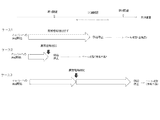
- FIG. 2 is a conceptual diagram showing the operation of the present invention. The basic concept will be described separately for Cases 1 to 3.
- the first threshold is set to be lower than the lower limit of the normal range.
- a bale with a weight (light) outside the normal range is intentionally molded. Remove the veil containing foreign matter as a nonstandard product. Further, since the bale is light, production loss can be suppressed.
- the foreign matter is detected after the weighing by the weighing device 6 reaches the first threshold.
- the weighing is continued until the weighing by the weighing device 6 exceeds the second threshold.
- the second threshold is set to be heavier than the upper limit of the normal range.
- a bale with a weight (heavy) outside the normal range is intentionally molded. Remove the veil containing foreign matter as a nonstandard product. This makes it possible to reliably sort the bale containing foreign matter.
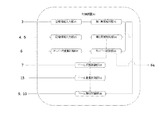
- FIG. 3 is a functional block diagram illustrating a schematic configuration of the control device according to the embodiment of the present invention.
- the control device 30 includes a temperature information input unit 31, a first abnormality detection unit 32, an image information input unit 33, a second abnormality detection unit 34, a hopper weight measurement unit 35, a hopper control unit 36, a veil It has a molding control unit 37, a bale weight measurement unit 38, and a bale unloading control unit 39.
- the temperature information input unit 31 inputs temperature information from the thermographic camera 3.
- the first abnormality detection unit 32 detects a crumb containing excess moisture based on the temperature information from the temperature information input unit 31.
- the image information input unit 33 inputs image information from the foreign object detection cameras 4 and 5.
- the second abnormality detection unit 34 detects foreign matters such as dust, thermally degraded crumbs, resin fragments, and catalyst residues based on the image information from the image information input unit 33. For example, each foreign substance is identified based on a color difference.
- the hopper internal weight measurement unit 35 inputs the weight information of the crumb in the hopper from the weighing device 6.
- the hopper control unit 36 controls the weight information from the hopper internal weight measurement unit 35 and the presence / absence of the first abnormality detection signal 11a from the first abnormality detection unit 32 and the second abnormality detection signal 11b from the second abnormality detection unit 34.
- the operation of the upper hopper 6a1 and the lower hopper 6a2 is controlled. Specifically, the crumb supply to the hopper is started with the upper hopper 6a1 opened and the lower hopper 6a2 closed. When the inside of the hopper reaches a predetermined weight, the upper hopper 6a1 is closed to stop the supply of the crumb to the hopper, and the lower hopper 6a2 is opened to supply the crumb to the baler 7.
- the bale forming control section 37 operates the baler 7, forms the bale, and after the bale is formed, sends out the bale via the conveyor 14.
- the bale weight measurement unit 38 inputs bale weight information from the weight measurement device 15 provided on the conveyor 14.
- the bale unloading control unit 39 determines whether the product 12 is to be unloaded to the next process 9 or removed as a nonstandard product 13 and sent to another process 10 based on the bale weight information from the bale weight measurement unit 38.
- FIG. 4 is a control flow diagram at the time of bale molding according to an embodiment of the present invention.
- the weight of the crumb in the hopper is measured (step S12). Weight increases almost proportionally from zero.
- step S13 If it is determined in step S13 that there is no abnormal signal detection, it is determined whether the weight of the crumb in the hopper is within the normal range (step S14). If it is determined that the weight of the crumb in the hopper is not within the normal range, the above control is repeated until the weight of the crumb in the hopper falls within the normal range (S14 ⁇ S12 ⁇ S13 ⁇ S14).
- step S14 If it is determined in step S14 that the weight of the crumb in the hopper is within the normal range, the supply of the crumb to the hopper 6a is stopped (step S15). At the same time, all the crumbs stored in the hopper are supplied. The baler 7 is supplied with crumb having a weight within the normal range. At this time, no foreign matter is included.
- step S13 If it is determined that an abnormal signal is detected while repeating the control until the weight of the crumb in the hopper falls within the normal range (S14 ⁇ S12 ⁇ S13 ⁇ S14), check whether the weight of the crumb in the hopper is less than the first threshold value. It is determined whether or not it is (step S17).
- step S17 If it is determined in step S17 that the weight of the crumb in the hopper is less than the first threshold, the supply of the crumb to the hopper 6a is stopped (step S15). At the same time, all the crumbs stored in the hopper are supplied. The baler 7 is supplied with a deliberately low weight of crumb. At this time, foreign matter is included.
- step S17 If it is determined in step S17 that the weight of the crumb in the hopper is not less than the first threshold, it is determined whether the weight of the crumb in the hopper exceeds the second threshold (step S18).
- step S18 If it is determined in step S18 that the weight of the crumb in the hopper does not exceed the second threshold, the above control is repeated until the weight of the crumb in the hopper exceeds the second threshold (S18 ⁇ S12 ⁇ S13 ⁇ S17 ⁇ S18). .
- step S18 If it is determined in step S18 that the weight of the crumb in the hopper exceeds the second threshold, the supply of the crumb to the hopper 6a is stopped (step S15). At the same time, all the crumbs stored in the hopper are supplied. The baler 7 is supplied with a purposely heavy crumb. At this time, foreign matter is included.
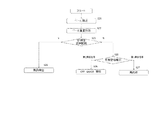
- FIG. 5 is a control flow chart at the time of sorting according to an embodiment of the present invention.
- Step S21 The formed bale is automatically conveyed from the baler 7 (Step S21).
- the weight of the bale is measured (step S22). During the weight measurement, it is determined whether or not the bale weight is within the normal range (step S23).
- step S23 If it is determined in step S23 that the weight of the bale is within the normal range, the bale is carried out as a product (step S24). If it is determined that the weight of the bale is not within the normal range, the type of the abnormal signal detected in step S13 is determined (step S25).
- the abnormal signal is the second abnormal signal 11b in step S25, it is removed as an off-grade product (step S26). If the abnormal signal is the first abnormal signal 11a, it is temporarily removed and transported as a reprocessed product (step S27).
- the crumb-like polymer to be veiled is a vulcanizable rubber such as natural rubber (NR), isoprene rubber (IR), styrene butadiene rubber (SBR), butadiene rubber (BR), chloroprene rubber (CR), butyl rubber (IIR), nitrile rubber (NBR), ethylene / propylene rubber (EPM, EPDM), chlorosulfonated polyethylene rubber (CSM), acrylic rubber (ACM), urethane rubber (U), silicone rubber (VMQ) , PVMQ, FVMQ), fluoro rubber (FKM), polysulfide rubber (T) and the like.
- conjugated diene-based polymers are preferred, especially for butadiene rubber (BR).
- the specified weight range of the genuine product is 0.94A ⁇ A ⁇ 1.06A, where A (kg) is the optimum polymer weight of the genuine product. 0.95A ⁇ A ⁇ 1.05A is more preferable, 0.97A ⁇ A ⁇ 1.03A is more preferable, 0.98A ⁇ A ⁇ 1.02A is more preferable, and 0.99 A ⁇ A ⁇ 1.01 is more preferable. Particularly preferred.
- the optimum polymer weight of the genuine product differs depending on the type and grade of the polymer, but in the first embodiment, the optimum polymer weight of the genuine product is set to 35 kg, and the specified weight range of the genuine product is 34.54 kg to Set to 35.46 kg. In the second embodiment, the optimum polymer weight of a regular product is set to 30 kg, and the specified weight range of the regular product is set to 29.54 kg to 30.46 kg.
- the first threshold value of the first embodiment is set to 33 Kg, which is lighter than the lower limit value (34.54 kg) of the normal range, and the second threshold value is set to 37 Kg, which is higher than the upper limit value (35.46 kg) of the normal range.
- the first threshold is set to 28 Kg which is lighter than the lower limit (29.54 kg) of the normal range, and the second threshold is set to 32 kg which is heavier than the upper limit (30.46 kg) of the normal range.
- thermographic camera 3 for example, CPA-L25B manufactured by Chino can be used.
- the foreign object detection cameras 4 and 5 for example, SP-20000C-PMCL manufactured by JAI can be used.
- weighing device 15 for example, CLH50L manufactured by Daiwa Seisakusho can be used.
- Other configurations are common to the existing system, and the existing system can be used.
- Case 2 The same operation as in Case 1 is started, but if foreign matter is detected before the first threshold value reaches 33 kg, a bale lighter (less than 33 kg) than the first threshold value is formed (S11 ⁇ S12 ⁇ S13 ⁇ S17 ⁇ S15). ⁇ S16). A bale with a weight outside the normal range (less than 33 kg) is removed as a nonstandard product (S21 ⁇ S22 ⁇ S23 ⁇ S25 ⁇ S26). As a result, foreign matter contained in the veil is removed. Production losses are minimal.
- a bale of 15 kg may be molded.
- Case 2 The same operation as in Case 1 is started, but if foreign matter is detected before the first threshold value reaches 28 kg, a bale lighter (less than 28 kg) than the first threshold value is molded (S11 ⁇ S12 ⁇ S13 ⁇ S17 ⁇ S15). ⁇ S16). Bale with a weight outside the normal range (less than 28 kg) is removed as a nonstandard product (S21 ⁇ S22 ⁇ S23 ⁇ S25 ⁇ S26). As a result, foreign matter contained in the veil is removed. Production losses are minimal.
- a bale of 15 kg may be molded.
- the system includes the thermographic camera 3, but the thermographic camera 3 is not indispensable unless excessive moisture is detected as a foreign substance.
- the product is classified into the non-standard product and the product based on the weight of the bale.
- the control for separating the product and the non-standard product based on the abnormality detection signal may be combined.
- Each veil is assigned an identifier and is associated with an abnormality detection signal.
- the visual inspection by the observer is omitted, but may be used together. Further, a warning lamp may be used to alert the observer based on the abnormal signal.
- the findings obtained by the present invention are not limited to vulcanizable rubbers, but also use a weighing device as a countermeasure after detection of foreign matter, so that they can be widely applied in the food and pharmaceutical fields.
Landscapes
- Chemical & Material Sciences (AREA)
- Health & Medical Sciences (AREA)
- General Health & Medical Sciences (AREA)
- Life Sciences & Earth Sciences (AREA)
- Analytical Chemistry (AREA)
- Biochemistry (AREA)
- General Physics & Mathematics (AREA)
- Immunology (AREA)
- Pathology (AREA)
- Physics & Mathematics (AREA)
- Organic Chemistry (AREA)
- Chemical Kinetics & Catalysis (AREA)
- Medicinal Chemistry (AREA)
- Polymers & Plastics (AREA)
- General Chemical & Material Sciences (AREA)
- Processing And Handling Of Plastics And Other Materials For Molding In General (AREA)
- Sorting Of Articles (AREA)
- Investigating Materials By The Use Of Optical Means Adapted For Particular Applications (AREA)
- Casting Or Compression Moulding Of Plastics Or The Like (AREA)
- Separation Of Solids By Using Liquids Or Pneumatic Power (AREA)
- Nitrogen Condensed Heterocyclic Rings (AREA)
Abstract
Description
本願の特徴は以下の通りである。
図3は、本発明の一実施形態に係る制御装置の概略構成を示す機能ブロック図である。
図4は、本発明の一実施形態に係るベール成型時の制御フロー図である。
図5は、本発明の一実施形態に係る仕分け時の制御フロー図である。
さらに具体的な実施形態について説明する。
・ケース1
異物が検知されず、正規範囲の重量(例えば、35Kg程度)のベールが成型される(S11→S12→S13→S14→S15→S16)。正規範囲の重量のベールは正規品として搬出される(S21→S22→S23→S24)。
ケース1と同様な動作を開始するが、第1閾値33Kgになる前に異物が検知されると、第1閾値より軽い(33Kg未満)ベールが成型される(S11→S12→S13→S17→S15→S16)。正規範囲外の重量(33Kg未満)のベールは、規格外品として取り除かれる(S21→S22→S23→S25→S26)。その結果、ベールに含まれている異物が取り除かれる。生産ロスは最小限となる。
ケース2において、第1閾値33Kg以上のときに異物が検知されると、正規品との重量の違いを判別できず、確実に仕分けられないおそれもある。そこで第2閾値より重いベール(37kg超)が成型される(S11→S12→S13→S17→S18→S15→S16)。正規範囲外の重量(37Kg超)のベールは、規格外品として取り除かれる(S21→S22→S23→S25→S26)。その結果、ベールに含まれている異物が取り除かれる。
・ケース1
異物が検知されず、正規範囲の重量(例えば、30Kg)のベールが成型される(S11→S12→S13→S14→S15→S16)。正規範囲の重量のベールは正規品として搬出される(S21→S22→S23→S24)。
ケース1と同様な動作を開始するが、第1閾値28Kgになる前に異物が検知されると、第1閾値より軽い(28Kg未満)ベールが成型される(S11→S12→S13→S17→S15→S16)。正規範囲外の重量(28Kg未満)のベールは、規格外品として取り除かれる(S21→S22→S23→S25→S26)。その結果、ベールに含まれている異物が取り除かれる。生産ロスは最小限となる。
ケース2において、第1閾値28Kg以上のときに異物が検知されると、正規品との重量の違いを判別できず、確実に仕分けられないおそれもある。そこで第2閾値より重いベール(32Kg超)が成型される(S11→S12→S13→S17→S18→S15→S16)。正規範囲外の重量(32Kg超)のベールは、規格外品として取り除かれる(S21→S22→S23→S25→S26)。その結果、ベールに含まれている異物が取り除かれる。
本願発明は上記実施形態に限定されず、本願発明の技術思想の範囲で種々の変更が可能である。
2 ゴムクラム
3 サーモグラフカメラ
4 異物検出カメラ
5 異物検出カメラ
6 計量装置
6a ホッパー
7 ベーラー(加圧成型機)
8 脱水/乾燥工程
9 包装工程
10 オフグレード品/再処理工程
11 異常検知信号
12 正規品(製品)
13 規格外品
14 コンベア
15 重量計測装置
30 制御装置
31 温度情報入力部
32 第1異常検知部
33 画像情報入力部
34 第2異常検知部
35 ホッパー内重量計測部
36 ホッパー制御部
37 ベール成型制御部
38 ベール重量計測部
39 ベール搬出制御部
Claims (11)
- 重合し脱水乾燥したクラム状のポリマーを連続的に供給する工程と、
前記クラム状のポリマー内の異物を検知する工程と、
ベール相当のクラム状のポリマーの重量を計測する工程と、
ベール相当重量のクラム状のポリマーを加圧しベールを成型する工程と、
前記異物が検知されたクラム状のポリマーを含むベールを取り除く工程と、
前記異物が検知されなかったクラム状のポリマーにより形成されたベールを搬出する工程と、
を備えることを特徴とする異物除去方法。 - 前記異物が検知されなかったクラム状のポリマーによるベールの重量は正規範囲であり、
前記異物が検知されたクラム状のポリマーを含むベールの重量は正規範囲外であり、
ベールの重量を計測する工程を備え、
前記ベールの重量の違いに基づいて、正規範囲の重量のベールを搬出し、正規範囲外の重量のベールを取り除く
ことを特徴とする請求項1記載の異物除去方法。 - 前記異物が検知されたクラム状のポリマーを含むベールの重量は、前記正規範囲の下限値より小さい第1閾値以下である
ことを特徴とする請求項2記載の異物除去方法。 - 前記異物が検知されたときのクラム状のポリマーの計測重量が、前記正規範囲の下限値より軽い第1閾値以上である場合、
前記異物が検知されたクラム状のポリマー含むベールの重量は、前記正規範囲の上限値より重い第2閾値以上である
ことを特徴とする請求項2記載の異物除去方法。 - 前記異物は、ゴミ、熱劣化したクラム、樹脂片、触媒残渣、過剰水分を含み、
前記過剰水分以外の異物を含むベールを取り除き、
前記過剰水分を含むベールを再処理する
ことを特徴とする請求項1~4いずれか記載の異物除去方法。 - 前記ポリマーは、共役ジエン系ポリマーである
ことを特徴とする請求項1~5いずれか記載の異物除去方法。 - 重合し脱水乾燥したクラム状のポリマーを連続的に供給する連続供給手段と、
前記クラム状のポリマー内の異物を検知する異物検知手段と、
ベール相当のクラム状のポリマーの重量を計測するベール相当重量計測手段と、
ベール相当重量のクラム状のポリマーを加圧しベールを成型するベール成型手段と、
前記ベールを搬出するベール搬出手段と、
制御手段と
を備え、
前記制御手段は、
前記搬出手段に、
前記異物が検知されなかったクラム状のポリマーにより形成されたベールを搬出させ、前記異物が検知されたクラム状のポリマー含むベールを取り除かせる
ことを特徴とする仕分けシステム。 - 前記ベール成型手段により成型されたベールの重量を計測するベール重量計測手段を更に備え、
前記制御手段は、
ベール相当重量計測手段に、
前記異物が検知されなかった場合には、正規範囲となるようにベール相当重量を計測させ、前記異物が検知された場合は、正規範囲外となるようにベール相当重量を計測させ、
前記ベール重量計測手段よりベール重量を取得し、前記ベール重量に基づき、
前記搬出手段に、
前記正規範囲の重量のベールを搬出させ、前記正規範囲外の重量のベールを取り除かせる
ことを特徴とする請求項7記載の仕分けシステム。 - 前記異物検知手段は、異物検出カメラおよびサーモグラフカメラである
ことを特徴とする請求項7または8記載の仕分けシステム。 - 請求項7~9いずれか記載の仕分けシステムにより仕分けられて搬出される
ことを特徴とするベール。 - 請求項1~6のいずれか記載の異物除去方法により、異物を除去して、ベールを製造する
ことを特徴とするベールの製造方法。
Priority Applications (4)
| Application Number | Priority Date | Filing Date | Title |
|---|---|---|---|
| CN201980053745.5A CN112566944B (zh) | 2018-09-10 | 2019-09-05 | 异物除去方法以及分类系统 |
| MYPI2021000844A MY199768A (en) | 2018-09-10 | 2019-09-05 | Foreign material removal method and classification system |
| KR1020217004832A KR102494389B1 (ko) | 2018-09-10 | 2019-09-05 | 이물 제거 방법 및 분류 시스템 |
| JP2020545969A JP7062077B2 (ja) | 2018-09-10 | 2019-09-05 | 異物除去方法および仕分けシステム |
Applications Claiming Priority (2)
| Application Number | Priority Date | Filing Date | Title |
|---|---|---|---|
| JP2018169192 | 2018-09-10 | ||
| JP2018-169192 | 2018-09-10 |
Publications (1)
| Publication Number | Publication Date |
|---|---|
| WO2020054573A1 true WO2020054573A1 (ja) | 2020-03-19 |
Family
ID=69777604
Family Applications (1)
| Application Number | Title | Priority Date | Filing Date |
|---|---|---|---|
| PCT/JP2019/034995 Ceased WO2020054573A1 (ja) | 2018-09-10 | 2019-09-05 | 異物除去方法および仕分けシステム |
Country Status (6)
| Country | Link |
|---|---|
| JP (1) | JP7062077B2 (ja) |
| KR (1) | KR102494389B1 (ja) |
| CN (1) | CN112566944B (ja) |
| MY (1) | MY199768A (ja) |
| TW (1) | TWI777088B (ja) |
| WO (1) | WO2020054573A1 (ja) |
Cited By (1)
| Publication number | Priority date | Publication date | Assignee | Title |
|---|---|---|---|---|
| US20220331810A1 (en) * | 2019-09-27 | 2022-10-20 | Satake Corporation | Hulling device and hulling control system |
Families Citing this family (1)
| Publication number | Priority date | Publication date | Assignee | Title |
|---|---|---|---|---|
| CN116256374A (zh) * | 2023-02-07 | 2023-06-13 | 西双版纳中化橡胶有限公司 | 一种天然橡胶的异物检测评价方法 |
Citations (5)
| Publication number | Priority date | Publication date | Assignee | Title |
|---|---|---|---|---|
| JPH06179420A (ja) * | 1992-12-15 | 1994-06-28 | Kanebo Ltd | 横型ピロー包装機における包装不良製品の排出装置 |
| JPH08210984A (ja) * | 1995-02-06 | 1996-08-20 | Babcock Hitachi Kk | 粉粒体等の検査装置 |
| US20170030838A1 (en) * | 2015-07-30 | 2017-02-02 | Zeon Chemicals L.P. | Rubber crumb inspection system |
| JP2017173168A (ja) * | 2016-03-24 | 2017-09-28 | 日本ゼオン株式会社 | 異物の検出方法、異物の検出装置、エラストマーの製造方法およびエラストマーの製造装置 |
| JP2017171803A (ja) * | 2016-03-24 | 2017-09-28 | 日本ゼオン株式会社 | 異物の検出方法、異物の検出装置、エラストマー成形体の製造方法およびエラストマー成形体の製造装置 |
Family Cites Families (2)
| Publication number | Priority date | Publication date | Assignee | Title |
|---|---|---|---|---|
| JP3015214B2 (ja) | 1992-12-25 | 2000-03-06 | 東レ・ダウコーニング・シリコーン株式会社 | ゴムベールの重量制御方法およびそのための装置 |
| KR102069835B1 (ko) * | 2016-11-02 | 2020-01-23 | 주식회사 엘지화학 | 불완전하게 건조된 원료의 검출, 제거, 이송 및 회수 시스템 |
-
2019
- 2019-09-05 CN CN201980053745.5A patent/CN112566944B/zh active Active
- 2019-09-05 MY MYPI2021000844A patent/MY199768A/en unknown
- 2019-09-05 WO PCT/JP2019/034995 patent/WO2020054573A1/ja not_active Ceased
- 2019-09-05 JP JP2020545969A patent/JP7062077B2/ja active Active
- 2019-09-05 KR KR1020217004832A patent/KR102494389B1/ko active Active
- 2019-09-09 TW TW108132385A patent/TWI777088B/zh active
Patent Citations (5)
| Publication number | Priority date | Publication date | Assignee | Title |
|---|---|---|---|---|
| JPH06179420A (ja) * | 1992-12-15 | 1994-06-28 | Kanebo Ltd | 横型ピロー包装機における包装不良製品の排出装置 |
| JPH08210984A (ja) * | 1995-02-06 | 1996-08-20 | Babcock Hitachi Kk | 粉粒体等の検査装置 |
| US20170030838A1 (en) * | 2015-07-30 | 2017-02-02 | Zeon Chemicals L.P. | Rubber crumb inspection system |
| JP2017173168A (ja) * | 2016-03-24 | 2017-09-28 | 日本ゼオン株式会社 | 異物の検出方法、異物の検出装置、エラストマーの製造方法およびエラストマーの製造装置 |
| JP2017171803A (ja) * | 2016-03-24 | 2017-09-28 | 日本ゼオン株式会社 | 異物の検出方法、異物の検出装置、エラストマー成形体の製造方法およびエラストマー成形体の製造装置 |
Cited By (1)
| Publication number | Priority date | Publication date | Assignee | Title |
|---|---|---|---|---|
| US20220331810A1 (en) * | 2019-09-27 | 2022-10-20 | Satake Corporation | Hulling device and hulling control system |
Also Published As
| Publication number | Publication date |
|---|---|
| JPWO2020054573A1 (ja) | 2021-09-16 |
| TWI777088B (zh) | 2022-09-11 |
| KR102494389B1 (ko) | 2023-02-06 |
| CN112566944B (zh) | 2022-12-16 |
| JP7062077B2 (ja) | 2022-05-02 |
| KR20210033505A (ko) | 2021-03-26 |
| MY199768A (en) | 2023-11-22 |
| TW202026315A (zh) | 2020-07-16 |
| CN112566944A (zh) | 2021-03-26 |
Similar Documents
| Publication | Publication Date | Title |
|---|---|---|
| EP2992973B1 (en) | Method and system for molding a fiber-reinforced composite structure using chopped fiber-reinforced pieces | |
| EP2774693A1 (en) | Process for removing contaminants from polymeric powders | |
| JP7062077B2 (ja) | 異物除去方法および仕分けシステム | |
| US20150209830A1 (en) | Method and system for processing and recycling infill material of artificial turf | |
| JP4557298B2 (ja) | 縦型製袋包装機 | |
| KR101772368B1 (ko) | 정제를 분류하기 위한 개체 분류 장치, 그러한 개체 분류 장치 및 정제형성 장치를 갖는 시스템, 및 개체 분류 장치를 점검하기 위한 방법 | |
| GB2484410A (en) | Feeder and extrusion device and method of use thereof | |
| CN106426647B (zh) | 用于制造微粉化粉末的系统、方法和装置 | |
| CN110446920A (zh) | 含水物检测装置、含水物检测方法以及橡胶状聚合物的制造方法 | |
| JP2011148166A (ja) | 樹脂塗膜剥離システム | |
| JP4871874B2 (ja) | 成形容器を検査し区分けするシステム及び方法 | |
| KR102516475B1 (ko) | 검사 방법 및 검사 장치 | |
| CN205397551U (zh) | 破包料回机处理装置 | |
| CN104889072A (zh) | 一种造煤球机的湿度重量监控装置 | |
| CN109590233A (zh) | 一种小盒裹包机的自动剔除控制方法及装置 | |
| CN118120853A (zh) | 一种提高虾料成品率的虾料生产方法 | |
| WO2025184721A1 (en) | Method and apparatus for manufacture of biodegradable polymer | |
| TWM631730U (zh) | 空袋剔除系統 | |
| CN117837685A (zh) | 一种自动化的虾料生产方法 | |
| KR20250084297A (ko) | 재활용 플라스틱 원료 정량계량 시스템 | |
| CN205103982U (zh) | 一种卸袋机监测报警装置 | |
| EP3798559A1 (en) | Equipment for breaking and drying plastic film waste to recycle | |
| JP2023003608A (ja) | 生産管理システム及び生産管理プログラム | |
| IT202300017874A1 (it) | Impianto di sconfezionamento di prodotti alimentari confezionati | |
| CN116767603A (zh) | 空袋剔除系统 |
Legal Events
| Date | Code | Title | Description |
|---|---|---|---|
| 121 | Ep: the epo has been informed by wipo that ep was designated in this application |
Ref document number: 19859088 Country of ref document: EP Kind code of ref document: A1 |
|
| ENP | Entry into the national phase |
Ref document number: 2020545969 Country of ref document: JP Kind code of ref document: A |
|
| ENP | Entry into the national phase |
Ref document number: 20217004832 Country of ref document: KR Kind code of ref document: A |
|
| NENP | Non-entry into the national phase |
Ref country code: DE |
|
| 122 | Ep: pct application non-entry in european phase |
Ref document number: 19859088 Country of ref document: EP Kind code of ref document: A1 |