WO2020040251A1 - 逆浸透膜装置のスライム抑制方法 - Google Patents
逆浸透膜装置のスライム抑制方法 Download PDFInfo
- Publication number
- WO2020040251A1 WO2020040251A1 PCT/JP2019/032827 JP2019032827W WO2020040251A1 WO 2020040251 A1 WO2020040251 A1 WO 2020040251A1 JP 2019032827 W JP2019032827 W JP 2019032827W WO 2020040251 A1 WO2020040251 A1 WO 2020040251A1
- Authority
- WO
- WIPO (PCT)
- Prior art keywords
- water
- slime
- reverse osmosis
- osmosis membrane
- component
- Prior art date
- Legal status (The legal status is an assumption and is not a legal conclusion. Google has not performed a legal analysis and makes no representation as to the accuracy of the status listed.)
- Ceased
Links
Images

Classifications
-
- B—PERFORMING OPERATIONS; TRANSPORTING
- B01—PHYSICAL OR CHEMICAL PROCESSES OR APPARATUS IN GENERAL
- B01D—SEPARATION
- B01D65/00—Accessories or auxiliary operations, in general, for separation processes or apparatus using semi-permeable membranes
- B01D65/08—Prevention of membrane fouling or of concentration polarisation
-
- A—HUMAN NECESSITIES
- A01—AGRICULTURE; FORESTRY; ANIMAL HUSBANDRY; HUNTING; TRAPPING; FISHING
- A01N—PRESERVATION OF BODIES OF HUMANS OR ANIMALS OR PLANTS OR PARTS THEREOF; BIOCIDES, e.g. AS DISINFECTANTS, AS PESTICIDES OR AS HERBICIDES; PEST REPELLANTS OR ATTRACTANTS; PLANT GROWTH REGULATORS
- A01N35/00—Biocides, pest repellants or attractants, or plant growth regulators containing organic compounds containing a carbon atom having two bonds to hetero atoms with at the most one bond to halogen, e.g. aldehyde radical
- A01N35/02—Biocides, pest repellants or attractants, or plant growth regulators containing organic compounds containing a carbon atom having two bonds to hetero atoms with at the most one bond to halogen, e.g. aldehyde radical containing aliphatically bound aldehyde or keto groups, or thio analogues thereof; Derivatives thereof, e.g. acetals
-
- A—HUMAN NECESSITIES
- A01—AGRICULTURE; FORESTRY; ANIMAL HUSBANDRY; HUNTING; TRAPPING; FISHING
- A01N—PRESERVATION OF BODIES OF HUMANS OR ANIMALS OR PLANTS OR PARTS THEREOF; BIOCIDES, e.g. AS DISINFECTANTS, AS PESTICIDES OR AS HERBICIDES; PEST REPELLANTS OR ATTRACTANTS; PLANT GROWTH REGULATORS
- A01N37/00—Biocides, pest repellants or attractants, or plant growth regulators containing organic compounds containing a carbon atom having three bonds to hetero atoms with at the most two bonds to halogen, e.g. carboxylic acids
- A01N37/34—Nitriles
-
- A—HUMAN NECESSITIES
- A01—AGRICULTURE; FORESTRY; ANIMAL HUSBANDRY; HUNTING; TRAPPING; FISHING
- A01N—PRESERVATION OF BODIES OF HUMANS OR ANIMALS OR PLANTS OR PARTS THEREOF; BIOCIDES, e.g. AS DISINFECTANTS, AS PESTICIDES OR AS HERBICIDES; PEST REPELLANTS OR ATTRACTANTS; PLANT GROWTH REGULATORS
- A01N41/00—Biocides, pest repellants or attractants, or plant growth regulators containing organic compounds containing a sulfur atom bound to a hetero atom
- A01N41/02—Biocides, pest repellants or attractants, or plant growth regulators containing organic compounds containing a sulfur atom bound to a hetero atom containing a sulfur-to-oxygen double bond
- A01N41/04—Sulfonic acids; Derivatives thereof
- A01N41/08—Sulfonic acid halides; alpha-Hydroxy-sulfonic acids; Amino-sulfonic acids; Thiosulfonic acids; Derivatives thereof
-
- A—HUMAN NECESSITIES
- A01—AGRICULTURE; FORESTRY; ANIMAL HUSBANDRY; HUNTING; TRAPPING; FISHING
- A01N—PRESERVATION OF BODIES OF HUMANS OR ANIMALS OR PLANTS OR PARTS THEREOF; BIOCIDES, e.g. AS DISINFECTANTS, AS PESTICIDES OR AS HERBICIDES; PEST REPELLANTS OR ATTRACTANTS; PLANT GROWTH REGULATORS
- A01N43/00—Biocides, pest repellants or attractants, or plant growth regulators containing heterocyclic compounds
- A01N43/72—Biocides, pest repellants or attractants, or plant growth regulators containing heterocyclic compounds having rings with nitrogen atoms and oxygen or sulfur atoms as ring hetero atoms
- A01N43/80—Biocides, pest repellants or attractants, or plant growth regulators containing heterocyclic compounds having rings with nitrogen atoms and oxygen or sulfur atoms as ring hetero atoms five-membered rings with one nitrogen atom and either one oxygen atom or one sulfur atom in positions 1,2
-
- A—HUMAN NECESSITIES
- A01—AGRICULTURE; FORESTRY; ANIMAL HUSBANDRY; HUNTING; TRAPPING; FISHING
- A01N—PRESERVATION OF BODIES OF HUMANS OR ANIMALS OR PLANTS OR PARTS THEREOF; BIOCIDES, e.g. AS DISINFECTANTS, AS PESTICIDES OR AS HERBICIDES; PEST REPELLANTS OR ATTRACTANTS; PLANT GROWTH REGULATORS
- A01N59/00—Biocides, pest repellants or attractants, or plant growth regulators containing elements or inorganic compounds
-
- A—HUMAN NECESSITIES
- A01—AGRICULTURE; FORESTRY; ANIMAL HUSBANDRY; HUNTING; TRAPPING; FISHING
- A01N—PRESERVATION OF BODIES OF HUMANS OR ANIMALS OR PLANTS OR PARTS THEREOF; BIOCIDES, e.g. AS DISINFECTANTS, AS PESTICIDES OR AS HERBICIDES; PEST REPELLANTS OR ATTRACTANTS; PLANT GROWTH REGULATORS
- A01N59/00—Biocides, pest repellants or attractants, or plant growth regulators containing elements or inorganic compounds
- A01N59/08—Alkali metal chlorides; Alkaline earth metal chlorides
-
- B—PERFORMING OPERATIONS; TRANSPORTING
- B01—PHYSICAL OR CHEMICAL PROCESSES OR APPARATUS IN GENERAL
- B01D—SEPARATION
- B01D61/00—Processes of separation using semi-permeable membranes, e.g. dialysis, osmosis or ultrafiltration; Apparatus, accessories or auxiliary operations specially adapted therefor
- B01D61/02—Reverse osmosis; Hyperfiltration ; Nanofiltration
- B01D61/025—Reverse osmosis; Hyperfiltration
-
- B—PERFORMING OPERATIONS; TRANSPORTING
- B01—PHYSICAL OR CHEMICAL PROCESSES OR APPARATUS IN GENERAL
- B01D—SEPARATION
- B01D61/00—Processes of separation using semi-permeable membranes, e.g. dialysis, osmosis or ultrafiltration; Apparatus, accessories or auxiliary operations specially adapted therefor
- B01D61/02—Reverse osmosis; Hyperfiltration ; Nanofiltration
- B01D61/04—Feed pretreatment
-
- B—PERFORMING OPERATIONS; TRANSPORTING
- B01—PHYSICAL OR CHEMICAL PROCESSES OR APPARATUS IN GENERAL
- B01D—SEPARATION
- B01D65/00—Accessories or auxiliary operations, in general, for separation processes or apparatus using semi-permeable membranes
- B01D65/02—Membrane cleaning or sterilisation ; Membrane regeneration
-
- C—CHEMISTRY; METALLURGY
- C02—TREATMENT OF WATER, WASTE WATER, SEWAGE, OR SLUDGE
- C02F—TREATMENT OF WATER, WASTE WATER, SEWAGE, OR SLUDGE
- C02F1/00—Treatment of water, waste water, or sewage
- C02F1/008—Control or steering systems not provided for elsewhere in subclass C02F
-
- C—CHEMISTRY; METALLURGY
- C02—TREATMENT OF WATER, WASTE WATER, SEWAGE, OR SLUDGE
- C02F—TREATMENT OF WATER, WASTE WATER, SEWAGE, OR SLUDGE
- C02F1/00—Treatment of water, waste water, or sewage
- C02F1/44—Treatment of water, waste water, or sewage by dialysis, osmosis or reverse osmosis
- C02F1/441—Treatment of water, waste water, or sewage by dialysis, osmosis or reverse osmosis by reverse osmosis
-
- C—CHEMISTRY; METALLURGY
- C02—TREATMENT OF WATER, WASTE WATER, SEWAGE, OR SLUDGE
- C02F—TREATMENT OF WATER, WASTE WATER, SEWAGE, OR SLUDGE
- C02F1/00—Treatment of water, waste water, or sewage
- C02F1/50—Treatment of water, waste water, or sewage by addition or application of a germicide or by oligodynamic treatment
-
- C—CHEMISTRY; METALLURGY
- C02—TREATMENT OF WATER, WASTE WATER, SEWAGE, OR SLUDGE
- C02F—TREATMENT OF WATER, WASTE WATER, SEWAGE, OR SLUDGE
- C02F1/00—Treatment of water, waste water, or sewage
- C02F1/72—Treatment of water, waste water, or sewage by oxidation
- C02F1/76—Treatment of water, waste water, or sewage by oxidation with halogens or compounds of halogens
-
- B—PERFORMING OPERATIONS; TRANSPORTING
- B01—PHYSICAL OR CHEMICAL PROCESSES OR APPARATUS IN GENERAL
- B01D—SEPARATION
- B01D2321/00—Details relating to membrane cleaning, regeneration, sterilization or to the prevention of fouling
- B01D2321/16—Use of chemical agents
- B01D2321/162—Use of acids
-
- B—PERFORMING OPERATIONS; TRANSPORTING
- B01—PHYSICAL OR CHEMICAL PROCESSES OR APPARATUS IN GENERAL
- B01D—SEPARATION
- B01D2321/00—Details relating to membrane cleaning, regeneration, sterilization or to the prevention of fouling
- B01D2321/16—Use of chemical agents
- B01D2321/168—Use of other chemical agents
-
- B—PERFORMING OPERATIONS; TRANSPORTING
- B01—PHYSICAL OR CHEMICAL PROCESSES OR APPARATUS IN GENERAL
- B01D—SEPARATION
- B01D2321/00—Details relating to membrane cleaning, regeneration, sterilization or to the prevention of fouling
- B01D2321/40—Automatic control of cleaning processes
-
- C—CHEMISTRY; METALLURGY
- C02—TREATMENT OF WATER, WASTE WATER, SEWAGE, OR SLUDGE
- C02F—TREATMENT OF WATER, WASTE WATER, SEWAGE, OR SLUDGE
- C02F2303/00—Specific treatment goals
- C02F2303/20—Prevention of biofouling
-
- Y—GENERAL TAGGING OF NEW TECHNOLOGICAL DEVELOPMENTS; GENERAL TAGGING OF CROSS-SECTIONAL TECHNOLOGIES SPANNING OVER SEVERAL SECTIONS OF THE IPC; TECHNICAL SUBJECTS COVERED BY FORMER USPC CROSS-REFERENCE ART COLLECTIONS [XRACs] AND DIGESTS
- Y02—TECHNOLOGIES OR APPLICATIONS FOR MITIGATION OR ADAPTATION AGAINST CLIMATE CHANGE
- Y02A—TECHNOLOGIES FOR ADAPTATION TO CLIMATE CHANGE
- Y02A20/00—Water conservation; Efficient water supply; Efficient water use
- Y02A20/124—Water desalination
- Y02A20/131—Reverse-osmosis
Definitions
- the present invention relates to a slime control method for a reverse osmosis membrane device.
- the reverse osmosis membrane (RO membrane) provided in the reverse osmosis membrane device is used for producing drinking water, producing pure water, and reusing wastewater.
- RO membrane reverse osmosis membrane
- microorganisms such as bacteria contained in the water to be treated become slime (biofilm) and adhere to and grow on the reverse osmosis membrane surface, thereby causing membrane clogging. .
- Patent Document 1 discloses a method for producing pure water including a slime control agent addition step, a membrane treatment step, an ultraviolet irradiation treatment step, and an ion exchange treatment step.
- Patent Document 1 describes that the membrane treatment step is reverse osmosis membrane treatment, and that 2,2-dibromo-3-nitrilopropionamide is used as a slime control agent.
- Patent Literature 1 requires the use of a slime control agent alone and two steps of an ultraviolet irradiation treatment step and an ion exchange treatment step.
- the method of Patent Document 1 since the number of steps is large and labor and time are required, further studies are required from the viewpoint of obtaining the effect of suppressing the generation of slime in a short time.
- the present invention has been made to solve the above-mentioned problems, and has an effect of suppressing the generation of slime (biofilm), and even if slime (biofilm) is generated and adheres to the reverse osmosis membrane surface. It is an object of the present invention to provide a method for suppressing slime of a reverse osmosis membrane device in which an effect of removing (biofilm) can be obtained in a short time.
- the present inventor has conducted intensive studies in view of the above problems, and as a result, used 2,2-dibromo-3-nitrilopropionamide (DBNPA) as the slime inhibitor X in combination with the slime inhibitor Y specified in the present invention.
- DBNPA 2,2-dibromo-3-nitrilopropionamide
- the slime (biofilm) is generated, as well as the effect of suppressing the generation of slime (biofilm). It has been found that the effect of removing slime (biofilm) can be obtained in a short time even if it adheres to the reverse osmosis membrane surface, and the present invention has been completed. That is, the present invention is as follows.
- a slime control method applied to a reverse osmosis membrane device which comprises a water passing step of passing water to be treated through a reverse osmosis membrane, wherein the water passing step is performed on water to be treated having a pH of 10 or less.
- a slime suppressing method for a reverse osmosis membrane device comprising: a first water passing step of passing treated water containing the slime suppressing agent X and the slime suppressing agent Y by adding Y to the reverse osmosis membrane. .
- Component (A) Mixture of 5-chloro-2-methyl-4-isothiazolin-3-one (Cl-MIT) and 2-methyl-4-isothiazolin-3-one (MIT)
- Component (B) Chloramine compound Component (C): stabilized bromide
- the component (B) at least one selected from the group consisting of component (B-1) and component (B-2). Wherein the component (B-1) is chloramine comprising an ammonium salt and chlorine, and the component (B-2) is at least one selected from the group consisting of chlorosulfamic acid and chlorosulfamate.
- the water passing step further includes a second water passing step of passing treated water not containing the slime inhibitor X and the slime inhibitor Y through the reverse osmosis membrane.
- the water passage number in the first water passage step is 1 to 14 times per week, and the water passage time per one water passage number is 1 hour or less.
- Operating condition 1 Operating condition of taking out only concentrated water without separating into permeated water and concentrated water
- Operating condition 2 Operating condition of separating into permeated water and concentrated water, taking out and discarding the permeated water
- Operating condition 3 Operating conditions for separating the permeated water and the condensed water and taking out the permeated water, and returning the permeated water to the raw water of the reverse osmosis membrane device. Operating conditions for returning water to raw water of reverse osmosis membrane device
- the slime (biofilm) is suppressed even if slime (biofilm) is generated and adheres to the reverse osmosis membrane surface together with the effect of suppressing the generation of slime (biofilm). ) Can be obtained in a short time.
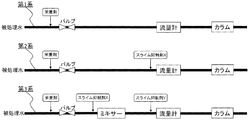
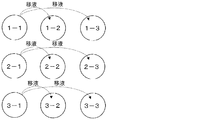
- FIG. 1 It is a figure showing the example of application of the slime control method of the reverse osmosis membrane device in the present invention. It is a system diagram of the apparatus which simulated the reverse osmosis membrane apparatus used in the evaluation test of the slime suppression effect. It is the schematic of the multi-well plate used for the measurement of the amount of microorganisms attached.
- the slime suppression method of the reverse osmosis membrane device in the present invention is a slime suppression method applied to a reverse osmosis membrane device, which has a water passing step of passing water to be treated through the reverse osmosis membrane, wherein the water passing step is
- the water to be treated having a pH of 10 or less is selected from the group consisting of a slime inhibitor X containing 2,2-dibromo-3-nitrilopropionamide (DBNPA) and the following components (A) to (D).
- DBNPA 2,2-dibromo-3-nitrilopropionamide
- a slime inhibitor Y containing at least one slime inhibitor Y and a first water passing step of passing treated water containing the slime inhibitor X and the slime inhibitor Y through the reverse osmosis membrane.
- the slime (biofilm) is suppressed even if the slime (biofilm) is generated and adheres to the reverse osmosis membrane surface, in addition to the effect of suppressing the generation of slime (biofilm). ) Can be obtained in a short time.
- DBNPA 2,2-dibromo-3-nitrilopropionamide
- FIG. 1 shows an application example of a slime suppression method for a reverse osmosis membrane device according to the present invention.
- the method for controlling slime of a reverse osmosis membrane device according to the present invention may include a pretreatment step before performing a water passing step of passing water to be treated through a reverse osmosis membrane of the reverse osmosis membrane device.
- the pretreatment step include a step of filtering raw water (water to be treated) in a raw water tank with a filtration device, and passing the filtered water through a filtration water tank and a security filter.
- the slime suppression method of the reverse osmosis membrane device in the present invention may include the above pretreatment step, but is not essential, even without passing through the pretreatment step, by passing through the water passing step specified in the present invention,
- the effect of removing slime (biofilm) can be obtained in a short time even if slime (biofilm) is generated and adheres to the reverse osmosis membrane surface.
- the water-passing step of the present invention includes a first water-passing step of passing treated water containing a slime inhibitor X and a slime inhibitor Y through a reverse osmosis membrane. And a second water passing step of passing treated water not containing the slime inhibitor Y through the reverse osmosis membrane.
- (1-1) First Water Passing Step In the first water passing step, water to be treated containing the slime inhibitor X and the slime inhibitor Y is passed through the reverse osmosis membrane of the reverse osmosis membrane device.
- the damage to the reverse osmosis membrane by the slime inhibitor X and the slime inhibitor Y is within a negligible level or within an allowable range.
- the method of including the slime suppressant X and the slime suppressant Y in the water to be treated is not particularly limited. However, considering that the slime suppressant X and the slime suppressant Y contained in the water to be treated simultaneously reach the reverse osmosis membrane. Thus, the addition timing of the slime inhibitor X and the slime inhibitor Y may be appropriately changed. For example, as in Application Example 1 shown in FIG. 1, a method of adding a slime inhibitor X to water to be treated that is passed at a predetermined speed, and then adding a slime inhibitor Y is given as an example. . Further, as in Application Example 2 shown in FIG.
- a slime inhibitor Y1 is added to the water to be treated that is passed at a predetermined speed, a slime inhibitor X is added, and then a slime inhibitor Y2 is added.
- a slime suppressants Y1 and Y2 indicate different types of slime suppressants Y specified in the present invention.
- the order in which the slime inhibitor X and the slime inhibitor Y are added is not particularly limited.
- the slime inhibitor X is added, and then the slime inhibitor Y is added.
- the slime inhibitor X and the slime inhibitor Y may be added almost simultaneously.
- two or more types of slime inhibitors Y specified in the present invention may be used.
- the timing of adding the slime inhibitor X and the slime inhibitor Y is, when the water to be treated comes into contact with the reverse osmosis membrane, if the slime inhibitor X and the slime inhibitor Y are contained in the water to be treated,
- the present invention is not limited thereto, and it may be immediately after the passage of the water to be treated or immediately before the water to be treated contacts the reverse osmosis membrane.
- the pH of the water to be treated to which the slime inhibitor X and the slime inhibitor Y are added is 10 or less, preferably 9.0 to 3.0, and more preferably 8.0 to 5.0.
- DBNPA 2,2-dibromo-3-nitrilopropionamide
- slime biofilm
- the pH in this specification refers to a value determined based on the operation of the glass electrode method in accordance with the method described in JIS Z8802: 2011.
- pH standard solutions of phthalate, neutral phosphate, and carbonate can be used.
- the slime inhibitor X in the present invention contains 2,2-dibromo-3-nitrilopropionamide (DBNPA), but may contain other components.
- DBNPA 2,2-dibromo-3-nitrilopropionamide
- DBNPA 2,2-dibromo-3-nitrilopropionamide
- a solvent having lipophilic and hydrophilic properties to prepare a DBNPA mixed solution.
- the solvent having lipophilic and hydrophilic properties to be mixed with DBNPA include, but are not particularly limited to, glycols such as diethylene glycol, tetraethylene glycol, and polyethylene glycol; ethers such as diethylene glycol monomethyl ether; and the like.
- 2,2-dibromo-3-nitrilopropionamide may optionally be added with pure water, if necessary, together with a solvent having lipophilic and hydrophilic properties for the purpose of making it difficult to catch fire.
- the content of DBNPA is preferably 5 to 35% by mass based on the total amount (100% by mass) of the DBNPA mixed solution. , More preferably 10 to 30% by mass, and still more preferably 15 to 25% by mass.
- the content of the solvent having lipophilic and hydrophilic properties is preferably 30 to 80% by mass, more preferably 40 to 60% by mass, and still more preferably 45 to 55% by mass of the total amount (100% by mass) of the DBNPA mixture. % By mass.
- the content of pure water is preferably 15 to 45% by mass, more preferably 20 to 40% by mass, and still more preferably 25 to 35% by mass based on the total amount (100% by mass) of the DBNPA mixed solution.
- the content of DBNPA is preferably in the total amount (100% by mass) of the DBNPA mixed solution.
- the content is 20 to 50% by mass, more preferably 25 to 45% by mass, and still more preferably 30 to 40% by mass.
- the content of the solvent having lipophilic and hydrophilic properties is preferably 50 to 80% by mass, more preferably 55 to 75% by mass, and still more preferably 60 to 70% by mass in the total amount (100% by mass) of the DBNPA mixture. % By mass.
- the pH of the water to be treated used in the first water passing step needs to be 10 or less.
- the slime inhibitor X is added so that the concentration of DBNPA retained in the system is preferably 3 to 80 mg / L as DBNPA, more preferably 5 to 60 mg / L as DBNPA, and still more preferably 10 to 40 mg / L as DBNPA.
- concentration in a system points out the content of the target component contained per 1 L of to-be-processed water passed at a predetermined
- the above-mentioned DBNPA has the effect of suppressing the generation of slime (biofilm) when the in-system retention concentration is within the above range, and even if slime (biofilm) is generated and adheres to the reverse osmosis membrane surface, (Film) can be easily obtained in a short time.
- the slime inhibitor X in the present invention contains 2,2-dibromo-3-nitrilopropionamide (DBNPA), but may contain other components such as a scale preventing component and pure water.
- DBNPA 2,2-dibromo-3-nitrilopropionamide
- the scale preventing component include polyacrylic acid or its sodium salt, a copolymer of acrylic acid and 2-acrylamido-2-methylpropanesulfonic acid, a copolymer of vinyl acetate / alkyl acrylate / maleic anhydride, -Acrylamide-2-methylpropanesulfonic acid / acrylic acid / N-tert-butylacrylamide terpolymer sodium salt, phosphinocarboxylic acid, phosphonic acid or phosphonate.
- the slime inhibitor Y in the present invention contains at least one selected from the group consisting of the following components (A) to (D), but may contain other components.
- Component (A) a mixture of 5-chloro-2-methyl-4-isothiazolin-3-one (Cl-MIT) and 2-methyl-4-isothiazolin-3-one (MIT))
- the content of 5-chloro-2-methyl-4-isothiazolin-3-one (Cl-MIT) contained in the component (A) is preferably 0.3 to 14% by mass based on the total amount of the component (A). More preferably, it is from 0.4 to 13% by mass, still more preferably from 0.5 to 12% by mass.
- the content of 2-methyl-4-isothiazolin-3-one (MIT) contained in the component (A) is preferably 0.09 to 4.2% by mass, more preferably 0% by mass, based on the total amount of the component (A). 0.12 to 3.9% by mass, more preferably 0.15 to 3.6% by mass.
- the total amount of Cl-MIT and MIT is preferably 80 to 100% by mass, more preferably 90 to 100% by mass, and still more preferably 95 to 100% by mass of the total amount (100% by mass) of the active ingredient of the component (A). 100% by mass.
- the component (A) may be diluted with pure water or a solvent.
- KATHON WT contains about 10.4% by mass of Cl-MIT and about 3.5% by mass of MIT.
- KATHON WTA contains about 1.1% by mass of Cl-MIT and about 0.4% by mass of MIT.
- Component (A) has a Cl-MIT retention concentration in the system of preferably 0.5 to 15 mg / L as Cl-MIT, more preferably 1.0 to 5.0 mg / L as Cl-MIT, and still more preferably 1 to 5.0 mg / L as Cl-MIT. It is added so as to be 0.0 to 2.0 mg / L as Cl-MIT.
- the reason why the in-system retention concentration is defined by the concentration of Cl-MIT is that the slime suppressing effect of the component (A) is mainly caused by Cl-MIT.
- the component (A) has the effect of suppressing the generation of slime (biofilm) when the in-system retention concentration is within the above range, and even if slime (biofilm) is generated and adheres to the reverse osmosis membrane surface.
- the effect of removing slime can be easily obtained in a short time.
- the reason for this is considered to be that the heterogeneous slime suppressing effect shows a synergistic effect on the reverse osmosis membrane surface.
- Component (B) chloramine compound
- a chloramine compound refers to a compound having at least one bond (N—Cl bond) between a nitrogen atom and a chlorine atom.
- the chloramine compound is at least one selected from the group consisting of a component (B-1) and a component (B-2), wherein the component (B-1) is chloramine comprising an ammonium salt and chlorine.
- the component (B-2) is at least one selected from the group consisting of chlorosulfamic acid and chlorosulfamate.
- the ammonium salt include ammonium sulfate, ammonium nitrate, ammonium chloride and the like. Among them, ammonium sulfate is preferred.
- Chlorosulfamic acid refers to an NH 2 group of sulfamic acid (H 2 NSO 2 OH) in which at least one hydrogen atom has been replaced with a chlorine atom.
- chlorosulfamic acid include monochlorosulfamic acid, dichlorosulfamic acid and the like.
- Chlorosulfamate refers to an OH group of sulfamic acid (H 2 NSO 2 OH) in which at least one hydrogen atom has been replaced with a metal ion (for example, lithium ion, sodium ion, or potassium ion).
- the chlorosulfamate include lithium chlorosulfamate, sodium chlorosulfamate, potassium chlorosulfamate and the like. Among these, sodium chlorosulfamate is preferred.
- chloramine T or the like can be used.
- Examples of the production of sodium chlorosulfamate include, for example, the method described in Example 1 of Japanese Patent No. 5720964.
- Component (B-1) chloramine composed of ammonium salt and chlorine has a retention concentration in the system of preferably 0.5 to 7.0 mg / L as Cl 2 , more preferably 0.5 to 5.0 mg as the total chlorine concentration. / L as Cl 2 , more preferably 1.0 to 3.0 mg / L as Cl 2 .
- the component (B-1) has the effect of suppressing the generation of slime (biofilm) when the in-system retention concentration is within the above range, and at the same time, generates slime (biofilm) and adheres to the reverse osmosis membrane surface. Even when the slime inhibitor X is used in combination with DBNPA, the effect of removing slime (biofilm) can be easily obtained in a short time.
- the component (B-2) chlorosulfamic acid or chlorosulfamate has a retention concentration in the system of preferably 0.5 to 8.0 mg / L as Cl 2 , more preferably 0.5 to 6. 0 mg / L as Cl 2 , more preferably 1.0 to 4.0 mg / L as Cl 2 .
- the component (B-2) has the effect of suppressing the generation of slime (biofilm) when the in-system retention concentration is within the above range, and even when slime (biofilm) is generated and adheres to the reverse osmosis membrane surface. Even when the slime inhibitor X is used in combination with DBNPA, the effect of removing slime (biofilm) can be easily obtained in a short time. The reason for this is considered to be that the heterogeneous slime suppressing effect shows a synergistic effect on the reverse osmosis membrane surface.
- Component (C): stabilized bromide refers to a bromide that hardly undergoes a change due to decomposition or the like in water and that the generated bromide can be stably present in water.
- stabilized bromide include a reaction product of a “reaction product of a bromine-based oxidizing agent or bromine compound with a chlorine-based oxide” and a “sulfamic acid compound”.
- bromine-based oxidizing agent examples include bromine (liquid bromine), bromine chloride, bromic acid, bromate, hypobromous acid, and the like.
- bromine compound examples include sodium bromide, potassium bromide, lithium bromide, ammonium bromide, and hydrobromic acid.
- chlorine-based oxide for example, chlorine gas, chlorine dioxide, hypochlorous acid or a salt thereof, chlorite or a salt thereof, chloric acid or a salt thereof, perchloric acid or a salt thereof, chlorinated isocyanuric acid or a salt thereof And the like.
- hypochlorite examples include alkali metal hypochlorites such as sodium hypochlorite and potassium hypochlorite; alkaline earth hypochlorite such as calcium hypochlorite and barium hypochlorite. Metal salts; and the like.
- the chlorite include alkali metal chlorites such as sodium chlorite and potassium chlorite; alkaline earth metal chlorites such as barium chlorite; Metal chlorite; and the like.
- chlorate examples include ammonium chlorate; alkali metal chlorate such as sodium chlorate and potassium chlorate; alkaline earth metal chlorate such as calcium chlorate and barium chlorate; and the like.
- perchlorate examples include sodium perchlorate and potassium perchlorate.
- chlorinated isocyanurate examples include chlorinated sodium isocyanurate.
- the sulfamic acid compound is a compound represented by the following general formula (1).
- R 2 NSO 2 OH (1) (In the formula (1), R is independently a hydrogen atom or an alkyl group having 1 to 8 carbon atoms.)
- the sulfamic acid compound include sulfamic acid (amidosulfuric acid) in which both R groups are hydrogen atoms or a salt thereof; N-methylsulfamic acid, N-ethylsulfamic acid, N-propylsulfamic acid, N-isopropylsulfamine Sulfamic acid or a salt thereof, in which one of two R groups such as acid and N-butylsulfamic acid is a hydrogen atom and the other is an alkyl group having 1 to 8 carbon atoms; N, N-dimethylsulfamic acid, N, N- Two R groups such as diethylsulfamic acid, N, N-dipropylsulf
- Examples of the sulfamate include alkali metal salts such as sodium salt and potassium salt; alkaline earth metal salts such as calcium salt, strontium salt and barium salt; manganese salt, copper salt, zinc salt, iron salt, cobalt salt; Other metal salts such as nickel salts; ammonium salts; guanidine salts; and the like.
- alkali metal salts such as sodium salt and potassium salt
- alkaline earth metal salts such as calcium salt, strontium salt and barium salt
- manganese salt copper salt, zinc salt, iron salt, cobalt salt
- Other metal salts such as nickel salts; ammonium salts; guanidine salts; and the like.
- a mixed solution 1 is obtained by mixing an aqueous sodium bromide solution and sodium hypochlorite, while a mixed solution 2 is obtained by mixing an aqueous sulfamic acid solution and an aqueous sodium hydroxide solution. And a method of mixing the mixed solution 1 and the mixed solution 2.
- the component (C) stabilized bromide has a retention concentration in the system as a total chlorine concentration of preferably 0.1 to 7.0 mg / L as Cl 2 , more preferably 0.2 to 5.0 mg / L as Cl 2 , More preferably, it is added so as to be 0.3 to 3.0 mg / L as Cl 2 .
- the component (C) has the effect of suppressing the generation of slime (biofilm) when the in-system retention concentration is within the above range, and even if slime (biofilm) is generated and adheres to the reverse osmosis membrane surface.
- DBNPA which is a slime inhibitor X
- the effect of removing slime (biofilm) can be easily obtained in a short time. The reason for this is considered to be that the heterogeneous slime suppressing effect shows a synergistic effect on the reverse osmosis membrane surface.
- Glutaraldehyde is preferably made into a glutaraldehyde solution using water in order to maintain the stability of the active ingredient.
- the content of glutaraldehyde is preferably 5 to 70% by mass, more preferably 10 to 60% by mass, based on the total amount (100% by mass) of the glutaraldehyde solution. More preferably, the content is 15 to 55% by mass.
- glutaraldehyde solution Commercially available products can also be used as the glutaraldehyde solution.
- glutaraldehyde solutions include “glutaraldehyde solution (glutaraldehyde content: 50% by mass, water content: 50% by mass)” manufactured by Kishida Chemical Co., Ltd.
- the component (D) has a concentration of glutaraldehyde in the system of preferably 10 to 200 mg / L as glutaraldehyde, more preferably 20 to 150 mg / L as glutaraldehyde, and still more preferably 30 to 100 mg / L as glutaraldehyde. To be added.
- the component (D) has the effect of suppressing the generation of slime (biofilm) when the in-system retention concentration is within the above range, and even when slime (biofilm) is generated and adheres to the reverse osmosis membrane surface.
- DBNPA which is a slime inhibitor X
- the effect of removing slime (biofilm) can be easily obtained in a short time. The reason for this is considered to be that the heterogeneous slime suppressing effect shows a synergistic effect on the reverse osmosis membrane surface.
- the slime inhibitor Y specified in the present invention contains at least one selected from the group consisting of the components (A) to (D) described above, but contains at least one component selected from the group consisting of the components (A) to (D) described above. Two or more kinds may be selected and contained.
- the slime inhibitor Y specified in the present invention contains two or more selected from the group consisting of the components (A) to (D) described above, the two or more slime inhibitor Y is used as a solvent.
- the two or more kinds of slime inhibitors Y may be mixed and used as separate chemicals to be used as two or more chemicals.
- the slime inhibitor Y in the present invention contains at least one selected from the group consisting of the following components (A) to (D), but may contain other components.
- Other components include, for example, polyacrylic acid or its sodium salt, a copolymer of acrylic acid and 2-acrylamido-2-methylpropanesulfonic acid, a copolymer of vinyl acetate / alkyl acrylate / maleic anhydride, -Acrylamide-2-methylpropanesulfonic acid / acrylic acid / N-tert-butylacrylamide terpolymer sodium salt, phosphinocarboxylic acid, phosphonic acid, phosphonate or phosphonate salt.
- the water passage step of the present invention includes a reverse osmosis membrane apparatus whose main purpose is drinking water production, pure water production, and the like. It is preferable to include a second water passing step in which neither slime inhibitor X nor slime inhibitor Y is added, and water to be treated that does not contain the slime inhibitor X and the slime inhibitor Y flows through the reverse osmosis membrane.
- the first water-passing step is a step whose main purpose is to suppress the generation of slime, while the second water-passing step is mainly for the purpose of drinking water production, pure water production, etc. This is a step of stopping the addition of chemicals in order to avoid trace amounts remaining in the permeated water.
- the water passage time per one water passage is preferably 1 hour or less, more preferably 0.7 hour or less, further preferably 0.5 hour or less.
- the number of times of water passage in the first water passage step is once per day. Even if the water flow time of the first water flow step is within the above range (1 hour or less), that is, even if it is short, the water flow time is not only the same as the effect of suppressing the generation of slime (biofilm) but also the slime (biofilm).
- the water passage step includes the second water passage step
- the water passage time of the first water passage step is within the above range (1 hour or less), and accordingly, the water passage time of the second water passage step More time can be secured.
- more permeated water can be obtained in the separation step that is the next step of the water passing step, so that the productivity of drinking water production, pure water production, and the like can be significantly improved.
- the water passing step includes the second water passing step
- the water to be treated that does not contain the slime inhibitor X and the slime inhibitor Y flows through the reverse osmosis membrane.
- the permeated water obtained by separating the water to be treated that has passed through can be suitably used for applications such as drinking water and pure water.
- the water to be treated including the slime suppressant X and the slime suppressing agent Y is passed through the reverse osmosis membrane, so that the water to be treated that has passed through the first water passing step is removed. It is not desirable to use the permeated water obtained by separation for applications such as drinking water and pure water. Therefore, in the first water passage step, it is preferable to operate under at least one condition selected from the group consisting of the following operating conditions 1 to 4.
- Operating condition 1 Operating condition of taking out only concentrated water without separating into permeated water and concentrated water
- Operating condition 2 Operating condition of separating into permeated water and concentrated water, taking out and discarding the permeated water
- Operating condition 3 Operating conditions for separating the permeated water and the condensed water and taking out the permeated water, and returning the permeated water to the raw water of the reverse osmosis membrane device. Operating conditions for returning water to raw water of reverse osmosis membrane device
- the slime control method of the reverse osmosis membrane device according to the present invention can be realized by a control unit including a CPU or the like in a device (for example, a personal computer) for managing the quality of the water to be treated.
- the slime suppression method of the reverse osmosis membrane device according to the present invention is stored as a program in a hardware resource including a recording medium (a nonvolatile memory (USB memory, etc.), HDD, CD, etc.) and realized by the control unit. It is also possible to make it.
- the control unit can also provide a slime suppression system for a reverse osmosis membrane device that controls the amount and timing of adding the slime suppressant X and the slime suppressant Y to the water to be treated.
- Nogi-machi water tap water from Nogi-machi, Shimotsuga-gun, Tochigi Prefecture collected on March 29, 2016
- the water quality of the Nogi-machi water at this time was such that the total organic carbon (TOC) concentration was 0.93 mg / L, the nitrate ion concentration was 11 mg / L, and the normal phosphoric acid concentration was 11.9 mass ppb in terms of phosphorus.
- TOC total organic carbon
- nitrate ion concentration was 11 mg / L
- the normal phosphoric acid concentration was 11.9 mass ppb in terms of phosphorus.
- chlorine contained in Nogimachi water was removed with an activated carbon filter filled with granular activated carbon ("Crycol A-WG" manufactured by Kurita Water Industries Ltd.) to obtain treated water.
- the pH of the water to be treated was 7.1 to 7.5.
- the total chlorine concentration was determined by the [measurement / evaluation method] (1) Total chlorine concentration measurement method described below.
- the total chlorine concentration was less than 0.05 mg / L as Cl 2. (Less than the lower detection limit).
- Component (B-1) Chloramine reagent comprising ammonium salt and chlorine 1.24 g of ammonium sulfate (manufactured by Kishida Chemical Co., Ltd.) was added to 800 mL of pure water, mixed, and then mixed with an effective chlorine concentration of 12% by mass. 2.5 g of an aqueous solution of sodium chlorite (manufactured by Asahi Glass Co., Ltd.) was added and mixed to obtain a mixed solution. Finally, 1 L of a chloramine reagent comprising an ammonium salt and chlorine was prepared by adding pure water to the mixture. The total chlorine concentration of this reagent was 300 mg / L as Cl 2 .
- Component (B-2) sodium monochlorosulfamate reagent
- An aqueous sodium hydroxide solution was prepared using pure water such that sodium hydroxide (manufactured by Kishida Chemical Co., Ltd.) was 48% by mass. After mixing 19.5 g of the previously prepared aqueous sodium hydroxide solution and 7.5 g of pure water, 15.0 g of amidosulfuric acid (manufactured by Kishida Chemical Formula Company) was added and mixed. Thereafter, 58.0 g of sodium hypochlorite (manufactured by Asahi Glass Co., Ltd.) having an effective chlorine concentration of 12% by mass was further added and mixed to prepare a monochlorosulfamic acid reagent. Incidentally, the total chlorine concentration of the reagent is 7 wt% as Cl 2.
- An aqueous sodium bromide solution was prepared using pure water such that sodium bromide (manufactured by Kishida Chemical Co., Ltd.) was 45% by mass.
- 63.6 g of 12% by mass sodium hypochlorite (manufactured by Asahi Glass Co., Ltd.) and 30.8 g of a previously prepared aqueous sodium bromide solution were mixed to prepare a mixed solution 1.
- An aqueous sodium hydroxide solution was prepared using pure water so that the content of sodium hydroxide (manufactured by Kishida Chemical Co., Ltd.) was 48% by mass.
- FIG. 2 is a system diagram of a device simulating a reverse osmosis membrane device used in an evaluation test of a slime suppression effect.
- a commercially available 1/4 inch double nipple (inner diameter: 13.8 mm, length: 26 mm, inner surface area: about 11 cm 2 ) was placed as a test piece in the column of the simulator shown in FIG.
- the amount of microorganisms adhering to the inner surface of the test piece was determined by [Measurement / Evaluation Method] (2) The measurement / evaluation method of the amount of microorganism adhesion described later, and the slime suppression effect of Examples 1 to 5 and Comparative Examples 1 and 2 was determined. evaluated.
- the first system did not use slime inhibitors X and Y (Comparative Example 1), the second system used only slime inhibitor X (Comparative Example 2), and the third system used slime inhibitors. Simulators were operated using X and Y (Examples 1 to 5).
- Example 1 Using the third system of the simulator shown in FIG. 2, the valve was opened, and the water to be treated (raw water) prepared as described above was passed continuously for 1.7 days at 1.7 L / min. To the water to be treated, the nutrient prepared above was added continuously for 7 days at 1 mL / min, and once a day for 30 minutes, the DBNPA reagent prepared above as a slime inhibitor X was used. Is a DBNPA having a system retention concentration of 10 mg / L as DBNPA, a component (B-2) prepared above as a slime inhibitor Y: a sodium monochlorosulfamate reagent having a system retention concentration of 2.4 mg / L as a total chlorine concentration. As Cl 2 was added.
- Example 2 In Example 1, the type of the slime inhibitor Y was changed to the component (A): a mixture reagent of Cl-MIT and MIT so that the concentration of Cl-MIT retained in the system was 1.5 mg / L as Cl-MIT. The water flow process was performed in the same manner as in Example 1 except that the slime suppression test was performed in Example 2.
- Example 3 In Example 1, the type of the slime inhibitor Y was changed to a chloramine reagent comprising the component (B-1): ammonium salt and chlorine, and the concentration of the chloramine reagent retained in the system was 2.0 mg / L as Cl as the total chlorine concentration. A water passing step was performed in the same manner as in Example 1 except that the slime was changed to 2, and the slime suppression test of Example 3 was performed.
- Example 4 In Example 1, the type of the slime inhibitor Y was changed to the component (C): stabilized bromide reagent, and the concentration of the stabilized bromide reagent in the system was 1.0 mg / L as Cl 2 as the total chlorine concentration.
- the slime suppression test of Example 4 was carried out in the same manner as in Example 1, except for changing the water flow.
- Example 5 Example 1 was repeated except that the type of the slime inhibitor Y was changed to the component (D): glutaraldehyde reagent and the concentration of glutaraldehyde retained in the system was changed to 50.0 mg / L as glutaraldehyde.
- the water-passing step was performed in the same manner as in Example 1, and the slime suppression test of Example 5 was performed.
- Example 1 In Example 1, the water flow process was performed in the same manner as in Example 1 except that the slime suppressant X and the slime suppressant Y were not added to the first system of the simulator shown in FIG. The slime suppression test of Comparative Example 1 was performed.
- Example 2 (Comparative Example 2) In Example 1, except that the slime inhibitor X was added and the slime inhibitor Y was not added once a day and once an hour at a frequency of 1 hour in Example 1 A water passing step was performed in the same manner as in Example 1, and the slime suppression test of Comparative Example 2 was performed.
- the total chlorine concentration (mg / L asCl 2 ) of the chloramine compound and the stabilized bromide can be measured by colorimetric analysis (DPD method) using potassium iodide and a DPD reagent. it can.
- DPD method colorimetric analysis
- a pocket residual chlorine meter manufactured by HACH, “HACH2470” is used to measure the light absorption of a sample at a specific wavelength after 300 seconds by a DPD (Total) reagent which is a total chlorine measuring reagent. I asked.
- HACH total chlorine measuring reagent
- Procedure 1 The wells 1-1, 2-1 and 3-1 of the multiwell plate shown in FIG. 3 (“Falcon (registered trademark) 24-well Multiwell Flat Bottom TC-treated Cell Culture Plate” manufactured by Corning Co., Ltd.) 1 mL of ultrapure water was injected into each.
- Procedure 2 Slime adhering to the inner surface of each test piece was wiped off with a sterilized cotton swab.
- Procedure 3 This swab was put into well 1-1 and shaken.
- Procedure 4 Next, the swab was placed in the well 2-1 and shaken, and the swab was placed in the well 3-1 and shaken.
- Procedure 5 100 ⁇ L of the solution in the well 1-1 was transferred to the measurement well 1-2, and 100 ⁇ L of the solution in the well 1-1 was further transferred to the measurement well 1-3. Similarly, 100 ⁇ L of the solution in the well 2-1 was transferred to the measurement well 2-2, and 100 ⁇ L of the solution in the well 2-1 was further transferred to the measurement well 2-3. Further, 100 ⁇ L of the solution in the well 3-1 was transferred to the measurement well 3-2, and 100 ⁇ L of the solution in the well 3-1 was further transferred to the measurement well 3-3.
- Procedure 6 An ATP luminescence reagent ("Lucifer 250 Plus", manufactured by Kikkoman Biochemifa Co., Ltd.) is added to each of measurement wells 1-2, 1-3, 2-2, 2-3, 3-2, and 3-3. ) was added in 10 ⁇ L portions.
- Procedure 7 The sample in each well was transferred to a test tube and vortexed to agitate the sample.
- Procedure 8 Within 20 seconds after stirring, using a luminometer (“Lumitester C-110” manufactured by Kikkoman Biochemifa Corporation), measurement wells 1-2, 1-3, 2-2, 2-3, and 3
- the light emission amount (Relative Light Unit; RLU) was measured for each of the six contents liquids -2 and 3-3, the average light emission amount was determined, and the average light emission amount per inner surface area of the test piece (RLU / cm 2 ) was calculated.
- the average light emission amount (RLU / cm 2 ) per inner surface area of the test piece of Comparative Example 1 was set to 100, and the calculated value (RLU / cm 2 ) of each average light emission amount of Examples 1 to 5 and Comparative Example 2 was converted. And indexed. It can be evaluated that the smaller the index of the average light emission amount (RLU / cm 2 ), the higher the effect of suppressing the generation of slime (biofilm).
- Comparative Example 1 did not use any of the slime suppressant X and the slime suppressant Y, and thus could not obtain the effect of suppressing the generation of slime or the effect of removing slime.
- Comparative Example 2 although the effect of suppressing the generation of slime and the effect of removing slime were obtained due to the use of the slime inhibitor X, the first water passage process was performed once per 24 hours. The addition time was one hour.
Landscapes
- Life Sciences & Earth Sciences (AREA)
- Engineering & Computer Science (AREA)
- Chemical & Material Sciences (AREA)
- Water Supply & Treatment (AREA)
- Chemical Kinetics & Catalysis (AREA)
- Wood Science & Technology (AREA)
- Health & Medical Sciences (AREA)
- Environmental Sciences (AREA)
- Zoology (AREA)
- Agronomy & Crop Science (AREA)
- General Health & Medical Sciences (AREA)
- Plant Pathology (AREA)
- Dentistry (AREA)
- Organic Chemistry (AREA)
- Hydrology & Water Resources (AREA)
- Environmental & Geological Engineering (AREA)
- Pest Control & Pesticides (AREA)
- Nanotechnology (AREA)
- Inorganic Chemistry (AREA)
- Separation Using Semi-Permeable Membranes (AREA)
- Agricultural Chemicals And Associated Chemicals (AREA)
Abstract
スライム(バイオフィルム)の発生を抑制する効果と共に、たとえスライム(バイオフィルム)が発生し逆浸透膜面に付着したとしてもスライム(バイオフィルム)を除去する効果が短時間で得られる、逆浸透膜装置のスライム抑制方法を提供するものであり、逆浸透膜に被処理水を通水する通水工程を有する、逆浸透膜装置に適用するスライム抑制方法であって、前記通水工程は、pHが10以下である被処理水に、2,2‐ジブロモ‐3‐ニトリロプロピオンアミド(DBNPA)を含有するスライム抑制剤Xと、成分(A)~(D)(明細書に記載したとおり)からなる群より選択される少なくとも1種を含有するスライム抑制剤Yとを添加してなる、前記スライム抑制剤X及び前記スライム抑制剤Yを含む被処理水を、前記逆浸透膜に通水する第1通水工程を含む、逆浸透膜装置のスライム抑制方法。
Description
本発明は、逆浸透膜装置のスライム抑制方法に関する。
逆浸透膜装置に備えられた逆浸透膜(RO膜)は、飲料水製造、純水製造、及び排水の再利用等に用いられている。逆浸透膜装置の運転において、被処理水に含まれる細菌等の微生物がスライム(バイオフィルム)となり逆浸透膜面に付着し増殖することによって、膜目詰まりが引き起こされることが問題になっていた。
従来においては、逆浸透膜面に付着し増殖したスライムを除去する方法として、逆浸透膜装置の運転を停止し、逆浸透膜を苛性ソーダ等の薬品により洗浄し、スライムを除去する方法が行われていた。しかし、このような方法では逆浸透膜装置の連続運転に支障をきたし、ランニングコストの増大を招いていた。
近年においては、逆浸透膜装置の運転を停止することなく、逆浸透膜装置に供給する水系中に、スライム抑制剤を注入し、逆浸透膜面に付着したスライム(バイオフィルム)を除去する方法が行われている。このような方法には、さまざまな種類の化合物がスライム抑制剤として検討され、これを用いたスライム抑制方法が多数提案されている。
例えば、特許文献1には、スライムコントロール剤添加工程、膜処理工程、紫外線照射処理工程、及びイオン交換処理工程を含む純水製造方法が開示されている。また、特許文献1には、膜処理工程が逆浸透膜処理であり、スライムコントロール剤として2,2-ジブロモ-3-ニトリロプロピオンアミドを用いることが記載されている。
しかしながら、特許文献1の方法は、スライムコントロール剤を単独で用い、紫外線照射処理工程、及びイオン交換処理工程という2つの工程を経ることを必須としている。特許文献1の方法では、工程数が多くその分の手間や時間を要するため、短時間でスライムの発生を抑制する効果を得る観点から、更なる検討が求められる。
そこで本発明は、上記課題を解決するためになされたものであり、スライム(バイオフィルム)の発生を抑制する効果と共に、たとえスライム(バイオフィルム)が発生し逆浸透膜面に付着したとしてもスライム(バイオフィルム)を除去する効果が短時間で得られる、逆浸透膜装置のスライム抑制方法を提供することを目的とするものである。
本発明者は、上記課題に鑑みて鋭意検討した結果、スライム抑制剤Xとして2,2‐ジブロモ‐3‐ニトリロプロピオンアミド(DBNPA)と、本発明で特定するスライム抑制剤Yとを組み合わせて用い、前記スライム抑制剤X及び前記スライム抑制剤Yを含む被処理水を逆浸透膜に通水することで、スライム(バイオフィルム)の発生を抑制する効果と共に、たとえスライム(バイオフィルム)が発生し逆浸透膜面に付着したとしてもスライム(バイオフィルム)を除去する効果が短時間で得られることを見出し、本発明を完成させるに至った。すなわち、本発明は以下の通りである。
[1]逆浸透膜に被処理水を通水する通水工程を有する、逆浸透膜装置に適用するスライム抑制方法であって、前記通水工程は、pHが10以下である被処理水に、2,2‐ジブロモ‐3‐ニトリロプロピオンアミド(DBNPA)を含有するスライム抑制剤Xと、下記の成分(A)~(D)からなる群より選択される少なくとも1種を含有するスライム抑制剤Yとを添加してなる、前記スライム抑制剤X及び前記スライム抑制剤Yを含む被処理水を、前記逆浸透膜に通水する第1通水工程を含む、逆浸透膜装置のスライム抑制方法。
成分(A):5-クロロ-2-メチル-4-イソチアゾリン-3-オン(Cl-MIT)及び2-メチル-4-イソチアゾリン-3-オン(MIT)の混合物
成分(B):クロラミン化合物
成分(C):安定化臭化物
成分(D):グルタルアルデヒド
[2]前記成分(B):クロラミン化合物が、成分(B-1)、及び成分(B-2)からなる群より選択される少なくとも1種であって、前記成分(B-1)がアンモニウム塩と塩素からなるクロラミンであり、前記成分(B-2)がクロロスルファミン酸、及びクロロスルファミン酸塩からなる群より選択される少なくとも1種である、前記[1]に記載の逆浸透膜装置のスライム抑制方法。
[3]前記通水工程が、更に前記スライム抑制剤X及び前記スライム抑制剤Yを含まない被処理水を前記逆浸透膜に通水する第2通水工程を含む、前記[1]又は[2]に記載の逆浸透膜装置のスライム抑制方法。
[4]前記通水工程において、第1通水工程の通水回数が1週間あたり1~14回であって、該通水回数1回あたりの通水時間が1時間以下である、前記[1]~[3]のいずれか1つに記載の逆浸透膜装置のスライム抑制方法。
[5]前記第1通水工程の通水回数が1日あたり1回である、前記[4]に記載の逆浸透膜装置のスライム抑制方法。
[6]前記第1通水工程において、下記の操作条件1~4からなる群より選択される少なくとも1つの条件で運転する、前記[1]~[5]のいずれか1つに記載の逆浸透膜装置のスライム抑制方法。
操作条件1:透過水と濃縮水とに分離しないで濃縮水としてのみ取り出す操作条件
操作条件2:透過水と濃縮水とに分離してそれぞれ取り出し、該透過水を廃棄する操作条件
操作条件3:透過水と濃縮水とに分離してそれぞれ取り出し、該透過水を逆浸透膜装置の原水に戻す操作条件
操作条件4:透過水と濃縮水とに分離してそれぞれ取り出し、該透過水と該濃縮水を逆浸透膜装置の原水に戻す操作条件
成分(A):5-クロロ-2-メチル-4-イソチアゾリン-3-オン(Cl-MIT)及び2-メチル-4-イソチアゾリン-3-オン(MIT)の混合物
成分(B):クロラミン化合物
成分(C):安定化臭化物
成分(D):グルタルアルデヒド
[2]前記成分(B):クロラミン化合物が、成分(B-1)、及び成分(B-2)からなる群より選択される少なくとも1種であって、前記成分(B-1)がアンモニウム塩と塩素からなるクロラミンであり、前記成分(B-2)がクロロスルファミン酸、及びクロロスルファミン酸塩からなる群より選択される少なくとも1種である、前記[1]に記載の逆浸透膜装置のスライム抑制方法。
[3]前記通水工程が、更に前記スライム抑制剤X及び前記スライム抑制剤Yを含まない被処理水を前記逆浸透膜に通水する第2通水工程を含む、前記[1]又は[2]に記載の逆浸透膜装置のスライム抑制方法。
[4]前記通水工程において、第1通水工程の通水回数が1週間あたり1~14回であって、該通水回数1回あたりの通水時間が1時間以下である、前記[1]~[3]のいずれか1つに記載の逆浸透膜装置のスライム抑制方法。
[5]前記第1通水工程の通水回数が1日あたり1回である、前記[4]に記載の逆浸透膜装置のスライム抑制方法。
[6]前記第1通水工程において、下記の操作条件1~4からなる群より選択される少なくとも1つの条件で運転する、前記[1]~[5]のいずれか1つに記載の逆浸透膜装置のスライム抑制方法。
操作条件1:透過水と濃縮水とに分離しないで濃縮水としてのみ取り出す操作条件
操作条件2:透過水と濃縮水とに分離してそれぞれ取り出し、該透過水を廃棄する操作条件
操作条件3:透過水と濃縮水とに分離してそれぞれ取り出し、該透過水を逆浸透膜装置の原水に戻す操作条件
操作条件4:透過水と濃縮水とに分離してそれぞれ取り出し、該透過水と該濃縮水を逆浸透膜装置の原水に戻す操作条件
本発明の逆浸透膜装置のスライム抑制方法によれば、スライム(バイオフィルム)の発生を抑制する効果と共に、たとえスライム(バイオフィルム)が発生し逆浸透膜面に付着したとしてもスライム(バイオフィルム)を除去する効果が短時間で得られる。
以下、逆浸透膜に被処理水を通水する通水工程を有する、本発明における逆浸透膜装置に適用するスライム抑制方法について詳細に説明する。
[逆浸透膜装置のスライム抑制方法]
本発明における逆浸透膜装置のスライム抑制方法は、逆浸透膜に被処理水を通水する通水工程を有する、逆浸透膜装置に適用するスライム抑制方法であって、前記通水工程は、pHが10以下である被処理水に、2,2‐ジブロモ‐3‐ニトリロプロピオンアミド(DBNPA)を含有するスライム抑制剤Xと、下記の成分(A)~(D)からなる群より選択される少なくとも1種を含有するスライム抑制剤Yとを添加してなる、前記スライム抑制剤X及び前記スライム抑制剤Yを含む被処理水を、前記逆浸透膜に通水する第1通水工程を含む。
成分(A):5-クロロ-2-メチル-4-イソチアゾリン-3-オン(Cl-MIT)及び2-メチル-4-イソチアゾリン-3-オン(MIT)の混合物
成分(B):クロラミン化合物
成分(C):安定化臭化物
成分(D):グルタルアルデヒド
本発明における逆浸透膜装置のスライム抑制方法は、逆浸透膜に被処理水を通水する通水工程を有する、逆浸透膜装置に適用するスライム抑制方法であって、前記通水工程は、pHが10以下である被処理水に、2,2‐ジブロモ‐3‐ニトリロプロピオンアミド(DBNPA)を含有するスライム抑制剤Xと、下記の成分(A)~(D)からなる群より選択される少なくとも1種を含有するスライム抑制剤Yとを添加してなる、前記スライム抑制剤X及び前記スライム抑制剤Yを含む被処理水を、前記逆浸透膜に通水する第1通水工程を含む。
成分(A):5-クロロ-2-メチル-4-イソチアゾリン-3-オン(Cl-MIT)及び2-メチル-4-イソチアゾリン-3-オン(MIT)の混合物
成分(B):クロラミン化合物
成分(C):安定化臭化物
成分(D):グルタルアルデヒド
このような逆浸透膜装置のスライム抑制方法によれば、スライム(バイオフィルム)の発生を抑制する効果と共に、たとえスライム(バイオフィルム)が発生し逆浸透膜面に付着したとしてもスライム(バイオフィルム)を除去する効果が短時間で得られる。
本発明により得られる効果の詳細なメカニズムは明らかではないが、スライム抑制剤Xとして2,2‐ジブロモ‐3‐ニトリロプロピオンアミド(DBNPA)と、本発明で特定するスライム抑制剤Yとを組み合わせて用い、前記スライム抑制剤X及び前記スライム抑制剤Yを含む被処理水を逆浸透膜に通水することで、たとえスライム(バイオフィルム)が生成されても、スライム(バイオフィルム)中の微生物を囲む粘着成分を除去する機能に優れるものと推測される。
図1に、本発明における逆浸透膜装置のスライム抑制方法の適用例を示す。
図1に示すように、本発明における逆浸透膜装置のスライム抑制方法は、逆浸透膜装置の逆浸透膜に被処理水を通水する通水工程を行う前に前処理工程を含んでもよい。
前処理工程としては、例えば、原水槽内の原水(被処理水)を、濾過装置で濾過し、濾過処理水は濾過処理水槽、及び保安フィルターを経る工程が挙げられる。
図1に示すように、本発明における逆浸透膜装置のスライム抑制方法は、逆浸透膜装置の逆浸透膜に被処理水を通水する通水工程を行う前に前処理工程を含んでもよい。
前処理工程としては、例えば、原水槽内の原水(被処理水)を、濾過装置で濾過し、濾過処理水は濾過処理水槽、及び保安フィルターを経る工程が挙げられる。
本発明における逆浸透膜装置のスライム抑制方法は、前記の前処理工程を含んでもよいが必須ではなく、前記の前処理工程を経なくとも、本発明で特定する通水工程を経ることで、スライム(バイオフィルム)の発生を抑制する効果と共に、たとえスライム(バイオフィルム)が発生し逆浸透膜面に付着したとしてもスライム(バイオフィルム)を除去する効果が短時間で得られる。
(1)通水工程
本発明の通水工程は、スライム抑制剤X及びスライム抑制剤Yを含む被処理水を逆浸透膜に通水する第1通水工程を含み、更に、スライム抑制剤X及びスライム抑制剤Yを含まない被処理水を逆浸透膜に通水する第2通水工程を含んでもよい。
本発明の通水工程は、スライム抑制剤X及びスライム抑制剤Yを含む被処理水を逆浸透膜に通水する第1通水工程を含み、更に、スライム抑制剤X及びスライム抑制剤Yを含まない被処理水を逆浸透膜に通水する第2通水工程を含んでもよい。
(1-1)第1通水工程
第1通水工程では、スライム抑制剤X及びスライム抑制剤Yを含む被処理水を、逆浸透膜装置の逆浸透膜に通水する。
なお、スライム抑制剤X及びスライム抑制剤Yが、逆浸透膜に与える損傷は、無視できるレベル又は許容範囲内である。
第1通水工程では、スライム抑制剤X及びスライム抑制剤Yを含む被処理水を、逆浸透膜装置の逆浸透膜に通水する。
なお、スライム抑制剤X及びスライム抑制剤Yが、逆浸透膜に与える損傷は、無視できるレベル又は許容範囲内である。
被処理水中にスライム抑制剤X及びスライム抑制剤Yを含める方法は、特に限定されないが、被処理水に含まれるスライム抑制剤X及びスライム抑制剤Yが同時に逆浸透膜に到達することを考慮して、スライム抑制剤X及びスライム抑制剤Yの添加タイミングを適宜異ならせてもよい。
例えば、図1に示される適用例1のように、所定速度で通水される被処理水に、スライム抑制剤Xを添加し、その次にスライム抑制剤Yを添加する方法が一例として挙げられる。また、図1に示される適用例2のように、所定速度で通水される被処理水に、スライム抑制剤Y1を添加し、次にスライム抑制剤Xを添加し、次にスライム抑制剤Y2を添加する方法が一例として挙げられる。なお、ここでスライム抑制剤Y1、Y2とは、種類の異なる本発明で特定するスライム抑制剤Yを指す。
例えば、図1に示される適用例1のように、所定速度で通水される被処理水に、スライム抑制剤Xを添加し、その次にスライム抑制剤Yを添加する方法が一例として挙げられる。また、図1に示される適用例2のように、所定速度で通水される被処理水に、スライム抑制剤Y1を添加し、次にスライム抑制剤Xを添加し、次にスライム抑制剤Y2を添加する方法が一例として挙げられる。なお、ここでスライム抑制剤Y1、Y2とは、種類の異なる本発明で特定するスライム抑制剤Yを指す。
スライム抑制剤X及びスライム抑制剤Yを添加する順番は、特に限定されないが、例えば、図1の適用例1に示されるように、スライム抑制剤Xを添加し、その後にスライム抑制剤Yを添加する順番でもよいし、その逆の順番でもよいし、スライム抑制剤X及びスライム抑制剤Yをほぼ同時に添加してもよい。また、図1の適用例2に示されるように、本発明で特定するスライム抑制剤Yを2種類以上用いてもよい。
スライム抑制剤X及びスライム抑制剤Yを添加するタイミングは、被処理水が逆浸透膜に接触する際に、その被処理水中にスライム抑制剤X及びスライム抑制剤Yが含まれていれば、特に限定されず、被処理水の通水開始直後であってもよいし、被処理水が逆浸透膜に接触する直前であってもよい。
スライム抑制剤X及びスライム抑制剤Yを添加する被処理水のpHは、10以下であり、好ましくは9.0~3.0、より好ましくは8.0~5.0である。
上記被処理水のpHが、上記範囲を超える(pH10を超える)場合、スライム抑制剤Xである2,2‐ジブロモ‐3‐ニトリロプロピオンアミド(DBNPA)の加水分解が進行し、スライム(バイオフィルム)の発生を抑制する効果が得られないおそれがある。
上記被処理水のpHが、上記範囲を超える(pH10を超える)場合、スライム抑制剤Xである2,2‐ジブロモ‐3‐ニトリロプロピオンアミド(DBNPA)の加水分解が進行し、スライム(バイオフィルム)の発生を抑制する効果が得られないおそれがある。
本明細書におけるpHは、JIS Z8802:2011に記載の方法に準拠し、ガラス電極法の操作に基づいて求められる値のことをいう。
なお、pHの校正には、フタル酸塩、中性りん酸塩、及び炭酸塩の各pH標準液を用いることができる。
なお、pHの校正には、フタル酸塩、中性りん酸塩、及び炭酸塩の各pH標準液を用いることができる。
<スライム抑制剤X>
本発明におけるスライム抑制剤Xは、2,2‐ジブロモ‐3‐ニトリロプロピオンアミド(DBNPA)を含有するが、その他の成分を含有してもよい。
本発明におけるスライム抑制剤Xは、2,2‐ジブロモ‐3‐ニトリロプロピオンアミド(DBNPA)を含有するが、その他の成分を含有してもよい。
2,2‐ジブロモ‐3‐ニトリロプロピオンアミド(DBNPA)は、親油性の粉末で、水に対する溶解度が低いため、親油性且つ親水性の性質を持つ溶媒を用いてDBNPA混合液とすることが好ましい。
DBNPAと混合する親油性且つ親水性の性質を持つ溶媒としては、特に限定されないが、例えば、ジエチレングリコール、テトラエチレングリコール、ポリエチレングリコール等のグリコール類;ジエチレングリコールモノメチルエーテル等のエーテル類;等が挙げられる。
また、2,2‐ジブロモ‐3‐ニトリロプロピオンアミド(DBNPA)は、親油性且つ親水性の性質を持つ溶媒と共に、引火し難くする目的で必要に応じて任意に純水を添加してもよい。
DBNPAと混合する親油性且つ親水性の性質を持つ溶媒としては、特に限定されないが、例えば、ジエチレングリコール、テトラエチレングリコール、ポリエチレングリコール等のグリコール類;ジエチレングリコールモノメチルエーテル等のエーテル類;等が挙げられる。
また、2,2‐ジブロモ‐3‐ニトリロプロピオンアミド(DBNPA)は、親油性且つ親水性の性質を持つ溶媒と共に、引火し難くする目的で必要に応じて任意に純水を添加してもよい。
DBNPAを親油性且つ親水性の性質を持つ溶媒と純水を用いてDBNPA混合液とする場合、DBNPAの含有量は、DBNPA混合液の全量(100質量%)中、好ましくは5~35質量%、より好ましくは10~30質量%、更に好ましくは15~25質量%である。
親油性且つ親水性の性質を持つ溶媒の含有量は、DBNPA混合液の全量(100質量%)中、好ましくは30~80質量%、より好ましくは40~60質量%、更に好ましくは45~55質量%である。
純水の含有量は、DBNPA混合液の全量(100質量%)中、好ましくは15~45質量%、より好ましくは20~40質量%、更に好ましくは25~35質量%である。
親油性且つ親水性の性質を持つ溶媒の含有量は、DBNPA混合液の全量(100質量%)中、好ましくは30~80質量%、より好ましくは40~60質量%、更に好ましくは45~55質量%である。
純水の含有量は、DBNPA混合液の全量(100質量%)中、好ましくは15~45質量%、より好ましくは20~40質量%、更に好ましくは25~35質量%である。
また、純水を用いず、DBNPAを親油性且つ親水性の性質を持つ溶媒を用いてDBNPA混合液とする場合、DBNPAの含有量は、DBNPA混合液の全量(100質量%)中、好ましくは20~50質量%、より好ましくは25~45質量%、更に好ましくは30~40質量%である。
親油性且つ親水性の性質を持つ溶媒の含有量は、DBNPA混合液の全量(100質量%)中、好ましくは50~80質量%、より好ましくは55~75質量%、更に好ましくは60~70質量%である。
親油性且つ親水性の性質を持つ溶媒の含有量は、DBNPA混合液の全量(100質量%)中、好ましくは50~80質量%、より好ましくは55~75質量%、更に好ましくは60~70質量%である。
DBNPAは、pHが高い被処理水中に存在させると加水分解が進行し、スライム抑制剤Xが有するスライム発生抑制効果やスライム除去効果が低下するおそれがある。このため第1通水工程で用いる被処理水のpHは、10以下とする必要がある。
スライム抑制剤Xは、DBNPAの系内保持濃度が好ましくは3~80mg/L as DBNPA、より好ましくは5~60mg/L as DBNPA、更に好ましくは10~40mg/L as DBNPAとなるように添加する。
なお、本明細書において、系内保持濃度とは、所定の通水速度で通水される被処理水1Lあたりに含まれる対象成分の含有量を指して言い、以下においても同じである。
上記DBNPAは、系内保持濃度が上記範囲にあることで、スライム(バイオフィルム)の発生を抑制する効果と共に、たとえスライム(バイオフィルム)が発生し逆浸透膜面に付着したとしてもスライム(バイオフィルム)を除去する効果が短時間で得られ易くなる。
なお、本明細書において、系内保持濃度とは、所定の通水速度で通水される被処理水1Lあたりに含まれる対象成分の含有量を指して言い、以下においても同じである。
上記DBNPAは、系内保持濃度が上記範囲にあることで、スライム(バイオフィルム)の発生を抑制する効果と共に、たとえスライム(バイオフィルム)が発生し逆浸透膜面に付着したとしてもスライム(バイオフィルム)を除去する効果が短時間で得られ易くなる。
(その他の成分)
本発明におけるスライム抑制剤Xは、2,2‐ジブロモ‐3‐ニトリロプロピオンアミド(DBNPA)を含有するが、スケール防止成分、純水等のその他のものを含有してもよい。
スケール防止成分としては、例えば、ポリアクリル酸またはそのナトリウム塩、アクリル酸と2-アクリルアミド-2-メチルプロパンスルホン酸の共重合物、酢酸ビニル・アクリル酸アルキルエステル・無水マレイン酸共重合物、2-アクリルアミド-2-メチルプロパンスルホン酸・アクリル酸・N-tert-ブチルアクリルアミド3元重合物ナトリウム塩、ホスフィノカルボン酸、ホスホン酸またはホスホン酸塩等が挙げられる。
本発明におけるスライム抑制剤Xは、2,2‐ジブロモ‐3‐ニトリロプロピオンアミド(DBNPA)を含有するが、スケール防止成分、純水等のその他のものを含有してもよい。
スケール防止成分としては、例えば、ポリアクリル酸またはそのナトリウム塩、アクリル酸と2-アクリルアミド-2-メチルプロパンスルホン酸の共重合物、酢酸ビニル・アクリル酸アルキルエステル・無水マレイン酸共重合物、2-アクリルアミド-2-メチルプロパンスルホン酸・アクリル酸・N-tert-ブチルアクリルアミド3元重合物ナトリウム塩、ホスフィノカルボン酸、ホスホン酸またはホスホン酸塩等が挙げられる。
<スライム抑制剤Y>
本発明におけるスライム抑制剤Yは、下記の成分(A)~(D)からなる群より選択される少なくとも1種を含有するが、その他の成分を含有してもよい。
成分(A):5-クロロ-2-メチル-4-イソチアゾリン-3-オン(Cl-MIT)及び2-メチル-4-イソチアゾリン-3-オン(MIT)の混合物
成分(B):クロラミン化合物
成分(C):安定化臭化物
成分(D):グルタルアルデヒド
本発明におけるスライム抑制剤Yは、下記の成分(A)~(D)からなる群より選択される少なくとも1種を含有するが、その他の成分を含有してもよい。
成分(A):5-クロロ-2-メチル-4-イソチアゾリン-3-オン(Cl-MIT)及び2-メチル-4-イソチアゾリン-3-オン(MIT)の混合物
成分(B):クロラミン化合物
成分(C):安定化臭化物
成分(D):グルタルアルデヒド
(成分(A):5-クロロ-2-メチル-4-イソチアゾリン-3-オン(Cl-MIT)及び2-メチル-4-イソチアゾリン-3-オン(MIT)の混合物)
成分(A)に含まれる5-クロロ-2-メチル-4-イソチアゾリン-3-オン(Cl-MIT)の含有量は、成分(A)の全量中、好ましくは0.3~14質量%、より好ましくは0.4~13質量%、更に好ましくは0.5~12質量%である。
成分(A)に含まれる2-メチル-4-イソチアゾリン-3-オン(MIT)の含有量は、成分(A)の全量中、好ましくは0.09~4.2質量%、より好ましくは0.12~3.9質量%、更に好ましくは0.15~3.6質量%である。
なお、成分(A)の有効成分の全量(100質量%)中、Cl-MIT及びMITの合計量は、好ましくは80~100質量%、より好ましくは90~100質量%、更に好ましくは95~100質量%である。
また、成分(A)は純水や溶媒で希釈されてもよい。
成分(A)に含まれる5-クロロ-2-メチル-4-イソチアゾリン-3-オン(Cl-MIT)の含有量は、成分(A)の全量中、好ましくは0.3~14質量%、より好ましくは0.4~13質量%、更に好ましくは0.5~12質量%である。
成分(A)に含まれる2-メチル-4-イソチアゾリン-3-オン(MIT)の含有量は、成分(A)の全量中、好ましくは0.09~4.2質量%、より好ましくは0.12~3.9質量%、更に好ましくは0.15~3.6質量%である。
なお、成分(A)の有効成分の全量(100質量%)中、Cl-MIT及びMITの合計量は、好ましくは80~100質量%、より好ましくは90~100質量%、更に好ましくは95~100質量%である。
また、成分(A)は純水や溶媒で希釈されてもよい。
成分(A)として、市販品を用いることもできる。
市販品の成分(A)としては、例えば、ダウ・ケミカル日本株式会社製の「KATHON WT」、「KATHON WTA」等が挙げられる。KATHON WTは、Cl-MITを約10.4質量%、MITを約3.5質量%含有する。また、KATHON WTAは、Cl-MITを約1.1質量%、MITを約0.4質量%含有する。
市販品の成分(A)としては、例えば、ダウ・ケミカル日本株式会社製の「KATHON WT」、「KATHON WTA」等が挙げられる。KATHON WTは、Cl-MITを約10.4質量%、MITを約3.5質量%含有する。また、KATHON WTAは、Cl-MITを約1.1質量%、MITを約0.4質量%含有する。
成分(A)は、Cl-MITの系内保持濃度が好ましくは0.5~15mg/L as Cl-MIT、より好ましくは1.0~5.0mg/L as Cl-MIT、更に好ましくは1.0~2.0mg/L as Cl-MITとなるように添加する。ここで、系内保持濃度をCl-MITの濃度で規定するのは、成分(A)のスライム抑制効果は主にCl-MITに起因するためである。
上記成分(A)は、系内保持濃度が上記範囲にあることで、スライム(バイオフィルム)の発生を抑制する効果と共に、たとえスライム(バイオフィルム)が発生し逆浸透膜面に付着したとしても、スライム抑制剤XであるDBNPAと併用することでスライム(バイオフィルム)を除去する効果が短時間で得られ易くなる。この理由は、逆浸透膜面上で、異質なスライム抑制効果が相乗効果を示すためと考えられる。
上記成分(A)は、系内保持濃度が上記範囲にあることで、スライム(バイオフィルム)の発生を抑制する効果と共に、たとえスライム(バイオフィルム)が発生し逆浸透膜面に付着したとしても、スライム抑制剤XであるDBNPAと併用することでスライム(バイオフィルム)を除去する効果が短時間で得られ易くなる。この理由は、逆浸透膜面上で、異質なスライム抑制効果が相乗効果を示すためと考えられる。
(成分(B):クロラミン化合物)
クロラミン化合物とは、窒素原子と塩素原子との結合(N-Cl結合)を少なくとも1つ有する化合物を指していう。
クロラミン化合物としては、成分(B-1)、及び成分(B-2)からなる群より選択される少なくとも1種であって、前記成分(B-1)はアンモニウム塩と塩素からなるクロラミンであり、前記成分(B-2)がクロロスルファミン酸、及びクロロスルファミン酸塩からなる群より選択される少なくとも1種であることが好ましい。
アンモニウム塩としては、例えば、硫酸アンモニウム、硝酸アンモニウム、塩化アンモニウム等が挙げられる。これらの中でも、硫酸アンモニウムが好ましい。
クロロスルファミン酸とは、スルファミン酸(H2NSO2OH)が有するNH2基のうち少なくとも1つの水素原子を塩素原子で置換したものを指していう。クロロスルファミン酸としては、例えば、モノクロロスルファミン酸、ジクロロスルファミン酸等が挙げられる。
クロロスルファミン酸塩とは、スルファミン酸(H2NSO2OH)が有するOH基のうち少なくとも1つの水素原子を金属イオン(例えば、リチウムイオン、ナトリウムイオン、カリウムイオン)で置換したものを指していう。クロロスルファミン酸塩としては、例えば、クロロスルファミン酸リチウム、クロロスルファミン酸ナトリウム、クロロスルファミン酸カリウム等が挙げられる。これらの中でも、クロロスルファミン酸ナトリウムが好ましい。
クロラミン化合物とは、窒素原子と塩素原子との結合(N-Cl結合)を少なくとも1つ有する化合物を指していう。
クロラミン化合物としては、成分(B-1)、及び成分(B-2)からなる群より選択される少なくとも1種であって、前記成分(B-1)はアンモニウム塩と塩素からなるクロラミンであり、前記成分(B-2)がクロロスルファミン酸、及びクロロスルファミン酸塩からなる群より選択される少なくとも1種であることが好ましい。
アンモニウム塩としては、例えば、硫酸アンモニウム、硝酸アンモニウム、塩化アンモニウム等が挙げられる。これらの中でも、硫酸アンモニウムが好ましい。
クロロスルファミン酸とは、スルファミン酸(H2NSO2OH)が有するNH2基のうち少なくとも1つの水素原子を塩素原子で置換したものを指していう。クロロスルファミン酸としては、例えば、モノクロロスルファミン酸、ジクロロスルファミン酸等が挙げられる。
クロロスルファミン酸塩とは、スルファミン酸(H2NSO2OH)が有するOH基のうち少なくとも1つの水素原子を金属イオン(例えば、リチウムイオン、ナトリウムイオン、カリウムイオン)で置換したものを指していう。クロロスルファミン酸塩としては、例えば、クロロスルファミン酸リチウム、クロロスルファミン酸ナトリウム、クロロスルファミン酸カリウム等が挙げられる。これらの中でも、クロロスルファミン酸ナトリウムが好ましい。
また、その他のクロラミン化合物としては、クロラミンT等を用いることができる。
クロロスルファミン酸ナトリウムの製造例としては、例えば、特許第5720964号公報の実施例1に記載の方法が挙げられる。
成分(B-1)アンモニウム塩と塩素からなるクロラミンは、系内保持濃度が全塩素濃度として、好ましくは0.5~7.0mg/L as Cl2、より好ましくは0.5~5.0mg/L as Cl2、更に好ましくは1.0~3.0mg/L as Cl2となるように添加する。
上記成分(B-1)は、系内保持濃度が上記範囲にあることで、スライム(バイオフィルム)の発生を抑制する効果と共に、たとえスライム(バイオフィルム)が発生し逆浸透膜面に付着したとしても、スライム抑制剤XであるDBNPAと併用することでスライム(バイオフィルム)を除去する効果が短時間で得られ易くなる。
上記成分(B-1)は、系内保持濃度が上記範囲にあることで、スライム(バイオフィルム)の発生を抑制する効果と共に、たとえスライム(バイオフィルム)が発生し逆浸透膜面に付着したとしても、スライム抑制剤XであるDBNPAと併用することでスライム(バイオフィルム)を除去する効果が短時間で得られ易くなる。
成分(B-2)クロロスルファミン酸又はクロロスルファミン酸塩は、系内保持濃度が全塩素濃度として、好ましくは0.5~8.0mg/L as Cl2、より好ましくは0.5~6.0mg/L as Cl2、更に好ましくは1.0~4.0mg/L as Cl2となるように添加する。
上記成分(B-2)は、系内保持濃度が上記範囲にあることで、スライム(バイオフィルム)の発生を抑制する効果と共に、たとえスライム(バイオフィルム)が発生し逆浸透膜面に付着したとしても、スライム抑制剤XであるDBNPAと併用することでスライム(バイオフィルム)を除去する効果が短時間で得られ易くなる。この理由は、逆浸透膜面上で、異質なスライム抑制効果が相乗効果を示すためと考えられる。
上記成分(B-2)は、系内保持濃度が上記範囲にあることで、スライム(バイオフィルム)の発生を抑制する効果と共に、たとえスライム(バイオフィルム)が発生し逆浸透膜面に付着したとしても、スライム抑制剤XであるDBNPAと併用することでスライム(バイオフィルム)を除去する効果が短時間で得られ易くなる。この理由は、逆浸透膜面上で、異質なスライム抑制効果が相乗効果を示すためと考えられる。
(成分(C):安定化臭化物)
安定化臭化物とは、水中において分解などによる変化が生じ難く、生成した臭化物が水中で安定して存在することが可能な臭化物を指していう。
安定化臭化物としては、例えば、「臭素系酸化剤又は臭素化合物と塩素系酸化物との反応物」と「スルファミン酸化合物」との反応生成物が挙げられる。
安定化臭化物とは、水中において分解などによる変化が生じ難く、生成した臭化物が水中で安定して存在することが可能な臭化物を指していう。
安定化臭化物としては、例えば、「臭素系酸化剤又は臭素化合物と塩素系酸化物との反応物」と「スルファミン酸化合物」との反応生成物が挙げられる。
臭素系酸化剤としては、例えば、臭素(液体臭素)、塩化臭素、臭素酸、臭素酸塩、次亜臭素酸等が挙げられる。
臭素化合物としては、例えば、臭化ナトリウム、臭化カリウム、臭化リチウム、臭化アンモニウム、臭化水素酸等が挙げられる。
塩素系酸化物としては、例えば、塩素ガス、二酸化塩素、次亜塩素酸又はその塩、亜塩素酸又はその塩、塩素酸又はその塩、過塩素酸又はその塩、塩素化イソシアヌル酸又はその塩等が挙げられる。
次亜塩素酸塩としては、例えば、次亜塩素酸ナトリウム、次亜塩素酸カリウム等の次亜塩素酸アルカリ金属塩;次亜塩素酸カルシウム、次亜塩素酸バリウム等の次亜塩素酸アルカリ土類金属塩;等が挙げられる。
亜塩素酸塩としては、例えば、亜塩素酸ナトリウム、亜塩素酸カリウム等の亜塩素酸アルカリ金属塩;亜塩素酸バリウム等の亜塩素酸アルカリ土類金属塩;亜塩素酸ニッケル等の他の亜塩素酸金属塩;等が挙げられる。
塩素酸塩としては、例えば、塩素酸アンモニウム;塩素酸ナトリウム、塩素酸カリウム等の塩素酸アルカリ金属塩;塩素酸カルシウム、塩素酸バリウム等の塩素酸アルカリ土類金属塩;等が挙げられる。
過塩素酸塩としては、例えば、過塩素酸ナトリウム、過塩素酸カリウム等が挙げられる。
塩素化イソシアヌル酸塩としては、例えば、塩素化イソシアヌル酸ナトリウムが挙げられる。
次亜塩素酸塩としては、例えば、次亜塩素酸ナトリウム、次亜塩素酸カリウム等の次亜塩素酸アルカリ金属塩;次亜塩素酸カルシウム、次亜塩素酸バリウム等の次亜塩素酸アルカリ土類金属塩;等が挙げられる。
亜塩素酸塩としては、例えば、亜塩素酸ナトリウム、亜塩素酸カリウム等の亜塩素酸アルカリ金属塩;亜塩素酸バリウム等の亜塩素酸アルカリ土類金属塩;亜塩素酸ニッケル等の他の亜塩素酸金属塩;等が挙げられる。
塩素酸塩としては、例えば、塩素酸アンモニウム;塩素酸ナトリウム、塩素酸カリウム等の塩素酸アルカリ金属塩;塩素酸カルシウム、塩素酸バリウム等の塩素酸アルカリ土類金属塩;等が挙げられる。
過塩素酸塩としては、例えば、過塩素酸ナトリウム、過塩素酸カリウム等が挙げられる。
塩素化イソシアヌル酸塩としては、例えば、塩素化イソシアヌル酸ナトリウムが挙げられる。
スルファミン酸化合物は、以下の一般式(1)で示される化合物である。
R2NSO2OH (1)
(式(1)中、Rは独立して水素原子又は炭素数1~8のアルキル基である。)
スルファミン酸化合物としては、例えば、2つのR基が共に水素原子であるスルファミン酸(アミド硫酸)又はその塩;N-メチルスルファミン酸、N-エチルスルファミン酸、N-プロピルスルファミン酸、N-イソプロピルスルファミン酸、N-ブチルスルファミン酸等の2つのR基のうち一方が水素原子で他方が炭素数1~8のアルキル基であるスルファミン酸又はその塩;N,N-ジメチルスルファミン酸、N,N-ジエチルスルファミン酸、N,N-ジプロピルスルファミン酸、N,N-ジブチルスルファミン酸、N-メチル-N-エチルスルファミン酸、N-メチル-N-プロピルスルファミン酸等の2つのR基が共に炭素数1~8のアルキル基であるスルファミン酸又はその塩;等が挙げられる。
スルファミン酸塩としては、例えば、ナトリウム塩、カリウム塩等のアルカリ金属塩;カルシウム塩、ストロンチウム塩、バリウム塩等のアルカリ土類金属塩;マンガン塩、銅塩、亜鉛塩、鉄塩、コバルト塩、ニッケル塩等の他の金属塩;アンモニウム塩;グアニジン塩;等が挙げられる。
R2NSO2OH (1)
(式(1)中、Rは独立して水素原子又は炭素数1~8のアルキル基である。)
スルファミン酸化合物としては、例えば、2つのR基が共に水素原子であるスルファミン酸(アミド硫酸)又はその塩;N-メチルスルファミン酸、N-エチルスルファミン酸、N-プロピルスルファミン酸、N-イソプロピルスルファミン酸、N-ブチルスルファミン酸等の2つのR基のうち一方が水素原子で他方が炭素数1~8のアルキル基であるスルファミン酸又はその塩;N,N-ジメチルスルファミン酸、N,N-ジエチルスルファミン酸、N,N-ジプロピルスルファミン酸、N,N-ジブチルスルファミン酸、N-メチル-N-エチルスルファミン酸、N-メチル-N-プロピルスルファミン酸等の2つのR基が共に炭素数1~8のアルキル基であるスルファミン酸又はその塩;等が挙げられる。
スルファミン酸塩としては、例えば、ナトリウム塩、カリウム塩等のアルカリ金属塩;カルシウム塩、ストロンチウム塩、バリウム塩等のアルカリ土類金属塩;マンガン塩、銅塩、亜鉛塩、鉄塩、コバルト塩、ニッケル塩等の他の金属塩;アンモニウム塩;グアニジン塩;等が挙げられる。
安定化臭素化物の製造例としては、例えば、臭化ナトリウム水溶液と次亜塩素酸ナトリウムとを混合して混合溶液1とし、一方、スルファミン酸水溶液と水酸化ナトリウム水溶液とを混合して混合溶液2とし、混合溶液1と混合溶液2を混合する方法が挙げられる。
成分(C)安定化臭化物は、系内保持濃度が全塩素濃度として、好ましくは0.1~7.0mg/L as Cl2、より好ましくは0.2~5.0mg/L as Cl2、更に好ましくは0.3~3.0mg/L as Cl2となるように添加する。
上記成分(C)は、系内保持濃度が上記範囲にあることで、スライム(バイオフィルム)の発生を抑制する効果と共に、たとえスライム(バイオフィルム)が発生し逆浸透膜面に付着したとしても、スライム抑制剤XであるDBNPAと併用することでスライム(バイオフィルム)を除去する効果が短時間で得られ易くなる。この理由は、逆浸透膜面上で、異質なスライム抑制効果が相乗効果を示すためと考えられる。
上記成分(C)は、系内保持濃度が上記範囲にあることで、スライム(バイオフィルム)の発生を抑制する効果と共に、たとえスライム(バイオフィルム)が発生し逆浸透膜面に付着したとしても、スライム抑制剤XであるDBNPAと併用することでスライム(バイオフィルム)を除去する効果が短時間で得られ易くなる。この理由は、逆浸透膜面上で、異質なスライム抑制効果が相乗効果を示すためと考えられる。
(成分(D):グルタルアルデヒド)
グルタルアルデヒドは、有効成分の安定性を保つため、水を用いてグルタルアルデヒド溶液とすることが好ましい。
グルタルアルデヒドは、有効成分の安定性を保つため、水を用いてグルタルアルデヒド溶液とすることが好ましい。
グルタルアルデヒドを水を用いてグルタルアルデヒド溶液とする場合、グルタルアルデヒドの含有量は、グルタルアルデヒド溶液の全量(100質量%)中、好ましくは5~70質量%、より好ましくは10~60質量%、更に好ましくは15~55質量%である。
グルタルアルデヒド溶液として、市販品を用いることもできる。
市販品のグルタルアルデヒド溶液としては、例えば、キシダ化学株式会社製の「グルタルアルデヒド溶液(グルタルアルデヒドの含有量:50質量%、水の含有量:50質量%)」等が挙げられる。
市販品のグルタルアルデヒド溶液としては、例えば、キシダ化学株式会社製の「グルタルアルデヒド溶液(グルタルアルデヒドの含有量:50質量%、水の含有量:50質量%)」等が挙げられる。
成分(D)は、グルタルアルデヒドの系内保持濃度が好ましくは10~200mg/L as グルタルアルデヒド、より好ましくは20~150mg/L as グルタルアルデヒド、更に好ましくは30~100mg/L as グルタルアルデヒドとなるように添加する。
上記成分(D)は、系内保持濃度が上記範囲にあることで、スライム(バイオフィルム)の発生を抑制する効果と共に、たとえスライム(バイオフィルム)が発生し逆浸透膜面に付着したとしても、スライム抑制剤XであるDBNPAと併用することでスライム(バイオフィルム)を除去する効果が短時間で得られ易くなる。この理由は、逆浸透膜面上で、異質なスライム抑制効果が相乗効果を示すためと考えられる。
上記成分(D)は、系内保持濃度が上記範囲にあることで、スライム(バイオフィルム)の発生を抑制する効果と共に、たとえスライム(バイオフィルム)が発生し逆浸透膜面に付着したとしても、スライム抑制剤XであるDBNPAと併用することでスライム(バイオフィルム)を除去する効果が短時間で得られ易くなる。この理由は、逆浸透膜面上で、異質なスライム抑制効果が相乗効果を示すためと考えられる。
(2種以上の本発明で特定するスライム抑制剤Yの併用)
本発明で特定するスライム抑制剤Yは、前述した成分(A)~(D)からなる群より選択される少なくとも1種を含有するが、前述した成分(A)~(D)からなる群より2種以上を選択して含有してもよい。
本発明で特定するスライム抑制剤Yが、前述した成分(A)~(D)からなる群より2種以上を選択して含有する場合には、当該2種以上のスライム抑制剤Yを溶媒に混合して1剤の薬品にして用いてもよく、当該2種以上のスライム抑制剤Yを別々の溶媒にそれぞれ混合して2剤以上の薬品にして用いてもよい。
本発明で特定するスライム抑制剤Yは、前述した成分(A)~(D)からなる群より選択される少なくとも1種を含有するが、前述した成分(A)~(D)からなる群より2種以上を選択して含有してもよい。
本発明で特定するスライム抑制剤Yが、前述した成分(A)~(D)からなる群より2種以上を選択して含有する場合には、当該2種以上のスライム抑制剤Yを溶媒に混合して1剤の薬品にして用いてもよく、当該2種以上のスライム抑制剤Yを別々の溶媒にそれぞれ混合して2剤以上の薬品にして用いてもよい。
(その他の成分)
本発明におけるスライム抑制剤Yは、下記の成分(A)~(D)からなる群より選択される少なくとも1種を含有するが、その他の成分を含有してもよい。
その他の成分としては、例えば、ポリアクリル酸またはそのナトリウム塩、アクリル酸と2-アクリルアミド-2-メチルプロパンスルホン酸の共重合物、酢酸ビニル・アクリル酸アルキルエステル・無水マレイン酸共重合物、2-アクリルアミド-2-メチルプロパンスルホン酸・アクリル酸・N-tert-ブチルアクリルアミド3元重合物ナトリウム塩、ホスフィノカルボン酸、ホスホン酸またはホスホン酸塩等のスケール防止成分が挙げられる。
本発明におけるスライム抑制剤Yは、下記の成分(A)~(D)からなる群より選択される少なくとも1種を含有するが、その他の成分を含有してもよい。
その他の成分としては、例えば、ポリアクリル酸またはそのナトリウム塩、アクリル酸と2-アクリルアミド-2-メチルプロパンスルホン酸の共重合物、酢酸ビニル・アクリル酸アルキルエステル・無水マレイン酸共重合物、2-アクリルアミド-2-メチルプロパンスルホン酸・アクリル酸・N-tert-ブチルアクリルアミド3元重合物ナトリウム塩、ホスフィノカルボン酸、ホスホン酸またはホスホン酸塩等のスケール防止成分が挙げられる。
(1-2)第2通水工程
本発明の通水工程は、第1通水工程を含む他に、飲料水製造、純水製造等を主な目的とする逆浸透膜装置の場合は、スライム抑制剤Xもスライム抑制剤Yも添加せず、スライム抑制剤X及びスライム抑制剤Yを含まない被処理水を逆浸透膜に通水する第2通水工程を含むことが好ましい。
第1通水工程は、スライムの発生を抑制することを主な目的とする工程であるのに対して、第2通水工程は、飲料水製造、純水製造等を主な目的とし、薬品が微量に透過水に残留することを避けるために薬品の添加を止める工程である。
本発明の通水工程は、第1通水工程を含む他に、飲料水製造、純水製造等を主な目的とする逆浸透膜装置の場合は、スライム抑制剤Xもスライム抑制剤Yも添加せず、スライム抑制剤X及びスライム抑制剤Yを含まない被処理水を逆浸透膜に通水する第2通水工程を含むことが好ましい。
第1通水工程は、スライムの発生を抑制することを主な目的とする工程であるのに対して、第2通水工程は、飲料水製造、純水製造等を主な目的とし、薬品が微量に透過水に残留することを避けるために薬品の添加を止める工程である。
通水工程において、逆浸透膜に被処理水を通水する第1通水工程の通水回数が1週間あたり1~14回で飲料水製造、純水製造等を主な目的とする場合、該通水回数1回あたりの通水時間は好ましくは1時間以下、より好ましくは0.7時間以下、更に好ましくは0.5時間以下である。
なお、第1通水工程の通水回数は1日あたり1回であることが好ましい。
上記第1通水工程の通水時間が、上記範囲(1時間以下)であっても、すなわち短時間であっても、スライム(バイオフィルム)の発生を抑制する効果と共に、たとえスライム(バイオフィルム)が発生し逆浸透膜面に付着したとしてもスライム(バイオフィルム)を除去する効果が得られる。
また、通水工程が第2通水工程を含む場合、上記第1通水工程の通水時間が、上記範囲(1時間以下)にあることで、その分、第2通水工程の通水時間をより多く確保することができる。これにより、通水工程の次工程である分離工程でより多くの透過水が得られることから、飲料水製造、純水製造等の生産性を格段に向上させることができる。
なお、第1通水工程の通水回数は1日あたり1回であることが好ましい。
上記第1通水工程の通水時間が、上記範囲(1時間以下)であっても、すなわち短時間であっても、スライム(バイオフィルム)の発生を抑制する効果と共に、たとえスライム(バイオフィルム)が発生し逆浸透膜面に付着したとしてもスライム(バイオフィルム)を除去する効果が得られる。
また、通水工程が第2通水工程を含む場合、上記第1通水工程の通水時間が、上記範囲(1時間以下)にあることで、その分、第2通水工程の通水時間をより多く確保することができる。これにより、通水工程の次工程である分離工程でより多くの透過水が得られることから、飲料水製造、純水製造等の生産性を格段に向上させることができる。
通水工程が第2通水工程を含む場合、第2通水工程では、スライム抑制剤X及びスライム抑制剤Yを含まない被処理水を逆浸透膜に通水するため、第2通水工程を経た被処理水を分離して得られた透過水は、飲料水、純水等の用途として好適に用いることができる。
一方、通水工程に含まれる第1通水工程では、スライム抑制剤X及びスライム抑制剤Yを含む被処理水を逆浸透膜に通水するため、第1通水工程を経た被処理水を分離して得られた透過水は、飲料水、純水等の用途として用いることは望ましくない。
そのため、第1通水工程において、下記の操作条件1~4からなる群より選択される少なくとも1つの条件で運転することが好ましい。
操作条件1:透過水と濃縮水とに分離しないで濃縮水としてのみ取り出す操作条件
操作条件2:透過水と濃縮水とに分離してそれぞれ取り出し、該透過水を廃棄する操作条件
操作条件3:透過水と濃縮水とに分離してそれぞれ取り出し、該透過水を逆浸透膜装置の原水に戻す操作条件
操作条件4:透過水と濃縮水とに分離してそれぞれ取り出し、該透過水と該濃縮水を逆浸透膜装置の原水に戻す操作条件
そのため、第1通水工程において、下記の操作条件1~4からなる群より選択される少なくとも1つの条件で運転することが好ましい。
操作条件1:透過水と濃縮水とに分離しないで濃縮水としてのみ取り出す操作条件
操作条件2:透過水と濃縮水とに分離してそれぞれ取り出し、該透過水を廃棄する操作条件
操作条件3:透過水と濃縮水とに分離してそれぞれ取り出し、該透過水を逆浸透膜装置の原水に戻す操作条件
操作条件4:透過水と濃縮水とに分離してそれぞれ取り出し、該透過水と該濃縮水を逆浸透膜装置の原水に戻す操作条件
本発明に係る逆浸透膜装置のスライム抑制方法は、処理対象となる被処理水の水質を管理するための装置(例えば、パーソナルコンピュータ)におけるCPU等を含む制御部によって実現させることも可能である。
また、本発明に係る逆浸透膜装置のスライム抑制方法は、記録媒体(不揮発性メモリ(USBメモリ等)、HDD、CD等)等を備えるハードウェア資源にプログラムとして格納し、前記制御部によって実現させることも可能である。前記制御部によって、被処理水にスライム抑制剤X及びスライム抑制剤Yを添加する量やタイミング等を制御する逆浸透膜装置のスライム抑制システムを提供することも可能である。
また、本発明に係る逆浸透膜装置のスライム抑制方法は、記録媒体(不揮発性メモリ(USBメモリ等)、HDD、CD等)等を備えるハードウェア資源にプログラムとして格納し、前記制御部によって実現させることも可能である。前記制御部によって、被処理水にスライム抑制剤X及びスライム抑制剤Yを添加する量やタイミング等を制御する逆浸透膜装置のスライム抑制システムを提供することも可能である。
以下の実施例により、本発明をさらに具体的に説明するが、本発明はこれらの実施例に限定されるものではない。
[スライム抑制試験の準備]
(1)被処理水
原水には、2016年3月29日に採取した栃木県下都賀郡野木町の水道水(以下「野木町水」と称す)を用いた。
このときの野木町水の水質は、全有機炭素(TOC)濃度が0.93mg/L、硝酸イオン濃度が11mg/L、リン換算で正りん酸濃度が11.9質量ppbであった。
そして、粒状活性炭(栗田工業株式会社製、「クリコールA-WG」)を充填した活性炭濾過器により、野木町水に含まれる塩素を除去し、被処理水とした。この被処理水のpHは、7.1~7.5であった。
また、この被処理水を測定対象として、後述する[測定・評価方法](1)全塩素濃度の測定方法により全塩素濃度を求めたところ、全塩素濃度は0.05mg/L as Cl2未満(検出下限値未満)であった。
(1)被処理水
原水には、2016年3月29日に採取した栃木県下都賀郡野木町の水道水(以下「野木町水」と称す)を用いた。
このときの野木町水の水質は、全有機炭素(TOC)濃度が0.93mg/L、硝酸イオン濃度が11mg/L、リン換算で正りん酸濃度が11.9質量ppbであった。
そして、粒状活性炭(栗田工業株式会社製、「クリコールA-WG」)を充填した活性炭濾過器により、野木町水に含まれる塩素を除去し、被処理水とした。この被処理水のpHは、7.1~7.5であった。
また、この被処理水を測定対象として、後述する[測定・評価方法](1)全塩素濃度の測定方法により全塩素濃度を求めたところ、全塩素濃度は0.05mg/L as Cl2未満(検出下限値未満)であった。
(2)栄養剤
系内に、スライム(バイオフィルム)を短期間で増殖させる目的で、以下に示す栄養剤を用いた。
酢酸が1063mg/L、リン酸一水素カリウムが75mg/L、及びリン酸二水素ナトリウム二水塩が19mg/Lとなるように、純水を用いて栄養剤を調製した。
系内に、スライム(バイオフィルム)を短期間で増殖させる目的で、以下に示す栄養剤を用いた。
酢酸が1063mg/L、リン酸一水素カリウムが75mg/L、及びリン酸二水素ナトリウム二水塩が19mg/Lとなるように、純水を用いて栄養剤を調製した。
(3)スライム抑制剤X
スライム抑制剤Xとしては、以下に示す試薬を用いた。
・DBNPA試薬
2,2-ジブロモ-3-ニトリロプロピオンアミド(DBNPA)を、親油性且つ親水性の性質を持つ溶媒であるテトラエチレングリコール及び純水と混合して、DBNPA20質量%、テトラエチレングリコール50質量%、純水30質量%のDBNPA試薬を調製した。
スライム抑制剤Xとしては、以下に示す試薬を用いた。
・DBNPA試薬
2,2-ジブロモ-3-ニトリロプロピオンアミド(DBNPA)を、親油性且つ親水性の性質を持つ溶媒であるテトラエチレングリコール及び純水と混合して、DBNPA20質量%、テトラエチレングリコール50質量%、純水30質量%のDBNPA試薬を調製した。
(4)スライム抑制剤Y
スライム抑制剤Yとしては、以下に示す各試薬を用いた。
(4-1)成分(A):Cl-MITとMITの混合物試薬
5-クロロ-2-メチル-4-イソチアゾリン-3-オン(Cl-MIT)及び2-メチル-4-イソチアゾリン-3-オン(MIT)の混合物試薬として、ダウ・ケミカル日本株式会社製の「KATHON WT」を用いた。なお、本試薬は、Cl-MIT約10.4質量%、MIT約3.5質量%を含有する。
スライム抑制剤Yとしては、以下に示す各試薬を用いた。
(4-1)成分(A):Cl-MITとMITの混合物試薬
5-クロロ-2-メチル-4-イソチアゾリン-3-オン(Cl-MIT)及び2-メチル-4-イソチアゾリン-3-オン(MIT)の混合物試薬として、ダウ・ケミカル日本株式会社製の「KATHON WT」を用いた。なお、本試薬は、Cl-MIT約10.4質量%、MIT約3.5質量%を含有する。
(4-2)成分(B-1):アンモニウム塩と塩素からなるクロラミン試薬
硫酸アンモニウム(キシダ化学株式会社製)1.24gを純水800mLに添加混合した後、更に有効塩素濃度12質量%の次亜塩素酸ソーダ水溶液(旭硝子株式会社製)2.5gを添加混合し、混合液とした。最後に、前記混合液に純水を添加することでアンモニウム塩と塩素とからなるクロラミン試薬を1L調製した。なお、本試薬の全塩素濃度は300mg/L as Cl2である。
硫酸アンモニウム(キシダ化学株式会社製)1.24gを純水800mLに添加混合した後、更に有効塩素濃度12質量%の次亜塩素酸ソーダ水溶液(旭硝子株式会社製)2.5gを添加混合し、混合液とした。最後に、前記混合液に純水を添加することでアンモニウム塩と塩素とからなるクロラミン試薬を1L調製した。なお、本試薬の全塩素濃度は300mg/L as Cl2である。
(4-3)成分(B-2):モノクロロスルファミン酸ナトリウム試薬
水酸化ナトリウム(キシダ化学株式会社製)が48質量%となるように、純水を用いて水酸化ナトリウム水溶液を調製した。この予め調製した水酸化ナトリウム水溶液19.5gと純水7.5gとを混合した後、アミド硫酸(キシダ化学式会社製)15.0gを添加混合した。その後、更に、有効塩素濃度12質量%の次亜塩素酸ソーダ(旭硝子株式会社製)58.0gを添加混合し、モノクロロスルファミン酸試薬を調製した。なお、本試薬の全塩素濃度は7質量% as Cl2である。
水酸化ナトリウム(キシダ化学株式会社製)が48質量%となるように、純水を用いて水酸化ナトリウム水溶液を調製した。この予め調製した水酸化ナトリウム水溶液19.5gと純水7.5gとを混合した後、アミド硫酸(キシダ化学式会社製)15.0gを添加混合した。その後、更に、有効塩素濃度12質量%の次亜塩素酸ソーダ(旭硝子株式会社製)58.0gを添加混合し、モノクロロスルファミン酸試薬を調製した。なお、本試薬の全塩素濃度は7質量% as Cl2である。
(4-4)成分(C):安定化臭化物試薬
臭化ナトリウム(キシダ化学株式会社製)が45質量%となるように、純水を用いて臭化ナトリウム水溶液を調製した。次に、12質量%次亜塩素酸ソーダ(旭硝子株式会社製)63.6g、及び予め調製した臭化ナトリウム水溶液30.8gを混合し、混合溶液1とした。
水酸化ナトリウム(キシダ化学株式会社製)が48質量%となるように、純水を用いて水酸化ナトリウム水溶液を調製した。
一方、アミド硫酸(キシダ化学株式会社製)14.4g、及び純水20.2gを混合し、更に、予め調製した水酸化ナトリウム水溶液20.7gを混合し、混合溶液2とした。
そして、混合溶液1、及び混合溶液2を混合し、安定化臭化物試薬を調製した。なお、本試薬の全塩素濃度は、5質量% as Cl2である。
臭化ナトリウム(キシダ化学株式会社製)が45質量%となるように、純水を用いて臭化ナトリウム水溶液を調製した。次に、12質量%次亜塩素酸ソーダ(旭硝子株式会社製)63.6g、及び予め調製した臭化ナトリウム水溶液30.8gを混合し、混合溶液1とした。
水酸化ナトリウム(キシダ化学株式会社製)が48質量%となるように、純水を用いて水酸化ナトリウム水溶液を調製した。
一方、アミド硫酸(キシダ化学株式会社製)14.4g、及び純水20.2gを混合し、更に、予め調製した水酸化ナトリウム水溶液20.7gを混合し、混合溶液2とした。
そして、混合溶液1、及び混合溶液2を混合し、安定化臭化物試薬を調製した。なお、本試薬の全塩素濃度は、5質量% as Cl2である。
(4-5)成分(D):グルタルアルデヒド試薬
グルタルアルデヒド試薬として、キシダ化学株式会社製の「グルタルアルデヒド溶液(グルタルアルデヒドの含有量:50質量%、水の含有量:50質量%)」を用いた。
グルタルアルデヒド試薬として、キシダ化学株式会社製の「グルタルアルデヒド溶液(グルタルアルデヒドの含有量:50質量%、水の含有量:50質量%)」を用いた。
(5)スライム抑制試験に用いた模擬装置
図2は、スライム抑制効果の評価試験で用いた、逆浸透膜装置を模擬した装置の系統図である。
図2に示す模擬装置のカラム内に、市販の1/4インチ両ニップル(内径の直径:13.8mm、長さ:26mm、内表面積:約11cm2)をテストピースとして収めた。このテストピースの内面に付着した微生物の量を後述する[測定・評価方法](2)微生物付着量の測定・評価方法により求め、実施例1~5及び比較例1~2のスライム抑制効果を評価した。
図2は、スライム抑制効果の評価試験で用いた、逆浸透膜装置を模擬した装置の系統図である。
図2に示す模擬装置のカラム内に、市販の1/4インチ両ニップル(内径の直径:13.8mm、長さ:26mm、内表面積:約11cm2)をテストピースとして収めた。このテストピースの内面に付着した微生物の量を後述する[測定・評価方法](2)微生物付着量の測定・評価方法により求め、実施例1~5及び比較例1~2のスライム抑制効果を評価した。
図2に示すように、第1系ではスライム抑制剤X、Yを用いず(比較例1)、第2系ではスライム抑制剤Xのみを用い(比較例2)、第3系ではスライム抑制剤X、Yを用い(実施例1~5)、模擬装置をそれぞれ運転した。
(実施例1)
図2に示す模擬装置の第3系を用い、バルブを開き前記で調製した被処理水(原水)を1.7L/分の条件で7日間連続通水した。なお、被処理水には、前記で調製した栄養剤を、1mL/分の条件で7日間連続添加するとともに、1日1回30分間の頻度で、スライム抑制剤Xとして前記で調製したDBNPA試薬をDBNPAの系内保持濃度が10mg/L as DBNPA、スライム抑制剤Yとして前記で調製した成分(B-2):モノクロロスルファミン酸ナトリウム試薬を系内保持濃度が全塩素濃度として2.4mg/L as Cl2となるように添加した。
図2に示す模擬装置の第3系を用い、バルブを開き前記で調製した被処理水(原水)を1.7L/分の条件で7日間連続通水した。なお、被処理水には、前記で調製した栄養剤を、1mL/分の条件で7日間連続添加するとともに、1日1回30分間の頻度で、スライム抑制剤Xとして前記で調製したDBNPA試薬をDBNPAの系内保持濃度が10mg/L as DBNPA、スライム抑制剤Yとして前記で調製した成分(B-2):モノクロロスルファミン酸ナトリウム試薬を系内保持濃度が全塩素濃度として2.4mg/L as Cl2となるように添加した。
(実施例2)
実施例1において、スライム抑制剤Yの種類を成分(A):Cl-MITとMITの混合物試薬に変更し、Cl-MITの系内保持濃度が1.5mg/L as Cl-MITとなるように変更した以外は実施例1と同様にして通水工程を行い、実施例2のスライム抑制試験とした。
実施例1において、スライム抑制剤Yの種類を成分(A):Cl-MITとMITの混合物試薬に変更し、Cl-MITの系内保持濃度が1.5mg/L as Cl-MITとなるように変更した以外は実施例1と同様にして通水工程を行い、実施例2のスライム抑制試験とした。
(実施例3)
実施例1において、スライム抑制剤Yの種類を成分(B-1):アンモニウム塩と塩素からなるクロラミン試薬に変更し、クロラミン試薬の系内保持濃度が全塩素濃度として2.0mg/L as Cl2となるように変更した以外は、実施例1と同様にして通水工程を行い、実施例3のスライム抑制試験とした。
実施例1において、スライム抑制剤Yの種類を成分(B-1):アンモニウム塩と塩素からなるクロラミン試薬に変更し、クロラミン試薬の系内保持濃度が全塩素濃度として2.0mg/L as Cl2となるように変更した以外は、実施例1と同様にして通水工程を行い、実施例3のスライム抑制試験とした。
(実施例4)
実施例1において、スライム抑制剤Yの種類を成分(C):安定化臭化物試薬に変更し、安定化臭化物試薬の系内保持濃度が全塩素濃度として1.0mg/L as Cl2となるように変更した以外は、実施例1と同様にして通水工程を行い、実施例4のスライム抑制試験とした。
実施例1において、スライム抑制剤Yの種類を成分(C):安定化臭化物試薬に変更し、安定化臭化物試薬の系内保持濃度が全塩素濃度として1.0mg/L as Cl2となるように変更した以外は、実施例1と同様にして通水工程を行い、実施例4のスライム抑制試験とした。
(実施例5)
実施例1において、スライム抑制剤Yの種類を成分(D):グルタルアルデヒド試薬に変更し、グルタルアルデヒドの系内保持濃度が50.0mg/L as グルタルアルデヒドとなるように変更した以外は、実施例1と同様にして通水工程を行い、実施例5のスライム抑制試験とした。
実施例1において、スライム抑制剤Yの種類を成分(D):グルタルアルデヒド試薬に変更し、グルタルアルデヒドの系内保持濃度が50.0mg/L as グルタルアルデヒドとなるように変更した以外は、実施例1と同様にして通水工程を行い、実施例5のスライム抑制試験とした。
(比較例1)
実施例1において、図2に示す模擬装置の第1系に変更し、スライム抑制剤X、及びスライム抑制剤Yの添加を行わなかったこと以外は、実施例1と同様にして通水工程を行い、比較例1のスライム抑制試験とした。
実施例1において、図2に示す模擬装置の第1系に変更し、スライム抑制剤X、及びスライム抑制剤Yの添加を行わなかったこと以外は、実施例1と同様にして通水工程を行い、比較例1のスライム抑制試験とした。
(比較例2)
実施例1において、図2に示す模擬装置の第2系に変更し、1日1回1時間の頻度で、スライム抑制剤Xを添加し、スライム抑制剤Yの添加を行わなかったこと以外は、実施例1と同様にして通水工程を行い、比較例2のスライム抑制試験とした。
実施例1において、図2に示す模擬装置の第2系に変更し、1日1回1時間の頻度で、スライム抑制剤Xを添加し、スライム抑制剤Yの添加を行わなかったこと以外は、実施例1と同様にして通水工程を行い、比較例2のスライム抑制試験とした。
[測定・評価方法]
(1)全塩素濃度の測定方法
クロラミン化合物や安定化臭化物の全塩素濃度(mg/L asCl2)は、ヨウ化カリウムとDPD試薬とを用いた比色分析(DPD法)で測定することができる。本実施例においては、ポケット残留塩素計(HACH社製、「HACH2470」)を用い、全塩素測定試薬であるDPD(Total)試薬による300秒後の特定波長におけるサンプルの光吸収を測定することにより求めた。DPD法では、全塩素の他に全臭素も測定することができ、本明細書においては、全臭素濃度を全塩素濃度に換算して求めた。
(1)全塩素濃度の測定方法
クロラミン化合物や安定化臭化物の全塩素濃度(mg/L asCl2)は、ヨウ化カリウムとDPD試薬とを用いた比色分析(DPD法)で測定することができる。本実施例においては、ポケット残留塩素計(HACH社製、「HACH2470」)を用い、全塩素測定試薬であるDPD(Total)試薬による300秒後の特定波長におけるサンプルの光吸収を測定することにより求めた。DPD法では、全塩素の他に全臭素も測定することができ、本明細書においては、全臭素濃度を全塩素濃度に換算して求めた。
(2)微生物付着量の測定・評価方法
実施例1~5及び比較例1~2の通水工程を行った後に、各カラム内に収めたテストピースをそれぞれ取り出し、以下に示す手順1~8に従い発光量(RLU)を測定し、スライム(バイオフィルム)の発生を抑制する効果を評価した。その結果を表1に示した。
なお、発光量(RLU)は、ATP(アデノシン三リン酸)量を表すもので生存菌数が多いほど数値が高くなるため、スライム(バイオフィルム)の発生量を表す指標とすることができる。
実施例1~5及び比較例1~2の通水工程を行った後に、各カラム内に収めたテストピースをそれぞれ取り出し、以下に示す手順1~8に従い発光量(RLU)を測定し、スライム(バイオフィルム)の発生を抑制する効果を評価した。その結果を表1に示した。
なお、発光量(RLU)は、ATP(アデノシン三リン酸)量を表すもので生存菌数が多いほど数値が高くなるため、スライム(バイオフィルム)の発生量を表す指標とすることができる。
手順1:図3に示すマルチウェルプレート(コーニング株式会社製、「Falcon(登録商標)24-well Multiwell Flat Bottom TC-treated Cell Culture Plate」)のウェル1-1、2-1、3-1のそれぞれに超純水1mLを注入した。
手順2:各テストピースの内面に付着したスライムを滅菌済み綿棒で拭き取った。
手順3:この綿棒をウェル1-1に入れて振った。
手順4:次いで、この綿棒をウェル2-1に入れて振り、更に、この綿棒をウェル3-1に入れて振った。
手順5:ウェル1-1の液100μLを測定用ウェル1-2に移液し、更に、ウェル1-1の液100μLを測定用ウェル1-3に移液した。同様に、ウェル2-1の液100μLを測定用ウェル2-2に移液し、更に、ウェル2-1の液100μLを測定用ウェル2-3に移液した。また、ウェル3-1の液100μLを測定用ウェル3-2に移液し、更に、ウェル3-1の液100μLを測定用ウェル3-3に移液した。
手順6:測定用ウェル1-2、1-3、2-2、2-3、3-2、及び3-3のそれぞれに、ATP発光試薬(キッコーマンバイオケミファ株式会社製、「ルシフェール250プラス」)を10μLずつ添加した。
手順7:各ウェルの試料を試験管に移してボルテックスミキサーに当てて、試料を撹拌した。
手順8:撹拌後20秒以内にルミノメータ(キッコーマンバイオケミファ株式会社製、「ルミテスター C-110」)を用いて、測定用ウェル1-2、1-3、2-2、2-3、3-2、及び3-3の各6つの内容液を対象として発光量(Relative Light Unit;RLU)をそれぞれ測定し、その平均発光量を求め、テストピースの内表面積あたりの平均発光量(RLU/cm2)を算出した。
比較例1のテストピースの内表面積あたりの平均発光量(RLU/cm2)を100とし、実施例1~5及び比較例2の各平均発光量の算出値(RLU/cm2)をそれぞれ換算して指数化した。
この平均発光量(RLU/cm2)の指数が小さいほど、スライム(バイオフィルム)の発生を抑制する効果が高いと評価できる。
手順2:各テストピースの内面に付着したスライムを滅菌済み綿棒で拭き取った。
手順3:この綿棒をウェル1-1に入れて振った。
手順4:次いで、この綿棒をウェル2-1に入れて振り、更に、この綿棒をウェル3-1に入れて振った。
手順5:ウェル1-1の液100μLを測定用ウェル1-2に移液し、更に、ウェル1-1の液100μLを測定用ウェル1-3に移液した。同様に、ウェル2-1の液100μLを測定用ウェル2-2に移液し、更に、ウェル2-1の液100μLを測定用ウェル2-3に移液した。また、ウェル3-1の液100μLを測定用ウェル3-2に移液し、更に、ウェル3-1の液100μLを測定用ウェル3-3に移液した。
手順6:測定用ウェル1-2、1-3、2-2、2-3、3-2、及び3-3のそれぞれに、ATP発光試薬(キッコーマンバイオケミファ株式会社製、「ルシフェール250プラス」)を10μLずつ添加した。
手順7:各ウェルの試料を試験管に移してボルテックスミキサーに当てて、試料を撹拌した。
手順8:撹拌後20秒以内にルミノメータ(キッコーマンバイオケミファ株式会社製、「ルミテスター C-110」)を用いて、測定用ウェル1-2、1-3、2-2、2-3、3-2、及び3-3の各6つの内容液を対象として発光量(Relative Light Unit;RLU)をそれぞれ測定し、その平均発光量を求め、テストピースの内表面積あたりの平均発光量(RLU/cm2)を算出した。
比較例1のテストピースの内表面積あたりの平均発光量(RLU/cm2)を100とし、実施例1~5及び比較例2の各平均発光量の算出値(RLU/cm2)をそれぞれ換算して指数化した。
この平均発光量(RLU/cm2)の指数が小さいほど、スライム(バイオフィルム)の発生を抑制する効果が高いと評価できる。

(結果のまとめ)
表1に記載されている評価結果より、以下のことが分かる。
比較例1は、スライム抑制剤Xもスライム抑制剤Yも用いなかったことに起因し、スライムの発生を抑制する効果も、スライムを除去する効果も得られなかった。
一方、比較例2は、スライム抑制剤Xを用いたことに起因し、スライムの発生を抑制する効果やスライムを除去する効果は得られたが、第1通水工程1回/24時間あたりの添加時間は1時間であった。
表1に記載されている評価結果より、以下のことが分かる。
比較例1は、スライム抑制剤Xもスライム抑制剤Yも用いなかったことに起因し、スライムの発生を抑制する効果も、スライムを除去する効果も得られなかった。
一方、比較例2は、スライム抑制剤Xを用いたことに起因し、スライムの発生を抑制する効果やスライムを除去する効果は得られたが、第1通水工程1回/24時間あたりの添加時間は1時間であった。
これに対して、実施例1~5は、スライム抑制剤Xとスライム抑制剤Yとを組み合わせて用いたことに起因し、スライムの発生を抑制する効果やスライムを除去する効果が得られ、第1通水工程1回/24時間あたりの添加時間は30分と比較例2の半分の時間であったにもかかわらず、得られた効果は比較例2と同等かそれ以上のレベルであることが確認された。
Claims (6)
- 逆浸透膜に被処理水を通水する通水工程を有する、逆浸透膜装置に適用するスライム抑制方法であって、
前記通水工程は、pHが10以下である被処理水に、2,2‐ジブロモ‐3‐ニトリロプロピオンアミド(DBNPA)を含有するスライム抑制剤Xと、下記の成分(A)~(D)からなる群より選択される少なくとも1種を含有するスライム抑制剤Yとを添加してなる、前記スライム抑制剤X及び前記スライム抑制剤Yを含む被処理水を、前記逆浸透膜に通水する第1通水工程を含む、逆浸透膜装置のスライム抑制方法。
成分(A):5-クロロ-2-メチル-4-イソチアゾリン-3-オン(Cl-MIT)及び2-メチル-4-イソチアゾリン-3-オン(MIT)の混合物
成分(B):クロラミン化合物
成分(C):安定化臭化物
成分(D):グルタルアルデヒド - 前記成分(B):クロラミン化合物が、成分(B-1)、及び成分(B-2)からなる群より選択される少なくとも1種であって、
前記成分(B-1)がアンモニウム塩と塩素からなるクロラミンであり、前記成分(B-2)がクロロスルファミン酸、及びクロロスルファミン酸塩からなる群より選択される少なくとも1種である、請求項1に記載の逆浸透膜装置のスライム抑制方法。 - 前記通水工程が、更に前記スライム抑制剤X及び前記スライム抑制剤Yを含まない被処理水を前記逆浸透膜に通水する第2通水工程を含む、請求項1又は2に記載の逆浸透膜装置のスライム抑制方法。
- 前記通水工程において、第1通水工程の通水回数が1週間あたり1~14回であって、該通水回数1回あたりの通水時間が1時間以下である、請求項1~3のいずれか1項に記載の逆浸透膜装置のスライム抑制方法。
- 前記第1通水工程の通水回数が1日あたり1回である、請求項4に記載の逆浸透膜装置のスライム抑制方法。
- 前記第1通水工程において、下記の操作条件1~4からなる群より選択される少なくとも1つの条件で運転する、請求項1~5のいずれか1項に記載の逆浸透膜装置のスライム抑制方法。
操作条件1:透過水と濃縮水とに分離しないで濃縮水としてのみ取り出す操作条件
操作条件2:透過水と濃縮水とに分離してそれぞれ取り出し、該透過水を廃棄する操作条件
操作条件3:透過水と濃縮水とに分離してそれぞれ取り出し、該透過水を逆浸透膜装置の原水に戻す操作条件
操作条件4:透過水と濃縮水とに分離してそれぞれ取り出し、該透過水と該濃縮水を逆浸透膜装置の原水に戻す操作条件
Priority Applications (2)
| Application Number | Priority Date | Filing Date | Title |
|---|---|---|---|
| CN201980055182.3A CN112601717A (zh) | 2018-08-23 | 2019-08-22 | 反渗透膜装置的黏泥抑制方法 |
| US17/180,845 US12083480B2 (en) | 2018-08-23 | 2021-02-21 | Method for controlling slime in reverse osmosis membrane apparatus |
Applications Claiming Priority (2)
| Application Number | Priority Date | Filing Date | Title |
|---|---|---|---|
| JP2018156578A JP6489276B1 (ja) | 2018-08-23 | 2018-08-23 | 逆浸透膜装置のスライム抑制方法 |
| JP2018-156578 | 2018-08-23 |
Related Child Applications (1)
| Application Number | Title | Priority Date | Filing Date |
|---|---|---|---|
| US17/180,845 Continuation-In-Part US12083480B2 (en) | 2018-08-23 | 2021-02-21 | Method for controlling slime in reverse osmosis membrane apparatus |
Publications (1)
| Publication Number | Publication Date |
|---|---|
| WO2020040251A1 true WO2020040251A1 (ja) | 2020-02-27 |
Family
ID=65895308
Family Applications (1)
| Application Number | Title | Priority Date | Filing Date |
|---|---|---|---|
| PCT/JP2019/032827 Ceased WO2020040251A1 (ja) | 2018-08-23 | 2019-08-22 | 逆浸透膜装置のスライム抑制方法 |
Country Status (5)
| Country | Link |
|---|---|
| US (1) | US12083480B2 (ja) |
| JP (1) | JP6489276B1 (ja) |
| CN (1) | CN112601717A (ja) |
| TW (1) | TWI791884B (ja) |
| WO (1) | WO2020040251A1 (ja) |
Cited By (2)
| Publication number | Priority date | Publication date | Assignee | Title |
|---|---|---|---|---|
| WO2023149310A1 (ja) * | 2022-02-01 | 2023-08-10 | オルガノ株式会社 | 水処理方法および水処理装置 |
| US20240083779A1 (en) * | 2021-03-29 | 2024-03-14 | Kurita Water Industries Ltd. | Method for operating reverse osmosis membrane device, a slime control method, and a water treatment device |
Families Citing this family (3)
| Publication number | Priority date | Publication date | Assignee | Title |
|---|---|---|---|---|
| JP7243746B2 (ja) | 2021-01-20 | 2023-03-22 | 栗田工業株式会社 | 膜分離方法 |
| JP2023051430A (ja) * | 2021-09-30 | 2023-04-11 | 野村マイクロ・サイエンス株式会社 | 超純水製造システム、超純水製造方法 |
| CN116422152B (zh) * | 2023-06-15 | 2023-09-26 | 杭州尚善若水环保科技有限公司 | 反渗透膜处理系统的运行方法 |
Citations (9)
| Publication number | Priority date | Publication date | Assignee | Title |
|---|---|---|---|---|
| JPH01104310A (ja) * | 1987-10-14 | 1989-04-21 | Kurita Water Ind Ltd | 膜分離方法 |
| JP2002320968A (ja) * | 2001-04-27 | 2002-11-05 | Japan Organo Co Ltd | 膜分離方法 |
| JP2009247992A (ja) * | 2008-04-07 | 2009-10-29 | Japan Organo Co Ltd | 純水製造方法および純水製造装置 |
| JP2012527350A (ja) * | 2009-05-18 | 2012-11-08 | ダウ グローバル テクノロジーズ エルエルシー | ハロゲン化アミド殺生物化合物および中性近傍から高pHで水系を処理する方法 |
| JP2013240762A (ja) * | 2012-05-22 | 2013-12-05 | Hitachi Ltd | 逆浸透膜ろ過システム |
| JP2015199020A (ja) * | 2014-04-07 | 2015-11-12 | 株式会社神鋼環境ソリューション | 水処理方法及び水処理設備 |
| WO2016194443A1 (ja) * | 2015-06-01 | 2016-12-08 | 栗田工業株式会社 | 逆浸透膜装置の前処理方法及び水処理装置 |
| JP2018114471A (ja) * | 2017-01-19 | 2018-07-26 | 三浦工業株式会社 | 水処理システム |
| JP2018114473A (ja) * | 2017-01-19 | 2018-07-26 | 三浦工業株式会社 | 水処理システム |
Family Cites Families (5)
| Publication number | Priority date | Publication date | Assignee | Title |
|---|---|---|---|---|
| CN102452704A (zh) * | 2010-11-01 | 2012-05-16 | 中国石油化工股份有限公司 | 一种抗污染的反渗透装置及使用方法 |
| CA2898652A1 (en) * | 2013-01-25 | 2014-07-31 | Kemira Oyj | Biocide composition and method for treating water |
| CN104068028B (zh) * | 2014-06-25 | 2016-06-08 | 国家海洋局天津海水淡化与综合利用研究所 | 一种复合菌藻抑制剂及其应用 |
| JP2017121605A (ja) * | 2016-01-06 | 2017-07-13 | 栗田工業株式会社 | 逆浸透膜装置の前処理方法及び水処理装置 |
| WO2018084061A1 (ja) * | 2016-11-07 | 2018-05-11 | オルガノ株式会社 | 逆浸透膜処理方法および逆浸透膜処理システム |
-
2018
- 2018-08-23 JP JP2018156578A patent/JP6489276B1/ja active Active
-
2019
- 2019-08-22 WO PCT/JP2019/032827 patent/WO2020040251A1/ja not_active Ceased
- 2019-08-22 CN CN201980055182.3A patent/CN112601717A/zh active Pending
- 2019-08-23 TW TW108130279A patent/TWI791884B/zh active
-
2021
- 2021-02-21 US US17/180,845 patent/US12083480B2/en active Active
Patent Citations (9)
| Publication number | Priority date | Publication date | Assignee | Title |
|---|---|---|---|---|
| JPH01104310A (ja) * | 1987-10-14 | 1989-04-21 | Kurita Water Ind Ltd | 膜分離方法 |
| JP2002320968A (ja) * | 2001-04-27 | 2002-11-05 | Japan Organo Co Ltd | 膜分離方法 |
| JP2009247992A (ja) * | 2008-04-07 | 2009-10-29 | Japan Organo Co Ltd | 純水製造方法および純水製造装置 |
| JP2012527350A (ja) * | 2009-05-18 | 2012-11-08 | ダウ グローバル テクノロジーズ エルエルシー | ハロゲン化アミド殺生物化合物および中性近傍から高pHで水系を処理する方法 |
| JP2013240762A (ja) * | 2012-05-22 | 2013-12-05 | Hitachi Ltd | 逆浸透膜ろ過システム |
| JP2015199020A (ja) * | 2014-04-07 | 2015-11-12 | 株式会社神鋼環境ソリューション | 水処理方法及び水処理設備 |
| WO2016194443A1 (ja) * | 2015-06-01 | 2016-12-08 | 栗田工業株式会社 | 逆浸透膜装置の前処理方法及び水処理装置 |
| JP2018114471A (ja) * | 2017-01-19 | 2018-07-26 | 三浦工業株式会社 | 水処理システム |
| JP2018114473A (ja) * | 2017-01-19 | 2018-07-26 | 三浦工業株式会社 | 水処理システム |
Cited By (5)
| Publication number | Priority date | Publication date | Assignee | Title |
|---|---|---|---|---|
| US20240083779A1 (en) * | 2021-03-29 | 2024-03-14 | Kurita Water Industries Ltd. | Method for operating reverse osmosis membrane device, a slime control method, and a water treatment device |
| WO2023149310A1 (ja) * | 2022-02-01 | 2023-08-10 | オルガノ株式会社 | 水処理方法および水処理装置 |
| JPWO2023149310A1 (ja) * | 2022-02-01 | 2023-08-10 | ||
| JP2025105998A (ja) * | 2022-02-01 | 2025-07-10 | オルガノ株式会社 | 水処理方法および水処理装置 |
| JP7799715B2 (ja) | 2022-02-01 | 2026-01-15 | オルガノ株式会社 | 水処理方法および水処理装置 |
Also Published As
| Publication number | Publication date |
|---|---|
| JP2020028865A (ja) | 2020-02-27 |
| JP6489276B1 (ja) | 2019-03-27 |
| CN112601717A (zh) | 2021-04-02 |
| US20210170341A1 (en) | 2021-06-10 |
| TW202019833A (zh) | 2020-06-01 |
| US12083480B2 (en) | 2024-09-10 |
| TWI791884B (zh) | 2023-02-11 |
Similar Documents
| Publication | Publication Date | Title |
|---|---|---|
| WO2020040251A1 (ja) | 逆浸透膜装置のスライム抑制方法 | |
| US11666055B2 (en) | Method for producing stabilized hypobromous acid composition, stabilized hypobromous acid composition, and slime inhibition method for separation membrane | |
| CN101151219B (zh) | 杀生物剂和装置 | |
| KR20110132335A (ko) | 활성탄용 슬라임 컨트롤제, 활성탄 장치에 대한 통수 방법, 유기물 함유수의 처리 방법 및 처리 장치 | |
| KR20170084257A (ko) | 분리막의 슬라임 억제방법 | |
| Ziemba et al. | Comparing the anti-bacterial performance of chlorination and electrolysis post-treatments in a hand washing water recycling system | |
| WO2011065434A1 (ja) | 船舶のバラスト水の処理方法 | |
| US7033510B2 (en) | Stabilized hypobromous acid solutions | |
| AU2002234828A1 (en) | Stabilised hypobromous acid solutions | |
| US20240139682A1 (en) | Water treatment method and water treatment agent composition | |
| JP7495017B2 (ja) | 水系の微生物汚染抑制方法 | |
| Khan | Size Characterization of Biofiltration-Related N-nitrosodimethylamine (NDMA) Precursors | |
| Clayton | The development of point-of-use treatment technologies for the production of drinking water | |
| AU2021421950A1 (en) | Membrane separation method | |
| Sun et al. | Trihalomethane occurrence in chlorinated hospital wastewater | |
| HK1120017B (zh) | 杀生物剂和装置 |
Legal Events
| Date | Code | Title | Description |
|---|---|---|---|
| 121 | Ep: the epo has been informed by wipo that ep was designated in this application |
Ref document number: 19852859 Country of ref document: EP Kind code of ref document: A1 |
|
| NENP | Non-entry into the national phase |
Ref country code: DE |
|
| 122 | Ep: pct application non-entry in european phase |
Ref document number: 19852859 Country of ref document: EP Kind code of ref document: A1 |