WO2020004553A1 - 自動販売機及びその制御方法 - Google Patents
自動販売機及びその制御方法 Download PDFInfo
- Publication number
- WO2020004553A1 WO2020004553A1 PCT/JP2019/025618 JP2019025618W WO2020004553A1 WO 2020004553 A1 WO2020004553 A1 WO 2020004553A1 JP 2019025618 W JP2019025618 W JP 2019025618W WO 2020004553 A1 WO2020004553 A1 WO 2020004553A1
- Authority
- WO
- WIPO (PCT)
- Prior art keywords
- product
- products
- vending machine
- replenishment
- storage unit
- Prior art date
- Legal status (The legal status is an assumption and is not a legal conclusion. Google has not performed a legal analysis and makes no representation as to the accuracy of the status listed.)
- Ceased
Links
Images


Classifications
-
- F—MECHANICAL ENGINEERING; LIGHTING; HEATING; WEAPONS; BLASTING
- F25—REFRIGERATION OR COOLING; COMBINED HEATING AND REFRIGERATION SYSTEMS; HEAT PUMP SYSTEMS; MANUFACTURE OR STORAGE OF ICE; LIQUEFACTION SOLIDIFICATION OF GASES
- F25D—REFRIGERATORS; COLD ROOMS; ICE-BOXES; COOLING OR FREEZING APPARATUS NOT OTHERWISE PROVIDED FOR
- F25D11/00—Self-contained movable devices, e.g. domestic refrigerators
-
- G—PHYSICS
- G07—CHECKING-DEVICES
- G07F—COIN-FREED OR LIKE APPARATUS
- G07F9/00—Details other than those peculiar to special kinds or types of apparatus
- G07F9/10—Casings or parts thereof, e.g. with means for heating or cooling
Definitions
- the present invention relates to a vending machine and a control method thereof.
- the product titled “Ice Cold Coca-Cola” is sold at some convenience stores.
- This product is a product in which the PET bottle cola is cooled to a supercooled state (for example, minus 4 ° C) by a closed type cooler dedicated to supercooling installed in a convenience store.
- a supercooled state for example, minus 4 ° C
- the release of the internal pressure in the bottle due to the carbonated beverage stimulates the cola to rapidly change from a liquid to a frozen state.
- Such colas have resonated as providing consumers with an unprecedented beverage experience.
- ⁇ Strict temperature control is required to stably provide the supercooled cola in quality. Therefore, for example, in the above-mentioned convenience store, a special operation is performed such that the cola is pre-cooled to 10 ° C. or less and then loaded into a dedicated cooler, and the loading is performed at a fixed time.
- the present invention can supply a product for which temperature control is required, such as a product in a supercooled state, without deteriorating its quality, and can perform such a process without greatly changing the device configuration of an existing vending machine. It is an object of the present invention to provide a vending machine capable of securing a degree of freedom in the timing of replenishment of commodities and a control method thereof.
- a vending machine is a storage room having a product replenishment port, a product discharge port, and a product storage unit that stores a plurality of products between them, and the temperature is controlled in units of the storage room. Out of the merchandise compartment and the plurality of commodities in the merchandise storage section, the first number of commodities on the merchandise outlet side is allowed to be discharged from the merchandise outlet, while the remaining merchandise is discharged from the merchandise outlet. And a control unit for prohibiting the discharge of water.
- a method for controlling a vending machine includes controlling a vending machine having a storage room having a product replenishment port, a product discharge port, and a product storage unit that stores a plurality of products between them.
- the goods which require temperature control can be supplied without deteriorating the quality, and, without changing the apparatus configuration of an existing vending machine significantly. Therefore, the degree of freedom in the timing of replenishment of such products can be ensured.
- the vending machine 1 includes a front door 2 and a vending machine main body 3 in which the front door 2 is openably and closably connected.
- the front door 2 has, for example, a product sample display room 10 on the entire upper half part, a cash slot 11, a cash payout port 12, and a product outlet 13 in the same manner as in a known vending machine. ing.
- a product sample display room 10 In the product sample display room 10, a plurality of product samples stored in the vending machine main body 3 are shown, and a product selection button 14 is provided below each sample.
- the product selection button 14 is provided in one-to-one correspondence with the product, and is pressed by the purchaser. Instead of the buttons, a configuration such as a touch panel may be adopted so that a product can be selected.
- an electronic reader may be provided in addition to or separately from the cash slot 11 and the cash outlet 12, so that a product can be purchased from electronic money or the like corresponding to money.
- the merchandise outlet 13 can keep the merchandise sent from the vending machine main body 3, and the purchaser can access the merchandise outlet 13 to obtain the purchased merchandise.
- each of the storage rooms 20, 21L, and 21R is provided with at least one rack 26 for storing a plurality of products.
- one rack 26 is provided in the storage room 20, and two racks 26, 26 are provided in the storage room 21L.
- the rack 26 has a plurality of columns, for example, six columns 28 in the vertical direction in FIG. 2, and the openings of the six columns 28 face the front door 2 side.
- each of the storage rooms 20, 21L, and 21R is controlled for each storage room.
- the storage room 20 and the storage rooms 21L and 21R have different target temperatures of the products.
- the temperature is controlled so that the product is in a predetermined cold state or hot state, respectively.
- the temperature is controlled so that the product is in a supercooled state.
- the target temperature of the product is set in the range of -3 ° C to -6 ° C, and the temperature is controlled so that the product can be cooled down to a temperature below the freezing point.
- the storage room 20 may be configured to be able to convert between a temperature management mode in a supercooled state and a temperature management mode in a cold state. By doing so, for example, the mode of the storage room 20 can be switched between summer, when the need for a supercooled product is high, and winter, when the need for such a product is not high.
- a specific example of the internal structure of the storage room 20 will be described.
- the vending machine main body 3 has a cabinet structure and has a housing 30 with an open front. Inside the housing 30, a storage room 20 having a rack 26 is provided. A shooter 31 is provided below the rack 26 in the storage room 20. The shooter 31 has an inclined surface that is gradually lowered from the rear of the storage room 20 toward the front, and guides the product S discharged from the rack 26 toward the product outlet 13.
- the rack 26 has four columns 28 here.
- the four columns 28 are arranged so that most of them are arranged in the front-rear direction (the depth direction of the housing 30).
- Each column 28 has a product storage unit 40, a product replenishment port 41, and a product discharge port 42.
- the product storage unit 40 stores a plurality of products S between the product refill port 41 and the product discharge port 42.
- the product storage unit 40 stores the products S in which beverages are packed in a container such as a can or a PET bottle so as to be stacked in a horizontal position.
- the product storage section 40 includes a storage transport path 47 extending vertically and a storage introduction path 48 extending obliquely upward from the upper end of the storage transport path 47 to the front.
- the product storage section 40 can store products in both the storage transport path 47 and the storage introduction path 48.
- the four product storage units 40 can store approximately the same number of products. For example, if the container is a product made of a 500 ml PET bottle, 84 bottles can be stored.
- the product replenishment port 41 is located at the front end of the storage introduction path 48, and is used by an operator to insert a product into the storage introduction path 48.
- the product outlet 42 is located at the lower end of the storage transport path 47.
- a commodity discharging device (not shown) is provided at the commodity discharging port 42, and the commodity discharging device directs the lowermost products in the storage transport path 47 one by one toward the lower shooter 31 by gravity. Is discharged.
- One shooter 31 is provided for four columns 28.
- the temperature of the storage room 20 is controlled by a cooling mechanism 32.
- the cooling mechanism 32 is an example of a temperature control system that manages the temperature of the storage room 20 in units of the storage room, and may be configured using, for example, a heat pump technology.
- the cooling mechanism 32 may include an evaporator 50, a compressor 52, a condenser 54, and an expander 56.
- the evaporator 50 is provided in the storage room 20 below the shooter 31, and the compressor 52, the condenser 54, and the expander 56 are provided in a machine room 58 below the storage room 20.
- the cooling mechanism 32 cools all the commodities in the storage room 20 so as to be in a supercooled state (the target temperature of the commodities is set in a range of -3 ° C to -6 ° C).
- the cooling mechanism 32 is also configured to be able to cool all the products in the storage room 20 so as to be in a cold state (the target temperature of the products is not set below the freezing point).
- a temperature management different from that of the storage room 20 is performed for each storage room by one of the cooling mechanism and the heating mechanism.
- the vending machine 1 includes a control unit 60, internal temperature sensors 62 and 64, and a timer 66.
- the control unit 60 is an electronic control unit including a CPU 71, a memory 72, and an input / output interface 73, and is configured as, for example, a microcomputer.
- the CPU 71 executes a desired operation according to a control program, and performs various processes and controls.
- the memory 72 has, for example, a ROM and a RAM.
- the ROM stores control programs and control data to be processed by the CPU 71, and the RAM is mainly used as various work areas for control processing.
- the input / output interface 73 includes devices constituting each part of the vending machine 1, such as a cooling mechanism 32 (compressor 52), a heating mechanism, and a commodity dispensing device (not shown).
- the timer 66 is connected. With such a configuration, the control unit 60 receives input signals from the internal temperature sensors 62 and 64, the timer 66, and sends an instruction signal to various devices, and includes a vending machine 1 including merchandise management and temperature management. Take control of the whole.
- the in-compartment temperature sensors 62 and 64 are provided for each compartment.
- the in-compartment temperature sensors 62 and 64 detect the in-compartment temperature at the upper position and the lower position of the rack 26 in the in-compartment room 20, respectively (see FIG. 3).
- the internal temperature sensors 62 and 64 may be provided for each of the plurality of columns 28 in the rack 26.
- four sets of in-compartment temperature sensors 62 and 64 are provided corresponding to the four columns 28, and the in-compartment temperature sensors 62 and 64 of each set are used for the product replenishment port 41 side and the product discharge port 42 side of the column 28.
- the inside temperature may be detected.
- the timer 66 measures the time from the completion of replenishment of one or more products into the product storage unit 40.
- a purchaser purchases a product and discharges the product from the product storage unit 40, the number of products stored in the product storage unit 40 decreases.
- the operator refills the merchandise into the merchandise storage unit 40 through the merchandise replenishment port 41.
- the normal temperature merchandise is replenished in the same manner as a known vending machine replenishment operation.
- This replenishment is completed when the replenishment is performed until the total number of products in the product storage unit 40 reaches a predetermined number (for example, full).
- the timer 66 measures the elapsed time therefrom.
- the timer 66 measures the time from the completion of replenishment for each of the plurality of product storage units 40 in the rack 26.
- This product management employs two principles.
- the first is to permit the release of only one third of the merchandise for sale (hereinafter, this is referred to as "first principle"). That is, of the products in the product storage section 40, one-third of the products on the side of the product outlet 42 are allowed to be discharged from the product outlet 42, while the remaining products are allowed to be discharged from the product outlet 42. Prohibition of emissions from the environment.
- the second is to provide an interval of 24 hours or more between each replenishment operation (hereinafter, this is referred to as a "second principle").
- the permission for the next replenishment is made 24 hours or more after the completion of the previous replenishment.
- the maximum number (total number) of products in one product storage unit 40 is set to 9, and an example of product management for three days will be described.
- the pre-cooled product S2 is changed to the supercooled product S3.
- 24 hours is set as a time sufficient for the product to reliably change from the normal temperature or the pre-cooled state to the super-cooled state.
- the commodity S1 at room temperature changes to a commodity S2 in a pre-cooled state.
- Replenishment of the goods in the goods storage section 40 is permitted if it is after 10:00 on the second day (second principle).
- the following three normal-temperature products S1 are replenished.
- the number of commodities in the merchandise storage unit 40 becomes the maximum number of 9, and release is permitted again only for the next three new commodities S3 on the merchandise outlet 42 side (first principle).
- the three products S2 on the upper side of the product S3 are in a preliminary cooling state by the normal temperature product S1. Thereafter, when all three products S3 are released for sale on the third day, the sale of the remaining products is prohibited until after 20:00 when the next replenishment is permitted (second principle) ( First principle).
- Such merchandise management has various merits. For example, if release of all products in the product storage unit 40 is permitted, the product S2 in the pre-cooled state or the product S1 at room temperature can be provided to the purchaser. In this case, a product of another quality is provided to a purchaser who expects the product S3 in a supercooled state. On the other hand, according to the above-described product management, only the three products S3 on the side of the product outlet 42 among the products in the product storage unit 40 are permitted to be released. Can be provided to the buyer.
- the vending machine 1 itself can stably put the products provided by the vending machine 1 into a supercooled state. As a result, it is not necessary to cool the product in a place other than the vending machine 1 before refilling the product.
- the replenishment interval of goods is at least 24 hours, the replenishment of goods does not have to be performed at a fixed time. As a result, the degree of freedom in the timing of replenishment of commodities can be ensured without greatly changing the device configuration of the existing vending machine.
- FIG. 6 is a flowchart showing an example of product management performed in the vending machine 1.
- This product management also employs the same two principles as described above. However, the number of products that are permitted to be released for sale is “first number”, and the interval between replenishment operations is “first period”.
- first number the number of products that are permitted to be released for sale
- first period the interval between replenishment operations
- the temperature of the storage room 20 is controlled for each storage room (step S10). This is performed, for example, by the control unit 60 receiving an input signal from the internal temperature sensors 62 and 64 and sending an instruction signal to the cooling mechanism 32.
- one or more products are replenished to the product storage unit 40 (step S11). This is done by the operator. Here, it is assumed that replenishment is performed until the number of products in the product storage unit 40 reaches the maximum storage number.
- step S12 The time from the completion of replenishment is measured by the timer 66 (step S12). Information on the time measured by the timer 66 is sent to the control unit 60. The control unit 60 determines whether the time measured by the timer 66 has passed the first period (step S13). If not, the next replenishment is prohibited (step S14). On the other hand, if it has elapsed, the next replenishment is permitted (step S15).
- the prohibition or permission of the next replenishment can be performed, for example, by the control unit 60 displaying it on the display device (not shown) of the vending machine 1 to indicate to the operator.
- a shutter is provided in the product replenishment port 41, and the control unit 60 closes the shutter while prohibiting the next replenishment, and opens the shutter when permitting the next replenishment. It may be controlled.
- the “first period” is a minimum of 24 hours as described with reference to FIG. 5, for example, but is not limited to this.
- This first period can be appropriately set based on factors such as the target temperature (target temperature) of the product whose temperature is to be controlled and the properties of the product.
- target temperature target temperature
- the product is a carbonated beverage such as cola and the target temperature is ⁇ 3 ° C. to ⁇ 6 ° C.
- 24 hours is enough time to cause a stable crystallization phenomenon. Therefore, it is preferable to set this as the first period.
- the target temperature is 5 ° C., it may be several hours.
- step S11 After the replenishment of the commodities (step S11), among the commodities in the merchandise storage unit 40, the first number of commodities on the merchandise outlet 42 side is permitted to be discharged from the merchandise outlet 42, while the remaining number is allowed.
- the discharge of the product from the product discharge port 42 is prohibited (step S16).
- Such discharge permission and discharge prohibition of the product can be performed, for example, by the control unit 60 controlling a product delivery device provided in the product discharge port 42. More specifically, after discharging the first number of products, the control unit 60 locks the product delivery device so that the products are not discharged any more.
- the “first number” is, for example, about 3 of the total number of products that can be stored in the product storage unit 40 as described with reference to FIG.
- the total number that can be stored is 84, so the first number is 28.
- the first number can be appropriately set based on factors such as the target temperature of the product whose temperature is to be controlled and the demand tendency of the product. For example, when the target temperature is ⁇ 3 ° C. to ⁇ 6 ° C., it may be set to about 1 / of the total number of products that can be stored in the product storage unit 40.
- the layers of the supercooled product, the precooled product, and the normal-temperature product are each reduced by one-third in the order from the product discharge port 42 side to the product in the product storage unit 40 after replenishment. It will be configured equally.
- the pre-cooled product layer as the intermediate layer in the same manner as the other two layers, it is possible to stably secure the super-cooled product layer.
- the first number may be about ⁇ of the total number of products that can be stored in the product storage unit 40.
- the layer of the supercooled product is about 4
- the layer of the product in the pre-cooled state is about 2
- the product layer at room temperature will constitute about 1/4. According to this, since the intermediate layer becomes large, a higher interference effect can be expected with respect to the temperature transmission from a product at room temperature, but there is a trade-off that the number of supercooled products that can be released is reduced. From the viewpoint of the balance between the interference effect and the number that can be released, the above value of about ⁇ is preferable.
- the total number of products that can be stored in the product storage unit 40 may be larger than twice the first number.
- an intermediate layer a layer of a product in a pre-cooled state
- Step S17 Thereafter, when the first number of products is discharged from the product storage unit 40 (Step S17: Yes), the sales of the products are stopped (Step S18).
- the control unit 60 may display, for example, “out of stock” or “cooling” for the product on the product selection button 14 of the vending machine 1 so that the purchaser can know the suspension of the sale.
- step S13 No, step S14
- step S13 Yes, step S15
- step S11 the next replenishment is performed. That is, in the same manner as described above, only the next new first number of commodities on the merchandise outlet 42 side among the plurality of commodities after the replenishment in the merchandise storage unit 40 can be identified by the replenishment. Emissions from are permitted. Until the first number of products is discharged from the product storage unit 40 (Step S17: No), the sale of the products is continued.
- vending machine 1 of the present embodiment for example, it is possible to supply a supercooled product requiring strict temperature management without deteriorating its quality, and Even if the apparatus configuration is not largely changed, it is possible to secure the degree of freedom in the timing of replenishment of such products.
Landscapes
- Engineering & Computer Science (AREA)
- Physics & Mathematics (AREA)
- Chemical & Material Sciences (AREA)
- Combustion & Propulsion (AREA)
- Mechanical Engineering (AREA)
- Thermal Sciences (AREA)
- General Engineering & Computer Science (AREA)
- General Physics & Mathematics (AREA)
- Control Of Vending Devices And Auxiliary Devices For Vending Devices (AREA)
- Devices That Are Associated With Refrigeration Equipment (AREA)
Abstract
本開示は、例えば過冷却状態の商品などの、温度管理が要求される商品をその品質を落とさずに供給することができ、かつ、既存の自動販売機の装置構成を大きく変更しなくとも、かかる商品の補充のタイミングの自由度を確保することができる自動販売機に関する。 自動販売機の庫室は、商品補充口、商品排出口、及び、これらの間で複数の商品を収納する商品収納部を有し、庫室単位で温度管理される。商品収納部内の複数の商品のうち、商品排出口側の第1の個数の商品については、商品排出口からの排出を許可する一方、残りの商品については、商品排出口からの排出を禁止する。
Description
本発明は、自動販売機及びその制御方法に関する。
現在、「アイスコールド コカ・コーラ」と題する商品が一部のコンビニエンスストアで販売されている。この商品は、コンビニエンスストアに設置された過冷却専用のクローズタイプのクーラーにて、PETボトルのコーラを過冷却状態(例えばマイナス4℃)まで冷やしたものである。この商品を開栓すると、炭酸飲料であることによるボトル内の内圧開放が刺激となって、コーラが液体からフローズン状に急激に変化するようになっている。このようなコーラは、これまでにない飲料体験を消費者に提供するものとして反響をよんでいる。
この過冷却状態のコーラを品質的に安定的に提供するためには、厳格な温度管理が要求される。そのため、例えば、上記のコンビニエンスストアでは、コーラを10℃以下に事前冷却してから専用のクーラーに装填し、しかも、この装填を決まった時間に行うといった特別なオペレーションを行っている。
このような商品の提供は、専用のクーラーだけでなく、既存の自動販売機に展開できると望ましい。しかし、上記の特別なオペレーションを多数の自動販売機に行うことは現実的には困難である。なぜなら、商品の補充を決まった時間に行うのはオペレーターに多大な負担がかかる上、そもそも補充前に商品を所定温度に冷却管理しておくことが難しく、多大なコストがかかる。
本発明は、例えば過冷却状態の商品といった、温度管理が要求される商品をその品質を落とさずに供給することができ、かつ、既存の自動販売機の装置構成を大きく変更しなくとも、かかる商品の補充のタイミングの自由度を確保することができる自動販売機及びその制御方法を提供することを目的とする。
本発明の一態様に係る自動販売機は、商品補充口、商品排出口、及び、これらの間で複数の商品を収納する商品収納部を有する庫室であって、庫室単位で温度管理される庫室と、商品収納部内の複数の商品のうち、商品排出口側の第1の個数の商品については、商品排出口からの排出を許可する一方、残りの商品については、商品排出口からの排出を禁止する制御部と、を備える。
本発明の一態様に係る自動販売機の制御方法は、商品補充口、商品排出口、及び、これらの間で複数の商品を収納する商品収納部を有する庫室を備えた自動販売機の制御方法であって、庫室を庫室単位で温度管理することと、商品収納部内の複数の商品のうち、商品排出口側の第1の個数の商品については、商品排出口からの排出を許可する一方、残りの商品については、商品排出口からの排出を禁止することと、を含む。
本発明の自動販売機及びその制御方法によれば、温度管理が要求される商品をその品質を落とさずに供給することができ、かつ、既存の自動販売機の装置構成を大きく変更しなくとも、かかる商品の補充のタイミングの自由度を確保することができる。
添付図面を参照して、本発明の好適な実施形態について説明する。なお、同一の要素には同一の符号を付し、重複する説明を省略する。また、上下左右等の位置関係は、特に断らない限り、図面に示す位置関係に基づくものとする。さらに、図面の寸法比率は、図示の比率に限定されるものではない。
図1に示すように、自動販売機1は、前扉2と、前扉2を開閉可能に連結した自販機本体3と、を備えている。前扉2は、公知の自動販売機におけるものと同様に、例えば、上半部全面に商品サンプル展示室10を有するほか、金銭投入口11、金銭払出口12、商品取出し口13などを有している。商品サンプル展示室10では、自販機本体3に収納される商品のサンプルが複数示されており、各サンプルの下側に商品選択ボタン14が設けられている。商品選択ボタン14は、商品と1対1対応で設けられており、購入者によって押される。ボタンに代えて、タッチパネルなどの構成を採用して商品選択できるようにしてもよい。また、金銭投入口11及び金銭払出口12に加えて、または、これらとは別に、電子式のリーダーを設け、金銭に相当する電子マネーなどからも商品の購入が可能となるようにしてもよい。商品取出し口13は、自販機本体3から送り出された商品をとどめておくことができ、購入者は、商品取出し口13にアクセスすることで、購入した商品を手にすることができる。
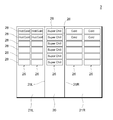
図2に示すように、自販機本体3の内部には、3つの庫室20、21L、21Rが設けられている。庫室20と庫室21Lとの間は断熱壁25Lによって区画され、また、庫室20と庫室21Rとの間は断熱壁25Rによって区画されている。庫室20、21L、21Rには、それぞれ、複数の商品を収納するためのラック26が少なくとも一つ設けられている。例えば、庫室20には一つのラック26が設けられ、庫室21Lには二つのラック26、26が設けられている。ラック26は、複数段、例えば図2では6段のコラム28を上下方向に有しており、この6段のコラム28の開口が前扉2側に面している。ラック26に商品を補充する場合、オペレーターは、前扉2を開き、コラム28の開口を商品補充口として利用する。
庫室20、21L、21Rは、それぞれ、庫室単位で温度管理される。ここでは、庫室20と、庫室21L及び21Rとは、商品の目標温度が異なっている。例えば、庫室21L、21Rでは、それぞれ、商品が所定のコールド状態又はホット状態となるように温度管理される。庫室20では、商品が過冷却状態となるように温度管理される。具体的には、庫室20では、商品の目標温度の設定がマイナス3℃~マイナス6℃の範囲とされており、このような氷点下域の温度まで商品を冷やし込めるように温度管理される。なお、庫室20は、過冷却状態での温度管理のモードとコールド状態での温度管理のモードとを変換できるように構成されてもよい。こうすることで、例えば、過冷却状態の商品のニーズが高い夏場と、そのような商品のニーズが高くない冬場との間で、庫室20のモードを切り替えることができる。以下では、庫室20を例にその内部構造の具体例を説明する。
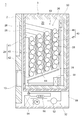
図3に示すように、自販機本体3は、キャビネット構造からなり、前面が開口した筐体30を有する。この筐体30の内部に、ラック26を有する庫室20が設けられている。庫室20には、ラック26の下方にシューター31が設けられている。シューター31は、庫室20の後方から前方に向けて漸次低くなるように傾斜した傾斜面を有しており、ラック26から排出した商品Sを商品取出し口13に向けて導く。
ラック26は、ここでは、4つのコラム28を有している。4つのコラム28は、その大部分が前後方向(筐体30の奥行方向)に並ぶように配設されている。各コラム28は、商品収納部40、商品補充口41及び商品排出口42を有している。商品収納部40は、商品補充口41と商品排出口42との間で複数の商品Sを収納する。例えば、商品収納部40は、缶又はPETボトルなどの容器に飲料を詰めてなる商品Sを横向き姿勢で積み重ねるように収納する。
商品収納部40は、上下方向に延びる収納搬送路47と、収納搬送路47の上端から前方へと斜め上方に延びる収納導入路48と、を備える。商品収納部40は、収納搬送路47及び収納導入路48の両方に商品を収納することができる。なお、4つの商品収納部40は、互いに同程度の本数の商品を収納することができる。例えば、容器が500mlのPETボトルからなる商品の場合、84本を収納可能である。
商品補充口41は、収納導入路48の前端に位置しており、オペレーターが収納導入路48へと商品を投入するために利用される。商品排出口42は、収納搬送路47の下端に位置している。商品排出口42には、図示省略した商品払出し装置が設けられており、この商品払出し装置によって、収納搬送路47内で最下位に位置する商品が一つずつ重力方式で下方のシューター31に向けて排出される。なお、シューター31は、4つのコラム28に対して一つが設けられている。
庫室20は、冷却機構32によって温度管理されている。冷却機構32は、庫室20を庫室単位で温度管理する温度制御システムの一例であり、例えば、ヒートポンプ技術を用いたもので構成することができる。一例を挙げると、冷却機構32は、蒸発器50、圧縮機52、凝縮器54及び膨張機56を備えることができる。例えば、蒸発器50は、シューター31の下方にて庫室20内に設けられ、圧縮機52、凝縮器54及び膨張機56は、庫室20の下部の機械室58内に設けられる。冷却機構32は、庫室20内の全ての商品を過冷却状態(商品の目標温度の設定がマイナス3℃~マイナス6℃の範囲である。)となるように冷却する。また、冷却機構32は、庫室20内の全ての商品をコールド状態(商品の目標温度の設定が氷点下域ではない。)となるように冷却することができるようにも構成されている。なお、庫室21L及び21Rについては、冷却機構及び加温機構の一方によって、庫室20とは異なる温度管理が庫室単位でなされる。
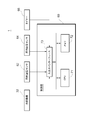
図4に示すように、自動販売機1は、制御部60と、庫内温度センサ62、64と、タイマー66と、を備えている。制御部60は、CPU71、メモリ72及び入出力インタフェース73を備える電子制御ユニットであり、例えばマイクロコンピュータとして構成される。CPU71は、制御プログラムに従って所望の演算を実行するものであり、種々の処理や制御を行う。メモリ72は、例えばROM及びRAMを有する。ROMは、CPU71で処理する制御プログラムや制御データを記憶し、RAMは、主として制御処理のための各種作業領域として使用される。入出力インタフェース73には、自動販売機1の各部を構成する機器、例えば冷却機構32(圧縮機52)、加温機構及び図示書略の商品払出し装置のほか、庫内温度センサ62、64及びタイマー66が接続される。このような構成により、制御部60は、庫内温度センサ62、64やタイマー66等からの入力信号を受けて、各種機器に指示信号を送り、商品管理や温度管理を含め、自動販売機1全体を制御する。
庫内温度センサ62、64は、庫室単位で設けられている。例えば、庫内温度センサ62、64は、それぞれ、庫室20内のラック26の上部位置及び下部位置における庫内温度を検出する(参照:図3)。なお、庫内温度センサ62、64は、ラック26における複数のコラム28のそれぞれに対応して設けてもよい。例えば、4つのコラム28に対応して4セットの庫内温度センサ62、64を設け、各セットの庫内温度センサ62、64によって、コラム28の商品補充口41側及び商品排出口42側における庫内温度を検出してもよい。
タイマー66は、商品収納部40への1以上の商品の補充の完了からの時間を計測する。購入者によって商品が購入され商品収納部40から排出されると、商品収納部40内で収納されている商品の数が減る。オペレーターは、商品補充口41を介して商品を商品収納部40へと補充する。このとき、公知の自動販売機に対する補充作業と同様に、常温の商品を補充する。この補充は、商品収納部40内の商品の総数が所定数(例えば満杯)となるまで行うと完了する。この補充の完了を開始時間として、そこからの経過時間がタイマー66によって計測される。タイマー66は、1回の補充が完了するたびに、そこからの経過時間を計測する。また、タイマー66は、ラック26における複数の商品収納部40のそれぞれに関して、補充完了からの時間を計測する。
次に、図5を参照して、自動販売機1の制御方法に関し、一つの商品収納部40における商品管理の流れについて説明する。この商品管理では、二つの原理を採用している。一つ目は、販売に関して1/3の商品のみリリースを許可するというものである(以下、これを「第1の原理」という。)。すなわち、商品収納部40内の商品のうち、その1/3の個数の、商品排出口42側にある商品について商品排出口42からの排出を許可する一方、残りの商品については商品排出口42からの排出を禁止するというものである。二つ目は、各補充オペレーション間の間隔を24時間以上空けるというものである(以下、これを「第2の原理」という。)。すなわち、次回の補充の許可は、前回の補充の完了から24時間以上経ってからなされるというものである。以下、簡便な説明のため、図5においては、一つの商品収納部40における商品の最大数(総数)を9本とし、三日間の商品管理の一例を取り上げる。
図5に示すように、1日目の10時の時点で、3本の常温の商品S1が補充される。すると、商品収納部40における商品の本数が最大数の9となり、商品排出口42側の3本の商品S3のみ、リリースが許可される(第1の原理)。商品S3は、過冷却状態まで冷やされているものである。商品S3の上側にある3本の商品S2は、冷却された状態ではあるものの、常温の商品S1からの熱伝達により温められる。説明の便宜上、このような商品S2を「予備冷却状態」の商品と呼ぶ。その後、3本の商品S3がすべて販売によりリリースされると、それ以降の商品の販売は禁止される(第1の原理)。したがって、次の3本の常温の商品S1が補充される2日目の20時までは、商品収納部40内の6本の商品の販売は禁止される。
2日目の10時の時点では、予備冷却状態の商品S2は過冷却状態の商品S3へと変わる。ここでは、商品が常温又は予備冷却状態から過冷却状態に確実に変化するのに十分な時間として、24時間と設定している。常温の商品S1は、予備冷却状態の商品S2へと変わる。商品収納部40への商品の補充は、2日目の10時よりも後であれば許可される(第2の原理)。ここでは、2日目の20時に、次の3本の常温の商品S1が補充される。この補充によって、商品収納部40における商品の本数が最大数の9となり、商品排出口42側の次の新しい3本の商品S3についてのみ、再度、リリースが許可される(第1の原理)。上記同様に、商品S3の上側にある3本の商品S2は、常温の商品S1によって予備冷却状態となる。その後、3日目において、3本の商品S3がすべて販売によりリリースされると、次の補充が許可される20時以降までは(第2の原理)、残りの商品の販売は禁止される(第1の原理)。
このような商品管理は様々なメリットがある。例えば、仮に、商品収納部40内の商品の全てのリリースを許可している場合、予備冷却状態の商品S2や常温の商品S1が購入者に提供され得る。これでは、過冷却状態の商品S3を期待する購入者に、別の品質の商品を提供してしまうことになる。これに対し、上記の商品管理によれば、商品収納部40内の商品のうち、商品排出口42側の3本の商品S3についてのみリリースを許可しているので、期待通りの品質の商品S3を購入者に提供することができる。
加えて、上記の品質管理によれば、商品が常温又は予備冷却状態から過冷却状態に確実に変化するのに十分な時間を24時間であるとし、その前提に基づいて、商品の補充の間隔を24時間以上空けている。これにより、次の補充が行われた時点において商品収納部40内の商品排出口42側にある3本の商品は常に商品S3となる。そして、この3本の商品S3について次のリリースが許可されることから、常に過冷却状態の商品S3を購入者に提供することができる。
また、上記の品質管理によれば、自動販売機1自身で、自動販売機1で提供する商品を安定的に過冷却状態にすることができる。これにより、商品の補充の前に、自動販売機1以外のところで商品を事前に冷却しておかなくて済む。加えて、上記の品質管理によれば、商品の補充の間隔を24時間以上空けている限り、商品の補充を決まった時間に行わなくて済む。これにより、既存の自動販売機の装置構成を大きく変更しなくとも、商品の補充のタイミングの自由度を確保することができる。
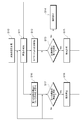
次に、図6は、自動販売機1において実施する商品管理の一例を示すフローチャートである。この商品管理においても、上記同様の二つの原理が採用されている。ただし、販売に関してリリースを許可する商品の数は「第1の個数」となっており、各補充オペレーション間の間隔は「第1の期間」となっている。以下では、庫室20を例にその商品管理の具体例を説明する。
まず、庫室20を庫室単位で温度管理する(ステップS10)。これは、例えば、制御部60が、庫内温度センサ62、64からの入力信号を受けて、冷却機構32に指示信号を送ることで行う。次いで、商品収納部40に対して1以上の商品の補充が行われる(ステップS11)。これは、オペレーターによって行われる。ここでは、商品収納部40内の商品数が最大収納数となるまで補充が行われたとする。
そして、補充完了からの時間をタイマー66により計測する(ステップS12)。タイマー66による計測時間の情報は、制御部60に送られる。制御部60は、タイマー66による計測時間が第1の期間を経過したか否かを判断する(ステップS13)。経過していなければ、次の補充を禁止する(ステップS14)。一方、経過していれば、次の補充を許可する(ステップS15)。
ここで、次の補充の禁止又は許可については、例えば、制御部60が、自動販売機1の表示装置(図示省略)に表示することでオペレーターに示すことで行うことができる。あるいは、商品補充口41にシャッターを設けておき、制御部60が、次の補充を禁止している間はシャッターを閉じ、次の補充を許可するときにシャッターを開くなど、物理的に装置を制御するものであってもよい。
ここで、「第1の期間」とは、例えば図5に関して述べたような、最短で24時間であるが、これに限るものではない。この第1の期間は、温度管理する商品のターゲット温度(目標温度)及び商品の性状などの因子をもとに適宜設定することができる。例えば、商品がコーラなどの炭酸飲料で、ターゲット温度がマイナス3℃~マイナス6℃の場合、安定的な結晶化現象を起こすのに十分な時間が24時間であることが本発明者らによって確認されているため、これを第1の期間とすることが好ましい。別の例として、ターゲット温度が5℃の場合は、数時間とすることもできる。
また、商品の補充後においては(ステップS11)、商品収納部40内の商品のうち、商品排出口42側の第1の個数の商品については商品排出口42からの排出を許可する一方、残りの商品については商品排出口42からの排出を禁止する(ステップS16)。このような商品の排出許可及び排出禁止については、例えば、制御部60が、商品排出口42に設けた商品払出し装置を制御することで行うことができる。より具体的には、制御部60は、第1の個数の商品の排出後は、商品がこれ以上排出されないように商品払出し装置をロックする。
ここで、「第1の個数」とは、例えば図5に関して述べたような、商品収納部40に収納可能な商品の総数の約1/3である。例えば、500mlのPETボトルからなる商品の場合の収納可能総数は84本であるから、第1の個数は28本となる。この第1の個数は、温度管理する商品のターゲット温度や、商品の需要傾向などの因子をもとに適宜設定することができる。例えば、ターゲット温度がマイナス3℃~マイナス6℃の場合、商品収納部40に収納可能な商品の総数の約1/3に設定するとよい。この場合、補充後の商品収納部40内の商品について、商品排出口42側から順に、過冷却状態の商品の層、予備冷却状態の商品の層及び常温の商品の層をそれぞれ1/3ずつ均等に構成することになる。この中間層である予備冷却状態の商品の層を他の二層と同様に設けることで、過冷却状態の商品の層を安定的に確保することができる。
他の実施態様では、第1の個数を、商品収納部40に収納可能な商品の総数の約1/4とすることもできる。この場合、補充後の商品収納部40内の商品について、商品排出口42側から順に、過冷却状態の商品の層が約1/4、予備冷却状態の商品の層が約1/2、そして常温の商品の層が約1/4を構成することになる。これによれば、中間層が大きくなるため、常温の商品からの温度伝達に対してより高い干渉効果が期待できるものの、リリースできる過冷却状態の商品の数を減らしてしまうという背反がある。この干渉効果とリリースし得る数とのバランスの観点からすると、上記の約1/3が好ましい。
別の観点から説明すると、商品収納部40に収納可能な商品の総数は、第1の個数の2倍の数よりも大きいとよい。こうすることで、補充後の商品収納部40内の商品について、中間層(予備冷却状態の商品の層)を確実に設けることができる。
その後、商品収納部40から第1の個数の商品が排出された場合(ステップS17:Yes)、商品の販売を停止する(ステップS18)。この販売停止が購入希望者にわかるように、制御部60は、例えば、自動販売機1の商品選択ボタン14において、当該商品について「売り切れ」や「冷却中」などを表示してもよい。販売停止後において、タイマー66による計測時間が第1の期間を経過していなければ次の補充が禁止されるため(ステップS13:No、ステップS14)、この間は商品の販売停止が継続される。一方、経過していれば次の補充が許可され(ステップS13:Yes、ステップS15)、次の補充がなされると(ステップS11)、商品の販売が再開される。すなわち、この補充がなされたことをもって、上記同様に、商品収納部40内の補充後の複数の商品のうち、商品排出口42側の次の新しい第1の個数の商品についてのみ商品排出口42からの排出が許可される。なお、商品収納部40から第1の個数の商品が排出されるまでは(ステップS17:No)、商品の販売は継続される。
以上説明した本実施形態の自動販売機1によれば、例えば、厳しい温度管理が要求される過冷却状態の商品をその品質を落とさずに供給することができ、かつ、既存の自動販売機の装置構成を大きく変更しなくとも、かかる商品の補充のタイミングの自由度を確保することができる。
以上説明した実施形態は、本発明の理解を容易にするためのものであり、本発明を限定して解釈するためのものではない。実施形態が備える各要素並びにその配置、材料、条件、形状、サイズ及び個数等は、例示したものに限定されるわけではなく適宜変更することができる。
1…自動販売機、2…前扉、3…自販機本体、10…商品サンプル展示室、11…金銭投入口、12…金銭払出口、13…商品取出し口、14…商品選択ボタン、20…庫室、21L、21R…庫室(第2の庫室)、25L、25R…断熱壁、26…ラック、28…コラム、30…筐体、31…シューター、32…冷却機構、40…商品収納部、41…商品補充口、42…商品排出口、47…収納搬送路、48…収納導入路、50…蒸発器、52…圧縮機、54…凝縮器、56…膨張機、60…制御部、62、64…庫内温度センサ、64、66…タイマー、71…CPU、72…メモリ、73…入出力インタフェース、S1…常温の商品、S2…予備冷却状態の商品、S3…過冷却状態の商品
Claims (15)
- 商品補充口、商品排出口、及び、これらの間で複数の商品を収納する商品収納部を有する庫室であって、庫室単位で温度管理される庫室と、
前記商品収納部内の前記複数の商品のうち、前記商品排出口側の第1の個数の商品については、前記商品排出口からの排出を許可する一方、残りの商品については、前記商品排出口からの排出を禁止する制御部と、
を備えた、自動販売機。 - 前記商品補充口を介した前記商品収納部への1以上の商品の補充の完了からの時間を計測するタイマーを備え、
前記制御部は、前記タイマーによる計測時間が第1の期間を経過した後、前記商品収納部への次の1以上の商品の補充を許可する、請求項1に記載の自動販売機。 - 前記制御部は、前記次の1以上の商品の補充がなされたことをもって、前記商品収納部内の補充後の複数の商品のうち、前記商品排出口側の次の新しい第1の個数の商品について、前記商品排出口からの排出を許可する、請求項2に記載の自動販売機。
- 前記第1の期間は、最短で24時間である、請求項2又は3に記載の自動販売機。
- 前記商品収納部に収納可能な商品の総数は、前記第1の個数の2倍の数よりも大きい、請求項1から4のいずれか一項に記載の自動販売機。
- 前記第1の個数は、前記商品収納部に収納可能な商品の総数の約1/3である、請求項1から4のいずれか一項に記載の自動販売機。
- 前記商品が過冷却状態となるように前記庫室を庫室単位で温度管理する温度制御システムを備えた、請求項1から6のいずれか一項に記載の自動販売機。
- 前記庫室とは異なる温度管理がなされる1以上の第2の庫室を備えた、請求項7に記載の自動販売機。
- 商品補充口、商品排出口、及び、これらの間で複数の商品を収納する商品収納部を有する庫室を備えた自動販売機の制御方法であって、
前記庫室を庫室単位で温度管理することと、
前記商品収納部内の前記複数の商品のうち、前記商品排出口側の第1の個数の商品については、前記商品排出口からの排出を許可する一方、残りの商品については、前記商品排出口からの排出を禁止することと、
を含む、自動販売機の制御方法。 - 前記商品補充口を介した前記商品収納部への1以上の商品の補充の完了からの時間をタイマーにより計測することと、
前記タイマーによる計測時間が第1の期間を経過した後、前記商品収納部への次の1以上の商品の補充を許可することと、
をさらに含む、請求項9に記載の自動販売機の制御方法。 - 前記次の1以上の商品の補充がなされたことをもって、前記商品収納部内の補充後の複数の商品のうち、前記商品排出口側の次の新しい第1の個数の商品について、前記商品排出口からの排出を許可すること、
をさらに含む、請求項10に記載の自動販売機の制御方法。 - 前記第1の期間は、最短で24時間である、請求項10又は11に記載の自動販売機の制御方法。
- 前記商品収納部に収納可能な商品の総数は、前記第1の個数の2倍の数よりも大きい、請求項9から12のいずれか一項に記載の自動販売機の制御方法。
- 前記第1の個数は、前記商品収納部に収納可能な商品の総数の約1/3である、請求項9から12のいずれか一項に記載の自動販売機の制御方法。
- 前記商品が過冷却状態となるように前記庫室を庫室単位で温度管理すること、
をさらに含む、請求項9から14のいずれか一項に記載の自動販売機の制御方法。
Applications Claiming Priority (2)
| Application Number | Priority Date | Filing Date | Title |
|---|---|---|---|
| JP2018124960A JP7220999B2 (ja) | 2018-06-29 | 2018-06-29 | 自動販売機及びその制御方法 |
| JP2018-124960 | 2018-06-29 |
Publications (1)
| Publication Number | Publication Date |
|---|---|
| WO2020004553A1 true WO2020004553A1 (ja) | 2020-01-02 |
Family
ID=68986641
Family Applications (1)
| Application Number | Title | Priority Date | Filing Date |
|---|---|---|---|
| PCT/JP2019/025618 Ceased WO2020004553A1 (ja) | 2018-06-29 | 2019-06-27 | 自動販売機及びその制御方法 |
Country Status (2)
| Country | Link |
|---|---|
| JP (1) | JP7220999B2 (ja) |
| WO (1) | WO2020004553A1 (ja) |
Citations (4)
| Publication number | Priority date | Publication date | Assignee | Title |
|---|---|---|---|---|
| JP2000149128A (ja) * | 1998-11-06 | 2000-05-30 | Sanden Corp | 自動販売機 |
| JP2016122388A (ja) * | 2014-12-25 | 2016-07-07 | サンデンホールディングス株式会社 | 自動販売機 |
| JP2017227950A (ja) * | 2016-06-20 | 2017-12-28 | サンデン・リテールシステム株式会社 | 商品自動搬出機 |
| JP2019003375A (ja) * | 2017-06-14 | 2019-01-10 | アサヒ飲料株式会社 | 自動販売機 |
-
2018
- 2018-06-29 JP JP2018124960A patent/JP7220999B2/ja active Active
-
2019
- 2019-06-27 WO PCT/JP2019/025618 patent/WO2020004553A1/ja not_active Ceased
Patent Citations (4)
| Publication number | Priority date | Publication date | Assignee | Title |
|---|---|---|---|---|
| JP2000149128A (ja) * | 1998-11-06 | 2000-05-30 | Sanden Corp | 自動販売機 |
| JP2016122388A (ja) * | 2014-12-25 | 2016-07-07 | サンデンホールディングス株式会社 | 自動販売機 |
| JP2017227950A (ja) * | 2016-06-20 | 2017-12-28 | サンデン・リテールシステム株式会社 | 商品自動搬出機 |
| JP2019003375A (ja) * | 2017-06-14 | 2019-01-10 | アサヒ飲料株式会社 | 自動販売機 |
Also Published As
| Publication number | Publication date |
|---|---|
| JP7220999B2 (ja) | 2023-02-13 |
| JP2020004236A (ja) | 2020-01-09 |
Similar Documents
| Publication | Publication Date | Title |
|---|---|---|
| EP3948121B1 (en) | Cooler for beverage containers | |
| JP2004053069A (ja) | 冷媒回路、およびそれを用いた自動販売機 | |
| JP6478625B2 (ja) | 自動販売機 | |
| KR20180122329A (ko) | 상품 수납 장치 | |
| JP2020004236A (ja) | 自動販売機及びその制御方法 | |
| JP2004054424A (ja) | 冷媒冷却回路およびそれを用いた自動販売機 | |
| KR20120031301A (ko) | 자동판매기 | |
| JP7200244B2 (ja) | 商品収納装置 | |
| JP2006048325A (ja) | 凍結飲料自動販売機 | |
| JP5287035B2 (ja) | 自動販売機 | |
| JP2002279511A (ja) | 自動販売機 | |
| JP2000259926A (ja) | 自動販売機の商品収納装置 | |
| JPH10255135A (ja) | 自動販売機 | |
| JP6899066B2 (ja) | 自動販売機 | |
| CA3134013C (en) | Cooler for beverage containers | |
| JP3718918B2 (ja) | 自動販売機 | |
| JP2000030138A (ja) | 自動販売機 | |
| JPH07129842A (ja) | 自動販売機 | |
| JP2008146366A (ja) | 自動販売機 | |
| JP5056425B2 (ja) | 自動販売機 | |
| JP5245585B2 (ja) | 自動販売機 | |
| JP2010055171A (ja) | 自動販売機 | |
| JP2010055437A (ja) | 自動販売機 | |
| JPH06231347A (ja) | 自動販売機 | |
| JP2016167228A (ja) | 自動販売機 |
Legal Events
| Date | Code | Title | Description |
|---|---|---|---|
| 121 | Ep: the epo has been informed by wipo that ep was designated in this application |
Ref document number: 19825507 Country of ref document: EP Kind code of ref document: A1 |
|
| NENP | Non-entry into the national phase |
Ref country code: DE |
|
| 122 | Ep: pct application non-entry in european phase |
Ref document number: 19825507 Country of ref document: EP Kind code of ref document: A1 |