WO2020003397A1 - 端末装置、後方サーバ、車載トランスポンダ、判定システム、判定方法、及びプログラム - Google Patents
端末装置、後方サーバ、車載トランスポンダ、判定システム、判定方法、及びプログラム Download PDFInfo
- Publication number
- WO2020003397A1 WO2020003397A1 PCT/JP2018/024331 JP2018024331W WO2020003397A1 WO 2020003397 A1 WO2020003397 A1 WO 2020003397A1 JP 2018024331 W JP2018024331 W JP 2018024331W WO 2020003397 A1 WO2020003397 A1 WO 2020003397A1
- Authority
- WO
- WIPO (PCT)
- Prior art keywords
- vehicle
- running
- reverse
- information
- candidate
- Prior art date
- Legal status (The legal status is an assumption and is not a legal conclusion. Google has not performed a legal analysis and makes no representation as to the accuracy of the status listed.)
- Ceased
Links
Images



Classifications
-
- G—PHYSICS
- G08—SIGNALLING
- G08G—TRAFFIC CONTROL SYSTEMS
- G08G1/00—Traffic control systems for road vehicles
- G08G1/09—Arrangements for giving variable traffic instructions
- G08G1/0962—Arrangements for giving variable traffic instructions having an indicator mounted inside the vehicle, e.g. giving voice messages
- G08G1/0968—Systems involving transmission of navigation instructions to the vehicle
-
- G—PHYSICS
- G08—SIGNALLING
- G08G—TRAFFIC CONTROL SYSTEMS
- G08G1/00—Traffic control systems for road vehicles
- G08G1/01—Detecting movement of traffic to be counted or controlled
- G08G1/056—Detecting movement of traffic to be counted or controlled with provision for distinguishing direction of travel
-
- G—PHYSICS
- G08—SIGNALLING
- G08G—TRAFFIC CONTROL SYSTEMS
- G08G1/00—Traffic control systems for road vehicles
- G08G1/09—Arrangements for giving variable traffic instructions
-
- G—PHYSICS
- G08—SIGNALLING
- G08G—TRAFFIC CONTROL SYSTEMS
- G08G1/00—Traffic control systems for road vehicles
- G08G1/16—Anti-collision systems
- G08G1/164—Centralised systems, e.g. external to vehicles
Definitions
- the present invention relates to a terminal device, a rear server, an in-vehicle transponder, a determination system, a determination method, and a program.
- Patent Document 1 a mobile phone owned by a vehicle user communicates with a server connected to a mobile phone company system through a dedicated gate provided on a toll road such as an expressway, There is disclosed a technology for collecting a toll road usage fee from a user via a mobile phone company.
- Patent Document 1 performs communication related to the usage fee, but does not perform communication related to the running state of the vehicle. Therefore, for example, even if the vehicle is running backward in the lane, the technique disclosed in Patent Document 1 cannot determine the reverse running of the vehicle.
- the object of the present invention is to provide a terminal device, a rear server, an in-vehicle transponder, a determination system, a determination method, and a program that enable determination of reverse running of a vehicle.
- the candidate determination unit (107) that determines whether the vehicle (2) may be running in the reverse direction determines that the vehicle may be running in the reverse direction.
- the terminal device notifies the backward running candidate information to the backward server that determines whether the vehicle is running backward. For this reason, the terminal device enables the rear server to determine the reverse running of the vehicle.
- a second aspect is the terminal device according to the first aspect, wherein the candidate acquisition unit acquires the reverse running candidate information from an in-vehicle transponder (10, 10 ′) of the vehicle. According to this aspect, the terminal device acquires the reverse running candidate information from the in-vehicle transponder. For this reason, the terminal device easily obtains effective reverse running candidate information.
- the terminal device can output an alarm during reverse running. For this reason, the user can be alerted from the terminal device.
- a candidate device for determining whether or not the vehicle may be running in reverse is determined when the candidate determining unit determines that the vehicle may be running in reverse.
- a candidate receiving unit (305) for receiving reverse running candidate information including the position information and the traveling direction information of the vehicle, and a reverse determining whether the vehicle is running reverse based on the reverse running candidate information.
- a rear server including a running determination unit (306) and a determination notifying unit (307) for notifying a reverse running determination indicating that the vehicle is running backward when it is determined that the vehicle is running backward. .
- the rear server determines whether or not the vehicle is running backward based on the reverse running candidate information. For this reason, even if the application for determining whether or not the vehicle is running in the reverse direction is updated, it is only necessary to update the application on the rear server, so that the work of updating the application can be reduced.
- the reverse running determination unit determines that the vehicle is running reverse when the position information and the traveling direction information are within a predetermined range. It is a back server of an aspect. According to this aspect, the rear server determines the position information and the traveling direction information of the reverse running candidate information. For this reason, even if the range for determining the position information and the traveling direction information is updated, it is only necessary to update the application of the rear server, so that the update work of the application can be reduced.
- a candidate determining unit that determines whether there is a possibility that the vehicle is running in reverse, and the candidate determining unit determines that there is a possibility that the vehicle is running in reverse.
- the terminal device that notifies the reverse server candidate information to a rear server that determines whether the vehicle is running backward based on the reverse running candidate information including the position information and the traveling direction information of the vehicle, And a candidate transfer unit (108) for transferring the reverse run candidate information.
- the in-vehicle transponder determines the reverse running candidate information and transfers the reverse running candidate information to the terminal device that notifies the backward server of the reverse running candidate information. For this reason, the in-vehicle transponder can determine the reverse running of the vehicle.
- a candidate determining unit that determines whether there is a possibility that the vehicle is running backwards, and the candidate determining unit determines that there is a possibility that the vehicle is running backwards.
- a candidate notifying unit that notifies reverse running candidate information including the position information and the traveling direction information of the vehicle, and a reverse running that determines whether the vehicle is running in reverse based on the reverse running candidate information.
- a determination system comprising: a determination unit; and a determination notification unit that, when it is determined that the vehicle is traveling in the reverse direction, notifies a reverse traveling determination indicating that the vehicle is traveling in the reverse direction.
- the determination system determines whether or not the vehicle is running backward based on the reverse running candidate information. For this reason, the determination system can determine the reverse running of the vehicle.
- a step of determining whether or not the vehicle may be running in the reverse direction, and a step of determining whether or not the vehicle is running in the reverse direction, Notifying reverse running candidate information including information and traveling direction information; determining whether the vehicle is running backward based on the reverse running candidate information; and Notifying a reverse running determination indicating that the vehicle is running backward when the determination is made.
- the determination method determines whether or not the vehicle is running in reverse based on the reverse running candidate information. For this reason, the determination method enables determination of reverse running of the vehicle.
- the computer of the terminal device obtains reverse running candidate information including the position information and the traveling direction information of the vehicle when it is determined that the vehicle may be running in the reverse direction. And a step of notifying the backward server that determines whether or not the vehicle is running backward based on the reverse running candidate information, of the reverse running candidate information.
- the program can cause the terminal device to notify the reverse running candidate information to the backward server that determines whether the vehicle is running backward. For this reason, the program enables the reverse running of the vehicle to be determined.
- FIG. 1 is a schematic diagram illustrating an entire configuration of a determination system according to a first embodiment.
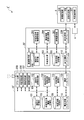
- FIG. 2 is a block diagram illustrating a functional configuration of a determination system according to the first embodiment.
- 5 is a flowchart of a determination method according to the first embodiment. It is a table
- 5 is a table illustrating an example of a reverse running determination table according to the first embodiment.
- 6 is a table illustrating an example of determination result information according to the first embodiment. It is a block diagram explaining the functional composition of the judgment system concerning a 2nd embodiment.
- 9 is a flowchart of a determination method according to the second embodiment.
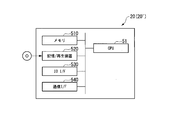
- FIG. 3 is a diagram illustrating an example of a hardware configuration of a terminal device according to each embodiment.
- the determination system 1 includes an in-vehicle transponder 10 mounted on a vehicle 2, a terminal device 20 owned by a user U using the vehicle 2, a service system management server (rear server) 3, Is provided.
- the determination system 1 according to the first embodiment may further include a payment account management server 4.
- a case will be described in which the expression “the user U uses the vehicle 2” means “the user U gets on the vehicle 2 and drives”.
- the expression “uses the vehicle 2” means that “the user U receives the service of the vehicle dispatch application system of the vehicle 2 according to the vehicle dispatch application system”, and “the rental car of the vehicle 2 where the user U is the rental car. It means all other situations in which the user U uses the vehicle 2, such as “receiving the service” and "the user U receiving the automatic driving service of the vehicle 2 which is an automatic driving vehicle”. . Further, in the first embodiment, a case will be described in which the expression “user U” means a human, but “user U” means other than “human”, for example, “automatic driving device” or the like. May be.
- the service system management server 3 is a management server that manages a service system that provides a specific service to the user U who uses the vehicle 2. Further, the payment account management server 4 is connected to the service system management server 3 and is a management server that manages the payment account of the user U. Although only one service system management server 3 is shown in FIG. 1 for simplification of description, a plurality of service system management servers 3 of different service systems that provide different services may be provided. Good.
- the on-vehicle transponder 10 mounted on the vehicle 2 receives radio waves from a plurality of satellites 5 of GNSS (Global Navigation Satellite System, global positioning satellite system) and calculates the position of the vehicle 2. It may be configured to determine.
- the in-vehicle transponder 10 is integrated with the vehicle 2 and is configured so that it cannot be removed or replaced.
- the in-vehicle transponder 10 may be fixed by a fixture such as a Kensington wire so that the transponder 10 cannot be physically removed from the vehicle 2.
- the in-vehicle transponder 10 may have a software-based fixing function such as a tamper function for specifying a mounted vehicle.
- the in-vehicle transponder 10 may be configured to be authenticated by using RFID (Radio Frequency Identification), and to be able to detect removal from the vehicle 2 by software using a tamper function of RFID technology or the like.
- RFID Radio Frequency Identification
- the in-vehicle transponder 10 may be configured so that the security function can prevent duplication or change of the identification ID or duplication or change of the vehicle data.
- the terminal device 20 is, for example, an intelligent terminal such as a smart phone, a mobile phone, a PDA terminal, or another communicable mobile electronic device owned by the user U of the vehicle 2, and has a program for installing and starting an application. Execution, storage, and computation may be possible.
- the terminal device 20 may include a user interface for displaying lights, images, marks, and the like, voice recognition, sound functions, and the like.
- the terminal device 20 is configured to be able to communicate with the vehicle-mounted transponder 10 mounted on the vehicle 2. Further, the terminal device 20 is configured to be able to communicate with the service system management server 3 via a communication network N such as a 3G network, a 4G network, and an LTE network.
- the service system management server 3 is an ETC (registered trademark) system integrated server that manages a highway service system that provides a highway service such as payment of a highway toll. Will be described.
- the service system management server 3 may be a service system management server that manages service systems other than expressways.
- the service system management server 3 is a system integration server of a parking lot, a system integration server of ERP (Electronic Road Pricing, also referred to as “electronic road billing”), a system integration server of a vehicle dispatch application system, and an automatic driving vehicle. May be used as a system integration server.
- the service system management server 3 communicates with the terminal device 20 owned by the user U of the vehicle 2, and from the terminal device 20, a fee related to the vehicle 2 used by the user U for a predetermined service, and It is configured to receive billing information associated with a payment account ID stored in advance.
- the predetermined service is a service on an expressway and the fee for the vehicle 2 used by the user U is a toll on the expressway.
- the service system management server 3 is configured to transmit the received accounting information to the payment account management server 4.
- the payment account management server 4 When the payment account management server 4 receives the charging information of the user U from the service system management server 3, the payment account management server 4 transmits the charging information to a system (not shown) of a financial institution such as a bank and a credit card company with which the user U has contracted. Is configured to be transmitted. As a result, on the system side of the financial institution, payment processing of the fee for the vehicle 2 used by the user U for the predetermined service is performed.
- the payment account management server 4 is configured to, after transmitting the billing information to the system of the financial institution, notify the usage statement of the fee for the vehicle 2 used by the user U.
- the in-vehicle transponder 10 includes a candidate determination unit 107 and a candidate transfer unit 108.
- the in-vehicle transponder 10 includes an identification ID storage unit 101, an identification ID transmission processing unit 102, a charge determination information storage unit 103, a charge determination information transmission processing unit 104, a vehicle information management unit 105, a map information storage unit 106, a radio wave receiving interface 110, and a communication interface 120.
- the identification ID storage unit 101 is configured to store an identification ID capable of uniquely identifying the transponder 10 mounted on the vehicle 2.
- the identification ID is unique to the in-vehicle transponder 10 and includes at least one of a number, an alphabet, a symbol, and the like uniquely assigned in one-to-one correspondence with the serial number of the vehicle 2 on which the in-vehicle transponder 10 is mounted. May be a character string. Thereby, it is possible to identify the vehicle 2 on which the vehicle-mounted transponder 10 is mounted from the identification ID of the vehicle-mounted transponder 10.
- the information indicating the association between the vehicle-mounted transponder 10 and the serial number of the vehicle 2 may be held by a specific institution such as the manufacturer of the vehicle-mounted transponder 10.
- the identification ID transmission processing unit 102 performs a transmission process of acquiring the identification ID stored in the identification ID storage unit 101 and transmitting it to the terminal device 20 owned by the user U of the vehicle 2 via the communication interface 120. Is configured.
- the fee information storage unit 103 is configured to store fee determination information for determining the fee for the vehicle 2.
- the fee determination information includes the travel route, the travel distance, the vehicle type, the license plate information, the vehicle information, and the like of the vehicle 2 used by the user U. May be other information for determining the fee for the vehicle 2.
- the travel route and the travel distance of the vehicle 2 are determined by the vehicle information management unit 105 described below, and may be stored in the charge determination information storage unit 103 periodically, for example.
- the vehicle type, the license plate information, and the vehicle information of the vehicle 2 may be stored in the fee determination information storage unit 103 in advance before the vehicle-mounted transponder 10 is mounted on the vehicle 2, for example.
- the vehicle information is vehicle data for specifying the weight, size, fare class, and the like of the vehicle 2, and is, for example, vehicle inspection information.
- the charge determination information transmission processing unit 104 acquires the charge determination information stored in the charge determination information storage unit 103, and obtains the charge determination information obtained while the terminal device 20 and the in-vehicle transponder 10 cooperate. It is configured to perform a transmission process of transmitting information to the terminal device 20 owned by the user U of the vehicle 2 via the communication interface 120. Specifically, in the first embodiment, the charge determination information transmission processing unit 104 transmits a reception notification signal indicating that the in-vehicle transponder 10 has been received from the identification ID reception unit 201 of the terminal device 20 via the communication interface 120.
- the coordination between the in-vehicle transponder 10 and the terminal device 20 is started, and the system is configured to acquire information for fee determination and transmit the information to the terminal device 20. Thereafter, until the connection between the in-vehicle transponder 10 and the terminal device 20 is disconnected, the acquisition of the fee determining information by the fee determining information transmission processing unit 104 and the transmission to the terminal device 20 may be performed periodically. Note that the acquisition of the fee determination information and the transmission to the terminal device 20 by the fee determination information transmission processing unit 104 may be performed irregularly.
- the vehicle information management unit 105 is configured to manage vehicle information of the vehicle 2.
- the vehicle information management unit 105 acquires information (position information) indicating the current position of the vehicle 2.
- the vehicle information management unit 105 may periodically calculate the current position information of the vehicle 2 based on the information of the radio wave from the GNSS satellite 5 received via the radio wave reception interface 110.
- the vehicle information management unit 105 acquires information indicating the traveling direction of the vehicle 2 (traveling direction information).
- the vehicle information management unit 105 sequentially acquires the acquired position information of the vehicle 2, and acquires the current traveling direction information of the vehicle 2 from the temporal change of the position information of the vehicle 2.
- the vehicle information management unit 105 may determine the current traveling route and traveling speed of the vehicle 2 from the calculated amount of change in the position information of the vehicle 2.
- the vehicle information management unit 105 may store the determined traveling route and traveling speed of the vehicle 2 in the fee determination information storage unit 103 as fee determination information.
- the radio wave receiving interface 110 is configured to receive radio waves from the GNSS satellite 5.
- the communication interface 120 is an interface that enables communication between the in-vehicle transponder 10 and the terminal device 20.
- the communication interface 120 is configured to perform, for example, wireless communication conforming to the Bluetooth (registered trademark) standard between the in-vehicle transponder 10 and the terminal device 20.
- the wireless communication may be configured to perform wireless communication in other standards, such as infrared communication, WiFi communication, and the like.
- the communication interface 120 may be configured to perform wired communication between the in-vehicle transponder 10 and the terminal device 20, for example.
- the map information storage unit 106 stores map information capable of identifying each lane and the direction in which each lane should travel.
- map information capable of identifying each lane of each expressway and the direction in which each lane should travel is stored.
- the candidate determination unit 107 determines whether there is a possibility that the vehicle 2 is running backward. For example, first, the candidate determination unit 107 refers to the map information, and identifies the lane in which the vehicle 2 is traveling from the position information of the vehicle 2 and the traveling direction information of the vehicle 2 acquired by the vehicle information management unit 105. . Subsequently, the candidate determination unit 107 specifies the direction in which the identified lane should travel by referring to the map information. Subsequently, the candidate determination unit 107 determines whether or not the vehicle 2 may be running in reverse by determining whether the traveling direction information of the vehicle 2 is reversed with respect to the traveling direction. It is determined whether or not.
- the candidate transfer unit 108 transmits the reverse traveling candidate information including the position information of the vehicle 2 and the traveling direction information of the vehicle 2. Transfer to terminal device 20.
- the candidate transfer unit 108 transfers the reverse run candidate information to the terminal device 20.
- the terminal device 20 includes a candidate acquisition unit 206 and a candidate notification unit 207.
- the terminal device 20 notifies the service system management server 3 of the reverse running candidate information.
- the terminal device 20 includes an identification ID reception unit 201, a charge determination information acquisition unit 202, a charge determination unit 203, a charging information transmission processing unit 204, a setting information storage unit 205, a determination reception unit 208, an alarm unit 209, a first communication interface 210, and a second communication interface 220.
- an application that cooperates with the service system management server 3 is installed on the terminal device 20 that is a smartphone, and the application is provided with an identification ID reception unit 201, a charge determination information acquisition unit 202, and a charge determination unit 203.
- the terminal device 20 may be provided from the beginning without being introduced.
- an application installed on the terminal device 20 is an application that provides an expressway service.
- the application installed on the terminal device 20 is a specific application used by the user U.
- Other applications according to the service of the application may be used.
- the terminal device 20 which is a smartphone and inputs an application start command to the terminal device 20, the application is started.
- the service of the application starts when the user U inputs the service start command of the terminal device 20, and the service of the application ends when the user U inputs the service end command.
- the identification ID receiving unit 201 is configured to receive the identification ID transmitted from the vehicle-mounted transponder 10 mounted on the vehicle 2 to be used by the user U and received via the first communication interface 210. .
- the identification ID receiving unit 201 receives the identification ID, the vehicle-mounted transponder 10 mounted on the vehicle 2 used by the user U is identified, and therefore, the vehicle 2 associated with the vehicle-mounted transponder 10 on a one-to-one basis is identified. You.
- the identification ID reception unit 201 transmits a reception notification signal indicating that the identification ID of the vehicle-mounted transponder 10 mounted on the vehicle 2 used by the user U has been received to the vehicle-mounted transponder 10 via the first communication interface 210. Is configured.
- the fee determining information acquisition unit 202 is configured to acquire fee determining information for determining a fee for the vehicle 2 while the terminal device 20 and the in-vehicle transponder 10 are linked.
- the charge determining information acquisition unit 202 receives the charge determining information transmitted from the in-vehicle transponder 10 mounted on the vehicle 2 via the first communication interface 210, and Information for determination may be obtained.
- the fee determining information acquisition unit 202 is configured to input the acquired fee determining information to the fee determining unit 203.
- the charge determining information acquisition unit 202 transmits the charge determination information periodically transmitted from the charge determination information transmission processing unit 104 of the in-vehicle transponder 10 to the charge determination information acquisition unit 202.
- the fee determining unit 203 is configured to determine the fee of the vehicle 2 based on the fee determining information acquired by the fee determining information acquiring unit 202.
- the charge determination unit 203 determines the charge of the vehicle 2 based on the charge determination information at the timing when the service termination instruction of the application is input to the terminal device 20 from the user U.
- the fee determining unit 203 may determine the fee of the vehicle 2 at another timing. For example, at the timing when the charge determining information obtaining unit 202 periodically obtains the charge determining information and inputs the charge determining information to the charge determining unit 203, the charge determining unit 203 periodically determines the charge of the vehicle 2. You may decide.
- the fee determining unit 203 is configured to input information on the determined fee to the charging information transmission processing unit 204.
- the billing information transmission processing unit 204 acquires the payment account ID of the user U stored in the setting information storage unit 205 in advance, and stores the charge information.
- the payment account ID is associated with the payment account ID and transmitted to the service system management server 3 as charging information.
- the setting information storage unit 205 is configured to store the payment account ID of the user U holding the terminal device 20.
- the user U inputs his or her payment account ID to the terminal device 20 so that the user U's payment account is stored in the setting information storage unit 205.
- the ID may be stored.
- the first communication interface 210 is an interface that enables communication between the vehicle-mounted transponder 10 and the terminal device 20.
- the first communication interface 210 is configured to perform communication conforming to the same standard as the above-described communication interface 120 of the in-vehicle transponder 10.
- wireless communication conforming to the Bluetooth (registered trademark) standard is performed between the in-vehicle transponder 10 and the terminal device 20.
- the wireless communication according to other standards such as communication and WiFi communication may be performed.
- the first communication interface 210 may be configured to perform wired communication between the in-vehicle transponder 10 and the terminal device 20, for example.
- the second communication interface 220 is an interface that enables communication between the terminal device 20 and the service system management server 3.
- the second communication interface 220 is connected to a communication network N such as a 3G network, a 4G network, and an LTE network, and communicates with the service system management server 3 via the communication network N. It is configured to be able to communicate.
- the candidate acquiring unit 206 acquires reverse running candidate information including the position information of the vehicle 2 and the traveling direction information of the vehicle 2. In the first embodiment, the candidate acquiring unit 206 acquires reverse running candidate information from the in-vehicle transponder 10.
- the candidate notification unit 207 notifies the service system management server 3 of reverse running candidate information including position information of the vehicle 2 and traveling direction information of the vehicle 2 when there is a possibility that the vehicle 2 is running backward. For example, when the candidate determination unit 107 determines that there is a possibility that the vehicle 2 is running in the reverse direction, the candidate notification unit 207 determines that the reverse running candidate including the position information of the vehicle 2 and the traveling direction information of the vehicle 2 The information is notified to the service system management server 3. In the first embodiment, when the candidate acquisition unit 206 acquires the reverse running candidate information from the in-vehicle transponder 10, the reverse running candidate information is notified to the service system management server 3.
- the determination receiving unit 208 receives a reverse running determination indicating that the vehicle is running backward from the service system management server 3. In the first embodiment, the determination receiving unit 208 receives the determination result information including the reverse running determination from the service system management server 3.
- the alarm unit 209 When receiving the reverse running determination, the alarm unit 209 outputs an alarm.
- an alarm is output.
- the alarm unit 209 outputs an alarm through the user interface of the terminal device 20.
- the user interface generates sound, display, light emission, vibration, or the like as an alarm output.
- the service system management server 3 includes a candidate receiving unit 305, a reverse running determination unit 306, and a determination notification unit 307.
- the service system management server 3 determines whether or not the vehicle 2 is running backward based on the reverse running candidate information including the position information of the vehicle 2 and the traveling direction information.
- the candidate receiving unit 305 receives reverse running candidate information including the position information of the vehicle 2 and the traveling direction information of the vehicle 2 from the terminal device 20.
- the candidate determining unit 107 determines that the vehicle 2 may be running in the reverse direction
- the candidate receiving unit 305 transmits the position information of the vehicle 2 and the traveling direction information of the vehicle 2 from the terminal device 20.
- the reverse run candidate information including the information is received.
- the candidate receiving unit 305 receives reverse running candidate information from the candidate notifying unit 207.
- the reverse running determination unit 306 determines whether or not the vehicle 2 is running reverse based on reverse running candidate information including the position information of the vehicle 2 and the traveling direction information of the vehicle 2. In the first embodiment, the reverse running determination unit 306 determines whether the vehicle 2 is running backward based on the reverse running candidate information of the vehicle 2 received by the candidate receiving unit 305. The reverse running determination unit 306 determines that the vehicle 2 is running reverse when the position information of the vehicle 2 and the traveling direction information of the vehicle 2 are within a predetermined range.
- the predetermined range regarding the position information of the vehicle 2 is, for example, an area in which reverse running is likely to occur, such as an area around an interchange or an area around a parking area.
- the predetermined range related to the traveling direction information of the vehicle 2 is a range centered on a direction opposite to the traveling direction of the lane related to the position information of the vehicle 2.
- the determination notification unit 307 determines that the vehicle 2 is running in the reverse direction
- the determination notification unit 307 notifies a reverse run determination indicating that the vehicle 2 is running in the reverse direction.
- the determination notification unit 307 notifies the determination receiving unit 208 of the determination result information including the reverse running determination.
- step ST01 position information of the vehicle 2 and traveling direction information of the vehicle 2 are obtained (step ST01).
- the vehicle information management unit 105 of) the in-vehicle transponder 10 acquires the position information of the vehicle 2 and the traveling direction information of the vehicle 2.
- step ST02 it is determined whether there is a possibility that the vehicle 2 is running backward (step ST02).
- the candidate determination unit 107 of the in-vehicle transponder 10) determines whether or not the vehicle 2 may be running in the reverse direction.
- step ST01 is performed again.
- step ST02 When it is determined that there is a possibility that the vehicle 2 is running backward (step ST02: YES), reverse running candidate information including the position information of the vehicle 2 and the traveling direction information of the vehicle 2 is notified (step ST03). .
- the candidate notification unit 207 of) the terminal device 20 transmits the reverse running candidate information including the position information of the vehicle 2 and the traveling direction information of the vehicle 2 to the (candidate receiving unit of the service system management server 3). 305).
- FIG. 4 shows an example of the reverse running candidate information to be transmitted.
- step ST04 it is determined whether or not the vehicle 2 is running backward based on the reverse running candidate information (step ST04).
- the reverse running determination unit 306 of the service system management server 3 determines whether the vehicle 2 is running backward based on the reverse running candidate information.
- FIG. 5 shows an example of a reverse running determination table for determining whether or not the vehicle 2 is running backward based on the reverse running candidate information.
- the reverse running determination unit 306 determines that the vehicle 2 is running backward when the position information and the traveling direction information are within a predetermined range.
- the reverse running determination unit 306 searches a range related to reverse running candidate information from a plurality of ranges (No. 1, No. 2, No.
- the reverse running determination unit 306 selects reverse running candidate information from a plurality of ranges (No. 1, No. 2, No. 3,...) Defined in the reverse running determination table. Search for a range that includes the latitude and longitude of the location information. Subsequently, the reverse running determination unit 306 determines the range of the “reverse running determination of the driving direction”, the range of the “attention determination of the driving direction”, and the range of the “no notification determination” specified in the searched range. , It is determined to which range the traveling direction information of the reverse traveling candidate information belongs.
- the reverse running determination unit 306 determines that the vehicle is running reverse if the running direction information of the reverse running candidate information is within the range of “running direction reverse running determination”.
- the reverse running determination unit 306 may determine that there is a caution if the running direction information of the reverse running candidate information is within the range of “running direction caution determination”.
- step ST05 when it is determined that the vehicle is running backward, a reverse running determination indicating that the vehicle is running backward is notified (step ST05).
- the determination notification unit 307 of the service system management server 3 determines that the vehicle is running backward
- the determination result information including the reverse running determination is received by the terminal device 20 (determination reception of the terminal device 20). Unit 208).
- the terminal device 20 may be notified of the caution determination (the determination reception unit 208).
- the terminal device 20 may receive the attention determination and output an alarm.
- the terminal device 20 may output an alarm by voice, display, light emission, vibration, or the like different from the case where the reverse running determination is received.
- FIG. 6 illustrates an example of the determination result information transmitted by the determination notification unit 307.
- the determination system 1 determines whether or not the vehicle 2 is running backward based on the reverse running candidate information including the position information of the vehicle 2 and the traveling direction information. For this reason, the reverse running of the vehicle 2 can be determined.
- a reverse-vehicle detection system using cameras and sensors can be considered as roadside equipment. Investment costs increase. As in the first embodiment, if such a reverse running can be detected by the system mounted on the vehicle, there is no cost impact on the highway operation side, and it is possible to reduce serious traffic accidents. . That is, the determination system 1 can determine that the vehicle 2 is running in reverse, for example, without using a sensor or a camera on the road side.
- the terminal device 20 notifies the backward server of the backward running candidate information that determines whether the vehicle 2 is running backward. For this reason, the terminal device 20 can determine the reverse running of the vehicle 2.
- the terminal device 20 has obtained the reverse running candidate information from the transponder 10 mounted on the vehicle.
- the in-vehicle transponder 10 specializes in acquiring position information and traveling direction information of the vehicle 2 with higher accuracy than the terminal device 20. For this reason, the terminal device 20 can easily acquire valid reverse running candidate information.
- the terminal device 20 can output an alarm during reverse running. For this reason, the terminal device 20 can alert the user U.
- the terminal device 20 since the terminal device 20 includes the alarm unit 209, the alarm can be updated to a user interface that the user U can easily confirm by updating the application of the terminal device 20.
- the terminal device 20 is easier to update the application than the in-vehicle transponder 10. For this reason, the operation of updating the alarm to a user interface that is easy for the user U to confirm is reduced.
- the service system management server 3 determines whether or not the vehicle 2 is running backward based on the reverse running candidate information. For this reason, even if the application for determining whether or not the vehicle is running backward is updated, only the application of the service system management server 3 needs to be updated, so that the update work of the application can be reduced.
- the service system management server 3 determines the position information and the traveling direction information of the reverse running candidate information. For this reason, even if the range for determining the position information and the traveling direction information is updated, only the application of the service system management server 3 needs to be updated, so that the work of updating the application can be reduced.
- the in-vehicle transponder 10 determines the reverse running candidate information and transfers the reverse running candidate information to the terminal device 20 that notifies the service system management server 3 of the reverse running candidate information. For this reason, the in-vehicle transponder 10 can determine the reverse running of the vehicle 2.
- the in-vehicle transponder includes a determination receiving unit 208 and an alarm unit 209.
- the components included in the determination system 1 ′ according to the second embodiment are configured in the same manner as the components included in the determination system 1 according to the first embodiment, unless otherwise specified, and are similarly configured. Since they function, duplicate description will be omitted.
- the determination system 1 ' includes an in-vehicle transponder 10', a terminal device 20 ', and a service system management server 3.
- the determination system 1 ' may further include a payment account management server 4.
- the in-vehicle transponder 10 ′ includes a candidate determination unit 107, a candidate transfer unit 108, and a determination reception unit 208.
- the in-vehicle transponder 10 includes an identification ID storage unit 101, an identification ID transmission processing unit 102, a charge determination information storage unit 103, a charge determination information transmission processing unit 104, a vehicle information management unit 105, and a map information storage.
- the terminal device 20 ′ includes a candidate notification unit 207.
- the terminal device 20 ′ includes an identification ID receiving unit 201, a charge determining information obtaining unit 202, a charge determining unit 203, a charging information transmission processing unit 204, a setting information storage unit 205, a candidate obtaining unit 206, A first communication interface 210 and a second communication interface 220 may be further provided.
- step ST11 position information of the vehicle 2 and traveling direction information of the vehicle 2 are obtained (step ST11).
- the vehicle information management unit 105 of) the in-vehicle transponder 10 ′ acquires the position information of the vehicle 2 and the traveling direction information of the vehicle 2.
- step ST12 it is determined whether there is a possibility that the vehicle 2 is running backward.
- the candidate determination unit 107 of the in-vehicle transponder 10 ′ determines whether or not the vehicle 2 may be running backward.
- step ST11 is performed again.
- step ST12 When it is determined that there is a possibility that the vehicle 2 is running backward (step ST12: YES), reverse running candidate information including the position information of the vehicle 2 and the traveling direction information of the vehicle 2 is notified (step ST13).
- the terminal device 20 ′ (candidate notification unit 207 thereof) receives the reverse running candidate information including the position information of the vehicle 2 and the traveling direction information of the vehicle 2 (candidate reception of the service system management server 3). Unit 305).
- FIG. 4 shows an example of the reverse running candidate information to be transmitted.
- step ST14 it is determined whether or not the vehicle 2 is running backward based on the reverse running candidate information (step ST14).
- the service system management server 3 determines whether or not the vehicle 2 is running reverse based on the reverse running candidate information.
- FIG. 5 shows an example of a reverse running determination table for determining whether or not the vehicle 2 is running backward based on the reverse running candidate information.
- step ST15 when it is determined that the vehicle is running backward, a reverse running determination indicating that the vehicle is running backward is notified (step ST15).
- the service system management server 3 determines that the vehicle is running in the reverse direction, it sends the determination result information including the reverse determination to the in-vehicle transponder 10 ′. Notify the receiving unit 208).
- the service system management server 3 notifies the in-vehicle transponder 10 'of the determination result information via the terminal device 20' (the first communication interface 210 and the second communication interface 220 thereof).
- the caution determination may be notified to (the determination receiving unit 208 of) the in-vehicle transponder 10 ′.
- the in-vehicle transponder 10 ′ may receive the attention determination and output an alarm.
- the vehicle-mounted transponder 10 ′ may output an alarm by voice, display, light emission, vibration, or the like different from the case where the reverse running determination is received.
- FIG. 6 illustrates an example of the determination result information transmitted by the determination notification unit 307.
- the determination system 1 ′ determines whether or not the vehicle 2 is running backward based on the reverse running candidate information including the position information and the traveling direction information of the vehicle 2. . For this reason, as in the first embodiment, the reverse running of the vehicle 2 can be determined. Other points are the same as in the first embodiment.
- the determination system 1 ' can output an alarm during reverse running, and the in-vehicle transponder 10' can output an alarm during reverse running. For this reason, attention can be alerted to the user U from the in-vehicle transponder 10 '.
- the candidate acquiring unit 206 acquires the position information of the vehicle 2 and the traveling direction information of the vehicle 2 from the on-vehicle transponder.
- the candidate acquisition unit 206 may directly acquire the position information of the vehicle 2 from the radio wave of the GNSS satellite 5 without passing through the on-vehicle transponder. That is, the terminal device may be provided with a radio wave receiving interface, and the candidate acquiring unit 206 may acquire the current position of the terminal device from the radio wave of the GNSS satellite 5 as the current position information of the vehicle 2.
- the candidate acquisition unit 206 may acquire the traveling direction information of the vehicle 2 from a temporal change in the current position of the terminal device without using the vehicle-mounted transponder.
- the determination system of each of the above embodiments also functions as a fee determination system (or a billing system).
- the determination system may not function as a fee determination system (or a billing system).
- the in-vehicle transponder does not need to include the charge determining information storage unit 103 and the charge determining information transmission processing unit 104.
- the terminal device may not include the charge determination information acquisition unit 202, the charge determination unit 203, and the charge information transmission processing unit 204.
- the service system management server 3 functions as a rear server.
- the payment account management server 4 may function as a rear server.
- a server different from the service system management server 3 and the payment account management server 4 may function as a rear server.
- a program for realizing various functions of the terminal device is recorded on a computer-readable recording medium, and the program recorded on the recording medium is read by a computer system such as a microcomputer.
- a computer system such as a microcomputer.
- Execute various processes the process of various processes of the CPU of the computer system is stored in a computer-readable recording medium in the form of a program, and the computer reads and executes the program to perform the various processes.
- the computer-readable recording medium refers to a magnetic disk, a magneto-optical disk, a CD-ROM, a DVD-ROM, a semiconductor memory, or the like.
- the computer program may be distributed to a computer via a communication line, and the computer that has received the distribution may execute the program.
- FIG. 9 is a diagram illustrating an example of a hardware configuration of a computer included in the terminal device 20 (20 ′).
- a computer included in the terminal device 20 (20 ′) includes a CPU (Central Processing Unit) 51, a memory 510, a storage / reproducing device 520, an IO I / F (Input Output Interface) 530, and , And a communication I / F (Interface) 540.
- the memory 510 is a medium such as a RAM (Random Access Memory) for temporarily storing data used in a program executed by the terminal device 20 (20 ′).
- the storage / playback device 520 is a device for storing data and the like in an external medium such as a CD-ROM, a DVD, and a flash memory, and for playing back data and the like in the external medium.
- the IO I / F 530 is an interface for inputting and outputting information and the like between the terminal device 20 (20 ′) and another device.
- the communication I / F 540 communicates between the terminal device 20 (20 ′) and the in-vehicle transponder and between the terminal device 20 (20 ′) and the rear server via a communication line such as the Internet or a dedicated communication line. Interface to perform.
Landscapes
- Physics & Mathematics (AREA)
- General Physics & Mathematics (AREA)
- Engineering & Computer Science (AREA)
- Radar, Positioning & Navigation (AREA)
- Remote Sensing (AREA)
- Traffic Control Systems (AREA)
- Burglar Alarm Systems (AREA)
- Radar Systems Or Details Thereof (AREA)
Abstract
Description
本態様によれば、端末装置は、逆走候補情報を、車両が逆走しているか否かを判定する後方サーバに通知している。このため、端末装置は、後方サーバが車両の逆走を判定することを可能とする。
本態様によれば、端末装置は、車載トランスポンダから逆走候補情報を取得している。このため、端末装置は、有効な逆走候補情報を取得しやすい。
本態様によれば、端末装置が、逆走時にアラームを出力することができる。このため、端末装置から利用者へ注意を促すことができる。
本態様によれば、後方サーバは、逆走候補情報にもとづき車両が逆走しているか否かを判定している。このため、逆走しているか否かを判定するためのアプリケーションが更新されても、後方サーバのアプリケーションを更新するだけでよいので、アプリケーションの更新作業を軽減することができる。
本態様によれば、後方サーバが、逆走候補情報の位置情報及び走行方向情報を判定している。このため、位置情報及び走行方向情報を判定するための範囲が更新されても、後方サーバのアプリケーションを更新するだけでよいので、アプリケーションの更新作業を軽減することができる。
本態様によれば、車載トランスポンダは、逆走候補情報を判定し、後方サーバに逆走候補情報を通知する端末装置に逆走候補情報を転送している。このため、車載トランスポンダは、車両の逆走を判定可能とする。
本態様によれば、判定システムは、逆走候補情報にもとづき車両が逆走しているか否かを判定している。このため、判定システムは、車両の逆走を判定可能とする。
本態様によれば、判定方法は、逆走候補情報にもとづき車両が逆走しているか否かを判定している。このため、判定方法は、車両の逆走を判定可能とする。
本態様によれば、プログラムは、端末装置に、逆走候補情報を、車両が逆走しているか否かを判定する後方サーバに通知させることができる。このため、プログラムは、車両の逆走を判定可能とする。
以下、第1の実施形態について図面を参照しながら説明する。
図1を用いて第1の実施形態に係る判定システム1の全体構成について説明する。
図1に示すように、判定システム1は、車両2に搭載された車載トランスポンダ10と、車両2を利用する利用者Uが所有する端末装置20と、サービスシステム管理サーバ(後方サーバ)3と、を備える。
第1の実施形態の判定システム1は、支払アカウント管理サーバ4をさらに備えてもよい。
第1の実施形態では、「利用者Uが車両2を利用する」という表現が、「利用者Uが車両2に乗車して運転する」ことを意味する場合について説明するが、「利用者Uが車両2を利用する」という表現は、「利用者Uが自動車配車アプリケーションシステムに係る車両2の自動車配車アプリケーションシステムのサービスの提供を受ける」こと、「利用者Uがレンタカーである車両2のレンタカーサービスの提供を受ける」こと、及び「利用者Uが自動運転車である車両2の自動運転サービスの提供を受ける」こと等、利用者Uが車両2を利用するその他の状況の全てを意味する。また、第1の実施形態では、「利用者U」という表現が人間を意味する場合について説明するが、「利用者U」は「人間」以外の、例えば、「自動運転装置」等を意味してもよい。
例えば、車載トランスポンダ10は、車両2から物理的に取り外すことができないようにケンジントンワイヤ等の固定具で固定されていてもよい。
例えば、車載トランスポンダ10は、搭載した車両を特定するためのタンパー機能等によるソフトウェア的固定機能を有していてもよい。
例えば、車載トランスポンダ10は、RFID(Radio Frequency Identification)を利用して認証され、RFID技術のタンパー機能等によって車両2から取り外したことをソフトウェア的に検知できるように構成されていてよい。
例えば、車載トランスポンダ10は、セキュリティ機能により、識別IDの複製、変更等や車両データの複製、変更等を防止できるように構成されていてよい。
図2を用いて、判定システム1が備える車載トランスポンダ10、端末装置20、及びサービスシステム管理サーバ3の各機能構成を説明する。
車載トランスポンダ10は、候補判定部107と、候補転送部108と、を備える。
車載トランスポンダ10は、識別ID記憶部101と、識別ID送信処理部102と、料金決定用情報記憶部103と、料金決定用情報送信処理部104と、車両情報管理部105と、地図情報記憶部106と、電波受信インタフェース110と、通信インタフェース120と、をさらに備えてもよい。
車両情報管理部105は、現在の車両2の位置を示す情報(位置情報)を取得する。
例えば、車両情報管理部105は、電波受信インタフェース110を介して受信したGNSS衛星5からの電波の情報に基づいて現在の車両2の位置情報を定期的に算出してもよい。
車両情報管理部105は、車両2の走行方向を示す情報(走行方向情報)を取得する。
例えば、車両情報管理部105は、取得した車両2の位置情報を順次取得し、車両2の位置情報の経時的な変化から、現在の車両2の走行方向情報を取得する。
車両情報管理部105は、算出した車両2の位置情報の変化量から、現在の車両2の走行経路及び走行速度を決定してよい。
車両情報管理部105は、決定した車両2の走行経路及び走行速度を料金決定用情報として料金決定用情報記憶部103に記憶してよい。
例えば、まず、候補判定部107は、地図情報を参照し、車両情報管理部105が取得する車両2の位置情報と車両2の走行方向情報とから、車両2が走行している車線を識別する。続いて、候補判定部107は、地図情報を参照し、識別された車線の走行すべき方向を特定する。続いて、候補判定部107は、車両2の走行方向情報が、走行すべき方向に対し、逆となっている否かを判定することによって、車両2が逆走している可能性があるか否かを判定する。
第1の実施形態では、車両2が逆走している可能性があると候補判定部107が判定した場合に、候補転送部108は、逆走候補情報を端末装置20に転送する。
端末装置20は、候補取得部206と、候補通知部207と、を備える。
端末装置20は、サービスシステム管理サーバ3に、逆走候補情報を通知する。
端末装置20は、識別ID受付部201と、料金決定用情報取得部202と、料金決定部203と、課金情報送信処理部204と、設定情報記憶部205と、判定受信部208と、アラーム部209と、第1の通信インタフェース210と、第2の通信インタフェース220と、をさらに備えてもよい。
第1の実施形態では、サービスシステム管理サーバ3と協働するアプリケーションがスマートフォンである端末装置20にインストールされ、このアプリケーションが、識別ID受付部201、料金決定用情報取得部202、料金決定部203、課金情報送信処理部204、候補取得部206、候補通知部207、判定受信部208、及びアラーム部209として機能してよい。なお、識別ID受付部201、料金決定用情報取得部202、料金決定部203、課金情報送信処理部204、候補取得部206、候補通知部207、判定受信部208、及びアラーム部209は、アプリケーションとして導入されずに最初から端末装置20が備えていてもよい。
第1の実施形態では、候補取得部206は、車載トランスポンダ10から逆走候補情報を取得する。
例えば、候補通知部207は、候補判定部107が、車両2が逆走している可能性があると判定した場合に、車両2の位置情報と車両2の走行方向情報とを含む逆走候補情報をサービスシステム管理サーバ3に通知する。
第1の実施形態では、車載トランスポンダ10から逆走候補情報を候補取得部206が取得した場合に、逆走候補情報をサービスシステム管理サーバ3に通知する。
第1の実施形態では、判定受信部208は、サービスシステム管理サーバ3から逆走判定を含む判定結果情報を受信する。
第1の実施形態では、サービスシステム管理サーバ3から逆走判定を判定受信部208が受信した場合に、アラームを出力する。
アラーム部209は、端末装置20のユーザインタフェースにより、アラームを出力する。例えば、ユーザインタフェースは、アラームの出力として、音声、表示、発光、振動等を発生させる。
サービスシステム管理サーバ3は、候補受信部305と、逆走判定部306と、判定通知部307と、を備える。
サービスシステム管理サーバ3は、車両2の位置情報と走行方向情報とを含む逆走候補情報にもとづき、車両2が逆走しているか否かを判定する。
例えば、候補受信部305は、候補判定部107が、車両2が逆走している可能性があると判定した場合に、端末装置20から車両2の位置情報と車両2の走行方向情報とを含む逆走候補情報を受信する。
第1の実施形態では、候補受信部305は、候補通知部207から逆走候補情報を受信する。
第1の実施形態では、逆走判定部306は、候補受信部305が受信した車両2の逆走候補情報にもとづき車両2が逆走しているか否かを判定する。
逆走判定部306は、車両2の位置情報と車両2の走行方向情報とが、あらかじめ規定された範囲内である場合に、車両2が逆走していると判定する。
車両2の位置情報に関するあらかじめ規定された範囲は、例えば、インターチェンジ周辺領域やパーキングエリア周辺領域等、逆走が発生しやすい領域が規定される。
車両2の走行方向情報に関するあらかじめ規定された範囲は、例えば、車両2の位置情報に関連する車線の走行すべき方向に対する反対の方向を中心する範囲が規定される。
第1の実施形態では、逆走判定部306が判定した場合に、判定通知部307は、逆走判定を含む判定結果情報を判定受信部208に通知する。
図3を用いて、判定システム1を用いた判定方法を説明する。
第1の実施形態では、車載トランスポンダ10(の車両情報管理部105)が、車両2の位置情報と、車両2の走行方向情報と、を取得する。
第1の実施形態では、車載トランスポンダ10(の候補判定部107)が、車両2が逆走している可能性があるか否かを判定する。
第1の実施形態では、端末装置20(の候補通知部207)が、車両2の位置情報と車両2の走行方向情報とを含む逆走候補情報を、サービスシステム管理サーバ3(の候補受信部305)に通知する。
図4には、送信する逆走候補情報の例を示す。
第1の実施形態では、サービスシステム管理サーバ3(の逆走判定部306)が、逆走候補情報にもとづき車両2が逆走しているか否かを判定する。
図5には、逆走候補情報にもとづき車両2が逆走しているか否かを判定するための逆走判定テーブルの例を示す。
逆走判定部306は、位置情報と走行方向情報とがあらかじめ規定された範囲内である場合に、車両2が逆走していると判定する。逆走判定部306は、逆走判定テーブルに規定された複数の範囲(No.1、No.2、No.3、・・・)の中から、逆走候補情報に関連する範囲を検索し、検索された範囲をあらかじめ規定された範囲として、逆走しているか否かを判定する。
例えば、ステップST04において、まず逆走判定部306は、逆走判定テーブルに規定された複数の範囲(No.1、No.2、No.3、・・・)の中から、逆走候補情報の位置情報の緯度及び経度が含まれる範囲を検索する。続いて、逆走判定部306は、検索された範囲に規定されている「走行方向の逆走判定」の範囲と、「走行方向の注意判定」の範囲と、「通知なし判定」の範囲と、のうち、逆走候補情報の走行方向情報がいずれの範囲に属するか判定する。続いて、逆走判定部306は、逆走候補情報の走行方向情報が「走行方向の逆走判定」の範囲内にあれば、逆走していると判定する。逆走判定部306は、逆走候補情報の走行方向情報が「走行方向の注意判定」の範囲内にあれば、注意と判定してもよい。
第1の実施形態では、サービスシステム管理サーバ3(の判定通知部307)が、車両が逆走していると判定した場合に、逆走判定を含む判定結果情報を端末装置20(の判定受信部208)に通知する。
図6には、判定通知部307が送信する判定結果情報の例を示す。
以上のとおり、第1の実施形態では、判定システム1は、車両2の位置情報と走行方向情報とを含む逆走候補情報にもとづき車両2が逆走しているか否かを判定している。このため、車両2の逆走を判定可能とする。
これを防止するため、路側の設備としてカメラやセンサーを用いた逆走車両の検知システムが考えられるが、全ての高速道路の流入地点にこういったシステムを導入するには、高速道路運用側の投資コストが増大する。
第1の実施形態のように、車両へ搭載するシステムにて、こういった逆走を検知することができると、高速道路運用側のコストインパクトがなく、重大交通事故の低減を図ることができる。
すなわち、判定システム1は、例えば、道路側にセンサーやカメラを用いなくとも、車両2が逆走していることを判定できる。
加えて、端末装置20がアラーム部209を備えることで、端末装置20のアプリケーションの更新によって、利用者Uが確認しやすいユーザインタフェースにアラームを更新できる。一般に車載トランスポンダ10に比べて、端末装置20の方が、アプリケーションを更新しやすい。このため、利用者Uが確認しやすいユーザインタフェースにアラームを更新する際の作業が軽減される。
以下、第1の実施形態について図面を参照しながら説明する。
第2の実施形態では、車載トランスポンダが判定受信部208と、アラーム部209とを備える点が、第1の実施形態と異なっている。
なお、第2の実施形態に係る判定システム1’が備える各構成要素は、特に言及する場合を除き、第1の実施形態に係る判定システム1が備える各構成要素と同様に構成され、同様に機能するので、重複する説明については省略する。
図7を用いて第2の実施形態に係る判定システム1’の構成について説明する。
図7に示すように、判定システム1’は、車載トランスポンダ10’と、端末装置20’と、及びサービスシステム管理サーバ3と、を備える。
判定システム1’は、支払アカウント管理サーバ4をさらに備えてもよい。
車載トランスポンダ10’は、候補判定部107と、候補転送部108と、判定受信部208と、を備える。
車載トランスポンダ10’は、識別ID記憶部101と、識別ID送信処理部102と、料金決定用情報記憶部103と、料金決定用情報送信処理部104と、車両情報管理部105と、地図情報記憶部106と、アラーム部209と、電波受信インタフェース110と、通信インタフェース120と、をさらに備えてもよい。
端末装置20’は、識別ID受付部201と、料金決定用情報取得部202と、料金決定部203と、課金情報送信処理部204と、設定情報記憶部205と、候補取得部206と、第1の通信インタフェース210と、第2の通信インタフェース220と、をさらに備えてもよい。
図8を用いて、判定システム1’を用いた判定方法を説明する。
なお、第2の実施形態に係る判定システム1’を用いた判定方法の各ステップは、特に言及する場合を除き、第1の実施形態に係る判定システム1を用いた判定方法と同様に実施されるので、重複する説明については省略する。
第2の実施形態では、車載トランスポンダ10’(の車両情報管理部105)が、車両2の位置情報と、車両2の走行方向情報と、を取得する。
第2の実施形態では、車載トランスポンダ10’(の候補判定部107)が、車両2が逆走している可能性があるか否かを判定する。
第2の実施形態では、端末装置20’(の候補通知部207)が、車両2の位置情報と車両2の走行方向情報とを含む逆走候補情報を、サービスシステム管理サーバ3(の候補受信部305)に通知する。
図4には、送信する逆走候補情報の例を示す。
第2の実施形態では、サービスシステム管理サーバ3(の逆走判定部306)が、逆走候補情報にもとづき車両2が逆走しているか否かを判定する。
図5には、逆走候補情報にもとづき車両2が逆走しているか否かを判定するための逆走判定テーブルの例を示す。
第2の実施形態では、サービスシステム管理サーバ3(の判定通知部307)が、車両が逆走していると判定した場合に、逆走判定を含む判定結果情報を車載トランスポンダ10’(の判定受信部208)に通知する。
本実施形態では、サービスシステム管理サーバ3は、端末装置20’(の第1の通信インタフェース210及び第2の通信インタフェース220)を介して、判定結果情報を車載トランスポンダ10’に通知している。
図6には、判定通知部307が送信する判定結果情報の例を示す。
以上のとおり、第2の実施形態では、判定システム1’は、車両2の位置情報と走行方向情報とを含む逆走候補情報にもとづき車両2が逆走しているか否かを判定している。このため、第1の実施形態と同様に、車両2の逆走を判定可能とする。
他の点についても、第1の実施形態と同様である。
上記各実施形態では、候補取得部206は、車載トランスポンダから、車両2の位置情報と、車両2の走行方向情報と、を取得している。
変形例として、候補取得部206は、車載トランスポンダを介さず、GNSS衛星5の電波から直接、車両2の位置情報を取得してもよい。
すなわち、端末装置にも電波受信インタフェースを設け、候補取得部206が、GNSS衛星5の電波から端末装置の現在の位置を、現在の車両2の位置情報として取得してもよい。
さらに、候補取得部206が、車載トランスポンダを介さず、端末装置の現在の位置の経時的な変化から車両2の走行方向情報を取得してもよい。
変形例として、判定システムは、料金決定システム(又は課金システム)として機能しなくてもよい。
例えば、車載トランスポンダは、料金決定用情報記憶部103と、料金決定用情報送信処理部104と、を備えなくてもよい。
例えば、端末装置は、料金決定用情報取得部202と、料金決定部203と、課金情報送信処理部204と、を備えなくてもよい。
変形例として、支払アカウント管理サーバ4が、後方サーバとして機能してもよい。
他の変形例として、サービスシステム管理サーバ3及び支払アカウント管理サーバ4とは別のサーバが、後方サーバとして機能してもよい。
図9は、端末装置20(20’)が備えるコンピュータのハードウェア構成の一例を示す図である。
図9に示すように、端末装置20(20’)が備えるコンピュータは、CPU(Central Processing Unit)51と、メモリ510と、記憶/再生装置520と、IO I/F(Input Output Interface)530と、通信I/F(Interface)540と、をさらに備える。
記憶/再生装置520は、CD-ROM、DVD、フラッシュメモリ等の外部メディアへデータ等を記憶したり、外部メディアのデータ等を再生したりするための装置である。
IO I/F530は、端末装置20(20’)と他の装置との間で情報等の入出力を行うためのインタフェースである。
通信I/F540は、インターネット、専用通信回線等の通信回線を介して、端末装置20(20’)と車載トランスポンダとの間、及び端末装置20(20’)と後方サーバとの間で通信を行うインタフェースである。
1’ 判定システム
2 車両
3 サービスシステム管理サーバ(後方サーバ)
4 支払アカウント管理サーバ
5 衛星
10 車載トランスポンダ
10’ 車載トランスポンダ
20 端末装置
20’ 端末装置
51 CPU
510 メモリ
520 記憶/再生装置
530 IO I/F
540 通信 I/F
101 記憶部
102 送信処理部
103 料金決定用情報記憶部
104 料金決定用情報送信処理部
105 車両情報管理部
106 地図情報記憶部
107 候補判定部
108 候補転送部
110 電波受信インタフェース
120 通信インタフェース
201 受付部
202 料金決定用情報取得部
203 料金決定部
204 課金情報送信処理部
205 設定情報記憶部
206 候補取得部
207 候補通知部
208 判定受信部
209 アラーム部
210 第1の通信インタフェース
220 第2の通信インタフェース
305 候補受信部
306 逆走判定部
307 判定通知部
N 通信網
U 利用者
Claims (9)
- 車両が逆走している可能性があるか否かを判定する候補判定部が、前記車両が逆走している可能性があると判定した場合に、前記車両の位置情報と走行方向情報とを含む逆走候補情報を取得する候補取得部と、
前記逆走候補情報にもとづき前記車両が逆走しているか否かを判定する後方サーバに、前記逆走候補情報を通知する候補通知部と、
を備える端末装置。 - 前記候補取得部は、前記車両の車載トランスポンダから、前記逆走候補情報を取得する請求項1に記載の端末装置。
- 前記後方サーバから逆走していることを示す逆走判定を受信する判定受信部と、
前記逆走判定を受信した場合、アラームを出力するアラーム部と、
をさらに備える請求項1又は2に記載の端末装置。 - 車両が逆走している可能性があるか否かを判定する候補判定部が、前記車両が逆走している可能性があると判定した場合に、端末装置から、前記車両の位置情報と走行方向情報とを含む逆走候補情報を受信する候補受信部と、
前記逆走候補情報にもとづき前記車両が逆走しているか否かを判定する逆走判定部と、
前記車両が逆走していると判定した場合に、逆走していることを示す逆走判定を通知する判定通知部と、
を備える後方サーバ。 - 前記逆走判定部は、前記位置情報と前記走行方向情報とがあらかじめ規定された範囲内である場合に、前記車両が逆走していると判定する請求項4に記載の後方サーバ。
- 車両が逆走している可能性があるか否かを判定する候補判定部と、
前記候補判定部が、前記車両が逆走している可能性があると判定した場合に、前記車両の位置情報と走行方向情報とを含む逆走候補情報にもとづき前記車両が逆走しているか否かを判定する後方サーバに前記逆走候補情報を通知する端末装置に、前記逆走候補情報を転送する候補転送部と、
を備える車載トランスポンダ。 - 車両が逆走している可能性があるか否かを判定する候補判定部と、
前記候補判定部が、前記車両が逆走している可能性があると判定した場合に、前記車両の位置情報と走行方向情報とを含む逆走候補情報を通知する候補通知部と、
前記逆走候補情報にもとづき前記車両が逆走しているか否かを判定する逆走判定部と、
前記車両が逆走していると判定した場合に、逆走していることを示す逆走判定を通知する判定通知部と、
を備える判定システム。 - 車両が逆走している可能性があるか否かを判定するステップと、
前記車両が逆走している可能性があると判定した場合に、前記車両の位置情報と走行方向情報とを含む逆走候補情報を通知するステップと、
前記逆走候補情報にもとづき前記車両が逆走しているか否かを判定するステップと、
前記車両が逆走していると判定した場合に、逆走していることを示す逆走判定を通知するステップと、
を含む判定方法。 - 端末装置のコンピュータに、
車両が逆走している可能性があると判定された場合に、前記車両の位置情報と走行方向情報とを含む逆走候補情報を取得するステップと、
前記逆走候補情報にもとづき前記車両が逆走しているか否かを判定する後方サーバに、前記逆走候補情報を通知するステップと、
を実施させるプログラム。
Priority Applications (6)
| Application Number | Priority Date | Filing Date | Title |
|---|---|---|---|
| GB2020478.0A GB2591611B (en) | 2018-06-27 | 2018-06-27 | Terminal device, rearward server, in-vehicle transponder, determination system, determination method, and program |
| JP2020526768A JP7116170B2 (ja) | 2018-06-27 | 2018-06-27 | 端末装置、後方サーバ、車載トランスポンダ、判定システム、判定方法、及びプログラム |
| US17/255,226 US11113962B2 (en) | 2018-06-27 | 2018-06-27 | Terminal device, rearward server, in-vehicle transponder, determination system, determination method, and program |
| SG11202013011VA SG11202013011VA (en) | 2018-06-27 | 2018-06-27 | Terminal device, rearward server, in-vehicle transponder, determination system, determination method, and program |
| PCT/JP2018/024331 WO2020003397A1 (ja) | 2018-06-27 | 2018-06-27 | 端末装置、後方サーバ、車載トランスポンダ、判定システム、判定方法、及びプログラム |
| KR1020207036939A KR102507929B1 (ko) | 2018-06-27 | 2018-06-27 | 단말 장치, 후방 서버, 차량 탑재 트랜스폰더, 판정 시스템, 판정 방법, 및 프로그램 |
Applications Claiming Priority (1)
| Application Number | Priority Date | Filing Date | Title |
|---|---|---|---|
| PCT/JP2018/024331 WO2020003397A1 (ja) | 2018-06-27 | 2018-06-27 | 端末装置、後方サーバ、車載トランスポンダ、判定システム、判定方法、及びプログラム |
Publications (1)
| Publication Number | Publication Date |
|---|---|
| WO2020003397A1 true WO2020003397A1 (ja) | 2020-01-02 |
Family
ID=68985526
Family Applications (1)
| Application Number | Title | Priority Date | Filing Date |
|---|---|---|---|
| PCT/JP2018/024331 Ceased WO2020003397A1 (ja) | 2018-06-27 | 2018-06-27 | 端末装置、後方サーバ、車載トランスポンダ、判定システム、判定方法、及びプログラム |
Country Status (6)
| Country | Link |
|---|---|
| US (1) | US11113962B2 (ja) |
| JP (1) | JP7116170B2 (ja) |
| KR (1) | KR102507929B1 (ja) |
| GB (1) | GB2591611B (ja) |
| SG (1) | SG11202013011VA (ja) |
| WO (1) | WO2020003397A1 (ja) |
Families Citing this family (1)
| Publication number | Priority date | Publication date | Assignee | Title |
|---|---|---|---|---|
| DE102020211461B4 (de) * | 2020-09-11 | 2022-03-24 | Volkswagen Aktiengesellschaft | Verfahren zum Betreiben eines Rückfahrassistenzsystems für ein Fahrzeug und Rückfahrassistenzsystem |
Citations (2)
| Publication number | Priority date | Publication date | Assignee | Title |
|---|---|---|---|---|
| JP2014115931A (ja) * | 2012-12-12 | 2014-06-26 | Mitsubishi Electric Corp | 運転支援装置、運転支援制御装置および運転支援制御方法 |
| WO2017149655A1 (ja) * | 2016-03-01 | 2017-09-08 | 三菱電機株式会社 | 逆走抑制装置、逆走抑制方法及び逆走抑制システム |
Family Cites Families (12)
| Publication number | Priority date | Publication date | Assignee | Title |
|---|---|---|---|---|
| JP3786601B2 (ja) | 2001-12-18 | 2006-06-14 | 富士通株式会社 | 携帯端末を利用した有料道路料金支払方法、そのプログラム |
| CN102203810A (zh) * | 2008-09-09 | 2011-09-28 | 美国联合包裹服务公司 | 利用远程信息数据改善车队管理运作的系统和方法 |
| KR20100069236A (ko) * | 2008-12-16 | 2010-06-24 | 한국전자통신연구원 | 텔레매틱스를 이용한 긴급 차량의 경로 안내장치 및 방법 |
| JP6248836B2 (ja) * | 2014-07-10 | 2017-12-20 | 株式会社デンソー | 運転支援装置 |
| KR101507451B1 (ko) | 2014-12-01 | 2015-04-08 | 이영조 | 역주행 차량 방지 시스템 |
| DE102015213517A1 (de) * | 2015-07-17 | 2017-01-19 | Robert Bosch Gmbh | Verfahren und Vorrichtung zum Warnen anderer Verkehrsteilnehmer bei einem falsch fahrenden Fahrzeug |
| DE102015213521A1 (de) * | 2015-07-17 | 2017-01-19 | Robert Bosch Gmbh | Verfahren und Vorrichtung zum Warnen vor einem falsch fahrenden Fahrzeug |
| DE102015213538B4 (de) * | 2015-07-17 | 2026-02-19 | Robert Bosch Gmbh | Verfahren und System zum Warnen vor einer Falschfahrt eines Fahrzeugs |
| US20170028902A1 (en) * | 2015-07-30 | 2017-02-02 | Elevationtv Llc | Safe backup system for vehicles |
| KR20170107115A (ko) * | 2016-03-14 | 2017-09-25 | 현대엠엔소프트 주식회사 | 역방향 주행 안내 방법 |
| DE102016210023A1 (de) * | 2016-06-07 | 2017-12-07 | Robert Bosch Gmbh | Verfahren Vorrichtung und System zur Falschfahrererkennung |
| US10189470B2 (en) * | 2016-08-17 | 2019-01-29 | GM Global Technology Operations LLC | Hybrid vehicle propulsion systems and methods |
-
2018
- 2018-06-27 WO PCT/JP2018/024331 patent/WO2020003397A1/ja not_active Ceased
- 2018-06-27 US US17/255,226 patent/US11113962B2/en active Active
- 2018-06-27 GB GB2020478.0A patent/GB2591611B/en not_active Expired - Fee Related
- 2018-06-27 SG SG11202013011VA patent/SG11202013011VA/en unknown
- 2018-06-27 JP JP2020526768A patent/JP7116170B2/ja active Active
- 2018-06-27 KR KR1020207036939A patent/KR102507929B1/ko active Active
Patent Citations (2)
| Publication number | Priority date | Publication date | Assignee | Title |
|---|---|---|---|---|
| JP2014115931A (ja) * | 2012-12-12 | 2014-06-26 | Mitsubishi Electric Corp | 運転支援装置、運転支援制御装置および運転支援制御方法 |
| WO2017149655A1 (ja) * | 2016-03-01 | 2017-09-08 | 三菱電機株式会社 | 逆走抑制装置、逆走抑制方法及び逆走抑制システム |
Also Published As
| Publication number | Publication date |
|---|---|
| JPWO2020003397A1 (ja) | 2021-07-08 |
| GB2591611A8 (en) | 2021-10-13 |
| SG11202013011VA (en) | 2021-01-28 |
| KR20210010584A (ko) | 2021-01-27 |
| US11113962B2 (en) | 2021-09-07 |
| GB202020478D0 (en) | 2021-02-03 |
| US20210118292A1 (en) | 2021-04-22 |
| GB2591611A (en) | 2021-08-04 |
| GB2591611B (en) | 2022-09-07 |
| KR102507929B1 (ko) | 2023-03-08 |
| JP7116170B2 (ja) | 2022-08-09 |
Similar Documents
| Publication | Publication Date | Title |
|---|---|---|
| US7834778B2 (en) | Parking space locator | |
| US11308734B2 (en) | Mobile device and navigation device toll paying system and method | |
| EP1975884B1 (en) | Mobile object charging system and mobile object charging method by mobile object charging system | |
| JP7400247B2 (ja) | 報告書作成支援システム、サーバ装置、及びコンピュータプログラム | |
| JP4976589B2 (ja) | 駐車場管理装置 | |
| JPWO2019123568A1 (ja) | 支払アカウント管理サーバ、支払アカウント管理システム、支払アカウント管理方法、及び支払アカウント管理プログラム | |
| CN105160716A (zh) | 一种防止车辆偷逃费的系统及方法 | |
| CN107808420B (zh) | 道路通行站点的快速通行、收费的方法及其系统 | |
| US20140279587A1 (en) | System for tracking vehicle speed violations | |
| JP5156040B2 (ja) | 通信装置、dsrcユニット、路側機および車載装置 | |
| KR102041188B1 (ko) | 사고 차량 견인위치 알림 시스템 | |
| CN204833376U (zh) | 一种防止车辆偷逃费的系统 | |
| JP6916904B2 (ja) | 端末装置、トランスポンダ、課金システム、課金方法、及び課金プログラム | |
| US10917763B2 (en) | Communication between vehicle-mounted communication equipment or a vehicle and a plurality of roadside units by transmitting vehicle communication messages | |
| JP7116170B2 (ja) | 端末装置、後方サーバ、車載トランスポンダ、判定システム、判定方法、及びプログラム | |
| JP2010009123A (ja) | 車両走行情報管理システム、走行距離計算装置および車両走行情報管理方法 | |
| JP4704718B2 (ja) | 移動情報管理システム、管理装置、管理装置の移動情報管理方法および移動情報管理プログラム | |
| JP3396617B2 (ja) | 対車両用課金処理装置及び課金処理システム | |
| JP2002319095A (ja) | 走行履歴管理システム | |
| JP2024058240A (ja) | 駐車場混雑監視装置および駐車場混雑監視方法 | |
| WO2023143951A1 (en) | Roadside data provision method and roadside data provision method system | |
| CN108770058A (zh) | 违章识别方法及系统 | |
| HK40051444A (en) | Terminal device, rearward server, in-vehicle transponder, determination system, determination method, and program | |
| JP2006048216A (ja) | 車両関係情報配信システムおよびその情報配信方法 | |
| CN104700618A (zh) | 一种电子车牌监控方法和系统 |
Legal Events
| Date | Code | Title | Description |
|---|---|---|---|
| 121 | Ep: the epo has been informed by wipo that ep was designated in this application |
Ref document number: 18924390 Country of ref document: EP Kind code of ref document: A1 |
|
| ENP | Entry into the national phase |
Ref document number: 20207036939 Country of ref document: KR Kind code of ref document: A |
|
| ENP | Entry into the national phase |
Ref document number: 202020478 Country of ref document: GB Kind code of ref document: A Free format text: PCT FILING DATE = 20200202 |
|
| WWE | Wipo information: entry into national phase |
Ref document number: 2020478.0 Country of ref document: GB |
|
| ENP | Entry into the national phase |
Ref document number: 2020526768 Country of ref document: JP Kind code of ref document: A |
|
| NENP | Non-entry into the national phase |
Ref country code: DE |
|
| 122 | Ep: pct application non-entry in european phase |
Ref document number: 18924390 Country of ref document: EP Kind code of ref document: A1 |
|
| WWG | Wipo information: grant in national office |
Ref document number: 2020478.0 Country of ref document: GB |
|
| WWG | Wipo information: grant in national office |
Ref document number: 11202013011V Country of ref document: SG |
|
| WWP | Wipo information: published in national office |
Ref document number: 11202013011V Country of ref document: SG |