WO2019230669A1 - Runx結合配列を標的とする医薬組成物およびrunx阻害剤 - Google Patents
Runx結合配列を標的とする医薬組成物およびrunx阻害剤 Download PDFInfo
- Publication number
- WO2019230669A1 WO2019230669A1 PCT/JP2019/020961 JP2019020961W WO2019230669A1 WO 2019230669 A1 WO2019230669 A1 WO 2019230669A1 JP 2019020961 W JP2019020961 W JP 2019020961W WO 2019230669 A1 WO2019230669 A1 WO 2019230669A1
- Authority
- WO
- WIPO (PCT)
- Prior art keywords
- coh
- alkyl group
- runx
- pyrrole
- polyamide
- Prior art date
- Legal status (The legal status is an assumption and is not a legal conclusion. Google has not performed a legal analysis and makes no representation as to the accuracy of the status listed.)
- Ceased
Links
- 0 CC(C)C(C1=*C(*I)=C*1*)=O Chemical compound CC(C)C(C1=*C(*I)=C*1*)=O 0.000 description 4
Images



Classifications
-
- A—HUMAN NECESSITIES
- A61—MEDICAL OR VETERINARY SCIENCE; HYGIENE
- A61K—PREPARATIONS FOR MEDICAL, DENTAL OR TOILETRY PURPOSES
- A61K31/00—Medicinal preparations containing organic active ingredients
- A61K31/74—Synthetic polymeric materials
- A61K31/785—Polymers containing nitrogen
- A61K31/787—Polymers containing nitrogen containing heterocyclic rings having nitrogen as a ring hetero atom
-
- A—HUMAN NECESSITIES
- A61—MEDICAL OR VETERINARY SCIENCE; HYGIENE
- A61K—PREPARATIONS FOR MEDICAL, DENTAL OR TOILETRY PURPOSES
- A61K45/00—Medicinal preparations containing active ingredients not provided for in groups A61K31/00 - A61K41/00
-
- A—HUMAN NECESSITIES
- A61—MEDICAL OR VETERINARY SCIENCE; HYGIENE
- A61P—SPECIFIC THERAPEUTIC ACTIVITY OF CHEMICAL COMPOUNDS OR MEDICINAL PREPARATIONS
- A61P35/00—Antineoplastic agents
-
- A—HUMAN NECESSITIES
- A61—MEDICAL OR VETERINARY SCIENCE; HYGIENE
- A61P—SPECIFIC THERAPEUTIC ACTIVITY OF CHEMICAL COMPOUNDS OR MEDICINAL PREPARATIONS
- A61P35/00—Antineoplastic agents
- A61P35/02—Antineoplastic agents specific for leukemia
-
- A—HUMAN NECESSITIES
- A61—MEDICAL OR VETERINARY SCIENCE; HYGIENE
- A61P—SPECIFIC THERAPEUTIC ACTIVITY OF CHEMICAL COMPOUNDS OR MEDICINAL PREPARATIONS
- A61P37/00—Drugs for immunological or allergic disorders
- A61P37/08—Antiallergic agents
-
- A—HUMAN NECESSITIES
- A61—MEDICAL OR VETERINARY SCIENCE; HYGIENE
- A61P—SPECIFIC THERAPEUTIC ACTIVITY OF CHEMICAL COMPOUNDS OR MEDICINAL PREPARATIONS
- A61P43/00—Drugs for specific purposes, not provided for in groups A61P1/00-A61P41/00
-
- C—CHEMISTRY; METALLURGY
- C07—ORGANIC CHEMISTRY
- C07D—HETEROCYCLIC COMPOUNDS
- C07D403/00—Heterocyclic compounds containing two or more hetero rings, having nitrogen atoms as the only ring hetero atoms, not provided for by group C07D401/00
- C07D403/14—Heterocyclic compounds containing two or more hetero rings, having nitrogen atoms as the only ring hetero atoms, not provided for by group C07D401/00 containing three or more hetero rings
Definitions
- the present disclosure relates to an anti-tumor composition, a RUNX inhibitor, and an anti-allergy composition comprising a pyrrole-imidazole polyamide targeting a RUNX binding sequence.
- RUNX Runt-related transcription factor
- RUNX family members include RUNX1, RUNX2, and RUNX3.
- RUNX1 is known to be involved in secondary hematopoiesis
- RUNX2 is related to bone development
- RUNX3 is known to be involved in neurogenesis, thymocyte proliferation, and the like.
- Each member of the RUNX family forms a heterodimeric complex with the core binding factor ⁇ subunit (CBF ⁇ ).
- CBF ⁇ core binding factor ⁇ subunit
- RUNX recognizes and binds the consensus binding sequence 5'-TGTGGT-3 ', and very rarely 5'-TGCGGT-3', in the transcriptional regulatory region of the target gene via the runt domain. , Control the expression of the target gene.
- CBF ⁇ is a non-DNA binding regulatory subunit. CBF ⁇ enhances DNA binding ability of RUNX allosterically.
- RUNX1 is also known as acute myeloid leukemia 1 protein (AML1) and is considered a tumor suppressor in the onset of leukemia.
- AML1 acute myeloid leukemia 1 protein
- recent studies suggest that RUNX1 has tumorigenic properties in the development of acute myeloid leukemia (AML), and research on low molecular weight compounds that inhibit the binding between RUNX1 and CBF ⁇ for the purpose of treating leukemia. has been reported (Non-patent Document 1). However, until now, no attempt has been reported to target the RUNX family binding site on genomic DNA for the treatment of various cancers including leukemia.
- pyrrole-imidazole polyamide (hereinafter abbreviated as “PI polyamide”) is a synthetic oligomer, and is identified by binding in the minor groove of DNA by a pyrrole (P) and imidazole (I) pair facing each other by hairpin linking. It is known to recognize the sequence of PI polyamides recognize P / I pairs as C ⁇ G base pairs, P / P pairs as A ⁇ T or T ⁇ A base pairs, and I / P pairs as G ⁇ C base pairs, thereby It can specifically bind to a double-stranded DNA sequence. Thus, designing different orders of P / I pairs allows in vivo delivery of PI polyamides to target sites on the desired genome.
- PI polyamide is permeable to the cell membrane, is localized in the cell nucleus, and affects endogenous gene expression at the nanomolar level.
- PI polyamides bound to target genes have been studied as gene switches that inhibit transcription factor binding to DNA and control specific gene expression.
- recent studies by the inventors have reported a PI polyamide targeting the RUNX family, a conjugate of the PI polyamide with a compound such as an alkylating agent, and an antitumor agent using the conjugate ( Patent Document 1).
- the present disclosure aims to develop a pharmaceutical composition having excellent efficacy, particularly an antitumor composition and an antiallergic composition, and a RUNX inhibitor targeting the RUNX binding sequence.
- the inventors surprisingly replaced at least one pyrrole unit constituting PI polyamide with ⁇ -alanine when synthesizing PI polyamide targeting the RUNX consensus binding site on the genome.
- the binding property to the target sequence is improved.
- complex of this PI polyamide and an alkylating agent has the inhibitory effect with respect to the tumor originating in various organs.
- An antitumor composition comprising a pyrrole-imidazole polyamide capable of binding to a RUNX binding sequence, wherein at least one of the pyrrole units constituting the pyrrole-imidazole polyamide is substituted with ⁇ -alanine
- the antitumor composition according to [1] comprising a complex of the pyrrole-imidazole polyamide and an agent, [3]
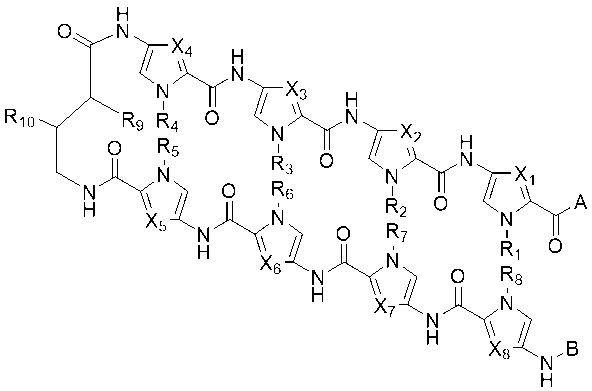
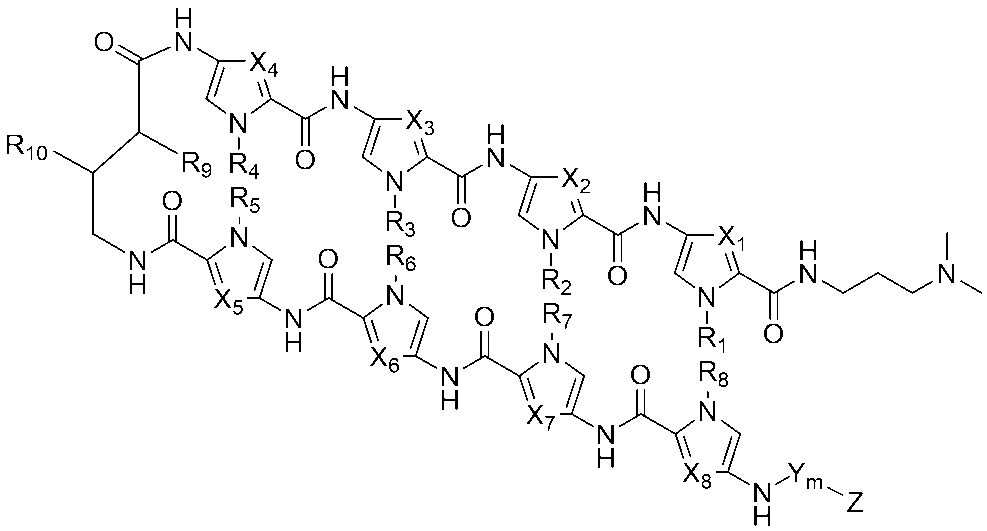
- the complex is represented by the formula I: [In Formula I, X 1 represents CH, COH or N, X 2 represents CH, COH or N, X 3 represents CH, COH or N, X 4 represents CH, COH or N, X 5 represents CH, COH or N Or N, X 6 represents CH, COH or N, X 7 represents CH, COH or N, X 8 represents CH, COH or N, R 1 represents H or an alkyl group, R 2 represents H or an alkyl group, R 3
- each of Z in the plurality of Ym-Z may be the same as or different from the other Z, and each of them may be independently selected.
- the following formula: (In the formula, X is any one of X 1 to X 8 and represents CH or COH, and R ′ is any one of R 1 to R 8 and represents H or an alkyl group.)
- the complex is represented by formula II: And Formula III: [In Formula II and Formula III, X 1 represents CH, COH or N, X 2 represents CH, COH or N, X 3 represents CH, COH or N, X 4 represents CH, COH or N, X 5 represents CH, COH or N Or N, X 6 represents CH, COH or N, X 7 represents CH, COH or N, X
- the complex has the formula: The antitumor composition according to [7], which is represented by [9] The antitumor according to any one of [1] to [8], wherein the pyrrole-imidazole polyamide binds to a RUNX binding sequence on DNA and inhibits binding of a RUNX family member to the binding sequence.
- Composition [10] The antitumor composition according to [9], which inhibits the binding of all members of the RUNX family to the RUNX binding sequence.
- a RUNX inhibitor comprising a pyrrole-imidazole polyamide capable of binding to a RUNX binding sequence, wherein at least one of the pyrrole units constituting the pyrrole-imidazole polyamide is substituted with ⁇ -alanine
- An antiallergic composition comprising a pyrrole-imidazole polyamide capable of binding to a RUNX binding sequence, wherein at least one of the pyrrole units constituting
- the present disclosure provides a pharmaceutical composition, particularly an antitumor composition and an antiallergic composition, and a RUNX inhibitor having superior efficacy by utilizing PI polyamide having excellent binding properties to a target.
- a PI polyamide designed to recognize a RUNX binding sequence on DNA, wherein at least one pyrrole unit of a pyrrole-imidazole pair constituting the PI polyamide is substituted with ⁇ -alanine.
- polyamide an antitumor composition and a RUNX inhibitor having excellent efficacy can be obtained.
- the antitumor composition has an antitumor effect against various types of cancer including leukemia.
- the anti-tumor composition is also effective against tumors that are resistant to other molecular targeted therapeutics.
- the RUNX inhibitor can also be used as an antiallergic composition.
- a complex comprising PI polyamide has been shown to have a significantly higher binding affinity for the target sequence than a complex comprising PI polyamide in which P is not substituted with ⁇ -alanine, and further has a strong anti-resistance. It was shown to exert a tumor effect.
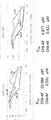
- FIG. 1A shows the SPR sensorgram of the Chb-M ′ hydroxy substituent of Example 2. From above, SPR sensorgrams of hydroxy-substituted Chb-M 'at concentrations of 1250, 625.0, 312.5 and 156.3 nM are shown.
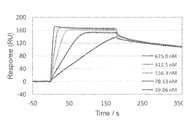
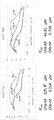
- FIG. 1B shows the SPR sensorgram of the Chb-M hydroxy-substituted product of Example 2. From the top, SPR sensorgrams of hydroxy substitution of Chb-M at concentrations of 625.0, 312.5, 156.3, 78.13 and 39.06 nM are shown.
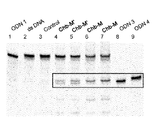
- FIG. 2A shows the results of PAGE analysis for the upper strand carried out in Example 3.
- FIG. 2B shows the results of PAGE analysis for the lower strand carried out in Example 3.
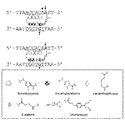
- FIG. 2C shows a schematic diagram of the alkylation site of each compound used in Example 3.
- the arrow indicates the alkylation site corresponding to the site shown in FIGS. 3A and B.
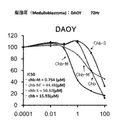
- FIG. 3 is a graph showing the antitumor effect of Chb-M on the medulloblastoma cell line Daoy of Example 5.
- the horizontal axis indicates the drug concentration ( ⁇ M), and the vertical axis indicates the cell viability (%).
- FIG. 4A is a graph showing the antitumor effect of Chb-M on malignant glioma strain A172 of Example 5.
- the horizontal axis indicates the drug concentration ( ⁇ M), and the vertical axis indicates the cell viability (%).
- FIG. 4B is a graph showing the antitumor effect of Chb-M on malignant glioma strain KALS-1 of Example 4.
- the horizontal axis indicates the drug concentration ( ⁇ M), and the vertical axis indicates the cell viability (%).
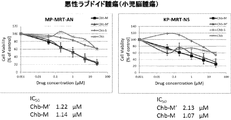
- FIG. 5 is a graph showing the antitumor effect of Chb-M on the malignant rhabdoid tumor lines MP-MRT-AN and KP-MRT-NS of Example 5.
- FIG. 6 is a graph showing the antitumor effect of Chb-M on prostate cancer strain DU145 of Example 6.
- the horizontal axis indicates the drug concentration ( ⁇ M), and the vertical axis indicates the cell viability (%).
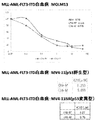
- FIG. 7 is a graph showing the antitumor effect of Chb-M against leukemia strains MOLM13, MV4-11 (p53 wild type) and MV4-11NR (p53 mutant type) of Example 7, and a table showing IC 50 values.
- the horizontal axis of the graph indicates the drug concentration ( ⁇ M), and the vertical axis indicates the cell viability (%).
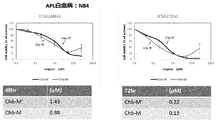
- FIG. 8 is a graph showing the antitumor effect of Chb-M against leukemia strain NB of Example 7 and a table showing IC 50 values.
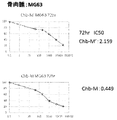
- FIG. 9 is a graph showing the antitumor effect of Chb-M against osteosarcoma strain MG63 of Example 8.
- the horizontal axis indicates the drug concentration ( ⁇ M), and the vertical axis indicates the
- PI polyamide PI polyamide is generally a polyamide containing an N-methylpyrrole unit (P), an N-methylimidazole unit (I), and a ⁇ -aminobutyric acid moiety. Linked to each other by an amide bond (—C ( ⁇ O) —NH—) (Trauger et al, Nature, 382, 559-61 (1996); White et al, Chem. Biol., 4,569-78 (1997); And Dervan, Bioorg. Med. Chem., 9, 2215-35 (2001)).
- PI polyamide a ⁇ -aminobutyric acid moiety becomes a linker (hereinafter referred to as “ ⁇ -linker”) and the whole is folded into a U-shaped conformation (hairpin type).
- ⁇ -linker a linker
- two chains containing P and I are arranged in parallel across the ⁇ -linker.
- pyrrole-imidazole pair the pair consisting of P and / or I of the two chains facing each other
- P PI polyamides bind with high affinity to specific base pairs in DNA.
- a P / I pair can bind to a C ⁇ G base pair and an I / P pair can bind to a G ⁇ C base pair.
- the P / P pair can bind to both A ⁇ T base pairs and T ⁇ A base pairs.
- PI polyamide may contain 3-hydroxypyrrole (Hp) or ⁇ -alanine, and P can be replaced with Hp or ⁇ -alanine.
- Hp / P pairs can bind to TA base pairs (White at al., Nature, 391, 468-71 (1998)).
- a ⁇ -alanine / ⁇ -alanine pair can bind to a T • A base pair or an A • T base pair.
- a ⁇ -alanine / I pair can bind to a CG base pair, and an I / ⁇ alanine pair can bind to a G ⁇ C base pair.
- the ⁇ -alanine / P pair and the P / ⁇ -alanine pair can bind to a T • A base pair or an A • T base pair.
- the ⁇ -linker moiety and the ⁇ alanine moiety added to the N-terminus of PI polyamide can also be bound to T • A base pairs or A • T base pairs.
- the methyl group on the 1-position nitrogen of P and I constituting the PI polyamide may be replaced with hydrogen or an alkyl group other than the methyl group.
- the alkyl group other than the methyl group include a linear, branched or cyclic saturated or unsaturated alkyl group having 2 to 10 carbon atoms, preferably a linear or branched chain having 2 to 5 carbon atoms.
- Examples include linear, branched, or cyclic saturated or unsaturated alkyl groups such as ethyl, n-propyl, isopropyl, n-butyl, sec-butyl, isobutyl, tert-butyl, and the like.
- alkyl groups including methyl groups may be substituted.
- methylene in the alkyl group may be substituted with oxygen or the like.
- the 3-position of P constituting the PI polyamide may be substituted with a hydroxy group.
- P or “pyrrole unit” and “I” or “imidazole unit” refer to N-substituted or N-unsubstituted pyrrole units, 3-hydroxypyrrole units, and N-substituted units as described above. Or N unsubstituted imidazole units.
- the ⁇ -linker constituting the PI polyamide may have a side chain at the ⁇ -position or the ⁇ -position.
- a ⁇ -linker in which the ⁇ -position or ⁇ -position is substituted with an amino group that is, a linker consisting of an N- ⁇ -N- ⁇ -diaminobutyric acid residue or an N- ⁇ -N- ⁇ -diaminobutyric acid residue.
- the amino group may be modified with a molecule such as a fluorescent group or biotin.
- various functional groups may be added to the N-terminal and C-terminal of the PI polyamide.
- Those skilled in the art can appropriately determine functional groups or molecules to be added to the N-terminal and C-terminal of PI polyamide.
- various functional groups can be added via an amide bond.
- Examples of such functional groups include, but are not limited to, carboxyl groups such as ⁇ -alanine residues and ⁇ -aminobutyric acid residues, acetyl groups, amino groups, and the like.
- an acetyl group may be added to the N-terminus.
- a dimethylaminopropylamino group may be added to the C-terminus.
- the N terminal and C terminal of PI polyamide may be modified with molecules such as a fluorescent group, biotin, and isophthalic acid.
- the fluorescent group is not limited, and examples thereof include fluorescein, rhodamine dyes, cyanine dyes, ATTO dyes, Alexa Fluor dyes, and BODIPY.
- Fluorescein also includes fluorescein derivatives (eg, fluorescein isothiocyanate).
- the design method and production method of PI polyamide are known (see, for example, Japanese Patent No. 3045706, Japanese Patent Laid-Open No. 2001-136974, WO 03/000683, Japanese Patent Laid-Open No. 2013-234135, Japanese Patent Laid-Open No. 2014-173032).
- it can be easily produced by an automatic synthesis method using a solid phase synthesis method (Fmoc solid phase synthesis method) using Fmoc (9-fluorenylmethoxycarbonyl). It can also be produced by a liquid phase synthesis method.
- the PI polyamide may be a modified PI polyamide that is modified so as to maintain or improve the binding ability to DNA.
- the modified PI polyamide include, for example, a modified product in which an amino group is added to the ⁇ -position or ⁇ -position of the ⁇ -linker of PI polyamide, that is, N- ⁇ -N- ⁇ -diaminobutyric acid residue or N- ⁇ - A modified product having a ⁇ -linker composed of N- ⁇ -diaminobutyric acid residue, a modified product obtained by modifying the amino group of the modified product with a molecule such as a fluorescent group or biotin, a fluorescent group or biotin at the N-terminus of PI polyamide, etc. And a modified product obtained by modifying the C-terminus of PI polyamide with a molecule such as isophthalic acid.
- the PI polyamide used in the present disclosure is a PI polyamide designed to recognize a consensus sequence of the RUNX binding site on the genome (also referred to as “RUNX consensus binding sequence” or “RUNX binding sequence”), and therefore A PI polyamide capable of binding to the RUNX consensus binding sequence.
- the RUNX consensus sequence is known to be 5'-TGTGGT-3 'or 5'-TGCGGT-3'. Therefore, the combination of the pyrrole-imidazole pair constituting the PI polyamide may be determined based on the RUNX consensus binding sequence.
- the term “pyrrole-imidazole pair” includes a pair consisting of any combination of P, I, Hp, and ⁇ -alanine.
- the PI polyamide used in the present disclosure comprises a pyrrole-imidazole pair containing at least one ⁇ -alanine. That is, in the PI polyamide used in the present disclosure, at least one of the pyrrole units is substituted with ⁇ -alanine.
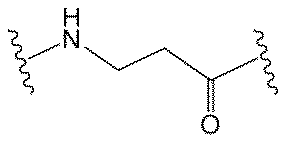
- ⁇ -alanine is represented by the following formula: Represented by
- the number of ⁇ -alanine contained in the PI polyamide used in the present disclosure is not particularly limited as long as it is 1 or more. Depending on the total number of P and I constituting the PI polyamide, for example, 1 to 3, preferably 1 or 2, ⁇ -alanine is included.
- the position of ⁇ -alanine contained in the PI polyamide used in the present invention is a ⁇ linker, a position adjacent to the C-terminal or N-terminal, or a ⁇ -linker
- the position may be near the C-terminal or N-terminal, or may be other positions, for example, near or in the middle between the ⁇ linker and the C-terminal or N-terminal. Preferably, it is near or in the middle between the ⁇ linker and the C-terminal or N-terminal.
- the PI polyamide in the present disclosure has high affinity for the target RUNX binding sequence.
- the PI polyamide has a higher affinity for the targeted RUNX binding sequence compared to PI polyamide in which the pyrrole unit is not replaced by ⁇ -alanine.
- the PI polyamides in this disclosure can compete with members of the RUNX family for binding to RUNX binding sequences on DNA and inhibit RUNX family binding to RUNX binding sequences on the genome.
- the PI polyamide that recognizes the RUNX binding sequence may form a complex with the agent.
- the “agent” is a substance that affects DNA and the surrounding chromatin state, and examples thereof include, but are not limited to, an alkylating agent, a chromatin-modifying enzyme control agent, and the like.
- chromatin-modifying enzyme regulators include, but are not limited to, histone acetylase (HAT) regulators, such as HAT inhibitors (eg, C646), or HAT activators (eg, N- ( 4-chloro-3- (trifluoromethyl) phenyl) -2-ethoxybenzamide (CTB), etc., histone deacetylase (HDAC) regulator, eg, HDAC inhibitor (eg, suberoylanilide hydroxamic acid, etc.) Or an HDAC activator, a histone methylase regulator, a histone demethylase regulator, and the like.
- HAT histone acetylase
- HAT inhibitors eg, C646
- HAT activators eg, N- ( 4-chloro-3- (trifluoromethyl) phenyl) -2-ethoxybenzamide (CTB), etc.
- HDAC histone deacetylase
- HDAC histone deacetylase
- alkylating agent is a compound having a functional group that forms a covalent bond with DNA. Although it does not specifically limit as an alkylating agent used in this indication, A thing with low or no cytotoxicity is preferable in consideration of the use in the pharmaceutical composition mentioned later.
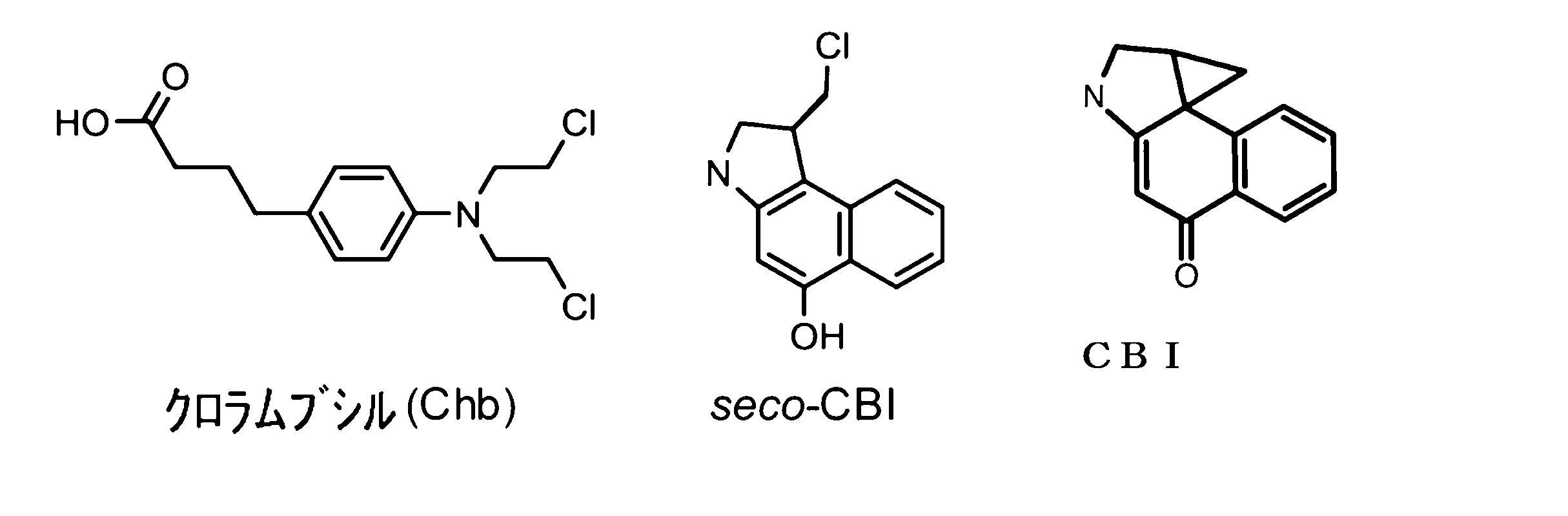
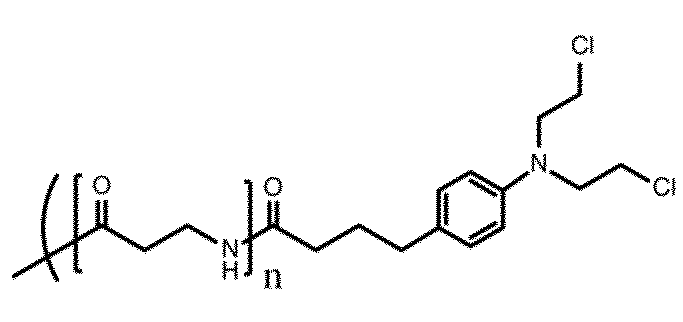
- alkylating agents include, but are not limited to, chlorambucil, duocarmycin, seco-CBI (1-chloromethyl-5-hydroxy-1,2-dihydro-3H-benzo [ e] indole), CBI (1,2,9,9a-tetrahydrocyclopropane [c] benzo [e] indole-4-one), pyrrolobenzodiazepine, nitrogen mustard and the like.
- an indole may be inserted between PI polyamide and seco-CBI or CBI.
- Chlorambucil, seco-CBI, and CBI mentioned as examples of the alkylating agent are represented by the following chemical formula.
- a composite is synthesized by combining the agent and the PI polyamide (hereinafter also referred to as “conjugate”).
- the complex is also referred to as “conjugate”.
- the synthesis method can be performed by a known method (for example, see J. Am. Chem. SOC. 1995, 117, 2479-2490).
- the agent is attached to either the N-terminus, the C-terminus, or the ⁇ linker site of the PI polyamide, or a combination thereof.
- the agent is bound to the N-terminus or C-terminus of PI polyamide.
- the agent bonded to each position may be the same or different.
- the “bonding” mode between the PI polyamide and the agent may be directly bonded or may be bonded via a linker.
- the linker is not particularly limited as long as it does not interfere with the action of the agent and does not interfere with recognition of the RUNX binding site.
- an amide bond, phosphodisulfide bond, ester bond, coordination bond, or ether bond examples thereof include molecules containing functional groups that form themselves or one or more of these bonds.
- “Molecules containing functional groups that form one or more of these bonds” include amide bonds, phosphodisulfide bonds, ester bonds, coordination bonds, ether bonds, etc., together with the terminal portion of the PI polyamide and / or agent.
- a molecule containing a functional group that forms one or more bonds selected from the group consisting of: “Molecules containing functional groups that form one or more of these bonds” also include one or more bonds selected from the group consisting of amide bonds, phosphodisulfide bonds, ester bonds, coordination bonds, ether bonds, and the like. May be a molecule containing one or more.
- Preferred linkers include amide bonds or molecules containing functional groups that form amide bonds.
- Examples of composites of agents and PI polyamides in this disclosure include those of formula I: [In Formula I, X 1 represents CH, COH or N, X 2 represents CH, COH or N, X 3 represents CH, COH or N, X 4 represents CH, COH or N, X 5 represents CH, COH or N Or X, X 6 represents CH, COH or N, X 7 represents CH, COH or N, X 8 represents CH, COH or N, wherein X 1 to X 8 represent PI polyamide Are selected in combinations that allow recognition of the RUNX consensus sequence, R 1 represents H or an alkyl group, R 2 represents H or an alkyl group, R 3 represents H or an alkyl group, R 4 represents H or an alkyl group, R 5 represents H or an alkyl group, R 6 represents H or an alkyl group, R 7 represents H or an alkyl group, R 8 represents H or an alkyl group, R 9 represents H, —NHR 11 , or —Ym—Z;
- R 9 , R 10 , A, and B is -Ym-Z;
- each of Ym in the plurality of Ym-Z may be the same as or different from the other Ym.
- each of Z in the plurality of Ym-Z may be the same as or different from the other Z, and each of them may be independently selected.
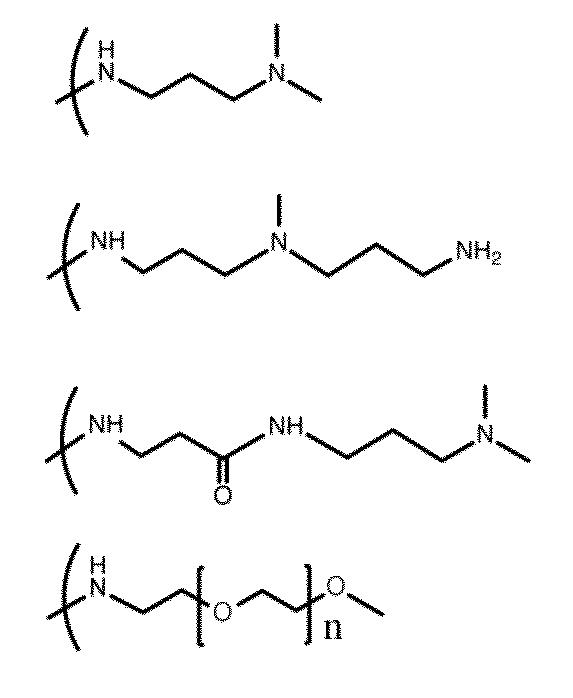
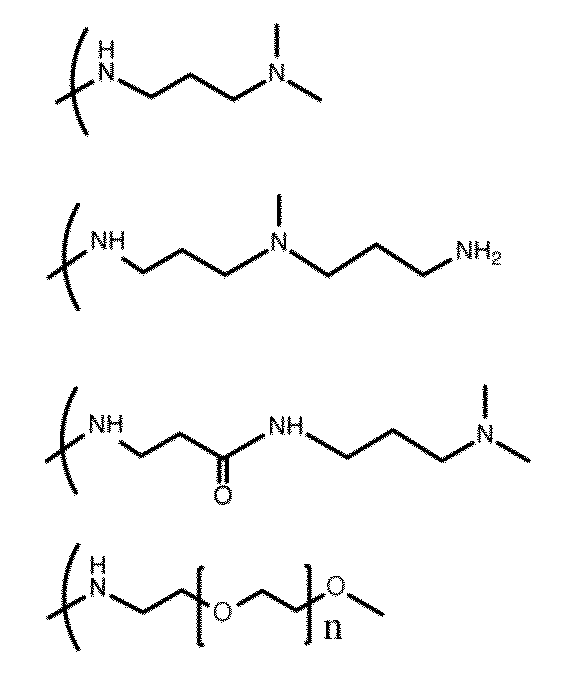
- A is [Wherein the integer n is any value from 0 to 5] Or represents -Ym-Z, wherein -Ym-Z represents the following formula: Any of the groups represented by B represents -Ym-Z, wherein -Ym-Z represents the following formula: [In the formula, the integer n is any value from 0 to 5, preferably any value from 0 to 2.] Any of the groups represented by
- agents and PI polyamide composites in the present disclosure include Formula II: Or Formula III: [In Formula II and Formula III, X 1 represents CH, COH or N, X 2 represents CH, COH or N, X 3 represents CH, COH or N, X 4 represents CH, COH or N, X 5 represents CH, COH or N Or X, X 6 represents CH, COH or N, X 7 represents CH, COH or N, X 8 represents CH, COH or N, wherein X 1 to X 8 represent PI polyamide Are selected in combinations that allow recognition of the RUNX consensus sequence, R 1 represents H or an alkyl group, R 2 represents H or an alkyl group, R 3 represents H or an alkyl group, R 4 represents H or an alkyl group, R 5 represents H or an alkyl group, R 6 represents H or an alkyl group, R 7 represents H or an alkyl group, R 8 represents H or an alkyl group, R 9 represents H or —NHR 11 ; R 10 represents H
- X is any one of X 1 to X 8 and represents CH or COH
- R ′ is any one of R 1 to R 8 and represents H or an alkyl group.
- Ym represents, for example, an amide bond, a phosphodisulfide bond, an ester bond, a coordination bond, an ether bond, or the like, or a moiety containing a functional group that forms one or more of these bonds.
- a moiety containing a functional group that forms one or more of these bonds refers to an amide bond, a phosphodisulfide bond, an ester bond, a coordination bond, and a terminal part of PI polyamide and / or an agent. It is a part containing a functional group that forms one or more types of bonds selected from the group consisting of ether bonds and the like.
- the “part containing a functional group forming one or more of these bonds” is one or more selected from the group consisting of an amide bond, a phosphodisulfide bond, an ester bond, a coordination bond, and an ether bond. One or more bonds may be included.
- Ym is “a moiety containing a functional group that forms one or more of these bonds”, an example of which is represented by Formula IV: [Where: Q is carbonyl [—C ( ⁇ O) —] or imino (—NH—); Q ′ is an ether bond (—O—) or imino (—NH—) or methylimino [—N (—CH 3 ) —],
- the integers g and k are each independently any value from 1 to 3
- the integers h and j are each independently any value from 0 to 5,
- the integer i is any value between 0 and 2]
- the structure shown by is mentioned.
- the integers h and j are preferably each independently any value from 0 to 3.
- the position of the ester bond and the position of the ether bond or imino bond represented by Q ′ may be interchanged.
- the linker moiety represented by the above formula IV for example, the position at the right end is connected to the agent and the position at the left end is connected to PI polyamide, but the connecting position may be reversed.
- Q is preferably imino.
- Y represented by formula IV the following formula VII: The structure shown by is mentioned.
- the linker moiety represented by formula VII is used when the agent is attached to the C-terminal side of the PI polyamide.
- the right end position is connected to the agent and the left end position is connected to PI polyamide, but the connecting positions may be reversed.
- the pyrrole unit substituted with ⁇ -alanine is preferably in the second, third or fourth position from the N-terminal or C-terminal.
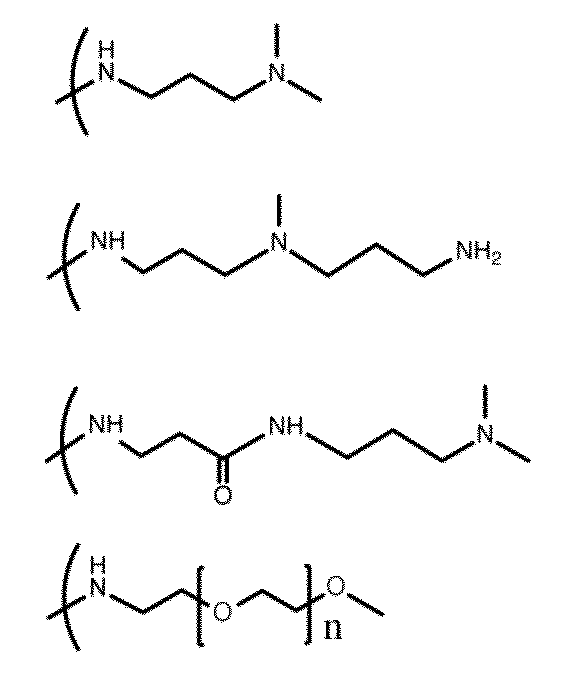
- -Ym-Z is preferably [In the formula, the integer n is any value from 1 to 5, preferably any value from 0 to 2.] It is group represented by these.
- -Ym-Z is preferably It is group represented by these.
- examples of the alkyl group include linear, branched or cyclic saturated or unsaturated alkyl groups having 1 to 10 carbon atoms, preferably linear or branched groups having 1 to 5 carbon atoms.
- examples include a straight chain, branched chain or cyclic saturated or unsaturated alkyl group, and examples thereof include methyl, ethyl, n-propyl, isopropyl, n-butyl, sec-butyl, isobutyl, tert-butyl and the like.
- the alkyl group may be substituted.
- methylene in the alkyl group may be substituted with oxygen or the like.
- exemplary embodiments of the composite of the agent and the PI polyamide further include the following formula: [Where: Z represents an agent, preferably an alkylating agent, more preferably an alkylating agent selected from the group consisting of chlorambucil, duocarmycin, seco-CBI, CBI, pyrrolobenzodiazepine, and nitrogen mustard. Show n represents 0, 1, 2, 3, 4, or 5, preferably 1, 2, or 3, more preferably n represents 1, and At least one of the pyrrole units is substituted with ⁇ -alanine, preferably the second, third or fourth pyrrole unit from the N-terminal or C-terminal, more preferably the second or third from the N-terminal or C-terminal. Of pyrrole units are replaced by ⁇ -alanine] The compound shown by these, and its modification thing are mentioned.
- n 0, 1, 2, 3, 4, or 5, preferably 1, 2, or 3, more preferably n represents 1, and At least one of the pyrrole units is substituted with ⁇ -alanine, preferably the second, third or fourth pyrrole unit from the N-terminal or C-terminal, more preferably the second or third from the N-terminal or C-terminal. Of pyrrole units are replaced by ⁇ -alanine.
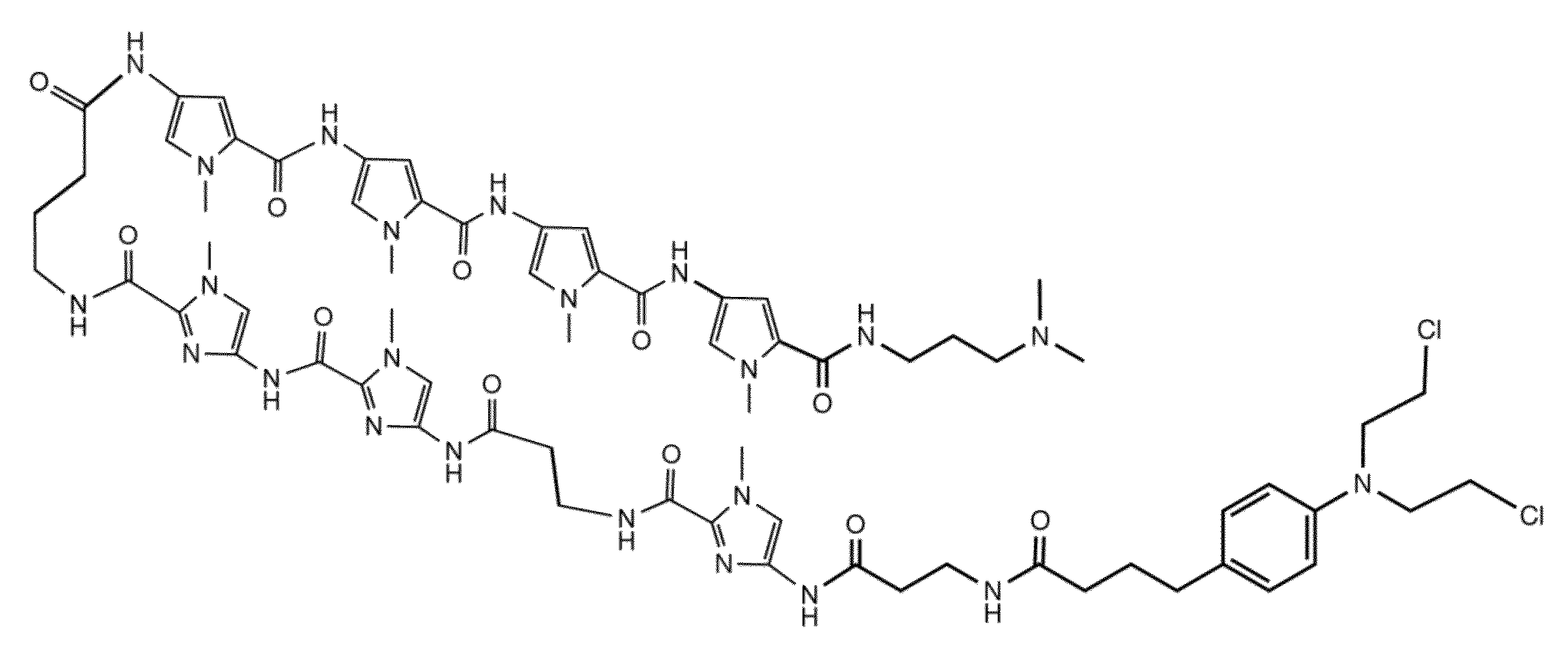
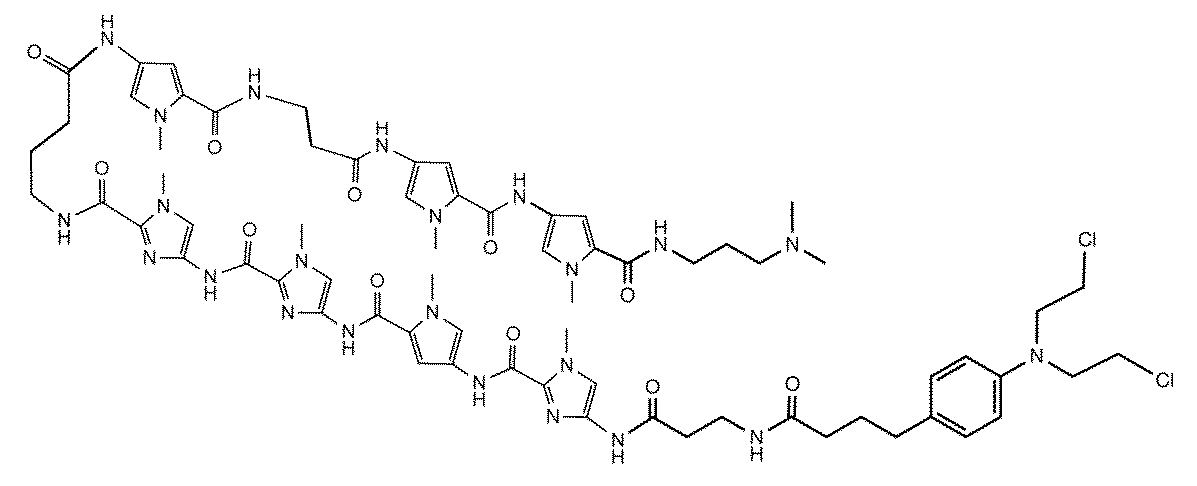
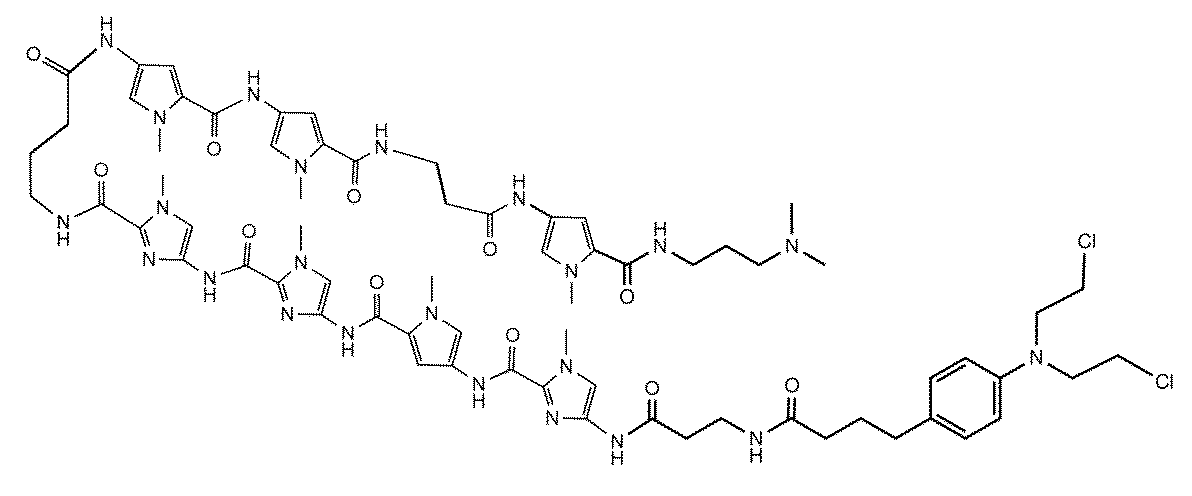
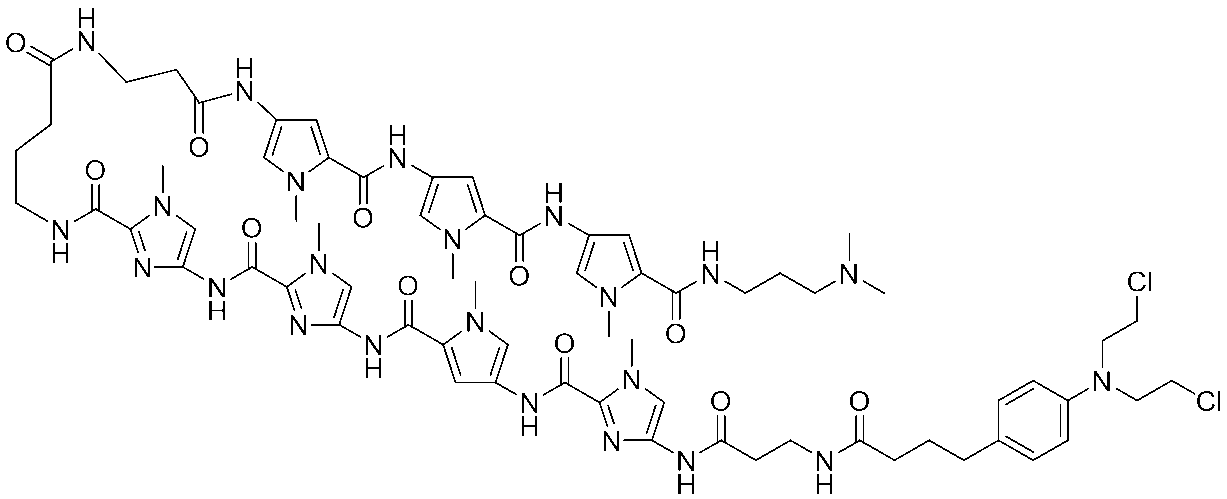
- specific examples of the composite of chlorambucil and PI polyamide include the following compounds.
- the complex of PI polyamide and agent may be in the form of a pharmacologically acceptable salt.
- a pharmacologically acceptable salt for example, inorganic acid salts such as hydrochloride, sulfate, phosphate or hydrobromide, or acetate, fumarate, maleate, oxalate, citrate, methanesulfonate, benzenesulfone
- Organic acid salts such as acid salts or toluene sulfonates can be mentioned.
- the complex in the complex, at least one part or molecule of the PI polyamide, the agent, and / or the linker moiety that links the PI polyamide and the agent is present in the form of an enantiomer or diastereomer, or a mixture thereof. obtain.
- the complex includes a mixture of stereoisomers or each pure or substantially pure isomer.
- the complex can be separated by a conventional method well known in the art, for example, chromatography or fractional crystallization.
- the above-described complex may contain an isotope (for example, 3 H, 13 C, and / or a molecule on at least one part or molecule of a linker part that links PI polyamide, an agent, and / or PI polyamide and the agent. 14 C, 15 N, 18 F, 32 P, 35 S, 125 I and the like), or a deuterium converter.
- an isotope for example, 3 H, 13 C, and / or a molecule on at least one part or molecule of a linker part that links PI polyamide, an agent, and / or PI polyamide and the agent.
- 14 C, 15 N, 18 F, 32 P, 35 S, 125 I and the like or a deuterium converter.
- a RUNX inhibitor is a composition comprising the PI polyamide.
- the RUNX inhibitor of the present invention may preferably contain a complex of the PI polyamide and the agent.
- a further preferred example of a RUNX inhibitor in the present disclosure includes a complex of the above PI polyamide and an alkylating agent.
- RUNX consensus binding sequence is a binding sequence common to each member of the RUNX family.
- a RUNX inhibitor includes the PI polyamide designed to recognize a RUNX consensus binding sequence on the genome, thus inhibiting any activity caused by the binding of each member of the RUNX family to DNA.
- a RUNX inhibitor in the present disclosure binds to a RUNX consensus binding sequence on the genome and inhibits binding of RUNX family members to the binding sequence.
- RUNX consensus sequences are present in the regulatory regions of various genes, and RUNX family members control the expression of various target genes by binding to the consensus sequences in the regulatory regions. . Therefore, there are various activities involved in the RUNX family, including, but not limited to, for example, transcriptional control of p53 inhibitors (BCL11, TRIM24, etc.) (ie, in cancer, the RUNX family MLL-AF4 + FLT3-ITD acute myeloid leukemia that transcriptionally regulates and enhances BCR-ABL, the causative protein of Philadelphia chromosome positive acute lymphoblastic leukemia (PhALL) And MLL-AF4 is enhanced in transcription, and oncogene c-Myc is regulated by transcription and enhanced.
- p53 inhibitors BCL11, TRIM24, etc.
- the RUNX inhibitor may be the PI polyamide or the complex of the PI polyamide and the agent itself depending on the purpose of use, or in addition to the PI polyamide or the complex,
- An additive may be included.
- the carrier and additive include, but are not limited to, water, acetic acid, organic solvent, collagen, polyvinyl alcohol, polyvinyl pyrrolidone, carboxyvinyl polymer, sodium carboxymethylcellulose, sodium polyacrylate, sodium alginate, water-soluble Dextran, sodium carboxymethyl starch, pectin, methylcellulose, ethylcellulose, xanthan gum, gum arabic, casein, agar, polyethylene glycol, diglycerin, glycerin, propylene glycol, petrolatum, paraffin, stearyl alcohol, stearic acid, human serum albumin, mannitol, sorbitol , Lactose, surfactants and the like.
- the present disclosure further provides a method for inhibiting the activity of the RUNX family by using the RUNX inhibitor of the present invention.
- the RUNX family inhibition method can inhibit not only RUNX1, RUNX2, or RUNX3, but also a gene cluster (target gene group) controlled by all members of the RUNX family at a time.
- the amount of the RUNX inhibitor used can be appropriately adjusted according to the purpose of use.
- kits containing the RUNX inhibitor of the present invention are also provided.
- the kit may contain pharmaceutically acceptable carriers and additives, reagents, adjuvants, dedicated containers, other necessary accessories, instructions, and the like.
- the kit of the present invention can be used, for example, as a cancer treatment kit or a research reagent kit.
- the pharmaceutical composition is a composition containing the PI polyamide.
- the pharmaceutical composition in the present disclosure may preferably contain a complex of the PI polyamide and the agent.
- a further preferred example of a pharmaceutical composition in the present disclosure includes a complex of the above PI polyamide and an alkylating agent.
- the pharmaceutical composition in the present disclosure may include a RUNX inhibitor disclosed in the present specification.
- RUNX consensus sequences are present in the regulatory regions of various genes. RUNX family members control the expression of various target genes by binding to consensus sequences in the regulatory region. Examples of such target genes include, but are not limited to, genes that are highly expressed in CBF leukemia (eg, IL3, CSF2, CSF2RB, etc.), the RUNX family itself (RUNX1, RUNX2, RUNX3), p53 inhibitor ( For example, BCL11, TRIM24, etc.), c-kit gene and the like can be mentioned.
- CBF leukemia eg, IL3, CSF2, CSF2RB, etc.
- RUNX1, RUNX2, RUNX3 p53 inhibitor
- BCL11, TRIM24, etc. c-kit gene and the like can be mentioned.
- the pharmaceutical composition of the present invention contains the above-mentioned PI polyamide designed to recognize a RUNX consensus binding sequence on the genome, it down-regulates the expression of various genes targeted by each RUNX family member.
- the pharmaceutical composition of the invention binds to a RUNX consensus binding sequence on the genome and inhibits binding of RUNX family members to the binding sequence.
- ⁇ ⁇ Various diseases can be treated and prevented by administering the pharmaceutical composition of the present disclosure in vivo.
- the pharmaceutical composition in the present disclosure should be used for any organism that utilizes double-stranded DNA for biological control, particularly mammals (eg, humans, rats, rabbits, sheep, pigs, cattle, cats, dogs, monkeys, etc.). Can do.
- target diseases of the pharmaceutical composition according to the present disclosure are all diseases involving RUNX family members.
- target diseases of the pharmaceutical composition in the present disclosure include tumors, particularly cancer, such as, but not limited to, leukemia (eg, acute myeloid leukemia, acute lymphocytic leukemia, chronic myelogenous leukemia).
- leukemia eg, acute myeloid leukemia, acute lymphocytic leukemia, chronic myelogenous leukemia.
- an antitumor composition comprising the PI polyamide or a complex of the PI polyamide and an agent is provided as a pharmaceutical composition in the present disclosure.
- the antitumor composition in the present disclosure includes a composite of the PI polyamide and an alkylating agent.
- mast cell tumors and mastocytosis eg, mast cell hypertrophy, severe allergic diseases, atopic dermatitis, anaphylactic shock, severe bronchial asthma attacks Mast cell diseases such as severe drug dermatitis), various allergies, and immune diseases.
- a mast cell is defined as a cell that expresses on the cell surface both the specific receptor FceRI for an IgE antibody closely related to allergy and c-kit, which is a receptor for the cytokine called stem cell factor (SCF).
- SCF stem cell factor
- an antiallergic composition comprising the PI polyamide or a complex of the PI polyamide and an agent is provided as a pharmaceutical composition in the present disclosure.
- the antiallergic composition of the present invention contains a composite of the above PI polyamide and an alkylating agent.
- an antiallergic composition in the present disclosure includes a RUNX inhibitor disclosed herein.
- the inventors have shown that a complex of PI polyamide and alkylating agent targeting the RUNX binding sequence suppresses the expression of c-kit (stem cell factor receptor tyrosine kinase) in mast cells.
- c-kit stem cell factor receptor tyrosine kinase
- the pharmaceutical compositions in this disclosure that target the same RUNX binding sequence also inhibit c-kit expression as well. Therefore, the pharmaceutical composition in the present disclosure can suppress, treat, or prevent all symptoms or diseases caused by mast cell activation.
- the pharmaceutical composition in the present disclosure may be in a dosage form for oral administration or parenteral administration.
- These dosage forms can be formulated according to a conventional method, and may contain pharmaceutically acceptable carriers and additives.
- Such carriers and additives include water, acetic acid, pharmaceutically acceptable organic solvents, collagen, polyvinyl alcohol, polyvinyl pyrrolidone, carboxyvinyl polymer, sodium carboxymethylcellulose, sodium polyacrylate, sodium alginate, water soluble dextran, Sodium carboxymethyl starch, pectin, methylcellulose, ethylcellulose, xanthan gum, gum arabic, casein, agar, polyethylene glycol, diglycerin, glycerin, propylene glycol, petrolatum, paraffin, stearyl alcohol, stearic acid, human serum albumin, mannitol, sorbitol, lactose And surfactants acceptable as pharmaceutical additives.
- the above additives are selected from the above alone or in combination as appropriate according to the dosage form of the pharmaceutical composition in the present disclosure.
- tablets, capsules, fine granules, powders, granules, solutions, syrups, sprays, coatings, eye drops, external preparations, etc. or appropriate dosage forms for oral administration Can be administered.
- parenteral administration examples include an injection form.
- an injection form it can be administered systemically or locally by intravenous injection such as infusion, subcutaneous injection, intraperitoneal injection, intratumoral injection, and the like.
- the pharmaceutical composition of the present disclosure when used as an injectable preparation, is dissolved in a solvent (eg, physiological saline, buffer solution, glucose solution, 0.1% acetic acid, etc.), and appropriate additives (humans) Serum albumin, PEG, mannose modified dendrimer, cyclodextrin conjugate, etc.) can be used.
- a solvent eg, physiological saline, buffer solution, glucose solution, 0.1% acetic acid, etc.
- appropriate additives humans
- it may be freeze-dried to obtain a dosage form that dissolves before use.
- the freeze-drying excipient for example, sugar alcohols and saccharides such as mannitol and glucose can be used.
- the dosage of the pharmaceutical composition in the present disclosure varies depending on age, sex, symptom, administration route, administration frequency, and dosage form.
- the dose is 0.01 to 1000 mg, preferably 0.1 to 100 mg, more preferably 1 to 30 mg per day.
- the administration method is appropriately selected depending on the age and symptoms of the patient. Administration may be divided, for example, once every several days, once per day, or 2-4 times.
- the pharmaceutical composition, particularly the antitumor composition in the present disclosure can be used in combination with other antitumor agents.
- Other anti-tumor agents include any anti-tumor agent used to treat a particular cancer, or p53 inducer.
- any known antitumor agent may be used, for example, cytarabine, imatinib, gefitinib, PRIMA-1, MIRA-1, Nutlin3, etc. Can be mentioned.
- the administration ratio between the pharmaceutical composition and the other antitumor agent in the present disclosure is not particularly limited, and may be appropriately determined by those skilled in the art so as to obtain a desired antitumor effect.
- Example 1 Synthesis of PI Polyamide and Conjugate A PI polyamide that specifically recognizes the RUNX consensus binding sequence of 5'-TGTGGT-3 'by sequential binding of four pyrrole-imidazole pairs, A PI polyamide in which the pyrrole unit was replaced by ⁇ -alanine was designed, and the PI polyamide was synthesized with a chlorambucil conjugate (Chb-M). As a control, a conjugate (Chb-M ′) of PI polyamide and chlorambucil in which the pyrrole unit was not replaced by ⁇ -alanine was synthesized.
- Chb-M chlorambucil conjugate
- Chb-M ′ The hydroxy substituted Chb-M ′ (1.8 mg, 1.2 ⁇ mol) of Chb-M ′ was dissolved in a mixture of MeCN / 0.1% TFA (2: 5) and stirred at 40 ° C. for 2 days. The mixture was purified by HPLC and the final weight of the target product was 1.1 mg (0.75 ⁇ l, 65% yield). Retention time was 9.92 minutes (detected at 254 nm with 0.1% TFA containing 0-100% acetonitrile with a linear gradient of 20 minutes at a flow rate of 1.0 mL / min).
- MALDI-TOFMS spectrum m / z C 71 H 91 N 24 O 13 + [M + H] + calculated value 1487.719, actual value 1487.715
- Example 2 Binding Affinity of Chb-M to Target DNA
- the binding affinities of Chb-M and Chb-M ′ were compared using hydroxy substitution of Chb-M and Chb-M ′.
- Biotinylated hairpin DNA containing the target sequence (5′-TGTGGT-3 ′) was immobilized on the sensor chip by forming a complex of biotin and streptavidin.
- the binding properties were evaluated by SPR (surface plasmon resonance).
- the concentration of the PI polyamide conjugate was measured as follows.
- Biotinylated hairpin DNA (5'-biotin-CGCTTGTGTCTCGTTTCGGACCACAAAGCG-3 ') was purchased from SIGMA-Aldrich. Streptavidin-functionalized SA sensor chip was purchased from Biacore. Biotinylated DNA was immobilized on the sensor chip to obtain the desired immobilization level (increase by about 900 RU).
- the SPR assay was performed using HBS-EP buffer (10 mM HPES (pH 7.4), 150 mM NaCl, 3 mM EDTA, and 0.005% Surfactant P20) at 25 ° C. with 0.1% DMSO.
- PI polyamide conjugate solutions with various concentrations were prepared in buffers containing 0.1% DMSO and injected at a flow rate of 20 ⁇ L / min.
- ka binding rate
- kd dissociation rate
- K D dissociation constant
- Chb-M had a binding affinity for the target 100 times higher than that of Chb-M ′.
- Example 3 Chb-M DNA alkylation activity
- the DNA alkylation activity of Chb-M and Chb-M ' was tested by polyacrylamide gel electrophoresis (PAGE) analysis.
- the DNA fragment was alkylated using Chb-M and Chb-M ′. Alkylation was carried out at room temperature for 18 hours. In order to visualize the alkylation site, the sample was heated at 95 ° C. for 10 minutes and then treated with 1M piperidine at 95 ° C. for 25 minutes. The alkylated DNA was cleaved by heat treatment. Piperidine treatment converts the modified sugar terminus to a 3′-phosphate terminus. A DNA fragment having a 3′-phosphate end was observed on the gel as an alkylated band.
- Table 2 shows all oligonucleotides (purchased from Sigma-Aldrich) used in this example.
- Complementary FAM-labeled fragments (30 bp) were prepared by the same procedure using other DNA fragments (ODN5: 5′-FAM-ATATGTGTATATGTGGTTAATGTGGTAAT-3 ′ and ODN6: 5′-ATTACCACATTAACCCACAATTACCACATAT-3 ′).
- ODN 3 and 4 and ODN 7 and 8 were used as reference DNA. All ODNs except ODN2 and ODN6 were 5′-end FAM labeled.
- FIG. 2A shows the results of the alkylation activity for the upper chain. Since two bands were observed at the same position as ODN3 and ODN4, Chb-M ′ alkylated two adenines in the target sequence. On the other hand, Chb-M alkylated only one site. A weak alkylated band at the mismatch site was also observed, but Chb-M had higher sequence specificity in the target sequence than Chb-M ′. Further, the density of the band showed that the alkylation activity of Chb-M was superior to that of Chb-M ′. Thus, the introduction of ⁇ -alanine increased both the sequence specificity and alkylation activity of PI polyamide. The alkylation activity results for the lower strand showed no difference in sequence specificity between Chb-M and Chb-M ′ (FIG. 2B).
- Example 4 Cytotoxicity of Chb-M on lung cancer cell lines
- 50% inhibitory concentrations (IC 50 ) for various lung cancer cell lines were determined.
- EGFR mutant lung cancer cell lines PC3, PC9, LU99A
- EGFR wild type cell lines A549, ABC1, RERFLCMS
- the molecular target drug gefitinib EGFR inhibitor
- a non-molecular target drug cisplatin for conventional lung cancer
- Chb-M ′ were used.
- Example 5 Cytotoxicity against brain tumor cell line by Chb-M To evaluate the cytotoxic effect of Chb-M on brain tumor cells, 50% inhibitory concentration (IC 50 ) for various brain tumor cell lines was determined.
- Chb-M ′ is a conjugate of PI polyamide and chlorambucil targeting the 5′-WGGGCCW-3 ′ sequence (W is either A or T) and is the same as in Example 1. The method was synthesized. The chemical formula of Chb-S is shown below.
- the medulloblastoma cell line Daoy was brought to a density of 1 ⁇ 10 5 cells / mL.
- Various concentrations of PI polyamide (Chb-M, Chb-M ′, Chb-S) and Chb (chlorambucil) were added to the medium and incubated for 72 hours.
- Cell viability was assessed by counting viable cells using Cell Count Reagent SF (nacalai tesque, Inc.) and InfiniteR 200 PRO multimode reader (TECAN) according to the manufacturer's instructions.
- the dose that inhibited growth by 50% was analyzed by a semi-effective method.
- Cell viability was assessed by counting viable cells using Cell Count Reagent SF (nacalai tesque, Inc.) and InfiniteR 200 PRO multimode reader (TECAN) according to the manufacturer's instructions. The dose that inhibited growth by 50% was analyzed by the median-effect method.
- FIGS. 4A and B The results are shown in FIGS. 4A and B.
- the IC 50 of Chb-M for A172 cells 0.531 ⁇ M for 72 hours and 0.421 ⁇ M for 96 hours
- the control Chb-M ′ 23.066 ⁇ M for 72 hours and 6.677 ⁇ M for 96 hours.
- the concentration was much lower than that.
- the IC 50 of Chb-M for KALS-1 cells (0.214 ⁇ M for 72 hours and 0.738 ⁇ M for 96 hours) is compared to the control Chb-M ′ (44.82 ⁇ M for 96 hours). Much lower concentrations.
- Cell viability was assessed by counting viable cells using Cell Count Reagent SF (nacalai tesque, Inc.) and InfiniteR 200 PRO multimode reader (TECAN) according to the manufacturer's instructions. The dose that inhibited growth by 50% was analyzed by the median-effect method.
- Example 6 Cytotoxicity against prostate cancer cell line by Chb-M CRPC-Adeno: To assess the antitumor effect of Chb-M on surgical resection refractory prostate cancer (adenocarcinoma), an IC 50 of 72 hours was determined. It was. Surgical resection refractory prostate cancer (adenocarcinoma) cell lines: DU145 cells (DU 145 (ATCC R HTB- 81 TM): ATCC purchased from) was to 1 ⁇ 10 5 cells / mL density. Various concentrations of Chb-M, Chb-M ′, Chb-S, or Chb were added to the medium and incubated for 72 hours.
- DU145 cells DU 145 (ATCC R HTB- 81 TM): ATCC purchased from
- Cell viability was assessed by counting viable cells using Cell Count Reagent SF (nacalai tesque, Inc.) and InfiniteR 200 PRO multimode reader (TECAN) according to the manufacturer's instructions. The dose that inhibited growth by 50% was analyzed by the median-effect method.
- Example 7 Cytotoxicity against leukemia cell line by Chb-M (1) Anti-tumor effect against acute myeloid leukemia
- MOLM13 Japanese Collection of Research Bioresources, Japan
- AML cell line of TP53 wild-type cell line MV4-11 and MV4-11NR cells carrying the 53TP53 R248W mutation is described in T.W. Acquired from Dr. Ikezoe (Department of Hematology and Respiratory Medicine, Kochi University, Kochi, Japan). These cells were brought to a density of 1 ⁇ 10 5 cells / mL.
- Chb-M or Chb-M ′ were added to the medium and incubated for 48 hours.
- Cell viability was assessed by counting viable cells using Cell Count Reagent SF (nacalai tesque, Inc.) and InfiniteR 200 PRO multimode reader (TECAN) according to the manufacturer's instructions.
- the dose that inhibited growth by 50% was analyzed by the median-effect method.
- IC 50 values of 48 hours and 72 hours were determined.
- the NB4 cell line cell line was obtained from Keio University School of Medicine. NB4 cells were brought to a density of 1 ⁇ 10 5 cells / mL.
- Various concentrations of Chb-M or Chb-M ′ were added to the medium and incubated for 48 and 72 hours.
- Cell viability was assessed by counting viable cells using Cell Count Reagent SF (nacalai tesque, Inc.) and InfiniteR 200 PRO multimode reader (TECAN) according to the manufacturer's instructions. The dose that inhibited growth by 50% was analyzed by the median-effect method.
- Example 8 Cyb-M to osteosarcoma line
- the osteosarcoma cell MG63 cell line cell line was obtained from the Department of Pediatrics, Kyoto University. MG63 cells were brought to a density of 1 ⁇ 10 5 cells / mL. Various concentrations of Chb-M or Chb-M ′ were added to the medium and incubated for 72 hours. Cell viability was assessed by counting viable cells using Cell Count Reagent SF (nacalai tesque, Inc.) and InfiniteR 200 PRO multimode reader (TECAN) according to the manufacturer's instructions. The dose that inhibited growth by 50% was analyzed by the median-effect method.
- the antitumor composition of the present invention can target various types of cancer including leukemia by the cluster control of the RUNX family.
- the antitumor composition of the present invention is also effective against tumors that are resistant to other molecularly targeted therapeutic agents.
- the anti-tumor composition of the present invention is effective against cancers that are not effective with molecularly targeted therapeutic agents currently used in clinical practice, and is therefore an all-purpose anticancer agent that is also effective for cancers that are said to be difficult to treat. The use as is expected.
- the RUNX inhibitor of the present invention can be used as an antiallergic composition.
- SEQ ID NO: 1 Sequence of ODN1 SEQ ID NO: 2: Sequence of ODN2 SEQ ID NO: 3: Sequence of ODN3 SEQ ID NO: 4: Sequence of ODN4 SEQ ID NO: 5: Sequence of ODN5 SEQ ID NO: 6: Sequence of ODN6 SEQ ID NO: 7: Sequence of ODN7 SEQ ID NO: 8: Sequence of ODN8
Landscapes
- Health & Medical Sciences (AREA)
- Public Health (AREA)
- Life Sciences & Earth Sciences (AREA)
- Veterinary Medicine (AREA)
- General Health & Medical Sciences (AREA)
- Chemical & Material Sciences (AREA)
- Pharmacology & Pharmacy (AREA)
- Animal Behavior & Ethology (AREA)
- Medicinal Chemistry (AREA)
- General Chemical & Material Sciences (AREA)
- Organic Chemistry (AREA)
- Nuclear Medicine, Radiotherapy & Molecular Imaging (AREA)
- Chemical Kinetics & Catalysis (AREA)
- Engineering & Computer Science (AREA)
- Bioinformatics & Cheminformatics (AREA)
- Epidemiology (AREA)
- Immunology (AREA)
- Pulmonology (AREA)
- Hematology (AREA)
- Oncology (AREA)
- Pharmaceuticals Containing Other Organic And Inorganic Compounds (AREA)
- Medicines That Contain Protein Lipid Enzymes And Other Medicines (AREA)
Abstract
本発明は、RUNX結合配列に結合し得るピロール-イミダゾールポリアミドであって、該ピロール-イミダゾールポリアミドを構成するピロール単位の1以上がβアラニンによって置換されているピロール-イミダゾールポリアミドを含む抗腫瘍組成物および抗アレルギー組成物、ならびにRUNX阻害剤を提供する。
Description
本開示は、RUNX結合配列を標的とするピロール-イミダゾールポリアミドを含む抗腫瘍組成物、RUNX阻害剤、および抗アレルギー組成物に関する。
ラント関連転写因子(Runt-related transcription factor:以下、「RUNX」と略す)ファミリーは、血液関連遺伝子および造血幹細胞関連遺伝子の発現を制御する重要な転写因子である。RUNXファミリーのメンバーには、RUNX1、RUNX2、およびRUNX3があり、RUNX1は二次造血等、RUNX2は骨の発達等、RUNX3は神経発生、胸腺細胞増殖等に関与することが知られている。RUNXファミリーの各メンバーは、コア結合因子βサブユニット(CBFβ)とヘテロ二量体複合体を形成する。RUNXは、ラントドメインを介して、標的遺伝子の転写調節領域中にあるコンセンサス結合配列5’-TGTGGT-3’、および非常に稀には5’-TGCGGT-3’を認識し、結合することにより、標的遺伝子の発現を制御する。一方、CBFβは、非DNA結合調節サブユニットである。CBFβは、アロステリックにRUNXのDNA結合能を増強する。
RUNX1は、急性骨髄性白血病1タンパク質(AML1)としても知られ、白血病発症における腫瘍抑制因子と考えられている。一方、近年の研究では、RUNX1が急性骨髄性白血病(AML)の発症において腫瘍形成特性を有することが示唆され、白血病の治療を目的に、RUNX1とCBFβ間の結合を阻害する低分子化合物の研究が報告されている(非特許文献1)。しかしながら、今までに、白血病をはじめ種々の癌治療のために、ゲノムDNA上のRUNXファミリー結合部位を標的とする試みは報告されていない。
一方、ピロール-イミダゾールポリアミド(以下、「PIポリアミド」と略す)は、合成オリゴマーであり、ヘアピン連結によって対面するピロール(P)およびイミダゾール(I)対により、DNAの副溝内に結合して特定の配列を認識することが知られている。PIポリアミドは、P/I対がC・G塩基対を、P/P対がA・TまたはT・A塩基対を、I/P対がG・C塩基対を認識し、これにより任意の二重鎖DNA配列に特異的に結合することができる。したがって、様々な順序のP/I対を設計することにより、所望のゲノム上の標的部位へのPIポリアミドのインビボデリバリーが可能になる。
PIポリアミドは、その比較的大きい分子量にもかかわらず、細胞膜透過性であり、細胞の核に局在し、ナノモルレベルで内在性遺伝子発現に影響を及ぼす。標的遺伝子に結合したPIポリアミドは、転写因子のDNAへの結合を阻害し、特定の遺伝子発現を制御する遺伝子スイッチとして研究されている。さらに、近年の発明者らの研究により、RUNXファミリーを標的としたPIポリアミド、該PIポリアミドとアルキル化剤等の化合物とのコンジュゲート、および該コンジュゲートを利用した抗腫瘍剤について報告された(特許文献1)。
Cunningham, L et al., Proc Natl Acad Sci USA, 2012 Sep 4; 109(36), 14592-7
本開示は、RUNX結合配列を標的として、優れた効力を有する医薬組成物、特に抗腫瘍組成物および抗アレルギー組成物、およびRUNX阻害剤を開発することを目的とした。
本発明者らは、鋭意研究の結果、驚くべきことに、ゲノム上のRUNXコンセンサス結合部位を標的とするPIポリアミドを合成する際に、PIポリアミドを構成する少なくとも1つのピロール単位をβアラニンに置き換えることにより、標的配列に対する結合性が向上することを見出した。さらに、該PIポリアミドとアルキル化剤との複合体が種々の器官に由来する腫瘍に対して抑制効果があることを見出した。
本発明は、限定するものではないが、下記の態様を提供する。
[1]RUNX結合配列に結合し得るピロール-イミダゾールポリアミドを含み、かつ、該ピロール-イミダゾールポリアミドを構成するピロール単位の少なくとも1つがβアラニンによって置換されている、抗腫瘍組成物、
[2]前記ピロール-イミダゾールポリアミドと作用剤との複合体を含む、[1]記載の抗腫瘍組成物、
[3]前記複合体が、式I:
[式I中、
X1はCH、COHまたはNを示し、X2はCH、COHまたはNを示し、X3はCH、COHまたはNを示し、X4はCH、COHまたはNを示し、X5はCH、COHまたはNを示し、X6はCH、COHまたはNを示し、X7はCH、COHまたはNを示し、X8はCH、COHまたはNを示し、
R1はHまたはアルキル基を示し、R2はHまたはアルキル基を示し、R3はHまたはアルキル基を示し、R4はHまたはアルキル基を示し、R5はHまたはアルキル基を示し、R6はHまたはアルキル基を示し、R7はHまたはアルキル基を示し、R8はHまたはアルキル基を示し、
R9は、H、-NHR11、または-Ym-Zを示し、
R10は、H、-NHR11、または-Ym-Zを示し、
R11は、H、ビオチン、または蛍光基を示し、
Aは、
から選択されるいずれかの基、または-Ym-Zを示し、
Bは、アセチル基、または-Ym-Zを示し、
Ymは、アミド結合、ホスホジスルフィド結合、エステル結合、配位結合、またはエーテル結合を示すか、あるいはこれらの結合の1種類以上を形成する官能基を含む部分を示し、整数mは0~5の値のいずれかであり
Zは、作用剤を示し、
整数nは、0~5の値のいずれかであり、
ここに、R9、R10、A、およびBの少なくとも1つは、-Ym-Zであり、
式Iの複合体が、複数のYm-Zで示される構造を含むとき、それらの複数のYm-Zにおける、Ymの各々は、他のYmと互いに同一であっても、異なっていてもよく、それぞれが独立して選択され得るものであり、かつ、それらの複数のYm-Zにおける、Zの各々は、他のZと互いに同一であっても、異なっていてもよく、それぞれが独立して選択され得るものであり、
さらに、式I中、下記式:
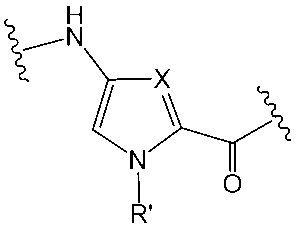
(式中、XはX1~X8のいずれかであって、かつ、CHまたはCOHを示し、R’はR1~R8のいずれかであって、Hまたはアルキル基を示す。)
で示されるピロール単位の少なくとも1つは、下記式:
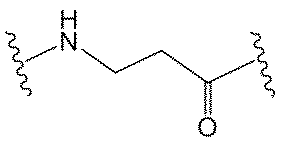
で示されるβアラニンによって置換されている。]
によって示される化合物からなる群から選ばれる、[2]記載の抗腫瘍組成物、
[4]前記複合体が式II:
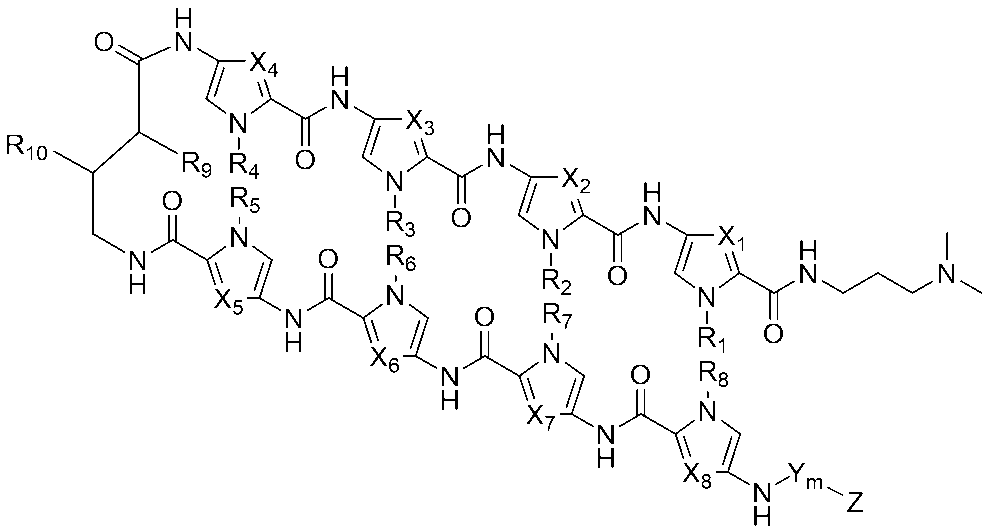
および
式III:
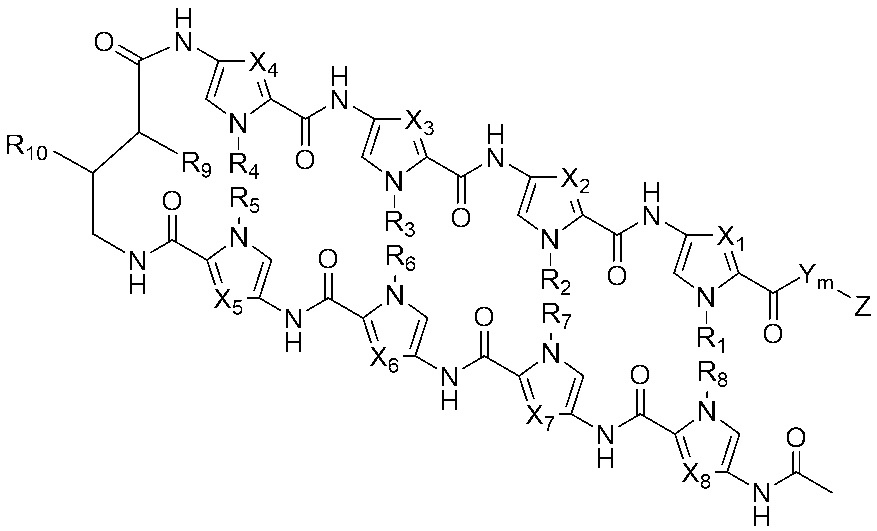
[式IIおよび式III中、
X1はCH、COHまたはNを示し、X2はCH、COHまたはNを示し、X3はCH、COHまたはNを示し、X4はCH、COHまたはNを示し、X5はCH、COHまたはNを示し、X6はCH、COHまたはNを示し、X7はCH、COHまたはNを示し、X8はCH、COHまたはNを示し、
Ymは、アミド結合、ホスホジスルフィド結合、エステル結合、配位結合、またはエーテル結合を示すか、あるいはこれらの結合の1種類以上を形成する官能基を含む部分を示し、整数mは0~5の値のいずれかであり、
R1はHまたはアルキル基を示し、R2はHまたはアルキル基を示し、R3はHまたはアルキル基を示し、R4はHまたはアルキル基を示し、R5はHまたはアルキル基を示し、R6はHまたはアルキル基を示し、R7はHまたはアルキル基を示し、R8はHまたはアルキル基を示し、
R9はHまたは-NHR11を示し、
R10はHまたは-NHR11を示し、
R11はH、ビオチン、または蛍光基を示し、
Zは作用剤を示し、
ここに、下記式:
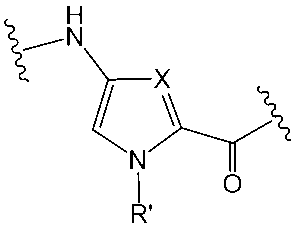
(式中、XはX1~X8のいずれかであって、かつ、CHまたはCOHを示し、R’はR1~R8のいずれかであって、Hまたはアルキル基を示す。)
で示されるピロール単位の少なくとも1つは、下記式:
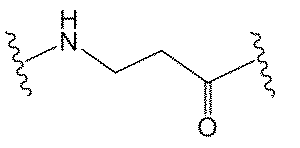
で示されるβアラニンによって置換されている。]
によって示される化合物からなる群から選ばれる、[3]記載の抗腫瘍組成物、
[5] 作用剤Zのうち少なくとも1つが、アルキル化剤である、[2]~[4]のいずれか1項記載の抗腫瘍組成物、
[6] 前記アルキル化剤が、クロラムブシル、デュオカルマイシン、seco-CBI、CBI、ピロロベンゾジアゼピン、およびナイトロジェンマスタードからなる群から選択される、[5]記載の抗腫瘍組成物、
[7] 前記アルキル化剤が、クロラムブシルである、[6]記載の抗腫瘍組成物、
[8] 前記複合体が、式:
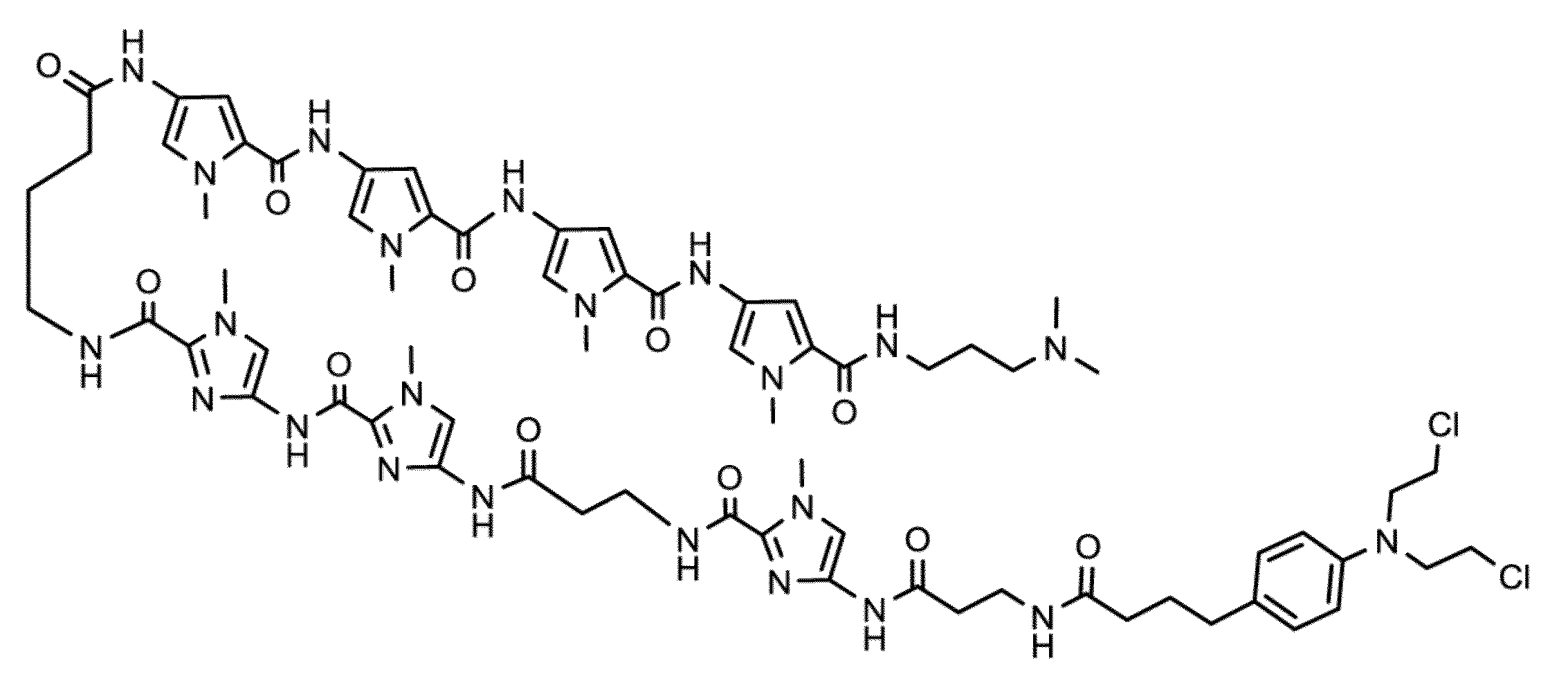
によって示される、[7]記載の抗腫瘍組成物、
[9] 前記ピロール-イミダゾールポリアミドが、DNA上のRUNX結合配列に結合してRUNXファミリーメンバーの該結合配列への結合を阻害する、[1]~[8]のいずれか1項記載の抗腫瘍組成物、
[10] RUNXファミリーの全てのメンバーのRUNX結合配列への結合を阻害する、[9]記載の抗腫瘍組成物、
[11] 他の抗腫瘍剤と組み合わせて使用される、[1]~[10]のいずれか1項記載の抗腫瘍組成物、
[12] 白血病、リンパ腫、多発性骨髄腫、肺癌、食道癌、胃癌、大腸癌、腎細胞癌、神経芽細胞腫、皮膚癌、乳癌、前立腺癌、脳腫瘍、および骨肉腫からなる群から選択される1以上を予防または治療するための、[1]~[11]のいずれか1項記載の抗腫瘍医薬組成物、
[13] RUNX結合配列に結合し得るピロール-イミダゾールポリアミドを含み、かつ、該ピロール-イミダゾールポリアミドを構成するピロール単位の少なくとも1つがβアラニンによって置換されている、RUNX阻害剤、
[14] RUNX結合配列に結合し得るピロール-イミダゾールポリアミドを含み、かつ、該ピロール-イミダゾールポリアミドを構成するピロール単位の少なくとも1つがβアラニンによって置換されている、抗アレルギー組成物、
[15][1]~[10]のいずれかに記載の抗腫瘍組成物を対象に投与することを特徴とする、癌の予防または治療方法、
[16][1]~[10]のいずれかに記載の抗腫瘍組成物と他の抗腫瘍剤と組み合わせて対象に投与することを特徴とする、癌の予防または治療方法、
[17]癌が白血病、リンパ腫、多発性骨髄腫、肺癌、食道癌、胃癌、大腸癌、腎細胞癌、神経芽細胞腫、皮膚癌、乳癌、前立腺癌、脳腫瘍、および骨肉腫からなる群から選択される、[15]または[16]記載の予防または治療方法、
[18]抗腫瘍剤を製造するための、[13]に記載のRUNX阻害剤の使用、
[19]抗アレルギー剤を製造するための、[13]に記載のRUNX阻害剤の使用、
[20]癌の予防または治療に使用するための、[13]に記載のRUNX阻害剤、
[21]癌が白血病、リンパ腫、多発性骨髄腫、肺癌、食道癌、胃癌、大腸癌、腎細胞癌、神経芽細胞腫、皮膚癌、乳癌、前立腺癌、脳腫瘍、および骨肉腫からなる群から選択される、[20]記載のRUNX阻害剤。
[1]RUNX結合配列に結合し得るピロール-イミダゾールポリアミドを含み、かつ、該ピロール-イミダゾールポリアミドを構成するピロール単位の少なくとも1つがβアラニンによって置換されている、抗腫瘍組成物、
[2]前記ピロール-イミダゾールポリアミドと作用剤との複合体を含む、[1]記載の抗腫瘍組成物、
[3]前記複合体が、式I:
X1はCH、COHまたはNを示し、X2はCH、COHまたはNを示し、X3はCH、COHまたはNを示し、X4はCH、COHまたはNを示し、X5はCH、COHまたはNを示し、X6はCH、COHまたはNを示し、X7はCH、COHまたはNを示し、X8はCH、COHまたはNを示し、
R1はHまたはアルキル基を示し、R2はHまたはアルキル基を示し、R3はHまたはアルキル基を示し、R4はHまたはアルキル基を示し、R5はHまたはアルキル基を示し、R6はHまたはアルキル基を示し、R7はHまたはアルキル基を示し、R8はHまたはアルキル基を示し、
R9は、H、-NHR11、または-Ym-Zを示し、
R10は、H、-NHR11、または-Ym-Zを示し、
R11は、H、ビオチン、または蛍光基を示し、
Aは、
Bは、アセチル基、または-Ym-Zを示し、
Ymは、アミド結合、ホスホジスルフィド結合、エステル結合、配位結合、またはエーテル結合を示すか、あるいはこれらの結合の1種類以上を形成する官能基を含む部分を示し、整数mは0~5の値のいずれかであり
Zは、作用剤を示し、
整数nは、0~5の値のいずれかであり、
ここに、R9、R10、A、およびBの少なくとも1つは、-Ym-Zであり、
式Iの複合体が、複数のYm-Zで示される構造を含むとき、それらの複数のYm-Zにおける、Ymの各々は、他のYmと互いに同一であっても、異なっていてもよく、それぞれが独立して選択され得るものであり、かつ、それらの複数のYm-Zにおける、Zの各々は、他のZと互いに同一であっても、異なっていてもよく、それぞれが独立して選択され得るものであり、
さらに、式I中、下記式:
で示されるピロール単位の少なくとも1つは、下記式:
によって示される化合物からなる群から選ばれる、[2]記載の抗腫瘍組成物、
[4]前記複合体が式II:
式III:
X1はCH、COHまたはNを示し、X2はCH、COHまたはNを示し、X3はCH、COHまたはNを示し、X4はCH、COHまたはNを示し、X5はCH、COHまたはNを示し、X6はCH、COHまたはNを示し、X7はCH、COHまたはNを示し、X8はCH、COHまたはNを示し、
Ymは、アミド結合、ホスホジスルフィド結合、エステル結合、配位結合、またはエーテル結合を示すか、あるいはこれらの結合の1種類以上を形成する官能基を含む部分を示し、整数mは0~5の値のいずれかであり、
R1はHまたはアルキル基を示し、R2はHまたはアルキル基を示し、R3はHまたはアルキル基を示し、R4はHまたはアルキル基を示し、R5はHまたはアルキル基を示し、R6はHまたはアルキル基を示し、R7はHまたはアルキル基を示し、R8はHまたはアルキル基を示し、
R9はHまたは-NHR11を示し、
R10はHまたは-NHR11を示し、
R11はH、ビオチン、または蛍光基を示し、
Zは作用剤を示し、
ここに、下記式:
で示されるピロール単位の少なくとも1つは、下記式:
によって示される化合物からなる群から選ばれる、[3]記載の抗腫瘍組成物、
[5] 作用剤Zのうち少なくとも1つが、アルキル化剤である、[2]~[4]のいずれか1項記載の抗腫瘍組成物、
[6] 前記アルキル化剤が、クロラムブシル、デュオカルマイシン、seco-CBI、CBI、ピロロベンゾジアゼピン、およびナイトロジェンマスタードからなる群から選択される、[5]記載の抗腫瘍組成物、
[7] 前記アルキル化剤が、クロラムブシルである、[6]記載の抗腫瘍組成物、
[8] 前記複合体が、式:
[9] 前記ピロール-イミダゾールポリアミドが、DNA上のRUNX結合配列に結合してRUNXファミリーメンバーの該結合配列への結合を阻害する、[1]~[8]のいずれか1項記載の抗腫瘍組成物、
[10] RUNXファミリーの全てのメンバーのRUNX結合配列への結合を阻害する、[9]記載の抗腫瘍組成物、
[11] 他の抗腫瘍剤と組み合わせて使用される、[1]~[10]のいずれか1項記載の抗腫瘍組成物、
[12] 白血病、リンパ腫、多発性骨髄腫、肺癌、食道癌、胃癌、大腸癌、腎細胞癌、神経芽細胞腫、皮膚癌、乳癌、前立腺癌、脳腫瘍、および骨肉腫からなる群から選択される1以上を予防または治療するための、[1]~[11]のいずれか1項記載の抗腫瘍医薬組成物、
[13] RUNX結合配列に結合し得るピロール-イミダゾールポリアミドを含み、かつ、該ピロール-イミダゾールポリアミドを構成するピロール単位の少なくとも1つがβアラニンによって置換されている、RUNX阻害剤、
[14] RUNX結合配列に結合し得るピロール-イミダゾールポリアミドを含み、かつ、該ピロール-イミダゾールポリアミドを構成するピロール単位の少なくとも1つがβアラニンによって置換されている、抗アレルギー組成物、
[15][1]~[10]のいずれかに記載の抗腫瘍組成物を対象に投与することを特徴とする、癌の予防または治療方法、
[16][1]~[10]のいずれかに記載の抗腫瘍組成物と他の抗腫瘍剤と組み合わせて対象に投与することを特徴とする、癌の予防または治療方法、
[17]癌が白血病、リンパ腫、多発性骨髄腫、肺癌、食道癌、胃癌、大腸癌、腎細胞癌、神経芽細胞腫、皮膚癌、乳癌、前立腺癌、脳腫瘍、および骨肉腫からなる群から選択される、[15]または[16]記載の予防または治療方法、
[18]抗腫瘍剤を製造するための、[13]に記載のRUNX阻害剤の使用、
[19]抗アレルギー剤を製造するための、[13]に記載のRUNX阻害剤の使用、
[20]癌の予防または治療に使用するための、[13]に記載のRUNX阻害剤、
[21]癌が白血病、リンパ腫、多発性骨髄腫、肺癌、食道癌、胃癌、大腸癌、腎細胞癌、神経芽細胞腫、皮膚癌、乳癌、前立腺癌、脳腫瘍、および骨肉腫からなる群から選択される、[20]記載のRUNX阻害剤。
本開示は、標的に対する優れた結合性を有するPIポリアミドを利用して、優れた効力を有する医薬組成物、特に、抗腫瘍組成物および抗アレルギー組成物、ならびにRUNX阻害剤を提供する。本開示によれば、DNA上のRUNX結合配列を認識するように設計されたPIポリアミドであって、該PIポリアミドを構成するピロール-イミダゾール対の少なくとも1つのピロール単位がβアラニンに置換されたPIポリアミドを用いることによって、優れた効力を有する抗腫瘍組成物およびRUNX阻害剤が得られる。本開示における一態様において、抗腫瘍組成物は、白血病をはじめ、様々な種類の癌に対して抗腫瘍効果を有する。また、特定の実施態様においては、抗腫瘍組成物は、他の分子標的治療薬に対して耐性を示す腫瘍に対しても効果を示す。さらに、本開示において、そのRUNX阻害剤は、抗アレルギー組成物としても使用できる。さらに、一態様において、PIポリアミドを含む複合体は、Pがβアラニンによって置換されていないPIポリアミドを含む複合体よりも標的配列に対する結合親和性が顕著に高いことが示され、さらに、強い抗腫瘍効果を発揮することが示された。
1.PIポリアミド
PIポリアミドは、一般に、N-メチルピロール単位(P)とN-メチルイミダゾール単位(I)と、γ-アミノ酪酸部分とを含むポリアミドであり、PとIとγ-アミノ酪酸部分とは互いにアミド結合(-C(=O)-NH-)で連結される(Trauger et al, Nature, 382, 559-61(1996); White et al, Chem.Biol., 4,569-78(1997);およびDervan, Bioorg. Med. Chem., 9, 2215-35(2001))。PIポリアミドは、γ-アミノ酪酸部分がリンカー(以下、「γ-リンカー」という)となって全体が折りたたまれてU字型のコンフォメーション(ヘアピン型)をとる。U字型のコンフォメーションにおいては、γ-リンカーを挟んでPとIとを含む2本の鎖が並列に並ぶ。この2本の鎖の向かい合うPおよび/またはIからなる対(以下、「ピロール-イミダゾール対」ともいう)が特定の組み合わせ(P/I対、I/P対、またはP/P対)のときに、PIポリアミドは、DNA中の特定の塩基対に高い親和性で結合する。例えば、P/I対はC・G塩基対に結合することができ、I/P対はG・C塩基対に結合することができる。また、P/P対はA・T塩基対およびT・A塩基対の両方に結合することができる。また、PIポリアミドには、PおよびIの他に、3-ヒドロキシピロール(Hp)またはβアラニンが含まれていてもよく、PをHpまたはβアラニンに置き換えることができる。Hp/P対は、T・A塩基対に結合することができる(White at al., Nature, 391, 468-71 (1998))。βアラニン/βアラニン対は、T・A塩基対もしくはA・T塩基対に結合することができる。βアラニン/I対はC・G塩基対に、I/βアラニン対はG・C塩基対に結合することができる。βアラニン/P対およびP/βアラニン対は、T・A塩基対もしくはA・T塩基対に結合することができる。また、γ-リンカー部分や、PIポリアミドのN末端に付加したβアラニン部分も、T・A塩基対もしくはA・T塩基対に結合することができる。P、I、Hp、および/またはβアラニンによって形成される対の構成、順序、および組み合わせ等を適宜変更することにより、標的のDNA配列を認識し、結合するPIポリアミドを設計することができる。
PIポリアミドは、一般に、N-メチルピロール単位(P)とN-メチルイミダゾール単位(I)と、γ-アミノ酪酸部分とを含むポリアミドであり、PとIとγ-アミノ酪酸部分とは互いにアミド結合(-C(=O)-NH-)で連結される(Trauger et al, Nature, 382, 559-61(1996); White et al, Chem.Biol., 4,569-78(1997);およびDervan, Bioorg. Med. Chem., 9, 2215-35(2001))。PIポリアミドは、γ-アミノ酪酸部分がリンカー(以下、「γ-リンカー」という)となって全体が折りたたまれてU字型のコンフォメーション(ヘアピン型)をとる。U字型のコンフォメーションにおいては、γ-リンカーを挟んでPとIとを含む2本の鎖が並列に並ぶ。この2本の鎖の向かい合うPおよび/またはIからなる対(以下、「ピロール-イミダゾール対」ともいう)が特定の組み合わせ(P/I対、I/P対、またはP/P対)のときに、PIポリアミドは、DNA中の特定の塩基対に高い親和性で結合する。例えば、P/I対はC・G塩基対に結合することができ、I/P対はG・C塩基対に結合することができる。また、P/P対はA・T塩基対およびT・A塩基対の両方に結合することができる。また、PIポリアミドには、PおよびIの他に、3-ヒドロキシピロール(Hp)またはβアラニンが含まれていてもよく、PをHpまたはβアラニンに置き換えることができる。Hp/P対は、T・A塩基対に結合することができる(White at al., Nature, 391, 468-71 (1998))。βアラニン/βアラニン対は、T・A塩基対もしくはA・T塩基対に結合することができる。βアラニン/I対はC・G塩基対に、I/βアラニン対はG・C塩基対に結合することができる。βアラニン/P対およびP/βアラニン対は、T・A塩基対もしくはA・T塩基対に結合することができる。また、γ-リンカー部分や、PIポリアミドのN末端に付加したβアラニン部分も、T・A塩基対もしくはA・T塩基対に結合することができる。P、I、Hp、および/またはβアラニンによって形成される対の構成、順序、および組み合わせ等を適宜変更することにより、標的のDNA配列を認識し、結合するPIポリアミドを設計することができる。
本開示において、PIポリアミドを構成するPおよびIの1位の窒素上のメチル基は、水素またはメチル基以外のアルキル基で置き換わっていてもよい。メチル基以外のアルキル基の例としては、炭素数2~10個の直鎖、分枝鎖または環状の飽和または不飽和アルキル基、好ましくは、炭素数2~5個の直鎖、分枝鎖直鎖、分枝鎖または環状の飽和または不飽和アルキル基が挙げられ、例えば、エチル、n-プロピル、イソプロピル、n-ブチル、sec-ブチル、イソブチル、tert-ブチル等が挙げられる。また、メチル基を含め、アルキル基は置換されていてもよく、例えば、アルキル基中のメチレンは、酸素等で置換されていてもよい。さらに、本開示において、PIポリアミドを構成するPの3位はヒドロキシ基で置換されていてもよい。本明細書で用いる場合、「P」または「ピロール単位」および「I」または「イミダゾール単位」なる語は、上記したようなN置換またはN非置換ピロール単位、3-ヒドロキシピロール単位、およびN置換またはN非置換イミダゾール単位を包含する。
本発明において、PIポリアミドを構成するγ-リンカーは、α位またはβ位に側鎖を有していてもよい。例えば、α位またはβ位がアミノ基で置換されたγ-リンカー、すなわち、N-α-N-γ-ジアミノ酪酸残基またはN-β-N-γ-ジアミノ酪酸残基からなるリンカーであってもよく、さらに該アミノ基が蛍光基やビオチン等の分子で修飾されていてもよい。
本開示において、PIポリアミドのN末端およびC末端には、種々の官能基が付加されていてもよい。PIポリアミドのN末端およびC末端に付加する官能基または分子は、当業者が適宜決定することができる。例えば、アミド結合を介して様々な官能基を付加することができる。該官能基の例としては、限定するものではないが、β-アラニン残基、γ-アミノ酪酸残基などのカルボキシル基、アセチル基、アミノ基等が挙げられる。例えば、限定するものではないが、N末端にはアセチル基が付加されていてもよい。例えば、限定するものではないが、C末端にはジメチルアミノプロピルアミノ基が付加されていてもよい。また、PIポリアミドのN末端およびC末端は、蛍光基やビオチン、イソフタル酸等の分子で修飾されていてもよい。本願明細書において、蛍光基としては、限定するものではないが、例えば、フルオレセイン、ローダミン系色素、シアニン系色素、ATTO系色素、Alexa Fluor系色素、BODIPYが挙げられる。フルオレセインには、フルオレセイン誘導体(例えば、フルオレセインイソチオシアネート等)も含まれる。
PIポリアミドの設計方法および製造方法は公知である(例えば、特許第3045706号、特開2001-136974号、WO03/000683号、特開2013-234135号、特開2014-173032号参照)。例えば、Fmoc(9-フルオレニルメトキシカルボニル)を用いた固相合成法(Fmoc固相合成法)による自動合成法によって簡便に製造することができる。また、液相合成法によって製造することもできる。
また、本開示における一態様において、PIポリアミドは、DNAに対する結合能力を維持または向上するように修飾されたPIポリアミド修飾物であってもよい。該PIポリアミド修飾物としては、例えば、PIポリアミドのγ-リンカーのα位またはβ位にアミノ基を付加した修飾物、すなわち、N-α-N-γ-ジアミノ酪酸残基またはN-β-N-γ-ジアミノ酪酸残基からなるγ-リンカーを有する修飾物、該修飾物の上記アミノ基を蛍光基やビオチン等の分子で修飾した修飾物、PIポリアミドのN末端を蛍光基やビオチン等の分子で修飾した修飾物、およびPIポリアミドのC末端をイソフタル酸等の分子で修飾した修飾物等が挙げられる。
本開示において使用されるPIポリアミドは、ゲノム上のRUNX結合部位のコンセンサス配列(「RUNXコンセンサス結合配列」または「RUNX結合配列」ともいう)を認識するように設計されたPIポリアミドであり、故に、該RUNXコンセンサス結合配列に結合し得るPIポリアミドである。該RUNXコンセンサス配列は、5’-TGTGGT-3’または5’-TGCGGT-3’であることが知られている。したがって、該RUNXコンセンサス結合配列に基づいて、PIポリアミドを構成するピロール-イミダゾール対の組み合わせを決定すればよい。なお、本明細書において用いる場合、「ピロール-イミダゾール対」なる語は、P、I、Hp、およびβアラニンのいずれの組み合わせからなる対も包含する。
本開示において使用されるPIポリアミドは、少なくとも1つのβアラニンを含むピロール-イミダゾール対を含む。すなわち、本開示において使用されるPIポリアミドは、ピロール単位の少なくとも1つがβアラニンによって置換されている。ここで、βアラニンは、下記式:
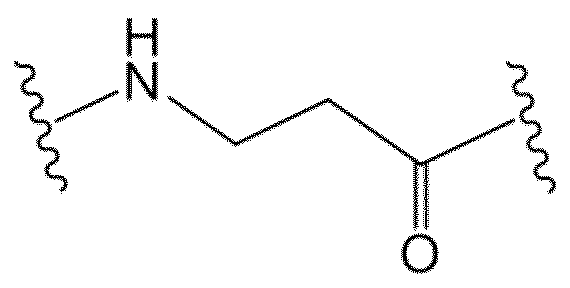
によって表される。
本開示において使用されるPIポリアミドに含まれるβアラニンの数は、1以上であればよく、特に限定されない。PIポリアミドを構成するPおよびIの総数にもよるが、例えば、1~3個、好ましくは1または2個のβアラニンが含まれる。また、本発明において使用されるPIポリアミドに含まれるβアラニンの位置(すなわち、βアラニンに置換されるピロール単位の位置)は、γリンカー、C末端またはN末端に隣接する位置、あるいはγリンカー、C末端またはN末端付近の位置であってもよいし、あるいはそれ以外の位置、例えば、γリンカーとC末端またはN末端との間の中央付近または中央であってもよい。好ましくは、γリンカーとC末端またはN末端との間の中央付近または中央の位置である。
本開示における上記PIポリアミドは、標的となるRUNX結合配列に対する親和性が高い。特に驚くべきことに、該PIポリアミドは、ピロール単位がβアラニンによって置換されていないPIポリアミドと比べて、標的となるRUNX結合配列に対する親和性が高い。したがって、本開示における上記PIポリアミドは、DNA上のRUNX結合配列への結合についてRUNXファミリーのメンバーと競合し、ゲノム上のRUNX結合配列へのRUNXファミリーの結合を阻害することができる。
2.PIポリアミドコンジュゲート
本開示において、RUNX結合配列を認識する上記PIポリアミドは、作用剤と複合体を形成していてもよい。本明細書において、「作用剤」とは、DNAおよびその周囲のクロマチン状態に影響を与える物質であり、例えば、限定するものではないが、アルキル化剤、クロマチン修飾酵素制御剤等が挙げられる。クロマチン修飾酵素制御剤の例としては、限定するものではないが、ヒストンアセチル化酵素(HAT)制御剤、例えば、HAT阻害剤(例えば、C646等)、またはHAT活性化剤(例えば、N-(4-クロロ-3-(トリフルオロメチル)フェニル)-2-エトキシベンズアミド(CTB)等)、ヒストン脱アセチル化酵素(HDAC)制御剤、例えば、HDAC阻害剤(例えば、スベロイルアニリドヒドロキサム酸等)、またはHDAC活性化剤、ヒストンメチル化酵素制御剤、ヒストン脱メチル化酵素制御剤等が挙げられる。本開示において、好ましくは、上記PIポリアミドとアルキル化剤との複合体が使用される。
本開示において、RUNX結合配列を認識する上記PIポリアミドは、作用剤と複合体を形成していてもよい。本明細書において、「作用剤」とは、DNAおよびその周囲のクロマチン状態に影響を与える物質であり、例えば、限定するものではないが、アルキル化剤、クロマチン修飾酵素制御剤等が挙げられる。クロマチン修飾酵素制御剤の例としては、限定するものではないが、ヒストンアセチル化酵素(HAT)制御剤、例えば、HAT阻害剤(例えば、C646等)、またはHAT活性化剤(例えば、N-(4-クロロ-3-(トリフルオロメチル)フェニル)-2-エトキシベンズアミド(CTB)等)、ヒストン脱アセチル化酵素(HDAC)制御剤、例えば、HDAC阻害剤(例えば、スベロイルアニリドヒドロキサム酸等)、またはHDAC活性化剤、ヒストンメチル化酵素制御剤、ヒストン脱メチル化酵素制御剤等が挙げられる。本開示において、好ましくは、上記PIポリアミドとアルキル化剤との複合体が使用される。
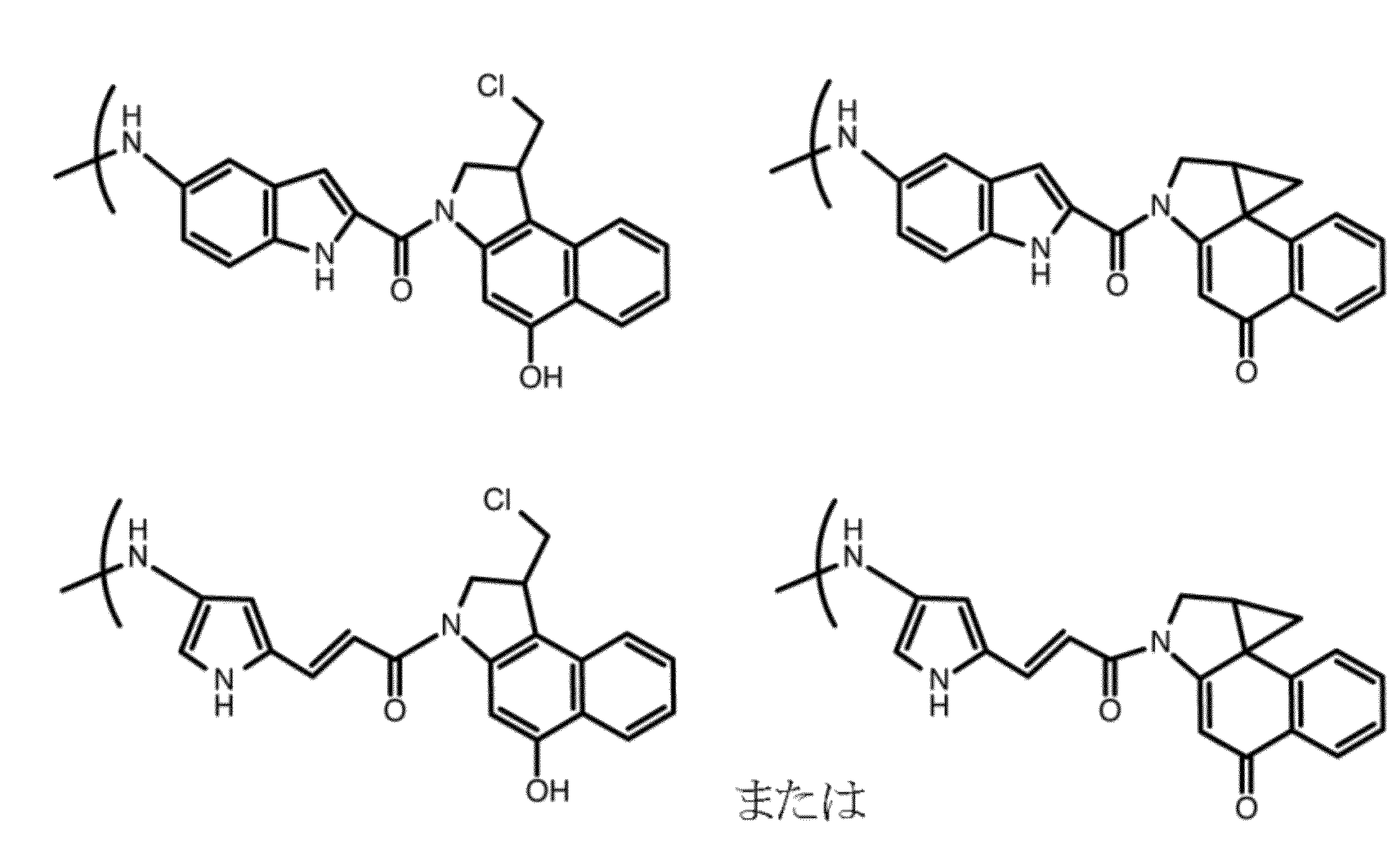
アルキル化剤とは、DNAと共有結合を作る官能基を有する化合物である。本開示において使用されるアルキル化剤としては、特に限定されないが、後述する医薬組成物における使用を考慮して、細胞毒性が低いまたは無いものが好ましい。アルキル化剤の例としては、限定するものではないが、クロラムブシル(chlorambucil)、デュオカルマイシン(duocarmycin)、seco-CBI(1-クロロメチル-5-ヒドロキシ-1,2-ジヒドロ-3H-ベンゾ[e]インドール)、CBI(1,2,9,9a-テトラヒドロシクロプロパン[c]ベンゾ[e]インドール-4-オン)、ピロロベンゾジアゼピン、ナイトロジェンマスタード等が挙げられる。seco-CBIまたはCBIをPIポリアミドにコンジュゲートする場合は、PIポリアミドとseco-CBIまたはCBIとの間にインドールを挿入してもよい。
上記アルキル化剤の例として挙げられたクロラムブシル、seco-CBI、およびCBIは、下記の化学式で表される。
上記作用剤と、上記PIポリアミドとを結合(以下、「コンジュゲート」ともいう)すること等により複合体を合成する。本明細書においては、該複合体を「コンジュゲート」ともいう。合成方法は公知の方法によって行うことができる(例えば、J. Am. Chem. SOC. 1995, 117, 2479-2490参照)。作用剤は、PIポリアミドのN末端、C末端、またはγリンカー部位のいずれか、またはそれらの組み合わせに結合される。例えば、作用剤は、PIポリアミドのN末端またはC末端に結合される。作用剤がPIポリアミドのN末端、C末端およびγリンカー部位から選ばれる2以上の位置に結合する場合、各位置に結合する作用剤は同一であってもよく、または異なっていてもよい。ここで、PIポリアミドと作用剤との「結合」様式は、直接結合してもよいし、リンカーを介して結合してもよい。リンカーとしては、作用剤の作用を妨げず、かつRUNX結合部位の認識を妨げないものであれば特に限定されないが、例えば、アミド結合、ホスホジスルフィド結合、エステル結合、配位結合、またはエーテル結合等そのもの、あるいはこれらの結合の1種類以上を形成する官能基を含む分子を例示することができる。「これらの結合の1種類以上を形成する官能基を含む分子」は、PIポリアミドおよび/または作用剤の末端部分と共に、アミド結合、ホスホジスルフィド結合、エステル結合、配位結合、およびエーテル結合等からなる群から選択される1種類以上の結合を形成する官能基を含む分子である。「これらの結合の1種類以上を形成する官能基を含む分子」はまた、アミド結合、ホスホジスルフィド結合、エステル結合、配位結合、およびエーテル結合等からなる群から選択される1種類以上の結合を1個以上含む分子であってもよい。好ましいリンカーとしては、アミド結合、またはアミド結合を形成する官能基を含む分子が挙げられる。
本開示における作用剤とPIポリアミドの複合体の例としては、式I:
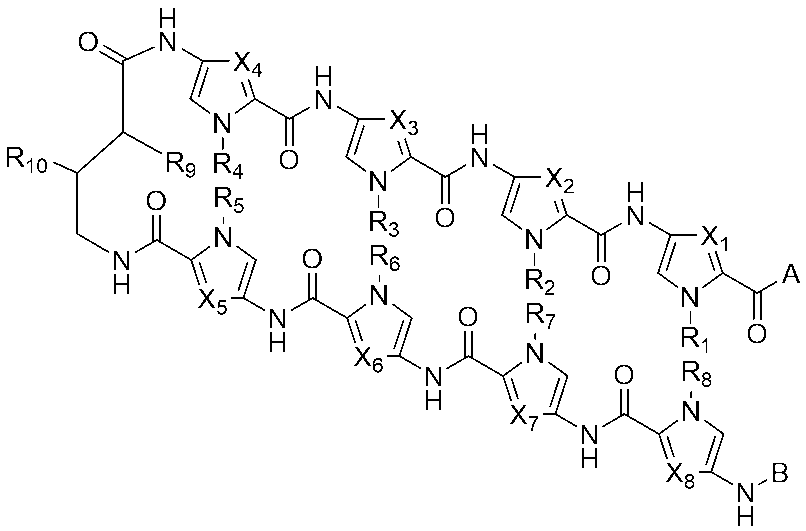
[式I中、
X1はCH、COHまたはNを示し、X2はCH、COHまたはNを示し、X3はCH、COHまたはNを示し、X4はCH、COHまたはNを示し、X5はCH、COHまたはNを示し、X6はCH、COHまたはNを示し、X7はCH、COHまたはNを示し、X8はCH、COHまたはNを示し、ここに、X1~X8は、PIポリアミドがRUNXコンセンサス配列を認識可能になる組み合わせで選択される、
R1はHまたはアルキル基を示し、R2はHまたはアルキル基を示し、R3はHまたはアルキル基を示し、R4はHまたはアルキル基を示し、R5はHまたはアルキル基を示し、R6はHまたはアルキル基を示し、R7はHまたはアルキル基を示し、R8はHまたはアルキル基を示し、
R9はH、-NHR11、または-Ym-Zを示し、
R10はH、-NHR11、または-Ym-Zを示し、
R11はH、またはビオチン、蛍光基等の分子を示し、
Aは、
から選択されるいずれかの基、または-Ym-Zを示し、
Bは、アセチル基、または-Ym-Zを示し、
整数nは、0~5の値のいずれかであり、
Zは作用剤を示し、好ましくは、アルキル化剤、さらに好ましくは、クロラムブシル、デュオカルマイシン、seco-CBI、CBI、ピロロベンゾジアゼピン、およびナイトロジェンマスタードからなる群から選択されるアルキル化剤を示し、
Ymは、リンカー部分を示し、
整数mは0~5の値のいずれかであり、好ましくは0~3、より好ましくは0または1であり、
ここに、R9、R10、A、およびBの少なくとも1つは、-Ym-Zであり、
式Iの複合体が、複数のYm-Zで示される構造を含むとき、それらの複数のYm-Zにおける、Ymの各々は、他のYmと互いに同一であっても、異なっていてもよく、それぞれが独立して選択され得るものであり、かつ、それらの複数のYm-Zにおける、Zの各々は、他のZと互いに同一であっても、異なっていてもよく、それぞれが独立して選択され得るものであり、
さらに、式I中、下記式:

(式中、XはX1~X8のいずれかであって、かつ、CHまたはCOHを示し、R’はR1~R8のいずれかであって、Hまたはアルキル基を示す。)
で示されるピロール単位の少なくとも1つは、下記式:
で示されるβアラニンによって置換されている。]
によって示される化合物、ならびにその修飾物が挙げられる。
X1はCH、COHまたはNを示し、X2はCH、COHまたはNを示し、X3はCH、COHまたはNを示し、X4はCH、COHまたはNを示し、X5はCH、COHまたはNを示し、X6はCH、COHまたはNを示し、X7はCH、COHまたはNを示し、X8はCH、COHまたはNを示し、ここに、X1~X8は、PIポリアミドがRUNXコンセンサス配列を認識可能になる組み合わせで選択される、
R1はHまたはアルキル基を示し、R2はHまたはアルキル基を示し、R3はHまたはアルキル基を示し、R4はHまたはアルキル基を示し、R5はHまたはアルキル基を示し、R6はHまたはアルキル基を示し、R7はHまたはアルキル基を示し、R8はHまたはアルキル基を示し、
R9はH、-NHR11、または-Ym-Zを示し、
R10はH、-NHR11、または-Ym-Zを示し、
R11はH、またはビオチン、蛍光基等の分子を示し、
Aは、
Bは、アセチル基、または-Ym-Zを示し、
整数nは、0~5の値のいずれかであり、
Zは作用剤を示し、好ましくは、アルキル化剤、さらに好ましくは、クロラムブシル、デュオカルマイシン、seco-CBI、CBI、ピロロベンゾジアゼピン、およびナイトロジェンマスタードからなる群から選択されるアルキル化剤を示し、
Ymは、リンカー部分を示し、
整数mは0~5の値のいずれかであり、好ましくは0~3、より好ましくは0または1であり、
ここに、R9、R10、A、およびBの少なくとも1つは、-Ym-Zであり、
式Iの複合体が、複数のYm-Zで示される構造を含むとき、それらの複数のYm-Zにおける、Ymの各々は、他のYmと互いに同一であっても、異なっていてもよく、それぞれが独立して選択され得るものであり、かつ、それらの複数のYm-Zにおける、Zの各々は、他のZと互いに同一であっても、異なっていてもよく、それぞれが独立して選択され得るものであり、
さらに、式I中、下記式:
で示されるピロール単位の少なくとも1つは、下記式:
によって示される化合物、ならびにその修飾物が挙げられる。
上記式Iで表される複合体の好ましい態様において、
Aは、
[式中、整数nは、0~5の値のいずれかである]
から選択されるいずれかの基を示すか、または-Ym-Zを示し、ここに、-Ym-Zは下記の式:

で表されるいずれかの基であり、
Bは、-Ym-Zを示し、ここに、-Ym-Zは下記の式:
[式中、整数nは、0~5の値のいずれかであり、好ましくは0~2の値のいずれかである]
で表されるいずれかの基ある。
Aは、
から選択されるいずれかの基を示すか、または-Ym-Zを示し、ここに、-Ym-Zは下記の式:
Bは、-Ym-Zを示し、ここに、-Ym-Zは下記の式:
で表されるいずれかの基ある。
本開示における作用剤とPIポリアミドの複合体のさらなる例としては、式II:
または式III:
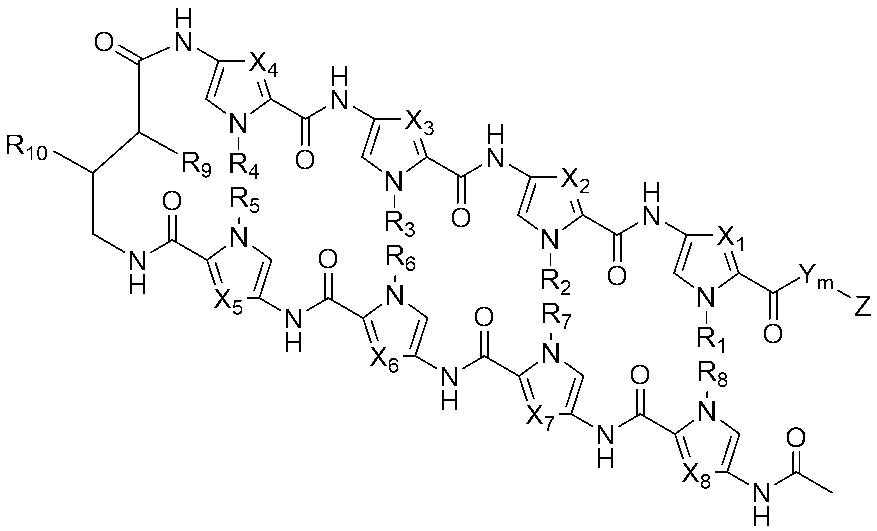
[式IIおよび式III中、
X1はCH、COHまたはNを示し、X2はCH、COHまたはNを示し、X3はCH、COHまたはNを示し、X4はCH、COHまたはNを示し、X5はCH、COHまたはNを示し、X6はCH、COHまたはNを示し、X7はCH、COHまたはNを示し、X8はCH、COHまたはNを示し、ここに、X1~X8は、PIポリアミドがRUNXコンセンサス配列を認識可能になる組み合わせで選択される、
R1はHまたはアルキル基を示し、R2はHまたはアルキル基を示し、R3はHまたはアルキル基を示し、R4はHまたはアルキル基を示し、R5はHまたはアルキル基を示し、R6はHまたはアルキル基を示し、R7はHまたはアルキル基を示し、R8はHまたはアルキル基を示し、
R9はHまたは-NHR11を示し、R10はHまたは-NHR11を示し、
R11はH、またはビオチン、蛍光基等の分子を示し、
Zは作用剤を示し、好ましくは、アルキル化剤、さらに好ましくは、クロラムブシル、デュオカルマイシン、seco-CBI、CBI、ピロロベンゾジアゼピン、およびナイトロジェンマスタードからなる群から選択されるアルキル化剤を示し、
Ymは、リンカー部分を示し、
整数mは0~5のいずれかの値であり、好ましくは0~3、より好ましくは0または1であり、
ここに、下記式:

(式中、XはX1~X8のいずれかであって、かつ、CHまたはCOHを示し、R’はR1~R8のいずれかであって、Hまたはアルキル基を示す。)
で示されるピロール単位の少なくとも1つは、下記式:

で示されるβアラニンによって置換されている。]
によって示される化合物、ならびにその修飾物が挙げられる。
X1はCH、COHまたはNを示し、X2はCH、COHまたはNを示し、X3はCH、COHまたはNを示し、X4はCH、COHまたはNを示し、X5はCH、COHまたはNを示し、X6はCH、COHまたはNを示し、X7はCH、COHまたはNを示し、X8はCH、COHまたはNを示し、ここに、X1~X8は、PIポリアミドがRUNXコンセンサス配列を認識可能になる組み合わせで選択される、
R1はHまたはアルキル基を示し、R2はHまたはアルキル基を示し、R3はHまたはアルキル基を示し、R4はHまたはアルキル基を示し、R5はHまたはアルキル基を示し、R6はHまたはアルキル基を示し、R7はHまたはアルキル基を示し、R8はHまたはアルキル基を示し、
R9はHまたは-NHR11を示し、R10はHまたは-NHR11を示し、
R11はH、またはビオチン、蛍光基等の分子を示し、
Zは作用剤を示し、好ましくは、アルキル化剤、さらに好ましくは、クロラムブシル、デュオカルマイシン、seco-CBI、CBI、ピロロベンゾジアゼピン、およびナイトロジェンマスタードからなる群から選択されるアルキル化剤を示し、
Ymは、リンカー部分を示し、
整数mは0~5のいずれかの値であり、好ましくは0~3、より好ましくは0または1であり、
ここに、下記式:
で示されるピロール単位の少なくとも1つは、下記式:
によって示される化合物、ならびにその修飾物が挙げられる。
上記式I~IIIにおいて、Ymは、例えば、アミド結合、ホスホジスルフィド結合、エステル結合、配位結合、エーテル結合等を示すか、あるいはこれらの結合の1種類以上を形成する官能基を含む部分を示す。ここで、「これらの結合の1種類以上を形成する官能基を含む部分」とは、PIポリアミドおよび/または作用剤の末端部分と共に、アミド結合、ホスホジスルフィド結合、エステル結合、配位結合、およびエーテル結合等からなる群から選択される1種類以上の結合を形成する官能基を含む部分である。また、「これらの結合の1種類以上を形成する官能基を含む部分」は、アミド結合、ホスホジスルフィド結合、エステル結合、配位結合、およびエーテル結合等からなる群から選択される1種類以上の結合を1個以上含んでいてもよい。
一実施態様において、上記式I~IIIにおいて、Ymは「これらの結合の1種類以上を形成する官能基を含む部分」であり、その一例としては、下記式IV:

[式中、
Qは、カルボニル[-C(=O)-]またはイミノ(-NH-)であり、
Q’は、エーテル結合(-O-)またはイミノ(-NH-)もしくはメチルイミノ[-N(-CH3)-]であり、
整数gおよびkは各々独立して、1~3の値のいずれかであり、
整数hおよびjは各々独立して、0~5の値のいずれかであり、
整数iは、0~2の値のいずれかである]
で示される構造が挙げられる。例えば、整数hおよびjは各々独立して、0~3の値のいずれかであることが好ましい。また、上記の式VI中、エステル結合の位置と、Q’で表されるエーテル結合またはイミノ結合の位置は入れ替わっていてもよい。上記式IVで示されるリンカー部分において、例えば、右端の位置は作用剤と連結し、左端の位置はPIポリアミドと連結するが、該連結位置は逆であってもよい。例えば、上記式VIで示されるリンカー部分の左端の位置がPIポリアミドのC末端と連結する場合、Qはイミノであることが好ましい。
式IVで示されるYの一例として、下記式V:

で示される構造が挙げられる。
式IVで示されるYの別の例として、下記式VI:
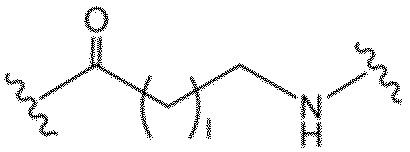
[式中、lは1~5の整数を示す]
で示される構造が挙げられる。例えば、lは1~3の整数であり、好ましくは、lは1である。
で示される構造が挙げられる。例えば、lは1~3の整数であり、好ましくは、lは1である。
式IVで示されるYの別の例として、下記式VII:

で示される構造が挙げられる。好ましくは、式VIIで表されるリンカー部分は、作用剤がPIポリアミドのC末端側に結合される場合に用いられる。
上記式IV~式VIIで示されるリンカー部分において、例えば、右端の位置は作用剤と連結し、左端の位置はPIポリアミドと連結するが、該連結位置は逆であってもよい。
上記式I~IIIにおいて、βアラニンによって置換されるピロール単位は、好ましくは、N末端またはC末端から2番目、3番目または4番目の位置にある。
上記の式II中、-Ym-Zは、好ましくは、
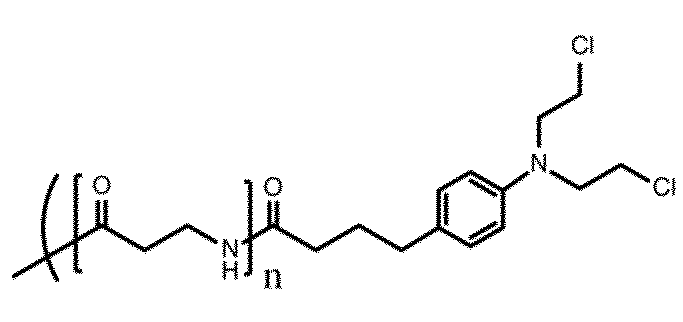
[式中、整数nは1~5のいずれかの値であり、好ましくは0~2のいずれかの値である]
で表される基である。
で表される基である。
上記の式III中、-Ym-Zは、好ましくは、
で表される基である。
本明細書において、アルキル基の例としては、炭素数1~10個の直鎖、分枝鎖または環状の飽和または不飽和アルキル基、好ましくは、炭素数1~5個の直鎖、分枝鎖直鎖、分枝鎖または環状の飽和または不飽和アルキル基が挙げられ、例えば、メチル、エチル、n-プロピル、イソプロピル、n-ブチル、sec-ブチル、イソブチル、tert-ブチル等が挙げられる。また、アルキル基は置換されていてもよく、例えば、アルキル基中のメチレンは、酸素等で置換されていてもよい。
本開示において、作用剤とPIポリアミドとの複合体の例示的な態様としては、さらに、下記式:
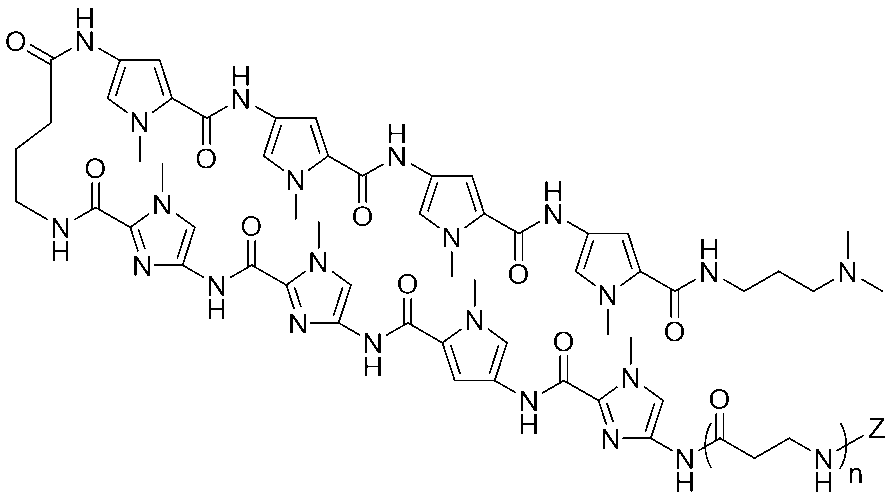
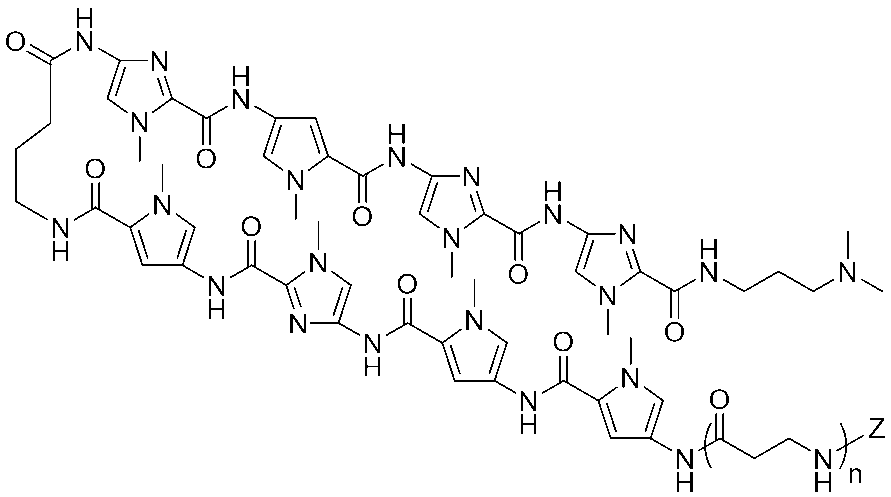
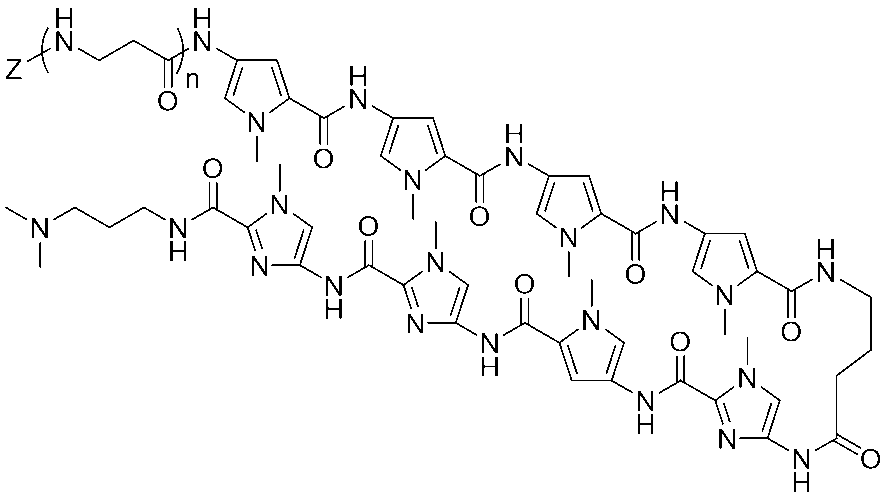
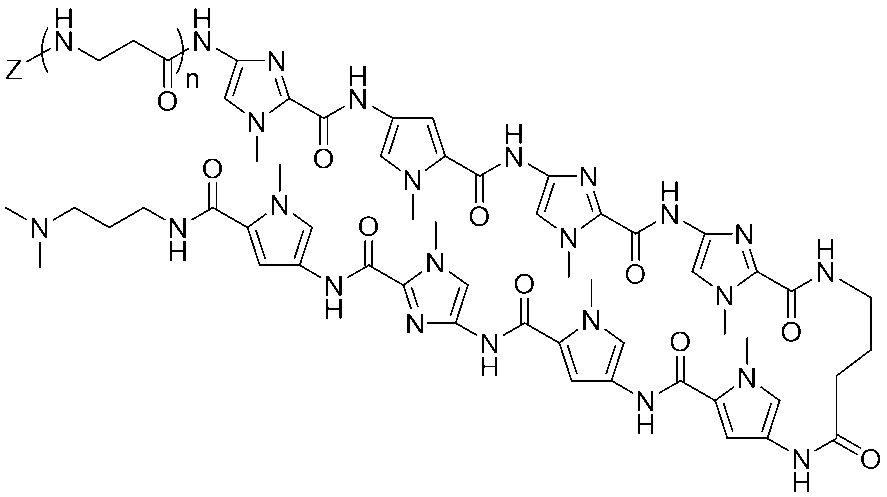 [式中、
Zは作用剤を示し、好ましくは、アルキル化剤を示し、さらに好ましくは、クロラムブシル、デュオカルマイシン、seco-CBI、CBI、ピロロベンゾジアゼピン、およびナイトロジェンマスタードからなる群から選択されるアルキル化剤を示し、
nは0、1、2、3、4、または5を示し、好ましくは1、2、または3を示し、さらに好ましくはnは1を示し、かつ、
ピロール単位の少なくとも1つは、βアラニンによって置換されており、好ましくはN末端またはC末端から2番目、3番目または4番目のピロール単位、さらに好ましくはN末端またはC末端から2番目または3番目のピロール単位がβアラニンによって置換されている]
によって示される化合物、ならびにその修飾物が挙げられる。
さらに、本発明における上記複合体の別の好ましい例としては、下式によって示されるクロラムブシルとPIポリアミドとの複合体、ならびにその修飾物が挙げられる。
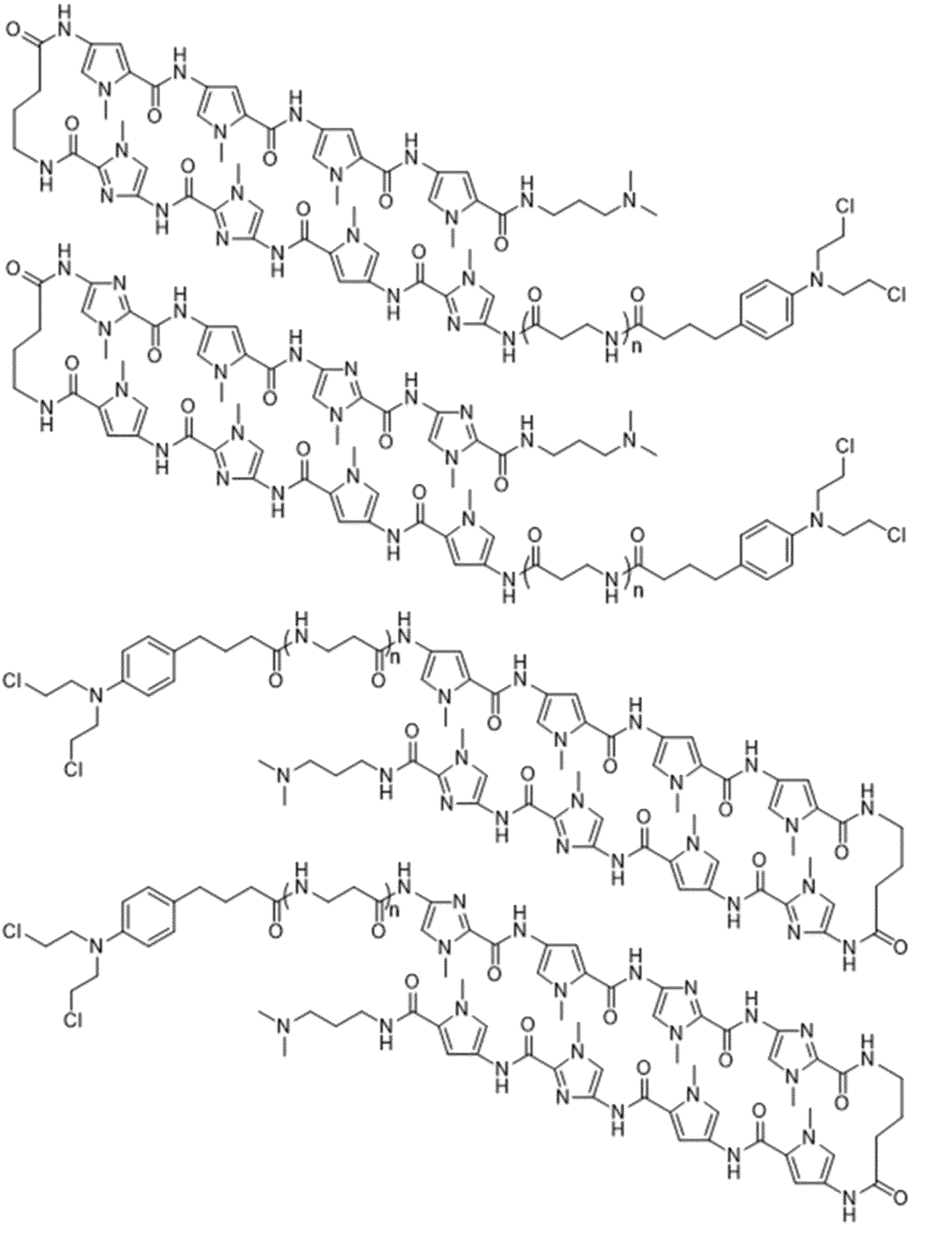
[式中、
nは、0、1、2、3、4、または5を示し、好ましくは1、2、または3を示し、さらに好ましくはnは1を示し、かつ、
ピロール単位の少なくとも1つは、βアラニンによって置換されており、好ましくはN末端またはC末端から2番目、3番目または4番目のピロール単位、さらに好ましくはN末端またはC末端から2番目または3番目のピロール単位がβアラニンによって置換されている。]
nは、0、1、2、3、4、または5を示し、好ましくは1、2、または3を示し、さらに好ましくはnは1を示し、かつ、
ピロール単位の少なくとも1つは、βアラニンによって置換されており、好ましくはN末端またはC末端から2番目、3番目または4番目のピロール単位、さらに好ましくはN末端またはC末端から2番目または3番目のピロール単位がβアラニンによって置換されている。]
さらに、本開示の一態様において、クロラムブシルとPIポリアミドとの複合体の具体例としては、下記の化合物が挙げられる。

PIポリアミドと作用剤との複合体は、薬理学的に許容し得る塩の形態であってもよい。例えば、塩酸塩、硫酸塩、リン酸塩もしくは臭化水素酸塩等の無機酸塩、または酢酸塩、フマル酸塩、マレイン酸塩、シュウ酸塩、クエン酸塩、メタンスルホン酸塩、ベンゼンスルホン酸塩もしくはトルエンスルホン酸塩等の有機酸塩が挙げられる。
上記複合体は、PIポリアミド、作用剤、および/またはPIポリアミドと作用剤とを連結するリンカー部分の少なくとも1つ以上の部分または分子が、エナンチオマーもしくはジアステレオマーの形態またはこれらの混合物で存在し得る。上記複合体は、立体異性体の混合物またはそれぞれ純粋なもしくは実質的に純粋な異性体を包含する。上記複合体がジアステレオマーまたはエナンチオマーの形態で得られる場合、これらを当該技術で周知の慣用方法、例えば、クロマトグラフィーまたは分別結晶法等で分離することができる。
また、上記複合体は、PIポリアミド、作用剤、および/またはPIポリアミドと作用剤とを連結するリンカー部分の少なくとも1つ以上の部分または分子上で、同位元素(例えば、3H、13C、14C、15N、18F、32P、35S、125I等)等で標識されていてもよく、または重水素変換体であってもよい。
3.RUNX阻害剤
本開示において、RUNX阻害剤は、上記PIポリアミドを含む組成物である。本発明のRUNX阻害剤は、好ましくは、上記PIポリアミドと作用剤との複合体を含んでいてもよい。本開示におけるRUNX阻害剤のさらに好ましい例は、上記PIポリアミドとアルキル化剤との複合体を含んでいる。
本開示において、RUNX阻害剤は、上記PIポリアミドを含む組成物である。本発明のRUNX阻害剤は、好ましくは、上記PIポリアミドと作用剤との複合体を含んでいてもよい。本開示におけるRUNX阻害剤のさらに好ましい例は、上記PIポリアミドとアルキル化剤との複合体を含んでいる。
RUNXコンセンサス結合配列は、RUNXファミリーの各メンバーで共通の結合配列である。したがって、本開示において、RUNX阻害剤は、ゲノム上のRUNXコンセンサス結合配列を認識するように設計された上記PIポリアミドを含むため、DNAへのRUNXファミリーの各メンバーの結合によって引き起こされるあらゆる活性を阻害する。好ましくは、本開示におけるRUNX阻害剤は、ゲノム上のRUNXコンセンサス結合配列に結合して、RUNXファミリーメンバーの該結合配列への結合を阻害する。
RUNXコンセンサス配列(RUNXファミリー蛋白結合配列)は、様々な遺伝子の調節領域中に存在し、RUNXファミリーメンバーは、調節領域中にあるコンセンサス配列に結合することによって、様々な標的遺伝子の発現を制御する。したがって、RUNXファミリーが関与する活性としては様々なものがあり、限定するものではないが、例えば、p53抑制因子(BCL11、TRIM24など)を転写制御して活性化させる(すなわち癌では、RUNXファミリーにより腫瘍抑制因子p53が恒常的に抑制されている)、フィラデルフィア染色体陽性急性リンパ性白血病(PhALL)の原因蛋白であるBCR-ABLを転写制御して増強させる、MLL-AF4+FLT3-ITD急性骨髄性白血病においてMLL-AF4を転写亢進させる、癌遺伝子c-Mycを転写制御して増強させる等が挙げられる。
本開示において、RUNX阻害剤は、使用目的に応じ、上記PIポリアミド、または上記PIポリアミドと作用剤との複合体そのものであってもよく、あるいは上記PIポリアミドまたは上記複合体に加えて、担体や添加物を含んでいてもよい。該担体および添加物としては、限定するものではないが、例えば、水、酢酸、有機溶剤、コラーゲン、ポリビニルアルコール、ポリビニルピロリドン、カルボキシビニルポリマー、カルボキシメチルセルロースナトリウム、ポリアクリル酸ナトリウム、アルギン酸ナトリウム、水溶性デキストラン、カルボキシメチルスターチナトリウム、ペクチン、メチルセルロース、エチルセルロース、キサンタンガム、アラビアゴム、カゼイン、寒天、ポリエチレングリコール、ジグリセリン、グリセリン、プロピレングリコール、ワセリン、パラフィン、ステアリルアルコール、ステアリン酸、ヒト血清アルブミン、マンニトール、ソルビトール、ラクトース、界面活性剤等が挙げられる。本発明のRUNX阻害剤中における上記PIポリアミドまたは複合体の含有量は、使用目的に応じて適宜調節することができる。
本開示によれば、さらに、本発明のRUNX阻害剤を用いることにより、RUNXファミリーの活性を阻害する方法を提供する。本開示において、RUNXファミリー阻害方法は、RUNX1、RUNX2、またはRUNX3だけでなく、RUNXファミリーの全てのメンバーが制御する遺伝子クラスター(標的遺伝子群)を一度に阻害することができる。
本開示において、RUNX阻害剤の使用量は、使用目的によって適宜調節することができる。
本開示によれば、また、本発明のRUNX阻害剤を含むキットも提供される。該キットは、本開示におけるRUNX阻害剤の他、医薬的に許容される担体や添加物、試薬類、補助剤、専用容器、その他の必要なアクセサリー、説明書等を含み得る。本発明のキットは、例えば、癌治療用キット、研究試薬キットとして使用することができる。
4.医薬組成物
本開示において、医薬組成物は、上記PIポリアミドを含む組成物である。本開示における医薬組成物は、好ましくは、上記PIポリアミドと作用剤との複合体を含んでいてもよい。本開示における医薬組成物のさらに好ましい例は、上記PIポリアミドとアルキル化剤との複合体を含んでいる。例えば、本開示における医薬組成物は、本明細書に開示されるRUNX阻害剤を含んでいてもよい。
本開示において、医薬組成物は、上記PIポリアミドを含む組成物である。本開示における医薬組成物は、好ましくは、上記PIポリアミドと作用剤との複合体を含んでいてもよい。本開示における医薬組成物のさらに好ましい例は、上記PIポリアミドとアルキル化剤との複合体を含んでいる。例えば、本開示における医薬組成物は、本明細書に開示されるRUNX阻害剤を含んでいてもよい。
RUNXコンセンサス配列(RUNXファミリー蛋白結合配列)は、様々な遺伝子の調節領域中に存在する。RUNXファミリーメンバーは、調節領域中にあるコンセンサス配列に結合することによって、様々な標的遺伝子の発現を制御する。このような標的遺伝子の例としては、限定するものではないが、CBF白血病において高発現する遺伝子(例えば、IL3、CSF2、CSF2RB等)、RUNXファミリー自身(RUNX1、RUNX2、RUNX3)、p53抑制因子(例えば、BCL11、TRIM24等)、c-kit遺伝子等が挙げられる。本発明の医薬組成物は、ゲノム上のRUNXコンセンサス結合配列を認識するように設計された上記PIポリアミドを含むため、各RUNXファミリーメンバーが標的とする様々な遺伝子の発現をダウンレギュレートする。好ましくは、本発明の医薬組成物は、ゲノム上のRUNXコンセンサス結合配列に結合して、RUNXファミリーメンバーの該結合配列への結合を阻害する。
本開示における医薬組成物を生体内に投与することにより、種々の疾患を治療および予防をすることができる。本開示における医薬組成物は、二本鎖DNAを生体制御に利用するあらゆる生物、特に哺乳動物(例、ヒト、ラット、ウサギ、ヒツジ、ブタ、ウシ、ネコ、イヌ、サル等)に使用することができる。
本開示おける医薬組成物の対象疾患は、RUNXファミリーメンバーが関与するあらゆる疾患である。本開示における医薬組成物の対象疾患の例としては、腫瘍、特に癌が挙げられ、例えば、限定するものではないが、白血病(例えば、急性骨髄性白血病、急性リンパ性白血病、慢性骨髄性白血病)、骨髄異形成症候群由来白血病、リンパ腫、骨髄腫、多発性骨髄腫、肺癌、食道癌、胃癌、大腸癌、腎細胞癌、神経芽細胞腫、乳癌、皮膚癌(例えば、メラノーマ)、卵巣癌、肝芽腫、骨肉腫、ユーイング肉腫、前立腺癌、膵臓癌、肝臓癌、横紋筋肉腫、子宮癌、脳腫瘍等を挙げることができる。したがって、本開示における医薬組成物として、特に、上記PIポリアミドまたは上記PIポリアミドと作用剤との複合体を含む抗腫瘍組成物が提供される。好ましくは、本開示における抗腫瘍組成物は、上記PIポリアミドとアルキル化剤との複合体を含んでいる。
本開示における医薬組成物の対象疾患の例として、さらに、マスト細胞腫瘍、および肥満細胞症(Mastocytosis)(例えば、マスト細胞増加症、重症アレルギー疾患、アトピー性皮膚炎、アナフィラキシーショック、重症気管支喘息発作、重症薬剤性皮膚炎など)等のマスト細胞疾患、各種アレルギー、および免疫疾患が挙げられる。マスト細胞は、アレルギーと関係の深いIgE抗体に対する特異的な受容体FceRIと、幹細胞因子(SCF)というサイトカインの受容体であるc-kitの両方を細胞表面に発現する細胞として定義される。マスト細胞は、機械的または化学的な刺激を受けたり、異種タンパクなどのアレルギー物質に触れたりすると、脱顆粒により顆粒内容物(ヒスタミン、ヘパリン等)を細胞外へ放出し、アレルギー反応を引き惹起することが知られている。本開示における医薬組成物は、マスト細胞の活性化によって引き起こされる全ての症状または疾患を抑制、治療、または予防することができる。したがって、本開示における医薬組成物として、特に、上記PIポリアミドまたは上記PIポリアミドと作用剤との複合体を含む抗アレルギー組成物が提供される。好ましくは、本発明の抗アレルギー組成物は、上記PIポリアミドとアルキル化剤との複合体を含んでいる。例えば、本開示における抗アレルギー組成物は、本明細書に開示されるRUNX阻害剤を含んでいる。
なお、発明者らは、以前の研究において、RUNX結合配列を標的としたPIポリアミドとアルキル化剤との複合体がマスト細胞においてc-kit(幹細胞因子受容体チロシンキナーゼ)の発現を抑制することを見出した(特許文献1)。したがって、同じRUNX結合配列を標的とする本開示における医薬組成物もまた、同様にc-kitの発現を抑制する。したがって、本開示における医薬組成物は、マスト細胞の活性化によって引き起こされる全ての症状または疾患を抑制、治療、または予防することができる。
本開示における医薬組成物は、経口投与および非経口投与のいずれの剤形でもよい。これらの剤形は常法にしたがって製剤化することができ、医薬的に許容される担体や添加物を含むものであってもよい。このような担体および添加物として、水、酢酸、医薬的に許容される有機溶剤、コラーゲン、ポリビニルアルコール、ポリビニルピロリドン、カルボキシビニルポリマー、カルボキシメチルセルロースナトリウム、ポリアクリル酸ナトリウム、アルギン酸ナトリウム、水溶性デキストラン、カルボキシメチルスターチナトリウム、ペクチン、メチルセルロース、エチルセルロース、キサンタンガム、アラビアゴム、カゼイン、寒天、ポリエチレングリコール、ジグリセリン、グリセリン、プロピレングリコール、ワセリン、パラフィン、ステアリルアルコール、ステアリン酸、ヒト血清アルブミン、マンニトール、ソルビトール、ラクトース、医薬添加物として許容される界面活性剤等が挙げられる。
上記添加物は、本開示における医薬組成物の剤型に応じて上記の中から単独でまたは適宜組み合わせから選ばれる。剤形としては、経口投与の場合は、錠剤、カプセル剤、細粒剤、粉末剤、顆粒剤、液剤、シロップ剤、噴霧剤、塗布剤、点眼剤、外用剤等として、または適当な剤型により投与が可能である。非経口投与の場合は、注射剤型等が挙げられる。注射剤型の場合は、例えば点滴等の静脈内注射、皮下注射、腹腔内注射、腫瘍内注射等により全身または局部的に投与することができる。
例えば、注射用製剤として使用する場合、本開示における医薬組成物を溶剤(例えば、生理食塩水、緩衝液、ブドウ糖溶液、0.1%酢酸等)に溶解し、これに適当な添加剤(ヒト血清アルブミン、PEG、マンノース修飾デンドリマー、シクロデキストリン結合体等)を加えたものを使用することができる。あるいは、使用前に溶解する剤形とするために凍結乾燥したものであってもよい。凍結乾燥用賦形剤としては、例えば、マンニトール、ブドウ糖等の糖アルコールや糖類を使用することができる。
本開示における医薬組成物の投与量は、年齢、性別、症状、投与経路、投与回数、剤型によって異なる。投与量は、例えば成人(60kg)の場合、1日当たり0.01~1000mg、好ましくは0.1~100mg、より好ましくは1~30mgである。投与方法は、患者の年齢、症状により適宜選択する。投与は、例えば数日間隔に1回、1日当たり、1回または2~4回に分けてもよい。
本開示における医薬組成物、特に抗腫瘍組成物は、他の抗腫瘍剤と併用することができる。他の抗腫瘍剤としては、特定の癌を治療するために使用されるいずれかの抗腫瘍剤、またはp53誘導剤が挙げられる。他の抗腫瘍剤としては、既知のいずれの抗腫瘍剤を使用してもよく、例えば、シタラビン(Cytarabine)、イマチニブ(Imatinib)、ゲフィチニブ(Gefitinib)、PRIMA-1、MIRA-1、Nutlin3等が挙げられる。本開示における医薬組成物と他の抗腫瘍剤との投与比率は、特に限定されず、所望の抗腫瘍効果が得られるように当業者が適宜決定すればよい。
以下に実施例を挙げて本発明をさらに具体的に説明するが、本発明はこれら実施例に限定されるものではない。
実施例1:PIポリアミドおよびコンジュゲートの合成
4つのピロール-イミダゾール対の連続的な結合により、5’-TGTGGT-3’のRUNXコンセンサス結合配列を特異的に認識するPIポリアミドであって、1つのピロール単位がβアラニンによって置換されたPIポリアミドを設計し、該PIポリアミドはとクロラムブシルとのコンジュゲート(Chb-M)合成した。対照として、ピロール単位がβアラニンによって置換されていないPIポリアミドとクロラムブシルとのコンジュゲート(Chb-M’)を合成した。
4つのピロール-イミダゾール対の連続的な結合により、5’-TGTGGT-3’のRUNXコンセンサス結合配列を特異的に認識するPIポリアミドであって、1つのピロール単位がβアラニンによって置換されたPIポリアミドを設計し、該PIポリアミドはとクロラムブシルとのコンジュゲート(Chb-M)合成した。対照として、ピロール単位がβアラニンによって置換されていないPIポリアミドとクロラムブシルとのコンジュゲート(Chb-M’)を合成した。
Chb-M
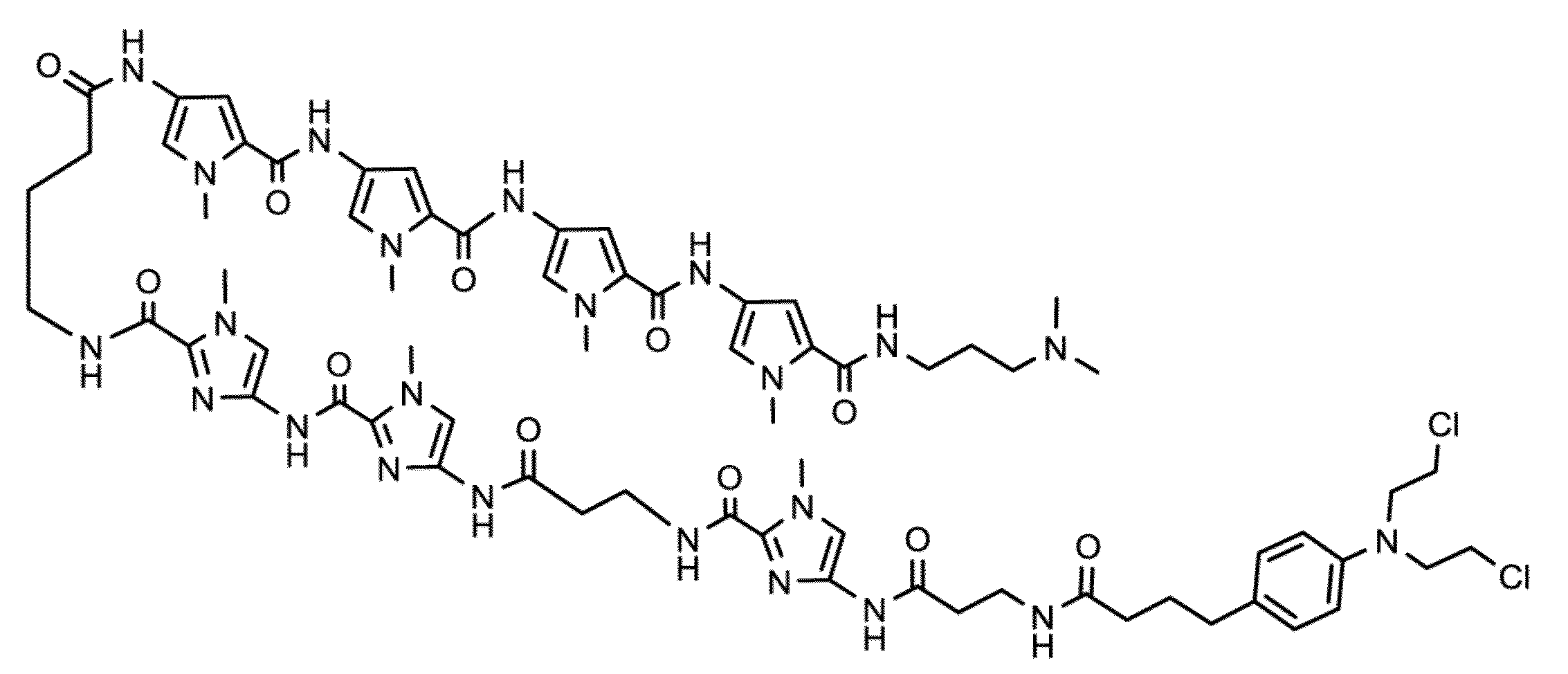
Chb-M’
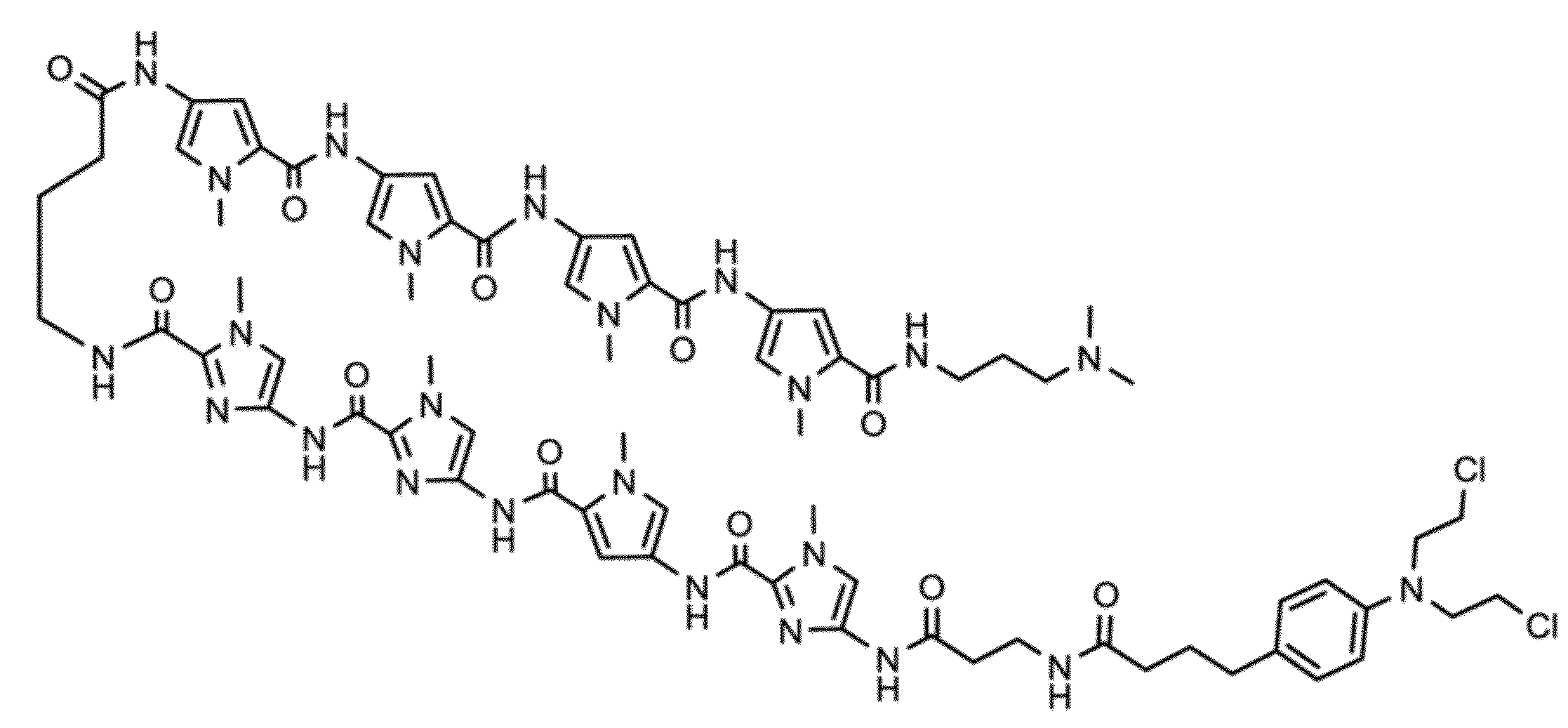
さらに、上記PIポリアミドの標的DNAに対する結合アフィニティー実験(実施例2)のために、Chb-MおよびChb-M’のクロロ基をヒドロキシ基に置換したコンジュゲート(以下、各々、「Chb-Mのヒドロキシ置換体」および「Chb-M’のヒドロキシ置換体」という)を製造した。
Chb-Mのヒドロキシ置換体
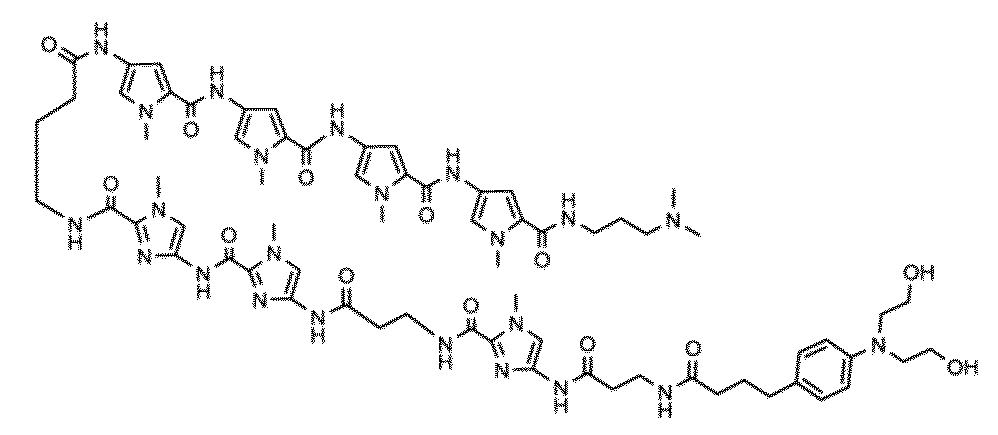
Chb-M’のヒドロキシ置換体
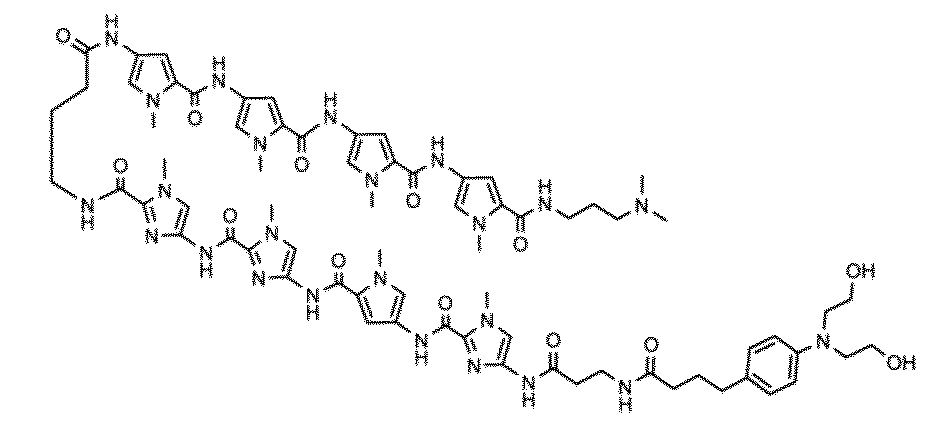
一般的記載
試薬および溶媒は、標準的な供給元から入手し、さらに精製することなく使用した。PSSM-8システム(Shimadzu)を用いて自動ポリアミド合成を行った。高速液体クロマトグラフィー(HPLC)分析は、JASCO PU-2080 Plusポンプ、JSCO UV-2075 Plus UV/vis検出器、Chemcobond5-ODS-H4.6mm×150mmカラム(Chemo Plus Scientific)で行った。移動相は、流速1.0mL/分のアセトニトリル-TFA(水中0.1%、v/v)であった。マトリックス支援レーザー脱離/イオン化マススペクトロメトリー(MALDI-TOFMS)をMicroflex-KSII(Bruker Daltonics)上で得た。TA30(0.1%TFA/MeCN=7/3)中の飽和HCCA(α-シアノ-4-ヒドロキシ桂皮酸)をペプチド較正基準と共にマトリックスに用いた。
試薬および溶媒は、標準的な供給元から入手し、さらに精製することなく使用した。PSSM-8システム(Shimadzu)を用いて自動ポリアミド合成を行った。高速液体クロマトグラフィー(HPLC)分析は、JASCO PU-2080 Plusポンプ、JSCO UV-2075 Plus UV/vis検出器、Chemcobond5-ODS-H4.6mm×150mmカラム(Chemo Plus Scientific)で行った。移動相は、流速1.0mL/分のアセトニトリル-TFA(水中0.1%、v/v)であった。マトリックス支援レーザー脱離/イオン化マススペクトロメトリー(MALDI-TOFMS)をMicroflex-KSII(Bruker Daltonics)上で得た。TA30(0.1%TFA/MeCN=7/3)中の飽和HCCA(α-シアノ-4-ヒドロキシ桂皮酸)をペプチド較正基準と共にマトリックスに用いた。
合成
以前に報告されたFmoc固相合成法によってPIポリアミドを合成した。全ての合成においてオキシム樹脂を用いた。
以前に報告されたFmoc固相合成法によってPIポリアミドを合成した。全ての合成においてオキシム樹脂を用いた。
Chb-M
粗精製物をHPLCによって精製し、保持時間は14.2分であった(流速1.0mL/分で20分間の直線勾配による33-43%アセトニトリルを含有する0.1%TFAで、254nmで検出された)。MALDI-TOFMSスペクトル: m/z C68H88Cl2N23O11 + [M + H]+ の計算値1472.641、実測値1472.632
粗精製物をHPLCによって精製し、保持時間は14.2分であった(流速1.0mL/分で20分間の直線勾配による33-43%アセトニトリルを含有する0.1%TFAで、254nmで検出された)。MALDI-TOFMSスペクトル: m/z C68H88Cl2N23O11 + [M + H]+ の計算値1472.641、実測値1472.632
Chb-M’
粗精製物をHPLCによって精製し、保持時間は13.4分であった(流速1.0mL/分で20分間の直線勾配による33-43%アセトニトリルを含有する0.1%TFAで、254nmで検出された)。MALDI-TOFMSスペクトル: m/z C71H89Cl2N24O11 + [M + H]+ の計算値1523.651、実測値 1523.608
粗精製物をHPLCによって精製し、保持時間は13.4分であった(流速1.0mL/分で20分間の直線勾配による33-43%アセトニトリルを含有する0.1%TFAで、254nmで検出された)。MALDI-TOFMSスペクトル: m/z C71H89Cl2N24O11 + [M + H]+ の計算値1523.651、実測値 1523.608
Chb-Mのヒドロキシ置換体
Chb-M(1.2mg、0.83μmol)をMeCN/0.1%TFA(2:5)の混合物中に溶解し、45℃で24時間攪拌した。該混合物をHPLCによって精製した、標的産物の最終重量は0.84mgであった(0.58μl、70%収率)。保持時間は8.93分であった(流速1.0mL/分で20分間の直線勾配による0-100%アセトニトリルを含有する0.1%TFAで、254nmで検出された)。MALDI-TOFMSスペクトル: m/z C68H90N23O13 + [M + H]+ の計算値1436.708、実測値 1436.668
Chb-M(1.2mg、0.83μmol)をMeCN/0.1%TFA(2:5)の混合物中に溶解し、45℃で24時間攪拌した。該混合物をHPLCによって精製した、標的産物の最終重量は0.84mgであった(0.58μl、70%収率)。保持時間は8.93分であった(流速1.0mL/分で20分間の直線勾配による0-100%アセトニトリルを含有する0.1%TFAで、254nmで検出された)。MALDI-TOFMSスペクトル: m/z C68H90N23O13 + [M + H]+ の計算値1436.708、実測値 1436.668
Chb-M’のヒドロキシ置換体
Chb-M’(1.8mg、1.2μmol)をMeCN/0.1%TFA(2:5)の混合物中に溶解し、40℃で2日間攪拌した。該混合物をHPLCによって精製した、標的産物の最終重量は1.1mgであった(0.75μl、65%収率)。保持時間は9.92分であった(流速1.0mL/分で20分間の直線勾配による0-100%アセトニトリルを含有する0.1%TFAで、254nmで検出された)。MALDI-TOFMSスペクトル: m/z C71H91N24O13 + [M + H]+ の計算値1487.719、実測値 1487.715
Chb-M’(1.8mg、1.2μmol)をMeCN/0.1%TFA(2:5)の混合物中に溶解し、40℃で2日間攪拌した。該混合物をHPLCによって精製した、標的産物の最終重量は1.1mgであった(0.75μl、65%収率)。保持時間は9.92分であった(流速1.0mL/分で20分間の直線勾配による0-100%アセトニトリルを含有する0.1%TFAで、254nmで検出された)。MALDI-TOFMSスペクトル: m/z C71H91N24O13 + [M + H]+ の計算値1487.719、実測値 1487.715
実施例2:Chb-Mの標的DNAに対する結合アフィニティー
Chb-MおよびChb-M’の結合アフィニティーを、Chb-MおよびChb-M’のヒドロキシ置換体を用いて比較した。標的配列(5’-TGTGGT-3’)を含むビオチン化したヘアピンDNAを、ビオチンおよびストレプトアビジンの複合体を形成させることによってセンサーチップ上に固定化した。結合特性は、SPR(表面プラズモン共鳴)によって評価した。
Chb-MおよびChb-M’の結合アフィニティーを、Chb-MおよびChb-M’のヒドロキシ置換体を用いて比較した。標的配列(5’-TGTGGT-3’)を含むビオチン化したヘアピンDNAを、ビオチンおよびストレプトアビジンの複合体を形成させることによってセンサーチップ上に固定化した。結合特性は、SPR(表面プラズモン共鳴)によって評価した。
本実施例および他の実施例において、PIポリアミドコンジュゲートの濃度は、以下のように測定した。DMF溶液中における約305nmでのPIポリアミドのモル吸光度係数εを下記式:
ε=9900×(ピロールおよびイミダゾールの数)
にしたがって計算した。PIポリアミドコンジュゲートの濃度は、ランベルト・ベールの法則によって決定した。
Abs=εcl
[式中、Abs、cおよびlは各々、吸光度、モル濃度、および経路長を示す。]
NanoDrop 1000スペクトロフォトメーター(Thermo Fisher Scientific Inc.)を吸光度の測定に用いた。
ε=9900×(ピロールおよびイミダゾールの数)
にしたがって計算した。PIポリアミドコンジュゲートの濃度は、ランベルト・ベールの法則によって決定した。
Abs=εcl
[式中、Abs、cおよびlは各々、吸光度、モル濃度、および経路長を示す。]
NanoDrop 1000スペクトロフォトメーター(Thermo Fisher Scientific Inc.)を吸光度の測定に用いた。
SPR実験は、Biacore X装置(GE Healthcare社製)上で実施した。ビオチン化したヘアピンDNA(5’-ビオチン-CGCTTGTGGTCCGTTTTCGGACCACAAGCG-3’)をSIGMA-Aldrichから購入した。ストレプトアビジン-官能化SAセンサーチップはBiacoreから購入した。ビオチン化DNAをセンサーチップ上に固定化して、所望の固定レベルを得た(約900RU上昇する)。SPRアッセイは、HBS-EPバッファー(10mM HPES(pH7.4)、150mM NaCl、3mM EDTA、および0.005%Surfactant P20)を0.1%DMSOと共に25℃で用いて実施した。種々の濃度を有するPIポリアミドコンジュゲート溶液を、0.1%DMSOを含有するバッファー中で調製し、流速20μL/分でインジェクトした。結合速度(ka)、解離速度(kd)、および解離定数(KD)を計算するために、BIAevaluation 4.1プログラムを用いて、物質移動を有する1:1結合モデル(1:1 binding model with mass transfer)を用いて、データプロセッシングを行った。得られたセンサーグラム、およびka、kdおよびKDの値を図1および表1に示す。
標的配列を含むビオチン化したヘアピンDNA
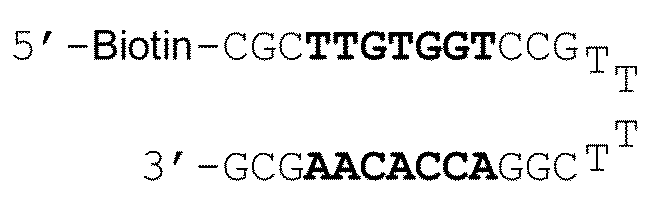

*物質移動を有する1:1結合モデルに適合させることによって決定した。
表1および図1AおよびBから明らかなように、Chb-MはChb-M’よりも標的に対する結合アフィニティーが100倍以上高かった。
実施例3:Chb-MのDNAアルキル化活性
Chb-MおよびChb-M’のDNAアルキル化活性をポリアクリルアミドゲル電気泳動(PAGE)分析によって試験した。Chb-MおよびChb-M’を用いて、DNAフラグメントをアルキル化した。アルキル化は室温で18時間行った。アルキル化部位を視覚化するために、サンプルを95℃で10分間加熱し、次いで、1Mピペリジン処理を95℃で25分間行った。アルキル化されたDNAは熱処理によって切断された。ピペリジン処理は、修飾された糖末端を3’-リン酸末端に変換する。3’-リン酸末端を有するDNAフラグメントをアルキル化バンドとしてゲル上で観察した。
Chb-MおよびChb-M’のDNAアルキル化活性をポリアクリルアミドゲル電気泳動(PAGE)分析によって試験した。Chb-MおよびChb-M’を用いて、DNAフラグメントをアルキル化した。アルキル化は室温で18時間行った。アルキル化部位を視覚化するために、サンプルを95℃で10分間加熱し、次いで、1Mピペリジン処理を95℃で25分間行った。アルキル化されたDNAは熱処理によって切断された。ピペリジン処理は、修飾された糖末端を3’-リン酸末端に変換する。3’-リン酸末端を有するDNAフラグメントをアルキル化バンドとしてゲル上で観察した。
本実施例で使用した全てのオリゴヌクレオチド(Sigma-Aldrichから購入)を表2に示す。

5’-FAM標識DNAフラグメント(30bp)の調製
DNAサンプルをTNEバッファー(10mM Tris-HCl(pH7.5)、100mM NaCl、1mM EDTA)中で調製した。2つのDNAフラグメント(30bp)を、各鎖(ODN1:5’-FAM-ATTACCACATTAACCACAATTACCACATAT-3’、およびODN2:5’-ATATGTGGTAATTGTGGTTAATGTGGTAAT-3’)10μMを含有する100μL最終容量においてアニールした。アニーリングは65℃で10分間加熱し、次いで、徐々に室温に冷却することによって行った。相補的FAM標識フラグメント(30bp)は、他のDNAフラグメント(ODN5:5’-FAM-ATATGTGGTAATTGTGGTTAATGTGGTAAT-3’、およびODN6:5’-ATTACCACATTAACCACAATTACCACATAT-3’)を用いて同じ手法によって調製した。ODN3および4ならびにODN7および8は、参照DNAとして用いた。ODN2およびODN6を除く全てのODNは、5’-末端FAM標識された。
DNAサンプルをTNEバッファー(10mM Tris-HCl(pH7.5)、100mM NaCl、1mM EDTA)中で調製した。2つのDNAフラグメント(30bp)を、各鎖(ODN1:5’-FAM-ATTACCACATTAACCACAATTACCACATAT-3’、およびODN2:5’-ATATGTGGTAATTGTGGTTAATGTGGTAAT-3’)10μMを含有する100μL最終容量においてアニールした。アニーリングは65℃で10分間加熱し、次いで、徐々に室温に冷却することによって行った。相補的FAM標識フラグメント(30bp)は、他のDNAフラグメント(ODN5:5’-FAM-ATATGTGGTAATTGTGGTTAATGTGGTAAT-3’、およびODN6:5’-ATTACCACATTAACCACAATTACCACATAT-3’)を用いて同じ手法によって調製した。ODN3および4ならびにODN7および8は、参照DNAとして用いた。ODN2およびODN6を除く全てのODNは、5’-末端FAM標識された。
ポリアクリルアミドゲル電気泳動(PAGE)
5’-FAM標識DNAフラグメント(1μM)を、10%DMFを含有する5.0mMリン酸ナトリウムバッファー(pH7.0)10μL中、23℃で18時間、PIポリアミドコンジュゲートによってアルキル化した。アルキル化されたDNAフラグメントを95℃で10分間加熱した。1.0Mピペリジン1μLを各サンプルに加え、95℃で25分間加熱した。該サンプルを真空遠心分離によって回収した。ペレットを5μLのローディングバッファー(ニューフクシンを含有するホルムアミド)中に溶解し、95℃で25分間加熱した後、0℃に急冷した。サンプルを、7.0M尿素を含有する20%ポリアクリルアミドゲル上にロードし、1×TBEバッファー中で電気泳動した(室温、200V、2時間)。FLA-3000蛍光画像アナライザー(FujiFilm, Tokyo, Japan)上でゲルを画像化した。
5’-FAM標識DNAフラグメント(1μM)を、10%DMFを含有する5.0mMリン酸ナトリウムバッファー(pH7.0)10μL中、23℃で18時間、PIポリアミドコンジュゲートによってアルキル化した。アルキル化されたDNAフラグメントを95℃で10分間加熱した。1.0Mピペリジン1μLを各サンプルに加え、95℃で25分間加熱した。該サンプルを真空遠心分離によって回収した。ペレットを5μLのローディングバッファー(ニューフクシンを含有するホルムアミド)中に溶解し、95℃で25分間加熱した後、0℃に急冷した。サンプルを、7.0M尿素を含有する20%ポリアクリルアミドゲル上にロードし、1×TBEバッファー中で電気泳動した(室温、200V、2時間)。FLA-3000蛍光画像アナライザー(FujiFilm, Tokyo, Japan)上でゲルを画像化した。
結果
図2Aに、上の鎖についてのアルキル化活性の結果を示す。2つのバンドがODN3およびODN4と同じ位置で観察されたので、Chb-M’は、標的配列中の2つのアデニンをアルキル化した。一方、Chb-Mは、1つの部位のみをアルキル化した。ミスマッチ部位に弱いアルキル化バンドも観察されたが、Chb-Mは、Chb-M’よりも標的配列においてより高い配列特異性を有した。さらに、バンドの濃さから、Chb-Mのアルキル化活性がChb-M’よりも優れていることが示された。したがって、βアラニンの導入により、PIポリアミドの配列特異性およびアルキル化活性の両方が増加した。下の鎖についてのアルキル化活性の結果は、Chb-MとChb-M’との間に配列特異性の差異が無いことを示した(図2B)。
図2Aに、上の鎖についてのアルキル化活性の結果を示す。2つのバンドがODN3およびODN4と同じ位置で観察されたので、Chb-M’は、標的配列中の2つのアデニンをアルキル化した。一方、Chb-Mは、1つの部位のみをアルキル化した。ミスマッチ部位に弱いアルキル化バンドも観察されたが、Chb-Mは、Chb-M’よりも標的配列においてより高い配列特異性を有した。さらに、バンドの濃さから、Chb-Mのアルキル化活性がChb-M’よりも優れていることが示された。したがって、βアラニンの導入により、PIポリアミドの配列特異性およびアルキル化活性の両方が増加した。下の鎖についてのアルキル化活性の結果は、Chb-MとChb-M’との間に配列特異性の差異が無いことを示した(図2B)。
実施例4:Chb-Mによる肺癌細胞系統に対する細胞毒性
肺癌細胞に対するChb-Mの細胞毒性効果を評価するために、各種肺癌細胞株に対する50%阻害濃度(IC50)を求めた。肺癌細胞株として、EGFR変異型肺癌細胞株(PC3、PC9、LU99A)、EGFR野生型細胞株(A549、ABC1、RERFLCMS)を用いた。対照として、分子標的薬であるゲフィチニブ(gefitinib)(EGFR阻害剤)、分子標的薬ではない従来の肺癌に対する頻用薬剤シスプラチン(cisplatin)、およびChb-M’を用いた。
肺癌細胞に対するChb-Mの細胞毒性効果を評価するために、各種肺癌細胞株に対する50%阻害濃度(IC50)を求めた。肺癌細胞株として、EGFR変異型肺癌細胞株(PC3、PC9、LU99A)、EGFR野生型細胞株(A549、ABC1、RERFLCMS)を用いた。対照として、分子標的薬であるゲフィチニブ(gefitinib)(EGFR阻害剤)、分子標的薬ではない従来の肺癌に対する頻用薬剤シスプラチン(cisplatin)、およびChb-M’を用いた。
成長阻害アッセイのために、細胞を1×10⁵細胞/mL密度にした。種々の濃度のゲフィチニブ(EGFR阻害剤)、シスプラチン、Chb-M’、またはChb-Mを培地に加え、72時間インキュベートした。細胞生存能力を、Cell Count Reagent SF(nacalai tesque, Inc.)およびInfiniteR 200 PROマルチモードリーダー(TECAN)を用いて、製造者の指示書にしたがって、生存細胞をカウントすることによって評価した。増殖を50%阻害する用量は、半有効法(median-effect method)(Chou, T. C. & Talalay, P. Quantitative analysis of dose-effect relationships: the combined effects of multiple drugs or enzyme inhibitors. Adv Enzyme Regul 22, 27-55 (1984))によって分析した。結果を表3に示す。
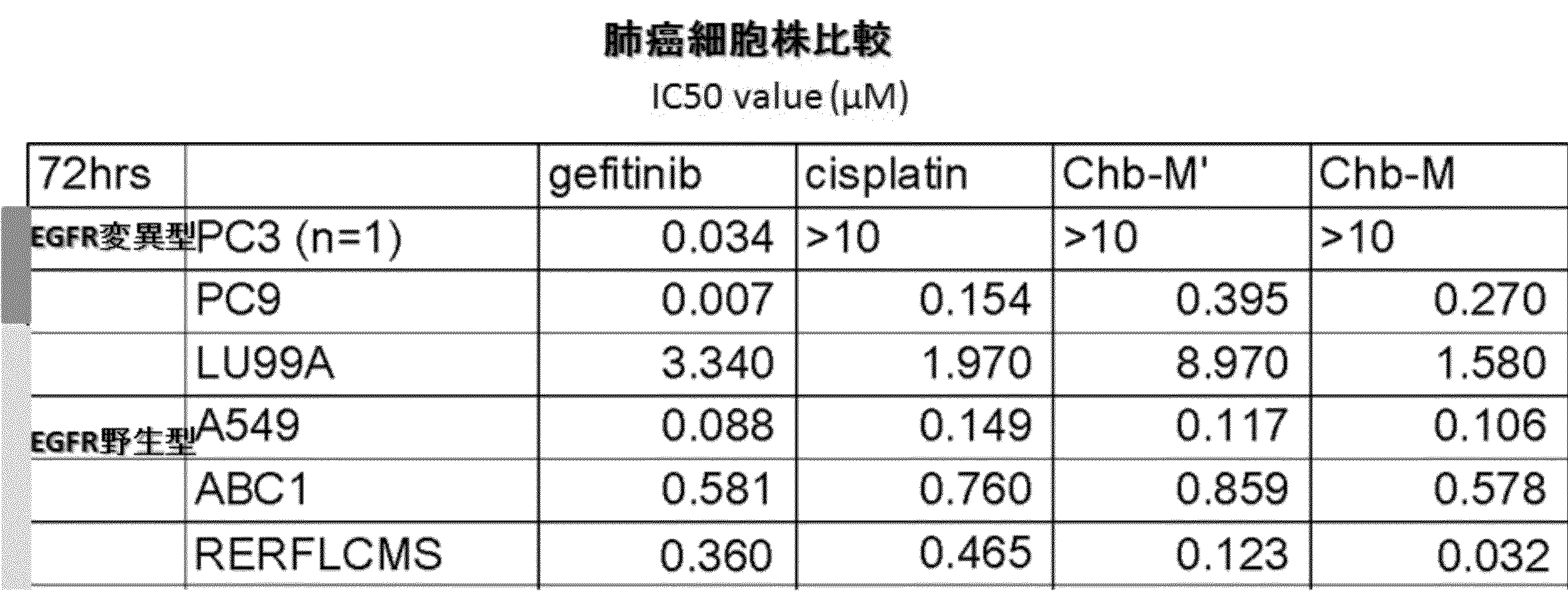
実施例5:Chb-Mによる脳腫瘍細胞系統に対する細胞毒性
脳腫瘍細胞に対するChb-Mの細胞毒性効果を評価するために、各種脳腫瘍細胞株に対する50%阻害濃度(IC50)を求めた。
脳腫瘍細胞に対するChb-Mの細胞毒性効果を評価するために、各種脳腫瘍細胞株に対する50%阻害濃度(IC50)を求めた。
(1)髄芽腫細胞株Daoyに対する抗腫瘍効果
脳腫瘍細胞株として、髄芽腫細胞株Daoy(ATCCR HTB-186TM)細胞(ATCCより入手)を用いた。対照として、Chb-M’、Chb-S、およびクロラムブシルを用いた。なお、Chb-Sは、5’-WGGCCW-3’配列(ここで、WはAもしくはTのいずれかである)を標的とするPIポリアミドとクロラムブシルとのコンジュゲートであり、実施例1と同様の手法により合成した。Chb-Sの化学式を下記に示す。
脳腫瘍細胞株として、髄芽腫細胞株Daoy(ATCCR HTB-186TM)細胞(ATCCより入手)を用いた。対照として、Chb-M’、Chb-S、およびクロラムブシルを用いた。なお、Chb-Sは、5’-WGGCCW-3’配列(ここで、WはAもしくはTのいずれかである)を標的とするPIポリアミドとクロラムブシルとのコンジュゲートであり、実施例1と同様の手法により合成した。Chb-Sの化学式を下記に示す。
Chb-S
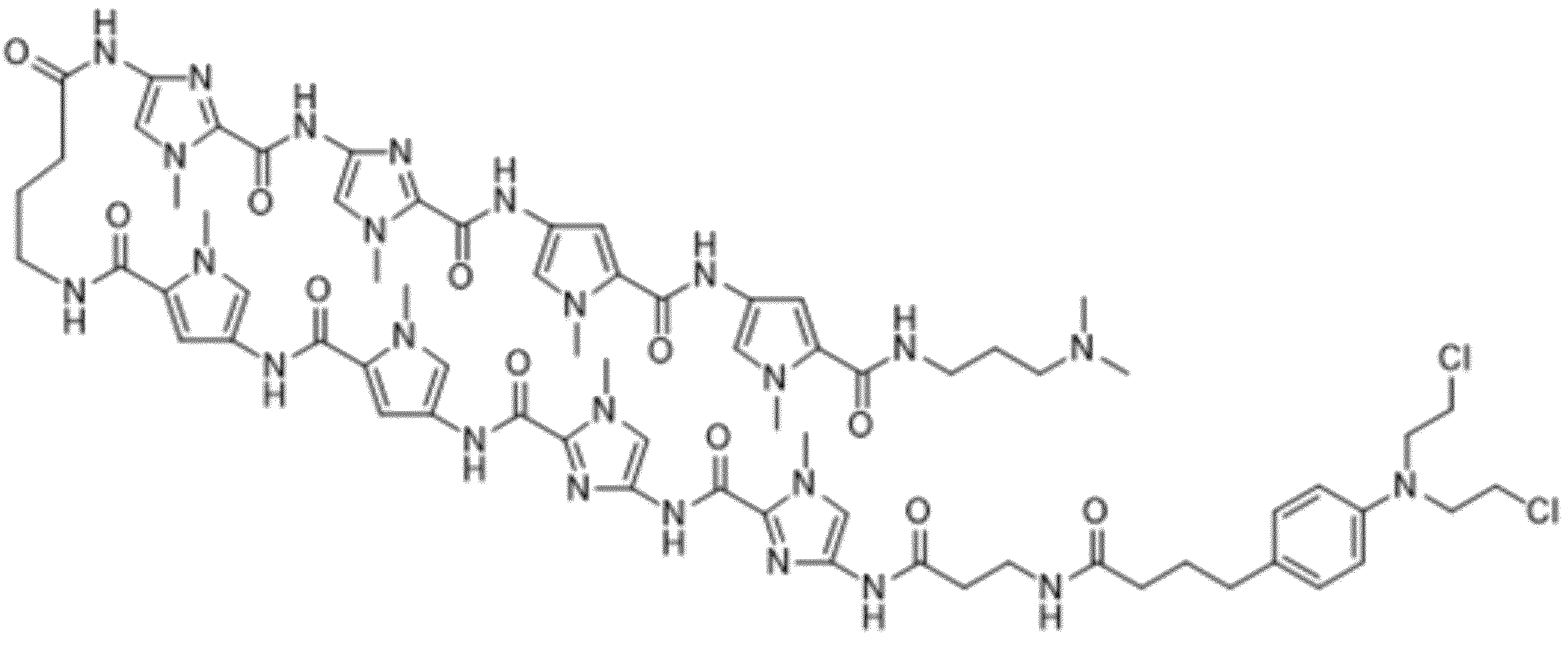
成長阻害アッセイのために、髄芽腫細胞株Daoyを1×10⁵細胞/mL密度にした。種々の濃度のPIポリアミド(Chb-M、Chb-M’、Chb-S)とChb(クロラムブシル)を培地に加え、72時間インキュベートした。細胞生存能力を、Cell Count Reagent SF(nacalai tesque, Inc.)およびInfiniteR 200 PROマルチモードリーダー(TECAN)を用いて、製造者の指示書にしたがって、生存細胞をカウントすることによって評価した。増殖を50%阻害する用量は、半有効法によって分析した。
結果を図3に示す。図3から明らかなように、Chb-MのIC50(0.754μM)は、対照と比べてはるかに低濃度であった。
(2)悪性グリオーマに対する抗腫瘍効果
最も予後が不良である組織型の脳腫瘍として知られる悪性グリオーマに対するChb-Mの効果を評価するために、72時間および96時間のIC50を求めた。悪性グリオーマ細胞株2種類(A172細胞、KALS-1細胞)を1×10⁵細胞/mL密度にした。種々の濃度のChb-M、Chb-M’、またはChb(クロラムブシル)を培地に加え、72時間インキュベートした。細胞生存能力を、Cell Count Reagent SF(nacalai tesque, Inc.)およびInfiniteR 200 PROマルチモードリーダー(TECAN)を用いて、製造者の指示書にしたがって、生存細胞をカウントすることによって評価した。増殖を50%阻害する用量は、半有効法(median-effect method)によって分析した。
最も予後が不良である組織型の脳腫瘍として知られる悪性グリオーマに対するChb-Mの効果を評価するために、72時間および96時間のIC50を求めた。悪性グリオーマ細胞株2種類(A172細胞、KALS-1細胞)を1×10⁵細胞/mL密度にした。種々の濃度のChb-M、Chb-M’、またはChb(クロラムブシル)を培地に加え、72時間インキュベートした。細胞生存能力を、Cell Count Reagent SF(nacalai tesque, Inc.)およびInfiniteR 200 PROマルチモードリーダー(TECAN)を用いて、製造者の指示書にしたがって、生存細胞をカウントすることによって評価した。増殖を50%阻害する用量は、半有効法(median-effect method)によって分析した。
結果を図4AおよびBに示す。図4Aから明らかなように、A172細胞に対するChb-MのIC50(72時間0.531μMおよび96時間0.421μM)は、対照Chb-M’(72時間23.066μMおよび96時間6.677μM)と比べてはるかに低濃度であった。また、図4Bから明らかなように、KALS-1細胞に対するChb-MのIC50(72時間0.214μMおよび96時間0.738μM)は、対照Chb-M’(96時間44.82μM)と比べてはるかに低濃度であった。
(3)小児脳腫瘍(悪性ラブドイド腫瘍)に対する抗腫瘍効果
小児脳腫瘍(悪性ラブドイド腫瘍)に対するChb-Mの効果を評価するために、72時間のIC50を評価した。悪性ラブドイド腫瘍細胞株2種類(MP-MRT-AN細胞、KP-MRT-NS細胞)は、京都府立医科大学大学院医学研究科 桑原康通医師よりMTAを締結し入手した。各々の細胞株を1×10⁵細胞/mL密度にした。種々の濃度のChb-M、Chb-M’、Chb-S、またはChbを培地に加え、72時間インキュベートした。細胞生存能力を、Cell Count Reagent SF(nacalai tesque, Inc.)およびInfiniteR 200 PROマルチモードリーダー(TECAN)を用いて、製造者の指示書にしたがって、生存細胞をカウントすることによって評価した。増殖を50%阻害する用量は、半有効法(median-effect method)によって分析した。
小児脳腫瘍(悪性ラブドイド腫瘍)に対するChb-Mの効果を評価するために、72時間のIC50を評価した。悪性ラブドイド腫瘍細胞株2種類(MP-MRT-AN細胞、KP-MRT-NS細胞)は、京都府立医科大学大学院医学研究科 桑原康通医師よりMTAを締結し入手した。各々の細胞株を1×10⁵細胞/mL密度にした。種々の濃度のChb-M、Chb-M’、Chb-S、またはChbを培地に加え、72時間インキュベートした。細胞生存能力を、Cell Count Reagent SF(nacalai tesque, Inc.)およびInfiniteR 200 PROマルチモードリーダー(TECAN)を用いて、製造者の指示書にしたがって、生存細胞をカウントすることによって評価した。増殖を50%阻害する用量は、半有効法(median-effect method)によって分析した。
結果を図5に示す。図5から明らかなように、MP-MRT-AN細胞に対するChb-MのIC50(1.14μM)は、Chb-M’(1.22μM)と同程度であったが、Chb-SおよびChbと比べてはるかに低濃度であった。また、KP-MRT-NS細胞に対するChb-MのIC50(1.07μM)は、Chb-M’(2.13μM)と比べて低濃度であった。
実施例6:Chb-Mによる前立腺癌細胞系統に対する細胞毒性
CRPC-Adeno:外科切除不応性前立腺癌(腺癌)に対するChb-Mの抗腫瘍効果を評価するために、72時間のIC50を求めた。外科切除不応性前立腺癌(腺癌)細胞株:DU145細胞(DU 145(ATCCR HTB-81TM):ATCCより購入)を1×10⁵細胞/mL密度にした。種々の濃度のChb-M、Chb-M’、Chb-S、またはChbを培地に加え、72時間インキュベートした。細胞生存能力を、Cell Count Reagent SF(nacalai tesque, Inc.)およびInfiniteR 200 PROマルチモードリーダー(TECAN)を用いて、製造者の指示書にしたがって、生存細胞をカウントすることによって評価した。増殖を50%阻害する用量は、半有効法(median-effect method)によって分析した。
CRPC-Adeno:外科切除不応性前立腺癌(腺癌)に対するChb-Mの抗腫瘍効果を評価するために、72時間のIC50を求めた。外科切除不応性前立腺癌(腺癌)細胞株:DU145細胞(DU 145(ATCCR HTB-81TM):ATCCより購入)を1×10⁵細胞/mL密度にした。種々の濃度のChb-M、Chb-M’、Chb-S、またはChbを培地に加え、72時間インキュベートした。細胞生存能力を、Cell Count Reagent SF(nacalai tesque, Inc.)およびInfiniteR 200 PROマルチモードリーダー(TECAN)を用いて、製造者の指示書にしたがって、生存細胞をカウントすることによって評価した。増殖を50%阻害する用量は、半有効法(median-effect method)によって分析した。
結果を図6に示す。図6から明らかなように、DU145細胞に対するChb-MのIC50(0.29μM)は、Chb-M’(0.28μM)と同程度であったが、Chb-SおよびChbと比べてはるかに低濃度であった。
実施例7:Chb-Mによる白血病細胞系統に対する細胞毒性
(1)急性骨髄性白血病に対する抗腫瘍効果
MLL白血病細胞株に対するChb-Mの効果を評価するために、48時間のIC50を求めた。MLL白血病細胞株MOLM13[JCRB(Japanese Collection of Research Bioresources、Japan)より入手した。さらに、TP53野生型細胞株MV4-11、および53TP53 R248W変異を有するMV4-11NR細胞のAML細胞系統を、T.Ikezoe博士(Department of Hematology and Respiratory Medicine, Kochi University, Kochi, Japan)から譲り受けた。これらの細胞を1×10⁵細胞/mL密度にした。種々の濃度のChb-MまたはChb-M’を培地に加え、48時間インキュベートした。細胞生存能力を、Cell Count Reagent SF(nacalai tesque, Inc.)およびInfiniteR 200 PROマルチモードリーダー(TECAN)を用いて、製造者の指示書にしたがって、生存細胞をカウントすることによって評価した。増殖を50%阻害する用量は、半有効法(median-effect method)によって分析した。
結果を図7に示す。図7から明らかなように、MOLM13細胞に対するChb-MのIC50(0.076μM)は、Chb-M’(0.121μM)と比べてはるかに低濃度であった。また、Chb-Mは、p53変異型白血病細胞にも効果があることが分かった(IC50=0.76μM)。
(2)急性前骨髄球性白血病に対する抗腫瘍効果
急性前骨髄球性白血病(APL)細胞に対するChb-Mの効果を評価するために、48時間と72時間のIC50を求めた。NB4細胞株細胞系統は、慶應大学医学部血液腫瘍内科より入手した。NB4細胞を1×10⁵細胞/mL密度にした。種々の濃度のChb-MまたはChb-M’を培地に加え、48時間および72時間インキュベートした。細胞生存能力を、Cell Count Reagent SF(nacalai tesque, Inc.)およびInfiniteR 200 PROマルチモードリーダー(TECAN)を用いて、製造者の指示書にしたがって、生存細胞をカウントすることによって評価した。増殖を50%阻害する用量は、半有効法(median-effect method)によって分析した。
急性前骨髄球性白血病(APL)細胞に対するChb-Mの効果を評価するために、48時間と72時間のIC50を求めた。NB4細胞株細胞系統は、慶應大学医学部血液腫瘍内科より入手した。NB4細胞を1×10⁵細胞/mL密度にした。種々の濃度のChb-MまたはChb-M’を培地に加え、48時間および72時間インキュベートした。細胞生存能力を、Cell Count Reagent SF(nacalai tesque, Inc.)およびInfiniteR 200 PROマルチモードリーダー(TECAN)を用いて、製造者の指示書にしたがって、生存細胞をカウントすることによって評価した。増殖を50%阻害する用量は、半有効法(median-effect method)によって分析した。
結果を図8に示す。図8から明らかなように、48時間および72時間のいずれも、Chb-MのIC50(48時間0.98μM、72時間0.15μM)はChb-M’と比べて低濃度であった。
実施例8:Chb-Mによる骨肉腫系統に対する細胞毒性
骨肉腫に対するChb-Mの効果を評価するために、72時間のIC50を求めた。骨肉腫細胞MG63細胞株細胞系統は、京都大学小児科より入手した。MG63細胞を1×10⁵細胞/mL密度にした。種々の濃度のChb-MまたはChb-M’を培地に加え、72時間インキュベートした。細胞生存能力を、Cell Count Reagent SF(nacalai tesque, Inc.)およびInfiniteR 200 PROマルチモードリーダー(TECAN)を用いて、製造者の指示書にしたがって、生存細胞をカウントすることによって評価した。増殖を50%阻害する用量は、半有効法(median-effect method)によって分析した。
骨肉腫に対するChb-Mの効果を評価するために、72時間のIC50を求めた。骨肉腫細胞MG63細胞株細胞系統は、京都大学小児科より入手した。MG63細胞を1×10⁵細胞/mL密度にした。種々の濃度のChb-MまたはChb-M’を培地に加え、72時間インキュベートした。細胞生存能力を、Cell Count Reagent SF(nacalai tesque, Inc.)およびInfiniteR 200 PROマルチモードリーダー(TECAN)を用いて、製造者の指示書にしたがって、生存細胞をカウントすることによって評価した。増殖を50%阻害する用量は、半有効法(median-effect method)によって分析した。
結果を図9に示す。図9から明らかなように、Chb-MのIC50(0.449μM)はChb-M’と比べてはるかに低濃度であった。
本発明の抗腫瘍組成物は、RUNXファミリーのクラスター制御によって白血病をはじめ、様々な種類の癌を標的とすることができる。本発明の抗腫瘍組成物は、他の分子標的治療薬に対して耐性を示す腫瘍に対しても効果を示す。特に、本発明の抗腫瘍組成物は、現在臨床で使用されている分子標的治療薬では効果がない癌に対しても効果を示すため、難治療性と言われる癌にも効果がある万能抗癌剤としての利用が期待される。さらに、本発明のRUNX阻害剤は、抗アレルギー組成物として使用することができる。
SEQ ID NO:1: Sequence of ODN1
SEQ ID NO:2: Sequence of ODN2
SEQ ID NO:3: Sequence of ODN3
SEQ ID NO:4: Sequence of ODN4
SEQ ID NO:5: Sequence of ODN5
SEQ ID NO:6: Sequence of ODN6
SEQ ID NO:7: Sequence of ODN7
SEQ ID NO:8: Sequence of ODN8
SEQ ID NO:2: Sequence of ODN2
SEQ ID NO:3: Sequence of ODN3
SEQ ID NO:4: Sequence of ODN4
SEQ ID NO:5: Sequence of ODN5
SEQ ID NO:6: Sequence of ODN6
SEQ ID NO:7: Sequence of ODN7
SEQ ID NO:8: Sequence of ODN8
Claims (14)
- RUNX結合配列に結合し得るピロール-イミダゾールポリアミドを含み、かつ、該ピロール-イミダゾールポリアミドを構成するピロール単位の少なくとも1つがβアラニンによって置換されている、抗腫瘍組成物。
- 前記ピロール-イミダゾールポリアミドと作用剤との複合体を含む、請求項1記載の抗腫瘍組成物。
- 前記複合体が、式I:

X1はCH、COHまたはNを示し、X2はCH、COHまたはNを示し、X3はCH、COHまたはNを示し、X4はCH、COHまたはNを示し、X5はCH、COHまたはNを示し、X6はCH、COHまたはNを示し、X7はCH、COHまたはNを示し、X8はCH、COHまたはNを示し、
R1はHまたはアルキル基を示し、R2はHまたはアルキル基を示し、R3はHまたはアルキル基を示し、R4はHまたはアルキル基を示し、R5はHまたはアルキル基を示し、R6はHまたはアルキル基を示し、R7はHまたはアルキル基を示し、R8はHまたはアルキル基を示し、
R9は、H、-NHR11、または-Ym-Zを示し、
R10は、H、-NHR11、または-Ym-Zを示し、
R11は、H、ビオチン、または蛍光基を示し、
Aは、
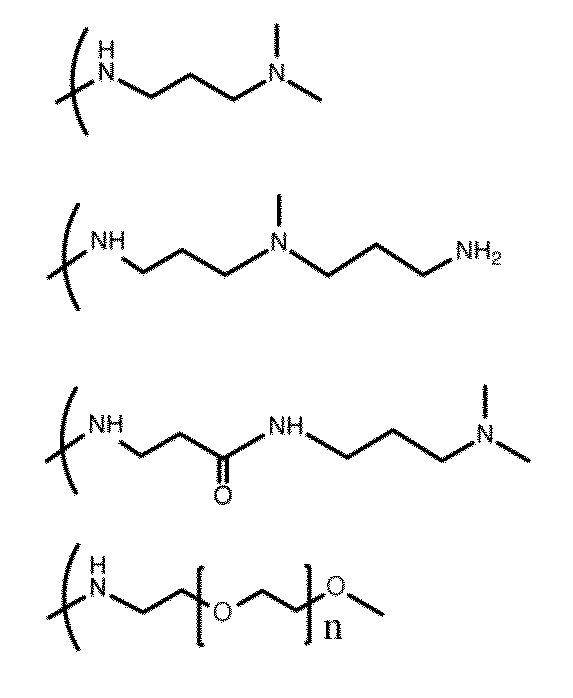
Bは、アセチル基、または-Ym-Zを示し、
Ymは、アミド結合、ホスホジスルフィド結合、エステル結合、配位結合、またはエーテル結合を示すか、あるいはこれらの結合の1種類以上を形成する官能基を含む部分を示し、整数mは0~5の値のいずれかであり
Zは、作用剤を示し、
整数nは、0~5の値のいずれかであり、
ここに、R9、R10、A、およびBの少なくとも1つは、-Ym-Zであり、
式Iの複合体が、複数のYm-Zで示される構造を含むとき、それらの複数のYm-Zにおける、Ymの各々は、他のYmと互いに同一であっても、異なっていてもよく、それぞれが独立して選択され得るものであり、かつ、それらの複数のYm-Zにおける、Zの各々は、他のZと互いに同一であっても、異なっていてもよく、それぞれが独立して選択され得るものであり、
さらに、式I中、下記式:
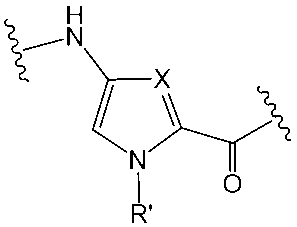
で示されるピロール単位の少なくとも1つは、下記式:
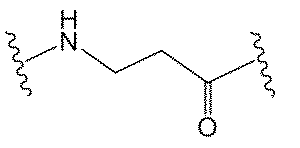
によって示される化合物からなる群から選ばれる、請求項2記載の抗腫瘍組成物。 - 前記複合体が式II:
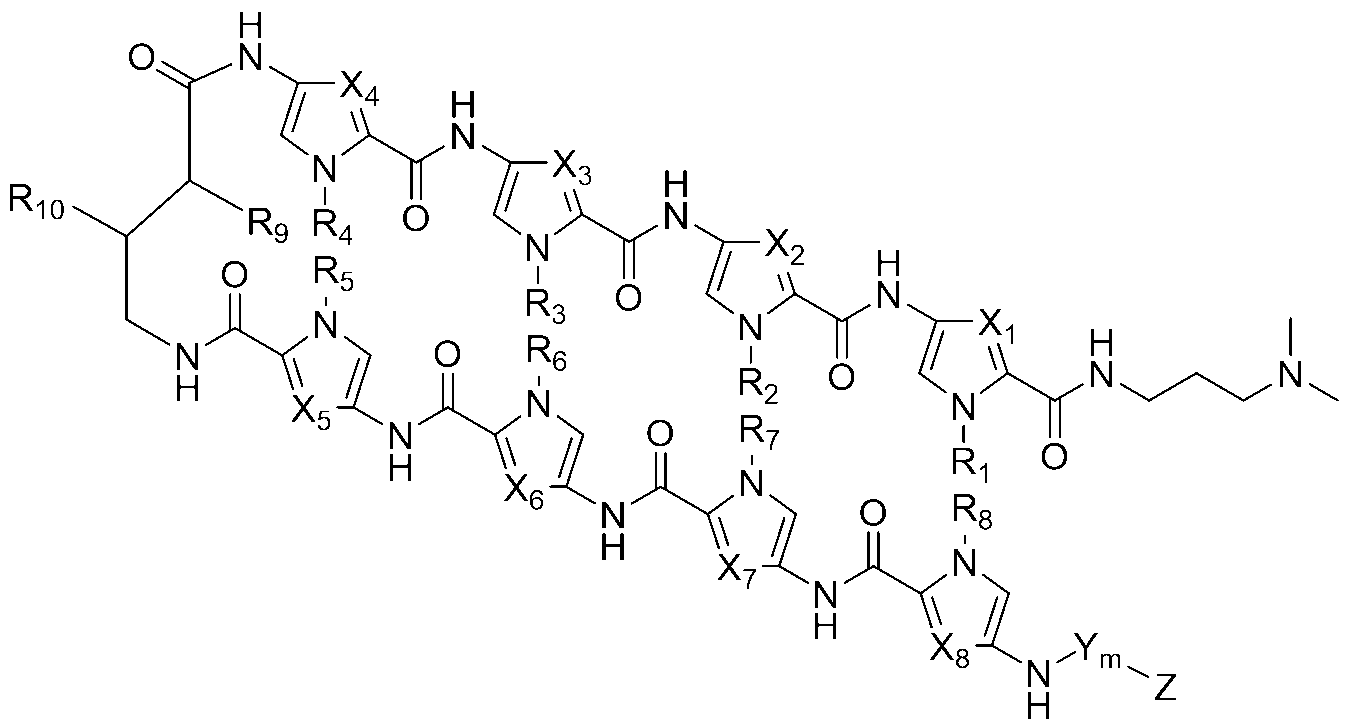
式III:

X1はCH、COHまたはNを示し、X2はCH、COHまたはNを示し、X3はCH、COHまたはNを示し、X4はCH、COHまたはNを示し、X5はCH、COHまたはNを示し、X6はCH、COHまたはNを示し、X7はCH、COHまたはNを示し、X8はCH、COHまたはNを示し、
Ymは、アミド結合、ホスホジスルフィド結合、エステル結合、配位結合、またはエーテル結合を示すか、あるいはこれらの結合の1種類以上を形成する官能基を含む部分を示し、整数mは0~5の値のいずれかであり、
R1はHまたはアルキル基を示し、R2はHまたはアルキル基を示し、R3はHまたはアルキル基を示し、R4はHまたはアルキル基を示し、R5はHまたはアルキル基を示し、R6はHまたはアルキル基を示し、R7はHまたはアルキル基を示し、R8はHまたはアルキル基を示し、
R9はHまたは-NHR11を示し、
R10はHまたは-NHR11を示し、
R11はH、ビオチン、または蛍光基を示し、
Zは作用剤を示し、
ここに、下記式:
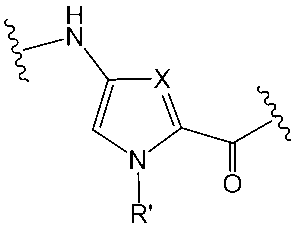
で示されるピロール単位の少なくとも1つは、下記式:
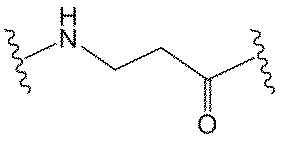
によって示される化合物からなる群から選ばれる、請求項3記載の抗腫瘍組成物。 - 作用剤Zのうち少なくとも1つが、アルキル化剤である、請求項2~4のいずれか1項記載の抗腫瘍組成物。
- 前記アルキル化剤が、クロラムブシル、デュオカルマイシン、seco-CBI、CBI、ピロロベンゾジアゼピン、およびナイトロジェンマスタードからなる群から選択される、請求項5記載の抗腫瘍組成物。
- 前記アルキル化剤が、クロラムブシルである、請求項6記載の抗腫瘍組成物。
- 前記複合体が、式:
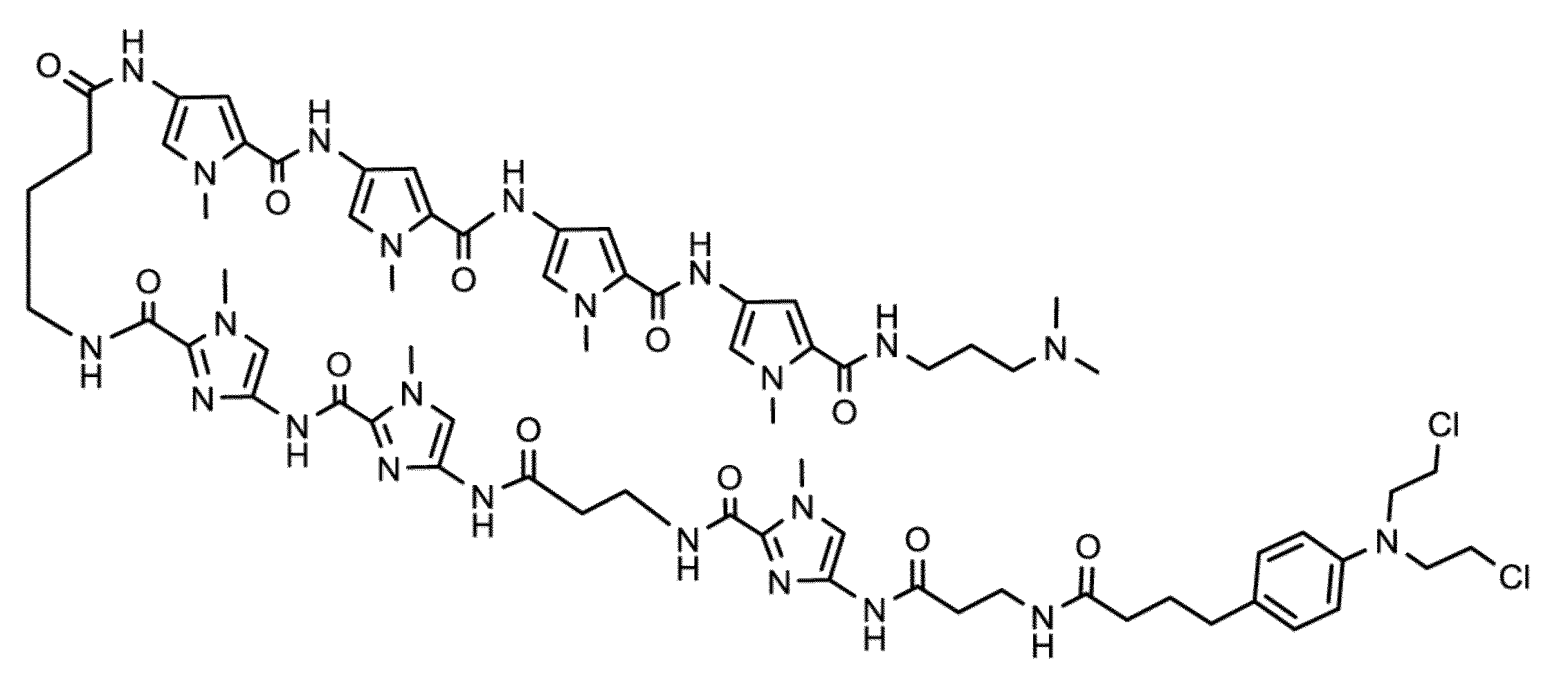
- 前記ピロール-イミダゾールポリアミドが、DNA上のRUNX結合配列に結合してRUNXファミリーメンバーの該結合配列への結合を阻害する、請求項1~8のいずれか1項記載の抗腫瘍組成物。
- RUNXファミリーの全てのメンバーのRUNX結合配列への結合を阻害する、請求項9記載の抗腫瘍組成物。
- 他の抗腫瘍剤と組み合わせて使用される、請求項1~10のいずれか1項記載の抗腫瘍組成物。
- 白血病、リンパ腫、多発性骨髄腫、肺癌、食道癌、胃癌、大腸癌、腎細胞癌、神経芽細胞腫、皮膚癌、乳癌、前立腺癌、脳腫瘍、および骨肉腫からなる群から選択される1以上を予防または治療するための、請求項1~11のいずれか1項記載の抗腫瘍医薬組成物。
- RUNX結合配列に結合し得るピロール-イミダゾールポリアミドを含み、かつ、該ピロール-イミダゾールポリアミドを構成するピロール単位の少なくとも1つがβアラニンによって置換されている、RUNX阻害剤。
- RUNX結合配列に結合し得るピロール-イミダゾールポリアミドを含み、かつ、該ピロール-イミダゾールポリアミドを構成するピロール単位の少なくとも1つがβアラニンによって置換されている、抗アレルギー組成物。
Applications Claiming Priority (2)
| Application Number | Priority Date | Filing Date | Title |
|---|---|---|---|
| JP2018101788A JP2021165233A (ja) | 2018-05-28 | 2018-05-28 | Runx結合配列を標的とする医薬組成物およびrunx阻害剤 |
| JP2018-101788 | 2018-05-28 |
Publications (1)
| Publication Number | Publication Date |
|---|---|
| WO2019230669A1 true WO2019230669A1 (ja) | 2019-12-05 |
Family
ID=68696978
Family Applications (1)
| Application Number | Title | Priority Date | Filing Date |
|---|---|---|---|
| PCT/JP2019/020961 Ceased WO2019230669A1 (ja) | 2018-05-28 | 2019-05-27 | Runx結合配列を標的とする医薬組成物およびrunx阻害剤 |
Country Status (2)
| Country | Link |
|---|---|
| JP (1) | JP2021165233A (ja) |
| WO (1) | WO2019230669A1 (ja) |
Cited By (1)
| Publication number | Priority date | Publication date | Assignee | Title |
|---|---|---|---|---|
| JPWO2023200009A1 (ja) * | 2022-04-15 | 2023-10-19 |
Citations (3)
| Publication number | Priority date | Publication date | Assignee | Title |
|---|---|---|---|---|
| JP2002515057A (ja) * | 1996-08-01 | 2002-05-21 | カリフォルニア・インスティチュート・オブ・テクノロジー | ポリアミドdna結合リガンドによる遺伝子発現の阻害 |
| JP2004501620A (ja) * | 2000-06-26 | 2004-01-22 | ユニヴェルシテ・ドゥ・ジュネーブ | クロマチンリモデリング物質による染色体機能の調整 |
| WO2018021200A1 (ja) * | 2016-07-29 | 2018-02-01 | 国立大学法人京都大学 | Runx阻害剤 |
-
2018
- 2018-05-28 JP JP2018101788A patent/JP2021165233A/ja active Pending
-
2019
- 2019-05-27 WO PCT/JP2019/020961 patent/WO2019230669A1/ja not_active Ceased
Patent Citations (3)
| Publication number | Priority date | Publication date | Assignee | Title |
|---|---|---|---|---|
| JP2002515057A (ja) * | 1996-08-01 | 2002-05-21 | カリフォルニア・インスティチュート・オブ・テクノロジー | ポリアミドdna結合リガンドによる遺伝子発現の阻害 |
| JP2004501620A (ja) * | 2000-06-26 | 2004-01-22 | ユニヴェルシテ・ドゥ・ジュネーブ | クロマチンリモデリング物質による染色体機能の調整 |
| WO2018021200A1 (ja) * | 2016-07-29 | 2018-02-01 | 国立大学法人京都大学 | Runx阻害剤 |
Non-Patent Citations (1)
| Title |
|---|
| HAN, Y. W. ET AL.: "Effect of single pyrrole replacement with beta-alanine on DNA binding affinity and sequence specificity of hairpin pyrrole/imidazole polyamides targeting 5'-GCGC-3", BIOORG MED CHEM, vol. 21, 2013, pages 5436 - 41, XP028690122, ISSN: 0968-0896, DOI: 10.1016/j.bmc.2013.06.005 * |
Cited By (3)
| Publication number | Priority date | Publication date | Assignee | Title |
|---|---|---|---|---|
| JPWO2023200009A1 (ja) * | 2022-04-15 | 2023-10-19 | ||
| WO2023200009A1 (ja) * | 2022-04-15 | 2023-10-19 | 国立大学法人 東京大学 | 原虫転写因子阻害剤 |
| JP7756380B2 (ja) | 2022-04-15 | 2025-10-20 | 国立大学法人 東京大学 | 原虫転写因子阻害剤 |
Also Published As
| Publication number | Publication date |
|---|---|
| JP2021165233A (ja) | 2021-10-14 |
Similar Documents
| Publication | Publication Date | Title |
|---|---|---|
| CA2653941C (en) | Substituted amino purine derivatives and uses thereof | |
| US11834482B2 (en) | Agents modulating beta-catenin functions and methods thereof | |
| ES2638871T3 (es) | Polipéptidos clorotoxina y conjugados y usos de los mismos | |
| WO2022078260A1 (zh) | 一种喜树碱类衍生物及其配体-药物偶联物 | |
| WO2022078259A1 (zh) | 一种氘代的喜树碱衍生物及其抗体药物偶联物 | |
| CN105899515A (zh) | uncialamycin的衍生物、合成方法及其作为抗肿瘤剂的用途 | |
| JP6705953B2 (ja) | ドライバーオンコジーンの遺伝子変異を標的にアルキル化する新規アルキル化剤 | |
| WO2019154120A1 (zh) | 细胞毒性剂及其偶联物、其制备方法及用途 | |
| WO2018021200A1 (ja) | Runx阻害剤 | |
| CN117925625A (zh) | 一种脂质修饰核酸适体偶联药物及其制备方法 | |
| JP2026510850A (ja) | リンカー及びそれを使用したカップリング薬物、抗体薬物複合体並びにその応用 | |
| Li et al. | Design, synthesis and biological evaluation of WEE1 degraders via HSP90-mediated targeting chimeras for target therapy of acute myeloid leukemia | |
| JP2021165233A (ja) | Runx結合配列を標的とする医薬組成物およびrunx阻害剤 | |
| CN103298784B (zh) | 一种酪氨酸激酶抑制剂的盐形式 | |
| JP2025017191A (ja) | Foxo阻害剤、及び医薬組成物 | |
| ES3044861T3 (en) | Agent targeting double-membrane organelle dna | |
| WO2025261376A1 (zh) | 肝外递送配体及其缀合物 | |
| WO2021261592A1 (ja) | リピート結合剤 | |
| CN121313861A (zh) | 基于多肽改性的核酸适体偶联药物 | |
| HK40113978A (en) | Complex and use | |
| CN116925084A (zh) | 对肿瘤过表达的细胞周期调节蛋白wee1有双重抑制作用的化合物 | |
| JP2023008599A (ja) | Runx結合配列を標的とする抗脳腫瘍剤 | |
| JP2015124162A (ja) | フェノール性水酸基を有するhsp90阻害剤のアクティブターゲティング型高分子誘導体及びその用途 | |
| CN121910894A (zh) | 一类用于由crbn介导的蛋白降解剂的药物递送系统 | |
| US20190262457A1 (en) | Novel alkylating agent |
Legal Events
| Date | Code | Title | Description |
|---|---|---|---|
| 121 | Ep: the epo has been informed by wipo that ep was designated in this application |
Ref document number: 19810831 Country of ref document: EP Kind code of ref document: A1 |
|
| NENP | Non-entry into the national phase |
Ref country code: DE |
|
| 122 | Ep: pct application non-entry in european phase |
Ref document number: 19810831 Country of ref document: EP Kind code of ref document: A1 |
|
| NENP | Non-entry into the national phase |
Ref country code: JP |