WO2019228510A1 - Composition and application of arginine-depleting agents for cancer, obesity, metabolic disorders, and related complications and comorbidities - Google Patents
Composition and application of arginine-depleting agents for cancer, obesity, metabolic disorders, and related complications and comorbidities Download PDFInfo
- Publication number
- WO2019228510A1 WO2019228510A1 PCT/CN2019/089583 CN2019089583W WO2019228510A1 WO 2019228510 A1 WO2019228510 A1 WO 2019228510A1 CN 2019089583 W CN2019089583 W CN 2019089583W WO 2019228510 A1 WO2019228510 A1 WO 2019228510A1
- Authority
- WO
- WIPO (PCT)
- Prior art keywords
- seq
- rharg
- polypeptide
- arginine
- abd
- Prior art date
- Legal status (The legal status is an assumption and is not a legal conclusion. Google has not performed a legal analysis and makes no representation as to the accuracy of the status listed.)
- Ceased
Links
Images




Classifications
-
- A—HUMAN NECESSITIES
- A61—MEDICAL OR VETERINARY SCIENCE; HYGIENE
- A61K—PREPARATIONS FOR MEDICAL, DENTAL OR TOILETRY PURPOSES
- A61K38/00—Medicinal preparations containing peptides
- A61K38/16—Peptides having more than 20 amino acids; Gastrins; Somatostatins; Melanotropins; Derivatives thereof
- A61K38/43—Enzymes; Proenzymes; Derivatives thereof
- A61K38/46—Hydrolases (3)
- A61K38/50—Hydrolases (3) acting on carbon-nitrogen bonds, other than peptide bonds (3.5), e.g. asparaginase
-
- A—HUMAN NECESSITIES
- A61—MEDICAL OR VETERINARY SCIENCE; HYGIENE
- A61K—PREPARATIONS FOR MEDICAL, DENTAL OR TOILETRY PURPOSES
- A61K38/00—Medicinal preparations containing peptides
-
- A—HUMAN NECESSITIES
- A61—MEDICAL OR VETERINARY SCIENCE; HYGIENE
- A61K—PREPARATIONS FOR MEDICAL, DENTAL OR TOILETRY PURPOSES
- A61K47/00—Medicinal preparations characterised by the non-active ingredients used, e.g. carriers or inert additives; Targeting or modifying agents chemically bound to the active ingredient
- A61K47/50—Medicinal preparations characterised by the non-active ingredients used, e.g. carriers or inert additives; Targeting or modifying agents chemically bound to the active ingredient the non-active ingredient being chemically bound to the active ingredient, e.g. polymer-drug conjugates
- A61K47/51—Medicinal preparations characterised by the non-active ingredients used, e.g. carriers or inert additives; Targeting or modifying agents chemically bound to the active ingredient the non-active ingredient being chemically bound to the active ingredient, e.g. polymer-drug conjugates the non-active ingredient being a modifying agent
- A61K47/56—Medicinal preparations characterised by the non-active ingredients used, e.g. carriers or inert additives; Targeting or modifying agents chemically bound to the active ingredient the non-active ingredient being chemically bound to the active ingredient, e.g. polymer-drug conjugates the non-active ingredient being a modifying agent the modifying agent being an organic macromolecular compound, e.g. an oligomeric, polymeric or dendrimeric molecule
- A61K47/59—Medicinal preparations characterised by the non-active ingredients used, e.g. carriers or inert additives; Targeting or modifying agents chemically bound to the active ingredient the non-active ingredient being chemically bound to the active ingredient, e.g. polymer-drug conjugates the non-active ingredient being a modifying agent the modifying agent being an organic macromolecular compound, e.g. an oligomeric, polymeric or dendrimeric molecule obtained otherwise than by reactions only involving carbon-to-carbon unsaturated bonds, e.g. polyureas or polyurethanes
- A61K47/60—Medicinal preparations characterised by the non-active ingredients used, e.g. carriers or inert additives; Targeting or modifying agents chemically bound to the active ingredient the non-active ingredient being chemically bound to the active ingredient, e.g. polymer-drug conjugates the non-active ingredient being a modifying agent the modifying agent being an organic macromolecular compound, e.g. an oligomeric, polymeric or dendrimeric molecule obtained otherwise than by reactions only involving carbon-to-carbon unsaturated bonds, e.g. polyureas or polyurethanes the organic macromolecular compound being a polyoxyalkylene oligomer, polymer or dendrimer, e.g. PEG, PPG, PEO or polyglycerol
-
- A—HUMAN NECESSITIES
- A61—MEDICAL OR VETERINARY SCIENCE; HYGIENE
- A61K—PREPARATIONS FOR MEDICAL, DENTAL OR TOILETRY PURPOSES
- A61K47/00—Medicinal preparations characterised by the non-active ingredients used, e.g. carriers or inert additives; Targeting or modifying agents chemically bound to the active ingredient
- A61K47/50—Medicinal preparations characterised by the non-active ingredients used, e.g. carriers or inert additives; Targeting or modifying agents chemically bound to the active ingredient the non-active ingredient being chemically bound to the active ingredient, e.g. polymer-drug conjugates
- A61K47/51—Medicinal preparations characterised by the non-active ingredients used, e.g. carriers or inert additives; Targeting or modifying agents chemically bound to the active ingredient the non-active ingredient being chemically bound to the active ingredient, e.g. polymer-drug conjugates the non-active ingredient being a modifying agent
- A61K47/62—Medicinal preparations characterised by the non-active ingredients used, e.g. carriers or inert additives; Targeting or modifying agents chemically bound to the active ingredient the non-active ingredient being chemically bound to the active ingredient, e.g. polymer-drug conjugates the non-active ingredient being a modifying agent the modifying agent being a protein, peptide or polyamino acid
- A61K47/65—Peptidic linkers, binders or spacers, e.g. peptidic enzyme-labile linkers
-
- A—HUMAN NECESSITIES
- A61—MEDICAL OR VETERINARY SCIENCE; HYGIENE
- A61P—SPECIFIC THERAPEUTIC ACTIVITY OF CHEMICAL COMPOUNDS OR MEDICINAL PREPARATIONS
- A61P1/00—Drugs for disorders of the alimentary tract or the digestive system
- A61P1/16—Drugs for disorders of the alimentary tract or the digestive system for liver or gallbladder disorders, e.g. hepatoprotective agents, cholagogues, litholytics
-
- A—HUMAN NECESSITIES
- A61—MEDICAL OR VETERINARY SCIENCE; HYGIENE
- A61P—SPECIFIC THERAPEUTIC ACTIVITY OF CHEMICAL COMPOUNDS OR MEDICINAL PREPARATIONS
- A61P1/00—Drugs for disorders of the alimentary tract or the digestive system
- A61P1/18—Drugs for disorders of the alimentary tract or the digestive system for pancreatic disorders, e.g. pancreatic enzymes
-
- A—HUMAN NECESSITIES
- A61—MEDICAL OR VETERINARY SCIENCE; HYGIENE
- A61P—SPECIFIC THERAPEUTIC ACTIVITY OF CHEMICAL COMPOUNDS OR MEDICINAL PREPARATIONS
- A61P13/00—Drugs for disorders of the urinary system
- A61P13/12—Drugs for disorders of the urinary system of the kidneys
-
- A—HUMAN NECESSITIES
- A61—MEDICAL OR VETERINARY SCIENCE; HYGIENE
- A61P—SPECIFIC THERAPEUTIC ACTIVITY OF CHEMICAL COMPOUNDS OR MEDICINAL PREPARATIONS
- A61P25/00—Drugs for disorders of the nervous system
-
- A—HUMAN NECESSITIES
- A61—MEDICAL OR VETERINARY SCIENCE; HYGIENE
- A61P—SPECIFIC THERAPEUTIC ACTIVITY OF CHEMICAL COMPOUNDS OR MEDICINAL PREPARATIONS
- A61P29/00—Non-central analgesic, antipyretic or antiinflammatory agents, e.g. antirheumatic agents; Non-steroidal antiinflammatory drugs [NSAID]
-
- A—HUMAN NECESSITIES
- A61—MEDICAL OR VETERINARY SCIENCE; HYGIENE
- A61P—SPECIFIC THERAPEUTIC ACTIVITY OF CHEMICAL COMPOUNDS OR MEDICINAL PREPARATIONS
- A61P3/00—Drugs for disorders of the metabolism
-
- A—HUMAN NECESSITIES
- A61—MEDICAL OR VETERINARY SCIENCE; HYGIENE
- A61P—SPECIFIC THERAPEUTIC ACTIVITY OF CHEMICAL COMPOUNDS OR MEDICINAL PREPARATIONS
- A61P3/00—Drugs for disorders of the metabolism
- A61P3/04—Anorexiants; Antiobesity agents
-
- A—HUMAN NECESSITIES
- A61—MEDICAL OR VETERINARY SCIENCE; HYGIENE
- A61P—SPECIFIC THERAPEUTIC ACTIVITY OF CHEMICAL COMPOUNDS OR MEDICINAL PREPARATIONS
- A61P3/00—Drugs for disorders of the metabolism
- A61P3/06—Antihyperlipidemics
-
- A—HUMAN NECESSITIES
- A61—MEDICAL OR VETERINARY SCIENCE; HYGIENE
- A61P—SPECIFIC THERAPEUTIC ACTIVITY OF CHEMICAL COMPOUNDS OR MEDICINAL PREPARATIONS
- A61P3/00—Drugs for disorders of the metabolism
- A61P3/08—Drugs for disorders of the metabolism for glucose homeostasis
-
- A—HUMAN NECESSITIES
- A61—MEDICAL OR VETERINARY SCIENCE; HYGIENE
- A61P—SPECIFIC THERAPEUTIC ACTIVITY OF CHEMICAL COMPOUNDS OR MEDICINAL PREPARATIONS
- A61P3/00—Drugs for disorders of the metabolism
- A61P3/08—Drugs for disorders of the metabolism for glucose homeostasis
- A61P3/10—Drugs for disorders of the metabolism for glucose homeostasis for hyperglycaemia, e.g. antidiabetics
-
- A—HUMAN NECESSITIES
- A61—MEDICAL OR VETERINARY SCIENCE; HYGIENE
- A61P—SPECIFIC THERAPEUTIC ACTIVITY OF CHEMICAL COMPOUNDS OR MEDICINAL PREPARATIONS
- A61P35/00—Antineoplastic agents
-
- A—HUMAN NECESSITIES
- A61—MEDICAL OR VETERINARY SCIENCE; HYGIENE
- A61P—SPECIFIC THERAPEUTIC ACTIVITY OF CHEMICAL COMPOUNDS OR MEDICINAL PREPARATIONS
- A61P5/00—Drugs for disorders of the endocrine system
- A61P5/48—Drugs for disorders of the endocrine system of the pancreatic hormones
- A61P5/50—Drugs for disorders of the endocrine system of the pancreatic hormones for increasing or potentiating the activity of insulin
-
- A—HUMAN NECESSITIES
- A61—MEDICAL OR VETERINARY SCIENCE; HYGIENE
- A61P—SPECIFIC THERAPEUTIC ACTIVITY OF CHEMICAL COMPOUNDS OR MEDICINAL PREPARATIONS
- A61P7/00—Drugs for disorders of the blood or the extracellular fluid
-
- A—HUMAN NECESSITIES
- A61—MEDICAL OR VETERINARY SCIENCE; HYGIENE
- A61P—SPECIFIC THERAPEUTIC ACTIVITY OF CHEMICAL COMPOUNDS OR MEDICINAL PREPARATIONS
- A61P9/00—Drugs for disorders of the cardiovascular system
-
- A—HUMAN NECESSITIES
- A61—MEDICAL OR VETERINARY SCIENCE; HYGIENE
- A61P—SPECIFIC THERAPEUTIC ACTIVITY OF CHEMICAL COMPOUNDS OR MEDICINAL PREPARATIONS
- A61P9/00—Drugs for disorders of the cardiovascular system
- A61P9/12—Antihypertensives
-
- C—CHEMISTRY; METALLURGY
- C07—ORGANIC CHEMISTRY
- C07K—PEPTIDES
- C07K14/00—Peptides having more than 20 amino acids; Gastrins; Somatostatins; Melanotropins; Derivatives thereof
- C07K14/435—Peptides having more than 20 amino acids; Gastrins; Somatostatins; Melanotropins; Derivatives thereof from animals; from humans
- C07K14/76—Albumins
-
- C—CHEMISTRY; METALLURGY
- C12—BIOCHEMISTRY; BEER; SPIRITS; WINE; VINEGAR; MICROBIOLOGY; ENZYMOLOGY; MUTATION OR GENETIC ENGINEERING
- C12N—MICROORGANISMS OR ENZYMES; COMPOSITIONS THEREOF; PROPAGATING, PRESERVING, OR MAINTAINING MICROORGANISMS; MUTATION OR GENETIC ENGINEERING; CULTURE MEDIA
- C12N15/00—Mutation or genetic engineering; DNA or RNA concerning genetic engineering, vectors, e.g. plasmids, or their isolation, preparation or purification; Use of hosts therefor
- C12N15/09—Recombinant DNA-technology
- C12N15/11—DNA or RNA fragments; Modified forms thereof; Non-coding nucleic acids having a biological activity
- C12N15/62—DNA sequences coding for fusion proteins
-
- C—CHEMISTRY; METALLURGY
- C12—BIOCHEMISTRY; BEER; SPIRITS; WINE; VINEGAR; MICROBIOLOGY; ENZYMOLOGY; MUTATION OR GENETIC ENGINEERING
- C12N—MICROORGANISMS OR ENZYMES; COMPOSITIONS THEREOF; PROPAGATING, PRESERVING, OR MAINTAINING MICROORGANISMS; MUTATION OR GENETIC ENGINEERING; CULTURE MEDIA
- C12N9/00—Enzymes; Proenzymes; Compositions thereof; Processes for preparing, activating, inhibiting, separating or purifying enzymes
- C12N9/14—Hydrolases (3)
- C12N9/78—Hydrolases (3) acting on carbon to nitrogen bonds other than peptide bonds (3.5)
-
- C—CHEMISTRY; METALLURGY
- C12—BIOCHEMISTRY; BEER; SPIRITS; WINE; VINEGAR; MICROBIOLOGY; ENZYMOLOGY; MUTATION OR GENETIC ENGINEERING
- C12Y—ENZYMES
- C12Y305/00—Hydrolases acting on carbon-nitrogen bonds, other than peptide bonds (3.5)
- C12Y305/03—Hydrolases acting on carbon-nitrogen bonds, other than peptide bonds (3.5) in linear amidines (3.5.3)
- C12Y305/03001—Arginase (3.5.3.1)
-
- C—CHEMISTRY; METALLURGY
- C07—ORGANIC CHEMISTRY
- C07K—PEPTIDES
- C07K2319/00—Fusion polypeptide
-
- C—CHEMISTRY; METALLURGY
- C07—ORGANIC CHEMISTRY
- C07K—PEPTIDES
- C07K2319/00—Fusion polypeptide
- C07K2319/31—Fusion polypeptide fusions, other than Fc, for prolonged plasma life, e.g. albumin
Definitions
- the present disclosure relates to arginase albumin binding domain (ABD) fusion proteins and methods of preparation and use thereof. Also provided are methods involving arginine depletion for the treatment of obesity, metabolic disorders, and/or related complications and/or comorbidities.
- ABS arginase albumin binding domain
- Arginase is a hydrolase that catalyzes the catabolism of arginine to ornithine and urea and is present in most living organisms. In humans, two isoforms of arginase exist, arginase type I and type II, which differ in tissue distribution and molecular characteristics.
- Arginase I is found primarily in the cytoplasm of the liver and is a 35 kD protein that exists as a trimer.
- Arginase II a ⁇ 38.5 kD protein, is typically located in the mitochondria of cells and is believed to be involved in the regulation of the arginine/ornithine concentrations in the cell.
- argininosuccinate synthetase ASS
- OTC ornithine transcarbamoylase
- a major impediment of developing enzyme-mediated arginine depletion as a treatment for cancer is the short circulating half-life (from several minutes to a few hours) of arginase due to its low molecular weight ( ⁇ 50 kDa) , and thus is quickly eliminated by renal clearance.
- a frequent dosing schedule may be required, which may raise issues of patient compliance.
- Obesity, metabolic disorders, and related complications and comorbidities are regarded as some of the most serious global public health problems in the 21st century, imposing huge socioeconomic burden. Moreover, the metabolic consequences of obesity are drivers of other disorders, such as type 2 diabetes mellitus, glucose intolerance, insulin resistance, hypercholesterolemia, dyslipidemia, hypertension, cardiovascular diseases and cancer. Thus, safe and effective methods for prevention and/or treatment of obesity, metabolic disorders, and related complications and comorbidities are in great need. Obesity is the result of an imbalance between energy intake and expenditure. Lifestyle interventions alone can be ineffective for some individuals to lose sufficient weight or maintain sustained weight loss to improve health.
- Anti-obesity medications including orlistat (Xenical) , lorcaserin (Belviq) and a combination of phentermine and topiramate (Qsymia) , may be taken to achieve weight loss via reducing appetite or decreasing fat absorption.
- these drugs have various side effects, such as decreased absorption of fat-soluble vitamins, headache, fatigue, dizziness, diarrhea and fecal incontinence.
- Bariatric surgery e.g. gastric banding, can be used to treat severe obesity for achieving long-term weight loss, and liposuction for removal of unwanted focal fat deposits has gained popularity for cosmetic reasons.
- these types of invasive procedures also carry substantial risks. Thus, there is a need to develop improved methods of treating obesity, metabolic disorders, and related complications and comorbidities.
- arginase ABD fusion proteins with improved in vivo half-life and arginine catabolic activity.
- the fusion proteins described herein are useful for the treatment of diseases or conditions in which arginine depletion has a therapeutic effect, such as in the treatment of cancer, viral infections, multiple sclerosis, rheumatoid arthritis, autoimmune diseases, congenital hyperargininemia, graft-versus-host disease (GvHD) , inflammation, obesity, and metabolic disorders and related complications and comorbidities.
- the fusion proteins can be rapidly produced and purified from crude proteins.
- the fusion protein can be used alone or in combination with at least one other agent to give a synergistic effect on disease treatment or prevention.
- a fusion protein comprising an albumin binding domain (ABD) polypeptide and an arginase polypeptide.
- the fusion protein of the first aspect wherein the ABD polypeptide comprises a polypeptide sequence having at least 93%sequence homology with SEQ ID NO: 66, SEQ ID NO: 67, or SEQ ID NO: 68.
- the fusion protein of the first aspect wherein the arginase polypeptide comprises a polypeptide sequence having at least 95%sequence homology with SEQ ID NO: 69, SEQ ID NO: 70, SEQ ID NO: 71, or SEQ ID NO: 72.
- the fusion protein of the first aspect wherein the ABD polypeptide comprises a polypeptide sequence having at least 93%sequence homology with SEQ ID NO: 66, SEQ ID NO: 67, or SEQ ID NO: 68 and the arginase polypeptide comprises a polypeptide sequence having at least 95%homology with SEQ ID NO: 69, SEQ ID NO: 70, SEQ ID NO: 71, or SEQ ID NO: 72.
- the fusion protein of the third embodiment of the first aspect wherein the ABD polypeptide comprises a polypeptide sequence having at least 93%sequence homology with SEQ ID NO: 66 and the arginase polypeptide comprises a polypeptide sequence having at least 95%sequence homology with SEQ ID NO: 69.
- fusion protein of the fourth embodiment of the first aspect further comprising a peptide linker connecting the C-terminal of the ABD polypeptide and N-terminal of the arginase polypeptide, wherein the peptide linker is a linear polypeptide having between 1-20 amino acids.
- a sixth embodiment of the first aspect provided herein is the fusion protein of the fifth embodiment of the first aspect, wherein the peptide linker comprises a polypeptide sequence having at least 90%sequence homology with SEQ ID NO: 73 or SEQ ID NO: 74.
- the fusion protein of the sixth embodiment of the first aspect wherein the ABD polypeptide comprises a polypeptide sequence having at least 93%sequence homology with SEQ ID NO: 67 and the arginase polypeptide comprises a polypeptide sequence having at least 95%homology with SEQ ID NO: 72.
- fusion protein of the seventh embodiment of the first aspect wherein the peptide linker is a poly-histidine linker having between 4-8 histidine amino acids.
- the fusion protein of the first aspect wherein the fusion protein comprises a polypeptide sequence having at least 98%sequence homology with SEQ ID NO: 49, SEQ ID NO: 50, SEQ ID NO: 51, SEQ ID NO: 52, SEQ ID NO: 53, SEQ ID NO: 54, SEQ ID NO: 55, SEQ ID NO: 56, SEQ ID NO: 75, or SEQ ID NO: 76.
- the fusion protein of the first aspect wherein the fusion protein comprises a polypeptide sequence having at least 98%sequence homology with SEQ ID NO: 49, SEQ ID NO: 50, SEQ ID NO: 75, and SEQ ID NO: 76.
- the fusion protein of the first aspect wherein the fusion protein comprises a polypeptide selected from the group consisting of SEQ ID NO: 49, SEQ ID NO: 50, SEQ ID NO: 75, and SEQ ID NO: 76.
- a pharmaceutical composition comprising the fusion protein of the first aspect and a pharmaceutically acceptable carrier, excipient, or combination thereof.
- a method of treating cancer in a subject in need thereof comprising the step of administering a therapeutically effective amount of a fusion protein of the first aspect to the subject.
- a method of treating at least one condition selected from the group consisting of obesity, a metabolic disorder, and a related complication in a subject in need thereof comprising the step of administering a therapeutically effective amount of an arginine depleting agent to the subject.
- the metabolic disorder is selected from the group consisting of obesity, glucose intolerance, hyperglycemia, and diabetes mellitus and the related complication is one or more conditions selected from the group consisting of diabetic nephropathy, diabetic retinpoathy, diabetic vasculopathy, diabetic neuropathy, hypercholesterolemia, dyslipidemia, hypertriglyceridemia, hyperleptinemia, steatosis, steatohepatitis, fibrosis, cirrhosis, chronic low-grade inflammation, hypertension, cardiovascular disease, and whitening of brown fat.
- the metabolic disorder is selected from the group consisting of obesity, glucose intolerance, hyperglycemia, and diabetes mellitus
- the related complication is one or more conditions selected from the group consisting of diabetic nephropathy, diabetic retinpoathy, diabetic vasculopathy, diabetic neuropathy, hypercholesterolemia, dyslipidemia, hypertriglyceridemia, hyperleptinemia
- the metabolic disorder is insulin resistance.
- the treatment of obesity comprises at least one of preventing fat mass gain and reducing fat mass.
- the metabolic disorder is selected from the group consisting of hepatic steatosis, renal steatosis, pancreatic steatosis and cardiac steatosis.
- arginine concentration in the subject’s serum is maintained below 50 ⁇ M.
- arginine depleting agent is an arginine catabolic enzyme.
- arginine catabolic enzyme is an arginase protein, an arginine deiminase protein, or an arginine decarboxylase protein.
- the arginase protein, arginine deiminase protein, or arginine decarboxylase protein further comprises one or more polyethylene glycol (PEG) groups.
- PEG polyethylene glycol
- the arginase protein comprises a polypeptide having SEQ ID NO: 101, SEQ ID NO: 102, SEQ ID NO: 103, or SEQ ID NO: 104.
- the arginase protein, arginine deiminase protein, or arginine decarboxylase protein further comprises an albumin binding domain or human serum albumin, or a human IgG Fc domain.
- the arginine catabolic enzyme is a fusion protein comprising an ABD polypeptide and an arginase polypeptide; an ABD polypeptide and an arginine deiminase polypeptide; or an ABD polypeptide and an arginine decarboxylase polypeptide.
- arginine catabolic enzyme is the fusion protein of the first aspect.
- the arginine catabolic enzyme comprises a polypeptide having at least 98%sequence homology with SEQ ID NO: 49, SEQ ID NO: 50, SEQ ID NO: 51, SEQ ID NO: 52, SEQ ID NO: 53, SEQ ID NO: 54, SEQ ID NO: 55, SEQ ID NO: 56, SEQ ID NO: 75, or SEQ ID NO: 76.
- a method of treating at least one condition selected from the group consisting of viral infections, multiple sclerosis, rheumatoid arthritis, autoimmune diseases, congenital hyperargininemia, graft-versus-host disease (GvHD) and inflammation in a subject in need thereof comprising the step of administering a therapeutically effective amount of a fusion protein of the first aspect to the subject.
- FIG. 1 illustrates purification of the albumin binding domain (ABD) recombinant human arginase (rhArg) fusion protein N-ABD094-rhArg (SEQ ID NO: 50) by sodium dodecyl sulfate polyacrylamide gel electrophoresis (SDS-PAGE) .
- Lane 1 SDS-PAGE low range marker (Bio-rad) ;
- Lane 2 N-ABD094-rhArg (SEQ ID NO: 50) 20x dilution;
- Lane 3 N-ABD094-rhArg (SEQ ID NO: 50) 10x dilution.
- FIG. 2A illustrates an exemplary N-ABD094-rhArg gene (SEQ ID NO: 38) with the binding locations of the primers annotated.
- FIG. 2B illustrates the protein sequence of the N-ABD094-rhArg (SEQ ID NO: 50) fusion protein with a theoretical pI/Mw of 6.07 /42555.38.
- FIG. 3 illustrates the protein sequence of the engineered Bacillus caldovelox arginase BCA (S161C) -His (SEQ ID NO: 89) with a single site serine-to-cysteine mutation and a C-terminal histidine tag. The cysteine residue at position 161 and 6xHis-tag are highlighted.
- FIG. 4 illustrates the protein sequence alignment of BCA (S161C) -His (SEQ ID NO: 89) , the BCA-6xHis-ABD fusion protein BHA (SEQ ID NO: 75) and the BCA-ABD-6xHis fusion protein BAH (SEQ ID NO: 76) by CLUSTALW. Scores of alignment: BCA versus BHA: 99.6721; BCA versus BAH: 98.0328; BHA versus BAH: 97.5138.
- FIG. 5B illustrates the SDS-PAGE analysis of the column fractions from nickel affinity chromatography for BHA (SEQ ID NO: 75) .
- M SDS-PAGE molecular weight markers, low range (Bio-Rad) ;
- FT flow through;
- F2-F10 eluted fractions from the column.
- FIG. 5D illustrates the SDS-PAGE analysis of the column fractions from nickel affinity chromatography for BAH (SEQ ID NO: 76) .
- M SDS-PAGE molecular weight markers, low range (Bio-Rad) ;
- FT flow through;
- F2-F14 eluted fractions from the column.
- FIG. 6A illustrates the chromatogram showing the large scale purification of engineered BCA (S161C) -His (SEQ ID NO: 89) using XK50 nickel affinity column with 196 mL bed volume. Similar to the small scale purification, a four-segment elution gradient was adopted and the elution profile was monitored by absorbance at 280 nm.
- FIG. 6B illustrates the SDS-PAGE analysis of the selected fractions from the large scale purification of engineered BCA (S161C) -His (SEQ ID NO: 89) .
- Lane 1 is the low-range molecular weight marker.
- Lane 2 is the total protein from cell lysate.
- Lane 3 represents the soluble proteins collected after heat treatment.
- Lane 4 shows the protein flow through from the XK50 nickel affinity column.
- Lane 5 is the non-specific bound proteins (Pooled fractions from A6-C3) .
- Lanes 6 to 10 represent fraction E2, E3, F7, G3 and A’ 5, respectively.
- FIG. 7 illustrates the binding between the N-ABD-rhArg fusion protein (SEQ ID NO: 49) and HSA on non-denaturing PAGE.
- Thirty picomoles of HSA was mixed with 7.5, 15, 30, 60 and 120 picomoles of N-ABD-rhArg (SEQ ID NO: 49) as shown in Lanes 5-9, respectively.
- the mobility of 30 picomoles of HSA and N-ABD-rhArg (SEQ ID NO: 49) on the non-denaturing PAGE are shown in Lanes 2 and 3, respectively.
- Lane 1 is empty or blank.
- Lane 10 shows 120 picomoles of N-ABD-rhArg (SEQ ID NO: 49) .
- FIG. 8 illustrates the binding between the BHA fusion protein (SEQ ID NO: 75) and HSA on non-denaturing PAGE.
- Sixty picomoles of HSA was mixed with 6, 12, 60, 300 and 600 picomoles of BHA fusion protein (SEQ ID NO: 75) as shown in Lanes 1-5, respectively.
- the mobility of 60 picomoles of HSA and BHA fusion protein (SEQ ID NO: 75) on the non-denaturing PAGE are shown in Lanes 6 and 7, respectively.
- the band labeled “BCA-ABD” is BHA (SEQ ID NO: 75) .
- FIG. 9 illustrates the pharmacodynamics of BCA (S161C) -His (SEQ ID NO: 89) and the BHA fusion protein (SEQ ID NO: 75) on plasma arginine in mice.
- Each BALB/c mouse was administered via intravenous injection (i. v. ) or intraperitoneal injection (i. p. ) with 250 U BCA (S161C) -His (SEQ ID NO: 89) or BHA fusion protein (SEQ ID NO: 75) .
- Plasma was collected at the indicated time points after injection. Time 0 refers to the plasma sample collected prior to the injection.
- the amount of arginine in each sample is determined by the Biochrom 30 Amino Acid Analyzer. Arginine concentrations below the detection limit (3 ⁇ M) are regarded as 0 ⁇ M in these plots. Each point represents mean ⁇ SD of three mice.
- FIG. 10 illustrates plasma arginine concentrations, measured using the Biochrom 30 Amino Acid Analyzer, of BALB/c mice after receiving intraperitoneal injection of a single dose of (A) 125U; (B) 250U; and (C) 500U of N-ABD-rhArg (SEQ ID NO: 49) .
- N-ABD-rhArg (SEQ ID NO: 49) was injected at day 0.
- FIG. 11 illustrates the SDS-PAGE analysis of the production of PEGylated His-rhArg (SEQ ID NO: 101) .
- Lanes 1 and 8 SDS-PAGE low range molecular weight marker (Bio-rad) ;
- Lanes 2 and 3 His-rhArg (SEQ ID NO: 101) ;
- Lanes 4 and 5 60%elution;
- Lanes 6 and 7 30%elution;
- Lanes 9 and 10 PEGylated His-rhArg (SEQ ID NO: 101) .
- the molecular weight of the PEG is 5,000.
- the PEG used is methoxypolyethylene glycol-succinimidyl propionate (mPEG-SPA 5,000) .
- the protein surface lysine residues of His-rhArg (SEQ ID NO: 101) are covalently attached via a propionamidyl (SPA) linker to PEG (5,000 amu) described in U.S. 8,679,810, which is herein incorporated by reference.
- SPA propionamidyl
- FIG. 12 illustrates the results of a preparation of N-ABD094-rhArg (SEQ ID NO: 50) .
- Lane 1 SDS-PAGE molecular weight marker
- Lane 2 cell lysate
- Lane 3 after heat-treatment
- Lane 4 flow through
- Lane 5 30%elution
- Lane 6 60%elution
- Lane 7 After tangential flow filtration (TFF) .
- the major protein band in lane 6 or lane 7 is the purified N-ABD094-rhArg (SEQ ID NO: 50) .
- FIG. 13 illustrates the plasma arginine concentrations in C57BL/6J male mice fed a chow diet, measured using the Agilent 6460 Liquid Chromatography/Electrospray Ionization Triple Quadrupole Mass Spectrometer with a detection limit of 0.3 ⁇ M arginine, at different time points after receiving intraperitoneal injection of a single dose of 500U N-ABD094-rhArg (SEQ ID NO: 50) in saline demonstrated that plasma arginine concentrations can be depleted to ⁇ 1 ⁇ M for 10 days. Each time point represents mean ⁇ SEM of 5 mice.
- the circulatory half-life of the drug is around 4 days. Each time point represents mean ⁇ SEM of 5 mice.
- FIG. 15 illustrates a significant fat loss in normal lean C57BL/6J male mice fed a chow diet and treated with N-ABD094-rhArg (SEQ ID NO: 50) [Chow (rhArg) group] .
- SEQ ID NO: 50 N-ABD094-rhArg
- FIG. 15 illustrates a significant fat loss in normal lean C57BL/6J male mice fed a chow diet and treated with N-ABD094-rhArg (SEQ ID NO: 50) [Chow (rhArg) group] .
- A Significant reduction in visceral and subcutaneous fat mass after treatment with 500U N-ABD094-rhArg (SEQ ID NO: 50) at 10-day intervals for 4 weeks in comparison to the vehicle (saline) -treated control [Chow (vehicle) group] .
- *P ⁇ 0.05, independent t-test. Data are expressed as ⁇ SEM, n 5 for each group.
- H&E Haematoxylin and eosin stained paraffin sections of visceral white adipose tissue (WAT) in N-ABD094-rhArg (SEQ ID NO: 50) treated mice showed a prominent reduction in the size of adipocytes.
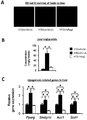
- FIG. 16 illustrates the expression levels of several crucial lipogenesis related genes in various tissues measured using real-time qRT-PCR.
- FIG. 17 shows that treatment with N-ABD094-rhArg (SEQ ID NO: 50) significantly improves insulin sensitivity.
- A Insulin tolerance test showed that mice injected with 500U N-ABD094-rhArg (SEQ ID NO: 50) [Chow (rhArg) group] at 10-day intervals demonstrated a significant increase in sensitivity to blood glucose-lowering effect of insulin as soon as 2 weeks after treatment in comparison to the vehicle-treated control [Chow (vehicle) group] .
- pAkt phosphorylated Akt
- Hepatocytes treated with N-ABD094-rhArg showed a higher level of phosphorylation of Akt upon stimulation by insulin suggested an enhancement in insulin signaling.
- Lane 1 con;
- Lane 2 5U/mL N-ABD094-rhArg (SEQ ID NO: 50) ;
- Lane 3 100nM insulin;
- Lane 4 5U/mL N-ABD094-rhArg (SEQ ID NO: 50) + 100nM insulin.
- FIG. 19 illustrates that concurrent treatment of male mice fed a HFD with 300U N-ABD094-rhArg (SEQ ID NO: 50) [HFD (rhArg) group] once a week for 12 weeks could effectively prevent HFD-induced expansion of white adipose tissue (WAT) .
- WAT white adipose tissue
- A Weight of fat pad at main visceral (perigonadal, perirenal and mesenteric) and subcutaneous (inguinal) depots.
- B H&E stained sections of visceral WAT showed that concurrent treatment with N-ABD094-rhArg prevented HFD-induced hypertrophy of white adipocytes.
- FIG. 20 illustrates suppression of HFD-induced upregulation of transcriptional regulators of lipogenesis (Pparg and Srebp1c) , with concomitant downregulation of crucial lipogenic enzymes (Acc1 and Scd1) in skeletal muscle of mice treated with 300U N-ABD094-rhArg (SEQ ID NO: 50) [HFD (rhArg) group] once a week for 12 weeks.
- Acc1 and Scd1 crucial lipogenic enzymes
- FIG. 21 illustrates that concurrent treatment with 300U N-ABD094-rhArg (SEQ ID NO: 50) [HFD (rhArg) group] once a week could effectively prevent HFD-induced obesity in C57BL/6J female mice.
- A Bodyweight of mice fed a HFD from 8 week old for 12 weeks, and currently treated with N-ABD094-rhArg or vehicle. Vehicle-treated female mice fed a LFD served as the lean control [LFD (vehicle) group] .
- FIG. 22 illustrates that concurrent treatment with 300U N-ABD094-rhArg (SEQ ID NO: 50) [HFD (rhArg) group] once a week could effectively prevent HFD-induced insulin resistance and glucose intolerance in C57BL/6J female mice.
- ITT Insulin tolerance test
- GTT Glucose tolerance test
- AUC area under the curve
- FIG. 23 illustrates that arginine depletion by adding N-ABD094-rhArg (SEQ ID NO: 50) (rhArg) , bovine arginase or native arginine deiminase (ADI) to the culture medium, or using arginine-free medium inhibited the differentiation of mouse 3T3-L1 preadipocytes into adipocytes. Addition of arginase metabolic product L-ornithine or urea, or ADI metabolic product L-citrulline to the culture medium did not have inhibitory effects on adipogenesis and lipogenesis.
- N-ABD094-rhArg SEQ ID NO: 50
- ADI native arginine deiminase
- the culture medium contains 0.4mM L-arginine and can be converted into 0.4mM L-ornithine and 0.4mM urea by arginase, or 0.4mM L-citrulline by ADI. ) .
- Cells grown in culture medium without addition of arginine depleting agents or metabolic products of arginase/ADI served as the control. Lipids in cells were stained with oil red O at 6 days after exposure to specific differentiation-inducing factors added to the medium.
- FIG. 24 illustrates that N-ABD094-rhArg (SEQ ID NO: 50) could suppress adipogenic and lipogenic genes in 3T3-L1 preadipocytes.
- Mouse 3T3-L1 preadipocytes were cultured for 6 days in medium supplemented with specific factors to induce differentiation into adipocytes (differentiated) . Cells grown in medium without these factors remained undifferentiated. The medium was added with 2U/mL N-ABD094-rhArg (SEQ ID NO: 50) (rhArg) . Cells grown in medium without the addition of N-ABD094-rhArg served as the control.
- FIG. 25 illustrates the response of 3T3-L1 preadipocytes to various concentrations of arginine.
- Mouse 3T3-L1 preadipocytes were cultured in arginine-free medium with or without addition of varying concentrations of L-arginine for 6 days.
- Cells cultured in normal arginine-containing medium supplemented with differentiation inducing factors served as the positive (+ve) control of differentiation, while cells cultured in normal arginine-containing medium without supplementation of differentiation inducing factors served as the negative (-ve) control of differentiation.
- rhArg 5U/mL N-ABD094-rhArg (SEQ ID NO: 50) (rhArg) to inhibit differentiation.
- A Cells were stained for lipids with oil red O, and staining intensity was quantified by measuring optical density, which is expressed as the percentage against the +ve control group.
- FIG. 26 illustrates that concurrent treatment of male mice fed a HFD with 300U N-ABD094-rhArg (SEQ ID NO: 50) [HFD (rhArg) group] once a week could effectively prevent HFD-induced insulin resistance.
- Insulin tolerance test (ITT) was conducted at (A) 6 week and (B) 11 week after feeding a HFD, and results are expressed as area under the curve (AUC) .
- AUC area under the curve
- *P ⁇ 0.05, one-way ANOVA followed by Fisher’s LSD. Data are expressed as mean ⁇ SEM, n 5 for each group.
- FIG. 27 illustrates that concurrent treatment of male mice fed a HFD with 300U N-ABD094-rhArg (SEQ ID NO: 50) [HFD (rhArg) group] once a week could effectively prevent HFD-induced glucose intolerance.
- Glucose tolerance test (GTT) was conducted at (A) 5 week and (B) 10 week after feeding a HFD, and results are expressed as area under the curve (AUC) .
- AUC area under the curve
- FIG. 28 illustrates that concurrent treatment of male mice fed a HFD with 300U N-ABD094-rhArg (SEQ ID NO: 50) [HFD (rhArg) group] once a week could effectively prevent HFD-induced elevation of fasting
- A blood glucose measured using a glucometer
- B plasma concentrations of insulin measured using ELISA.
- C HOMA-IR score, calculated by standard formula, as a measurement of insulin resistance showed that concurrent treatment with N-ABD094-rhArg prevented the development of HFD-induced insulin resistance.
- *P ⁇ 0.05, one-way ANOVA followed by Fisher’s LSD. Data are expressed as mean ⁇ SEM, n 5 for each group.
- FIG. 29 illustrates that concurrent treatment of male mice fed a HFD with 300U N-ABD094-rhArg (SEQ ID NO: 50) [HFD (rhArg) group] once a week prevented/ameliorated HFD-induced elevation of fasting plasma (A) leptin, (B) total cholesterol, (C) triglyceride, and (D) free fatty acids levels.
- A leptin
- B total cholesterol
- C triglyceride
- D free fatty acids levels.
- *P ⁇ 0.05, one-way ANOVA followed by Fisher’s LSD. Data are expressed as mean ⁇ SEM, n 5 for each group.
- FIG. 30 illustrates that concurrent treatment of male mice fed a HFD with 300U N-ABD094-rhArg (SEQ ID NO: 50) [HFD (rhArg) group] once a week for 12 weeks prevented HFD-induced enlargement of liver.
- SEQ ID NO: 50 300U N-ABD094-rhArg
- [HFD (rhArg) group] [HFD (rhArg) group] once a week for 12 weeks prevented HFD-induced enlargement of liver.
- A Representative images of whole fresh liver.
- FIG. 31 illustrates that concurrent treatment of male mice fed a HFD with 300U N-ABD094-rhArg (SEQ ID NO: 50) [HFD (rhArg) group] once a week for 12 weeks could effectively prevent HFD-induced hepatic steatosis.
- SEQ ID NO: 50 HFD094-rhArg
- FIG. 31 illustrates that concurrent treatment of male mice fed a HFD with 300U N-ABD094-rhArg (SEQ ID NO: 50) [HFD (rhArg) group] once a week for 12 weeks could effectively prevent HFD-induced hepatic steatosis.
- A Staining of liver sections with oil red O showed extensive accumulation of lipids in vehicle-treated mice fed a HFD [HFD (vehicle) group] , which was absent in mice treated with N-ABD094-rhArg.
- B N-ABD094-rhArg treatment prevented elevation in triglyceride concentrations in the liver of H
- FIG. 32 illustrates that concurrent treatment of male mice fed a HFD with 300U N-ABD094-rhArg (SEQ ID NO: 50) [HFD (rhArg) group] once a week for 12 weeks prevented HFD-induced elevation of serum levels of alanine aminotransferase (ALT) commonly measured as biomarker for liver damage.
- HFD HFD094-rhArg
- ALT alanine aminotransferase
- FIG. 33 illustrates that concurrent treatment of male mice fed a HFD with 300U N-ABD094-rhArg (SEQ ID NO: 50) [HFD (rhArg) group] once a week for 12 weeks prevented HFD-induced increase in the weight of (A) kidney, (B) pancreas, and (C) heart.
- SEQ ID NO: 50 300U N-ABD094-rhArg
- HFD (rhArg) group [HFD (rhArg) group] once a week for 12 weeks prevented HFD-induced increase in the weight of (A) kidney, (B) pancreas, and (C) heart.
- *P ⁇ 0.05, one-way ANOVA followed by Fisher’s LSD. Data are expressed as mean ⁇ SEM, n 5 for each group.
- FIG. 34 illustrates that concurrent treatment of male mice with 300U N-ABD094-rhArg (SEQ ID NO: 50) [HFD (rhArg) group] once a week for 12 weeks could effectively (A) suppress HFD-induced upregulation of mRNA levels of proinflammatory adipokines in visceral WAT, expressed relative to the lean control mice [LFD (vehicle) group] , which is set as 1, and (B) suppress HFD-induced elevation in serum levels of proinflammatory cytokine.
- LFD lean control mice
- FIG. 35 illustrates that concurrent treatment of male mice with 300U N-ABD094-rhArg (SEQ ID NO: 50) [HFD (rhArg) group] once a week for 12 weeks could effectively prevent HFD-induced whitening of brown adipose tissue (BAT) .
- SEQ ID NO: 50 [HFD (rhArg) group] once a week for 12 weeks could effectively prevent HFD-induced whitening of brown adipose tissue (BAT) .
- A Representative images of whole fresh interscapular BAT.
- B Weight of the interscapular BAT.
- FIG. 36 illustrates that concurrent treatment of male mice with 300U N-ABD094-rhArg (SEQ ID NO: 50) [HFD (rhArg) group] once a week for 12 weeks significantly upregulated the mRNA levels of key regulators of thermogenesis (Ucp1 and Pgc1a) in BAT, and suppressed the HFD-induced downregulation of fatty acid oxidation gene Acox1 in BAT.
- Ucp1 and Pgc1a key regulators of thermogenesis
- FIG. 37 illustrates that C57BL/6J male mice with pre-existing obesity induced by feeding a HFD from 5 week old for 12 weeks showed prominent reduction in bodyweight after treatment with N-ABD094-rhArg (SEQ ID NO: 50) .
- A Bodyweight of mice treated with 600U N-ABD094-rhArg [HFD (rhArg) group] once a week for 12 weeks.
- FIG. 38 illustrates that administration of 600U N-ABD094-rhArg (SEQ ID NO: 50) once a week for 12 weeks to male mice with pre-existing HFD-induced obesity [HFD (rhArg) group] could effectively reduce white adipose tissue.
- B H&E stained sections of visceral WAT showed that treatment with N-ABD094-rhArg markedly reduced adipocyte cell size of obese mice.
- FIG. 39 illustrates that administration of 600U N-ABD094-rhArg (SEQ ID NO: 50) once a week to male mice with pre-existing HFD-induced obesity [HFD (rhArg) group] could effectively reverse insulin resistance.
- FIG. 40 illustrates that administration of 600U N-ABD094-rhArg (SEQ ID NO: 50) once a week to male mice with pre-existing HFD-induced obesity [HFD (rhArg) group] could effectively reverse glucose intolerance.
- FIG. 41 illustrates that administration of 600U N-ABD094-rhArg (SEQ ID NO: 50) once a week to male mice with pre-existing HFD-induced obesity [HFD (rhArg) group] could effectively reverse hyperglycemia, hyperinsulinemia and insulin resistance.
- HFD (rhArg) group HFD-induced obesity
- FIG. 42 illustrates that administration of 600U N-ABD094-rhArg (SEQ ID NO: 50) once a week to male mice with pre-existing HFD-induced obesity [HFD (rhArg) group] could effectively reverse hyperleptinemia and hypercholesterolemia.
- *P ⁇ 0.05, one-way ANOVA followed by Fisher’s LSD. Data are expressed as mean ⁇ SEM, n 5 for each group.
- FIG. 43 illustrates that administration of 600U N-ABD094-rhArg (SEQ ID NO: 50) once a week for 12 weeks to male mice with pre-existing HFD-induced obesity [HFD (rhArg) group] could effectively reverse enlargement of liver.
- A Representative images of whole fresh liver showed that the liver of obese mice had returned to normal size following treatment of N-ABD094-rhArg.
- B The liver weight of obese mice was dramatically reduced following treatment with N-ABD094-rhArg and was similar to the lean control mice [LFD (rhArg) group] .
- *P ⁇ 0.05, one-way ANOVA followed by Fisher’s LSD. Data are expressed as mean ⁇ SEM, n 5 for each group.
- FIG. 44 illustrates that administration of 600U N-ABD094-rhArg (SEQ ID NO: 50) once a week for 12 weeks to male mice with pre-existing HFD-induced obesity [HFD (rhArg) group] could effectively reverse hepatic steatosis.
- HFD HFD-induced obesity
- FIG. 45 illustrates that administration of 600U N-ABD094-rhArg (SEQ ID NO: 50) once a week for 12 weeks to male mice with pre-existing HFD-induced obesity [HFD (rhArg) group] could significantly reduce serum levels of alanine transaminase (ALT) and aspartate transaminase (AST) , which are common biomarkers of liver damage.
- HFD (rhArg) group HFD-induced obesity
- FIG. 46 illustrates that administration of 600U N-ABD094-rhArg (SEQ ID NO: 50) once a week for 12 weeks to male mice with pre-existing HFD-induced obesity [HFD (rhArg) group] could reverse renal steatosis.
- N-ABD094-rhArg SEQ ID NO: 50
- triglyceride concentrations in the kidney B
- vacuolated structures in the renal tubules of H&E-stained kidney sections ectopic accumulation of lipid droplets in the glomeruli of oil red O-stained kidney sections were prominently reduced.
- *P ⁇ 0.05, one-way ANOVA followed by Fisher’s LSD. Data are expressed as mean ⁇ SEM, n 5 for each group.
- FIG. 47 illustrates that administration of 600U N-ABD094-rhArg (SEQ ID NO: 50) once a week for 12 weeks to male mice with pre-existing HFD-induced obesity [HFD (rhArg) group] could reverse pancreatic steatosis.
- HFD-induced obesity HFD (rhArg) group
- FIG. 47 illustrates that administration of 600U N-ABD094-rhArg (SEQ ID NO: 50) once a week for 12 weeks to male mice with pre-existing HFD-induced obesity [HFD (rhArg) group] could reverse pancreatic steatosis.
- HFD-induced obesity HFD-induced obesity
- FIG. 48 illustrates that administration of 600U N-ABD094-rhArg (SEQ ID NO: 50) once a week for 12 weeks to male mice with pre-existing HFD-induced obesity [HFD (rhArg) group] could reverse cardiac steatosis.
- HFD (rhArg) group HFD-induced obesity
- FIG. 48 illustrates that administration of 600U N-ABD094-rhArg (SEQ ID NO: 50) once a week for 12 weeks to male mice with pre-existing HFD-induced obesity [HFD (rhArg) group] could reverse cardiac steatosis.
- HFD (rhArg) group HFD-induced obesity
- FIG. 49 illustrates that administration of 600U N-ABD094-rhArg (SEQ ID NO: 50) once a week for 12 weeks to male mice with pre-existing HFD-induced obesity [HFD (rhArg) group] could significantly reduce triglyceride concentrations in the skeletal muscle.
- HFD (rhArg) group pre-existing HFD-induced obesity
- FIG. 50 illustrates that administration of 600U N-ABD094-rhArg (SEQ ID NO: 50) once a week for 12 weeks to male mice with pre-existing HFD-induced obesity [HFD (rhArg) group] could significantly (A) downregulate the mRNA levels of proinflammatory adipokine Mcp1 in visceral WAT, expressed relative to the lean control mice [LFD (vehicle) group] , which is set as 1, and (B) reduce the serum concentration of proinflammatory cytokine Mcp1.
- *P ⁇ 0.05, one-way ANOVA followed by Fisher’s LSD. Data are expressed as mean ⁇ SEM, n 5 for each group.
- FIG. 51 illustrates that administration of 600U N-ABD094-rhArg (SEQ ID NO: 50) once a week for 12 weeks to male mice with pre-existing HFD-induced obesity [HFD (rhArg) group] could reduce inflammation and fibrosis in the liver.
- HFD HFD-induced obesity
- FIG. 52 illustrates that administration of 600U N-ABD094-rhArg (SEQ ID NO: 50) once a week for 12 weeks to male mice with pre-existing HFD-induced obesity [HFD (rhArg) ] could reduce inflammation and fibrosis in the kidney.
- HFD HFD-induced obesity
- FIG. 53 illustrates that administration of 600U N-ABD094-rhArg (SEQ ID NO: 50) once a week for 12 weeks to male mice with pre-existing HFD-induced obesity [HFD (rhArg) group] could reduce inflammation and fibrosis in the pancreas.
- HFD HFD-induced obesity
- FIG. 54 illustrates that administration of 600U N-ABD094-rhArg (SEQ ID NO: 50) once a week for 12 weeks to male mice with pre-existing HFD-induced obesity [HFD (rhArg) group] could effectively reverse whitening of brown fat (BAT) .
- BAT brown fat
- FIG. 54 illustrates that administration of 600U N-ABD094-rhArg (SEQ ID NO: 50) once a week for 12 weeks to male mice with pre-existing HFD-induced obesity [HFD (rhArg) group] could effectively reverse whitening of brown fat (BAT) .
- BAT brown fat
- *P ⁇ 0.05, one-way ANOVA followed by Fisher’s LSD. Data are expressed as mean ⁇ SEM, n 5 for each group.
- FIG. 55 illustrates that administration of 600U N-ABD094-rhArg (SEQ ID NO: 50) once a week to male mice with pre-existing HFD-induced obesity [HFD (rhArg) group] could significantly lower (A) the systolic and diastolic blood pressure, and (B) the heart rate of obese mice to a level similar to the lean control mice [LFD (vehicle) group] by 5 weeks after drug treatment.
- *P ⁇ 0.05, one-way ANOVA followed by Fisher’s LSD. Data are expressed as mean ⁇ SEM, n 10 for each group.
- FIG. 56 illustrates that C57BL/6J male mice fed a LFD and received an intraperitoneal injection of 500U N-ABD094-rhArg (SEQ ID NO: 50) [LFD (rhArg) group] once a week for 8 months starting from 5 week old had developed non- neutralizing anti-drug antibody.
- SEQ ID NO: 50 500U N-ABD094-rhArg
- A Using an ELISA assay, anti-rhArg antibodies, with an average antibody titer of 10 8 , could be detected in the plasma of LFD-fed mice treated with N-ABD094-rhArg.
- FIG. 57 illustrates that administration of 500U N-ABD094-rhArg (SEQ ID NO: 50) to C57BL/6J male mice fed a LFD [LFD (rhArg) group] once a week for 8 months starting from 5 week old did not induce adverse effects on the liver and kidney.
- FIG. 58 illustrates that administration of 500U N-ABD094-rhArg (SEQ ID NO: 50) to C57BL/6J male mice fed a LFD [LFD (rhArg) group] once a week for 8 months starting from 5 week old did not induce adverse vascular effects.
- FIG. 59 illustrates that administration of 300U PEGylated His-rhArg (SEQ ID NO: 101) once a week for 4 weeks to C57BL/6J male mice with pre-existing HFD-induced obesity [HFD (PEG-rhArg) group] could effectively reduce the bodyweight of mice to a weight similar to vehicle-treated lean control mice fed a chow diet [Chow (vehicle) group] .
- FIG. 60 illustrates that administration of 300U PEGylated His-rhArg (SEQ ID NO: 101) once a week for 4 weeks to male mice with pre-existing HFD-induced obesity [HFD (PEG-rhArg) group] could effectively reduce the fat mass at the main visceral (perigondal, perirenal, mesenteric) and subcutaneous (inguinal) depots, and reduce the weight of the liver, kidney, pancreas and heart.
- HFD HFD-induced obesity
- FIG. 63 illustrates the anti-cancer effect of BHA fusion protein (SEQ ID NO: 75) on MKN45 gastric cancer cell line.
- BHA fusion protein SEQ ID NO: 75
- the growth of MKN45 was inhibited in a dose-dependent manner.
- FIG. 64 illustrates the effect of N-ABD-rhArg (SEQ ID NO: 49) on tumor volume in 4T1 breast cancer xenograft nude mice.
- the curve for “Experimental Group” represents the experimental group that received 500U N-ABD-rhArg (SEQ ID NO: 49) injection once per week; the curve for “Control Group” represents the control group that received PBS injection once per week.
- *P ⁇ 0.05, **P ⁇ 0.01 vs Experimental Group, t-test, n 4-6.
- FIG. 65 illustrates the effect of N-ABD-rhArg (SEQ ID NO: 49) on relative tumor volume in 4T1 breast cancer xenograft nude mice.
- the curve for “Experimental Group” represents the experimental group that received 500U N-ABD-rhArg (SEQ ID NO: 49) injection once per week.
- FIG. 66 illustrates the significant differences of tumor weight between the experimental group and the control group.
- the experimental group received 500U N-ABD-rhArg (SEQ ID NO: 49) injection once per week.
- FIG. 67 illustrates the photograph of the tumors collected from the nude mice of the control group and the N-ABD-rhArg (SEQ ID NO: 49) treated group.
- FIG. 68 illustrates the effect of N-ABD-rhArg (SEQ ID NO: 49) on relative tumor volume in 4T1 breast cancer allografts.
- the curve for “500U ABD-rhArg” represents the experimental group that received 500U N-ABD-rhArg (SEQ ID NO: 49) injection once per week.
- the curve for “250U ABD-rhArg” represents the experimental group that received 250U N-ABD-rhArg (SEQ ID NO: 49) injection once per week.
- the curve for “500U PEG-rhArg” represents the experimental group that received 500U PEGylated His-rhArg (SEQ ID NO: 101) injection once per week.
- FIG. 69 illustrates the significant differences of tumor weight between the experimental groups and the control group.
- the data for “500U ABD-rhArg” represents the group that received 500U N-ABD-rhArg (SEQ ID NO: 49) injection once per week.
- the data for “250U ABD-rhArg” represents the group that received 250U N-ABD-rhArg (SEQ ID NO: 49) injection once per week.
- the data for “500U PEG-rhArg” represents the group that received 500U PEGylated His-rhArg (SEQ ID NO: 101) injection once per week.
- FIG. 70 illustrates the average number of metastatic nodules from the lungs of 4T1 allografts.
- the data for “500U ABD-rhArg” represents the group that received 500U N-ABD-rhArg (SEQ ID NO: 49) injection once per week.
- the data “250U ABD-rhArg” represents the group that received 250U N-ABD-rhArg (SEQ ID NO: 49) injection once per week.
- the data for “500U PEG-rhArg” represents the group that received 500U PEGylated His-rhArg (SEQ ID NO: 101) injection once per week.
- the data for “Control group” represents the control group that received PBS once per week.
- the present disclosure generally relates to fusion proteins comprising an arginase polypeptide and an ABD polypeptide and methods of use and preparation thereof.
- the fusion proteins provided herein are highly effective arginine depleting agents, and due to fusion with an ABD polypeptide, exhibit a vastly extended half-life in comparison with known arginase and arginase derivatives.
- the disclosed fusion proteins are useful for treating diseases and conditions in which depletion of arginine results in a therapeutic effect, such as in the treatment of cancer, viruses, multiple sclerosis, rheumatoid arthritis, autoimmune diseases, congenital hyperargininemia, graft-versus-host disease (GvHD) , inflammation, obesity, metabolic disorders, and related complications and comorbidities.
- the present disclosure also generally relates to methods of treating obesity, metabolic disorders, and related complications and comorbidities in a subject in need thereof by depleting the level of arginine in the subject.
- Depletion of arginine in the subject results in reduction of weight and fat mass, improvement of glucose tolerance and insulin responsiveness, normalization of blood glucose levels, endocrine and metabolic profiles, and alleviation of inflammation, steatosis, and fibrosis.
- Any agent capable of depleting arginine in a subject can be used in the methods of treating obesity, metabolic disorders, and related complications and comorbidities described herein.
- half-life refers to the time that would be required for the concentration of an agent, e.g., a fusion protein or arginine depleting agent as described herein, to fall by half in vitro or in vivo, for example, after injection into a mammal.
- concentration of plasma arginine, after injection is used herein as a proxy indicator of the half-life of the agent.
- therapeutic duration is used to refer to the length of time a specified dosage of the arginine depleting agent is able to maintain the plasma concentration of arginine below a specified threshold concentration that a desired therapeutic effect is observed.
- the threshold concentration of plasma arginine is below 50 ⁇ M, below 40 ⁇ M, below 30 ⁇ M, below 20 ⁇ M, below 10 ⁇ M, below 5 ⁇ M, below 3 ⁇ M, or at a concentration below the detection limit of conventional analytical instrumentation.
- depletion of plasma arginine to concentrations below the detection limit of the Biochrom 30 Amino Acid Analyzer (detection limit is 3 ⁇ M) for 7 days upon injection of an arginine catabolic enzyme described herein indicates a therapeutic duration of 7 days and a half-life, e.g., on the order of around 7 days.
- attach refers to connecting or uniting by a bond or non-bonding interaction in order to keep two or more compounds together, which encompasses either direct or indirect attachment such that for example where a first polypeptide is directly bound to a second polypeptide or other molecule, and the embodiments wherein one or more intermediate compounds (e.g., a linker) , such as a polypeptide, is disposed between the first polypeptide and the second polypeptide or other molecule.
- intermediate compounds e.g., a linker
- protein or "polypeptide” as used herein indicates an organic polymer composed of two or more amino acid monomers and/or analogs thereof.
- polypeptide includes amino acid polymers of any length including full length proteins and peptides, as well as analogs and fragments thereof. A polypeptide of three or more amino acids is also called an oligopeptide.
- amino acid amino acid
- amino acidic monomer amino acid residue
- amino acid analog refers to an amino acid in which one or more individual atoms have been replaced, either with a different atom, isotope, or with a different functional group but is otherwise identical to its natural amino acid analog.
- unnatural amino acid refers to any amino acid, modified amino acid, and/or amino acid analogue that is not one of the 20 common naturally occurring amino acids, seleno cysteine or pyrrolysine.
- fusion protein refers to a chimeric protein containing proteins or functional protein fragments (e.g., arginase or variants thereof) having different origins that are covalently linked, e.g., by an amide, ester, urea, carbamate, ether, and/or disulfide bond.
- variant refers to a polynucleotide or nucleic acid differing from a reference nucleic acid or polypeptide, but retaining essential properties thereof. Generally, variants are overall closely similar, and, in many regions, identical to the reference nucleic acid or polypeptide.
- a variant can, for example, comprise the amino acid sequence of the parent polypeptide sequence with at least one conservative amino acid substitution.
- the variant can comprise the amino acid sequence of the parent polypeptide sequence with at least one non-conservative amino acid substitution.
- the non-conservative amino acid substitution may enhance the biological activity of the variant, such that the biological activity of the variant is increased as compared to the parent polypeptide.
- the term “functional fragment” when used in reference to a polypeptide refers to any part or portion of the subject polypeptide, which part or portion retains the biological activity of the polypeptide of which it is a part (the parent polypeptide) .
- the functional fragment can be any fragment comprising contiguous amino acids of the polypeptide of which it is a part, provided that the functional fragment still exhibits at least 40%, 50%, 60%, 70%, 80%, 90%, 95%, or 99%or has substantially the same or even higher biological activity of the parent polypeptide.
- the functional fragment can comprise, for instance, about 10%, 20%, 25%, 30%, 40%, 50%, 60%, 70%, 80%, 90%, 95%, 98%or more, of the parent polypeptide.
- the functional fragment can comprise additional amino acids at the amino or carboxy terminus, or at both termini, e.g., amino acids not found in the amino acid sequence of the parent polypeptide.
- Amino acid substitutions of the described polypeptides can be conservative amino acid substitutions.
- Conservative amino acid substitutions are known in the art, and include amino acid substitutions in which one amino acid having certain physical and/or chemical properties is exchanged for another amino acid that has the same or similar chemical or physical properties.
- the conservative amino acid substitution can be an acidic/negatively charged polar amino acid substituted for another acidic/negatively charged polar amino acid (e.g., Asp or Glu) , an amino acid with a nonpolar side chain substituted for another amino acid with a nonpolar side chain (e.g., Ala, Gly, Val, Ile, Leu, Met, Phe, Pro, Trp, Cys, Val, etc.
- a basic/positively charged polar amino acid substituted for another basic/positively charged polar amino acid e.g. Lys, His, Arg, etc.
- an uncharged amino acid with a polar side chain substituted for another uncharged amino acid with a polar side chain e.g., Asn, Gln, Ser, Thr, Tyr, etc.
- an amino acid with a beta-branched side-chain substituted for another amino acid with a beta-branched side-chain e.g., Ile, Thr, and Val
- an amino acid with an aromatic side-chain substituted for another amino acid with an aromatic side chain e.g., His, Phe, Trp, and Tyr
- percentage homology when used in reference to a polypeptide or polynucleotide sequence, are used interchangeably herein to refer to comparisons among polynucleotides and polypeptides, and are determined by comparing two optimally aligned sequences over a comparison window, wherein the portion of the polynucleotide or polypeptide sequence in the comparison window may comprise additions or deletions (i.e., gaps) as compared to the reference sequence (which does not comprise additions or deletions) for optimal alignment of the two sequences.
- the percentage is calculated by determining the number of positions at which the identical nucleic acid base or amino acid residue occurs in both sequences to yield the number of matched positions, dividing the number of matched positions by the total number of positions in the window of comparison and multiplying the result by 100 to yield the percentage of sequence identity.
- Homology is evaluated using any of the variety of sequence comparison algorithms and programs known in the art. Such algorithms and programs include, but are by no means limited to, TBLASTN, BLASTP, FASTA, TFASTA, and CLUSTALW [Pearson and Lipman, 1988, Proc. Natl. Acad. Sci. USA 85 (8) : 2444-2448; Altschul et al., 1990, J. Mol. Biol.
- BLAST Basic Local Alignment Search Tool
- treatment refers to reducing or ameliorating a disorder/disease and/or symptoms associated therewith. It will be appreciated, although not precluded, treating a disorder or condition does not require that the disorder, condition, or symptoms associated therewith be completely eliminated. In certain embodiments, treatment includes prevention of a disorder or condition, and/or symptoms associated therewith.
- prevention or “prevent” as used herein refers to any action that inhibits or at least delays the development of a disorder, condition, or symptoms associated therewith.
- Prevention can include primary, secondary and tertiary prevention levels, wherein: a) primary prevention avoids the development of a disease; b) secondary prevention activities are aimed at early disease treatment, thereby increasing opportunities for interventions to prevent progression of the disease and emergence of symptoms; and c) tertiary prevention reduces the negative impact of an already established disease by restoring function and reducing disease-related complications.
- arginine catabolic enzymes refer to any enzyme capable of reacting with arginine thereby transforming it into other molecules, such as ornithine, citrulline, and agmatine.
- the term “subject” refers to any animal (e.g., a mammal) , including, but not limited to, humans, non-human primates, canines, felines, and rodents.
- body mass index or " ⁇ I” means the ratio of weight in Kg divided by the height in meters, squared.
- weight refers to a BMI between 25 and 30 in adult humans. For people under 20 “overweight” is defined as a BMI between the 85th and 95th percentile compared to people of the same age.
- the term “obesity” refers to a BMI between 30 and 40 in adult humans. For people under 20 “obesity” is defined as a BMI above the 95th percentile compared to people of the same age. As used herein, the term can include both obesity and morbid obesity.
- morbid obesity refers to a BMI greater than 40 in adult humans.
- steatosis refers to the condition in which fat accumulates in tissues, such as liver tissue, kidney tissue, pancreas tissue, heart muscle tissue or other muscle tissues.
- fibrosis refers to the condition in which there is excess deposition of fibrous connective tissue, including collagen, in an organ or tissue, such as liver tissue, kidney tissue, pancreas tissue or heart tissue.
- hypercholesterolemia refers to a condition in which levels of blood cholesterol are elevated in comparison to the normal average level of blood cholesterol in a respective reference subject of the same ethnic background, age, and gender. With regard to humans the term in particular refers to blood levels of total cholesterol above about 200, in particular above about 240 mg/dL.
- dislipidemia and “hyperlipidemia” as used herein, refers to a condition in which the level of lipids/fats including cholesterol, cholesterol esters, phospholipids, triglycerides and/or lipoproteins in the blood stream are respectively abnormal and elevated in comparison to the normal average level of blood lipids/fats in a respective reference subject of the same ethnic background, age, and gender.
- the fusion proteins provided herein comprise an arginase polypeptide.
- the arginase polypeptide can be derived from an arginase protein expressed by any organism that expresses arginase.
- Exemplary arginases include those that are produced by bacteria, such as bacilli, agrobacteria, cyanobacteria, and mycobacteria, and mammals, such as bovine, porcine, sheep, goat, rodents and humans.
- the arginase polypeptide is derived from human arginase, it can be arginase type 1 (ARG1) or arginase type 2 (ARG2) .
- the arginase polypeptide can comprise a full length arginase polypeptide or a functional fragment and/or variant thereof.
- Arginase is a manganese-containing enzyme.
- the fusion proteins described herein comprise one or more divalent metals, other than manganese, such as Co 2+ or Ni 2+ .
- the fusion protein comprises one or more metals selected from Co 2+ and Ni 2+ .
- the fusion protein comprises two Co 2+ ions or two Ni 2+ ions.
- the fusion protein comprises two Mn 2+ ions.
- the arginase polypeptide is wild type human ARG1.
- the arginase polypeptide comprises a sequence with at least 95%sequence homology to SEQ ID NO: 69.
- the arginase polypeptide can comprise at a polypeptide sequence with at least 96%, 97%, 98%, 99%, 99.1%, 99.4%or 99.7%homology to SEQ ID NO: 69.
- the sequence of the arginase polypeptide can differ from SEQ ID NO: 69 by 1, 2, 3, 4, 5, 6, 7, 8, 9, 10, 15, 20, 25, or 30 amino acid modifications (e.g., insertion, substitution, deletion, etc. ) .
- the arginase polypeptide comprises a polypeptide with conservative amino acid replacements, non-conservative amino acid replacements, or a combination thereof.
- the arginase polypeptide is Bacillus caldovelox arginase (BCA) .
- the arginase polypeptide comprises a sequence with at least 95%sequence homology to SEQ ID NO: 70.
- the arginase polypeptide can comprise at a polypeptide sequence with at least 96%, 97%, 98%, 99%, 99.3%, or 99.7%homology to SEQ ID NO: 70.
- the sequence of the arginase polypeptide can differ from SEQ ID NO: 70 by 1, 2, 3, 4, 5, 6, 7, 8, 9, 10, 15, 20, 25, or 30 amino acid modifications (e.g., insertion, substitution, deletion, etc. ) .
- the arginase polypeptide comprises a polypeptide with conservative amino acid replacements, non-conservative amino acid replacements, or a combination thereof.
- the arginase polypeptide is BCA, wherein serine 161 is replaced by a cysteine as presented in SEQ ID NO: 71 and SEQ ID NO: 72.
- the substitution of serine with a cysteine allows for the sited directed incorporation of chemical moieties that can further improve the properties of the fusion protein.
- the side chain of cysteine 161 can be reacted with an appropriately activated PEG moiety thereby forming a PEGylated arginase, which can be incorporated into the resulting fusion protein.
- the arginase polypeptide comprises a sequence with at least 95%sequence homology to SEQ ID NO: 71 or SEQ ID NO: 72.
- the arginase polypeptide can comprise at a polypeptide sequence with at least 96%, 97%, 98%, 99%, 99.3%, or 99.7%homology to SEQ ID NO: 71 or SEQ ID NO: 72.
- the sequence of the arginase polypeptide can differ from SEQ ID NO: 71 or SEQ ID NO: 72 by 1, 2, 3, 4, 5, 6, 7, 8, 9, 10, 15, 20, 25, or 30 amino acid modifications (e.g., insertion, substitution, deletion, etc. ) .
- the arginase polypeptide comprises a polypeptide with conservative amino acid replacements, non-conservative amino acid replacements, or a combination thereof.
- the PEG group can have a molecular weight of about 5,000 to about 20,000 amu, about 5,000 to about 15,000 amu, about 5,000 to about 12,000 amu, about 7,000 to about 12,000 amu, or about 7,000 to about 10,000 amu. In certain embodiments, the PEG group has a molecular weight of about 4,000 amu to 10,000 amu. In certain embodiments, the PEG group is PEG4,000 or PEG7,000.
- the PEG group can be covalently attached directly to the fusion protein or via a linker.
- PEG group can be covalently attached to the fusion protein by reaction of a cysteine or lysine side chain present on the protein with a PEGylation reagent.
- the PEG group can be covalently attached to the N-terminal amine of the protein.
- the fusion protein is covalently attached via a propionic acid linker to PEG. In other embodiments, the fusion protein is covalently attached via a C2-C10, C2-C9, C2-C8, C2-C7, C2-C6, C2-C5, or C2-C4 straight or branched chain carboxylic acid linker to PEG. In certain embodiments, the PEG group is attached to the arginase polypeptide.
- the fusion proteins described herein also comprise an albumin binding domain (ABD) polypeptide.
- a number of studies have demonstrated the potential of albumin binding to achieve longer half-lives of therapeutic proteins.
- the design of fusion proteins including ABD polypeptides can be challenging, because fusion of the ABD polypeptide to the protein therapeutic has the potential to affect both the efficacy of the protein therapeutic, the binding affinity of the ABD polypeptide, and the solubility of the fusion protein. Accordingly, the selection of the ABD polypeptide, its site of attachment, and the construction of any necessary linkers is not a straight forward process and often times requires trial and error in order to arrive at a fusion property with the desired properties.
- Figs 9, 10 and 13 demonstrate that the therapeutic duration (and half-life) of N-ABD094-rhArg (SEQ ID NO: 50) is unexpectedly much longer than BHA and BAH. While all of BHA, BAH, and N-ABD094-rhArg exhibit surprisingly high therapeutic duration (and half-life) , it could not have been predicted that N-ABD094-rhArg would have such long therapeutic duration (and half-life) .
- the linker type, length, flexibility, and fusion of the bioactive peptide or protein to the C or N terminus of the half-life-extension module can have profound effects on the activity of a fusion protein.
- various arginases were fused to ABD molecules via a suitable linker so that both the arginase enzymatic activity and the albumin binding ability of ABD can be retained. Good stability and solubility are also essential. This is very difficult and challenging to achieve. Unlike the common HSA or Fc fusions, very little is known about the ABD fusions.
- the present disclosure provides examples of the linker design that can be used to generate functional arginase-ABD fusions.
- linker engineering was used to regain activity lost upon fusion of IFN- ⁇ 2b to HSA [Prot Exp Purif. 2008; 61: 73–7] .
- a direct fusion of IFN- ⁇ 2b to HSA resulted in an unstable protein with very little biological activity.
- Peptide linkers are known to have an influence on the expression, activity, and pharmacokinetics of fusion proteins [Adv Drug Deliv Rev. 2013; 65: 1357–69] .
- flexible linkers one advantage is that the flexibility may be required to obtain proper orientation of the bioactive portion of the molecule with respect to its cognate receptor.
- flexible linkers do not give a lot of space between the fusion partner and the bioactive protein.
- rigid linkers provide more space but lack the flexibility.
- the flexible linker resulted in approximately 39%activity as compared with that of native IFN- ⁇ 2b, whereas the rigid XP linker and the ⁇ -helical linker resulted in 68 and 115%of the activity of native IFN- ⁇ 2b, respectively [Prot Exp Purif. 2008; 61: 73–7] .
- linkers can have a negative impact on fusion protein properties.
- G-CSF granulocyte colony-stimulating factor
- Tf transferrin
- L transferrin
- L long leucine-glutamate
- the fusion protein constructed with the linker (A (EAAAK) 4ALEA-(EAAAK) 4A) resulted in biological activity near to that of native G-CSF [Pharm Res. 2006; 23: 2116–21] .
- the C-terminus of the Fc moiety may be directly linked to the N-terminus of the IFN- ⁇ moiety via a peptide bond
- Gillies et al. [US 7,670,595 B2] additionally connects the Fc moiety and the IFN- ⁇ moiety via a linker peptide.
- the linker peptide is located between the C-terminus of the Fc moiety and the N-terminus of the mature IFN- ⁇ moiety.
- the linker peptide is preferably composed of serine and glycine residues such as the amino acid sequence G4SG4SG3SG. All these findings demonstrate the importance of testing linker technology for the success of fusion protein research and development programs.
- BNP brain natriuretic peptide
- the present invention used a new ABD fusion approach to join an ABD and an arginase together so that arginase activity can be retained.
- Stable and soluble arginase-ABD fusion molecules that can bind to FcRn in a pH-dependent manner were successfully generated, allowing for efficient endosomal recycling.
- the present disclosure surprisingly found that for the rhArg fused to ABD, the terminal half-life in circulation of the protein dramatically increased from a few minutes to 4 days in mice.
- the albumin binding protein is a three-helical protein domain found in various surface proteins expressed by Gram positive bacteria.
- the albumin binding protein derived from Streptococcal protein G has 214 amino acids and contains three albumin binding domains (ABD1-3) , which are used to bind to human serum albumin and evade the immune system of a host.
- ABD3 corresponds to a 46 amino acid sequence, which has been demonstrated to bind to human serum albumin and has been the subject of a number of studies and affinity maturation for human serum albumin to develop ABD polypeptides with differing properties, such as binding affinity and binding selectivity. Such studies have generated a substantial number of ABD polypeptides with widely varying properties.
- Albumin binding proteins are found in other bacteria.
- naturally occurring albumin binding proteins include certain surface proteins from Gram positive bacteria, such as Streptococcal M proteins (e.g. Ml/Emml, M3 Emm3, M12/Emml2, EmmL55/Emm55, Emm49/EmmL49 and Protein H) , streptococcal proteins G, MAG and ZAG, and PPL and PAB from certain strains of Finegoldia magna.
- the fusion proteins described herein comprise an ABD polypeptide that is derived from a Streptococcal protein G albumin binding domain.
- the ABD polypeptide is the full Streptococcal protein G albumin binding domain 3 or a functional fragment and/or variant thereof.
- the fusion protein comprises an ABD polypeptide comprising a polypeptide sequence having at least 93%sequence homology with SEQ ID NO: 66.
- the ABD polypeptide can comprise at a polypeptide sequence with at least 94%, 96%, or 98%homology to SEQ ID NO: 66.
- the sequence of the ABD polypeptide can differ from SEQ ID NO: 66 by 1, 2, 3, 4, 5, 6, 7, 8, 9, or 10 amino acid modifications (e.g., insertion, substitution, deletion, etc. ) .
- the ABD polypeptide comprises a polypeptide with conservative amino acid replacements, non-conservative amino acid replacements, or a combination thereof.
- the fusion protein comprises an ABD polypeptide comprising a polypeptide sequence having at least 93%sequence homology with SEQ ID NO: 67.
- the ABD polypeptide can comprise at a polypeptide sequence with at least 94%, 96%, or 98%homology to SEQ ID NO: 67.
- the sequence of the ABD polypeptide can differ from SEQ ID NO: 67 by 1, 2, 3, 4, 5, 6, 7, 8, 9, or 10 amino acid modifications (e.g., insertion, substitution, deletion, etc. ) .
- the ABD polypeptide comprises a polypeptide with conservative amino acid replacements, non-conservative amino acid replacements, or a combination thereof.
- the fusion protein comprises an ABD polypeptide comprising a polypeptide sequence having at least 93%sequence homology with SEQ ID NO: 68.
- the ABD polypeptide can comprise at a polypeptide sequence with at least 93%, 95%, or 97%homology to SEQ ID NO: 68.
- the sequence of the ABD polypeptide can differ from SEQ ID NO: 68 by 1, 2, 3, 4, 5, 6, 7, 8, 9, or 10 amino acid modifications (e.g., insertion, substitution, deletion, etc. ) .
- the ABD polypeptide comprises a polypeptide with conservative amino acid replacements, non-conservative amino acid replacements, or a combination thereof.
- the relative position of the ABD polypeptide and arginase polypeptide can vary.
- the ABD polypeptide can precede the arginase polypeptide (e.g., the arginase polypeptide can be attached either directly or indirectly from the C-terminal of the ABD polypeptide) or the arginase polypeptide can precede the ABD polypeptide (e.g., the ABD polypeptide can be attached either directly or indirectly from the C-terminal of the arginase polypeptide) .
- the fusion protein can include one or more arginase polypeptides and/or one or more ABD polypeptides.
- the fusion protein can have the general structure ABD-rhArg-ABD, ABD094-rhArg-ABD094, ABD-BCA-ABD, ABD094-BCA-ABD094, rhArg-ABD-rhArg, rhArg-ABD094-rhArg, BCA-ABD-BCA, or BCA-ABD094-BCA.
- the ABD polypeptide and the arginase polypeptide can be attached by direct covalent attachment or indirectly attached via a peptide linker.
- the peptide linker or linker is a polypeptide typically ranging from about 1, 2, 3, 4, 5, 6, 7, 8, 9, 10, 11, 12, 13, 14, 15, 16, 17, 18, 19, 20 or more amino acids in length, which is designed to facilitate the functional connection of the ABD polypeptide and arginase polypeptide into a linked fusion protein.
- the term functional connection denotes a connection that facilitates proper folding of the polypeptides into a three dimensional structure that allows the linked fusion protein to exhibit some or all of the functional aspects or biological activities of the protein (s) from which its polypeptide constituents are derived.
- the polypeptide linker can be disposed between the N-terminal of the ABD polypeptide and the C-terminal of the arginase polypeptide or alternatively disposed between the N-terminal of the arginase polypeptide and the C-terminal of the ABD polypeptide.
- the peptide linker can comprise naturally occurring amino acids, unnatural amino acids, and combinations thereof.
- the peptide linker can comprise glycine, serine, asparagine, or a combination thereof.
- the peptide linker comprises a polypeptide sequence having at least 90%sequence homology with SEQ ID NO: 73.
- peptide linker can comprise a polypeptide having at least a 91%, 92%, 93%, 94%, 95%, 96%, 97%, 98%, or 99%sequence homology or is identical to SEQ ID NO: 73.
- the peptide linker can comprise glycine, serine, asparagine, or a combination thereof.
- the peptide linker comprises a polypeptide sequence having at least 90%sequence homology with SEQ ID NO: 74.
- peptide linker can comprise a polypeptide having at least a 91%, 92%, 93%, 94%, 95%, 96%, 97%, 98%, or 99%sequence homology or is identical to SEQ ID NO: 74.
- Purification tags can be used to improve the ease of purifying the fusion protein, such as by affinity chromatography.
- a well-known purification tag is the hexa-histidine (6x His) tag, which is a sequence of six histidine residues.
- the fusion protein further comprises a poly-histidine comprising 4-8 histidine amino acids, e.g., the 6x His tag.
- the poly-histidine can be present at the C-terminal of the fusion protein, the N-terminal of the fusion protein, or disposed in between ABD polypeptide and the arginase polypeptide.
- the poly-histidine When the poly-histidine is disposed in between the ABD polypeptide and the arginase polypeptide it can act as a peptide linker or can be included in addition to the peptide linker.
- the fusion protein of SEQ ID NO 75 includes a six histidine polypeptide linker at position 300-305, which serves to link the ABD polypeptide and the arginase polypeptide and advantageously can be used to purify the fusion protein by affinity chromatography.
- the poly-histidine tag can be optionally removed after purification is complete using techniques generally known in the art.
- exopeptidases can be used to remove N-terminal poly-histidine tags (e.g., Qiagen TAGZyme) and C-terminal poly-histidine tags can be preceded by a suitable amino acid sequence that facilitates a removal of the poly-histidine-tag using endopeptidases.
- fusion proteins excluding the N-terminal and/or C-terminal poly-histidine tag are encompassed within the scope of this disclosure.
- the ABD polypeptide comprises a polypeptide sequence having at least 93%sequence homology with SEQ ID NO: 66, SEQ ID NO: 67, or SEQ ID NO: 68 and the arginase polypeptide comprises a polypeptide sequence having at least 95%homology with SEQ ID NO: 69, SEQ ID NO: 70, SEQ ID NO: 71, or SEQ ID NO: 72.
- the ABD polypeptide comprises a polypeptide sequence having at least 94%, 95%, 96%, 97%, 98%, or 99%sequence homology or is identical with SEQ ID NO: 66, SEQ ID NO: 67, or SEQ ID NO: 68 and the arginase polypeptide comprises a polypeptide sequence having at least 96%, 97%, 98%, or 99%sequence homology or is identical with SEQ ID NO: 69, SEQ ID NO: 70, SEQ ID NO: 71, or SEQ ID NO: 72.
- the ABD polypeptide comprises a polypeptide sequence having at least 93%, 94%, 95%, 96%, 97%, 98%, or 99%sequence homology or is identical with SEQ ID NO: 66 and the arginase polypeptide comprises a polypeptide sequence having at least 95%, 96%, 97%, 98%, or 99%sequence homology or is identical with SEQ ID NO: 69.
- the fusion protein further comprises a peptide linker comprising a polypeptide sequence having at least 90%, 91%, 92%, 93%, 94%, 95%, 96%, 97%, 98%, or 99%sequence homology or identical with SEQ ID NO: 73 or SEQ ID NO: 74.
- Exemplary fusion proteins include fusion proteins having at least 95%, 96%, 97%, 98%, or 99%homology or are identical with SEQ ID NO: 49, SEQ ID NO: 50, SEQ ID NO: 51, SEQ ID NO: 52, SEQ ID NO: 53, SEQ ID NO: 54, SEQ ID NO: 55, SEQ ID NO: 56, SEQ ID NO: 75, and SEQ ID NO: 76.
- the therapeutic duration of the fusion protein’s effect on the concentration of plasma arginine is dependent on the amount of the fusion protein administered and can be about 1, about 2, about 3, about 4, about 5, about 6, about 7, about 8, about 9, about 10, about 11, about 12, about 13, about 14, or about 15 days or more.
- the therapeutic duration of the fusion protein is between about 5 days to about 20 days, about 5 days to about 19 days, about 5 days to about 18 days, about 5 days to about 17 days, about 5 days to about 16 days, about 5 days to about 15 days, about 6 days to about 15 days, about 7 days to about 15 days, about 7 days to about 14 days, about 7 days to about 13 days, about 7 days to about 12 days, about 7 days to about 11 days, or about 8 days to about 11 days.
- the half-life of the fusion protein is about 1 day to about 10 days, about 1 day to about 9 days, about 1 day to about 8 days, about 1 day to about 7 days, about 1 day to about 6 days, about 1 day to about 5 days, about 1 day to about 4 days, about 1 day to about 3 days, or about 1 day to about 2 days. In the other embodiments, the half-life of the fusion protein is about 6 hours to about 30 hours.
- the arginase activity of the fusion proteins described herein can be substantially the same, lower, or higher than the activity of the arginase polypeptide from which it is derived.
- One unit of arginase activity is defined as the amount of fusion protein [e.g., BHA (SEQ ID NO: 75) , BAH (SEQ ID NO: 76) , N-ABD-rhArg (SEQ ID NO: 49) , or N-ABD094-rhArg (SEQ ID NO: 50) ] or arginase [e.g., BCA (SEQ ID NO: 70) ] that catalyzes the production of 1 ⁇ mol of urea per min under standard assay conditions.
- the specific activity of the enzyme is expressed as activity units per mg of protein.
- DAMO diacetylmonoxime
- the fusion proteins can have a specific activity that is about 5%, about 10%, about 15%, about 20%, about 25%about 30%, about 35%or about 40%lower or higher than the corresponding arginase polypeptide which it incorporates.
- fusion proteins can have a specific activity that is about 5%to about 40%, about 10%to about 40%, about 10%to about 35%, about 10%to about 30%, about 20%to about 30%, about 20%to about 35%, about 15%to about 30%, about 15%to about 25%, or about 10%to about 20%lower or higher than the corresponding arginase polypeptide which it incorporates.
- the arginase activity of the fusion proteins is substantially unaffected by the presence of HSA. This is advantageous, because binding of the ABD fusion proteins to HSA can have a deleterious effect on the activity of the fusion protein.
- polynucleotide sequences encoding the fusion proteins described herein as isolated polynucleotides or as portions of expression vectors or as portions of linear DNA sequences, including linear DNA sequences used for in vitro transcription/translation, vectors compatible with prokaryotic or eukaryotic expression, secretion and/or display of the compositions.
- Certain exemplary polynucleotides are disclosed herein, however, other polynucleotides which, given the degeneracy of the genetic code or codon preferences in a given expression system, encode the fusion proteins described herein are also within the scope of this disclosure.
- polynucleotides described herein may be produced by chemical synthesis, such as solid phase polynucleotide synthesis on an automated polynucleotide synthesizer and assembled into complete single or double stranded molecules.
- the polynucleotides of the invention may be produced by other techniques, such as a PCR followed by routine cloning. Techniques for producing or obtaining polynucleotides of a given known sequence are well known in the art.
- the polynucleotides of the described herein may comprise at least one non-coding sequence, such as a promoter or enhancer sequence, intron, polyadenylation signal, and the like.
- the polynucleotide sequences may also comprise additional sequences encoding additional amino acids that encode for example a marker or a tag sequence, such as a poly-histidine (6 X His) or an HA tag to facilitate purification or detection of the protein, a signal sequence, a fusion protein partner, such as cDNA encoding a bioactive agent, and the like.
- a vector comprising at least one of the polynucleotides described herein.
- Such vectors may be plasmid vectors, viral vectors, vectors for baculovirus expression, transposon based vectors or any other vector suitable for introduction of the polynucleotides of the invention into a given organism or genetic background by any means.
- Such vectors may be expression vectors comprising nucleic acid sequence elements that can control, regulate, cause or permit expression of a polypeptide encoded by such a vector.
- Such elements may comprise transcriptional enhancer binding sites, RNA polymerase initiation sites, ribosome binding sites, and other sites that facilitate the expression of encoded polypeptides in a given expression system.
- Such expression systems may be cell-based, or cell-free systems well known in the art.
- the start codon typically codes for methionine, which consequently produces proteins initiated with a N-terminal methionine in these expression systems.
- certain bacterial enzymes such as methionine aminopeptidase (MetAP) and the like, can catalyze the hydrolytic cleavage of the N-terminal methionine from newly synthesized polypeptides. This is commonly observed in instances in which the next amino acid is, e.g., Gly, Ala, Ser, or Thr [In vivo processing of N-terminal methionine in E. coli, FEBS Lett. 1990 Jun 18;266 (1-2) : 1-3] . Accordingly, in certain embodiments of the fusion proteins described herein include variants in which the N-terminal methionine of the protein is not present.
- fusion proteins described herein can be isolated using separation procedures well known in the art for capture, immobilization, partitioning, or sedimentation, and purified to the extent necessary for commercial applicability.
- the fusion proteins described herein may be prepared as pharmaceutical compositions containing a therapeutically effective amount of a fusion protein described herein as an active ingredient in a pharmaceutically acceptable carrier.
- carrier refers to a diluent, adjuvant, excipient, or vehicle with which the active compound is administered.
- vehicles can be liquids, such as water and oils, including those of petroleum, animal, vegetable or synthetic origin, such as peanut oil, soybean oil, mineral oil, sesame oil and the like. For example, 0.9%saline and 0.3%glycine can be used. These solutions are sterile and generally free of particulate matter. They may be sterilized by conventional, well-known sterilization techniques (e.g., filtration) .
- compositions may contain pharmaceutically acceptable auxiliary substances as required to approximate physiological conditions such as pH adjusting and buffering agents, stabilizing, thickening, lubricating and coloring agents, etc.
- concentration of the fusion protein in such pharmaceutical formulation can vary widely, e.g., from less than about 0.5%, usually at or at least about 1%to as much as 15 or 20%by weight and will be selected primarily based on required dose, fluid volumes, viscosities, etc., according to the particular mode of administration selected. Suitable vehicles and formulations are described, for example, in Remington: The Science and Practice of Pharmacy, 21st Edition, Troy, D. B. ed., Lipincott Williams and Wilkins, Philadelphia, Pa. 2006, Part 5, Pharmaceutical Manufacturing pp 691-1092, See especially pp. 958-989.
- the mode of administration for therapeutic use of the fusion protein described herein may be any suitable route that delivers the agent to the host, such as parenteral administration, e.g., intradermal, intramuscular, intraperitoneal, intravenous or subcutaneous, pulmonary; transmucosal (oral, intranasal, intravaginal, rectal) ; using a formulation in a tablet, capsule, solution, suspension, powder, gel, particle; and contained in a syringe, an implanted device, osmotic pump, cartridge, micropump; or other means appreciated by the skilled artisan, as well known in the art.
- parenteral administration e.g., intradermal, intramuscular, intraperitoneal, intravenous or subcutaneous, pulmonary
- transmucosal oral, intranasal, intravaginal, rectal
- a formulation in a tablet, capsule, solution, suspension, powder, gel, particle and contained in a syringe, an implanted device, o
- Site specific administration may be achieved by for example intrarticular, intrabronchial, intraabdominal, intracapsular, intracartilaginous, intracavitary, intracelial, intracerebellar, intracerebroventricular, intracolic, intracervical, intragastric, intrahepatic, intracardial, intraosteal, intrapelvic, intrapericardiac, intraperitoneal, intrapleural, intraprostatic, intrapulmonary, intrarectal, intrarenal, intraretinal, intraspinal, intrasynovial, intrathoracic, intrauterine, intravascular, intravesical, intralesional, vaginal, rectal, buccal, sublingual, intranasal, or transdermal delivery.
- the fusion proteins described herein can be used as arginine depleting agents.
- agents are useful in the treatment of any disease or condition in which arginine depletion in a subject results in a therapeutic effect, such as in the treatment of cancer, certain viruses, multiple sclerosis, rheumatoid arthritis, autoimmune diseases, congenital hyperargininemia, graft-versus-host disease (GvHD) and, as described in detail herein, obesity, metabolic disorders, and related complications and comorbidities.
- Arginine auxotrophic tumors are reliant on extracellular arginine, due to the downregulation of ASS or OTC and are reliant on extracellular sources of arginine for survival.
- Arginine depleting agents have been shown to be cytotoxic to arginine auxotrophic tumors and their use in cancer treatment are currently being investigated in clinical trials.
- the fusion proteins described herein can thus be used in the treatment of cancer, such as pancreatic cancer, leukemia, melanoma, head and neck cancer, colorectal cancer, lung cancer, breast cancer, prostate cancer, cervical cancer, liver cancer, nasopharyngeal cancer, esophageal cancer, sarcoma, stomach cancer, mesothelioma, lymphoma, bladder cancer, bone cancer, endometrial cancer, ovarian cancer, kidney cancer, eye cancer, neuroblastoma, glioblastoma, malignant peripheral nerve sheath tumor (MPNST) , and brain cancer.
- the cancer can be an arginine auxotrophic cancer, e.g., a cancer characterized by downregulation of at least one of ASS and OTC.
- the fusion proteins described herein can also be used in the treatment of viral infections, such as human immunodeficiency virus (HIV) , hepatitis B virus (HBV) , hepatitis C virus (HCV) , herpes simplex virus (HSV) , human papillomavirus (HPV) , Epstein–Barr virus (EBV) , herpes viruses, Varicella zoster virus, and influenza.
- HIV human immunodeficiency virus
- HBV hepatitis B virus
- HCV hepatitis C virus
- HPV human papillomavirus
- EBV Epstein–Barr virus
- herpes viruses Varicella zoster virus, and influenza.
- the fusion proteins provided herein can also be used in the treatment of at least one condition selected from the group consisting of obesity, a metabolic disorder, and a related complication and/or comorbidity.
- arginine depletion can dramatically reduce adiposity.
- ABD arginase fusion proteins or PEGylated arginase such as N-ABD094-rhArg (SEQ ID NO: 50) , PEGylated His-rhArg (SEQ ID NO: 101) , and N- ABD094-rhArg-Co 2+ [SEQ ID NO: 50 (cobalt substituted) ] in treating obesity and associated metabolic disorders.
- arginine depletion with, e.g., N-ABD094-rhArg (SEQ ID NO: 50) , can significantly reduce fat mass, suppress lipogenesis and increase insulin sensitivity in normal lean mice and obese mice. It was found that arginine deprivation, e.g., with N-ABD094-rhArg (SEQ ID NO: 50) , can prevent and reduce obesity, metabolic disorders, and related complications and comorbidities, including insulin resistance.
- arginine depletion is surprising and unexpected, because numerous studies have shown that increasing dietary intake of some amino acids (AAs) , including arginine, has significant effects on glucose and lipid metabolism and AA supplementation could be used to reduce body weight. Moreover, since arginine is a semi-essential amino acid, its depletion does not result in deleterious effects on the subject.
- AAs amino acids
- the high-fat diet-induced obesity (DIO) mouse model was employed. Lean mice starting a high-fat diet were concurrently treated with N-ABD094-rhArg (SEQ ID NO: 50) to test its efficacy on preventing development of DIO and associated metabolic disorders. Mice with pre-existing DIO were treated with N-ABD094-rhArg (SEQ ID NO: 50) to test its efficacy on reducing obesity, metabolic disorders, and related complications and comorbidities.
- N-ABD094-rhArg SEQ ID NO: 50
- treatment with N-ABD094-rhArg resulted in reduction of weight and fat mass, improvement of glucose tolerance and insulin responsiveness, normalization of endocrine and metabolic profiles, and alleviation of inflammation, steatosis, and fibrosis, and prevent or reverse whitening of brown fat.
- a method for treating obesity and/or a metabolic disorder in a subject in need thereof comprising the step of administering a therapeutically effective amount of an arginine depleting agent to the subject.
- the arginine depleting agent can be any arginine depleting agent known in the art that is capable of reducing plasma and/or cellular levels of arginine in a subject.
- the arginine depleting agent can be a small molecule or protein.
- the protein can be a fusion protein and/or a chemically modified protein, such as a PEGylated protein.
- exemplary proteins include those that are capable of catalyzing the catabolism of arginine to other products, such as proteins having arginase, arginine deiminase, arginine decarboxylase, or arginine 2 monooxygenase activity.
- the arginase can be any arginase known in the art, such as those produced by bacteria, fungi, fish, human, bovine, swine, rabbit, rodent, primate, sheep and goat.
- Bacillus caldovelox arginase Bacillus caldovelox arginase, Thermus thermophilus arginase, Capra hircus arginase I, Heterocephalus glaber arginase I, Bos taurus arginase I, Sus scrofa arginase I, Plecoglossus altivelis arginase I, Salmo salar arginase I, Oncorhynchus mykiss arginase I, Osmerus mordax arginase I, Hyriopsis cumingii arginase I, Rattus norvegicus arginase I, Mus musculus arginase I, Homo sapiens (human) arginase I, Pan troglodytes
- arginases from Bacillus methanolicus Bacillus sp. NRRL B-14911, Planococcus donghaensis, Paenibacillus dendritiformis, Desmospora sp., Methylobacter tundripaludum, Stenotrophomonas sp., Microbacterium laevaniformans, Porphyromonas uenonis, Agrobacterium sp., Octadecabacter arcticus, Agrobacterium tumefaciens, Anoxybacillus flavithermus, Bacillus pumilus, Geobacillus thermoglucosidasius, Geobacillus thermoglucosidans, Brevibacillus laterosporus, Desulfotomaculum ruminis, Geobacillus kaustophilus, Geobacillus thermoleovorans, Geobacillus thermodenitrificans, Staphylococcus aureus, Halophilic archa
- the arginine deiminase can be any arginine deiminase known in the art, such as those produced from Mycoplasma, Lactococcus, Pseudomonas, Steptococcus, Escherichia, Mycobacterium or Bacillus microorganisms.
- Exemplary arginine deiminase include, but are not limited, to those produced by Mycoplasma hominis, Mycoplasma arginini, Mycoplasma arthritidis, Clostridium perfringens, Bacillus licheniformis, Borrelia burgdorferi, Borrelia afzellii, Enterococcus faecalis, Lactococcus lactis, Bacillus cereus, Streptococcus pyogenes, Steptococcus pneumoniae, Lactobacillus sake, Giardia intestinalis, Mycobacterium tuberculosis, Pseudomonas plecoglossicida, Pseudomonas putida, Pseudomonas aeruginosa, and the like.
- the arginine decarboxylase can be any arginine decarboxylase known in the art, such as those produced by Escherichia coli., Salmonella typhimurium, Chlamydophila pneumoniae, Methanocaldococcus jannaschii, Paramecium bursaria Chlorella virus 1, Vibrio vulnificus YJ016, Campylobacter jejuni subsp., Trypanosoma cruzi, Sulfolobus solfataricus, Bacillus licheniformis, Bacillus cereus, Carica papaya, Nicotianatobacum, Glycine max, Lotus coniculata, Vibrio vulnificus, Vibrio cholerae, Mus musculus, Thermotoga, Rattus norvegicus, Homo sapiens, Bos taurus, Susscrofa, Thermus thermophiles, Thermus parvatiensis, Thermus aquaticus, Thermus thermophilus,
- the arginine 2-monooxygenase can be any arginine 2-monooxygenase known in the art, such as those produced from Arthrobacter globiformis IFO 12137, Arthrobacter simplex IFO 12069, Brevibacterium helvolum IFO 12073, Helicobacter cinaedi CCUG 18818, Streptomyces griseus, and the like.
- the arginine decarboxylase, arginine deiminase, arginine 2-mono-oxygenase, and arginase can be the full protein or a functional fragment and/or variant thereof.
- the arginine decarboxylase, arginine deiminase, arginine 2-mono-oxygenase, and arginase can be modified to improve their pharmacokinetic properties, such as by fusion of the protein or functional fragment and/or variant thereof with human serum albumin, an albumin binding domain, an Fc region of immunoglobulin, a PEG group, or a combination thereof.
- the arginine catabolic enzymes described herein can be engineered to include specific sites on the enzyme where PEG can be selectively attached.
- the selected PEGylation sites are preferably located at a site removed from the active site of the enzyme, and generally exposed to solvent to allow reaction with PEGylation reagents.
- Cys 45 -human arginase I (HAI) and Cys 161 -Bacillus caldovelox arginase (BCA) can be produced to react with thiol-specific PEG molecules. Conjugation between the single, free cysteine residue of the modified arginase and a maleimide group (MAL) attached to a PEG compound can result in a covalent bond between the PEG compound and the free cysteine of the modified arginase.
- SEQ ID NOs: 102 and 104 include mutant (C168S/C303S) designed for Cys 45 site-directed PEGylation and thus can optionally be PEGylated.
- SEQ ID NO: 89 also includes mutant (S161C) designed for Cys 161 site-directed PEGylation and thus can optionally be PEGylated.
- the arginase can comprise SEQ ID NO: 101, SEQ ID NO: 102, SEQ ID NO: 103, or SEQ ID NO: 104, wherein SEQ ID NO: 102 and SEQ ID NO: 104 optionally comprise a polyethylene glycol group (PEG) .
- PEG polyethylene glycol group
- PEGylation reagents include, but are not limited to mPEG-ALD (methoxypolyethylene glycol-propionaldehyde) ; mPEG-MAL (methoxypolyethylene glycol-maleimide) ; mPEG-NHS (methoxypolyethylene glycol-N-hydroxy-succinimide) ; mPEG-SPA (methoxypolyethylene glycol-succinimidyl propionate) ; and mPEG-CN (methoxypolyethylene glycol-cyanuric chloride) .
- mPEG-ALD methoxypolyethylene glycol-propionaldehyde
- MAL methoxypolyethylene glycol-maleimide
- mPEG-NHS methoxypolyethylene glycol-N-hydroxy-succinimide
- mPEG-SPA methoxypolyethylene glycol-succinimidyl propionate
- mPEG-CN methoxypoly
- the PEG group can have a molecular weight of about 5,000 to about 20,000 amu, about 5,000 to about 15,000 amu, about 5,000 to about 12,000 amu, about 7,000 to about 12,000 amu, or about 7,000 to about 10,000 amu. In certain embodiments, the PEG group has a molecular weight of about 2,000 amu to 10,000 amu. In certain embodiments, the PEG group is PEG4,000, PEG5,000, PEG6,000, or PEG7,000.
- the PEG group can be covalently attached directly to the arginase or via a linker.
- the arginase is covalently attached via a propionic acid linker to PEG.
- the arginase is covalently attached via a C2-C10, C2-C9, C2-C8, C2-C7, C2-C6, C2-C5, or C2-C4 straight or branched chain carboxylic acid linker to PEG.
- the method of treating at least one condition selected from the group consisting of obesity, a metabolic disorder, and a related complication and/or comorbidity in a subject in need thereof comprises administering a low arginine or substantially arginine-free diet to the subject.
- the method of treating at least one condition selected from the group consisting of obesity, a metabolic disorder, and a related complication and/or comorbidity can also include the prevention of at least one condition selected from the group consisting of obesity, a metabolic disorder, and a related complication and/or comorbidity.
- the metabolic disorder can include obesity, hypercholesterolemia, dyslipidemia, steatosis, insulin resistance, glucose intolerance, hyperglycemia, and diabetes or combinations thereof and related complications and/or comorbidities can include diabetic retinopathy, diabetic nephropathy, diabetic vasculopathy, diabetic neuropathy, steaohepatitis, fibrosis, cirrhosis, inflammation, hypertension, cardiovascular disease, and whitening of brown fat or a combination thereof.
- the metabolic disorder is the treatment and/or prevention of insulin resistance, e.g., in subjects having type I or particularly type II diabetes.
- insulin resistance e.g., in subjects having type I or particularly type II diabetes.
- arginine depletion results in an increase in insulin sensitivity of a subject.
- the method of treating obesity can include reducing fat mass or preventing the gain of fat mass in a subject.
- Treatment of a subject with an arginine depleting agent can result in the reduction of mRNA expression levels of several adipogenic transcription factor and lipogenic enzymes in visceral white adipose tissue (WAT) , liver and skeletal muscle, such as Pparg, Srebp1c, Acc, and Scd1 as compared with untreated subjects on a high fat diet.
- WAT visceral white adipose tissue
- the expression level of the reduction of mRNA expression levels of regulators of lipogensis is reduced by, e.g., at least about 10%, about 20%, about 30%, about 40%, about 50%, about 60%, about 70%, about 80%, or about 90%of corresponding mRNA expression levels in an untreated subject on a high fat diet.
- treatment of a subject with an arginine depleting agent results in the reduction of mRNA expression of one or more genes selected from the group consisting of Pparg, Srebp1c, Acc, and Scd1 in the WAT, liver and/or skeletal muscles of the subject.
- Obesity can be the result of and/or associated with a metabolic disorder (such as, hyperglycemia, hyperinsulinemia) and/or other factors, such as over eating, lack of physical exercise, etc.
- a metabolic disorder such as, hyperglycemia, hyperinsulinemia
- other factors such as over eating, lack of physical exercise, etc.
- the metabolic disorder can also include the treatment and/or prevention of steatosis in a subject, such as cardiac steatosis, hepatic steatosis, renal steatosis, pancreatic steatosis, and muscular steatosis.
- steatosis such as cardiac steatosis, hepatic steatosis, renal steatosis, pancreatic steatosis, and muscular steatosis.
- the metabolic disorder can also include the treatment and/or prevention of fibrosis in a subject, such as hepatic fibrosis, renal fibrosis, pancreatic fibrosis and cardiac fibrosis.
- the metabolic disorder may also involve the treatment of hypercholesterolemia, dyslipidemia, e.g., by the reduction of plasma total cholesterol, LDL cholesterol, apolipoprotein B and/or triglyceride levels.
- Treatment of a subject with an arginine depleting agent can reduce the concentration of plasma leptin, e.g., at least about 10%, about 20%, about 30%, about 40%, about 50%, about 60%, or about 70%of the corresponding concentration of plasma leptin in an untreated subject on a HFD.
- the concentration of plasma leptin can be reduced by about 10%to about 70%, about 10%to about 60%, about 10%to about 50%, about 10%to about 40%, about 10%to about 30%of the corresponding concentration of plasma leptin in an untreated subject on a HFD.
- Treatment of a subject with an arginine depleting agent can reduce the concentration of plasma triglycerides by, e.g., at least about 20%, about 30%, or about 40%of the corresponding concentration of plasma triglycerides in an untreated subject on a HFD.
- the concentration of plasma triglycerides can be reduced by about 5%to about 40%, about 5%to about 30%, or about 5%to about 20%of the corresponding concentration of plasma triglycerides in an untreated subject on a HFD.
- Treatment of a subject with an arginine depleting agent can reduce the concentration of plasma total cholesterol by, e.g., at least about 5%, about 10%, or about 15%of the corresponding concentration of plasma total cholesterol in an untreated subject on a HFD.
- the concentration of plasma total cholesterol can be reduced by about 5%to about 15%, about 5%to about 10%, or about 10%to about 15%of the corresponding concentration of plasma total cholesterol in an untreated subject on a HFD.
- Treatment of a subject with an arginine depleting agent can reduce the concentration of plasma free fatty acids by, e.g., at least about 5%, about 10%, about 15%, or about 20%of the corresponding concentration of plasma free fatty acids in an untreated subject on a HFD.
- the concentration of plasma free fatty acids can be reduced by about 5%to about 20%, about 5%to about 15%, or about 5%to about 10%of the corresponding concentration of plasma free fatty acids in an untreated subject on a HFD.
- the concentration of plasma arginine in the subject needed to observe a therapeutic effect can vary based on numerous factors, including the condition of the subject and the type and severity of the disease and/or medical condition and/or diet composition.
- the selection of the target plasma arginine levels is well within the skill of a person of ordinary skill in the art.
- the concentration of plasma arginine is below about 100 ⁇ M, about 90 ⁇ M, about 80 ⁇ M, about 70 ⁇ M, about 60 ⁇ M, about 50 ⁇ M, about 40 ⁇ M, about 30 ⁇ M, about 20 ⁇ M, about 10 ⁇ M, or about 5 ⁇ M.
- the concentration of plasma arginine is about 0.1 ⁇ M to about 100 ⁇ M, about 0.1 ⁇ M to about 90 ⁇ M, about 0.1 ⁇ M to about 80 ⁇ M, about 0.1 ⁇ M to about 70 ⁇ M, about 0.1 ⁇ M to about 60 ⁇ M, about 0.1 ⁇ M to about 50 ⁇ M, about 0.1 ⁇ M to about 40 ⁇ M, about 0.1 ⁇ M to about 30 ⁇ M, about 0.1 ⁇ M to about 20 ⁇ M, or about 0.1 ⁇ M to about 10 ⁇ M.
- the level of arginine is below the detection limit of the Biochrom 30 Amino Acid Analyzer (e.g., below about 3 ⁇ M) and/or below the detection limit of the Agilent 6460 Liquid Chromatography/Electrospray Ionization Triple Quadrupole Mass Spectrometer (e.g., lower than about 0.3 ⁇ M) .
- the duration of treatment e.g., the duration of time the plasma arginine concentrations are maintained in a depleted state in the subject, is well within the skill of a person of ordinary skill in the art.
- the duration of treatment is about 1, about 2, about 3, about 4, about 8, about 12, about 16, about 20, about 24, about 28, about 32, about 36, about 40, about 44, about 48, about 52, about 56 weeks, or longer.
- arginine has been shown to be an effective treatment of a number of conditions, including but not limited to viral infections (US 8,507,245 herein incorporated by reference in its entirety) , multiple sclerosis, rheumatoid arthritis, autoimmune diseases (US 9,789,169, herein incorporated by reference in its entirety) , congenital hyperargininemia (ClinicalTrials.
- GVHD graft-versus-host disease
- inflammation Sahin E., et al., Macrophage PTEN regulates expression and secretion of arginase I modulating innate and adaptive immune responses, J Immunol. 2014 Aug 15; 193 (4) : 1717-27
- retinal neurovascular degeneration Fouda AY. et al., Arginase 1 promotes retinal neurovascular protection from ischemia through suppression of macrophage inflammatory responses Cell Death Dis. 2018 Sep 25; 9 (10) : 1001) .
- a method of treating at least one condition selected from the group consisting of viral infections, multiple sclerosis, rheumatoid arthritis, autoimmune diseases, congenital hyperargininemia, graft-versus-host disease (GvHD) and inflammation in a subject in need thereof comprising the step of administering a therapeutically effective amount of a fusion protein described herein.
- the gene of N-ABD for N-terminal fusion was constructed by mixing primers 01-08 (SEQ ID NO: 1-8) listed in Table 1 in a PCR reaction with each primer to a concentration of 20 nM, together with 1X reaction buffer of iProof DNA polymerase (Bio-rad) , 0.2 mM dNTP and 0.5 unit iProof DNA polymerase (Bio-rad) in a 50 ⁇ L reaction volume.
- PCR program was set as: (1) 98 °C, 10 s; (2) 50 °C, 20 s; (3) 72 °C, 15 s; (4) repeat (1) to (3) 35 times.
- PCR reaction product 1X reaction buffer of iProof DNA polymerase (Bio-rad) , 0.2 mM dNTP, 0.2 ⁇ M primer (N-ABDNde-F) : 5’ -GATCTTAAGCATATGCATCATCACCATC-3’ (SEQ ID NO: 9) , primer (N-ABDHind-R) : 5’ -ACAGCTAAAAGCTTATCAGCCTAGGATCCGCCGCTACCATTG-3’ (SEQ ID NO: 93) and 0.5 unit iProof DNA polymerase in a 50 ⁇ L reaction volume.
- iProof DNA polymerase Bio-rad
- N-ABD094 gene was the same as the procedures for the N-ABD gene construction except that primers 09-16 (SEQ ID NO: 9-16) listed in Table 1 were used instead of primers 01-08 (SEQ ID NO: 1-8) listed in Table 1.
- the gene of C-ABD for C-terminal fusion was constructed by mixing primers 17-24 listed in Table 1 in a PCR reaction with each primer to a concentration of 20 nM, together with 1X reaction buffer of iProof DNA polymerase, 0.2 mM dNTP and 0.5 unit iProof DNA polymerase in a 50 ⁇ L reaction volume.
- PCR program was set as: (1) 98 °C, 10 s; (2) 50 °C, 20 s; (3) 72 °C, 15 s; (4) repeat (1) to (3) 35 times.
- PCR reaction product 1X reaction buffer of iProof DNA polymerase, 0.2 mM dNTP, 0.2 ⁇ M primer (C-ABDNde-F) : 5’ -TAGCTGATCATATGTTATGCGATGGATCCAGTAACAAC-3’ (SEQ ID NO: 91) , 0.2 ⁇ M primer (C-ABDHind-R) : 5’ -GACCCTAAAAGCTTAATGGTGATGGTGATGATG-3’ (SEQ ID NO: 92) and 0.5 unit iProof DNA polymerase in a 50 ⁇ L reaction volume.
- C-ABD094 gene was the same as the procedures for the C-ABD gene construction except that primers 25-32 (SEQ ID NO: 25-32) listed in Table 1 were used instead of primers 17-24 (SEQ ID NO: 17-24) listed in Table 1.
- PCR fragment N-ABD, N-ABD094, C-ABD or C-ABD094 was digested with restriction enzymes Nde I and Hind III and ligated into vector pRSET-lac pre-digested with the same enzymes and transformed into Escherichia coli Top10 to generate plasmid pN-ABD, pN-ABD094, pC-ABD and pC-ABD094 respectively.
- Plasmid pRSET-lac was modified from pRSET-A (Invitrogen) by replacing the T7 promoter with lac promoter from pGEMT-Easy Vector (Promega) .
- N-ABD or N-ABD094 fusion of the human arginase I gene was constructed by mixing 0.2 ⁇ M primer HARGBam-F (5’ -TTAGCTGGGGATCCGCCAAGTCCAGAACCATAGG-3’ ) (SEQ ID NO: 93) , 0.2 ⁇ M primer HARGHind-R (5’ -GAGATCAAAGCTTACTTAGGTGGGTTAAGGTAGTC-3’ ) (SEQ ID NO: 94) together with 1X reaction buffer of iProof DNA polymerase, 0.2 mM dNTP, 100 ng cDNA of human arginase I and 0.5 unit iProof DNA polymerase in a 50 ⁇ L reaction volume.
- PCR program was set as: (1) 98 °C, 10 s; (2) 50 °C, 20 s; (3) 72 °C, 30 s; (4) repeat (1) to (3) 35 times; (5) 72 °C, 5 minutes.
- the PCR fragment human arginase I gene was digested with restriction enzymes BamH I and Hind III and ligated into vector pN-ABD or pN-ABD094 pre-digested with the same enzymes and transformed into Escherichia coli ER2566 (NEB) to generate plasmid pN-ABD-rhArg and pN-ABD094-rhArg respectively.
- C-ABD or C-ABD094 fusion of the human arginase I gene was constructed by mixing 0.2 ⁇ M primer HARGNde-F (5’ -TAGGCTGCATATGAGCGCCAAGTCCAGAACCATAG-3’ ) (SEQ ID NO: 95) , 0.2 ⁇ M primer HARGBam-R (5’ -ATCAGCTAGGATCCCTTAGGTGGGTTAAGGTAGTCAATAGG-3’ ) (SEQ ID NO: 96) together with 1X reaction buffer of iProof DNA polymerase (Bio-rad) , 0.2 mM dNTP, 100 ng cDNA of human arginase I and 0.5 unit iProof DNA polymerase (Bio-rad) in a 50 ⁇ L reaction volume.
- PCR program was set as: (1) 98 °C, 10 s; (2) 50 °C, 20 s; (3) 72 °C, 30 s; (4) repeat (1) to (3) 35 times; (5) 72 °C, 5 minutes.
- the PCR fragment human arginase I gene was digested with restriction enzymes Nde I and BamH I and ligated into vector pC-ABD or pC-ABD094 pre-digested with the same enzymes and transformed into Escherichia coli ER2566 (NEB) to generate plasmid pC-ABD-rhArg and pC-ABD094-rhArg respectively.
- N-ABD or N-ABD094 fusion of the Bacillus caldovelox arginase (BCA) gene was constructed by mixing 0.2 ⁇ M primer BCABam-F (5’ -ATGCTAGTGGATCCATGAAGCCAATTTCAATTATCG -3’ ) (SEQ ID NO: 97) , 0.2 ⁇ M primer BCAHind-R (5’ -TCAGCCTAAAGCTTACATGAGTTTTTCACCAAACAACG-3’ ) (SEQ ID NO: ) together with 1X reaction buffer of iProof DNA polymerase, 0.2 mM dNTP, 100 ng genomic DNA of Bacillus caldovelox and 0.5 unit iProof DNA polymerase in a 50 ⁇ L reaction volume.
- BCA Bacillus caldovelox arginase
- PCR program was set as: (1) 98 °C, 10 s; (2) 50 °C, 20 s; (3) 72 °C, 30 s; (4) repeat (1) to (3) 35 times; (5) 72 °C, 5 minutes.
- the PCR fragment Bacillus caldovelox arginase gene was digested with restriction enzymes BamH I and Hind III and ligated into vector pN-ABD or pN-ABD094 pre-digested with the same enzymes and transformed into Escherichia coli ER2566 (NEB) to generate plasmid pN-ABD-BCA and pN-ABD094-BCA respectively.
- C-ABD or C-ABD094 fusion of the Bacillus caldovelox arginase (BCA) gene was constructed by mixing 0.2 ⁇ M primer BCANde-F (5’ -ATGCTAGCCATATGAAGCCAATTTCAATTATCGGG -3’ ) (SEQ ID NO: 99) , 0.2 ⁇ M primer BCABam-R (5’ -TCAGCTAAGGATCCCATGAGTTTTTCACCAAACAACG -3’ ) (SEQ ID NO: 100) together with 1X reaction buffer of iProof DNA polymerase 0.2 mM dNTP, 100 ng genomic DNA of Bacillus caldovelox and 0.5 unit iProof DNA polymerase in a 50 ⁇ L reaction volume.
- BCA Bacillus caldovelox arginase
- PCR program was set as: (1) 98 °C, 10 s; (2) 50 °C, 20 s; (3) 72 °C, 30 s; (4) repeat (1) to (3) 35 times; (5) 72 °C, 5 minutes.
- the PCR fragment Bacillus caldovelox arginase gene was digested with restriction enzymes Nde I and BamH I and ligated into vector pC-ABD or pC-ABD094 pre-digested with the same enzymes and transformed into Escherichia coli ER2566 (NEB) to generate plasmid pC-ABD-BCA and pC-ABD094-BCA respectively.
- Example 2 Expression and purification of ABD-rhArg or ABD094-rhArg fusion protein by fermentation
- N-ABD-rhArg (SEQ ID NO: 49) fusion protein
- Escherichia coli ER2566 transformed with pN-ABD-rhArg was grown in 50 mL seed medium (1.5 g yeast extract, 0.25 g NaCl and 5 mg ampicillin) at 30 °C in an orbital shaker at 250 rpm for 16 hours.
- the seed culture was then transferred to the 1 L fermentation medium (10 g yeast extract, 16 g tryptone, 6.7 g Na 2 HPO 4 .7H 2 O, 3.41 g KH 2 PO 4 , 2.41g NH 4 Cl, 0.67 g (NH 4 ) 2 SO 4 , 10 g glycerol, 1 g glucose, MgSO 4 .7H 2 O, 1 mM CaCl 2 and 0.1 g ampicillin) and grown at 28°C supplied with 1L/min air and with a minimum rate of 500 rpm, pH was maintained at 7.4. The stir rate was increased automatically in order to maintain the minimum dissolved oxygen pO 2 at least 20 %.
- the 1 L fermentation medium (10 g yeast extract, 16 g tryptone, 6.7 g Na 2 HPO 4 .7H 2 O, 3.41 g KH 2 PO 4 , 2.41g NH 4 Cl, 0.67 g (NH 4 ) 2 SO 4 , 10 g glycerol, 1 g glucose,
- N-ABD094-rhArg SEQ ID NO: 50
- C-ABD-rhArg SEQ ID NO: 51
- C-ABD094-rhArg SEQ ID NO: 52
- N-ABD-BCA SEQ ID NO: 53
- N-ABD094-BCA SEQ ID NO: 54
- C-ABD-BCA SEQ ID NO: 55
- C-ABD094-BCA SEQ ID NO: 56
- FIG. 1 and Table 2 shows an example of the protein purification of the above-mentioned albumin binding domain recombinant human arginase (rhArg) , i.e. N-ABD094-rhArg (SEQ ID NO: 50) .
- the N-ABD094-rhArg protein was prepared and 990 mg pure protein was obtained.
- FIG. 12. shows the results of a preparation. 709 mg of N-ABD094-rhArg (SEQ ID NO: 50) was obtained, with specific activity of 205 U/mg and protein concentration of 10.5 mg/mL.
- the N-ABD094-rhArg (SEQ ID NO: 38) gene was synthesized by overlapping extension PCR based on the N-ABD-rhArg gene (SEQ ID NO: 37) . Two PCR reactions were performed. First of all, pRSET/lac plasmid with N-ABD094-rhArg gene (SEQ ID NO: 38) was used. The rhArg region was isolated and amplified in the first PCR reaction by ABD094-0F (SEQ ID NO: 57) and HuArgHinBam-R (SEQ ID NO: 64) . The PCR product was isolated and purified by 0.7 %agarose gel (Biorad) with 100 V for 30 min and gel band purification kit (GE Healthcare Life Science) .
- ABD094 was then added to the PCR product via the second PCR reaction.
- a 20x diluted primers mixture including ABD094-0F, ABD094-1F, ABD094-2F, ABD094-3F, ABD094-4F and ABD094-5F (SEQ ID NO: 57-62) was first prepared with sterilized milli-Q water. The primer mixture and the abdNde-F overlap to each other.
- the second PCR reaction was performed by abdNde-F (SEQ ID NO: 63) , HuArgHinBam-R (SEQ ID NO: 64) , and 20x diluted primers mixture.
- the PCR product was isolated and purified by same methods described above.
- the sequences of the primers are shown in Table 3.
- the binding locations of the primers are illustrated in FIG. 2A.
- the DNA sequence of the N-ABD094-rhArg fusion gene (SEQ ID NO: 38) obtained and its protein sequence is shown in FIG. 2B.
- the PCR product and the pRSET/lac vector were double digested by BamHI-HF and NdeI (New England BioLabs) at 37 °C for 2 h. Both insert and vector were isolated and purified by 0.7 %agarose gel (Biorad) with 100 V for 30 min and gel band purification kit (GE Healthcare Life Science) . The insert and vector were then ligated by T4 ligase (New England BioLabs) at room temperature for 20 min. The competent cells were transformed by the recombinant DNA and spread on the LB plate with 50 ⁇ g/mL kanamycin. The LB plate was incubated at 37 °C overnight.
- the gene encoding BCA (Pubmed accession no. : U48226) was ordered from GenScript where it was synthesized by de novo and inserted into pUC57 cloning vector. The single cysteine residue was introduced by site-directed mutagenesis while the six-histidine tag was added to the C-terminus to facilitate the protein purification process.
- the engineered BCA gene was subcloned into the pET-3a vector and transformed into BL21 (DE3) competent cells for BCA expression. Crystal structure of BCA (PDB: 2CEV) can be retrieved from the protein data bank.
- the protein sequence of the engineered BCA (S161C) -His (SEQ ID NO: 89) is shown in FIG. 3.
- a pair of primers encoding the albumin binding domain (ABD) were constructed and amplified by overlap PCR. Briefly, 200 ng of primers was used as template and amplified by 1 unit of iProof High-Fidelity DNA Polymerase (Bio-Rad) . The primers were incubated at 98°C for 30 s while 15 cycles of amplification including heat denaturation at 98 °C for 10 s, annealing at 60 °C for 30 s and extension at 72 °C for 15 s.
- the ABD encoding gene constructed by this pair of primers was amplified by 2 different sets of primers so as to construct BCA-6xHis-ABD (also referred to as BHA) (SEQ ID NO: 75) and BCA-ABD-6xHis (also referred to as BAH) (SEQ ID NO: 76) .
- BHA BCA-6xHis-ABD
- BAH BCA-ABD-6xHis
- the ABD was first amplified by the following pair of primers for which the forward primer was designed for the overlap PCR with the BCA via the six-Histidine tag while BamH I restriction site and stop codon were introduced for the ligation to pET-3a vector using the reverse primer:
- the PCR product from the amplification of ABD was subjected to 1.5%agarose gel electrophoresis and the PCR products were purified. While the engineered BCA with an extra mutation (V20P) was cloned using the following pair of primers for which the stop codon was deleted:
- the BCA amplified by the above primers was subjected to 1%agarose gel electrophoresis and the PCR products were purified.
- the above PCR products of BCA and ABD was tethered by overlap PCR.
- 200 ng of BCA and ABD was used as template and amplified by 1 unit of iProof High-Fidelity DNA Polymerase.
- the BCA and ABD were incubated at 98 °C for 30 s while 15 cycles of amplification including heat denaturation at 98 °C for 10 s, annealing at 60 °C for 30 s and extension at 72 °C for 30 s.
- the product from overlap PCR was used as template for further amplification using the following pair of primers:
- the PCR product was subjected to 1%agarose gel electrophoresis and the band corresponding to BHA was excised from the gel for purification.
- the ABD was first amplified by the following pair of primers for which the forward primer was designed for the overlap PCR directly with the BCA while BamHI restriction site, six-Histidine tag and stop codon were introduced via the reverse primer:
- the PCR product from the amplification of ABD was subjected to 1.5%agarose gel electrophoresis and the PCR products were purified.
- the engineered BCA with an extra mutation (V20P) was cloned using the following pair of primers for which the stop codon and six-Histidine tag were deleted:
- the BCA amplified by the above primer was subjected to 1%agarose gel electrophoresis and the PCR products were purified.
- the above PCR product of BCA and ABD was tethered by overlap PCR.
- 200 ng of BCA and ABD was used as template and amplified by 1 unit of iProof High-Fidelity DNA Polymerase.
- the BCA and ABD were incubated at 98 °C for 30 s while 15 cycles of amplification including heat denaturation at 98°C for 10 s, annealing at 60 °C for 30 s and extension at 72 °C for 30 s.
- the product from overlap PCR was used as template for further amplification using the following pair of primers:
- the PCR product was subjected to 1%agarose gel electrophoresis and the band corresponding to BHA was excised from the gel for purification.
- the PCR product encoding BHA and BAH and the pET-3a vector were double digested with NdeI and BamHI.
- the BHA and BAH were ligated to the pET-3a vector and transformed to TOP10 competent E. coli cells.
- the nucleotide sequences of BHA and BAH were confirmed by DNA sequencing.
- the pET-3a vector containing the BHA or BAH insert was transformed to the BL21 (DE3) vector for protein expression.
- BCA BCA-6xHis-ABD
- BAH BCA-ABD-6xHis
- the BCA portion is a mutated version of BCA with its valine residue at position 20 mutated to proline (V20P)
- the ABD portion is the wild-type version of ABD with a linker sequence (AQHDEAVDANS) (Jonsson et al., 2008, Protein Eng. Des. Sel. 21, 515-527)
- the ABD portion is either located at the very C terminus of the fusion protein (in the case of BHA) or fused in between BCA and 6x histidine tag (in the case of BAH) .
- the alignment of the protein sequences of BCA, BHA, and BAH used in this study is shown in FIG. 4.
- BCA (wild-type) amino acid sequence (PDB ID: 2CEV) :
- E. coli cell stocks that expressed BHA and BAH were used.
- a small amount of E. coli BL21 (DE3) glycerol stock was inoculated into 10 mL LB medium supplemented with 100 ⁇ g/mL ampicillin.
- the seed culture was grown at 37 °C with shaking at 700 rpm for overnight ( ⁇ 16 h) .
- the overnight seed culture at a volume of 2.5 mL was then used to inoculate 250 mL of LB medium with 100 ⁇ g/mL ampicillin.
- Inoculated cells were grown at 37 °C with shaking at 280 rpm for 2-4 h to an optical density at 600 nm wavelength (OD 600 ) of 0.6-0.8.
- IPTG (0.2 mM) was then added to the culture medium to induce the overexpression of the target protein.
- Cells were grown for a further 4 h and harvested by centrifugation at 4,500 rpm.
- E. coli cell pellets were resuspended in buffer containing 50 mM Tris-HCl, 100 mM NaCl (pH 7.4) and were disrupted by sonication. Cell debris was then removed by centrifugation at 10,000 rpm for 40 min. Supernatant was applied to a 5 mL HiTrap chelating column (GE Healthcare) that had been charged with Ni 2+ and equilibrated with buffer A (20 mM sodium phosphate, 0.5 M NaCl, pH 7.4) using an purifier. Proteins were eluted using a gradient of 0-0.5 M imidazole which was achieved by the combination of buffer A with buffer B (0.5 M imidazole in buffer A) at various ratios.
- Fractions were analyzed by sodium dodecyl sulfate polyacrylamide gel electrophoresis (SDS-PAGE) using 12%polyacrylamide gels, and those containing the target protein were pooled. Pooled fractions were concentrated and the buffer of the concentrated pooled fractions were exchanged with 20 mM sodium phosphate (pH 7.4) using centrifugal filter device (Amicon) or tangential flow filtration (TFF) device (Millipore) . The membrane cut-off was 30,000 MW for BHA and BAH. The retentate was then diluted to desired concentration and underwent sterile filtration through a 0.2 ⁇ m syringe filter and stored at 4 °C.
- SDS-PAGE sodium dodecyl sulfate polyacrylamide gel electrophoresis
- One unit of enzyme activity is defined as the amount of enzyme (BCA, BHA or BAH) that catalyzes the production of 1 ⁇ mol urea per min under standard assay conditions. Specific activity of the enzyme is expressed as activity units per mg of protein. Under standard DAMO assay conditions (37 °C, pH 7.4) , freshly purified BHA (SEQ ID NO: 75) has a specific activity value of 220.6 ⁇ 15.8 U/mg, which is close to the value of BCA (S161C) -His (SEQ ID NO: 89) (243.30 U/mg) .
- fusion proteins comprising a BCA polypeptide and an ABD polypeptide
- BHA SEQ ID NO: 75
- the yields of ABD fusion proteins are highly dependent on the expression systems used. It has been reported that the yield of ABD fused with sCR1 ranges from 0.4 to 1.1 ⁇ g per 24 h per mL of Chinese hamster ovary cell culture (Makrides et al., 1996, J. Pharmacol. Exp. Ther. 277, 534-542) .
- IPTG Isopropyl ⁇ -D-thio-galactopyranoside
- the cell debris was removed by centrifugation at 12,000 x g for 20 min at 4 °C. The supernatant was incubated at 70 °Cfor 15 min and precipitates formed during the heat treatment step were removed by centrifugation. Soluble fraction was filtered through 0.22 ⁇ m filter before loading to the 5 mL HisTrap Chelating HP column. The flow through fraction was collected during sample loading and the unbound proteins were washed out by 5 column volume (CV) of starting buffer or until the baseline level off. The target proteins bound on the column was eluted out by competitive gradient elution using imidazole (0.5 M imidazole in start buffer) .
- the target fractions were identified and pooled together which would be buffer-exchanged in 20 mM sodium phosphate at pH 7.4 using Amicon Ultra-15 Centrifugal Filter Unit with 10 kDa MW cutoff following manufacture’s instruction.
- the sample was filtered under sterile conditions through a by 0.22 ⁇ m filter and stored at 4 °C until required.
- Example 9 Purification of BCA (S161C) -His (SEQ ID NO: 89) from fed-batch fermentation
- the fermentation of BCA (S161C) -His-expressing E. coli cells in a 5 L bioreactor produced 248.86 g wet cell weight.
- the cell pellet was re-suspended in solubilization buffer containing DNase and RNase which broke down the huge amount of DNA and RNA released by homogenization, thus reducing the viscosity of the cell lysate.
- the cell lysate after passing through the homogenizer for three times, was incubated at 37 °C for 15 minutes to further reduce the viscosity, followed by centrifugation to obtain the soluble fraction.
- the first step of purification removes the non-target impurities by heat treatment at 70 °C for 15 min which precipitated the heat-labile proteins, and the heat-stable BCA (S161C) -His (SEQ ID NO: 89) was recovered by centrifugation.
- the soluble fraction containing the target protein was further purified by Ni-affinity column with 196 mL bed volume packed in XK50 column. Briefly, a 4-segment elution program was used to elute the BCA (S161C) -His (SEQ ID NO: 89) from the Ni-affinity column. The first elution gradient from 0 to 30%elution buffer was intended to remove the protein that bound non-specifically on the column. The second segment was maintained at 30%which allowed complete elution of non-specific bound proteins. The target protein was eluted out in the third segment by increasing concentration of elution buffer from 30 to 70%. The fourth segment of 70 to 100%elution buffer eluted any remaining protein that was still bound on the column.
- the fractions that gave absorbance at UV wavelength 280 nm was analyzed by SDS-PAGE while the 24 fractions from E1 to A’5 (50 mL each) , containing the target protein, were pooled together (FIG 6A and FIG 6B) .
- the pooled fractions containing high concentration of imidazole were desalted by tangential flow filtration (TFF) system, based on our understanding of the hexameric structure of BCA (wild-type) (SEQ ID NO: 70) , membranes with 30 kDa NMWC were used for TFF.
- TFF tangential flow filtration
- the purified BCA (S161C) -His (SEQ ID NO: 89) was maintained in PBS buffer, filtered with 0.2 ⁇ m filter under sterile condition and stored at 4 °C until use. Through the 2-step pilot scale purification, about 1096 mg of BCA (S161C) -His (SEQ ID NO: 89) protein was obtained and the specific activity was determined to be 264 U/mg.
- BCA B161C
- His SEQ ID NO: 89
- DAMO diacetyl monoxime
- a serial dilution of 0.3 mL BCA solutions together with 0.15 mL water and 720 mM arginine substrate at pH 7.4 was pre-incubated separately at 37 °C for 10 min.
- the enzymatic reaction was carried out by adding 0.3 mL arginine substrate to the pre-incubated enzyme solutions.
- reaction mixture was incubated at 37°C for exactly 5 minutes and quenching reagent [50%trichloroacetic acid (TCA) ] was added to stop the reaction.
- quenching reagent 50%trichloroacetic acid (TCA)
- TCA 50%trichloroacetic acid
- the urea formed from the above reaction was quantified using the DAMO direct colorimetric method described by World Health Organization (WHO) .
- WHO World Health Organization
- SOP Standard Operating Procedures
- Several reagents were prepared regarding the SOP, mixed acid reagent was prepared by slowly adding 100 mL concentrated sulfuric acid to 400 mL distilled water followed by 0.3 mL stock acid reagent (0.5 g ferric chloride hexahydrate in 15 mL of distilled water and make up to 25 mL by concentrated phosphoric acid) .
- Mixed color reagent was prepared by mixing 35 mL stock color reagent A (1 g DAMO in 50 mL distilled water) and 35 mL stock color reagent B (0.25 g thiosemicarbazide in 50 mL distilled water) and make up to 500 mL with distilled water.
- Working urea standard was prepared by adding 5 mL of stock urea standard (0.5 g urea in 50 mL benzoic acid) to 45 mL benzoic acid (1 g/dL) .
- the DAMO assay was carried out by adding 100 ⁇ L of 20-fold diluted reaction mixture to a glass boiling tube and followed by 3 mL of color development reagent which is freshly prepared by mixing distilled water, mixed color reagent and mixed acid reagent in 1: 1: 1 ratio. The tubes were incubated at 100 °C for 15 min and allowed to cool to room temperature for 5 min. The absorbance at 540 nm was measured.
- One unit of arginase is defined as the amount of enzyme that converts a micromole of arginine to ornithine and urea per minute at 37 °C, pH 7.4.
- the enzyme activity was calculated using the following equations, the absorbance value of the sample was subtracted from its blank:
- ⁇ A 540mm Sample A 540mm Sample-A 540mm Sample Blank
- the amount of unea produced is calculated from the standard curve:
- the protein concentration was determined by Bradford’s assay.
- the Protein Assay Dye Reagent Concentrate (Bio-rad) was diluted 5 times before use. 20 ⁇ L of sample was mixed with 1 mL diluted dye reagent and incubated at room temperature for 10 min. To determine the protein concentration, the mixture was measure at 595 nm with Quick Start Bovine Serum Albumin Standard Set (Bio-rad) as standard in the range of 0-1 mg/mL.
- Example 12 Enzymatic activity of the BHA (SEQ ID NO: 75) fusion protein
- the arginine catabolic activity of BHA was assayed in order to find out whether the enzymatic activity would be affected in the presence of HSA.
- the results showed that the activity of BHA (SEQ ID NO: 75) was not affected by the various amounts of HSA added to the activity assay.
- the mole ratio of BHA : HSA tested in the binding studies were 1: 10, 1: 5, 1: 1, 5: 1 and 10: 1. Under all these conditions, the measured specific activities of BHA (SEQ ID NO: 75) alone and the BHA-HSA complexes were very similar, and were approximately 200 U/mg.
- Example 13 Binding of N-ABD-rhArg (SEQ ID NO: 49) or BHA (SEQ ID NO: 75) to HSA revealed by non-denaturing PAGE analysis
- HSA human serum albumin
- BHA BHA (SEQ ID NO: 75)
- blood sample was taken from each mouse and used as control (0 h) .
- the mice were randomly divided into two groups for intraperitoneal (i. p. ) and intravenous (i. v. ) injection, respectively.
- BHA (SEQ ID NO: 75) 250 U was injected to each mouse, and blood samples were taken at 6, 24, 72, and 120 h after injection.
- the plasma of each blood sample at 16 ⁇ L was analyzed by an amino acid analyzer (Biochrom) for arginine and ornithine content.
- BHA SEQ ID NO: 75 The in vivo arginine-depleting effect of BHA (BHA SEQ ID NO: 75) was studied in BALB/c mice and is compared with that of BCA (S161C) -His (SEQ ID NO: 89) , as shown in FIG. 9. According to the results, plasma arginine level quickly returns to normal within 24 h after the injection of BCA (S161C) -His (SEQ ID NO: 89) (FIG. 9) . In contrast, an undetectable level of plasma arginine has been retained for at least 24 h after injection of BHA (SEQ ID NO: 75) (FIG. 9) .
- the fusion proteins described herein such as BHA (SEQ ID NO: 75) have proven the feasibility of ABD fusion strategy by decreasing plasma arginine to an undetectable level for a much longer period (at least 24 hours) than that when using native BCA (S161C) -His (SEQ ID NO: 89) (8 hours) without the ABD fusion.
- N-ABD-rhArg SEQ ID NO: 49
- N-ABD094-rhArg SEQ ID NO: 50
- extension of plasma half-life of rhArg SEQ ID NO: 103) via fusion with ABD is an effective method.
- N-ABD-rhArg SEQ ID NO: 49
- N-ABD094-rhArg SEQ ID NO: 50
- mice Fifteen female BALB/c mice (10 weeks of age) were used in this study. They were kept in groups of five per cage. A single dose of N-ABD-rhArg (SEQ ID NO: 49) (500 U, 250 U, and 125 U, respectively) was administered to the mice via i. p. injection. Blood samples were collected from the saphenous vein using heparinized capillary tubes, and were centrifuged at 800 x g to obtain plasma. Sixteen microliters of plasma sample was subjected to measurement of L-arginine concentration using the Biochrom 30 Amino Acid Analyzer. The results are shown in FIG. 10.
- N-ABD-rhArg SEQ ID NO: 49
- 500U of N-ABD-rhArg SEQ ID NO: 49
- 250U of N-ABD-rhArg SEQ ID NO: 49
- 125U of N-ABD-rhArg SEQ ID NO: 49
- N-ABD-rhArg SEQ ID NO: 49
- Example 16 In vivo pharmacodynamics and pharmacokinetics study of N-ABD094-rhArg (SEQ ID NO: 50)
- N-ABD094-rhArg SEQ ID NO: 50
- Plasma samples were collected from the saphenous vein using heparinized capillary tubes, and were centrifuged at 800 x g to obtain plasma.
- Five microliters of plasma sample was subjected to measurement of L-arginine concentration by liquid chromatography-tandem mass spectrometry using the Agilent 6460 Liquid Chromatography/Electrospray Ionization Triple Quadrupole Mass Spectrometer, with a detection limit of 0.3 ⁇ M L-arginine.
- N-ABD094-rhArg SEQ ID NO: 50
- Human Arginase I ELISA Enzyme-Linked Immunosorbent Assay Kit (Abcam) that specifically detects human arginase, and does not react with mouse arginase.
- the pharmacokinetic parameters are calculated with two compartment model.
- the plasma half-life t 1/2 is calculated by the following equation:
- AUC Area under the curve
- the circulation half-life of native ADI was prolonged by PEGylation (Ensor et al., Cancer Res 2002, 62: 5443-5450) .
- the PEGylated ADI had a circulation half-life of 2–3 days and only the PEGylated ADI (not the native ADI) was effective in inhibiting growth of tumors in vivo.
- the arginase is engineered so as to allow it to persist for many days or weeks in circulation.
- human arginase has a half-life of only a few minutes in circulation because its size is not big enough to avoid filtration by the kidneys (Georgiou et al., US 8440, 184 B2) . Therefore, the present invention has developed completely new and highly improved forms of arginase with dramatically improved circulation persistence for therapeutic use.
- Example 17 Treatment with N-ABD094-rhArg (SEQ ID NO: 50) reduces fat mass, suppresses lipogenesis and improves insulin sensitivity in normal lean mice
- N-ABD094-rhArg SEQ ID NO: 50
- control without addition of N-ABD094-rhArg
- results showed that there was a prominent increase in phosphorylation of Akt in the N-ABD094-rhArg (SEQ ID NO: 50) treated group when compared to the control group, demonstrating an enhancement in hepatic insulin signaling (FIG. 17C) .
- N-ABD094-rhArg SEQ ID NO: 50
- ABD-rhArg fusion protein can be used for the prevention and treatment of obesity and associated metabolic disorders, such as insulin resistance and hepatic steatosis (fatty liver) .
- Example 18 Treatment with N-ABD094-rhArg (SEQ ID NO: 50) effectively prevents HFD-induced obesity
- Treatment with recombinant human arginase [N-ABD094-rhArg (SEQ ID NO: 50)] can significantly reduce fat mass, suppress lipogenesis and improve insulin sensitivity in normal lean mice.
- N-ABD094-rhArg SEQ ID NO: 50
- DIO high-fat diet-induced obesity
- N-ABD094-rhArg SEQ ID NO: 50
- C57BL/6J male mice were fed a high-fat diet containing 60 kcal%fat (HFD; Research Diets, D12492) from 8 week old for 12 weeks, and concurrently received i. p. injection of 200-300U N-ABD094-rhArg (SEQ ID NO: 50) or saline as vehicle control at 7-day intervals.
- LFD Research Diets, D12450J
- HFD vehicle-treated male mice fed a HFD [referred to as HFD (vehicle) group] showed a marked gain in bodyweight (FIG. 18A) and size (FIG. 18B) , with a significant increase in the white adipose tissue (WAT) mass at main visceral (perigonadal, perirenal and mesenteric) and subcutaneous (inguinal) depots (FIG. 19A) .
- WAT white adipose tissue
- mice fed a HFD but concurrently treated with N-ABD094-rhArg [referred to as HFD (rhArg) group] could be effectively prevented from weight gain and expansion of WAT caused by HFD intake.
- HFD (rhArg) group [referred to as HFD (rhArg) group]
- HFD (rhArg) group mice fed a HFD but concurrently treated with N-ABD094-rhArg (SEQ ID NO: 50) [referred to as HFD (rhArg) group]
- HFD (rhArg) group referred to as HFD (rhArg) group
- N-ABD094-rhArg SEQ ID NO: 50
- the effect of N-ABD094-rhArg (SEQ ID NO: 50) on female mice was studied to determine if there was any sex difference.
- Results showed that concurrent treatment with N-ABD094-rhArg (SEQ ID NO: 50) was similarly effective in protecting female mice fed a HFD starting from 8 week old for 12 weeks from weight gain (FIG. 21A) and excessive accumulation of WAT at main visceral (perigonadal, perirenal and mesenteric) and subcutaneous (inguinal) depots (FIG. 21B) and could improve insulin sensitivity (FIG. 22A) and glucose tolerance (FIG. 22B) .
- N-ABD094-rhArg SEQ ID NO: 50
- mouse 3T3-L1 preadipocytes were used, which are commonly employed as cell-based model for studying adipogenesis [Green and Meuth, 1974, Cell 3: 127-133] . It was found that N-ABD094-rhArg (SEQ ID NO: 50) could effectively inhibit adipogenesis and lipogenesis in 3T3-L1 cells (FIG. 23) , and significantly suppressed mRNA levels of several adipogenic transcription factors (FIG. 24A) andlipogenic enzymes (FIG. 24B) .
- Example 19 Treatment with N-ABD094-rhArg (SEQ ID NO: 50) prevents HFD-induced insulin resistance, impaired glucose tolerance, and metabolic derangements
- Obesity is commonly associated with insulin resistance, impaired glucose tolerance and metabolic derangements. Indeed, in comparison with the vehicle-treated lean control mice fed a LFD, vehicle-treated mice fed a HFD showed a significant reduction in sensitivity to blood glucose-lowering effect of the injected insulin in the insulin tolerance test (ITT) conducted at 6 week after feeding on a HFD (FIG. 26A) , which further worsened at 11 week (Fig. 26B) . Concomitant with reduced insulin sensitivity, these mice were significantly less efficient in returning blood glucose to basal levels after being injected with D-glucose in the glucose tolerance test (GTT) by 5 weeks after feeding on a HFD (FIG.
- ITT insulin tolerance test
- FIG. 27A implying the development of impaired glucose tolerance, which further worsened after 10 weeks of HFD consumption.
- the fasting (for 5 hours) blood glucose (Fig. 28A) and fasting plasma insulin levels (Fig. 28B) were significantly elevated, and the HOMA-IR score (Fig. 28C) , a measurement of insulin resistance, were higher in the vehicle-treated HFD-fed mice in comparison to the lean control mice.
- Fasting plasma levels of leptin (Fig. 29A) , total cholesterol (Fig. 29B) , triglycerides (Fig. 29C) and free fatty acids (Fig. 29D) were significantly increased when measured at 12 weeks after feeding on the HFD.
- N-ABD094-rhArg SEQ ID NO: 50
- concurrent treatment with N-ABD094-rhArg could completely prevent the development of insulin resistance, impaired glucose tolerance, hyperglycemia, hyperinsulinemia, hyperleptinemia, hypercholesterolemia, hypertriglyceridemia, and hyper-free fatty acidemia induced by the HFD.
- N-ABD094-rhArg SEQ ID NO: 50
- can effectively prevent insulin resistance and glucose intolerance a precursor to developing type 2 diabetes. It may also prevent leptin resistance and other metabolic derangements including dyslipidemia associated with obesity.
- arginine depletion by ABD-rhArg fusion protein or other forms of arginase e.g., rhArg-PEG, BCA-PEG or BCA-ABD
- arginine-depleting enzymes e.g., ADI-PEG, ADI-ABD, ADC-PEG or ADC-ABD
- ADI-PEG ADI-PEG
- ADC-PEG ADC-PEG
- Example 20 Treatment with N-ABD094-rhArg (SEQ ID NO: 50) prevents HFD-induced steatosis
- Non-alcoholic hepatic steatosis refers to abnormal retention of lipids within the cell.
- Non-alcoholic hepatic steatosis non-alcoholic fatty liver
- N-ABD094-rhArg SEQ ID NO: 50
- N-ABD094-rhArg SEQ ID NO: 50
- Concurrent treatment with N-ABD094-rhArg could effectively prevent weight gain in the these organs, which suggests that N-ABD094-rhArg (SEQ ID NO: 50) can prevent excessive accumulation of lipids and lipotoxicity in these organs.
- ABD-rhArg fusion protein can effectively prevent steatosis and arginine depletion by N-ABD094-rhArg (SEQ ID NO: 50) or other forms of arginase (e.g., rhArg-PEG, BCA-PEG or BCA-ABD) or arginine-depleting enzymes (e.g., ADI-PEG, ADI-ABD, ADC-PEG or ADC-ABD) can be used as a preventive anti-steatosis therapy.
- N-ABD094-rhArg SEQ ID NO: 50
- other forms of arginase e.g., rhArg-PEG, BCA-PEG or BCA-ABD
- arginine-depleting enzymes e.g., ADI-PEG, ADI-ABD, ADC-PEG or ADC-ABD
- Example 21 Treatment with N-ABD094-rhArg (SEQ ID NO: 50) prevents HFD-induced chronic inflammation
- Mcp1 Monocyte chemoattractant protein-1
- N-ABD094-rhArg SEQ ID NO: 50
- ABD-rhArg fusion protein or other forms of arginase e.g., rhArg-PEG, BCA-PEG or BCA-ABD
- arginine-depleting enzyme e.g., ADI-PEG, ADI-ABD, ADC-PEG or ADC-ABD
- Example 22 Treatment with N-ABD094-rhArg (SEQ ID NO: 50) prevents HFD-induced whitening and deregulation of fatty acid oxidation in brown adipose tissue and enhances non-shivering thermogenesis
- Brown adipose tissue serves to dissipate oxidative fuels into heat (non-shivering thermogenesis) . Recent studies show that it has great capacity in energy expenditure to counteract obesity. On the contrary, whitening of BAT is associated with obesity and impairs BAT function. Indeed, we found that in vehicle-treated mice fed a HFD, the interscapular BAT was prominently enlarged (FIG. 35A) , with the weight doubled that of the lean control mice (FIG. 35B) . Histological examination revealed extensive accumulation of large unilobular cells interspersed between multilobular brown adipocytes (FIG. 35C) , suggesting a conversion of brown adipocytes to white-like cells.
- N-ABD094-rhArg SEQ ID NO: 50
- the weight, size, and histological appearance of the BAT were similar to that of the lean control mice.
- treatment with N-ABD094-rhArg SEQ ID NO: 50
- significantly upregulated the BAT-specific gene Uncoupling protein 1 (Ucp1) that is crucial for thermogenesis, and also upregulated peroxisome proliferator-activated receptor gamma coactivator 1-alpha (Pgc1 ⁇ ) the key transcriptional regulator of Ucp1 in brown adipocytes, while suppressing HFD-induced downregulation of Acyl-CoA oxidase 1 (Acox1) , a major gene involved in fatty acid oxidation (FIG.
- N-ABD094-rhArg SEQ ID NO: 50
- treatment could block the downregulation of Acox1, indicating the potential of N-ABD094-rhArg (SEQ ID NO: 50) in normalizing fatty acid oxidation.
- N-ABD094-rhArg SEQ ID NO: 50
- treatment can effectively prevent brown fat whitening and deregulation of fatty acid oxidation in BAT associated with obesity, and enhances non-shivering thermogenesis to combat against the adiposity effect of HFD.
- ABD-rhArg fusion protein or other forms of arginase e.g., ABD094-rhArg, BCA-PEG or BCA-ABD
- arginine-depleting enzyme e.g., ADI-PEG, ADI-ABD, ADC-PEG or ADC-ABD
- Example 23 Treatment with N-ABD094-rhArg (SEQ ID NO: 50) effectively reduces HFD-induced obesity
- N-ABD094-rhArg SEQ ID NO: 50
- DIO diet-induced obesity
- mice were then stratified according to the bodyweight into 2 groups and treated with either 600-700U N-ABD094-rhArg (SEQ ID NO: 50) or saline as vehicle control at 7-day intervals for 12 weeks while continued to be fed the HFD.
- One group of mice were fed a matched low fat diet (LFD) and injected with saline throughout the study to serve as the lean control of various measurements.
- LFD low fat diet
- Mice were housed in groups of 5. Similar results were obtained in the two independent cohorts. Data of one cohort of mice were presented in Examples 23-28.
- the weight of the fat pad at the main visceral depots (perigonadal, perirenal and mesenteric WAT) and subcutaneous depot (inguinal WAT) in DIO mice treated with N-ABD094-rhArg (SEQ ID NO: 50) was significantly reduced and was highly similar to lean control mice (FIG. 38A) .
- ABD-rhArg fusion protein or other forms of arginase e.g., rhArg-PEG, BCA-PEG or BCA-ABD
- arginine-depleting enzyme e.g., ADI-PEG, ADI-ABD, ADC-PEG or ADC-ABD
- Example 24 Treatment with N-ABD094-rhArg (SEQ ID NO: 50) reverses HFD-induced insulin resistance and impaired glucose tolerance, and corrects metabolic derangement
- mice feeding on a HFD for 12 weeks had developed peripheral insulin resistance (FIG. 39) and impaired glucose tolerance (FIG. 40) , which are characteristics of prediabetes, in comparison to the lean control mice.
- peripheral insulin resistance FOG. 39
- impaired glucose tolerance FOG. 40
- DIO mice showed a marked increase in insulin sensitivity that became comparable to the lean control mice.
- Normalization of sensitivity to insulin in mice receiving N-ABD094-rhArg (SEQ ID NO: 50) while continuously being fed a HFD, could be sustained till the end of 12 weeks of drug treatment.
- mice treated with N-ABD094-rhArg exhibited a significant improvement in glucose tolerance by 3 weeks of treatment, and was fully restored to a level similar to the lean control mice by 7 weeks of treatment.
- the fasting blood glucose (Fig. 41A) and plasma insulin (Fig. 41B) of DIO mice treated with N-ABD094-rhArg (SEQ ID NO: 50) had restored to levels similar to the lean control mice by 4 weeks of rhArg treatment and maintained within the normal range until the end of treatment.
- This resulted in a dramatic decrease in HOMA-IR score from 35.1 in mice prior to treatment to 1.2 in mice 4 weeks after treatment (Fig. 41C) which implicated a reversion of insulin resistance.
- Fasting plasma leptin (Fig. 42A) and total cholesterol levels (Fig. 42B) were also markedly reduced to normal levels.
- N-ABD094-rhArg SEQ ID NO: 50
- arginine depletion by ABD-rhArg fusion protein or other forms of arginase e.g., rhArg-PEG, BCA-PEG or BCA-ABD
- arginine-depleting enzyme e.g., ADI-PEG, ADI-ABD, ADC-PEG or ADC-ABD
- ADI-PEG ADI-PEG
- ADI-ABD ADI-ABD
- ADC-PEG or ADC-ABD arginine-depleting enzyme
- Example 25 Treatment with N-ABD094-rhArg (SEQ ID NO: 50) reverses HFD-induced steatosis
- N-ABD094-rhArg SEQ ID NO: 50
- treatment with N-ABD094-rhArg could significantly reduce the weight of the kidney (FIG. 46A) , pancreas (FIG. 47A) and heart (FIG. 48A) of DIO mice to a level similar to the lean control.
- Histological examination confirmed a marked reduction of vacuoles in the renal tubules (FIG. 46C) and lipids in glomeruli of kidneys identified by Oil red O staining (FIG. 46D) .
- WAT pancreas
- FIG. 48B The triglyceride concentrations in the kidney (FIG.
- ABD-rhArg fusion proetin or other forms of arginase e.g., rhArg-PEG, BCA-PEG or BCA-ABD
- arginine-depleting enzyme e.g., ADI-PEG, ADI-ABD, ADC-PEG or ADC-ABD
- Example 26 Treatment with N-ABD094-rhArg (SEQ ID NO: 50) reduces HFD-induced chronic inflammation and fibrosis
- HFD feeding induces chronic inflammation.
- DIO mice concomitant with upregulated expressions of proinflammatory adipokine Mcp1 in perigonadal WAT (FIG. 50A)
- serum concentrations of Mcp1 were significantly elevated (Fig. 50B) .
- N-ABD094-rhArg SEQ ID NO: 50
- Mcp1 expressions in perigonadal WAT were significantly downregulated and serum concentrations of Mcp1 were corrected to a level similar to the lean control mice (FIG. 50B) , which suggest that N-ABD094-rhArg treatment can alleviate HFD-induced chronic inflammation in WAT.
- FIG. 51A Interleukin 1 alpha and 1 beta
- FIG. 51B Critical profibrotic gene Transforming growth factor beta
- SEQ ID NO: 50 Treatment with N-ABD094-rhArg (SEQ ID NO: 50) could significantly downregulate these proinflammatory genes and markedly upregulate several anti-inflammatory genes including Interleukin 10 (Il10) , Interleukin 22 (Il22) and Interferon gamma (Infg) (FIG. 51C) .
- profibrotic gene Tgfb was restored to a level similar to the lean control. Similar to the liver, in the kidney of vehicle-treated DIO mice, there was a significant upregulation of several proinflammatory genes including Mcp1, Tumor necrosis factor alpha (Tnfa) and Il1b (FIG. 52A) . The profibrotic gene Collagen type 1 alpha 1 chain (Col1a1) was also significantly upregulated, which is in line with the findings of excess deposition of collagen fibres, identified by Sirius red staining, in the kidney (FIG. 52C) . Notably, treatment of DIO mice with N-ABD094-rhArg (SEQ ID NO: 50) could downregulate the expression of these proinflammatory genes to levels similar to the lean control.
- N-ABD094-rhArg SEQ ID NO: 50
- the profibrotic gene Col1a1 was greatly suppressed, and the amount of collagen fibres was prominently reduced. Similarly, in the pancreas, treatment with N-ABD094-rhArg (SEQ ID NO: 50) could significantly downregulate proinflammatory gene such as Mcp1 (FIG. 52A) and the critical profibrotic gene Tgfb (FIG. 53B) .
- N-ABD094-rhArg treatment can effectively alleviate chronic inflammation, and fibrosis in the liver, kidney, pancreas and probably other organs as well.
- Fatty liver may be asymptomatic during early stage. It will become steatohepatitis when the liver is inflamed, which can progress to fibrosis and further develop into cirrhosis at more advanced stages, which greatly increases the risk to become hepatocellular carcinoma.
- N-ABD094-rhArg treatment can stop the progression of liver disease and reverse liver damage.
- arginine depletion by ABD-rhArg fusion protein or other forms of arginase e.g., rhArg-PEG, BCA-PEG, BCA-ABD
- arginine-depleting enzyme e.g., ADI-PEG, ABD-ADI, ADC-PEG or ADC-ABD
- Example 27 Treatment with N-ABD094-rhArg (SEQ ID NO: 50) reverses whitening of brown fat
- ABD-rhArg fusion protein or other forms of arginase e.g., rhArg-PEG, BCA-PEG or BCA-ABD
- arginine-depleting enzyme e.g., ADI-PEG, ADI-ABD, ADC-PEG or ADC-ABD
- Example 28 Treatment with N-ABD094-rhArg (SEQ ID NO: 50) lowers blood pressure
- Obesity is associated with cardiovascular disease and hypertension.
- DIO mice treated with 600U N-ABD094-rhArg (SEQ ID NO: 50) at 7-day intervals for 5 weeks were subjected to measurement of blood pressure by tail cuff method using the CODA Non-invasive Blood Pressure System (Kents Scientific Corporation) . It was found that the systolic and diastolic blood pressure (FIG. 55A) , and heart rate (FIG. 55B) of DIO mice treated with N-ABD094-rhArg (SEQ ID NO: 50) were significantly lower than DIO mice treated with vehicle, and were highly comparable to the lean control mice.
- Example 25 shows that N-ABD094-rhArg (SEQ ID NO: 50) can effectively reverse renal and cardiac steatosis, which may have beneficial effects on lowering blood pressure.
- ABD-rhArg fusion protein or other forms of arginase e.g., rhArg-PEG, BCA-PEG or BCA-ABD
- arginine-depleting enzyme e.g., ADI-PEG, ADI-ABD, ADC-PEG or ADC-ABD
- Example 29 N-ABD0094-rhArg (SEQ ID NO: 50) does not induce neutralizing antibody and remains effective for prolonged use
- Recombinant human arginase (His-rhArg SEQ ID NO: 101) was obtained by purification using affinity chromatography. Prior to PEGylation, the purified His-rhArg (SEQ ID NO: 101) was diafiltered against 20 mM sodium phosphate (pH 8.0) , and the protein concentration was adjusted to 2 mg/mL. PEGylation reagents were made up in 20 mM sodium phosphate (pH 8.0) . A molar ratio of PEG reagent to rhArg at 20: 1 was used. The PEG reagent was added to the His-rhArg (SEQ ID NO: 101) and then incubated for 4 hours at room temperature with stirring.
- reaction mixture was then diafiltered against 20 mM sodium phosphate (pH 7.4) using tangential flow filtration (TFF) . Excess PEG was removed in the flow through using affinity chromatography and the PEGylated His-rhArg (SEQ ID NO: 101) was recovered by eluting the protein with 0.5 M imidazole. Any underivatized His-rhArg (SEQ ID NO: 101) was separated by another round of affinity chromatography. The reaction mixture was then analyzed by SDS–PAGE using 12%polyacrylamide gel. The gel was stained with Coomassie blue for molecular weight identification, or 0.1 M iodine solution for detection of free PEG.
- FIG. 11 and Table 5 shows an example of the production of PEG-rhArg and its analysis.
- Example 31 Treatment with PEGylated His-rhArg [SEQ ID NO: 101] reduces obesity and improves insulin sensitivity
- PEGylated His-rhArg (SEQ ID NO: 101) is described in Example 30.
- C57BL/6J male mice with pre-existing diet-induced obesity (DIO) received i. p. injection of 300U PEGylated His-rhArg [SEQ ID NO: 101] , or saline as vehicle control, at 7-day intervals for 5 weeks, while continuously being fed a HFD.
- the bodyweight of the mice treated with PEGylated His-rhArg (SEQ ID NO: 101) gradually reduced to 30g, which was similar to the vehicle-treated lean control mice fed a chow diet (FIG. 59) .
- the weight of the fat pad at the main visceral depots (perigonadal, perirenal and mesenteric WAT) and subcutaneous depot (inguinal WAT) was significantly reduced and was similar to the lean control mice at the end of the study (FIG. 60) .
- the weight of the liver, kidney, pancreas and heart was significantly lower than DIO mice treated with vehicle and was comparable to the lean control mice (FIG. 60) .
- Regular monitoring of plasma arginine concentrations confirmed that arginine remained at levels below the detection limit of the Biochrom 30 Amino Acid Analyzer (3 ⁇ M) throughout the study.
- Wild type arginase typically includes a Mn 2+ metal ion (D'Antonio &Christianson, 2011, Biochemistry, 50: 8018-27) . It is found that metal ion substitution is a method to prepare a much more potent form of ABD094-rhArg (low K m value and high k cat /K m value) .
- Samples were subjected to enzyme activity and enzyme kinetic studies to determine the specific activity and catalytic efficiency (k cat /K m ) . Samples were applied to inductively coupled plasma atomic emission spectroscopy (ICP-OES, Agilent 700 Series ICP optical emission spectrometer) for quantitative analysis of metal content.
- ICP-OES inductively coupled plasma atomic emission spectroscopy
- Each protein sample (100 -200 ⁇ L) was added to 10 ml of 1%w/v HNO 3 and then different elements and wavelengths were selected for ICP-OES analysis.
- the metal to protein ratio was determined by dividing metal concentration by protein concentration.
- Pierce TM BCA protein assay was used to evaluate the protein concentration following the manufacturer’s instruction (Thermo Fisher Scientific) .
- N-ABD094-rhArg SEQ ID NO: 50
- other fusion proteins described herein can be manufactured by substitution with other divalent metal ions (e.g., Ni 2+ or Co 2+ ) .
- Example 33 Treatment with N-ABD094-rhArg-Co 2+ [SEQ ID NO: 50 (cobalt substituted) ] reduces obesity
- N-ABD094-rhArg-Co 2+ [SEQ ID NO: 50 (cobalt substituted) ] is described in Example 32.
- C57BL/6J male mice with pre-existing diet-induced obesity (DIO) received i. p. injection of 25-100U N-ABD094-rhArg-Co 2+ [SEQ ID NO: 50 (cobalt substituted) ] for 5 weeks, while continuously being fed a HFD.
- the bodyweight of the mice gradually reduced from 55g to 30g within 5 weeks of treatment (FIG. 62) , similar to the effect of 600-700U N-ABD094-rhArg (FIG. 37) .
- This result supports that substitution of Mn 2+ with Co 2+ markedly increases the potency of the ABD-rhArg fusion protein in reducing the bodyweight.
- Example 34 Mammalian cell culture and proliferation assay
- Cancer cell lines e.g. MKN45, AGS, BGC823, HCT-15 and HCT-116 were maintained in RPMI Medium with 10%FBS and 100 units/mL penicillin/streptomycin by standard protocol.
- cancer cells (5 x 10 3 ) in a volume of 100 ⁇ L of growth medium were seeded to each well of a 96-well plate and incubated for 24 h.
- the culture medium was replenished by arginine free medium (AFM) supplemented with different concentrations of arginine, fresh medium containing various concentrations of different arginine depleting enzymes as well as using these enzymes in combination with citrulline.
- the plate was incubated for an additional 1-3 days at 37°C in an incubator containing a humidified atmosphere of 95%air and 5%CO 2 .
- Quantitative cell proliferation assays were performed using MTT (3- [4, 5-dimethylthiazol-2-yl] -2, 5-diphenyl tetrazolium bromide) assays as widely described elsewhere.
- MTT 3- [4, 5-dimethylthiazol-2-yl] -2, 5-diphenyl tetrazolium bromide
- the amount of arginine depleting enzyme required to kill 50%of the cells in a culture was defined as IC 50 .
- Example 35 Inhibition of the proliferation of various human cancer cell lines by various arginine-depleting enzymes (ADI, BCA and ADC)
- ADI arginine deiminase
- BCA bacterial arginase
- ADC arginine decarboxylase
- ADI and BCA are both related to cellular ASS level.
- the anti-tumor effect of ADC may be relatively less affected by the presence of ASS, as neither catalytic products of ADC are intermediates of the urea cycle.
- Our results have demonstrated that ADI, BCA and ADC all exert inhibitory effects in the cell lines studied. ADI is effective against A375, HCT116, BxPC-3, PANC-1, but not HeLa cells, while both BCA and ADC are effective against all these five cancer cell lines tested (Table 6) .
- ADC is the least potent arginine-depleting enzyme but is advantageous over ADI and BCA in terms of efficacy, especially on ASS-positive cancer cells (Table 6) .
- Sensitivity of tumor cells to ADI displays a clear relationship to the cellular ASS level (Table 6) .
- ADC and BCA can inhibit the proliferation of human cancer cell lines in an ASS-independent manner compared to ADI.
- IC 50 and maximum cytotoxicity of ADI, BCA and ADC on five human cancer cell lines were treated for 72 h before MTT analysis. Data are the mean of three experiments performed in triplicate. IC 50 value is defined as the amount of enzyme needed to achieve 50%inhibition of cell viability. Maximum cytotoxicity is expressed as the maximum percentage of nonviable cells achieved by each enzyme. ADI-resistant cells are defined as cells of which more than 50%survive under the maximum dose of ADI tested.
- Example 36 Cytotoxicity of BHA (SEQ ID NO: 75) on gastric cancer cells
- the in vitro efficacy of the albumin-binding arginase BHA was tested by incubating the MKN45 gastric cancer cell line with various concentrations of BHA (SEQ ID NO: 75) for 72 h and determining the viability of MKN45 by MTT assay. As shown in FIG. 63, the growth of MKN45 cancer cells was inhibited by BHA (SEQ ID NO: 75) in a dose-dependent manner. This further confirmed the cytotoxicity of the arginine-depleting fusion protein in culture condition where the medium was supplemented with fetal bovine serum (FBS) and, including albumin as well as other different proteins.
- FBS fetal bovine serum
- Example 37 Evaluation of apoptosis by annexin V-FITC and PI double staining
- the cells were collected by centrifugation. The cells were washed with PBS and resuspended in 0.1 mL binding buffer (0.01 M HEPES, pH 7.4; 0.14 M NaCl; 2.5 mM CaCl 2 ) containing propidium iodide (PI) and annexin V-FITC. The cells were stained in dark at room temperature for 15 min and 0.4 mL of binding buffer was added to each tube prior to flow cytometry analysis using FACSAria (BD biosciences) . The cytometer was set to acquire the data from 10,000 cells for each sample and the data were analyzed by the FACSAria software.
- binding buffer (0.01 M HEPES, pH 7.4; 0.14 M NaCl; 2.5 mM CaCl 2 ) containing propidium iodide (PI) and annexin V-FITC.
- the cells were stained in dark at room temperature for 15 min and 0.4 mL of binding buffer was added to each tube prior to flow cytometry
- apoptosis was induced in HCT116 human colon cancer cells in a time-dependent manner upon BCA (SEQ ID NO: 71) treatment (50 ⁇ g/mL of BCA) .
- BCA SEQ ID NO: 71
- ⁇ 16%, 21%, and 25%of HCT116 cancer cells have undergone apoptosis, respectively.
- Cancer cells e.g. human MCF-7 and MDA-MB-231 cells were used in these studies. Cancer cells (5 x 10 3 cells) were seeded in 96-well plates (TPP) with 100 ⁇ L complete medium. The plates were incubated in incubator overnight and the cells were allowed to adhere to the plates. The His-rhArg arginase (SEQ ID NO: 101) (from 2 U/mL to 0.0032 U/mL) and autophagy inhibitor chloroquine (CQ, from 100 ⁇ M to 0.16 ⁇ M) were then added to the 96-well plate.
- SEQ ID NO: 101 from 2 U/mL to 0.0032 U/mL
- CQ autophagy inhibitor chloroquine
- His-rhArg SEQ ID NO: 101
- CQ non-constant ratio method
- the MCF-7 cancer cells were sensitive to arginine starvation by arginase for 72 h (Table 7) .
- CQ also showed its cytotoxic effects on MCF-7 (Table 8) .
- For the drug combination group there were synergistic effects (CI ⁇ 1) between His-rhArg (SEQ ID NO: 101) and CQ (Table 9) .
- Table 10 shows the IC 50 of His-rhArg (SEQ ID NO: 101) , CQ, and rhArg plus CQ against the MCF-7 cancer cells.
- the experimental data showed that the MDA-MB-231 breast cancer cells were sensitive to arginine starvation by His-rhArg (SEQ ID NO: 101) and CQ (Table 11 and Table 12) . Combination of His-rhArg (SEQ ID NO: 101) and CQ also showed synergistic cytotoxicity on the MDA-MB-231 cells. The CI value was less than 1 (Table 13) . Table 14 shows the IC 50 of His-rhArg (SEQ ID NO: 101) , CQ, and His-rhArg (SEQ ID NO: 101) plus CQ against the MDA-MB-231 breast cancer cells.
- the trans-well inserts were washed with 1x PBS twice. Cold 100%methanol was added to both upper chambers and lower chambers for 10 min to fix the cells. The inserts were washed with 1x PBS for two times. After that, 1%crystal violet in 1x PBS was added to both chambers for 15 min to stain the cells. The inserts were washed with 1x PBS twice. The cells on the surface of the upper chamber were removed by cotton swab. The inserts were air dried for overnight. Photos were taken by confocal microscope.
- Example 40 N-ABD-rhArg (SEQ ID NO: 49) inhibits growth and metastasis of aggressive breast cancer cells in vivo
- mice 10 female nude mice (11 -12 weeks of age) were used. They were kept in groups of five per cage and provided food and water ad libitum. The 4T1 cancer cells were harvested by trypsinization and washed twice with 1X PBS and resuspended in 1X PBS for inoculation. The cancer cells (1 x 10 6 cells of 4T1) were injected subcutaneously into the left flank of the mice. Mice were separated into two groups by random when the tumor had a mean length of 6 mm after 3 days of inoculation.
- mice were injected with either 500U (3.2 mg, 230 ⁇ L) N-ABD-rhArg (SEQ ID NO: 49) or 1X PBS once per week. Blood samples were collected from the saphenous vein. Tumor size and the body weight of mice were monitored regularly. The tumor volume was estimated by the following equation:
- mice were sacrificed after 16 days of cancer cell inoculation (i.e. 13 days after starting of the experiment) because of necrosis of tumor in the PBS-injected control group. After being sacrificed, tumors were collected from the mice and the weight of the tumor was measured. Lungs were also collected and washed with 1X PBS. The lungs were fixed in Bouin’s solution overnight and washed with 1X PBS after fixation. Lung metastatic nodules were counted.
- mice Serum arginine levels of the N-ABD-rhArg (SEQ ID NO: 49) treated group of mice (mouse 1-4) . The levels were measured by using the Biochrom 30 Amino Acid Analyzer. BDL: Below Detection Level; Day 0: before treatment
- FIG. 64-67 show that 500U of N-ABD-rhArg (SEQ ID NO: 49) can inhibit the growth of 4T1 breast cancer xenograft in nude mice. There was significant difference in estimated tumor volume between the control group and experimental group 12 days and 13 days after starting the experiment (FIG. 64 and 65) . There were also prominent differences in tumor size between the two groups (FIG. 66 and 67) .
- N-ABD-rhArg SEQ ID NO: 49
- Depletion of arginine by N-ABD-rhArg may inhibit some pathways that are important for the metastasis of cancer cells (Knott et al., 2018, Nature, 554: 378-381) .
- Example 41 Cytotoxicity on human colon cancer cell lines with the N-ABD094-rhArg (SEQ ID NO: 50) fusion enzyme
- Human colon cancer cell lines (HCT116, LOVO and HT29) were seeded in 96-well plate at densities of 5x10 3 cells/well. After 1 day of incubation, the culture medium was replaced with medium containing different concentrations (2, 0.4, 0.08, 0.016 and 0.0032 U/ml) of N-ABD094-rhArg (SEQ ID NO: 50) . MTT assay was conducted at Day 3 [3 days after N-ABD094-rhArg (SEQ ID NO: 50) treatment] to determine the IC 50 values.
- the culture medium was replaced with MTT solution (1 mg/ml) (Invitrogen) and incubated at 37°C for 4 h. After incubation, MTT solution was replaced with dimethyl sulfoxide (DMSO) , and the absorbance at 570 nm was measured with a reference of 650 nm.
- the cell viability was determined by dividing the absorbance of N-ABD094-rhArg-treated cells by the average absorbance of untreated cells.
- Example 42 Combination of N-ABD094-rhArg (SEQ ID NO: 50) and chloroquine exert synergistic cytotoxicity effects on human colon cancer cell lines
- Drug conc. (U/mL) 0 0.16 0.8 4 20 100 Mean cell viability (%) 1 0.981 0.967 0.921 0.897 0.874 SEM 0 0.032 0.037 0.059 0.033 0.027
- Drug conc. (U/mL) 0 0.16 0.8 4 20 100 Mean cell viability (%) 1 1.057 1.009 0.983 1.018 0.037 SEM 0 0.079 0.071 0.083 0.073 0.006
- the IC 50 values of CQ for HCT116, LOVO and HT29 were >100 ⁇ M, 15 ⁇ M and 71 ⁇ M, respectively.
- drug-combination assay a non-constant ratio analysis was performed (Hastak et al., 2010, Cancer Res. 70 (20) : 7970-7980) .
- Colon cancer cells were seeded and after 1 day of incubation, the culture medium was replaced with medium containing different concentrations of N-ABD094-rhArg (SEQ ID NO: 50) (2, 0.4, 0.08, 0.016, 0.0032 U/ml) combined with fixed amount of CQ according to its IC 50 .
- MTT assay was conducted at Day 3.
- Drug 1 conc. (U/mL) 0 0.0032 0.016 0.08 0.4 2
- Mean cell viability (%) 1 0.951 0.885 0.476 0.273 0.231 SEM 0 0.024 0.027 0.008 0.008 0.006
- Drug 1 conc. (U/mL) 0 0.0032 0.016 0.08 0.4 2 Mean cell viability (%) 1 0.555 0.542 0.211 0.186 0.177 SEM 0 0.008 0.008 0.002 0.010 0.005
- Drug 1 conc. (U/mL) 0 0.0032 0.016 0.08 0.4 2 Mean cell viability (%) 1 0.979 0.983 0.480 0.369 0.367 SEM 0 o. o35 0.054 0.036 0.027 0.023
- N-ABD094-rhArg SEQ ID NO: 50
- CQ autophagy inhibitor chloroquine
- Example 43 N-ABD-rhArg (SEQ ID NO: 49) and PEGylated His-rhArg (SEQ ID NO: 101) both inhibit growth and metastasis of aggressive breast cancer cells in vivo
- mice Female nude mice (5 –6 weeks of age) were used. They were kept in groups of five per cage and provided food and water ad libitum. Cells of 4T1 breast cancer (1 x 10⁵) were injected subcultuaneously into the right flank of the mice. Mice were separated into four groups by random when the tumor had a mean length of 8 mm after 11 days of inoculation.
- mice in the control group were injected with 1X PBS weekly.
- mice 14 days after starting of experiment) because of necrosis of tumor in PBS control group. After sacrificing, the mice were dissected. Tumors were collected from the mice and measured their weight. Lungs were also collected and washed with 1X PBS. The lungs were fixed in Bouin’s solution overnight and washed with 1X PBS after fixation. Lung metastatic nodules were counted.
- Fig. 68 shows that both 500U of ABD-rhArg and 500U of PEG-rhArg inhibited the growth of the aggressive 4T1 solid tumor significantly.
- a lower dose of 250U ABD-rhArg did not inhibit the growth of the tumor.
- the result also matched with the change of tumor weight from different groups (Fig. 69) . Therefore, ABD-rhArg inhibited tumor growth in a dose-dependent manner.
- the data showed clearly that arginine starvation (either by ABD-rhArg or by PEG-rhArg) inhibited or reduced tumor metastasis to the lungs (Fig. 70A and Fig. 70B) .
- metastasis nodules from the lungs in both the 500U PEG-rhArg group and 500U ABD-rhArg group were very significantly reduced compared with the control group.
- Lung histological sections with hematoxylin and eosin (H&E) staining showed that the nodules were formed by a series of dense cells of breast cancer.
- depletion of arginine by long-acting arginase inhibits metastasis of aggressive cancer cells in the mouse model.
- cancer metastasis is the major cause of death in patients (Knott et al., 2018, Nature, 554: 378-381) , this finding may open up new possibilities for a more effective cancer therapy.
Landscapes
- Health & Medical Sciences (AREA)
- Chemical & Material Sciences (AREA)
- Life Sciences & Earth Sciences (AREA)
- Organic Chemistry (AREA)
- Engineering & Computer Science (AREA)
- General Health & Medical Sciences (AREA)
- Bioinformatics & Cheminformatics (AREA)
- Medicinal Chemistry (AREA)
- Public Health (AREA)
- Veterinary Medicine (AREA)
- Animal Behavior & Ethology (AREA)
- Pharmacology & Pharmacy (AREA)
- Genetics & Genomics (AREA)
- Chemical Kinetics & Catalysis (AREA)
- General Chemical & Material Sciences (AREA)
- Nuclear Medicine, Radiotherapy & Molecular Imaging (AREA)
- Zoology (AREA)
- Diabetes (AREA)
- Wood Science & Technology (AREA)
- Biochemistry (AREA)
- General Engineering & Computer Science (AREA)
- Molecular Biology (AREA)
- Hematology (AREA)
- Biomedical Technology (AREA)
- Obesity (AREA)
- Biotechnology (AREA)
- Proteomics, Peptides & Aminoacids (AREA)
- Microbiology (AREA)
- Gastroenterology & Hepatology (AREA)
- Biophysics (AREA)
- Endocrinology (AREA)
- Epidemiology (AREA)
- Toxicology (AREA)
- Immunology (AREA)
- Emergency Medicine (AREA)
- Pain & Pain Management (AREA)
- Rheumatology (AREA)
- Heart & Thoracic Surgery (AREA)
- Plant Pathology (AREA)
- Physics & Mathematics (AREA)
Priority Applications (17)
| Application Number | Priority Date | Filing Date | Title |
|---|---|---|---|
| CA3101667A CA3101667A1 (en) | 2018-05-31 | 2019-05-31 | Composition and application of arginine-depleting agents for cancer, obesity, metabolic disorders, and related complications and comorbidities |
| BR112020024227-6A BR112020024227A2 (pt) | 2018-05-31 | 2019-05-31 | Composição e aplicação de agentes depletores de arginina para câncer, obesidade, distúrbios metabólicos e complicações e comorbidades relacionadas |
| CN202310876042.0A CN116920081A (zh) | 2018-05-31 | 2019-05-31 | 用于癌症、肥胖症、代谢紊乱和相关并发症及合并症的精氨酸耗竭剂的组合物和应用 |
| SG11202011838XA SG11202011838XA (en) | 2018-05-31 | 2019-05-31 | Composition and application of arginine-depleting agents for cancer, obesity, metabolic disorders, and related complications and comorbidities |
| KR1020207037922A KR20210016434A (ko) | 2018-05-31 | 2019-05-31 | 아르기닌-고갈제의 조성 및 이의 암, 비만, 대사 장애 및 관련 합병증 및 동반질환에의 적용 |
| JP2020566789A JP7576262B2 (ja) | 2018-05-31 | 2019-05-31 | 癌、肥満、代謝障害及び関連する合併症と併存症のためのアルギニン枯渇剤の組成と応用 |
| EP19811035.5A EP3802621B8 (en) | 2018-05-31 | 2019-05-31 | Composition and application of arginine-depleting agents for cancer, obesity, metabolic disorders, and related complications and comorbidities |
| IL278993A IL278993B2 (en) | 2018-05-31 | 2019-05-31 | Preparation and application of arginine-free substances for cancer, obesity, metabolic diseases, and related complications and diseases |
| CN201980051125.8A CN112513099A (zh) | 2018-05-31 | 2019-05-31 | 用于癌症、肥胖症、代谢紊乱和相关并发症及合并症的精氨酸耗竭剂的组合物和应用 |
| ES19811035T ES3049232T3 (en) | 2018-05-31 | 2019-05-31 | Composition and application of arginine-depleting agents for cancer, obesity, metabolic disorders, and related complications and comorbidities |
| AU2019275733A AU2019275733B2 (en) | 2018-05-31 | 2019-05-31 | Composition and application of arginine-depleting agents for cancer, obesity, metabolic disorders, and related complications and comorbidities |
| EP25191849.6A EP4616911A3 (en) | 2018-05-31 | 2019-05-31 | Arginase albumin binding domain fusion proteins and methods of use thereof |
| TW108138739A TWI804691B (zh) | 2018-05-31 | 2019-10-25 | 一種用於癌症、肥胖、代謝失調、及相關併發症與合併症之精胺酸消耗劑的組成物及用途 |
| TW112116955A TWI868683B (zh) | 2018-05-31 | 2019-10-25 | 一種用於癌症、肥胖、代謝失調、及相關併發症與合併症之精胺酸消耗劑的組成物及用途 |
| JP2024091527A JP2024116237A (ja) | 2018-05-31 | 2024-06-05 | 癌、肥満、代謝障害及び関連する合併症と併存症のためのアルギニン枯渇剤の組成と応用 |
| IL323251A IL323251A (en) | 2018-05-31 | 2025-09-09 | Preparation and application of arginine-free substances for cancer, obesity, metabolic diseases, and related complications and diseases |
| AU2025259974A AU2025259974A1 (en) | 2018-05-31 | 2025-10-31 | Arginase albumin binding domain fusion proteins and methods of use thereof |
Applications Claiming Priority (2)
| Application Number | Priority Date | Filing Date | Title |
|---|---|---|---|
| US201862678300P | 2018-05-31 | 2018-05-31 | |
| US62/678,300 | 2018-05-31 |
Publications (1)
| Publication Number | Publication Date |
|---|---|
| WO2019228510A1 true WO2019228510A1 (en) | 2019-12-05 |
Family
ID=68697862
Family Applications (1)
| Application Number | Title | Priority Date | Filing Date |
|---|---|---|---|
| PCT/CN2019/089583 Ceased WO2019228510A1 (en) | 2018-05-31 | 2019-05-31 | Composition and application of arginine-depleting agents for cancer, obesity, metabolic disorders, and related complications and comorbidities |
Country Status (13)
| Country | Link |
|---|---|
| US (1) | US20200181597A1 (https=) |
| EP (2) | EP4616911A3 (https=) |
| JP (2) | JP7576262B2 (https=) |
| KR (1) | KR20210016434A (https=) |
| CN (2) | CN112513099A (https=) |
| AU (2) | AU2019275733B2 (https=) |
| BR (1) | BR112020024227A2 (https=) |
| CA (1) | CA3101667A1 (https=) |
| ES (1) | ES3049232T3 (https=) |
| IL (2) | IL278993B2 (https=) |
| SG (1) | SG11202011838XA (https=) |
| TW (2) | TWI804691B (https=) |
| WO (1) | WO2019228510A1 (https=) |
Cited By (9)
| Publication number | Priority date | Publication date | Assignee | Title |
|---|---|---|---|---|
| WO2020009740A3 (en) * | 2018-04-25 | 2020-04-30 | Washington University | Compositions and methods of use thereof for treatment of metabolic diseases and related disorders |
| WO2021257523A1 (en) * | 2020-06-15 | 2021-12-23 | Aeglea Biotherapeutics, Inc. | Use of arginase for treatment of influenza infections |
| JP2023508131A (ja) * | 2019-12-18 | 2023-03-01 | ヒルズ・ペット・ニュートリシャン・インコーポレーテッド | シュウ酸カルシウム結石形成のリスクにあるコンパニオンアニマルを特定する方法、及び当該リスクを減少させるための治療と組成物 |
| WO2023041758A1 (en) * | 2021-09-20 | 2023-03-23 | Kyon Biotech Ag | Arginase-insulin fusion protein |
| EP4069280A4 (en) * | 2019-12-02 | 2024-01-03 | The Hong Kong Polytechnic University | METHODS FOR INDUCING INTERMITTENT FASTING AND MODULATING AUTOPHAGY |
| EP4135754A4 (en) * | 2020-04-17 | 2024-04-17 | Bio-Cancer Treatment International Limited | METHODS OF TREATING VIRAL INFECTIONS USING ARGINASE |
| US12144848B2 (en) | 2018-10-19 | 2024-11-19 | Immedica Pharma Ab | Arginine depletion therapy for treatment of GAMT deficiency |
| US12331335B2 (en) | 2019-08-30 | 2025-06-17 | Immedica Pharma Ab | Methods for production of human recombinant arginase 1 and uses thereof |
| EP3802621B1 (en) * | 2018-05-31 | 2025-07-30 | The Chinese University of Hong Kong | Composition and application of arginine-depleting agents for cancer, obesity, metabolic disorders, and related complications and comorbidities |
Families Citing this family (3)
| Publication number | Priority date | Publication date | Assignee | Title |
|---|---|---|---|---|
| EP3823994A4 (en) * | 2018-07-19 | 2022-04-20 | Ab Studio Inc. | Novel systems for screening internalizing antibody and uses thereof |
| WO2022195629A1 (en) * | 2021-03-18 | 2022-09-22 | National Institute Of Pharmaceutical Education And Research (Niper) | Engineered arginase constructs, method of generation and uses thereof |
| CN120383669B (zh) * | 2025-04-24 | 2025-10-28 | 广东医科大学 | 一种重组人长效白细胞介素-22结合蛋白的制备方法及应用 |
Citations (9)
| Publication number | Priority date | Publication date | Assignee | Title |
|---|---|---|---|---|
| US5196195A (en) | 1990-03-27 | 1993-03-23 | Cornell Research Foundation, Inc. | Use of arginase to control nitric oxide formation |
| EP0956864A1 (en) | 1996-12-03 | 1999-11-17 | Kyowa Hakko Kogyo Co., Ltd. | Tissue fibrosis inhibitor |
| WO2005028516A2 (en) * | 2003-09-19 | 2005-03-31 | Novo Nordisk A/S | Albumin-binding derivatives of therapeutic peptides |
| WO2005027978A2 (en) * | 2003-09-19 | 2005-03-31 | Novo Nordisk A/S | Albumin-binding derivatives of therapeutic peptides |
| US7670595B2 (en) | 2004-06-28 | 2010-03-02 | Merck Patent Gmbh | Fc-interferon-beta fusion proteins |
| US8440184B2 (en) | 2008-10-31 | 2013-05-14 | Gma Technologies Llc | Compositions of engineered human arginases and methods for treating cancer |
| US8507245B2 (en) | 2009-03-26 | 2013-08-13 | The Hong Kong Polytechnic University | Site-directed pegylation of arginases and the use thereof as anti-cancer and anti-viral agents |
| WO2014138319A2 (en) | 2013-03-06 | 2014-09-12 | Vision Global Holdings Ltd. | Pharmaceutical composition comprising albumin-binding arginine deiminase for cancer targeting treatment |
| US9789169B2 (en) | 2014-04-29 | 2017-10-17 | Bio-Cancer Treatment International Limited | Methods and compositions for modulating the immune system with arginase I |
Family Cites Families (13)
| Publication number | Priority date | Publication date | Assignee | Title |
|---|---|---|---|---|
| US6183738B1 (en) * | 1997-05-12 | 2001-02-06 | Phoenix Pharamacologics, Inc. | Modified arginine deiminase |
| WO2002009741A1 (en) * | 2000-07-27 | 2002-02-07 | Angiolab, Inc. | The pharmaceutical composition comprising arginine deiminase for inhibiting angiogenesis |
| HK1053577A2 (en) * | 2002-06-20 | 2003-10-10 | Bio-Cancer Treatment International Limited | Pharmaceutical composition and method of treatment of human malignanices with arginine deprivation |
| JP2005538709A (ja) * | 2002-06-20 | 2005-12-22 | バイオ−キャンサー・トリートメント・インターナショナル・リミテッド | アルギニンを欠乏させることによってヒト悪性腫瘍を治療する医薬品及び方法 |
| WO2006125632A2 (en) * | 2005-05-24 | 2006-11-30 | Rechtsanwalt Dr. Martin Prager Als Insolvenzverwalter Über Das Vermögen Der Xantos Biomedicine Ag, Pluta Rechtsanwalts Gmbh | Agonistic antibodies that bind to the tweak receptor fn14 and thereby modulate adiposity-associated phenotypes as well as their use in therapy |
| DK2786762T3 (da) * | 2008-12-19 | 2019-05-06 | Macrogenics Inc | Kovalente diabodies og anvendelser deraf |
| WO2011008495A2 (en) * | 2009-06-29 | 2011-01-20 | The Board Of Regents Of The University Of Texas System | Arginase formulations and methods |
| WO2015177175A2 (en) * | 2014-05-22 | 2015-11-26 | Pieris Ag | Novel specific-binding polypeptides and uses thereof |
| WO2016044656A1 (en) * | 2014-09-17 | 2016-03-24 | Ansun Biopharma, Inc. | Treatment of infection by human enterovirus d68 |
| MX2018013546A (es) * | 2016-05-06 | 2019-04-22 | Phasebio Pharmaceuticals Inc | Proteinas de fusion de elp para liberacion controlada y sostenida. |
| US12508306B2 (en) * | 2018-04-25 | 2025-12-30 | Washington University | Compositions and methods of use thereof for treatment of metabolic diseases and related disorders |
| AU2019275733B2 (en) * | 2018-05-31 | 2025-07-31 | The Chinese University Of Hong Kong | Composition and application of arginine-depleting agents for cancer, obesity, metabolic disorders, and related complications and comorbidities |
| WO2020081994A1 (en) * | 2018-10-19 | 2020-04-23 | Aerase, Inc. | Arginine depletion therapy for treatment of gamt deficiency |
-
2019
- 2019-05-31 AU AU2019275733A patent/AU2019275733B2/en active Active
- 2019-05-31 EP EP25191849.6A patent/EP4616911A3/en active Pending
- 2019-05-31 EP EP19811035.5A patent/EP3802621B8/en active Active
- 2019-05-31 JP JP2020566789A patent/JP7576262B2/ja active Active
- 2019-05-31 BR BR112020024227-6A patent/BR112020024227A2/pt unknown
- 2019-05-31 CN CN201980051125.8A patent/CN112513099A/zh active Pending
- 2019-05-31 WO PCT/CN2019/089583 patent/WO2019228510A1/en not_active Ceased
- 2019-05-31 CA CA3101667A patent/CA3101667A1/en active Pending
- 2019-05-31 ES ES19811035T patent/ES3049232T3/es active Active
- 2019-05-31 IL IL278993A patent/IL278993B2/en unknown
- 2019-05-31 US US16/427,593 patent/US20200181597A1/en active Pending
- 2019-05-31 SG SG11202011838XA patent/SG11202011838XA/en unknown
- 2019-05-31 CN CN202310876042.0A patent/CN116920081A/zh active Pending
- 2019-05-31 KR KR1020207037922A patent/KR20210016434A/ko active Pending
- 2019-10-25 TW TW108138739A patent/TWI804691B/zh active
- 2019-10-25 TW TW112116955A patent/TWI868683B/zh active
-
2024
- 2024-06-05 JP JP2024091527A patent/JP2024116237A/ja active Pending
-
2025
- 2025-09-09 IL IL323251A patent/IL323251A/en unknown
- 2025-10-31 AU AU2025259974A patent/AU2025259974A1/en active Pending
Patent Citations (10)
| Publication number | Priority date | Publication date | Assignee | Title |
|---|---|---|---|---|
| US5196195A (en) | 1990-03-27 | 1993-03-23 | Cornell Research Foundation, Inc. | Use of arginase to control nitric oxide formation |
| EP0956864A1 (en) | 1996-12-03 | 1999-11-17 | Kyowa Hakko Kogyo Co., Ltd. | Tissue fibrosis inhibitor |
| WO2005028516A2 (en) * | 2003-09-19 | 2005-03-31 | Novo Nordisk A/S | Albumin-binding derivatives of therapeutic peptides |
| WO2005027978A2 (en) * | 2003-09-19 | 2005-03-31 | Novo Nordisk A/S | Albumin-binding derivatives of therapeutic peptides |
| US7670595B2 (en) | 2004-06-28 | 2010-03-02 | Merck Patent Gmbh | Fc-interferon-beta fusion proteins |
| US8440184B2 (en) | 2008-10-31 | 2013-05-14 | Gma Technologies Llc | Compositions of engineered human arginases and methods for treating cancer |
| US8507245B2 (en) | 2009-03-26 | 2013-08-13 | The Hong Kong Polytechnic University | Site-directed pegylation of arginases and the use thereof as anti-cancer and anti-viral agents |
| WO2014138319A2 (en) | 2013-03-06 | 2014-09-12 | Vision Global Holdings Ltd. | Pharmaceutical composition comprising albumin-binding arginine deiminase for cancer targeting treatment |
| US20160115468A1 (en) * | 2013-03-06 | 2016-04-28 | Vision Global Holdings Ltd. | Albumin-binding arginine deiminase for cancer targeting treatment and detection of arginine |
| US9789169B2 (en) | 2014-04-29 | 2017-10-17 | Bio-Cancer Treatment International Limited | Methods and compositions for modulating the immune system with arginase I |
Non-Patent Citations (34)
| Title |
|---|
| ADV DRUG DELIV REV., vol. 65, 2013, pages 1357 - 69 |
| AHMAD ET AL., PROTEINS, vol. 80, 2012, pages 774 - 789 |
| AIDA Y.PABST MJ., JOURNAL OF IMMUNOLOGICAL METHODS., vol. 132, 1990, pages 191 - 195 |
| ALTSCHUL ET AL., J. MOL. BIOL., vol. 215, no. 3, 1990, pages 403 - 410 |
| ALTSCHUL ET AL., NATURE GENETICS, vol. 3, 1993, pages 266 - 272 |
| ALTSCHUL ET AL., NUC. ACIDS RES., vol. 25, 1997, pages 3389 - 3402 |
| BEWLEY ET AL., STRUCTURE, vol. 7, 1999, pages 435 - 448 |
| CURR PHARMACEUT BIOTECHNOL., vol. 15, 2014, pages 856 - 63 |
| D'ANTONIOCHRISTIANSON, BIOCHEMISTRY, vol. 50, 2011, pages 8018 - 27 |
| ENSOR ET AL., CANCER RES, vol. 62, 2002, pages 5443 - 5450 |
| FOUDA AY. ET AL.: "Arginase 1 promotes retinal neurovascular protection from ischemia through suppression of macrophage inflammatory responses", CELL DEATH DIS., vol. 9, no. 10, 25 September 2018 (2018-09-25), pages 1001 |
| GALLOU-KABANI ET AL., OBESITY, vol. 15, no. 8, 2007, pages 1996 - 2005 |
| GREENBERGSASSENRATH, CANCER RES., vol. 13, 1953, pages 709 - 715 |
| GREENMEUTH, CELL, vol. 3, 1974, pages 127 - 133 |
| HALLET W. ET AL.: "Exploiting arginase to prevent GVHD", BLOOD, vol. 116, 2010, pages 5440 - 5441, XP086511235, DOI: 10.1182/blood-2010-09-306431 |
| HASTAK ET AL., CANCER RES., vol. 70, no. 20, 2010, pages 7970 - 7980 |
| HIGGINS ET AL., METHODS ENZYMOL., vol. 266, 1996, pages 383 - 402 |
| HOPP ET AL., PROTEIN ENG. DES. SEL., vol. 23, 2010, pages 827 - 834 |
| JONSSON ET AL., PROTEIN ENG. DES. SEL., vol. 21, 2008, pages 515 - 527 |
| KARLINALTSCHUL, PROC. NATL. ACAD. SCI. USA, vol. 87, 1990, pages 2267 - 2268 |
| KNOTT ET AL., NATURE, vol. 554, 2018, pages 378 - 381 |
| MAKRIDES ET AL., J. PHARMACOL. EXP. THER., vol. 277, 1996, pages 534 - 542 |
| PEARSONLIPMAN, PROC. NATL. ACAD. SCI. USA, vol. 85, no. 8, 1988, pages 2444 - 2448 |
| PHARM RES., vol. 23, 2006, pages 2116 - 21 |
| PROT EXP PURIF., vol. 61, 2008, pages 73 - 7 |
| SAHIN E. ET AL.: "Macrophage PTEN regulates expression and secretion of arginase I modulating innate and adaptive immune responses", J IMMUNOL., vol. 193, no. 4, 15 August 2014 (2014-08-15), pages 1717 - 27 |
| SAVOCA ET AL., CANCER BIOCHEM. BIOPHY'S., vol. 7, 1984, pages 261 - 268 |
| See also references of EP3802621A4 |
| STORK ET AL., PROTEIN ENG. DES. SEL., vol. 20, 2007, pages 569 - 576 |
| THOMPSON ET AL., NUCLEIC ACIDS RES., vol. 22, no. 2, 1994, pages 4673 - 4680 |
| TSUI ET AL., CANCER CELL INT., vol. 9, 17 April 2009 (2009-04-17), pages 9 |
| VICKERS ET AL., BR. J. PHARMACOL., vol. 164, no. 4, 2011, pages 1248 - 1262 |
| WANGLIAO, METHODS MOL. BIOL., vol. 821, 2012, pages 421 - 433 |
| WISSAM ZAM: "Arginine enzymatic deprivation and diet restriction for cancer treatment", BRAZILIAN JOURNAL OF PHARMACEUTICAL SCIENCES, vol. 53, no. 3, 31 December 2019 (2019-12-31), XP055658678 * |
Cited By (11)
| Publication number | Priority date | Publication date | Assignee | Title |
|---|---|---|---|---|
| WO2020009740A3 (en) * | 2018-04-25 | 2020-04-30 | Washington University | Compositions and methods of use thereof for treatment of metabolic diseases and related disorders |
| US12508306B2 (en) | 2018-04-25 | 2025-12-30 | Washington University | Compositions and methods of use thereof for treatment of metabolic diseases and related disorders |
| EP3802621B1 (en) * | 2018-05-31 | 2025-07-30 | The Chinese University of Hong Kong | Composition and application of arginine-depleting agents for cancer, obesity, metabolic disorders, and related complications and comorbidities |
| US12144848B2 (en) | 2018-10-19 | 2024-11-19 | Immedica Pharma Ab | Arginine depletion therapy for treatment of GAMT deficiency |
| US12331335B2 (en) | 2019-08-30 | 2025-06-17 | Immedica Pharma Ab | Methods for production of human recombinant arginase 1 and uses thereof |
| EP4069280A4 (en) * | 2019-12-02 | 2024-01-03 | The Hong Kong Polytechnic University | METHODS FOR INDUCING INTERMITTENT FASTING AND MODULATING AUTOPHAGY |
| JP2023508131A (ja) * | 2019-12-18 | 2023-03-01 | ヒルズ・ペット・ニュートリシャン・インコーポレーテッド | シュウ酸カルシウム結石形成のリスクにあるコンパニオンアニマルを特定する方法、及び当該リスクを減少させるための治療と組成物 |
| JP7520121B2 (ja) | 2019-12-18 | 2024-07-22 | ヒルズ・ペット・ニュートリシャン・インコーポレーテッド | シュウ酸カルシウム結石形成のリスクにあるコンパニオンアニマルを特定する方法、及び当該リスクを減少させるための治療と組成物 |
| EP4135754A4 (en) * | 2020-04-17 | 2024-04-17 | Bio-Cancer Treatment International Limited | METHODS OF TREATING VIRAL INFECTIONS USING ARGINASE |
| WO2021257523A1 (en) * | 2020-06-15 | 2021-12-23 | Aeglea Biotherapeutics, Inc. | Use of arginase for treatment of influenza infections |
| WO2023041758A1 (en) * | 2021-09-20 | 2023-03-23 | Kyon Biotech Ag | Arginase-insulin fusion protein |
Also Published As
| Publication number | Publication date |
|---|---|
| CA3101667A1 (en) | 2019-12-05 |
| TWI868683B (zh) | 2025-01-01 |
| IL278993A (en) | 2021-01-31 |
| BR112020024227A2 (pt) | 2021-03-16 |
| IL278993B1 (en) | 2025-10-01 |
| US20200181597A1 (en) | 2020-06-11 |
| AU2019275733B2 (en) | 2025-07-31 |
| IL278993B2 (en) | 2026-02-01 |
| TWI804691B (zh) | 2023-06-11 |
| EP3802621B8 (en) | 2025-10-15 |
| TW202400634A (zh) | 2024-01-01 |
| EP4616911A2 (en) | 2025-09-17 |
| SG11202011838XA (en) | 2020-12-30 |
| CN116920081A (zh) | 2023-10-24 |
| TW202112390A (zh) | 2021-04-01 |
| JP2024116237A (ja) | 2024-08-27 |
| AU2019275733A1 (en) | 2021-01-14 |
| EP3802621A4 (en) | 2022-03-30 |
| IL323251A (en) | 2025-11-01 |
| ES3049232T3 (en) | 2025-12-15 |
| JP7576262B2 (ja) | 2024-10-31 |
| AU2025259974A1 (en) | 2025-11-20 |
| EP3802621B1 (en) | 2025-07-30 |
| CN112513099A (zh) | 2021-03-16 |
| JP2021525749A (ja) | 2021-09-27 |
| EP4616911A3 (en) | 2025-12-24 |
| EP3802621A1 (en) | 2021-04-14 |
| EP3802621C0 (en) | 2025-07-30 |
| KR20210016434A (ko) | 2021-02-15 |
Similar Documents
| Publication | Publication Date | Title |
|---|---|---|
| AU2019275733B2 (en) | Composition and application of arginine-depleting agents for cancer, obesity, metabolic disorders, and related complications and comorbidities | |
| JP2021525749A5 (https=) | ||
| JP6704358B2 (ja) | 代謝障害を治療するための組成物および使用方法 | |
| EA036985B1 (ru) | Композиции и способы лечения метаболических расстройств | |
| EP3201225B1 (en) | Angptl8 polypeptide and its use for treatment of conditions associated with elevated triglycerides | |
| US20210162028A1 (en) | Methods for Inducing Intermittent Fasting and Modulating Autophagy | |
| KR102680776B1 (ko) | 고호모시스테인혈증 및 호모시스틴뇨증 환자를 치료하기 위한 인간-효소 매개된 호모시스테인의 고갈 | |
| US12590132B2 (en) | FGF21 variant polypeptide molecules and application thereof | |
| KR20230017804A (ko) | Rhfgf21 융합 단백질, rhfgf21 융합 단백질을 인코딩하는 폴리뉴클레오티드, rhfgf21 융합 단백질을 포함하는 조성물, 및 rhfgf21 융합 단백질의 용도 | |
| AU2017357327B2 (en) | Pegylated endostatin analogue and application thereof | |
| TWI798209B (zh) | 對胰島素受體有降低親和性之胰島素類似物之接合物及其用途 | |
| RU2826185C2 (ru) | Композиция и применение истощающих запасы аргинина средств при раке, ожирении, метаболических нарушениях и связанных с ними осложнениях и сопутствующих заболеваниях | |
| HK40101360A (zh) | 用於癌症、肥胖症、代谢紊乱和相关并发症及合并症的精氨酸耗竭剂的组合物和应用 | |
| EA038673B1 (ru) | Плазмидная днк, кодирующая дефенсин hnp-1, либо hnp-2, либо hnp-3 | |
| HK1236439A1 (en) | Methods of lowering serum cholesterol |
Legal Events
| Date | Code | Title | Description |
|---|---|---|---|
| 121 | Ep: the epo has been informed by wipo that ep was designated in this application |
Ref document number: 19811035 Country of ref document: EP Kind code of ref document: A1 |
|
| ENP | Entry into the national phase |
Ref document number: 3101667 Country of ref document: CA |
|
| ENP | Entry into the national phase |
Ref document number: 2020566789 Country of ref document: JP Kind code of ref document: A |
|
| NENP | Non-entry into the national phase |
Ref country code: DE |
|
| REG | Reference to national code |
Ref country code: BR Ref legal event code: B01A Ref document number: 112020024227 Country of ref document: BR |
|
| ENP | Entry into the national phase |
Ref document number: 20207037922 Country of ref document: KR Kind code of ref document: A |
|
| ENP | Entry into the national phase |
Ref document number: 2019275733 Country of ref document: AU Date of ref document: 20190531 Kind code of ref document: A |
|
| ENP | Entry into the national phase |
Ref document number: 2019811035 Country of ref document: EP Effective date: 20210111 |
|
| ENP | Entry into the national phase |
Ref document number: 112020024227 Country of ref document: BR Kind code of ref document: A2 Effective date: 20201127 |
|
| WWG | Wipo information: grant in national office |
Ref document number: 2019811035 Country of ref document: EP |
|
| WWD | Wipo information: divisional of initial pct application |
Ref document number: 323251 Country of ref document: IL |