WO2019190046A1 - 규조류 및 쿠커비투릴을 이용한 병원체 농축 방법 - Google Patents
규조류 및 쿠커비투릴을 이용한 병원체 농축 방법 Download PDFInfo
- Publication number
- WO2019190046A1 WO2019190046A1 PCT/KR2019/001622 KR2019001622W WO2019190046A1 WO 2019190046 A1 WO2019190046 A1 WO 2019190046A1 KR 2019001622 W KR2019001622 W KR 2019001622W WO 2019190046 A1 WO2019190046 A1 WO 2019190046A1
- Authority
- WO
- WIPO (PCT)
- Prior art keywords
- triethoxysilane
- pathogen
- propyl
- aminopropyl
- silane compound
- Prior art date
- Legal status (The legal status is an assumption and is not a legal conclusion. Google has not performed a legal analysis and makes no representation as to the accuracy of the status listed.)
- Ceased
Links
Images
Classifications
-
- B—PERFORMING OPERATIONS; TRANSPORTING
- B01—PHYSICAL OR CHEMICAL PROCESSES OR APPARATUS IN GENERAL
- B01D—SEPARATION
- B01D63/00—Apparatus in general for separation processes using semi-permeable membranes
- B01D63/02—Hollow fibre modules
-
- C—CHEMISTRY; METALLURGY
- C12—BIOCHEMISTRY; BEER; SPIRITS; WINE; VINEGAR; MICROBIOLOGY; ENZYMOLOGY; MUTATION OR GENETIC ENGINEERING
- C12Q—MEASURING OR TESTING PROCESSES INVOLVING ENZYMES, NUCLEIC ACIDS OR MICROORGANISMS; COMPOSITIONS OR TEST PAPERS THEREFOR; PROCESSES OF PREPARING SUCH COMPOSITIONS; CONDITION-RESPONSIVE CONTROL IN MICROBIOLOGICAL OR ENZYMOLOGICAL PROCESSES
- C12Q1/00—Measuring or testing processes involving enzymes, nucleic acids or microorganisms; Compositions therefor; Processes of preparing such compositions
- C12Q1/02—Measuring or testing processes involving enzymes, nucleic acids or microorganisms; Compositions therefor; Processes of preparing such compositions involving viable microorganisms
- C12Q1/24—Methods of sampling, or inoculating or spreading a sample; Methods of physically isolating an intact microorganisms
-
- B—PERFORMING OPERATIONS; TRANSPORTING
- B01—PHYSICAL OR CHEMICAL PROCESSES OR APPARATUS IN GENERAL
- B01D—SEPARATION
- B01D15/00—Separating processes involving the treatment of liquids with solid sorbents; Apparatus therefor
- B01D15/08—Selective adsorption, e.g. chromatography
- B01D15/26—Selective adsorption, e.g. chromatography characterised by the separation mechanism
-
- B—PERFORMING OPERATIONS; TRANSPORTING
- B01—PHYSICAL OR CHEMICAL PROCESSES OR APPARATUS IN GENERAL
- B01D—SEPARATION
- B01D61/00—Processes of separation using semi-permeable membranes, e.g. dialysis, osmosis or ultrafiltration; Apparatus, accessories or auxiliary operations specially adapted therefor
- B01D61/14—Ultrafiltration; Microfiltration
-
- B—PERFORMING OPERATIONS; TRANSPORTING
- B01—PHYSICAL OR CHEMICAL PROCESSES OR APPARATUS IN GENERAL
- B01D—SEPARATION
- B01D71/00—Semi-permeable membranes for separation processes or apparatus characterised by the material; Manufacturing processes specially adapted therefor
- B01D71/06—Organic material
-
- B—PERFORMING OPERATIONS; TRANSPORTING
- B01—PHYSICAL OR CHEMICAL PROCESSES OR APPARATUS IN GENERAL
- B01J—CHEMICAL OR PHYSICAL PROCESSES, e.g. CATALYSIS OR COLLOID CHEMISTRY; THEIR RELEVANT APPARATUS
- B01J20/00—Solid sorbent compositions or filter aid compositions; Sorbents for chromatography; Processes for preparing, regenerating or reactivating thereof
- B01J20/281—Sorbents specially adapted for preparative, analytical or investigative chromatography
- B01J20/286—Phases chemically bonded to a substrate, e.g. to silica or to polymers
- B01J20/289—Phases chemically bonded to a substrate, e.g. to silica or to polymers bonded via a spacer
-
- B—PERFORMING OPERATIONS; TRANSPORTING
- B01—PHYSICAL OR CHEMICAL PROCESSES OR APPARATUS IN GENERAL
- B01J—CHEMICAL OR PHYSICAL PROCESSES, e.g. CATALYSIS OR COLLOID CHEMISTRY; THEIR RELEVANT APPARATUS
- B01J31/00—Catalysts comprising hydrides, coordination complexes or organic compounds
- B01J31/02—Catalysts comprising hydrides, coordination complexes or organic compounds containing organic compounds or metal hydrides
-
- C—CHEMISTRY; METALLURGY
- C07—ORGANIC CHEMISTRY
- C07D—HETEROCYCLIC COMPOUNDS
- C07D487/00—Heterocyclic compounds containing nitrogen atoms as the only ring hetero atoms in the condensed system, not provided for by groups C07D451/00 - C07D477/00
- C07D487/22—Heterocyclic compounds containing nitrogen atoms as the only ring hetero atoms in the condensed system, not provided for by groups C07D451/00 - C07D477/00 in which the condensed system contains four or more hetero rings
-
- C—CHEMISTRY; METALLURGY
- C12—BIOCHEMISTRY; BEER; SPIRITS; WINE; VINEGAR; MICROBIOLOGY; ENZYMOLOGY; MUTATION OR GENETIC ENGINEERING
- C12N—MICROORGANISMS OR ENZYMES; COMPOSITIONS THEREOF; PROPAGATING, PRESERVING, OR MAINTAINING MICROORGANISMS; MUTATION OR GENETIC ENGINEERING; CULTURE MEDIA
- C12N1/00—Microorganisms; Compositions thereof; Processes of propagating, maintaining or preserving microorganisms or compositions thereof; Processes of preparing or isolating a composition containing a microorganism; Culture media therefor
- C12N1/005—Microorganisms; Compositions thereof; Processes of propagating, maintaining or preserving microorganisms or compositions thereof; Processes of preparing or isolating a composition containing a microorganism; Culture media therefor after treatment of microbial biomass not covered by C12N1/02 - C12N1/08
-
- C—CHEMISTRY; METALLURGY
- C12—BIOCHEMISTRY; BEER; SPIRITS; WINE; VINEGAR; MICROBIOLOGY; ENZYMOLOGY; MUTATION OR GENETIC ENGINEERING
- C12N—MICROORGANISMS OR ENZYMES; COMPOSITIONS THEREOF; PROPAGATING, PRESERVING, OR MAINTAINING MICROORGANISMS; MUTATION OR GENETIC ENGINEERING; CULTURE MEDIA
- C12N1/00—Microorganisms; Compositions thereof; Processes of propagating, maintaining or preserving microorganisms or compositions thereof; Processes of preparing or isolating a composition containing a microorganism; Culture media therefor
- C12N1/02—Separating microorganisms from their culture media
-
- C—CHEMISTRY; METALLURGY
- C12—BIOCHEMISTRY; BEER; SPIRITS; WINE; VINEGAR; MICROBIOLOGY; ENZYMOLOGY; MUTATION OR GENETIC ENGINEERING
- C12N—MICROORGANISMS OR ENZYMES; COMPOSITIONS THEREOF; PROPAGATING, PRESERVING, OR MAINTAINING MICROORGANISMS; MUTATION OR GENETIC ENGINEERING; CULTURE MEDIA
- C12N1/00—Microorganisms; Compositions thereof; Processes of propagating, maintaining or preserving microorganisms or compositions thereof; Processes of preparing or isolating a composition containing a microorganism; Culture media therefor
- C12N1/12—Unicellular algae; Culture media therefor
-
- C—CHEMISTRY; METALLURGY
- C12—BIOCHEMISTRY; BEER; SPIRITS; WINE; VINEGAR; MICROBIOLOGY; ENZYMOLOGY; MUTATION OR GENETIC ENGINEERING
- C12N—MICROORGANISMS OR ENZYMES; COMPOSITIONS THEREOF; PROPAGATING, PRESERVING, OR MAINTAINING MICROORGANISMS; MUTATION OR GENETIC ENGINEERING; CULTURE MEDIA
- C12N7/00—Viruses; Bacteriophages; Compositions thereof; Preparation or purification thereof
-
- G—PHYSICS
- G01—MEASURING; TESTING
- G01N—INVESTIGATING OR ANALYSING MATERIALS BY DETERMINING THEIR CHEMICAL OR PHYSICAL PROPERTIES
- G01N1/00—Sampling; Preparing specimens for investigation
- G01N1/28—Preparing specimens for investigation including physical details of (bio-)chemical methods covered elsewhere, e.g. G01N33/50, C12Q
- G01N1/40—Concentrating samples
- G01N1/4077—Concentrating samples by other techniques involving separation of suspended solids
-
- G—PHYSICS
- G01—MEASURING; TESTING
- G01N—INVESTIGATING OR ANALYSING MATERIALS BY DETERMINING THEIR CHEMICAL OR PHYSICAL PROPERTIES
- G01N1/00—Sampling; Preparing specimens for investigation
- G01N1/28—Preparing specimens for investigation including physical details of (bio-)chemical methods covered elsewhere, e.g. G01N33/50, C12Q
- G01N1/40—Concentrating samples
- G01N1/4077—Concentrating samples by other techniques involving separation of suspended solids
- G01N2001/4088—Concentrating samples by other techniques involving separation of suspended solids filtration
Definitions
- the present invention relates to a pathogen capture and concentration method using diatoms and cucurbituril.
- Diatoms are unicellular algae that are distributed in various sizes from 2 ⁇ m to 2 mm and are representative phytoplankton commonly found on Earth. Diatoms account for 20-25% of the total primary production of land and 40% of marine biomass production, and have played an important role in ecosystems as marine producers for millions of years.
- diatomaceous earth is a natural siliceous material which is a main component of diatomaceous cell membrane, and is known as bio-silica because it is calcined at 450 ° C. and composed of silica-rich silica on the surface. The size of bio-silica is about 10-20 ⁇ m. Recently, studies are being actively conducted to utilize diatoms or diatomaceous earth as inorganic materials, bioenvironmental materials, nanoengineered materials or industrial application materials.
- Cooker bituril is a macrocyclic molecular compound with lipophilic pupils and a hydrophilic inlet on both sides. Therefore, cucurbituril has a lipophilic interaction in the cavity and hydrogen bonds, polar interactions, and cation-polar interactions at the two upper and lower inlets of six carbonyl groups, which are highly non-covalent with various kinds of compounds. It shows the effect of inclusion through binding.
- a compound having a very stable non-covalent bond to a compound having a functional group, such as amino groups, carboxylic acids, and the like, due to this property has been continuously studied in the development of various drug delivery systems.
- Water on the other hand, contains nanoscale pathogens such as many different types of viruses. In various circumstances, these viruses must be removed before water can be used. However, despite modern water purification measures, many populations, including underdeveloped countries, are at risk and have fatal consequences due to exposure to contaminated water due to increasing population density, scarce water resources, and lack of water treatment facilities. Also, in recent years, efforts have been made to separate pathogens from biological samples more rapidly and purely in various fields such as biotechnology, diagnostic medicine, pharmacy medicine, and metabolic medicine.
- It is an object of the present invention to provide a composition for concentrating pathogens comprising a complex containing diatoms and cucurbituril modified with a silane compound, a kit for concentrating pathogens using the same, and a membrane filter for concentrating pathogens.
- Another object of the present invention is to provide a method for concentrating pathogens using the complex.
- Another object of the present invention is to provide the use of said complex for pathogen concentration.
- the present invention is a diatom (Diatom) modified with a silane compound; And it is represented by the following formula (1), and provides a pathogen-concentrating composition comprising a complex containing cucurbituril (cucurbituril) that binds to the amine group of the silane compound.
- n is an integer of 5 to 8.
- the present invention provides a kit for concentrating a pathogen comprising the composition.
- the present invention also provides a membrane filter for concentrating a pathogen comprising the composition.
- the present invention also provides a method for concentrating a pathogen comprising the step of reacting the complex with a sample containing a pathogen.
- the present invention also provides the use of said complex for pathogen concentration.
- a diatom-cookerbituril complex prepared by modifying a diatom surface with a silane compound and non-covalently bonding a cucurbituril to an amine group of the silane compound effectively traps (removes) and concentrates the pathogen in a sample containing the pathogen.
- This can be used to facilitate the removal of pathogens from samples containing pathogens or from a variety of biological samples isolated from objects suspected of being infected.
- the diatom-cookerbituril composite of the present invention may be applied to various fields by applying to a column, a filter, and the like.
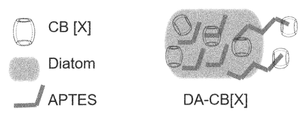
- 1 shows a diatom-cookerbituril complex in which a cucurbituril is bonded to a diatom modified with an amine group-containing silane compound.
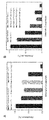
- FIG. 2 shows diatom alone (D), cucurbituril (CB [X]), diatom (DA) modified with amine group-containing silane compound, diatom-cookerbituril (D-CB [X]), and amine group-containing silane compound Comparison of pathogen capture efficiency of diatom-cookerbituril (DA-CB [X]) modified with
- D-CB [X] diatom-cookerbituril
- the inventors of the present invention treated the diatom surface with APTES to modify the amine group, and non-covalently bonded to the cucurbituril to the amine group to prepare a diatom-cookerbituril complex, wherein the diatom-cookerbituril complex is a pathogen capture in a sample containing a pathogen ( The present invention was completed, confirming that the removal) and the concentration efficiency were increased.
- the present invention is a diatom (Diatom) modified with a silane compound; And it is represented by the following formula (1), and provides a pathogen-concentrating composition comprising a complex containing cucurbituril (cucurbituril) that binds to the amine group of the silane compound.
- a pathogen-concentrating composition comprising a complex containing cucurbituril (cucurbituril) that binds to the amine group of the silane compound.
- n is an integer of 5 to 8.
- the silane compound may be represented by the following Chemical Formula 2, but is not limited thereto.
- R 1 to R 3 may each be the same or different, either C1 to C4 alkyl or C1 to C4 alkoxy, R 4 is amino (C1 to C10) alkyl, 3- (2-amino ( C1 to C4) alkylamino) (C1 to C4) alkyl or 3- [2- (2-amino (C1 to C4) alkylamino) (C1 to C4) alkylamino] (C1 to C4) alkyl.
- the silane compound is (3-aminopropyl) triethoxysilane (APTES), (3-aminopropyl) trimethoxysilane ((3-aminopropyl) trimethoxysilane), ( (1-aminomethyl) triethoxysilane, (2-aminoethyl) triethoxysilane, (4-aminobutyl) triethoxysilane ((4 -aminobutyl) triethoxysilane), (5-aminopentyl) triethoxysilane, (6-aminohexyl) triethoxysilane, 3-aminopropyl 3-aminopropyl (diethoxy) methylsilane, N- [3- (trimethoxysilyl) propyl] ethylenediamine, N- [3- (trimethoxysilyl) propyl] ethylenediamine, [3- (2-amino Ethylamin
- the amine group of the silane compound may be bonded non-covalently with cucurbituril.
- the pathogen may be a microorganism, and the microorganism may be, but is not limited to, a virus, bacterium, fungus, protozoa, rickettsia or spiro carte.
- the present invention provides a kit for concentrating a pathogen comprising the composition.
- the membrane filter may be selected from the group consisting of a reverse osmosis filter, a hollow fiber membrane filter, an ultrafiltration membrane filter, a nano- and micro-filtration membrane filter, but is not limited thereto.
- the present invention is a diatom (Diatom) modified with a silane compound; And it is represented by the formula 1, and provides a pathogen concentration method comprising the step of reacting a complex containing a cucurbituril (cucurbituril) that binds to the amine group of the silane compound with a sample containing a pathogen.
- a pathogen concentration method comprising the step of reacting a complex containing a cucurbituril (cucurbituril) that binds to the amine group of the silane compound with a sample containing a pathogen.
- n is an integer of 5 to 8.
- the sample includes a pathogen-containing sample, feces, urine, tears, saliva, external secretions of the skin, external secretions of the respiratory tract, external secretions of the intestinal tract, external secretions of the digestive tract, plasma, serum, blood, spinal fluid, It may be noted that it may be, but is not limited to, various biological samples isolated from subjects suspected of being infected with a pathogen, such as lymph, fluid and tissue.
- a pathogen such as lymph, fluid and tissue.
- the silane compound may be represented by the following Chemical Formula 2, but is not limited thereto.
- R 1 to R 3 may each be the same or different, either C1 to C4 alkyl or C1 to C4 alkoxy, R 4 is amino (C1 to C10) alkyl, 3- (2-amino ( C1 to C4) alkylamino) (C1 to C4) alkyl or 3- [2- (2-amino (C1 to C4) alkylamino) (C1 to C4) alkylamino] (C1 to C4) alkyl.
- the silane compound is (3-aminopropyl) triethoxysilane (APTES), (3-aminopropyl) trimethoxysilane, (1-aminomethyl) (1-aminomethyl) triethoxysilane, (2-aminoethyl) triethoxysilane, (4-aminobutyl) triethoxysilane ((5-aminopentyl) triethoxysilane), (6-aminohexyl) triethoxysilane, 3-aminopropyl (diethoxy) methylsilane ( 3-aminopropyl (diethoxy) methylsilane), N- [3- (trimethoxysilyl) propyl] ethylenediamine (N- [3- (trimethoxysilyl) propyl] ethylenediamine), [3- (2-aminoethylamino) propyl] Consisting of trimethoxysilane ([3- (2
- the present invention also provides the use of said complex for pathogen concentration.
- cucurbituril is a macrocyclic compound in which 5-8 monomers are combined to form a CB [5], CB [6], CB [7], and CB [8].
- 4 homologues exist.
- Cookerbituril has a lipophilic pupil and a hydrophilic inlet on both sides, so lipophilic interactions occur within the pupil, and hydrogen bonds, polar interactions, and cation-polar interactions at the upper and lower entrances of the carbonyl group, respectively. This makes it possible to exhibit an inclusion effect through a very stable non-covalent bond with various kinds of compounds. In particular, it is possible to form a complex through a non-covalent bond that is very stable with respect to a compound having a functional group such as an amino group, carboxylic acid.
- diatoms (3-aminopropyl) triethoxysilane ((3-aminopropyl) triethoxysilane (APTES)) by treating the diatom surface was modified with an amine group (amine group).
- diatomaceous earth was purified by precipitation in deionized water, and then 1 g of purified diatomaceous earth was added to 100 ml of a 95% EtOH solution, and 3 ml of APTES was added and reacted at room temperature for 4 hours. Then washed with ethanol and dried in vacuo to prepare a diatom (amine-functionalized D; DA) modified with an amine group-containing silane compound.
- the cucurbituril CB [5] (ca. 545198), CB [6] (ca. 94544), CB [7] (ca. 545201) and CB [8] (ca. 545228) used in the present invention are obtained from Sigma-Aldrich. It was purchased and prepared using a CB [X] solution of 0.001 g / ml concentration using mineral water.
- FIG. 2A shows diatom alone (D) in a sample containing a pathogen, diatom (DA) modified with an amine group-containing silane compound, cucurbituril 8 (CB [8]), diatom-cookerbituril8 (D-CB [ 8]), the absorbance was measured after treatment of diatom-cookerbituril 8 (DA-CB [8]) modified with an amine group-containing silane compound, and the average absorbance of the DA-CB [8] complex was about 0.07 (standard Deviation: 0.01) showed that the pathogen trapping ability was more stable and superior to other substances.
- Treatment with X] complex increased pathogen capture capacity, and among the complexes, DA-CB [8] complex showed the best pathogen capture capacity.
- DA-CB [X] solutions of different CB types were prepared in a diatom (DA) modified with an amine group-containing silane compound at a concentration of 50 mg / ml, and then contained a pathogen (E. coli, CFU: 10 5 ).
- a pathogen E. coli, CFU: 10 5
- 40 ⁇ l was added to 1 ml of the sample.
- 50 ⁇ l of deionized water was used as a control.
- 100 ⁇ l of supernatant (FIG. 3, supernatant of add DA-CB [X]) and tube precipitate (FIG. 3, eluted from DA-CB [X]).
- Pathogen DNA was extracted by adding 200 ⁇ l of lysis buffer to each). Real time polymerase chain reaction (Real time-PCR) was performed on the extracted DNA to compare the amount of pathogen DNA.
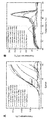
- Figures 3A and 3B show the fluorescence signal and melting curve of the pathogen DNA extracted under each condition, the DNA of the precipitate precipitated with the DA-CB [X] complex (eluted from DA-CB [X])
- the fluorescence signal showed a faster cycle threshold than DNA extracted from pathogens (positive, positive control) or supernatant of add DA-CB [X], which contained the DA-CB [X] complex in the sample. It was confirmed that the captured pathogens were efficiently captured and concentrated.
- the ternary complex of DA-CB [X] was effective in capturing (removing) and concentrating pathogens in samples containing pathogens, and it was confirmed that CB [8] showed the best effect among various types of cucurbituril.
Landscapes
- Chemical & Material Sciences (AREA)
- Life Sciences & Earth Sciences (AREA)
- Engineering & Computer Science (AREA)
- Health & Medical Sciences (AREA)
- Organic Chemistry (AREA)
- Zoology (AREA)
- Wood Science & Technology (AREA)
- Biotechnology (AREA)
- Genetics & Genomics (AREA)
- Bioinformatics & Cheminformatics (AREA)
- Chemical Kinetics & Catalysis (AREA)
- Biochemistry (AREA)
- General Health & Medical Sciences (AREA)
- Microbiology (AREA)
- General Engineering & Computer Science (AREA)
- Analytical Chemistry (AREA)
- Virology (AREA)
- Medicinal Chemistry (AREA)
- Biomedical Technology (AREA)
- Tropical Medicine & Parasitology (AREA)
- Immunology (AREA)
- Pathology (AREA)
- Physics & Mathematics (AREA)
- Proteomics, Peptides & Aminoacids (AREA)
- Water Supply & Treatment (AREA)
- Sustainable Development (AREA)
- Botany (AREA)
- Cell Biology (AREA)
- Biophysics (AREA)
- Molecular Biology (AREA)
- General Physics & Mathematics (AREA)
- Materials Engineering (AREA)
Abstract
본 발명은 규조류 및 쿠커비투릴을 이용한 병원체 농축 방법에 관한 것으로, 본 발명에 따르면, 규조 표면을 실란 화합물로 개질시키고, 상기 실란 화합물의 아민기에 쿠커비투릴을 비공유결합으로 결합시켜 제조되는 규조-쿠커비투릴 복합체는 병원체가 함유된 시료에서 병원체를 효과적으로 포획(제거) 및 농축시킬 수 있는 바, 이를 이용하면 병원체가 함유된 시료, 또는 병원체에 감염된 것으로 의심되는 객체로부터 분리된 다양한 생물 시료로부터 병원체를 용이하게 제거할 수 있다. 또한, 본 발명의 규조-쿠커비투릴 복합체는 컬럼, 필터 등에 적용되어 다양한 분야에 응용될 수 있다.
Description
본 발명은 규조류 및 쿠커비투릴을 이용한 병원체 포획 및 농축 방법에 관한 것이다.
규조류(Diatom)는 2 μm ~ 2 mm 까지의 다양한 크기로 분포하는 단세포 조류로 지구상에서 흔히 볼 수 있는 대표적인 식물성 플랑크톤이다. 규조류는 육상 총 1차 생산량의 20 ~ 25%를 차지하고, 해상 생물량 생산의 40%를 차지하고 있기 때문에 수백만 년 동안 해양의 생산자로써 생태계에 중요한 역할을 담당해오고 있다. 또한, 규조토(Diatomaceous earth)는 규조류 세포막의 주성분인 천연 규산질 소재로서, 450℃에서 가소되고, 표면상에 하이드록실기가 풍부한 실리카로 구성되므로 바이오-실리카(bio-silica)라고도 알려져 있다. 바이오-실리카의 크기는 대략 10 ~ 20 μm 정도이다. 최근, 규조류 또는 규조토를 이용하여 무기소재, 생물환경 소재, 나노공학 소재 또는 산업적 응용 소재로써 활용하려는 연구가 활발히 진행 중에 있다.
쿠커비투릴은 1905년 베렌드(R. Behrend), 마이어(E. Meyer), 러쉐(F. Rusche)에 의하여 최초로 보고된 물질로서, 1981년 목(W. Mock)과 공동 연구자들은 상기 물질이 여섯 개의 단량체가 모여 고리를 이룬 거대한 고리 화합물로 C36H36N24O12의 화학식을 갖는다는 사실을 밝혀냈으며, X-선 회절법에 의해 그 구조를 확인하였다(J. Am. Chem. Soc.1981, 103, 7367). 이들은 상기 화합물을 쿠커비투릴[6]이라고 명명하였다. 이후 2000년에 들어서면서 김기문과 공동 연구자들은 기존의 쿠커비투릴[6]의 합성방법을 개선하여 쿠커비투릴[6] 뿐만 아니라 동족체인 쿠커비투릴[n] (n = 5, 7, 8)들을 합성 및 분리하였고, 각각의 구조를 X-선 회절법으로 확인하였다(J. Am. Chem. Soc. 2000, 122, 540).
쿠커비투릴은 거대고리분자 화합물로서 친유성의 동공을 가지고, 친수성의 입구를 양쪽에 가지고 있다. 그러므로, 쿠커비투릴은 동공 내에서는 친유성 상호작용이 이루어지며, 6개의 카르보닐기가 위치한 상하의 두 입구에서는 각각 수소결합, 극성상호작용, 양이온-극성 상호작용 등이 이루어져, 다양한 종류의 화합물들과 대단히 안정적인 비공유결합을 통한 포접 효과를 나타낸다. 특히 아미노기, 카르복실산 등의 작용기를 가진 화합물에 대해서 매우 안정적인 비공유결합을 통한 복합체를 형성하며, 이러한 특성으로 인해 다양한 약물전달시스템 개발에 지속적으로 연구되고 있다.
한편, 물은 많은 다양한 종류의 바이러스와 같은 나노 크기의 병원체를 함유하고 있다. 다양한 환경에서, 이러한 바이러스들은 물이 사용되기에 앞서 반드시 제거되어야 한다. 그러나, 현대 정수 수단에도 불구하고, 저개발 국가 등 많은 인구는 위험에 처해 있으며, 증가하는 인구 밀도, 부족한 수 자원, 수 처리 시설의 미비로 오염된 물에 노출되어 치명적인 결과를 야기한다. 또한, 최근 들어 생명공학을 비롯한 진단의학, 약물의학, 대사의학 등 다양한 분야에서도 생물 시료로부터 보다 신속하고 순수하게 병원체를 분리하고자 하는 노력이 계속되고 있다.
이에, 다양한 시료로부터 병원체를 제거하는 새로운 기술의 개발이 필요한 실정이며, 규조류에 쿠커비투릴 접목을 통한 병원체 농축 및 제거 기술은 현재까지 보고된 바가 없다.
본 발명의 목적은 실란 화합물로 개질된 규조 및 쿠커비투릴을 함유하는 복합체를 포함하는 병원체 농축용 조성물, 이를 이용한 병원체 농축용 키트, 병원체 농축용 멤브레인 필터를 제공하는 데에 있다.
본 발명의 다른 목적은 상기 복합체를 이용한 병원체 농축 방법을 제공하는 데에 있다.
본 발명의 또 다른 목적은 병원체 농축을 위한 상기 복합체의 용도를 제공하는 데에 있다.
상기 목적을 달성하기 위하여, 본 발명은 실란 화합물로 개질된 규조(Diatom); 및 하기 화학식 1로 표시되며, 상기 실란 화합물의 아민기에 결합하는 쿠커비투릴(cucurbituril)을 함유하는 복합체를 포함하는 병원체 농축용 조성물을 제공한다.
[화학식 1]

상기 화학식 1에서 n은 5 내지 8의 정수임.
또한, 본 발명은 상기 조성물을 포함하는 병원체 농축용 키트를 제공한다.
또한, 본 발명은 상기 조성물을 포함하는 병원체 농축용 멤브레인 필터를 제공한다.
또한, 본 발명은 상기 복합체를 병원체가 함유된 시료와 반응시키는 단계를 포함하는 병원체 농축 방법을 제공한다.
또한, 본 발명은 병원체 농축을 위한 상기 복합체의 용도를 제공한다.
본 발명에 따르면, 규조 표면을 실란 화합물로 개질시키고, 상기 실란 화합물의 아민기에 쿠커비투릴을 비공유결합으로 결합시켜 제조되는 규조-쿠커비투릴 복합체는 병원체가 함유된 시료에서 병원체를 효과적으로 포획(제거) 및 농축시킬 수 있는 바, 이를 이용하면 병원체가 함유된 시료, 또는 병원체에 감염된 것으로 의심되는 객체로부터 분리된 다양한 생물 시료로부터 병원체를 용이하게 제거할 수 있다. 또한, 본 발명의 규조-쿠커비투릴 복합체는 컬럼, 필터 등에 적용되어 다양한 분야에 응용될 수 있다.
도 1은 아민기-함유 실란 화합물로 개질된 규조에 쿠커비투릴을 결합시킨 규조-쿠커비투릴 복합체를 도시하여 나타낸 것이다.
도 2는 규조 단독(D), 쿠커비투릴(CB[X]), 아민기-함유 실란 화합물로 개질된 규조(DA), 규조-쿠커비투릴(D-CB[X]), 및 아민기-함유 실란 화합물로 개질된 규조-쿠커비투릴(DA-CB[X])의 병원체 포획 효율을 비교한 결과이다.
도 3은 아민기-함유 실란 화합물로 개질된 규조-쿠커비투릴(DA-CB[X])의 병원체 포획 및 농축 효율을 DNA 추출 및 실시간 중합효소 연쇄 반응으로 비교한 결과이다.
본 발명의 발명자들은 규조 표면을 APTES로 처리하여 아민기로 개질시키고, 상기 아민기에 쿠커비투릴을 비공유결합으로 결합시켜 규조-쿠커비투릴 복합체를 제조하였으며, 상기 규조-쿠커비투릴 복합체가 병원체가 함유된 시료에서 병원체 포획(제거) 및 농축 효율을 증가시키는 것을 확인하며 본 발명을 완성하였다.
본 발명은 실란 화합물로 개질된 규조(Diatom); 및 하기 화학식 1로 표시되며, 상기 실란 화합물의 아민기에 결합하는 쿠커비투릴(cucurbituril)을 함유하는 복합체를 포함하는 병원체 농축용 조성물을 제공한다.
[화학식 1]

상기 화학식 1에서 n은 5 내지 8의 정수임.
상기 실란 화합물은 하기 화학식 2로 표시될 수 있으나, 이에 제한되는 것은 아님을 명시한다.
[화학식 2]

상기 식에서, R1 내지 R3는 각각 같거나 다를 수 있으며, C1 내지 C4의 알킬 또는 C1 내지 C4의 알콕시 중 어느 하나이고, R4는 아미노(C1 내지 C10)알킬, 3-(2-아미노(C1 내지 C4)알킬아미노)(C1 내지 C4)알킬 또는 3-[2-(2-아미노(C1 내지 C4)알킬아미노)(C1 내지 C4)알킬아미노](C1 내지 C4)알킬 중 어느 하나임.
보다 바람직하게는, 상기 실란 화합물은 (3-아미노프로필)트리에톡시실란((3-aminopropyl)triethoxysilane; APTES), (3-아미노프로필)트리메톡시실란((3-aminopropyl)trimethoxysilane), (1-아미노메틸)트리에톡시실란((1-aminomethyl)triethoxysilane), (2-아미노에틸)트리에톡시실란((2-aminoethyl)triethoxysilane), (4-아미노부틸)트리에톡시실란((4-aminobutyl)triethoxysilane), (5-아미노펜틸)트리에톡시실란((5-aminopentyl)triethoxysilane), (6-아미노헥실)트리에톡시실란((6-aminohexyl)triethoxysilane), 3-아미노프로필(디에톡시)메틸실란(3-aminopropyl(diethoxy)methylsilane), N-[3-(트리메톡시실릴)프로필]에틸렌디아민(N-[3-(trimethoxysilyl)propyl]ethylenediamine), [3-(2-아미노에틸아미노)프로필]트리메톡시실란([3-(2-aminoethylamino)propyl]trimethoxysilane; AEAPTMS) 및 3-[(트리메톡시실릴)프로필]디에틸렌트리아민(3[(trimethoxysilyl)propyl]diethylenetriamine; TMPTA)로 이루어진 군에서 선택될 수 있으나, 이에 제한되는 것은 아님을 명시한다.
상기 실란 화합물의 아민기는 쿠커비투릴과 비공유결합으로 결합될 수 있다.
상기 병원체는 미생물일 수 있으며, 상기 미생물은 바이러스, 세균, 진균, 원충, 리케차 또는 스피로헤타일 수 있으나, 이에 제한되는 것은 아님을 명시한다.
또한, 본 발명은 상기 조성물을 포함하는 병원체 농축용 키트를 제공한다. 상기 멤브레인 필터는 역삼투압 필터, 중공사막 필터, 한외여과막 필터, 나노- 및 마이크로-여과막 필터로 이루어진 군에서 선택될 수 있으나, 이에 제한되는 것은 아님을 명시한다.
또한, 본 발명은 실란 화합물로 개질된 규조(Diatom); 및 하기 화학식 1로 표시되며, 상기 실란 화합물의 아민기에 결합하는 쿠커비투릴(cucurbituril)을 함유하는 복합체를 병원체가 함유된 시료와 반응시키는 단계를 포함하는 병원체 농축 방법을 제공한다.
[화학식 1]

상기 화학식 1에서 n은 5 내지 8의 정수임.
상기 시료는 병원체가 함유되어 있는 시료를 포함하여, 분변, 소변, 눈물, 타액, 피부의 외부 분비물, 호흡관의 외부 분비물, 장관의 외부 분비물, 소화관의 외부 분비물, 혈장, 혈청, 혈액, 척수액, 림프액, 체액 및 조직 등 병원체에 감염된 것으로 의심되는 객체로부터 분리된 다양한 생물 시료일 수 있으나, 이에 제한되는 것은 아님을 명시한다.
상기 실란 화합물은 하기 화학식 2로 표시될 수 있으나, 이에 제한되는 것은 아님을 명시한다.
[화학식 2]

상기 식에서, R1 내지 R3는 각각 같거나 다를 수 있으며, C1 내지 C4의 알킬 또는 C1 내지 C4의 알콕시 중 어느 하나이고, R4는 아미노(C1 내지 C10)알킬, 3-(2-아미노(C1 내지 C4)알킬아미노)(C1 내지 C4)알킬 또는 3-[2-(2-아미노(C1 내지 C4)알킬아미노)(C1 내지 C4)알킬아미노](C1 내지 C4)알킬 중 어느 하나임.
상기 실란 화합물은 (3-아미노프로필)트리에톡시실란((3-aminopropyl)triethoxysilane; APTES), (3-아미노프로필)트리메톡시실란((3-aminopropyl)trimethoxysilane), (1-아미노메틸)트리에톡시실란((1-aminomethyl)triethoxysilane), (2-아미노에틸)트리에톡시실란((2-aminoethyl)triethoxysilane), (4-아미노부틸)트리에톡시실란((4-aminobutyl)triethoxysilane), (5-아미노펜틸)트리에톡시실란((5-aminopentyl)triethoxysilane), (6-아미노헥실)트리에톡시실란((6-aminohexyl)triethoxysilane), 3-아미노프로필(디에톡시)메틸실란(3-aminopropyl(diethoxy)methylsilane), N-[3-(트리메톡시실릴)프로필]에틸렌디아민(N-[3-(trimethoxysilyl)propyl]ethylenediamine), [3-(2-아미노에틸아미노)프로필]트리메톡시실란([3-(2-aminoethylamino)propyl]trimethoxysilane; AEAPTMS) 및 3-[(트리메톡시실릴)프로필]디에틸렌트리아민(3[(trimethoxysilyl)propyl]diethylenetriamine; TMPTA)로 이루어진 군에서 선택된 어느 하나 이상일 수 있으나, 이에 제한되는 것은 아님을 명시한다.
또한, 본 발명은 병원체 농축을 위한 상기 복합체의 용도를 제공한다.
이하에서는 실시예를 통하여 본 발명을 더욱 상세히 설명하고자 한다. 이들 실시예는 오로지 본 발명을 보다 구체적으로 설명하기 위한 것으로, 본 발명의 요지에 따라 본 발명의 범위가 이들 실시예에 의해 제한되지 않는다는 것은 당업계에서 통상의 지식을 가진 자에 있어서 자명할 것이다.
실시예 1: 규조-쿠커비투릴 복합체 제조
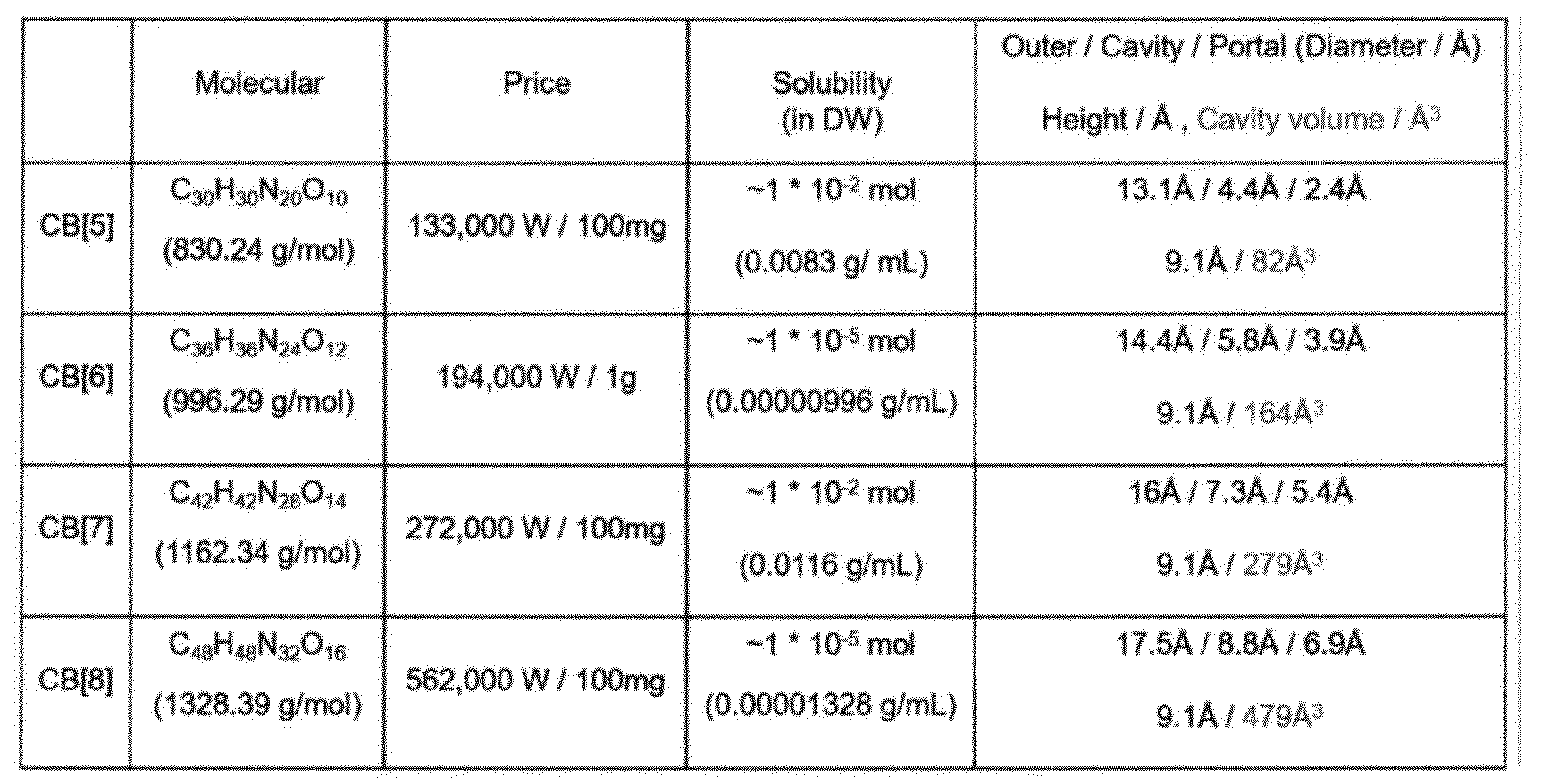
하기 화학식 1 및 하기 표 1과 같이, 쿠커비투릴(cucurbituril; CB)은 5-8 개의 단량체가 모여 고리를 이룬 거대고리 화합물로 CB[5], CB[6], CB[7], CB[8], 4개의 동족체가 존재한다. 쿠커비투릴은 친유성의 동공을 가지고, 친수성의 입구를 양쪽에 가지고 있어, 동공 내에서는 친유성 상호작용이 이루어지며, 카르보닐기가 위치한 상하의 두 입구에서는 각각 수소결합, 극성상호작용, 양이온-극성 상호작용 등이 이루어져, 다양한 종류의 화합물들과 대단히 안정적인 비공유결합을 통한 포접 효과를 나타낸다. 특히 아미노기, 카르복실산 등의 작용기를 가진 화합물에 대해서 매우 안정적인 비공유결합을 통한 복합체의 형성이 가능하다.
[화학식 1]

[규칙 제91조에 의한 정정 22.04.2019]
본 발명에서는 도 1과 같이, 규조(Diatom)에 (3-아미노프로필)트리에톡시실란((3-aminopropyl)triethoxysilane; APTES)을 처리하여 규조 표면을 아민기(amine group)로 개질시켰다. 간략하게, 규조토를 탈이온수(deionized water)에 침전시켜 정제한 후, 정제된 규조토 1 g을 95% EtOH 용액 100 ml에 넣고, APTES 3 ml를 첨가하여 상온에서 4시간 동안 반응시켰다. 이후 에탄올로 세척하고 진공 건조시켜 아민기-함유 실란 화합물로 개질된 규조(amine-functionalized D; DA)를 제조하였다.
상기 아민기-함유 실란 화합물로 개질된 규조에 다양한 유형의 쿠커비투릴을 각각 처리하여 규조-쿠커비투릴(DA-CB[X], X=5-8) 복합체를 제조하였다. 본 발명에서 사용된 쿠커비투릴 CB[5] (ca. 545198), CB[6] (ca. 94544), CB[7] (ca. 545201) 및 CB[8] (ca. 545228)은 Sigma-Aldrich에서 구매하였으며, 미네랄 워터를 이용하여 0.001 g/ml 농도의 CB[X] 용액으로 제조하여 사용하였다. 복합체 제조를 위해서, 상기 아민기-함유 실란 화합물로 개질된 규조 9 ml(50 mg/ml)에 CB[X] 1 ml(0.001 mg/ml)을 넣고 상온(room temperature)에서 20분 동안 반응시켰다. 제조된 복합체는 실험에 따라 필요한 용량을 사용하였다.
실시예 2: 아민기-함유 실란 화합물로 개질된 규조 및 쿠커비투릴 복합체의 병원체 포획 효율 분석
큐벳(Cuvette, 4 ml)에 병원체(대장균, Abs : 0.99)가 함유되어 있는 시료를 3 ml 첨가하고, 규조 단독(D), 쿠커비투릴(CB[X]), 아민기-함유 실란 화합물로 개질된 규조(DA), 규조-쿠커비투릴(D-CB[X]), 아민기-함유 실란 화합물로 개질된 규조-쿠커비투릴(DA-CB[X]) 용액을 각각 50 mg/ml의 농도로 제조한 후, 각 용액을 상기 큐벳에 100 μl씩 첨가하였다. 이후 2분 동안 혼합하고 50분 동안 반응시킨 다음 100 μl의 상층액을 취하였다. 분광광도계(spectrophotometer, Biochrom Libra S22 UV/Vis)를 이용하여 600 nm에서 흡광도를 측정하고, 병원체 포획 효율을 분석하였다.
그 결과, 도 2A는 병원체가 함유된 시료에 규조 단독(D), 아민기-함유 실란 화합물로 개질된 규조(DA), 쿠커비투릴8(CB[8]), 규조-쿠커비투릴8(D-CB[8]), 아민기-함유 실란 화합물로 개질된 규조-쿠커비투릴8(DA-CB[8])을 처리한 후 흡광도를 측정한 것으로, DA-CB[8] 복합체의 평균 흡광도가 약 0.07 (표준편차: 0.01)로 다른 물질들 보다 병원체 포획능이 안정적이고 가장 우수한 것을 확인할 수 있었다.
도 2B는 병원체가 함유된 시료에 쿠커비투릴의 유형을 달리한 DA-CB[X](X = 5, 6, 7, 8)를 처리한 후 흡광도를 측정한 것으로, DA 단독에 비해 DA-CB[X] 복합체를 처리한 경우, 병원체 포획능이 증가하였으며, 복합체 중에서도 DA-CB[8] 복합체가 가장 우수한 병원체 포획능을 나타내었다.
실시예 3: 아민기-함유 실란 화합물로 개질된 규조 및 쿠커비투릴 복합체의 병원체 농축 효율 분석
아민기-함유 실란 화합물로 개질된 규조(DA)에 CB 유형을 달리한 DA-CB[X] 용액을 각각 50 mg/ml의 농도로 제조한 후, 병원체(대장균, CFU : 105)가 함유되어 있는 시료 1 ml에 40 μl씩 첨가하였다. 대조군으로는 50 μl의 탈이온수를 사용하였다. 이후 2분 동안 혼합하고 30분 동안 반응시킨 다음 원심분리하였으며, 100 μl의 상층액(도 3, supernatant of add DA-CB[X]) 및 튜브 침전물(도 3, eluted from DA-CB[X])에 각각 200 μl의 용해 완충액을 첨가하여 병원체 DNA를 추출하였다. 추출된 DNA로 실시간 중합효소 연쇄 반응(Real time-PCR)을 수행하여 병원체 DNA의 양을 비교하였다.
그 결과, 도 3A 및 도 3B는 각 조건에서 추출된 병원체 DNA의 형광 신호 및 용융 곡선을 나타낸 것으로, DA-CB[X] 복합체와 함께 침전된 침전물(eluted from DA-CB[X])의 DNA 형광 신호가 병원체(positive, 양성 대조군) 또는 상층액(supernatant of add DA-CB[X])으로부터 추출된 DNA 보다 더 빠른 cycle threshold를 나타내는 것을 확인한 바, DA-CB[X] 복합체가 시료에 함유되어 있는 병원체를 효율적으로 포획 및 농축하는 것을 확인할 수 있었다.
즉, DA-CB[X]의 삼원 복합체는 병원체가 함유되어 있는 시료에서 병원균 포획(제거) 및 농축에 효과적이며, 다양한 쿠커비투릴 유형 중 CB[8]이 가장 우수한 효과를 나타내는 것을 확인하였다.
이상으로 본 발명의 특정한 부분을 상세히 기술한 바, 당업계의 통상의 지식을 가진 자에게 있어서 이러한 구체적인 기술은 단지 바람직한 구현 예일 뿐이며, 이에 본 발명의 범위가 제한되는 것이 아닌 점은 명백하다. 따라서, 본 발명의 실질적인 범위는 첨부된 청구항과 그의 등가물에 의하여 정의된다고 할 것이다.
본 발명의 범위는 후술하는 특허청구범위에 의하여 나타내어지며, 특허청구범위의 의미 및 범위 그리고 그 균등 개념으로부터 도출되는 모든 변경 또는 변형된 형태가 본 발명의 범위에 포함되는 것으로 해석되어야 한다.
Claims (12)
- 실란 화합물로 개질된 규조(Diatom); 및 하기 화학식 1로 표시되며, 상기 실란 화합물의 아민기에 결합하는 쿠커비투릴(cucurbituril)을 함유하는 복합체를 포함하는 병원체 농축용 조성물:[화학식 1]
 상기 화학식 1에서 n은 5 내지 8의 정수임.
 - 제 1항에 있어서, 상기 실란 화합물은 하기 화학식 2로 표시되는 화합물인 것을 특징으로 하는 병원체 농축용 조성물:[화학식 2]
 상기 식에서, R1 내지 R3는 각각 같거나 다를 수 있으며, C1 내지 C4의 알킬 또는 C1 내지 C4의 알콕시 중 어느 하나이고, R4는 아미노(C1 내지 C10)알킬, 3-(2-아미노(C1 내지 C4)알킬아미노)(C1 내지 C4)알킬 또는 3-[2-(2-아미노(C1 내지 C4)알킬아미노)(C1 내지 C4)알킬아미노](C1 내지 C4)알킬 중 어느 하나임.
 - 제 2항에 있어서, 상기 실란 화합물은 (3-아미노프로필)트리에톡시실란((3-aminopropyl)triethoxysilane; APTES), (3-아미노프로필)트리메톡시실란((3-aminopropyl)trimethoxysilane), (1-아미노메틸)트리에톡시실란((1-aminomethyl)triethoxysilane), (2-아미노에틸)트리에톡시실란((2-aminoethyl)triethoxysilane), (4-아미노부틸)트리에톡시실란((4-aminobutyl)triethoxysilane), (5-아미노펜틸)트리에톡시실란((5-aminopentyl)triethoxysilane), (6-아미노헥실)트리에톡시실란((6-aminohexyl)triethoxysilane), 3-아미노프로필(디에톡시)메틸실란(3-aminopropyl(diethoxy)methylsilane), N-[3-(트리메톡시실릴)프로필]에틸렌디아민(N-[3-(trimethoxysilyl)propyl]ethylenediamine), [3-(2-아미노에틸아미노)프로필]트리메톡시실란([3-(2-aminoethylamino)propyl]trimethoxysilane; AEAPTMS) 및 3-[(트리메톡시실릴)프로필]디에틸렌트리아민(3[(trimethoxysilyl)propyl]diethylenetriamine; TMPTA)로 이루어진 군에서 선택된 어느 하나 이상인 것을 특징으로 하는 병원체 농축용 조성물.
- 제 1항에 있어서, 상기 실란 화합물의 아민기는 쿠커비투릴과 비공유결합으로 결합되는 것을 특징으로 하는 병원체 농축용 조성물.
- 제 1항에 있어서, 상기 병원체는 미생물인 것을 특징으로 하는 병원체 농축용 조성물.
- 제 5항에 있어서, 상기 미생물은 바이러스, 세균, 진균, 원충, 리케차 또는 스피로헤타인 것을 특징으로 하는 병원체 농축용 조성물.
- 제 1항 내지 제 6항 중 어느 한 항의 조성물을 포함하는 병원체 농축용 키트.
- 제 1항 내지 제 6항 중 어느 한 항의 조성물을 포함하는 병원체 농축용 멤브레인 필터.
- 제 8항에 있어서, 상기 멤브레인 필터는 역삼투압 필터, 중공사막 필터, 한외여과막 필터, 나노- 및 마이크로-여과막 필터로 이루어진 군에서 선택된 것을 특징으로 하는 병원체 농축용 멤브레인 필터.
- 실란 화합물로 개질된 규조(Diatom); 및 하기 화학식 1로 표시되며, 상기 실란 화합물의 아민기에 결합하는 쿠커비투릴(cucurbituril)을 함유하는 복합체를 병원체가 함유된 시료와 반응시키는 단계를 포함하는 병원체 농축 방법:[화학식 1]
 상기 화학식 1에서 n은 5 내지 8의 정수임.
 - 제 10항에 있어서, 상기 실란 화합물은 하기 화학식 2로 표시되는 화합물인 것을 특징으로 하는 병원체 농축 방법:[화학식 2]
 상기 식에서, R1 내지 R3는 각각 같거나 다를 수 있으며, C1 내지 C4의 알킬 또는 C1 내지 C4의 알콕시 중 어느 하나이고, R4는 아미노(C1 내지 C10)알킬, 3-(2-아미노(C1 내지 C4)알킬아미노)(C1 내지 C4)알킬 또는 3-[2-(2-아미노(C1 내지 C4)알킬아미노)(C1 내지 C4)알킬아미노](C1 내지 C4)알킬 중 어느 하나임.
 - 제 11항에 있어서, 상기 실란 화합물은 (3-아미노프로필)트리에톡시실란((3-aminopropyl)triethoxysilane; APTES), (3-아미노프로필)트리메톡시실란((3-aminopropyl)trimethoxysilane), (1-아미노메틸)트리에톡시실란((1-aminomethyl)triethoxysilane), (2-아미노에틸)트리에톡시실란((2-aminoethyl)triethoxysilane), (4-아미노부틸)트리에톡시실란((4-aminobutyl)triethoxysilane), (5-아미노펜틸)트리에톡시실란((5-aminopentyl)triethoxysilane), (6-아미노헥실)트리에톡시실란((6-aminohexyl)triethoxysilane), 3-아미노프로필(디에톡시)메틸실란(3-aminopropyl(diethoxy)methylsilane), N-[3-(트리메톡시실릴)프로필]에틸렌디아민(N-[3-(trimethoxysilyl)propyl]ethylenediamine), [3-(2-아미노에틸아미노)프로필]트리메톡시실란([3-(2-aminoethylamino)propyl]trimethoxysilane; AEAPTMS) 및 3-[(트리메톡시실릴)프로필]디에틸렌트리아민(3[(trimethoxysilyl)propyl]diethylenetriamine; TMPTA)로 이루어진 군에서 선택된 어느 하나 이상인 것을 특징으로 하는 병원체 농축 방법.
Applications Claiming Priority (2)
| Application Number | Priority Date | Filing Date | Title |
|---|---|---|---|
| KR1020180037375A KR20190129148A (ko) | 2018-03-30 | 2018-03-30 | 규조류 및 쿠커비투릴을 이용한 병원체 농축 방법 |
| KR10-2018-0037375 | 2018-03-30 |
Publications (1)
| Publication Number | Publication Date |
|---|---|
| WO2019190046A1 true WO2019190046A1 (ko) | 2019-10-03 |
Family
ID=68059275
Family Applications (1)
| Application Number | Title | Priority Date | Filing Date |
|---|---|---|---|
| PCT/KR2019/001622 Ceased WO2019190046A1 (ko) | 2018-03-30 | 2019-02-11 | 규조류 및 쿠커비투릴을 이용한 병원체 농축 방법 |
Country Status (2)
| Country | Link |
|---|---|
| KR (1) | KR20190129148A (ko) |
| WO (1) | WO2019190046A1 (ko) |
Citations (4)
| Publication number | Priority date | Publication date | Assignee | Title |
|---|---|---|---|---|
| KR100528959B1 (ko) * | 2003-02-11 | 2005-11-16 | 학교법인 포항공과대학교 | 쿠커비투릴이 결합된 실리카 겔 |
| US20150338403A1 (en) * | 2013-02-01 | 2015-11-26 | Oregon State University | Embodiments of a composition comprising diatom frustules and a method of using |
| US9578883B2 (en) * | 2011-10-25 | 2017-02-28 | Jack L. Mathis | Silane modified diatomaceous earth mechanical insecticide |
| CN107382707A (zh) * | 2017-08-03 | 2017-11-24 | 山西康惠中天医药科技有限公司 | 一种高效纯化α‑亚麻酸的方法 |
Family Cites Families (1)
| Publication number | Priority date | Publication date | Assignee | Title |
|---|---|---|---|---|
| CA2728270A1 (en) | 2008-06-17 | 2009-12-23 | Georgia Tech Research Corporation | Superparamagnetic nanoparticles for removal of cells, pathogens or viruses |
-
2018
- 2018-03-30 KR KR1020180037375A patent/KR20190129148A/ko not_active Ceased
-
2019
- 2019-02-11 WO PCT/KR2019/001622 patent/WO2019190046A1/ko not_active Ceased
Patent Citations (4)
| Publication number | Priority date | Publication date | Assignee | Title |
|---|---|---|---|---|
| KR100528959B1 (ko) * | 2003-02-11 | 2005-11-16 | 학교법인 포항공과대학교 | 쿠커비투릴이 결합된 실리카 겔 |
| US9578883B2 (en) * | 2011-10-25 | 2017-02-28 | Jack L. Mathis | Silane modified diatomaceous earth mechanical insecticide |
| US20150338403A1 (en) * | 2013-02-01 | 2015-11-26 | Oregon State University | Embodiments of a composition comprising diatom frustules and a method of using |
| CN107382707A (zh) * | 2017-08-03 | 2017-11-24 | 山西康惠中天医药科技有限公司 | 一种高效纯化α‑亚麻酸的方法 |
Non-Patent Citations (1)
| Title |
|---|
| KARCHER, S. ET AL.: "Removal of reactive dyes by sorption/complexation with cucurbituril", WATER SCIENCE AND TECHNOLOGY, vol. 40, no. 4-5, 1999, pages 425 - 433, XP055636275, doi:10.2166/wst.1999.0619 * |
Also Published As
| Publication number | Publication date |
|---|---|
| KR20190129148A (ko) | 2019-11-20 |
Similar Documents
| Publication | Publication Date | Title |
|---|---|---|
| CN111961204B (zh) | 一种聚砜衍生物及其制备方法和用途 | |
| CN115029323B (zh) | 一种耐药型金黄葡萄球菌噬菌体sp160及其在制备抑菌剂中的应用 | |
| CN105132410B (zh) | 一种微生物基因组dna的提取方法 | |
| CN111518225B (zh) | 羊种布鲁氏菌疫苗株m5提取的脂多糖在制备诊断人布鲁氏菌病的产品中的应用 | |
| WO2020040577A1 (ko) | 현장 진단용 장치를 이용한 병원체 농축 및 핵산 추출 방법 | |
| US20230101799A1 (en) | Methods for purifying bacteriophage and products of manufacture containing endotoxin-free bacteriophage preparations | |
| JPH02501890A (ja) | 血球の分離 | |
| WO2019190046A1 (ko) | 규조류 및 쿠커비투릴을 이용한 병원체 농축 방법 | |
| CN109078619A (zh) | 一种广谱吸附脓毒症致病因子的吸附剂及用途 | |
| TWI790567B (zh) | 一種用於富集和檢測生物樣品中微生物的方法和裝置 | |
| WO2019182248A1 (ko) | 규조류 및 쿠커비투릴을 이용한 담수화 및 정수화 처리방법 | |
| CN102796669A (zh) | 柔嫩艾美耳球虫裂殖子提取纯化的方法 | |
| WO2021107235A1 (ko) | 부착성 규조류로부터 추출된 pdrn 및 이의 추출방법 | |
| CN104726337A (zh) | 一种含有藻类的水中“两虫”的富集、纯化方法及其含量测定方法 | |
| Randolph et al. | Novel test method (sickle confirm) to differentiate sickle cell anemia from sickle cell trait for potential use in developing countries | |
| Herich et al. | Diagnosis and manifestation of encephalitozoonosis in mice after experimental infection with different species and application of dexamethasone | |
| WO2022270872A1 (ko) | 박테리아 유래 고순도 세포밖 소포체의 상업적 정제 방법 | |
| RU2341561C1 (ru) | Способ получения хелперных фракций нейтрофилокинов, синтезированных нейтрофилами перитонеального экссудата экспериментальных животных под влиянием клеток вакцинного штамма чумного микроба | |
| CN117264016B (zh) | 一种抗炎多肽及其合成方法 | |
| WO2020166974A1 (ko) | 뇌 조직 투명화를 이용하여 약물의 뇌혈관장벽 통과 여부를 모니터링 하는 방법 | |
| CN118454285B (zh) | 一种高效去除牛血清内毒素的方法 | |
| RU2429484C2 (ru) | Способ экспресс-диагностики ротавирусной инфекции в материалах из верхних дыхательных путей, иммуноглобулин флуоресцирующий сухой для его осуществления | |
| CN105726525B (zh) | 含Merochlorin A结构的化合物在制备抗埃博拉病毒感染药物中的应用 | |
| CN111138523A (zh) | 一种从重组鸡干扰素α复性液中纯化制备重组鸡干扰素α的方法 | |
| US20240091741A1 (en) | Compositions and methods for filtering microorganisms from a fluid |
Legal Events
| Date | Code | Title | Description |
|---|---|---|---|
| 121 | Ep: the epo has been informed by wipo that ep was designated in this application |
Ref document number: 19776400 Country of ref document: EP Kind code of ref document: A1 |
|
| 122 | Ep: pct application non-entry in european phase |
Ref document number: 19776400 Country of ref document: EP Kind code of ref document: A1 |