WO2019150882A1 - 通信機器及びその制御方法及びプログラム - Google Patents
通信機器及びその制御方法及びプログラム Download PDFInfo
- Publication number
- WO2019150882A1 WO2019150882A1 PCT/JP2018/048505 JP2018048505W WO2019150882A1 WO 2019150882 A1 WO2019150882 A1 WO 2019150882A1 JP 2018048505 W JP2018048505 W JP 2018048505W WO 2019150882 A1 WO2019150882 A1 WO 2019150882A1
- Authority
- WO
- WIPO (PCT)
- Prior art keywords
- advertisement signal
- communication device
- advertisement
- communication
- receiving
- Prior art date
- Legal status (The legal status is an assumption and is not a legal conclusion. Google has not performed a legal analysis and makes no representation as to the accuracy of the status listed.)
- Ceased
Links
Images




Classifications
-
- H—ELECTRICITY
- H04—ELECTRIC COMMUNICATION TECHNIQUE
- H04W—WIRELESS COMMUNICATION NETWORKS
- H04W4/00—Services specially adapted for wireless communication networks; Facilities therefor
- H04W4/20—Services signaling; Auxiliary data signalling, i.e. transmitting data via a non-traffic channel
- H04W4/23—Services signaling; Auxiliary data signalling, i.e. transmitting data via a non-traffic channel for mobile advertising
-
- H—ELECTRICITY
- H04—ELECTRIC COMMUNICATION TECHNIQUE
- H04L—TRANSMISSION OF DIGITAL INFORMATION, e.g. TELEGRAPHIC COMMUNICATION
- H04L5/00—Arrangements affording multiple use of the transmission path
- H04L5/003—Arrangements for allocating sub-channels of the transmission path
- H04L5/0053—Allocation of signalling, i.e. of overhead other than pilot signals
-
- H—ELECTRICITY
- H04—ELECTRIC COMMUNICATION TECHNIQUE
- H04L—TRANSMISSION OF DIGITAL INFORMATION, e.g. TELEGRAPHIC COMMUNICATION
- H04L5/00—Arrangements affording multiple use of the transmission path
- H04L5/003—Arrangements for allocating sub-channels of the transmission path
- H04L5/0044—Allocation of payload; Allocation of data channels, e.g. PDSCH or PUSCH
- H04L5/0046—Determination of the number of bits transmitted on different sub-channels
-
- H—ELECTRICITY
- H04—ELECTRIC COMMUNICATION TECHNIQUE
- H04L—TRANSMISSION OF DIGITAL INFORMATION, e.g. TELEGRAPHIC COMMUNICATION
- H04L5/00—Arrangements affording multiple use of the transmission path
- H04L5/0091—Signalling for the administration of the divided path, e.g. signalling of configuration information
- H04L5/0094—Indication of how sub-channels of the path are allocated
-
- H—ELECTRICITY
- H04—ELECTRIC COMMUNICATION TECHNIQUE
- H04N—PICTORIAL COMMUNICATION, e.g. TELEVISION
- H04N21/00—Selective content distribution, e.g. interactive television or video on demand [VOD]
- H04N21/40—Client devices specifically adapted for the reception of or interaction with content, e.g. set-top-box [STB]; Operations thereof
- H04N21/43—Processing of content or additional data, e.g. demultiplexing additional data from a digital video stream; Elementary client operations, e.g. monitoring of home network or synchronising decoder's clock; Client middleware
- H04N21/436—Interfacing a local distribution network, e.g. communicating with another STB or one or more peripheral devices inside the home
- H04N21/4363—Adapting the video stream to a specific local network, e.g. a Bluetooth® network
- H04N21/43637—Adapting the video stream to a specific local network, e.g. a Bluetooth® network involving a wireless protocol, e.g. Bluetooth, RF or wireless LAN [IEEE 802.11]
-
- H—ELECTRICITY
- H04—ELECTRIC COMMUNICATION TECHNIQUE
- H04W—WIRELESS COMMUNICATION NETWORKS
- H04W4/00—Services specially adapted for wireless communication networks; Facilities therefor
- H04W4/80—Services using short range communication, e.g. near-field communication [NFC], radio-frequency identification [RFID] or low energy communication
-
- H—ELECTRICITY
- H04—ELECTRIC COMMUNICATION TECHNIQUE
- H04W—WIRELESS COMMUNICATION NETWORKS
- H04W72/00—Local resource management
- H04W72/02—Selection of wireless resources by user or terminal
-
- H—ELECTRICITY
- H04—ELECTRIC COMMUNICATION TECHNIQUE
- H04W—WIRELESS COMMUNICATION NETWORKS
- H04W8/00—Network data management
-
- H—ELECTRICITY
- H04—ELECTRIC COMMUNICATION TECHNIQUE
- H04W—WIRELESS COMMUNICATION NETWORKS
- H04W84/00—Network topologies
- H04W84/02—Hierarchically pre-organised networks, e.g. paging networks, cellular networks, WLAN [Wireless Local Area Network] or WLL [Wireless Local Loop]
- H04W84/10—Small scale networks; Flat hierarchical networks
-
- Y—GENERAL TAGGING OF NEW TECHNOLOGICAL DEVELOPMENTS; GENERAL TAGGING OF CROSS-SECTIONAL TECHNOLOGIES SPANNING OVER SEVERAL SECTIONS OF THE IPC; TECHNICAL SUBJECTS COVERED BY FORMER USPC CROSS-REFERENCE ART COLLECTIONS [XRACs] AND DIGESTS
- Y02—TECHNOLOGIES OR APPLICATIONS FOR MITIGATION OR ADAPTATION AGAINST CLIMATE CHANGE
- Y02D—CLIMATE CHANGE MITIGATION TECHNOLOGIES IN INFORMATION AND COMMUNICATION TECHNOLOGIES [ICT], I.E. INFORMATION AND COMMUNICATION TECHNOLOGIES AIMING AT THE REDUCTION OF THEIR OWN ENERGY USE
- Y02D30/00—Reducing energy consumption in communication networks
- Y02D30/70—Reducing energy consumption in communication networks in wireless communication networks
Definitions
- the present invention relates to a communication device, a control method thereof, and a program.
- BLE Bluetooth Low Energy
- Bluetooth (registered trademark) Core Specification Version 4.0 Bluetooth Low Energy
- BLE assumes long-time driving using a battery such as a button battery.
- a communication device operating as an advertiser broadcasts advertisement packets intermittently, thereby notifying the communication device operating as a scanner of its own identification information, information related to a service to be provided, and the like.
- Japanese Patent Application Laid-Open No. 2004-133620 discloses a technique in which an image processing apparatus transmits information indicating an executable state of a job as an advertisement packet by applying a BLE technique.
- BT5 Bluetooth 5.0
- the transmission band of the advertisement packet is greatly expanded, and a large amount of data can be transmitted.
- the amount of data that can be included in the advertisement packet is expanded from the conventional 31 bytes to 255 bytes.
- the present invention has been made in view of such a problem, and when it is estimated that there is a device capable of receiving a large advertisement in the communication range, the advertisement packet of that size is transmitted, thereby reducing the power consumption.
- the present invention intends to provide a technique for transmitting an advertisement packet of a size to be specified.
- a communication device of the present invention has the following configuration. That is, Communication equipment, First transmission means for transmitting the first advertisement signal using the first frequency band; When a request signal for requesting information on the communication device is received for the first advertisement signal transmitted by the first transmission unit, a second frequency band different from the first frequency band is used. And a second transmission means for transmitting the second advertisement signal having a data size larger than that of the first advertisement signal.
- the large advertisement packet when it is estimated that there is a device capable of receiving a large advertisement within the communication range, the large advertisement packet is transmitted with low power consumption by transmitting the advertisement packet of that size. Is possible.
- the accompanying drawings are included in the specification, constitute a part thereof, show an embodiment of the present invention, and are used to explain the principle of the present invention together with the description.
- the non-volatile memory 102 stores a control program executed by the control unit 101 and various data, and is typically a ROM.
- the volatile memory 103 stores a control program executed by the control unit 101 and is used as a work memory, and is typically a RAM.
- the storage medium 104 is used as an area for storing data transferred by the BT communication unit 108, parameters related to the transfer, and the like.
- the storage medium 104 is composed of a large-capacity flash memory, a memory card, or the like, for example.
- the operation unit 105 receives a user operation and controls processing for transmitting the input information to the control unit 101.
- the operation unit 105 includes a touch panel, button switches, cross keys, and the like.
- the display unit 106 performs control to display characters and images in order to notify the user of information.
- the display unit 106 is configured by a liquid crystal panel, an LED, or the like.
- the audio output unit 107 performs control to output audio in order to notify the user of information.
- the audio output unit 107 includes a speaker or the like.
- the BT communication unit 108 is a processing unit that controls BLE communication conforming to the Bluetooth (registered trademark) standard.
- the communication device 100 in this embodiment can be widely applied to products having a BLE communication function.
- the present invention can be applied to smartphones, tablets, digital cameras, headphones, PCs (personal computers), automobiles, and the like.
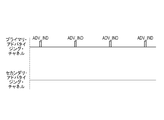
- 3A and 3B are diagrams illustrating an example of advertisement transmission executed by the communication device 200.
- the communication device 200 can execute advertisement transmission defined in the BT5 standard.
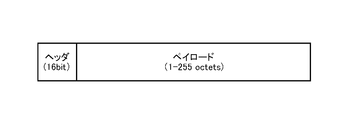
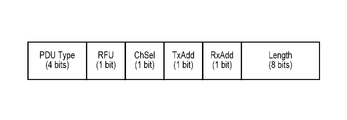
- FIG. 4A is a common format for advertising channel PDUs.
- the advertisement packet is composed of a header and a payload.
- FIG. 4B shows details of the header.
- the PDU Type is a parameter for identifying the type of advertisement packet. For example, 0000b (“b” indicates binary) indicates ADV_IND. Since the remaining parameters of the header are not directly related to the gist of the present invention, the description thereof is omitted.
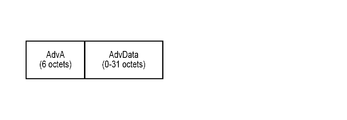
- FIG. 4C shows details of the payload of ADV_IND.
- the payload is composed of AdvA and AdvData.
- AdvA is a device address of a device that transmits an advertisement packet. The device address is information for uniquely identifying a device.
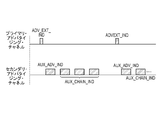
- FIG. 3B is a diagram showing advertisement transmission for transmitting a large amount of application data.
- a plurality of types of advertisement packets are transmitted mainly using a secondary advertising channel.
- the advertisement packet shown in FIG. 3B is one of advertising channel PDUs defined in the BT5 standard.
- the communication device 200 When transmitting large-capacity advertisements (target-size advertisements), the communication device 200 first transmits ADV_EXT_IND in the primary advertising channel.
- the communication device 200 includes information necessary for receiving AUX_ADV_IND to be continuously transmitted in ADV_EXT_IND.
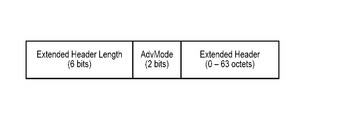
- FIG. 4D shows details of the payload of AUX_EXT_IND.
- the communication device 200 includes a channel ID used for transmission of AUX_ADV_IND and information related to transmission timing in the extended header.
- the information related to the transmission timing is information indicating the time interval between ADV_EXT_IND and AUX_ADV_IND.
- the communication device 200 sets the time interval in units of 30 microseconds or 300 microseconds, which is shorter than the time interval of ADV_IND described above.
- FIG. 4E shows details of the payloads of AUX_ADV_IND and AUX_CHAIN_IND.
- the Extended Header includes a channel ID used for transmission of AUX_CHAIN_IND and information related to transmission timing. In the case of AUX_CHAIN_IND, information indicating whether or not the terminal is the end is included.
- AdvData is application data, and the maximum size is 254 bytes larger than ADV_IND.
- the communication device 200 stores text data, audio data, image data, and the like in AdvData.
- the communication device 200 can transmit a large amount of application data using a series of a plurality of advertisement packets from AUX_EXT_IND to AUX_CHAIN_IND.
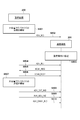
- the communication device 200 starts transmission of a small-capacity advertisement.
- the condition to start may be power activation of the communication device 200, user operation via the operation unit 105 after power activation, or the like.
- the communication device 200 transmits ADV_IND using the primary advertising channel.
- ADV_IND is repeatedly transmitted at a preset time interval.
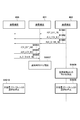
- the communication device 201 enters the communication range of the BLE communication of the communication device 200 in S503.
- the user carries one of the communication devices, or a mobile object such as an automobile equipped with the communication device moves, or enables the BLE communication function of the communication device 201 within the communication range of the communication device 200. It occurs by things.
- the communication device 200 transmits ADV_IND. This step corresponds to one of ADV_IND repeatedly transmitted from S502.
- the communication device 201 transmits SCAN_REQ to the communication device 200 in response to ADV_IND in S504.
- SCAN_REQ is one of advertising channel PDUs defined by the BT5 standard, and is mainly used for the purpose of requesting the advertiser to acquire detailed information.
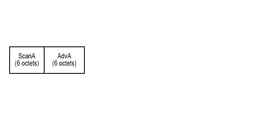
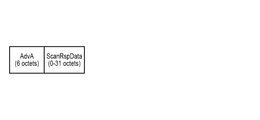
- FIG. 4F shows the details of the format of SCAN_REQ.
- ScanA is the device address of the scanner, and in this step is the device address of the communication device 201.
- AdvA is the device address of the advertiser, and in this step is the device address of the communication device 200.
- the communication device 200 when the communication device 200 detects the presence of a scanner in the surrounding area, the communication device 200 starts transmission of a large-capacity advertisement using the secondary advertisement channel.
- the communication device 200 transmits AUX_CHAIN_IND via the secondary advertisement channel, and the communication apparatus 201 receives this AUX_CHAIN_IND.
- S508, S509, and S510 correspond to the large-volume advertisement transmission process shown in FIG. 3B and are repeatedly executed at predetermined time intervals.
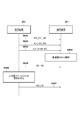
- the state of the communication device 200 before the start of this sequence is a state in which the large-capacity advertisement transmission start sequence shown in FIG. 5 is executed. Both the small-capacity advertisement transmission and the large-capacity advertisement transmission are repeatedly executed. It is in a state.
- S601, S602, and S603 correspond to the large-volume advertisement transmission process shown in FIG. 3B and are repeatedly executed at predetermined time intervals.
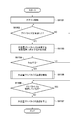
- the state of the communication device 200 before the start of this flowchart is a state in which small-volume advertisement transmission is executed at a predetermined time interval.
- control unit 101 of the communication device 200 determines whether the ADV_IND response transmitted in S701, that is, the SCAN_REQ transmitted by the scanner has been received within a predetermined time after the ADV_IND transmission. If it is determined that it has been received, the control unit 101 advances the process to step S703. If it is determined that it has not been received, the control unit 101 returns the process to step S701.
- step S ⁇ b> 703 the control unit 101 of the communication device 200 determines whether there is a device that receives a large-capacity advertisement within the BLE communication area of the communication device 200. Specifically, the control unit 101 analyzes the ScanA information included in the SCAN_REQ received in S702, and whether or not the 6-byte ScanA includes information indicating that a large-capacity advertisement can be received. Determine. In this determination method, for example, the upper 3 bytes are made up of the manufacturer ID, the lower 3 bytes are made up of the serial number of the model, and a specific manufacturer ID and a specific serial number are assigned to a device capable of receiving a large capacity advertisement. Is possible. For this reason, the storage medium 104 of the communication device 200 is provided with a table for specifying a device capable of receiving a large capacity advertisement.
- Step S704 when the determination result in Step S703 indicates that there is a device that can receive the large-capacity advertisement, the control unit 101 of the communication device 200 advances the process to S705, and if not, the process advances to S701. return.
- control unit 101 of the communication device 200 starts a large-capacity advertisement transmission.
- This step corresponds to a series of large-capacity advertisement transmissions starting from S507 in FIG. 5, and includes the processing of S508, S509, S510.
- step S ⁇ b> 707 the control unit 101 of the communication device 200 determines whether there is a device that receives a large-capacity advertisement within the BLE communication area of the communication device 200.
- the control unit 101 receives the SCAN_REQ for ADV_IND transmitted in S706, analyzes the ScanA information included in the SCAN_REQ, and includes information indicating that the large-capacity advertisement can be received in the 6-byte ScanA. If it exists, it is determined that it exists. On the other hand, if SCAN_REQ for ADV_IND transmitted in S706 is not received, or if it is received and Scan A does not contain information indicating that a large-capacity advertisement can be received, it is determined that it does not exist.
- control unit 101 of the communication device 200 when the determination result indicates that there is a device that receives the large-capacity advertisement within the BLE communication area of the communication device 200, the control unit 101 of the communication device 200 returns the process to S706.
- the control unit 101 of the communication device 200 advances the process to S709.
- the control unit 101 of the communication device 200 stops large-capacity advertisement transmission. This step corresponds to S606 in FIG.
- control unit 101 of the communication device 200 receives the SCAN_REQ in S702 in S703, there is a device that receives a large-capacity advertisement in the BLE communication area of the communication device 200 regardless of the content of the SCAN_REQ packet. May be determined. This makes it possible to simplify the determination process.
- the control unit 101 of the communication device 200 includes information indicating that the large-capacity advertisement can be received in ScanA included in the SCAN_REQ received in S702, and the reception sensitivity is equal to or higher than a predetermined threshold. In this case, it may be determined that there is a device that can receive a large-volume advertisement for the first time. In other words, even if information indicating that a large-capacity advertisement can be received is included in ScanA included in the SCAN_REQ, if the reception sensitivity does not reach a predetermined threshold, the large-capacity advertisement is transmitted within the BLE communication area of the communication device 200. It may be determined that there is no device to receive.
- FIG. 8 is a diagram illustrating a system configuration of the second embodiment.
- the system in the second embodiment includes a communication device 800, a communication device 801, and a communication device 802.
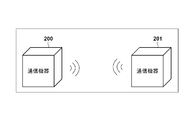
- the communication device 200, the communication device 201, and the communication device 800 are all provided with the internal configuration illustrated in FIG.
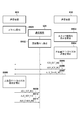
- the communication device 800 determines that there is a scanner (in this case, the communication device 801) capable of receiving a large-capacity advertisement in the surroundings by receiving the large-capacity advertisement in S905 to S907, and thus the large-capacity advertisement. Start sending.
- a scanner in this case, the communication device 801 capable of receiving a large-capacity advertisement in the surroundings by receiving the large-capacity advertisement in S905 to S907, and thus the large-capacity advertisement.
- the communication device 800 transmits ADV_EXT_IND. This ADV_EXT_IND is received by the communication device 801.
- the communication device 800 transmits AUX_ADV_IND. This AUX_ADV_IND is received by the communication device 801.
- the communication device 800 transmits AUX_CHAIN_IND. AUX_CHAIN_IND is received by the communication device 801.
- the state of the communication device 800 before the start of this sequence is a state in which the large-capacity advertisement transmission start sequence shown in FIG. 9 is executed.
- the transmission of the large-capacity advertisement and the large-capacity advertisement transmitted from the communication device 802 are performed. This is a state in which reception is repeatedly executed.
- the communication device 800 transmits ADV_EXT_IND. This ADV_EXT_IND is received by the communication device 801.
- the communication device 800 transmits AUX_ADV_IND. This AUX_ADV_IND is received by the communication device 801.
- the communication device 800 transmits AUX_CHAIN_IND. This AUX_CHAIN_IND is received by the communication device 801.
- the communication device 802 detects that the communication device 801 does not exist within the communication range of BLE.
- the detection method in this step may be a method of detecting that the SCAN_REQ from the communication device 801 is not received as a response after the communication device 802 transmits ADV_IND.
- the state of the communication device 800 before the start of this flowchart is a state in which no BLE communication is performed.
- step S1106 the control unit 101 of the communication device 800 determines whether or not the advertisement that has been received at a predetermined time interval is not received. When it is determined that the reception is not performed, the control unit 101 of the communication device 800 advances the process to S1107. If it is determined that it is received, the control unit 101 of the communication device 800 returns the process to S1106.
- the advertisement in this step is an advertisement that has started to be received at the time of S1102.
- control unit 101 of the communication device 800 stops large-volume advertisement transmission. This step corresponds to S1010 in FIG.
Landscapes
- Engineering & Computer Science (AREA)
- Signal Processing (AREA)
- Computer Networks & Wireless Communication (AREA)
- Business, Economics & Management (AREA)
- Marketing (AREA)
- Multimedia (AREA)
- Databases & Information Systems (AREA)
- Mobile Radio Communication Systems (AREA)
Priority Applications (2)
| Application Number | Priority Date | Filing Date | Title |
|---|---|---|---|
| CN201880088698.3A CN111684846B (zh) | 2018-02-05 | 2018-12-28 | 通信装置及其控制方法和存储介质 |
| US16/945,484 US11751022B2 (en) | 2018-02-05 | 2020-07-31 | Communication device, method for controlling the same, and non-transitory computer-readable storage medium |
Applications Claiming Priority (2)
| Application Number | Priority Date | Filing Date | Title |
|---|---|---|---|
| JP2018018519A JP7149715B2 (ja) | 2018-02-05 | 2018-02-05 | 通信機器及びその制御方法及びプログラム |
| JP2018-018519 | 2018-02-05 |
Related Child Applications (1)
| Application Number | Title | Priority Date | Filing Date |
|---|---|---|---|
| US16/945,484 Continuation US11751022B2 (en) | 2018-02-05 | 2020-07-31 | Communication device, method for controlling the same, and non-transitory computer-readable storage medium |
Publications (1)
| Publication Number | Publication Date |
|---|---|
| WO2019150882A1 true WO2019150882A1 (ja) | 2019-08-08 |
Family
ID=67479013
Family Applications (1)
| Application Number | Title | Priority Date | Filing Date |
|---|---|---|---|
| PCT/JP2018/048505 Ceased WO2019150882A1 (ja) | 2018-02-05 | 2018-12-28 | 通信機器及びその制御方法及びプログラム |
Country Status (4)
| Country | Link |
|---|---|
| US (1) | US11751022B2 (enExample) |
| JP (1) | JP7149715B2 (enExample) |
| CN (1) | CN111684846B (enExample) |
| WO (1) | WO2019150882A1 (enExample) |
Families Citing this family (3)
| Publication number | Priority date | Publication date | Assignee | Title |
|---|---|---|---|---|
| KR20230134512A (ko) * | 2021-02-01 | 2023-09-21 | 엘지전자 주식회사 | 무선 전력 전송 시스템에서 블루투스 및 인-밴드 통신을통한 장치 연결 방법 및 장치 |
| CN119893520A (zh) * | 2021-04-16 | 2025-04-25 | 华为技术有限公司 | 一种应用免授权频谱的通信方法及装置 |
| US20240422839A1 (en) * | 2023-06-13 | 2024-12-19 | Silicon Laboratories Inc. | Energy efficient bluetooth mesh friendship |
Citations (2)
| Publication number | Priority date | Publication date | Assignee | Title |
|---|---|---|---|---|
| JP2016076767A (ja) * | 2014-10-03 | 2016-05-12 | ライフサイエンスコンピューティング株式会社 | 電子医療情報の近距離無線通信システム及びそのプログラム |
| JP2017092645A (ja) * | 2015-11-06 | 2017-05-25 | キヤノン株式会社 | 無線通信システム、情報処理方法及びプログラム |
Family Cites Families (17)
| Publication number | Priority date | Publication date | Assignee | Title |
|---|---|---|---|---|
| KR20150138735A (ko) * | 2014-06-02 | 2015-12-10 | 삼성전자주식회사 | 전자 장치의 비콘 부가 서비스 방법 및 그 전자 장치 |
| US9094730B1 (en) * | 2014-06-19 | 2015-07-28 | Google Inc. | Providing timely media recommendations |
| JP6394177B2 (ja) | 2014-08-22 | 2018-09-26 | カシオ計算機株式会社 | 無線通信装置、無線通信システム、無線通信方法、プログラム、及びスレーブ装置 |
| US9820135B2 (en) * | 2014-12-22 | 2017-11-14 | Google Inc. | Systems and methods for reducing connection latency |
| US11107126B2 (en) * | 2015-01-20 | 2021-08-31 | Google Llc | Methods, systems and media for presenting media content that was advertised on a second screen device using a primary device |
| JP6570260B2 (ja) | 2015-02-13 | 2019-09-04 | キヤノン株式会社 | 画像処理装置、プログラム、及びシステム |
| JP6608204B2 (ja) * | 2015-07-14 | 2019-11-20 | 株式会社イーアールアイ | 情報配信装置 |
| GB201516674D0 (en) * | 2015-09-21 | 2015-11-04 | Nicoventures Holdings Ltd | Topology |
| DE102016205830B4 (de) * | 2016-04-07 | 2022-08-18 | Volkswagen Aktiengesellschaft | Verfahren zum Bluetooth-Verbindungsaufbau und Bluetooth-Gerät |
| US10070247B2 (en) * | 2016-04-14 | 2018-09-04 | Qualcomm Incorporated | Systems and methods for connection creation |
| ES2933731T3 (es) * | 2016-06-27 | 2023-02-13 | Huawei Tech Co Ltd | Método para establecer una conexión Bluetooth clásica entre dispositivos Bluetooth de modo dual y dispositivo Bluetooth de modo dual |
| KR102577358B1 (ko) * | 2016-07-06 | 2023-09-14 | 삼성전자주식회사 | 다중 주파수 대역을 이용한 통신 방법 및 장치 |
| JP6812687B2 (ja) * | 2016-07-14 | 2021-01-13 | カシオ計算機株式会社 | 通信装置、電子時計、時刻補正方法、及びプログラム |
| US10887762B2 (en) * | 2016-10-05 | 2021-01-05 | Lg Electronics Inc. | Method and apparatus for transmitting and receiving data using Bluetooth technology |
| US10492055B2 (en) * | 2017-06-12 | 2019-11-26 | Mediatek, Inc. | Bluetooth advertising processing techniques |
| EP3654712A4 (en) * | 2017-07-14 | 2021-04-07 | Alps Alpine Co., Ltd. | COMMUNICATION SYSTEM |
| US20190230408A1 (en) * | 2018-01-22 | 2019-07-25 | Qualcomm Incorporated | System, method, and apparatus for temporary wireless connection |
-
2018
- 2018-02-05 JP JP2018018519A patent/JP7149715B2/ja active Active
- 2018-12-28 WO PCT/JP2018/048505 patent/WO2019150882A1/ja not_active Ceased
- 2018-12-28 CN CN201880088698.3A patent/CN111684846B/zh active Active
-
2020
- 2020-07-31 US US16/945,484 patent/US11751022B2/en active Active
Patent Citations (2)
| Publication number | Priority date | Publication date | Assignee | Title |
|---|---|---|---|---|
| JP2016076767A (ja) * | 2014-10-03 | 2016-05-12 | ライフサイエンスコンピューティング株式会社 | 電子医療情報の近距離無線通信システム及びそのプログラム |
| JP2017092645A (ja) * | 2015-11-06 | 2017-05-25 | キヤノン株式会社 | 無線通信システム、情報処理方法及びプログラム |
Non-Patent Citations (1)
| Title |
|---|
| ADACHI, EIJI: "Large study, From now on featured IoT wireless", INTERFACE, vol. 43, no. 11, 1 November 2017 (2017-11-01), pages 85 - 92 * |
Also Published As
| Publication number | Publication date |
|---|---|
| JP7149715B2 (ja) | 2022-10-07 |
| JP2019135822A (ja) | 2019-08-15 |
| CN111684846B (zh) | 2023-09-01 |
| US20200367031A1 (en) | 2020-11-19 |
| CN111684846A (zh) | 2020-09-18 |
| US11751022B2 (en) | 2023-09-05 |
Similar Documents
| Publication | Publication Date | Title |
|---|---|---|
| CN107637123B (zh) | 信息传递方法、装置及计算机可读存储介质 | |
| EP3911093B1 (en) | Data transmission method and corresponding terminal | |
| JP6394177B2 (ja) | 無線通信装置、無線通信システム、無線通信方法、プログラム、及びスレーブ装置 | |
| CN110691412B (zh) | Pucch冲突的处理方法和终端 | |
| EP3706499A1 (en) | Wireless connection method and device | |
| CN110650408B (zh) | 一种耳机及防丢方法、系统、计算机可读存储介质 | |
| JP6360316B2 (ja) | 通信装置、その制御方法、及びプログラム | |
| CN111758272A (zh) | Srs资源配置方法、srs资源确定方法和装置 | |
| US20230094982A1 (en) | Method and device for communication processing | |
| EP3799334A1 (en) | Method and apparatus for setting format of buffer status report | |
| US20230106898A1 (en) | Communication method and apparatus, and storage medium | |
| CN109040213A (zh) | 文件下载方法及相关产品 | |
| WO2019150882A1 (ja) | 通信機器及びその制御方法及びプログラム | |
| WO2021129699A1 (zh) | 信道测量参考信号传输方法及终端 | |
| CN111096063B (zh) | 非连续接收drx的处理方法、装置及计算机存储介质 | |
| CN111615197A (zh) | 资源调整方法及设备 | |
| EP2976864A1 (en) | Application recommendations | |
| CN113678547A (zh) | 激活指示、频段激活方法和装置、通信装置和存储介质 | |
| CN110784844A (zh) | 信号传输方法和通信设备 | |
| WO2024138745A1 (zh) | 信道传输方法及装置、存储介质 | |
| CN112804754A (zh) | 资源确定、资源配置方法、终端及网络设备 | |
| US20230397253A1 (en) | Data transmission method and apparatus, and communication device and storage medium | |
| JP2019068299A (ja) | 通信装置およびその制御方法、プログラム | |
| US12185343B2 (en) | Methods and apparatuses for determining network allocation vector, and storage media | |
| CN113678548B (zh) | 频段指示、确定方法和装置、通信装置和存储介质 |
Legal Events
| Date | Code | Title | Description |
|---|---|---|---|
| 121 | Ep: the epo has been informed by wipo that ep was designated in this application |
Ref document number: 18903572 Country of ref document: EP Kind code of ref document: A1 |
|
| NENP | Non-entry into the national phase |
Ref country code: DE |
|
| 122 | Ep: pct application non-entry in european phase |
Ref document number: 18903572 Country of ref document: EP Kind code of ref document: A1 |