WO2019131245A1 - 疾患発症リスク予測装置、方法およびプログラム - Google Patents
疾患発症リスク予測装置、方法およびプログラム Download PDFInfo
- Publication number
- WO2019131245A1 WO2019131245A1 PCT/JP2018/046240 JP2018046240W WO2019131245A1 WO 2019131245 A1 WO2019131245 A1 WO 2019131245A1 JP 2018046240 W JP2018046240 W JP 2018046240W WO 2019131245 A1 WO2019131245 A1 WO 2019131245A1
- Authority
- WO
- WIPO (PCT)
- Prior art keywords
- information
- change
- sleep
- user
- blood pressure
- Prior art date
- Legal status (The legal status is an assumption and is not a legal conclusion. Google has not performed a legal analysis and makes no representation as to the accuracy of the status listed.)
- Ceased
Links
Images






Classifications
-
- G—PHYSICS
- G16—INFORMATION AND COMMUNICATION TECHNOLOGY [ICT] SPECIALLY ADAPTED FOR SPECIFIC APPLICATION FIELDS
- G16H—HEALTHCARE INFORMATICS, i.e. INFORMATION AND COMMUNICATION TECHNOLOGY [ICT] SPECIALLY ADAPTED FOR THE HANDLING OR PROCESSING OF MEDICAL OR HEALTHCARE DATA
- G16H40/00—ICT specially adapted for the management or administration of healthcare resources or facilities; ICT specially adapted for the management or operation of medical equipment or devices
- G16H40/60—ICT specially adapted for the management or administration of healthcare resources or facilities; ICT specially adapted for the management or operation of medical equipment or devices for the operation of medical equipment or devices
- G16H40/63—ICT specially adapted for the management or administration of healthcare resources or facilities; ICT specially adapted for the management or operation of medical equipment or devices for the operation of medical equipment or devices for local operation
-
- A—HUMAN NECESSITIES
- A61—MEDICAL OR VETERINARY SCIENCE; HYGIENE
- A61B—DIAGNOSIS; SURGERY; IDENTIFICATION
- A61B5/00—Measuring for diagnostic purposes; Identification of persons
- A61B5/72—Signal processing specially adapted for physiological signals or for diagnostic purposes
- A61B5/7271—Specific aspects of physiological measurement analysis
- A61B5/7275—Determining trends in physiological measurement data; Predicting development of a medical condition based on physiological measurements, e.g. determining a risk factor
-
- A—HUMAN NECESSITIES
- A61—MEDICAL OR VETERINARY SCIENCE; HYGIENE
- A61B—DIAGNOSIS; SURGERY; IDENTIFICATION
- A61B5/00—Measuring for diagnostic purposes; Identification of persons
- A61B5/0002—Remote monitoring of patients using telemetry, e.g. transmission of vital signals via a communication network
- A61B5/0015—Remote monitoring of patients using telemetry, e.g. transmission of vital signals via a communication network characterised by features of the telemetry system
- A61B5/0022—Monitoring a patient using a global network, e.g. telephone networks, internet
-
- A—HUMAN NECESSITIES
- A61—MEDICAL OR VETERINARY SCIENCE; HYGIENE
- A61B—DIAGNOSIS; SURGERY; IDENTIFICATION
- A61B5/00—Measuring for diagnostic purposes; Identification of persons
- A61B5/02—Detecting, measuring or recording for evaluating the cardiovascular system, e.g. pulse, heart rate, blood pressure or blood flow
- A61B5/0205—Simultaneously evaluating both cardiovascular conditions and different types of body conditions, e.g. heart and respiratory condition
-
- A—HUMAN NECESSITIES
- A61—MEDICAL OR VETERINARY SCIENCE; HYGIENE
- A61B—DIAGNOSIS; SURGERY; IDENTIFICATION
- A61B5/00—Measuring for diagnostic purposes; Identification of persons
- A61B5/02—Detecting, measuring or recording for evaluating the cardiovascular system, e.g. pulse, heart rate, blood pressure or blood flow
- A61B5/021—Measuring pressure in heart or blood vessels
- A61B5/02108—Measuring pressure in heart or blood vessels from analysis of pulse wave characteristics
- A61B5/02125—Measuring pressure in heart or blood vessels from analysis of pulse wave characteristics of pulse wave propagation time
-
- A—HUMAN NECESSITIES
- A61—MEDICAL OR VETERINARY SCIENCE; HYGIENE
- A61B—DIAGNOSIS; SURGERY; IDENTIFICATION
- A61B5/00—Measuring for diagnostic purposes; Identification of persons
- A61B5/48—Other medical applications
- A61B5/4806—Sleep evaluation
-
- A—HUMAN NECESSITIES
- A61—MEDICAL OR VETERINARY SCIENCE; HYGIENE
- A61B—DIAGNOSIS; SURGERY; IDENTIFICATION
- A61B5/00—Measuring for diagnostic purposes; Identification of persons
- A61B5/48—Other medical applications
- A61B5/4806—Sleep evaluation
- A61B5/4812—Detecting sleep stages or cycles
-
- A—HUMAN NECESSITIES
- A61—MEDICAL OR VETERINARY SCIENCE; HYGIENE
- A61B—DIAGNOSIS; SURGERY; IDENTIFICATION
- A61B5/00—Measuring for diagnostic purposes; Identification of persons
- A61B5/72—Signal processing specially adapted for physiological signals or for diagnostic purposes
- A61B5/7235—Details of waveform analysis
-
- A—HUMAN NECESSITIES
- A61—MEDICAL OR VETERINARY SCIENCE; HYGIENE
- A61B—DIAGNOSIS; SURGERY; IDENTIFICATION
- A61B5/00—Measuring for diagnostic purposes; Identification of persons
- A61B5/72—Signal processing specially adapted for physiological signals or for diagnostic purposes
- A61B5/7235—Details of waveform analysis
- A61B5/7246—Details of waveform analysis using correlation, e.g. template matching or determination of similarity
-
- A—HUMAN NECESSITIES
- A61—MEDICAL OR VETERINARY SCIENCE; HYGIENE
- A61B—DIAGNOSIS; SURGERY; IDENTIFICATION
- A61B5/00—Measuring for diagnostic purposes; Identification of persons
- A61B5/74—Details of notification to user or communication with user or patient; User input means
- A61B5/746—Alarms related to a physiological condition, e.g. details of setting alarm thresholds or avoiding false alarms
-
- G—PHYSICS
- G16—INFORMATION AND COMMUNICATION TECHNOLOGY [ICT] SPECIALLY ADAPTED FOR SPECIFIC APPLICATION FIELDS
- G16H—HEALTHCARE INFORMATICS, i.e. INFORMATION AND COMMUNICATION TECHNOLOGY [ICT] SPECIALLY ADAPTED FOR THE HANDLING OR PROCESSING OF MEDICAL OR HEALTHCARE DATA
- G16H10/00—ICT specially adapted for the handling or processing of patient-related medical or healthcare data
- G16H10/60—ICT specially adapted for the handling or processing of patient-related medical or healthcare data for patient-specific data, e.g. for electronic patient records
-
- G—PHYSICS
- G16—INFORMATION AND COMMUNICATION TECHNOLOGY [ICT] SPECIALLY ADAPTED FOR SPECIFIC APPLICATION FIELDS
- G16H—HEALTHCARE INFORMATICS, i.e. INFORMATION AND COMMUNICATION TECHNOLOGY [ICT] SPECIALLY ADAPTED FOR THE HANDLING OR PROCESSING OF MEDICAL OR HEALTHCARE DATA
- G16H40/00—ICT specially adapted for the management or administration of healthcare resources or facilities; ICT specially adapted for the management or operation of medical equipment or devices
- G16H40/60—ICT specially adapted for the management or administration of healthcare resources or facilities; ICT specially adapted for the management or operation of medical equipment or devices for the operation of medical equipment or devices
- G16H40/67—ICT specially adapted for the management or administration of healthcare resources or facilities; ICT specially adapted for the management or operation of medical equipment or devices for the operation of medical equipment or devices for remote operation
-
- G—PHYSICS
- G16—INFORMATION AND COMMUNICATION TECHNOLOGY [ICT] SPECIALLY ADAPTED FOR SPECIFIC APPLICATION FIELDS
- G16H—HEALTHCARE INFORMATICS, i.e. INFORMATION AND COMMUNICATION TECHNOLOGY [ICT] SPECIALLY ADAPTED FOR THE HANDLING OR PROCESSING OF MEDICAL OR HEALTHCARE DATA
- G16H50/00—ICT specially adapted for medical diagnosis, medical simulation or medical data mining; ICT specially adapted for detecting, monitoring or modelling epidemics or pandemics
- G16H50/30—ICT specially adapted for medical diagnosis, medical simulation or medical data mining; ICT specially adapted for detecting, monitoring or modelling epidemics or pandemics for calculating health indices; for individual health risk assessment
-
- A—HUMAN NECESSITIES
- A61—MEDICAL OR VETERINARY SCIENCE; HYGIENE
- A61B—DIAGNOSIS; SURGERY; IDENTIFICATION
- A61B5/00—Measuring for diagnostic purposes; Identification of persons
- A61B5/02—Detecting, measuring or recording for evaluating the cardiovascular system, e.g. pulse, heart rate, blood pressure or blood flow
- A61B5/021—Measuring pressure in heart or blood vessels
Definitions
- One embodiment of the present invention relates to a disease onset risk prediction device, method, and program used to predict, for example, the risk of developing cerebral cardiovascular disease.
- Biological information such as blood pressure and electrocardiogram may not only change due to external influences such as weather, excitement and stress, but may also cause characteristic changes depending on the time zone.
- Biological information such as blood pressure and electrocardiogram may not only change due to external influences such as weather, excitement and stress, but may also cause characteristic changes depending on the time zone.
- high blood pressure it is normal at the time of stay at home but blood pressure rises at the time of work at work, or normal at daytime but blood pressure at night
- masked hypertension there is an early morning hypertension in which the blood pressure rises rapidly only in a time zone of about 1 to 2 hours before and after getting up.
- adrenocorticotropic hormone causes a strong vasoconstriction to cause a sharp rise in blood pressure
- cerebrovascular diseases such as stroke and myocardial infarction that occur in the early morning or in the morning.
- Patent Document 1 predicts blood pressure fluctuation of a person based on external conditions such as weather, and informs that the risk of developing cardiovascular disease is increased when blood pressure rise is predicted. It has become. For this reason, it is not particularly dependent on external conditions, and it is impossible to predict the risk of developing a disease having a correlation with changes in biological information that are dependent on time zones.
- the present invention in order to solve the above problems, according to one aspect thereof, a device for predicting a disease onset risk, which can predict a disease onset risk by focusing on a characteristic change depending on a time zone of biological information, It is an attempt to provide a method and program.
- a first aspect of the disease onset prediction apparatus, method or program according to the present invention acquires biological information of the user measured by the measurement unit, and sets a plurality of prediction target periods set in advance for a plurality of times. By dividing the information into bands, generating information representing a change in the biological information among the plurality of time zones, and comparing the information representing the change with a predetermined determination reference in association with a specific disease. The risk of developing the specific disease in the user is predicted.
- the period to be predicted is divided into a plurality of time zones, and changes in biological information among the divided plurality of time zones are compared with the determination criteria to obtain the specific disease condition.
- Predicted risk of onset can be obtained. Therefore, characteristic changes depending on the time zone of the biological information can be detected relatively easily, and it is possible to predict the onset risk of a specific disease based on the detection results of the characteristic changes. It becomes.
- blood pressure information is acquired as the biological information, and information representing a change in the acquired blood pressure information among the plurality of time zones is generated.
- the risk of developing the specific disease in the user is predicted by comparing the information representing the change in the information with a predetermined reference in association with the specific disease.
- the risk of developing a specific disease can be predicted by comparing the change in blood pressure information between divided time zones with a criterion. Therefore, it is possible to relatively easily detect a characteristic change depending on the blood pressure time zone, and it is possible to predict the onset risk of a specific disease based on the detection result of the characteristic change. Become.
- the biological information includes blood pressure information and information representing an irregular pulse wave generation state, and the plurality of acquired blood pressure information While generating first change information representing a change between time zones, second change information representing a change in an occurrence state of the acquired irregular pulse wave among the plurality of time zones is generated. Then, the first change information and the second change information are weighted and combined, and third change information representing the combination result is set in advance in association with the specific disease, The comparison is made to predict the risk of developing the specific disease in the user.
- both of the blood pressure information and the information representing the irregular pulse wave generation status are used as the biological information, and the change in the blood pressure information among the plurality of divided time zones,
- the risk of onset of a specific disease is predicted by comparing the result of combining the change in the occurrence of irregular pulse waves between multiple time zones with a criterion. That is, in addition to changes in blood pressure between time zones, the risk of developing a specific disease is predicted in consideration of changes in the occurrence of irregular pulse waves. For this reason, it is possible to predict the onset risk of a specific disease with higher accuracy.
- the information representing the sleep time zone of the user which is input at the input unit, is further acquired, and the information representing the sleep time zone
- the sleep time zone of the user is set as the prediction target period based on the above, and the sleep time zone is divided into a plurality of time zones.
- the sleep time zone is set as a prediction target period, and the sleep time zone is divided into a plurality of time zones. For this reason, it is possible to detect the characteristic change depending on the time zone of the biological information that occurs in the user's sleep time zone, and based on the characteristic change of the biological information depending on this time zone It is possible to predict the onset risk.
- any one of the first to third aspects information representing the user's sleep status obtained by the measurement unit is acquired, and the user's A sleep time zone is estimated, and the sleep time zone is set as a prediction target period.
- a division boundary point of the sleep time zone is set based on the information indicating the sleep state, and the sleep time zone is divided into a plurality of time zones based on the division boundary point. is there.
- the actual sleep time zone of the user is set as the prediction target period, and the plurality of sleep time zones are divided by the division boundary point set based on the content of the user's sleep condition. It is divided into time zones. Therefore, it is possible to detect a characteristic change depending on the time zone of biological information in the actual sleep time of the user, and it is possible to predict the onset risk of a specific disease based on this characteristic change It becomes.
- a statistical value of biological information measured a plurality of times in each of the plurality of time zones is calculated, and the calculated statistics Information is generated that represents changes in the value between the plurality of time zones.
- the sixth aspect of the present invention when a plurality of biological information are measured in each of the plurality of divided time zones, statistical values of the plurality of biological information are calculated for each time zone, and these statistical information is calculated
- the risk of developing a specific disease is predicted based on the change in the statistical value of the above-mentioned time zone. Therefore, it becomes possible to reduce the influence of the variation of the biological information and to detect the characteristic change depending on the time zone of the biological information with high accuracy, thereby enhancing the prediction accuracy of the onset risk of a specific disease. Is possible.
- each aspect of the present invention it is possible to provide a device for predicting a disease onset risk, a method and a program capable of predicting a disease onset risk by focusing on a characteristic change depending on a time zone of biological information.
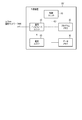
- FIG. 1 is a block diagram for explaining one application example of the disease onset prediction apparatus according to the present invention.
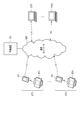
- FIG. 2 is a diagram showing an entire configuration of a system provided with a disease onset estimation apparatus according to the present invention.
- FIG. 3 is a block diagram showing the configuration of the hardware of the prediction apparatus, for explaining an embodiment of the disease onset prediction apparatus according to the present invention.
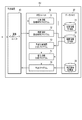
- FIG. 4 is for describing one embodiment of a disease onset prediction apparatus according to the present invention, and is a block diagram showing configurations of software and data memory of the prediction apparatus.
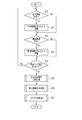
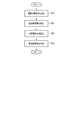
- FIG. 5 is a flow chart showing the processing procedure and processing contents of the disease onset prediction processing by the disease onset prediction device shown in FIG. FIG.
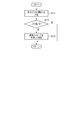
- FIG. 6 is a flowchart showing the processing procedure and processing contents of the estimation target period division processing of the disease onset prediction processing shown in FIG.
- FIG. 7 is a flow chart showing the processing procedure and processing contents of the change information generation processing of the disease onset prediction processing shown in FIG.
- FIG. 8 is a flow chart showing the processing procedure and processing contents of the risk prediction processing in the disease onset prediction processing shown in FIG.
- FIG. 9A is a diagram showing an example of pulse wave data.
- FIG. 9B is a diagram showing an example of a frequency analysis result of heartbeat interval fluctuation.
- FIG. 9C is a diagram showing an example of a change in autonomic nervous balance.
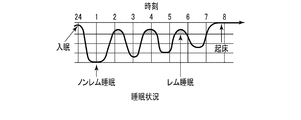
- FIG. 9D is a diagram illustrating an example of a time change of the sleep state.
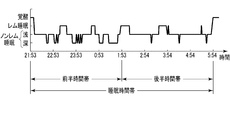
- FIG. 10 is a diagram showing an example of the sleep state determination result.
- FIG. 11 is a diagram showing an example of fluctuations in blood pressure value and occurrence of irregular pulse wave generation in the sleeping time zone.
- FIG. 1 schematically shows a configuration example of a disease onset risk prediction apparatus according to this application example.
- the measuring device 2 is attached to the user US.
- the measuring device 2 is, for example, a wearable terminal, and includes a biological information measuring unit and a wireless communication unit.
- the biological information measurement unit has a blood pressure measurement unit and a pulse wave measurement unit.
- the blood pressure measurement unit measures the blood pressure value of the user US (including the systolic blood pressure value and the diastolic blood pressure value) to generate blood pressure data.
- the pulse wave measurement unit measures the pulse wave of the user US. Then, it is determined from the measurement timing of the measured pulse wave whether the pulse wave is a pulse wave having regularity or an irregular pulse wave, and data representing the generation status of the irregular pulse wave is generated.
- the measurement operation of the blood pressure value and the pulse wave may be performed according to the measurement instruction operation of the user US, or may be automatically performed at preset time intervals.
- the wireless communication unit stores the blood pressure data generated by the biological information measurement unit and data representing the irregular pulse wave generation status and biological information including the measurement time each time or for a predetermined time, and then performs wireless communication. It is transmitted to the disease onset risk prediction device 1 via the network.
- the disease onset risk prediction apparatus 1 includes an acquisition unit 1a, a biological information storage unit 1b, a change information generation unit 1c, a risk prediction unit 1d, and a determination criterion storage unit 1e as components according to the present invention. There is.
- the acquisition unit 1a receives the biological information transmitted from the measurement device 2 and stores the biological information in the biological information storage unit 1b.
- the change information generation unit 1 c sets, for example, a sleeping time zone of the user US as a prediction target period, and divides this sleeping time zone into, for example, two time zones, a first half and a second half.
- the sleeping time zone of the user US is input, for example, by the user US at a user terminal or an apparatus having an input function such as the measuring device 2 described above, and the disease onset risk predicting apparatus 1 acquires information representing the inputted sleeping time zone. It can be set by
- the change information generation unit 1c reads the biological information from the biological information storage unit 1b, and performs, for example, an averaging process on the read biological information for each of the first half and the second half of the sleep time zone. Then, the degree of change between the time zones of the average value of the biological information obtained by the averaging process is determined.
- the change information generation unit 1c since biological information includes blood pressure data and data representing the occurrence of irregular pulse waves, the change information generation unit 1c generates blood pressure data and data representing the occurrence of irregular pulse waves. For each of the above, an average value is calculated for each of the first half and the second half, and the degree of change between these averages of these averages is calculated. That is, the degree of change in blood pressure and the degree of change in the frequency of occurrence of irregular pulse waves are calculated respectively between the first half and the second half of the sleeping period.
- the score indicates the magnitude of change in biological information between the two.
- the change score is given to the risk prediction unit 1 d as information for determining the risk of developing a disease.
- the risk prediction unit 1d compares the change score obtained by the change information generation unit 1c with the determination reference stored in advance in the determination reference storage unit 1e. Then, for example, when the change score exceeds the determination criterion, it is determined that there is a suspicion of early morning hypertension, for example. Furthermore, when the risk prediction unit 1d determines that the user US is suspected of having early morning hypertension, the risk prediction unit 1d creates a notification message for notifying that the risk of developing cardiovascular cardiovascular disease is high. Then, this notification message is transmitted to, for example, the terminal of the user US or the terminal of the general practitioner of the user US.
- the sleep time zone is divided into the first half and the second half, and the degree of change in blood pressure data and the degree of change in the frequency of occurrence of irregular pulse waves between these time slots are calculated.
- the change score of the biological information is integrated to calculate the change score, and the change score is compared with a preset criterion to determine whether the risk of developing cardiovascular disease is high or low. Therefore, it is possible to determine the onset risk of cerebrovascular disease caused by early morning hypertension by a relatively simple method, and the user or the attending physician takes early preventive measures based on the determination result of the onset risk. It will be possible to treat as needed.
- FIG. 2 is a view showing an example of the entire configuration of a system provided with a disease onset risk prediction apparatus 1 according to an embodiment of the present invention.
- This system includes a disease onset risk prediction device (hereinafter referred to as a prediction device) SV, for example, on the Web or on the cloud. And between this prediction device SV and terminals used by the user (hereinafter referred to as user terminals) UT1 to UTn, and between the prediction device SV and terminals used by medical personnel such as a doctor (hereinafter referred to as doctor terminals) DT1 ⁇ Communication with the DTm is enabled via the communication network NW.
- a prediction device SV
- user terminals used by the user
- doctor terminals hereinafter referred to as doctor terminals
- the doctor terminals DT1 to DTm include, for example, a fixed installation personal computer, a portable notebook personal computer, or a tablet terminal.
- the doctor terminals DT1 to DTm also include at least a mailer and a browser. Then, using the mailer, it is possible to receive the notification mail sent from the prediction device SV, and to access the prediction device SV by using a browser.
- the user terminals UT1 to UTn include, for example, wearable measuring devices BT1 to BTn and information terminals IT1 to ITn.
- the measuring devices BT1 to BTn are attached to, for example, the wrist of the user, measure the blood pressure and pulse wave of the user at user operation or at preset timing or time intervals, and wirelessly acquire blood pressure data and pulse wave data obtained by measurement It wirelessly transmits to the information terminals IT1 to ITn through the interface.
- the measurement time and user identification information (user ID) are added or inserted into the blood pressure data and pulse wave data.
- the blood pressure fluctuation is estimated by the Beat by Beat method of measuring every beat of the heart rate or the Pulse Transit Time (PTT) method. It is also possible to use a trigger measurement method in which the blood pressure is measured spotwise in response to the fluctuation.
- the type of the measuring devices BT1 to BTn is not limited to the wearable type worn on the wrist, but may be a type worn on the upper arm or the like or a stationary type.
- the sphygmomanometer and the pulse wave meter may be provided as separate devices, and blood pressure data and pulse wave data measured by these devices may be transmitted to the information terminals IT1 to ITn.
- the information terminals IT1 to ITn are, for example, portable information terminals such as smartphones and tablet terminals, or fixed installation type personal computers.
- the information terminals IT1 to ITn receive blood pressure data and pulse wave data transmitted from the measuring devices BT1 to BTn, and temporarily store the data in the memory. Then, based on the pulse wave data, it is determined whether the pulse wave is a regular pulse wave or an irregular pulse wave based on the deviation amount of the measurement timing for each pulse wave, and the rule of this pulse wave Irregular determination data (hereinafter referred to as pulse wave determination data) is stored in the memory.
- the information terminals IT1 to ITn read out the blood pressure data and pulse wave determination data stored in the memory from the memory, for example, for each fixed number of data or each fixed time, and transmit the data to the prediction device SV via the communication network NW.
- the information terminals IT1 to ITn also transmit user's sleep information to the prediction device SV via the communication network NW.
- the sleep information includes information representing a sleep period.
- Information representing the sleeping time zone may be manually input by the user at the input unit of the information terminals IT1 to ITn, or information estimated from the pulse wave data may be used. In addition, the method of estimating a sleep time zone from pulse wave data will be described later.
- each of the information terminals IT1 to ITn has a mailer and a browser, receives from the prediction device SV a message representing a predicted result of the risk of developing cardiovascular cardiovascular disease from either the mailer or the browser, and displays the received message on a display indicate.
- a wireless interface used between the measuring devices BT1 to BTn and the information terminals IT1 to ITn for example, a wireless interface adopting a short distance wireless data communication standard such as Bluetooth (registered trademark) is used.
- the present invention is not limited to this, and a wireless LAN (Local Area Network) or a public mobile communication network can also be used.
- the prediction device SV includes, for example, a server computer or a personal computer, and is configured as follows.
- FIG. 3 is a block diagram showing the hardware configuration.
- the prediction device SV has a control unit using a hardware processor called a central control unit (CPU) or the like, and the control unit 10 communicates with the program memory 20, the data memory 30, and the communication via the bus 60.
- the interface unit 40 is connected.
- Reference numeral 50 denotes a power supply unit.
- the program memory 20 uses a non-volatile memory such as a hard disk drive (HDD), a solid state drive (SSD), or a ROM, and stores a group of programs for realizing the process executed by the prediction device SV.
- the data memory 30 is a volatile memory such as a DRAM or a non-volatile memory such as the HDD or SSD that can be written and read as needed, and biological information and sleep information acquired from the measuring devices BT1 to BTn Are used to store and to store judgment criteria.
- the communication interface unit 40 performs data communication with the doctor terminals DT1 to DTm and the information terminals IT1 to ITn through the communication network NW.
- FIG. 4 is a block diagram showing a software configuration and a memory configuration of the prediction device SV.
- the data memory 30 is provided with a biological information storage unit 31, a sleep information storage unit 32, and a determination reference storage unit 33.
- the biological information storage unit 31 is used to store blood pressure data and pulse wave determination data received from the information terminals IT1 to ITn of the respective users.
- the sleep information storage unit 32 is used to store information representing a sleep time zone received from the information terminals IT1 to ITn of each user.
- the determination criterion storage unit 33 stores, for example, a determination criterion set in advance to determine the risk of developing the cardiovascular cardiovascular disease.
- the criterion is, for example, to determine the degree of change in the blood pressure value at the time of sleep stabilization and the frequency of occurrence of irregular pulse waves of morning hypertension and irregular pulse waves which are one of the causes of onset of cerebral cardiovascular disease. is there.
- the determination criteria are set according to the criteria defined in the above-mentioned hypertension treatment guidelines, and stored in the determination criteria storage unit 33.
- a biological information acquisition control program 11 a sleep information acquisition control program 12, a prediction target period division program 13, a change information generation program 14, and a prediction program 15 are stored.
- the unit 10 implements the processing according to the embodiment by executing the programs 11 to 15 by the CPU.
- the biological information acquisition control program 11 receives blood pressure data and pulse wave determination data transmitted from the information terminals IT1 to ITn of each user by the communication interface unit 40, and receives the received blood pressure data and pulse wave determination data In accordance with the user ID and the measurement time added or inserted in the process, processing is performed to be stored in the biological information storage unit 31 in order of measurement time separately for each user.
- the sleep information acquisition control program 12 receives, by the communication interface unit 40, information representing the sleep time zone transmitted from the information terminals IT1 to ITn of each user or information representing the determination result of the sleep state, and the received information is received by the user A process of storing in the biometric information storage unit 31 in association with the ID is performed.
- the prediction target period division program 13 sets the sleep time period as a prediction target period based on the information representing the sleep time zone stored in the sleep information storage unit 32, for example, for each user, and the sleep time
- the center time of the band is set as a division boundary point, and the above-mentioned sleep time zone is divided into a first half time zone and a second half time zone by this division boundary point.
- the change information generation program 14 executes the following process.
- the blood pressure data in which the measurement time is included in the time zone for each user in the first half and the second half of the sleep time zone set by the prediction target period division program 13 for each user is the biological information storage unit 31
- calculating the degree of change (ratio) of the average value between the first and second halves of the average value may be performed for each of the systolic blood pressure and the diastolic blood pressure, or may be performed only for the systolic blood pressure.
- pulse wave determination data in which the measurement time is included in the time zone is read out from the biological information storage unit 31 and the occurrence frequency of irregular pulse waves is calculated. And calculating the degree of change (ratio) of the occurrence frequency between the first and second time zones.
- a weighting factor is attached to the degree of change in blood pressure data calculated in the above (1) and the degree of change in irregular pulse wave frequency calculated in the above (2), and the sleep time zone is synthesized. Processing of calculating a score (also referred to as a comprehensive risk) indicating the degree of temporal change of biological information in which the occurrence frequency of blood pressure and irregular pulse wave is integrated. Note that arithmetic processing by addition, multiplication, or a combination thereof is used for the weighting and combining processing.
- the prediction program 15 executes the following process. (1) A process of comparing the score calculated by the change information generation program 14 with the determination criteria stored in the determination criteria storage unit 33 and using the comparison result as prediction data of the onset risk of cerebrovascular disease. (2) When the contents of the prediction data of the onset risk indicate "the onset risk is high", a notification message to that effect is created, and the notification message is transmitted from the communication interface unit 40 to the information terminal IT1 to ITn of the corresponding user or A process of transmitting, for example, an electronic mail to the terminals DT1 to DTm of the user's doctor of charge.
- the information terminals IT1 to ITn receive blood pressure data and pulse wave data transmitted from the measuring devices BT1 to BTn, and temporarily store the data in the memory. Then, based on the pulse wave data, the amount of deviation from the original measurement timing is detected for each pulse wave, and if the amount of deviation is less than a predetermined amount, the pulse wave is determined as a regular pulse wave, and the amount of deviation is If it is more than a fixed amount, the pulse wave is determined to be an irregular pulse wave. For example, when the measurement timing of the pulse wave deviates by 25% or more of the average measurement interval, the pulse wave is determined to be an irregular pulse wave, and otherwise, the pulse wave is determined to be a regular pulse wave.
- the pulse wave regular / irregular decision data (pulse wave decision data) is stored in the memory.
- the information terminals IT1 to ITn read out the blood pressure data and the pulse wave determination data accumulated in the memory, for example, for a predetermined time, and transmit the data to the prediction device SV via the communication network NW.
- the blood pressure data and the pulse wave determination data may be transmitted from the information terminals IT1 to ITn to the prediction device SV each time they are measured.
- the information terminals IT1 to ITn generate information representing the sleep time of the user.
- the following two can be considered as the generation method.
- (Method 1) Self-reporting of the user The user manually inputs his / her sleeping time zone (bedtime and wake-up time) in his / her information terminals IT1 to ITn.
- the information terminals IT1 to ITn store the information representing the inputted sleep time zone in the memory, read out the information at an arbitrary timing after getting up, and transmit the information as sleep information to the prediction device SV.
- the measuring devices BT1 to BTn are provided with the input unit, the user may input the sleeping period at the input unit of the measuring devices BT1 to BTn.
- the information terminals IT1 to ITn determine the sleep condition of the user, for example, by the following method based on the measured pulse wave data.
- 9A to 9D are diagrams for explaining the processing contents. That is, first, the heart rate interval (RRI) is detected from pulse wave data (waveform data shown in FIG. 9A). Next, by performing frequency analysis of the fluctuation component of the heartbeat interval, as shown in FIG. 9B, a low frequency component (Low Frequency: LF) of around 0.1 Hz reflecting sympathetic nerve activity and parasympathetic nerve activity are reflected. The level of a high frequency component (HF) around 0.3 Hz is calculated. Then, based on the detection results of LF and HF, the autonomic nervous balance during the sleep time as shown in FIG. 9C is calculated.
- LF low frequency component
- HF high frequency component
- the autonomic nervous activity has a certain correlation with the depth and type of sleep (REM sleep and non-REM sleep).
- REM sleep and non-REM sleep occurs when the parasympathetic component predominates
- rem sleep occurs when the sympathetic component predominates or the pulse wave is disrupted. Therefore, focusing on this relationship, the information terminals IT1 to ITn associate the autonomic nervous balance with the sleep state as shown in FIG. 9D, for example.
- the information terminals IT1 to ITn define sleep stages, for example, four stages of REM sleep, deep non-REM sleep, shallow non-REM sleep, and awakening, and also the calculation result of the autonomic nervous balance. And map the sleep situation to the above four stages of sleep stage. Then, for example, the determination result of the sleep state shown in FIG. 10 is obtained.
- the discrimination between REM sleep and awakening is performed by, for example, providing an acceleration sensor in each of the measuring devices BT1 to BTn, detecting the body movement of the user by the acceleration sensor, and determining awakening when body movement continues for a predetermined time or more. In this way, the determination can be made more accurately.
- the information terminals IT1 to ITn store the information indicating the determination result of the sleep condition in the memory, read out at any timing after getting up and transmit the information as sleep information to the prediction device SV.
- Method 2 Kenichi Kameyama et al., "Sleep judgment and sleep monitor system for a good sleep", Toshiba review Vol. 61 No. 10 (2006) p. 41 It is described in detail in -44.
- FIG. 5 is a flowchart illustrating the processing procedure and the processing content of the prediction device SV.
- (3-2-1) Acquisition of Biological Information The prediction device SV monitors the reception of biological information in step S10 under the control of the biological information acquisition control program 11. In this state, when biological information, that is, blood pressure data and pulse wave determination data are transmitted from the information terminals IT1 to ITn of the user, the blood pressure data and pulse wave determination data are received by the communication interface unit 40, and control is performed in step S11. It is taken into the unit 10 and stored in the biological information storage unit 31.
- the above-described acquisition process of blood pressure data and pulse wave determination data is performed each time new blood pressure data and pulse wave determination data are transmitted from the information terminals IT1 to ITn.
- the blood pressure data and the pulse wave determination data are separated for each user according to the user ID added to or inserted into the data and the clock time, and are arranged in the order of measurement time and stored in the biological information storage unit 31. Ru.
- the prediction device SV monitors reception of sleep information in step S12 under the control of the sleep information acquisition control program 12.
- sleep information that is, information representing a sleep time zone or information representing a determination result of the sleep condition
- the information representing the sleep time zone or the determination result of the sleep condition Is received by the communication interface unit 40, and is taken into the control unit 10 in step S13 and stored in the sleep information storage unit 32. Since the sleep information sent from the information terminals IT1 to ITn may be updated daily, the received sleep information is stored in association with information representing a date.
- the prediction device SV determines whether or not the onset risk estimation timing has come in step S14 while executing the acquisition processing of the biological information and the acquisition processing of the sleep information. I am monitoring.
- the onset risk estimation timing is set, for example, to the awakening timing of the user.
- the awakening timing is set based on the acquired sleep information.
- the prediction device SV first activates the prediction target period division program 13 in step S15, and under control of the prediction target period division program 13, the prediction target period division is performed as follows: Execute the process
- FIG. 6 is a flowchart showing an example of processing procedures and processing contents of the prediction target period division processing.
- the prediction target period division program 13 reads sleep information corresponding to a date from the sleep information storage unit 32 in step S151. Then, in step S152, if the read sleep information is information representing a sleep time zone input by the user, the sleep time zone is directly set as a prediction target period.
- the prediction target period division program 13 estimates the sleeping period from the information, and the estimated sleeping time Set the band as the forecast target period. For example, in the case of the information representing the determination result of the sleep state shown in FIG. 10, it is estimated that the sleep time zone is from the end time of the “wake up” state at bedtime to the start time of the “wake up” state at wake up.
- the prediction target period division program 13 sets division boundary points based on the sleeping period set as the above-mentioned prediction target period. For example, the central time of the sleeping period is set as the division boundary point as it is. Alternatively, based on the information indicating the determination result of the sleep state, the timing of transition from the state where the appearance frequency of “deep non-REM sleep” is high to the state where it is low is detected, and this is set as the division boundary point. For example, in FIG. 10, the appearance frequency of “deep non-REM sleep” is calculated at one-hour intervals, and the timing at which the calculated value largely changes is set as a division boundary point.
- step S154 the prediction target period division program 13 divides the sleeping period set as the prediction target period in step S152 into two time periods using the division boundary point set in step S154.
- the first half time zone and the second half time zone are divided at AM 1:53.
- FIG. 7 is a flow chart showing an example of a procedure of generation processing of biometric information change information and an example of processing content.
- the change information generation program 14 reads, from the biological information storage unit 31, blood pressure data whose measurement time is included in the sleep time zone set as the prediction target period. At this time, the reading of the blood pressure data may be divided in advance into a first half and a second half of the sleep time zone.
- the change information generation program 14 subsequently calculates the average value of the blood pressure data included in the first half of the read blood pressure data in step S162.
- the average value of blood pressure data in the latter half of the time zone is calculated.
- the average value of the blood pressure data is calculated for each of the systolic blood pressure value and the diastolic blood pressure value.
- step S164 the change information generation program 14 calculates the ratio of the average value of the blood pressure data in the first half of the time zone calculated above to the average value of the blood pressure data in the second half of the time zone.
- step S165 the change information generation program 14 reads pulse wave determination data in which the measurement time is included in the sleep time zone set as the prediction target period from the biological information storage unit 31.
- the pulse wave determination data may be read in advance into the first half and the second half of the sleep time zone.
- step S166 When the reading of the pulse wave determination data included in the sleep time zone is completed, the change information generation program 14 continues to step S166 to generate pulse wave determination data of the pulse wave determination data included in the first half of the read pulse wave determination data.
- the average value that is, the occurrence frequency of the irregular pulse wave is calculated.
- step S167 the average value of pulse wave determination data in the latter half of the time zone, that is, the occurrence frequency of irregular pulse waves is calculated.
- step S168 the change information generation program 14 calculates the ratio of the irregular pulse wave occurrence frequency in the first half time zone calculated above to the irregular pulse wave occurrence frequency in the second half time zone.
- the value of pulse wave determination data in the sleeping time zone is represented as shown in “0” (regular pulse wave) or “1” (irregular pulse wave) in FIG.
- step S169 the change information generation program 14 determines the ratio riskbp of the average value of the blood pressure data bpi between the first half and the second half of the calculated sleep time zone and the disorder between the first and second half of the calculated sleep time zone. After assigning the weighting factors W1 and W2 to the ratio of occurrence frequency of pulse wave to riskirh, respectively Multiply by Then, the calculation result is output as a change information (also referred to as an integrated risk) risk indicating the degree of time change of the biological information obtained by integrating the occurrence frequency of the blood pressure and the irregular pulse wave.
- a change information also referred to as an integrated risk
- Weighting factors W1 and W2 are set in advance according to the ratio of the contribution of blood pressure and irregular pulse wave to early morning hypertension, respectively. By appropriately setting the weighting factors W1 and W2 in this manner, it is possible to further enhance the accuracy in the determination of early morning hypertension.
- FIG. 8 is a flowchart showing an example of the prediction processing procedure and the processing content by the prediction program 15. That is, in step S171, the prediction program 15 reads out from the determination reference storage unit 33 the determination threshold of the onset risk of cerebrovascular disease, which is set in advance by combining both the occurrence frequency of the early morning hypertension and the irregular pulse wave. , Compare the above-mentioned integrated risk risk with the above-mentioned judgment threshold. Then, in step S172, it is determined whether the total risk risk is higher or lower than the determination threshold.
- the prediction program 15 creates a message for notifying the user that the risk of development of cerebrovascular disease is high in step S173, and the notification message Are transmitted from the communication interface unit 40 to the information terminal ITi of the corresponding user.
- the notification message may include a message that recommends that sudden exercise and the like be avoided.
- the prediction program 15 may transmit the notification message to the terminal DTi of the relevant user's doctor, and the prediction program 15 may be used by a person who is closely related to the user such as the user's family or manager of the work place. It may be transmitted to an information terminal.
- blood pressure data and irregular pulse wave determination data are obtained from the user terminals UT1 to UTn, respectively, and input data indicating a sleep time zone or a determination result of a sleep state Get information representing Then, based on the input data indicating the sleep time zone or the information indicating the determination result of the sleep condition, the user sets the sleep time zone as the prediction target period, and then divides the sleep time zone into the first half and the second half.
- the sleep time zone is calculated by calculating the degree of change in blood pressure data between the first half and the second half and the degree of change in the occurrence frequency of irregular pulse waves, and multiplying these by weighting factors.
- a score indicating the degree of temporal change of biological information obtained by integrating the occurrence frequency of blood pressure and irregular pulse wave is calculated. Then, the integrated risk is compared with the determination threshold to determine whether the development risk of the cerebrocardiovascular disease is high or low, and the result is notified to the user or the like.
- the sleep time zone input by the user himself or the sleep time zone estimated from the determination result of the user's own sleep condition is set as the prediction target period, an accurate sleep time zone can be set. This makes it possible to accurately predict the risk of developing cardiovascular cardiovascular disease due to early morning hypertension.
- the sleep time zone can be divided into the former half and the latter with optimal timing. By this, it is possible to further improve the prediction accuracy of the onset risk of cerebrovascular disease.
- the central time is calculated from the sleep time zone and the sleep time zone is divided into the former half and the latter half at this central time, setting of division boundary points and time zone division processing can be easily performed.
- the determination process may be performed by the measuring devices BT1 to BTn. Alternatively, it may be performed by the prediction device SV.
- the above determination processing is performed by the measuring devices BT1 to BTn, there is no need to transmit pulse wave waveform data from the measuring devices BT1 to BTn to the information terminals IT1 to ITn. Therefore, the measuring devices BT1 to BTn and the information terminals IT1 to ITn The amount of communication data can be reduced.
- the processing load on the measuring devices BT1 to BTn and the information terminals IT1 to ITn can be reduced.
- the processing of analyzing the sleep state from pulse wave data is performed by the information terminals IT1 to ITn.
- pulse wave data is transmitted from the information terminals IT1 to ITn to the prediction device SV, the prediction device SV determines the sleep situation based on the above pulse wave data, and estimates the sleep time zone from the determination result. Further, division boundary points may be set. In this way, the processing load on the information terminals IT1 to ITn can be reduced, and the battery life can be extended.
- the sleeping time zone is divided into the first half and the second half.
- the present invention is not limited thereto.
- the sleep time zone is divided into three or more time zones, the average value of blood pressure data and the occurrence frequency of irregular pulse wave are calculated for each of these time zones, and the time zones of these calculated values.
- the risk of developing cardiovascular cardiovascular disease may be predicted based on the degree of change between the two. In this way, for example, when a surge of blood pressure occurs due to the influence of sleep apnea syndrome etc. in the middle time zone of the sleep time zone, the occurrence of the surge is detected and the degree of the onset of cerebrovascular disease by the degree. Risk can be predicted.
- the division boundary point of the sleep time zone may not be set to the central time of the sleep time zone, and may be set, for example, to a timing closer to the wake-up time than the central time. In this way, even if a blood pressure surge occurs due to, for example, the influence of sleep apnea syndrome in the middle time zone of the sleep time zone, it is possible to reduce the influence and accurately detect the onset of early morning hypertension .
- a plurality of thresholds may be set. If the threshold is one, it can be determined whether the risk of developing cardiovascular cardiovascular disease is high. In the case of multiple thresholds, it is possible to determine how high the risk of developing cardiovascular cardiovascular disease is, and thereby notify the user of an appropriate message according to the high risk of developing cardiovascular cardiovascular disease. It is possible to
- the configuration of the prediction device SV is provided on a server computer on the Web or in the cloud, but the configuration of the prediction device SV is provided to the information terminals IT1 to ITn owned by the user. If the measurement devices BT1 to BTn and the information terminals IT1 to ITn are configured as one device, such as a wearable terminal, the wearable terminal may be provided with the configuration of the prediction device SV. You may do so.
- blood pressure data and pulse wave determination data are acquired as biological information, and both the blood pressure data and pulse wave determination data are used to predict the onset risk of cerebrovascular disease.
- the present invention is not limited to this, and only blood pressure data may be acquired, and only the blood pressure data may be used to predict the onset risk of cerebral cardiovascular disease.
- only pulse wave determination data may be acquired to predict the onset risk of the disease.
- a disease onset risk prediction device comprising a hardware processor and a memory, comprising: The hardware processor is Acquiring the biometric information of the user measured by the measuring unit and storing the information in the memory; The prediction target period is divided into a plurality of time zones, and information representing a change in the biological information among the plurality of time zones is generated. A judgment criterion set in advance in association with a specific disease is stored in the memory, and information indicating the change is compared with the judgment criterion to predict the onset risk of the specific disease in the user. Risk prediction device.
- a method for predicting the risk of developing a disease which is executed by a device having a hardware processor and a memory, comprising: A process in which the hardware processor acquires the user's biological information measured by the measurement unit and stores the biological information in the memory; The hardware processor dividing the prediction target period set in advance into a plurality of time zones and calculating information representing a change in the biological information among the plurality of time zones; The hardware processor stores, in the memory, a judgment criterion set in advance in association with a specific disease, and compares information representing the change with the judgment criterion to develop the specific disease in the user.
- Risk onset prediction method comprising the steps of predicting risk.
- An apparatus for predicting the risk of developing a disease comprising:
Landscapes
- Health & Medical Sciences (AREA)
- Life Sciences & Earth Sciences (AREA)
- Engineering & Computer Science (AREA)
- Medical Informatics (AREA)
- Public Health (AREA)
- Biomedical Technology (AREA)
- General Health & Medical Sciences (AREA)
- Pathology (AREA)
- Heart & Thoracic Surgery (AREA)
- Molecular Biology (AREA)
- Surgery (AREA)
- Animal Behavior & Ethology (AREA)
- Biophysics (AREA)
- Physics & Mathematics (AREA)
- Veterinary Medicine (AREA)
- Physiology (AREA)
- Cardiology (AREA)
- Primary Health Care (AREA)
- Epidemiology (AREA)
- Computer Vision & Pattern Recognition (AREA)
- Psychiatry (AREA)
- Signal Processing (AREA)
- Artificial Intelligence (AREA)
- General Business, Economics & Management (AREA)
- Business, Economics & Management (AREA)
- Vascular Medicine (AREA)
- Pulmonology (AREA)
- Computer Networks & Wireless Communication (AREA)
- Databases & Information Systems (AREA)
- Data Mining & Analysis (AREA)
- Measuring Pulse, Heart Rate, Blood Pressure Or Blood Flow (AREA)
- Measurement Of The Respiration, Hearing Ability, Form, And Blood Characteristics Of Living Organisms (AREA)
- Measuring And Recording Apparatus For Diagnosis (AREA)
- Medical Treatment And Welfare Office Work (AREA)
Priority Applications (3)
| Application Number | Priority Date | Filing Date | Title |
|---|---|---|---|
| DE112018005922.7T DE112018005922T5 (de) | 2017-12-27 | 2018-12-17 | Vorrichtung, verfahren und programm für die vorhersage eineskrankheitsausbruchsrisikos |
| CN201880077109.1A CN111417337B (zh) | 2017-12-27 | 2018-12-17 | 疾病发作风险预测装置、方法以及程序 |
| US16/906,300 US11963802B2 (en) | 2017-12-27 | 2020-06-19 | Disease onset risk prediction device, method, and non-fugitive recording medium for storing program |
Applications Claiming Priority (2)
| Application Number | Priority Date | Filing Date | Title |
|---|---|---|---|
| JP2017252655A JP6881289B2 (ja) | 2017-12-27 | 2017-12-27 | 疾患発症リスク予測装置、方法およびプログラム |
| JP2017-252655 | 2017-12-27 |
Related Child Applications (1)
| Application Number | Title | Priority Date | Filing Date |
|---|---|---|---|
| US16/906,300 Continuation US11963802B2 (en) | 2017-12-27 | 2020-06-19 | Disease onset risk prediction device, method, and non-fugitive recording medium for storing program |
Publications (1)
| Publication Number | Publication Date |
|---|---|
| WO2019131245A1 true WO2019131245A1 (ja) | 2019-07-04 |
Family
ID=67067144
Family Applications (1)
| Application Number | Title | Priority Date | Filing Date |
|---|---|---|---|
| PCT/JP2018/046240 Ceased WO2019131245A1 (ja) | 2017-12-27 | 2018-12-17 | 疾患発症リスク予測装置、方法およびプログラム |
Country Status (5)
| Country | Link |
|---|---|
| US (1) | US11963802B2 (https=) |
| JP (1) | JP6881289B2 (https=) |
| CN (1) | CN111417337B (https=) |
| DE (1) | DE112018005922T5 (https=) |
| WO (1) | WO2019131245A1 (https=) |
Cited By (2)
| Publication number | Priority date | Publication date | Assignee | Title |
|---|---|---|---|---|
| CN110974215A (zh) * | 2019-12-20 | 2020-04-10 | 首都医科大学宣武医院 | 基于无线心电监护传感器组的预警系统及方法 |
| CN116052889A (zh) * | 2023-03-31 | 2023-05-02 | 四川无限智达科技有限公司 | 一种基于血液常规指标检测的sFLC预测系统 |
Families Citing this family (13)
| Publication number | Priority date | Publication date | Assignee | Title |
|---|---|---|---|---|
| JP7476514B2 (ja) | 2019-10-29 | 2024-05-01 | オムロンヘルスケア株式会社 | 血圧計、血圧計の作動方法、およびプログラム |
| JP2022013405A (ja) * | 2020-07-03 | 2022-01-18 | 日本電気株式会社 | 推定装置、推定方法、プログラム |
| JP7084002B2 (ja) * | 2020-09-30 | 2022-06-14 | ダイキン工業株式会社 | 温度推定装置、空調制御装置、空調制御システム |
| US11769595B2 (en) * | 2020-10-01 | 2023-09-26 | Agama-X Co., Ltd. | Information processing apparatus and non-transitory computer readable medium |
| JP7520680B2 (ja) * | 2020-10-13 | 2024-07-23 | 株式会社東芝 | 健康支援装置及び健康支援プログラム |
| US12498129B2 (en) | 2021-03-26 | 2025-12-16 | Asahi Kasei Microdevices Corporation | Risk information provision device, risk information provision system, risk information provision method, and computer-readable medium |
| US20220310270A1 (en) * | 2021-03-26 | 2022-09-29 | Asahi Kasei Microdevices Corporation | Infection risk determination system, infection risk determination method and computer-readable medium |
| CN113940640B (zh) * | 2021-11-12 | 2023-04-18 | 清华大学 | 心血管疾病风险控制方法、系统及存储介质 |
| CN114098655B (zh) * | 2022-01-25 | 2022-04-26 | 慕思健康睡眠股份有限公司 | 一种智能睡眠风险监测方法及系统 |
| JP2023152838A (ja) | 2022-03-31 | 2023-10-17 | 旭化成エレクトロニクス株式会社 | リスク情報提供装置、リスク情報提供システム、リスク情報提供方法およびリスク情報提供プログラム |
| WO2024042613A1 (ja) * | 2022-08-23 | 2024-02-29 | 日本電気株式会社 | 端末、端末の制御方法及び記憶媒体 |
| CN115775630A (zh) * | 2023-02-10 | 2023-03-10 | 北京海思瑞格科技有限公司 | 一种术前基于睡眠阶段数据的术后肺部并发症概率预测方法 |
| CN120126790B (zh) * | 2025-05-14 | 2025-10-14 | 深圳市福瑞诺科技有限公司 | 一种基于自适应算法的智能血压计数据分析方法 |
Citations (3)
| Publication number | Priority date | Publication date | Assignee | Title |
|---|---|---|---|---|
| WO2008054580A2 (en) * | 2006-10-31 | 2008-05-08 | Cardiac Pacemakers, Inc. | Monitoring of chronobiological rhythms for health management |
| WO2016043299A1 (ja) * | 2014-09-19 | 2016-03-24 | シナノケンシ株式会社 | 脳血管疾患の発症危険度予測システム |
| JP2017131495A (ja) * | 2016-01-29 | 2017-08-03 | 芙蓉開発株式会社 | 病気診断装置 |
Family Cites Families (6)
| Publication number | Priority date | Publication date | Assignee | Title |
|---|---|---|---|---|
| BRPI0414359A (pt) * | 2000-06-16 | 2006-11-14 | Bodymedia Inc | sistema para a monitoração e gerenciamento do peso corpóreo e demais condições psicológicas que abrangem um planejamento interativo e personalizado, intervenção e capacidade de formular relatórios |
| JP5192125B2 (ja) | 2005-09-20 | 2013-05-08 | テルモ株式会社 | 血圧予報装置 |
| JP5613922B2 (ja) * | 2012-02-23 | 2014-10-29 | 株式会社タニタ | 血圧測定装置および血圧測定方法 |
| CN104970778A (zh) * | 2014-04-13 | 2015-10-14 | 唐伟钊 | 一种具有预警癌症和疾病功能的电子仪器 |
| JP2016064125A (ja) * | 2014-09-19 | 2016-04-28 | シナノケンシ株式会社 | 脳血管疾患の発症危険度予測システム |
| US20180078199A1 (en) * | 2016-09-16 | 2018-03-22 | Wayne State University | Detection of sleep disordered breathing using cardiac autonomic responses |
-
2017
- 2017-12-27 JP JP2017252655A patent/JP6881289B2/ja active Active
-
2018
- 2018-12-17 DE DE112018005922.7T patent/DE112018005922T5/de active Pending
- 2018-12-17 WO PCT/JP2018/046240 patent/WO2019131245A1/ja not_active Ceased
- 2018-12-17 CN CN201880077109.1A patent/CN111417337B/zh active Active
-
2020
- 2020-06-19 US US16/906,300 patent/US11963802B2/en active Active
Patent Citations (3)
| Publication number | Priority date | Publication date | Assignee | Title |
|---|---|---|---|---|
| WO2008054580A2 (en) * | 2006-10-31 | 2008-05-08 | Cardiac Pacemakers, Inc. | Monitoring of chronobiological rhythms for health management |
| WO2016043299A1 (ja) * | 2014-09-19 | 2016-03-24 | シナノケンシ株式会社 | 脳血管疾患の発症危険度予測システム |
| JP2017131495A (ja) * | 2016-01-29 | 2017-08-03 | 芙蓉開発株式会社 | 病気診断装置 |
Cited By (4)
| Publication number | Priority date | Publication date | Assignee | Title |
|---|---|---|---|---|
| CN110974215A (zh) * | 2019-12-20 | 2020-04-10 | 首都医科大学宣武医院 | 基于无线心电监护传感器组的预警系统及方法 |
| CN110974215B (zh) * | 2019-12-20 | 2022-06-03 | 首都医科大学宣武医院 | 基于无线心电监护传感器组的预警系统及方法 |
| CN116052889A (zh) * | 2023-03-31 | 2023-05-02 | 四川无限智达科技有限公司 | 一种基于血液常规指标检测的sFLC预测系统 |
| CN116052889B (zh) * | 2023-03-31 | 2023-07-04 | 四川无限智达科技有限公司 | 一种基于血液常规指标检测的sFLC预测系统 |
Also Published As
| Publication number | Publication date |
|---|---|
| US20200315548A1 (en) | 2020-10-08 |
| CN111417337B (zh) | 2023-03-24 |
| DE112018005922T5 (de) | 2020-07-30 |
| JP6881289B2 (ja) | 2021-06-02 |
| CN111417337A (zh) | 2020-07-14 |
| US11963802B2 (en) | 2024-04-23 |
| JP2019115614A (ja) | 2019-07-18 |
Similar Documents
| Publication | Publication Date | Title |
|---|---|---|
| JP6881289B2 (ja) | 疾患発症リスク予測装置、方法およびプログラム | |
| US11568993B2 (en) | System and method of predicting a healthcare event | |
| JP6531161B2 (ja) | 健康リスク指標決定 | |
| RU2634680C2 (ru) | Оценка уровня кортизола и психологического равновесия или нарушения психологического равновесия | |
| EP3440995B1 (en) | Biological information analysis device, system, and program | |
| JP6053755B2 (ja) | ストレス測定デバイス及び方法 | |
| KR20190002762A (ko) | 잡음 존재 시 생체 측정 성능 개선 | |
| US11191483B2 (en) | Wearable blood pressure measurement systems | |
| US20180008191A1 (en) | Pain management wearable device | |
| US10376207B2 (en) | Calculating a current circadian rhythm of a person | |
| US12310743B2 (en) | Sleep apnea syndrome determination apparatus, sleep apnea syndrome determination method, and sleep apnea syndrome determination program | |
| US9301695B2 (en) | Stress model based on RR integral average | |
| CN106473717A (zh) | 步行负担度计算装置、最大摄氧量计算装置、控制方法 | |
| JP2018064900A (ja) | 眠気判定装置および眠気判定方法並びに運転支援装置 | |
| US12502119B2 (en) | Electrocardiogram data processing method, and non-transitory recording medium storing instruction set for executing the method | |
| US20210068736A1 (en) | Method and device for sensing physiological stress | |
| CN115666368A (zh) | 估计心律失常的系统和方法 | |
| JP2016154623A (ja) | 運動効果提示装置、運動効果提示システム及び運動効果情報生成方法 | |
| JP7679877B2 (ja) | 推定装置、推定システム、推定方法及びプログラム | |
| JP2022159825A (ja) | 生体状態判定装置、生体状態判定方法及び生体状態判定プログラム | |
| JP2018149175A (ja) | 血圧関連情報表示装置および方法 | |
| EP4385402A1 (en) | Hypnodensity-based sleep apnea monitoring system and method of operation thereof | |
| EP4481753A1 (en) | Sensor-based treatment scheduling | |
| CN118236051A (zh) | 基于心率测定计算疾病风险的方法、装置及程序 | |
| US20220160243A1 (en) | Pulse determination apparatus, stress determination apparatus, pulse determination method, and computer-readable recording medium |
Legal Events
| Date | Code | Title | Description |
|---|---|---|---|
| 121 | Ep: the epo has been informed by wipo that ep was designated in this application |
Ref document number: 18895974 Country of ref document: EP Kind code of ref document: A1 |
|
| 122 | Ep: pct application non-entry in european phase |
Ref document number: 18895974 Country of ref document: EP Kind code of ref document: A1 |