WO2019130448A1 - ウロリチン類の製造方法 - Google Patents
ウロリチン類の製造方法 Download PDFInfo
- Publication number
- WO2019130448A1 WO2019130448A1 PCT/JP2017/046789 JP2017046789W WO2019130448A1 WO 2019130448 A1 WO2019130448 A1 WO 2019130448A1 JP 2017046789 W JP2017046789 W JP 2017046789W WO 2019130448 A1 WO2019130448 A1 WO 2019130448A1
- Authority
- WO
- WIPO (PCT)
- Prior art keywords
- urolitin
- microorganism
- raw material
- urolitins
- uroritin
- Prior art date
- Legal status (The legal status is an assumption and is not a legal conclusion. Google has not performed a legal analysis and makes no representation as to the accuracy of the status listed.)
- Ceased
Links
- 0 *c(c(*)c1-c(c(*)c2*)c3c(*)c2O)c(*)c(*)c1OC3=O Chemical compound *c(c(*)c1-c(c(*)c2*)c3c(*)c2O)c(*)c(*)c1OC3=O 0.000 description 1
Classifications
-
- C—CHEMISTRY; METALLURGY
- C12—BIOCHEMISTRY; BEER; SPIRITS; WINE; VINEGAR; MICROBIOLOGY; ENZYMOLOGY; MUTATION OR GENETIC ENGINEERING
- C12P—FERMENTATION OR ENZYME-USING PROCESSES TO SYNTHESISE A DESIRED CHEMICAL COMPOUND OR COMPOSITION OR TO SEPARATE OPTICAL ISOMERS FROM A RACEMIC MIXTURE
- C12P39/00—Processes involving microorganisms of different genera in the same process, simultaneously
-
- A—HUMAN NECESSITIES
- A23—FOODS OR FOODSTUFFS; TREATMENT THEREOF, NOT COVERED BY OTHER CLASSES
- A23L—FOODS, FOODSTUFFS OR NON-ALCOHOLIC BEVERAGES, NOT OTHERWISE PROVIDED FOR; PREPARATION OR TREATMENT THEREOF
- A23L33/00—Modifying nutritive qualities of foods; Dietetic products; Preparation or treatment thereof
- A23L33/10—Modifying nutritive qualities of foods; Dietetic products; Preparation or treatment thereof using additives
- A23L33/105—Plant extracts, their artificial duplicates or their derivatives
-
- C—CHEMISTRY; METALLURGY
- C12—BIOCHEMISTRY; BEER; SPIRITS; WINE; VINEGAR; MICROBIOLOGY; ENZYMOLOGY; MUTATION OR GENETIC ENGINEERING
- C12P—FERMENTATION OR ENZYME-USING PROCESSES TO SYNTHESISE A DESIRED CHEMICAL COMPOUND OR COMPOSITION OR TO SEPARATE OPTICAL ISOMERS FROM A RACEMIC MIXTURE
- C12P17/00—Preparation of heterocyclic carbon compounds with only O, N, S, Se or Te as ring hetero atoms
- C12P17/02—Oxygen as only ring hetero atoms
- C12P17/06—Oxygen as only ring hetero atoms containing a six-membered hetero ring, e.g. fluorescein
-
- C—CHEMISTRY; METALLURGY
- C12—BIOCHEMISTRY; BEER; SPIRITS; WINE; VINEGAR; MICROBIOLOGY; ENZYMOLOGY; MUTATION OR GENETIC ENGINEERING
- C12N—MICROORGANISMS OR ENZYMES; COMPOSITIONS THEREOF; PROPAGATING, PRESERVING, OR MAINTAINING MICROORGANISMS; MUTATION OR GENETIC ENGINEERING; CULTURE MEDIA
- C12N1/00—Microorganisms; Compositions thereof; Processes of propagating, maintaining or preserving microorganisms or compositions thereof; Processes of preparing or isolating a composition containing a microorganism; Culture media therefor
- C12N1/20—Bacteria; Culture media therefor
- C12N1/205—Bacterial isolates
-
- C—CHEMISTRY; METALLURGY
- C12—BIOCHEMISTRY; BEER; SPIRITS; WINE; VINEGAR; MICROBIOLOGY; ENZYMOLOGY; MUTATION OR GENETIC ENGINEERING
- C12R—INDEXING SCHEME ASSOCIATED WITH SUBCLASSES C12C - C12Q, RELATING TO MICROORGANISMS
- C12R2001/00—Microorganisms ; Processes using microorganisms
- C12R2001/01—Bacteria or Actinomycetales ; using bacteria or Actinomycetales
Definitions
- the present invention relates to a method for producing urolitins.
- urolitins represented by urolitin A and urolitin C are known as metabolites of ellagic acid derived from ellagitannin and the like contained in pomegranate, raspberry, blackberry, cloudberry, strawberry, walnut and the like.
- elazitanins are classified as hydrolyzable tannins, and when ingested, they are hydrolyzed in the body and converted to ellagic acid. In addition, it is also present in fruits and the like as ellagic acid. So far, for example, it has been clarified by analysis of urolitins in urine that urolitins are produced from ellagitannins such as geraniin in rats for the generation of urolitins in vivo. 1).
- Non-patent document 2 In addition, in humans, after ingestion of pomegranate extract mainly containing punicaladin, uriritins are detected in urine, and it is reported that especially urolitin A and urolitin C are the main ellagic acid metabolites (Non-patent document 2).
- urolitins are known to have various physiological activities, and are expected to be used as materials for pharmaceuticals, cosmetics, food and drink.
- urolitin A has functions such as antioxidative action (non-patent document 3), anti-inflammatory action (non-patent document 4), antiglycation action (non-patent document 5), and mitophagy promoting action (non-patent document 6)
- antioxidative action non-patent document 3
- anti-inflammatory action non-patent document 4
- antiglycation action non-patent document 5
- mitophagy promoting action (non-patent document 6)
- An object of the present invention is to provide a method for producing other urolitins by removing the hydroxyl group at position 8 of the urolitins.
- the present inventors discovered the microorganisms which have the ability to detach
- the present invention is as follows.
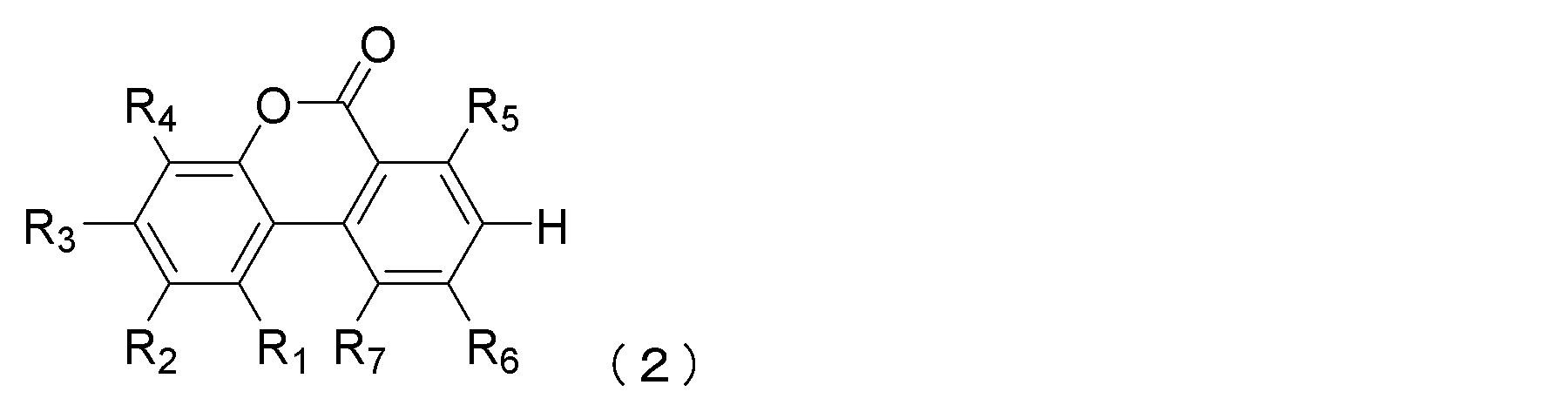
- a method for producing a second urolitin represented by the following general formula (2) which comprises the following step (a): Step (a): In a solution containing a first urolitin represented by the following general formula (1), a second urolitin represented by the following general formula (2) is produced from the first urolitin. Producing an ability of the microorganism from the first urolitins to produce the second urolitins.
- R 1 to R 7 each represent a hydroxyl group, a hydrogen atom or a methoxy group, and at least one of R 1 to R 7 is a hydroxyl group.
- R 1 through R 7 are respectively the same as R 1 to R 7 of the first Urorichin compound represented by the general formula (1).
- the uroritin C is obtained by causing a microorganism having the ability to generate uroritin C from the uroritin C raw material to generate the uroritin C from the raw material in the solution containing the uroritin C raw material, [5] ] The manufacturing method as described in. [7] The production method according to [5], further comprising the following step (b1), wherein the step (a) and the step (b1) are performed in the same system.
- a microorganism having an ability to produce urolitin C from the raw material of urolitin C in a solution containing the raw material of urolitin C [8] The production method according to [6] or [7], wherein the microorganism having the ability to produce urolitin C from the raw material of urolitin C is a microorganism belonging to the genus Gordonibacter.
- the microorganism belonging to the genus Gordonibacter is a microorganism belonging to Gordonibacter pamelaeae (Gordonibacter pamelaeae) and / or a microorganism belonging to Gordonibacter urolithinfaciens, [9] The manufacturing method as described in 8]. [10] The production method according to [9], wherein the microorganism belonging to Gordonibacter pamelaeae (Gordonibacter pamelaeae) is the strain Gordonibacter pamelaeae DSM 19378.
- the above-mentioned urolitin A is obtained by causing a microorganism having the ability to generate urolitin A from the raw material of urolitin A in a solution containing the raw material of urolitin A to be produced from the raw material of urolitin A, [13] ]
- the microorganism belonging to the genus Clostridium is from the microorganism belonging to Clostridium bolthae, the microorganism belonging to Clostridium asparagiforme, and the microorganism belonging to Clostridium citroniae
- the production method according to [16] which is one or more selected from the group consisting of [18]
- the microorganism belonging to Clostridium bolthae is at least one selected from the group consisting of Clostridium bolthae strain JCM 12243, DSM 15670, and DSM 29485, [17] The manufacturing method described in.
- the uroritin C is obtained by causing a microorganism having the ability to generate uroritin C from the uroritin C raw material to generate the uroritin C from the raw material uroritin C, [21] ] The manufacturing method as described in. [23] The production method according to [21], further comprising the following step (b21), wherein the step (a) and the step (b21) are performed in the same system. Step (b21): producing urolitin C from the raw material of urolitin C by a microorganism having the ability to generate urolitin C from the raw material of urolitin C in a solution containing the raw material of urolitin C.
- the present invention it is possible to provide a method for producing other urolitins by removing the 8-hydroxyl group from urolitins having a hydroxyl group at 8-position. And, by using the urolitins obtained by the production method of the present invention for cosmetics, quasi-drugs, medical supplies, hygiene products, medicines, food and drink (including supplements), etc. It can be expected to obtain effects such as promoting saccharification and mitophagy.
- accession number of the strain starting from the word "DSM” is a number given to the microorganism stored in DSMZ (Deutsche Sammlung von Mikroorganismen und Zellkulturen GmbH).
- accession number of the strain starting from the wording JCM is a number assigned to the microorganism stored in RIKEN BioResource Center.
- the present invention includes a method for producing urolitins (first invention) and a method for producing a food or drink containing urolitins (second invention).
- first invention a method for producing urolitins
- second invention a method for producing a food or drink containing urolitins
- Table 1 gives specific examples of urolitins.
- the method for producing uroritins according to the first invention of the present invention includes the following step (a), but may include other steps.
- Step (a) is a solution containing a first urolitin represented by the following general formula (1), wherein a second urolitin represented by the following general formula (2) is produced from the first urolitin. Producing a second urolitin from the first urolitin in a microorganism having the ability to
- R 1 to R 7 each represent a hydroxyl group, a hydrogen atom or a methoxy group, and at least one of R 1 to R 7 is a hydroxyl group.
- R 1 through R 7 are respectively the same as R 1 to R 7 of the first Urorichin compound represented by the general formula (1).
- first uroritins include uroritin A, uroritin C, uroritin D, uroritin E, uroritin M3, uroritin M5, uroritin M6, uroritin M7 and the like.
- the second uroritins are the same as the first uroritins except that the hydroxyl group at position 8 of the first uroritins is eliminated.
- the first urolitins of the present invention are preferably uroritin C and uroritin A. At this time, the second urolitins of the present invention are isouroritin A and uroritin B, respectively.
- the microorganism having the ability to produce the second urolitins from the first urolitins is particularly a microorganism having the ability to produce the second urolitins from the first urolitins.
- it is preferably an anaerobic microorganism. Specific examples thereof include microorganisms belonging to the genus Slackia.
- microorganisms and the like belonging to Slackia heliotrinireducens can be mentioned, and more specifically, Slackia heliotrinireducens DSM 20476 strain and the like can be mentioned.
- the above microorganisms may be used alone or in combination of two or more, regardless of the genus, species, or strain.
- the microorganism having the ability to produce the second urolitins from the first urolitins is not limited to the same strain as the deposited bacterial strain, and substantially the same as the deposited bacterial strain. It may be an equivalent strain.
- a substantially equivalent strain is that the nucleotide sequence of its 16S rRNA gene is 97.5% or more, preferably 98% or more, more preferably 99% homologous to the nucleotide sequence of the 16S rRNA gene of the above-mentioned deposited strain. It is the microbe which it possesses.
- a microorganism having the ability to produce the second urolitins from the first urolitins may be mutagenized from the above-mentioned deposited strain or a strain substantially equivalent thereto, unless the effect of the present invention is impaired. Alternatively, it may be a strain bred by selection of a naturally occurring mutant or the like. This applies to all microorganisms described herein.
- the microorganism having the ability to produce a second urolitin from a first urolitin in the first invention of the present invention includes the quiescent cells.
- Stationary cells are those obtained by removing the medium components from the cultured microorganisms by centrifugation or the like, washing with a salt solution such as water or saline, or a buffer solution, and suspending them in the same solution as the washing solution.
- a bacterial cell in a non-proliferating state, and in the first invention of the present invention, a bacterial cell having at least a metabolic system capable of producing a second urolitin from a first urolitin.
- a buffer phosphate buffer, Tris-HCl buffer, citric acid-phosphate buffer, citrate buffer, MOPS buffer, acetate buffer, glycine buffer and the like are preferable.
- the pH and concentration of the buffer can be appropriately adjusted according to a conventional method. All the microorganisms described herein include quiescent cells, the definition of which is the same as above.
- the solution containing the first urolitins in the first invention of the present invention refers to a microorganism having the ability to produce the second urolitins from the first urolitins in the solution, the first urolitins.
- the medium is preferably a medium, and more preferably the medium described in the "Media and Production of Second Urolitins by Culture" described later.
- the microorganism having the ability to produce the second urolitins from the first urolitins is a stationary cell, the above-mentioned salt solution or buffer solution is preferable.
- the term "medium” described in the present specification refers to any solution that can grow microorganisms, including a minimal medium, and includes solutions in which microorganisms can not grow, such as the aforementioned salt solutions and buffers. Make it not exist.
- first urolitins When the first urolitins are added to the solution, they may be added before or during the formation of the second urolitins, or may be added simultaneously, sequentially, or continuously. .
- the content of the first urolitins in the solution is usually 0.01 g / L or more, preferably 0.1 g / L or more, more preferably 1 g / L or more. On the other hand, it is usually 100 g / L or less, preferably 20 g / L or less, more preferably 10 g / L or less.
- the solution is preferably a culture medium.
- the medium is not particularly limited.
- ANAEROBE BASAL BROTH ABB medium
- CM0643 Wilkins-Chalgren Anaerobe Broth
- GAM medium manufactured by Nissui Pharmaceutical Co., Ltd.
- modified GAM medium etc.
- an inducer that induces an enzyme that produces a second urolitin from the first urolitin to these media.
- the inducer include urolitins other than the first urolitins and the second urolitins, precursors thereof; ellagic acid; ellagitannin, which is a precursor of ellagic acid, and the like. 1 type may also be 2 or more types.
- a water-soluble organic substance can be added to the medium as a carbon source. The following compounds can be mentioned as a water-soluble organic substance.
- sugars such as glucose, arabinose, sorbitol, fructose, mannose, sucrose, trehalose, xylose; alcohols such as glycerol; valeric acid, butyric acid, propionic acid, acetic acid, formic acid, fumaric acid etc. It can.
- the concentration of the organic substance to be added to the medium as a carbon source can be appropriately adjusted for efficient growth.
- the addition amount can be selected from the range of 0.1 to 10 wt / vol%.
- a nitrogen source can be added to the culture medium.
- various nitrogen compounds which can be used for ordinary fermentation can be used.
- Preferred inorganic nitrogen sources include ammonium salts and nitrates, and more preferably ammonium sulfate, ammonium chloride, ammonium phosphate, ammonium hydrogen phosphate, potassium nitrate and sodium nitrate.
- organic nitrogen sources mention may be made of amino acids, yeast extract, peptones (such as polypeptone N), meat extract (such as Ehrlich bonito extract, rub-lemko powder, bouillon etc.), liver extract, digested serum powder, etc. Can do.
- the growth and activity may be enhanced by adding a cofactor such as vitamin and an inorganic compound such as various salts to the medium.
- a cofactor such as vitamin and an inorganic compound such as various salts
- the following may be mentioned as microbial growth cofactors derived from animals and plants, such as inorganic compounds and vitamins.
- Vitamins Potassium dihydrogen phosphate Biotin Magnesium sulfate Folate Manganese sulfate Pyridoxine Sodium chloride Thiamine Cobalt chloride Riboflavin Calcium chloride Nicotinic acid Zinc sulfate Pantothenic acid Copper sulfate Vitamin B12 Alum Thiooctoic acid Sodium molybdate p-Aminobenzoic acid Potassium chloride Boric acid etc Nickel chloride Sodium tungstate Sodium selenate Sodium ferrous ammonium sulfate Sodium acetate trihydrate Magnesium sulfate heptahydrate Manganese sulfate tetrahydrate
- a reducing agent such as cysteine, cystine, sodium sulfide, sulfite, ascorbic acid, glutathione, thioglycollic acid, rutin or an enzyme that decomposes reactive oxygen species such as catalase or superoxide mutase into the medium. Growth may be good.
- the gas phase or aqueous phase in culture it is preferable not to contain air or oxygen as the gas phase or aqueous phase in culture, for example, to contain nitrogen and / or hydrogen in any ratio, or to contain nitrogen and / or carbon dioxide in any ratio. It is preferable that it is a gas phase containing hydrogen, or an aqueous phase.
- the proportion of hydrogen in the gas phase is usually 0.5% or more, preferably 1.0% or more, more preferably 2.0% or more because the generation of the second urolitins is promoted. Usually, it is 100% or less, preferably 20% or less, more preferably 10% or less.
- the method of making the gas phase or aqueous phase in culture in such an environment for example, a method of replacing the gas phase with the above gas before cultivation, supplying from the bottom of the incubator during cultivation and / or It is possible to adopt a method of supplying to the gas phase part of the incubator, or a method of bubbling the aqueous phase with the above gas before cultivation.
- hydrogen hydrogen gas may be used as it is.
- a hydrogen source such as formic acid and / or a salt thereof may be added to the culture medium, and hydrogen may be produced during culture by the action of a microorganism.
- the air flow rate is, for example, 0.005 to 2 vvm, preferably 0.05 to 0.5 vvm.
- the mixed gas can also be supplied as nanobubbles.
- the culture temperature is preferably 20 ° C. to 45 ° C., more preferably 25 ° C. to 40 ° C., still more preferably 30 ° C. to 37 ° C.
- the pressure condition of the incubator is not particularly limited as long as it can grow, but a range of 0.001 to 1 MPa, preferably 0.01 to 0.5 MPa can be mentioned.
- the culture time is usually 8 to 340 hours, preferably 12 to 170 hours, more preferably 16 to 120 hours.
- a surfactant such as Tween 80 etc.
- Tween 80 etc. are mentioned, for example, and 0.001 g / L or more and 10 g / L or less can be added.
- the adsorbent include cellulose and derivatives thereof; dextrin; Diaion HP series as hydrophobic adsorbents manufactured by Mitsubishi Chemical Corp .; Sepa beads series; and Amberlite XAD series manufactured by Organo Corporation.
- inclusion compound examples include ⁇ -cyclodextrin, ⁇ -cyclodextrin, ⁇ -cyclodextrin, cluster dextrin (hyperbranched cyclic dextrin) and the like. Among these, ⁇ -cyclodextrin may be the most effective.
- the coexistence of two or more types of inclusion compounds may further promote the formation of second urolitins.
- the addition amount is usually 0.1 equivalent or more, preferably 0.5 equivalent or more, more preferably 1.0 equivalent or more in total of the molar ratio relative to the first urolitins, while usually 5. It is 0 equivalents or less, preferably 2.5 equivalents or less, more preferably 2.0 equivalents or less.
- the first urolitins in the first invention of the present invention may be prepared by any method. For example, those synthesized by a chemical synthesis method or a fermentation method can be mentioned.
- the second uroritins produced in the first invention of the present invention is used as a food or drink
- the method of nonpatent literature 7 can be mentioned.
- a fermentation method in a solution containing the first urolitins raw material, a microorganism having the ability to produce the first urolitins from the first urolitins raw material is generated from the first urolitins raw material And those obtained by
- Step (Step which may be included before step (a)) It is also possible to separate and / or purify the first urolitins after producing the first urolitins by a fermentation method, and apply it to the step (a) as the first urolitins in the step (a) Alternatively, the solution containing the first urolitins may be applied to the step (a) as the first urolitins of the step (a) without separation and / or purification, as it is or after dilution or concentration. .
- Step (pre-a1) in a solution containing the first urolitins raw material, the microorganism having the ability to produce the first urolitins from the first urolitins raw material from the first urolitins raw material Step of producing first urolitins.
- Step (pre-a2) The first urolitins produced in the step (pre-a1) are separated and / or purified, and the separated and / or purified first urolitins are used as a component of the step (a) The process applied to process (a) as urolitins of 1.
- Step (pre-a3) The solution containing the first urolitins produced in step (pre-a1) is applied to step (a) as the first urolitins in step (a) as it is or after dilution or concentration Process.
- Step (b) The method for producing uroritins according to the first invention of the present invention further includes the following step (b) in addition to the above step (a), and the above step (a) and the step (b) are the same system It is preferred to be done.
- step (b) the steps (a) and (b) are carried out in the same system, in the solution containing the first urolitins raw material, the first urolitins from the first urolitins raw material
- the first urolitins are produced from the raw material of the first urolitins by the microorganism having the ability to produce Hf, and the produced first urolitins are used as they are as the first urolitins in step (a). It is used that a series of flows until a 2nd uroritines are produced
- the same culture solution of the microorganism having the ability to produce the first urolitins from the raw material of the first urolitins and the microorganism having the ability to produce the second urolitins from the first urolitins By inoculating and culturing, to produce a second uroritins, and the like. Both microorganisms may be the same or different.
- the step (b) is read as the step (b1).
- the step (b) is read as the step (b2).
- the step (b) is replaced with the step (b21).
- the raw material of the first urolitins may be prepared by any method. Further, the same applies to the raw material of the first urolitins, and further to the raw material thereof and the subsequent ones. For example, those synthesized by a chemical synthesis method or a fermentation method can be mentioned. When using the 2nd uroritins manufactured by 1st invention of this invention as food-drinks, it is desirable to utilize the raw material of the 1st uroritins obtained by the fermentation method or the enzyme method. As a chemical synthesis method, the method of nonpatent literature 7 can be mentioned.
- the microorganism having the ability to produce the first raw material of the urolitins from the raw material of the first urolitins is The raw material of the 1st uroritines obtained by making it produce
- the first invention of the present invention may include the following steps.
- the first invention of the present invention may include, for example, the step of quantifying the obtained second urolitins.
- the determination method can follow a conventional method. For example, to the culture solution, ethyl acetate added with an acid such as formic acid as necessary is added, vigorously stirred and then centrifuged to take out an ethyl acetate layer. The same operation is carried out several times as necessary, and the ethyl acetate layers are combined to obtain a urolitine extract. The extract is concentrated to dryness under reduced pressure using an evaporator or the like, and dissolved in methanol.
- the resultant is filtered using a membrane such as a polytetrafluoroethylene (PTFE) membrane, and the insoluble matter is removed and quantified by high performance liquid chromatography.
- a membrane such as a polytetrafluoroethylene (PTFE) membrane
- PTFE polytetrafluoroethylene
- Examples of the conditions for high performance liquid chromatography include, but are not limited to, the following.
- the first invention of the present invention may include the step of purifying the second urolitins obtained in the above step, and the step of concentrating.
- purification treatment in the purification step sterilization of the microorganism by heat etc .; sterilization by microfiltration (MF), ultrafiltration (UF) etc .; removal of solid matter, polymer substance; extraction by organic solvent, ionic liquid etc. Treatment such as adsorption and decolorization using a hydrophobic adsorbent, ion exchange resin, activated carbon column and the like can be performed.
- concentration process in a concentration process concentration with an evaporator, a reverse osmosis membrane, etc. is mentioned.
- the solution containing the second urolitins can be powdered by lyophilization, spray drying or the like. In powdering, excipients such as lactose, dextrin and corn starch can also be added.
- the first urolitins are urolitin C
- the second urolitins is isouroritin A
- the microorganism having the ability to generate the second urolitins from the first urolitins is Slackia. It is an aspect in the case of being a microorganism belonging to a genus. That is, it is a manufacturing method of isouroritin A including the following process (a1).
- ellagic acid As a raw material of uroritin C, for example, ellagic acid; ellagitannins such as punicaladin, geraniin, which are precursors of ellagic acid; Preferably, it is ellagic acid and / or ellagitannin.
- the plant producing ellagic acid and ellagitannin is not particularly limited, and examples thereof include pomegranate, raspberry, blackberry, cloudberry, boysenberry, strawberry, walnut, and ginseng. Among these, pomegranate, boysenberry, and ginseng are preferable, and pomegranate is more preferable, since they contain a high amount of ellagic acid and / or ellagitannin.
- the raw material of uroritin C is any solution that contains urolitin C in a solution and is capable of producing uroritin C from the raw material of uroritin C by a microorganism having the ability to produce urolitin C from the raw material of urolitin C And may be one or two or more.
- the microorganism having the ability to produce urolitin C from the raw material of urolitin C is not particularly limited.
- a microorganism belonging to the genus Gordonibacter and a microorganism belonging to the genus Eggerthella are preferred.
- the microorganisms belonging to the genus Gordonibacter the microorganism belonging to Gordonibacter pamelaeae (Gordonibacter pamelaeae) and the microorganism belonging to Gordonibacter uroliphifaciens are more preferable.
- strain DSM 19378 is more preferable, and if it is a microorganism belonging to Gordonibacter uroliphifaciens, strain DSM 27213 is even more preferable.
- strain DSM 27213 is even more preferable.
- the microorganisms belonging to the genus Eggerthella microorganisms belonging to Eggerthella sp. are preferable, and the strain DC 3563 (NITE BP-02376) is more preferable.
- the above microorganisms may be used alone or in combination of two or more, regardless of the genus, species, or strain.
- Microorganisms having the ability to produce urolitin C include their stationary cells.
- stationary cells the description of “static cells of microorganisms having the ability to produce second urolitins from first urolitins” is incorporated.
- the solution containing the raw material of urolitin C is particularly limited as long as the microorganism having the ability to generate urolitin C from the raw material of urolitin C in the solution can generate urolitin C from the raw material of urolitin C I will not.
- the medium is preferably a medium, and more preferably the medium described in the "medium and the production of second urolitins by culture" described above. In the case of stationary cells, the above-mentioned salt solution or buffer is preferred.
- the content of the raw material of urolitin C in the solution is usually 0.01 g / L or more, preferably 0.1 g / L or more, and more preferably 1.0 g / L or more. On the other hand, it is usually 100 g / L or less, preferably 20 g / L or less, more preferably 10 g / L or less.
- the solution is preferably a culture medium.
- the details of the more preferable medium, the culture conditions and the like can be incorporated into the description of the "medium and production of second urolitins by culture" described above.
- generation of urolitin C may be promoted by adding a surfactant, an adsorbent, an inclusion compound and the like to the culture solution.
- the inclusion compound include ⁇ -cyclodextrin, ⁇ -cyclodextrin, ⁇ -cyclodextrin, cluster dextrin (hyperbranched cyclic dextrin) and the like.
- ⁇ -cyclodextrin is most effective, and ⁇ -cyclodextrin and ⁇ -cyclodextrin also have an effect.
- the coexistence of two or more kinds of inclusion compounds may further promote the formation of urolitin C.
- the addition amount is usually 0.2 equivalents or more, preferably 1.0 equivalent or more, more preferably 2.0 equivalents or more in total amount of molar ratio relative to the total amount of the raw material of uroritin C, while usually 10 It is not more than 0, preferably not more than 5.0, more preferably not more than 4.0 equivalents.
- the first urolitins are urolitin A
- the second urolitins are urolitin B
- the microorganism having the ability to generate the second urolitins from the first urolitins is Slackia. It is an aspect in the case of being a microorganism belonging to a genus. That is, it is a manufacturing method of urolitin B including the following process (a2).
- urolitin A may be prepared by any method.
- a raw material of uroritin A for example, ellagic acid; ellagitannins such as punicaradine and geranin which are precursors of ellagic acid; urolitin M7 which is a precursor of urolitin A, urolitin C and the like can be mentioned.
- a solution containing uroritin C includes a step of causing uroritin C to be generated from uroritin C by a microorganism having an ability to generate uroritin A from uroritin C. What was obtained by the manufacturing method of A may be used.
- the microorganism having the ability to produce urolitin A from urolitin C is not particularly limited as long as it is a microorganism having the ability to produce urolitin A from urolitin C, but is preferably an anaerobic microorganism. Specific examples thereof include microorganisms belonging to the genus Clostridium.
- a microorganism belonging to Clostridium bolthae a microorganism belonging to Clostridium asparagiforme, and a microorganism belonging to Clostridium citroniae can be mentioned.
- DSM 29485 strain DSM 15670 strain, and JCM 12243 strain can be mentioned.
- microorganisms belonging to Clostridium asparagiforme the DSM 15981 strain is mentioned.
- microorganisms belonging to Clostridium citroniae the DSM 19261 strain is mentioned.
- the above microorganisms may be used alone or in combination of two or more, regardless of the genus, species, or strain.
- a microorganism having the ability to generate urolitin C from the urolitin C raw material including the case of being produced from urolitin C as a raw material
- the aspect of uroritin C in the manufacturing method of isourolithin A including step (a1) is used.
- the step (c) is a step of blending the second urolitins generated in the step (a) and the food and drink raw materials to make a food and drink.
- the food and drink are produced by blending the commonly used food and drink raw materials and the second uroritines produced in the above step (a) according to a conventional method, and the blending time is not particularly limited.
- food and drink ingredients also include food additives. Furthermore, if necessary, it can be enclosed in an appropriate container such as a bottle, a bag, a can, a box, a pack and the like.
- the food and drink produced according to the second invention of the present invention comprises water, protein, carbohydrate, lipid, vitamins, minerals, organic acid, organic base, fruit juice, flavors and the like as main components.
- proteins include whole fat milk powder, skimmed milk powder, partially skimmed milk powder, casein, soy protein, chicken egg protein, animal and vegetable proteins such as meat protein, and hydrolysates of these, butter and the like.
- sugar include saccharides, modified starch (dextrin, soluble starch, British starch, oxidized starch, starch ester, starch ether, etc.), dietary fiber and the like.
- Examples of the lipid include vegetable fats and oils such as lard, safflower oil, corn oil, rapeseed oil, coconut oil, fractionated oils thereof, hydrogenated oils, transesterified oils and the like.
- vitamins for example, vitamin A, carotene, vitamin B group, vitamin C, vitamin D group, vitamin E, vitamin K group, vitamin P, vitamin Q, niacin, nicotinic acid, pantothenic acid, biotin, inositol, choline And folic acid.
- minerals calcium, potassium, magnesium, sodium, copper, iron, manganese, zinc, selenium, whey mineral etc. are mentioned, for example.
- Examples of the organic acid include malic acid, citric acid, lactic acid and tartaric acid. These components may be used in combination of 2 or more types, and may be a synthetic product.
- the content of the second urolitins produced in the above step (a) relative to the total amount of the food and drink produced in the second invention of the present invention is not particularly limited, but when the food and drink are ingested, It is preferable that it is content which can acquire the effect by 2nd urolitins, such as anti-inflammatory, antiglycation, and mitophage promoting effect.
- the content of the second urolitins relative to the total weight of the food is usually 0.0001% by mass or more, preferably 0.001% by mass or more, more preferably 0.01% by mass or more, and usually 10% by mass or less Preferably it is 1 mass% or less, More preferably, it is 0.1 mass% or less.
- the form may be any form of solid, gel-like or liquid.
- various processed food and drink powder, tablets, pills, capsules, jelly, granules And so on.
- it can be enclosed in an appropriate container such as a bottle, a bag, a can, a box, a pack and the like.
- supplements include excipients such as dextrin, preservatives such as vitamin C, seasoning agents such as vanillin, pigments such as safflower pigment, monosaccharides, oligosaccharides and polysaccharides (eg, glucose, fructose, sucrose, Additives such as sucrose, saccharides containing these, acidulants, flavors, oils and fats, emulsifiers, whole milk powder, or agar may be blended. These components may be used in combination of 2 or more types, and may be a synthetic product.
- Example 1 After heat sterilization of 10 mL of ABB medium (Oxoid Co., Ltd.) containing 0.8 g / L of uroritin C with an autoclave at 121 ° C. for 15 minutes, the gas phase is N 2 : CO 2 : H 2 (80% / 10% / 10 %) Replaced with gas.
- the medium was inoculated with Slackia heliotrinireducens strain DSM 20476 and cultured anaerobically at 37 ° C. After incubation, urolitins were extracted with an equal volume of ethyl acetate per 5 mL of culture solution, and the obtained ethyl acetate phase was concentrated to dryness under reduced pressure.
- the dried product thus obtained was redissolved in 0.5 mL of methanol and subjected to quantitative analysis of urolitins by HPLC.
- HPLC was performed under the conditions described below.
- urolitins manufactured by DALTON PHARMA were used and dissolved in DMSO.
- isouroritin A was obtained at a molar yield of 21.1% with respect to the added uroritin C by culture for 2 weeks.
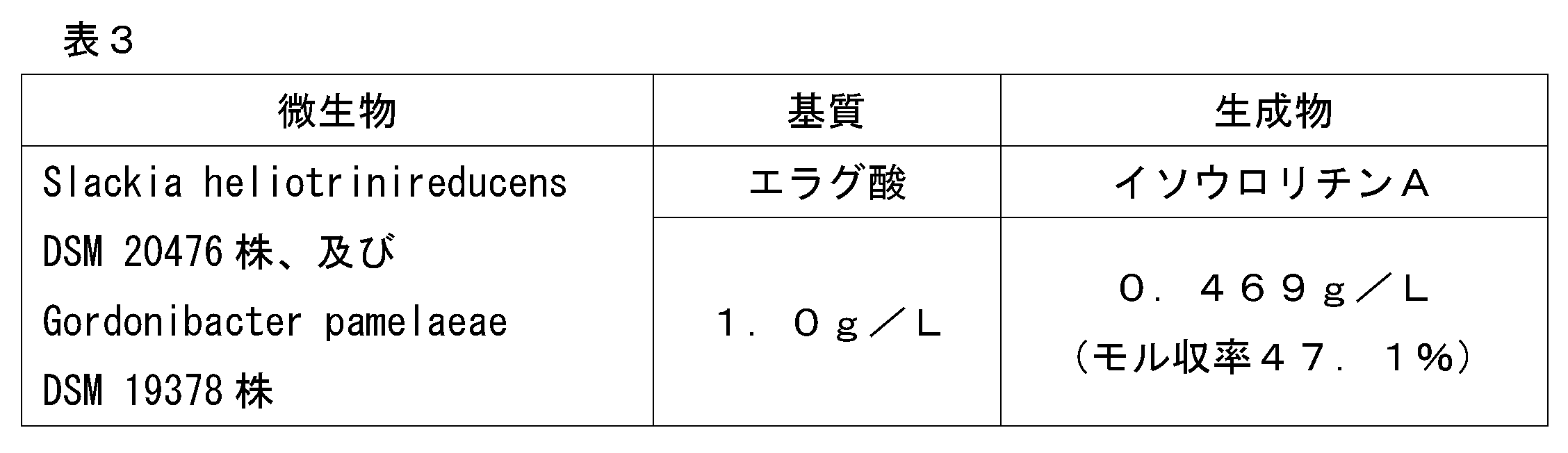
- Example 2 The ABB medium (Oxoid) containing 1.0 g / L of ellagic acid was used to inoculate Slackia heliotrinireducens strain DSM 20476 and Gordonibacter pamelaae strain DSM 19378. Then, as a result of culturing in the same manner as in Example 1, as shown in Table 3, isouroritin A was obtained in a molar yield of 47.1% relative to the added ellagic acid, as shown in Table 3.
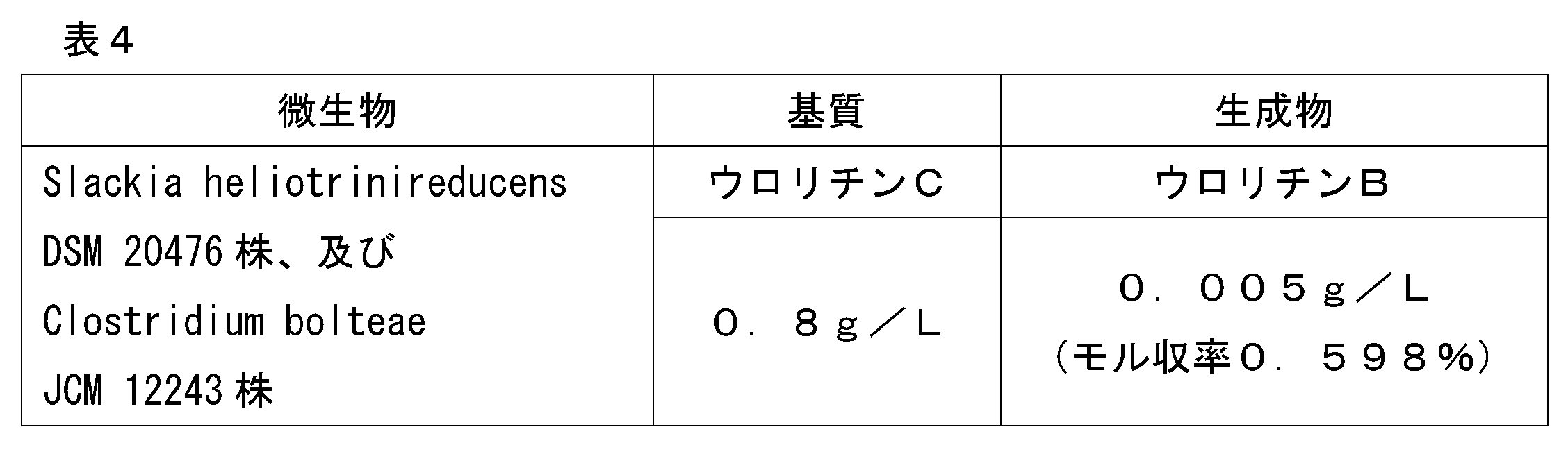
- Example 3 Inoculate ABB medium (manufactured by Oxoid) containing 0.8 g / L of uroritin C (Soxia heliotrinireducens strain DSM 20476 and Clostridium bolthae strain JCM 12243), As a result of culturing in the same manner as in Example 1, as shown in Table 4, by 2-week culture, urolitin B was obtained in a molar yield of 0.598% with respect to the added urolitin C.
- uroritin C Soxia heliotrinireducens strain DSM 20476 and Clostridium bolthae strain JCM 12243
- Example 4 ABB medium (Oxoid) containing 1.0 g / L of ellagic acid (Soxia heliotrinireducens) strain DSM 20476, Gordonibacter pamelaeae strain DSM 19378, and Clostridium As a result of inoculating Clostridium bolteae strain JCM 12243 strain and culturing in the same manner as in Example 1, as shown in Table 5, a molar yield of 3.7% relative to the added ellagic acid by culturing for 2 weeks Then, urolitin B was obtained.
- ellagic acid Soxia heliotrinireducens
- urolitins having a hydroxyl group at the 8 position can be produced from urolitins having a hydroxyl group at the 8 position.
- the manufactured urolitins are used for anti-oxidation, anti-inflammatory, anti-glycation, etc. for cosmetics, quasi-drugs, medical supplies, hygiene products, medicines, food and drink (including supplements) and the like.
Landscapes
- Chemical & Material Sciences (AREA)
- Life Sciences & Earth Sciences (AREA)
- Organic Chemistry (AREA)
- Engineering & Computer Science (AREA)
- Wood Science & Technology (AREA)
- Zoology (AREA)
- Health & Medical Sciences (AREA)
- Biotechnology (AREA)
- Genetics & Genomics (AREA)
- Bioinformatics & Cheminformatics (AREA)
- Microbiology (AREA)
- Biochemistry (AREA)
- General Engineering & Computer Science (AREA)
- General Health & Medical Sciences (AREA)
- General Chemical & Material Sciences (AREA)
- Chemical Kinetics & Catalysis (AREA)
- Biomedical Technology (AREA)
- Tropical Medicine & Parasitology (AREA)
- Virology (AREA)
- Medicinal Chemistry (AREA)
- Botany (AREA)
- Mycology (AREA)
- Nutrition Science (AREA)
- Food Science & Technology (AREA)
- Polymers & Plastics (AREA)
- Preparation Of Compounds By Using Micro-Organisms (AREA)
- Micro-Organisms Or Cultivation Processes Thereof (AREA)
Abstract
本発明は、ウロリチン類の8位の水酸基を脱離して他のウロリチン類を製造する方法の提供を課題とし、該課題を、工程(a):第1のウロリチン類を含有する溶液において、第1のウロリチン類から第2のウロリチン類を生成する能力を有する微生物に、第1のウロリチン類から第2のウロリチン類を生成させる工程を含む、第2のウロリチン類の製造方法により解決する。
Description
本発明は、ウロリチン類の製造方法に関する。
ウロリチンAやウロリチンCに代表されるウロリチン類は、ザクロ、ラズベリー、ブラックベリー、クラウドベリー、イチゴ、クルミなどに含まれるエラジタンニン等に由来するエラグ酸の代謝物として知られている。
エラジタンニンは加水分解性タンニンに分類され、摂取されると体内で加水分解され、エラグ酸に変換されることが知られている。また、果実等にはエラグ酸としても存在している。
これまでに、例えば、生体内におけるウロリチン類の生成については、ラットにおいて、ゲラニインなどのエラジタンニンからウロリチン類が生じることが、尿中のウロリチン類を分析することによって明らかにされている(非特許文献1)。
また、ヒトにおいて、プニカラジンを主としたエラジタンニンを含むザクロ抽出物を摂取後、尿中においてウロリチン類が検出され、特にウロリチンA及びウロリチンCが主要なエラグ酸代謝物であることが報告されている(非特許文献2)。
これまでに、例えば、生体内におけるウロリチン類の生成については、ラットにおいて、ゲラニインなどのエラジタンニンからウロリチン類が生じることが、尿中のウロリチン類を分析することによって明らかにされている(非特許文献1)。
また、ヒトにおいて、プニカラジンを主としたエラジタンニンを含むザクロ抽出物を摂取後、尿中においてウロリチン類が検出され、特にウロリチンA及びウロリチンCが主要なエラグ酸代謝物であることが報告されている(非特許文献2)。
これらのウロリチン類は、様々な生理活性を有することが知られており、医薬品、化粧品、飲食品の素材としての利用が期待されている。
例えば、ウロリチンAには抗酸化作用(非特許文献3)、抗炎症作用(非特許文献4)、抗糖化作用(非特許文献5)、マイトファジーの促進作用(非特許文献6)などの機能を有することが報告されており、抗老化機能を有する素材としての開発が期待されている。
例えば、ウロリチンAには抗酸化作用(非特許文献3)、抗炎症作用(非特許文献4)、抗糖化作用(非特許文献5)、マイトファジーの促進作用(非特許文献6)などの機能を有することが報告されており、抗老化機能を有する素材としての開発が期待されている。
これらのウロリチン類を合成する方法としては、2‐ブロモ‐5‐メトキシ安息香酸を出発原料として脱メチル化によって2‐ブロモ‐5‐ヒドロキシ安息香酸とし、レゾルシノールと反応させることによってウロリチンAを得る方法などが報告されている(非特許文献7)。しかし、ウロリチン類を機能性食品(飲料、サプリメントを含む。)の素材として利用するには、このような化学合成法は適さない。
一方、エラジタンニンやエラグ酸は体内に摂取された後、腸内微生物叢によって代謝されてウロリチン類に変換されることが知られている。近年、ウロリチン類の一種であるウロリチンCをエラグ酸から生成する腸内細菌としてゴルドニバクター・ウロリチファシエンス(Gordonibacter urolithinfaciens)に属する微生物が分離、同定され、この腸内細菌を用いたエラグ酸の発酵によりウロリチンCを産生する方法が報告された(特許文献1、非特許文献8)。しかし、発酵液中のウロリチンCの蓄積濃度は2mg/L程度であり、また、ヒトの主要なエラグ酸代謝物であるウロリチンAは生産することができない。
ゴルドニバクター属に属するゴルドニバクター・パメラエアエ(Gordonibacter pamelaeae)に属する微生物もエラグ酸からウロリチンCを生産することが報告されているが、ウロリチンAを生産することは報告されていない。また、同微生物を含め、ウロリチン類の8位の水酸基を脱離して他のウロリチン類を産生する微生物は報告されていない。
J. Agric. Food Chem. 56, 393-400 (2008)
Mol. Nutr. Food Res. 58, 1199-1211 (2014)
Biosci. Biotechnol. Biochem. 76, 395-399 (2012)
J. Agric. Food Chem. 60, 8866-8876 (2012)
Mol. Nutr. Food Res. 55, S35-S43 (2011)
Nature Medicine, 22, 879-888 (2016)
J. Agric. Food Chem.,56, 393-400 (2008)
Food Func., 5, 8, 1779-1784 (2014)
本発明は、ウロリチン類の8位の水酸基を脱離して他のウロリチン類を製造する方法の提供を課題とする。
上記課題を解決するために、本発明者らは鋭意検討した結果、ウロリチン類の8位の水酸基を脱離して他のウロリチン類を生成する能力を有する微生物を見出して、本発明を完成させた。本発明は以下の通りである。
〔1〕下記工程(a)を含む、下記一般式(2)で表される第2のウロリチン類の製造方法。
工程(a):下記一般式(1)で表される第1のウロリチン類を含有する溶液において、第1のウロリチン類から下記一般式(2)で表される第2のウロリチン類を生成する能力を有する微生物に、第1のウロリチン類から第2のウロリチン類を生成させる工程。
工程(a):下記一般式(1)で表される第1のウロリチン類を含有する溶液において、第1のウロリチン類から下記一般式(2)で表される第2のウロリチン類を生成する能力を有する微生物に、第1のウロリチン類から第2のウロリチン類を生成させる工程。
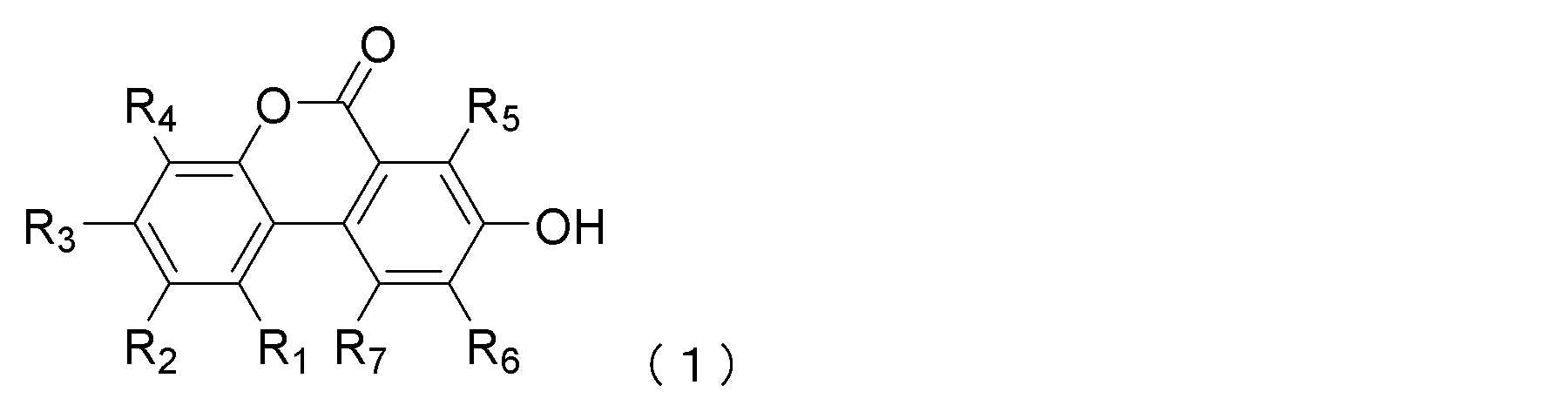
(式中、R1乃至R7は、それぞれ、水酸基、水素原子又はメトキシ基を表し、且つ、R1乃至R7のうち1つ以上は水酸基である。)

(式中、R1乃至R7は、それぞれ、前記一般式(1)で表される第1のウロリチン類のR1乃至R7と同一である。)
〔2〕前記微生物がスラッキア(Slackia)属に属する微生物である、〔1〕に記載の製造方法。
〔3〕前記スラッキア(Slackia)属に属する微生物が、スラッキア・ヘリオトリニレデュセンス(Slackia heliotrinireducens)に属する微生物である、〔2〕に記載の製造方法。
〔4〕前記スラッキア・ヘリオトリニレデュセンス(Slackia heliotrinireducens)に属する微生物が、スラッキア・ヘリオトリニレデュセンス(Slackia heliotrinireducens)DSM 20476株である、〔3〕に記載の製造方法。
〔5〕前記第1のウロリチン類がウロリチンCであり、前記第2のウロリチン類がイソウロリチンAである、〔1〕~〔4〕のいずれかに記載の製造方法。
〔6〕前記ウロリチンCが、ウロリチンCの原料を含有する溶液において、ウロリチンCの原料からウロリチンCを生成する能力を有する微生物に、ウロリチンCの原料から生成させて得られるものである、〔5〕に記載の製造方法。
〔7〕さらに下記工程(b1)を含み、前記工程(a)及び該工程(b1)が同一の系で行われる、〔5〕に記載の製造方法。
工程(b1):ウロリチンCの原料を含有する溶液において、ウロリチンCの原料からウロリチンCを生成する能力を有する微生物に、ウロリチンCの原料からウロリチンCを生成させる工程。
〔8〕前記ウロリチンCの原料からウロリチンCを生成する能力を有する微生物が、ゴルドニバクター(Gordonibacter)属に属する微生物である、〔6〕又は〔7〕に記載の製造方法。
〔9〕前記ゴルドニバクター(Gordonibacter)属に属する微生物が、ゴルドニバクター・パメラエアエ(Gordonibacter pamelaeae)に属する微生物及び/又はゴルドニバクター・ウロリチファシエンス(Gordonibacter urolithinfaciens)に属する微生物である、〔8〕に記載の製造方法。
〔10〕前記ゴルドニバクター・パメラエアエ(Gordonibacter pamelaeae)に属する微生物が、ゴルドニバクター・パメラエアエ(Gordonibacter pamelaeae)DSM 19378株である、〔9〕に記載の製造方法。
〔11〕前記ゴルドニバクター・ウロリチファシエンス(Gordonibacter urolithinfaciens)に属する微生物が、ゴルドニバクター・ウロリチファシエンス(Gordonibacter urolithinfaciens)DSM 27213株である、〔9〕又は〔10〕に記載の製造方法。
〔12〕前記ウロリチンCの原料が、エラグ酸及び/又はエラジタンニンである、〔6〕~〔11〕のいずれかに記載の製造方法。
〔13〕前記第1のウロリチン類がウロリチンAであり、前記第2のウロリチン類がウロリチンBである、〔1〕~〔4〕のいずれかに記載の製造方法。
〔14〕前記ウロリチンAが、ウロリチンAの原料を含有する溶液において、ウロリチンAの原料からウロリチンAを生成する能力を有する微生物に、ウロリチンAの原料から生成させて得られるものである、〔13〕に記載の製造方法。
〔15〕さらに下記工程(b2)を含み、前記工程(a)及び該工程(b2)が同一の系で行われる、〔13〕に記載の製造方法。
工程(b2):ウロリチンAの原料を含有する溶液において、ウロリチンAの原料からウロリチンAを生成する能力を有する微生物に、ウロリチンAの原料からウロリチンAを生成させる工程。
〔16〕前記ウロリチンAの原料からウロリチンAを生成する能力を有する微生物が、クロストリジウム(Clostridium)属に属する微生物である、〔14〕又は〔15〕に記載の製造方法。
〔17〕前記クロストリジウム(Clostridium)属に属する微生物が、クロストリジウム・ボルテアエ(Clostridium bolteae)に属する微生物、クロストリジウム・アスパラギフォルメ(Clostridium asparagiforme)に属する微生物、及びクロストリジウム・シトロニアエ(Clostridium citroniae)に属する微生物から成る群から選択される一以上である、〔16〕に記載の製造方法。
〔18〕前記クロストリジウム・ボルテアエ(Clostridium bolteae)に属する微生物が、クロストリジウム・ボルテアエ(Clostridium bolteae)JCM 12243株、DSM 15670株、及びDSM 29485株から成る群から選択される1以上である、〔17〕に記載の製造方法。
〔19〕前記クロストリジウム・アスパラギフォルメ(Clostridium asparagiforme)に属する微生物が、クロストリジウム・アスパラギフォルメ(Clostridium asparagiforme)DSM 15981株である、〔17〕又は〔18〕に記載の製造方法。
〔20〕前記クロストリジウム・シトロニアエ(Clostridium citroniae)に属する微生物が、クロストリジウム・シトロニアエ(Clostridium citroniae)DSM 19261株である、〔17〕~〔19〕のいずれかに記載の製造方法。
〔21〕前記ウロリチンAの原料がウロリチンCである、〔14〕~〔20〕のいずれかに記載の製造方法。
〔22〕前記ウロリチンCが、ウロリチンCの原料を含有する溶液において、ウロリチンCの原料からウロリチンCを生成する能力を有する微生物に、ウロリチンCの原料から生成させて得られるものである、〔21〕に記載の製造方法。
〔23〕さらに下記工程(b21)を含み、前記工程(a)及び該工程(b21)が同一の系で行われる、〔21〕に記載の製造方法。
工程(b21):ウロリチンCの原料を含有する溶液において、ウロリチンCの原料からウロリチンCを生成する能力を有する微生物に、ウロリチンCの原料からウロリチンCを生成させる工程。
〔24〕前記ウロリチンCの原料からウロリチンCを生成する能力を有する微生物が、ゴルドニバクター(Gordonibacter)属に属する微生物である、〔22〕又は〔23〕に記載の製造方法。
〔25〕前記ゴルドニバクター(Gordonibacter)属に属する微生物が、ゴルドニバクター・パメラエアエ(Gordonibacter pamelaeae)に属する微生物及び/又はゴルドニバクター・ウロリチファシエンス(Gordonibacter urolithinfaciens)に属する微生物である、〔24〕に記載の製造方法。
〔26〕前記ゴルドニバクター・パメラエアエ(Gordonibacter pamelaeae)に属する微生物が、ゴルドニバクター・パメラエアエ(Gordonibacter pamelaeae)DSM 19378株である、〔25〕に記載の製造方法。
〔27〕前記ゴルドニバクター・ウロリチファシエンス(Gordonibacter urolithinfaciens)に属する微生物が、ゴルドニバクター・ウロリチファシエンス(Gordonibacter urolithinfaciens)DSM 27213株である、〔25〕又は〔26〕に記載の製造方法。
〔28〕前記ウロリチンCの原料が、エラグ酸及び/又はエラジタンニンである、〔22〕~〔27〕のいずれかに記載の製造方法。
〔29〕工程(a)が、気相が水素を含む環境下で行われる、〔1〕~〔28〕のいずれかに記載の製造方法。
〔30〕前記水素が、ギ酸及び/又はその塩を原料とする水素を含む、〔29〕に記載の製造方法。
〔3〕前記スラッキア(Slackia)属に属する微生物が、スラッキア・ヘリオトリニレデュセンス(Slackia heliotrinireducens)に属する微生物である、〔2〕に記載の製造方法。
〔4〕前記スラッキア・ヘリオトリニレデュセンス(Slackia heliotrinireducens)に属する微生物が、スラッキア・ヘリオトリニレデュセンス(Slackia heliotrinireducens)DSM 20476株である、〔3〕に記載の製造方法。
〔5〕前記第1のウロリチン類がウロリチンCであり、前記第2のウロリチン類がイソウロリチンAである、〔1〕~〔4〕のいずれかに記載の製造方法。
〔6〕前記ウロリチンCが、ウロリチンCの原料を含有する溶液において、ウロリチンCの原料からウロリチンCを生成する能力を有する微生物に、ウロリチンCの原料から生成させて得られるものである、〔5〕に記載の製造方法。
〔7〕さらに下記工程(b1)を含み、前記工程(a)及び該工程(b1)が同一の系で行われる、〔5〕に記載の製造方法。
工程(b1):ウロリチンCの原料を含有する溶液において、ウロリチンCの原料からウロリチンCを生成する能力を有する微生物に、ウロリチンCの原料からウロリチンCを生成させる工程。
〔8〕前記ウロリチンCの原料からウロリチンCを生成する能力を有する微生物が、ゴルドニバクター(Gordonibacter)属に属する微生物である、〔6〕又は〔7〕に記載の製造方法。
〔9〕前記ゴルドニバクター(Gordonibacter)属に属する微生物が、ゴルドニバクター・パメラエアエ(Gordonibacter pamelaeae)に属する微生物及び/又はゴルドニバクター・ウロリチファシエンス(Gordonibacter urolithinfaciens)に属する微生物である、〔8〕に記載の製造方法。
〔10〕前記ゴルドニバクター・パメラエアエ(Gordonibacter pamelaeae)に属する微生物が、ゴルドニバクター・パメラエアエ(Gordonibacter pamelaeae)DSM 19378株である、〔9〕に記載の製造方法。
〔11〕前記ゴルドニバクター・ウロリチファシエンス(Gordonibacter urolithinfaciens)に属する微生物が、ゴルドニバクター・ウロリチファシエンス(Gordonibacter urolithinfaciens)DSM 27213株である、〔9〕又は〔10〕に記載の製造方法。
〔12〕前記ウロリチンCの原料が、エラグ酸及び/又はエラジタンニンである、〔6〕~〔11〕のいずれかに記載の製造方法。
〔13〕前記第1のウロリチン類がウロリチンAであり、前記第2のウロリチン類がウロリチンBである、〔1〕~〔4〕のいずれかに記載の製造方法。
〔14〕前記ウロリチンAが、ウロリチンAの原料を含有する溶液において、ウロリチンAの原料からウロリチンAを生成する能力を有する微生物に、ウロリチンAの原料から生成させて得られるものである、〔13〕に記載の製造方法。
〔15〕さらに下記工程(b2)を含み、前記工程(a)及び該工程(b2)が同一の系で行われる、〔13〕に記載の製造方法。
工程(b2):ウロリチンAの原料を含有する溶液において、ウロリチンAの原料からウロリチンAを生成する能力を有する微生物に、ウロリチンAの原料からウロリチンAを生成させる工程。
〔16〕前記ウロリチンAの原料からウロリチンAを生成する能力を有する微生物が、クロストリジウム(Clostridium)属に属する微生物である、〔14〕又は〔15〕に記載の製造方法。
〔17〕前記クロストリジウム(Clostridium)属に属する微生物が、クロストリジウム・ボルテアエ(Clostridium bolteae)に属する微生物、クロストリジウム・アスパラギフォルメ(Clostridium asparagiforme)に属する微生物、及びクロストリジウム・シトロニアエ(Clostridium citroniae)に属する微生物から成る群から選択される一以上である、〔16〕に記載の製造方法。
〔18〕前記クロストリジウム・ボルテアエ(Clostridium bolteae)に属する微生物が、クロストリジウム・ボルテアエ(Clostridium bolteae)JCM 12243株、DSM 15670株、及びDSM 29485株から成る群から選択される1以上である、〔17〕に記載の製造方法。
〔19〕前記クロストリジウム・アスパラギフォルメ(Clostridium asparagiforme)に属する微生物が、クロストリジウム・アスパラギフォルメ(Clostridium asparagiforme)DSM 15981株である、〔17〕又は〔18〕に記載の製造方法。
〔20〕前記クロストリジウム・シトロニアエ(Clostridium citroniae)に属する微生物が、クロストリジウム・シトロニアエ(Clostridium citroniae)DSM 19261株である、〔17〕~〔19〕のいずれかに記載の製造方法。
〔21〕前記ウロリチンAの原料がウロリチンCである、〔14〕~〔20〕のいずれかに記載の製造方法。
〔22〕前記ウロリチンCが、ウロリチンCの原料を含有する溶液において、ウロリチンCの原料からウロリチンCを生成する能力を有する微生物に、ウロリチンCの原料から生成させて得られるものである、〔21〕に記載の製造方法。
〔23〕さらに下記工程(b21)を含み、前記工程(a)及び該工程(b21)が同一の系で行われる、〔21〕に記載の製造方法。
工程(b21):ウロリチンCの原料を含有する溶液において、ウロリチンCの原料からウロリチンCを生成する能力を有する微生物に、ウロリチンCの原料からウロリチンCを生成させる工程。
〔24〕前記ウロリチンCの原料からウロリチンCを生成する能力を有する微生物が、ゴルドニバクター(Gordonibacter)属に属する微生物である、〔22〕又は〔23〕に記載の製造方法。
〔25〕前記ゴルドニバクター(Gordonibacter)属に属する微生物が、ゴルドニバクター・パメラエアエ(Gordonibacter pamelaeae)に属する微生物及び/又はゴルドニバクター・ウロリチファシエンス(Gordonibacter urolithinfaciens)に属する微生物である、〔24〕に記載の製造方法。
〔26〕前記ゴルドニバクター・パメラエアエ(Gordonibacter pamelaeae)に属する微生物が、ゴルドニバクター・パメラエアエ(Gordonibacter pamelaeae)DSM 19378株である、〔25〕に記載の製造方法。
〔27〕前記ゴルドニバクター・ウロリチファシエンス(Gordonibacter urolithinfaciens)に属する微生物が、ゴルドニバクター・ウロリチファシエンス(Gordonibacter urolithinfaciens)DSM 27213株である、〔25〕又は〔26〕に記載の製造方法。
〔28〕前記ウロリチンCの原料が、エラグ酸及び/又はエラジタンニンである、〔22〕~〔27〕のいずれかに記載の製造方法。
〔29〕工程(a)が、気相が水素を含む環境下で行われる、〔1〕~〔28〕のいずれかに記載の製造方法。
〔30〕前記水素が、ギ酸及び/又はその塩を原料とする水素を含む、〔29〕に記載の製造方法。
本発明によれば、8位に水酸基を有するウロリチン類から該8位の水酸基を脱離して他のウロリチン類を製造する方法が提供できる。そして、本発明の製造方法により得られるウロリチン類を、化粧品、医薬部外品、医療用品、衛生用品、医薬品、飲食品(サプリメントを含む。)等に用いることにより、抗酸化、抗炎症、抗糖化、マイトファジーの促進作用などの効果を得ることが期待できる。
本明細書において、DSMとの文言から始まる菌株の受託番号は、DSMZ (Deutsche Sammlung von Mikroorganismen und Zellkulturen GmbH) に保存されている微生物に付与された番号である。また、JCMとの文言から始まる菌株の受託番号は、理化学研究所バイオリソースセンターに保存されている微生物に付与された番号である。
本発明は、ウロリチン類の製造方法(第一の発明)とウロリチン類を含む飲食品の製造方法(第二の発明)とを含む。
表1に、ウロリチン類の具体例を掲げる。
表1に、ウロリチン類の具体例を掲げる。

<1.ウロリチン類の製造方法>
本発明の第一の発明であるウロリチン類の製造方法は、下記工程(a)を含むが、その他の工程を含んでもよい。
本発明の第一の発明であるウロリチン類の製造方法は、下記工程(a)を含むが、その他の工程を含んでもよい。
(1)工程(a)
工程(a)は、下記一般式(1)で表される第1のウロリチン類を含有する溶液において、第1のウロリチン類から下記一般式(2)で表される第2のウロリチン類を生成する能力を有する微生物に、第1のウロリチン類から第2のウロリチン類を生成させる工程である。
工程(a)は、下記一般式(1)で表される第1のウロリチン類を含有する溶液において、第1のウロリチン類から下記一般式(2)で表される第2のウロリチン類を生成する能力を有する微生物に、第1のウロリチン類から第2のウロリチン類を生成させる工程である。
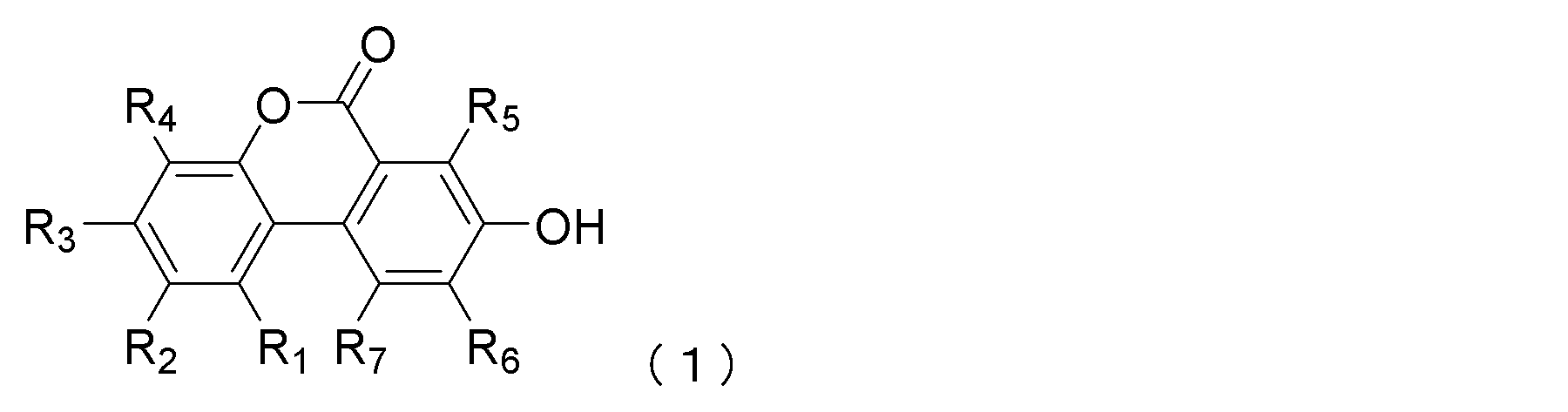
(式中、R1乃至R7は、それぞれ、水酸基、水素原子又はメトキシ基を表し、且つ、R1乃至R7のうち1つ以上は水酸基である。)
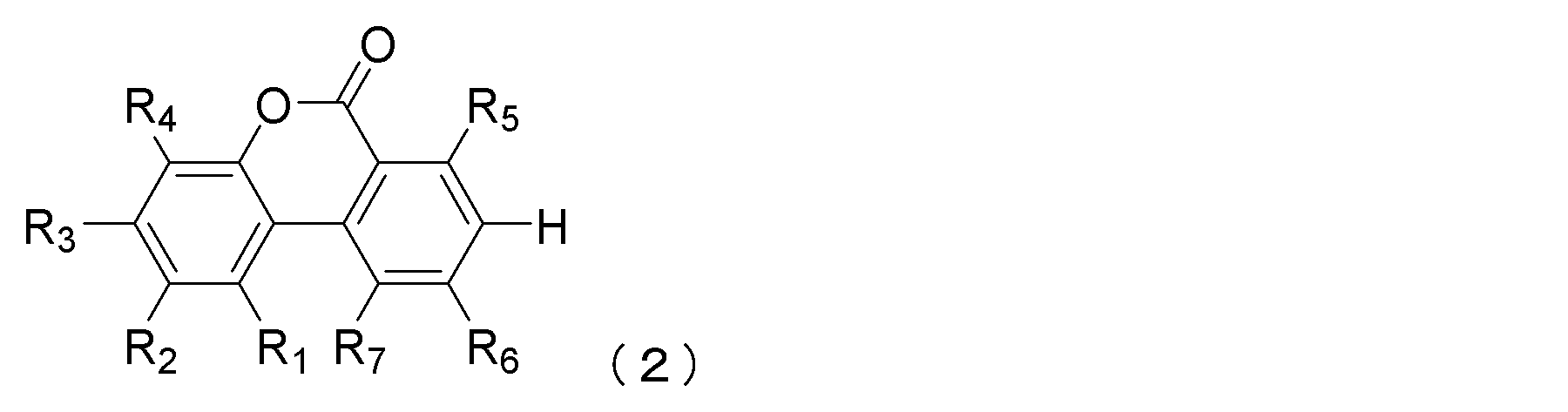
(式中、R1乃至R7は、それぞれ、前記一般式(1)で表される第1のウロリチン類のR1乃至R7と同一である。)
第1のウロリチン類の具体例としては、ウロリチンA、ウロリチンC、ウロリチンD、ウロリチンE、ウロリチンM3、ウロリチンM5、ウロリチンM6、ウロリチンM7等が挙げられる。
第2のウロリチン類としては、上記第1のウロリチン類の8位の水酸基が脱離されていること以外は上記第1のウロリチン類と同一のものである。
本発明の第1のウロリチン類は、好ましくは、ウロリチンC、ウロリチンAであり、このとき、本発明の第2のウロリチン類は、それぞれ、イソウロリチンA、ウロリチンBである。
第2のウロリチン類としては、上記第1のウロリチン類の8位の水酸基が脱離されていること以外は上記第1のウロリチン類と同一のものである。
本発明の第1のウロリチン類は、好ましくは、ウロリチンC、ウロリチンAであり、このとき、本発明の第2のウロリチン類は、それぞれ、イソウロリチンA、ウロリチンBである。
(第1のウロリチン類から第2のウロリチン類を生成する能力を有する微生物)
本発明の第一の発明における、第1のウロリチン類から第2のウロリチン類を生成する能力を有する微生物は、第1のウロリチン類から第2のウロリチン類を生成する能力を有する微生物ならば特に制限されないが、嫌気性の微生物であることが好ましい。
その具体例としては、スラッキア(Slackia)属に属する微生物が挙げられる。より具体的には、スラッキア・ヘリオトリニレデュセンス(Slackia heliotrinireducens)に属する微生物等が挙げられ、さらに具体的には、スラッキア・ヘリオトリニレデュセンス(Slackia heliotrinireducens)DSM 20476株等が挙げられる。
以上の微生物は、属、種、株に拘らず、1種でも2種以上を用いてもよい。
本発明の第一の発明における、第1のウロリチン類から第2のウロリチン類を生成する能力を有する微生物は、第1のウロリチン類から第2のウロリチン類を生成する能力を有する微生物ならば特に制限されないが、嫌気性の微生物であることが好ましい。
その具体例としては、スラッキア(Slackia)属に属する微生物が挙げられる。より具体的には、スラッキア・ヘリオトリニレデュセンス(Slackia heliotrinireducens)に属する微生物等が挙げられ、さらに具体的には、スラッキア・ヘリオトリニレデュセンス(Slackia heliotrinireducens)DSM 20476株等が挙げられる。
以上の微生物は、属、種、株に拘らず、1種でも2種以上を用いてもよい。
また、本発明の第一の発明における、第1のウロリチン類から第2のウロリチン類を生成する能力を有する微生物は、上記寄託菌株と同一の菌株に制限されず、上記寄託菌株と実質的に同等の菌株であってもよい。実質的に同等の菌株とは、その16S rRNA遺伝子の塩基配列が、上記寄託菌株の16S rRNA遺伝子の塩基配列と97.5%以上、好ましくは98%以上、より好ましくは99%の相同性を有する微生物である。さらに、第1のウロリチン類から第2のウロリチン類を生成する能力を有する微生物は、本発明の効果が損なわれない限り、上記寄託菌株又はそれと実質的に同等の菌株から、変異処理、遺伝子組換え、自然変異株の選択等によって育種された菌株であってもよい。このことは、本明細書に記載されているすべての微生物に適用される。
(第1のウロリチン類から第2のウロリチン類を生成する能力を有する微生物の静止菌体)
本発明の第一の発明における、第1のウロリチン類から第2のウロリチン類を生成する能力を有する微生物は、その静止菌体を含む。静止菌体とは、培養した微生物から遠心分離等の操作により培地成分を取り除き、水や生理食塩水等の塩溶液、あるいは緩衝液で洗浄し、洗浄液と同一の液に懸濁した菌体であって、増殖しない状態の菌体を指し、本発明の第一の発明においては、少なくとも、第1のウロリチン類から第2のウロリチン類を生成できる代謝系を有している菌体をいう。緩衝液としては、リン酸緩衝液、トリス‐塩酸緩衝液、クエン酸‐リン酸緩衝液、クエン酸緩衝液、MOPS緩衝液、酢酸緩衝液、グリシン緩衝液等が好ましい。緩衝液のpHや濃度は、常法に従い適宜調製したものを使用できる。
本明細書に記載されている微生物はいずれも静止菌体を含み、その定義は上記と同一である。
本発明の第一の発明における、第1のウロリチン類から第2のウロリチン類を生成する能力を有する微生物は、その静止菌体を含む。静止菌体とは、培養した微生物から遠心分離等の操作により培地成分を取り除き、水や生理食塩水等の塩溶液、あるいは緩衝液で洗浄し、洗浄液と同一の液に懸濁した菌体であって、増殖しない状態の菌体を指し、本発明の第一の発明においては、少なくとも、第1のウロリチン類から第2のウロリチン類を生成できる代謝系を有している菌体をいう。緩衝液としては、リン酸緩衝液、トリス‐塩酸緩衝液、クエン酸‐リン酸緩衝液、クエン酸緩衝液、MOPS緩衝液、酢酸緩衝液、グリシン緩衝液等が好ましい。緩衝液のpHや濃度は、常法に従い適宜調製したものを使用できる。
本明細書に記載されている微生物はいずれも静止菌体を含み、その定義は上記と同一である。
(第1のウロリチン類を含有する溶液)
本発明の第一の発明における第1のウロリチン類を含有する溶液とは、該溶液において、第1のウロリチン類から第2のウロリチン類を生成する能力を有する微生物に、第1のウロリチン類から第2のウロリチン類を生成させることができるものであれば特に制限されない。好ましくは培地であり、より好ましくは後述する「培地、及び培養による第2のウロリチン類の生成」欄に記載した培地である。また、第1のウロリチン類から第2のウロリチン類を生成する能力を有する微生物が静止菌体である場合には、前述した塩溶液や緩衝液が好ましい。
尚、本明細書に記載されている「培地」とは、いずれも、最少培地を含む、微生物が増殖できる溶液をいい、微生物が増殖できない溶液、例えば、前述した塩溶液や緩衝液などを含まないものとする。
本発明の第一の発明における第1のウロリチン類を含有する溶液とは、該溶液において、第1のウロリチン類から第2のウロリチン類を生成する能力を有する微生物に、第1のウロリチン類から第2のウロリチン類を生成させることができるものであれば特に制限されない。好ましくは培地であり、より好ましくは後述する「培地、及び培養による第2のウロリチン類の生成」欄に記載した培地である。また、第1のウロリチン類から第2のウロリチン類を生成する能力を有する微生物が静止菌体である場合には、前述した塩溶液や緩衝液が好ましい。
尚、本明細書に記載されている「培地」とは、いずれも、最少培地を含む、微生物が増殖できる溶液をいい、微生物が増殖できない溶液、例えば、前述した塩溶液や緩衝液などを含まないものとする。
該溶液へ第1のウロリチン類を添加する場合には、第2のウロリチン類の生成前に添加しても、その途中で添加してもよく、また、一括添加、逐次添加、連続添加でもよい。
溶液中の第1のウロリチン類の含有量は、通常0.01g/L以上、好ましくは0.1g/L以上、より好ましくは1g/L以上である。一方、通常100g/L以下、好ましくは20g/L以下、より好ましくは10g/L以下である。
溶液中の第1のウロリチン類の含有量は、通常0.01g/L以上、好ましくは0.1g/L以上、より好ましくは1g/L以上である。一方、通常100g/L以下、好ましくは20g/L以下、より好ましくは10g/L以下である。
(培地、及び培養による第2のウロリチン類の生成)
工程(a)では、前記溶液が培地であることが好ましい。該培地は特に限定されないが、例えば、Oxoid社製のANAEROBE BASAL BROTH(ABB培地)、Oxoid社製のWilkins-Chalgren Anaerobe Broth(CM0643)、日水製薬株式会社製のGAM培地、変法GAM培地等を使用することができる。
工程(a)では、前記溶液が培地であることが好ましい。該培地は特に限定されないが、例えば、Oxoid社製のANAEROBE BASAL BROTH(ABB培地)、Oxoid社製のWilkins-Chalgren Anaerobe Broth(CM0643)、日水製薬株式会社製のGAM培地、変法GAM培地等を使用することができる。
また、これらの培地に第1のウロリチン類から第2のウロリチン類を生成する酵素を誘導する誘導物質を添加することが好ましい。誘導物質としては、第1のウロリチン類及び第2のウロリチン類以外のウロリチン類、その前駆体;エラグ酸;エラグ酸の前駆体であるエラジタンニン等が挙げられる。1種でも2種以上であってもよい。
また、培地に水溶性の有機物を炭素源として加えることができる。水溶性の有機物として、以下の化合物を挙げることができる。すなわち、グルコース、アラビノース、ソルビトール、フラクトース、マンノース、スクロース、トレハロース、キシロースなどの糖類;グリセロールなどのアルコール類;吉草酸、酪酸、プロピオン酸、酢酸、ギ酸、フマル酸などの有機酸類などを挙げることが出来る。
また、培地に水溶性の有機物を炭素源として加えることができる。水溶性の有機物として、以下の化合物を挙げることができる。すなわち、グルコース、アラビノース、ソルビトール、フラクトース、マンノース、スクロース、トレハロース、キシロースなどの糖類;グリセロールなどのアルコール類;吉草酸、酪酸、プロピオン酸、酢酸、ギ酸、フマル酸などの有機酸類などを挙げることが出来る。
炭素源としての培地に加える有機物の濃度は、効率的に発育させるために適宜調節することができる。一般的には、0.1~10wt/vol%の範囲から添加量を選択することができる。
上記の炭素源に加えて、培地に窒素源が加えることができる。窒素源としては通常の発酵に用いうる各種の窒素化合物を用いることができる。
好ましい無機窒素源として、アンモニウム塩、硝酸塩などを、より好ましくは、硫安、塩化アンモニウム、リン酸アンモニウム、リン酸水素アンモニウム、硝酸カリウム及び硝酸ソーダなどを挙げることが出来る。
また、有機窒素源としては、アミノ酸類、酵母エキス、ペプトン類(例えばポリペプトンNなど)、肉エキス(例えばエールリッヒカツオエキス、ラブ‐レムコ末、ブイヨンなど)、肝臓エキス、消化血清末などを挙げることが出来る。
好ましい無機窒素源として、アンモニウム塩、硝酸塩などを、より好ましくは、硫安、塩化アンモニウム、リン酸アンモニウム、リン酸水素アンモニウム、硝酸カリウム及び硝酸ソーダなどを挙げることが出来る。
また、有機窒素源としては、アミノ酸類、酵母エキス、ペプトン類(例えばポリペプトンNなど)、肉エキス(例えばエールリッヒカツオエキス、ラブ‐レムコ末、ブイヨンなど)、肝臓エキス、消化血清末などを挙げることが出来る。
さらに、炭素源や窒素源に加えて、例えば、ビタミンなどの補因子や各種の塩類等の無機化合物を培地に加えることによって、増殖や活性を増強できる場合もある。たとえば無機化合物、ビタミン類など、動植物由来の微生物増殖補助因子として以下のものを挙げることができる。
無機化合物 ビタミン類
リン酸二水素カリウム ビオチン
硫酸マグネシウム 葉酸
硫酸マンガン ピリドキシン
塩化ナトリウム チアミン
塩化コバルト リボフラビン
塩化カルシウム ニコチン酸
硫酸亜鉛 パントテン酸
硫酸銅 ビタミンB12
明ばん チオオクト酸
モリブデン酸ソーダ p‐アミノ安息香酸
塩化カリウム
ホウ酸等
塩化ニッケル
タングステン酸ナトリウム
セレン酸ナトリウム
硫酸第一鉄アンモニウム
酢酸ナトリウム三水和物
硫酸マグネシウム七水和物
硫酸マンガン四水和物
リン酸二水素カリウム ビオチン
硫酸マグネシウム 葉酸
硫酸マンガン ピリドキシン
塩化ナトリウム チアミン
塩化コバルト リボフラビン
塩化カルシウム ニコチン酸
硫酸亜鉛 パントテン酸
硫酸銅 ビタミンB12
明ばん チオオクト酸
モリブデン酸ソーダ p‐アミノ安息香酸
塩化カリウム
ホウ酸等
塩化ニッケル
タングステン酸ナトリウム
セレン酸ナトリウム
硫酸第一鉄アンモニウム
酢酸ナトリウム三水和物
硫酸マグネシウム七水和物
硫酸マンガン四水和物
また、培地中に、システイン、シスチン、硫化ナトリウム、亜硫酸塩、アスコルビン酸、グルタチオン、チオグリコール酸、ルチンなどの還元剤やカタラーゼ、スーパーオキシドムターゼなどの活性酸素種を分解する酵素を添加することにより生育が良好になる可能性がある。
培養中の気相、水相としては、空気もしくは酸素を含まないことが好ましく、例えば、窒素及び/又は水素を任意の比率で含むことや、窒素及び/又は二酸化炭素を任意の比率で含むことが挙げられ、水素を含む気相や水相であることが好ましい。気相における水素の割合は、第2のウロリチン類の生成が促進されることから、通常0.5%以上、好ましくは1.0%以上、より好ましくは2.0%以上であり、一方、通常100%以下、好ましくは20%以下、より好ましくは10%以下である。
培養中の気相や水相をこのような環境にする方法は特に制限されないが、例えば、培養前に上記ガスで気相を置換する方法、培養中も培養器の底部から供給する及び/又は培養器の気相部に供給する方法、培養前に上記ガスで水相をバブリングするなどの方法をとることが出来る。前記水素は、水素ガスをそのまま用いてもよい。また、培地にギ酸及び/又はその塩などの水素の原料を添加し、微生物の作用により培養中に水素を生成してもよい。
培養中の気相や水相をこのような環境にする方法は特に制限されないが、例えば、培養前に上記ガスで気相を置換する方法、培養中も培養器の底部から供給する及び/又は培養器の気相部に供給する方法、培養前に上記ガスで水相をバブリングするなどの方法をとることが出来る。前記水素は、水素ガスをそのまま用いてもよい。また、培地にギ酸及び/又はその塩などの水素の原料を添加し、微生物の作用により培養中に水素を生成してもよい。
通気量としては、0.005~2vvmが挙げられ、0.05~0.5vvmが好ましい。また、混合ガスはナノバブルとして供給することもできる。
培養温度は、20℃~45℃、より好ましくは25℃~40℃、さらに好ましくは30℃~37℃が好ましい。
培養器の加圧条件は、生育できる条件であれば特に限定されるものではないが、0.001~1MPaの範囲、好ましくは0.01~0.5MPaを挙げることができる。
培養時間としては、通常8~340時間、好ましくは12~170時間、より好ましくは16~120時間を挙げることが出来る。
培養温度は、20℃~45℃、より好ましくは25℃~40℃、さらに好ましくは30℃~37℃が好ましい。
培養器の加圧条件は、生育できる条件であれば特に限定されるものではないが、0.001~1MPaの範囲、好ましくは0.01~0.5MPaを挙げることができる。
培養時間としては、通常8~340時間、好ましくは12~170時間、より好ましくは16~120時間を挙げることが出来る。
また、培養液に界面活性剤、吸着剤、包摂化合物などを添加することにより、第2のウロリチン類の生成を促進できる場合がある。
界面活性剤としては、例えば、Tween 80等が挙げられ、0.001g/L以上10g/L以下程度添加することが出来る。
吸着剤としては、例えば、セルロース及びその誘導体;デキストリン;三菱化学株式会社製の疎水吸着剤であるダイアイオンHPシリーズやセパビーズシリーズ;オルガノ株式会社製のアンバーライトXADシリーズなどを挙げることができる。
界面活性剤としては、例えば、Tween 80等が挙げられ、0.001g/L以上10g/L以下程度添加することが出来る。
吸着剤としては、例えば、セルロース及びその誘導体;デキストリン;三菱化学株式会社製の疎水吸着剤であるダイアイオンHPシリーズやセパビーズシリーズ;オルガノ株式会社製のアンバーライトXADシリーズなどを挙げることができる。
包摂化合物としては、例えば、α‐シクロデキストリン、β‐シクロデキストリン、γ‐シクロデキストリン、クラスターデキストリン(高度分岐環状デキストリン)などを挙げることができる。この中で、γ‐シクロデキストリンが最も効果的である場合がある。また、2種以上の包摂化合物を共存させることにより、第2ウロリチン類の生成を更に促進できる場合がある。
添加量としては、第1のウロリチン類に対し、モル比の総量で、通常0.1当量以上、好ましくは0.5当量以上、より好ましくは1.0当量以上であり、一方、通常5.0当量以下、好ましくは2.5当量以下、より好ましくは2.0当量以下である。
添加量としては、第1のウロリチン類に対し、モル比の総量で、通常0.1当量以上、好ましくは0.5当量以上、より好ましくは1.0当量以上であり、一方、通常5.0当量以下、好ましくは2.5当量以下、より好ましくは2.0当量以下である。
(静止菌体による第2のウロリチン類の生成)
第1のウロリチン類から第2のウロリチン類を生成する能力を有する微生物が静止菌体である場合の溶液は、前記培地の代わりに、前述した「第1のウロリチン類から第2のウロリチン類を生成する能力を有する微生物の静止菌体」欄に記載した塩溶液や緩衝液が好ましい。その他の条件については、上記「培地、及び培養による第2のウロリチン類の生成」欄の記載が援用される。
第1のウロリチン類から第2のウロリチン類を生成する能力を有する微生物が静止菌体である場合の溶液は、前記培地の代わりに、前述した「第1のウロリチン類から第2のウロリチン類を生成する能力を有する微生物の静止菌体」欄に記載した塩溶液や緩衝液が好ましい。その他の条件については、上記「培地、及び培養による第2のウロリチン類の生成」欄の記載が援用される。
(第1のウロリチン類)
本発明の第一の発明における第1のウロリチン類は、どのような方法により調製されたものでもよい。例えば、化学合成法や発酵法により合成したものが挙げられる。本発明の第一の発明で製造される第2のウロリチン類を飲食品として利用する場合には、飲食品もしくは飲食品素材を原料にして、発酵法や酵素法により調製した第1のウロリチン類を利用することが望ましい。
本発明の第一の発明における第1のウロリチン類は、どのような方法により調製されたものでもよい。例えば、化学合成法や発酵法により合成したものが挙げられる。本発明の第一の発明で製造される第2のウロリチン類を飲食品として利用する場合には、飲食品もしくは飲食品素材を原料にして、発酵法や酵素法により調製した第1のウロリチン類を利用することが望ましい。
化学合成法としては、非特許文献7の方法を挙げることができる。
発酵法としては、第1のウロリチン類の原料を含有する溶液において、第1のウロリチン類の原料から第1のウロリチン類を生成する能力を有する微生物に、第1のウロリチン類の原料から生成させて得られるものが挙げられる。
発酵法としては、第1のウロリチン類の原料を含有する溶液において、第1のウロリチン類の原料から第1のウロリチン類を生成する能力を有する微生物に、第1のウロリチン類の原料から生成させて得られるものが挙げられる。
(工程(a)の前に含んでもよい工程)
発酵法により第1のウロリチン類を生成後、該第1のウロリチン類を分離及び/又は精製して、工程(a)の第1のウロリチン類として工程(a)に適用することも可能であるが、分離及び/又は精製せず、該第1のウロリチン類を含む溶液をそのまま、又は、希釈もしくは濃縮後に、工程(a)の第1のウロリチン類として工程(a)に適用することもできる。
発酵法により第1のウロリチン類を生成後、該第1のウロリチン類を分離及び/又は精製して、工程(a)の第1のウロリチン類として工程(a)に適用することも可能であるが、分離及び/又は精製せず、該第1のウロリチン類を含む溶液をそのまま、又は、希釈もしくは濃縮後に、工程(a)の第1のウロリチン類として工程(a)に適用することもできる。
すなわち、本発明の第一の発明は、上記工程(a)の前に、該工程(a)が行われる系とは別の系で行われる、下記工程(pre‐a1)及び(pre‐a2)をこの順に含んでもよく、又は、下記工程(pre‐a1)及び(pre‐a3)をこの順に含んでもよい。
工程(pre‐a1):第1のウロリチン類の原料を含有する溶液において、第1のウロリチン類の原料から第1のウロリチン類を生成する能力を有する微生物に、第1のウロリチン類の原料から第1のウロリチン類を生成させる工程。
工程(pre‐a2):工程(pre‐a1)で生成した第1のウロリチン類を分離及び/又は精製し、該分離及び/又は精製された第1のウロリチン類を、工程(a)の第1のウロリチン類として、工程(a)に適用する工程。
工程(pre‐a3):工程(pre‐a1)で生成した第1のウロリチン類を含む溶液をそのまま又は希釈もしくは濃縮後に、工程(a)の第1のウロリチン類として、工程(a)に適用する工程。
工程(pre‐a1):第1のウロリチン類の原料を含有する溶液において、第1のウロリチン類の原料から第1のウロリチン類を生成する能力を有する微生物に、第1のウロリチン類の原料から第1のウロリチン類を生成させる工程。
工程(pre‐a2):工程(pre‐a1)で生成した第1のウロリチン類を分離及び/又は精製し、該分離及び/又は精製された第1のウロリチン類を、工程(a)の第1のウロリチン類として、工程(a)に適用する工程。
工程(pre‐a3):工程(pre‐a1)で生成した第1のウロリチン類を含む溶液をそのまま又は希釈もしくは濃縮後に、工程(a)の第1のウロリチン類として、工程(a)に適用する工程。
(2)工程(b)
本発明の第一の発明であるウロリチン類の製造方法は、前記工程(a)に加えて、さらに下記工程(b)を含み、前記工程(a)及び該工程(b)が同一の系で行われることが好ましい。
工程(b):第1のウロリチン類の原料を含有する溶液において、第1のウロリチン類の原料から第1のウロリチン類を生成する能力を有する微生物に、第1のウロリチン類の原料から第1のウロリチン類を生成させる工程。
本発明の第一の発明であるウロリチン類の製造方法は、前記工程(a)に加えて、さらに下記工程(b)を含み、前記工程(a)及び該工程(b)が同一の系で行われることが好ましい。
工程(b):第1のウロリチン類の原料を含有する溶液において、第1のウロリチン類の原料から第1のウロリチン類を生成する能力を有する微生物に、第1のウロリチン類の原料から第1のウロリチン類を生成させる工程。
(同一の系)
工程(a)及び(b)が同一の系で行われるとは、工程(b)において、第1のウロリチン類の原料を含有する溶液において、第1のウロリチン類の原料から第1のウロリチン類を生成する能力を有する微生物により、第1のウロリチン類の原料から第1のウロリチン類が生成されてから、該生成された第1のウロリチン類が工程(a)の第1のウロリチン類としてそのまま用いられて、工程(a)において第2のウロリチン類が生成されるまでの一連の流れが、同一の系で連続して行われることをいう。すなわち、工程(b)と工程(a)の間に、例えば、工程(b)で生成した第1のウロリチン類を分離及び/又は精製する工程などを含まないことをいう。
工程(a)及び(b)が同一の系で行われるとは、工程(b)において、第1のウロリチン類の原料を含有する溶液において、第1のウロリチン類の原料から第1のウロリチン類を生成する能力を有する微生物により、第1のウロリチン類の原料から第1のウロリチン類が生成されてから、該生成された第1のウロリチン類が工程(a)の第1のウロリチン類としてそのまま用いられて、工程(a)において第2のウロリチン類が生成されるまでの一連の流れが、同一の系で連続して行われることをいう。すなわち、工程(b)と工程(a)の間に、例えば、工程(b)で生成した第1のウロリチン類を分離及び/又は精製する工程などを含まないことをいう。
具体的には、第1のウロリチン類の原料から第1のウロリチン類を生成する能力を有する微生物と、第1のウロリチン類から第2のウロリチン類を生成する能力を有する微生物とを同じ培養液に植菌し、培養することにより、第2のウロリチン類を生成することなどが挙げられる。両微生物は同一の微生物でもよいし、異なる微生物でもよい。
尚、第1のウロリチン類がウロリチンCである場合、上記工程(b)は工程(b1)と読み替えるものとする。また、第1のウロリチン類がウロリチンAである場合、上記工程(b)は工程(b2)と読み替えるものとする。
また、第1のウロリチン類がウロリチンAであって、ウロリチンAの原料がウロリチンCである場合、上記工程(b)は工程(b21)と読み替えるものとする。
尚、第1のウロリチン類がウロリチンCである場合、上記工程(b)は工程(b1)と読み替えるものとする。また、第1のウロリチン類がウロリチンAである場合、上記工程(b)は工程(b2)と読み替えるものとする。
また、第1のウロリチン類がウロリチンAであって、ウロリチンAの原料がウロリチンCである場合、上記工程(b)は工程(b21)と読み替えるものとする。
(第1のウロリチン類の原料)
第1のウロリチン類の原料は、どのような方法により調製されたものでもよい。また、第1のウロリチン類の原料の原料、さらにはその原料、それ以降についても同様である。
例えば、化学合成法や発酵法により合成したものが挙げられる。本発明の第一の発明で製造される第2のウロリチン類を飲食品として利用する場合には、発酵法や酵素法により得られた第1のウロリチン類の原料を利用することが望ましい。
化学合成法としては、非特許文献7の方法を挙げることができる。
発酵法としては、第1のウロリチン類の原料の原料を含有する溶液において、第1のウロリチン類の原料の原料から第1のウロリチン類の原料を生成する能力を有する微生物に、第1のウロリチン類の原料の原料から生成させて得られる第1のウロリチン類の原料が挙げられる。
第1のウロリチン類の原料は、どのような方法により調製されたものでもよい。また、第1のウロリチン類の原料の原料、さらにはその原料、それ以降についても同様である。
例えば、化学合成法や発酵法により合成したものが挙げられる。本発明の第一の発明で製造される第2のウロリチン類を飲食品として利用する場合には、発酵法や酵素法により得られた第1のウロリチン類の原料を利用することが望ましい。
化学合成法としては、非特許文献7の方法を挙げることができる。
発酵法としては、第1のウロリチン類の原料の原料を含有する溶液において、第1のウロリチン類の原料の原料から第1のウロリチン類の原料を生成する能力を有する微生物に、第1のウロリチン類の原料の原料から生成させて得られる第1のウロリチン類の原料が挙げられる。
(その他の工程)
本発明の第一の発明は、以下の工程を含んでもよい。
本発明の第一の発明は、例えば、得られた第2のウロリチン類を定量する工程を含んでもよい。定量方法は常法に従うことができる。例えば、培養液に、必要に応じてギ酸などの酸を添加した酢酸エチルを加えて、激しく撹拌した後に遠心し、酢酸エチル層を取り出す。必要に応じて同様の操作を数回行い、それら酢酸エチル層を合わせてウロリチン類抽出液を得る。この抽出液をエバポレーターなどを用いて減圧下に濃縮、乾固し、メタノールに溶解させる。これをポリテトラフルオロエチレン(PTFE)膜などの膜を使用して濾過し、不溶物を除去したものを高速液体クロマトグラフィー定量する。高速液体クロマトグラフィーの条件としては、例えば以下が挙げられるが、これに限定されない。
本発明の第一の発明は、以下の工程を含んでもよい。
本発明の第一の発明は、例えば、得られた第2のウロリチン類を定量する工程を含んでもよい。定量方法は常法に従うことができる。例えば、培養液に、必要に応じてギ酸などの酸を添加した酢酸エチルを加えて、激しく撹拌した後に遠心し、酢酸エチル層を取り出す。必要に応じて同様の操作を数回行い、それら酢酸エチル層を合わせてウロリチン類抽出液を得る。この抽出液をエバポレーターなどを用いて減圧下に濃縮、乾固し、メタノールに溶解させる。これをポリテトラフルオロエチレン(PTFE)膜などの膜を使用して濾過し、不溶物を除去したものを高速液体クロマトグラフィー定量する。高速液体クロマトグラフィーの条件としては、例えば以下が挙げられるが、これに限定されない。
[高速液体クロマトグラフィー条件]
カラム:Inertsil ODS‐3(250×4.6mm)(GL Science社製)
溶離液:水/アセトニトリル/酢酸=74/25/1
流速:1.0mL/min
カラム温度:40℃
検出:305nm
カラム:Inertsil ODS‐3(250×4.6mm)(GL Science社製)
溶離液:水/アセトニトリル/酢酸=74/25/1
流速:1.0mL/min
カラム温度:40℃
検出:305nm
また、本発明の第一の発明は、上記工程で得られた第2のウロリチン類を精製する工程や、濃縮する工程を含んでもよい。精製工程における精製処理としては、熱等による微生物の殺菌;精密濾過(MF)、限外濾過(UF)などによる除菌;固形物、高分子物質の除去;有機溶媒やイオン性液体などによる抽出;疎水性吸着剤、イオン交換樹脂、活性炭カラム等を用いた吸着、脱色といった処理を行うことができる。また、濃縮工程における濃縮処理としては、エバポレーター、逆浸透膜等による濃縮が挙げられる。
さらに、第2のウロリチン類を含む溶液は、凍結乾燥、噴霧乾燥などにより粉末化することもできる。粉末化においては、ラクトース、デキストリン、コーンスターチ等の賦形剤を添加することもできる。
さらに、第2のウロリチン類を含む溶液は、凍結乾燥、噴霧乾燥などにより粉末化することもできる。粉末化においては、ラクトース、デキストリン、コーンスターチ等の賦形剤を添加することもできる。
<1-1.好ましい一実施態様>
以下では、本発明の好ましい一実施態様を記載する。
本実施態様は、第1のウロリチン類がウロリチンCであり、第2のウロリチン類がイソウロリチンAであり、第1のウロリチン類から第2のウロリチン類を生成する能力を有する微生物がスラッキア(Slackia)属に属する微生物である場合の態様である。
すなわち、下記工程(a1)を含む、イソウロリチンAの製造方法である。
工程(a1):ウロリチンCを含有する溶液において、ウロリチンCからイソウロリチンAを生成する能力を有するスラッキア(Slackia)属に属する微生物に、ウロリチンCからイソウロリチンAを生成させる工程。
以下では、本発明の好ましい一実施態様を記載する。
本実施態様は、第1のウロリチン類がウロリチンCであり、第2のウロリチン類がイソウロリチンAであり、第1のウロリチン類から第2のウロリチン類を生成する能力を有する微生物がスラッキア(Slackia)属に属する微生物である場合の態様である。
すなわち、下記工程(a1)を含む、イソウロリチンAの製造方法である。
工程(a1):ウロリチンCを含有する溶液において、ウロリチンCからイソウロリチンAを生成する能力を有するスラッキア(Slackia)属に属する微生物に、ウロリチンCからイソウロリチンAを生成させる工程。
(ウロリチンCの原料)
ウロリチンCの原料としては、例えば、エラグ酸;該エラグ酸の前駆体である、プニカラジン、ゲラニインなどのエラジタンニン;ウロリチンM5、ウロリチンCの前駆体である、ウロリチンDやウロリチンM6などが挙げられる。好ましくは、エラグ酸及び/又はエラジタンニンである。
エラグ酸やエラジタンニンを生産する植物としては特に制限はないが、例えば、ザクロ、ラズベリー、ブラックベリー、クラウドベリー、ボイセンベリー、イチゴ、クルミ、ゲンノショウコ等が挙げられる。このうち、エラグ酸及び/又はエラジタンニンを高含有していることから、ザクロ、ボイセンベリー、ゲンノショウコが好ましく、ザクロがより好ましい。
ウロリチンCの原料は、ウロリチンCの原料を含有する溶液において、ウロリチンCの原料からウロリチンCを生成する能力を有する微生物に、ウロリチンCの原料からウロリチンCを生成させられるならばいずれでもよく、また、1種でも2種以上でもよい。
ウロリチンCの原料としては、例えば、エラグ酸;該エラグ酸の前駆体である、プニカラジン、ゲラニインなどのエラジタンニン;ウロリチンM5、ウロリチンCの前駆体である、ウロリチンDやウロリチンM6などが挙げられる。好ましくは、エラグ酸及び/又はエラジタンニンである。
エラグ酸やエラジタンニンを生産する植物としては特に制限はないが、例えば、ザクロ、ラズベリー、ブラックベリー、クラウドベリー、ボイセンベリー、イチゴ、クルミ、ゲンノショウコ等が挙げられる。このうち、エラグ酸及び/又はエラジタンニンを高含有していることから、ザクロ、ボイセンベリー、ゲンノショウコが好ましく、ザクロがより好ましい。
ウロリチンCの原料は、ウロリチンCの原料を含有する溶液において、ウロリチンCの原料からウロリチンCを生成する能力を有する微生物に、ウロリチンCの原料からウロリチンCを生成させられるならばいずれでもよく、また、1種でも2種以上でもよい。
(ウロリチンCを生成する能力を有する微生物)
本実施態様における、ウロリチンCの原料からウロリチンCを生成する能力を有する微生物は、特に制限されない。例えば、ゴルドニバクター(Gordonibacter)属に属する微生物や、エガセラ(Eggerthella)属に属する微生物が好ましい。
ゴルドニバクター(Gordonibacter)属に属する微生物の中では、ゴルドニバクター・パメラエアエ(Gordonibacter pamelaeae)に属する微生物や、ゴルドニバクター・ウロリチファシエンス(Gordonibacter urolithinfaciens)に属する微生物がより好ましい。
さらに、ゴルドニバクター・パメラエアエ(Gordonibacter pamelaeae)に属する微生物であれば、DSM 19378株がさらに好ましく、ゴルドニバクター・ウロリチファシエンス(Gordonibacter urolithinfaciens)に属する微生物であれば、DSM 27213株がさらに好ましい。
エガセラ(Eggerthella)属に属する微生物の中では、エガセラ・エスピー(Eggerthella sp.)に属する微生物が好ましく、DC 3563(NITE BP-02376)株がより好ましい。
以上の微生物は、属、種、株に拘らず、1種でも2種以上を用いてもよい。
尚、DC 3563(NITE BP-02376)株は、2016年11月11日付で、独立行政法人製品評価技術基盤機構特許微生物寄託センター(NITE Patent Microorganisms Depositary, National Institute of Technology and Evaluation)[あて名:〒292-0818 千葉県木更津市かずさ鎌足2-5-8 122号室]にブダペスト条約に基づく国際寄託がなされたものである。
本実施態様における、ウロリチンCの原料からウロリチンCを生成する能力を有する微生物は、特に制限されない。例えば、ゴルドニバクター(Gordonibacter)属に属する微生物や、エガセラ(Eggerthella)属に属する微生物が好ましい。
ゴルドニバクター(Gordonibacter)属に属する微生物の中では、ゴルドニバクター・パメラエアエ(Gordonibacter pamelaeae)に属する微生物や、ゴルドニバクター・ウロリチファシエンス(Gordonibacter urolithinfaciens)に属する微生物がより好ましい。
さらに、ゴルドニバクター・パメラエアエ(Gordonibacter pamelaeae)に属する微生物であれば、DSM 19378株がさらに好ましく、ゴルドニバクター・ウロリチファシエンス(Gordonibacter urolithinfaciens)に属する微生物であれば、DSM 27213株がさらに好ましい。
エガセラ(Eggerthella)属に属する微生物の中では、エガセラ・エスピー(Eggerthella sp.)に属する微生物が好ましく、DC 3563(NITE BP-02376)株がより好ましい。
以上の微生物は、属、種、株に拘らず、1種でも2種以上を用いてもよい。
尚、DC 3563(NITE BP-02376)株は、2016年11月11日付で、独立行政法人製品評価技術基盤機構特許微生物寄託センター(NITE Patent Microorganisms Depositary, National Institute of Technology and Evaluation)[あて名:〒292-0818 千葉県木更津市かずさ鎌足2-5-8 122号室]にブダペスト条約に基づく国際寄託がなされたものである。
(ウロリチンCを生成する能力を有する微生物の静止菌体)
ウロリチンCを生成する能力を有する微生物は、その静止菌体を含む。静止菌体については、上記「第1のウロリチン類から第2のウロリチン類を生成する能力を有する微生物の静止菌体」の記載が援用される。
ウロリチンCを生成する能力を有する微生物は、その静止菌体を含む。静止菌体については、上記「第1のウロリチン類から第2のウロリチン類を生成する能力を有する微生物の静止菌体」の記載が援用される。
(ウロリチンCの原料を含有する溶液)
ウロリチンCの原料を含有する溶液とは、該溶液において、ウロリチンCの原料からウロリチンCを生成する能力を有する微生物に、ウロリチンCの原料からウロリチンCを生成させることができるものであれば特に制限されない。好ましくは培地であり、より好ましくは前述した「培地、及び培養による第2のウロリチン類の生成」欄の培地である。静止菌体である場合には、前述した塩溶液や緩衝液が好ましい。
溶液中のウロリチンCの原料の含有量としては、通常0.01g/L以上、好ましくは0.1g/L以上、より好ましくは1.0g/L以上である。一方、通常100g/L以下、好ましくは20g/L以下、より好ましくは10g/L以下である。
ウロリチンCの原料を含有する溶液とは、該溶液において、ウロリチンCの原料からウロリチンCを生成する能力を有する微生物に、ウロリチンCの原料からウロリチンCを生成させることができるものであれば特に制限されない。好ましくは培地であり、より好ましくは前述した「培地、及び培養による第2のウロリチン類の生成」欄の培地である。静止菌体である場合には、前述した塩溶液や緩衝液が好ましい。
溶液中のウロリチンCの原料の含有量としては、通常0.01g/L以上、好ましくは0.1g/L以上、より好ましくは1.0g/L以上である。一方、通常100g/L以下、好ましくは20g/L以下、より好ましくは10g/L以下である。
(培地、及び培養によるウロリチンCの生成)
ウロリチンCの原料を含有する溶液において、ウロリチンCの原料からウロリチンCを生成する能力を有する微生物に、ウロリチンCの原料からウロリチンCを生成させる場合、前記溶液は培地であることが好ましい。より好ましい培地や、培養条件等の詳細は、前述した「培地、及び培養による第2のウロリチン類の生成」欄の記載が援用される。
ウロリチンCの原料を含有する溶液において、ウロリチンCの原料からウロリチンCを生成する能力を有する微生物に、ウロリチンCの原料からウロリチンCを生成させる場合、前記溶液は培地であることが好ましい。より好ましい培地や、培養条件等の詳細は、前述した「培地、及び培養による第2のウロリチン類の生成」欄の記載が援用される。
上記同様、培養液に界面活性剤、吸着剤、包摂化合物などを添加することにより、ウロリチンCの生成を促進できる場合がある。包摂化合物としては、例えば、α‐シクロデキストリン、β‐シクロデキストリン、γ‐シクロデキストリン、クラスターデキストリン(高度分岐環状デキストリン)などを挙げることができる。特に、γ‐シクロデキストリンが最も効果的であり、α‐シクロデキストリン、β‐シクロデキストリンも効果を有している。また、2種以上の包摂化合物を共存させることにより、ウロリチンCの生成を更に促進できる場合がある。
添加量としては、ウロリチンCの原料の総量に対し、モル比の総量で、通常0.2当量以上、好ましくは1.0当量以上、より好ましくは2.0当量以上であり、一方、通常10.0当量以下、好ましくは5.0当量以下、より好ましくは4.0当量以下である。
添加量としては、ウロリチンCの原料の総量に対し、モル比の総量で、通常0.2当量以上、好ましくは1.0当量以上、より好ましくは2.0当量以上であり、一方、通常10.0当量以下、好ましくは5.0当量以下、より好ましくは4.0当量以下である。
(静止菌体によるウロリチンCの生成)
ウロリチンCの原料からウロリチンCを生成する能力を有する微生物が静止菌体である場合の溶液は、培地の代わりに、前述した「第1のウロリチン類から第2のウロリチン類を生成する能力を有する微生物の静止菌体」欄に記載した塩溶液や緩衝液が好ましい。その他の条件については、上記「培地、及び培養による第2のウロリチン類の生成」欄の記載が援用される。
ウロリチンCの原料からウロリチンCを生成する能力を有する微生物が静止菌体である場合の溶液は、培地の代わりに、前述した「第1のウロリチン類から第2のウロリチン類を生成する能力を有する微生物の静止菌体」欄に記載した塩溶液や緩衝液が好ましい。その他の条件については、上記「培地、及び培養による第2のウロリチン類の生成」欄の記載が援用される。
<1-2.好ましい一実施態様>
次に、本発明の他の好ましい一実施態様を記載する。
本実施態様は、第1のウロリチン類がウロリチンAであり、第2のウロリチン類がウロリチンBであり、第1のウロリチン類から第2のウロリチン類を生成する能力を有する微生物がスラッキア(Slackia)属に属する微生物である場合の態様である。
すなわち、下記工程(a2)を含む、ウロリチンBの製造方法である。
工程(a2):ウロリチンAを含有する溶液において、ウロリチンAからウロリチンBを生成する能力を有するスラッキア(Slackia)属に属する微生物に、ウロリチンAからウロリチンBを生成させる工程。
尚、ウロリチンAは、どのような方法により調製されたものでもよい。
ウロリチンAの原料としては、例えば、エラグ酸;該エラグ酸の前駆体である、プニカラジン、ゲラニインなどのエラジタンニン;ウロリチンAの前駆体である、ウロリチンM7、ウロリチンCなどが挙げられる。
例えば、ウロリチンAの原料としてウロリチンCを用いる場合には、ウロリチンCを含有する溶液において、ウロリチンCからウロリチンAを生成する能力を有する微生物に、ウロリチンCからウロリチンAを生成させる工程を含む、ウロリチンAの製造方法により得られたものを用いてもよい。
ウロリチンCからウロリチンAを生成する能力を有する微生物は、ウロリチンCからウロリチンAを生成する能力を有する微生物ならば特に制限されないが、嫌気性の微生物であることが好ましい。
その具体例としては、クロストリジウム(Clostridium)属に属する微生物が挙げられる。より具体的には、クロストリジウム・ボルテアエ(Clostridium bolteae)に属する微生物、クロストリジウム・アスパラギフォルメ(Clostridium asparagiforme)に属する微生物、クロストリジウム・シトロニアエ(Clostridium citroniae)に属する微生物が挙げられる。
クロストリジウム・ボルテアエ(Clostridium bolteae)に属する微生物の中では、DSM 29485株、DSM 15670株、JCM 12243株が挙げられる。
クロストリジウム・アスパラギフォルメ(Clostridium asparagiforme)に属する微生物の中では、DSM 15981株が挙げられる。
クロストリジウム・シトロニアエ(Clostridium citroniae)に属する微生物の中では、DSM 19261株が挙げられる。
以上の微生物は、属、種、株に拘らず、1種でも2種以上を用いてもよい。
尚、ウロリチンCを、ウロリチンCの原料を含有する溶液において、ウロリチンCの原料からウロリチンCを生成する能力を有する微生物に、ウロリチンCの原料から生成させて得る場合を含め、その他については、上記した、工程(a1)を含む、イソウロリチンAの製造方法におけるウロリチンCの態様を援用する。
次に、本発明の他の好ましい一実施態様を記載する。
本実施態様は、第1のウロリチン類がウロリチンAであり、第2のウロリチン類がウロリチンBであり、第1のウロリチン類から第2のウロリチン類を生成する能力を有する微生物がスラッキア(Slackia)属に属する微生物である場合の態様である。
すなわち、下記工程(a2)を含む、ウロリチンBの製造方法である。
工程(a2):ウロリチンAを含有する溶液において、ウロリチンAからウロリチンBを生成する能力を有するスラッキア(Slackia)属に属する微生物に、ウロリチンAからウロリチンBを生成させる工程。
尚、ウロリチンAは、どのような方法により調製されたものでもよい。
ウロリチンAの原料としては、例えば、エラグ酸;該エラグ酸の前駆体である、プニカラジン、ゲラニインなどのエラジタンニン;ウロリチンAの前駆体である、ウロリチンM7、ウロリチンCなどが挙げられる。
例えば、ウロリチンAの原料としてウロリチンCを用いる場合には、ウロリチンCを含有する溶液において、ウロリチンCからウロリチンAを生成する能力を有する微生物に、ウロリチンCからウロリチンAを生成させる工程を含む、ウロリチンAの製造方法により得られたものを用いてもよい。
ウロリチンCからウロリチンAを生成する能力を有する微生物は、ウロリチンCからウロリチンAを生成する能力を有する微生物ならば特に制限されないが、嫌気性の微生物であることが好ましい。
その具体例としては、クロストリジウム(Clostridium)属に属する微生物が挙げられる。より具体的には、クロストリジウム・ボルテアエ(Clostridium bolteae)に属する微生物、クロストリジウム・アスパラギフォルメ(Clostridium asparagiforme)に属する微生物、クロストリジウム・シトロニアエ(Clostridium citroniae)に属する微生物が挙げられる。
クロストリジウム・ボルテアエ(Clostridium bolteae)に属する微生物の中では、DSM 29485株、DSM 15670株、JCM 12243株が挙げられる。
クロストリジウム・アスパラギフォルメ(Clostridium asparagiforme)に属する微生物の中では、DSM 15981株が挙げられる。
クロストリジウム・シトロニアエ(Clostridium citroniae)に属する微生物の中では、DSM 19261株が挙げられる。
以上の微生物は、属、種、株に拘らず、1種でも2種以上を用いてもよい。
尚、ウロリチンCを、ウロリチンCの原料を含有する溶液において、ウロリチンCの原料からウロリチンCを生成する能力を有する微生物に、ウロリチンCの原料から生成させて得る場合を含め、その他については、上記した、工程(a1)を含む、イソウロリチンAの製造方法におけるウロリチンCの態様を援用する。
<2.第2のウロリチン類を含む飲食品の製造方法>
本発明の第二の発明である、第2のウロリチン類を含む飲食品の製造方法は、上記工程(a)及び下記工程(c)を含むが、その他の工程を含んでもよい。尚、本発明の第二の発明で製造される飲食品は、サプリメントを含む。サプリメントとは、dietary supplementからなる飲食品区分の1つである。
本発明の第二の発明である、第2のウロリチン類を含む飲食品の製造方法は、上記工程(a)及び下記工程(c)を含むが、その他の工程を含んでもよい。尚、本発明の第二の発明で製造される飲食品は、サプリメントを含む。サプリメントとは、dietary supplementからなる飲食品区分の1つである。
(1)工程(a)
工程(a)については、前述した本発明の第一の発明における工程(a)の記載が援用される。
工程(a)については、前述した本発明の第一の発明における工程(a)の記載が援用される。
(2)工程(c)
工程(c)は、上記工程(a)で生成した第2のウロリチン類と飲食品原料とを配合して飲食品とする工程である。該飲食品は、常法に従い、通常用いられる飲食品原料と上記工程(a)で生成した第2のウロリチン類とを配合することにより製造され、その配合時期は特に制限されない。また、飲食品原料には食品添加物も含まれる。さらに、必要に応じて、瓶、袋、缶、箱、パック等の適宜の容器に封入することができる。
工程(c)は、上記工程(a)で生成した第2のウロリチン類と飲食品原料とを配合して飲食品とする工程である。該飲食品は、常法に従い、通常用いられる飲食品原料と上記工程(a)で生成した第2のウロリチン類とを配合することにより製造され、その配合時期は特に制限されない。また、飲食品原料には食品添加物も含まれる。さらに、必要に応じて、瓶、袋、缶、箱、パック等の適宜の容器に封入することができる。
本発明の第二の発明で製造される飲食品は、水、タンパク質、糖質、脂質、ビタミン類、ミネラル類、有機酸、有機塩基、果汁、フレーバー類等を主成分とするものであってよい。
タンパク質としては、例えば、全脂粉乳、脱脂粉乳、部分脱脂粉乳、カゼイン、大豆タンパク質、鶏卵タンパク質、肉タンパク質等の動植物性タンパク質、及びこれらの加水分解物、バターなどが挙げられる。
糖質としては、糖類、加工澱粉(デキストリンのほか、可溶性澱粉、ブリティッシュスターチ、酸化澱粉、澱粉エステル、澱粉エーテル等)、食物繊維などが挙げられる。
脂質としては、例えば、ラード、サフラワー油、コーン油、ナタネ油、ヤシ油、これらの分別油、水素添加油、エステル交換油等の植物性油脂などが挙げられる。
ビタミン類としては、例えば、ビタミンA、カロチン類、ビタミンB群、ビタミンC、ビタミンD群、ビタミンE、ビタミンK群、ビタミンP、ビタミンQ、ナイアシン、ニコチン酸、パントテン酸、ビオチン、イノシトール、コリン、葉酸などが挙げられる。
ミネラル類としては、例えば、カルシウム、カリウム、マグネシウム、ナトリウム、銅、鉄、マンガン、亜鉛、セレン、乳清ミネラルなどが挙げられる。
有機酸としては、例えば、リンゴ酸、クエン酸、乳酸、酒石酸などが挙げられる。
これらの成分は、2種以上を組み合わせて使用してもよく、合成品であってもよい。
タンパク質としては、例えば、全脂粉乳、脱脂粉乳、部分脱脂粉乳、カゼイン、大豆タンパク質、鶏卵タンパク質、肉タンパク質等の動植物性タンパク質、及びこれらの加水分解物、バターなどが挙げられる。
糖質としては、糖類、加工澱粉(デキストリンのほか、可溶性澱粉、ブリティッシュスターチ、酸化澱粉、澱粉エステル、澱粉エーテル等)、食物繊維などが挙げられる。
脂質としては、例えば、ラード、サフラワー油、コーン油、ナタネ油、ヤシ油、これらの分別油、水素添加油、エステル交換油等の植物性油脂などが挙げられる。
ビタミン類としては、例えば、ビタミンA、カロチン類、ビタミンB群、ビタミンC、ビタミンD群、ビタミンE、ビタミンK群、ビタミンP、ビタミンQ、ナイアシン、ニコチン酸、パントテン酸、ビオチン、イノシトール、コリン、葉酸などが挙げられる。
ミネラル類としては、例えば、カルシウム、カリウム、マグネシウム、ナトリウム、銅、鉄、マンガン、亜鉛、セレン、乳清ミネラルなどが挙げられる。
有機酸としては、例えば、リンゴ酸、クエン酸、乳酸、酒石酸などが挙げられる。
これらの成分は、2種以上を組み合わせて使用してもよく、合成品であってもよい。
本発明の第二の発明で製造される飲食品の全量に対する上記工程(a)で生成した第2のウロリチン類の含有量は、特に制限されないが、該飲食品を摂取した場合に、抗酸化、抗炎症、抗糖化、マイトファジー促進作用などの第2のウロリチン類による効果を得ることできる含有量であることが好ましい。
飲食品全量に対する第2のウロリチン類の含有量は、通常0.0001質量%以上、好ましくは0.001質量%以上、より好ましくは0.01質量%以上であり、また、通常10質量%以下、好ましくは1質量%以下、より好ましくは0.1質量%以下である。
飲食品全量に対する第2のウロリチン類の含有量は、通常0.0001質量%以上、好ましくは0.001質量%以上、より好ましくは0.01質量%以上であり、また、通常10質量%以下、好ましくは1質量%以下、より好ましくは0.1質量%以下である。
飲食品がサプリメントである場合、その形態は、固形物、ゲル状物、液状物の何れの形態であってもよく、例えば、各種加工飲食品、粉末、錠剤、丸剤、カプセル、ゼリー、顆粒等の形態にすることができる。さらに、必要に応じて、瓶、袋、缶、箱、パック等の適宜の容器に封入することができる。
また、サプリメントには、デキストリン等の賦形剤、ビタミンC等の保存剤、バニリン等の嬌味剤、ベニバナ色素等の色素、単糖、オリゴ糖および多糖類(例、グルコース、フルクトース、スクロース、サッカロース、およびこれらを含有する糖質)、酸味料、香料、油脂、乳化剤、全脂粉乳、または寒天などの添加剤を配合していてもよい。これらの成分は、2種以上を組み合わせて使用してもよく、合成品であってもよい。
以下、具体的な実施例により本発明をさらに詳細に説明するが、本発明はこれらの実施例に限定されるものではない。
[実施例1]
0.8g/LのウロリチンCを含むABB培地(Oxoid社製)10mLを121℃、15分間のオートクレーブにより加熱滅菌後、気相をN2:CO2:H2(80%/10%/10%)ガスで置換した。この培地にスラッキア・ヘリオトリニレデュセンス(Slackia heliotrinireducens)DSM 20476株を植菌し、37℃で嫌気的に培養した。培養後、培養液5mLに対して等量の酢酸エチルでウロリチン類を抽出し、得られた酢酸エチル相を減圧濃縮乾固した。このようにして得た乾固物をメタノール0.5mLに再溶解し、HPLCによりウロリチン類の定量分析を行った。
HPLCは以下に記載の条件で行った。DALTON PHARMA社製のウロリチン類を標品として用い、DMSOに溶解して用いた。その結果、2週間の培養により、表2に示す通り、添加したウロリチンCに対して21.1%のモル収率でイソウロリチンAが得られた。
<HPLC分析条件>
カラム:Inertsil ODS-3(250×4.6mm)(GL Science社製)
溶離液:水/アセトニトリル/酢酸 = 74/25/1
流速:1.0mL/min
カラム温度:40℃
検出:305nm
0.8g/LのウロリチンCを含むABB培地(Oxoid社製)10mLを121℃、15分間のオートクレーブにより加熱滅菌後、気相をN2:CO2:H2(80%/10%/10%)ガスで置換した。この培地にスラッキア・ヘリオトリニレデュセンス(Slackia heliotrinireducens)DSM 20476株を植菌し、37℃で嫌気的に培養した。培養後、培養液5mLに対して等量の酢酸エチルでウロリチン類を抽出し、得られた酢酸エチル相を減圧濃縮乾固した。このようにして得た乾固物をメタノール0.5mLに再溶解し、HPLCによりウロリチン類の定量分析を行った。
HPLCは以下に記載の条件で行った。DALTON PHARMA社製のウロリチン類を標品として用い、DMSOに溶解して用いた。その結果、2週間の培養により、表2に示す通り、添加したウロリチンCに対して21.1%のモル収率でイソウロリチンAが得られた。
<HPLC分析条件>
カラム:Inertsil ODS-3(250×4.6mm)(GL Science社製)
溶離液:水/アセトニトリル/酢酸 = 74/25/1
流速:1.0mL/min
カラム温度:40℃
検出:305nm

[実施例2]
1.0g/Lのエラグ酸を含むABB培地(Oxoid社製)に、スラッキア・ヘリオトリニレデュセンス(Slackia heliotrinireducens)DSM 20476株、及びゴルドニバクター・パメラエアエ(Gordonibacter pamelaeae)DSM 19378株を植菌し、実施例1と同様に培養した結果、4日間の培養により、表3に示す通り、添加したエラグ酸に対して47.1%のモル収率でイソウロリチンAが得られた。
1.0g/Lのエラグ酸を含むABB培地(Oxoid社製)に、スラッキア・ヘリオトリニレデュセンス(Slackia heliotrinireducens)DSM 20476株、及びゴルドニバクター・パメラエアエ(Gordonibacter pamelaeae)DSM 19378株を植菌し、実施例1と同様に培養した結果、4日間の培養により、表3に示す通り、添加したエラグ酸に対して47.1%のモル収率でイソウロリチンAが得られた。
[実施例3]
0.8g/LのウロリチンCを含むABB培地(Oxoid社製)に、スラッキア・ヘリオトリニレデュセンス(Slackia heliotrinireducens)DSM 20476株、及びクロストリジウム・ボルテアエ(Clostridium bolteae)JCM 12243株を植菌し、実施例1と同様に培養した結果、2週間の培養により、表4に示す通り、添加したウロリチンCに対して0.598%のモル収率でウロリチンBが得られた。
0.8g/LのウロリチンCを含むABB培地(Oxoid社製)に、スラッキア・ヘリオトリニレデュセンス(Slackia heliotrinireducens)DSM 20476株、及びクロストリジウム・ボルテアエ(Clostridium bolteae)JCM 12243株を植菌し、実施例1と同様に培養した結果、2週間の培養により、表4に示す通り、添加したウロリチンCに対して0.598%のモル収率でウロリチンBが得られた。
[実施例4]
1.0g/Lのエラグ酸を含むABB培地(Oxoid社製)に、スラッキア・ヘリオトリニレデュセンス(Slackia heliotrinireducens)DSM 20476株、ゴルドニバクター・パメラエアエ(Gordonibacter pamelaeae)DSM 19378株、及びクロストリジウム・ボルテアエ(Clostridium bolteae)JCM 12243株を植菌し、実施例1と同様に培養した結果、2週間の培養により、表5に示す通り、添加したエラグ酸に対して3.7%のモル収率でウロリチンBが得られた。
1.0g/Lのエラグ酸を含むABB培地(Oxoid社製)に、スラッキア・ヘリオトリニレデュセンス(Slackia heliotrinireducens)DSM 20476株、ゴルドニバクター・パメラエアエ(Gordonibacter pamelaeae)DSM 19378株、及びクロストリジウム・ボルテアエ(Clostridium bolteae)JCM 12243株を植菌し、実施例1と同様に培養した結果、2週間の培養により、表5に示す通り、添加したエラグ酸に対して3.7%のモル収率でウロリチンBが得られた。

本発明によれば、8位に水酸基を有するウロリチン類から該8位の水酸基が脱離された他のウロリチン類を製造することができる。
製造されたウロリチン類は、化粧品、医薬部外品、医療用品、衛生用品、医薬品、飲食品(サプリメントを含む。)等は、抗酸化、抗炎症、抗糖化等のために用いられる。
製造されたウロリチン類は、化粧品、医薬部外品、医療用品、衛生用品、医薬品、飲食品(サプリメントを含む。)等は、抗酸化、抗炎症、抗糖化等のために用いられる。
本明細書において引用された全ての先行技術文献は、参照として本明細書に組み入れられる。
Claims (30)
- 下記工程(a)を含む、下記一般式(2)で表される第2のウロリチン類の製造方法。
工程(a):下記一般式(1)で表される第1のウロリチン類を含有する溶液において、第1のウロリチン類から下記一般式(2)で表される第2のウロリチン類を生成する能力を有する微生物に、第1のウロリチン類から第2のウロリチン類を生成させる工程。

- 前記微生物がスラッキア(Slackia)属に属する微生物である、請求項1に記載の製造方法。
- 前記スラッキア(Slackia)属に属する微生物が、スラッキア・ヘリオトリニレデュセンス(Slackia heliotrinireducens)に属する微生物である、請求項2に記載の製造方法。
- 前記スラッキア・ヘリオトリニレデュセンス(Slackia heliotrinireducens)に属する微生物が、スラッキア・ヘリオトリニレデュセンス(Slackia heliotrinireducens)DSM 20476株である、請求項3に記載の製造方法。
- 前記第1のウロリチン類がウロリチンCであり、前記第2のウロリチン類がイソウロリチンAである、請求項1~4のいずれか1項に記載の製造方法。
- 前記ウロリチンCが、ウロリチンCの原料を含有する溶液において、ウロリチンCの原料からウロリチンCを生成する能力を有する微生物に、ウロリチンCの原料から生成させて得られるものである、請求項5に記載の製造方法。
- さらに下記工程(b1)を含み、前記工程(a)及び該工程(b1)が同一の系で行われる、請求項5に記載の製造方法。
工程(b1):ウロリチンCの原料を含有する溶液において、ウロリチンCの原料からウロリチンCを生成する能力を有する微生物に、ウロリチンCの原料からウロリチンCを生成させる工程。 - 前記ウロリチンCの原料からウロリチンCを生成する能力を有する微生物が、ゴルドニバクター(Gordonibacter)属に属する微生物である、請求項6又は7に記載の製造方法。
- 前記ゴルドニバクター(Gordonibacter)属に属する微生物が、ゴルドニバクター・パメラエアエ(Gordonibacter pamelaeae)に属する微生物及び/又はゴルドニバクター・ウロリチファシエンス(Gordonibacter urolithinfaciens)に属する微生物である、請求項8に記載の製造方法。
- 前記ゴルドニバクター・パメラエアエ(Gordonibacter pamelaeae)に属する微生物が、ゴルドニバクター・パメラエアエ(Gordonibacter pamelaeae)DSM 19378株である、請求項9に記載の製造方法。
- 前記ゴルドニバクター・ウロリチファシエンス(Gordonibacter urolithinfaciens)に属する微生物が、ゴルドニバクター・ウロリチファシエンス(Gordonibacter urolithinfaciens)DSM 27213株である、請求項9又は10に記載の製造方法。
- 前記ウロリチンCの原料が、エラグ酸及び/又はエラジタンニンである、請求項6~11のいずれか1項に記載の製造方法。
- 前記第1のウロリチン類がウロリチンAであり、前記第2のウロリチン類がウロリチンBである、請求項1~4のいずれか1項に記載の製造方法。
- 前記ウロリチンAが、ウロリチンAの原料を含有する溶液において、ウロリチンAの原料からウロリチンAを生成する能力を有する微生物に、ウロリチンAの原料から生成させて得られるものである、請求項13に記載の製造方法。
- さらに下記工程(b2)を含み、前記工程(a)及び該工程(b2)が同一の系で行われる、請求項13に記載の製造方法。
工程(b2):ウロリチンAの原料を含有する溶液において、ウロリチンAの原料からウロリチンAを生成する能力を有する微生物に、ウロリチンAの原料からウロリチンAを生成させる工程。 - 前記ウロリチンAの原料からウロリチンAを生成する能力を有する微生物が、クロストリジウム(Clostridium)属に属する微生物である、請求項14又は15に記載の製造方法。
- 前記クロストリジウム(Clostridium)属に属する微生物が、クロストリジウム・ボルテアエ(Clostridium bolteae)に属する微生物、クロストリジウム・アスパラギフォルメ(Clostridium asparagiforme)に属する微生物、及びクロストリジウム・シトロニアエ(Clostridium citroniae)に属する微生物から成る群から選択される一以上である、請求項16に記載の製造方法。
- 前記クロストリジウム・ボルテアエ(Clostridium bolteae)に属する微生物が、クロストリジウム・ボルテアエ(Clostridium bolteae)JCM 12243株、DSM 15670株、及びDSM 29485株から成る群から選択される1以上である、請求項17に記載の製造方法。
- 前記クロストリジウム・アスパラギフォルメ(Clostridium asparagiforme)に属する微生物が、クロストリジウム・アスパラギフォルメ(Clostridium asparagiforme)DSM 15981株である、請求項17又は18に記載の製造方法。
- 前記クロストリジウム・シトロニアエ(Clostridium citroniae)に属する微生物が、クロストリジウム・シトロニアエ(Clostridium citroniae)DSM 19261株である、請求項17~19のいずれか1項に記載の製造方法。
- 前記ウロリチンAの原料がウロリチンCである、請求項14~20のいずれか1項に記載の製造方法。
- 前記ウロリチンCが、ウロリチンCの原料を含有する溶液において、ウロリチンCの原料からウロリチンCを生成する能力を有する微生物に、ウロリチンCの原料から生成させて得られるものである、請求項21に記載の製造方法。
- さらに下記工程(b21)を含み、前記工程(a)及び該工程(b21)が同一の系で行われる、請求項21に記載の製造方法。
工程(b21):ウロリチンCの原料を含有する溶液において、ウロリチンCの原料からウロリチンCを生成する能力を有する微生物に、ウロリチンCの原料からウロリチンCを生成させる工程。 - 前記ウロリチンCの原料からウロリチンCを生成する能力を有する微生物が、ゴルドニバクター(Gordonibacter)属に属する微生物である、請求項22又は23に記載の製造方法。
- 前記ゴルドニバクター(Gordonibacter)属に属する微生物が、ゴルドニバクター・パメラエアエ(Gordonibacter pamelaeae)に属する微生物及び/又はゴルドニバクター・ウロリチファシエンス(Gordonibacter urolithinfaciens)に属する微生物である、請求項24に記載の製造方法。
- 前記ゴルドニバクター・パメラエアエ(Gordonibacter pamelaeae)に属する微生物が、ゴルドニバクター・パメラエアエ(Gordonibacter pamelaeae)DSM 19378株である、請求項25に記載の製造方法。
- 前記ゴルドニバクター・ウロリチファシエンス(Gordonibacter urolithinfaciens)に属する微生物が、ゴルドニバクター・ウロリチファシエンス(Gordonibacter urolithinfaciens)DSM 27213株である、請求項25又は26に記載の製造方法。
- 前記ウロリチンCの原料が、エラグ酸及び/又はエラジタンニンである、請求項22~27のいずれか1項に記載の製造方法。
- 工程(a)が、気相が水素を含む環境下で行われる、請求項1~28のいずれか1項に記載の製造方法。
- 前記水素が、ギ酸及び/又はその塩を原料とする水素を含む、請求項29に記載の製造方法。
Priority Applications (5)
| Application Number | Priority Date | Filing Date | Title |
|---|---|---|---|
| PCT/JP2017/046789 WO2019130448A1 (ja) | 2017-12-26 | 2017-12-26 | ウロリチン類の製造方法 |
| EP18897539.5A EP3733858A4 (en) | 2017-12-26 | 2018-09-20 | METHOD FOR PRODUCING UROLITHIN |
| US16/957,663 US11667937B2 (en) | 2017-12-26 | 2018-09-20 | Method for producing urolithins |
| JP2019562750A JP7373402B2 (ja) | 2017-12-26 | 2018-09-20 | ウロリチン類の製造方法 |
| PCT/JP2018/034916 WO2019130681A1 (ja) | 2017-12-26 | 2018-09-20 | ウロリチン類の製造方法 |
Applications Claiming Priority (1)
| Application Number | Priority Date | Filing Date | Title |
|---|---|---|---|
| PCT/JP2017/046789 WO2019130448A1 (ja) | 2017-12-26 | 2017-12-26 | ウロリチン類の製造方法 |
Publications (1)
| Publication Number | Publication Date |
|---|---|
| WO2019130448A1 true WO2019130448A1 (ja) | 2019-07-04 |
Family
ID=67066734
Family Applications (2)
| Application Number | Title | Priority Date | Filing Date |
|---|---|---|---|
| PCT/JP2017/046789 Ceased WO2019130448A1 (ja) | 2017-12-26 | 2017-12-26 | ウロリチン類の製造方法 |
| PCT/JP2018/034916 Ceased WO2019130681A1 (ja) | 2017-12-26 | 2018-09-20 | ウロリチン類の製造方法 |
Family Applications After (1)
| Application Number | Title | Priority Date | Filing Date |
|---|---|---|---|
| PCT/JP2018/034916 Ceased WO2019130681A1 (ja) | 2017-12-26 | 2018-09-20 | ウロリチン類の製造方法 |
Country Status (4)
| Country | Link |
|---|---|
| US (1) | US11667937B2 (ja) |
| EP (1) | EP3733858A4 (ja) |
| JP (1) | JP7373402B2 (ja) |
| WO (2) | WO2019130448A1 (ja) |
Families Citing this family (4)
| Publication number | Priority date | Publication date | Assignee | Title |
|---|---|---|---|---|
| WO2019130448A1 (ja) * | 2017-12-26 | 2019-07-04 | 株式会社ダイセル | ウロリチン類の製造方法 |
| EP4006163A4 (en) * | 2019-07-25 | 2024-01-03 | Daicel Corporation | ENZYME FOR DEHYDROXYLATION OF THE HYDROXYL GROUP IN A UROLITHIN COMPOUND |
| EP4206326A4 (en) * | 2020-08-28 | 2024-08-21 | Daicel Corporation | ENZYME-DEHYDROXYLATING HYDROXYL GROUP AT POSITION 9 OF A UROLITHIN COMPOUND |
| EP4356757A1 (en) * | 2022-10-18 | 2024-04-24 | Consejo Superior de Investigaciones Científicas (CSIC) | Microbial method for reproducing the human urolithin metabotypes in vitro and in vivo |
Citations (2)
| Publication number | Priority date | Publication date | Assignee | Title |
|---|---|---|---|---|
| WO2014147280A1 (es) * | 2013-03-20 | 2014-09-25 | Consejo Superior De Investigaciones Científicas (Csic) | Microorganismo capaz de convertir ácido elágico y elagitaninos en urolitinas y uso del mismo |
| JP2017192331A (ja) * | 2016-04-19 | 2017-10-26 | 株式会社ダイセル | ウロリチン類の製造方法 |
Family Cites Families (4)
| Publication number | Priority date | Publication date | Assignee | Title |
|---|---|---|---|---|
| US11066381B2 (en) * | 2016-02-02 | 2021-07-20 | Daicel Corporation | Urolithins-containing aqueous solution, dried solid composition thereof and production method therefor, and urolithins stabilizing method |
| ES2925648T3 (es) | 2016-12-26 | 2022-10-19 | Daicel Corp | Método de producción de urolitinas |
| CN110325638B (zh) * | 2017-02-23 | 2024-01-12 | 株式会社大赛璐 | 新型微生物和使用了该微生物的尿石素类的制造方法 |
| WO2019130448A1 (ja) * | 2017-12-26 | 2019-07-04 | 株式会社ダイセル | ウロリチン類の製造方法 |
-
2017
- 2017-12-26 WO PCT/JP2017/046789 patent/WO2019130448A1/ja not_active Ceased
-
2018
- 2018-09-20 EP EP18897539.5A patent/EP3733858A4/en active Pending
- 2018-09-20 JP JP2019562750A patent/JP7373402B2/ja active Active
- 2018-09-20 US US16/957,663 patent/US11667937B2/en active Active
- 2018-09-20 WO PCT/JP2018/034916 patent/WO2019130681A1/ja not_active Ceased
Patent Citations (2)
| Publication number | Priority date | Publication date | Assignee | Title |
|---|---|---|---|---|
| WO2014147280A1 (es) * | 2013-03-20 | 2014-09-25 | Consejo Superior De Investigaciones Científicas (Csic) | Microorganismo capaz de convertir ácido elágico y elagitaninos en urolitinas y uso del mismo |
| JP2017192331A (ja) * | 2016-04-19 | 2017-10-26 | 株式会社ダイセル | ウロリチン類の製造方法 |
Non-Patent Citations (7)
| Title |
|---|
| GARCIA-VILLALBA, R. ET AL.: "Time course production of urolithins from ellagic acid by human gut microbiota", J. AGRIC. FOOD CHEM., vol. 61, no. 37, 18 September 2013 (2013-09-18), pages 8797 - 8806, XP055509684, DOI: 10.1021/jf402498b * |
| JIN, J. S. ET AL.: "Slackia equolifaciens sp. nov. , a human intestinal bacterium capable of producing equol.", INT. J. SYST. EVOL. MICROBIOL., vol. 60, no. 8, August 2010 (2010-08-01), pages 1721 - 1724, XP055163035, DOI: 10.1099/ijs.0.016774-0 * |
| LI, Z. ET AL.: "Pomegranate extract induces ellagitannin metabolite formation and changes stool microbiota in healthy volunteers", FOOD FUNCT., vol. 6, no. 8, 2015, pages 2487 - 2495, XP055622425 * |
| PUKALL, R. ET AL.: "Complete genome sequence of Slackia heliotrinireducens type strain (RHS 1T)", STANDARDS IN GENOMIC SCIENCES, vol. 1, no. 3, 22 November 2009 (2009-11-22), pages 234 - 241, XP055622414 * |
| SELMA, M. V. ET AL.: "Description of urolithin production capacity from ellagic acid of two human intestinal Gordonibacter species", FOOD FUNCT, vol. 5, no. 8, 8 May 2014 (2014-05-08), pages 1779 - 1784, XP055509687, DOI: 10.1039/C4FO00092G * |
| TAKAGAKI, A. ET AL.: "Biotransformation of (-)-epicatechin, (+)-epicatechin, (-)-catechin, and (+)-catechin by intestinal bacteria involved in isoflavone metabolism", BIOSCI. BIOTECHNOL. BIOCHEM., vol. 80, no. 1, 27 August 2015 (2015-08-27), pages 199 - 202, XP055622421, DOI: 10.1080/09168451.2015.1079480 * |
| TAKAGAKI, A. ET AL.: "Biotransformation of (-)-epigallocatechin and (-)-gallocatechin by intestinal bacteria involved in isoflavone metabolism", BIOL. PHARM. BULL., vol. 38, no. 2, 2015, pages 325 - 330, XP055623059 * |
Also Published As
| Publication number | Publication date |
|---|---|
| JP7373402B2 (ja) | 2023-11-02 |
| US11667937B2 (en) | 2023-06-06 |
| WO2019130681A1 (ja) | 2019-07-04 |
| EP3733858A4 (en) | 2021-04-07 |
| JPWO2019130681A1 (ja) | 2020-12-24 |
| EP3733858A1 (en) | 2020-11-04 |
| US20200332323A1 (en) | 2020-10-22 |
Similar Documents
| Publication | Publication Date | Title |
|---|---|---|
| JP7101125B2 (ja) | ウロリチン類の製造方法 | |
| US11168300B2 (en) | Microorganism and production method for urolithins using same | |
| JP7373402B2 (ja) | ウロリチン類の製造方法 | |
| JP6132398B2 (ja) | エクオール以外のイソフラボン類の含有量が低いエクオール含有組成物 | |
| JP2025089534A (ja) | 飲食品の製造方法 | |
| JP7211721B2 (ja) | 新規微生物及び該微生物を用いたウロリチン類の製造方法 | |
| JP2024056920A (ja) | 6-ヒドロキシダイゼインの製造方法 | |
| JP7632853B2 (ja) | 6,3’-ジヒドロキシエクオールの産生のための組成物 | |
| JP2020010635A (ja) | 機能性物質の製造方法 | |
| JP7484031B1 (ja) | 組成物の製造方法及び飲食品の製造方法 | |
| JP7619856B2 (ja) | 機能性物質の製造方法 | |
| JP7545614B1 (ja) | エクオールおよび5-ヒドロキシエクオールの製造方法 | |
| US12338475B2 (en) | Method for producing functional substance | |
| WO2025099959A1 (ja) | 組成物の製造方法、飲食品の製造方法及び発酵組成物 | |
| JP2019180283A (ja) | ウロリチン類の製造方法 |
Legal Events
| Date | Code | Title | Description |
|---|---|---|---|
| 121 | Ep: the epo has been informed by wipo that ep was designated in this application |
Ref document number: 17936570 Country of ref document: EP Kind code of ref document: A1 |
|
| NENP | Non-entry into the national phase |
Ref country code: DE |
|
| 122 | Ep: pct application non-entry in european phase |
Ref document number: 17936570 Country of ref document: EP Kind code of ref document: A1 |
|
| NENP | Non-entry into the national phase |
Ref country code: JP |