WO2019058923A1 - 通信課金システム及び通信課金方法 - Google Patents
通信課金システム及び通信課金方法 Download PDFInfo
- Publication number
- WO2019058923A1 WO2019058923A1 PCT/JP2018/032275 JP2018032275W WO2019058923A1 WO 2019058923 A1 WO2019058923 A1 WO 2019058923A1 JP 2018032275 W JP2018032275 W JP 2018032275W WO 2019058923 A1 WO2019058923 A1 WO 2019058923A1
- Authority
- WO
- WIPO (PCT)
- Prior art keywords
- communication
- terminal
- service
- amount
- counting device
- Prior art date
- Legal status (The legal status is an assumption and is not a legal conclusion. Google has not performed a legal analysis and makes no representation as to the accuracy of the status listed.)
- Ceased
Links
Images



Classifications
-
- H—ELECTRICITY
- H04—ELECTRIC COMMUNICATION TECHNIQUE
- H04W—WIRELESS COMMUNICATION NETWORKS
- H04W4/00—Services specially adapted for wireless communication networks; Facilities therefor
- H04W4/24—Accounting or billing
-
- H—ELECTRICITY
- H04—ELECTRIC COMMUNICATION TECHNIQUE
- H04M—TELEPHONIC COMMUNICATION
- H04M15/00—Arrangements for metering, time-control or time indication ; Metering, charging or billing arrangements for voice wireline or wireless communications, e.g. VoIP
- H04M15/58—Arrangements for metering, time-control or time indication ; Metering, charging or billing arrangements for voice wireline or wireless communications, e.g. VoIP based on statistics of usage or network monitoring
-
- H—ELECTRICITY
- H04—ELECTRIC COMMUNICATION TECHNIQUE
- H04M—TELEPHONIC COMMUNICATION
- H04M15/00—Arrangements for metering, time-control or time indication ; Metering, charging or billing arrangements for voice wireline or wireless communications, e.g. VoIP
- H04M15/80—Rating or billing plans; Tariff determination aspects
-
- H—ELECTRICITY
- H04—ELECTRIC COMMUNICATION TECHNIQUE
- H04M—TELEPHONIC COMMUNICATION
- H04M15/00—Arrangements for metering, time-control or time indication ; Metering, charging or billing arrangements for voice wireline or wireless communications, e.g. VoIP
- H04M15/80—Rating or billing plans; Tariff determination aspects
- H04M15/8016—Rating or billing plans; Tariff determination aspects based on quality of service [QoS]
-
- H—ELECTRICITY
- H04—ELECTRIC COMMUNICATION TECHNIQUE
- H04M—TELEPHONIC COMMUNICATION
- H04M15/00—Arrangements for metering, time-control or time indication ; Metering, charging or billing arrangements for voice wireline or wireless communications, e.g. VoIP
- H04M15/80—Rating or billing plans; Tariff determination aspects
- H04M15/8044—Least cost routing
- H04M15/8055—Selecting cheaper transport technology for a given service
-
- H—ELECTRICITY
- H04—ELECTRIC COMMUNICATION TECHNIQUE
- H04W—WIRELESS COMMUNICATION NETWORKS
- H04W4/00—Services specially adapted for wireless communication networks; Facilities therefor
-
- H—ELECTRICITY
- H04—ELECTRIC COMMUNICATION TECHNIQUE
- H04M—TELEPHONIC COMMUNICATION
- H04M2215/00—Metering arrangements; Time controlling arrangements; Time indicating arrangements
- H04M2215/32—Involving wireless systems
Definitions
- the present disclosure relates to a communication charging system that performs charging by managing the amount of communication of wireless communication in a terminal, a communication charging method, and a terminal that performs wireless communication.
- a high frequency band such as a millimeter wave band
- an indoor area for example, an individual house, an apartment house, a hotel, etc. It is considered suitable for containing wireless communication traffic in hospitals, hospitals and local areas (eg, shopping malls, company premises, construction sites, university campuses, smart towns).
- the terminal possessed by the user may be connected to a wide-area cellular base station in an outdoor area (in other words, a public area) not included in the above-mentioned indoor area or local area to transmit and receive data, or the above-mentioned indoor area
- data may be transmitted / received by connecting to a base station that covers a relatively narrow space in the local area.
- a 5G wireless communication system that covers an indoor area or a local area is a relatively small number of small and low-priced base stations and a high bps (bit per second) service (eg, home TV) for a limited number of terminals. It is possible to provide a meeting, upload of surveillance camera video, and download and viewing of paid content video.
- P-GW Packet Data Network
- the P-GW Packet Data Network
- the total amount of traffic (that is, the number of packets) of wireless communication is counted and managed for each terminal.
- Non-Patent Document 1 in consideration of utilization of 5G wireless communication, the following proposal (that is, proposal of Flexible Accounting) is made regarding count management of total amount of traffic volume of wireless communication for each terminal .
- the user's terminal may not communicate wirelessly with the subscribed wide-area cellular carrier.
- wireless communication is performed using another frequency band handled by another wide area cellular communication carrier.
- the user is charged according to the traffic volume of the wireless communication for each wide area cellular communication carrier that the terminal has made. It is expected to be done smoothly.
- the solution provider provides customers with total added value including wireless communication to the local area, for example, the owner of the shopping mall, the company site manager, the head of construction site manager, and the university operator. It can be considered that the business model is to receive compensation from the management company of Smart Town.
- Non-Patent Document 1 the amount of data transmission and reception in the wide area cellular base station connection of the communication carrier to which the user possessing the terminal subscribes, and in the indoor area base station connection of the same communication carrier If the amount of data transmission and reception and the amount of data transmission and reception on the same carrier's local area base station connection are measured without distinction, the following problems occur.
- the communication carrier can not individually set the communication charge commensurate with the capital investment of the base station required to provide the communication service. For this reason, the carrier is forced to set the unit price per bit in the wireless communication traffic to an intermediate value of the appropriate values in the outdoor, indoor, and local areas, and for outdoor services, indoor services, and local area services. In each case, it will be difficult to spread communication services.
- the indoor service handled by the communication carrier will be a hindrance.
- the unit price is not such that the user can enjoy the local area service without paying much attention to the communication charge, the local area service provided by the telecommunications carrier becomes a hindrance.
- the terminal that generates a large amount of communication traffic is not suppressed from generating excessive communication traffic through moderate high-cost charging, the communication traffic will exceed the system capacity and the overall communication quality will deteriorate. Resulting in.
- the local area service is a communication service in an area where there is an area owner, such as in a stadium, in a theme park, in a school campus, or in a railway station. Therefore, it may be considered that a base station is installed by a newly-entered solution provider who is not an existing wide area cellular communication carrier to provide communication service. For example, when a user uses a terminal at a university campus, charging for communication charges for communication traffic communicated via a shared frequency solution provider base station and communication communicated via a wide area cellular carrier base station It is separately managed with charging of communication charges for traffic. However, if the user can not know in advance which base station the terminal is connected to, the user can not enjoy the communication service of the solution provider without worrying about the communication charge, and the local area service using the shared frequency Will be a drag on the spread of
- the present disclosure is devised in view of the above-mentioned conventional circumstances, performs counting management of the communication amount according to the traffic of the wireless communication for each communication service performed by the terminal possessed by the user, and corresponds to the situation at the time of use It is an object of the present invention to provide a communication charging system and a communication charging method which realize appropriate charging of communication services and effectively support the spread of the use of users for communication services.
- the present disclosure is devised in view of the above-described conventional circumstances, and presents information on the communication charge of the communication service to be used by the user to the user in advance, and allows the user to grasp the information on the communication charge and start using it. It is an object of the present invention to provide a terminal that effectively supports the spread of the use of the user for communication services.
- the present disclosure relates to a first counting device for counting the amount of communication when using a first communication service in a terminal using a first communication network, and a second communication using a second communication network in the terminal.
- a second counting device for counting the amount of communication when using a service the first counting device including the second information on the counted amount of communication when using the first communication service;
- the second counting device transmits to the counting device the information on the communication amount at the time of use of the first communication service sent from the first counting device, and the counted number of the second communication service
- a communication charging system is provided, which stores information on the amount of communication at the time of use in the storage unit in association with the information on the terminal.
- the present disclosure is a communication charging method using a communication charging system including a first counting device and a second counting device, wherein the first counting device uses a first communication network in a terminal. The amount of communication when using at least one first communication service is counted, and the second counting device performs communication when using at least one second communication service using a second communication network in the terminal.
- the first counting device transmits the information regarding the communication amount at the time of using the first communication service to the second counting device, and the second counting device transmits the information; Information on the communication amount at the time of use of the first communication service transmitted from the first counting device, and information on the communication amount at the time of use of the second communication service counted, and information on the terminal Associate and store in storage , To provide a communication charging method.
- the present disclosure relates to a first counting device that counts the amount of communication when using a first communication service in a terminal using a first communication network, and a second using a second communication network in the terminal.
- a second counting device for counting the amount of communication at the time of using the communication service the first counting device further comprising: information on the counted amount of communication at the time of using the first communication service; It stores in the first storage unit in association with the information on the terminal, and the second counting device associates the information on the communication amount at the time of use of the counted second communication service with the information on the terminal
- a communication charging system is provided which is stored in a second storage unit.
- the present disclosure is a communication charging method using a communication charging system including a first counting device and a second counting device, wherein the first counting device uses a first communication network in a terminal.
- the amount of communication when using the first communication service is counted
- the second counting device counts the amount of communication when using the second communication service using the second communication network in the terminal
- the first counting device stores information on the counted communication amount at the time of using the first communication service in association with the information on the terminal in the first storage unit
- the second counting device A communication charging method is provided, which stores the counted information regarding the communication amount at the time of using the second communication service in the second storage unit in association with the information on the terminal.
- the present disclosure provides an operation unit that receives an instruction to start using a first communication service using a first communication network, and information on the instructed first communication service by using the first communication service.
- the present disclosure it is possible to present to the user in advance information on the communication charge of the communication service that the user starts using, and after having the user grasp the information on the communication charge, it becomes possible to start using. It can effectively support the spread of use.
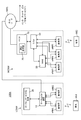
- Block diagram showing a system configuration example of a communication charging system according to the present embodiment Block diagram showing an example of the internal configuration of the local cellular network according to the present embodiment in detail Diagram showing an example of an application charging system table for managing the charging system at the time of communication for each application
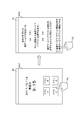
- Block diagram showing in detail an example of the internal configuration of the terminal according to the present embodiment A sequence diagram showing an example of signaling for each communication service used by a terminal in the communication charging system according to the present embodiment The figure which shows an example of the application selection screen displayed on the terminal display part of the terminal which concerns on this Embodiment, and the application start permission selection screen corresponding to the selected application, respectively.
- Block diagram showing a system configuration example of a communication charging system according to a modification of the present embodiment A sequence diagram showing an example of signaling for each communication service used by a terminal in a communication charging system according to a modification of the present embodiment
- a telecommunications carrier who is a provider of communication services available in the wide cellular network WCNW described later charges for communication charges associated with the use of the communication service operated by itself and in the local cellular network LCNW.
- a case will be described by exemplifying a case where the user is collectively billed for the communication fee accompanying the use of the available communication service.
- FIG. 1 is a block diagram showing an example of a system configuration of communication charging system 100 according to the present embodiment.
- Communication charging system 100 is configured to include local cellular network LCNW and wide cellular network WCNW.
- the local cellular network LCNW and the wide cellular network WCNW both provide an internet service (an example of a second communication service) or a wide area IP (Internet Protocol) service (an example of a second communication service) via the network NW1.
- the network NW1 wirelessly connects the various communication service providing web servers (not shown) described above and the local cellular network LCNW or the wide cellular network WCNW, and is, for example, an internet network or a wide area IP service network.
- Terminals UE1 and UE2 respectively possessed by a plurality of different users (hereinafter simply referred to as "users") using communication charging system 100 can wirelessly connect to both local cellular network LCNW and wide cellular network WCNW.
- FIG. 1 shows an example where the terminal UE1 is wirelessly connected to the local cellular network LCNW and the terminal UE2 is wirelessly connected to the wide cellular network WCNW. Although only two terminals are illustrated in FIG. 1 in order to simplify the drawing, the number of terminals capable of wireless connection to both the local cellular network LCNW and the wide cellular network WCNW is not limited to two.
- the local cellular network LCNW is configured to include a plurality of base stations (for example, base stations eNB1 and eNB2), a local GW (Gateway) device 10, and a local service station device 20.
- the base station, the local GW apparatus 10, and the local service station apparatus 20 are respectively configured using a server apparatus which is, for example, a computer.
- the number of base stations installed in the local cellular network LCNW is not limited to two.
- the local cellular network LCNW (an example of the first communication network) is, for example, an indoor area (for example, an individual residence, an apartment house, a hotel, a hospital) or a local area (for example, a shopping mall, a business site, a construction site, a university It is a local network built for use on campuses and smart towns.
- the local cellular network LCNW accommodates traffic of radio communication performed by a terminal (for example, the terminal UE1) in a local area or an indoor area.
- the terminal is a base station (for example, any one of base stations eNB3, eNB4, and eNB5) configuring wide cellular network WCNW in the area where local cellular network LCNW is constructed.
- the wireless connection is preferentially performed to the base stations (for example, the base stations eNB1 and eNB2) configuring the local cellular network LCNW rather than the local cellular network LCNW.
- the use frequency band of wireless communication in the local cellular network LCNW is, for example, the 28 GHz band that is being considered for use in a high frequency band (for example, 5G (fifth generation mobile communication system)). It is considered that this 28 GHz band may be a frequency band (that is, shared frequency) shared by multiple carriers (for example, existing wide area cellular carriers and new entry solution providers). Frequency band.
- the local cellular network LCNW may be operated, for example, by either an existing wide area cellular communication carrier or a communication carrier that is a solution provider of a new entry.
- the use frequency band of wireless communication in the local cellular network LCNW is not limited to the 28 GHz band described above.
- the base stations eNB1 and eNB2 respectively provide the terminal UE1 with the local GW when providing communication services available in the local cellular network LCNW (specifically, communication services provided by the local service station apparatus 20) to the terminal UE1. It relays communication with the device 10.
- the internal configuration of the base stations eNB1 and eNB2 is, for example, a known configuration, and thus the detailed description will be omitted in the present embodiment.
- each of the base stations eNB1 and eNB2 executes wireless communication conforming to the same wireless standard system as that of the terminal UE1.
- the local cellular network LCNW may not be a C / U separation type network, or may be a C / U separation type network. In this embodiment, a network that is not C / U separation type is illustrated. That is, in the local cellular network LCNW, wireless communication of control signals performed with the terminal UE1 and wireless communication of user data are performed by the same base station eNB1 or base station eNB2 wirelessly connected with the terminal UE1.
- the base stations eNB1 and eNB2 are small cell base stations that can provide high-speed throughput based on the 28 GHz band described above, and are arranged at high density.
- Each of the base stations eNB1 and eNB2 may be, for example, an individual residence, an apartment house, a hotel, a hospital, a shopping mall, a company premises, a construction site, a university campus, a stadium, a large conference room in an international conference hall, and a smart town.
- the terminal communicates control signals and communicates user data with any small cell base station.
- the control signal includes data related to C (Control) -Plane.
- the user data includes data related to U (User) -Plane.
- the user data includes, for example, image data (eg, moving image, still image), audio data, and may include data with a large amount of data.
- C-plane is a communication protocol for communicating control signals for call connection in wireless communication and mobility management of terminals.
- U-plane is a communication protocol for actually performing communication (for example, video communication, voice communication, data communication) between the terminal and the base stations eNB1 and eNB2 using the allocated radio resources.
- the cell radius of the base stations eNB1 and eNB2 is, for example, 10 m to 100 m, which is relatively smaller than the macro cells provided by the base stations eNB3, eNB4, and eNB5 configuring the wide cellular network WCNW.
- the local GW apparatus 10 functions as a gateway apparatus that relays wireless communication between the local service station apparatus 20 providing communication services available in the local cellular network LCNW and the respective base stations eNB1 and eNB2.
- the local GW device 10 may communicate the amount of communication of wireless communication at the terminal when using the communication service provided by the local service station device 20 (specifically, the amount of communication indicating the total number of packets using uplink, downlink The communication amount indicating the total number of packets using) is counted and managed for each terminal. Details of the internal configuration of the local GW apparatus 10 will be described later with reference to FIG.
- the local service station apparatus 20 provides communication services available in the local cellular network LCNW.
- the type of communication service that the local service station apparatus 20 can provide in the local cellular network LCNW is a specific communication service depending on the characteristics such as the location of the indoor area or local area where the local cellular network LCNW is constructed or the number of users. It is preferable to be limited, but it may not be particularly limited.
- the local service station apparatus 20 instructs the terminal to start using any communication service by the user's operation, the instructed communication via the base station (for example, the base station eNB1) and the local GW apparatus 10 Receive information about the service.
- the local service station apparatus 20 generates, based on the received information on the communication service, a communication system that is a provider of the communication service, and charging system information including a communication charge at the time of using the communication service, and a terminal
- a communication system that is a provider of the communication service
- charging system information including a communication charge at the time of using the communication service
- a terminal Return to In addition, the local service station apparatus 20, based on the communication amount of the wireless communication counted by the local GW apparatus 10 for each terminal, information of communication charge corresponding to the communication amount of each terminal (hereinafter, “LC charging information”) Generate). Details of the internal configuration of the local service station apparatus 20 will be described later with reference to FIG.
- the wide cellular network WCNW includes a plurality of base stations (for example, base stations eNB3, eNB4, and eNB5), an MME (Mobility Management Entity) 50, an S-GW (Serving Gateway) 60, and a P-GW (Packet Data Network Gateway). And 70).
- the base station, the MME 50, the S-GW 60, and the P-GW 70 are each configured using a server device which is, for example, a computer.
- the number of base stations installed in the wide cellular network WCNW is not limited to three.
- the wide cellular network WCNW (an example of the second communication network) is a core network constructed assuming use in, for example, an outdoor area (in other words, a public area) which does not correspond to the above-mentioned indoor area or local area.
- the wide cellular network WCNW accommodates traffic of wireless communication performed by a terminal (for example, the terminal UE2) in the outdoor area described above.
- the terminal can not wirelessly connect to a base station (for example, base stations eNB1 and eNB2) configuring the local cellular network LCNW outside the area where the local cellular network LCNW is constructed (that is, outdoor area), the wide cellular network A wireless connection is made to a base station (for example, any one of the base stations eNB3, eNB4, and eNB5) configuring the WCNW.
- a base station for example, any one of the base stations eNB3, eNB4, and eNB5
- the use frequency band of wireless communication in the wide cellular network WCNW is mainly in a frequency band (for example, 2 GHz band to 4 GHz band) considerably lower than the use frequency band of wireless communication in the local cellular network LCNW.
- the wide cellular network WCNW is, for example, an existing wide-area cellular communication similar to 4G (fourth generation mobile communication system) such as 3G (third generation mobile communication system), LTE (Long Term Evolution), etc. Operated by a business operator.
- the use frequency band of wireless communication in the wide cellular network WCNW is not limited to the 28 GHz band described above, for example, 4G (4th generation mobile, such as 3G (3rd generation mobile communication system), LTE (Long Term Evolution), etc. Communication system) or both 3G and 4G.
- 4G fourth generation mobile, such as 3G (3rd generation mobile communication system), LTE (Long Term Evolution), etc. Communication system) or both 3G and 4G.
- the base stations eNB3, eNB4, and eNB5 relay respective communication of control signals and user data between the terminal UE2 and the network NW1 when providing communication services available in the wide cellular network WCNW to the terminal UE2, respectively.
- communication services available in the wide cellular network WCNW are Internet services or wide area IP services provided by various communication service providing web servers (not shown) connected via the network NW1.
- the internal configuration of the base stations eNB3, eNB4, and eNB5 is, for example, a known configuration, and the detailed description will be omitted in the present embodiment.
- Each base station eNB3, eNB4, eNB5 performs radio
- Each of the base stations eNB3, eNB4, and eNB5 may be base stations corresponding to a plurality of different wireless communication methods (for example, radio access technology (RAT: Radio Access Technology) and cell radius).
- the radio access technology (RAT) includes, for example, radio communication standards and radio frequency information.
- the wireless communication standards are, for example, LTE (Long Term Evolution), wireless LAN (Local Area Network), DECT (Digital Enhanced Cordless Telecommunications), 3G (3rd generation mobile communication system), 4G (4th generation mobile communication system) May be
- the wide cellular network WCNW may not be a C / U separation type network, or may be a C / U separation type network.
- a network that is not C / U separation type is illustrated. That is, in the wide cellular network WCNW, the wireless communication of the control signal performed with the terminal UE2 and the wireless communication of the user data are performed by any one of the same base stations eNB3, eNB4, and eNB5 wirelessly connected with the terminal UE2. Be done.
- the communication service available to the terminal (for example, the terminal UE1) in the local cellular network LCNW may be different from or the same as the communication service available to the terminal (for example, the terminal UE1) in the wide cellular network WCNW.
- P-GW 70 sets each communication charge corresponding to the traffic of packets based on using different communication services using different networks. Since the user can be billed collectively, the convenience at the time of charging the user can be improved.
- the terminal (for example, the terminal UE2) communicates control signals and communicates user data in wireless communication with the base stations eNB3, eNB4, and eNB5.
- the control signal includes data related to C (Control) -Plane.
- the user data includes data related to U (User) -Plane.
- the user data includes, for example, image data (eg, moving image, still image), audio data, and may include data with a large amount of data.
- C-plane is a communication protocol for communicating control signals for call connection and wireless resource allocation in wireless communication.
- U-plane is a communication protocol for actually performing communication (for example, video communication, voice communication, data communication) between the terminal and the base stations eNB3, eNB4, and eNB5 using the allocated radio resources.
- the terminal for example, the terminal UE2) and the base stations eNB3, eNB4, and eNB5 set a radio access technology (RAT) to be used for radio communication from radio access technologies (for example, radio communication standard or radio frequency) that can be adopted by each. Wireless communication is performed using the set radio access technology (RAT).
- RAT radio access technology
- Each terminal for example, the terminal UE2) and the base stations eNB3, eNB4, and eNB5 can adopt one or more radio access technologies (RATs).
- Specific information of the radio access technology (RAT) includes, for example, the following RAT1 to RAT5.
- the RAT 1 is, for example, an LTE with a frequency band of 700 MHz to 3 GHz.
- the RAT 2 is, for example, LTE-Advanced whose frequency band is 15 GHz.
- the RAT 3 is, for example, wireless LAN communication with a frequency band of 5 GHz.
- the RAT 4 is, for example, a wireless communication system whose frequency band is a 15 GHz band, and is a fifth generation mobile communication system.
- the RAT 5 is, for example, a wireless communication system (for example, millimeter wave communication) (for example, WiGig) in a 60 GHz frequency band.
- the MME 50 is interposed between the S-GW 60 and various base stations (for example, base stations eNB3, eNB4, and eNB5), and accommodates the base stations constituting the wide cellular network WCNW, and also for the terminals (for example, the terminal UE2) Control establishment and release of wireless connection in the wide cellular network WCNW.
- the MME 50 manages location registration and movement of a terminal (for example, the terminal UE2) wirelessly connected to the wide cellular network WCNW, and performs terminal authentication (for example, security control) in cooperation with a Home Subscriber Server (not shown). And set the transfer path of user data.
- the MME 50 is LC charging information (described later) transmitted as a control signal from the local service station apparatus 20 and indicating the communication amount when using the communication service in the local cellular network LCNW for each terminal owned by the user (for example, the terminal UE1). See).
- the MME 50 transfers the received LC charging information for each terminal to the P-GW 70 via the S-GW 60.
- the S-GW 60 accommodates user data received by various base stations (eg, base stations eNB3, eNB4, and eNB5) from a terminal (eg, terminal UE2) in the wide cellular network WCNW, and transfers the user data to the P-GW 70. Further, the S-GW 60 relays a control signal of wireless communication between the MME 50 and the P-GW 70.
- various base stations eg, base stations eNB3, eNB4, and eNB5
- a terminal eg, terminal UE2
- the S-GW 60 relays a control signal of wireless communication between the MME 50 and the P-GW 70.
- the P-GW 70 has a charge processing unit 75 and a memory 77, and makes a wired connection (for example, using an optical fiber) with various communication service providing web servers (not shown) that provide Internet service or wide area IP service. And transmits the user data transferred from the S-GW 60 to the network NW1, and transfers the user data transferred from the network NW1 to the S-GW 60.
- the P-GW 70 assigns an IP address to a terminal accessing the wide cellular network WCNW, performs terminal authentication, QoS (Quality of Service) control, and generates charging information according to Policy and Charging Rule Function (PCRF).
- PCRF Policy and Charging Rule Function
- the P-GW 70 is an amount of communication of wireless communication at a terminal when using a communication service provided using the wide cellular network WCNW (specifically, an amount of communication indicating the total number of packets using uplink, and downlink).
- the communication amount indicating the total number of packets used is counted for each terminal, stored in the memory 77, and managed.
- the charge processing unit 75 determines the amount of communication of wireless communication at the terminal when using the communication service provided using the wide cellular network WCNW (specifically, the amount of communication indicating the total number of packets using the uplink, downlink). The communication charge corresponding to the communication amount is calculated based on the counting result for each terminal of the communication amount indicating the total number of packets using A) and the charging system information of the communication service, and the calculation result is used as WC charging information It is generated and stored in the memory 77 for management. Note that the charging processing unit 75 may not be provided in the P-GW 70, and may be configured as an apparatus different from the P-GW 70, for example.
- the memory 77 is configured using, for example, a random access memory (RAM) and a read only memory (ROM), and holds programs and data required to execute various processes in the P-GW 70. Further, the memory 77 temporarily stores data or information generated at the time of processing of the P-GW 70 (for example, information indicating the amount of communication counted by the charging processing unit 75).
- RAM random access memory
- ROM read only memory
- FIG. 2 is a block diagram showing in detail an example of the internal configuration of the local cellular network LCNW according to the present embodiment.
- a solid line indicates communication of user data
- a dotted line indicates communication of control signals.
- illustration of a communication I / F (Interface) unit in communication with the communication partner is omitted.
- the local GW apparatus 10 includes an MME processor 11, an HSS processor 12, an S-GW processor 13, a P-GW processor 14, a PCRF processor 15, a charge processor 16, and a memory 17. Is included.
- the MME processing unit 11, the HSS processing unit 12, the S-GW processing unit 13, the P-GW processing unit 14, the PCRF processing unit 15, and the charge processing unit 16 are, for example, a central processing unit (CPU) and an MPU. (Micro Processing Unit), DSP (Digital Signal Processor) or FPGA (Field-Programmable Gate Array) processor.
- the MME processing unit 11 accommodates a base station constituting the local cellular network LCNW between the local service station apparatus 20 and various base stations (for example, base stations eNB1 and eNB2), and also a terminal (for example, a terminal UE1). Control the establishment and release of the wireless connection in the local cellular network LCNW.
- the MME processing unit 11 manages location registration and movement of a terminal (for example, the terminal UE1) wirelessly connected to the local cellular network LCNW, and performs setting processing of a transfer path of user data.
- the HSS processing unit 12 manages user identification information including, for example, a telephone number of a terminal and an identification number such as a SIM (Subscriber Identity Module) for each terminal owned by each user.
- SIM Subscriber Identity Module
- the S-GW processing unit 13 accommodates user data received by various base stations (for example, base stations eNB1 and eNB2) from a terminal (for example, the terminal UE1) in the local cellular network LCNW, and transfers the user data to the P-GW processing unit 14 Do. Further, the S-GW processing unit 13 relays a control signal of wireless communication between the MME processing unit 11 and the P-GW processing unit 14.
- the P-GW processing unit 14 assigns an IP address to a terminal that accesses the local cellular network LCNW, and performs terminal authentication.
- the P-GW processing unit 14 transfers the user data transferred from the S-GW processing unit 13 to the local service station apparatus 20, or transmits the user data or charging system information transmitted from the local service station apparatus 20 to the S-GW. Transfer to the processing unit 13 or the like.
- the P-GW processing unit 14 is connected by wire (for example, using an optical fiber) to various communication service providing web servers (not shown) that provide the Internet service or the wide area IP service via the network NW1. And transmits the user data transferred from the S-GW processing unit 13 to the network NW1, and transfers the user data transferred from the network NW1 to the S-GW processing unit 13.
- the P-GW processing unit 14 includes an uplink packet number counting unit 141 and a downlink packet number counting unit 142, and is used for communication service provided by the local service station apparatus 20 for a terminal accessing the local cellular network LCNW. It counts and manages the amount of communication at the time of use (for example, the number of packets used for wireless communication). In the present embodiment, one packet is, for example, 128 bytes.
- the uplink packet number counting unit 141 uses the amount of communication when using uplink in the communication service provided by the local service station apparatus 20 (ie, uplink) when the terminal (for example, the terminal UE1) accessing the local cellular network LCNW Count and manage the amount of communication that indicates the total number of packets
- the downlink packet number counting unit 142 uses the amount of communication when the terminal accessing the local cellular network LCNW (for example, the terminal UE1) uses the downlink in the communication service provided by the local service station apparatus 20 (that is, the downlink Count and manage the amount of communication that indicates the total number of packets
- the PCRF processing unit 15 generates charging information (for example, a charging rule (Policy) for generating charging information corresponding to the communication volume at the time of use for each communication service that can be provided by the local service station apparatus 20 in the local cellular network LCNW. and maintain (Charging Rule Function)).
- the PCRF processor 15 shares charging system information with the charging processor 16.
- the charging processing unit 16 Based on the communication amount for each terminal counted by the P-GW processing unit 14 and the charging system information (for example, charging rule) for each communication service shared between the PCRF processing unit 15, the charging processing unit 16 The accounting information corresponding to the amount of communication for each terminal according to the accounting system information for each communication service is calculated and generated.
- the charging processing unit 16 stores the generated charging information (LC charging information) for each terminal in the memory 17 and manages the charging information for each terminal (LC charging information) for the local service station apparatus 20 or the wide cellular network It transmits to MME 50 of WCNW.
- the memory 17 is configured using, for example, a RAM and a ROM, and holds programs and data required to execute various processes in the local GW apparatus 10.
- the memory 17 also temporarily stores the charging information (LC charging information) for each terminal generated by the charging processing unit 16.
- the local service station apparatus 20 is configured to include a communication charge bill generation unit 21, an application server processing unit 22, a service signal processing unit 23, and a memory 24.
- the communication charge bill generation unit 21, the application server processing unit 22, and the service signal processing unit 23 are configured using, for example, a processor of a CPU, an MPU, a DSP, or an FPGA.
- the communication charge bill creation unit 21 receives and acquires the charging information (LC charging information) for each terminal transmitted from the charging processing unit 16 of the local GW apparatus 10. Based on the acquired LC charge information for each terminal, the communication charge bill creation unit 21 describes statement data of communication charges for users using communication services that can be provided by the local service station apparatus 20 in the local cellular network LCNW. Is generated for each terminal.
- the statement data (that is, invoice data) of the communication fee has, for example, a predetermined format.
- the communication charge bill generation unit 21 transmits the generated statement data of the communication charge for each terminal to the local GW apparatus 10.
- the statement data of the communication charge for each terminal transmitted from the communication charge bill creation unit 21 is acquired by the charge processing unit 16 of the local GW apparatus 10.
- the application server processing unit 22 manages information on communication services (specifically, applications) that can be provided in the local cellular network LCNW executed by the service signal processing unit 23, and the respective communication services (applications) It manages charging system information for generating charging information corresponding to the amount of communication at the time of use (see FIG. 3). Specifically, the application server processing unit 22 reads out the application charging system table TBL1 shown in FIG. 3 from the memory 24, and uses the content information of the application displayed on the application start permission selection screen displayed on the terminal and the use of the application And charging system information accompanying the The application server processing unit 22 associates the acquired content information of the application with the charging system information associated with the use of the application, and transmits the information to the local GW apparatus 10. The content information of these applications and the charging system information accompanying the use of the applications are transmitted to the terminal (for example, the terminal UE1) via the local GW apparatus 10 and the base station (for example, the base station eNB1).
- the terminal for example, the terminal UE1
- the base station for example, the
- FIG. 3 is a diagram showing an example of the application charging system table TBL1 that manages the charging system at the time of communication for each application.
- the application charging system table TBL1 information on applications, information on communication carriers providing communication services for applications, and information on charging systems are stored in association with each other.
- the charging systems CV1, CV2, CV3 and CV4 are, for example, free, ⁇ 1000/1 GB (gigabyte), ⁇ 200/1 GB, and ⁇ 10/1 GB (see FIG. 7).
- the application A can be provided by two different carriers AA and DD, respectively.
- the communication carrier AA defines in advance a charging system CV1 for generating charging information corresponding to the amount of communication when using the application A.
- the charging system CV1 is applied to the use of the application A provided by the communication carrier AA.
- the communication carrier DD defines in advance a charging system CV2 for generating charging information corresponding to the amount of communication when using the application A.
- the charging system CV2 is applied in using the application A provided by the communication carrier DD.
- the charging systems CV1 and CV2 are usually different because they are different from each other.
- application B can be provided by two different carriers BB and EE, respectively.
- the telecommunications carrier BB defines in advance a charging system CV3 for generating charging information corresponding to the amount of communication when using the application B.
- the charging system CV3 is applied to the use of the application B provided by the communication carrier BB.
- the telecommunications carrier EE defines in advance a charging system CV4 in order to generate charging information corresponding to the amount of communication when using the application B.
- the charging system CV4 is applied to the use of the application B provided by the telecommunications carrier EE.
- the charging systems CV3 and CV4 are usually different because they are different from the telecommunications carrier that provided them.
- the service signal processing unit 23 has an application execution processing function capable of providing one or more communication services (specifically, an application) available to the terminal in the local cellular network LCNW.
- the service signal processing unit 23 uses, for example, captured image data transmitted from an external device (not shown, for example, a monitoring camera) according to the contents of the communication service, or performs various types of data or the like necessary for providing the communication service. Generate information.
- the service signal processing unit 23 uses a terminal of data of captured image transmitted from an external device (for example, any of the monitoring cameras among a plurality of monitoring cameras)
- the video data (an example of user data) conforming to a predetermined format is generated and transmitted to the local GW apparatus 10 via the application server processing unit 22 in order to provide the video data to the client.
- the signal processing unit for service 23 is based on data of captured video transmitted from a plurality of external devices (for example, a plurality of monitoring cameras).
- the video data (one example of user data) of the free viewpoint video which conforms to the request from the terminal is generated and transmitted to the local GW apparatus 10 through the application server processing unit 22.
- the signal processing unit for service 23 establishes a remote communication with the corresponding construction machine, and controls the operation transmitted from the terminal Based on the instruction, the command of the corresponding remote control is generated to remotely control the processing of the construction machine, the processing result of the remote control (an example of user data) is generated, and the local GW is processed via the application server processing unit 22 Send to device 10
- the service signal processing unit 23 one or more external servers (not shown) that distribute the pay video content that meets the request from the terminal. Receives the video data of the pay video content transmitted from the server, and transmits the video data (an example of user data) to the local GW apparatus 10 via the application server processing unit 22.
- the memory 24 is configured using, for example, a RAM and a ROM, and holds programs and data required to execute various processes in the local service station apparatus 20. In addition, the memory 24 temporarily stores the statement data of the communication charge for each terminal generated by the communication charge bill generation unit 21. Further, the memory 24 functions as a work memory for temporarily storing data or information at the time of processing of the service signal processing unit 23.
- FIG. 4 is a block diagram showing in detail an example of the internal configuration of terminal UE1 according to the present embodiment.
- the terminal UE1 is, for example, a portable communication device carried by a user, and is, for example, a smartphone or a tablet terminal.
- terminal UE1 is not limited to a smart phone or a tablet terminal.
- FIG. 4 illustrates the terminal UE1 as an example, in addition to the terminal UE2 shown in FIG. 1, the internal configuration of a terminal accessing the communication charging system 100 according to the present embodiment is also the same.
- the terminal UE1 includes a radio signal processing unit 81, a baseband signal processing unit 82, an application start permission / cancel instruction information extraction unit 83, an application / charging system information extraction unit 84, a terminal display unit 85, a memory 86 and A user data input / output I / F unit 87, an application processing unit 88, and an operation unit 89 are included.
- the terminal UE1 may further include a position information acquisition unit GP.
- the baseband signal processing unit 82, the application start permission / cancel instruction information extraction unit 83, the application / charging system information extraction unit 84, the user data input / output I / F unit 87, and the application processing unit 88 are, for example, CPU , MPU, DSP or FPGA processor.
- the wireless signal processing unit 81 performs transmission and reception of wireless signals in a frequency band used in the local cellular network LCNW with a base station (for example, the base station eNB1) via the antenna Ant1. Although omitted in FIG. 4, the wireless signal processing unit 81 transmits and receives wireless signals in the frequency band used in the wide cellular network WCNW to the base station (for example, the base station eNB3) via the antenna Ant1. You may go there.
- the baseband signal processing unit 82 converts the wireless signal received by the wireless signal processing unit 81 into a baseband signal. Further, the baseband signal processing unit 82 converts the baseband signal input to the baseband signal processing unit 82 into a wireless signal in a frequency band that the wireless signal processing unit 81 handles.
- the application start permission / cancel instruction information extraction unit 83 is selection information indicating whether to start or stop the application based on the user's operation on the application start permission selection screen displayed on the terminal display unit 85. Are extracted and output to the baseband signal processing unit 82.
- the selection information is transmitted to the local GW apparatus 10 via the baseband signal processing unit 82, the wireless signal processing unit 81, the antenna Ant1, and the base station (for example, the base station eNB1).
- the application / charging system information extraction unit 84 extracts the content information of the application transmitted from the local service station apparatus 20 and the charging system information associated with the use of the application based on the operation instructing the user to start using the application. .
- the application / charging system information extraction unit 84 generates an application start permission selection screen and displays the screen on the terminal display unit 85 using the extracted content information of the application and the charging system information accompanying the use of the application.
- the application start permission selection screen displayed on the terminal display unit 85 will be described later with reference to FIG.
- the terminal display unit 85 is configured using, for example, an LCD (Liquid Crystal Display) or an organic EL (Electroluminescence), and displays a screen including various data or information.
- LCD Liquid Crystal Display
- organic EL Electrode
- application start permission is made by using information on the position of the terminal display unit 85 instructed by an operation using the operation unit 89 of the user as selection information Send to the cancellation instruction information extraction unit 83.
- the memory 86 is configured using, for example, a RAM and a ROM, and holds programs and data required to execute various processes in the terminal UE1.
- the memory 86 also temporarily stores various data or information displayed by the terminal display unit 85.
- the memory 86 temporarily stores the position information of the terminal UE1 calculated by the position information acquisition unit GP.
- the memory 86 functions as a work memory for temporarily storing data or information at the time of execution of processing in each unit constituting the terminal UE1.
- the user data input / output I / F unit 87 inputs upstream user data (for example, captured image data to be uploaded) input from an external device (for example, one or more monitoring cameras), or downstream user data (for example, download Output the captured image data) to an external device (for example, a display device).
- upstream user data for example, captured image data to be uploaded
- an external device for example, one or more monitoring cameras
- downstream user data for example, download Output the captured image data
- the application processing unit 88 is a processing unit that starts up, executes, cancels, and ends one of the applications specified by an operation using the operation unit 89 by the user.
- the application is installed to be executable on the terminal UE1 (see FIG. 6).
- the application processing unit 88 displays the application start permission selection screen on the terminal display unit 85 when an instruction to start using any application is issued by an operation using the operation unit 89 of the user.
- the information on the instructed application is acquired and output to the baseband signal processing unit 82.
- Information on this application is transmitted to the local service station apparatus 20 via the baseband signal processing unit 82, the wireless signal processing unit 81, the antenna Ant1, the base station (for example, the base station eNB1), and the local GW apparatus 10.
- the operation unit 89 receives an operation of a user who holds the terminal UE1 (for example, an instruction to start using an application using the local cellular network LCNW).
- the operation unit 89 may configure a touch panel together with the terminal display unit 85.
- the position information acquisition unit GP receives a plurality of signals indicating times transmitted from a plurality of navigation satellites (that is, GPS (Global Positioning System) satellites) and positions (coordinates) of the GPS satellites.
- the position information acquisition unit GP calculates the position of the terminal UE1 based on the received plurality of signals.
- the position information acquisition unit GP outputs the position information of the terminal UE1 to the baseband signal processing unit 82.
- FIG. 5 is a sequence diagram showing an example of signaling for each communication service used by a terminal in communication charging system 100 according to the present embodiment.
- the operation procedure when the terminal uses an application involving communication via LC (that is, the local cellular network LCNW), and the terminal (for example, the terminal UE1) is for the WC (that is, the wide cellular network). Operation procedures when using an application involving communication via WCNW are shown respectively.
- the former application is, for example, a communication service in which a terminal (for example, the terminal UE1) downloads, for a fee, textbook data necessary for university classes on the campus of the university where the local cellular network LCNW is constructed.
- the latter application is, for example, a communication service in which a terminal owned by a user (for example, a terminal UE1) makes an IP call to a terminal owned by a father who is at the user's home.
- the use start request of the communication service dedicated to LC (that is, the local cellular network LCNW) is instructed to the terminal UE1 by the operation of the user possessing the terminal UE1 (S1, see FIG. 6).
- the terminal UE1 transmits the instructed use start request of the communication service to the local service station apparatus 20 (S1).
- the request to start using this communication service is made via the application processing unit 88, the baseband signal processing unit 82, the wireless signal processing unit 81, the antenna Ant1, the base station (for example, the base station eNB1), and the local service station via the local GW apparatus 10. Received at device 20.
- FIG. 6 is a view showing an example of an application selection screen WD1 displayed on the terminal display unit 85 of the terminal UE1 and an application start permission selection screen WD2 corresponding to the selected application according to the present embodiment.
- an available communication service for example, application C
- LCNW receives an instruction to start activation by the user's finger FG.
- the local service station apparatus 20 When the local service station apparatus 20 receives the use start request of the communication service (for example, application C) transmitted from the terminal UE1 in step S1, the local service station apparatus 20 acquires the content information of the application C and the charging system information accompanying the use of the application C. .
- the local service station apparatus 20 associates the acquired content information of the application C with the charging system information associated with the use of the application C, and transmits the information to the terminal UE1 (S2).
- the content information of the application C and the charging system information accompanying the use of the application C are transmitted to the terminal (for example, the terminal UE1) via the local GW apparatus 10 and the base station (for example, the base station eNB1).
- the terminal UE1 receives the content information of the application C transmitted from the local service station apparatus 20 in step S2 and the charging system information associated with the use of the application C.
- the terminal UE1 generates the application start permission selection screen WD2 using the received content information of the application C and the charging system information associated with the use of the application C, and displays the screen on the terminal display unit 85.
- the application start permission selection screen WD2 has a name of the application C, a name KK of a provider of the communication service of the application C used by the terminal UE1, and a charging system associated with the use of the application C. It is a screen on which the information PP and a permission selection item for selecting whether to permit or cancel the start of the application C are displayed. Further, when the terminal (for example, the terminal UE1) displays the application start permission selection screen WD2, for example, in the case where the information regarding the total of the packet usage (communication volume) of this month is acquired from the local GW apparatus 10, Information on the total may be included and displayed. By this, the user can view the packet usage amount, can refrain from overuse of the further application, and can avoid that an overcharge fee is charged.
- the terminal uses the local cellular network LCNW a network that can use the position information of the terminal (in other words, the position information of the user who holds the terminal) based on the output from the position information acquisition unit GP. Or one of the wide cellular networks WCNW may be determined. Thereby, the terminal (for example, the terminal UE1) can easily generate the application start permission selection screen WD2 according to the determination result.
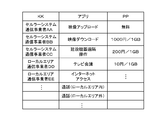
- FIG. 7 is a view showing possible examples of the telecommunications carrier, communication service, and charging system displayed on the application start permission selection screen WD2 shown in FIG.
- Candidates for the name KK of the provider of the communication service are, for example, the existing wide-area cellular telecommunications carriers cellular system telecommunications carrier AA, cellular system telecommunications carrier BB, cellular system telecommunications carrier CC, and further, new entry solution providers Local area carrier DD and local area carrier EE.
- Candidates for the application name are, for example, video upload, video download, construction equipment remote control, video conference, Internet access, telephone call (in local area), telephone call (outside local area).
- the candidates of the charging system information accompanying the use of the application are, for example, free, ⁇ 1000/1 GB (gigabyte), ⁇ 200/1 GB, and ⁇ 10/1 GB.
- the terminal UE1 receives an instruction to permit the start of the application C by the operation of the user's finger FG on the application start permission selection screen WD2 (S3).
- the terminal UE1 transmits, to the local service station apparatus 20, information related to an instruction to permit start of the application C (S3).
- the information regarding the instruction to permit the start of the application C is the application start permission / cancel instruction information extraction unit 83, the baseband signal processing unit 82, the radio signal processing unit 81, the antenna Ant1, the base station (for example, the base station eNB1). , And received by the local service station apparatus 20 via the local GW apparatus 10.
- the local service station apparatus 20 performs wireless communication with the use of the application C with the terminal UE1 based on the reception of the information related to the instruction to permit the start of the application C transmitted from the terminal UE1 in step S3. (S4).
- the wireless communication between the local service station apparatus 20 and the terminal UE1 in step S4 is performed via the local GW apparatus 10 and a base station (for example, the base station eNB1).
- the local GW device 10 indicates the total amount of packets related to the wireless communication using the uplink, and The communication amount indicating the total number of packets related to wireless communication using the downlink is counted and managed.
- step S3 when an instruction to end the use of the application C is given by the operation of the user and the instruction is sent to the local service station apparatus 20 through the same communication path as step S3, or by the local service station apparatus 20 It is assumed that an instruction to end the use of the application C is sent to the terminal UE1 through the same communication path as step S2. In this case, the wireless communication associated with the application C ends between the terminal UE1 and the local service station apparatus 20 (S5).
- the local GW apparatus 10 counts the communication amount indicating the total number of packets passing through the uplink counted in step S4, and the communication amount indicating the total number of packets passing through the downlink.
- the communication charge when the terminal UE1 uses the application C is calculated based on the count result of the above and the charging system information of the application C to generate LC charging information (S6).
- the local GW apparatus 10 transmits the LC charge information generated in step S6 (that is, the calculation result of the communication charge according to the total number of packets when using the application C) to the local service station apparatus 20 and reports (S7) .
- the local service station apparatus 20 When the local service station apparatus 20 receives the LC charging information transmitted from the local GW apparatus 10 in step S7, the statement data of the communication charge for the user of the terminal UE1 using the application C based on the LC charging information ( Generate LC billing statement information). The local service station apparatus 20 transmits the generated statement data (LC charging statement information) of the communication charge to the local GW apparatus 10 (S7A).
- the local GW device 10 Upon receiving the LC charging statement information transmitted from the local service station device 20 in step S7A, the local GW device 10 transmits the LC charging statement information to the MME 50 of the wide cellular network WCNW (S8).
- the MME 50 transmits the LC charging statement information transmitted from the local GW apparatus 10 in step S8 to the P-GW 70 via the S-GW 60 (S9).
- the P-GW 70 passes the LC charging statement information transmitted from the MME 50 in step S9 to the charging processing unit 75 (S10).
- the use start request of the communication service of WC (that is, wide cellular network WCNW) is instructed to the terminal UE1 by the operation of the user possessing the terminal UE1 (see S11).
- the terminal UE1 transmits the use start request of the instructed communication service to the communication service providing web server (not shown) (S11).
- the use start request of this communication service includes an application processing unit 88, a baseband signal processing unit 82, a radio signal processing unit 81, an antenna Ant1, a base station (for example, base station eNB3), MME 50 or S-GW 60, P-GW 70, and a network.
- a communication service providing web server (not shown) is received via the NW 1.
- the communication service providing web server When the communication service providing web server (not shown) receives the request to start using the communication service (for example, a call (outside the local area) corresponding to the application D) transmitted from the terminal UE1 in step S11, The billing system information associated with the use of the application D is acquired.
- the communication service providing web server associates the acquired content information of the application D with the charging system information associated with the use of the application D, and transmits the information to the terminal UE1 (S12).
- the content information of application D and the charging system information associated with the use of application D include a communication service providing web server (not shown), network NW1, P-GW 70, S-GW 60 or MME 50, and a base station (for example, base station eNB3). It is transmitted to the terminal (for example, the terminal UE1) via the terminal.
- the terminal UE1 receives the content information of the application D transmitted from the communication service providing web server (not shown) in step S12 and the charging system information associated with the use of the application D.
- the terminal UE1 generates an application start permission selection screen (see FIG. 6) using the received content information of the application D and the charging system information associated with the use of the application D, and displays the screen on the terminal display unit 85.
- the terminal UE1 receives an instruction to permit the start of the application D by the operation of the user's finger FG on the application start permission selection screen displayed on the terminal display unit 85 (S13).
- the terminal UE1 transmits, to the communication service providing web server (not shown), information related to an instruction to permit the start of the application D (S13).
- the information related to the instruction to permit the start of the application D is the application start permission / cancel instruction information extraction unit 83, the baseband signal processing unit 82, the radio signal processing unit 81, the antenna Ant1, the base station (for example, the base station eNB3).
- the communication service providing web server via the MME 50 or the S-GW 60, the P-GW 70 and the network NW1.
- the communication service providing web server (not shown) performs radio communication associated with the use of the application D with the terminal UE1 based on the reception of the information related to the instruction to permit the start of the application D transmitted from the terminal UE1 in step S13. Between (S14).
- the wireless communication between the communication service providing web server (not shown) and the terminal UE1 in step S14 is performed via the network NW1, the P-GW 70, the S-GW 60 or the MME 50, and a base station (for example, the base station eNB3).
- the charge processing unit 75 indicates the total number of packets related to the wireless communication using the uplink during the wireless communication accompanying the use of the application D between the communication service providing web server (not shown) and the terminal UE1 in step S14.
- the communication amount and the communication amount indicating the total number of packets related to wireless communication using downlink are counted and managed.
- the charging processing unit 75 counts the communication amount indicating the total number of packets passing through the uplink counted in step S14, and the communication amount indicating the total number of packets passing through the downlink.
- the communication charge when the terminal UE1 uses the application D is calculated based on the count result of the above and the charging system information of the application D to generate WC charging information (S16).
- the charging processing unit 75 Based on the generated WC charging information, the charging processing unit 75 generates statement data (WC charging statement information) of a communication charge for the user of the terminal UE1 using the application D.
- the charging processing unit 75 includes terminal charging statement information including the LC charging statement information acquired in step S10 and the above-mentioned WC charging statement information in a batch. It may be generated for each terminal.
- the charging processing unit 75 may transmit the terminal charging statement information generated for each terminal to the corresponding terminal (for example, the terminal UE1) and notify the terminal.
- the telecommunications carrier operating the wide cellular network WCNW separates and manages the use of the communication service in the local cellular network LCNW and the use of the communication service in the wide cellular network WCNW
- the charging by the LC charging statement information and the charging by the WC charging statement information can be collectively billed to the user who holds the terminal.
- local GW apparatus 10 is a local cellular network LCNW (an example of a first communication network) in a terminal (for example, terminal UE1).
- LCNW an example of a first communication network
- the amount of communication when using the used communication service is counted.
- the P-GW 70 uses a communication service (an example of a second communication service) using a wide cellular network WCNW (an example of a second communication network) in a terminal (e.g. terminal UE1) Count the traffic volume of the hour.
- the local GW apparatus 10 transmits, to the P-GW 70 via the MME 50 and the S-GW 60, the information on the counted amount of communication traffic when using the communication service in the local cellular network LCNW.
- the P-GW 70 is a terminal (for example, the terminal UE 1), the information on the communication amount at the time of use of the communication service transmitted from the local GW apparatus 10 and the information on the communication amount at the time of use of the communication service counted by the P-GW 70. ) And stored in the memory 77 (an example of the storage unit) in association with the information related to.
- communication charging system 100 can communicate the amount of communication according to the wireless communication traffic for each communication service of local cellular network LCNW or wide cellular network WCNW performed by the terminal (for example, terminal UE1) owned by the user. Can manage the counting of Therefore, according to the situation (for example, the situation such as which one of the outdoor area, the local area, and the indoor area is used) when the terminal (for example, the terminal UE1) uses the communication service, the communication charging system 100 performs the communication service. It is possible to realize an appropriate charge to users for the above, and effectively support the spread of the use to communication services of many users.
- P-GW 70 uses information related to the communication amount at the time of use of communication service in local cellular network LCNW stored in memory 77 and information on the communication amount at the time of use of communication service in wide cellular network WCNW, Charging information (terminal charging statement information) on the use of the communication service of the user who holds the terminal (for example, the terminal UE1) is generated.
- Charging information terminal charging statement information
- a telecommunications carrier operating the wide cellular network WCNW (for example, an existing wide area cellular telecommunications carrier) uses the communication service charge in the local cellular network LCNW and the communication service charge in the wide cellular network WCNW, It is possible to separate and manage each user who owns the terminal.
- the P-GW 70 may notify the corresponding terminal (for example, the terminal UE1) of terminal charging statement information including LC charging statement information and WC charging statement information generated for each terminal.
- a telecommunications carrier operating the wide cellular network WCNW for example, an existing wide area cellular telecommunications carrier
- WCNW wide area cellular telecommunications carrier
- the local GW apparatus 10 counts, for example, the communication amount when the terminal (for example, the terminal UE1) uses a communication service (for example, download of pay video content data) using a downlink in the local cellular network LCNW.
- the P-GW 70 counts, for example, the amount of communication when a terminal (for example, the terminal UE1) uses a communication service (for example, streaming distribution of free video content) using a downlink in the wide cellular network WCNW.
- the local GW apparatus 10 can properly calculate the communication charge corresponding to the communication volume in which the terminal (for example, the terminal UE1) conforms to the charging system information of the communication service using the downlink in the local cellular network LCNW.
- the P-GW 70 can properly calculate the communication charge corresponding to the amount of communication in which the terminal (for example, the terminal UE1) conforms to the charging system information of the communication service using the uplink in the wide cellular network WCNW.
- the local GW apparatus 10 counts, for example, the amount of communication when a terminal (for example, the terminal UE1) uses a communication service (for example, uploading of university report data) using an uplink in the local cellular network LCNW.
- the P-GW 70 counts, for example, the amount of communication when a terminal (for example, the terminal UE1) uses a communication service (for example, uploading of self-portrait moving image data) using an uplink in the wide cellular network WCNW.
- the local GW apparatus 10 can properly calculate the communication charge corresponding to the amount of communication in which the terminal (for example, the terminal UE1) conforms to the charging system information of the communication service using the uplink in the local cellular network LCNW.
- the P-GW 70 can properly calculate the communication charge corresponding to the amount of communication in which the terminal (for example, the terminal UE1) conforms to the charging system information of the communication service using the uplink in the wide cellular network WCNW.
- the first communication network can use communication services in a predetermined area via a base station (for example, base station eNB1) disposed in a predetermined area (for example, a local area, an indoor area) Local network (ie, local cellular network LCNW).
- the second communication network is a so-called 3G (third generation mobile communication system) or a wide area cellular network to which 4G such as LTE or LTE-Advanced is also applicable.
- the terminal for example, the terminal UE1 accessing the communication charging system 100 can enjoy the communication service which can be used only in the local area or the indoor area in which the local cellular network LCNW is constructed.
- the terminal for example, the terminal UE1
- the terminal UE1 can enjoy available communication services even in the area (that is, the outdoor area) of the wide cellular network WCNW where the use of the local cellular network LCNW is not possible. It is possible to select a communication service that can be used according to the situation.
- the terminal receives, at the operation unit 89, an instruction to start using the communication service (an example of the first communication service) using the local cellular network LCNW.
- the terminal transmits the information on the instructed communication service to the local service station apparatus 20 (service station) that provides the communication service in the wireless signal processing unit 81 (an example of the communication unit) to which the antenna Ant1 is connected. Send to an example of the device).
- the terminal (for example, the terminal UE1) generates the correspondence between the content information of the application generated by the local service station apparatus 20 based on the information on the communication service, the amount of communication when using the communication service, and the communication charge.
- the application / charging system information extraction unit 84 acquires the charging system information to be shown.
- the terminal for example, the terminal UE1 displays the application start permission selection screen WD2 (an example of a permission selection screen for starting to use the communication service) including the acquired content information of the application and the charging system information corresponding to the communication service. Displayed in section 85.
- the terminal e.g., the terminal UE1 performs communication (i.e., application) on the communication service with the local service station apparatus 20 according to the user's operation according to the instruction to permit the start of use of the communication service on the application start permission selection screen WD2. Start using).
- the terminal e.g., the terminal UE1 accessing the communication charging system 100 (e.g., the local cellular network LCNW) relates to the communication charge of the communication service before the user actually starts the communication service of using the communication service.
- Information can be presented to the user in advance. Therefore, the terminal (for example, the terminal UE1) can start the use after having the user grasp the information on the communication charge, and can effectively support the spread of the use to the communication service of the user.
- FIG. 8 is a block diagram showing an example of a system configuration of a communication charging system 100A according to a modification of the present embodiment.
- FIG. 9 is a sequence diagram showing an example of signaling for each communication service used by a terminal in communication charging system 100A according to the modification of the present embodiment.
- the communication involved in the use of the communication service operated by the communication carrier that is the main provider of the communication service available in the local cellular network LCNW Charge the charges separately to the user.
- the telecommunications carrier who is the provider of communication services available in the wide cellular network WCNW, individually bills the user for the communication fee associated with the use of the communication service that he / she operates.
- the communication provider who is the provider of the communication service available in the local cellular network LCNW individually It charges LC charging information (in other words, a communication charge corresponding to the amount of communication service used in the local cellular network). Therefore, in FIG. 8 and FIG. 9, transmission and reception of LC charging statement information between the local GW apparatus 10 and the MME 50 are not performed.
- the local GW apparatus (an example of the first counting apparatus) is an example of the local cellular network LCNW (the first communication network) in the terminal (for example, terminal UE1). Traffic amount when using the communication service (an example of the first communication service) using the.
- the P-GW 70 (an example of a second counting device) uses a communication service (an example of a second communication service) using a wide cellular network WCNW (an example of a second communication network) in a terminal (e.g. terminal UE1) Count the traffic volume of the hour.
- the local GW apparatus 10 associates the information related to the communication amount at the time of using the communication service in the local cellular network LCNW, which has been counted, with the information related to the terminal (for example, the terminal UE1), and stores the memory 17 (an example of the first storage unit).
- the P-GW 70 stores, in the memory 77 (an example of the second storage unit), the information related to the communication amount at the time of using the communication service in the counted wide cellular network WCNW in association with the information related to the terminal (for example, the terminal UE1) Do.
- each of local GW apparatus 10 and P-GW 70 performs the local cellular network LCNW and the wide cellular network performed by a terminal (for example, terminal UE1) possessed by the user. It is possible to count and manage the traffic according to the traffic of wireless communication for each communication service of WCNW. Therefore, each of the local GW apparatus 10 and the P-GW 70 can handle the situation when the terminal (for example, the terminal UE1) uses the communication service (for example, the situation such as outdoor area, local area, indoor area, etc.) Accordingly, appropriate charging to users for the communication service can be realized individually, and the spread of the use of the communication service to many users can be effectively supported.
- the present disclosure manages the amount of communication according to the traffic of wireless communication for each communication service performed by the terminal owned by the user, realizes appropriate charging of the communication service according to the situation at the time of use, and
- the present invention is useful as a communication charging system and a communication charging method that effectively support the spread of use to communication services.
- the present disclosure presents information on the communication fee of the communication service started by the user to the user in advance, and allows the user to grasp the information on the communication fee and then starts using the communication service for the user. It is useful as a terminal that supports the spread effectively.
Landscapes
- Engineering & Computer Science (AREA)
- Computer Networks & Wireless Communication (AREA)
- Signal Processing (AREA)
- Physics & Mathematics (AREA)
- Probability & Statistics with Applications (AREA)
- Business, Economics & Management (AREA)
- Accounting & Taxation (AREA)
- Quality & Reliability (AREA)
- Mobile Radio Communication Systems (AREA)
- Meter Arrangements (AREA)
- Telephonic Communication Services (AREA)
Priority Applications (1)
| Application Number | Priority Date | Filing Date | Title |
|---|---|---|---|
| US16/650,177 US20200236516A1 (en) | 2017-09-25 | 2018-08-30 | Communication charging system and communication charging method |
Applications Claiming Priority (2)
| Application Number | Priority Date | Filing Date | Title |
|---|---|---|---|
| JP2017184216A JP6854423B2 (ja) | 2017-09-25 | 2017-09-25 | 通信課金システム、通信課金方法、及び端末 |
| JP2017-184216 | 2017-09-25 |
Publications (1)
| Publication Number | Publication Date |
|---|---|
| WO2019058923A1 true WO2019058923A1 (ja) | 2019-03-28 |
Family
ID=65810917
Family Applications (1)
| Application Number | Title | Priority Date | Filing Date |
|---|---|---|---|
| PCT/JP2018/032275 Ceased WO2019058923A1 (ja) | 2017-09-25 | 2018-08-30 | 通信課金システム及び通信課金方法 |
Country Status (3)
| Country | Link |
|---|---|
| US (1) | US20200236516A1 (https=) |
| JP (1) | JP6854423B2 (https=) |
| WO (1) | WO2019058923A1 (https=) |
Families Citing this family (3)
| Publication number | Priority date | Publication date | Assignee | Title |
|---|---|---|---|---|
| JP6859406B2 (ja) * | 2019-09-05 | 2021-04-14 | 京セラ株式会社 | 通信機器、制御方法、及びプログラム |
| US10958758B1 (en) * | 2019-11-22 | 2021-03-23 | International Business Machines Corporation | Using data analytics for consumer-focused autonomous data delivery in telecommunications networks |
| WO2025094373A1 (ja) * | 2023-11-02 | 2025-05-08 | 株式会社Nttドコモ | ネットワークノード及び通信方法 |
Citations (3)
| Publication number | Priority date | Publication date | Assignee | Title |
|---|---|---|---|---|
| JPH0879410A (ja) * | 1994-09-02 | 1996-03-22 | Matsushita Electric Ind Co Ltd | 課金情報通知装置 |
| JP2004242176A (ja) * | 2003-02-07 | 2004-08-26 | Nec Corp | 移動通信システム及びその基地局装置設置方法 |
| US20120082161A1 (en) * | 2010-10-05 | 2012-04-05 | Cisco Technology, Inc. | Methods and apparatus for data traffic offloading at a router |
-
2017
- 2017-09-25 JP JP2017184216A patent/JP6854423B2/ja active Active
-
2018
- 2018-08-30 WO PCT/JP2018/032275 patent/WO2019058923A1/ja not_active Ceased
- 2018-08-30 US US16/650,177 patent/US20200236516A1/en not_active Abandoned
Patent Citations (3)
| Publication number | Priority date | Publication date | Assignee | Title |
|---|---|---|---|---|
| JPH0879410A (ja) * | 1994-09-02 | 1996-03-22 | Matsushita Electric Ind Co Ltd | 課金情報通知装置 |
| JP2004242176A (ja) * | 2003-02-07 | 2004-08-26 | Nec Corp | 移動通信システム及びその基地局装置設置方法 |
| US20120082161A1 (en) * | 2010-10-05 | 2012-04-05 | Cisco Technology, Inc. | Methods and apparatus for data traffic offloading at a router |
Also Published As
| Publication number | Publication date |
|---|---|
| US20200236516A1 (en) | 2020-07-23 |
| JP6854423B2 (ja) | 2021-04-07 |
| JP2019062319A (ja) | 2019-04-18 |
Similar Documents
| Publication | Publication Date | Title |
|---|---|---|
| EP2884782B1 (en) | Multi-channel communication terminal | |
| JP6360277B2 (ja) | 課金システム、課金装置及び課金方法 | |
| KR101823293B1 (ko) | 단독 무선망 운용 및 그룹/개별 통화가 가능한 vhf/uhf tvws 백홀 기반 배낭형 lte 이동기지국 시스템 및 방법 | |
| JP6406259B2 (ja) | 通信装置、制御装置、通信方法、制御方法およびプログラム | |
| EP3165015B1 (en) | User equipment control in a multi-core long term evolution system | |
| WO2016175578A1 (ko) | 무선 통신 시스템에서 데이터 서비스 제공 방법 및 장치 | |
| US9355408B2 (en) | Advertising service method using device-to-device communication and apparatus for performing the same | |
| WO2019058923A1 (ja) | 通信課金システム及び通信課金方法 | |
| EP2741459A1 (en) | Method and device for allowing a user equipment without sim card to take advantage of a mobile data subscription of its user to access a wireless network | |
| JP2013197729A (ja) | 移動通信端末、ローミング管理サーバ、およびローミング網選択方法 | |
| CN117751688A (zh) | 无线通信的方法和设备 | |
| CN109905298B (zh) | 家庭基站、系统及家庭基站接入网络的方法 | |
| US10524163B2 (en) | Base station, communication terminal, communication method, communication system, and storage medium | |
| US10588057B2 (en) | Methods and systems for communicating between base stations of two different wireless communication networks | |
| US20170318513A1 (en) | Communication device, communication method, communication system, and storage medium | |
| JP5697632B2 (ja) | 移動通信端末の管理システム | |
| JP2014204298A (ja) | 通信システムおよびゲートウェイ、ならびにポリシー制御装置 | |
| WO2015033579A1 (ja) | 通信装置、制御装置、通信システム、通信方法、制御方法およびプログラム | |
| US11057764B2 (en) | Communication device, communication method, communication system, and storage medium | |
| KR101469812B1 (ko) | 모바일과 컴퓨터간 연동 시스템 및 이를 이용한 연동 서비스 방법 | |
| WO2012086795A1 (ja) | 移動通信端末、契約情報管理システム、端末制御方法、及び契約情報送信方法 | |
| JP5551514B2 (ja) | 無線通信システム、無線端末装置、基地局及び制御方法 | |
| US20170318512A1 (en) | Communication device, communication method, communication system, and storage medium | |
| JP6390226B2 (ja) | 携帯電話システム、基地局管理装置、携帯電話システム制御方法、および、プログラム | |
| WO2025166785A1 (zh) | 无线通信方法、终端设备和核心网设备 |
Legal Events
| Date | Code | Title | Description |
|---|---|---|---|
| 121 | Ep: the epo has been informed by wipo that ep was designated in this application |
Ref document number: 18858252 Country of ref document: EP Kind code of ref document: A1 |
|
| NENP | Non-entry into the national phase |
Ref country code: DE |
|
| 122 | Ep: pct application non-entry in european phase |
Ref document number: 18858252 Country of ref document: EP Kind code of ref document: A1 |