WO2018225834A1 - エポキシ-アミン付加物、熱可塑性樹脂組成物、サイジング剤、サイジング剤塗布炭素繊維、及び繊維強化複合材料 - Google Patents
エポキシ-アミン付加物、熱可塑性樹脂組成物、サイジング剤、サイジング剤塗布炭素繊維、及び繊維強化複合材料 Download PDFInfo
- Publication number
- WO2018225834A1 WO2018225834A1 PCT/JP2018/021929 JP2018021929W WO2018225834A1 WO 2018225834 A1 WO2018225834 A1 WO 2018225834A1 JP 2018021929 W JP2018021929 W JP 2018021929W WO 2018225834 A1 WO2018225834 A1 WO 2018225834A1
- Authority
- WO
- WIPO (PCT)
- Prior art keywords
- group
- epoxy
- divalent
- compound
- amine adduct
- Prior art date
- Legal status (The legal status is an assumption and is not a legal conclusion. Google has not performed a legal analysis and makes no representation as to the accuracy of the status listed.)
- Ceased
Links
Classifications
-
- C—CHEMISTRY; METALLURGY
- C08—ORGANIC MACROMOLECULAR COMPOUNDS; THEIR PREPARATION OR CHEMICAL WORKING-UP; COMPOSITIONS BASED THEREON
- C08J—WORKING-UP; GENERAL PROCESSES OF COMPOUNDING; AFTER-TREATMENT NOT COVERED BY SUBCLASSES C08B, C08C, C08F, C08G or C08H
- C08J5/00—Manufacture of articles or shaped materials containing macromolecular substances
- C08J5/24—Impregnating materials with prepolymers which can be polymerised in situ, e.g. manufacture of prepregs
- C08J5/248—Impregnating materials with prepolymers which can be polymerised in situ, e.g. manufacture of prepregs using pre-treated fibres
-
- C—CHEMISTRY; METALLURGY
- C08—ORGANIC MACROMOLECULAR COMPOUNDS; THEIR PREPARATION OR CHEMICAL WORKING-UP; COMPOSITIONS BASED THEREON
- C08G—MACROMOLECULAR COMPOUNDS OBTAINED OTHERWISE THAN BY REACTIONS ONLY INVOLVING UNSATURATED CARBON-TO-CARBON BONDS
- C08G59/00—Polycondensates containing more than one epoxy group per molecule; Macromolecules obtained by polymerising compounds containing more than one epoxy group per molecule using curing agents or catalysts which react with the epoxy groups
- C08G59/18—Macromolecules obtained by polymerising compounds containing more than one epoxy group per molecule using curing agents or catalysts which react with the epoxy groups ; e.g. general methods of curing
- C08G59/20—Macromolecules obtained by polymerising compounds containing more than one epoxy group per molecule using curing agents or catalysts which react with the epoxy groups ; e.g. general methods of curing characterised by the epoxy compounds used
- C08G59/22—Di-epoxy compounds
- C08G59/24—Di-epoxy compounds carbocyclic
-
- C—CHEMISTRY; METALLURGY
- C08—ORGANIC MACROMOLECULAR COMPOUNDS; THEIR PREPARATION OR CHEMICAL WORKING-UP; COMPOSITIONS BASED THEREON
- C08G—MACROMOLECULAR COMPOUNDS OBTAINED OTHERWISE THAN BY REACTIONS ONLY INVOLVING UNSATURATED CARBON-TO-CARBON BONDS
- C08G59/00—Polycondensates containing more than one epoxy group per molecule; Macromolecules obtained by polymerising compounds containing more than one epoxy group per molecule using curing agents or catalysts which react with the epoxy groups
- C08G59/18—Macromolecules obtained by polymerising compounds containing more than one epoxy group per molecule using curing agents or catalysts which react with the epoxy groups ; e.g. general methods of curing
- C08G59/40—Macromolecules obtained by polymerising compounds containing more than one epoxy group per molecule using curing agents or catalysts which react with the epoxy groups ; e.g. general methods of curing characterised by the curing agents used
- C08G59/50—Amines
-
- C—CHEMISTRY; METALLURGY
- C08—ORGANIC MACROMOLECULAR COMPOUNDS; THEIR PREPARATION OR CHEMICAL WORKING-UP; COMPOSITIONS BASED THEREON
- C08L—COMPOSITIONS OF MACROMOLECULAR COMPOUNDS
- C08L101/00—Compositions of unspecified macromolecular compounds
-
- C—CHEMISTRY; METALLURGY
- C08—ORGANIC MACROMOLECULAR COMPOUNDS; THEIR PREPARATION OR CHEMICAL WORKING-UP; COMPOSITIONS BASED THEREON
- C08L—COMPOSITIONS OF MACROMOLECULAR COMPOUNDS
- C08L75/00—Compositions of polyureas or polyurethanes; Compositions of derivatives of such polymers
-
- C—CHEMISTRY; METALLURGY
- C09—DYES; PAINTS; POLISHES; NATURAL RESINS; ADHESIVES; COMPOSITIONS NOT OTHERWISE PROVIDED FOR; APPLICATIONS OF MATERIALS NOT OTHERWISE PROVIDED FOR
- C09D—COATING COMPOSITIONS, e.g. PAINTS, VARNISHES OR LACQUERS; FILLING PASTES; CHEMICAL PAINT OR INK REMOVERS; INKS; CORRECTING FLUIDS; WOODSTAINS; PASTES OR SOLIDS FOR COLOURING OR PRINTING; USE OF MATERIALS THEREFOR
- C09D163/00—Coating compositions based on epoxy resins; Coating compositions based on derivatives of epoxy resins
-
- C—CHEMISTRY; METALLURGY
- C09—DYES; PAINTS; POLISHES; NATURAL RESINS; ADHESIVES; COMPOSITIONS NOT OTHERWISE PROVIDED FOR; APPLICATIONS OF MATERIALS NOT OTHERWISE PROVIDED FOR
- C09D—COATING COMPOSITIONS, e.g. PAINTS, VARNISHES OR LACQUERS; FILLING PASTES; CHEMICAL PAINT OR INK REMOVERS; INKS; CORRECTING FLUIDS; WOODSTAINS; PASTES OR SOLIDS FOR COLOURING OR PRINTING; USE OF MATERIALS THEREFOR
- C09D5/00—Coating compositions, e.g. paints, varnishes or lacquers, characterised by their physical nature or the effects produced; Filling pastes
- C09D5/02—Emulsion paints including aerosols
-
- D—TEXTILES; PAPER
- D06—TREATMENT OF TEXTILES OR THE LIKE; LAUNDERING; FLEXIBLE MATERIALS NOT OTHERWISE PROVIDED FOR
- D06M—TREATMENT, NOT PROVIDED FOR ELSEWHERE IN CLASS D06, OF FIBRES, THREADS, YARNS, FABRICS, FEATHERS OR FIBROUS GOODS MADE FROM SUCH MATERIALS
- D06M15/00—Treating fibres, threads, yarns, fabrics, or fibrous goods made from such materials, with macromolecular compounds; Such treatment combined with mechanical treatment
- D06M15/19—Treating fibres, threads, yarns, fabrics, or fibrous goods made from such materials, with macromolecular compounds; Such treatment combined with mechanical treatment with synthetic macromolecular compounds
- D06M15/37—Macromolecular compounds obtained otherwise than by reactions only involving carbon-to-carbon unsaturated bonds
- D06M15/55—Epoxy resins
-
- D—TEXTILES; PAPER
- D06—TREATMENT OF TEXTILES OR THE LIKE; LAUNDERING; FLEXIBLE MATERIALS NOT OTHERWISE PROVIDED FOR
- D06M—TREATMENT, NOT PROVIDED FOR ELSEWHERE IN CLASS D06, OF FIBRES, THREADS, YARNS, FABRICS, FEATHERS OR FIBROUS GOODS MADE FROM SUCH MATERIALS
- D06M15/00—Treating fibres, threads, yarns, fabrics, or fibrous goods made from such materials, with macromolecular compounds; Such treatment combined with mechanical treatment
- D06M15/19—Treating fibres, threads, yarns, fabrics, or fibrous goods made from such materials, with macromolecular compounds; Such treatment combined with mechanical treatment with synthetic macromolecular compounds
- D06M15/37—Macromolecular compounds obtained otherwise than by reactions only involving carbon-to-carbon unsaturated bonds
- D06M15/564—Polyureas, polyurethanes or other polymers having ureide or urethane links; Precondensation products forming them
Definitions
- the present invention relates to an epoxy-amine adduct, a thermoplastic resin composition containing the epoxy-amine adduct, and a fiber reinforced formed from a prepreg obtained by impregnating or applying the thermoplastic resin composition to a reinforcing fiber. It relates to composite materials.
- This application claims the priority of Japanese Patent Application No. 2017-113036 for which it applied to Japan on June 7, 2017, and uses the content here.
- an epoxy-amine adduct (sometimes referred to as “amine adduct”) produced by reacting an amine compound with an epoxy compound is known.
- the amine adduct include, for example, Patent Document 1 and Patent Document 2, an addition compound obtained by reacting an epoxy resin having a glycidyl group with a dialkylamine, and neutralization treatment with an acidic substance on the surface of the addition compound powder. Things are disclosed.
- Patent Document 3 for example, an amino compound having an amino group and an N, N-dialkylamino group is reacted with an epoxy resin having an average of more than one glycidyl group in a molecule at a specific ratio. The resulting epoxy-amine adduct is disclosed.
- Patent Documents 4 and 5 disclose amine adducts obtained by reacting an aliphatic diamine with an epoxy resin having an alicyclic epoxy group.
- JP-A-56-155222 Japanese Patent Laid-Open No. 57-1000012 JP 61-228018 A International Publication WO2013 / 172200 International Publication No. WO2013 / 172199
- Patent Documents 1 to 3 describe that the amine adduct is used as an epoxy resin curing agent (latent curing agent).
- the amine adduct may be able to exert various properties by selecting the amine compound and epoxy compound as raw materials, it is expected to be applied not only to the above-mentioned curing agent but also to various other uses. Is done. Specifically, taking advantage of the reactivity of the amine adduct, for example, composite materials (fiber reinforced composite materials) of reinforcing fibers such as carbon fibers and resins (fiber reinforced composite materials), nano-sized materials such as talc, kaolin, and layered silicates.
- the amine adducts disclosed in Patent Documents 1 to 3 do not have an active hydrogen such as a hydrogen atom directly bonded to a nitrogen atom, or the active hydrogen may be various compounds (for example, inorganic acids, organic acids, phenols).
- the active hydrogen may be various compounds (for example, inorganic acids, organic acids, phenols).
- the effect of improving the adhesion between the resin and the additive is sufficient. It was difficult to obtain.
- the amine adduct is easily blended with other materials when it is assumed to be used as an additive to other materials (for example, curable resins such as thermoplastic resins and epoxy compounds). We need to be able to do it.
- the amine adducts described in Patent Documents 4 and 5 are improved in the disadvantages of the amine adducts in Patent Documents 1 to 3 described above, and have reactivity with functional groups such as hydroxyl groups, carboxyl groups, and epoxy groups present on the surface of the reinforcing fiber. High, can effectively improve the adhesion between the resin and the reinforcing fiber in the fiber-reinforced composite material, and can be softened or melted by heating, or has excellent solubility in solvents, resins, etc. It is described that it can be easily blended with these components.
- the amine adducts described in Patent Documents 4 and 5 are brittle and have a problem of insufficient toughness.
- the amine adduct is required to be tough in order to exhibit excellent adhesiveness or sufficient convergence when used as an adhesive or sizing agent. If the material itself is brittle, it may not be possible to exhibit desired properties as an adhesive or the like, and problems such as contamination due to debris generated by collapse may also occur. In addition, when used as an additive, there is a concern that the performance (for example, mechanical properties) of the polymer composite may be reduced.
- the amine adduct is excellent in solubility in water (water-soluble) so that it can be used in the form of an aqueous solution or aqueous dispersion from the viewpoint of environmental protection or safety of the working environment.
- water water-soluble
- the amine adduct has, for example, excellent heat resistance that can withstand even when the above polymer composite is processed at high temperature, and to prevent contamination due to adhesion to a processing machine or the like. It is also required to have a somewhat high glass transition temperature (for example, a glass transition temperature of room temperature or higher).
- the object of the present invention is to improve the adhesion between the resin and the additive (reinforcing fiber, etc.) in the polymer composite (fiber reinforced composite material, etc.), and easy compounding with other components such as the resin.
- Another object is to provide a compound (epoxy-amine adduct) capable of forming a polymer composite (fiber reinforced composite material or the like) having excellent mechanical properties (particularly toughness).
- another object of the present invention is to satisfy one or more of the above characteristics among high reactivity, excellent heat resistance, excellent water solubility, and having a somewhat high glass transition temperature.
- the object is to provide a compound (epoxy-amine adduct).
- another object of the present invention is to provide a thermoplastic resin composition that can form a polymer composite having high reactivity and excellent adhesion between a thermoplastic resin and an additive and excellent mechanical properties (particularly toughness). There is to do. Furthermore, another object of the present invention is to improve the high-order processability of the carbon fiber, improve the adhesion between the carbon fiber and the matrix resin, and have excellent mechanical properties (particularly toughness). The object is to provide a sizing agent capable of forming a reinforced composite material. Furthermore, another object of the present invention is to provide a sizing agent-coated carbon fiber having excellent high-order processability and excellent adhesion between carbon fiber and a matrix resin, and mechanical properties (particularly by including the sizing agent-coated carbon fiber).
- the present inventors have found that an epoxy-amine adduct obtained by reacting a specific epoxy compound, a specific aliphatic amine compound and a specific aromatic amine compound in combination is reacted.
- the adhesion between the resin and the additive (reinforcing fiber, etc.) in the polymer composite (fiber reinforced composite material, etc.) can be improved, and the compounding with other components such as the resin is easy, and the mechanical properties (especially The present inventors have found that a polymer-based composite (such as a fiber-reinforced composite material) having excellent toughness can be formed.
- the present invention is a compound selected from the group consisting of a compound [I] having two or more amino groups in the molecule and a salt of the compound [I],
- Compound [I] is an adduct of an epoxy compound (A) having two or more alicyclic epoxy groups in the molecule and an amine compound (B) having two or more amino groups in the molecule
- the epoxy compound (A) includes a compound represented by the following formula (a)
- the amine compound (B) includes at least one selected from the compounds represented by the following formula (bI) and at least one selected from the compounds represented by the following formula (b-II);
- An epoxy-amine adduct characterized by being a compound having an amino group at both ends is provided.
- R 1a represents a divalent group selected from the group consisting of the following (a) and (b).
- R 1b represents a divalent group selected from the group consisting of the following (c) to (g).
- the compound represented by the formula (bI) includes a compound represented by the following formula (b-1), a compound represented by the following formula (b-2), and It may be at least one selected from the group consisting of compounds represented by formula (b-3).
- R 2 and R 3 are the same or different and each represents a divalent linear or branched aliphatic hydrocarbon.
- q represents an integer of 1 or more.
- R 4 and R 5 are the same or different and represent a divalent linear or branched aliphatic hydrocarbon.
- r represents an integer of 1 or more.
- R 6 and R 8 are the same or different and each represents an alkylene group having 1 to 4 carbon atoms.
- R 7 represents a monovalent organic group, an oxygen atom-containing group, a sulfur atom-containing group, a nitrogen atom-containing group, or a halogen atom.
- t represents an integer of 0 to 10.
- the compound represented by the formula (b-II) includes a compound represented by the following formula (b-5), a compound represented by the following formula (b-6), and It may be at least one selected from the group consisting of compounds represented by formula (b-7).
- a 1 represents an aromatic hydrocarbon having 6 to 12 carbon atoms.
- R 11 and R 13 are the same or different and each represents an alkylene group having 1 to 4 carbon atoms.
- R 12 represents a monovalent organic group, an oxygen atom-containing group, a sulfur atom-containing group, a nitrogen atom-containing group, or a halogen atom.
- w1 and w3 are the same or different and represent 0 or 1.
- w2 represents an integer of 0 to 4.
- B 1 represents an aromatic heterocycle having 1 or 2 heteroatoms selected from the group consisting of a nitrogen atom, a sulfur atom and an oxygen atom in the ring.
- R 14 and R 16 are the same or different and each represents an alkylene group having 1 to 4 carbon atoms.
- R 15 represents a monovalent organic group, an oxygen atom-containing group, a sulfur atom-containing group, a nitrogen atom-containing group, or a halogen atom.
- x1 and x3 are the same or different and represent 0 or 1.
- x2 represents an integer of 0 to 4.
- a 2 and A 3 are the same or different and each represents an aromatic hydrocarbon having 6 to 12 carbon atoms.
- Y 1 represents a linking group.
- R 17 and R 18 are the same or different and each represents a monovalent organic group, an oxygen atom-containing group, a sulfur atom-containing group, a nitrogen atom-containing group, or a halogen atom.
- y1 and y2 are the same or different and each represents an integer of 0 to 4.
- the compound [I] having two or more amino groups in the molecule may be a compound having two or more amino groups in the molecule represented by the following (I): Good.
- R 1 ′ is a divalent organic group having a carbon atom at the binding site with the nitrogen atom shown in the formula, and at least one of the groups consists of the following (a) and (b): And at least the other one is at least one divalent group selected from the group consisting of (c) to (g) below.
- X represents a single bond or a divalent group having one or more atoms.
- z represents an integer of 1 or more.
- A a divalent group in which two or more divalent linear or branched aliphatic hydrocarbons are bonded via a linking group containing a heteroatom
- b a divalent linear or branched fatty acid
- c a divalent group obtained by removing two hydrogen atoms from an aromatic hydrocarbon having 6 to 12 carbon atoms
- D a divalent group in which a divalent group obtained by removing two hydrogen atoms from an aromatic hydrocarbon having 6 to 12 carbon atoms and a divalent linear or branched aliphatic hydrocarbon group are directly bonded.
- a divalent group obtained by removing two divalent groups and a divalent linear or branched aliphatic hydrocarbon group directly bonded (g) an aromatic hydrocarbon having 6 to 12 carbon atoms A divalent group formed by removing two hydrogen atoms from a group in which two or more are bonded via a linking group]
- the divalent group (a) may be a divalent group represented by the following formula (II) or a divalent group represented by the following formula (III).
- the divalent group (b) may be a divalent group represented by the following formula (IV).
- R 2 and R 3 are the same or different and each represents a divalent linear or branched aliphatic hydrocarbon.
- q represents an integer of 1 or more.
- R 4 and R 5 are the same or different and represent a divalent linear or branched aliphatic hydrocarbon.
- r represents an integer of 1 or more.
- R 6 and R 8 are the same or different and each represents an alkylene group having 1 to 4 carbon atoms.
- R 7 represents a monovalent organic group, an oxygen atom-containing group, a sulfur atom-containing group, a nitrogen atom-containing group, or a halogen atom.
- t represents an integer of 0 to 10.
- the divalent group (c) or the divalent group (d) may be a divalent group represented by the following formula (V).
- the divalent group of (f) may be a divalent group represented by the following formula (VI)
- the divalent group of (g) is represented by the following formula (VII):
- the divalent group represented by this may be sufficient.
- a 1 represents an aromatic hydrocarbon having 6 to 12 carbon atoms.
- R 11 and R 13 are the same or different and each represents an alkylene group having 1 to 4 carbon atoms.
- R 12 represents a monovalent organic group, an oxygen atom-containing group, a sulfur atom-containing group, a nitrogen atom-containing group, or a halogen atom.
- w1 and w3 are the same or different and represent 0 or 1.
- w2 represents an integer of 0 to 4.
- B 1 represents an aromatic heterocycle having 1 or 2 heteroatoms selected from the group consisting of a nitrogen atom, a sulfur atom and an oxygen atom in the ring.
- R 14 and R 16 are the same or different and each represents an alkylene group having 1 to 4 carbon atoms.
- R 15 represents a monovalent organic group, an oxygen atom-containing group, a sulfur atom-containing group, a nitrogen atom-containing group, or a halogen atom.
- x1 and x3 are the same or different and represent 0 or 1.
- x2 represents an integer of 0 to 4.
- a 2 and A 3 are the same or different and each represents an aromatic hydrocarbon having 6 to 12 carbon atoms.
- Y 1 represents a linking group.
- R 17 and R 18 are the same or different and each represents a monovalent organic group, an oxygen atom-containing group, a sulfur atom-containing group, a nitrogen atom-containing group, or a halogen atom.
- y1 and y2 are the same or different and each represents an integer of 0 to 4.
- the epoxy-amine adduct may be a salt of compound [I] having two or more amino groups in the molecule, and may be a salt of compound [I] and acid [II].
- the epoxy-amine adduct may be a carbonate or an organic acid salt.
- the present invention also provides a thermoplastic resin composition comprising the epoxy-amine adduct and a thermoplastic resin.
- the thermoplastic resin composition may be a resin composition for fiber-reinforced composite materials.
- the present invention also provides an aqueous paint containing the epoxy-amine adduct.
- the present invention also provides an aqueous solution containing the epoxy-amine adduct.
- the present invention also provides a water-dispersed resin composition
- a water-dispersed resin composition comprising the epoxy-amine adduct and a urethane resin.
- the water-dispersed resin composition may further contain a surfactant.
- the surfactant may be at least one surfactant selected from the group consisting of an anionic surfactant and a nonionic surfactant.
- the present invention also provides a method for producing a water-dispersed resin composition, comprising mixing an aqueous dispersion containing the epoxy-amine adduct and a urethane resin emulsion.
- the aqueous dispersion containing the epoxy-amine adduct may contain a surfactant.
- the surfactant may be at least one surfactant selected from the group consisting of an anionic surfactant and a nonionic surfactant.
- the present invention also provides a carbon fiber sizing agent comprising the epoxy-amine adduct. Furthermore, this invention provides the water-based coating material containing the said sizing agent for carbon fibers. Furthermore, the present invention provides an aqueous solution containing the carbon fiber sizing agent.
- the present invention provides a water-dispersed resin composition
- a water-dispersed resin composition comprising the carbon fiber sizing agent and a urethane resin.
- the water-dispersed resin composition may further contain a surfactant.
- the surfactant may be at least one surfactant selected from the group consisting of an anionic surfactant and a nonionic surfactant.
- the epoxy-amine adduct may be water-soluble.
- the present invention also provides a carbon fiber sizing agent comprising the water-dispersed resin composition.
- the present invention also provides a carbon fiber sizing agent-coated carbon fiber coated with the carbon fiber sizing agent.
- the present invention also provides a fiber-reinforced composite material including the carbon fiber sizing agent-coated carbon fiber.
- the present invention also provides a fiber reinforced composite material comprising the thermoplastic resin composition and carbon fibers.
- the present invention also provides a carbon fiber treating agent containing the epoxy-amine adduct.
- the present invention also provides a carbon fiber bundle coated with the carbon fiber sizing agent.
- the present invention also provides a prepreg made of carbon fibers coated with the sizing agent for carbon fibers.
- the present invention also provides a prepreg comprising the epoxy-amine adduct, a thermoplastic resin, and carbon fibers.
- the present invention also provides a fiber-reinforced composite material formed from the prepreg.
- the present invention also provides a fiber-reinforced composite material comprising the carbon fiber sizing agent-coated carbon fiber and a thermoplastic resin.
- the epoxy-amine adduct of the present invention has the above-described configuration, for example, a functional group (reactivity) such as a hydroxy group, a carboxy group, or an epoxy group (particularly glycidyl group) present on the surface of an additive such as a reinforcing fiber or filler It has a high reactivity with respect to (functional group), and can effectively improve the adhesion between the thermoplastic resin and the additive in a polymer composite such as a fiber reinforced composite material or a nanocomposite. Moreover, it can be softened or melted at least by heating, or can be easily blended with other components because of its excellent solubility in solvents and resins. Furthermore, since the fiber-reinforced composite material and nanocomposite obtained are excellent in mechanical properties (particularly toughness), when used as an adhesive, sizing agent, etc., they can exhibit excellent adhesion and convergence. it can.
- a functional group such as a hydroxy group, a carboxy group, or an epoxy group (particularly glycid
- the epoxy-amine adduct of the present invention has a high thermal decomposition temperature and heat resistance by using a specific compound (particularly, a combination of a specific aliphatic amine compound and a specific aromatic amine compound) as a raw material.
- a specific compound particularly, a combination of a specific aliphatic amine compound and a specific aromatic amine compound
- it can be applied to processing at a high temperature, and can contribute to an improvement in the productivity of the polymer composite.
- it can be set to have a somewhat high glass transition temperature. In this case, contamination of a processing machine (roll or the like) is prevented, and the handleability is also excellent.
- the epoxy-amine adduct of the present invention can be particularly excellent in water solubility, it can be easily prepared in the form of an aqueous solution or aqueous dispersion.
- a polymer composite (fiber reinforced composite material) having excellent adhesion and mechanical properties (particularly toughness) between the thermoplastic resin and the additive (reinforced fiber, etc.) Etc.) can be obtained.
- a fiber-reinforced composite material having excellent adhesiveness between the thermoplastic resin and the reinforcing fibers and having high mechanical properties (particularly toughness) can be obtained with high productivity.
- the sizing agent of the present invention since the sizing agent of the present invention has the above-described configuration, it is possible to improve the high-order processability of the carbon fiber and to improve the adhesion between the carbon fiber and the matrix resin.
- an epoxy-amine adduct with excellent heat resistance it can be applied to heat processing at high temperatures (for example, production of carbon fiber coated with sizing agent) and contributes to improving the productivity of fiber-reinforced composite materials. Can do.
- contamination of the processing machine (roll or the like) can be prevented, and excellent texture and handleability can be imparted to reinforcing fibers (for example, sizing agent-coated carbon fibers) coated with a sizing agent. .
- the sizing agent-coated carbon fiber obtained by applying the sizing agent of the present invention to carbon fiber is excellent in high-order processability, and excellent in adhesion and adhesion between the carbon fiber and the matrix resin. Furthermore, the fiber reinforced composite material including the sizing agent-coated carbon fiber has excellent heat resistance and mechanical strength (particularly toughness) and high productivity.
- the water-dispersed resin composition of the present invention contains the above-mentioned epoxy-amine adduct, it has a high affinity for functional groups such as hydroxy groups and carboxy groups present on the surface of the reinforcing fiber. And since urethane resin is included, the adhesiveness of the thermoplastic resin and reinforcement fiber in a fiber reinforced composite material can be improved effectively.
- the water-dispersed resin composition of the present invention is very useful in that, regardless of which matrix resin is used, the resin can widely exhibit good adhesion to reinforcing fibers.
- it takes the form of a water-dispersed resin composition it is possible to easily impregnate or apply the reinforced resin.
- the water-dispersed resin composition of the present invention does not contain an organic solvent or can be used without selecting a working environment by making it a water-dispersed resin composition (aqueous dispersion) with a low content. It is also advantageous in terms of environmental protection. Therefore, when the water-dispersed resin composition of the present invention is used, a prepreg capable of forming a fiber-reinforced composite material having excellent productivity and excellent adhesion between the thermoplastic resin and the reinforcing fiber is obtained. As a result, a fiber-reinforced composite material having excellent adhesion between the thermoplastic resin and the reinforcing fibers and having high mechanical properties (particularly toughness) can be obtained.
- the epoxy-amine adduct of the present invention comprises a compound [I] having two or more amino groups in the molecule (sometimes simply referred to as “compound [I]”) and a salt of the compound [I].
- a compound selected from the group consisting of an epoxy compound (A) having two or more alicyclic epoxy groups in a molecule and an amine compound having two or more amino groups in the molecule A compound which is an adduct with B
- the epoxy compound (A) includes a compound represented by the following formula (a)
- the amine compound (B) includes at least one selected from the compounds represented by the following formula (bI) and at least one selected from the compounds represented by the following formula (b-II);
- An epoxy-amine adduct characterized by being a compound having an amino group at both ends.
- X represents a single bond or a divalent group having one or more atoms.
- R 1a represents a divalent group selected from the group consisting of the following (a) and (b).
- R 1b represents a divalent group selected from the group consisting of the following (c) to (g).
- C a divalent group obtained by removing two hydrogen atoms from an aromatic hydrocarbon having 6 to 12 carbon atoms
- d a divalent group obtained by removing two hydrogen atoms from an aromatic hydrocarbon having 6 to 12 carbon atoms
- a divalent group in which a divalent linear or branched aliphatic hydrocarbon group is directly bonded e) a hetero atom selected from the group consisting of a nitrogen atom, a sulfur atom and an oxygen atom in the ring
- f 1 or 2 heteroatoms selected from the group consisting of a nitrogen atom, a sulfur atom and an oxygen atom in the ring
- the compound [I] may be referred to as “first embodiment of the epoxy-amine adduct of the present invention”, and the salt of compound [I] may be referred to as “second embodiment of the epoxy-amine adduct of the present invention”. is there. Further, the first and second embodiments of the epoxy-amine adduct of the present invention may be collectively referred to as “the epoxy-amine adduct of the present invention”.
- both the first and second embodiments of the epoxy-amine adduct of the present invention are compound [I] [epoxy compound (A) having two or more alicyclic epoxy groups in the molecule and 2 in the molecule. It is an adduct with an amine compound (B) having at least one amino group and has a structure derived from a compound having at least two amino groups in the molecule. Since the first and second aspects of the epoxy-amine adduct of the present invention have such a common structure, thermoplastic resins and additives (for example, reinforcing fibers) in polymer-based composites (for example, fiber-reinforced composite materials). Etc.), and can be easily blended with other components such as resins, and has excellent mechanical properties (particularly toughness), such as a polymer composite (for example, a fiber reinforced composite material). There is an effect that can be formed.
- Compound [I] is a compound having two or more amino groups (—NH 2 ) in the molecule as described above, and is an epoxy-amine adduct of epoxy compound (A) and amine compound (B). It is. More specifically, the compound [I] is produced by reacting an alicyclic epoxy group possessed by the epoxy compound (A) with an amino group possessed by the amine compound (B). ) And one or more (preferably two or more) amine compound (B) adduct.
- amino group simply means —NH 2 (unsubstituted amino group)
- —NH— group refers to the unsubstituted amino group (—NH 2 ). Shall not be included.
- Epoxy compound (A) The epoxy compound (A) as a raw material of the compound [I] is a polyepoxy compound (alicyclic epoxy compound) having two or more alicyclic epoxy groups in the molecule, represented by the following formula (a). It is characterized by including the compound.
- X in the above formula (a) represents a single bond or a linking group (a divalent group having one or more atoms).
- the linking group include a divalent hydrocarbon group, an alkenylene group in which part or all of a carbon-carbon double bond is epoxidized, a carbonyl group, an ether bond, an ester bond, a carbonate group, an amide group, and the like. And a group in which two or more of the groups are linked.
- a substituent such as an alkyl group may be bonded to one or more carbon atoms constituting the alicyclic ring (alicyclic epoxy group) in the formula (a).
- Examples of the epoxy compound (A) in which X in the above formula (a) is a single bond include (3,4,3 ', 4'-diepoxy) bicyclohexyl.
- Examples of the divalent hydrocarbon group include a linear or branched alkylene group having 1 to 18 carbon atoms, a divalent alicyclic hydrocarbon group, and the like.
- Examples of the linear or branched alkylene group having 1 to 18 carbon atoms include a methylene group, a methylmethylene group, a dimethylmethylene group, an ethylene group, a propylene group, and a trimethylene group.
- divalent alicyclic hydrocarbon group examples include 1,2-cyclopentylene group, 1,3-cyclopentylene group, cyclopentylidene group, 1,2-cyclohexylene group, 1,3-cyclopentylene group, And divalent cycloalkylene groups (including cycloalkylidene groups) such as cyclohexylene group, 1,4-cyclohexylene group and cyclohexylidene group.
- alkenylene group in the alkenylene group in which part or all of the carbon-carbon double bond is epoxidized include, for example, vinylene group, propenylene group, 1-butenylene group And straight-chain or branched alkenylene groups having 2 to 8 carbon atoms such as 2-butenylene group, butadienylene group, pentenylene group, hexenylene group, heptenylene group, octenylene group and the like.
- the epoxidized alkenylene group is preferably an alkenylene group in which all of the carbon-carbon double bonds are epoxidized, more preferably 2 to 4 carbon atoms in which all of the carbon-carbon double bonds are epoxidized. Alkenylene group.
- the linking group X is particularly preferably a linking group containing an oxygen atom, specifically, —CO—, —O—CO—O—, —CO—O—, —O—, —CO—NH.
- - An epoxidized alkenylene group; a group in which a plurality of these groups are linked; a group in which one or more of these groups are linked to one or more of divalent hydrocarbon groups, and the like.
- divalent hydrocarbon group include those exemplified above.
- the epoxy compound (A) contains an ester bond (—CO—O—)
- the ester bond exchanges with the amino group of the amine compound (B) during the reaction with the amine compound (B).
- an amidated by-product (sometimes simply referred to as “amide by-product”) is inevitably partly formed, but the epoxy-amine adduct of the present invention impairs the effects of the present invention.
- Byproducts such as a decomposition product of the epoxy compound (A) and the amine compound (B) and the amide by-product may be included as long as they are not included.
- R ′ in the following formula (a-5) represents an alkylene group having 1 to 8 carbon atoms.
- straight-chain or branched alkylene groups such as a hexylene group, a heptylene group, and an octylene group.
- n1 to n6 each represents an integer of 1 to 30.
- epoxy compound (A) from the viewpoint of heat resistance and handleability, the compound represented by the above formula (a-1) [3,4-epoxycyclohexylmethyl (3,4-epoxy) cyclohexanecarboxylate; “Celoxide 2021P” (manufactured by Daicel Corporation) and the like] are preferable.
- the epoxy compound (A) may be used alone or in combination of two or more.
- Amine compound (B) The amine compound (B) as a raw material of the compound [I] is a polyamine compound having two or more amino groups (—NH 2 ; unsubstituted amino group) in the molecule, and is represented by the above formula (bI) And a compound represented by the above formula (b-II) (hereinafter referred to as “amine compound (BII)”).
- the amine compound (B) contains both the amine compound (BI) and the amine compound (BII), the thermoplastic resin and the additive (for example, reinforcing fiber) in the polymer composite (for example, fiber reinforced composite material) ), And it is easy to mix with other components such as resins, and at the same time, polymer-based composites (for example, fiber reinforced composite materials) with excellent mechanical properties (particularly toughness) The effect that it can be formed can be produced.
- the ratio of amine compound (BI) to amine compound (BII) in the amine compound (B) is not particularly limited, but is 1.5 to 4.0 ( g / g) is preferable, and 1.7 to 3.0 (g / g) is preferable.
- this ratio is lower than 1.5 (g / g), the water solubility tends to decrease, and when higher than 4.0 (g / g), the toughness of the epoxy-amine adduct becomes insufficient. There is a case.
- the molecular weight of the amine compound (B) is not particularly limited, but is preferably 80 to 10,000, more preferably 100 to 5,000, and still more preferably 200 to 1,000.
- the amount of the -NH- group (substituted amino group) described later in the epoxy-amine adduct of the present invention is excessively increased, for example, a composition with a curable resin (curable compound).
- a cured product (cured resin) obtained by curing the resin becomes too brittle.
- the molecular weight exceeds 10,000, the effect of reacting the epoxy compound (A) is reduced, or the effect obtained by blending the epoxy-amine adduct of the present invention (for example, improving the heat resistance of the cured product (cured resin)) , Improvement in heat resistance and toughness of the fiber reinforced composite material) may be insufficient.
- R 1a in the above formula (bI) represents a divalent group selected from the group consisting of the following (a) and (b).
- Examples of the divalent linear or branched aliphatic hydrocarbon include alkylene groups [eg, methylene group, ethylene group, propylene group, butylene group, pentylene group, hexylene group, heptylene group, octylene group, nonylene.
- Straight chain or branched chain alkylene having 1 to 30 carbon atoms (C 1-30 ) such as a group, decylene group, undecylene group, dodecylene group, tridecylene group, tetradecylene group, pentadecylene group, hexadecylene group, heptadecylene group, octadecylene group, etc.
- alkenylene group [alkenylene group corresponding to the above alkylene group, for example, a linear or branched alkenylene group having 2 to 30 carbon atoms such as vinylene group, arylene group ( Preferred are C 2-18 alkenylene groups) and the like.
- the divalent linear or branched aliphatic hydrocarbon may have various substituents (that is, hydrogen contained in the divalent linear or branched aliphatic hydrocarbon). At least one of the atoms may be substituted with various substituents). Examples of the substituent include a halogen atom, an oxo group, a hydroxy group, a substituted oxy group (for example, an alkoxy group, an aryloxy group, an aralkyloxy group, and an acyloxy group), a carboxy group, and a substituted oxycarbonyl group (alkoxycarbonyl group).
- the hydroxy group and carboxy group may be protected with a protective group commonly used in the field of organic synthesis (for example, acyl group, alkoxycarbonyl group, organic silyl group, alkoxyalkyl group, oxacycloalkyl group, etc.).
- Examples of the substituted or unsubstituted carbamoyl group include an alkyl group such as methyl group, ethyl group, propyl group, isopropyl group, n-butyl group, s-butyl group, t-butyl group, acetyl group, benzoyl group, etc. And a carbamoyl group having an acyl group or the like, or an unsubstituted carbamoyl group.
- substituted or unsubstituted amino group examples include an alkyl group such as methyl group, ethyl group, propyl group, isopropyl group, n-butyl group, s-butyl group, t-butyl group, acetyl group, benzoyl group, and the like.
- An amino group having an acyl group such as a group, or an unsubstituted amino group.
- Examples of the divalent cyclic aliphatic hydrocarbon group include a cycloalkylene group [for example, a cycloalkylene group having 3 to 20 carbon atoms such as a cyclopropylene group, a cyclobutylene group, a cyclopentylene group, a cyclohexylene group ( Preferably C 3-15 cycloalkylene group)], cycloalkenylene group [cycloalkenylene group corresponding to the above cycloalkylene group, for example, cycloalkenylene group having 3 to 20 carbon atoms such as cyclohexenylene group (preferably C 3 -15 cycloalkenylene groups), etc.], cycloalkylidene groups [cycloalkylidene groups corresponding to the above cycloalkylene groups such as cyclopentylidene groups, cyclohexylidene groups, etc., preferably C 3-20 cycloalkylidene groups (preferably C
- the divalent cyclic aliphatic hydrocarbon group may have a substituent, and as the substituent, for example, the divalent linear or branched aliphatic hydrocarbon has.
- substituents for example, the divalent linear or branched aliphatic hydrocarbon has.
- monovalent groups such as alkyl groups (eg, C 1-4 alkyl groups such as methyl and ethyl groups), alkenyl groups, and aryl groups (eg, phenyl and naphthyl groups) A hydrocarbon group etc. are mentioned.
- linking group containing a hetero atom examples include —CO—, —O—, —CO—O—, —O—CO—O—, —CO—NH—, and —CO—NR.
- divalent groups are preferable (a), more preferably a linear or branched alkylene group having 2 to 6 carbon atoms (particularly, ethylene group, trimethylene group, propylene group) Two or more are divalent groups bonded through —NH— or —O—.
- R 1b in the above formula (b-II) represents a divalent group selected from the group consisting of the following (c) to (g).
- C a divalent group obtained by removing two hydrogen atoms from an aromatic hydrocarbon having 6 to 12 carbon atoms
- a divalent group obtained by removing two hydrogen atoms from an aromatic hydrocarbon having 6 to 12 carbon atoms A divalent group in which a divalent linear or branched aliphatic hydrocarbon group is directly bonded
- e a hetero atom selected from the group consisting of a nitrogen atom, a sulfur atom and an oxygen atom in the ring
- aromatic heterocycle A divalent group obtained by removing two hydrogen atoms from an aromatic heterocycle having 1 or 2 (hereinafter sometimes simply referred to as “aromatic heterocycle”); and
- a hydrogen atom from an aromatic heterocycle A divalent group in which a divalent group obtained by removing two and a divalent linear or branched aliphatic hydrocarbon group are directly bonded (g)
- the divalent group (d) is a divalent group in which one divalent linear or branched aliphatic hydrocarbon group is directly bonded to an aromatic hydrocarbon (that is,-(aromatic carbon Hydrogen)-(aliphatic hydrocarbon group)-), and a divalent group in which two divalent linear or branched aliphatic hydrocarbon groups are directly bonded to an aromatic hydrocarbon ( That is, it may be-(aliphatic hydrocarbon group)-(aromatic hydrocarbon)-(aliphatic hydrocarbon group)-). In the latter case, the two aliphatic hydrocarbon groups may be the same or different.
- the divalent group (f) is a divalent group in which one divalent linear or branched aliphatic hydrocarbon group is directly bonded to an aromatic heterocycle (that is,-(aromatic heterocycle). Ring)-(aliphatic hydrocarbon group)-), and a divalent group in which two divalent linear or branched aliphatic hydrocarbon groups are directly bonded to an aromatic heterocycle ( That is, it may be-(aliphatic hydrocarbon group)-(aromatic heterocycle)-(aliphatic hydrocarbon group)-). In the latter case, the two aliphatic hydrocarbon groups may be the same or different.
- aromatic hydrocarbon having 6 to 12 carbon atoms examples include benzene, naphthalene, biphenyl and the like.
- the aromatic hydrocarbon may have a substituent, and as the substituent, for example, a substituent that the divalent linear or branched aliphatic hydrocarbon may have.
- an alkyl group for example, a C 1-4 alkyl group such as a methyl group or an ethyl group
- a monovalent hydrocarbon group such as an alkenyl group, a cycloalkyl group, or a cycloalkenyl group can be used.
- aromatic heterocycle aromatic heterocycle having one or two heteroatoms selected from the group consisting of a nitrogen atom, a sulfur atom, and an oxygen atom in the ring
- aromatic heterocycle aromatic heterocycle having one or two heteroatoms selected from the group consisting of a nitrogen atom, a sulfur atom, and an oxygen atom in the ring
- aromatic heterocycle aromatic heterocycle having one or two heteroatoms selected from the group consisting of a nitrogen atom, a sulfur atom, and an oxygen atom in the ring
- aromatic heterocycle aromatic heterocycle having one or two heteroatoms selected from the group consisting of a nitrogen atom, a sulfur atom, and an oxygen atom in the ring
- Aromatic heterocycles eg, 5-membered rings such as furan ring and oxazole ring, condensed rings such as benzofuran ring and chroman ring
- aromatic heterocycles containing sulfur atoms as heteroatoms eg, thiophene ring, thiazole ring, thiadiazole
- 5-membered rings such as rings, condensed rings such as benzothiophene rings
- aromatic heterocycles containing nitrogen atoms as heteroatoms eg, pyrrole rings, pyrrolidine rings, pyrazole rings, imidazole rings, triazole rings, etc.
- 6-membered ring such as pyrazine ring, indole ring, indoline ring, quinoline ring, acridine ring, naphthi Jin ring, a quinazoline ring, a condensed ring
- the aromatic heterocyclic ring may have a substituent.
- substituents include those of the substituent that the divalent linear or branched aliphatic hydrocarbon may have.
- monovalents such as alkyl groups (eg, C 1-4 alkyl groups such as methyl and ethyl groups), alkenyl groups, cycloalkyl groups, cycloalkenyl groups, aryl groups (eg, phenyl groups, naphthyl groups, etc.) And the like.
- the nitrogen atom constituting the aromatic heterocyclic ring is a conventional protective group (for example, an alkoxy group, an alkoxycarbonyl group, an alkenyloxycarbonyl group, an aralkyloxycarbonyl group, an aralkyl group, an acyl group, an arylsulfonyl group, an alkylsulfonyl group). Group) and the like.
- divalent linear or branched aliphatic hydrocarbon examples include the divalent linear or branched aliphatic hydrocarbon exemplified as R 1a .
- linking group examples include the divalent linear or branched aliphatic hydrocarbon, the divalent cyclic aliphatic hydrocarbon group, —CO—, —O—, —CO—O—, —O—CO—O—, —CO—NH—, —CO—NR a — (substituted amide group; R a represents an alkyl group), —NH—, —NR b — (R b represents an alkyl group), a divalent group containing a heteroatom (oxygen atom, nitrogen atom, sulfur atom, etc.) such as —SO— or —SO 2 —, or a divalent group in which a plurality of these are linked. Can be mentioned.
- the R 1b is preferably a divalent group (d), a divalent group (e), or a divalent group (g), more preferably an aromatic having 6 to 10 carbon atoms.
- a divalent group for example, a xylene group in which a divalent group (for example, a phenylene group) obtained by removing two hydrogen atoms from a hydrocarbon and an alkylene group having 1 to 4 carbon atoms (for example, a methylene group) are directly bonded.
- a divalent group obtained by removing two hydrogen atoms from an aromatic heterocycle for example, a pyridine ring
- two aromatic hydrocarbons having 6 to 10 carbon atoms for example, a benzene ring
- a linking group for example, A divalent group obtained by removing two hydrogen atoms from a group bonded via —SO 2 — and the like.
- amine compound (BI) a compound represented by the following formula (b-1) (sometimes referred to as “amine compound (B1)”), represented by the following formula (b-2): And a compound represented by the following formula (b-3) (sometimes referred to as “amine compound (B3)”).
- R 2 and R 3 are the same or different and each represents a divalent linear or branched aliphatic hydrocarbon.
- Examples of the divalent linear or branched aliphatic hydrocarbon include the divalent linear or branched aliphatic hydrocarbon exemplified as R 1a .
- R 2 is preferably a linear or branched alkylene group having 2 to 6 carbon atoms, more preferably a linear or branched alkylene group having 2 to 4 carbon atoms (particularly an ethylene group or trimethylene group). , Propylene group).
- R 3 is preferably a linear or branched alkylene group having 2 to 6 carbon atoms, more preferably a linear or branched alkylene group having 2 to 4 carbon atoms (particularly, an ethylene group or trimethylene group). , Propylene group).
- R 3 each in brackets (multiple R 3) may be the same or different.
- subjected q may be a random type, and may be a block type.
- q represents an integer of 1 or more.
- q is preferably 1 to 100, more preferably 1 to 70, still more preferably 1 to 30, and particularly preferably 1 to 8.
- the heat resistance and water solubility of the epoxy-amine adduct of the present invention are further improved, and the heat resistance and mechanical properties (toughness) of polymer composites (particularly fiber-reinforced composite materials) are improved. Etc.) tend to improve further.
- q is 1 or more, the adhesion between the thermoplastic resin and the additive in the polymer composite using the epoxy-amine adduct of the present invention tends to be improved.
- R 2 and R 3 in the above formula (b-1) may be the same or different.
- amine compound (B1) adhesion to the additive (especially reinforcing fiber) of the epoxy-amine adduct of the present invention, wettability, heat resistance, From the viewpoint of water solubility, ethylenediamine (EDA), diethylenetriamine (DETA), triethylenetetramine (TETA), and tetraethylenepentamine (TEPA) are preferable, and triethylenetetramine is more preferable.
- EDA ethylenediamine
- DETA diethylenetriamine
- TETA triethylenetetramine
- TEPA tetraethylenepentamine
- a commercially available product can also be used as the compound represented by the above formula (b-1).
- R 4 represents a divalent linear or branched aliphatic hydrocarbon.
- R 4 include the divalent groups exemplified as the above R 2 and R 3 .
- R 4 is preferably a linear or branched alkylene group having 2 to 6 carbon atoms, more preferably a linear or branched alkylene group having 2 to 4 carbon atoms (particularly, an ethylene group or trimethylene group). , Propylene group).
- R 5 represents a divalent linear or branched aliphatic hydrocarbon.
- R 5 include the divalent groups exemplified as the above R 2 and R 3 .
- R 5 is preferably a linear or branched alkylene group having 2 to 6 carbon atoms, more preferably a linear or branched alkylene group having 2 to 4 carbon atoms (particularly an ethylene group or trimethylene group). , Propylene group).
- R 5 each in parentheses (multiple R 5) may be the same or different.
- the addition form (polymerization form) of the structure in the parenthesis to which r is attached may be a random type or a block type.
- r (the number of repeating structural units in parentheses with r) represents an integer of 1 or more.
- r is preferably 1 to 100, more preferably 1 to 70, and still more preferably 1 to 30.
- r is preferably 1 to 100, more preferably 1 to 70, and still more preferably 1 to 30.
- the heat resistance and water solubility of the epoxy-amine adduct of the present invention are further improved, and the heat resistance and mechanical properties (toughness) of polymer composites (particularly fiber reinforced composite materials) are improved. Etc.) tend to improve further.
- the adhesiveness between the thermoplastic resin and the additive in the polymer composite using the epoxy-amine adduct of the present invention tends to be improved.
- R 4 and R 5 may be the same or different.
- the compound represented by the above formula (b-2) (amine compound (B2)
- adhesion to the additive (especially reinforcing fiber) of the epoxy-amine adduct of the present invention wetting with a thermoplastic resin.
- amine-terminated both terminal amino groups
- polyethylene glycol, amine-terminated polypropylene glycol, and amine-terminated polybutylene glycol are preferable, and amine-terminated polypropylene glycol is more preferable.
- commercially available products for example, “JEFFAMINE” series manufactured by HUNTSMAN Co., Ltd.
- R 6 and R 8 are the same or different and each represents an alkylene group having 1 to 4 carbon atoms. Specific examples of R 6 and R 8 include methylene group, ethylene group, propylene group, butylene group and the like.
- R 7 represents a substituent on the cyclohexane ring shown in the formula, and is the same or different and is a monovalent organic group, a monovalent oxygen atom-containing group, a monovalent sulfur An atom-containing group, a monovalent nitrogen atom-containing group, or a halogen atom is shown. Specific examples of R 7 include substituents that the divalent cyclic aliphatic hydrocarbon group may have.
- t represents the number of substituents (R 7 ) on the cyclohexane ring shown in the formula, and represents an integer of 0 to 10. When t in the above formula (b-3) is an integer of 2 or more, each R 7 may be the same or different.
- examples of the group formed by removing two amino groups at both ends from the structural formula represented by the above formula (b-3) include 1,2-cyclohexylene-methylene group, 1, 3-cyclohexylene-methylene group, 1,4-cyclohexylene-methylene group, cyclohexylidene-methylene group, 1,2-cyclohexylene-ethylene group, 1,3-cyclohexylene-ethylene group, 1,4-cyclohexylene Silene-ethylene group, cyclohexylidene-ethylene group, methylene-1,5,5-trimethyl-1,3-cyclohexylene group (a divalent group formed by removing two amino groups from isophoronediamine), etc.
- Cyclohexylene-alkylene group methylene-1,2-cyclohexylene-methylene group, methylene-1,3-cyclohexylene-methylene group, methyle 1,4-cyclohexylene - alkylene such as a methylene group - cyclohexylene - alkylene group, and the like.
- the compound represented by the above formula (b-3) (amine compound (B3))
- isophoronediamine is preferable from the viewpoint of heat resistance of the epoxy-amine adduct of the present invention.
- a commercially available product for example, trade name “Vestamine IPD” manufactured by Evonik Degussa Japan Co., Ltd.
- Vestamine IPD manufactured by Evonik Degussa Japan Co., Ltd.
- the amine compound (BI) is particularly represented by the formula (b-1) from the viewpoint of improving the adhesion between the thermoplastic resin and the additive by the epoxy-amine adduct of the present invention, heat resistance, toughness and the like.
- the compound is preferably a compound represented by the formula (b-3), more preferably a compound represented by the formula (b-1).
- the amine compound (BII) is represented by the following formula (b-5) (sometimes referred to as “amine compound (B5)”), represented by the following formula (b-6). Examples thereof include compounds (sometimes referred to as “amine compound (B6)”), compounds represented by the following formula (b-7) (sometimes referred to as “amine compound (B7)”), and the like.
- a 1 represents an aromatic hydrocarbon having 6 to 12 carbon atoms.
- the aromatic hydrocarbon having 6 to 12 carbon atoms include aromatic hydrocarbons having 6 to 12 carbon atoms exemplified as R 1b .
- R 11 and R 13 are the same or different and each represents an alkylene group having 1 to 4 carbon atoms.
- Examples of the alkylene group having 1 to 4 carbon atoms include the alkylene groups having 1 to 4 carbon atoms exemplified as R 6 and R 8 in the formula (b-3).
- w1 and w3 are the same or different and represent 0 or 1.
- R 12 represents a monovalent organic group, oxygen atom-containing group, sulfur atom-containing group, nitrogen atom-containing group, or halogen atom.
- Examples of the monovalent organic group, oxygen atom-containing group, sulfur atom-containing group, nitrogen atom-containing group, and halogen atom include those exemplified as R 7 .
- w2 represents the number of substituents (R 12 ) of A 1 shown in the formula and represents an integer of 0 to 4. When w2 in the above formula (b-5) is an integer of 2 or more, each R 12 may be the same or different.
- examples of the group formed by removing two amino groups at both ends from the structural formula represented by the above formula (b-5) include 1,2-phenylene group and 1,3-phenylene group.
- Group, an arylene group such as 1,4-phenylene group, 1,2-phenylene-methylene group, 1,3-phenylene-methylene group, 1,4-phenylene-methylene group, 1,2-phenylene-ethylene group, Arylene-alkylene groups such as 1,3-phenylene-ethylene group, 1,4-phenylene-ethylene group, methylene-1,2-phenylene-methylene group, methylene-1,3-phenylene-methylene group, methylene-1,4 And alkylene-arylene-alkylene groups such as -phenylene-methylene group.
- amine compound (B5) a polymer composite (for example, fiber reinforced composite material) having excellent mechanical properties (particularly toughness) can be formed.
- a polymer composite for example, fiber reinforced composite material
- m-xylenediamine, p-xylenediamine, and o-xylenediamine are preferable.
- a commercially available product can be used as the compound represented by the above formula (b-5).
- B 1 represents an aromatic heterocycle having 1 or 2 heteroatoms in the ring selected from the group consisting of a nitrogen atom, a sulfur atom and an oxygen atom (aromatic heterocycle). Show.
- aromatic heterocycle include the aromatic heterocycle exemplified as R 1b .
- R 14 and R 16 are the same or different and each represents an alkylene group having 1 to 4 carbon atoms.
- Examples of the alkylene group having 1 to 4 carbon atoms include the alkylene groups having 1 to 4 carbon atoms exemplified as R 6 and R 8 in the formula (b-3).
- x1 and x3 are the same or different and represent 0 or 1.
- R 15 represents a monovalent organic group, oxygen atom-containing group, sulfur atom-containing group, nitrogen atom-containing group, or halogen atom.
- Examples of the monovalent organic group, oxygen atom-containing group, sulfur atom-containing group, nitrogen atom-containing group, and halogen atom include those exemplified as R 7 .
- x2 represents the number of substituents (R 15 ) of B 1 shown in the formula and represents an integer of 0 to 4. When x2 in the above formula (b-6) is an integer of 2 or more, each R 15 may be the same or different.
- examples of the group formed by removing two amino groups at both ends from the structural formula represented by the above formula (b-6) include pyridine-2,6-diyl group, pyridine-2 , 5-diyl group, pyridine-2,4-diyl group, pyridine-2,3-diyl group, and the like.
- the compound represented by the above formula (b-6) (amine compound (B6))
- a polymer composite for example, fiber reinforced composite material
- mechanical properties particularly toughness
- 2,6-diaminopyridine, 2,5-diaminopyridine, 2,4-diaminopyridine, and 2,3-diaminopyridine are preferable.
- a commercially available product can be used as the compound represented by the above formula (b-6).
- a 2 and A 3 are the same or different and each represents an aromatic hydrocarbon having 6 to 12 carbon atoms.
- the aromatic hydrocarbon having 6 to 12 carbon atoms include aromatic hydrocarbons having 6 to 12 carbon atoms exemplified as R 1b .
- Y 1 represents a linking group.
- the linking group include linking groups exemplified as R 1b.
- R 17 and R 18 are the same or different and each represents a monovalent organic group, oxygen atom-containing group, sulfur atom-containing group, nitrogen atom-containing group, or halogen atom.
- Examples of the monovalent organic group, oxygen atom-containing group, sulfur atom-containing group, nitrogen atom-containing group, and halogen atom include those exemplified as R 7 .
- y1 and y2, respectively indicates the number of substituents A 2 substituents (R 17) and A 3 shown in the formula (R 18), the same or different Represents an integer of 0 to 4.
- each R 17 may be the same or different.
- each R 18 may be the same or different.
- a polymer composite for example, fiber reinforced composite material having excellent mechanical properties (particularly toughness) can be formed.
- a polymer composite for example, fiber reinforced composite material having excellent mechanical properties (particularly toughness)
- 3,3-diaminodiphenyl sulfone, 4,4-diaminodiphenyl sulfone, and 2,2-diaminodiphenyl sulfone are preferable.
- a commercially available product can be used as the compound represented by the above formula (b-7.
- amine compound (BII) in particular, a compound represented by the formula (b-5) from the viewpoint of forming a polymer-based composite (for example, fiber reinforced composite material) having excellent mechanical properties (particularly toughness).
- a compound represented by formula (b-6) and a compound represented by formula (b-7) are preferred, and a compound represented by formula (b-7) is more preferred.
- the compound [I] according to the first embodiment of the present invention is, for example, an epoxy-amine adduct represented by the following formula (I) (hereinafter sometimes referred to as “epoxy-amine adduct (I)”).
- epoxy-amine adduct (I) is, for example, an epoxy-amine adduct represented by the following formula (I) (hereinafter sometimes referred to as “epoxy-amine adduct (I)”).
- R 1 ′ is a divalent organic group having a carbon atom at the binding site with the nitrogen atom shown in the formula, and at least one of the groups consists of the following (a) and (b): And at least the other one is at least one divalent group selected from the group consisting of (c) to (g) below.
- X represents a single bond or a divalent group having one or more atoms.
- z represents an integer of 1 or more.
- A a divalent group in which two or more divalent linear or branched aliphatic hydrocarbons are bonded via a linking group containing a heteroatom
- b a divalent linear or branched fatty acid
- c a divalent group obtained by removing two hydrogen atoms from an aromatic hydrocarbon having 6 to 12 carbon atoms
- D a divalent group in which a divalent group obtained by removing two hydrogen atoms from an aromatic hydrocarbon having 6 to 12 carbon atoms and a divalent linear or branched aliphatic hydrocarbon group are directly bonded.
- a divalent group obtained by removing two divalent groups and a divalent linear or branched aliphatic hydrocarbon group directly bonded (g) an aromatic hydrocarbon having 6 to 12 carbon atoms A divalent group formed by removing two hydrogen atoms from a group in which two or more are bonded via a linking group]
- the epoxy-amine adduct (I) has a molecular chain in which structural units derived from the epoxy compound (A) and structural units derived from the amine compound (B) are alternately arranged, and both ends of the molecular chain. Is an epoxy-amine adduct having an amino group (—NH 2 ) (that is, having a structural unit derived from the amine compound (B) at both ends).
- the addition form (polymerization form) of the epoxy compound (A) and the amine compound (B) may be a random type or a block type.
- the bonding position of the nitrogen atom is the carbon atom at the 4-position of the cyclohexane ring
- the bonding position of the hydroxy group (—OH) bonded to the cyclohexane ring in the formula (I) is the carbon atom at the 3-position.
- the bonding positions of the nitrogen atoms (or the bonding positions of hydroxy groups) in a plurality of (two or more) cyclohexane rings in the formula (I) may be the same or different.
- the above-mentioned position number is attached
- At least one divalent group selected from the group consisting of the above (a) and (b), which constitutes at least one of R 1 ′ in the epoxy-amine adduct (I) (hereinafter referred to as “first”
- the “divalent group” may include a divalent group selected from the group consisting of (a) and (b) represented by R 1a in the formula (bI).
- the divalent group (a) is preferable, and more preferably, a linear or branched alkylene group having 2 to 6 carbon atoms (particularly an ethylene group). , Trimethylene group, propylene group) is a divalent group bonded through —NH— or —O—.
- the epoxy-amine adduct (I) at least one divalent group selected from the group consisting of the above (c) to (g) constituting at least one other of R 1 ′ (hereinafter referred to as “the first group”).
- the “divalent group of 2” may be referred to as “a divalent group selected from the group consisting of (c) to (g) represented by R 1b in the above formula (b-II)”. It is done.
- the divalent group (d), the divalent group (e), or the divalent group (g) is preferable, and more preferably, A divalent group in which a divalent group obtained by removing two hydrogen atoms from an aromatic hydrocarbon having 6 to 10 carbon atoms (for example, a phenylene group) and an alkylene group having 1 to 4 carbon atoms (for example, a methylene group) are directly bonded.
- a divalent group obtained by removing two hydrogen atoms from an aromatic heterocycle for example, pyridine ring
- two aromatic hydrocarbons having 6 to 10 carbon atoms for example, benzene
- a divalent group obtained by removing two hydrogen atoms from a group to which a ring is bonded via a linking group (for example, —SO 2 —).
- R 1 ′ a divalent group represented by the following formula (II), a divalent group represented by the following formula (III), and the following formula (IV ) And the like.
- R 2, R 3 and q in the above formula (II) include the same R 2, R 3 and q in the formula (b-1) is exemplified.
- divalent groups excluding amino groups at both ends of ethylenediamine (EDA), diethylenetriamine (DETA), triethylenetetramine (TETA), and tetraethylenepentamine (TEPA) are preferable, and more preferably amino groups at both ends of triethylenetetramine. It is a divalent group excluding.
- R 4, R 5 and r in the formula (III) include the same R 4, R 5 and r in the formula (b-2) are exemplified.
- the divalent group represented by the above formula (III) includes an amine from the viewpoint of adhesion to the additive (especially reinforcing fiber) of the epoxy-amine adduct of the present invention and wettability with a thermoplastic resin.
- Preferred are divalent groups excluding the amino groups at both ends of the terminal (both terminal amino groups) polyethylene glycol, amine-terminated polypropylene glycol, and amine-terminated polybutylene glycol, more preferably the amino groups at both ends of the amine-terminated polypropylene glycol are excluded. It is a divalent group.
- R 6, R 7, R 8 , s and t in the formula (IV) are the same as R 6, R 7, R 8 , s and t in the above formula (b-3) can be exemplified.
- the divalent group represented by the above formula (IV) includes 1,2-cyclohexylene-methylene group, 1,3-cyclohexylene-methylene group, 1,4-cyclohexylene-methylene group, cyclohexylene.
- Den-methylene group 1,2-cyclohexylene-ethylene group, 1,3-cyclohexylene-ethylene group, 1,4-cyclohexylene-ethylene group, cyclohexylidene-ethylene group, methylene-1,5,5- Cyclohexylene-alkylene group methylene-1,2-cyclohexylene-methylene group such as trimethyl-1,3-cyclohexylene group (a divalent group formed by removing two amino groups from isophoronediamine), methylene-1 , 3-cyclohexylene-methylene group, methylene-1,4-cyclohexylene-methylene group, etc. Hexylene - alkylene group, and the like.
- the divalent group represented by the formula (IV) includes methylene-1,5,5-trimethyl-1,3-cyclohexylene group (from the viewpoint of heat resistance of the epoxy-amine adduct of the present invention (A divalent group formed by removing two amino groups from isophoronediamine is preferred.
- the formula (II) A divalent group represented by formula (IV) is preferred, and a divalent group represented by formula (II) is more preferred.
- examples of the second divalent group represented by R 1 ′ include a divalent group represented by the following formula (V), a divalent group represented by the formula (VI), and a formula (VII ) And the like.
- examples of the divalent group represented by the above formula (V) include arylene groups such as 1,2-phenylene group, 1,3-phenylene group and 1,4-phenylene group, -Phenylene-methylene group, 1,3-phenylene-methylene group, 1,4-phenylene-methylene group, 1,2-phenylene-ethylene group, 1,3-phenylene-ethylene group, 1,4-phenylene-ethylene group
- Arylene-alkylene groups such as methylene-1,2-phenylene-methylene group, methylene-1,3-phenylene-methylene group, methylene-1,4-phenylene-methylene group, etc. It is done.
- the divalent group represented by the above formula (V) is m-xylene from the viewpoint of forming a polymer composite (for example, fiber reinforced composite material) having excellent mechanical properties (particularly toughness).
- Divalent groups excluding amino groups at both ends of diamine, p-xylenediamine, and o-xylenediamine are preferred.
- examples of the divalent group represented by the formula (VI) include pyridine-2,6-diyl group, pyridine-2,5-diyl group, pyridine-2,4-diyl group, pyridine And aromatic heterocyclic ring-diyl group such as -2,3-diyl group.
- the divalent group represented by the above formula (VI) is preferably 2, 6 from the viewpoint of forming a polymer composite (for example, fiber reinforced composite material) having excellent mechanical properties (particularly toughness).
- a polymer composite for example, fiber reinforced composite material
- divalent groups other than the amino groups at both ends of 2,3-diaminopyridine are preferred.
- divalent group represented by the formula (VII) from the viewpoint of forming a polymer composite (for example, fiber reinforced composite material) having excellent mechanical properties (particularly toughness), 3,3- Divalent groups excluding the amino groups at both ends of diaminodiphenylsulfone, 4,4-diaminodiphenylsulfone, and 2,2-diaminodiphenylsulfone are preferred.
- the formula (V) A divalent group represented by formula (VI), a divalent group represented by formula (VII) is preferred, and a divalent group represented by formula (VII) is more preferred. It is the basis of.
- Ratio of R 1 ′ first divalent group and second divalent group in epoxy-amine adduct (I) is not particularly limited, but is preferably 1.5 to 4.0 (g / g), and more preferably 1.7 to 3.0 (g / g). When this ratio is lower than 1.5 (g / g), the water solubility tends to decrease, and when higher than 4.0 (g / g), the toughness of the epoxy-amine adduct becomes insufficient. There is a case.
- X in the above formula (I) represents a single bond or a linking group (a divalent group having one or more atoms), and is the same as X in the above formula (a).
- z is an integer greater than or equal to 2
- each X may be the same and may differ.
- z (the number of repeating structural units in parentheses to which z is attached) represents an integer of 1 or more.
- z is not particularly limited, but is preferably 1 to 200, more preferably 2 to 150, and still more preferably 2 to 100. If z exceeds 200, blending with other components of the epoxy-amine adduct may be difficult.
- z in the above formula (I) can be controlled by, for example, the ratio of the epoxy compound (A) to the amine compound (B) subjected to the reaction, reaction conditions, and the like.
- each structural unit (X, R 1 ′ ) in parentheses may be the same or different.
- the epoxy-amine adduct of the present invention is represented by the above formula (I)
- the epoxy-amine adduct may be a mixture of two or more different z.
- Production method of compound [I]; reaction of epoxy compound (A) and amine compound (B) Compound [I] can be produced by reacting epoxy compound (A) with amine compound (B). More specifically, compound [I] is produced by reacting an alicyclic epoxy group possessed by epoxy compound (A) with an amino group possessed by amine compound (B).
- the epoxy compound (A) and the amine compound (B) as the raw material of the compound [I] are particularly adhesive to additives (reinforcing fibers, etc.), wettability with a resin, heat resistance, handleability, From the viewpoint of water solubility when used as a salt and toughness of a polymer-based composite (for example, fiber-reinforced composite material), the compound represented by the formula (a), both of the amine compounds (BI) and (BII) Is an epoxy-amine adduct obtained by reacting
- an epoxy compound other than the essential epoxy compound (A) and the amine compound (B) or an amine compound can be used in combination.
- an alicyclic epoxy compound other than the compound represented by the formula (a), an amine compound (BI), and an amine compound other than the amine compound (BII) may be used in combination. You can also.
- the ratio of the compound represented by the formula (a) in the total amount (100% by weight) of the epoxy compound (A) as a raw material of the epoxy-amine adduct of the present invention is not particularly limited, but preferably 80% by weight or more. More preferably, it is 90% by weight or more, and more preferably 98 to 100% by weight.
- adhesion to additives (especially reinforcing fibers such as carbon fibers) and thermoplastic resin in polymer composites (particularly fiber reinforced composite materials) And the additive (especially reinforcing fibers) tend to improve the adhesion efficiently.
- the ratio of the total amount of the amine compound (BI) and the amine compound (BII) in the total amount (100% by weight) of the amine compound (B) that is the raw material of the epoxy-amine adduct of the present invention is not particularly limited, but is 10% by weight. % Or more (for example, 10 to 100% by weight) is preferable, more preferably 20 to 90% by weight, and still more preferably 50 to 80% by weight.
- the adhesiveness to the additive particularly reinforced fiber such as carbon fiber
- wettability polymer composite
- polymer composite particularly fiber reinforced composite
- reaction of epoxy compound (A) and amine compound (B) can be allowed to proceed in the presence of a solvent, or can be allowed to proceed in the absence of a solvent (that is, without solvent). Although it does not specifically limit as said solvent, The thing which can melt
- examples of the solvent include aliphatic hydrocarbons such as hexane, heptane, and octane; alicyclic hydrocarbons such as cyclohexane; aromatic hydrocarbons such as benzene, toluene, xylene, and ethylbenzene; chloroform, Halogenated hydrocarbons such as dichloromethane and 1,2-dichloroethane; ethers such as diethyl ether, dimethoxyethane, tetrahydrofuran and dioxane; ketones such as acetone, methyl ethyl ketone and methyl isobutyl ketone; methyl acetate, ethyl acetate, isopropyl acetate and butyl acetate Esters of amides; Amides such as N, N-dimethylformamide and N, N-dimethylacetamide; Nitriles such as acetonitrile, propion
- the amount of solvent used in the above reaction is not particularly limited and can be set as appropriate.
- the ratio of the epoxy compound (A) to the reaction and the amine compound (B) is not particularly limited, but the alicyclic epoxy group of the epoxy compound (A) in the reaction and the amino group of the amine compound (B)
- the ratio [alicyclic epoxy group / amino group] (equivalent ratio) is 0.05 to 1.00 (more preferably 0.10 to 0.95, still more preferably 0.15 to 0.90). It is preferable to control as described above. By setting the ratio [alicyclic epoxy group / amino group] to 0.05 (particularly 0.5) or more, the unreacted amine compound (B) tends not to remain in the product. On the other hand, when the ratio [alicyclic epoxy group / amino group] is 1.00 or less, the unreacted epoxy compound (A) tends not to remain in the product.
- the reaction of the epoxy compound (A) and the amine compound (B) can be caused to proceed by, for example, the following method [1], the following [2], or the following [3].
- the method for causing the reaction to proceed is not limited to the following methods [1] to [3].
- [2] A method in which the amine compound (B) is sequentially added to a reaction vessel in which the epoxy compound (A) is charged and heated to the reaction temperature as necessary, and both are reacted.
- [3] A method in which the epoxy compound (A) is sequentially added to a reaction vessel in which the amine compound (B) is charged and heated to the reaction temperature as necessary, and both are reacted.
- the “sequential addition” means continuous addition (a mode of adding over a certain period of time) or intermittent addition (a mode of split addition in multiple times).
- the method of the above [2] or [3] is preferable in that the reaction heat can be easily controlled and the compound [I] having a high molecular weight and a high glass transition temperature can be easily formed.
- the method of 3] is preferable.
- the rate at which the amine compound (B) is added in the method [2] is not particularly limited.
- the rate at which the epoxy compound (A) is added in the method [3] is not particularly limited.
- the total amount of the epoxy compound (A) to be added is 100 parts by weight, 0.1 to 20 parts by weight. It can set suitably from the range of a part / minute.
- the amine compound (B) or epoxy compound (A) to be added can be added as it is, or can be added in the state of a solution or dispersion dissolved or dispersed in a solvent.
- each amine compound (B) when using 2 or more types of amine compounds (B), in the method of said [2], it may be dripped in the state which mixed each amine compound (B), and it is dripped in the state (each) which is not mixed. May be. In the latter case, each amine compound (B) can be dropped simultaneously or sequentially. The same applies to the dropping in the case of using two or more epoxy compounds (A) in the method [3].
- the temperature (reaction temperature) in the above reaction is not particularly limited, but is preferably 30 to 280 ° C, more preferably 80 to 260 ° C, still more preferably 120 to 250 ° C.
- reaction temperature By setting the reaction temperature to 30 ° C. or higher, the reaction rate increases and the productivity of the compound [I] tends to be further improved.
- reaction temperature By setting the reaction temperature to 280 ° C. or lower, thermal decomposition of the epoxy compound (A) or the amine compound (B) is suppressed, and the yield of the compound [I] tends to be further improved.
- the reaction temperature can be controlled to be always constant (substantially constant), or can be controlled to change stepwise or continuously.
- reaction time is not particularly limited, but is preferably 0.2 to 20 hours, more preferably 0.5 to 10 hours, and further preferably 2 to 8 hours.
- reaction time is preferably 0.2 to 20 hours, more preferably 0.5 to 10 hours, and further preferably 2 to 8 hours.
- the above reaction can be carried out under normal pressure, under pressure or under reduced pressure.
- the atmosphere in which the above reaction is performed is not particularly limited, and the reaction can be performed in any atmosphere such as an inert gas (for example, nitrogen, argon, or the like) or air.
- the above reaction is not particularly limited and can be carried out by any of a batch method (batch method), a semi-batch method, and a continuous flow method.
- Compound [I] is obtained by the above reaction (reaction of epoxy compound (A) and amine compound (B)). After the above reaction, the obtained compound [I] is obtained by, for example, known or conventional separation means such as filtration, concentration, distillation, extraction, crystallization, recrystallization, column chromatography, or a combination means combining these. Can be separated and purified.
- the number of amino groups (—NH 2 ; unsubstituted amino group) possessed by the compound [I] is 2 or more, preferably 2 to 10, more preferably 2 to 4, further preferably 2 or 3 It is a piece. Moreover, compound [I] does not have an epoxy group (especially alicyclic epoxy group derived from an epoxy compound (A)) substantially.
- the amino group (—NH 2 ; unsubstituted amino group) in compound [I] is not particularly limited, but is usually the end of the molecular chain of compound [I] (particularly in the case of linear compound [I], It is located at both ends of the molecular chain of compound [I]. However, it is not limited to this.
- the compound [I] is produced by the reaction between the alicyclic epoxy group of the epoxy compound (A) and the amino group (—NH 2 ; unsubstituted amino group) of the amine compound (B).
- Compound [I] is a —NH— group (substituted amino group) formed by the reaction of the above alicyclic epoxy group with an amino group (in addition, when amine compound (B1) is used, amine compound (B1) It is presumed that the reactivity between the —NH— group (when m is 1 or more) and the alicyclic epoxy group of the epoxy compound (A) is poor, but usually there is an —NH— group in the molecule. It remains in an unreacted state.
- the number of —NH— groups in the molecule of the compound [I] is not particularly limited, but is preferably 1 to 200, more preferably 1 to 150, and still more preferably 2 to 100.
- the compound [I] does not have an —NH— group, the reactivity of the epoxy-amine adduct of the present invention is lowered, or depending on the use, the adhesion between the thermoplastic resin and the reinforcing fiber in the fiber-reinforced composite material can be improved. The effect may not be sufficiently obtained.
- the water solubility of the epoxy-amine adduct of the present invention may decrease.
- the number of —NH— groups in the compound [I] is, for example, the epoxy compound (A) constituting the compound [I] using a molecular weight in terms of standard polystyrene measured by gel permeation chromatography (GPC). ) And the number of amine compounds (B).
- a compound (epoxy-amine adduct) obtained by reacting an epoxy compound having a glycidyl group with an amine compound (B) can be obtained by reacting a glycidyl group with an amino group (unsubstituted amino group).
- the —NH— group does not substantially remain because the —NH— group to be generated and the glycidyl group are very reactive.
- the number average molecular weight of the compound [I] is not particularly limited, but is preferably 200 to 40000, more preferably 300 to 30000, and still more preferably 400 to 20000.
- the glass transition temperature of the epoxy-amine adduct of the present invention is increased to some extent, and contamination of the processing machine (roll or the like) tends to be suppressed.
- the flexibility and toughness of the epoxy-amine adduct of the present invention tends to be further improved.
- excellent texture and handleability can be imparted to reinforcing fibers (for example, sizing agent-coated carbon fibers) coated with the epoxy-amine adduct of the present invention.
- the number average molecular weight of compound [I] is calculated using the molecular weight of standard polystyrene conversion measured by a gel permeation chromatography (GPC) method.
- the glass transition temperature (Tg) of compound [I] is not particularly limited, but is preferably ⁇ 50 to 200 ° C., more preferably ⁇ 40 to 190 ° C., further preferably ⁇ 30 to 180 ° C., and particularly preferably 20 to 180 ° C. ° C.
- Tg glass transition temperature
- Tg of compound [I] is 200 ° C. or lower, blending with other components of the epoxy-amine adduct of the present invention tends to be facilitated.
- Tg of compound [I] can be measured by differential scanning calorimetry (DSC), dynamic viscoelasticity measurement, etc., for example. More specifically, it can be measured by the method disclosed in the examples.
- the 5% weight loss temperature (Td 5 ) of compound [I] is not particularly limited, but is preferably 280 ° C. or higher, more preferably 300 ° C. or higher.
- the 5% weight loss temperature of compound [I] can be measured by TG / DTA. More specifically, it can be measured by the method disclosed in the examples.
- the first aspect of the epoxy-amine adduct of the present invention can be used as it is, or as a solution or dispersion.
- the first embodiment of the epoxy-amine adduct of the present invention may be used as an aqueous dispersion by dispersing it in water with the use of a surfactant as necessary.
- the first embodiment of the epoxy-amine adduct of the present invention may be dissolved in water and used as an aqueous solution.
- the first aspect of the epoxy-amine adduct of the present invention a part or all of the amino group and —NH— group in the molecule is protonated to form a salt with an anion (eg, carbonate, carboxylate, bicarbonate) Etc.) (ie as a second embodiment of the epoxy-amine adducts of the invention).
- an anion eg, carbonate, carboxylate, bicarbonate
- Etc. e.g., a second embodiment of the epoxy-amine adducts of the invention.
- the effect of improving solubility in water can be obtained.
- it can be preferably used for products (eg, water-based paints) using water or a solvent mainly containing water as a medium.
- the second embodiment of the epoxy-amine adduct of the present invention is a salt of compound [I] as described above.
- the second embodiment of the epoxy-amine adduct of the present invention will be described as “the salt of the epoxy-amine adduct of the present invention”.
- the salt of the epoxy-amine adduct of the present invention is a salt of compound [I] and acid [II] (an acid salt of an amine compound).
- the ratio of the compound represented by the formula (a) By setting the ratio of the compound represented by the formula (a) to 80% by weight or more, the adhesion of the epoxy-amine adduct to additives (especially reinforcing fibers such as carbon fibers), polymer composites (particularly fiber reinforced composites) There is a tendency that the adhesion between the thermoplastic resin and the additive (particularly reinforcing fiber) in the material) is improved efficiently.
- the acid [II] constituting the salt of the epoxy-amine adduct of the present invention may be an acid that can form an acid-base reaction with a basic group such as an amino group of the compound [I] to form a salt.
- a basic group such as an amino group of the compound [I] to form a salt.
- inorganic acids such as hydrochloric acid, phosphoric acid, carbonic acid, sulfuric acid, nitric acid, hydrobromic acid; formic acid, acetic acid, propionic acid, oxalic acid, malonic acid, succinic acid, citric acid, tartaric acid
- organic acids such as malic acid, lactic acid, maleic acid and fumaric acid.
- Acid [II] can also be used individually by 1 type, and can be used in combination of 2 or more type.
- the acid [II] is preferably carbonic acid or an organic acid, more preferably carbonic acid or acetic acid (especially carbonic acid (particularly carbonic acid)) in that it can be easily converted to the compound [I] by handling, thermal decomposition of a salt, or the like.
- the salt of the epoxy-amine adduct of the present invention is preferably a carbonate, bicarbonate or organic acid salt, more preferably a carbonate or acetate (particularly preferably carbonate).
- the salt of the epoxy-amine adduct of the present invention can be produced by a known or conventional method for producing a salt.
- the epoxy of the present invention is produced by reacting compound [I] (specifically, a basic group such as an amino group or the like possessed by compound [I]) with acid [II] (acid-base reaction).
- a salt of an amine adduct can be obtained.
- the above reaction can be allowed to proceed in the presence of a solvent, or can be allowed to proceed in the absence of a solvent (that is, without solvent).
- the solvent is not particularly limited, and for example, those exemplified in the reaction of the epoxy compound (A) and the amine compound (B) can be used, but it is particularly preferable to use at least water.
- a solvent can also be used individually by 1 type and can also be used in combination of 2 or more type.
- the usage-amount of the solvent in the said reaction is not specifically limited, It can set suitably.
- the ratio of the compound [I] and the acid [II] attached to the above reaction is not particularly limited, and a basic group (for example, an amino group) of the compound [I] is not limited. , —NH— group, etc.) can be appropriately selected according to the ratio required for conversion to a salt (this ratio can be determined according to, for example, the desired water solubility).
- the operation for carrying out the above reaction is not particularly limited.
- the compound [I] and the acid [II] can be charged into a reaction vessel in a lump and reacted, or the compound [I] and the acid [II] can be reacted. Any one of the above may be charged in a reaction vessel, and the other may be added (for example, sequentially added as described above) to cause the reaction.
- reaction temperature reaction temperature
- time reaction time
- the above reaction can be carried out under normal pressure, under pressure or under reduced pressure.
- the atmosphere in which the above reaction is performed is not particularly limited, and the reaction can be performed in any atmosphere such as an inert gas (for example, nitrogen, argon, or the like) or air.
- the above reaction is not particularly limited and can be carried out by any of a batch method (batch method), a semi-batch method, and a continuous flow method.
- the above reaction produces the epoxy-amine adduct salt of the present invention.
- the epoxy-amine salt of the present invention is a known or commonly used separation means such as filtration, concentration, distillation, extraction, crystallization, recrystallization, column chromatography, etc., or a combination means combining these. It is possible to separate and purify by, for example.
- the epoxy-amine salt of the present invention is particularly excellent in water solubility, so that it can be preferably used in the form of an aqueous solution.
- the salt of the epoxy-amine adduct of the present invention is obtained by subjecting the basic group (particularly an amino group or —NH— group) of the compound [I] to a salt by an acid-base reaction with at least an acid [II]. Since it has the structure which became, it has the outstanding water solubility and can be preferably used especially in the state of aqueous solution. Then, it can be easily converted into a basic group (particularly an amino group or —NH— group) by thermal decomposition or other treatment (for example, treatment with a strong base), and a compound having an amino group or —NH— group [I Therefore, the effect of improving the adhesion between the resin and the additive in the polymer composite produced by the compound [I] can be exhibited.
- the salt of the epoxy-amine adduct of the present invention has a structure in which only a part of the basic group of the compound [I] is a salt (that is, an amino group or In the case of having a —NH— group), the adhesion between the thermoplastic resin and the additive in the polymer composite such as a fiber reinforced composite material or nanocomposite itself is improved without being converted into the compound [I]. Has an effect.
- the salt of the epoxy-amine adduct of the present invention can be used as it is, or as a solution or dispersion.
- the salt of the epoxy-amine adduct of the present invention is excellent in water solubility, it can be preferably used in the form of an aqueous solution (the epoxy-amine adduct of the present invention (first and second embodiments of the epoxy-amine adduct of the present invention). )
- aqueous solution of the present invention As an essential component is referred to as “aqueous solution of the present invention”.
- the salt of the epoxy-amine adduct of the present invention can be used in various modes because it is difficult for the dissolved matter to precipitate even when the concentration of the aqueous solution (the aqueous solution of the present invention) is low. It is.
- the aqueous solution of the present invention can be used for various applications described below (for example, water-based paints, sizing agents, etc.).
- concentration of the epoxy-amine adduct of the present invention in the aqueous solution of the present invention is not particularly limited and can be appropriately selected.
- the use of the epoxy-amine adduct of the present invention is not particularly limited.
- the epoxy-amine adduct of the present invention improves the adhesion to an adherend and an adhesion improver (adhesion improver) for improving the adhesion between the thermoplastic resin and the additive in the polymer composite.
- Adhesive improver adheresive improver
- compatibility improver compatibility improver
- additives such as dispersibility improvers, fluidity improvers, fluidity inhibitors, plasticizers, crosslinkers such as epoxy resins, etc .; adhesives; paints; sealants; sizing agents, etc.
- the product for example, water-based paint etc.
- the solvent which has water as a main component as a medium.
- the water-based paint is a paint (usually including a binder component, a pigment, and the like) using water or a solvent mainly containing water as a medium.
- a paint usually including a binder component, a pigment, and the like
- water or a solvent mainly containing water as a medium.
- thermoplastic resin composition By blending (mixing) the epoxy-amine adduct of the present invention (the first and second embodiments of the epoxy-amine adduct of the present invention) and a known or commonly used thermoplastic resin, a thermoplastic resin composition (“ May be referred to as “the thermoplastic resin composition of the present invention”).
- thermoplastic resin for example, polyolefin (for example, polyethylene, polypropylene, polybutadiene, etc.), vinyl polymer (for example, acrylic resin, polystyrene, etc.), polyamide (for example, nylon 6, nylon 66, Nylon 11, nylon 12, nylon 610, nylon 612, nylon 61, nylon 6T, nylon 9T, etc.), polyester (eg, polyethylene terephthalate, polybutylene terephthalate), polyvinyl chloride, polyvinylidene chloride, polycarbonate, polyacetal, polyphenylene oxide, Examples thereof include thermoplastic resins such as polyphenylene sulfide, polyethersulfone, and polyetheretherketone.
- the “thermoplastic resin” does not include the epoxy-amine adduct of the present invention.
- one thermoplastic resin can be used alone, or two or more thermoplastic resins can be used in combination.
- thermoplastic resin composition of the present invention is particularly a curable resin composition (for example, a thermosetting resin composition, Compared to a photocurable resin composition or the like, it has an advantage that it can be molded in a short time. For this reason, the thermoplastic resin composition of the present invention can be particularly preferably used for applications requiring a reduction in molding time (for example, automotive parts applications).
- the content (blending amount) of the thermoplastic resin in the thermoplastic resin composition of the present invention is not particularly limited, but is 0.1 to 99.9 wt% with respect to the total amount (100 wt%) of the thermoplastic resin composition. %, More preferably 1 to 99% by weight, still more preferably 2 to 98% by weight.
- the content is 0.1% by weight or more, the heat resistance and mechanical properties (toughness, etc.) of the polymer composite (particularly fiber reinforced composite material) tend to be further improved.
- the content by setting the content to 99.9% by weight or less, the adhesion between the thermoplastic resin and the additive (particularly reinforcing fiber) in the polymer-based composite (particularly fiber-reinforced composite material) tends to be further improved.
- the epoxy-amine adduct of the present invention can be used singly or in combination of two or more.
- the content (blending amount) of the epoxy-amine adduct of the present invention in the thermoplastic resin composition of the present invention is not particularly limited, but is preferably 0.1 to 200 parts by weight with respect to 100 parts by weight of the thermoplastic resin. More preferably, it is 1 to 100 parts by weight, still more preferably 2 to 50 parts by weight.
- the content of the epoxy-amine adduct of the present invention is 0.1 parts by weight or more, the adhesion between the thermoplastic resin and the additive (particularly the reinforcing fiber) in the polymer composite (particularly the fiber-reinforced composite material) is further improved. There is a tendency to improve.
- the content of the epoxy-amine adduct of the present invention is 200 parts by weight or less, the heat resistance and mechanical properties (toughness, etc.) of the polymer composite (particularly fiber-reinforced composite material) tend to be further improved. is there.
- the thermoplastic resin composition of the present invention includes, in addition to the thermoplastic resin and the epoxy-amine adduct of the present invention, for example, a polymerization initiator (thermal polymerization initiator, photopolymerization initiator, etc.), a curing agent, and a curing accelerator.
- a polymerization initiator thermal polymerization initiator, photopolymerization initiator, etc.
- a curing agent curing agent
- a curing accelerator for example, a polymerization initiator (thermal polymerization initiator, photopolymerization initiator, etc.), a curing agent, and a curing accelerator.
- conventional additives such as pigments, phosphors and mold release agents may be included.
- thermoplastic resin composition of the present invention only needs to contain at least the epoxy-amine adduct of the present invention and a thermoplastic resin, and its production method (preparation method) is not particularly limited. Specifically, for example, it can be prepared by stirring and mixing each component constituting the thermoplastic resin composition at a predetermined ratio.
- a known apparatus for example, a rotation / revolution mixer, a planetary mixer, a kneader, a dissolver, or the like can be used for stirring and mixing the components.
- the epoxy-amine adduct of the present invention in the thermoplastic resin composition of the present invention has high reactivity, and includes a thermoplastic resin in a composite material (fiber reinforced composite material) of a reinforcing fiber such as carbon fiber and a thermoplastic resin. Since adhesiveness with a reinforced fiber can be improved, it can be preferably used particularly as a resin composition (fiber reinforced composite material resin composition) for forming a fiber reinforced composite material. Specifically, the fiber-reinforced composite material is formed from a prepreg obtained by impregnating or coating a reinforcing fiber with the thermoplastic resin composition of the present invention.
- the reinforced fiber is impregnated or coated in a molten state or dissolved in a suitable solvent in a molten state or a prepreg (in particular, a thermoplastic prepreg;
- a prepreg comprising the epoxy-amine adduct of the invention, a thermoplastic resin, and reinforcing fibers (particularly carbon fibers) is obtained, and further, the prepreg is molded to produce a fiber-reinforced composite material (the thermoplastic of the present invention).
- a fiber-reinforced composite material including a resin composition and reinforcing fibers (particularly, carbon fibers) is obtained.
- the thermoplastic resin composition (thermoplastic prepreg) of the present invention can be preferably used in applications requiring a reduction in molding time (for example, automotive parts applications).
- the reinforcing fiber known or commonly used reinforcing fiber can be used, and is not particularly limited.
- carbon fiber, glass fiber, aramid fiber, boron fiber, graphite fiber, silicon carbide fiber, high-strength polyethylene fiber examples thereof include tungsten carbide fibers and polyparaphenylene benzoxazole fibers (PBO fibers).
- the carbon fiber include polyacrylonitrile (PAN) -based carbon fiber, pitch-based carbon fiber, and vapor-grown carbon fiber.
- PAN polyacrylonitrile
- carbon fiber, glass fiber, and aramid fiber are preferable from the viewpoint of mechanical properties (toughness and the like).
- the said reinforced fiber can also be used individually by 1 type, and can also be used in combination of 2 or more type.
- the reinforcing fiber may be subjected to a known or conventional surface treatment such as a coupling treatment, an oxidation treatment, or a coating treatment.
- the form of the reinforcing fiber is not particularly limited, and examples thereof include a filament (long fiber) form, a tow form, a unidirectional material form in which tows are arranged in one direction, a woven form, and a non-woven form. It is done.
- Examples of reinforcing fiber woven fabrics include stitches that prevent unraveling sheets that are aligned in one direction, such as plain weave, twill weave, satin weave, or non-crimp fabric, or sheets that are laminated at different angles. Stitched sheets and the like.
- the content of the reinforcing fiber in the prepreg (thermoplastic or thermosetting prepreg) of the present invention is not particularly limited and can be appropriately adjusted.
- the method for impregnating or coating the reinforcing fiber with the thermoplastic resin composition of the present invention is not particularly limited, and the method can be carried out by an impregnation or coating method in a known or conventional prepreg manufacturing method.
- the fiber-reinforced composite material of the present invention is formed from the prepreg of the present invention, and the production method thereof is not particularly limited, but known or conventional methods such as hand layup method, prepreg method, RTM method, It can be produced by pultrusion method, filament winding method, spray-up method, pultrusion method, melt impregnation method, powder method and the like.
- the fiber-reinforced composite material of the present invention can be used as a material for various structures, and is not particularly limited.
- the epoxy-amine adduct of the present invention (first and second embodiments of the epoxy-amine adduct of the present invention) is a functional group such as a hydroxy group, a carboxy group, and an epoxy group present on the surface of the reinforcing fiber. Is highly reactive and can effectively improve the adhesion between the thermoplastic resin and the reinforcing fiber in the fiber-reinforced composite material, and therefore can be preferably used as a sizing agent (particularly, a sizing agent for carbon fiber). .
- a sizing agent is a process applied (coated) to reinforcing fibers to improve handling in the reinforcing fiber manufacturing process and higher-order processing processes (textile process, prepreg process, and other molding processes).
- Agent sometimes referred to as sizing agent.
- the sizing agent containing the epoxy-amine adduct of the present invention may be referred to as “the sizing agent of the present invention”.
- the sizing agent of the present invention only needs to contain the epoxy-amine adduct of the present invention as an essential component, and it contains a solvent, other additives, etc. in addition to the epoxy-amine adduct of the present invention.
- it may be composed only of the epoxy-amine adduct of the present invention (the epoxy-amine adduct of the present invention itself).
- the epoxy-amine adduct of the present invention in the sizing agent of the present invention may be in the form of a salt, for example, a salt of the epoxy-amine adduct of the present invention or an aqueous solution or dispersion containing the salt. There may be.
- a water-soluble one may be used as the epoxy-amine adduct of the present invention.
- the solvent that the sizing agent of the present invention may contain is not particularly limited, but water; aliphatic hydrocarbons such as hexane, heptane, and octane; alicyclic hydrocarbons such as cyclohexane; benzene, toluene, xylene, and ethylbenzene Aromatic hydrocarbons such as: halogenated hydrocarbons such as chloroform, dichloromethane, 1,2-dichloroethane; ethers such as diethyl ether, dimethoxyethane, tetrahydrofuran, dioxane; ketones such as acetone, methyl ethyl ketone, methyl isobutyl ketone; Esters such as ethyl acetate, isopropyl acetate and butyl acetate; Amides such as N, N-dimethylformamide and N, N-dimethylacetamide; Nitriles such as
- the sizing agent of the present invention comprises a solution (particularly an aqueous solution) or a dispersion (particularly an aqueous dispersion) of the epoxy-amine adduct of the present invention containing water and / or alcohol (one or both of water and alcohol). Liquid).
- a solvent can also be used individually by 1 type and can also be used in combination of 2 or more type.
- the sizing agent of the present invention can be easily prepared as a low-concentration aqueous solution. The benefits are great.
- the sizing agent of the present invention may further contain various additives such as lubricants such as fatty acids, amides and esters; coupling agents such as silane coupling agents and titanium coupling agents.
- lubricants such as fatty acids, amides and esters
- coupling agents such as silane coupling agents and titanium coupling agents.
- the contents (blending amounts) of the epoxy-amine adduct, solvent, and additive of the present invention in the sizing agent of the present invention are not particularly limited and can be adjusted as appropriate.
- the sizing agent (for example, sizing agent for carbon fiber) of the present invention can be preferably used for applications of products (for example, water-based paints, etc.) using water or a solvent containing water as a main component.
- products for example, water-based paints, etc.
- an aqueous solution or aqueous paint containing the sizing agent as an essential component can be obtained.
- the sizing agent-coated carbon fiber (sizing agent-attached carbon fiber) (referred to as “the sizing agent-coated carbon fiber of the present invention”).
- the sizing agent-coated carbon fiber of the present invention is a carbon fiber sizing agent-coated carbon fiber.
- the method for applying the sizing agent of the present invention to the carbon fiber is not particularly limited.
- the method of immersing the carbon fiber in the sizing agent of the present invention, or the method of bringing the carbon fiber into contact with the roller to which the sizing agent of the present invention is attached are exemplified.
- coating of the sizing agent of this invention may be performed with respect to the whole surface of carbon fiber, and may be performed with respect to one part surface.
- the coating thickness and the coating amount can be adjusted as appropriate, and are not particularly limited.
- heat treatment may be performed as necessary.
- the conditions for the heat treatment are not particularly limited, but the heating temperature is preferably 40 to 300 ° C, more preferably 60 to 250 ° C.
- the heating time can be appropriately adjusted according to the heating temperature, and is not particularly limited, but is preferably 1 second to 60 minutes, and more preferably 5 seconds to 10 minutes.
- the heating temperature can be constant, or can be changed continuously or stepwise. Further, the heat treatment may be performed continuously in one step, or may be performed intermittently in two or more steps.
- the heat treatment is generally performed to accelerate the impregnation of the sizing agent and dry the solvent.
- the heat treatment can be performed by a known or conventional method (for example, heating using a hot air oven).
- the sizing agent-coated carbon fiber of the present invention may be one obtained by applying the sizing agent of the present invention and heat-treating it, and further applying the above thermoplastic resin. Thereby, depending on the kind of the thermoplastic resin, the tack of the sizing agent-coated carbon fiber may be reduced, and the handleability (handling property) may be improved.
- the method of application is not particularly limited, and can be performed, for example, in the same manner as the application of the sizing agent of the present invention to carbon fibers.
- coating may be performed with respect to the whole surface of sizing agent application
- the sizing agent-coated carbon fiber of the present invention is coated with the epoxy-amine adduct of the present invention in the sizing agent of the present invention, it has excellent adhesion to the resin.
- the epoxy-amine adduct of the present invention in the sizing agent of the present invention is particularly excellent in heat resistance, it can be applied to processing at a high temperature (for example, production of sizing agent-coated carbon fiber), It can also contribute to improving the productivity of fiber-reinforced composite materials.
- the epoxy-amine adduct of the present invention in the sizing agent of the present invention having a somewhat high glass transition temperature is used, contamination of the processing machine (roll or the like) is prevented, and the sizing agent is applied.
- the sizing agent of the present invention has excellent functions as a general sizing agent such as a function of converging carbon fibers and a function of imparting flexibility to the carbon fibers, the sizing agent-coated carbon of the present invention The fiber has good handleability and excellent high-order processability.
- a fiber-reinforced composite material including the sizing agent-coated carbon fiber and various matrix resins (thermoplastic resin) fiber reinforced including the sizing agent-coated carbon fiber of the present invention
- the composite material has excellent heat resistance and mechanical strength, and has high productivity.
- the said fiber reinforced composite material can be manufactured by well-known thru
- the said fiber reinforced composite material can be preferably used as a material of the above-mentioned various structures.
- the sizing agent-coated carbon fiber of the present invention is, for example, a sizing agent (carbon fiber sizing) containing the water-dispersed resin composition of the present invention described later, instead of the above-described sizing agent (carbon fiber sizing agent). It can be obtained in the same manner by using the agent.
- the water-dispersed resin composition includes an epoxy-amine adduct of the present invention (particularly, the first embodiment of the epoxy-amine adduct of the present invention) and a urethane resin.
- An aqueous dispersion containing an epoxy-amine adduct and a urethane resin (sometimes referred to as “water-dispersed resin composition of the present invention”) is preferred.
- water-dispersed means a state in which at least a part of the epoxy-amine adduct and urethane resin of the present invention are not dissolved in an aqueous medium and suspended. In a dispersed state or an emulsified and dispersed state. In the water-dispersed resin composition of the present invention, it is preferable that at least the epoxy-amine adduct of the present invention is emulsified and dispersed in an aqueous medium.
- the epoxy-amine adduct of the present invention as a constituent component of the water-dispersed resin composition of the present invention is as described above.
- the first embodiment of the epoxy-amine adduct of the present invention is preferably used.
- the epoxy-amine adduct of the present invention can be used singly or in combination of two or more.
- the content (blending amount) of the epoxy-amine adduct of the present invention in the water-dispersed resin composition of the present invention is not particularly limited, but with respect to the nonvolatile content (100 wt%) of the water-dispersed resin composition, It is preferably 0.1 to 98% by weight, more preferably 1 to 90% by weight, still more preferably 10 to 85% by weight, and particularly preferably 20 to 80% by weight.
- the urethane resin is not particularly limited, and a resin having a polyurethane structure obtained by reacting a polyfunctional isocyanate and a polyol can be used.
- a urethane resin can also be used individually by 1 type, and can also be used in combination of 2 or more type.
- the polyfunctional isocyanate is not particularly limited as long as it is a compound having at least two isocyanate groups in the molecule.
- Examples of the polyfunctional isocyanate include an aliphatic polyfunctional isocyanate, an alicyclic polyfunctional isocyanate, an aromatic polyfunctional isocyanate, and an araliphatic polyfunctional isocyanate.
- Polyfunctional isocyanate can also be used individually by 1 type, and can also be used in combination of 2 or more type.
- Examples of the aliphatic polyfunctional isocyanate include 1,3-trimethylene diisocyanate, 1,4-tetramethylene diisocyanate, 1,5-pentamethylene diisocyanate, 1,6-hexamethylene diisocyanate, 1,2-propylene diisocyanate, , 2-butylene diisocyanate, 2,3-butylene diisocyanate, 1,3-butylene diisocyanate, 2-methyl-1,5-pentamethylene diisocyanate, dodecamethylene diisocyanate, lysine diisocyanate, etc. (excluding carbon in NCO) Examples thereof include 2 to 12 aliphatic diisocyanates.
- Examples of the alicyclic polyfunctional isocyanate include 1,3-cyclopentane diisocyanate, 1,4-cyclohexane diisocyanate, 1,3-cyclohexane diisocyanate, 3-isocyanate methyl-3,5,5-trimethylcyclohexyl isocyanate (isophorone diisocyanate).
- aromatic polyfunctional isocyanate examples include m-phenylene diisocyanate, p-phenylene diisocyanate, 2,4-tolylene diisocyanate, 2,6-tolylene diisocyanate, naphthylene-1,4-diisocyanate, naphthylene-1,5- Diisocyanate, 4,4'-diphenyl diisocyanate, 4,4'-diphenylmethane diisocyanate, 2,4'-diphenylmethane diisocyanate, 2,2'-diphenylmethane diisocyanate, 4,4'-diphenyl ether diisocyanate, 2,2'-diphenylpropane Carbon number of 4,4'-diisocyanate, 3,3'-dimethyldiphenylmethane-4,4'-diisocyanate, 4,4'-diphenylpropane diisocyanate, etc. (excluding carbon in NCO) 6-15 aromatic diisocyan
- Examples of the araliphatic polyfunctional isocyanate include 1,3-xylylene diisocyanate, 1,4-xylylene diisocyanate, ⁇ , ⁇ ′-diisocyanate-1,4-diethylbenzene, 1,3-bis (1-isocyanate- Carbon number of 1-methylethyl) benzene, 1,4-bis (1-isocyanate-1-methylethyl) benzene, 1,3-bis ( ⁇ , ⁇ -dimethylisocyanatomethyl) benzene, etc. (excluding carbon in NCO) ) 8-15 araliphatic diisocyanates and the like.
- polyfunctional isocyanate examples include 1,6-hexamethylene diisocyanate, 4,4′-methylenebis (cyclohexyl isocyanate), 1,3-bis (isocyanatomethyl) cyclohexane, 1,4-bis (isocyanatemethyl) cyclohexane, isophorone diisocyanate, 2,4-tolylene diisocyanate, 2,6-tolylene diisocyanate, 4,4'-diphenylmethane diisocyanate, 1,3-xylylene diisocyanate, 1,4-xylylene diisocyanate, norbornane diisocyanate, 1,3-bis ( ⁇ , ⁇ -dimethylisocyanatomethyl) benzene can be preferably used.
- polyfunctional isocyanate the above-exemplified aliphatic polyfunctional isocyanate, alicyclic polyfunctional isocyanate, aromatic polyfunctional isocyanate, dimer or trimer by araliphatic polyfunctional isocyanate, reaction product, modified product Or a polymer (eg, diphenylmethane diisocyanate dimer or trimer, reaction product of trimethylolpropane and tolylene diisocyanate, reaction product of trimethylolpropane and hexamethylene diisocyanate, polymethylene polyphenyl isocyanate, poly Ether polyfunctional isocyanate, polyester polyfunctional isocyanate, etc.) can also be used.
- a polymer eg, diphenylmethane diisocyanate dimer or trimer, reaction product of trimethylolpropane and tolylene diisocyanate, reaction product of trimethylolpropane and hexamethylene diisocyanate, polymethylene polyphenyl isocyanate
- polyol examples include low molecular weight polyols; long-chain polyols such as polyether polyols, polyester polyols, polycarbonate polyols, polyolefin polyols, and polyacryl polyols.
- the molecular weight of the low molecular weight polyol is less than 500, preferably 300 or less.
- the number average molecular weight of the long-chain polyol is usually 500 or more, preferably 500 to 10,000, more preferably 600 to 6000, and still more preferably 800 to 4000.
- a low molecular weight polyol and a long-chain polyol can each be used alone or in combination of two or more.
- low molecular weight polyol examples include ethylene glycol, propylene glycol, 1,3-propanediol, 1,3-butanediol, 1,4-butanediol, 1,5-pentanediol, 1,2-pentanediol, , 3-pentanediol, neopentyl glycol, 1,6-hexanediol, 3-methyl-1,5-pentanediol, 1,4-cyclohexanediol, 1,4-cyclohexanedimethanol, glycerin, trimethylolpropane, bisphenol Examples include polyols such as A (particularly diols).
- polyether polyol examples include polyalkylene glycols such as polyethylene glycol, polypropylene glycol, polyoxytetramethylene glycol (PTMG), and a plurality of alkylene oxides as monomer components such as ethylene oxide-propylene oxide copolymers (alkylenes). Oxide-other alkylene oxide) copolymers and the like.
- polyalkylene glycols such as polyethylene glycol, polypropylene glycol, polyoxytetramethylene glycol (PTMG), and a plurality of alkylene oxides as monomer components such as ethylene oxide-propylene oxide copolymers (alkylenes). Oxide-other alkylene oxide) copolymers and the like.
- polyester polyol examples include a condensation polymer of a polyhydric alcohol and a polyvalent carboxylic acid; a ring-opening polymer of a cyclic ester (lactone); a reaction by three kinds of components: a polyhydric alcohol, a polyvalent carboxylic acid, and a cyclic ester. A thing etc. can be used.
- the polyhydric alcohol includes, for example, ethylene glycol, diethylene glycol, propylene glycol, dipropylene glycol, 1,3-propanediol, 1,3-butanediol, , 4-butanediol, 2-methyl-1,3-propanediol, 1,5-pentanediol, neopentyl glycol, 1,6-hexanediol, 3-methyl-1,5-pentanediol, 2,4- Diethyl-1,5-pentanediol, 1,9-nonanediol, 1,10-decanediol, glycerin, trimethylolpropane, trimethylolethane, cyclohexanediols (such as 1,4-cyclohexanediol), cyclohexanedimethanols (1,4-cyclohexanedimethanols (1,4-cyclohex
- examples of polyvalent carboxylic acids include aliphatic dicarboxylic acids such as malonic acid, maleic acid, succinic acid, glutaric acid, adipic acid, suberic acid, azelaic acid, sebacic acid, and dodecanedioic acid; 1,4-cyclohexane And alicyclic dicarboxylic acids such as dicarboxylic acids; aromatic dicarboxylic acids such as terephthalic acid, isophthalic acid, orthophthalic acid, 2,6-naphthalenedicarboxylic acid, paraphenylene dicarboxylic acid, trimellitic acid, and the like.
- aliphatic dicarboxylic acids such as malonic acid, maleic acid, succinic acid, glutaric acid, adipic acid, suberic acid, azelaic acid, sebacic acid, and dodecanedioic acid
- alicyclic dicarboxylic acids such as dicar
- examples of the cyclic ester include propiolactone, ⁇ -valerolactone, ⁇ -methyl- ⁇ -valerolactone, and ⁇ -caprolactone.
- the reaction product by three kinds of components as the polyhydric alcohol, polyvalent carboxylic acid, and cyclic ester, those exemplified above can be used.
- polycarbonate polyol examples include a reaction product of a polyhydric alcohol and phosgene, chloroformate, dialkyl carbonate or diaryl carbonate; a ring-opening polymer of a cyclic carbonate (alkylene carbonate or the like).
- the polyhydric alcohol includes polyhydric alcohols exemplified above (for example, ethylene glycol, propylene glycol, 1,3-butanediol, 1,4-butanediol).
- Neopentyl glycol 1,5-pentanediol, 1,6-hexanediol, 1,9-nonanediol, etc.
- alkylene carbonate examples include ethylene carbonate, trimethylene carbonate, tetramethylene carbonate, hexamethylene carbonate, and the like.
- the polycarbonate polyol may be a compound having a carbonate bond in the molecule and a terminal being a hydroxy group, and may have an ester bond together with the carbonate bond.
- polycarbonate polyols include polyhexamethylene carbonate diol, diol obtained by ring-opening addition polymerization of lactone to polyhexamethylene carbonate diol, and co-condensate of polyhexamethylene carbonate diol with polyester diol or polyether diol. Etc.
- the polyolefin polyol is a polyol having an olefin as a component of the skeleton (or main chain) of the polymer or copolymer and having at least two hydroxy groups in the molecule (particularly at the terminal).
- the olefin may be an olefin having a carbon-carbon double bond at the terminal (for example, an ⁇ -olefin such as ethylene or propylene), or an olefin having a carbon-carbon double bond at a position other than the terminal.
- isobutene may be used, and diene (for example, butadiene, isoprene, etc.) may be used.
- polyolefin polyols include butadiene homopolymers, isoprene homopolymers, butadiene-styrene copolymers, butadiene-isoprene copolymers, butadiene-acrylonitrile copolymers, butadiene-2-ethylhexyl acrylate copolymers, butadiene-n-octadecyl acrylate copolymers, and the like. Or what modified
- the polyacryl polyol is a polyol having (meth) acrylate as a component of the polymer (or copolymer) skeleton (or main chain) and having at least two hydroxy groups in the molecule (particularly at the terminal).
- (meth) acrylate (meth) acrylic acid alkyl ester [for example, (meth) acrylic acid C 1-20 alkyl ester, etc.] is preferably used.
- any material other than those listed here can be used.
- the urethane resin may use polyamine as a chain extender.
- the molecular weight of the polyamine is usually less than 500, preferably 300 or less.
- Representative examples of polyamines include, for example, polyamines (particularly diamines) such as hexamethylenediamine, 3,3′-dimethyl-4,4′-diaminodicyclohexylmethane, 4,4′-methylenebis-2-chloroaniline, etc. Is mentioned.
- an emulsion type urethane resin as the urethane resin.
- the emulsion type urethane resin may be either a forced emulsification type urethane resin using a surfactant as an emulsifier or a self-emulsification type urethane resin in which a hydrophilic group is introduced into the resin.
- self-emulsifying urethane resins are particularly preferable as the emulsion type urethane resins.
- hydrophilic group possessed by the self-emulsifying urethane resin examples include a sulfonic acid group, a carboxy group, a hydroxy group, a polyethyleneoxy group, an amino group, and a mono- or di-substituted amino group.
- a sulfonic acid group, a carboxy group, a hydroxy group, and a polyethyleneoxy group are preferable.
- the content (blending amount) of the urethane resin in the water-dispersed resin composition of the present invention is not particularly limited, but is 0.1 to 98% by weight with respect to the nonvolatile content (100% by weight) of the water-dispersed resin composition. %, More preferably 1 to 90% by weight, still more preferably 10 to 85% by weight, particularly preferably 20 to 80% by weight.
- the ratio of the epoxy-amine adduct of the present invention to the urethane resin [the former / the latter (weight ratio; nonvolatile content)] in the water-dispersed resin composition of the present invention is not particularly limited, but is 1/99 to 99/1. It is preferably 10/90 to 95/5, more preferably 30/70 to 90/10, and particularly preferably 50/50 to 85/15.
- the water-dispersed resin composition of the present invention may contain a surfactant.
- a surfactant known or commonly used surfactants can be used, and are not particularly limited, but are well-known anionic surfactants, nonionic surfactants, cationic surfactants, amphoteric surfactants. Agents, polymer dispersants and the like.
- the surfactant mainly has a function of stably dispersing the epoxy-amine adduct of the present invention in the water-dispersed resin composition of the present invention.
- anionic surfactant examples include dodecylbenzene sulfonate, alkylene disulfonate, dialkyl succinate sulfonate sodium salt, monoalkyl succinate sulfonate disodium salt, naphthalene sulfonate formalin condensate sodium salt, ⁇ - Sulfonate type such as olefin sulfonate; polyoxyethylene polycyclic phenyl ether sulfate, polyoxyethylene aryl ether sulfate, polyoxyethylene alkyl ether sulfate, polyoxyethylene castor oil ether sulfate, etc.
- anionic surfactant a sulfate ester type surfactant is preferable.
- trade names “NEWCOL707SF”, “NEWCOL707SFC”, “NEWCOL707SN”, “NEWCOL780SF” above, Nippon Emulsifier Co., Ltd.) (Commercially available) can be used.
- a reactive surfactant having a polymerizable functional group capable of radical polymerization for example, a molecule of a sulfate ester salt of polyoxyethylene alkylphenyl ether.
- examples thereof include a surfactant having a radical polymerizable unsaturated double bond introduced therein, and a surfactant having a radical polymerizable unsaturated double bond introduced into the molecule of the sulfosuccinic acid alkyl ester salt.
- trade names “AQUALON KH-10” and “AQUALON HS-10” manufactured by Daiichi Kogyo Seiyaku Co., Ltd.
- trade names “Adekaria Soap SE-10N” (Made by ADEKA Corporation).
- trade names “Eleminol JS2”, “Eleminol RN-30” manufactured by Sanyo Chemical Industries, Ltd.
- trade names “Latemul S-180”, “Latemul S-180A” (and above) , Manufactured by Kao Corporation).
- nonionic surfactant examples include polyoxyethylene 2-ethylhexyl ether, polyoxyethylene oleyl ether, polyoxyethylene tridecyl ether, polyoxyethylene castor oil ether, polyoxyethylene cetyl ether, polyoxyethylene stearyl ether.
- polyoxyalkylene alkyl ether type nonionic surfactants are preferable.
- trade names “Neugen EA-197D”, “Neugen XL”, “Neugen ET-B”, “Neugen TDS” (above) Daiichi Kogyo Seiyaku Co., Ltd.) can be used.
- Polyoxyalkylene fatty acid esters such as polyoxyethylene oleate are also preferable.
- trade names “NEWCOL150”, “NEWCOL170”, “NEWCOL180”, “NEWCOL180T” manufactured by Nippon Emulsifier Co., Ltd.
- nonionic surfactant for example, a surfactant in which a radical polymerizable unsaturated double bond is introduced in the molecule of polyoxyethylene alkylphenyl ether, specifically, Product names “AQUALON RN-20”, “AQUALON RN-50” (above, manufactured by Daiichi Kogyo Seiyaku Co., Ltd.); Product names “Adekaria soap NE-20”, “Adekaria soap NE-40” (above And ADEKA Co., Ltd.).
- cationic surfactant examples include tetramethylammonium salts (eg, tetramethylammonium chloride, tetramethylammonium hydroxide), alkyltrimethylammonium salts, dialkyldimethylammonium salts, alkyldimethylbenzylammonium salts, pyridinium salts, alkyls.
- tetramethylammonium salts eg, tetramethylammonium chloride, tetramethylammonium hydroxide
- alkyltrimethylammonium salts dialkyldimethylammonium salts
- alkyldimethylbenzylammonium salts pyridinium salts, alkyls.
- Quaternary ammonium salt types such as isoquinolinium salt and benzethonium chloride; amine salt types such as alkylamine salts (for example, monomethylamine hydrochloride, dimethylamine hydrochloride, etc.), amino alcohol fatty acid derivatives, polyamine fatty acid derivatives, imidazoline; Examples thereof include pyridinium salt types such as butylpyridinium chloride and dodecylpyridinium chloride.
- amphoteric surfactants include alanine, dodecyldi (aminoethyl) glycine, di (octylaminoethyl) glycine, N-alkyl-N, N-dimethylammonium betaine, and the like.
- Polymeric dispersants include polyvinyl alcohol, polyvinyl pyrrolidone, maleic acid copolymers (ethyl vinyl ether-maleic acid copolymer, styrene-maleic acid copolymer, etc.), various metal salts, ammonium salts, acrylic acid Polymers (polyacrylic acid, copolymers of acrylic acid, etc.) and various metal salts and ammonium salts thereof, maleic acid monoester copolymer, acryloylmethylpropanesulfonic acid copolymer, polyester, CMC (carboxymethylcellulose), HEC (hydroxyethylcellulose), hydroxypropylcellulose, hydroxypropylmethylcellulose, carboxymethyl starch, alginic acid, pectinic acid and the like can be mentioned.
- maleic acid copolymers ethyl vinyl ether-maleic acid copolymer, styrene-maleic acid copolymer, etc.
- the surfactant can be used alone or in combination of two or more.
- anionic surfactants and nonionic surfactants are preferable, and it is particularly preferable to use a combination of an anionic surfactant and a nonionic surfactant.
- the content (blending amount) of the surfactant in the water-dispersed resin composition of the present invention is not particularly limited, but is 0.01 to 500 parts by weight with respect to 100 parts by weight of the epoxy-amine adduct of the present invention.
- the amount is preferably 0.1 to 200 parts by weight, more preferably 0.5 to 100 parts by weight, and particularly preferably 5 to 80 parts by weight.
- the ratio of the amount used of these surfactants is Although not particularly limited, it is preferably 95/5 to 10/90, more preferably 90/10 to 30/70, and still more preferably 85/15 to 50/50.
- the water-dispersed resin composition of the present invention is a composition containing an aqueous medium.
- the aqueous medium is not particularly limited as long as it is a medium (medium) containing water as an essential component. That is, the water-dispersed resin composition of the present invention may contain only water as an aqueous medium, or may contain water and an organic solvent.
- Aliphatic hydrocarbons such as hexane, heptane, and octane
- Cycloaliphatic hydrocarbons such as cyclohexane
- Aromatic hydrocarbons such as benzene, toluene, xylene, and ethylbenzene
- Halogenated hydrocarbons such as 1,2-dichloroethane
- ethers such as diethyl ether, dimethoxyethane, tetrahydrofuran, dioxane
- ketones such as acetone, methyl ethyl ketone, methyl isobutyl ketone
- Esters Amides such as N, N-dimethylformamide and N, N-dimethylacetamide; Nitriles such as acetonitrile, propionitrile and benzonitrile; Methanol, ethanol, isopropyl alcohol, butanol, etc. Alcohols; dimethyl sulfoxide and the like.
- an organic solvent can also be used individually by 1 type, and can also be used in combination of 2 or more type. Of these, organic solvents miscible with water such as amides, alcohols, and dimethyl sulfoxide are preferable.
- the water-dispersed resin composition of the present invention preferably has a low organic solvent content from the viewpoint of ensuring work safety and environmental protection.
- the content (blending amount) of the organic solvent in the water-dispersed resin composition of the present invention is not particularly limited, but is 10% by weight or less (for example, based on the total amount (100% by weight) of the water-dispersed resin composition) 0 to 10% by weight) is preferable, more preferably 5% by weight or less, still more preferably 1% by weight or less, and particularly preferably 0.1% by weight or less.
- the water-dispersed resin composition of the present invention may contain components other than the above-mentioned components (sometimes referred to as “other components”).
- other components include various additives such as lubricants such as fatty acids, amides and esters; coupling agents such as silane coupling agents and titanium coupling agents.
- Examples of the preparation method (production method) of the water-dispersed resin composition of the present invention include (i) a method of mixing an aqueous dispersion containing the epoxy-amine adduct of the present invention and a urethane resin emulsion, (ii) ) A method in which the epoxy-amine adduct of the present invention and the urethane resin are mixed and emulsified; (iii) a method in which the urethane resin is added to the aqueous dispersion containing the epoxy-amine adduct of the present invention and mixed; ) Any of a method of adding and mixing the epoxy-amine adduct of the present invention and a surfactant (if necessary) to the urethane resin emulsion may be used. Among these, the method (i) or (ii) is preferable from the viewpoint that a stable emulsion can be easily obtained.
- Mating in each of the above methods is, for example, a disperser such as a disper, homomixer, bead mill, jet mill, roll mill, hammer mill, vibration mill, ball mill, sand mill, pearl mill, spike mill, agitator mill, coball mill, etc.
- a stirring disperser such as a disper, homomixer, bead mill, jet mill, roll mill, hammer mill, vibration mill, ball mill, sand mill, pearl mill, spike mill, agitator mill, coball mill, etc.
- a stirring disperser such as a disper, homomixer, bead mill, jet mill, roll mill, hammer mill, vibration mill, ball mill, sand mill, pearl mill, spike mill, agitator mill, coball mill, etc.
- the above-mentioned aqueous dispersion containing the epoxy-amine adduct of the present invention is prepared by, for example, mixing the epoxy-amine adduct of the present invention, a surfactant, an aqueous medium, and other components as necessary.
- the epoxy-amine adduct of the present invention can be produced by dispersing (for example, suspending dispersion or emulsifying dispersion) in an aqueous medium.
- the order of adding various components during mixing is not particularly limited. Specifically, for example, it can be prepared by mixing a mixture containing the epoxy-amine adduct of the present invention, a surfactant, and an aqueous medium using the above-mentioned disperser.
- a treatment such as drying under reduced pressure may be further performed.
- the water-dispersed resin composition of the present invention can also be obtained by using the above-described sizing agent of the present invention (for example, a sizing agent for carbon fiber) instead of the epoxy-amine adduct of the present invention.
- a water-dispersed resin composition (the water-dispersed resin composition of the present invention) containing at least a sizing agent of the present invention (for example, a carbon fiber sizing agent) and a urethane resin, and further containing a surfactant or the like as necessary. Resin composition) is obtained.
- the water-dispersed resin composition of the present invention contains the epoxy-amine adduct of the present invention, it has high reactivity with respect to functional groups such as hydroxy groups, carboxy groups, and epoxy groups present on the surface of the reinforcing fiber, and urethane. Since the resin is included, the formed film is excellent in flexibility. For this reason, the adhesiveness of resin (especially thermoplastic resin) and reinforcement fiber (especially glass fiber or carbon fiber) in a fiber reinforced composite material can be improved effectively.
- the resin composition of the present invention is a resin composition containing at least the epoxy-amine adduct of the present invention and a thermoplastic resin
- a reinforcing fiber is impregnated or coated to obtain a prepreg (thermoplastic prepreg)
- thermoplastic prepreg thermoplastic prepreg
- the resin composition of the present invention is a resin composition containing at least the epoxy-amine adduct of the present invention and a curable resin
- the reinforcing fiber is impregnated or applied to the resin composition.
- a fiber-reinforced composite material is obtained by obtaining a prepreg (curable prepreg) and further curing and molding the curable resin in the prepreg.
- the thermoplastic prepreg can be preferably used in applications that require a reduction in molding time (for example, automotive parts applications).
- the water-dispersed resin composition of the present invention is in the form of a water-dispersed resin composition (aqueous dispersion), so that it is easy to apply or impregnate reinforcing fibers.
- the water-dispersed resin composition of the present invention is particularly useful as a sizing agent (particularly, a sizing agent for glass fibers or a sizing agent for carbon fibers). That is, a sizing agent containing the water-dispersed resin composition of the present invention can be used as a sizing agent for carbon fibers.
- prepreg that is a precursor material of a fiber-reinforced composite material (also referred to as “the present invention”). May be referred to as "prepreg").
- the reinforcing fiber known or commonly used reinforcing fibers can be used, and are not particularly limited.
- the above exemplified reinforcing fibers can be used.
- carbon fiber, glass fiber, and aramid fiber are preferable from the viewpoint of mechanical properties (toughness and the like).
- the said reinforced fiber can also be used individually by 1 type, and can also be used in combination of 2 or more type.
- the reinforcing fiber may be subjected to a known or usual surface treatment such as a coupling treatment, an oxidation treatment, or a coating treatment.
- the form of the reinforcing fiber is not particularly limited, and, for example, the reinforcing fiber of the above-described exemplary form can be used.
- the content of reinforcing fiber in the prepreg of the present invention is not particularly limited and can be adjusted as appropriate.
- the method for producing the prepreg of the present invention by impregnating or coating the reinforcing fiber with the water-dispersed resin composition of the present invention is not particularly limited, and as described above, impregnation or coating in a known or conventional prepreg production method. It can implement by the method of. Specifically, for example, a method of immersing the reinforcing fiber in the water-dispersed resin composition of the present invention, a method of bringing the reinforcing fiber into contact with a roller to which the water-dispersed resin composition of the present invention is attached, Known or conventional methods such as a method of spraying the mold resin composition on the reinforcing fiber in the form of a mist are exemplified.
- coating of the water-dispersed resin composition of this invention may be performed with respect to the whole surface of a reinforced fiber, and may be performed with respect to one part surface.
- the coating thickness, coating amount, and impregnation amount can be adjusted as appropriate, and are not particularly limited.
- the prepreg of the present invention may be obtained by impregnating or coating the reinforcing fiber with the water-dispersed resin composition of the present invention, and then performing heat treatment as necessary.
- the conditions for the heat treatment are not particularly limited, but the heating temperature is preferably 40 to 300 ° C, more preferably 60 to 250 ° C.
- the heating time can be appropriately adjusted according to the heating temperature, and is not particularly limited, but is preferably 1 second to 60 minutes, and more preferably 5 seconds to 10 minutes.
- the heating temperature can be constant, or can be changed continuously or stepwise.
- the said heat processing may be performed continuously in one step, or may be performed intermittently in two or more steps.
- the heat treatment is generally performed to promote the impregnation of the water-dispersed resin composition of the present invention into the reinforcing fibers and to remove volatile components (aqueous medium or the like) by drying.
- the heat treatment can be performed by a known or conventional method (for example, heating using a hot air oven).
- the prepreg of the present invention may be obtained by impregnating or coating the reinforcing fiber with the water-dispersed resin composition of the present invention and further applying a thermoplastic resin.
- tack of the prepreg of the present invention may be reduced, and handling (handling) may be further improved.
- the method of application is not particularly limited, and for example, it can be carried out in the same manner as the method of applying the water-dispersed resin composition of the present invention to reinforcing fibers.
- coating may be performed with respect to the whole surface of a prepreg (thing which has not apply
- the coating thickness and the coating amount can be adjusted as appropriate, and are not particularly limited.
- a prepreg of the present invention comprising the epoxy-amine adduct of the present invention, a thermoplastic resin, and reinforcing fibers (particularly carbon fibers) is obtained.
- thermoplastic resin is not particularly limited, and for example, the thermoplastic resins exemplified as the constituent components of the thermoplastic resin composition of the present invention can be used.
- a thermoplastic resin can also be used individually by 1 type, and can also be used in combination of 2 or more type.
- the thermoplastic prepreg is particularly effective, and has an advantage that it can be molded in a shorter time than a normal curable prepreg (for example, a thermosetting prepreg, a photocurable prepreg, etc.). For this reason, the thermoplastic prepreg of the present invention can be particularly preferably used for applications requiring a reduction in molding time (for example, automotive parts applications).
- the content (blending amount) of the thermoplastic resin or the like in the prepreg of the present invention is not particularly limited, but is the total amount of prepreg excluding the reinforcing fibers (100% by weight) ) To 0.1 to 99.9% by weight, more preferably 1 to 99% by weight, still more preferably 2 to 98% by weight.
- the content is set to 0.1% by weight or more, the heat resistance and mechanical properties (toughness, etc.) of the fiber-reinforced composite material tend to be further improved.
- the content by setting the content to 99.9% by weight or less, the adhesion between the thermoplastic resin and the reinforcing fiber in the fiber-reinforced composite material tends to be further improved.
- the content (blending amount) of the epoxy-amine adduct of the present invention in the prepreg of the present invention is not particularly limited, but 100 parts by weight of a thermoplastic resin or the like
- the amount is preferably 0.1 to 200 parts by weight, more preferably 1 to 100 parts by weight, still more preferably 2 to 50 parts by weight.
- the content of the epoxy-amine adduct of the present invention is 200 parts by weight or less, there is a tendency that the heat resistance and mechanical properties (toughness, etc.) of the fiber reinforced composite material can be secured at a higher level. is there.
- the prepreg of the present invention is, for example, a polymerization initiator (thermal polymerization initiator, photopolymerization initiator, etc.), curing agent, curing accelerator, antifoaming agent, leveling agent, coupling agent (silane coupling agent, etc.).
- a polymerization initiator thermal polymerization initiator, photopolymerization initiator, etc.
- curing agent curing accelerator, antifoaming agent, leveling agent, coupling agent (silane coupling agent, etc.
- silane coupling agent silane coupling agent, etc.
- additives such as surfactants, inorganic fillers (silica, alumina, etc.), flame retardants, colorants, antioxidants, UV absorbers, ion adsorbents, pigments, phosphors, release agents, etc. May be.
- the amount of these additives is not particularly limited.
- a fiber reinforced composite material (also referred to as “fiber reinforced composite material of the present invention”) is formed. More specifically, for example, in the prepreg of the present invention, a fiber-reinforced composite material is produced by molding the prepreg.
- the fiber-reinforced composite material of the present invention is formed from the prepreg of the present invention (particularly the prepreg using the water-dispersed resin composition of the present invention), and its production method is not particularly limited, but is known or commonly used. For example, the above-exemplified method.
- the fiber-reinforced composite material of the present invention has excellent adhesion between the thermoplastic resin and the reinforcing fiber, and has high mechanical properties (particularly toughness).
- the fiber-reinforced composite material of the present invention can be used as a material for various structures, and is not particularly limited. For example, it can be preferably used as a material for the structures exemplified above.
- the epoxy-amine adduct of the present invention (the first and second embodiments of the epoxy-amine adduct of the present invention) is not particularly limited to the above-mentioned applications.
- the field of papermaking / paper processing; the field of adhesive industry; ink, photography Industrial field; Textile industry field; Flocculant, clarifier, floater; Chelate resin, ion exchange resin, separation membrane, adsorbent; Cosmetics, toiletry field; Lubricant, rust inhibitor, dispersant; Plating agent Can be widely used in various fields, such as biological and medical enzyme fields; cement additives, and oil mining agents.
- the epoxy-amine adduct of the present invention is used in the field of papermaking and paper processing, for example, as a wet paper strength enhancer; promotes drainage in papermaking processes, improves drainage; fine fibers, sizing agents, various fillers, pigments, dyes, etc. As a yield improver; it can be used for purposes such as clarification of white water and paper wastewater treatment. More specifically, the epoxy-amine adduct of the present invention is improved in water resistance of water-based inks utilizing the reactivity of the epoxy-amine adduct of the present invention and an acid dye, for example, by treatment with the epoxy-amine adduct of the present invention.
- Ink jet recording paper oil-resistant paper treated with a reaction product of a phosphate ester and an epoxy-amine adduct of the present invention; dyed paper using a quaternized or ethoxylated epoxy-amine adduct of the present invention; anionic Alkali or neutral sizing agent using sizing agent and epoxy-amine adduct (retention agent) of the present invention; paper using reaction product of epoxy-amine adduct of the present invention, fatty acid and epichlorohydrin Softening, improvement in size and wet strength; heat-resistant paper using polyphosphoric acid flame retardant and epoxy-amine adduct of the present invention; alkoxylated epoxy of the present invention It can be used in the manner and application of the deinking agent of wastepaper using the Min adduct.
- the epoxy-amine adduct of the present invention can be used, for example, as a water-soluble adhesion promoter (laminate / anchor agent) in the adhesive industry field. More specifically, the epoxy-amine adduct of the present invention is, for example, an FRP product treated with the epoxy-amine adduct of the present invention; an aqueous dispersion comprising a reaction product of the epoxy-amine adduct of the present invention and a polyepoxy compound.
- Adhesive composition packaging composition comprising a diene polymer and the epoxy-amine adduct of the present invention; masking tape pressure-sensitive adhesive composition; containing a metal complex comprising an epoxy-amine adduct of the present invention and a nickel or cobalt salt Rubber / metal adhesion promoter; water-soluble vinyl acetate copolymer emulsion adhesive modified with the epoxy-amine adduct of the present invention; for wood, tile, etc.
- the epoxy-amine adduct of the present invention is used in the ink and photographic industry fields, for example, to improve storage stability and color contamination of a color developing solution; to impart antistatic properties to silver halide photographic materials; Can be used for applications such as improving water fastness characteristics. More specifically, the epoxy-amine adduct of the present invention is, for example, a color developing solution containing diethylhydroxyamine and the epoxy-amine adduct of the present invention; an ion comprising the epoxy-amine adduct of the present invention and a metal salt.
- a silver halide photographic light-sensitive material using a conductive polymer complex can be used in embodiments and applications such as an inkjet composition comprising a hydroxyethylated epoxy-amine adduct of the present invention and a water-soluble dye.
- the epoxy-amine adduct of the present invention can be used in the textile industry for applications such as improving the dyeability of various fibers including cellulose fibers, shrinkage prevention, flameproofing treatment, and antistatic treatment. More specifically, the epoxy-amine adduct of the present invention is, for example, an antistatic polyamide composition treated with an acylated product of the epoxy-amine adduct of the present invention; an alkylene oxide and ethylene in the epoxy-amine adduct of the present invention.
- the epoxy-amine adduct of the present invention can be used as a flocculant, a clarifying agent, and a flotation agent.
- a flocculant for activated sludge
- a flocculant for pulp wastewater for pulp wastewater
- Water treatment agent for removing organic and inorganic substances dispersed and emulsified in water
- Treatment of water containing waste paint in wet paint booth circulating water Aggregation and recovery of silica dissolved in geothermal water
- Coal and mineral aggregation Collection of harmful heavy metals contained in wastewater use for recovering oil from wastewater in oil recovery.
- the epoxy-amine adduct of the present invention is, for example, an exchange agent for wastewater purification using a modified product of cellulose or its derivative by the epoxy-amine adduct of the present invention; the epoxy-amine addition of the present invention.
- Pulp waste water coagulant composed of a product and an inorganic salt; porous water treatment material composed of polyethylene, silica and the epoxy-amine adduct of the present invention; by an adduct of starch xanthate and the epoxy-amine adduct of the present invention Coal and mineral agglomeration; it can be used in aspects and applications such as oil recovery from wastewater in oil recovery by the reaction product of the epoxy-amine adduct of the present invention and epichlorohydrin.
- the epoxy-amine adduct of the present invention can be used as a chelate resin, ion exchange resin, separation membrane, adsorbent, anion exchange resin; heavy metal adsorbent; chelate resin; uranium adsorbent; low molecular metal chelate.
- Adsorbents High performance reverse osmosis composite membranes; Control release by high electrolyte microcapsule separation membrane; Ion selective electrode; Acid gas adsorbent; Separation membrane for production of high-concentration sugar liquor.
- the epoxy-amine adduct of the present invention includes, for example, an anion exchange resin formed from the epoxy-amine adduct of the present invention and epihalohydrin, etc .; activated carbon of the epoxy-amine adduct of the present invention and carbon disulfide.
- Heavy metal adsorbent with reaction product Chelate resin grafted with epoxy-amine adduct of the present invention and epichlorohydrin on chloromethylated crosslinked polystyrene; Polymer containing carboxy group and epoxy-amine addition of the present invention Adsorbent of uranium adsorbed with a polyion complex formed from the product; Adsorbent of low molecular metal chelate using an ion exchanger having an active group derived from the epoxy-amine adduct of the present invention; Epoxy-amine adduct of the present invention or its An ion-selective electrode using a membrane containing a derivative; the epoxy of the present invention on the surface of a porous material It can be used in the manner and application of the separation membrane of the high concentration sugar solution produced by the reaction product of an amine adduct and dialdehyde such as - epoxy of the present invention; acid gas adsorbent deposited or reacting the amine adduct.
- the epoxy-amine adduct of the present invention is used in the cosmetics and toiletries fields, for example, soap for washing skin; cosmetics for hair (shampoo, rinsing, treatment, etc.); nail enamel composition; removal of mud stains and prevention of recontamination Can be used for More specifically, the epoxy-amine adduct of the present invention is a soap for washing skin containing the epoxy-amine adduct of the present invention or a modified product thereof; hair containing the epoxy-amine adduct of the present invention or a derivative thereof.
- Neel enamel composition comprising a polyion complex synthesized by reaction of an anionic polymer salt and the epoxy-amine adduct of the present invention; Using an ethoxylated epoxy-amine adduct of the present invention It can be used in modes and applications such as removing mud dirt and preventing recontamination.
- the epoxy-amine adduct of the present invention can be used as a lubricant, a rust preventive, and a dispersant.
- a metal working oil composition for example, a metal working oil composition; a metal rolling lubricant; a ceramic dispersant; a magnetic recording medium It can be used for applications such as dispersing in a magnetic layer; dispersing agent for a coal-water slurry; prevention of adhesion of ash to a metal or the like in a pulverized coal-oil mixture;
- the epoxy-amine adduct of the present invention is, for example, a metalworking oil composition containing, as an active ingredient, a condensate of a carboxylic acid and the epoxy-amine adduct of the present invention; Metal rolling lubricant containing an adduct epoxy adduct dispersant; a magnetic recording medium containing the reaction product of the epoxy-amine adduct of the present invention and a carboxy group-containing polyester as a dispers
- the epoxy-amine adduct of the present invention can be used as a plating agent, for example, improving glossiness; electrodeposition of bright copper to electronic circuit printed boards; acid zinc plating; high-speed copper electroplating; It can be used for purposes such as forming a plating film. More specifically, the epoxy-amine adduct of the present invention improves glossiness by, for example, addition to a plating bath (for example, a black rhodium plating bath); a transparent conductive film is activated with the epoxy-amine adduct of the present invention. It can be used in aspects and applications such as forming an electroless plating film.
- a plating bath for example, a black rhodium plating bath
- a transparent conductive film is activated with the epoxy-amine adduct of the present invention. It can be used in aspects and applications such as forming an electroless plating film.
- the epoxy-amine adduct of the present invention can be used in the biological, medical, and enzyme fields, for example, comprehensive immobilization of enzymes (for example, production of palatinose by ⁇ -glucosyl transferase, immobilization of sucrose mutase, alcohol oxidase, glucose oxidase, Immobilization of cholesterol oxidase, etc. Immobilization of Bacillus subtilis using the elimination product of 3-acetoxy group from 7- ⁇ -acylamide cephalosporanic acid, from transcinnamic acid by immobilized Sporoboromyces roseus cells Production of L-phenylalanine); Purification of DNA polymerase III from cell-free extract of E.
- enzymes for example, production of palatinose by ⁇ -glucosyl transferase, immobilization of sucrose mutase, alcohol oxidase, glucose oxidase, Immobilization of cholesterol oxidase, etc.
- the epoxy-amine adduct of the present invention includes, for example, the comprehensive immobilization of an enzyme with the epoxy-amine adduct of the present invention or a derivative thereof and glutaraldehyde, alginic acid, tannic acid, etc .; Of an analyte by an antibody immunofluorescence method using a reaction product of a product and a functional fluorescent dye molecule; purification of a monoclonal or monoclonal antibody using silica gel carrying an epoxy-amine adduct of the present invention; Synthesis of an anticoagulant using an epoxy-amine adduct of the present invention; it can be used in embodiments and applications such as an enzyme-immobilized membrane by cross-linking of the epoxy-amine adduct of the present invention and dialdehyde.
- the epoxy-amine adduct of the present invention can be used as a cement additive and an oil mining agent, for example, a cement water reducing agent; a Fluid Loss agent in oil mining cementing; a concrete admixture, etc.
- an oil mining agent for example, a cement water reducing agent; a Fluid Loss agent in oil mining cementing; a concrete admixture, etc.
- the epoxy-amine adduct of the present invention is, for example, a cement water-reducing agent using the hydroxy-alkylated epoxy-amine adduct of the present invention; a carboxyethylated epoxy-amine adduct of the present invention. It can be used in aspects and applications such as concrete admixtures using
- the epoxy-amine adduct of the present invention can also be used as a primer for metals, steel plates, resins, etc., in order to increase the adhesion between metals and resins, or between resins.
- the epoxy-amine adduct of the present invention can be used for other purposes such as solid electrolyte composition; metal ion binding; monomolecular film accumulation (accumulation method); sustained release microcapsule production; Can be used for various purposes. More specifically, the epoxy-amine adduct of the present invention is, for example, a solid electrolyte composition using a cross-linked product of the epoxy-amine adduct of the present invention and a polyfunctional epoxy compound; the epoxy-amine adduct of the present invention or Bonding of metal ions by the derivatives; accumulation of monomolecular films by previously treating the surface of a solid substrate with the epoxy-amine adduct of the present invention (accumulation method); the epoxy-amine adduct of the present invention and a diisocyanate compound Manufacture of sustained-release microcapsules by interfacial polymerization; can be used in modes and applications such as antibacterial and sterilization in water using polystyrene grafted with the epoxy-amine adduct of the present invention
- a carbon fiber treating agent can be obtained by using the epoxy-amine adduct of the present invention.
- the “carbon fiber treatment agent” is a coating agent used by applying (coating) to carbon fiber. That is, the carbon fiber treating agent of the present invention is a carbon fiber coating agent containing the epoxy-amine adduct of the present invention as an essential component. This carbon fiber treating agent may be applied to carbon fibers and used as a binder for maintaining the shape of the nonwoven fabric. Furthermore, the structure which consists of the carbon fiber which processed the processing agent for carbon fibers of this invention can be impregnated with matrix resin, and it can be set as a fiber reinforced composite material.
- the treatment agent for carbon fiber of the present invention only needs to contain the epoxy-amine adduct of the present invention as an essential component, and contains a solvent and other additives in addition to the epoxy-amine adduct of the present invention.
- it may be composed only of the epoxy-amine adduct of the present invention (the epoxy-amine adduct of the present invention itself).
- the carbon fiber treating agent of the present invention may be, for example, in the form of a solution (for example, an aqueous solution) or in the form of a dispersion (for example, an aqueous dispersion).
- the solvent used in the form of a solution or dispersion can be used.
- other additives include, but are not limited to, lubricants such as fatty acids, amides, and esters; coupling agents such as silane coupling agents and titanium coupling agents.
- the content (blending amount) of the epoxy-amine adduct of the present invention, the solvent, and other additives in the carbon fiber treatment agent of the present invention is not particularly limited and can be adjusted as appropriate.
- the carbon fiber having the epoxy-amine adduct of the present invention attached to the surface can be obtained.
- the method of the treatment using the carbon fiber treating agent of the present invention is not particularly limited, and examples thereof include the method exemplified as a method of applying the above-described sizing agent of the present invention to carbon fiber.
- Example 1 [Production of epoxy-amine adducts]
- epoxy compound (A) 3,4-epoxycyclohexylmethyl (3,4-epoxy) cyclohexanecarboxylate [manufactured by Daicel Corporation, trade name “Celoxide 2021P”] was used.
- Ethylenetetramine manufactured by HUNTSMAN, trade name “TETA”
- TETA 3,3-diaminodiphenylsulfone
- a 1 L stainless steel reaction vessel was charged with a mixture of 250.0 g of triethylenetetramine and 87.5 g of 3,3-diaminodiphenylsulfone, and this was added with epoxy compound (A) 512 at 160 ° C. in a nitrogen atmosphere. 0.5 g was added dropwise over 60 minutes. Thereafter, the mixture was reacted by stirring at 200 ° C. for 3 hours and further at 220 ° C. for 2 hours to obtain an epoxy-amine adduct (amine adduct).
- the content of the content is flowable (130 to 150 ° C.), and then poured out from the reaction vessel onto release paper, further cooled and solidified, and then pulverized to give an epoxy-amine 850 g of adduct was obtained. Thereafter, 800 g of the epoxy-amine adduct obtained above was dissolved in 1200 g of water in a 3 L flask (reaction vessel) to obtain 2 kg of 40% aqueous solution.
- Example 2 [Production of epoxy-amine adducts]
- epoxy compound (A) 3,4-epoxycyclohexylmethyl (3,4-epoxy) cyclohexanecarboxylate [manufactured by Daicel Corporation, trade name “Celoxide 2021P”] was used.
- Ethylenetetramine manufactured by HUNTSMAN, trade name “TETA”
- m-xylenediamine [Tokyo Kasei Sales] were used.
- a 1 L stainless steel reaction vessel was charged with a mixture of 205.0 g of triethylenetetramine and 123.0 g of m-xylenediamine, and 569.9 g of epoxy compound (A) was added thereto at 160 ° C. in a nitrogen atmosphere. It was dripped over 60 minutes. Thereafter, the mixture was reacted by stirring at 200 ° C. for 3 hours and further at 220 ° C. for 2 hours to obtain an epoxy-amine adduct (amine adduct).
- the content of the content is flowable (130 to 150 ° C.), and then poured out from the reaction vessel onto release paper, further cooled and solidified, and then pulverized to give an epoxy-amine 850 g of adduct was obtained. Thereafter, 800 g of the epoxy-amine adduct obtained above was dissolved in 1200 g of water in a 3 L flask (reaction vessel) to obtain 2 kg of 40% aqueous solution.
- Example 3 [Production of epoxy-amine adducts]
- epoxy compound (A) 3,4-epoxycyclohexylmethyl (3,4-epoxy) cyclohexanecarboxylate [manufactured by Daicel Corporation, trade name “Celoxide 2021P”] was used.
- Ethylenetetramine trade name “TETA” manufactured by HUNTSMAN Co., Ltd.
- 2,6-diaminopyridine Sigma Aldrich Sales] were used.
- a mixture of 210.0 g of triethylenetetramine and 105.0 g of 2,6-diaminopyridine was placed, and the epoxy compound (A) 546.
- a 1 L stainless steel reaction vessel was charged with a mixture of 228.0 g of triethylenetetramine and 171.0 g of isophoronediamine, and 632.5 g of epoxy compound (A) was added at 160 ° C. for 60 minutes in a nitrogen atmosphere. It was dripped over. Thereafter, the mixture was reacted by stirring at 200 ° C. for 3 hours and further at 220 ° C. for 2 hours to obtain an epoxy-amine adduct (amine adduct). After allowing to cool, the content of the content is flowable (130 to 150 ° C.), and then poured out from the reaction vessel onto release paper, further cooled and solidified, and then pulverized to give an epoxy-amine 1000 g of adduct was obtained. Thereafter, 800 g of the epoxy-amine adduct obtained above was dissolved in 1200 g of water in a 3 L flask (reaction vessel) to obtain 2 kg of 40% aqueous solution.
- the results are shown in the “cross cut test” column of Table 1.
- the cross cut test was performed in a glove box.
- the numerical values in Table 1 represent the number of squares to which the coating film has adhered without peeling from the substrate film before and after peeling the tape. That is, the maximum value of 100 is the highest, and the larger the value, the better the adhesiveness.
- Compound [I] is an adduct of an epoxy compound (A) having two or more alicyclic epoxy groups in the molecule and an amine compound (B) having two or more amino groups in the molecule
- the epoxy compound (A) includes a compound represented by the following formula (a)
- the amine compound (B) is at least one selected from the compounds represented by the following formula (bI) (hereinafter sometimes referred to as “amine compound (BI)”), and the following formula (b-II): At least one selected from the compounds represented by the following (sometimes referred to as “amine compound (BII)”),
- An epoxy-amine adduct characterized by being a compound having amino groups at both ends.
- R 1a represents a divalent group selected from the group consisting of the following (a) and (b).
- R 1b represents a divalent group selected from the group consisting of the following (c) to (g).
- the ratio of amine compound (BI) to amine compound (BII) in the amine compound (B) is 1.5 to 4.0 (g / G) (preferably 1.7 to 3.0 (g / g))
- the epoxy-amine adduct according to any one of [1] to [3] above.
- An amine adduct is 1.5 to 4.0 (g / G) (preferably 1.7 to 3.0 (g / g)
- the R 1a is a divalent group (a) (preferably a linear or branched alkylene group having 2 to 6 carbon atoms (particularly an ethylene group, trimethylene group, propylene group).
- the R 1b is at least one selected from the group consisting of a divalent group (d), a divalent group (e), and a divalent group (g). The epoxy-amine adduct according to any one of 1] to [6].
- R 1b is a divalent group obtained by removing two hydrogen atoms from an aromatic hydrocarbon having 6 to 10 carbon atoms (preferably a phenylene group) and an alkylene group having 1 to 4 carbon atoms (preferably , A methylene group) directly bonded divalent group (preferably a xylene group); a divalent group formed by removing two hydrogen atoms from an aromatic heterocycle (preferably a pyridine ring); and two carbons It consists of a divalent group in which two hydrogen atoms are removed from a group in which an aromatic hydrocarbon having a number of 6 to 10 (preferably a benzene ring) is bonded via a linking group (preferably —SO 2 —).
- the epoxy-amine adduct according to any one of the above [1] to [7], which is at least one member selected from the group.
- the amine compound (BI) is a compound represented by the following formula (b-1) (hereinafter sometimes referred to as “amine compound (B1)”), represented by the following formula (b-2). (Hereinafter sometimes referred to as “amine compound (B2)”) and a compound represented by the following formula (b-3) (sometimes referred to as “amine compound (B3)”).
- the epoxy-amine adduct according to any one of the above [1] to [8], which is at least one selected.
- R 2 and R 3 are the same or different and each represents a divalent linear or branched aliphatic hydrocarbon. q represents an integer of 1 or more.
- R 4 and R 5 are the same or different and represent a divalent linear or branched aliphatic hydrocarbon. r represents an integer of 1 or more.
- R 6 and R 8 are the same or different and each represents an alkylene group having 1 to 4 carbon atoms. s represents 0 or 1.
- R 7 represents a monovalent organic group, an oxygen atom-containing group, a sulfur atom-containing group, a nitrogen atom-containing group, or a halogen atom.
- t represents an integer of 0 to 10.
- the amine compound (BI) is at least one selected from the group consisting of the amine compound (B1) and the amine compound (B3) (preferably the amine compound (B1)).
- the amine compound (BII) is a compound represented by the following formula (b-5) (hereinafter sometimes referred to as “amine compound (B5)”), represented by the following formula (b-6): (Hereinafter sometimes referred to as “amine compound (B6)”) and a compound represented by the following formula (b-7) (hereinafter sometimes referred to as “amine compound (B7)”).
- the epoxy-amine adduct according to any one of the above [1] to [10], which is at least one member selected from the group.
- a 1 represents an aromatic hydrocarbon having 6 to 12 carbon atoms.
- R 11 and R 13 are the same or different and each represents an alkylene group having 1 to 4 carbon atoms.
- R 12 represents a monovalent organic group, an oxygen atom-containing group, a sulfur atom-containing group, a nitrogen atom-containing group, or a halogen atom.
- w1 and w3 are the same or different and represent 0 or 1.
- w2 represents an integer of 0 to 4.
- B 1 represents an aromatic heterocycle having 1 or 2 heteroatoms selected from the group consisting of a nitrogen atom, a sulfur atom and an oxygen atom in the ring.
- R 14 and R 16 are the same or different and each represents an alkylene group having 1 to 4 carbon atoms.
- R 15 represents a monovalent organic group, an oxygen atom-containing group, a sulfur atom-containing group, a nitrogen atom-containing group, or a halogen atom.
- x1 and x3 are the same or different and represent 0 or 1.
- x2 represents an integer of 0 to 4.
- a 2 and A 3 are the same or different and each represents an aromatic hydrocarbon having 6 to 12 carbon atoms.
- Y 1 represents a linking group.
- R 17 and R 18 are the same or different and each represents a monovalent organic group, an oxygen atom-containing group, a sulfur atom-containing group, a nitrogen atom-containing group, or a halogen atom.
- y1 and y2 are the same or different and each represents an integer of 0 to 4.
- the compound [I] having two or more amino groups in the molecule is a compound having two or more amino groups in the molecule represented by the following (I): 12]
- R 1 ′ is a divalent organic group having a carbon atom at the binding site with the nitrogen atom shown in the formula, and at least one of the groups consists of the following (a) and (b): And at least one other divalent group (hereinafter sometimes referred to as “first divalent group”), and at least the other one is a group consisting of the following (c) to (g): And at least one divalent group (hereinafter, sometimes referred to as “second divalent group”).
- X represents a single bond or a divalent group having one or more atoms.
- z represents an integer of 1 or more.
- A a divalent group in which two or more divalent linear or branched aliphatic hydrocarbons are bonded via a linking group containing a heteroatom
- B a divalent linear or branched fatty acid A divalent group in which an aromatic hydrocarbon group and a divalent cyclic aliphatic hydrocarbon group are directly bonded
- c a divalent group obtained by removing two hydrogen atoms from an aromatic hydrocarbon having 6 to 12 carbon atoms
- D a divalent group in which a divalent group obtained by removing two hydrogen atoms from an aromatic hydrocarbon having 6 to 12 carbon atoms and a divalent linear or branched aliphatic hydrocarbon group are directly bonded.
- the first divalent group of R 1 ′ is a divalent group of (a) (preferably a linear or branched alkylene group having 2 to 6 carbon atoms (especially an ethylene group, trimethylene).
- the second divalent group of R 1 ′ is selected from the group consisting of a divalent group (d), a divalent group (e), and a divalent group (g).
- the second divalent group of R 1 ′ is a divalent group obtained by removing two hydrogen atoms from an aromatic hydrocarbon having 6 to 10 carbon atoms (preferably a phenylene group) and a carbon number.
- a divalent group (preferably a xylene group) in which 1 to 4 alkylene groups (preferably a methylene group) are directly bonded; two hydrogen atoms removed from an aromatic heterocycle (preferably a pyridine ring); Two hydrogen atoms from a valent group; and a group in which two aromatic hydrocarbons having 6 to 10 carbon atoms (preferably a benzene ring) are bonded via a linking group (preferably —SO 2 — etc.)
- the epoxy-amine adduct according to any one of the above [13] to [15], which is at least one selected from the group consisting of divalent groups excluded.
- the divalent group of (a) is a divalent group represented by the following formula (II) or a divalent group represented by the following formula (III), and the divalent group of (b)
- R 6 and R 8 are the same or different and each represents an alkylene group having 1 to 4 carbon atoms. s represents 0 or 1.
- R 7 represents a monovalent organic group, an oxygen atom-containing group, a sulfur atom-containing group, a nitrogen atom-containing group, or a halogen atom.
- t represents an integer of 0 to 10.
- the divalent group of (c) or the divalent group of (d) is a divalent group represented by the following formula (V), and the divalent group of (e) or the above
- the divalent group in (f) is a divalent group represented by the following formula (VI), and the divalent group in (g) is a divalent group represented by the following formula (VII).
- a 1 represents an aromatic hydrocarbon having 6 to 12 carbon atoms.
- R 11 and R 13 are the same or different and each represents an alkylene group having 1 to 4 carbon atoms.
- R 12 represents a monovalent organic group, an oxygen atom-containing group, a sulfur atom-containing group, a nitrogen atom-containing group, or a halogen atom.
- w1 and w3 are the same or different and represent 0 or 1.
- w2 represents an integer of 0 to 4.
- B 1 represents an aromatic heterocycle having 1 or 2 heteroatoms selected from the group consisting of a nitrogen atom, a sulfur atom and an oxygen atom in the ring.
- R 14 and R 16 are the same or different and each represents an alkylene group having 1 to 4 carbon atoms.
- R 15 represents a monovalent organic group, an oxygen atom-containing group, a sulfur atom-containing group, a nitrogen atom-containing group, or a halogen atom.
- x1 and x3 are the same or different and represent 0 or 1.
- x2 represents an integer of 0 to 4. ] [Wherein, A 2 and A 3 are the same or different and each represents an aromatic hydrocarbon having 6 to 12 carbon atoms.
- Y 1 represents a linking group.
- R 17 and R 18 are the same or different and each represents a monovalent organic group, an oxygen atom-containing group, a sulfur atom-containing group, a nitrogen atom-containing group, or a halogen atom.
- y1 and y2 are the same or different and each represents an integer of 0 to 4.
- the first divalent group of R 1 ′ is selected from the group consisting of the divalent group represented by the formula (II) and the divalent group represented by the formula (IV).
- the epoxy-amine adduct according to any one of the above [13] to [18], which is at least one selected from the above (preferably a divalent group represented by the formula (II)).
- the number average molecular weight of the compound [I] is 200 to 40000 (preferably 300 to 30000, more preferably 400 to 20000), according to any one of the above [1] to [21] Epoxy-amine adduct.
- the glass transition temperature (Tg) of the compound [I] is ⁇ 50 to 200 ° C. (preferably ⁇ 40 to 190 ° C., more preferably ⁇ 30 to 180 ° C., particularly preferably 20 to 180 ° C.).
- the epoxy-amine adduct according to any one of [1] to [22].
- the epoxy according to any one of [1] to [23], wherein the compound [I] has a 5% weight loss temperature (Td 5 ) of 280 ° C. or higher (preferably 300 ° C. or higher).
- Td 5 5% weight loss temperature
- thermoplastic resin composition comprising the epoxy-amine adduct according to any one of the above [1] to [26] and a thermoplastic resin.
- the thermoplastic resin is polyolefin (for example, polyethylene, polypropylene, polybutadiene, etc.), vinyl polymer (for example, acrylic resin, polystyrene, etc.), polyamide (for example, nylon 6, nylon 66, nylon 11, nylon 12).
- thermoplastic resin composition according to [27], which is at least one selected from the group consisting of sulfone and polyether ether ketone.
- the content (blending amount) of the thermoplastic resin is 0.1 to 99.9% by weight (preferably 1 to 99% by weight) with respect to the total amount (100% by weight) of the thermoplastic resin composition.
- thermoplastic resin composition according to [27] or [28], more preferably 2 to 98% by weight).
- the content (blending amount) of the epoxy-amine adduct is 0.1 to 200 parts by weight (preferably 1 to 100 parts by weight, more preferably 2 to 2 parts by weight based on 100 parts by weight of the thermoplastic resin. 50 parts by weight), the thermoplastic resin composition according to any one of [27] to [29].
- the thermoplastic resin composition according to any one of [27] to [30] which is a resin composition for fiber-reinforced composite materials.
- a water-dispersed resin composition comprising the epoxy-amine adduct according to any one of [1] to [26] and a urethane resin.
- the water-dispersed resin composition according to [34] further including a surfactant.
- the water-dispersed resin composition according to [35] wherein the surfactant is at least one surfactant selected from the group consisting of an anionic surfactant and a nonionic surfactant. .
- An aqueous dispersion resin composition comprising an aqueous dispersion containing the epoxy-amine adduct according to any one of [1] to [26] and a urethane resin emulsion. Production method.
- the surfactant is at least one surfactant selected from the group consisting of an anionic surfactant and a nonionic surfactant. Manufacturing method.
- a sizing agent for carbon fiber comprising the epoxy-amine adduct according to any one of [1] to [26].
- a water-dispersed resin composition comprising the carbon fiber sizing agent according to [40] and a urethane resin.
- the water-dispersed resin composition according to [43] further including a surfactant.
- the water-dispersed resin composition according to [44], wherein the surfactant is at least one surfactant selected from the group consisting of an anionic surfactant and a nonionic surfactant. .
- a carbon fiber sizing agent comprising the water-dispersed resin composition according to any one of [34] to [36].
- a fiber-reinforced composite material comprising the carbon fiber sizing agent-coated carbon fiber according to [48].
- a fiber-reinforced composite material comprising the thermoplastic resin composition according to any one of [27] to [31] and carbon fiber.
- a carbon fiber treating agent comprising the epoxy-amine adduct according to any one of [1] to [26].
- a fiber-reinforced composite material comprising the carbon fiber sizing agent-coated carbon fiber according to the above [48] and a thermoplastic resin.
- the epoxy-amine adduct of the present invention is, for example, an adhesion improver (adhesion improver) for improving the adhesion between a resin and an additive in a polymer composite, and an adhesion to an adherend.
- Adhesion improver adhesion improver
- compatibility improver compatibility improver
- additives such as dispersibility improvers, fluidity improvers, fluidity inhibitors, plasticizers, crosslinking agents such as epoxy resins, etc .; adhesives; paints; sealants; sizing agents, etc. it can.
Landscapes
- Chemical & Material Sciences (AREA)
- Engineering & Computer Science (AREA)
- Organic Chemistry (AREA)
- Chemical Kinetics & Catalysis (AREA)
- Health & Medical Sciences (AREA)
- Medicinal Chemistry (AREA)
- Polymers & Plastics (AREA)
- Materials Engineering (AREA)
- Manufacturing & Machinery (AREA)
- Textile Engineering (AREA)
- Life Sciences & Earth Sciences (AREA)
- Wood Science & Technology (AREA)
- Dispersion Chemistry (AREA)
- Epoxy Resins (AREA)
- Treatments For Attaching Organic Compounds To Fibrous Goods (AREA)
- Reinforced Plastic Materials (AREA)
Abstract
本発明は、ポリマー系コンポジットにおける樹脂と添加材との密着性を向上させることができ、樹脂等の他の成分に対する配合が容易であると共に、機械物性(特に、強靭性)に優れるポリマー系コンポジット(繊維強化複合材料等)を形成できる化合物を提供することを目的とする。 本発明は、分子内に2個以上のアミノ基を有する化合物[I]、又はその塩であって、 化合物[I]が、分子内に2個以上の脂環式エポキシ基を有するエポキシ化合物(A)と、分子内に2個以上のアミノ基を有するアミン化合物(B)との付加物であり、 エポキシ化合物(A)が、下記式(a)の化合物を含み、 アミン化合物(B)が、下記式(b-I)の化合物から選ばれる少なくとも1種、及び下記式(b-II)の化合物から選ばれる少なくとも1種を含み、 両末端にアミノ基を有する化合物であるエポキシ-アミン付加物を提供する。 [式中、各記号は、明細書で定義される通りである。]
Description
本発明は、エポキシ-アミン付加物、該エポキシ-アミン付加物を含む熱可塑性樹脂組成物、及び該熱可塑性樹脂組成物を強化繊維に含浸又は塗工して得られるプリプレグより形成される繊維強化複合材料に関する。本願は、2017年6月7日に日本に出願した、特願2017-113036の優先権を主張し、その内容をここに援用する。
従来、アミン化合物とエポキシ化合物とを反応させることにより生成するエポキシ-アミン付加物(「アミンアダクト」と称される場合がある)が知られている。上記アミンアダクトとしては、例えば、特許文献1、特許文献2に、グリシジル基を有するエポキシ樹脂にジアルキルアミンを反応させて得られる付加化合物、及び、該付加化合物粉体表面の酸性物質による中和処理物が開示されている。また、特許文献3には、例えば、アミノ基及びN,N-ジアルキルアミノ基を有するアミノ化合物と、分子内に平均一個より多くのグリシジル基を有するエポキシ樹脂とを、特定の割合で反応させて得られるエポキシ-アミン付加物が開示されている。また、特許文献4、特許文献5には、脂環式エポキシ基を有するエポキシ樹脂に脂肪族ジアミンを反応させて得られるアミンアダクトが開示されている。
特許文献1~3には、上記アミンアダクトがエポキシ樹脂の硬化剤(潜在性硬化剤)として使用されることが記載されている。しかしながら、上記アミンアダクトは、原料であるアミン化合物とエポキシ化合物の選択によって様々な特性を発揮させることができる可能性があるため、上述の硬化剤に限らず、その他の各種用途への適用が期待される。具体的には、上記アミンアダクトが有する反応性を生かし、例えば、炭素繊維等の強化繊維と樹脂との複合材料(繊維強化複合材料)や、タルク、カオリン、層状ケイ酸塩等のナノサイズのフィラーを樹脂中に分散させたナノコンポジット等といったポリマー系コンポジットにおける、強化繊維やフィラー等の添加材と樹脂の密着性を向上させる密着性改良剤としての使用が期待される。また、接着剤や塗料等としての使用や、これら接着剤や塗料等における被着体に対する接着性を向上させるための接着性改良剤としての使用等も期待される。
しかしながら、特許文献1~3に開示されたアミンアダクトは、窒素原子に直接結合した水素原子のような活性水素を有しないか、該活性水素が種々の化合物(例えば、無機酸、有機酸、フェノール類等)によりマスキングされているため、十分な反応性を有しておらず、例えば、ポリマー系コンポジットにおける密着性改良剤として使用した場合には、樹脂と添加材の密着性向上の効果を十分に得ることが難しいものであった。
また、上記アミンアダクトは、例えば、他の材料(例えば、熱可塑性樹脂、エポキシ化合物等の硬化性樹脂等)への添加剤として使用することを想定した場合、他の材料に対して容易に配合できることが求められる。しかしながら、例えば、従来アミンアダクトとして知られているビスフェノールAジグリシジルエーテル等のグリシジル基を有するエポキシ化合物とポリアミン化合物との付加物は、架橋構造が形成されているために加熱しても軟化乃至溶融せず、他の材料への均一な配合が困難であるものであった。
特許文献4、5に記載されたアミンアダクトは、上記特許文献1~3のアミンアダクトの欠点が改善され、強化繊維の表面に存在する水酸基、カルボキシル基、エポキシ基などの官能基に対する反応性が高く、繊維強化複合材料における樹脂と強化繊維の密着性を効果的に向上させることができ、さらに、加熱により軟化若しくは溶融させることができ、又は、溶媒や樹脂等に対する溶解性に優れるため、他の成分に対して容易に配合できることが記載されている。
しかしながら、特許文献4、5に記載されたアミンアダクトは脆く、強靱性が十分ではないという問題があった。
アミンアダクトは、それ自体を接着剤やサイジング剤等として使用する場合、優れた接着性を発揮したり、十分な収束性等を発揮するために、強靱であることが求められる。それ自体が脆いものであると、接着剤等として所望の特性を発揮できなかったり、崩壊して生じる破片による汚染等の問題も生じる。また、添加剤として使用する場合にも、ポリマー系コンポジットの性能(例えば、機械特性等)を低下させることが懸念される。
アミンアダクトは、それ自体を接着剤やサイジング剤等として使用する場合、優れた接着性を発揮したり、十分な収束性等を発揮するために、強靱であることが求められる。それ自体が脆いものであると、接着剤等として所望の特性を発揮できなかったり、崩壊して生じる破片による汚染等の問題も生じる。また、添加剤として使用する場合にも、ポリマー系コンポジットの性能(例えば、機械特性等)を低下させることが懸念される。
さらに、上記アミンアダクトとしては、環境保護や作業環境の安全性等の観点から、水溶液や水分散液の形態で使用できるようにするため、水への溶解性(水溶性)に優れたものであることが好ましい。例えば、水溶性に優れたものであることにより、水又は水を主成分とする溶媒を媒体とする製品(例えば、水性塗料(水溶性塗料)等)への適用が可能となる。さらに、上記アミンアダクトには、例えば、上述のポリマー系コンポジットが高温で加工された場合にも耐えうるだけの優れた耐熱性を有することや、加工機等への付着による汚染を防止するために、ある程度高いガラス転移温度(例えば、室温以上のガラス転移温度等)を有することも求められる。
従って、本発明の目的は、ポリマー系コンポジット(繊維強化複合材料等)における樹脂と添加材(強化繊維等)との密着性を向上させることができ、樹脂等の他の成分に対する配合が容易であり、さらに機械物性(特に、強靭性)に優れるポリマー系コンポジット(繊維強化複合材料等)を形成できる化合物(エポキシ-アミン付加物)を提供することにある。
また、本発明の他の目的は、さらに、反応性が高いこと、耐熱性に優れること、水溶性に優れること、及びある程度高いガラス転移温度を有することのうち、1以上の特性を満足する上記化合物(エポキシ-アミン付加物)を提供することにある。
さらに、本発明の他の目的は、反応性が高く、熱可塑性樹脂と添加材との密着性や機械物性(特に、強靭性)に優れたポリマー系コンポジットを形成できる熱可塑性樹脂組成物を提供することにある。
さらに、本発明の他の目的は、炭素繊維の高次加工性を向上させることができ、また、炭素繊維とマトリックス樹脂との接着性を向上させ、機械物性(特に、強靭性)に優れる繊維強化複合材料を形成することができるサイジング剤を提供することにある。
さらに、本発明の他の目的は、高次加工性に優れ、かつ炭素繊維とマトリックス樹脂との接着性に優れたサイジング剤塗布炭素繊維及び該サイジング剤塗布炭素繊維を含むことにより機械物性(特に、強靭性)に優れる繊維強化複合材料を提供することにある。
さらに、本発明の他の目的は、繊維強化複合材料における熱可塑性樹脂と強化繊維との密着性や機械物性(特に、強靭性)を向上させることができ、特にサイジング剤として有用な水分散型樹脂組成物及びその製造方法を提供することにある。
さらに、本発明の他の目的は、熱可塑性樹脂と強化繊維との密着性や機械物性(特に、強靭性)に優れた繊維強化複合材料を形成できるプリプレグを提供することにある。
さらに、本発明の他の目的は、熱可塑性樹脂と強化繊維との密着性に優れ、高い機械物性(特に、強靭性)を有する繊維強化複合材料を提供することにある。
また、本発明の他の目的は、さらに、反応性が高いこと、耐熱性に優れること、水溶性に優れること、及びある程度高いガラス転移温度を有することのうち、1以上の特性を満足する上記化合物(エポキシ-アミン付加物)を提供することにある。
さらに、本発明の他の目的は、反応性が高く、熱可塑性樹脂と添加材との密着性や機械物性(特に、強靭性)に優れたポリマー系コンポジットを形成できる熱可塑性樹脂組成物を提供することにある。
さらに、本発明の他の目的は、炭素繊維の高次加工性を向上させることができ、また、炭素繊維とマトリックス樹脂との接着性を向上させ、機械物性(特に、強靭性)に優れる繊維強化複合材料を形成することができるサイジング剤を提供することにある。
さらに、本発明の他の目的は、高次加工性に優れ、かつ炭素繊維とマトリックス樹脂との接着性に優れたサイジング剤塗布炭素繊維及び該サイジング剤塗布炭素繊維を含むことにより機械物性(特に、強靭性)に優れる繊維強化複合材料を提供することにある。
さらに、本発明の他の目的は、繊維強化複合材料における熱可塑性樹脂と強化繊維との密着性や機械物性(特に、強靭性)を向上させることができ、特にサイジング剤として有用な水分散型樹脂組成物及びその製造方法を提供することにある。
さらに、本発明の他の目的は、熱可塑性樹脂と強化繊維との密着性や機械物性(特に、強靭性)に優れた繊維強化複合材料を形成できるプリプレグを提供することにある。
さらに、本発明の他の目的は、熱可塑性樹脂と強化繊維との密着性に優れ、高い機械物性(特に、強靭性)を有する繊維強化複合材料を提供することにある。
本発明者らは、上記課題を解決するため鋭意検討した結果、特定のエポキシ化合物と、特定の脂肪族アミン化合物と特定の芳香族アミン化合物とを併用して反応させたエポキシ-アミン付加物が、ポリマー系コンポジット(繊維強化複合材料等)における樹脂と添加材(強化繊維等)との密着性を向上させることができ、樹脂等の他の成分に対する配合が容易であると共に、機械物性(特に、強靭性)に優れるポリマー系コンポジット(繊維強化複合材等)を形成することを見出し、本発明を完成させた。
すなわち、本発明は、分子内に2個以上のアミノ基を有する化合物[I]、及び化合物[I]の塩からなる群より選択される化合物であって、
化合物[I]が、分子内に2個以上の脂環式エポキシ基を有するエポキシ化合物(A)と、分子内に2個以上のアミノ基を有するアミン化合物(B)との付加物であり、
エポキシ化合物(A)が、下記式(a)で表される化合物を含み、
アミン化合物(B)が、下記式(b-I)で表される化合物から選ばれる少なくとも1種、及び下記式(b-II)で表される化合物から選ばれる少なくとも1種を含み、
両末端にアミノ基を有する化合物であることを特徴とするエポキシ-アミン付加物を提供する。

[式中、Xは単結合、又は1以上の原子を有する二価の基を示す。]

[式中、R1aは、下記(a)及び(b)からなる群より選択される二価の基を示す。
(a)二価の直鎖又は分岐鎖状の脂肪族炭化水素の2以上がヘテロ原子を含む連結基を介して結合した二価の基
(b)二価の直鎖又は分岐鎖状の脂肪族炭化水素基と二価の環状の脂肪族炭化水素基とが直接結合した二価の基]

[式中、R1bは、下記(c)~(g)からなる群より選択される二価の基を示す。
(c)炭素数6~12の芳香族炭化水素から水素原子を2個除いてなる二価の基
(d)炭素数6~12の芳香族炭化水素から水素原子を2個除いてなる二価の基と二価の直鎖又は分岐鎖状の脂肪族炭化水素基とが直接結合した二価の基
(e)窒素原子、硫黄原子及び酸素原子からなる群より選択されるヘテロ原子を環内に1又は2個有する芳香族複素環から水素原子を2個除いてなる二価の基
(f)窒素原子、硫黄原子及び酸素原子からなる群より選択されるヘテロ原子を環内に1又は2個有する芳香族複素環から水素原子を2個除いてなる二価の基と二価の直鎖又は分岐鎖状の脂肪族炭化水素基とが直接結合した二価の基
(g)炭素数6~12の芳香族炭化水素の2以上が連結基を介して結合した基から水素原子を2個除いてなる二価の基]
化合物[I]が、分子内に2個以上の脂環式エポキシ基を有するエポキシ化合物(A)と、分子内に2個以上のアミノ基を有するアミン化合物(B)との付加物であり、
エポキシ化合物(A)が、下記式(a)で表される化合物を含み、
アミン化合物(B)が、下記式(b-I)で表される化合物から選ばれる少なくとも1種、及び下記式(b-II)で表される化合物から選ばれる少なくとも1種を含み、
両末端にアミノ基を有する化合物であることを特徴とするエポキシ-アミン付加物を提供する。
(a)二価の直鎖又は分岐鎖状の脂肪族炭化水素の2以上がヘテロ原子を含む連結基を介して結合した二価の基
(b)二価の直鎖又は分岐鎖状の脂肪族炭化水素基と二価の環状の脂肪族炭化水素基とが直接結合した二価の基]
(c)炭素数6~12の芳香族炭化水素から水素原子を2個除いてなる二価の基
(d)炭素数6~12の芳香族炭化水素から水素原子を2個除いてなる二価の基と二価の直鎖又は分岐鎖状の脂肪族炭化水素基とが直接結合した二価の基
(e)窒素原子、硫黄原子及び酸素原子からなる群より選択されるヘテロ原子を環内に1又は2個有する芳香族複素環から水素原子を2個除いてなる二価の基
(f)窒素原子、硫黄原子及び酸素原子からなる群より選択されるヘテロ原子を環内に1又は2個有する芳香族複素環から水素原子を2個除いてなる二価の基と二価の直鎖又は分岐鎖状の脂肪族炭化水素基とが直接結合した二価の基
(g)炭素数6~12の芳香族炭化水素の2以上が連結基を介して結合した基から水素原子を2個除いてなる二価の基]
前記エポキシ-アミン付加物において、前記式(b-I)で表される化合物は、下記式(b-1)で表される化合物、下記式(b-2)で表される化合物、及び下記式(b-3)で表される化合物からなる群から選ばれる少なくとも1種であってもよい。

[式中、R2及びR3は、同一又は異なって、二価の直鎖又は分岐鎖状の脂肪族炭化水素を示す。qは、1以上の整数を示す。]

[式中、R4及びR5は、同一又は異なって、二価の直鎖又は分岐鎖状の脂肪族炭化水素を示す。rは、1以上の整数を示す。]

[式中、R6及びR8は、同一又は異なって、炭素数1~4のアルキレン基を示す。sは、0又は1を示す。R7は、一価の有機基、酸素原子含有基、硫黄原子含有基、窒素原子含有基、又はハロゲン原子を示す。tは、0~10の整数を示す。]
前記エポキシ-アミン付加物において、前記式(b-II)で表される化合物は、下記式(b-5)で表される化合物、下記式(b-6)で表される化合物、及び下記式(b-7)で表される化合物からなる群から選ばれる少なくとも1種であってもよい。
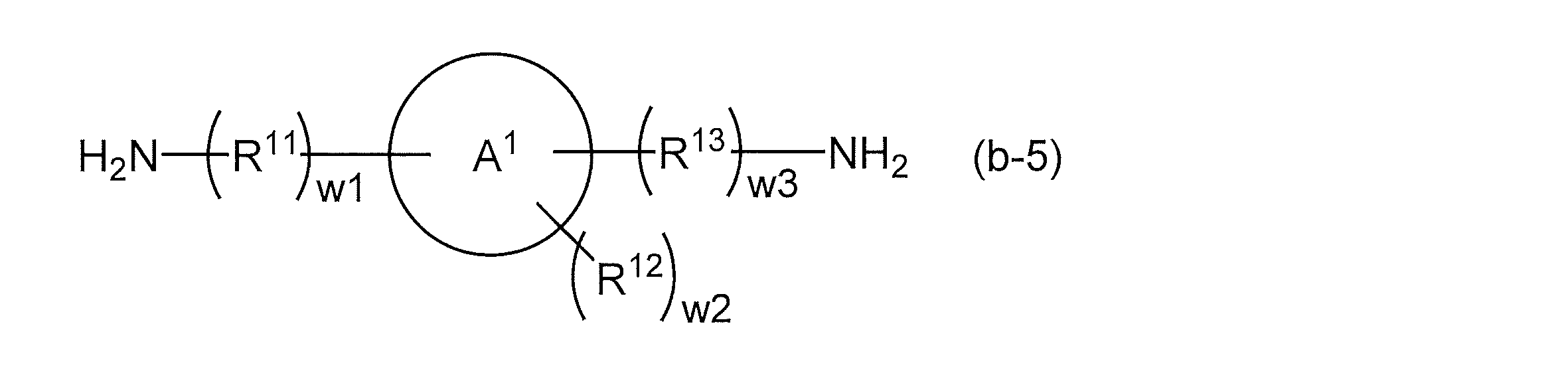
[式中、A1は、炭素数6~12の芳香族炭化水素を示す。R11及びR13は、同一又は異なって、炭素数1~4のアルキレン基を示す。R12は、一価の有機基、酸素原子含有基、硫黄原子含有基、窒素原子含有基、又はハロゲン原子を示す。w1及びw3は、同一又は異なって、0又は1を示す。w2は、0~4の整数を示す。]
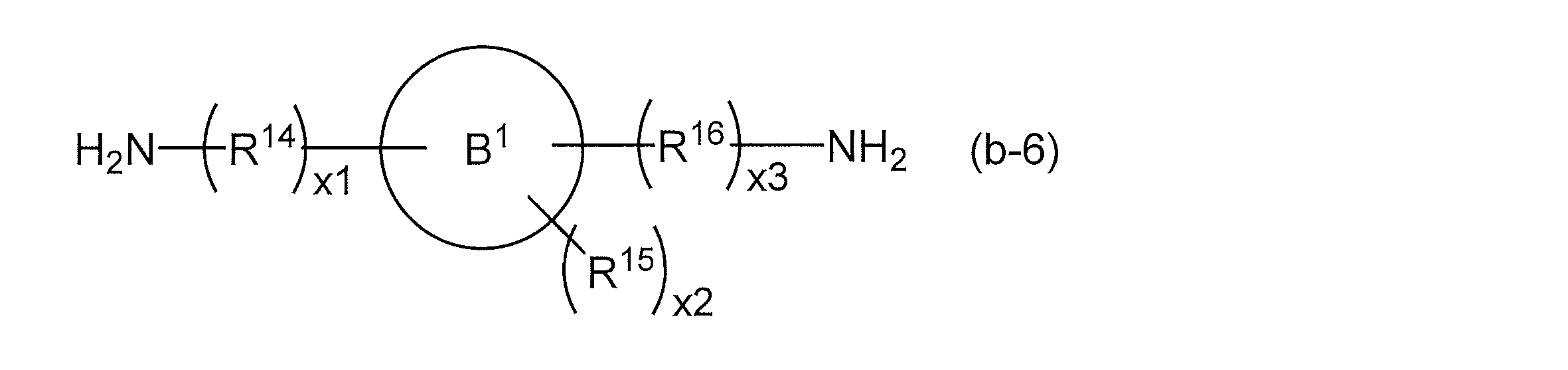
[式中、B1は、窒素原子、硫黄原子及び酸素原子からなる群より選択されるヘテロ原子を環内に1又は2個有する芳香族複素環を示す。R14及びR16は、同一又は異なって、炭素数1~4のアルキレン基を示す。R15は、一価の有機基、酸素原子含有基、硫黄原子含有基、窒素原子含有基、又はハロゲン原子を示す。x1及びx3は、同一又は異なって、0又は1を示す。x2は、0~4の整数を示す。]
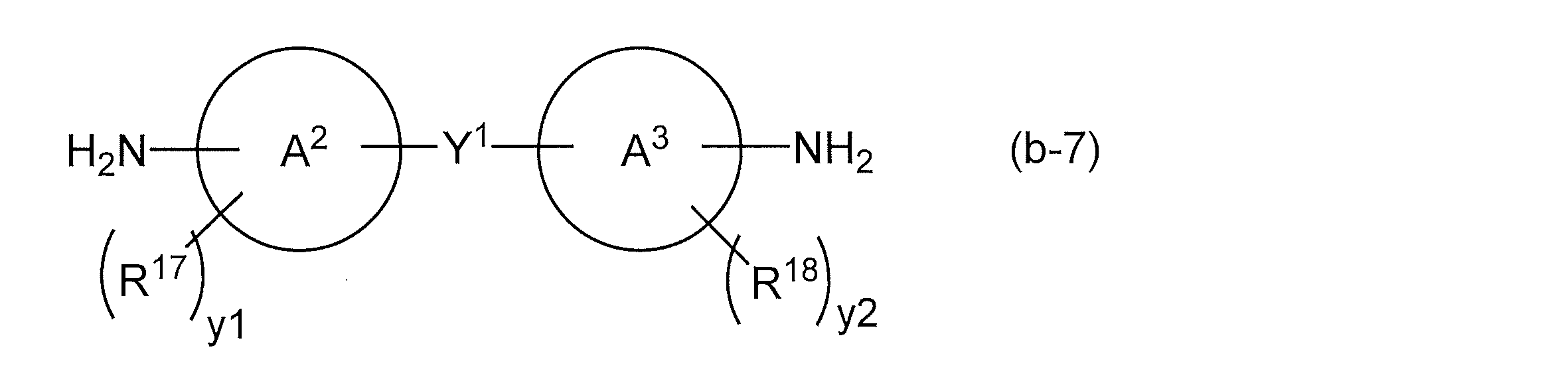
[式中、A2及びA3は、同一又は異なって、炭素数6~12の芳香族炭化水素を示す。Y1は、連結基を示す。R17及びR18は、同一又は異なって、一価の有機基、酸素原子含有基、硫黄原子含有基、窒素原子含有基、又はハロゲン原子を示す。y1及びy2は、同一又は異なって、0~4の整数を示す。]
前記エポキシ-アミン付加物において、前記分子内に2個以上のアミノ基を有する化合物[I]は、下記(I)で表される分子内に2個以上のアミノ基を有する化合物であってもよい。

[式中、R1'は、式中に示される窒素原子との結合部位に炭素原子を有する二価の有機基であって、少なくとも1つは、下記(a)及び(b)からなる群より選択される少なくとも1つの二価の基であり、少なくとも他の1つは、下記(c)~(g)からなる群より選択される少なくとも1つの二価の基を示す。Xは単結合、又は1以上の原子を有する二価の基を示す。zは1以上の整数を示す。
(a)二価の直鎖又は分岐鎖状の脂肪族炭化水素の2以上がヘテロ原子を含む連結基を介して結合した二価の基
(b)二価の直鎖又は分岐鎖状の脂肪族炭化水素基と二価の環状の脂肪族炭化水素基とが直接結合した二価の基
(c)炭素数6~12の芳香族炭化水素から水素原子を2個除いてなる二価の基
(d)炭素数6~12の芳香族炭化水素から水素原子を2個除いてなる二価の基と二価の直鎖又は分岐鎖状の脂肪族炭化水素基とが直接結合した二価の基
(e)窒素原子、硫黄原子及び酸素原子からなる群より選択されるヘテロ原子を環内に1又は2個有する芳香族複素環から水素原子を2個除いてなる二価の基
(f)窒素原子、硫黄原子及び酸素原子からなる群より選択されるヘテロ原子を環内に1又は2個有する芳香族複素環から水素原子を2個除いてなる二価の基と二価の直鎖又は分岐鎖状の脂肪族炭化水素基とが直接結合した二価の基
(g)炭素数6~12の芳香族炭化水素の2以上が連結基を介して結合した基から水素原子を2個除いてなる二価の基]
(a)二価の直鎖又は分岐鎖状の脂肪族炭化水素の2以上がヘテロ原子を含む連結基を介して結合した二価の基
(b)二価の直鎖又は分岐鎖状の脂肪族炭化水素基と二価の環状の脂肪族炭化水素基とが直接結合した二価の基
(c)炭素数6~12の芳香族炭化水素から水素原子を2個除いてなる二価の基
(d)炭素数6~12の芳香族炭化水素から水素原子を2個除いてなる二価の基と二価の直鎖又は分岐鎖状の脂肪族炭化水素基とが直接結合した二価の基
(e)窒素原子、硫黄原子及び酸素原子からなる群より選択されるヘテロ原子を環内に1又は2個有する芳香族複素環から水素原子を2個除いてなる二価の基
(f)窒素原子、硫黄原子及び酸素原子からなる群より選択されるヘテロ原子を環内に1又は2個有する芳香族複素環から水素原子を2個除いてなる二価の基と二価の直鎖又は分岐鎖状の脂肪族炭化水素基とが直接結合した二価の基
(g)炭素数6~12の芳香族炭化水素の2以上が連結基を介して結合した基から水素原子を2個除いてなる二価の基]
前記エポキシ-アミン付加物において、前記(a)の二価の基は下記式(II)で表される二価の基又は下記式(III)で表される二価の基であってもよく、前記(b)の二価の基は下記式(IV)で表される二価の基であってもよい。

[式中、R2及びR3は、同一又は異なって、二価の直鎖又は分岐鎖状の脂肪族炭化水素を示す。qは1以上の整数を示す。]

[式中、R4及びR5は、同一又は異なって、二価の直鎖又は分岐鎖状の脂肪族炭化水素を示す。rは1以上の整数を示す。]
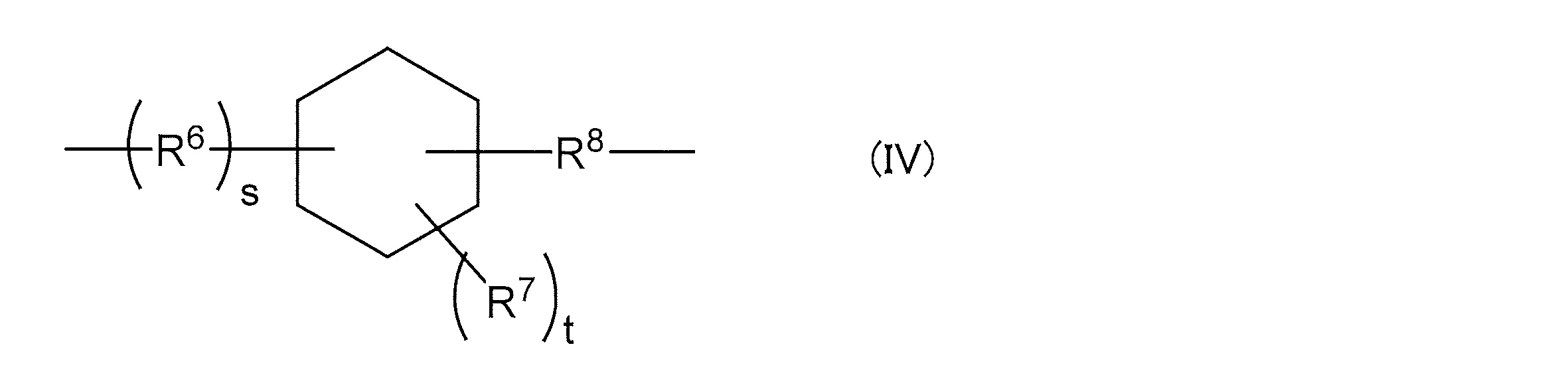
[式中、R6及びR8は、同一又は異なって、炭素数1~4のアルキレン基を示す。sは、0又は1を示す。R7は、一価の有機基、酸素原子含有基、硫黄原子含有基、窒素原子含有基、又はハロゲン原子を示す。tは0~10の整数を示す。]
前記エポキシ-アミン付加物において、前記(c)の二価の基又は前記(d)の二価の基は下記式(V)で表される二価の基であってもよく、前記(e)の二価の基又は前記(f)の二価の基は下記式(VI)で表される二価の基であってもよく、前記(g)の二価の基は下記式(VII)で表される二価の基であってもよい。

[式中、A1は、炭素数6~12の芳香族炭化水素を示す。R11及びR13は、同一又は異なって、炭素数1~4のアルキレン基を示す。R12は、一価の有機基、酸素原子含有基、硫黄原子含有基、窒素原子含有基、又はハロゲン原子を示す。w1及びw3は、同一又は異なって、0又は1を示す。w2は、0~4の整数を示す。]
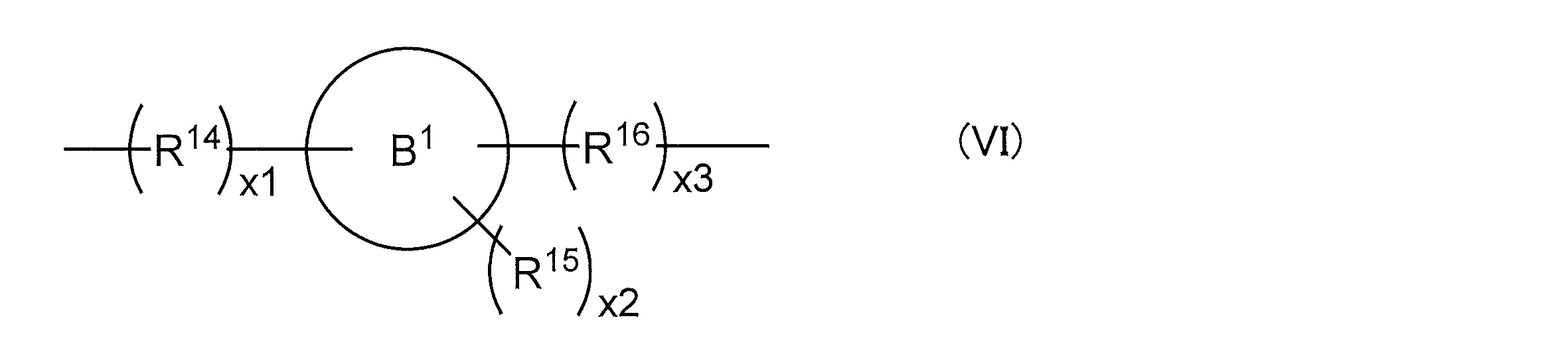
[式中、B1は、窒素原子、硫黄原子及び酸素原子からなる群より選択されるヘテロ原子を環内に1又は2個有する芳香族複素環を示す。R14及びR16は、同一又は異なって、炭素数1~4のアルキレン基を示す。R15は、一価の有機基、酸素原子含有基、硫黄原子含有基、窒素原子含有基、又はハロゲン原子を示す。x1及びx3は、同一又は異なって、0又は1を示す。x2は、0~4の整数を示す。]

[式中、A2及びA3は、同一又は異なって、炭素数6~12の芳香族炭化水素を示す。Y1は、連結基の基を示す。R17及びR18は、同一又は異なって、一価の有機基、酸素原子含有基、硫黄原子含有基、窒素原子含有基、又はハロゲン原子を示す。y1及びy2は、同一又は異なって、0~4の整数を示す。]
前記エポキシ-アミン付加物は、前記分子内に2個以上のアミノ基を有する化合物[I]の塩であって、化合物[I]と酸[II]との塩であってもよい。
前記エポキシ-アミン付加物は、炭酸塩又は有機酸塩であってもよい。
前記エポキシ-アミン付加物は、炭酸塩又は有機酸塩であってもよい。
また、本発明は、前記エポキシ-アミン付加物と、熱可塑性樹脂とを含む熱可塑性樹脂組成を提供する。
前記熱可塑性樹脂組成は、繊維強化複合材料用樹脂組成物であってもよい。
前記熱可塑性樹脂組成は、繊維強化複合材料用樹脂組成物であってもよい。
また、本発明は、前記エポキシ-アミン付加物を含む水性塗料を提供する。
また、本発明は、前記エポキシ-アミン付加物を含む水溶液を提供する。
また、本発明は、前記エポキシ-アミン付加物を含む水溶液を提供する。
また、本発明は、前記エポキシ-アミン付加物と、ウレタン樹脂とを含む水分散型樹脂組成物を提供する。
前記水分散型樹脂組成物は、さらに、界面活性剤を含んでいてもよい。
前記水分散型樹脂組成物において、前記界面活性剤は、アニオン系界面活性剤及び非イオン系界面活性剤からなる群より選択される少なくとも一種の界面活性剤であってもよい。
前記水分散型樹脂組成物は、さらに、界面活性剤を含んでいてもよい。
前記水分散型樹脂組成物において、前記界面活性剤は、アニオン系界面活性剤及び非イオン系界面活性剤からなる群より選択される少なくとも一種の界面活性剤であってもよい。
また、本発明は、前記エポキシ-アミン付加物を含む水分散液と、ウレタン樹脂エマルションとを混合することを特徴とする水分散型樹脂組成物の製造方法を提供する。
前記水分散型樹脂組成物の製造方法において、前記エポキシ-アミン付加物を含む水分散液は界面活性剤を含有していてもよい。
前記水分散型樹脂組成物の製造方法において、前記界面活性剤は、アニオン系界面活性剤及び非イオン系界面活性剤からなる群より選択される少なくとも一種の界面活性剤であってもよい。
前記水分散型樹脂組成物の製造方法において、前記エポキシ-アミン付加物を含む水分散液は界面活性剤を含有していてもよい。
前記水分散型樹脂組成物の製造方法において、前記界面活性剤は、アニオン系界面活性剤及び非イオン系界面活性剤からなる群より選択される少なくとも一種の界面活性剤であってもよい。
また、本発明は、前記エポキシ-アミン付加物を含む炭素繊維用サイジング剤を提供する。
さらに、本発明は、前記炭素繊維用サイジング剤を含む水性塗料を提供する。
さらに、本発明は、前記炭素繊維用サイジング剤を含む水溶液を提供する。
さらに、本発明は、前記炭素繊維用サイジング剤を含む水性塗料を提供する。
さらに、本発明は、前記炭素繊維用サイジング剤を含む水溶液を提供する。
さらに、本発明は、前記炭素繊維用サイジング剤と、ウレタン樹脂とを含む水分散型樹脂組成物を提供する。
前記水分散型樹脂組成物は、さらに、界面活性剤を含んでいてもよい。
前記水分散型樹脂組成物において、前記界面活性剤は、アニオン系界面活性剤及び非イオン系界面活性剤からなる群より選択される少なくとも一種の界面活性剤であってもよい。
前記水分散型樹脂組成物は、さらに、界面活性剤を含んでいてもよい。
前記水分散型樹脂組成物において、前記界面活性剤は、アニオン系界面活性剤及び非イオン系界面活性剤からなる群より選択される少なくとも一種の界面活性剤であってもよい。
前記炭素繊維用サイジング剤において、前記エポキシ-アミン付加物は水溶性であってもよい。
また、本発明は、前記水分散型樹脂組成物を含む炭素繊維用サイジング剤を提供する。
また、本発明は、前記炭素繊維用サイジング剤を塗布した炭素繊維用サイジング剤塗布炭素繊維を提供する。
また、本発明は、前記炭素繊維用サイジング剤塗布炭素繊維を含む繊維強化複合材料を提供する。
また、本発明は、前記熱可塑性樹脂組成物と炭素繊維とを含む繊維強化複合材料を提供する。
また、本発明は、前記エポキシ-アミン付加物を含む炭素繊維用処理剤を提供する。
また、本発明は、前記炭素繊維用サイジング剤を塗布した炭素繊維束を提供する。
また、本発明は、前記炭素繊維用サイジング剤塗布炭素繊維によるプリプレグを提供する。
また、本発明は、前記エポキシ-アミン付加物と、熱可塑性樹脂と、炭素繊維とからなるプリプレグを提供する。
また、本発明は、前記プリプレグより形成される繊維強化複合材料を提供する。
また、本発明は、前記炭素繊維用サイジング剤塗布炭素繊維と、熱可塑性樹脂とを含む繊維強化複合材料を提供する。
本発明のエポキシ-アミン付加物は上記構成を有するため、例えば、強化繊維やフィラー等の添加材の表面に存在するヒドロキシ基、カルボキシ基、エポキシ基(特にグリシジル基)等の官能基(反応性官能基)に対する反応性が高く、繊維強化複合材料やナノコンポジット等のポリマー系コンポジットにおける熱可塑性樹脂と添加材の密着性を効果的に向上させることができる。また、少なくとも加熱により軟化若しくは溶融させることができ、又は、溶媒や樹脂等に対する溶解性に優れるため、他の成分に対して容易に配合できる。さらに、得られる繊維強化複合材料やナノコンポジット等は、機械物性(特に、強靭性)に優れるため、接着剤やサイジング剤等として使用する場合、優れた接着性や収束性等を発揮することができる。
さらに、本発明のエポキシ-アミン付加物は、特定の化合物(特に、特定の脂肪族アミン化合物及び特定の芳香族アミン化合物の併用)を原料として使用することにより、熱分解温度が高く耐熱性に優れるものとすることができ、この場合、高温での加工に適用可能であり、ポリマー系コンポジットの生産性向上に寄与し得る。また、ある程度高いガラス転移温度を有するものとすることができ、この場合、加工機(ロール等)等の汚染が防止され、また、取り扱い性にも優れる。さらに、本発明のエポキシ-アミン付加物は、特に水溶性に優れるものとすることができるため、水溶液や水分散液の形態で調製することが容易である。このような水溶液や水分散液の形態で使用できることは、環境保護や作業安全性確保の点でメリットがある。
このため、本発明のエポキシ-アミン付加物を用いることにより、熱可塑性樹脂と添加材(強化繊維等)の密着性や機械物性(特に、強靭性)に優れたポリマー系コンポジット(繊維強化複合材料等)を形成できる熱可塑性樹脂組成物が得られる。また、熱可塑性樹脂と強化繊維の密着性に優れ、高い機械物性(特に、強靭性)を有する繊維強化複合材料が高い生産性で得られる。
このため、本発明のエポキシ-アミン付加物を用いることにより、熱可塑性樹脂と添加材(強化繊維等)の密着性や機械物性(特に、強靭性)に優れたポリマー系コンポジット(繊維強化複合材料等)を形成できる熱可塑性樹脂組成物が得られる。また、熱可塑性樹脂と強化繊維の密着性に優れ、高い機械物性(特に、強靭性)を有する繊維強化複合材料が高い生産性で得られる。
また、本発明のサイジング剤は上記構成を有するため、炭素繊維の高次加工性を向上させることができ、また、炭素繊維とマトリックス樹脂の接着性を向上させることができる。また、耐熱性に優れたエポキシ-アミン付加物を用いることにより、高温での加熱加工(例えば、サイジング剤塗布炭素繊維の製造)に適用可能であり、繊維強化複合材料の生産性向上にも寄与し得る。さらに、加工機(ロール等)等の汚染が防止され、また、サイジング剤を塗布した強化繊維(例えば、サイジング剤塗布炭素繊維)に対して優れた風合いや取り扱い性を付与することも可能である。このため、本発明のサイジング剤を炭素繊維に塗布して得られるサイジング剤塗布炭素繊維は高次加工性に優れ、かつ炭素繊維とマトリックス樹脂の接着性、密着性に優れる。さらに、上記サイジング剤塗布炭素繊維を含む繊維強化複合材料は、優れた耐熱性及び機械強度(特に、強靭性)を有し、高い生産性を有する。
本発明の水分散型樹脂組成物は上記エポキシ-アミン付加物を含むため、強化繊維の表面に存在するヒドロキシ基、カルボキシ基等の官能基に対する親和性が高く、また、上記エポキシ-アミン付加物とともにウレタン樹脂を含むため、繊維強化複合材料における熱可塑性樹脂と強化繊維の密着性を効果的に向上させることができる。特に、本発明の水分散型樹脂組成物は、どのようなマトリックス樹脂を使用した場合でも、広く該樹脂の強化繊維に対する良好な密着性を発現させることができる点で、非常に有用である。また、水分散型樹脂組成物の形態をとっているため、強化樹脂への含浸や塗工を容易に行うことができる。さらに、本発明の水分散型樹脂組成物は、有機溶剤を含まないか又はその含有量が少ない水分散型樹脂組成物(水分散液)とすることにより、作業環境を選ぶことなく使用でき、また環境保護の面でも有利となる。このため、本発明の水分散型樹脂組成物を用いると、優れた生産性で、熱可塑性樹脂と強化繊維の密着性に優れた繊維強化複合材料を形成できるプリプレグが得られ、また、上記プリプレグにより、熱可塑性樹脂と強化繊維の密着性に優れ、高い機械物性(特に、強靭性)を有する繊維強化複合材料が得られる。
<エポキシ-アミン付加物>
本発明のエポキシ-アミン付加物は、分子内に2個以上のアミノ基を有する化合物[I](単に「化合物[I]」と称する場合がある)、及び化合物[I]の塩からなる群より選択される化合物であって、化合物[I]が、分子内に2個以上の脂環式エポキシ基を有するエポキシ化合物(A)と、分子内に2個以上のアミノ基を有するアミン化合物(B)との付加物である化合物であり、
エポキシ化合物(A)が、下記式(a)で表される化合物を含み、
アミン化合物(B)が、下記式(b-I)で表される化合物から選ばれる少なくとも1種、及び下記式(b-II)で表される化合物から選ばれる少なくとも1種を含み、
両末端にアミノ基を有する化合物であることを特徴とするエポキシ-アミン付加物である。
本発明のエポキシ-アミン付加物は、分子内に2個以上のアミノ基を有する化合物[I](単に「化合物[I]」と称する場合がある)、及び化合物[I]の塩からなる群より選択される化合物であって、化合物[I]が、分子内に2個以上の脂環式エポキシ基を有するエポキシ化合物(A)と、分子内に2個以上のアミノ基を有するアミン化合物(B)との付加物である化合物であり、
エポキシ化合物(A)が、下記式(a)で表される化合物を含み、
アミン化合物(B)が、下記式(b-I)で表される化合物から選ばれる少なくとも1種、及び下記式(b-II)で表される化合物から選ばれる少なくとも1種を含み、
両末端にアミノ基を有する化合物であることを特徴とするエポキシ-アミン付加物である。


(a)二価の直鎖又は分岐鎖状の脂肪族炭化水素の2以上がヘテロ原子を含む連結基を介して結合した二価の基
(b)二価の直鎖又は分岐鎖状の脂肪族炭化水素基と二価の環状の脂肪族炭化水素基とが直接結合した二価の基]

(c)炭素数6~12の芳香族炭化水素から水素原子を2個除いてなる二価の基
(d)炭素数6~12の芳香族炭化水素から水素原子を2個除いてなる二価の基と二価の直鎖又は分岐鎖状の脂肪族炭化水素基とが直接結合した二価の基
(e)窒素原子、硫黄原子及び酸素原子からなる群より選択されるヘテロ原子を環内に1又は2個有する芳香族複素環から水素原子を2個除いてなる二価の基
(f)窒素原子、硫黄原子及び酸素原子からなる群より選択されるヘテロ原子を環内に1又は2個有する芳香族複素環から水素原子を2個除いてなる二価の基と二価の直鎖又は分岐鎖状の脂肪族炭化水素基とが直接結合した二価の基
(g)炭素数6~12の芳香族炭化水素の2以上が連結基を介して結合した基から水素原子を2個除いてなる二価の基]
本明細書において、化合物[I]を「本発明のエポキシ-アミン付加物の第1態様」、化合物[I]の塩を「本発明のエポキシ-アミン付加物の第2態様」と称する場合がある。また、本発明のエポキシ-アミン付加物の第1及び第2態様を総称して、「本発明のエポキシ-アミン付加物」と称する場合がある。
即ち、本発明のエポキシ-アミン付加物の第1及び第2態様はいずれも、化合物[I][分子内に2個以上の脂環式エポキシ基を有するエポキシ化合物(A)と分子内に2個以上のアミノ基を有するアミン化合物(B)との付加物であって、分子内に2個以上のアミノ基を有する化合物]に由来する構造を有する化合物である。本発明のエポキシ-アミン付加物の第1及び第2態様はこのような共通構造を有することにより、ポリマー系コンポジット(例えば、繊維強化複合材料等)における熱可塑性樹脂と添加材(例えば、強化繊維等)との密着性を向上させることができ、樹脂等の他の成分に対する配合が容易であると共に、機械物性(特に、強靭性)に優れたポリマー系コンポジット(例えば、繊維強化複合材料等)を形成できるという効果を奏する。
まず、本発明のエポキシ-アミン付加物における上述の共通構造を与える化合物[I]について説明する。
[化合物[I]]
化合物[I]は、上述のように、分子内に2個以上のアミノ基(-NH2)を有する化合物であって、エポキシ化合物(A)とアミン化合物(B)とのエポキシ-アミン付加物である。より詳しくは、化合物[I]は、エポキシ化合物(A)が有する脂環式エポキシ基と、アミン化合物(B)が有するアミノ基とを反応させることにより生成する、1分子以上のエポキシ化合物(A)と1分子以上(好ましくは2分子以上)のアミン化合物(B)の付加物である。なお、本明細書においては、単に「アミノ基」という場合には-NH2(無置換アミノ基)を意味するものとし、「-NH-基」には当該無置換アミノ基(-NH2)は含まれないものとする。
化合物[I]は、上述のように、分子内に2個以上のアミノ基(-NH2)を有する化合物であって、エポキシ化合物(A)とアミン化合物(B)とのエポキシ-アミン付加物である。より詳しくは、化合物[I]は、エポキシ化合物(A)が有する脂環式エポキシ基と、アミン化合物(B)が有するアミノ基とを反応させることにより生成する、1分子以上のエポキシ化合物(A)と1分子以上(好ましくは2分子以上)のアミン化合物(B)の付加物である。なお、本明細書においては、単に「アミノ基」という場合には-NH2(無置換アミノ基)を意味するものとし、「-NH-基」には当該無置換アミノ基(-NH2)は含まれないものとする。
1.エポキシ化合物(A)
化合物[I]の原料としてのエポキシ化合物(A)は、分子内に2個以上の脂環式エポキシ基を有するポリエポキシ化合物(脂環式エポキシ化合物)であって、下記式(a)で表される化合物を含むことを特徴とする。

化合物[I]の原料としてのエポキシ化合物(A)は、分子内に2個以上の脂環式エポキシ基を有するポリエポキシ化合物(脂環式エポキシ化合物)であって、下記式(a)で表される化合物を含むことを特徴とする。
上記式(a)におけるXは、単結合又は連結基(1以上の原子を有する二価の基)を示す。上記連結基としては、例えば、二価の炭化水素基、炭素-炭素二重結合の一部又は全部がエポキシ化されたアルケニレン基、カルボニル基、エーテル結合、エステル結合、カーボネート基、アミド基、これらの基の2以上が連結した基等が挙げられる。なお、式(a)における脂環(脂環式エポキシ基)を構成する炭素原子の1以上には、アルキル基等の置換基が結合していてもよい。
上記式(a)中のXが単結合であるエポキシ化合物(A)としては、例えば、(3,4,3’,4’-ジエポキシ)ビシクロヘキシルが挙げられる。
上記二価の炭化水素基としては、炭素数が1~18の直鎖又は分岐鎖状アルキレン基、二価の脂環式炭化水素基等が挙げられる。炭素数が1~18の直鎖又は分岐鎖状アルキレン基としては、例えば、メチレン基、メチルメチレン基、ジメチルメチレン基、エチレン基、プロピレン基、トリメチレン基等が挙げられる。上記二価の脂環式炭化水素基としては、例えば、1,2-シクロペンチレン基、1,3-シクロペンチレン基、シクロペンチリデン基、1,2-シクロヘキシレン基、1,3-シクロヘキシレン基、1,4-シクロヘキシレン基、シクロヘキシリデン基等の二価のシクロアルキレン基(シクロアルキリデン基を含む)等が挙げられる。
上記炭素-炭素二重結合の一部又は全部がエポキシ化されたアルケニレン基(「エポキシ化アルケニレン基」と称する場合がある)におけるアルケニレン基としては、例えば、ビニレン基、プロペニレン基、1-ブテニレン基、2-ブテニレン基、ブタジエニレン基、ペンテニレン基、ヘキセニレン基、ヘプテニレン基、オクテニレン基等の炭素数2~8の直鎖又は分岐鎖状のアルケニレン基等が挙げられる。特に、上記エポキシ化アルケニレン基としては、炭素-炭素二重結合の全部がエポキシ化されたアルケニレン基が好ましく、より好ましくは炭素-炭素二重結合の全部がエポキシ化された炭素数2~4のアルケニレン基である。
上記連結基Xとしては、特に、酸素原子を含有する連結基が好ましく、具体的には、-CO-、-O-CO-O-、-CO-O-、-O-、-CO-NH-、エポキシ化アルケニレン基;これらの基が複数個連結した基;これらの基の1又は2以上と二価の炭化水素基の1又は2以上とが連結した基等が挙げられる。二価の炭化水素基としては上記で例示したものが挙げられる。
なお、エポキシ化合物(A)がエステル結合(-CO-O-)を含む場合には、アミン化合物(B)との反応の際に、当該エステル結合がアミン化合物(B)のアミノ基と交換反応してアミド化された副生成物(単に「アミド副生成物」と称する場合がある)が不可避的に一部生成するが、本発明のエポキシ-アミン付加物には、本発明の効果を損なわない範囲でエポキシ化合物(A)、アミン化合物(B)の分解物や前記アミド副生成物等の副生成物が含まれていてもよい。
上記式(a)で表される脂環式エポキシ化合物の代表的な例としては、下記式(a-1)~(a-10)で表される化合物、2,2-ビス(3,4-エポキシシクロヘキシル)プロパン(=2,2-ビス(3,4-エポキシシクロヘキサン-1-イル)プロパン)、1,2-ビス(3,4-エポキシシクロヘキシル)エタン(=1,2-ビス(3,4-エポキシシクロヘキサン-1-イル)エタン)、2,3-ビス(3,4-エポキシシクロヘキシル)オキシラン(=1,2-エポキシ-1,2-ビス(3,4-エポキシシクロヘキサン-1-イル)エタン)、ビス(3,4-エポキシシクロヘキシルメチル)エーテル等が挙げられる。なお、下記式(a-5)、(a-7)中のl、mは、それぞれ1~30の整数を表す。下記式(a-5)中のR’は炭素数1~8のアルキレン基を示し、例えば、メチレン基、エチレン基、プロピレン基、イソプロピレン基、ブチレン基、イソブチレン基、s-ブチレン基、ペンチレン基、ヘキシレン基、ヘプチレン基、オクチレン基等の直鎖又は分岐鎖状アルキレン基が挙げられる。中でも、メチレン基、エチレン基、プロピレン基、イソプロピレン基等の炭素数1~3の直鎖又は分岐鎖状アルキレン基が好ましい。下記式(a-9)、(a-10)中のn1~n6は、それぞれ1~30の整数を示す。


エポキシ化合物(A)としては、耐熱性や取り扱い性の観点で、上記式(a-1)で表される化合物[3,4-エポキシシクロヘキシルメチル(3,4-エポキシ)シクロヘキサンカルボキシレート;商品名「セロキサイド2021P」((株)ダイセル製)等]が好ましい。
エポキシ化合物(A)は、一種のみを用いてもよいし、2種以上を組み合わせて用いてもよい。
2.アミン化合物(B)
化合物[I]の原料としてのアミン化合物(B)は、分子内に2個以上のアミノ基(-NH2;無置換アミノ基)を有するポリアミン化合物であって、上記式(b-I)で表される化合物(以下、「アミン化合物(BI)」と称する場合がある)から選ばれる少なくとも1種、及び上記式(b-II)で表される化合物(以下、「アミン化合物(BII)」と称する場合がある)から選ばれる少なくとも1種を含むことを特徴とする。
アミン化合物(B)が、アミン化合物(BI)とアミン化合物(BII)の両方を含むことにより、ポリマー系コンポジット(例えば、繊維強化複合材料等)における熱可塑性樹脂と添加材(例えば、強化繊維等)との密着性を向上させることができ、樹脂等の他の成分に対する配合が容易になると同時に、機械物性(特に、強靭性)に優れたポリマー系コンポジット(例えば、繊維強化複合材料等)を形成できるという効果を奏することができる。
化合物[I]の原料としてのアミン化合物(B)は、分子内に2個以上のアミノ基(-NH2;無置換アミノ基)を有するポリアミン化合物であって、上記式(b-I)で表される化合物(以下、「アミン化合物(BI)」と称する場合がある)から選ばれる少なくとも1種、及び上記式(b-II)で表される化合物(以下、「アミン化合物(BII)」と称する場合がある)から選ばれる少なくとも1種を含むことを特徴とする。
アミン化合物(B)が、アミン化合物(BI)とアミン化合物(BII)の両方を含むことにより、ポリマー系コンポジット(例えば、繊維強化複合材料等)における熱可塑性樹脂と添加材(例えば、強化繊維等)との密着性を向上させることができ、樹脂等の他の成分に対する配合が容易になると同時に、機械物性(特に、強靭性)に優れたポリマー系コンポジット(例えば、繊維強化複合材料等)を形成できるという効果を奏することができる。
アミン化合物(B)におけるアミン化合物(BI)とアミン化合物(BII)の割合(アミン化合物(BI)/アミン化合物(BII)の重量比)は、特に限定されないが、1.5~4.0(g/g)が好ましく、1.7~3.0(g/g)が好ましい。この割合が1.5(g/g)より低い場合は、水溶性が低下する傾向があり、4.0(g/g)より高い場合は、エポキシ-アミン付加物の靱性が不十分となる場合がある。
アミン化合物(B)の分子量は、特に限定されないが、80~10000が好ましく、より好ましくは100~5000、さらに好ましくは200~1000である。分子量が80未満であると、本発明のエポキシ-アミン付加物における後述の-NH-基(置換アミノ基)の量が多くなり過ぎて、例えば、硬化性樹脂(硬化性化合物)との組成物を硬化させて得られる硬化物(硬化樹脂)が脆くなり過ぎる場合がある。一方、分子量が10000を超えると、エポキシ化合物(A)を反応させる効果が小さくなったり、本発明のエポキシ-アミン付加物の配合により得られる効果(例えば、硬化物(硬化樹脂)の耐熱性向上、繊維強化複合材料の耐熱性及び強靭性向上等)が不十分となる場合がある。
上記式(b-I)におけるR1aは、下記(a)及び(b)からなる群より選択される二価の基を示す。
(a)二価の直鎖又は分岐鎖状の脂肪族炭化水素の2以上がヘテロ原子を含む連結基を介して結合した二価の基
(b)二価の直鎖又は分岐鎖状の脂肪族炭化水素基と二価の環状の脂肪族炭化水素基とが直接結合した二価の基
(a)二価の直鎖又は分岐鎖状の脂肪族炭化水素の2以上がヘテロ原子を含む連結基を介して結合した二価の基
(b)二価の直鎖又は分岐鎖状の脂肪族炭化水素基と二価の環状の脂肪族炭化水素基とが直接結合した二価の基
上記二価の直鎖又は分岐鎖状の脂肪族炭化水素としては、例えば、アルキレン基[例えば、メチレン基、エチレン基、プロピレン基、ブチレン基、ペンチレン基、ヘキシレン基、ヘプチレン基、オクチレン基、ノニレン基、デシレン基、ウンデシレン基、ドデシレン基、トリデシレン基、テトラデシレン基、ペンタデシレン基、ヘキサデシレン基、へプタデシレン基、オクタデシレン基等の炭素数1~30(C1-30)の直鎖又は分岐鎖状アルキレン基(好ましくはC1-18アルキレン基)等]、アルケニレン基[上記アルキレン基に対応するアルケニレン基、例えば、ビニレン基、アリレン基等の炭素数2~30の直鎖又は分岐鎖状アルケニレン基(好ましくはC2-18アルケニレン基)等]等が挙げられる。
上記二価の直鎖又は分岐鎖状の脂肪族炭化水素は、種々の置換基を有するものであってもよい(即ち、上記二価の直鎖又は分岐鎖状の脂肪族炭化水素が有する水素原子の少なくとも1つが種々の置換基で置換されたものであってもよい)。上記置換基としては、例えば、ハロゲン原子、オキソ基、ヒドロキシ基、置換オキシ基(例えば、アルコキシ基、アリールオキシ基、アラルキルオキシ基、アシルオキシ基等)、カルボキシ基、置換オキシカルボニル基(アルコキシカルボニル基、アリールオキシカルボニル基、アラルキルオキシカルボニル基等)、置換又は無置換カルバモイル基、シアノ基、ニトロ基、置換又は無置換アミノ基、スルホ基、複素環式基等が挙げられる。上記ヒドロキシ基やカルボキシ基は、有機合成の分野で慣用の保護基(例えば、アシル基、アルコキシカルボニル基、有機シリル基、アルコキシアルキル基、オキサシクロアルキル基等)で保護されていてもよい。
上記置換又は無置換カルバモイル基としては、例えば、メチル基、エチル基、プロピル基、イソプロピル基、n-ブチル基、s-ブチル基、t-ブチル基等のアルキル基、若しくはアセチル基、ベンゾイル基等のアシル基等を有するカルバモイル基、又は無置換カルバモイル基等が挙げられる。また、上記置換又は無置換アミノ基としては、例えば、メチル基、エチル基、プロピル基、イソプロピル基、n-ブチル基、s-ブチル基、t-ブチル基等のアルキル基、若しくはアセチル基、ベンゾイル基等のアシル基等を有するアミノ基、又は、無置換アミノ基等が挙げられる。
上記二価の環状の脂肪族炭化水素基としては、例えば、シクロアルキレン基[例えば、シクロプロピレン基、シクロブチレン基、シクロペンチレン基、シクロヘキシレン基等の炭素数3~20のシクロアルキレン基(好ましくはC3-15シクロアルキレン基)等]、シクロアルケニレン基[上記シクロアルキレン基に対応するシクロアルケニレン基、例えば、シクロヘキセニレン基等の炭素数3~20のシクロアルケニレン基(好ましくはC3-15シクロアルケニレン基)等]、シクロアルキリデン基[上記シクロアルキレン基に対応するシクロアルキリデン基、例えば、シクロペンチリデン基、シクロヘキシリデン基等の炭素数3~20のシクロアルキリデン基(好ましくはC3-15シクロアルキリデン基)等]、シクロアルカジエニレン基[上記シクロアルキレン基に対応するシクロアルカジエニレン基、例えば、シクロペンタジエニレン基等の炭素数4~20のシクロアルカジエニレン基(好ましくはC4-15シクロアルカジエニレン基)等]、二価の多環式炭化水素基[例えば、スピロ炭化水素(例えば、スピロ[4.4]ノナン、スピロ[4.5]デカン等)-ジイル基等の二価のスピロ炭化水素基;環集合炭化水素(例えば、ビシクロプロピル等)-ジイル基等の二価の環集合炭化水素基;橋かけ環炭化水素(例えば、ビシクロ[2.1.0]ペンタン、ビシクロ[3.2.1]オクタン、ノルボルナン、ノルボルネン、アダマンタン等)-ジイル基等の二価の橋かけ環炭化水素基等]等が挙げられる。上記二価の環状の脂肪族炭化水素基は、置換基を有するものであってもよく、当該置換基としては、例えば、上記二価の直鎖又は分岐鎖状の脂肪族炭化水素が有していてもよい置換基のほか、アルキル基(例えば、メチル基、エチル基等のC1-4アルキル基等)、アルケニル基、アリール基(例えば、フェニル基、ナフチル基等)等の一価の炭化水素基等が挙げられる。
上記ヘテロ原子を含む連結基(二価の基)としては、例えば、-CO-、-O-、-CO-O-、-O-CO-O-、-CO-NH-、-CO-NRa-(置換アミド基;Raはアルキル基を示す)、-NH-、-NRb-(Rbはアルキル基を示す)、-SO-、-SO2-等のヘテロ原子(酸素原子、窒素原子、硫黄原子等)を含む二価の基、これらが複数個連結した二価の基等が挙げられる。
中でも、上記R1aとしては、(a)の二価の基が好ましく、より好ましくは、炭素数2~6の直鎖又は分岐鎖状アルキレン基(特に、エチレン基、トリメチレン基、プロピレン基)の2以上が、-NH-又は-O-を介して結合した二価の基である。
上記式(b-II)におけるR1bは、下記(c)~(g)からなる群より選択される二価の基を示す。
(c)炭素数6~12の芳香族炭化水素から水素原子を2個除いてなる二価の基
(d)炭素数6~12の芳香族炭化水素から水素原子を2個除いてなる二価の基と二価の直鎖又は分岐鎖状の脂肪族炭化水素基とが直接結合した二価の基
(e)窒素原子、硫黄原子及び酸素原子からなる群より選択されるヘテロ原子を環内に1又は2個有する芳香族複素環(以下、単に「芳香族複素環」と称する場合がある)から水素原子を2個除いてなる二価の基
(f)芳香族複素環から水素原子を2個除いてなる二価の基と二価の直鎖又は分岐鎖状の脂肪族炭化水素基とが直接結合した二価の基
(g)炭素数6~12の芳香族炭化水素の2以上が連結基を介して結合した基から水素原子を2個除いてなる二価の基
(c)炭素数6~12の芳香族炭化水素から水素原子を2個除いてなる二価の基
(d)炭素数6~12の芳香族炭化水素から水素原子を2個除いてなる二価の基と二価の直鎖又は分岐鎖状の脂肪族炭化水素基とが直接結合した二価の基
(e)窒素原子、硫黄原子及び酸素原子からなる群より選択されるヘテロ原子を環内に1又は2個有する芳香族複素環(以下、単に「芳香族複素環」と称する場合がある)から水素原子を2個除いてなる二価の基
(f)芳香族複素環から水素原子を2個除いてなる二価の基と二価の直鎖又は分岐鎖状の脂肪族炭化水素基とが直接結合した二価の基
(g)炭素数6~12の芳香族炭化水素の2以上が連結基を介して結合した基から水素原子を2個除いてなる二価の基
上記(d)の二価の基は、芳香族炭化水素に1個の二価の直鎖又は分岐鎖状の脂肪族炭化水素基が直接結合した二価の基(即ち、-(芳香族炭化水素)-(脂肪族炭化水素基)-)であってもよく、芳香族炭化水素に2個の二価の直鎖又は分岐鎖状の脂肪族炭化水素基が直接結合した二価の基(即ち、-(脂肪族炭化水素基)-(芳香族炭化水素)-(脂肪族炭化水素基)-)であってもよい。後者の場合、2個の脂肪族炭化水素基は、同一であっても異なっていてもよい。
上記(f)の二価の基は、芳香族複素環に1個の二価の直鎖又は分岐鎖状の脂肪族炭化水素基が直接結合した二価の基(即ち、-(芳香族複素環)-(脂肪族炭化水素基)-)であってもよく、芳香族複素環に2個の二価の直鎖又は分岐鎖状の脂肪族炭化水素基が直接結合した二価の基(即ち、-(脂肪族炭化水素基)-(芳香族複素環)-(脂肪族炭化水素基)-)であってもよい。後者の場合、2個の脂肪族炭化水素基は、同一であっても異なっていてもよい。
上記炭素数6~12の芳香族炭化水素としては、例えば、ベンゼン、ナフタレン、ビフェニル等が挙げられる。上記芳香族炭化水素は、置換基を有するものであってもよく、当該置換基としては、例えば、上記二価の直鎖又は分岐鎖状の脂肪族炭化水素が有していてもよい置換基のほか、アルキル基(例えば、メチル基、エチル基等のC1-4アルキル基等)、アルケニル基、シクロアルキル基、シクロアルケニル基等の一価の炭化水素基等が挙げられる。
上記芳香族複素環(窒素原子、硫黄原子及び酸素原子からなる群より選択されるヘテロ原子を環内に1又は2個有する芳香族複素環)としては、例えば、ヘテロ原子として酸素原子を含む芳香族複素環(例えば、フラン環、オキサゾール環等の5員環、ベンゾフラン環、クロマン環等の縮合環等)、ヘテロ原子として硫黄原子を含む芳香族複素環(例えば、チオフェン環、チアゾール環、チアジアゾール環等の5員環、ベンゾチオフェン環等の縮合環等)、ヘテロ原子として窒素原子を含む芳香族複素環(例えば、ピロール環、ピロリジン環、ピラゾール環、イミダゾール環、トリアゾール環等の5員環、ピリジン環、ピリダジン環、ピリミジン環、ピラジン環等の6員環、インドール環、インドリン環、キノリン環、アクリジン環、ナフチリジン環、キナゾリン環、プリン環等の縮合環等)等が挙げられる。上記芳香族複素環は置換基を有するものであってもよく、当該置換基としては、例えば、上記二価の直鎖又は分岐鎖状の脂肪族炭化水素が有していてもよい置換基のほか、アルキル基(例えば、メチル基、エチル基等のC1-4アルキル基等)、アルケニル基、シクロアルキル基、シクロアルケニル基、アリール基(例えば、フェニル基、ナフチル基等)等の一価の炭化水素基等が挙げられる。また、上記芳香族複素環を構成する窒素原子は、慣用の保護基(例えば、アルコキシ基、アルコキシカルボニル基、アルケニルオキシカルボニル基、アラルキルオキシカルボニル基、アラルキル基、アシル基、アリールスルホニル基、アルキルスルホニル基等)により保護されていてもよい。
上記二価の直鎖又は分岐鎖状の脂肪族炭化水素としては、R1aとして例示した二価の直鎖又は分岐鎖状の脂肪族炭化水素が挙げられる。
上記連結基(二価の基)としては、例えば、上記二価の直鎖又は分岐鎖状の脂肪族炭化水素、上記二価の環状の脂肪族炭化水素基、-CO-、-O-、-CO-O-、-O-CO-O-、-CO-NH-、-CO-NRa-(置換アミド基;Raはアルキル基を示す)、-NH-、-NRb-(Rbはアルキル基を示す)、-SO-、-SO2-等のヘテロ原子(酸素原子、窒素原子、硫黄原子等)を含む二価の基、これらが複数個連結した二価の基等が挙げられる。
中でも、上記R1bとしては、(d)の二価の基、(e)の二価の基、又は(g)の二価の基が好ましく、より好ましくは、炭素数6~10の芳香族炭化水素から水素原子を2個除いてなる二価の基(例えば、フェニレン基)と炭素数1~4のアルキレン基(例えば、メチレン基)が直接結合した二価の基(例えば、キシレン基)、芳香族複素環(例えば、ピリジン環)から水素原子を2個除いてなる二価の基、2個の炭素数6~10の芳香族炭化水素(例えば、ベンゼン環)が連結基(例えば、-SO2-等)を介して結合した基から水素原子を2個除いてなる二価の基等である。
より具体的には、アミン化合物(BI)としては、下記式(b-1)で表される化合物(「アミン化合物(B1)」と称する場合がある)、下記式(b-2)で表される化合物(「アミン化合物(B2)」と称する場合がある)、下記式(b-3)で表される化合物(「アミン化合物(B3)」と称する場合がある)等が挙げられる。


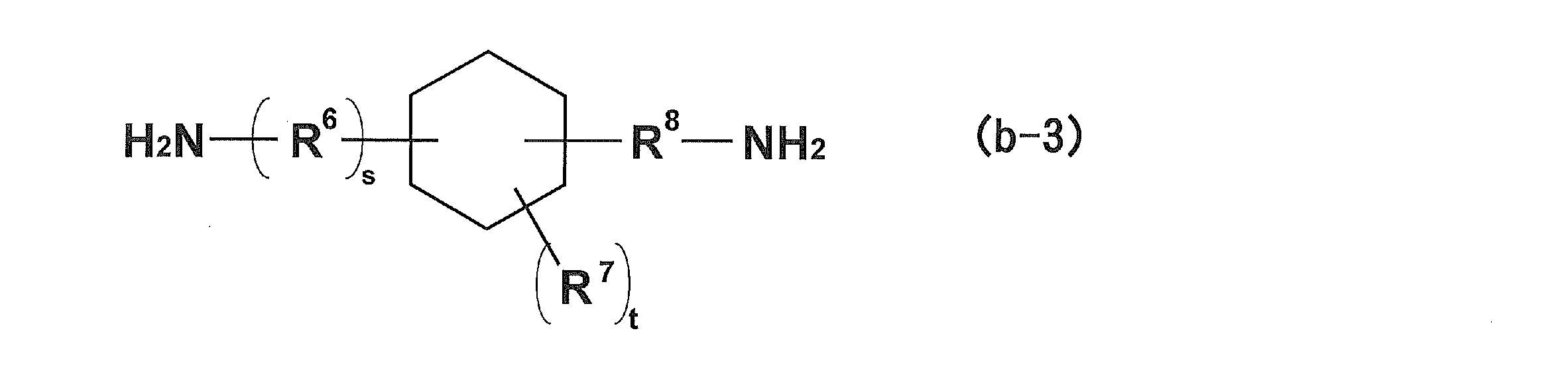
上記式(b-1)中、R2及びR3は、同一又は異なって、二価の直鎖又は分岐鎖状の脂肪族炭化水素を示す。上記二価の直鎖又は分岐鎖状の脂肪族炭化水素としては、例えば、R1aとして例示した二価の直鎖又は分岐鎖状の脂肪族炭化水素が挙げられる。
中でも、上記R2としては、好ましくは炭素数2~6の直鎖又は分岐鎖状アルキレン基、さらに好ましくは炭素数2~4の直鎖又は分岐鎖状アルキレン基(特に、エチレン基、トリメチレン基、プロピレン基)である。
中でも、上記R3としては、好ましくは炭素数2~6の直鎖又は分岐鎖状アルキレン基、さらに好ましくは炭素数2~4の直鎖又は分岐鎖状アルキレン基(特に、エチレン基、トリメチレン基、プロピレン基)である。なお、qが2以上の整数の場合には、それぞれの括弧内のR3(複数のR3)は同一であってもよいし、異なっていてもよい。また、二種以上のR3を有する場合、qが付された括弧内の構造の付加形態(重合形態)はランダム型であってもよいし、ブロック型であってもよい。
上記式(b-1)中、qは、1以上の整数を示す。qとしては、例えば、1~100が好ましく、より好ましくは1~70、さらに好ましくは1~30、特に好ましくは1~8である。qを100以下とすることにより、本発明のエポキシ-アミン付加物の耐熱性、水溶性がより向上し、また、ポリマー系コンポジット(特に、繊維強化複合材料)の耐熱性や機械物性(強靱性等)がいっそう向上する傾向がある。一方、qを1以上とすることにより、本発明のエポキシ-アミン付加物を使用したポリマー系コンポジットにおける熱可塑性樹脂と添加材の密着性が向上する傾向がある。
なお、上記式(b-1)におけるR2とR3は、同一であってもよいし、異なっていてもよい。
中でも、上記式(b-1)で表される化合物(アミン化合物(B1))としては、本発明のエポキシ-アミン付加物の添加材(特に強化繊維)に対する接着性、濡れ性、耐熱性、水溶性の観点で、エチレンジアミン(EDA)、ジエチレントリアミン(DETA)、トリエチレンテトラミン(TETA)、テトラエチレンペンタミン(TEPA)が好ましく、より好ましくはトリエチレンテトラミンである。また、上記式(b-1)で表される化合物としては、市販品を使用することもできる。
上記式(b-2)中、R4は、二価の直鎖又は分岐鎖状の脂肪族炭化水素を示す。上記R4としては、例えば、上述のR2及びR3として例示した二価の基が挙げられる。
中でも、上記R4としては、好ましくは炭素数2~6の直鎖又は分岐鎖状アルキレン基、さらに好ましくは炭素数2~4の直鎖又は分岐鎖状アルキレン基(特に、エチレン基、トリメチレン基、プロピレン基)である。
上記式(b-2)中、R5は、二価の直鎖又は分岐鎖状の脂肪族炭化水素を示す。上記R5としては、例えば、上述のR2及びR3として例示した二価の基が挙げられる。
中でも、上記R5としては、好ましくは炭素数2~6の直鎖又は分岐鎖状アルキレン基、さらに好ましくは炭素数2~4の直鎖又は分岐鎖状アルキレン基(特に、エチレン基、トリメチレン基、プロピレン基)である。なお、rが2以上の整数の場合には、それぞれの括弧内のR5(複数のR5)は同一であってもよいし、異なっていてもよい。また、二種以上のR5を有する場合、rが付された括弧内の構造の付加形態(重合形態)はランダム型であってもよいし、ブロック型であってもよい。
上記式(b-2)中、r(rが付された括弧内の構造単位の繰り返し数)は、1以上の整数を示す。rとしては、例えば、1~100が好ましく、より好ましくは1~70、さらに好ましくは1~30である。rを100以下とすることにより、本発明のエポキシ-アミン付加物の耐熱性、水溶性がより向上し、また、ポリマー系コンポジット(特に、繊維強化複合材料)の耐熱性や機械物性(強靱性等)がいっそう向上する傾向がある。一方、rを1以上とすることにより、本発明のエポキシ-アミン付加物を使用したポリマー系コンポジットにおける熱可塑性樹脂と添加材の密着性が向上する傾向がある。
なお、上記式(b-2)におけるR4とR5は、同一であってもよいし、異なっていてもよい。
中でも、上記式(b-2)で表される化合物(アミン化合物(B2))としては、本発明のエポキシ-アミン付加物の添加材(特に強化繊維)に対する接着性、熱可塑性樹脂との濡れ性の観点で、アミン末端(両末端アミノ基)ポリエチレングリコール、アミン末端ポリプロピレングリコール、アミン末端ポリブチレングリコールが好ましく、より好ましくはアミン末端ポリプロピレングリコールである。また、上記式(b-2)で表される化合物としては、市販品(例えば、HUNTSMAN社製、商品名「JEFFAMINE」シリーズ等)を使用することもできる。
上記式(b-3)中、R6及びR8は、同一又は異なって、炭素数1~4のアルキレン基を示す。R6及びR8の具体例としては、メチレン基、エチレン基、プロピレン基、ブチレン基等が挙げられる。
上記式(b-3)中、sは、0又は1を示す。
上記式(b-3)中、R7は、式中に示されるシクロヘキサン環上の置換基を示し、同一又は異なって、一価の有機基、一価の酸素原子含有基、一価の硫黄原子含有基、一価の窒素原子含有基、又はハロゲン原子を示す。R7としては、具体的には、例えば、上記二価の環状の脂肪族炭化水素基が有していてもよい置換基が挙げられる。また、上記式(b-3)中、tは、式中に示されるシクロヘキサン環上の置換基(R7)の数を示し、0~10の整数を示す。上記式(b-3)におけるtが2以上の整数である場合、それぞれのR7は同一であってもよいし、異なっていてもよい。
より詳しくは、上記式(b-3)で表される構造式から両末端の2個のアミノ基を除いて形成される基としては、例えば、1,2-シクロヘキシレン-メチレン基、1,3-シクロヘキシレン-メチレン基、1,4-シクロヘキシレン-メチレン基、シクロヘキシリデン-メチレン基、1,2-シクロヘキシレン-エチレン基、1,3-シクロヘキシレン-エチレン基、1,4-シクロヘキシレン-エチレン基、シクロヘキシリデン-エチレン基、メチレン-1,5,5-トリメチル-1,3-シクロヘキシレン基(イソホロンジアミンから2つのアミノ基を除いて形成される二価の基)等のシクロヘキシレン-アルキレン基メチレン-1,2-シクロヘキシレン-メチレン基、メチレン-1,3-シクロヘキシレン-メチレン基、メチレン-1,4-シクロヘキシレン-メチレン基等のアルキレン-シクロヘキシレン-アルキレン基等が挙げられる。
中でも、上記式(b-3)で表される化合物(アミン化合物(B3))としては、本発明のエポキシ-アミン付加物の耐熱性の観点で、イソホロンジアミンが好ましい。また、上記式(b-3)で表される化合物としては、市販品(例えば、エボニックデグサジャパン(株)製、商品名「ベスタミンIPD」)を使用することもできる。
アミン化合物(BI)としては、特に、本発明のエポキシ-アミン付加物による熱可塑性樹脂と添加材の密着性向上効果、耐熱性、強靭等の観点で、式(b-1)で表される化合物、式(b-3)で表される化合物が好ましく、より好ましくは式(b-1)で表される化合物である。
アミン化合物(BII)としてより具体的には、下記式(b-5)で表される化合物(「アミン化合物(B5)」と称する場合がある)、下記式(b-6)で表される化合物(「アミン化合物(B6)」と称する場合がある)、下記式(b-7)で表される化合物(「アミン化合物(B7)」と称する場合がある)等が挙げられる。


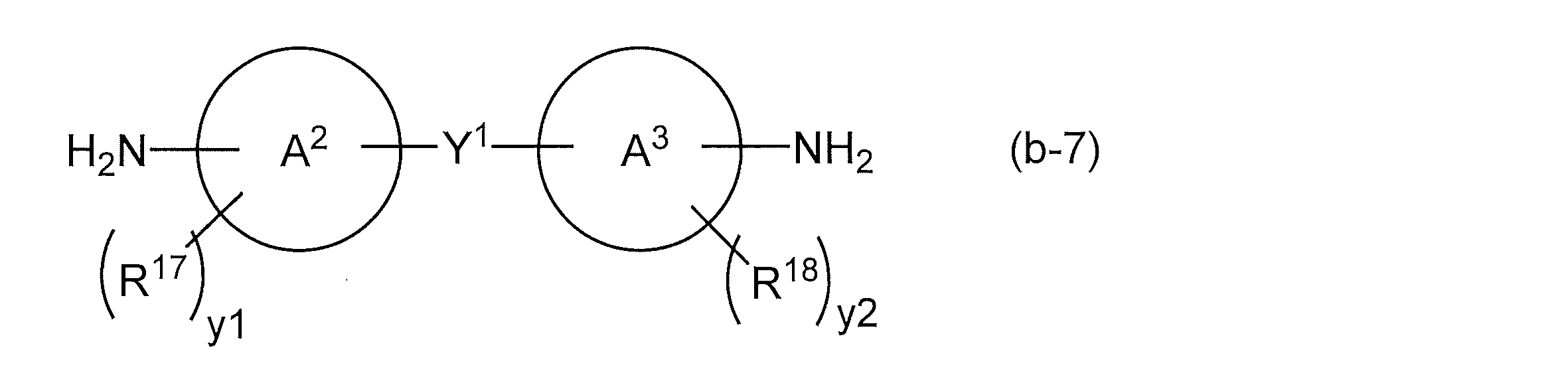
上記式(b-5)中、A1は、炭素数6~12の芳香族炭化水素を示す。上記炭素数6~12の芳香族炭化水素としては、例えば、R1bとして例示した炭素数6~12の芳香族炭化水素が挙げられる。
上記式(b-5)中、R11及びR13は、同一又は異なって、炭素数1~4のアルキレン基を示す。上記炭素数1~4のアルキレン基としては、式(b-3)中のR6及びR8として例示した炭素数1~4のアルキレン基が挙げられる。
上記式(b-5)中、w1及びw3は、同一又は異なって、0又は1を示す。
上記式(b-5)中、R12は、一価の有機基、酸素原子含有基、硫黄原子含有基、窒素原子含有基、又はハロゲン原子を示す。上記一価の有機基、酸素原子含有基、硫黄原子含有基、窒素原子含有基、ハロゲン原子としては、R7として例示したものが挙げられる。また、上記式(b-5)中、w2は、式中に示されるA1の置換基(R12)の数を示し、0~4の整数を示す。上記式(b-5)におけるw2が2以上の整数である場合、それぞれのR12は同一であってもよいし、異なっていてもよい。
より詳しくは、上記式(b-5)で表される構造式から両末端の2個のアミノ基を除いて形成される基としては、例えば、1,2-フェニレン基、1,3-フェニレン基、1,4-フェニレン基等のアリーレン基、1,2-フェニレン-メチレン基、1,3-フェニレン-メチレン基、1,4-フェニレン-メチレン基、1,2-フェニレン-エチレン基、1,3-フェニレン-エチレン基、1,4-フェニレン-エチレン基等のアリーレン-アルキレン基、メチレン-1,2-フェニレン-メチレン基、メチレン-1,3-フェニレン-メチレン基、メチレン-1,4-フェニレン-メチレン基等のアルキレン-アリーレン-アルキレン基等が挙げられる。
中でも、上記式(b-5)で表される化合物(アミン化合物(B5))としては、機械物性(特に、強靭性)に優れたポリマー系コンポジット(例えば、繊維強化複合材料等)を形成できる観点で、m-キシレンジアミン、p-キシレンジアミン、o-キシレンジアミンが好ましい。また、上記式(b-5)で表される化合物としては、市販品を使用することもできる。
上記式(b-6)中、B1は、窒素原子、硫黄原子及び酸素原子からなる群より選択されるヘテロ原子を環内に1又は2個有する芳香族複素環(芳香族複素環)を示す。上記芳香族複素環としては、例えば、R1bとして例示した芳香族複素環が挙げられる。
上記式(b-6)中、R14及びR16は、同一又は異なって、炭素数1~4のアルキレン基を示す。上記炭素数1~4のアルキレン基としては、式(b-3)中のR6及びR8として例示した炭素数1~4のアルキレン基が挙げられる。
上記式(b-6)中、x1及びx3は、同一又は異なって、0又は1を示す。
上記式(b-6)中、R15は、一価の有機基、酸素原子含有基、硫黄原子含有基、窒素原子含有基、又はハロゲン原子を示す。上記一価の有機基、酸素原子含有基、硫黄原子含有基、窒素原子含有基、ハロゲン原子としては、R7として例示したものが挙げられる。また、上記式(b-6)中、x2は、式中に示されるB1の置換基(R15)の数を示し、0~4の整数を示す。上記式(b-6)におけるx2が2以上の整数である場合、それぞれのR15は同一であってもよいし、異なっていてもよい。
より詳しくは、上記式(b-6)で表される構造式から両末端の2個のアミノ基を除いて形成される基としては、例えば、ピリジン-2,6-ジイル基、ピリジン-2,5-ジイル基、ピリジン-2,4-ジイル基、ピリジン-2,3-ジイル基等の芳香族複素環-ジイル基等が挙げられる。
中でも、上記式(b-6)で表される化合物(アミン化合物(B6))としては、機械物性(特に、強靭性)に優れたポリマー系コンポジット(例えば、繊維強化複合材料等)を形成できる観点で、2,6-ジアミノピリジン、2,5-ジアミノピリジン、2,4-ジアミノピリジン、2,3-ジアミノピリジンが好ましい。また、上記式(b-6)で表される化合物としては、市販品を使用することもできる。
上記式(b-7)中、A2及びA3は、同一又は異なって、炭素数6~12の芳香族炭化水素を示す。上記炭素数6~12の芳香族炭化水素としては、例えば、R1bとして例示した炭素数6~12の芳香族炭化水素が挙げられる。
上記式(b-7)中、Y1は、連結基の基を示す。上記連結基としては、例えば、R1bとして例示した連結基が挙げられる。
上記式(b-7)中、R17及びR18は、同一又は異なって、一価の有機基、酸素原子含有基、硫黄原子含有基、窒素原子含有基、又はハロゲン原子を示す。上記一価の有機基、酸素原子含有基、硫黄原子含有基、窒素原子含有基、ハロゲン原子としては、R7として例示したものが挙げられる。また、上記式(b-7)中、y1及びy2は、それぞれ、式中に示されるA2の置換基(R17)及びA3の置換基(R18)の数を示し、同一又は異なって0~4の整数を示す。上記式(b-7)におけるy1が2以上の整数である場合、それぞれのR17は同一であってもよいし、異なっていてもよい。上記式(b-7)におけるy2が2以上の整数である場合、それぞれのR18は同一であってもよいし、異なっていてもよい。
中でも、上記式(b-7)で表される化合物(アミン化合物(B7))としては、機械物性(特に、強靭性)に優れたポリマー系コンポジット(例えば、繊維強化複合材料等)を形成できる観点で、3,3-ジアミノジフェニルスルフォン、4,4-ジアミノジフェニルスルフォン、2,2-ジアミノジフェニルスルフォンが好ましい。また、上記式(b-7)で表される化合物としては、市販品を使用することもできる。
アミン化合物(BII)としては、特に、機械物性(特に、強靭性)に優れたポリマー系コンポジット(例えば、繊維強化複合材料等)を形成できる観点で、式(b-5)で表される化合物、式(b-6)で表される化合物、式(b-7)で表される化合物が好ましく、より好ましくは式(b-7)表される化合物である。
アミン化合物(BII)は、一種のみを用いてもよいし、2種以上を組み合わせて用いてもよい。
3.化合物[I]
本発明の第1態様である化合物[I]は、例えば、下記式(I)で表されるエポキシ-アミン付加物(以下、「エポキシ-アミン付加物(I)」と称する場合がある)であることが好ましい。

[式中、R1'は、式中に示される窒素原子との結合部位に炭素原子を有する二価の有機基であって、少なくとも1つは、下記(a)及び(b)からなる群より選択される少なくとも1つの二価の基であり、少なくとも他の1つは、下記(c)~(g)からなる群より選択される少なくとも1つの二価の基を示す。Xは単結合、又は1以上の原子を有する二価の基を示す。zは1以上の整数を示す。
(a)二価の直鎖又は分岐鎖状の脂肪族炭化水素の2以上がヘテロ原子を含む連結基を介して結合した二価の基
(b)二価の直鎖又は分岐鎖状の脂肪族炭化水素基と二価の環状の脂肪族炭化水素基とが直接結合した二価の基
(c)炭素数6~12の芳香族炭化水素から水素原子を2個除いてなる二価の基
(d)炭素数6~12の芳香族炭化水素から水素原子を2個除いてなる二価の基と二価の直鎖又は分岐鎖状の脂肪族炭化水素基とが直接結合した二価の基
(e)窒素原子、硫黄原子及び酸素原子からなる群より選択されるヘテロ原子を環内に1又は2個有する芳香族複素環から水素原子を2個除いてなる二価の基
(f)窒素原子、硫黄原子及び酸素原子からなる群より選択されるヘテロ原子を環内に1又は2個有する芳香族複素環から水素原子を2個除いてなる二価の基と二価の直鎖又は分岐鎖状の脂肪族炭化水素基とが直接結合した二価の基
(g)炭素数6~12の芳香族炭化水素の2以上が連結基を介して結合した基から水素原子を2個除いてなる二価の基]
本発明の第1態様である化合物[I]は、例えば、下記式(I)で表されるエポキシ-アミン付加物(以下、「エポキシ-アミン付加物(I)」と称する場合がある)であることが好ましい。
(a)二価の直鎖又は分岐鎖状の脂肪族炭化水素の2以上がヘテロ原子を含む連結基を介して結合した二価の基
(b)二価の直鎖又は分岐鎖状の脂肪族炭化水素基と二価の環状の脂肪族炭化水素基とが直接結合した二価の基
(c)炭素数6~12の芳香族炭化水素から水素原子を2個除いてなる二価の基
(d)炭素数6~12の芳香族炭化水素から水素原子を2個除いてなる二価の基と二価の直鎖又は分岐鎖状の脂肪族炭化水素基とが直接結合した二価の基
(e)窒素原子、硫黄原子及び酸素原子からなる群より選択されるヘテロ原子を環内に1又は2個有する芳香族複素環から水素原子を2個除いてなる二価の基
(f)窒素原子、硫黄原子及び酸素原子からなる群より選択されるヘテロ原子を環内に1又は2個有する芳香族複素環から水素原子を2個除いてなる二価の基と二価の直鎖又は分岐鎖状の脂肪族炭化水素基とが直接結合した二価の基
(g)炭素数6~12の芳香族炭化水素の2以上が連結基を介して結合した基から水素原子を2個除いてなる二価の基]
エポキシ-アミン付加物(I)は、エポキシ化合物(A)に由来する構成単位と、アミン化合物(B)に由来する構成単位とが交互に並んだ分子鎖を有し、該分子鎖の両末端にアミノ基(-NH2)を有する(即ち、両末端にアミン化合物(B)に由来する構成単位を有する)エポキシ-アミン付加物である。なお、エポキシ化合物(A)とアミン化合物(B)の付加形態(重合形態)はランダム型であってもよいし、ブロック型であってもよい。
なお、上記式(I)において、シクロヘキサン環を構成する炭素原子のうち、Xが結合した炭素原子を「1位」の炭素原子とすると、式(I)に示されるそれぞれのシクロヘキサン環に結合するアミン化合物(B)に由来する構成単位の窒素原子(-NH-)の結合位置は、シクロヘキサン環の3位の炭素原子又は4位の炭素原子である。上記窒素原子の結合位置が3位の炭素原子である場合、式(I)におけるシクロヘキサン環に結合するヒドロキシ基(-OH)の結合位置は、4位の炭素原子である。また、上記窒素原子の結合位置がシクロヘキサン環の4位の炭素原子である場合、式(I)におけるシクロヘキサン環に結合するヒドロキシ基(-OH)の結合位置は、3位の炭素原子である。上記式(I)中の複数の(2以上の)シクロヘキサン環における上記窒素原子の結合位置(又はヒドロキシ基の結合位置)は、それぞれ同じであってもよいし、異なっていてもよい。なお、式(I)中のシクロヘキサン環を構成する炭素原子に上述の位置番号を付すと、下記式のようになる。
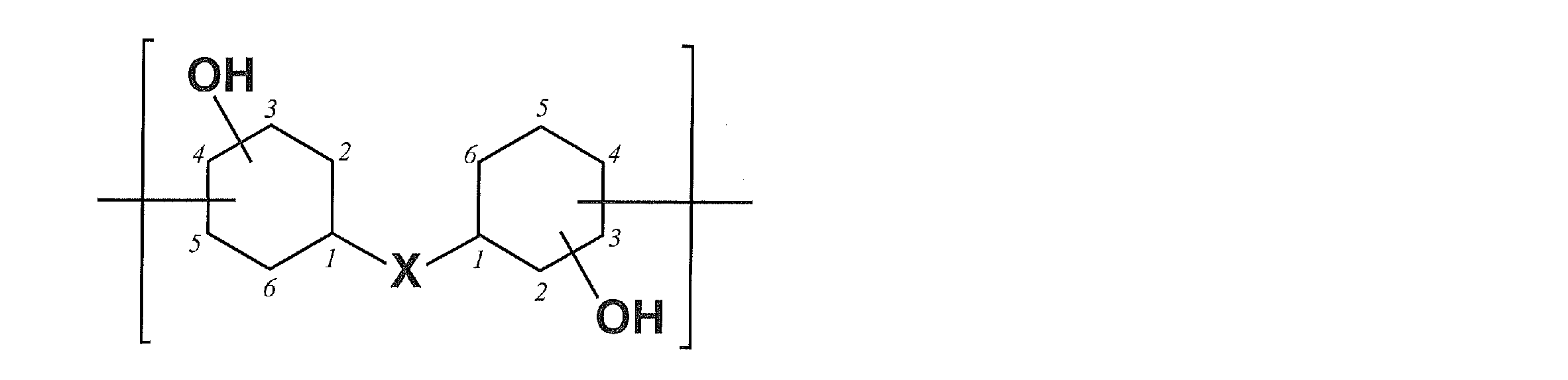
エポキシ-アミン付加物(I)中のR1'の少なくとも1つを構成する、上記(a)及び(b)からなる群より選択される少なくとも1つの二価の基(以下、「第1の二価の基」と称する場合がある)としては、上記式(b-I)中のR1aで示される(a)及び(b)からなる群より選択される二価の基が挙げられる。
中でも、R1'の第1の二価の基としては、(a)の二価の基が好ましく、より好ましくは、炭素数2~6の直鎖又は分岐鎖状アルキレン基(特に、エチレン基、トリメチレン基、プロピレン基)の2以上が、-NH-又は-O-を介して結合した二価の基である。
エポキシ-アミン付加物(I)中のR1'の少なくとも他の1つを構成する、上記(c)~(g)からなる群より選択される少なくとも1つの二価の基(以下、「第2の二価の基」と称する場合がある)としては、上記式(b-II)中のR1bで示される(c)~(g)からなる群より選択される二価の基が挙げられる。
中でも、R1'の第2の二価の基としては、(d)の二価の基、(e)の二価の基、又は(g)の二価の基が好ましく、より好ましくは、炭素数6~10の芳香族炭化水素から水素原子を2個除いてなる二価の基(例えば、フェニレン基)と炭素数1~4のアルキレン基(例えば、メチレン基)が直接結合した二価の基(例えば、キシレン基)、芳香族複素環(例えば、ピリジン環)から水素原子を2個除いてなる二価の基、2個の炭素数6~10の芳香族炭化水素(例えば、ベンゼン環)が連結基(例えば、-SO2-等)を介して結合した基から水素原子を2個除いてなる二価の基等である。
R1'の第1の二価の基としてより具体的には、下記式(II)で表される二価の基、下記式(III)で表される二価の基、下記式(IV)で表される二価の基等が挙げられる。



上記式(II)中のR2、R3及びqは、上記式(b-1)におけるR2、R3及びqと同様のものが例示される。
中でも、上記式(II)で表される二価の基としては、本発明のエポキシ-アミン付加物の添加材(特に強化繊維)に対する接着性、濡れ性、耐熱性、水溶性の観点で、エチレンジアミン(EDA)、ジエチレントリアミン(DETA)、トリエチレンテトラミン(TETA)、テトラエチレンペンタミン(TEPA)の両端のアミノ基を除いた二価の基が好ましく、より好ましくはトリエチレンテトラミンの両端のアミノ基を除いた二価の基である。
上記式(III)中のR4、R5及びrは、上記式(b-2)におけるR4、R5及びrと同様のものが例示される。
中でも、上記式(III)で表される二価の基としては、本発明のエポキシ-アミン付加物の添加材(特に強化繊維)に対する接着性、熱可塑性樹脂との濡れ性の観点で、アミン末端(両末端アミノ基)ポリエチレングリコール、アミン末端ポリプロピレングリコール、アミン末端ポリブチレングリコールの両端のアミノ基を除いた二価の基が好ましく、より好ましくはアミン末端ポリプロピレングリコールの両端のアミノ基を除いた二価の基である。
上記式(IV)中のR6、R7、R8、s及びtは、上記式(b-3)におけるR6、R7、R8、s及びtと同様のものが例示される。
中でも、上記式(IV)で表される二価の基としては、1,2-シクロヘキシレン-メチレン基、1,3-シクロヘキシレン-メチレン基、1,4-シクロヘキシレン-メチレン基、シクロヘキシリデン-メチレン基、1,2-シクロヘキシレン-エチレン基、1,3-シクロヘキシレン-エチレン基、1,4-シクロヘキシレン-エチレン基、シクロヘキシリデン-エチレン基、メチレン-1,5,5-トリメチル-1,3-シクロヘキシレン基(イソホロンジアミンから2つのアミノ基を除いて形成される二価の基)等のシクロヘキシレン-アルキレン基メチレン-1,2-シクロヘキシレン-メチレン基、メチレン-1,3-シクロヘキシレン-メチレン基、メチレン-1,4-シクロヘキシレン-メチレン基等のアルキレン-シクロヘキシレン-アルキレン基等が挙げられる。
中でも、式(IV)で表される二価の基としては、本発明のエポキシ-アミン付加物の耐熱性の観点で、メチレン-1,5,5-トリメチル-1,3-シクロヘキシレン基(イソホロンジアミンから2つのアミノ基を除いて形成される二価の基)が好ましい。
R1'の第1の二価の基としては、特に、本発明のエポキシ-アミン付加物による熱可塑性樹脂と添加材の密着性向上効果、耐熱性、強靭等の観点で、式(II)で表される二価の基、式(IV)で表される二価の基が好ましく、より好ましくは式(II)で表される二価の基である。
R1'の第2の二価の基としては、より具体的には、下記式(V)で表される二価の基、式(VI)で表される二価の基、式(VII)で表される二価の基等が挙げられる。


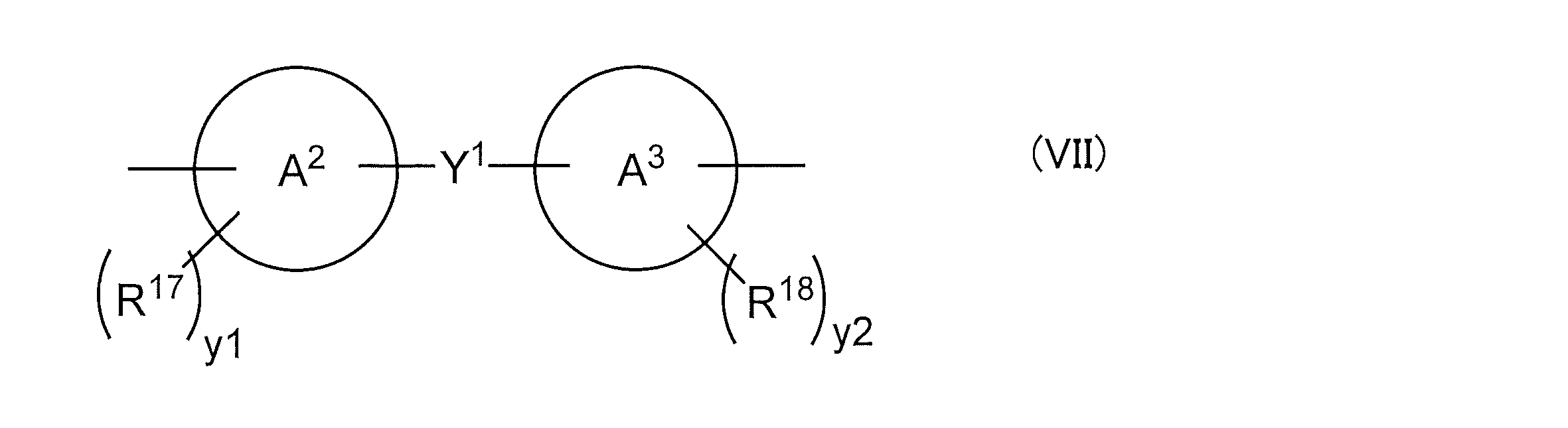
上記式(V)中のA1、R11、R12、R13、w1、w2及びw3は、上記式(b-5)におけるA1、R11、R12、R13、w1、w2及びw3と同様のものが例示される。
より詳しくは、上記式(V)で表される二価の基としては、例えば、1,2-フェニレン基、1,3-フェニレン基、1,4-フェニレン基等のアリーレン基、1,2-フェニレン-メチレン基、1,3-フェニレン-メチレン基、1,4-フェニレン-メチレン基、1,2-フェニレン-エチレン基、1,3-フェニレン-エチレン基、1,4-フェニレン-エチレン基等のアリーレン-アルキレン基、メチレン-1,2-フェニレン-メチレン基、メチレン-1,3-フェニレン-メチレン基、メチレン-1,4-フェニレン-メチレン基等のアルキレン-アリーレン-アルキレン基等が挙げられる。
中でも、上記式(V)で表される二価の基としては、機械物性(特に、強靭性)に優れたポリマー系コンポジット(例えば、繊維強化複合材料等)を形成できる観点で、m-キシレンジアミン、p-キシレンジアミン、o-キシレンジアミンの両端のアミノ基を除いた二価の基が好ましい。
上記式(VI)中のB1、R14、R15、R16、x1、x2及びx3は、上記式(b-6)におけるB1、R14、R15、R16、x1、x2及びx3と同様のものが例示される。
より詳しくは、上記式(VI)で表される二価の基としては、例えば、ピリジン-2,6-ジイル基、ピリジン-2,5-ジイル基、ピリジン-2,4-ジイル基、ピリジン-2,3-ジイル基等の芳香族複素環-ジイル基等が挙げられる。
中でも、上記式(VI)で表される二価の基としては、機械物性(特に、強靭性)に優れたポリマー系コンポジット(例えば、繊維強化複合材料等)を形成できる観点で、2,6-ジアミノピリジン、2,5-ジアミノピリジン、2,4-ジアミノピリジン、2,3-ジアミノピリジンの両端のアミノ基を除いた二価の基が好ましい。
上記式(VII)中のA2,A3、Y1、R17、R18、y1及びy2は、上記式(b-7)におけるA2,A3、Y1、R17、R18、y1及びy2と同様のものが例示される。
中でも、式(VII)で表される二価の基としては、機械物性(特に、強靭性)に優れたポリマー系コンポジット(例えば、繊維強化複合材料等)を形成できる観点で、3,3-ジアミノジフェニルスルフォン、4,4-ジアミノジフェニルスルフォン、2,2-ジアミノジフェニルスルフォンの両端のアミノ基を除いた二価の基が好ましい。
上記R1'の第2の二価の基としては、特に、機械物性(特に、強靭性)に優れたポリマー系コンポジット(例えば、繊維強化複合材料等)を形成できる観点で、式(V)で表される二価の基、式(VI)で表される二価の基、式(VII)で表される二価の基が好ましく、より好ましくは式(VII)で表される二価の基である。
エポキシ-アミン付加物(I)におけるR1'の第1の二価の基と第2の二価の基の割合(第1の二価の基/第2の二価の基の重量比)は、特に限定されないが、1.5~4.0(g/g)が好ましく、1.7~3.0(g/g)が好ましい。この割合が1.5(g/g)より低い場合は、水溶性が低下する傾向があり、4.0(g/g)より高い場合は、エポキシ-アミン付加物の靱性が不十分となる場合がある。
上記式(I)におけるXは、単結合又は連結基(1以上の原子を有する二価の基)を示し、上記式(a)におけるXと同じである。なお、zが2以上の整数である場合、それぞれのXは同一であってもよいし、異なっていてもよい。
上記式(I)におけるz(zが付された括弧内の構造単位の繰り返し数)は、1以上の整数を示す。zとしては、特に限定されないが、1~200が好ましく、より好ましくは2~150、さらに好ましくは2~100である。zが200を超えると、エポキシ-アミン付加物の他の成分に対する配合が困難となる場合がある。なお、上記式(I)におけるzは、例えば、反応に付すエポキシ化合物(A)とアミン化合物(B)の割合、反応条件などにより制御可能である。なお、zが2以上の整数である場合、括弧内のそれぞれの構造単位(X、R1' )は同一であってもよいし、異なっていてもよい。
本発明のエポキシ-アミン付加物が上記式(I)で表される場合、該エポキシ-アミン付加物は、zが異なる2種以上の混合物であってもよい。
4.化合物[I]の製造方法;エポキシ化合物(A)とアミン化合物(B)の反応
化合物[I]は、エポキシ化合物(A)とアミン化合物(B)とを反応させることにより製造できる。より具体的には、エポキシ化合物(A)が有する脂環式エポキシ基と、アミン化合物(B)が有するアミノ基とを反応させることにより、化合物[I]が生成する。
化合物[I]は、エポキシ化合物(A)とアミン化合物(B)とを反応させることにより製造できる。より具体的には、エポキシ化合物(A)が有する脂環式エポキシ基と、アミン化合物(B)が有するアミノ基とを反応させることにより、化合物[I]が生成する。
化合物[I]の原料としてのエポキシ化合物(A)及びアミン化合物(B)は、具体的には、特に添加材(強化繊維等)に対する接着性、樹脂との濡れ性、耐熱性、取り扱い性、塩とした時の水溶性、ポリマー系コンポジット(例えば、繊維強化複合材料等)の強靭性の観点から、式(a)で表される化合物と、アミン化合物(BI)及び(BII)の両方とを反応させることにより得られるエポキシ-アミン付加物である。なお、本発明のエポキシ-アミン付加物においては、上記必須のエポキシ化合物(A)及びアミン化合物(B)以外のエポキシ化合物やアミン化合物を併用することもできる。例えば、本発明のエポキシ-アミン付加物の原料として、式(a)で表される化合物以外の脂環式エポキシ化合物、アミン化合物(BI)、アミン化合物(BII)以外のアミン化合物を併用することもできる。
本発明のエポキシ-アミン付加物の原料であるエポキシ化合物(A)の総量(100重量%)中の式(a)で表される化合物の割合は、特に限定されないが、80重量%以上が好ましく、より好ましくは90重量%以上、さらに好ましくは98~100重量%である。式(a)で表される化合物の割合を80重量%以上とすることにより、添加材(特に炭素繊維等の強化繊維)に対する接着性、ポリマー系コンポジット(特に繊維強化複合材料)における熱可塑性樹脂と添加材(特に強化繊維)の密着性が効率的に向上する傾向がある。
本発明のエポキシ-アミン付加物の原料であるアミン化合物(B)の総量(100重量%)中のアミン化合物(BI)及びアミン化合物(BII)の総量の割合は、特に限定されないが、10重量%以上(例えば、10~100重量%)が好ましく、より好ましくは20~90重量%、さらに好ましくは50~80重量%である。アミン化合物(BI)及びアミン化合物(BII)の総量の割合を上記範囲に制御することにより、添加材(特に炭素繊維等の強化繊維)に対する接着性、濡れ性、ポリマー系コンポジット(特に繊維強化複合材料)における添加材(特に強化繊維)と熱可塑性樹脂の密着性、水溶性、ポリマー系コンポジット(例えば、繊維強化複合材料等)の機械物性(特に、強靭性)がいっそう向上する傾向がある。
上記反応(エポキシ化合物(A)とアミン化合物(B)の反応)は、溶媒の存在下で進行させることもできるし、溶媒の非存在下で(即ち、無溶媒で)進行させることもできる。上記溶媒としては、特に限定されないが、エポキシ化合物(A)とアミン化合物(B)とを均一に溶解又は分散できるものが好ましい。より具体的には、上記溶媒としては、例えば、ヘキサン、ヘプタン、オクタン等の脂肪族炭化水素;シクロヘキサン等の脂環式炭化水素;ベンゼン、トルエン、キシレン、エチルベンゼン等の芳香族炭化水素;クロロホルム、ジクロロメタン、1,2-ジクロロエタン等のハロゲン化炭化水素;ジエチルエーテル、ジメトキシエタン、テトラヒドロフラン、ジオキサン等のエーテル;アセトン、メチルエチルケトン、メチルイソブチルケトン等のケトン;酢酸メチル、酢酸エチル、酢酸イソプロピル、酢酸ブチル等のエステル;N,N-ジメチルホルムアミド、N,N-ジメチルアセトアミド等のアミド;アセトニトリル、プロピオニトリル、ベンゾニトリル等のニトリル;メタノール、エタノール、イソプロピルアルコール、ブタノール等のアルコール;ジメチルスルホキシド;水等が挙げられる。なお、溶媒は一種を単独で使用することもできるし、二種以上を組み合わせて使用することもできる。
上記反応における溶媒の使用量は、特に限定されず、適宜設定可能である。
上記反応に付すエポキシ化合物(A)とアミン化合物(B)の割合は、特に限定されないが、上記反応におけるエポキシ化合物(A)が有する脂環式エポキシ基とアミン化合物(B)が有するアミノ基との割合[脂環式エポキシ基/アミノ基](当量比)が、0.05~1.00(より好ましくは0.10~0.95、さらに好ましくは0.15~0.90)となるように制御することが好ましい。上記割合[脂環式エポキシ基/アミノ基]を0.05(特に0.5)以上とすることにより、生成物中に未反応のアミン化合物(B)が残存しにくい傾向がある。一方、上記割合[脂環式エポキシ基/アミノ基]を1.00以下とすることにより、生成物中に未反応のエポキシ化合物(A)が残存しにくい傾向がある。
上述のエポキシ化合物(A)とアミン化合物(B)の反応は、例えば、下記[1]の方法、下記[2]の方法、又は下記[3]の方法により進行させることができる。但し、上記反応を進行させる方法は、下記方法[1]~[3]に限定されるものではない。
[1]エポキシ化合物(A)とアミン化合物(B)とを反応容器に一括で仕込み、必要に応じて反応温度にまで加熱して両者を反応させる方法。
[2]エポキシ化合物(A)を仕込んで必要に応じて反応温度にまで加熱した反応容器に、アミン化合物(B)を逐次添加して、両者を反応させる方法。
[3]アミン化合物(B)を仕込んで必要に応じて反応温度にまで加熱した反応容器に、エポキシ化合物(A)を逐次添加して、両者を反応させる方法。
[1]エポキシ化合物(A)とアミン化合物(B)とを反応容器に一括で仕込み、必要に応じて反応温度にまで加熱して両者を反応させる方法。
[2]エポキシ化合物(A)を仕込んで必要に応じて反応温度にまで加熱した反応容器に、アミン化合物(B)を逐次添加して、両者を反応させる方法。
[3]アミン化合物(B)を仕込んで必要に応じて反応温度にまで加熱した反応容器に、エポキシ化合物(A)を逐次添加して、両者を反応させる方法。
なお、上記「逐次添加」とは、連続的添加(一定時間かけて添加する態様)又は断続的添加(複数回に分けて分割添加する態様)を意味する。
上記方法[1]~[3]の中でも、反応熱の制御が容易であり、また、分子量が高くガラス転移温度の高い化合物[I]を生成させやすい点で、上記[2]の方法又は[3]の方法が好ましい。一方、用途によっては化合物[I]の分子量が低い方が好都合な場合があるが、このような場合には、上記[1]の方法により反応させることが好ましい。
上記[2]の方法においてアミン化合物(B)を添加する速度は、特に限定されないが、例えば、添加するアミン化合物(B)の総量を100重量部とした場合、0.1~20重量部/分の範囲から適宜設定することができる。また、上記[3]の方法においてエポキシ化合物(A)を添加する速度は、特に限定されないが、例えば、添加するエポキシ化合物(A)の総量を100重量部とした場合、0.1~20重量部/分の範囲から適宜設定することができる。なお、添加するアミン化合物(B)又はエポキシ化合物(A)は、そのままの状態で添加することもできるし、溶媒に溶解又は分散させた溶液又は分散液の状態で添加することもできる。
なお、アミン化合物(B)を二種以上使用する場合、上記[2]の方法においては、各アミン化合物(B)を混合した状態で滴下してもよいし、混合しない状態(それぞれ)で滴下してもよい。なお、後者の場合には、各アミン化合物(B)を同時に滴下することもできるし、逐次滴下することもできる。上記[3]の方法におけるエポキシ化合物(A)を二種以上使用する場合の滴下についても同様である。
上記反応における温度(反応温度)は、特に限定されないが、30~280℃が好ましく、より好ましくは80~260℃、さらに好ましくは120~250℃である。反応温度を30℃以上とすることにより、反応速度が速くなり化合物[I]の生産性がより向上する傾向がある。一方、反応温度を280℃以下とすることにより、エポキシ化合物(A)やアミン化合物(B)の熱分解が抑制され、化合物[I]の収率がより向上する傾向がある。なお、上記反応中、反応温度は常に一定(実質的に一定)となるように制御することもできるし、段階的又は連続的に変化するように制御することもできる。
上記反応を実施する時間(反応時間)は、特に限定されないが、0.2~20時間が好ましく、より好ましくは0.5~10時間、さらに好ましくは2~8時間である。反応時間を0.2時間以上とすることにより、化合物[I]の収率がより向上する傾向がある。一方、反応時間を20時間以下とすることにより、化合物[I]の生産性が向上する傾向がある。
上記反応は、常圧下、加圧下、減圧下のいずれにおいても実施することができる。また、上記反応を実施する雰囲気も特に限定されず、不活性ガス(例えば、窒素、アルゴン等)中、空気中等のいずれの雰囲気においても実施することができる。
上記反応は、特に限定されず、回分方式(バッチ式)、半回分方式、連続流通方式のいずれの方式によっても実施することができる。
上記反応(エポキシ化合物(A)とアミン化合物(B)の反応)により、化合物[I]が得られる。上記反応の後、得られた化合物[I]は、例えば、濾過、濃縮、蒸留、抽出、晶析、再結晶、カラムクロマトグラフィー等の公知乃至慣用の分離手段や、これらを組み合わせた分離手段等により分離精製することが可能である。
化合物[I]が有するアミノ基(-NH2;無置換アミノ基)の数は、2個以上であり、好ましくは2~10個、より好ましくは2~4個、さらに好ましくは2個又は3個である。また、化合物[I]は、エポキシ基(特に、エポキシ化合物(A)由来の脂環式エポキシ基)を実質的に有しない。
化合物[I]におけるアミノ基(-NH2;無置換アミノ基)は、特に限定されないが、通常、化合物[I]の分子鎖末端(特に、直鎖状の化合物[I]の場合には該化合物[I]の分子鎖の両末端)に位置する。但し、これに限定されない。
化合物[I]は、上述のように、エポキシ化合物(A)の脂環式エポキシ基とアミン化合物(B)のアミノ基(-NH2;無置換アミノ基)が反応することにより生成する。化合物[I]は、上記脂環式エポキシ基とアミノ基の反応により生成する-NH-基(置換アミノ基)(さらに、アミン化合物(B1)を使用する場合には、アミン化合物(B1)が有する-NH-基(mが1以上の場合))と、エポキシ化合物(A)の脂環式エポキシ基との反応性に乏しいためと推測されるが、通常、分子内に-NH-基が未反応の状態で残存する。化合物[I]が分子内に有する-NH-基の数は、特に限定されないが、1~200個が好ましく、より好ましくは1~150個、さらに好ましくは2~100個である。化合物[I]が-NH-基を有しない場合、本発明のエポキシ-アミン付加物の反応性が低下したり、用途によっては、繊維強化複合材料における熱可塑性樹脂と強化繊維の密着性向上の効果が十分に得られない場合がある。また、本発明のエポキシ-アミン付加物の水溶性が低下する場合がある。なお、化合物[I]における-NH-基の数は、例えば、ゲルパーミエーションクロマトグラフィー(GPC)法により測定される標準ポリスチレン換算の分子量を用いて、化合物[I]を構成するエポキシ化合物(A)とアミン化合物(B)の数を求めることにより算出することが可能である。
上記に対して、例えば、グリシジル基を有するエポキシ化合物とアミン化合物(B)との反応により得られる化合物(エポキシ-アミン付加物)には、グリシジル基とアミノ基(無置換アミノ基)の反応により生成する-NH-基とグリシジル基との反応性が非常に高いため、通常、-NH-基は実質的に残存しない。
化合物[I]の数平均分子量は、特に限定されないが、200~40000が好ましく、より好ましくは300~30000、さらに好ましくは400~20000である。数平均分子量を200以上とすることにより、本発明のエポキシ-アミン付加物のガラス転移温度がある程度高くなり、加工機(ロール等)の汚染が抑制される傾向がある。また、本発明のエポキシ-アミン付加物の柔軟性、靱性がより向上する傾向がある。さらに、本発明のエポキシ-アミン付加物を塗布した強化繊維(例えば、サイジング剤塗布炭素繊維)に対して優れた風合いや取り扱い性を付与できる傾向がある。一方、数平均分子量を40000以下とすることにより、本発明のエポキシ-アミン付加物の他の成分に対する配合が容易となり、溶媒に対する溶解性や水溶性がいっそう向上する傾向がある。なお、化合物[I]の数平均分子量は、ゲルパーミエーションクロマトグラフィー(GPC)法により測定される標準ポリスチレン換算の分子量を用いて算出される。
化合物[I]のガラス転移温度(Tg)は、特に限定されないが、-50~200℃が好ましく、より好ましくは-40~190℃、さらに好ましくは-30~180℃、特に好ましくは20~180℃である。化合物[I]のTgを-50℃以上(特に20℃以上)とすることにより、本発明のエポキシ-アミン付加物を使用したポリマー系コンポジット(特に繊維強化複合材料)の耐熱性や機械物性(強靱性等)がより向上する傾向がある。また、加工機(ロール等)の汚染が抑制され、本発明のエポキシ-アミン付加物を塗布した強化繊維(例えば、サイジング剤塗布炭素繊維)に対して優れた風合いや取り扱い性を付与できる傾向がある。一方、化合物[I]のTgを200℃以下とすることにより、本発明のエポキシ-アミン付加物の他の成分に対する配合が容易となる傾向がある。なお、化合物[I]のTgは、例えば、示差走査熱量測定(DSC)、動的粘弾性測定等により測定することが可能である。より詳しくは、実施例において開示した方法により測定できる。
化合物[I]の5%重量減少温度(Td5)は、特に限定されないが、280℃以上が好ましく、より好ましくは300℃以上である。化合物[I]の5%重量減少温度を280℃以上(特に300℃以上)とすることにより、本発明のエポキシ-アミン付加物をいっそう高温での加工(例えば、サイジング剤塗布炭素繊維の製造)に適用できるようになる傾向がある。なお、化合物[I]の5%重量減少温度は、TG/DTAにより測定することが可能である。より詳しくは、実施例において開示した方法により測定できる。
本発明のエポキシ-アミン付加物の第1態様は、そのままの状態で使用することもできるし、溶液又は分散液等として使用することもできる。例えば、本発明のエポキシ-アミン付加物の第1態様を、必要に応じて界面活性剤を使用した上で水に分散させることにより、水分散液として使用してもよい。また、本発明のエポキシ-アミン付加物の第1態様を水に溶解させて、水溶液として使用してもよい。本発明のエポキシ-アミン付加物の第1態様は、分子内のアミノ基及び-NH-基の一部又は全部をプロトン化してアニオンとの塩(例えば、炭酸塩、カルボン酸塩、炭酸水素塩等)として(即ち、本発明のエポキシ-アミン付加物の第2態様として)使用することもできる。塩とすることによって、水に対する溶解性向上効果等を得ることができる。本発明のエポキシ-アミン付加物の第1態様の水溶性を高めることにより、特に水又は水を主成分とする溶媒を媒体とした製品(例えば、水性塗料等)の用途に好ましく使用できる。
<本発明のエポキシ-アミン付加物の第2態様>
本発明のエポキシ-アミン付加物の第2態様は、上述のように、化合物[I]の塩である。以下、本発明のエポキシ-アミン付加物の第2態様を、「本発明のエポキシ-アミン付加物の塩」と称して説明する。
本発明のエポキシ-アミン付加物の第2態様は、上述のように、化合物[I]の塩である。以下、本発明のエポキシ-アミン付加物の第2態様を、「本発明のエポキシ-アミン付加物の塩」と称して説明する。
本発明のエポキシ-アミン付加物の塩は、化合物[I]と酸[II]との塩(アミン化合物の酸塩)である。
本発明のエポキシ-アミン付加物の塩の原料である化合物[I]は、上述の通りである。特に、本発明のエポキシ-アミン付加物の塩の原料である化合物[I]として、上述のエポキシ-アミン付加物(I)を使用した場合、エポキシ-アミン付加物は熱分解温度が高く耐熱性に優れるものとなるため、高温での加工に適用可能であり、ポリマー系コンポジットの生産性向上に寄与し得る。また、ある程度高いガラス転移温度を有するものとなるため、加工機(ロール等)等の汚染が防止され、取り扱い性に優れる。
本発明のエポキシ-アミン付加物の塩を構成する化合物[I](例えば、エポキシ-アミン付加物(I))の原料であるエポキシ化合物(A)の総量(100重量%)中の式(a)で表される化合物の割合は、特に限定されないが、80重量%以上が好ましく、より好ましくは90重量%以上、さらに好ましくは98~100重量%である。式(a)で表される化合物の割合を80重量%以上とすることにより、エポキシ-アミン付加物の添加材(特に炭素繊維等の強化繊維)に対する接着性、ポリマー系コンポジット(特に繊維強化複合材料)における熱可塑性樹脂と添加材(特に強化繊維)の密着性が効率的に向上する傾向がある。
[酸[II]]
本発明のエポキシ-アミン付加物の塩を構成する酸[II]としては、化合物[I]が有するアミノ基等の塩基性基との間で酸塩基反応を生じて塩を形成できる酸であればよく、特に限定されないが、例えば、塩酸、リン酸、炭酸、硫酸、硝酸、臭化水素酸等の無機酸;ギ酸、酢酸、プロピオン酸、シュウ酸、マロン酸、コハク酸、クエン酸、酒石酸、リンゴ酸、乳酸、マレイン酸、フマル酸等の有機酸等が挙げられる。酸[II]は一種を単独で使用することもできるし、二種以上を組み合わせて使用することができる。中でも、酸[II]としては、取り扱い性、塩の熱分解等により容易に化合物[I]へと転化させることができる点で、炭酸、有機酸が好ましく、より好ましくは炭酸、酢酸(特に炭酸)である。即ち、本発明のエポキシ-アミン付加物の塩としては、炭酸塩、炭酸水素塩、有機酸塩が好ましく、より好ましくは炭酸塩、酢酸塩(特に好ましくは炭酸塩)である。
本発明のエポキシ-アミン付加物の塩を構成する酸[II]としては、化合物[I]が有するアミノ基等の塩基性基との間で酸塩基反応を生じて塩を形成できる酸であればよく、特に限定されないが、例えば、塩酸、リン酸、炭酸、硫酸、硝酸、臭化水素酸等の無機酸;ギ酸、酢酸、プロピオン酸、シュウ酸、マロン酸、コハク酸、クエン酸、酒石酸、リンゴ酸、乳酸、マレイン酸、フマル酸等の有機酸等が挙げられる。酸[II]は一種を単独で使用することもできるし、二種以上を組み合わせて使用することができる。中でも、酸[II]としては、取り扱い性、塩の熱分解等により容易に化合物[I]へと転化させることができる点で、炭酸、有機酸が好ましく、より好ましくは炭酸、酢酸(特に炭酸)である。即ち、本発明のエポキシ-アミン付加物の塩としては、炭酸塩、炭酸水素塩、有機酸塩が好ましく、より好ましくは炭酸塩、酢酸塩(特に好ましくは炭酸塩)である。
[エポキシ-アミン付加物の塩の製造方法]
本発明のエポキシ-アミン付加物の塩は、公知乃至慣用の塩の製造方法によって製造できる。具体的には、例えば、化合物[I](詳しくは、化合物[I]が有するアミノ基等の塩基性基)と酸[II]とを反応(酸塩基反応)させる方法によって、本発明のエポキシ-アミン付加物の塩を得ることができる。
本発明のエポキシ-アミン付加物の塩は、公知乃至慣用の塩の製造方法によって製造できる。具体的には、例えば、化合物[I](詳しくは、化合物[I]が有するアミノ基等の塩基性基)と酸[II]とを反応(酸塩基反応)させる方法によって、本発明のエポキシ-アミン付加物の塩を得ることができる。
上記反応は、溶媒の存在下で進行させることもできるし、溶媒の非存在下で(即ち、無溶媒で)進行させることもできる。上記溶媒としては、特に限定されず、例えば、エポキシ化合物(A)とアミン化合物(B)の反応において例示したものが使用できるが、特に、少なくとも水を使用することが好ましい。なお、溶媒は一種を単独で使用することもできるし、二種以上を組み合わせて使用することもできる。また、上記反応における溶媒の使用量は、特に限定されず、適宜設定可能である。
上記反応(化合物[I]と酸[II]との反応)に付す化合物[I]と酸[II]の割合は、特に限定されず、化合物[I]が有する塩基性基(例えば、アミノ基、-NH-基等)のうち塩へと変換させることを求める割合(この割合は、例えば、所望の水溶性等に応じて決定できる)に応じて、適宜選択可能である。
上記反応を行うための操作は、特に限定されず、例えば、化合物[I]と酸[II]とを反応容器に一括で仕込んで反応させることもできるし、化合物[I]と酸[II]のいずれか一方を反応容器に仕込んでおき、他方を添加(例えば、上述の逐次添加)して反応させることもできる。
上記反応における温度(反応温度)、時間(反応時間)は、特に限定されず、適宜設定可能である。例えば、上記反応は室温で進行させることができる。
上記反応は、常圧下、加圧下、減圧下のいずれにおいても実施することができる。また、上記反応を実施する雰囲気も特に限定されず、不活性ガス(例えば、窒素、アルゴン等)中、空気中等のいずれの雰囲気においても実施することができる。
上記反応は、特に限定されず、回分方式(バッチ式)、半回分方式、連続流通方式のいずれの方式によっても実施することができる。
上記反応により、本発明のエポキシ-アミン付加物の塩が生成する。上記反応の後、本発明のエポキシ-アミンの塩は、例えば、濾過、濃縮、蒸留、抽出、晶析、再結晶、カラムクロマトグラフィー等の公知乃至慣用の分離手段や、これらを組み合わせた分離手段等により分離精製することが可能である。また、本発明のエポキシ-アミンの塩は特に水溶性に優れるという特徴を有するため、水溶液の状態で好ましく使用することができる。
本発明のエポキシ-アミン付加物の塩は、化合物[I]が有する塩基性基(特にアミノ基、-NH-基)の一部又は全部が少なくとも酸[II]との酸塩基反応により塩となった構造を有しているため、優れた水溶性を有し、特に水溶液の状態で好ましく使用できる。そして、熱分解やその他の処理(例えば、強塩基による処理等)によって容易に塩基性基(特にアミノ基、-NH-基)へと変換でき、アミノ基や-NH-基を有する化合物[I]へと転化できるため、化合物[I]が奏するポリマー系コンポジットにおける樹脂と添加材の密着性向上効果を発揮させることができる。なお、言うまでも無く、本発明のエポキシ-アミン付加物の塩が、化合物[I]が有する塩基性基の一部のみが塩となった構造を有するものである場合(即ち、アミノ基や-NH-基を有する場合)は、特に化合物[I]へと転化しなくても、それ自体が繊維強化複合材料やナノコンポジット等のポリマー系コンポジットにおける熱可塑性樹脂と添加材の密着性の向上効果を有する。
本発明のエポキシ-アミン付加物の塩は、そのままの状態で使用することもできるし、溶液又は分散液等として使用することもできる。特に、本発明のエポキシ-アミン付加物の塩は水溶性に優れるため、水溶液の形態で好ましく使用できる(本発明のエポキシ-アミン付加物(本発明のエポキシ-アミン付加物の第1、2態様)を必須成分として含む水溶液を「本発明の水溶液」と称する)。本発明のエポキシ-アミン付加物の塩は、特に水溶液(本発明の水溶液)の濃度を低濃度とした場合であっても、溶解物の析出が生じにくいため、様々な態様での使用が可能である。本発明の水溶液は、後述の各種用途(例えば、水性塗料、サイジング剤等)に使用することができる。なお、本発明の水溶液における本発明のエポキシ-アミン付加物の濃度は、特に限定されず、適宜選択可能である。
本発明のエポキシ-アミン付加物(本発明のエポキシ-アミン付加物の第1、2態様)の用途は、特に限定されない。例えば、本発明のエポキシ-アミン付加物は、ポリマー系コンポジットにおける熱可塑性樹脂と添加材の密着性を向上させるための密着性向上剤(密着性改良剤)、被着体に対する接着性を向上させるための接着性向上剤(接着性改良剤)、異なる二以上の成分(特にポリマー)同士の溶解性を向上させるための相溶性向上剤(相溶化剤)、ポリマー系コンポジットにおける添加材の分散性を向上させるための分散性向上剤、流動性向上剤、流動性抑制剤、可塑剤、エポキシ樹脂等の架橋剤等の各種添加剤;接着剤;塗料;封止剤;サイジング剤等の各種用途に使用できる。また、水又は水を主成分とする溶媒を媒体とした製品(例えば、水性塗料等)の用途にも好ましく使用できる。なお、水性塗料とは、水又は水を主成分とする溶媒を媒体とした塗料(通常、バインダー成分、顔料等を含む)である。本発明のエポキシ-アミン付加物を用いて、該エポキシ-アミン付加物を必須成分として含む水性塗料が得られる。
<熱可塑性樹脂組成物>
本発明のエポキシ-アミン付加物(本発明のエポキシ-アミン付加物の第1、2態様)と、公知乃至慣用の熱可塑性樹脂とを配合(混合)することにより、熱可塑性樹脂組成物(「本発明の熱可塑性樹脂組成物」と称する場合がある)が得られる。上記熱可塑性樹脂としては、特に限定されないが、例えば、ポリオレフィン(例えば、ポリエチレン、ポリプロピレン、ポリブタジエン等)、ビニル系重合体(例えば、アクリル樹脂、ポリスチレン等)、ポリアミド(例えば、ナイロン6、ナイロン66、ナイロン11、ナイロン12、ナイロン610、ナイロン612、ナイロン61、ナイロン6T、ナイロン9T等)、ポリエステル(例えば、ポリエチレンテレフタレート、ポリブチレンテレフタレート)、ポリ塩化ビニル、ポリ塩化ビニリデン、ポリカーボネート、ポリアセタール、ポリフェニレンオキサイド、ポリフェニレンサルファイド、ポリエーテルスルホン、ポリエーテルエーテルケトン等の熱可塑性樹脂が挙げられる。但し、上記「熱可塑性樹脂」には本発明のエポキシ-アミン付加物は含まれない。なお、本発明の熱可塑性樹脂組成物において熱可塑性樹脂は一種を単独で使用することもできるし、二種以上を組み合わせて使用することもできる。
本発明のエポキシ-アミン付加物(本発明のエポキシ-アミン付加物の第1、2態様)と、公知乃至慣用の熱可塑性樹脂とを配合(混合)することにより、熱可塑性樹脂組成物(「本発明の熱可塑性樹脂組成物」と称する場合がある)が得られる。上記熱可塑性樹脂としては、特に限定されないが、例えば、ポリオレフィン(例えば、ポリエチレン、ポリプロピレン、ポリブタジエン等)、ビニル系重合体(例えば、アクリル樹脂、ポリスチレン等)、ポリアミド(例えば、ナイロン6、ナイロン66、ナイロン11、ナイロン12、ナイロン610、ナイロン612、ナイロン61、ナイロン6T、ナイロン9T等)、ポリエステル(例えば、ポリエチレンテレフタレート、ポリブチレンテレフタレート)、ポリ塩化ビニル、ポリ塩化ビニリデン、ポリカーボネート、ポリアセタール、ポリフェニレンオキサイド、ポリフェニレンサルファイド、ポリエーテルスルホン、ポリエーテルエーテルケトン等の熱可塑性樹脂が挙げられる。但し、上記「熱可塑性樹脂」には本発明のエポキシ-アミン付加物は含まれない。なお、本発明の熱可塑性樹脂組成物において熱可塑性樹脂は一種を単独で使用することもできるし、二種以上を組み合わせて使用することもできる。
本発明の熱可塑性樹脂組成物[本発明のエポキシ-アミン付加物と熱可塑性樹脂とを少なくとも含む熱可塑性樹脂組成物]は、特に、硬化性樹脂組成物(例えば、熱硬化性樹脂組成物、光硬化性樹脂組成物等)に比べて、短い時間で成形できるという利点を有する。このため、本発明の熱可塑性樹脂組成物は、成形時間の短縮が要求される用途(例えば、自動車部品用途等)に特に好ましく使用できる。
本発明の熱可塑性樹脂組成物における熱可塑性樹脂の含有量(配合量)は、特に限定されないが、熱可塑性樹脂組成物の全量(100重量%)に対して、0.1~99.9重量%が好ましく、より好ましくは1~99重量%、さらに好ましくは2~98重量%である。含有量を0.1重量%以上とすることにより、ポリマー系コンポジット(特に繊維強化複合材料)の耐熱性や機械物性(強靭性等)がより向上する傾向がある。一方、含有量を99.9重量%以下とすることにより、ポリマー系コンポジット(特に繊維強化複合材料)における熱可塑性樹脂と添加材(特に強化繊維)の密着性がより向上する傾向がある。
本発明の熱可塑性樹脂組成物において本発明のエポキシ-アミン付加物は、一種を単独で使用することもできるし、二種以上を組み合わせて使用することもできる。
本発明の熱可塑性樹脂組成物における本発明のエポキシ-アミン付加物の含有量(配合量)は、特に限定されないが、熱可塑性樹脂100重量部に対して、0.1~200重量部が好ましく、より好ましくは1~100重量部、さらに好ましくは2~50重量部である。本発明のエポキシ-アミン付加物の含有量を0.1重量部以上とすることにより、ポリマー系コンポジット(特に繊維強化複合材料)における熱可塑性樹脂と添加材(特に強化繊維)の密着性がより向上する傾向がある。一方、本発明のエポキシ-アミン付加物の含有量を200重量部以下とすることにより、ポリマー系コンポジット(特に繊維強化複合材料)の耐熱性や機械物性(強靭性等)がより向上する傾向がある。
本発明の熱可塑性樹脂組成物は、熱可塑性樹脂、本発明のエポキシ-アミン付加物以外にも、例えば、重合開始剤(熱重合開始剤、光重合開始剤等)、硬化剤、硬化促進剤、消泡剤、レベリング剤、カップリング剤(シランカップリング剤等)、界面活性剤、無機充填剤(シリカ、アルミナ等)、難燃剤、着色剤、酸化防止剤、紫外線吸収剤、イオン吸着体、顔料、蛍光体、離型剤等の慣用の添加剤を含んでいてもよい。
本発明の熱可塑性樹脂組成物は、本発明のエポキシ-アミン付加物と熱可塑性樹脂とを少なくとも含んでいればよく、その製造方法(調製方法)は特に限定されない。具体的には、例えば、熱可塑性樹脂組成物を構成する各成分を所定の割合で攪拌・混合することにより調製することができる。なお、各成分の攪拌・混合には公知の装置、例えば、自転公転型ミキサー、プラネタリーミキサー、ニーダー、ディゾルバー等を使用できる。
本発明の熱可塑性樹脂組成物における本発明のエポキシ-アミン付加物は、高い反応性を有し、炭素繊維等の強化繊維と熱可塑性樹脂の複合材料(繊維強化複合材料)における熱可塑性樹脂と強化繊維との密着性を向上させることができるため、特に、繊維強化複合材料を形成するための樹脂組成物(繊維強化複合材料用樹脂組成物)として好ましく使用できる。具体的には、上記繊維強化複合材料は、本発明の熱可塑性樹脂組成物を強化繊維に含浸又は塗工して得られるプリプレグより形成される。より具体的には、例えば、本発明の熱可塑性樹脂組成物を溶融させた状態又は適当な溶媒に溶解させた状態で、強化繊維に含浸又は塗工してプリプレグ(特には熱可塑性プリプレグ;本発明のエポキシ-アミン付加物と、熱可塑性樹脂と、強化繊維(特に、炭素繊維)とからなるプリプレグ)を得、さらに、該プリプレグを成形することにより、繊維強化複合材料(本発明の熱可塑性樹脂組成物と強化繊維(特に、炭素繊維)とを含む繊維強化複合材料)が得られる。特に、本発明の熱可塑性樹脂組成物(熱可塑性プリプレグ)は、成形時間の短縮が要求される用途(例えば、自動車部品用途等)において好ましく使用できる。
上記強化繊維としては、公知乃至慣用の強化繊維を使用することができ、特に限定されないが、例えば、炭素繊維、ガラス繊維、アラミド繊維、ボロン繊維、黒鉛繊維、炭化珪素繊維、高強度ポリエチレン繊維、タングステンカーバイド繊維、ポリパラフェニレンベンズオキサゾール繊維(PBO繊維)等が挙げられる。上記炭素繊維としては、例えば、ポリアクリロニトリル(PAN)系炭素繊維、ピッチ系炭素繊維、気相成長炭素繊維等が挙げられる。中でも、機械物性(強靭性等)の観点で、炭素繊維、ガラス繊維、アラミド繊維が好ましい。なお、上記強化繊維は、一種を単独で使用することもできるし、二種以上を組み合わせて使用することもできる。
なお、上記強化繊維は、カップリング処理、酸化処理、コーティング処理等の公知乃至慣用の表面処理が施されたものであってもよい。
上記強化繊維の形態は、特に限定されず、例えば、フィラメント(長繊維)の形態、トウの形態、トウを一方向に配列させた一方向材の形態、織物の形態、不織布の形態等が挙げられる。強化繊維の織物としては、例えば、平織、綾織、朱子織、若しくはノンクリンプファブリックに代表される繊維束を一方向に引き揃えたシートや角度を変えて積層したようなシートをほぐれないようにステッチしたステッチングシート等が挙げられる。
本発明のプリプレグ(熱可塑性または熱硬化性プリプレグ)における強化繊維の含有量は、特に限定されず、適宜調整可能である。
本発明の熱可塑性樹脂組成物を強化繊維に含浸又は塗工する方法は特に限定されず、公知乃至慣用のプリプレグの製造方法における含浸又は塗工の方法により実施することができる。
本発明の繊維強化複合材料は、上述のように、本発明のプリプレグより形成され、その製造方法は特に限定されないが、公知乃至慣用の方法、例えば、ハンドレイアップ法、プリプレグ法、RTM法、プルトルージョン法、フィラメントワインディング法、スプレーアップ法、引抜成形法、溶融含浸法、パウダー法等によって製造できる。
本発明の繊維強化複合材料は、各種の構造物の材料として使用することができ、特に限定されないが、例えば、航空機の胴体、主翼、尾翼、動翼、フェアリング、カウル、ドア等;宇宙機のモーターケース、主翼等;人工衛星の構体;自動車のシャシー等の自動車部品;鉄道車両の構体;自転車の構体;船舶の構体;風力発電のブレード;圧力容器;釣り竿;テニスラケット;ゴルフシャフト;ロボットアーム;ケーブル(例えば、ケーブルの芯材等)等の構造物の材料として好ましく使用することができる。
<サイジング剤>
本発明のエポキシ-アミン付加物(本発明のエポキシ-アミン付加物の第1、2態様)は、上述のように、強化繊維の表面に存在するヒドロキシ基、カルボキシ基、エポキシ基等の官能基に対する反応性が高く、繊維強化複合材料における熱可塑性樹脂と強化繊維の密着性を効果的に向上させることができるため、サイジング剤(特に、炭素繊維用サイジング剤)としても好ましく使用することができる。なお、サイジング剤とは、強化繊維の製造工程や、高次加工工程(織物工程、プリプレグ工程、その他の成形工程)での取り扱い性を向上させるために強化繊維に塗布(塗工)される処理剤であり、収束剤と称される場合もある。本明細書においては、本発明のエポキシ-アミン付加物を含むサイジング剤を「本発明のサイジング剤」と称する場合がある。
本発明のエポキシ-アミン付加物(本発明のエポキシ-アミン付加物の第1、2態様)は、上述のように、強化繊維の表面に存在するヒドロキシ基、カルボキシ基、エポキシ基等の官能基に対する反応性が高く、繊維強化複合材料における熱可塑性樹脂と強化繊維の密着性を効果的に向上させることができるため、サイジング剤(特に、炭素繊維用サイジング剤)としても好ましく使用することができる。なお、サイジング剤とは、強化繊維の製造工程や、高次加工工程(織物工程、プリプレグ工程、その他の成形工程)での取り扱い性を向上させるために強化繊維に塗布(塗工)される処理剤であり、収束剤と称される場合もある。本明細書においては、本発明のエポキシ-アミン付加物を含むサイジング剤を「本発明のサイジング剤」と称する場合がある。
本発明のサイジング剤は、本発明のエポキシ-アミン付加物を必須の構成成分として含むものであればよく、本発明のエポキシ-アミン付加物以外に溶媒やその他の添加剤等を含むものであってもよいし、本発明のエポキシ-アミン付加物のみから構成されたもの(本発明のエポキシ-アミン付加物そのもの)であってもよい。また、本発明のサイジング剤における本発明のエポキシ-アミン付加物は塩の形態であってもよく、例えば、本発明のエポキシ-アミン付加物の塩、又は当該塩を含む水溶液や分散液等であってもよい。本発明のサイジング剤(特に、炭素繊維用サイジング剤)においては、本発明のエポキシ-アミン付加物として水溶性であるものを用いてもよい。
本発明のサイジング剤が含んでいてもよい溶媒は、特に限定されないが、水;へキサン、ヘプタン、オクタン等の脂肪族炭化水素;シクロヘキサン等の脂環式炭化水素;ベンゼン、トルエン、キシレン、エチルベンゼン等の芳香族炭化水素;クロロホルム、ジクロロメタン、1,2-ジクロロエタン等のハロゲン化炭化水素;ジエチルエーテル、ジメトキシエタン、テトラヒドロフラン、ジオキサン等のエーテル;アセトン、メチルエチルケトン、メチルイソブチルケトン等のケトン;酢酸メチル、酢酸エチル、酢酸イソプロピル、酢酸ブチル等のエステル;N,N-ジメチルホルムアミド、N,N-ジメチルアセトアミド等のアミド;アセトニトリル、プロピオニトリル、ベンゾニトリル等のニトリル;メタノール、エタノール、イソプロピルアルコール、ブタノール等のアルコール;ジメチルスルホキシド等が挙げられる。中でも、環境や作業環境に対する負荷が小さい点で、水、アルコール(特に、水)が好ましい。即ち、本発明のサイジング剤は、水及び/又はアルコール(水及びアルコールのいずれか一方又は両方)を含む本発明のエポキシ-アミン付加物の溶液(特に、水溶液)又は分散液(特に、水分散液)であってもよい。なお、溶媒は一種を単独で使用することもできるし、二種以上を組み合わせて使用することもできる。中でも、本発明のエポキシ-アミン付加物が塩(例えば、本発明のエポキシ-アミン付加物の第2態様)である場合には、本発明のサイジング剤を低濃度の水溶液として調製しやすい点でメリットが大きい。
本発明のサイジング剤は、その他、脂肪酸、アミド、エステル等の潤滑剤;シランカップリング剤やチタンカップリング剤等のカップリング剤等の各種添加剤を含んでいてもよい。
本発明のサイジング剤における本発明のエポキシ-アミン付加物、溶媒、添加剤の含有量(配合量)は、特に限定されず、それぞれ適宜調整可能である。
本発明のサイジング剤(例えば、炭素繊維用サイジング剤)は、水又は水を主成分とする溶媒を媒体とした製品(例えば、水性塗料等)の用途に好ましく使用できる。例えば、本発明のサイジング剤を用いて、該サイジング剤を必須成分として含む水溶液や水性塗料等が得られる。
<サイジング剤塗布炭素繊維>
本発明のサイジング剤(炭素繊維用サイジング剤)を炭素繊維に塗布(塗工)することによって、サイジング剤塗布炭素繊維(サイジング剤付着炭素繊維)(「本発明のサイジング剤塗布炭素繊維」と称する場合がある)が得られる。即ち、本発明のサイジング剤塗布炭素繊維は、炭素繊維用サイジング剤塗布炭素繊維である。
本発明のサイジング剤(炭素繊維用サイジング剤)を炭素繊維に塗布(塗工)することによって、サイジング剤塗布炭素繊維(サイジング剤付着炭素繊維)(「本発明のサイジング剤塗布炭素繊維」と称する場合がある)が得られる。即ち、本発明のサイジング剤塗布炭素繊維は、炭素繊維用サイジング剤塗布炭素繊維である。
本発明のサイジング剤を炭素繊維に塗布する方法は、特に限定されないが、例えば、本発明のサイジング剤に炭素繊維を浸漬する方法、本発明のサイジング剤が付着したローラに炭素繊維を接触させる方法、本発明のサイジング剤を霧状にして炭素繊維に吹き付ける方法等の公知乃至慣用の方法が挙げられる。なお、本発明のサイジング剤の塗布は、炭素繊維の全面に対して行ってもよいし、一部の表面に対して行ってもよい。また、塗布厚みや塗布量も適宜調整可能であり、特に限定されない。
本発明のサイジング剤を塗布した後、必要に応じて、熱処理を行ってもよい。上記熱処理の条件は、特に限定されないが、加熱温度は40~300℃が好ましく、より好ましくは60~250℃である。また、加熱時間は、加熱温度に応じて適宜調節可能であり、特に限定されないが、1秒~60分が好ましく、より好ましくは5秒~10分である。上記熱処理において、加熱温度は一定とすることもできるし、連続的又は段階的に変更することもできる。また、上記熱処理は一段階で連続的に行うものであってもよいし、2以上の段階に分けて断続的に行うものであってもよい。なお、上記熱処理は、一般に、サイジング剤の含浸を促進させるとともに、溶剤を乾燥させるために実施される。上記熱処理は、公知乃至慣用の方法(例えば、熱風オーブンを使用した加熱等)により行うことができる。
本発明のサイジング剤塗布炭素繊維は、本発明のサイジング剤を塗布して熱処理した後、さらに、上述の熱可塑性樹脂を塗布したものであってもよい。これにより、上記熱可塑性樹脂の種類によってはサイジング剤塗布炭素繊維のタックが低減され、取り扱い性(ハンドリング性)が向上する場合がある。上記塗布の方法は、特に限定されず、例えば、本発明のサイジング剤の炭素繊維に対する塗布と同様にして実施することができる。なお、上記塗布は、サイジング剤塗布炭素繊維の全面に対して行ってもよいし、一部の表面に対して行ってもよい。また、塗布厚みや塗布量も適宜調整可能であり、特に限定されない。
本発明のサイジング剤塗布炭素繊維は本発明のサイジング剤中の本発明のエポキシ-アミン付加物が塗布されているため、樹脂に対する密着性に優れる。また、本発明のサイジング剤中の本発明のエポキシ-アミン付加物として特に耐熱性に優れるものを使用した場合、高温での加工(例えば、サイジング剤塗布炭素繊維の製造)に適用可能であり、繊維強化複合材料の生産性向上にも寄与し得る。さらに、本発明のサイジング剤中の本発明のエポキシ-アミン付加物としてある程度高いガラス転移温度を有するものを使用した場合、加工機(ロール等)の汚染が防止され、また、サイジング剤を塗布した強化繊維(例えば、サイジング剤塗布炭素繊維)に対して優れた風合いや取り扱い性を付与することも可能である。さらに、本発明のサイジング剤は、炭素繊維を収束させる機能や、炭素繊維に対して柔軟性を付与する機能等の一般のサイジング剤としての優れた機能も備えるため、本発明のサイジング剤塗布炭素繊維は取り扱い性が良好であり、高次加工性に優れる。
本発明のサイジング剤塗布炭素繊維は上記特性を有するため、該サイジング剤塗布炭素繊維と各種マトリックス樹脂(熱可塑性樹脂)とを含む繊維強化複合材料(本発明のサイジング剤塗布炭素繊維を含む繊維強化複合材料)は、優れた耐熱性及び機械強度を有し、高い生産性を有する。なお、上記繊維強化複合材料は、上述の繊維強化複合材料の製造方法等の公知乃至慣用の方法によって製造できる。また、上記繊維強化複合材料は、上述の各種の構造物の材料として好ましく使用することができる。
本発明のサイジング剤塗布炭素繊維は、例えば、上述の本発明のサイジング剤(炭素繊維用サイジング剤)の代わりに、後述の本発明の水分散型樹脂組成物を含むサイジング剤(炭素繊維用サイジング剤)を用いることによっても、同様に得られる。
<水分散型樹脂組成物>
本発明のエポキシ-アミン付加物(本発明のエポキシ-アミン付加物の第1、2態様)を用いて、水分散型樹脂組成物を得ることができる。当該水分散型樹脂組成物としては、本発明のエポキシ-アミン付加物(特に、本発明のエポキシ-アミン付加物の第1態様)と、ウレタン樹脂とを含む水分散型樹脂組成物(本発明のエポキシ-アミン付加物とウレタン樹脂とを含む水分散液;「本発明の水分散型樹脂組成物」と称する場合がある)が好ましい。
本発明のエポキシ-アミン付加物(本発明のエポキシ-アミン付加物の第1、2態様)を用いて、水分散型樹脂組成物を得ることができる。当該水分散型樹脂組成物としては、本発明のエポキシ-アミン付加物(特に、本発明のエポキシ-アミン付加物の第1態様)と、ウレタン樹脂とを含む水分散型樹脂組成物(本発明のエポキシ-アミン付加物とウレタン樹脂とを含む水分散液;「本発明の水分散型樹脂組成物」と称する場合がある)が好ましい。
なお、本発明の水分散型樹脂組成物において「水分散型」とは、本発明のエポキシ-アミン付加物及びウレタン樹脂の少なくとも一部が水系媒体に溶解していない状態を意味し、懸濁して分散した状態や乳化して分散した状態等が含まれるものとする。本発明の水分散型樹脂組成物においては、少なくとも本発明のエポキシ-アミン付加物が水系媒体に乳化して分散している状態であることが好ましい。
本発明の水分散型樹脂組成物の構成成分としての本発明のエポキシ-アミン付加物は、上記の通りである。中でも、本発明のエポキシ-アミン付加物の第1態様が好ましく使用される。なお、本発明の水分散型樹脂組成物において本発明のエポキシ-アミン付加物は、一種を単独で使用することもできるし、二種以上を組み合わせて使用することもできる。
本発明の水分散型樹脂組成物における本発明のエポキシ-アミン付加物の含有量(配合量)は、特に限定されないが、水分散型樹脂組成物の不揮発分(100重量%)に対して、0.1~98重量%が好ましく、より好ましくは1~90重量%、さらに好ましくは10~85重量%、特に好ましくは20~80重量%である。
[ウレタン樹脂]
本発明の水分散型樹脂組成物において、ウレタン樹脂としては、特に限定されず、多官能イソシアネートとポリオールとを反応させることにより得られるポリウレタン構造を有する樹脂を使用できる。なお、ウレタン樹脂は一種を単独で使用することもできるし、二種以上を組み合わせて使用することもできる。
本発明の水分散型樹脂組成物において、ウレタン樹脂としては、特に限定されず、多官能イソシアネートとポリオールとを反応させることにより得られるポリウレタン構造を有する樹脂を使用できる。なお、ウレタン樹脂は一種を単独で使用することもできるし、二種以上を組み合わせて使用することもできる。
上記多官能イソシアネートとしては、分子内に少なくとも2つのイソシアネート基を有する化合物であれば特に制限されない。多官能イソシアネートには、例えば、脂肪族多官能イソシアネート、脂環式多官能イソシアネート、芳香族多官能イソシアネート、芳香脂肪族多官能イソシアネート等が含まれる。多官能イソシアネートは一種を単独で使用することもできるし、二種以上を組み合わせて使用することもできる。
脂肪族多官能イソシアネートとしては、例えば、1,3-トリメチレンジイソシアネート、1,4-テトラメチレンジイソシアネート、1,5-ペンタメチレンジイソシアネート、1,6-ヘキサメチレンジイソシアネート、1,2-プロピレンジイソシアネート、1,2-ブチレンジイソシアネート、2,3-ブチレンジイソシアネート、1,3-ブチレンジイソシアネート、2-メチル-1,5-ペンタメチレンジイソシアネート、ドデカメチレンジイソシアネート、リジンジイソシアネート等の炭素数(NCO中の炭素を除く)2~12の脂肪族ジイソシアネート等が挙げられる。
脂環式多官能イソシアネートとしては、例えば、1,3-シクロペンタンジイソシアネート、1,4-シクロヘキサンジイソシアネート、1,3-シクロヘキサンジイソシアネート、3-イソシアネートメチル-3,5,5-トリメチルシクロヘキシルイソシアネート(イソホロンジイソシアネート)、4,4’-メチレンビス(シクロヘキシルイソシアネート)、メチル-2,4-シクロヘキサンジイソシアネート、メチル-2,6-シクロヘキサンジイソシアネート、1,3-ビス(イソシアネートメチル)シクロヘキサン、1,4-ビス(イソシアネートメチル)シクロヘキサン、ノルボルナンジイソシアネート等の炭素数(NCO中の炭素を除く)4~18の脂環式ジイソシアネート等が挙げられる。
芳香族多官能イソシアネートとしては、例えば、m-フェニレンジイソシアネート、p-フェニレンジイソシアネート、2,4-トリレンジイソシアネート、2,6-トリレンジイソシアネート、ナフチレン-1,4-ジイソシアネート、ナフチレン-1,5-ジイソシアネート、4,4’-ジフェニルジイソシアネート、4,4’-ジフェニルメタンジイソシアネート、2,4’-ジフェニルメタンジイソシアネート、2,2’-ジフェニルメタンジイソシアネート、4,4’-ジフェニルエーテルジイソシアネート、2,2’-ジフェニルプロパン-4,4’-ジイソシアネート、3,3’-ジメチルジフェニルメタン-4,4’-ジイソシネート、4,4’-ジフェニルプロパンジイソシアネート等の炭素数(NCO中の炭素を除く)6~15の芳香族ジイソシアネート等が挙げられる。
芳香脂肪族多官能イソシアネートとしては、例えば、1,3-キシリレンジイソシアネート、1,4-キシリレンジイソシアネート、ω,ω’-ジイソシアネート-1,4-ジエチルベンゼン、1,3-ビス(1-イソシアネート-1-メチルエチル)ベンゼン、1,4-ビス(1-イソシアネート-1-メチルエチル)ベンゼン、1,3-ビス(α,α-ジメチルイソシアネートメチル)ベンゼン等の炭素数(NCO中の炭素を除く)8~15の芳香脂肪族ジイソシアネート等が挙げられる。
多官能イソシアネートとしては、1,6-ヘキサメチレンジイソシアネート、4,4’-メチレンビス(シクロヘキシルイソシアネート)、1,3-ビス(イソシアネートメチル)シクロヘキサン、1,4-ビス(イソシアネートメチル)シクロヘキサン、イソホロンジイソシアネート、2,4-トリレンジイソシアネート、2,6-トリレンジイソシアネート、4,4’-ジフェニルメタンジイソシアネート、1,3-キシリレンジイソシアネート、1,4-キシリレンジイソシアネート、ノルボルナンジイソシアネート、1,3-ビス(α,α-ジメチルイソシアネートメチル)ベンゼンを好ましく用いることができる。
なお、多官能イソシアネートとして、上記例示の脂肪族多官能イソシアネート、脂環式多官能イソシアネート、芳香族多官能イソシアネート、芳香脂肪族多官能イソシアネートによる二量体や三量体、反応生成物、変成物又は重合物(例えば、ジフェニルメタンジイソシアネートの二量体や三量体、トリメチロールプロパンとトリレンジイソシアネートとの反応生成物、トリメチロールプロパンとヘキサメチレンジイソシアネートとの反応生成物、ポリメチレンポリフェニルイソシアネート、ポリエーテル多官能イソシアネート、ポリエステル多官能イソシアネート等)等も用いることができる。
上記ポリオールとしては、例えば、低分子量ポリオール;ポリエーテルポリオール、ポリエステルポリオール、ポリカーボネートポリオール、ポリオレフィンポリオール、ポリアクリルポリオール等の長鎖ポリオール等が挙げられる。低分子量ポリオールの分子量は500未満であり、好ましくは300以下である。長鎖ポリオールの数平均分子量は、通常、500以上であり、好ましくは500~10000、より好ましくは600~6000、さらに好ましくは800~4000である。低分子量ポリオール、長鎖ポリオールは、それぞれ一種を単独で使用することもできるし、2種以上を組み合わせて使用することもできる。
低分子量ポリオールとしては、例えば、エチレングリコール、プロピレングリコール、1,3-プロパンジオール、1,3-ブタンジオール、1,4-ブタンジオール、1,5-ペンタンジオール、1,2-ペンタンジオール、2,3-ペンタンジオール、ネオペンチルグリコール、1,6-ヘキサンジオール、3-メチル-1,5-ペンタンジオール、1,4-シクロヘキサンジオール、1,4-シクロヘキサンジメタノール、グリセリン、トリメチロールプロパン、ビスフェノールA等のポリオール(特に、ジオール)が挙げられる。
ポリエーテルポリオールとしては、例えば、ポリエチレングリコール、ポリプロピレングリコール、ポリオキシテトラメチレングリコール(PTMG)等のポリアルキレングリコールの他、エチレンオキシド-プロピレンオキシド共重合体等のモノマー成分として複数のアルキレンオキシドを含む(アルキレンオキサイド-他のアルキレンオキサイド)共重合体等が挙げられる。
ポリエステルポリオールとしては、例えば、多価アルコールと多価カルボン酸との縮合重合物;環状エステル(ラクトン)の開環重合物;多価アルコール、多価カルボン酸及び環状エステルの3種類の成分による反応物等を用いることができる。多価アルコールと多価カルボン酸との縮合重合物において、多価アルコールとしては、例えば、エチレングリコール、ジエチレングリコール、プロピレングリコール、ジプロピレングリコール、1,3-プロパンジオール、1,3-ブタンジオール、1,4-ブタンジオール、2-メチル-1,3-プロパンジオール、1,5-ペンタンジオール、ネオペンチルグリコール、1,6-ヘキサンジオール、3-メチル-1,5-ペンタンジオール、2,4-ジエチル-1,5-ペンタンジオール、1,9-ノナンジオール、1,10-デカンジオール、グリセリン、トリメチロールプロパン、トリメチロールエタン、シクロヘキサンジオール類(1,4-シクロヘキサンジオール等)、シクロヘキサンジメタノール類(1,4-シクロヘキサンジメタノール等)、ビスフェノール類(ビスフェノールA等)、糖アルコール類(キシリトールやソルビトール等)等を用いることができる。一方、多価カルボン酸としては、例えば、マロン酸、マレイン酸、コハク酸、グルタル酸、アジピン酸、スベリン酸、アゼライン酸、セバシン酸、ドデカンジオン酸等の脂肪族ジカルボン酸;1,4-シクロヘキサンジカルボン酸等の脂環式ジカルボン酸;テレフタル酸、イソフタル酸、オルトフタル酸、2,6-ナフタレンジカルボン酸、パラフェニレンジカルボン酸、トリメリット酸等の芳香族ジカルボン酸等が挙げられる。また、環状エステルの開環重合物において、環状エステルとしては、例えば、プロピオラクトン、δ-バレロラクトン、β-メチル-δ-バレロラクトン、ε-カプロラクトン等が挙げられる。3種類の成分による反応物において、多価アルコール、多価カルボン酸、環状エステルとしては、上記例示のもの等を用いることができる。
ポリカーボネートポリオールとしては、例えば、多価アルコールとホスゲン、クロロギ酸エステル、ジアルキルカーボネート又はジアリールカーボネートとの反応物;環状炭酸エステル(アルキレンカーボネート等)の開環重合物等が挙げられる。具体的には、多価アルコールとホスゲンとの反応物において、多価アルコールとしては、上記例示の多価アルコール(例えば、エチレングリコール、プロピレングリコール、1,3-ブタンジオール、1,4-ブタンジオール、ネオペンチルグリコール、1,5-ペンタンジオール、1,6-ヘキサンジオール、1,9-ノナンジオール等)を用いることができる。また、環状炭酸エステルの開環重合物において、アルキレンカーボネートとしては、例えば、エチレンカーボネート、トリメチレンカーボネート、テトラメチレンカーボネート、ヘキサメチレンカーボネート等が挙げられる。なお、ポリカーボネートポリオールは、分子内にカーボネート結合を有し、末端がヒドロキシ基である化合物であればよく、カーボネート結合とともにエステル結合を有していてもよい。ポリカーボネートポリオールの代表的な例として、ポリヘキサメチレンカーボネートジオール、ポリヘキサメチレンカーボネートジオールにラクトンを開環付加重合して得られるジオール、ポリヘキサメチレンカーボネートジオールとポリエステルジオール又はポリエーテルジオールとの共縮合物等が挙げられる。
ポリオレフィンポリオールは、オレフィンを重合体又は共重合体の骨格(又は主鎖)の成分とし且つ分子内に(特に末端に)ヒドロキシ基を少なくとも2つ有するポリオールである。上記オレフィンとしては、末端に炭素-炭素二重結合を有するオレフィン(例えば、エチレン、プロピレン等のα-オレフィン等)であってもよく、また末端以外の部位に炭素-炭素二重結合を有するオレフィン(例えば、イソブテン等)であってもよく、さらにはジエン(例えば、ブタジエン、イソプレン等)であってもよい。ポリオレフィンポリオールの代表的な例として、ブタジエンホモポリマー、イソプレンホモポリマー、ブタジエン-スチレンコポリマー、ブタジエン-イソプレンコポリマー、ブタジエン-アクリロニトリルコポリマー、ブタジエン-2-エチルヘキシルアクリレートコポリマー、ブタジエン-n-オクタデシルアクリレートコポリマー等のブタジエン若しくはイソプレン系ポリマーの末端をヒドロキシ基に変性したものが挙げられる。
ポリアクリルポリオールは、(メタ)アクリレートを重合体又は共重合体の骨格(又は主鎖)の成分とし且つ分子内に(特に末端に)ヒドロキシ基を少なくとも2つ有するポリオールである。(メタ)アクリレートとしては、(メタ)アクリル酸アルキルエステル[例えば、(メタ)アクリル酸C1-20アルキルエステル等]が好ましく用いられる。また、ポリオールに関しては、ここに挙げられたもの以外のあらゆる材料を使用することができる。
また、上記ウレタン樹脂は、鎖伸長剤としてポリアミンが用いられていてもよい。ポリアミンの分子量は、通常500未満であり、好ましくは300以下である。ポリアミンの代表的な例として、例えば、ヘキサメチレンジアミン、3,3’-ジメチル-4,4’-ジアミノジシクロヘキシルメタン、4,4’-メチレンビス-2-クロロアニリン等のポリアミン(特に、ジアミン)等が挙げられる。
本発明の水分散型樹脂組成物においては、ウレタン樹脂として、エマルション型ウレタン樹脂を用いるのが好ましい。エマルション型ウレタン樹脂としては、界面活性剤を乳化剤として用いる強制乳化型ウレタン樹脂、樹脂中に親水性基を導入した自己乳化型ウレタン樹脂のいずれであってもよい。中でも、エマルション型ウレタン樹脂としては、自己乳化型ウレタン樹脂が特に好ましい。自己乳化型ウレタン樹脂の有する親水性基として、スルホン酸基、カルボキシ基、ヒドロキシ基、ポリエチレンオキシ基、アミノ基、モノ又はジ置換アミノ基等が挙げられる。これらの中でも、上記親水性基として、スルホン酸基、カルボキシ基、ヒドロキシ基、ポリエチレンオキシ基が好ましい。
エマルション型ウレタン樹脂[ポリウレタンエマルション(ウレタン樹脂エマルション)]の市販品として、例えば、三洋化成工業(株)の商品名「ユーコートUX-150」、「ユーコートUX-200」、「ユーコートUX-300」、「ユーコートUX-310」、「ユーコートUWS-145」、「パーマリンUA-150」、「パーマリンUA-300」、「パーマリンUA-310」、「パーマリンUA-368」、「ユープレンUXA-307」;松本油脂製薬(株)の商品名「KP-2820」;第一工業製薬(株)の商品名「スーパーフレックス150HS」;DIC(株)の商品名「ハイドランドAP-20」、「ハイドランドAP-30F」、「ハイドランドAP-40F」、「ハイドランドWLS-213」;大成ファインケミカル(株)の商品名「アクリットWBR-2018」、「アクリットWBR-016U」、「アクリットWEM-3008」等が挙げられる。
本発明の水分散型樹脂組成物におけるウレタン樹脂の含有量(配合量)は、特に限定されないが、水分散型樹脂組成物の不揮発分(100重量%)に対して、0.1~98重量%が好ましく、より好ましくは1~90重量%、さらに好ましくは10~85重量%、特に好ましくは20~80重量%である。
本発明の水分散型樹脂組成物における本発明のエポキシ-アミン付加物とウレタン樹脂との比[前者/後者(重量比;不揮発分)]は、特に限定されないが、1/99~99/1が好ましく、より好ましくは10/90~95/5、さらに好ましくは30/70~90/10、特に好ましくは50/50~85/15である。
[界面活性剤]
本発明の水分散型樹脂組成物は、界面活性剤を含んでいてもよい。該界面活性剤としては、公知乃至慣用の界面活性剤を使用することができ、特に限定されないが、周知のアニオン系界面活性剤、非イオン系界面活性剤、カチオン系界面活性剤、両性界面活性剤、高分子分散剤等が挙げられる。界面活性剤は、主に、本発明の水分散型樹脂組成物において本発明のエポキシ-アミン付加物を安定的に分散させる働きを有する。
本発明の水分散型樹脂組成物は、界面活性剤を含んでいてもよい。該界面活性剤としては、公知乃至慣用の界面活性剤を使用することができ、特に限定されないが、周知のアニオン系界面活性剤、非イオン系界面活性剤、カチオン系界面活性剤、両性界面活性剤、高分子分散剤等が挙げられる。界面活性剤は、主に、本発明の水分散型樹脂組成物において本発明のエポキシ-アミン付加物を安定的に分散させる働きを有する。
アニオン系界面活性剤としては、例えば、ドデシルベンゼンスルホン酸塩、アルキレンジスルホン酸塩、ジアルキルサクシネートスルホン酸ナトリウム塩、モノアルキルサクシネートスルホン酸ジナトリウム塩、ナフタレンスルホン酸ホルマリン縮合物ナトリウム塩、α-オレフィンスルホン酸塩等のスルホン酸塩型;ポリオキシエチレン多環フェニルエーテル硫酸エステル塩、ポリオキシエチレンアリールエーテル硫酸エステル塩、ポリオキシエチレンアルキルエーテル硫酸エステル塩、ポリオキシエチレンヒマシ油エーテル硫酸エステル塩等の硫酸エステル塩型;ポリオキシアルキレンアルキルエーテルリン酸エステル等のリン酸エステル型;ポリアクリル酸ナトリウム塩等が挙げられる。中でも、アニオン系界面活性剤としては、硫酸エステル塩型界面活性剤が好ましく、具体的には、商品名「NEWCOL707SF」、「NEWCOL707SFC」、「NEWCOL707SN」、「NEWCOL780SF」(以上、日本乳化剤(株)製)等の市販品が使用できる。
上記のほか、アニオン系界面活性剤としては、例えば、ラジカル重合可能な重合性官能基を有する反応性界面活性剤を使用することができ、例えば、ポリオキシエチレンアルキルフェニルエーテルの硫酸エステル塩の分子中にラジカル重合性の不飽和二重結合が導入された界面活性剤、スルホコハク酸アルキルエステル塩の分子中にラジカル重合性の不飽和二重結合が導入された界面活性剤等が挙げられる。具体的には、前者の例としては、商品名「アクアロンKH-10」、「アクアロンHS-10」(以上、第一工業製薬(株)製);商品名「アデカリアソープSE-10N」((株)ADEKA製)等が挙げられる。また、後者の例としては、商品名「エレミノールJS2」、「エレミノールRN-30」(以上、三洋化成工業(株)製);商品名「ラテムルS-180」、「ラテムルS-180A」(以上、花王(株)製)等が挙げられる。
非イオン系界面活性剤としては、例えば、ポリオキシエチレン2-エチルヘキシルエーテル、ポリオキシエチレンオレイルエーテル、ポリオキシエチレントリデシルエーテル、ポリオキシエチレンヒマシ油エーテル、ポリオキシエチレンセチルエーテル、ポリオキシエチレンステアリルエーテル、ポリオキシアルキレン2-エチルヘキシルエーテル、ポリオキシアルキレンノニルエーテル、ポリオキシアルキレントリデシルエーテル等のポリオキシアルキレンアルキルエーテル型;ポリオキシエチレン多環フェニルエーテル等のポリオキシアルキレン多環フェニルエーテル型(多環フェニルエーテル型);ソルビタンラウレート、ソルビタンステアレート、ソルビタンオレエート、ソルビタントリオレエート、ポリオキシエチレンソルビタンラウレート、ポリオキシエチレンソルビタンステアレート、ポリオキシエチレンソルビタンオレエート、ポリオキシエチレンソルビタントリオレエート、ポリオキシアルキレンソルビタン脂肪酸エステル等のソルビタン誘導体型;ポリオキシエチレンアリールエーテル、ポリオキシエチレンクミルフェニルエーテル、ポリオキシエチレンポリオキシプロピレンブロックポリマー、ポリオキシエチレンオレエート等のポリオキシアルキレン脂肪酸エステル、ポリオキシエチレンアルキルアミンエーテル、2-ブチル-2-エチル-1,3-β-ヒドロキシプロパンのアルキレンオキサイド付加体、脂肪酸アミド誘導体、多価アルコール誘導体等が挙げられる。中でも、ポリオキシアルキレンアルキルエーテル型の非イオン系界面活性剤が好ましく、具体的には、商品名「ノイゲンEA-197D」、「ノイゲンXL」、「ノイゲンET-B」、「ノイゲンTDS」(以上、第一工業製薬(株)製)等が使用できる。また、ポリオキシエチレンオレエート等のポリオキシアルキレン脂肪酸エステルも好ましく、具体的には、商品名「NEWCOL150」、「NEWCOL170」、「NEWCOL180」、「NEWCOL180T」(以上、日本乳化剤(株)製)等が使用できる。
上記のほか、非イオン系界面活性剤としては、例えば、ポリオキシエチレンアルキルフェニルエーテルの分子中にラジカル重合性の不飽和二重結合が導入された界面活性剤等が挙げられ、具体的には、商品名「アクアロンRN-20」、「アクアロンRN-50」(以上、第一工業製薬(株)製);商品名「アデカリアソープNE-20」、「アデカリアソープNE-40」(以上、(株)ADEKA製)等が挙げられる。
カチオン系界面活性剤としては、例えば、テトラメチルアンモニウム塩(例えば、塩化テトラメチルアンモニウム、水酸化テトラメチルアンモニウム等)、アルキルトリメチルアンモニウム塩、ジアルキルジメチルアンモニウム塩、アルキルジメチルベンジルアンモニウム塩、ピリジニウム塩、アルキルイソキノリニウム塩、塩化ベンゼトニウム等の4級アンモニウム塩型;アルキルアミン塩(例えば、モノメチルアミン塩酸塩、ジメチルアミン塩酸塩等)、アミノアルコール脂肪酸誘導体、ポリアミン脂肪酸誘導体、イミダゾリン等のアミン塩型;塩化ブチルピリジニウム、塩化ドデシルピリジニウム等のピリジニウム塩型等が挙げられる。
両性界面活性剤としては、例えば、アラニン、ドデシルジ(アミノエチル)グリシン、ジ(オクチルアミノエチル)グリシン、N-アルキル-N,N-ジメチルアンモニウムベタイン等が挙げられる。
また、高分子分散剤としては、ポリビニルアルコール、ポリビニルピロリドン、マレイン酸共重合体(エチルビニルエーテル-マレイン酸共重合体、スチレン-マレイン酸共重合体等)及びその各種金属塩やアンモニウム塩、アクリル酸重合体(ポリアクリル酸、アクリル酸の共重合体等)及びその各種金属塩やアンモニウム塩、マレイン酸モノエステル共重合体、アクリロイルメチルプロパンスルホン酸共重合体、ポリエステル系、CMC(カルボキシメチルセルロース)、HEC(ヒドロキシエチルセルロース)、ヒドロキシプロピルセルロース、ヒドロキシプロピルメチルセルロース、カルボキシメチルデンプン、アルギン酸、ペクチン酸等が挙げられる。
本発明の水分散型樹脂組成物において界面活性剤は、一種を単独で使用することもできるし、二種以上を組み合わせて使用することもできる。中でも、アニオン系界面活性剤、非イオン系界面活性剤が好ましく、特に、アニオン系界面活性剤と非イオン系界面活性剤とを組み合わせて使用することが好ましい。
本発明の水分散型樹脂組成物における界面活性剤の含有量(配合量)は、特に限定されないが、本発明のエポキシ-アミン付加物100重量部に対して、0.01~500重量部が好ましく、より好ましくは0.1~200重量部、さらに好ましくは0.5~100重量部、特に好ましくは5~80重量部である。界面活性剤の含有量を0.01重量部以上とすることにより、本発明のエポキシ-アミン付加物をより安定的に分散させることができる傾向がある。一方、界面活性剤の含有量を500重量部以下とすることにより、経済的に有利となったり、繊維強化複合材料の耐熱性や機械物性をより高いレベルに保持できる傾向がある。
界面活性剤としてアニオン系界面活性剤と非イオン系界面活性剤とを併用する場合、これら界面活性剤の使用量の比[アニオン系界面活性剤/非イオン系界面活性剤](重量比)は、特に限定されないが、95/5~10/90が好ましく、より好ましくは90/10~30/70、さらに好ましくは85/15~50/50である。
本発明の水分散型樹脂組成物は、水系媒体を含む組成物である。水系媒体としては、水を必須成分として含む媒体(媒質)であればよく、特に限定されるものではない。即ち、本発明の水分散型樹脂組成物は、水系媒体として水のみを含むものであってもよいし、水と有機溶媒とを含むものであってもよい。上記有機溶媒としては、特に限定されないが、へキサン、ヘプタン、オクタン等の脂肪族炭化水素;シクロヘキサン等の脂環式炭化水素;ベンゼン、トルエン、キシレン、エチルベンゼン等の芳香族炭化水素;クロロホルム、ジクロロメタン、1,2-ジクロロエタン等のハロゲン化炭化水素;ジエチルエーテル、ジメトキシエタン、テトラヒドロフラン、ジオキサン等のエーテル;アセトン、メチルエチルケトン、メチルイソブチルケトン等のケトン;酢酸メチル、酢酸エチル、酢酸イソプロピル、酢酸ブチル等のエステル;N,N-ジメチルホルムアミド、N,N-ジメチルアセトアミド等のアミド;アセトニトリル、プロピオニトリル、ベンゾニトリル等のニトリル;メタノール、エタノール、イソプロピルアルコール、ブタノール等のアルコール;ジメチルスルホキシド等が挙げられる。なお、有機溶媒は一種を単独で使用することもできるし、二種以上を組み合わせて使用することもできる。中でも、アミド、アルコール、ジメチルスルホキシド等の水と混和可能な有機溶媒が好ましい。
本発明の水分散型樹脂組成物は、作業安全性の確保や環境保護の観点では、有機溶媒の含有量が少ないことが好ましい。本発明の水分散型樹脂組成物における有機溶媒の含有量(配合量)は、特に限定されないが、水分散型樹脂組成物の全量(100重量%)に対して、10重量%以下(例えば、0~10重量%)が好ましく、より好ましくは5重量%以下、さらに好ましくは1重量%以下、特に好ましくは0.1重量%以下である。
本発明の水分散型樹脂組成物は、上述の成分以外の成分(「その他の成分」と称する場合がある)を含んでいてもよい。その他の成分としては、例えば、脂肪酸、アミド、エステル等の潤滑剤;シランカップリング剤やチタンカップリング剤等のカップリング剤等の各種添加剤が挙げられる。
本発明の水分散型樹脂組成物の調製方法(製造方法)としては、例えば、(i)本発明のエポキシ-アミン付加物を含む水分散液と、ウレタン樹脂エマルションとを混合する方法、(ii)本発明のエポキシ-アミン付加物とウレタン樹脂を混合してから乳化する方法、(iii)本発明のエポキシ-アミン付加物を含む水分散液にウレタン樹脂を添加して混合する方法、(iv)ウレタン樹脂エマルションに本発明のエポキシ-アミン付加物及び界面活性剤(必要であれば)を添加して混合する方法等のいずれであってもよい。これらの中でも、簡易に安定なエマルションが得られるという観点から、上記(i)又は(ii)の方法が好ましい。
上記各方法における「混合」は、例えば、ディスパー、ホモミキサー、ビーズミル、ジェットミル、ロールミル、ハンマーミル、振動ミル、ボールミル、サンドミル、パールミル、スパイクミル、アジテータミル、コボールミル等の分散機(特に、メディア攪拌型分散機)を用いて行うことができる。
上記の本発明のエポキシ-アミン付加物を含む水分散液は、例えば、本発明のエポキシ-アミン付加物と、界面活性剤と、水系媒体と、必要に応じてさらにその他の成分とを混合して、本発明のエポキシ-アミン付加物を水系媒体中に分散(例えば、懸濁分散、乳化分散)させることによって、製造できる。混合にあたっての各種成分の添加順序は特に限定されない。具体的には、例えば、本発明のエポキシ-アミン付加物と、界面活性剤と、水系媒体とを含む混合物を、上記分散機を用いて混合することにより調製できる。なお、本発明の水分散型樹脂組成物中の有機溶媒の含有量を低減させるため、さらに、減圧乾燥等の処理を行ってもよい。
本発明の水分散型樹脂組成物は、本発明のエポキシ-アミン付加物の代わりに上述の本発明のサイジング剤(例えば、炭素繊維用サイジング剤)を用いることによっても得ることができる。この場合、本発明のサイジング剤(例えば、炭素繊維用サイジング剤)と、ウレタン樹脂とを少なくとも含み、さらに必要に応じて界面活性剤等を含む水分散型樹脂組成物(本発明の水分散型樹脂組成物)が得られる。
[プリプレグ]
本発明の水分散型樹脂組成物は、本発明のエポキシ-アミン付加物を含むため、強化繊維の表面に存在するヒドロキシ基、カルボキシ基、エポキシ基等の官能基に対する反応性が高く、またウレタン樹脂を含むため形成される被膜が柔軟性に優れる。このため、繊維強化複合材料における樹脂(特に熱可塑性樹脂)と強化繊維(特に、ガラス繊維や炭素繊維)の密着性を効果的に向上させることができる。
より具体的な繊維強化複合材料を得るためのプリプレグの使用方法としては、例えば、本発明の樹脂組成物が本発明のエポキシ-アミン付加物と熱可塑性樹脂とを少なくとも含む樹脂組成物の場合には、該樹脂組成物を溶融させた状態又は適当な溶媒に溶解させた状態で、強化繊維に含浸又は塗工してプリプレグ(熱可塑性プリプレグ)を得、さらに、該プリプレグを成形することにより、繊維強化複合材料が得られる。一方、例えば、本発明の樹脂組成物が本発明のエポキシ-アミン付加物と硬化性樹脂とを少なくとも含む樹脂組成物である場合には、該樹脂組成物を強化繊維に含浸又は塗工してプリプレグ(硬化性プリプレグ)を得、さらに、該プリプレグ中の硬化性樹脂の硬化及び成形を行うことにより繊維強化複合材料が得られる。
特に、上記熱可塑性プリプレグは、成形時間の短縮が要求される用途(例えば、自動車部品用途等)において好ましく使用できる。そして熱可塑性プリプレグにおいては、本発明の水分散型樹脂組成物は、水分散型樹脂組成物(水分散液)の形態をとっているため、強化繊維に対する塗工や含浸が容易である。このため、本発明の水分散型樹脂組成物は、特にサイジング剤(特に、ガラス繊維用サイジング剤や炭素繊維用サイジング剤)として有用である。即ち、炭素繊維用サイジング剤として、本発明の水分散型樹脂組成物を含むサイジング剤を使用できる。
本発明の水分散型樹脂組成物は、本発明のエポキシ-アミン付加物を含むため、強化繊維の表面に存在するヒドロキシ基、カルボキシ基、エポキシ基等の官能基に対する反応性が高く、またウレタン樹脂を含むため形成される被膜が柔軟性に優れる。このため、繊維強化複合材料における樹脂(特に熱可塑性樹脂)と強化繊維(特に、ガラス繊維や炭素繊維)の密着性を効果的に向上させることができる。
より具体的な繊維強化複合材料を得るためのプリプレグの使用方法としては、例えば、本発明の樹脂組成物が本発明のエポキシ-アミン付加物と熱可塑性樹脂とを少なくとも含む樹脂組成物の場合には、該樹脂組成物を溶融させた状態又は適当な溶媒に溶解させた状態で、強化繊維に含浸又は塗工してプリプレグ(熱可塑性プリプレグ)を得、さらに、該プリプレグを成形することにより、繊維強化複合材料が得られる。一方、例えば、本発明の樹脂組成物が本発明のエポキシ-アミン付加物と硬化性樹脂とを少なくとも含む樹脂組成物である場合には、該樹脂組成物を強化繊維に含浸又は塗工してプリプレグ(硬化性プリプレグ)を得、さらに、該プリプレグ中の硬化性樹脂の硬化及び成形を行うことにより繊維強化複合材料が得られる。
特に、上記熱可塑性プリプレグは、成形時間の短縮が要求される用途(例えば、自動車部品用途等)において好ましく使用できる。そして熱可塑性プリプレグにおいては、本発明の水分散型樹脂組成物は、水分散型樹脂組成物(水分散液)の形態をとっているため、強化繊維に対する塗工や含浸が容易である。このため、本発明の水分散型樹脂組成物は、特にサイジング剤(特に、ガラス繊維用サイジング剤や炭素繊維用サイジング剤)として有用である。即ち、炭素繊維用サイジング剤として、本発明の水分散型樹脂組成物を含むサイジング剤を使用できる。
本発明の水分散型樹脂組成物をサイジング剤として使用し、該樹脂組成物を強化繊維に含浸又は塗工することにより、繊維強化複合材料の前駆体材料であるプリプレグ(これも「本発明のプリプレグ」と称する場合がある)が得られる。
上記強化繊維としては、公知乃至慣用の強化繊維を使用することができ、特に限定されないが、例えば、上記例示の強化繊維を使用できる。中でも、機械物性(強靭性等)の観点で、炭素繊維、ガラス繊維、アラミド繊維が好ましい。なお、上記強化繊維は、一種を単独で使用することもできるし、二種以上を組み合わせて使用することもできる。また、上記強化繊維は、カップリング処理、酸化処理、コーティング処理等の公知乃至慣用の表面処理が施されたものであってもよい。さらに、上記強化繊維の形態は、特に限定されず、例えば、上記例示の形態の強化繊維を使用できる。
本発明のプリプレグにおける強化繊維の含有量は、特に限定されず、適宜調整可能である。
本発明の水分散型樹脂組成物を強化繊維に含浸又は塗工して本発明のプリプレグを製造する方法は特に限定されず、上述のように公知乃至慣用のプリプレグの製造方法における含浸又は塗工の方法により実施することができる。具体的には、例えば、本発明の水分散型樹脂組成物に強化繊維を浸漬する方法、本発明の水分散型樹脂組成物が付着したローラに強化繊維を接触させる方法、本発明の水分散型樹脂組成物を霧状にして強化繊維に吹き付ける方法等の公知乃至慣用の方法が挙げられる。なお、本発明の水分散型樹脂組成物の塗布は、強化繊維の全面に対して行ってもよいし、一部の表面に対して行ってもよい。また、塗布厚みや塗布量、含浸させる量も適宜調整可能であり、特に限定されない。
本発明のプリプレグは、本発明の水分散型樹脂組成物を強化繊維に含浸又は塗工した後、必要に応じて、熱処理を行って得られるものであってもよい。上記熱処理の条件は、特に限定されないが、加熱温度は40~300℃が好ましく、より好ましくは60~250℃である。また、加熱時間は、加熱温度に応じて適宜調節可能であり、特に限定されないが、1秒~60分が好ましく、より好ましくは5秒~10分である。上記熱処理において、加熱温度は一定とすることもできるし、連続的又は段階的に変更することもできる。また、上記熱処理は一段階で連続的に行うものであってもよいし、二以上の段階に分けて断続的に行うものであってもよい。なお、上記熱処理は、一般に、本発明の水分散型樹脂組成物の強化繊維への含浸を促進させるとともに、揮発分(水系媒体等)を乾燥除去するために実施される。上記熱処理は、公知乃至慣用の方法(例えば、熱風オーブンを使用した加熱等)により行うことができる。
本発明のプリプレグは、本発明の水分散型樹脂組成物を強化繊維に含浸又は塗工した後、さらに、熱可塑性樹脂を塗布したものであってもよい。これにより、上記熱可塑性樹脂の種類によっては本発明のプリプレグのタックが低減され、取り扱い性(ハンドリング性)がより向上する場合がある。上記塗布の方法は、特に限定されず、例えば、本発明の水分散型樹脂組成物を強化繊維に塗布する方法と同様にして実施することができる。なお、上記塗布は、プリプレグ(熱可塑性樹脂を塗布していないもの)の全面に対して行ってもよいし、一部の表面に対して行ってもよい。また、塗布厚みや塗布量も適宜調整可能であり、特に限定されない。これにより、本発明のエポキシ-アミン付加物と、熱可塑性樹脂と、強化繊維(特に、炭素繊維)とからなる本発明のプリプレグが得られる。
上記熱可塑性樹脂としては、特に限定されず、例えば、本発明の熱可塑性樹脂組成物の構成成分として例示した熱可塑性樹脂が使用できる。なお、熱可塑性樹脂は一種を単独で使用することもできるし、二種以上を組み合わせて使用することもできる。
本発明のプリプレグの中でも熱可塑性プリプレグは、特に効果的であり、通常の硬化性プリプレグ(例えば、熱硬化性プリプレグ、光硬化性プリプレグ等)に比べて、短い時間で成形できるという利点を有する。このため、本発明の熱可塑性プリプレグは、成形時間の短縮が要求される用途(例えば、自動車部品用途等)に特に好ましく使用できる。
本発明のプリプレグ(特に本発明の水分散型樹脂組成物を用いたプリプレグ)における熱可塑性樹脂等の含有量(配合量)は、特に限定されないが、強化繊維を除くプリプレグの全量(100重量%)に対して、0.1~99.9重量%が好ましく、より好ましくは1~99重量%、さらに好ましくは2~98重量%である。含有量を0.1重量%以上とすることにより、繊維強化複合材料の耐熱性や機械物性(強靭性等)がより向上する傾向がある。一方、含有量を99.9重量%以下とすることにより、繊維強化複合材料における熱可塑性樹脂と強化繊維の密着性がより向上する傾向がある。
本発明のプリプレグ(特に本発明の水分散型樹脂組成物を用いたプリプレグ)における本発明のエポキシ-アミン付加物の含有量(配合量)は、特に限定されないが、熱可塑性樹脂等100重量部に対して、0.1~200重量部が好ましく、より好ましくは1~100重量部、さらに好ましくは2~50重量部である。本発明のエポキシ-アミン付加物の含有量を0.1重量部以上とすることにより、繊維強化複合材料における熱可塑性樹脂と強化繊維の密着性がより向上する傾向がある。一方、本発明のエポキシ-アミン付加物の含有量を200重量部以下とすることにより、繊維強化複合材料の耐熱性や機械物性(強靭性等)をより高いレベルで確保することができる傾向がある。
本発明のプリプレグは、その他、例えば、重合開始剤(熱重合開始剤、光重合開始剤等)、硬化剤、硬化促進剤、消泡剤、レベリング剤、カップリング剤(シランカップリング剤等)、界面活性剤、無機充填剤(シリカ、アルミナ等)、難燃剤、着色剤、酸化防止剤、紫外線吸収剤、イオン吸着体、顔料、蛍光体、離型剤等の慣用の添加剤を含んでいてもよい。これら添加剤の量は特に限定されない。
本発明のプリプレグより、繊維強化複合材料(これも「本発明の繊維強化複合材料」と称する場合がある)が形成される。より具体的には、例えば、本発明のプリプレグは、該プリプレグを成形することにより、繊維強化複合材料が製造される。
[繊維強化複合材料]
本発明の繊維強化複合材料は、上述のように、本発明のプリプレグ(特に本発明の水分散型樹脂組成物を用いたプリプレグ)より形成され、その製造方法は特に限定されないが、公知乃至慣用の方法、例えば、上記例示の方法によって製造できる。本発明の繊維強化複合材料は、熱可塑性樹脂と強化繊維との密着性に優れ、高い機械物性(特に、強靭性)を有する。
本発明の繊維強化複合材料は、上述のように、本発明のプリプレグ(特に本発明の水分散型樹脂組成物を用いたプリプレグ)より形成され、その製造方法は特に限定されないが、公知乃至慣用の方法、例えば、上記例示の方法によって製造できる。本発明の繊維強化複合材料は、熱可塑性樹脂と強化繊維との密着性に優れ、高い機械物性(特に、強靭性)を有する。
本発明の繊維強化複合材料は、各種の構造物の材料として使用することができ、特に限定されないが、例えば、上記例示の構造物の材料として好ましく使用することができる。
本発明のエポキシ-アミン付加物(本発明のエポキシ-アミン付加物の第1、2態様)は、上述の用途に特に限定されず、例えば、製紙・紙加工分野;接着工業分野;インキ、写真工業分野;繊維工業分野;凝集剤、清澄化剤、浮遊剤として;キレート樹脂、イオン交換樹脂、分離膜、吸着剤として;化粧品、トイレタリー分野;潤滑剤、防錆剤、分散剤として;メッキ薬として;生物、医学酵素分野;セメント添加剤、石油採掘用薬剤として等、各種分野において幅広く使用することができる。
本発明のエポキシ-アミン付加物は、製紙・紙加工分野において、例えば、湿潤紙力増強剤として;抄紙工程における水切れ促進、濾水性向上;微細繊維、サイズ剤、各種填料、顔料、染料等の歩留まり向上剤として;白水の清澄化、製紙排水処理等の用途で使用できる。より詳しくは、本発明のエポキシ-アミン付加物は、例えば、本発明のエポキシ-アミン付加物処理による、本発明のエポキシ-アミン付加物と酸性染料の反応性を利用した水性インキの耐水性改良によるインクジェット記録用紙;リン酸エステルと本発明のエポキシ-アミン付加物との反応物で処理した耐油紙;四級化又はエトキシ化した本発明のエポキシ-アミン付加物を用いた染色紙;アニオン性サイズ剤と本発明のエポキシ-アミン付加物(歩留まり剤)を用いたアルカリ又は中性サイズ剤;本発明のエポキシ-アミン付加物と脂肪酸とエピクロロヒドリンとの反応生成物を用いた紙の柔軟化、サイズ、湿潤強度向上;ポリリン酸系防燃剤と本発明のエポキシ-アミン付加物を用いた耐熱紙;アルコキシル化した本発明のエポキシ-アミン付加物を用いた故紙の脱墨剤等の態様・用途で使用できる。
本発明のエポキシ-アミン付加物は、接着工業分野において、例えば、水溶性接着促進剤(ラミネート・アンカー剤)としての用途で使用できる。より詳しくは、本発明のエポキシ-アミン付加物は、例えば、本発明のエポキシ-アミン付加物で処理したFRP製品;本発明のエポキシ-アミン付加物とポリエポキシ化合物との反応物からなる水分散性接着組成物;ジエン系ポリマーと本発明のエポキシ-アミン付加物からなる包装用、マスキングテープ用粘着剤組成物;本発明のエポキシ-アミン付加物とニッケル又はコバルト塩からなる金属コンプレックスを含有するゴム/金属接着促進剤;本発明のエポキシ-アミン付加物により変性した水溶性ビニルアセテート共重合体エマルション接着剤;本発明のエポキシ-アミン付加物とアセトアセチル化ポリビニルアルコールからなる木材、タイル等用2液型速硬化水性接着剤;本発明のエポキシ-アミン付加物とヒドロキシ置換有機化合物及び相溶性粘着剤からなる湿気作動熱融解接着剤等の態様・用途で使用できる。
本発明のエポキシ-アミン付加物は、インキ、写真工業分野において、例えば、発色現像処理液の保存安定性、色汚染等の改良;ハロゲン化銀写真感光材料における帯電防止性付与;インクジェット組成物における水堅牢特性向上等の用途で使用できる。より詳しくは、本発明のエポキシ-アミン付加物は、例えば、ジエチルヒドロキシアミンと本発明のエポキシ-アミン付加物を含有する発色現像処理液;本発明のエポキシ-アミン付加物と金属塩からなるイオン伝導性の高分子錯体を用いたハロゲン化銀写真感光材料;ヒドロキシエチル化した本発明のエポキシ-アミン付加物と水溶性染料からなるインクジェット組成物等の態様・用途で使用できる。
本発明のエポキシ-アミン付加物は、繊維工業分野において、例えば、セルロース繊維をはじめ各種繊維の染色性改善、防縮、防燃加工処理、帯電防止処理等の用途で使用できる。より詳しくは、本発明のエポキシ-アミン付加物は、例えば、本発明のエポキシ-アミン付加物のアシル化物で処理した帯電防止性ポリアミド組成物;本発明のエポキシ-アミン付加物にアルキレンオキシド及びエチレン性不飽和モノマーを付加して得られる両性ポリマーを用いた合成繊維用帯電防止剤;本発明のエポキシ-アミン付加物とアニオン性ラテックスを繊維スラリーに内添した繊維シート;本発明のエポキシ-アミン付加物とポリビニルアルコールを混合、乾式紡糸しグルタルアルデヒド等で架橋して得られる機能性繊維;本発明のエポキシ-アミン付加物とハロホスフィートで処理した防燃繊維等の態様・用途で使用できる。
本発明のエポキシ-アミン付加物は、上述のように、凝集剤、清澄化剤、浮遊剤として使用でき、例えば、廃水浄化のための交換剤;活性汚泥用凝集剤;パルプ廃水用凝集剤;水中に分散、乳化溶解した有機、無機物を除去するための水処理剤;湿式塗装ブース循環水における廃塗料を含む水の処理;地熱水に溶解したシリカの凝集及び回収;石炭と鉱物の凝集;廃水中に含有する有害な重金属の捕集;石油回収における廃水からの油の回収等の用途で使用できる。より詳しくは、本発明のエポキシ-アミン付加物は、例えば、セルロース又はその誘導体の本発明のエポキシ-アミン付加物による変性物を用いた廃水浄化のための交換剤;本発明のエポキシ-アミン付加物と無機塩からなるパルプ廃水用凝集剤;ポリエチレン、シリカと本発明のエポキシ-アミン付加物からなる多孔質水処理材;澱粉キサントゲン酸塩と本発明のエポキシ-アミン付加物との付加物による石炭と鉱物の凝集;本発明のエポキシ-アミン付加物とエピクロロヒドリンとの反応生成物による石油回収における廃水からの油の回収等の態様・用途で使用できる。
本発明のエポキシ-アミン付加物は、上述のように、キレート樹脂、イオン交換樹脂、分離膜、吸着剤として使用でき、アニオン交換樹脂;重金属吸着剤;キレート樹脂;ウラン吸着剤;低分子金属キレートの吸着剤;高性能逆浸透用複合膜;高電解質のマイクロカプセル分離膜によるコントロールリリース;イオン選択性電極;酸性ガス吸着剤;高濃度砂糖液製造の分離膜等の用途で使用できる。より詳しくは、本発明のエポキシ-アミン付加物は、例えば、本発明のエポキシ-アミン付加物とエピハロヒドリン等から形成されたアニオン交換樹脂;活性炭に本発明のエポキシ-アミン付加物と二硫化炭素の反応生成物を添着させた重金属吸着剤;クロロメチル化橋かけポリスチレンに本発明のエポキシ-アミン付加物とエピクロロヒドリンをグラフト化したキレート樹脂;カルボキシ基含有ポリマーと本発明のエポキシ-アミン付加物よりポリイオンコンプレックスを形成させたウラン吸着剤;本発明のエポキシ-アミン付加物由来の活性基を有するイオン交換体を用いた低分子金属キレートの吸着剤;本発明のエポキシ-アミン付加物又はその誘導体を含有する膜を利用したイオン選択性電極;多孔質材の表面に本発明のエポキシ-アミン付加物を付着又は反応させた酸性ガス吸着剤;本発明のエポキシ-アミン付加物とジアルデヒドとの反応生成物による高濃度砂糖液製造の分離膜等の態様・用途で使用できる。
本発明のエポキシ-アミン付加物は、化粧品、トイレタリー分野において、例えば、皮膚洗浄用固形石鹸;毛髪用化粧品(シャンプー、リンス、トリートメント等);ネールエナメル組成物;泥汚れの除去及び再汚染防止等の用途で使用できる。より詳しくは、本発明のエポキシ-アミン付加物は、本発明のエポキシ-アミン付加物又はその変性物を含有した皮膚洗浄用固形石鹸;本発明のエポキシ-アミン付加物又はその誘導体を配合した毛髪用化粧品;アニオン性高分子塩類と本発明のエポキシ-アミン付加物との反応により合成されるポリイオン錯体を配合してなるネールエナメル組成物;エトキシ化した本発明のエポキシ-アミン付加物を用いた泥汚れの除去及び再汚染防止等の態様・用途で使用できる。
本発明のエポキシ-アミン付加物は、上述のように、潤滑剤、防錆剤、分散剤として使用でき、例えば、金属加工油組成物;金属圧延用潤滑油;セラミック用分散剤;磁気記録媒体の磁性層における分散剤;石炭-水スラリー用分散剤;微粉炭-油混合物における灰分の金属等への付着防止;シリカ微粉末の高濃度低粘度水スラリー化等の用途で使用できる。より詳しくは、本発明のエポキシ-アミン付加物は、例えば、カルボン酸と本発明のエポキシ-アミン付加物の縮合体を有効成分とする金属加工油組成物;油脂分と本発明のエポキシ-アミン付加物のエポキシ付加体の分散剤を含有する金属圧延用潤滑油;磁性層中に本発明のエポキシ-アミン付加物とカルボキシ基含有ポリエステルとの反応生成物を分散剤として含む磁気記録媒体;本発明のエポキシ-アミン付加物のポリオキシアルキレンエーテルと芳香族スルホン酸塩のホルマリン縮合物からなる石炭-水スラリー用分散剤;微粉炭-油混合物に本発明のエポキシ-アミン付加物のアルキレンオキサイド付加体を添加することによる、灰分の金属等への付着防止等の態様・用途で使用できる。
本発明のエポキシ-アミン付加物は、上述のように、メッキ薬として使用でき、例えば、光沢性改良;電子回路プリント基板への光沢銅の電着;酸性亜鉛メッキ;高速銅電気メッキ;無電界メッキ被膜の形成等の用途で使用できる。より詳しくは、本発明のエポキシ-アミン付加物は、例えば、メッキ浴(例えば、黒色ロジウムメッキ浴等)に添加することによる光沢性改良;透明導電膜を本発明のエポキシ-アミン付加物で活性化させた無電解メッキ皮膜の形成等の態様・用途で使用できる。
本発明のエポキシ-アミン付加物は、生物、医学、酵素分野において、例えば、酵素の包括固定化(例えば、α-グルコシルトラスフェラーゼによるパラチノースの製造、スクロースムターゼの固定化、アルコールオキシターゼ、グルコースオキシターゼ、コレステロールオキシターゼ等の固定化、7-β-アシルアミドセファロスポラン酸から3-アセトキシ基の脱離生成物を利用した枯草菌の固定化、固定化スポロボロミセス・ローゼウス細胞によるトランスケイ皮酸からのL-フェニルアラニンの生産);大腸菌の無細胞抽出液からDNAポリメラーゼIIIの精製;抗体免疫蛍光法によるアナライト体の検出;ヒトインターフェロン-βの精製;モノクローナル、モノクローン抗体の精製;抗血液凝固剤の合成;酵素固定膜の使用等の用途で使用できる。より詳しくは、本発明のエポキシ-アミン付加物は、例えば、本発明のエポキシ-アミン付加物又はその誘導体とグルタルアルデヒド、アルギン酸、タンニン酸等による酵素の包括固定化;本発明のエポキシ-アミン付加物と官能性蛍光染料分子の反応物を用いた抗体免疫蛍光法によるアナライト体の検出;本発明のエポキシ-アミン付加物を担持したシリカゲルによるモノクローナル、モノクローン抗体の精製;スルホン化した本発明のエポキシ-アミン付加物を用いた抗血液凝固剤の合成;本発明のエポキシ-アミン付加物とジアルデヒドとの架橋による酵素固定膜等の態様・用途で使用できる。
本発明のエポキシ-アミン付加物は、上述のように、セメント添加剤、石油採掘用薬剤として使用でき、例えば、セメントの減水剤;石油採掘のセメンティングにおけるFluid Loss剤;コンクリート混和剤等の用途で使用できる。より詳しくは、本発明のエポキシ-アミン付加物は、例えば、ヒドロキシアルキル化された本発明のエポキシ-アミン付加物を用いたセメントの減水剤;カルボキシエチル化された本発明のエポキシ-アミン付加物を用いたコンクリート混和剤等の態様・用途で使用できる。
本発明のエポキシ-アミン付加物は、金属と樹脂、または、樹脂同士との接着力を上げるために、金属、鋼板、樹脂などへのプライマーとしても使用できる。
本発明のエポキシ-アミン付加物は、その他、例えば、固体電解質組成物;金属イオンの結合;単分子膜の累積(累積方法);徐放性マイクロカプセルの製造;水中の抗菌、除菌等の用途で使用できる。より詳しくは、本発明のエポキシ-アミン付加物は、例えば、本発明のエポキシ-アミン付加物と多官能性エポキシ化合物の架橋体を用いた固体電解質組成物;本発明のエポキシ-アミン付加物又はその誘導体による金属イオンの結合;固体基板の表面をあらかじめ本発明のエポキシ-アミン付加物で処理することによる単分子膜の累積(累積方法);本発明のエポキシ-アミン付加物とジイソシアネート化合物とを界面重合することによる徐放性マイクロカプセルの製造;本発明のエポキシ-アミン付加物をグラフトしたポリスチレンによる水中の抗菌、除菌等の態様・用途で使用できる。
<炭素繊維用処理剤>
本発明のエポキシ-アミン付加物を用いて、炭素繊維用処理剤を得ることができる。「炭素繊維用処理剤」とは、炭素繊維に塗布(塗工)して用いるコーティング剤である。即ち、本発明の炭素繊維用処理剤は、本発明のエポキシ-アミン付加物を必須成分として含む炭素繊維用コーティング剤である。この炭素繊維用処理剤は、炭素繊維に塗布され、不織布の形態を保持するためのバインダーとして用いても良い。さらに本発明の炭素繊維用処理剤を処理した炭素繊維からなる構造体に、マトリクス樹脂を含浸させて、繊維強化複合材料とすることができる。
本発明のエポキシ-アミン付加物を用いて、炭素繊維用処理剤を得ることができる。「炭素繊維用処理剤」とは、炭素繊維に塗布(塗工)して用いるコーティング剤である。即ち、本発明の炭素繊維用処理剤は、本発明のエポキシ-アミン付加物を必須成分として含む炭素繊維用コーティング剤である。この炭素繊維用処理剤は、炭素繊維に塗布され、不織布の形態を保持するためのバインダーとして用いても良い。さらに本発明の炭素繊維用処理剤を処理した炭素繊維からなる構造体に、マトリクス樹脂を含浸させて、繊維強化複合材料とすることができる。
本発明の炭素繊維用処理剤は、本発明のエポキシ-アミン付加物を必須成分として含むものであればよく、本発明のエポキシ-アミン付加物以外に溶媒やその他の添加剤等を含むものであってもよいし、本発明のエポキシ-アミン付加物のみから構成されたもの(本発明のエポキシ-アミン付加物そのもの)であってもよい。但し、上述のように、繊維強化複合材料の主成分となるマトリクス樹脂とは異なるものである。本発明の炭素繊維用処理剤は、例えば、溶液(例えば、水溶液)の形態であってもよいし、分散液(例えば、水分散液)の形態であってもよい。溶液や分散液の形態とする際に用いられる溶媒としては、上記例示の溶媒等を使用できる。その他の添加剤としては、特に限定されないが、例えば、脂肪酸、アミド、エステル等の潤滑剤;シランカップリング剤やチタンカップリング剤等のカップリング剤等が挙げられる。
本発明の炭素繊維用処理剤における本発明のエポキシ-アミン付加物、溶媒、その他の添加剤の含有量(配合量)は、特に限定されず、それぞれ適宜調整可能である。
本発明の炭素繊維用処理剤を用いて炭素繊維を処理することによって、本発明のエポキシ-アミン付加物が表面に付着した炭素繊維を得ることができる。本発明の炭素繊維用処理剤を用いた処理の方法は、特に限定されず、例えば、上述の本発明のサイジング剤を炭素繊維に塗布する方法として例示した方法等が挙げられる。
以下に、実施例に基づいて本発明をより詳細に説明するが、本発明はこれらの実施例により限定されるものではない。
実施例1
[エポキシ-アミン付加物の製造]
エポキシ化合物(A)として、3,4-エポキシシクロヘキシルメチル(3,4-エポキシ)シクロヘキサンカルボキシレート[(株)ダイセル製、商品名「セロキサイド2021P」]を使用し、アミン化合物(B)として、トリエチレンテトラミン[HUNTSMAN社製、商品名「TETA」]と、3,3-ジアミノジフェニルスルフォン[東京化成販売]とを使用した。
1Lのステンレス製反応容器に、トリエチレンテトラミン250.0gと3,3-ジアミノジフェニルスルフォン87.5gとを混合したものを入れ、ここに、窒素雰囲気下、160℃にてエポキシ化合物(A)512.5gを60分かけて滴下した。その後、200℃で3時間、さらに220℃で2時間攪拌を行い反応させることにより、エポキシ-アミン付加物(アミンアダクト)を得た。
放冷後、内容物が流動性を有している段階(130~150℃)で反応容器から離型紙上に流し出し、これをさらに冷却して固化させた後、粉砕することによってエポキシ-アミン付加物850gを得た。
その後、3Lのフラスコ(反応容器)で、上記で得られたエポキシ-アミン付加物800gを水1200gに溶解させ40%水溶液を2kg得た。
[エポキシ-アミン付加物の製造]
エポキシ化合物(A)として、3,4-エポキシシクロヘキシルメチル(3,4-エポキシ)シクロヘキサンカルボキシレート[(株)ダイセル製、商品名「セロキサイド2021P」]を使用し、アミン化合物(B)として、トリエチレンテトラミン[HUNTSMAN社製、商品名「TETA」]と、3,3-ジアミノジフェニルスルフォン[東京化成販売]とを使用した。
1Lのステンレス製反応容器に、トリエチレンテトラミン250.0gと3,3-ジアミノジフェニルスルフォン87.5gとを混合したものを入れ、ここに、窒素雰囲気下、160℃にてエポキシ化合物(A)512.5gを60分かけて滴下した。その後、200℃で3時間、さらに220℃で2時間攪拌を行い反応させることにより、エポキシ-アミン付加物(アミンアダクト)を得た。
放冷後、内容物が流動性を有している段階(130~150℃)で反応容器から離型紙上に流し出し、これをさらに冷却して固化させた後、粉砕することによってエポキシ-アミン付加物850gを得た。
その後、3Lのフラスコ(反応容器)で、上記で得られたエポキシ-アミン付加物800gを水1200gに溶解させ40%水溶液を2kg得た。
実施例2
[エポキシ-アミン付加物の製造]
エポキシ化合物(A)として、3,4-エポキシシクロヘキシルメチル(3,4-エポキシ)シクロヘキサンカルボキシレート[(株)ダイセル製、商品名「セロキサイド2021P」]を使用し、アミン化合物(B)として、トリエチレンテトラミン[HUNTSMAN社製、商品名「TETA」]と、m-キシレンジアミン[東京化成販売]とを使用した。
1Lのステンレス製反応容器に、トリエチレンテトラミン205.0gとm-キシレンジアミン123.0gとを混合したものを入れ、ここに、窒素雰囲気下、160℃にてエポキシ化合物(A)569.9gを60分かけて滴下した。その後、200℃で3時間、さらに220℃で2時間攪拌を行い反応させることにより、エポキシ-アミン付加物(アミンアダクト)を得た。
放冷後、内容物が流動性を有している段階(130~150℃)で反応容器から離型紙上に流し出し、これをさらに冷却して固化させた後、粉砕することによってエポキシ-アミン付加物850gを得た。
その後、3Lのフラスコ(反応容器)で、上記で得られたエポキシ-アミン付加物800gを水1200gに溶解させ40%水溶液を2kg得た。
[エポキシ-アミン付加物の製造]
エポキシ化合物(A)として、3,4-エポキシシクロヘキシルメチル(3,4-エポキシ)シクロヘキサンカルボキシレート[(株)ダイセル製、商品名「セロキサイド2021P」]を使用し、アミン化合物(B)として、トリエチレンテトラミン[HUNTSMAN社製、商品名「TETA」]と、m-キシレンジアミン[東京化成販売]とを使用した。
1Lのステンレス製反応容器に、トリエチレンテトラミン205.0gとm-キシレンジアミン123.0gとを混合したものを入れ、ここに、窒素雰囲気下、160℃にてエポキシ化合物(A)569.9gを60分かけて滴下した。その後、200℃で3時間、さらに220℃で2時間攪拌を行い反応させることにより、エポキシ-アミン付加物(アミンアダクト)を得た。
放冷後、内容物が流動性を有している段階(130~150℃)で反応容器から離型紙上に流し出し、これをさらに冷却して固化させた後、粉砕することによってエポキシ-アミン付加物850gを得た。
その後、3Lのフラスコ(反応容器)で、上記で得られたエポキシ-アミン付加物800gを水1200gに溶解させ40%水溶液を2kg得た。
実施例3
[エポキシ-アミン付加物の製造]
エポキシ化合物(A)として、3,4-エポキシシクロヘキシルメチル(3,4-エポキシ)シクロヘキサンカルボキシレート[(株)ダイセル製、商品名「セロキサイド2021P」]を使用し、アミン化合物(B)として、トリエチレンテトラミン[HUNTSMAN社製、商品名「TETA」]と、2,6-ジアミノピリジン[シグマアルドリッチ販売]とを使用した。
1Lのステンレス製反応容器に、トリエチレンテトラミン210.0gと2,6-ジアミノピリジン105.0gとを混合したものを入れ、ここに、窒素雰囲気下、160℃にてエポキシ化合物(A)546.0gを60分かけて滴下した。その後、200℃で3時間、さらに220℃で2時間攪拌を行い反応させることにより、エポキシ-アミン付加物(アミンアダクト)を得た。
放冷後、内容物が流動性を有している段階(130~150℃)で反応容器から離型紙上に流し出し、これをさらに冷却して固化させた後、粉砕することによってエポキシ-アミン付加物850gを得た。
その後、3Lのフラスコ(反応容器)で、上記で得られたエポキシ-アミン付加物800gを水1200gに溶解させ40%水溶液を2kg得た。
[エポキシ-アミン付加物の製造]
エポキシ化合物(A)として、3,4-エポキシシクロヘキシルメチル(3,4-エポキシ)シクロヘキサンカルボキシレート[(株)ダイセル製、商品名「セロキサイド2021P」]を使用し、アミン化合物(B)として、トリエチレンテトラミン[HUNTSMAN社製、商品名「TETA」]と、2,6-ジアミノピリジン[シグマアルドリッチ販売]とを使用した。
1Lのステンレス製反応容器に、トリエチレンテトラミン210.0gと2,6-ジアミノピリジン105.0gとを混合したものを入れ、ここに、窒素雰囲気下、160℃にてエポキシ化合物(A)546.0gを60分かけて滴下した。その後、200℃で3時間、さらに220℃で2時間攪拌を行い反応させることにより、エポキシ-アミン付加物(アミンアダクト)を得た。
放冷後、内容物が流動性を有している段階(130~150℃)で反応容器から離型紙上に流し出し、これをさらに冷却して固化させた後、粉砕することによってエポキシ-アミン付加物850gを得た。
その後、3Lのフラスコ(反応容器)で、上記で得られたエポキシ-アミン付加物800gを水1200gに溶解させ40%水溶液を2kg得た。
比較例1
[エポキシ-アミン付加物の製造]
エポキシ化合物(A)として、3,4-エポキシシクロヘキシルメチル(3,4-エポキシ)シクロヘキサンカルボキシレート[(株)ダイセル製、商品名「セロキサイド2021P」]を使用し、アミン化合物(B)として、トリエチレンテトラミン[HUNTSMAN社製、商品名「TETA」]と、イソホロンジアミン[エボニックデグサジャパン(株)製、商品名「ベスタミンIPD」]とを使用した。
1Lのステンレス製反応容器に、トリエチレンテトラミン228.0gとイソホロンジアミン171.0gとを混合したものを入れ、ここに、窒素雰囲気下、160℃にてエポキシ化合物(A)632.5gを60分かけて滴下した。その後、200℃で3時間、さらに220℃で2時間攪拌を行い反応させることにより、エポキシ-アミン付加物(アミンアダクト)を得た。
放冷後、内容物が流動性を有している段階(130~150℃)で反応容器から離型紙上に流し出し、これをさらに冷却して固化させた後、粉砕することによってエポキシ-アミン付加物1000gを得た。
その後、3Lのフラスコ(反応容器)で、上記で得られたエポキシ-アミン付加物800gを水1200gに溶解させ40%水溶液を2kg得た。
[エポキシ-アミン付加物の製造]
エポキシ化合物(A)として、3,4-エポキシシクロヘキシルメチル(3,4-エポキシ)シクロヘキサンカルボキシレート[(株)ダイセル製、商品名「セロキサイド2021P」]を使用し、アミン化合物(B)として、トリエチレンテトラミン[HUNTSMAN社製、商品名「TETA」]と、イソホロンジアミン[エボニックデグサジャパン(株)製、商品名「ベスタミンIPD」]とを使用した。
1Lのステンレス製反応容器に、トリエチレンテトラミン228.0gとイソホロンジアミン171.0gとを混合したものを入れ、ここに、窒素雰囲気下、160℃にてエポキシ化合物(A)632.5gを60分かけて滴下した。その後、200℃で3時間、さらに220℃で2時間攪拌を行い反応させることにより、エポキシ-アミン付加物(アミンアダクト)を得た。
放冷後、内容物が流動性を有している段階(130~150℃)で反応容器から離型紙上に流し出し、これをさらに冷却して固化させた後、粉砕することによってエポキシ-アミン付加物1000gを得た。
その後、3Lのフラスコ(反応容器)で、上記で得られたエポキシ-アミン付加物800gを水1200gに溶解させ40%水溶液を2kg得た。
・接着性評価(碁盤目試験)
上記実施例及び比較例で調製したエポキシ-アミン付加物の40%水溶液を、バーコーター(No.6)を用いて、ポリプロピレン(PP)及びナイロン6(NY6)製のフィルム(表面未処理)上に塗布した後、乾燥機(40℃×12時間+80℃×2時間)にて乾燥して溶媒(水)を除去し、基材フィルム上にエポキシ-アミン付加物の塗膜(厚み:6μm)が形成された試験片を得た。得られた試験片を、旧JIS-K-5400(制定年:1959年2月17日)に準拠して接着性評価(100マス碁盤目試験)を行った。結果を表1の「碁盤目試験」の欄に示す。なお、上記碁盤目試験は、グローブボックス内で行った。
表1中の数値は、テープ剥離前及び剥離後に、塗膜が基材フィルム上から剥離せずに接着しているマス目の数を表す。つまり、最大値である100を最高として、数値が大きいほど接着性が良好であることを示す。
上記実施例及び比較例で調製したエポキシ-アミン付加物の40%水溶液を、バーコーター(No.6)を用いて、ポリプロピレン(PP)及びナイロン6(NY6)製のフィルム(表面未処理)上に塗布した後、乾燥機(40℃×12時間+80℃×2時間)にて乾燥して溶媒(水)を除去し、基材フィルム上にエポキシ-アミン付加物の塗膜(厚み:6μm)が形成された試験片を得た。得られた試験片を、旧JIS-K-5400(制定年:1959年2月17日)に準拠して接着性評価(100マス碁盤目試験)を行った。結果を表1の「碁盤目試験」の欄に示す。なお、上記碁盤目試験は、グローブボックス内で行った。
表1中の数値は、テープ剥離前及び剥離後に、塗膜が基材フィルム上から剥離せずに接着しているマス目の数を表す。つまり、最大値である100を最高として、数値が大きいほど接着性が良好であることを示す。
・屈曲性評価(マンドレル試験)
上記碁盤目試験と同様の方法で塗布・乾燥して得られた試験片を、旧JIS-K-5600-5-1に準拠し、マンドレル試験機(直径:2、3、4、6、8、10mm)を用いて塗膜側が凸側となるように屈曲性を評価した。表1に塗膜が割れなかった屈曲直径(mm)に示す。屈曲直径(mm)が小さいほど、屈曲性(靭性)が高いことを示す。なお、上記マンドレル試験は、グローブボックス内で行った。
上記碁盤目試験と同様の方法で塗布・乾燥して得られた試験片を、旧JIS-K-5600-5-1に準拠し、マンドレル試験機(直径:2、3、4、6、8、10mm)を用いて塗膜側が凸側となるように屈曲性を評価した。表1に塗膜が割れなかった屈曲直径(mm)に示す。屈曲直径(mm)が小さいほど、屈曲性(靭性)が高いことを示す。なお、上記マンドレル試験は、グローブボックス内で行った。

・濡れ性評価
1)乾燥工程
アルミカップ(直径:55mm)に、上記実施例及び比較例で調製したエポキシ-アミン付加物の40%水溶液を、乾燥後のエポキシ-アミン付加物の重量が1.5gになるように入れて、減圧下、105℃で2時間加熱乾燥した。
2)マッフル炉加熱工程
上記1)で得られたアルミカップにナイロン6(UBE MYLON、宇部興産(株)製)を11.5±5mgに選別したものを10個置いて、マッフル炉(ヤマト科学(株)製)を使用して、290℃で5分間、アルゴン雰囲気下で加熱し、ナイロン6を溶融させた。
3)濡れ性評価
上記2)で得られたアルミカップを、顕微鏡を用いて溶融したそれぞれのナイロン6の面積(mm2)とその中央値を測定した。結果を表2に示す。溶融したナイロン6の面積(mm2)が広いほど濡れ性が高いことを示す。
1)乾燥工程
アルミカップ(直径:55mm)に、上記実施例及び比較例で調製したエポキシ-アミン付加物の40%水溶液を、乾燥後のエポキシ-アミン付加物の重量が1.5gになるように入れて、減圧下、105℃で2時間加熱乾燥した。
2)マッフル炉加熱工程
上記1)で得られたアルミカップにナイロン6(UBE MYLON、宇部興産(株)製)を11.5±5mgに選別したものを10個置いて、マッフル炉(ヤマト科学(株)製)を使用して、290℃で5分間、アルゴン雰囲気下で加熱し、ナイロン6を溶融させた。
3)濡れ性評価
上記2)で得られたアルミカップを、顕微鏡を用いて溶融したそれぞれのナイロン6の面積(mm2)とその中央値を測定した。結果を表2に示す。溶融したナイロン6の面積(mm2)が広いほど濡れ性が高いことを示す。
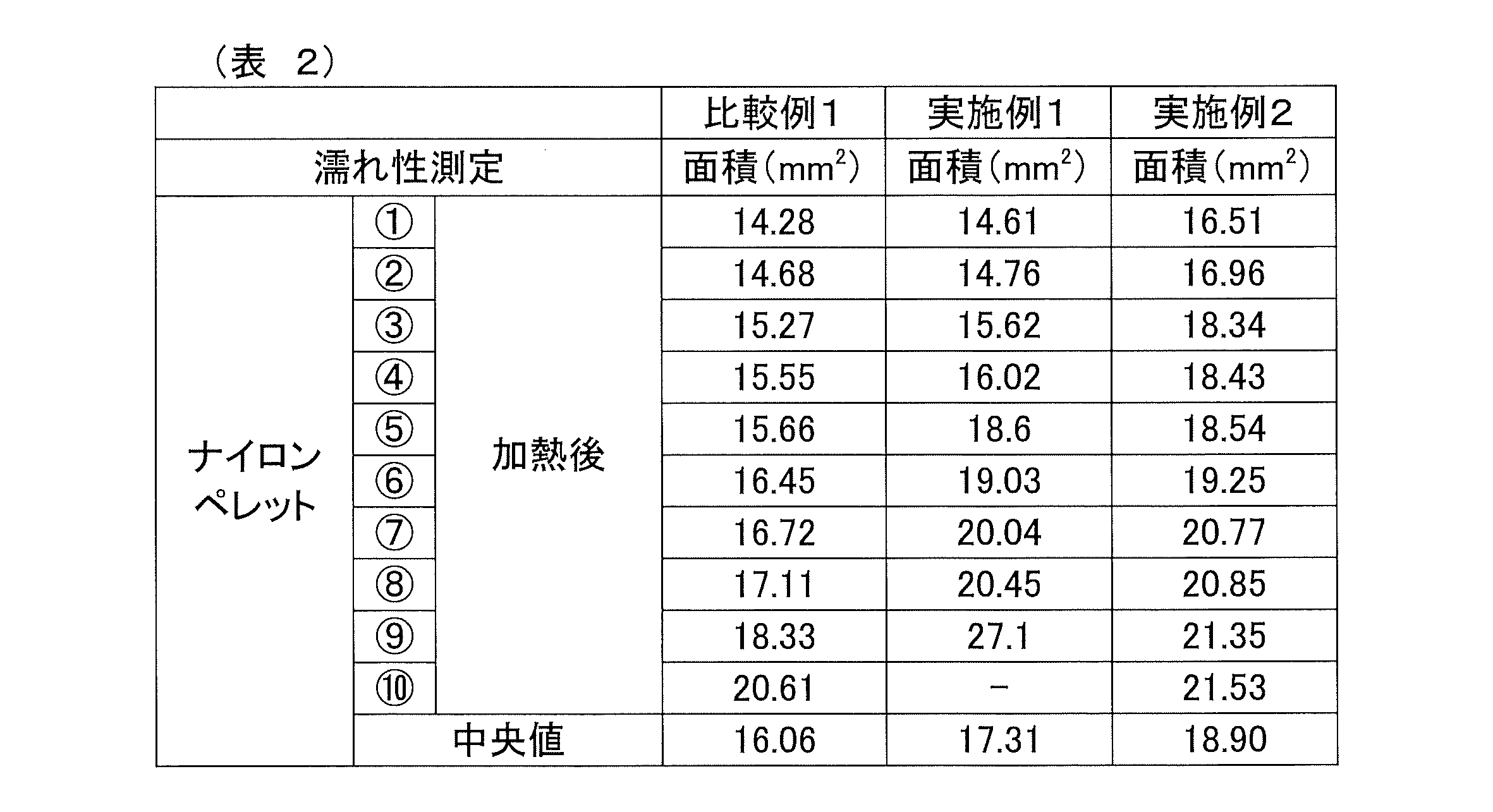
上記で説明した本発明のバリエーションを以下に付記する。
[1]分子内に2個以上のアミノ基を有する化合物[I]、及び化合物[I]の塩からなる群より選択される化合物であって、
化合物[I]が、分子内に2個以上の脂環式エポキシ基を有するエポキシ化合物(A)と、分子内に2個以上のアミノ基を有するアミン化合物(B)との付加物であり、
エポキシ化合物(A)が、下記式(a)で表される化合物を含み、
アミン化合物(B)が、下記式(b-I)で表される化合物から選ばれる少なくとも1種(以下、「アミン化合物(BI)」と称する場合がある)、及び下記式(b-II)で表される化合物から選ばれる少なくとも1種(以下、「アミン化合物(BII)」と称する場合がある)を含み、
両末端にアミノ基を有する化合物であることを特徴とするエポキシ-アミン付加物。

[式中、Xは単結合、又は1以上の原子を有する二価の基を示す。]

[式中、R1aは、下記(a)及び(b)からなる群より選択される二価の基を示す。
(a)二価の直鎖又は分岐鎖状の脂肪族炭化水素の2以上がヘテロ原子を含む連結基を介して結合した二価の基
(b)二価の直鎖又は分岐鎖状の脂肪族炭化水素基と二価の環状の脂肪族炭化水素基とが直接結合した二価の基]

[式中、R1bは、下記(c)~(g)からなる群より選択される二価の基を示す。
(c)炭素数6~12の芳香族炭化水素から水素原子を2個除いてなる二価の基
(d)炭素数6~12の芳香族炭化水素から水素原子を2個除いてなる二価の基と二価の直鎖又は分岐鎖状の脂肪族炭化水素基とが直接結合した二価の基
(e)窒素原子、硫黄原子及び酸素原子からなる群より選択されるヘテロ原子を環内に1又は2個有する芳香族複素環から水素原子を2個除いてなる二価の基
(f)窒素原子、硫黄原子及び酸素原子からなる群より選択されるヘテロ原子を環内に1又は2個有する芳香族複素環から水素原子を2個除いてなる二価の基と二価の直鎖又は分岐鎖状の脂肪族炭化水素基とが直接結合した二価の基
(g)炭素数6~12の芳香族炭化水素の2以上が連結基を介して結合した基から水素原子を2個除いてなる二価の基]
[2]前記式(a)で表される化合物が、下記式(a-1)~(a-10)で表される化合物、2,2-ビス(3,4-エポキシシクロヘキシル)プロパン(=2,2-ビス(3,4-エポキシシクロヘキサン-1-イル)プロパン)、1,2-ビス(3,4-エポキシシクロヘキシル)エタン(=1,2-ビス(3,4-エポキシシクロヘキサン-1-イル)エタン)、2,3-ビス(3,4-エポキシシクロヘキシル)オキシラン(=1,2-エポキシ-1,2-ビス(3,4-エポキシシクロヘキサン-1-イル)エタン)、及びビス(3,4-エポキシシクロヘキシルメチル)エーテルからなる群から選択される少なくとも1種である、前記[1]に記載のエポキシ-アミン付加物。
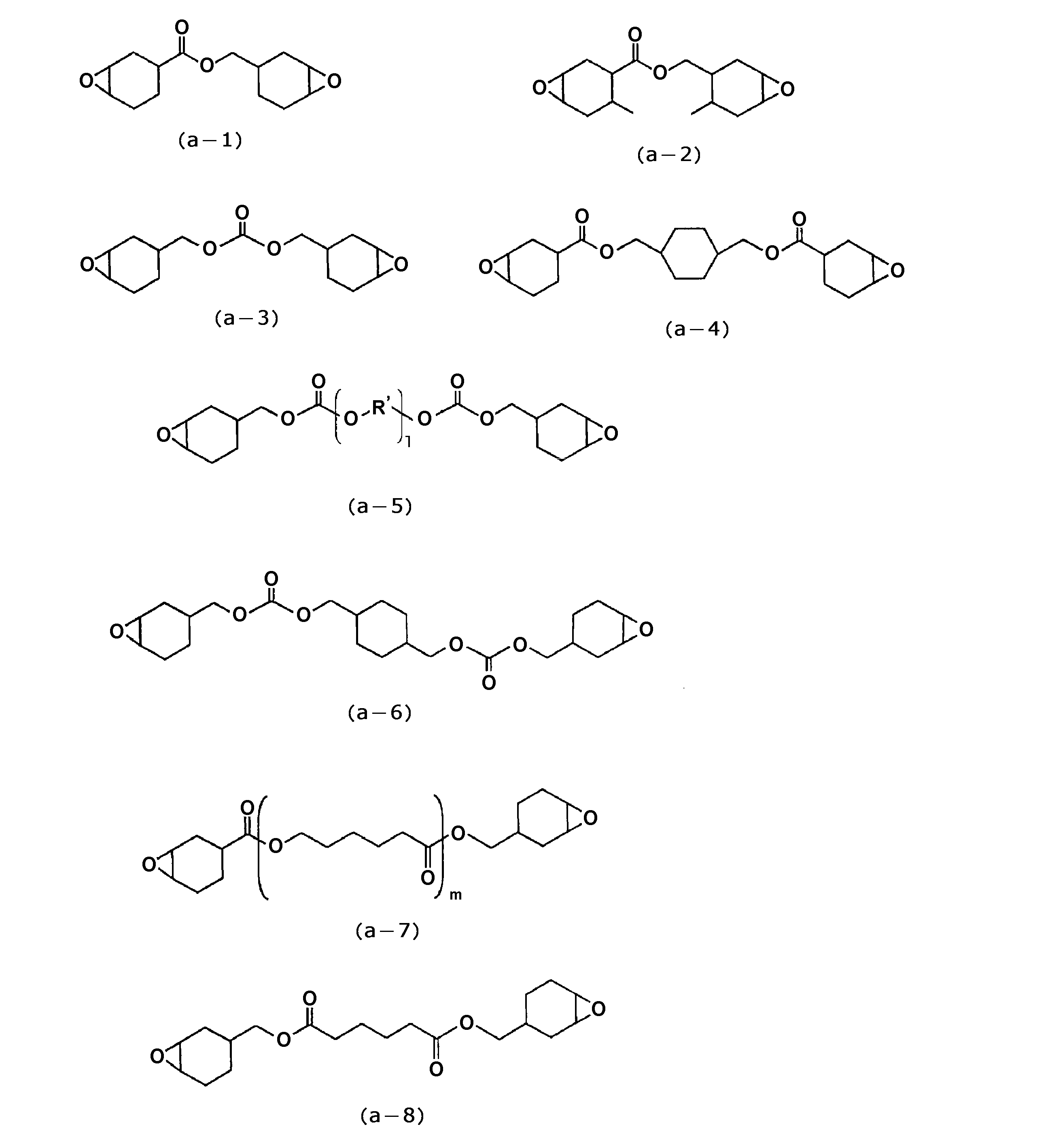

[式(a-5)、(a-7)中のl、mは、それぞれ1~30の整数を表す。式(a-5)中のR’は炭素数1~8のアルキレン基を示す。式(a-9)、(a-10)中のn1~n6は、それぞれ1~30の整数を示す。]
[3]前記エポキシ化合物(A)が、前記式(a-1)で表される化合物[3,4-エポキシシクロヘキシルメチル(3,4-エポキシ)シクロヘキサンカルボキシレート]である、前記[1]又は[2]に記載のエポキシ-アミン付加物。
[1]分子内に2個以上のアミノ基を有する化合物[I]、及び化合物[I]の塩からなる群より選択される化合物であって、
化合物[I]が、分子内に2個以上の脂環式エポキシ基を有するエポキシ化合物(A)と、分子内に2個以上のアミノ基を有するアミン化合物(B)との付加物であり、
エポキシ化合物(A)が、下記式(a)で表される化合物を含み、
アミン化合物(B)が、下記式(b-I)で表される化合物から選ばれる少なくとも1種(以下、「アミン化合物(BI)」と称する場合がある)、及び下記式(b-II)で表される化合物から選ばれる少なくとも1種(以下、「アミン化合物(BII)」と称する場合がある)を含み、
両末端にアミノ基を有する化合物であることを特徴とするエポキシ-アミン付加物。
(a)二価の直鎖又は分岐鎖状の脂肪族炭化水素の2以上がヘテロ原子を含む連結基を介して結合した二価の基
(b)二価の直鎖又は分岐鎖状の脂肪族炭化水素基と二価の環状の脂肪族炭化水素基とが直接結合した二価の基]
(c)炭素数6~12の芳香族炭化水素から水素原子を2個除いてなる二価の基
(d)炭素数6~12の芳香族炭化水素から水素原子を2個除いてなる二価の基と二価の直鎖又は分岐鎖状の脂肪族炭化水素基とが直接結合した二価の基
(e)窒素原子、硫黄原子及び酸素原子からなる群より選択されるヘテロ原子を環内に1又は2個有する芳香族複素環から水素原子を2個除いてなる二価の基
(f)窒素原子、硫黄原子及び酸素原子からなる群より選択されるヘテロ原子を環内に1又は2個有する芳香族複素環から水素原子を2個除いてなる二価の基と二価の直鎖又は分岐鎖状の脂肪族炭化水素基とが直接結合した二価の基
(g)炭素数6~12の芳香族炭化水素の2以上が連結基を介して結合した基から水素原子を2個除いてなる二価の基]
[2]前記式(a)で表される化合物が、下記式(a-1)~(a-10)で表される化合物、2,2-ビス(3,4-エポキシシクロヘキシル)プロパン(=2,2-ビス(3,4-エポキシシクロヘキサン-1-イル)プロパン)、1,2-ビス(3,4-エポキシシクロヘキシル)エタン(=1,2-ビス(3,4-エポキシシクロヘキサン-1-イル)エタン)、2,3-ビス(3,4-エポキシシクロヘキシル)オキシラン(=1,2-エポキシ-1,2-ビス(3,4-エポキシシクロヘキサン-1-イル)エタン)、及びビス(3,4-エポキシシクロヘキシルメチル)エーテルからなる群から選択される少なくとも1種である、前記[1]に記載のエポキシ-アミン付加物。
[3]前記エポキシ化合物(A)が、前記式(a-1)で表される化合物[3,4-エポキシシクロヘキシルメチル(3,4-エポキシ)シクロヘキサンカルボキシレート]である、前記[1]又は[2]に記載のエポキシ-アミン付加物。
[4]前記アミン化合物(B)におけるアミン化合物(BI)とアミン化合物(BII)の割合(アミン化合物(BI)/アミン化合物(BII)の重量比)が、1.5~4.0(g/g)(好ましくは1.7~3.0(g/g))である、前記[1]~[3]のいずれか1つに記載のエポキシ-アミン付加物。
[5]前記アミン化合物(B)の分子量が、80~10000(好ましくは100~5000、より好ましくは200~1000)である、前記[1]~[4]のいずれか1つに記載のエポキシ-アミン付加物。
[6]前記R1aが、(a)の二価の基(好ましくは、炭素数2~6の直鎖又は分岐鎖状アルキレン基(特に、エチレン基、トリメチレン基、プロピレン基)の2以上が、-NH-又は-O-を介して結合した二価の基)である、前記[1]~[5]のいずれか1つに記載のエポキシ-アミン付加物。
[7]前記R1bが、(d)の二価の基、(e)の二価の基、及び(g)の二価の基からなる群から選択される少なくとも1種である、前記[1]~[6]のいずれか1つに記載のエポキシ-アミン付加物。
[8]前記R1bが、炭素数6~10の芳香族炭化水素から水素原子を2個除いてなる二価の基(好ましくは、フェニレン基)と炭素数1~4のアルキレン基(好ましくは、メチレン基)が直接結合した二価の基(好ましくは、キシレン基);芳香族複素環(好ましくは、ピリジン環)から水素原子を2個除いてなる二価の基;及び2個の炭素数6~10の芳香族炭化水素(好ましくは、ベンゼン環)が連結基(好ましくは、-SO2-等)を介して結合した基から水素原子を2個除いてなる二価の基からなる群から選択される少なくとも1種である、前記[1]~[7]のいずれか1つに記載のエポキシ-アミン付加物。
[5]前記アミン化合物(B)の分子量が、80~10000(好ましくは100~5000、より好ましくは200~1000)である、前記[1]~[4]のいずれか1つに記載のエポキシ-アミン付加物。
[6]前記R1aが、(a)の二価の基(好ましくは、炭素数2~6の直鎖又は分岐鎖状アルキレン基(特に、エチレン基、トリメチレン基、プロピレン基)の2以上が、-NH-又は-O-を介して結合した二価の基)である、前記[1]~[5]のいずれか1つに記載のエポキシ-アミン付加物。
[7]前記R1bが、(d)の二価の基、(e)の二価の基、及び(g)の二価の基からなる群から選択される少なくとも1種である、前記[1]~[6]のいずれか1つに記載のエポキシ-アミン付加物。
[8]前記R1bが、炭素数6~10の芳香族炭化水素から水素原子を2個除いてなる二価の基(好ましくは、フェニレン基)と炭素数1~4のアルキレン基(好ましくは、メチレン基)が直接結合した二価の基(好ましくは、キシレン基);芳香族複素環(好ましくは、ピリジン環)から水素原子を2個除いてなる二価の基;及び2個の炭素数6~10の芳香族炭化水素(好ましくは、ベンゼン環)が連結基(好ましくは、-SO2-等)を介して結合した基から水素原子を2個除いてなる二価の基からなる群から選択される少なくとも1種である、前記[1]~[7]のいずれか1つに記載のエポキシ-アミン付加物。
[9]前記アミン化合物(BI)が、下記式(b-1)で表される化合物(以下、「アミン化合物(B1)」と称する場合がある)、下記式(b-2)で表される化合物(以下、「アミン化合物(B2)」と称する場合がある)、及び下記式(b-3)で表される化合物(「アミン化合物(B3)」と称する場合がある)からなる群から選ばれる少なくとも1種である、前記[1]~[8]のいずれか1つに記載のエポキシ-アミン付加物。

[式中、R2及びR3は、同一又は異なって、二価の直鎖又は分岐鎖状の脂肪族炭化水素を示す。qは、1以上の整数を示す。]

[式中、R4及びR5は、同一又は異なって、二価の直鎖又は分岐鎖状の脂肪族炭化水素を示す。rは、1以上の整数を示す。]

[式中、R6及びR8は、同一又は異なって、炭素数1~4のアルキレン基を示す。sは、0又は1を示す。R7は、一価の有機基、酸素原子含有基、硫黄原子含有基、窒素原子含有基、又はハロゲン原子を示す。tは、0~10の整数を示す。]
[10]前記アミン化合物(BI)が、前記アミン化合物(B1)、及び前記アミン化合物(B3)からなる群から選択される少なくとも1種(好ましくは前記アミン化合物(B1))である、前記[9]に記載のエポキシ-アミン付加物。
[10]前記アミン化合物(BI)が、前記アミン化合物(B1)、及び前記アミン化合物(B3)からなる群から選択される少なくとも1種(好ましくは前記アミン化合物(B1))である、前記[9]に記載のエポキシ-アミン付加物。
[11]前記アミン化合物(BII)が、下記式(b-5)で表される化合物(以下、「アミン化合物(B5)」と称する場合がある)、下記式(b-6)で表される化合物(以下、「アミン化合物(B6)」と称する場合がある)、及び下記式(b-7)で表される化合物(以下、「アミン化合物(B7)」と称する場合がある)からなる群から選ばれる少なくとも1種である、前記[1]~[10]のいずれか1つに記載のエポキシ-アミン付加物。
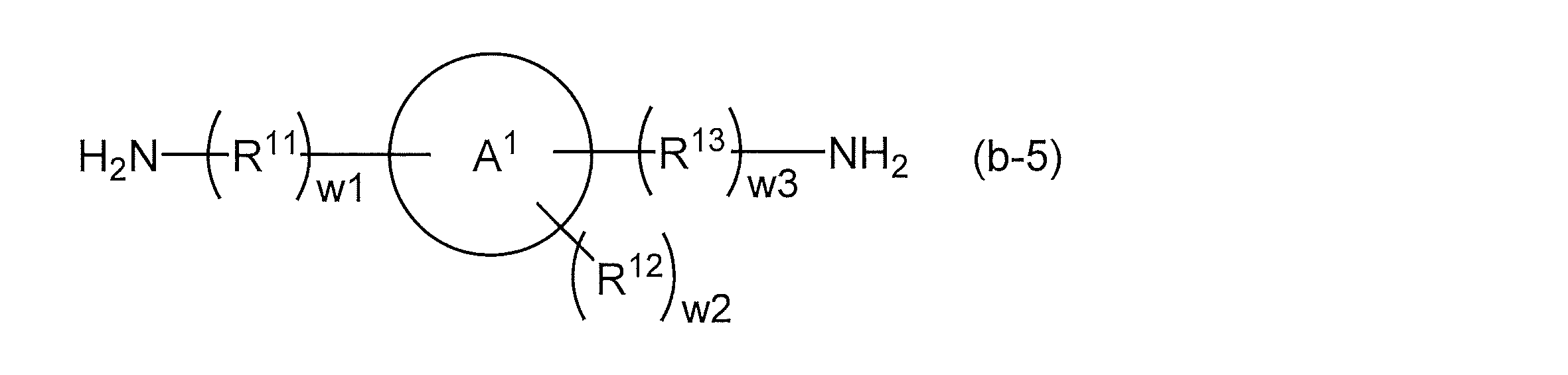
[式中、A1は、炭素数6~12の芳香族炭化水素を示す。R11及びR13は、同一又は異なって、炭素数1~4のアルキレン基を示す。R12は、一価の有機基、酸素原子含有基、硫黄原子含有基、窒素原子含有基、又はハロゲン原子を示す。w1及びw3は、同一又は異なって、0又は1を示す。w2は、0~4の整数を示す。]

[式中、B1は、窒素原子、硫黄原子及び酸素原子からなる群より選択されるヘテロ原子を環内に1又は2個有する芳香族複素環を示す。R14及びR16は、同一又は異なって、炭素数1~4のアルキレン基を示す。R15は、一価の有機基、酸素原子含有基、硫黄原子含有基、窒素原子含有基、又はハロゲン原子を示す。x1及びx3は、同一又は異なって、0又は1を示す。x2は、0~4の整数を示す。]

[式中、A2及びA3は、同一又は異なって、炭素数6~12の芳香族炭化水素を示す。Y1は、連結基を示す。R17及びR18は、同一又は異なって、一価の有機基、酸素原子含有基、硫黄原子含有基、窒素原子含有基、又はハロゲン原子を示す。y1及びy2は、同一又は異なって、0~4の整数を示す。]
[12]前記アミン化合物(BII)が、前記アミン化合物(B7)である、前記[11]に記載のエポキシ-アミン付加物。
[12]前記アミン化合物(BII)が、前記アミン化合物(B7)である、前記[11]に記載のエポキシ-アミン付加物。
[13]前記分子内に2個以上のアミノ基を有する化合物[I]が、下記(I)で表される分子内に2個以上のアミノ基を有する化合物である、前記[1]~[12]のいずれか1つに記載のエポキシ-アミン付加物。

[式中、R1'は、式中に示される窒素原子との結合部位に炭素原子を有する二価の有機基であって、少なくとも1つは、下記(a)及び(b)からなる群より選択される少なくとも1つの二価の基(以下、「第1の二価の基」と称する場合がある)であり、少なくとも他の1つは、下記(c)~(g)からなる群より選択される少なくとも1つの二価の基(以下、「第2の二価の基」と称する場合がある)を示す。Xは単結合、又は1以上の原子を有する二価の基を示す。zは1以上の整数を示す。
(a)二価の直鎖又は分岐鎖状の脂肪族炭化水素の2以上がヘテロ原子を含む連結基を介して結合した二価の基
(b)二価の直鎖又は分岐鎖状の脂肪族炭化水素基と二価の環状の脂肪族炭化水素基とが直接結合した二価の基
(c)炭素数6~12の芳香族炭化水素から水素原子を2個除いてなる二価の基
(d)炭素数6~12の芳香族炭化水素から水素原子を2個除いてなる二価の基と二価の直鎖又は分岐鎖状の脂肪族炭化水素基とが直接結合した二価の基
(e)窒素原子、硫黄原子及び酸素原子からなる群より選択されるヘテロ原子を環内に1又は2個有する芳香族複素環から水素原子を2個除いてなる二価の基
(f)窒素原子、硫黄原子及び酸素原子からなる群より選択されるヘテロ原子を環内に1又は2個有する芳香族複素環から水素原子を2個除いてなる二価の基と二価の直鎖又は分岐鎖状の脂肪族炭化水素基とが直接結合した二価の基
(g)炭素数6~12の芳香族炭化水素の2以上が連結基を介して結合した基から水素原子を2個除いてなる二価の基]
[14]前記R1'の第1の二価の基が、(a)の二価の基(好ましくは、炭素数2~6の直鎖又は分岐鎖状アルキレン基(特に、エチレン基、トリメチレン基、プロピレン基)の2以上が、-NH-又は-O-を介して結合した二価の基)である、前記[13]に記載のエポキシ-アミン付加物。
[15]前記R1'の第2の二価の基が、(d)の二価の基、(e)の二価の基、及び(g)の二価の基からなる群から選択される少なくとも1種である、前記[13]又は[14]に記載のエポキシ-アミン付加物。
[16]前記R1'の第2の二価の基が、炭素数6~10の芳香族炭化水素から水素原子を2個除いてなる二価の基(好ましくは、フェニレン基)と炭素数1~4のアルキレン基(好ましくは、メチレン基)が直接結合した二価の基(好ましくは、キシレン基);芳香族複素環(好ましくは、ピリジン環)から水素原子を2個除いてなる二価の基;及び2個の炭素数6~10の芳香族炭化水素(好ましくは、ベンゼン環)が連結基(好ましくは、-SO2-等)を介して結合した基から水素原子を2個除いてなる二価の基からなる群から選択される少なくとも1種である、前記[13]~[15]のいずれか1つに記載のエポキシ-アミン付加物。
(a)二価の直鎖又は分岐鎖状の脂肪族炭化水素の2以上がヘテロ原子を含む連結基を介して結合した二価の基
(b)二価の直鎖又は分岐鎖状の脂肪族炭化水素基と二価の環状の脂肪族炭化水素基とが直接結合した二価の基
(c)炭素数6~12の芳香族炭化水素から水素原子を2個除いてなる二価の基
(d)炭素数6~12の芳香族炭化水素から水素原子を2個除いてなる二価の基と二価の直鎖又は分岐鎖状の脂肪族炭化水素基とが直接結合した二価の基
(e)窒素原子、硫黄原子及び酸素原子からなる群より選択されるヘテロ原子を環内に1又は2個有する芳香族複素環から水素原子を2個除いてなる二価の基
(f)窒素原子、硫黄原子及び酸素原子からなる群より選択されるヘテロ原子を環内に1又は2個有する芳香族複素環から水素原子を2個除いてなる二価の基と二価の直鎖又は分岐鎖状の脂肪族炭化水素基とが直接結合した二価の基
(g)炭素数6~12の芳香族炭化水素の2以上が連結基を介して結合した基から水素原子を2個除いてなる二価の基]
[14]前記R1'の第1の二価の基が、(a)の二価の基(好ましくは、炭素数2~6の直鎖又は分岐鎖状アルキレン基(特に、エチレン基、トリメチレン基、プロピレン基)の2以上が、-NH-又は-O-を介して結合した二価の基)である、前記[13]に記載のエポキシ-アミン付加物。
[15]前記R1'の第2の二価の基が、(d)の二価の基、(e)の二価の基、及び(g)の二価の基からなる群から選択される少なくとも1種である、前記[13]又は[14]に記載のエポキシ-アミン付加物。
[16]前記R1'の第2の二価の基が、炭素数6~10の芳香族炭化水素から水素原子を2個除いてなる二価の基(好ましくは、フェニレン基)と炭素数1~4のアルキレン基(好ましくは、メチレン基)が直接結合した二価の基(好ましくは、キシレン基);芳香族複素環(好ましくは、ピリジン環)から水素原子を2個除いてなる二価の基;及び2個の炭素数6~10の芳香族炭化水素(好ましくは、ベンゼン環)が連結基(好ましくは、-SO2-等)を介して結合した基から水素原子を2個除いてなる二価の基からなる群から選択される少なくとも1種である、前記[13]~[15]のいずれか1つに記載のエポキシ-アミン付加物。
[17]前記(a)の二価の基が下記式(II)で表される二価の基又は下記式(III)で表される二価の基であり、前記(b)の二価の基が下記式(IV)で表される二価の基である、前記[13]~[16]のいずれか1つに記載のエポキシ-アミン付加物。

[式中、R2及びR3は、同一又は異なって、二価の直鎖又は分岐鎖状の脂肪族炭化水素を示す。qは1以上の整数を示す。]

[式中、R4及びR5は、同一又は異なって、二価の直鎖又は分岐鎖状の脂肪族炭化水素を示す。rは1以上の整数を示す。]
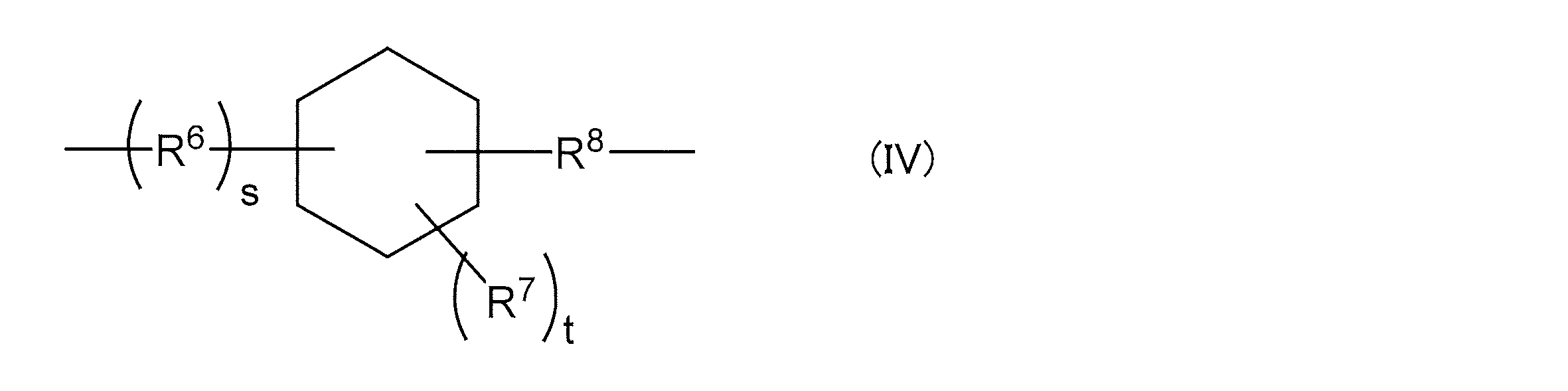
[式中、R6及びR8は、同一又は異なって、炭素数1~4のアルキレン基を示す。sは、0又は1を示す。R7は、一価の有機基、酸素原子含有基、硫黄原子含有基、窒素原子含有基、又はハロゲン原子を示す。tは0~10の整数を示す。]
[18]前記(c)の二価の基又は前記(d)の二価の基が下記式(V)で表される二価の基であり、前記(e)の二価の基又は前記(f)の二価の基が下記式(VI)で表される二価の基であり、前記(g)の二価の基が下記式(VII)で表される二価の基である、前記[13]~[17]のいずれか1つに記載のエポキシ-アミン付加物。
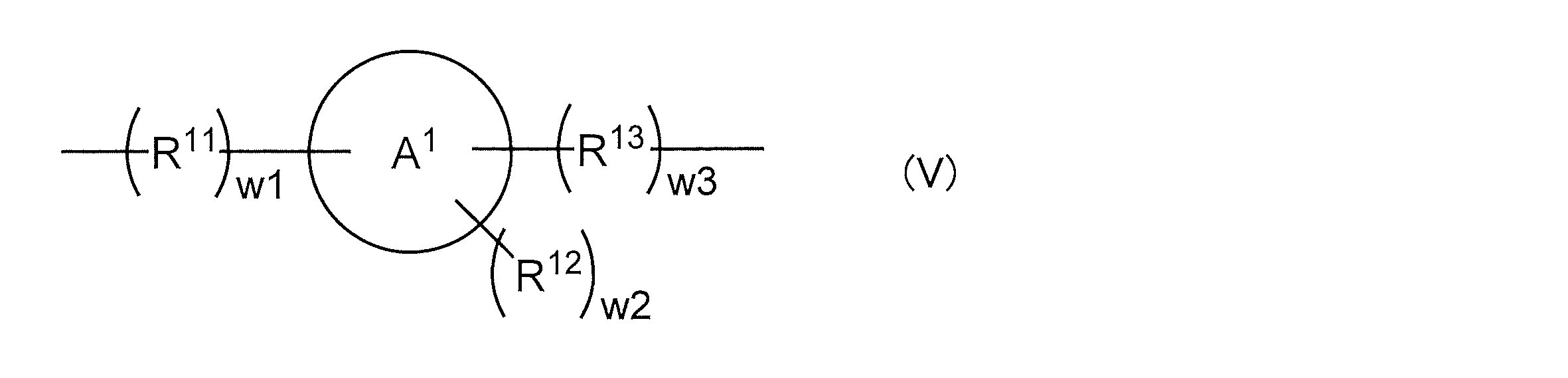
[式中、A1は、炭素数6~12の芳香族炭化水素を示す。R11及びR13は、同一又は異なって、炭素数1~4のアルキレン基を示す。R12は、一価の有機基、酸素原子含有基、硫黄原子含有基、窒素原子含有基、又はハロゲン原子を示す。w1及びw3は、同一又は異なって、0又は1を示す。w2は、0~4の整数を示す。]
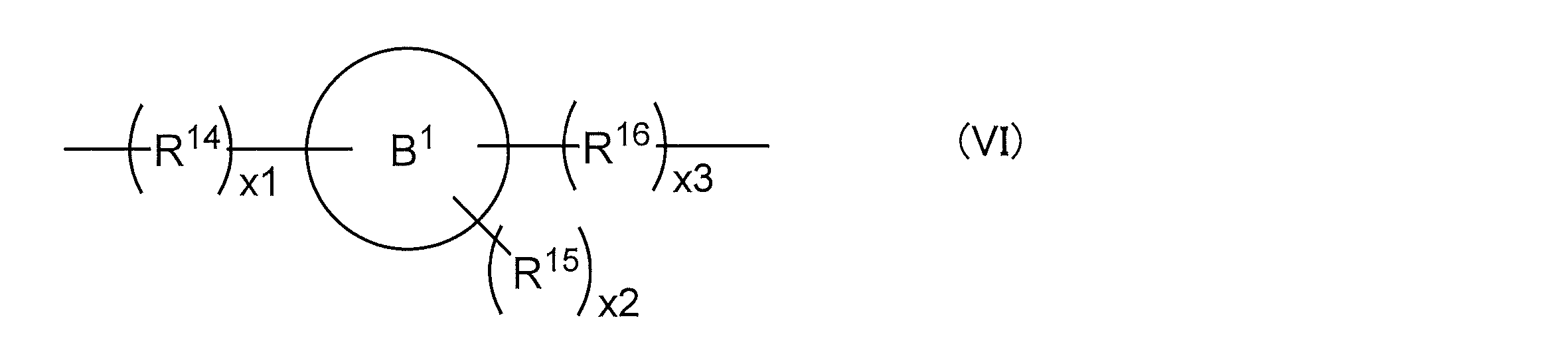
[式中、B1は、窒素原子、硫黄原子及び酸素原子からなる群より選択されるヘテロ原子を環内に1又は2個有する芳香族複素環を示す。R14及びR16は、同一又は異なって、炭素数1~4のアルキレン基を示す。R15は、一価の有機基、酸素原子含有基、硫黄原子含有基、窒素原子含有基、又はハロゲン原子を示す。x1及びx3は、同一又は異なって、0又は1を示す。x2は、0~4の整数を示す。]

[式中、A2及びA3は、同一又は異なって、炭素数6~12の芳香族炭化水素を示す。Y1は、連結基の基を示す。R17及びR18は、同一又は異なって、一価の有機基、酸素原子含有基、硫黄原子含有基、窒素原子含有基、又はハロゲン原子を示す。y1及びy2は、同一又は異なって、0~4の整数を示す。]
[19]前記R1'の第1の二価の基が、前記式(II)で表される二価の基、及び前記式(IV)で表される二価の基からなる群から選択される少なくとも1種である(好ましくは式(II)で表される二価の基)である、前記[13]~[18]のいずれか1つに記載のエポキシ-アミン付加物。
[20]前記R1'の第2の二価の基が、前記式(VII)で表される二価の基である、前記[13]~[19]のいずれか1つに記載のエポキシ-アミン付加物。
[21]前記R1'の第1の二価の基と第2の二価の基の割合(第1の二価の基/第2の二価の基の重量比)が、1.5~4.0(g/g)(好ましくは1.7~3.0(g/g))である、前記[13]~[20]のいずれか1つに記載のエポキシ-アミン付加物。
[18]前記(c)の二価の基又は前記(d)の二価の基が下記式(V)で表される二価の基であり、前記(e)の二価の基又は前記(f)の二価の基が下記式(VI)で表される二価の基であり、前記(g)の二価の基が下記式(VII)で表される二価の基である、前記[13]~[17]のいずれか1つに記載のエポキシ-アミン付加物。
[19]前記R1'の第1の二価の基が、前記式(II)で表される二価の基、及び前記式(IV)で表される二価の基からなる群から選択される少なくとも1種である(好ましくは式(II)で表される二価の基)である、前記[13]~[18]のいずれか1つに記載のエポキシ-アミン付加物。
[20]前記R1'の第2の二価の基が、前記式(VII)で表される二価の基である、前記[13]~[19]のいずれか1つに記載のエポキシ-アミン付加物。
[21]前記R1'の第1の二価の基と第2の二価の基の割合(第1の二価の基/第2の二価の基の重量比)が、1.5~4.0(g/g)(好ましくは1.7~3.0(g/g))である、前記[13]~[20]のいずれか1つに記載のエポキシ-アミン付加物。
[22]前記化合物[I]の数平均分子量が、200~40000(好ましくは300~30000、より好ましくは400~20000)である、前記[1]~[21]のいずれか1つに記載のエポキシ-アミン付加物。
[23]前記化合物[I]のガラス転移温度(Tg)が、-50~200℃(好ましくは-40~190℃、より好ましくは-30~180℃、特に好ましくは20~180℃)である、前記[1]~[22]のいずれか1つに記載のエポキシ-アミン付加物。
[24]前記化合物[I]の5%重量減少温度(Td5)が、280℃以上(好ましくは300℃以上)である、前記[1]~[23]のいずれか1つに記載のエポキシ-アミン付加物。
[23]前記化合物[I]のガラス転移温度(Tg)が、-50~200℃(好ましくは-40~190℃、より好ましくは-30~180℃、特に好ましくは20~180℃)である、前記[1]~[22]のいずれか1つに記載のエポキシ-アミン付加物。
[24]前記化合物[I]の5%重量減少温度(Td5)が、280℃以上(好ましくは300℃以上)である、前記[1]~[23]のいずれか1つに記載のエポキシ-アミン付加物。
[25]前記分子内に2個以上のアミノ基を有する化合物[I]の塩であって、化合物[I]と酸[II]との塩である、前記[1]~[24]のいずれか1つに記載のエポキシ-アミン付加物。
[26]炭酸塩又は有機酸塩(好ましくは炭酸塩、酢酸塩、特に好ましくは炭酸塩)である、前記[25]に記載のエポキシ-アミン付加物。
[26]炭酸塩又は有機酸塩(好ましくは炭酸塩、酢酸塩、特に好ましくは炭酸塩)である、前記[25]に記載のエポキシ-アミン付加物。
[27]前記[1]~[26]のいずれか1つに記載のエポキシ-アミン付加物と、熱可塑性樹脂とを含む熱可塑性樹脂組成物。
[28]前記熱可塑性樹脂が、ポリオレフィン(例えば、ポリエチレン、ポリプロピレン、ポリブタジエン等)、ビニル系重合体(例えば、アクリル樹脂、ポリスチレン等)、ポリアミド(例えば、ナイロン6、ナイロン66、ナイロン11、ナイロン12、ナイロン610、ナイロン612、ナイロン61、ナイロン6T、ナイロン9T等)、ポリエステル(例えば、ポリエチレンテレフタレート、ポリブチレンテレフタレート)、ポリ塩化ビニル、ポリ塩化ビニリデン、ポリカーボネート、ポリアセタール、ポリフェニレンオキサイド、ポリフェニレンサルファイド、ポリエーテルスルホン、及びポリエーテルエーテルケトンからなる群から選択される少なくとも1種である、前記[27]に記載の熱可塑性樹脂組成物。
[29]前記熱可塑性樹脂の含有量(配合量)が、前記熱可塑性樹脂組成物の全量(100重量%)に対して、0.1~99.9重量%(好ましくは1~99重量%、より好ましくは2~98重量%)である、前記[27]又は[28]に記載の熱可塑性樹脂組成物。
[30]前記エポキシ-アミン付加物の含有量(配合量)が、前記熱可塑性樹脂100重量部に対して、0.1~200重量部(好ましくは1~100重量部、より好ましくは2~50重量部)である、前記[27]~[29]のいずれか1つに記載の熱可塑性樹脂組成物。
[31]繊維強化複合材料用樹脂組成物である、前記[27]~[30]のいずれか1つに記載の熱可塑性樹脂組成物。
[32]前記[1]~[26]のいずれか1つに記載のエポキシ-アミン付加物を含む水性塗料。
[33]前記[1]~[26]のいずれか1つに記載のエポキシ-アミン付加物を含む水溶液。
[34]前記[1]~[26]のいずれか1つに記載のエポキシ-アミン付加物と、ウレタン樹脂とを含む水分散型樹脂組成物。
[35]さらに、界面活性剤を含む、前記[34]に記載の水分散型樹脂組成物。
[36]前記界面活性剤が、アニオン系界面活性剤及び非イオン系界面活性剤からなる群より選択される少なくとも一種の界面活性剤である、前記[35]に記載の水分散型樹脂組成物。
[33]前記[1]~[26]のいずれか1つに記載のエポキシ-アミン付加物を含む水溶液。
[34]前記[1]~[26]のいずれか1つに記載のエポキシ-アミン付加物と、ウレタン樹脂とを含む水分散型樹脂組成物。
[35]さらに、界面活性剤を含む、前記[34]に記載の水分散型樹脂組成物。
[36]前記界面活性剤が、アニオン系界面活性剤及び非イオン系界面活性剤からなる群より選択される少なくとも一種の界面活性剤である、前記[35]に記載の水分散型樹脂組成物。
[37]前記[1]~[26]のいずれか1つに記載のエポキシ-アミン付加物を含む水分散液と、ウレタン樹脂エマルションとを混合することを特徴とする水分散型樹脂組成物の製造方法。
[38]前記エポキシ-アミン付加物を含む水分散液が界面活性剤を含有している、前記[37]に記載の水分散型樹脂組成物の製造方法。
[39]前記界面活性剤が、アニオン系界面活性剤及び非イオン系界面活性剤からなる群より選択される少なくとも一種の界面活性剤である、前記[38]に記載の水分散型樹脂組成物の製造方法。
[38]前記エポキシ-アミン付加物を含む水分散液が界面活性剤を含有している、前記[37]に記載の水分散型樹脂組成物の製造方法。
[39]前記界面活性剤が、アニオン系界面活性剤及び非イオン系界面活性剤からなる群より選択される少なくとも一種の界面活性剤である、前記[38]に記載の水分散型樹脂組成物の製造方法。
[40]前記[1]~[26]のいずれか1つに記載のエポキシ-アミン付加物を含む炭素繊維用サイジング剤。
[41]前記[40]に記載の炭素繊維用サイジング剤を含む水性塗料。
[42]前記[40]に記載の炭素繊維用サイジング剤を含む水溶液。
[43]前記[40]に記載の炭素繊維用サイジング剤と、ウレタン樹脂とを含む水分散型樹脂組成物。
[44]さらに、界面活性剤を含む、前記[43]に記載の水分散型樹脂組成物。
[45]前記界面活性剤が、アニオン系界面活性剤及び非イオン系界面活性剤からなる群より選択される少なくとも一種の界面活性剤である、前記[44]に記載の水分散型樹脂組成物。
[46]前記エポキシ-アミン付加物が水溶性である、前記[40]に記載炭素繊維用サイジング剤。
[47]前記[34]~[36]のいずれか1つに記載の水分散型樹脂組成物を含む炭素繊維用サイジング剤。
[48]前記[40]、[46]、及び[47]のいずれか1つに記載の炭素繊維用サイジング剤を塗布した炭素繊維用サイジング剤塗布炭素繊維。
[49]、前記[48]に記載の炭素繊維用サイジング剤塗布炭素繊維を含む繊維強化複合材料。
[50]前記[27]~[31]のいずれか1つに記載の熱可塑性樹脂組成物と炭素繊維とを含む繊維強化複合材料。
[41]前記[40]に記載の炭素繊維用サイジング剤を含む水性塗料。
[42]前記[40]に記載の炭素繊維用サイジング剤を含む水溶液。
[43]前記[40]に記載の炭素繊維用サイジング剤と、ウレタン樹脂とを含む水分散型樹脂組成物。
[44]さらに、界面活性剤を含む、前記[43]に記載の水分散型樹脂組成物。
[45]前記界面活性剤が、アニオン系界面活性剤及び非イオン系界面活性剤からなる群より選択される少なくとも一種の界面活性剤である、前記[44]に記載の水分散型樹脂組成物。
[46]前記エポキシ-アミン付加物が水溶性である、前記[40]に記載炭素繊維用サイジング剤。
[47]前記[34]~[36]のいずれか1つに記載の水分散型樹脂組成物を含む炭素繊維用サイジング剤。
[48]前記[40]、[46]、及び[47]のいずれか1つに記載の炭素繊維用サイジング剤を塗布した炭素繊維用サイジング剤塗布炭素繊維。
[49]、前記[48]に記載の炭素繊維用サイジング剤塗布炭素繊維を含む繊維強化複合材料。
[50]前記[27]~[31]のいずれか1つに記載の熱可塑性樹脂組成物と炭素繊維とを含む繊維強化複合材料。
[51]前記[1]~[26]のいずれか1つに記載のエポキシ-アミン付加物を含む炭素繊維用処理剤。
[52]前記[40]、[46]、及び[47]のいずれか1つに記載の炭素繊維用サイジング剤を塗布した炭素繊維束。
[53]前記[48]に記載の炭素繊維用サイジング剤塗布炭素繊維によるプリプレグ。
[54]前記[1]~[26]のいずれか1つに記載のエポキシ-アミン付加物と、熱可塑性樹脂と、炭素繊維とからなるプリプレグ。
[55]前記[54]に記載のプリプレグより形成される繊維強化複合材料。
[56]前記[48]に記載の炭素繊維用サイジング剤塗布炭素繊維と、熱可塑性樹脂とを含む繊維強化複合材料。
[52]前記[40]、[46]、及び[47]のいずれか1つに記載の炭素繊維用サイジング剤を塗布した炭素繊維束。
[53]前記[48]に記載の炭素繊維用サイジング剤塗布炭素繊維によるプリプレグ。
[54]前記[1]~[26]のいずれか1つに記載のエポキシ-アミン付加物と、熱可塑性樹脂と、炭素繊維とからなるプリプレグ。
[55]前記[54]に記載のプリプレグより形成される繊維強化複合材料。
[56]前記[48]に記載の炭素繊維用サイジング剤塗布炭素繊維と、熱可塑性樹脂とを含む繊維強化複合材料。
本発明のエポキシ-アミン付加物は、例えば、ポリマー系コンポジットにおける樹脂と添加材の密着性を向上させるための密着性向上剤(密着性改良剤)、被着体に対する接着性を向上させるための接着性向上剤(接着性改良剤)、異なる二以上の成分(特にポリマー)同士の溶解性を向上させるための相溶性向上剤(相溶化剤)、ポリマー系コンポジットにおける添加材の分散性を向上させるための分散性向上剤、流動性向上剤、流動性抑制剤、可塑剤、エポキシ樹脂等の架橋剤等の各種添加剤;接着剤;塗料;封止剤;サイジング剤等の各種用途に使用できる。
Claims (35)
- 分子内に2個以上のアミノ基を有する化合物[I]、及び化合物[I]の塩からなる群より選択される化合物であって、
化合物[I]が、分子内に2個以上の脂環式エポキシ基を有するエポキシ化合物(A)と、分子内に2個以上のアミノ基を有するアミン化合物(B)との付加物であり、
エポキシ化合物(A)が、下記式(a)で表される化合物を含み、
アミン化合物(B)が、下記式(b-I)で表される化合物から選ばれる少なくとも1種、及び下記式(b-II)で表される化合物から選ばれる少なくとも1種を含み、
両末端にアミノ基を有する化合物であることを特徴とするエポキシ-アミン付加物。


(a)二価の直鎖又は分岐鎖状の脂肪族炭化水素の2以上がヘテロ原子を含む連結基を介して結合した二価の基
(b)二価の直鎖又は分岐鎖状の脂肪族炭化水素基と二価の環状の脂肪族炭化水素基とが直接結合した二価の基]

(c)炭素数6~12の芳香族炭化水素から水素原子を2個除いてなる二価の基
(d)炭素数6~12の芳香族炭化水素から水素原子を2個除いてなる二価の基と二価の直鎖又は分岐鎖状の脂肪族炭化水素基とが直接結合した二価の基
(e)窒素原子、硫黄原子及び酸素原子からなる群より選択されるヘテロ原子を環内に1又は2個有する芳香族複素環から水素原子を2個除いてなる二価の基
(f)窒素原子、硫黄原子及び酸素原子からなる群より選択されるヘテロ原子を環内に1又は2個有する芳香族複素環から水素原子を2個除いてなる二価の基と二価の直鎖又は分岐鎖状の脂肪族炭化水素基とが直接結合した二価の基
(g)炭素数6~12の芳香族炭化水素の2以上が連結基を介して結合した基から水素原子を2個除いてなる二価の基] - 前記式(b-I)で表される化合物が、下記式(b-1)で表される化合物、下記式(b-2)で表される化合物、及び下記式(b-3)で表される化合物からなる群から選ばれる少なくとも1種である請求項1記載のエポキシ-アミン付加物。


- 前記式(b-II)で表される化合物が、下記式(b-5)で表される化合物、下記式(b-6)で表される化合物、及び下記式(b-7)で表される化合物からなる群から選ばれる少なくとも1種である請求項1又は2記載のエポキシ-アミン付加物。

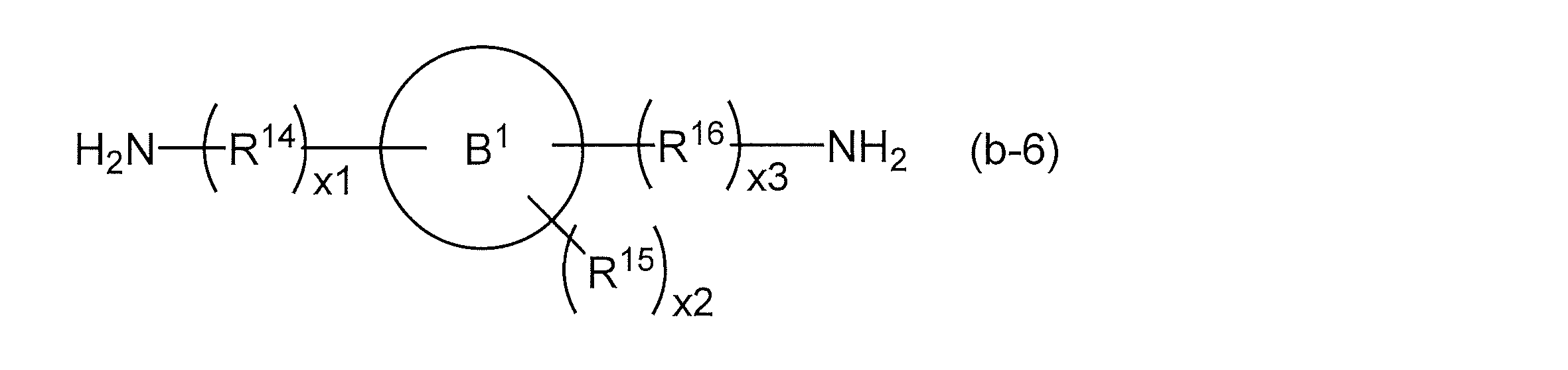

- 前記分子内に2個以上のアミノ基を有する化合物[I]が、下記(I)で表される分子内に2個以上のアミノ基を有する化合物である、請求項1記載のエポキシ-アミン付加物。
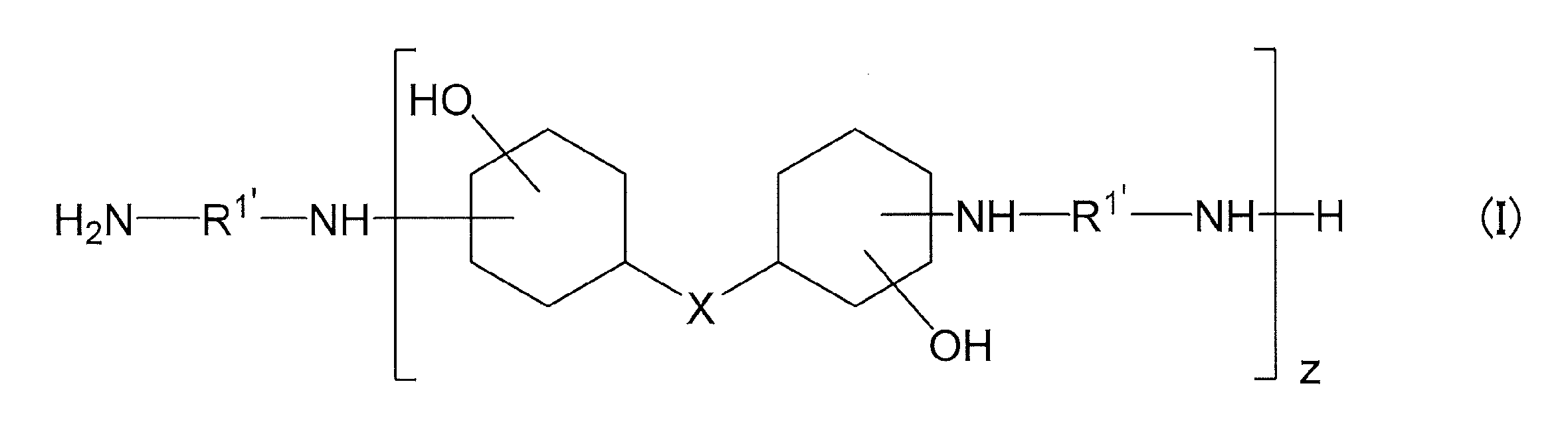
(a)二価の直鎖又は分岐鎖状の脂肪族炭化水素の2以上がヘテロ原子を含む連結基を介して結合した二価の基
(b)二価の直鎖又は分岐鎖状の脂肪族炭化水素基と二価の環状の脂肪族炭化水素基とが直接結合した二価の基
(c)炭素数6~12の芳香族炭化水素から水素原子を2個除いてなる二価の基
(d)炭素数6~12の芳香族炭化水素から水素原子を2個除いてなる二価の基と二価の直鎖又は分岐鎖状の脂肪族炭化水素基とが直接結合した二価の基
(e)窒素原子、硫黄原子及び酸素原子からなる群より選択されるヘテロ原子を環内に1又は2個有する芳香族複素環から水素原子を2個除いてなる二価の基
(f)窒素原子、硫黄原子及び酸素原子からなる群より選択されるヘテロ原子を環内に1又は2個有する芳香族複素環から水素原子を2個除いてなる二価の基と二価の直鎖又は分岐鎖状の脂肪族炭化水素基とが直接結合した二価の基
(g)炭素数6~12の芳香族炭化水素の2以上が連結基を介して結合した基から水素原子を2個除いてなる二価の基] - 前記(a)の二価の基が下記式(II)で表される二価の基又は下記式(III)で表される二価の基であり、前記(b)の二価の基が下記式(IV)で表される二価の基である請求項4に記載のエポキシ-アミン付加物。


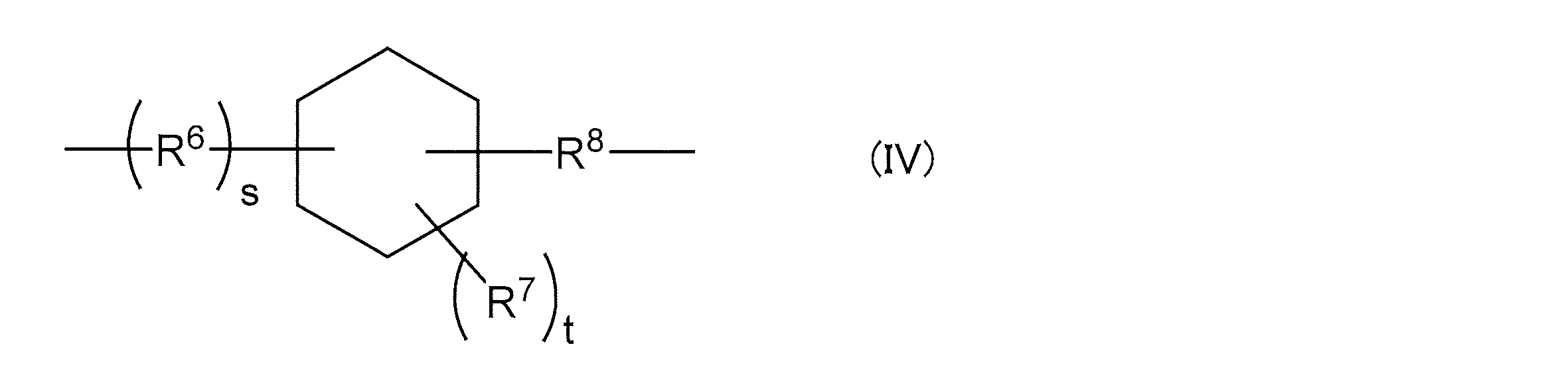
- 前記(c)の二価の基又は前記(d)の二価の基が下記式(V)で表される二価の基であり、前記(e)の二価の基又は前記(f)の二価の基が下記式(VI)で表される二価の基であり、前記(g)の二価の基が下記式(VII)で表される二価の基である請求項4又は5に記載のエポキシ-アミン付加物。
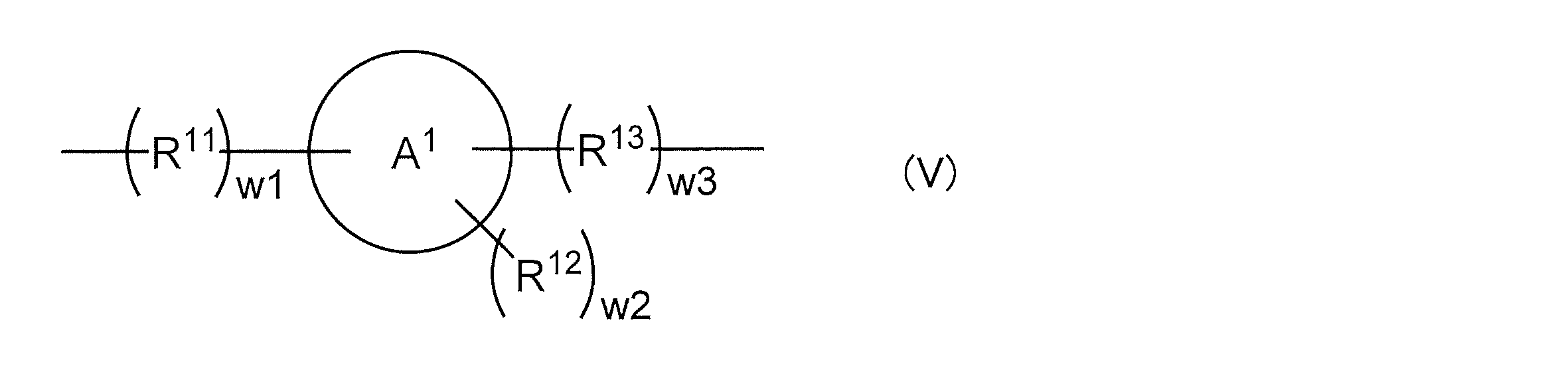
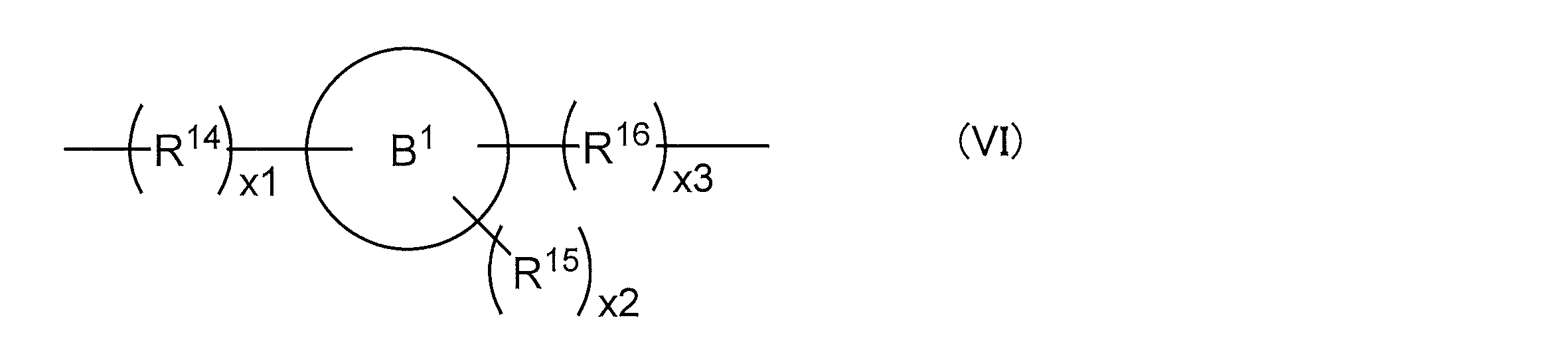

- 前記分子内に2個以上のアミノ基を有する化合物[I]の塩であって、化合物[I]と酸[II]との塩である請求項1~6のいずれか1項に記載のエポキシ-アミン付加物。
- 炭酸塩又は有機酸塩である請求項7に記載のエポキシ-アミン付加物。
- 請求項1~8のいずれか1項に記載のエポキシ-アミン付加物と、熱可塑性樹脂とを含む熱可塑性樹脂組成物。
- 繊維強化複合材料用樹脂組成物である請求項9に記載の熱可塑性樹脂組成物。
- 請求項1~8のいずれか1項に記載のエポキシ-アミン付加物を含む水性塗料。
- 請求項1~8のいずれか1項に記載のエポキシ-アミン付加物を含む水溶液。
- 請求項1~8のいずれか一項に記載のエポキシ-アミン付加物と、ウレタン樹脂とを含む水分散型樹脂組成物。
- さらに、界面活性剤を含む請求項13に記載の水分散型樹脂組成物。
- 前記界面活性剤が、アニオン系界面活性剤及び非イオン系界面活性剤からなる群より選択される少なくとも一種の界面活性剤である請求項14に記載の水分散型樹脂組成物。
- 請求項1~8のいずれか一項に記載のエポキシ-アミン付加物を含む水分散液と、ウレタン樹脂エマルションとを混合することを特徴とする水分散型樹脂組成物の製造方法。
- 前記エポキシ-アミン付加物を含む水分散液が界面活性剤を含有している請求項16に記載の水分散型樹脂組成物の製造方法。
- 前記界面活性剤が、アニオン系界面活性剤及び非イオン系界面活性剤からなる群より選択される少なくとも一種の界面活性剤である請求項17に記載の水分散型樹脂組成物の製造方法。
- 請求項1~8のいずれか一項に記載のエポキシ-アミン付加物を含む炭素繊維用サイジング剤。
- 請求項19に記載の炭素繊維用サイジング剤を含む水性塗料。
- 請求項19に記載の炭素繊維用サイジング剤を含む水溶液。
- 請求項19に記載の炭素繊維用サイジング剤と、ウレタン樹脂とを含む水分散型樹脂組成物。
- さらに、界面活性剤を含む請求項22に記載の水分散型樹脂組成物。
- 前記界面活性剤が、アニオン系界面活性剤及び非イオン系界面活性剤からなる群より選択される少なくとも一種の界面活性剤である請求項23に記載の水分散型樹脂組成物。
- エポキシ-アミン付加物が水溶性である請求項19に記載の炭素繊維用サイジング剤。
- 請求項13~15のいずれか一項に記載の水分散型樹脂組成物を含む炭素繊維用サイジング剤。
- 請求項19、25、及び26のいずれか一項に記載の炭素繊維用サイジング剤を塗布した炭素繊維用サイジング剤塗布炭素繊維。
- 請求項27に記載の炭素繊維用サイジング剤塗布炭素繊維を含む繊維強化複合材料。
- 請求項9又は10に記載の熱可塑性樹脂組成物と炭素繊維とを含む繊維強化複合材料。
- 請求項1~8のいずれか一項に記載のエポキシ-アミン付加物を含む炭素繊維用処理剤。
- 請求項19、25及び26のいずれか一項に記載の炭素繊維用サイジング剤を塗布した炭素繊維束。
- 請求項27に記載の炭素繊維用サイジング剤塗布炭素繊維によるプリプレグ。
- 請求項1~8のいずれか一項に記載のエポキシ-アミン付加物と、熱可塑性樹脂と、炭素繊維とからなるプリプレグ。
- 請求項33に記載のプリプレグより形成される繊維強化複合材料。
- 請求項27に記載の炭素繊維用サイジング剤塗布炭素繊維と、熱可塑性樹脂とを含む繊維強化複合材料。
Applications Claiming Priority (2)
| Application Number | Priority Date | Filing Date | Title |
|---|---|---|---|
| JP2017113036 | 2017-06-07 | ||
| JP2017-113036 | 2017-06-07 |
Publications (1)
| Publication Number | Publication Date |
|---|---|
| WO2018225834A1 true WO2018225834A1 (ja) | 2018-12-13 |
Family
ID=64565973
Family Applications (1)
| Application Number | Title | Priority Date | Filing Date |
|---|---|---|---|
| PCT/JP2018/021929 Ceased WO2018225834A1 (ja) | 2017-06-07 | 2018-06-07 | エポキシ-アミン付加物、熱可塑性樹脂組成物、サイジング剤、サイジング剤塗布炭素繊維、及び繊維強化複合材料 |
Country Status (2)
| Country | Link |
|---|---|
| TW (1) | TW201905021A (ja) |
| WO (1) | WO2018225834A1 (ja) |
Cited By (1)
| Publication number | Priority date | Publication date | Assignee | Title |
|---|---|---|---|---|
| CN116110633A (zh) * | 2021-11-11 | 2023-05-12 | 西南科技大学 | 一种氨基化pva纤维处理核燃料元件厂含铀洗衣废水的方法 |
Citations (5)
| Publication number | Priority date | Publication date | Assignee | Title |
|---|---|---|---|---|
| WO2003040206A1 (en) * | 2001-11-07 | 2003-05-15 | Toray Industries, Inc. | Epoxy resin compositions for fiber-reinforced composite materials, process for production of the materials and fiber-reinforced composite materials |
| JP2006070125A (ja) * | 2004-09-01 | 2006-03-16 | Asahi Denka Kogyo Kk | エポキシ樹脂用硬化剤組成物 |
| WO2015151348A1 (ja) * | 2014-04-04 | 2015-10-08 | 株式会社ダイセル | エポキシ-アミン付加物、熱可塑性樹脂組成物、サイジング剤、サイジング剤塗布炭素繊維、及び繊維強化複合材料 |
| JP2015532363A (ja) * | 2012-10-24 | 2015-11-09 | ダウ グローバル テクノロジーズ エルエルシー | 付加物硬化剤 |
| JP2016500744A (ja) * | 2012-10-24 | 2016-01-14 | ダウ グローバル テクノロジーズ エルエルシー | 常温硬化耐候性コーティング |
-
2018
- 2018-06-07 WO PCT/JP2018/021929 patent/WO2018225834A1/ja not_active Ceased
- 2018-06-07 TW TW107119778A patent/TW201905021A/zh unknown
Patent Citations (5)
| Publication number | Priority date | Publication date | Assignee | Title |
|---|---|---|---|---|
| WO2003040206A1 (en) * | 2001-11-07 | 2003-05-15 | Toray Industries, Inc. | Epoxy resin compositions for fiber-reinforced composite materials, process for production of the materials and fiber-reinforced composite materials |
| JP2006070125A (ja) * | 2004-09-01 | 2006-03-16 | Asahi Denka Kogyo Kk | エポキシ樹脂用硬化剤組成物 |
| JP2015532363A (ja) * | 2012-10-24 | 2015-11-09 | ダウ グローバル テクノロジーズ エルエルシー | 付加物硬化剤 |
| JP2016500744A (ja) * | 2012-10-24 | 2016-01-14 | ダウ グローバル テクノロジーズ エルエルシー | 常温硬化耐候性コーティング |
| WO2015151348A1 (ja) * | 2014-04-04 | 2015-10-08 | 株式会社ダイセル | エポキシ-アミン付加物、熱可塑性樹脂組成物、サイジング剤、サイジング剤塗布炭素繊維、及び繊維強化複合材料 |
Cited By (1)
| Publication number | Priority date | Publication date | Assignee | Title |
|---|---|---|---|---|
| CN116110633A (zh) * | 2021-11-11 | 2023-05-12 | 西南科技大学 | 一种氨基化pva纤维处理核燃料元件厂含铀洗衣废水的方法 |
Also Published As
| Publication number | Publication date |
|---|---|
| TW201905021A (zh) | 2019-02-01 |
Similar Documents
| Publication | Publication Date | Title |
|---|---|---|
| JP6625969B2 (ja) | エポキシ−アミン付加物、熱可塑性樹脂組成物、サイジング剤、サイジング剤塗布炭素繊維、及び繊維強化複合材料 | |
| CN1083850C (zh) | 微胶囊型固化剂和热固性树脂组合物 | |
| DE3853816T2 (de) | Epoxydharzzusammensetzung. | |
| DE202014011009U1 (de) | Wärmehärtende Klebstofffolien mit einem Faserträger | |
| JP6652968B2 (ja) | 水性分散体混合物 | |
| JP2005255822A (ja) | ゴム強化エポキシ樹脂製品 | |
| JP4198976B2 (ja) | 水性分散体およびそれを用いた塗料、接着剤または繊維加工処理剤 | |
| CN105209536B (zh) | 包含含吡嗪化合物的环氧树脂 | |
| CN105849162A (zh) | 对基质添加剂的改进 | |
| WO2003064534A1 (fr) | Dispersion aqueuse de resine synthetique | |
| JP5233482B2 (ja) | 共重合ポリアミド、それよりなる微粒子および炭素繊維強化複合材料 | |
| JP2019056043A (ja) | 水分散型樹脂組成物、サイジング剤、サイジング剤塗布炭素繊維、及び繊維強化複合材料 | |
| WO2018225834A1 (ja) | エポキシ-アミン付加物、熱可塑性樹脂組成物、サイジング剤、サイジング剤塗布炭素繊維、及び繊維強化複合材料 | |
| JP2017226711A (ja) | エポキシ−アミン付加物、樹脂組成物、サイジング剤、サイジング剤塗布炭素繊維、及び繊維強化複合材料 | |
| JP2004292797A (ja) | ポリウレタン樹脂水性分散体及びそれを用いたシート材料 | |
| KR20010089552A (ko) | 접착 분말 | |
| DE10017783A1 (de) | Schlagfeste Epoxidharz-Zusammensetzungen | |
| JP2016196574A (ja) | エポキシ−アミン付加物の製造方法 | |
| JP3967596B2 (ja) | 合成樹脂水性分散体 | |
| JP2016089053A (ja) | エポキシ−アミン付加物の塩、樹脂組成物、及び繊維強化複合材料 | |
| JPH06207139A (ja) | 塩素化ポリオレフィンの水性エマルジョン、その製造、それを含むコーティング剤およびその使用 | |
| JP5646123B1 (ja) | エポキシ−アミン付加物水分散型樹脂組成物及びその製造方法、プリプレグ、並びに繊維強化複合材料 | |
| JP2007297549A (ja) | エポキシ樹脂組成物 | |
| KR102228758B1 (ko) | 열경화성 수지 조성물 | |
| JPH09316219A (ja) | プリプレグおよびその製造方法と積層板 |
Legal Events
| Date | Code | Title | Description |
|---|---|---|---|
| 121 | Ep: the epo has been informed by wipo that ep was designated in this application |
Ref document number: 18814002 Country of ref document: EP Kind code of ref document: A1 |
|
| NENP | Non-entry into the national phase |
Ref country code: DE |
|
| 122 | Ep: pct application non-entry in european phase |
Ref document number: 18814002 Country of ref document: EP Kind code of ref document: A1 |
|
| NENP | Non-entry into the national phase |
Ref country code: JP |