WO2018209883A1 - 一种新型光催化燃料电池的水体沙土修复系统与方法 - Google Patents
一种新型光催化燃料电池的水体沙土修复系统与方法 Download PDFInfo
- Publication number
- WO2018209883A1 WO2018209883A1 PCT/CN2017/105207 CN2017105207W WO2018209883A1 WO 2018209883 A1 WO2018209883 A1 WO 2018209883A1 CN 2017105207 W CN2017105207 W CN 2017105207W WO 2018209883 A1 WO2018209883 A1 WO 2018209883A1
- Authority
- WO
- WIPO (PCT)
- Prior art keywords
- photocatalytic
- sand
- fuel cell
- water
- anode
- Prior art date
- Legal status (The legal status is an assumption and is not a legal conclusion. Google has not performed a legal analysis and makes no representation as to the accuracy of the status listed.)
- Ceased
Links
Images

Classifications
-
- B—PERFORMING OPERATIONS; TRANSPORTING
- B09—DISPOSAL OF SOLID WASTE; RECLAMATION OF CONTAMINATED SOIL
- B09C—RECLAMATION OF CONTAMINATED SOIL
- B09C1/00—Reclamation of contaminated soil
- B09C1/08—Reclamation of contaminated soil chemically
- B09C1/085—Reclamation of contaminated soil chemically electrochemically, e.g. by electrokinetics
-
- B—PERFORMING OPERATIONS; TRANSPORTING
- B09—DISPOSAL OF SOLID WASTE; RECLAMATION OF CONTAMINATED SOIL
- B09C—RECLAMATION OF CONTAMINATED SOIL
- B09C1/00—Reclamation of contaminated soil
-
- B—PERFORMING OPERATIONS; TRANSPORTING
- B09—DISPOSAL OF SOLID WASTE; RECLAMATION OF CONTAMINATED SOIL
- B09C—RECLAMATION OF CONTAMINATED SOIL
- B09C1/00—Reclamation of contaminated soil
- B09C1/02—Extraction using liquids, e.g. washing, leaching, flotation
-
- B—PERFORMING OPERATIONS; TRANSPORTING
- B09—DISPOSAL OF SOLID WASTE; RECLAMATION OF CONTAMINATED SOIL
- B09C—RECLAMATION OF CONTAMINATED SOIL
- B09C1/00—Reclamation of contaminated soil
- B09C1/08—Reclamation of contaminated soil chemically
-
- C—CHEMISTRY; METALLURGY
- C02—TREATMENT OF WATER, WASTE WATER, SEWAGE, OR SLUDGE
- C02F—TREATMENT OF WATER, WASTE WATER, SEWAGE, OR SLUDGE
- C02F1/00—Treatment of water, waste water, or sewage
- C02F1/30—Treatment of water, waste water, or sewage by irradiation
-
- C—CHEMISTRY; METALLURGY
- C02—TREATMENT OF WATER, WASTE WATER, SEWAGE, OR SLUDGE
- C02F—TREATMENT OF WATER, WASTE WATER, SEWAGE, OR SLUDGE
- C02F1/00—Treatment of water, waste water, or sewage
- C02F1/46—Treatment of water, waste water, or sewage by electrochemical methods
- C02F1/461—Treatment of water, waste water, or sewage by electrochemical methods by electrolysis
- C02F1/46104—Devices therefor; Their operating or servicing
- C02F1/46109—Electrodes
-
- C—CHEMISTRY; METALLURGY
- C02—TREATMENT OF WATER, WASTE WATER, SEWAGE, OR SLUDGE
- C02F—TREATMENT OF WATER, WASTE WATER, SEWAGE, OR SLUDGE
- C02F1/00—Treatment of water, waste water, or sewage
- C02F1/46—Treatment of water, waste water, or sewage by electrochemical methods
- C02F1/461—Treatment of water, waste water, or sewage by electrochemical methods by electrolysis
- C02F1/467—Treatment of water, waste water, or sewage by electrochemical methods by electrolysis by electrochemical disinfection; by electrooxydation or by electroreduction
- C02F1/4672—Treatment of water, waste water, or sewage by electrochemical methods by electrolysis by electrochemical disinfection; by electrooxydation or by electroreduction by electrooxydation
-
- C—CHEMISTRY; METALLURGY
- C02—TREATMENT OF WATER, WASTE WATER, SEWAGE, OR SLUDGE
- C02F—TREATMENT OF WATER, WASTE WATER, SEWAGE, OR SLUDGE
- C02F1/00—Treatment of water, waste water, or sewage
- C02F1/72—Treatment of water, waste water, or sewage by oxidation
- C02F1/725—Treatment of water, waste water, or sewage by oxidation by catalytic oxidation
-
- C—CHEMISTRY; METALLURGY
- C02—TREATMENT OF WATER, WASTE WATER, SEWAGE, OR SLUDGE
- C02F—TREATMENT OF WATER, WASTE WATER, SEWAGE, OR SLUDGE
- C02F1/00—Treatment of water, waste water, or sewage
- C02F1/46—Treatment of water, waste water, or sewage by electrochemical methods
- C02F1/461—Treatment of water, waste water, or sewage by electrochemical methods by electrolysis
- C02F1/46104—Devices therefor; Their operating or servicing
- C02F1/46109—Electrodes
- C02F2001/46133—Electrodes characterised by the material
-
- C—CHEMISTRY; METALLURGY
- C02—TREATMENT OF WATER, WASTE WATER, SEWAGE, OR SLUDGE
- C02F—TREATMENT OF WATER, WASTE WATER, SEWAGE, OR SLUDGE
- C02F1/00—Treatment of water, waste water, or sewage
- C02F1/46—Treatment of water, waste water, or sewage by electrochemical methods
- C02F1/461—Treatment of water, waste water, or sewage by electrochemical methods by electrolysis
- C02F1/46104—Devices therefor; Their operating or servicing
- C02F1/46109—Electrodes
- C02F2001/46133—Electrodes characterised by the material
- C02F2001/46138—Electrodes comprising a substrate and a coating
- C02F2001/46142—Catalytic coating
-
- C—CHEMISTRY; METALLURGY
- C02—TREATMENT OF WATER, WASTE WATER, SEWAGE, OR SLUDGE
- C02F—TREATMENT OF WATER, WASTE WATER, SEWAGE, OR SLUDGE
- C02F2305/00—Use of specific compounds during water treatment
- C02F2305/10—Photocatalysts
-
- Y—GENERAL TAGGING OF NEW TECHNOLOGICAL DEVELOPMENTS; GENERAL TAGGING OF CROSS-SECTIONAL TECHNOLOGIES SPANNING OVER SEVERAL SECTIONS OF THE IPC; TECHNICAL SUBJECTS COVERED BY FORMER USPC CROSS-REFERENCE ART COLLECTIONS [XRACs] AND DIGESTS
- Y02—TECHNOLOGIES OR APPLICATIONS FOR MITIGATION OR ADAPTATION AGAINST CLIMATE CHANGE
- Y02W—CLIMATE CHANGE MITIGATION TECHNOLOGIES RELATED TO WASTEWATER TREATMENT OR WASTE MANAGEMENT
- Y02W10/00—Technologies for wastewater treatment
- Y02W10/30—Wastewater or sewage treatment systems using renewable energies
- Y02W10/37—Wastewater or sewage treatment systems using renewable energies using solar energy
Definitions
- the invention belongs to the technical field of sewage treatment and sand remediation, relates to the preparation of a catalytic electrode, the synergistic effect of coupled photocatalysis and electrocatalysis, constructs a water body sand soil repairing system of a photocatalytic fuel cell, and introduces a new active species to degrade pollutants. At the same time, electric energy is generated to realize the repair of the water-sand system and achieve energy recovery.
- Photocatalytic fuel cell is a new type of fuel cell system.
- the supported photocatalyst is used as a catalytic electrode.
- the cathode and cathode of the catalytic electrode are connected by wires to form a closed loop.
- the photocatalytic electrode is larger than the band gap energy.
- soil pollution in China is serious. Soil pollution will directly lead to changes in the composition and physical and chemical properties of the soil, destroying the normal functions of the soil, causing pollution and production reduction of agricultural products, leading to serious economics. loss.
- the contaminated soil remediation technology mainly uses physical, chemical, or biological methods to reduce the concentration of pollutants in the soil through a series of ways such as transfer, absorption, degradation, transformation, etc., or convert these pollutants into the human body, The process of harmless substances such as the environment. Soil remediation in China is in its infancy, and repair technology, engineering application and equipment research and development start late. Faced with the increasingly arduous task of soil remediation in China, it is of great significance to carry out soil green and sustainable restoration of contaminated sites.
- Photocatalytic fuel cells use clean energy to generate electricity while promoting pollutant degradation. It is a new type of fuel cell system with great research value. Existing soil remediation methods have their own specific application scope and limitations. It has been reported that photocatalytic fuel cells are introduced into soil remediation. In this application, a photocatalytic fuel cell is simultaneously introduced into a soil remediation system, and sand or quartz sand is used as a pollution medium. The water body sand-remediation system of the catalytic electrode-coupled fuel cell is constructed to improve the degradation rate of pollutants and generate electricity, so as to provide an efficient, low-cost, ecological and environmentally-friendly method for soil remediation.
- the object of the present invention is to provide a novel water-sand sand repairing system and method for a photocatalytic fuel cell, wherein a photocatalyst Ag/Ag/GO is used as a photoanode and ZnIn2S4 is a photocathode to construct a visible light-responsive photocatalytic fuel cell, and a new one is introduced.
- the active species manganese (III), photocatalytic degradation of pollutants in the system achieves the purpose of visible light utilization, water purification and sand repair.
- a water body sand repairing system and method for a novel photocatalytic fuel cell the steps are as follows:
- the photocatalytic fuel cell water body sand repairing system is composed of an aqueous phase and a sand soil phase, and the sand is filled into the tubular reactor, the pollutant solution is added, and the equilibrium is to be adsorbed; the photocatalytic fuel cell is connected, and the wire is connected to the photoelectric catalytic anode.
- the external resistors With the photocatalytic cathode, the external resistors in series form a closed loop; the 50W halogen lamp is a light source for photocatalytic and electrocatalytic reactions to degrade the pollutants in the system; by degrading the pollutants in the aqueous phase, the pollutants in the sand phase are degraded. Reduce the amount of pollutants in the sand and achieve the repair function.
- a mixture of KMnO 4 and sodium hydrogen sulfite is added dropwise to the sand, and MnO 4 - is reacted with HSO 3 - to produce manganese (III), and new active species are introduced to enhance the photocatalytic degradation and repair effect.
- the photocatalytic anode is Ag/Ag/GO, and the photocatalytic cathode is ZnIn 2 S 4 .
- An Ag/Ag/GO nanophotocatalyst was prepared by a precipitation-photoreduction method using a silver ammonia solution as a silver source, and it was used as a photocatalytic anode.
- ZnIn 2 S 4 was synthesized by a hydrothermal method, and ZnIn 2 S 4 was used as a photocatalytic cathode.
- the silica sol is prepared according to the ratio of ethyl orthosilicate, anhydrous ethanol, deionized water and concentrated hydrochloric acid in a ratio of 4.5:10:9:2.45, and the silica sol is added to the obtained photocatalytic anode and photocatalytic anode, and stirred.
- the present invention provides a novel method for repairing and degrading pollutants of water body sand, which utilizes solar energy to generate high-activity electron/hole pairs to degrade pollutants by using solar energy, through photocatalysis and electrocatalysis.
- the photocatalytic fuel cell is introduced into the sand remediation system, and the active fierce (III) is introduced to accelerate the degradation of the pollutants, and at the same time generate corresponding electric energy to promote the transfer of pollutants from the sand to the aqueous phase at the interface of the sand and water.
- the active fierce (III) is introduced to accelerate the degradation of the pollutants, and at the same time generate corresponding electric energy to promote the transfer of pollutants from the sand to the aqueous phase at the interface of the sand and water.
- Degrading the pollutants in the water body, the corresponding pollutants in the sand are degraded, and then purifying, so as to provide an efficient, low-cost, ecological and environmentally friendly method for soil remediation.
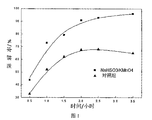
- Fig. 1 is a comparison diagram of the degradation effect of pollutants in the aqueous phase before and after the addition of sodium hydrogen sulfite/potassium permanganate in the process of repairing the sand of the photocatalytic fuel cell.
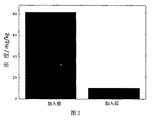
- Fig. 2 is a diagram showing the repairing effect of sand in a repair system incorporating sodium hydrogen sulfite/potassium permanganate, and the concentration of pollutants in the sand is significantly reduced.
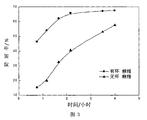
- Fig. 3 is a comparison diagram of the degradation effect of pollutants in the aqueous phase over time after the addition of cyclodextrin in the photocatalytic fuel cell water sand repairing system.
- Figure 4 is a graph showing the concentration distribution of pollutants in water and sand over time in a repair system.
- Example 1 Degradation of tetracycline in a sand-soil repair system of a photocatalytic fuel cell
- the water sample was filtered through a 0.45 um filter and measured at 358 nm with an ultraviolet-visible spectrophotometer; the soil sample was dried in an oven at 50 ° C, and 3 mL of the extract was added with 0.1 mol/L NaCl, 0.5 mol/L oxalic acid, and ethanol (25). /25/50 volume ratio) extraction, after shaking fully, ultrasonic 15min, centrifugation at 8000r/min for 10min, repeated extraction three times, the supernatant was filtered and determined.
- Figure 1 shows that the degradation rate of tetracycline in aqueous solution increases with time, and the degradation rate increases significantly after adding KMnO4 and sodium hydrogen sulfite.
- Figure 2 shows the content of tetracycline in the sand of KMnO4 and sodium bisulfite. The figure shows that the content of tetracycline in the sand before and after the reaction is significantly reduced.
- Example 2 Degradation of tetracycline by the addition of cyclodextrin in the repair system
- sand 25 g was added to the bottom of the tubular reactor, 150 mL of 20 mg/L tetracycline solution was poured, 5 mg of cyclodextrin was added to the tetracycline solution, and tetracycline solution without cyclodextrin was used as a control group, and allowed to stand for one day to be adsorbed and equilibrated;
- the halogen lamp is placed on the upper side, the Ag/AgCl/GO load stainless steel is used as the anode, the stainless steel is used as the cathode, and the external connection is 51 ohm resistance.
- the water sample is taken at intervals of time, filtered through a 0.45 um filter, and detected by a spectrophotometer.
- Figure 3 shows that the content of tetracycline in aqueous solution is reduced, and the degradation rate increases with time. After adding cyclodextrin, the degradation rate of tetracycline in aqueous solution is obviously improved.
- Example 3 Degradation of Rhodamine B in a sand-soil repair system of a photocatalytic fuel cell
- quartz sand 25 g was added to the tubular reactor as a simulated soil. Pour 150 mL of 20 mg/L Luodanming B solution containing 0.1 mol/L Na 2 SO 4 and let stand for one day. After the adsorption equilibrium, the solution was Ag/AgCl/GO.
- the stainless steel is used as the anode
- the ZnIn2S4 electrode is used as the cathode
- the externally connected 100 ohm resistor is used to construct the photocatalytic fuel cell.
- the two sides of the reactor are respectively illuminated with 50W halogen lamps to illuminate the catalytic electrodes on both sides. The distance between the light source and the electrodes is about 5 cm. Take water samples and soil samples.
- the water sample was filtered through a 0.45 um filter and detected by a spectrophotometer at 553 nm.
- the sand was treated with ultrapure water as an extract, and 3 mL of the extract was added each time, vortexed, sonicated for 15 min, centrifuged at 8000 r/min for 10 min, and repeatedly extracted three times. The supernatant was filtered and measured.
- Figure 4 shows that the concentration of rhodamine B in the aqueous solution and in the sand gradually decreases with time, indicating that the aqueous solution
- concentration of Rhodamine B affects the distribution of Rhodamine B in the sand.
Landscapes
- Life Sciences & Earth Sciences (AREA)
- Engineering & Computer Science (AREA)
- Environmental & Geological Engineering (AREA)
- Chemical & Material Sciences (AREA)
- Soil Sciences (AREA)
- Hydrology & Water Resources (AREA)
- Water Supply & Treatment (AREA)
- Organic Chemistry (AREA)
- Chemical Kinetics & Catalysis (AREA)
- Health & Medical Sciences (AREA)
- Toxicology (AREA)
- Electrochemistry (AREA)
- General Chemical & Material Sciences (AREA)
- Catalysts (AREA)
- Processing Of Solid Wastes (AREA)
Abstract
一种光催化燃料电池的水体沙土修复方法,根据光催化燃料电池利用太阳能产生高活性的电子/空穴对降解污染物的特性,将其引入土壤修复体系中,构建可见光响应的光催化燃料电池水体沙土修复系统,所述光催化燃料电池水体沙土修复系统由水相和沙土相组成,向管状反应器中装入沙土,加入污染物溶液,静置待吸附平衡;搭建光催化燃料电池,导线相连光电催化阳极与光电催化阴极,串联外电阻构成闭合回路;通过光催化与电催化的协同作用,降解水相中的污染物,使得沙土相中污染物得到降解,降低沙土中的污染物含量,达到修复功能。
Description
本发明属于污水处理与沙土修复技术领域,涉及到催化电极的制备,耦合光催化与电催化的协同作用,构建光催化燃料电池的水体沙土修复系统,同时引入新的活性物种,降解污染物的同时产生电能,实现对水体-沙土体系的修复,并达到能源回收。
光催化燃料电池(Photocatalytic fuel call,PFC)是一种新型燃料电池体系,由负载型光催化剂作为催化电极,通过导线连接催化电极的阴阳极,构成闭合回路,光催化电极受到大于其带隙能的光激发时,产生高活性的电子/空穴对,降解体系中污染物,产生的电子及时从阳极通过外电路传导至催化阴极,进一步促进电子/空穴对的分离,实现闭合回路的电路循环,达到回收电能的同时处理污染物的目的。其弥补了分散型光催化剂难回收再利用的缺点,且极大地提高了光催化(Photocatalytic,PC)降解污染物的效率,并且产生电能。
环境污染与能源利用是当今世界的两大主题,当前我国土壤污染严重,土壤污染会直接导致土壤的组成和理化性质发生变化,破坏土壤的正常功能,造成农产品的污染和减产,导致严重的经济损失。污染土壤修复技术主要是采用物理的、化学的、或生物的方法,通过一系列途径如转移、吸收、降解、转化等降低土壤中污染物的浓度,或者将这些污染物转化为对人体、对环境等无害的物质的过程。我国土壤修复处于起步阶段,修复技术、工程化应用和设备研发起步较晚,面对我国土壤修复任务的日益艰巨,开展污染场地土壤绿色、可持续修复具有重要意义。
光催化燃料电池利用清洁能源太阳能产电的同时促进污染物降解,是一种具有巨大研究价值的新型燃料电池体系,现有的土壤修复方法都有自己特定的应用范围和局限性,之前未见有报道将光催化燃料电池引入土壤修复中,本申请将光催化燃料电池同时引入土壤修复体系中,以沙土或者石英砂为污染介质,构
建催化电极耦合燃料电池的水体沙土修复系统,提高污染物的降解率并且产电,以期提供一种高效、低成本、生态环保的污染土壤修复方法。
本发明的目的是提供一种新型的光催化燃料电池的水体沙土修复体系与方法,以光催化剂Ag/Ag/GO为光阳极,ZnIn2S4为光阴极,构建可见光响应的光催化燃料电池,引入新的活性物种锰(III),光电催化降解体系中污染物,达到对可见光的利用、水质净化以及沙土修复的目的。
问题的解决方案
本发明的技术方案:
一种新型光催化燃料电池的水体沙土修复系统与方法,步骤如下:
根据光催化燃料电池利用太阳能产生高活性的电子/空穴对降解污染物的特性,将其引入土壤修复体系中,构建可见光响应的光催化燃料电池水体沙土修复系统;
所述的光催化燃料电池水体沙土修复系统由水相以及沙土相组成,向管状反应器中装入沙土,加入污染物溶液,静置待吸附平衡;搭建光催化燃料电池,导线相连光电催化阳极与光电催化阴极,串联外电阻构成闭合回路;50W卤素灯为光源,进行光催化与电催化反应,降解体系中的污染物;通过降解水相中的污染物,使得沙土相中污染物得到降解,降低沙土中的污染物含量,达到修复功能。
向沙土中滴加KMnO4与亚硫酸氢钠的混合液,MnO4
-与HSO3
-反应产生锰(III),引入新的活性物种,提升光催化降解修复效果。
向沙土中添加环糊精,促进沙水界面处污染物从沙土相向水相中的转移,光电催化降解体系中污染物,同时实现污水处理与沙土修复。
所述的光催化阳极为Ag/Ag/GO,光催化阴极为ZnIn2S4。
以银氨溶液作为银源,通过沉淀-光还原法制备Ag/Ag/GO纳米光催化剂,将其作为光催化阳极。
通过水热法合成ZnIn2S4,将ZnIn2S4作为光催化阴极。
按照正硅酸乙酯、无水乙醇、去离子水、浓盐酸体积比为4.5∶10∶9∶2.45的配比配制硅溶胶,将制得的光催化阳极和光催化阳极中添加硅溶胶,搅拌,超声,使其充分分散,分别均匀涂覆在尺寸为5cm*3cm不锈钢网电极上,每平方厘米面积上纳米光催化剂的负载量为5mg,室温晾干得催化电极。
发明的有益效果
本发明的有益效果:本发明提供一种新型的水体沙土污染物修复降解方法,利用光催化燃料电池利用太阳能产生高活性的电子/空穴对降解污染物的特性,通过光催化与电催化的协同作用,将光催化燃料电池引入沙土修复系统中,并且引入活性猛(III),加速污染物的降解,同时产生相应电能,促进沙水界面处污染物从沙土相向水相中的转移,通过降解水体中的污染物质,使得沙土中相应污染物质得到降解,进而达到净化作用,以提供一种高效、低成本、生态环保的污染土壤修复方法。
对附图的简要说明
图1是光催化燃料电池水体沙土修复过程中,加入亚硫酸氢钠/高锰酸钾前后水相中污染物的降解效果对照图。
图2是加入亚硫酸氢钠/高锰酸钾的修复体系中砂土的修复效果图,沙土中污染物的浓度明显降低。
图3是光催化燃料电池水体砂土修复体系中加入环糊精后,水相中污染物随着时间的降解效果对照图。
图4是修复体系中,水体以及砂土中污染物随着时间的浓度分布图。
发明实施例
以下结合技术方案和附图详细叙述本发明的具体实施方式。
实施例一:光催化燃料电池水体沙土修复体系中四环素的降解
管状反应器底部加入25g沙土,倒入150mL 20mg/L四环素溶液,静置一天待
吸附平衡;以Ag/AgCl/GO负载不锈钢做阳极,ZnIn2S4电极做阴极,外接51欧电阻,用50w卤素灯置于上方照射,光源与液面距离5cm左右,每间隔一段时间取样,每次取样同时滴加KMnO4与亚硫酸氢钠(根据加入量折算反应液中KMnO4浓度为7mg/L,亚硫酸氢钠23mg/L),同时取水样以及土样进行测定。水样经过0.45um的滤膜过滤后在358nm处用紫外-可见分光光度计测定;土样经50℃烘箱中干燥,加入3mL提取液0.1mol/L NaCl、0.5mol/L草酸、乙醇(25/25/50体积比)提取,充分摇晃后,超声15min,8000r/min离心10min,重复提取三次,上清液过滤测定。
图1表明随着时间的推移水溶液中四环素的降解率不断提高,且加入KMnO4与亚硫酸氢钠后降解率明显增加。图2显示的是加入KMnO4与亚硫酸氢钠的体系沙土中四环素的含量,图中表明反应前后沙土中四环素的含量显著降低。
实施例二:修复体系中环糊精的加入对四环素的降解
管状反应器底部加入25g沙土,倒入150mL 20mg/L四环素溶液,四环素溶液中加入5mg的环糊精,同时以未加环糊精的四环素溶液作为对照组,静置一天待吸附平衡;用50w卤素灯置于上方照射,Ag/AgCl/GO负载不锈钢做阳极,不锈钢做阴极,外接51欧电阻,每间隔一段时间取水样,经0.45um滤膜过滤,分光光度计检测。
图3表明水溶液中四环素的含量均有所降低,降解率随着时间的推移不断提高,加入环糊精后,明显提高了水溶液中四环素的降解率。
实施例三:光催化燃料电池水体砂土修复体系中罗丹明B的降解
管状反应器中加入25g石英砂,作为模拟土壤,倒入150mL含0.1mol/L Na2SO4的20mg/L罗单明B溶液,静置一天,待吸附平衡后,水溶液中以Ag/AgCl/GO负载不锈钢做阳极,ZnIn2S4电极做阴极,外接100欧电阻构建光催化燃料电池,分别于反应器两侧用50W卤素灯垂直光照两侧催化电极,光源与电极间间距5cm左右,每间隔一段时间分别取水样以及土样测定。水样经0.45um滤膜过滤,用分光光度计于553nm处检测;砂土以超纯水作为提取液,每次加入提取液3mL,涡旋,超声15min,8000r/min离心10min,重复提取三次,上清液过滤测定。
图4显示水溶液中以及砂土中罗丹明B的浓度均随着时间逐渐降低,表明水溶液
中罗丹明B的浓度会影响罗丹明B在砂土中的分配,通过降解水溶液中的罗丹明B含量,降低砂土中的含量,达到修复功能。
Claims (7)
- 一种新型光催化燃料电池的水体沙土修复系统与方法,其特征在于,步骤如下:根据光催化燃料电池利用太阳能产生高活性的电子/空穴对降解污染物的特性,将其引入土壤修复体系中,构建可见光响应的光催化燃料电池水体沙土修复系统;所述的光催化燃料电池水体沙土修复系统由水相以及沙土相组成,向管状反应器中装入沙土,加入污染物溶液,静置待吸附平衡;搭建光催化燃料电池,导线相连光电催化阳极与光电催化阴极,串联外电阻构成闭合回路;50W卤素灯为光源,进行光催化与电催化反应,降解体系中的污染物;通过降解水相中的污染物,使得沙土相中污染物得到降解,降低沙土中的污染物含量,达到修复功能。
- 根据权利要求1所述的水体沙土修复系统与方法,其特征在于,向沙土中滴加KMnO4与亚硫酸氢钠的混合液,MnO4与HSO3反应产生锰III,引入新的活性物种,提升光催化降解修复效果。
- 根据权利要求1或2所述的水体沙土修复系统与方法,其特征在于,向沙土中添加环糊精,促进沙水界面处污染物从沙土相向水相中的转移,光电催化降解体系中污染物,同时实现污水处理与沙土修复。
- 根据权利要求1或2所述的水体沙土修复系统与方法,其特征在于,所述的光催化阳极为Ag/Ag/GO,光催化阴极为ZnIn2S4。
- 根据权利要求3所述的水体沙土修复系统与方法,其特征在于,所述的光催化阳极为Ag/Ag/GO,光催化阴极为ZnIn2S4。
- 根据权利要求4所述的水体沙土修复系统与方法,其特征在于,所述的光催化阳极为Ag/Ag/GO,以银氨溶液作为银源,通过沉淀-光还原法制备得到;所述的光催化阴极ZnIn2S4通过水热法合成;按照正硅酸乙酯、无水乙醇、去离子水、浓盐酸体积比为4.5∶10∶9∶2.45的配比配制硅溶胶,将制得的光催化阳极和光催化阳极中添加硅溶胶,搅拌,超声,使其充分分散,分别均匀涂覆在尺寸为5cm*3cm不锈钢网电极上,每平方厘米面积上纳米光催化剂的负载量为5mg,室温晾干。
- 根据权利要求5所述的水体沙土修复系统与方法,其特征在于,所述的光催化阳极为Ag/Ag/GO,以银氨溶液作为银源,通过沉淀-光还原法制备得到;所述的光催化阴极ZnIn2S4通过水热法合成;按照正硅酸乙酯、无水乙醇、去离子水、浓盐酸体积比为4.5∶10∶9∶2.45的配比配制硅溶胶,将制得的光催化阳极和光催化阳极中添加硅溶胶,搅拌,超声,使其充分分散,分别均匀涂覆在尺寸为5cm*3cm不锈钢网电极上,每平方厘米面积上纳米光催化剂的负载量为5mg,室温晾干。
Priority Applications (1)
| Application Number | Priority Date | Filing Date | Title |
|---|---|---|---|
| US16/314,639 US10717120B2 (en) | 2017-05-18 | 2017-10-01 | Sand/water remediation method with a photocatalytic fuel cell |
Applications Claiming Priority (2)
| Application Number | Priority Date | Filing Date | Title |
|---|---|---|---|
| CN201710351786.5 | 2017-05-18 | ||
| CN201710351786.5A CN107081333B (zh) | 2017-05-18 | 2017-05-18 | 一种光催化燃料电池的水体沙土修复方法 |
Publications (1)
| Publication Number | Publication Date |
|---|---|
| WO2018209883A1 true WO2018209883A1 (zh) | 2018-11-22 |
Family
ID=59608051
Family Applications (1)
| Application Number | Title | Priority Date | Filing Date |
|---|---|---|---|
| PCT/CN2017/105207 Ceased WO2018209883A1 (zh) | 2017-05-18 | 2017-10-01 | 一种新型光催化燃料电池的水体沙土修复系统与方法 |
Country Status (3)
| Country | Link |
|---|---|
| US (1) | US10717120B2 (zh) |
| CN (1) | CN107081333B (zh) |
| WO (1) | WO2018209883A1 (zh) |
Cited By (1)
| Publication number | Priority date | Publication date | Assignee | Title |
|---|---|---|---|---|
| CN110624562A (zh) * | 2019-09-03 | 2019-12-31 | 沈阳化工大学 | 一种复合硫化镉异质结光催化剂的制备方法 |
Families Citing this family (7)
| Publication number | Priority date | Publication date | Assignee | Title |
|---|---|---|---|---|
| CN107081333B (zh) | 2017-05-18 | 2020-09-25 | 大连理工大学 | 一种光催化燃料电池的水体沙土修复方法 |
| CN109626513B (zh) * | 2018-11-27 | 2021-10-15 | 大连理工大学 | 光催化燃料电池与过硫酸盐耦合降解污染物并提高产电的方法 |
| CN110776064A (zh) * | 2019-10-22 | 2020-02-11 | 广州大学 | 一种全可见光响应的自驱动光催化三栖系统 |
| CN114162956A (zh) * | 2021-11-05 | 2022-03-11 | 华中科技大学 | 一种光电协同过氧化氢处理氯酚类污染物的装置及其应用 |
| CN114833189B (zh) * | 2022-03-25 | 2023-12-01 | 苏州精衡科技有限公司 | 一种净化剂及其制备工艺和应用 |
| CN115991516B (zh) * | 2023-02-14 | 2024-05-10 | 河海大学 | 一种光催化水体净化同步增氧装置 |
| CN116621269B (zh) * | 2023-06-14 | 2025-06-13 | 桂林理工大学 | 一种基于摩擦纳米发电机的集成式光电催化降解系统 |
Citations (6)
| Publication number | Priority date | Publication date | Assignee | Title |
|---|---|---|---|---|
| US20040013470A1 (en) * | 2000-11-23 | 2004-01-22 | Patrice Stengel | Adsorbent particlespreparation method and treatment of soils polluted by hydrocarbons using said particles |
| CA2763235C (en) * | 2011-01-11 | 2014-02-25 | Dale Kunz | A method for the remediation of contaminated soil |
| CN104617323A (zh) * | 2015-01-28 | 2015-05-13 | 大连理工大学 | 一种产电与降解污染物的非光催化与光催化燃料电池系统 |
| CN105140551A (zh) * | 2015-07-29 | 2015-12-09 | 大连理工大学 | 一种PANI/BiVO4复合光催化剂与微生物燃料电池耦合系统 |
| CN106391680A (zh) * | 2016-09-27 | 2017-02-15 | 大连理工大学 | 一种利用污泥裂解液和亚微米过氧化钙修复有机污染土壤的方法 |
| CN107081333A (zh) * | 2017-05-18 | 2017-08-22 | 大连理工大学 | 一种新型光催化燃料电池的水体沙土修复系统与方法 |
Family Cites Families (2)
| Publication number | Priority date | Publication date | Assignee | Title |
|---|---|---|---|---|
| KR101276660B1 (ko) * | 2011-05-04 | 2013-06-19 | 알엠텍 주식회사 | 미생물 연료전지를 이용한 중금속 제거 또는 귀금속 회수 방법 |
| US20160064758A1 (en) * | 2014-08-29 | 2016-03-03 | University Of Windsor | Microbial Fuel Cell for Generating Electricity, and Process for Producing Feedstock Chemicals Therefor |
-
2017
- 2017-05-18 CN CN201710351786.5A patent/CN107081333B/zh active Active
- 2017-10-01 US US16/314,639 patent/US10717120B2/en not_active Expired - Fee Related
- 2017-10-01 WO PCT/CN2017/105207 patent/WO2018209883A1/zh not_active Ceased
Patent Citations (6)
| Publication number | Priority date | Publication date | Assignee | Title |
|---|---|---|---|---|
| US20040013470A1 (en) * | 2000-11-23 | 2004-01-22 | Patrice Stengel | Adsorbent particlespreparation method and treatment of soils polluted by hydrocarbons using said particles |
| CA2763235C (en) * | 2011-01-11 | 2014-02-25 | Dale Kunz | A method for the remediation of contaminated soil |
| CN104617323A (zh) * | 2015-01-28 | 2015-05-13 | 大连理工大学 | 一种产电与降解污染物的非光催化与光催化燃料电池系统 |
| CN105140551A (zh) * | 2015-07-29 | 2015-12-09 | 大连理工大学 | 一种PANI/BiVO4复合光催化剂与微生物燃料电池耦合系统 |
| CN106391680A (zh) * | 2016-09-27 | 2017-02-15 | 大连理工大学 | 一种利用污泥裂解液和亚微米过氧化钙修复有机污染土壤的方法 |
| CN107081333A (zh) * | 2017-05-18 | 2017-08-22 | 大连理工大学 | 一种新型光催化燃料电池的水体沙土修复系统与方法 |
Cited By (1)
| Publication number | Priority date | Publication date | Assignee | Title |
|---|---|---|---|---|
| CN110624562A (zh) * | 2019-09-03 | 2019-12-31 | 沈阳化工大学 | 一种复合硫化镉异质结光催化剂的制备方法 |
Also Published As
| Publication number | Publication date |
|---|---|
| US10717120B2 (en) | 2020-07-21 |
| CN107081333A (zh) | 2017-08-22 |
| US20190308231A1 (en) | 2019-10-10 |
| CN107081333B (zh) | 2020-09-25 |
Similar Documents
| Publication | Publication Date | Title |
|---|---|---|
| WO2018209883A1 (zh) | 一种新型光催化燃料电池的水体沙土修复系统与方法 | |
| CN112125390B (zh) | 一种采用光催化辅助强化生物阳极降解抗生素的装置 | |
| CN104258886B (zh) | 一种磷酸银/氧空穴型二氧化钛复合光催化剂及制备方法 | |
| CN106140242B (zh) | 一种可见光响应型氮化硼修饰氮化碳光催化剂及其制备方法和应用 | |
| CN102764650B (zh) | 一种改性二氧化钛/竹炭复合材料及其制备方法 | |
| CN103252244B (zh) | 一种可见光响应型氯氧铋光催化剂的制备及其应用方法 | |
| CN104383902B (zh) | 一种钛酸盐纳米片光催化膜材料及其制备方法和应用 | |
| CN104316581B (zh) | 一种基于可见光光电催化的cod传感器及其制备方法和应用 | |
| CN107715906B (zh) | 一种氮化碳/钛酸锌/氧化钛三明治状直接z型异质结复合光催化剂的制备方法 | |
| CN108855105B (zh) | 铁酸锌-铁酸钴异质结复合催化剂及其制备方法和应用 | |
| CN108640214A (zh) | 一种具有光催化性能分离膜及其制备方法 | |
| CN104628193A (zh) | 一种以可见光-电联合催化降解水中全氟辛烷磺酸的方法 | |
| Wang et al. | Efficient light-driven fuel cell with simultaneous degradation of pollutants on a TiO2 photoanode and production of H2O2 on a gas diffusion electrode cathode | |
| CN115092991A (zh) | 基于碳量子点和二茂铁共掺杂的p型MOF光阴极的废水燃料电池及其制备和应用 | |
| CN106179418A (zh) | 一种负载型双金属共掺杂纳米光催化剂的制备方法 | |
| CN103296299A (zh) | 生物光电化学池 | |
| CN107500382A (zh) | 新型三维电极光电催化降解工业废水反应器的构建及其催化材料的制备方法 | |
| CN105642331A (zh) | 一种二维纳米片状光催化剂的制备方法 | |
| CN102267738A (zh) | 磁性光电极及其制备方法 | |
| CN107774241B (zh) | 一种TiO2/电气石复合光催化剂及TiO2/电气石纱网 | |
| CN106512977A (zh) | 活性炭掺杂二氧化钛纳米光催化剂的制备方法及应用 | |
| CN102735735B (zh) | 功能化碘氧化铋纳米片状阵列光电有机磷农药生物传感器及制备 | |
| CN109133259A (zh) | 一种利用光阳极活化硫酸盐处理废水并副产氢气的方法 | |
| CN102818778B (zh) | 一种快速测定环境水样中化学需氧量的方法 | |
| CN104276635B (zh) | 光电催化氧化用负载型y型分子筛膜阳极材料的制备方法 |
Legal Events
| Date | Code | Title | Description |
|---|---|---|---|
| 121 | Ep: the epo has been informed by wipo that ep was designated in this application |
Ref document number: 17909982 Country of ref document: EP Kind code of ref document: A1 |
|
| NENP | Non-entry into the national phase |
Ref country code: DE |
|
| 122 | Ep: pct application non-entry in european phase |
Ref document number: 17909982 Country of ref document: EP Kind code of ref document: A1 |