WO2018135115A1 - クリーニングシステム及びクリーニング方法 - Google Patents
クリーニングシステム及びクリーニング方法 Download PDFInfo
- Publication number
- WO2018135115A1 WO2018135115A1 PCT/JP2017/041063 JP2017041063W WO2018135115A1 WO 2018135115 A1 WO2018135115 A1 WO 2018135115A1 JP 2017041063 W JP2017041063 W JP 2017041063W WO 2018135115 A1 WO2018135115 A1 WO 2018135115A1
- Authority
- WO
- WIPO (PCT)
- Prior art keywords
- information
- sorting
- cleaning
- arrival
- read
- Prior art date
- Legal status (The legal status is an assumption and is not a legal conclusion. Google has not performed a legal analysis and makes no representation as to the accuracy of the status listed.)
- Ceased
Links
Images






Classifications
-
- B—PERFORMING OPERATIONS; TRANSPORTING
- B65—CONVEYING; PACKING; STORING; HANDLING THIN OR FILAMENTARY MATERIAL
- B65G—TRANSPORT OR STORAGE DEVICES, e.g. CONVEYORS FOR LOADING OR TIPPING, SHOP CONVEYOR SYSTEMS OR PNEUMATIC TUBE CONVEYORS
- B65G1/00—Storing articles, individually or in orderly arrangement, in warehouses or magazines
- B65G1/02—Storage devices
- B65G1/04—Storage devices mechanical
- B65G1/137—Storage devices mechanical with arrangements or automatic control means for selecting which articles are to be removed
-
- D—TEXTILES; PAPER
- D06—TREATMENT OF TEXTILES OR THE LIKE; LAUNDERING; FLEXIBLE MATERIALS NOT OTHERWISE PROVIDED FOR
- D06F—LAUNDERING, DRYING, IRONING, PRESSING OR FOLDING TEXTILE ARTICLES
- D06F93/00—Counting, sorting, or marking arrangements specially adapted for laundry purposes
Definitions
- the present invention relates to a cleaning system and a cleaning method for washing and sorting cleaning products.
- Patent Document 1 discloses a system for individually managing a uniform based on a barcode attached to the uniform or a label identification code such as an RFID (Radio Frequency Identification) tag.
- a label identification code such as an RFID (Radio Frequency Identification) tag.
- an operator reads the label identification codes of all uniforms using a code reader when confirming the acceptance of the uniforms.
- the read label identification code information is stored in a database.
- the system of Patent Literature 1 manages uniforms individually based on information of label identification codes stored in a database.
- An object of the present invention is to provide a cleaning system and a cleaning method capable of improving work efficiency.
- the cleaning system of one embodiment of the present invention includes: A cleaning system for washing and sorting a plurality of cleaning products with UHF band RFID tags, A first reader device that collectively reads ID information of the RFID tags attached to the plurality of cleaning products at the time of arrival; A database for storing arrival information in which the ID information of the RFID read by the first reader device is associated with customer information; A washing device for washing the plurality of cleaning products; A second reader device that individually reads ID information of RFID tags of a plurality of cleaning products after washing; A sorting device that generates sorting information based on the ID information read by the second reader device and the arrival information, and sorts the plurality of cleaning products based on the sorting information; With The sorting device is In the sorting information, a cleaning product including ID information but not including customer information is transported to a storage unit, Create additional information that associates the ID information of the RFID tag of the cleaning product conveyed to the storage unit with the customer information, Updating the sorting information based on the additional information; The cleaning products stored in the storage unit are
- the cleaning method of one embodiment of the present invention includes: A cleaning method for washing and sorting a plurality of cleaning products with UHF band RFID tags, A first reading step of collectively reading ID information of the RFID tags attached to the plurality of cleaning products at the time of arrival by a first reader device; A storage step of storing, by a database, arrival information associated with the RFID ID information read in the reading step and customer information; A washing step of washing the plurality of cleaning products with a washing device; A second reading step of individually reading ID information of RFID tags of a plurality of cleaning products after washing by a second reader device; A sorting step of generating sorting information based on the ID information read in the second reading step and the arrival information, and sorting the plurality of cleaning products by a sorting device based on the sorting information; Including The sorting process includes In the sorting information, conveying a cleaning product including ID information but not including customer information to a storage unit; Creating additional information associating ID information of the RFID tag of the cleaning product conveyed to the storage unit with customer information;
- Embodiment 1 It is the schematic of the cleaning system in Embodiment 1 which concerns on this invention. It is the schematic of the 1st reader apparatus and database of the cleaning system in Embodiment 1 which concerns on this invention. It is a figure which shows an example of the arrival information in Embodiment 1 which concerns on this invention. It is the schematic of the washing apparatus of the cleaning system in Embodiment 1 which concerns on this invention. It is the schematic of the drying apparatus of the cleaning system in Embodiment 1 which concerns on this invention. It is the schematic of the 2nd reader apparatus and sorting apparatus of the cleaning system in Embodiment 1 which concerns on this invention. It is a figure which shows an example of the sorting information in Embodiment 1 which concerns on this invention.
- Embodiment 1 It is a figure which shows an example of the additional information in Embodiment 1 which concerns on this invention. It is a figure which shows an example of the classification information updated in Embodiment 1 which concerns on this invention. It is a figure which shows another example of the sorting information updated in Embodiment 1 which concerns on this invention. It is a figure which shows an example of the flowchart of the cleaning method in Embodiment 1 which concerns on this invention. It is a figure which shows an example of the flowchart of the sorting process of the cleaning method in Embodiment 1 which concerns on this invention.
- an HF band RFID tag is attached to a cleaning product. Further, when the cleaning products are received, the cleaning products are randomly stacked without being arranged. For this reason, an operator takes out cleaning products one by one from a plurality of cleaning products stacked at random, and reads the RFID tag using a code reader. Thus, in the system of Patent Document 1, it takes time to read the RFID tag attached to the cleaning product at the time of arrival.
- the present inventor has found a cleaning system and a cleaning method using a UHF band RFID tag in order to improve work efficiency.
- the UHF band RFID tag is characterized in that the RFID tag can be collectively read by a reader device. For this reason, in the cleaning system and the cleaning method using the UHF band RFID tag, it is possible to shorten the reading time of the RFID tag attached to the cleaning product at the time of arrival, and to improve the working efficiency.
- the present inventors may not be able to read the RFID tag for a cleaning product or the like in which the RFID tag overlaps the reader device. I found it.
- the present inventors have conducted intensive research and manage the cleaning product based on the information of the RFID tag read at the time of arrival and the information of the RFID tag read when sorting the cleaning product after washing. As a result, the inventors have reached the following invention.
- the cleaning system of one embodiment of the present invention includes: A cleaning system for washing and sorting a plurality of cleaning products with UHF band RFID tags, A first reader device that collectively reads ID information of the RFID tags attached to the plurality of cleaning products at the time of arrival; A database for storing arrival information in which the ID information of the RFID read by the first reader device is associated with customer information; A washing device for washing the plurality of cleaning products; A second reader device that individually reads ID information of RFID tags of a plurality of cleaning products after washing; A sorting device that generates sorting information based on the ID information read by the second reader device and the arrival information, and sorts the plurality of cleaning products based on the sorting information; With The sorting device is In the sorting information, a cleaning product including ID information but not including customer information is transported to a storage unit, Create additional information that associates the ID information of the RFID tag of the cleaning product conveyed to the storage unit with the customer information, Updating the sorting information based on the additional information; The cleaning products stored in the storage unit are
- Such a configuration can improve work efficiency.
- the sorting device may transport a cleaning product whose ID information cannot be read by the second reader device to a repair section.
- the sorting device may replenish a cleaning product corresponding to a cleaning product whose ID information could not be read by the second reader device based on the arrival information.
- the cleaning method of one embodiment of the present invention includes: A cleaning method for washing and sorting a plurality of cleaning products with UHF band RFID tags, A first reading step of collectively reading ID information of the RFID tags attached to the plurality of cleaning products at the time of arrival by a first reader device; A storage step of storing, by a database, arrival information associated with the RFID ID information read in the reading step and customer information; A washing step of washing the plurality of cleaning products with a washing device; A second reading step of individually reading ID information of RFID tags of a plurality of cleaning products after washing by a second reader device; A sorting step of generating sorting information based on the ID information read in the second reading step and the arrival information, and sorting the plurality of cleaning products by a sorting device based on the sorting information; Including The sorting process includes In the sorting information, conveying a cleaning product including ID information but not including customer information to a storage unit; Creating additional information associating ID information of the RFID tag of the cleaning product conveyed to the storage unit with customer information;
- Such a configuration can improve work efficiency.
- the sorting step may include transporting a cleaning product whose ID information could not be read in the second reading step to a repair section.
- the sorting step may include replenishing a cleaning product corresponding to the cleaning product whose ID information could not be read in the second reading step based on the arrival information.
- FIG. 1 shows a schematic diagram of a cleaning system 100 according to the first embodiment of the present invention.
- the cleaning system 100 includes a first reader device 11, a database 12, a washing device 13, a drying device 14, a second reader device 15, and a sorting device 16.
- FIG. 1 shows an example of the cleaning system 100, and the configuration of the cleaning system 100 is not limited to these.
- the first reader device 11 is a device that can read the UHF band RFID tag 51.
- the UHF band RFID tag 51 is an RFID tag that performs wireless communication at a carrier frequency of 900 MHz, for example.
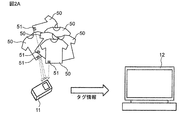
- FIG. 2A is a schematic diagram of the first reader device 11 and the database 12 of the cleaning system 100 according to Embodiment 1 of the present invention.
- the first reader device 11 uses a handy reader device to remove the plurality of RFID tags 51. Read all at once (batch reading).
- the RFID tag 51 is attached to the lower part of the cleaning product 50.
- the attachment position of the RFID tag 51 is not limited to this.
- a plurality of cleaning products 50 are randomly stacked at the time of arrival. “Randomly stacked” means that the plurality of cleaning products 50 are stacked randomly without being arranged.
- the first reader device 11 performs rough reading (provisional reading) of information of the plurality of RFID tags 51 attached to the plurality of cleaning products 50 stacked at random.
- “coarse reading” means an operation of reading a plurality of RFID tags in batches in a short time of 5 to 20 seconds instead of individually reading a plurality of RFID tags,
- it means that the information of the RFID tag 51 of about 70% or more, more preferably 95% or more of the received cleaning product 50 is read.
- the first reader device 11 does not read the information of the RFID tags 51 of all the cleaning products 50 that have arrived. For example, when the RFID tag 51 overlaps with the RFID tag 51 of another cleaning product 50 or when the RFID tag 51 is out of order, the first reader device 11 may not read the RFID tag 51. .
- the cleaning product 50 attached with the RFID tag 51 that could not be read by the first reader device 11 is processed by the sorting device 16 described later. Further, washing and drying are performed based on information roughly read by the first reader device 11.
- cleaning product is a product to be cleaned, and means, for example, a uniform or linen supply lent to a hotel, a restaurant, a hospital, or the like.
- the database 12 is a device that stores information on the RFID tag 51 read by the first reader device 11 in association with customer information. Specifically, the database 12 receives information on the RFID tag 51 from the first reader device 11. Next, the database 12 generates and stores arrival information in which the received tag information of the RFID tag 51 is associated with customer information. The arrival information is used for processing performed in the washing device 13, the drying device 14, and / or the sorting device 16. The database 12 can communicate with the washing device 13, the drying device 14, and the sorting device 16 via a network.
- RFID tag information includes, for example, ID information.
- customer information includes, for example, information such as a customer name, arrival date, scheduled shipping date, size and / or type.
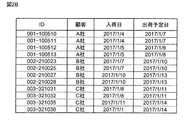
- FIG. 2B is a diagram showing an example of arrival information in Embodiment 1 according to the present invention.
- the arrival information is information in which ID information of the RFID tag 51 is associated with customer information including a customer name, arrival date, and scheduled shipping date.
- the washing device 13 is a device for washing the cleaning product 50.
- FIG. 2C is a schematic diagram of the washing apparatus 13 of the cleaning system 100 according to Embodiment 1 of the present invention.
- the cleaning system 100 includes a plurality of washing devices 13.
- the number of washing devices 13 may be determined according to the number of cleaning products 50 to be washed.
- the washing apparatus 13 receives arrival information from the database 12 and estimates the number of cleaning products 50 based on the arrival information.
- the laundry device 13 may determine the number of laundry devices 13 to be used from the estimated number of cleaning products 50.
- the washing apparatus 13 may determine the setting for washing based on the arrival information stored in the database 12. For example, when the type of the cleaning product 50 is included in the arrival information, the type of detergent and / or the washing time may be determined according to the type.
- the drying device 14 is a device that dries the cleaning product 50 washed by the washing device 13.
- a hot-air drying device can be used.
- FIG. 2D is a schematic diagram of the drying device 14 of the cleaning system 100 according to Embodiment 1 of the present invention.
- the drying device 14 puts the cleaning products 50 washed in the drying chamber on a hanger in a line.
- the drying device 14 conveys the cleaning product 50 in the direction 61 of the sorting device 16 and, for example, sends hot air from the lower part of the drying chamber in the vertical upward direction 62.
- the cleaning product 50 in the drying chamber is dried by hot air.
- the drying device 14 may determine the drying setting based on the arrival information stored in the database 12. For example, when the type of the cleaning product 50 is included in the arrival information, the temperature and / or drying time of the hot air may be determined according to the type.
- the second reader device 15 is a device capable of reading the UHF band RFID tag 51.
- FIG. 2E is a schematic diagram of the second reader device 15 and the sorting device 16 of the cleaning system 100 according to Embodiment 1 of the present invention. As shown in FIG. 2E, the second reader device 15 individually reads the RFID tag 51 attached to the cleaning product 50.
- the information (ID information) of the RFID tag 51 read by the second reader device 15 is sent to the database 12.
- the sorting device 16 generates sorting information based on the tag information (ID information) read by the stationary second reader device 15 and the arrival information stored in the database 12, and based on the sorting information.
- This is an apparatus for sorting a plurality of cleaning products 50.
- the sorting device 16 includes a control unit 17, a pool 18, a storage unit 19, and a repair unit 20.
- the sorting device 16 includes a supply line L1, sorting lines L2 to L4, a storage line L5, a repair line L6, a resorting line L7, and a replenishment line L8.
- Lines L1 to L8 mean conveyor lines that convey the cleaning product 50.
- the plurality of cleaning products 50 after washing and drying are conveyed to the supply line L1.
- the plurality of cleaning products 50 are carried on a hanger manually or by an automatic machine and conveyed in a line.
- the second reader device 15 individually reads the ID information of the RFID tags 51 of the plurality of cleaning products 50 that are continuously conveyed.
- the ID information read by the second reader device 15 is transmitted to the control unit 17.
- the control unit 17 generates sorting information based on the ID information of the RFID tag 51 read by the second reader device 15 and the arrival information stored in the database 12. Specifically, the control unit 17 generates sorting information by collating the ID information read by the second reader device 15 with the ID information included in the arrival information. For example, when the ID information read by the second reader device 15 is included in the arrival information, the control unit 17 generates the sorting information using the arrival information. In addition, when the ID information read by the second reader device 15 is not included in the arrival information, the control unit 17 sorts the customer information blank and includes the ID information read by the second reader device 15. Is generated. Further, when the second reader device 15 cannot read the ID information, the control unit 17 generates sorting information in which the ID information and the customer information are left blank. The control unit 17 transmits the sorting information to the pool 18.
- sorting information is information for sorting a plurality of cleaning products 50 for each customer or for each shipping date.
- the sorting information includes, for example, No information of the cleaning product 50, ID information of the RFID tag 51, customer name, arrival date, shipping date, and the like.
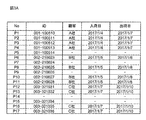
- FIG. 3A is a diagram showing an example of sorting information in Embodiment 1 according to the present invention.
- P1 to P4, P6, P8, P10 to P13, P16, and P17 show examples in which the ID information read by the second reader device 15 is included in the arrival information. That is, P1 to P4, P6, P8, P10 to P13, P16, and P17 show examples in which the RFID tag 51 can be read both at the time of arrival and at the time of sorting.
- the arrival information is directly reflected in the sorting information.
- P5, P7, P9 and P15 show examples in which the ID information read by the second reader device 15 is not included in the arrival information. That is, P5, P7, P9, and P15 indicate cleaning products 50 in which the RFID tag 51 has been read at the time of arrival but the RFID tag 51 can be read by the second reader device 15. For P5, P7, P9 and P15, sorting information including ID information is generated while customer information is left blank.
- P14 shows an example in which the second reader device 15 could not read the ID information. That is, P14 indicates the cleaning product 50 in which the RFID tag 51 has failed. For P14, sorting information with ID information and customer information left blank is generated.
- the pool 18 is a loop-shaped storage conveyor that stores a plurality of cleaning products 50 for sorting.
- the pool 18 sorts the cleaning products 50 based on the sorting information while conveying the plurality of cleaning products 50 that have finished reading the RFID tag 51 by the second reader device 15.
- the sorting lines L2 to L4 are divided for each customer.
- Sorting lines L2, L3, and L4 convey cleaning products 50 from Company A, Company B, and Company C, respectively.
- the pool 18 sorts the cleaning products 50 corresponding to the respective sorting lines L2 to L4 based on, for example, customer names included in the sorting information.
- the pool 18 may store the cleaning product 50 until the shipping date comes based on the shipping date included in the sorting information.
- the cleaning products 50 conveyed to the sorting lines L2, L3, and L4 are shipped to A company, B company, and C company, respectively, according to the shipping date.
- the pool 18 transports the cleaning products 50 that cannot be sorted into the sorting lines L2 to L4 based on the sorting information to the storage unit 19 through the storage line L5.
- a cleaning product that cannot be sorted based on sorting information means a cleaning product whose ID information and / or customer information is blank in the sorting information. For example, there are cleaning products that have ID information in the sorting information but no customer information (cleaning products that have been misread at the time of arrival), cleaning products that do not have ID information and customer information in the sorting information (cleaning products in which the RFID tag has failed), etc. means.
- the storage unit 19 stores the cleaning product 50 that cannot be sorted based on the sorting information.
- the storage unit 19 temporarily stores cleaning products 50 (P5, P7, P9, and P15 in FIG. 3A) that include ID information but do not include customer information in the sorting information.
- the control unit 17 generates additional information in which the ID information of the RFID tag 51 of the cleaning product 50 stored in the storage unit 19 is associated with the customer information.
- the information read by the second reader device 15 may be used as the ID information, or the ID information read by the third reader device may be used.
- FIG. 3B is a diagram showing an example of additional information according to Embodiment 1 of the present invention. As shown in FIG. 3B, for P5, P7, P9, and P15, additional information that associates ID information with customer information (customer name and shipping date) is generated.
- the control unit 17 updates the sorting information based on the additional information.
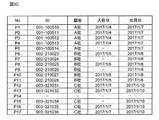
- FIG. 3C is a diagram showing an example of updated sorting information in the first embodiment according to the present invention.
- the customer information of P5, P7, P9, and P15 that were blank in the sorting information is updated with the additional information.
- the sorting apparatus 16 can sort the cleaning products 50 corresponding to P5, P7, P9, and P15 based on the sorting information.
- the cleaning product 50 stored in the storage unit 19 is conveyed to the re-sorting line L7.
- the cleaning product 50 stored in the storage unit 19 is conveyed to the re-sorting line L7 by, for example, a conveyor controlled by the control unit 17.
- the re-sorting line L7 is connected to the supply line L1. For this reason, the cleaning product 50 conveyed to the re-sorting line L7 is conveyed to the pool 18 via the supply line L1.
- the cleaning products 50 conveyed to the pool 18 are sorted into the sorting lines L2 to L4 based on the updated sorting information.
- the cleaning product 50 (P14 in FIG. 3A) whose ID information and customer information are blank in the sorting information is conveyed to the repair unit 20 via the repair line L6.
- the control unit 17 determines that there is a cleaning product 50 (P14 in FIG. 3A) that includes the ID information and customer information in the arrival information but is not included in the sorting information, the control unit 17 Based on the arrival information, the corresponding cleaning product 50 may be replenished from the replenishment line L8.
- the control unit 17 can estimate the cleaning product 50 of the failed RFID tag 51 by collating the arrival information with the ID information read by the second reader device 15. Therefore, the sorting device 16 can replenish the cleaning product of the same type as the cleaning product 50 estimated by the control unit 17 from the replenishment line L8.
- FIG. 3D is a diagram showing another example of the updated sorting information in the first embodiment according to the present invention.
- the ID information and customer information of the RFID tag 51 (P14 in FIG. 3A) having no ID information can be determined based on the arrival information, the same kind of cleaning products 50 stored in the replenishment line L8 (FIG. 3D).
- 3D P14 ′ may be supplemented. In this case, the information of the cleaning product 50 replenished instead of P14 is added to the sorting information.
- the repair unit 20 determines that the RFID tag 51 whose ID information could not be read is broken and repairs it. Specifically, the repair unit 20 replaces the failed RFID tag 51 with a new RFID tag.
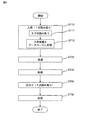
- FIG. 4 is a diagram showing an example of a flowchart of the cleaning method according to the first embodiment of the present invention.
- the cleaning method includes an arrival process ST10, a washing process ST20, a drying process ST30, a sorting process ST40, and a shipping process ST50.
- FIG. 4 shows an example of the cleaning method, and the steps of the cleaning method of the first embodiment are not limited to these.
- the arrival process ST ⁇ b> 10 is generated based on the reading process ST ⁇ b> 11 that collectively reads the information of the UHF band RFID tags 51 attached to the plurality of cleaning products 50 and the information of the read RFID tags 51.
- storage step ST12 for storing the arrival information in the database 12.
- the first reader device 11 collectively reads the ID information of the RFID tags 51 attached to the plurality of cleaning products 50.
- the database 12 In the storage step ST12, the database 12 generates and stores arrival information (see FIG. 2B) by associating the ID information read in the reading step ST11 with the customer information.
- the washing step ST20 the plurality of cleaning products 50 are washed by the washing device 13.
- the process of the washing process ST20 may be performed based on the arrival information obtained in the arrival process ST10.
- the number of cleaning products 50 may be estimated from the arrival information, and the number of washing devices 13 that operate according to the estimated number of cleaning products 50 may be determined.
- the drying device 14 dries a plurality of cleaning products 50 after washing.
- the process of the drying step ST30 may be performed based on the arrival information obtained in the arrival step ST10.
- the ID information of the RFID tags 51 of the plurality of cleaning products 50 after washing and drying is individually read by the second reader device 15, and based on the ID information and the arrival information read by the second reader device 15. Sorting information (see FIGS. 3A, 3C, and 3D). In the sorting step ST40, the plurality of cleaning products 50 are sorted based on the sorting information.
- FIG. 5 is a diagram showing an example of a flowchart of the cleaning step ST40 of the cleaning method according to the first embodiment of the present invention.
- the ID information of the RFID tag 51 is individually read by the second reader device 15 before sorting.
- step ST41 the RFID tags 51 of the cleaning products 50 that are hung on the supply line L1 and arranged in a line are individually read by the second reader device 15 (reading step ST41).
- step ST42 sorting information (see FIG. 3A) is generated by the control unit 17 based on the ID information and arrival information of the RFID tag 51 read in the reading step ST41 (sorting information generation step ST42). For example, when there is arrival information corresponding to the ID information obtained in the reading step ST41, the arrival information is reflected as it is in the sorting information. When there is no arrival information corresponding to the ID information obtained in the reading step ST41, sorting information including the ID information is generated while leaving the customer information blank. Further, when the ID information cannot be read in the reading step ST41, sorting information in which both the ID information and the customer information are left blank is generated.
- step ST43 the control unit 17 determines whether there is ID information in the sorting information (ID information determination step ST43). When ID information exists in the sorting information, the process proceeds to step ST44. If no ID information exists in the sorting information, the process proceeds to step ST61.
- step ST61 the cleaning product 50 whose ID information does not exist in the sorting information, that is, the cleaning product 50 in which the RFID tag 51 is broken (P14 in FIG. 3A) is transported to the storage unit 19 via the storage line L5 ( Transport step ST61).
- the cleaning product 50 transferred to the storage unit 19 is transferred to the repair unit 20 via the repair line L6 (transfer step ST62).
- the repair unit 20 the failed RFID tag 51 is repaired. If the control unit 17 can determine the ID information and customer information of the failed RFID tag 51 (P14 in FIG. 3A) based on the arrival information, the same type of cleaning product 50 stored in the replenishment line L8 (P14 in FIG. 3D).
- a step of supplementing ') may be added after the transport step ST62.
- step ST44 the control unit 17 determines whether customer information is included in the sorting information (customer information determination step ST44). If customer information exists in the sorting information, the process proceeds to step ST48. If customer information does not exist in the sorting information, the process proceeds to step ST45.
- step ST45 the cleaning product 50 (P5, P7, P9, and P15 in FIG. 3A) for which customer information does not exist in the sorting information is transferred to the storage unit 19 via the storage line L5 (transfer step ST45).
- step ST46 the control unit 17 generates additional information (see FIG. 3B) that associates the ID information of the RFID tag 51 of the cleaning product 50 stored in the storage unit 19 with the customer information (additional information generation step ST46).
- step ST47 the sorting information is updated by the control unit 17 based on the additional information generated in the additional information generating step ST46 (sorting information updating step ST47).
- step ST48 a plurality of cleaning products 50 are sorted based on the sorting information.
- step ST44 when the control unit 17 determines that customer information exists in the sorting information, the cleaning products 50 are sorted based on the sorting information generated in step ST42.
- the cleaning product 50 determined in step ST44 that customer information does not exist in the sorting information sorts the cleaning product 50 based on the sorting information updated in step ST47.
- the cleaning system 100 since the cleaning product 50 with the UHF band RFID tag 51 is used, a plurality of RFID tags 51 can be collectively read by the first reader device 11 at the time of arrival. Further, the reading time of the RFID tag 51 at the time of arrival can be shortened by roughly reading the RFID tag 51 at the time of arrival. Thereby, working efficiency can be improved.
- the control unit 17 of the sorting device 16 individually reads the ID information of the RFID tag 51 by the second reader device 15 before sorting, and sorts information based on the ID information and the arrival information read by the second reader device 15. Is generated.
- the sorting device 16 sorts the cleaning products 50 based on the sorting information.
- the sorting device 16 temporarily stores the cleaning products 50 whose ID information could not be read at the time of arrival in the storage unit 19, and during the storage, additional information in which the ID information of these cleaning products 50 and customer information are associated with each other. Is generated. By updating the sorting information based on this additional information, it is possible to accurately sort the cleaning products 50 whose ID information could not be read at the time of arrival.
- the cleaning system 100 it is possible to accurately sort the cleaning products 50 while improving the work efficiency.
- the sorting device 16 determines that the RFID tag 51 whose ID information could not be read by the second reader device 15 is broken, and sends the cleaning product 50 attached with the broken RFID tag 51 to the repair unit 20. Can be transported. Thereby, it can move to the repair work of the RFID tag 51 smoothly.
- the sorting device 16 replenishes the cleaning product 50 corresponding to the cleaning product whose ID information could not be read by the second reader device 15 based on the arrival information.
- the defective cleaning product 50 with the RFID tag 51 can be replaced with a new cleaning product 50 of the same type. Therefore, the cleaning product 50 can be shipped to the customer without delaying the scheduled shipping date.
- the cleaning system 100 includes the first reader device 11, the database 12, the washing device 13, the drying device 14, the second reader device 15, and the sorting device 16. It is not limited.
- the configuration of the cleaning system 100 may be changed according to the type of washing and / or drying (for example, dry cleaning, wet cleaning, etc.).
- the cleaning system 100 may not include the washing device 13 and / or the drying device 14.
- the cleaning method has been described with respect to an example including the arrival process ST10, the washing process ST20, the drying process ST30, the sorting process ST40, and the shipping process ST50, but is not limited thereto.
- the cleaning method may not include the drying process ST30 and the shipping process ST50.
- the first reader device 11 has described an example in which the ID information of the RFID tag 51 is read in a state where a plurality of cleaning products 50 are randomly stacked at the time of arrival.
- the present invention is not limited to this.
- the first reader device 11 may read the ID information of the RFID tags 51 of the plurality of cleaning products 50 arranged and arranged.
- the second reader device 15 is arranged in the supply line L1
- the present invention is not limited to this.
- the second reader device 15 may be arranged in the pool 18.
- the second reader device 15 is arranged in front of the sorting lines L2 to L4.
- the cleaning product 50 whose ID information could not be read by the second reader device 15 has been described as being stored in the storage unit 19 and then transported to the repair unit 20. It is not limited.
- the cleaning product 50 whose ID information could not be read by the second reader device 15 may be directly conveyed from the pool 18 to the repair unit 20.
- the re-sorting line L7 is described as being connected to the supply line L1, but the present invention is not limited to this.
- the re-sorting line L7 may be connected to the pool 18.
- the replenishment line L8 has been described as being connected to the re-sorting line L7, but the present invention is not limited to this.
- the replenishment line L8 may be connected to the supply line L1 or the pool 18.
- the replenishment line L8 may not be provided.
- the arrival information, the sorting information, and the additional information include the ID, the customer name, the arrival date, and the shipping date.
- these pieces of information may be changed according to parameters used when sorting.
- these pieces of information may include, for example, information such as type, size, or person name.
- the elements constituting the cleaning system 100 include, for example, a memory (not shown) that stores a program that causes these elements to function, and a processing circuit corresponding to a processor such as a CPU (Central Processing Unit). (Not shown), and the processor may function as these elements by executing a program. Or you may comprise the element which comprises the cleaning system 100 using the integrated circuit which functions these elements, for example.
- a memory not shown
- a processing circuit corresponding to a processor
- the processor may function as these elements by executing a program.
- the cleaning system of the present invention can improve the working efficiency because it can shorten the reading time of the RFID tag at the time of arrival. Therefore, the present invention is useful for a cleaning system for washing and sorting cleaning products with RFID tags.
Landscapes
- Engineering & Computer Science (AREA)
- Textile Engineering (AREA)
- Mechanical Engineering (AREA)
Abstract
作業効率を効率させることができるクリーニングシステム及びクリーニング方法を提供する。本発明のクリーニングシステムは、複数のクリーニング製品に付されたUHF帯RFIDタグ付きのID情報を一括して読み取る第1リーダ装置と、ID情報と顧客情報とを関連付けた入荷情報を記憶するデータベースと、洗濯装置と、複数のクリーニング製品のRFIDタグのID情報を個別に読み取る第2リーダ装置と、第2リーダ装置によって読み取られたID情報と入荷情報とに基づいて生成された仕分け情報に基づいて、クリーニング製品を仕分けする仕分け装置と、を備え、仕分け装置は、仕分け情報において、顧客情報を含まないクリーニング製品についての追加情報を作成し、追加情報に基づいて仕分け情報を更新し、更新された仕分け情報に基づいて、保管部に保管されたクリーニング製品を仕分けする。
Description
本発明は、クリーニング製品を洗濯して仕分けするクリーニングシステム及びクリーニング方法に関する。
ホテル、病院、レストラン等の顧客へニフォームを貸し出すユニフォームレンタル業等では、ユニフォーム等を定期的に回収し、クリーニングを行っている。クリーニングでは、回収したユニフォームを洗濯及び乾燥した後、ユニフォームを顧客毎に仕分けている(例えば、特許文献1参照。)。
特許文献1では、ユニフォームに付されたバーコード又はRFID(Radio Frequency Identification)タグ等のラベル識別コードに基づいて、ユニフォームを個品管理するシステムが開示されている。特許文献1のシステムでは、ユニフォームの受入確認時に作業者がコードリーダを用いてすべてのユニフォームのラベル識別コードを読み取っている。読み取ったラベル識別コードの情報は、データベースに記憶される。特許文献1のシステムは、データベースに記憶されたラベル識別コードの情報に基づいて、ユニフォームを個品管理している。
特許文献1のシステムでは、ユニフォームの受入確認時に作業者がコードリーダを用いてすべてのユニフォームのラベル識別コードを読み取る必要があり、作業効率の向上といった点で改善の余地がある。
本発明は、作業効率を向上させることができるクリーニングシステム及びクリーニング方法を提供することを目的とする。
本発明の一態様のクリーニングシステムは、
UHF帯RFIDタグ付きの複数のクリーニング製品を洗濯して仕分けするクリーニングシステムであって、
前記複数のクリーニング製品に付された前記RFIDタグのID情報を、入荷時に一括して読み取る第1リーダ装置と、
前記第1リーダ装置で読み取った前記RFIDのID情報と、顧客情報とを関連付けた入荷情報を記憶するデータベースと、
前記複数のクリーニング製品を洗濯する洗濯装置と、
洗濯後の複数のクリーニング製品のRFIDタグのID情報を個別に読み取る第2リーダ装置と、
前記第2リーダ装置によって読み取られたID情報と前記入荷情報とに基づいて仕分け情報を生成し、前記仕分け情報に基づいて前記複数のクリーニング製品を仕分けする仕分け装置と、
を備え、
前記仕分け装置は、
前記仕分け情報において、ID情報を含むが顧客情報を含まないクリーニング製品を保管部に搬送し、
前記保管部に搬送されたクリーニング製品のRFIDタグのID情報と顧客情報とを関連付けた追加情報を作成し、
前記追加情報に基づいて前記仕分け情報を更新し、
更新された仕分け情報に基づいて、前記保管部に保管されたクリーニング製品を仕分けする。
UHF帯RFIDタグ付きの複数のクリーニング製品を洗濯して仕分けするクリーニングシステムであって、
前記複数のクリーニング製品に付された前記RFIDタグのID情報を、入荷時に一括して読み取る第1リーダ装置と、
前記第1リーダ装置で読み取った前記RFIDのID情報と、顧客情報とを関連付けた入荷情報を記憶するデータベースと、
前記複数のクリーニング製品を洗濯する洗濯装置と、
洗濯後の複数のクリーニング製品のRFIDタグのID情報を個別に読み取る第2リーダ装置と、
前記第2リーダ装置によって読み取られたID情報と前記入荷情報とに基づいて仕分け情報を生成し、前記仕分け情報に基づいて前記複数のクリーニング製品を仕分けする仕分け装置と、
を備え、
前記仕分け装置は、
前記仕分け情報において、ID情報を含むが顧客情報を含まないクリーニング製品を保管部に搬送し、
前記保管部に搬送されたクリーニング製品のRFIDタグのID情報と顧客情報とを関連付けた追加情報を作成し、
前記追加情報に基づいて前記仕分け情報を更新し、
更新された仕分け情報に基づいて、前記保管部に保管されたクリーニング製品を仕分けする。
本発明の一態様のクリーニング方法は、
UHF帯RFIDタグ付きの複数のクリーニング製品を洗濯して仕分けするクリーニング方法であって、
前記複数のクリーニング製品に付された前記RFIDタグのID情報を、第1リーダ装置によって入荷時に一括して読み取る第1読み取り工程と、
前記読み取り工程で読み取った前記RFIDのID情報と、顧客情報とを関連付けた入荷情報をデータベースによって記憶する記憶工程と、
前記複数のクリーニング製品を洗濯装置によって洗濯する洗濯工程と、
洗濯後の複数のクリーニング製品のRFIDタグのID情報を第2リーダ装置によって個別に読み取る第2読み取り工程と、
前記第2読み取り工程で読み取られたID情報と前記入荷情報とに基づいて仕分け情報を生成し、前記仕分け情報に基づいて前記複数のクリーニング製品を仕分け装置によって仕分けする仕分け工程と、
を含み、
前記仕分け工程は、
前記仕分け情報において、ID情報を含むが顧客情報を含まないクリーニング製品を保管部に搬送すること、
前記保管部に搬送されたクリーニング製品のRFIDタグのID情報と顧客情報とを関連付けた追加情報を作成すること、
前記追加情報に基づいて前記仕分け情報を更新すること、
更新された仕分け情報に基づいて、前記保管部に搬送されたクリーニング製品を仕分けすること、
を含む。
UHF帯RFIDタグ付きの複数のクリーニング製品を洗濯して仕分けするクリーニング方法であって、
前記複数のクリーニング製品に付された前記RFIDタグのID情報を、第1リーダ装置によって入荷時に一括して読み取る第1読み取り工程と、
前記読み取り工程で読み取った前記RFIDのID情報と、顧客情報とを関連付けた入荷情報をデータベースによって記憶する記憶工程と、
前記複数のクリーニング製品を洗濯装置によって洗濯する洗濯工程と、
洗濯後の複数のクリーニング製品のRFIDタグのID情報を第2リーダ装置によって個別に読み取る第2読み取り工程と、
前記第2読み取り工程で読み取られたID情報と前記入荷情報とに基づいて仕分け情報を生成し、前記仕分け情報に基づいて前記複数のクリーニング製品を仕分け装置によって仕分けする仕分け工程と、
を含み、
前記仕分け工程は、
前記仕分け情報において、ID情報を含むが顧客情報を含まないクリーニング製品を保管部に搬送すること、
前記保管部に搬送されたクリーニング製品のRFIDタグのID情報と顧客情報とを関連付けた追加情報を作成すること、
前記追加情報に基づいて前記仕分け情報を更新すること、
更新された仕分け情報に基づいて、前記保管部に搬送されたクリーニング製品を仕分けすること、
を含む。
本発明によれば、作業効率を向上させることができる。
(本発明に至った経緯)
近年、クリーニング製品に付されたRFIDタグの情報に基づいて、クリーニング製品の管理を行うシステムが知られている。例えば、特許文献1のシステムでは、クリーニング製品の受入確認時に、即ち、入荷時に、作業者がすべてのRFIDタグをコードリーダで読み取ることで、クリーニング製品の個品管理を行っている。
近年、クリーニング製品に付されたRFIDタグの情報に基づいて、クリーニング製品の管理を行うシステムが知られている。例えば、特許文献1のシステムでは、クリーニング製品の受入確認時に、即ち、入荷時に、作業者がすべてのRFIDタグをコードリーダで読み取ることで、クリーニング製品の個品管理を行っている。
特許文献1のようなシステムでは、クリーニング製品にHF帯RFIDタグが付されている。また、クリーニング製品の入荷時において、クリーニング製品は整理されずにランダムに積まれている。このため、作業者はランダムに積まれた複数のクリーニング製品からクリーニング製品を1つずつ取り出し、コードリーダを用いてRFIDタグの読み取り作業を行っている。このように、特許文献1のシステムでは、入荷時において、クリーニング製品に付されたRFIDタグの読み取りに時間がかかる。
そこで、本発明者は、作業効率を向上させるべく、UHF帯RFIDタグを用いたクリーニングシステム及びクリーニング方法を見出した。UHF帯RFIDタグは、リーダ装置によってRFIDタグを一括して読み取ることができるという特徴がある。このため、UHF帯RFIDタグを用いたクリーニングシステム及びクリーニング方法では、入荷時においてクリーニング製品に付されたRFIDタグの読み取りの時間を短縮することができ、作業効率を向上させることができる。
また、本発明者らは、UHF帯のRFIDタグを用いたクリーニングシステム及びクリーニング方法において、リーダ装置に対してRFIDタグが重なっているクリーニング製品等については、RFIDタグを読み取れない場合があることを見出した。
そこで、本発明者らは、鋭意研究したところ、入荷時に読み取ったRFIDタグの情報と、洗濯後のクリーニング製品を仕分けする際に読み取ったRFIDタグの情報とに基づいて、クリーニング製品の管理を行うことを見出し、以下の発明に至った。
本発明の一態様のクリーニングシステムは、
UHF帯RFIDタグ付きの複数のクリーニング製品を洗濯して仕分けするクリーニングシステムであって、
前記複数のクリーニング製品に付された前記RFIDタグのID情報を、入荷時に一括して読み取る第1リーダ装置と、
前記第1リーダ装置で読み取った前記RFIDのID情報と、顧客情報とを関連付けた入荷情報を記憶するデータベースと、
前記複数のクリーニング製品を洗濯する洗濯装置と、
洗濯後の複数のクリーニング製品のRFIDタグのID情報を個別に読み取る第2リーダ装置と、
前記第2リーダ装置によって読み取られたID情報と前記入荷情報とに基づいて仕分け情報を生成し、前記仕分け情報に基づいて前記複数のクリーニング製品を仕分けする仕分け装置と、
を備え、
前記仕分け装置は、
前記仕分け情報において、ID情報を含むが顧客情報を含まないクリーニング製品を保管部に搬送し、
前記保管部に搬送されたクリーニング製品のRFIDタグのID情報と顧客情報とを関連付けた追加情報を作成し、
前記追加情報に基づいて前記仕分け情報を更新し、
更新された仕分け情報に基づいて、前記保管部に保管されたクリーニング製品を仕分けする。
UHF帯RFIDタグ付きの複数のクリーニング製品を洗濯して仕分けするクリーニングシステムであって、
前記複数のクリーニング製品に付された前記RFIDタグのID情報を、入荷時に一括して読み取る第1リーダ装置と、
前記第1リーダ装置で読み取った前記RFIDのID情報と、顧客情報とを関連付けた入荷情報を記憶するデータベースと、
前記複数のクリーニング製品を洗濯する洗濯装置と、
洗濯後の複数のクリーニング製品のRFIDタグのID情報を個別に読み取る第2リーダ装置と、
前記第2リーダ装置によって読み取られたID情報と前記入荷情報とに基づいて仕分け情報を生成し、前記仕分け情報に基づいて前記複数のクリーニング製品を仕分けする仕分け装置と、
を備え、
前記仕分け装置は、
前記仕分け情報において、ID情報を含むが顧客情報を含まないクリーニング製品を保管部に搬送し、
前記保管部に搬送されたクリーニング製品のRFIDタグのID情報と顧客情報とを関連付けた追加情報を作成し、
前記追加情報に基づいて前記仕分け情報を更新し、
更新された仕分け情報に基づいて、前記保管部に保管されたクリーニング製品を仕分けする。
このような構成により、作業効率を向上させることができる。
前記クリーニングシステムにおいて、前記仕分け装置は、前記第2リーダ装置によってID情報を読み取れなかったクリーニング製品を修理部に搬送してもよい。
このような構成により、第2リーダ装置によってID情報を読み取れなかったRFIDタグが付されたクリーニング製品について、スムーズにRFIDタグの修理へと移ることができる。
前記クリーニングシステムにおいて、前記仕分け装置は、前記第2リーダ装置によってID情報を読み取れなかったクリーニング製品に対応するクリーニング製品を前記入荷情報に基づいて補充してもよい。
このような構成により、第2リーダ装置によってID情報を読み取れなかったRFIDタグが付されたクリーニング製品に対応するクリーニング製品を素早く補充することができる。
本発明の一態様のクリーニング方法は、
UHF帯RFIDタグ付きの複数のクリーニング製品を洗濯して仕分けするクリーニング方法であって、
前記複数のクリーニング製品に付された前記RFIDタグのID情報を、第1リーダ装置によって入荷時に一括して読み取る第1読み取り工程と、
前記読み取り工程で読み取った前記RFIDのID情報と、顧客情報とを関連付けた入荷情報をデータベースによって記憶する記憶工程と、
前記複数のクリーニング製品を洗濯装置によって洗濯する洗濯工程と、
洗濯後の複数のクリーニング製品のRFIDタグのID情報を第2リーダ装置によって個別に読み取る第2読み取り工程と、
前記第2読み取り工程で読み取られたID情報と前記入荷情報とに基づいて仕分け情報を生成し、前記仕分け情報に基づいて前記複数のクリーニング製品を仕分け装置によって仕分けする仕分け工程と、
を含み、
前記仕分け工程は、
前記仕分け情報において、ID情報を含むが顧客情報を含まないクリーニング製品を保管部に搬送すること、
前記保管部に搬送されたクリーニング製品のRFIDタグのID情報と顧客情報とを関連付けた追加情報を作成すること、
前記追加情報に基づいて前記仕分け情報を更新すること、
更新された仕分け情報に基づいて、前記保管部に搬送されたクリーニング製品を仕分けすること、
を含む。
UHF帯RFIDタグ付きの複数のクリーニング製品を洗濯して仕分けするクリーニング方法であって、
前記複数のクリーニング製品に付された前記RFIDタグのID情報を、第1リーダ装置によって入荷時に一括して読み取る第1読み取り工程と、
前記読み取り工程で読み取った前記RFIDのID情報と、顧客情報とを関連付けた入荷情報をデータベースによって記憶する記憶工程と、
前記複数のクリーニング製品を洗濯装置によって洗濯する洗濯工程と、
洗濯後の複数のクリーニング製品のRFIDタグのID情報を第2リーダ装置によって個別に読み取る第2読み取り工程と、
前記第2読み取り工程で読み取られたID情報と前記入荷情報とに基づいて仕分け情報を生成し、前記仕分け情報に基づいて前記複数のクリーニング製品を仕分け装置によって仕分けする仕分け工程と、
を含み、
前記仕分け工程は、
前記仕分け情報において、ID情報を含むが顧客情報を含まないクリーニング製品を保管部に搬送すること、
前記保管部に搬送されたクリーニング製品のRFIDタグのID情報と顧客情報とを関連付けた追加情報を作成すること、
前記追加情報に基づいて前記仕分け情報を更新すること、
更新された仕分け情報に基づいて、前記保管部に搬送されたクリーニング製品を仕分けすること、
を含む。
このような構成により、作業効率を向上させることができる。
前記クリーニング方法において、前記仕分け工程は、前記第2読み取り工程でID情報を読み取れなかったクリーニング製品を修理部に搬送することを含んでもよい。
このような構成により、第2読み取り工程でID情報を読み取れなかったRFIDタグが付されたクリーニング製品について、スムーズにRFIDタグの修理へと移ることができる。
前記クリーニング方法において、前記仕分け工程は、前記第2読み取り工程でID情報を読み取れなかったクリーニング製品に対応するクリーニング製品を前記入荷情報に基づいて補充することを含んでもよい。
このような構成により、第2読み取り工程でID情報を読み取れなかったRFIDタグが付されたクリーニング製品に対応するクリーニング製品を素早く補充することができる。
以下、本発明に係る実施の形態1について、添付の図面を参照しながら説明する。また、各図においては、説明を容易なものとするため、各要素を誇張して示している。
(実施の形態1)
[クリーニングシステム]
本願発明に係る実施の形態1のクリーニングシステムについて説明する。
[クリーニングシステム]
本願発明に係る実施の形態1のクリーニングシステムについて説明する。
図1は、本発明に係る実施の形態1のクリーニングシステム100の概略図を示す。図1に示すように、クリーニングシステム100は、第1リーダ装置11、データベース12、洗濯装置13、乾燥装置14、第2リーダ装置15、及び仕分け装置16を備える。なお、図1はクリーニングシステム100の一例を示すものであり、クリーニングシステム100の構成はこれらに限定されるものではない。
<第1リーダ装置>
第1リーダ装置11は、UHF帯RFIDタグ51を読み取ることが可能な装置である。UHF帯RFIDタグ51は、例えば900MHzのキャリア周波数で無線通信を行うRFIDタグである。
第1リーダ装置11は、UHF帯RFIDタグ51を読み取ることが可能な装置である。UHF帯RFIDタグ51は、例えば900MHzのキャリア周波数で無線通信を行うRFIDタグである。
図2Aは、本発明に係る実施の形態1におけるクリーニングシステム100の第1リーダ装置11及びデータベース12の概略図である。図2Aに示すように、第1リーダ装置11は、UHF帯RFIDタグ51が付された複数のクリーニング製品50が入荷されたときに、ハンディ型のリーダ装置を用いて、複数のRFIDタグ51を一括して読み取る(バッチ読み取り)。
実施の形態1では、RFIDタグ51は、クリーニング製品50の下部に取り付けられている。なお、RFIDタグ51の取り付け位置は、これに限定されない。
また、図2Aに示すように、入荷時においては、複数のクリーニング製品50がランダムに積まれている。「ランダムに積まれている」とは、複数のクリーニング製品50が整理されずに、無造作に積まれていることを意味する。
実施の形態1では、第1リーダ装置11は、ランダムに積まれた複数のクリーニング製品50に付された複数のRFIDタグ51の情報を粗く読み取り(仮読み取り)を行っている。本明細書において、「粗く読み取りを行っている」とは、複数のRFIDタグを個別に読み取るのではなく、複数のRFIDタグをバッチ的に、5~20秒間の短時間で読み取る操作であり、ここでは、入荷されたクリーニング製品50の約70%以上、より好ましくは95%以上のRFIDタグ51の情報を読み取ることを意味する。
このように、第1リーダ装置11は、入荷したすべてのクリーニング製品50のRFIDタグ51の情報を読み取るわけではない。例えば、RFIDタグ51のうち、他のクリーニング製品50のRFIDタグ51と重なっている場合、又はRFIDタグ51が故障している場合、第1リーダ装置11は、RFIDタグ51を読み取らなくてもよい。第1リーダ装置11によって読み取れなかったRFIDタグ51が付されたクリーニング製品50に関しては、後述する仕分け装置16によって処理する。また、洗濯及び乾燥は、第1リーダ装置11で粗く読み取りを行った情報に基づいて行われる。
なお、本明細書において、「クリーニング製品」とは、クリーニングされるべき製品であり、例えば、ホテル、レストラン又は病院などへ貸し出されるユニフォーム又はリネンサプライ等を意味する。
<データベース>
データベース12は、第1リーダ装置11によって読み取ったRFIDタグ51の情報と、顧客情報とを関連付けて記憶する装置である。具体的には、データベース12は、第1リーダ装置11からRFIDタグ51の情報を受信する。次に、データベース12は、受信したRFIDタグ51のタグ情報と顧客情報とを関連付けた入荷情報を生成し、記憶する。入荷情報は、洗濯装置13、乾燥装置14、及び/又は仕分け装置16で行われる処理に使用される。なお、データベース12は、ネットワークを介して洗濯装置13、乾燥装置14、及び仕分け装置16と通信することができる。
データベース12は、第1リーダ装置11によって読み取ったRFIDタグ51の情報と、顧客情報とを関連付けて記憶する装置である。具体的には、データベース12は、第1リーダ装置11からRFIDタグ51の情報を受信する。次に、データベース12は、受信したRFIDタグ51のタグ情報と顧客情報とを関連付けた入荷情報を生成し、記憶する。入荷情報は、洗濯装置13、乾燥装置14、及び/又は仕分け装置16で行われる処理に使用される。なお、データベース12は、ネットワークを介して洗濯装置13、乾燥装置14、及び仕分け装置16と通信することができる。
本明細書において、「RFIDタグの情報」とは、例えば、ID情報を含む。また、「顧客情報」とは、例えば、顧客名、入荷日、出荷予定日、サイズ及び/又は種類等の情報を含む。
図2Bは、本発明に係る実施の形態1における入荷情報の一例を示す図である。図2Bに示すように、入荷情報は、RFIDタグ51のID情報と、顧客名、入荷日及び出荷予定日を含む顧客情報とを関連付けた情報である。
<洗濯装置>
洗濯装置13は、クリーニング製品50を洗濯する装置である。
洗濯装置13は、クリーニング製品50を洗濯する装置である。
図2Cは、本発明に係る実施の形態1におけるクリーニングシステム100の洗濯装置13の概略図である。図2Cに示すように、クリーニングシステム100は、複数の洗濯装置13を備えている。洗濯装置13の数は、洗濯するクリーニング製品50の数に応じて決定してもよい。例えば、洗濯装置13は、データベース12から入荷情報を受信し、入荷情報に基づいてクリーニング製品50の数を推定する。次に、洗濯装置13は、推定したクリーニング製品50の数から使用する洗濯装置13の数を決定してもよい。
また、洗濯装置13は、データベース12に記憶された入荷情報に基づいて、洗濯の設定を決定してもよい。例えば、クリーニング製品50の種類が入荷情報に含まれている場合、その種類に応じて洗剤の種類及び/又は洗濯時間等を決定してもよい。
<乾燥装置>
乾燥装置14は、洗濯装置13によって洗濯されたクリーニング製品50を乾燥する装置である。乾燥装置14としては、例えば、熱風式の乾燥装置を使用することができる。
乾燥装置14は、洗濯装置13によって洗濯されたクリーニング製品50を乾燥する装置である。乾燥装置14としては、例えば、熱風式の乾燥装置を使用することができる。
図2Dは、本発明に係る実施の形態1におけるクリーニングシステム100の乾燥装置14の概略図である。図2Dに示すように、乾燥装置14は、乾燥室内で洗濯されたクリーニング製品50をハンガーにかけて一列に並べた状態にする。この状態で、乾燥装置14は、クリーニング製品50を仕分け装置16の方向61に向かって搬送し、例えば、乾燥室の下部から鉛直上方向62に向かって熱風を送り込む。これにより、乾燥室内のクリーニング製品50は、熱風によって乾燥する。
また、乾燥装置14は、データベース12に記憶された入荷情報に基づいて乾燥の設定を決定してもよい。例えば、クリーニング製品50の種類が入荷情報に含まれている場合、その種類に応じて熱風の温度及び/又は乾燥時間等を決定してもよい。
<第2リーダ装置>
第2リーダ装置15は、UHF帯RFIDタグ51を読み取ることが可能な装置である。図2Eは、本発明に係る実施の形態1におけるクリーニングシステム100の第2リーダ装置15及び仕分け装置16の概略図である。図2Eに示すように、第2リーダ装置15は、クリーニング製品50に付されているRFIDタグ51を個別に読み取る。
第2リーダ装置15は、UHF帯RFIDタグ51を読み取ることが可能な装置である。図2Eは、本発明に係る実施の形態1におけるクリーニングシステム100の第2リーダ装置15及び仕分け装置16の概略図である。図2Eに示すように、第2リーダ装置15は、クリーニング製品50に付されているRFIDタグ51を個別に読み取る。
第2リーダ装置15によって読み取られたRFIDタグ51の情報(ID情報)は、データベース12に送られる。
<仕分け装置>
仕分け装置16は、据置き型の第2リーダ装置15によって読み取られたタグ情報(ID情報)と、データベース12に記憶された入荷情報とに基づいて、仕分け情報を生成し、仕分け情報に基づいて複数のクリーニング製品50を仕分けする装置である。
仕分け装置16は、据置き型の第2リーダ装置15によって読み取られたタグ情報(ID情報)と、データベース12に記憶された入荷情報とに基づいて、仕分け情報を生成し、仕分け情報に基づいて複数のクリーニング製品50を仕分けする装置である。
図2Eに示すように、仕分け装置16は、制御部17、プール18、保管部19及び修理部20を備える。また、仕分け装置16は、供給ラインL1、仕分けラインL2~L4、保管ラインL5、修理ラインL6、再仕分けラインL7、及び補充ラインL8を備える。なお、ラインL1~L8は、クリーニング製品50を搬送するコンベアラインを意味する。
仕分け装置16において、洗濯及び乾燥後の複数のクリーニング製品50は、供給ラインL1に搬送される。供給ラインL1において、複数のクリーニング製品50は、手動あるいは自動機によってハンガーにかけられて一列に並んだ状態で搬送される。
供給ラインL1において、第2リーダ装置15は、連続的に搬送される複数のクリーニング製品50のRFIDタグ51のID情報を個別に読み取る。第2リーダ装置15によって読み取られたID情報は、制御部17に送信される。
制御部17は、第2リーダ装置15で読み取ったRFIDタグ51のID情報と、データベース12に記憶された入荷情報とに基づいて、仕分け情報を生成する。具体的には、制御部17は、第2リーダ装置15で読み取ったID情報と入荷情報に含まれるID情報とを照合することによって、仕分け情報を生成する。例えば、制御部17は、第2リーダ装置15で読み取ったID情報が入荷情報に含まれている場合、入荷情報を使用して仕分け情報を生成する。また、制御部17は、第2リーダ装置15で読み取ったID情報が入荷情報に含まれていない場合、顧客情報が空白であり、且つ第2リーダ装置15で読み取ったID情報が含まれる仕分け情報を生成する。更に、制御部17は、第2リーダ装置15でID情報を読み取れなかった場合、ID情報と顧客情報とを空白にした仕分け情報を生成する。制御部17は、仕分け情報をプール18に送信する。
本明細書において、「仕分け情報」とは、複数のクリーニング製品50を顧客毎又は出荷日毎に仕分けるための情報である。仕分け情報は、例えば、クリーニング製品50のNo情報、RFIDタグ51のID情報、顧客名、入荷日及び出荷日等を含む。
図3Aは、本発明に係る実施の形態1における仕分け情報の一例を示す図である。図3Aにおいて、P1~P4、P6、P8、P10~P13、P16及びP17は、第2リーダ装置15で読み取ったID情報が入荷情報に含まれている例を示す。即ち、P1~P4、P6、P8、P10~P13、P16及びP17は、入荷時と仕分け時の両方でRFIDタグ51を読み取ることができた例を示す。P1~P4、P6、P8、P10~P13、P16及びP17については、クリーニング製品50の入荷時にID情報と顧客情報とを関連付けられているため、入荷情報をそのまま仕分け情報に反映する。
P5、P7、P9及びP15は、第2リーダ装置15で読み取ったID情報が入荷情報に含まれていない例を示す。即ち、P5、P7、P9及びP15は、入荷時にRFIDタグ51の読み取りミスをしたが、第2リーダ装置15でRFIDタグ51を読み取ることができたクリーニング製品50を示す。P5、P7、P9及びP15については、顧客情報を空白にしたまま、ID情報を含む仕分け情報が生成される。
P14は、第2リーダ装置15でID情報を読み取れなかった例を示す。即ち、P14は、RFIDタグ51が故障しているクリーニング製品50を示す。P14については、ID情報及び顧客情報を空白にした仕分け情報が生成される。
プール18は、複数のクリーニング製品50を仕分けるために保管するループ状の保管コンベアである。プール18は、第2リーダ装置15によってRFIDタグ51の読みとりを終えた複数のクリーニング製品50をコンベア搬送しながら、仕分け情報に基づいて、クリーニング製品50を仕分けする。
実施の形態1では、仕分けラインL2~L4は、顧客毎に分けられている。仕分けラインL2、L3、L4は、それぞれA社、B社、C社のクリーニング製品50を搬送する。プール18は、例えば、仕分け情報に含まれる顧客名に基づいて、それぞれの仕分けラインL2~L4に対応するクリーニング製品50を仕分けている。また、プール18は、仕分け情報に含まれる出荷日に基づいて、クリーニング製品50を出荷日が来るまで保管していてもよい。仕分けラインL2、L3、L4に搬送されたクリーニング製品50は、出荷日に応じてそれぞれA社、B社、C社に出荷される。
プール18は、仕分け情報に基づいて仕分けラインL2~L4に仕分けすることができないクリーニング製品50を、保管ラインL5を通じて保管部19に搬送する。
本明細書において、「仕分け情報に基づいて仕分けすることができないクリーニング製品」とは、仕分け情報においてID情報及び/又は顧客情報が空白のクリーニング製品を意味する。例えば、仕分け情報にID情報はあるが、顧客情報がないクリーニング製品(入荷時に読み取りミスしたクリーニング製品)、仕分け情報にID情報及び顧客情報がないクリーニング製品(RFIDタグが故障したクリーニング製品)等を意味する。
保管部19は、仕分け情報に基づいて仕分けすることができないクリーニング製品50を保管する。例えば、保管部19では、仕分け情報において、ID情報を含むが顧客情報を含まないクリーニング製品50(図3AのP5、P7、P9及びP15)を一時的に保管する。この場合、制御部17は、保管部19で保管されているクリーニング製品50のRFIDタグ51のID情報と顧客情報とを関連付けた追加情報を生成する。なお、ID情報は、第2リーダ装置15で読み取った情報を使用してもよいし、第3リーダ装置によって読み取られたID情報を使用してもよい。
図3Bは、本発明に係る実施の形態1における追加情報の一例を示す図である。図3Bに示すように、P5、P7、P9及びP15について、ID情報と顧客情報(顧客名と出荷日)とを関連付けた追加情報が生成される。
制御部17は、追加情報に基づいて仕分け情報を更新する。
図3Cは、本発明に係る実施の形態1における更新された仕分け情報の一例を示す図である。図3Cに示すように、仕分け情報において、空白であったP5、P7、P9及びP15の顧客情報が、追加情報によって更新される。これにより、仕分け装置16が、仕分け情報に基づいて、P5、P7、P9及びP15に対応するクリーニング製品50を仕分けすることができる。
制御部17において仕分け情報が更新された後、保管部19に保管されていたクリーニング製品50は、再仕分けラインL7に搬送される。保管部19に保管されていたクリーニング製品50は、例えば、制御部17によって制御されたコンベアなどによって、再仕分けラインL7に搬送される。再仕分けラインL7は、供給ラインL1に接続されている。このため、再仕分けラインL7に搬送されたクリーニング製品50は、供給ラインL1を介してプール18に搬送される。プール18に搬送されたクリーニング製品50は、更新された仕分け情報に基づいて仕分けラインL2~L4に仕分けされる。
仕分け情報においてID情報及び顧客情報が空白のクリーニング製品50(図3AのP14)は、修理ラインL6を介して修理部20に搬送される。
また、ID情報と顧客情報が入荷情報に含まれているが、仕分け情報には含まれていないクリーニング製品50(図3AのP14)が存在すると制御部17によって判断された場合、制御部17は、入荷情報に基づいて、対応するクリーニング製品50を補充ラインL8から補充してもよい。例えば、洗濯又は乾燥によってRFIDタグ51が故障した場合、第2リーダ装置15によってID情報を読み取ることができない。しかし、入荷時においては、第1リーダ装置11で読み取ったID情報に基づいて入荷情報が生成されている。制御部17は、入荷情報と第2リーダ装置15で読み取ったID情報を照合することによって、故障したRFIDタグ51のクリーニング製品50を推定することができる。したがって、仕分け装置16は、制御部17によって推定したクリーニング製品50と同種のクリーニング製品を補充ラインL8から補充することができる。
図3Dは、本発明に係る実施の形態1における更新された仕分け情報の別例を示す図である。図3Dに示すように、入荷情報に基づいてID情報がないRFIDタグ51(図3AのP14)のID情報及び顧客情報が判定できる場合、補充ラインL8に蓄えられた同種のクリーニング製品50(図3DのP14’)を補充してもよい。この場合、仕分け情報には、P14の代わりに補充したクリーニング製品50の情報が追加される。
修理部20は、ID情報が読み取ることができなかったRFIDタグ51を故障していると判定し、修理する。具体的には、修理部20では、故障したRFIDタグ51を新しいRFIDタグに交換する。
[クリーニング方法]
本願発明に係る実施の形態1のクリーニングシステム100で実行されるクリーニング方法について説明する。
本願発明に係る実施の形態1のクリーニングシステム100で実行されるクリーニング方法について説明する。
図4は、本発明に係る実施の形態1におけるクリーニング方法のフローチャートの一例を示す図である。図4に示すように、クリーニング方法は、入荷工程ST10、洗濯工程ST20、乾燥工程ST30、仕分け工程ST40、出荷工程ST50を含む。なお、図4はクリーニング方法の一例を示すものであり、実施の形態1のクリーニング方法の工程はこれらに限定されるものではない。
<入荷工程>
図4に示すように、入荷工程ST10は、複数のクリーニング製品50に付されたUHF帯RFIDタグ51の情報を一括して読み取る読み取り工程ST11と、読み取ったRFIDタグ51の情報に基づいて生成した入荷情報をデータベース12に記憶する記憶工程ST12とを含む。
図4に示すように、入荷工程ST10は、複数のクリーニング製品50に付されたUHF帯RFIDタグ51の情報を一括して読み取る読み取り工程ST11と、読み取ったRFIDタグ51の情報に基づいて生成した入荷情報をデータベース12に記憶する記憶工程ST12とを含む。
読み取り工程ST11においては、第1リーダ装置11によって、複数のクリーニング製品50に付されたRFIDタグ51のID情報を一括して読み取る。
記憶工程ST12においては、データベース12によって、読み取り工程ST11で読み取ったID情報を顧客情報と関連付けて入荷情報(図2B参照)を生成し、記憶する。
<洗濯工程>
洗濯工程ST20においては、洗濯装置13によって、複数のクリーニング製品50を洗濯する。洗濯工程ST20の処理は、入荷工程ST10で得られた入荷情報に基づいて行ってもよい。例えば、入荷情報からクリーニング製品50の数を推定し、推定したクリーニング製品50の数に応じて稼動する洗濯装置13の数を決定してもよい。
洗濯工程ST20においては、洗濯装置13によって、複数のクリーニング製品50を洗濯する。洗濯工程ST20の処理は、入荷工程ST10で得られた入荷情報に基づいて行ってもよい。例えば、入荷情報からクリーニング製品50の数を推定し、推定したクリーニング製品50の数に応じて稼動する洗濯装置13の数を決定してもよい。
<乾燥工程>
乾燥工程ST30においては、乾燥装置14によって、洗濯後の複数のクリーニング製品50を乾燥する。乾燥工程ST30の処理は、入荷工程ST10で得られた入荷情報に基づいて行ってもよい。
乾燥工程ST30においては、乾燥装置14によって、洗濯後の複数のクリーニング製品50を乾燥する。乾燥工程ST30の処理は、入荷工程ST10で得られた入荷情報に基づいて行ってもよい。
<仕分け工程>
仕分け工程ST40においては、洗濯及び乾燥後の複数のクリーニング製品50のRFIDタグ51のID情報を第2リーダ装置15によって個別に読み取り、第2リーダ装置15で読み取ったID情報と入荷情報とに基づいて仕分け情報(図3A、図3C、図3D参照)を生成する。また、仕分け工程ST40においては、仕分け情報に基づいて、複数のクリーニング製品50を仕分けする。
仕分け工程ST40においては、洗濯及び乾燥後の複数のクリーニング製品50のRFIDタグ51のID情報を第2リーダ装置15によって個別に読み取り、第2リーダ装置15で読み取ったID情報と入荷情報とに基づいて仕分け情報(図3A、図3C、図3D参照)を生成する。また、仕分け工程ST40においては、仕分け情報に基づいて、複数のクリーニング製品50を仕分けする。
図5は、本発明に係る実施の形態1におけるクリーニング方法の仕分け工程ST40のフローチャートの一例を示す図である。
図5に示すように、仕分け工程ST40では、仕分け前に第2リーダ装置15によってRFIDタグ51のID情報を個別に読み取る。
工程ST41において、供給ラインL1においてハンガーにかけられて一列に並べられたクリーニング製品50のRFIDタグ51を、第2リーダ装置15によって個別に読み取る(読み取り工程ST41)。
工程ST42において、読み取り工程ST41で読み取られたRFIDタグ51のID情報と入荷情報とに基づいて仕分け情報(図3A参照)を制御部17によって生成する(仕分け情報生成工程ST42)。例えば、読み取り工程ST41で得られたID情報に対応する入荷情報が存在する場合、入荷情報をそのまま仕分け情報に反映する。読み取り工程ST41で得られたID情報に対応する入荷情報が存在しない場合、顧客情報を空白にしつつ、ID情報を含む仕分け情報を生成する。更に、読み取り工程ST41でID情報を読み取れなかった場合、ID情報と顧客情報の両方を空白にした仕分け情報を生成する。
工程ST43において、仕分け情報にID情報があるか否かを制御部17によって判定する(ID情報判定工程ST43)。仕分け情報にID情報が存在する場合、工程ST44に進む。仕分け情報にID情報が存在しない場合、工程ST61へ進む。
工程ST61において、仕分け情報にID情報が存在しないクリーニング製品50、即ち、RFIDタグ51が故障しているクリーニング製品50(図3AのP14)を、保管ラインL5を介して保管部19へ搬送する(搬送工程ST61)。保管部19に搬送されたクリーニング製品50は、修理ラインL6を介して修理部20へ搬送される(搬送工程ST62)。修理部20において、故障したRFIDタグ51が修理される。なお、入荷情報に基づいて故障したRFIDタグ51(図3AのP14)のID情報及び顧客情報が制御部17によって判定できる場合、補充ラインL8に蓄えられた同種のクリーニング製品50(図3DのP14’)を補充する工程(追加工程)を、搬送工程ST62の後に追加してもよい。
工程ST44において、仕分け情報に顧客情報があるか否かを制御部17によって判定する(顧客情報判定工程ST44)。仕分け情報に顧客情報が存在する場合、工程ST48へ進む。仕分け情報に顧客情報が存在しない場合、工程ST45へ進む。
工程ST45において、仕分け情報に顧客情報が存在しないクリーニング製品50(図3AのP5、P7、P9及びP15)を、保管ラインL5を介して保管部19へ搬送する(搬送工程ST45)。
工程ST46において、保管部19に保管されたクリーニング製品50のRFIDタグ51のID情報と顧客情報とを関連付けた追加情報(図3B参照)を制御部17によって生成する(追加情報生成工程ST46)。
工程ST47において、追加情報生成工程ST46で生成された追加情報に基づいて仕分け情報を制御部17によって更新する(仕分け情報更新工程ST47)。
工程ST48において、仕分け情報に基づいて、複数のクリーニング製品50を仕分けする。具体的には、工程ST44において、仕分け情報に顧客情報が存在すると制御部17によって判定されている場合、工程ST42で生成された仕分け情報に基づいてクリーニング製品50を仕分ける。一方、工程ST44において、仕分け情報に顧客情報が存在しないと判定されたクリーニング製品50は、工程ST47で更新された仕分け情報に基づいてクリーニング製品50を仕分ける。
<出荷工程>
出荷工程ST50は、仕分け工程ST40で仕分けされたクリーニング製品50を、顧客に対して予定される出荷日に出荷する。
出荷工程ST50は、仕分け工程ST40で仕分けされたクリーニング製品50を、顧客に対して予定される出荷日に出荷する。
[効果]
実施の形態1に係るクリーニングシステム100によれば、以下の効果を奏することができる。
実施の形態1に係るクリーニングシステム100によれば、以下の効果を奏することができる。
クリーニングシステム100によれば、UHF帯RFIDタグ51を付したクリーニング製品50を用いているため、入荷時に複数のRFIDタグ51を第1リーダ装置11によって一括して読み取ることができる。また、入荷時のRFIDタグ51の読み取りを粗く行うことで、入荷時におけるRFIDタグ51の読み取り時間を短縮することができる。これにより、作業効率を向上させることができる。
仕分け装置16の制御部17は、仕分け前に第2リーダ装置15によってRFIDタグ51のID情報の読み取りを個別に行い、第2リーダ装置15によって読み取ったID情報と入荷情報とに基づいて仕分け情報を生成する。仕分け装置16は、仕分け情報に基づいてクリーニング製品50の仕分けを行っている。仕分け装置16は、入荷時にID情報を読み取れなかったクリーニング製品50を一時的に保管部19に保管し、保管している間にこれらのクリーニング製品50のID情報と顧客情報とを関連付けた追加情報を生成している。この追加情報に基づいて仕分け情報を更新することによって、入荷時にID情報を読み取れなかったクリーニング製品50についても正確に仕分けすることができる。
このように、クリーニングシステム100によれば、作業効率の向上を実現しつつ、クリーニング製品50を正確に仕分けすることができる。
また、仕分け装置16は、第2リーダ装置15によってID情報を読み取れなかったRFIDタグ51については、故障していると判定し、故障したRFIDタグ51が付されたクリーニング製品50を修理部20へ搬送することができる。これにより、RFIDタグ51の修理作業へスムーズに移ることができる。
また、仕分け装置16は、第2リーダ装置15によってID情報を読み取れなかったクリーニング製品に対応するクリーニング製品50を入荷情報に基づいて補充している。これにより、故障したRFIDタグ51付きのクリーニング製品50を、同種の新しいクリーニング製品50に交換することができる。よって、出荷予定日を遅らせることなく、クリーニング製品50を顧客に対して出荷することができる。
なお、実施の形態1では、クリーニングシステム100として、第1リーダ装置11、データベース12、洗濯装置13、乾燥装置14、第2リーダ装置15、及び仕分け装置16を含む例について説明したが、これに限定されない。クリーニングシステム100は、洗濯及び/又は乾燥の種類(例えば、ドライクリーニング、ウェットクリーニング等)に応じて、構成を変更してもよい。例えば、クリーニングシステム100は、洗濯装置13及び/又は乾燥装置14を備えなくてもよい。
実施の形態1では、クリーニング方法は、入荷工程ST10、洗濯工程ST20、乾燥工程ST30、仕分け工程ST40、出荷工程ST50を含む例について説明したが、これに限定されない。例えば、クリーニング方法は、乾燥工程ST30、出荷工程ST50を含まなくてもよい。
実施の形態1では、第1リーダ装置11は、入荷時において、複数のクリーニング製品50がランダムに積まれている状態でRFIDタグ51のID情報の読み取りを行う例について説明したが、これに限定されない。例えば、第1リーダ装置11は、整理されて並べられた複数のクリーニング製品50のRFIDタグ51のID情報を読み取ってもよい。
仕分け装置16において、第2リーダ装置15は、供給ラインL1に配置される例について説明したが、これに限定されない。例えば、第2リーダ装置15は、プール18に配置されていてもよい。この場合、仕分けラインL2~L4の前に、第2リーダ装置15を配置する。
仕分け装置16において、第2リーダ装置15によってID情報を読み取ることができなかったクリーニング製品50については、保管部19で保管された後、修理部20へ搬送される例について説明したが、これに限定されない。例えば、第2リーダ装置15によってID情報を読み取ることができなかったクリーニング製品50については、プール18から修理部20へ直接搬送されてもよい。
仕分け装置16において、再仕分けラインL7は、供給ラインL1に接続される例について説明したが、これに限定されない。例えば、再仕分けラインL7は、プール18に接続されてもよい。
仕分け装置16において、補充ラインL8は、再仕分けラインL7に接続されている例について説明したが、これに限定されない。例えば、補充ラインL8は、供給ラインL1又はプール18に接続されてもよい。あるいは、補充ラインL8は、設けなくてもよい。
実施の形態1において、入荷情報、仕分け情報、追加情報は、ID、顧客名、入荷日及び出荷日を含む例について説明したが、これに限定されない。これらの情報は、仕分けするときに用いるパラメータに応じて変更してもよい。例えば、これらの情報には、例えば、種類、サイズ、又は人名などの情報が含まれていてもよい。
実施の形態1において、クリーニングシステム100を構成する要素は、例えば、これらの要素を機能させるプログラムを記憶したメモリ(図示せず)と、CPU(Central Processing Unit)などのプロセッサに対応する処理回路(図示せず)を備え、プロセッサがプログラムを実行することでこれらの要素として機能してもよい。あるいは、クリーニングシステム100を構成する要素は、例えば、これらの要素を機能させる集積回路を用いて構成してもよい。
本発明は、添付図面を参照しながら好ましい実施形態に関連して充分に記載されているが、この技術の熟練した人々にとっては種々の変形や修正は明白である。そのような変形や修正は、添付した特許請求の範囲による本発明の範囲から外れない限りにおいて、その中に含まれると理解されるべきである。
本発明のクリーニングシステムは、入荷時のRFIDタグの読み取り時間を短縮できるため、作業効率を向上させることができる。このため、RFIDタグ付きのクリーニング製品を洗濯して仕分けするクリーニングシステムに有用である。
100 クリーニングシステム
11 第1リーダ装置
12 データベース
13 洗濯装置
14 乾燥装置
15 第2リーダ装置
16 仕分け装置
17 制御部
18 プール
19 保管部
20 修理部
50 クリーニング製品
51 RFIDタグ
61、62 方向
11 第1リーダ装置
12 データベース
13 洗濯装置
14 乾燥装置
15 第2リーダ装置
16 仕分け装置
17 制御部
18 プール
19 保管部
20 修理部
50 クリーニング製品
51 RFIDタグ
61、62 方向
Claims (6)
- UHF帯RFIDタグ付きの複数のクリーニング製品を洗濯して仕分けするクリーニングシステムであって、
前記複数のクリーニング製品に付された前記RFIDタグのID情報を、入荷時に一括して読み取る第1リーダ装置と、
前記第1リーダ装置で読み取った前記RFIDのID情報と、顧客情報とを関連付けた入荷情報を記憶するデータベースと、
前記複数のクリーニング製品を洗濯する洗濯装置と、
洗濯後の複数のクリーニング製品のRFIDタグのID情報を個別に読み取る第2リーダ装置と、
前記第2リーダ装置によって読み取られたID情報と前記入荷情報とに基づいて仕分け情報を生成し、前記仕分け情報に基づいて前記複数のクリーニング製品を仕分けする仕分け装置と、
を備え、
前記仕分け装置は、
前記仕分け情報において、ID情報を含むが顧客情報を含まないクリーニング製品を保管部に搬送し、
前記保管部に搬送されたクリーニング製品のRFIDタグのID情報と顧客情報とを関連付けた追加情報を作成し、
前記追加情報に基づいて前記仕分け情報を更新し、
更新された仕分け情報に基づいて、前記保管部に保管されたクリーニング製品を仕分けする、クリーニングシステム。 - 前記仕分け装置は、前記第2リーダ装置によってID情報を読み取れなかったクリーニング製品を修理部に搬送する、請求項1に記載のクリーニングシステム。
- 前記仕分け装置は、前記第2リーダ装置によってID情報を読み取れなかったクリーニング製品に対応するクリーニング製品を前記入荷情報に基づいて補充する、請求項2に記載のクリーニングシステム。
- UHF帯RFIDタグ付きの複数のクリーニング製品を洗濯して仕分けするクリーニング方法であって、
前記複数のクリーニング製品に付された前記RFIDタグのID情報を、第1リーダ装置によって入荷時に一括して読み取る第1読み取り工程と、
前記読み取り工程で読み取った前記RFIDのID情報と、顧客情報とを関連付けた入荷情報をデータベースによって記憶する記憶工程と、
前記複数のクリーニング製品を洗濯装置によって洗濯する洗濯工程と、
洗濯後の複数のクリーニング製品のRFIDタグのID情報を第2リーダ装置によって個別に読み取る第2読み取り工程と、
前記第2読み取り工程で読み取られたID情報と前記入荷情報とに基づいて仕分け情報を生成し、前記仕分け情報に基づいて前記複数のクリーニング製品を仕分け装置によって仕分けする仕分け工程と、
を含み、
前記仕分け工程は、
前記仕分け情報において、ID情報を含むが顧客情報を含まないクリーニング製品を保管部に搬送すること、
前記保管部に搬送されたクリーニング製品のRFIDタグのID情報と顧客情報とを関連付けた追加情報を作成すること、
前記追加情報に基づいて前記仕分け情報を更新すること、
更新された仕分け情報に基づいて、前記保管部に搬送されたクリーニング製品を仕分けすること、
を含む、クリーニング方法。 - 前記仕分け工程は、前記第2読み取り工程でID情報を読み取れなかったクリーニング製品を修理部に搬送することを含む、請求項4に記載のクリーニング方法。
- 前記仕分け工程は、前記第2読み取り工程でID情報を読み取れなかったクリーニング製品に対応するクリーニング製品を前記入荷情報に基づいて補充することを含む、請求項5に記載のクリーニング方法。
Priority Applications (1)
| Application Number | Priority Date | Filing Date | Title |
|---|---|---|---|
| JP2018538249A JP6406489B1 (ja) | 2017-01-17 | 2017-11-15 | クリーニングシステム及びクリーニング方法 |
Applications Claiming Priority (2)
| Application Number | Priority Date | Filing Date | Title |
|---|---|---|---|
| JP2017-005955 | 2017-01-17 | ||
| JP2017005955 | 2017-01-17 |
Publications (1)
| Publication Number | Publication Date |
|---|---|
| WO2018135115A1 true WO2018135115A1 (ja) | 2018-07-26 |
Family
ID=62908561
Family Applications (1)
| Application Number | Title | Priority Date | Filing Date |
|---|---|---|---|
| PCT/JP2017/041063 Ceased WO2018135115A1 (ja) | 2017-01-17 | 2017-11-15 | クリーニングシステム及びクリーニング方法 |
Country Status (2)
| Country | Link |
|---|---|
| JP (1) | JP6406489B1 (ja) |
| WO (1) | WO2018135115A1 (ja) |
Cited By (5)
| Publication number | Priority date | Publication date | Assignee | Title |
|---|---|---|---|---|
| CN110766882A (zh) * | 2019-09-19 | 2020-02-07 | 武汉倍思凯尔信息技术有限公司 | 一种面向学校的基于袋洗的智能衣仓送取衣方法 |
| KR102222260B1 (ko) * | 2019-11-04 | 2021-03-04 | 에스엠피주식회사 | 작업복 세탁 관리 시스템 |
| JP2021047472A (ja) * | 2019-09-17 | 2021-03-25 | 株式会社Takuma System | 管理支援プログラムと管理方法 |
| WO2021109065A1 (zh) * | 2019-12-05 | 2021-06-10 | 惠州市万可赁科技服务有限公司 | 基于rfid的布草洗涤控制方法及系统 |
| JP2022179457A (ja) * | 2021-05-20 | 2022-12-02 | ライフゴーズオン カンパニー コーポレーション | 非対面洗濯サービスで洗濯物自動出庫装置 |
Citations (5)
| Publication number | Priority date | Publication date | Assignee | Title |
|---|---|---|---|---|
| JP4652123B2 (ja) * | 2005-05-18 | 2011-03-16 | 株式会社日立製作所 | 繊維製品ライフサイクル管理システム、繊維製品ライフサイクル管理方法、および繊維製品ライフサイクル管理プログラム |
| EP2568077A1 (en) * | 2011-09-09 | 2013-03-13 | Andrew Bottrill | A laundry management system |
| JP5878262B1 (ja) * | 2015-08-10 | 2016-03-08 | 株式会社ファーストリテイリング | 配送管理システム及び配送管理方法 |
| WO2016098387A1 (ja) * | 2014-12-16 | 2016-06-23 | 株式会社 村田製作所 | 無線通信デバイスおよびこれを取り付けた物品 |
| JP2016179898A (ja) * | 2015-03-25 | 2016-10-13 | 小山株式会社 | ユニフォームの仕分けを管理するためのシステム |
-
2017
- 2017-11-15 JP JP2018538249A patent/JP6406489B1/ja active Active
- 2017-11-15 WO PCT/JP2017/041063 patent/WO2018135115A1/ja not_active Ceased
Patent Citations (5)
| Publication number | Priority date | Publication date | Assignee | Title |
|---|---|---|---|---|
| JP4652123B2 (ja) * | 2005-05-18 | 2011-03-16 | 株式会社日立製作所 | 繊維製品ライフサイクル管理システム、繊維製品ライフサイクル管理方法、および繊維製品ライフサイクル管理プログラム |
| EP2568077A1 (en) * | 2011-09-09 | 2013-03-13 | Andrew Bottrill | A laundry management system |
| WO2016098387A1 (ja) * | 2014-12-16 | 2016-06-23 | 株式会社 村田製作所 | 無線通信デバイスおよびこれを取り付けた物品 |
| JP2016179898A (ja) * | 2015-03-25 | 2016-10-13 | 小山株式会社 | ユニフォームの仕分けを管理するためのシステム |
| JP5878262B1 (ja) * | 2015-08-10 | 2016-03-08 | 株式会社ファーストリテイリング | 配送管理システム及び配送管理方法 |
Cited By (7)
| Publication number | Priority date | Publication date | Assignee | Title |
|---|---|---|---|---|
| JP2021047472A (ja) * | 2019-09-17 | 2021-03-25 | 株式会社Takuma System | 管理支援プログラムと管理方法 |
| JP7395145B2 (ja) | 2019-09-17 | 2023-12-11 | 株式会社Takuma System | 管理支援プログラムと管理方法 |
| CN110766882A (zh) * | 2019-09-19 | 2020-02-07 | 武汉倍思凯尔信息技术有限公司 | 一种面向学校的基于袋洗的智能衣仓送取衣方法 |
| KR102222260B1 (ko) * | 2019-11-04 | 2021-03-04 | 에스엠피주식회사 | 작업복 세탁 관리 시스템 |
| WO2021109065A1 (zh) * | 2019-12-05 | 2021-06-10 | 惠州市万可赁科技服务有限公司 | 基于rfid的布草洗涤控制方法及系统 |
| JP2022179457A (ja) * | 2021-05-20 | 2022-12-02 | ライフゴーズオン カンパニー コーポレーション | 非対面洗濯サービスで洗濯物自動出庫装置 |
| JP7416557B2 (ja) | 2021-05-20 | 2024-01-17 | ライフゴーズオン カンパニー コーポレーション | 非対面洗濯サービスで洗濯物自動出庫装置 |
Also Published As
| Publication number | Publication date |
|---|---|
| JPWO2018135115A1 (ja) | 2019-01-24 |
| JP6406489B1 (ja) | 2018-10-17 |
Similar Documents
| Publication | Publication Date | Title |
|---|---|---|
| JP6406489B1 (ja) | クリーニングシステム及びクリーニング方法 | |
| US9818007B1 (en) | Electronic care and content clothing label | |
| KR102278724B1 (ko) | 배달음식용 포장물품의 재활용 시스템 및 방법 | |
| US20150294260A1 (en) | Dynamic Cubby Logic | |
| WO2007067868A2 (en) | Method and apparatus for processing receptacles of items in a materials handling facility | |
| WO2022206768A1 (zh) | 定制化混流生产系统 | |
| CN104992310A (zh) | 一种针对电商卖家货品分拣及包裹面单打印的解决方法 | |
| CN113474799A (zh) | 食品可追溯体系和方法 | |
| US20080156705A1 (en) | Computer Assisted Manual Sorting of Identification Coded Items | |
| CN107480923A (zh) | 一种快速采购下单快速配货的方法 | |
| CN110471390B (zh) | 并行制造系统和方法 | |
| US9754235B1 (en) | System and method for authoritative item identification based on facility operations | |
| JP6117265B2 (ja) | ユニフォームの仕分けを管理するためのシステム | |
| JP6626933B1 (ja) | 縫製管理システム | |
| US11488228B2 (en) | Electronic care and content clothing label | |
| KR20190013253A (ko) | 세탁물 회수 스케줄링 시스템 및 방법 | |
| US20210350315A1 (en) | Systems and methods for article inventory transfer | |
| JP5420559B2 (ja) | 変化するフォーマット範囲のメールアイテムをソートするための方法およびソーティング機械 | |
| KR20120058640A (ko) | Rfid를 활용한 세탁전문점의 세탁물 관리시스템과 그 방법 | |
| JP2005067876A (ja) | 情報処理装置、ピッキング物品管理方法、プログラム、および記録媒体 | |
| CN109035561A (zh) | 控制货柜出货的方法及装置 | |
| CN115496445B (zh) | 一种基于订单标签的智能分组分拣方法 | |
| TWI851043B (zh) | 電子設備及其操作方法 | |
| CN111079870A (zh) | 基于电子标签的周转箱绑定的方法及系统 | |
| US11494140B2 (en) | Printing of clothing labels |
Legal Events
| Date | Code | Title | Description |
|---|---|---|---|
| ENP | Entry into the national phase |
Ref document number: 2018538249 Country of ref document: JP Kind code of ref document: A |
|
| 121 | Ep: the epo has been informed by wipo that ep was designated in this application |
Ref document number: 17893059 Country of ref document: EP Kind code of ref document: A1 |
|
| NENP | Non-entry into the national phase |
Ref country code: DE |
|
| 122 | Ep: pct application non-entry in european phase |
Ref document number: 17893059 Country of ref document: EP Kind code of ref document: A1 |