WO2018020737A1 - 在庫管理システム、在庫管理方法、プログラム、および記録媒体 - Google Patents
在庫管理システム、在庫管理方法、プログラム、および記録媒体 Download PDFInfo
- Publication number
- WO2018020737A1 WO2018020737A1 PCT/JP2017/013154 JP2017013154W WO2018020737A1 WO 2018020737 A1 WO2018020737 A1 WO 2018020737A1 JP 2017013154 W JP2017013154 W JP 2017013154W WO 2018020737 A1 WO2018020737 A1 WO 2018020737A1
- Authority
- WO
- WIPO (PCT)
- Prior art keywords
- image
- inventory
- analysis
- shelf
- alert
- Prior art date
- Legal status (The legal status is an assumption and is not a legal conclusion. Google has not performed a legal analysis and makes no representation as to the accuracy of the status listed.)
- Ceased
Links
Images




Classifications
-
- B—PERFORMING OPERATIONS; TRANSPORTING
- B65—CONVEYING; PACKING; STORING; HANDLING THIN OR FILAMENTARY MATERIAL
- B65G—TRANSPORT OR STORAGE DEVICES, e.g. CONVEYORS FOR LOADING OR TIPPING, SHOP CONVEYOR SYSTEMS OR PNEUMATIC TUBE CONVEYORS
- B65G1/00—Storing articles, individually or in orderly arrangement, in warehouses or magazines
- B65G1/02—Storage devices
- B65G1/04—Storage devices mechanical
- B65G1/137—Storage devices mechanical with arrangements or automatic control means for selecting which articles are to be removed
-
- G—PHYSICS
- G01—MEASURING; TESTING
- G01V—GEOPHYSICS; GRAVITATIONAL MEASUREMENTS; DETECTING MASSES OR OBJECTS; TAGS
- G01V8/00—Prospecting or detecting by optical means
-
- G—PHYSICS
- G01—MEASURING; TESTING
- G01V—GEOPHYSICS; GRAVITATIONAL MEASUREMENTS; DETECTING MASSES OR OBJECTS; TAGS
- G01V8/00—Prospecting or detecting by optical means
- G01V8/10—Detecting, e.g. by using light barriers
-
- G—PHYSICS
- G06—COMPUTING OR CALCULATING; COUNTING
- G06Q—INFORMATION AND COMMUNICATION TECHNOLOGY [ICT] SPECIALLY ADAPTED FOR ADMINISTRATIVE, COMMERCIAL, FINANCIAL, MANAGERIAL OR SUPERVISORY PURPOSES; SYSTEMS OR METHODS SPECIALLY ADAPTED FOR ADMINISTRATIVE, COMMERCIAL, FINANCIAL, MANAGERIAL OR SUPERVISORY PURPOSES, NOT OTHERWISE PROVIDED FOR
- G06Q10/00—Administration; Management
- G06Q10/08—Logistics, e.g. warehousing, loading or distribution; Inventory or stock management
-
- G—PHYSICS
- G06—COMPUTING OR CALCULATING; COUNTING
- G06Q—INFORMATION AND COMMUNICATION TECHNOLOGY [ICT] SPECIALLY ADAPTED FOR ADMINISTRATIVE, COMMERCIAL, FINANCIAL, MANAGERIAL OR SUPERVISORY PURPOSES; SYSTEMS OR METHODS SPECIALLY ADAPTED FOR ADMINISTRATIVE, COMMERCIAL, FINANCIAL, MANAGERIAL OR SUPERVISORY PURPOSES, NOT OTHERWISE PROVIDED FOR
- G06Q10/00—Administration; Management
- G06Q10/08—Logistics, e.g. warehousing, loading or distribution; Inventory or stock management
- G06Q10/087—Inventory or stock management, e.g. order filling, procurement or balancing against orders
-
- B—PERFORMING OPERATIONS; TRANSPORTING
- B65—CONVEYING; PACKING; STORING; HANDLING THIN OR FILAMENTARY MATERIAL
- B65G—TRANSPORT OR STORAGE DEVICES, e.g. CONVEYORS FOR LOADING OR TIPPING, SHOP CONVEYOR SYSTEMS OR PNEUMATIC TUBE CONVEYORS
- B65G2203/00—Indexing code relating to control or detection of the articles or the load carriers during conveying
- B65G2203/04—Detection means
- B65G2203/041—Camera
Definitions
- the present invention relates to an inventory management system, an inventory management method, a program, and a recording medium.
- Patent Document 1 An inventory management device that automatically recognizes and manages the inventory status of pamphlets in a brochure display shelf has been proposed (Patent Document 1).
- the management object the pamphlet
- the mark is not recognized from the image obtained by the imaging means
- the mark is identified, it is determined that the management object does not exist and is out of stock.
- the above-mentioned inventory management device can only confirm that the management object is out of stock without manual intervention. For this reason, there is a need for a new inventory management system that can grasp the inventory status of the management object and is excellent in convenience.
- an object of the present invention is to provide a new inventory management system, an inventory management method, a program, and a recording medium that are capable of grasping the inventory status of a management target object and that are excellent in convenience.
- a first inventory management system of the present invention comprises: A shelf, a marker, an image acquisition unit, a storage unit, an analysis unit, and an alert unit,
- the shelf is a shelf on which management objects are placed,
- the marker is arranged in the shelf at a location blocked from the image acquisition means by the management object to be placed.
- the image acquisition means acquires an image of the marker
- the storage means updates and stores on-time inventory information of the management object of the shelf based on the sales information of the management object
- the analysis unit analyzes on-time inventory information in the storage unit
- the alert means outputs an alert according to the analysis result of the analysis means.
- the second inventory management system of the present invention is: Including a shelf, a scale marker, an image acquisition means, an analysis means, and an alert means
- the shelf is a shelf on which management objects are placed
- the scale-shaped marker is disposed on the inside of the shelf and at least one of the side surface and the back surface, Each scale of the scale marker corresponds to the placement amount of the management object placed on the shelf
- the image acquisition means acquires an image of the scale marker
- the analysis unit analyzes the amount of decrease in the management target based on the placement amount corresponding to the acquired scale
- the alert means outputs an alert according to the analysis result of the analysis means.
- the first inventory management method of the present invention comprises: In the shelf, an image acquisition step of acquiring an image of a marker arranged at a location blocked by the management object to be placed; A storage step of updating and managing on-time inventory information of the management object of the shelf based on the sales information of the management object; When the image of the marker is acquired in the image acquisition step, an analysis step of analyzing on-time inventory information in the storage step; An output step of outputting an alert according to the analysis result in the analysis step; It is characterized by including.
- the second inventory management method of the present invention is: Image acquisition that is arranged inside at least one of the side surface and the back surface of the shelf, and each scale acquires an image of a scale-shaped marker corresponding to the placement amount of the management object placed on the shelf.
- Image acquisition that is arranged inside at least one of the side surface and the back surface of the shelf, and each scale acquires an image of a scale-shaped marker corresponding to the placement amount of the management object placed on the shelf.
- the program of the present invention is characterized in that the first or second inventory management method of the present invention can be executed on a computer.
- the computer-readable recording medium of the present invention records the program of the present invention.
- the present invention it is possible to provide a new inventory management system, an inventory management method, a program, and a recording medium that are excellent in convenience and capable of grasping the inventory status of the management target.
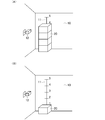
- FIG. 1 is a schematic diagram showing a part of an example (first embodiment) of the first inventory management system of the present invention.
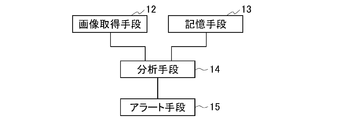
- FIG. 2 is a block diagram showing a part of an example (first embodiment) of the first inventory management system of the present invention.
- FIG. 3 is a schematic diagram showing a part of a modified example (Embodiment 1) of the first inventory management system of the present invention and a part of an example (Embodiment 2) of the second inventory management system of the present invention.
- FIG. 4 is a block diagram showing a part of an example (second embodiment) of the second inventory management system of the present invention.
- FIG. 5 is a schematic diagram showing a part of another example (Embodiment 3) of the first inventory management system of the present invention.
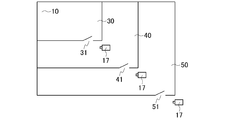
- FIG. 6 is a schematic diagram showing a part of still another example (Embodiment 4) of the first inventory management system of the present invention.
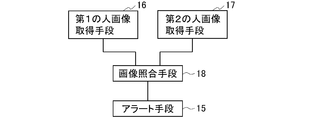
- FIG. 7 is a block diagram showing a part of still another example (Embodiment 4) of the first inventory management system of the present invention.
- FIG. 8 is a schematic diagram showing a part of another modified example (embodiment 1) of the first inventory management system of the present invention.
- the analysis unit compares the threshold value with the on-time inventory information in the storage unit, and When the information exceeds the threshold value, it is determined that the management object is stolen, and when the inventory information is equal to or less than the threshold value, it is determined that the management object is insufficient in stock. When it is determined that the theft has occurred, a theft alert is output, and when the analysis unit determines that the inventory is insufficient, an inventory shortage alert is output.
- the threshold value is compared with the on-time inventory information in the storage step in the analysis step, When the inventory information exceeds the threshold, it is determined that the management object is stolen, and when the inventory information is equal to or less than the threshold, it is determined that the management object is insufficient, and the analysis is performed in the output step.
- a theft alert is output.
- an inventory shortage alert is output.
- the first inventory management system of the present invention further includes, for example, point-of-sale information management (POS) means, and the POS means includes the storage means.
- POS point-of-sale information management
- the marker is arranged in at least one location selected from the group consisting of a side surface, a back surface, and a bottom surface inside the shelf. Has been.
- the marker is a scale marker
- each scale of the scale marker corresponds to a placement amount of the management object placed on the shelf.
- the marker is a scale marker
- each scale of the scale marker corresponds to the placement amount of the management object placed on the shelf.
- the analysis step when the image of the scale marker is acquired in the image acquisition step, the on-time inventory information in the storage step is compared with the placement amount corresponding to the scale of the acquired image. .
- the analysis unit collates on-time inventory information in the storage unit with a placement amount corresponding to the scale of the acquired image, and the inventory information is In the case where it does not coincide with the above described quantity, it is judged that the management object is stolen. In the case where the inventory information coincides with the above quantity, it is judged that the inventory of the management object is insufficient, and the alert means When the analysis unit determines that the theft is theft, a theft alert is output, and when the analysis unit determines that the inventory is insufficient, the inventory shortage alert corresponding to the placement amount is output.
- the on-time inventory information in the storage process is compared with the placement amount corresponding to the scale of the acquired image, and the inventory process is performed. If the information does not match the previously described quantity, it is determined that the managed object is stolen, and if the inventory information matches the previously described quantity, it is determined that the managed object is insufficient in stock, In the output step, when it is determined that the theft is performed in the analysis step, a theft alert is output, and when it is determined that the inventory is insufficient in the analysis step, an inventory shortage alert corresponding to the above-described placement amount is output.
- the analysis unit collates a threshold value with a decrease amount of the management object, and the management unit
- the alert means outputs a theft alert when the analyzing means determines theft, and outputs an inventory shortage alert when the analyzing means determines that the inventory is insufficient.
- a threshold value is compared with a decrease amount of the management target in the analysis step.
- the amount of decrease in the management target exceeds the threshold, it is determined that the management target is stolen.
- the amount of decrease in the management target is equal to or less than the threshold, it is determined that the management target is insufficient.
- a theft alert is output when it is determined in the analysis step that the theft has been stolen, and an inventory shortage alert is output in the case where it is determined that the stock is insufficient in the analysis step.
- the first and second inventory management systems of the present invention further include, for example, a first human image acquisition unit, and the first human image acquisition unit, when the analysis unit determines theft, An image of a person in contact with the management object on the shelf is acquired.
- the first and second inventory management methods of the present invention may further include, for example, a first image acquisition that acquires an image of a person who has contacted the management target object on the shelf when it is determined that the theft in the analysis step. Process.
- the first and second inventory management systems of the present invention further include, for example, a second human image acquisition unit and an image collation unit, and the second human image acquisition unit includes the analysis unit being stolen.
- the image collating unit includes the first image acquired by the first human image acquiring unit and the second person.
- the second image acquired by the image acquisition means is collated, and if the alert means determines that the person in the first image and the person in the second image are the same person, An alert indicating the escape from the exit of the area is output.
- the first and second inventory management methods of the present invention further include, for example, a second method of acquiring an image of a person who exits from an exit of an area where the shelf is installed when it is determined that the theft in the analysis step.
- a human image acquisition step an image verification step of comparing the first image acquired in the first human image acquisition step and the second image acquired in the second human image acquisition step, and the output
- an alert indicating that the theft has escaped from the exit of the area is output.
- the person image is at least one of a face image and a body image.
- the first embodiment relates to an example of a first inventory management system and a first inventory management method of the present invention.
- the inventory management system of this example includes a shelf 10, a marker 11, an image acquisition unit 12, a storage unit 13, an analysis unit 14, and an alert unit 15.
- the shelf 10 is a shelf on which the management object 20 is placed.
- the management target 20 is not particularly limited, and is, for example, an article that requires inventory management that can be placed on the shelf 10.
- the management target 20 is a product in a store, a stored item in a warehouse, a magazine distributed free of charge, and the like. Brochures and so on.
- the stores to which the inventory management system and the inventory management method of the present invention can be applied are not particularly limited, and examples thereof include various stores having merchandise display shelves such as drug stores, supermarkets, convenience stores, book stores, and home appliance mass retailers. It is done.
- the inventory management system and inventory management method of the present invention can be applied to, for example, factories and laboratories, and can manage raw materials, reagents and the like as management objects.
- the marker 11 is arranged on the shelf 10 at a location blocked from the image acquisition means 12 by the management object 20 placed.
- the marker 11 is arranged on the bottom surface of the shelf 10, and as shown in FIG. 1A, in the state where the management object 20 is placed on the shelf 10, the image is displayed. It is blocked from the acquisition means 12.
- FIG. 1B is merely an example, and the marker 11 may be arranged at any location on the shelf 10 as long as the marker 11 is blocked from the image acquisition unit 12 by the management object 20 to be placed. .
- the marker 11 is a black circle mark.
- the marker 11 may be, for example, a mark that can acquire the image by the image acquisition unit 12, and may be a one-dimensional code such as a barcode, a two-dimensional code such as a QR code (registered trademark), or the like.
- the one-dimensional code and the two-dimensional code may include information on the management target 20 and the like.
- the marker 11 may be plural (two or more). When there are a plurality of markers 11, for example, all the markers 11 may be of the same type or may include a plurality of types of markers 11.
- a black circle marker 11 is arranged in the display portion of the high-priced product, and a black square marker 11 is arranged in the display portion of the low-priced product.
- FIG. 8B is merely an example, and there may be three or more markers 11 or three or more types. This is the same in the second and subsequent embodiments.
- the image acquisition unit 12 acquires an image of the marker 11.
- the image acquisition unit 12 is not particularly limited, and examples thereof include a camera.
- the installation location of the image acquisition unit 12 is not particularly limited, and may be installed at an appropriate position where the image of the marker 11 can be acquired.
- the image acquisition unit 12 is installed on the upper surface of the shelf 10, but when the shelf 10 does not have an upper surface, the shelf 10 is installed. You may install in the ceiling of an area, and you may install in the arbitrary positions which can acquire the image of the markers 11 other than the ceiling of the said area.
- the storage unit 13 updates and stores the on-time inventory information of the management target object 20 on the shelf 10 based on the sales information of the management target object 20.
- the first inventory management system of the present invention may further include, for example, a POS unit, and the POS unit may include the storage unit 13.
- the POS means may be, for example, a POS system (point of sales system).
- the analyzing unit 14 analyzes the online inventory information in the storage unit 13 when the image acquiring unit 12 acquires the image of the marker 11.
- An example of the analysis means 14 is a central processing unit (Central Processing Unit, CPU).
- the alert unit 15 outputs an alert corresponding to the analysis result of the analysis unit 14.
- Examples of the alert means 15 include an alarm device that emits a warning sound and a patrol lamp that emits warning light. Further, the alert unit 15 may be a unit that transmits a warning signal to, for example, a terminal possessed by an administrator of the management target 20 such as a store clerk.
- the analysis unit 14 first collates the threshold value with the on-time inventory information in the storage unit 13, and the inventory information exceeds the threshold value. Determines that the managed object 20 is stolen. If the inventory information is equal to or less than the threshold, it is determined that the managed object 20 is insufficient in stock.
- the marker 11 is disposed at a location that is blocked from the image acquisition unit 12 by the management object 20 to be placed. Therefore, the fact that the image acquisition means 12 acquires the image of the marker 11 means that the marker 11 is exposed, that is, the placement amount of the management target 20 has decreased. That is, the analysis unit 14 collates the threshold value with the on-time inventory information in the storage unit 13 when the placement amount of the management target 20 decreases.
- the case where the inventory information exceeds the threshold as a result of the collation is a case where the inventory quantity based on the sales information is large. In this case, although the inventory amount based on the sales information is large, it can be said that the placement amount of the management target 20 is small.
- the analysis unit 14 determines that the management target 20 is stolen.
- the inventory information is equal to or less than the threshold as a result of the collation, the inventory quantity based on the sales information is small. In this case, it can be said that the inventory amount based on the sales information is small and the placement amount of the management object is also small. Therefore, in this case, the analysis unit 14 determines that the inventory of the management target 20 is insufficient, not theft.
- the threshold value can be arbitrarily set according to the number of managed objects 20 that are normally purchased at the same time, for example, 2 or 3. For example, when the threshold is 2, as shown in FIGS. 1A and 1B, when the inventory information is 5, and the image acquisition unit 12 acquires the image of the marker 11, the analysis is performed. The means 14 determines that the management target 20 is stolen. On the other hand, for example, when the threshold value is 2 and the inventory information is 1 or 2, and the image acquisition unit 12 acquires the image of the marker 11, the analysis unit 14 stores the inventory of the management target 20. Judged as insufficient. That is, as shown in FIG. 1B, when the marker 11 is disposed on the bottom surface of the shelf 10, it is determined that the stock is out of stock.
- the acquisition time may be measured when the image acquisition unit 12 acquires the image of the marker 11. According to this, it is further possible to grasp the occurrence time of inventory shortage or theft. The same applies to the second and subsequent embodiments.
- the alert means 15 outputs a theft alert when the analysis means 14 determines that the theft is theft, and outputs an alert for inventory shortage when the analysis means 14 determines that the inventory is insufficient.
- the theft alert and the out-of-stock alert may be distinguishable depending on, for example, the type of warning sound, the patrol lamp blinking method, the color difference, and the like.
- the first inventory management system of the present invention shown in FIGS. 1 and 2 for example, by comparing the threshold value with the on-time inventory information in the storage unit 13, It is possible to determine whether the theft or the shortage of inventory, and to output an alert corresponding thereto.
- the marker 11 is a scale marker arranged on the back surface of the shelf 10, and the image acquisition unit 12 can acquire an image of the scale marker 11. Moreover, it is the same as the inventory management system shown in FIGS. 1 and 2 except that it is installed on the left side of the shelf 10. As shown in FIGS. 3A and 3B, each scale of the scale marker 11 corresponds to the placement amount of the management object 20 placed on the shelf 10.
- the scale marker 11 may be arranged at any location on the shelf 10 as long as it is a location that is blocked from the image acquisition means 12 by the management object 20 to be placed.
- the installation location of the image acquisition unit 12 is not particularly limited, and may be installed at an appropriate position where the image of the scale marker 11 can be acquired.
- the image acquisition unit 12 may be installed on the right side surface of the shelf 10, and the scale marker 11 may be disposed on the left side surface of the shelf 10 that is blocked from the image acquisition unit 12 by the management object 20 to be placed. Good.
- the analysis unit 14 stores the on-time inventory information in the storage unit 13 and the placement amount corresponding to the scale of the acquired image. If the inventory information does not match the previously described quantity, it is determined that the managed object 20 is stolen, and if the inventory information matches the previously stated quantity, the managed object 20 Judged as insufficient stock. For example, as shown in FIGS. 3 (A) and 3 (B), when the inventory information is 4, if the above-mentioned placement quantity is 1 and they do not match, the analysis means 14 will manage the management object. Judge 20 theft. On the other hand, for example, when the inventory information is 1, if the above-mentioned placement amount is 1 and they match, the analysis unit 14 determines that the management target 20 is short of inventory.
- the alert unit 15 outputs a theft alert when the analyzing unit 14 determines that the theft is detected, and outputs an alert for the shortage of inventory corresponding to the above-described placement when the analyzing unit 14 determines that the inventory is insufficient. To do.
- the on-time inventory information in the storage unit 13 is collated with the placement amount corresponding to the scale so that the managed object 20 is either stolen or insufficient. Can be determined, and an alert corresponding to that can be output.
- the second embodiment relates to an example of a second inventory management system and inventory management method of the present invention.
- FIGS. 3 and 4 An example of the inventory management system of this embodiment will be described with reference to FIGS. As shown in FIGS. 3 and 4, the inventory management system of this example is the same as the inventory management system of the modified example of Embodiment 1 except that the storage unit 13 is not included.
- the analysis unit 14 calculates the decrease amount of the management target 20 based on the placement amount corresponding to the acquired scale. Analyzing, the alert unit 15 outputs an alert corresponding to the analysis result of the analysis unit 14.
- the analysis unit 14 compares the threshold value with the decrease amount of the management target 20, and the decrease amount of the management target 20 is the above-described amount. When the threshold value is exceeded, it is determined that the managed object 20 is stolen. When the amount of decrease of the managed object 20 is equal to or less than the threshold value, it is determined that the managed object 20 is in short supply.
- the graduated marker 11 is disposed inside the shelf and at least one of the side surface and the back surface. That is, the scale marker 11 is disposed at a location that is blocked from the image acquisition means 12 by the management object 20 to be placed. Therefore, the fact that the image acquisition means 12 acquires the image of the scale marker 11 means that the scale marker 11 is exposed, that is, the placement amount of the management target 20 has decreased. That is, the analysis unit 14 collates the threshold value with the decrease amount of the management target object 20 when the placement amount of the management target object 20 decreases. As a result of the collation, the case where the amount of decrease in the management target 20 exceeds the threshold is the case where the amount of decrease in the management target 20 is large.
- the analysis unit 14 determines that the management target 20 is stolen.
- the amount of decrease in the management target 20 is equal to or less than the threshold as a result of the collation, the amount of decrease in the management target 20 is small. In this case, it can be said that the placement amount of the management object 20 is reduced and the reduction amount is within a normal range. Therefore, in this case, the analysis unit 14 determines that the inventory of the management target 20 is insufficient.
- the analysis unit 14 steals the management target 20. Judge. On the other hand, for example, when the threshold is 3 and the amount of decrease in the management target 20 is 3, the analysis unit 14 determines that the management target 20 is in short supply.
- the alert means 15 outputs a theft alert when the analysis means 14 determines that the theft is theft, and outputs an alert for inventory shortage when the analysis means 14 determines that the inventory is insufficient.
- the third embodiment relates to another example of the first inventory management system of the present invention.
- the inventory management system of the present example is the same as the inventory management system shown in FIGS. 1 and 2 of the first embodiment except that the inventory management system of the present example further includes a first human image acquisition unit 16. It is.
- the 1st person image acquisition means 16 acquires the image of the person who contacted management object 20 of shelf 10, when analysis means 14 judges that it was theft.
- the first human image acquisition unit 16 is not particularly limited, and examples thereof include a camera.
- the installation location of the first human image acquisition unit 16 is not particularly limited, and may be installed at an appropriate position where an image of a person who contacts the management target 20 on the shelf 10 can be acquired.
- the first human image acquisition unit 16 is installed on the left side surface of the shelf 10, but can acquire an image of the person in the area where the shelf 10 is installed. You may install in arbitrary positions.
- the person image is, for example, an image that can identify a person who has touched the management target 20 on the shelf 10, and includes a face image, a body image, and the like.
- the image acquisition means 12 for acquiring the image of the marker 11 may also serve as the first human image acquisition means 16, but from the viewpoint of person identification accuracy, it is shown in FIGS. 5 (A) and (B). As described above, it is preferable to provide the first human image acquisition means 16 separately from the image acquisition means 12.
- the inventory management system of this embodiment in addition to the effects obtained by the inventory management system shown in FIGS. 1 and 2 of Embodiment 1, it is possible to acquire an evidence image that identifies a person who may be a theft.
- the case where the inventory management system shown in FIG. 1 and FIG. 2 of the first embodiment further includes the first human image acquisition unit has been described as an example. Even when the management system and the inventory management system of the second embodiment further include the first human image acquisition means, the same effects as those of the present embodiment can be obtained.
- the fourth embodiment relates to still another example of the first inventory management system of the present invention.
- the inventory management system of this example is the same as the inventory management system of the third embodiment except that it further includes a second human image acquisition unit 17 and an image collation unit 18. .
- the second human image acquisition unit 17 acquires an image of a person who has left the exit of the area where the shelf 10 is installed when the analysis unit 14 determines that the theft has been stolen.
- the second human image acquisition unit 17 is not particularly limited, and examples thereof include a camera.
- the 2nd person image acquisition means 17 may be installed in two or more of these places, and it may be made possible to acquire the said person's image in two or more places.
- the image collating unit 18 collates the first image acquired by the first human image acquiring unit 16 and the second image acquired by the second human image acquiring unit 17.
- the image collating unit 18 is not particularly limited, and examples thereof include a CPU, and the analyzing unit 14 may have the function of the image collating unit 18.
- the collation method by the image collating means 18 is not particularly limited. For example, a method based on similarity calculation between the first image and the second image, a ratio of distances between feature points such as eyes, nose, mouth, etc.
- a conventionally known person authentication method such as a method using a feature amount such as a direction of a line connecting the lines may be used.
- the alert means 15 further determines that the theft has escaped from the exit of the area when the person in the first image and the person in the second image are determined to be the same person.
- the alert which shows is output. This alert may be distinguishable from the theft alert and the inventory shortage alert by, for example, the type of warning sound, the patrol lamp blinking method, and the color difference.
- the program of this embodiment is a program that can execute the above-described inventory management method on a computer.
- the program of this embodiment may be recorded on a computer-readable recording medium, for example.
- the recording medium is not particularly limited, and examples thereof include a random access memory (RAM), a read-only memory (ROM), a hard disk (HD), an optical disk, and a floppy (registered trademark) disk (FD).
- the inventory management system and inventory management method of the present invention can determine, for example, whether a managed object is stolen or insufficient in stock, and can output an alert according to the determination. For this reason, for example, it is extremely useful in inventory management of merchandise in stores, stored items in warehouses, and the like.
Landscapes
- Business, Economics & Management (AREA)
- Engineering & Computer Science (AREA)
- Economics (AREA)
- Physics & Mathematics (AREA)
- General Physics & Mathematics (AREA)
- Operations Research (AREA)
- Strategic Management (AREA)
- Theoretical Computer Science (AREA)
- General Business, Economics & Management (AREA)
- Entrepreneurship & Innovation (AREA)
- Human Resources & Organizations (AREA)
- Marketing (AREA)
- Tourism & Hospitality (AREA)
- Quality & Reliability (AREA)
- Development Economics (AREA)
- Life Sciences & Earth Sciences (AREA)
- General Life Sciences & Earth Sciences (AREA)
- Geophysics (AREA)
- Accounting & Taxation (AREA)
- Finance (AREA)
- Mechanical Engineering (AREA)
- Geophysics And Detection Of Objects (AREA)
- Management, Administration, Business Operations System, And Electronic Commerce (AREA)
- Burglar Alarm Systems (AREA)
Abstract
本発明は、管理対象物の在庫状態を把握可能な、利便性に優れる新たな在庫管理システムを提供する。本発明の在庫管理システムは、棚10と、マーカ11と、画像取得手段12と、記憶手段と、分析手段と、アラート手段とを含み、棚10は、管理対象物20が載置される棚であり、マーカ11は、棚10において、載置される管理対象物20によって画像取得手段12から遮られる箇所に配置され、画像取得手段12は、マーカ11の画像を取得し、前記記憶手段は、管理対象物20の販売情報に基づき、棚10の管理対象物20のオンタイムの在庫情報を更新記録し、前記分析手段は、画像取得手段12がマーカ11の画像と取得すると、前記記憶手段におけるオンタイムの在庫情報を分析し、前記アラート手段は、前記分析手段に応じたアラートを出力することを特徴とする。
Description
本発明は、在庫管理システム、在庫管理方法、プログラム、および記録媒体に関する。
パンフレットの陳列棚において、パンフレットの在庫状態を自動的に認識・管理する在庫管理装置が提案されている(特許文献1)。この在庫管理装置では、目印上に管理対象物(前記パンフレット)を配置し、撮像手段により得られた画像から前記目印が認識されない場合は、前記管理対象物が存在し在庫があると判断し、前記目印が識別された場合は前記管理対象物が存在せず在庫がないと判断する。
前述の在庫管理装置は、人手によらない前記管理対象物の在庫切れの確認が可能となるに留まる。このため、管理対象物の在庫状態を把握可能な、利便性に優れる新たな在庫管理システムが求められている。
そこで、本発明は、管理対象物の在庫状態を把握可能な、利便性に優れる新たな在庫管理システム、在庫管理方法、プログラム、および記録媒体の提供を目的とする。
前記目的を達成するために、本発明の第1の在庫管理システムは、
棚と、マーカと、画像取得手段と、記憶手段と、分析手段と、アラート手段とを含み、
前記棚は、管理対象物が載置される棚であり、
前記マーカは、前記棚において、載置される前記管理対象物によって前記画像取得手段から遮られる箇所に配置され、
前記画像取得手段は、前記マーカの画像を取得し、
前記記憶手段は、前記管理対象物の販売情報に基づき、前記棚の管理対象物のオンタイムの在庫情報を更新記憶し、
前記分析手段は、前記画像取得手段が前記マーカの画像を取得すると、前記記憶手段におけるオンタイムの在庫情報を分析し、
前記アラート手段は、前記分析手段の分析結果に応じたアラートを出力することを特徴とする。
棚と、マーカと、画像取得手段と、記憶手段と、分析手段と、アラート手段とを含み、
前記棚は、管理対象物が載置される棚であり、
前記マーカは、前記棚において、載置される前記管理対象物によって前記画像取得手段から遮られる箇所に配置され、
前記画像取得手段は、前記マーカの画像を取得し、
前記記憶手段は、前記管理対象物の販売情報に基づき、前記棚の管理対象物のオンタイムの在庫情報を更新記憶し、
前記分析手段は、前記画像取得手段が前記マーカの画像を取得すると、前記記憶手段におけるオンタイムの在庫情報を分析し、
前記アラート手段は、前記分析手段の分析結果に応じたアラートを出力することを特徴とする。
本発明の第2の在庫管理システムは、
棚と、目盛り状マーカと、画像取得手段と、分析手段と、アラート手段とを含み、
前記棚は、管理対象物が載置される棚であり、
前記目盛り状マーカは、前記棚の内側であって、側面および背面の少なくとも一方の箇所に配置され、
前記目盛り状マーカの各目盛りは、前記棚に載置される前記管理対象物の載置量に対応し、
前記画像取得手段は、前記目盛り状マーカの画像を取得し、
前記分析手段は、前記画像取得手段が前記目盛り状マーカの画像を取得すると、前記取得した目盛りに対応する載置量に基づき、前記管理対象物の減少量を分析し、
前記アラート手段は、前記分析手段の分析結果に応じたアラートを出力することを特徴とする。
棚と、目盛り状マーカと、画像取得手段と、分析手段と、アラート手段とを含み、
前記棚は、管理対象物が載置される棚であり、
前記目盛り状マーカは、前記棚の内側であって、側面および背面の少なくとも一方の箇所に配置され、
前記目盛り状マーカの各目盛りは、前記棚に載置される前記管理対象物の載置量に対応し、
前記画像取得手段は、前記目盛り状マーカの画像を取得し、
前記分析手段は、前記画像取得手段が前記目盛り状マーカの画像を取得すると、前記取得した目盛りに対応する載置量に基づき、前記管理対象物の減少量を分析し、
前記アラート手段は、前記分析手段の分析結果に応じたアラートを出力することを特徴とする。
本発明の第1の在庫管理方法は、
棚において、載置される管理対象物によって遮られる箇所に配置されたマーカの画像を取得する画像取得工程と、
前記管理対象物の販売情報に基づき、前記棚の管理対象物のオンタイムの在庫情報を更新管理する記憶工程と、
前記画像取得工程において前記マーカの画像を取得すると、前記記憶工程におけるオンタイムの在庫情報を分析する分析工程と、
前記分析工程における分析結果に応じたアラートを出力する出力工程と、
を含むことを特徴とする。
棚において、載置される管理対象物によって遮られる箇所に配置されたマーカの画像を取得する画像取得工程と、
前記管理対象物の販売情報に基づき、前記棚の管理対象物のオンタイムの在庫情報を更新管理する記憶工程と、
前記画像取得工程において前記マーカの画像を取得すると、前記記憶工程におけるオンタイムの在庫情報を分析する分析工程と、
前記分析工程における分析結果に応じたアラートを出力する出力工程と、
を含むことを特徴とする。
本発明の第2の在庫管理方法は、
棚の内側であって、側面および背面の少なくとも一方の箇所に配置され、各目盛りが、前記棚に載置される管理対象物の載置量に対応する目盛り状マーカの画像を取得する画像取得工程と、
前記画像取得工程において前記目盛り状マーカの画像を取得すると、前記取得した目盛りに対応する載置量に基づき、前記管理対象物の減少量を分析する分析工程と、
前記分析工程における分析結果に応じたアラートを出力する出力工程と、
を含むことを特徴とする。
棚の内側であって、側面および背面の少なくとも一方の箇所に配置され、各目盛りが、前記棚に載置される管理対象物の載置量に対応する目盛り状マーカの画像を取得する画像取得工程と、
前記画像取得工程において前記目盛り状マーカの画像を取得すると、前記取得した目盛りに対応する載置量に基づき、前記管理対象物の減少量を分析する分析工程と、
前記分析工程における分析結果に応じたアラートを出力する出力工程と、
を含むことを特徴とする。
本発明のプログラムは、前記本発明の第1または第2の在庫管理方法をコンピュータ上で実行可能なことを特徴とする。
本発明のコンピュータ読み取り可能な記録媒体は、前記本発明のプログラムを記録していることを特徴とする。
本発明によれば、管理対象物の在庫状態を把握可能な、利便性に優れる新たな在庫管理システム、在庫管理方法、プログラム、および記録媒体を提供可能である。
本発明の第1の在庫管理システムにおいて、例えば、前記画像取得手段が前記マーカの画像を取得すると、前記分析手段は、閾値と、前記記憶手段におけるオンタイムの在庫情報とを照合し、前記在庫情報が前記閾値を超える場合は、前記管理対象物の盗難と判断し、前記在庫情報が前記閾値以下の場合は、前記管理対象物の在庫不足と判断し、前記アラート手段は、前記分析手段が盗難と判断した場合は、盗難用アラートを出力し、前記分析手段が在庫不足と判断した場合は、在庫不足用アラートを出力する。
また、本発明の第1の在庫管理方法では、例えば、前記画像取得工程において前記マーカの画像を取得すると、前記分析工程において、閾値と、前記記憶工程におけるオンタイムの在庫情報とを照合し、前記在庫情報が前記閾値を超える場合は、前記管理対象物の盗難と判断し、前記在庫情報が前記閾値以下の場合は、前記管理対象物の在庫不足と判断し、前記出力工程において、前記分析工程において盗難と判断した場合は、盗難用アラートを出力し、前記分析工程において在庫不足と判断した場合は、在庫不足用アラートを出力する。
本発明の第1の在庫管理システムは、例えば、さらに、販売時点情報管理(POS)手段を有し、前記POS手段が、前記記憶手段を有する。
本発明の第1の在庫管理システムおよび第1の在庫管理方法において、例えば、前記マーカは、前記棚の内側であって、側面、背面および底面からなる群から選択される少なくとも一つの箇所に配置されている。
本発明の第1の在庫管理システムにおいて、例えば、前記マーカは、目盛り状マーカであり、前記目盛り状マーカの各目盛りは、前記棚に載置される前記管理対象物の載置量に対応し、前記分析手段は、前記画像取得手段が前記目盛り状マーカの画像を取得すると、前記記憶手段におけるオンタイムの在庫情報と、前記取得した画像の目盛りに対応する載置量とを照合する。
また、本発明の第1の在庫管理方法において、例えば、前記マーカは、目盛り状マーカであり、前記目盛り状マーカの各目盛りは、前記棚に載置される前記管理対象物の載置量に対応し、前記分析工程において、前記画像取得工程において前記目盛り状マーカの画像を取得すると、前記記憶工程におけるオンタイムの在庫情報と、前記取得した画像の目盛りに対応する載置量とを照合する。
本発明の第1の在庫管理システムにおいて、例えば、前記分析手段は、前記記憶手段におけるオンタイムの在庫情報と、前記取得した画像の目盛りに対応する載置量とを照合し、前記在庫情報が、前記載置量と一致しない場合は、前記管理対象物の盗難と判断し、前記在庫情報が、前記載置量と一致する場合は、前記管理対象物の在庫不足と判断し、前記アラート手段は、前記分析手段が盗難と判断した場合は、盗難用アラートを出力し、前記分析手段が在庫不足と判断した場合は、前記載置量に応じた在庫不足用アラートを出力する。
また、本発明の第1の在庫管理方法では、例えば、前記分析工程において、前記記憶工程におけるオンタイムの在庫情報と、前記取得した画像の目盛りに対応する載置量とを照合し、前記在庫情報が、前記載置量と一致しない場合は、前記管理対象物の盗難と判断し、前記在庫情報が、前記載置量と一致する場合は、前記管理対象物の在庫不足と判断し、前記出力工程において、前記分析工程において盗難と判断した場合は、盗難用アラートを出力し、前記分析工程において在庫不足と判断した場合は、前記載置量に応じた在庫不足用アラートを出力する。
本発明の第2の在庫管理システムにおいて、例えば、前記画像取得手段が前記目盛り状マーカの画像を取得すると、前記分析手段は、閾値と、前記管理対象物の減少量とを照合し、前記管理対象物の減少量が前記閾値を超える場合は、前記管理対象物の盗難と判断し、前記管理対象物の減少量が前記閾値以下の場合は、前記管理対象物の在庫不足と判断し、前記アラート手段は、前記分析手段が盗難と判断した場合は、盗難用アラートを出力し、前記分析手段が在庫不足と判断した場合は、在庫不足用アラートを出力する。
また、本発明の第2の在庫管理方法では、例えば、前記画像取得工程において前記目盛り状マーカの画像を取得すると、前記分析工程において、閾値と、前記管理対象物の減少量とを照合し、前記管理対象物の減少量が前記閾値を超える場合は、前記管理対象物の盗難と判断し、前記管理対象物の減少量が前記閾値以下の場合は、前記管理対象物の在庫不足と判断し、前記出力工程において、前記分析工程において盗難と判断した場合は、盗難用アラートを出力し、前記分析工程において在庫不足と判断した場合は、在庫不足用アラートを出力する。
本発明の第1および第2の在庫管理システムは、例えば、さらに、第1の人画像取得手段を含み、前記第1の人画像取得手段は、前記分析手段が盗難と判断したときに、前記棚の管理対象物に接触した人物の画像を取得する。
また、本発明の第1および第2の在庫管理方法は、例えば、さらに、前記分析工程において盗難と判断したとき、前記棚の管理対象物に接触した人物の画像を取得する第1の画像取得工程を含む。
本発明の第1および第2の在庫管理システムは、例えば、さらに、第2の人画像取得手段と、画像照合手段とを含み、前記第2の人画像取得手段は、前記分析手段が盗難と判断したとき、前記棚を設置したエリアの出口から退出する人物の画像を取得し、前記画像照合手段は、前記第1の人画像取得手段で取得された第1画像と、前記第2の人画像取得手段で取得された第2画像とを照合し、前記アラート手段は、さらに、前記第1画像の人物と前記第2画像の人物とが同一人物であると判断した場合は、盗難者が前記エリアの出口から逃亡したことを示すアラートを出力する。
また、本発明の第1および第2の在庫管理方法は、例えば、さらに、前記分析工程において盗難と判断したとき、前記棚を設置したエリアの出口から退出する人物の画像を取得する第2の人画像取得工程と、前記第1の人画像取得工程において取得した第1画像と、前記第2の人画像取得工程において取得した第2画像とを照合する画像照合工程と、を含み、前記出力工程において、さらに、前記第1画像の人物と前記第2画像の人物とが同一人物と判断した場合は、盗難者が前記エリアの出口から逃亡したことを示すアラートを出力する。
本発明の第1および第2の在庫管理システム、並びに、本発明の第1および第2の在庫管理方法において、例えば、前記人物の画像が、顔画像および身体画像の少なくとも一方である。
つぎに、本発明の実施形態について、図を用いて説明する。本発明は、以下の実施形態によって何ら限定および制限されない。以下の図1から図8において、同一部分には、同一符号を付している。また、各実施形態の説明は、特に言及がない限り、互いの説明を援用でき、さらに、組合せ可能である。
[実施形態1]
実施形態1は、本発明の第1の在庫管理システムおよび第1の在庫管理方法の例に関する。
実施形態1は、本発明の第1の在庫管理システムおよび第1の在庫管理方法の例に関する。
図1および図2を用いて、本実施形態の在庫管理システムの一例について説明する。図1および図2に示すように、本例の在庫管理システムは、棚10と、マーカ11と、画像取得手段12と、記憶手段13と、分析手段14と、アラート手段15とを含む。
棚10は、管理対象物20が載置される棚である。管理対象物20は、特に制限されず、例えば、棚10に載置可能な在庫管理を必要とする物品であり、具体的には、店舗における商品、倉庫における保管物、無料配布される雑誌およびパンフレット等があげられる。本発明の在庫管理システムおよび在庫管理方法を適用可能な前記店舗も、特に制限されず、例えば、ドラッグストア、スーパーマーケット、コンビニエンスストア、本屋、家電量販店等、商品の陳列棚を有する各種店舗があげられる。この他に、本発明の在庫管理システムおよび在庫管理方法は、例えば、工場、研究所にも適用でき、原料、試薬等を管理対象物として管理することもできる。
マーカ11は、棚10において、載置される管理対象物20によって画像取得手段12から遮られる箇所に配置される。例えば、図1(B)では、マーカ11は、棚10の底面に配置されており、図1(A)に示すように、棚10に管理対象物20が載置された状態においては、画像取得手段12から遮られている。ただし、図1(B)は、例示に過ぎず、マーカ11は、載置される管理対象物20によって画像取得手段12から遮られる箇所であれば、棚10のいかなる箇所に配置してもよい。
図1(B)に示す例では、マーカ11を、黒丸の目印としている。ただし、本発明は、この例に限定されない。マーカ11は、例えば、画像取得手段12によりその画像を取得可能な目印であればよく、バーコード等の一次元コード、QRコード(登録商標)等の二次元コード等であってもよい。前記一次元コードおよび前記二次元コードは、管理対象物20に関する情報等を含んでもよい。
本発明の在庫管理システムにおいて、例えば、図8(A)および(B)に示すように、マーカ11は、複数(2つ以上)であってもよい。マーカ11が複数である場合には、例えば、全てのマーカ11が同一種類であってもよいし、複数種類のマーカ11を含んでもよい。図8(B)に示す例においては、高額商品の陳列部分には、黒丸のマーカ11を、低額商品の陳列部分には、黒い四角のマーカ11を配置している。ただし、図8(B)は、例示に過ぎず、マーカ11は、3つ以上であってもよく、3種類以上であってもよい。この点については、実施形態2以降においても同様である。
画像取得手段12は、マーカ11の画像を取得する。画像取得手段12としては、特に制限されず、例えば、カメラ等があげられる。画像取得手段12の設置箇所は、特に制限されず、マーカ11の画像を取得可能な適宜の位置に設置すればよい。例えば、図1(A)および(B)では、画像取得手段12は、棚10の上面に設置されているが、棚10が上面を有さないものである場合には、棚10を設置したエリアの天井に設置してもよいし、前記エリアの天井以外のマーカ11の画像を取得可能な任意の位置に設置してもよい。
記憶手段13は、管理対象物20の販売情報に基づき、棚10の管理対象物20のオンタイムの在庫情報を更新記憶する。前述のとおり、本発明の第1の在庫管理システムは、例えば、さらに、POS手段を有し、前記POS手段が、記憶手段13を有してもよい。前記POS手段は、例えば、POSシステム(point of sales system)であってもよい。
分析手段14は、画像取得手段12がマーカ11の画像を取得すると、記憶手段13におけるオンラインの在庫情報を分析する。分析手段14は、例えば、中央演算処理装置(Central Processing Unit、CPU)等があげられる。
アラート手段15は、分析手段14の分析結果に応じたアラートを出力する。アラート手段15としては、例えば、警告音を発する警報機、警告光を発するパトランプ等があげられる。また、アラート手段15は、例えば、店員等の管理対象物20の管理者が所持する端末等に、警告信号を送信する手段であってもよい。
つぎに、本発明の第1の在庫管理システムを用いた第1の在庫管理方法について、例をあげて説明する。本例では、画像取得手段12がマーカ11の画像を取得すると、まず、分析手段14が、閾値と、記憶手段13におけるオンタイムの在庫情報とを照合し、前記在庫情報が前記閾値を超える場合は、管理対象物20の盗難と判断し、前記在庫情報が前記閾値以下の場合は、管理対象物20の在庫不足と判断する。
例えば、以下のように判断することができる。前述のように、マーカ11は、載置される管理対象物20によって、画像取得手段12から遮られる箇所に配置されている。したがって、画像取得手段12がマーカ11の画像を取得するということは、マーカ11が露出している、すなわち、管理対象物20の載置量が減少したことを意味する。つまり、分析手段14は、管理対象物20の載置量が減少した場合に、閾値と、記憶手段13におけるオンタイムの在庫情報とを照合する。そして、前記照合の結果、前記在庫情報が前記閾値を超える場合とは、販売情報に基づく在庫量が多い場合である。この場合、販売情報に基づく在庫量が多いにも関わらず、管理対象物20の載置量が少ない状態ということができる。したがって、この場合、分析手段14は、管理対象物20の盗難と判断する。一方、前記照合の結果、前記在庫情報が前記閾値以下の場合とは、販売情報に基づく在庫量が少ない場合である。この場合、販売情報に基づく在庫量が少なく、前記管理対象物の載置量も少ない状態ということができる。したがって、この場合、分析手段14は、盗難ではなく、管理対象物20の在庫不足と判断する。
前記閾値は、管理対象物20が通常同時に購入される個数等に応じて任意に設定可能であり、例えば、2または3である。例えば、前記閾値が2であるときに、図1(A)および(B)に示すように、前記在庫情報が5であって、画像取得手段12がマーカ11の画像を取得したときは、分析手段14は、管理対象物20の盗難と判断する。一方、例えば、前記閾値が2であるときに、前記在庫情報が1または2であって、画像取得手段12がマーカ11の画像を取得したときは、分析手段14は、管理対象物20の在庫不足と判断する。つまり、図1(B)に示すように、マーカ11が棚10の底面に配置されている場合には、在庫切れと判断する。
さらに、画像取得手段12によるマーカ11の画像の取得時に、取得時間を計測してもよい。これによれば、さらに、在庫不足または盗難の発生時間を把握可能である。これについては、実施形態2以降においても同様である。
ついで、アラート手段15は、分析手段14が盗難と判断した場合は、盗難用アラートを出力し、分析手段14が在庫不足と判断した場合は、在庫不足用アラートを出力する。前記盗難用アラートと前記在庫不足用アラートとは、例えば、警告音の種類、パトランプの点滅方式や色の差異等により区別可能とされてもよい。
このように、図1および図2に示す本発明の第1の在庫管理システムによれば、例えば、閾値と、記憶手段13におけるオンタイムの在庫情報とを照合することで、管理対象物20の盗難および在庫不足のいずれであるかを判別し、それに応じたアラートを出力できる。
つぎに、図3を用いて、本実施形態の在庫管理システムおよび在庫管理方法の変形例について説明する。図3に示すように、本例の在庫管理システムは、マーカ11が、棚10の背面に配置された目盛り状マーカであり、画像取得手段12が、目盛り状マーカ11の画像を取得可能なように、棚10の左側面に設置されている点を除き、図1および図2に示す在庫管理システムと同様である。図3(A)および(B)に示すように、目盛り状マーカ11の各目盛りは、棚10に載置される管理対象物20の載置量に対応する。
本例の在庫管理システムにおいても、目盛り状マーカ11は、載置される管理対象物20によって画像取得手段12から遮られる箇所であれば、棚10のいかなる箇所に配置してもよい。また、本例の在庫管理システムにおいても、画像取得手段12の設置箇所は、特に制限されず、目盛り状マーカ11の画像が取得可能な適宜の位置に設置すればよい。例えば、画像取得手段12を、棚10の右側面に設置し、目盛り状マーカ11を、載置される管理対象物20によって画像取得手段12から遮られる、棚10の左側面に配置してもよい。
つぎに、本例の在庫管理システムを用いた在庫管理方法について、例をあげて説明する。本例においては、まず、画像取得手段12が目盛り状マーカ11の画像を取得すると、分析手段14が、記憶手段13におけるオンタイムの在庫情報と、前記取得した画像の目盛りに対応する載置量とを照合し、前記在庫情報が、前記載置量と一致しない場合は、管理対象物20の盗難と判断し、前記在庫情報が、前記載置量と一致する場合は、管理対象物20の在庫不足と判断する。例えば、図3(A)および(B)に示すように、前記在庫情報が4であるときに、前記載置量が1であり、両者が一致しない場合は、分析手段14は、管理対象物20の盗難と判断する。一方、例えば、前記在庫情報が1であるときに、前記載置量が1であり、両者が一致する場合は、分析手段14は、管理対象物20の在庫不足と判断する。
ついで、アラート手段15は、分析手段14が盗難と判断した場合は、盗難用アラートを出力し、分析手段14が在庫不足と判断した場合は、前記載置量に応じた在庫不足用アラートを出力する。
本例の在庫管理システムによっても、例えば、記憶手段13におけるオンタイムの在庫情報と、前記目盛りに対応する載置量とを照合することで、管理対象物20の盗難および在庫不足のいずれであるかを判別し、それに応じたアラートを出力できる。
[実施形態2]
実施形態2は、本発明の第2の在庫管理システムおよび在庫管理方法の一例に関する。
実施形態2は、本発明の第2の在庫管理システムおよび在庫管理方法の一例に関する。
図3および図4を用いて、本実施形態の在庫管理システムの一例について説明する。図3および図4に示すように、本例の在庫管理システムは、記憶手段13を含まない点を除き、実施形態1の変形例の在庫管理システムと同様である。
本実施形態の在庫管理システムでは、分析手段14は、画像取得手段12が目盛り状マーカ11の画像を取得すると、前記取得した目盛りに対応する載置量に基づき、管理対象物20の減少量を分析し、アラート手段15は、分析手段14の分析結果に応じたアラートを出力する。
つぎに、本発明の第2の在庫管理システムを用いた第2の在庫管理方法について、例をあげて説明する。本例では、画像取得手段12が目盛り状マーカ11の画像を取得すると、まず、分析手段14が、閾値と、管理対象物20の減少量とを照合し、管理対象物20の減少量が前記閾値を超える場合は、管理対象物20の盗難と判断し、管理対象物20の減少量が前記閾値以下の場合は、管理対象物20の在庫不足と判断する。
例えば、以下のように判断することができる。前述のように、目盛り状マーカ11は、棚の内側であって、側面および背面の少なくとも一方の箇所に配置されている。つまり、目盛り状マーカ11は、載置される管理対象物20によって、画像取得手段12から遮られる箇所に配置されている。したがって、画像取得手段12が目盛り状マーカ11の画像を取得するということは、目盛り状マーカ11が露出している、すなわち、管理対象物20の載置量が減少したことを意味する。つまり、分析手段14は、管理対象物20の載置量が減少した場合に、閾値と、管理対象物20の減少量とを照合する。そして、前記照合の結果、管理対象物20の減少量が前記閾値を超える場合とは、管理対象物20の減少量が大きい場合である。この場合、管理対象物20の載置量が減少しており、且つ、減少量が通常時と比較して大きいということができる。したがって、この場合、分析手段14は、管理対象物20の盗難と判断する。一方、前記照合の結果、管理対象物20の減少量が前記閾値以下の場合とは、管理対象物20の減少量が小さい場合である。この場合、管理対象物20の載置量が減少しており、且つ、減少量が通常の範囲内であるということができる。したがって、この場合、分析手段14は、管理対象物20の在庫不足と判断する。
例えば、前記閾値が2であるときに、図3(A)および(B)に示すように、管理対象物20の減少量が3であるときは、分析手段14は、管理対象物20の盗難と判断する。一方、例えば、前記閾値が3であるときに、管理対象物20の減少量が3であるときは、分析手段14は、管理対象物20の在庫不足と判断する。
ついで、アラート手段15は、分析手段14が盗難と判断した場合は、盗難用アラートを出力し、分析手段14が在庫不足と判断した場合は、在庫不足用アラートを出力する。
本実施形態の在庫管理システムによっても、例えば、閾値と、管理対象物20の減少量とを照合することで、管理対象物20の盗難および在庫不足のいずれであるかを判別し、それに応じたアラートを出力できる。
[実施形態3]
実施形態3は、本発明の第1の在庫管理システムの別の例に関する。
実施形態3は、本発明の第1の在庫管理システムの別の例に関する。
図5および図2を用いて、本実施形態の在庫管理システムの一例について説明する。図5および図2に示すように、本例の在庫管理システムは、さらに、第1の人画像取得手段16を含む点を除き、実施形態1の図1および図2に示す在庫管理システムと同様である。
第1の人画像取得手段16は、分析手段14が盗難と判断したとき、棚10の管理対象物20に接触した人物の画像を取得する。第1の人画像取得手段16としては、特に制限されず、例えば、カメラ等があげられる。第1の人画像取得手段16の設置箇所は、特に制限されず、棚10の管理対象物20に接触した人物の画像を取得可能な適宜の位置に設置すればよい。例えば、図5(A)および(B)では、第1の人画像取得手段16は、棚10の左側面に設置されているが、棚10を設置したエリアの前記人物の画像を取得可能な任意の位置に設置してもよい。前記人物の画像は、例えば、棚10の管理対象物20に接触した人物を特定可能な画像であり、顔画像、身体画像等があげられる。マーカ11の画像を取得するための画像取得手段12が、第1の人画像取得手段16を兼ねてもよいが、人物の特定精度の観点からは、図5(A)および(B)に示すように、画像取得手段12とは別個に、第1の人画像取得手段16を設けることが好ましい。
本実施形態の在庫管理システムによれば、実施形態1の図1および図2に示す在庫管理システムで得られる効果に加え、盗難者の可能性のある人物を特定する証拠画像を取得可能である。本実施形態では、実施形態1の図1および図2に示す在庫管理システムが、さらに、第1の人画像取得手段を含む場合を例にあげて説明したが、実施形態1の変形例の在庫管理システムおよび実施形態2の在庫管理システムが、さらに、第1の人画像取得手段を含む場合においても、本実施形態と同様の効果を得ることが可能である。
[実施形態4]
実施形態4は、本発明の第1の在庫管理システムの更に別の例に関する。
実施形態4は、本発明の第1の在庫管理システムの更に別の例に関する。
図6および図7を用いて、本実施形態の在庫管理システムの一例について説明する。図6および図7に示すように、本例の在庫管理システムは、さらに、第2の人画像取得手段17および画像照合手段18を含む点を除き、実施形態3の在庫管理システムと同様である。
第2の人画像取得手段17は、分析手段14が盗難と判断したとき、棚10を設置したエリアの出口から退出した人物の画像を取得する。第2の人画像取得手段17としては、特に制限されず、例えば、カメラ等があげられる。第2の人画像取得手段17の設置箇所としては、例えば、図6に示すように、棚10を設置したエリア30の出口31、エリア30を含む店舗40の出口41、店舗40を含む建物50の出口51等があげられる。また、第2の人画像取得手段17を、これらの箇所の複数に設置し、複数箇所において、前記人物の画像を取得できるようにしてもよい。
画像照合手段18は、第1の人画像取得手段16で取得された第1画像と、第2の人画像取得手段17で取得された第2画像とを照合する。画像照合手段18としては、特に制限されず、例えば、CPU等があげられ、分析手段14が、画像照合手段18の機能を兼ね備えてもよい。画像照合手段18による照合方法に特に制限はなく、例えば、前記第1画像と前記第2画像との類似度計算による方法、目、鼻、口等の特徴点の距離の比や、前記特徴点を結んだ線の向き等の特徴量を用いる方法等、従来公知の人物認証方法を用いてよい。
本実施形態の在庫管理システムでは、アラート手段15は、さらに、前記第1画像の人物と前記第2画像の人物とが同一人物と判断した場合は、盗難者が前記エリアの出口から逃亡したことを示すアラートを出力する。このアラートは、例えば、警告音の種類、パトランプの点滅方式や色の差異等により、前記盗難用アラートおよび前記在庫不足用アラートと区別可能とされてもよい。
本実施形態の在庫管理システムによれば、実施形態3の在庫管理システムで得られる効果に加え、盗難者の逃亡に対する再アラートを出力可能である。
[実施形態5]
本実施形態のプログラムは、前述の在庫管理方法を、コンピュータ上で実行可能なプログラムである。本実施形態のプログラムは、例えば、コンピュータ読み取り可能な記録媒体に記録されてもよい。前記記録媒体としては、特に限定されず、例えば、ランダムアクセスメモリ(RAM)、読み出し専用メモリ(ROM)、ハードディスク(HD)、光ディスク、フロッピー(登録商標)ディスク(FD)等があげられる。
本実施形態のプログラムは、前述の在庫管理方法を、コンピュータ上で実行可能なプログラムである。本実施形態のプログラムは、例えば、コンピュータ読み取り可能な記録媒体に記録されてもよい。前記記録媒体としては、特に限定されず、例えば、ランダムアクセスメモリ(RAM)、読み出し専用メモリ(ROM)、ハードディスク(HD)、光ディスク、フロッピー(登録商標)ディスク(FD)等があげられる。
以上、実施形態を参照して本発明を説明したが、本発明は、上記実施形態に限定されるものではない。本発明の構成や詳細には、本発明のスコープ内で当業者が理解しうる様々な変更をできる。
この出願は、2016年7月29日に出願された日本出願特願2016-149715を基礎とする優先権を主張し、その開示の全てをここに取り込む。
本発明の在庫管理システムおよび在庫管理方法は、例えば、管理対象物の盗難および在庫不足のいずれであるかを判別し、それに応じたアラートを出力可能なものである。このため、例えば、店舗における商品、倉庫における保管物等の在庫管理において、極めて有用である。
10 棚
11 マーカ
12 画像取得手段
13 記憶手段
14 分析手段
15 アラート手段
16 第1の人画像取得手段
17 第2の人画像取得手段
18 画像照合手段
20 管理対象物
11 マーカ
12 画像取得手段
13 記憶手段
14 分析手段
15 アラート手段
16 第1の人画像取得手段
17 第2の人画像取得手段
18 画像照合手段
20 管理対象物
Claims (29)
- 棚と、マーカと、画像取得手段と、記憶手段と、分析手段と、アラート手段とを含み、
前記棚は、管理対象物が載置される棚であり、
前記マーカは、前記棚において、載置される前記管理対象物によって前記画像取得手段から遮られる箇所に配置され、
前記画像取得手段は、前記マーカの画像を取得し、
前記記憶手段は、前記管理対象物の販売情報に基づき、前記棚の管理対象物のオンタイムの在庫情報を更新記憶し、
前記分析手段は、前記画像取得手段が前記マーカの画像を取得すると、前記記憶手段におけるオンタイムの在庫情報を分析し、
前記アラート手段は、前記分析手段の分析結果に応じたアラートを出力することを特徴とする在庫管理システム。 - 前記画像取得手段が前記マーカの画像を取得すると、
前記分析手段は、
閾値と、前記記憶手段におけるオンタイムの在庫情報とを照合し、
前記在庫情報が前記閾値を超える場合は、前記管理対象物の盗難と判断し、
前記在庫情報が前記閾値以下の場合は、前記管理対象物の在庫不足と判断し、
前記アラート手段は、
前記分析手段が盗難と判断した場合は、盗難用アラートを出力し、
前記分析手段が在庫不足と判断した場合は、在庫不足用アラートを出力する、請求項1記載の在庫管理システム。 - さらに、販売時点情報管理(POS)手段を有し、
前記POS手段が、前記記憶手段を有する、請求項1または2記載の在庫管理システム。 - 前記マーカは、前記棚の内側であって、側面、背面および底面からなる群から選択される少なくとも一つの箇所に配置されている、請求項1から3のいずれか一項に記載の在庫管理システム。
- 前記マーカは、目盛り状マーカであり、
前記目盛り状マーカの各目盛りは、前記棚に載置される前記管理対象物の載置量に対応し、
前記分析手段は、前記画像取得手段が前記目盛り状マーカの画像を取得すると、
前記記憶手段におけるオンタイムの在庫情報と、前記取得した画像の目盛りに対応する載置量とを照合する、請求項1から4のいずれか一項に記載の在庫管理システム。 - 前記分析手段は、
前記記憶手段におけるオンタイムの在庫情報と、前記取得した画像の目盛りに対応する載置量とを照合し、
前記在庫情報が、前記載置量と一致しない場合は、前記管理対象物の盗難と判断し、
前記在庫情報が、前記載置量と一致する場合は、前記管理対象物の在庫不足と判断し、
前記アラート手段は、
前記分析手段が盗難と判断した場合は、盗難用アラートを出力し、
前記分析手段が在庫不足と判断した場合は、前記載置量に応じた在庫不足用アラートを出力する、請求項5記載の在庫管理システム。 - さらに、第1の人画像取得手段を含み、
前記第1の人画像取得手段は、前記分析手段が盗難と判断したとき、前記棚の管理対象物に接触した人物の画像を取得する、請求項2または6記載の在庫管理システム。 - さらに、第2の人画像取得手段と、画像照合手段とを含み、
前記第2の人画像取得手段は、前記分析手段が盗難と判断したとき、前記棚を設置したエリアの出口から退出する人物の画像を取得し、
前記画像照合手段は、前記第1の人画像取得手段で取得された第1画像と、前記第2の人画像取得手段で取得された第2画像とを照合し、
前記アラート手段は、さらに、
前記第1画像の人物と前記第2画像の人物とが同一人物と判断した場合は、盗難者が前記エリアの出口から逃亡したことを示すアラートを出力する、請求項7記載の在庫管理システム。 - 前記人物の画像が、顔画像および身体画像の少なくとも一方である、請求項7または8記載の在庫管理システム。
- 棚と、目盛り状マーカと、画像取得手段と、分析手段と、アラート手段とを含み、
前記棚は、管理対象物が載置される棚であり、
前記目盛り状マーカは、前記棚の内側であって、側面および背面の少なくとも一方の箇所に配置され、
前記目盛り状マーカの各目盛りは、前記棚に載置される前記管理対象物の載置量に対応し、
前記画像取得手段は、前記目盛り状マーカの画像を取得し、
前記分析手段は、前記画像取得手段が前記目盛り状マーカの画像を取得すると、前記取得した目盛りに対応する載置量に基づき、前記管理対象物の減少量を分析し、
前記アラート手段は、前記分析手段の分析結果に応じたアラートを出力することを特徴とする在庫管理システム。 - 前記画像取得手段が前記目盛り状マーカの画像を取得すると、
前記分析手段は、
閾値と、前記管理対象物の減少量とを照合し、
前記管理対象物の減少量が前記閾値を超える場合は、前記管理対象物の盗難と判断し、
前記管理対象物の減少量が前記閾値以下の場合は、前記管理対象物の在庫不足と判断し、
前記アラート手段は、
前記分析手段が盗難と判断した場合は、盗難用アラートを出力し、
前記分析手段が在庫不足と判断した場合は、在庫不足用アラートを出力する、請求項10記載の在庫管理システム。 - さらに、第1の人画像取得手段を含み、
前記第1の人画像取得手段は、前記分析手段が盗難と判断したとき、前記棚の管理対象物に接触した人物の画像を取得する、請求項11記載の在庫管理システム。 - さらに、第2の人画像取得手段と、画像照合手段とを含み、
前記第2の人画像取得手段は、前記分析手段が盗難と判断したとき、前記棚を設置したエリアの出口から退出する人物の画像を取得し、
前記画像照合手段は、前記第1の人画像取得手段で取得された第1画像と、前記第2の人画像取得手段で取得された第2画像を照合し、
前記アラート手段は、さらに、
前記第1画像の人物と前記第2画像の人物とが同一人物と判断した場合は、盗難者が前記エリアの出口から逃亡したことを示すアラートを出力する、請求項12記載の在庫管理システム。 - 前記人物の画像が、顔画像および身体画像の少なくとも一方である、請求項12または13記載の在庫管理システム。
- 棚において、載置される管理対象物によって遮られる箇所に配置されたマーカの画像を取得する画像取得工程と、
前記管理対象物の販売情報に基づき、前記棚の管理対象物のオンタイムの在庫情報を更新管理する記憶工程と、
前記画像取得工程において前記マーカの画像を取得すると、前記記憶工程におけるオンタイムの在庫情報を分析する分析工程と、
前記分析工程における分析結果に応じたアラートを出力する出力工程と、
を含むことを特徴とする、在庫管理方法。 - 前記画像取得工程において前記マーカの画像を取得すると、
前記分析工程において、
閾値と、前記記憶工程におけるオンタイムの在庫情報とを照合し、
前記在庫情報が前記閾値を超える場合は、前記管理対象物の盗難と判断し、
前記在庫情報が前記閾値以下の場合は、前記管理対象物の在庫不足と判断し、
前記出力工程において、
前記分析工程において盗難と判断した場合は、盗難用アラートを出力し、
前記分析工程において在庫不足と判断した場合は、在庫不足用アラートを出力する、請求項15記載の在庫管理方法。 - 前記マーカは、前記棚の内側であって、側面、背面および底面からなる群から選択される少なくとも一つの箇所に配置されている、請求項15または16記載の在庫管理方法。
- 前記マーカは、目盛り状マーカであり、
前記目盛り状マーカの各目盛りは、前記棚に載置される前記管理対象物の載置量に対応し、
前記分析工程において、前記画像取得工程において前記目盛り状マーカの画像を取得すると、
前記記憶工程におけるオンタイムの在庫情報と、前記取得した画像の目盛りに対応する載置量とを照合する、請求項15から17のいずれか一項に記載の在庫管理方法。 - 前記分析工程において、
前記記憶工程におけるオンタイムの在庫情報と、前記取得した画像の目盛りに対応する載置量とを照合し、
前記在庫情報が、前記載置量と一致しない場合は、前記管理対象物の盗難と判断し、
前記在庫情報が、前記載置量と一致する場合は、前記管理対象物の在庫不足と判断し、
前記出力工程において、
前記分析工程において盗難と判断した場合は、盗難用アラートを出力し、
前記分析工程において在庫不足と判断した場合は、前記載置量に応じた在庫不足用アラートを出力する、請求項18記載の在庫管理方法。 - さらに、前記分析工程において盗難と判断したとき、前記棚の管理対象物に接触した人物の画像を取得する第1の人画像取得工程を含む、請求項16または19記載の在庫管理方法。
- さらに、
前記分析工程において盗難と判断したとき、前記棚を設置したエリアの出口から退出する人物の画像を取得する第2の人画像取得工程と、
前記第1の人画像取得工程において取得した第1画像と、前記第2の人画像取得工程において取得した第2画像とを照合する画像照合工程と、
を含み、
前記出力工程において、さらに、
前記第1画像の人物と前記第2画像の人物とが同一人物と判断した場合は、盗難者が前記エリアの出口から逃亡したことを示すアラートを出力する、請求項20記載の在庫管理方法。 - 前記人物の画像が、顔画像および身体画像の少なくとも一方である、請求項20または21記載の在庫管理方法。
- 棚の内側であって、側面および背面の少なくとも一方の箇所に配置され、各目盛りが、前記棚に載置される管理対象物の載置量に対応する目盛り状マーカの画像を取得する画像取得工程と、
前記画像取得工程において前記目盛り状マーカの画像を取得すると、前記取得した目盛りに対応する載置量に基づき、前記管理対象物の減少量を分析する分析工程と、
前記分析工程における分析結果に応じたアラートを出力する出力工程と、
を含むことを特徴とする、在庫管理方法。 - 前記画像取得工程において前記目盛り状マーカの画像を取得すると、
前記分析工程において、
閾値と、前記管理対象物の減少量とを照合し、
前記管理対象物の減少量が前記閾値を超える場合は、前記管理対象物の盗難と判断し、
前記管理対象物の減少量が前記閾値以下の場合は、前記管理対象物の在庫不足と判断し、
前記出力工程において、
前記分析工程において盗難と判断した場合は、盗難用アラートを出力し、
前記分析工程において在庫不足と判断した場合は、在庫不足用アラートを出力する、請求項23記載の在庫管理方法。 - さらに、前記分析工程において盗難と判断したとき、前記棚の管理対象物に接触した人物の画像を取得する第1の人画像取得工程を含む、請求項24記載の在庫管理方法。
- さらに、
前記分析工程において盗難と判断したとき、前記棚を設置したエリアの出口から退出する人物の画像を取得する第2の人画像取得工程と、
前記第1の人画像取得工程において取得した第1画像と、前記第2の人画像取得工程において取得した第2画像とを照合する画像照合工程と、
を含み、
前記出力工程において、さらに、
前記第1画像の人物と前記第2画像の人物とが同一人物と判断した場合は、盗難者が前記エリアの出口から逃亡したことを示すアラートを出力する、請求項25記載の在庫管理方法。 - 前記人物の画像が、顔画像および身体画像の少なくとも一方である、請求項25または26記載の在庫管理方法。
- 請求項15から27のいずれか一項に記載の在庫管理方法をコンピュータ上で実行可能なことを特徴とする、プログラム。
- 請求項28記載のプログラムを記録していることを特徴とする、コンピュータ読み取り可能な記録媒体。
Priority Applications (1)
| Application Number | Priority Date | Filing Date | Title |
|---|---|---|---|
| US16/320,592 US10994932B2 (en) | 2016-07-29 | 2017-03-30 | Stock control system, stock control method, program, and recording medium |
Applications Claiming Priority (2)
| Application Number | Priority Date | Filing Date | Title |
|---|---|---|---|
| JP2016-149715 | 2016-07-29 | ||
| JP2016149715A JP6172776B1 (ja) | 2016-07-29 | 2016-07-29 | 在庫管理システム、在庫管理方法、プログラム、および記録媒体 |
Publications (1)
| Publication Number | Publication Date |
|---|---|
| WO2018020737A1 true WO2018020737A1 (ja) | 2018-02-01 |
Family
ID=59505123
Family Applications (1)
| Application Number | Title | Priority Date | Filing Date |
|---|---|---|---|
| PCT/JP2017/013154 Ceased WO2018020737A1 (ja) | 2016-07-29 | 2017-03-30 | 在庫管理システム、在庫管理方法、プログラム、および記録媒体 |
Country Status (3)
| Country | Link |
|---|---|
| US (1) | US10994932B2 (ja) |
| JP (1) | JP6172776B1 (ja) |
| WO (1) | WO2018020737A1 (ja) |
Cited By (4)
| Publication number | Priority date | Publication date | Assignee | Title |
|---|---|---|---|---|
| US11472839B2 (en) | 2017-05-11 | 2022-10-18 | King Abdullah University Of Science And Technology | Peptide capable of forming a gel for use in tissue engineering and bioprinting |
| US11702623B2 (en) | 2017-05-11 | 2023-07-18 | King Abdullah University Of Science And Technology | Device and method for microfluidics-based 3D bioprinting |
| US12109327B2 (en) | 2020-08-20 | 2024-10-08 | King Abdullah University Of Science And Technology | Scaffolds from self-assembling tetrapeptides support 3D spreading, osteogenic differentiation and angiogenesis of mesenchymal stem cells |
| US12590121B2 (en) | 2020-08-20 | 2026-03-31 | King Abdullah University Of Science And Technology | Peptide compound with repetitive sequences |
Families Citing this family (3)
| Publication number | Priority date | Publication date | Assignee | Title |
|---|---|---|---|---|
| JP2020160805A (ja) * | 2019-03-27 | 2020-10-01 | 中外炉工業株式会社 | 在庫管理システム |
| CN115147048A (zh) * | 2022-07-14 | 2022-10-04 | 重庆第二师范学院 | 一种物流供应链用仓储管理系统 |
| JP7687317B2 (ja) * | 2022-10-06 | 2025-06-03 | トヨタ自動車株式会社 | 部品管理システム及び部品管理方法 |
Citations (3)
| Publication number | Priority date | Publication date | Assignee | Title |
|---|---|---|---|---|
| JPH11281754A (ja) * | 1998-03-30 | 1999-10-15 | Matsushita Electric Works Ltd | 在庫管理装置 |
| US20090066515A1 (en) * | 2006-06-30 | 2009-03-12 | International Business Machines Corporation | Security System for Inventory |
| WO2014087560A1 (ja) * | 2012-12-04 | 2014-06-12 | 日本電気株式会社 | 商品管理システム、商品管理方法及び商品管理プログラムが格納された非一時的なコンピュータ可読媒体 |
Family Cites Families (4)
| Publication number | Priority date | Publication date | Assignee | Title |
|---|---|---|---|---|
| US20050149414A1 (en) * | 2003-12-30 | 2005-07-07 | Kimberly-Clark Worldwide, Inc. | RFID system and method for managing out-of-stock items |
| JP2007206745A (ja) * | 2006-01-30 | 2007-08-16 | Fujitsu Ltd | 電子棚札、電子棚札システムサーバ、電子棚札システム及び電子棚札表示方法 |
| US9663293B2 (en) * | 2012-10-08 | 2017-05-30 | Amazon Technologies, Inc. | Replenishing a retail facility |
| US10357118B2 (en) * | 2013-03-05 | 2019-07-23 | Rtc Industries, Inc. | Systems and methods for merchandizing electronic displays |
-
2016
- 2016-07-29 JP JP2016149715A patent/JP6172776B1/ja active Active
-
2017
- 2017-03-30 WO PCT/JP2017/013154 patent/WO2018020737A1/ja not_active Ceased
- 2017-03-30 US US16/320,592 patent/US10994932B2/en active Active
Patent Citations (3)
| Publication number | Priority date | Publication date | Assignee | Title |
|---|---|---|---|---|
| JPH11281754A (ja) * | 1998-03-30 | 1999-10-15 | Matsushita Electric Works Ltd | 在庫管理装置 |
| US20090066515A1 (en) * | 2006-06-30 | 2009-03-12 | International Business Machines Corporation | Security System for Inventory |
| WO2014087560A1 (ja) * | 2012-12-04 | 2014-06-12 | 日本電気株式会社 | 商品管理システム、商品管理方法及び商品管理プログラムが格納された非一時的なコンピュータ可読媒体 |
Cited By (4)
| Publication number | Priority date | Publication date | Assignee | Title |
|---|---|---|---|---|
| US11472839B2 (en) | 2017-05-11 | 2022-10-18 | King Abdullah University Of Science And Technology | Peptide capable of forming a gel for use in tissue engineering and bioprinting |
| US11702623B2 (en) | 2017-05-11 | 2023-07-18 | King Abdullah University Of Science And Technology | Device and method for microfluidics-based 3D bioprinting |
| US12109327B2 (en) | 2020-08-20 | 2024-10-08 | King Abdullah University Of Science And Technology | Scaffolds from self-assembling tetrapeptides support 3D spreading, osteogenic differentiation and angiogenesis of mesenchymal stem cells |
| US12590121B2 (en) | 2020-08-20 | 2026-03-31 | King Abdullah University Of Science And Technology | Peptide compound with repetitive sequences |
Also Published As
| Publication number | Publication date |
|---|---|
| US10994932B2 (en) | 2021-05-04 |
| JP2018016472A (ja) | 2018-02-01 |
| JP6172776B1 (ja) | 2017-08-02 |
| US20190161275A1 (en) | 2019-05-30 |
Similar Documents
| Publication | Publication Date | Title |
|---|---|---|
| JP6172776B1 (ja) | 在庫管理システム、在庫管理方法、プログラム、および記録媒体 | |
| TWI778030B (zh) | 店鋪裝置、店鋪管理方法及程式 | |
| JP7019357B2 (ja) | 棚情報推定装置及び情報処理プログラム | |
| JP6791534B2 (ja) | 商品管理装置、商品管理方法及びプログラム | |
| JP5944515B2 (ja) | 商品陳列棚システム、商品陳列方法及び商品陳列プログラム | |
| JP6342039B1 (ja) | 商品を管理するためのシステム、方法、及びプログラム | |
| JP7435587B2 (ja) | 物品推定装置、物品推定方法、及びプログラム | |
| US20090259571A1 (en) | Inventory module for a video monitoring system, method for taking inventory of a monitoring region, and a computer program | |
| CN106104610A (zh) | 陈列状况分析设备、陈列状况分析方法和程序记录介质 | |
| EP1049042A1 (en) | Storage system | |
| JP6836173B2 (ja) | 万引き防止システム及びそれに使用される店舗側装置並びにセンタ側装置 | |
| JP2007536642A (ja) | マルチrfidアンテナによって検出される物品の位置の割り当ておよび推定方法 | |
| JP2019094191A (ja) | 棚割生成プログラム、棚割生成方法及び棚割生成装置 | |
| JP7464129B2 (ja) | 商品検知装置、商品検知システム、商品検知方法および商品検知プログラム | |
| US20230169575A1 (en) | Commodity management device and method | |
| US11030575B2 (en) | Smart item monitoring system | |
| JP7707039B2 (ja) | 商品位置把握システム | |
| IL321295A (en) | Method and device for detecting footfalls | |
| JP7619427B2 (ja) | 処理装置、処理方法及びプログラム | |
| CN109410482B (zh) | 一种无人便利店订单生成方法和系统 | |
| JP2021047810A (ja) | 購買行動データ収集システム、及び購買行動データ収集プログラム | |
| EP4030369B1 (en) | Notification device and notification method | |
| JP2016084204A (ja) | 物品管理システムおよび物品管理方法 | |
| US20170109688A1 (en) | Dynamic counting method and apparatus | |
| MX2023012950A (es) | Sistema para detectar y clasificar el manejo de los articulos exhibidos en tiendas de retail. |
Legal Events
| Date | Code | Title | Description |
|---|---|---|---|
| 121 | Ep: the epo has been informed by wipo that ep was designated in this application |
Ref document number: 17833748 Country of ref document: EP Kind code of ref document: A1 |
|
| NENP | Non-entry into the national phase |
Ref country code: DE |
|
| 122 | Ep: pct application non-entry in european phase |
Ref document number: 17833748 Country of ref document: EP Kind code of ref document: A1 |