WO2017199525A1 - 車両用通信システム及び車載機 - Google Patents
車両用通信システム及び車載機 Download PDFInfo
- Publication number
- WO2017199525A1 WO2017199525A1 PCT/JP2017/007427 JP2017007427W WO2017199525A1 WO 2017199525 A1 WO2017199525 A1 WO 2017199525A1 JP 2017007427 W JP2017007427 W JP 2017007427W WO 2017199525 A1 WO2017199525 A1 WO 2017199525A1
- Authority
- WO
- WIPO (PCT)
- Prior art keywords
- vehicle
- information
- vehicle information
- terminal
- function
- Prior art date
- Legal status (The legal status is an assumption and is not a legal conclusion. Google has not performed a legal analysis and makes no representation as to the accuracy of the status listed.)
- Ceased
Links
Images



Classifications
-
- H—ELECTRICITY
- H04—ELECTRIC COMMUNICATION TECHNIQUE
- H04M—TELEPHONIC COMMUNICATION
- H04M1/00—Substation equipment, e.g. for use by subscribers
-
- H—ELECTRICITY
- H04—ELECTRIC COMMUNICATION TECHNIQUE
- H04M—TELEPHONIC COMMUNICATION
- H04M11/00—Telephonic communication systems specially adapted for combination with other electrical systems
Definitions
- the present disclosure relates to a vehicle communication system and an in-vehicle device that can acquire and display vehicle information with a portable information terminal.
- a system in which a mobile information terminal is connected to an in-vehicle device by a wired or wireless connection, and vehicle information is transmitted from the in-vehicle device to the mobile information terminal, whereby the mobile information terminal acquires the vehicle information.
- vehicle information can be acquired when the portable information terminal and the vehicle-mounted device are connected, but when the two are not connected, for example, the user gets out of the car with the portable information terminal and enters the house When there is such a problem, there was a problem that vehicle information could not be acquired.
- the vehicle information can be connected to a wireless communication network such as a mobile phone network in the in-vehicle device, and the vehicle information can be transmitted from the in-vehicle device to the mobile information terminal via the mobile phone network.
- a system is provided that is configured to obtain According to this configuration, even when the user gets out of the car with the portable information terminal and is in the house, the portable information terminal can be connected to the in-vehicle device via the portable telephone network. Vehicle information can be acquired at.
- the vehicle-mounted device has a communication function that can be connected to the mobile phone network, there are problems that the manufacturing cost increases and a connection fee is required when connecting to the mobile phone network.
- An object of the present disclosure is to provide a vehicle communication system and a vehicle communication system capable of obtaining an in-vehicle device or the like at low cost, and acquiring vehicle information even when the user gets out of the vehicle and is in the house. It is to provide an in-vehicle device.
- a first aspect of the present disclosure includes an in-vehicle device that is mounted on a vehicle and acquires vehicle information, a portable information terminal that is connected to the in-vehicle device wirelessly or by wire, and information that is wirelessly connected to the portable information terminal.
- a portable information terminal that receives the vehicle information from the in-vehicle device, a function that displays the received vehicle information on a display unit, and the received vehicle information.
- To the center-side information processing device and the center-side information processing device stores the vehicle information received from the portable information terminal and the received vehicle information in the server-side storage unit.
- the mobile information terminal has a function of receiving the vehicle information from the center side information processing apparatus when the mobile information terminal is not connected to the in-vehicle device, and the received vehicle information is displayed on the display unit. It is one that is configured to have a function and to.
- a vehicle-side information processing device that acquires vehicle information
- a portable information terminal that is connected to the vehicle-side information processing device wirelessly or by wire, and a wireless connection to the portable information terminal.
- An information management center, and the portable information terminal has a function of receiving the vehicle information from the vehicle-side information processing apparatus and a function of transmitting the received vehicle information to the server.
- the center-side information processing apparatus has a function of receiving the vehicle information from the portable information terminal, and a function of storing the received vehicle information in a server-side storage unit.
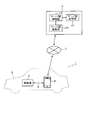
- FIG. 1 is a block diagram of a vehicle communication system showing the first embodiment.
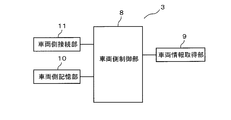
- FIG. 2 is a block diagram of the in-vehicle device.
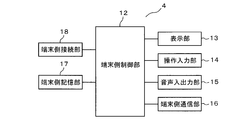
- FIG. 3 is a block diagram of a portable information terminal
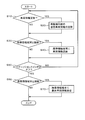
- FIG. 4 is a flowchart of vehicle information transmission control of the in-vehicle device.
- FIG. 5 is a flowchart of vehicle information display control of the portable information terminal.
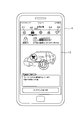
- FIG. 6 is a diagram (part 1) illustrating a screen of the portable information terminal
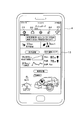
- FIG. 7 is a diagram (part 2) illustrating a screen of the portable information terminal.
- FIG. 8 is a diagram (part 3) illustrating a screen of the portable information terminal
- FIG. 9 is a flowchart of vehicle information display control of the portable information terminal according to the second embodiment.
- the vehicle communication system 1 includes, for example, an in-vehicle device 3 that is a vehicle-side information processing device mounted on a vehicle 2, and a user-owned smartphone, tablet, mobile phone,
- the portable information terminal 4 and a server 5 that is a center side information processing apparatus of the information management center are configured.
- the in-vehicle device 3 and the portable information terminal 4 are communicably connected via a short-range wireless communication method 6 by wireless, for example, Bluetooth (registered trademark) (hereinafter referred to as BT).
- the portable information terminal 4 and the server 5 are communicably connected to each other via a wireless communication network such as a public line network such as a cellular phone network 7.
- the in-vehicle device 3 includes a vehicle side control unit 8, a vehicle information acquisition unit 9, a vehicle side storage unit 10, and a vehicle side connection unit 11.
- the vehicle-side control unit 8 is configured by a microcomputer having a CPU, a ROM, a RAM, and the like (not shown), and controls the entire in-vehicle device 3 according to a program stored in the ROM.
- the vehicle information acquisition unit 9 is connected to various ECUs and various sensors mounted on the vehicle 2 via an in-vehicle LAN (for example, CAN), and acquires various information related to the vehicle, that is, vehicle information, from these ECUs and sensors. To do.
- the vehicle information acquisition unit 9 stores the acquired vehicle information in the vehicle side storage unit 10 via the vehicle side control unit 8.
- vehicle information useful for the user and vehicle information useful for the vehicle manufacturer are acquired as the vehicle information.
- Vehicle information useful to the user includes, for example, odometer (ie, accumulated distance) information, gasoline remaining amount information, cruising range information, fuel consumption information, and the number of driving times (eg, from turning on the engine to turning it off). 1) information, information on the number of braking times (eg, from starting to stop), information on the number of sudden brakings, information on the current position of the vehicle, display information on warning lights, vehicle doors Lock state information, whether the vehicle window is open, headlight lighting status information, room lamp lighting status information, acceleration information, speed per unit time, safe driving degree (i.e. , Information on the number of times of sudden braking / number of brakings) is acquired.
- vehicle information useful for vehicle manufacturers for example, various types of diagnostic information, information on the period of use of various parts, and the like are acquired.
- the vehicle information useful for the user includes information useful for the vehicle manufacturer, and such information can be used by the vehicle manufacturer.
- the vehicle-side storage unit 10 includes, for example, a semiconductor memory, a hard disk, a DVD, and the like, and stores map data used for the navigation function, various applications executed by the in-vehicle device 3, control programs, and the like. Further, the vehicle-side storage unit 10 is configured to store the vehicle information acquired by the vehicle information acquisition unit 9. In this case, the vehicle information acquired by the vehicle information acquisition unit 9 is configured such that the latest information is sequentially stored (for example, every set time) and accumulated in the vehicle-side storage unit 10. In the vehicle-side storage unit 10, the vehicle information is aggregated, for example, in units of one operation of the vehicle (for example, a period from when the engine is turned on to when it is turned off), one day unit, one month unit, or one year unit. It is managed.
- the vehicle side connection unit 11 has a function of communicating with the portable information terminal 4 by a short-range wireless communication method using BT.
- the vehicle side connection part 11 has a profile for data communication (for example, in the case of BT, SPP, DUN, etc. correspond), and connects to the portable information terminal 4 using those profiles.
- the vehicle side connection part 11 has a function as a transmission part.
- the in-vehicle device 3 is provided with a display unit made up of an LCD or the like, an operation input unit made up of a touch panel, an audio input / output unit, or the like.
- the portable information terminal 4 includes a terminal-side control unit 12, a display unit 13, an operation input unit 14, a voice input / output unit 15, a terminal-side communication unit 16, and a terminal-side storage. Part 17 and terminal-side connection part 18.
- a so-called smartphone is assumed as the portable information terminal 4.
- the portable information terminal 4 has a function of receiving vehicle information from the in-vehicle device 3, a function of displaying the received vehicle information on the display unit 13, and a function of transmitting the received vehicle information to the server 5. Furthermore, the portable information terminal 4 has a function of receiving vehicle information from the server 5 and a function of displaying the received vehicle information on the display unit 13 when not connected to the in-vehicle device 3.
- the terminal-side control unit 12 is configured by a microcomputer having a CPU, ROM, RAM, and the like (not shown), and controls the entire portable information terminal 4 according to a program stored in the ROM. Moreover, the terminal side control part 12 performs the application which can operate
- the display unit 13 includes, for example, a liquid crystal display capable of color display, an organic EL display, and the like.
- the operation input unit 14 includes a touch panel provided corresponding to the display unit 13, a contact-type switch disposed around the display unit 13, and the like. An operation for the portable information terminal 4 is input to the portable information terminal 4 from the operation input unit 14.
- the voice input / output unit 15 has a microphone and a speaker (not shown), and performs input of uttered voice during a call and output of received voice.
- the audio input / output unit 15 also outputs, for example, music or video audio stored in the terminal-side storage unit 17.
- the terminal-side communication unit 16 has a function of performing wide-area communication connected to a public line network, for example, the mobile phone network 7, and communicates with other information terminals via the mobile phone network 7 to transmit and receive calls and data. .
- the terminal-side communication unit 16 transmits the vehicle information data received from the in-vehicle device 3 to the server 5 by communicating with the server 5 via the mobile phone network 7.
- terminal-side storage unit 17 data such as phone book data, music, various applications executed on the portable information terminal 4, vehicle information data received from the in-vehicle device 3, and other various data Etc. are stored.
- the terminal side connection unit 18 has a function of performing communication with the in-vehicle device 3.
- the short-range wireless communication method 6 using BT is adopted, and the portable information terminal 4 is BT-connected to the in-vehicle device 3.
- the terminal side connection unit 18 has a profile for data communication (for example, SPP, DUN, etc.) similarly to the in-vehicle device 3, and connects to the in-vehicle device 3 using these profiles.
- the terminal side connection unit 18 receives the vehicle information data transmitted from the in-vehicle device 3.
- the server 5 is comprised by what is called a data management server, and has the server side control part 19, the server side communication part 20, and the server side memory
- the server 5 has a function of receiving vehicle information from the portable information terminal 4 and a function of storing the received vehicle information in the server-side storage unit 21.
- the server-side control unit 19 is configured by a microcomputer having a CPU, a ROM, a RAM, and the like (not shown), and controls the entire server 5 according to a program stored in the ROM.
- the server-side communication unit 20 has a function of performing wide-area communication connected to a public line network such as a cellular phone network 7 or a network, and communicates with other information terminals via the cellular phone network 7 or the network to transmit data. Send and receive.
- the server-side communication unit 20 receives vehicle information data from the portable information terminal 4 by communicating with the portable information terminal 4 via the cellular phone network 7, and stores the vehicle information data in the server-side storage unit 21. Information data is transmitted to the portable information terminal 4.
- the server-side storage unit 21 is configured to store and store vehicle information on a large number of vehicles separately for each vehicle (that is, for each vehicle ID).
- the vehicle information of each vehicle becomes the structure by which the newest vehicle information is sequentially updated and memorize
- the data is collected and managed in units of 1 day, 1 month, or 1 year.
- the server 5 is preferably configured to include a display unit including an LCD, an operation input unit including a mouse, a keyboard, a touch panel, and the like, a voice input / output unit, and the like.
- the vehicle information transmission control of FIG. 4 is executed when the vehicle engine (that is, the ignition switch) is turned on and the in-vehicle device 3 is activated.
- step S10 of FIG. 4 the vehicle-side control unit 8 determines whether or not the vehicle information has been updated based on the vehicle information acquired by the vehicle information acquisition unit 9 and the accumulated vehicle information in the vehicle-side storage unit 10. to decide.
- the process proceeds to step S20, and the vehicle-side control unit 8 accumulates the vehicle-side storage unit 10 with the acquired vehicle information (that is, the latest data) by the vehicle information acquisition unit 9. Update vehicle information.
- step S30 the vehicle side control part 8 judges whether the vehicle equipment 3 is connected with the portable information terminal 4 by BT.
- the portable information terminal 4 enters a range in which the portable information terminal 4 can communicate with the in-vehicle device 3 by BT connection (for example, when the user who owns the portable information terminal 4 gets on the vehicle 2), the communication automatically starts. It is configured. If the in-vehicle device 3 is connected to the portable information terminal 4 in step S30 (YES), the process proceeds to step S40, and the vehicle-side control unit 8 stores vehicle information in the vehicle-side storage unit 10, that is, accumulated vehicle information. The untransmitted vehicle information is transmitted to the portable information terminal 4.
- step S50 the vehicle side control part 8 judges whether the ignition switch was turned off.
- the process returns to step S10 and the above-described processing is repeatedly executed.
- step S50 when the ignition switch is turned off (YES), the process proceeds to step S60, and the vehicle-side control unit 8 determines whether the in-vehicle device 3 is connected to the portable information terminal 4 or not.
- the process proceeds to step S70, and the vehicle-side control unit 8 is a vehicle that has not been transmitted in the final vehicle information, that is, the accumulated vehicle information. If there is information, the vehicle information is transmitted to the portable information terminal 4. Thereby, the control of FIG. 2 is terminated.
- vehicle information display control for displaying the vehicle information in the control of the portable information terminal 4 (that is, the terminal-side control unit 12) on the display unit 13 will be described with reference to the flowchart of FIG.
- the vehicle information display control of FIG. 5 is executed when the application for executing the information display control (that is, the application program) is started in the portable information terminal 4.
- step S110 in FIG. 5 the terminal-side control unit 12 determines whether or not the portable information terminal 4 is connected to the in-vehicle device 3 by the BT.
- the process proceeds to step S120, and the terminal-side control unit 12 transmits vehicle information from the in-vehicle device 3, that is, updated unreceived vehicle information. Receive and get. Then, it progresses to step S130 and the terminal side control part 12 transmits the acquired vehicle information to the server 5.
- step S130 the terminal side control part 12 transmits the acquired vehicle information to the server 5.
- the acquired vehicle information is stored and accumulated in the server-side storage unit 21 of the server 5.
- step S140 the terminal side control part 12 displays the acquired vehicle information (namely, real-time data of vehicle information) on the display part 13.
- the display unit 13 is configured to display an initial screen as shown in FIG. .
- vehicle information such as today's travel distance and fuel consumption information, total travel distance and average fuel consumption information, safe driving score information, and fueling information are displayed.
- vehicle information such as today's travel distance and fuel consumption information, total travel distance and average fuel consumption information, safe driving score information, and fueling information are displayed.
- the said application when the said application is started, it is comprised so that the vehicle information memorize
- the initial screen shown in FIG. 6 is a screen in which the vehicle information received from the in-vehicle device 3 is displayed on the display unit 13 in real time. In this case, since the displayed vehicle information is the latest data (that is, real-time data), a warning message or the like is not displayed on the display unit 13.
- the vehicle information tab 32 on the right side of the dashboard tab 31 is selected and operated on the screen of FIG. 6, as shown in FIG. 7, the information on the locked state of the vehicle door, the information on the remaining fuel, the fuel shortage prediction
- This is a screen on which detailed vehicle information such as information and information for explaining an abnormal part of the vehicle (for example, lighting of a warning lamp in a meter) is displayed.
- the tab 33 on the right side of the vehicle information tab 32 is a safe driving score tab 33.
- the tab 34 on the right side of the safe driving score tab 33 is a travel history tab 34.
- a screen on which travel distance, time series information of fuel consumption, and the like are displayed is not shown.
- the tab 35 on the right side of the travel history tab 34 is a prize tab 35. When this tab 35 is selected, although not shown, information on a trophy acquired by achievement of a travel distance or the like is displayed. It becomes a screen.
- step S140 is configured to be always executed in parallel with other controls and processes when the mobile information terminal 4 is connected to the in-vehicle device 3 after the application is started. ing.
- step S110 when the portable information terminal 4 is not connected to the in-vehicle device 3 (NO), the process proceeds to step S150, and the terminal-side control unit 12 receives vehicle information from the server 5, that is, the server-side storage unit 21. The latest updated vehicle information is received and acquired from the stored vehicle information stored in. Then, it progresses to step S160 and the terminal side control part 12 displays the acquired vehicle information (namely, the data of the vehicle information preserve
- step S160 is configured to always be executed in parallel with other controls and processes when the mobile application terminal 4 is not connected to the in-vehicle device 3 after the application is activated. ing.
- step S170 the terminal-side control unit 12 determines whether or not the application end key has been operated in the screen state of FIG.
- the process returns to step S110 and the above-described processing is repeatedly executed.
- step S170 when the end key is operated (YES), the vehicle information display control in FIG. 5 is ended.
- the in-vehicle device 3 and the portable information terminal 4 are connected by short-range wireless
- the portable information terminal 4 and the server 5 are connected by a wireless communication network
- the portable information terminal 4 is connected to the in-vehicle device.
- 3 receives the vehicle information, displays the received vehicle information on the display unit 13 and transmits the received vehicle information to the server 5.
- the server 5 receives the vehicle information from the portable information terminal 4 and receives the received vehicle information.
- the information is stored in the server-side storage unit 21, and the portable information terminal 4 receives vehicle information from the server 5 and displays the received vehicle information on the display unit 13 when not connected to the in-vehicle device 3. Configured to do.
- the in-vehicle device 3 since it is not necessary to provide the in-vehicle device 3 with a communication unit that connects to the mobile phone network, the in-vehicle device 3 can be configured to be inexpensive. Further, when the user gets out of the car and is in the house, the user can acquire and display the vehicle information from the server 5 by the portable information terminal 4.
- the vehicle information acquired from the server 5 by the portable information terminal 4 when the vehicle information acquired from the server 5 by the portable information terminal 4 is displayed, for example, “not possibly the latest data” may be displayed as a caution message. It is possible to clearly recognize that the displayed vehicle information may not be the latest.
- FIG. 9 shows a second embodiment.
- symbol is attached
- 2nd Embodiment when the portable information terminal 4 acquired vehicle information from the server 5, it comprised so that it might be determined whether the data of the acquired vehicle information are old data.
- step S110 to step S150 in FIG. 9 is executed in the same manner as in the first embodiment (see FIG. 5).
- the process proceeds to step S210, and the terminal-side control unit 12 of the mobile information terminal 4 determines whether the acquired vehicle information data is old data. (That is, whether the acquired vehicle information data is not the latest data). In this case, it is preferable to judge based on a user's action pattern, for example.
- the behavior pattern is to use the vehicle at intervals of 4 days or 5 days, For example, it is determined whether 4.5 days have elapsed from the date and time of the latest update date of the acquired vehicle information. If 4.5 days have elapsed, the acquired vehicle information data is old data. Judge that there is.
- a determination method using a machine learning method may be used. It is also preferable to adopt a heuristic technique. For example, if it is determined that the user gets on the vehicle every day, the average is one day, and therefore, it is determined that the data is old when, for example, 1.0 day or more has elapsed from the latest update date of the acquired vehicle information. For example, when 7.0 days or more have elapsed from the latest update date of the acquired vehicle information, there is a method of determining that the data is old regardless of learning.
- step S210 When it is determined in step S210 that the acquired vehicle information data is old data (YES), the process proceeds to step S220, and the terminal-side control unit 12 acquires from the server 5 as shown in FIG.
- the displayed vehicle information is displayed on the display unit 13.
- a warning message “not the latest data” is issued. Specifically, a warning message, For example, “May not be the latest data” is displayed.
- step S210 determines whether the acquired vehicle information data is not old data (NO)
- the process proceeds to step S230, and the terminal-side control unit 12 acquires from the server 5 as shown in FIG.
- the vehicle information is displayed on the display unit 13.
- the process proceeds to step S170, and the subsequent processing is executed in the same manner as in the first embodiment (see FIG. 5).
- the configuration of the second embodiment other than that described above is the same as the configuration of the first embodiment. Therefore, in the second embodiment, substantially the same operational effects as in the first embodiment can be obtained. In particular, in the second embodiment, since it is configured to determine whether or not the vehicle information data acquired from the server 5 is old data, only when the vehicle information from the server 5 is old data, It is possible to prevent the user from being anxious as much as possible.
- the in-vehicle device 3 and the portable information terminal 4 are connected by BT connection.
- the present invention is not limited to this, and other wireless communication methods such as a wireless LAN and a wireless communication network are used. You may comprise so that it may connect. Moreover, you may comprise the vehicle equipment 3 and the portable information terminal 4 so that it may connect with a cable, for example USB, instead of a radio
- the mobile information terminal 4 and the server 5 are connected by a wireless communication network, but the present invention is not limited to this, and may be connected by a wireless LAN or the like.
- the portable information terminal 4 when the portable information terminal 4 received vehicle information from the vehicle equipment 3, while having transmitted the received vehicle information to the server 5 and displaying it on the display part 13, the present invention is not limited to this, and the received vehicle information may only be transmitted to the server 5 and may not be displayed on the display unit 13.
- the vehicle information when the vehicle information is displayed by the portable information terminal 4, the vehicle information is acquired (that is, received) from the server 5, and the acquired vehicle information is displayed on the display unit 13. Is preferred.
- the vehicle information acquired from the server 5 is displayed on the display unit 13, a message indicating that there is a possibility of not being the latest data may be displayed.
- the vehicle information is old data based on information such as the last data update time, and when the vehicle information is determined to be old data, It is preferable to be configured to display a message that there is a possibility that it is not data.
- the portable information terminal 4 when the vehicle information received from the in-vehicle device 3 is only transmitted to the server 5 and is not displayed on the display unit 13, the received vehicle information is the terminal in the portable information terminal 4.
- FIG. When configured in this manner, the same information as the latest vehicle information stored in the server 5 is stored in the terminal-side storage unit 17 of the portable information terminal 4, so that the vehicle information is displayed by the portable information terminal 4.
- the vehicle information stored in the terminal-side storage unit 17 may be displayed. In this case as well, a message indicating that there is a possibility of not being the latest data may be displayed.
- the vehicle information is old data based on information such as the last data update time, and when the vehicle information is determined to be old data, It is preferable to be configured to display a message that there is a possibility that it is not data.
- the server 5 and The vehicle information stored in the server 5 is received by another terminal (for example, a smart phone, a tablet, a personal computer, a TV connected to the Internet, etc.) connected to be communicable by wireless or wired communication. You may comprise so that it may display on a display part. When configured in this way, when the vehicle information received from the server 5 is displayed, a message indicating that there is a possibility of not being the latest data may be displayed.
- the vehicle information is old data based on information such as the last data update time, and when the vehicle information is determined to be old data, It is preferable to be configured to display a message that there is a possibility that it is not data.
- the mobile information terminal 4 when the mobile information terminal 4 is configured to only transmit the vehicle information received from the in-vehicle device 3 to the server 5 and not display it on the display unit 13,
- One or more other applications that is, jobs
- an application that is, a job
- the vehicle information from the vehicle equipment 3 while transmitting the vehicle information received from the vehicle equipment 3 to the server 5 with the portable information terminal 4, and displaying on the display part 13, in the portable information terminal 4, the vehicle information from the vehicle equipment 3 The vehicle information is received, and the received vehicle information is transmitted to the server 5 and at least one other application is operated in parallel with the application that executes the process of displaying on the display unit 13. Also good.
Landscapes
- Engineering & Computer Science (AREA)
- Signal Processing (AREA)
- Telephone Function (AREA)
- Telephonic Communication Services (AREA)
Abstract
車両用通信システムは、車両情報を取得する車載機(3)と、車載機(3)と接続される携帯情報端末(4)と、携帯情報端末(4)と無線通信網で接続されるサーバ(5)とを備え、携帯情報端末(4)は、車載機(3)から車両情報を受信し、受信した車両情報を表示部(13)に表示し、受信した車両情報を前記サーバ(5)へ送信するように構成され、サーバ(5)は、携帯情報端末(4)から車両情報を受信し、受信した車両情報をサーバ側記憶部(21)に記憶するように構成され、携帯情報端末(4)は、車載機(3)と接続されていないときに、サーバ(5)から車両情報を受信し、受信した車両情報を表示部(13)に表示するように構成されている。
Description
本出願は、2016年5月19日に出願された日本出願番号2016-100463号に基づくもので、ここにその記載内容を援用する。
本開示は、携帯情報端末で車両情報を取得して表示することができる車両用通信システム及び車載機に関する。
スマートフォン等の携帯情報端末と車載機を有線または無線で接続し、車両情報を車載機から携帯情報端末へ送信することにより、携帯情報端末にて車両情報を取得するように構成したシステムが知られている。この構成の場合、携帯情報端末と車載機を接続しているときには、車両情報を取得できるが、両者を接続していないとき、例えばユーザが携帯情報端末を持って車から降り、家の中にいるようなときには、車両情報を取得できないという問題があった。
また、車載機に無線通信網例えば携帯電話網に接続可能な通信機能を持たせ、車両情報を車載機から携帯電話網を介して携帯情報端末へ送信することにより、携帯情報端末にて車両情報を取得するように構成したシステムが提供されている。この構成によれば、ユーザが携帯情報端末を持って車から降り、家の中にいるような場合でも、携帯情報端末を携帯電話網を介して車載機に接続可能であるため、携帯情報端末にて車両情報を取得することができる。しかし、車載機に携帯電話網に接続可能な通信機能を持たせると、製造コストが高くなると共に、携帯電話網に接続する際に接続料等が必要になるという問題があった。
本開示の目的は、車載機等を安価な構成とすることができ、また、ユーザが車から降り、家の中にいるような場合でも、車両情報を取得することができる車両用通信システム及び車載機を提供することにある。
本開示の第1の態様は、車両に搭載され、車両情報を取得する車載機と、前記車載機と無線または有線で接続される携帯情報端末と、前記携帯情報端末と無線で接続される情報管理センタのセンタ側情報処理装置とを備え、前記携帯情報端末は、前記車載機から前記車両情報を受信する機能と、受信した前記車両情報を表示部に表示する機能と、受信した前記車両情報を前記センタ側情報処理装置へ送信する機能とを有し、前記センタ側情報処理装置は、前記携帯情報端末から前記車両情報を受信する機能と、受信した前記車両情報をサーバ側記憶部に記憶する機能とを有し、前記携帯情報端末は、前記車載機と接続されていないときに、前記センタ側情報処理装置から前記車両情報を受信する機能と、受信した前記車両情報を表示部に表示する機能とを有するように構成されたものである。
本開示の第2の態様は、車両情報を取得する車両側情報処理装置と、前記車両側情報処理装置と無線または有線で接続される携帯情報端末と、前記携帯情報端末と無線で接続される情報管理センタのセンタ側情報処理装置とを備え、前記携帯情報端末は、前記車両側情報処理装置から前記車両情報を受信する機能と、受信した前記車両情報を前記サーバへ送信する機能とを有し、前記センタ側情報処理装置は、前記携帯情報端末から前記車両情報を受信する機能と、受信した前記車両情報をサーバ側記憶部に記憶する機能とを有し、前記携帯情報端末は、前記車載機と接続されていないときに、前記センタ側情報処理装置から前記車両情報を受信する機能と、受信した前記車両情報を表示部に表示する機能と、前記車両情報を表示する際に最新のデータではない可能性がある旨のメッセージを表示する機能とを有するように構成されたものである。
本開示についての上記目的およびその他の目的、特徴や利点は、添付の図面を参照しながら下記の詳細な記述により、より明確になる。その図面は、
図1は、第1実施形態を示す車両用通信システムのブロック図であり、
図2は、車載機のブロック図であり、
図3は、携帯情報端末のブロック図であり、
図4は、車載機の車両情報送信制御のフローチャートであり、
図5は、携帯情報端末の車両情報表示制御のフローチャートであり、
図6は、携帯情報端末の画面を示す図(その1)であり、
図7は、携帯情報端末の画面を示す図(その2)であり、
図8は、携帯情報端末の画面を示す図(その3)であり、
図9は、第2実施形態を示す携帯情報端末の車両情報表示制御のフローチャートである。
(第1実施形態)
以下、第1実施形態について、図1ないし図8を参照して説明する。本実施形態の車両用通信システム1は、図1に示すように、車両2に搭載された車両側情報処理装置である例えば車載機3と、ユーザが所持する例えばスマートフォンやタブレットや携帯電話機等の携帯情報端末4と、情報管理センタのセンタ側情報処理装置である例えばサーバ5とから構成されている。車載機3と携帯情報端末4との間は、無線例えばBluetooth(登録商標)(以下BTと称す)による近距離無線通信方式6を介して通信可能に接続されている。携帯情報端末4とサーバ5との間は、無線により例えば公衆回線網である無線通信網例えば携帯電話網7を介して通信可能に接続されている。
以下、第1実施形態について、図1ないし図8を参照して説明する。本実施形態の車両用通信システム1は、図1に示すように、車両2に搭載された車両側情報処理装置である例えば車載機3と、ユーザが所持する例えばスマートフォンやタブレットや携帯電話機等の携帯情報端末4と、情報管理センタのセンタ側情報処理装置である例えばサーバ5とから構成されている。車載機3と携帯情報端末4との間は、無線例えばBluetooth(登録商標)(以下BTと称す)による近距離無線通信方式6を介して通信可能に接続されている。携帯情報端末4とサーバ5との間は、無線により例えば公衆回線網である無線通信網例えば携帯電話網7を介して通信可能に接続されている。
車載機3は、図2に示すように、車両側制御部8と、車両情報取得部9と、車両側記憶部10と、車両側接続部11とを有している。車両側制御部8は、図示しないCPU、ROMおよびRAMなどを有するマイクロコンピュータにて構成されており、ROMなどに記憶されているプログラムにしたがって車載機3の全体を制御する。
車両情報取得部9は、車両2に搭載された各種のECUや種々のセンサに車載LAN(例えばCAN)により接続されており、それらECUやセンサから車両に関する各種の情報、即ち、車両情報を取得する。そして、車両情報取得部9は、取得した車両情報を車両側制御部8を介して車両側記憶部10に記憶させる。本実施形態の場合、上記車両情報としては、ユーザにとって役立つ車両情報と、車両メーカにとって役立つ車両情報とが取得される。
ユーザにとって役立つ車両情報としては、例えば、オドメータ(即ち、積算距離)の情報、ガソリン残量の情報、航続可能距離の情報、燃費の情報、運転回数(例えばエンジンをオンしてからオフするまでを1回とする)の情報、制動回数(例えば発進してから停止するまでを1回とする)の情報、急制動回数の情報、車両の現在位置の情報、警告灯の表示情報、車両のドアの施錠状態の情報、車両の窓が空いているどうかの情報、ヘッドライトの点灯状態の情報、ルームランプの点灯状態の情報、加速度の情報、単位時間あたりの速度の情報、安全運転度(即ち、急制動回数/制動回数)の情報等が取得される。
また、車両メーカにとって役立つ車両情報としては、例えば、各種のダイアグ情報、種々の部品の使用期間の情報等が取得される。尚、ユーザにとって役立つ車両情報の中にも、車両メーカにとって役立つ情報が含まれており、そのような情報については車両メーカが利用することが可能な構成となっている。
車両側記憶部10は、例えば半導体メモリやハードディスクやDVD等で構成されており、ナビゲーション機能に用いる地図データ、車載機3にて実行される各種のアプリや制御プログラム等が記憶されている。また、車両側記憶部10には、車両情報取得部9によって取得された車両情報が記憶される構成となっている。この場合、車両情報取得部9によって取得された車両情報は、車両側記憶部10内に最新の情報が逐次(例えば設定時間毎に)記憶されて蓄積される構成となっている。車両側記憶部10内では、車両情報は例えば車両の1運行(例えばエンジンがオンしてからオフするまでの期間)単位、1日単位、1か月単位、または、1年単位で集計されて管理されている。
車両側接続部11は、BTによる近距離無線通信方式で携帯情報端末4と通信を行う機能を有する。車両側接続部11は、データ通信用のプロファイル(例えばBTの場合、SPPやDUNなどが対応する)を有しており、それらのプロファイルを用いて携帯情報端末4と接続する。車両側接続部11は、送信部としての機能を有する。尚、車載機3に、LCD等からなる表示部や、タッチパネル等からなる操作入力部や、音声入出力部などを設けるように構成することも好ましい。
また、携帯情報端末4は、図3に示すように、端末側制御部12と、表示部13と、操作入力部14と、音声入出力部15と、端末側通信部16と、端末側記憶部17と、端末側接続部18とを有している。本実施形態の場合、携帯情報端末4として、いわゆるスマートフォンを想定している。携帯情報端末4は、車載機3から車両情報を受信する機能と、受信した車両情報を表示部13に表示する機能と、受信した車両情報をサーバ5へ送信する機能とを有する。更に、携帯情報端末4は、車載機3と接続されていないときに、サーバ5から車両情報を受信する機能と、受信した車両情報を表示部13に表示する機能とを有する。
端末側制御部12は、図示しないCPU、ROMおよびRAMなどを有するマイクロコンピュータにて構成されており、ROMなどに記憶されているプログラムにしたがって携帯情報端末4の全体を制御する。また、端末側制御部12は、車載機3と通信可能に接続されたときに、連携して作動可能なアプリケーションを実行する。
表示部13は、例えばカラー表示可能な液晶表示器や有機EL表示器などにより構成されている。操作入力部14は、表示部13に対応して設けられているタッチパネル、および表示部13の周囲に配置された接触式のスイッチなどにより構成されている。携帯情報端末4には、操作入力部14から携帯情報端末4に対する操作が入力される。
音声入出力部15は、図示しないマイクおよびスピーカを有しており、通話時の発話音声の入力および受話音声の出力を行う。また、音声入出力部15は、例えば端末側記憶部17に記憶されている楽曲や映像の音声などの出力なども行う。
端末側通信部16は、公衆回線網例えば携帯電話網7へ接続する広域通信を行う機能を有し、携帯電話網7を介して他の情報端末と通信して通話やデータの送受信などを行う。端末側通信部16は、携帯電話網7を介してサーバ5と通信することにより、車載機3から受信した車両情報のデータをサーバ5へ送信する。
端末側記憶部17には、電話帳データや、楽曲などのデータや、携帯情報端末4にて実行される各種のアプリや、車載機3から受信した車両情報のデータや、他の種々のデータなどが記憶されている。
端末側接続部18は、車載機3との間で通信を行う機能を有する。本実施形態では、BTによる近距離無線通信方式6を採用しており、携帯情報端末4は、車載機3とBT接続される。端末側接続部18は、車載機3と同様にデータ通信用のプロファイル(例えばSPPやDUNなど)を有しており、それらのプロファイルを用いて車載機3と接続する。端末側接続部18は、車載機3から送信された車両情報のデータを受信する。
また、サーバ5は、いわゆるデータマネジメントサーバと称するもので構成されており、図1に示すように、サーバ側制御部19と、サーバ側通信部20と、サーバ側記憶部21とを有している。サーバ5は、携帯情報端末4から車両情報を受信する機能と、受信した車両情報をサーバ側記憶部21に記憶する機能とを有する。
サーバ側制御部19は、図示しないCPU、ROMおよびRAMなどを有するマイクロコンピュータにて構成されており、ROMなどに記憶されているプログラムにしたがってサーバ5の全体を制御する。
サーバ側通信部20は、公衆回線網例えば携帯電話網7やネットワーク等へ接続する広域通信を行う機能を有し、携帯電話網7やネットワーク等を介して他の情報端末と通信してデータの送受信などを行う。サーバ側通信部20は、携帯電話網7を介して携帯情報端末4と通信することにより、携帯情報端末4から車両情報のデータを受信し、また、サーバ側記憶部21に記憶している車両情報のデータを携帯情報端末4へ送信する。
サーバ側記憶部21には、種々のデータが記憶されており、携帯情報端末4から送信されてサーバ側通信部20が受信した車両情報のデータが逐次記憶されて蓄積される構成となっている。この場合、サーバ側記憶部21には、多数の車両の車両情報が、車両毎(即ち、車両ID毎)に分けて蓄積記憶されるように構成されている。そして、サーバ側記憶部21内においては、各車両の車両情報は、最新の車両情報が逐次更新記憶されて蓄積される構成となっており、例えば車両の1運行(例えばエンジンがオンしてからオフするまでの期間)単位、1日単位、1か月単位、または、1年単位で集計されて管理されている。尚、サーバ5に、LCD等からなる表示部や、マウスやキーボードやタッチパネル等からなる操作入力部や、音声入出力部などを設けるように構成することも好ましい。
次に、車載機3(即ち、車両側制御部8)の制御の中の携帯情報端末4へ車両情報を送信する制御、即ち、車両情報送信制御について、図4のフローチャートを参照して説明する。図4の車両情報送信制御は、車両のエンジン(即ち、イグニッションスイッチ)がオンされて、車載機3が起動されると、実行される。
まず、図4のステップS10においては、車両側制御部8は、車両情報取得部9による取得車両情報と車両側記憶部10内の蓄積車両情報とに基づいて車両情報が更新されたか否かを判断する。ここで、車両情報が更新されたときには(YES)、ステップS20へ進み、車両側制御部8は、車両情報取得部9による取得車両情報(即ち、最新データ)で車両側記憶部10内の蓄積車両情報を更新する。
続いて、ステップS30へ進み、車両側制御部8は、車載機3が携帯情報端末4とBTによる接続がなされているか否かを判断する。この構成の場合、携帯情報端末4が車載機3とBT接続で通信可能な範囲に入ると(例えば携帯情報端末4を所持するユーザが車両2に乗車すると)、自動的に通信を開始するように構成されている。上記ステップS30において、車載機3が携帯情報端末4と接続されていると(YES)、ステップS40へ進み、車両側制御部8は、車両側記憶部10内の車両情報、即ち、蓄積車両情報の中の未送信の車両情報を携帯情報端末4へ送信する。
そして、ステップS50へ進み、車両側制御部8は、イグニッションスイッチがオフされたか否かを判断する。ここで、イグニッションスイッチがオフされていないときには(NO)、ステップS10へ戻り、上述した処理を繰り返し実行する。
また、上記ステップS50において、イグニッションスイッチがオフされたときには(YES)、ステップS60へ進み、車両側制御部8は、車載機3が携帯情報端末4と接続されているか否かを判断する。ここで、車載機3が携帯情報端末4と接続されているときには(YES)、ステップS70へ進み、車両側制御部8は、最終の車両情報、即ち、蓄積車両情報の中に未送信の車両情報が有れば、その車両情報を携帯情報端末4へ送信する。これにより、図2の制御を終了する。
次に、携帯情報端末4(即ち、端末側制御部12)の制御の中の車両情報を表示部13に表示する車両情報表示制御について、図5のフローチャートを参照して説明する。図5の車両情報表示制御は、携帯情報端末4において、上記情報表示制御実行用のアプリ(即ち、アプリケーションプログラム)が起動されると、実行される。
まず、図5のステップS110においては、端末側制御部12は、携帯情報端末4が車載機3とBTによる接続がなされているか否かを判断する。ここで、携帯情報端末4が車載機3と接続されていると(YES)、ステップS120へ進み、端末側制御部12は、車載機3から車両情報、即ち、更新された未受信の車両情報を受信して取得する。続いて、ステップS130へ進み、端末側制御部12は、取得した車両情報をサーバ5へ送信する。これにより、上記取得した車両情報は、サーバ5のサーバ側記憶部21内に記憶されて蓄積される。
そして、ステップS140へ進み、端末側制御部12は、取得した車両情報(即ち、車両情報のリアルタイムのデータ)を表示部13に表示する。本実施形態においては、携帯情報端末4で情報表示制御実行用のアプリが起動された状態のときには、表示部13には、図6に示すような初期画面が表示されるように構成されている。
この初期画面の状態では、本日の走行距離及び燃費の情報、総走行距離及び平均燃費の情報、安全運転スコアの情報、給油の情報等の車両情報が表示されている。画面内の上部に横一列に表示された5つのタブ31~35を選択して切り替えると、タブ毎に詳細な車両情報が表示されるように構成されている。尚、上記初期画面は、左端のダッシュボードタブ31が選択された状態である。
また、上記アプリの起動時には、携帯情報端末4内に記憶されている車両情報を表示するように構成されており、その後、携帯情報端末4が車載機3から更新された車両情報を受信すると、受信する毎に上記更新された最新の車両情報を上記画面にリアルタイムに表示するように構成されている。尚、図6に示す初期画面は、車載機3から受信した車両情報を表示部13にリアルタイムに表示した画面である。この場合、表示された車両情報は最新のデータ(即ち、リアルタイムのデータ)であるから、表示部13には、注意メッセージ等は表示されない。
また、図6の画面において、ダッシュボードタブ31の右隣りの車両情報タブ32を選択操作すると、図7に示すように、車両のドアの施錠状態の情報、残燃料の情報、燃料切れ予測の情報、車両の異常個所(例えばメーター内の警告ランプの点灯等)説明用の情報等の詳細な車両情報が表示される画面となる。
また、車両情報タブ32の右隣りのタブ33は、安全運転スコアタブ33であり、このタブ33が選択されると、図示しないが、安全運転スコアの情報、運転回数の情報等が表示される画面となる。また、安全運転スコアタブ33の右隣りのタブ34は、走行履歴タブ34であり、このタブ34が選択されると、図示しないが、走行距離や燃費の時系列情報等が表示される画面となる。また、走行履歴タブ34の右隣りのタブ35は、プライズタブ35であり、このタブ35が選択されると、図示しないが、走行距離の達成等で取得されたトロフィの情報等が表示される画面となる。
尚、上記ステップS140の表示処理は、上記アプリが起動された後、携帯情報端末4が車載機3と接続されているときに、他の制御や処理と並行して常時実行される構成となっている。
また、上記ステップS110において、携帯情報端末4が車載機3と接続されていないときには(NO)、ステップS150へ進み、端末側制御部12は、サーバ5から車両情報、即ち、サーバ側記憶部21に記憶されている蓄積車両情報の中から最も新しく更新された車両情報を受信して取得する。続いて、ステップS160へ進み、端末側制御部12は、取得した車両情報(即ち、サーバ5に保存されていた車両情報のデータ)を表示部13に表示する。サーバ5から受信した車両情報を表示部13に表示する画面の一例を、図8に示す。
この図8に示す画面においては、車両情報の最終更新日の情報、日付、及び、本日から何日前の情報が表示される。更に、表示された車両情報のデータが、最新のデータではない可能性があるから、表示部13には、注意メッセージとして、例えば「最新ではない可能性があります」を表示するように構成されている。また、図8の画面状態で、ユーザによりタブやボタン等が操作されたときには、そのタブやボタン等に対応する車両情報(即ち、サーバ5から受信した車両情報)が表示部13に表示される。尚、上記ステップS160の表示処理は、前記アプリが起動された後、携帯情報端末4が車載機3と接続されていないときに、他の制御や処理と並行して常時実行される構成となっている。
この後、ステップS170へ進み、端末側制御部12は、図6の画面状態で、アプリの終了キーが操作されたか否かを判断する。ここで、終了キーが操作されないときには(NO)、ステップS110へ戻り、上述した処理を繰り返し実行する。また、上記ステップS170において、終了キーが操作されたときには(YES)、図5の車両情報表示制御を終了する。
このような構成の本実施形態においては、車載機3と携帯情報端末4を近距離無線で接続し、携帯情報端末4とサーバ5を無線通信網で接続し、携帯情報端末4は、車載機3から車両情報を受信し、受信した車両情報を表示部13に表示すると共に、受信した車両情報をサーバ5へ送信し、サーバ5は、携帯情報端末4から車両情報を受信し、受信した車両情報をサーバ側記憶部21に記憶するように構成し、携帯情報端末4は、車載機3と接続されていないときには、サーバ5から車両情報を受信し、受信した車両情報を表示部13に表示するように構成した。この構成によれば、車載機3に携帯電話網に接続する通信部を設けなくても良いから、車載機3を安価な構成とすることができる。また、ユーザが車から降り、家の中にいるような場合に、ユーザは、携帯情報端末4によってサーバ5から車両情報を取得して表示することができる。
また、上記実施形態では、携帯情報端末4によってサーバ5から取得した車両情報を表示する際には、注意メッセージとして、例えば「最新のデータではない可能性があります」を表示するように構成したので、表示された車両情報が最新ではない可能性があることを明確に認識することができる。
(第2実施形態)
図9は、第2実施形態を示すものである。尚、第1実施形態と同一構成には、同一符号を付している。第2実施形態では、携帯情報端末4がサーバ5から車両情報を取得したときに、取得した車両情報のデータが古いデータであるか否かを判定するように構成した。
図9は、第2実施形態を示すものである。尚、第1実施形態と同一構成には、同一符号を付している。第2実施形態では、携帯情報端末4がサーバ5から車両情報を取得したときに、取得した車両情報のデータが古いデータであるか否かを判定するように構成した。
図9のステップS110からステップS150までの処理は、第1実施形態(図5参照)と同様に実行する。ステップS150にて、携帯情報端末4がサーバ5から車両情報を取得した後、ステップS210へ進み、携帯情報端末4の端末側制御部12は、取得した車両情報のデータが古いデータであるか否か(即ち、取得した車両情報のデータが最新のデータでないか否か)を判断する。この場合、例えばユーザの行動パターンに基づいて判断することが好ましい。具体的には、サーバ5のサーバ側記憶部21に記憶された蓄積車両情報に基づいて、ユーザが車両を4日または5日間隔で使用する行動パターンであることがわかっている場合には、取得した車両情報の最新の更新日の日時から例えば4.5日が経過したか否かを判断し、4.5日が経過している場合には、取得した車両情報のデータが古いデータであると判断する。
尚、上記した判断方法の他に、機械学習手法(例えばK平均などのクラスタリングや、ニューラルネットワークや、SVMなど)を用いて判断する方法を用いても良い。また、ヒューリスティックな手法を採用することも好ましい。例えばユーザが毎日車両に乗ると判断された場合、平均は1日となるので、取得した車両情報の最新の更新日から例えば1.0日以上が経過したときに古いデータであると判断する。また、取得した車両情報の最新の更新日から例えば7.0日以上が経過したときには、学習の如何にかかわらず、古いデータであると判断する、などの手法がある。
さて、上記ステップS210において、取得した車両情報のデータが古いデータであると判断されると(YES)、ステップS220へ進み、端末側制御部12は、図8に示すように、サーバ5から取得した車両情報を表示部13に表示する。このとき、表示された走行距離のデータは、古いデータであると判断されているので、「最新のデータではない」旨の注意喚起を行なう、具体的には、表示部13に、注意メッセージ、例えば「最新のデータではない可能性があります」を表示する。
一方、上記ステップS210において、取得した車両情報のデータが古いデータでないと判断されると(NO)、ステップS230へ進み、端末側制御部12は、図6に示すように、サーバ5から取得した車両情報を表示部13に表示する。このとき、表示された走行距離のデータは、古いデータではないと判断されているので、「最新のデータではない」旨の注意喚起を行なわない。この後は、ステップS170へ進み、これ以降の処理は、第1実施形態(図5参照)と同様に実行する。
尚、上述した以外の第2実施形態の構成は、第1実施形態の構成と同じ構成となっている。従って、第2実施形態においても、第1実施形態とほぼ同じ作用効果を得ることができる。特に、第2実施形態では、サーバ5から取得した車両情報のデータが古いデータであるか否かを判定するように構成したので、サーバ5からの車両情報が古いデータであるときだけ、「最新のデータではない」旨の注意喚起を行なうことができ、ユーザに極力不安を与えないようにすることができる。
また、上記各実施形態では、車載機3と携帯情報端末4をBT接続により接続するように構成したが、これに限られるものではなく、他の無線通信方式例えば無線LANや無線通信網等で接続するように構成しても良い。また、車載機3と携帯情報端末4を、無線通信方式ではなく、有線例えばUSB等で接続するように構成しても良い。また、携帯情報端末4とサーバ5との間を、無線通信網により接続したが、これに限られるものではなく、無線LAN等により接続しても良い。
また、上記各実施形態では、携帯情報端末4は、車載機3から車両情報を受信したときに、受信した車両情報をサーバ5へ送信すると共に、表示部13に表示するように構成したが、これに限られるものではなく、受信した車両情報をサーバ5へ送信するだけとし、表示部13に表示しないように構成しても良い。このような構成においては、携帯情報端末4により車両情報を表示する場合、サーバ5から車両情報を取得(即ち、受信)して、取得した車両情報を表示部13に表示するように構成することが好ましい。また、サーバ5から取得した車両情報を表示部13に表示する際には、最新のデータではない可能性がある旨のメッセージを表示するように構成しても良い。また、第2実施形態と同様にして、最終データ更新時刻等の情報に基づいて車両情報が古いデータであるか否かを判断し、車両情報が古いデータであると判断したときに、最新のデータではない可能性がある旨のメッセージを表示するように構成することが好ましい。
また、携帯情報端末4において、車載機3から受信した車両情報をサーバ5へ送信するだけとし、表示部13に表示しないように構成する場合に、受信した車両情報を携帯情報端末4内の端末側記憶部17内に、ある程度まとまった量、記憶させてから、サーバ5へ送信するように構成しても良い。このように構成した場合、サーバ5に記憶されている最新の車両情報と同じ情報が、携帯情報端末4の端末側記憶部17内に記憶されているから、携帯情報端末4により車両情報を表示部13に表示する際には、端末側記憶部17内に記憶されている車両情報を表示するように構成しても良い。そして、この場合も、最新のデータではない可能性がある旨のメッセージを表示するように構成しても良い。更に、第2実施形態と同様にして、最終データ更新時刻等の情報に基づいて車両情報が古いデータであるか否かを判断し、車両情報が古いデータであると判断したときに、最新のデータではない可能性がある旨のメッセージを表示するように構成することが好ましい。
また、上記各実施形態では、サーバ5に記憶されている車両情報を、携帯情報端末4により受信して表示部13に表示するように構成したが、これに限られるものではなく、サーバ5と無線や有線により通信可能に接続された他の端末(例えばスマートフォンや、タブレットや、パソコンや、インターネットに接続されたTV等)によってサーバ5に記憶されている車両情報を受信して他の端末の表示部に表示するように構成しても良い。このように構成した場合、サーバ5から受信した車両情報を表示する際には、最新のデータではない可能性がある旨のメッセージを表示するように構成しても良い。また、第2実施形態と同様にして、最終データ更新時刻等の情報に基づいて車両情報が古いデータであるか否かを判断し、車両情報が古いデータであると判断したときに、最新のデータではない可能性がある旨のメッセージを表示するように構成することが好ましい。
尚、上記したように、携帯情報端末4において、車載機3から受信した車両情報をサーバ5へ送信するだけとし、表示部13に表示しないように構成する場合に、携帯情報端末4において、車載機3から車両情報を受信し、且つ、受信した車両情報をサーバ5へ送信する処理を実行するアプリ(即ち、ジョブ)と平行して、他のアプリ(即ち、ジョブ)を1つ以上動作させるように構成することが好ましい。また、上記した各実施形態において、携帯情報端末4によって、車載機3から受信した車両情報をサーバ5へ送信すると共に、表示部13に表示する場合に、携帯情報端末4において、車載機3から車両情報を受信し、且つ、受信した車両情報をサーバ5へ送信すると共に、表示部13に表示する処理を実行するアプリと平行して、他のアプリを1つ以上動作させるように構成しても良い。
本開示は、実施例に準拠して記述されたが、本開示は当該実施例や構造に限定されるものではないと理解される。本開示は、様々な変形例や均等範囲内の変形をも包含する。加えて、様々な組み合わせや形態、さらには、それらに一要素のみ、それ以上、あるいはそれ以下、を含む他の組み合わせや形態をも、本開示の範疇や思想範囲に入るものである。
Claims (7)
- 車両に搭載され、車両情報を取得する車載機(3)と、
前記車載機(3)と無線または有線で接続される携帯情報端末(4)と、
前記携帯情報端末(4)と無線で接続される情報管理センタのセンタ側情報処理装置(5)とを備え、
前記携帯情報端末(4)は、前記車載機(3)から前記車両情報を受信する機能と、受信した前記車両情報を表示部(13)に表示する機能と、受信した前記車両情報を前記センタ側情報処理装置(5)へ送信する機能とを有し、
前記センタ側情報処理装置(5)は、前記携帯情報端末(4)から前記車両情報を受信する機能と、受信した前記車両情報をサーバ側記憶部(21)に記憶する機能とを有し、
前記携帯情報端末(4)は、前記車載機(3)と接続されていないときに、前記センタ側情報処理装置(5)から前記車両情報を受信する機能と、受信した前記車両情報を表示部(13)に表示する機能とを有するように構成された車両用通信システム。 - 前記携帯情報端末(4)は、前記センタ側情報処理装置(5)から前記車両情報を受信し、受信した前記車両情報を表示部(13)に表示する際に、最新のデータではない可能性がある旨のメッセージを表示するように構成された請求項1記載の車両用通信システム。
- 前記携帯情報端末(4)は、前記センタ側情報処理装置(5)から前記車両情報を受信し、受信した前記車両情報を表示部(13)に表示する際に、前記車両情報が古いデータであるか否かを判断し、前記車両情報が古いデータであると判断したときに、最新のデータではない可能性がある旨のメッセージを表示するように構成された請求項1記載の車両用通信システム。
- 前記車載機(3)は、車両情報が更新されたときに、更新された車両情報を車両側記憶部(10)に記憶するように構成された請求項1から3のいずれか一項記載の車両用通信システム。
- 前記車載機(3)は、前記携帯情報端末(4)と接続されているときに、前記車両側記憶部(10)に記憶されている車両情報の中の未送信の車両情報を前記携帯情報端末(4)へ送信するように構成された請求項4記載の車両用通信システム。
- 車両に搭載され、車両情報を取得する車載機(3)と、
前記車載機(3)と無線または有線で接続される携帯情報端末(4)と、
前記携帯情報端末(4)と無線で接続される情報管理センタのセンタ側情報処理装置(5)とを備え、
前記携帯情報端末(4)は、前記車載機(3)から前記車両情報を受信する機能と、受信した前記車両情報を表示部(13)に表示する機能と、受信した前記車両情報を前記センタ側情報処理装置(5)へ送信する機能とを有し、
前記センタ側情報処理装置(5)は、前記携帯情報端末(4)から前記車両情報を受信する機能と、受信した前記車両情報をサーバ側記憶部(21)に記憶する機能とを有し、
前記携帯情報端末(4)は、前記車載機(3)と接続されていないときに、前記センタ側情報処理装置(5)から前記車両情報を受信する機能と、受信した前記車両情報を表示部(13)に表示する機能とを有するように構成された車両用通信システムに用いる車載機(3)であって、
車両情報が更新されたときに、更新された車両情報を記憶する車両側記憶部(10)と、
携帯情報端末(4)と接続されているときに、前記車両側記憶部(10)に記憶されている車両情報の中の未送信の車両情報を前記携帯情報端末(4)へ送信する送信部(11)とを備えた車載機。 - 車両情報を取得する車両側情報処理装置(3)と、
前記車両側情報処理装置(3)と無線または有線で接続される携帯情報端末(4)と、
前記携帯情報端末(4)と無線で接続される情報管理センタのセンタ側情報処理装置(5)とを備え、
前記携帯情報端末(4)は、前記車両側情報処理装置(3)から前記車両情報を受信する機能と、受信した前記車両情報を前記サーバ(5)へ送信する機能とを有し、
前記センタ側情報処理装置(5)は、前記携帯情報端末(4)から前記車両情報を受信する機能と、受信した前記車両情報をサーバ側記憶部(21)に記憶する機能とを有し、
前記携帯情報端末(4)は、前記車載機(3)と接続されていないときに、前記センタ側情報処理装置(5)から前記車両情報を受信する機能と、受信した前記車両情報を表示部(13)に表示する機能と、前記車両情報を表示する際に最新のデータではない可能性がある旨のメッセージを表示する機能とを有するように構成された車両用通信システム。
Applications Claiming Priority (2)
| Application Number | Priority Date | Filing Date | Title |
|---|---|---|---|
| JP2016-100463 | 2016-05-19 | ||
| JP2016100463A JP2017208727A (ja) | 2016-05-19 | 2016-05-19 | 車両用通信システム及び車載機 |
Publications (1)
| Publication Number | Publication Date |
|---|---|
| WO2017199525A1 true WO2017199525A1 (ja) | 2017-11-23 |
Family
ID=60326490
Family Applications (1)
| Application Number | Title | Priority Date | Filing Date |
|---|---|---|---|
| PCT/JP2017/007427 Ceased WO2017199525A1 (ja) | 2016-05-19 | 2017-02-27 | 車両用通信システム及び車載機 |
Country Status (2)
| Country | Link |
|---|---|
| JP (1) | JP2017208727A (ja) |
| WO (1) | WO2017199525A1 (ja) |
Cited By (1)
| Publication number | Priority date | Publication date | Assignee | Title |
|---|---|---|---|---|
| CN109724810A (zh) * | 2018-12-13 | 2019-05-07 | 斑马网络技术有限公司 | 实车模拟器的信息处理方法和装置 |
Families Citing this family (4)
| Publication number | Priority date | Publication date | Assignee | Title |
|---|---|---|---|---|
| WO2019142820A1 (ja) * | 2018-01-18 | 2019-07-25 | 株式会社ミックウェア | 情報連携システム |
| JP7070362B2 (ja) * | 2018-11-19 | 2022-05-18 | トヨタ自動車株式会社 | 端末装置、端末装置の制御方法、及びプログラム |
| JP7271339B2 (ja) * | 2019-06-28 | 2023-05-11 | ダイハツ工業株式会社 | 車両情報提供システム |
| JP7702789B2 (ja) * | 2021-01-26 | 2025-07-04 | 本田技研工業株式会社 | 情報処理装置、情報処理方法、及び、プログラム |
Citations (2)
| Publication number | Priority date | Publication date | Assignee | Title |
|---|---|---|---|---|
| JP2013050789A (ja) * | 2011-08-30 | 2013-03-14 | Toyota Motor Corp | 車両通信装置 |
| JP2013115451A (ja) * | 2011-11-25 | 2013-06-10 | Toyota Motor Corp | 車両情報表示装置 |
-
2016
- 2016-05-19 JP JP2016100463A patent/JP2017208727A/ja active Pending
-
2017
- 2017-02-27 WO PCT/JP2017/007427 patent/WO2017199525A1/ja not_active Ceased
Patent Citations (2)
| Publication number | Priority date | Publication date | Assignee | Title |
|---|---|---|---|---|
| JP2013050789A (ja) * | 2011-08-30 | 2013-03-14 | Toyota Motor Corp | 車両通信装置 |
| JP2013115451A (ja) * | 2011-11-25 | 2013-06-10 | Toyota Motor Corp | 車両情報表示装置 |
Cited By (1)
| Publication number | Priority date | Publication date | Assignee | Title |
|---|---|---|---|---|
| CN109724810A (zh) * | 2018-12-13 | 2019-05-07 | 斑马网络技术有限公司 | 实车模拟器的信息处理方法和装置 |
Also Published As
| Publication number | Publication date |
|---|---|
| JP2017208727A (ja) | 2017-11-24 |
Similar Documents
| Publication | Publication Date | Title |
|---|---|---|
| WO2017199525A1 (ja) | 車両用通信システム及び車載機 | |
| US9720680B2 (en) | Methods and apparatus for wirelessly updating vehicle systems | |
| US9349343B2 (en) | Vehicular apparatus and external device screen image display system | |
| CN112783521B (zh) | 程序更新系统以及车辆管理服务器 | |
| JP6091625B2 (ja) | 車載器、通信システム、通信方法およびプログラム | |
| US20160042576A1 (en) | Vehicle maintenance reminders | |
| DE102014109876A1 (de) | Verfahren, Systeme und Vorrichtungen zum Bereitstellen einer anwendungserzeugten Information zur Darstellung in einer automobilen Haupteinheit | |
| DE102014109877A1 (de) | Verfahren, Systeme und Vorrichtung zum Bereitstellen einer Mitteilung in einer automobilen Haupteinheit, dass eine drahtlose Kommunikationssvorrichtung sich außerhalb eines Fahrzeugs befindet | |
| JP2019003432A (ja) | 制御装置、制御方法、およびコンピュータプログラム | |
| JP6056461B2 (ja) | 車両ドア制御システム | |
| CN110745071A (zh) | 车辆控制方法、装置、车载设备及计算机可读存储介质 | |
| US20250198771A1 (en) | Information providing apparatus, information providing method, and program | |
| JP2019127192A (ja) | 車載装置 | |
| CN112463271A (zh) | 用于在车辆显示器上呈现信息的方法和设备 | |
| JPWO2014097381A1 (ja) | 車両運行管理システム | |
| WO2016132707A1 (ja) | 車両用制御システム | |
| JP5811935B2 (ja) | 車両用通信システム、車両用通信装置及び携帯通信端末 | |
| JP5267498B2 (ja) | リモート車両カスタマイズシステム | |
| US8909212B2 (en) | Method and apparatus for disclaimer presentation and confirmation | |
| CN112073537A (zh) | 一种车载交互的方法及其装置 | |
| US20230315430A1 (en) | Control device and control method | |
| JP6341231B2 (ja) | 車両用情報通信システムおよびアプリケーションプログラム | |
| US20240069895A1 (en) | Vehicle, vehicle control method, communication system, and non-transitory storage medium | |
| US20180286219A1 (en) | Customer Link | |
| US12243360B2 (en) | Information processing device, information processing method, and storage medium |
Legal Events
| Date | Code | Title | Description |
|---|---|---|---|
| NENP | Non-entry into the national phase |
Ref country code: DE |
|
| 121 | Ep: the epo has been informed by wipo that ep was designated in this application |
Ref document number: 17798962 Country of ref document: EP Kind code of ref document: A1 |
|
| 122 | Ep: pct application non-entry in european phase |
Ref document number: 17798962 Country of ref document: EP Kind code of ref document: A1 |