WO2017199378A1 - 情報処理装置、情報処理方法、プログラム、記憶媒体 - Google Patents
情報処理装置、情報処理方法、プログラム、記憶媒体 Download PDFInfo
- Publication number
- WO2017199378A1 WO2017199378A1 PCT/JP2016/064779 JP2016064779W WO2017199378A1 WO 2017199378 A1 WO2017199378 A1 WO 2017199378A1 JP 2016064779 W JP2016064779 W JP 2016064779W WO 2017199378 A1 WO2017199378 A1 WO 2017199378A1
- Authority
- WO
- WIPO (PCT)
- Prior art keywords
- reading
- content
- time
- reference time
- target content
- Prior art date
- Legal status (The legal status is an assumption and is not a legal conclusion. Google has not performed a legal analysis and makes no representation as to the accuracy of the status listed.)
- Ceased
Links
Images





Classifications
-
- G—PHYSICS
- G06—COMPUTING OR CALCULATING; COUNTING
- G06F—ELECTRIC DIGITAL DATA PROCESSING
- G06F40/00—Handling natural language data
Definitions
- the present invention relates to an information processing apparatus, an information processing method, a program for realizing the information processing apparatus, and a storage medium storing the program, and more particularly to a technical field related to content read-out determination.
- JP 2011-123744 A Japanese Patent Laid-Open No. 2015-32274
- a service on the Internet that gives a user rewards such as points in response to browsing (reading) content including characters such as news articles and manga is known.
- an unexpected act of receiving points, etc. without carefully reading the contents such as sending pages from the first page to the last page all at once (hereinafter referred to as “reward unexpected acquisition”) May be performed.
- Patent Documents 1 and 2 disclose techniques related to content fine reading determination. Specifically, the above-mentioned Patent Document 1 discloses determining whether an operation of repeating a page, an operation of reading a page, or an operation of reading a page a little from the mode of operation on a page (paragraph [ [0066] [0070] etc.). In Patent Document 2, the time required to read each line of the document is measured from the movement of the user's line of sight, and it is determined whether the document has been read carefully based on the variation in time required to read each line. In this case, it is disclosed that the number of characters in each line is taken into consideration in the determination (see claim 4, [0052], etc.).
- Patent Document 1 does not specifically disclose a method for determining whether or not a page is read from the operation mode, and it is estimated that accurate reading determination is difficult.
- Patent Document 2 performs gaze detection when determining fine reading, a camera is essential, and it is also necessary to perform image processing for gaze detection. Therefore, it cannot be applied to a camera, specifically a device that does not include a camera (inward camera) disposed on the same side as the display screen, and has a relatively high processing capability for the above image processing. There is a problem that is required.
- the present invention has been made in view of the circumstances as described above, and an object of the present invention is to achieve accurate content reading determination without requiring a special configuration or high processing capability for the content browsing terminal.
- An information processing apparatus includes a reading time acquisition unit that acquires a reading time that is a time required for a user to read content, and a reading pace calculation unit that calculates the reading pace of the user based on the reading time.
- a reference time setting unit that sets a reference time related to the reading time of the target content based on the reading pace and the number of characters contained in the target content, the reading time acquired for the target content, and the target content
- a fine reading determination unit that determines whether or not the user has read the target content carefully based on a result of comparison with the set reference time.
- the accurate reading determination can be performed accurately.
- a special configuration such as an inward camera for detecting the line of sight and high processing capability are not required.
- the reference time setting unit can set the reference time for the target content based on the reading paces of a plurality of users. If the reference time is set based on the individual user's reading pace, an excessively short time is set as the reference time if the user is constantly acquiring an unexpected reward (that is, the reading pace is excessively fast). For this reason, it is difficult to make an appropriate precise reading determination. For this reason, the occurrence of such a situation is prevented by setting the reference time of the target content based on the reading pace of a plurality of users as described above.
- the reference time setting unit sets the reference time for each unit content, which is the content in a predetermined unit, based on the reading pace, Based on the reading time and the reference time for each unit content in the target content, it is possible to make a fine reading determination for each unit content. As a result, it is possible to perform final fine reading determination of the target content based on the fine reading determination result for each unit content.
- the precise reading determination unit can perform the accurate reading determination on the entire target content according to the number of the unit contents determined to be accurate reading. Accordingly, it becomes easy to appropriately set the level of the fine reading determination condition of the target content according to actual circumstances such as the type of content and the amount of reward to be given.
- display display of the unit content is disabled in a state where the reading time of the unit content has not reached the reference time set for the unit content. It is possible to provide an impossible control unit to control. As a result, when the user has not read the unit content carefully, the display cannot be sent to the next unit content.
- the reference time setting unit can perform image analysis on the target content based on an image and specify the number of characters contained in the target content. This eliminates the need to manually specify the number of characters contained in the target content.
- the information processing method includes a reading time acquisition step of acquiring a reading time which is a time required for the user to read the content, and a reading pace for calculating the reading pace of the user based on the reading time.
- a reference time setting step for setting a reference time related to the reading time of the target content based on the calculation step, and the reading pace and the number of characters contained in the target content;
- a fine reading determination step of determining whether or not the user has read the target content on the basis of a result of comparing the reading time acquired for the target content with the reference time set for the target content;
- This is an information processing method executed by the information processing apparatus. Also by such an information processing method, an operation similar to that of the information processing apparatus according to the present invention described above can be obtained.
- a program according to the present invention is a program that causes an information processing apparatus to execute processing executed as the information processing method.
- a storage medium according to the present invention is a storage medium storing the program. The above information processing apparatus is realized by these programs and storage media.
- the present invention it is possible to accurately determine whether or not a content has been accurately read without requiring a special configuration or high processing capability for the content browsing terminal.
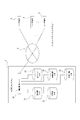
- FIG. 1 shows an example of a network system 1 assumed in the present embodiment.
- the network system 1 includes, for example, a network 2 as the Internet, a fine reading management system 3, and a plurality of user terminals 4, 4,.
- the network system 1 is configured such that the fine reading management server 30 and each user terminal 4 in the fine reading management system 3 can communicate with each other via the network 2.
- various examples of the configuration of the network 2 are assumed.
- intranet, extranet, LAN (Local Area Network), CATV (Community Antenna TeleVision) communication network, Virtual Private Network, telephone line network, mobile communication network, satellite communication network, etc. Is assumed.
- Various examples of transmission media constituting all or part of the network 2 are also envisaged.
- IEEE Institute of Electrical and Electronics Engineers 1394, USB (Universal Serial Bus), power line carrier, telephone line, etc.
- IrDA Infrared Data Association
- Bluetooth registered trademark
- 802.11 wireless can also be used by radio such as a mobile phone network, satellite line, and digital terrestrial network.
- the user terminal 4 is a computer device used by a user who browses content. Examples of the user terminal 4 include portable computer devices such as wearable computer devices such as high-function mobile phones (smartphones) and wristwatches, but the type of the user terminal 4 is not limited to this.
- the user terminal 4 includes a web browser, and requests a web page and predetermined processing by transmitting an HTTP (Hypertext Transfer Protocol) request to a server device that can communicate via the network 2. Further, the user terminal 4 receives the web page (web page data) sent in response to the HTTP request and displays it by the web browser. Thereby, the user can browse and operate a desired web page.
- HTTP Hypertext Transfer Protocol
- the fine reading management system 3 includes a fine reading management server 30, a reading time DB (database) 31, a character count DB 32, a reading pace DB 33, a reference time DB 34, and a fine reading information DB 35.
- the fine reading management server 30 is communicably connected to a reading time DB 31, a character count DB 32, a reading pace DB 33, a reference time DB 34, and a fine reading information DB 35.
- the fine reading management server 30 is a server device (computer device) that manages the distribution of visual content, specifically content containing characters (hereinafter also simply referred to as “content”), and information related to fine reading of the distributed content. ).
- content is presented on a web page provided (distributed) by the fine reading management server 30.
- Specific examples of content include news articles, blog (web log) articles, columns, novels, comics, etc. on news sites.
- content IDs are allocated to the contents that can be distributed by the fine reading management server 30, and each content can be uniquely identified by the content ID.
- each user is managed so as to be identifiable by a user ID.
- each user registers an ID (for example, a user ID itself) and a password as login information in advance in the fine reading management system 3.
- an ID for example, a user ID itself
- a password for example, a password
- the fine reading management system 3 the fine reading management server 30
- the fine reading management server 30 obtains the reading time Tr that is the time required for the user to read the content, calculates the reading pace Pr of the user based on the acquired reading time Tr, A reference time Ts is set for the reading time Tr, and it is determined whether the user has read the target content based on the reference time Ts. In the process of such a fine reading determination, the fine reading management server 30 uses a reading time DB 31, a character count DB 32, a reading pace DB 33, and a reference time DB.
- the fine reading management server 30 in this example performs information storage processing on the fine reading information DB 35 based on the result of the fine reading determination, and manages the content determined to be fine reading for each user.
- a predetermined reward for example, a point that can be used in place of money for shopping or the like
- the fine reading information DB 35 is a DB for storing information for managing the fine reading content for each user, and the stored information is used to specify the presence and amount of a reward to be given to each user. In this case, the reward is given when it is determined that the entire target content has been read carefully.
- the article is a news article, it is a condition that the target n articles are read carefully, and if it is a manga, the condition is that the entire title is read carefully, for example. There is a range that should be read carefully in order to receive.
- the fine reading management server 30 may be configured by systemizing a plurality of computer devices instead of a single computer device.
- the plurality of computer devices may be systemized by a LAN or the like, or may be arranged at a remote place by a VPN using the Internet or the like.
- the reading time DB 31, the character number DB 32, the reading pace DB 33, the reference time DB 34, and the fine reading information DB 35 are shown as separate devices, but these DBs can be accessed by the fine reading management server DB 30. As long as it is, it may be realized in any form.
- FIG. 2 shows a hardware configuration of a computer device that constitutes each device (fine reading management server 30, reading time DB 31, character number DB 32, reading pace DB 33, reference time DB 34, fine reading information DB 35, user terminal 4) shown in FIG. Show.
- a CPU Central Processing Unit
- FIG. 2 a CPU (Central Processing Unit) 101 of a computer apparatus performs various processes according to a program stored in a ROM (Read Only Memory) 102 or a program loaded from a storage unit 108 to a RAM (Random Access Memory) 103. Execute the process.
- the RAM 103 also appropriately stores data necessary for the CPU 101 to execute various processes.
- the CPU 101, ROM 102, and RAM 103 are connected to each other via a bus 104.
- the input / output interface 105 is also connected to the bus 104.
- the input / output interface 105 includes an input device 106 such as a keyboard, a mouse, and a touch panel, a display (display device) such as an LCD (Liquid Crystal Display), a CRT (Cathode Ray Tube), an organic EL (Electroluminescence) panel, and a speaker.
- a display display device
- LCD Liquid Crystal Display
- CRT Cathode Ray Tube
- organic EL Electrode Ray Tube
- speaker a speaker.
- a storage unit 108 configured by an HDD (Hard Disk Drive) or a flash memory device
- a communication unit 109 for mutual communication with an external device.
- a media drive 110 is also connected to the input / output interface 105 as necessary, and a removable medium 111 such as a magnetic disk, an optical disk, a magneto-optical disk, or a semiconductor memory is appropriately mounted, and information can be written to the removable medium 111. Reading is performed.
- a removable medium 111 such as a magnetic disk, an optical disk, a magneto-optical disk, or a semiconductor memory is appropriately mounted, and information can be written to the removable medium 111. Reading is performed.
- data and programs can be uploaded and downloaded through communication by the communication unit 109, and data and programs can be transferred via the removable medium 111.
- the CPU 101 performs processing operations based on various programs, information processing and communication, which will be described later, are executed particularly in the computer devices as the fine reading management servers 30 and 30 ′.
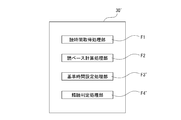
- Fine reading determination method of the first embodiment With reference to FIG. 3, various functions related to fine reading determination as the present embodiment will be described. In FIG. 3, among various processes executed by the fine reading management server 30 (CPU 101), the process for realizing the fine reading determination technique as the first embodiment is divided into blocks for each function.
- the fine reading management server 30 can be expressed as including a reading time acquisition processing unit F1, a reading pace calculation processing unit F2, a reference time setting processing unit F3, and a fine reading determination processing unit F4 for each function. .
- the reading time acquisition processing unit F1 acquires a reading time Tr that is a time required for the user to read the content.
- the reading time Tr acquisition process is a process for acquiring the reading time Tr used for the calculation of the reading pace Pr by the reading pace calculation processing unit F2.
- the reading time Tr is compared with the reference time Ts for fine reading determination. It also serves as an acquisition process of the reading time Tr used in the above. For example, content that the user requested to browse is excluded from the assumption that the content that is to be rewarded (the target of fine reading determination) is limited to some of all deliverable content.
- the process of acquiring the reading time Tr for the content is a process only for the purpose of acquiring the reading time Tr for reading pace Pr calculation.
- the reading time Tr acquisition process for the content is used for acquiring the reading time Tr for calculating the reading pace Pr and determining the fine reading of the content.
- This may be a process that also serves as both acquisition of the reading time Tr (reading time Tr used for comparison with the reference time Ts).
- the condition for carefully reading the entire target content (for example, the entire title of a manga) is defined as the reward granting condition.
- Get time taken to read In the case of this example, the reading time Tr is not measured by the fine reading management server 30, but is measured on the user terminal 4 side, and the fine reading management server 30 acquires the measured reading time Tr.
- the fine reading management server 30 may be configured to measure the reading time Tr.
- the unit of the reading time Tr is “seconds”.
- the fine reading management server 30 stores the reading time Tr in the reading time DB 31 in response to the reading time acquisition processing unit F1 acquiring the reading time Tr for a certain content by a certain user.
- FIG. 4 shows an example of information stored in the reading time DB 30.
- the fine reading management server 30 stores the reading time Tr in the reading time DB 30 in association with the IDs of the users and contents that are the acquisition targets of the reading time Tr.
- information hereinafter referred to as “reading time management information I1” in which information indicating the correspondence relationship between the read-through content and the reading time Tr is associated with each user.
- the reading pace calculation processing unit F2 calculates the reading pace Pr of the user based on the reading time Tr.
- the reading pace Pr is an index value for a pace at which the user reads the content.
- the reading pace Pr may be the number of characters that can be read per unit time, or the reading time Tr required for the number of unit characters.
- the reading pace Pr is the number of characters that can be read per unit time (for example, per second) will be described.
- the information stored in the character count DB 32 is used to calculate the reading pace Pr. As shown in FIG. 5, the number-of-characters DB 32 stores information on the number of characters (total number of characters) of content for each content ID.
- the reading pace calculation processing unit F2 acquires the reading time Tr of the read-through content from the reading time DB 31 for the target user, acquires the number of characters for the read-through content from the character number DB 32, and based on the reading time Tr and the number of characters. Then, the reading pace Pr for the user is calculated.
- the user's reading pace Pr is an average value of the reading paces Pr calculated for each of the reading-through contents. Note that the reading pace Pr calculated for one content among the plurality of read-through contents of the target user may be used as the reading pace Pr for the user.
- the reading pace calculation processing unit F2 stores the reading pace Pr calculated for each user in the reading pace DB 33. Specifically, as shown in FIG. 6, the calculated reading pace Pr is stored in association with the user ID.
- reading pace management information I2 information in which the reading pace Pr is associated with each user ID in this way.
- the reference time setting processing unit F3 illustrated in FIG. 3 sets a reference time Ts related to the reading time Tr of the target content based on the reading pace Pr and the number of characters contained in the target content.
- the target content mentioned here is the target content for the fine reading determination.
- the reference time Ts of the target content can be set for each user based on the reading pace Pr calculated for the user, in this example, the reference time Ts is set based on the reading pace Pr of a plurality of users. Specifically, based on the reading pace management information I2 (see FIG.
- the reference time Ts may be assumed if the user is constantly acquiring unexpected rewards (that is, the reading pace Pr is excessively fast). Since an excessively short time is set, it is difficult to perform proper precise reading determination. Therefore, by setting the reference time Ts of the target content based on the average reading pace Pr-av of a plurality of users as described above, such a situation is prevented from occurring. As a countermeasure against this problem, an excessively fast value as the reading pace Pr (a value not less than a predetermined value if “the number of characters that can be read per unit time”) is not used for setting the reference time Ts. It is also possible to take appropriate measures.
- the reference time Ts is obtained in advance by batch processing for each target content and stored in the reference time DB 34.
- FIG. 7 illustrates information stored in the reference time DB 34.
- the reference time DB 34 stores the set reference time Ts in association with each content ID of the target content.
- reference time management information I3 information in which the content ID of the target content is associated with the set reference time Ts.
- the reading pace Pr for each user is calculated in setting the reference time Ts.
- this target The content reference time Ts can be obtained. That is, for example, even when the reading time Tr is not acquired for the content A to be rewarded, the reading pace Pr calculated from the reading time Tr acquired for the other content B and the number of characters contained in the content A Based on the above, the reference time Ts for the content A can be set.
- the content for which the reading time Tr for the calculation of the reading pace Pr is to be acquired and the content for which the fine reading determination is required do not have to overlap at all. It is.
- the precise reading determination processing unit F4 determines whether or not the user has read the target content based on the result of comparing the reading time Tr acquired for the target content with the reference time Ts set for the target content. That is, for the target content requested to be browsed, the corresponding reference time Ts is acquired based on the reference time management information I3, and “reading time” is determined based on the reference time Ts and the reading time Tr acquired for the target content. It is determined whether or not “Tr ⁇ reference time Ts”.
- the fine reading management server 30 stores the information about the combination of the target content determined as “reading time Tr ⁇ reference time Ts”, that is, the read request user of the target content, in the fine reading information DB 35. Store.
- FIG. 8 shows an example of information stored in the fine reading information DB 35.
- the fine reading information DB 35 has a content ID determined to be fine reading (“reading content ID” in the figure) for each user ID. Stored in association.
- reading content ID information in which a carefully read content ID is associated with each user ID in this manner.
- read carefully managed information I4 information in which a carefully read content ID is associated with each user ID in this manner.
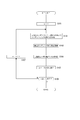
- FIGS. 9 to 11 a procedure of processing for realizing the fine reading determination method as the first embodiment described above will be described.
- the processing shown in FIGS. 9 to 11 is executed by the CPU 101 of the fine reading management server 30 based on a program stored in a predetermined storage device such as the ROM 102 in the fine reading management server 30.
- the processing acquires the reading time Tp of the content by the user in response to a browsing request for a certain content from the user, and the user ID of the user along with the acquired reading time Tp, And a process of storing the content ID of the content in the reading time DB 31 in association with each other.
- the process shown in FIG. 9 is repeatedly executed as a batch process with a time interval on the time axis such as a fixed interval.
- the fine reading management server 30 sets the value of the user identifier u to “1” in step S101.
- the user identifier u is an identifier for identifying a user to be processed.
- the fine reading management server 30 acquires the reading time Tr for each content from the reading time DB 31 for the u-th user, acquires the number of characters of the corresponding content from the character number DB 32 in the next step S103, and further continues in step S104.
- the reading pace Pr of the u-th user is calculated. If there are a plurality of read-through contents of the u-th user, the reading time Tr for each of the read-through contents is acquired in step S102, and the number of characters for each of the read-through contents is acquired in step S103.
- the reading pace Pr is calculated by “(total number of characters) / total of reading time Tr acquired (total reading time)”.
- the reading time Tr of the read-through content is acquired in step S102, the number of characters of the read-through content is acquired in step S103, and the reading pace Pr by the number of acquired characters / the acquired reading time Tr in step S104. Calculate Note that when there is no read-through content for the u-th user, the reading pace Pr for the user is not calculated.
- the fine reading management server 30 performs a process of storing the calculated reading pace Pr in the reading pace DB 33 in step S105. That is, a process of storing the user ID of the u-th user and the calculated reading pace Pr in the reading pace DB 33 is performed.
- the fine reading management server 30 determines whether or not the value of the user identifier u is equal to or greater than the upper limit value uLMT.
- the upper limit value uLTM is a value that defines the upper limit of the number of users to be processed. For example, an arbitrary value from “1” to “total number of users” can be set. If the value of the user identifier u is not equal to or greater than the upper limit value uLMT, the fine reading management server 30 proceeds to step S107, increments the value of the user identifier u by 1 (+1), and returns to the previous step S102. Thus, the processes from step S102 to S106 are repeatedly executed until the number of processed users reaches the number determined by the upper limit value uLMT. On the other hand, if the value of the user identifier u is equal to or greater than the upper limit value uLMT, the fine reading management server 30 finishes the process shown in FIG.
- the calculation process of the reading pace Pr is repeatedly performed based on time. However, the calculation process of the reading pace Pr is performed every time the target user's read-through content increases more than a certain amount. Can be executed as a trigger.
- the reading time Tr of the read-through content (content read to the end) is used in the calculation of the reading pace Pr.
- the reading time Tr is also acquired for the content that has been read only halfway.
- the reading time Tr can be used for calculating the reading pace Pr. In this case, it goes without saying that the number of characters within the read range of the corresponding content should be used as the number of characters used in the calculation of the reading pace Pr.
- FIG. 10 shows processing corresponding to the setting of the reference time Ts.
- the process shown in FIG. 10 is performed every time the reading pace Pr calculation process shown in FIG. 9 is completed. Since the update of the reading pace Pr can be immediately reflected in the setting of the reference time Ts, the accuracy of the fine reading determination can be further increased.
- the fine reading management server 30 calculates the average of the reading paces Pr (average reading pace Pr-av) of a plurality of users in step S201.
- the average of the reading paces Pr of all the users whose user IDs are stored in the reading pace DB 33 is calculated as the average value Pr-av.
- the fine reading management server 30 sets the value of the content identifier c to “1”.
- the content identifier c is an identifier for identifying the content to be processed (reward grant target content: target content for fine reading determination).
- the fine reading management server 30 acquires the number of characters of the c-th content from the character number DB 32, and determines the reference time Ts of the c-th content based on the number of characters acquired in the next step S204 and the average reading pace Pr-av. calculate. That is, the reference time Ts is calculated from “the number of acquired characters / average reading pace Pr-av”.
- the fine reading management server 30 performs a process of storing the reference time Ts in the reference time DB 34 in step S205. That is, the process of storing the reference time Ts calculated in step S204 and the content ID of the c-th content in the reference time DB 34 is performed.
- the fine reading management server 30 determines whether or not the value of the content identifier c is equal to or greater than the upper limit value cLMT.
- the upper limit value cLTM is a value that defines the upper limit of the number of contents to be processed. For example, an arbitrary value from “1” to “the total number of contents (the total number of contents for which the reading pace Pr is calculated)”. Can be set. If the value of the content identifier c is not equal to or greater than the upper limit value cLMT, the fine reading management server 30 proceeds to step S207, increments the value of the content identifier c by 1, and returns to the previous step S202.
- step S202 to S206 is repeatedly executed until the number of processed contents reaches the number determined by the upper limit value cLMT.
- the fine reading management server 30 finishes the process shown in FIG.
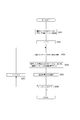
- FIG. 11 shows processing corresponding to the precise reading determination for the target content.
- the fine reading management server 30 waits for a content browsing request from the user terminal 4 in step S301. If there is a browsing request, in step S302, the requested content, the requested user ID (content ID, user ID) In step S303, a reference time Ts is acquired after performing processing for specifying (ID). That is, the reference time Ts for the target content requested to be browsed is acquired from the reference time DB 34.
- the fine reading management server 30 performs a process of waiting until the browsing ends, that is, the browsing of the requested content.
- the waiting process for the end of browsing for example, an operation for closing the posted page of the target content, or a transition operation to another web page or the like waits for establishment of a predetermined condition that represents the end of browsing of the target content. .
- the fine reading management server 30 acquires the reading time Tr in step S305. That is, in this example, the reading time Tr measured as the time from the start of browsing to the end of browsing is acquired on the user terminal 4 side.
- the fine reading management server 30 determines whether or not the reading time Tr is equal to or longer than the reference time Ts. This corresponds to a fine reading determination. At this time, it may be determined whether or not the content has been browsed to the end. If the reading time Tr is equal to or longer than the reference time Ts, the fine reading management server 30 stores information in the fine reading information DB 35 in step S307, that is, associates the user ID of the requesting user specified in step S302 with the content ID of the requesting content. Then, the process stored in the fine reading information DB 35 is executed, and the process shown in FIG. On the other hand, if the reading time Tr is not equal to or longer than the reference time Ts, the fine reading management server 30 passes the storing process of step S307 and ends the process shown in FIG.
- the reference time Ts is calculated by batch processing and stored in the reference time DB 34.
- Ts may be calculated.
- the reference time Ts is set based on the reading pace Pr of a plurality of users.
- the user's individual reading pace Pr is used for the target content.
- a reference time Ts may be set.
- the reading time Tp used for calculating the reading pace Pr is an example of the time required to read the entire content.
- the reading time Tp is used to read a part of the content. It can also be the time required. That is, the reading pace Pr is calculated based on the reading time Tr acquired for a predetermined part of the content (for example, 1 to 10 pages) and the number of characters of the predetermined part of the content.
- Second Embodiment> [2-1. Second-hand reading method according to the second embodiment] Next, a second embodiment will be described.
- the configuration of the network system 1 is the same as that shown in FIG.
- parts that are the same as the parts that have already been described are assigned the same reference numerals, and descriptions thereof are omitted.
- fine reading management server 30 (hereinafter referred to as “fine reading management server 30 ′”) in the second embodiment, the fine reading determination method as the second embodiment is realized.
- the processing for doing this is divided into functions and shown as blocks.
- the fine reading management server 30 ′ includes a reference time setting processing unit F3 and a fine reading determination processing unit F4 ′ together with a reading time acquisition processing unit F1 and a reading pace calculation processing unit F2 for each function. Can be represented.
- the unit content means content in a predetermined unit, for example, content for one page in content composed of a plurality of pages.
- the content to be rewarded is a plurality of articles handled at a specific site.
- the content of one article in the content composed of a plurality of articles corresponds to “unit content”.
- the “unit” here may be any “unit” according to the condition defined as the reward granting condition, for example, and should not be limited to a specific “unit”. .
- a case where the content to be rewarded is composed of a plurality of pages, and “unit content” is “content for one page” is exemplified.
- the acquisition of the reading time Tp and the calculation method of the reading pace Pr based on the acquired reading time Tp are the same as in the case of the first embodiment.
- FIG. 13 is a diagram exemplifying storage information in the character number DB 32 ′ provided in place of the character number DB 32 in the second embodiment. As shown in the figure, the character count DB 32 'stores the number of characters for each page of each content. FIG. 13 shows an example in which the number of characters of the entire content (“total” in the figure) is stored together with the number of characters for each page.
- the reference time setting processing unit F3 ′ illustrated in FIG. 12 sets the reference time Ts for the target content for each page based on the number of characters for each page and the reading pace Pr stored in the character number DB 32 ′. Specifically, the reference time Ts for each page of the target content is calculated from “number of characters of target page / reading pace Pr”. Also in the second embodiment, for example, “average reading pace Pr ⁇ av” is used as the reading pace Pr used for calculating the reference time Ts. Also in this case, calculation of “average reading pace Pr-av” and storage in the reading pace DB 33 are performed by batch processing.
- the reference time setting processing unit F3 ′ stores the reference time Ts calculated for each page of the target content in the reference time DB 34 ′.
- FIG. 14 is a diagram exemplifying storage information of the reference time 34 ′ provided in place of the reference time DB 34 in the second embodiment.
- the reference time setting processing unit F3 ′ stores the calculated reference time Ts for each page in the reference time DB 34 ′ in association with the content ID of the target content to be calculated.
- reference time management information I3 ′ information in which the reference time Ts for each page is associated with each content ID of the target content
- the fine reading determination processing unit F4 ′ illustrated in FIG. 12 performs fine reading determination for each unit content based on the reading time Tr and the reference time Ts for each unit content in the target content. Specifically, the fine reading determination processing unit F4 ′ in this example performs “reading” for each page based on the reading time Tr for each page in the target content and the reference time Ts for the corresponding page stored in the reference time DB 34 ′. It is determined whether or not “time Tr ⁇ reference time Ts”.
- the entire target content is read carefully according to the number of pages determined to be fine reading (determined as “reading time Tr ⁇ reference time Ts”). Make a decision. Specifically, if the number of pages determined to be read carefully is equal to or greater than a predetermined ratio (a ratio based on the total number of pages of the target content), a determination result indicating that the entire target content has been read is obtained. Obtains a determination result that the entire target content is not read carefully.
- the fine reading management server 30 ′ of the second embodiment information related to the target content determined to be fine reading is stored in the fine reading information DB 35. That is, the user ID of the user determined to be read carefully and the content ID of the target content are stored in the read information DB 35 in association with each other.
- the page is sent to the last page at a stroke to receive a reward, or it is sent to the last page at a stroke and left as it is. It is possible to prevent unexpected actions such as receiving rewards.
- FIG. 15 shows processing corresponding to the setting of the reference time.
- the process shown in FIG. 15 is executed every time the reading pace Pr is updated, as in the process shown in FIG.
- the fine reading management server 30 ′ sets the value of the page identifier p to “1” in step S401.
- the page identifier p is an identifier for identifying the page to be processed.
- the fine reading management server 30 ′ obtains the number of characters of the p-th page in the c-th content from the character number DB 32 ′, and in the next step S403, based on the obtained number of characters and the average reading pace Pr-av, The reference time Ts of the pth page) is calculated. Further, in step S404, the fine reading management server 30 ′ stores the calculated reference time Ts in the reference time DB 34 ′, and then determines whether or not the value of the page identifier p is equal to or larger than the maximum value pMAX in step S405. . The maximum value pMAX is set to the value of the last page number of the target content for which the reference time Ts is set.
- step S406 increments the value of the page identifier p by 1, and returns to step S402. Thereby, the reference time Ts for each page is set up to the last page of the target content.
- the fine reading management server 30 ′ proceeds to step S206 and determines whether or not the value of the content identifier c is greater than or equal to the upper limit value cLMT. If the value of the content identifier c is not greater than or equal to the upper limit value cLMT, the fine reading management server 30 ′ proceeds to step S207, increments the value of the content identifier c by 1, and returns to step S401. Thus, the reference time Ts for each page is set for each target content until the upper limit value cLMT is reached. If the value of the content identifier c is greater than or equal to the upper limit value cLMT, the fine reading management server 30 ′ ends the process shown in FIG.
- FIG. 16 shows processing corresponding to the fine reading determination.
- the fine reading management server 30 ′ waits for a content browsing request in step S301, and if there is a browsing request, executes processing for acquiring the requested content and the requesting user ID in step S302.
- the fine reading management server 30 ′ waits for establishment of the viewing start condition in step S501 in response to the execution of the ID acquisition process in step S302.
- the establishment of the browsing start condition is predetermined as indicating that the user has started browsing the requested content, for example, the display of the first page of the requested content has been disclosed in the user terminal 4 of the request source. It means that a predetermined condition is satisfied.
- the fine reading management server 30 ′ sets the value of the page identifier p to “1” and the value of the number of fine reading pages sp to “0” in step S502, and then the pth page in step S503.
- the reference time Ts is obtained from the reference time DB 34 ′.
- step S504 the fine reading management server 30 ′ waits until page turning is performed, and when page turning is performed, the reading time Tr (that is, the reading time Tr of the p-th page) is acquired in step S505.
- the reading time Tr is measured on the user terminal 4 side, but the reading management server 30 ′ can also perform the reading.
- the display page is sent to the first page.
- the fine reading management server 30 ′ determines in step S506 whether or not the acquired reading time Tr is equal to or greater than the reference time Ts (reference time Ts acquired in S503). . If the reading time Tr is equal to or longer than the reference time Ts, the fine reading management server 30 ′ increments the value of the number of fine reading pages sp by 1 in step S507 and proceeds to step S508. If the reading time Tr is not equal to or longer than the reference time Ts, step S507 is passed and it progresses to step S508.
- step S508 the fine reading management server 30 ′ determines whether or not the value of the page identifier p is equal to or greater than the maximum value pMAX. If the value of the page identifier p is not equal to or greater than the maximum value pMAX, the process proceeds to step S509 and the page identifier p is determined. The value is incremented by 1, and the process returns to step S503. As a result, for the target content requested to be browsed, fine reading determination is repeated until the last page.
- step S510 determines whether the value of "the number of fine reading pages sp / maximum value pMAX" is equal to or greater than a predetermined value. This corresponds to determining whether or not the ratio of the number of carefully read pages to the total number of pages of the target content is equal to or greater than a predetermined ratio.
- the determination process in step S510 corresponds to a precise reading determination process for the entire target content.
- step S510 if the value of “the number of carefully read pages sp / maximum value pMAX” is equal to or larger than the predetermined value, the carefully read management server 30 ′ executes the process of storing information in the carefully read information DB 35 in step S511, and then the process shown in FIG. The processing shown in FIG. On the other hand, if the value of “the number of carefully read pages sp / the maximum value pMAX” is not equal to or larger than the predetermined value, the carefully read management server 30 ′ passes step S511 and ends the processing shown in FIG. As a result, rewards can be given on condition that the number of carefully read pages is a predetermined ratio or more.
- FIG. 17 is a flowchart showing a specific processing procedure to be executed in this case.
- the fine reading management server 30 ′ in this case executes the processing of steps S301 ⁇ S302 ⁇ S501 described above, and in step S502 ′, the page identifier p is determined in response to the establishment of the viewing start condition. Is set to “1”, and time counting is started in step S601. The time (elapsed time) measured by the time count in step S601 corresponds to the reading time Tr for the p-th page.
- a code in a state where the feed button of the page (page as unit content) is inactive in the initial state (command) is transmitted.
- the forward button is a button that is presented on the content browsing page to instruct the user to send (display forward) the page of the target content to the next page.
- the forward button is presented in the display state of the last page.
- the feed button functions as a button for sending the display to the first page of the target content.
- step S503 the fine reading management server 30 'acquires the reference time Ts of the p-th page, and waits until the elapsed time becomes equal to or longer than the reference time Ts in step S602. Specifically, the determination of whether or not the elapsed time is equal to or greater than the reference time Ts is repeated until the elapsed time becomes equal to or greater than the reference time Ts. Note that the determination in step S602 can be regarded as equivalent to a precise reading determination for page p.
- the fine reading management server 30 If the elapsed time is equal to or longer than the reference time Ts, the fine reading management server 30 'instructs the requesting user terminal 4 to activate the send button in step S603. That is, for the corresponding page in the target content, the page turning operation is maintained in a state where the reading time Tr reaches the reference time Ts.
- the fine reading management server 30 ′ In response to the activation instruction in step S603, the fine reading management server 30 ′ resets the time count in step S604 and waits for the page feed, that is, the operation of the activated feed button in step S504. In this case, the precise reading management server 30 ′ determines whether or not the page identifier p is greater than or equal to the maximum value pMAX in step S508 in response to the page feed being determined in step S504, and the value of the page identifier p is determined. If is not equal to or greater than the maximum value pMAX, the process returns to step S601 via step S509. Thereby, for each page of the target content, a process for maintaining the page turning operation in an incapable state until the reading time Tr reaches the reference time Ts is performed.
- step S511 executes the process of storing information in the fine reading information DB 35, and finishes the process shown in FIG.
- the feed operator is displayed in gray out as an example of the impossibility control is illustrated, but the display mode remains normal, and the operation input by the feed operator is input to the carefully read management server 30 ′ (or the user terminal 4). It is also possible to disable display display as a result of not accepting it on the) side. Alternatively, the feed operator itself is not displayed until the condition that the reading time Tr of the target page reaches the reference time Ts is satisfied, in other words, the feed operator appears until the condition is satisfied. By not doing so, it is also possible to disable display advancement.
- information indicating the remaining time until display advancement is possible may be presented on the content browsing page.
- information indicating the remaining time for example, the number of lighting signals gradually increases (or decreases) according to the remaining time such as the number of seconds itself, a bar display indicating the remaining time, or a start signal in a car race.
- display advancement is performed according to a user's operation. However, it is also possible to automatically perform display advancement after the countdown.
- the speech balloon region is detected (for example, the edge part of the speech balloon is detected), and the procedure of character specification and character number estimation from the image analysis result in the speech balloon is performed. It is possible to step on. At this time, in estimating the number of characters, it is not essential to specify the characters one by one. For example, it is possible to estimate the approximate number of characters from the degree of edge density in the image and the image frequency.
- the reading time Tr is set by browsing another web page with another browser tab from the state in which the content browsing page is opened in the browser specific tab.
- a mode of earning can be considered. That is, the reading time Tr is earned even though the target content is not actually browsed. Therefore, when a tab other than the tab of the content browsing page is in an active state (display state) on the browser or the like, the separation from the content browsing page is detected, and the time during the separation is not included in the reading time Tr. You can also As a result, it is possible to prevent an unexpected act of acquiring a reward without carefully reading the target content.
- the unexpected acquisition of the reward is considered to be accompanied by an operation of sending a display at a stretch to the final unit content such as the final page.
- the final unit content such as the final page.
- a slider operator ms for designating unit content to be displayed. End up. Therefore, from the viewpoint of preventing unexpected actions, when an operation of sending a unit content at a predetermined amount or more is detected for the slider operator ms, a determination result that the target content is not read carefully may be obtained.
- the content browsing mode by the user is not limited to the browsing mode on the web page exemplified above, but may be other modes such as downloading content to the user terminal 4 and browsing with a predetermined application. .
- the reading pace Pr and the reference time Ts are uniformly obtained regardless of the type of content.
- the content type is classified according to a predetermined viewpoint such as a genre or a language used, and the content type is determined. It is also possible to calculate the reading pace Pr and the reference time Ts for each and use them separately.
- classification of the content type for example, whether it is a weekly magazine or a specialized book, or even a specialized book is a specialized book within the reader's specialty or a specialized book outside the specialist's field Classification can be mentioned.
- the information processing apparatus (reading management server 30 or 30 ′) of the embodiment acquires a reading time (reading time acquisition processing unit F1) that acquires a reading time that is a time required for the user to read the content. ) And the reading pace calculation unit (reading pace calculation processing unit F2) that calculates the reading pace of the user based on the reading time, and the reference time related to the reading time of the target content based on the reading pace and the number of characters contained in the target content
- the reference time setting unit (reference time setting processing unit F3 or F3 ′) that sets the target content is compared with the reading time acquired for the target content and the reference time set for the target content.
- a fine reading determination unit (fine reading determination processing unit F4 or F4 ′) for determining whether or not the content has been read carefully is provided.
- the information processing apparatus calculates the reading pace when setting the reference time, so even if there is no reading time sample for the target content, it is based on the reading time and the number of characters contained in other content. The reference time of the target content can be obtained based on the calculated reading pace.
- the reference time setting unit sets the reference time for the target content based on the reading paces of a plurality of users.
- the reference time is set based on the individual user's reading pace, an excessively short time is set as the reference time if the user is constantly acquiring an unexpected reward (that is, the reading pace is excessively fast). For this reason, it is difficult to make an appropriate precise reading determination. For this reason, the occurrence of such a situation is prevented by setting the reference time of the target content based on the reading pace of a plurality of users as described above. Therefore, the precise reading determination can be performed more accurately.
- the reference time setting unit sets the reference time for each unit content that is content in a predetermined unit based on the reading pace
- the precise reading determination unit performs the accurate reading determination for each unit content based on the reading time and the reference time for each unit content in the target content.
- the fine reading determination unit makes a fine reading determination on the entire target content according to the number of unit contents determined to be fine reading.
- control unit is provided.
- the reference time setting unit performs image analysis on the target content based on the image and specifies the number of characters contained in the target content.
- the program according to the embodiment includes a reading time acquisition function for acquiring a reading time which is a time required for the user to read content, a reading pace calculation function for calculating the reading pace of the user based on the reading time, Based on the reading pace and the number of characters contained in the target content, a reference time setting function for setting a reference time related to the reading time of the target content, the reading time acquired for the target content, and the target content are set.
- a program for causing an information processing apparatus to execute processing for realizing a fine reading determination function for determining whether or not the user has read the target content carefully based on a result of comparison with the reference time.
- Such a program can be stored in advance in an HDD as a storage medium built in a device such as a computer device, a ROM in a microcomputer having a CPU, or the like. Alternatively, it can be stored (stored) temporarily or permanently in a removable storage medium such as a semiconductor memory, memory card, optical disk, magneto-optical disk, or magnetic disk. Such a removable storage medium can be provided as so-called package software. Further, such a program can be installed from a removable storage medium to a personal computer or the like, or can be downloaded from a download site via a network such as a LAN or the Internet.
Landscapes
- Engineering & Computer Science (AREA)
- Theoretical Computer Science (AREA)
- Health & Medical Sciences (AREA)
- Artificial Intelligence (AREA)
- Audiology, Speech & Language Pathology (AREA)
- Computational Linguistics (AREA)
- General Health & Medical Sciences (AREA)
- Physics & Mathematics (AREA)
- General Engineering & Computer Science (AREA)
- General Physics & Mathematics (AREA)
- Document Processing Apparatus (AREA)
- Information Transfer Between Computers (AREA)
Abstract
コンテンツの精読判定を正確に且つコンテンツの閲覧端末に特殊な構成や高い処理能力を求めることなく実現する。 ユーザがコンテンツを読むのに要した時間である読時間を取得する読時間取得部と、読時間に基づき、ユーザの読ペースを計算する読ペース計算部と、読ペースと対象コンテンツの含有文字数とに基づき、対象コンテンツの読時間に係る基準時間を設定する基準時間設定部と、対象コンテンツについて取得された読時間と該対象コンテンツについて設定された基準時間とを比較した結果に基づき、ユーザが該対象コンテンツを精読したか否かを判定する精読判定部とを備える。
Description
本発明は、情報処理装置、情報処理方法、情報処理装置を実現するプログラム、及びプログラムを記憶した記憶媒体に関するものであり、特には、コンテンツの精読判定に係る技術分野に関する。
例えば、ニュース記事やマンガ等の文字を含むコンテンツを閲覧した(読んだ)ことに応じてポイント等のリワードをユーザに付与するインターネット上のサービスが知られている。このようなサービスでは、例えば先頭ページから最終ページまで一気にページ送りをする等、コンテンツの中身を精読せずにポイント等の付与を受けるという想定外の行為(以下「リワード想定外取得」と表記)が行われる虞がある。
上記特許文献1、2には、コンテンツの精読判定に係る技術が開示されている。具体的に上記特許文献1には、ページに対する操作の態様からページを繰っている操作か、ページを読んでいる操作か、ページを少しだけ読んでいる操作かを判定することが開示(段落[0066][0070]等参照)されている。
また、上記特許文献2には、ユーザの視線の動きから文書の各行を読むのに要した時間を計測し、各行を読むのに要した時間のばらつきに基づいて文書を精読したかどうかを判断する場合において、該判断に各行の文字数を考慮する点が開示されている(請求項4、[0052]等参照)。
また、上記特許文献2には、ユーザの視線の動きから文書の各行を読むのに要した時間を計測し、各行を読むのに要した時間のばらつきに基づいて文書を精読したかどうかを判断する場合において、該判断に各行の文字数を考慮する点が開示されている(請求項4、[0052]等参照)。
しかしながら、上記特許文献1には、操作態様からページを読んでいるか否かを判定する手法について具体的な開示はなく、正確に精読判定を行うことは困難であることが推定される。
また、上記特許文献2は、精読の判定にあたり視線検出を行うため、カメラが必須となり、また視線検出のための画像処理を行うことも要する。従って、カメラ、具体的には表示画面と同面側に配置されたカメラ(内向きカメラ)を備えない装置に対しては適用不能であり、また上記の画像処理のために比較的高い処理能力が求められてしまうという問題がある。
本発明は上記のような事情に鑑み為されたものであり、コンテンツの精読判定を正確に且つコンテンツの閲覧端末に特殊な構成や高い処理能力を求めることなく実現することを目的とする。
本発明に係る情報処理装置は、ユーザがコンテンツを読むのに要した時間である読時間を取得する読時間取得部と、前記読時間に基づき、前記ユーザの読ペースを計算する読ペース計算部と、前記読ペースと対象コンテンツの含有文字数とに基づき、前記対象コンテンツの前記読時間に係る基準時間を設定する基準時間設定部と、前記対象コンテンツについて取得された前記読時間と該対象コンテンツについて設定された前記基準時間とを比較した結果に基づき、前記ユーザが該対象コンテンツを精読したか否かを判定する精読判定部と、を備えるものである。
上記構成によれば、対象コンテンツの精読判定に用いる基準時間を、読時間の実測値から計算されるユーザの読ペースに基づき設定しているため、精読判定を正確に行うことが可能とされる。また、読時間と基準時間との比較により精読判定を行うため、視線検出のための内向きカメラ等の特殊な構成、及び高い処理能力は不要である。
上記した本発明に係る情報処理装置においては、前記基準時間設定部は、複数のユーザの前記読ペースに基づいて前記対象コンテンツについての前記基準時間を設定することが可能である。
ユーザ個人の読ペースに基づき基準時間を設定すると、仮に該ユーザが常時リワード想定外取得を行っている(つまり読ペースが過剰に速い)ような場合に、基準時間として過剰に短い時間が設定されることから、適正な精読判定を行うことが困難となる。このため、上記のように複数ユーザの読ペースに基づき対象コンテンツの基準時間を設定することで、そのような事態の発生防止を図っている。
ユーザ個人の読ペースに基づき基準時間を設定すると、仮に該ユーザが常時リワード想定外取得を行っている(つまり読ペースが過剰に速い)ような場合に、基準時間として過剰に短い時間が設定されることから、適正な精読判定を行うことが困難となる。このため、上記のように複数ユーザの読ペースに基づき対象コンテンツの基準時間を設定することで、そのような事態の発生防止を図っている。
上記した本発明に係る情報処理装置においては、前記基準時間設定部は、前記読ペースに基づき、所定単位での前記コンテンツである単位コンテンツごとに前記基準時間の設定を行い、前記精読判定部は、前記対象コンテンツにおける単位コンテンツごとの前記読時間と前記基準時間とに基づいて該単位コンテンツごとに精読判定を行うことが可能である。
これにより、対象コンテンツの最終的な精読判定を、単位コンテンツごとの精読判定結果に基づき行うことが可能とされる。
これにより、対象コンテンツの最終的な精読判定を、単位コンテンツごとの精読判定結果に基づき行うことが可能とされる。
上記した本発明に係る情報処理装置においては、前記精読判定部は、精読と判定した前記単位コンテンツの数に応じて前記対象コンテンツ全体についての精読判定を行うことが可能である。
これにより、対象コンテンツの精読判定条件のレベルを例えばコンテンツの種類や付与するリワードの量等の実際の事情に応じて適切に設定することが容易となる。
これにより、対象コンテンツの精読判定条件のレベルを例えばコンテンツの種類や付与するリワードの量等の実際の事情に応じて適切に設定することが容易となる。
上記した本発明に係る情報処理装置においては、前記単位コンテンツについて設定された前記基準時間に該単位コンテンツの前記読時間が達していない状態での該単位コンテンツの表示送りが不能とされるように制御する不能制御部を備えることが可能である。
これにより、ユーザは単位コンテンツを精読していない場合に次の単位コンテンツへの表示送りを行うことが不能とされる。
これにより、ユーザは単位コンテンツを精読していない場合に次の単位コンテンツへの表示送りを行うことが不能とされる。
上記した本発明に係る情報処理装置においては、前記基準時間設定部は、画像による前記対象コンテンツについて画像解析を行って該対象コンテンツ内の含有文字数を特定することが可能である。
これにより、対象コンテンツの含有文字数を人手により特定しておく必要がなくなる。
これにより、対象コンテンツの含有文字数を人手により特定しておく必要がなくなる。
また、本発明に係る情報処理方法は、ユーザがコンテンツを読むのに要した時間である読時間を取得する読時間取得ステップと、前記読時間に基づき、前記ユーザの読ペースを計算する読ペース計算ステップと、前記読ペースと対象コンテンツの含有文字数とに基づき、前記対象コンテンツの前記読時間に係る基準時間を設定する基準時間設定ステップと、
前記対象コンテンツについて取得された前記読時間と該対象コンテンツについて設定された前記基準時間とを比較した結果に基づき、前記ユーザが該対象コンテンツを精読したか否かを判定する精読判定ステップと、を情報処理装置が実行する情報処理方法である。
このような情報処理方法によっても、上記した本発明に係る情報処理装置と同様の作用が得られる。
前記対象コンテンツについて取得された前記読時間と該対象コンテンツについて設定された前記基準時間とを比較した結果に基づき、前記ユーザが該対象コンテンツを精読したか否かを判定する精読判定ステップと、を情報処理装置が実行する情報処理方法である。
このような情報処理方法によっても、上記した本発明に係る情報処理装置と同様の作用が得られる。
さらに、本発明に係るプログラムは、上記情報処理方法として実行する処理を情報処理装置に実行させるプログラムである。
さらにまた、本発明に係る記憶媒体は、上記プログラムを記憶した記憶媒体である。これらのプログラムや記憶媒体により上記の情報処理装置を実現する。
さらにまた、本発明に係る記憶媒体は、上記プログラムを記憶した記憶媒体である。これらのプログラムや記憶媒体により上記の情報処理装置を実現する。
本発明によれば、コンテンツの精読判定を正確に且つコンテンツ閲覧端末に特殊な構成や高い処理能力を求めることなく実現することができる。
以下、実施の形態を次の順序で説明する。
<1.第1の実施の形態>
[1-1.ネットワークシステムの概要]
[1-2.ハードウェア構成]
[1-3.第1の実施の形態の精読判定手法]
[1-4.処理手順]
<2.第2の実施の形態>
[2-1.第2の実施の形態の精読判定手法]
[2-2.処理手順]
<3.変形例>
[3-1.変形例1]
[3-2.変形例2]
[3-3.その他の変形例]
<4.実施の形態のまとめ>
<5.プログラム及び記憶媒体>
<1.第1の実施の形態>
[1-1.ネットワークシステムの概要]
[1-2.ハードウェア構成]
[1-3.第1の実施の形態の精読判定手法]
[1-4.処理手順]
<2.第2の実施の形態>
[2-1.第2の実施の形態の精読判定手法]
[2-2.処理手順]
<3.変形例>
[3-1.変形例1]
[3-2.変形例2]
[3-3.その他の変形例]
<4.実施の形態のまとめ>
<5.プログラム及び記憶媒体>
<1.第1の実施の形態>
[1-1.ネットワークシステムの概要]
図1に、本実施の形態で前提とするネットワークシステム1の例を示す。
ネットワークシステム1は、例えばインターネットとしてのネットワーク2と、精読管理システム3と、複数のユーザ端末4,4…,4とを備えている。
ネットワークシステム1は、精読管理システム3における精読管理サーバ30と各ユーザ端末4とがネットワーク2を介して互いに通信可能に構成されている。
[1-1.ネットワークシステムの概要]
図1に、本実施の形態で前提とするネットワークシステム1の例を示す。
ネットワークシステム1は、例えばインターネットとしてのネットワーク2と、精読管理システム3と、複数のユーザ端末4,4…,4とを備えている。
ネットワークシステム1は、精読管理システム3における精読管理サーバ30と各ユーザ端末4とがネットワーク2を介して互いに通信可能に構成されている。
ここで、ネットワーク2の構成は多様な例が想定される。例えば、インターネット以外にも、イントラネット、エキストラネット、LAN(Local Area Network)、CATV(Community Antenna TeleVision)通信網、仮想専用網(Virtual Private Network)、電話回線網、移動体通信網、衛星通信網等が想定される。
またネットワーク2の全部又は一部を構成する伝送媒体についても多様な例が想定される。例えばIEEE(Institute of Electrical and Electronics Engineers)1394、USB(Universal Serial Bus)、電力線搬送、電話線等の有線でも、IrDA(Infrared Data Association)のような赤外線、ブルートゥース(登録商標)、802.11無線、携帯電話網、衛星回線、地上波デジタル網等の無線でも利用可能である。
またネットワーク2の全部又は一部を構成する伝送媒体についても多様な例が想定される。例えばIEEE(Institute of Electrical and Electronics Engineers)1394、USB(Universal Serial Bus)、電力線搬送、電話線等の有線でも、IrDA(Infrared Data Association)のような赤外線、ブルートゥース(登録商標)、802.11無線、携帯電話網、衛星回線、地上波デジタル網等の無線でも利用可能である。
ユーザ端末4は、コンテンツを閲覧するユーザが使用するコンピュータ装置である。ユーザ端末4としては、例えば高機能携帯電話機(スマートフォン)や腕時計型等のウェアラブルなコンピュータ装置等、携帯型のコンピュータ装置が挙げられるが、ユーザ端末4の種類はこれに限定されない。
ユーザ端末4は、ウェブブラウザを備え、ネットワーク2を介して通信可能とされたサーバ装置にHTTP(Hypertext Transfer Protocol)リクエストを送信することでウェブページや所定の処理を要求する。またユーザ端末4は、HTTPリクエストに応じて送られてきたウェブページ(ウェブページデータ)を受信してウェブブラウザにより表示する。これにより、ユーザは所望のウェブページを閲覧したり操作したりすることができる。
ユーザ端末4は、ウェブブラウザを備え、ネットワーク2を介して通信可能とされたサーバ装置にHTTP(Hypertext Transfer Protocol)リクエストを送信することでウェブページや所定の処理を要求する。またユーザ端末4は、HTTPリクエストに応じて送られてきたウェブページ(ウェブページデータ)を受信してウェブブラウザにより表示する。これにより、ユーザは所望のウェブページを閲覧したり操作したりすることができる。
精読管理システム3は、精読管理サーバ30、読時間DB(データベース)31、文字数DB32、読ペースDB33、基準時間DB34、及び精読情報DB35を備えている。
図示するように精読管理サーバ30は読時間DB31、文字数DB32、読ペースDB33、基準時間DB34、及び精読情報DB35と通信可能に接続されている。
図示するように精読管理サーバ30は読時間DB31、文字数DB32、読ペースDB33、基準時間DB34、及び精読情報DB35と通信可能に接続されている。
精読管理サーバ30は、視覚的なコンテンツ、具体的には文字を含むコンテンツ(以下、単に「コンテンツ」とも表記する)の配信、及び配信コンテンツについての精読に係る情報を管理するサーバ装置(コンピュータ装置)である。
本例では、精読管理サーバ30により提供される(配信される)ウェブページにおいてコンテンツの提示が行われる。コンテンツの具体例としては、例えばニュースサイトにおけるニュース記事やブログ(ウェブログ)記事、コラムや小説、マンガ等を挙げることができる。
精読管理システム3においては、精読管理サーバ30により配信可能なコンテンツにコンテンツIDが割り振られており、該コンテンツIDにより各コンテンツを一意に識別可能とされている。
また、精読管理システム3においては、各ユーザがユーザIDにより識別可能に管理されている。この場合、各ユーザは、予めログイン用の情報としてID(例えばユーザIDそのもの)とパスワードを精読管理システム3に対して登録するようにされている。コンテンツの閲覧要求等、ユーザ端末4から精読管理システム3(精読管理サーバ30)に対するアクセスがあった場合、ログイン情報を元にアクセスのあったユーザ端末4のユーザをユーザIDにより識別することが可能とされている。
本例では、精読管理サーバ30により提供される(配信される)ウェブページにおいてコンテンツの提示が行われる。コンテンツの具体例としては、例えばニュースサイトにおけるニュース記事やブログ(ウェブログ)記事、コラムや小説、マンガ等を挙げることができる。
精読管理システム3においては、精読管理サーバ30により配信可能なコンテンツにコンテンツIDが割り振られており、該コンテンツIDにより各コンテンツを一意に識別可能とされている。
また、精読管理システム3においては、各ユーザがユーザIDにより識別可能に管理されている。この場合、各ユーザは、予めログイン用の情報としてID(例えばユーザIDそのもの)とパスワードを精読管理システム3に対して登録するようにされている。コンテンツの閲覧要求等、ユーザ端末4から精読管理システム3(精読管理サーバ30)に対するアクセスがあった場合、ログイン情報を元にアクセスのあったユーザ端末4のユーザをユーザIDにより識別することが可能とされている。
精読管理サーバ30は、ユーザに対する配信コンテンツについて、ユーザが該コンテンツを読むのに要した時間である読時間Trの取得や、取得した読時間Trに基づくユーザの読ペースPrの計算、コンテンツごとの読時間Trについての基準時間Tsの設定を行い、該基準時間Tsに基づいてユーザが対象コンテンツを精読したか否かを判定する。このような精読判定の過程において、精読管理サーバ30は読時間DB31、文字数DB32、読ペースDB33、及び基準時間DB34を用いる。
また、本例における精読管理サーバ30は、精読判定の結果に基づき精読情報DB35に対する情報格納処理を行って精読と判定されたコンテンツをユーザごとに管理する。本例のネットワークシステム2においては、コンテンツを精読するごとに、ユーザに所定のリワード(例えばショッピング等で金銭の代わりに利用できるポイント)が付与される。精読情報DB35は、精読コンテンツをユーザごとに管理する情報を格納するためのDBであり、該格納情報はユーザごとに付与すべきリワードの有無や量を特定するために用いられる。
この場合、リワードの付与は、対象のコンテンツ全体を精読したと判定されたことに応じて行われる。例えば、ニュース記事であれば、対象とするn個の記事全体を精読することが条件とされ、またマンガであれば例えば1タイトル全体を精読することが条件とされる等、ユーザがリワードの付与を受けるにあたって精読すべき範囲が定められている。
この場合、リワードの付与は、対象のコンテンツ全体を精読したと判定されたことに応じて行われる。例えば、ニュース記事であれば、対象とするn個の記事全体を精読することが条件とされ、またマンガであれば例えば1タイトル全体を精読することが条件とされる等、ユーザがリワードの付与を受けるにあたって精読すべき範囲が定められている。
なお、実施の形態としての精読判定の手法や上記の各種DBの格納情報については後に改めて説明する。
ここで、精読管理システム3において、精読管理サーバ30は、一つのコンピュータ装置ではなく複数のコンピュータ装置がシステム化されて構成されてもよい。例えば、コンテンツの配信機能を一つのコンピュータ装置に担わせ、コンテンツの精読判定に係る機能を別のコンピュータ装置に担わせる等の例を挙げることができる。この場合、複数のコンピュータ装置は、LAN等によりシステム化されていてもよいし、インターネット等を利用したVPN等により遠隔地に配置されたものでもよい。
また、図示及び説明の便宜上、読時間DB31、文字数DB32、読ペースDB33、基準時間DB34、及び精読情報DB35を別体の装置として示したが、これらのDBは精読管理サーバDB30がアクセス可能とされていればどのような形態で実現されていてもよい。
また、図示及び説明の便宜上、読時間DB31、文字数DB32、読ペースDB33、基準時間DB34、及び精読情報DB35を別体の装置として示したが、これらのDBは精読管理サーバDB30がアクセス可能とされていればどのような形態で実現されていてもよい。
[1-2.ハードウェア構成]
図2に、図1で示した各装置(精読管理サーバ30、読時間DB31、文字数DB32、読ペースDB33、基準時間DB34、精読情報DB35、ユーザ端末4)を構成するコンピュータ装置のハードウェア構成を示す。
図2において、コンピュータ装置のCPU(Central Processing Unit)101は、ROM(Read Only Memory)102に記憶されているプログラム、または記憶部108からRAM(Random Access Memory)103にロードされたプログラムに従って各種の処理を実行する。RAM103にはまた、CPU101が各種の処理を実行する上において必要なデータなども適宜記憶される。
CPU101、ROM102、及びRAM103は、バス104を介して相互に接続されている。このバス104には、入出力インタフェース105も接続されている。
入出力インタフェース105には、キーボード、マウス、タッチパネルなどよりなる入力装置106、LCD(Liquid Crystal Display)、CRT(Cathode Ray Tube)、有機EL(Electroluminescence)パネルなどよりなるディスプレイ(表示装置)、並びにスピーカなどよりなる出力装置107、HDD(Hard Disk Drive)やフラッシュメモリ装置などより構成される記憶部108、外部装置との間で相互通信を行うための通信部109が接続されている。
入出力インタフェース105にはまた、必要に応じてメディアドライブ110が接続され、磁気ディスク、光ディスク、光磁気ディスク、或いは半導体メモリなどのリムーバブルメディア111が適宜装着され、リムーバブルメディア111に対する情報の書込や読出が行われる。
図2に、図1で示した各装置(精読管理サーバ30、読時間DB31、文字数DB32、読ペースDB33、基準時間DB34、精読情報DB35、ユーザ端末4)を構成するコンピュータ装置のハードウェア構成を示す。
図2において、コンピュータ装置のCPU(Central Processing Unit)101は、ROM(Read Only Memory)102に記憶されているプログラム、または記憶部108からRAM(Random Access Memory)103にロードされたプログラムに従って各種の処理を実行する。RAM103にはまた、CPU101が各種の処理を実行する上において必要なデータなども適宜記憶される。
CPU101、ROM102、及びRAM103は、バス104を介して相互に接続されている。このバス104には、入出力インタフェース105も接続されている。
入出力インタフェース105には、キーボード、マウス、タッチパネルなどよりなる入力装置106、LCD(Liquid Crystal Display)、CRT(Cathode Ray Tube)、有機EL(Electroluminescence)パネルなどよりなるディスプレイ(表示装置)、並びにスピーカなどよりなる出力装置107、HDD(Hard Disk Drive)やフラッシュメモリ装置などより構成される記憶部108、外部装置との間で相互通信を行うための通信部109が接続されている。
入出力インタフェース105にはまた、必要に応じてメディアドライブ110が接続され、磁気ディスク、光ディスク、光磁気ディスク、或いは半導体メモリなどのリムーバブルメディア111が適宜装着され、リムーバブルメディア111に対する情報の書込や読出が行われる。
このようなコンピュータ装置では、通信部109による通信によりデータやプログラムのアップロード、ダウンロードが行われたり、リムーバブルメディア111を介したデータやプログラムの受け渡しが可能である。
CPU101が各種のプログラムに基づいて処理動作を行うことで、特に精読管理サーバ30、30’としてのコンピュータ装置においては以降で説明する情報処理や通信が実行される。
CPU101が各種のプログラムに基づいて処理動作を行うことで、特に精読管理サーバ30、30’としてのコンピュータ装置においては以降で説明する情報処理や通信が実行される。
<3.第1の実施の形態の精読判定手法>
図3を参照して、本実施の形態としての精読判定に係る各種機能について説明する。
なお、図3では精読管理サーバ30(CPU101)が実行する各種処理のうち、第1の実施の形態としての精読判定手法を実現するための処理を機能ごとに分けてブロック化して示している。
図3を参照して、本実施の形態としての精読判定に係る各種機能について説明する。
なお、図3では精読管理サーバ30(CPU101)が実行する各種処理のうち、第1の実施の形態としての精読判定手法を実現するための処理を機能ごとに分けてブロック化して示している。
図示するように精読管理サーバ30は、機能ごとに分けて読時間取得処理部F1、読ペース計算処理部F2、基準時間設定処理部F3、精読判定処理部F4とを備えるものとして表すことができる。
読時間取得処理部F1は、ユーザがコンテンツを読むのに要した時間である読時間Trを取得する。この読時間Trの取得処理は、読ペース計算処理部F2による読ペースPrの算出に用いる読時間Trを取得するための処理であるが、場合によっては精読判定のために基準時間Tsとの比較に用いる読時間Trの取得処理を兼ねることになる。例えば、リワード付与の対象(精読判定の対象)とされるコンテンツが配信可能な全コンテンツのうちの幾つかに限られているとの前提の下で、ユーザが閲覧を要求したコンテンツが対象外のコンテンツであった場合、該コンテンツについての読時間Trの取得処理は読ペースPr計算用の読時間Trの取得のみを目的とした処理となる。一方、ユーザが閲覧を要求したコンテンツが対象のコンテンツであった場合、該コンテンツについての読時間Trの取得処理は読ペースPr計算用の読時間Trの取得、及び該コンテンツについての精読判定に用いる読時間Tr(基準時間Tsとの比較に用いられる読時間Tr)の取得の双方を兼ねる処理となり得る。
本例では、上述したようにリワードの付与条件として対象コンテンツ全体(例えばマンガの1タイトル全体)を精読するとの条件が定められているため、これに対応して読時間Trとしては対象コンテンツ全体を読むのに要した時間を取得する。
本例の場合、読時間Trは、精読管理サーバ30が計測するのではなく、ユーザ端末4側で計測し、計測された読時間Trを精読管理サーバ30が取得する。なお、勿論、精読管理サーバ30が読時間Trを計測する構成とすることも可能である。
本例において、読時間Trの単位は「秒」である。
本例の場合、読時間Trは、精読管理サーバ30が計測するのではなく、ユーザ端末4側で計測し、計測された読時間Trを精読管理サーバ30が取得する。なお、勿論、精読管理サーバ30が読時間Trを計測する構成とすることも可能である。
本例において、読時間Trの単位は「秒」である。
精読管理サーバ30は、上記の読時間取得処理部F1が或るユーザによる或るコンテンツについての読時間Trを取得したことに応じ、該読時間Trを読時間DB31に格納する。
図4は、読時間DB30の格納情報の例を示している。
精読管理サーバ30は、読時間Trを取得したことに応じ、該読時間Trを、該読時間Trの取得対象とされたユーザ、コンテンツそれぞれのIDと対応づけて読時間DB30に格納する。
これにより読時間DB30には、図示のように、読破コンテンツとその読時間Trとの対応関係を表す情報がユーザごとに対応づけられた情報(以下「読時間管理情報I1」と表記する)が構築される。
図4は、読時間DB30の格納情報の例を示している。
精読管理サーバ30は、読時間Trを取得したことに応じ、該読時間Trを、該読時間Trの取得対象とされたユーザ、コンテンツそれぞれのIDと対応づけて読時間DB30に格納する。
これにより読時間DB30には、図示のように、読破コンテンツとその読時間Trとの対応関係を表す情報がユーザごとに対応づけられた情報(以下「読時間管理情報I1」と表記する)が構築される。
図3に戻り、読ペース計算処理部F2は、読時間Trに基づき、ユーザの読ペースPrを計算する。ここで、読ペースPrは、ユーザがコンテンツを読み進めるペースについての指標値である。具体的に、読ペースPrとしては、単位時間あたりに読み進めることのできる文字数や、或いは単位文字数あたりに要する読時間Trとすることが考えられる。以下では、読ペースPrは、単位時間あたり(例えば1秒あたり)に読み進めることのできる文字数である例を説明する。
本例では、読ペースPrはユーザごとに個別に計算する。具体的には、読時間管理情報I1を用いて、ユーザが読破した全コンテンツの総文字数と、該全コンテンツの読時間Trの総和である総読時間とを用い、「読ペースPr=総文字数/総読時間」を計算する。
読ペースPrの計算には、文字数DB32の格納情報を用いる。
図5に示すように文字数DB32には、コンテンツの文字数(総文字数)の情報がコンテンツIDごとに格納されている。
図5に示すように文字数DB32には、コンテンツの文字数(総文字数)の情報がコンテンツIDごとに格納されている。
読ペース計算処理部F2は、対象とするユーザについて読時間DB31より読破コンテンツの読時間Trを取得し、また当該読破コンテンツについての文字数を文字数DB32より取得し、それら読時間Trと文字数とに基づいて該ユーザについての読ペースPrを計算する。
ここで、対象とするユーザの読破コンテンツが複数存在する場合、該ユーザの読ペースPrは、読破コンテンツごとに計算した読ペースPrの平均値とする。
なお、対象とするユーザの複数の読破コンテンツのうち一つのコンテンツについて計算した読ペースPrを該ユーザについての読ペースPrとしてもよい。
ここで、対象とするユーザの読破コンテンツが複数存在する場合、該ユーザの読ペースPrは、読破コンテンツごとに計算した読ペースPrの平均値とする。
なお、対象とするユーザの複数の読破コンテンツのうち一つのコンテンツについて計算した読ペースPrを該ユーザについての読ペースPrとしてもよい。
読ペース計算処理部F2は、ユーザごとに計算した読ペースPrを読ペースDB33に格納する。
具体的には、図6に示すように、計算した読ペースPrをユーザIDと対応づけて格納する。
以下、このようにユーザIDごとに読ペースPrが対応づけられた情報を「読ペース管理情報I2」と表記する。
具体的には、図6に示すように、計算した読ペースPrをユーザIDと対応づけて格納する。
以下、このようにユーザIDごとに読ペースPrが対応づけられた情報を「読ペース管理情報I2」と表記する。
続いて、図3に示す基準時間設定処理部F3は、読ペースPrと対象コンテンツの含有文字数とに基づき、対象コンテンツの読時間Trに係る基準時間Tsを設定する。ここで言う対象コンテンツとは、精読判定の対象コンテンツである。
対象コンテンツの基準時間Tsは、ユーザごとに該ユーザについて計算した読ペースPrに基づいて設定することもできるが、本例では、基準時間Tsは複数のユーザの読ペースPrに基づいて設定する。具体的には、読ペース管理情報I2(図6参照)に基づき、複数ユーザの読ペースPrの平均値(以下「平均読ペースPr-av」と表記)を計算し、該平均読ペースPr-avと対象コンテンツの含有文字数(文字数DB32より取得)とに基づき、該対象コンテンツについての基準時間Tsを設定する。すなわち、「基準時間Ts=含有文字数/平均読ペースPr-av」を計算する。
対象コンテンツの基準時間Tsは、ユーザごとに該ユーザについて計算した読ペースPrに基づいて設定することもできるが、本例では、基準時間Tsは複数のユーザの読ペースPrに基づいて設定する。具体的には、読ペース管理情報I2(図6参照)に基づき、複数ユーザの読ペースPrの平均値(以下「平均読ペースPr-av」と表記)を計算し、該平均読ペースPr-avと対象コンテンツの含有文字数(文字数DB32より取得)とに基づき、該対象コンテンツについての基準時間Tsを設定する。すなわち、「基準時間Ts=含有文字数/平均読ペースPr-av」を計算する。
ここで、ユーザ個人の読ペースPrに基づき基準時間Tsを設定すると、仮に該ユーザが常時リワード想定外取得を行っている(つまり読ペースPrが過剰に速い)ような場合に、基準時間Tsとして過剰に短い時間が設定されることから、適正な精読判定を行うことが困難となる。このため、上記のように複数ユーザの平均読ペースPr-avに基づき対象コンテンツの基準時間Tsを設定することで、そのような事態の発生防止を図っている。
なお、同問題への対策としては、読ペースPrとして過剰に速い値(「単位時間あたりに読み進めることのできる文字数」であれば所定値以上の値)を基準時間Tsの設定に用いないような対策を講じることも可能である。
なお、同問題への対策としては、読ペースPrとして過剰に速い値(「単位時間あたりに読み進めることのできる文字数」であれば所定値以上の値)を基準時間Tsの設定に用いないような対策を講じることも可能である。
本例では、基準時間Tsは、対象コンテンツごとにバッチ処理により予め求めておき、基準時間DB34に格納しておく。
図7は、基準時間DB34の格納情報を例示している。
図示するように基準時間DB34には、対象コンテンツのコンテンツIDごとに、設定した基準時間Tsを対応づけて格納する。以下、このように対象コンテンツのコンテンツIDと設定した基準時間Tsとが対応づけられた情報を「基準時間管理情報I3」と表記する。
図7は、基準時間DB34の格納情報を例示している。
図示するように基準時間DB34には、対象コンテンツのコンテンツIDごとに、設定した基準時間Tsを対応づけて格納する。以下、このように対象コンテンツのコンテンツIDと設定した基準時間Tsとが対応づけられた情報を「基準時間管理情報I3」と表記する。
ここで、上記のように本例では、基準時間Tsの設定にあたってユーザごとの読ペースPrを計算しているが、このことで、対象コンテンツについての読時間Trのサンプルが無くても、該対象コンテンツの基準時間Tsを求めることが可能とされている。すなわち、例えばリワード付与対象であるコンテンツAについて読時間Trが取得されていない場合であっても、他のコンテンツBについて取得された読時間Trから計算された読ペースPrとコンテンツAの含有文字数とに基づいて、該コンテンツAについての基準時間Tsを設定することができるものである。
なお、この点からも理解されるように、本例では、読ペースPrの計算のための読時間Trの取得対象とするコンテンツと、精読判定の対象コンテンツとが全く重複しなくてもよいものである。
なお、この点からも理解されるように、本例では、読ペースPrの計算のための読時間Trの取得対象とするコンテンツと、精読判定の対象コンテンツとが全く重複しなくてもよいものである。
精読判定処理部F4は、対象コンテンツについて取得された読時間Trと該対象コンテンツについて設定された基準時間Tsとを比較した結果に基づき、ユーザが該対象コンテンツを精読したか否かを判定する。
すなわち、閲覧要求された対象コンテンツについて、基準時間管理情報I3に基づいて対応する基準時間Tsを取得すると共に、該基準時間Tsと該対象コンテンツについて取得された読時間Trとに基づき、「読時間Tr≧基準時間Ts」であるか否かを判定する。
すなわち、閲覧要求された対象コンテンツについて、基準時間管理情報I3に基づいて対応する基準時間Tsを取得すると共に、該基準時間Tsと該対象コンテンツについて取得された読時間Trとに基づき、「読時間Tr≧基準時間Ts」であるか否かを判定する。
この場合、精読管理サーバ30は、「読時間Tr≧基準時間Ts」である、すなわち精読であると判定した対象コンテンツ、及び該対象コンテンツの閲覧要求ユーザの組み合わせについての情報を、精読情報DB35に格納する。
図8は、精読情報DB35の格納情報の例を示しているが、図示のように精読情報DB35には、ユーザIDごとに、精読と判定されたコンテンツID(図中「精読コンテンツID」)が対応づけられて格納される。以下、このようにユーザIDごとに精読コンテンツIDが対応づけられた情報を「精読管理情報I4」と表記する。
該精読管理情報I4により、精読コンテンツがユーザごとに管理され、ユーザごとに付与すべきリワードの有無や量を容易に特定することができる。
該精読管理情報I4により、精読コンテンツがユーザごとに管理され、ユーザごとに付与すべきリワードの有無や量を容易に特定することができる。
[1-4.処理手順]
図9~図11のフローチャートを参照して、上記により説明した第1の実施の形態としての精読判定手法を実現するための処理の手順を説明する。
これら図9~図11に示す処理は、精読管理サーバ30のCPU101が該精読管理サーバ30におけるROM102等の所定の記憶装置に記憶されたプログラムに基づき実行するものである。
図9~図11のフローチャートを参照して、上記により説明した第1の実施の形態としての精読判定手法を実現するための処理の手順を説明する。
これら図9~図11に示す処理は、精読管理サーバ30のCPU101が該精読管理サーバ30におけるROM102等の所定の記憶装置に記憶されたプログラムに基づき実行するものである。
先ずは、図9を参照して、読ペースPrの計算時に対応した処理について説明する。
なお、図9に示す処理が開始されるにあたっては、既に上述した読時間取得処理部F1としての処理(つまり図4に示したような読時間管理情報I1の構築処理)が行われていることを前提とする。具体的に、該処理は、ユーザより或るコンテンツについての閲覧要求が行われことに応じて、該ユーザによる該コンテンツの読時間Tpを取得し、取得した読時間Tpと共に該ユーザのユーザID、及び該コンテンツのコンテンツIDを対応づけて読時間DB31に格納する処理である。
なお、図9に示す処理が開始されるにあたっては、既に上述した読時間取得処理部F1としての処理(つまり図4に示したような読時間管理情報I1の構築処理)が行われていることを前提とする。具体的に、該処理は、ユーザより或るコンテンツについての閲覧要求が行われことに応じて、該ユーザによる該コンテンツの読時間Tpを取得し、取得した読時間Tpと共に該ユーザのユーザID、及び該コンテンツのコンテンツIDを対応づけて読時間DB31に格納する処理である。
本例の場合、図9に示す処理は、バッチ処理として、例えば一定間隔等、時間軸上において時間間隔を空けて繰り返し実行するものとされている。
図9において、精読管理サーバ30はステップS101で、ユーザ識別子uの値を「1」にセットする。ユーザ識別子uは、処理対象とするユーザを識別するための識別子である。
続くステップS102で精読管理サーバ30は、u番目ユーザについて、読時間DB31よりコンテンツごとの読時間Trを取得し、次のステップS103で該当コンテンツの文字数を文字数DB32より取得し、さらに続くステップS104でu番目ユーザの読ペースPrを計算する。
u番目ユーザの読破コンテンツが複数であれば、ステップS102ではそれら読破コンテンツごとの読時間Trを取得し、さらにステップS103でそれら読破コンテンツごとの文字数を取得し、ステップS104では「取得した文字数の総和(総文字数)/取得した読時間Trの総和(総読時間)」により読ペースPrを計算する。読破コンテンツが単数であれば、ステップS102では該読破コンテンツの読時間Trを取得し、ステップS103では該読破コンテンツの文字数を取得し、ステップS104では取得した文字数/取得した読時間Trにより読ペースPrを計算する。
なお、u番目ユーザについて読破コンテンツが存在しない場合、該ユーザについての読ペースPrの計算は行わない。
u番目ユーザの読破コンテンツが複数であれば、ステップS102ではそれら読破コンテンツごとの読時間Trを取得し、さらにステップS103でそれら読破コンテンツごとの文字数を取得し、ステップS104では「取得した文字数の総和(総文字数)/取得した読時間Trの総和(総読時間)」により読ペースPrを計算する。読破コンテンツが単数であれば、ステップS102では該読破コンテンツの読時間Trを取得し、ステップS103では該読破コンテンツの文字数を取得し、ステップS104では取得した文字数/取得した読時間Trにより読ペースPrを計算する。
なお、u番目ユーザについて読破コンテンツが存在しない場合、該ユーザについての読ペースPrの計算は行わない。
ステップS104で読ペースPrを計算したことに応じ、精読管理サーバ30はステップS105で、計算した読ペースPrを読ペースDB33に格納する処理を行う。すなわち、読ペースDB33にu番目ユーザのユーザIDと計算した読ペースPrとを対応づけて格納する処理を行う。
続くステップS106で精読管理サーバ30は、ユーザ識別子uの値が上限値uLMT以上か否かを判定する。上限値uLTMは、処理対象とするユーザ数の上限を定めた値であり、例えば「1」~「全ユーザ数」までの任意の値を設定できる。
ユーザ識別子uの値が上限値uLMT以上でなければ、精読管理サーバ30はステップS107に進み、ユーザ識別子uの値を1インクリメント(+1)し、先のステップS102に戻る。これにより、処理済みのユーザ数が上限値uLMTにより定められた数に達するまでの間、ステップS102~S106までの処理が繰り返し実行される。
一方、ユーザ識別子uの値が上限値uLMT以上であれば、精読管理サーバ30は図9に示す処理を終える。
ユーザ識別子uの値が上限値uLMT以上でなければ、精読管理サーバ30はステップS107に進み、ユーザ識別子uの値を1インクリメント(+1)し、先のステップS102に戻る。これにより、処理済みのユーザ数が上限値uLMTにより定められた数に達するまでの間、ステップS102~S106までの処理が繰り返し実行される。
一方、ユーザ識別子uの値が上限値uLMT以上であれば、精読管理サーバ30は図9に示す処理を終える。
なお、上記では読ペースPrの計算処理が時間に基づき繰り返し行われる前提としたが、読ペースPrの計算処理は、対象とするユーザの読破コンテンツが一定以上増えるごとに行う等、時間以外の条件をトリガとして実行することもできる。
また、上記では、読ペースPrの計算にあたって読破コンテンツ(最後まで読まれたコンテンツ)の読時間Trのみを用いる例を挙げたが、途中までしか読まれていないコンテンツについても読時間Trを取得し、該読時間Trを読ペースPrの計算に用いるようにすることもできる。この場合、読ペースPrの計算に用いる文字数としては、該当するコンテンツの読まれた範囲内の文字数を用いるべきことは言うまでもない。
図10は、基準時間Tsの設定時に対応した処理である。
なお、本例の場合、図10に示す処理は、図9に示した読ペースPrの計算処理が完了するごとに行われる。読ペースPrの更新を即座に基準時間Tsの設定に反映できるため、精読判定の精度をより高めることができる。
なお、本例の場合、図10に示す処理は、図9に示した読ペースPrの計算処理が完了するごとに行われる。読ペースPrの更新を即座に基準時間Tsの設定に反映できるため、精読判定の精度をより高めることができる。
図10において、精読管理サーバ30はステップS201で、複数ユーザの読ペースPrの平均(平均読ペースPr-av)を計算する。本例では、読ペースDB33にユーザIDが格納された全ユーザの読ペースPrの平均を平均値Pr-avとして計算する。
続くステップS202で精読管理サーバ30は、コンテンツ識別子cの値を「1」にセットする。コンテンツ識別子cは、処理対象とするコンテンツ(リワード付与の対象コンテンツ:精読判定の対象コンテンツ)を識別するための識別子である。
さらに、続くステップS203で精読管理サーバ30は、c番目コンテンツの文字数を文字数DB32より取得し、次のステップS204で取得した文字数と平均読ペースPr-avとに基づきc番目コンテンツの基準時間Tsを計算する。すなわち、「取得した文字数/平均読ペースPr-av」により基準時間Tsを計算する。
ステップS204で基準時間Tsを計算したことに応じ、精読管理サーバ30はステップS205で、基準時間Tsを基準時間DB34に格納する処理を行う。すなわち、ステップS204で計算した基準時間Tsとc番目コンテンツのコンテンツIDとを対応づけて基準時間DB34に格納する処理を行う。
続くステップS206で精読管理サーバ30は、コンテンツ識別子cの値が上限値cLMT以上か否かを判定する。上限値cLTMは、処理対象とするコンテンツ数の上限を定めた値であり、例えば「1」~「全コンテンツ数(読ペースPrの計算対象とされた全コンテンツの数)」までの任意の値を設定できる。
コンテンツ識別子cの値が上限値cLMT以上でなければ、精読管理サーバ30はステップS207に進み、コンテンツ識別子cの値を1インクリメントし、先のステップS202に戻る。これにより、処理済みのコンテンツ数が上限値cLMTにより定められた数に達するまでの間、ステップS202~S206までの処理が繰り返し実行される。
一方、コンテンツ識別子cの値が上限値cLMT以上であれば、精読管理サーバ30は図10に示す処理を終える。
コンテンツ識別子cの値が上限値cLMT以上でなければ、精読管理サーバ30はステップS207に進み、コンテンツ識別子cの値を1インクリメントし、先のステップS202に戻る。これにより、処理済みのコンテンツ数が上限値cLMTにより定められた数に達するまでの間、ステップS202~S206までの処理が繰り返し実行される。
一方、コンテンツ識別子cの値が上限値cLMT以上であれば、精読管理サーバ30は図10に示す処理を終える。
図11は、対象コンテンツについての精読判定時に対応した処理を示している。
図11において、精読管理サーバ30はステップS301で、ユーザ端末4からのコンテンツの閲覧要求を待機し、該閲覧要求があった場合は、ステップS302で要求コンテンツ、要求ユーザのID(コンテンツID、ユーザID)を特定する処理を行った上で、ステップS303で基準時間Tsを取得する。すなわち、閲覧要求された対象コンテンツについての基準時間Tsを基準時間DB34より取得する。
図11において、精読管理サーバ30はステップS301で、ユーザ端末4からのコンテンツの閲覧要求を待機し、該閲覧要求があった場合は、ステップS302で要求コンテンツ、要求ユーザのID(コンテンツID、ユーザID)を特定する処理を行った上で、ステップS303で基準時間Tsを取得する。すなわち、閲覧要求された対象コンテンツについての基準時間Tsを基準時間DB34より取得する。
続くステップS304で精読管理サーバ30は、閲覧終了、すなわち閲覧要求されたコンテンツの閲覧終了まで待機する処理を行う。該閲覧終了の待機処理としては、例えば対象コンテンツの掲載ページを閉じる操作、或いは他のウェブページへの遷移操作等、対象コンテンツの閲覧終了を表すものとして予め定められた所定条件の成立を待機する。
ステップS304で閲覧終了とされた場合、精読管理サーバ30はステップS305で読時間Trを取得する。すなわち、本例ではユーザ端末4側で閲覧開始から閲覧終了までの時間として計測された読時間Trを取得する。
続くステップS306で精読管理サーバ30は、読時間Trが基準時間Ts以上であるか否かを判定する。これは、精読判定に相当する。なお、このとき、コンテンツが最後まで閲覧されたか否かを併せて判定してもよい。
読時間Trが基準時間Ts以上であれば、精読管理サーバ30はステップS307で精読情報DB35に情報格納する処理、すなわちステップS302で特定した要求ユーザのユーザIDと要求コンテンツのコンテンツIDとを対応づけて精読情報DB35に格納する処理を実行し、図11に示す処理を終える。
一方、読時間Trが基準時間Ts以上でなければ、精読管理サーバ30はステップS307の格納処理をパスして、図11に示す処理を終える。
読時間Trが基準時間Ts以上であれば、精読管理サーバ30はステップS307で精読情報DB35に情報格納する処理、すなわちステップS302で特定した要求ユーザのユーザIDと要求コンテンツのコンテンツIDとを対応づけて精読情報DB35に格納する処理を実行し、図11に示す処理を終える。
一方、読時間Trが基準時間Ts以上でなければ、精読管理サーバ30はステップS307の格納処理をパスして、図11に示す処理を終える。
なお、上記では、基準時間Tsをバッチ処理によって計算して基準時間DB34に格納しておく例を挙げたが、対象コンテンツの閲覧要求がされたことに応じて都度、該対象コンテンツについての基準時間Tsを計算するようにしてもよい。
また、上記では、複数ユーザの読ペースPrに基づく基準時間Tsの設定例として、複数ユーザの読ペースPrの平均値に基づく基準時間Tsの設定を行う例を挙げたが、例えば複数ユーザの読ペースPrの最頻値に基づき基準時間Tsを設定する等、複数ユーザの読ペースPrに基づく基準時間Tsの設定手法としては、他の手法を採り得るものである。
また、上記では、基準時間Tsを複数ユーザの読ペースPrに基づき設定する例を挙げたが、読ペースPrが過剰に速い値でないユーザについては、該ユーザ個人の読ペースPrから対象コンテンツについての基準時間Tsを設定してもよい。
或いは、全ユーザについて、個人の読ペースPrから対象コンテンツについての基準時間Tsを設定することも勿論可能である。
或いは、全ユーザについて、個人の読ペースPrから対象コンテンツについての基準時間Tsを設定することも勿論可能である。
さらに、上記では、読ペースPrを計算するにあたって用いる読時間Tpは、コンテンツ全体を読むのに要した時間とする例を挙げたが、当該読時間Tpについては、コンテンツの一部を読むのに要した時間とすることもできる。すなわち、コンテンツの所定の一部(例えば1ページ~10ページ等)について取得した読時間Trと、該コンテンツの所定の一部の文字数とに基づいて読ペースPrを計算するというものである。
<2.第2の実施の形態>
[2-1.第2の実施の形態の精読判定手法]
続いて、第2の実施の形態について説明する。
なお、第2の実施の形態において、ネットワークシステム1の構成は図1に示したものと同様となるので重複説明は避ける。
以下の説明において、既に説明済みとなった部分と同様となる部分については同一符号を付して説明を省略する。
[2-1.第2の実施の形態の精読判定手法]
続いて、第2の実施の形態について説明する。
なお、第2の実施の形態において、ネットワークシステム1の構成は図1に示したものと同様となるので重複説明は避ける。
以下の説明において、既に説明済みとなった部分と同様となる部分については同一符号を付して説明を省略する。
図12により、第2の実施の形態としての精読判定に係る各種機能について説明する。
なお、図12では第2の実施の形態における精読管理サーバ30(以下「精読管理サーバ30’」と表記する)が実行する各種処理のうち、第2の実施の形態としての精読判定手法を実現するための処理を機能ごとに分けてブロック化して示している。
なお、図12では第2の実施の形態における精読管理サーバ30(以下「精読管理サーバ30’」と表記する)が実行する各種処理のうち、第2の実施の形態としての精読判定手法を実現するための処理を機能ごとに分けてブロック化して示している。
図示するように精読管理サーバ30’は、機能ごとに分けて読時間取得処理部F1、読ペース計算処理部F2と共に、基準時間設定処理部F3及び精読判定処理部F4’を備えているものと表すことができる。
第2の実施の形態では、精読判定を、単位コンテンツごとに行う。単位コンテンツとは、所定単位でのコンテンツを意味するものであり、例えば複数ページで成るコンテンツにおける1ページ分のコンテンツを意味する。或いは、リワード付与対象のコンテンツが、特定のサイトで扱う複数の記事とされる場合も想定され得る。その場合、複数記事で成るコンテンツにおける1記事分のコンテンツが「単位コンテンツ」に該当する。なお、ここでの「単位」は、例えばリワードの付与条件として定める条件に応じた任意の「単位」が設定されればよいものであって、特定の「単位」に限定されるべきものではない。
以下の説明では、リワード付与の対象コンテンツが複数のページで構成され、「単位コンテンツ」とは「1ページ分のコンテンツ」である場合を例示する。
以下の説明では、リワード付与の対象コンテンツが複数のページで構成され、「単位コンテンツ」とは「1ページ分のコンテンツ」である場合を例示する。
第2の実施の形態においても、読時間Tpの取得、及び取得した読時間Tpに基づく読ペースPrの計算手法については第1の実施の形態の場合と同様である。
基準時間設定処理部F3’は、対象コンテンツについての基準時間Tsを、該対象コンテンツのページごとに設定する。
図13は、第2の実施の形態において文字数DB32の代わりに設けられる文字数DB32’の格納情報を例示した図である。
図示するように文字数DB32’においては、各コンテンツのページごとの文字数が格納されている。なお図13では、ページごとの文字数と共に、コンテンツ全体の文字数(図中「トータル」)も格納された例を示している。
図13は、第2の実施の形態において文字数DB32の代わりに設けられる文字数DB32’の格納情報を例示した図である。
図示するように文字数DB32’においては、各コンテンツのページごとの文字数が格納されている。なお図13では、ページごとの文字数と共に、コンテンツ全体の文字数(図中「トータル」)も格納された例を示している。
図12に示す基準時間設定処理部F3’は、対象コンテンツについての基準時間Tsを、上記の文字数DB32’に格納されたページごとの文字数と読ペースPrとに基づいてページごとに設定する。具体的には、「対象ページの文字数/読ペースPr」により、対象コンテンツのページごとの基準時間Tsを計算する。
第2の実施の形態においても、基準時間Tsの計算に用いる読ペースPrとしては、例えば「平均読ペースPr-av」を用いる。この場合も「平均読ペースPr-av」の計算及び読ペースDB33への格納はバッチ処理により行っている。
第2の実施の形態においても、基準時間Tsの計算に用いる読ペースPrとしては、例えば「平均読ペースPr-av」を用いる。この場合も「平均読ペースPr-av」の計算及び読ペースDB33への格納はバッチ処理により行っている。
基準時間設定処理部F3’は、対象コンテンツのページごとに計算した基準時間Tsを基準時間DB34’に格納する。
図14は、第2の実施の形態において基準時間DB34の代わりに設けられる基準時間34’の格納情報を例示した図である。
基準時間設定処理部F3’は、計算したページごとの基準時間Tsを、計算対象とした対象コンテンツのコンテンツIDと対応づけて基準時間DB34’に格納する。これにより基準時間DB34’には、対象コンテンツのコンテンツIDごとに、ページごとの基準時間Tsが対応づけられた情報(以下「基準時間管理情報I3’」と表記する)が構築される。
図14は、第2の実施の形態において基準時間DB34の代わりに設けられる基準時間34’の格納情報を例示した図である。
基準時間設定処理部F3’は、計算したページごとの基準時間Tsを、計算対象とした対象コンテンツのコンテンツIDと対応づけて基準時間DB34’に格納する。これにより基準時間DB34’には、対象コンテンツのコンテンツIDごとに、ページごとの基準時間Tsが対応づけられた情報(以下「基準時間管理情報I3’」と表記する)が構築される。
図12に示す精読判定処理部F4’は、対象コンテンツにおける単位コンテンツごとの読時間Trと基準時間Tsとに基づいて該単位コンテンツごとに精読判定を行う。
具体的に、本例における精読判定処理部F4’は、対象コンテンツにおけるページごとの読時間Trと、基準時間DB34’に格納された該当ページについての基準時間Tsとに基づき、ページごとに「読時間Tr≧基準時間Ts」であるか否かを判定する。
具体的に、本例における精読判定処理部F4’は、対象コンテンツにおけるページごとの読時間Trと、基準時間DB34’に格納された該当ページについての基準時間Tsとに基づき、ページごとに「読時間Tr≧基準時間Ts」であるか否かを判定する。
ここで、リワード付与にあたって厳密な「精読」を条件とするのであれば、対象コンテンツ全体を精読したか否かの判定は、全ページについて精読と判定されたことを条件とすべきであるが、実際の運用上、そこまでの厳密性は問わないことが考えられる。
そこで、本例においては、上記のようなページごとの精読判定の結果、精読と判定された(「読時間Tr≧基準時間Ts」と判定された)ページ数に応じて対象コンテンツ全体についての精読判定を行う。具体的には、精読と判定されたページ数が所定割合(対象コンテンツの総ページ数を母数とした割合)以上であれば、対象コンテンツ全体を精読したとの判定結果を得、そうでない場合は対象コンテンツ全体を精読してないとの判定結果を得る。
そこで、本例においては、上記のようなページごとの精読判定の結果、精読と判定された(「読時間Tr≧基準時間Ts」と判定された)ページ数に応じて対象コンテンツ全体についての精読判定を行う。具体的には、精読と判定されたページ数が所定割合(対象コンテンツの総ページ数を母数とした割合)以上であれば、対象コンテンツ全体を精読したとの判定結果を得、そうでない場合は対象コンテンツ全体を精読してないとの判定結果を得る。
なお、対象コンテンツ全体を精読したか否かの判定については、該対象コンテンツの総ページ数に関わらず、単に精読ページ数が所定数以上であるか否かにより判定する、或いは対象コンテンツにおける対象部分(例えば重要とされる複数ページ部分等)を全て精読したか否かにより判定する等、他の手法を採り得るものである。
或いは、勿論、全ページ精読=対象コンテンツ全体を精読とすることも可能である。
或いは、勿論、全ページ精読=対象コンテンツ全体を精読とすることも可能である。
第2の実施の形態の精読管理サーバ30’としても、精読と判定された対象コンテンツに係る情報を精読情報DB35に格納する。すなわち、精読と判定されたユーザのユーザID、及び対象コンテンツのコンテンツIDを対応づけて精読情報DB35に格納する。
上記のように精読判定を単位コンテンツごとに行うことで、或るページを表示状態で放置した後に最終ページまで一気にページを送ってリワードの付与を受ける、或いは最終ページまで一気に送って放置することでリワードの付与を受けるといった想定外行為の防止を図ることができる。
[2-2.処理手順]
図15及び図16のフローチャートを参照し、上記した第2の実施の形態としての精読判定手法を実現するための具体的な処理の手順について説明する。
なお、以下の説明において、既に説明済みとなった処理と同様の処理については同一ステップ番号を付して説明を省略する。
図15及び図16のフローチャートを参照し、上記した第2の実施の形態としての精読判定手法を実現するための具体的な処理の手順について説明する。
なお、以下の説明において、既に説明済みとなった処理と同様の処理については同一ステップ番号を付して説明を省略する。
図15は、基準時間の設定時に対応した処理を示している。
なお、図15に示す処理は、先の図10に示した処理と同様、読ペースPrの更新が行われるごとに実行される。
図15において、精読管理サーバ30’はステップS201、及びS202の処理を実行した上で、ステップS401でページ識別子pの値を「1」にセットする。ページ識別子pは、処理対象のページを識別するための識別子である。
なお、図15に示す処理は、先の図10に示した処理と同様、読ペースPrの更新が行われるごとに実行される。
図15において、精読管理サーバ30’はステップS201、及びS202の処理を実行した上で、ステップS401でページ識別子pの値を「1」にセットする。ページ識別子pは、処理対象のページを識別するための識別子である。
続くステップS402で精読管理サーバ30’は、c番目コンテンツにおけるp番目ページの文字数を文字数DB32’より取得し、次のステップS403で、取得した文字数と平均読ペースPr-avとに基づき該当ページ(p番目ページ)の基準時間Tsを計算する。
さらに、続くステップS404で精読管理サーバ30’は、計算した基準時間Tsを基準時間DB34’に格納した上で、ステップS405でページ識別子pの値が最大値pMAX以上であるか否かを判定する。最大値pMAXは、基準時間Tsの設定対象とされた対象コンテンツの最終ページ番号の値に設定される。
さらに、続くステップS404で精読管理サーバ30’は、計算した基準時間Tsを基準時間DB34’に格納した上で、ステップS405でページ識別子pの値が最大値pMAX以上であるか否かを判定する。最大値pMAXは、基準時間Tsの設定対象とされた対象コンテンツの最終ページ番号の値に設定される。
ページ識別子pの値が最大値pMAX以上でなければ、精読管理サーバ30’はステップS406に進んでページ識別子pの値を1インクリメントし、ステップS402に戻る。これにより、対象コンテンツの最終ページまで、ページごとの基準時間Tsが設定される。
一方、ページ識別子pの値が最大値pMAX以上であれば、精読管理サーバ30’はステップS206に進み、コンテンツ識別子cの値が上限値cLMT以上か否かを判定する。コンテンツ識別子cの値が上限値cLMT以上でなければ、精読管理サーバ30’はステップS207に進んでコンテンツ識別子cの値を1インクリメントし、ステップS401に戻る。これにより、上限値cLMTに達するまで、各対象コンテンツについてページごとの基準時間Tsが設定される。
コンテンツ識別子cの値が上限値cLMT以上であれば、精読管理サーバ30’は図15に示す処理を終える。
コンテンツ識別子cの値が上限値cLMT以上であれば、精読管理サーバ30’は図15に示す処理を終える。
図16は、精読判定時に対応した処理を示している。
この場合の精読管理サーバ30’としても、先ずはステップS301でコンテンツの閲覧要求を待機し、閲覧要求があった場合はステップS302で要求コンテンツ、要求ユーザのIDを取得する処理を実行する。
精読管理サーバ30’は、ステップS302のID取得処理を実行したことに応じ、ステップS501で閲覧開始条件の成立を待機する。閲覧開始条件の成立とは、例えば要求元のユーザ端末4おいて要求コンテンツの1ページ目の表示が開示されたこと等、ユーザが要求コンテンツの閲覧を開始したことを表すものとして予め定められた所定の条件が成立することを意味する。
この場合の精読管理サーバ30’としても、先ずはステップS301でコンテンツの閲覧要求を待機し、閲覧要求があった場合はステップS302で要求コンテンツ、要求ユーザのIDを取得する処理を実行する。
精読管理サーバ30’は、ステップS302のID取得処理を実行したことに応じ、ステップS501で閲覧開始条件の成立を待機する。閲覧開始条件の成立とは、例えば要求元のユーザ端末4おいて要求コンテンツの1ページ目の表示が開示されたこと等、ユーザが要求コンテンツの閲覧を開始したことを表すものとして予め定められた所定の条件が成立することを意味する。
閲覧開始条件が成立した場合、精読管理サーバ30’はステップS502でページ識別子pの値を「1」、精読ページ数spの値を「0」にそれぞれセットした上で、ステップS503でp番目ページの基準時間Tsを基準時間DB34’より取得する。
続くステップS504で精読管理サーバ30’は、ページ送りが行われるまで待機し、ページ送りが行われた場合はステップS505で読時間Tr(つまりp番目ページの読時間Tr)を取得する。なお、本例においても、読時間Trの計測はユーザ端末4側で行われることを前提としているが、精読管理サーバ30’が行うことも可能である。
本例において、最終ページでの「ページ送り」に応じては、例えば先頭ページに表示ページが送られる。
本例において、最終ページでの「ページ送り」に応じては、例えば先頭ページに表示ページが送られる。
ステップS505で読時間Trを取得したことに応じ、精読管理サーバ30’はステップS506で該取得した読時間Trが基準時間Ts(S503で取得した基準時間Ts)以上であるか否かを判定する。
読時間Trが基準時間Ts以上であれば、精読管理サーバ30’はステップS507で精読ページ数spの値を1インクリメントした上でステップS508に進み、読時間Trが基準時間Ts以上でなければステップS507をパスしてステップS508に進む。
読時間Trが基準時間Ts以上であれば、精読管理サーバ30’はステップS507で精読ページ数spの値を1インクリメントした上でステップS508に進み、読時間Trが基準時間Ts以上でなければステップS507をパスしてステップS508に進む。
ステップS508で精読管理サーバ30’は、ページ識別子pの値が最大値pMAX以上か否かを判定し、ページ識別子pの値が最大値pMAX以上でなければ、ステップS509に進んでページ識別子pの値を1インクリメントし、ステップS503に戻る。
これにより、閲覧要求された対象コンテンツについて、最終ページまで精読判定が繰り返される。
これにより、閲覧要求された対象コンテンツについて、最終ページまで精読判定が繰り返される。
一方、ページ識別子pの値が最大値pMAX以上であれば、精読管理サーバ30’はステップS510に進み、「精読ページ数sp/最大値pMAX」の値が所定値以上か否かを判定する。これは、対象コンテンツの全ページ数に占める精読ページ数の割合が所定割合以上であるか否かを判定していることに相当する。つまりこの点からも理解されるように、該ステップS510の判定処理は、対象コンテンツ全体についての精読判定処理に相当する。
ステップS510において、「精読ページ数sp/最大値pMAX」の値が所定値以上であれば、精読管理サーバ30’はステップS511で精読情報DB35に情報格納する処理を実行した上で、図16に示す処理を終了する。
一方、「精読ページ数sp/最大値pMAX」の値が所定値以上でなければ、精読管理サーバ30’はステップS511をパスして図16に示す処理を終了する。
この結果、精読ページ数が所定割合以上であることを条件に、リワードの付与が行われるようにできる。
一方、「精読ページ数sp/最大値pMAX」の値が所定値以上でなければ、精読管理サーバ30’はステップS511をパスして図16に示す処理を終了する。
この結果、精読ページ数が所定割合以上であることを条件に、リワードの付与が行われるようにできる。
<3.変形例>
[3-1.変形例1]
ここで、上記では、単位コンテンツごとの精読判定を行う場合において、単位コンテンツの読時間Trが該単位コンテンツの基準時間Tsに満たない状態での単位コンテンツ送り(単位コンテンツの表示送り)を許容する例を挙げたが、該状態での単位コンテンツの表示送りが不能とされるように制御することもできる(不能制御部)。
例えば、コンテンツの閲覧ページ上に単位コンテンツの表示送りを指示するための「送り操作子」(例えばボタン等)が表示されている場合にあっては、単位コンテンツの読時間Trが該単位コンテンツの基準時間Tsに達するまで該送り操作子を非アクティブ状態(例えばグレーアウト表示等)として、表示送りのための操作入力を不能とすることが考えられる。
[3-1.変形例1]
ここで、上記では、単位コンテンツごとの精読判定を行う場合において、単位コンテンツの読時間Trが該単位コンテンツの基準時間Tsに満たない状態での単位コンテンツ送り(単位コンテンツの表示送り)を許容する例を挙げたが、該状態での単位コンテンツの表示送りが不能とされるように制御することもできる(不能制御部)。
例えば、コンテンツの閲覧ページ上に単位コンテンツの表示送りを指示するための「送り操作子」(例えばボタン等)が表示されている場合にあっては、単位コンテンツの読時間Trが該単位コンテンツの基準時間Tsに達するまで該送り操作子を非アクティブ状態(例えばグレーアウト表示等)として、表示送りのための操作入力を不能とすることが考えられる。
図17は、その場合に実行されるべき具体的な処理の手順を示したフローチャートである。
この場合も、精読判定の最小単位はページ単位である例を挙げる。このため、図17に示す処理は、先の図16に示した処理に基づくものとなっている。
具体的に、この場合の精読管理サーバ30’は、先に説明したステップS301→S302→S501の処理を実行し、ステップS501で閲覧開始条件が成立したことに応じ、ステップS502’でページ識別子pの値を「1」にセットし、ステップS601でタイムカウントをスタートする。該ステップS601のタイムカウントにより計測される時間(経過時間)は、p番目ページについての読時間Trに相当するものとなる。
ここで、この場合においてコンテンツ閲覧要求に応じユーザ端末4側に送信するコンテンツ閲覧ページのウェブページデータとしては、初期状態においてページ(単位コンテンツとしてのページ)の送りボタンを非アクティブ状態とするコード(指令)が記述されたデータを送信する。
送りボタンは、ユーザが対象コンテンツのページを次ページに送る(表示送りする)指示を行うためにコンテンツ閲覧ページに提示されたボタンであり、本例の場合、最終ページの表示状態で提示される送りボタンは、対象コンテンツの先頭ページに表示送りするためのボタンとして機能する。
この場合も、精読判定の最小単位はページ単位である例を挙げる。このため、図17に示す処理は、先の図16に示した処理に基づくものとなっている。
具体的に、この場合の精読管理サーバ30’は、先に説明したステップS301→S302→S501の処理を実行し、ステップS501で閲覧開始条件が成立したことに応じ、ステップS502’でページ識別子pの値を「1」にセットし、ステップS601でタイムカウントをスタートする。該ステップS601のタイムカウントにより計測される時間(経過時間)は、p番目ページについての読時間Trに相当するものとなる。
ここで、この場合においてコンテンツ閲覧要求に応じユーザ端末4側に送信するコンテンツ閲覧ページのウェブページデータとしては、初期状態においてページ(単位コンテンツとしてのページ)の送りボタンを非アクティブ状態とするコード(指令)が記述されたデータを送信する。
送りボタンは、ユーザが対象コンテンツのページを次ページに送る(表示送りする)指示を行うためにコンテンツ閲覧ページに提示されたボタンであり、本例の場合、最終ページの表示状態で提示される送りボタンは、対象コンテンツの先頭ページに表示送りするためのボタンとして機能する。
続くステップS503で精読管理サーバ30’は、p番目ページの基準時間Tsを取得し、ステップS602で経過時間が基準時間Ts以上となるまで待機する。具体的には、経過時間が基準時間Ts以上であるか否かの判定を、経過時間が基準時間Ts以上となるまで繰り返す。なお、該ステップS602による判定は、pページについての精読判定に相当するものと捉えることができる。
経過時間が基準時間Ts以上であれば、精読管理サーバ30’はステップS603で送りボタンのアクティブ化指示を要求元のユーザ端末4に行う。つまり、対象コンテンツにおける該当ページについて、読時間Trが基準時間Tsに達するまでの間はページ送り操作が不能な状態で維持される。
ステップS603のアクティブ化指示を行ったことに応じ、精読管理サーバ30’はステップS604でタイムカウントをリセットし、ステップS504でページ送り、すなわちアクティブ化された送りボタンの操作を待機する。
この場合の精読管理サーバ30’は、ステップS504でページ送りがあったとされたことに応じて、ステップS508でページ識別子pの値が最大値pMAX以上か否かを判定し、ページ識別子pの値が最大値pMAX以上でなければステップS509を経てステップS601に戻る。これにより、対象コンテンツの各ページについて、読時間Trが基準時間Tsに達するまでの間ページ送り操作を不能な状態に維持するための処理が行われる。
この場合の精読管理サーバ30’は、ステップS504でページ送りがあったとされたことに応じて、ステップS508でページ識別子pの値が最大値pMAX以上か否かを判定し、ページ識別子pの値が最大値pMAX以上でなければステップS509を経てステップS601に戻る。これにより、対象コンテンツの各ページについて、読時間Trが基準時間Tsに達するまでの間ページ送り操作を不能な状態に維持するための処理が行われる。
一方、ページ識別子pの値が最大値pMAX以上であれば、精読管理サーバ30’はステップS511に進んで精読情報DB35に情報格納する処理を実行し、図17に示す処理を終える。
ここで、上記では、対象コンテンツの全ページについて表示送りの不能制御を適用したため、リワード付与条件が「対象コンテンツの全ページを精読」との条件とされるものとなったが、該不能制御は対象コンテンツにおける一部のページ(一部の単位コンテンツ)にのみ適用することも可能であり、必ずしもリワード付与条件=「対象コンテンツの全ページを精読」との条件となるものではない。
また、上記では、不能制御の一例として、送り操作子をグレーアウト表示する場合を例示したが、表示態様は通常のままで、該送り操作子による操作入力を精読管理サーバ30’(或いはユーザ端末4)側で受け付けないことで結果的に表示送りが不能となるようにすることも可能である。
或いは、対象ページの読時間Trが基準時間Tsに達するとの条件が成立するまでの間、送り操作子自体を非表示とする、換言すれば、該条件が成立するまでは送り操作子が出現しないようにすることで、表示送りが不能となるようにすることも可能である。
或いは、対象ページの読時間Trが基準時間Tsに達するとの条件が成立するまでの間、送り操作子自体を非表示とする、換言すれば、該条件が成立するまでは送り操作子が出現しないようにすることで、表示送りが不能となるようにすることも可能である。
なお、上記のような不能制御を行うにあたっては、表示送りが可能となるまでの残時間を表す情報がコンテンツの閲覧ページに提示されるようにしてもよい。
この場合、残時間を表す情報としては、例えば秒数そのものや残時間を表すバー表示、或いはカーレースにおけるスタートシグナルのような残時間に応じて点灯シグナル数が徐々に増加(又は減少)するような表示等を挙げることができる。
上記では表示送りがユーザの操作に応じて行われることを前提としたが、カウントダウン後に自動的に表示送りが行われるようにすることも可能である。
この場合、残時間を表す情報としては、例えば秒数そのものや残時間を表すバー表示、或いはカーレースにおけるスタートシグナルのような残時間に応じて点灯シグナル数が徐々に増加(又は減少)するような表示等を挙げることができる。
上記では表示送りがユーザの操作に応じて行われることを前提としたが、カウントダウン後に自動的に表示送りが行われるようにすることも可能である。
[3-2.変形例2]
これまでの説明では、コンテンツにおける含有文字数を予めDBに格納しておくことを前提としたが、コンテンツの含有文字数は人手ではなく精読管理サーバ30又は30’が特定することもできる。特に、マンガ等、文字部分が画像データの一部として存在するコンテンツについては、含有文字数を画像解析に基づき特定することができる。
画像中における文字部分の特定には、例えばOCR(Optical Character Recognition)のように、前もって記憶されたパターンとの照合により文字を特定する技術を適用することが考えられる。
また、特にマンガコンテンツについては、文字部分は吹き出し部分に含まれているため、吹き出し領域を検出(例えば吹き出しの縁部分を検出)し、吹き出し内の画像解析結果から文字特定及び文字数推定という手順を踏むことが考えられる。
このとき、文字数を推定するにあたっては、文字を1文字ずつ特定することは必須ではなく、例えば画像内におけるエッジの密集度合いや画像周波数から大凡の文字数を推定するといったことも可能である。
これまでの説明では、コンテンツにおける含有文字数を予めDBに格納しておくことを前提としたが、コンテンツの含有文字数は人手ではなく精読管理サーバ30又は30’が特定することもできる。特に、マンガ等、文字部分が画像データの一部として存在するコンテンツについては、含有文字数を画像解析に基づき特定することができる。
画像中における文字部分の特定には、例えばOCR(Optical Character Recognition)のように、前もって記憶されたパターンとの照合により文字を特定する技術を適用することが考えられる。
また、特にマンガコンテンツについては、文字部分は吹き出し部分に含まれているため、吹き出し領域を検出(例えば吹き出しの縁部分を検出)し、吹き出し内の画像解析結果から文字特定及び文字数推定という手順を踏むことが考えられる。
このとき、文字数を推定するにあたっては、文字を1文字ずつ特定することは必須ではなく、例えば画像内におけるエッジの密集度合いや画像周波数から大凡の文字数を推定するといったことも可能である。
[3-3.その他の変形例]
ここで、実施の形態の精読判定に対するリワード想定外取得の態様としては、コンテンツ閲覧ページをブラウザの特定タブで開いた状態から、ブラウザの別タブにより他のウェブページを閲覧して読時間Trを稼ぐという態様が考えられる。つまり、実際には対象コンテンツを閲覧していないにも関わらず、読時間Trを稼ぐというものである。
そこで、ブラウザ上でコンテンツ閲覧ページのタブ以外のタブがアクティブ状態(表示状態)となっている等、コンテンツ閲覧ページからの離脱を検出し、離脱中の時間を読時間Trに含めないようにすることもできる。
これにより、対象コンテンツを精読せずにリワードを取得する想定外行為の防止を図ることができる。
ここで、実施の形態の精読判定に対するリワード想定外取得の態様としては、コンテンツ閲覧ページをブラウザの特定タブで開いた状態から、ブラウザの別タブにより他のウェブページを閲覧して読時間Trを稼ぐという態様が考えられる。つまり、実際には対象コンテンツを閲覧していないにも関わらず、読時間Trを稼ぐというものである。
そこで、ブラウザ上でコンテンツ閲覧ページのタブ以外のタブがアクティブ状態(表示状態)となっている等、コンテンツ閲覧ページからの離脱を検出し、離脱中の時間を読時間Trに含めないようにすることもできる。
これにより、対象コンテンツを精読せずにリワードを取得する想定外行為の防止を図ることができる。
また、リワードの想定外取得には、前述のように、最終ページ等、最終単位コンテンツまで一気に表示送りをする操作が伴うと考えられる。コンテンツ閲覧ページによっては、例えば図18に示すように、表示する単位コンテンツを指定するためのスライダー操作子msが設けられている場合があり、その場合には上記のような一気送りが容易に可能となってしまう。
そこで、想定外行為防止の観点から、スライダー操作子msについて、単位コンテンツを一気に所定量以上送る操作を検知したときは、対象コンテンツを精読していないとの判定結果を得るようにしてもよい。
そこで、想定外行為防止の観点から、スライダー操作子msについて、単位コンテンツを一気に所定量以上送る操作を検知したときは、対象コンテンツを精読していないとの判定結果を得るようにしてもよい。
なお、ユーザによるコンテンツ閲覧形態は、これまでで例示したウェブページ上での閲覧形態に限らず、コンテンツをユーザ端末4にダウンロードして所定のアプリにより閲覧する等の他の形態であってもよい。
また、上記では、読ペースPrや基準時間Tsをコンテンツの種類を問わず一律に求める例を挙げたが、コンテンツの種類を例えばジャンルや使用言語等の所定観点により分類しておき、コンテンツの種類ごとに読ペースPrや基準時間Tsを算出して使い分けるようにすることもできる。なお、コンテンツの種類の分類例としては、例えば週刊誌であるか専門書であるか、或いは専門書であっても読み手の専門内の専門書であるか専門外の専門書であるか等の分類を挙げることができる。
<4.実施の形態のまとめ>
上記のように実施の形態の情報処理装置(精読管理サーバ30又は30’)は、ユーザがコンテンツを読むのに要した時間である読時間を取得する読時間取得部(読時間取得処理部F1)と、読時間に基づき、ユーザの読ペースを計算する読ペース計算部(読ペース計算処理部F2)と、読ペースと対象コンテンツの含有文字数とに基づき、対象コンテンツの読時間に係る基準時間を設定する基準時間設定部(基準時間設定処理部F3又はF3’)と、対象コンテンツについて取得された読時間と該対象コンテンツについて設定された基準時間とを比較した結果に基づき、ユーザが該対象コンテンツを精読したか否かを判定する精読判定部(精読判定処理部F4又はF4’)とを備えている。
上記のように実施の形態の情報処理装置(精読管理サーバ30又は30’)は、ユーザがコンテンツを読むのに要した時間である読時間を取得する読時間取得部(読時間取得処理部F1)と、読時間に基づき、ユーザの読ペースを計算する読ペース計算部(読ペース計算処理部F2)と、読ペースと対象コンテンツの含有文字数とに基づき、対象コンテンツの読時間に係る基準時間を設定する基準時間設定部(基準時間設定処理部F3又はF3’)と、対象コンテンツについて取得された読時間と該対象コンテンツについて設定された基準時間とを比較した結果に基づき、ユーザが該対象コンテンツを精読したか否かを判定する精読判定部(精読判定処理部F4又はF4’)とを備えている。
上記構成によれば、対象コンテンツの精読判定に用いる基準時間を、読時間の実測値から計算されるユーザの読ペースに基づき設定しているため、精読判定を正確に行うことが可能とされる。また、読時間と基準時間との比較により精読判定を行うため、視線検出のための内向きカメラ等の特殊な構成、及び高い処理能力は不要である。
従って、コンテンツの精読判定を正確に且つコンテンツ閲覧端末に特殊な構成や高い処理能力を求めることなく実現することができる。
また、実施の形態の情報処理装置は、基準時間の設定にあたり読ペースを計算していることで、対象コンテンツについての読時間のサンプルが無くても、他のコンテンツの読時間及び含有文字数に基づき計算した読ペースに基づいて対象コンテンツの基準時間を求めることができる。
従って、コンテンツの精読判定を正確に且つコンテンツ閲覧端末に特殊な構成や高い処理能力を求めることなく実現することができる。
また、実施の形態の情報処理装置は、基準時間の設定にあたり読ペースを計算していることで、対象コンテンツについての読時間のサンプルが無くても、他のコンテンツの読時間及び含有文字数に基づき計算した読ペースに基づいて対象コンテンツの基準時間を求めることができる。
また、実施の形態の情報処理装置においては、基準時間設定部は、複数のユーザの読ペースに基づいて対象コンテンツについての基準時間を設定している。
ユーザ個人の読ペースに基づき基準時間を設定すると、仮に該ユーザが常時リワード想定外取得を行っている(つまり読ペースが過剰に速い)ような場合に、基準時間として過剰に短い時間が設定されることから、適正な精読判定を行うことが困難となる。このため、上記のように複数ユーザの読ペースに基づき対象コンテンツの基準時間を設定することで、そのような事態の発生防止を図っている。
従って、精読判定をより正確に行うことができる。
従って、精読判定をより正確に行うことができる。
さらに、実施の形態の情報処理装置においては、基準時間設定部(基準時間設定処理部F3’)は、読ペースに基づき、所定単位でのコンテンツである単位コンテンツごとに基準時間の設定を行い、精読判定部(精読判定処理部F4’)は、対象コンテンツにおける単位コンテンツごとの読時間と基準時間とに基づいて該単位コンテンツごとに精読判定を行っている。
これにより、対象コンテンツ全体についての精読判定を、単位コンテンツごとの精読判定結果に基づき行うことが可能とされる。
従って、或るページを表示状態で放置した後に最終ページまでページを送ってリワード取得する、或いは最終ページまで一気に送って放置することでリワード取得するといった想定外行為の防止を図ることができる。
従って、或るページを表示状態で放置した後に最終ページまでページを送ってリワード取得する、或いは最終ページまで一気に送って放置することでリワード取得するといった想定外行為の防止を図ることができる。
さらにまた、実施の形態の情報処理装置においては、精読判定部は、精読と判定した単位コンテンツの数に応じて対象コンテンツ全体についての精読判定を行っている。
これにより、対象コンテンツの精読判定条件のレベルを例えばコンテンツの種類や付与するリワードの量等の実際の事情に応じて適切に設定することが容易となる。
従って、実情に即した精読判定機能を提供することができる。
従って、実情に即した精読判定機能を提供することができる。
また、実施の形態の情報処理装置においては、単位コンテンツについて設定された基準時間に該単位コンテンツの読時間が達していない状態での該単位コンテンツの表示送りが不能とされるように制御する不能制御部を備えている。
これにより、ユーザは単位コンテンツを精読していない場合に次の単位コンテンツへの表示送りを行うことが不能とされる。
従って、リワード想定外取得の防止効果をさらに高めることができる。
従って、リワード想定外取得の防止効果をさらに高めることができる。
さらに、実施の形態の情報処理装置においては、基準時間設定部は、画像による対象コンテンツについて画像解析を行って該対象コンテンツ内の含有文字数を特定している。
これにより、対象コンテンツの含有文字数を人手により特定しておく必要がなくなる。
従って、精読判定機能を実現化する上でのコスト削減を図ることができる。
従って、精読判定機能を実現化する上でのコスト削減を図ることができる。
<5.プログラム及び記憶媒体>
以上、本発明に係る実施の形態としての精読管理サーバ30、30’を説明してきたが、実施の形態のプログラムは、精読管理サーバ30、30’の処理を情報処理装置(CPU等)に実行させるプログラムである。
以上、本発明に係る実施の形態としての精読管理サーバ30、30’を説明してきたが、実施の形態のプログラムは、精読管理サーバ30、30’の処理を情報処理装置(CPU等)に実行させるプログラムである。
実施の形態のプログラムは、ユーザがコンテンツを読むのに要した時間である読時間を取得する読時間取得機能と、前記読時間に基づき、前記ユーザの読ペースを計算する読ペース計算機能と、前記読ペースと対象コンテンツの含有文字数とに基づき、前記対象コンテンツの前記読時間に係る基準時間を設定する基準時間設定機能と、前記対象コンテンツについて取得された前記読時間と該対象コンテンツについて設定された前記基準時間とを比較した結果に基づき、前記ユーザが該対象コンテンツを精読したか否かを判定する精読判定機能と、を実現するための処理を情報処理装置に実行させるプログラムである。
このようなプログラムにより、上述した精読管理サーバ30、30’としての情報処理装置を実現できる。
そして、このようなプログラムはコンピュータ装置等の機器に内蔵されている記憶媒体としてのHDDや、CPUを有するマイクロコンピュータ内のROM等に予め記憶しておくことができる。或いはまた、半導体メモリ、メモリカード、光ディスク、光磁気ディスク、磁気ディスクなどのリムーバブル記憶媒体に、一時的あるいは永続的に格納(記憶)しておくことができる。またこのようなリムーバブル記憶媒体は、いわゆるパッケージソフトウェアとして提供することができる。
また、このようなプログラムは、リムーバブル記憶媒体からパーソナルコンピュータ等にインストールする他、ダウンロードサイトから、LAN、インターネットなどのネットワークを介してダウンロードすることもできる。
そして、このようなプログラムはコンピュータ装置等の機器に内蔵されている記憶媒体としてのHDDや、CPUを有するマイクロコンピュータ内のROM等に予め記憶しておくことができる。或いはまた、半導体メモリ、メモリカード、光ディスク、光磁気ディスク、磁気ディスクなどのリムーバブル記憶媒体に、一時的あるいは永続的に格納(記憶)しておくことができる。またこのようなリムーバブル記憶媒体は、いわゆるパッケージソフトウェアとして提供することができる。
また、このようなプログラムは、リムーバブル記憶媒体からパーソナルコンピュータ等にインストールする他、ダウンロードサイトから、LAN、インターネットなどのネットワークを介してダウンロードすることもできる。
1 ネットワークシステム、2 ネットワーク、3 精読管理システム、30、30’ 精読管理サーバ、31 読時間DB(データベース)、32、32’ 文字数DB、33 読ペースDB、34、34’ 基準時間DB、35 精読情報DB、4 ユーザ端末、101 CPU、F1 読時間取得処理部、F2 読ペース計算処理部、F3、F3’ 基準時間設定処理部、F4、F4’ 精読判定処理部
Claims (9)
- ユーザがコンテンツを読むのに要した時間である読時間を取得する読時間取得部と、
前記読時間に基づき、前記ユーザの読ペースを計算する読ペース計算部と、
前記読ペースと対象コンテンツの含有文字数とに基づき、前記対象コンテンツの前記読時間に係る基準時間を設定する基準時間設定部と、
前記対象コンテンツについて取得された前記読時間と該対象コンテンツについて設定された前記基準時間とを比較した結果に基づき、前記ユーザが該対象コンテンツを精読したか否かを判定する精読判定部と、を備える
情報処理装置。 - 前記基準時間設定部は、
複数のユーザの前記読ペースに基づいて前記対象コンテンツについての前記基準時間を設定する
請求項1に記載の情報処理装置。 - 前記基準時間設定部は、
前記読ペースに基づき、所定単位での前記コンテンツである単位コンテンツごとに前記基準時間の設定を行い、
前記精読判定部は、
前記対象コンテンツにおける単位コンテンツごとの前記読時間と前記基準時間とに基づいて該単位コンテンツごとに精読判定を行う
請求項1に記載の情報処理装置。 - 前記精読判定部は、
精読と判定した前記単位コンテンツの数に応じて前記対象コンテンツ全体についての精読判定を行う
請求項3に記載の情報処理装置。 - 前記単位コンテンツについて設定された前記基準時間に該単位コンテンツの前記読時間が達していない状態での該単位コンテンツの表示送りが不能とされるように制御する不能制御部を備える
請求項3に記載の情報処理装置。 - 前記基準時間設定部は、
画像による前記対象コンテンツについて画像解析を行って該対象コンテンツ内の含有文字数を特定する
請求項1に記載の情報処理装置。 - ユーザがコンテンツを読むのに要した時間である読時間を取得する読時間取得ステップと、
前記読時間に基づき、前記ユーザの読ペースを計算する読ペース計算ステップと、
前記読ペースと対象コンテンツの含有文字数とに基づき、前記対象コンテンツの前記読時間に係る基準時間を設定する基準時間設定ステップと、
前記対象コンテンツについて取得された前記読時間と該対象コンテンツについて設定された前記基準時間とを比較した結果に基づき、前記ユーザが該対象コンテンツを精読したか否かを判定する精読判定ステップと、を情報処理装置が実行する
情報処理方法。 - ユーザがコンテンツを読むのに要した時間である読時間を取得する読時間取得機能と、
前記読時間に基づき、前記ユーザの読ペースを計算する読ペース計算機能と、
前記読ペースと対象コンテンツの含有文字数とに基づき、前記対象コンテンツの前記読時間に係る基準時間を設定する基準時間設定機能と、
前記対象コンテンツについて取得された前記読時間と該対象コンテンツについて設定された前記基準時間とを比較した結果に基づき、前記ユーザが該対象コンテンツを精読したか否かを判定する精読判定機能と、を実現するための処理を情報処理装置に実行させる
プログラム。 - ユーザがコンテンツを読むのに要した時間である読時間を取得する読時間取得機能と、
前記読時間に基づき、前記ユーザの読ペースを計算する読ペース計算機能と、
前記読ペースと対象コンテンツの含有文字数とに基づき、前記対象コンテンツの前記読時間に係る基準時間を設定する基準時間設定機能と、
前記対象コンテンツについて取得された前記読時間と該対象コンテンツについて設定された前記基準時間とを比較した結果に基づき、前記ユーザが該対象コンテンツを精読したか否かを判定する精読判定機能と、を実現するための処理を情報処理装置に実行させるプログラムを記憶した
記憶媒体。
Priority Applications (2)
| Application Number | Priority Date | Filing Date | Title |
|---|---|---|---|
| JP2018518006A JP6913085B2 (ja) | 2016-05-18 | 2016-05-18 | 情報処理装置、情報処理方法、プログラム、記憶媒体 |
| PCT/JP2016/064779 WO2017199378A1 (ja) | 2016-05-18 | 2016-05-18 | 情報処理装置、情報処理方法、プログラム、記憶媒体 |
Applications Claiming Priority (1)
| Application Number | Priority Date | Filing Date | Title |
|---|---|---|---|
| PCT/JP2016/064779 WO2017199378A1 (ja) | 2016-05-18 | 2016-05-18 | 情報処理装置、情報処理方法、プログラム、記憶媒体 |
Publications (1)
| Publication Number | Publication Date |
|---|---|
| WO2017199378A1 true WO2017199378A1 (ja) | 2017-11-23 |
Family
ID=60326473
Family Applications (1)
| Application Number | Title | Priority Date | Filing Date |
|---|---|---|---|
| PCT/JP2016/064779 Ceased WO2017199378A1 (ja) | 2016-05-18 | 2016-05-18 | 情報処理装置、情報処理方法、プログラム、記憶媒体 |
Country Status (2)
| Country | Link |
|---|---|
| JP (1) | JP6913085B2 (ja) |
| WO (1) | WO2017199378A1 (ja) |
Citations (3)
| Publication number | Priority date | Publication date | Assignee | Title |
|---|---|---|---|---|
| JP2000056887A (ja) * | 1998-08-11 | 2000-02-25 | Fuji Electric Co Ltd | 画面操作における誤操作抑制方式 |
| JP2013065160A (ja) * | 2011-09-16 | 2013-04-11 | Dainippon Printing Co Ltd | 書籍順位付けシステム、書籍順位付け方法、およびプログラム |
| JP2015207051A (ja) * | 2014-04-17 | 2015-11-19 | 富士通株式会社 | 既読判断装置、既読判断方法、および既読判断プログラム |
-
2016
- 2016-05-18 WO PCT/JP2016/064779 patent/WO2017199378A1/ja not_active Ceased
- 2016-05-18 JP JP2018518006A patent/JP6913085B2/ja active Active
Patent Citations (3)
| Publication number | Priority date | Publication date | Assignee | Title |
|---|---|---|---|---|
| JP2000056887A (ja) * | 1998-08-11 | 2000-02-25 | Fuji Electric Co Ltd | 画面操作における誤操作抑制方式 |
| JP2013065160A (ja) * | 2011-09-16 | 2013-04-11 | Dainippon Printing Co Ltd | 書籍順位付けシステム、書籍順位付け方法、およびプログラム |
| JP2015207051A (ja) * | 2014-04-17 | 2015-11-19 | 富士通株式会社 | 既読判断装置、既読判断方法、および既読判断プログラム |
Also Published As
| Publication number | Publication date |
|---|---|
| JP6913085B2 (ja) | 2021-08-04 |
| JPWO2017199378A1 (ja) | 2019-03-28 |
Similar Documents
| Publication | Publication Date | Title |
|---|---|---|
| US20120166257A1 (en) | Exercise management apparatus, exercise management method, and recording medium | |
| CN104580348B (zh) | 访问基于位置的内容 | |
| CN114727146A (zh) | 信息处理方法、装置、设备及存储介质 | |
| US9471669B2 (en) | Presenting previously selected search results | |
| US20250018303A1 (en) | Systems and methods for providing multi-part persistent content | |
| JPWO2017195361A1 (ja) | 情報処理装置、情報処理方法、プログラム、記憶媒体、情報処理システム | |
| JP5759652B1 (ja) | 情報処理装置、情報処理方法、プログラム及び記憶媒体 | |
| WO2017199378A1 (ja) | 情報処理装置、情報処理方法、プログラム、記憶媒体 | |
| JP5890078B1 (ja) | 情報処理装置、情報処理方法、プログラム、記憶媒体 | |
| JP5828439B1 (ja) | 情報処理装置、情報処理方法、プログラム、記憶媒体 | |
| KR20140046122A (ko) | 원격 단말 제어를 위한 시스템 및 방법 | |
| CN109478128B (zh) | 信息处理装置、信息处理方法、存储介质 | |
| JP5785352B1 (ja) | 情報処理装置、情報処理方法、プログラム、記憶媒体 | |
| KR20130104727A (ko) | 센서 데이터 저장 시스템 | |
| KR102744370B1 (ko) | 사용자 선호도 기반 상품 구매 추천 시스템 | |
| JP6914898B2 (ja) | 情報表示プログラム、情報表示装置、情報表示方法および配信装置 | |
| JP6568282B1 (ja) | 情報表示プログラム、情報表示装置、情報表示方法および配信装置 | |
| CN115712385B (zh) | 信息展示方法、装置和用于展示信息的装置 | |
| KR102092273B1 (ko) | 정보 처리 장치, 정보 처리 방법, 프로그램, 기억 매체 | |
| KR20260059804A (ko) | 계정에 속하는 프로필을 관리하기 위한 장치, 방법 및 기록 매체 | |
| JP6372519B2 (ja) | 応募受付装置、応募受付プログラム、応募受付方法 | |
| KR101843742B1 (ko) | 어플리케이션 추천 시스템 | |
| JP2024030980A (ja) | 情報処理装置、情報処理システム、情報処理方法およびプログラム | |
| CN119067737A (zh) | 购物车添加方法和装置 | |
| CN120429514A (zh) | 预加载方法、装置、设备及介质 |
Legal Events
| Date | Code | Title | Description |
|---|---|---|---|
| WWE | Wipo information: entry into national phase |
Ref document number: 2018518006 Country of ref document: JP |
|
| NENP | Non-entry into the national phase |
Ref country code: DE |
|
| 121 | Ep: the epo has been informed by wipo that ep was designated in this application |
Ref document number: 16902397 Country of ref document: EP Kind code of ref document: A1 |
|
| 122 | Ep: pct application non-entry in european phase |
Ref document number: 16902397 Country of ref document: EP Kind code of ref document: A1 |