WO2017183864A1 - 노로바이러스 배양 조성물 및 배양 방법 - Google Patents
노로바이러스 배양 조성물 및 배양 방법 Download PDFInfo
- Publication number
- WO2017183864A1 WO2017183864A1 PCT/KR2017/004069 KR2017004069W WO2017183864A1 WO 2017183864 A1 WO2017183864 A1 WO 2017183864A1 KR 2017004069 W KR2017004069 W KR 2017004069W WO 2017183864 A1 WO2017183864 A1 WO 2017183864A1
- Authority
- WO
- WIPO (PCT)
- Prior art keywords
- norovirus
- composition
- activator
- medium
- serum
- Prior art date
- Legal status (The legal status is an assumption and is not a legal conclusion. Google has not performed a legal analysis and makes no representation as to the accuracy of the status listed.)
- Ceased
Links
Images
Classifications
-
- C—CHEMISTRY; METALLURGY
- C12—BIOCHEMISTRY; BEER; SPIRITS; WINE; VINEGAR; MICROBIOLOGY; ENZYMOLOGY; MUTATION OR GENETIC ENGINEERING
- C12N—MICROORGANISMS OR ENZYMES; COMPOSITIONS THEREOF; PROPAGATING, PRESERVING, OR MAINTAINING MICROORGANISMS; MUTATION OR GENETIC ENGINEERING; CULTURE MEDIA
- C12N5/00—Undifferentiated human, animal or plant cells, e.g. cell lines; Tissues; Cultivation or maintenance thereof; Culture media therefor
-
- C—CHEMISTRY; METALLURGY
- C12—BIOCHEMISTRY; BEER; SPIRITS; WINE; VINEGAR; MICROBIOLOGY; ENZYMOLOGY; MUTATION OR GENETIC ENGINEERING
- C12N—MICROORGANISMS OR ENZYMES; COMPOSITIONS THEREOF; PROPAGATING, PRESERVING, OR MAINTAINING MICROORGANISMS; MUTATION OR GENETIC ENGINEERING; CULTURE MEDIA
- C12N5/00—Undifferentiated human, animal or plant cells, e.g. cell lines; Tissues; Cultivation or maintenance thereof; Culture media therefor
- C12N5/0018—Culture media for cell or tissue culture
-
- C—CHEMISTRY; METALLURGY
- C12—BIOCHEMISTRY; BEER; SPIRITS; WINE; VINEGAR; MICROBIOLOGY; ENZYMOLOGY; MUTATION OR GENETIC ENGINEERING
- C12N—MICROORGANISMS OR ENZYMES; COMPOSITIONS THEREOF; PROPAGATING, PRESERVING, OR MAINTAINING MICROORGANISMS; MUTATION OR GENETIC ENGINEERING; CULTURE MEDIA
- C12N7/00—Viruses; Bacteriophages; Compositions thereof; Preparation or purification thereof
-
- C—CHEMISTRY; METALLURGY
- C12—BIOCHEMISTRY; BEER; SPIRITS; WINE; VINEGAR; MICROBIOLOGY; ENZYMOLOGY; MUTATION OR GENETIC ENGINEERING
- C12N—MICROORGANISMS OR ENZYMES; COMPOSITIONS THEREOF; PROPAGATING, PRESERVING, OR MAINTAINING MICROORGANISMS; MUTATION OR GENETIC ENGINEERING; CULTURE MEDIA
- C12N2500/00—Specific components of cell culture medium
- C12N2500/30—Organic components
- C12N2500/32—Amino acids
-
- C—CHEMISTRY; METALLURGY
- C12—BIOCHEMISTRY; BEER; SPIRITS; WINE; VINEGAR; MICROBIOLOGY; ENZYMOLOGY; MUTATION OR GENETIC ENGINEERING
- C12N—MICROORGANISMS OR ENZYMES; COMPOSITIONS THEREOF; PROPAGATING, PRESERVING, OR MAINTAINING MICROORGANISMS; MUTATION OR GENETIC ENGINEERING; CULTURE MEDIA
- C12N2501/00—Active agents used in cell culture processes, e.g. differentation
- C12N2501/01—Modulators of cAMP or cGMP, e.g. non-hydrolysable analogs, phosphodiesterase inhibitors, cholera toxin
-
- C—CHEMISTRY; METALLURGY
- C12—BIOCHEMISTRY; BEER; SPIRITS; WINE; VINEGAR; MICROBIOLOGY; ENZYMOLOGY; MUTATION OR GENETIC ENGINEERING
- C12N—MICROORGANISMS OR ENZYMES; COMPOSITIONS THEREOF; PROPAGATING, PRESERVING, OR MAINTAINING MICROORGANISMS; MUTATION OR GENETIC ENGINEERING; CULTURE MEDIA
- C12N2501/00—Active agents used in cell culture processes, e.g. differentation
- C12N2501/40—Regulators of development
-
- C—CHEMISTRY; METALLURGY
- C12—BIOCHEMISTRY; BEER; SPIRITS; WINE; VINEGAR; MICROBIOLOGY; ENZYMOLOGY; MUTATION OR GENETIC ENGINEERING
- C12N—MICROORGANISMS OR ENZYMES; COMPOSITIONS THEREOF; PROPAGATING, PRESERVING, OR MAINTAINING MICROORGANISMS; MUTATION OR GENETIC ENGINEERING; CULTURE MEDIA
- C12N2523/00—Culture process characterised by temperature
-
- C—CHEMISTRY; METALLURGY
- C12—BIOCHEMISTRY; BEER; SPIRITS; WINE; VINEGAR; MICROBIOLOGY; ENZYMOLOGY; MUTATION OR GENETIC ENGINEERING
- C12N—MICROORGANISMS OR ENZYMES; COMPOSITIONS THEREOF; PROPAGATING, PRESERVING, OR MAINTAINING MICROORGANISMS; MUTATION OR GENETIC ENGINEERING; CULTURE MEDIA
- C12N2770/00—MICROORGANISMS OR ENZYMES; COMPOSITIONS THEREOF; PROPAGATING, PRESERVING, OR MAINTAINING MICROORGANISMS; MUTATION OR GENETIC ENGINEERING; CULTURE MEDIA ssRNA viruses positive-sense
- C12N2770/00011—Details
- C12N2770/16011—Caliciviridae
-
- C—CHEMISTRY; METALLURGY
- C12—BIOCHEMISTRY; BEER; SPIRITS; WINE; VINEGAR; MICROBIOLOGY; ENZYMOLOGY; MUTATION OR GENETIC ENGINEERING
- C12N—MICROORGANISMS OR ENZYMES; COMPOSITIONS THEREOF; PROPAGATING, PRESERVING, OR MAINTAINING MICROORGANISMS; MUTATION OR GENETIC ENGINEERING; CULTURE MEDIA
- C12N2770/00—MICROORGANISMS OR ENZYMES; COMPOSITIONS THEREOF; PROPAGATING, PRESERVING, OR MAINTAINING MICROORGANISMS; MUTATION OR GENETIC ENGINEERING; CULTURE MEDIA ssRNA viruses positive-sense
- C12N2770/00011—Details
- C12N2770/16011—Caliciviridae
- C12N2770/16051—Methods of production or purification of viral material
Definitions
- the present invention relates to a norovirus culture composition and a culture method.
- Caliciviridae which causes human enteritis, is a major factor in viral vomiting diarrhea along with Norovirus , Sapovirus , and Rotavirus . It is not an backward disease, but an infectious disease that spreads very often in developed countries. Recently, the incidence of viral food poisoning such as norovirus, hepatitis A virus, rotavirus, etc. is increasing rapidly, and the most frequent occurrence in the world has been reported to be viral food poisoning caused by norovirus infection. Related data have reported that about 50% of the causes of food poisoning are caused by noroviruses, and 96% of viral gastroenteritis is caused by noroviruses (Centers for Disease Control and Prevention, Surveillance for Norovirus Outbreaks).
- Non-Patent Document 1 Jones, Melissa K., et al. (2015) Human norovirus culture in B cells. Nature protocols 10.12: 1939-1947.
- Non-Patent Document 2 Lou, Fangfei, et al. (2015) A gnotobiotic pig model for determining human norovirus inactivation by high-pressure processing. Applied and environmental microbiology 81.19: 6679-6687.
- Non-Patent Document 3 Vashist, Surender, et al. (2012) Identification of RNA-protein interaction networks involved in the norovirus life cycle. Journal of virology 86.22: 11977-11990.
- Non-Patent Document 4 Eisfeld, Amie J., Gabriele Neumann, and Yoshihiro Kawaoka. (2014) Influenza A virus isolation, culture and identification. Nature protocols 9.11: 2663-2681.
- Non-Patent Document 5 Parks, DJ et al. (1999). Bile acids: natural ligands for an orphan nuclear receptor. Science 284 (5418): 1365-1368.
- Non-Patent Document 6 Makishima, M. et al. (1999). Identification of a nuclear receptor for bile acids. Science 284 (5418): 1362-1365.
- Non-Patent Document 7 Chang, KO et al . (2004). Bile acids are essential for porcine enteric calicivirus replication in association with down-regulation of signal transducer and activator of transcription 1. Proceedings of the National Academy of Sciences of the United States of America 101 (23): 8733-8738.
- Non-Patent Document 8 Shivanna, V. et al . (2014). The crucial role of bile acids in the entry of porcine enteric calicivirus. Virology 456: 268-278.
- the present inventors have tried to develop a culture composition and a culture method of norovirus.
- the norovirus is famous for the collective infection of acute gastroenteritis and can be developed in humans with only 10 virions. To date, norovirus has not been cultured in a laboratory, which has made research difficult.
- the present inventors have developed a norovirus culture composition by analyzing the amino acids constituting the norovirus and adding AICAR, which promotes phosphorylation of AMPK, and rifampin, a substance targeting ELAVL1, which is highly related to diarrhea induction. The present invention was completed by confirming.
- Another object of the present invention to provide a host cell culture composition for norovirus culture.
- Still another object of the present invention is to provide a method for culturing norovirus.
- the present invention comprises (a) Valine, Leucine, Phenylalanine, Isoleucine, Methionine and Tryptophan in animal cell culture medium.
- One or more amino acids selected from the group consisting of; (b) trypsin; (c) an adenosine 5′-monophosphate-activated protein kinase (AMPK) activator; And (d) provides a norovirus culture composition comprising an ELAVL1 [Embryonic Lethal Abnormal Vision (ELAV) -like protein 1] activator (activator) as an active ingredient.
- ELAVL1 Embryonic Lethal Abnormal Vision (ELAV) -like protein 1] activator (activator) as an active ingredient.
- the present invention provides an animal cell culture medium comprising (a) at least one amino acid selected from the group consisting of valine, leucine, phenylalanine, isoleucine, methionine and tryptophan; (b) serum; (c) AMPK activators; And (d) provides a host cell culture composition for norovirus culture comprising an ELAVL1 activator as an active ingredient.
- the norovirus culture composition of the present invention and the host cell culture composition for norovirus culture include (a) at least one amino acid selected from the group consisting of valine, leucine, phenylalanine, isoleucine, methionine and tryptophan in animal cell culture medium; (b) AMPK activators; And (c) an ELAVL1 activator in common.
- the animal cell culture medium is Dulbecco's Modified Eagle Media (DMEM), Minimal Essential Medium (MEM), KO-DMEM (Knockout-DMEM), G-MEM (Glasgow Minimal Essential Medium), BME (Basal Medium Eagle), DMEM / Ham's F12, Advanced DMEM / Ham's F12, Iscove's Modified Dulbecco's Media and Minimal Essential Media (MEM), Ham's F-10, Ham's F-12, Medium 199 or RPMI 1640 medium.
- DMEM Dulbecco's Modified Eagle Media
- MEM Minimal Essential Medium
- KO-DMEM Kernockout-DMEM
- G-MEM Gasgow Minimal Essential Medium
- BME Basal Medium Eagle
- DMEM / Ham's F12 DMEM / Ham's F12
- Advanced DMEM / Ham's F12 Advanced DMEM / Ham's F12
- the animal cell culture medium is DMEM or MEM.
- said animal cell culture medium is DMEM.
- One of the main features of the norovirus culture composition of the present invention and the host cell culture composition for culturing norovirus is the group consisting of valine, leucine, phenylalanine, isoleucine, methionine and tryptophan by analyzing the distribution of amino acids constituting the norovirus. It includes one or more amino acids selected from.
- the norovirus culture composition comprises valine, leucine, phenylalanine, isoleucine, methionine and tryptophan.
- the amino acid is added to the norovirus culture medium according to the content of amino acids constituting the norovirus.
- animal cell culture media eg, DMEM
- DMEM animal cell culture media
- WELGENE comprises 0.8 mM valine, leucine 0.8 mM, phenylalanine 0.4 mM, isoleucine 0.8 mM, methionine 0.2 mM and tryptophan 0.08 mM.
- the present invention additionally adds amino acids to the animal cell culture medium so that norovirus culture is suitable.
- the amino acid has a concentration of 0.03 to 20 mM.
- the valine of the amino acid is 0.5 to 3.0 mM, 0.7 to 2.8 mM, 0.9 to 2.5 mM, 1.1 to 2.3 mM, 1.3 to 2.0 mM or 1.5 to 1.8 mM
- leucine is 0.5 to 3.0 mM, 0.7 to 2.8 mM, 0.9 to 2.5 mM, 1.1 to 2.3 mM, 1.3 to 2.0 mM or 1.5 to 1.8 mM, with phenylalanine being 0.2 to 1.5 mM, 0.3 to 1.4 mM, 0.4 to 1.3 mM, 0.5 to 1.2 mM, 0.6-1.1 mM or 0.7-1.0 mM, isoleucine is 0.5-3.0 mM, 0.7-2.8 mM, 0.9-2.5 mM, 1.1-2.3 mM, 1.3-2.0 mM or 1.5-1.8 mM, methionine 0.1-1.0 mM, 0.2 to 0.9 mM, 1.1 to 2.3
- valine, leucine, phenylalanine, methionine and isoleucine are three times over-containing than the amino acids contained in animal cell culture media (eg, DMEM (Cat. No. LM001-05) of WELGENE).
- Another of the main features of the norovirus culture composition of the present invention and the host cell culture composition for norovirus culture is that it comprises an AMPK activator.
- the AMPK is an enzyme that plays a role in cellular energy homeostasis, and the AMPK activator phosphorylates and activates AMPK.
- Activated AMPK activates peroxisome proliferator-activated receptor gamma coactivator 1-alpha (PGC-1a), which is a hepatocyte nuclear factor 4 alpha (HNF-4a), farnesoid receptor alpha (FXRa) and LRH-1 (liver). enhance viral transcription factors such as receptor homolog-1).
- PGC-1a peroxisome proliferator-activated receptor gamma coactivator 1-alpha
- HNF-4a hepatocyte nuclear factor 4 alpha
- FXRa farnesoid receptor alpha
- LRH-1 liver
- enhance viral transcription factors such as receptor homolog-1
- the AMPK activator AICAR (5-Aminoimidazole-4-carboxamide ribonucleotide), metformin (metformin), phenformin (phenformin), buformin (buformin), thienopyridones (thienopyridones) ), Resveratrol, nootkatone, thiazole, adiponectin, 2-deoxyglucose, AAPDs (atypical)
- adiponectin heterologous polytide adiponectin heterologous polytide, catechins, trans-10 or cis-12 conjugated linoleic acid, corydaline, dithiolethiones, DNA-dependent protein kinase catalytic subunit) or antagonists, fibrates, GW2974 (N4- (1-benzyl-1Hindazol-5-yl) -N6, N6-dimethyl-pyrido- [3,4-d] -pyrimidine-4,6 -diamine, honokiol, leptin, LKB1 (serine / threonine kinase 11), obovatol (obovatol, 4 ', 5-diallyl-2,3-dihydroxybiphenyl ether) and pioglitazone At least one AMPK activator selected from the group.
- the AMPK activator is one or more AMPK activators selected from the group consisting of AICAR, metformin, phenformin, buformin, thienopyridone and resveratrol.
- the AMPK activator is AICAR.
- the AICAR has a concentration of 0.01 to 0.30 mM, 0.05 to 0.25 mM, 0.05 to 0.20 mM or 0.05 to 0.15 mM.
- the AICAR has a concentration of 0.1 mM.
- the norovirus culture composition of the present invention and the host cell culture composition for norovirus culture include ELAVL1 activator which is a substance targeting ELAVL1 highly related to diarrhea induction.
- the ELAVL1 activator functions to up-regulate the expression of the ELAVL1 gene and / or the activity of the ELAVL1 protein.
- the ELAVL1, ie ELAV like protein 1 or HuR (human antigen R), has been reported as an element of a host that interacts with host cells during the proliferation of mouse norovirus (3).
- the ELAVL1 activator is rifampin (rifampin or rifampicin), lipopolysaccharide (lipopolysaccharide), ritonavir (ritonavir), L- histamine (L-histidine), L- arginine (L at least one ELAVL1 activator selected from the group consisting of -arginine, dexamethasone and arachidonic acid.
- the ELAVL1 activator is rifampin.
- the rifampin has a concentration of 0.01 to 0.20 mM.
- the rifampin has a concentration of 0.01 to 0.15 mM, 0.01 to 0.10 mM, 0.02 to 0.08 mM or 0.03 to 0.08 mM.
- the rifampin have a concentration of 0.06 mM.
- Another of the main features of the norovirus culture composition of the present invention is that it comprises rifampin.
- Rifampin is a bactericidal antibiotic of the rifamycin family (Masters, Susan B .; Trevor, Anthony J .; Katzung, Bertram G. (2005). Katzung & Trevor's pharmacology.New York: Lange Medical Books / McGraw Hill, Medical Pub.Division.ISBN 0-07-142290-0. It is used for the treatment of active tuberculosis, asymptomatic meningococcal remover of asymptomatic carriers, and to enhance the action of other antimicrobial agents in staphylococcal infections. Occasional side effects of rifampin include thixotropy, stomach cramps, stool discoloration and diarrhea.
- the present invention confirmed norovirus proliferation by stimulating ELAVL1, a signal pathway associated with diarrhea induced by the side effects of rifampin.
- Norovirus culture composition of the present invention comprises trypsin (trypsin).
- the trypsin is a protease that breaks down cell adherent proteins on the surface of adherent cells to separate them from culture plates and other cells.
- the trypsin is TPCK (Tosyl phenylalanyl chloromethyl ketone) treated trypsin.
- the TPCK is designed to specifically react with the activity center of chymotrypsin, thereby completely blocking the proteolytic activity of chymotrypsin. However, it has little effect on trypsin activity (Carpenter, Frederick H. "[26] Treatment of trypsin with TPCK.” Methods in enzymology 11 (1967): 237.).
- influenza A virus IAV
- MDCK cells were used as norovirus-sensitive cells. The above method was devised to facilitate norovirus entry by damaging the monolayer of MDCK cells using TPCK treated trypsin.
- the trypsin is included in 0.0001 to 0.001% by weight.
- the TPCK treated trypsin is included 0.0004% by weight.
- Another of the main features of the norovirus culture composition of the present invention is that it contains no serum.
- the composition does not comprise serum.
- the host cell culture composition for culturing norovirus of the present invention comprises serum.
- the serum is Fetal Bovine Serum (FBS), Bovine Calf Serum (BCS), Dialysed Fetal Bovine Serum (dialyzed fetal bovine serum), Newborn Calf Serum; NCS), iron supplemented bovine calf serum, de-lipidated serum, and horse serum (HS).
- FBS Fetal Bovine Serum
- BCS Bovine Calf Serum
- NCS Dialysed Fetal Bovine Serum
- iron supplemented bovine calf serum de-lipidated serum
- HS horse serum
- the "host cell” refers to a cell having susceptibility to viral infection
- the host cell of the present invention refers to a cell having susceptibility to norovirus infection.
- the host cell is MDCK (Madin-Darby Canine Kidney).
- the norovirus culture composition and host cell culture composition of the present invention may be added with any additives of the culture composition commonly used in the art, for example, the norovirus culture composition of the present invention may additionally include antibiotics and / or antifungal agents. Can be.
- the antibiotic and / or antifungal agent is amphotericin, ampicillin, chloramphenicol, chlortetracycline, ciprofloxacin, dihydrostreptomycin (dihydrostreptomycin) dihydrostreptomycin, gentamicin, kanamycin, kanamycin, neomycin, nystatin, penicillin, polymyxin, spectinomycin, streptomycin, streptomycin, At least one antibiotic and / or antifungal agent selected from the group consisting of tetratracycline and tylosin.
- the present invention provides a method for culturing norovirus, comprising the following steps:
- step (b) replacing the medium with the norovirus culture composition of claim 1 and infecting the norovirus with the result of step (a);
- step (c) recovering the norovirus by culturing the result of step (b).
- host cells are inoculated and cultured in a host cell culture medium for culturing norovirus.
- step (a) Since the host cell culture medium of step (a) has the same contents as described above, the contents common between the two are omitted to avoid excessive complexity of the present specification.
- the host cell culture medium does not contain trypsin.
- step (a) The culturing of the norovirus-sensitive cells of step (a) is incubated until the cells have grown to an extent suitable for inoculation of the norovirus.
- step (b) the culturing of step (b) is carried out for 2 to 60 hours.
- the culturing of step (b) is carried out for 2 to 50 hours, 2 to 40 hours, 2 to 30 hours or 10 to 30 hours.
- step (a) the medium of the norovirus culture composition is replaced with the result of step (a) and the norovirus is infected.
- the norovirus is 0.1 to 10 multiplicity of infection (MOI).
- the norovirus is 0.1 to 8 MOI, 0.1 to 6 MOI, 0.1 to 4 MOI or 0.5 to 4 MOI.
- the virus infection is carried out for 0.5 to 10 hours.
- the virus infection is carried out for 0.5 to 2 hours, 0.5 to 6 hours, 0.5 to 4 hours or 1 to 4 hours.
- step (b) the norovirus is recovered by culturing the result of step (b).
- the virus culture is carried out for 0.5 to 80 hours.
- the virus culture is carried out for 0.5 to 48 hours, 0.5 to 72 hours, 24 to 72 hours or 12 to 80 hours.
- the method of the present invention optimized the temperature of norovirus culture.
- the steps (b) and (c) are carried out under 30-40 temperature conditions.
- the steps (b) and (c) are carried out under 30-38, 30-36, 30-35 ° C. or 32-35 temperature conditions.
- the norovirus culture method of the present invention may add or replace the culture composition to prevent the depletion of the active ingredient in the culture medium in order to increase the growth of the norovirus.
- the method further comprises the step (b ') of adding the norovirus culture composition between the steps (b) and (c).
- the present invention provides a norovirus culture composition and a method of culturing the norovirus using the same.
- the present invention establishes a method of culturing norovirus, which is known to be difficult to cultivate, to enable norovirus research at the laboratory level.
- the present invention induces rapid proliferation of norovirus by activating adenosine 5'-monophosphate-activated protein kinase (AMPK) activator and ELAV1 activator, which are substances that enhance viral transcription factors.
- AMPK adenosine 5'-monophosphate-activated protein kinase
- ELAV1 activator which are substances that enhance viral transcription factors.
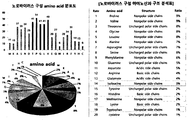
- 1 shows a distribution diagram of amino acids constituting norovirus.
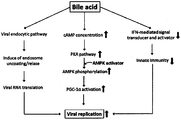
- Figure 2 shows the esophagus of the norovirus proliferation mechanism according to the 5'AMP-activated protein kinase (AMPK) signaling system activity.
- AMPK 5'AMP-activated protein kinase
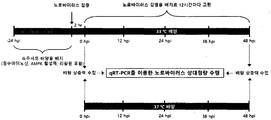
- Figure 3 shows the schematic diagram of the norovirus culture method of the present invention.
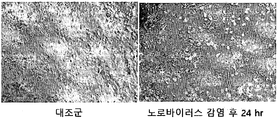
- Figure 4 shows the cytopathic effect of cells according to norovirus infection.
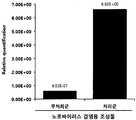
- Figure 5 shows the comparative comparison of the number of norovirus copies according to the treatment of norovirus infection composition.
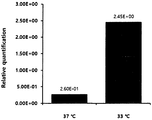
- Figure 6 shows the comparative comparison of norovirus copy number according to the host cell culture temperature after norovirus inoculation.
- the amino acid distribution of the norovirus was analyzed to include essential ingredients to optimize norovirus culture.
- Proline, Valine, Threonine, Glycine, Leucine, and Alanine were 9%, 9%, 8%, 8%, 8% and 8% of the total, respectively. It was ranked 7% (Fig. 1).
- Proline, valine, glycine, leucine, and alanine, except threonine are nonpolar amino acids, and these essential amino acids were considered to be highly involved in norovirus growth.
- DMEM Dulbecco's Modified Eagle's medium, WELGENE, LM 001-25
- WELGENE Eagle's Medium
- MEM Minimum Essential Medium
- the six essential amino acids deemed to be involved in norovirus propagation were added twice as much weight as the weight basically contained in DMEM to complete the composition.
- the composition was completed except for the antioxidant inducible pro-amino acids with ROS scavenging ability generated after viral infection (Table 1).
- Composition Addition amount per 500 ml (mg) MW Concentration or molar concentration (mM) Medium I) Cell culture medium Medium II) Infection Medium Penicillin-streptomycin Add 5 ml of 10,000 U / ml penicillin and 10,000 ⁇ g / ml streptomycin mixture - 100 U / ml L penicillin and 100 ⁇ g / ml streptomycin adding adding FBS Add 50 ml of FBS - 10% content adding No addition TPCK-treated trypsin Add 1 ml of 2 ⁇ g / ml solution - 4 ng / ml No addition adding AICAR 13 258.23 0.1 adding adding adding Rifampin 0.05 822.94 0.06 adding adding Val 94 117.146 1.60 adding adding Leu 105 131.17 1.60 adding adding adding Phe 66 165.18 0.79 adding adding adding Ile 105 131.17 1.60 adding adding Met 30 149.21 0.40 adding adding Trp 16 204.23 0.
- Essential amino acids which are not biosynthetic, were set as the basal medium and antioxidant-inducing pro-amino acids with ROS scavenging ability generated after viral infection were excluded.
- Bile acid (Bile acid) is an active component of the intestinal tract, and helps the growth of porcine enteric calicivirus (PEC) with only bile acid in the host cell.
- PEC porcine enteric calicivirus
- bile acids have been identified as substances that are involved in the synthesis of various transport proteins and enzymes and regulate nuclear receptor activator and conjugate expression (5, 6).
- the presence of bile acids in the life cycle of porcine calici virus has been reported to contribute to virus proliferation by entering the viral genome and preventing virion degradation from lysosomes (7,8).
- G protein-coupled receptors bile acids increase the level of intracellular cAMP, reduce viral immune system by reducing interferon (IFN) -mediated signal transducers and activators. To improve.
- IFN interferon
- PGC-1a peroxisome proliferator-activated receptor gamma coactivator 1-alpha
- AICAR 5-Aminoimidazole-4-carboxamide ribonucleotide
- Example 3 diarrhea related Signal path According to stimulation Norovirus Additives for Culture
- Rifampin is a bactericidal antibiotic of the rifamycin family (Masters, Susan B .; Trevor, Anthony J .; Katzung, Bertram G. (2005) .Katzung & Trevor's pharmacology) .New York: Lange Medical Books / McGraw Hill , Medical Pub.Division.ISBN 0-07-142290-0. It is a drug used for the treatment of active tuberculosis, asymptomatic meningococcal remover of asymptomatic carriers, and to enhance the action of other antimicrobial agents in staphylococcal infections. However, occasional side effects of rifampin include thixotropy, stomach cramps, stool discoloration and diarrhea.
- Symptoms of norovirus infection include nausea, vomiting and abdominal pain, including diarrhea.
- ELAVL1 Embryonic Lethal Abnormal Visual System (ELAV) -like protein 1
- rifampin which regulates ELAVL1
- the present invention aims to improve norovirus proliferation by stimulating diarrhea related signal pathways induced by side effects through repeated treatment of rifampin in cultured cells.
- DMEM fetal bovine serum
- P / S fetal bovine serum
- valine 52.5 mg / 500 ml
- leucine 52.5 mg / 500 ml
- phenylalanine 15 mg / 500 ml
- isoleucine 33 mg / 500 ml
- methionine 8 mg / 500 ml
- Tryptophan 47 mg / 500 ml
- host cell growth medium was 0.2 um after addition of 500 ul of 1 M AICAR (concentration: 0.1 mM) and rifampin (0.05 mg / 500 ml; 0.06 mM), an AMPK activator.
- Filter sterilization was performed using a membrane filter.
- Norovirus culture method using a host cell at the cellular level is shown in FIG. 3.
- Medium containing essential amino acids, AMPK activators and rifampin was treated from 24 hours of culture prior to norovirus infection.
- TPCK-treated trypsin-added infectious medium serum-free
- Methods for maximizing norovirus culture include: 1) replacing AMPK activator, infection medium containing rifampin and essential amino acids every 12 hours, and 2) proliferation of norovirus according to the host cell culture temperature. The solution was collected and subjected to relative norovirus determination using qRT-PCR.
- RNA from early and late infection samples using Trizol reagent, cDNA was synthesized using 6-mer random primers.
- QRT-PCR was performed using SYBR, and normalized with reference to 18S rRNA expression values to perform relative quantification, followed by norovirus relative quantification.
- MDCK cell lines proliferate and metabolize vigorously at 37 ° C. However, the change in culture temperature is perceived as a stress to the cell, activates the AMPK signal to promote the activity of PGC-1a, a co-activator of viral growth factors, and the immune system due to the proliferation and metabolic abnormalities.
- the purpose of this study was to investigate the effects of norovirus on the growth of virus according to the host cell culture temperature.
- the MDCK cell line is a cell line known as influenza virus host cells, and norovirus culture was performed at 37 ° C. and 33 ° C. by applying the method of culturing the virus at low temperature after virus inoculation. MDCK cell lines in 24-well plates were incubated at 37 ° C. for 24 hours after inoculation using culture medium.
- the norovirus was diluted to 1 MOI with the infection medium, and then inoculated into the MDCK cell line for 2 hours. After 2 hours, the supernatant was removed and replaced with fresh infection medium. Thereafter, the cells were divided into two groups, 37 ° C. and 33 ° C., and cultured at 37 ° C. and 33 ° C. for 48 hours while exchanging 500 ul of infection medium at 12 hour intervals. Culture supernatants 48 hours after inoculation were used as samples, respectively. RNA was extracted from the supernatants of 37 ° C. and 33 ° C. media at 48 hours after inoculation using Trizol reagent, and then cDNA was synthesized using 6-mer random primers.
Landscapes
- Life Sciences & Earth Sciences (AREA)
- Health & Medical Sciences (AREA)
- Engineering & Computer Science (AREA)
- Chemical & Material Sciences (AREA)
- Wood Science & Technology (AREA)
- Organic Chemistry (AREA)
- Zoology (AREA)
- Bioinformatics & Cheminformatics (AREA)
- Genetics & Genomics (AREA)
- Biomedical Technology (AREA)
- Biotechnology (AREA)
- General Engineering & Computer Science (AREA)
- Microbiology (AREA)
- Biochemistry (AREA)
- General Health & Medical Sciences (AREA)
- Virology (AREA)
- Medicinal Chemistry (AREA)
- Immunology (AREA)
- Cell Biology (AREA)
- Micro-Organisms Or Cultivation Processes Thereof (AREA)
Abstract
본 발명은 노로바이러스(Norovirus) 배양용 조성물 및 이를 이용한 노로바이러스의 배양 방법을 제공한다. 본 발명은 바이러스 전사인자를 향상시키는 물질인 AMPK(adenosine 5'-monophosphate-activated protein kinase) 활성제 및 설사유도와 관련성이 높은 ELAVL1 활성제를 이용하여 노로바이러스의 빠른 증식을 유도하여 노로바이러스의 배양을 가능하도록 하였다.
Description
본 특허출원은 2016년 04월 22일에 대한민국 특허청에 제출된 대한민국 특허출원 제 10-2016-0049549 호에 대하여 우선권을 주장하며, 상기 특허출원의 개시 사항은 본 명세서에 참조로서 삽입된다.
본 발명은 본 발명은 노로바이러스 배양 조성물 및 배양 방법에 관한 것이다.
인간의 장염을 유발하는 칼리시바이러스과(Caliciviridae)는 노로바이러스(Norovirus), 사포바이러스(Sapovirus), 로타바이러스(Rotavirus) 등과 함께 바이러스성 구토 설사병의 주요 인자로서, 위생과 의료시스템의 미비로 전염되는 후진국형 질병이 아니라 선진국에서도 아주 빈번히 발병해 확산되는 전염병 인자이다. 최근 노로바이러스, A형간염바이러스, 로타바이러스 등 바이러스성 식중독 발생이 급증하고 있으며, 세계적으로 가장 빈번하게 발생하는 것은 노로바이러스 감염에 의한 바이러스성 식중독인 것으로 보고된 바 있다. 관련자료에 따르면 식중독 발생 원인의 약 50%가 노로바이러스에 의한 것이며, 바이러스성 위장염의 96%가 노로바이러스에 의한 것이라고 보고된 바 있다(Centers for Disease Control and Prevention, Surveillance for Norovirus Outbreaks).
전 세계적으로 인체감염형 식중독 바이러스의 중요성이 인식되어 있는 만큼 이에 대한 제어기술 개발에 급증한 관심이 높아지고 있다. 노로바이러스의 경우 감염 모델 시스템 구축이 미약하여 제어기술개발에 한계점이 있다.
따라서, 식중독바이러스 감염 모델의 표준기술 개발이 시급하다. 현재까지 노로바이러스 배양을 시도한 연구가 있었다. 면역세포(B 세포)를 이하여 인체 감염형 노로바이러스를 최대 10배까지 증식하는데 성공하였으나 노로바이러스 백신을 생산하기에는 매우 낮은 수율이다(1). 또한, 무균돼지모델을 이하여 인체 감염형 노로바이러스 감염저감화 효과 평가에 대한 연구가 진행되었는데(2), 노로바이러스 감염 모델로써 무균돼지는 사육시설 유지 및 분석 단가면에 비경제적이므로 다량시료를 분석해야 하는 노로바이러스 특성상 부적합한 실험동물 모델이다. 인체 감염형 노로바이러스에 대하여 적절한 감염모델 및 배양기술 미비로 감염 기전을 통한 병원성을 연구하는데 어려움이 있다.
본 명세서 전체에 걸쳐 다수의 논문 및 특허문헌이 참조되고 그 인용이 표시되어 있다. 인용된 논문 및 특허문헌의 개시 내용은 그 전체로서 본 명세서에 참조로 삽입되어 본 발명이 속하는 기술 분야의 수준 및 본 발명의 내용이 보다 명확하게 설명된다.
[선행기술문헌]
[비특허문헌]
(비특허문헌 1) Jones, Melissa K., et al. (2015) Human norovirus culture in B cells. Nature protocols 10.12: 1939-1947.
(비특허문헌 2) Lou, Fangfei, et al. (2015) A gnotobiotic pig model for determining human norovirus inactivation by high-pressure processing. Applied and environmental microbiology 81.19: 6679-6687.
(비특허문헌 3) Vashist, Surender, et al. (2012) Identification of RNA-protein interaction networks involved in the norovirus life cycle. Journal of virology 86.22: 11977-11990.
(비특허문헌 4) Eisfeld, Amie J., Gabriele Neumann, and Yoshihiro Kawaoka. (2014) Influenza A virus isolation, culture and identification. Nature protocols 9.11: 2663-2681.
(비특허문헌 5) Parks, D. J. et al. (1999). Bile acids: natural ligands for an orphan nuclear receptor. Science 284(5418): 1365-1368.
(비특허문헌 6) Makishima, M. et al. (1999). Identification of a nuclear receptor for bile acids. Science 284(5418): 1362-1365.
(비특허문헌 7) Chang, K. O. et al. (2004). Bile acids are essential for porcine enteric calicivirus replication in association with down-regulation of signal transducer and activator of transcription 1. Proceedings of the National Academy of Sciences of the United States of America 101(23): 8733-8738.
(비특허문헌 8) Shivanna, V. et al. (2014). The crucial role of bile acids in the entry of porcine enteric calicivirus. Virology 456: 268-278.
본 발명자들은 노로바이러스의 배양 조성물 및 배양 방법을 개발하고자 노력하였다. 상기 노로바이러스는 급성위장염의 집단감염으로 유명하며, 단 10개의 비리온만으로도 인간에서 발병시킬 수 있다. 지금까지 노로바이러스는 실험실 내에서 배양되지 않아 연구에 어려움이 있어왔다. 본 발명자들은 노로바이러스를 구성하는 아미노산을 분석하고 AMPK의 인산화를 촉진하는 AICAR와 설사유도와 관련성이 높은 ELAVL1을 타겟으로 하는 물질인 리팜핀을 첨가하여 노로바이러스 배양 조성물을 개발하고 이의 노로바이러스 증식 효과를 확인함으로써 본 발명을 완성하였다.
따라서, 본 발명의 목적은 노로바이러스 배양 조성물을 제공하는 데 있다.
본 발명의 다른 목적은 노로바이러스 배양을 위한 숙주세포 배양 조성물을 제공하는 데 있다.
본 발명의 또 다른 목적은 노로바이러스의 배양 방법을 제공하는 데 있다.
본 발명의 다른 목적 및 이점은 하기의 발명의 상세한 설명, 청구범위 및 도면에 의해 보다 명확하게 된다.
본 발명의 일 양태에 따르면, 본 발명은 동물세포 배양 배지에 (a) 발린(Valine), 로이신(Leucine), 페닐알라닌(Phenylalanine), 이소로이신(Isoleucine), 메티오닌(Methionine) 및 트립토판(Tryptophan)으로 구성된 군으로부터 선택되는 하나 이상의 아미노산; (b) 트립신(trypsin); (c) AMPK(adenosine 5′-monophosphate-activated protein kinase) 활성제; 및 (d) ELAVL1[ELAV(Embryonic Lethal Abnormal Vision)-like protein 1] 활성제(activator)를 유효성분으로 포함하는 노로바이러스(Norovirus) 배양 조성물을 제공한다.
본 발명의 다른 양태에 따르면, 본 발명은 동물세포 배양 배지에 (a) 발린, 로이신, 페닐알라닌, 이소로이신, 메티오닌 및 트립토판로 구성된 군으로부터 선택되는 하나 이상의 아미노산; (b) 혈청; (c) AMPK 활성제; 및 (d) ELAVL1 활성제를 유효성분으로 포함하는 노로바이러스 배양을 위한 숙주세포 배양 조성물을 제공한다.
본 발명의 노로바이러스 배양 조성물 및 노로바이러스 배양을 위한 숙주세포 배양 조성물은 동물세포 배양 배지에 (a) 발린, 로이신, 페닐알라닌, 이소로이신, 메티오닌 및 트립토판으로 구성된 군으로부터 선택되는 하나 이상의 아미노산; (b) AMPK 활성제; 및 (c) ELAVL1 활성제를 공통적으로 포함한다.
본 발명의 일 구현예에 따르면, 상기 동물세포 배양 배지는 DMEM(Dulbecco's Modified Eagle Media), MEM(Minimal Essential Medium), KO-DMEM(Knockout-DMEM), G-MEM(Glasgow Minimal Essential Medium), BME(Basal Medium Eagle), DMEM/Ham's F12, Advanced DMEM/Ham's F12, Iscove's Modified Dulbecco's Media and Minimal Essential Media (MEM), Ham's F-10, Ham's F-12, Medium 199 또는 RPMI 1640 배지이다.
본 발명의 다른 구현예에 따르면, 상기 동물세포 배양 배지는 DMEM 또는 MEM이다.
본 발명의 특정 구현예에 따르면, 상기 동물세포 배양 배지는 DMEM이다.
본 발명의 노로바이러스 배양 조성물 및 노로바이러스 배양을 위한 숙주세포 배양 조성물의 주요한 특징 중 하나는 노로바이러스를 구성하는 아미노산의 분포를 분석하여, 발린, 로이신, 페닐알라닌, 이소로이신, 메티오닌 및 트립토판으로 구성된 군으로부터 선택되는 하나 이상의 아미노산을 포함한다는 점이다.
본 발명의 일 구현예에 따르면, 상기 노로바이러스 배양 조성물은 발린, 로이신, 페닐알라닌, 이소로이신, 메티오닌 및 트립토판을 포함한다.
상기 아미노산은 노로바이러스를 구성하는 아미노산의 함량에 따라 노로바이러스 배양 배지에 첨가된다.
기본적으로 동물세포 배양배지(예컨대, DMEM)은 필수 아미노산을 포함하고 있다. 일예로, WELGENE의 DMEM(Cat. No. LM 001-05) 은 발린 0.8 mM, 로이신 0.8 mM, 페닐알라닌 0.4 mM, 이소로이신 0.8 mM, 메티오닌 0.2 mM 및 트립토판 0.08 mM을 포함한다.
본 발명은 상기 동물세포 배양배지에 노로바이러스 배양이 적합하도록 아미노산을 추가적으로 첨가한다.
본 발명의 일 구현예에 따르면, 상기 아미노산은 0.03 내지 20 mM의 농도를 갖는다.
본 발명의 다른 구현예에 따르면, 상기 아미노산 중 발린은 0.5 내지 3.0 mM, 0.7 내지 2.8 mM, 0.9 내지 2.5 mM, 1.1 내지 2.3 mM, 1.3 내지 2.0 mM 또는 1.5 내지 1.8 mM이고, 로이신은 0.5 내지 3.0 mM, 0.7 내지 2.8 mM, 0.9 내지 2.5 mM, 1.1 내지 2.3 mM, 1.3 내지 2.0 mM 또는 1.5 내지 1.8 mM이며, 페닐알라닌은 0.2 내지 1.5 mM, 0.3 내지 1.4 mM, 0.4 내지 1.3 mM, 0.5 내지 1.2 mM, 0.6 내지 1.1 mM 또는 0.7 내지 1.0 mM이고, 이소로이신은 0.5 내지 3.0 mM, 0.7 내지 2.8 mM, 0.9 내지 2.5 mM, 1.1 내지 2.3 mM, 1.3 내지 2.0 mM 또는 1.5 내지 1.8 mM이며, 메티오닌은 0.1 내지 1.0 mM, 0.2 내지 0.9 mM, 0.3 내지 0.8 mM, 0.3 내지 0.7 mM, 0.3 내지 0.6 mM 또는 0.3 내지 0.5 mM이고, 트립토판은 0.03 내지 0.30 mM, 0.07 내지 0.27 mM, 0.10 내지 0.24 mM, 0.12 내지 0.21 mM, 0.14 내지 0.18 mM 또는 0.14 내지 0.17 mM의 농도를 갖는다.
하기 실시예에 입증된 바와 같이, 발린 1.6 mM, 로이신 1.6 mM, 페닐알라닌 0.79 mM, 이소로이신 1.6 mM, 메티오닌 0.4 mM, 트립토판 0.15 mM의 농도를 갖는다.
이의 경우, 동물세포 배양배지[예컨대, WELGENE의 DMEM(Cat. No. LM001-05)] 에 기포함된 아미노산보다 발린, 로이신, 페닐알라닌, 메티오닌 및 이소로이신은 3배 과포함되게 된다.
본 발명의 노로바이러스 배양 조성물 및 노로바이러스 배양을 위한 숙주세포 배양 조성물의 주요한 특징 중 다른 하나는 AMPK 활성제를 포함한다는 점이다.
상기 AMPK는 세포 내 에너지 항상성에 역할을 하는 효소로, AMPK 활성제는 AMPK를 인산화하여 활성화시킨다. 활성화된 AMPK는 PGC-1a(peroxisome proliferator-activated receptor gamma coactivator 1-alpha)를 활성화시키고 상기 PGC-1a는 HNF-4a(Hepatocyte nuclear factor 4 alpha), FXRa(Farnesoid receptor alpha) 및 LRH-1(liver receptor homolog-1)과 같은 바이러스 전사인자를 향상시킨다. 본 발명은 노로바이러스 배양 조성물에 AMPK 활성제를 첨가하여 PGC-1a 활성화에 따른 노로바이러스의 증식을 확인하였다.
본 발명의 일 구현예에 따르면, 상기 AMPK 활성제는 AICAR(5-Aminoimidazole-4-carboxamide ribonucleotide), 메트포민(metformin), 펜포르민(phenformin), 부포르민(buformin), 티에노피리돈(thienopyridones), 레스베라트롤(resveratrol), 누트카톤(nootkatone), 티아졸(thiazole), 아디포넥틴(adiponectin), 2-데옥시글루코오스(2-deoxyglucose), AAPDs(atypical
antipsychotic drugs), 아디포넥틴 이형 폴리타이드, 카테친(catechins), 트랜스-10 또는 시스-12 컨쥬게이션된 리놀레산, 코리달린(corydaline), 디티올에티온(dithiolethiones), DNA-PKcs(DNA-dependent protein kinase catalytic subunit)의 억제제 또는 안타고니스트, 피브레이트(fibrates), GW2974 (N4-(1-benzyl-1Hindazol-5-yl)-N6,N6-dimethyl-pyrido-[3,4-d]-pyrimidine-4,6-diamine), 호노키올(honokiol), 렙틴(leptin), LKB1(serine/threonine kinase 11), 오보바톨(obovatol, 4',5-diallyl-2,3-dihydroxybiphenyl ether) 및 피오글리타존(pioglitazone)으로 구성된 군으로부터 선택되는 하나 이상의 AMPK 활성제이다.
본 발명의 다른 구현예에 따르면, 상기 AMPK 활성제는 AICAR, 메트포민, 펜포르민, 부포르민, 티에노피리돈 및 레스베라트롤로 구성된 군으로부터 선택되는 하나 이상의 AMPK 활성제이다.
본 발명의 특정 구현예에 따르면, 상기 AMPK 활성제는 AICAR이다.
상기 AICAR은 0.01 내지 0.30 mM, 0.05 내지 0.25 mM, 0.05 내지 0.20 mM 또는 0.05 내지 0.15 mM 의 농도를 갖는다.
하기 실시예에서 입증된 바와 같이, 상기 AICAR은 0.1 mM의 농도를 갖는다.
본 발명의 노로바이러스 배양 조성물 및 노로바이러스 배양을 위한 숙주세포 배양 조성물은 설사유도와 관련성이 높은 ELAVL1을 타겟으로 하는 물질인 ELAVL1 활성제을 포함한다.
상기 ELAVL1 활성제는 ELAVL1 유전자의 발현 및/또는 ELAVL1 단백질의 활성을 상향-조절(up-regulation)시키는 작용을 한다. 상기 ELAVL1, 즉 ELAV like protein 1 또는 HuR(human antigen R)은 마우스의 노로바이러스가 증식하는 동안 숙주세포와 상호작용하는 숙주의 요소로 보고된 바 있다(3).
본 발명의 일 구현예에 따르면, 상기 ELAVL1 활성제는 리팜핀[rifampin 또는 리팜피신(rifampicin)], 리포다당류(lipopolysaccharide), 리토나비어(ritonavir), L-히스타민(L-histidine), L-아르기닌(L-arginine), 덱사메타손(dexamethasone) 및 아라키돈산(arachidonic acid)로 구성된 군으로부터 선택되는 하나 이상의 ELAVL1 활성제이다.
본 발명의 다른 구현예에 따르면, 상기 ELAVL1 활성제는 리팜핀이다.
본 발명의 특정 구현예에 따르면, 상기 리팜핀은 0.01 내지 0.20 mM의 농도를 갖는다.
본 발명의 다른 구현예에 따르면, 상기 리팜핀은 0.01 내지 0.15 mM, 0.01 내지 0.10 mM, 0.02 내지 0.08 mM 또는 0.03 내지 0.08 mM의 농도를 갖는다.
하기 실시예에서 입증된 바와 같이, 상기 리팜핀은 0.06 mM의 농도를 갖는다.
본 발명의 노로바이러스 배양 조성물의 주요한 특징 중 다른 하나는 리팜핀(rifampin)을 포함한다는 점이다.
상기 리팜핀(rifampin)은 리파마이신 계열의 살균성 항생제이다(Masters, Susan B.; Trevor, Anthony J.; Katzung, Bertram G. (2005년). 《Katzung & Trevor's pharmacology》. 뉴욕: Lange Medical Books/McGraw Hill, Medical Pub. Division. ISBN 0-07-142290-0.). 활동성 결핵 치료, 무증상 보균자의 뇌수막구균 제거제 및 포도상구균 감염 시 다른 항균제들의 작용을 증강시킬 목적으로 사용되는 약물이다. 리팜핀의 가끔 일어나는 부작용으로써 요변색, 위경련, 대변 변색 및 설사가 있다. 본 발명은 리팜핀의 부작용에 의해서 유도되는 설사와 관련이 있는 신호경로인 ELAVL1을 자극하여 노로바이러스 증식을 확인하였다.
본 발명의 노로바이러스 배양 조성물은 트립신(trypsin)을 포함한다.
상기 트립신은 단백질 분해효소로, 부착 세포(adherent cell) 표면의 세포 부착 단백질(cell adherent protein)을 분해하여 배양 플레이트 및 다른 세포와 분리되게 한다.
본 발명의 일 구현예에 따르면, 상기 트립신은 TPCK(Tosyl phenylalanyl chloromethyl ketone) 처리된 트립신이다.
상기 TPCK는 키모트립신(chymotrypsin)의 활성 중심으로 구체적으로 반응하도록 설계되어 있기 때문에 키모트립신의 효소활성(proteolytic activity)을 완벽하게 차단시킨다. 그러나 트립신의 활성에는 거의 영향을 미치지 않는다(Carpenter, Frederick H. "[26] Treatment of trypsin with TPCK." Methods in enzymology 11 (1967): 237.). 예컨대, 인플루엔자 A 바이러스(Influenza A virus; IAV)의 경우 바이러스 배양을 위하여 키모트립신의 저해제로 TPCK 처리된 트립신을 사용하는데, 이는 IAV의 감염력을 강화시키기 위하여 사하는 것이 아니라, MDCK 세포의 단분자층(monolayer)에 손상을 주기 위한 것으로 IAV 감염 방법으로 통상적으로 사용되고 있다(4). 본 발명에서는 노로바이러스-민감세포로써 MDCK 세포를 사용하였다. TPCK 처리된 트립신을 사용하여 MDCK 세포의 단분자층의 손상을 주어 노로바이러스 진입을 용이하게 하기 위하여 위 방법을 고안하였다.
본 발명의 다른 구현예에 따르면, 상기 트립신은 0.0001 내지 0.001 중량% 포함된다.
하기 실시예에 입증된 바와 같이, 상기 TPCK 처리된 트립신은 0.0004 중량% 포함된다.
본 발명의 노로바이러스 배양 조성물의 주요한 특징 중 또 다른 하나는 혈청을 포함하지 않는다는 점이다.
본 발명의 일 구현예에 따르면, 상기 조성물은 혈청을 포함하지 않는다.
본 발명의 노로바이러스 배양을 위한 숙주세포 배양 조성물은 혈청을 포함한다.
본 발명의 일 구현예에 따르면, 상기 혈청은 우태혈청(Fetal Bovine Serum; FBS), 우아혈청(Bovine Calf Serum; BCS), 투석우태혈청(dialyzed fetal bovine serum), 신생우아혈청(Newborn Calf Serum; NCS), 철분 보충 우아혈청(Iron supplemented bovine calf serum), 지질제거혈청(De-lipidated serum) 및 말 혈청(horse serum; HS)으로 구성된 군으로부터 선택되는 하나 이상의 혈청이다.
상기 "숙주세포(host cell)"은 바이러스 감염에 대한 감수성(susceptibility)을 갖는 세포를 의미하며, 본 발명의 숙주세포는 노로바이러스 감염에 대한 감수성을 갖는 세포를 의미한다.
본 발명의 일 구현예에 따르면, 상기 숙주세포는 MDCK(Madin-Darby Canine Kidney)이다.
본 발명의 노로바이러스 배양 조성물 및 숙주세포 배양 조성물은 당업계에 통상적으로 사용되는 배양 조성물의 어떠한 첨가제도 첨가될 수 있으며, 예컨대, 본 발명의 노로바이러스 배양 조성물은 추가적으로 항생제 및/또는 항진균제를 포함할 수 있다.
본 발명의 일 구현예에 따르면, 상기 항생제 및/또는 항진균제는 암포테리신(amphotericin), 암피실린(ampicillin), 클로람페니콜(chloramphenicol), 클로르테트라사이클린(chlortetracycline), 시프로플록사신(ciprofloxacin), 디하이드로스트렙토마이신(dihydrostreptomycin), 젠타마이신(gentamicin), 카나마이신(kanamycin), 네오마이신(neomycin), 니스타틴(nystatin), 페니실린(penicillin), 폴리믹신(polymyxin), 스펙티노마이신(spectinomycin), 스트렙토마이신(streptomycin), 테트라사이클린(tetracycline) 및 타일로신(tylosin)으로 구성된 군으로부터 선택되는 하나 이상의 항생제 및/또는 항진균제이다.
본 발명의 다른 양태에 따르면, 본 발명은 다음의 단계를 포함하는 노로바이러스의 배양 방법을 제공한다:
(a) 상기 제 2 항의 숙주세포 배양 배지에 숙주세포를 접종하여 배양하는 단계;
(b) 상기 단계 (a)의 결과물에 상기 제 1 항의 노로바이러스 배양 조성물로 배지를 교체하고 노로바이러스를 감염시키는 단계; 및
(c) 상기 단계 (b)의 결과물을 배양하여 노로바이러스를 회수하는 단계.
상기 방법을 단계별로 설명한다.
단계 (a):
숙주세포의
배양
먼저, 노로바이러스 배양을 위한 숙주세포 배양 배지에 숙주세포를 접종하여 배양한다.
상기 단계 (a)의 숙주세포 배양 배지는 앞서 기재한 내용이 공통되므로, 이 둘 사이에 공통된 내용은 본 명세서의 과도한 복잡성을 피하기 위하여, 그 기재를 생략한다.
상기 숙주세포 배양 배지는 트립신을 포함하지 않는다.
상기 단계 (a)의 노로바이러스-민감세포의 배양은 노로바이러스를 접종하기 적합한 정도로 세포가 생장할 때까지 배양한다.
본 발명의 일 구현예에 따르면, 상기 단계 (b)의 배양은 2 내지 60시간 동안 실시한다.
본 발명의 다른 구현예에 따르면, 상기 단계 (b)의 배양은 2 내지 50시간, 2 내지 40시간, 2 내지 30시간 또는 10 내지 30시간 동안 실시한다.
단계 (b):
노로바이러스
감염
다음, 상기 단계 (a)의 결과물에 노로바이러스 배양 조성물로 배지를 교체하고 노로바이러스를 감염시킨다.
본 발명의 일 구현예에 따르면, 상기 노로바이러스는 0.1 내지 10 MOI(multiplicity of infection) 이다.
본 발명의 다른 구현예에 따르면, 상기 노로바이러스는 0.1 내지 8 MOI, 0.1 내지 6 MOI, 0.1 내지 4 MOI 또는 0.5 내지 4 MOI이다.
본 발명의 일 구현예에 따르면, 상기 바이러스 감염은 0.5 내지 10시간 동안 실시한다.
본 발명의 다른 구현에 따르면, 상기 바이러스 감염은 0.5 내지 2시간, 0.5 내지 6시간, 0.5 내지 4시간 또는 1 내지 4시간 동안 실시한다.
단계 (c):
노로바이러스의
회수
다음, 상기 단계 (b)의 결과물을 배양하여 노로바이러스를 회수한다.
본 발명의 일 구현예에 따르면, 상기 바이러스 배양은 0.5 내지 80시간 동안 실시한다.
본 발명의 다른 구현예에 따르면, 상기 바이러스 배양은 0.5 내지 48시간, 0.5 내지 72시간, 24 내지 72시간 또는 12 내지 80시간 동안 실시한다.
본 발명의 방법은 노로바이러스 배양의 온도를 최적화하였다.
본 발명의 일 구현예에 따르면, 상기 단계 (b) 및 (c) 는 30-40 온도 조건 하에 실시한다.
본 발명의 다른 구현예에 따르면, 상기 단계 (b) 및 (c) 는 30-38, 30-36, 30-35℃ 또는 32-35 온도 조건 하에 실시한다.
본 발명의 노로바이러스 배양 방법은 노로바이러스의 증식을 증가시키기 위해 배양 배지 내 유효성분의 고갈을 막기 위하여 배양 조성물을 첨가 또는 교체할 수 있다.
본 발명의 일 구현예에 따르면, 상기 단계 (b) 및 (c) 사이에 노로바이러스 배양 조성물을 첨가하는 단계 (b')를 추가적으로 포함한다.
본 발명의 특징 및 이점을 요약하면 다음과 같다:
(a) 본 발명은 노로바이러스(Norovirus) 배양 조성물 및 이를 이용한 노로바이러스의 배양 방법을 제공한다.
(b) 본 발명은 배양이 어렵다고 알려진 노로바이러스의 배양방법을 구축하여 실험실 수준에서 노로바이러스 연구가 가능하도록 한다.
(c) 본 발명은 바이러스 전사인자를 향상시키는 물질인 AMPK(adenosine 5'-monophosphate-activated protein kinase) 활성제 및 ELAV1 활성제를 이하여 노로바이러스의 빠른 증식을 유도한다.
도 1은 노로바이러스를 구성하는 아미노산의 분포도를 나타낸다.
도 2는 AMPK(5'AMP-activated protein kinase) 신호전달체계 활성에 따른 노로바이러스 증식 기전에 대한 식도를 나타낸다.
도 3은 본 발명의 노로바이러스 배양 방법을 도식화하여 보여준다.
도 4는 노로바이러스 감염에 따른 세포의 세포병변효과를 나타낸다.
도 5는 노로바이러스 감염 조성물 처리에 따른 노로바이러스 복제수를 상대비교하여 나타낸다.
도 6은 노로바이러스 접종 후 숙주 세포 배양 온도에 따른 노로바이러스 복제수를 상대비교하여 나타낸다.
이하, 실시예를 통하여 본 발명을 더욱 상세히 설명하고자 한다. 이들 실시예는 오로지 본 발명을 보다 구체적으로 설명하기 위한 것으로, 본 발명의 요지에 따라 본 발명의 범위가 이들 실시예에 의해 제한되지 않는다는 것은 당업계에서 통상의 지식을 가진 자에 있어서 자명할 것이다.
실시예 1: 노로바이러스 구성 아미노산의 분포도
노로바이러스 배양을 최적화하기 위한 필수성분을 포함시키기 위하여 노로바이러스를 구성하는 아미노산 분포를 분석하였다. 그 결과 프롤린(Proline), 발린(Valine), 트레오닌(Threonine), 글리신(Glycine), 로이신(Leucine) 및 알라닌(Alanine)이 각각 전체의 9%, 9%, 8%, 8%, 8% 및 7%로 상위를 차지하였다(도 1). 트레오닌을 제외한 프롤린, 발린, 글리신, 로이신 및 알라닌은 비극성 아미노산으로써, 이러한 필수아미노산이 노로바이러스 증식에 크게 관여할 것으로 간주하였다. 다양한 세포주의 배양을 위하여 사용하는 DMEM(Dulbecco's Modified Eagle's medium, WELGENE, LM 001-25)은 MEM(Minimum Essential Medium)에 D-글루코오스 뿐만 아니라 고농도의 아미노산, 비타민을 첨가하여 개발 된 배지로써, 본 발명을 위한 기본배지로 사용하였다. 노로바이러스 증식에 관여할 것으로 간주된 6종의 필수아미노산을 DMEM에 기본적으로 함유되어 있는 중량 대비 2배의 중량을 첨가하여 본 조성물을 완성하였다. 바이러스 감염 후 생성되는 ROS 소거능을 지닌 항산화성 유도 전구 아미노산을 제외하여 본 조성물을 완성하였다(표 1).
| 조성물 | 500 ㎖ 당 첨가량(㎎) | MW | 농도 또는몰 농도(mM) | 배지Ⅰ)세포배양용 배지 | 배지Ⅱ)감염용배지 |
| 페니실린-스트렙토마이신 | 10,000 U/㎖의 페니실린과 10,000 ㎍/㎖의 스트렙토마이신 혼합물 5 ㎖ 첨가 | - | 100 U/㎖L의 페니실린 및 100 ㎍/㎖의 스트렙토마이신 | 첨가 | 첨가 |
| FBS | FBS 50 ㎖ 첨가 | - | 10% 함유 | 첨가 | 무첨가 |
| TPCK-treated 트립신 | 2 ㎍/㎖ 용액을 1 ㎖ 첨가 | - | 4 ng/㎖ | 무첨가 | 첨가 |
| AICAR | 13 | 258.23 | 0.1 | 첨가 | 첨가 |
| 리팜핀 | 0.05 | 822.94 | 0.06 | 첨가 | 첨가 |
| Val | 94 | 117.146 | 1.60 | 첨가 | 첨가 |
| Leu | 105 | 131.17 | 1.60 | 첨가 | 첨가 |
| Phe | 66 | 165.18 | 0.79 | 첨가 | 첨가 |
| Ile | 105 | 131.17 | 1.60 | 첨가 | 첨가 |
| Met | 30 | 149.21 | 0.40 | 첨가 | 첨가 |
| Trp | 16 | 204.23 | 0.15 | 첨가 | 첨가 |
생합성이 불가한 필수아미노산을 기본 배지로 설정하고, 바이러스 감염 후 생성되는 ROS 소거능을 지닌 항산화성 유도 전구 아미노산은 제외하였다.
실시예 2: AMPK 활성 기전에 따른 노로바이러스 배양을 위한 첨가물 개발
담즙산(Bile acid)은 장관을 구성하는 활성요소이며, 숙주세포에 담즙산만으로 돼지 칼리시 바이러스(Porcine enteric calicivirus, PEC)의 성장을 도와준다. 최근 들어, 담즙산은 다양한 수송단백질 및 효소들의 합성에 연관되어 있는 물질로써, 핵 수용체 활성체와 접합체 발현을 조절하는 물질로 규명된 바 있다(5,6). 돼지 칼리시 바이러스의 생활 주기에서 담즙산이 존재할 경우, 바이러스 게놈이 세포내로 진입하여 리소좀(lysosome)으로부터 비리온(virion) 분해를 방지함으로써 바이러스 증식에 기여하는 것으로 보고된 바 있다(7,8). G 단백질 연결 수용체(G protein-coupled receptor) 존재 하에 담즙산은 세포내 cAMP 농도를 높여주며, 인터페론(IFN)을 매개하는 시그널 변환기(transducer)와 활성체(activator)를 감소시켜 면역체계 저감화로 바이러스 증식을 향상시킨다. 또한, cAMP/Protein kinase A(PKA) 신호체계를 활성화하여 AMPK 인산화를 촉진시킨다. AMPK 인산화는 배고픔, 산화적 스트레스 신호에 의해 활성화하는 신호전달 물질로써 핵 수용체 공활성화 인자(coactivator)인 PGC-1a(peroxisome proliferator-activated receptor gamma coactivator 1-alpha)를 활성화 시킨다. PGC-1a은 HNF-4a, FXRa 및 LRH-1와 같은 바이러스 전사인자를 더욱 더 향상시키는 물질이다. 따라서, 노로바이러스 배양 배지에 PGC-1a의 상위조절자인 AMPK 인산화를 촉진하는 물질인 AICAR(5-Aminoimidazole-4-carboxamide ribonucleotide)를 첨가하여 PGC-1a 활성화에 따른 노로바이러스 증식을 향상시키고자 하였다(도 2).
실시예
3: 설사 관련
신호경로
자극에 따른
노로바이러스
배양을 위한 첨가물 개발
리팜핀(rifampin)은 리파마이신 계열의 살균성 항생제이다(Masters, Susan B.; Trevor, Anthony J.; Katzung, Bertram G. (2005년). <Katzung & Trevor's pharmacology>. 뉴욕: Lange Medical Books/McGraw Hill, Medical Pub. Division. ISBN 0-07-142290-0.). 활동성 결핵 치료, 무증상 보균자의 뇌수막구균 제거제 및 포도상구균 감염시 다른 항균제들의 작용을 증강시킬 목적으로 사용되는 약물이다. 그러나, 리팜핀의 가끔 일어나는 부작용으로써 요변색, 위경련, 대변 변색 및 설사가 있다. 노로바이러스 감염 시, 나타나는 증상 중에는 설사를 포함한 오심, 구토, 복통을 동반한다. 이러한 부작용의 네트워크 기전에 ELAVL1[ELAV(Embryonic Lethal Abnormal Visual system)-like protein 1]이 연결되어 있으며, ELAVL1을 조절하는 리팜핀을 노로바이러스 감염 조성물로 포함하였으며, 설사 관련 신호를 유도하여 노로바이러스 증식 여부를 확인하였다. 따라서, 본 발명은 배양세포에 리팜핀의 반복 처리를 통한 부작용에 의해 유도되는 설사 관련 신호경로를 자극하여 노로바이러스 증식을 향상시키고자 하였다.
실시예
4:
노로바이러스
배양을 위한
숙주세포
배지 및
노로바이러스
감염용 배지의 제조
노로바이러스 배양을 위한 배지 구성은 크게 1) 숙주세포 성장 배지 및 2) 노로바이러스 감염용 배지로 구분하여 사용하였다. 첫 번째, 숙주세포 성장을 위한 배지로써 DMEM(WELGENE, LM 001-05)을 기본배지로 사용하였으며, 10% 우태아혈청(fetal bovine serum; FBS), 1% 페니실린/스트렙토마이신(penicillin/streptomycin; P/S), 발린(52.5 mg/500 ml), 로이신(52.5 mg/500 ml), 페닐알라닌(15 mg/500 ml), 이소로이신(33 mg/500 ml), 메티오닌(8 mg/500 ml), 트립토판(47 mg/500 ml)을 첨가하였고, AMPK 활성제인 1 M AICAR 500 ul(농도: 0.1 mM) 및 리팜핀(0.05 mg/500 ml; 0.06 mM)을 첨가한 후 숙주세포 성장배지는 0.2 um 막 필터를 이용하여 여과 멸균하여 사용하였다. 두 번째, 노로바이러스 감염용 배지로써 FBS를 제외한 DMEM 배지에 1% 페니실린/스트렙토마이신, 성장배지와 동일한 양의 아미노산 발린, 로이신, 페닐알라닌, 이소로이신, 메티오닌, 트립토판 및 리팜핀을 첨가하였고, TPCK(Tosyl phenylalanyl chloromethyl ketone)-treated 트립신(2 ug/ml)을 추가로 넣어 제조한 후 0.2 um 막 필터를 이용하여 여과 멸균하여 사용하였다(도 3).
실시예 5: 노로바이러스 배양 및 측정 방법
세포 수준에서 숙주세포를 이용한 노로바이러스 배양 방법은 도 3과 같다. 필수아미노산, AMPK 활성제 및 리팜핀을 포함한 배지를 노로바이러스 감염 전 24시간 배양단계부터 처리하였다. 노로바이러스 접종 단계에서 TPCK-treated 트립신이 첨가된 감염용 배지(무혈청)를 사용하여 세포에 부착반응을 유도하고, 2시간 후에 새로운 감염용 배지로 교환하였다. 노로바이러스 배양을 극대화하기 위한 방법으로는 1) AMPK 활성제 및 리팜핀과 필수아미노산이 첨가된 감염용 배지를 12시간 간격으로 교체하여 주고, 2) 숙주세포 배양 온도에 따른 노로바이러스의 증식 여부를 배양 상층액을 수집하여 qRT-PCR을 이용하여 노로바이러스 상대정량을 수행하였다.
실시예 6: 노로바이러스 감염용 배지 조성물의 노로바이러스 증식 효과
세포 수준에서 노로바이러스 배양을 위한 숙주세포를 개발하기 위하여 16종의 세포주에 대한 1차 선별을 수행하였고, 그 중 MDCK(Madin-Darby canine kidney) 세포주에서 노로바이러스에 민감성을 보였기 때문에 도 3에서와 같이, 노로바이러스 숙주모델로 MDCK 세포주를 이용하여 노로바이러스 감염 실험을 수행하였고, 감염세포의 형태는 도 4와 같다. 24-웰 플레이트에 MDCK 세포주를 배양용 배지를 이용하여 접종(seeding) 후 24시간 동안 배양하였다. 숙주세포 배양용 배지는 노로바이러스 감염 전 24시간 동안 MDCK 세포주에 노출하였다. 이후, 노로바이러스를 감염용 배지에 바이러스 농도를 1 MOI(multiplicity of infection)로 희석한 후 MDCK 세포주에 2시간 동안 부착 반응을 하였다. 2시간 후, 상층액은 수집하여 감염초기 샘플로 사용하였고, 새로운 감염용 배지를 12시간 간격으로 500 ul씩 추가하여 접종 후 48시간 때의 배양 상층액을 감염후기 샘플로 사용하였다. Trizol 시약을 이용하여 감염초기 및 감염후기 샘플에서 RNA를 추출한 후, 6-mer 랜덤 프라이머를 이용하여 cDNA를 합성하였다. SYBR을 이용하여 qRT-PCR을 수행하였고, 상대정량을 수행하기 위하여 18S rRNA 발현값을 참조하여 평준화한 뒤, 노로바이러스 상대정량을 수행하였다. 그 결과, 감염 후 72시간 후 노로바이러스 감염용 배지 조성물을 첨가하지 않은 시험군에서는 노로바이러스 초기 접종량 대비 0.06배 감소한 반면, 노로바이러스 감염용 배지 조성물을 첨가한 시험구에서는 노로바이러스 초기 접종량 대비 6.62배 증가함을 qRT-PCR를 통하여 확인하였다. 이로써, AMPK 활성화 및 리팜핀, 필수아미노산 첨가가 노로바이러스 증식에 기여하는 것으로 확인되었다(도 5).
실시예 7: 숙주세포 배양온도에 따른 노로바이러스 증식 효과
MDCK 세포주는 37℃에서 증식과 대사가 활발하게 일어난다. 그러나 배양온도 변화는 세포에게 스트레스로 인지하고, AMPK 신호를 활성화하여 바이러스 증식인자의 공활성 인자인 PGC-1a의 활성을 촉진하게 되며, 증식과 대사의 이상으로 면역체계에서 상당한 타격을 주게 된다. 배양온도를 달리하였을 때 노로바이러스의 경우, 숙주세포 배양온도에 따라 바이러스 증식에 어떠한 영향을 미치는지 알아보고자 하였다. MDCK 세포주는 인플루엔자 바이러스 숙주세포로 많이 알려진 세포주로써 바이러스 접종 후 저온에서 바이러스를 배양하는 방법을 본 실험에 응용하여 37℃ 및 33℃에서 각각 노로바이러스 배양을 수행하였다. 24-웰 플레이트에 MDCK 세포주를 배양용 배지를 이용하여 접종 후 24시간 동안 37℃에서 배양하였다. 이 후, 감염용 배지로 노로바이러스를 1 MOI로 희석한 후 MDCK 세포주에 2시간 동안 접종하였다. 2시간 후, 상층액은 제거하고 새로운 감염용 배지로 교환하였다. 이 후, 37℃ 및 33℃로 두 그룹으로 나누어 12시간 간격으로 감염용 배지를 500 ul씩 교환하면서 48시간 동안 37℃ 및 33℃에서 각각 배양하였다. 접종 후 48시간 때의 배양 상층액을 샘플로 각각 사용하였다. Trizol 시약을 이용하여 접종 후 48시간 때의 37℃ 및 33℃ 배지의 상층액에서 RNA를 추출한 후, 6-mer 랜덤 프라이머를 이용하여 cDNA를 합성하였다. SYBR을 이용하여 qRT-PCR을 수행하였고, 상대정량을 수행하기 위하여 18S rRNA 발현값을 참조하여 평준화한 뒤, 노로바이러스 상대정량을 수행하였다. 그 결과, 감염 후 37℃에서 배양된 시험구에서는 노로바이러스가 초기접종량 대비 0.26배 감소한 반면, 33℃에서 배양된 시험구에서 노로바이러스 증폭이 초기접종량 대비 2.45배 증식됨을 qRT-PCR를 통하여 확인하였다. 이로써, 숙주세포 배양 온도가 노로바이러스 증식에 영향을 미치는 것으로 확인되었다. 이는 노로바이러스가 증식함에 있어 숙주의 상태에 의존적임을 확인하였다(도 6).
이상으로 본 발명의 특정한 부분을 상세히 기술하였는바, 당업계의 통상의 지식을 가진 자에게 있어서 이러한 구체적인 기술은 단지 구체적인 구현예일 뿐이며, 이에 본 발명의 범위가 제한되는 것이 아닌 점은 명백하다. 따라서 본 발명의 실질적인 범위는 첨부된 청구항과 그의 등가물에 의하여 정의된다고 할 것이다.
Claims (20)
- 동물세포 배양 배지에 (a) 발린(Valine), 로이신(Leucine), 페닐알라닌(Phenylalanine), 이소로이신(Isoleucine), 메티오닌(Methionine) 및 트립토판(Tryptophan)으로 구성된 군으로부터 선택되는 하나 이상의 아미노산; (b) 트립신(trypsin); (c) AMPK(adenosine 5'-monophosphate-activated protein kinase) 활성제; 및 (d) ELAVL1[ELAV(Embryonic Lethal Abnormal Vision)-like protein 1] 활성제(activator)를 유효성분으로 포함하는 노로바이러스(Norovirus) 배양용 조성물.
- 동물세포 배양 배지에 (a) 발린(Valine), 로이신(Leucine), 페닐알라닌(Phenylalanine), 이소로이신(Isoleucine), 메티오닌(Methionine) 및 트립토판(Tryptophan)로 구성된 군으로부터 선택되는 하나 이상의 아미노산; (b) 혈청; (c) AMPK(adenosine 5'-monophosphate-activated protein kinase) 활성제; 및 (d) ELAVL1[ELAV(Embryonic Lethal Abnormal Vision)-like protein 1] 활성제(activator)를 유효성분으로 포함하는 노로바이러스 배양을 위한 숙주세포 배양용 조성물.
- 제 1 항 또는 제 2 항에 있어서, 상기 동물세포 배양 배지는 DMEM(Dulbecco's Modified Eagle Media), MEM(Minimal Essential Medium), KO-DMEM(Knockout-DMEM), G-MEM(Glasgow Minimal Essential Medium), BME(Basal Medium Eagle), DMEM/Ham's F12, Advanced DMEM/Ham's F12, Iscove's Modified Dulbecco's Media and Minimal Essential Media (MEM), Ham's F-10, Ham's F-12, Medium 199 또는 RPMI 1640 배지인 것을 특징으로 하는 조성물.
- 제 1 항 또는 제 2 항에 있어서, 상기 아미노산은 0.03 내지 20 mM의 농도를 갖는 것을 특징으로 하는 조성물.
- 제 1 항에 있어서, 상기 트립신은 TPCK(Tosyl phenylalanyl chloromethyl ketone) 처리된 트립신인 것을 특징으로 하는 조성물.
- 제 1 항에 있어서, 상기 트립신은 0.0001 내지 0.001 중량% 포함되는 것을 특징으로 하는 조성물.
- 제 2 항에 있어서, 상기 혈청은 우태혈청(Fetal Bovine Serum; FBS), 우아혈청(Bovine Calf Serum; BCS), 투석우태혈청(dialyzed fetal bovine serum), 신생우아혈청(Newborn Calf Serum; NCS), 철분 보충 우아혈청(Iron supplemented bovine calf serum), 지질제거혈청(De-lipidated serum) 및 말 혈청(horse serum; HS)으로 구성된 군으로부터 선택되는 하나 이상의 혈청인 것을 특징으로 하는 방법.
- 제 1 항 또는 제 2 항에 있어서, 상기 AMPK 활성제는 AICAR(5-Aminoimidazole-4-carboxamide ribonucleotide), 메트포민(metformin), 펜포르민(phenformin), 부포르민(buformin), 티에노피리돈(thienopyridones), 레스베라트롤(resveratrol), 누트카톤(nootkatone), 티아졸(thiazole), 아디포넥틴(adiponectin), 2-데옥시글루코오스(2-deoxyglucose), AAPDs(atypical antipsychotic drugs), 아디포넥틴 이형 폴리펩타이드, 카테친(catechins), 트랜스-10 또는 시스-12 컨쥬게이션된 리놀레산, 코리달린(corydaline), 디티올에티온(dithiolethiones), DNA-PKcs(DNA-dependent protein kinase catalytic subunit)의 억제제 또는 안타고니스트, 피브레이트(fibrates), GW2974 (N4-(1-benzyl-1H-indazol-5-yl)-N6,N6-dimethyl-pyrido-[3,4-d]-pyrimidine-4,6-diamine), 호노키올(honokiol), 렙틴(leptin), LKB1(serine/threonine kinase 11), 오보바톨(obovatol, 4',5-diallyl-2,3-dihydroxybiphenyl ether) 및 피오글리타존(pioglitazone)으로 구성된 군으로부터 선택되는 하나 이상의 AMPK 활성제인 것을 특징으로 하는 조성물.
- 제 8 항에 있어서, 상기 AMPK 활성제는 AICAR인 것을 특징으로 하는 조성물.
- 제 9 항에 있어서, 상기 AICAR는 0.01 내지 0.30 mM의 농도를 갖는 것을 특징으로 하는 조성물.
- 제 1 항 또는 제 2 항에 있어서, 상기 ELAVL1 활성제는 리팜핀(rifampin), 리포다당류(lipopolysaccharide), 리토나비어(ritonavir), L-히스타민(L-histidine), L-아르기닌(L-arginine), 덱사메타손(dexamethasone) 및 아라키돈산(arachidonic acid)로 구성된 군으로부터 선택되는 하나 이상의 ELAVL1 활성제인 것을 특징으로 하는 조성물.
- 제 11 항에 있어서, 상기 ELAVL1 활성제는 리팜핀인 것을 특징으로 하는 조성물.
- 제 12 항에 있어서, 상기 리팜핀은 0.01 내지 0.20 mM의 농도를 갖는 것을 특징으로 하는 조성물.
- 제 2 항에 있어서, 상기 숙주세포는 MDCK(Madin-Darby Canine Kidney)인 것을 특징으로 하는 조성물.
- 다음의 단계를 포함하는 노로바이러스(Norovirus)의 배양 방법:(a) 상기 제 2 항의 숙주세포 배양용 조성물에 숙주세포를 접종하여 배양하는 단계;(b) 상기 단계 (a)의 결과물에 상기 제 1 항의 노로바이러스 배양용 조성물로 배지를 교체하고 노로바이러스를 감염시키는 단계; 및(c) 상기 단계 (b)의 결과물을 배양하여 노로바이러스를 회수하는 단계.
- 제 15 항에 있어서, 상기 단계 (a)의 숙주세포는 MDCK(Madin-Darby Canine Kidney)인 것을 특징으로 하는 방법.
- 제 15 항에 있어서, 상기 단계 (a)의 배양은 2 내지 80시간 동안 실시하는 것을 특징으로 하는 방법.
- 제 15 항에 있어서, 상기 단계 (b)의 노로바이러스는 0.1 내지 10 MOI(multiplicity of infection) 것을 특징으로 하는 방법.
- 제 15 항에 있어서, 상기 단계 (b)의 감염은 0.5 내지 10 시간 동안 실시하는 것을 특징으로 하는 방법.
- 제 15 항에 있어서, 상기 단계 (b) 및 (c) 는 30-40℃ 온도 조건 하에 실시하는 것을 특징으로 하는 방법.
Applications Claiming Priority (2)
| Application Number | Priority Date | Filing Date | Title |
|---|---|---|---|
| KR1020160049549A KR101785083B1 (ko) | 2016-04-22 | 2016-04-22 | 노로바이러스 배양용 조성물 및 배양 방법 |
| KR10-2016-0049549 | 2016-04-22 |
Publications (1)
| Publication Number | Publication Date |
|---|---|
| WO2017183864A1 true WO2017183864A1 (ko) | 2017-10-26 |
Family
ID=60116856
Family Applications (1)
| Application Number | Title | Priority Date | Filing Date |
|---|---|---|---|
| PCT/KR2017/004069 Ceased WO2017183864A1 (ko) | 2016-04-22 | 2017-04-14 | 노로바이러스 배양 조성물 및 배양 방법 |
Country Status (2)
| Country | Link |
|---|---|
| KR (1) | KR101785083B1 (ko) |
| WO (1) | WO2017183864A1 (ko) |
Cited By (1)
| Publication number | Priority date | Publication date | Assignee | Title |
|---|---|---|---|---|
| CN120843425A (zh) * | 2025-07-31 | 2025-10-28 | 华夏基因生物科技有限公司 | 一种提高nk细胞扩增和杀伤活性的无血清无蛋白培养基及其制备方法 |
Citations (3)
| Publication number | Priority date | Publication date | Assignee | Title |
|---|---|---|---|---|
| US7264923B2 (en) * | 2004-05-05 | 2007-09-04 | Washington University | Norovirus infected cell cultures and uses therefor |
| JP2014513947A (ja) * | 2011-04-18 | 2014-06-19 | ザ・トラスティーズ・オブ・プリンストン・ユニバーシティ | 培養細胞においてウイルスを生産する方法 |
| US20150240215A1 (en) * | 2012-04-18 | 2015-08-27 | The Trustees Of Princeton University | Method to produce virus in cultured cells supplemented with alpha-ketoglutarate |
-
2016
- 2016-04-22 KR KR1020160049549A patent/KR101785083B1/ko active Active
-
2017
- 2017-04-14 WO PCT/KR2017/004069 patent/WO2017183864A1/ko not_active Ceased
Patent Citations (3)
| Publication number | Priority date | Publication date | Assignee | Title |
|---|---|---|---|---|
| US7264923B2 (en) * | 2004-05-05 | 2007-09-04 | Washington University | Norovirus infected cell cultures and uses therefor |
| JP2014513947A (ja) * | 2011-04-18 | 2014-06-19 | ザ・トラスティーズ・オブ・プリンストン・ユニバーシティ | 培養細胞においてウイルスを生産する方法 |
| US20150240215A1 (en) * | 2012-04-18 | 2015-08-27 | The Trustees Of Princeton University | Method to produce virus in cultured cells supplemented with alpha-ketoglutarate |
Non-Patent Citations (2)
| Title |
|---|
| JONES, MELISSA K. ET AL.: "Human Norovirus Culture in B Cells", NATURE PROTOCOLS, vol. 10, no. 12, 2015, pages 1939 - 1947 * |
| KIM, DONG-HWAN ET AL.: "Progress on the Development of in vitro Human Norovirus Cell Culture Model", SAFE FOOD, vol. 9, no. 3, September 2014 (2014-09-01), pages 7 - 1 8 * |
Cited By (1)
| Publication number | Priority date | Publication date | Assignee | Title |
|---|---|---|---|---|
| CN120843425A (zh) * | 2025-07-31 | 2025-10-28 | 华夏基因生物科技有限公司 | 一种提高nk细胞扩增和杀伤活性的无血清无蛋白培养基及其制备方法 |
Also Published As
| Publication number | Publication date |
|---|---|
| KR101785083B1 (ko) | 2017-10-13 |
Similar Documents
| Publication | Publication Date | Title |
|---|---|---|
| Khatri et al. | Swine influenza H1N1 virus induces acute inflammatory immune responses in pig lungs: a potential animal model for human H1N1 influenza virus | |
| Shipley et al. | Differentiated human SH-SY5Y cells provide a reductionist model of herpes simplex virus 1 neurotropism | |
| Xu et al. | Alpha interferon and not gamma interferon inhibits salmonid alphavirus subtype 3 replication in vitro | |
| WO2014133323A1 (en) | Novel bacteriophage and antibacterial composition comprising the same | |
| WO2017200192A1 (ko) | 항바이러스 활성을 가지는 사료 첨가제 조성물 | |
| WO2014148738A1 (ko) | 신규한 국내형 돼지생식기호흡기증후군 바이러스 | |
| WO2018088693A1 (ko) | 2dg를 이용한 줄기세포 역량 향상 방법 | |
| WO2017183864A1 (ko) | 노로바이러스 배양 조성물 및 배양 방법 | |
| WO2017073851A1 (ko) | 돼지유행성설사병바이러스 약독화주 및 불활화백신 조성물과 이를 이용한 경구 투여용 백신 조성물 | |
| WO2021230678A1 (ko) | 효능이 증진된 줄기세포를 포함하는 세포 생착능 증진용 조성물 | |
| WO2024076173A1 (ko) | 지방 유래 줄기세포의 모유두세포로의 분화 유도용 조성물 및 그 조성물을 이용한 분화 방법 | |
| WO2017018739A1 (en) | Pharmaceutical composition for preventing cccdna formation of hepatitis b virus | |
| WO2013068557A1 (en) | Virus infectable stem cells | |
| KR20210116150A (ko) | 테트란드린 또는 이의 유사체를 포함하는 코로나바이러스 감염 예방 또는 치료용 조성물 | |
| Amadori et al. | Role of a distinct population of bovine γδ T cells in the immune response to viral agents | |
| WO2021256795A1 (ko) | 신규한 코로나 바이러스의 에피토프 및 이의 용도 | |
| WO2020231059A1 (ko) | 활성화 림프구 및 이의 제조 방법 | |
| Chhabra et al. | Development and evaluation of an in vitro isolation of street rabies virus in mouse neuroblastoma cells as compared to conventional tests used for diagnosis of rabies | |
| WO2012036512A2 (ko) | 중간엽 줄기세포의 연골 세포로의 분화 유도를 위한 화합물의 용도 | |
| WO2016099226A1 (ko) | 신규한 돼지 유행성설사 바이러스 및 그의 이용 | |
| WO2022173165A1 (ko) | 흑삼을 유효성분으로 포함하는 코로나 바이러스 감염의 예방, 개선 또는 치료용 조성물 | |
| WO2022131603A1 (ko) | 현초 추출물을 유효성분으로 포함하는 항바이러스 조성물 | |
| WO2023090774A1 (ko) | 종양 침윤 림프구의 개선된 제조방법 | |
| WO2012015270A2 (ko) | 돼지생식기호흡기증후군 바이러스 감수성 세포주 | |
| WO2020085846A1 (ko) | 바이러스가 감염된 세포주 및 동물 모델의 제조 방법 |
Legal Events
| Date | Code | Title | Description |
|---|---|---|---|
| NENP | Non-entry into the national phase |
Ref country code: DE |
|
| 121 | Ep: the epo has been informed by wipo that ep was designated in this application |
Ref document number: 17786132 Country of ref document: EP Kind code of ref document: A1 |
|
| 122 | Ep: pct application non-entry in european phase |
Ref document number: 17786132 Country of ref document: EP Kind code of ref document: A1 |