WO2017170849A1 - ナイーブ型多能性幹細胞培養用培地および多能性幹細胞の培養方法 - Google Patents
ナイーブ型多能性幹細胞培養用培地および多能性幹細胞の培養方法 Download PDFInfo
- Publication number
- WO2017170849A1 WO2017170849A1 PCT/JP2017/013205 JP2017013205W WO2017170849A1 WO 2017170849 A1 WO2017170849 A1 WO 2017170849A1 JP 2017013205 W JP2017013205 W JP 2017013205W WO 2017170849 A1 WO2017170849 A1 WO 2017170849A1
- Authority
- WO
- WIPO (PCT)
- Prior art keywords
- pluripotent stem
- medium
- stem cells
- cells
- naive
- Prior art date
- Legal status (The legal status is an assumption and is not a legal conclusion. Google has not performed a legal analysis and makes no representation as to the accuracy of the status listed.)
- Ceased
Links
Images


Classifications
-
- C—CHEMISTRY; METALLURGY
- C12—BIOCHEMISTRY; BEER; SPIRITS; WINE; VINEGAR; MICROBIOLOGY; ENZYMOLOGY; MUTATION OR GENETIC ENGINEERING
- C12N—MICROORGANISMS OR ENZYMES; COMPOSITIONS THEREOF; PROPAGATING, PRESERVING, OR MAINTAINING MICROORGANISMS; MUTATION OR GENETIC ENGINEERING; CULTURE MEDIA
- C12N5/00—Undifferentiated human, animal or plant cells, e.g. cell lines; Tissues; Cultivation or maintenance thereof; Culture media therefor
- C12N5/06—Animal cells or tissues; Human cells or tissues
- C12N5/0602—Vertebrate cells
- C12N5/0603—Embryonic cells ; Embryoid bodies
- C12N5/0606—Pluripotent embryonic cells, e.g. embryonic stem cells [ES]
-
- C—CHEMISTRY; METALLURGY
- C12—BIOCHEMISTRY; BEER; SPIRITS; WINE; VINEGAR; MICROBIOLOGY; ENZYMOLOGY; MUTATION OR GENETIC ENGINEERING
- C12N—MICROORGANISMS OR ENZYMES; COMPOSITIONS THEREOF; PROPAGATING, PRESERVING, OR MAINTAINING MICROORGANISMS; MUTATION OR GENETIC ENGINEERING; CULTURE MEDIA
- C12N5/00—Undifferentiated human, animal or plant cells, e.g. cell lines; Tissues; Cultivation or maintenance thereof; Culture media therefor
- C12N5/06—Animal cells or tissues; Human cells or tissues
- C12N5/0602—Vertebrate cells
- C12N5/0696—Artificially induced pluripotent stem cells, e.g. iPS
-
- C—CHEMISTRY; METALLURGY
- C12—BIOCHEMISTRY; BEER; SPIRITS; WINE; VINEGAR; MICROBIOLOGY; ENZYMOLOGY; MUTATION OR GENETIC ENGINEERING
- C12N—MICROORGANISMS OR ENZYMES; COMPOSITIONS THEREOF; PROPAGATING, PRESERVING, OR MAINTAINING MICROORGANISMS; MUTATION OR GENETIC ENGINEERING; CULTURE MEDIA
- C12N1/00—Microorganisms; Compositions thereof; Processes of propagating, maintaining or preserving microorganisms or compositions thereof; Processes of preparing or isolating a composition containing a microorganism; Culture media therefor
-
- C—CHEMISTRY; METALLURGY
- C12—BIOCHEMISTRY; BEER; SPIRITS; WINE; VINEGAR; MICROBIOLOGY; ENZYMOLOGY; MUTATION OR GENETIC ENGINEERING
- C12N—MICROORGANISMS OR ENZYMES; COMPOSITIONS THEREOF; PROPAGATING, PRESERVING, OR MAINTAINING MICROORGANISMS; MUTATION OR GENETIC ENGINEERING; CULTURE MEDIA
- C12N5/00—Undifferentiated human, animal or plant cells, e.g. cell lines; Tissues; Cultivation or maintenance thereof; Culture media therefor
- C12N5/10—Cells modified by introduction of foreign genetic material
-
- C—CHEMISTRY; METALLURGY
- C12—BIOCHEMISTRY; BEER; SPIRITS; WINE; VINEGAR; MICROBIOLOGY; ENZYMOLOGY; MUTATION OR GENETIC ENGINEERING
- C12N—MICROORGANISMS OR ENZYMES; COMPOSITIONS THEREOF; PROPAGATING, PRESERVING, OR MAINTAINING MICROORGANISMS; MUTATION OR GENETIC ENGINEERING; CULTURE MEDIA
- C12N2500/00—Specific components of cell culture medium
- C12N2500/30—Organic components
- C12N2500/38—Vitamins
-
- C—CHEMISTRY; METALLURGY
- C12—BIOCHEMISTRY; BEER; SPIRITS; WINE; VINEGAR; MICROBIOLOGY; ENZYMOLOGY; MUTATION OR GENETIC ENGINEERING
- C12N—MICROORGANISMS OR ENZYMES; COMPOSITIONS THEREOF; PROPAGATING, PRESERVING, OR MAINTAINING MICROORGANISMS; MUTATION OR GENETIC ENGINEERING; CULTURE MEDIA
- C12N2500/00—Specific components of cell culture medium
- C12N2500/98—Xeno-free medium and culture conditions
-
- C—CHEMISTRY; METALLURGY
- C12—BIOCHEMISTRY; BEER; SPIRITS; WINE; VINEGAR; MICROBIOLOGY; ENZYMOLOGY; MUTATION OR GENETIC ENGINEERING
- C12N—MICROORGANISMS OR ENZYMES; COMPOSITIONS THEREOF; PROPAGATING, PRESERVING, OR MAINTAINING MICROORGANISMS; MUTATION OR GENETIC ENGINEERING; CULTURE MEDIA
- C12N2501/00—Active agents used in cell culture processes, e.g. differentation
- C12N2501/10—Growth factors
-
- C—CHEMISTRY; METALLURGY
- C12—BIOCHEMISTRY; BEER; SPIRITS; WINE; VINEGAR; MICROBIOLOGY; ENZYMOLOGY; MUTATION OR GENETIC ENGINEERING
- C12N—MICROORGANISMS OR ENZYMES; COMPOSITIONS THEREOF; PROPAGATING, PRESERVING, OR MAINTAINING MICROORGANISMS; MUTATION OR GENETIC ENGINEERING; CULTURE MEDIA
- C12N2501/00—Active agents used in cell culture processes, e.g. differentation
- C12N2501/10—Growth factors
- C12N2501/115—Basic fibroblast growth factor (bFGF, FGF-2)
-
- C—CHEMISTRY; METALLURGY
- C12—BIOCHEMISTRY; BEER; SPIRITS; WINE; VINEGAR; MICROBIOLOGY; ENZYMOLOGY; MUTATION OR GENETIC ENGINEERING
- C12N—MICROORGANISMS OR ENZYMES; COMPOSITIONS THEREOF; PROPAGATING, PRESERVING, OR MAINTAINING MICROORGANISMS; MUTATION OR GENETIC ENGINEERING; CULTURE MEDIA
- C12N2501/00—Active agents used in cell culture processes, e.g. differentation
- C12N2501/10—Growth factors
- C12N2501/16—Activin; Inhibin; Mullerian inhibiting substance
-
- C—CHEMISTRY; METALLURGY
- C12—BIOCHEMISTRY; BEER; SPIRITS; WINE; VINEGAR; MICROBIOLOGY; ENZYMOLOGY; MUTATION OR GENETIC ENGINEERING
- C12N—MICROORGANISMS OR ENZYMES; COMPOSITIONS THEREOF; PROPAGATING, PRESERVING, OR MAINTAINING MICROORGANISMS; MUTATION OR GENETIC ENGINEERING; CULTURE MEDIA
- C12N2501/00—Active agents used in cell culture processes, e.g. differentation
- C12N2501/20—Cytokines; Chemokines
- C12N2501/23—Interleukins [IL]
- C12N2501/235—Leukemia inhibitory factor [LIF]
-
- C—CHEMISTRY; METALLURGY
- C12—BIOCHEMISTRY; BEER; SPIRITS; WINE; VINEGAR; MICROBIOLOGY; ENZYMOLOGY; MUTATION OR GENETIC ENGINEERING
- C12N—MICROORGANISMS OR ENZYMES; COMPOSITIONS THEREOF; PROPAGATING, PRESERVING, OR MAINTAINING MICROORGANISMS; MUTATION OR GENETIC ENGINEERING; CULTURE MEDIA
- C12N2501/00—Active agents used in cell culture processes, e.g. differentation
- C12N2501/30—Hormones
- C12N2501/33—Insulin
-
- C—CHEMISTRY; METALLURGY
- C12—BIOCHEMISTRY; BEER; SPIRITS; WINE; VINEGAR; MICROBIOLOGY; ENZYMOLOGY; MUTATION OR GENETIC ENGINEERING
- C12N—MICROORGANISMS OR ENZYMES; COMPOSITIONS THEREOF; PROPAGATING, PRESERVING, OR MAINTAINING MICROORGANISMS; MUTATION OR GENETIC ENGINEERING; CULTURE MEDIA
- C12N2501/00—Active agents used in cell culture processes, e.g. differentation
- C12N2501/70—Enzymes
- C12N2501/72—Transferases [EC 2.]
- C12N2501/727—Kinases (EC 2.7.)
Definitions
- the present invention provides a culture medium for naive pluripotent stem cells for efficiently growing naive pluripotent stem cells while maintaining undifferentiation and pluripotency (pluripotency) of naive pluripotent stem cells.
- the purpose is to provide.
- Another object of the present invention is to provide a method for proliferating pluripotent stem cells while maintaining the undifferentiation and pluripotency (pluripotency) of pluripotent stem cells and maintaining a naive type. To do.
- Human iPS cells are cells that can be induced by introducing genes of factors 3 to 4 into somatic cells and have the ability to differentiate into almost all cells in the body (pluripotency). Because of this characteristic, it is expected that living tissue is artificially produced from iPS cells and transplanted into a patient's body to be applied to regenerative medicine for treating diseases that have been difficult to treat. In addition, since human cells that could not be obtained in the past can be produced, application to screening such as disease elucidation models, effects of new drugs, or safety evaluation is also expected.
- Human pluripotent stem cells including human iPS cells, are fetal fibroblasts such as mice or humans, or on-feeder cultures using placenta-derived cells as feeder cells, or matrigel, vitronectin, laminin, fibronectin It can be maintained by feeder-less culture using a flask having a surface coated with an extracellular matrix such as a recombinant protein or the like with an extracellular matrix.
- Adhesive cells cannot be cultured in suspension unless microcarrier beads are used.
- Human pluripotent stem cells are known to produce aggregates and differentiate spontaneously when suspended.
- human iPS cells when human iPS cells are cultured in suspension, it is necessary to disperse human iPS cells into a single cell or a group of several to several tens of cells. At this time, human iPS cells cause apoptosis. have.
- Y-27632 a ROCK (Rho-associated coiled-coil forming kinase) inhibitor
- pluripotent stem cells are classified into “naive type” and “prime type”.
- mice conditions for culturing a naive type having epiblast properties before implantation and a prime type having epiblast properties after implantation are known.
- the “naive type” is more undifferentiated, has a higher ability to create chimeric individuals, and has the ability to differentiate into germ cells such as sperm and ova, so it is qualitatively superior to the prime type. Is mentioned.
- stratified dome-shaped colonies are formed and grow uniformly and stably.
- suspension culture can be carried out as an aggregate in serum-free culture (Non-patent Document 2).
- Non-patent Document 2 On the other hand, in the case of a human, it is known that when it is produced from the inner cell mass of a fertilized egg before implantation, it becomes “prime type”. Human iPS cells are also of the prime type.
- Y-27632 is added at a concentration of 10 ⁇ M to the previously reported suspension culture system of human iPS cells (Non-Patent Documents 3 to 8). From the gene expression pattern, it is considered to be “prime type”.
- mouse ES cells shift to a naive type by culturing in a 2i / L medium containing a MEK inhibitor, a GSK inhibitor and LIF.
- a MEK inhibitor a MEK inhibitor
- GSK inhibitor a GSK inhibitor
- LIF a GSK inhibitor
- Methods for inducing human iPS cells to “naive” include MEK inhibitor (PD0325901), GSK inhibitor (CHIR99021, IM12, or BIO), JNK inhibitor (SP600125), P38 inhibitor (SB203580), PKC inhibition.
- Medium containing any one or more of signal agent (Go6983), ROCK inhibitor (Y-27632), BMP inhibitor (Dorsomorphin), BRAF inhibitor (SB590885), SRC inhibitor (WH-4-023)
- the common point of the “naive type” induction method is that the medium always contains a MEK inhibitor and a GSK inhibitor, and the cells are grown by adhesion culture using feeder cells or matrigel.
- the expression of genes peculiar to “na ⁇ ve” such as STELLA and TFCP2L1 may be significantly increased as compared to “prime” found in general media. are known.
- the present invention provides a culture medium for naive pluripotent stem cells for efficiently growing naive pluripotent stem cells while maintaining undifferentiation and pluripotency (multipotency) of naive pluripotent stem cells.
- the purpose is to do.
- the present inventors have found that the above problem can be solved by allowing a low concentration of ROCK inhibitor to be present in the medium, and have completed the present invention.
- the present invention relates to the following (1) to (9).
- a method for culturing pluripotent stem cells. (9) The method for culturing pluripotent stem cells according to (8), wherein the ROCK inhibitor is Y-27632.
- naive type pluripotent stem cells are maintained undifferentiated and pluripotent (multipotent) while naive Type pluripotent stem cells can be efficiently proliferated.
- undifferentiation and pluripotency can be achieved by culturing naive pluripotent stem cells in a medium containing a low concentration of ROCK inhibitor. While maintaining, the naive form of pluripotent stem cells can be efficiently maintained.
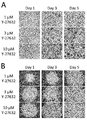
- FIG. 1A and FIG. 1B are diagrams showing the results of observing iPS cell proliferation in the presence of a ROCK inhibitor.
- FIG. 2 is a graph showing the results of measuring the number of iPS cells and the viability of iPS cells in the presence of a ROCK inhibitor.
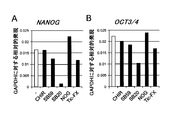
- 3A-3D are specific to iPS cell undifferentiated marker genes NANOG and OCT3 / 4, na ⁇ ve type specific marker gene STELLA, and mid-lung lobe differentiation in the presence of ROCK inhibitors 3 is a graph showing the results of confirming the expression level of NCAM, which is a unique marker gene, by real-time PCR.
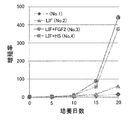
- FIG. 4 is a graph showing iPS cell proliferation in the presence of low concentrations of ROCK inhibitors and growth factors.
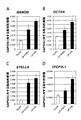
- FIG. 5A to FIG. 5D are graphs showing the expression of undifferentiated marker genes and na ⁇ ve specific marker genes in iPS cells in the presence of low concentrations of ROCK inhibitors and growth factors.
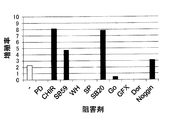
- FIG. 6 is a graph showing the proliferation rate of iPS cells in the presence of low concentrations of ROCK inhibitors and low molecular compounds.
- 7A and 7B are graphs showing the expression of undifferentiated marker genes in iPS cells in the presence of low concentrations of ROCK inhibitors and low molecular compounds.
- the present invention is a medium for culturing naive pluripotent stem cells (hereinafter also referred to as “the medium of the present invention”) containing a ROCK inhibitor at a concentration of 5 ⁇ M or less.
- the medium of the present invention comprises 5 ⁇ M or less of a ROCK inhibitor in a basal medium for pluripotent stem cells.
- the basal medium for pluripotent stem cells by adding a ROCK inhibitor at a concentration of 5 ⁇ M or less, the na ⁇ ve type pluripotent stem cells are maintained while maintaining undifferentiation and pluripotency (pluripotency).
- a ROCK inhibitor at a concentration of 5 ⁇ M or less, the na ⁇ ve type pluripotent stem cells are maintained while maintaining undifferentiation and pluripotency (pluripotency).
- limit especially if it is a culture medium which can proliferate a pluripotent stem cell efficiently, A chemical synthesis culture medium is preferable from the point which is easy to prepare and prevents the dispersion
- the basal medium for pluripotent stem cells comprises one or more sugar (s), one or more inorganic salts (s), one or more amino acids (s), one or more vitamins (s), and one It is preferable to contain the above trace component (s).
- antibiotics such as kanamycin can be included as appropriate for use in drug sensitivity tests.
- sugar (s) examples include monosaccharides such as glucose, lactose, mannose, fructose and galactose, and disaccharides such as sucrose, maltose and lactose.
- monosaccharides such as glucose, lactose, mannose, fructose and galactose
- disaccharides such as sucrose, maltose and lactose.
- glucose is particularly preferable.
- These saccharides can be added alone or in combination.
- Examples of the inorganic salt (s) include calcium chloride, calcium nitrate, copper sulfate pentahydrate, iron (III) nitrate nonahydrate, iron (II) sulfate heptahydrate, magnesium chloride hexahydrate. , Magnesium sulfate, potassium chloride, sodium chloride, disodium hydrogen phosphate, disodium hydrogen phosphate dihydrate, sodium dihydrogen phosphate, sodium dihydrogen phosphate dihydrate and zinc sulfate heptahydrate It is done. Any inorganic salt or a combination thereof can be used as long as it is a component that advantageously acts to maintain the undifferentiated state of pluripotent stem cells.
- amino acid (s) examples include alanine, arginine, asparagine, aspartic acid, cystine, cysteine, glutamine, glycine, histidine, glutamic acid, hydroxyproline, isoleucine, leucine, lysine, methionine, phenylalanine, proline, serine, threonine, Examples include tryptophan, tyrosine and valine, and L-amino acids are preferred.
- the amino acid (s) may include derivatives such as derivatives, salts and hydrates thereof.
- arginine derivatives include L-arginine hydrochloride and L-arginine monohydrochloride.
- derivatives of aspartic acid include L-aspartic acid sodium salt monohydrate, L-aspartic acid monohydrate, potassium L-aspartate, magnesium L-aspartate, and the like.
- cysteine derivatives include L-cysteine dihydrochloride and L-cysteine hydrochloride monohydrate.
- lysine derivatives include L-lysine hydrochloride.
- Derivatives of glutamic acid include L-glutamic acid monosodium salt and the like.
- L-asparagine monohydrate and the like can be mentioned.
- examples of the derivative of tyrosine include L-tyrosine disodium dihydrate and the like.
- examples of histidine derivatives include histidine hydrochloride and histidine hydrochloride monohydrate.
- Examples of lysine derivatives include L-lysine hydrochloride.
- vitamin (s) examples include ascorbic acid, biotin, choline, folic acid, inositol, niacin, pantothenic acid, pyridoxine, riboflavin, thiamine, vitamin B12, and paraaminobenzoic acid (PABA).
- ascorbic acid is preferably added.
- the vitamin (s) can include derivatives such as derivatives, salts and hydrates thereof.
- ascorbic acid 2-phosphate ester Ascorbic acid 2-phosphate
- magnesium ascorbate phosphate magnesium ascorbate phosphate
- sodium ascorbate sulfate sodium ascorbyl aminopropyl phosphate
- sodium ascorbate phosphate sodium ascorbate phosphate
- Examples of derivatives of choline include choline chloride and the like.
- Examples of niacin derivatives include nicotinic acid, nicotinamide and nicotinic alcohol.
- Examples of the derivative of pantothenic acid include calcium pantothenate, sodium pantothenate, panthenol and the like.
- Examples of derivatives of pyridoxine include pyridoxine hydrochloride, pyridoxal hydrochloride, pyridoxal phosphate, and pyridoxamine.
- Derivatives of thiamine include, for example, thiamine hydrochloride, thiamine nitrate, bisthiamine nitrate, thiamine dicetyl sulfate ester salt, fursultiamine hydrochloride, octothiamine and benfotiamine.
- the trace component is preferably a component that advantageously acts on maintaining the undifferentiated state of pluripotent stem cells.
- the trace component include components used as usual medium components such as glutathione, hypoxanthine, lipoic acid, linolenic acid, phenol red, putrescine, pyruvic acid, thymidine, and NaHCO 3 .
- the trace components can include derivatives such as derivatives, salts and hydrates thereof. Examples of the derivative include putrescine dihydrochloride.
- basal medium for pluripotent stem cells include known chemical synthesis such as commercially available Dulbecco's modified Eagle medium (DMEM), minimum essential medium (MEM), Eagle basal medium (BME), RPMI 1640 medium, and F12 medium.
- DMEM Dulbecco's modified Eagle medium
- MEM minimum essential medium
- BME Eagle basal medium
- F12 medium F12 medium
- a medium such as a medium, a medium in which any two or more of these mediums such as a DMEM / F12 medium (a medium in which DMEM and F12 medium are mixed at a ratio of 1: 1), and the like, Examples include a medium supplemented with an acid, preferably ascorbic acid 2-phosphate.
- ESF Nutrient Medium (hereinafter also referred to as “mESF Basal Medium”) shown in Miho Furue et al. In Vitro Cell Dev Biol Anim. can do.
- ROCK inhibitor means a substance that inhibits the activity of Rho kinase.
- Rho kinase is a kind of low molecular weight GTP binding protein (low molecular weight G protein) included in the category of GTPase which is a degradation enzyme of GTP (guanosine triphosphate). It has a coiled-coil region at the part and a Rho interaction region at the carboxy terminus.
- ROCK inhibitor examples include (+)-(R) -trans-4- (1-aminoethyl) -N- (4-pyridyl) cyclohexanecarboxamide dihydrochloride (Y-27632), 1- (5- Isoquinolinesulfonyl) -2-methylpiperazine (H-7), 1- (5-isoquinolinesulfonyl) -3-methylpiperazine (isoH-7), N-2- (methylamino) ethyl-5-isoquinolinesulfonamide Hydrochloride (H-8), N- (2-aminoethyl) -5-isoquinolinesulfonamide dihydrochloride (H-9), N- [2- (p-bromocinnamylamino) ethyl] -5-isoquinoline Sulfonamide dihydrochloride (H-89), N- (2-guanidinoethyl) -5-isoquinolinesulfonamide hydrochloride (HA-1004),
- the concentration of the ROCK inhibitor contained in the medium of the present invention is 5 ⁇ M or less, preferably 4 ⁇ M or less, more preferably 3 ⁇ M or less, still more preferably 2 ⁇ M or less, and particularly preferably 1.5 ⁇ M or less. It is. Moreover, the lower limit value of the ROCK inhibitor concentration is not particularly limited, but it is usually preferably 0.3 ⁇ M or more. When the concentration of the ROCK inhibitor exceeds 5 ⁇ M, the ratio of naive type pluripotent stem cells decreases. Moreover, it can suppress that the proliferation of a pluripotent stem cell falls by setting it as 0.3 micromol or more.
- the medium of the present invention contains 5 ⁇ M or less of a ROCK inhibitor.
- the pluripotent stem cells are cultured using the medium, the naive form of the pluripotent stem cells is maintained, so that it is not necessary to include a MEK inhibitor in the medium.
- the medium of the present invention contains a ROCK inhibitor at a concentration of 5 ⁇ M or less, it is difficult to cause apoptosis when pluripotent stem cells are dispersed in a single cell or a group of several to several tens of cells. For this reason, the culture medium of this invention is preferably used also when carrying out suspension culture of a pluripotent stem cell. As described above, since pluripotent stem cells can be cultured in suspension, a large amount of cells can be produced at a low cost.
- the culture medium of the present invention may not contain feeder cells and extracellular matrix, which are necessary for adhesion culture when suspension culture is performed.
- the medium of the present invention may further contain a growth factor. Since the medium of the present invention has a low content of the ROCK inhibitor, the proliferation of pluripotent stem cells may be reduced. By containing a growth factor in the medium of the present invention, the effect of restoring the proliferation of pluripotent stem cells is exhibited.
- growth factors include activin A transforming growth factor- ⁇ (TGF- ⁇ ), transforming growth factor- ⁇ (TGF- ⁇ ), macrophage inflammatory protein-1 ⁇ (MIP-1 ⁇ ), epithelial cells Growth factor (EGF), fibroblast growth factor-1, 2, 3, 4, 5, 6, 7, 8 or 9 (FGF-1, 2, 3, 4, 5, 6, 7, 8 or 9) , Nerve cell growth factor (NGF), hepatocyte growth factor (HGF), leukemia inhibitory factor (LIF), protease nexin I, protease nexin II, platelet derived growth factor (PDGF), cholinergic differentiation factor (CDF) Chemokines, Notch ligands (eg, Delta1 etc.), Wnt proteins, angiopoietin-like proteins 2, 3, 5 or 7 (Angpt2, , 5 or 7), insulin-like growth factor (IGF), insulin-like growth factor binding protein (IGFBP), pleiotrophin (Pleiotrophin) and heparan sulfate
- the growth factor may be used alone or in combination of two or more.
- its concentration is usually preferably 0.1 to 1000 ng / mL, more preferably 1 to 20 ng / mL.
- the medium of the present invention may contain a GSK3 inhibitor, a BRAF inhibitor, an endogenous protein that inhibits BMP, or the like.
- GSK3 inhibitor examples include CHIR99021 (6- ⁇ 2- [4- (2,4-dichloro-phenyl) -5- (4-methyl-1H-imidazol-2-yl) -pyrimidin-2-ylamino]].
- BRAF inhibitors include, but are not limited to, GDC-0879, BAY 7304506 (Regorafenib), RAF265 (CHIR-265), SB590885 and Sorafenib. Among these, SB590885 is preferable.
- BMP inhibitors include compounds that activate transcription factors SMAD1, SMAD5, or SMAD8, and inhibit BMP2, BMP4, BMP6, or BMP7, such as Noggin, chordin, and follistatin. Among these, Noggin is preferable.
- MEK inhibitors include, but are not limited to, PD184352 and PD98059 that inhibit MEK1, PD0325901, U0126, and SL327 that inhibit MEK1 and MEK2.
- the GSK3 inhibitor, BRAF inhibitor, endogenous protein that inhibits BMP, or the like may be used alone, or two or more kinds may be used in combination.
- the concentration is usually preferably 0.001 to 20 ⁇ M, more preferably 0.02 to 10 ⁇ M.
- the medium for culturing naive pluripotent stem cells of the present invention is used for efficiently growing naive pluripotent stem cells while maintaining the undifferentiation and pluripotency (multipotency) of naive pluripotent stem cells. Although used, specifically human pluripotent stem cells are targeted.
- pluripotent stem cells examples include embryonic stem cells isolated from early embryos (embryonic stem cells: ES cells); embryonic germ cells isolated from embryonic primordial germ cells (EG cells) ( For example, see Proc Natl Acad Sci U S A. 1998, 95: 13726-31); germline stem cells (GS cells) isolated from testis immediately after birth (for example, Nature. 2008, 456: 344).
- embryonic stem cells isolated from early embryos
- EG cells embryonic germ cells isolated from embryonic primordial germ cells
- GS cells germline stem cells isolated from testis immediately after birth
- stem cells derived from bone marrow such as iliac bone marrow or jaw bone marrow
- mesenchymal stem cells such as stem cells derived from adipose tissue
- somatic cells such as skin cells, Somatic cell-derived induced pluripotent stem cells that induce dedifferentiation of somatic cells and have the same pluripotency as ES cells [or induced pluripotent stem cells (induced (Primipotent stem cell; iPS cell)].
- human ES cell H9 strain WA09
- human ES cell H1 (WA01) strain Universally of Wisconsin, WISC Bank
- KhES-1, KhES-2 and KhES-3 Kyoto Univ. Medical Research Center, RIKEN BioResource Center
- human ES cells such as HES3, HES4 and HES6 (Monash University, WISC Bank,); by introducing Oct3 / 4 gene, Klf4 gene, C-Myc gene and Sox2 gene Obtained iPS cells (Kyoto University iPS Cell Laboratory, RIKEN BioResource Center); Tic (JCRB1331 strain), Dotcom (JCRB1327 strain), Squeaky (JCRB1329 strain), Toe (JCRB1338 strain), and L llipop (JCRB1336 strain) (National Center for Child Health and Development, JCRB Cell Bank, National Institute of Biomedical Innovation); UTA-1 strain (University of Tokyo) and UTA-1-SF-2-2 strain (JCRB1493) (University of Tokyo,
- the method for culturing pluripotent stem cells of the present invention comprises cultivating naive pluripotent stem cells in a medium containing a ROCK inhibitor at a concentration of 5 ⁇ M or less, thereby maintaining the naive type of pluripotent stem cells.
- a method characterized by proliferating sex stem cells hereinafter also referred to as “culture method of the present invention”.
- the ROCK inhibitor is as described above, and the preferred concentration is also as described above.
- the medium contains a MEK inhibitor. There is no need.
- the culture method of the present invention is preferably carried out by suspension culture. By culturing in suspension culture, a large amount of cells can be produced at low cost. Therefore, the culture method of the present invention does not require cell culture using feeder cells and extracellular matrix that were necessary for adhesion culture when culture is performed in suspension culture.
- a growth factor may be used to increase the proliferation efficiency of pluripotent stem cells.
- the types of growth factors used in the culture method of the present invention and the amount added to the medium are as described above.
- a GSK3 inhibitor In the culture method of the present invention, a GSK3 inhibitor, a BRAF inhibitor, an endogenous protein that inhibits BMP, or the like may be used.
- the types of GSK3 inhibitor, BRAF inhibitor or endogenous protein that inhibits BMP, and the amount added to the medium are as described above.
- the culture in the culture method of the present invention is usually 33 to 40 ° C., preferably 34 to 39 ° C., more preferably 37 ° C., usually 1 to 20%, preferably 3 to 15%, more preferably 8 to 10%.
- it is usually carried out at a high humidity of 75% or more, preferably 85% or more, more preferably 95%, particularly preferably 100%.
- the pluripotent stem cells that can be used are as described above.
- a method for confirming whether or not cells cultured by the culture method of the present invention are undifferentiated and naive cells
- antibodies against various markers proteins
- Method of determining by detecting expression of differentiation marker and / or non-detection of expression of differentiation marker method of determining by detecting expression of various markers (genes), method of observing morphological characteristics of cells, and specific differentiation
- a method for determining whether or not the ability to differentiate into a specific cell can be exhibited by stimulation with an inducer is mentioned.
- non-identification such as NANOG, OCT3 / 4, SSEA-3, SSEA-4, TRA-2-54, TRA-1-60, TRA-1-80, CD90 or alkaline phosphatase is not used.
- the differentiation marker it can be determined that the pluripotent stem cells cultured by the culture method of the present invention maintain undifferentiation.
- a marker such as STELLA is expressed, it can be determined that the pluripotent stem cells cultured by the culture method of the present invention are na ⁇ ve.
- the expression of the undifferentiated and / or differentiation marker is confirmed at the protein level, it can be confirmed by, for example, a flow cytometry method, an immunostaining method, an ELISA, or the like using a specific antibody of each marker.
- the expression of the marker is confirmed at the gene level, it can be confirmed by, for example, RT-PCR using a specific primer pair or Northern blotting using a specific probe or microarray analysis of each marker gene. .
- Examples of the method for confirming the presence or absence of marker expression by the flow cytometry method include the following methods.
- the cells cultured by the method of the present invention are suspended in 1 ml of 10% goat serum for 30 minutes and then centrifuged, and then incubated with a mouse antibody against the marker protein of interest for 30 hours, after which the cultured cells are treated with 1% goat. Wash 3 times with PBS containing serum, react with fluorescently labeled goat anti-mouse IgG antibody for 30 minutes, wash 3 times with PBS containing 1% goat serum, and resuspend cells for appropriate flow cytometry It can be determined using equipment.
- Examples of the method for confirming the presence or absence of marker expression by the immunostaining method include the following methods.
- the cells cultured by the method of the present invention are fixed with 4% paraformaldehyde (PFA) in PBS, washed with PBS several times, and the permeability of the cultured cells is increased with Triton X or the like and blocked with 10% goat serum. , And then immunostained with a mouse antibody against the target marker protein, reacted with fluorescently labeled goat anti-mouse IgG, and determined by observation with a fluorescent microscope.
- PFA paraformaldehyde
- Examples of the method for confirming the presence or absence of the expression of alkaline phosphatase include the following methods. Cells cultured by the method of the present invention are fixed with 4.5 mM citrate, 2.25 mM sodium citrate, 3 mM sodium chloride, 65% methanol and 4% paraformaldehyde for 5 minutes, washed, and then fastred substrate kit ( Using an appropriate kit such as Sigma), so-called alkaline phosphatase staining can be performed to visualize alkaline phosphatase.
- Example 1 Effect on iPS Cell Proliferation in the Presence of ROCK Inhibitor
- the following components sterilized by passing through a 20 ⁇ m filter in mESF Basal Medium (manufactured by Wako Pure Chemical Industries, Ltd., 136-17805) are shown in Table 1. What was mixed with the addition amount shown was used as hESF-FX medium.
- rHSA-Oleic acid was added to 50 mL of 100 mg / mL recombinant human serum albumin (rHSA, Millipore, 9501-20) with 235 ⁇ L of 200 mg / mL Oleic acid (Sigma Aldrich, O1383-5G) overnight. Prepared by mixing.
- Tic-FX cells iPS cell Tic strain (JCRB1331) was adapted to feeder-free xenofree culture (FX)] were used.
- a ROCK inhibitor (Y-27632) was dissolved in hESF-FX medium to 1 ⁇ M, 3 ⁇ M and 10 ⁇ M. 3 mL of each medium was added to an ultra-low adhesion 6-well plate (Corning) and the Tic-FX cells were cultured at 37 ° C. in the presence of 10% CO 2 (floating culture).
- FIGS. 1A and 1B The state of the plate after 1 day, 3 days and 5 days after culturing was observed. The results are shown in FIGS. 1A and 1B.
- FIG. 1A is a photomicrograph at 4 ⁇ magnification
- FIG. 1B is a photo at 2 ⁇ magnification.
- the number of cells per well and cell viability after 5 days of culture were measured. The result is shown in FIG.
- the higher the ROCK inhibitor concentration the greater the number of cells.
- the number of cells per well and the cell survival rate both increased as the concentration of the ROCK inhibitor increased.
- Example 2 Expression of marker gene specific to undifferentiated marker gene and naive type Expression of marker gene was confirmed by real-time PCR.
- Real-time PCR was performed with a real-time PCR apparatus (Applied Biosystems 7300) using the following reaction procedure and primers.
- NANOG forward primer tgaacctcagctacaaacag (SEQ ID NO: 1) NANOG reverse primer tggtggtaggaagagtaaag (SEQ ID NO: 2) OCT3 / 4 forward primer gacagggggaggggaggagctagg (SEQ ID NO: 3) OCT3 / 4 reverse primer cttccctccaaccagttgccccaaa (SEQ ID NO: 4) STELLA forward primer gttactgggcggagttcgta (SEQ ID NO: 5) STELLA reverse primer tgaagtggcttggtgtctg (SEQ ID NO: 6) NCAM forward primer ggcatttacaagtgtgtggttac (SEQ ID NO: 7) NCAM reverse primer ttggcgcattcttgaacatga (SEQ ID NO: 8) GAPDH forward primer caa
- NANOG and OCT3 / 4 which are undifferentiated marker genes
- STELLA which is a marker gene specific for naive type
- neuronal differentiation specific in cells 5 days after the culture The expression level of NCAM as a marker gene was confirmed by the real-time PCR. The results are shown in FIGS. 3A to 3D.
- the vertical axis represents the ratio of the expression level of the target gene in each sample to GAPDH (glyceraldehyde 3-phosphate dehydrogenase) used as the internal standard.
- GAPDH glycosydehyde 3-phosphate dehydrogenase
- the value in the graph means a relative value (unit: fold) of the amount of DNA before amplification, which is obtained from the difference between the Cp value of GAPDH and the Cp value of the target gene.
- the internal standard is a gene whose expression level is always constant regardless of the cell state.
- the Cp value is the number of cycles required to amplify the DNA to a level detectable by a measuring instrument when DNA is amplified by a PCR reaction (theoretically, the amount of DNA doubles in one cycle). .
- the undifferentiated marker genes NANOG and OCT3 / 4 are more potent than the control (Tic-FX in FIGS. 3A and 3B) when the ROCK inhibitor concentration is 1 ⁇ M and 3 ⁇ M. Whereas the expression level was large, when the ROCK inhibitor was used at a concentration of 10 ⁇ M, both expression levels were lower than those of the control.
- the expression level of the STELLA gene specific to the naive type was slightly higher than that of the control when the ROCK inhibitor concentration was 10 ⁇ M, but the ROCK gene concentration was 1 ⁇ M and 3 ⁇ M. In some cases, the expression level was higher than the control.
- NCAM a marker gene specific for middle lung lobe differentiation
- Example 3 Proliferation of iPS cells in the presence of growth factor A medium in which 1 ⁇ M Y-27632 and the components shown in Table 2 were added to the above basal medium was prepared, and 10% in an ultra-low adhesion 6-well plate (Corning) Tic-FX cells were grown in suspension culture at 37 ° C. in the presence of CO 2 . After 5 days, 10 days and 15 days after sowing, the cells were passaged and cultured until 20 days later. The passage was performed by treating the cell mass with Accutase (Millipore, SCR005) at 37 ° C. for 10 minutes. Cell numbers were counted 5 days, 10 days, 15 days and 20 days after seeding. The result is shown in FIG.
- Example 4 Expression of marker gene specific to undifferentiated marker gene and naive type
- marker gene expression was performed in real time in the same manner as in Example 2. Confirmed by PCR. The base sequences of the primers used for confirming the expression of the TFCP2L1 gene are shown below.
- TFCP2L1 forward primer tgtgaggccaaagatgaccattta (SEQ ID NO: 11)
- TFCP2L1 reverse primer caatcagctccaaggtggtcag (SEQ ID NO: 12)
- FIGS. 5A to 5D The results are shown in FIGS. 5A to 5D.
- a culture medium to which any of recombinant human LIF, recombinant human FGF2 and sodium heparan sulfate was not added was used (indicated as Tic-FX in FIGS. 5A to 5D).
- Y-27632 which is a ROCK inhibitor
- it is a pluripotency marker (undifferentiation marker gene) when a growth factor is added to the medium.
- NANOG and OCT3 / 4 expression was found to be increased.
- FIG. 5C and FIG. 5D it turned out that the STELLA gene specific to a na ⁇ ve type
- Example 5 Cultivation of iPS cells in the presence of low molecular weight compounds Prepared by adding 1 ⁇ M Y-27632, 20 ng / mL LIF and 40 ng / mL FGF2 to the above basal medium. Various inhibitors were added to 1 ⁇ M (PD0325901), 0.3 ⁇ M (CHIR99021), 0.5 ⁇ M (SB590885), 1 ⁇ M (WH-4-023), 10 ⁇ M (SP600125), 10 ⁇ M (SB203580), 5 ⁇ M (Go6983), 5 ⁇ M, respectively. (GF109203X) The culture medium added so that it might become a density
- Tic-FX cells were grown in a suspension culture in an ultra-low adhesion 6-well plate (Corning) in the presence of 10% CO 2 at 37 ° C. in each medium. Culture was performed for 5 days and the number of cells was counted. The results are shown in FIG. In FIG. 6, what is shown as “ ⁇ ” is the result of using a medium to which no inhibitor was added.
- PD0325901 N-[(2R) -2,3-dihydroxypropoxy] -3,4-difluoro-2-[(2-fluoro-4-iodophenyl) amino] -benzamide, manufactured by TOCRIS, 4192 CHIR99021: 6- ⁇ 2- [4- (2,4-Dichloro-phenyl) -5- (4-methyl-1H-imidazol-2-yl) -pyrimidin-2-ylamino] -ethylamino ⁇ -nicotinonitrile , Manufactured by TOCRIS, 4423 SB590885: 5- (2- (4- (2-dimethylaminoethoxy) phenyl) -5- (4-pyridinyl) -1H-imidazol-4-yl) -2,3-dihydro-1H-indoen-1-one Oxime, manufactured by R & D Systems, 2650/10 WH-4-023:
- the growth rate of the cells was high in the medium supplemented with CHIR99021, SB590885 or Noggin.
- pluripotency markers (NANOG and OCT3 / 4) in cells grown in a medium containing an inhibitor having a high cell growth rate was confirmed by real-time PCR in the same manner as in Example 2. The results are shown in FIGS. 7A and 7B.
- As a control one cultured in a basal medium was used (indicated as Tic-FX in FIGS. 7A and 7B).
Landscapes
- Health & Medical Sciences (AREA)
- Life Sciences & Earth Sciences (AREA)
- Engineering & Computer Science (AREA)
- Genetics & Genomics (AREA)
- Chemical & Material Sciences (AREA)
- Biomedical Technology (AREA)
- Zoology (AREA)
- Wood Science & Technology (AREA)
- Bioinformatics & Cheminformatics (AREA)
- Biotechnology (AREA)
- Organic Chemistry (AREA)
- General Engineering & Computer Science (AREA)
- Biochemistry (AREA)
- General Health & Medical Sciences (AREA)
- Microbiology (AREA)
- Developmental Biology & Embryology (AREA)
- Cell Biology (AREA)
- Gynecology & Obstetrics (AREA)
- Reproductive Health (AREA)
- Medicinal Chemistry (AREA)
- Tropical Medicine & Parasitology (AREA)
- Virology (AREA)
- Transplantation (AREA)
- Micro-Organisms Or Cultivation Processes Thereof (AREA)
Abstract
Description
(1)ROCK阻害剤を5μM以下の濃度で含む、ナイーブ型多能性幹細胞培養用培地。
(2)ROCK阻害剤がY-27632である、(1)に記載のナイーブ型多能性幹細胞培養用培地。
(3)MEK阻害剤を含んでいない、(1)または(2)に記載のナイーブ型多能性幹細胞培養用培地。
(4)フィーダー細胞および細胞外マトリクスを含んでいない、(1)~(3)のいずれか1に記載のナイーブ型多能性幹細胞培養用培地。
(5)増殖因子を更に含む、(1)~(4)のいずれか1に記載のナイーブ型多能性幹細胞培養用培地。
(6)浮遊培養に使用される、(1)~(5)のいずれか1に記載のナイーブ型多能性幹細胞培養用培地。
(7)ナイーブ型多能性幹細胞がヒトiPS細胞である、(1)~(6)のいずれか1に記載のナイーブ型多能性幹細胞培養用培地。
(8)ROCK阻害剤を5μM以下の濃度で含む培地中でナイーブ型多能性幹細胞を培養することにより、多能性幹細胞のナイーブ型を維持しながら多能性幹細胞を増殖させることを特徴とする、多能性幹細胞の培養方法。
(9)ROCK阻害剤がY-27632である、(8)に記載の多能性幹細胞の培養方法。
(10)培地中にMEK阻害剤を含んでいない、(8)または(9)に記載の多能性幹細胞の培養方法。
(11)培地中にフィーダー細胞および細胞外マトリクスを含んでいない、(8)~(10)のいずれか1に記載の多能性幹細胞の培養方法。
(12)浮遊培養で実施される、(8)~(11)のいずれか1に記載の多能性幹細胞の培養方法。
(13)ナイーブ型多能性幹細胞がヒトiPS細胞である、(8)~(12)のいずれか1に記載の多能性幹細胞の培養方法。
本発明は、ROCK阻害剤を5μM以下の濃度で含む、ナイーブ型多能性幹細胞培養用培地(以下、「本発明の培地」ともいう。)である。本発明の培地は、多能性幹細胞用基礎培地に、5μM以下のROCK阻害剤を含んでなる。
次に、本発明の多能性幹細胞の培養方法について説明する。本発明の多能性幹細胞の培養方法は、ROCK阻害剤を5μM以下の濃度で含む培地中でナイーブ型多能性幹細胞を培養することにより、多能性幹細胞のナイーブ型を維持しながら多能性幹細胞を増殖させることを特徴とする方法(以下、「本発明の培養方法」ともいう。)である。ROCK阻害剤については上述した通りであり、その好ましい濃度についても上述した通りである。
ROCK阻害剤存在下でのiPS細胞の増殖における影響
以下の実施例においては、mESF Basal Medium(和光純薬社製、136-17805)に20μmフィルターを通過して滅菌した下記成分を、表1に示す添加量で混合したものをhESF-FX培地として使用した。

未分化マーカー遺伝子およびナイーブ型に特異的なマーカー遺伝子の発現
マーカー遺伝子の発現をリアルタイムPCRで確認した。リアルタイムPCRは、リアルタイムPCR装置(アプライドバイオシステムズ社製7300)にて、下記の反応手順およびプライマーにより実施した。
NANOGフォワードプライマー tgaacctcagctacaaacag(配列番号1)
NANOGリバースプライマー tggtggtaggaagagtaaag(配列番号2)
OCT3/4フォワードプライマー gacagggggaggggaggagctagg(配列番号3)
OCT3/4リバースプライマー cttccctccaaccagttgccccaaa(配列番号4)
STELLAフォワードプライマー gttactgggcggagttcgta(配列番号5)
STELLAリバースプライマー tgaagtggcttggtgtcttg(配列番号6)
NCAMフォワードプライマー ggcatttacaagtgtgtggttac(配列番号7)
NCAMリバースプライマー ttggcgcattcttgaacatga(配列番号8)
GAPDHフォワードプライマー caaagttgtcatggatgacc(配列番号9)
GAPDHリバースプライマー ccatggagaaggctgggg(配列番号10)
増殖因子存在下における、iPS細胞の増殖
上記基礎培地に、1μMのY-27632と、表2に示す成分を加えた培地を作製し、超低接着6穴プレート(Corning社製)中、10%のCO2存在下、37℃にてTic-FX細胞の増殖を浮遊培養で行った。播種の5日後、10日後、15日後に継代し、20日後まで培養を行った。継代はAccutase(ミリポア社製、SCR005)を用いて細胞塊を37℃で10分間処理することにより行った。播種の5日後、10日後、15日後および20日後に細胞数をカウントした。その結果を図4に示す。

未分化マーカー遺伝子およびナイーブ型に特異的なマーカー遺伝子の発現
実施例3で培養した細胞(表2のNo.3および4の細胞)について、マーカー遺伝子の発現を、実施例2と同様にしてリアルタイムPCRで確認した。TFCP2L1遺伝子の発現の確認に用いたプライマーの塩基配列を下記に示す。
TFCP2L1リバースプライマー caatcagctccaaggtggtcag(配列番号12)
低分子化合物の存在下における、iPS細胞の培養
上記基礎培地に、1μMのY-27632と、20ng/mLのLIFおよび40ng/mLのFGF2とを加えた培地を作製し、それぞれに、下記に示す各種阻害剤を、それぞれ1μM(PD0325901)、0.3μM(CHIR99021)、0.5μM(SB590885)、1μM(WH-4-023)、10μM(SP600125)、10μM(SB203580)、5μM(Go6983)、5μM(GF109203X)、2μM(Dorsomorphin)、400ng/mL(Noggin)の濃度となるように加えた培地を作製した。
PD0325901:N-[(2R)-2,3-ジヒドロキシプロポキシ]-3,4-ジフルオロ-2-[(2-フルオロ-4-ヨードフェニル)アミノ]-ベンズアミド、TOCRIS社製、4192
CHIR99021:6-{2-[4-(2,4-ジクロロ-フェニル)-5-(4-メチル-1H-イミダゾール-2-イル)-ピリミジン-2-イルアミノ]-エチルアミノ}-ニコチノニトリル、TOCRIS社製、4423
SB590885:5-(2-(4-(2-ジメチルアミノエトキシ)フェニル)-5-(4-ピリジニル)-1H-イミダゾール-4-yl)-2,3-ジヒドロ-1H-インドエン-1-オン オキシム、R&Dシステムズ社製、2650/10
WH-4-023:2,6-ジメチルフェニル N-(2,4-ジメトキシフェニル)-N-[2-[[4-(4-メチル-1-ピペラジニル)フェニル]アミノ]-4-ピリミジニル]カルバメート、MedChem Express社製、HY-12299
SP600125:1,9-ピラゾロアントロン、シグマアルドリッチ社製、S5567-10MG
SB203580:4-(4-フルオロフェニル)-2-(4-メチルスルフィニルフェニル)-5-(4-ピリジル)1H-イミダゾール、和光純薬社製、193-15611
Go6983:3-[1-[3-(ジメチルアミノ)プロピル]-5-メトキシ-1H-インドール-3-イル]-4-(1H-インドール-3-イル)-1H-ピロール-2,5-ジオン、Cayman Chemical社製、13311
GF109203X:3-(N-[ジメチルアミノ]プロピル-3-インドリル)-4-(3-インドリル)マレイミド,3-[1-[3-(ジメチルアミノ)プロピル]1H-インドール-3-イル]-4-(1H-インドール-3-イル)1H-ピロール-2,5-ジオン、TOCRIS社製、741
Dorsomorphin:6-[4-(2-ピペリジン-1-イルエトキシ)フェニル]-3-ピリジン-4-イルピラゾロ[1,5-a]ピリミジン、シグマアルドリッチ社製、P5499-5MG
Noggin、Recombinant Human:R&Dシステムズ社製、6057-NG-025/CF)
Claims (13)
- ROCK阻害剤を5μM以下の濃度で含む、ナイーブ型多能性幹細胞培養用培地。
- ROCK阻害剤がY-27632である、請求項1に記載のナイーブ型多能性幹細胞培養用培地。
- MEK阻害剤を含んでいない、請求項1または2に記載のナイーブ型多能性幹細胞培養用培地。
- フィーダー細胞および細胞外マトリクスを含んでいない、請求項1~3のいずれか1項に記載のナイーブ型多能性幹細胞培養用培地。
- 増殖因子を更に含む、請求項1~4のいずれか1項に記載のナイーブ型多能性幹細胞培養用培地。
- 浮遊培養に使用される、請求項1~5のいずれか1項に記載のナイーブ型多能性幹細胞培養用培地。
- ナイーブ型多能性幹細胞がヒトiPS細胞である、請求項1~6のいずれか1項に記載のナイーブ型多能性幹細胞培養用培地。
- ROCK阻害剤を5μM以下の濃度で含む培地中でナイーブ型多能性幹細胞を培養することにより、多能性幹細胞のナイーブ型を維持しながら多能性幹細胞を増殖させることを特徴とする、多能性幹細胞の培養方法。
- ROCK阻害剤がY-27632である、請求項8に記載の多能性幹細胞の培養方法。
- 培地中にMEK阻害剤を含んでいない、請求項8または9に記載の多能性幹細胞の培養方法。
- 培地中にフィーダー細胞および細胞外マトリクスを含んでいない、請求項8~10のいずれか1項に記載の多能性幹細胞の培養方法。
- 浮遊培養で実施される、請求項8~11のいずれか1項に記載の多能性幹細胞の培養方法。
- ナイーブ型多能性幹細胞がヒトiPS細胞である、請求項8~12のいずれか1項に記載の多能性幹細胞の培養方法。
Priority Applications (3)
| Application Number | Priority Date | Filing Date | Title |
|---|---|---|---|
| JP2018509429A JPWO2017170849A1 (ja) | 2016-03-30 | 2017-03-30 | ナイーブ型多能性幹細胞培養用培地および多能性幹細胞の培養方法 |
| EP17775383.7A EP3438248A4 (en) | 2016-03-30 | 2017-03-30 | NAIVES PLURIPOTENT STEM CELL CULTIVATION MEDIUM AND PLURIPOTENT STEM CELL CULTIVATION PROCEDURE |
| US16/089,941 US20190127707A1 (en) | 2016-03-30 | 2017-03-30 | Medium for culturing naive pluripotent stem cells and method for culturing pluripotent stem cells |
Applications Claiming Priority (2)
| Application Number | Priority Date | Filing Date | Title |
|---|---|---|---|
| JP2016068718 | 2016-03-30 | ||
| JP2016-068718 | 2016-03-30 |
Publications (1)
| Publication Number | Publication Date |
|---|---|
| WO2017170849A1 true WO2017170849A1 (ja) | 2017-10-05 |
Family
ID=59965838
Family Applications (1)
| Application Number | Title | Priority Date | Filing Date |
|---|---|---|---|
| PCT/JP2017/013205 Ceased WO2017170849A1 (ja) | 2016-03-30 | 2017-03-30 | ナイーブ型多能性幹細胞培養用培地および多能性幹細胞の培養方法 |
Country Status (4)
| Country | Link |
|---|---|
| US (1) | US20190127707A1 (ja) |
| EP (1) | EP3438248A4 (ja) |
| JP (1) | JPWO2017170849A1 (ja) |
| WO (1) | WO2017170849A1 (ja) |
Cited By (5)
| Publication number | Priority date | Publication date | Assignee | Title |
|---|---|---|---|---|
| WO2019151386A1 (ja) * | 2018-01-31 | 2019-08-08 | 富士フイルム株式会社 | 細胞の製造方法 |
| KR102022948B1 (ko) * | 2018-06-01 | 2019-09-20 | 울산대학교 산학협력단 | 인산화된 tfcp2l1을 포함하는 줄기세포 다능성, 분화능 및 증식능 예측용 바이오마커 조성물 및 이의 용도 |
| JP2021508499A (ja) * | 2017-12-28 | 2021-03-11 | トラクト ファーマシューティカルズ インコーポレイテッド | 円柱上皮幹細胞のための幹細胞培養系およびそれに関連した使用法 |
| JP2021126065A (ja) * | 2020-02-12 | 2021-09-02 | 株式会社カネカ | 細胞凝集促進剤 |
| WO2022138964A1 (ja) | 2020-12-25 | 2022-06-30 | 国立大学法人京都大学 | 体細胞からのナイーブ型ヒトiPS細胞製造方法 |
Families Citing this family (6)
| Publication number | Priority date | Publication date | Assignee | Title |
|---|---|---|---|---|
| US20220325239A1 (en) * | 2019-06-18 | 2022-10-13 | Agency For Science, Technology And Research | Cell culture |
| CN111019896B (zh) * | 2019-12-27 | 2021-08-03 | 浙江大学 | 一种髓核祖细胞培养基及其制备方法和应用 |
| CN111057677B (zh) * | 2019-12-27 | 2021-08-03 | 浙江大学 | 一种软骨祖细胞培养基及其制备方法和应用 |
| JP2023531963A (ja) * | 2020-06-22 | 2023-07-26 | ライフ テクノロジーズ コーポレーション | 多能性細胞懸濁物を培養するための方法及び組成物 |
| CN116515742B (zh) * | 2023-07-04 | 2023-09-01 | 夏同生物科技(苏州)有限公司 | 将人体细胞重编程为诱导性多能干细胞的方法 |
| CN118165914A (zh) * | 2024-03-26 | 2024-06-11 | 西安九州医学中心有限公司 | 一种3d悬浮培养多能干细胞的培养基、方法及其应用 |
Citations (2)
| Publication number | Priority date | Publication date | Assignee | Title |
|---|---|---|---|---|
| JP2012520672A (ja) * | 2009-03-20 | 2012-09-10 | エージェンシー フォー サイエンス,テクノロジー アンド リサーチ | マイクロキャリアー上の多能性(pluripotent)および多分化能(multipotent)細胞の培養 |
| WO2014174470A1 (en) * | 2013-04-23 | 2014-10-30 | Yeda Research And Development Co. Ltd. | Isolated naive pluripotent stem cells and methods of generating same |
Family Cites Families (2)
| Publication number | Priority date | Publication date | Assignee | Title |
|---|---|---|---|---|
| WO2008089351A1 (en) * | 2007-01-17 | 2008-07-24 | Wisconsin Alumni Research Foundation | Improved culture of stem cells |
| KR101774546B1 (ko) * | 2008-11-20 | 2017-09-04 | 얀센 바이오테크 인코포레이티드 | 마이크로-캐리어 상의 만능 줄기 세포 배양 |
-
2017
- 2017-03-30 EP EP17775383.7A patent/EP3438248A4/en not_active Withdrawn
- 2017-03-30 JP JP2018509429A patent/JPWO2017170849A1/ja active Pending
- 2017-03-30 US US16/089,941 patent/US20190127707A1/en not_active Abandoned
- 2017-03-30 WO PCT/JP2017/013205 patent/WO2017170849A1/ja not_active Ceased
Patent Citations (2)
| Publication number | Priority date | Publication date | Assignee | Title |
|---|---|---|---|---|
| JP2012520672A (ja) * | 2009-03-20 | 2012-09-10 | エージェンシー フォー サイエンス,テクノロジー アンド リサーチ | マイクロキャリアー上の多能性(pluripotent)および多分化能(multipotent)細胞の培養 |
| WO2014174470A1 (en) * | 2013-04-23 | 2014-10-30 | Yeda Research And Development Co. Ltd. | Isolated naive pluripotent stem cells and methods of generating same |
Non-Patent Citations (4)
| Title |
|---|
| GAFNI,O. ET AL.: "Derivation of novel human ground state naive pluripotent stem cells", NATURE, vol. 504, 2013, pages 282 - 286, XP055128176 * |
| OHNUMA,K. ET AL.: "Enzyme-free Passage of Human Pluripotent Stem Cells by Controlling Divalent Cations", SCIENTIFIC REPORTS, vol. 4, no. 4646, 2014, pages 3, XP055427900 * |
| See also references of EP3438248A4 * |
| WATANABE,K. ET AL.: "A ROCK inhibitor permits survival of dissociated human embryonic stem cells", NATURE BIOTECHNOLOGY, vol. 25, 2007, pages 681 - 686, XP002458303 * |
Cited By (12)
| Publication number | Priority date | Publication date | Assignee | Title |
|---|---|---|---|---|
| JP2021508499A (ja) * | 2017-12-28 | 2021-03-11 | トラクト ファーマシューティカルズ インコーポレイテッド | 円柱上皮幹細胞のための幹細胞培養系およびそれに関連した使用法 |
| US11725185B2 (en) | 2017-12-28 | 2023-08-15 | University Of Houston System | Stem cell culture systems for columnar epithelial stem cells, and uses related thereto |
| JP7416716B2 (ja) | 2017-12-28 | 2024-01-17 | トラクト ファーマシューティカルズ インコーポレイテッド | 円柱上皮幹細胞のための幹細胞培養系およびそれに関連した使用法 |
| JP2024010001A (ja) * | 2017-12-28 | 2024-01-23 | トラクト ファーマシューティカルズ インコーポレイテッド | 円柱上皮幹細胞のための幹細胞培養系およびそれに関連した使用法 |
| US12351822B2 (en) | 2017-12-28 | 2025-07-08 | University Of Houston System | Stem cell culture systems for columnar epithelial stem cells, and uses related thereto |
| JP7791864B2 (ja) | 2017-12-28 | 2025-12-24 | トラクト ファーマシューティカルズ インコーポレイテッド | 円柱上皮幹細胞のための幹細胞培養系およびそれに関連した使用法 |
| WO2019151386A1 (ja) * | 2018-01-31 | 2019-08-08 | 富士フイルム株式会社 | 細胞の製造方法 |
| KR102022948B1 (ko) * | 2018-06-01 | 2019-09-20 | 울산대학교 산학협력단 | 인산화된 tfcp2l1을 포함하는 줄기세포 다능성, 분화능 및 증식능 예측용 바이오마커 조성물 및 이의 용도 |
| JP2021126065A (ja) * | 2020-02-12 | 2021-09-02 | 株式会社カネカ | 細胞凝集促進剤 |
| JP7518628B2 (ja) | 2020-02-12 | 2024-07-18 | 株式会社カネカ | 細胞凝集促進剤 |
| WO2022138964A1 (ja) | 2020-12-25 | 2022-06-30 | 国立大学法人京都大学 | 体細胞からのナイーブ型ヒトiPS細胞製造方法 |
| KR20230126717A (ko) | 2020-12-25 | 2023-08-30 | 고쿠리츠 다이가쿠 호진 교토 다이가쿠 | 체세포로부터의 나이브형 인간 iPS 세포 제조 방법 |
Also Published As
| Publication number | Publication date |
|---|---|
| JPWO2017170849A1 (ja) | 2019-05-16 |
| EP3438248A4 (en) | 2019-11-06 |
| US20190127707A1 (en) | 2019-05-02 |
| EP3438248A1 (en) | 2019-02-06 |
Similar Documents
| Publication | Publication Date | Title |
|---|---|---|
| WO2017170849A1 (ja) | ナイーブ型多能性幹細胞培養用培地および多能性幹細胞の培養方法 | |
| US11680246B2 (en) | Ex vivo proliferation of epithelial cells | |
| KR102761727B1 (ko) | 중간 중배엽 세포로부터 신장 전구 세포로의 분화 유도 방법 및 다능성 줄기세포로부터 신장 전구 세포로의 분화 유도 방법 | |
| Haghighi et al. | bFGF-mediated pluripotency maintenance in human induced pluripotent stem cells is associated with NRAS-MAPK signaling | |
| Kinehara et al. | Protein kinase C regulates human pluripotent stem cell self-renewal | |
| CA2675445C (en) | Improved culture of stem cells | |
| JP6869231B2 (ja) | ex vivoでの上皮細胞の増殖 | |
| US10100285B2 (en) | Ex vivo proliferation of epithelial cells | |
| CN111684058B (zh) | 从多能干细胞向肠上皮细胞的分化诱导方法 | |
| WO2018047941A1 (ja) | 幹細胞培養用培地、幹細胞の培養方法、幹細胞の増殖促進剤、並びに細胞組成物およびその製造方法 | |
| US20240384232A1 (en) | Clinical-grade therapeutic progenitors generated from tankyrase/parp-inhibited pluripotent stem cell banks | |
| JPWO2018193949A1 (ja) | ドパミン神経細胞の調製方法 | |
| JP2023521380A (ja) | 多能性幹細胞由来の血管平滑筋細胞を製造する方法、使用およびそれに関連する組成物 | |
| WO2017204340A1 (ja) | 神経幹細胞の製造方法、培地、サプリメント、サプリメントセット、培地キット、及び細胞培養装置 | |
| JP7520813B2 (ja) | 多能性幹細胞の製造方法 | |
| WO2017188082A1 (ja) | 培地添加剤 | |
| JPWO2019167398A1 (ja) | 薬剤評価方法 | |
| WO2021065849A1 (ja) | 肝細胞を培養するための培地、肝細胞の製造方法および肝細胞 | |
| Pang | The Screening of Biomaterials to Support Long-Term Growth and Maintenance of Human Embryonic Stem Cells in Xeno-and Feeder-Free System | |
| HK1249919B (en) | Ex vivo proliferation of epithelial cells |
Legal Events
| Date | Code | Title | Description |
|---|---|---|---|
| WWE | Wipo information: entry into national phase |
Ref document number: 2018509429 Country of ref document: JP |
|
| NENP | Non-entry into the national phase |
Ref country code: DE |
|
| WWE | Wipo information: entry into national phase |
Ref document number: 2017775383 Country of ref document: EP |
|
| ENP | Entry into the national phase |
Ref document number: 2017775383 Country of ref document: EP Effective date: 20181030 |
|
| 121 | Ep: the epo has been informed by wipo that ep was designated in this application |
Ref document number: 17775383 Country of ref document: EP Kind code of ref document: A1 |