WO2017163324A1 - コミュニケーションシステム、コミュニケーション方法及びプログラム - Google Patents
コミュニケーションシステム、コミュニケーション方法及びプログラム Download PDFInfo
- Publication number
- WO2017163324A1 WO2017163324A1 PCT/JP2016/059111 JP2016059111W WO2017163324A1 WO 2017163324 A1 WO2017163324 A1 WO 2017163324A1 JP 2016059111 W JP2016059111 W JP 2016059111W WO 2017163324 A1 WO2017163324 A1 WO 2017163324A1
- Authority
- WO
- WIPO (PCT)
- Prior art keywords
- captured image
- cameras
- camera
- person
- communication
- Prior art date
- Legal status (The legal status is an assumption and is not a legal conclusion. Google has not performed a legal analysis and makes no representation as to the accuracy of the status listed.)
- Ceased
Links
Images





Classifications
-
- H—ELECTRICITY
- H04—ELECTRIC COMMUNICATION TECHNIQUE
- H04N—PICTORIAL COMMUNICATION, e.g. TELEVISION
- H04N7/00—Television systems
- H04N7/14—Systems for two-way working
- H04N7/141—Systems for two-way working between two video terminals, e.g. videophone
- H04N7/147—Communication arrangements, e.g. identifying the communication as a video-communication, intermediate storage of the signals
-
- G—PHYSICS
- G06—COMPUTING OR CALCULATING; COUNTING
- G06V—IMAGE OR VIDEO RECOGNITION OR UNDERSTANDING
- G06V20/00—Scenes; Scene-specific elements
- G06V20/50—Context or environment of the image
- G06V20/52—Surveillance or monitoring of activities, e.g. for recognising suspicious objects
-
- G—PHYSICS
- G06—COMPUTING OR CALCULATING; COUNTING
- G06V—IMAGE OR VIDEO RECOGNITION OR UNDERSTANDING
- G06V40/00—Recognition of biometric, human-related or animal-related patterns in image or video data
- G06V40/10—Human or animal bodies, e.g. vehicle occupants or pedestrians; Body parts, e.g. hands
-
- H—ELECTRICITY
- H04—ELECTRIC COMMUNICATION TECHNIQUE
- H04N—PICTORIAL COMMUNICATION, e.g. TELEVISION
- H04N21/00—Selective content distribution, e.g. interactive television or video on demand [VOD]
- H04N21/20—Servers specifically adapted for the distribution of content, e.g. VOD servers; Operations thereof
- H04N21/21—Server components or server architectures
- H04N21/218—Source of audio or video content, e.g. local disk arrays
- H04N21/2187—Live feed
-
- H—ELECTRICITY
- H04—ELECTRIC COMMUNICATION TECHNIQUE
- H04N—PICTORIAL COMMUNICATION, e.g. TELEVISION
- H04N21/00—Selective content distribution, e.g. interactive television or video on demand [VOD]
- H04N21/40—Client devices specifically adapted for the reception of or interaction with content, e.g. set-top-box [STB]; Operations thereof
- H04N21/41—Structure of client; Structure of client peripherals
- H04N21/422—Input-only peripherals, i.e. input devices connected to specially adapted client devices, e.g. global positioning system [GPS]
- H04N21/4223—Cameras
-
- H—ELECTRICITY
- H04—ELECTRIC COMMUNICATION TECHNIQUE
- H04N—PICTORIAL COMMUNICATION, e.g. TELEVISION
- H04N21/00—Selective content distribution, e.g. interactive television or video on demand [VOD]
- H04N21/40—Client devices specifically adapted for the reception of or interaction with content, e.g. set-top-box [STB]; Operations thereof
- H04N21/47—End-user applications
- H04N21/472—End-user interface for requesting content, additional data or services; End-user interface for interacting with content, e.g. for content reservation or setting reminders, for requesting event notification, for manipulating displayed content
- H04N21/47205—End-user interface for requesting content, additional data or services; End-user interface for interacting with content, e.g. for content reservation or setting reminders, for requesting event notification, for manipulating displayed content for manipulating displayed content, e.g. interacting with MPEG-4 objects, editing locally
-
- H—ELECTRICITY
- H04—ELECTRIC COMMUNICATION TECHNIQUE
- H04N—PICTORIAL COMMUNICATION, e.g. TELEVISION
- H04N21/00—Selective content distribution, e.g. interactive television or video on demand [VOD]
- H04N21/40—Client devices specifically adapted for the reception of or interaction with content, e.g. set-top-box [STB]; Operations thereof
- H04N21/47—End-user applications
- H04N21/478—Supplemental services, e.g. displaying phone caller identification, shopping application
- H04N21/4788—Supplemental services, e.g. displaying phone caller identification, shopping application communicating with other users, e.g. chatting
-
- H—ELECTRICITY
- H04—ELECTRIC COMMUNICATION TECHNIQUE
- H04N—PICTORIAL COMMUNICATION, e.g. TELEVISION
- H04N21/00—Selective content distribution, e.g. interactive television or video on demand [VOD]
- H04N21/40—Client devices specifically adapted for the reception of or interaction with content, e.g. set-top-box [STB]; Operations thereof
- H04N21/47—End-user applications
- H04N21/482—End-user interface for programme selection
-
- H—ELECTRICITY
- H04—ELECTRIC COMMUNICATION TECHNIQUE
- H04N—PICTORIAL COMMUNICATION, e.g. TELEVISION
- H04N21/00—Selective content distribution, e.g. interactive television or video on demand [VOD]
- H04N21/40—Client devices specifically adapted for the reception of or interaction with content, e.g. set-top-box [STB]; Operations thereof
- H04N21/47—End-user applications
- H04N21/482—End-user interface for programme selection
- H04N21/4821—End-user interface for programme selection using a grid, e.g. sorted out by channel and broadcast time
-
- H—ELECTRICITY
- H04—ELECTRIC COMMUNICATION TECHNIQUE
- H04N—PICTORIAL COMMUNICATION, e.g. TELEVISION
- H04N21/00—Selective content distribution, e.g. interactive television or video on demand [VOD]
- H04N21/80—Generation or processing of content or additional data by content creator independently of the distribution process; Content per se
- H04N21/81—Monomedia components thereof
- H04N21/8146—Monomedia components thereof involving graphical data, e.g. 3D object, 2D graphics
- H04N21/8153—Monomedia components thereof involving graphical data, e.g. 3D object, 2D graphics comprising still images, e.g. texture, background image
Definitions
- the present invention relates to a communication system, a communication method, and a program connected to a plurality of cameras via a network.
- cameras installed in various places take images such as moving images and still images, and display captured images on information terminals connected to the cameras via a network.
- the user can display a captured image of a camera installed at this place by designating an arbitrary place.
- Patent Document 1 it is possible to display a captured image, but it is difficult to communicate with a person near the camera.
- an object of the present invention is to select an arbitrary captured image from a plurality of captured images and facilitate communication with a person around the camera that captures the selected captured image.
- the purpose is to provide a communication system, communication method and program.
- the present invention provides the following solutions.
- the invention is a communication system connected to a plurality of cameras via a network, Display means for displaying captured images of the plurality of cameras; Picked-up image selecting means for selecting a desired picked-up image from the displayed picked-up images of a plurality of cameras; Communication means for communicating with a person in the vicinity of the camera via a device attached to the camera corresponding to the selected captured image;
- a communication system characterized by comprising:
- a communication system connected to a plurality of cameras via a network displays captured images of the plurality of cameras, and from among the displayed captured images of the plurality of cameras. Then, the user selects a desired captured image, and communicates with a person in the vicinity of the camera via a device attached to the camera corresponding to the selected captured image.
- the invention according to the first feature is a category of the communication system, but the same operation and effect corresponding to the category are exhibited in other categories such as a method or a program.
- the invention according to the second feature is a communication system connected to a plurality of cameras via a network, Display means for displaying captured images of the plurality of cameras; Picked-up image selecting means for selecting a desired picked-up image from the displayed picked-up images of a plurality of cameras; Image recognition means for identifying a person shown in the selected captured image by image recognition; A communication means for communicating with the information device used by the identified person;
- a communication system characterized by comprising:
- a communication system connected to a plurality of cameras via a network displays captured images of the plurality of cameras, and from among the displayed captured images of the plurality of cameras. Then, a desired captured image is selected, a person shown in the selected captured image is specified by image recognition, and communication is performed with respect to an information device used by the specified person.
- the invention according to the second feature is a category of the communication system, but the same operation / effect according to the category is exhibited in other categories such as a method or a program.
- the display means displays a list of images captured by the plurality of cameras.
- a communication system that is an invention according to either the first or second feature is provided.
- the communication system displays a list of images captured by the plurality of cameras.
- the attached device is an audio device or a projection device
- the communication means communicates by calling or projection
- a communication system which is an invention according to the first feature is provided.
- the attached device is an audio device or a projection device, and communicates by calling or projecting.
- the communication means communicates by phone call, mail or chat.
- a communication system according to the second feature is provided.
- the communication system according to the second aspect of the invention communicates by phone call, mail, or chat.
- An invention according to a sixth aspect is a communication method executed by a communication system connected to a plurality of cameras via a network, Displaying captured images of the plurality of cameras; Selecting a desired captured image from among the displayed captured images of the plurality of cameras; Communicating with a person near the camera via a device attached to the camera corresponding to the selected captured image;
- a communication method characterized by comprising:
- An invention according to a seventh aspect is a communication method executed by a communication system connected to a plurality of cameras via a network, Displaying captured images of the plurality of cameras; Selecting a desired captured image from among the displayed captured images of the plurality of cameras; Identifying the person shown in the selected captured image by image recognition; Communicating with the information device used by the identified person;
- a communication method characterized by comprising:
- the invention according to the eighth feature provides a communication system connected to a plurality of cameras via a network. Displaying captured images of the plurality of cameras; Selecting a desired captured image from among the displayed captured images of the plurality of cameras; Communicating with a person in the vicinity of the camera via a device attached to the camera corresponding to the selected captured image; Provide a program that executes
- the invention according to the ninth feature is provided in a communication system connected to a plurality of cameras via a network. Displaying captured images of the plurality of cameras; Selecting a desired captured image from among the displayed captured images of the plurality of cameras; Identifying a person appearing in the selected captured image by image recognition; Communicating with the information device used by the identified person; Provide a program that executes
- a communication system capable of easily selecting an arbitrary captured image from a plurality of captured images and communicating with a person around the camera that captures the selected captured image.
- a program can be provided.
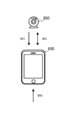
- FIG. 1 is a diagram showing an outline of a communication system 1 in the first embodiment.
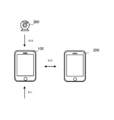
- FIG. 2 is a diagram showing an outline of the communication system 1 in the second embodiment.
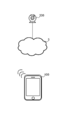
- FIG. 3 is an overall configuration diagram of the communication system 1 according to the first embodiment.
- FIG. 4 is an overall configuration diagram of the communication system 1 in the second embodiment.
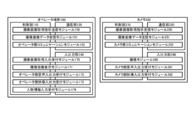
- FIG. 5 is a functional block diagram of the operator terminal 100 and the camera 300 in the first embodiment.
- FIG. 6 is a functional block diagram of the operator terminal 100, the information device 200, and the camera 300 according to the second embodiment.
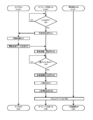
- FIG. 7 is a flowchart illustrating communication processing executed by the operator terminal 100 and the camera 300 in the first embodiment.
- FIG. 8 is a flowchart showing image display processing executed by the operator terminal 100 and the camera 300 in the first embodiment.
- FIG. 9 is a flowchart illustrating communication processing executed by the operator terminal 100, the information device 200, and the camera 300 according to the second embodiment.
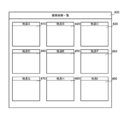
- FIG. 10 is a captured image list screen displayed by the operator terminal 100.
- FIG. 11 is a captured image screen displayed by the operator terminal 100.
- FIG. 12 is a person search screen displayed on the operator terminal 100.
- FIG. 13 is a captured image list screen displayed by the operator terminal 100.
- FIG. 14 is a person information table stored in the operator terminal 100.
- FIG. 1 is a diagram for explaining the outline of a communication system 1 which is a preferred first embodiment of the present invention.
- the communication system 1 includes an operator terminal 100 and a plurality of cameras 300.
- one camera 300 is illustrated as the plurality of cameras 300, but only one camera 300 is illustrated among the plurality of cameras 300, and the number thereof can be changed as appropriate. is there.
- the number of operator terminals 100 is not limited to one and may be plural.
- Each device may be realized by either or both of an actual device and a virtual device.
- Each process described below may be realized by either or both of the operator terminal 100 and the camera 300.
- the operator terminal 100 is an information terminal capable of data communication with the camera 300.
- the operator terminal 100 is, for example, an electronic product such as a netbook terminal, a slate terminal, an electronic book terminal, a portable music player, or other articles in addition to a mobile phone, a portable information terminal, a tablet terminal, or a personal computer.
- the camera 300 is an imaging device that captures images such as still images and moving images that can communicate with the operator terminal 100.
- the camera 300 is accompanied by an audio device and a projection device.
- the camera 300 may include an audio device or a projection device inside the camera 300 main body, or may be attached to a position near the camera 300.
- the operator terminal 100 receives an input from the operator, acquires a captured image of the camera 300, and displays it on itself (step S01).
- the camera 300 may capture an image based on an input from the operator terminal 100, or may capture an image regardless of the input from the operator terminal 100. Further, the operator terminal 100 may display a list of captured images acquired from a plurality of cameras 300, or list captured images acquired from the cameras 300 that meet specific conditions such as a person name, a place name, and a building name. Or a captured image acquired from any one of the plurality of cameras 300 may be displayed by a method other than the list.
- the operator terminal 100 receives an operator input to the displayed plurality of captured images, and receives a selection input of a captured image desired by the operator (step S02).
- the operator terminal 100 transmits and receives audio data or captured image data to and from the camera 300 that captures the selected captured image, and communicates with the operator and a person in the vicinity of the camera 300 (step S03).
- an operator and a person receive an operator's voice input via an acoustic device such as a microphone or a speaker of the operator terminal 100, and input a person's voice input via an acoustic device attached to the camera 300.
- an operator terminal 100 and the camera 300 transmit and receive audio data input to each of them, and output audio based on audio data received by the audio equipment of the operator terminal 100 and the audio equipment attached to the camera 300.
- the operator terminal 100 captures the operator's image using its own imaging device, and the camera 300 captures the person's image.
- the operator terminal 100 and the camera 300 each transmit and receive captured image data captured by the operator terminal 100 and the captured image data received by the display unit of the operator terminal 100 and a projection device such as a projector attached to the camera 300 and the display unit. Based on the captured image, the image is output.
- FIG. 3 is a diagram showing a system configuration of the communication system 1 according to the preferred first embodiment of the present invention.
- the communication system 1 includes an operator terminal 100, a plurality of cameras 300, and a public line network (Internet network, third and fourth generation communication network, etc.) 5.
- the number of operator terminals 100 is not limited to one, and a plurality of operator terminals 100 may exist on the system.
- FIG. 3 although only one camera 300 is shown in FIG. 3 as the plurality of cameras 300, this is merely an example.
- Each device may be realized by either or both of an actual device and a virtual device.
- Each process described below may be realized by either or both of the operator terminal 100 and the camera 300.
- the operator terminal 100 is the above-described terminal device having the functions described later.
- the camera 300 is the above-described imaging device having the functions described below.
- FIG. 5 is a diagram illustrating functional blocks of the operator terminal 100 and the camera 300.
- the operator terminal 100 includes a CPU (Central Processing Unit), a RAM (Random Access Memory), a ROM (Read Only Memory), etc. as the control unit 110, and a device for enabling the communication unit 120 to communicate with other devices.
- a WiFi (Wireless Fidelity) compatible device compliant with IEEE 802.11 is provided.
- the operator terminal 100 includes a data storage unit such as a hard disk, a semiconductor memory, a recording medium, or a memory card as a storage unit.
- the operator terminal 100 also serves as an input / output unit 140, such as a display unit that outputs and displays data and images controlled by the control unit 110, an input unit such as a touch panel, keyboard, and mouse that receives input from the user, a speaker, and a microphone. Etc., and an imaging device such as a camera.
- the control unit 110 when the control unit 110 reads a predetermined program, the captured image acquisition instruction transmission module 150, the captured image data reception module 151, and the operator side communication module 152 are realized in cooperation with the communication unit 120. Further, in the operator terminal 100, the control unit 110 reads a predetermined program, so that the captured image acquisition input reception module 170, the captured image display module 171 and the operator side voice input / output reception module cooperate with the input / output unit 140. 172, the operator side video input / output reception module 173 and the person information input reception module 174 are realized.
- the camera 300 includes a CPU, RAM, ROM, and the like as the control unit 310, and a wireless device and the like for enabling communication with other devices as the communication unit 320.
- the camera 300 outputs and displays data and images controlled by an imaging device such as an imaging device and a lens, an acoustic device such as a speaker and a microphone, a projection device such as a projector, and the control unit 310 as the input / output unit 340.
- a display unit and the like are provided.
- the audio device, the projection device, and the display unit may be provided inside the camera 300 or may be attached in the vicinity of the camera 300.
- the control unit 310 when the control unit 310 reads a predetermined program, the captured image acquisition instruction reception module 350, the captured image data transmission module 351, and the camera side communication module 352 are realized in cooperation with the communication unit 320. Further, in the camera 300, the control unit 310 reads a predetermined program, so that the imaging module 360, the camera side audio input / output reception module 361, and the camera side video input / output reception module 362 cooperate with the input / output unit 340. Realize.
- FIG. 7 is a flowchart illustrating communication processing executed by the operator terminal 100 and the camera 300. The processing executed by the modules of each device described above will be described together with this processing.
- the captured image acquisition input reception module 170 determines whether an input from the operator has been received (step S20). In step S ⁇ b> 20, the captured image acquisition / input reception module 170 makes a determination based on, for example, whether a dedicated application is started, or an input for instructing acquisition of a captured image is received on a dedicated WEB site. In step S20, when the captured image acquisition input receiving module 170 determines that no input is received (NO in step S20), the process is repeated until an input is received.
- step S20 when the captured image acquisition input reception module 170 determines that the input has been received (step S20 YES), the captured image acquisition instruction transmission module 150 transmits the captured image acquisition instruction to the plurality of cameras 300. (Step S21).
- the captured image acquisition instruction receiving module 350 receives the acquisition instruction transmitted by the operator terminal 100. Based on the acquisition instruction, the imaging module 360 captures an image such as a still image or a moving image of the place where the imaging module 360 is installed (step S22).
- the captured image data transmission module 351 transmits captured image data indicating the captured image to the operator terminal 100 (step S23).
- the camera 300 does not capture an image based on the acquisition instruction, but always captures an image, and transmits captured image data indicating the image being captured based on the acquisition instruction. It may be configured to.
- the captured image data receiving module 151 receives captured image data transmitted by the camera 300.
- the captured image display module 171 displays the captured images captured by the plurality of cameras 300 as a captured image list based on the received captured image data (step S24).
- the captured image data display module 171 may display the captured images of the plurality of cameras 300 as a list, or display the captured images captured by the camera 300 that meets specific conditions as a list. Alternatively, it may be displayed by a method other than the list.
- the specific condition is, for example, a captured image including a person, a captured image of a camera 300 in which position information is specified and installed in the position information, and a captured image of a camera 300 to which an audio device or a projection device is attached.
- FIG. 10 is a diagram showing a captured image list screen displayed by the captured image display module 171.
- the captured image display module 171 displays a message display area 400 and captured image display areas 410 to 490 as a captured image list screen.
- the message display area 400 displays a notification indicating that this screen is a list screen of captured images of the camera 300.
- the captured image display areas 410 to 490 display captured images of the camera 300 at different points and notifications indicating the location of the camera 300.
- the number of captured image display areas 410 to 490 displayed by the captured image display module 171 can be changed as appropriate.
- the information displayed by the captured image display module 171 may be changed as appropriate.
- the captured image display module 171 receives an operator's input operation to the captured image display areas 410 to 490, and receives a selection input of a captured image desired by the operator. When a selection input is received, the captured image display module 171 enlarges the captured image that has received the selection input and displays it as a captured image screen.
- the captured image display module 171 determines whether or not the operator has received selection input of a desired captured image (step S25). In step S25, when the captured image display module 171 determines that the selection input is not received (NO in step S25), the process is repeated until the selection input is received.
- step S25 when the captured image display module 171 determines that the selection input has been received (step S25 YES), the captured image that has received the selection input is enlarged and displayed (step S26).
- FIG. 11 is a diagram showing a captured image screen displayed by the captured image display module 171.
- the captured image display module 171 displays a message display area 500 and a captured image display area 510 as a captured image screen.
- the message display area 500 displays a notification indicating that this screen is a captured image desired by the operator.
- the captured image display area 510 enlarges and displays the captured image that has received the selection input, and displays a notification indicating the location of the camera 300.
- the captured image display module 171 may receive selection inputs to a plurality of captured images, and may display the received captured images in an enlarged manner or may display them as they are.
- the operator side communication module 152 communicates with the camera side communication module 352 (step S27).
- the operator side voice input / output receiving module 172 receives an operator's voice input.
- the operator-side communication module 152 transmits the received voice to the camera 300 as operator voice data.
- the camera side communication module 352 receives operator voice data.
- the camera-side voice input / output receiving module 361 outputs a voice based on the received operator voice data and receives a voice input of a person near the camera.
- the camera side communication module 352 transmits the received voice to the operator terminal 100 as camera voice data.
- the camera side voice input / output receiving module 361 receives a voice input of a person through a microphone and outputs a voice of an operator through a speaker.
- the operator side voice input / output receiving module 172 receives an operator's voice input through a microphone and outputs a person's voice through a speaker.
- the operator terminal 100 and the camera 300 can communicate with each other between the operator and the person by transmitting and receiving the operator voice data and the camera voice data.
- the operator side video input / output reception module 173 captures an image of the operator.
- the operator-side communication module 152 transmits the captured image to the camera 300 as operator video data.
- the camera side communication module 352 receives operator video data.
- the camera-side video input / output reception module 362 outputs video based on the received operator video data, and the imaging module 360 captures an image of a person near the camera.
- the camera side communication module 352 transmits the captured image to the operator terminal 100 as camera video data.
- the camera-side video input / output reception module 362 projects an operator's video on a wall surface, the ground, a screen, or the like using a projection device such as a projector, and the imaging module 362 captures an image of a person.
- the camera-side video input / output reception module 362 may output an operator video on the display.
- the operator side video input / output receiving module 173 outputs a video of a person on the display unit and takes an image of the operator.
- the operator terminal 100 and the camera 300 can communicate with each other between the operator and the person by transmitting and receiving the operator video data and the camera video data.
- operator terminal 100 and the camera 300 may communicate with both video and audio, or may communicate with other methods.
- the above is communication processing.
- FIG. 8 is a diagram showing a flowchart of image display processing executed by the operator terminal 100 and the camera 300. The processing executed by the modules of each device described above will be described together with this processing.
- the person information input receiving module 174 determines whether or not an input of person information, which is information relating to a person who wants to communicate, has been received (step S30). In step S30, the person information input receiving module 174 makes a determination based on, for example, whether a dedicated application is started or an input for instructing acquisition of a captured image is received on a dedicated WEB site. If it is determined in step S30 that the personal information input receiving module 174 has not received an input (NO in step S30), this process is repeated until an input is received.
- step S30 determines in step S30 that the input has been received (step S30 YES)
- the person information input receiving module 174 displays a person search screen (step S31).
- FIG. 12 is a diagram showing a person search screen displayed by the person information input receiving module 174.
- the person information input receiving module 174 displays a message display area 600, a person name input area 610, a building name input area 620, and a facility name input area 630.
- the message display area 600 displays a notification indicating that this screen is a screen that accepts input of personal information.
- the person name input area 610 receives input from an operator and receives input of the name of a person to be searched.
- the building name input area 620 receives input from the operator and receives input of the name of the building to be searched.
- the facility name input area 630 receives input from the operator and receives input of the name of the facility to be searched.
- the person information input receiving module 174 may receive other input contents, or may receive only one of the input contents described above.
- the person information input receiving module 174 determines whether or not a search input has been received (step S32). In step S32, when the personal information input receiving module 174 determines that the search input is not received (NO in step S32), this process is repeated until the search input is received.
- step S32 when the personal information input receiving module 174 receives a search input (YES in step S32), the personal information input receiving module 174 selects any one of a person name, a building name, a facility name, and the like to be searched. Or the camera 300 which images this person, a building, a facility, etc. is specified by receiving the input of a some combination (step S33).
- the person information input receiving module 174 specifies the camera 300 that captures the person in the target building or facility based on, for example, a database or a table, and the operator terminal 100 performs the processing in steps S20 to S24 described above.
- the captured image display module 171 displays a list of captured images obtained by capturing the person from a plurality of directions (step S34).
- FIG. 13 is a diagram showing a captured image list screen displayed by the captured image display module 171.
- the captured image display module 171 displays a message display area 700 and captured images 710 to 790 as a captured image list screen.
- the message display area 700 displays a notification indicating that this screen is a list screen of captured images obtained by capturing a person from a plurality of directions.
- the captured image display areas 710 to 790 each display a captured image obtained by capturing a person from different directions and a notification indicating the imaging direction. That is, the captured image display module 171 displays the captured image display areas 710 to 790 as many as the number of captured images that can be displayed by itself.
- the number of captured image display areas 410 to 490 displayed by the captured image display module 171 can be changed as appropriate.
- the information displayed by the captured image display module 171 may be changed as appropriate.
- the captured image display module 171 receives an operator input operation to the captured image display areas 710 to 790, and receives a selection input of a captured image desired by the operator. When a selection input is received, the captured image display module 171 enlarges the captured image that has received the selection input, and displays it as a captured image screen as in FIG. 11 described above.
- the captured image display module 171 determines whether or not the operator has received selection input of a desired captured image (step S35). If the captured image display module 171 determines in step S35 that no selection input has been received (NO in step S35), this process is repeated until a selection input is received.
- step S35 when the captured image display module 171 determines that a selection input has been received (step S35 YES), the captured image that has received the selection input is enlarged and displayed (step S36).
- the operator terminal 100 and the camera 300 execute the process of step S27 described above, and the operator and the person communicate with each other.
- the above is the image display processing.
- FIG. 2 is a diagram for explaining the outline of the communication system 1 which is a preferred second embodiment of the present invention.
- the communication system 1 includes an operator terminal 100, an information device 200, and a plurality of cameras 300.
- symbol is attached
- the number of operator terminals 100 or information devices 200 is not limited to one, and a plurality of operator terminals 100 or information devices 200 may exist on the system.
- one camera 300 is illustrated as the plurality of cameras 300, but only one camera 300 is illustrated among the plurality of cameras 300, and the number thereof can be changed as appropriate. is there.
- Each device may be realized by either or both of an actual device and a virtual device.
- each process to be described later may be realized by any one or a combination of the operator terminal 100, the information device 200, and the camera 300.
- the operator terminal 100 is an information terminal similar to that in the first embodiment described above that can perform data communication with the information device 200 and the camera 300.
- the information device 200 is an information terminal capable of data communication with the operator terminal 100, and is an electrical appliance or other article similar to the operator terminal 100 described above.
- the camera 300 is an imaging device that can perform data communication with the operator terminal 100 and is similar to the first embodiment described above. Note that an audio device, a projection device, or the like may not be attached.
- the operator terminal 100 receives an input from the operator, acquires a captured image of the camera 300, and displays it on itself (step S10).
- the process in step S10 is the same as the process in step S01 described above.
- the operator terminal 100 receives an operator input to the displayed plurality of captured images, and receives a selection input of a captured image desired by the operator (step S11).
- the process of step S11 is the same as the process of step S02 mentioned above.
- the operator terminal 100 recognizes the captured image that has received the selection input, and identifies a person shown in the captured image.
- the operator terminal 100 identifies the information device 200 associated with the identified person.
- the operator terminal 100 acquires the telephone number, mail address, SNS account, and the like of the information device 200 associated with the specified person based on the database, table, etc., and communicates (step S12).
- the operator terminal 100 calls the acquired telephone number, and the information device 200 receives the call to start a call. Take communication.
- the operator and the person perform communication by mail the operator terminal 100 transmits a mail to the information device 200 based on the acquired mail address, and the information device 200 receives the mail.
- a mail is transmitted to the operator terminal 100 to communicate.
- the operator terminal 100 transmits a message or the like to the SNS of the person based on the acquired SNS account, and the information device 200 receives the message or the like. Communicate by replying to messages.
- the operator terminal 100 and the information device 200 may communicate by executing chat by transmitting and receiving messages in real time based on the mail address.
- the operator and the person may communicate with each other by sending and receiving messages based on the acquired telephone number or mail address.
- the contents of communication performed by the operator and the person may be contents other than the example described above.
- FIG. 4 is a diagram showing a system configuration of a communication system 1 which is a preferred second embodiment of the present invention.
- the communication system 1 includes an operator terminal 100, an information device 200, a plurality of cameras 300, and a public line network 5.
- symbol is attached
- the operator terminal 100 has the functions described later and is the terminal device described above.
- the information device 200 has the functions described later and is the terminal device described above.
- the camera 300 has the functions described later and is the above-described imaging device.
- FIG. 6 is a functional block diagram of the operator terminal 100, the information device 200, and the camera 300.
- the operator terminal 100 includes a control unit 110, a communication unit 120, a storage unit 130, and an input / output unit 140 as in the first embodiment described above.
- the control unit 110 when the control unit 110 reads a predetermined program, the captured image acquisition instruction transmission module 150, the captured image data reception module 151, and the operator side communication module 152 are realized in cooperation with the communication unit 120.
- the personal information storage module 160 is realized in cooperation with the storage unit 130.
- the control unit 110 reads a predetermined program, so that in cooperation with the input / output unit 140, the captured image acquisition / input reception module 170, the captured image display module 171, the image recognition module 175, the person specification Module 176 is implemented.
- the information device 200 includes a CPU, RAM, ROM, and the like as the control unit 210, and a wireless device for enabling communication with other devices as the communication unit 220.
- the information device 200 includes a display unit, an input unit, an acoustic device, an imaging device, and the like as the input / output unit, like the operator terminal 100.
- control unit 210 reads a predetermined program, thereby realizing the person-side communication module 230 in cooperation with the communication unit 220.
- the camera 300 includes a control unit 310, a communication unit 320, and an input / output unit 340, as in the first embodiment described above. Note that an audio device, a projection device, and a display unit may not be attached.
- the control unit 310 when the control unit 310 reads a predetermined program, the captured image acquisition instruction reception module 350, the captured image data transmission module 351, and the camera side communication module 352 are realized in cooperation with the communication unit 320. In the camera 300, the control unit 310 reads a predetermined program, thereby realizing the imaging module 360 in cooperation with the input / output unit 340.
- FIG. 9 is a diagram illustrating a flowchart of communication processing executed by the operator terminal 100, the information device 200, and the camera 300. Note that a detailed description of the same processing as in the first embodiment described above is omitted.
- the captured image acquisition input reception module 170 determines whether an input from the operator has been received (step S40).
- the process of step S40 is the same as the process of step S20 described above.
- step S40 when the captured image acquisition input receiving module 170 determines that the input is not received (step S40: NO), the process is repeated until the input is received.
- step S40 when the captured image acquisition input reception module 170 determines that the input has been received (step S40 YES), the captured image acquisition instruction transmission module 150 transmits the captured image acquisition instruction to the plurality of cameras 300. (Step S41).
- the process of step S41 is the same as the process of step S21 described above.
- the captured image acquisition instruction receiving module 350 receives the acquisition instruction transmitted by the operator terminal 100. Based on the acquisition instruction, the imaging module 360 captures an image of the place where the imaging module 360 is installed (step S42).
- the process of step S42 is the same as the process of step S22 described above.
- the captured image data transmission module 351 transmits captured image data indicating the captured image to the operator terminal 100 (step S43).
- the process in step S43 is the same as the process in step S23 described above.
- the captured image data receiving module 151 receives captured image data transmitted by the camera 300.
- the captured image display module 171 displays the captured images captured by the plurality of cameras 300 based on the received captured image data as a captured image list (step S44).
- the process in step S44 is the same as the process in step S24 described above.
- the captured image display module 171 determines whether or not the operator has received selection input of a desired captured image (step S45).
- the process of step S45 is the same as the process of step S25 described above.
- step S45 when the captured image display module 171 determines that the selection input has not been received (NO in step S45), the process is repeated until the selection input is received.
- step S45 when the captured image display module 171 determines that the selection input has been received (step S45: YES), the captured image that has received the selection input is enlarged and displayed (step S46).
- step S46 is the same as the process in step S26 described above.
- the image recognition module 175 performs image recognition of the captured image that has received the selection input, and identifies a person shown in the captured image (step S47).
- the image recognition module 175 may be a general image recognition method.
- the person identification module 176 refers to the person information table stored in the person information storage module 160, identifies the information device 200 associated with the identified person, the telephone number, mail address, SNS account, etc. of the information device 200 Personal information is acquired (step S48).
- the person information table will be described with reference to FIG. FIG. 14 is a diagram showing a person information table stored in the person information storage module 160.
- the person information storage module 160 stores person names, telephone numbers, e-mail addresses, and SNS accounts in association with each other as person information.
- the person name is the name of the person.
- the telephone number is the telephone number of the information device 200 used by a person.
- the email address is the email address of the information device 200 used by a person.
- the SNS account is a blog, miniblog ID, SNS application ID, SNS site ID, or the like.
- the person information table may store other information in association with each other, or may store only one of the information. A plurality of SNS accounts may be stored for one person.
- the operator-side communication module 152 communicates with the person-side communication module 230 based on the acquired person information by executing communication or a telephone call (step S49).
- the operator-side communication module 152 makes a call to the information device 200 based on the acquired telephone number.
- the person side communication module 230 receives this call, and the operator terminal 100 and the information device 200 communicate by executing a telephone call.
- the operator terminal 100 and the information device 200 can communicate with each other by making a call.
- the operator-side communication module 152 transmits a mail to the information device 200 based on the acquired mail address.
- the content of the mail may be input by the operator as appropriate, or a preset fixed sentence or the like may be input.
- the person side communication module 230 receives the mail and returns the mail in response to the received mail.
- the content of the mail may be input by a person as appropriate, or a preset fixed sentence or the like may be input.
- the operator terminal 100 and the information device 200 may communicate with each other not only by e-mail but also by chat that executes transmission and reception of messages in real time.
- the operator terminal 100 and the information device 200 can communicate with each other by sending and receiving mails.
- the operator-side communication module 152 Based on the acquired SNS account information, the operator-side communication module 152 transmits writing information such as a message, chat, and posting of text to the corresponding SNS.
- the person side communication module 230 browses the SNS, so that the operator terminal 100 and the information device 200 communicate with each other by the SNS.
- the operator terminal 100 and the information device 200 can communicate with each other by communicating with the SNS.
- the communication system 1 in the second embodiment executes the same process as the image display process in the first embodiment described above.
- the communication system 1 executes the processes of steps S30 to S36 described above.
- the operator terminal 100 and the information device 200 used by the person to be searched execute the process of step S49 described above, and the operator and the person communicate with each other.
- the means and functions described above are realized by a computer (including a CPU, an information processing apparatus, and various terminals) reading and executing a predetermined program.
- the program is provided in a form recorded on a computer-readable recording medium such as a flexible disk, CD (CD-ROM, etc.), DVD (DVD-ROM, DVD-RAM, etc.).
- the computer reads the program from the recording medium, transfers it to the internal storage device or the external storage device, stores it, and executes it.
- the program may be recorded in advance in a storage device (recording medium) such as a magnetic disk, an optical disk, or a magneto-optical disk, and provided from the storage device to a computer via a communication line.
Landscapes
- Engineering & Computer Science (AREA)
- Multimedia (AREA)
- Signal Processing (AREA)
- Human Computer Interaction (AREA)
- Databases & Information Systems (AREA)
- Physics & Mathematics (AREA)
- General Physics & Mathematics (AREA)
- Theoretical Computer Science (AREA)
- Computer Graphics (AREA)
- General Engineering & Computer Science (AREA)
- Two-Way Televisions, Distribution Of Moving Picture Or The Like (AREA)
- Telephonic Communication Services (AREA)
Abstract
Description
前記複数のカメラの撮像画像を表示する表示手段と、
前記表示された複数のカメラの撮像画像の中から、所望の撮像画像を選択させる撮像画像選択手段と、
前記選択された撮像画像に対応するカメラに付属された機器を介して、当該カメラ付近にいる人物とコミュニケーションを取るコミュニケーション手段と、
を備えることを特徴とするコミュニケーションシステムを提供する。
前記複数のカメラの撮像画像を表示する表示手段と、
前記表示された複数のカメラの撮像画像の中から、所望の撮像画像を選択させる撮像画像選択手段と、
前記選択された撮像画像に映っている人物を画像認識で特定する画像認識手段と、
前記特定された人物が使用する情報機器に対してコミュニケーションを取るコミュニケーション手段と、
を備えることを特徴とするコミュニケーションシステムを提供する。
ことを特徴とする第1又は第2のいずれかの特徴に係る発明であるコミュニケーションシステムを提供する。
前記コミュニケーション手段は、通話又はプロジェクションによってコミュニケーションを取る、
ことを特徴とする第1の特徴に係る発明であるコミュニケーションシステムを提供する。
ことを特徴とする第2の特徴に係る発明であるコミュニケーションシステムを提供する。
前記複数のカメラの撮像画像を表示するステップと、
前記表示された複数のカメラの撮像画像の中から、所望の撮像画像を選択させるステップと、
前記選択された撮像画像に対応するカメラに付属された機器を介して、当該カメラ付近にいる人物とコミュニケーションを取るステップと、
を備えることを特徴とするコミュニケーション方法を提供する。
前記複数のカメラの撮像画像を表示するステップと、
前記表示された複数のカメラの撮像画像の中から、所望の撮像画像を選択させるステップと、
前記選択された撮像画像に映っている人物を画像認識で特定するステップと、
前記特定された人物が使用する情報機器に対してコミュニケーションを取るステップと、
を備えることを特徴とするコミュニケーション方法を提供する。
前記複数のカメラの撮像画像を表示するステップ、
前記表示された複数のカメラの撮像画像の中から、所望の撮像画像を選択させるステップ、
前記選択された撮像画像に対応するカメラに付属された機器を介して、当該カメラ付近にいる人物とコミュニケーションを取るステップ、
を実行させるプログラムを提供する。
前記複数のカメラの撮像画像を表示するステップ、
前記表示された複数のカメラの撮像画像の中から、所望の撮像画像を選択させるステップ、
前記選択された撮像画像に映っている人物を画像認識で特定するステップ、
前記特定された人物が使用する情報機器に対してコミュニケーションを取るステップ、
を実行させるプログラムを提供する。
本発明の好適な第1の実施形態の概要について、図1に基づいて説明する。図1は、本発明の好適な第1の実施形態であるコミュニケーションシステム1の概要を説明するための図である。コミュニケーションシステム1は、オペレータ端末100、複数のカメラ300から構成される。なお、図1において、複数のカメラ300として、一のカメラ300を図示しているが、複数のカメラ300のうち、一のカメラ300を例示しているに過ぎず、その個数は適宜変更可能である。また、オペレータ端末100は、1つに限らず複数であってもよい。また、各装置は、実在する装置又は仮想的な装置のいずれか又は双方により実現されてもよい。また、後述する各処理は、オペレータ端末100又はカメラ300のいずれか又は双方により実現されてもよい。
図3に基づいて、第1の実施形態におけるコミュニケーションシステム1のシステム構成について説明する。図3は、本発明の好適な第1の実施形態におけるコミュニケーションシステム1のシステム構成を示す図である。コミュニケーションシステム1は、オペレータ端末100、複数のカメラ300、公衆回線網(インターネット網や、第3、第4世代通信網等)5から構成される。なお、オペレータ端末100は、1つに限らず、複数のオペレータ端末100がシステム上に存在していてもよい。また、複数のカメラ300は、図3において、一のカメラ300のみが図示されているが、これはあくまでも例示に過ぎない。また、各装置は、実在する装置又は仮想的な装置のいずれか又は双方により実現されてもよい。また、後述する各処理は、オペレータ端末100又はカメラ300のいずれか又は双方により実現されてもよい。
図5に基づいて、第1の実施形態におけるコミュニケーションシステム1の機能について説明する。図5は、オペレータ端末100及びカメラ300の機能ブロックを示す図である。
図7に基づいて、オペレータ端末100、カメラ300が実行するコミュニケーション処理について説明する。図7は、オペレータ端末100、カメラ300が実行するコミュニケーション処理のフローチャートを示す図である。上述した各装置のモジュールが実行する処理について、本処理に併せて説明する。
次に、図8に基づいて、オペレータ端末100、カメラ300が実行する画像表示処理について説明する。図8は、オペレータ端末100、カメラ300が実行する画像表示処理のフローチャートを示す図である。上述した各装置のモジュールが実行する処理について、本処理に併せて説明する。
本発明の好適な第2の実施形態の概要について、図2に基づいて説明する。図2は、本発明の好適な第2の実施形態であるコミュニケーションシステム1の概要を説明するための図である。コミュニケーションシステム1は、オペレータ端末100、情報機器200、複数のカメラ300から構成される。なお、上述した第1の実施形態と同様の構成については、同様の符号を付し、その詳細な説明は省略する。また、本実施形態において、オペレータ端末100又は情報機器200は、1つに限らず、システム上に複数存在していてもよい。また、図2において、複数のカメラ300として、一のカメラ300を図示しているが、複数のカメラ300のうち、一のカメラ300を例示しているに過ぎず、その個数は適宜変更可能である。また、各装置は、実在する装置又は仮想的な装置のいずれか又は双方により実現されてもよい。また、後述する各処理は、オペレータ端末100、情報機器200又はカメラ300のいずれか又は複数の組合せにより実現されてもよい。
図4に基づいて、第2の実施形態におけるコミュニケーションシステム1のシステム構成について説明する。図4は、本発明の好適な第2の実施形態であるコミュニケーションシステム1のシステム構成を示す図である。コミュニケーションシステム1は、オペレータ端末100、情報機器200、複数のカメラ300及び公衆回線網5から構成される。なお、上述した第1の実施形態と同様の構成については、同様の符号を付し、その詳細な説明は省略する。
図6に基づいて、第2の実施形態におけるコミュニケーションシステム1の機能について説明する。図6は、オペレータ端末100、情報機器200及びカメラ300の機能ブロック図を示す図である。
図9に基づいて、オペレータ端末100、情報機器200、カメラ300が実行するコミュニケーション処理について説明する。図9は、オペレータ端末100、情報機器200、カメラ300が実行するコミュニケーション処理のフローチャートを示す図である。なお、上述した第1の実施形態と同様の処理については、その詳細な説明は省略する。
図14に基づいて、人物情報テーブルを説明する。図14は、人物情報記憶モジュール160が記憶する人物情報テーブルを示す図である。人物情報記憶モジュール160は、人物情報として、人物名と、電話番号と、メールアドレスと、SNSアカウントとを対応付けて記憶する。人物名とは、人物の名称である。電話番号とは、人物が使用する情報機器200の電話番号である。メールアドレスとは、人物が使用する情報機器200のメールアドレスである。SNSアカウントとは、ブログ、ミニブログのID、SNSアプリケーションのID、SNSサイトのID等である。なお、人物情報テーブルは、その他の情報を対応付けて記憶していてもよいし、いずれかの情報のみを記憶していてもよい。また、SNSアカウントは、一の人物に対して複数記憶していてもよい。
Claims (9)
- 複数のカメラとネットワークを介して接続されたコミュニケーションシステムであって、
前記複数のカメラの撮像画像を表示する表示手段と、
前記表示された複数のカメラの撮像画像の中から、所望の撮像画像を選択させる撮像画像選択手段と、
前記選択された撮像画像に対応するカメラに付属された機器を介して、当該カメラ付近にいる人物とコミュニケーションを取るコミュニケーション手段と、
を備えることを特徴とするコミュニケーションシステム。 - 複数のカメラとネットワークを介して接続されたコミュニケーションシステムであって、
前記複数のカメラの撮像画像を表示する表示手段と、
前記表示された複数のカメラの撮像画像の中から、所望の撮像画像を選択させる撮像画像選択手段と、
前記選択された撮像画像に映っている人物を画像認識で特定する画像認識手段と、
前記特定された人物が使用する情報機器に対してコミュニケーションを取るコミュニケーション手段と、
を備えることを特徴とするコミュニケーションシステム。 - 前記表示手段は、前記複数のカメラの撮像画像を一覧にして表示する、
ことを特徴とする請求項1又は2に記載のコミュニケーションシステム。 - 前記付属された機器が、音響機器又は投影機器であって、
前記コミュニケーション手段は、通話又はプロジェクションによってコミュニケーションを取る、
ことを特徴とする請求項1に記載のコミュニケーションシステム。 - 前記コミュニケーション手段は、通話、メール又はチャットによってコミュニケーションを取る、
ことを特徴とする請求項2に記載のコミュニケーションシステム。 - 複数のカメラとネットワークを介して接続されたコミュニケーションシステムが実行するコミュニケーション方法であって、
前記複数のカメラの撮像画像を表示するステップと、
前記表示された複数のカメラの撮像画像の中から、所望の撮像画像を選択させるステップと、
前記選択された撮像画像に対応するカメラに付属された機器を介して、当該カメラ付近にいる人物とコミュニケーションを取るステップと、
を備えることを特徴とするコミュニケーション方法。 - 複数のカメラとネットワークを介して接続されたコミュニケーションシステムが実行するコミュニケーション方法であって、
前記複数のカメラの撮像画像を表示するステップと、
前記表示された複数のカメラの撮像画像の中から、所望の撮像画像を選択させるステップと、
前記選択された撮像画像に映っている人物を画像認識で特定するステップと、
前記特定された人物が使用する情報機器に対してコミュニケーションを取るステップと、
を備えることを特徴とするコミュニケーション方法。 - 複数のカメラとネットワークを介して接続されたコミュニケーションシステムに、
前記複数のカメラの撮像画像を表示するステップ、
前記表示された複数のカメラの撮像画像の中から、所望の撮像画像を選択させるステップ、
前記選択された撮像画像に対応するカメラに付属された機器を介して、当該カメラ付近にいる人物とコミュニケーションを取るステップ、
を実行させるプログラム。 - 複数のカメラとネットワークを介して接続されたコミュニケーションシステムに、
前記複数のカメラの撮像画像を表示するステップ、
前記表示された複数のカメラの撮像画像の中から、所望の撮像画像を選択させるステップ、
前記選択された撮像画像に映っている人物を画像認識で特定するステップ、
前記特定された人物が使用する情報機器に対してコミュニケーションを取るステップ、
を実行させるプログラム。
Priority Applications (3)
| Application Number | Priority Date | Filing Date | Title |
|---|---|---|---|
| PCT/JP2016/059111 WO2017163324A1 (ja) | 2016-03-23 | 2016-03-23 | コミュニケーションシステム、コミュニケーション方法及びプログラム |
| US16/081,089 US10432894B2 (en) | 2016-03-23 | 2016-03-23 | Communication system, communication method, and program |
| JP2018506667A JP6387205B2 (ja) | 2016-03-23 | 2016-03-23 | コミュニケーションシステム、コミュニケーション方法及びプログラム |
Applications Claiming Priority (1)
| Application Number | Priority Date | Filing Date | Title |
|---|---|---|---|
| PCT/JP2016/059111 WO2017163324A1 (ja) | 2016-03-23 | 2016-03-23 | コミュニケーションシステム、コミュニケーション方法及びプログラム |
Publications (1)
| Publication Number | Publication Date |
|---|---|
| WO2017163324A1 true WO2017163324A1 (ja) | 2017-09-28 |
Family
ID=59900070
Family Applications (1)
| Application Number | Title | Priority Date | Filing Date |
|---|---|---|---|
| PCT/JP2016/059111 Ceased WO2017163324A1 (ja) | 2016-03-23 | 2016-03-23 | コミュニケーションシステム、コミュニケーション方法及びプログラム |
Country Status (3)
| Country | Link |
|---|---|
| US (1) | US10432894B2 (ja) |
| JP (1) | JP6387205B2 (ja) |
| WO (1) | WO2017163324A1 (ja) |
Families Citing this family (1)
| Publication number | Priority date | Publication date | Assignee | Title |
|---|---|---|---|---|
| WO2019026392A1 (ja) * | 2017-07-31 | 2019-02-07 | ソニー株式会社 | 情報処理装置、情報処理方法、およびプログラム |
Citations (5)
| Publication number | Priority date | Publication date | Assignee | Title |
|---|---|---|---|---|
| JP2006014148A (ja) * | 2004-06-29 | 2006-01-12 | Matsushita Electric Ind Co Ltd | ネットワークカメラ及びネットワークシステム |
| JP2006148737A (ja) * | 2004-11-24 | 2006-06-08 | Matsushita Electric Ind Co Ltd | 通信装置およびネットワークカメラ |
| JP2007201816A (ja) * | 2006-01-26 | 2007-08-09 | Mitsubishi Electric Corp | 映像表示システム及び映像受信装置 |
| JP2011114699A (ja) * | 2009-11-27 | 2011-06-09 | Sharp Corp | 情報共有システム |
| JP2013098668A (ja) * | 2011-10-28 | 2013-05-20 | Konica Minolta Business Technologies Inc | 遠隔制御装置、遠隔制御方法および遠隔制御プログラム |
Family Cites Families (5)
| Publication number | Priority date | Publication date | Assignee | Title |
|---|---|---|---|---|
| CN102714705A (zh) * | 2012-03-08 | 2012-10-03 | 华为技术有限公司 | 视频会议中突显关注者的方法、设备及系统 |
| EP2915101A4 (en) * | 2012-11-02 | 2017-01-11 | Itzhak Wilf | Method and system for predicting personality traits, capabilities and suggested interactions from images of a person |
| KR101990536B1 (ko) * | 2012-11-02 | 2019-06-18 | 삼성전자주식회사 | 영상 통화 수행 시 사용자들의 관심 정보를 제공하는 정보 제공 방법 및 이를 적용한 전자 장치 |
| JP2016005083A (ja) | 2014-06-16 | 2016-01-12 | ソニー株式会社 | 情報処理装置、情報処理方法及び端末装置 |
| US9800831B2 (en) * | 2015-06-18 | 2017-10-24 | Jie Diao | Conveying attention information in virtual conference |
-
2016
- 2016-03-23 US US16/081,089 patent/US10432894B2/en not_active Expired - Fee Related
- 2016-03-23 JP JP2018506667A patent/JP6387205B2/ja active Active
- 2016-03-23 WO PCT/JP2016/059111 patent/WO2017163324A1/ja not_active Ceased
Patent Citations (5)
| Publication number | Priority date | Publication date | Assignee | Title |
|---|---|---|---|---|
| JP2006014148A (ja) * | 2004-06-29 | 2006-01-12 | Matsushita Electric Ind Co Ltd | ネットワークカメラ及びネットワークシステム |
| JP2006148737A (ja) * | 2004-11-24 | 2006-06-08 | Matsushita Electric Ind Co Ltd | 通信装置およびネットワークカメラ |
| JP2007201816A (ja) * | 2006-01-26 | 2007-08-09 | Mitsubishi Electric Corp | 映像表示システム及び映像受信装置 |
| JP2011114699A (ja) * | 2009-11-27 | 2011-06-09 | Sharp Corp | 情報共有システム |
| JP2013098668A (ja) * | 2011-10-28 | 2013-05-20 | Konica Minolta Business Technologies Inc | 遠隔制御装置、遠隔制御方法および遠隔制御プログラム |
Also Published As
| Publication number | Publication date |
|---|---|
| US10432894B2 (en) | 2019-10-01 |
| JP6387205B2 (ja) | 2018-09-05 |
| JPWO2017163324A1 (ja) | 2018-09-13 |
| US20190075273A1 (en) | 2019-03-07 |
Similar Documents
| Publication | Publication Date | Title |
|---|---|---|
| KR102049789B1 (ko) | 휴대단말기의 정보 전송장치 및 방법 | |
| CN104158985A (zh) | 通话方法、装置和系统 | |
| CN105488145B (zh) | 网页内容的显示方法、装置及终端 | |
| US20150282233A1 (en) | Communication management system, communication management method, and recording medium storing communication management program | |
| CN104464238A (zh) | 移动终端之间的操作控制方法及装置 | |
| KR20150074226A (ko) | 단말 및 콘텐츠 공유 방법 | |
| CN109104564B (zh) | 一种拍摄提示方法及终端设备 | |
| US9959083B2 (en) | System and method for sharing screen | |
| JP5997824B1 (ja) | 遠隔端末、遠隔指示方法及び遠隔端末用プログラム | |
| CN105119984B (zh) | 发送文件的方法及装置 | |
| JP2008270912A (ja) | 制御装置、移動通信システム及び通信端末 | |
| JP6387205B2 (ja) | コミュニケーションシステム、コミュニケーション方法及びプログラム | |
| JP6451625B2 (ja) | 通信端末及び通信方法 | |
| JP6391219B2 (ja) | システム | |
| CN108495276B (zh) | 一种数字名片的分享方法和装置 | |
| JP5594087B2 (ja) | 画像表示装置及びプログラム | |
| JP2015141234A (ja) | 情報取得プログラム、情報取得方法及び情報処理装置 | |
| US9532181B2 (en) | Device retrieval server, method of retrieving device, and program for device retrieval server | |
| JP5972302B2 (ja) | オペレータ端末、携帯端末、指示送信方法、オペレータ端末用プログラム | |
| JP6195960B2 (ja) | 遠隔指示方法及び遠隔端末用プログラム | |
| JP7020132B2 (ja) | 端末装置、情報処理方法、プログラム、通信システム | |
| JP6448866B2 (ja) | 画像取得システム、画像取得方法及びプログラム | |
| JP2008010935A (ja) | 移動無線端末装置 | |
| US10757242B2 (en) | Computer system, and method and program for setting | |
| JP2015015623A (ja) | テレビ電話機、及び、プログラム |
Legal Events
| Date | Code | Title | Description |
|---|---|---|---|
| ENP | Entry into the national phase |
Ref document number: 2018506667 Country of ref document: JP Kind code of ref document: A |
|
| NENP | Non-entry into the national phase |
Ref country code: DE |
|
| 121 | Ep: the epo has been informed by wipo that ep was designated in this application |
Ref document number: 16895360 Country of ref document: EP Kind code of ref document: A1 |
|
| 32PN | Ep: public notification in the ep bulletin as address of the adressee cannot be established |
Free format text: NOTING OF LOSS OF RIGHTS PURSUANT TO RULE 112(1) EPC (EPO FORM 1205A DATED 10.01.2019) |
|
| 122 | Ep: pct application non-entry in european phase |
Ref document number: 16895360 Country of ref document: EP Kind code of ref document: A1 |