WO2017010417A1 - 高機能間葉系幹細胞、その調製方法、および調製用培地 - Google Patents
高機能間葉系幹細胞、その調製方法、および調製用培地 Download PDFInfo
- Publication number
- WO2017010417A1 WO2017010417A1 PCT/JP2016/070242 JP2016070242W WO2017010417A1 WO 2017010417 A1 WO2017010417 A1 WO 2017010417A1 JP 2016070242 W JP2016070242 W JP 2016070242W WO 2017010417 A1 WO2017010417 A1 WO 2017010417A1
- Authority
- WO
- WIPO (PCT)
- Prior art keywords
- mesenchymal stem
- stem cells
- function
- inflammatory agent
- inflammatory
- Prior art date
- Legal status (The legal status is an assumption and is not a legal conclusion. Google has not performed a legal analysis and makes no representation as to the accuracy of the status listed.)
- Ceased
Links
Images

Definitions
- the present invention relates to a method for preparing mesenchymal stem cells having a high therapeutic effect, a highly functional mesenchymal stem cell obtained by the preparation method, and a medium for preparation.
- MSCs Mesenchymal stem cells
- MSC promotes angiogenesis in various tissues and organs, treats autoimmune diseases, treats allergic responses, treats cancer, treats inflammatory diseases and disorders, promotes wound healing, promotes inflammation It has been described that it can be used for therapy and repair of epithelial injury, and that MSCs are thought to promote secretion of anti-inflammatory cytokines such as IL-10 and inhibit the activity of macrophage migration inhibitory factor .
- TNF- ⁇ which is an inflammatory cytokine
- TNF- ⁇ which is an inflammatory cytokine
- the present invention provides a method for preparing mesenchymal stem cells having a high therapeutic effect, a highly functional mesenchymal stem cell obtained by the preparation method, a pharmaceutical composition containing the highly functional mesenchymal stem cell, and a medium for preparation The task is to do.
- mesenchymal stem cells can be obtained by treating mesenchymal stem cells with at least one anti-inflammatory agent, and to complete the present invention. It came.
- the present invention relates to the following.
- a method for preparing highly functional mesenchymal stem cells comprising a step of treating mesenchymal stem cells with at least one anti-inflammatory agent.
- Highly functional mesenchymal stem cells have at least one function selected from the group consisting of an anti-inflammatory function, an immunoregulatory function, an anti-tumor function, a tissue repair function, and a barrier enhancement function by tight junction formation of epithelial cells.
- the method according to (1) wherein the method is enhanced compared to untreated mesenchymal stem cells.
- the anti-inflammatory agent is a non-steroidal anti-inflammatory agent.
- non-steroidal anti-inflammatory agent is a propionic acid-based anti-inflammatory agent.
- nonsteroidal anti-inflammatory agent is an antiallergic agent.
- mesenchymal stem cells are derived from the umbilical cord.
- a highly functional mesenchymal stem cell prepared by the method according to any one of (1) to (6).
- a pharmaceutical composition comprising the highly functional mesenchymal stem cell according to (7).
- High-function mesenchymal stem cells can be obtained by the preparation method of the present invention.
- High-function mesenchymal stem cells are excellent in anti-inflammatory function, immunoregulatory function, anti-tumor function and tissue repair function, barrier enhancement function due to tight junction formation of epithelial cells, etc., and when administered to mammals including humans, High therapeutic effect can be demonstrated.
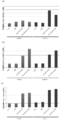
- TSG-6 gene of an anti-inflammatory agent treatment mesenchymal stem cell (a) is an anti-inflammatory agent treatment 1 day, (b) is an anti-inflammatory agent treatment 2 day, (c) is an anti-inflammatory.
- the expression level of TSG-6 gene on the 3rd day of treatment with the agent is shown.
- the method for preparing highly functional mesenchymal stem cells of the present invention includes a step of treating mesenchymal stem cells with at least one anti-inflammatory agent.
- Examples of the step of treating mesenchymal stem cells with an anti-inflammatory agent include a step of culturing mesenchymal stem cells in an anti-inflammatory agent-containing medium. Moreover, the process of adding an anti-inflammatory agent to a mesenchymal stem cell containing solution is mentioned.
- the method for preparing highly functional mesenchymal stem cells in the present invention can also be described as a method comprising the following steps. (1) Step of culturing mesenchymal stem cells (2) Step of treating mesenchymal stem cells obtained in (1) with an anti-inflammatory agent (3) Step of recovering highly functional mesenchymal stem cells
- Step of culturing mesenchymal stem cells mesenchymal stem cells obtained from each tissue are cultured.
- the method for culturing mesenchymal stem cells isolated from the tissue is not particularly limited as long as it is a method suitable for each cell, and a conventional method is used. Usually, it is performed at a temperature of 30 ° C. to 37 ° C., in a 2% to 7% CO 2 environment, and in a 5% to 21% O 2 environment. Further, the passage time and method of mesenchymal stem cells are not particularly limited as long as they are suitable for mesenchymal stem cells, and can be performed in the same manner as before while observing the morphology of mesenchymal stem cells.
- the medium for culturing mesenchymal stem cells is not particularly limited as long as it is a medium suitable for culturing mesenchymal stem cells, and a medium conventionally known to those skilled in the art can be used.
- the mesenchymal stem cell culture medium include mesenchymal stem cell culture medium such as Promo Cell, Life Line, and Lonza.
- the culture medium may contain a biological material (for example, animal serum). In consideration of using the obtained cells for the treatment of diseases of animals (including humans), it is preferable that the medium is as free as possible from a biological material (for example, a serum-free medium).
- the mesenchymal stem cells cultured as described above are subcultured an appropriate number of times in consideration of the state of the cells, and usually after 1 to 5 days, preferably 1 to 4 days, more preferably 1 day to Three days later, the cells are treated with an enzyme such as trypsin or collagenase to be detached, and centrifuged to collect mesenchymal stem cells. Alternatively, the culture supernatant is removed.
- This step is a step of adding an anti-inflammatory agent to a mesenchymal stem cell-containing solution and incubating for a certain period of time.
- the mesenchymal stem cell-containing solution may be a medium or a treatment solution that is not a medium.
- the method for culturing mesenchymal stem cells in a medium supplemented with an anti-inflammatory agent is not particularly limited as long as it is a method suitable for each cell, and the same method as before can be used.
- the concentration of the anti-inflammatory agent in the medium is not limited, but is preferably 0.0001 to 1.0% by weight, more preferably 0.0002 to 0.1% by weight, and still more preferably 0.0003. It is ⁇ 0.05% by weight, particularly preferably 0.0005 to 0.01% by weight.
- the reaction is performed at a temperature of 30 ° C. to 37 ° C., in a 2% to 10% CO 2 environment, and in a 5% to 21% O 2 environment.
- the time for contacting the anti-inflammatory agent and the mesenchymal stem cells there is no limitation on the time for contacting the anti-inflammatory agent and the mesenchymal stem cells, and the timing and method of passage of the mesenchymal stem cells are not particularly limited as long as they are suitable for each mesenchymal stem cell. While observing the morphology of the stem cells, it can be performed in the same manner as before.
- the contact time with the anti-inflammatory agent is preferably 12 hours to 2 weeks, preferably 1 day to 10 days, more preferably 2 days to 1 week.
- cultivation may be performed using a serum-free medium over the whole culture
- the concentration of the anti-inflammatory agent in the treatment solution is not limited, but is preferably 0.0001 to 1.0% by weight, more
- the content is preferably 0.0002 to 0.1% by weight, more preferably 0.0003 to 0.05% by weight, and particularly preferably 0.0005 to 0.01% by weight.
- the contact time with the anti-inflammatory agent is preferably 12 hours to 2 weeks, preferably 1 to 10 days.
- Step of recovering highly functional mesenchymal stem cells The mesenchymal stem cells treated with anti-inflammatory agent in (2) are treated with enzymes such as trypsin and collagenase at an appropriate time in consideration of the state of the cells. Then, the cells are detached or centrifuged without an enzyme treatment such as trypsin or collagenase to collect highly functional mesenchymal stem cells.
- the recovered high-function mesenchymal stem cells can be used for treatment as they are or after washing with a phosphate buffer or the like as a therapeutic high-function mesenchymal stem cell. In the case of storage, it is stored in a storage container using a storage solution.
- the high-function mesenchymal stem cells obtained by the preparation method of the present invention are stem cells having excellent therapeutic effects because the types and amounts of secreted proteins such as cytokines and intracellularly expressed proteins are changed.
- High-function mesenchymal stem cells obtained by the preparation method of the present invention are cells in which at least one function for treatment is enhanced as compared to mesenchymal stem cells not treated with an anti-inflammatory agent.
- the function for the treatment include an anti-inflammatory function, an immunoregulatory function, an antitumor function or a tissue repair function, and a barrier enhancing function by forming tight junctions of epithelial cells.
- the mesenchymal stem cell of the present invention with enhanced anti-inflammatory function is a cell with enhanced secretion of anti-inflammatory cytokine or a cell with suppressed secretion of inflammatory cytokine.
- diseases involving inflammation such as trauma, sepsis, burns, surgery, infectious diseases, tissue disorders, ulcers, and intestines, liver, eyes, brain, lungs, spinal cord, skin, bones.
- inflammatory diseases of tissues such as joints.
- the mesenchymal stem cells of the present invention with enhanced immunoregulatory function can treat various diseases involving the immune system by being administered to mammals including humans.
- Diseases involving the immune system are not particularly limited and include, for example, autoimmune diseases, rejection after organ transplantation, allergic diseases, Crohn's disease, systemic lupus erythematosus, rheumatoid arthritis, collagen disease and the like.
- the mesenchymal stem cells of the present invention with enhanced antitumor function can treat various tumors by being administered to mammals including humans.
- a tumor A benign tumor and a malignant tumor are included,
- a stomach cancer a brain tumor, leukemia is mentioned.
- the mesenchymal stem cells of the present invention having an enhanced tissue repair function can repair damaged tissues by being administered to mammals including humans.
- the disease in which the tissue is damaged is not particularly limited, and examples thereof include various ulcers (for example, diabetic ulcer), osteoarthritis, tissue damage due to vascular infarction, tissue loss, and the like.
- the mesenchymal stem cells of the present invention in which the barrier enhancing function by the formation of tight junctions of epithelial cells is enhanced, are administered to mammals including humans, thereby causing diseases caused by a decrease in epithelial or endothelial barrier functions. It can be used for prevention or treatment.
- diseases include cancer, precancerous symptoms, inflammatory diseases, immune diseases, neurodegenerative diseases, metabolic diseases, cardiovascular diseases, bone diseases, gastrointestinal diseases, lung diseases, liver diseases, kidney diseases and the like.
- the high-function mesenchymal stem cells obtained by the preparation method of the present invention have an increased amount of specific cytokines expressed from mesenchymal stem cells compared to mesenchymal stem cells that are not treated with anti-inflammatory agents. Characterized. It is preferable that the expression level of a specific cytokine is twice or more as compared to mesenchymal stem cells not treated with an anti-inflammatory agent. It is more preferable that it is 3 times or more.
- Specific cytokines include anti-inflammatory cytokines such as TSG-6, IL-10, IL-1ra (receptor antagonist), TGF- ⁇ , IL-4, IL-11, and IL-13.
- the high-function mesenchymal stem cells obtained by the preparation method of the present invention can be obtained by reducing the amount of specific cytokines expressed from mesenchymal stem cells as compared to mesenchymal stem cells not treated with an anti-inflammatory agent. Characterized. Compared to mesenchymal stem cells not treated with an anti-inflammatory agent, the expression level of a specific cytokine is preferably 1 ⁇ 2 or less, more preferably 1/10 or less. Specific cytokines include inflammatory cytokines such as IL-6 and IL-8.
- MSCs Mesenchymal stem cells
- MSCs are pluripotent stem cells that can differentiate into many different types of cells. It can differentiate into at least one of osteoblasts, chondrocytes, adipocytes, or muscle cells and can be isolated from any tissue.
- MSCs are isolated from bone marrow, adipose tissue, umbilical cord, or peripheral blood. In a preferred embodiment of the invention, the MSC is obtained from the umbilical cord.
- the anti-inflammatory agent used in the present invention is not particularly limited as long as it is a drug having an anti-inflammatory action.
- anti-inflammatory agents classified into non-steroidal anti-inflammatory agents, cyclooxygenase (COX) inhibitors, antiallergic agents, antihistamines, antileukotriene agents and the like can be mentioned.
- Specific drug names include Sodium, tranilast, ketotifen fumarate, clemastine fumarate, chlorpheniramine maleate, diphenhydramine hydrochloride, emedastine difumarate, promethazine hydrochloride, ebastine, epinastine hydrochloride, ibudilast, montelukast sodium, suplatast tosylic acid Salt, actarit, prednisolone, betamethasone, dexamethasone, clobetazopropionate , Fluorometholone, but triamcinolone acetonide and the like, it does not limit the anti-inflammatory agent in the present invention.
- a preferred anti-inflammatory agent is a non-steroidal anti-inflammatory agent, more preferably a cyclooxygenase (COX) inhibitor, and still more preferably a propionic acid-based anti-inflammatory agent.
- COX cyclooxygenase
- examples include ibuprofen, naproxen, cycloprofen, benoxaprofen, ketoprofen, fenoprofen, flurbiprofen, loxoprofen, carprofen, saprofen, oxaprozin, aminoprofen, zaltoprofen, pranoprofen and the like.
- antiallergic agents can be mentioned as preferable anti-inflammatory agents. More preferably, it is a mediator release inhibitor, and examples include sodium cromoglycate, tranilast, amlexanox, repirinast, ibudilast, tazanolast, pemirolast and the like.
- glycyrrhizin including glycyrrhizinate such as dipotassium glycyrrhizinate
- glycyrrhizin can also be mentioned.
- the medium for preparing highly functional mesenchymal stem cells of the present invention is a medium containing at least one anti-inflammatory agent.
- the medium of the present invention is a medium in which at least one anti-inflammatory agent is added to a medium for culturing mesenchymal stem cells.
- the medium for culturing mesenchymal stem cells is not particularly limited as long as it is a medium suitable for culturing mesenchymal stem cells, and a medium conventionally known to those skilled in the art can be used.
- Examples of the mesenchymal stem cell culture medium include mesenchymal stem cell culture medium such as Promo Cell, Life Line, and Lonza.
- the culture medium may contain a biological material (for example, animal serum). If necessary, biological materials such as albumin and FCS can be added. For example, a DMEM / F-12 medium or the like, or a medium containing FCS in the basic medium in a range of 0.1% to 10% can be used. In consideration of using the obtained cells for the treatment of diseases of animals (including humans), it is preferable that the medium is as free as possible from a biological material (for example, a serum-free medium).
- the serum-free medium is not particularly limited as long as it does not contain animal serum as an additive.
- a known basic medium having a composition containing additives other than animal serum can be used.
- the composition of the basic medium can be appropriately selected according to the type of cells to be cultured.
- Minimum Essential Medium such as Eagle Medium, Dulbecco's Modified Eagle Medium (DMEM), Minimum Essential Medium ⁇ (MEM- ⁇ ), Mesenchymal Cell Basal Medium (MSCBM), Ham's F-12 and F -10 medium, DMEM / F12 medium, Williams medium E, RPMI-1640 medium, MCDB medium, 199 medium, Fisher medium, Iscove modified Dulbecco medium (IMDM), McCoy modified medium, and the like.
- the concentration of the anti-inflammatory agent in the medium is 0.0001 to 1.0% by weight, more preferably 0.0002 to 0.1% by weight, still more preferably 0.0003 to 0.05% by weight, and particularly preferably 0.0005%. -0.01% by weight.
- the anti-inflammatory agent to be added is not particularly limited as long as it is a drug having an anti-inflammatory action.
- anti-inflammatory agents classified into non-steroidal anti-inflammatory agents, cyclooxygenase (COX) inhibitors, antiallergic agents, antihistamines, antileukotriene agents and the like can be mentioned.
- Specific anti-inflammatory agents contained in the culture medium of the present invention include the same anti-inflammatory agents as the anti-inflammatory agents described in the method of the present invention, and the same applies to preferred anti-inflammatory agents.
- additives added to the basic medium include amino acids, inorganic salts, vitamins, and other additives such as carbon sources and antibiotics.
- concentration of these additives is not particularly limited, and can be used at a concentration used in a normal medium for mammalian cells.
- amino acids examples include glycine, L-alanine, L-arginine, L-asparagine, L-aspartic acid, L-cysteine, L-cystine, L-glutamic acid, L-glutamine, L-histidine, L-isoleucine, Examples include L-leucine, L-lysine, L-methionine, L-phenylalanine, L-proline, L-serine, L-threonine, L-tryptophan, L-tyrosine, L-valine and the like.
- inorganic salts include calcium chloride, copper sulfate, iron (III) nitrate, iron sulfate, magnesium chloride, magnesium sulfate, potassium chloride, sodium hydrogen carbonate, sodium chloride, disodium hydrogen phosphate, sodium dihydrogen phosphate, etc. Is mentioned.
- vitamins examples include choline, vitamin A, vitamin B1, vitamin B2, vitamin B3, vitamin B4, vitamin B5, vitamin B6, vitamin B7, vitamin B12, vitamin B13, vitamin B15, vitamin B17, vitamin Bh, vitamin Bt , Vitamin Bx, vitamin C, vitamin D, vitamin E, vitamin F, vitamin K, vitamin M, vitamin P and the like.
- FGF fibroblast growth factor
- EGF endothelial cell growth factor
- PDGF platelet derived growth factor
- EGF insulin-like growth factor
- TGF insulin-like growth factor
- TGF nerve growth factor
- BDNF brain-derived neurotrophic factor
- VEGF vascular endothelial growth factor
- G-CSF granulocyte colony stimulating factor
- GM-CSF granulocyte macrophage colony stimulating factor
- EPO Erythropoietin
- TPO thrombopoietin
- HGF hepatocyte growth factor
- a suitable serum-free medium for obtaining mesenchymal stem cells in the present invention includes a commercially available serum-free medium.
- This serum-free medium contains antioxidant, animal serum albumin, growth factor, surfactant, Edg ligand, serotonin ligand, Wnt signal activator, ROCK inhibitor, growth factor, steroidal compound, PTEN inhibitor, p53 inhibition May further contain components selected from agents, p38 inhibitors and the like.
- the present invention also includes highly functional mesenchymal stem cells obtained by the preparation method of the present invention described above.
- the highly functional mesenchymal stem cell of the present invention is a stem cell having excellent therapeutic effects because the types and amounts of secreted proteins such as cytokines and intracellularly expressed proteins are changed.
- the highly functional mesenchymal stem cell of the present invention is a cell in which at least one function for treatment is enhanced as compared with a mesenchymal stem cell not treated with an anti-inflammatory agent. Examples of the function for the treatment include an anti-inflammatory function, an immunoregulatory function, an antitumor function or a tissue repair function, and a barrier enhancing function by forming a tight junction of epithelial cells.
- the description in the preparation method of the present invention can be applied to specific features of the highly functional mesenchymal stem cells of the present invention.
- the pharmaceutical composition of the present invention contains the above-mentioned highly functional mesenchymal stem cells obtained by the preparation method of the present invention. Furthermore, components other than highly functional mesenchymal stem cells may be included within a range not impairing the effects of the present invention. Examples of other components include components other than active ingredients that can be included in general pharmaceuticals, quasi drugs, and the like.
- the pharmaceutical composition of the present invention can be produced by mixing the above-mentioned other components with the above-mentioned highly functional mesenchymal stem cells.
- the pharmaceutical composition of the present invention can be used for disease prevention and / or treatment.
- Diseases include, for example, cartilage degradation, rheumatoid arthritis, psoriatic arthritis, spondyloarthritis, osteoarthritis, gout, psoriasis, multiple sclerosis, amyotrophic lateral sclerosis, Alzheimer's disease, Parkinson's disease, congestive heart failure , Stroke, aortic stenosis, renal failure, lupus, pancreatitis, allergy, fibrosis, anemia, atherosclerosis, restenosis, chemotherapy / radiation related complications, type I diabetes, type II diabetes, autoimmunity Hepatitis, hepatitis C, primary biliary cirrhosis, primary sclerosing cholangitis, fulminant hepatitis, celiac disease, nonspecific colitis, Crohn's disease, allergic conjunctivitis, diabetic retinopathy, S
- the pharmaceutical composition of the present invention can be made into an appropriate preparation by a conventional method.
- the dosage form of the preparation is preferably a liquid preparation such as a solution or suspension from the viewpoint of obtaining an excellent preventive / therapeutic effect.
- an appropriate pharmaceutically acceptable carrier for example, an optional component such as an isotonic agent, a buffering agent, a stabilizer, and the like is blended as necessary in the preparation. Can do.
- the component which a general cell preparation contains can be mix
- the administration method of the pharmaceutical composition of the present invention is not particularly limited, but intravascular administration (preferably intravenous administration), intraperitoneal administration, intestinal administration, subcutaneous administration, etc. are preferable, and intravascular administration is more preferable.
- the dose of the pharmaceutical composition of the present invention may vary depending on the type of disease, the degree of symptoms, the dosage form, the body weight of the administration subject, etc., but 1 ⁇ 10 5 to 1 ⁇ 10 9 mesenchymal stem cells per day Can be administered in a range of.
- administration of the pharmaceutical composition of the present invention may be performed once to several times a day.
- the pharmaceutical composition of the present invention may be administered once or continuously. In the case of continuous administration, for example, it can be administered twice or more at a frequency of once every three days, and in particular, continuously administered at least three times at a frequency of once or more every two days It is preferable to administer continuously 4 times or more at a frequency of 1 or more times a day.
- Mammals to be administered with the pharmaceutical composition of the present invention are not particularly limited, but include humans, monkeys, mice, rats, hamsters, guinea pigs, cows, pigs, horses, rabbits, sheep, goats, cats, dogs and the like. Among them, human is more preferable.
- the mesenchymal stem cells contained in the pharmaceutical composition of the present invention are consistent with the type of mammal to which the pharmaceutical composition of the present invention is administered, and can be more stably and excellently prevented against diseases. It is preferable from the viewpoint of obtaining a therapeutic effect.
- Example 1 ⁇ Acquisition of high-function mesenchymal stem cells treated with anti-inflammatory agents> Umbilical cord-derived mesenchymal stem cells (UC-MSC; Universal Cord Derived Messenical Stem Cells Wharton's Jelly (HMSC-WJ), FC-0020, LifeLine) in a recommended medium under conditions of 37 ° C. and 5% CO 2 The culture was performed while subcultured every 2 to 3 days.
- UC-MSC Universal Cord Derived Messenical Stem Cells Wharton's Jelly
- FC-0020 FC-0020, LifeLine
- UC-MSCs The 6th to 12th passages of UC-MSCs were seeded on a 24-well plate (0.5 ml, Medium recommended by LifeLine) at 1 ⁇ 10 4 cells / well to 2 ⁇ 10 4 cells / well.
- pranoprofen (CAS No. 52549-17-4, 0.025% in medium) or tranilast (CAS No. 53902-12-8, 0.0125% in medium) was added.
- tranilast CAS No. 53902-12-8, 0.0125% in medium
- the plate was washed twice with a phosphate buffer to obtain an anti-inflammatory agent-treated highly functional UC-MSC.
- IL-1 ⁇ was further added (1 ng / ml) for stimulation, and then cells were collected in about 5 hours to obtain anti-inflammatory agent-treated highly functional UC-MSCs.
- the expression level of the TSG-6 gene of the anti-inflammatory agent-treated highly functional UC-MSC was measured by real-time PCR after cDNA extraction from the cells and synthesis of cDNA.
- the relative TSG-6 gene expression level of the anti-inflammatory agent-treated UC-MSC is shown in FIG. 1 (a), (b) and (c), respectively.
- (A) is an anti-inflammatory agent treatment period of 1 day
- (b) is 2 days
- (c) is 3 days.
- the expression level of TSG-6 in the control without addition of IL-1 ⁇ was taken as 1. Even when IL-1 ⁇ was not stimulated, TSG-6 gene expression was enhanced by treatment with tranilast or pranoprofen in cells treated with anti-inflammatory agent for 2 days or 3 days.
- TSG-6 gene expression was enhanced by tranilast treatment and by pranoprofen treatment, and the anti-inflammatory function of UC-MSC was enhanced.
- Example 2 ⁇ Acquisition of high-function mesenchymal stem cells treated with anti-inflammatory agents> A highly functional anti-inflammatory agent-treated UC-MSC was obtained in the same manner as in Example 1 except that the treatment with pranoprofen or tranilast was extended to 4 days.
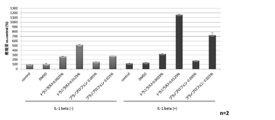
- the relative TSG-6 gene expression level of the obtained anti-inflammatory agent-treated UC-MSC is shown in FIG.
- the expression level of TSG-6 in the control without addition of IL-1 ⁇ was taken as 100. Even when IL-1 ⁇ was not stimulated, TSG-6 gene expression was enhanced by treatment with tranilast or by treatment with pranoprofen, but the effect was enhanced by stimulation with IL-1 ⁇ . Therefore, the anti-inflammatory function of UC-MSC was enhanced by treatment with tranilast and by treatment with pranoprofen.
- UC-MSCs were seeded on a 6-well plate (2 ml, LifeLine recommended medium) so as to be 5 ⁇ 10 4 cells / well to 2 ⁇ 10 5 cells / well, and the cells were collected the next day.
- Mouse macrophage cell line Raw 264.7 was seeded on 24 or 48 well plate (1 ml or 0.5 ml, DMEM / F-12 medium containing 10% FCS) and cultured until confluent. The number of cells was 2 ⁇ 10 4 cells / ml to 5 ⁇ 10 5 cells / ml.
- UC-MSCs having a cell number of 1/10, 1/100, 1/1000, and 1/10000 were added to the number of Raw264.7 cells, and co-culture was performed.
- LPS 100 ng / ml
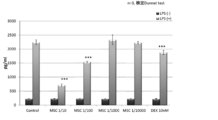
- the supernatant was recovered 18 hours later, and the amount of IL-6 was measured by ELISA (FIG. 3).
- dexamethasone manufactured by Wako Pure Chemical Industries, Ltd .: written as DEX
- UC-MSC of 1/10 to 1/1000 of the number of Raw264.7 cells was added, an anti-inflammatory effect was observed corresponding to the UC-MSC cell ratio.
- ⁇ Anti-inflammatory function evaluation 1> The 6th to 12th passages of UC-MSC were seeded on a 6-well plate (2 ml, LifeLine recommended medium) so as to be 5 ⁇ 10 4 cells / well to 2 ⁇ 10 5 cells / well. One day later, pranoprofen (CAS No. 52549-17-4, 0.005% and 0.025% in the medium) was added. Four days after the addition, the plate was washed twice with a phosphate buffer to obtain a highly functional UC-MSC treated with an anti-inflammatory agent. The anti-inflammatory agent-treated UC-MSC was evaluated using the anti-inflammatory function evaluation system.
- UC-MSC The number of cells treated with anti-inflammatory agent UC-MSC was 1/500 relative to the number of cells of Raw264.7.
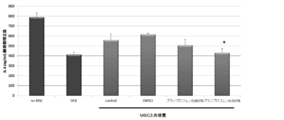
- UC-MSCs treated with pranoprofen 0.025% have higher IL-6 production inhibitory effect than untreated UC-MSCs, and thus have high anti-inflammatory function.
- UC-MSC treated with anti-inflammatory agent is thoroughly washed before co-culture, so it is not an effect of the remaining anti-inflammatory agent itself, but UC-MSC is modified by pretreatment to enhance anti-inflammatory function It was suggested that
- ⁇ Anti-inflammatory function evaluation 2> The 6th to 12th passages of UC-MSC were seeded on a 6-well plate (2 ml, LifeLine recommended medium) so as to be 5 ⁇ 10 4 cells / well to 2 ⁇ 10 5 cells / well.
- pranoprofen (CAS No. 52549-17-4, 0.004% in medium)
- ibuprofen (CAS No. 15687-27-1, 0.001% in medium) or glycyrrhizic acid (CAS No. 1405) -86-3, 0.004% in medium) was added.
- the plate was washed twice with a phosphate buffer to obtain a highly functional UC-MSC treated with an anti-inflammatory agent.
- the anti-inflammatory agent-treated UC-MSC was evaluated using the anti-inflammatory function evaluation system.
- the cell number of the anti-inflammatory agent-treated UC-MSC was 1/250 with respect to the number of Raw264.7 cells.
- ⁇ Anti-inflammatory function evaluation 3> The 6th to 12th passages of UC-MSC were seeded on 6-well plate (2 ml, LifeLine recommended medium) to 2 ⁇ 10 4 cells / well. One day later, pranoprofen (CAS No. 52549-17-4, 0.004% in medium), ibuprofen (CAS No. 15687-27-1, 0.001% in medium) or glycyrrhizic acid (CAS No. 1405). -86-3, 0.004% in medium) was added. Five days after the addition, the plate was washed twice with a phosphate buffer to obtain a highly functional UC-MSC treated with an anti-inflammatory agent.
- pranoprofen CAS No. 52549-17-4, 0.004% in medium
- ibuprofen CAS No. 15687-27-1, 0.001% in medium
- glycyrrhizic acid CAS No. 1405
- the highly functional mesenchymal stem cells of the present invention have a high therapeutic effect and can be suitably used for the treatment of various diseases.
Landscapes
- Medicines Containing Material From Animals Or Micro-Organisms (AREA)
- Micro-Organisms Or Cultivation Processes Thereof (AREA)
- Materials For Medical Uses (AREA)
Abstract
本発明は、高機能間葉系幹細胞、その調製方法およびその調製用培地を提供することを課題とする。少なくとも一種の抗炎症剤により間葉系幹細胞を処理する工程を含む高機能間葉系幹細胞の調製方法。高機能間葉系幹細胞は、抗炎症機能、免疫調節機能、抗腫瘍機能、組織修復機能、上皮系細胞のタイトジャンクション形成によるバリア増強機能からなる群より選択される少なくとも一種の機能が、無処理の間葉系幹細胞と比較して亢進している。
Description
本発明は、高い治療効果を有する間葉系幹細胞の調製方法、その調製方法により得られた高機能間葉系幹細胞、および調製用培地に関する。
昨今、生体の細胞あるいは組織を利用した医薬品の開発や再生医療の研究が進み、注目されている。特に、ES細胞、iPS細胞等の多能性幹細胞を用いた臓器再生技術の研究が加速されている。一方、骨髄幹細胞等の体性幹細胞を利用する細胞療法は、病気により障害を受けた組織を修復する本来の体性幹細胞の機能を利用するもので、再生医療の中でもより実現性の高いものとして注目され、研究が進められている。
間葉系幹細胞(以下、MSCともいう)は、通常、骨髄、脂肪組織、臍帯、または末梢血から単離可能な多能性の体性幹細胞であり、多数の異なる種類の細胞に分化する能力を有している。
特許文献1には、MSCは、種々の組織や臓器における血管形成の促進、自己免疫疾患の治療、アレルギー応答の治療、癌の治療、炎症性疾患と障害の治療、創傷治癒の促進、炎症の治療、及び上皮傷害の修復に用い得ること、また、MSCは、IL-10のような抗炎症性サイトカインの分泌を促進し、マクロファージ遊走阻止因子の活性を阻害すると考えられることが記載されている。
また、MSCは、炎症性サイトカインであるTNF-αとともにインキュベートすると、活性化してTSG-6の発現量が増大すること、TSG-6の発現量が増大したMSCの投与は心臓障害の修復に有用であることが、特許文献2に記載されている。しかし、MSCを抗炎症剤で処理することにより、治療効果の高い細胞に調製可能であることは知られていない。
本発明は、高い治療効果を有する間葉系幹細胞の調製方法、その調製方法により得られた高機能間葉系幹細胞、その高機能間葉系幹細胞を含む医薬組成物、および調製用培地を提供することを課題とする。
前記課題を解決するために、本発明者が種々検討した結果、少なくとも一種の抗炎症剤により間葉系幹細胞を処理すると高機能間葉系幹細胞が得られることを見出し、本発明を完成するに至った。
すなわち、本発明は、以下に関する。
(1)少なくとも一種の抗炎症剤により間葉系幹細胞を処理する工程を含む、高機能間葉系幹細胞の調製方法。
(2)高機能間葉系幹細胞において、抗炎症機能、免疫調節機能、抗腫瘍機能、組織修復機能、上皮系細胞のタイトジャンクション形成によるバリア増強機能からなる群より選択される少なくとも一種の機能が、無処理の間葉系幹細胞と比較して亢進している、(1)に記載の方法。
(3)抗炎症剤が、非ステロイド性抗炎症剤である、(1)または(2)に記載の方法。
(4)非ステロイド性抗炎症剤が、プロピオン酸系抗炎症剤である、(3)に記載の方法。
(5)非ステロイド性抗炎症剤が、抗アレルギー剤である、(3)に記載の方法。
(6)間葉系幹細胞が、臍帯由来である、(1)~(5)いずれか一に記載の方法。
(7)(1)~(6)のいずれか一に記載の方法によって調製された、高機能間葉系幹細胞。
(8)(7)に記載の高機能間葉系幹細胞を含有する医薬組成物。
(9)少なくとも一種の抗炎症剤を含む、高機能間葉系幹細胞調製用培地。
(1)少なくとも一種の抗炎症剤により間葉系幹細胞を処理する工程を含む、高機能間葉系幹細胞の調製方法。
(2)高機能間葉系幹細胞において、抗炎症機能、免疫調節機能、抗腫瘍機能、組織修復機能、上皮系細胞のタイトジャンクション形成によるバリア増強機能からなる群より選択される少なくとも一種の機能が、無処理の間葉系幹細胞と比較して亢進している、(1)に記載の方法。
(3)抗炎症剤が、非ステロイド性抗炎症剤である、(1)または(2)に記載の方法。
(4)非ステロイド性抗炎症剤が、プロピオン酸系抗炎症剤である、(3)に記載の方法。
(5)非ステロイド性抗炎症剤が、抗アレルギー剤である、(3)に記載の方法。
(6)間葉系幹細胞が、臍帯由来である、(1)~(5)いずれか一に記載の方法。
(7)(1)~(6)のいずれか一に記載の方法によって調製された、高機能間葉系幹細胞。
(8)(7)に記載の高機能間葉系幹細胞を含有する医薬組成物。
(9)少なくとも一種の抗炎症剤を含む、高機能間葉系幹細胞調製用培地。
本発明の調製方法により、高機能間葉系幹細胞を得ることができる。高機能間葉系幹細胞は、抗炎症機能、免疫調節機能、抗腫瘍機能および組織修復機能、上皮系細胞のタイトジャンクション形成によるバリア増強機能等に優れ、ヒトを含む哺乳動物に投与されると、高い治療効果を発揮することができる。
以下、本発明について詳細に説明する。
<高機能間葉系幹細胞の調製方法>
本発明の高機能間葉系幹細胞の調製方法は、少なくとも一種の抗炎症剤により間葉系幹細胞を処理する工程を含む。
本発明の高機能間葉系幹細胞の調製方法は、少なくとも一種の抗炎症剤により間葉系幹細胞を処理する工程を含む。
抗炎症剤により間葉系幹細胞を処理する工程とは、例えば、抗炎症剤含有培地で間葉系幹細胞を培養する工程が挙げられる。また、抗炎症剤を間葉系幹細胞含有溶液に添加する工程が挙げられる。
本発明における高機能間葉系幹細胞の調製方法は、以下の工程を含む方法として説明することもできる。
(1)間葉系幹細胞を培養する工程
(2)上記(1)で得られた間葉系幹細胞を抗炎症剤で処理する工程
(3)高機能間葉系幹細胞を回収する工程
(1)間葉系幹細胞を培養する工程
(2)上記(1)で得られた間葉系幹細胞を抗炎症剤で処理する工程
(3)高機能間葉系幹細胞を回収する工程
(1)間葉系幹細胞を培養する工程
本工程においては、各組織から得られた間葉系幹細胞を培養する。組織から単離した間葉系幹細胞の培養方法は、それぞれの細胞に適した方法であれば特に限定されず、従来と同様の方法が用いられる。通常、30℃~37℃の温度、2%~7%CO2環境下、5%~21%O2環境下で行われる。また、間葉系幹細胞の継代の時期及び方法も間葉系幹細胞に適していれば特に限定されず、間葉系幹細胞の形態を観察しながら、従来と同様に行うことができる。
本工程においては、各組織から得られた間葉系幹細胞を培養する。組織から単離した間葉系幹細胞の培養方法は、それぞれの細胞に適した方法であれば特に限定されず、従来と同様の方法が用いられる。通常、30℃~37℃の温度、2%~7%CO2環境下、5%~21%O2環境下で行われる。また、間葉系幹細胞の継代の時期及び方法も間葉系幹細胞に適していれば特に限定されず、間葉系幹細胞の形態を観察しながら、従来と同様に行うことができる。
間葉系幹細胞培養用培地は、間葉系幹細胞の培養に適する培地であれば特に制限されず、当業者に従来公知の培地を用いることができる。間葉系幹細胞培養用培地としては、例えば、Promo Cell社、Life Line社、Lonza社等の間葉系幹細胞培養用培地等が挙げられる。培地は、生物由来原料(例えば、動物血清)を含有してもよい。得られる細胞を動物(ヒトを含む)の疾患の治療に用いることを考慮すると、できるだけ生物由来原料を含まない培地(例えば、無血清培地)であることが好ましい。
上記で培養した間葉系幹細胞について、細胞の状態を勘案して適切な回数の継代を行った後、通常その1日後~5日後、好ましくは1日後~4日後、より好ましくは1日後~3日後にトリプシン、コラゲナーゼ等の酵素で処理して剥離させ、遠心分離して間葉系幹細胞を回収する。または、培養上清を除去する。
(2)上記(1)で得られた間葉系幹細胞を抗炎症剤で処理する工程
本工程は、間葉系幹細胞含有溶液に抗炎症剤を添加して、一定の時間インキュベートする工程である。間葉系幹細胞含有溶液は培地であってよく、また、培地ではない処理用溶液であってもよい。
本工程は、間葉系幹細胞含有溶液に抗炎症剤を添加して、一定の時間インキュベートする工程である。間葉系幹細胞含有溶液は培地であってよく、また、培地ではない処理用溶液であってもよい。
抗炎症剤添加培地での間葉系幹細胞の培養方法は、それぞれの細胞に適した方法であれば特に限定されず、従来と同様の方法が用いられる。培地中の抗炎症剤の濃度に制限はないが、好ましくは、0.0001~1.0重量%であり、より好ましくは、0.0002~0.1重量%、さらに好ましくは、0.0003~0.05重量%、特に好ましくは、0.0005~0.01重量%である。通常、30℃~37℃の温度、2%~10%CO2環境下、5%~21%O2環境下で行われる。また、抗炎症剤と間葉系幹細胞を接触させる時間に制限はなく、間葉系幹細胞の継代の時期及び方法もそれぞれの間葉系幹細胞に適していれば特に限定されず、間葉系幹細胞の形態を観察しながら、従来と同様に行うことができる。なお、抗炎症剤との接触時間として好ましくは、12時間~2週間、好ましくは1日~10日、より好ましくは、2日~1週間である。なお、培養は、細胞の全培養期間に渡って無血清培地を用いて行われてもよい。
培地ではない処理用溶液中で抗炎症剤による処理を行う場合は、処理用溶液中の抗炎症剤の濃度に制限はないが、好ましくは、0.0001~1.0重量%であり、より好ましくは、0.0002~0.1重量%、さらに好ましくは、0.0003~0.05重量%、特に好ましくは、0.0005~0.01重量%である。抗炎症剤との接触時間として好ましくは、12時間~2週間、好ましくは1日~10日である。
(3)高機能間葉系幹細胞を回収する工程
(2)において抗炎症剤により処理された間葉系幹細胞について、細胞の状態を勘案して適切な時間に、トリプシン、コラゲナーゼ等の酵素で処理して細胞を剥離させ、またはトリプシン、コラゲナーゼ等の酵素処理なしで、遠心分離して高機能間葉系幹細胞を回収する。
回収した高機能間葉系幹細胞はそのまま、またはリン酸緩衝液等で洗浄した後、治療用高機能間葉系幹細胞として治療に使用することができる。保存する場合は、保存用の溶液を用いて保存用容器中に保存する。
(2)において抗炎症剤により処理された間葉系幹細胞について、細胞の状態を勘案して適切な時間に、トリプシン、コラゲナーゼ等の酵素で処理して細胞を剥離させ、またはトリプシン、コラゲナーゼ等の酵素処理なしで、遠心分離して高機能間葉系幹細胞を回収する。
回収した高機能間葉系幹細胞はそのまま、またはリン酸緩衝液等で洗浄した後、治療用高機能間葉系幹細胞として治療に使用することができる。保存する場合は、保存用の溶液を用いて保存用容器中に保存する。
本発明の調製方法により得られる高機能間葉系幹細胞は、サイトカイン等の分泌タンパク質、細胞内発現タンパク質の種類と量が変化しており、優れた治療効果を有する幹細胞である。本発明の調製方法により得られる高機能間葉系幹細胞は、抗炎症剤で処理をしない間葉系幹細胞に比較して、治療のための機能の少なくとも一つの機能が亢進している細胞である。該治療のための機能としては、例えば、抗炎症機能、免疫調節機能、抗腫瘍機能または組織修復機能、上皮系細胞のタイトジャンクション形成によるバリア増強機能が挙げられる。
抗炎症機能が亢進している本発明の間葉系幹細胞は、抗炎症サイトカインの分泌が亢進されている細胞、または、炎症性サイトカインの分泌が抑制されている細胞である。本細胞をヒトを含む哺乳動物に投与することにより、炎症が関与する各種疾患を治療することができる。炎症が関与する疾患はとしては、特に制限はなく、例えば、外傷、敗血症、火傷、手術、感染性疾患、組織障害、潰瘍、並びに、腸、肝臓、目、脳、肺、脊髄、皮膚、骨、関節等の各組織の炎症性疾患が挙げられる。
免疫調節機能が亢進している本発明の間葉系幹細胞は、ヒトを含む哺乳動物に投与されることにより、免疫系が関与する各種疾患を治療することができる。免疫系が関与する疾患としては、特に制限はなく、例えば、自己免疫疾患、臓器移植後の拒絶反応、アレルギー疾患、クローン病、全身性エリテマトーデス、関節リウマチ、膠原病等が挙げられる。
抗腫瘍機能が亢進している本発明の間葉系幹細胞は、ヒトを含む哺乳動物に投与されることにより、各種腫瘍を治療することができる。腫瘍としては、特に制限はなく、良性腫瘍、悪性腫瘍を含み、例えば、胃癌、脳腫瘍、白血病が挙げられる。
組織修復機能が亢進している本発明の間葉系幹細胞は、ヒトを含む哺乳動物に投与されることにより、損傷している組織を修復することができる。組織が損傷している疾患は特に制限はなく、各種潰瘍(例えば、糖尿病性潰瘍)、骨関節炎、血管の梗塞による組織の損傷、組織の欠損等を挙げることができる。
上皮系細胞のタイトジャンクション形成によるバリア増強機能が亢進している本発明の間葉系幹細胞は、ヒトを含む哺乳動物に投与されることにより、上皮又は内皮のバリア機能の低下に起因する疾患の予防又は治療のために用いられることができる。疾患としては、例えば、癌、前癌性症状、炎症性疾患、免疫疾患、神経変性疾患、代謝疾患、心血管疾患、骨疾患、胃腸疾患、肺疾患、肝疾患、腎疾患等が挙げられる。
また、本発明の調製方法により得られる高機能間葉系幹細胞は、抗炎症剤で処理をしない間葉系幹細胞に比較して、間葉系幹細胞から発現される特定のサイトカインの量の増大により特徴づけられる。抗炎症剤で処理をしない間葉系幹細胞に比較して特定のサイトカインの発現量が2倍以上であることが好ましい。3倍以上であるとより好ましい。特定のサイトカインとしては、例えばTSG-6、IL-10、IL-1ra(receptor antagonist)、TGF-β、IL-4、IL-11、IL-13等の抗炎症性サイトカインを挙げることができる。
さらに、本発明の調製方法により得られる高機能間葉系幹細胞は、抗炎症剤で処理をしない間葉系幹細胞に比較して、間葉系幹細胞から発現する特定のサイトカインの量の減少によっても特徴づけられる。抗炎症剤で処理をしない間葉系幹細胞に比較して特定のサイトカインの発現量が1/2以下であることが好ましく、1/10以下であるとより好ましい。特定のサイトカインとしては、例えばIL-6、IL-8等の炎症性サイトカインを挙げることができる。
間葉系幹細胞(MSC)は多能性幹細胞であり、多数の異なる種類の細胞に分化することができる細胞である。骨芽細胞、軟骨細胞、脂肪細胞、または筋細胞の少なくとも1つに分化することができ、任意の組織から単離されうる。通常、MSCは、骨髄、脂肪組織、臍帯、または末梢血から単離される。本発明の好ましい態様では、MSCは臍帯から得られる。
本発明で用いられる抗炎症剤は、抗炎症作用を有する薬剤であれば特に制限はない。例えば、非ステロイド性抗炎症剤、シクロオキシゲナーゼ(COX)阻害剤、抗アレルギー剤、抗ヒスタミン剤、抗ロイコトリエン剤等に分類される抗炎症剤が挙げられる。具体的な薬剤名を例示すると、アセチルサリチル酸、インドメタシン、エトドラク、ジクロフェナクナトリウム、ケトプロフェン、イブプロフェン、オキサプロジン、ロキソプロフェンナトリウム二水和物、プラノプロフェン、ピロキシカム、メロキシカム、グリチルリチン、アルドステロン、グアイアズレン、ブロメライン、クロモグリク酸ナトリウム、トラニラスト、ケトチフェンフマル酸塩、クレマスチンフマル酸塩、クロルフェニラミンマレイン酸塩、ジフェンヒドラミン塩酸塩、エメダスチンジフマル酸塩、プロメタジン塩酸塩、エバスチン、エピナスチン塩酸塩、イブジラスト、モンテルカストナトリウム、スプラタストトシル酸塩、アクタリット、プレドニゾロン、ベタメタゾン、デキサメタゾン、プロピオン酸クロベタゾール、フルオロメトロン、トリアムシノロンアセトニド等であるが、本発明における抗炎症剤を何ら限定するものではない。
好ましい抗炎症剤としては、非ステロイド性抗炎症剤であり、より好ましくはシクロオキシゲナーゼ(COX)阻害剤であり、さらに好ましくはプロピオン酸系抗炎症剤である。例えば、イブプロフェン、ナプロキセン、シクロプロフェン、ベノキサプロフェン、ケトプロフェン、フェノプロフェン、フルルビプロフェン、ロキソプロフェン、カルプロフェン、サプロフェン、オキサプロジン、アミノプロフェン、ザルトプロフェン、プラノプロフェン等が挙げられる。
また、好ましい抗炎症剤として、抗アレルギー剤を挙げることができる。より好ましくは、メディエーター遊離抑制薬であり、例えば、クロモグリク酸ナトリウム、トラニラスト、アンレキサノクス、レピリナスト、イブジラスト、タザノラスト、ペミロラスト等が挙げられる。
また、好ましい抗炎症剤として、グリチルリチン(グリチルリチン酸ジカリウム等のグリチルリチン酸塩も含む)を挙げることもできる。
<高機能間葉系幹細胞調製用培地>
本発明の高機能間葉系幹細胞調製用培地は、少なくとも一種の抗炎症剤を含む培地である。本発明の培地は、間葉系幹細胞培養用培地に少なくとも一種の抗炎症剤が添加された培地である。間葉系幹細胞培養用培地は、間葉系幹細胞の培養に適する培地であれば特に制限されず、当業者に従来公知の培地を用いることができる。間葉系幹細胞培養用培地としては、例えば、Promo Cell社、Life Line社、Lonza社等の間葉系幹細胞培養用培地等が挙げられる。培地は、生物由来原料(例えば、動物血清)を含有してもよい。必要に応じて、アルブミン、FCS等の生物由来原料を添加することもできる。例えば、DMEM/F-12培地等、またはこれらの基本培地にFCSを、0.1%~10%の範囲で含む培地等が挙げられる。得られる細胞を動物(ヒトを含む)の疾患の治療に用いることを考慮すると、できるだけ生物由来原料を含まない培地(例えば、無血清培地)であることが好ましい。
本発明の高機能間葉系幹細胞調製用培地は、少なくとも一種の抗炎症剤を含む培地である。本発明の培地は、間葉系幹細胞培養用培地に少なくとも一種の抗炎症剤が添加された培地である。間葉系幹細胞培養用培地は、間葉系幹細胞の培養に適する培地であれば特に制限されず、当業者に従来公知の培地を用いることができる。間葉系幹細胞培養用培地としては、例えば、Promo Cell社、Life Line社、Lonza社等の間葉系幹細胞培養用培地等が挙げられる。培地は、生物由来原料(例えば、動物血清)を含有してもよい。必要に応じて、アルブミン、FCS等の生物由来原料を添加することもできる。例えば、DMEM/F-12培地等、またはこれらの基本培地にFCSを、0.1%~10%の範囲で含む培地等が挙げられる。得られる細胞を動物(ヒトを含む)の疾患の治療に用いることを考慮すると、できるだけ生物由来原料を含まない培地(例えば、無血清培地)であることが好ましい。
前記無血清培地は、添加剤として動物血清を含まない培地であればよく、特に限定されない。公知の基本培地に、動物血清を除くその他添加剤を含有した組成を有するものを用いることができる。基本培地の組成は、培養するべき細胞の種類に応じて適宜選択することができる。例えば、イーグル培地のような最小必須培地(MEM)、ダルベッコ改変イーグル培地(DMEM)、最小必須培地α(MEM-α)、間葉系細胞基礎培地(MSCBM)、Ham’s F-12及びF-10培地、DMEM/F12培地、Williams培地E、RPMI-1640培地、MCDB培地、199培地、Fisher培地、Iscove改変ダルベッコ培地(IMDM)、McCoy改変培地等が挙げられる。
培地中の抗炎症剤の濃度に制限はない。好ましくは、0.0001~1.0重量%であり、より好ましくは、0.0002~0.1重量%、さらに好ましくは、0.0003~0.05重量%、特に好ましくは、0.0005~0.01重量%である。
添加する抗炎症剤は、抗炎症作用を有する薬剤であれば特に制限はない。例えば、非ステロイド性抗炎症剤、シクロオキシゲナーゼ(COX)阻害剤、抗アレルギー剤、抗ヒスタミン剤、抗ロイコトリエン剤等に分類される抗炎症剤が挙げられる。本発明の培地が含む具体的な抗炎症剤としては、本発明の方法において記載した抗炎症剤と同じ抗炎症剤を挙げることができ、好ましい抗炎症剤についても同様である。
基本培地に加えるその他の添加剤としては、アミノ酸類、無機塩類、ビタミン類及び炭素源や抗生物質等の他の添加剤を挙げることができる。これらの添加剤の使用濃度は特に限定されず、通常の哺乳動物細胞用培地に用いられる濃度で用いることができる。
アミノ酸類としては、例えば、グリシン、L-アラニン、L-アルギニン、L-アスパラギン、L-アスパラギン酸、L-システイン、L-シスチン、L-グルタミン酸、L-グルタミン、L-ヒスチジン、L-イソロイシン、L-ロイシン、L-リジン、L-メチオニン、L-フェニルアラニン、L-プロリン、L-セリン、L-スレオニン、L-トリプトファン、L-チロシン、L-バリン等が挙げられる。
無機塩類としては、例えば、塩化カルシウム、硫酸銅、硝酸鉄(III)、硫酸鉄、塩化マグネシウム、硫酸マグネシウム、塩化カリウム、炭酸水素ナトリウム、塩化ナトリウム、リン酸水素二ナトリウム、リン酸二水素ナトリウム等が挙げられる。
ビタミン類としては、例えば、コリン、ビタミンA、ビタミンB1、ビタミンB2、ビタミンB3、ビタミンB4、ビタミンB5、ビタミンB6、ビタミンB7、ビタミンB12、ビタミンB13、ビタミンB15、ビタミンB17、ビタミンBh、ビタミンBt、ビタミンBx、ビタミンC、ビタミンD、ビタミンE、ビタミンF、ビタミンK、ビタミンM、ビタミンP等が挙げられる。
他の添加剤として、繊維芽細胞増殖因子(FGF)、内皮細胞増殖因子(EGF)、血小板由来増殖因子(PDGF)、上皮成長因子(EGF)、インスリン様成長因子(IGF)、トランスフォーミング成長因子(TGF)、神経成長因子(NGF)、脳由来神経栄養因子(BDNF)、血管内皮細胞増殖因子(VEGF)、顆粒球コロニー刺激因子(G-CSF)、顆粒球マクロファージコロニー刺激因子(GM-CSF)、エリスロポエチン(EPO)、トロンボポエチン(TPO)、肝細胞増殖因子(HGF)等の増殖因子;ペニシリン、ストレプトマイシン、ゲンタマイシン、カナマイシン等の抗生物質;グルコース、ガラクトース、フルクトース、スクロース等の炭素源;マグネシウム、鉄、亜鉛、カルシウム、カリウム、ナトリウム、銅、セレン、コバルト、スズ、モリブデン、ニッケル、ケイ素等の微量金属;β-グリセロリン酸、デキサメタゾン、ロシグリタゾン、イソブチルメチルキサンチン、5-アザシチジン等の幹細胞分化誘導剤;2-メルカプトエタノール、カタラーゼ、スーパーオキシドジスムターゼ、N-アセチルシステイン等の抗酸化剤;アデノシン5’-一リン酸、コルチコステロン、エタノールアミン、インスリン、還元型グルタチオン、リポ酸、メラトニン、ヒポキサンチン、フェノールレッド、プロゲステロン、プトレシン、ピルビン酸、チミジン、トリヨードチロニン、トランスフェリン、ラクトフェリン、アルブミン、Wntシグナル活性化剤、ROCK阻害剤、増殖因子、ステロイド性化合物、PTEN阻害剤、p53阻害剤、p38阻害剤等が挙げられる。
本発明における間葉系幹細胞を得るための好適な無血清培地としては、市販の無血清培地が挙げられる。この無血清培地は、抗酸化剤、動物血清アルブミン、成長因子、界面活性剤、Edgリガンド、セロトニンリガンド、Wntシグナル活性化剤、ROCK阻害剤、増殖因子、ステロイド性化合物、PTEN阻害剤、p53阻害剤、p38阻害剤等から選択される成分をさらに含有してもよい。
<高機能間葉系幹細胞>
本発明は、上述の本発明の調製方法により得られた高機能間葉系幹細胞も含む。本発明の高機能間葉系幹細胞は、サイトカイン等の分泌タンパク質、細胞内発現タンパク質の種類と量が変化しており、優れた治療効果を有する幹細胞である。本発明の高機能間葉系幹細胞は、抗炎症剤で処理をしない間葉系幹細胞に比較して、治療のための機能の少なくとも一つの機能が亢進している細胞である。該治療のための機能としては、例えば抗炎症機能、免疫調節機能、抗腫瘍機能または組織修復機能、上皮系細胞のタイトジャンクション形成によるバリア増強機能が挙げられる。本発明の高機能間葉系幹細胞の具体的な特徴については、本発明の調製方法における説明を適用できる。
本発明は、上述の本発明の調製方法により得られた高機能間葉系幹細胞も含む。本発明の高機能間葉系幹細胞は、サイトカイン等の分泌タンパク質、細胞内発現タンパク質の種類と量が変化しており、優れた治療効果を有する幹細胞である。本発明の高機能間葉系幹細胞は、抗炎症剤で処理をしない間葉系幹細胞に比較して、治療のための機能の少なくとも一つの機能が亢進している細胞である。該治療のための機能としては、例えば抗炎症機能、免疫調節機能、抗腫瘍機能または組織修復機能、上皮系細胞のタイトジャンクション形成によるバリア増強機能が挙げられる。本発明の高機能間葉系幹細胞の具体的な特徴については、本発明の調製方法における説明を適用できる。
<医薬組成物>
本発明の医薬組成物は、本発明の調製方法により得られた上記高機能間葉系幹細胞を含む。さらに、高機能間葉系幹細胞以外の成分を、本発明の効果を損なわない範囲で含んでいてもよい。その他の成分としては、一般的な医薬品、医薬部外品等が含むことができる有効成分以外の成分が挙げられる。
本発明の医薬組成物は、本発明の調製方法により得られた上記高機能間葉系幹細胞を含む。さらに、高機能間葉系幹細胞以外の成分を、本発明の効果を損なわない範囲で含んでいてもよい。その他の成分としては、一般的な医薬品、医薬部外品等が含むことができる有効成分以外の成分が挙げられる。
本発明の医薬組成物は、上述した高機能間葉系幹細胞に、前記その他の成分を混合して製造することができる。
本発明の医薬組成物は、疾患の予防および/または治療に用いることができる。疾患としては、例えば、軟骨分解、関節リウマチ、乾癬性関節炎、脊椎関節炎、変形性関節症、痛風、乾癬、多発性硬化症、筋萎縮性側索硬化症、アルツハイマー病、パーキンソン病、うっ血性心不全、脳卒中、大動脈弁狭窄症、腎不全、狼瘡、膵炎、アレルギー、線維症、貧血、アテローム性動脈硬化症、再狭窄、化学療法/放射線関連合併症、I型糖尿病、II型糖尿病、自己免疫性肝炎、C型肝炎、原発性胆汁性肝硬変、原発性硬化性胆管炎、劇症肝炎、セリアック病、非特異性大腸炎、クローン病、アレルギー性結膜炎、糖尿病性網膜症、シェーグレン症候群、ブドウ膜炎アレルギー性鼻炎、喘息、石綿症、珪肺、慢性閉塞性肺疾患、慢性肉芽腫性炎症、嚢胞性線維症、サルコイドーシス、糸球体腎炎、脈管炎、皮膚炎、HIV関連悪液質、大脳マラリア、強直性脊椎炎、らい病、COPD、肺線維症、線維筋痛、食道癌、胃食道逆流症、バレット食道、胃癌、十二指腸癌、小腸癌、虫垂癌、大腸癌、結腸癌、直腸癌、肛門癌、膵臓癌、肝臓癌、胆嚢癌、脾臓癌、腎癌、膀胱癌、前立腺癌、精巣癌、子宮癌、卵巣癌、乳癌、肺癌、甲状腺癌等があげられる。
本発明の医薬組成物は、常法によって適宜の製剤とすることができる。製剤の剤型としては、優れた予防・治療効果を得る観点からは、溶液剤、懸濁剤などの液剤とすることが好ましい。本発明における医薬組成物の製剤においては、製剤上の必要に応じて、適宜の薬学的に許容される担体、例えば、等張化剤、緩衝剤、安定化剤などの任意成分を配合することができる。また、一般的な細胞製剤が含む成分を配合することができる。
本発明の医薬組成物の投与方法としては特に制限されないが、血管内投与(好ましくは静脈内投与)、腹腔内投与、腸管内投与、皮下投与等が好ましく、中でも、血管内投与がより好ましい。
本発明の医薬組成物の投与量としては、疾患の種類や、その症状の度合い、剤型、投与対象の体重等によって変わり得るが、1日当たり、間葉系幹細胞を1X10⁵個~1X10⁹個の範囲で投与することができる。なお、本発明の医薬組成物の投与は、1日のうち1~複数回に分けて行ってもよい。また、本発明の医薬組成物の投与は、単回投与でもよいし、継続的に行ってもよい。継続的に行う場合は、例えば、3日に1回以上の頻度で、2回以上継続して投与することができ、中でも、2日に1回以上の頻度で、3回以上継続して投与することが好ましく、1日に1回以上の頻度で4回以上継続して投与することがより好ましい。
本発明の医薬組成物の投与対象となる哺乳動物としては、特に制限されないが、ヒト、サル、マウス、ラット、ハムスター、モルモット、ウシ、ブタ、ウマ、ウサギ、ヒツジ、ヤギ、ネコ、イヌ等が好ましく、中でもヒトがより好ましい。また、本発明の医薬組成物に含まれる間葉系幹細胞は、本発明の医薬組成物の投与対象となる哺乳動物の種類と一致していることが、疾患に対するより安定して優れた予防及び/または治療効果を得る観点から好ましい。
以下に本発明を実施例に基づいて更に詳細に説明するが、本発明はこれら実施例に限定されるものではない。
[実施例1]
<抗炎症剤処理高機能間葉系幹細胞の取得>
臍帯由来間葉系幹細胞(UC-MSC;Umbilical Cord derived Mesenchymal Stem Cells Wharton’s Jelly(HMSC-WJ)、FC-0020、LifeLine社)を、37℃、5%CO2の条件下、推奨培地にて馴化し、2~3日おきに継代しながら培養を行った。
<抗炎症剤処理高機能間葉系幹細胞の取得>
臍帯由来間葉系幹細胞(UC-MSC;Umbilical Cord derived Mesenchymal Stem Cells Wharton’s Jelly(HMSC-WJ)、FC-0020、LifeLine社)を、37℃、5%CO2の条件下、推奨培地にて馴化し、2~3日おきに継代しながら培養を行った。
継代6-12回目のUC-MSCを1×10⁴cells/well~2×104cells/wellとなるよう24well plate(0.5ml、LifeLine社推奨培地)に播種した。1日後、プラノプロフェン(CAS No.52549-17-4、培地中0.025%)、またはトラニラスト(CAS No.53902-12-8、培地中0.0125%)を添加した。添加1日後、2日後または3日後にリン酸緩衝液で2回洗浄し、抗炎症剤処理高機能UC-MSCを得た。一部の細胞については、さらに、IL-1βを添加(1ng/ml)して刺激した後、約5時間で細胞を回収し、抗炎症剤処理高機能UC-MSCを得た。
抗炎症剤処理高機能UC-MSCのTSG-6遺伝子の発現量を、細胞からmRNA抽出後cDNAを合成し、リアルタイムPCR法により測定した。抗炎症剤処理UC-MSCの相対的TSG-6遺伝子発現量を図1の(a)、(b)および(c)にそれぞれ示した。(a)は抗炎症剤処理期間が1日、(b)は2日、(c)は3日である。IL-1β添加なしのコントロールのTSG-6発現量を1とした。IL-1β無刺激でも抗炎症剤処理期間が2日、3日の細胞においては、トラニラスト処理により、またはプラノプロフェン処理により、TSG-6の遺伝子発現が亢進された。IL-1β刺激を行うと、1日処理および3日処理細胞においては、その効果は増大した。以上のとおり、トラニラスト処理により、およびプラノプロフェン処理により、TSG-6の遺伝子発現が亢進し、UC-MSCの抗炎症機能の亢進が認められた。
[実施例2]
<抗炎症剤処理高機能間葉系幹細胞の取得>
プラノプロフェン処理、またはトラニラスト処理を4日に延長した以外は、実施例1と同様にして、抗炎症剤処理高機能UC-MSCを得た。
<抗炎症剤処理高機能間葉系幹細胞の取得>
プラノプロフェン処理、またはトラニラスト処理を4日に延長した以外は、実施例1と同様にして、抗炎症剤処理高機能UC-MSCを得た。
得られた抗炎症剤処理UC-MSCの相対的TSG-6遺伝子発現量を図2に示した。IL-1β添加なしのコントロールのTSG-6発現量を100とした。IL-1β無刺激でもトラニラスト処理により、またはプラノプロフェン処理により、TSG-6の遺伝子発現を亢進させるが、IL-1β刺激を行うとその効果は増大した。したがって、トラニラスト処理により、およびプラノプロフェン処理により、UC-MSCの抗炎症機能の亢進が認められた。
<抗炎症機能の評価系の確立>
UC-MSCを5×10⁴cells/well~2×105cells/wellとなるよう6well plate(2ml、LifeLine社推奨培地)に播種し、翌日細胞を回収した。
マウスマクロファージ細胞株Raw264.7を24または48well plate(1mlまたは0.5ml、10%FCS含有DMEM/F-12培地)に播種し、コンフルエント状態になるまで、培養した。細胞数は2×104cells/ml~5×105cells/mlであった。Raw264.7の細胞数に対し、1/10、1/100、1/1000、1/10000の細胞数の上記UC-MSCを添加し共培養を行った。共培養開始から4時間後にLPS(100ng/ml)添加し、18時間後に上清を回収し、IL-6量をELISA法により測定した(図3)。なお、陽性対照としてデキサメタゾン(和光純薬製:DEXと表記)を使用した。Raw264.7の細胞数に対し、1/10~1/1000の細胞数のUC-MSCを添加した場合は、UC-MSC細胞比率に対応して抗炎症効果が認められた
UC-MSCを5×10⁴cells/well~2×105cells/wellとなるよう6well plate(2ml、LifeLine社推奨培地)に播種し、翌日細胞を回収した。
マウスマクロファージ細胞株Raw264.7を24または48well plate(1mlまたは0.5ml、10%FCS含有DMEM/F-12培地)に播種し、コンフルエント状態になるまで、培養した。細胞数は2×104cells/ml~5×105cells/mlであった。Raw264.7の細胞数に対し、1/10、1/100、1/1000、1/10000の細胞数の上記UC-MSCを添加し共培養を行った。共培養開始から4時間後にLPS(100ng/ml)添加し、18時間後に上清を回収し、IL-6量をELISA法により測定した(図3)。なお、陽性対照としてデキサメタゾン(和光純薬製:DEXと表記)を使用した。Raw264.7の細胞数に対し、1/10~1/1000の細胞数のUC-MSCを添加した場合は、UC-MSC細胞比率に対応して抗炎症効果が認められた
[実施例3]
<抗炎症機能評価1>
継代6-12回目のUC-MSCを5×10⁴cells/well~2×105cells/wellとなるよう6well plate(2ml、LifeLine社推奨培地)に播種した。1日後、プラノプロフェン(CAS No.52549-17-4、培地中0.005%および0.025%)を添加した。添加4日後にリン酸緩衝液で2回洗浄し、抗炎症剤処理高機能UC-MSCを得た。この抗炎症剤処理UC-MSCについて、上記抗炎症機能の評価系を用いて評価した。Raw264.7の細胞数に対し、抗炎症剤処理UC-MSCの細胞数を1/500とした。プラノプロフェン0.025%で処理されたUC-MSCは、無処理のUC-MSCと比較して、IL-6産生抑制効果がより高まっていたことから、抗炎症機能が高い細胞となっていることがわかった(図4)。なお、抗炎症剤処理したUC-MSCは共培養前に十分に洗浄しているため、残存する抗炎症剤そのものの効果ではなく、事前処理によってUC-MSCを改質し、抗炎症機能を増強したことが示唆された。
<抗炎症機能評価1>
継代6-12回目のUC-MSCを5×10⁴cells/well~2×105cells/wellとなるよう6well plate(2ml、LifeLine社推奨培地)に播種した。1日後、プラノプロフェン(CAS No.52549-17-4、培地中0.005%および0.025%)を添加した。添加4日後にリン酸緩衝液で2回洗浄し、抗炎症剤処理高機能UC-MSCを得た。この抗炎症剤処理UC-MSCについて、上記抗炎症機能の評価系を用いて評価した。Raw264.7の細胞数に対し、抗炎症剤処理UC-MSCの細胞数を1/500とした。プラノプロフェン0.025%で処理されたUC-MSCは、無処理のUC-MSCと比較して、IL-6産生抑制効果がより高まっていたことから、抗炎症機能が高い細胞となっていることがわかった(図4)。なお、抗炎症剤処理したUC-MSCは共培養前に十分に洗浄しているため、残存する抗炎症剤そのものの効果ではなく、事前処理によってUC-MSCを改質し、抗炎症機能を増強したことが示唆された。
[実施例4]
<抗炎症機能評価2>
継代6-12回目のUC-MSCを5×10⁴cells/well~2×105cells/wellとなるよう6well plate(2ml、LifeLine社推奨培地)に播種した。1日後、プラノプロフェン(CAS No.52549-17-4、培地中0.004%)、イブプロフェン(CAS No.15687-27-1、培地中0.001%)又はグリチルリチン酸(CAS No.1405-86-3、培地中0.004%)を添加した。添加5日後にリン酸緩衝液で2回洗浄し、抗炎症剤処理高機能UC-MSCを得た。この抗炎症剤処理UC-MSCについて、上記抗炎症機能の評価系を用いて評価した。Raw264.7の細胞数に対し、抗炎症剤処理UC-MSCの細胞数を1/250とした。
<抗炎症機能評価2>
継代6-12回目のUC-MSCを5×10⁴cells/well~2×105cells/wellとなるよう6well plate(2ml、LifeLine社推奨培地)に播種した。1日後、プラノプロフェン(CAS No.52549-17-4、培地中0.004%)、イブプロフェン(CAS No.15687-27-1、培地中0.001%)又はグリチルリチン酸(CAS No.1405-86-3、培地中0.004%)を添加した。添加5日後にリン酸緩衝液で2回洗浄し、抗炎症剤処理高機能UC-MSCを得た。この抗炎症剤処理UC-MSCについて、上記抗炎症機能の評価系を用いて評価した。Raw264.7の細胞数に対し、抗炎症剤処理UC-MSCの細胞数を1/250とした。
プラノプロフェン0.004%処理、イブプロフェン0.001%処理、グリチルリチン酸0.004%処理によって、UC-MSCを共培養した際のIL-6産生抑制効果がより高まっていたことから、上記処理によってUC-MSCの抗炎症機能が高められたことがわかった(図5)
[実施例5]
<抗炎症機能評価3>
継代6-12回目のUC-MSCを2×10⁴cells/wellとなるよう6well plate(2ml、LifeLine社推奨培地)に播種した。1日後、プラノプロフェン(CAS No. 52549-17-4、培地中0.004%)、イブプロフェン(CAS No. 15687-27-1、培地中0.001%)又はグリチルリチン酸(CAS No. 1405-86-3、培地中0.004%)を添加した。添加5日後にリン酸緩衝液で2回洗浄し、抗炎症剤処理高機能UC-MSCを得た。得られた抗炎症剤処理高機能UC-MSCにおける各種遺伝子発現(IL-4、IL-10、IL-11、IL-1RA、IL-6、IL-8)をマイクロアレイ又はqPCRにより確認した。結果を下記表1に示す。「n.d.」は、実験を行っていないことを示す。「Fold change」は、抗炎症剤処理をしなかったUC-MSCでの各遺伝子発現強度を1としたときの各細胞における発現強度を示す。
<抗炎症機能評価3>
継代6-12回目のUC-MSCを2×10⁴cells/wellとなるよう6well plate(2ml、LifeLine社推奨培地)に播種した。1日後、プラノプロフェン(CAS No. 52549-17-4、培地中0.004%)、イブプロフェン(CAS No. 15687-27-1、培地中0.001%)又はグリチルリチン酸(CAS No. 1405-86-3、培地中0.004%)を添加した。添加5日後にリン酸緩衝液で2回洗浄し、抗炎症剤処理高機能UC-MSCを得た。得られた抗炎症剤処理高機能UC-MSCにおける各種遺伝子発現(IL-4、IL-10、IL-11、IL-1RA、IL-6、IL-8)をマイクロアレイ又はqPCRにより確認した。結果を下記表1に示す。「n.d.」は、実験を行っていないことを示す。「Fold change」は、抗炎症剤処理をしなかったUC-MSCでの各遺伝子発現強度を1としたときの各細胞における発現強度を示す。

プラノプロフェン0.004%処理、イブプロフェン0.001%処理、グリチルリチン酸0.004%処理によって、抗炎症性サイトカイン(IL-4、IL-10、IL-11、IL-1RA)の遺伝子発現が増強した。一方、炎症性サイトカイン(IL-6、IL-8)の遺伝子発現は減少した。このことから、UC-MSCを上記抗炎症剤で処理することで、抗炎症機能が高められる方向に遺伝子発現が変化していることがわかった。
本発明の高機能間葉系幹細胞は、高い治療効果を奏し、各種疾患の治療に好適に用いることができる。
Claims (9)
- 少なくとも一種の抗炎症剤により間葉系幹細胞を処理する工程を含む、高機能間葉系幹細胞の調製方法。
- 高機能間葉系幹細胞において、抗炎症機能、免疫調節機能、抗腫瘍機能、組織修復機能、上皮系細胞のタイトジャンクション形成によるバリア増強機能からなる群より選択される少なくとも一種の機能が、無処理の間葉系幹細胞と比較して亢進している、請求項1に記載の方法。
- 抗炎症剤が、非ステロイド性抗炎症剤である、請求項1または2に記載の方法。
- 非ステロイド性抗炎症剤が、プロピオン酸系抗炎症剤である、請求項3に記載の方法。
- 非ステロイド性抗炎症剤が、抗アレルギー剤である、請求項3に記載の方法。
- 間葉系幹細胞が、臍帯由来である、請求項1~5のいずれか一に記載の方法。
- 請求項1~6のいずれか一に記載の方法によって調製された、高機能間葉系幹細胞。
- 請求項7に記載の高機能間葉系幹細胞を含有する医薬組成物。
- 少なくとも一種の抗炎症剤を含む、高機能間葉系幹細胞調製用培地。
Priority Applications (1)
| Application Number | Priority Date | Filing Date | Title |
|---|---|---|---|
| JP2017528653A JP6928555B2 (ja) | 2015-07-10 | 2016-07-08 | 高機能間葉系幹細胞、その調製方法、および調製用培地 |
Applications Claiming Priority (4)
| Application Number | Priority Date | Filing Date | Title |
|---|---|---|---|
| US201562190880P | 2015-07-10 | 2015-07-10 | |
| US62/190,880 | 2015-07-10 | ||
| US201662353356P | 2016-06-22 | 2016-06-22 | |
| US62/353,356 | 2016-06-22 |
Publications (1)
| Publication Number | Publication Date |
|---|---|
| WO2017010417A1 true WO2017010417A1 (ja) | 2017-01-19 |
Family
ID=57758019
Family Applications (1)
| Application Number | Title | Priority Date | Filing Date |
|---|---|---|---|
| PCT/JP2016/070242 Ceased WO2017010417A1 (ja) | 2015-07-10 | 2016-07-08 | 高機能間葉系幹細胞、その調製方法、および調製用培地 |
Country Status (2)
| Country | Link |
|---|---|
| JP (1) | JP6928555B2 (ja) |
| WO (1) | WO2017010417A1 (ja) |
Cited By (2)
| Publication number | Priority date | Publication date | Assignee | Title |
|---|---|---|---|---|
| WO2018159431A1 (ja) * | 2017-03-03 | 2018-09-07 | ロート製薬株式会社 | 間葉系幹細胞及び肝疾患治療剤 |
| JP2022079822A (ja) * | 2020-11-17 | 2022-05-27 | ロート製薬株式会社 | 外用組成物 |
-
2016
- 2016-07-08 JP JP2017528653A patent/JP6928555B2/ja active Active
- 2016-07-08 WO PCT/JP2016/070242 patent/WO2017010417A1/ja not_active Ceased
Non-Patent Citations (4)
Cited By (4)
| Publication number | Priority date | Publication date | Assignee | Title |
|---|---|---|---|---|
| WO2018159431A1 (ja) * | 2017-03-03 | 2018-09-07 | ロート製薬株式会社 | 間葉系幹細胞及び肝疾患治療剤 |
| US11253550B2 (en) | 2017-03-03 | 2022-02-22 | Rohto Pharmaceutical Co., Ltd. | Method for treating fibrotic liver disease |
| JP2022079822A (ja) * | 2020-11-17 | 2022-05-27 | ロート製薬株式会社 | 外用組成物 |
| JP7623822B2 (ja) | 2020-11-17 | 2025-01-29 | ロート製薬株式会社 | 外用組成物 |
Also Published As
| Publication number | Publication date |
|---|---|
| JPWO2017010417A1 (ja) | 2018-04-19 |
| JP6928555B2 (ja) | 2021-09-01 |
Similar Documents
| Publication | Publication Date | Title |
|---|---|---|
| JP7407864B2 (ja) | Cd201、cd46、cd56、cd147及びcd165からなる群より選択される少なくとも1種の細胞表面マーカーを発現する間葉系幹細胞及びその調製方法、並びに上記間葉系幹細胞を含む医薬組成物及びその調製方法 | |
| CN108350427B (zh) | Ror1阳性的间充质干细胞及包含其的药物组合物 | |
| EP3263697B1 (en) | Culture medium for culturing mesenchymal stem cell, method for culturing mesenchymal stem cell, and mesenchymal stem cell | |
| Wu et al. | Engineered adipose-derived stem cells with IGF-1-modified mRNA ameliorates osteoarthritis development | |
| JP6923134B2 (ja) | 間葉系幹細胞由来エキソソーム | |
| JP6944165B2 (ja) | 間葉系幹細胞用培地 | |
| WO2018164228A1 (ja) | Ror1陽性の間葉系幹細胞を含有する、線維症を伴う疾患の予防又は処置のための医薬組成物、及びその調製方法、並びにror1陽性の間葉系幹細胞を用いる線維症を伴う疾患の予防又は処置方法 | |
| JP5926447B2 (ja) | 血管内投与に適した大きさを持つ幹細胞の製造方法 | |
| WO2009084662A1 (ja) | 哺乳動物体細胞用培地及びそのための添加剤 | |
| JP2016517696A (ja) | 幹細胞の再生能向上のための培地組成物及びこれを利用した幹細胞の培養方法 | |
| Cho et al. | The effect of serum types on Chondrogenic differentiation of adipose-derived stem cells | |
| Wang et al. | Melatonin reverses the loss of stemness induced by TNF‐α in human bone marrow mesenchymal stem cells through upregulation of YAP expression | |
| JP6960120B2 (ja) | 肝疾患治療剤及び肝疾患を治療する方法 | |
| JP6954893B2 (ja) | Egfr及びmic−abからなる群より選択される少なくとも1種の細胞表面マーカーを高発現する間葉系幹細胞及びその調製方法、並びに上記間葉系幹細胞を含む医薬組成物及びその調製方法 | |
| JP7057557B2 (ja) | 上皮疾患に対する治療及び/又は予防有効性を評価する方法、上皮疾患治療剤のスクリーニング方法、及び上皮疾患治療剤 | |
| WO2017010417A1 (ja) | 高機能間葉系幹細胞、その調製方法、および調製用培地 | |
| KR20190112668A (ko) | 편도 유래 중간엽 줄기세포로부터 운동신경세포의 분화방법 | |
| Karlsen et al. | Expression of inflammatory cytokines in mesenchymal stromal cells is sensitive to culture conditions and simple cell manipulations | |
| JP2009001509A (ja) | 脂肪組織由来幹細胞を用いた組織再生用組成物 | |
| JP5714267B2 (ja) | 幹細胞の未分化維持剤及び増殖促進剤 | |
| Wang et al. | Effects of TGF-β1 and alginate on the differentiation of rabbit bone marrow-derived mesenchymal stem cells into a chondrocyte cell lineage | |
| WO2024195863A1 (ja) | 間葉系幹細胞増殖促進剤、間葉系幹細胞用培地、間葉系幹細胞及び培養上清 | |
| Kurahashi et al. | In Vitro Generation of Brown and Beige Adipocytes via Cellular Reprogramming | |
| JP2025176704A (ja) | サイトカイン増強間葉系幹細胞の製造方法 | |
| JP2022023685A (ja) | イヌの疾患を治療するための医薬組成物 |
Legal Events
| Date | Code | Title | Description |
|---|---|---|---|
| 121 | Ep: the epo has been informed by wipo that ep was designated in this application |
Ref document number: 16824397 Country of ref document: EP Kind code of ref document: A1 |
|
| ENP | Entry into the national phase |
Ref document number: 2017528653 Country of ref document: JP Kind code of ref document: A |
|
| NENP | Non-entry into the national phase |
Ref country code: DE |
|
| 122 | Ep: pct application non-entry in european phase |
Ref document number: 16824397 Country of ref document: EP Kind code of ref document: A1 |