WO2016163310A1 - 灰処理用重金属固定化剤およびそれを用いた灰の処理方法 - Google Patents
灰処理用重金属固定化剤およびそれを用いた灰の処理方法 Download PDFInfo
- Publication number
- WO2016163310A1 WO2016163310A1 PCT/JP2016/060846 JP2016060846W WO2016163310A1 WO 2016163310 A1 WO2016163310 A1 WO 2016163310A1 JP 2016060846 W JP2016060846 W JP 2016060846W WO 2016163310 A1 WO2016163310 A1 WO 2016163310A1
- Authority
- WO
- WIPO (PCT)
- Prior art keywords
- heavy metal
- fixing agent
- ash
- ash treatment
- agent
- Prior art date
- Legal status (The legal status is an assumption and is not a legal conclusion. Google has not performed a legal analysis and makes no representation as to the accuracy of the status listed.)
- Ceased
Links
Classifications
-
- B—PERFORMING OPERATIONS; TRANSPORTING
- B09—DISPOSAL OF SOLID WASTE; RECLAMATION OF CONTAMINATED SOIL
- B09B—DISPOSAL OF SOLID WASTE NOT OTHERWISE PROVIDED FOR
- B09B3/00—Destroying solid waste or transforming solid waste into something useful or harmless
- B09B3/70—Chemical treatment, e.g. pH adjustment or oxidation
-
- A—HUMAN NECESSITIES
- A62—LIFE-SAVING; FIRE-FIGHTING
- A62D—CHEMICAL MEANS FOR EXTINGUISHING FIRES OR FOR COMBATING OR PROTECTING AGAINST HARMFUL CHEMICAL AGENTS; CHEMICAL MATERIALS FOR USE IN BREATHING APPARATUS
- A62D3/00—Processes for making harmful chemical substances harmless or less harmful, by effecting a chemical change in the substances
- A62D3/30—Processes for making harmful chemical substances harmless or less harmful, by effecting a chemical change in the substances by reacting with chemical agents
- A62D3/33—Processes for making harmful chemical substances harmless or less harmful, by effecting a chemical change in the substances by reacting with chemical agents by chemical fixing the harmful substance, e.g. by chelation or complexation
-
- B—PERFORMING OPERATIONS; TRANSPORTING
- B09—DISPOSAL OF SOLID WASTE; RECLAMATION OF CONTAMINATED SOIL
- B09B—DISPOSAL OF SOLID WASTE NOT OTHERWISE PROVIDED FOR
- B09B3/00—Destroying solid waste or transforming solid waste into something useful or harmless
- B09B3/30—Destroying solid waste or transforming solid waste into something useful or harmless involving mechanical treatment
- B09B3/38—Stirring or kneading
Definitions
- the present invention relates to a heavy metal immobilizing agent and an ash treatment method using the same, and in particular, incinerated ash generated from incineration plants such as waste incineration facilities and power plants, and exhausted with exhaust gas, and is dedusted.
- a heavy metal immobilizing agent for ash treatment that treats fly ash (hereinafter referred to as “heavy metal-containing ash”) to prevent elution of heavy metals.
- the present invention relates to a heavy metal immobilizing agent for ash treatment which prevents corrosion deterioration of the processing equipment for reducing the life and reduces maintenance costs, and an ash treatment method using the heavy metal immobilizing agent for ash treatment.
- Patent Document 2 discloses that harmful heavy metals can be immobilized by increasing the permeability to solid waste and immobilizing calcium.
- heavy metals such as lead and cadmium in heavy metal-containing ash are reacted with a phosphate-based heavy metal fixing agent to stably fix them as sparingly soluble salts such as lead phosphate and cadmium phosphate, and hexavalent chromium and arsenic.
- a phosphate-based heavy metal fixing agent to stably fix them as sparingly soluble salts such as lead phosphate and cadmium phosphate, and hexavalent chromium and arsenic.
- selenium can be stably immobilized by reacting with a ferrous compound, as a heavy metal immobilizing agent, a combination of a ferrous compound and a phosphate heavy metal immobilizing agent has been proposed. (See Patent Document 3).
- phosphate-based heavy metal fixing agents such as orthophosphoric acid and ferrous salt-based heavy metal fixing agents such as ferrous compounds used in the above treatment are acidic substances, when these are added to heavy metal-containing ash, There was a problem that the metal part of the reaction vessel such as a kneader with the additive equipment or heavy metal-containing ash was corroded to shorten the life of the equipment or increase the maintenance cost.
- the iron or stainless steel part constituting the inner wall of the kneader is in direct contact with the metal fixing agent, corroding the part, shortening the equipment life, increasing the frequency of replacement, and requiring a large repair cost.
- chemical injection equipment such as a tank in contact with the heavy metal fixing agent and an injection nozzle of a pump.
- the present invention is a heavy metal immobilizing agent for ash treatment that uses both an iron salt-based immobilizing agent and a phosphoric acid-based immobilizing agent as a heavy metal immobilizing agent.
- Heavy metal fixing agent for ash treatment capable of preventing the corrosion of metal parts of reaction vessels such as chemical addition equipment and kneading machines, extending the life of the treatment equipment and reducing maintenance costs, and the ash treatment
- An object of the present invention is to provide a method for treating ash using a heavy metal fixing agent.
- the present invention is a heavy metal fixing agent for ash treatment comprising a heavy metal fixing agent comprising a phosphoric acid-based fixing agent and an iron salt-based fixing agent, and a metal corrosion inhibitor, wherein the metal corrosion inhibitor is (A) A quaternary ammonium salt, (B) an organic sulfur compound, (C) a polyamine compound, and (D) an acetylene alcohol.
- the metal corrosion inhibitor is (A) A quaternary ammonium salt, (B) an organic sulfur compound, (C) a polyamine compound, and (D) an acetylene alcohol.
- the metal corrosion inhibitor is contained in an amount of 0.1 to 10 parts by weight with respect to 100 parts by weight of the heavy metal fixing agent.
- the phosphoric acid-based immobilizing agent is at least one of phosphoric acid and phosphate.
- the iron salt-based immobilizing agent is at least one of ferrous chloride and ferrous sulfate.
- the (A) quaternary ammonium salt is trimethylbenzylammonium chloride, 1,8-bis (1-hydroxy-1-benzylimidazolium chloride) -2,2 'One or more selected from octane and 2-undecyl-1-hydroxyalkyl-1-benzylimidazolium chloride.
- the (B) organic sulfur compound is a thiourea compound.
- the (C) polyamine compound is a polyamine sulfone, polyallylamine, polydiallylamine, aromatic polyamine, polyvinylamine, polyalkylenepolyamine, polymethyleneimine, polyamide, polyacrylonitrile and It is characterized by being one or more selected from polyethyleneimine.
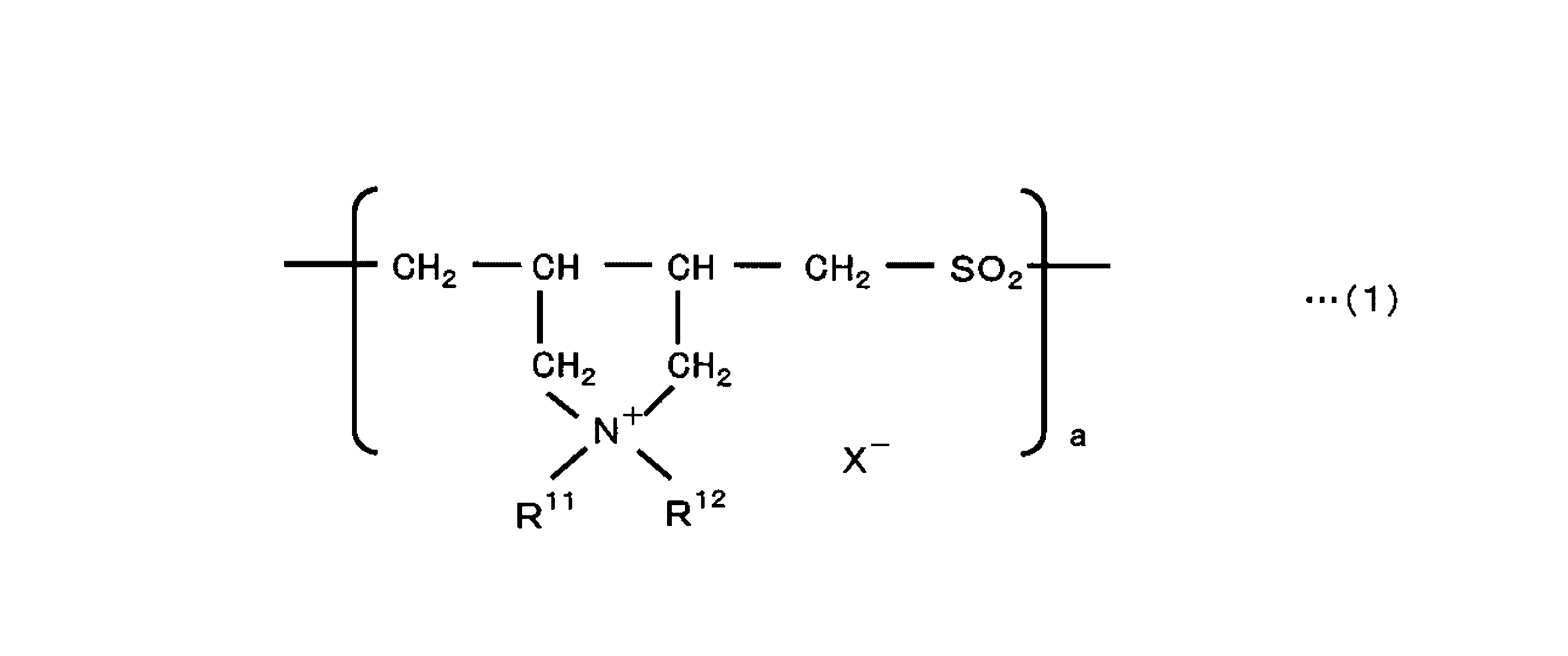
- the polyamine sulfone is a compound represented by the following formula (1):
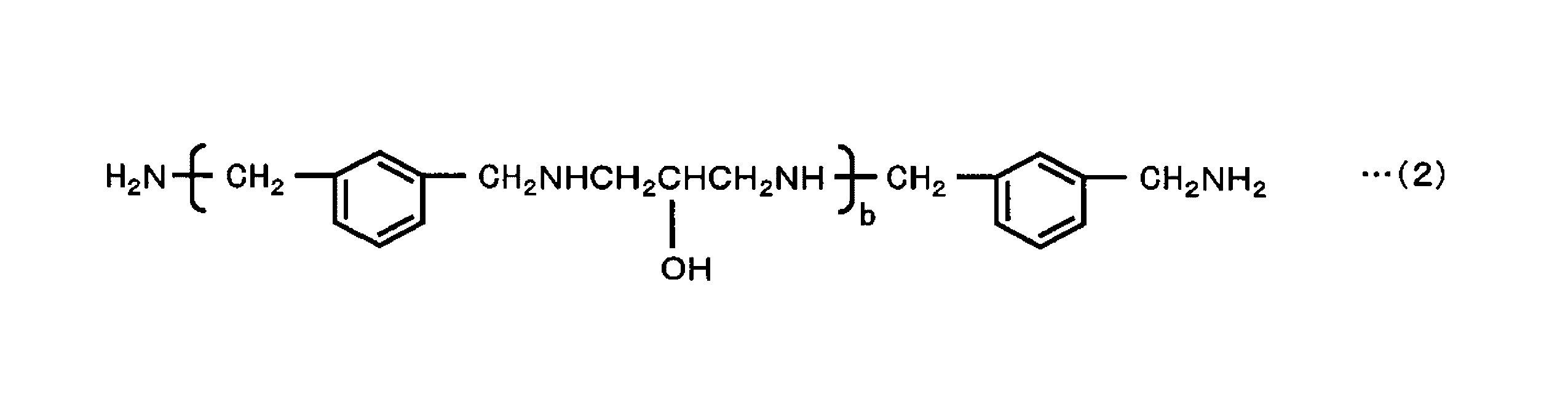
- the aromatic polyamine is a compound represented by the following formula (2).
- a is an integer greater than or equal to 2
- R ⁇ 11 >, R ⁇ 12 > is the same or different and represents a hydrogen atom or a methyl group
- X represents a fluorine atom, a chlorine atom, a bromine atom, or an iodine atom.
- b represents an integer of 2 or more.
- the (D) acetylene alcohol is selected from 2-propyn-1-ol, 3-methyl-1-butyn-3-ol, acetylene glycol and acetylene thiol. It is 1 type or 2 types or more, It is characterized by the above-mentioned.
- the present invention is also a method for treating ash, characterized in that the heavy metal fixing agent for ash treatment is added to heavy metal-containing ash.
- a heavy metal fixing agent comprising a phosphate-based fixing agent and an iron salt-based fixing agent
- Metal corrosion caused by the phosphoric acid-based fixing agent and the iron salt-based fixing agent can be suppressed, thereby extending the life of the processing equipment and reducing maintenance costs.
- the heavy metal immobilizing agent for ash treatment of the present invention is for preventing elution of heavy metal from heavy metal-containing ash by adding to the heavy metal-containing ash (immobilizing heavy metal).
- a heavy metal fixing agent composed of an iron salt-based fixing agent and a metal corrosion inhibitor.
- the metal corrosion inhibitor includes (A) a quaternary ammonium salt, (B) an organic sulfur compound, (C) a polyamine compound, and (D) acetylene. Including alcohol.
- phosphoric acid and phosphate are used as the heavy metal fixing agent in the present invention.
- phosphoric acid normal phosphoric acid, hypophosphorous acid, metaphosphorous acid, pyrophosphoric acid, and pyrophosphoric acid are used. Examples include phosphorous acid, orthophosphorous acid, hypophosphoric acid, metaphosphoric acid, pyrophosphoric acid, triphosphoric acid, and condensed phosphoric acid.
- phosphates salts of these phosphoric acids (sodium salt, potassium salt, etc.) , Primary phosphate, and secondary phosphate. These may be used alone or in combination of two or more.
- orthophosphoric acid H 3 PO 4
- monosodium dihydrogen phosphate NaH 2 PO 4
- disodium monohydrogen phosphate Na 2 HPO 4
- condensed phosphoric acid and the like are particularly preferable.
- iron salt-based fixing agent used in combination with the heavy metal fixing agent in the present invention examples include ferrous chloride and ferrous sulfate. These may be used alone or in combination of two or more. Of these iron salt-based fixing agents, ferrous chloride and ferrous sulfate are preferable, and ferrous chloride is particularly preferable in terms of the effect of fixing heavy metals.
- the blending ratio of the phosphate-based fixing agent and the iron salt-based fixing agent as a heavy metal fixing agent varies depending on the type of ash to be used, but is based on 100 parts by weight of the phosphate-based fixing agent.
- the iron salt-based fixing agent is preferably 50 to 90 parts by weight, particularly 70 to 90 parts by weight.
- the ratio of the iron salt-based immobilizing agent is less than this lower limit, a sufficient effect of fixing heavy metals cannot be obtained, and if it exceeds the upper limit, the drug cost increases, which is not preferable.
- the metal corrosion inhibitor used in addition to the heavy metal immobilizing agent comprising a phosphoric acid-based immobilizing agent and an iron salt-based immobilizing agent is (A) quaternary An ammonium salt, (B) an organic sulfur compound, (C) a polyamine compound, and (D) acetylene alcohol are included.
- the quaternary ammonium salt includes trimethylbenzylammonium chloride, 1,8-bis (1-hydroxy-1-benzylimidazolium chloride) -2,2′octane, 2-undecyl-1-hydroxyalkyl-1 -Benzylimidazolium chloride, alkylpicolinium chloride, alkylpyridinium chloride, N- (P-chlorobenzyl) -picolinium chloride, alkylpicolinium bromide, benzylpyridinium chloride, benzylpicolinium chloride, N-hydroxyethyl-pyridinium chloride, N-hydroxyethyl-picolinium chloride, N- (P-laurylbenzyl) -pyridinium chloride, N-carboxymethyl-pyridinium chloride, N-carboxyme Ru-picolinium chloride, N-hydroxyethoxyethyl-pyridinium chloride, N-hydroxyethyleth
- trimethylbenzylammonium chloride 1,8-bis (1-hydroxy-1-benzylimidazolium chloride) -2,2′octane and 2-undecyl-1-hydroxyalkyl-1-benzylimidazolium chloride are particularly preferred. It is preferable that it is 1 type, or 2 or more types selected from.
- Organic sulfur compounds include thiourea, ethylenethiourea, diethylthiourea, dibutylthiourea, phenylthiourea, tolylthiourea, trimethylthiourea, S-methylthiourea, N-methylthiourea, dimethylthiourea, tetramethylthiourea, methylisothiourea Thiourea compounds such as thiourea dioxide, guanylthiourea, benzylisothiourea, diisobutylthiourea, and other organic sulfur compounds such as sodium thioglycolate, thioglycolic acid, ammonium thioglycolate, 2-ethylhexyl thioglycolate , Thioglycolic acid, thioglycerol, thioacetic acid, thioglycol, 3,3-thiodipropionic acid, thiophenol, benzyl mer
- thiourea ethylenethiourea, diethylthiourea, dibutylthiourea, phenylthiourea, tolylthiourea, trimethylthiourea, S-methylthiourea, N-methylthiourea, dimethylthiourea, tetramethylthiourea, methylisothiourea, thiodioxide
- thiourea compounds such as urea, guanylthiourea, benzylisothiourea, diisobutylthiourea.
- Polyamine compounds such as polyamine sulfone, polyallylamine, polydiallylamine, aromatic polyamine, polyvinylamine, ethylenediamine, diethylenetriamine, triethylenetetramine, tetraethylenepentamine, pentaethylenehexamine, hexaethyleneheptamine, etc. Mention may be made of polyamines, polymethyleneimines, polyamides, polyacrylonitriles and polyethyleneimines. Of these, polyamine sulfone and polyethyleneimine are particularly preferred.
- the polyamine sulfone as a polyamine compound is a compound represented by the following formula (1)
- the aromatic polyamine is a compound represented by the following formula (2).
- the aromatic polyamine is preferably a compound represented by the formula (2) wherein b is 2 to 12.
- a is an integer greater than or equal to 2
- R ⁇ 11 >, R ⁇ 12 > is the same or different and represents a hydrogen atom or a methyl group
- X represents a fluorine atom, a chlorine atom, a bromine atom, or an iodine atom.
- one or more selected from 3-methyl-1-butyn-3-ol, 2-propyn-1-ol, acetylene glycol and acetylene thiol are particularly preferable.
- the blending ratio of the metal corrosion inhibitor comprising these (A) quaternary ammonium salt, (B) organic sulfur compound, (C) polyamine compound and (D) acetylene alcohol is a heavy metal for whole ash treatment containing a metal corrosion inhibitor. 0.1 to 10 parts by weight is preferable with respect to 100 parts by weight of the fixing agent. If the blending ratio of the metal corrosion inhibitor is less than this lower limit, a sufficient corrosion inhibitory effect cannot be obtained, and if it exceeds this upper limit, the corrosion inhibitory effect is saturated, and the chemical cost increases, It is not preferable.
- the blending ratio of (A) quaternary ammonium salt, (B) organic sulfur compound, (C) polyamine compound, and (D) acetylene alcohol is (A) with respect to 100 parts by weight of the heavy metal fixing agent for total ash treatment.
- Quaternary ammonium salt is 0.02-1 part by weight
- (B) organic sulfur compound is 0.02-1 part by weight
- (C) polyamine compound is 0.02-1 part by weight
- (D) acetylene alcohol is The amount is preferably 0.01 to 0.5 part by weight. Deviation from this range is not preferable because the effect of inhibiting corrosion is reduced.
- the heavy metal immobilizing agent for ash treatment of the present invention is a mixture of a phosphoric acid-based immobilizing agent, an iron salt-based immobilizing agent, a metal corrosion inhibitor, and other components blended as necessary in advance. It may be one that has been stored, and may be stored separately and mixed and used on site.
- the metal corrosion inhibitor is applied to the metal part of the reaction vessel separately from the phosphoric acid-based fixing agent and the iron salt-based fixing agent.
- the system fixing agent and the metal corrosion inhibitor are preferably poured in a mixed state. This is because even if the metal corrosion inhibitor is applied to the metal part in advance, the metal corrosion inhibitor applied by friction with heavy metal-containing ash is peeled off, and the corrosion inhibition effect cannot be obtained.
- the ash treatment method of the present invention prevents the elution of heavy metals from the heavy metal-containing ash by adding the above-described heavy metal fixing agent for ash treatment of the present invention to the heavy metal-containing ash.
- the amount of the heavy metal fixing agent for ash treatment of the present invention to the heavy metal-containing ash varies depending on the amount of heavy metal contained in the heavy metal-containing ash, the type of heavy metal contained, and the agent and formulation of the heavy metal fixing agent for ash treatment used.
- the addition amount to the heavy metal-containing ash is preferably 0.1 to 6.0% by weight. If the addition amount is less than this, a sufficient heavy metal fixing effect cannot be obtained, and even if the addition amount is too large, further improvement of the effect cannot be expected, and the cost of the medicine is increased, which is not preferable.
- the heavy metal immobilizing agent for ash treatment of the present invention is kneaded with the heavy metal immobilizing agent for ash treatment together with water.
- the amount of water used is not particularly limited and is determined on the basis of handleability and workability, but is usually about 10 to 40% by weight based on heavy metal-containing ash.
- the heavy metal immobilizing agent for ash treatment of the present invention is particularly easy by adding and kneading to the heavy metal-containing ash as an aqueous solution having an active ingredient concentration of about 10 to 40% by weight containing a heavy metal immobilizing agent and a metal corrosion inhibitor.
- the heavy metal-containing ash can be treated with a simple operation.
- Iron salt-based fixing agent and phosphoric acid-based fixing agent having the formulations shown in Tables 1 and 2, (A) quaternary ammonium salt, (B) organic sulfur compound, (C) polyamine compound, and (D) acetylene Add a heavy metal fixing agent for ash treatment consisting of a metal corrosion inhibitor of alcohol to 1.4% by weight with respect to fly ash and 25% by weight of water with respect to fly ash. Kneaded.
- the heavy metal fixing agent for ash treatment of Comparative Example 1 in which no metal corrosion inhibitor is blended causes significant corrosion, and (A) a quaternary ammonium salt, (B) an organic sulfur compound, (C) The heavy metal fixing agent for ash treatment of Comparative Examples 2 to 5 to which only the polyamine compound or (D) acetylene alcohol is added cannot obtain a sufficient corrosion inhibiting effect.
Landscapes
- Engineering & Computer Science (AREA)
- Environmental & Geological Engineering (AREA)
- Health & Medical Sciences (AREA)
- General Health & Medical Sciences (AREA)
- Toxicology (AREA)
- Chemical & Material Sciences (AREA)
- Chemical Kinetics & Catalysis (AREA)
- General Chemical & Material Sciences (AREA)
- Business, Economics & Management (AREA)
- Emergency Management (AREA)
- Processing Of Solid Wastes (AREA)
- Preventing Corrosion Or Incrustation Of Metals (AREA)
Abstract
重金属含有灰に添加して重金属の固定処理を行う際の薬剤添加設備や混練機などの反応容器の金属部の腐食を防止して、処理設備の寿命の延長、メンテナンス費用の軽減を図ることができる灰処理用重金属固定化剤、および該灰処理用重金属固定化剤を用いた灰の処理方法であって、灰処理用重金属固定化剤は、リン酸系固定化剤および鉄塩系固定化剤から成る重金属固定化剤と、金属の腐食抑制剤とを含む。この灰処理用金属固定化剤において、金属の腐食抑制剤は、(A)第4級アンモニウム塩と、(B)有機硫黄化合物と、(C)ポリアミン化合物と、(D)アセチレンアルコールとを含む。
Description
本発明は、重金属固定化剤およびそれを用いた灰の処理方法に係り、特に、廃棄物焼却施設や発電プラントなどの焼却プラントから発生する焼却灰や、排ガスに同伴して排出され、除塵された飛灰(以下、これら焼却灰及び飛灰を「重金属含有灰」と記載する)を処理して、重金属の溶出を防止するための灰処理用重金属固定化剤であって、この重金属固定処理のための処理設備の腐食劣化を防止して、その寿命の延長とメンテナンス費用の軽減を図る灰処理用重金属固定化剤と、この灰処理用重金属固定化剤を用いた灰の処理方法に関する。
従来、重金属の溶出防止方法としては、飛灰あるいは飛灰と焼却灰の混合物に、水酸化カルシウム源存在下、特定量の水溶性リン酸またはその塩を添加する処理法があり、鉛とカドミウムを固定化できることが示されている(特許文献1参照)。
また、特許文献2には、固体状廃棄物への浸透性を高くし、かつカルシウムを固定化することで有害重金属を固定化することができることが開示されている。
さらに、重金属含有灰中の鉛やカドミウムなどの重金属をリン酸系重金属固定化剤と反応させてリン酸鉛、リン酸カドミウムなどの難溶性塩として安定に固定化すると共に、六価クロム,ヒ素,セレンを第一鉄化合物と反応させて安定に固定化することができることから、重金属固定化剤としては、第一鉄化合物とリン酸系重金属固定化剤とを併用するものが提案されている(特許文献3参照)。
しかしながら、上記処理において用いられる正リン酸などのリン酸系重金属固定化剤および第一鉄化合物などの鉄塩系重金属固定化剤は酸性物質であるため、これらを重金属含有灰に添加する際の添加設備や重金属含有灰との混練機などの反応容器の金属部を腐食させ、設備の寿命を短命化したり、メンテナンス費用を高くする問題があった。
即ち、例えば、混練機の内壁を構成する鉄またはステンレスの部分と前記金属固定化剤とが直接接触し、その部分を腐食させ、設備が短命化し、交換頻度が上がり、多額の修繕コストを要していた。また、重金属固定化剤と接触するタンク、ポンプの注入ノズルなどの薬剤注入設備についても同様の問題があった。
特に、重金属固定化剤として鉄塩系固定化剤とリン酸系固定化剤を併用する場合、腐食挙動も複雑になり、従来の腐食抑制剤の配合では、満足できる効果が得られなかった。
本発明は、重金属固定化剤として鉄塩系固定化剤とリン酸系固定化剤を併用した灰処理用重金属固定化剤であって、重金属含有灰に添加して重金属の固定処理を行う際の薬剤添加設備や混練機などの反応容器の金属部の腐食を防止して、処理設備の寿命の延長、メンテナンス費用の軽減を図ることができる灰処理用重金属固定化剤、および該灰処理用重金属固定化剤を用いた灰の処理方法を提供することを目的とする。
本発明は、リン酸系固定化剤および鉄塩系固定化剤から成る重金属固定化剤と、金属腐食抑制剤とを含む灰処理用重金属固定化剤であって、該金属の腐食抑制剤が、(A)第4級アンモニウム塩と、(B)有機硫黄化合物と、(C)ポリアミン化合物と、(D)アセチレンアルコールとを含むことを特徴とする灰処理用重金属固定化剤である。
また本発明の灰処理用重金属固定化剤において、前記金属腐食抑制剤が、前記重金属固定化剤100重量部に対し0.1~10重量部含まれることを特徴とする。
また本発明の灰処理用重金属固定化剤において、前記リン酸系固定化剤が、リン酸およびリン酸塩の少なくともいずれか一方であることを特徴とする。
また本発明の灰処理用重金属固定化剤において、前記鉄塩系固定化剤が、塩化第一鉄および硫酸第一鉄の少なくともいずれか一方であることを特徴とする。
また本発明の灰処理用重金属固定化剤において、前記(A)第4級アンモニウム塩が、トリメチルベンジルアンモニウムクロライド、1,8-ビス(1-ヒドロキシ-1-ベンジルイミダゾリウムクロライド)-2,2’オクタンおよび2-ウンデシル-1-ヒドロキシアルキル-1-ベンジルイミダゾリウムクロライドから選択される1種または2種以上であることを特徴とする。
また本発明の灰処理用重金属固定化剤において、前記(B)有機硫黄化合物が、チオ尿素化合物であることを特徴とする。
また本発明の灰処理用重金属固定化剤において、前記(C)ポリアミン化合物が、ポリアミンスルホン、ポリアリルアミン、ポリジアリルアミン、芳香族ポリアミン、ポリビニルアミン、ポリアルキレンポリアミン、ポリメチレンイミン、ポリアミド、ポリアクリロニトリルおよびポリエチレンイミンから選択される1種または2種以上であることを特徴とする。
また本発明の灰処理用重金属固定化剤において、前記ポリアミンスルホンは、下記式(1)で表される化合物であり、
前記芳香族ポリアミンは、下記式(2)で表される化合物であることを特徴とする。
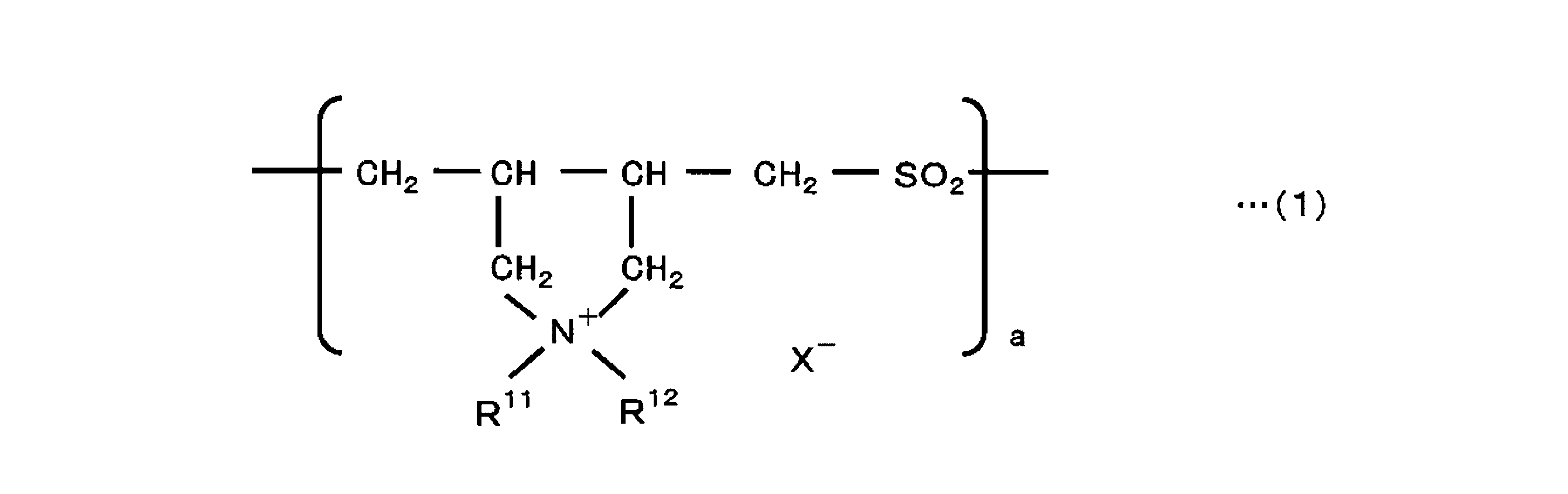
[式(1)中、aは2以上の整数であり、R11,R12は同一もしくは異なって水素原子またはメチル基を表し、Xはフッ素原子、塩素原子、臭素原子もしくはヨウ素原子を表す。]

[式(2)中、bは2以上の整数を表す。]
前記芳香族ポリアミンは、下記式(2)で表される化合物であることを特徴とする。
また本発明の灰処理用重金属固定化剤において、前記(D)アセチレンアルコールが、2-プロピン-1-オール、3-メチル-1-ブチン-3-オール、アセチレングリコールおよびアセチレンチオールから選択される1種または2種以上であることを特徴とする。
また本発明は、前記灰処理用重金属固定化剤を、重金属含有灰に添加することを特徴とする灰の処理方法である。
本発明によれば、リン酸系固定化剤および鉄塩系固定化剤から成る重金属固定化剤を用いた重金属含有灰の重金属固定処理において、特定の金属腐食抑制剤を組合せ併用することにより、リン酸系固定化剤および鉄塩系固定化剤による金属腐食を抑制して、処理設備の寿命の延長、メンテナンス費用の軽減を図ることができる。
本発明者らは上記課題を解決すべく鋭意検討した結果、重金属固定化剤としてリン酸系固定化剤および鉄塩系固定化剤を併用し、これに特定の金属腐食抑制剤を加えて用いることにより、目的が達成できることを見出し、本発明を完成させた。以下に本発明の灰処理用重金属固定化剤、および該灰処理用重金属固定化剤を用いた灰の処理方法の実施の形態を詳細に説明する。
[灰処理用重金属固定化剤]
本発明の灰処理用重金属固定化剤は重金属含有灰に添加することによって、重金属含有灰からの重金属の溶出を防止する(重金属を固定化する)ためのものであり、リン酸系固定化剤および鉄塩系固定化剤から成る重金属固定化剤と、金属の腐食抑制剤とを含む。そして、本発明の灰処理用重金属固定化剤において、金属の腐食抑制剤は、(A)第4級アンモニウム塩と、(B)有機硫黄化合物と、(C)ポリアミン化合物と、(D)アセチレンアルコールとを含む。
本発明の灰処理用重金属固定化剤は重金属含有灰に添加することによって、重金属含有灰からの重金属の溶出を防止する(重金属を固定化する)ためのものであり、リン酸系固定化剤および鉄塩系固定化剤から成る重金属固定化剤と、金属の腐食抑制剤とを含む。そして、本発明の灰処理用重金属固定化剤において、金属の腐食抑制剤は、(A)第4級アンモニウム塩と、(B)有機硫黄化合物と、(C)ポリアミン化合物と、(D)アセチレンアルコールとを含む。
本発明で重金属固定化剤として用いるリン酸系固定化剤としては、リン酸やリン酸塩が用いられ、このうち、リン酸としては正リン酸や次亜リン酸、メタ亜リン酸、ピロ亜リン酸、正亜リン酸、次リン酸、メタリン酸、ピロリン酸、三リン酸、縮合リン酸が挙げられ、リン酸塩としては、これらのリン酸の塩(ナトリウム塩、カリウム塩等)、第1リン酸塩、第2リン酸塩が挙げられる。これらは1種を単独で用いても良く、2種以上を併用しても良い。
これらの中で特に好ましくは、正リン酸(H3PO4)、リン酸二水素一ナトリウム(NaH2PO4)、リン酸一水素二ナトリウム(Na2HPO4)、縮合リン酸等を好適に使用することができる。
また本発明で重金属固定化剤として併用する鉄塩系固定化剤としては、塩化第一鉄、硫酸第一鉄等が挙げられる。これらは1種を単独で用いても良く、2種以上を併用しても良い。これらの鉄塩系固定化剤のうち、特に重金属の固定効果の面からは、塩化第一鉄、硫酸第一鉄が好ましく、とりわけ塩化第一鉄が好ましい。
このリン酸系固定化剤と鉄塩系固定化剤との、重金属固定化剤としての配合割合は、用いる処理すべき灰の種類によっても異なるが、リン酸系固定化剤100重量部に対し鉄塩系固定化剤が50~90重量部、特に70~90重量部とすることが好ましい。
鉄塩系固定化剤の割合がこの下限よりも少ないと、十分な重金属の固定効果を得ることができず、上限より多いと薬剤コストが高騰するため好ましくない。
本発明において、リン酸系固定化剤および鉄塩系固定化剤からなる重金属固定化剤に加えて用いる金属の腐食抑制剤(以下、「金属腐食抑制剤」)は、(A)第4級アンモニウム塩と、(B)有機硫黄化合物と、(C)ポリアミン化合物と、(D)アセチレンアルコールとを含む。
(A)第4級アンモニウム塩としては、トリメチルベンジルアンモニウムクロライド、1,8-ビス(1-ヒドロキシ-1-ベンジルイミダゾリウムクロライド)-2,2’オクタン、2-ウンデシル-1-ヒドロキシアルキル-1-ベンジルイミダゾリウムクロライド、アルキルピコリニウムクロライド、アルキルピリジニウムクロライド、N-(P-クロロベンジル)-ピコリニウムクロライド、アルキルピコリニウムブロマイド、ベンジルピリジニウムクロライド、ベンジルピコリニウムクロライド、N-ヒドロキシエチル-ピリジニウムクロライド、N-ヒドロキシエチル-ピコリニウムクロライド、N-(P-ラウリルベンジル)-ピリジニウムクロライド、N-カルボキシメチル-ピリジニウムクロライド、N-カルボキシメチル-ピコリニウムクロライド、N-ヒドロキシエトキシエチル-ピリジニウムクロライド、N-ヒドロキシエチルエトキシエチル-ピコリニウムクロライド、N-アリル-ピリジニウムクロライド、N-アリル-ピコリニウムクロライド、ドデシルベンジル-4-ピコリニウムクロライド、1-ヒドロキシ-1-エチル-2-ステアリルイミダゾリウムエトサルフェート、1-ヒドロキシ-1-エチル-2-ステアリルイミダゾリウムクロライド、1-ヒドロキシ-1-エチル-2-ステアリルイミダゾリウムブロマイド、1-ヒドロキシ-1-エチル-2-ステアリルイミダゾリウムアイオダイド、1-ヒドロキシ-1-エチル-2-ステアリルイミダゾリウムフルオライド、1-ドデシル-2-メチル-3-ベンジルイミダゾリウムエトサルフェート、1-ドデシル-2-メチル-3-ベンジルイミダゾリウムクロライド、1-ドデシル-2-メチル-3-ベンジルイミダゾリウムブロマイド、1-ドデシル-2-メチル-3-ベンジルイミダゾリウムアイオダイド、1-ドデシル-2-メチル-3-ベンジルイミダゾリウムフルオライド、1-ベンジル-2-フェニルイミダゾリウムエトサルフェート、1-ベンジル-2-フェニルイミダゾリウムクロライド、1-ベンジル-2-フェニルイミダゾリウムブロマイド、1-ベンジル-2-フェニルイミダゾリウムアイオダイド、1-ベンジル-2-フェニルイミダゾリウムフルオライド、2-ウンデシル-1-ヒドロキシエチル-1-ベンジルイミダゾリウムエトサルフェート、2-ウンデシル-1-ヒドロキシエチル-1-ベンジルイミダゾリウムクロライド、2-ウンデシル-1-ヒドロキシエチル-1-ベンジルイミダゾリウムブロマイド、2-ウンデシル-1-ヒドロキシエチル-1-ベンジルイミダゾリウムアイオダイド、2-ウンデシル-1-ヒドロキシエチル-1-ベンジルイミダゾリウムフルオライド、2-アビエチル-1-ヒドロキシエチル-1-ベンジルイミダゾリウムエトサルフェート、2-アビエチル-1-ヒドロキシエチル-1-ベンジルイミダゾリウムクロライド、2-アビエチル-1-ヒドロキシエチル-1-ベンジルイミダゾリウムブロマイド、2-アビエチル-1-ヒドロキシエチル-1-ベンジルイミダゾリウムアイオダイド、2-アビエチル-1-ヒドロキシエチル-1-ベンジルイミダゾリウムフルオライド、1,8-ビス(1-ヒドロキシ-1-ベンジルイミダゾリウムエトサルフェート)-2,2’オクタン、1,8-ビス(1-ヒドロキシ-1-ベンジルイミダゾリウムクロライド)-2,2’オクタン、1,8-ビス(1-ヒドロキシ-1-ベンジルイミダゾリウムブロマイド)-2,2’オクタン、1,8-ビス(1-ヒドロキシ-1-ベンジルイミダゾリウムアイオダイド)-2,2’オクタン、1,8-ビス(1-ヒドロキシ-1-ベンジルイミダゾリウムフルオライド)-2,2’オクタン、アルキルキノリニウムクロライド、アルキルキノリニウムブロマイド、アルキルイソキノリニウムクロライド、アルキルイソキノリニウムブロマイドを挙げることができる。
これらの中で特に、トリメチルベンジルアンモニウムクロライド、1,8-ビス(1-ヒドロキシ-1-ベンジルイミダゾリウムクロライド)-2,2’オクタンおよび2-ウンデシル-1-ヒドロキシアルキル-1-ベンジルイミダゾリウムクロライドから選択される1種または2種以上であることが好ましい。
(B)有機硫黄化合物としては、チオ尿素、エチレンチオ尿素、ジエチルチオ尿素、ジブチルチオ尿素、フェニルチオ尿素、トリルチオ尿素、トリメチルチオ尿素、S-メチルチオ尿素、N-メチルチオ尿素、ジメチルチオ尿素、テトラメチルチオ尿素、メチルイソチオ尿素、二酸化チオ尿素、グアニルチオ尿素、ベンジルイソチオ尿素、ジイソブチルチオ尿素などのチオ尿素化合物、その他の有機硫黄化合物として、チオグリコール酸ナトリウム、チオグリコール酸、チオグリコール酸アンモニウム、チオグリコール酸-2-エチルヘキシル、チオグリコール酸、チオグリセロール、チオ酢酸、チオグリコール、3,3-チオジプロピオン酸、チオフェノール、ベンジルメルカプタン、チオ安息香酸、チオサリチル酸、2-アミノチオフェノール、2-メルカプトイミダゾリン、2-メルカプトエタノール、メルカプトプロピオン酸、β-メルカプトプロピオン酸、β-メルカプトプロピオン酸-3-メトキシブチル、β-チオプロピロール、β-メルカプトプロピオン酸-2-エチルヘキシル、2-メルカプトベンゾチアゾール、トリグリコールジメルカプタン、ペンタエリスリトールテトラチオグリコレート、2,4,6-トリメルカプト-S-トリアジン、ペンタエリストールテトラキスチオグリコレート、3,3-ジチオジプロピオン酸、2,2-ジチオエタノール、エチレングリコールジチオグリコレート、チオジグリコール、チオジグリコール酸、ジチオジグリコール酸ジアンモニウム、チオアセトアミド、イソチアン酸アミド、P-トルエンスルホン酸ナトリウム、クリオキザール重亜硫酸ナトリウム、チオ乳酸、チオリンゴ酸、2-メルカプトブチル酸、チオシアン酸ベンジル、ジメチルスルオキシド、ジエチルチオカルバミン酸ナトリウム、P-ジエチルチオカルバミン酸ナトリウム、P-トルエンスルホンヒドラジン、メタンスルホン酸、ブタンスルフィン酸、ベンジンスルフィン酸、トルエンスルフィン酸、ピリジンスルフィン、ベンゼンスルフィン酸アンモニウム、トルエンスルフィン酸アンモニウム、ベンゼンスルフィン酸エチル、塩化ベンゼンスルフィン酸フィニル、N-メチルベンゼンスルフィニルアミド、ブタンスルフェニルクロライド、塩化ベンゼンスルフェニル、ピリジンスルフェニルクロライド、ブタンジスルホキシド、ベンゼンスルオキシド、ピリジンスルオキシド、ブタンジスルホン、ジフェニルスルホン、ジビリジンスルホン、ベンゼンスルフィン酸、1-チオグリセロールなどを挙げることができる。
これらの中で特に、チオ尿素、エチレンチオ尿素、ジエチルチオ尿素、ジブチルチオ尿素、フェニルチオ尿素、トリルチオ尿素、トリメチルチオ尿素、S-メチルチオ尿素、N-メチルチオ尿素、ジメチルチオ尿素、テトラメチルチオ尿素、メチルイソチオ尿素、二酸化チオ尿素、グアニルチオ尿素、ベンジルイソチオ尿素、ジイソブチルチオ尿素などのチオ尿素化合物が好ましい。
(C)ポリアミン化合物としては、ポリアミンスルホン、ポリアリルアミン、ポリジアリルアミン、芳香族ポリアミン、ポリビニルアミン、エチレンジアミン、ジエチレントリアミン、トリエチレンテトラミン、テトラエチレンペンタミン、ペンタエチレンヘキサミン、ヘキサエチレンヘプタミン、などのポリアルキレンポリアミン、ポリメチレンイミン、ポリアミド、ポリアクリロニトリル、ポリエチレンイミンを挙げることができる。これらの中で特に好ましいのはポリアミンスルホン、ポリエチレンイミンである。
ここで、(C)ポリアミン化合物としてのポリアミンスルホンは、下記式(1)で表される化合物であり、芳香族ポリアミンは、下記式(2)で表される化合物である。
前記芳香族ポリアミンとしては、式(2)で示される化合物であって、bが2~12である化合物が好ましい。
前記芳香族ポリアミンとしては、式(2)で示される化合物であって、bが2~12である化合物が好ましい。
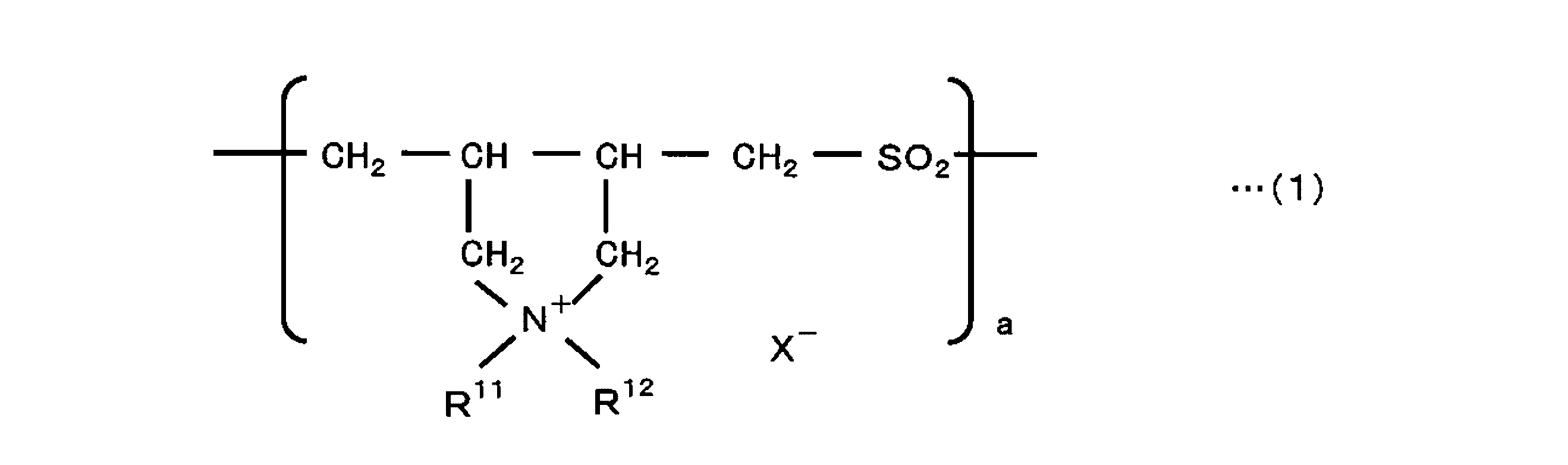

なお、上記式(1)で表されるポリアミンスルホンは、式(1)において、Xとしては塩素原子が好ましく、R11,R12としては水素原子が好ましい。
(D)アセチレンアルコールとしては、4-(3-アミノフェニル)-2-メチル-3-ブチン-2-オール、1,4-ビス(2-ヒドロキシエトキシ)-2-ブチン、2-ブチン-1-オール、3-ブチン-1-オール、3-ブチン-2-オール、2-デシン-1-オール、3-デシン-1-オール、9-デシン-1-オール、1,4-ジアセトキシ-2-ブチン、4-ジエチルアミノ-2-ブチン-1-オール、3,6-ジメチル-1-ヘプチン-3-オール、3,5-ジメチル-1-ヘキシン-3-オール、3,4-ジメチル-1-ペンチン-3-オール、1,1-ジフェニル-2-プロピン-1-オール、3-エチル-1-ヘプチン-3-オール、エチル-1-オクチン-3-オール、3-エチル-1-ペンチン-3-オール、1-ヘプチン-3-オール、2-ヘプチン-1-オール、3-ヘプチン-1-オール、4-ヘプチン-2-オール、5-ヘプチン-3-オール、6-ヘプチン-1-オール、1-ヘキシン-3-オール、2-ヘキシン-1-オール、3-ヘキシン-1-オール、5-ヘキシン-1-オール、5-ヘキシン-3-オール、2-メチル-3-ブチン-2-オール、5-メチル-1-ヘキシン-3-オール、3-メチル-1-ブチン-3-オール、3-メチル-1-ペンチン-3-オール、3-メチル-1-ペンテン-4-イン-3-オール、3-メチル-1-ペンチン-3-オール、2-メチル-4-フェニル-3-ブチン-2-オール、3-ノニン-1-オール、1-オクチン-3-オール、3-オクチン-1-オール、1-ペンチン-3-オール、2-ペンチン-1-オール、3-ペンチン-1-オール、4-ペンチン-1-オール、4-ペンチン-2-オール、5-フェニル-4-ペンチン-1-オール、1-フェニル-2-プロピン-1-オール、3-フェニル-2-プロピン-1-オール、3-フェニル-2-プロピン-1-オール、2-プロピン-1-オール、2,2,8,8-テトラメチル-3,6-ノナジイン-5-オール、4-トリメチルシリル-3-ブチン-2-オール、3-トリメチルシリル-2-プロピン-1-オール、1,1,3-トリフェニル-2-プロピン-1-オール、10-ウンデシン-1-オールなど、アセチレングリコールである2,5-ジメチル-3-ヘキシン-2,5-ジオール、3,6-ジメチル-4-オクチン-3,6-ジオール、2,4-ヘキサジイン-1,6-ジオール、3-ヘキシン-2,5-ジオールなど、およびアセチレンチオールを挙げることができる。
これらの中で特に好ましいのは、3-メチル-1-ブチン-3-オール、2-プロピン-1-オール、アセチレングリコールおよびアセチレンチオールから選択される1種または2種以上である。
これら(A)第4級アンモニウム塩、(B)有機硫黄化合物、(C)ポリアミン化合物および(D)アセチレンアルコールからなる金属腐食抑制剤の配合割合は、金属腐食抑制剤を含む全灰処理用重金属固定化剤100重量部に対し、0.1~10重量部が好ましい。金属腐食抑制剤の配合割合がこの下限よりも少ないと、十分な腐食抑制効果を得ることができず、この上限よりも多くても腐食抑制効果は飽和し、また、薬剤コストの高騰を招き、好ましくない。
また(A)第4級アンモニウム塩、(B)有機硫黄化合物、(C)ポリアミン化合物および(D)アセチレンアルコールそれぞれの配合割合は、全灰処理用重金属固定化剤100重量部に対し、(A)第4級アンモニウム塩は0.02~1重量部、(B)有機硫黄化合物は0.02~1重量部、(C)ポリアミン化合物は0.02~1重量部、(D)アセチレンアルコールは0.01~0.5重量部とするのが好ましい。この範囲からはずれると腐食抑制の効果が減少するので好ましくない。
本発明の灰処理用重金属固定化剤は、リン酸系固定化剤と鉄塩系固定化剤と金属腐食抑制剤と、更に必要に応じて配合されるその他の成分が予め混合されて一剤化されたものであっても良く、各々別々に貯留されて現場にて混合使用されるものであっても良い。
ただし、金属腐食抑制剤がリン酸系固定化剤および鉄塩系固定化剤とは別に反応容器の金属部などに塗布されて使用されることは好ましくなく、リン酸系固定化剤および鉄塩系固定化剤と金属腐食抑制剤とは、混合状態で薬注されることが好ましい。これは、金属腐食抑制剤が予め金属部に塗布されても、重金属含有灰との摩擦等で塗布された金属腐食抑制剤が剥れ落ち、腐食抑制効果を得ることができなくなるためである。
[灰の処理方法]
本発明の灰の処理方法は、上述のような本発明の灰処理用重金属固定化剤を、重金属含有灰に添加することにより、重金属含有灰からの重金属の溶出を防止するものである。
本発明の灰の処理方法は、上述のような本発明の灰処理用重金属固定化剤を、重金属含有灰に添加することにより、重金属含有灰からの重金属の溶出を防止するものである。
重金属含有灰に対する本発明の灰処理用重金属固定化剤の添加量は、重金属含有灰の重金属量や含有される重金属の種類、用いる灰処理用重金属固定化剤の薬剤や配合によっても異なるが、通常重金属含有灰に対する添加量として0.1~6.0重量%とすることが好ましい。これよりも少ない添加量では十分な重金属固定効果を得ることができず、多くてもそれ以上の効果の向上は望めず、従に薬剤コストが嵩み好ましくない。
通常、本発明の灰処理用重金属固定化剤は、水と共に灰処理用重金属固定化剤と混練される。水の使用量には特に制限はなく、取り扱い性、作業性に基いて決定されるが、通常重金属含有灰に対して10~40重量%程度である。
本発明の灰処理用重金属固定化剤は、特に、重金属固定化剤と金属腐食抑制剤とを含む、有効成分濃度10~40重量%程度の水溶液として重金属含有灰に添加混練することにより、簡便な操作で重金属含有灰を処理することができる。
以下に実施例を挙げて、本発明をより具体的に説明するが、本発明はその要旨を超えない限り、以下の実施例に限定されるものではない。
なお、以下において用いた薬剤とその略号は次のとおりである。
<(A)第4級アンモニウム塩>
A-1:トリメチルベンジルアンモニウムクロライド
A-2:1,8-ビス(1-ヒドロキシ-1-ベンジルイミダジリウムクロライド)
A-3:2-ウンデシル-1-ヒドロキシアルキル-1-ベンジルイミダゾリウムクロライド
<(B)有機硫黄化合物>
B-1:ジエチルチオ尿素
B-2:トリメチルチオ尿素
B-3:ジブチルチオ尿素
B-4:エチレンチオ尿素
B-5:S-メチルチオ尿素
B-6:N-メチルチオ尿素
B-7:ジメチルチオ尿素
B-8:チオ尿素
B-9:フェニルチオ尿素
B-10:トリルチオ尿素
B-11:テトラメチルチオ尿素
B-12:メチルイソチオ尿素
B-13:二酸化チオ尿素
B-14:グアニルチオ尿素
B-15:ベンジルイソチオ尿素
B-16:ジイソブチルチオ尿素な
<(C)ポリアミン化合物>
C-1:式(1)で表されるポリアミンスルホン
(式(1)においてa=25,R11=R12=水素原子、X=塩素原子:重量平均分子量5000)
C-2:ポリエチレンイミン(重量平均分子量1800)
<(D)アセチレンアルコール>
D-1:2-プロピン-1-オール
D-2:3-メチル-1-ブチン-3-オール
<(A)第4級アンモニウム塩>
A-1:トリメチルベンジルアンモニウムクロライド
A-2:1,8-ビス(1-ヒドロキシ-1-ベンジルイミダジリウムクロライド)
A-3:2-ウンデシル-1-ヒドロキシアルキル-1-ベンジルイミダゾリウムクロライド
<(B)有機硫黄化合物>
B-1:ジエチルチオ尿素
B-2:トリメチルチオ尿素
B-3:ジブチルチオ尿素
B-4:エチレンチオ尿素
B-5:S-メチルチオ尿素
B-6:N-メチルチオ尿素
B-7:ジメチルチオ尿素
B-8:チオ尿素
B-9:フェニルチオ尿素
B-10:トリルチオ尿素
B-11:テトラメチルチオ尿素
B-12:メチルイソチオ尿素
B-13:二酸化チオ尿素
B-14:グアニルチオ尿素
B-15:ベンジルイソチオ尿素
B-16:ジイソブチルチオ尿素な
<(C)ポリアミン化合物>
C-1:式(1)で表されるポリアミンスルホン
(式(1)においてa=25,R11=R12=水素原子、X=塩素原子:重量平均分子量5000)
C-2:ポリエチレンイミン(重量平均分子量1800)
<(D)アセチレンアルコール>
D-1:2-プロピン-1-オール
D-2:3-メチル-1-ブチン-3-オール
[腐食試験]
焼却プラントにおける添加設備、反応器に用いられている金属として、SS400、SUS304を用いて、腐食抑制効果の確認を行った。
焼却プラントにおける添加設備、反応器に用いられている金属として、SS400、SUS304を用いて、腐食抑制効果の確認を行った。
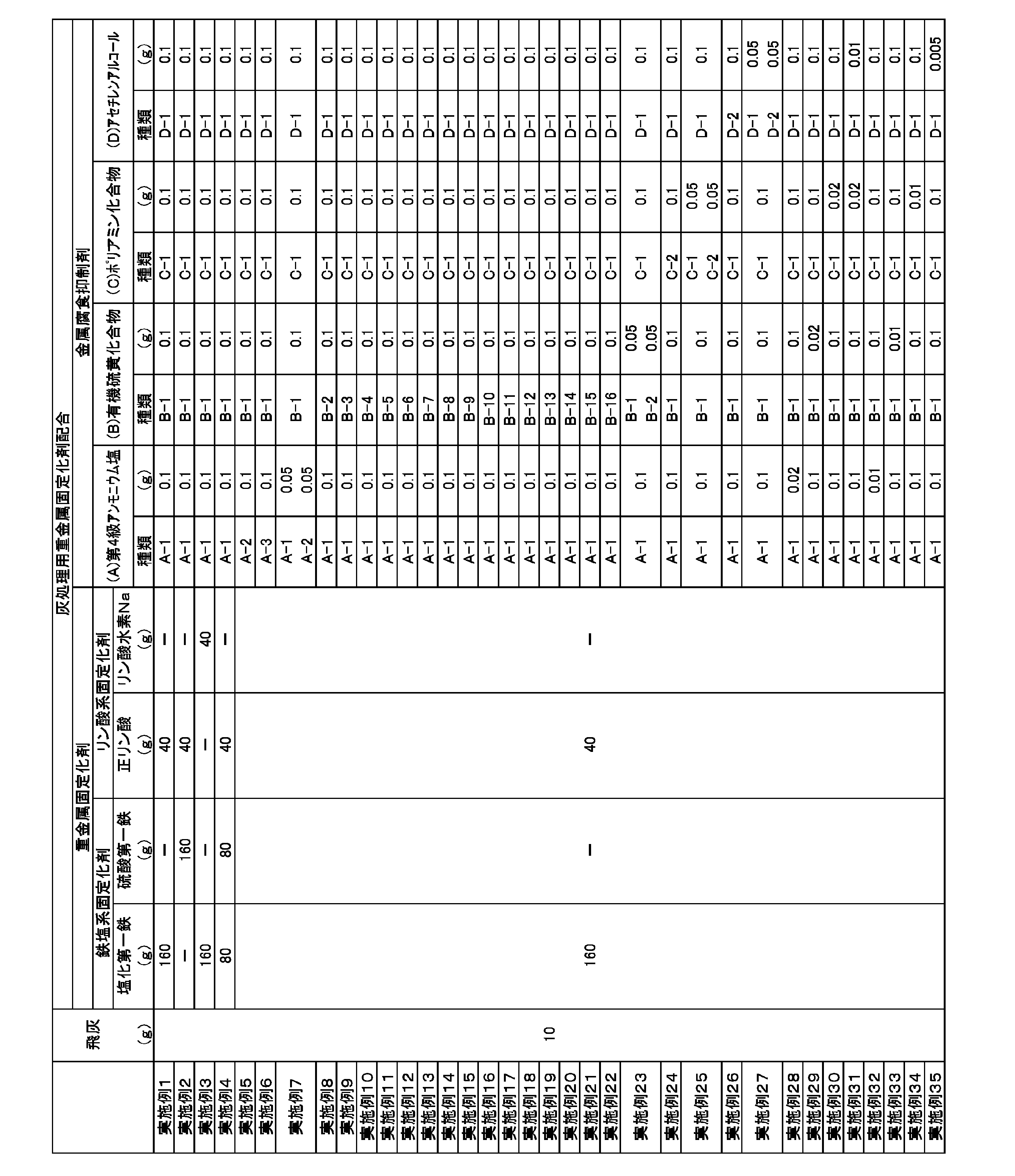
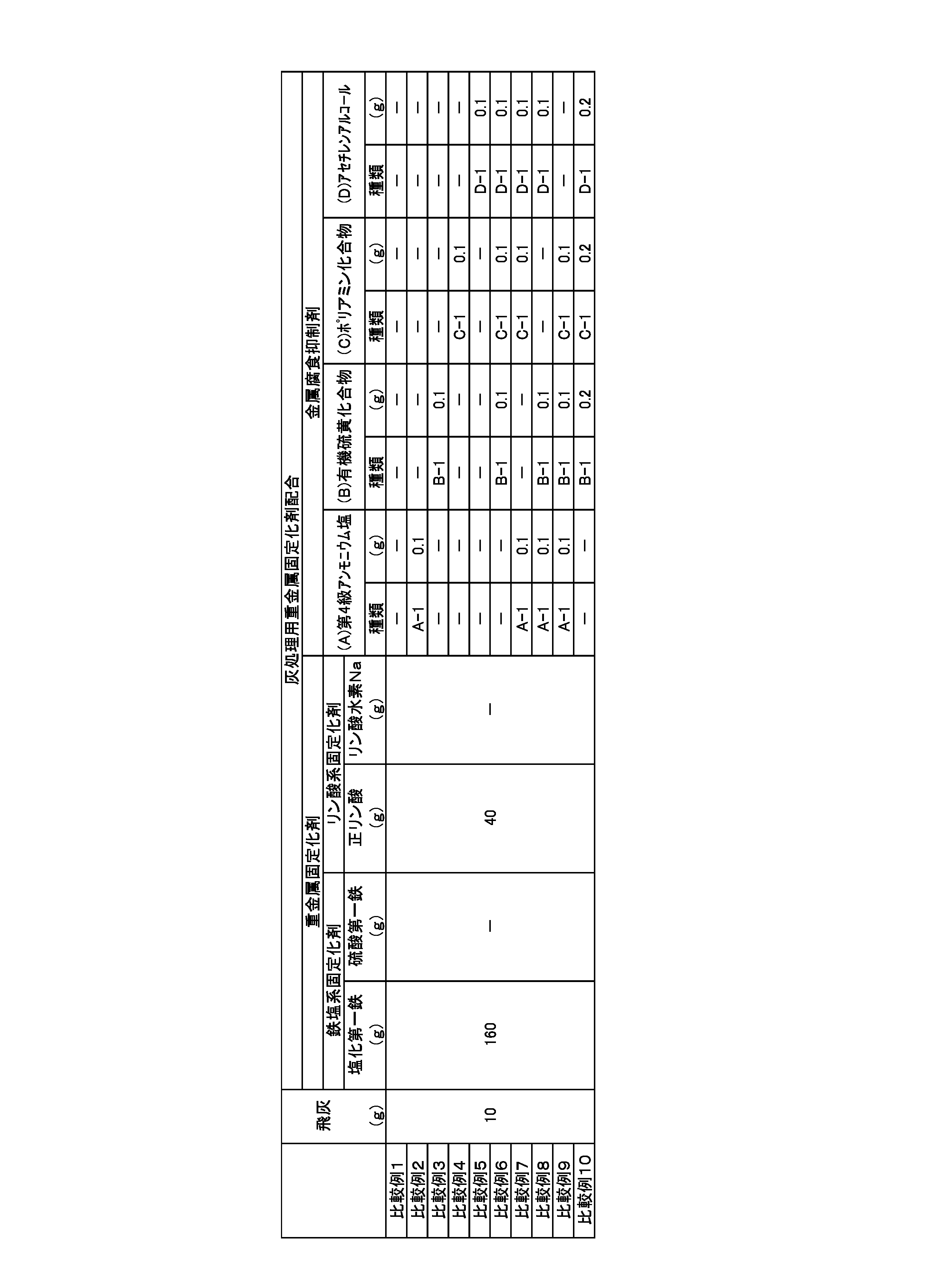
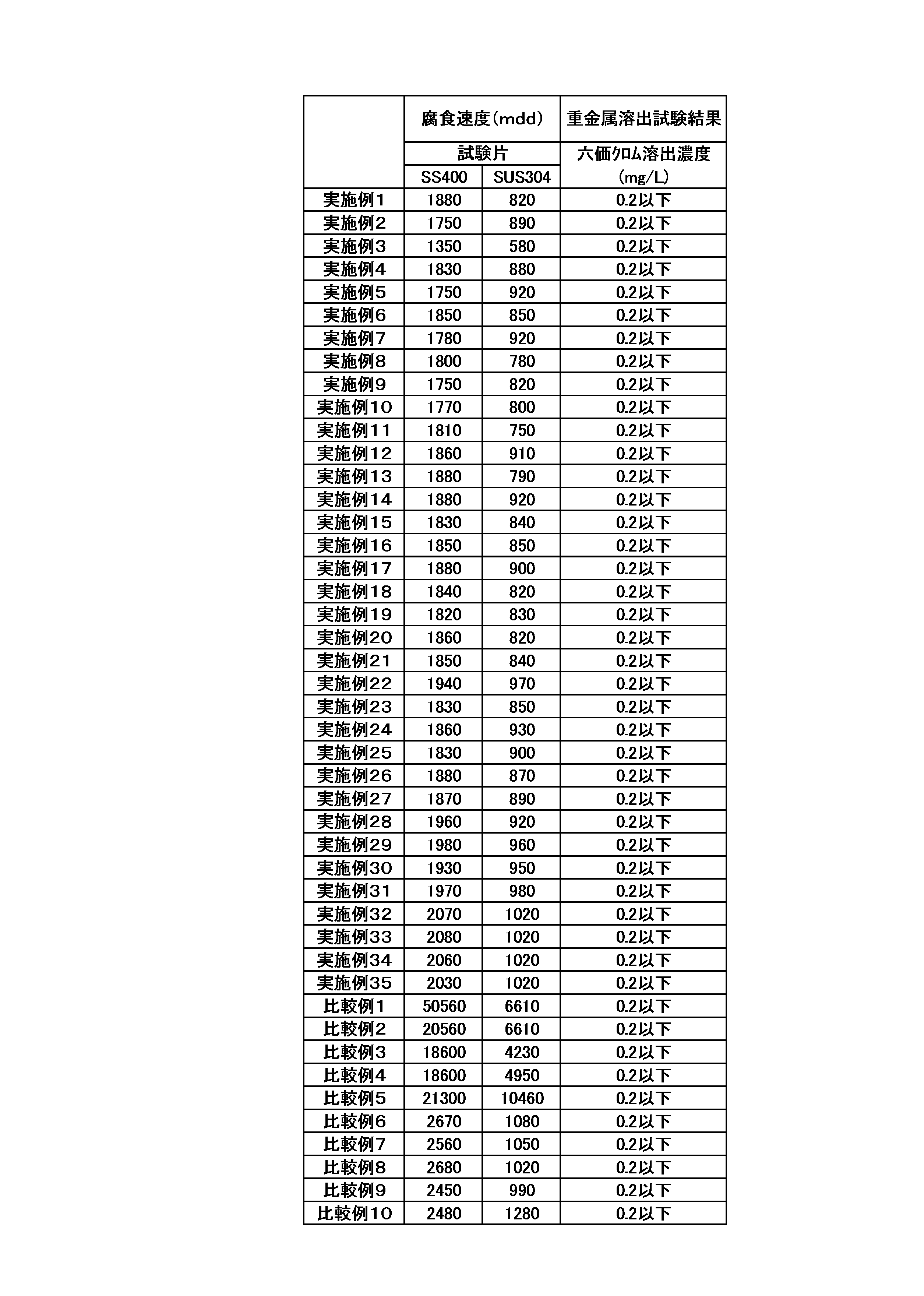
鉄塩系固定化剤水溶液(固形分濃度37%)160gとリン酸系固定化剤水溶液(固形分濃度75%)40gの混合液に焼却プラントから排出される飛灰10gを加え、表1,2の化合物配合例の金属腐食抑制剤成分をさらに配合した試験溶液を60℃に保ちこの試験液溶液にSS400、SUS304の各試験片を2時間浸漬したときの腐食速度を下記の計算式により計算し、結果を表3に示した。

ここで、目標とする腐食速度(mdd)は、SS400の試験片に対しては2100以下、SUS304の試験片に対しては1100以下である。
[重金属溶出試験]
表1,2に示す配合の鉄塩系固定化剤およびリン酸系固定化剤と、(A)第4級アンモニウム塩、(B)有機硫黄化合物、(C)ポリアミン化合物、および(D)アセチレンアルコールの金属腐食抑制剤とからなる灰処理用重金属固定化剤を、飛灰に対して1.4重量%となるように添加すると共に、飛灰に対して25重量%の水を添加して混練した。
表1,2に示す配合の鉄塩系固定化剤およびリン酸系固定化剤と、(A)第4級アンモニウム塩、(B)有機硫黄化合物、(C)ポリアミン化合物、および(D)アセチレンアルコールの金属腐食抑制剤とからなる灰処理用重金属固定化剤を、飛灰に対して1.4重量%となるように添加すると共に、飛灰に対して25重量%の水を添加して混練した。
得られた処理灰について、環境庁告示第13号で定められた溶出試験を行い、溶出液中の重金属(Cr6+:六価クロム)濃度を分析した。溶出試験結果を表3に示した。
[試験結果]
表1~3に示す試験結果から明らかなように、鉄塩系固定化剤およびリン酸系固定化剤に、(A)第4級アンモニウム塩と(B)有機硫黄化合物と(C)ポリアミン化合物と(D)アセチレンアルコールとが配合された、実施例1~35の灰処理用重金属固定化剤は、高い腐食抑制効果が得られる。
表1~3に示す試験結果から明らかなように、鉄塩系固定化剤およびリン酸系固定化剤に、(A)第4級アンモニウム塩と(B)有機硫黄化合物と(C)ポリアミン化合物と(D)アセチレンアルコールとが配合された、実施例1~35の灰処理用重金属固定化剤は、高い腐食抑制効果が得られる。
一方、金属腐食抑制剤が配合されていない比較例1の灰処理用重金属固定化剤は、大きな腐食が生じ、また、(A)第4級アンモニウム塩、(B)有機硫黄化合物、(C)ポリアミン化合物、または(D)アセチレンアルコールだけが添加された比較例2~5の灰処理用重金属固定化剤は、十分な腐食抑制効果を得ることができない。
また、(A)第4級アンモニウム塩、(B)有機硫黄化合物、(C)ポリアミン化合物、(D)アセチレンアルコールのうち、3つの成分が添加された比較例6~9の灰処理用重金属固定化剤は、ある程度の腐食抑制効果は認められるが、目標とする腐食速度(mdd)を得ることができない。
また、(A)第4級アンモニウム塩、(B)有機硫黄化合物、(C)ポリアミン化合物、(D)アセチレンアルコールのうち、(A)第4級アンモニウム塩、(B)有機硫黄化合物、(C)ポリアミン化合物の3つの成分が添加された比較例6の灰処理用重金属固定化剤に対して、前記3つの成分の配合量を2倍にした比較例10の灰処理用重金属固定化剤は、配合量が2倍であるにもかかわらず、目標とする腐食速度(mdd)を得ることができない。
本発明は、その精神または主要な特徴から逸脱することなく、他のいろいろな形態で実施できる。したがって、前述の実施形態はあらゆる点で単なる例示に過ぎず、本発明の範囲は特許請求の範囲に示すものであって、明細書本文には何ら拘束されない。さらに、特許請求の範囲に属する変形や変更は全て本発明の範囲内のものである。
Claims (10)
- リン酸系固定化剤および鉄塩系固定化剤から成る重金属固定化剤と、金属腐食抑制剤とを含む灰処理用重金属固定化剤であって、該金属腐食抑制剤が、(A)第4級アンモニウム塩と、(B)有機硫黄化合物と、(C)ポリアミン化合物と、(D)アセチレンアルコールとを含むことを特徴とする灰処理用重金属固定化剤。
- 前記金属腐食抑制剤が、前記重金属固定化剤100重量部に対し0.1~10重量部含まれることを特徴とする請求項1に記載の灰処理用重金属固定化剤。
- 前記リン酸系固定化剤が、リン酸およびリン酸塩のいずれか一方であることを特徴とする請求項1または2いずれか1項に記載の灰処理用重金属固定化剤。
- 前記鉄塩系固定化剤が、塩化第一鉄および硫酸第一鉄の少なくともいずれか一方であることを特徴とする請求項1~3のいずれか1項に記載の灰処理用重金属固定化剤。
- 前記(A)第4級アンモニウム塩が、トリメチルベンジルアンモニウムクロライド、1,8-ビス(1-ヒドロキシ-1-ベンジルイミダゾリウムクロライド)-2,2’オクタンおよび2-ウンデシル-1-ヒドロキシアルキル-1-ベンジルイミダゾリウムクロライドから選択される1種または2種以上であることを特徴とする請求項1~4のいずれか1項に記載の灰処理用重金属固定化剤。
- 前記(B)有機硫黄化合物が、チオ尿素化合物であることを特徴とする請求項1~5のいずれか1項に記載の灰処理用重金属固定化剤。
- 前記(C)ポリアミン化合物が、ポリアミンスルホン、ポリアリルアミン、ポリジアリルアミン、芳香族ポリアミン、ポリビニルアミン、ポリアルキレンポリアミン、ポリメチレンイミン、ポリアミド、ポリアクリロニトリルおよびポリエチレンイミンから選択される1種または2種以上であることを特徴とする請求項1~6のいずれか1項に記載の灰処理用重金属固定化剤。
- 前記ポリアミンスルホンは、下記式(1)で表される化合物であり、
前記芳香族ポリアミンは、下記式(2)で表される化合物であることを特徴とする請求項7に記載の灰処理用重金属固定化剤。
- 前記(D)アセチレンアルコールが、2-プロピン-1-オール、3-メチル-1-ブチン-3-オール、アセチレングリコールおよびアセチレンチオールから選択される1種または2種以上であることを特徴とする請求項1~8のいずれか1項に記載の灰処理用重金属固定化剤。
- 請求項1~9のいずれか1項に記載の灰処理用重金属固定化剤を、重金属含有灰に添加することを特徴とする灰の処理方法。
Priority Applications (2)
| Application Number | Priority Date | Filing Date | Title |
|---|---|---|---|
| JP2017510959A JP6722658B2 (ja) | 2015-04-06 | 2016-03-31 | 灰処理用重金属固定化剤およびそれを用いた灰の処理方法 |
| CN201680019630.0A CN107427869B (zh) | 2015-04-06 | 2016-03-31 | 灰处理用重金属固定化剂及使用其的灰的处理方法 |
Applications Claiming Priority (2)
| Application Number | Priority Date | Filing Date | Title |
|---|---|---|---|
| JP2015-078071 | 2015-04-06 | ||
| JP2015078071 | 2015-04-06 |
Publications (1)
| Publication Number | Publication Date |
|---|---|
| WO2016163310A1 true WO2016163310A1 (ja) | 2016-10-13 |
Family
ID=57072585
Family Applications (1)
| Application Number | Title | Priority Date | Filing Date |
|---|---|---|---|
| PCT/JP2016/060846 Ceased WO2016163310A1 (ja) | 2015-04-06 | 2016-03-31 | 灰処理用重金属固定化剤およびそれを用いた灰の処理方法 |
Country Status (3)
| Country | Link |
|---|---|
| JP (1) | JP6722658B2 (ja) |
| CN (1) | CN107427869B (ja) |
| WO (1) | WO2016163310A1 (ja) |
Families Citing this family (1)
| Publication number | Priority date | Publication date | Assignee | Title |
|---|---|---|---|---|
| CN111790094A (zh) * | 2020-07-31 | 2020-10-20 | 南通乐尔环保科技有限公司 | 一种飞灰螯合剂及其制备方法和应用 |
Citations (8)
| Publication number | Priority date | Publication date | Assignee | Title |
|---|---|---|---|---|
| US5649895A (en) * | 1996-02-14 | 1997-07-22 | Ashland Inc. | Stabilization of heavy metals in ash |
| JP2000096272A (ja) * | 1998-07-24 | 2000-04-04 | Asahi Kagaku Kogyo Co Ltd | 金属の酸洗浄用腐食抑制剤、それを含んだ洗浄液組成物およびこれを用いる金属の洗浄方法 |
| JP2002155279A (ja) * | 2000-11-22 | 2002-05-28 | Nagoya Cullet Kk | 地盤硬化方法 |
| JP2007302986A (ja) * | 2006-05-15 | 2007-11-22 | Asahi Kagaku Kogyo Co Ltd | 腐食抑制剤、金属酸洗浄液組成物および金属の酸洗浄方法 |
| JP2009078197A (ja) * | 2007-09-25 | 2009-04-16 | Kurita Water Ind Ltd | 重金属固定化剤およびそれを用いた灰の処理方法 |
| JP2009078196A (ja) * | 2007-09-25 | 2009-04-16 | Kurita Water Ind Ltd | 重金属固定化剤およびそれを用いた灰の処理方法 |
| JP2009078198A (ja) * | 2007-09-25 | 2009-04-16 | Kurita Water Ind Ltd | 重金属固定化剤およびそれを用いた灰の処理方法 |
| CN102965119A (zh) * | 2012-11-22 | 2013-03-13 | 中节能六合天融环保科技有限公司 | 一种重金属污染土壤稳定剂的制备方法 |
Family Cites Families (4)
| Publication number | Priority date | Publication date | Assignee | Title |
|---|---|---|---|---|
| MTP932B (en) * | 1982-06-01 | 1986-12-10 | Int Paint Plc | Anti-corrosive point |
| FR2912396B1 (fr) * | 2007-02-09 | 2011-08-26 | Solvay | Procede de production d'un reactif phosphocalcique, reactif obtenu et son utilisation |
| CN101947381B (zh) * | 2009-07-08 | 2015-01-28 | 东曹株式会社 | 重金属处理剂及重金属污染物质的处理方法 |
| CN101905235A (zh) * | 2010-08-09 | 2010-12-08 | 中国科学院生态环境研究中心 | 一种超临界流体提取焚烧飞灰中有害重金属的方法 |
-
2016
- 2016-03-31 JP JP2017510959A patent/JP6722658B2/ja active Active
- 2016-03-31 WO PCT/JP2016/060846 patent/WO2016163310A1/ja not_active Ceased
- 2016-03-31 CN CN201680019630.0A patent/CN107427869B/zh active Active
Patent Citations (8)
| Publication number | Priority date | Publication date | Assignee | Title |
|---|---|---|---|---|
| US5649895A (en) * | 1996-02-14 | 1997-07-22 | Ashland Inc. | Stabilization of heavy metals in ash |
| JP2000096272A (ja) * | 1998-07-24 | 2000-04-04 | Asahi Kagaku Kogyo Co Ltd | 金属の酸洗浄用腐食抑制剤、それを含んだ洗浄液組成物およびこれを用いる金属の洗浄方法 |
| JP2002155279A (ja) * | 2000-11-22 | 2002-05-28 | Nagoya Cullet Kk | 地盤硬化方法 |
| JP2007302986A (ja) * | 2006-05-15 | 2007-11-22 | Asahi Kagaku Kogyo Co Ltd | 腐食抑制剤、金属酸洗浄液組成物および金属の酸洗浄方法 |
| JP2009078197A (ja) * | 2007-09-25 | 2009-04-16 | Kurita Water Ind Ltd | 重金属固定化剤およびそれを用いた灰の処理方法 |
| JP2009078196A (ja) * | 2007-09-25 | 2009-04-16 | Kurita Water Ind Ltd | 重金属固定化剤およびそれを用いた灰の処理方法 |
| JP2009078198A (ja) * | 2007-09-25 | 2009-04-16 | Kurita Water Ind Ltd | 重金属固定化剤およびそれを用いた灰の処理方法 |
| CN102965119A (zh) * | 2012-11-22 | 2013-03-13 | 中节能六合天融环保科技有限公司 | 一种重金属污染土壤稳定剂的制备方法 |
Also Published As
| Publication number | Publication date |
|---|---|
| JP6722658B2 (ja) | 2020-07-15 |
| CN107427869A (zh) | 2017-12-01 |
| CN107427869B (zh) | 2021-02-02 |
| JPWO2016163310A1 (ja) | 2018-03-01 |
Similar Documents
| Publication | Publication Date | Title |
|---|---|---|
| US11530347B2 (en) | Synergized acetals composition and method for scavenging sulfides and mercaptans | |
| JP5691039B2 (ja) | 酸洗浄用腐食抑制剤組成物 | |
| US9334182B2 (en) | Process and composition for the removal of hydrogen sulfide from industrial process fluids | |
| TW201008606A (en) | Agent for purifying soil and/or underground water and purification method | |
| CN101302458A (zh) | 稳定的流体 | |
| JP6722658B2 (ja) | 灰処理用重金属固定化剤およびそれを用いた灰の処理方法 | |
| JP4840312B2 (ja) | 重金属固定化剤およびそれを用いた灰の処理方法 | |
| JP4824925B2 (ja) | キレート剤・有機酸洗浄用腐食抑制剤組成物 | |
| CN103403226A (zh) | 锅炉用防腐剂 | |
| BRPI0415183B1 (pt) | Formulação anti-corrosão e anti-incrustação de sulfeto metálico e método para o tratamento de sistemas aquosos. | |
| JP4867879B2 (ja) | 重金属固定化剤およびそれを用いた灰の処理方法 | |
| JP2006045608A (ja) | 酸洗腐食抑制剤及びそれを用いた耐食性酸洗液 | |
| JP4840311B2 (ja) | 重金属固定化剤およびそれを用いた灰の処理方法 | |
| US9193943B1 (en) | Treatment kit for cleaning substrate surfaces for removal of water and non-water soluble oxides and ionic compounds | |
| ES2896325T3 (es) | Eliminadores de sulfuro de hidrógeno a base de nitrógeno y procedimiento de uso de los mismos | |
| EP4399344A1 (en) | Method and composition for treating dilution steam generator systems | |
| FI62458B (fi) | Korrosionshaemmande agrikulturella aminometylenfosfonsyrasammansaettningar | |
| US20240209291A1 (en) | Aqueous cleaning solution for removal of rouging deposits on media-contacted surfaces of stainless steels, use thereof and process for production thereof | |
| JP2013060517A (ja) | 重金属処理剤、重金属処理剤の製造方法およびそれを用いた重金属含有物の処理方法 | |
| ES2843423A1 (es) | Composición para aumentar la densidad de líquidos | |
| JP2006233287A (ja) | 腐食防止用組成物、及び、腐食防止方法 | |
| CN105200437A (zh) | 一种关于降低常减压装置中高温部位设备腐蚀的助剂及其制备方法 | |
| JP5402449B2 (ja) | クロム含有灰の処理方法 | |
| JP6592430B2 (ja) | 不溶化材、及び不溶化方法 | |
| JP2556656B2 (ja) | 冷却水系における鉄系金属の腐食防止方法及び冷却水系における鉄系金属の腐食防止剤 |
Legal Events
| Date | Code | Title | Description |
|---|---|---|---|
| 121 | Ep: the epo has been informed by wipo that ep was designated in this application |
Ref document number: 16776477 Country of ref document: EP Kind code of ref document: A1 |
|
| ENP | Entry into the national phase |
Ref document number: 2017510959 Country of ref document: JP Kind code of ref document: A |
|
| NENP | Non-entry into the national phase |
Ref country code: DE |
|
| 122 | Ep: pct application non-entry in european phase |
Ref document number: 16776477 Country of ref document: EP Kind code of ref document: A1 |