WO2016157955A1 - 潤滑油組成物 - Google Patents
潤滑油組成物 Download PDFInfo
- Publication number
- WO2016157955A1 WO2016157955A1 PCT/JP2016/051860 JP2016051860W WO2016157955A1 WO 2016157955 A1 WO2016157955 A1 WO 2016157955A1 JP 2016051860 W JP2016051860 W JP 2016051860W WO 2016157955 A1 WO2016157955 A1 WO 2016157955A1
- Authority
- WO
- WIPO (PCT)
- Prior art keywords
- lubricating oil
- oil composition
- mass
- less
- viscosity
- Prior art date
- Legal status (The legal status is an assumption and is not a legal conclusion. Google has not performed a legal analysis and makes no representation as to the accuracy of the status listed.)
- Ceased
Links
- 0 *C(CC(*1*)=[O+])C1=O Chemical compound *C(CC(*1*)=[O+])C1=O 0.000 description 2
Classifications
-
- C—CHEMISTRY; METALLURGY
- C10—PETROLEUM, GAS OR COKE INDUSTRIES; TECHNICAL GASES CONTAINING CARBON MONOXIDE; FUELS; LUBRICANTS; PEAT
- C10M—LUBRICATING COMPOSITIONS; USE OF CHEMICAL SUBSTANCES EITHER ALONE OR AS LUBRICATING INGREDIENTS IN A LUBRICATING COMPOSITION
- C10M171/00—Lubricating compositions characterised by purely physical criteria, e.g. containing as base-material, thickener or additive, ingredients which are characterised exclusively by their numerically specified physical properties, i.e. containing ingredients which are physically well-defined but for which the chemical nature is either unspecified or only very vaguely indicated
-
- C—CHEMISTRY; METALLURGY
- C10—PETROLEUM, GAS OR COKE INDUSTRIES; TECHNICAL GASES CONTAINING CARBON MONOXIDE; FUELS; LUBRICANTS; PEAT
- C10M—LUBRICATING COMPOSITIONS; USE OF CHEMICAL SUBSTANCES EITHER ALONE OR AS LUBRICATING INGREDIENTS IN A LUBRICATING COMPOSITION
- C10M101/00—Lubricating compositions characterised by the base-material being a mineral or fatty oil
- C10M101/02—Petroleum fractions
-
- C—CHEMISTRY; METALLURGY
- C10—PETROLEUM, GAS OR COKE INDUSTRIES; TECHNICAL GASES CONTAINING CARBON MONOXIDE; FUELS; LUBRICANTS; PEAT
- C10M—LUBRICATING COMPOSITIONS; USE OF CHEMICAL SUBSTANCES EITHER ALONE OR AS LUBRICATING INGREDIENTS IN A LUBRICATING COMPOSITION
- C10M133/00—Lubricating compositions characterised by the additive being an organic non-macromolecular compound containing nitrogen
- C10M133/02—Lubricating compositions characterised by the additive being an organic non-macromolecular compound containing nitrogen having a carbon chain of less than 30 atoms
- C10M133/16—Amides; Imides
-
- C—CHEMISTRY; METALLURGY
- C10—PETROLEUM, GAS OR COKE INDUSTRIES; TECHNICAL GASES CONTAINING CARBON MONOXIDE; FUELS; LUBRICANTS; PEAT
- C10M—LUBRICATING COMPOSITIONS; USE OF CHEMICAL SUBSTANCES EITHER ALONE OR AS LUBRICATING INGREDIENTS IN A LUBRICATING COMPOSITION
- C10M135/00—Lubricating compositions characterised by the additive being an organic non-macromolecular compound containing sulfur, selenium or tellurium
- C10M135/08—Lubricating compositions characterised by the additive being an organic non-macromolecular compound containing sulfur, selenium or tellurium containing a sulfur-to-oxygen bond
- C10M135/10—Sulfonic acids or derivatives thereof
-
- C—CHEMISTRY; METALLURGY
- C10—PETROLEUM, GAS OR COKE INDUSTRIES; TECHNICAL GASES CONTAINING CARBON MONOXIDE; FUELS; LUBRICANTS; PEAT
- C10M—LUBRICATING COMPOSITIONS; USE OF CHEMICAL SUBSTANCES EITHER ALONE OR AS LUBRICATING INGREDIENTS IN A LUBRICATING COMPOSITION
- C10M135/00—Lubricating compositions characterised by the additive being an organic non-macromolecular compound containing sulfur, selenium or tellurium
- C10M135/32—Heterocyclic sulfur, selenium or tellurium compounds
- C10M135/36—Heterocyclic sulfur, selenium or tellurium compounds the ring containing sulfur and carbon with nitrogen or oxygen
-
- C—CHEMISTRY; METALLURGY
- C10—PETROLEUM, GAS OR COKE INDUSTRIES; TECHNICAL GASES CONTAINING CARBON MONOXIDE; FUELS; LUBRICANTS; PEAT
- C10M—LUBRICATING COMPOSITIONS; USE OF CHEMICAL SUBSTANCES EITHER ALONE OR AS LUBRICATING INGREDIENTS IN A LUBRICATING COMPOSITION
- C10M137/00—Lubricating compositions characterised by the additive being an organic non-macromolecular compound containing phosphorus
-
- C—CHEMISTRY; METALLURGY
- C10—PETROLEUM, GAS OR COKE INDUSTRIES; TECHNICAL GASES CONTAINING CARBON MONOXIDE; FUELS; LUBRICANTS; PEAT
- C10M—LUBRICATING COMPOSITIONS; USE OF CHEMICAL SUBSTANCES EITHER ALONE OR AS LUBRICATING INGREDIENTS IN A LUBRICATING COMPOSITION
- C10M139/00—Lubricating compositions characterised by the additive being an organic non-macromolecular compound containing atoms of elements not provided for in groups C10M127/00 - C10M137/00
Definitions
- the present invention relates to a lubricating oil composition, particularly a lubricating oil composition suitable for a belt-type continuously variable transmission.
- the present invention provides a lubricating oil composition that can increase the viscosity index even when the addition amount of the viscosity index improver is small, and can achieve both fuel saving and unit durability.
- the purpose is to do.
- the present inventors have applied a wax isomerized base oil exhibiting high viscosity index characteristics to a lubricating oil composition, thereby achieving high fuel efficiency and unit member durability due to a significant reduction in viscosity. Further, the inventors have found that both economic efficiency can be achieved and have completed the present invention.
- the present invention uses a wax isomerized base oil having a kinematic viscosity at 100 ° C. of 2.5 mm 2 / s to 4.5 mm 2 / s and a viscosity index of 110 or more, and kinematic viscosity at 100 ° C.
- a wax isomerized base oil having a kinematic viscosity at 100 ° C. of 2.5 mm 2 / s to 4.5 mm 2 / s and a viscosity index of 110 or more, and kinematic viscosity at 100 ° C.
- There 4.0 mm 2 / s or more relates to a lubricating oil composition characterized in that it is 7.5 mm 2 / s or less.
- the wax isomerized base oil is a light base oil having a viscosity index of 110 or more and a kinematic viscosity at 100 ° C. of 2.5 mm 2 / s or more and less than 3.3 mm 2 / s, a viscosity A medium viscosity base oil having an index of 125 or more and a kinematic viscosity at 100 ° C. of 3.3 mm 2 / s or more and less than 4.5 mm 2 / s, and a viscosity index of 135 or more and a kinematic viscosity at 100 ° C.
- the above-mentioned lubrication characterized by being obtained by combining one or more of various wax isomerized base oils selected from high-viscosity base oils of 4.5 mm 2 / s or more and 10.0 mm 2 / s or less It relates to an oil composition.
- the present invention relates to the above lubricating oil composition characterized by containing thiadiazole at 0.05% by mass or more based on the total amount of the composition.
- the present invention further includes a boric acid-modified alkenyl succinimide-based dispersant in an amount of 50 mass ppm or more and 400 mass ppm or less in terms of boron based on the total composition, and a calcium sulfonate detergent in terms of the total mass of the composition. 100 mass ppm or more and 500 mass ppm or less in terms of conversion, and the ratio of boron element conversion mass ([B]) / calcium element conversion mass ([Ca]) ([B] / [Ca]) is 0.1 to 3
- the lubricating oil composition is characterized by being 0.0.
- the present invention also relates to the above lubricating oil composition, wherein the calcium sulfonate detergent has a base number of 300 to 600 mgKOH / g.
- the present invention further relates to the above lubricating oil composition characterized by further containing 0.5% by mass or more of an aliphatic amide compound represented by the following general formula (1) and / or (2).
- R 1 is an alkyl or alkenyl group having 10 to 30 carbon atoms
- R 2 and R 3 are each independently hydrogen or an alkyl group having 1 to 3 carbon atoms
- R 4 is an alkyl group having 1 to 4 carbon atoms.
- R 5 and R 6 are each independently hydrogen or an alkyl group having 1 to 3 carbon atoms
- R 7 is hydrogen or an alkyl or alkenyl group having 1 to 30 carbon atoms
- k is 0 to 6
- m Represents 0 to 2
- n, p and r each represents an integer of 0 to 1.
- R 1 and R 2 are each independently an alkyl group or an alkenyl group having 10 to 30 carbon atoms, and are a linear group or a linear group having one methyl group as a substituent.
- m represents an integer of 3 to 30.
- X represents individually hydrogen, R 3 —CO—, or R 4 —CO—NH— (CH 2 ) n —, wherein R 3 and R 4 each represent carbon (It is an alkyl group or an alkenyl group of several tens to thirty, and n is an integer of 1 to 3.)
- the present invention relates to the above lubricating oil composition, further comprising 0.05 to 0.10% by mass of a phosphorus-based additive in terms of phosphorus element.
- the present invention also relates to the lubricating oil composition described above, wherein the lubricating oil composition is used for a chain belt type continuously variable transmission.
- the lubricating base oil according to the present invention is a wax isomerized base oil.
- Wax isomerized base oil broadly means those obtained by isomerizing petroleum wax and the like, and any wax isomerized base oil can be used in the present invention as long as the following properties are satisfied.
- the lubricating base oil according to the present invention may be a mixture, and in the case of being a mixture, the mixture may satisfy the following properties.
- the kinematic viscosity at 100 ° C. of the wax isomerized base oil according to the present invention needs to be 2.5 mm 2 / s or more, preferably 2.7 mm 2 / s or more, more preferably 3 mm 2 / s or more. .
- the kinematic viscosity at 100 ° C. is required to be less 4.5 mm 2 / s, preferably not more than 4.2 mm 2 / s, more preferably at most 4.0 mm 2 / s.
- a lubricating oil composition having excellent low-temperature viscosity characteristics can be obtained.
- a light base oil having a kinematic viscosity at 100 ° C. of 2.5 mm 2 / s or more and less than 3.3 mm 2 / s and a viscosity index of 110 or more, kinematic at 100 ° C.
- Medium viscosity base oil having a viscosity of 3.3 mm 2 / s or more and less than 4.5 mm 2 / s and a viscosity index of 125 or more, a kinematic viscosity at 100 ° C.
- each of the light base oil and the medium viscosity base oil may be a single base oil or a mixture with another base oil.
- the said high viscosity base oil it can be set as the wax isomerization base oil which concerns on this invention by setting it as a mixture with the said light base oil and / or the said medium viscosity base oil.
- the viscosity index of the wax isomerized base oil according to the present invention needs to be 110 or more, preferably 120 or more, and more preferably 130 or more. By setting the viscosity index to 110 or more, it is possible to obtain a composition exhibiting favorable viscosity characteristics from a low temperature to a high temperature.
- the upper limit is not particularly limited, but is usually 200 or less, and preferably 160 or less. If the viscosity index is too high, the viscosity at low temperatures tends to increase, which is not preferable.
- the pour point of the wax isomerized base oil is preferably ⁇ 10 ° C. or lower, more preferably ⁇ 12.5 ° C. or lower, still more preferably ⁇ 15 ° C. or lower, and particularly preferably ⁇ 20.0 ° C. or lower.
- the lower limit is not particularly limited, but if it is too low, it is preferably ⁇ 50 ° C. or higher, more preferably ⁇ 45 ° C. or higher, from the viewpoint of lowering the viscosity index and economical efficiency in the dewaxing process. More preferably, it is ⁇ 40 ° C. or higher, most preferably ⁇ 37.5 ° C. or higher.
- a lubricating oil composition having excellent low-temperature viscosity characteristics can be obtained.
- a sufficient viscosity index cannot be obtained.
- the dewaxing step any of solvent dewaxing and contact dewaxing steps may be applied.
- the contact dewaxing step is particularly preferable because the low temperature viscosity characteristics can be further improved.
- the wax isomerized base oil is preferably 20 or less for% C N of the wax isomerized base oil, more preferably 15 or less, more preferably 12 or less. Further, it is preferably 2 or more, more preferably 3 or more, further preferably 5 or more, and particularly preferably 7 or more in that the metal fatigue life can be further increased.
- the wax isomerized base oil is preferably 1 or less for% C A of the wax isomerized base oil, more preferably 0.5 or less, more preferably 0.1 or less, and most preferably 0 . If it exceeds 1, the heat and oxidation stability will decrease.
- % C P ,% C N and% C A are the total carbon number of paraffin carbons determined by a method (ndM ring analysis) based on ASTM D 3238-85, respectively. The percentage of the total number of naphthene carbons to the total number of carbons, and the percentage of the total number of aromatic carbons to the total number of carbons.
- the content of the saturated component of the wax isomerized base oil component is not particularly limited, but is preferably 90% by mass or more, more preferably 94% by mass in that the thermal / oxidation stability and the viscosity temperature characteristic can be further improved. % Or more, more preferably 98% by mass or more, particularly preferably 99% by mass or more, and most preferably 100% by mass.
- the wax isomerized base oil may be only one kind of mineral oil or a mixture of two or more kinds of mineral oils, but the mixture is preferable because the viscosity index can be increased.
- the wax isomerized base oil has the above properties, its production method is not particularly limited.
- the wax selected from (i) to (iii) shown below is hydroisomerized to produce the wax isomerized base oil.
- Wax slack wax, etc. obtained by the lubricating oil dewaxing process and / or synthetic wax (Fischer-Tropsch wax, GTL wax, etc.) obtained by the gas-liquid (GTL) process, etc.
- Mild hydrocracking treatment oil of one or more mixed waxes selected from the above i)
- iii Two or more mixed oils selected from the above (i) and (ii)
- the contact dewaxing treatment is preferable in that the thermal / oxidation stability and the low-temperature viscosity characteristics can be further enhanced, and the fatigue prevention performance of the lubricating oil composition can be further enhanced. Moreover, you may further provide a solvent refinement
- catalytic dewaxing the oil described in (i) to (iii) above is reacted with hydrogen in the presence of an appropriate dewaxing catalyst under conditions effective to lower the pour point.
- an appropriate dewaxing catalyst under conditions effective to lower the pour point.
- the dewaxing catalyst is not particularly limited as long as it can reduce the pour point of the oils described in (i) to (iii) above. Those capable of obtaining the desired wax isomerized base oil in a yield are preferred.
- a shape selective molecular sieve molecular sieve
- SAPO a aluminophosphates
- These molecular sieves are preferably used in combination with a catalytic metal component, and more preferably in combination with a noble metal.
- a preferable combination is, for example, a composite of platinum and H-mordenite.
- the dewaxing conditions are not particularly limited, but the temperature is preferably 200 to 500 ° C., and the hydrogen pressure is preferably 10 to 200 bar (1 MPa to 20 MPa). Also, in the case of flow-through reactor, H2 processing speed is preferably 0.1 ⁇ 10kg / l / hr, LHSV is preferably 0.1 ⁇ 10h -1, more preferably 0.2 ⁇ 2.0 h -1.
- Dewaxing refers to a substance having an initial boiling point of 350 to 400 ° C., usually 40% by mass or less, preferably 30% by mass or less, contained in the oils described in (i) to (iii). It is preferable to carry out the conversion to a substance having a boiling point below the point.
- various base oils can be mixed in addition to the wax isomerized base oil.
- Various base oils include mineral base oils and / or synthetic base oils.
- the mineral base oil include mineral base oils other than wax isomerized base oil.
- synthetic base oils include polybutene or hydrides thereof; poly- ⁇ -olefins such as 1-octene oligomers, 1-decene oligomers and 1-dodecene oligomers or hydrides thereof; ditridecyl glutarate , Di-2-ethylhexyl adipate, diisodecyl adipate, ditridecyl adipate, and di-2-ethylhexyl sebacate; neopentyl glycol ester, trimethylolpropane caprylate, trimethylolpropane pelargonate, pentaerythritol-2-ethyl Examples thereof include polyol esters such as hexanoate and pentaerythritol pelargonate; aromatic synthetic oils such as
- these mineral oil base oil and / or synthetic base oil examples include one or more mineral base oils, one or more synthetic base oils, a mixed oil of one or more mineral base oils and one or more synthetic base oils, and the like.
- the content of the other base oil in the case of mixing the other base oil in the present invention needs to be 30% by mass or less based on the mixed base oil of the wax isomerized base oil component and the other base oil component. Preferably, it is 20 mass% or less, More preferably, it is 10 mass% or less, More preferably, it is 7 mass% or less.
- the kinematic viscosity at 100 ° C. of the mixed base oil composed of the wax isomerized base oil and other base oils is the same as that of the base oil wax isomerized base oil alone. The same applies to the viscosity index.
- the lubricating oil composition of the present invention preferably contains thiadiazole.
- the thiadiazole according to the present invention is not particularly limited in structure.
- a 1,3,4-thiadiazole compound represented by the following general formula (3) a 1,2,4-thiadiazole represented by the general formula (4)
- examples thereof include compounds and 1,4,5-thiadiazole compounds represented by the general formula (5).
- R 1 to R 6 may be the same or different and each represents a hydrogen atom or a hydrocarbon group having 1 to 30 carbon atoms, and a, b, c, d, e And f each represents an integer of 0 to 8.
- hydrocarbon group having 1 to 30 carbon atoms examples include an alkyl group, a cycloalkyl group, an alkylcycloalkyl group, an alkenyl group, an aryl group, an alkylaryl group, and an arylalkyl group.
- thiadiazole compounds include 2,5-bis (n-hexyldithio) -1,3,4-thiadiazole, 2,5-bis (n-octyldithio) -1,3,4-thiadiazole 2,5-bis (n-nonyldithio) -1,3,4-thiadiazole, 2,5-bis (1,1,3,3-tetramethylbutyldithio) -1,3,4-thiadiazole, 3, 5-bis (n-hexyldithio) -1,2,4-thiadiazole, 3,5-bis (n-octyldithio) -1,2,4-thiadiazole, 3,5-bis (n-nonyldithio) -1 , 2,4-thiadiazole, 3,5-bis (1,1,3,3-tetramethylbutyldithio) -1,2,4-thiadiazole, 4,5-bis (n-hexyldithio) -1
- the content of thiadiazole is preferably 0.05% by mass or more and 0.1% by mass or more based on the total amount of the lubricating oil composition from the viewpoint of improvement of the friction coefficient between metals and wear and seizure resistance. More preferred. On the other hand, it is preferable that it is 1.5 mass% or less, More preferably, it is 1.2 mass% or less, More preferably, it is 1 mass% or less, Most preferably, it is 0.5 mass% or less. If it exceeds 1.5% by mass, the seizure resistance is adversely decreased, which is not preferable.
- the lubricating oil composition of the present invention preferably contains a boric acid-modified alkenyl succinimide dispersant.
- the boric acid-modified alkenyl succinimide dispersant means an alkenyl succinimide dispersant modified with boric acid, but the production method is not particularly limited as long as the final product is the same.
- the succinimide-based dispersant is not particularly limited and those usually used can be used. One of these compounds may be used alone, or a mixture of two or more compounds in an arbitrary mixing ratio may be used.
- alkenyl succinimide examples include compounds represented by the following general formula (6) or (7).
- R 1 , R 2 and R 3 each independently represents an alkenyl group having 40 to 400 carbon atoms, preferably 60 to 350 carbon atoms, and p is 1 to 5, Preferably, it represents a number from 2 to 4, and q represents a number from 0 to 4, preferably from 1 to 3.
- the method for producing this succinimide is not limited in any way.
- a polyolefin such as propylene oligomer, polybutene, ethylene-propylene copolymer or the like
- maleic anhydride to obtain alkenyl succinic anhydride
- diethylenetriamine is obtained.
- polyamines such as triethylenetetramine, tetraethylenepentamine, pentaethylenehexamine, and the like.
- the succinimide is added with a so-called monotype succinimide as represented by the general formula (6) in which succinic anhydride is added to one end of the polyamine, and succinic anhydride is added to both ends of the polyamine.
- succinic anhydride is added to one end of the polyamine
- succinic anhydride is added to both ends of the polyamine.
- bis-type succinimides represented by the general formula (7), any of which can also be used as a mixture thereof.
- the alkenyl group may be linear or branched, but is preferably a branched alkyl group derived from an olefin oligomer such as propylene, 1-butene or isobutylene, or a co-oligomer of ethylene and propylene.
- a branched alkenyl group may be mentioned.
- the carbon number of the alkenyl group is usually 40 to 400, preferably 60 to 350. If the number of carbon atoms is less than 40, the solubility in the base oil may be reduced, whereas if it exceeds 400, the low-temperature fluidity of the lubricating oil composition may be deteriorated.
- the content of the boric acid-modified alkenyl succinimide dispersant is preferably 50 mass ppm or more, more preferably 70 mass ppm or more, and further preferably 100 mass ppm or more in terms of boron based on the total composition. By setting it to 50 mass ppm or more, a high coefficient of friction between metals can be obtained. On the other hand, it is preferably 400 mass ppm or less, more preferably 350 mass ppm or less, and further preferably 300 mass ppm or less. It can prevent that boric acid isolate
- the lubricating oil composition of the present invention preferably contains a calcium sulfonate detergent.
- the calcium sulfonate detergent for example, a calcium metal salt of an alkyl aromatic sulfonic acid obtained by sulfonating an alkyl aromatic compound having a weight average molecular weight of 300 to 1500, preferably 400 to 700 is used. it can.
- alkyl aromatic sulfonic acid examples include so-called petroleum sulfonic acid and synthetic sulfonic acid.
- petroleum sulfonic acids include those obtained by sulfonating alkyl aromatic compounds of a lubricating oil fraction of mineral oil, and so-called mahoganic acid that is by-produced during white oil production.
- synthetic sulfonic acids include sulfonation of alkylbenzenes having linear or branched alkyl groups, which are produced as a by-product from an alkylbenzene production plant that is a raw material for detergents or obtained by alkylating polyolefins to benzene.
- sulfonated alkylnaphthalene such as dinonylnaphthalene.
- the sulfonating agent for sulfonating these alkyl aromatic compounds is not particularly limited, but usually fuming sulfuric acid or sulfuric anhydride is used.
- the base number of the calcium sulfonate detergent is not particularly limited, but is preferably 300 to 600 mgKOH / g, more preferably 350 to 550 mgKOH / g, and still more preferably 400 to 500 mgKOH / g, from the viewpoint of ensuring oxidation stability. .
- the content of the calcium sulfonate detergent is preferably 100 mass ppm or more, more preferably 150 mass ppm or more, and even more preferably 200 mass ppm or more in terms of the total amount of the composition, in terms of calcium element.
- 500 mass ppm or less is preferable, 450 mass ppm or less is more preferable, and 400 mass ppm or less is more preferable.
- the boron element equivalent mass of boric acid-modified alkenyl succinimide dispersant ([[ B]) and the calcium element equivalent mass ([Ca]) ratio ([B] / [Ca]) of the calcium sulfonate detergent is preferably 0.1 or more, more preferably 0.3 or more, and 0 .5 is more preferred. On the other hand, 3.0 or less is preferable, 2.5 or less is more preferable, and 2.0 or less is more preferable.
- the lubricating oil composition of the present invention preferably further contains an aliphatic amide compound represented by the following general formula (1) or (2).
- R 1 is an alkyl group or alkenyl group having 10 to 30 carbon atoms, and is a straight chain or a straight chain having one methyl group as a substituent.
- R 2 and R 3 each independently represent hydrogen or an alkyl group having 1 to 3 carbon atoms, with hydrogen being particularly preferred.
- R 4 is an alkylene group having 1 to 4 carbon atoms, and an alkylene group having 2 carbon atoms is particularly preferable.
- R 5 and R 6 each independently represent hydrogen or an alkyl group having 1 to 3 carbon atoms, with hydrogen being particularly preferred.
- R 7 is hydrogen or an alkyl group or alkenyl group having 1 to 30 carbon atoms, and is preferably a linear alkyl group or alkenyl group having 10 to 30 carbon atoms.
- K represents 0 to 6, preferably 1 to 4
- m represents 0 to 2
- n, p and r each represents an integer of 0 to 1.
- R 1 and R 7 each have 10 or more carbon atoms, preferably 12 or more, more preferably 16 or more, and still more preferably 18 or more.
- the carbon number of R 1 and R 7 is 30 or less, preferably 26 or less, and more preferably 24 or less.
- R 1 and R 7 are preferably linear alkyl groups or alkenyl groups, but more preferably linear alkyl groups or alkenyl groups having a methyl group at the ⁇ -position of the carbonyl group.
- R 1 and R 7 may be the same or different, but are preferably the same.
- k is preferably 2 or more, and preferably 4 or less.
- m is preferably 0 or 1, and most preferably 0.
- p is preferably 1, and r is preferably 0.
- the aliphatic amide compound represented by the general formula (1) is preferably a fatty acid diamide, and particularly preferably a fatty acid polyamine diamide (for example, polyalkylene polyamine diisostearic acid amide).
- R 1 and R 2 are each independently an alkyl group or an alkenyl group having 10 to 30 carbon atoms, and are a linear group or a linear group having one methyl group as a substituent.
- m represents an integer of 3 to 30.
- X individually represents hydrogen, R 3 —CO—, or R 4 —CO—NH— (CH 2 ) n —.
- R 3 and R 4 are each independently an alkyl or alkenyl group having 10 to 30 carbon atoms, and n is an integer of 1 to 3.
- R 1 and R 2 each have 10 or more carbon atoms, preferably 12 or more, more preferably 14 or more, and still more preferably 16 or more.
- the carbon number of R 1 and R 2 is 30 or less, preferably 26 or less, and more preferably 24 or less.
- R 1 and R 2 are preferably a linear alkyl group or an alkenyl group, but more preferably a linear alkyl group or alkenyl group having a methyl group at the ⁇ -position of the carbonyl group.
- R 1 and R 2 are preferably the same as each other.
- M is an integer of 3 to 30, preferably 3 to 20, and more preferably 3 to 10. By doing so, a high belt noise prevention property can be exhibited.
- X represents a hydrogen atom, R 3 —CO—, or R 4 —CO—NH— (CH 2 ) n —.
- R 3 and R 4 are each independently an alkyl group or an alkenyl group, and the carbon number thereof is 10 to 30, preferably 12 to 26, more preferably 14 to 24, and still more preferably 16 to 22.
- N is an integer of 1 to 3, preferably 2.
- X in the structural unit —NX— (CH 2 ) 2 — in the formula (2) may be the same as or different from each other. At least one X of the m structural units is preferably R 3 —CO— or R 4 —CO—NH— (CH 2 ) n —.
- R 3 and R 4 are a plurality of R 3 s , a plurality of R 4 s , a plurality of R 4 s , or a combination of R 3 and R 4 . In any case, they may be the same or different.
- R 1 represents R 1 in formula (2).
- Preferable examples of R 1 include C 17 H 35 , for example.
- the content of the aliphatic amide compound represented by the general formula (1) and / or (2) is preferably 0.5% by mass or more, more preferably 1.0% by mass or more based on the total amount of the composition. 1.2 mass% or more is more preferable. On the other hand, it is preferably 3.0% by mass or less, more preferably 2.0% by mass or less, and further preferably 1.5% by mass or less.
- the lubricating oil composition of the present invention preferably contains a phosphorus additive (phosphorous wear inhibitor).
- the phosphorus additive is not particularly limited as long as it contains phosphorus in the molecule.
- phosphate monoesters, phosphate diesters, phosphate phosphates having a hydrocarbon group having 1 to 30 carbon atoms can be used.
- hydrocarbon group having 1 to 30 carbon atoms include an alkyl group, a cycloalkyl group, an alkenyl group, an alkyl-substituted cycloalkyl group, an aryl group, an alkyl-substituted aryl group, and an arylalkyl group.
- One type or two or more types can be arbitrarily blended.
- phosphites or phosphate esters having an alkyl group having 4 to 20 carbon atoms or an (alkyl) aryl group having 6 to 12 carbon atoms are preferable.
- one or a mixture of two or more selected from a phosphite having a C 4-20 alkyl group and a phosphite having a C 6-12 (alkyl) aryl group is more preferable.
- phosphites having a (alkyl) aryl group having 6 to 7 carbon atoms and / or phosphites having an alkyl group having 4 to 8 carbon atoms such as phenyl phosphite are more preferred.
- the alkyl group may be linear, but is more preferably branched. This is because the friction coefficient between metals is higher when the number of carbon atoms is smaller and when it is branched.
- the phosphorus additive content is preferably 0.005 to 0.10% by mass as the phosphorus element concentration. It is preferably 0.005% by mass or more, more preferably 0.01% by mass or more, and further preferably 0.02% by mass or more from the viewpoint that the wear prevention property of the metal material and the friction coefficient between metals can be further increased. It is. On the other hand, it is preferably 0.10% by mass or less, more preferably 0.08% by mass or less, and particularly preferably 0.06% by mass or less. If it exceeds 0.10% by mass, the oxidation stability of the lubricating oil composition may be reduced, and adverse effects on the sealing material and the like may be adversely affected.
- the ratio of the sulfur atom equivalent mass ([S]) of the sulfur content in the composition to the phosphorus atom equivalent mass ([P]) of the phosphorus content in the composition is preferably 3.0 to 5.0.
- a known lubricating oil additive such as a viscosity index improver, an extreme pressure additive, an antioxidant, a corrosion inhibitor, an antifoaming agent, a colorant is used for the purpose of further enhancing the performance.
- Various additives represented by the above can be blended singly or in combination.
- Kinematic viscosity at 100 ° C. of the lubricating oil composition of the present invention is required to be 4.0 mm 2 / s or more, preferably at least 4.5 mm 2 / s, more preferably not less than 5.0 mm 2 / s .
- the kinematic viscosity at 100 ° C. is required to be less 7.5 mm 2 / s, preferably not more than 7.0 mm 2 / s, more preferably at most 6.5 mm 2 / s.
- a lubricating oil composition having excellent low-temperature viscosity characteristics can be obtained.
- the lubricating oil composition of the present invention can be suitably used particularly for a chain belt type continuously variable transmission.
- Lubricating oil compositions having the compositions shown in Table 1 were prepared. The ratio (volume%) of the base oil is based on the total amount of the base oil, and the added amount (mass%) of each additive is based on the total amount of the composition. The properties of each lubricating oil composition were evaluated by the following test and listed in Table 1.
Landscapes
- Chemical & Material Sciences (AREA)
- Chemical Kinetics & Catalysis (AREA)
- General Chemical & Material Sciences (AREA)
- Oil, Petroleum & Natural Gas (AREA)
- Organic Chemistry (AREA)
- Lubricants (AREA)
Abstract
粘度指数向上剤の添加量が少量であっても高粘度指数化を実施でき、大幅な低粘度化による高い省燃費性とユニット部材耐久性および経済性を両立することができる潤滑油組成物として、100℃における動粘度が2.5mm2/s以上、4.5mm2/s以下でありかつ粘度指数が110以上であるワックス異性化基油を用い、100℃における動粘度が4.0mm2/s以上、7.5mm2/s以下であることを特徴とする潤滑油組成物が提供される。
Description
本発明は、潤滑油組成物、特にベルト式無段変速機に好適な潤滑油組成物に関する。
近年、自動車には省燃費化が求められており、潤滑油にも撹拌ロス低減を目的とした低粘度化要求が高まっている。一方で低粘度化を実施すると、ユニット部材間に介在する潤滑油膜が薄くなる高温域において部材の金属接触に伴う異常摩耗や焼き付きを生じ、ユニット部材の耐久性低下を引き起こす恐れがある。そのため、高温域での粘度を変えずに常用温度域を低粘度化する高粘度指数化を実施することで省燃費性とユニット耐久性が両立可能であることは広く知られている。
高粘度指数化を実現するには、例えばPMA(ポリメタクリレート)タイプの粘度指数向上剤を適用することが有効である(例えば特許文献1、2)。しかし、粘度指数向上剤の適用はコスト増につながるため、経済性の観点から粘度指数向上剤の添加量はできるだけ少ないことが望ましい。
高粘度指数化を実現するには、例えばPMA(ポリメタクリレート)タイプの粘度指数向上剤を適用することが有効である(例えば特許文献1、2)。しかし、粘度指数向上剤の適用はコスト増につながるため、経済性の観点から粘度指数向上剤の添加量はできるだけ少ないことが望ましい。
本発明は、以上のような事情に鑑み、粘度指数向上剤の添加量が少量であっても高粘度指数化を実施でき、省燃費性とユニット耐久性が両立可能な潤滑油組成物を提供することを目的とする。
本発明者らは前記課題について鋭意研究した結果、潤滑油組成物に高粘度指数特性を示すワックス異性化基油を適用することにより、大幅な低粘度化による高い省燃費性とユニット部材耐久性および経済性を両立することができることを見出し、本発明を完成するに至った。
すなわち、本発明は、100℃における動粘度が2.5mm2/s以上、4.5mm2/s以下でありかつ粘度指数が110以上であるワックス異性化基油を用い、100℃における動粘度が4.0mm2/s以上、7.5mm2/s以下であることを特徴とする潤滑油組成物に関する。
また、本発明は、前記ワックス異性化基油が、粘度指数が110以上でありかつ100℃における動粘度が2.5mm2/s以上、3.3mm2/s未満である軽質基油、粘度指数が125以上でありかつ100℃における動粘度が3.3mm2/s 以上、4.5mm2/s未満である中粘度基油、および粘度指数が135以上でありかつ100℃における動粘度が4.5mm2/s以上、10.0mm2/s以下である高粘度基油から選ばれる各種ワックス異性化基油の1種又は2種以上を組み合わせて得られることを特徴とする前記の潤滑油組成物に関する。
また、本発明は、チアジアゾールを組成物全量基準で0.05質量%以上含有することを特徴とする前記の潤滑油組成物に関する。
また、本発明は、さらにホウ酸変性アルケニルコハク酸イミド系分散剤を組成物全量基準ホウ素元素換算で50質量ppm以上400質量ppm以下、かつカルシウムスルフォネート系清浄剤を組成物全量基準カルシウム元素換算で100質量ppm以上、500質量ppm以下含有し、ホウ素元素換算質量([B])/カルシウム元素換算質量([Ca])の比率([B]/[Ca])が0.1~3.0であることを特徴とする前記の潤滑油組成物に関する。
また、本発明は、前記カルシウムスルフォネート系清浄剤の塩基価が300~600mgKOH/gであることを特徴とする前記の潤滑油組成物に関する。
また、本発明は、さらに下記一般式(1)および/または(2)で示される脂肪族アミド化合物を0.5質量%以上含有することを特徴とする前記の潤滑油組成物に関する。
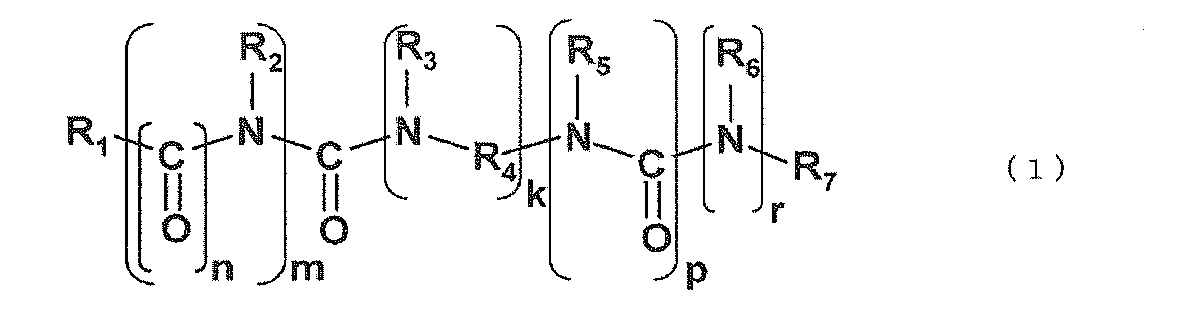
(式(1)中、R1は炭素数10~30のアルキル基またはアルケニル基、R2およびR3はそれぞれ個別に水素又は炭素数1~3のアルキル基、R4は炭素数1~4のアルキレン基、R5およびR6はそれぞれ個別に水素又は炭素数1~3のアルキル基、R7は水素または炭素数1~30のアルキル基またはアルケニル基を示し、kは0~6、mは0~2、n、pおよびrはそれぞれ0~1の整数を表す。)
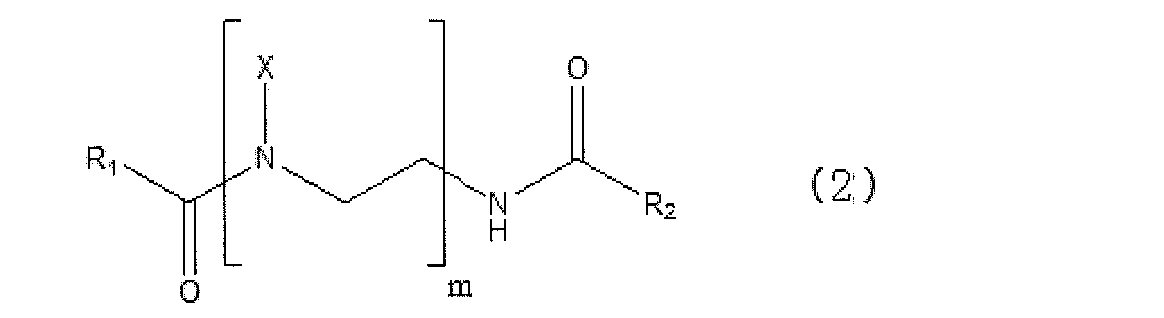
(式(2)中、R1およびR2はそれぞれ個別に炭素数10~30のアルキル基またはアルケニル基であり、直鎖もしくはメチル基を1つ置換基に持つ直鎖状の基である。mは3~30の整数を表す。Xは個別に水素、R3-CO-、またはR4-CO-NH-(CH2)n-を表す。ここでR3およびR4は個別に炭素数10~30のアルキル基またはアルケニル基であり、nは1~3の整数である。)
また、本発明は、さらにリン系添加剤をリン元素換算で0.05~0.10質量%含有することを特徴とする前記の潤滑油組成物に関する。
また、本発明は、チェーンベルト式無段変速機用であることを特徴とする前記の潤滑油組成物に関する。
本発明によれば、大幅な低粘度化による高い省燃費性とユニット部材耐久性および経済性を両立することができる。さらに特定の摩擦調整剤および硫黄系極圧剤、無灰系分散剤、金属系清浄剤をそれぞれ特定量及び特定量比で含むことでシャダー防止性、金損間摩擦係数の向上、チェーンベルト式無段変速機のベルトノイズを改善可能となる。
以下、本発明について詳述する。
本発明に係る潤滑油基油は、ワックス異性化基油である。ワックス異性化基油とは石油系等のワックスを異性化したものを広く意味し、本発明においては下記性状を満たす限りいずれのワックス異性化基油を用いることができる。また本発明に係る潤滑油基油は混合物であっても良く、混合物である場合には混合物が下記性状を満たせば良い。
本発明に係るワックス異性化基油の100℃における動粘度は、2.5mm2/s以上であることが必要であり、2.7mm2/s以上が好ましく、3mm2/s以上がより好ましい。2.5mm2/s以上にすることで、十分な潤滑性を確保でき、また潤滑油基油の蒸発損失を抑制することができる。
一方、100℃における動粘度は、4.5mm2/s以下であることが必要であり、4.2mm2/s以下が好ましく、4.0mm2/s以下がより好ましい。4.5mm2/s以下にすることで、低温粘度特性に優れた潤滑油組成物を得られる。
一方、100℃における動粘度は、4.5mm2/s以下であることが必要であり、4.2mm2/s以下が好ましく、4.0mm2/s以下がより好ましい。4.5mm2/s以下にすることで、低温粘度特性に優れた潤滑油組成物を得られる。
本発明に係るワックス異性化基油としては、100℃における動粘度が2.5mm2/s以上、3.3mm2/s未満でかつ粘度指数が110以上である軽質基油、100℃における動粘度が3.3mm2/s以上、4.5mm2/s未満でかつ粘度指数が125以上である中粘度基油、100℃における動粘度が4.5mm2/s以上、10.0mm2/s以下でかつ粘度指数が135以上である高粘度基油から選ばれる基油の1種又は2種以上を組み合わせて得られるものが好ましい。
例えば、上記軽質基油や上記中粘度基油についてはそれぞれ単独の基油でもよく、また他の基油との混合物であってもよい。上記高粘度基油については、上記軽質基油および/または上記中粘度基油との混合物とすることで本発明に係るワックス異性化基油とすることができる。
例えば、上記軽質基油や上記中粘度基油についてはそれぞれ単独の基油でもよく、また他の基油との混合物であってもよい。上記高粘度基油については、上記軽質基油および/または上記中粘度基油との混合物とすることで本発明に係るワックス異性化基油とすることができる。
本発明に係るワックス異性化基油の粘度指数は、110以上であることが必要であり、120以上が好ましく、130以上がより好ましい。粘度指数を110以上とすることによって、低温から高温にわたり良好な粘度特性を示す組成物を得ることができる。
一方、上限については特に制限はないが、通常200以下であり、160以下が好ましい。粘度指数が高すぎると低温時の粘度が高くなる傾向があり好ましくない。
一方、上限については特に制限はないが、通常200以下であり、160以下が好ましい。粘度指数が高すぎると低温時の粘度が高くなる傾向があり好ましくない。
ワックス異性化基油の流動点は-10℃以下が好ましく、-12.5℃以下がより好ましく、-15℃以下がさらに好ましく、-20.0℃以下が特に好ましい。また、その下限については特に制限はないが、低すぎると粘度指数が低下することと、脱ろう工程における経済性の点で、好ましくは-50℃以上であり、より好ましくは-45℃以上、さらに好ましくは-40℃以上、最も好ましくは-37.5℃以上である。ワックス異性化基油の流動点を-10℃以下とすることで低温粘度特性に優れた潤滑油組成物を得ることができる。また-50℃より低くすると十分な粘度指数が得られない。
なお、脱ろう工程としては溶剤脱ろう、接触脱ろうのいずれの工程を適用してもよいが、低温粘度特性をより改善できる点で接触脱ろう工程であることが特に好ましい。
なお、脱ろう工程としては溶剤脱ろう、接触脱ろうのいずれの工程を適用してもよいが、低温粘度特性をより改善できる点で接触脱ろう工程であることが特に好ましい。
また、ワックス異性化基油の%CPについては、熱・酸化安定性と粘度温度特性をより高めることができる点で、80以上であることが好ましく、より好ましくは85以上、特に好ましくは90以上である。
また、ワックス異性化基油の%CNについては20以下であることが好ましく、より好ましくは15以下であり、さらに好ましくは12以下である。また2以上であることが好ましく、金属疲労寿命をより高めることができる点で、より好ましくは3以上、さらに好ましくは5以上、特に好ましくは7以上である。
また、ワックス異性化基油の%CAについては1以下であることが好ましく、0.5以下であることがより好ましく、0.1以下であることがさらに好ましく、0であることが最も好ましい。1を超えると熱・酸化安定性が低下する。
なお、本発明でいう%CP、%CN及び%CAとは、それぞれASTM D 3238-85に準拠した方法(n-d-M環分析)により求められる、パラフィン炭素数の全炭素数に対する百分率、ナフテン炭素数の全炭素数に対する百分率、及び芳香族炭素数の全炭素数に対する百分率を意味する。
ワックス異性化基油成分の飽和分の含有量については特に制限はないが、熱・酸化安定性と粘度温度特性をより高めることができる点で、好ましくは90質量%以上、より好ましくは94質量%以上、さらに好ましくは98質量%以上、特に好ましくは99質量%以上、最も好ましくは100質量%である。
ワックス異性化基油は、1種の鉱油のみであっても、また2種以上の鉱油の混合物であってもよいが、混合物の方が粘度指数を高くできるため好ましい。
ワックス異性化基油は、上記性状を有する限りにおいてその製造法に特に制限はないが、具体的には、以下に示す(i)~(iii)から選ばれるワックスを水素化異性化し、その生成物又はその生成物から蒸留等により回収される潤滑油留分について溶剤脱ろうや接触脱ろうなどの脱ろう処理を行い、または、当該脱ろう処理をしたあとに蒸留することによって得られる水素化異性化鉱油が挙げられる。
(i)潤滑油脱ろう工程により得られるワックス(スラックワックス等)及び/又はガストゥリキッド(GTL)プロセス等により得られる合成ワックス(フィッシャートロプシュワックス、GTLワックス等)
(ii)上記(i)から選ばれる1種又は2種以上の混合ワックスのマイルドハイドロクラッキング処理油
(iii)上記(i)および(ii)から選ばれる2種以上の混合油
(ii)上記(i)から選ばれる1種又は2種以上の混合ワックスのマイルドハイドロクラッキング処理油
(iii)上記(i)および(ii)から選ばれる2種以上の混合油
脱ろう処理としては、熱・酸化安定性と低温粘度特性をより高めることができ、潤滑油組成物の疲労防止性能をより高めることができる点で、接触脱ろう処理が好ましい。
また、必要に応じて溶剤精製処理及び/又は水素化仕上げ処理工程を更に設けてもよい。
また、必要に応じて溶剤精製処理及び/又は水素化仕上げ処理工程を更に設けてもよい。
また、接触脱ろう(触媒脱ろう)の場合は、上記(i)~(iii)に記載の油を、適当な脱ろう触媒の存在下、流動点を下げるのに有効な条件で水素と反応させる。接触脱ろうでは、異性化生成物中の高沸点物質の一部を低沸点物質へと転化させ、その低沸点物質をより重い基油留分から分離し、基油留分を分留し、2種以上の潤滑油基油を得る。低沸点物質の分離は、目的の潤滑油基油を得る前に、あるいは分留中に行うことができる。
脱ろう触媒としては、上記(i)~(iii)に記載の油の流動点を低下させることが可能なものであれば特に制限されないが、(i)~(iii)に記載の油から高収率で目的のワックス異性化基油を得ることができるものが好ましい。このような脱ろう触媒としては、形状選択的分子篩(モレキュラーシーブ)が好ましく、具体的には、フェリエライト、モルデナイト、ZSM-5、ZSM-11、ZSM-23、ZSM-35、ZSM-22(シータワン又はTONとも呼ばれる)、シリコアルミノホスフェート類(SAPO)などが挙げられる。これらのモレキュラーシーブは、触媒金属成分と組み合わせて使用することが好ましく、貴金属と組み合わせることがより好ましい。好ましい組合せとしては、例えば白金とH-モルデナイトとを複合化したものが挙げられる。
脱ろう条件は特に制限されないが、温度は200~500℃が好ましく、水素圧は10~200バール(1MPa~20MPa)が好ましい。また、フロースルー反応器の場合、H2処理速度は0.1~10kg/l/hrが好ましく、LHSVは0.1~10h-1が好ましく、0.2~2.0h-1がより好ましい。また、脱ろうは、(i)~(iii)に記載の油に含まれる、通常40質量%以下、好ましくは30質量%以下の、初留点が350~400℃である物質をこの初留点未満の沸点を有する物質へと転換するように行うことが好ましい。
本発明の潤滑油組成物の基油としては、ワックス異性化基油に加えて、各種基油を混合することも可能である。
各種基油として鉱油系基油および/または合成系基油が挙げられる。
鉱油系基油としては、ワックス異性化基油以外の鉱油系基油が挙げられる。また合成系基油としては、具体的には、ポリブテン又はその水素化物;1-オクテンオリゴマー、1-デセンオリゴマー、1-ドデセンオリゴマー等のポリ-α-オレフィン又はその水素化物;ジトリデシルグルタレート、ジ-2-エチルヘキシルアジペート、ジイソデシルアジペート、ジトリデシルアジペート、及びジ-2-エチルヘキシルセバケート等のジエステル;ネオペンチルグリコールエステル、トリメチロールプロパンカプリレート、トリメチロールプロパンペラルゴネート、ペンタエリスリトール-2-エチルヘキサノエート、及びペンタエリスリトールペラルゴネート等のポリオールエステル;アルキルナフタレン、アルキルベンゼン、及び芳香族エステル等の芳香族系合成油又はこれらの混合物等が例示できる。
鉱油系基油としては、ワックス異性化基油以外の鉱油系基油が挙げられる。また合成系基油としては、具体的には、ポリブテン又はその水素化物;1-オクテンオリゴマー、1-デセンオリゴマー、1-ドデセンオリゴマー等のポリ-α-オレフィン又はその水素化物;ジトリデシルグルタレート、ジ-2-エチルヘキシルアジペート、ジイソデシルアジペート、ジトリデシルアジペート、及びジ-2-エチルヘキシルセバケート等のジエステル;ネオペンチルグリコールエステル、トリメチロールプロパンカプリレート、トリメチロールプロパンペラルゴネート、ペンタエリスリトール-2-エチルヘキサノエート、及びペンタエリスリトールペラルゴネート等のポリオールエステル;アルキルナフタレン、アルキルベンゼン、及び芳香族エステル等の芳香族系合成油又はこれらの混合物等が例示できる。
なお、これらの鉱油系基油および/または合成系基油としては、これらの中から選ばれる1種または2種以上の任意の混合物等が使用できる。例えば、1種以上の鉱油系基油、1種以上の合成系基油、1種以上の鉱油系基油と1種以上の合成系基油との混合油等を挙げることができる。
本発明における他の基油を混合する場合の他の基油の含有量は、ワックス異性化基油成分と他の基油成分の混合基油を基準として、30質量%以下であることが必要であり、好ましくは20質量%以下であり、より好ましくは10質量%以下、さらに好ましくは7質量%以下である。
本発明における他の基油を混合する場合の他の基油の含有量は、ワックス異性化基油成分と他の基油成分の混合基油を基準として、30質量%以下であることが必要であり、好ましくは20質量%以下であり、より好ましくは10質量%以下、さらに好ましくは7質量%以下である。
また、前記ワックス異性化基油と他の基油からなる混合基油の100℃における動粘度については基油ワックス異性化基油単独の場合と同じである。またその粘度指数についても同様である。
本発明の潤滑油組成物はチアジアゾールを含有することが好ましい。
本発明に係るチアジアゾールとしては、特に構造は限定されないが、例えば、下記一般式(3)で示される1,3,4-チアジアゾール化合物、一般式(4)で示される1,2,4-チアジアゾール化合物及び一般式(5)で示される1,4,5-チアジアゾール化合物を挙げることができる。
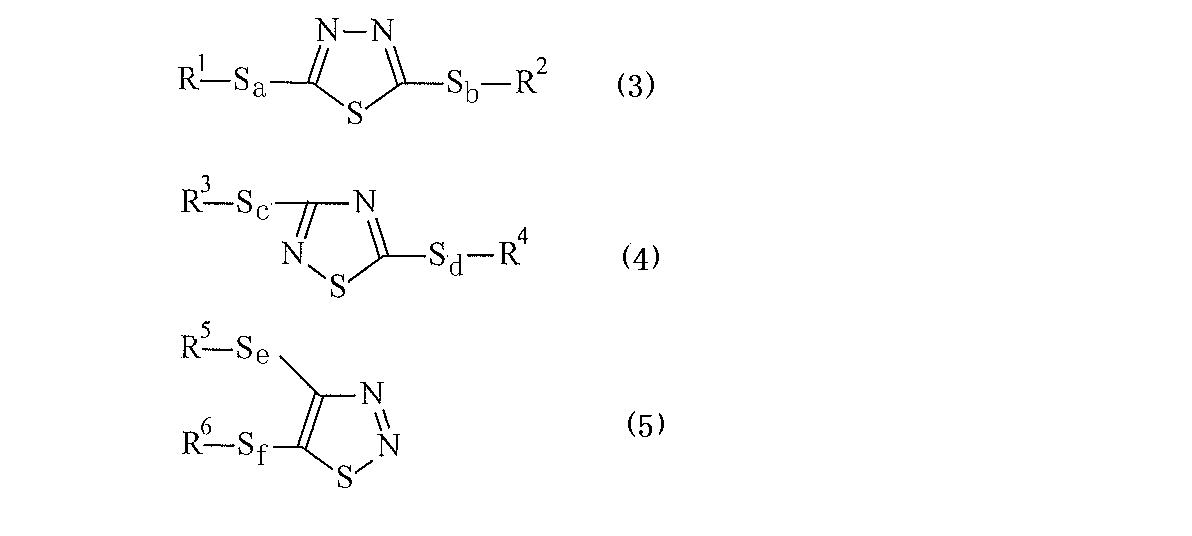
一般式(3)~(5)中、R1~R6は同一でも異なっていてもよく、それぞれ水素原子又は炭素数1~30の炭化水素基を示し、a、b、c、d、e及びfはそれぞれ0~8の整数を示す。
炭素数1~30の炭化水素基としては、例えば、アルキル基、シクロアルキル基、アルキルシクロアルキル基、アルケニル基、アリール基、アルキルアリール基、及びアリールアルキル基を挙げることができる。
このようなチアジアゾール化合物の具体例としては、2,5-ビス(n-ヘキシルジチオ)-1,3,4-チアジアゾール、2,5-ビス(n-オクチルジチオ)-1,3,4-チアジアゾール、2,5-ビス(n-ノニルジチオ)-1,3,4-チアジアゾール、2,5-ビス(1,1,3,3-テトラメチルブチルジチオ)-1,3,4-チアジアゾール、3,5-ビス(n-ヘキシルジチオ)-1,2,4-チアジアゾール、3,5-ビス(n-オクチルジチオ)-1,2,4-チアジアゾール、3,5-ビス(n-ノニルジチオ)-1,2,4-チアジアゾール、3,5-ビス(1,1,3,3-テトラメチルブチルジチオ)-1,2,4-チアジアゾール、4,5-ビス(n-ヘキシルジチオ)-1,2,3-チアジアゾール、4,5-ビス(n-オクチルジチオ)-1,2,3-チアジアゾール、4,5-ビス(n-ノニルジチオ)-1,2,3-チアジアゾール、4,5-ビス(1,1,3,3-テトラメチルブチルジチオ)-1,2,3-チアジアゾール及びこれらの混合物などを好ましく挙げることができる。
チアジアゾールの含有量は、金属間摩擦係数の向上、および耐摩耗、耐焼付性の点から、潤滑油組成物全量基準で0.05質量%以上であることが好ましく、0.1質量%以上がより好ましい。一方、1.5質量%以下であることが好ましく、より好ましくは1.2質量%以下であり、さらに好ましくは1質量%以下であり、最も好ましくは0.5質量%以下である。1.5質量%を超えると耐焼付性が逆に低下するため好ましくない。
本発明の潤滑油組成物はホウ酸変性アルケニルコハク酸イミド系分散剤を含有することが好ましい。
ホウ酸変性アルケニルコハク酸イミド系分散剤とは、ホウ酸変性させたアルケニルコハク酸イミド系分散剤を意味するが、最終生成物が同一であればその製造方法は特に限定されない。
コハク酸イミド系分散剤は、特に制限はなく通常使用されるものが使用できる。これらは1種の化合物を単独で用いても良く、2種以上の化合物の任意混合割合での混合物等を用いても良い。
アルケニルコハク酸イミドとしては、下記の一般式(6)または(7)で表される化合物が挙げられる。
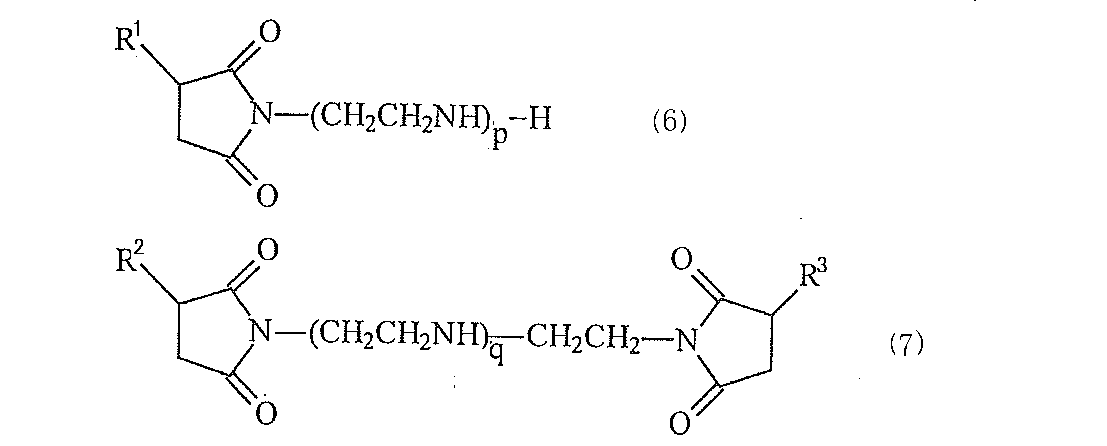
上記一般式(6)及び(7)中で、R1、R2及びR3は、それぞれ個別に、炭素数40~400、好ましくは60~350のアルケニル基を示し、pは1~5、好ましくは2~4の数を、qは0~4、好ましくは1~3の数をそれぞれ示している。
このコハク酸イミドの製造方法は何ら限定されるものではないが、例えば、プロピレンオリゴマー、ポリブテン、エチレン-プロピレン共重合等のポリオレフィンを無水マレイン酸と反応させて無水アルケニルコハク酸を得た後、ジエチレントリアミン、トリエチレンテトラミン、テトラエチレンペンタミン、ペンタエチレンヘキサミン等のポリアミンを用いてイミド化したもの等が挙げられる。
なお、コハク酸イミドには、イミド化に際しては、ポリアミンの一端に無水コハク酸が付加した、一般式(6)のようないわゆるモノタイプのコハク酸イミドと、ポリアミンの両端に無水コハク酸が付加した、一般式(7)のようないわゆるビスタイプのコハク酸イミドがあるが、そのいずれでも、またこれらの混合物でも使用可能である。
アルケニル基としては、直鎖状でも分枝状でも良いが、好ましいものとしては、プロピレン、1-ブテン、イソブチレンなどのオレフィンのオリゴマーやエチレンとプロピレンのコオリゴマーから誘導される分枝状アルキル基や分枝状アルケニル基が挙げられる。
アルケニル基の炭素数は、通常40~400、好ましくは60~350である。炭素数が40未満の場合は基油に対する溶解性が低下するおそれがあり、一方、400を超える場合は、潤滑油組成物の低温流動性が悪化するおそれがある。
ホウ酸変性アルケニルコハク酸イミド系分散剤の含有量は、組成物全量基準、ホウ素元素換算で50質量ppm以上であることが好ましく、70質量ppm以上がより好ましく、100質量ppm以上がさらに好ましい。50質量ppm以上にすることで高い金属間摩擦係数を得ることができ、一方、400質量ppm以下であることが好ましく、350質量ppm以下がより好ましく、300質量ppm以下がさらに好ましい。400質量ppm以下にすることでホウ酸が油中で分離することを防止できる。
本発明の潤滑油組成物はカルシウムスルフォネート系清浄剤を含有することが好ましい。
カルシウムスルフォネート系清浄剤としては、例えば、重量平均分子量300~1500、好ましくは400~700のアルキル芳香族化合物をスルホン化することによって得られるアルキル芳香族スルホン酸のカルシウム金属塩を用いることができる。
アルキル芳香族スルホン酸としては、例えば、いわゆる石油スルホン酸や合成スルホン酸が挙げられる。石油スルホン酸としては、一般に鉱油の潤滑油留分のアルキル芳香族化合物をスルホン化したものや、ホワイトオイル製造時に副生する、いわゆるマホガニー酸等が挙げられる。合成スルホン酸としては、例えば、洗剤の原料となるアルキルベンゼン製造プラントから副生したり、ポリオレフィンをベンゼンにアルキル化することにより得られる、直鎖状や分枝状のアルキル基を有するアルキルベンゼンをスルホン化したもの、あるいはジノニルナフタレン等のアルキルナフタレンをスルホン化したものが挙げられる。
これらアルキル芳香族化合物をスルホン化する際のスルホン化剤としては特に制限はないが、通常、発煙硫酸や無水硫酸が用いられる。
これらアルキル芳香族化合物をスルホン化する際のスルホン化剤としては特に制限はないが、通常、発煙硫酸や無水硫酸が用いられる。
カルシウムスルフォネート系清浄剤の塩基価は、特に制限はないが酸化安定性確保の観点から、300~600mgKOH/gが好ましく、350~550mgKOH/gがより好ましく、400~500mgKOH/gがさらに好ましい。
カルシウムスルフォネート系清浄剤の含有量は、組成物全量基準、カルシウム元素換算で100質量ppm以上が好ましく、150質量ppm以上がより好ましく、200質量ppm以上がさらに好ましい。
一方、クラッチ板の摩擦材の目詰まりによる摩擦係数の低下を防止する観点から、500質量ppm以下が好ましく、450質量ppm以下がより好ましく、400質量ppm以下がさらに好ましい。
一方、クラッチ板の摩擦材の目詰まりによる摩擦係数の低下を防止する観点から、500質量ppm以下が好ましく、450質量ppm以下がより好ましく、400質量ppm以下がさらに好ましい。
本発明の潤滑油組成物がホウ酸変性アルケニルコハク酸イミド系分散剤およびカルシウムスルフォネート系清浄剤の両方を含有する場合、ホウ酸変性アルケニルコハク酸イミド系分散剤のホウ素元素換算質量([B])とカルシウムスルフォネート系清浄剤のカルシウム元素換算質量([Ca])の比率([B]/[Ca])は、0.1以上が好ましく、0.3以上がより好ましく、0.5がさらに好ましい。一方、3.0以下が好ましく、2.5以下がより好ましく、2.0以下がさらに好ましい。[B]/[Ca]を上記範囲内に制御することで高い金属間摩擦係数とチェーンベルトノイズ発生防止を両立することができる。
本発明の潤滑油組成物は、さらに下記一般式(1)または(2)で示される脂肪族アミド化合物を含有することが好ましい

一般式(1)において、R1は炭素数10~30のアルキル基またはアルケニル基であり、直鎖もしくはメチル基を1つ置換基に持つ直鎖状の基である。R2およびR3はそれぞれ個別に水素又は炭素数1~3のアルキル基を示すが、特に水素であることが好ましい。 R4は炭素数1~4のアルキレン基であり、特に炭素数2のアルキレン基が好ましい。R5およびR6はそれぞれ個別に水素又は炭素数1~3のアルキル基を示すが、特に水素が好ましい。R7は水素または炭素数1~30のアルキル基またはアルケニル基であるが、炭素数10から30の直鎖状アルキル基またはアルケニル基であることが好ましい。またkは0~6、好ましくは1~4、mは0~2、n、pおよびrはそれぞれ0~1の整数を表す。
R1およびR7の炭素数は、それぞれ10以上であり、12以上が好ましく、16以上がより好ましく、18以上がさらに好ましい。一方、R1およびR7の炭素数は、それぞれ30以下であり、26以下が好ましく、24以下がより好ましい。R1およびR7は直鎖状のアルキル基またはアルケニル基が好ましいが、カルボニル基のα位にメチル基を有する直鎖状のアルキル基またはアルケニル基がより好ましい。またR1およびR7は同一でも異なっていてもよいが、互いに同一であることが好ましい。
R1、R7の炭素数を10以上とすることによりベルトノイズ防止性を改善することができる。また炭素数が30を超えると組成物の低温時の粘度特性が悪化するため好ましくない。
また、kは2以上が好ましく、4以下が好ましい。mは0または1が好ましく、0が最も好ましい。またpは1が好ましく、rは0が好ましい。こうすることにより高いベルトノイズ防止性を発揮することができる。
R1、R7の炭素数を10以上とすることによりベルトノイズ防止性を改善することができる。また炭素数が30を超えると組成物の低温時の粘度特性が悪化するため好ましくない。
また、kは2以上が好ましく、4以下が好ましい。mは0または1が好ましく、0が最も好ましい。またpは1が好ましく、rは0が好ましい。こうすることにより高いベルトノイズ防止性を発揮することができる。
本発明において、一般式(1)で示される脂肪族アミド化合物としては脂肪酸ジアミドが好ましく、特に脂肪酸ポリアミンジアミド(例えば、ポリアルキレンポリアミンジイソステアリン酸アミドなど)が好ましい。

一般式(2)において、R1およびR2はそれぞれ個別に炭素数10~30のアルキル基またはアルケニル基であり、直鎖もしくはメチル基を1つ置換基に持つ直鎖状の基である。mは3~30の整数を表す。Xは個別に水素、R3-CO-、またはR4-CO-NH-(CH2)n-を表す。ここでR3およびR4は個別に炭素数10~30のアルキル基またはアルケニル基であり、nは1~3の整数である。
R1およびR2の炭素数は、それぞれ10以上であり、12以上が好ましく、14以上がより好ましく、16以上がさらに好ましい。一方、R1およびR2の炭素数は、それぞれ30以下であり、26以下が好ましく、24以下がより好ましい。R1およびR2は直鎖状のアルキル基またはアルケニル基が好ましいが、カルボニル基のα位にメチル基を有する主鎖が直鎖状のアルキル基またはアルケニル基がより好ましい。またR1およびR2は互いに同一であることが好ましい。
R1、R2の炭素数を10以上とすることによりベルトノイズ防止性を改善することができる。また炭素数が30を超えると組成物の低温時の粘度特性が悪化するため好ましくない。
R1、R2の炭素数を10以上とすることによりベルトノイズ防止性を改善することができる。また炭素数が30を超えると組成物の低温時の粘度特性が悪化するため好ましくない。
mは3~30の整数であり、3~20が好ましく、3~10がより好ましい。こうすることにより高いベルトノイズ防止性を発揮することができる。
Xは水素原子、R3-CO-、またはR4-CO-NH-(CH2)n-を表す。ここで、R3およびR4はそれぞれ個別にアルキル基またはアルケニル基であり、その炭素数は10~30、好ましくは12~26、より好ましくは14~24、さらに好ましくは16~22である。またnは1~3、好ましくは2の整数である。
式(2)の構造単位-NX-(CH2)2-におけるXは互いに同一であっても異なっていても良い。m個ある構造単位のうちの少なくとも1つのXはR3-CO-またはR4-CO-NH-(CH2)n-であることが好ましい。
化合物がR3およびR4の両方を含む場合や、R3またはR4を複数含む場合、それらR3およびR4は、複数のR3同士、複数のR4同士、R3およびR4のいずれにおいても互いに同一であっても異なっていても良い。
一般式(2)で示される化合物としては、例えば、下記の式(2a)、(2b)、(2c)で示される化合物を例示することができる。ここでR1は式(2)におけるR1を表す。R1の好ましい例としては、例えばC17H35を挙げることができる。
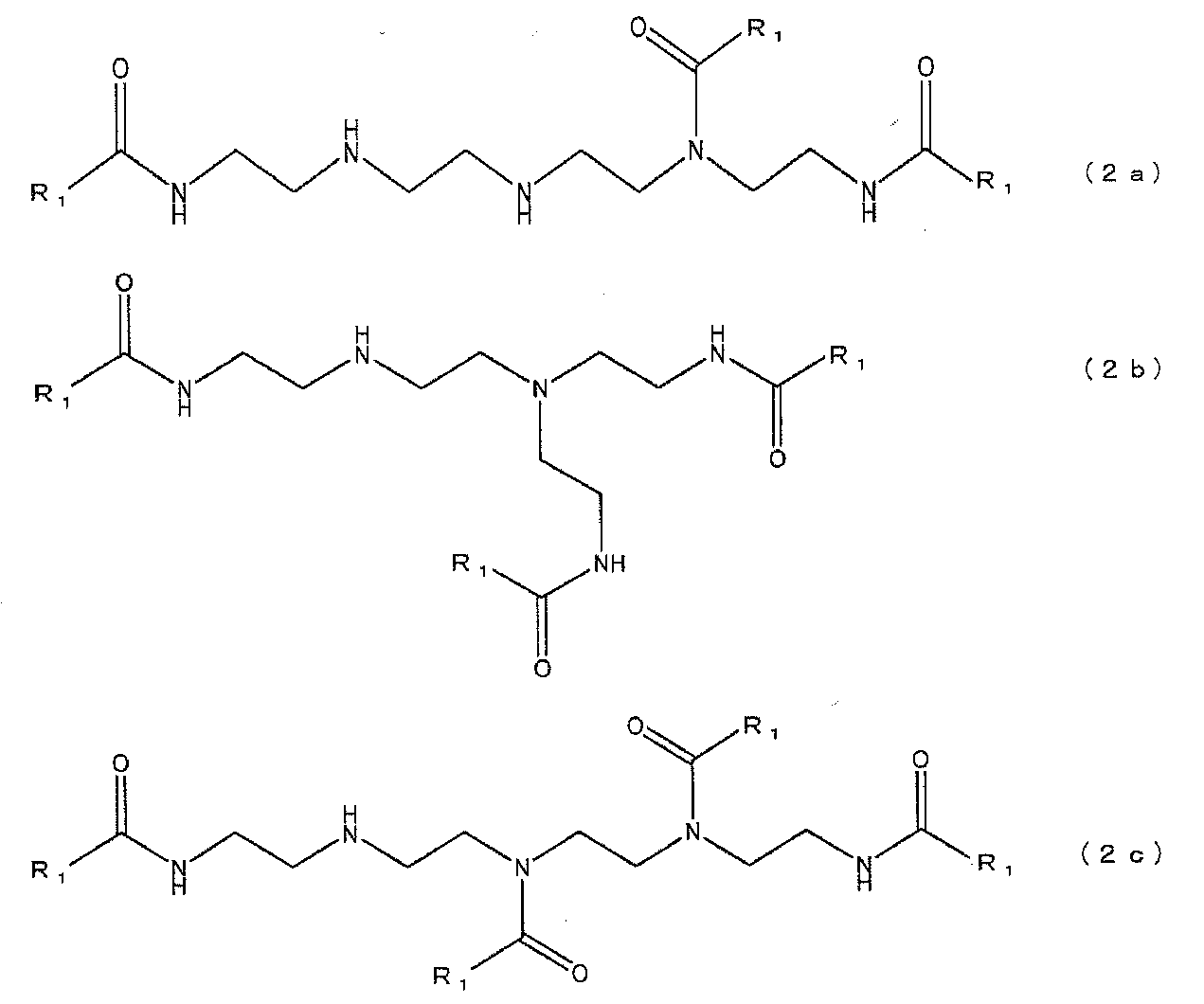
一般式(1)および/または(2)で表される脂肪族アミド化合物の含有量は、組成物全量基準で0.5質量%以上であることが好ましく、1.0質量%以上がより好ましく、1.2質量%以上がさらに好ましい。一方、3.0質量%以下であることが好ましく、2.0質量%以下がより好ましく、1.5質量%以下がさらに好ましい。脂肪族アミド化合物を上記範囲とすることで摩耗防止剤等の反応を阻害せず金属摺動部の潤滑状態が良好となる。
本発明の潤滑油組成物は、リン系添加剤(リン系摩耗防止剤)を含有することが好ましい。
リン系添加剤としては、分子中にリンを含むものであれば特に制限はないが、例えば、炭素数1~30の炭化水素基を有するリン酸モノエステル類、リン酸ジエステル類、リン酸トリエステル類、亜リン酸モノエステル類、亜リン酸ジエステル類、亜リン酸トリエステル類、チオリン酸モノエステル類、チオリン酸ジエステル類、チオリン酸トリエステル類、チオ亜リン酸モノエステル類、チオ亜リン酸ジエステル類、チオ亜リン酸トリエステル類、これらのエステル類とアミン類あるいはアルカノールアミン類との塩若しくは亜鉛塩等の金属塩等が使用できる。
前記炭素数1~30の炭化水素基としては、具体的には、アルキル基、シクロアルキル基、アルケニル基、アルキル置換シクロアルキル基、アリール基、アルキル置換アリール基、及びアリールアルキル基を挙げることができ、1種類あるいは2種類以上を任意に配合することができる。
本発明においては、リン系添加剤のうち、炭素数4~20のアルキル基又は炭素数6~12の(アルキル)アリール基を有する亜リン酸エステル若しくはリン酸エステルが好ましい。
また、炭素数4~20のアルキル基を有する亜リン酸エステルおよび炭素数6~12の(アルキル)アリール基を有する亜リン酸エステルから選ばれる1種又は2種以上の混合物がより好ましい。
さらに、フェニルホスファイト等の炭素数6~7の(アルキル)アリール基を有する亜リン酸エステルおよび/または炭素数4~8のアルキル基を有する亜リン酸エステルがより好ましい。これらの中でも、ジブチルホスファイトが最も好ましい。
アルキル基は直鎖状でも良いが、分枝状であることがより好ましい。炭素数が少ないほうが、また分枝状であるほうが金属間摩擦係数が高いことによる。
また、炭素数4~20のアルキル基を有する亜リン酸エステルおよび炭素数6~12の(アルキル)アリール基を有する亜リン酸エステルから選ばれる1種又は2種以上の混合物がより好ましい。
さらに、フェニルホスファイト等の炭素数6~7の(アルキル)アリール基を有する亜リン酸エステルおよび/または炭素数4~8のアルキル基を有する亜リン酸エステルがより好ましい。これらの中でも、ジブチルホスファイトが最も好ましい。
アルキル基は直鎖状でも良いが、分枝状であることがより好ましい。炭素数が少ないほうが、また分枝状であるほうが金属間摩擦係数が高いことによる。
本発明の潤滑油組成物においてリン系添加剤の含有量は、リン元素濃度として、好ましくは0.005~0.10質量%である。金属材料の摩耗防止性及び金属間摩擦係数をより高めることができる点で0.005質量%以上であることが好ましく、より好ましくは0.01質量%以上、さらに好ましくは0.02質量%以上である。一方、0.10質量%以下であることが好ましく、より好ましくは0.08質量%以下、特に好ましくは0.06質量%以下である。0.10質量%を超えると、潤滑油組成物の酸化安定性が低下したり、シール材等への悪影響が懸念されるため好ましくない。
本発明の潤滑油組成物において、組成物中の硫黄分の硫黄原子換算質量([S])と組成物中のリン分のリン原子換算質量([P])の比([S]/[P])が3.0~5.0であることが好ましい。[S]/[P]を上記範囲とすることで、金属間摩擦係数を高く保持しながら耐摩耗性や耐焼付性を長期間維持できる潤滑油組成物を得ることができる。
本発明の潤滑油組成物には、さらに性能を高める目的で、公知の潤滑油添加剤、例えば、粘度指数向上剤、極圧添加剤、酸化防止剤、腐食防止剤、消泡剤、着色剤等に代表される各種添加剤を単独で、又は数種類組み合わせて配合することができる。
本発明の潤滑油組成物の100℃における動粘度は、4.0mm2/s以上であることが必要であり、4.5mm2/s以上が好ましく、5.0mm2/s以上がより好ましい。4.0mm2/s以上にすることで、十分な潤滑性を確保でき、また潤滑油基油の蒸発損失を抑制することができる。
一方、100℃における動粘度は、7.5mm2/s以下であることが必要であり、7.0mm2/s以下が好ましく、6.5mm2/s以下がより好ましい。7.5mm2/s以下にすることで、低温粘度特性に優れた潤滑油組成物を得られる。
一方、100℃における動粘度は、7.5mm2/s以下であることが必要であり、7.0mm2/s以下が好ましく、6.5mm2/s以下がより好ましい。7.5mm2/s以下にすることで、低温粘度特性に優れた潤滑油組成物を得られる。
本発明の潤滑油組成物は、特にチェーンベルト式無段変速機に好適に用いることができる。
以下に実施例を挙げて本発明を具体的に説明するが、本発明はこれらの実施例に限定されるものではない。
(実施例1~13、比較例1~3)
表1に示す組成の潤滑油組成物を調製した。基油の割合(容量%)は基油全量基準、各添加剤の添加量(質量%)は組成物全量基準である。各潤滑油組成物の性状について下記試験により評価し表1に併記した。
表1に示す組成の潤滑油組成物を調製した。基油の割合(容量%)は基油全量基準、各添加剤の添加量(質量%)は組成物全量基準である。各潤滑油組成物の性状について下記試験により評価し表1に併記した。
(1)ASTM D2783に準拠した高速四球試験法による初期焼き付き荷重(LNSL)
(2)ASTM D4172に準拠した高速四球試験法による摩耗痕径
(3)ASTM D3233に準拠したファレックス焼き付き試験法による焼き付き荷重
(4)JASO法(高荷重法)M358:2005に準拠したLFW-1試験による金属間摩擦係数
(5)IP305/79に規定されるユニスチール試験機にて実施した軸受寿命試験(荷重500kgf、油温120℃、ニードルベアリング)
(2)ASTM D4172に準拠した高速四球試験法による摩耗痕径
(3)ASTM D3233に準拠したファレックス焼き付き試験法による焼き付き荷重
(4)JASO法(高荷重法)M358:2005に準拠したLFW-1試験による金属間摩擦係数
(5)IP305/79に規定されるユニスチール試験機にて実施した軸受寿命試験(荷重500kgf、油温120℃、ニードルベアリング)
また本発明者は、ベルトノイズと相関のある評価方法を見出した。具体的にはLFW-1試験機を使用し、荷重2000N、すべり速度0m/sから1秒間で0.3m/sまで等速加速し、0.3m/sに達した後のさらに1秒後から3秒後までの、2/100秒間隔で測定した時間XとそのときのトルクYから下記(7)式で“b”を算出する方法である。油温60℃および100℃において、この“b”が負となる潤滑油組成物はベルトノイズが発生しにくい。
b=(nΣxy-(Σx)(Σy))/(nΣx2-(Σx)2) (7)
b=(nΣxy-(Σx)(Σy))/(nΣx2-(Σx)2) (7)

Claims (8)
- 100℃における動粘度が2.5mm2/s以上、4.5mm2/s以下でありかつ粘度指数が110以上であるワックス異性化基油を用い、100℃における動粘度が4.0mm2/s以上、7.5mm2/s以下であることを特徴とする潤滑油組成物。
- 前記ワックス異性化基油が、粘度指数が110以上でありかつ100℃における動粘度が2.5mm2/s以上、3.3mm2/s未満である軽質基油、粘度指数が125以上でありかつ100℃における動粘度が3.3mm2/s以上、4.5mm2/s未満である中粘度基油、および粘度指数が135以上でありかつ100℃における動粘度が4.5mm2/s以上、10.0mm2/s以下である高粘度基油から選ばれる各種ワックス異性化基油の1種又は2種以上を組み合わせて得られることを特徴とする請求項1に記載の潤滑油組成物。
- チアジアゾールを組成物全量基準で0.05質量%以上含有することを特徴とする請求項1または2に記載の潤滑油組成物。
- さらにホウ酸変性アルケニルコハク酸イミド系分散剤を組成物全量基準ホウ素元素換算で50質量ppm以上400質量ppm以下、かつカルシウムスルフォネート系清浄剤を組成物全量基準カルシウム元素換算で100質量ppm以上、500質量ppm以下含有し、ホウ素元素換算質量([B])/カルシウム元素換算質量([Ca])の比率([B]/[Ca])が0.1~3.0であることを特徴とする請求項1~3のいずれか1項に記載の潤滑油組成物。
- 前記カルシウムスルフォネート系清浄剤の塩基価が300~600mgKOH/gであることを特徴とする請求項4に記載の潤滑油組成物。
- さらに下記一般式(1)および/または(2)で示される脂肪族アミド化合物を0.5質量%以上含有することを特徴とする請求項1~5のいずれか1項に記載の潤滑油組成物。


- さらにリン系添加剤をリン元素換算で0.005~0.10質量%含有することを特徴とする請求項1~6のいずれか1項に記載の潤滑油組成物。
- チェーンベルト式無段変速機用であることを特徴とする請求項1~7のいずれか1項に記載の潤滑油組成物。
Priority Applications (1)
| Application Number | Priority Date | Filing Date | Title |
|---|---|---|---|
| JP2017509322A JPWO2016157955A1 (ja) | 2015-03-31 | 2016-01-22 | 潤滑油組成物 |
Applications Claiming Priority (2)
| Application Number | Priority Date | Filing Date | Title |
|---|---|---|---|
| JP2015-071877 | 2015-03-31 | ||
| JP2015071877 | 2015-03-31 |
Publications (1)
| Publication Number | Publication Date |
|---|---|
| WO2016157955A1 true WO2016157955A1 (ja) | 2016-10-06 |
Family
ID=57005540
Family Applications (1)
| Application Number | Title | Priority Date | Filing Date |
|---|---|---|---|
| PCT/JP2016/051860 Ceased WO2016157955A1 (ja) | 2015-03-31 | 2016-01-22 | 潤滑油組成物 |
Country Status (2)
| Country | Link |
|---|---|
| JP (1) | JPWO2016157955A1 (ja) |
| WO (1) | WO2016157955A1 (ja) |
Cited By (1)
| Publication number | Priority date | Publication date | Assignee | Title |
|---|---|---|---|---|
| WO2022138523A1 (ja) * | 2020-12-24 | 2022-06-30 | 出光興産株式会社 | 潤滑油組成物 |
Citations (5)
| Publication number | Priority date | Publication date | Assignee | Title |
|---|---|---|---|---|
| JP2010126607A (ja) * | 2008-11-26 | 2010-06-10 | Fujifilm Corp | 内燃機関用潤滑剤組成物 |
| JP2012207082A (ja) * | 2011-03-29 | 2012-10-25 | Jx Nippon Oil & Energy Corp | 潤滑油組成物 |
| WO2013145414A1 (ja) * | 2012-03-29 | 2013-10-03 | Jx日鉱日石エネルギー株式会社 | 潤滑油組成物 |
| WO2014156307A1 (ja) * | 2013-03-29 | 2014-10-02 | Jx日鉱日石エネルギー株式会社 | 自動変速機用潤滑油組成物 |
| JP2014196518A (ja) * | 2014-07-22 | 2014-10-16 | Jx日鉱日石エネルギー株式会社 | 潤滑油組成物 |
-
2016
- 2016-01-22 WO PCT/JP2016/051860 patent/WO2016157955A1/ja not_active Ceased
- 2016-01-22 JP JP2017509322A patent/JPWO2016157955A1/ja active Pending
Patent Citations (5)
| Publication number | Priority date | Publication date | Assignee | Title |
|---|---|---|---|---|
| JP2010126607A (ja) * | 2008-11-26 | 2010-06-10 | Fujifilm Corp | 内燃機関用潤滑剤組成物 |
| JP2012207082A (ja) * | 2011-03-29 | 2012-10-25 | Jx Nippon Oil & Energy Corp | 潤滑油組成物 |
| WO2013145414A1 (ja) * | 2012-03-29 | 2013-10-03 | Jx日鉱日石エネルギー株式会社 | 潤滑油組成物 |
| WO2014156307A1 (ja) * | 2013-03-29 | 2014-10-02 | Jx日鉱日石エネルギー株式会社 | 自動変速機用潤滑油組成物 |
| JP2014196518A (ja) * | 2014-07-22 | 2014-10-16 | Jx日鉱日石エネルギー株式会社 | 潤滑油組成物 |
Cited By (3)
| Publication number | Priority date | Publication date | Assignee | Title |
|---|---|---|---|---|
| WO2022138523A1 (ja) * | 2020-12-24 | 2022-06-30 | 出光興産株式会社 | 潤滑油組成物 |
| JPWO2022138523A1 (ja) * | 2020-12-24 | 2022-06-30 | ||
| EP4269546A4 (en) * | 2020-12-24 | 2024-10-30 | Idemitsu Kosan Co., Ltd | LUBRICATING COMPOSITION |
Also Published As
| Publication number | Publication date |
|---|---|
| JPWO2016157955A1 (ja) | 2018-01-25 |
Similar Documents
| Publication | Publication Date | Title |
|---|---|---|
| JP5207599B2 (ja) | 潤滑油組成物 | |
| US8993498B2 (en) | Continuously variable transmission oil composition | |
| WO2008072526A1 (ja) | 内燃機関用潤滑油組成物 | |
| US9382499B2 (en) | Lubricating oil composition | |
| US12606769B2 (en) | Antioxidants with high mono-alkylated diphenylamine content | |
| EP3118285B1 (en) | Method of improving vehicle transmission operation through use of specific lubricant compositions | |
| WO2013136582A1 (ja) | 変速機用潤滑油組成物 | |
| US9376646B2 (en) | Lubricating oil composition | |
| EP3492565A1 (en) | Lubricating oil composition | |
| US20170190996A1 (en) | Lubricating oil composition | |
| JP2008179662A (ja) | 自動変速機用潤滑油組成物 | |
| KR101130460B1 (ko) | 피셔 트로슈 합성 오일을 포함하는 야채 오일 윤활제 | |
| WO2020203990A1 (ja) | 潤滑油用添加剤及び潤滑油組成物 | |
| JP5325384B2 (ja) | 内燃機関用潤滑油組成物 | |
| WO2016157955A1 (ja) | 潤滑油組成物 | |
| JP5473236B2 (ja) | 潤滑油組成物 | |
| JP2008144019A (ja) | 内燃機関用潤滑油組成物 | |
| JP5424228B2 (ja) | 硫黄を含んだリン含有化合物および/またはその塩から成る組成物、およびそれらの用途 | |
| JP5396299B2 (ja) | 無段変速基油組成物 | |
| CN116391016B (zh) | 润滑油组合物 | |
| JP6982631B2 (ja) | 潤滑油組成物 | |
| JP5952115B2 (ja) | 潤滑油組成物 | |
| JP2026022915A (ja) | 潤滑油組成物 | |
| CN119546734A (zh) | 润滑油组合物 |
Legal Events
| Date | Code | Title | Description |
|---|---|---|---|
| 121 | Ep: the epo has been informed by wipo that ep was designated in this application |
Ref document number: 16771841 Country of ref document: EP Kind code of ref document: A1 |
|
| ENP | Entry into the national phase |
Ref document number: 2017509322 Country of ref document: JP Kind code of ref document: A |
|
| NENP | Non-entry into the national phase |
Ref country code: DE |
|
| 122 | Ep: pct application non-entry in european phase |
Ref document number: 16771841 Country of ref document: EP Kind code of ref document: A1 |