WO2016129331A1 - 繊維製品及び線量計 - Google Patents
繊維製品及び線量計 Download PDFInfo
- Publication number
- WO2016129331A1 WO2016129331A1 PCT/JP2016/051298 JP2016051298W WO2016129331A1 WO 2016129331 A1 WO2016129331 A1 WO 2016129331A1 JP 2016051298 W JP2016051298 W JP 2016051298W WO 2016129331 A1 WO2016129331 A1 WO 2016129331A1
- Authority
- WO
- WIPO (PCT)
- Prior art keywords
- dye
- textile product
- product according
- dosimeter
- polymer
- Prior art date
- Legal status (The legal status is an assumption and is not a legal conclusion. Google has not performed a legal analysis and makes no representation as to the accuracy of the status listed.)
- Ceased
Links
Images

Classifications
-
- C—CHEMISTRY; METALLURGY
- C09—DYES; PAINTS; POLISHES; NATURAL RESINS; ADHESIVES; COMPOSITIONS NOT OTHERWISE PROVIDED FOR; APPLICATIONS OF MATERIALS NOT OTHERWISE PROVIDED FOR
- C09K—MATERIALS FOR MISCELLANEOUS APPLICATIONS, NOT PROVIDED FOR ELSEWHERE
- C09K9/00—Tenebrescent materials, i.e. materials for which the range of wavelengths for energy absorption is changed as a result of excitation by some form of energy
- C09K9/02—Organic tenebrescent materials
-
- D—TEXTILES; PAPER
- D01—NATURAL OR MAN-MADE THREADS OR FIBRES; SPINNING
- D01F—CHEMICAL FEATURES IN THE MANUFACTURE OF ARTIFICIAL FILAMENTS, THREADS, FIBRES, BRISTLES OR RIBBONS; APPARATUS SPECIALLY ADAPTED FOR THE MANUFACTURE OF CARBON FILAMENTS
- D01F1/00—General methods for the manufacture of artificial filaments or the like
- D01F1/02—Addition of substances to the spinning solution or to the melt
- D01F1/10—Other agents for modifying properties
-
- G—PHYSICS
- G01—MEASURING; TESTING
- G01T—MEASUREMENT OF NUCLEAR OR X-RADIATION
- G01T1/00—Measuring X-radiation, gamma radiation, corpuscular radiation, or cosmic radiation
- G01T1/02—Dosimeters
-
- G—PHYSICS
- G01—MEASURING; TESTING
- G01T—MEASUREMENT OF NUCLEAR OR X-RADIATION
- G01T1/00—Measuring X-radiation, gamma radiation, corpuscular radiation, or cosmic radiation
- G01T1/02—Dosimeters
- G01T1/04—Chemical dosimeters
-
- G—PHYSICS
- G01—MEASURING; TESTING
- G01T—MEASUREMENT OF NUCLEAR OR X-RADIATION
- G01T1/00—Measuring X-radiation, gamma radiation, corpuscular radiation, or cosmic radiation
- G01T1/16—Measuring radiation intensity
- G01T1/20—Measuring radiation intensity with scintillation detectors
Definitions
- the present invention relates to a textile product and a dosimeter.
- Non-Patent Document 1 discloses a film dosimeter for monitoring the radiation exposure level.
- the film dosimeter needs to be attached to clothes and used, and the product specifications are limited.
- the dye used in Non-Patent Document 1 gradually fades due to heat or visible light, the instantaneous radiation dose can be monitored, but the accumulated radiation dose over a certain period cannot be monitored.
- the object of the present invention is to provide a dosimeter and a fiber product used therefor.
- the present invention provides the following textiles and dosimeters.
- Item 1 A textile product comprising a luminescent material that emits ultraviolet light upon irradiation with X-rays or ⁇ -rays, a photochromic dye that develops color by the ultraviolet light emitted by the luminescent material, and a polymer that can be dyed with the dye.
- the photochromic dye is a spiropyran dye, an azobenzene dye or a diarylethene dye.
- the photochromic dye is a spiropyran dye.
- the light emitting device according to any one of Items 1 to 3, wherein the luminous body includes at least one selected from the group consisting of BaFCl: Eu, BaFBr: Eu, BaFI: Eu, BaSi2O5: Pb, YAlO3: Ce, and SrB4O7: Eu.
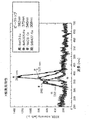
- the light emission characteristic of a light-emitting body is shown.
- the light emission characteristic of a light-emitting body is shown.
- the textile product of the present invention includes a luminescent material that emits ultraviolet rays when irradiated with X-rays or ⁇ rays, a photochromic dye that develops color by the ultraviolet rays emitted from the luminescent material, and a polymer that can be dyed with the photochromic dye.
- the light emitter is not particularly limited as long as it emits ultraviolet rays when irradiated with X rays or ⁇ rays.
- the wavelength of the emitted ultraviolet light is 300 to 400 nm, preferably 320 to 390 nm, more preferably 340 to 385 nm.
- Examples of such light emitters include BaF2: Eu, BaFCl: Eu, BaFBr: Eu, BaSi2O5: Pb, YAlO3: Ce, SrB4O7: Eu, BaF2, and the like. These light emitters can be used alone or in combination of two or more. Can be used.
- Preferred phosphors are BaF2, BaF2: Eu, and BaFCl: Eu.
- 1 and 2 show the emission wavelength and emission intensity of various light emitters.
- the blending amount of the luminescent material is appropriately determined, but is preferably 1 to 40% by mass, more preferably 20 to 30% by mass with respect to the total amount of the fiber product.
- Examples of the photochromic dye that develops color by the ultraviolet rays emitted from the phosphor include spiropyran dyes, azobenzene dyes, and diarylethene dyes, and spiropyran dyes having a high extinction coefficient and excellent color development are more preferable.
- a spiropyran dye is a compound of the following formula (I), SP-form:
- R's are the same or different and each represents a hydrogen atom or an aromatic ring substituent.
- the spiropyran dye of formula (I) is converted from a ring-closed SP-form to a ring-opened PMC-form when irradiated with ultraviolet light of 300 to 400 nm. PMC-form gradually transitions to a closed ring SP-form by visible light or heat. Therefore, the textile product of the present invention can be used as a repeated dosimeter.
- the blending amount of the photochromic dye is appropriately determined, but is preferably 0.05 to 5.0% by mass, more preferably 0.1 to 3.0% by mass with respect to the total amount of the fiber product.
- halogen atom F, Cl, Br, I
- CN OH
- C1-4 alkyl methyl, ethyl, propyl, isopropyl, butyl, isobutyl, t-butyl
- C1-4 alkoxy methoxy, ethoxy, propoxy, isopropoxy, butoxy, isobutoxy, t-butoxy
- CF3 acetylamino, acetyl, etc.
- the number of substituents in one aromatic ring is 1 to 3 , Preferably 1 or 2.
- R a and R b are nitro groups, and when one is a nitro group, the other represents a substituent of the above aromatic ring.
- R a is preferably a nitro group.
- spiropyran dyes are known, commercially available products may be used, and the spiropyran pigments may be produced according to descriptions in known literature.
- the photochromic dyes of the present invention can be used alone or in combination of two or more.
- polyester examples include polyester, nylon, acrylic, cotton, silk, rayon, acetate, and vinylon, and polyester is preferred.
- polyester polyethylene terephthalate (PET), polylactic acid, polyglycolic acid, polycaprolactone or a copolymer thereof is preferable, and polylactic acid is most preferable.
- the blending amount of the polymer is appropriately determined, but is preferably 60 to 99% by mass, more preferably 70 to 80% by mass with respect to the total amount of the fiber product.
- UV absorbers In the case of fibers, the effect of improving the light resistance of ultraviolet absorbers is limited, and there are some dyes that actually work, and they may worsen.
- Ultraviolet absorbers have been developed to prevent resin degradation, and require compounds that absorb and adjust to the maximum sensitive wavelength of each resin and emit heat as heat energy.
- benzotriazole is an ultraviolet absorber that is currently the mainstream, and has a slightly low sublimation fastness. Therefore, the target fiber that can be applied by adding substituents, sulfonation and cationization in a range that does not cause coloration is widespread. Further, it is preferable to form a thin layer with a non-volatile dissolving solvent on the fiber surface and uniformly dissolve this ultraviolet absorbent to protect the internal dye as an ultraviolet absorbing layer.
- the material for stabilizing the color of the pigment can be added to the fiber product of the present invention.
- Such materials include silica or acid generators (eg, benzoyl peroxide, ammonium persulfate, potassium persulfate, peroxides such as lauroyl peroxide, azobisisobutyronitrile (AIBN), 2,2'-azobis).
- the amount of silica or acid generator is appropriately determined, but is preferably 0.0001 to 1.0% by mass, more preferably 0.001 to 0.01% by mass, based on the total amount of the fiber product.
- the fiber product of the present invention is manufactured by pulverizing a phosphor and mixing with a polymer to produce a molten pellet, spinning the obtained pellet, and immersing the obtained yarn in a photochromic dye solution to dye the dye. can do.
- the solvent of the photochromic dye is not particularly limited as long as the polymer does not dissolve, and for example, water, lower alcohols such as methanol, ethanol, isopropanol, dioxane, hexane, cyclohexane, acetone, acetonitrile, THF, DMSO, DMF, toluene Xylene, ethyl acetate, tetrachloroethylene, chloroform, and mixtures thereof.
- lower alcohols such as methanol, ethanol, isopropanol, dioxane, hexane, cyclohexane, acetone, acetonitrile, THF, DMSO, DMF, toluene Xylene, ethyl acetate, tetrachloroethylene, chloroform, and mixtures thereof.
- the textile product of the present invention includes woven fabrics, knitted fabrics, non-woven fabrics, and the like, such as those worn on the outside to monitor the radiation dose, such as work clothes, gloves, hats, masks, and the like.
- the radiation dose is set in the sample chamber in the X-ray irradiation apparatus using a glass batch (environmental type ES type, manufactured by Chiyoda Technol) or a pocket dosimeter (ZP-145, manufactured by Panasonic). Measure time at equal intervals, create a calibration curve for time and dye, install the textile product of the present invention in the same sample chamber, color it by X-ray irradiation, and use the calibration curve It can be measured by estimating the relationship.
- a glass batch environmentmental type ES type, manufactured by Chiyoda Technol
- ZP-145 pocket dosimeter
- Production Example 1 Pulverization of luminous body 35 g of BaFCl: Eu (manufactured by Tokyo Chemical Industry Co., Ltd.) was pulverized at 400 rpm for 1 to 6 hours using a dancing mill (trade name, ALM90DM manufacturer name: Nichito Kagaku Co., Ltd.). (2) Preparation of pellets 30 g of the above pulverized luminescent material is mixed with 70 g of polyester (PET), polylactic acid, nylon, acrylic or polylactic acid, and using a pelletizer (trade name, MPETC1 manufacturer Toyo Seiki Seisakusho). Pelletized. (3) Spinning The pellets obtained above were spun at a die temperature of 195 ° C.
- the polylactic acid was dyed most intensely, and the polyester was also heavily dyed.
- the dyeing strength was then acrylic and nylon.
- Example 1 When the X-ray irradiation device (trade name, MX-Lab manufacturing company name Bruker) was irradiated to the various dye products obtained in Production Example 1, the composite fiber containing polylactic acid developed the strongest color, Next, colors developed in the order of the composite fiber containing polyester, nylon, and acrylic.
- X-ray irradiation device trade name, MX-Lab manufacturing company name Bruker
- Test example 1 The X-ray emission characteristics of the light emitter used in the present invention were evaluated.
- Powder X-ray diffractometer Cu-K ⁇ (trade name, MX-Lab manufacturer: Bruker) is used as a radiation source, and all illuminant samples (BaF2, BaF2: Eu, BaCl2, BaCl2: Eu, BaBr2, BaBr2: Eu BaFCl, BaFCl: Eu, BaFBr, BaFBr: Eu, BaFI, BaFI: Eu, BaClBr, BaClBr: Eu, BaClI, BaClI: Eu, BaBrI, BaBrI: Eu, BaSi2O5: Pb, YAlO3: Ce, SrB4O7: Eu) Measurement was performed under the same conditions. The results are shown in FIGS.
- the emission intensity is the strongest in BaFCl: Eu, but the emission wavelength of BaSi2O5: Pb and YAlO3: Ce is close to 360 nm suitable for chromic reaction, so high efficiency can be expected.
- the present invention it is possible to process into a fibrous form by selecting an appropriate material, and it is possible to use a dosimeter in any scene including clothing.
Landscapes
- High Energy & Nuclear Physics (AREA)
- Spectroscopy & Molecular Physics (AREA)
- Molecular Biology (AREA)
- Chemical & Material Sciences (AREA)
- Physics & Mathematics (AREA)
- Health & Medical Sciences (AREA)
- Life Sciences & Earth Sciences (AREA)
- General Physics & Mathematics (AREA)
- Engineering & Computer Science (AREA)
- Organic Chemistry (AREA)
- Materials Engineering (AREA)
- Manufacturing & Machinery (AREA)
- Chemical Kinetics & Catalysis (AREA)
- General Chemical & Material Sciences (AREA)
- Textile Engineering (AREA)
- Measurement Of Radiation (AREA)
- Woven Fabrics (AREA)
- Artificial Filaments (AREA)
Abstract
【課題】線量計及びそれに使用される繊維製品を提供する。 【解決手段】X線又はγ線の照射により紫外線を放出する発光体、前記発光体が放出する紫外線により発色するフォトクロミック色素、前記色素により染色可能なポリマーを含む繊維製品。
Description
本発明は繊維製品及び線量計に関する。
福島の原発事故に伴い大量に発生した放射能を含むがれきの処理、除染作業、廃炉作業時における放射線被曝レベルをモニターする必要がある。
非特許文献1は、放射線被曝レベルをモニターするためのフィルム線量計を開示しているが、フィルム線量計は衣服に取り付けて使用する必要があり、製品の仕様が限られていた。また、非特許文献1で使用される色素は、熱又は可視光により徐々に退色するので、瞬間的な放射線量はモニターできるが、一定期間における積算した放射線量はモニターできなかった。
Int. J. Photoenergy, Vol.2014, 2014, Article ID:236382
本発明は、線量計及びそれに使用される繊維製品を提供することを目的とする。
本発明は、以下の繊維製品及び線量計を提供するものである。
項1. X線又はγ線の照射により紫外線を放出する発光体、前記発光体が放出する紫外線により発色するフォトクロミック色素、前記色素により染色可能なポリマーを含む繊維製品。
項2. 前記フォトクロミック色素がスピロピラン色素、アゾベンゼン色素又はジアリールエテン色素である、請求項1に記載の繊維製品。
項3. 前記フォトクロミック色素がスピロピラン色素である、請求項1に記載の繊維製品。
項4. 前記発光体が、BaFCl:Eu、BaFBr:Eu、BaFI:Eu、BaSi2O5:Pb、YAlO3:Ce及びSrB4O7:Euからなる群から選ばれる少なくとも1種を含む、項1~3のいずれか1項に記載の繊維製品。
項5. 前記ポリマーがポリエステルである項1~4のいずれか1項に記載の繊維製品。
項6. 前記ポリマーがポリ乳酸である項1~4のいずれか1項に記載の繊維製品。
項7. 紫外線吸収剤で繊維表面を被覆した項1~6のいずれか1項に記載の繊維製品。
項8. 項1~7のいずれか1項に記載の繊維製品を含む線量計。
項1. X線又はγ線の照射により紫外線を放出する発光体、前記発光体が放出する紫外線により発色するフォトクロミック色素、前記色素により染色可能なポリマーを含む繊維製品。
項2. 前記フォトクロミック色素がスピロピラン色素、アゾベンゼン色素又はジアリールエテン色素である、請求項1に記載の繊維製品。
項3. 前記フォトクロミック色素がスピロピラン色素である、請求項1に記載の繊維製品。
項4. 前記発光体が、BaFCl:Eu、BaFBr:Eu、BaFI:Eu、BaSi2O5:Pb、YAlO3:Ce及びSrB4O7:Euからなる群から選ばれる少なくとも1種を含む、項1~3のいずれか1項に記載の繊維製品。
項5. 前記ポリマーがポリエステルである項1~4のいずれか1項に記載の繊維製品。
項6. 前記ポリマーがポリ乳酸である項1~4のいずれか1項に記載の繊維製品。
項7. 紫外線吸収剤で繊維表面を被覆した項1~6のいずれか1項に記載の繊維製品。
項8. 項1~7のいずれか1項に記載の繊維製品を含む線量計。
原発の廃炉作業は、最終処理まで70年近く時間がかかるという試算されている。本発明の繊維製品/線量計を廃炉処理の作業現場や作業服等に利用することで危険を視認することができ、深刻な事故を未然に防ぐことが可能になる。
本発明の繊維製品は、X線又はγ線の照射により紫外線を放出する発光体、前記発光体が放出する紫外線により発色するフォトクロミック色素、前記フォトクロミック色素により染色可能なポリマーを含む。
発光体は、X線又はγ線の照射により紫外線を放出するものであれば特に限定されない。放出する紫外線の波長は、300~400nm、好ましくは320~390nm、より好ましくは340~385nmである。このような発光体としては、BaF2:Eu、BaFCl:Eu、BaFBr:Eu、BaSi2O5:Pb、YAlO3:Ce、SrB4O7:Eu、BaF2などが挙げられ、これら発光体は単独で或いは2種以上を組み合わせて使用することができる。好ましい発光体は、BaF2、BaF2:Eu、BaFCl:Euである。
各種発光体の発光波長と発光強度を図1、2に示す。
発光体の配合量は適宜決定されるが、繊維製品全量に対し1~40質量%が好ましく、さらに好ましくは20~30質量%である。
前記発光体が放出する紫外線により発色するフォトクロミック色素としては、スピロピラン色素、アゾベンゼン色素、ジアリールエテン色素が挙げられ、吸光係数が高く、発色に優れたスピロピラン色素がより好ましい。
スピロピラン色素の一例は、以下の式(I)、SP-formの化合物である:

(式中Rは、同一又は異なって、水素原子又は芳香環の置換基を示す。)
式(I)のスピロピラン色素は、300~400nmの紫外光を照射すると閉環型のSP-formから開環型のPMC-formに変換される。PMC-formは可視光又は熱により徐々に閉環型のSP-formに移行する。従って、本発明の繊維製品は、繰り返し線量計として使用できる。
式(I)のスピロピラン色素は、300~400nmの紫外光を照射すると閉環型のSP-formから開環型のPMC-formに変換される。PMC-formは可視光又は熱により徐々に閉環型のSP-formに移行する。従って、本発明の繊維製品は、繰り返し線量計として使用できる。
フォトクロミック色素の配合量は適宜決定されるが、繊維製品全量に対し0.05~5.0質量%が好ましく、さらに好ましくは0.1~3.0質量%である。
Rで表される芳香環の置換基としては、ハロゲン原子(F,Cl,Br,I)、CN、OH、C1-4アルキル(メチル、エチル、プロピル、イソプロピル、ブチル、イソブチル、t-ブチル)、C1-4アルコキシ(メトキシ、エトキシ、プロポキシ、イソプロポキシ、ブトキシ、イソブトキシ、t-ブトキシ)、CF3、アセチルアミノ、アセチルなどが挙げられ、1つの芳香環における置換基の数は、1~3個、好ましくは1個又は2個である。
Ra、Rbは、一方又は両方がニトロ基であり、一方がニトロ基の場合、他方は上記の芳香環の置換基を示す。一方がニトロ基の場合、Raがニトロ基であるのが好ましい。
上記のスピロピラン色素は、公知であり、市販品を利用することもでき、公知文献の記載に準じて製造しても良い。
本発明のフォトクロミック色素は、1種または2種以上組み合わせて用いることができる。
前記フォトクロミック色素で染色可能なポリマーとしては、ポリエステル、ナイロン、アクリル、綿、絹、レーヨン、アセテート、ビニロンなどが挙げられ、ポリエステルが好ましい。ポリエステルとしては、ポリエチレンテレフタレート(PET)、ポリ乳酸、ポリグリコール酸、ポリカプロラクトン或いはこれらの共重合体が好ましく、ポリ乳酸が最も好ましい。
ポリマーの配合量は適宜決定されるが、繊維製品全量に対し60~99質量%が好ましく、さらに好ましくは70~80質量%である。
繊維では紫外線吸収剤の耐光向上効果は限定的なものであり、実際には効く染料もあれば、かえって悪くなる場合もある。紫外線吸収剤は樹脂劣化防止のために開発されたものであり、樹脂それぞれの最大感応波長に合わせてそれを吸収し、熱エネルギーとして発散する働きを持つ化合物が必要になる。現在、市場で使われている主な紫外線吸収剤はベンゾトリアゾール、ベンゾフェノン、トリアジン系の3種類がある。ベンゾトリアゾール系は現在主流となっている紫外線吸収剤であり、昇華堅牢度が若干低いため、着色しない範囲で置換基を付けたり、スルホン化やカチオン化を行い応用できる対象繊維を広めている。また繊維表面に非揮発性の溶解溶媒で薄層を作り、この紫外線吸収剤を均一に溶かし込み紫外線吸収層として内部の染料を守る方法が良い。
本発明の繊維製品には、色素の色を安定化する材料を添加することができる。このような材料としては、シリカ又は酸発生剤(例えば過酸化ベンゾイル、過硫酸アンモニウム、過硫酸カリウム、過酸化ラウロイルなどの過酸化物、アゾビスイソブチロニトリル(AIBN)、2,2'-アゾビス(2-アミジノプロパン)ジハイドロクロライド、4,4'-アゾビス(4-シアノバレル酸)(ACVA)、2,2'-アゾビス(2-(5-メチル-2-イミダゾリン-2-イル)プロパン)ジハイドロクロライド、2,2'-アゾビス(2-(2-イミダゾリン-2-イル)プロパン)ジハイドロクロライド、2,2'-アゾビスイソブチルアミドジハイドレート、ジイソプロピルパーオキシジカーボネート、t-ブチルパーオキシ-2-エチルヘキサノエート、t-ブチルパーオキシピバレート、t-ブチルパーオキシジイソブチレート、2,2'-アゾビス(2,4-ジメチルバレロニトリル)、t-ブチルパーオキシネオデカノエート、2,2'-アゾビス(2-メチルプロピオンアミダイン)ジハイドロクロライド(AAPH)、1,1'-アゾビス(シクロヘキサンカルボニトリル)(ACHN)、アゾベンゼンなどが挙げられる。
シリカ又は酸発生剤の配合量は適宜決定されるが、繊維製品全量に対し0.0001~1.0質量%が好ましく、さらに好ましくは0.001~0.01質量%である。
本発明の繊維製品は、蛍光体を粉砕してポリマーと混合し、溶融ペレットを作製し、得られたペレットを紡糸し、得られた糸をフォトクロミック色素溶液に浸漬して色素染色することにより製造することができる。
フォトクロミック色素の溶媒としては、ポリマーが溶けないものであれば特に限定されず、例えば水、メタノール、エタノール、イソプロパノールなどの低級アルコール、ジオキサン、ヘキサン、シクロヘキサン、アセトン、アセトニトリル、THF、DMSO、DMF、トルエン、キシレン、酢酸エチル、テトラクロロエチレン、クロロホルムおよびこれらの混合物などが挙げられる。
本発明の繊維製品としては、織物、編物、不織布などが挙げられ、放射線量をモニターするために外側に身に付けるもの、例えば作業服、手袋、帽子、マスクなどが挙げられる。
本発明の線量計において、放射線量はガラスバッチ(広範囲用環境タイプES型、千代田テクノル製)またはポケット線量計(ZP-145、パナソニック製)を用いてX線照射装置内の試料室に設置し、等間隔の時間測定を行い、時間と染料の検量線を作成し、同一の試料室に本発明の繊維製品を設置しX線照射を行い着色させ、検量線を用いて着色量と線量の関係を見積もることで測定することができる。
以下、実施例によって本発明をより詳細に説明するが、本発明はこれら実施例に限定されるものではない。
製造例1
(1)発光体の粉砕
BaFCl:Eu(東京化成株式会社製)35gをダンシングミル(商品名、ALM90DM製造会社名日陶科学社)を用いて400rpmで1~6時間粉砕した。
(2)ペレットの作成
上記の発光体の粉砕物30gをポリエステル(PET)、ポリ乳酸、ナイロン、アクリル又はポリ乳酸70gと混合し、ペレタイザー(商品名、MPETC1製造会社名東洋精機製作所)を用いてペレット化した。
(3)紡糸
上記で得られたペレットを紡糸装置(商品名、RINGCONE TRACTION DRIVE MODEL RXM-90-G29A;製造会社名SHIMPO.INDUSTRIAL CO., LTD)を用いてダイス温度195℃の条件で紡糸し、610デニールの各繊維を得た。
(4)色素染色
得られた繊維100mgは、1’,3’,3’-トリメチル-6-ニトロスピロ[1(2H)-ベンゾピラン-2,2’-インドリン(スピロピラン色素、東京化成株式会社から購入)8.05mgをテトラクロロエチレン25ml中に含む溶液に120℃で1時間浸漬し、乾燥して色素染色された繊維を得た。
(1)発光体の粉砕
BaFCl:Eu(東京化成株式会社製)35gをダンシングミル(商品名、ALM90DM製造会社名日陶科学社)を用いて400rpmで1~6時間粉砕した。
(2)ペレットの作成
上記の発光体の粉砕物30gをポリエステル(PET)、ポリ乳酸、ナイロン、アクリル又はポリ乳酸70gと混合し、ペレタイザー(商品名、MPETC1製造会社名東洋精機製作所)を用いてペレット化した。
(3)紡糸
上記で得られたペレットを紡糸装置(商品名、RINGCONE TRACTION DRIVE MODEL RXM-90-G29A;製造会社名SHIMPO.INDUSTRIAL CO., LTD)を用いてダイス温度195℃の条件で紡糸し、610デニールの各繊維を得た。
(4)色素染色
得られた繊維100mgは、1’,3’,3’-トリメチル-6-ニトロスピロ[1(2H)-ベンゾピラン-2,2’-インドリン(スピロピラン色素、東京化成株式会社から購入)8.05mgをテトラクロロエチレン25ml中に含む溶液に120℃で1時間浸漬し、乾燥して色素染色された繊維を得た。
その結果、ポリ乳酸が最も濃く色素染色され、ポリエステルも濃く色素染色された。染色の濃さは、次いでアクリル、ナイロンの順であった。
実施例1
製造例1で得られた各種色素製品にX線照射装置(商品名、MX-Lab製造会社名Bruker社)を用いてX線を照射したところ、ポリ乳酸を含む複合繊維が最も強く発色し、次いでポリエステル、ナイロン、アクリルを含む複合繊維の順で色が発現した。
製造例1で得られた各種色素製品にX線照射装置(商品名、MX-Lab製造会社名Bruker社)を用いてX線を照射したところ、ポリ乳酸を含む複合繊維が最も強く発色し、次いでポリエステル、ナイロン、アクリルを含む複合繊維の順で色が発現した。
試験例1
本発明で使用する発光体のX線発光特性を評価した。
本発明で使用する発光体のX線発光特性を評価した。
粉末X線回折装置Cu-Kα(商品名、MX-Lab製造会社名Bruker社)を線源に用い、全ての発光体サンプル(BaF2、BaF2:Eu、BaCl2、BaCl2:Eu、BaBr2、BaBr2:Eu、BaFCl、BaFCl:Eu、BaFBr、BaFBr:Eu、BaFI、BaFI:Eu、BaClBr、BaClBr:Eu、BaClI、BaClI:Eu、BaBrI、BaBrI:Eu、BaSi2O5:Pb、YAlO3:Ce、SrB4O7:Eu)を同じ条件で測定した。結果を図1,2に示す。
発光強度はBaFCl:Euが最も強いが、BaSi2O5:PbとYAlO3:Ceの発光波長がクロミック反応に適した360nmに近いため、高効率化に期待できる
本発明によれば、適切な材料を選択することで繊維状に加工することを可能にし、服飾も含めたあるゆる場面での線量計の利用が可能になる。
Claims (8)
- X線又はγ線の照射により紫外線を放出する発光体、前記発光体が放出する紫外線により発色するフォトクロミック色素、前記色素により染色可能なポリマーを含む繊維製品。
- 前記フォトクロミック色素がスピロピラン色素、アゾベンゼン色素又はジアリールエテン色素である、請求項1に記載の繊維製品。
- 前記フォトクロミック色素がスピロピラン色素である、請求項1に記載の繊維製品。
- 前記発光体が、BaFCl:Eu、BaFBr:Eu、BaFI:Eu、BaSi2O5:Pb、YAlO3:Ce及びSrB4O7:Euからなる群から選ばれる少なくとも1種を含む、請求項1~3のいずれか1項に記載の繊維製品。
- 前記ポリマーがポリエステルである請求項1~4のいずれか1項に記載の繊維製品。
- 前記ポリマーがポリ乳酸である請求項1~4のいずれか1項に記載の繊維製品。
- 紫外線吸収剤で繊維表面を被覆した請求項1~6のいずれか1項に記載の繊維製品。
- 請求項1~7のいずれか1項に記載の繊維製品を含む線量計。
Applications Claiming Priority (2)
| Application Number | Priority Date | Filing Date | Title |
|---|---|---|---|
| JP2015025995A JP6537291B2 (ja) | 2015-02-13 | 2015-02-13 | 繊維製品及び線量計 |
| JP2015-025995 | 2015-02-13 |
Publications (1)
| Publication Number | Publication Date |
|---|---|
| WO2016129331A1 true WO2016129331A1 (ja) | 2016-08-18 |
Family
ID=56614535
Family Applications (1)
| Application Number | Title | Priority Date | Filing Date |
|---|---|---|---|
| PCT/JP2016/051298 Ceased WO2016129331A1 (ja) | 2015-02-13 | 2016-01-18 | 繊維製品及び線量計 |
Country Status (2)
| Country | Link |
|---|---|
| JP (1) | JP6537291B2 (ja) |
| WO (1) | WO2016129331A1 (ja) |
Cited By (1)
| Publication number | Priority date | Publication date | Assignee | Title |
|---|---|---|---|---|
| CN114277585A (zh) * | 2021-12-09 | 2022-04-05 | 称意科技研发园(江苏)有限公司 | 一种采用二芳基乙烯类光致变色染料上染聚酯织物的方法 |
Families Citing this family (1)
| Publication number | Priority date | Publication date | Assignee | Title |
|---|---|---|---|---|
| CN110527264A (zh) * | 2019-09-16 | 2019-12-03 | 苏州宝丽迪材料科技股份有限公司 | 光致变色pla纤维母粒的制备方法 |
Citations (5)
| Publication number | Priority date | Publication date | Assignee | Title |
|---|---|---|---|---|
| JPS62297774A (ja) * | 1986-06-17 | 1987-12-24 | Sumitomo Electric Ind Ltd | 放射線線量計 |
| JP2005082507A (ja) * | 2003-09-05 | 2005-03-31 | Mitsubishi Chemicals Corp | ジアリールエテン化合物、フォトクロミック材料、カラー線量計および光メモリ素子 |
| JP3646504B2 (ja) * | 1998-03-13 | 2005-05-11 | 入江 正浩 | フォトクロミックカラー線量計 |
| JP2005120482A (ja) * | 2003-10-14 | 2005-05-12 | Daisen:Kk | 繊維製品 |
| JP2013072151A (ja) * | 2011-09-28 | 2013-04-22 | Kao Corp | 不織布 |
-
2015
- 2015-02-13 JP JP2015025995A patent/JP6537291B2/ja not_active Expired - Fee Related
-
2016
- 2016-01-18 WO PCT/JP2016/051298 patent/WO2016129331A1/ja not_active Ceased
Patent Citations (5)
| Publication number | Priority date | Publication date | Assignee | Title |
|---|---|---|---|---|
| JPS62297774A (ja) * | 1986-06-17 | 1987-12-24 | Sumitomo Electric Ind Ltd | 放射線線量計 |
| JP3646504B2 (ja) * | 1998-03-13 | 2005-05-11 | 入江 正浩 | フォトクロミックカラー線量計 |
| JP2005082507A (ja) * | 2003-09-05 | 2005-03-31 | Mitsubishi Chemicals Corp | ジアリールエテン化合物、フォトクロミック材料、カラー線量計および光メモリ素子 |
| JP2005120482A (ja) * | 2003-10-14 | 2005-05-12 | Daisen:Kk | 繊維製品 |
| JP2013072151A (ja) * | 2011-09-28 | 2013-04-22 | Kao Corp | 不織布 |
Non-Patent Citations (1)
| Title |
|---|
| "Hikari de Iro o Control", 31 July 2013 (2013-07-31), pages 3, Retrieved from the Internet <URL:http://www.liaison.kit.ac.jp/liaison/search/search.cgi?code=%B4%Cl%BB%FA&q=%C3%CE%A4%CE%A5%B7%A1%BC%A5%BA%BD%B8%A1%A1%CC%DA%CD%FC&cond=1&logs=10&sort=1> [retrieved on 20160331] * |
Cited By (1)
| Publication number | Priority date | Publication date | Assignee | Title |
|---|---|---|---|---|
| CN114277585A (zh) * | 2021-12-09 | 2022-04-05 | 称意科技研发园(江苏)有限公司 | 一种采用二芳基乙烯类光致变色染料上染聚酯织物的方法 |
Also Published As
| Publication number | Publication date |
|---|---|
| JP6537291B2 (ja) | 2019-07-03 |
| JP2016148601A (ja) | 2016-08-18 |
Similar Documents
| Publication | Publication Date | Title |
|---|---|---|
| Kinashi et al. | A spiropyran-based X-ray sensitive fiber | |
| JP6537291B2 (ja) | 繊維製品及び線量計 | |
| Salimgareeva et al. | Plastic scintillators based on polymethyl methacrylate: A review | |
| Sayed et al. | UV protection finishes on textile fabrics | |
| Guo et al. | Working conditions on the afterglow characteristics of rare-earth luminous fibers | |
| Asai et al. | Isomerization behavior of spiropyran-based compounds upon X-ray irradiation | |
| Al-Ahmed et al. | Development of glow-in-the-dark and color-tunable poly (methyl methacrylate) plastic concrete immobilized with rare-earth aluminate | |
| Morsümbül et al. | Performance characteristics in textile application of photochromic dye capsules | |
| Pazhuhish et al. | Investigation in dosimetric properties of α-Al2O3 luminescence dosimeters for diagnostic radiology energy range | |
| Akhtar et al. | Improved performance of radiochromic films for high-dose dosimetry | |
| CN113122240A (zh) | 以碘代咔唑衍生物为主体的主客体掺杂发光材料及制备应用方法 | |
| Gou et al. | Novel environmental radiation dosimeter—Mn: CaF2 transparent glass ceramic: dependence of thermoluminescence performance on slag addition and crystallisation behaviour | |
| Tang et al. | A flexible and energy independent fluorescence radiation fiber film dosimeter fabricated by electrostatic spinning | |
| Dekanić et al. | Light Conversion for UV Protection by Textile Finishing and Care | |
| JPS6228817B2 (ja) | ||
| Gurkalenko et al. | The plastic scintillator activated with fluorinated hydroxyflavone | |
| US10829889B1 (en) | Thermal enhancement additives useful for fabrics | |
| Sidney et al. | A new radiochromic dosimeter film | |
| Mahala et al. | Study of radiophotoluminescence of Eu doped CaSO4 phosphor for gamma dosimetric applications | |
| JP2005008754A (ja) | フォトクロミック組成物及びそれを用いた放射線インジケータ | |
| Kawamoto et al. | Applicability of 2, 3-dihydro-2-spiro-4’-[8′-aminonaphtalen-1′(4′ H)-on] perimidine to dosimeters | |
| Chowdhury et al. | Improving photostability of thermochromic colorants with ultraviolet absorbers and hindered amine light stabilizers | |
| CN106634971A (zh) | 一种高灵敏的x射线探测发光材料制备 | |
| JP4722675B2 (ja) | 放射線被ばく管理衣服 | |
| Liu et al. | Photochromic textiles from hybrid silica coating with improved photostability |
Legal Events
| Date | Code | Title | Description |
|---|---|---|---|
| 121 | Ep: the epo has been informed by wipo that ep was designated in this application |
Ref document number: 16748976 Country of ref document: EP Kind code of ref document: A1 |
|
| NENP | Non-entry into the national phase |
Ref country code: DE |
|
| 122 | Ep: pct application non-entry in european phase |
Ref document number: 16748976 Country of ref document: EP Kind code of ref document: A1 |