WO2016121954A1 - 縮合ピリミジン化合物の新規な塩及びその結晶 - Google Patents
縮合ピリミジン化合物の新規な塩及びその結晶 Download PDFInfo
- Publication number
- WO2016121954A1 WO2016121954A1 PCT/JP2016/052733 JP2016052733W WO2016121954A1 WO 2016121954 A1 WO2016121954 A1 WO 2016121954A1 JP 2016052733 W JP2016052733 W JP 2016052733W WO 2016121954 A1 WO2016121954 A1 WO 2016121954A1
- Authority
- WO
- WIPO (PCT)
- Prior art keywords
- compound
- salt according
- salt
- crystal
- powder
- Prior art date
- Legal status (The legal status is an assumption and is not a legal conclusion. Google has not performed a legal analysis and makes no representation as to the accuracy of the status listed.)
- Ceased
Links
Images


Classifications
-
- A—HUMAN NECESSITIES
- A61—MEDICAL OR VETERINARY SCIENCE; HYGIENE
- A61K—PREPARATIONS FOR MEDICAL, DENTAL OR TOILETRY PURPOSES
- A61K31/00—Medicinal preparations containing organic active ingredients
- A61K31/33—Heterocyclic compounds
- A61K31/395—Heterocyclic compounds having nitrogen as a ring hetero atom, e.g. guanethidine or rifamycins
- A61K31/495—Heterocyclic compounds having nitrogen as a ring hetero atom, e.g. guanethidine or rifamycins having six-membered rings with two or more nitrogen atoms as the only ring heteroatoms, e.g. piperazine or tetrazines
- A61K31/505—Pyrimidines; Hydrogenated pyrimidines, e.g. trimethoprim
- A61K31/519—Pyrimidines; Hydrogenated pyrimidines, e.g. trimethoprim ortho- or peri-condensed with heterocyclic rings
-
- A—HUMAN NECESSITIES
- A61—MEDICAL OR VETERINARY SCIENCE; HYGIENE
- A61P—SPECIFIC THERAPEUTIC ACTIVITY OF CHEMICAL COMPOUNDS OR MEDICINAL PREPARATIONS
- A61P19/00—Drugs for skeletal disorders
- A61P19/02—Drugs for skeletal disorders for joint disorders, e.g. arthritis, arthrosis
-
- A—HUMAN NECESSITIES
- A61—MEDICAL OR VETERINARY SCIENCE; HYGIENE
- A61P—SPECIFIC THERAPEUTIC ACTIVITY OF CHEMICAL COMPOUNDS OR MEDICINAL PREPARATIONS
- A61P29/00—Non-central analgesic, antipyretic or antiinflammatory agents, e.g. antirheumatic agents; Non-steroidal antiinflammatory drugs [NSAID]
-
- A—HUMAN NECESSITIES
- A61—MEDICAL OR VETERINARY SCIENCE; HYGIENE
- A61P—SPECIFIC THERAPEUTIC ACTIVITY OF CHEMICAL COMPOUNDS OR MEDICINAL PREPARATIONS
- A61P35/00—Antineoplastic agents
-
- A—HUMAN NECESSITIES
- A61—MEDICAL OR VETERINARY SCIENCE; HYGIENE
- A61P—SPECIFIC THERAPEUTIC ACTIVITY OF CHEMICAL COMPOUNDS OR MEDICINAL PREPARATIONS
- A61P37/00—Drugs for immunological or allergic disorders
- A61P37/08—Antiallergic agents
-
- C—CHEMISTRY; METALLURGY
- C07—ORGANIC CHEMISTRY
- C07C—ACYCLIC OR CARBOCYCLIC COMPOUNDS
- C07C57/00—Unsaturated compounds having carboxyl groups bound to acyclic carbon atoms
- C07C57/02—Unsaturated compounds having carboxyl groups bound to acyclic carbon atoms with only carbon-to-carbon double bonds as unsaturation
- C07C57/13—Dicarboxylic acids
- C07C57/15—Fumaric acid
-
- C—CHEMISTRY; METALLURGY
- C07—ORGANIC CHEMISTRY
- C07D—HETEROCYCLIC COMPOUNDS
- C07D487/00—Heterocyclic compounds containing nitrogen atoms as the only ring hetero atoms in the condensed system, not provided for by groups C07D451/00 - C07D477/00
- C07D487/02—Heterocyclic compounds containing nitrogen atoms as the only ring hetero atoms in the condensed system, not provided for by groups C07D451/00 - C07D477/00 in which the condensed system contains two hetero rings
- C07D487/04—Ortho-condensed systems
-
- C—CHEMISTRY; METALLURGY
- C07—ORGANIC CHEMISTRY
- C07B—GENERAL METHODS OF ORGANIC CHEMISTRY; APPARATUS THEREFOR
- C07B2200/00—Indexing scheme relating to specific properties of organic compounds
- C07B2200/13—Crystalline forms, e.g. polymorphs
Definitions
- the present invention relates to a novel salt of a compound having Bruton's tyrosine kinase (BTK) inhibitory activity and crystals thereof.
- BTK Bruton's tyrosine kinase
- Bruton's tyrosine kinase is a protein kinase belonging to Tec kinase family, and plays an important role in the control of proliferation, survival, differentiation and activation of B cells downstream of the B cell receptor (BCR) signal.
- BCR B cell receptor
- Non-receptor tyrosine kinase Non-patent Document 1. Inhibitors capable of controlling the activity of BTK are thought to be useful as therapeutic agents for diseases associated with abnormal enhancement of the BTK signal pathway (for example, cancer).
- Non-patent Document 2 Non-patent Document 2
- JAK3 Janus kinase 3
- EGFR epidermal growth factor
- apoptosis inhibition apoptosis inhibition
- Non-Patent Document 4 PCI-45292 is known as a compound having BTK inhibitory activity and weak EGFR inhibitory activity (Non-patent Document 5).
- An object of the present invention is to provide a highly selective BTK inhibitor having a high inhibitory activity against BTK, a low inhibitory activity against other kinases such as EGFR, and a salt useful as an active pharmaceutical ingredient. There is.
- the applicant has studied the physicochemical properties of Compound A for the purpose of developing the formulation of Compound A.
- Compound A When the free form of Compound A is exposed to high humidity, (2) Compound A is difficult to use as a drug substance because it absorbs the moisture in it and has the properties of a channel hydrate that releases moisture when exposed to low humidity.
- Compound A More surprisingly, of these acid addition salts, only the fumarate salt of the channel hydrate is formed from only the tartaric acid, phosphoric acid and fumaric acid. It has been found that it has no properties, and the present invention has been completed.
- the solid stability was poor, and the magnesium salt contained many related substances, so that the purity of the crystals was low.
- Only the fumarate salt was found to be capable of avoiding the properties of channel hydrate, excellent in acquisition operability and reproducibility, stable and excellent in absorbability, and completed the present invention.
- the present invention relates to the following 1) to 18).
- Anti-tumor agent for blood tumor or fumarate of the above compound A for producing a prophylactic and / or therapeutic agent for allergic rhinitis, hay fever, atopic dermatitis, rheumatoid arthritis, systemic lupus erythematosus Use of. 12) The fumarate salt of Compound A for use in BTK inhibition. 13) The fumarate salt of Compound A for use as a medicament. 14) The fumarate salt of Compound A for use in the prevention or treatment of tumors, allergic diseases, autoimmune diseases or inflammatory diseases.
- the fumarate salt of Compound A for use in the prevention or treatment of blood tumors, allergic rhinitis, hay fever, atopic dermatitis, rheumatoid arthritis or systemic lupus erythematosus.
- a method of inhibiting BTK comprising administering an effective amount of the fumarate salt of Compound A to a subject in need thereof.
- a method for preventing and / or treating a tumor, allergic disease, autoimmune disease or inflammatory disease comprising administering an effective amount of the fumarate salt of Compound A to a subject in need thereof.
- a method for treating blood tumors, allergic rhinitis, hay fever, atopic dermatitis, rheumatoid arthritis or systemic lupus erythematosus, wherein an effective amount of the fumarate salt of Compound A is administered to a subject in need thereof A method comprising:
- the fumarate salt of compound A according to the present invention has excellent solid stability as an active pharmaceutical ingredient, and has the properties of channel hydrate compared to compound A or a salt other than fumarate salt of compound A. It can be avoided and has excellent operability and reproducibility. Furthermore, the fumarate salt of Compound A according to the present invention exhibits excellent oral absorbability and is extremely useful as a pharmaceutical product or drug substance.
- 1 shows a powder X-ray diffraction spectrum of a monofumarate salt (amorphous) of Compound A synthesized in Example 1 (the vertical axis represents intensity (cps), and the horizontal axis represents the diffraction angle (2 ⁇ ⁇ 0.1 °).
- 1 shows a powder X-ray diffraction spectrum of a 1 ⁇ 2 fumarate salt (crystal) of Compound A synthesized in Example 2 (the vertical axis indicates intensity (cps), and the horizontal axis indicates a diffraction angle (2 ⁇ ⁇ 0.1 °).
- the differential scanning calorific value (DSC) curve of the 1/2 fumarate salt (crystal) of Compound A synthesized in Example 2 is shown.
- the powder X-ray diffraction spectrum of the compound A monofumarate (crystal) synthesized in Example 3 shows the intensity (cps) and the horizontal axis shows the diffraction angle (2 ⁇ ⁇ 0.1 °).
- the differential scanning calorific value (DSC) curve of the 1 fumarate salt (crystal) of Compound A synthesized in Example 3 is shown.
- 2 shows a moisture absorption and desorption isotherm of Compound A.
- 1 shows a moisture adsorption / desorption isotherm of a monofumarate salt (crystal) of Compound A.
- the moisture adsorption-desorption isotherm curve of the 1/2 fumarate (crystal) of Compound A is shown.
- the water adsorption-desorption isothermal curve of the 1/2 tartrate salt of Compound A is shown.
- 2 shows a moisture adsorption / desorption isotherm curve of monophosphate of Compound A.
- the effect of the mono-fumarate salt (crystal) of Compound A on a mouse collagen-induced arthritis model is shown.
- a fumarate salt of compound A may be any salt form of compound A and fumaric acid, and includes 1 fumarate salt and 1/2 fumarate salt. . Furthermore, it is used in the meaning including both the crystal of the fumarate salt of Compound A and the amorphous form of the fumarate salt of Compound A.
- the fumarate salt of Compound A preferably, the fumarate salt of Compound A (may be abbreviated as “Compound A • 1 Fumarate”) or the 1/2 fumarate salt of Compound A (“Compound A • 1 / Fumarate”) More preferably, it is abbreviated as “2 fumarate”, and more preferably, compound 1 monofumarate (crystal), compound A 1/2 fumarate (crystal), compound A 1 fumarate (non-fumarate) 1 fumarate salt (crystal) of Compound A and 1/2 fumarate salt (crystal) of Compound A are particularly preferred.
- crystal and “amorphous” are used in the usual sense.
- a plurality of crystals (crystal polymorphs) having different spatially ordered atomic arrangements and physicochemical properties may be formed, and the salt according to the present invention may be any of these crystal polymorphs, It may be a mixture of two or more crystal polymorphs, or a mixture of crystals and amorphous substances.
- a label of the fumarate salt of Compound A that is, a compound in which one or more atoms of Compound A or fumaric acid are substituted with a radioactive isotope or a non-radioactive isotope is also encompassed in the present invention.
- the diffraction angle and the overall pattern of the powder X-ray diffraction spectrum are important when the identity of the crystal is recognized due to the nature of the data. Since the relative intensity of the powder X-ray diffraction spectrum can vary somewhat depending on the direction of crystal growth, the size of the particles, and the measurement conditions, it should not be interpreted strictly. Numerical values obtained from various patterns may have some errors depending on the crystal growth direction, particle size, measurement conditions, and the like. Therefore, in this specification, the term “diffraction angle (2 ⁇ ⁇ 0.1 °)” in the powder X-ray diffraction spectrum means that the value may be within a range of ⁇ 0.1 ° of the value.
- the word “near” used for the peak temperature of the endothermic peak in the differential scanning calorimetry (DSC) curve means that it is approximately the temperature value, and preferably within the range of ⁇ 5 ° C. of that value. That means it ’s good. More preferably, it means that it may be within a range of ⁇ 2 ° C. of the value.
- the mono-fumarate salt (crystal) of Compound A preferably has a powder X-ray diffraction spectrum shown in FIG. 4 and / or a differential scanning calorimetry (DSC) curve shown in FIG.
- the characteristic peaks in the powder X-ray diffraction spectrum of the monofumarate salt (crystal) of Compound A are 7.2 °, 12.4 °, and 15.6 as diffraction angles (2 ⁇ ⁇ 0.1 °). °, 25.9 ° and 27.6 °, more preferably 7.2 °, 12.4 °, 14.4 °, 15.0 °, 15.6 °, 19.0 °, Examples include 22.3 °, 22.6 °, 23.4 °, 25.5 °, 25.9 ° and 27.6 °.
- the monofumarate (crystal) of Compound A according to the present invention is a crystal having at least two or more peaks selected from the above-mentioned more preferable peaks, and preferably at least three or more selected from the above-mentioned peaks
- Particularly preferred are crystals having any of the above peaks.
- the endothermic peak in the differential scanning calorimetry (DSC) curve of the mono-fumarate salt (crystal) of Compound A can be exemplified at around 219 ° C. to 224 ° C., preferably around 223 ° C.
- the diffraction angle (2 ⁇ ⁇ 0.1 °) is 7.2 °, 12.4 °. , 15.6 °, 25.9 ° and 27.6 °, preferably at least 3 and more preferably 5 peaks in the differential scanning calorimetry (DSC) curve
- the crystal has an endothermic peak with a peak temperature of about 219 to 224 ° C., preferably about 223 ° C.
- the diffraction angle (2 ⁇ ⁇ 1 °) in the powder X-ray diffraction spectrum is 7.2 °, 12.4 °, 14.4 °, 15.0 °, 15.6 °. 19.0 °, 22.3 °, 22.6 °, 23.4 °, 25.5 °, 25.9 ° and 27.6 °, at least two, preferably at least three More preferably, at least 5 or more, more preferably at least 8 or more, more preferably any of the above peaks, and the peak temperature in the differential scanning calorimetry (DSC) curve is around 219 ° C. to 224 ° C., preferably Is a crystal having an endothermic peak around 223 ° C.
- DSC differential scanning calorimetry
- the 1/2 fumarate (crystal) of Compound A preferably has a powder X-ray diffraction spectrum shown in FIG. 2 and / or a differential scanning calorimetry (DSC) curve shown in FIG.
- the characteristic peak in the powder X-ray diffraction spectrum of the 1/2 fumarate salt (crystal) of Compound A is 4.5 °, 5.8 °, 16 as the diffraction angle (2 ⁇ ⁇ 0.1 °). 6 °, 20.2 ° and 26.4 °, more preferably 4.5 °, 5.8 °, 11.2 °, 12.1 °, 12.4 °, 13.4. , 16.6 °, 17.3 °, 18.2 °, 20.2 °, 26.4 ° and 27.1 °.
- the 1/2 fumarate salt (crystal) of Compound A according to the present invention is a crystal having at least two or more peaks selected from the more preferable peaks, and preferably at least three selected from the above peaks. A crystal having the above peaks, more preferably a crystal having at least 5 peaks selected from the above peaks, and more preferably a crystal having at least 8 peaks selected from the above peaks. Particularly preferred are crystals having any of the above peaks.
- the endothermic peak in the differential scanning calorimetry (DSC) curve of the 1 ⁇ 2 fumarate salt (crystal) of Compound A is around 197 ° C to 199 ° C, preferably around 198 ° C.
- the powder X-ray diffraction spectrum has a diffraction angle (2 ⁇ ⁇ 0.1 °) of 4.5 °, 5.
- Differential scanning calorimetry (DSC) having at least 2 or more, preferably at least 3 or more, more preferably 5 peaks selected from 8 °, 16.6 °, 20.2 ° and 26.4 ° It is a crystal having an endothermic peak with a peak temperature in the curve of around 197 to 199 ° C., preferably around 198 ° C.
- the diffraction angle (2 ⁇ ⁇ 1 °) in the powder X-ray diffraction spectrum is 4.5 °, 5.8 °, 11.2 °, 12.1 °, 12.4 °, 13. At least two selected from 4 °, 16.6 °, 17.3 °, 18.2 °, 20.2 °, 26.4 ° and 27.1 °, preferably at least three, more preferably Has at least 5 or more, more preferably at least 8 or more, more preferably any of the above peaks, and a peak temperature in a differential scanning calorimetry (DSC) curve is around 197 ° C. to 199 ° C., preferably 198 ° C. It is a crystal having an endothermic peak in the vicinity.
- DSC differential scanning calorimetry
- the fumarate salt of Compound A according to the present invention can also be obtained as an amorphous substance.
- the amorphous form of the fumarate salt of Compound A according to the present invention specifically shows a halo pattern with a wide and unclear diffraction pattern in the powder X-ray diffraction spectrum, more preferably the powder X-ray diffraction shown in FIG. Has a spectrum.
- Compound A can be synthesized, for example, according to Reference Examples 1 and 2 described later.
- the synthesis method of Compound A is not limited to Reference Examples 1 and 2 described later. More specifically, (S) -tert-butyl 3- (methylsulfonyloxy) piperidine is obtained by reacting (S) -N-Boc-3-piperidinol with methanesulfonyl chloride in the presence of a tertiary amine such as triethylamine. -1-carboxylate is obtained.
- the 1 fumarate salt (amorphous form) of Compound A according to the present invention can be produced, for example, by the following method. After adding 100 to 300 times, preferably 150 times the amount of tetrahydrofuran (THF) and 0.01 to 1 time, preferably 0.1 times the amount of water to Compound A, the same molar dose as Compound A is added. Add fumaric acid and dissolve. An amorphous form of the monofumarate salt of Compound A can be obtained as a white powder by distilling off the solvent while azeotroping with THF a plurality of times, preferably 2 to 5 times.
- THF tetrahydrofuran
- the compound A monofumarate (crystal) according to the present invention is, for example, a compound A monofumarate (amorphous) suspended in 5 to 50 times, preferably 20 times, acetonitrile. It can be obtained as a white powder by suspension heating for 12 to 72 hours, preferably 24 hours.
- the 1 ⁇ 2 fumarate (crystal) of Compound A according to the present invention is, for example, a suspension of Compound A monofumarate (amorphous) in 10 to 100 times, preferably 60 times, methyl ethyl ketone. For 12 to 72 hours, preferably 24 hours, to obtain a white powder.
- the channel hydrate property of Compound A can be avoided.
- pharmaceuticals or active pharmaceutical ingredients that use compounds in which the properties of channel hydrate are avoided reduce storage and quality control problems in the storage conditions of humidity, and tablets, capsules, etc. It is known that when a solid preparation is produced, problems in the preparation based on the weight change of the active ingredient can be reduced. Therefore, the fumarate salt of Compound A according to the present invention can be expected to be stable storage and easy quality control, and can be said to be an excellent compound that is easy to handle in the preparation.
- the fumarate salt of Compound A according to the present invention is excellent in acquisition operability and reproducibility as compared with other salts of Compound A. Specifically, for example, a salt of Compound A and hydrochloric acid, sulfuric acid, succinic acid, malic acid, citric acid, or acetic acid was not formed by the examination method described in this specification. In addition, for example, in the formation of the sodium salt of compound A, decomposition progressed remarkably, and when a 1 ⁇ 2 magnesium salt of compound A was synthesized, the number of related substances increased, and the operation for obtaining the salt was complicated. It was difficult to re-dissolve due to low solubility in water and organic solvents. The fumarate salt of Compound A according to the present invention is easy to handle as a drug substance and contributes to the industrial production of a stable quality drug.
- the fumarate salt of Compound A according to the present invention is excellent in solid stability. It is important for drug development candidate compounds to have solid stability both in industrial operations and in maintaining quality. Therefore, the fumarate salt of Compound A according to the present invention has excellent properties required as a pharmaceutical or drug substance.
- the fumarate salt of Compound A according to the present invention is excellent in oral absorbability and contributes to the provision of high quality and excellent pharmaceutical products.
- the fumarate salt of Compound A according to the present invention has an excellent BTK inhibitory activity, for example, a preventive and / or therapeutic agent for cancer, tumor, various immune diseases (for example, allergic diseases, autoimmune diseases, inflammatory diseases). Useful as. In addition, it has excellent selectivity for BTK, and has the advantage that there are few side effects due to inhibition of other kinases (for example, EGFR).
- BTK inhibitory activity for example, a preventive and / or therapeutic agent for cancer, tumor, various immune diseases (for example, allergic diseases, autoimmune diseases, inflammatory diseases).
- BTK kinases
- the fumarate salt of Compound A according to the present invention has excellent BTK inhibitory activity.
- BTK includes human or non-human mammal BTK, preferably human BTK.
- the term “BTK” includes isoforms.
- the fumarate salt of Compound A according to the present invention is useful as a medicament for the prevention and treatment of diseases involving BTK due to its excellent BTK inhibitory activity.
- Diseases involving BTK include diseases in which the rate of onset is reduced, symptoms are ameliorated, alleviated, and / or completely cured by deleting, suppressing and / or inhibiting BTK function. Examples of such diseases include, but are not limited to, cancer, tumor, allergic disease, autoimmune disease, inflammatory disease, graft-versus-host disease, and preferably cancer, tumor, allergic disease, It is an autoimmune disease.
- the target cancer or tumor is not particularly limited.
- epithelial cancer for example, respiratory cancer, digestive cancer, genital cancer, secretory cancer, etc.
- sarcoma for example, hematopoietic cell line.
- Tumors, central nervous system tumors, peripheral nerve tumors and the like, and hematopoietic cell tumors for example, leukemia, multiple myeloma, malignant lymphoma, etc. are preferable.
- the type of tumor organ is not particularly limited, for example, head and neck cancer, esophageal cancer, gastric cancer, colon cancer, rectal cancer, liver cancer, gallbladder / bile duct cancer, biliary tract cancer, pancreatic cancer, lung cancer, breast cancer,
- Examples include ovarian cancer, cervical cancer, endometrial cancer, renal cancer, bladder cancer, prostate cancer, testicular tumor, bone / soft tissue sarcoma, blood tumor, multiple myeloma, skin cancer, brain tumor, mesothelioma and the like.
- the hematopoietic cell line tumor is preferably acute leukemia, acute promyelocytic leukemia, acute lymphoblastic leukemia, chronic myeloid leukemia, lymphoblastic lymphoma, myeloproliferative tumor, chronic lymphocytic leukemia, small lymph Spherical lymphoma, myelodysplastic syndrome, follicular lymphoma, MALT lymphoma, marginal zone lymphoma, lymphoid plasma cell lymphoma, Waldenstrom macroglobulinemia, mantle cell lymphoma, diffuse large B-cell lymphoma, bar Kit lymphoma, extranodal NK / T cell lymphoma, Hodgkin lymphoma, multiple myeloma and the like.
- B lymphoblastic leukemia / lymphoma follicular lymphoma, mantle cell lymphoma, nodal follicular marginal zone lymphoma, diffuse large B cell lymphoma, Burkitt lymphoma, chronic lymphocytic leukemia, small lymphocyte Blood tumors such as inflammatory lymphoma, Waldenstrom's macroglobulinemia, extranodal NK / T cell lymphoma, Hodgkin lymphoma, myelodysplastic syndrome, acute myeloid leukemia, acute lymphocytic leukemia.
- the target allergic disease is not particularly limited, and examples thereof include bronchial asthma, allergic rhinitis, hay fever, atopic dermatitis, food allergy, anaphylaxis, drug allergy, urticaria and conjunctivitis.
- bronchial asthma allergic rhinitis, hay fever and atopic dermatitis
- particularly preferred are allergic rhinitis, hay fever and atopic dermatitis.
- the target autoimmune disease is not particularly limited, and examples thereof include rheumatoid arthritis, systemic lupus erythematosus, scleroderma, polymyositis, Sjogren's syndrome, and Behcet's disease.
- Rheumatoid arthritis and systemic lupus erythematosus are preferable, and rheumatoid arthritis is particularly preferable.
- the target inflammatory disease is not particularly limited.
- a pharmaceutical carrier is blended as necessary, and various administration forms can be adopted depending on the purpose of prevention or treatment. May be any of oral preparations, injections, suppositories, ointments, patches, and the like. Each of these dosage forms can be produced by a conventional formulation method known to those skilled in the art. In particular, tablets for oral administration, coated tablets, pills, granules, powders, capsules, and stable solid preparations using crystals of the fumarate salt of Compound A as the active ingredient are advantageous.
- the pharmaceutical carrier various organic or inorganic carrier substances commonly used as pharmaceutical materials are used. Excipients, binders, disintegrants, lubricants, coating agents, etc. in solid preparations, solvents in liquid preparations, dissolution aids , Suspending agents, isotonic agents, pH adjusting agents / buffering agents, soothing agents and the like. In addition, formulation additives such as preservatives, antioxidants, colorants, flavoring / flavoring agents, stabilizers and the like can be used as necessary. Examples of the excipient include lactose, sucrose, D-mannitol, starch, crystalline cellulose, calcium silicate and the like.
- binder examples include hydroxypropyl cellulose, methyl cellulose, polyvinyl pyrrolidone, candy powder, hypromellose and the like.
- disintegrant examples include sodium starch glycolate, carmellose calcium, croscarmellose sodium, crospovidone, low-substituted hydroxypropylcellulose, partially pregelatinized starch and the like.
- lubricant examples include talc, magnesium stearate, sucrose fatty acid ester, stearic acid, sodium stearyl fumarate and the like.
- coating agent examples include ethyl cellulose, aminoalkyl methacrylate copolymer RS, hypromellose, sucrose, and the like.
- Examples of the solvent include water, propylene glycol, and physiological saline.
- Examples of the solubilizer include polyethylene glycol, ethanol, ⁇ -cyclodextrin, macrogol 400, polysorbate 80 and the like.
- Suspending agents include carrageenan, crystalline cellulose / carmellose sodium, and polyoxyethylene hydrogenated castor oil.
- Examples of the isotonic agent include sodium chloride, glycerin, potassium chloride and the like.
- Examples of the pH regulator / buffering agent include sodium citrate, hydrochloric acid, lactic acid, phosphoric acid, sodium dihydrogen phosphate and the like.
- Examples of soothing agents include procaine hydrochloride and lidocaine.
- preservatives include ethyl paraoxybenzoate, cresol, benzalkonium chloride, and the like.
- antioxidant include sodium sulfite, ascorbic acid, natural vitamin E and the like.
- colorant include titanium oxide, iron sesquioxide, edible blue No. 1, copper chlorophyll and the like.
- flavoring and flavoring agents include aspartame, saccharin, sucralose, l-menthol, and mint flavor.
- stabilizer include sodium pyrosulfite, sodium edetate, erythorbic acid, magnesium oxide, dibutylhydroxytoluene and the like.
- an excipient When preparing an oral solid preparation, an excipient, if necessary, an excipient, a binder, a disintegrant, a lubricant, a coloring agent, a flavoring / flavoring agent, etc. were added to the fumarate salt of Compound A Thereafter, tablets, coated tablets, granules, powders, capsules and the like can be produced by conventional methods.
- tablets, coated tablets, granules, powders, capsules and the like can be produced by conventional methods.
- When preparing injections add pH adjusters / buffers, stabilizers, tonicity agents, local anesthetics, etc. to the fumarate salt of Compound A, and use subcutaneous, intramuscular and intravenous methods by conventional methods. An injection can be produced.
- the amount of the fumarate salt of Compound A to be incorporated in each dosage unit form is not constant depending on the symptoms of the patient to which the compound A is to be applied, or depending on the dosage form. It is desirable that the dosage is 0.05 to 1000 mg for an agent, 0.01 to 500 mg for an injection, and 1 to 1000 mg for a suppository.
- the daily dose of the drug having the above dosage form varies depending on the patient's symptoms, body weight, age, sex, etc., and cannot be determined unconditionally, but is usually an adult (weight 50 kg) 1 as the fumarate salt of Compound A
- the dose may be 0.05 to 5000 mg per day, preferably 0.1 to 1000 mg, and is preferably administered once a day or divided into 2 to 3 times a day.
- the NMR spectrum was measured using an AL400 (400 MHz; JEOL), Mercury 400 (400 MHz; Agilent Technology) spectrometer, or an Inova 400 (400 MHz; Agilent Technology) spectrometer equipped with a 400M NMR probe (Protasis).
- AL400 400 MHz; JEOL
- Mercury 400 400 MHz; Agilent Technology
- Inova 400 400 MHz; Agilent Technology
- tetramethylsilane was used as an internal standard, and in other cases, measurement was performed using an NMR solvent as an internal standard, and all ⁇ values were shown in ppm.
- Powder X-ray diffraction was measured according to the following test conditions after lightly grinding an appropriate amount of a test substance with an agate mortar as necessary.
- DSC measurement Thermal analysis measurement (Differential scanning calorimetry (DSC measurement)) The DSC measurement was performed according to the following test conditions. Equipment: TA Instruments Q1000 Sample: Approximately 1 mg Sample container: made of aluminum Temperature rising rate: up to 250 ° C, 5 ° C / min. Atmospheric gas: Nitrogen Nitrogen gas flow: 50 mL / min. Handling of the device including data processing was in accordance with the method and procedure instructed by each device.
- Step 1 Synthesis of (S) -tert-butyl 3- (methylsulfonyloxy) piperidine-1-carboxylate 20 g of (S) -N-Boc-3-piperidinol was dissolved in 100 mL of toluene and heated to 0 ° C. Then, 21 mL of triethylamine and 9.2 mL of methanesulfonyl chloride were added. After stirring for 1 hour under ice cooling, ethyl acetate and water were added, and the organic layer was separated.
- the organic layer was washed with a saturated aqueous sodium hydrogen carbonate solution, a saturated aqueous ammonium chloride solution and water, and then dried over anhydrous sodium sulfate.
- the solvent was distilled off under reduced pressure to obtain 26.8 g of the title compound as a colorless solid.
- Step 2 Synthesis of (R) -tert-butyl 3- (4-amino-3-iodo-1H-pyrazolo [3,4-d] pyrimidin-1-yl) piperidine-1-carboxylate
- (S) -tert-butyl obtained in Step 1 A suspension of 150 mL of DMA containing 25 g of 3- (methylsulfonyloxy) piperidine-1-carboxylate and 69 g of potassium carbonate was heated to 100 ° C. and stirred for 10 hours. After cooling to room temperature, 300 mL of water was added and the resulting solid was collected by filtration, washed with water and dried to give 26.9 g of the title compound as a yellow solid.
- Benz [d] oxazol-2-amine (118 mg), xanthophos (20 mg), and N-methylmorpholine (0.15 mL) were added for deaeration. Thereafter, 7.6 mg of palladium acetate was added, heated to 110 ° C. in a carbon monoxide atmosphere, and stirred for 2 hours. After cooling, methanol 4.5mL and 5N sodium hydroxide aqueous solution 0.45mL were added, and it stirred at room temperature for 30 minutes. Thereafter, the pH was adjusted to 5.3 with 2N HCl, and the resulting solid was collected by filtration. The crude product was purified by a silica gel column (chloroform-methanol) to obtain 257 mg of the title compound as a white solid.
- Step 2 Synthesis of Compound A (R) -tert-butyl 3- (4-amino-3-((benzo [d] oxazol-2-yl) carbamoyl) -1H-pyrazolo [3,] obtained in Step 1 4-d] pyrimidin-1-yl) piperidine-1-carboxylate (5.0 g) was suspended in 50 mL of acetonitrile, and 7.85 g of sodium iodide was added. Under stirring at room temperature, 6.65 mL of trimethylsilyl chloride was added dropwise and stirred for 1 hour. After adding water 87.5mL and 5N sodium hydroxide aqueous solution 12.5mL, it ice-cooled.
- Powder X-ray diffraction spectrum as shown in FIG.
- Example 1 Monofumarate salt (amorphous form) (450 mg) of Compound A obtained in Example 1 was suspended in methyl ethyl ketone (27 mL), and suspended and heated at 80 ° C. for 24 hours. After filtration, the residue was dried under reduced pressure to obtain 1/2 fumarate (crystal) of Compound A as a white powder. Yield; 279 mg, yield; 62.0%
- Powder X-ray diffraction spectrum shown in FIG. Characteristic diffraction angle (2 ⁇ ⁇ 0.1 °): 4.5 °, 5.8 °, 11.2 °, 12.1 °, 12.4 °, 13.4 °, 16.6 °, 17.3 °, 18.2 °, 20.2 °, 26.4 °, 27.1 °
- DSC Differential scanning calorimetry
- Example 1 Monofumarate salt (amorphous form) (500 mg) of Compound A obtained in Example 1 was suspended in acetonitrile (10 mL), and suspended and heated at 80 ° C. for 24 hours. Filtration and drying under reduced pressure gave Compound A monofumarate (crystal) white powder. Yield; 448 mg, yield; 89.6%
- Powder X-ray diffraction spectrum shown in FIG. Characteristic diffraction angle (2 ⁇ ⁇ 0.1 °): 7.2 °, 12.4 °, 14.4 °, 15.0 °, 15.6 °, 19.0 °, 22.3 °, 22.6 °, 23.4 °, 25.5 °, 25.9 ° and 27.6 °
- Differential scanning calorimetry (DSC) curves shown in FIG. Endothermic peak in differential scanning calorimetry (DSC) curve: around 219 ° C to 224 ° C
- Test Example 1 Moisture Adsorption / Desorption Test Compound A obtained in Examples and Reference Examples, Compound A 1 fumarate, Compound A 1/2 fumarate, Compound A 1/2 tartrate, Compound A 1 The moisture absorption / desorption test of phosphate was conducted to examine the presence or absence of the properties of channel hydrate.
- the moisture absorption / desorption test was measured according to the following conditions. Approximately 5 to 10 mg of the sample was filled in a dedicated quartz holder, and the weight of the sample at each humidity was continuously measured and recorded under the following conditions. In addition, the handling of the apparatus including data processing was in accordance with the method and procedure instructed by each apparatus.
- VTI SA + manufactured by TA Instruments
- Drying temperature 60 ° C
- Temperature increase rate 1 ° C / min
- Drying equilibrium Confirm that 0.01 wt% does not decrease in 5 minutes within a range not exceeding 300 minutes
- Measurement temperature 25 ° C
- Humidification equilibrium Confirm that 0.01 wt% does not increase in 5 minutes within a range not exceeding 120 minutes
- Relative humidity program Increase by 5% RH from 5 to 95% RH, 5% from 95% RH to 5% RH Decrease by RH
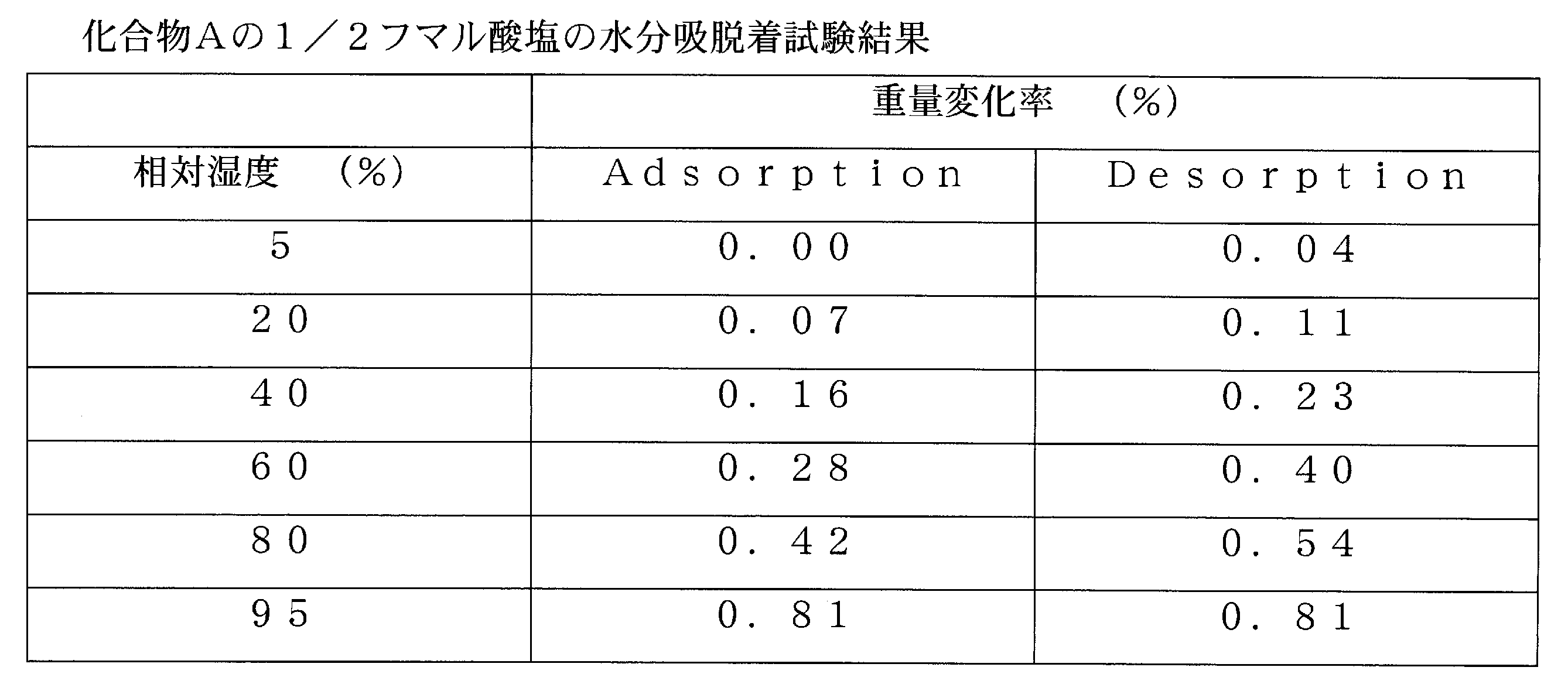
- the 1 fumarate salt of Compound A and the 1/2 fumarate salt of Compound A according to the present invention both increase in mass change of less than about 1% at 95% relative humidity, and lower the humidity. It turned out that it returned almost to the initial state. Therefore, it was confirmed that the fumarate salt of Compound A according to the present invention can avoid the properties of channel hydrate and has more excellent properties as a drug or drug substance.
- Test Example 2 Solid stability test (acceleration test) Compound A monofumarate obtained in Examples and Reference Examples, Compound A 1/2 fumarate, Compound A 1/2 tartrate, Compound A monophosphate, 40 ° C./75% Solid stability when stored for 2 weeks or 4 weeks in RH (sealing condition and open condition) was measured under the following conditions.
- Storage conditions 40 ° C./75% RH (sealed and opened) (open means that the glass bottle lid was removed and covered with Kimwipe) Measurement point: 2 weeks and 4 weeks Storage amount: about 30mg
- Storage container Brown glass bottle
- Sample solution preparation method The sample solution was dissolved in 50% acetonitrile so that the concentration of the sample was 0.4 mg / mL.
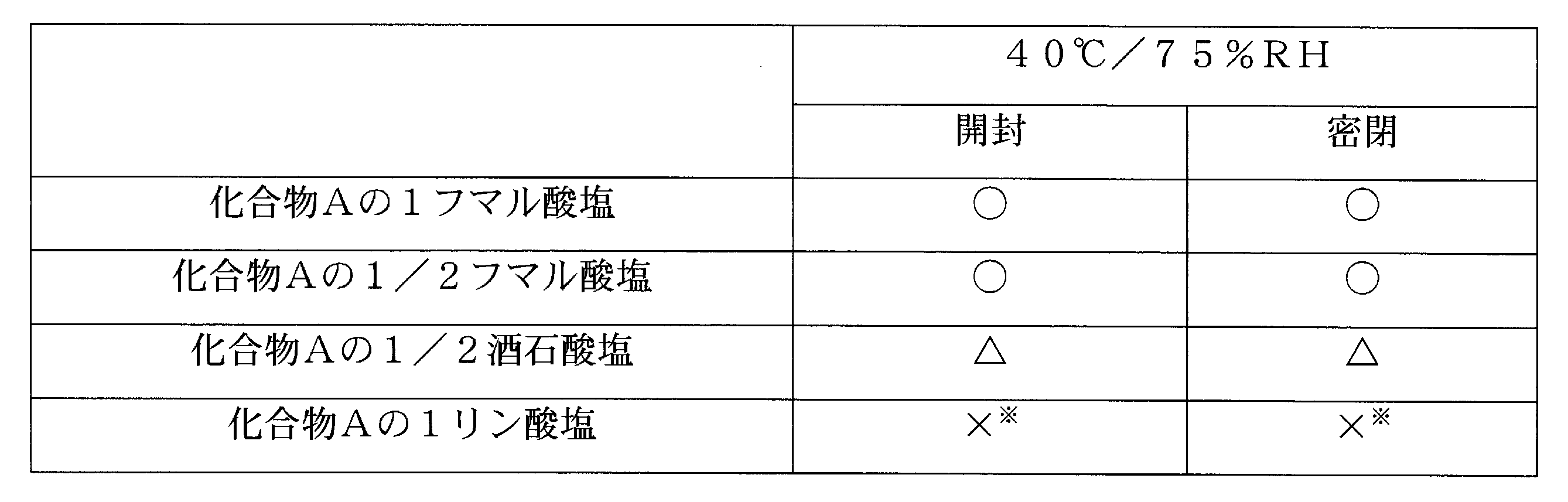
- Table 4 shows the results of evaluating the total amount of related substances measured.
- ⁇ indicates the ratio of the total amount of related substances of less than 0.1%, ⁇ indicates 0.1% or more and less than 0.5%, and ⁇ indicates 0.5% or more.
- the * mark was measured in 2 weeks, and the others were measured in 4 weeks.
- the mono-fumarate salt of Compound A and the 1 / 2-fumarate salt of Compound A produce less related substances, and are superior to the 1/2 tartrate salt of Compound A and the monophosphate salt of Compound A. It became clear that solid stability was exhibited. Therefore, it was confirmed that the fumarate salt of Compound A according to the present invention exhibits excellent solid stability.
- Test Example 3 Solid stability test (severe test) Solid Stability when Compound A Monofumarate, Compound A 1/2 Tartrate, Compound A Monophosphate obtained in Examples and Reference Examples were stored at 60 ° C. for 2 weeks or 4 weeks Was measured under the following conditions. Storage conditions: 60 ° C (sealed) Measurement point: 2 weeks and 4 weeks Storage amount: about 30mg Storage container: Brown glass bottle Sample solution preparation method: The sample solution was dissolved in 50% acetonitrile so that the concentration of the sample was 0.4 mg / mL.
- Table 5 shows the results of measuring and evaluating the amount of related substances in the sample solution by HPLC analysis in the same manner as in Test Example 2.
- ⁇ indicates the ratio of the total amount of related substances of less than 0.1% and ⁇ indicates the ratio of 0.1% or more and less than 0.5%.
- the * mark was measured in 2 weeks, and the others were measured in 4 weeks.
- Test Example 4 Blood Concentration Measurement Test About Compound A, Compound A 1/2 fumarate, and Compound A monofumarate obtained in Examples, each of 0.5% HPMC was used. A suspension of 50 mg / 10 mL / kg in terms of molecular weight was prepared. These administration solutions were orally administered to mice (Balb / cA) kept under fed conditions at a dose of 10 mL per kg body weight using an oral administration sonde. After administration, the state was returned to the mouse cage and confirmed. In the cage, water supply and feeding were freely available.
- mice were anesthetized with isoflurane, and blood was collected from a 60 ⁇ L orbital venous plexus using a capillary blood collection tube. The collected blood was ice-cooled and plasma was separated by centrifugation. After completion of blood collection, the mouse was returned to the animal breeding cage and the state after awakening of anesthesia was confirmed. After the final blood collection, the depth of isoflurane anesthesia was confirmed and then euthanized by cervical dislocation.
- Test Example 5 Measurement of BTK Inhibitory Activity (In Vitro)
- FL-Peptide 2 was added to PerkinElmer LabChip (registered trademark) series reagent consumables price list.
- the purified recombinant human BTK protein used for the test was purchased from Carna Bioscience.
- the monofumarate salt of Compound A was serially diluted with dimethyl sulfoxide (DMSO).
- the substrate peptide (S) and the phosphorylated peptide (P) that were not phosphorylated with LabChip EZ Reader II (Perkin Elmer) were separated and detected by microchannel capillary electrophoresis.
- the amount of phosphorylation reaction was determined from the peak heights of S and P, and the compound concentration capable of suppressing the phosphorylation reaction by 50% was defined as an IC50 value (nM) and is shown in Table 7 below.
- Test Example 6 BTK inhibition selectivity compared with EGFR kinase inhibitory activity (in vitro) 1) Measurement of BTK inhibitory activity BTK inhibitory activity was measured in the same manner as in Test Example 5. 2) Measurement of EGFR inhibitory activity In the setting of the in vitro inhibitory activity measurement method for compounds against EGFR kinase activity, FL-Peptide 22 was measured in the lab kinase price list of Perchip Elmer LabChip (registered trademark) series. Since it was described that it corresponds as a substrate peptide, a biotinylated peptide (biotin-EEPLYWSFPAKKK) was prepared with reference to the amino acid sequence.
- biotinylated peptide biotin-EEPLYWSFPAKKK
- the purified recombinant human EGFR protein used for the test was purchased from Carna Bioscience.
- the monofumarate salt of Compound A was serially diluted with dimethyl sulfoxide (DMSO).
- DMSO dimethyl sulfoxide
- the amount of fluorescence when irradiated with excitation light having a wavelength of 337 nm was measured at two wavelengths of 620 nm and 665 nm using PHERAstar FS (BMG LABTECH).
- the amount of phosphorylation reaction was determined from the fluorescence amount ratio of two wavelengths, and the concentration of the compound capable of suppressing the phosphorylation reaction by 50% was defined as an IC50 value (nM).
- IC50 value IC50 value
- a test compound was calculated by calculating “EGFR inhibitory activity IC50 value (nM) / BTK inhibitory activity IC50 value (nM)”. The BTK inhibition selectivity was confirmed.
- the BTK inhibition selectivity for EGFR kinase of the monofumarate salt of Compound A according to the present invention is about 13 times that of Comparative Compound 1 in vitro, and excellent BTK inhibition selectivity. It became clear to have. From these results, it was shown that the fumarate salt of Compound A according to the present invention can reduce side effects as compared with known BTK inhibitors.
- Test Example 7 Growth Inhibitory Activity Measurement Test for BTK and EGFR-expressing Cell Lines (in Vitro) and Comparison of Selectivity TMD8 cells, which are a diffuse large B-cell lymphoma line expressing BTK, are 10% bovine. It was suspended in RPMI 1640 medium (Life Technologies) containing fetal serum. A431 cells, an EGFR overexpressing and highly activated human epidermoid carcinoma cell line, were suspended in DMEM and high glucose medium (Life Technologies) containing 10% fetal bovine serum. The cell suspension was seeded in each well of a 384 well flat bottom microplate and cultured at 37 ° C. for 1 day in an incubator containing 5% carbon dioxide gas.
- the monofumarate salt of Compound A and Comparative Example Compound 1 were dissolved in DMSO, and the test compound was diluted with DMSO to a concentration 500 times the final concentration.
- a DMSO solution of the test compound is diluted with the medium used for suspending each cell, and this is added to each well of the cell culture plate so that the final concentration of DMSO is 0.2%, and 5% carbon dioxide gas is contained.
- Incubator was further cultured at 37 ° C. for 3 days. The cell count was measured before the addition of the compound and after the cultivation for 3 days in the presence of the compound using Celltiter Glo (manufactured by Promega) based on the protocol recommended by Promega.
- the growth inhibition rate was calculated from the following formula, and the concentration of the test compound that inhibited 50% (GI50 (nM)) was determined.
- A431 cell growth inhibition rate / TMD8 cell growth inhibition rate is calculated, and the larger the value, the higher the selectivity of BTK for EGFR in the cell.
- Table 9 shows the value of “A431 cell growth inhibition rate / TMD8 cell growth inhibition rate”.
- Test Example 8 Mouse collagen-induced arthritis model (therapeutic effect) This test was described in non-patent literature (Brand DD, et al., Nat Protoc. 2007; 2,1269-1275, Xu D. et al., JPET, 2012 Apr; 341 (1): 90-103). It carried out according to the method. 7-week-old male / DBA / 1 mice (Nippon Charles River) with 4 mg / mL bovine type 2 collagen solution (collagen technology workshop) and Freund's complete adjuvant (DIFCO) equal volume mixed solution (emulsion) 100 ⁇ L / body back skin Internal injection (primary immunization).
- DIFCO Freund's complete adjuvant
- day 0, day 3, day 7, day 10, day 14, day 17 were scored for signs of arthritis with the naked eye (0: no change, 1: swelling of one finger, 2: swelling of two or more fingers, 3: swelling of the upper, 4: swelling of all fingers and swelling of the wrists and ankles), and the total number of limbs was taken as the individual score (maximum 16 points).
- the results are shown in FIG.
- the prednisolone (3 mg / kg) administration group set as the positive target compound of the test system was able to maintain an elevated arthritis score, but the 1 fumarate salt of compound A according to the present invention (0.381 mg) / Kg) group effectively reduced the arthritis score. From this result, it was confirmed that the fumarate salt of Compound A according to the present invention has an excellent therapeutic effect on the already developed rheumatoid arthritis.
Landscapes
- Health & Medical Sciences (AREA)
- Chemical & Material Sciences (AREA)
- Organic Chemistry (AREA)
- General Health & Medical Sciences (AREA)
- Veterinary Medicine (AREA)
- Public Health (AREA)
- Animal Behavior & Ethology (AREA)
- Medicinal Chemistry (AREA)
- Pharmacology & Pharmacy (AREA)
- Life Sciences & Earth Sciences (AREA)
- Chemical Kinetics & Catalysis (AREA)
- General Chemical & Material Sciences (AREA)
- Nuclear Medicine, Radiotherapy & Molecular Imaging (AREA)
- Rheumatology (AREA)
- Epidemiology (AREA)
- Immunology (AREA)
- Bioinformatics & Cheminformatics (AREA)
- Engineering & Computer Science (AREA)
- Orthopedic Medicine & Surgery (AREA)
- Physical Education & Sports Medicine (AREA)
- Pain & Pain Management (AREA)
- Pulmonology (AREA)
- Pharmaceuticals Containing Other Organic And Inorganic Compounds (AREA)
- Nitrogen Condensed Heterocyclic Rings (AREA)
- Nitrogen And Oxygen Or Sulfur-Condensed Heterocyclic Ring Systems (AREA)
Abstract
Description
特許文献1及び2に開示された化合物は、BTKに加えてEGFR(Epidermal Growth Factor Receptor)、JAK3(Janus kinase 3)等に対しても高い阻害活性を示すことが知られている。しかし、このようなマルチキナーゼ阻害剤は、種々のシグナル経路を阻害することで細胞増殖等を抑制するため、さまざまな副作用が懸念される。例えば、EGFRはリガンドである上皮成長因子(Epidermal Growth Factor;EGF)等と結合し、種々の細胞の増殖や生存(アポトーシス阻害等)等に関与していることが知られているが(非特許文献3)、EGFRを標的とした阻害剤では皮膚障害や消化管障害等の副作用が共通して発生することが知られており、これらの副作用は野生型EGFRシグナル経路の阻害と関連しうると広く考えられている(非特許文献4)。
そこで、BTK阻害活性を有しつつEGFR阻害活性が弱い化合物としてPCI-45292が知られている(非特許文献5)。

1)(R)-1-(1-アクリロイルピペリジン-3-イル)-4-アミノ-N-(ベンゾ[d]オキサゾール-2-イル)-1H-ピラゾロ[3,4-d]ピリミジン-3-カルボキサミド(化合物A)のフマル酸塩。
2)(R)-1-(1-アクリロイルピペリジン-3-イル)-4-アミノ-N-(ベンゾ[d]オキサゾール-2-イル)-1H-ピラゾロ[3,4-d]ピリミジン-3-カルボキサミド(化合物A)・1/2フマル酸塩。
3)(R)-1-(1-アクリロイルピペリジン-3-イル)-4-アミノ-N-(ベンゾ[d]オキサゾール-2-イル)-1H-ピラゾロ[3,4-d]ピリミジン-3-カルボキサミド(化合物A)・1フマル酸塩。
4)前記化合物Aのフマル酸塩を有効成分とするBTK阻害剤。
5)前記化合物Aのフマル酸塩を含有する医薬組成物。
6)前記化合物Aのフマル酸塩を有効成分とする抗腫瘍剤又はアレルギー疾患、自己免疫疾患、炎症性疾患の予防剤及び/又は治療剤。
7)前記化合物Aのフマル酸塩を有効成分とする血液腫瘍に対する抗腫瘍剤、又は、アレルギー性鼻炎、花粉症、アトピー性皮膚炎、関節リウマチ、全身性エリテマトーデスの予防剤及び/又は治療剤。
8)BTK阻害剤を製造するための、前記化合物Aのフマル酸塩の使用。
9)医薬組成物を製造するための、前記化合物Aのフマル酸塩の使用。
10)抗腫瘍剤又はアレルギー疾患、自己免疫疾患、炎症性疾患の予防剤及び/又は治療剤を製造するための、前記化合物Aのフマル酸塩の使用。
11)血液腫瘍に対する抗腫瘍剤、又は、アレルギー性鼻炎、花粉症、アトピー性皮膚炎、関節リウマチ、全身性エリテマトーデスの予防剤及び/又は治療剤を製造するための、前記化合物Aのフマル酸塩の使用。
12)BTK阻害に使用するための、前記化合物Aのフマル酸塩。
13)医薬として使用するための、前記化合物Aのフマル酸塩。
14)腫瘍、アレルギー疾患、自己免疫疾患又は炎症性疾患の予防又は治療に使用するための、前記化合物Aのフマル酸塩。
15)血液腫瘍、アレルギー性鼻炎、花粉症、アトピー性皮膚炎、関節リウマチ又は全身性エリテマトーデスの予防又は治療に使用するための、前記化合物Aのフマル酸塩。
16)BTK阻害方法であって、それを必要とする対象に、前記化合物Aのフマル酸塩の有効量を投与することを含む、方法。
17)腫瘍、アレルギー疾患、自己免疫疾患又は炎症性疾患の予防及び/又は治療方法であって、それを必要とする対象に、前記化合物Aのフマル酸塩の有効量を投与することを含む、方法。
18)血液腫瘍、アレルギー性鼻炎、花粉症、アトピー性皮膚炎、関節リウマチ又は全身性エリテマトーデスの治療方法であって、それを必要とする対象に、前記化合物Aのフマル酸塩の有効量を投与することを含む、方法。
各種パターンから得られる数値は、その結晶成長の方向、粒子の大きさ、測定条件等によって多少の誤差が生じる場合がある。したがって、本明細書中、粉末X線回折スペクトルにおける回折角(2θ±0.1°)の語は、その値の±0.1°の範囲にあればよいことを意味する。
本発明にかかる化合物Aの1フマル酸塩(結晶)は、上記より好ましいピークから選択される少なくとも2つ以上のピークを有する結晶であり、好ましくは、上記ピークから選択される少なくとも3つ以上のピークを有する結晶であり、より好ましくは、上記ピークから選択される少なくとも5つ以上のピークを有する結晶であり、さらに好ましくは、上記ピークから選択される少なくとも8つ以上のピークを有する結晶であり、特に好ましくは、上記ピークのいずれもを有する結晶である。
本発明にかかる化合物Aの1/2フマル酸塩(結晶)は、上記より好ましいピークから選択される少なくとも2つ以上のピークを有する結晶であり、好ましくは、上記ピークから選択される少なくとも3つ以上のピークを有する結晶であり、より好ましくは、上記ピークから選択される少なくとも5つ以上のピークを有する結晶であり、さらに好ましくは、上記ピークから選択される少なくとも8つ以上のピークを有する結晶であり、特に好ましくは、上記ピークのいずれもを有する結晶である。
より詳細には、(S)-N-Boc-3-ピペリジノールにトリエチルアミン等の第3級アミンの存在下、メタンスルホニルクロリドを反応させて(S)-tert-ブチル 3-(メチルスルホニルオキシ)ピペリジン-1-カルボキシレートを得る。次いで、この化合物に炭酸カリウム等の塩基の存在下に3-ヨード-1H-ピラゾロ[3,4-d]ピリミジン-4-アミンを反応させて(R)-tert-ブチル 3-(4-アミノ-3-ヨード-1H-ピラゾロ[3,4-d]ピリミジン-1-イル)ピペリジン-1-カルボキシレートを得る。次にこの化合物を、一酸化炭素雰囲気下で、ベンズ[d]オキサゾール-2-アミン存在下、パラジウム触媒及び塩基と反応させて、(R)-tert-ブチル 3-(4-アミノ-3-((ベンゾ[d]オキサゾール-2-イル)カルバモイル)-1H-ピラゾロ[3,4-d]ピリミジン-1-イル)ピペリジン-1-カルボキシレートを得る。次いで、この化合物からBoc保護基を脱離させ、塩化アクリロイルを反応させることにより化合物Aを得る。
化合物Aに100~300倍量、好ましくは150倍量のテトラヒドロフラン(THF)と、0.01~1倍量、好ましくは0.1倍量の水を添加した後、化合物Aと同モル用量のフマル酸を加えて溶解させる。
THFで複数回、好ましくは2回~5回共沸させながら溶媒を留去することにより、化合物Aの1フマル酸塩の非晶質体を白色粉末として得ることができる。
一般的に、チャネルハイドレートの性質が回避された化合物を用いた医薬品又は医薬品原薬は、その保管状態での湿度における保存上及び品質管理上の問題が軽減され、また錠剤やカプセル剤等の固形製剤を製造する際に、有効成分の重量変化に基づく製剤上の問題を軽減できることが知られている。
したがって、本発明にかかる化合物Aのフマル酸塩は、安定した保存、容易な品質管理が期待でき、製剤上においても取扱い容易な優れた化合物であると言える。
本発明にかかる化合物Aのフマル酸塩は、医薬品原薬として取扱い易く、安定した品質の医薬品の工業的生産に資するものである。
また、本発明にかかる化合物Aのフマル酸塩は、その優れたBTK阻害活性により、BTKが関与する疾患の予防や治療のための医薬として有用である。「BTKが関与する疾患」とは、BTKの機能を欠失、抑制及び/又は阻害することによって、発症率の低下、症状の寛解、緩和、及び/又は完治する疾患が挙げられる。このような疾患として、例えば、癌や腫瘍、アレルギー疾患、自己免疫疾患、炎症性疾患、移植片対宿主病等が挙げられるがこれに限定はされず、好ましくは、癌、腫瘍、アレルギー疾患、自己免疫疾患である。
賦形剤としては、乳糖、白糖、D-マンニトール、デンプン、結晶セルロース、ケイ酸カルシウム等が挙げられる。
結合剤としては、ヒドロキシプロピルセルロース、メチルセルロース、ポリビニルピロリドン、アメ粉、ヒプロメロース等が挙げられる。
崩壊剤としては、デンプングリコール酸ナトリウム、カルメロースカルシウム、クロスカルメロースナトリウム、クロスポビドン、低置換度ヒドロキシプロピルセルロース、部分アルファー化デンプン等が挙げられる。
滑沢剤としては、タルク、ステアリン酸マグネシウム、ショ糖脂肪酸エステル、ステアリン酸、フマル酸ステアリルナトリウム等が挙げられる。
コーティング剤としては、エチルセルロース、アミノアルキルメタクリレートコポリマーRS、ヒプロメロース、白糖等が挙げられる。
溶剤としては、水、プロピレングリコール、生理食塩液が挙げられる。
溶解補助剤としては、ポリエチレングリコール、エタノール、α-シクロデキストリン、マクロゴール400、ポリソルベート80等が挙げられる。
懸濁化剤としては、カラギーナン、結晶セルロース・カルメロースナトリウム、ポリオキシエチレン硬化ヒマシ油が挙げられる。
等張化剤としては、塩化ナトリウム、グリセリン、塩化カリウム等が挙げられる。
pH調節剤・緩衝剤としては、クエン酸ナトリウム、塩酸、乳酸、リン酸、リン酸二水素ナトリウム等が挙げられる。
無痛化剤としては、プロカイン塩酸塩、リドカイン等が挙げられる。
防腐剤としては、パラオキシ安息香酸エチル、クレゾール、ベンザルコニウム塩化物等が挙げられる。
抗酸化剤としては、亜硫酸ナトリウム、アスコルビン酸、天然ビタミンE等が挙げられる。
着色剤としては、酸化チタン、三二酸化鉄、食用青色1号、銅クロロフィル等が挙げられる。
矯味・矯臭剤としてはアスパルテーム、サッカリン、スクラロース、l-メントール、ミントフレーバー等が挙げられる。
安定化剤としては、ピロ亜硫酸ナトリウム、エデト酸ナトリウム、エリソルビン酸、酸化マグネシウム、ジブチルヒドロキシトルエン等が挙げられる。
注射剤を調製する場合は、化合物Aのフマル酸塩にpH調節剤・緩衝剤、安定化剤、等張化剤、局所麻酔剤等を添加し、常法により皮下、筋肉内及び静脈内用注射剤を製造することができる。
カラム:YMC社製YMC-Triart C18,2.0X50mm,1.9μm
MS検出:ESI positive
UV検出:254及び210nm
カラム流速:0.5mL/min
移動相:水/アセトニトリル(0.1%ギ酸)
インジェクション量:1μL
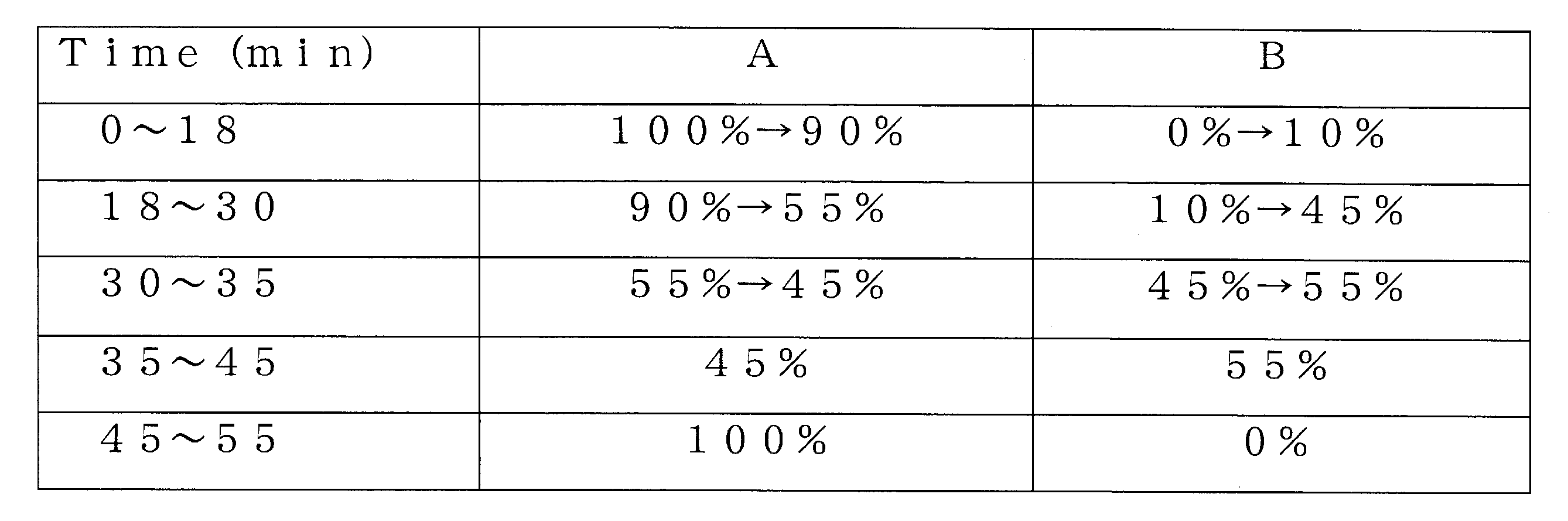
グラディエント(表1)

カラム:YMC社製YMC-Actus Triart C18,20×50mm,5μmとYMC社製YMC-Actus Triart C18,20×10mm,5μmを連結したものを使用した。
UV検出:254nm
MS検出:ESI positive
カラム流速:25mL/min
移動相:水/アセトニトリル(0.1%ぎ酸)
インジェクション量:0.1-0.5mL
s:シングレット
d:ダブレット
t:トリプレット
q:カルテット
dd:ダブル ダブレット
dt:ダブル トリプレット
td:トリプル ダブレット
tt:トリプル トリプレット
ddd:ダブル ダブル ダブレット
ddt:ダブル ダブル トリプレット
dtd:ダブル トリプル ダブレット
tdd:トリプル ダブル ダブレット
m:マルチプレット
br:ブロード
brs:ブロードシングレット
CDI:カルボニルジイミダゾール
DMSO-d6:重ジメチルスルホキシド
CDCl3:重クロロホルム
CD3OD:重メタノール
THF:テトラヒドロフラン
DMF:N,N-ジメチルホルムアミド
DMA:N,N-ジメチルアセトアミド
NMP:1-メチル-2-ピロリジノン
DMSO:ジメチルスルホキシド
TFA:トリフルオロ酢酸
WSC:1-(3-ジメチルアミノプロピル)-3-エチルカルボジイミド塩酸塩
HOBt:1-ヒドロキシベンゾトリアゾール1水和物
HATU:(ジメチルアミノ)-N,N-ジメチル(3H-[1,2,3]トリアゾロ[4,5-b]ピリジン-3-イルオキシ)メタンイミニウム ヘキサフルオロホスフェート
DIAD:ジイソプロピルアゾジカルボキシレート
TBAF:テトラブチルアンモニウムフルオライド
DIPEA:ジイソプロピルエチルアミン
Boc:tert-ブトキシカルボニル
Boc2O:二炭酸ジ-tert-ブチル
DMAP:ジメチルアミノピリジン
粉末X線回折は、試験物質適量を必要に応じてメノウ製乳鉢で軽く粉砕した後、次の試験条件に従って測定した。
装置:リガク MiniFlexII
ターゲット:Cu
X線出力設定:15mA,30kV
走査範囲:2.0~40.0°
ステップサイズ:0.010°
スキャンスピード:5.00°/min.
発散スリット:1.25°
散乱スリット:開放
受光スリット:開放
データ処理を含む装置の取り扱いは、各装置で指示された方法及び手順にしたがった。
なお、各種スペクトルから得られる数値は、その結晶成長の方向、粒子の大きさ、測定条件等によって多少変動する場合がある。したがって、それらの数値は厳密に解されるべきではない。
DSC測定は、次の試験条件に従って測定した。
装置:TAインスツルメント Q1000
試料:およそ1mg
試料容器:アルミニウム製
昇温速度:250℃まで5℃/min.で昇温
雰囲気ガス:窒素
窒素ガス流量:50mL/min.
データ処理を含む装置の取り扱いは、各装置で指示された方法及び手順にしたがった。
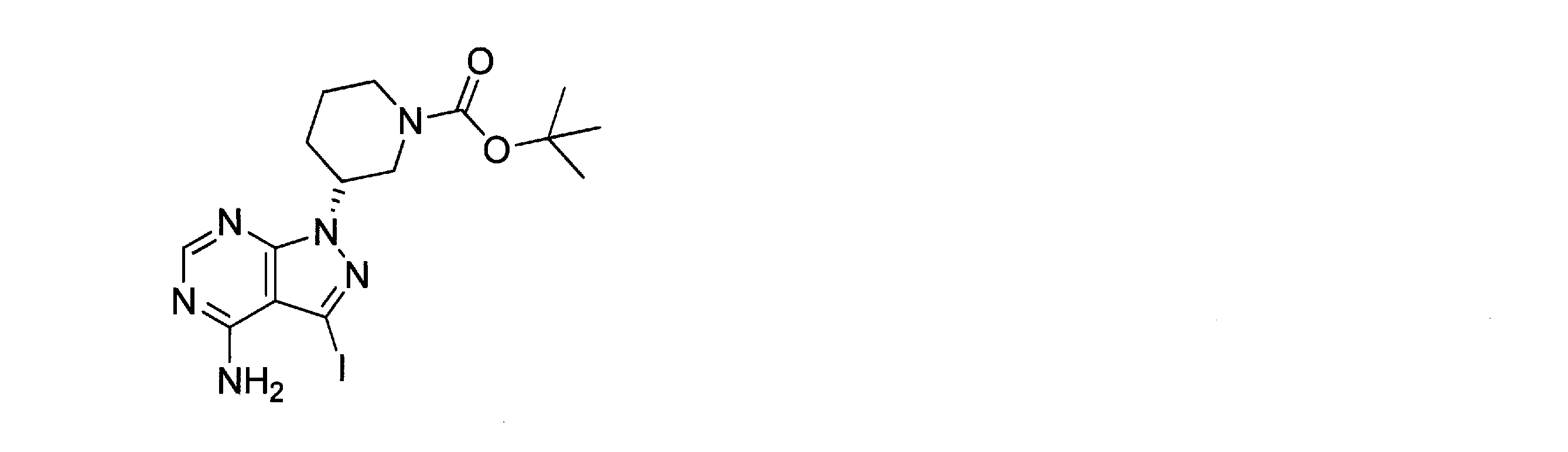
(S)-N-Boc-3-ピぺリジノール20gをトルエン100mLに溶解し、0℃にてトリエチルアミン21mL、メタンスルホニルクロライド9.2mLを加えた。氷冷下にて1時間撹拌したのち、酢酸エチルと水を加え、有機層を分離した。有機層を飽和炭酸水素ナトリウム水溶液、飽和塩化アンモニウム水溶液、水で洗浄した後、無水硫酸ナトリウムで乾燥、溶媒を減圧留去し、表題化合物を無色固体として26.8g得た。
国際公開第2007/126841号パンフレットに記載されている方法にて合成した3-ヨード-1H-ピラゾロ[3,4-d]ピリミジン-4-アミン14.6g、工程1で得られた(S)-tert-ブチル 3-(メチルスルホニルオキシ)ピペリジン-1-カルボキシレート25g、炭酸カリウム69gをDMA150mLの懸濁溶液を100℃に加熱し、10時間撹拌した。室温に冷却後、水300mLを加え生じた固体を濾取し、水で洗浄後、乾燥し表題化合物を黄色固体として26.9gを得た。

参考例1で得た(R)-tert-ブチル 3-(4-アミノ-3-ヨード-1H-ピラゾロ[3,4-d]ピリミジン-1-イル)ピペリジン-1-カルボキシレート 300mgをNMP3mLに溶解させた。ベンズ[d]オキサゾール-2-アミン118mg、キサントホス20mg、N-メチルモルホリン0.15mLを加え、脱気操作を行った。その後酢酸パラジウム7.6mgを加え、一酸化炭素雰囲気下110℃に加熱して2時間撹拌した。冷却後、メタノール4.5mLと5N水酸化ナトリウム水溶液0.45mLを加え、室温で30分撹拌した。その後2NHClでpHを5.3に調整し、生じた固体を濾取した。粗体をシリカゲルカラムで精製し(クロロホルムーメタノール)表題化合物を257mg白色固体として得た。
工程1で得た(R)-tert-ブチル 3-(4-アミノ-3-((ベンゾ[d]オキサゾール-2-イル)カルバモイル)-1H-ピラゾロ[3,4-d]ピリミジン-1-イル)ピペリジン-1-カルボキシレート5.0gをアセトニトリル50mLに懸濁させ、ヨウ化ナトリウム7.85gを加えた。室温で撹拌下、トリメチルシリルクロライド6.65mLを滴下し1時間撹拌した。水87.5mLと5N水酸化ナトリウム水溶液12.5mLを加えた後、氷冷した。塩化アクロイル0.895mLをアセトニトリル4.1mLに溶解した溶液を滴下し氷冷下1時間撹拌した。水50mLを加え生じた固体を濾取して水洗し、減圧下乾燥して表題化合物4.13gを白色固体として得た(化合物A)。
1H-NMR (DMSO-d6):δppm 1.53-1.68(m,1H),1.86-1.98(m,1H),2.08-2.21(m,1H),2.25-2.39(m,1H),2.82-2.95(m,0.5H),3.10-3.22(m,0.5H),3.23-3.37(m,0.5H),3.68-3.78(m,0.5H),4.04-4.14(m,0.5H),4.22-4.38(m,1H),4.52-4.65(m,0.5H),4.67-4.81(m,1H),5.58-5.74(m,1H),6.03-6.19(m,1H),6.68-6.92(m,1H),7.28-7.40(m,2H),7.59-7.71(m,2H),8.22(brs,2H),8.28(s,1H),12.15(brs,1H)
無機酸のうち、塩酸、硫酸及びリン酸との塩形成検討を行った。具体的には、化合物Aを適当な溶媒に溶解させ、これに適当量の各種酸(0.5~1.5当量)を添加し一終夜攪拌することで塩形成の有無を判断した。その結果、化合物Aに塩酸及び硫酸を付した場合には、分解が顕著に進行したためさらなる検討を中断した。化合物Aにリン酸を付した場合は化合物Aの1リン酸塩が得られた(参考例4)。
また、有機酸のうち、フマル酸、コハク酸、酒石酸、リンゴ酸、クエン酸、及び酢酸との塩形成検討を行った。具体的には、化合物Aを適当な溶媒に溶解させこれに化合物Aと同モル用量の各種酸を添加した後、溶媒を留去させることで各種有機酸の非晶質体を調製した。続いてこの非晶質体を適当な有機溶媒(例えばメチルエチルケトン,エタノール,酢酸エチル及び酢酸ブチル)に加熱懸濁させることで、塩形成の有無を判断した。その結果、リンゴ酸、クエン酸及び酢酸とは塩は形成されなかった。コハク酸の非晶質体からは結晶性のものが得られたが、理論量相当のコハク酸塩を得ることができなかった。フマル酸からは化合物Aの1フマル酸塩(非晶質体)が、酒石酸からは化合物Aの1/2酒石酸塩が得られた(実施例1、及び参考例5)。
無機塩基のうち、ナトリウムとマグネシウムとの塩形成検討を行った。具体的には、化合物Aを適当な溶媒に溶解させ、これに適当量の各種塩基(0.5~1.5当量)を添加し一終夜攪拌することで塩形成の有無を判断した。その結果、ナトリウムとの塩形成においては、分解が顕著に進行したためさらなる検討を中断した。また、マグネシウムからは化合物Aの1/2マグネシウム塩が得られた(参考例6)。しかし、化合物Aの1/2マグネシウム塩は類縁物質の数が多くなり、また、塩取得時の操作が煩雑であり、有機溶媒に対する溶解性が低く、再溶解困難であったため、実製造に不適当であると判断した。
1H-NMR (DMSO-d6):δppm 1.51-1.69(m,1H),1.87-1.97(m,1H),2.09-2.21(m,1H),2.25-2.41(m,1H),2.84-2.95(m,0.5H),3.09-3.22(m,0.5H),3.22-3.38(m,0.5H),3.67-3.83(m,0.5H),4.04-4.17(m,0.5H),4.23-4.40(m,1H),4.54-4.65(m,0.5H),4.66-4.83(m,1H),5.58-5.76(m,1H),6.05-6.22(m,1H),6.70-6.96(m,1H),7.32-7.48(m,2H),7.61-7.75(m,2H),8.15-8.26(brs,2H),8.30(s,1H)
1H-NMR (DMSO-d6):δppm 1.55-1.68(m,1H),1.89-1.97(m,1H),2.10-2.21(m,1H),2.25-2.40(m,1H),2.85-2.95(m,0.5H),3.15-3.65(m,1H),3.68-3.80(m,0.5H),4.05-4.15(m,0.5H),4.24-4.36(m,1H),4.30(s,2H),4.53-4.62(m,0.5H),4.67-4.79(brs,1H),5.67(dd,J=9.99Hz,1H),6.08-6.18(m,1H),6.71-6.92(m,1H),7.30-7.41(m,2H),7.61-7.73(m,2H),8.22(brs,2H),8.29(s.,1H)
1H-NMR (DMSO-d6):δppm 1.52-1.67(m,1H),1.88-2.01(m,1H),2.19-2.41(m,2H),2.75-2.89(m,0.5H),3.07-3.21(m,1H),3.57-3.71(m,0.5H),4.15-4.23(m,0.5H),4.36-4.55(m,1H),4.69-4.88(m,2H),5.60-5.80(m,1H),6.08-6.22(m,1H),6.79-6.96(m,1H),7.08-7.23(m,2H),7.47-7.56(m,2H),8.13-8.22(brs,2H),8.49(s,1H),10.42-10.50(brs,1H)
1H-NMR (DMSO-d6):δppm 1.53-1.68(m,1H),1.86-1.98(m,1H),2.08-2.21(m,1H),2.25-2.39(m,1H),2.82-2.95(m,0.5H),3.10-3.22(m,0.5H),3.23-3.37(m,0.5H),3.68-3.78(m,0.5H),4.04-4.14(m,0.5H),4.22-4.38(m,1H),4.52-4.65(m,0.5H),4.67-4.81(m,1H),5.58-5.74(m,1H),6.03-6.19(m,1H),6.62(s,2H),6.68-6.92(m,1H),7.28-7.40(m,2H),7.59-7.71(m,2H),8.22(brs,2H),8.28(s,1H),12.15(brs,1H)
特徴的な回折角(2θ±0.1°):
4.5゜、5.8゜、11.2゜、12.1゜、12.4゜、13.4゜、16.6゜、17.3゜、18.2゜、20.2゜、26.4゜、27.1゜
示差走査熱量(DSC)曲線における吸熱ピーク:197℃~199℃付近
特徴的な回折角(2θ±0.1°):
7.2゜、12.4゜、14.4゜、15.0゜、15.6゜、19.0゜、22.3゜、22.6゜、23.4゜、25.5゜、25.9゜及び27.6゜
示差走査熱量(DSC)曲線:図5に示した。
示差走査熱量(DSC)曲線における吸熱ピーク:219℃~224℃付近
国際公開第2008/121742号パンフレットの方法に準じて合成し、表題化合物を白色固体として得た。
1H-NMR (DMSO-d6):δppm 1.21-1.28(m,1H),1.42-1.71(m,1H),1.91(brs,1H),2.04-2.36(m,2H),2.91-3.10(m,1H),3.13-3.27(m,1H),3.59-3.76(m,1H),4.04-4.26(m,2H),4.47-4.80(m,2H),5.51-5.78(m,1H),5.96-6.21(m,1H),6.64-6.95(m,1H),7.14(dd,J=11.46,8.54Hz,6H),7.40-7.47(m,2H),7.63-7.70(m,2H),8.26(s,1H)
実施例及び参考例で得られた化合物A、化合物Aの1フマル酸塩、化合物Aの1/2フマル酸塩、化合物Aの1/2酒石酸塩、化合物Aの1リン酸塩の水分吸脱着試験を行い、チャネルハイドレートの性質の有無を調べた。
試料およそ5~10mgを専用の石英製ホルダーに充填し、以下の条件下に試料の各湿度における重量を連続的に測定し記録した。なお、データ処理を含む装置の取扱いは、各装置で指示された方法及び手順にしたがった。
乾燥温度:60℃
昇温速度:1℃/min
乾燥の平衡:300分を超えない範囲で、5分間で0.01wt%減少しないことを確認
測定温度:25℃
加湿の平衡:120分を超えない範囲で、5分間で0.01wt%増加しないことを確認
相対湿度プログラム:5~95%RHまで5%RHずつ上げ、95%RH~5%RHまで5%RHずつ下げる


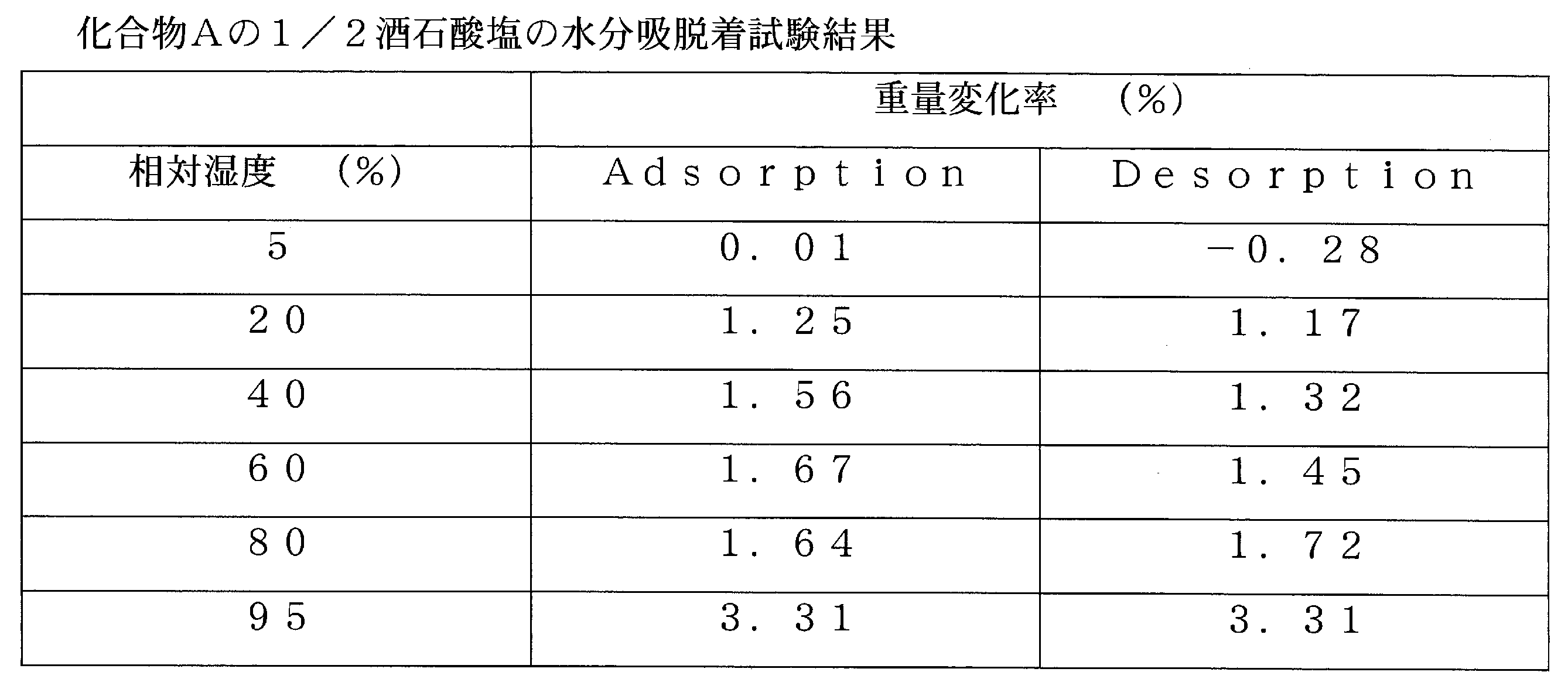
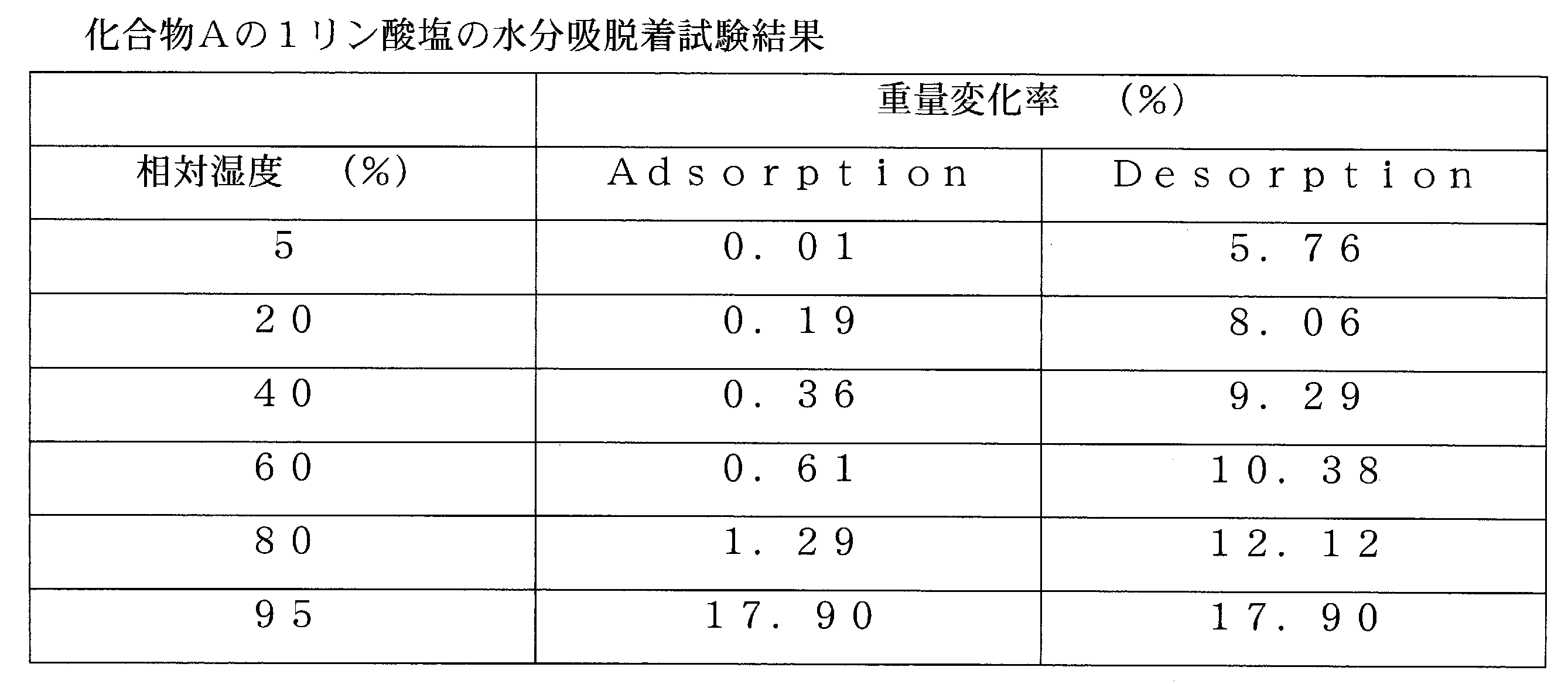
同様に、化合物Aの1/2酒石酸塩では、5~95%の相対湿度において加湿させるとその重量変化は最大約3.3%であった。また、95%の相対湿度から湿度を下げると、ほぼ初期状態に戻ることが確認された。つまり、化合物Aの1/2酒石酸塩も、湿度に応じて水分を吸脱着するチャネルハイドレートの性質を有していることがわかった。
また、化合物Aの1リン酸塩においては、水分吸脱着試験後の結晶形は元の結晶形を維持していないことが分かった。
一方、本発明にかかる化合物Aの1フマル酸塩、及び化合物Aの1/2フマル酸塩は、95%の相対湿度下においていずれも約1%未満の質量変化に増加に留まり、湿度を下げるとほぼ初期状態に戻ることがわかった。したがって、本発明にかかる化合物Aのフマル酸塩はチャネルハイドレートの性質を回避でき、医薬品又は医薬品原薬として、より優れた性質を有することが確認された。
実施例及び参考例で得られた化合物Aの1フマル酸塩、化合物Aの1/2フマル酸塩、化合物Aの1/2酒石酸塩、化合物Aの1リン酸塩を、40℃/75%RH(密閉条件及び開放条件)で2週間又は4週間保存したときの固体安定性を、次の条件で測定した。
測定ポイント:2週間及び4週間
保存量:約30mg
保存容器:褐色ガラス瓶
試料溶液の調製法:試料の濃度が、0.4mg/mLとなるように50%アセトニトリルに溶解させた。
カラム:GLサイエンス社製InertSustein C18,4.6×150mm,3μm
MS検出:ESI positive
UV検出:220nm
カラム温度:40℃
カラム流速:1.0mL/min
移動相:A;10mmol/Lりん酸緩衝液(pH6.0):アセトニトリル混液(17:3),B;アセトニトリル
インジェクション量:5μL
グラディエント:表3
実施例及び参考例で得られた化合物Aの1フマル酸塩、化合物Aの1/2酒石酸塩、化合物Aの1リン酸塩を、60℃で2週間又は4週間保存したときの固体安定性を、次の条件で測定した。
保存条件:60℃(密閉)
測定ポイント:2週間及び4週間
保存量:約30mg
保存容器:褐色ガラス瓶
試料溶液の調製法:試料の濃度が、0.4mg/mLとなるように50%アセトニトリルに溶解させた。

実施例で得られた化合物A、化合物Aの1/2フマル酸塩、及び化合物Aの1フマル酸塩について、0.5%HPMCを用いて、それぞれ化合物Aの分子量に換算して50mg/10mL/kgの懸濁液を作製した。これらの投与液を摂食条件下にて飼育していたマウス(Balb/cA)に体重1kgあたり10mLの用量で経口投与用ゾンデを用いて経口投与した。投与後、マウス用ケージに戻し状態を確認した。ケージ内では給水及び給餌は自由に取れる状態とした。投与0.25、0.5、1、2、4、6時間後にマウスをイソフルランにて麻酔し、キャピラリ採血管を用いて60μL眼窩静脈叢より採血した。
採血した血液は、氷冷し、遠心操作により血漿を分離した。採血終了後のマウスは、動物飼育ケージに戻し麻酔覚醒後の状態を確認した。最終採血終了後は、イソフルラン麻酔の深度確認を行った後に、頸椎脱臼により安楽死させた。
LC-MS/MSを用いて、MRM法で測定した各血漿中の化合物Aの濃度から、Pharsight社製ソフトウェア、Phoenix WinNonlin(v6.3.0)を用いて、対数線形台形法でAUC0-6hr、Cmax、Tmaxを算出した。

BTKキナーゼ活性に対する化合物のインビトロでの阻害活性測定法の条件設定において、パーキンエルマー社のLabChip(登録商標)シリーズ試薬消耗品価格表にFL-Peptide 2がBTKキナーゼ活性測定において基質ペプチドとして対応していることが記載されていたので、FL-Peptide 2を基質に用いた。試験に用いた精製リコンビナントヒトBTK蛋白質はカルナバイオサイエンス社から購入した。
化合物の阻害活性測定においては、まず、化合物Aの1フマル酸塩をジメチルスルホキシド(DMSO)で段階希釈した。次に、キナーゼ反応用緩衝液(20mM HEPES(pH 7.5)、2mM dithiotheitol、0.01% Triton X-100)中にBTK蛋白質、基質ペプチド(終濃度は1μM)、塩化マグネシウム(終濃度は10mM)、ATP(終濃度は45μM)と被検化合物のDMSO溶液(DMSOの終濃度は5%)を加えて25℃で40分間インキュベーションしキナーゼ反応を行った。そこへ終濃度30mMになるようEDTAを加えることで反応を停止させた。最後に、LabChip EZ Reader II(パーキンエルマー社)でリン酸化されなかった基質ペプチド(S)とリン酸化されたペプチド(P)をマイクロ流路キャピラリー電気泳動によって分離・検出した。SとPそれぞれのピークの高さからリン酸化反応量を求め、リン酸化反応を50%抑制することのできる化合物濃度をIC50値(nM)と定義し以下の表7に示した。

1)BTK阻害活性測定
試験例5と同様にして、BTK阻害活性測定を測定した。
2)EGFR阻害活性測定
EGFRキナーゼ活性に対する化合物のインビトロでの阻害活性測定法の条件設定において、パーキンエルマー社のLabChip(登録商標)シリーズ試薬消耗品価格表にFL-Peptide 22がEGFRキナーゼ活性測定において基質ペプチドとして対応していることが記載されていたので、そのアミノ酸配列を参考にしてビオチン化ペプチド(biotin-EEPLYWSFPAKKK)を作製した。試験に用いた精製リコンビナントヒトEGFR蛋白質はカルナバイオサイエンス社から購入した。
化合物の阻害活性測定においては、まず、化合物Aの1フマル酸塩をジメチルスルホキシド(DMSO)で段階希釈した。次に、キナーゼ反応用緩衝液(20mM HEPES(pH 7.5)、2mM dithiotheitol、0.01% Triton X-100)中にEGFR蛋白質、基質ペプチド(終濃度は250nM)、塩化マグネシウム(終濃度は10mM)、塩化マンガン(終濃度は10mM)、ATP(終濃度は1.5μM)と被検化合物のDMSO溶液(DMSOの終濃度は2.5%)を加えて25℃で120分間インキュベーションしキナーゼ反応を行った。そこへ終濃度24mMになるようEDTAを加えることで反応を停止させた後、Euラベル化抗リン酸化チロシン抗体PT66(パーキンエルマー社)とSureLight APC-SA(パーキンエルマー社)を含む検出液を添加し室温で2時間以上静置した。最後に、PHERAstar FS(BMG LABTECH社)で波長337nmの励起光照射時における蛍光量を620nmと665nmの二波長で測定した。二波長の蛍光量比からリン酸化反応量を求め、リン酸化反応を50%抑制することのできる化合物濃度をIC50値(nM)と定義した。
3)BTK阻害選択性
上記1)及び2)で得られた結果をもとに、「EGFR阻害活性 IC50値(nM)/BTK阻害活性 IC50値(nM)」を算出することにより、被検化合物のBTK阻害選択性を確認した。

BTKを発現しているびまん性大細胞型B細胞性リンパ腫株であるTMD8細胞は、10%ウシ胎児血清を含むRPMI1640培地(ライフテクノロジーズ社製)中に懸濁させた。EGFR過剰発現・高活性化ヒト類上皮癌細胞株であるA431細胞は、10%ウシ胎児血清を含むDMEM、high glucose培地(ライフテクノロジーズ社製)中に懸濁させた。細胞懸濁液を、384ウェル平底マイクロプレートの各ウェルに播種し、5%炭酸ガス含有の培養器中37℃で1日培養した。化合物Aの1フマル酸塩、および比較例化合物1をDMSOに溶解し、DMSOを用いて被検化合物を終濃度の500倍の濃度になるように希釈した。被検化合物のDMSO溶液を各細胞の懸濁に用いた培地で希釈し、これを細胞の培養プレートの各ウェルにDMSOの最終濃度が0.2%になるように加え、5%炭酸ガス含有の培養器中37℃でさらに3日培養した。化合物添加前および化合物存在下での3日間培養後の細胞数計測はセルタイターグロ(プロメガ社製)を用いて、プロメガ社の推奨するプロトコールに基づき行った。以下の式より増殖阻害率を算出し、50%阻害する被検化合物の濃度(GI50(nM))を求めた。
T:被検化合物を添加したウェルの発光強度
C:被検化合物を添加しなかったウェルの発光強度
C0:被検化合物添加前に測定したウェルの発光強度

本試験は非特許文献(Brand DD, et al., Nat Protoc. 2007;2,1269-1275、Xu D. et al.,JPET, 2012 Apr;341(1):90-103)に記載された方法に準じて行った。7週齢雄性/DBA/1マウス(日本チャールス・リバー)に4mg/mLウシタイプ2コラーゲン溶液(コラーゲン技術研修会)とフロイント完全アジュバント(DIFCO)の等量混合溶液(エマルジョン)100μL/bodyを背部皮内注射した(初回免疫)。その21日後、4mg/mLウシタイプ2コラーゲン溶液(コラーゲン技術研修会)とフロイント完全アジュバント(DIFCO)の等量混合溶液(エマルジョン)100μL/bodyを尾根部に皮内注射し、追加免疫を行った。追加免疫から8日後を投与開始日(day0)とし、17日間、1日1回の経口投与を実施した。day0、day3、day7、day10、day14、day17に肉眼にて関節炎の兆候をスコア化(0:変化無し、1:指1本の腫脹、2:指2本以上の腫脹、3:甲の腫脹、4:全指の腫脹かつ手足首におよぶ腫脹)し、四肢の合計を個体の点数(最高16点)とした。結果を図11に示す。
Claims (30)
- (R)-1-(1-アクリロイルピペリジン-3-イル)-4-アミノ-N-(ベンゾ[d]オキサゾール-2-イル)-1H-ピラゾロ[3,4-d]ピリミジン-3-カルボキサミドのフマル酸塩。
- (R)-1-(1-アクリロイルピペリジン-3-イル)-4-アミノ-N-(ベンゾ[d]オキサゾール-2-イル)-1H-ピラゾロ[3,4-d]ピリミジン-3-カルボキサミド・1/2フマル酸塩である請求項1に記載の塩。
- 粉末X線回折スペクトルにおいて、回折角(2θ±0.1°)が、4.5゜、5.8゜、11.2゜、12.1゜、12.4゜、13.4゜、16.6゜、17.3゜、18.2゜、20.2゜、26.4゜、及び27.1゜から選択される少なくとも2つ以上のピークを有する結晶である請求項2に記載の塩。
- 粉末X線回折スペクトルにおいて、回折角(2θ±0.1°)が、4.5゜、5.8゜、11.2゜、12.1゜、12.4゜、13.4゜、16.6゜、17.3゜、18.2゜、20.2゜、26.4゜、及び27.1゜から選択される少なくとも5つ以上のピークを有する結晶である請求項2又は3に記載の塩。
- 粉末X線回折スペクトルにおいて、回折角(2θ±0.1°)が、4.5゜、5.8゜、11.2゜、12.1゜、12.4゜、13.4゜、16.6゜、17.3゜、18.2゜、20.2゜、26.4゜、及び27.1゜にピークを有する結晶である請求項2乃至4のいずれか1項に記載の塩。
- 図2に示される粉末X線回折スペクトルを有する結晶である請求項2乃至5のいずれか1項に記載の塩。
- 示差走査熱量(DSC)曲線におけるピーク温度が197℃~199℃付近の吸熱ピークを有する結晶である請求項2乃至6のいずれか1項に記載の塩。
- (R)-1-(1-アクリロイルピペリジン-3-イル)-4-アミノ-N-(ベンゾ[d]オキサゾール-2-イル)-1H-ピラゾロ[3,4-d]ピリミジン-3-カルボキサミド・1フマル酸塩である請求項1に記載の塩。
- 粉末X線回折スペクトルにおいて、回折角(2θ±0.1°)が、7.2゜、12.4゜、14.4゜、15.0゜、15.6゜、19.0゜、22.3゜、22.6゜、23.4゜、25.5゜、25.9゜及び27.6゜から選択される少なくとも2つ以上のピークを有する結晶である請求項8に記載の塩。
- 粉末X線回折スペクトルにおいて、回折角(2θ±0.1°)が、7.2゜、12.4゜、14.4゜、15.0゜、15.6゜、19.0゜、22.3゜、22.6゜、23.4゜、25.5゜、25.9゜及び27.6゜から選択される少なくとも5つ以上のピークを有する結晶である請求項8又は9に記載の塩。
- 粉末X線回折スペクトルにおいて、回折角(2θ±0.1°)が、7.2゜、12.4゜、14.4゜、15.0゜、15.6゜、19.0゜、22.3゜、22.6゜、23.4゜、25.5゜、25.9゜及び27.6゜にピークを有する結晶である請求項8乃至10のいずれか1項に記載の塩。
- 図4に示される粉末X線回折スペクトル有する結晶である請求項8乃至11のいずれか1項に記載の塩。
- 示差走査熱量(DSC)曲線におけるピーク温度が219℃~224℃付近の吸熱ピークを有する結晶である請求項8乃至12のいずれか1項に記載の塩。
- 粉末X線回折スペクトルにおいてハローパターンを示す非晶質体である請求項8に記載の塩。
- 図1に示される粉末X線スペクトルを有する非晶質体である請求項8又は14に記載の塩。
- 請求項1乃至15のいずれか1項に記載の塩を有効成分とするBTK阻害剤。
- 請求項1乃至15のいずれか1項に記載の塩を含有する医薬組成物。
- 請求項1乃至15のいずれか1項に記載の塩を有効成分とする抗腫瘍剤又はアレルギー疾患、自己免疫疾患、炎症性疾患の予防剤及び/又は治療剤。
- 請求項1乃至15のいずれか1項に記載の塩を有効成分とする血液腫瘍に対する抗腫瘍剤、又は、アレルギー性鼻炎、花粉症、アトピー性皮膚炎、関節リウマチ、全身性エリテマトーデスの予防剤及び/又は治療剤。
- BTK阻害剤を製造するための、請求項1乃至15のいずれか1項に記載の塩の使用。
- 医薬組成物を製造するための、請求項1乃至15のいずれか1項に記載の塩の使用。
- 抗腫瘍剤又はアレルギー疾患、自己免疫疾患、炎症性疾患の予防剤及び/又は治療剤を製造するための、請求項1乃至15のいずれか1項に記載の塩の使用。
- 血液腫瘍に対する抗腫瘍剤、又は、アレルギー性鼻炎、花粉症、アトピー性皮膚炎、関節リウマチ、全身性エリテマトーデスの予防剤及び/又は治療剤を製造するための、請求項1乃至15のいずれか1項に記載の塩の使用。
- BTK阻害に使用するための、請求項1乃至15のいずれか1項に記載の塩。
- 医薬として使用するための、請求項1乃至15のいずれか1項に記載の塩。
- 腫瘍、アレルギー疾患、自己免疫疾患又は炎症性疾患の予防又は治療に使用するための、請求項1乃至15のいずれか1項に記載の塩。
- 血液腫瘍、アレルギー性鼻炎、花粉症、アトピー性皮膚炎、関節リウマチ又は全身性エリテマトーデスの予防又は治療に使用するための、請求項1乃至15のいずれか1項に記載の塩。
- BTK阻害方法であって、それを必要とする対象に、請求項1乃至15のいずれか1項に記載の塩の有効量を投与することを含む、方法。
- 腫瘍、アレルギー疾患、自己免疫疾患又は炎症性疾患の予防及び/又は治療方法であって、それを必要とする対象に、請求項1乃至15のいずれか1項に記載の塩の有効量を投与することを含む、方法。
- 血液腫瘍、アレルギー性鼻炎、花粉症、アトピー性皮膚炎、関節リウマチ又は全身性エリテマトーデスの治療方法であって、それを必要とする対象に、請求項1乃至15のいずれか1項に記載の塩の有効量を投与することを含む、方法。
Priority Applications (17)
| Application Number | Priority Date | Filing Date | Title |
|---|---|---|---|
| CA2974335A CA2974335C (en) | 2015-01-30 | 2016-01-29 | Novel salt of fused pyrimidine compound and crystal thereof |
| SG11201704431VA SG11201704431VA (en) | 2015-01-30 | 2016-01-29 | Novel salt of fused pyrimidine compound and crystal thereof |
| KR1020177018432A KR101852738B1 (ko) | 2015-01-30 | 2016-01-29 | 축합 피리미딘 화합물의 신규한 염 및 그 결정 |
| AU2016213031A AU2016213031B2 (en) | 2015-01-30 | 2016-01-29 | Novel salt of fused pyrimidine compound and crystal thereof |
| BR112017016318-7A BR112017016318B1 (pt) | 2015-01-30 | 2016-01-29 | Sal de ácido fumárico, inibidor de btk, composição farmacêutica e agente antitumoral compreendendo o dito sal e uso do dito sal |
| RU2017127128A RU2702660C2 (ru) | 2015-01-30 | 2016-01-29 | Новая соль конденсированного пиримидинового соединения и ее кристалл |
| MYPI2017701806A MY196997A (en) | 2015-01-30 | 2016-01-29 | Novel salt of fused pyrimidine compound and crystal thereof |
| EP16743557.7A EP3115365B1 (en) | 2015-01-30 | 2016-01-29 | Novel salt of fused pyrimidine compound and crystal thereof |
| ES16743557.7T ES2667247T3 (es) | 2015-01-30 | 2016-01-29 | Sal novedosa de compuesto de pirimidina condensado y cristal del mismo |
| DK16743557.7T DK3115365T3 (en) | 2015-01-30 | 2016-01-29 | HIS UNKNOWN SALT OF CONDENSED PYRIMIDIDE COMPOUND AND CRYSTALS THEREOF |
| MX2017009864A MX2017009864A (es) | 2015-01-30 | 2016-01-29 | Sal novedosa de compuesto de pirimidina fusionado y cristal del mismo. |
| PL16743557T PL3115365T3 (pl) | 2015-01-30 | 2016-01-29 | Nowa sól skondensowanego związku pirymidynowego i jej kryształ |
| CN201680007403.6A CN107207517B (zh) | 2015-01-30 | 2016-01-29 | 稠合嘧啶化合物的盐及其结晶 |
| JP2016533749A JP6093486B2 (ja) | 2015-01-30 | 2016-01-29 | 縮合ピリミジン化合物の新規な塩及びその結晶 |
| US15/297,180 US9908889B2 (en) | 2015-01-30 | 2016-10-19 | Salt of fused pyrimidine compound and crystal thereof |
| PH12017501335A PH12017501335B1 (en) | 2015-01-30 | 2017-07-24 | Novel salt of fused pyrimidine compound and crystal thereof |
| US15/861,947 US10280174B2 (en) | 2015-01-30 | 2018-01-04 | Salt of fused pyrimidine compound and crystal thereof |
Applications Claiming Priority (2)
| Application Number | Priority Date | Filing Date | Title |
|---|---|---|---|
| JP2015-017387 | 2015-01-30 | ||
| JP2015017387 | 2015-01-30 |
Related Child Applications (1)
| Application Number | Title | Priority Date | Filing Date |
|---|---|---|---|
| US15/297,180 Continuation US9908889B2 (en) | 2015-01-30 | 2016-10-19 | Salt of fused pyrimidine compound and crystal thereof |
Publications (1)
| Publication Number | Publication Date |
|---|---|
| WO2016121954A1 true WO2016121954A1 (ja) | 2016-08-04 |
Family
ID=56543556
Family Applications (1)
| Application Number | Title | Priority Date | Filing Date |
|---|---|---|---|
| PCT/JP2016/052733 Ceased WO2016121954A1 (ja) | 2015-01-30 | 2016-01-29 | 縮合ピリミジン化合物の新規な塩及びその結晶 |
Country Status (20)
| Country | Link |
|---|---|
| US (2) | US9908889B2 (ja) |
| EP (1) | EP3115365B1 (ja) |
| JP (1) | JP6093486B2 (ja) |
| KR (1) | KR101852738B1 (ja) |
| CN (1) | CN107207517B (ja) |
| AU (1) | AU2016213031B2 (ja) |
| BR (1) | BR112017016318B1 (ja) |
| CA (1) | CA2974335C (ja) |
| DK (1) | DK3115365T3 (ja) |
| ES (1) | ES2667247T3 (ja) |
| HU (1) | HUE038041T2 (ja) |
| MX (1) | MX2017009864A (ja) |
| MY (1) | MY196997A (ja) |
| PH (1) | PH12017501335B1 (ja) |
| PL (1) | PL3115365T3 (ja) |
| PT (1) | PT3115365T (ja) |
| RU (1) | RU2702660C2 (ja) |
| SG (1) | SG11201704431VA (ja) |
| TW (1) | TWI605049B (ja) |
| WO (1) | WO2016121954A1 (ja) |
Cited By (2)
| Publication number | Priority date | Publication date | Assignee | Title |
|---|---|---|---|---|
| WO2021125313A1 (ja) | 2019-12-19 | 2021-06-24 | 大鵬薬品工業株式会社 | 縮合ピリミジン化合物を有効成分とする治療剤 |
| JP2026508813A (ja) * | 2023-01-13 | 2026-03-13 | シェンツェン ニューデル バイオテック カンパニー リミテッド | 化合物aの塩及び結晶形、その製造方法、並びにその用途 |
Families Citing this family (2)
| Publication number | Priority date | Publication date | Assignee | Title |
|---|---|---|---|---|
| US12492208B2 (en) * | 2020-07-15 | 2025-12-09 | Taiho Pharmaceutical Co., Ltd. | Crystal of pyrimidine compound |
| US20250295655A1 (en) * | 2022-06-01 | 2025-09-25 | Alk-Abelló A/S | Bruton's kinase inhibitors for the treatment of a sudden allergic reaction |
Citations (3)
| Publication number | Priority date | Publication date | Assignee | Title |
|---|---|---|---|---|
| WO2013184572A1 (en) * | 2012-06-04 | 2013-12-12 | Pharmacyclics, Inc. | Crystalline forms of a bruton's tyrosine kinase inhibitor |
| US8673925B1 (en) * | 2013-04-09 | 2014-03-18 | Principia Biopharma Inc. | Tyrosine kinase inhibitors |
| WO2015022926A1 (ja) * | 2013-08-12 | 2015-02-19 | 大鵬薬品工業株式会社 | 新規な縮合ピリミジン化合物又はその塩 |
Family Cites Families (4)
| Publication number | Priority date | Publication date | Assignee | Title |
|---|---|---|---|---|
| US6579977B1 (en) * | 1997-12-01 | 2003-06-17 | Eisu Innovative Gesellschaft Fur Technik Und Umweltschutz Mbh | Biosorbents and process for producing the same |
| NZ603525A (en) | 2008-06-27 | 2015-02-27 | Celgene Avilomics Res Inc | Pyrimidine based compound and uses thereof |
| US8338439B2 (en) | 2008-06-27 | 2012-12-25 | Celgene Avilomics Research, Inc. | 2,4-disubstituted pyrimidines useful as kinase inhibitors |
| DK3120852T3 (da) * | 2015-01-30 | 2019-07-29 | Taiho Pharmaceutical Co Ltd | Præventivt og/eller terapeutisk middel til immunsygdomme |
-
2016
- 2016-01-29 WO PCT/JP2016/052733 patent/WO2016121954A1/ja not_active Ceased
- 2016-01-29 HU HUE16743557A patent/HUE038041T2/hu unknown
- 2016-01-29 SG SG11201704431VA patent/SG11201704431VA/en unknown
- 2016-01-29 PT PT167435577T patent/PT3115365T/pt unknown
- 2016-01-29 JP JP2016533749A patent/JP6093486B2/ja active Active
- 2016-01-29 EP EP16743557.7A patent/EP3115365B1/en active Active
- 2016-01-29 KR KR1020177018432A patent/KR101852738B1/ko active Active
- 2016-01-29 CA CA2974335A patent/CA2974335C/en active Active
- 2016-01-29 AU AU2016213031A patent/AU2016213031B2/en active Active
- 2016-01-29 MY MYPI2017701806A patent/MY196997A/en unknown
- 2016-01-29 ES ES16743557.7T patent/ES2667247T3/es active Active
- 2016-01-29 PL PL16743557T patent/PL3115365T3/pl unknown
- 2016-01-29 RU RU2017127128A patent/RU2702660C2/ru active
- 2016-01-29 BR BR112017016318-7A patent/BR112017016318B1/pt active IP Right Grant
- 2016-01-29 DK DK16743557.7T patent/DK3115365T3/en active
- 2016-01-29 MX MX2017009864A patent/MX2017009864A/es active IP Right Grant
- 2016-01-29 CN CN201680007403.6A patent/CN107207517B/zh active Active
- 2016-01-29 TW TW105102954A patent/TWI605049B/zh active
- 2016-10-19 US US15/297,180 patent/US9908889B2/en active Active
-
2017
- 2017-07-24 PH PH12017501335A patent/PH12017501335B1/en unknown
-
2018
- 2018-01-04 US US15/861,947 patent/US10280174B2/en active Active
Patent Citations (3)
| Publication number | Priority date | Publication date | Assignee | Title |
|---|---|---|---|---|
| WO2013184572A1 (en) * | 2012-06-04 | 2013-12-12 | Pharmacyclics, Inc. | Crystalline forms of a bruton's tyrosine kinase inhibitor |
| US8673925B1 (en) * | 2013-04-09 | 2014-03-18 | Principia Biopharma Inc. | Tyrosine kinase inhibitors |
| WO2015022926A1 (ja) * | 2013-08-12 | 2015-02-19 | 大鵬薬品工業株式会社 | 新規な縮合ピリミジン化合物又はその塩 |
Cited By (4)
| Publication number | Priority date | Publication date | Assignee | Title |
|---|---|---|---|---|
| WO2021125313A1 (ja) | 2019-12-19 | 2021-06-24 | 大鵬薬品工業株式会社 | 縮合ピリミジン化合物を有効成分とする治療剤 |
| JPWO2021125313A1 (ja) * | 2019-12-19 | 2021-06-24 | ||
| JP7304968B2 (ja) | 2019-12-19 | 2023-07-07 | 大鵬薬品工業株式会社 | 縮合ピリミジン化合物を有効成分とする治療剤 |
| JP2026508813A (ja) * | 2023-01-13 | 2026-03-13 | シェンツェン ニューデル バイオテック カンパニー リミテッド | 化合物aの塩及び結晶形、その製造方法、並びにその用途 |
Also Published As
Similar Documents
| Publication | Publication Date | Title |
|---|---|---|
| JP6035423B2 (ja) | 新規な縮合ピリミジン化合物又はその塩 | |
| US9643964B2 (en) | 3-(2-aminopyrimidin-4-yl)-5-(3-hydroxypropynyl)-1H-pyrrolo[2,3-C]pyridine derivatives as NIK inhibitors for the treatment of cancer | |
| US12447151B2 (en) | Alkyne derivative, preparation method for same, and uses thereof | |
| US10280174B2 (en) | Salt of fused pyrimidine compound and crystal thereof | |
| JP6093485B2 (ja) | 免疫疾患の予防及び/又は治療剤 | |
| HK1240225B (zh) | 稠合嘧啶化合物的盐及其结晶 | |
| HK1240225A1 (en) | Salt of condensed pyrimidine compound, and crystals thereof | |
| EP2396322B9 (en) | 2-Morpholino-pyrido[3,2-d]pyrimidines | |
| HK40056552A (en) | Prophylactic and/or therapeutic agent for immune diseases | |
| HK40065112A (en) | Alkyne derivative, preparation method for same, and uses thereof | |
| HK1240121A1 (en) | Prophylactic and/or therapeutic agent for immune diseases | |
| HK1217703B (en) | Novel fused pyrimidine compound or salt thereof |
Legal Events
| Date | Code | Title | Description |
|---|---|---|---|
| ENP | Entry into the national phase |
Ref document number: 2016533749 Country of ref document: JP Kind code of ref document: A |
|
| 121 | Ep: the epo has been informed by wipo that ep was designated in this application |
Ref document number: 16743557 Country of ref document: EP Kind code of ref document: A1 |
|
| REEP | Request for entry into the european phase |
Ref document number: 2016743557 Country of ref document: EP |
|
| WWE | Wipo information: entry into national phase |
Ref document number: 2016743557 Country of ref document: EP |
|
| ENP | Entry into the national phase |
Ref document number: 2016213031 Country of ref document: AU Date of ref document: 20160129 Kind code of ref document: A |
|
| ENP | Entry into the national phase |
Ref document number: 20177018432 Country of ref document: KR Kind code of ref document: A |
|
| ENP | Entry into the national phase |
Ref document number: 2974335 Country of ref document: CA |
|
| WWE | Wipo information: entry into national phase |
Ref document number: 12017501335 Country of ref document: PH |
|
| WWE | Wipo information: entry into national phase |
Ref document number: 122020026522 Country of ref document: BR Ref document number: MX/A/2017/009864 Country of ref document: MX |
|
| NENP | Non-entry into the national phase |
Ref country code: DE |
|
| REG | Reference to national code |
Ref country code: BR Ref legal event code: B01A Ref document number: 112017016318 Country of ref document: BR |
|
| ENP | Entry into the national phase |
Ref document number: 2017127128 Country of ref document: RU Kind code of ref document: A |
|
| WWE | Wipo information: entry into national phase |
Ref document number: 11201704431V Country of ref document: SG |
|
| ENP | Entry into the national phase |
Ref document number: 112017016318 Country of ref document: BR Kind code of ref document: A2 Effective date: 20170728 |