WO2016114226A1 - 被処理水の水質評価方法、定量方法および水処理方法 - Google Patents
被処理水の水質評価方法、定量方法および水処理方法 Download PDFInfo
- Publication number
- WO2016114226A1 WO2016114226A1 PCT/JP2016/050442 JP2016050442W WO2016114226A1 WO 2016114226 A1 WO2016114226 A1 WO 2016114226A1 JP 2016050442 W JP2016050442 W JP 2016050442W WO 2016114226 A1 WO2016114226 A1 WO 2016114226A1
- Authority
- WO
- WIPO (PCT)
- Prior art keywords
- water
- membrane
- organic compound
- treated
- peak
- Prior art date
- Legal status (The legal status is an assumption and is not a legal conclusion. Google has not performed a legal analysis and makes no representation as to the accuracy of the status listed.)
- Ceased
Links
Images

Classifications
-
- B—PERFORMING OPERATIONS; TRANSPORTING
- B01—PHYSICAL OR CHEMICAL PROCESSES OR APPARATUS IN GENERAL
- B01D—SEPARATION
- B01D65/00—Accessories or auxiliary operations, in general, for separation processes or apparatus using semi-permeable membranes
- B01D65/08—Prevention of membrane fouling or of concentration polarisation
-
- C—CHEMISTRY; METALLURGY
- C02—TREATMENT OF WATER, WASTE WATER, SEWAGE, OR SLUDGE
- C02F—TREATMENT OF WATER, WASTE WATER, SEWAGE, OR SLUDGE
- C02F1/00—Treatment of water, waste water, or sewage
- C02F1/44—Treatment of water, waste water, or sewage by dialysis, osmosis or reverse osmosis
-
- G—PHYSICS
- G01—MEASURING; TESTING
- G01N—INVESTIGATING OR ANALYSING MATERIALS BY DETERMINING THEIR CHEMICAL OR PHYSICAL PROPERTIES
- G01N21/00—Investigating or analysing materials by the use of optical means, i.e. using sub-millimetre waves, infrared, visible or ultraviolet light
- G01N21/17—Systems in which incident light is modified in accordance with the properties of the material investigated
- G01N21/25—Colour; Spectral properties, i.e. comparison of effect of material on the light at two or more different wavelengths or wavelength bands
- G01N21/31—Investigating relative effect of material at wavelengths characteristic of specific elements or molecules, e.g. atomic absorption spectrometry
- G01N21/35—Investigating relative effect of material at wavelengths characteristic of specific elements or molecules, e.g. atomic absorption spectrometry using infrared light
- G01N21/3577—Investigating relative effect of material at wavelengths characteristic of specific elements or molecules, e.g. atomic absorption spectrometry using infrared light for analysing liquids, e.g. polluted water
-
- G—PHYSICS
- G01—MEASURING; TESTING
- G01N—INVESTIGATING OR ANALYSING MATERIALS BY DETERMINING THEIR CHEMICAL OR PHYSICAL PROPERTIES
- G01N33/00—Investigating or analysing materials by specific methods not covered by groups G01N1/00 - G01N31/00
- G01N33/18—Water
Definitions
- the present invention relates to a method for evaluating the quality of water to be treated supplied to a membrane separation apparatus, a method for quantifying organic compounds contained in the water to be treated, and a water treatment method using this water quality evaluation method.
- Membrane separation apparatus using a separation membrane such as a reverse osmosis membrane (RO membrane: Reverse Osmosis Membrane), nanofiltration membrane (NF membrane: Nanofiltration Membrane), ultrafiltration membrane (UF membrane: Ultrafiltration Membrane), etc.
- RO membrane Reverse Osmosis Membrane
- NF membrane Nanofiltration Membrane
- UF membrane Ultrafiltration Membrane
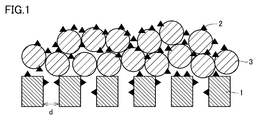
- particulate matter (suspension matter) 3 having a size larger than the pore diameter of MF membrane 1 used for SDI measurement is surely captured on the membrane surface. Thereby, since the filtration time by MF membrane is extended, the density
- the present invention has been made in view of the above problems, and a water quality evaluation method capable of appropriately evaluating the degree of membrane contamination caused by fine organic compounds with respect to the water to be treated supplied to the membrane separation device, A quantitative method capable of appropriately quantifying fine organic compounds contained in water to be treated, and a water treatment method capable of suppressing contamination of separation membranes caused by fine organic compounds contained in water to be treated The purpose is to provide.
- a method for quantifying an organic compound contained in to-be-treated water supplied to a membrane separation apparatus having a separation membrane The organic compound contaminates the separation membrane, Passing the treated water through a microfiltration membrane and capturing at least part of the organic compound with the microfiltration membrane; Analyzing the microfiltration membrane after the treated water has passed by infrared spectroscopy to obtain an infrared absorption spectrum; and A quantification method comprising: quantifying the organic compound based on a height or area of at least one peak of the infrared absorption spectrum obtained in the analysis step.
- a membrane separation step of treating the treated water using a separation membrane In the pretreatment step, based on the contamination degree evaluated by the water quality evaluation method according to any one of [1] to [5] and [8], the organic compound from the raw water in the pretreatment step A water treatment method that adjusts the removal amount.
- the water quality evaluation method of the present invention it is possible to appropriately evaluate the degree of membrane contamination caused by fine organic compounds in the water to be treated supplied to the membrane separation device. Further, according to the quantification method of the present invention, fine organic compounds contained in the water to be treated can be appropriately quantified. Moreover, according to the water treatment method of the present invention, contamination of the separation membrane due to fine organic compounds contained in the water to be treated can be suppressed.
- the water quality evaluation method of the present invention is a water quality evaluation method for evaluating the degree of contamination of a separation membrane for water to be treated supplied to a membrane separation apparatus having a separation membrane.
- the degree of contamination is attributed to organic compounds contained in the water to be treated.
- the water quality evaluation method of the present invention includes a water flow step, an analysis step, and an evaluation step which will be described later.
- the pore size of the RO membrane is about 2 nm or less, and the pore size of the UF membrane is about 2 to 100 nm.
- the NF membrane has a relatively low blocking rate of ions and salts among the RO membrane, and the pore size of the NF membrane is usually about 1 to 2 nm.
- the pore size of the separation membrane can be measured by various known measurement methods, but can be indirectly measured by, for example, a bubble point method, a bacterial filtration method (bacteria challenge test), or the like.
- the membrane separation device is a device for treating water to be treated by membrane separation using such a separation membrane.
- the membrane separation device include various known reverse osmosis devices (reverse osmosis modules) and forward osmosis devices (forward osmosis modules).
- the water to be treated supplied to the membrane separation device is water that is to be treated by the membrane separation device.
- the water to be treated is water containing some solute such as pretreated seawater, and the water contained in the water to be treated passes through the separation membrane and is separate from the chamber to which the water to be treated is supplied. Move to the room.
- organic compound means a compound containing carbon.
- the organic compound to be analyzed in the present invention is an organic compound contained in the water to be treated, and is an organic compound that contaminates the separation membrane of the membrane separation device over time due to the membrane separation treatment of the water to be treated.
- contamination of the separation membrane means all phenomena that lower the performance (separation ability, separation efficiency, etc.) necessary for the separation treatment.
- contamination include, for example, fouling (a phenomenon in which foreign matter adheres to and accumulates on the surface and pores of the separation membrane) and deformation and modification of the separation membrane.
- the organic compound is not only smaller than the pore size of the MF membrane but also larger than the pore size of the MF membrane, but includes those that pass through the pores of the MF membrane when deformed.
- organic compounds that are smaller than the pore diameter or that pass through the pores due to changes in shape are difficult to evaluate with conventional indicators such as SDI, and therefore the present invention is particularly advantageously applied.
- an organic compound that contaminates the separation membrane an organic compound having a hydroxy group that is easily adsorbed on a separation membrane (for example, a reverse osmosis membrane) made of a resin (for example, a cellulose-based resin such as cellulose triacetate) can be given. It is done.
- the organic compound is preferably a water-soluble organic compound.
- Specific examples of organic compounds that contaminate the separation membrane include sugar components such as polysaccharides (particularly neutral polysaccharides), polypeptides, biopolymers, and natural organic matter (NOM).
- the molecular weight of the organic compound that contaminates the separation membrane is not particularly limited, but is, for example, 10 to 10 million.
- Water flow step In the water flow step, the water to be treated is passed through the microfiltration membrane, and at least a part of the organic compound is captured by the microfiltration membrane.
- the microfiltration membrane is a membrane having a meaning as a general term in this field, and the pore diameter is usually 100 nm to 10 ⁇ m.
- the pore size of the MF membrane can be indirectly measured by a bubble point method, a bacterial filtration method (bacteria challenge test), or the like.
- the thickness of the microfiltration membrane is not particularly limited, but it is preferable to make it thin from the viewpoint of easy processing of holes having a small diameter. On the other hand, it is necessary to have a thickness that can maintain the mechanical strength necessary for passing the water to be treated. From these viewpoints, the thickness of the filtration membrane is preferably 50 to 500 ⁇ m, more preferably 100 to 200 ⁇ m.
- Examples of the method for allowing the water to be treated to pass through the microfiltration membrane include a method that is carried out in accordance with the SDI measurement method defined in ASTM (for example, ASTM D4189-07). Specifically, for example, the water to be treated is passed through an MF membrane having a pore diameter of 0.45 ⁇ m under a pressure of 207 kPa. The total amount of water to be treated that passes through the MF membrane is, for example, 15 to 30 L. However, it is not limited to these methods.
- “Capturing an organic compound with a microfiltration membrane” means that the surface of the microfiltration membrane (including the inner surface of the pores) is removed even after the microfiltration membrane is removed from the holder provided in the water channel after the water flow step. It means that the organic compound is held directly or indirectly.
- “holding” means, for example, that an organic compound adheres or adheres directly or indirectly to the surface of a microfiltration membrane by physical interaction, chemical interaction, or mechanical interaction. It is in a state.
- microfiltration membrane it is preferable to further include a drying step for drying the microfiltration membrane after the water passing step and before the analysis step.
- a drying step for drying the microfiltration membrane after the water passing step and before the analysis step.
- Analysis step In the analysis step, the microfiltration membrane after the water to be treated has passed is analyzed by infrared spectroscopy to obtain an infrared absorption spectrum.
- Examples of the measurement target of infrared spectroscopy include transmitted light or reflected light of a microfiltration membrane in which an organic compound is captured.
- an attenuated total reflection (ATR) method can be suitably used. This is because the ATR method is advantageous in that it can perform surface analysis of a relatively shallow surface region of a sample, for example, a level of several ⁇ m, and it is easy to obtain a good spectrum at one time without adjusting the concentration of the sample.
- the infrared light source is not particularly limited, and examples thereof include a high-pressure mercury lamp and a ceramic lamp.
- the infrared light may be non-polarized light or linearly polarized light, for example.
- evaluation step the degree of contamination is evaluated based on the height or area of at least one peak of the infrared absorption spectrum obtained in the analysis step.
- a peak for example, an arrow in FIG. 2 due to a bond specific to an organic compound (OH bond, NH bond, etc.)
- the peak having a wave number of 3300 cm ⁇ 1 is selected as the measurement peak.
- the relationship between the peak height or area and the degree of contamination is examined by a preliminary test. Based on the result, the degree of contamination can be evaluated from the height or area of the peak in the infrared absorption spectrum obtained in the analysis step.
- the evaluation step From the plurality of peaks, select at least one measurement peak due to the presence of the organic compound and one reference peak not due to the presence of the organic compound, Find the ratio of the height or area of the measurement peak to the reference peak, The degree of contamination may be evaluated based on the height or area ratio.
- the material of the MF film is a cellulose resin
- the material of the MF film itself affects the infrared absorption spectrum, so it is desirable to eliminate the influence.
- the wave number at which a peak specific to the SDI filter is detected is examined in advance by FT-IR (ATR method).
- a peak for example, indicated by an arrow in FIG. 2 due to a bond peculiar to an organic compound (such as NH bond of a polypeptide).
- the peak near the wave number of 1500 cm ⁇ 1 is selected as the measurement peak.
- a peak not attributable to the presence of the organic compound (caused by the material of the MF film) (for example, around a wave number of 1600 cm ⁇ 1 caused by the N ⁇ O bond of nitrocellulose, which is the material of the MF film, indicated by an arrow in FIG. 2) As the reference peak.
- the degree of contamination can be evaluated from the ratio of the height or area of the measurement peak to the reference peak in the infrared absorption spectrum obtained in the analysis step.
- the peak of wave number 1650 cm ⁇ 1 peak due to the film material
- the height ratio may be used as a reference. Also in this case, the variation error due to the material of the MF film can be reduced, and more accurate evaluation can be performed.
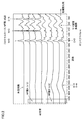
- FIG. 2 shows the FT-IR obtained for the MF membrane that did not pass the water to be treated and the MF membrane A and the MF membrane B that passed the predetermined amount of the water to be treated treated by the micro cartridge filter having different pore diameters.
- An example of a spectrum is shown. Further, the spectrum chart shown in FIG. 2 is measured using an Agilent Cary 630 FTIR, using a germanium prism, and an incident angle of 45 °.
- SDI which is a well-known index
- the MF film used for the SDI measurement can be directly analyzed by infrared spectroscopy.
- a separate water flow step is performed. There is no need to implement. Thereby, water quality evaluation of to-be-processed water can be implemented simply.
- the organic compound is quantified by directly analyzing the water to be treated by infrared spectroscopy.
- the organic compound is collected on the MF membrane, and the analysis is performed after concentrating the organic compound on the MF membrane and then analyzing, so that the analysis sensitivity is higher than the method of directly analyzing the water to be treated. Can be improved. This makes it possible to analyze a trace amount of organic compounds in, for example, water to be treated using seawater as raw water.
- Quantification method of the present invention an organic compound contained in water to be treated supplied to a membrane separation apparatus having a separation membrane is quantified.
- the organic compound contaminates the separation membrane.
- the quantitative method of the present invention is characterized by comprising a water flow step, an analysis step, and a quantitative step. Since the water flow step and the analysis step are the same as the water quality evaluation method described above, description thereof is omitted.
- the organic compound is quantified based on the height or area of at least one peak of the infrared absorption spectrum obtained in the analysis step.
- the peak height or area in the infrared absorption spectrum, or the ratio of the height or area of the measurement peak to the reference peak is obtained.
- a quantitative line showing the relationship between these values and the degree of contamination is prepared. Based on the quantitative line, the organic compound can be quantified from the height or area of the peak in the infrared absorption spectrum obtained in the analysis step or the ratio of the height or area of the measured peak to the reference peak.
- the degree of contamination of the separation membrane for the water to be treated can also be evaluated in the same manner as the water quality evaluation method described above.
- the amount of organic compounds removed from the raw water in the pretreatment step is adjusted based on the degree of contamination of the separation membrane of the water to be treated evaluated by the water quality evaluation method. It is characterized by doing.
- an organic compound that contaminates the separation membrane is removed by subjecting the membrane contaminants contained in the raw water to be treated to agglomeration using an aggregating agent.
- the adjustment of the removal amount of the organic compound from the raw water in the pretreatment step is performed by increasing or decreasing the addition amount of the flocculant used in the pretreatment step.
- flocculant examples include aluminum salts (aluminum sulfate, sodium aluminate, polyaluminum chloride), iron salts (ferrous sulfate, ferric chloride, ferric sulfate, chlorinated coppers), polysilica iron (PSI). And Krivator (registered trademark) (BP-201, EP-301).
- coagulant aids include, for example, pH / alkalinity adjusters (mineral acids, alkalis), oxidation / reducing agents (chlorine, bleached powder, permanganate, ferrous sulfate), and shade additives as floc forming aids.
- Examples thereof include ionic polymers (sodium alginate, CMC sodium salt, sodium polyacrylate, partially hydrolyzed salt of polyacrylamide, water-soluble aniline resin, polythiourea, polyethyleneimine, and quaternary ammonium salt).
- ionic polymers sodium alginate, CMC sodium salt, sodium polyacrylate, partially hydrolyzed salt of polyacrylamide, water-soluble aniline resin, polythiourea, polyethyleneimine, and quaternary ammonium salt).
- an oxidant is added to the raw water before being subjected to the pretreatment step in order to oxidize and decompose organic compounds that become membrane contaminants and reduce the amount of organic compounds contained in the water to be treated. Also good.
- the adjustment of the removal amount of the organic compound from the raw water in the pretreatment step is performed by increasing or decreasing the addition amount of the oxidizing agent.
- an oxidizing agent may be added to the water to be treated before being supplied to the membrane separation apparatus. Examples of the oxidizing agent include sodium hypochlorite, ozone, hydrogen peroxide, chlorine dioxide, free radicals, and permanganate ions.
- the water treatment method of the present invention contamination of the separation membrane due to fine organic compounds contained in the water to be treated can be suppressed. Thereby, the water treatment by the membrane separator can be carried out stably and continuously.
- sample waters 1 to 7 which are supply water for a seawater desalination reverse osmosis membrane were prepared as samples of water to be treated.
- sample water to be measured for organic substances was (i) a coagulation treatment using ferric chloride as a coagulant, (ii) a removal treatment of membrane contaminants by sand filtration, and (iii) a pore diameter of 10 ⁇ m. It is real seawater of the Red Sea that has been subjected to the removal treatment of a suspension having a large particle diameter using a cartridge filter. Sample waters 1 to 7 were sampled when a specific change was observed from winter to summer in the operation of the membrane module.
- Sample water 1-7 was passed through 20 L of MF membrane (HAWP04700 manufactured by Millipore, pore size: 0.45 ⁇ m, material: cellulose mixed ester, thickness: 115-180 ⁇ m, circular shape with a diameter of 47 mm).
- the dried MF film was subjected to FT-IR analysis to obtain an FT-IR spectrum. Peak height of wave number 1650 cm -1 in the resultant FT-IR spectra of the ratio of the peak height of the wave number 3300 cm -1 for (absorbance) (FT-IR peak ratio) was determined.
- Table 1 shows the FT-IR peak ratio and the membrane module differential pressure increase rate (bar / day) determined as described above.
- Table 1 also shows the evaluation results of sample waters 1 to 7 when the sample waters 1 to 7 were actually subjected to membrane separation treatment using the RO membrane module.
- the water quality of the treated water can be evaluated. Specifically, if the FT-IR peak ratio is 0.20 or more, it is evaluated that the degree of membrane contamination of treated water is high (not suitable for supplying as treated water as it is), and the FT-IR peak ratio If it is less than 0.20, it can be evaluated that the degree of membrane contamination of treated water is low (can be supplied as treated water).
- the amount of Fe trapped is particularly large, and salt iron (particulate matter) increases the differential pressure of the RO membrane, etc. This is considered to be one of the causes.
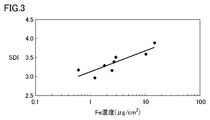
- the measurement result about the salt iron is shown in FIG. From the results shown in FIG. 3, it is considered that there is a temporary correlation between the amount of captured Fe and the SDI value. For this reason, it is estimated that there is a high possibility that the influence of salt iron, which is a particulate material, can be evaluated by SDI.
- the to-be-processed water used here is the seawater which gave the same pretreatment as what was used in Test Example 1.
- FIG. 4 shows the relationship between the ratio of the peak height to the SDI (absorbance ratio) in a plurality of measurement data.
- the to-be-processed water used here is the seawater which gave the same pretreatment as what was used in Test Example 1.
- MF membrane Microfiltration membrane
- organic compounds 2 organic compounds, 3 particulate matter.
Landscapes
- Chemical & Material Sciences (AREA)
- Life Sciences & Earth Sciences (AREA)
- Physics & Mathematics (AREA)
- Health & Medical Sciences (AREA)
- Pathology (AREA)
- Engineering & Computer Science (AREA)
- Spectroscopy & Molecular Physics (AREA)
- Analytical Chemistry (AREA)
- Biochemistry (AREA)
- General Health & Medical Sciences (AREA)
- General Physics & Mathematics (AREA)
- Immunology (AREA)
- Medicinal Chemistry (AREA)
- Hydrology & Water Resources (AREA)
- Environmental & Geological Engineering (AREA)
- Water Supply & Treatment (AREA)
- Organic Chemistry (AREA)
- Chemical Kinetics & Catalysis (AREA)
- Food Science & Technology (AREA)
- Separation Using Semi-Permeable Membranes (AREA)
- Investigating Or Analysing Materials By Optical Means (AREA)
Abstract
分離膜を有する膜分離装置に供給される被処理水の前記分離膜に対する汚染度を評価する水質評価方法であって、前記汚染度は、前記被処理水中に含まれる有機化合物に起因するものであり、精密ろ過膜に前記被処理水を通過させ、前記有機化合物の少なくとも一部を前記精密ろ過膜で捕捉する、通水ステップと、前記被処理水が通過した後の前記精密ろ過膜を赤外分光法によって分析し、赤外吸収スペクトルを得る、分析ステップと、前記分析ステップで得られた前記赤外吸収スペクトルの少なくとも1つのピークの高さ又は面積に基づいて、前記汚染度を評価する評価ステップとを含むことを特徴とする、水質評価方法。
Description
本発明は、膜分離装置に供給される被処理水の水質評価方法、被処理水中に含まれる有機化合物の定量方法、および、この水質評価方法を利用した水処理方法に関する。
逆浸透膜(RO膜:Reverse Osmosis Membrane)、ナノろ過膜(NF膜:Nanofiltration Membrane)、限外ろ過膜(UF膜:Ultrafiltration Membrane)などの分離膜を備える膜分離装置を用いて、膜分離装置に供給される被処理水(前処理された海水など)の水処理を行うと、被処理水に含まれる粒状物質(懸濁物質)や有機化合物等の汚染物質により、次第に分離膜が汚染されて、水の透過流量が低下してしまう。
被処理水の分離膜に対する汚染の程度(膜汚染度)の指標としては、ASTMに定義されるシルト濃度指数(SDI:Silt Density Index)、JIS K 3802に定義される汚れ指数(FI:Fouling Index)、修正ファウリング(汚れ)指数(MFI:Modified Fouling Index)などが知られている(例えば、特許文献1および2)。これらの指標はいずれも、被処理水を、細孔径0.45μmのセルロース系樹脂からなる精密ろ過膜(MF膜:Microfiltration Membrane)でろ過し、ろ過に要した時間や透過水量の測定値に基づいて求められる値である。なお、SDI値とFI値は基本的に同義である。
図1を参照して、例えば、SDIの測定に用いられるMF膜1の細孔径以上の大きさの粒状物質(懸濁物質)3は確実に膜面上に捕捉される。これにより、MF膜によるろ過時間が延長されるため、粒状物質(懸濁物質)3の濃度はSDIに反映される。
一方で、MF膜1の細孔径よりも小さな有機化合物2は、単体ではMF膜1の細孔をすり抜けてしまう可能性が高く、MF膜1の表面に吸着されたとしても、MF膜1によるろ過時間に及ぼす影響は小さい。このため、MF膜1の細孔径よりも小さな有機化合物2の濃度は、あまりSDIに反映されない。
したがって、SDIでは、粒状物質による膜汚染度を評価することはできても、MF膜の細孔径よりも小さな有機化合物等による膜汚染度を評価することは困難であった。
しかしながら、MF膜よりも除去性能の高い(孔径の小さい)逆浸透膜等の分離膜については、そのような微細な有機化合物による膜汚染への影響が大きい。このため、SDI等によって被処理水の膜汚染度が高いと評価された場合に、改善措置として、被処理水に含まれる粒状物質だけを除去しても、膜汚染が十分に改善できない場合があった。
本発明は、上記の課題に鑑みてなされたものであり、膜分離装置に供給される被処理水について、微細な有機化合物に起因する膜汚染度を適正に評価することのできる水質評価方法、被処理水中に含まれる微細な有機化合物を適正に定量することのできる定量方法、および、被処理水中に含まれる微細な有機化合物に起因する分離膜の汚染を抑制することのできる水処理方法を提供することを目的とする。
[1] 分離膜を有する膜分離装置に供給される被処理水の前記分離膜に対する汚染度を評価する水質評価方法であって、
前記汚染度は、前記被処理水中に含まれる有機化合物に起因するものであり、
精密ろ過膜に前記被処理水を通過させ、前記有機化合物の少なくとも一部を前記精密ろ過膜で捕捉する、通水ステップと、
前記被処理水が通過した後の前記精密ろ過膜を赤外分光法によって分析し、赤外吸収スペクトルを得る、分析ステップと、
前記分析ステップで得られた前記赤外吸収スペクトルの少なくとも1つのピークの高さ又は面積に基づいて、前記汚染度を評価する評価ステップと
を含むことを特徴とする、水質評価方法。
前記汚染度は、前記被処理水中に含まれる有機化合物に起因するものであり、
精密ろ過膜に前記被処理水を通過させ、前記有機化合物の少なくとも一部を前記精密ろ過膜で捕捉する、通水ステップと、
前記被処理水が通過した後の前記精密ろ過膜を赤外分光法によって分析し、赤外吸収スペクトルを得る、分析ステップと、
前記分析ステップで得られた前記赤外吸収スペクトルの少なくとも1つのピークの高さ又は面積に基づいて、前記汚染度を評価する評価ステップと
を含むことを特徴とする、水質評価方法。
[2] 前記評価ステップにおいて、
複数の前記ピークから、前記有機化合物の存在に起因する少なくとも1つの測定ピークと、前記有機化合物の存在に起因しない1つの基準ピークとを選択し、
前記基準ピークに対する前記測定ピークの高さ又は面積の比を求め、
前記高さ又は面積の比に基づいて、前記汚染度を評価する、[1]に記載の水質評価方法。
複数の前記ピークから、前記有機化合物の存在に起因する少なくとも1つの測定ピークと、前記有機化合物の存在に起因しない1つの基準ピークとを選択し、
前記基準ピークに対する前記測定ピークの高さ又は面積の比を求め、
前記高さ又は面積の比に基づいて、前記汚染度を評価する、[1]に記載の水質評価方法。
[3] 前記通水ステップの後、前記分析ステップの前に、
前記精密ろ過膜を乾燥する乾燥ステップをさらに備える、[1]または[2]に記載の水質評価方法。
前記精密ろ過膜を乾燥する乾燥ステップをさらに備える、[1]または[2]に記載の水質評価方法。
[4] 前記赤外分光法は、フーリエ変換赤外分光装置を用いて実施される、[1]~[3]のいずれかに記載の水質評価方法。
[5] 前記赤外分光法は、減衰全反射法である、[1]~[4]のいずれかに記載の水質評価方法。
[6] 分離膜を有する膜分離装置に供給される被処理水中に含まれる有機化合物の定量方法であって、
前記有機化合物は前記分離膜を汚染するものであり、
精密ろ過膜に前記被処理水を通過させ、前記有機化合物の少なくとも一部を前記精密ろ過膜で捕捉する、通水ステップと、
前記被処理水が通過した後の前記精密ろ過膜を赤外分光法によって分析し、赤外吸収スペクトルを得る、分析ステップと、
前記分析ステップで得られた前記赤外吸収スペクトルの少なくとも1つのピークの高さ又は面積に基づいて、前記有機化合物を定量する、定量ステップと
を備えることを特徴とする、定量方法。
前記有機化合物は前記分離膜を汚染するものであり、
精密ろ過膜に前記被処理水を通過させ、前記有機化合物の少なくとも一部を前記精密ろ過膜で捕捉する、通水ステップと、
前記被処理水が通過した後の前記精密ろ過膜を赤外分光法によって分析し、赤外吸収スペクトルを得る、分析ステップと、
前記分析ステップで得られた前記赤外吸収スペクトルの少なくとも1つのピークの高さ又は面積に基づいて、前記有機化合物を定量する、定量ステップと
を備えることを特徴とする、定量方法。
[7] 前記定量ステップにおいて、
複数の前記ピークから、前記有機化合物の存在に起因する少なくとも1つの測定ピークと、前記有機化合物の存在に起因しない1つの基準ピークとを選択し、
前記基準ピークに対する前記測定ピークの高さ又は面積の比を求め、
前記高さ又は面積の比に基づいて前記有機化合物を定量する、[6]に記載の定量方法。
複数の前記ピークから、前記有機化合物の存在に起因する少なくとも1つの測定ピークと、前記有機化合物の存在に起因しない1つの基準ピークとを選択し、
前記基準ピークに対する前記測定ピークの高さ又は面積の比を求め、
前記高さ又は面積の比に基づいて前記有機化合物を定量する、[6]に記載の定量方法。
[8] [6]または[7]に記載の定量方法によって定量された前記有機化合物の定量値に基づいて、前記有機化合物に起因する前記被処理水の前記分離膜に対する汚染度を評価する、水質評価方法。
[9] 前記被処理水の原水から前記有機化合物を除去し、前記被処理水中に含まれる前記有機化合物の量を低減させる前処理ステップと、
前記被処理水を分離膜を用いて処理する膜分離ステップとを備え、
前記前処理ステップにおいて、[1]~[5]および[8]のいずれかに記載の水質評価方法によって評価された前記汚染度に基づいて、前記前処理ステップにおける前記原水からの前記有機化合物の除去量を調整する、水処理方法。
前記被処理水を分離膜を用いて処理する膜分離ステップとを備え、
前記前処理ステップにおいて、[1]~[5]および[8]のいずれかに記載の水質評価方法によって評価された前記汚染度に基づいて、前記前処理ステップにおける前記原水からの前記有機化合物の除去量を調整する、水処理方法。
本発明の水質評価方法によれば、膜分離装置に供給される被処理水について、微細な有機化合物に起因する膜汚染度を適正に評価することができる。また、本発明の定量方法によれば、被処理水中に含まれる微細な有機化合物を適正に定量することができる。また、本発明の水処理方法によれば、被処理水中に含まれる微細な有機化合物に起因する分離膜の汚染を抑制することができる。
以下、本発明の水質評価方法、定量方法および水処理方法の実施形態について説明する。
[水質評価方法]
本発明の水質評価方法は、分離膜を有する膜分離装置に供給される被処理水の分離膜に対する汚染度を評価する水質評価方法である。ここで、汚染度は、被処理水中に含まれる有機化合物に起因するものである。
本発明の水質評価方法は、分離膜を有する膜分離装置に供給される被処理水の分離膜に対する汚染度を評価する水質評価方法である。ここで、汚染度は、被処理水中に含まれる有機化合物に起因するものである。
本発明の水質評価方法は、後述する通水ステップと、分析ステップと、評価ステップとを含むことを特徴とする。
(膜分離装置)
膜分離装置は、分離膜を有する。分離膜は、MF膜より孔径が小さいものであることが好ましい。このような分離膜としては、例えば、逆浸透膜(RO膜:Reverse Osmosis Membrane)、ナノろ過膜(NF膜:Nanofiltration Membrane)、限外ろ過膜(UF膜:Ultrafiltration Membrane)と呼ばれているものが挙げられる。
膜分離装置は、分離膜を有する。分離膜は、MF膜より孔径が小さいものであることが好ましい。このような分離膜としては、例えば、逆浸透膜(RO膜:Reverse Osmosis Membrane)、ナノろ過膜(NF膜:Nanofiltration Membrane)、限外ろ過膜(UF膜:Ultrafiltration Membrane)と呼ばれているものが挙げられる。
通常、RO膜の孔径は約2nm以下であり、UF膜の孔径は約2~100nmである。NF膜は、RO膜のうちイオンや塩類の阻止率が比較的低いものであり、通常、NF膜の孔径は約1~2nmである。なお、分離膜の孔径は、種々公知の測定方法によって測定できるが、例えば、バブルポイント法、細菌濾過法(バクテリアチャレンジテスト)等によって間接的に測定することができる。
膜分離装置は、このような分離膜を用いて、膜分離によって被処理水を処理する装置である。膜分離装置としては、例えば、種々公知の逆浸透装置(逆浸透モジュール)、正浸透装置(正浸透モジュール)が挙げられる。
膜分離装置に供給される被処理水とは、膜分離装置の処理対象となる水である。被処理水は、例えば、前処理された海水のような何らかの溶質を含む水であって、被処理水に含まれる水が分離膜を透過し、被処理水が供給される室とは別の室に移行する。
(有機化合物)
本明細書において、「有機化合物」の用語は、炭素を含む化合物を意味する。そして、本発明において分析対象となる有機化合物は、被処理水中に含まれる有機化合物であって、被処理水の膜分離処理によって経時的に膜分離装置の分離膜を汚染する有機化合物である。
本明細書において、「有機化合物」の用語は、炭素を含む化合物を意味する。そして、本発明において分析対象となる有機化合物は、被処理水中に含まれる有機化合物であって、被処理水の膜分離処理によって経時的に膜分離装置の分離膜を汚染する有機化合物である。
ここで、分離膜の「汚染」とは、分離処理に必要な性能(分離能や分離効率など)を低下させる全ての現象を意味する。汚染の具体例としては、例えば、ファウリング(分離膜の表面や細孔内に異物が付着および堆積する現象)や、分離膜の変形および変性が挙げられる。
本発明において、有機化合物は、MF膜の細孔径より小さいものだけでなく、MF膜の細孔径より大きいが、変形することによりMF膜の細孔をすり抜けてしまうものを含む。特に、細孔径より小さいものや、形状が変化することにより細孔をすり抜けてしまう有機化合物は、従来のSDI等の指標では評価することが難しいため、本発明が特に有利に適用される。
分離膜を汚染する有機化合物の代表的な例としては、樹脂(例えば、セルローストリアセテートなどのセルロース系樹脂)製の分離膜(例えば、逆浸透膜)に吸着され易いヒドロキシ基を有する有機化合物が挙げられる。有機化合物は、好ましくは水溶性の有機化合物である。分離膜を汚染する有機化合物の具体例としては、多糖類(特に中性多糖類)などの糖成分、ポリペプチド、バイオポリマー、natural organic matter(NOM)が挙げられる。分離膜を汚染する有機化合物の分子量は、特に限定されないが、例えば、1000~1000万である。
(通水ステップ)
通水ステップでは、精密ろ過膜に被処理水を通過させ、有機化合物の少なくとも一部を精密ろ過膜で捕捉する。
通水ステップでは、精密ろ過膜に被処理水を通過させ、有機化合物の少なくとも一部を精密ろ過膜で捕捉する。
精密ろ過膜(MF膜)とは、本分野における一般的な用語としての意味を有する膜であり、その孔径は、通常、100nm~10μmである。なお、MF膜の孔径は、バブルポイント法、細菌濾過法(バクテリアチャレンジテスト)等によって間接的に測定することができる。
精密ろ過膜の厚みは、特に限定されないが、微小な径の孔を加工し易い点で、薄くすることが好ましい。一方で、被処理水を通過させる際に必要な機械的強度を維持できる厚みを有する必要がある。これらの観点から、ろ過膜の厚みは、好ましくは50~500μmであり、より好ましくは100~200μmである。
なお、有機化合物を精密ろ過膜で捕捉し易くするために、精密ろ過膜の表面(孔の内表面を含む)を、有機化合物が吸着しやすいように修飾してもよい。かかる修飾としては、例えば、有機化合物と親和性の高い物質による精密ろ過膜表面のコーティングが挙げられる。
精密ろ過膜に被処理水を通過させる方法としては、例えば、ASTM(例えば、ASTM D4189-07)に規定されるSDI測定方法に準じて実施する方法が挙げられる。具体的には、例えば、207kPaの圧力下で、孔径0.45μmのMF膜に被処理水を通過させる。MF膜を通過させる被処理水の総量は、例えば、15~30Lである。ただし、これらの方法に限定されるものではない。
有機化合物を「精密ろ過膜で捕捉する」とは、通水ステップの後、精密ろ過膜を水路に設けられたホルダー等から取り外した後でも、精密ろ過膜の表面(孔の内表面を含む)に直接的または間接的に有機化合物が保持されているようにすることを意味する。なお、ここでいう「保持」とは、例えば、有機化合物が、精密ろ過膜の表面に直接的または間接的に、物理的相互作用、化学的相互作用または機械的相互作用によって付着または接着している状態である。
通水ステップの後、分析ステップの前に、精密ろ過膜を乾燥する乾燥ステップをさらに備えることが好ましい。精密ろ過膜が濡れた状態では、保持された有機化合物が水滴と共に落下すると、有機化合物の捕捉量が低下してしまい、また、赤外吸収スペクトルへの水分の影響による変動誤差が生じるため、有機化合物の定量の精度が低下してしまう場合があるからである。
乾燥ステップにおける乾燥方法としては、例えば、風乾、防湿・乾燥保管庫内での乾燥、または、炉乾燥が挙げられる。乾燥条件は、特に限定されないが、一例としては、15~110度の温度範囲、0~70%の相対湿度範囲の条件における1時間~72時間の乾燥が挙げられる。
(分析ステップ)
分析ステップにおいては、被処理水が通過した後の精密ろ過膜を赤外分光法によって分析し、赤外吸収スペクトルを得る。
分析ステップにおいては、被処理水が通過した後の精密ろ過膜を赤外分光法によって分析し、赤外吸収スペクトルを得る。
赤外分光法に用いる分光装置としては、種々公知の装置を用いることができる。一例として、フーリエ変換赤外分光装置(FT-IR:Fourier Transform Infrared Spectroscopy)が挙げられる。
赤外分光法の測定対象は、例えば、有機化合物が捕捉された精密ろ過膜の透過光または反射光が挙げられる。反射光を測定する場合において、例えば、減衰全反射(ATR:Attenuated Total Reflection)法を好適に用いることができる。ATR法は、試料の比較的浅い表面領域、例えば数μm厚レベルの表面分析ができる上、試料の濃度調整をしなくても1回で良好なスペクトルを得やすいという点で有利だからである。
減衰全反射法に用いるATRプリズム(高屈折率媒質)の材質は、赤外領域の光に対して透明な材質であることが好ましい。ATRプリズムの具体的な材質としては、特に限定されず、種々公知の材質を用いることができるが、例えば、ゲルマニウムを好適に用いることができる。ゲルマニウムは、屈折率が高いため異常分散の影響によるバンドの歪が少なく、エバネッセント波の侵入深さも小さいためシャープなスペクトルが得られ、MF膜表面に付着した物質を高感度に測定できる点で有利だからである。
ATR法のように、MF膜の一点を分析するような場合、例えば、MF膜の中心付近の3~20点について赤外分光法を用いた分析を実施し、複数の赤外吸収スペクトルを得て、各々のスペクトルにおける所定のピークの高さ又は面積値の平均値を求めることが好ましい。これにより、測定部位による分析結果のバラツキを低減し、より高精度な評価を行うことができる。
精密ろ過膜に照射される赤外光の波数範囲(周波数範囲)は、特に限定されず、定量する対象となる有機化合物の種類に応じて適宜設定すればよい。赤外光の波数範囲は、例えば、500~4000cm-1の範囲内から選択される所定の範囲である。
赤外光の光源としては、特に限定されないが、例えば、高圧水銀ランプやセラミックランプが挙げられる。なお、赤外光は、例えば、無偏光であってもよく、直線偏光であってもよい。
(評価ステップ)
評価ステップでは、分析ステップで得られた赤外吸収スペクトルの少なくとも1つのピークの高さ又は面積に基づいて、汚染度を評価する。
評価ステップでは、分析ステップで得られた赤外吸収スペクトルの少なくとも1つのピークの高さ又は面積に基づいて、汚染度を評価する。
図2を参照して、例えば、分析ステップで得た赤外吸収スペクトルにおいて、有機化合物に特有の結合(O-H結合、N-H結合など)に起因するピーク(例えば、図2に矢印で示す波数3300cm-1のピーク)を測定ピークとして選択する。そのピークの高さ又は面積と汚染度との関係を予備試験によって調べておく。その結果に基づいて、分析ステップで得た赤外吸収スペクトルにおけるピークの高さ又は面積から、汚染度を評価することができる。
また、評価ステップにおいては、
複数のピークから、有機化合物の存在に起因する少なくとも1つの測定ピークと、有機化合物の存在に起因しない1つの基準ピークとを選択し、
基準ピークに対する測定ピークの高さ又は面積の比を求め、
高さ又は面積の比に基づいて、汚染度を評価してもよい。
複数のピークから、有機化合物の存在に起因する少なくとも1つの測定ピークと、有機化合物の存在に起因しない1つの基準ピークとを選択し、
基準ピークに対する測定ピークの高さ又は面積の比を求め、
高さ又は面積の比に基づいて、汚染度を評価してもよい。
具体的には、例えば、MF膜の材質がセルロース系樹脂である場合、MF膜の素材自体が赤外吸収スペクトルに影響するため、その影響を排除することが望ましい。このような場合、FT-IR(ATR法)で、SDIフィルターに特異的なピークが検出される波数を予め調査する。
そして、図2を参照して、分析ステップで得た赤外吸収スペクトルにおいて、有機化合物に特有の結合(ポリぺプチドのN-H結合など)に起因するピーク(例えば、図2に矢印で示す波数1500cm-1付近のピーク)を測定ピークとして選択する。また、有機化合物の存在に起因しない(MF膜の材質に起因する)ピーク(例えば、図2に矢印で示す、MF膜の材質であるニトロセルロースのN=O結合に起因する波数1600cm-1付近のピーク)を基準ピークとして選択する。
その基準ピークに対する測定ピークの高さ又は面積の比と汚染度との関係を予備試験によって調べておく。その結果に基づいて、分析ステップで得た赤外吸収スペクトルにおける基準ピークに対する測定ピークの高さ又は面積の比から、汚染度を評価することができる。
図2に示されるポリぺプチドのN-H結合に起因する波数1500cm-1付近のピークは、MF膜の材質であるニトロセルロースのN=O結合に起因する波数1600cm-1付近のピークと重なっており、単にポリぺプチドのN-H結合に起因するピークだけを分析すると、MF膜の材質による変動誤差が生じてしまう。したがって、このような場合は特に、上記のような基準ピークに対する測定ピークの高さ又は面積の比を基準とすることで、MF膜の材質による変動誤差を低減することができるという利点がある。
また、例えば、図2に示されるN-H結合またはO-H結合に起因する波数3300cm-1のピークの高さを分析する場合も、波数1650cm-1のピーク(膜素材に起因するピーク)対する高さの比を基準としてもよい。この場合も、MF膜の材質による変動誤差を低減することができ、より高精度な評価を行うことができる。
なお、図2は、被処理水を通過させていないMF膜と、孔径の異なるマイクロカートリッジフィルターで処理された被処理水を所定量通過させたMF膜AおよびMF膜Bについて得たFT-IRスペクトルの一例を示している。また、図2に示すスペクトルチャートは、Agilent社製Cary630FTIRを用い、ゲルマニウムプリズムを使用し、入射角45°で測定したものである。
また、このようなピークの高さ又は面積の比を指標とすることで、種々の測定方法に起因する測定誤差(例えば、ATR法を用いる場合、ATRプリズムの接触圧力の違いによるピーク高さの変動誤差)の影響も低減することができ、高精度な評価を行うことが可能となる。
公知の指標であるSDIは、被処理水の検査として通常測定する必要がある。本発明の水質評価方法では、SDIの測定に用いたMF膜をそのまま赤外分光法で分析することができ、この場合、上述の通水ステップが既に実施されているため、別途通水ステップを実施する必要がなくなる。これにより、簡便に、被処理水の水質評価を実施できる。
なお、被処理水に対して、直接、赤外分光法による分析を実施して有機化合物を定量することも考えられる。しかし、本発明のように、有機化合物をMF膜に捕集することで、有機化合物をMF膜上に濃縮してから分析を行うことで、被処理水を直接分析する方法よりも、分析感度を向上させることができる。これにより、例えば、海水を原水とする被処理水などにおいて、微量の有機化合物を分析することが可能となる。
[定量方法]
本発明の定量方法では、分離膜を有する膜分離装置に供給される被処理水中に含まれる有機化合物を定量する。ここで、有機化合物は分離膜を汚染するものである。
本発明の定量方法では、分離膜を有する膜分離装置に供給される被処理水中に含まれる有機化合物を定量する。ここで、有機化合物は分離膜を汚染するものである。
本発明の定量方法は、通水ステップと、分析ステップと、定量ステップとを備えることを特徴とする。通水ステップおよび分析ステップは上記の水質評価方法と同様であるため、その説明は省略する。
定量ステップにおいては、分析ステップで得られた赤外吸収スペクトルの少なくとも1つのピークの高さ又は面積に基づいて、有機化合物を定量する。
具体的には、上記の水質評価方法と同様にして、赤外吸収スペクトルにおけるピークの高さ又は面積、あるいは、基準ピークに対する測定ピークの高さ又は面積の比を求める。予備試験によって、それらの値と汚染度との関係を示す定量線を作成しておく。その定量線に基づいて、分析ステップで得た赤外吸収スペクトルにおけるピークの高さ又は面積、あるいは、基準ピークに対する測定ピークの高さ又は面積の比から、有機化合物を定量することができる。
なお、上記の定量方法によって定量された有機化合物の定量値に基づいて、上述の水質評価方法と同様にして、被処理水の分離膜に対する汚染度を評価することもできる。
[水処理方法]
本発明の水処理方法は、被処理水の原水から有機化合物を除去し、被処理水中に含まれる有機化合物の量を低減させる前処理ステップと、被処理水を分離膜を用いて処理する膜分離ステップとを備える。
本発明の水処理方法は、被処理水の原水から有機化合物を除去し、被処理水中に含まれる有機化合物の量を低減させる前処理ステップと、被処理水を分離膜を用いて処理する膜分離ステップとを備える。
本発明の水処理方法は、前処理ステップにおいては、上記の水質評価方法によって評価された被処理水の分離膜に対する汚染度に基づいて、前処理ステップにおける原水からの有機化合物の除去量を調整することを特徴とする。
前処理ステップでは、例えば、被処理水の原水中に含まれる膜汚染物質を凝集剤を用いて凝集処理することにより、分離膜を汚染する有機化合物を除去する。この場合、前処理ステップにおける原水からの有機化合物の除去量の調整は、前処理ステップで使用する凝集剤の添加量を増減することによって行われる。
凝集剤としては、例えば、アルミニウム塩(硫酸アルミニウム、アルミン酸ナトリウム、ポリ塩化アルミニウム)、塩鉄(硫酸第一鉄、塩化第二鉄、硫酸第二鉄、塩素化コッパラス)、ポリシリカ鉄(PSI)、クリバーター(登録商標)(BP-201、EP-301)などが挙げられる。また、凝集助剤として例えば、pH・アルカリ度調整剤(鉱酸類、アルカリ類)、酸化・還元剤(塩素、晒粉、過マンガン酸塩、硫酸第一鉄)、またフロック形成助剤として陰イオン性ポリマー(アルギン酸ナトリウム、CMCナトリウム塩、ポリアクリル酸ナトリウム、ポリアクリルアミドの部分加水分解塩、水溶性アニリン樹脂、ポリチオ尿素、ポリエチレンイミン、第4級アンモニウム塩)が挙げられる。
また、例えば、膜汚染物質となる有機化合物を酸化分解し、被処理水中に含まれる有機化合物の量を低減させるために、前処理ステップに供される前の原水に、酸化剤を添加してもよい。この場合は、前処理ステップにおける原水からの有機化合物の除去量の調整は、酸化剤の添加量を増減することによって行われる。なお、同様の目的で、膜分離装置に供給される前の被処理水に酸化剤を添加してもよい。酸化剤としては、例えば、次亜塩素酸ナトリウム、オゾン、過酸化水素、二酸化塩素、フリーラジカル、過マンガン酸イオンが挙げられる。
本発明の水処理方法によれば、被処理水中に含まれる微細な有機化合物に起因する分離膜の汚染を抑制することができる。これにより、膜分離装置による水処理を安定的に継続して実施することができる。
(試験例1)
まず、被処理水のサンプルとして、海水淡水化逆浸透膜の供給水である試料水1~7を用意した。試験例1において、有機物測定される試料水は、(i)塩化第二鉄を凝集剤として用いた凝集処理、(ii)砂ろ過による膜汚染物質の除去処理、および、(iii)孔径10μmのカートリッジフィルターを用いた粒径の大きな懸濁物の除去処理を行った紅海の実海水である。また、試料水1~7は、膜モジュールの運転において、冬季から夏季に掛けて特異的な変化が見られた際にサンプリングしたものである。
まず、被処理水のサンプルとして、海水淡水化逆浸透膜の供給水である試料水1~7を用意した。試験例1において、有機物測定される試料水は、(i)塩化第二鉄を凝集剤として用いた凝集処理、(ii)砂ろ過による膜汚染物質の除去処理、および、(iii)孔径10μmのカートリッジフィルターを用いた粒径の大きな懸濁物の除去処理を行った紅海の実海水である。また、試料水1~7は、膜モジュールの運転において、冬季から夏季に掛けて特異的な変化が見られた際にサンプリングしたものである。
試料水1~7をMF膜(ミリポア社製HAWP04700、孔径:0.45μm、材質:セルロース混合エステル、厚さ:115~180μm、直径47mmの円形状)に20L通過させた。乾燥後のMF膜についてFT-IR分析を行い、FT-IRスペクトルを得た。得られたFT-IRスペクトルにおける波数1650cm-1のピーク高さ(吸光度)に対する波数3300cm-1のピーク高さの比(FT-IRピーク比)を求めた。
なお、試料水1~7をMF膜に通過させる際に、SDIを求めた。また、各試料水が通水されている時のRO膜モジュールのモジュール差圧の上昇速度を求めた。
上記のようにして求めたFT-IRピーク比および膜モジュール差圧上昇速度(bar/day)を表1に示す。
また、試料水1~7について、実際にRO膜モジュールを用いて、試料水1~7に膜分離処理を実施したときの試料水1~7についての評価結果を併せて表1に示す。

表1に示される実機における性能試験の結果から、波数3300cm-1のピークの高さと波数1650cm-1のピーク(膜素材そのものに起因するピーク)の高さの比が0.2以上である場合に、RO膜の性能低下(汚染)が生じる可能性が高い、すなわち、膜汚染度が高いと予測できることが分かる。
したがって、例えば、上記のようなFT-IRピーク比を間接的な有機化合物の定量結果とし、水質評価の閾値を0.20とすることで、被処理水の水質評価を行うことができる。具体的には、FT-IRピーク比が0.20以上であれば、被処理水の膜汚染度が高い(被処理水としてそのまま供給するに適していない)と評価し、FT-IRピーク比が0.20未満であれば、被処理水の膜汚染度は低い(被処理水として供給可能である)と評価することができる。
(比較試験例1)
従来の指標であるSDIの測定値と、被処理水中に含まれる粒状物質の量との関係を調べるために、ASTM D4189-07に記載の方法に準じてSDIフィルター(MF膜)に捕捉された無機物量を測定した。なお、使用したMF膜は、ミリポア社製HAWP04700(材質:セルロース混合エステル)である。MF膜の孔径は0.45μm、厚さは115~180μmであり、全体の形状は直径47mmの円形状の膜である。
従来の指標であるSDIの測定値と、被処理水中に含まれる粒状物質の量との関係を調べるために、ASTM D4189-07に記載の方法に準じてSDIフィルター(MF膜)に捕捉された無機物量を測定した。なお、使用したMF膜は、ミリポア社製HAWP04700(材質:セルロース混合エステル)である。MF膜の孔径は0.45μm、厚さは115~180μmであり、全体の形状は直径47mmの円形状の膜である。
その結果、被処理水に含まれる粒状物質の成分(Fe、Al、SiおよびP)の中で、特にFeの捕捉量が多く、塩鉄(粒状物質)は、RO膜等の差圧を上昇させる原因の1つであると考えられる。その塩鉄についての測定結果を図3に示す。図3に示す結果から、Feの捕捉量とSDI値との間には一応の相関関係があるとは考えられる。このため、粒状物質である塩鉄の影響に関しては、SDIにより評価できる可能性が高いと推測される。なお、ここで用いた被処理水は、試験例1で用いたものと同様の前処理を施した海水である。
(比較試験例2)
比較のために、従来の指標であるSDIを測定し、SDIの測定に使用されたMF膜について得たFT-IRスペクトルにおける波数1650cm-1のピーク高さに対する波数3300cm-1のピーク高さの比(吸光度比)を測定した。複数の測定データにおけるSDIとの上記ピーク高さの比(吸光度比)との関係を図4に示す。
比較のために、従来の指標であるSDIを測定し、SDIの測定に使用されたMF膜について得たFT-IRスペクトルにおける波数1650cm-1のピーク高さに対する波数3300cm-1のピーク高さの比(吸光度比)を測定した。複数の測定データにおけるSDIとの上記ピーク高さの比(吸光度比)との関係を図4に示す。
図4に示される結果から、SDIとの上記ピーク高さの比(吸光度比)との間には、相関関係がないことが分かる。したがって、本発明によれば、SDI測定では、予測することが出来ない被処理水の膜汚染度を評価できることが分かる。なお、ここで用いた被処理水は、試験例1で用いたものと同様の前処理を施した海水である。
今回開示された実施の形態はすべての点で例示であって制限的なものではないと考えられるべきである。本発明の範囲は上記した説明ではなくて請求の範囲によって示され、請求の範囲と均等の意味および範囲内でのすべての変更が含まれることが意図される。
1 精密ろ過膜(MF膜)、2 有機化合物、3 粒状物質。
Claims (9)
- 分離膜を有する膜分離装置に供給される被処理水の前記分離膜に対する汚染度を評価する水質評価方法であって、
前記汚染度は、前記被処理水中に含まれる有機化合物に起因するものであり、
精密ろ過膜に前記被処理水を通過させ、前記有機化合物の少なくとも一部を前記精密ろ過膜で捕捉する、通水ステップと、
前記被処理水が通過した後の前記精密ろ過膜を赤外分光法によって分析し、赤外吸収スペクトルを得る、分析ステップと、
前記分析ステップで得られた前記赤外吸収スペクトルの少なくとも1つのピークの高さ又は面積に基づいて、前記汚染度を評価する評価ステップと
を含むことを特徴とする、水質評価方法。 - 前記評価ステップにおいて、
複数の前記ピークから、前記有機化合物の存在に起因する少なくとも1つの測定ピークと、前記有機化合物の存在に起因しない1つの基準ピークとを選択し、
前記基準ピークに対する前記測定ピークの高さ又は面積の比を求め、
前記高さ又は面積の比に基づいて、前記汚染度を評価する、請求項1に記載の水質評価方法。 - 前記通水ステップの後、前記分析ステップの前に、
前記精密ろ過膜を乾燥する乾燥ステップをさらに備える、請求項1または2に記載の水質評価方法。 - 前記赤外分光法は、フーリエ変換赤外分光装置を用いて実施される、請求項1~3のいずれか1項に記載の水質評価方法。
- 前記赤外分光法は、減衰全反射法である、請求項1~4のいずれか1項に記載の水質評価方法。
- 分離膜を有する膜分離装置に供給される被処理水中に含まれる有機化合物の定量方法であって、
前記有機化合物は前記分離膜を汚染するものであり、
精密ろ過膜に前記被処理水を通過させ、前記有機化合物の少なくとも一部を前記精密ろ過膜で捕捉する、通水ステップと、
前記被処理水が通過した後の前記精密ろ過膜を赤外分光法によって分析し、赤外吸収スペクトルを得る、分析ステップと、
前記分析ステップで得られた前記赤外吸収スペクトルの少なくとも1つのピークの高さ又は面積に基づいて、前記有機化合物を定量する、定量ステップと
を備えることを特徴とする、定量方法。 - 前記定量ステップにおいて、
複数の前記ピークから、前記有機化合物の存在に起因する少なくとも1つの測定ピークと、前記有機化合物の存在に起因しない1つの基準ピークとを選択し、
前記基準ピークに対する前記測定ピークの高さ又は面積の比を求め、
前記高さ又は面積の比に基づいて前記有機化合物を定量する、請求項6に記載の定量方法。 - 請求項6または7に記載の定量方法によって定量された前記有機化合物の定量値に基づいて、前記有機化合物に起因する前記被処理水の前記分離膜に対する汚染度を評価する、水質評価方法。
- 前記被処理水の原水から前記有機化合物を除去し、前記被処理水中に含まれる前記有機化合物の量を低減させる前処理ステップと、
前記被処理水を分離膜を用いて処理する膜分離ステップとを備え、
前記前処理ステップにおいて、請求項1~5および8のいずれか1項に記載の水質評価方法によって評価された前記汚染度に基づいて、前記前処理ステップにおける前記原水からの前記有機化合物の除去量を調整する、水処理方法。
Priority Applications (1)
| Application Number | Priority Date | Filing Date | Title |
|---|---|---|---|
| JP2016569342A JP6859707B2 (ja) | 2015-01-13 | 2016-01-08 | 被処理水の水質評価方法、定量方法および水処理方法 |
Applications Claiming Priority (2)
| Application Number | Priority Date | Filing Date | Title |
|---|---|---|---|
| JP2015003998 | 2015-01-13 | ||
| JP2015-003998 | 2015-01-13 |
Publications (1)
| Publication Number | Publication Date |
|---|---|
| WO2016114226A1 true WO2016114226A1 (ja) | 2016-07-21 |
Family
ID=56405773
Family Applications (1)
| Application Number | Title | Priority Date | Filing Date |
|---|---|---|---|
| PCT/JP2016/050442 Ceased WO2016114226A1 (ja) | 2015-01-13 | 2016-01-08 | 被処理水の水質評価方法、定量方法および水処理方法 |
Country Status (2)
| Country | Link |
|---|---|
| JP (1) | JP6859707B2 (ja) |
| WO (1) | WO2016114226A1 (ja) |
Families Citing this family (1)
| Publication number | Priority date | Publication date | Assignee | Title |
|---|---|---|---|---|
| KR102674964B1 (ko) * | 2022-02-03 | 2024-06-14 | 주식회사 제이엠워터스 | 이미지 기반 수질 측정장치 및 이를 이용한 수질 측정방법 |
Citations (4)
| Publication number | Priority date | Publication date | Assignee | Title |
|---|---|---|---|---|
| JPS60117125A (ja) * | 1983-11-30 | 1985-06-24 | Hyoe Matsuoka | 液中含有物の測定方法 |
| JP2003075341A (ja) * | 2001-09-04 | 2003-03-12 | Japan Science & Technology Corp | 溶存・懸濁性物質濃度を近赤外分光法によって計測する方法 |
| JP2012213676A (ja) * | 2011-03-31 | 2012-11-08 | Kurita Water Ind Ltd | 水質評価方法及び水処理装置の運転管理方法 |
| JP2014149261A (ja) * | 2013-02-04 | 2014-08-21 | Jasco Corp | 試料の構成物質の分布画像データを作成する方法 |
Family Cites Families (4)
| Publication number | Priority date | Publication date | Assignee | Title |
|---|---|---|---|---|
| JP2001191086A (ja) * | 2000-01-07 | 2001-07-17 | Kurita Water Ind Ltd | 水処理装置 |
| JPWO2006057249A1 (ja) * | 2004-11-24 | 2008-06-05 | 日立造船株式会社 | 逆浸透膜法海水淡水化装置 |
| JP6129302B2 (ja) * | 2012-05-23 | 2017-05-17 | グラクソスミスクライン バイオロジカルズ ソシエテ アノニム | 混合物中のポリソルベート種の濃度を決定するための方法 |
| JP5895818B2 (ja) * | 2012-11-01 | 2016-03-30 | トヨタ自動車株式会社 | SiC単結晶の評価方法およびそれを適用したSiC単結晶の製造方法 |
-
2016
- 2016-01-08 JP JP2016569342A patent/JP6859707B2/ja active Active
- 2016-01-08 WO PCT/JP2016/050442 patent/WO2016114226A1/ja not_active Ceased
Patent Citations (4)
| Publication number | Priority date | Publication date | Assignee | Title |
|---|---|---|---|---|
| JPS60117125A (ja) * | 1983-11-30 | 1985-06-24 | Hyoe Matsuoka | 液中含有物の測定方法 |
| JP2003075341A (ja) * | 2001-09-04 | 2003-03-12 | Japan Science & Technology Corp | 溶存・懸濁性物質濃度を近赤外分光法によって計測する方法 |
| JP2012213676A (ja) * | 2011-03-31 | 2012-11-08 | Kurita Water Ind Ltd | 水質評価方法及び水処理装置の運転管理方法 |
| JP2014149261A (ja) * | 2013-02-04 | 2014-08-21 | Jasco Corp | 試料の構成物質の分布画像データを作成する方法 |
Non-Patent Citations (1)
| Title |
|---|
| HYUN-CHUL KIM ET AL.: "Effects of wastewater effluent organic materials on fouling in ultrafiltration", WATER RESEARCH, vol. 42, no. Issue 13, July 2008 (2008-07-01), pages 3379 - 3384 * |
Also Published As
| Publication number | Publication date |
|---|---|
| JP6859707B2 (ja) | 2021-04-14 |
| JPWO2016114226A1 (ja) | 2017-11-09 |
Similar Documents
| Publication | Publication Date | Title |
|---|---|---|
| Chang et al. | Smart ultrafiltration membrane fouling control as desalination pretreatment of shale gas fracturing wastewater: The effects of backwash water | |
| Ricci et al. | Assessment of the chemical stability of nanofiltration and reverse osmosis membranes employed in treatment of acid gold mining effluent | |
| Fabris et al. | Pre-treatments to reduce fouling of low pressure micro-filtration (MF) membranes | |
| Her et al. | Identification of nanofiltration membrane foulants | |
| Touffet et al. | Impact of pretreatment conditions and chemical ageing on ultrafiltration membrane performances. Diagnostic of a coagulation/adsorption/filtration process | |
| Kennedy et al. | Transparent exopolymer particle (TEP) fouling of ultrafiltration membrane systems | |
| Liu et al. | Study on a novel polyamide-urea reverse osmosis composite membrane (ICIC-MPD): II. Analysis of membrane antifouling performance | |
| Peleato et al. | Characterization of UF foulants and fouling mechanisms when applying low in-line coagulant pre-treatment | |
| CN103969411B (zh) | 一种基于电渗析预处理方式直接测量水体中溶解性有机氮浓度的方法 | |
| Chun et al. | Organic matter removal from a membrane bioreactor effluent for reverse osmosis fouling mitigation by microgranular adsorptive filtration system | |
| Chu et al. | Specific investigation of irreversible membrane fouling in excess of critical flux for irreversibility: A pilot-scale operation for water treatment | |
| Frick et al. | Evaluation of pretreatments for a blowdown stream to feed a filtration system with discarded reverse osmosis membranes | |
| Myat et al. | Effect of IX dosing on polypropylene and PVDF membrane fouling control | |
| Siebdrath et al. | Impact of pretreatment on RO membrane organic fouling: composition and adhesion of tertiary wastewater effluent organic matter | |
| Miao et al. | Systematic experiments and multiscale simulation calculations reveal chemical stability differences in dry/wet nanofiltration membranes | |
| JP6859707B2 (ja) | 被処理水の水質評価方法、定量方法および水処理方法 | |
| Tan et al. | Effect of organic molecular weight distribution on membrane fouling in an ultrafiltration system with ozone oxidation from the perspective of interaction energy | |
| JP2012213676A (ja) | 水質評価方法及び水処理装置の運転管理方法 | |
| Chen et al. | The influence of membrane surface properties on the radionuclide mass transfer process in reverse osmosis | |
| JP2016165708A (ja) | 被処理水の膜閉塞性の評価方法、膜処理装置およびその運転方法 | |
| Tian et al. | Identification of irreversible UF membrane foulants by fluorescence excitation–emission matrix coupled with parallel factor analysis | |
| Kusworo et al. | Development of antifouling polyethersulfone (PES)-nano zno membrane for produced water treatment | |
| Lipp et al. | Characterization of nanoparticulate fouling and breakthrough during low-pressure membrane filtration | |
| JP5633540B2 (ja) | 海水淡水化前処理用分離膜、海水淡水化前処理装置、海水淡水化装置および海水淡水化方法 | |
| Kim et al. | Effect of NH3 plasma on thin film composite membrane: relationship of membrane and plasma properties |
Legal Events
| Date | Code | Title | Description |
|---|---|---|---|
| 121 | Ep: the epo has been informed by wipo that ep was designated in this application |
Ref document number: 16737297 Country of ref document: EP Kind code of ref document: A1 |
|
| ENP | Entry into the national phase |
Ref document number: 2016569342 Country of ref document: JP Kind code of ref document: A |
|
| NENP | Non-entry into the national phase |
Ref country code: DE |
|
| 122 | Ep: pct application non-entry in european phase |
Ref document number: 16737297 Country of ref document: EP Kind code of ref document: A1 |