WO2016108267A1 - 分析方法、及び分析装置 - Google Patents
分析方法、及び分析装置 Download PDFInfo
- Publication number
- WO2016108267A1 WO2016108267A1 PCT/JP2015/084113 JP2015084113W WO2016108267A1 WO 2016108267 A1 WO2016108267 A1 WO 2016108267A1 JP 2015084113 W JP2015084113 W JP 2015084113W WO 2016108267 A1 WO2016108267 A1 WO 2016108267A1
- Authority
- WO
- WIPO (PCT)
- Prior art keywords
- enzyme
- analyte
- analysis method
- antibody
- bound
- Prior art date
- Legal status (The legal status is an assumption and is not a legal conclusion. Google has not performed a legal analysis and makes no representation as to the accuracy of the status listed.)
- Ceased
Links
Images



Classifications
-
- G—PHYSICS
- G01—MEASURING; TESTING
- G01N—INVESTIGATING OR ANALYSING MATERIALS BY DETERMINING THEIR CHEMICAL OR PHYSICAL PROPERTIES
- G01N33/00—Investigating or analysing materials by specific methods not covered by groups G01N1/00 - G01N31/00
- G01N33/48—Biological material, e.g. blood, urine; Haemocytometers
- G01N33/50—Chemical analysis of biological material, e.g. blood, urine; Testing involving biospecific ligand binding methods; Immunological testing
- G01N33/53—Immunoassay; Biospecific binding assay; Materials therefor
- G01N33/543—Immunoassay; Biospecific binding assay; Materials therefor with an insoluble carrier for immobilising immunochemicals
-
- G—PHYSICS
- G01—MEASURING; TESTING
- G01N—INVESTIGATING OR ANALYSING MATERIALS BY DETERMINING THEIR CHEMICAL OR PHYSICAL PROPERTIES
- G01N33/00—Investigating or analysing materials by specific methods not covered by groups G01N1/00 - G01N31/00
- G01N33/48—Biological material, e.g. blood, urine; Haemocytometers
- G01N33/50—Chemical analysis of biological material, e.g. blood, urine; Testing involving biospecific ligand binding methods; Immunological testing
- G01N33/53—Immunoassay; Biospecific binding assay; Materials therefor
- G01N33/543—Immunoassay; Biospecific binding assay; Materials therefor with an insoluble carrier for immobilising immunochemicals
- G01N33/54306—Solid-phase reaction mechanisms
-
- C—CHEMISTRY; METALLURGY
- C12—BIOCHEMISTRY; BEER; SPIRITS; WINE; VINEGAR; MICROBIOLOGY; ENZYMOLOGY; MUTATION OR GENETIC ENGINEERING
- C12Y—ENZYMES
- C12Y302/00—Hydrolases acting on glycosyl compounds, i.e. glycosylases (3.2)
- C12Y302/01—Glycosidases, i.e. enzymes hydrolysing O- and S-glycosyl compounds (3.2.1)
- C12Y302/01023—Beta-galactosidase (3.2.1.23), i.e. exo-(1-->4)-beta-D-galactanase
-
- G—PHYSICS
- G01—MEASURING; TESTING
- G01N—INVESTIGATING OR ANALYSING MATERIALS BY DETERMINING THEIR CHEMICAL OR PHYSICAL PROPERTIES
- G01N33/00—Investigating or analysing materials by specific methods not covered by groups G01N1/00 - G01N31/00
- G01N33/48—Biological material, e.g. blood, urine; Haemocytometers
- G01N33/50—Chemical analysis of biological material, e.g. blood, urine; Testing involving biospecific ligand binding methods; Immunological testing
- G01N33/68—Chemical analysis of biological material, e.g. blood, urine; Testing involving biospecific ligand binding methods; Immunological testing involving proteins, peptides or amino acids
- G01N33/6803—General methods of protein analysis not limited to specific proteins or families of proteins
- G01N33/6848—Methods of protein analysis involving mass spectrometry
-
- H—ELECTRICITY
- H01—ELECTRIC ELEMENTS
- H01J—ELECTRIC DISCHARGE TUBES OR DISCHARGE LAMPS
- H01J49/00—Particle spectrometers or separator tubes
- H01J49/26—Mass spectrometers or separator tubes
- H01J49/34—Dynamic spectrometers
- H01J49/42—Stability-of-path spectrometers, e.g. monopole, quadrupole, multipole, farvitrons
- H01J49/4205—Device types
- H01J49/422—Two-dimensional RF ion traps
- H01J49/4225—Multipole linear ion traps, e.g. quadrupoles, hexapoles
-
- G—PHYSICS
- G01—MEASURING; TESTING
- G01N—INVESTIGATING OR ANALYSING MATERIALS BY DETERMINING THEIR CHEMICAL OR PHYSICAL PROPERTIES
- G01N2333/00—Assays involving biological materials from specific organisms or of a specific nature
- G01N2333/90—Enzymes; Proenzymes
- G01N2333/914—Hydrolases (3)
- G01N2333/924—Hydrolases (3) acting on glycosyl compounds (3.2)
-
- G—PHYSICS
- G01—MEASURING; TESTING
- G01N—INVESTIGATING OR ANALYSING MATERIALS BY DETERMINING THEIR CHEMICAL OR PHYSICAL PROPERTIES
- G01N2333/00—Assays involving biological materials from specific organisms or of a specific nature
- G01N2333/90—Enzymes; Proenzymes
- G01N2333/914—Hydrolases (3)
- G01N2333/924—Hydrolases (3) acting on glycosyl compounds (3.2)
- G01N2333/94—Hydrolases (3) acting on glycosyl compounds (3.2) acting on alpha-galactose-glycoside bonds, e.g. alpha-galactosidase
-
- G—PHYSICS
- G01—MEASURING; TESTING
- G01N—INVESTIGATING OR ANALYSING MATERIALS BY DETERMINING THEIR CHEMICAL OR PHYSICAL PROPERTIES
- G01N2560/00—Chemical aspects of mass spectrometric analysis of biological material
Definitions
- the present invention relates to an analysis method and an analysis apparatus, and particularly to an analysis technique using an enzyme immunization method.
- an immunization method using an antibody-antigen reaction in which an antibody of a biological defense protein binds strongly to a substance having a specific structure has been widely used for detection and quantitative analysis of biological components such as proteins.
- the enzyme immunization method which measures the color development and fluorescence of products generated from enzyme substrates using enzyme reactions, produces multimolecular enzyme reaction products by enzyme reactions, and can be obtained relatively easily. It has been broken.
- an analyte substance is bound to an anti-analyte substance antibody bound to a stationary phase, and an anti-analyte substance antibody bound to a label that specifically recognizes the analyte is bound to the analyte substance.
- the complex that did not bind to the analyte is removed, the complex of the label binding substance and enzyme that specifically binds to the label is bound to the label, and then the complex that did not bind to the label is removed.
- this enzyme reaction product has been selected so that its spectral properties such as absorbance and fluorescence change greatly depending on the reaction, or those that react with other substances, and the changes in absorbance and fluorescence before and after the enzyme reaction are analyzed. Based on this, the presence and concentration of the analysis target substance are analyzed.
- a mass spectrometer is a device that ionizes a substance and measures m / z (a value obtained by dividing mass by the number of charges) and intensity based on the mobility of ions in a vacuum.
- m / z a value obtained by dividing mass by the number of charges
- intensity based on the mobility of ions in a vacuum.
- Non-Patent Document 2 In order to measure proteins using MS, peptides are cleaved with trypsin, etc., and peptides suitable for MS detection are selected and analyzed. Currently, they are detected to the level of several hundred pg (several fmol). it can. (See Non-Patent Document 2 and Non-Patent Document 3.)
- the sample solution is easily affected by turbidity and bubbles, and the material of the container that can be used is limited.
- the above-mentioned MS can be analyzed with high sensitivity in general, but the analysis conditions and sensitivity differ greatly because the molecular weight and ionization differ depending on the substance.
- the presence of other substances causes a phenomenon called ion suppression in which ionization is inhibited and sensitivity is lowered, and sensitivity is often lowered and data reproducibility is significantly lowered.
- a phenomenon called ion enhancement in which ionization is promoted may occur.
- An object of the present invention is to provide an analysis method and an analysis apparatus capable of improving the sensitivity of enzyme immunization and accurately analyzing substances having various molecular weights such as proteins.
- the present invention provides an analysis method for measuring an analyte, which binds an enzyme-binding antibody that specifically binds to the analyte immobilized on a stationary phase.
- the present invention provides an analysis method for measuring the presence and concentration of a substance to be analyzed by subjecting an enzyme bound to an antibody and an enzyme substrate to an enzyme reaction, and mass-analyzing an enzyme reaction product of the obtained enzyme substrate.
- an analyzer for measuring a substance to be analyzed which comprises an antibody that specifically binds to a substance to be analyzed immobilized on a stationary phase and that binds to an enzyme.
- the presence or absence of an analyte to be analyzed is provided with an enzyme reaction part that causes an enzyme reaction between an enzyme bound to an antibody and an enzyme substrate, and a mass spectrometry part that performs mass analysis of the enzyme reaction product of the obtained enzyme substrate.
- an analyzer for measuring concentration is provided with an enzyme reaction part that causes an enzyme reaction between an enzyme bound to an antibody and an enzyme substrate, and a mass spectrometry part that performs mass analysis of the enzyme reaction product of the obtained enzyme substrate.
- an apparatus that can analyze a target substance with high sensitivity using an enzyme immunization method, and that can easily analyze a target substance having diversity such as protein.
- FIG. 1 is a diagram illustrating a configuration example of an analyzer according to Embodiment 1.
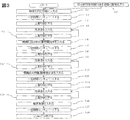
- FIG. FIG. 6 is a diagram illustrating an example of an operation flow of an analysis method according to the first embodiment.
- FIG. 6 is a diagram illustrating an example of an operation flow of an analysis method according to the second embodiment.
- an analysis target substance 3 in an analysis sample is bound to an anti-analysis target substance antibody 2 bound to a stationary phase 1 such as a fine particle or a container surface. Then, it wash
- the anti-analyte substance antibody 5 to which the label 4 for specifically recognizing the analyte 3 is bound is bound to the immobilized analyte 3 by antigen reaction.
- the enzyme substrate 8 when an enzyme substrate 8 that reacts with the enzyme 7 is added, the enzyme substrate 8 generates enzyme reaction products 9 and 10 by the enzyme reaction.
- the label 4 and the label binding substance 6 include biotin and avidin or streptavidin, but the label binding substance 6 can be used as an anti-label antibody with the label 4 as an arbitrary compound, or the label 4 and the label binding substance 6 can be used for anti-analysis.
- An anti-antianalyte substance antibody that recognizes substance antibody 5 or an antibody-binding protein such as protein G or A may be used.
- Peroxidase decomposes hydrogen peroxide, and 3,3 ', 5,5'-tetramethylbenzidine is oxidized by the active oxygen generated by this, resulting in a yellow color under acidic conditions. This is measured by absorption at 450 nm.
- Alkaline phosphatase decomposes p-nitrophenyl phosphate to produce p-nitrophenol and measures the absorbance at 405 nm.
- Acetylcholinesterase breaks acetylcholine into acetic acid and thiocholine. This thiocholine cleaves the disulfide bond of 5,5'-dithio-bis- (2-nitrobenzoic acid) to produce 5-thio-2-nitrobenzoic acid, and the absorbance at 412 nm is measured.
- phenyl ⁇ -D-galactoside, p-aminophenyl ⁇ -D-galactoside, p-methoxyphenyl ⁇ -D-galactoside, o-nitrophenyl ⁇ -D-galactoside, p- Methylumbelliferyl- ⁇ -galactoside, 5-bromo-4-chloro-3-indolyl ⁇ -D-galactopyranoside, 5-bromo-6-chloro-3-indolyl ⁇ -D-galactopyranoside, 5 -Bromo-3-indolyl ⁇ -D-galactopyranoside, 6-chloro-3-indolyl ⁇ -D-galactopyranoside, o-nitrophenyl ⁇ -D-galactopyranoside and the like are known.
- the conventional enzyme immunization method uses colorimetry and fluorescence, is easily affected by turbidity of sample solution and bubbles, and there are restrictions on the material of the container that can be used.
- Electrospray ionization is a method in which substances in a solution are stably ionized by a potential difference and a spray gas.
- Three quadrupole-type MS electrodes are arranged in series, an ion of arbitrary m / z is selected in the first quadrupole, the ion is decomposed in the next quadrupole, and the last quadrupole.
- Arbitrary decomposition product ions are detected by the quadrupole.
- In the first quadrupole most other materials are separated by m / z differences. Since the decomposition pattern of the next quadrupole is characteristic depending on the compound, even if there is a compound mixed in at the same m / z by chance in the first quadrupole, the decomposition products are different, and the final quadrupole is very different. The amount of a specific substance can be measured with high selectivity.
- the compound that can be easily detected by MS having this structure is that it is easily ionized by electrospray and is easily quantified by the triple quadrupole type.
- the enzyme reaction product 9 which is the main analyte shown in FIG. 1 is liquid chromatographed to reduce the influence of ion suppression of the enzyme substrate 8 and the enzyme reaction product 10 which is not the other main analyte (FIG. 1). It is desirable to separate these components by LC).
- a compound having a high organic solvent concentration in a C18 column popular in LC is preferably a compound having a logP value of 1 to 5.
- organic compounds containing hetero atoms such as oxygen and nitrogen other than carbon and hydrogen such as nitrogen and oxygen are easily ionized.
- the second property that is easy to analyze with MS is that no interference occurs between compounds. Even if the masses of the compounds are different, they may interfere in mass spectrometry due to the presence of isotope elements, adduct ions, dehydration ions, and the like. In order to eliminate these, it is desirable that m / z is 40 or more. In addition, even if the masses are different, if ionized at the same time, there is a high possibility of causing interference called ion suppression. In the enzyme reaction, the reaction rate increases by increasing the concentration of the reaction substrate, so that the concentration of the reaction substrate becomes higher than that of the detection compound, and it is expected that the ionization of the detection compound is inhibited.
- the enzyme reaction system of the analysis method by the enzyme immunization method of the present invention since the enzyme is immobilized on the stationary phase, there are enzyme substrates, salts such as reaction products and buffers, and organic solvents.
- the chemical properties differ greatly.
- the enzyme is ⁇ -galactosidase, a kind of glycolytic enzyme, and the enzyme substrate is p-nitrophenyl ⁇ -galactoside, the reaction product is p-nitrophenol used for detection and galactose recognized by the enzyme.
- impurities in MS include compounds derived from samples, organic solvents such as water and acetonitrile used in the mobile phase, buffer components such as ammonia and formic acid, and clusters in which several molecules of these are collected. In order to avoid these, it is desirable that m / z is 150 or more. However, a compound having a molecular weight of 1,000 or less is preferred because the mass increases and polyvalent ions are easily generated and analysis becomes difficult.
- the enzyme reaction product that is the MS analysis target produced by the enzyme reaction is a compound having a hydrophobic index of logP of 1 to 5 and a molecular weight of 150 to 1,000 It is desirable that Furthermore, in the triple quadrupole type MS, the compound is decomposed by the second quadrupole, and the analysis accuracy is improved by utilizing the fact that the decomposition pattern is different for each compound. Small molecules are difficult to decompose, and large molecules may be too complicated to analyze. A structure in which a plurality of aromatic compounds are connected by a linker containing a single bond of C—N or C—O tends to cause stable decomposition.
- the enzyme reaction product which is an MS analysis object, has a structure in which a plurality of aromatic compounds are connected by a linker containing a single bond of CN or CO.
- a compound having a molecular weight of 200 to 600 is desirable.
- verapamil C27H38O4, molecular weight 454.61 is used as an example of the enzyme reaction product.
- an enzyme substrate that specifically binds to an analyte to be immobilized on a stationary phase is bound, an enzyme-bound antibody is bound, the enzyme bound to the antibody is reacted with the enzyme substrate, and the resulting enzyme substrate is obtained.
- 2 is an example of an analysis method for measuring the presence / absence and concentration of a substance to be analyzed by mass spectrometry of the enzyme reaction product.
- an enzyme reaction unit that binds an antibody that binds to an enzyme that specifically binds to the analyte to be immobilized on the stationary phase, and that causes an enzyme reaction between the enzyme bound to the antibody and the enzyme substrate, and the obtained enzyme
- an analyzer that includes a mass analyzer that performs mass analysis of an enzyme reaction product of a substrate, and that measures the presence / absence and concentration of a substance to be analyzed.
- the automatic analyzer according to Example 1 shown in FIG. 2 is composed of a mass analyzer composed of LC / MS71 indicated by a dotted line and other components, but in this specification, the mass analyzer Components other than are collectively referred to as an enzyme reaction part.
- an enzyme reaction unit an antibody that specifically binds to the analyte to be immobilized immobilized on the stationary phase is bound, and the enzyme bound to the antibody is reacted with the enzyme substrate.
- a sample such as serum or standard solution is transferred from a sample container 21 in the sample supply unit 20 to a reaction container 31 on the reaction table 30 by a sample dispensing device 22.
- the specimen dispensing apparatus 22 for the reaction container 31 is cleaned by the nozzle cleaning mechanism 23.
- a plurality of reaction containers can be held on the outer periphery of the reaction table 30, and the reaction container 31 can be moved to an arbitrary operation unit by the rotational movement of the reaction table 30.
- a constant temperature function, a stirring function, a magnetic collection function, and the like can be added to the reaction table 30 as appropriate.
- the reaction vessel 31 on the reaction table 30 is supplied from the reaction vessel stocker 41 by the action of the reaction vessel transfer unit 40.
- the anti-analyte substance antibody 2 specific to the analyte 3 is bound and immobilized in advance in each reaction container (S0).
- the reaction container 31 on the reaction table 30 in which the specimen is placed is transferred to the working part of the suction nozzle 32 after a certain time (S2), and the supernatant after the reaction is removed by suction (S3).
- the suction nozzle 32 is cleaned by the nozzle cleaning mechanism 33.
- the reaction vessel 31 is transferred to the working part of the cleaning liquid supply nozzle 34 to put the cleaning liquid (S4).
- the cleaning liquid supply nozzle 34 is cleaned by the nozzle cleaning mechanism 35.
- the reaction vessel 31 is cleaned a plurality of times by reciprocating between the suction nozzle working part and the cleaning liquid supply nozzle working part (S4, 5).
- the washed reaction container 31 is transferred to the working part of the reagent supply nozzle 50, and the complex of the label 4 and the anti-analysis target substance antibody 5 is put from the reagent container 51 (S6).
- the reagent supply nozzle 50 is cleaned by the nozzle cleaning mechanism 52.
- a plurality of reagent containers 51 are accommodated in the reagent table 53 and appropriately provided with a constant temperature function and a stirring function.
- the reaction container 31 is transferred to the working part of the suction nozzle 32 after a certain time (S7), and the supernatant after the reaction is removed by suction (S8).
- the reaction vessel 31 is washed a plurality of times by reciprocating between the suction nozzle working part and the cleaning liquid supply nozzle working part (S9, 10).
- the reaction container 31 is transferred to the working part of the suction nozzle 32 after a certain time (S12), and the supernatant after the reaction is removed by suction (S13).
- the reaction vessel 31 is cleaned a plurality of times by reciprocating between the suction nozzle working part and the cleaning liquid supply nozzle working part (S14, 15).
- reaction container 31 is moved to the working part of the reagent supply nozzle 50, and the enzyme substrate 8 is placed (S16).
- the reaction vessel 31 moves to the working part of the sample injection nozzle mechanism 60 after a certain time (S17), and a certain amount is analyzed through the LC / MS sample injection part 70 by the LC / MS 71 which is a mass analysis part (S18).
- the sample injection nozzle mechanism 60 is cleaned by the cleaning mechanism 61. If the analysis cannot be started immediately after the enzyme substrate 8 has been added and a certain time has elapsed, an enzyme reaction stop solution is introduced by the reagent supply nozzle 50, and then the analysis sample on the analysis sample table 62 is obtained by the sample injection nozzle mechanism 60.
- the sample is once held in the container 63 and sequentially analyzed by the LC / MS 71 constituting the mass spectrometer.
- the reaction container 31 in which the sample injection is completed is transferred by the reaction container transfer unit 40 to the end reaction container storage unit 42.
- the analysis object can be analyzed with high sensitivity by the enzyme immunoassay, and a substance such as protein can be easily analyzed using MS. it can.
- FIG. 4 shows an operation flow of the analysis method of Example 2.
- those having the same reference numerals as those in FIG. 3 indicate the same operation, and this operation flow can also be realized by using the automatic analyzer shown in FIG.
- the reaction vessel 31 that has been subjected to multiple washings (S4, 5) is transferred to the working part of the reagent supply nozzle 50, and in this embodiment, the anti-analyte substance antibody 5 and the enzyme 7 Is put into the reaction vessel 31 (S19). Thereafter, as in Example 1, the reaction vessel 31 is transferred to the working part of the suction nozzle 32 after a certain time (S12), and the supernatant after the reaction is removed by suction (S13). The reaction vessel 31 is cleaned a plurality of times by reciprocating between the suction nozzle working part and the cleaning liquid supply nozzle working part (S14, 15).
- reaction container 31 moves to the working part of the reagent supply nozzle 50, the enzyme substrate 8 is placed therein, and an enzyme reaction is performed (S16).
- the reaction vessel 31 moves to the working part of the sample injection nozzle mechanism 60 after a certain time (S17), and a certain amount is analyzed by the LC / MS 71 which is a mass analysis part through the LC / MS sample injection part 70 (S18).
- the analysis procedure can be simplified.
- the analysis target can be analyzed with high sensitivity by enzyme immunization, and a variety of substances such as proteins can be easily analyzed using MS.
- ⁇ Analysis example 1> Prior to the analysis in Analysis Example 2-5, as Analysis Example 1, galactosidase, which is enzyme 7, and p-nitrophenyl ⁇ -galactoside, 4-methylumbelliferyl- ⁇ -galactoside, and ⁇ -galactoside as enzyme substrate 8 were used. Each verapamil derivative was reacted, and each reaction product was analyzed by LC / MS, which is a mass spectrometer, and a spectroscopic analyzer. 4-Nitrophenol (C6H5NO3, molecular weight 139.11), which is one of the enzyme reaction products, has detection sensitivity equivalent to that obtained by spectroscopy with LC / MS.
- reaction products 4-methylumbelliferone (C10H8O3, molecular weight 176.171) can be detected with higher sensitivity than spectroscopic analysis by LC / MS.
- reaction products verapamil (C27H38 O4, molecular weight 454.61) can be detected with very high sensitivity by LC / MS.
- Example 2 of analysis> This analysis example is an analysis example related to Example 1 described with reference to FIG.
- a biotin-labeled anti-human serum albumin antibody solution that is a complex of the anti-analyte substance antibody 5 and the label 4 is placed in a 100 ⁇ L reaction vessel 31 and incubated for 1 hour.
- the reaction vessel 31 is washed three times with Tris buffered saline.
- 100 ⁇ L of a streptavidin galactosidase complex solution as a complex of the labeled binding substance 6 and the enzyme 7 is added to the container 31 and incubated for 1 hour.
- the supernatant is then aspirated and washed 3 times with Tris-buffered saline. This was reacted with enzyme substrate 8, p-nitrophenyl ⁇ -galactoside and 4-methylumbelliferyl- ⁇ -galactoside, respectively, and the reaction products were analyzed with LC / MS and a spectroscopic analyzer, respectively.
- This analysis example is an analysis example related to Example 1 described with reference to FIG. 50 ⁇ L of reaction container 31 coated with anti-human serum albumin antibody, anti-analyte substance antibody 2, in which analyte 3 and human serum albumin are dissolved in a buffer solution in a concentration range of 50 pg / mL to 20 ng / mL To dispense. 100 ⁇ L of biotin-labeled anti-human serum albumin antibody solution, which is a complex of label 4 and anti-analyte substance antibody 5, is added and incubated for 1 hour. The supernatant is then aspirated and washed 3 times with Tris-buffered saline.
- Example 4 of analysis> This analysis example is an analysis example related to Example 1 described with reference to FIG.
- Analyte 3 and human C-reactive protein sample are dissolved in a buffer solution in a concentration range of 50 pg / mL to 16 ng / mL and coated with anti-human C-reactive protein antibody anti-analyte antibody 2 Dispense 50 ⁇ L into container 31 and incubate for 2 hours. The supernatant is then aspirated and washed 5 times with 200 ⁇ L of washing solution. 50 ⁇ L of biotinylated anti-human C-reactive protein antibody is added as a complex of label 4 and anti-analyte substance antibody 5 and incubated for 30 minutes.
- the supernatant is then aspirated and washed 5 times with 200 ⁇ L of washing solution.
- 50 ⁇ L of a streptavidin galactosidase complex solution which is a complex of the labeled binding substance 6 and the enzyme 7, is added to the reaction vessel 31 and incubated for 30 minutes.
- the supernatant is then aspirated and washed 5 times with 200 ⁇ L of washing solution.
- enzyme substrate 8 p-nitrophenyl ⁇ -galactoside, 4-methylumbelliferyl- ⁇ -galactoside, and verapamil derivative of ⁇ -galactoside, respectively, and the reaction product was subjected to high-performance liquid LC / MS and spectroscopy, respectively. Analysis was performed with an analyzer.
- Example 5 of analysis> This analysis example is an analysis example related to Example 2 described with reference to FIG.
- Analyte 3 and rabbit IgG which are specimens, are dissolved in a buffer solution in a concentration range of 2 pg / mL to 100 ng / mL, and 100 ⁇ L of the solution is coated with anti-rabbit IgG antibody that is anti-analyte 2
- the magnetic particles are suspended and incubated for 1 hour.
- the magnetic particles are then collected with a magnet, and the supernatant is then aspirated and washed 5 times with 200 ⁇ L of washing solution.
- the expansion and accuracy of clinical test items are improved by analyzing biological components with high sensitivity.
- this invention is not limited to the above-mentioned Example, Various modifications are included.
- the above-described embodiment has been described in detail for better understanding of the present invention, and a part of the configuration of one embodiment can be replaced with the configuration of another embodiment. It is possible to add the structure of another Example to the structure of an example. Further, it is possible to add, delete, and replace other configurations for a part of the configuration of each embodiment.
- End reaction vessel storage unit 50 ... Reagent supply nozzle, 51 ... Reagent container, 52 ... Nozzle cleaning mechanism, 53 ... Reagent table, 60 ... Sample injection nozzle mechanism, 61 ... Nozzle cleaning mechanism, 62 ... Analysis sample table, 63 ... Analysis sample container, 70 ... LC / MS sample injection unit, 71 ... LC / MS
Landscapes
- Health & Medical Sciences (AREA)
- Life Sciences & Earth Sciences (AREA)
- Engineering & Computer Science (AREA)
- Chemical & Material Sciences (AREA)
- Immunology (AREA)
- Molecular Biology (AREA)
- Biomedical Technology (AREA)
- Hematology (AREA)
- Urology & Nephrology (AREA)
- Physics & Mathematics (AREA)
- General Health & Medical Sciences (AREA)
- Biochemistry (AREA)
- Analytical Chemistry (AREA)
- Bioinformatics & Cheminformatics (AREA)
- Cell Biology (AREA)
- Medicinal Chemistry (AREA)
- Food Science & Technology (AREA)
- Microbiology (AREA)
- Biotechnology (AREA)
- General Physics & Mathematics (AREA)
- Pathology (AREA)
- Organic Chemistry (AREA)
- Bioinformatics & Computational Biology (AREA)
- Genetics & Genomics (AREA)
- General Engineering & Computer Science (AREA)
- Wood Science & Technology (AREA)
- Zoology (AREA)
- Biophysics (AREA)
- Proteomics, Peptides & Aminoacids (AREA)
- Spectroscopy & Molecular Physics (AREA)
- Chemical Kinetics & Catalysis (AREA)
- Other Investigation Or Analysis Of Materials By Electrical Means (AREA)
Abstract
Description
一方、質量分析装置(MS)は物質をイオン化し、真空中でのイオンの移動度を基にm/z(質量を電荷数で割った値)と強度を測定する装置である。タンパク質などの高分子を直接分析することも可能ではあるが、感度が低下することが多く、通常、生体内のタンパク質は、アルキル化、リン酸化、糖鎖付加などの翻訳後修飾を受けて分子量や荷電状態に多様性が生じ、異なるm/zで検出される。これらの理由のためMSでタンパク質を直接測定することは難しい。このためMSを用いてタンパク質を測定するには、トリプシンなどでペプチドに切断し、その中からMS検出に適したペプチドを選択して分析しており、現在、数100pg(数fmol)レベルまで検出できる。(非特許文献2、非特許文献3参照。)
の分析法の原理を説明する。
図1に示すように、微粒子や容器表面など固定相1に結合した抗分析対象物質抗体2に、分析試料中の分析対象物質3を結合させる。その後、洗浄し、分析試料中の夾雑物を除去する。次に分析対象物質3を特異的に認識するための標識4が結合した抗分析対象物質抗体5を、抗原体反応により、固定化した分析対象物質3に結合させる。その後、洗浄することにより、分析対象物質3に結合しなかった標識4と抗分析対象物質抗体5の複合体を除去する。続いて、標識4に特異的に結合する標識結合物質6と酵素7の複合体を加え、標識4と標識結合物質6を結合させる。その後、洗浄することにより、標識4に結合しなかった標識結合物質6と酵素7の複合体を除去する。
行われる(S16)。反応容器31は一定時間後に試料注入ノズル機構60の作業部に移動し(S17)、一定量をLC/MS試料注入部70を通して質量分析部であるLC/MS71で分析される(S18)。
分析例2-5の分析に先立ち、分析例1として、酵素7であるガラクトシダーゼに、酵素基質8として、p-ニトロフェニルβ-ガラクトシド、4-メチルウンベリフェリル-β-ガラクトシド、β-ガラクトシドのベラパミル誘導体をそれぞれ反応させ、反応生成物をそれぞれ質量分析部であるLC/MS、及び分光分析装置にて分析した。酵素反応生成物の一つである4-ニトロフェノール(C6H5NO3、分子量 139.11)は、LC/MSで分光と同等の検出感度が得られる。反応生成物の一つである4-メチルウンベリフェロン(C10H8O3、分子量 176.171)は、LC/MSで分光より高感度で検出できる。更に、反応生成物の一つであるベラパミル(C27H38
O4、分子量 454.61)は、LC/MSで非常に高感度に検出できる。
本分析例は、図2を使って説明した実施例1に関する分析例である。検体である分析対象物質3である、ヒト血清アルブミンを緩衝液に50pg/mLから20ng/mLの濃度範囲で溶解し、抗分析対象物質抗体2である抗ヒト血清アルブミン抗体をコートした反応容器31に50μLを分注する。続いて、抗分析対象物質抗体5と標識4の複合体であるビオチン標識抗ヒト血清アルブミン抗体溶液を100μL反応容器31に入れ、1時間インキュベートする。その後上清を吸引し、反応容器31をトリス緩衝生理食塩水で3回洗浄する。この容器31に、標識結合物質6と酵素7の複合体としてのストレプトアビジンガラクトシダーゼ複合体溶液を100μL加え、1時間インキュベートする。その後上清を吸引し、トリス緩衝生理食塩水で3回洗浄する。これに、酵素基質8であるp-ニトロフェニルβ-ガラクトシド、4-メチルウンベリフェリル-β-ガラクトシドをそれぞれ反応させ、反応生成物をそれぞれLC/MS、及び分光分析装置にて分析した。
本分析例は、図2を使って説明した実施例1に関する分析例である。検体である分析対象物質3、ヒト血清アルブミンを緩衝液に50pg/mLから20ng/mLの濃度範囲で溶解し、抗分析対象物質抗体2である抗ヒト血清アルブミン抗体をコートした反応容器31に50μLを分注する。標識4と抗分析対象物質抗体5の複合体であるビオチン標識抗ヒト血清アルブミン抗体溶液を100μL入れ、1時間インキュベートする。その後上清を吸引し、トリス緩衝生理食塩水で3回洗浄する。この反応容器31に標識結合物質6と酵素7の複合体であるストレプトアビジンガラクトシダーゼ複合体溶液を100μL/well加え、1時間インキュベートする。その後上清を吸引し、トリス緩衝生理食塩水で3回洗浄する。これに酵素基質8であるβ-ガラクトシドのベラパミル誘導体を反応させ、反応生成物をそれぞれ高速液体LC/MSで分析した。
本分析例は、図2を使って説明した実施例1に関する分析例である。検体である分析対象物質3、ヒトC反応性タンパクを緩衝液に50pg/mLから16ng/mLの濃度範囲で溶解し、抗分析対象物質抗体2である抗ヒトC反応性タンパク抗体をコートした反応容器31に50μLを分注し2時間インキュベートする。その後上清を吸引し、200μLの洗浄液で5回洗浄する。標識4と抗分析対象物質抗体5の複合体として50μLのビオチン化抗ヒトC反応性タンパク抗体を加え、30分間インキュベートする。その後上清を吸引し、200μLの洗浄液で5回洗浄する。この反応容器31に標識結合物質6と酵素7の複合体であるストレプトアビジンガラクトシダーゼ複合体溶液を50μL加え、30分間インキュベートする。その後上清を吸引し、200μLの洗浄液で5回洗浄する。これに酵素基質8であるp-ニトロフェニルβ-ガラクトシド、4-メチルウンベリフェリル-β-ガラクトシド、β-ガラクトシドのベラパミル誘導体をそれぞれ反応させ、反応生成物をそれぞれ高速液体LC/MS、及び分光分析装置にて分析した。
本分析例は、図3を使って説明した実施例2に関する分析例である。検体である分析対象物質3、ウサギIgGを緩衝液に2pg/mLから100ng/mLの濃度範囲で溶解し、その溶液100μLに抗分析対象物質抗体2である抗ウサギIgG抗体をコートした固定相1としての磁性粒子を懸濁し1時間インキュベートする。その後磁石にて磁性粒子を捕集し、その後上清を吸引し、200μLの洗浄液で5回洗浄する。続いて抗分析対象物質抗体5と酵素7の複合体として、100μLのガラクトシダーゼ結合抗ウサギIgG抗体を加え、1時間インキュベートする。その後磁石にて粒子を捕集し、その後200μLの洗浄液で5回洗浄する。これに酵素基質8であるp-ニトロフェニルβ-ガラクトシド、4-メチルウンベリフェリル-β-ガラクトシド、β-ガラクトシドのベラパミル誘導体をそれぞれ反応させ、反応生成物をそれぞれLC/MS、及び分光分析装置にて分析した。
Claims (15)
- 分析対象物質を測定する分析方法であって、
固定相上に固定化した分析対象物質に特異的に結合する、酵素が結合する抗体を結合させ、
前記抗体に結合した前記酵素と酵素基質とを酵素反応させ、
得られた前記酵素基質の酵素反応生成物を質量分析することにより、前記分析対象物質の存在の有無及び濃度を測定する、
ことを特徴とする分析方法。 - 請求項1記載の分析方法であって、
前記分析対象物質を前記固定相上に固定化する工程と、
前記分析対象物質に特異的に結合する、標識を結合させた前記抗体を、前記分析対象物質に結合させる工程と、
前記酵素が結合した標識結合物質を前記標識に結合させる工程と、
前記酵素基質を加え、前記酵素に一定時間反応させる酵素反応工程と、得られた前記酵素反応生成物を質量分析装置により分析する分析工程と、を含む、
ことを特徴とする分析方法。 - 請求項2記載の分析方法であって、
前記標識と前記標識結合物質として、ビオチンとアビジンを用いる、
ことを特徴とする分析方法。 - 請求項1記載の分析方法であって、
前記分析対象物質を前記固定相上に固定化する工程と、
前記分析対象物質に特異的に結合する、前記酵素が結合した前記抗体を、前記分析対象物質に結合させる工程と、
前記酵素基質を加え、前記酵素に一定時間反応させる酵素反応工程と、
得られた前記酵素反応生成物を質量分析装置により分析する分析工程と、を含む、
ことを特徴とする分析方法。 - 請求項1乃至4の何れか1項記載の分析方法であって、
前記酵素が糖分解酵素である、
ことを特徴とする分析方法。 - 請求項5に記載の分析方法であって、
前記糖分解酵素が、ガラクトシダーゼである、
ことを特徴とする分析方法。 - 請求項1乃至4の何れか1項記載の分析方法であって、
分析対象となる前記酵素反応生成物が、疎水性指標であるlogPが1~5、分子量が150~1,000の化合物である、
ことを特徴とする分析方法。 - 請求項7記載の分析方法であって、
前記酵素反応生成物が、複数の芳香族化合物がC-N若しくC-Oの一重結合を含むリンカーでつながった構造であり、分子量200から600の化合物である、
ことを特徴とする分析方法。 - 分析対象物質を測定する分析装置であって、
固定相上に固定化した分析対象物質に特異的に結合する、酵素が結合する抗体を結合させ、前記抗体に結合した前記酵素と酵素基質とを酵素反応させる酵素反応部と、
得られた前記酵素基質の酵素反応生成物を質量分析する質量分析部と、を備え、
前記分析対象物質の存在の有無及び濃度を測定する、
ことを特徴とする分析装置。 - 請求項9記載の分析装置であって、
前記酵素反応部は、
前記分析対象物質を前記固定相上に固定化し、前記分析対象物質に特異的に結合する、標識を結合させた前記抗体を、前記分析対象物質に結合させ、前記酵素が結合した標識結合物質を前記標識に結合させ、前記酵素基質を加え、前記酵素に一定時間反応させることにより前記酵素反応生成物を生成し、
前記質量分析部は、
得られた前記酵素反応生成物を四重極型質量分析装置で分析する、
ことを特徴とする分析装置。 - 請求項9記載の分析装置であって、
前記標識と前記標識結合物質として、ビオチンとアビジンを用いる、
ことを特徴とする分析装置。 - 請求項9記載の分析装置であって、
前記酵素反応部は、
前記分析対象物質を前記固定相上に固定化し、前記分析対象物質に特異的に結合する、前記酵素が結合した前記抗体を、前記分析対象物質に結合させ、前記酵素基質を加え、前記酵素に一定時間反応させることにより前記酵素反応生成物を生成し、
前記質量分析部は、
得られた前記酵素反応生成物を四重極型質量分析装置で分析する、
ことを特徴とする分析装置。 - 請求項9乃至12の何れか1項記載の分析装置であって、
前記酵素が糖分解酵素である、
ことを特徴とする分析装置。 - 請求項9乃至12の何れか1項記載の分析装置であって、
分析対象となる前記酵素反応生成物が、疎水性指標であるlogPが1~5、分子量が150~1,000の化合物である、
ことを特徴とする分析装置。 - 請求項14記載の分析装置であって、
前記酵素反応生成物が、複数の芳香族化合物がC-N若しくC-Oの一重結合を含むリンカーでつながった構造であり、分子量200から600の化合物である、
ことを特徴とする分析装置。
Priority Applications (4)
| Application Number | Priority Date | Filing Date | Title |
|---|---|---|---|
| JP2016567300A JP6482577B2 (ja) | 2014-12-29 | 2015-12-04 | 分析方法、及び分析装置 |
| DE112015005283.6T DE112015005283B4 (de) | 2014-12-29 | 2015-12-04 | Analysenverfahren und Analysenvorrichtung |
| US15/537,541 US20170343540A1 (en) | 2014-12-29 | 2015-12-04 | Analysis method and analysis device |
| US17/828,177 US20220291210A1 (en) | 2014-12-29 | 2022-05-31 | Analysis method and analysis device |
Applications Claiming Priority (2)
| Application Number | Priority Date | Filing Date | Title |
|---|---|---|---|
| JP2014267008 | 2014-12-29 | ||
| JP2014-267008 | 2014-12-29 |
Related Child Applications (2)
| Application Number | Title | Priority Date | Filing Date |
|---|---|---|---|
| US15/537,541 A-371-Of-International US20170343540A1 (en) | 2014-12-29 | 2015-12-04 | Analysis method and analysis device |
| US17/828,177 Division US20220291210A1 (en) | 2014-12-29 | 2022-05-31 | Analysis method and analysis device |
Publications (1)
| Publication Number | Publication Date |
|---|---|
| WO2016108267A1 true WO2016108267A1 (ja) | 2016-07-07 |
Family
ID=56284421
Family Applications (1)
| Application Number | Title | Priority Date | Filing Date |
|---|---|---|---|
| PCT/JP2015/084113 Ceased WO2016108267A1 (ja) | 2014-12-29 | 2015-12-04 | 分析方法、及び分析装置 |
Country Status (4)
| Country | Link |
|---|---|
| US (2) | US20170343540A1 (ja) |
| JP (1) | JP6482577B2 (ja) |
| DE (1) | DE112015005283B4 (ja) |
| WO (1) | WO2016108267A1 (ja) |
Families Citing this family (2)
| Publication number | Priority date | Publication date | Assignee | Title |
|---|---|---|---|---|
| CN108872357B (zh) * | 2018-09-19 | 2021-06-15 | 内蒙古蒙牛乳业(集团)股份有限公司 | 质谱检测方法 |
| CN111724857B (zh) * | 2020-07-07 | 2021-06-15 | 中国计量科学研究院 | 一种免疫分析中蛋白质溯源有效性及互换性评价方法 |
Citations (3)
| Publication number | Priority date | Publication date | Assignee | Title |
|---|---|---|---|---|
| JP2001524808A (ja) * | 1996-12-10 | 2001-12-04 | ジーントレイス・システムズ・インコーポレイテッド | 放出可能な不揮発性の質量標識分子 |
| JP2002523058A (ja) * | 1998-08-25 | 2002-07-30 | ユニバーシティ オブ ワシントン | 複合した混合物中のタンパク質またはタンパク質機能の迅速定量分析 |
| JP2014210761A (ja) * | 2013-04-05 | 2014-11-13 | 株式会社シバヤギ | 抗イヌn末端プロ心房性ナトリウム利尿ペプチド抗体ならびにそれを用いた免疫学的測定方法、および免疫学的測定用キット |
Family Cites Families (12)
| Publication number | Priority date | Publication date | Assignee | Title |
|---|---|---|---|---|
| US4170625A (en) * | 1978-05-24 | 1979-10-09 | Welch Henry H | Automatic analyzer device for carrying out chemical-clinical and kinetic-enzymatic analyses on fluids, particularly biological fluids |
| US4708929A (en) * | 1984-10-29 | 1987-11-24 | Microgenics Corporation | Methods for protein binding enzyme complementation assays |
| US4837395A (en) * | 1985-05-10 | 1989-06-06 | Syntex (U.S.A.) Inc. | Single step heterogeneous assay |
| IL75828A (en) * | 1985-07-17 | 1991-06-10 | Univ Ramot | Immobilization by biologically active proteins |
| US5572022A (en) * | 1995-03-03 | 1996-11-05 | Finnigan Corporation | Method and apparatus of increasing dynamic range and sensitivity of a mass spectrometer |
| GB0028586D0 (en) * | 2000-11-23 | 2001-01-10 | Univ Warwick | An ion focussing and conveying device |
| US8012768B2 (en) * | 2003-07-18 | 2011-09-06 | Bio-Rad Laboratories, Inc. | System and method for multi-analyte detection |
| JP2006180813A (ja) * | 2004-12-28 | 2006-07-13 | Daiichi Fine Chemical Co Ltd | アミノペプチダーゼoおよびその利用 |
| WO2006091630A2 (en) * | 2005-02-22 | 2006-08-31 | University Of Cincinnati | Determination of viable microorganisms using coated paramagnetic beads |
| US7462824B2 (en) * | 2006-04-28 | 2008-12-09 | Yang Wang | Combined ambient desorption and ionization source for mass spectrometry |
| WO2011011669A1 (en) * | 2009-07-23 | 2011-01-27 | University Of Wyoming | Methods and compositions for detection of biological materials using microfluidic devices |
| US9250229B2 (en) * | 2011-09-25 | 2016-02-02 | Theranos, Inc. | Systems and methods for multi-analysis |
-
2015
- 2015-12-04 WO PCT/JP2015/084113 patent/WO2016108267A1/ja not_active Ceased
- 2015-12-04 DE DE112015005283.6T patent/DE112015005283B4/de not_active Expired - Fee Related
- 2015-12-04 US US15/537,541 patent/US20170343540A1/en not_active Abandoned
- 2015-12-04 JP JP2016567300A patent/JP6482577B2/ja not_active Expired - Fee Related
-
2022
- 2022-05-31 US US17/828,177 patent/US20220291210A1/en not_active Abandoned
Patent Citations (3)
| Publication number | Priority date | Publication date | Assignee | Title |
|---|---|---|---|---|
| JP2001524808A (ja) * | 1996-12-10 | 2001-12-04 | ジーントレイス・システムズ・インコーポレイテッド | 放出可能な不揮発性の質量標識分子 |
| JP2002523058A (ja) * | 1998-08-25 | 2002-07-30 | ユニバーシティ オブ ワシントン | 複合した混合物中のタンパク質またはタンパク質機能の迅速定量分析 |
| JP2014210761A (ja) * | 2013-04-05 | 2014-11-13 | 株式会社シバヤギ | 抗イヌn末端プロ心房性ナトリウム利尿ペプチド抗体ならびにそれを用いた免疫学的測定方法、および免疫学的測定用キット |
Also Published As
| Publication number | Publication date |
|---|---|
| JP6482577B2 (ja) | 2019-03-13 |
| US20170343540A1 (en) | 2017-11-30 |
| US20220291210A1 (en) | 2022-09-15 |
| DE112015005283T5 (de) | 2017-10-12 |
| JPWO2016108267A1 (ja) | 2017-09-21 |
| DE112015005283B4 (de) | 2023-02-02 |
Similar Documents
| Publication | Publication Date | Title |
|---|---|---|
| JP7853268B2 (ja) | 質量分析によるインスリンの定量 | |
| US7700295B2 (en) | Elemental analysis of tagged biologically active materials | |
| US7135296B2 (en) | Elemental analysis of tagged biologically active materials | |
| Rathkolb et al. | Clinical chemistry and other laboratory tests on mouse plasma or serum | |
| JP2018511812A (ja) | 質量分析によるインスリンレベルの定量の方法 | |
| Milone | Analytical techniques used in therapeutic drug monitoring | |
| JP7668411B2 (ja) | 無傷のタンパク質レベルでのLC-MSに基づくHbA1c測定の自動化試料ワークフロー | |
| US20220291210A1 (en) | Analysis method and analysis device | |
| Guo et al. | A new method for determination of alfatoxin M1 in milk by ultrasensitive time-resolved fluoroimmunoassay | |
| Schneck et al. | Current trends in magnetic particle enrichment for mass spectrometry-based analysis of cardiovascular protein biomarkers | |
| EP1348127B1 (en) | Elemental analysis of tagged biologically active materials | |
| Zhi et al. | Selected reaction monitoring (SRM) mass spectrometry without isotope labeling can be used for rapid protein quantification | |
| AU2002215784A1 (en) | Elemental analysis of tagged biologically active materials | |
| JP2022007101A (ja) | Aβペプチドを測定するための抗体セット、Aβペプチドの測定方法及び試薬キット | |
| JP7438224B2 (ja) | LC-MSに基づくHbA1c測定の高速試料ワークフロー | |
| Ranasinghe et al. | Fucosyl monosialoganglioside: Quantitative analysis of specific potential biomarkers of lung cancer in biological matrices using immunocapture extraction/tandem mass spectrometry | |
| US20230273217A1 (en) | Derivatization of at least one analyte of interest for mass spec measurements in patient samples | |
| Part | As01 As02 | |
| Belul | Use of Immunocapture Techniques to Enable Efficient Sample Preparation for LC-MS/MS Analysis of Oxytocin in Human Plasma |
Legal Events
| Date | Code | Title | Description |
|---|---|---|---|
| 121 | Ep: the epo has been informed by wipo that ep was designated in this application |
Ref document number: 15875393 Country of ref document: EP Kind code of ref document: A1 |
|
| ENP | Entry into the national phase |
Ref document number: 2016567300 Country of ref document: JP Kind code of ref document: A |
|
| WWE | Wipo information: entry into national phase |
Ref document number: 15537541 Country of ref document: US |
|
| WWE | Wipo information: entry into national phase |
Ref document number: 112015005283 Country of ref document: DE |
|
| 122 | Ep: pct application non-entry in european phase |
Ref document number: 15875393 Country of ref document: EP Kind code of ref document: A1 |