WO2016017009A1 - メッセージ処理装置、メッセージ処理方法、記録媒体およびプログラム - Google Patents
メッセージ処理装置、メッセージ処理方法、記録媒体およびプログラム Download PDFInfo
- Publication number
- WO2016017009A1 WO2016017009A1 PCT/JP2014/070251 JP2014070251W WO2016017009A1 WO 2016017009 A1 WO2016017009 A1 WO 2016017009A1 JP 2014070251 W JP2014070251 W JP 2014070251W WO 2016017009 A1 WO2016017009 A1 WO 2016017009A1
- Authority
- WO
- WIPO (PCT)
- Prior art keywords
- message
- lexical
- destination user
- user
- message processing
- Prior art date
- Legal status (The legal status is an assumption and is not a legal conclusion. Google has not performed a legal analysis and makes no representation as to the accuracy of the status listed.)
- Ceased
Links
Images




Classifications
-
- G—PHYSICS
- G06—COMPUTING OR CALCULATING; COUNTING
- G06F—ELECTRIC DIGITAL DATA PROCESSING
- G06F40/00—Handling natural language data
- G06F40/10—Text processing
- G06F40/12—Use of codes for handling textual entities
- G06F40/126—Character encoding
- G06F40/129—Handling non-Latin characters, e.g. kana-to-kanji conversion
-
- G—PHYSICS
- G06—COMPUTING OR CALCULATING; COUNTING
- G06F—ELECTRIC DIGITAL DATA PROCESSING
- G06F40/00—Handling natural language data
- G06F40/10—Text processing
-
- G—PHYSICS
- G06—COMPUTING OR CALCULATING; COUNTING
- G06F—ELECTRIC DIGITAL DATA PROCESSING
- G06F40/00—Handling natural language data
- G06F40/20—Natural language analysis
- G06F40/263—Language identification
Definitions
- the present invention relates to a message processing device, a message processing method, a recording medium, and a program.
- Patent Literature 1 discloses an apparatus that generates facsimile data from electronic mail and transmits the generated facsimile data to a destination. When transmitting data, this device determines whether or not Japanese is included in the sender data attached to the From address of the e-mail. If it is determined that it is not included, the facsimile data is generated by encoding the mail body with an English character code.
- the present invention has been made in view of such problems, and an object of the present invention is to realize a message processing apparatus that can easily create a message with a lexical phrase that the destination user can understand.
- a message processing apparatus provides: An estimator that estimates lexical terms understood by the destination user; An extraction unit that extracts a portion that does not correspond to the estimated lexical phrase from a message created by a transmission source user; A display unit for displaying the message with the extracted portion highlighted on the transmission source user; It is characterized by providing.
- the estimation unit estimates a lexical phrase understandable to the destination user based on a language associated with a message template used when the source user creates a message. It may be a thing.
- the estimation unit estimates a main language of a message based on a character code appearing in a message created by the transmission source user, and estimates a lexical of the estimated language as a lexical that can be understood by the destination user. It may be a thing.
- the estimation unit estimates a lexical phrase selected by the destination user in the past as a lexical phrase understandable by the destination user. It may be a thing.
- a presentation unit that presents the destination user with options for displaying one concept in different languages
- the estimation unit estimates a lexical phrase included in an option selected by the destination user from the previously presented options as a lexical phrase understandable by the destination user. It may be a thing.
- the destination user has a first option expressing a concept in a lexical phrase of a first language, and a second option expressing the one concept in a lexical phrase of a second language different from the first language.
- a presentation unit that presents a plurality of options including If the destination user has selected the first option in the past, the estimating unit estimates a lexical phrase included in the first option as a lexical phrase understandable by the destination user, and the destination user If the second option has been selected in the past, the lexical phrase included in the second option is estimated as a lexical phrase that the destination user can understand. It may be a thing.
- a transmission unit that selects one granting part based on the main language of the estimated message from a plurality of granting parts recorded in advance for each language, and sends the selected granting part to the message. Prepare It may be a thing.
- a message processing method includes: An estimation step for estimating a lexical understandable by the destination user; An extraction step for extracting a portion not corresponding to the estimated lexical phrase from a message created by a transmission source user; A display step of displaying the message with the extracted portion highlighted on the sender user; It is characterized by providing.
- a recording medium provides: On the computer, An estimation procedure for estimating lexical terms understandable to the destination user; An extraction procedure for extracting a portion not corresponding to the estimated lexical phrase from the message created by the transmission source user; A display procedure for displaying the message with the extracted portion highlighted to the transmission source user; Record the program that executes
- a program provides: On the computer, An estimation procedure for estimating lexical terms understandable to the destination user; An extraction procedure for extracting a portion not corresponding to the estimated lexical phrase from the message created by the transmission source user; A display procedure for displaying the message with the extracted portion highlighted to the transmission source user; Is executed.
- FIG. 2 is a block diagram showing a functional configuration of a message processing device according to Embodiment 1.
- FIG. It is a block diagram which shows the hardware constitutions of a message processing apparatus. It is a figure for demonstrating the storage area provided in the memory
- 2 is a block diagram showing a functional configuration of a message processing device according to Embodiment 1.
- FIG. It is a flowchart which shows a response recording process. It is a figure for demonstrating the storage area provided in the memory
- the message processing apparatus 10 has a function of creating a message that a virtual store (source user) in the Internet market transmits to a customer (destination user), for example.
- the message processing device 10 provides a function for avoiding a lexical word that cannot be understood by the destination user in the created message when the transmission source user creates a message to be delivered to the destination user.
- a shop When a general consumer purchases a product from a virtual store (hereinafter referred to as a shop) on the Internet, it is generally performed to send a message notifying the transaction content from the shop to the purchaser.
- the message transmitted by the shop is preferably described in a language that can be understood by the purchaser.
- the message described in the language used by the purchaser in the purchase process is transmitted.
- a purchaser who has performed purchase processing via the Internet in a certain language does not necessarily have a language level that can understand all the contents described in the message for that language.
- the language level of the purchaser can recognize the product name and the price without any problem, and can therefore process the purchase but cannot read the text. In such a case, even if the shop sends a message written in the language in which the purchase process has been performed to the purchaser, the purchaser cannot understand the message.
- the message processing apparatus 10 includes a part that is included in a message to be transmitted that is not understood by the purchaser (destination user). Is highlighted and shown to the shop (sender user). The transmission source user can avoid the transmission of the message including the lexical phrase that cannot be understood by the destination user by correcting the highlighted part.
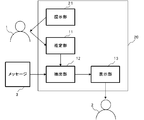
- the message processing device 10 includes an estimation unit 11, an extraction unit 12, and a display unit 13 in terms of functions.
- the estimation unit 11 estimates a lexical phrase that the destination user 1 can understand. A specific operation of the estimation unit 11 will be described later.
- the extraction unit 12 extracts a part that does not correspond to the lexical word estimated by the estimation unit 11 from the message 3.
- the message 3 is created by the transmission source user 2 to be transmitted to the destination user 1 or is being created.
- the display unit 13 displays the message 3 on the transmission source user 2 with emphasis on the part extracted by the extraction unit 12.
- the message processing device 10 has functions related to general message creation (providing a user interface for editing a message, recording and updating of the created message, etc.). is there. Accordingly, when the source user 2 creates the message 3 to be delivered to the destination user 1, the message processing device 10 verifies whether the created message 3 includes a lexical that the destination user 1 cannot understand. If it is displayed, the word / phrase is highlighted to the transmission source user 2 and displayed.
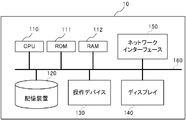
- the message processing apparatus 10 includes, as hardware, a CPU (Central Processing Unit) 110, a ROM (Read Only Memory) 111, a RAM (Random Access Memory) 112, and a storage device 120. , An operation device 130, a display 140, and a network interface 150, which are connected to each other via an internal bus 160.
- a CPU Central Processing Unit
- ROM Read Only Memory
- RAM Random Access Memory
- the CPU 110 controls the entire message processing device 10 by executing programs stored in the ROM 111, the RAM 112, and the storage device 120.
- the CPU 110 reads programs to be executed from the ROM 111, the RAM 112, and the storage device 120 as necessary, and stores data on the RAM 112 and the storage device 120 as necessary.
- the CPU 110 functions as an element (the estimation unit 11, the extraction unit 12, and the display unit 13) that realizes each function described above.
- the ROM 111 stores a program necessary for the CPU 110 to operate, for example, a program that the CPU 110 executes first when the message processing device 10 is activated.
- the RAM 112 functions as a work area when the CPU 110 executes a program.
- the RAM 112 records a program being executed by the CPU 110 or temporary data necessary for the CPU 110 to execute the program, and provides the CPU 110 with the request from the CPU 110.
- the storage device 120 includes a storage device such as a hard disk drive or a flash memory, and stores data necessary for the message processing device 10 to operate.
- the storage device 120 records, for example, a program to be executed by the CPU 110 or data to be referred to when the CPU 110 executes the program, and provides the CPU 110 in response to a request from the CPU 110. Further, the storage device 120 records data output from the CPU 110 in response to a request from the CPU 110.
- the operation device 130 includes a keyboard, a mouse, and the like, receives an input operation by the transmission source user 2, and transmits it to the CPU 110.
- the display 140 displays necessary information to the transmission source user 2.
- the network interface 150 connects the message processing apparatus 10 to a network (not shown).
- the network interface 150 uses the information received from the CPU 110 via the internal bus 160 described later to the network.
- the information transmitted to the other device via the network and the information received from the other device via the network is transmitted to the CPU 110 via the internal bus 160.
- the message processing apparatus 10 transmits an e-mail to the destination user 1 via the network interface 150 and via the Internet.
- the network interface 150 may connect the message processing device 10 to the network via a cable, for example, or may connect the message processing device 10 to the network by wireless communication.
- the internal bus 160 relays information exchange between the components (the CPU 110, the ROM 111, the RAM 112, the storage device 120, the operation device 130, the display 140, the network interface 150, etc.) in the message processing apparatus 10. For example, when the CPU 110 reads necessary data from the storage device 120, the CPU 110 reads data from the storage device 120 via the internal bus 160.
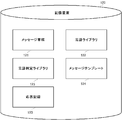
- the storage device 120 includes an area for recording the message draft 121, an area for recording the language library 122, an area for recording the language determination library 123, and An area for recording the message template 124 is provided.
- the storage device 120 outputs these data to the CPU 110 in response to a request from the CPU 110, or saves the data output from the CPU 110 in these areas.
- the message draft 121 is a message 3 created by the transmission source user 2 for the purpose of transmission to the destination user 1 and not yet transmitted.
- the message processing device 10 records the message draft 121 created by the transmission source user 2 in the storage device 120. After that, when the message draft 121 is transmitted to the destination user 1, the message processing apparatus 10 deletes the message draft 121 or moves to another area or another device.
- the language library 122 is data in which a character code of each language that can be handled by the message processing apparatus 10 and characters or lexical characters used in the language are recorded.
- the message processing device 10 records the language library 122 of each language in the storage device 120.
- the language determination library 123 is data for the message processing apparatus 10 to determine the language of the lexical word included in the message draft 121. In order to determine the language of the lexical word, the message processing apparatus 10 determines, for example, a method based on the character code of the lexical word, a method for determining whether the lexical word is recorded in the dictionary of the language, A method of judging from the included characters and spelling characteristics can be used.
- the message processing device 10 records the language determination library 123 necessary for language determination in the storage device 120 and reads it out as necessary.
- the message processing apparatus 10 stores the lexical character in the specific language. Judge as belonging. For example, characters or phrases described in hiragana and katakana are recorded in the message processing apparatus 10 using character codes unique to Japanese.
- the message processing apparatus 10 determines that the lexical phrase belongs to Japanese.
- the message processing apparatus 10 determines that the word belongs to Korean. If there is a lexical recorded in the message draft 121 in simplified or traditional characters (characters represented by character codes used only in Chinese), the message processing apparatus 10 assumes that the lexical belongs to Chinese. judge.
- the message template 124 is data that is a prototype of the message draft 121.
- the message template 124 is data in which matters common to many of the messages transmitted by the transmission source user 2, such as the body of the message to be transmitted and contact information, are described in advance. is there.
- the transmission source user 2 creates the message draft 121 using the message processing apparatus 10
- the message template 124 is copied to create the message draft 121, and only a portion that needs to be edited is edited, so that a new message draft 121 can be easily created. Can be created.
- the message processing device 10 records a message template 124 in the storage device 120 for each usable language.
- the message processing apparatus 10 determines in which language the message draft 121 is created by editing the message template 124. Record. Further, when the transmission source user 2 wants to create a message regardless of the template, the message processing apparatus 10 can also create a message regardless of the template (or using a template that does not have valid data). .
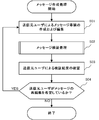
- the message processing apparatus 10 performs message creation processing according to the flowchart shown in FIG. From here, the message creation process will be described.
- the CPU 110 receives an input from the transmission source user 2, and creates and edits the message draft 121 according to the operation (step S01).
- the CPU 110 reads out the message template 124 selected by the transmission source user 2 from the storage device 120 according to the operation of the transmission source user 2 and records it in the storage device 120 as the message draft 121.
- the CPU 110 edits the message draft 121 according to the operation of the transmission source user 2 and records the edited message draft 121 data.
- step S02 the CPU 110 performs message verification processing.
- the CPU 110 verifies the lexical phrase included in the message draft 121, and if the lexical phrase that the destination user 1 cannot understand is included in the message draft 121, the lexical phrase is emphasized and the message draft 121 is presented to the transmission source user 2. To do. Details will be described later.
- the CPU 110 confirms the verification result by the transmission source user 2 (step S03).
- the transmission source user 2 confirms the verification result shown in the transmission source user 2 in step S02, and the CPU 110 accepts the response.
- the transmission source user 2 Inputs to the message processing apparatus 10 that the message draft 121 is not re-edited.
- the message draft 121 includes a phrase that cannot be understood by the destination user 1 and the transmission source user 2 wishes to re-edit the message draft 121, he / she inputs to re-edit.
- step S04 determines from the input content whether the transmission origin user 2 wishes to re-edit the message draft 121 (step S04). If the transmission source user 2 wishes to re-edit (step S04: YES), the CPU 110 returns the process to step S01, and again creates and edits the message draft according to the operation of the transmission source user 2 (step S01). ). On the other hand, when the transmission source user 2 does not wish to re-edit (step S04: NO), the CPU 110 ends the message creation process.
- the message processing apparatus 10 generates a message that the transmission source user 2 transmits to the destination user 1 through the message generation processing described so far.
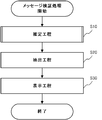
- the message processing apparatus 10 detects a lexical phrase that cannot be understood by the destination user 1 included in the message draft 121 by the message verification process (step S02) as described above, and indicates it to the transmission source user 2. From here, the message verification processing will be described with reference to the flowchart shown in FIG.
- the CPU 110 executes an estimation step S10 to estimate a lexical phrase that the destination user 1 can understand. By executing this step, the CPU 110 functions as the estimation unit 11. Details of the estimation step S10 will be described later.
- the CPU 110 executes an extraction step S20.
- the CPU 110 reads the message draft 121 from the storage device 120.
- the CPU 110 extracts a portion not corresponding to the lexical word estimated in the estimation step S10 from the read message draft 121.
- the CPU 110 functions as the extraction unit 12.
- the CPU 110 executes a display step S30.
- the CPU 110 displays the message draft 121 on the display 140. In that case, the part extracted by extraction process S20 among the message drafts 121 is highlighted and displayed.
- any method such as blinking characters, changing a font, or increasing a size can be used.
- the CPU 110 functions as the display unit 13. Moreover, CPU110 complete
- the message processing apparatus 10 can clearly indicate to the transmission source user 2 the lexical phrase that is included in the message draft 121 and is estimated that the destination user 1 cannot understand.
- the source user 2 edits the corresponding part of the message draft 121 and changes it to a phrase that the destination user 1 can understand, so that a message composed only of the phrases that the destination user 1 can understand can be easily created. .
- the CPU 110 reads the message draft 121 from the storage device 120 (step S110).
- the CPU 110 divides the read message draft 121 into lexical units (step S120). Specifically, the CPU 110 divides the message draft 121 for each lexical phrase by performing morphological analysis or the like.
- Languages that can be handled by the message processing apparatus 10 include, for example, languages that do not clearly indicate segment points for each lexical word, but, for example, English, spaces are inserted between lexical terms, and the segment points are clearly indicated. Some languages are also available.
- the CPU 110 performs lexical division by morphological analysis or the like so that it can be divided into lexical terms in any language.
- the CPU 110 determines the language of each lexical word in the message draft 121 divided into lexical units (step S130). Specifically, the CPU 110 reads a lexical phrase from the message draft 121 divided in step S120 in the message draft 121, and refers to the language determination library 123 to which language the lexical phrase belongs. judge. Alternatively, the CPU 110 identifies the character code of the lexical word and determines what language the lexical word belongs to based on the identified character code. By performing this up to the last phrase of the message draft 121, the language of all the phrases included in the message draft 121 is determined.
- the CPU 110 estimates what the main language of the message draft 121 is (step S140). Specifically, as a result of determining the language of each lexical phrase of the message draft 121 in step S130, the CPU 110 estimates the language to which the largest number of lexical phrases belong as the main language of the message draft 121. Alternatively, as a result of step S130, the language included at a rate higher than a predetermined threshold (for example, a predetermined value such as 30%) may be estimated as the main language of the message draft 121.
- a predetermined threshold for example, a predetermined value such as 30%
- step S150 the CPU 110 estimates a lexical word belonging to the main language as a lexical word that the destination user 1 can understand (step S150).
- step S150 the CPU 110 ends the estimation step S10.
- the CPU 110 estimates a lexical phrase that the destination user 1 can understand based on the message draft 121.
- CPU110 performs the subsequent process (extraction process S20 and display process S30) based on the lexical phrase estimated by estimation process S10.
- extraction process S20 the CPU 110 extracts a portion that does not correspond to the lexical word estimated in the estimation step S10 from the message draft 121.
- the CPU 110 displays the message draft 121 on the transmission source user 2 with emphasis on the part extracted in the extraction process.
- the message processing device 10 provides the transmission source user 2 with a function of easily creating a message draft 121 with lexical terms that the destination user 1 can understand.
- the message processing apparatus 10 estimates the main language of the message draft 121 by performing lexical analysis on the message draft 121.
- the message processing device 10 does not necessarily have to perform lexical analysis.
- the message processing apparatus 10 may estimate the language to which the message template 124 used when the message draft 121 is created belongs as the main language of the message draft 121.
- the message processing apparatus 10 may highlight a portion of the message draft 121 that includes a character code character that is not used in the main language.
- the message processing device 10 estimates the main language in the message draft 121. Therefore, for example, when a specific grant part (e-mail signature, etc.) is automatically given to the message draft 121, the grant part can be selected based on the main language in the message draft 121 and given appropriately. . In this case, the message processing apparatus 10 records in advance a different portion for each language in the storage device 120. Then, the message processing apparatus 10 selects a grant part belonging to the same language as the main language estimated for the message draft 121 from the plurality of recorded grant parts, and grants the selected grant part to the message draft 121. After that, the message processing apparatus 10 transmits the message draft 121 to which the grant part is assigned to the destination user 1.
- a specific grant part e-mail signature, etc.
- the message processing device 20 includes an estimation unit 11, an extraction unit 12, a display unit 13, and a presentation unit 21 in terms of functions.
- the estimation unit 11, the extraction unit 12, and the display unit 13 are the same as those of the message processing device 10 according to the first embodiment, and the description thereof is omitted.
- the presentation unit 21 has a function of presenting a display requesting a response to the destination user 1.
- the presentation unit 21 presents the destination user 1 (shop customer) with a choice of a delivery method for the purchased product, a payment method for the price, and the like.
- the transmission source user 2 shop can refer to the selection of the destination user 1 and respond according to the content specified by the destination user 1.
- the message processing device 20 has a hardware configuration similar to that of the message processing device 10 of the first embodiment (see FIG. 2), and thereby the above-described functions (estimation unit 11, extraction unit 12, display unit 13, and The presentation unit 21) is realized.
- the operation of each hardware is the same as in the first embodiment, and a description thereof is omitted.
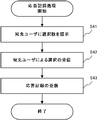
- the message processing device 20 starts the response recording process shown in FIG.
- the CPU 110 presents options to the destination user (step S41).
- the CPU 110 presents the contents as candidates to the destination user 1 as a plurality of options for information to be transmitted from the destination user 1 to the transmission source user 2 such as a delivery method and a payment method for payment.
- the CPU 110 presents options indicating the same concept in different languages.
- the CPU 110 functions as the presentation unit 21.
- the CPU 110 receives the selection by the destination user 1 (step S42).
- the CPU 110 receives information indicating the option selected by the destination user 1 from the options presented in step S41 from the destination user 1.
- step S43 the CPU 110 updates the response record 125 recorded in the storage device 120 with the received information (step S43). By doing so, the lexical phrase selected by the destination user 1 in the past by the destination user 1 is recorded as the response record 125 in the storage device 120 and accumulated. When step S43 ends, the CPU 110 ends the response recording process.
- the message processing device 20 stores a response draft in addition to the area for recording the message draft 121, the area for recording the language library 122, the area for recording the language determination library 123, and the message template 124. It has an area for recording 125.
- the response record 125 is data in which a response from the destination user 1 accepted by the message processing device 20 in the above-described response recording process is recorded.
- the message draft 121, the language library 122, the language determination library 123, and the message template 124 are the same as those described in the first embodiment and will not be described.
- the message processing device 20 presents a plurality of options to the destination user 1 by the function of the presentation unit 21 and causes the destination user 1 to select a desired option from among the options.
- the options presented by the message processing device 20 include options for displaying the same concept in different languages.
- the message processing device 20 presents a screen as shown in FIG.
- the presentation unit 21 displays the same delivery company (Akasa Transport) in English and the option 201 for displaying in Japanese.
- Three options 211 and 221 displayed in German are displayed.
- the presentation unit 21 also displays other options (ABC Global Logistics) including an option 202 for displaying in Japanese, an option 212 for displaying in English, and 222 for displaying in German.
- the message processing device 20 when the destination user 1 selects the option 201 in the contents shown in FIG. 10, the fact that the destination user 1 has selected the option 201 and the lexical of the option 201 are recorded in the response record 125.
- the message processing device 20 later performs the message verification processing, the message processing device 20 records the lexical of the option 201 for the destination user 1 in the response record 125, so that the destination user 1 displays the lexical “Akasa Transport”. Presume that you can understand.
- the message processing apparatus 20 can understand the phrase “ABC GLOBAL LOGISTICS” described in the option 212 based on the content of the response record 125. Estimated.
- the message processing device 20 performs a message verification process including an estimation step S10, an extraction step S20, and a display step S30.
- a message verification process including an estimation step S10, an extraction step S20, and a display step S30.
- extraction process S20 and display process S30 it is the same as that of Embodiment 1, and omits description.
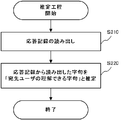
- the message processing device 20 executes the estimation step S10 according to the flowchart shown in FIG.
- CPU110 reads the response record 125 from the memory
- step S220 the CPU 110 estimates the lexical phrase recorded in the read response record 125 as a lexical phrase that can be understood by the destination user 1 (step S220).
- step S220 ends, the CPU 110 ends the estimation step S10.
- the message processing apparatus 20 estimates a lexical phrase that can be understood by the destination user 1 by executing the estimation step S10 described above. Thereafter, by executing the extraction step S20 and the display step S30, it is possible to prevent the message draft 121 from including words that cannot be understood by the destination user 1.
- the message processing device 20 estimates a lexical phrase selected by the destination user 1 in the past as a lexical phrase that the destination user 1 can understand. Specifically, the message processing device 20 sends the same concept to the destination user 1 in the first language (for example, the first option expressing the first lexical phrase in Japanese as the second language). A plurality of options including the second option expressed as the second word (for example, English) is presented, and if the destination user 1 has selected the first option in the past, the message processing device 20 estimates the lexical phrase included in the first option as a lexical phrase that can be understood by the destination user 1.
- the first language for example, the first option expressing the first lexical phrase in Japanese as the second language
- a plurality of options including the second option expressed as the second word for example, English
- the message processing device 20 If the destination user 1 has selected the second option in the past, the message processing device 20 The lexical phrase included in the second option is estimated as a lexical phrase that can be understood by the destination user 1. Therefore, it is possible to estimate a lexical phrase that can be understood by the destination user 1 with higher accuracy than in the first embodiment.
- the functions of the message processing device 20 are not in conflict with the functions of the message processing device 10 according to the first embodiment. Therefore, the message processing device 20 may have the function described in the first embodiment.
- the message processing apparatus can be realized not only by a dedicated system but also by using a normal computer system.
- a computer-readable recording medium such as a flexible disk, a CD-ROM (Compact Disk-Read Only Memory), a DVD (Digital Versatile Disk), or an MO (Magnet Optical Disk) is stored in a computer.
- a message processing apparatus that performs the above-described processing may be configured by storing and distributing the program in a medium and installing it in a computer system.
- the program may be stored in a disk device or the like included in a server device on the Internet, and may be downloaded onto a computer by being superimposed on a carrier wave, for example.
- the message processing apparatus is not limited to one realized by a single unit.
- a plurality of computers may share the functions of the above-described units, thereby providing each function as one system including the plurality of computers.
Landscapes
- Engineering & Computer Science (AREA)
- Theoretical Computer Science (AREA)
- Audiology, Speech & Language Pathology (AREA)
- Health & Medical Sciences (AREA)
- Computational Linguistics (AREA)
- General Health & Medical Sciences (AREA)
- Physics & Mathematics (AREA)
- General Engineering & Computer Science (AREA)
- General Physics & Mathematics (AREA)
- Artificial Intelligence (AREA)
- Information Transfer Between Computers (AREA)
- Machine Translation (AREA)
- Document Processing Apparatus (AREA)
- User Interface Of Digital Computer (AREA)
Abstract
Description
宛先ユーザが理解可能な字句を推定する推定部、
送信元ユーザが作成したメッセージから、前記推定された字句に該当しない部分を抽出する抽出部、
前記送信元ユーザに、前記メッセージを、前記抽出された部分を強調して表示する表示部、
を備えることを特徴とする。
前記推定部は、前記送信元ユーザがメッセージを作成する際に利用した、メッセージのテンプレートに対応付けられた言語に基づいて前記宛先ユーザが理解可能な字句を推定する、
ものであってもよい。
前記推定部は、前記送信元ユーザが作成したメッセージに出現する文字コードに基づいて、メッセージの主たる言語を推定し、推定された言語の字句を前記宛先ユーザが理解可能な字句として推定する、
ものであってもよい。
前記推定部は、前記宛先ユーザが過去に自らの意思で選択した字句を、前記宛先ユーザが理解可能な字句として推定する、
ものであってもよい。
前記宛先ユーザに、一つの概念を異なる複数の言語で表示する選択肢を提示する提示部を備え、
前記推定部は、過去に前記提示された選択肢の中から前記宛先ユーザが選択した選択肢に含まれる字句を、前記宛先ユーザが理解可能な字句として推定する、
ものであってもよい。
前記宛先ユーザに、一つの概念を第1の言語の字句で表した第1の選択肢と、当該一つの概念を前記第1の言語とは異なる第2の言語の字句で表した第2の選択肢と、を含む複数の選択肢を提示する提示部を備え、
前記推定部は、前記宛先ユーザが前記第1の選択肢を過去に選択したことがあれば、前記第1の選択肢に含まれる字句を前記宛先ユーザが理解可能な字句として推定し、前記宛先ユーザが前記第2の選択肢を過去に選択したことがあれば、前記第2の選択肢に含まれる字句を前記宛先ユーザが理解可能な字句として推定する、
ものであってもよい。
予め言語ごとに記録されている複数の付与部分から、前記推定されたメッセージの主たる言語に基づいて1つの付与部分を選択し、選択した付与部分を当該メッセージに付して送信する送信部、を備える、
ものであってもよい。
宛先ユーザが理解可能な字句を推定する推定ステップ、
送信元ユーザが作成したメッセージから、前記推定された字句に該当しない部分を抽出する抽出ステップ、
前記送信元ユーザに、前記メッセージを、前記抽出された部分を強調して表示する表示ステップ、
を備えることを特徴とする。
コンピュータに、
宛先ユーザが理解可能な字句を推定する推定手順、
送信元ユーザが作成したメッセージから、前記推定された字句に該当しない部分を抽出する抽出手順、
前記送信元ユーザに、前記メッセージを、前記抽出された部分を強調して表示する表示手順、
を実行させるプログラムを記録する。
コンピュータに、
宛先ユーザが理解可能な字句を推定する推定手順、
送信元ユーザが作成したメッセージから、前記推定された字句に該当しない部分を抽出する抽出手順、
前記送信元ユーザに、前記メッセージを、前記抽出された部分を強調して表示する表示手順、
を実行させることを特徴とする。
本発明の実施の形態1に係るメッセージ処理装置10は、例えばインターネット市場での仮想店舗(送信元ユーザ)が、顧客(宛先ユーザ)に送信するメッセージを作成する機能を有するものである。メッセージ処理装置10は、送信元ユーザが、宛先ユーザに配信するメッセージを作成する際に、作成されたメッセージに宛先ユーザが理解できない字句が含まれることを避けるための機能を提供する。
上述した実施の形態1では、メッセージ草稿121、あるいはメッセージ草稿121が作成されたときのメッセージテンプレート124に基づいて、宛先ユーザ1が理解可能な字句を推定するメッセージ処理装置10について説明した。実施の形態2では、これに加え、メッセージ草稿121の作成よりも過去の時点の宛先ユーザ1の応答に基づいて、宛先ユーザ1が理解可能な字句を推定するメッセージ処理装置20について説明する。
2:送信元ユーザ
3:メッセージ
10,20:メッセージ処理装置
11:推定部
12:抽出部
13:表示部
21:提示部
110:CPU
111:ROM
112:RAM
120:記憶装置
121:メッセージ草稿
122:言語ライブラリ
123:言語判定ライブラリ
124:メッセージテンプレート
125:応答記録
130:操作デバイス
140:ディスプレイ
150:ネットワークインターフェース
160:内部バス
Claims (10)
- 宛先ユーザが理解可能な字句を推定する推定部、
送信元ユーザが作成したメッセージから、前記推定された字句に該当しない部分を抽出する抽出部、
前記送信元ユーザに、前記メッセージを、前記抽出された部分を強調して表示する表示部、
を備えるメッセージ処理装置。 - 前記推定部は、前記送信元ユーザがメッセージを作成する際に利用した、メッセージのテンプレートに対応付けられた言語に基づいて前記宛先ユーザが理解可能な字句を推定する、
ことを特徴とする請求項1に記載のメッセージ処理装置。 - 前記推定部は、前記送信元ユーザが作成したメッセージに出現する文字コードに基づいて、メッセージの主たる言語を推定し、推定された言語の字句を前記宛先ユーザが理解可能な字句として推定する、
ことを特徴とする請求項1に記載のメッセージ処理装置。 - 前記推定部は、前記宛先ユーザが過去に自らの意思で選択した字句を、前記宛先ユーザが理解可能な字句として推定する、
ことを特徴とする請求項1に記載のメッセージ処理装置。 - 前記宛先ユーザに、一つの概念を異なる複数の言語で表示する選択肢を提示する提示部を備え、
前記推定部は、過去に前記提示された選択肢の中から前記宛先ユーザが選択した選択肢に含まれる字句を、前記宛先ユーザが理解可能な字句として推定する、
ことを特徴とする請求項4に記載のメッセージ処理装置。 - 前記宛先ユーザに、一つの概念を第1の言語の字句で表した第1の選択肢と、当該一つの概念を前記第1の言語とは異なる第2の言語の字句で表した第2の選択肢と、を含む複数の選択肢を提示する提示部を備え、
前記推定部は、前記宛先ユーザが前記第1の選択肢を過去に選択したことがあれば、前記第1の選択肢に含まれる字句を前記宛先ユーザが理解可能な字句として推定し、前記宛先ユーザが前記第2の選択肢を過去に選択したことがあれば、前記第2の選択肢に含まれる字句を前記宛先ユーザが理解可能な字句として推定する、
ことを特徴とする請求項4に記載のメッセージ処理装置。 - 予め言語ごとに記録されている複数の付与部分から、前記推定されたメッセージの主たる言語に基づいて1つの付与部分を選択し、選択した付与部分を当該メッセージに付して送信する送信部、を備える、
ことを特徴とする請求項3に記載のメッセージ処理装置。 - 宛先ユーザが理解可能な字句を推定する推定ステップ、
送信元ユーザが作成したメッセージから、前記推定された字句に該当しない部分を抽出する抽出ステップ、
前記送信元ユーザに、前記メッセージを、前記抽出された部分を強調して表示する表示ステップ、
を備えるメッセージ処理方法。 - コンピュータに、
宛先ユーザが理解可能な字句を推定する推定手順、
送信元ユーザが作成したメッセージから、前記推定された字句に該当しない部分を抽出する抽出手順、
前記送信元ユーザに、前記メッセージを、前記抽出された部分を強調して表示する表示手順、
を実行させるプログラムを記録した記録媒体。 - コンピュータに、
宛先ユーザが理解可能な字句を推定する推定手順、
送信元ユーザが作成したメッセージから、前記推定された字句に該当しない部分を抽出する抽出手順、
前記送信元ユーザに、前記メッセージを、前記抽出された部分を強調して表示する表示手順、
を実行させるプログラム。
Priority Applications (4)
| Application Number | Priority Date | Filing Date | Title |
|---|---|---|---|
| PCT/JP2014/070251 WO2016017009A1 (ja) | 2014-07-31 | 2014-07-31 | メッセージ処理装置、メッセージ処理方法、記録媒体およびプログラム |
| JP2014560967A JP5748381B1 (ja) | 2014-07-31 | 2014-07-31 | メッセージ処理装置、メッセージ処理方法、記録媒体およびプログラム |
| US15/329,720 US10255250B2 (en) | 2014-07-31 | 2014-07-31 | Message processing device, message processing method, recording medium, and program |
| TW104124742A TWI543006B (zh) | 2014-07-31 | 2015-07-30 | 訊息處理裝置、訊息處理方法、記錄媒體 |
Applications Claiming Priority (1)
| Application Number | Priority Date | Filing Date | Title |
|---|---|---|---|
| PCT/JP2014/070251 WO2016017009A1 (ja) | 2014-07-31 | 2014-07-31 | メッセージ処理装置、メッセージ処理方法、記録媒体およびプログラム |
Publications (1)
| Publication Number | Publication Date |
|---|---|
| WO2016017009A1 true WO2016017009A1 (ja) | 2016-02-04 |
Family
ID=53718489
Family Applications (1)
| Application Number | Title | Priority Date | Filing Date |
|---|---|---|---|
| PCT/JP2014/070251 Ceased WO2016017009A1 (ja) | 2014-07-31 | 2014-07-31 | メッセージ処理装置、メッセージ処理方法、記録媒体およびプログラム |
Country Status (4)
| Country | Link |
|---|---|
| US (1) | US10255250B2 (ja) |
| JP (1) | JP5748381B1 (ja) |
| TW (1) | TWI543006B (ja) |
| WO (1) | WO2016017009A1 (ja) |
Cited By (2)
| Publication number | Priority date | Publication date | Assignee | Title |
|---|---|---|---|---|
| WO2021110848A1 (en) | 2019-12-04 | 2021-06-10 | Givaudan Sa | Squalene hopene cyclase (shc) variants |
| WO2021110858A1 (en) | 2019-12-04 | 2021-06-10 | Givaudan Sa | Enzyme mediated process |
Citations (3)
| Publication number | Priority date | Publication date | Assignee | Title |
|---|---|---|---|---|
| JPH01321554A (ja) * | 1988-06-23 | 1989-12-27 | Matsushita Electric Ind Co Ltd | 文書作成装置 |
| JPH1078965A (ja) * | 1996-09-04 | 1998-03-24 | Matsushita Electric Ind Co Ltd | 文書表示装置 |
| JP2005309533A (ja) * | 2004-04-16 | 2005-11-04 | Fuji Xerox Co Ltd | 文書編集装置、文書視覚方法法およびそのプログラム |
Family Cites Families (27)
| Publication number | Priority date | Publication date | Assignee | Title |
|---|---|---|---|---|
| US6047251A (en) * | 1997-09-15 | 2000-04-04 | Caere Corporation | Automatic language identification system for multilingual optical character recognition |
| US6275789B1 (en) * | 1998-12-18 | 2001-08-14 | Leo Moser | Method and apparatus for performing full bidirectional translation between a source language and a linked alternative language |
| US7185289B1 (en) * | 1999-02-15 | 2007-02-27 | Minolta Co., Ltd. | Device and method for changing languages on a display |
| CN100520768C (zh) * | 2000-04-24 | 2009-07-29 | 微软公司 | 带有跨语言阅读向导的计算机辅助阅读系统和方法 |
| JP2002135449A (ja) | 2000-10-30 | 2002-05-10 | Murata Mach Ltd | インターネット・ファクシミリ装置 |
| US20030167250A1 (en) * | 2001-05-24 | 2003-09-04 | Yaakov Sash | Information delivery system |
| US20030125927A1 (en) * | 2001-12-28 | 2003-07-03 | Microsoft Corporation | Method and system for translating instant messages |
| US20040111254A1 (en) * | 2002-12-05 | 2004-06-10 | International Business Machines Corporation | User defined text NLS enablement |
| EP1471502A1 (en) * | 2003-04-25 | 2004-10-27 | Sony International (Europe) GmbH | Method for correcting a text produced by speech recognition |
| US7711544B2 (en) * | 2004-11-09 | 2010-05-04 | Sony Online Entertainment Llc | System and method for generating markup language text templates |
| US8126700B2 (en) * | 2006-03-29 | 2012-02-28 | International Business Machines Corporation | Computer-assisted comprehension of texts |
| US8355913B2 (en) * | 2006-11-03 | 2013-01-15 | Nokia Corporation | Speech recognition with adjustable timeout period |
| US9436759B2 (en) * | 2007-12-27 | 2016-09-06 | Nant Holdings Ip, Llc | Robust information extraction from utterances |
| US20100082324A1 (en) * | 2008-09-30 | 2010-04-01 | Microsoft Corporation | Replacing terms in machine translation |
| US8224641B2 (en) * | 2008-11-19 | 2012-07-17 | Stratify, Inc. | Language identification for documents containing multiple languages |
| US20100204977A1 (en) * | 2009-02-09 | 2010-08-12 | Inventec Corporation | Real-time translation system that automatically distinguishes multiple languages and the method thereof |
| US9098582B1 (en) * | 2009-04-10 | 2015-08-04 | Google Inc. | Identifying relevant document languages through link context |
| US8533051B2 (en) * | 2010-10-27 | 2013-09-10 | Nir Platek | Multi-language multi-platform E-commerce management system |
| US8600730B2 (en) * | 2011-02-08 | 2013-12-03 | Microsoft Corporation | Language segmentation of multilingual texts |
| US9305082B2 (en) * | 2011-09-30 | 2016-04-05 | Thomson Reuters Global Resources | Systems, methods, and interfaces for analyzing conceptually-related portions of text |
| WO2014064527A1 (en) * | 2012-10-25 | 2014-05-01 | Headland Core Solutions Limited | Message scanning system and method |
| US20140143680A1 (en) * | 2012-11-21 | 2014-05-22 | Guidance Software, Inc. | Segmented graphical review system and method |
| KR20140120192A (ko) * | 2013-04-02 | 2014-10-13 | 삼성전자주식회사 | 데이터 처리 방법 및 그 전자 장치 |
| US9659106B2 (en) * | 2014-06-19 | 2017-05-23 | Go Daddy Operating Company, LLC | Software application customized for target market |
| US20150371222A1 (en) * | 2014-06-19 | 2015-12-24 | Go Daddy Operating Company, LLC | Website content optimization for target market |
| US10409919B2 (en) * | 2015-09-28 | 2019-09-10 | Konica Minolta Laboratory U.S.A., Inc. | Language translation for display device |
| EP3374955A1 (en) * | 2015-11-13 | 2018-09-19 | Kodak Alaris Inc. | Cross cultural greeting card system |
-
2014
- 2014-07-31 JP JP2014560967A patent/JP5748381B1/ja active Active
- 2014-07-31 WO PCT/JP2014/070251 patent/WO2016017009A1/ja not_active Ceased
- 2014-07-31 US US15/329,720 patent/US10255250B2/en active Active
-
2015
- 2015-07-30 TW TW104124742A patent/TWI543006B/zh active
Patent Citations (3)
| Publication number | Priority date | Publication date | Assignee | Title |
|---|---|---|---|---|
| JPH01321554A (ja) * | 1988-06-23 | 1989-12-27 | Matsushita Electric Ind Co Ltd | 文書作成装置 |
| JPH1078965A (ja) * | 1996-09-04 | 1998-03-24 | Matsushita Electric Ind Co Ltd | 文書表示装置 |
| JP2005309533A (ja) * | 2004-04-16 | 2005-11-04 | Fuji Xerox Co Ltd | 文書編集装置、文書視覚方法法およびそのプログラム |
Cited By (2)
| Publication number | Priority date | Publication date | Assignee | Title |
|---|---|---|---|---|
| WO2021110848A1 (en) | 2019-12-04 | 2021-06-10 | Givaudan Sa | Squalene hopene cyclase (shc) variants |
| WO2021110858A1 (en) | 2019-12-04 | 2021-06-10 | Givaudan Sa | Enzyme mediated process |
Also Published As
| Publication number | Publication date |
|---|---|
| TW201610717A (zh) | 2016-03-16 |
| TWI543006B (zh) | 2016-07-21 |
| US20170212873A1 (en) | 2017-07-27 |
| JPWO2016017009A1 (ja) | 2017-04-27 |
| US10255250B2 (en) | 2019-04-09 |
| JP5748381B1 (ja) | 2015-07-15 |
Similar Documents
| Publication | Publication Date | Title |
|---|---|---|
| US9600134B2 (en) | Selecting portions of computer-accessible documents for post-selection processing | |
| WO2017125024A1 (zh) | 资源分享方法、终端及存储介质 | |
| KR101649393B1 (ko) | 메시징 애플리케이션 기반 광고 제공 방법 및 광고 제공 시스템 | |
| WO2015165412A1 (en) | Method for modifying webpage and apparatus for modifying webpage | |
| KR101567555B1 (ko) | 이미지가 이용되는 소셜 네트워크 서비스 시스템 및 방법 | |
| CN109074547B (zh) | 基于消息内容的文本消息排序 | |
| CN110097040B (zh) | 图像处理装置以及存储介质 | |
| CN112765397A (zh) | 一种音频转换方法、音频播放方法及装置 | |
| CN106060220B (zh) | 一种联系人信息创建方法和移动终端 | |
| CN104363349A (zh) | 短消息处理方法及应用该方法的便携式终端 | |
| JP5748381B1 (ja) | メッセージ処理装置、メッセージ処理方法、記録媒体およびプログラム | |
| KR101859822B1 (ko) | 컨텐츠 포스팅 방법 및 포스팅 장치 | |
| JP2020154491A (ja) | コミュニケーション支援システム及びプログラム | |
| JP7275816B2 (ja) | 情報処理装置及びプログラム | |
| CN110519155B (zh) | 信息处理方法及系统 | |
| JP6454106B2 (ja) | 感情テキスト表示プログラム、方法およびシステム | |
| CN114546553A (zh) | 一种信息显示的方法、装置、设备及介质 | |
| CN109683726B (zh) | 字符输入方法、装置、电子设备及存储介质 | |
| CN107133204A (zh) | 一种终端快捷输入方法 | |
| KR20170055345A (ko) | 만화에서의 이미지 추출과 변형 시스템을 활용한 소셜 네트워크 서비스 및 방법 | |
| CN114237560B (zh) | 一种数据的存储方法、存储装置、电子设备及存储介质 | |
| TWI866992B (zh) | 字體標籤提供方法、電腦系統及電腦可讀取記錄媒體 | |
| EP2797009A1 (en) | Retroactive word correction | |
| JP6481901B2 (ja) | 商品情報管理装置、商品情報管理方法、およびプログラム | |
| CN111444716A (zh) | 标题分词方法、终端及计算机可读存储介质 |
Legal Events
| Date | Code | Title | Description |
|---|---|---|---|
| ENP | Entry into the national phase |
Ref document number: 2014560967 Country of ref document: JP Kind code of ref document: A |
|
| 121 | Ep: the epo has been informed by wipo that ep was designated in this application |
Ref document number: 14898871 Country of ref document: EP Kind code of ref document: A1 |
|
| WWE | Wipo information: entry into national phase |
Ref document number: 15329720 Country of ref document: US |
|
| NENP | Non-entry into the national phase |
Ref country code: DE |
|
| 122 | Ep: pct application non-entry in european phase |
Ref document number: 14898871 Country of ref document: EP Kind code of ref document: A1 |