WO2015159602A1 - 情報提供装置 - Google Patents
情報提供装置 Download PDFInfo
- Publication number
- WO2015159602A1 WO2015159602A1 PCT/JP2015/056348 JP2015056348W WO2015159602A1 WO 2015159602 A1 WO2015159602 A1 WO 2015159602A1 JP 2015056348 W JP2015056348 W JP 2015056348W WO 2015159602 A1 WO2015159602 A1 WO 2015159602A1
- Authority
- WO
- WIPO (PCT)
- Prior art keywords
- information
- content
- specific
- user
- projection
- Prior art date
- Legal status (The legal status is an assumption and is not a legal conclusion. Google has not performed a legal analysis and makes no representation as to the accuracy of the status listed.)
- Ceased
Links
Images






Classifications
-
- G—PHYSICS
- G06—COMPUTING OR CALCULATING; COUNTING
- G06F—ELECTRIC DIGITAL DATA PROCESSING
- G06F3/00—Input arrangements for transferring data to be processed into a form capable of being handled by the computer; Output arrangements for transferring data from processing unit to output unit, e.g. interface arrangements
- G06F3/01—Input arrangements or combined input and output arrangements for interaction between user and computer
- G06F3/03—Arrangements for converting the position or the displacement of a member into a coded form
- G06F3/041—Digitisers, e.g. for touch screens or touch pads, characterised by the transducing means
- G06F3/042—Digitisers, e.g. for touch screens or touch pads, characterised by the transducing means by opto-electronic means
- G06F3/0425—Digitisers, e.g. for touch screens or touch pads, characterised by the transducing means by opto-electronic means using a single imaging device like a video camera for tracking the absolute position of a single or a plurality of objects with respect to an imaged reference surface, e.g. video camera imaging a display or a projection screen, a table or a wall surface, on which a computer generated image is displayed or projected
-
- G—PHYSICS
- G06—COMPUTING OR CALCULATING; COUNTING
- G06F—ELECTRIC DIGITAL DATA PROCESSING
- G06F3/00—Input arrangements for transferring data to be processed into a form capable of being handled by the computer; Output arrangements for transferring data from processing unit to output unit, e.g. interface arrangements
- G06F3/01—Input arrangements or combined input and output arrangements for interaction between user and computer
- G06F3/048—Interaction techniques based on graphical user interfaces [GUI]
-
- G—PHYSICS
- G06—COMPUTING OR CALCULATING; COUNTING
- G06F—ELECTRIC DIGITAL DATA PROCESSING
- G06F3/00—Input arrangements for transferring data to be processed into a form capable of being handled by the computer; Output arrangements for transferring data from processing unit to output unit, e.g. interface arrangements
- G06F3/01—Input arrangements or combined input and output arrangements for interaction between user and computer
- G06F3/048—Interaction techniques based on graphical user interfaces [GUI]
- G06F3/0481—Interaction techniques based on graphical user interfaces [GUI] based on specific properties of the displayed interaction object or a metaphor-based environment, e.g. interaction with desktop elements like windows or icons, or assisted by a cursor's changing behaviour or appearance
- G06F3/0482—Interaction with lists of selectable items, e.g. menus
-
- G—PHYSICS
- G06—COMPUTING OR CALCULATING; COUNTING
- G06Q—INFORMATION AND COMMUNICATION TECHNOLOGY [ICT] SPECIALLY ADAPTED FOR ADMINISTRATIVE, COMMERCIAL, FINANCIAL, MANAGERIAL OR SUPERVISORY PURPOSES; SYSTEMS OR METHODS SPECIALLY ADAPTED FOR ADMINISTRATIVE, COMMERCIAL, FINANCIAL, MANAGERIAL OR SUPERVISORY PURPOSES, NOT OTHERWISE PROVIDED FOR
- G06Q30/00—Commerce
- G06Q30/02—Marketing; Price estimation or determination; Fundraising
- G06Q30/0241—Advertisements
-
- G—PHYSICS
- G09—EDUCATION; CRYPTOGRAPHY; DISPLAY; ADVERTISING; SEALS
- G09F—DISPLAYING; ADVERTISING; SIGNS; LABELS OR NAME-PLATES; SEALS
- G09F19/00—Advertising or display means not otherwise provided for
- G09F19/12—Advertising or display means not otherwise provided for using special optical effects
- G09F19/18—Advertising or display means not otherwise provided for using special optical effects involving the use of optical projection means, e.g. projection of images on clouds
Definitions
- the present invention relates to a technology for providing information.
- Patent Document 1 proposes a technique for smoothly and effectively linking digital signage and a mobile terminal.
- the digital signage is temporarily occupied by a portable terminal existing within a predetermined range from the digital signage, and the display content of the digital signage is changed by a user operation on the portable terminal.
- the present invention has been made in view of such circumstances, and provides a highly convenient information providing technology.
- the first aspect relates to an information providing apparatus.
- the information providing apparatus includes display processing means for switching each of a plurality of different specific contents corresponding to a plurality of information content groups according to time and displaying the display on the display unit or the projection surface, and a predetermined operation by the user And a providing means for recognizing the specific content that is the target of the detected predetermined operation and providing an operation interface for the user of the information content group corresponding to the recognized specific content And having.
- the second aspect relates to an information providing method executed by at least one computer.
- the information providing method according to the second aspect is configured to switch each of a plurality of different specific contents corresponding to a plurality of information content groups to display on a display unit or a projection surface according to time, detect a predetermined operation of the user, Recognizing the specific content detected as the target of the predetermined operation and providing an operation interface for the user of the information content group corresponding to the recognized specific content.
- a program for causing at least one computer to execute the method of the second aspect or a computer-readable recording medium recording such a program. May be.
- This recording medium includes a non-transitory tangible medium.
- a signage device having a display unit and a portable terminal cooperate to enable browsing of contents for individuals and non-persons (for people around).
- FIG. 1 is a diagram conceptually illustrating a hardware configuration example of a signage device 10 according to the first embodiment.
- the signage device 10 is a so-called digital signage, and includes an MPU (Micro Processing Unit) 11, a memory 12, a display unit 13, an input unit 14, a communication unit 15, and the like.
- MPU Micro Processing Unit
- the memory 12 is a RAM (Random Access Memory), a ROM (Read Only Memory), or an auxiliary storage device (hard disk or the like).
- the display unit 13 includes a display panel such as a liquid crystal display or a plasma display, and performs display processing.
- the input unit 14 is an input interface that accepts user operations, such as a touch sensor that detects contact with the display panel, and an interface connected to an input device such as a mouse or a keyboard.
- the communication unit 15 performs wireless communication or wired communication with the mobile terminal 20.
- the communication mode supported by the communication unit 15 is arbitrary such as near field communication (NFC), infrared communication, wireless LAN communication, USB (Universal Serial Bus) communication, serial communication, and the like.
- the signage device 10 may have hardware components not shown in FIG. 1, and the hardware configuration of the signage device 10 is not limited.
- the mobile terminal 20 is a so-called mobile computer such as a notebook PC (Personal Computer), a mobile phone, a smartphone, or a tablet terminal. If the information content provided from the signage device 10 can be displayed and has a communication function for accessing the signage device 10, the hardware configuration of the mobile terminal 20 is not limited.
- FIG. 2 is a diagram conceptually illustrating a processing configuration example of the signage device 10 in the first embodiment.
- the signage device 10 includes a display processing unit 21, a detection unit 22, a user interface (UI) providing unit 23, a content holding unit 24, and the like.
- UI user interface
- Each of these processing units is realized, for example, by executing a program stored in the memory 12 by the MPU 11. Further, the program may be installed from a portable recording medium such as a memory card or the like via another communication computer 15 and stored in the memory 12.
- the content holding unit 24 holds data related to a plurality of information content groups.
- the information content group may be abbreviated as a group.
- the information content group includes a plurality of different information contents.
- the information content means a group of information expressed using moving images, still images, sounds, music, characters, and the like. There are no restrictions on the information type of the information content.
- Each group held in the content holding unit 24 is a content set classified according to some kind of condition such as content type, field, provider, and the like.
- the content holding unit 24 holds store information for each floor of a tenant building as each information content group.
- Information content belonging to a plurality of groups may be included.
- information content related to a clothing store may be included in a group corresponding to a certain floor and a group corresponding to clothing.
- the content holding unit 24 holds data related to a plurality of specific contents. Each specific content corresponds to each information content group.
- the content holding unit 24 also holds the correspondence between the specific content and the information content group.
- the specific content may be different from the information content included in the corresponding information content group, or may be any one information content included in the corresponding information content group.
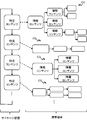
- FIG. 3 is a diagram conceptually showing an example of the relationship between the specific content and the information content group.
- correspondence relationships between four specific contents and four information content groups CG are illustrated.
- the plurality of information contents included in each group have a hierarchical relationship as illustrated in FIG.
- the content holding unit 24 further holds the relationship between information contents for each group.
- the mobile terminal 20 provided with the operation interface of the information content group switches and displays the information content according to the relationship between the information contents.
- the content holding unit 24 can also hold one information content corresponding to a specific content.
- the display processing unit 21 switches each of a plurality of specific contents held in the content holding unit 24 according to time, and displays them on the display panel of the display unit 13.
- FIG. 3 also shows an example in which specific content is switched.
- the display processing unit 21 switches each specific content at a predetermined time interval in a predetermined order. Further, the display processing unit 21 may display specific content selected at random. Further, the display processing unit 21 may change the switching interval between specific contents.
- the display processing unit 21 displays the information content on the display panel of the display unit 13 as the specific content.
- the detecting unit 22 detects a predetermined operation of the user for the specific content displayed on the display panel of the display unit 13. In the first embodiment, the detection unit 22 detects, as the predetermined operation, an operation by the user that causes the mobile terminal 20 to access the signage device 10.
- the access of the mobile terminal 20 to the signage device 10 has a broad meaning.
- the access means that the signage device 10 can communicate with the mobile terminal 20 via the communication unit 15. Further, the access may mean that the signage device 10 has received some information (for example, a request for providing information) from the portable terminal 20 after both of them can communicate.
- the communication form between the signage device 10 and the portable terminal 20 is arbitrary.
- the communication form is not limited as long as it is supported by a communication unit (not shown) included in the communication unit 15 and the portable terminal 20.
- the communicable state between the signage device 10 and the mobile terminal 20 may be realized by directly communicating, or may be realized by communicating via another computer such as a server device (not shown). May be.
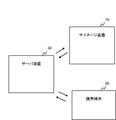
- FIG. 4 is a diagram conceptually illustrating a configuration example for realizing communication between the signage device 10 and the mobile terminal 20 via another computer.
- the signage device 10 and the mobile terminal 20 can communicate with each other via the server device 30.
- the portable terminal 20 acquires the identification information of the signage device 10 by some method, and transmits the identification information and the identification information of the portable terminal 20 itself to the server device 30.
- the server device 30 specifies the destination of the identification information of the portable terminal 20 and transmits the identification information of the portable terminal 20 to the signage device 10.
- the signage device 10 can communicate with the mobile terminal 20 via the server device 30 using the identification information of the mobile terminal 20.
- the identification information of the signage device 10 may be obtained by the portable terminal 20 using a two-dimensional code or the like displayed or pasted on the signage device 10, or obtained by the portable terminal 20 using short-range wireless communication or the like. Also good.
- the UI providing unit 23 recognizes the specific content that is the target of the predetermined operation detected by the detection unit 22, and provides an operation interface for the user of the information content group corresponding to the specific content.
- the UI providing unit 23 provides an operation interface for the user as follows.
- the UI providing unit 23 recognizes the specific content corresponding to the detection timing of the predetermined operation detected by the detection unit 22 as the target of the predetermined operation, and specifies the information content group corresponding to the recognized specific content.
- the UI providing unit 23 provides the specified information content group to the portable terminal 20 in a state where a transition operation is possible.
- the UI providing unit 23 recognizes the specific content displayed on the display panel of the display unit 13 as the target of the predetermined operation at the detection timing. .
- Information on the specific content displayed on the display panel of the display unit 13 may be held in the display processing unit 21 or the content holding unit 24.
- the UI providing unit 23 provides the mobile terminal 20 with application data that enables the mobile terminal 20 to perform a transition operation between the specified information content group and the information content included in the group. This application data may be transmitted directly from the signage device 10 to the mobile terminal 20 or may be downloaded from the server device 30 to the mobile terminal 20.
- the mobile terminal 20 uses the provided application data so that the user can freely browse through a plurality of information contents included in the information content group. Also, the UI providing unit 23 registers the information content group and the relationship information between the information contents included in the group as a WEB page in the server device 30 having the WEB server function, and stores the URL (Uniform Resource Locator) in the mobile terminal 20. May be notified. In this case, the mobile terminal 20 can provide a user with a plurality of information contents included in the information content group via a WEB browser so as to allow a transition operation.
- the UI providing unit 23 registers the information content group and the relationship information between the information contents included in the group as a WEB page in the server device 30 having the WEB server function, and stores the URL (Uniform Resource Locator) in the mobile terminal 20. May be notified.
- the mobile terminal 20 can provide a user with a plurality of information contents included in the information content group via a WEB browser so as to allow a transition operation.
- the information content group transition operation and browsing are performed individually (independently) on the mobile terminal 20 of each user. That is, the UI providing unit 23 can provide an operation interface for the user of the information content group.
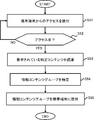
- FIG. 5 is a flowchart showing an operation example of the signage device 10 in the first embodiment.
- the information providing method in the first embodiment is executed by at least one computer such as the signage device 10.
- each illustrated process is executed by each processing unit included in the signage device 10. Since each process is the same as the processing content of the above-mentioned each process part which the signage apparatus 10 has, the detail of each process is abbreviate
- the signage device 10 executes the processing shown in FIG. 5 while switching each of the plurality of specific contents according to time and displaying the content on the display panel of the display unit 13.
- the signage device 10 detects an access from the mobile terminal 20 (S51). The meaning of access of the mobile terminal 20 to the signage device 10 is as described above.
- the signage device 10 When the signage device 10 detects access from the mobile terminal 20 (S52; YES), the signage device 10 recognizes specific content corresponding to the detection timing (S53). For example, the signage device 10 recognizes the specific content displayed on the display panel of the display unit 13 at the access detection timing (S53).
- the signage device 10 specifies an information content group corresponding to the specific content recognized in (S53) based on the information held in the content holding unit 24 (S54).
- the signage device 10 provides the information content group specified in (S54) to the mobile terminal 20 in a state where a transition operation is possible (S55).
- the information content group providing method is also as described above. Since the signage device 10 can accept access from a plurality of portable terminals 20, the signage device 10 executes the process shown in FIG.
- a plurality of specific contents can be sequentially provided to people who can visually recognize the display panel of the signage device 10.
- each individual accesses the signage device 10 using the mobile terminal 20 when specific content of interest is displayed.
- each individual can individually acquire an information content group corresponding to the specific content of interest, and can occupy the information content of interest.
- a plurality of specific contents can be sequentially provided to other people without any change.
- the transition operation for each individual information content group can be completed only within the mobile terminal 20, it is possible to prevent each individual's preference and situation from leaking to others. . Therefore, it is possible to capture a large number of people who did not want to use digital signage due to their preference and situation being leaked to others. Can be improved. Thus, according to the first embodiment, both public signage and personal signage can be achieved.
- the signage device 10 having a display panel has the display processing unit 21, the detection unit 22, the UI providing unit 23, and the content holding unit 24.
- the server device 30 can communicate with the signage device 10.
- a configuration in which the server device 30 includes all the processing units and the signage device 10 operates only as a user interface can be realized.
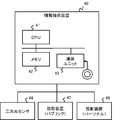
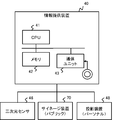
- FIG. 6 is a diagram conceptually illustrating a hardware configuration example of the information providing apparatus 40 in the second embodiment.
- the information providing apparatus 40 is a projection digital signage apparatus, and includes a CPU (Central Processing Unit) 41, a memory 42, a communication unit 43, and the like.
- the memory 42 is a RAM, a ROM, a hard disk, or the like.
- the communication unit 43 communicates with other computers via a communication network, exchanges signals with other devices such as the three-dimensional sensor 46, the projection device 47, and the projection device 48.
- a portable recording medium or the like can be connected to the communication unit 43.
- the communication form among the three-dimensional sensor 46, the projection device 47, the projection device 48, and the information providing device 40 is not limited.
- the information providing apparatus 40 may include hardware elements not shown in FIG. 6, and the hardware configuration of the information providing apparatus 40 is not limited.
- the three-dimensional sensor 46 acquires sensor information including information on a two-dimensional image (image) and information on a distance from the three-dimensional sensor 46 (depth information).
- the three-dimensional sensor 46 is realized by a visible light camera and a distance image sensor, for example.
- a distance image sensor also called a depth sensor, emits a near-infrared light pattern from a laser, and is detected from the distance image sensor based on information obtained by capturing the pattern with a camera that detects the near-infrared light.
- the distance (depth) to the object is calculated.
- the method for realizing the three-dimensional sensor 46 is not limited.
- the three-dimensional sensor 46 may be realized by a three-dimensional scanner method using a plurality of cameras.
- the projection devices 47 and 48 project an arbitrary image on the projection surface by projecting light onto the projection surface based on the image information sent from the information providing device 40.
- the projection device 47 projects a non-personal projection screen toward the first projection plane
- the projection device 48 projects a sign image and a personal projection screen described later to the second projection plane. Project toward.
- the screen projected by the projection device 47 may be referred to as a public screen
- the personal screen projected by the projection device 48 may be referred to as a personal screen.
- Public screen is projected larger than personal screen because it is for multiple people.
- the first projection plane on which the public screen is projected is installed at a position and orientation that can be easily seen by a plurality of people
- the second projection plane on which the personal screen and a sign image described later are projected is for individuals. Therefore, it is desirable to install in a position and orientation that can be easily handled by each individual.
- the public screen is projected on a wall surface
- the personal screen is projected on the vicinity of the individual on the table.
- Projection device 47 and projection device 48 may each include means for adjusting the projection direction.
- the means for adjusting the projection direction includes a mechanism for changing the direction of the projection unit that projects light, a mechanism for changing the direction of the light projected from the projection unit, and the like.
- the projection devices 47 and 48 are illustrated as two devices because the projection direction and the image to be projected are different, but may be realized by one device.
- FIG. 7 is a diagram conceptually illustrating a processing configuration example of the information providing apparatus 40 in the second embodiment.
- the information providing apparatus 40 includes a display processing unit 51, a sign display unit 52, a user position acquisition unit 53, a detection unit 54, a user interface (UI) providing unit 55, a content holding unit 56, and the like.
- Each of these processing units is realized, for example, by executing a program stored in the memory 42 by the CPU 41.
- the program may be installed from a portable recording medium such as a memory card or the like via another communication computer 43 and stored in the memory 42.
- the content holding unit 56 holds data related to a plurality of information content groups and a plurality of specific contents corresponding to each information content group, similarly to the content holding unit 24 in the first embodiment.
- the relationship between the specific content and the information content group is also as described above.
- the display processing unit 51 switches each of a plurality of specific contents held in the content holding unit 56 according to time, and causes the projection device 47 to project. Specifically, the display processing unit 51 sends the image information of each specific content to the projection device 47 while switching. The projection device 47 projects the specific content on the first projection plane.
- the specific content switching method is the same as that of the display processing unit 21. When any one information content included in the corresponding information content group becomes the specific content, the display processing unit 51 causes the projection device 47 to project the information content as the specific content.
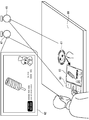
- FIG. 8 shows an example of a public screen and a sign image.
- the projection device 47 projects a public screen 62, and each of a plurality of specific contents is switched and displayed on the public screen 62 according to time.
- the sign display unit 52 causes the projection device 48 to project a predetermined image.
- the sign display unit 52 projects the predetermined image by sending the image information of the predetermined image to the projection device 48.
- the projection device 48 projects the predetermined image on the second projection plane.
- the predetermined image is a sign indicating a public screen projected by the projection device 47, and is hereinafter referred to as a sign image.
- the sign image itself is not limited.
- the projection device 48 uses the upper surface of the table 60 as a projection surface, and projects a marker image 61 on the projection surface.
- the sign image is a sign indicating a public screen, it is desirable that the sign image be projected in a state where it can be operated by a plurality of people.
- the sign image 61 is projected on the center of a table 60 serving as a projection surface, and more preferably moved around the center. This is because a plurality of people surrounding the table 60 can easily perform a predetermined operation on the sign image 61. Therefore, the sign display unit 52 preferably moves the sign image on the projection plane.
- the user position acquisition unit 53 recognizes the specific part of the user based on the sensor information obtained from the three-dimensional sensor 46, and acquires the position information of the recognized specific part. Specifically, the user position acquisition unit 53 recognizes a specific part of the user using at least one of image information and depth information included in the sensor information.
- the specific part to be recognized is a part of the body (such as a fingertip) or an operation tool used when the user performs an operation.
- a method for recognizing a specific part from an image a known object recognition method may be used.
- the user position acquisition unit 53 recognizes a person's head from the image information using the feature amount, and uses the image information and the distance information to determine the positional relationship with the person's head.
- the specific part is recognized from the feature amount.
- the user position acquisition unit 53 acquires position information of the specific part of the user recognized as described above based on the two-dimensional image information and the distance information included in the sensor information. For example, the user position acquisition unit 53 can acquire position information of the specific part in a three-dimensional coordinate space set based on the position and orientation of the three-dimensional sensor 46.
- the detection unit 54 performs a predetermined operation on the marker image using the specific part of the user by using the positional information of the marker image captured on the projection plane and the positional information of the specific part acquired by the user position acquisition unit 53. To detect. For example, the detection unit 54 can acquire the position information of the sign image as follows. The detection unit 54 recognizes a distance (projection distance) from the projection device 48 to the projection plane based on the position and projection direction of the projection device 48 and sensor information, and based on the distance and the projection specifications of the projection device 48. The position where the projection screen is projected in the above-described three-dimensional coordinate space can be specified. Here, the projection screen means the entire image projected on the projection plane by the projection device 48.
- the detection unit 54 can use the position of the projection screen specified as described above as the position of the sign image.
- the detection unit 54 detects the sign image in the projection screen obtained from the position of the projection screen specified as described above and the image information processed by the sign display unit 52.
- the position information of the sign image can be acquired based on the position of the mark.
- the projection direction is variable and the position of the sign image is variable in the projection screen, the information on the position of the sign image can be acquired.
- the detection unit 54 detects a predetermined operation of the user based on the positional relationship between the sign image mapped on the three-dimensional coordinate space as described above and the specific part of the user. For example, the detection unit 54 detects, as the user operation, an operation that draws the sign image to the user side at a specific part of the user. However, the specific content of the detected predetermined operation is not limited. The detection unit 54 may detect a contact between the sign image and the specific part of the user as a predetermined operation.
- the UI providing unit 55 recognizes the specific content corresponding to the detection timing of the predetermined operation by the detection unit 54 as the target of the predetermined operation.
- the UI providing unit 55 causes the projection device 48 to project an information content group corresponding to the recognized specific content onto an area close to the user on the projection plane in a state where the information content group can be transitioned.
- the UI providing unit 55 recognizes the specific content projected by the display processing unit 51 on the projection device 47 as the target of the predetermined operation at a timing when the predetermined operation is detected by the detection unit 54.
- Information on the specific content that the display processing unit 51 projects onto the projection device 47 may be held in the display processing unit 51 or the content holding unit 56.
- the UI providing unit 55 specifies an information content group corresponding to the specific content recognized as such from the information held in the content holding unit 56, and the specified information content group is projected onto the projection device 48. Project to the area near the upper user. For example, the UI providing unit 55 projects one information content in the information content group on the projection device 48, and switches and projects the information content in the information content group according to a user operation on the information content. . In this way, the information content group is projected in a state where a transition operation is possible.
- the detection unit 54 can detect the user operation on the information content in the same manner as the user operation on the sign image. The detection unit 54 may detect a user operation on the information content based on the position information of the specific part acquired by the user position acquisition unit 53 and the position information of the information content.
- the UI providing unit 55 can identify an area where the user is close based on the position of the user recognized by the user position acquisition unit 53. As described above, the user position acquisition unit 53 can recognize a person (user) when recognizing a specific part. The UI providing unit 55 determines the position where the information content group is projected based on the identified position of the user as an area close to the user, and sends the information to the projection device 48 so as to be projected at the position. Project information content of the content group.
- the transition operation and browsing of the information content group are performed individually (independently) by each user. That is, the UI providing unit 55 can provide an operation interface for the user of the information content group.
- FIG. 9 is a flowchart showing an operation example of the information providing apparatus 40 in the second embodiment.
- FIG. 10 is a diagram illustrating an example of an implementation scene of the second embodiment.
- the information providing method in the second embodiment is executed by at least one computer such as the information providing apparatus 40.
- each illustrated process is executed by each processing unit included in the information providing apparatus 40. Since each process is the same as the processing content of the above-mentioned each process part which the information provision apparatus 40 has, the detail of each process is abbreviate
- the information providing apparatus 40 executes the process shown in FIG. 9 while switching each of the plurality of specific contents according to time and causing the projection apparatus 47 to project it.
- the projection device 47 projects a public screen 62 showing specific content.
- the information providing apparatus 40 sequentially acquires sensor information from the three-dimensional sensor 46.
- the three-dimensional sensor 46 has a sensing direction that is the same as or close to the projection direction of the projection device 48.
- the information providing device 40 causes the projection device 48 to project a predetermined image (a sign image) (S91). As shown in FIG. 10, the projection device 48 projects the marker image 61 onto the center of the table 60. At this time, the information providing apparatus 40 specifies the position where the sign image is projected by the above-described method. The position of the specified sign image is mapped to a three-dimensional coordinate space shared by the information providing apparatus 40.
- the information providing device 40 recognizes the specific part of the user based on the acquired sensor information, and acquires the position information of the recognized specific part (S92). The position of the specific part is also mapped in the above-described three-dimensional coordinate space.
- the information providing apparatus 40 recognizes the user's fingertip as the specific part.
- the method for recognizing the specific part and the method for specifying the position are as described above.
- the information providing apparatus 40 also recognizes the position of the user who uses the recognized specific part. This user position is also mapped to the above-described three-dimensional coordinate space.
- the information providing device 40 uses the position information of the predetermined image (sign image) projected in (S91) and the position information of the user's specific part acquired in (S92), and uses the specific part.
- the user's predetermined operation on the sign image is detected (S93).
- the information providing apparatus 40 detects, as a predetermined operation, an operation in which a specific part of the user contacts the sign image 61 projected on the table 60 and pulls the sign image 61 to the user side.
- the information providing apparatus 40 repeatedly executes (S92) and (S93) until a predetermined operation is detected (S94; NO).
- the information providing apparatus 40 When the predetermined operation is detected (S94; YES), the information providing apparatus 40 recognizes the specific content corresponding to the detection timing of the predetermined operation as the target of the predetermined operation (S95). For example, the information providing apparatus 40 recognizes the specific content projected on the projection device 47 as the target of the predetermined operation at the timing when the predetermined operation is detected.
- the information providing apparatus 40 specifies an information content group corresponding to the specific content recognized in (S95) from the information held in the content holding unit 56 (S96).
- the information providing apparatus 40 causes the projection apparatus 48 to project the information content group specified in (S96) onto the area close to the user on the projection surface (S97).
- the information providing apparatus 40 can specify an area in the vicinity of the user on the projection plane based on the position of the user specified together with the position of the specific part.
- certain information content 63 included in the information content group is projected as a personal screen on an area of the table 60 close to the user.
- the information content 63 is content for individuals, unlike the specific content projected as the public screen 62, and includes three menus 65.
- the information providing device 40 projects one information content 63 in the information content group specified in (S96) on the projection device 48, and detects a user operation on the menu 65 of the information content 63.
- the information providing apparatus 40 switches and projects the information content within the information content group according to the user operation. In this way, the information providing apparatus 40 projects the information content group in a state where a transition operation can be performed.
- a plurality of specific contents are switched according to time and projected onto the first projection plane as a public screen by the projection device 47.
- a predetermined image (a sign image) that is a sign indicating the public screen is projected onto the second projection plane by the projection device 48.
- the specific content corresponding to the detection timing is recognized.
- the information content group corresponding to the specific content is projected onto the proximity area of the user on the second projection plane in a state where the transition operation is possible.
- a plurality of specific contents can be sequentially provided to people who can visually recognize the first projection plane.
- each individual when a specific content of interest is projected on the first projection plane, each individual performs a predetermined operation on the marker image projected on the second projection plane using a specific portion. .
- each individual can individually acquire an information content group corresponding to the specific content of interest. That is, each individual can occupy information content of interest.
- a plurality of specific contents can be sequentially provided to other people without any change.
- each desired information content is obtained by an operation on the sign image projected on the second projection plane and the information content group projected on the user's proximity area on the second projection plane. Can be provided to individuals. That is, according to the second embodiment, since it is not necessary to use a user terminal, desired information content can be provided more easily for the user.
- the operation interface of the information content group is constructed in the proximity area of the user on the second projection plane, it is possible to make it difficult for each person's preference and situation to be leaked to others. . Therefore, it is possible to capture a large number of people who did not want to use digital signage due to their preference and situation being leaked to others. Can be improved. Thus, also in the second embodiment, both public signage and personal signage can be achieved.
- FIG. 11 is a diagram conceptually illustrating a hardware configuration example of the information providing apparatus 40 in the first modification.
- the information providing apparatus 40 in the second embodiment may be connected to a signage apparatus 70 instead of the projection apparatus 47 that projects a public screen.
- the signage device 70 has the hardware configuration shown in FIG. 1 and may operate as a general digital signage.
- the signage device 70 switches each of the plurality of specific contents according to time, and displays them on the display panel of the display unit 13.
- the information providing device 40 requests the signage device 70 for information on the specific content displayed on the display panel when a predetermined operation of the user is detected. Based on the response from the signage device 70 in response to the request, the information providing device 40 can recognize specific content corresponding to the detection timing of the predetermined operation.
- the information providing device 40 sends the data of the specific content to be displayed to the signage device 70, and the signage device 70 may display the specific content on the display panel based on the data received from the information providing device 40. Good.
- the signage device 70 operates only as a display device.
- the information providing apparatus 40 can recognize the information of the specific content displayed on the display panel when the user's predetermined operation is detected.
- the same effect as that of the second embodiment described above can be obtained only by the public screen being a screen displayed on the display panel of the signage device 70 instead of the projection screen.
- a sign image is used as a sign indicating the public screen.
- the public screen may be projected on the projected position of the sign image.
- the information providing apparatus 40 in the second modification may have the same hardware configuration as that of the second embodiment.
- FIG. 12 is a diagram showing an example of an implementation scene of the second modified example.
- the projection device 47 projects the public screen 62 on the center of the table 60, and the projection device 48 does not project the sign image, and the specified information content group. Is projected as a personal screen (information content) 63.
- FIG. 12 illustrates a configuration in which the projection device 47 that projects the public screen 62 and the projection device 48 that projects the personal screen 63 exist separately, the configuration may be realized by one projection device. In this case, the projection apparatus projects the projection screen onto the entire upper surface of the table 60, and the public screen 62 and the personal screen 63 are displayed in a partial area within the projection screen.
- FIG. 13 is a diagram conceptually illustrating a processing configuration example of the information providing apparatus 40 in the second modified example.
- the sign display unit 52 in the second embodiment is omitted.
- the display processing unit 51 switches each specific content and causes the projection device 47 to project it onto the projection plane.
- the detection unit 54 detects a predetermined operation of the user using the specific part for the specific content copied on the projection plane, using the position information of the specific content and the position information of the specific part copied on the projection plane. .
- the UI providing unit 55 recognizes the specific content corresponding to the detection timing of the predetermined operation as the target of the predetermined operation.
- the UI providing unit 55 causes the projection device 48 to project the information content group corresponding to the recognized specific content on the projection surface onto the area close to the user in a state in which the information content group can be changed.
- the public screen since the public screen is projected to a position where it can be operated by an individual, the visibility of the public screen may be reduced for those around him as compared to the second embodiment.
- any one information content included in each information content group can be used as each specific content.
- the highest level information content included in each information content group is used as each specific content.
- the specific content displayed on the display panels of the signage devices 10 and 70 and the specific content projected by the projection device 47 may be operated by the user.
- the signage devices 10 and 70 have a touch panel unit and can display specific content on the touch panel.
- the signage devices 10 and 70 can detect a user's contact with the touch panel.
- the information providing apparatus 40 according to the second embodiment may be further connected to a three-dimensional sensor that acquires sensor information for detecting an operation using a specific part of the user on the public screen projected by the projection apparatus 47. Good.
- the detection units 22 and 54 detect a user's transition operation for information content displayed as specific content.
- This transition operation is an operation different from the predetermined operation detected by the detection unit 22 and the detection unit 54 in each of the above-described embodiments.
- the display processing units 21 and 51 stop the switching of the specific content for a predetermined time with the detection of the transition operation by the detection unit 22 and the detection unit 54, and the information displayed as the specific content in the corresponding information content group Other information content transitioned from the content is displayed on the touch panel or the projection plane.
- FIG. 14 is a diagram conceptually illustrating a processing configuration example of the information providing apparatus 40 in the fourth modified example.
- the information providing apparatus 40 according to the fourth modified example further includes a situation management unit 80 in addition to the configuration of the second embodiment described above.
- the situation management unit 80 is also realized in the same manner as other processing units.
- the status management unit 80 manages the provision status of the operation interface of the information content group. Specifically, the status management unit 80 holds information related to an information content group projected on the projection device 48 in a state in which the UI providing unit 55 can perform a transition operation, or specific content corresponding thereto. At this time, the status management unit 80 can also store time information provided with such an operation interface.
- the display processing unit 51 changes the switching display mode of specific content according to the provision status managed by the status management unit 80.
- the change of the switching display mode may include changing the display order, changing the specific content to be displayed for switching (decreasing, increasing, etc.), changing the switching time interval (shortening, expansion, etc.), and the like.
- the display mode to be changed is not limited.
- the display processing unit 51 causes the projection device 47 to preferentially project the specific content corresponding to the information content group provided to many users, and the projection priority of the specific content corresponding to the information content group that is not so desired. Reduce the degree.
- a method of preferentially projecting there are methods such as increasing the projection frequency and extending the time of one projection.
- the method of lowering the projection priority is the opposite.
- the display processing unit 51 can change the display mode of the specific content in consideration of the provision time information. For example, the display processing unit 51 can calculate the provision status of each information content group for each time period, and can change the switching display mode of the specific content according to the calculated provision status for each time period.
- Information content groups requested by many users are popular contents, and conversely, information content groups that are not so requested are considered unpopular contents. Furthermore, there is a possibility that the desired information content group differs depending on the time zone. For example, there is a possibility that information content groups desired by housewives become popular during the daytime on weekdays, and information content groups preferred by young people become popular after the evening on holidays. According to the provision status managed by the status management unit 80, the degree of popularity of each information content group can be grasped, and in turn, the viewer's preference of the information provided in each embodiment can be grasped. .
- the information to be presented for non-individuals is matched to the viewer's preference by changing the switching display mode of specific contents according to such provision status.
- the switching display mode of specific contents is changed according to such provision status.
- FIG. 14 corresponds to the case where the features of the fourth modification are applied to the configuration of the second embodiment described above.
- the signage device 10 may further include a status management unit 80 in addition to the configuration of the first embodiment.
- the status management unit 80 may hold the information content group provided to the mobile terminal 20 by the UI providing unit 23 or information regarding the specific content corresponding thereto.
- FIG. 15 is a diagram conceptually illustrating a processing configuration example of the information providing apparatus in the third embodiment.
- the information providing apparatus 100 includes a display processing unit 101, a detection unit 102, and a providing unit 103.
- the information providing apparatus 100 has the same hardware configuration as the signage apparatus 10 shown in FIG. 1 and the information providing apparatus 40 shown in FIGS. 6 and 11.
- Each processing unit included in the information providing apparatus 100 is implemented by processing a program in the same manner as the signage apparatus 10 and the information providing apparatus 40, thereby realizing each processing unit described above.
- the display processing unit 101 causes each of a plurality of different specific contents corresponding to a plurality of information content groups to be switched according to time and displayed on the display unit or the projection plane.
- Specific processing contents of the display processing unit 101 include processing contents of the display processing unit 21 and the display processing unit 51.
- the display unit corresponds to the display panel of the signage devices 10 and 70.
- the detecting unit 102 detects a predetermined operation by the user.
- Specific processing contents of the detection unit 102 include processing contents of the detection unit 22 and the detection unit 54.
- the providing unit 103 recognizes the specific content that is the target of the predetermined operation detected by the detecting unit 102, and provides an operation interface for the user of the information content group corresponding to the recognized specific content.
- Specific processing contents of the providing unit 103 include processing contents of the UI providing unit 23 and the UI providing unit 55. In other words, there are various forms of providing an operation interface for users of the information content group as described above.
- the providing unit 103 provides an operation environment in which the user can individually operate the information content group.
- the information providing apparatus 100 may include the content holding unit 24 and the content holding unit 56, or another computer may include them.
- FIG. 16 is a flowchart illustrating an operation example of the information providing apparatus 100 according to the third embodiment.
- the information providing method in the third embodiment is executed by at least one computer such as the information providing apparatus 100.
- each process illustrated is executed by each processing unit included in the information providing apparatus 100.
- the information providing method according to the third embodiment is shown in FIG. 16 while executing a step of switching each of a plurality of different specific contents corresponding to a plurality of information content groups and displaying them on the display unit or the projection plane. Further steps are performed.
- the information providing apparatus 100 detects a predetermined operation by the user.
- the predetermined operation is detected (S162; YES)
- the information providing apparatus 100 recognizes the specific content that is the target of the predetermined operation detected in (S161) (S163).
- (S161) and (S162) correspond to (S51) and (S52) in FIG. 5 and (S93) and (S94) in FIG. (S163) corresponds to (S53) in FIG. 5 and (S95) in FIG.
- the information providing apparatus 100 provides an operation interface for the user of the information content group corresponding to the specific content recognized in (S163).
- (S164) corresponds to (S55) in FIG. 5 and (S97) in FIG.
- the third embodiment may be a program that causes at least one computer to execute such an information providing method, or a recording medium that can be read by at least one computer that records such a program. May be.
- Display processing means for switching each of a plurality of different specific contents corresponding to a plurality of information content groups according to time to be displayed on a display unit or a projection plane; Detecting means for detecting a predetermined operation of the user; Providing means for recognizing the detected specific content as a target of the predetermined operation and providing an operation interface for the user of an information content group corresponding to the recognized specific content;
- An information providing apparatus comprising: 2.
- the display processing means displays any one information content included in each information content group as the specific content on the display unit or the projection plane. 1.
- the detection means detects the user's transition operation different from the predetermined operation on the information content displayed as the specific content, In response to the detection of the transition operation, the display processing unit stops switching of the specific content for a predetermined time, and other information that has been transitioned from the information content displayed as the specific content in the corresponding information content group Displaying content on the display unit or the projection plane; 2.
- the information providing apparatus according to any one of the above. 5.
- the display processing means switches each specific content according to time, and displays it on a display part of digital signage as the display part
- the detection means detects, as the predetermined operation, an operation by the user to cause the mobile terminal to access the digital signage
- the providing unit recognizes the specific content corresponding to the detection timing of the predetermined operation as the target of the predetermined operation, and provides the information content group corresponding to the recognized specific content to the portable terminal in a state in which a transition operation can be performed.
- the information providing apparatus according to any one of the above. 6).
- Summary display means for causing the projection device to project a predetermined image on the projection plane;
- User position acquisition means for recognizing a specific part of the user based on sensor information obtained from the three-dimensional sensor and acquiring positional information of the recognized specific part; Further comprising
- the detection means detects a predetermined operation of the user using the specific part with respect to the predetermined image, using the position information of the predetermined image and the position information of the specific part that are projected on the projection plane,
- the providing means recognizes the specific content corresponding to the detection timing of the predetermined operation as the target of the predetermined operation, and moves the information content group corresponding to the recognized specific content to the projection apparatus in a state where the information content group can be subjected to a transition operation. Projecting onto an area of the user adjacent to the projection surface, 1.
- User position acquisition means for recognizing a specific part of a user based on sensor information obtained from a three-dimensional sensor and acquiring positional information of the recognized specific part; Further comprising The display processing means switches the specific content and causes the projection device to project the projection onto the projection plane, The detection means uses the position information of the specific content copied on the projection surface and the position information of the specific portion to perform a predetermined operation of the user using the specific portion on the specific content copied on the projection surface. Detect The providing unit recognizes the specific content corresponding to the detection timing of the predetermined operation as the target of the predetermined operation, and projects the information content group corresponding to the recognized specific content on the projection device in a state where the information content group can be transitionally operated.
- Each of a plurality of different specific contents corresponding to a plurality of information content groups is switched according to time and displayed on a display unit or a projection plane, Detects user's predetermined operation, Recognizing the specific content that is the target of the detected predetermined operation, Providing an operation interface for the user of an information content group corresponding to the recognized specific content; Information providing method including 9.
- Each of the specific contents is any one information content included in each of the information content groups. 8).
- Detecting a transition operation of the user different from the predetermined operation on the information content displayed as the specific content With the detection of the transition operation, switching of specific content is stopped for a predetermined time, In the information content group, another information content that has been transitioned from the information content displayed as the specific content is displayed on the display unit or the projection plane. Further includes: Information providing method described in 1. 11. Manage the provision status of the information content group operation interface, Changing the switching display mode of the specific content in accordance with the managed provision status; Further includes: To 10. The information provision method as described in any one of these. 12 Each specific content is displayed on a display part of digital signage as the display part, In the detection of the predetermined operation, the operation by the user to cause the mobile terminal to access the digital signage is detected as the predetermined operation.
- the operation interface provides the portable terminal in a state where the specific content corresponding to the detection timing of the predetermined operation is recognized as the target of the predetermined operation, and the information content group corresponding to the recognized specific content can be transitionally operated.
- To provide 8).
- To 11. The information provision method as described in any one of these. 13.
- Let the projection device project a predetermined image onto the projection surface, Recognize the specific part of the user based on the sensor information obtained from the three-dimensional sensor, Obtaining positional information of the recognized specific part; Further including The detection of the predetermined operation is performed by detecting the predetermined operation of the user using the specific part with respect to the predetermined image using the position information of the predetermined image and the position information of the specific part that are copied on the projection plane.
- Providing the operation interface recognizes the specific content corresponding to the detection timing of the predetermined operation as a target of the predetermined operation, and allows the information processing group corresponding to the recognized specific content to be transitionally operated in the projection device Projecting onto an area of the user adjacent to the projection plane, 8).
- the information provision method as described in any one of these. 14 Recognizing a specific part of the user based on sensor information obtained from the three-dimensional sensor, and acquiring position information of the recognized specific part; Further including Each specific content is projected on the projection plane, The detection of the predetermined operation is performed by using the position information of the specific content imaged on the projection plane and the position information of the specific site, with respect to the specific content imaged on the projection plane.
- the operation interface is provided such that the specific content corresponding to the detection timing of the predetermined operation is recognized as the target of the predetermined operation, and the information content group corresponding to the recognized specific content is transferred to the projection apparatus in a state in which a transition operation can be performed. Projecting on the projection surface to an area close to the user, 8). To 11. The information provision method as described in any one of these. 15. 8). To 14. A program causing at least one computer to execute the information providing method according to any one of the above. 16. 8). To 14. A computer-readable recording medium storing a program that causes at least one computer to execute the information providing method according to any one of the above, or a computer program product incorporating the program.
Landscapes
- Engineering & Computer Science (AREA)
- Theoretical Computer Science (AREA)
- General Engineering & Computer Science (AREA)
- Physics & Mathematics (AREA)
- General Physics & Mathematics (AREA)
- Business, Economics & Management (AREA)
- Human Computer Interaction (AREA)
- Accounting & Taxation (AREA)
- Finance (AREA)
- Development Economics (AREA)
- Strategic Management (AREA)
- Marketing (AREA)
- Entrepreneurship & Innovation (AREA)
- Game Theory and Decision Science (AREA)
- Economics (AREA)
- General Business, Economics & Management (AREA)
- Multimedia (AREA)
- User Interface Of Digital Computer (AREA)
- Controls And Circuits For Display Device (AREA)
- Management, Administration, Business Operations System, And Electronic Commerce (AREA)
Abstract
Description
以下、第一実施形態におけるサイネージ装置及び情報提供方法について複数の図面を用いて説明する。第一実施形態では、表示部を有するサイネージ装置及び携帯端末が連携して、個人向け及び非個人向け(周囲の者向け)にコンテンツの閲覧を可能とする。
図1は、第一実施形態におけるサイネージ装置10のハードウェア構成例を概念的に示す図である。サイネージ装置10は、いわゆるデジタルサイネージであり、MPU(Micro Processing Unit)11、メモリ12、表示ユニット13、入力ユニット14、通信ユニット15等を有する。
図2は、第一実施形態におけるサイネージ装置10の処理構成例を概念的に示す図である。サイネージ装置10は、表示処理部21、検出部22、ユーザインタフェース(UI)提供部23、コンテンツ保持部24等を有する。これら各処理部は、例えば、MPU11によりメモリ12に格納されるプログラムが実行されることにより実現される。また、当該プログラムは、例えば、メモリカード等のような可搬型記録媒体や他のコンピュータから通信ユニット15を介してインストールされ、メモリ12に格納されてもよい。
以下、第一実施形態における情報提供方法について図5を用いて説明する。図5は、第一実施形態におけるサイネージ装置10の動作例を示すフローチャートである。図5に示されるように、第一実施形態における情報提供方法は、サイネージ装置10のような少なくとも1つのコンピュータにより実行される。例えば、図示される各工程は、サイネージ装置10が有する各処理部により実行される。各工程は、サイネージ装置10が有する上述の各処理部の処理内容と同様であるため、各工程の詳細は、適宜省略される。
サイネージ装置10は、携帯端末20からのアクセスを検出する(S51)。サイネージ装置10に対する携帯端末20のアクセスの意味については上述のとおりである。
上述のように、第一実施形態では、複数の特定コンテンツが時間に応じて切り替えられて、サイネージ装置10の表示パネルに表示される。携帯端末20によるサイネージ装置10に対するアクセスが検出されると、その検出タイミングに対応する特定コンテンツが認識される。そして、その特定コンテンツに対応する情報コンテンツグループが遷移操作可能な状態で携帯端末20に提供される。
上述の第一実施形態では、表示パネルを有するサイネージ装置10が表示処理部21、検出部22、UI提供部23及びコンテンツ保持部24を有していたが、これら処理部の全部又は一部は、サイネージ装置10と通信可能なサーバ装置30により備えられてもよい。例えば、サーバ装置30が全ての処理部を有し、サイネージ装置10はユーザインタフェースとしてのみ動作する構成も実現可能である。
以下、第二実施形態における情報提供装置及び情報提供方法について複数の図面を用いて説明する。第二実施形態では、投影装置が投影する画像を用いて、個人向け及び非個人向け(周囲の者向け)にコンテンツの閲覧を可能とする。
図6は、第二実施形態における情報提供装置40のハードウェア構成例を概念的に示す図である。情報提供装置40は、投影型のデジタルサイネージ装置であり、CPU(Central Processing Unit)41、メモリ42、通信ユニット43等を有する。メモリ42は、RAM、ROM、ハードディスク等である。通信ユニット43は、他のコンピュータとの通信網を介した通信や、三次元センサ46、投影装置47、投影装置48等の他の機器との信号のやりとり等を行う。通信ユニット43には、可搬型記録媒体等も接続され得る。三次元センサ46、投影装置47及び投影装置48と、情報提供装置40との間の通信形態は制限されない。情報提供装置40は、図6に図示しないハードウェア要素を含んでもよく、情報提供装置40のハードウェア構成は制限されない。
図7は、第二実施形態における情報提供装置40の処理構成例を概念的に示す図である。情報提供装置40は、表示処理部51、標識表示部52、ユーザ位置取得部53、検出部54、ユーザインタフェース(UI)提供部55、コンテンツ保持部56等を有する。これら各処理部は、例えば、CPU41によりメモリ42に格納されるプログラムが実行されることにより実現される。また、当該プログラムは、例えば、メモリカード等のような可搬型記録媒体や他のコンピュータから通信ユニット43を介してインストールされ、メモリ42に格納されてもよい。
以下、第二実施形態における情報提供方法について図9及び図10を用いて説明する。図9は、第二実施形態における情報提供装置40の動作例を示すフローチャートである。図10は、第二実施形態の実施シーンの例を示す図である。
上述のように、第二実施形態では、複数の特定コンテンツが時間に応じて切り替えられて、投影装置47によりパブリック画面として第一の投影面に投影される。これと共に、第二実施形態では、そのパブリック画面を示す標識である所定画像(標識画像)が投影装置48により第二の投影面に投影される。そして、第二の投影面に投影されている標識画像に対するユーザの所定操作が検出されると、その検出タイミングに対応する特定コンテンツが認識される。そして、その特定コンテンツに対応する情報コンテンツグループが遷移操作可能な状態で第二の投影面上におけるそのユーザの近接エリアに投影される。
図11は、第一変形例における情報提供装置40のハードウェア構成例を概念的に示す図である。図11に示されるように、第二実施形態における情報提供装置40は、パブリック画面を投影する投影装置47の代わりに、サイネージ装置70に接続されてもよい。サイネージ装置70は、図1に示されるハードウェア構成を有しており、一般的なデジタルサイネージとして動作すればよい。第一変形例では、サイネージ装置70は、複数の特定コンテンツの各々を時間に応じて切り替えて、表示ユニット13の表示パネルに表示させる。情報提供装置40は、ユーザの所定操作が検出された際に表示パネルに表示させている特定コンテンツの情報をサイネージ装置70に要求する。情報提供装置40は、その要求に応じたサイネージ装置70からの応答に基づいて、所定操作の検出タイミングに対応する特定コンテンツを認識することができる。
上述の第二実施形態では、パブリック画面を示す標識として標識画像が用いられたが、標識画像の投影位置にパブリック画面を投影させてもよい。第二変形例における情報提供装置40は、第二実施形態と同様のハードウェア構成を有していればよい。
上述したとおり、各情報コンテンツグループに含まれるいずれか1つの情報コンテンツを各特定コンテンツとして用いることもできる。例えば、各情報コンテンツグループに含まれる最上位の情報コンテンツが各特定コンテンツとして用いられる。この場合に、サイネージ装置10及び70の表示パネルに表示される特定コンテンツ、及び、投影装置47により投影される特定コンテンツについても、ユーザに操作できるようにしてもよい。
表示処理部21及び51は、検出部22及び検出部54による遷移操作の検出に伴い、特定コンテンツの切り替えを所定時間止め、対応する情報コンテンツグループの中の、当該特定コンテンツとして表示されていた情報コンテンツから遷移された、他の情報コンテンツをタッチパネル又は投影面に表示させる。
上述の各実施形態及び各変形例において、情報コンテンツグループの操作インタフェースの提供状況に応じて、非個人向けに提示される特定コンテンツの内容及び切り替え表示態様を変更することもできる。
以下、第三実施形態における情報提供装置及び情報提供方法について図15及び図16を用いて説明する。
情報提供装置100は、所定操作が検出された場合(S162;YES)、(S161)で検出された所定操作の対象とされた特定コンテンツを認識する(S163)。(S161)及び(S162)は、図5の(S51)及び(S52)、並びに、図9の(S93)及び(S94)に相当する。(S163)は、図5の(S53)及び図9の(S95)に相当する。
ユーザの所定操作を検出する検出手段と、
前記検出された所定操作の対象とされた特定コンテンツを認識し、当該認識された特定コンテンツに対応する情報コンテンツグループの、前記ユーザのための操作インタフェースを提供する提供手段と、
を備える情報提供装置。
2. 前記表示処理手段は、前記各情報コンテンツグループに含まれるいずれか1つの情報コンテンツを前記各特定コンテンツとして前記表示部又は前記投影面に表示させる、
1.に記載の情報提供装置。
3. 前記検出手段は、前記特定コンテンツとして表示される情報コンテンツに対する、前記所定操作とは異なる前記ユーザの遷移操作を検出し、
前記表示処理手段は、前記遷移操作の検出に伴い、特定コンテンツの切り替えを所定時間止め、対応する情報コンテンツグループの中の、前記特定コンテンツとして表示されていた情報コンテンツから遷移された、他の情報コンテンツを前記表示部又は前記投影面に表示させる、
2.に記載の情報提供装置。
4. 情報コンテンツグループの操作インタフェースの提供状況を管理する状況管理手段、
を更に備え、
前記表示処理手段は、前記管理される提供状況に応じて、前記特定コンテンツの切り替え表示態様を変更する、
1.から3.のいずれか1つに記載の情報提供装置。
5. 前記表示処理手段は、前記各特定コンテンツを時間に応じて切り替えて、前記表示部としてのデジタルサイネージの表示部に表示させ、
前記検出手段は、前記ユーザによる、携帯端末に前記デジタルサイネージに対してアクセスさせる操作を前記所定操作として検出し、
前記提供手段は、前記所定操作の検出タイミングに対応する特定コンテンツを前記所定操作の対象として認識し、当該認識された特定コンテンツに対応する情報コンテンツグループを遷移操作可能な状態で前記携帯端末に提供する、
1.から4.のいずれか1つに記載の情報提供装置。
6. 投影装置に所定画像を投影面に投影させるサマリ表示手段と、
三次元センサから得られるセンサ情報に基づいてユーザの特定部位を認識し、認識された特定部位の位置情報を取得するユーザ位置取得手段と、
を更に備え、
前記検出手段は、前記投影面に写される前記所定画像の位置情報及び前記特定部位の位置情報を用いて、前記所定画像に対する、前記特定部位を用いた前記ユーザの所定操作を検出し、
前記提供手段は、前記所定操作の検出タイミングに対応する特定コンテンツを前記所定操作の対象として認識し、当該認識された特定コンテンツに対応する情報コンテンツグループを遷移操作可能な状態で前記投影装置に前記投影面上の前記ユーザの近接するエリアに投影させる、
1.から4.のいずれか1つに記載の情報提供装置。
7. 三次元センサから得られるセンサ情報に基づいてユーザの特定部位を認識し、認識された特定部位の位置情報を取得するユーザ位置取得手段、
を更に備え、
前記表示処理手段は、前記各特定コンテンツを切り替えて投影装置に前記投影面に投影させ、
前記検出手段は、前記投影面に写される特定コンテンツの位置情報及び前記特定部位の位置情報を用いて、前記投影面に写される特定コンテンツに対する、前記特定部位を用いた前記ユーザの所定操作を検出し、
前記提供手段は、前記所定操作の検出タイミングに対応する特定コンテンツを前記所定操作の対象として認識し、当該認識された特定コンテンツに対応する情報コンテンツグループを遷移操作可能な状態で投影装置に前記投影面上の前記ユーザの近接するエリアに投影させる、
1.から4.のいずれか1つに記載の情報提供装置。
8. 少なくとも1つのコンピュータにより実行される情報提供方法において、
複数の情報コンテンツグループに対応する複数の異なる特定コンテンツの各々を時間に応じて切り替えて表示部又は投影面に表示させ、
ユーザの所定操作を検出し、
前記検出された所定操作の対象とされた特定コンテンツを認識し、
前記認識された特定コンテンツに対応する情報コンテンツグループの、前記ユーザのための操作インタフェースを提供する、
ことを含む情報提供方法。
9. 前記各特定コンテンツは、前記各情報コンテンツグループに含まれるいずれか1つの情報コンテンツである、
8.に記載の情報提供方法。
10. 前記特定コンテンツとして表示される情報コンテンツに対する、前記所定操作とは異なる前記ユーザの遷移操作を検出し、
前記遷移操作の検出に伴い、特定コンテンツの切り替えを所定時間止め、
情報コンテンツグループの中の、前記特定コンテンツとして表示されていた情報コンテンツから遷移された、他の情報コンテンツを前記表示部又は前記投影面に表示させる、
ことを更に含む9.に記載の情報提供方法。
11. 情報コンテンツグループの操作インタフェースの提供状況を管理し、
前記管理される提供状況に応じて、前記特定コンテンツの切り替え表示態様を変更する、
ことを更に含む8.から10.のいずれか1つに記載の情報提供方法。
12. 前記各特定コンテンツは、前記表示部としてのデジタルサイネージの表示部に表示され、
前記所定操作の検出は、前記ユーザによる、携帯端末に前記デジタルサイネージに対してアクセスさせる操作を前記所定操作として検出し、
前記操作インタフェースの提供は、前記所定操作の検出タイミングに対応する特定コンテンツを前記所定操作の対象として認識し、当該認識された特定コンテンツに対応する情報コンテンツグループを遷移操作可能な状態で前記携帯端末に提供する、
8.から11.のいずれか1つに記載の情報提供方法。
13. 投影装置に所定画像を投影面に投影させ、
三次元センサから得られるセンサ情報に基づいてユーザの特定部位を認識し、
前記認識された特定部位の位置情報を取得する、
ことを更に含み、
前記所定操作の検出は、前記投影面に写される前記所定画像の位置情報及び前記特定部位の位置情報を用いて、前記所定画像に対する、前記特定部位を用いた前記ユーザの所定操作を検出し、
前記操作インタフェースの提供は、前記所定操作の検出タイミングに対応する特定コンテンツを前記所定操作の対象として認識し、当該認識された特定コンテンツに対応する情報コンテンツグループを遷移操作可能な状態で前記投影装置に前記投影面上の前記ユーザの近接するエリアに投影させる、
8.から11.のいずれか1つに記載の情報提供方法。
14. 三次元センサから得られるセンサ情報に基づいてユーザの特定部位を認識し、認識された特定部位の位置情報を取得する、
ことを更に含み、
前記各特定コンテンツは、前記投影面に投影され、
前記所定操作の検出は、前記投影面に写される特定コンテンツの位置情報及び前記特定部位の位置情報を用いて、前記投影面に写される特定コンテンツに対する、前記特定部位を用いた前記ユーザの所定操作を検出し、
前記操作インタフェースの提供は、前記所定操作の検出タイミングに対応する特定コンテンツを前記所定操作の対象として認識し、当該認識された特定コンテンツに対応する情報コンテンツグループを遷移操作可能な状態で投影装置に前記投影面上の前記ユーザの近接するエリアに投影させる、
8.から11.のいずれか1つに記載の情報提供方法。
15. 8.から14.のいずれか1つに記載の情報提供方法を少なくとも1つのコンピュータに実行させるプログラム。
16. 8.から14.のいずれか1つに記載の情報提供方法を少なくとも1つのコンピュータに実行させるプログラムを記録したコンピュータが読み取り可能な記録媒体、又はそのプログラムを内蔵するコンピュータプログラムプロダクト。
Claims (9)
- 複数の情報コンテンツグループに対応する複数の異なる特定コンテンツの各々を時間に応じて切り替えて表示部又は投影面に表示させる表示処理手段と、
ユーザの所定操作を検出する検出手段と、
前記検出された所定操作の対象とされた特定コンテンツを認識し、当該認識された特定コンテンツに対応する情報コンテンツグループの、前記ユーザのための操作インタフェースを提供する提供手段と、
を備える情報提供装置。 - 前記表示処理手段は、前記各情報コンテンツグループに含まれるいずれか1つの情報コンテンツを前記各特定コンテンツとして前記表示部又は前記投影面に表示させる、
請求項1に記載の情報提供装置。 - 前記検出手段は、前記特定コンテンツとして表示される情報コンテンツに対する、前記所定操作とは異なる前記ユーザの遷移操作を検出し、
前記表示処理手段は、前記遷移操作の検出に伴い、特定コンテンツの切り替えを所定時間止め、対応する情報コンテンツグループの中の、前記特定コンテンツとして表示されていた情報コンテンツから遷移された、他の情報コンテンツを前記表示部又は前記投影面に表示させる、
請求項2に記載の情報提供装置。 - 情報コンテンツグループの操作インタフェースの提供状況を管理する状況管理手段、
を更に備え、
前記表示処理手段は、前記管理される提供状況に応じて、前記特定コンテンツの切り替え表示態様を変更する、
請求項1から3のいずれか1項に記載の情報提供装置。 - 前記表示処理手段は、前記各特定コンテンツを時間に応じて切り替えて、前記表示部としてのデジタルサイネージの表示部に表示させ、
前記検出手段は、前記ユーザによる、携帯端末に前記デジタルサイネージに対してアクセスさせる操作を前記所定操作として検出し、
前記提供手段は、前記所定操作の検出タイミングに対応する特定コンテンツを前記所定操作の対象として認識し、当該認識された特定コンテンツに対応する情報コンテンツグループを遷移操作可能な状態で前記携帯端末に提供する、
請求項1から4のいずれか1項に記載の情報提供装置。 - 投影装置に所定画像を投影面に投影させるサマリ表示手段と、
三次元センサから得られるセンサ情報に基づいてユーザの特定部位を認識し、認識された特定部位の位置情報を取得するユーザ位置取得手段と、
を更に備え、
前記検出手段は、前記投影面に写される前記所定画像の位置情報及び前記特定部位の位置情報を用いて、前記所定画像に対する、前記特定部位を用いた前記ユーザの所定操作を検出し、
前記提供手段は、前記所定操作の検出タイミングに対応する特定コンテンツを前記所定操作の対象として認識し、当該認識された特定コンテンツに対応する情報コンテンツグループを遷移操作可能な状態で前記投影装置に前記投影面上の前記ユーザの近接するエリアに投影させる、
請求項1から4のいずれか1項に記載の情報提供装置。 - 三次元センサから得られるセンサ情報に基づいてユーザの特定部位を認識し、認識された特定部位の位置情報を取得するユーザ位置取得手段、
を更に備え、
前記表示処理手段は、前記各特定コンテンツを切り替えて投影装置に前記投影面に投影させ、
前記検出手段は、前記投影面に写される特定コンテンツの位置情報及び前記特定部位の位置情報を用いて、前記投影面に写される特定コンテンツに対する、前記特定部位を用いた前記ユーザの所定操作を検出し、
前記提供手段は、前記所定操作の検出タイミングに対応する特定コンテンツを前記所定操作の対象として認識し、当該認識された特定コンテンツに対応する情報コンテンツグループを遷移操作可能な状態で投影装置に前記投影面上の前記ユーザの近接するエリアに投影させる、
請求項1から4のいずれか1項に記載の情報提供装置。 - 少なくとも1つのコンピュータにより実行される情報提供方法において、
複数の情報コンテンツグループに対応する複数の異なる特定コンテンツの各々を時間に応じて切り替えて表示部又は投影面に表示させ、
ユーザの所定操作を検出し、
前記検出された所定操作の対象とされた特定コンテンツを認識し、
前記認識された特定コンテンツに対応する情報コンテンツグループの、前記ユーザのための操作インタフェースを提供する、
ことを含む情報提供方法。 - 請求項8に記載の情報提供方法を少なくとも1つのコンピュータに実行させるプログラム。
Priority Applications (2)
| Application Number | Priority Date | Filing Date | Title |
|---|---|---|---|
| JP2016513666A JP6253127B2 (ja) | 2014-04-18 | 2015-03-04 | 情報提供装置 |
| US15/304,735 US20170038912A1 (en) | 2014-04-18 | 2015-03-04 | Information providing device |
Applications Claiming Priority (2)
| Application Number | Priority Date | Filing Date | Title |
|---|---|---|---|
| JP2014086509 | 2014-04-18 | ||
| JP2014-086509 | 2014-04-18 |
Publications (1)
| Publication Number | Publication Date |
|---|---|
| WO2015159602A1 true WO2015159602A1 (ja) | 2015-10-22 |
Family
ID=54323819
Family Applications (1)
| Application Number | Title | Priority Date | Filing Date |
|---|---|---|---|
| PCT/JP2015/056348 Ceased WO2015159602A1 (ja) | 2014-04-18 | 2015-03-04 | 情報提供装置 |
Country Status (4)
| Country | Link |
|---|---|
| US (1) | US20170038912A1 (ja) |
| JP (1) | JP6253127B2 (ja) |
| TW (1) | TW201602842A (ja) |
| WO (1) | WO2015159602A1 (ja) |
Cited By (5)
| Publication number | Priority date | Publication date | Assignee | Title |
|---|---|---|---|---|
| JP2018077664A (ja) * | 2016-11-09 | 2018-05-17 | 大日本印刷株式会社 | 情報処理システム、情報処理装置、表示装置及びプログラム |
| JP2018200616A (ja) * | 2017-05-29 | 2018-12-20 | ルネサスエレクトロニクス株式会社 | 広告を管理するためにコンピュータが実行する方法およびプログラムならびに移動通信端末を制御するためのプログラム |
| WO2020105193A1 (ja) * | 2018-11-22 | 2020-05-28 | 本田技研工業株式会社 | 動態表示装置、動態表示システム、動態表示方法および動態表示プログラム |
| JP2021056652A (ja) * | 2019-09-27 | 2021-04-08 | 富士フイルム株式会社 | 投影装置、投影方法及びプログラム |
| JP2023544622A (ja) * | 2020-10-09 | 2023-10-24 | マテリアル テクノロジーズ コーポレイション | 対象特徴可視化装置及び方法 |
Families Citing this family (7)
| Publication number | Priority date | Publication date | Assignee | Title |
|---|---|---|---|---|
| EP3008667B1 (en) | 2013-06-14 | 2019-01-16 | Agilent Technologies, Inc. | System and method for facilitating manual sorting of objects |
| JP6175209B1 (ja) * | 2016-03-08 | 2017-08-02 | 楽天株式会社 | 表示制御システム、表示制御方法及び表示制御プログラム |
| TWI653563B (zh) * | 2016-05-24 | 2019-03-11 | 仁寶電腦工業股份有限公司 | 投影觸控的圖像選取方法 |
| WO2019226688A1 (en) | 2018-05-22 | 2019-11-28 | Agilent Technologies, Inc. | Method and system for implementing augmented reality (ar)-based assistance within work environment |
| KR102863038B1 (ko) * | 2021-02-23 | 2025-09-19 | 삼성전자주식회사 | 디스플레이 장치 및 그 동작방법 |
| CN113206987B (zh) * | 2021-05-06 | 2023-01-24 | 北京有竹居网络技术有限公司 | 投影显示的方法、装置、终端及非暂时性存储介质 |
| KR102701335B1 (ko) * | 2023-01-18 | 2024-08-30 | 정재헌 | Xr 기반으로 시공 정밀도를 향상시키는 확장현실 장치, 방법 및 프로그램 |
Citations (4)
| Publication number | Priority date | Publication date | Assignee | Title |
|---|---|---|---|---|
| JP2004110377A (ja) * | 2002-09-18 | 2004-04-08 | Hitachi Ltd | 情報表示方法及びシステム |
| JP2008059117A (ja) * | 2006-08-30 | 2008-03-13 | Fuji Xerox Co Ltd | 画像表示システム、画像表示サーバ、及び制御プログラム |
| JP2009282618A (ja) * | 2008-05-20 | 2009-12-03 | Marubeni Corp | 電子広告配信システム及び方法 |
| JP2012018457A (ja) * | 2010-07-06 | 2012-01-26 | Nippon Telegr & Teleph Corp <Ntt> | サイネージディスプレイ表示情報提供装置、サイネージディスプレイ表示情報提供方法、およびサイネージディスプレイ表示情報提供用プログラム |
Family Cites Families (9)
| Publication number | Priority date | Publication date | Assignee | Title |
|---|---|---|---|---|
| JP2008269431A (ja) * | 2007-04-23 | 2008-11-06 | Sony Computer Entertainment Inc | コンテンツ出力装置、コンテンツ出力方法及びプログラム |
| JP2010079770A (ja) * | 2008-09-29 | 2010-04-08 | Hitachi Ltd | デジタルサイネージシステム |
| JP2010102411A (ja) * | 2008-10-21 | 2010-05-06 | Canon Inc | コンテンツブラウズ装置及びその制御方法 |
| US8521131B1 (en) * | 2010-03-23 | 2013-08-27 | Amazon Technologies, Inc. | Mobile device security |
| TWI474270B (zh) * | 2011-09-28 | 2015-02-21 | Interactive kanban system, interactive methods and kanban | |
| JP5694124B2 (ja) * | 2011-10-31 | 2015-04-01 | シャープ株式会社 | 表示装置、表示方法、および表示プログラム |
| JP2013152711A (ja) * | 2011-12-28 | 2013-08-08 | Nikon Corp | 投影装置及び表示装置 |
| WO2013099407A1 (ja) * | 2011-12-28 | 2013-07-04 | 株式会社ニコン | 表示装置及び投影装置 |
| JP5942840B2 (ja) * | 2012-12-21 | 2016-06-29 | ソニー株式会社 | 表示制御システム及び記録媒体 |
-
2015
- 2015-03-04 US US15/304,735 patent/US20170038912A1/en not_active Abandoned
- 2015-03-04 JP JP2016513666A patent/JP6253127B2/ja not_active Expired - Fee Related
- 2015-03-04 WO PCT/JP2015/056348 patent/WO2015159602A1/ja not_active Ceased
- 2015-03-18 TW TW104108575A patent/TW201602842A/zh unknown
Patent Citations (4)
| Publication number | Priority date | Publication date | Assignee | Title |
|---|---|---|---|---|
| JP2004110377A (ja) * | 2002-09-18 | 2004-04-08 | Hitachi Ltd | 情報表示方法及びシステム |
| JP2008059117A (ja) * | 2006-08-30 | 2008-03-13 | Fuji Xerox Co Ltd | 画像表示システム、画像表示サーバ、及び制御プログラム |
| JP2009282618A (ja) * | 2008-05-20 | 2009-12-03 | Marubeni Corp | 電子広告配信システム及び方法 |
| JP2012018457A (ja) * | 2010-07-06 | 2012-01-26 | Nippon Telegr & Teleph Corp <Ntt> | サイネージディスプレイ表示情報提供装置、サイネージディスプレイ表示情報提供方法、およびサイネージディスプレイ表示情報提供用プログラム |
Cited By (10)
| Publication number | Priority date | Publication date | Assignee | Title |
|---|---|---|---|---|
| JP2018077664A (ja) * | 2016-11-09 | 2018-05-17 | 大日本印刷株式会社 | 情報処理システム、情報処理装置、表示装置及びプログラム |
| JP2018200616A (ja) * | 2017-05-29 | 2018-12-20 | ルネサスエレクトロニクス株式会社 | 広告を管理するためにコンピュータが実行する方法およびプログラムならびに移動通信端末を制御するためのプログラム |
| WO2020105193A1 (ja) * | 2018-11-22 | 2020-05-28 | 本田技研工業株式会社 | 動態表示装置、動態表示システム、動態表示方法および動態表示プログラム |
| CN113168786A (zh) * | 2018-11-22 | 2021-07-23 | 本田技研工业株式会社 | 动态显示装置、动态显示系统、动态显示方法以及动态显示程序 |
| JPWO2020105193A1 (ja) * | 2018-11-22 | 2021-10-28 | 本田技研工業株式会社 | 動態表示装置、動態表示システム、動態表示方法および動態表示プログラム |
| JP7169367B2 (ja) | 2018-11-22 | 2022-11-10 | 本田技研工業株式会社 | 動態表示装置、動態表示システム、動態表示方法および動態表示プログラム |
| CN116884308A (zh) * | 2018-11-22 | 2023-10-13 | 本田技研工业株式会社 | 动态显示装置、动态显示系统、动态显示方法以及动态显示程序 |
| JP2021056652A (ja) * | 2019-09-27 | 2021-04-08 | 富士フイルム株式会社 | 投影装置、投影方法及びプログラム |
| JP7149915B2 (ja) | 2019-09-27 | 2022-10-07 | 富士フイルム株式会社 | 投影装置、投影方法及びプログラム |
| JP2023544622A (ja) * | 2020-10-09 | 2023-10-24 | マテリアル テクノロジーズ コーポレイション | 対象特徴可視化装置及び方法 |
Also Published As
| Publication number | Publication date |
|---|---|
| US20170038912A1 (en) | 2017-02-09 |
| JPWO2015159602A1 (ja) | 2017-04-13 |
| TW201602842A (zh) | 2016-01-16 |
| JP6253127B2 (ja) | 2017-12-27 |
Similar Documents
| Publication | Publication Date | Title |
|---|---|---|
| JP6253127B2 (ja) | 情報提供装置 | |
| US10021294B2 (en) | Mobile terminal for providing partial attribute changes of camera preview image and method for controlling the same | |
| EP3413184B1 (en) | Mobile terminal and method for controlling the same | |
| US9134904B2 (en) | Displaying documents to a plurality of users of a surface computer | |
| US10802663B2 (en) | Information processing apparatus, information processing method, and information processing system | |
| EP3182265B1 (en) | Mobile terminal and method for controlling the same | |
| TWI559174B (zh) | 以手勢爲基礎之三維影像操控技術 | |
| US20090091539A1 (en) | Sending A Document For Display To A User Of A Surface Computer | |
| JP2012094138A (ja) | 拡張現実ユーザインタフェース提供装置および方法 | |
| JPWO2019069575A1 (ja) | 情報処理装置、情報処理方法及びプログラム | |
| US20190096130A1 (en) | Virtual mobile terminal implementing system in mixed reality and control method thereof | |
| JP6982277B2 (ja) | 情報端末装置、情報処理システムおよび表示制御プログラム | |
| US11019162B2 (en) | System and method for provisioning a user interface for sharing | |
| CN108141560B (zh) | 用于图像投影的系统及方法 | |
| US20170212906A1 (en) | Interacting with user interfacr elements representing files | |
| US9959034B2 (en) | Mobile terminal and method for controlling the same | |
| US9286580B2 (en) | Terminal apparatus, display method, recording medium, and display system | |
| EP3198366B1 (en) | Transforming received touch input | |
| US20160147294A1 (en) | Apparatus and Method for Recognizing Motion in Spatial Interaction | |
| CN108141474B (zh) | 与外部设备共享内容的电子设备及其用于共享内容的方法 | |
| JP2014171121A (ja) | 投影システム、投影装置、投影方法、及び投影プログラム | |
| CN102985894B (zh) | 第一响应和第二响应 | |
| JP6019458B2 (ja) | 情報処理方法 | |
| JP2015200960A (ja) | 情報システム、情報処理方法、及びプログラム |
Legal Events
| Date | Code | Title | Description |
|---|---|---|---|
| 121 | Ep: the epo has been informed by wipo that ep was designated in this application |
Ref document number: 15779918 Country of ref document: EP Kind code of ref document: A1 |
|
| ENP | Entry into the national phase |
Ref document number: 2016513666 Country of ref document: JP Kind code of ref document: A |
|
| WWE | Wipo information: entry into national phase |
Ref document number: 15304735 Country of ref document: US |
|
| NENP | Non-entry into the national phase |
Ref country code: DE |
|
| 122 | Ep: pct application non-entry in european phase |
Ref document number: 15779918 Country of ref document: EP Kind code of ref document: A1 |