WO2015137157A1 - ロボット、及びロボットの制御方法 - Google Patents
ロボット、及びロボットの制御方法 Download PDFInfo
- Publication number
- WO2015137157A1 WO2015137157A1 PCT/JP2015/055829 JP2015055829W WO2015137157A1 WO 2015137157 A1 WO2015137157 A1 WO 2015137157A1 JP 2015055829 W JP2015055829 W JP 2015055829W WO 2015137157 A1 WO2015137157 A1 WO 2015137157A1
- Authority
- WO
- WIPO (PCT)
- Prior art keywords
- command
- robot
- remote
- prediction
- issued
- Prior art date
- Legal status (The legal status is an assumption and is not a legal conclusion. Google has not performed a legal analysis and makes no representation as to the accuracy of the status listed.)
- Ceased
Links
Images




Classifications
-
- B—PERFORMING OPERATIONS; TRANSPORTING
- B25—HAND TOOLS; PORTABLE POWER-DRIVEN TOOLS; MANIPULATORS
- B25J—MANIPULATORS; CHAMBERS PROVIDED WITH MANIPULATION DEVICES
- B25J9/00—Program-controlled manipulators
- B25J9/16—Program controls
- B25J9/1628—Program controls characterised by the control loop
- B25J9/163—Program controls characterised by the control loop learning, adaptive, model based, rule based expert control
-
- B—PERFORMING OPERATIONS; TRANSPORTING
- B25—HAND TOOLS; PORTABLE POWER-DRIVEN TOOLS; MANIPULATORS
- B25J—MANIPULATORS; CHAMBERS PROVIDED WITH MANIPULATION DEVICES
- B25J9/00—Program-controlled manipulators
- B25J9/16—Program controls
- B25J9/1679—Program controls characterised by the tasks executed
- B25J9/1689—Teleoperation
-
- G—PHYSICS
- G06—COMPUTING OR CALCULATING; COUNTING
- G06N—COMPUTING ARRANGEMENTS BASED ON SPECIFIC COMPUTATIONAL MODELS
- G06N3/00—Computing arrangements based on biological models
- G06N3/004—Artificial life, i.e. computing arrangements simulating life
- G06N3/008—Artificial life, i.e. computing arrangements simulating life based on physical entities controlled by simulated intelligence so as to replicate intelligent life forms, e.g. based on robots replicating pets or humans in their appearance or behaviour
-
- G—PHYSICS
- G05—CONTROLLING; REGULATING
- G05B—CONTROL OR REGULATING SYSTEMS IN GENERAL; FUNCTIONAL ELEMENTS OF SUCH SYSTEMS; MONITORING OR TESTING ARRANGEMENTS FOR SUCH SYSTEMS OR ELEMENTS
- G05B2219/00—Program-control systems
- G05B2219/30—Nc systems
- G05B2219/39—Robotics, robotics to robotics hand
- G05B2219/39289—Adaptive ann controller
-
- G—PHYSICS
- G05—CONTROLLING; REGULATING
- G05B—CONTROL OR REGULATING SYSTEMS IN GENERAL; FUNCTIONAL ELEMENTS OF SUCH SYSTEMS; MONITORING OR TESTING ARRANGEMENTS FOR SUCH SYSTEMS OR ELEMENTS
- G05B2219/00—Program-control systems
- G05B2219/30—Nc systems
- G05B2219/40—Robotics, robotics mapping to robotics vision
- G05B2219/40163—Measuring, predictive information feedback to operator
Definitions
- the present invention relates to a robot, a robot control method, and a robot control program, and more particularly, to a robot, a robot control method, and a robot control program in which at least a part of operations are controlled by remote operation.
- the operability of a remotely operated robot may deteriorate depending on the state of the transmission path to which the operation command is transferred. For example, when a transmission path with a low communication speed is used, it takes time until a robot operation result (for example, a movement result) is transmitted to the remote operation terminal.
- a robot operation result for example, a movement result
- the robot operates based on a command value from the operation side, and the next command value is set on the operation side with reference to the operation result of the robot. At this time, if the transfer of the command value and the operation result is delayed, the working time using the robot is greatly increased.
- Patent Document 1 An example of a remotely operated robot is described in Japanese Patent Laid-Open No. 9-267283 (see Patent Document 1).
- the robot described in Patent Document 1 interprets the command and receives the command value from the remote operation terminal, and performs the operation of the robot (for example, sensing and actuator control). At this time, the robot requests a command value from the remote control terminal and notifies information indicating the state of the robot.
- the remote operation terminal grasps the state of the robot based on the state information notified from the robot, and transmits the next command value in response to the request. That is, the robot cannot execute the next operation until the command value is received from the remote control terminal, and the remote control terminal (the user who operates the robot) does not execute the next command until there is a command value request or status information notification from the robot. Cannot be issued.
- the user operating the remote control terminal issues a movement command to the robot and is notified of the movement completion from the robot. It is necessary to wait for a period until Further, the robot needs to wait until the next image capturing command is issued from the remote operation terminal after notifying the remote operation terminal of the completion of movement. Furthermore, the user who operates the remote operation terminal needs to wait for a period from when the next image capturing command is issued to the robot until the captured image is transmitted from the robot.
- a predetermined standby is performed during a period from command issuance until operation completion is confirmed, or during a period from operation completion to reception of the next command.
- Time is needed.
- the communication time determines the operation time of the entire system.
- An object of the present invention is to provide a robot, a robot control method, and a robot control program that reduce the work time using a robot controlled by remote operation.
- the robot includes an operation unit that operates according to a command, a command prediction unit, and a command determination unit.
- the command prediction unit predicts the next second command (prediction command) based on the content of the first command issued from the remote operation terminal.
- the command determination unit is an operation unit corresponding to the second command (prediction command) based on a comparison result between the third command issued from the remote operation terminal after the first command is issued and the second command (prediction command). It is determined whether or not the operation result is transmitted to the remote operation terminal. Since the robot (10) according to some embodiments can perform an operation that has been conventionally performed after the next remote command is transmitted during the standby period of the remote command, the time required for the entire work can be reduced. It can be greatly shortened. Further, for example, if transmission of the operation result of the second command is not performed until the next third command is issued, unnecessary data communication can be eliminated.
- a control method for a robot is a control method for a robot that operates according to a command, and predicts a next second command based on the content of the first command issued from a remote operation terminal. Based on the comparison result between the step and the third command issued from the remote operation terminal after the first command is issued and the second command (predictive command), the operation of the operation unit according to the second command (predictive command) Determining whether to transmit the result to the remote control terminal.
- the robot control method is realized by executing a program recorded in a storage medium by a computer.
- the robot includes an operation unit that operates according to a command, a computer that performs a command prediction process, and a determination result transmission determination process.
- the command prediction process includes a process of predicting the second command next to the first command based on the content of the first command issued from the remote operation terminal.
- the determination result transmission determination process based on the comparison result between the third command issued from the remote operation terminal after the first command is issued and the second command, the operation result of the operation unit corresponding to the second command is remotely operated.
- the process of determining whether to transmit to a terminal is included.
- FIG. 1 is a diagram illustrating an example of the configuration of a remote control robot system according to some embodiments.
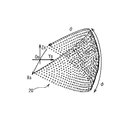
- FIG. 2 is a diagram illustrating an example of point cloud data acquired by a robot according to some embodiments.
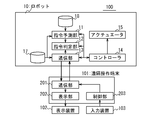
- FIG. 3 is a diagram illustrating an example of the details of the configuration of a remotely operated robot system according to some embodiments.
- FIG. 4 is a diagram illustrating an example of the configuration of the prediction information 18 according to some embodiments.
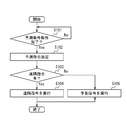
- FIG. 5 is a flowchart illustrating an example of a robot control method according to some embodiments.
- FIG. 6 is a flowchart illustrating another example of the robot control method according to some embodiments.
- FIG. 7 is a flow diagram illustrating yet another example of a robot control method according to some embodiments.
- a robot predicts a next command based on a command from the remote operation terminal, and performs an operation according to the predicted command without waiting for the next command from the remote operation terminal. Whether or not to transmit the operation result according to the predicted command to the remote operation terminal is determined according to the next command from the remote operation terminal. For example, when the predicted command value matches the command value from the remote operation terminal, the robot transmits an operation result according to the prediction command, and when they do not match, the robot returns to the state before the operation according to the prediction command.
- FIG. 1 is a diagram illustrating an example of the configuration of a remote control robot system 100.
- FIG. 2 is a diagram illustrating an example of point cloud data acquired by the robot.
- FIG. 3 is a diagram showing an example of details of the configuration of the remote control robot system 100.
- the remote operation robot system 100 includes a remote operation terminal 101 and a robot 10.
- the robot 10 is controlled to move or to operate an arm 4 (manipulator) described later in accordance with an instruction (control signal) from the remote operation terminal 101.
- the robot 10 performs an operation of “move to the vicinity of the target 90, image the periphery of the target 90, and create a topographic map”.
- the robot 10 moves to the vicinity of the target 90, and transmits the point cloud data 20 captured by the image sensor 2 (for example, a three-dimensional sensor, that is, a sensor that acquires three-dimensional shape data) 2 to the remote operation terminal 101.
- the user instructs the robot 10 to perform the next operation by operating the remote operation terminal 101 while confirming the surface shape image around the robot 10 created based on the point cloud data 20.
- the remote operation terminal 101 is connected to the output device 102, the input device 103, and the transmission device 104.
- the remote operation terminal 101 is exemplified by a computer device, and includes a CPU and a storage device (not shown).
- the remote operation terminal 101 controls the operation of the robot 10, images the surface shape of the measurement target based on the point cloud data 20 transmitted from the robot 10, and outputs the surface shape to the output device 102 so as to be visible. Details of the configuration of the remote operation terminal 101 will be described later.
- the output device 102 is exemplified by a monitor and a printer, and outputs the image information output from the remote operation terminal 101 so as to be visible.
- the input device 103 is exemplified by a keyboard, a touch panel, a mouse, a joystick, and the like, and is an interface device that inputs various information (or various data) to the remote operation terminal 101 when operated by a user.
- the transmission device 104 is a communication interface device that controls transmission of data and signals between the remote operation terminal 101 and the robot 10 (transmission device 1). Specifically, the transmission device 104 constructs a transmission path with the transmission device 1 mounted on the robot 10 using either a wireless line, a wired line, or both, and the remote operation terminal 101 and the robot 10 Control the data transmission to and from.
- the remote operation terminal 101, the output device 102, the input device 103, and the transmission device 104 may be provided as individual devices as shown in FIG. 1, but all devices (or elements) are provided as a unit. Alternatively, at least two of all devices (or elements) may be provided integrally.
- a form in which the output device 102 and the input device 103 are integrated can be realized by a touch panel.
- the form in which the remote operation terminal 101 and the transmission device 104 are integrated can be realized by a computer device with a communication function.
- the remote control terminal 101, the output device 102, the input device 103, and the transmission device 104 are all installed in a touch panel type mobile phone (commonly referred to as a smart phone), a PDA (Personal Digital Assistants) with a communication function. Etc. are exemplified.
- the robot 10 includes a transmission device 1, a three-dimensional sensor 2, a leg portion 3, and an arm portion 4.
- the actuator 15 (not shown in FIG. 1) that drives the three-dimensional sensor 2 or the leg portion 3, the arm portion 4 and the like functions as an operating portion that operates in response to a command.
- the robot 10 transmits its own position information (position data) and posture information (posture data) such as the legs 3 and arms 4 to the remote operation terminal 101 via the transmission device 1 at regular or predetermined timing. To do. Further, the robot 10 transmits the point cloud data acquired by measurement with the three-dimensional sensor 2 to the remote operation terminal 101.
- the actuator 15, the three-dimensional sensor 2 (which may be an image sensor), and the like are operating units that operate in accordance with commands (remote commands, prediction commands, restoration commands, etc.) described later.
- the transmission device 1 is an interface device that controls transmission of data and signals between the robot 10 and the remote operation terminal 101. Specifically, the transmission apparatus 1 constructs a transmission path between the wireless apparatus 101 and the transmission apparatus 104 connected to the remote operation terminal 101 by using either a wireless line or a wired line, or both lines, and remotely operates the robot 10. Controls data transmission with the terminal 101.
- the three-dimensional sensor 2 is exemplified by a laser scanner and a stereo camera, and acquires the three-dimensional position coordinates of the surface of the measurement object around the robot 10 as point cloud data 20 (also referred to as a point cloud).
- a laser scanner that can be used as the three-dimensional sensor 2 measures (or acquires) the point cloud data 20 by any one of a trigonometric method, a time-of-flight method, and a phase difference method (phase shift).
- the robot 10 according to the present embodiment is equipped with the three-dimensional sensor 2 as an apparatus for observing the situation around the robot 10, but is not limited thereto, and may be equipped with an imaging device exemplified by a CCD camera. Absent.
- the measurement range (scanning range) of the point cloud data 20 by the three-dimensional sensor 2 will be described with reference to FIG.
- the measurement position (for example, installation position) of the three-dimensional sensor 2 is defined as the origin Os
- the coordinate system of the measured point cloud data 20 is defined as (Xs, Ys, Zs).
- the three-dimensional sensor 2 scans the laser within the range of the azimuth angle ⁇ and the elevation angle ⁇ with the irradiation angle centered on the origin Os, and based on the reflected light from the measurement object within this range,
- the surface three-dimensional coordinates are measured (or acquired) as point cloud data 20.
- the robot 10 moves by the leg 3 and measures the point cloud data 20 at a plurality of positions (in other words, a plurality of positions of the three-dimensional sensor), and performs matching synthesis of the measured point cloud data 20 to obtain a desired value. Can be obtained.
- the robot 10 may be equipped with a CCD camera that acquires color information (RGB) for improving the visibility of the topography around the robot and the shape of the object.
- the point cloud data 20 and the color information may be combined (color matching).
- the point cloud data 20 and the color information are transmitted from the robot to the remote operation terminal 101 at different timings. Color matching may be performed on the operation terminal 101.
- the leg 3 is a moving means that is driven by an actuator 15 described later and moves the robot 10 to an arbitrary position.
- a leg having a joint and a link will be described as an example of the leg 3.
- a rotating body for example, a wheel
- the number of legs, the shape, and the number of joints (number of links) in the leg 3 are not limited to the illustrated number and shape, and can be arbitrarily set.
- the arm 4 is driven by an actuator 15 described later, and is exemplified by a manipulator (also referred to as an arm) having a joint, a link, and an end effector 401.
- the end effector 401 is preferably provided, for example, at the tip of the arm 4 and has a mechanism that applies a physical action (mechanical action, electromagnetic action, thermodynamic action) to the object.
- the end effector 401 may include a mechanism for gripping, painting, or welding an object.
- the end effector 401 may include an electromagnetic sensor, various measuring devices, and the like.
- the arm portion 4 is provided with a robot hand that grips (handles) an object as an end effector 401.
- the number of arms (arms), the shape, the number of joints (number of links), and the structure of the end effector 401 in the arm portion 4 are not limited to the numbers and shapes described in FIG. 1 and can be arbitrarily set.
- each function of the communication unit 201, the display unit 202, and the control unit 203 is realized by the CPU executing a program stored in a storage device (not shown).
- the functions of the communication unit 201, the display unit 202, and the control unit 203 may be realized only by hardware or by cooperation between software and hardware.
- the communication unit 201 controls the transmission device 104 shown in FIG. 1 to control communication with the transmission device 1 in the robot 10. Specifically, the communication unit 201 transfers a control signal from the control unit 203 to the transmission device 1 in the robot 10 via the transmission device 104. Alternatively, the point cloud data 20 transferred from the robot 10 (or a signal corresponding to the point cloud data 20) is output to the display unit 202. The display unit 202 generates image information to be displayed on the output device 102. More specifically, the display unit 202 uses the point cloud data 20 input from the communication unit 201 to create image information (image data) for displaying the surface shape of the measurement target, and outputs the image information to the output device 102. Output.
- the display unit 202 calculates image information for displaying the surface shape of the measurement target object through processing such as edge detection, smoothing by noise removal, and normal line extraction on the point cloud data 20.
- the control unit 203 generates a control signal corresponding to the input signal from the input device 103 and outputs the control signal to the communication unit 201.
- the robot 10 controls, for example, the movement of the leg portion 3 and the arm portion 4 or the operation of acquiring the point cloud data 20 in accordance with the control signal output from the control unit 203.
- the robot 10 includes a computer device (not shown) (the computer device includes, for example, a CPU and a storage device).
- the functions of the command prediction unit 11, the command determination unit 12, the communication unit 13, and the controller 14 are realized by the CPU executing a program stored in a storage device (not shown).
- the functions of the command prediction unit 11, the command determination unit 12, the communication unit 13, and the controller 14 may be realized by hardware alone or by cooperation between software and hardware.
- the computer device CPU
- executes the above-described program a command prediction process, a command determination process, a determination result transmission determination process, and the like described later are realized.
- operation result information (operation result data) 17 and prediction information (for example, basic data for generating a prediction command) 18 are recorded.
- the operation result information 17 indicates an operation result obtained when the robot 10 executes a command.
- the command is a point cloud data measurement command (acquisition command)
- the point cloud data 20 measured by the three-dimensional sensor 2 according to the command
- the measurement position coordinates of the point cloud data 20 for example, a three-dimensional sensor
- the orientation of the three-dimensional sensor) the measurement range (for example, the range of the azimuth angle ⁇ and the elevation angle ⁇ ), and the like are recorded as the operation result information 17.
- the command is a motion control command for the leg 3 or the arm 4 or the like
- information on the posture of the robot 10 after the operation (such as coordinate data of the link of the leg 3 or the arm 4 or rotation angle data at the joint)
- the position coordinates of the robot 10 itself are recorded as the operation result information 17.
- the recording of the operation result information 17 may be performed not only when the operation according to the command is completed, but also according to a change in a cycle or posture set in advance during the operation.
- the prediction information 18 includes a condition for the instruction prediction unit 11 to be described later to issue a prediction instruction, and information related to a prediction instruction issued according to the condition.
- FIG. 4 is a diagram illustrating an example of the configuration of the prediction information 18. Referring to FIG. 4, prediction information 18 includes a command condition 181, a control code 182, and a control parameter 183 that are associated with each other.
- the command condition 181 indicates a condition for issuing a prediction command.
- the robot 10 predicts the next command in response to a command from the remote operation terminal 101 (hereinafter referred to as a remote command). For this reason, it is preferable to set the command content of the remote command and the command value (target value) in the command condition 181.
- the command condition 181 includes a command content of the remote command, a determination criterion for the command value of the remote command, and the like.
- a determination criterion for the posture of the robot 10 (link coordinates of the leg portion 3 or the arm portion 4, a rotation angle at the joint, or a threshold value or range related thereto) is set.
- a determination criterion for the movement distance of the robot 10 is set as the command condition 181.
- a point cloud data measurement command is set as the command condition 181.
- the control code 182 includes a command code that defines the command content of the prediction command.
- a command code for instructing measurement of the point cloud data 20 is set as the control code 182.
- a command code for driving the actuator 15 is set as the control code 182.
- the control parameter 183 includes a constraint condition when executing the prediction command.
- a command value of a prediction command for example, a target value of the actuator 15
- a measurement condition for the sensor for example, a measurement direction and a measurement range of the point cloud data 20
- the command prediction unit 11 predicts a command next to the remote command based on the remote command and the prediction information 18. Specifically, the command predicting unit 11 is associated with the command condition 181 that matches the command content and command value of the remote command input via the communication unit 13 when the command condition 181 of the prediction information 18 is met. A command corresponding to the control code 182 and corresponding to the constraint condition defined by the associated control parameter 183 is issued as a prediction command. However, the prediction command is issued after the remote command is executed.
- the command prediction unit 11 issues a measurement command of the point cloud data 20 as a prediction command when a remote command for driving the actuator 15 is issued and the posture of the robot 10 is in a state suitable for the command condition 181.
- the command prediction unit 11 issues a measurement command for the point cloud data 20 as a prediction command when a remote command for moving the robot 10 is issued and the movement distance is equal to or greater than the threshold set in the command condition 181.
- the command predicting unit 11 moves the robot 10 to a predetermined position (for example, a predetermined value for measuring point cloud data next time). Issue a prediction command to move to (position).
- the process of predicting the next command in the command prediction unit 11 may be performed with reference to the remote command, or may be performed based on the execution result of the remote command.
- the command prediction unit 11 can confirm the content and command value of the remote command based on the operation result information 17.
- the command determination unit 12 executes processing (command determination processing) for determining whether or not the remote command received by the robot after the prediction command is issued matches the prediction command within a predetermined range. Moreover, the command determination part 12 performs the process (determination result transmission determination process) which determines whether a determination result is transmitted to a remote control terminal. In the determination result transmission determination process, it is determined whether or not to transmit the operation result information 17 corresponding to the prediction instruction to the remote operation terminal 101 based on the determination result acquired by the instruction determination process. In the command determination process, when the content of the remote command and the command value match the content of the prediction command and the command value within a predetermined error range, it is determined that they match. For example, in the remote command for moving the robot 10, if the moving distance (command value) matches the command value of the prediction command within the error of the match determination, it is determined that they match.
- the command determination unit 12 determines whether to restore the state of the robot 10 according to the execution status of the prediction command. Further, when restoring the state of the robot 10 to the state before the execution of the prediction command, the command determination unit 12 issues a command for restoring the state (hereinafter referred to as a restoration command) (in other words, the computer of the robot Implements the restoration command issuance process).
- the command determination unit 12 grasps the current state and the state before execution of the prediction command based on the operation result information 17 and determines a command value (for example, before execution of the prediction command) based on the state before execution of the prediction command.
- the command determination unit 12 preferably issues a restoration command for deleting the acquired data in order to restore the state before the prediction command is executed. Note that, when the execution of the prediction command is not completed, the robot may interrupt the execution of the prediction command and execute an operation based on the restoration command.
- the controller 14 is operated by either a remote command based on a control signal input from the remote operation terminal 101 via the communication unit 13, a prediction command from the command prediction unit 11, or a restoration command from the command determination unit 12. 15 operations are controlled. Specifically, the controller 14 performs actuators based on disassembly motion control based on command values (for example, information on the target position, target angle, and target speed) for moving the leg 3, arm 4 and the like to desired positions. 15 is controlled.
- command values for example, information on the target position, target angle, and target speed
- the actuator 15 is exemplified by a servo motor, a power cylinder, a linear actuator, a rubber actuator, and the like, and controls the mechanical behavior of the leg portion 3 and the arm portion 4 in accordance with an operation command signal from the controller 14.
- the actuator 15 may indirectly drive the leg 3, the arm 4, or the like, or may directly drive the actuator 15. That is, the actuator 15 may be provided separately from the leg portion 3 or the arm portion 4, or may be mounted as a part (for example, a joint portion) of the leg portion 3, the arm portion 4, or the like.
- a motor or an engine may be used as the actuator 15.
- the robot 10 can automatically predict and execute the next command without waiting for the next command from the remote operation terminal 101.
- the robot 10 can measure point cloud data by a prediction command after moving a predetermined distance or more in response to a remote command.
- the robot 10 can detect the region including the end effector 401 or the end effector 402 by the prediction command. Measure point cloud data.
- FIG. 5 is a flowchart showing an example of the operation of the robot 10 when the robot 10 receives a remote command before the prediction command is executed (before issuance).
- command prediction unit 11 determines whether or not the remote command meets command condition 181 (step S101).
- the computer (command predicting unit) of the robot performs a conformity determination process for determining whether or not the remote command conforms to the command condition 181.
- the remote command does not meet all the command conditions 181 registered as the prediction information 18, the prediction command is not issued, and the robot 10 waits for the remote command (No in step S101).
- Step S102 includes a process of predicting the second command based on the first command issued from the remote operation terminal and determining the predicted second command as the prediction command.
- the next remote command (third command) is issued before the determined prediction command is issued, the next remote command (third command) is preferentially executed (steps S103 Yes, S104). At this time, it is preferable that the prediction command before issue is discarded.
- the prediction command is issued and the operation according to the prediction command is executed (steps S103 No, S105).
- the computer of the robot transmits a signal corresponding to the prediction command to the controller 14, and the controller 14 drives the operation unit (image sensor, actuator, etc.) based on the signal.
- a predetermined grace period until the prediction command is issued after the prediction command is determined can be arbitrarily set. Accordingly, when the remote operation terminal 101 side makes an early determination and a remote command is issued during the grace period, useless operations due to the prediction command can be eliminated.
- the prediction command may be issued immediately after the determination of the prediction command. For example, when only the command for which the execution time of the remote command or the determination time for the remote operation is determined to be long is set as the command condition 181, the prediction command is executed immediately after the remote command is executed. It is preferable.
- FIG. 6 is a flowchart showing an example of the operation of the robot 10 when the robot 10 receives the next remote command after the operation corresponding to the prediction command is completed.
- command determination unit 12 receives the next remote command (third command) after execution of the prediction command (second command)
- command prediction unit 12 matches the remote command within a predetermined range. Whether or not (steps S201 Yes, S202).
- the robot computer determines whether or not the remote command (third command) received by the robot after the prediction command is issued matches the prediction command within a predetermined range. (Command determination processing) is executed.
- the command content (operation target) of the prediction command and the remote command or the command values for example, target value, measurement range, measurement resolution
- the command value for example, target value, measurement range, measurement resolution
- the computer for example, the command determination unit 12 of the robot executes a recoverability determination process for determining whether or not the state of the robot 10 can be recovered before the execution of the prediction command.
- the prediction command is a command for controlling the operation of the actuator 15
- the command determination unit 12 executes the prediction command from the state of the robot 10 (for example, the posture of the robot or the robot position coordinates) after the execution of the prediction command.
- a command value corresponding to returning to the previous state of the robot 10 is calculated, and a restoration command with the command value as a target value is generated.
- the command determination unit 12 when the prediction command is measurement of the point cloud data 20, the command determination unit 12 generates a command for discarding the point cloud data 20 measured based on the prediction command as a restoration command.
- the restoration command cannot be generated, the command determination unit 12 determines that the state cannot be restored. For example, when a walking plan is designated by a prediction command and the robot 10 is moved to a predetermined position, there may be a case where a walking plan for restoring the original position cannot be performed. In such a case, it is determined that the state is not possible.
- the robot 10 transmits the current state of the robot 10 (for example, the posture of the robot, the position coordinates of the robot, etc.) to the remote operation terminal 101 (steps S204 No, S205). Thereby, the user who operates the remote operation terminal 101 can know the next operation result automatically executed in the robot 10 (the operation result of the next operation following the operation based on the remote command). It is preferable that the robot 10 that has transmitted the current state discards the remote command (third command) received in step S201 and waits for the next new remote command.
- the current state of the robot 10 for example, the posture of the robot, the position coordinates of the robot, etc.
- step S206 If the state can be restored in step S204, the robot 10 executes a restoration operation according to the state restoration command (step S206). Further, after restoring the state, the robot 10 executes the remote command (third command) received in step S201 (step S207). The execution result of the remote command is transmitted to the remote operation terminal 101 periodically or promptly after completion of the execution of the remote command (step S208).
- the robot 10 can perform an operation that has been conventionally performed after the next remote command is transmitted during the standby period of the remote command, the time of the entire work is greatly reduced. It becomes possible to do.
- the robot 10 predicts when the next remote command is inconsistent with the prediction command (for example, when the state of the robot is restored to the state before the operation based on the prediction command is performed). Since the command result is not transmitted to the remote operation terminal 101, unnecessary data communication can be eliminated. Thereby, it is possible to eliminate unnecessary communication processing, communication time, and the like in the case where the prediction is off while predicting the next operation. Further, when an operation different from the next remote command is predicted, if the state of the robot 10 can be restored, the operation is restored. Therefore, the next operation can be performed without receiving a command from the remote operation terminal 101 again. If the state cannot be restored, the current state is transmitted to the remote operation terminal 101. Therefore, if the prediction is lost, the user can grasp the current state.
- FIG. 7 is a flowchart showing an example of the operation of the robot 10 when the robot 10 receives the next remote command while executing the operation according to the prediction command.
- command determination unit 12 receives the next remote command (third command) after execution of the prediction command (second command)
- command prediction unit 12 matches the remote command within a predetermined range. Whether or not (steps S301 Yes, S302).
- the robot 10 When it is determined that the prediction command and the remote command match within a predetermined range, the robot 10 continues the prediction operation (in other words, the robot computer instructs the operation unit to continue the prediction operation processing). ), The operation result corresponding to the prediction command is transmitted to the remote operation terminal 101 (steps S302 Yes, S303, S304). Thereby, the user who operates the remote operation terminal 101 can know the next operation result automatically executed in the robot 10 (the operation result of the next operation following the operation based on the remote command).
- step S306 the state restoration determination (step S306), the state transmission process of the robot according to the result of the state restoration determination (step S307), the execution of the state restoration operation (step S308), the execution of the next remote command (third command) ( Since the execution result transmission process (step S310) in step S309) is the same as the process in steps S204 to S208 described above, description thereof will be omitted.
- the robot when the next remote command that matches the prediction command is issued while the prediction command is being executed, the robot continues to execute the prediction command. It is possible to shorten the time until the operation corresponding to is completed. Further, when the prediction command being executed and the next remote command do not match, the operation is stopped without waiting for the completion of the operation according to the prediction command, so that time required for useless operation can be eliminated.
- various control parameters 183 are preferably set according to the content of the remote command (command condition 181).
- command condition 181 a specific example of a remote command, a prediction command performed next to the remote command, and a control parameter 183 at that time will be shown.
- the robot 10 After the robot 10 walks a short distance, it is necessary to check the detailed topography. For this reason, when the immediately preceding remote command instructs movement (walking) within a predetermined distance, it is preferable that a prediction command for acquiring point cloud data with a fineness equal to or higher than a predetermined resolution is issued. On the other hand, when the robot 10 walks a long distance, it is necessary to grasp rough terrain at an early stage. For this reason, when the immediately preceding remote command instructs a movement (walking) of a predetermined distance or more, it is preferable that a prediction command for acquiring point cloud data with a roughness equal to or less than a predetermined resolution is issued.
- the end effector 401 when the target 90 (see FIG. 1 if necessary) is gripped by the end effector 401, there is a high demand for grasping the status of the target 90 and its surroundings. For this reason, when the immediately preceding remote command instructs gripping by the end effector 401, the area within the predetermined distance to the end effector 401 acquires point cloud data with a fineness greater than or equal to a predetermined resolution, It is preferable that a prediction command for making the resolution of the region coarse is issued.
Landscapes
- Engineering & Computer Science (AREA)
- Robotics (AREA)
- Mechanical Engineering (AREA)
- Physics & Mathematics (AREA)
- Theoretical Computer Science (AREA)
- Data Mining & Analysis (AREA)
- General Health & Medical Sciences (AREA)
- Biomedical Technology (AREA)
- Biophysics (AREA)
- Computational Linguistics (AREA)
- Life Sciences & Earth Sciences (AREA)
- Evolutionary Computation (AREA)
- Artificial Intelligence (AREA)
- Molecular Biology (AREA)
- Computing Systems (AREA)
- General Engineering & Computer Science (AREA)
- General Physics & Mathematics (AREA)
- Mathematical Physics (AREA)
- Software Systems (AREA)
- Health & Medical Sciences (AREA)
- Manipulator (AREA)
Abstract
ロボット(10)は、指令予測部(11)と指令判定部(12)を具備する。指令予測部(11)は、遠隔操作端末(101)から発行された第1指令の内容に基づいて、次の第2指令を予測する。指令判定部(12)は、第1指令の後に遠隔操作端末(101)から発行された第3指令と、第2指令予測指令との比較結果に基づいて、第2指令に応じた動作結果を遠隔操作端末(101)に送信するか否かを判定する。
Description
本発明は、ロボット、ロボットの制御方法、及びロボットの制御プログラムに関し、特に、遠隔操作によって少なくとも一部の動作が制御されるロボット、ロボットの制御方法、及びロボットの制御プログラムに関する。
遠隔操作されるロボットは、操作コマンドが転送される伝送路の状態によって、操作性が劣化する場合がある。例えば、通信速度が遅い伝送路を利用した場合、ロボットの動作結果(例えば移動結果)が遠隔操作端末に伝送されるまでに時間がかかる。特に、マスタースレーブ式の遠隔操作型ロボットの場合、ロボットは、操作側からの指令値に基づいて動作し、操作側ではロボットの動作結果を参照して次の指令値が設定される。このとき指令値や動作結果の転送が遅延すると、ロボットを使用した作業時間が大幅に増大してしまうことになる。
遠隔操作型ロボットの一例が、特開平9-267283に記載されている(特許文献1参照)。特許文献1に記載のロボットは、遠隔操作端末からの指令値を受信した段階で、その指令を解釈し、ロボットの動作(例えばセンシングやアクチュエータの制御)を行っている。この際、ロボットは、遠隔操作端末に対して指令値を要求するとともにロボットの状態を示す情報を通知する。又、遠隔操作端末は、ロボットから通知される状態情報によりロボットの状態を把握するともに、当該要求に応じて次の指令値を送信する。すなわち、ロボットは遠隔操作端末から指令値を受け付けるまで次の動作が実行できず、遠隔操作端末(を操作するユーザ)は、ロボットからの指令値の要求や状態情報の通知があるまで次の指令を発行できない。
例えば、「ロボットを移動させて周囲の画像を撮像する」といった動作を実行する場合、遠隔操作端末を操作するユーザは、ロボットに対して移動指令を発行してから、ロボットから移動完了が通知されるまでの期間、待機する必要がある。又、ロボットは、移動完了を遠隔操作端末に通知してから、遠隔操作端末から次の画像撮像指令が発行されるまで、待機する必要がある。更に、遠隔操作端末を操作するユーザは、ロボットに対して次の画像撮像指令を発行してから、ロボットから撮像画像が送信されるまでの期間、待機する必要がある。
このように、遠隔操作型のロボットが複数の動作を順次行うシステムでは、指令発行から動作の完了を確認するまでの期間、あるいは、動作完了から次の指令を受け付けるまでの期間において、所定の待機時間が必要となる。特に、遠隔操作端末とロボットとの間の通信回線における遅延時間が大きい場合、システム全体の動作時間を通信時間が律速することになる。
本発明の目的は、遠隔操作によって制御されるロボットを利用した作業時間を短縮するロボット、ロボットの制御方法、及びロボットの制御プログラムを提供することにある。
いくつかの実施形態に係るロボットは、指令に応じて動作する動作部と、指令予測部と、指令判定部を具備する。指令予測部は、遠隔操作端末から発行された第1指令の内容に基づいて、次の第2指令(予測指令)を予測する。指令判定部は、第1指令の発行後に遠隔操作端末から発行された第3指令と、第2指令(予測指令)との比較結果に基づいて、第2指令(予測指令)に応じた動作部の動作結果を遠隔操作端末に送信するか否かを判定する。いくつかの実施形態に係るロボット(10)は、従来、次の遠隔指令が送信されてから実行していた動作を、当該遠隔指令の待ち受け期間中に行うことができるため、作業全体の時間を大幅に短縮することが可能となる。又、例えば、第2指令の動作結果の送信が、次の第3指令が発行されるまで行われないようにした場合、不要なデータ通信を排除することが可能となる。
いくつかの実施形態に係るロボットの制御方法は、指令に応じて動作するロボットの制御方法であり、遠隔操作端末から発行された第1指令の内容に基づいて、次の第2指令を予測するステップと、第1指令の発行後に遠隔操作端末から発行された第3指令と、第2指令(予測指令)との比較結果に基づいて、第2指令(予測指令)に応じた動作部の動作結果を遠隔操作端末に送信するか否かを決定するステップとを具備する。
いくつかの実施形態によるロボットの制御方法は、記憶媒体に記録されたプログラムをコンピュータによって実行することで実現される。
いくつかの実施形態に係るロボットは、指令に応じて動作する動作部と、指令予測処理と、判定結果送信決定処理とを実施するコンピュータとを具備する。指令予測処理は、遠隔操作端末から発行された第1指令の内容に基づいて、第1指令の次の第2指令を予測する処理を含む。判定結果送信決定処理は、第1指令の発行後に遠隔操作端末から発行される第3指令と、第2指令との比較結果に基づいて、第2指令に応じた動作部の動作結果を遠隔操作端末に送信するか否かを決定する処理を含む。
本発明によれば、遠隔操作によって制御されるロボットを利用した作業時間を短縮することができる。
添付の図面は、実施形態の説明を助けるために本明細書に組み込まれる。なお、図面は、本発明を、図示された例および説明された例に限定するものとして解釈されるべきではない。
図1は、いくつかの実施形態による遠隔操作型ロボットシステムの構成の一例を示す図である。
図2は、いくつかの実施形態に係るロボットによって取得される点群データの一例を示す図である。
図3は、いくつかの実施形態による遠隔操作型ロボットシステムの構成の詳細の一例を示す図である。
図4は、いくつかの実施形態に係る予測情報18の構成の一例を示す図である。
図5は、いくつかの実施形態によるロボット制御方法の一例を示すフロー図である。
図6は、いくつかの実施形態によるロボット制御方法の他の一例を示すフロー図である。
図7は、いくつかの実施形態によるロボット制御方法の更に他の一例を示すフロー図である。
以下、添付図面を参照しながら実施の形態を説明する。図面において同一、又は類似の参照符号は、同一、類似、又は等価な構成要素を示している。以下の詳細な説明においては、実施形態の包括的な理解を提供するために、説明の目的で多くの詳細な特定事項が開示される。しかし、一又は複数の実施形態は、これらの詳細な特定事項なしで実行可能であることが明らかである。
(概要)
いくつかの実施形態によるロボットは、遠隔操作端末からの指令に基づいて次の指令を予測し、予測した指令に応じた動作を、遠隔操作端末からの次の指令を待つことなく実行する。予測した指令に応じた動作結果の遠隔操作端末に対する送信を行うか否かは、遠隔操作端末からの次の指令に応じて決まる。例えば、予測指令値と遠隔操作端末からの指令値が一致した場合、ロボットは、予測指令に応じた動作結果を送信し、不一致の場合、予測指令に応じた動作前の状態に戻る。
いくつかの実施形態によるロボットは、遠隔操作端末からの指令に基づいて次の指令を予測し、予測した指令に応じた動作を、遠隔操作端末からの次の指令を待つことなく実行する。予測した指令に応じた動作結果の遠隔操作端末に対する送信を行うか否かは、遠隔操作端末からの次の指令に応じて決まる。例えば、予測指令値と遠隔操作端末からの指令値が一致した場合、ロボットは、予測指令に応じた動作結果を送信し、不一致の場合、予測指令に応じた動作前の状態に戻る。
(構成)
図1から図3を参照して、遠隔操作型ロボットシステム100の構成の一例を説明する。図1は、遠隔操作型ロボットシステム100の構成の一例を示す図である。図2は、ロボットによって取得される点群データの一例を示す図である。図3は、遠隔操作型ロボットシステム100の構成の詳細の一例を示す図である。
図1から図3を参照して、遠隔操作型ロボットシステム100の構成の一例を説明する。図1は、遠隔操作型ロボットシステム100の構成の一例を示す図である。図2は、ロボットによって取得される点群データの一例を示す図である。図3は、遠隔操作型ロボットシステム100の構成の詳細の一例を示す図である。
図1を参照して、遠隔操作型ロボットシステム100は、遠隔操作端末101及びロボット10を具備する。ロボット10は、遠隔操作端末101からの指示(制御信号)に応じて移動動作、又は、後述する腕部4(マニピュレータ)の動作が制御される。例えば、ロボット10は、遠隔操作端末101からの指示により、「目標物90近傍まで移動し、目標物90の周辺を撮像し、地形図を作成する」というオペレーションを実行する。この際、ロボット10は、目標物90近傍まで移動し、画像センサ(例えば、3次元センサ、すなわち、3次元形状データを取得するセンサ)2によって撮像した点群データ20を遠隔操作端末101に送信する。ユーザは、点群データ20に基づいて作成されたロボット10の周辺における表面形状画像を確認しながら、遠隔操作端末101を操作することにより、ロボット10に次の動作を指示する。
以下、図1から図3を参照して、遠隔操作型ロボットシステム100の構成の詳細を説明する。
遠隔操作端末101は、出力装置102、入力装置103、伝送装置104に接続される。遠隔操作端末101は、コンピュータ装置に例示され、図示しないCPU及び記憶装置を具備する。遠隔操作端末101は、ロボット10の動作を制御するとともに、ロボット10から送信される点群データ20に基づいて計測対象の表面形状を画像化し、出力装置102に視認可能に出力する。遠隔操作端末101の構成の詳細は後述する。出力装置102は、モニタやプリンタに例示され、遠隔操作端末101から出力される画像情報を視認可能に出力する。入力装置103は、キーボード、タッチパネル、マウス、又はジョイスティック等に例示され、ユーザによって操作されることで各種情報(または、各種データ)を遠隔操作端末101に入力するインタフェース装置である。伝送装置104は、遠隔操作端末101とロボット10(伝送装置1)との間のデータや信号の伝送を制御する通信インタフェース装置である。詳細には、伝送装置104は、無線回線又は有線回線のいずれか、又は両方の回線により、ロボット10に搭載された伝送装置1との間に伝送路を構築し、遠隔操作端末101とロボット10との間のデータ伝送を制御する。
尚、遠隔操作端末101、出力装置102、入力装置103、伝送装置104は、図1に示すように、それぞれ個別の装置として設けられてもよいが、全ての装置(または要素)が一体として設けられてもよいし、全ての装置(または要素)のうちの少なくとも2つが一体として設けられてもよい。例えば、出力装置102及び入力装置103を一体とした形態は、タッチパネルにより実現できる。又、遠隔操作端末101と伝送装置104を一体とした形態は、通信機能付きのコンピュータ装置によって実現できる。更に、遠隔操作端末101、出力装置102、入力装置103、伝送装置104の全てが搭載された形態として、タッチパネル式の携帯電話(俗にスマートフォンと称す)、通信機能付きのPDA(Personal Digital Assistants)等が例示される。
ロボット10は、伝送装置1、3次元センサ2、脚部3、腕部4を備える。本実施の形態では、3次元センサ2又は、脚部3、腕部4等を駆動するアクチュエータ15(図1には、図示されず)は、指令に応じて動作する動作部として機能する。ロボット10は、定期的又は所定のタイミングで自身の位置情報(位置データ)や、脚部3、腕部4等の姿勢情報(姿勢データ)を、伝送装置1を介して遠隔操作端末101に送信する。又、ロボット10は、3次元センサ2での計測により取得した点群データを遠隔操作端末101に送信する。なお、アクチュエータ15、3次元センサ2(画像センサであってもよい)等は、後述の指令(遠隔指令、予測指令、復元指令等)に応じて動作する動作部である。
伝送装置1は、ロボット10と遠隔操作端末101との間でのデータや信号の伝送を制御するインタフェース装置である。詳細には、伝送装置1は、無線回線又は有線回線のいずれか、又は両方の回線により、遠隔操作端末101に接続された伝送装置104との間に伝送路を構築し、ロボット10と遠隔操作端末101との間のデータ伝送を制御する。
3次元センサ2は、レーザスキャナやステレオカメラに例示され、ロボット10周辺における計測対象物の表面の3次元位置座標を点群データ20(ポイントクラウドとも称す)として取得する。例えば、3次元センサ2として利用し得るレーザスキャナは、三角法方式、タイム・オブ・フライト方式、位相差方式(フェイズ・シフト)のいずれかの方式によって点群データ20を計測(または取得)する。本実施の形態におけるロボット10には、ロボット10周辺の状況を観測する装置として、3次元センサ2が搭載されているがこれに限らず、CCDカメラに例示される撮像装置が搭載されても構わない。
図2を参照して、3次元センサ2による点群データ20の計測範囲(走査範囲)の一例を説明する。ここで、3次元センサ2の計測位置(例えば、設置位置)を原点Osとし、計測した点群データ20の座標系を(Xs,Ys,Zs)とする。3次元センサ2は、レーザを、その照射角が原点Osを中心に方位角θ、仰俯角φの範囲で走査し、この範囲内の計測対象物からの反射光に基づいて、当該対象物の表面の3次元座標を点群データ20として計測(または取得)する。ロボット10は、脚部3によって移動し複数の位置(換言すれば、3次元センサの複数の位置)において点群データ20の計測を行い、計測した点群データ20をマッチング合成することで、所望の範囲の点群データ20を取得することができる。
ここで、ロボット10は、3次元センサ2の他に、ロボット周辺の地形や対象物の形状の視認性を高めるための色情報(RGB)を取得するCCDカメラを搭載しても構わない。この場合、点群データ20と色情報とが合成(カラーマッチング)されても構わない。しかし、遠隔操作端末101へのデータ伝送量を低減するため、あるいは、ロボット10における計算量を低減するため、点群データ20と色情報は異なるタイミングでロボットから遠隔操作端末101に送信され、遠隔操作端末101においてカラーマッチングされてもよい。
図1を参照して、脚部3は、後述するアクチュエータ15によって駆動され、ロボット10を任意の位置に移動させる移動手段である。本実施例では脚部3として関節及びリンクを有する脚を一例に説明するが、モータやエンジンによって回転する回転体(例えば車輪)が脚部3としてロボット10に搭載されてもよい。脚部3における脚の数、形状、関節数(リンク数)は、図示した数や形状に限定されず任意に設定できる。腕部4は、後述するアクチュエータ15によって駆動され、関節、リンク及びエンドエフェクタ401を有するマニピュレータ(アームとも称す)に例示される。エンドエフェクタ401は、例えば、腕部4の先端に設けられ、対象物に対し物理的な作用(力学的作用、電磁気的作用、熱力学的作用)を与える機構を有することが好ましい。具体的には、エンドエフェクタ401は、対象物を把持、塗装、または、溶接する機構を備えていてもよい。代替的に、あるいは、付加的に、エンドエフェクタ401は、電磁気的センサ、各種計測機器等を備えていてもよい。図1に記載の例では、腕部4には、対象物を把持(ハンドリング)するロボットハンドがエンドエフェクタ401として設けられている。腕部4における腕(アーム)の数、形状、関節数(リンク数)、エンドエフェクタ401の構造は、図1に記載された数や形状等に限定されず任意に設定できる。
図3を参照して、本発明による遠隔操作端末101及びロボット10の構成の詳細を説明する。遠隔操作端末101では、図示しない記憶装置に格納されたプログラムをCPUが実行することにより、通信部201、表示部202、及び制御部203の各機能が実現される。通信部201、表示部202、及び制御部203の各機能は、ハードウェアのみ、又はソフトウェアとハードウェアの連携によって実現されても構わない。
通信部201は、図1に示す伝送装置104を制御してロボット10における伝送装置1との間の通信を制御する。詳細には、通信部201は、制御部203からの制御信号を、伝送装置104を介してロボット10における伝送装置1に転送する。あるいは、ロボット10から転送された点群データ20(または、点群データ20に対応する信号)を表示部202に出力する。表示部202は、出力装置102に表示させる画像情報を生成する。詳細には、表示部202は、通信部201から入力された点群データ20を利用して、計測対象物の表面形状を表示するための画像情報(画像データ)を作成し、出力装置102に出力する。例えば、表示部202は、点群データ20に対してエッジ検出、ノイズ除去による平滑化、法線抽出等の処理を経て、計測対象物の表面形状を表示するための画像情報を算出する。制御部203は、入力装置103からの入力信号に応じた制御信号を生成し、通信部201に出力する。ロボット10は、制御部203から出力された制御信号に応じて、例えば、脚部3、腕部4等の運動、あるいは、点群データ20の取得動作等を制御する。
ロボット10は、図示しないコンピュータ装置(コンピュータ装置は、例えば、CPUや記憶装置等を含む)を具備する。ロボット10では、図示しない記憶装置に格納されたプログラムをCPUが実行することにより、指令予測部11、指令判定部12、通信部13、及びコントローラ14の各機能が実現される。指令予測部11、指令判定部12、通信部13、及びコントローラ14の各機能は、ハードウェアのみ、又はソフトウェアとハードウェアの連携によって実現されても構わない。前述のプログラムをコンピュータ装置(CPU)が実行することにより、後述の指令予測処理、指令判定処理、判定結果送信決定処理等が実現される。
ロボット10の記憶装置には、動作結果情報(動作結果データ)17や予測情報(例えば、予測指令を生成するための基礎データ)18が記録される。動作結果情報17は、ロボット10が指令を実行することで得られる動作結果を示す。例えば、指令が点群データの計測指令(取得指令)である場合、当該指令に応じて3次元センサ2によって計測された点群データ20、点群データ20の計測位置座標(例えば、3次元センサの位置座標、または、3次元センサの向き)、計測範囲(例えば、方位角θ、仰俯角φの範囲)等が動作結果情報17として記録される。あるいは、指令が、脚部3又は腕部4等の運動制御指令である場合、動作後のロボット10の姿勢に関する情報(脚部3又は腕部4のリンクの座標データや関節における回転角データ等)、ロボット10自体の位置座標等が動作結果情報17として記録される。動作結果情報17の記録は、指令に応じた動作が完了したときのみならず、動作の途中において予め設定された周期又は姿勢の変更に応じて行われてもよい。
予測情報18は、後述する指令予測部11が予測指令を発行するための条件や、当該条件に応じて発行される予測指令に関する情報を含む。図4は、予測情報18の構成の一例を示す図である。図4を参照して、予測情報18は、それぞれが互いに紐付けられた指令条件181、制御コード182、制御パラメータ183を含む。
指令条件181は、予測指令を発行するための条件を示す。ロボット10は、遠隔操作端末101からの指令(以下、遠隔指令と称す)に応じて、次の指令を予測する。このため、指令条件181には、遠隔指令の指令内容や、指令値(目標値)が設定されることが好ましい。例えば、指令条件181として遠隔指令の指令内容、遠隔指令の指令値に対する判定基準等が設定される。具体的には、指令条件181として、ロボット10の姿勢に対する判定基準(脚部3又は腕部4のリンク座標、関節における回転角、あるいはそれらに関する閾値又は範囲)が設定される。あるいは、指令条件181としてロボット10の移動距離に対する判定基準が設定される。更には、指令条件181として、点群データの計測指令が設定される。
制御コード182は、予測指令の指令内容を規定する指令コードを含む。例えば、制御コード182として点群データ20の計測を指示する指令コードが設定される。あるいは、制御コード182として、アクチュエータ15を駆動させるための指令コードが設定される。
制御パラメータ183は、予測指令を実行する際の制約条件を含む。例えば、制御パラメータ183として、予測指令の指令値(例えばアクチュエータ15の目標値)や、センサに対する測定条件(例えば、点群データ20の測定方向や計測範囲)が設定される。
指令予測部11は、遠隔指令及び予測情報18に基づいて、当該遠隔指令の次の指令を予測する。詳細には、指令予測部11は、通信部13を介して入力された遠隔指令の指令内容や指令値が、予測情報18の指令条件181に適合する場合、適合した指令条件181に紐付けられた制御コード182に対応し、かつ、紐付けられた制御パラメータ183で規定される制約条件に対応する指令を予測指令として発行する。ただし、予測指令は、遠隔指令の実行後に発行される。
例えば、指令予測部11は、アクチュエータ15を駆動する遠隔指令が発行され、ロボット10の姿勢が指令条件181に適合する状態となった場合、点群データ20の計測指令を予測指令として発行する。あるいは、指令予測部11は、ロボット10を移動させる遠隔指令が発行され、その移動距離が指令条件181に設定された閾値以上である場合、点群データ20の計測指令を予測指令として発行する。更には、指令予測部11は、点群データ20を計測する遠隔指令が発行されると、指令予測部11はロボット10を所定の位置(例えば、次に点群データの計測を行うための所定の位置)に移動させる予測指令を発行する。
ここで、指令予測部11における次の指令を予測する処理(指令予測処理)は、遠隔指令を参照して行われてもよいし、遠隔指令の実行結果に基づいて行われてもよい。遠隔指令の実行結果に基づいて行われる場合、指令予測部11は、動作結果情報17に基づいて遠隔指令の内容や指令値を確認することができる。
指令判定部12は、予測指令の発行後にロボットが受信する遠隔指令と予測指令とが所定の範囲内で一致するか否かを判定する処理(指令判定処理)を実行する。また、指令判定部12は、判定結果を遠隔操作端末に送信するか否かを決定する処理(判定結果送信決定処理)を実行する。判定結果送信決定処理では、指令判定処理によって取得される判定結果に基づいて予測指令に応じた動作結果情報17を遠隔操作端末101に送信するか否かが決定される。なお、指令判定処理では、遠隔指令の内容と指令値が、予測指令の内容と指令値に所定の誤差の範囲で一致する場合、一致と判定される。例えば、ロボット10を移動するための遠隔指令において、その移動距離(指令値)が、一致判定の誤差以内で予測指令の指令値と一致する場合、一致と判定される。
又、指令判定部12は、遠隔指令と予測指令が所定の範囲内で一致しない場合、予測指令の実行状況に応じて、ロボット10の状態を復元するか否かを決定する。更に、指令判定部12は、ロボット10の状態を予測指令の実行前の状態に復元する場合、状態復元のための指令(以下、復元指令と称す)を発行する(換言すれば、ロボットのコンピュータは、復元指令発行処理を実施する)。指令判定部12は、動作結果情報17に基づいて、現在の状態や予測指令の実行前の状態を把握し、予測指令の実行前の状態に基づいた指令値(例えば、予測指令の実行前の状態に戻すための指令値)を含む復元指令を生成することが好ましい。又、予測指令が点群データの取得の場合、予測指令を実行する前の状態に復元するため、指令判定部12は、取得データを削除する復元指令を発行することが好ましい。なお、ロボットは、予測指令の実行が完了していない場合には、予測指令の実行を中断して、復元指令に基づく動作を実行してもよい。
コントローラ14は、通信部13を介して遠隔操作端末101から入力された制御信号に基づいた遠隔指令、指令予測部11からの予測指令、あるいは、指令判定部12からの復元指令のいずれかによりアクチュエータ15の動作を制御する。詳細には、コントローラ14は、脚部3、腕部4等を所望の位置に移動させるための指令値(例えば、目標位置、目標角、目標速度に関する情報)に基づいて、分解運動制御によりアクチュエータ15を制御する。
アクチュエータ15は、サーボモータ、動力シリンダ、リニアアクチュエータ、ラバーアクチュエータ等に例示され、コントローラ14からの動作指令信号に応じて脚部3、腕部4等の機械的挙動を制御する。アクチュエータ15は、脚部3、腕部4等を間接的に駆動してもよいし、直接的に駆動してもよい。すなわち、アクチュエータ15は、脚部3又は腕部4とは別に設けられていてもよいし、脚部3、腕部4等の一部(例えば関節部)として搭載されていてもよい。又、脚部3が車輪に例示される回転体である場合、アクチュエータ15としてモータまたはエンジンを使用してもよい。
以上のような構成により、ロボット10は、遠隔操作端末101からの次の指令を待つことなく、次の指令を予測して自動的に実行することが可能となる。例えば、ロボット10は、遠隔指令に応じて所定の距離以上移動した後に、予測指令により点群データを計測することができる。あるいは、ロボット10は、遠隔指令に応じて3次元センサ2が搭載された頭部をエンドエフェクタ401又はエンドエフェクタ402の方向に動かした場合、予測指令によりエンドエフェクタ401又はエンドエフェクタ402を含む領域の点群データを計測する。
(ロボット制御方法)
次に、図5から図7を参照して、いくつかの実施形態によるロボット10の制御方法の詳細を説明する。
次に、図5から図7を参照して、いくつかの実施形態によるロボット10の制御方法の詳細を説明する。
図5は、ロボット10において、予測指令の実行前(発行前)に遠隔指令を受け付けたときのロボット10の動作の一例を示すフロー図である。図5を参照して、遠隔指令(第1指令)に応じた動作が完了すると、指令予測部11は、当該遠隔指令が、指令条件181に適合するか否かを判定する(ステップS101)。換言すれば、ロボットのコンピュータ(指令予測部)は、遠隔指令が、指令条件181に適合するか否かを判定する適合判定処理を実施する。ここで、遠隔指令が、予測情報18として登録された全ての指令条件181に適合しない場合、予測指令は発行されず、ロボット10は、遠隔指令を待ち受ける(ステップS101No)。一方、遠隔指令に適合する指令条件181が登録されている場合、当該指令条件181に対応する制御コード182及び制御パラメータ183に基づく予測指令(第2指令)が決まる(ステップS101Yes、S102)。ステップS102は、遠隔操作端末から発行された第1指令に基づいて、第2指令を予測して、予測された第2指令を予測指令として決定する処理を含む。ここで、決定した予測指令の発行前に次の遠隔指令(第3指令)が発行された場合、次の遠隔指令(第3指令)を優先して実行する(ステップS103Yes、S104)。この際、発行前の予測指令は破棄されることが好ましい。
一方、予測指令の決定後、所定の期間、遠隔指令が発行されない場合、予測指令が発行され、予測指令に応じた動作が実行される(ステップS103No、S105)。換言すれば、ロボットのコンピュータは、予測指令に対応する信号をコントローラ14に送信し、コントローラ14は、当該信号に基づいて、動作部(画像センサ、アクチュエータ等)を駆動する。なお、予測指令の決定後、当該予測指令が発行されるまでの所定の猶予期間は、任意に設定できる。これより、遠隔操作端末101側の判断が早く、当該猶予期間中に遠隔指令が発行された場合、予測指令による無駄な動作を排除することができる。又、予測指令の決定後、直ちに当該予測指令が発行されてもよい。例えば、遠隔指令の実行時間、または、遠隔操作のための判断時間が長いと判断される指令のみが、指令条件181として設定されている場合、遠隔指令の実行後、直ちに予測指令が実行されることが好ましい。
図6は、ロボット10において、予測指令に応じた動作が完了した後に次の遠隔指令を受け付けたときのロボット10の動作の一例を示すフロー図である。図6を参照して、指令判定部12は、予測指令(第2指令)の実行後、次の遠隔指令(第3指令)を受け付けると予測指令と遠隔指令とが所定の範囲内で一致するか否かを判定する(ステップS201Yes、S202)。換言すれば、ロボットのコンピュータ(指令判定部12)は、予測指令の発行後にロボットが受信する遠隔指令(第3指令)と予測指令とが所定の範囲内で一致するか否かを判定する処理(指令判定処理)を実行する。ここでは、予測指令と遠隔指令の指令内容(動作対象)または、指令値(例えば目標値、計測範囲、計測解像度)が所定の範囲内で一致するか否かが判定される。例えば、予測指令と遠隔指令の動作対象が一致し、指令値が、予め決められた誤差範囲内で一致した場合、予測指令と遠隔指令が一致すると判定される。予測指令と遠隔指令が所定の範囲内で一致すると判定されると、予測指令に応じた動作結果が遠隔操作端末101に送信される(ステップS202Yes、S203)。これにより、遠隔操作端末101を操作するユーザは、ロボット10において自動的に実行された次の動作結果(遠隔指令に基づく動作に続く次の動作の動作結果)を知ることができる。
一方、予測指令と遠隔指令が一致しない場合、ロボット10の状態が予測指令の実行前に復元可能か否かが判定される(ステップS202No、S204)。換言すれば、ロボットのコンピュータ(例えば、指令判定部12)は、ロボット10の状態が予測指令の実行前に復元可能か否かを判定する復元可能性判定処理を実行する。例えば、予測指令がアクチュエータ15の動作を制御する指令である場合、指令判定部12は、予測指令の実行後のロボット10の状態(例えばロボットの姿勢またはロボットの位置座標)から、予測指令の実行前におけるロボット10の状態に戻すことに対応する指令値を算出し、当該指令値を目標値とした復元指令を生成する。あるいは、予測指令が点群データ20の計測である場合、指令判定部12は、予測指令に基づいて計測した点群データ20を破棄する指令を復元指令として生成する。指令判定部12は、復元指令が生成できない場合、状態復元不能と判定する。例えば、予測指令により歩行計画を指定してロボット10を所定の位置まで移動させた場合、元の位置に復元するための歩行計画ができない場合がある。このような場合、状態不能と判定される。
ステップS204において状態復元が不可能である場合、ロボット10は、現在のロボット10の状態(例えばロボットの姿勢、ロボットの位置座標等)を遠隔操作端末101に送信する(ステップS204No、S205)。これにより、遠隔操作端末101を操作するユーザは、ロボット10において自動的に実行された次の動作結果(遠隔指令に基づく動作に続く次の動作の動作結果)を知ることができる。現在の状態を送信したロボット10は、ステップS201において受け付けた遠隔指令(第3指令)を廃棄して、次の新たな遠隔指令を待ち受けることが好ましい。
ステップS204において状態復元が可能である場合、ロボット10は、状態復元指令に応じた復元動作を実行する(ステップS206)。又、ロボット10は、状態復元後、ステップS201において受け付けた遠隔指令(第3指令)を実行する(ステップS207)。遠隔指令の実行結果は、定期的又は遠隔指令の実行完了後速やかに遠隔操作端末101に送信される(ステップS208)。
いくつかの実施形態によるロボット10は、従来、次の遠隔指令が送信されてから実行していた動作を、当該遠隔指令の待ち受け期間中に行うことができるため、作業全体の時間を大幅に短縮することが可能となる。又、いくつかの実施形態によるロボット10は、次の遠隔指令が予測指令と不一致である場合(例えば、ロボットの状態が、予測指令に基づく動作の実行前の状態に復元される場合)、予測指令結果を遠隔操作端末101に送信しないため、不要なデータ通信を排除することができる。これにより、次の動作を予測しながら、予測が外れた場合における不要な通信処理、通信時間等を排除することができる。更に、次の遠隔指令と異なる動作を予測した場合、ロボット10の状態が復元できれば、復元する。このため、再度遠隔操作端末101から指令を受けることなく、次の動作を実施することができる。又、状態が復元できない場合には、現在の状態が遠隔操作端末101に送信されるため、予測が外れた場合、ユーザは現在の状況を把握することが可能となる。
図7は、ロボット10において、予測指令に応じた動作を実行中に次の遠隔指令を受け付けたときのロボット10の動作の一例を示すフロー図である。図7を参照して、指令判定部12は、予測指令(第2指令)の実行後、次の遠隔指令(第3指令)を受け付けると予測指令と遠隔指令とが所定の範囲内で一致するか否かを判定する(ステップS301Yes、S302)。ここでは、予測指令と遠隔指令の指令内容(動作対象)、または、指令値(例えば目標値、計測範囲、計測解像度)が所定の範囲内で一致するか否かが判定される。例えば、予測指令と遠隔指令の動作対象が一致し、指令値が、予め決められた誤差範囲内で一致した場合、予測指令と遠隔指令が一致すると判定される。予測指令と遠隔指令が所定の範囲内で一致すると判定されると、ロボット10は、予測動作を継続し(換言すれば、ロボットのコンピュータは、予測動作処理を継続するように動作部に指令し)、予測指令に応じた動作結果を遠隔操作端末101に送信する(ステップS302Yes、S303、S304)。これにより、遠隔操作端末101を操作するユーザは、ロボット10において自動的に実行された次の動作結果(遠隔指令に基づく動作に続く次の動作の動作結果)を知ることができる。
一方、予測指令と遠隔指令が一致しない場合、ロボット10は予測動作を停止し(換言すれば、ロボットのコンピュータは、予測動作を停止する予測動作停止処理を実行するよう、コントローラ14を介して動作部に指令し)、ロボット10の状態が予測指令の実行前に復元可能か否かが判定される(ステップS302No、S305、S306)。以下、状態復元判定(ステップS306)、状態復元判定の結果に応じたロボットの状態送信処理(ステップS307)、状態復元動作の実行(ステップS308)、次の遠隔指令(第3指令)の実行(ステップS309)、当該実行結果の送信処理(ステップS310)は、上述のステップS204~S208の処理と同様であるため、説明は省略する。
いくつかの実施形態によるロボットは、予測指令を実行中に、予測指令と一致する次の遠隔指令が発行された場合、実行中の予測指令を継続するため、遠隔指令が発行されてから当該指令に応じた動作が完了するまでの時間を短縮化できる。又、実行中の予測指令と次の遠隔指令が一致しない場合、予測指令に応じた動作の完了を待つことなく当該動作を停止するため、無駄な動作に要する時間を排除することができる。
予測指令としては、遠隔指令の内容(指令条件181)に応じて様々な制御パラメータ183が設定されることが好ましい。以下、遠隔指令と当該遠隔指令の次に行われる予測指令及びそのときの制御パラメータ183の具体例を示す。
ロボット10が短い距離を歩行した後は、詳細な地形を確認する必要がある。このため、直前の遠隔指令が所定の距離以下の移動(歩行)を指令している場合、所定の解像度以上の細かさで点群データを取得する予測指令が発行されることが好ましい。一方、ロボット10が長い距離を歩行した場合、大まかな地形を早期に把握する必要がある。このため、直前の遠隔指令が所定の距離以上の移動(歩行)を指令している場合、所定の解像度以下の粗さで点群データを取得する予測指令が発行されることが好ましい。
又、ロボット10の足元(地面)付近の状態を細かく把握する要求が高い。このため、直前の遠隔指令が、3次元センサ2が搭載された頭部の角度を下げることを指令している場合、所定の解像度以上の細かさで点群データを取得する予測指令が発行されることが好ましい。一方、3次元センサ2が搭載された頭部を正面に向ける場合、空間全体を把握する必要があることが多い。このため、直前の遠隔指令が、3次元センサ2が搭載された頭部を正面に向けることを指令している場合、所定の解像度以下の粗さで点群データを取得する予測指令が発行されることが好ましい。
更に、目標物90(必要であれば、図1を参照。)をエンドエフェクタ401によって把持する場合、目標物90及びその周辺の状況を把握する要求が高い。このため、直前の遠隔指令が、エンドエフェクタ401による把持を指令している場合、エンドエフェクタ401に所定の距離以内の領域は、所定の解像度以上の細かさで点群データを取得し、他の領域の解像度は粗くする予測指令が発行されることが好ましい。
以上、本発明の実施の形態を詳述してきたが、具体的な構成は上記実施の形態に限られるものではなく、本発明の要旨を逸脱しない範囲の変更があっても本発明に含まれる。上述した実施例及び実施の形態は、技術的な矛盾がない範囲内で他の実施例及び他の実施の形態に、組み合わせて実行できる。
本出願は、2014年3月13日に出願された日本国特許出願第2014-50150号を基礎とする優先権を主張し、当該基礎出願の開示の全てを引用により本出願に取り込む。
Claims (18)
- 指令に応じて動作する動作部と、
遠隔操作端末から発行された第1指令の内容に基づいて、次の第2指令を予測する指令予測部と、
前記第1指令の発行後に前記遠隔操作端末から発行された第3指令と、前記第2指令との比較結果に基づいて、前記第2指令に応じた前記動作部の動作結果を前記遠隔操作端末に送信するか否かを判定する指令判定部と
を具備する
ロボット。 - 請求項1に記載のロボットにおいて、
前記第3指令と前記第2指令が所定の範囲内で一致する場合、前記指令判定部は、前記動作結果を前記遠隔操作端末に送信すると決定する
ロボット。 - 請求項1又は2に記載のロボットにおいて、
前記第2指令に応じた動作中に前記遠隔操作端末から受け取った前記第3指令と、前記第2指令とが所定の範囲内で一致する場合、前記動作部は、前記第2指令に応じた動作を継続する
ロボット。 - 請求項1乃至3のいずれか1項に記載のロボットにおいて、
前記第3指令と前記第2指令が所定の範囲内で一致しない場合、前記動作部は、前記ロボットの状態を前記第2指令に応じた動作が行われる前の状態に復元する
ロボット。 - 請求項4に記載のロボットにおいて、
前記第3指令と前記第2指令が所定の範囲内で一致せず、前記ロボットの状態を前記第2指令に応じた動作が行われる前の状態に復元することが不能な場合、前記第2指令に応じた動作結果を前記遠隔操作端末に送信する
ロボット。 - 請求項1乃至5のいずれか1項に記載のロボットにおいて、
前記第2指令に応じた動作中に前記遠隔操作端末から受け取った前記第3指令と、前記第2指令とが所定の範囲内で一致しない場合、前記動作部は、前記第2指令に応じた動作を停止する
ロボット。 - 請求項1乃至6のいずれか1項に記載のロボットにおいて、
前記動作部は、前記第2指令に応じた動作として、3次元座標データを含む点群データを取得する3次元センサを含み、
前記動作結果は、前記3次元センサにより取得された前記点群データを含む
ロボット。 - 請求項1から7のいずれか1項に記載のロボットにおいて、
前記動作部は、前記第2指令に応じて前記ロボットの一部を駆動するアクチュエータを含み、
前記動作結果は、前記第2指令の指令値を含む
ロボット。 - 指令に応じて動作するロボットの制御方法であって、
遠隔操作端末から発行された第1指令の内容に基づいて、次の第2指令を予測するステップと、
前記第1指令の発行後に前記遠隔操作端末から発行された第3指令と、前記第2指令との比較結果に基づいて、前記第2指令に応じた動作部の動作結果を前記遠隔操作端末に送信するか否かを決定するステップと
を具備する
ロボットの制御方法。 - 請求項9に記載のロボットの制御方法において、
前記決定するステップは、前記第3指令と前記第2指令が所定の範囲内で一致する場合、前記動作結果を前記遠隔操作端末に送信すると決定するステップを備える
ロボットの制御方法。 - 請求項9又は10に記載のロボットの制御方法において、
前記第2指令に応じた前記動作部の動作中に前記遠隔操作端末から受け取った前記第3指令と、前記第2指令とが所定の範囲内で一致する場合、前記第2指令に応じた前記動作部の動作を継続するステップを具備する
ロボットの制御方法。 - 請求項9乃至11のいずれか1項に記載のロボットの制御方法において、
前記第3指令と前記第2指令が所定の範囲内で一致しない場合、前記ロボットの状態を前記第2指令に応じた動作が行われる前の状態に復元するステップを具備する
ロボットの制御方法。 - 請求項12に記載のロボットの制御方法において、
前記第3指令と前記第2指令が所定の範囲内で一致せず、前記ロボットの状態を前記第2指令に応じた動作が行われる前の状態に復元することが不能な場合、前記第2指令に応じた動作結果を前記遠隔操作端末に送信する
ロボットの制御方法。 - 請求項9乃至13のいずれか1項に記載のロボットの制御方法において、
前記第2指令に応じた前記動作部の動作中に前記遠隔操作端末から受け取った前記第3指令と、前記第2指令とが所定の範囲内で一致しない場合、前記第2指令に応じた前記動作部の動作を停止する
ロボットの制御方法。 - 請求項9から14のいずれか1項に記載のロボットの制御方法において、
前記第2指令に応じた前記動作部の動作は、3次元座標データを含む点群データを取得する動作を含み、
前記動作結果は、取得された前記点群データを含む
ロボットの制御方法。 - 請求項9乃至15のいずれか1項に記載のロボットの制御方法において、
前記第2指令に応じた動作は、前記動作部であるアクチュエータを駆動することを含み、
前記動作結果は、前記第2指令の指令値を含む
ロボットの制御方法。 - 請求項9乃至16のいずれか1項に記載のロボットの制御方法をコンピュータに実行させる制御プログラム。
- 指令に応じて動作する動作部と、
指令予測処理と、判定結果送信決定処理とを実施するコンピュータと
を具備し、
前記指令予測処理は、遠隔操作端末から発行された第1指令の内容に基づいて、前記第1指令の次の第2指令を予測する処理を含み、
前記判定結果送信決定処理は、前記第1指令の発行後に前記遠隔操作端末から発行される第3指令と、前記第2指令との比較結果に基づいて、前記第2指令に応じた前記動作部の動作結果を前記遠隔操作端末に送信するか否かを決定する処理を含む
ロボット。
Priority Applications (1)
| Application Number | Priority Date | Filing Date | Title |
|---|---|---|---|
| US15/117,573 US20160361815A1 (en) | 2014-03-13 | 2015-02-27 | Robot and robot controlling method |
Applications Claiming Priority (2)
| Application Number | Priority Date | Filing Date | Title |
|---|---|---|---|
| JP2014-050150 | 2014-03-13 | ||
| JP2014050150A JP2015174155A (ja) | 2014-03-13 | 2014-03-13 | ロボット、ロボットの制御方法、及びロボットの制御プログラム |
Publications (1)
| Publication Number | Publication Date |
|---|---|
| WO2015137157A1 true WO2015137157A1 (ja) | 2015-09-17 |
Family
ID=54071605
Family Applications (1)
| Application Number | Title | Priority Date | Filing Date |
|---|---|---|---|
| PCT/JP2015/055829 Ceased WO2015137157A1 (ja) | 2014-03-13 | 2015-02-27 | ロボット、及びロボットの制御方法 |
Country Status (3)
| Country | Link |
|---|---|
| US (1) | US20160361815A1 (ja) |
| JP (1) | JP2015174155A (ja) |
| WO (1) | WO2015137157A1 (ja) |
Families Citing this family (10)
| Publication number | Priority date | Publication date | Assignee | Title |
|---|---|---|---|---|
| US10690466B2 (en) | 2017-04-19 | 2020-06-23 | Global Tel*Link Corporation | Mobile correctional facility robots |
| US10949940B2 (en) * | 2017-04-19 | 2021-03-16 | Global Tel*Link Corporation | Mobile correctional facility robots |
| US10828716B2 (en) * | 2017-06-19 | 2020-11-10 | Lincoln Global, Inc. | Systems and methods for real time, long distance, remote welding |
| JP7024658B2 (ja) * | 2018-08-09 | 2022-02-24 | 株式会社Jvcケンウッド | 処理装置 |
| JP7099358B2 (ja) * | 2019-02-20 | 2022-07-12 | コベルコ建機株式会社 | 作業機械用表示システム |
| JP7303008B2 (ja) * | 2019-04-02 | 2023-07-04 | 株式会社Ihiエアロスペース | 画像表示方法及び遠隔操縦システム |
| JP7437660B2 (ja) * | 2019-04-24 | 2024-02-26 | パナソニックIpマネジメント株式会社 | 統合ナビゲーションシステムおよび作業指示方法 |
| JP7327472B2 (ja) * | 2019-05-17 | 2023-08-16 | 三菱電機株式会社 | ロボットの移動支援システム |
| CN112297008B (zh) * | 2020-10-28 | 2021-11-26 | 珠海格力电器股份有限公司 | 识别控制指令的方法及装置、非易失性存储介质、处理器 |
| JP7533786B2 (ja) * | 2021-06-16 | 2024-08-14 | 日本電信電話株式会社 | 遠隔作業装置の制御装置、制御方法及び制御プログラム |
Citations (2)
| Publication number | Priority date | Publication date | Assignee | Title |
|---|---|---|---|---|
| JPH09267283A (ja) * | 1996-03-29 | 1997-10-14 | Mitsubishi Electric Corp | ロボット制御装置およびその通信方法 |
| JP2002301674A (ja) * | 2001-04-03 | 2002-10-15 | Sony Corp | 脚式移動ロボット及びその運動教示方法、並びに記憶媒体 |
Family Cites Families (3)
| Publication number | Priority date | Publication date | Assignee | Title |
|---|---|---|---|---|
| JP3615539B2 (ja) * | 2002-10-11 | 2005-02-02 | ソニー株式会社 | ロボット装置の動作制御装置及び動作制御方法、並びにロボット装置の遠隔操作装置及び遠隔操作方法 |
| JP5465137B2 (ja) * | 2010-04-22 | 2014-04-09 | 本田技研工業株式会社 | ロボットおよび制御システム |
| JP5638283B2 (ja) * | 2010-05-07 | 2014-12-10 | 本田技研工業株式会社 | 制御装置 |
-
2014
- 2014-03-13 JP JP2014050150A patent/JP2015174155A/ja active Pending
-
2015
- 2015-02-27 US US15/117,573 patent/US20160361815A1/en not_active Abandoned
- 2015-02-27 WO PCT/JP2015/055829 patent/WO2015137157A1/ja not_active Ceased
Patent Citations (2)
| Publication number | Priority date | Publication date | Assignee | Title |
|---|---|---|---|---|
| JPH09267283A (ja) * | 1996-03-29 | 1997-10-14 | Mitsubishi Electric Corp | ロボット制御装置およびその通信方法 |
| JP2002301674A (ja) * | 2001-04-03 | 2002-10-15 | Sony Corp | 脚式移動ロボット及びその運動教示方法、並びに記憶媒体 |
Also Published As
| Publication number | Publication date |
|---|---|
| JP2015174155A (ja) | 2015-10-05 |
| US20160361815A1 (en) | 2016-12-15 |
Similar Documents
| Publication | Publication Date | Title |
|---|---|---|
| JP2015174155A (ja) | ロボット、ロボットの制御方法、及びロボットの制御プログラム | |
| JP5928114B2 (ja) | ロボットシステム、ロボットシステムのキャリブレーション方法、ロボット | |
| JP7111114B2 (ja) | 情報処理装置、情報処理方法及び情報処理システム | |
| JP2019188580A (ja) | 情報処理装置、制御方法、ロボットシステム、コンピュータプログラム、及び記憶媒体 | |
| JP6807280B2 (ja) | 遠隔作業ロボット制御システムおよび遠隔作業ロボットの制御方法 | |
| JP2018183845A (ja) | ロボットを操作するための操作装置、ロボットシステム、および操作方法 | |
| EP2939797A2 (en) | Motion limiting device and motion limiting method | |
| CN110856932B (zh) | 干涉回避装置以及机器人系统 | |
| US10341639B2 (en) | Automatically scanning and representing an environment with collision avoidance | |
| JP2018130800A (ja) | 学習制御機能を備えたロボットシステム及び学習制御方法 | |
| WO2008047872A1 (en) | Manipulator | |
| CN105319991B (zh) | 一种基于Kinect视觉信息的机器人环境识别与作业控制方法 | |
| JP2008183690A (ja) | ロボット制御装置及びロボット制御システム | |
| JP7310831B2 (ja) | 制御装置、制御方法、ロボット装置、プログラムおよび非一時的な機械可読媒体 | |
| WO2015151685A1 (ja) | データ伝送システム、データ伝送装置、及びデータ伝送方法 | |
| US11926064B2 (en) | Remote control manipulator system and remote control assistance system | |
| WO2017204120A1 (ja) | 画像処理装置、画像処理方法およびプログラム | |
| JP2020142323A (ja) | ロボット制御装置、ロボット制御方法、及びロボット制御プログラム | |
| CN108115706A (zh) | 一种多轴飞机清洗机器人的控制系统 | |
| CN113423543A (zh) | 作业机械用显示系统 | |
| JP2019093536A (ja) | ロボット教示システム、制御装置およびハンドガイドユニット | |
| KR102422355B1 (ko) | 증강현실 기반의 수중로봇 원격제어 시스템 | |
| JP6948164B2 (ja) | 作業用ロボットのアーム姿勢制御システムおよび方法 | |
| CN106826915A (zh) | 一种机器人触觉操控方法及其装置 | |
| JP2013215867A (ja) | ロボット制御装置、ロボット制御方法、ロボット制御プログラム、ロボット |
Legal Events
| Date | Code | Title | Description |
|---|---|---|---|
| 121 | Ep: the epo has been informed by wipo that ep was designated in this application |
Ref document number: 15760865 Country of ref document: EP Kind code of ref document: A1 |
|
| WWE | Wipo information: entry into national phase |
Ref document number: 15117573 Country of ref document: US |
|
| NENP | Non-entry into the national phase |
Ref country code: DE |
|
| 122 | Ep: pct application non-entry in european phase |
Ref document number: 15760865 Country of ref document: EP Kind code of ref document: A1 |