WO2015114693A1 - Machine-to-machine(M2M)端末、基地局、方法、及びコンピュータ可読媒体 - Google Patents
Machine-to-machine(M2M)端末、基地局、方法、及びコンピュータ可読媒体 Download PDFInfo
- Publication number
- WO2015114693A1 WO2015114693A1 PCT/JP2014/004540 JP2014004540W WO2015114693A1 WO 2015114693 A1 WO2015114693 A1 WO 2015114693A1 JP 2014004540 W JP2014004540 W JP 2014004540W WO 2015114693 A1 WO2015114693 A1 WO 2015114693A1
- Authority
- WO
- WIPO (PCT)
- Prior art keywords
- terminal
- cell
- parameter
- coverage improvement
- ecm
- Prior art date
- Legal status (The legal status is an assumption and is not a legal conclusion. Google has not performed a legal analysis and makes no representation as to the accuracy of the status listed.)
- Ceased
Links
Images




Classifications
-
- H—ELECTRICITY
- H04—ELECTRIC COMMUNICATION TECHNIQUE
- H04W—WIRELESS COMMUNICATION NETWORKS
- H04W36/00—Hand-off or reselection arrangements
- H04W36/16—Performing reselection for specific purposes
-
- H—ELECTRICITY
- H04—ELECTRIC COMMUNICATION TECHNIQUE
- H04W—WIRELESS COMMUNICATION NETWORKS
- H04W8/00—Network data management
- H04W8/22—Processing or transfer of terminal data, e.g. status or physical capabilities
- H04W8/24—Transfer of terminal data
-
- H—ELECTRICITY
- H04—ELECTRIC COMMUNICATION TECHNIQUE
- H04L—TRANSMISSION OF DIGITAL INFORMATION, e.g. TELEGRAPHIC COMMUNICATION
- H04L12/00—Data switching networks
- H04L12/02—Details
- H04L12/16—Arrangements for providing special services to substations
-
- H—ELECTRICITY
- H04—ELECTRIC COMMUNICATION TECHNIQUE
- H04L—TRANSMISSION OF DIGITAL INFORMATION, e.g. TELEGRAPHIC COMMUNICATION
- H04L12/00—Data switching networks
- H04L12/02—Details
- H04L12/16—Arrangements for providing special services to substations
- H04L12/18—Arrangements for providing special services to substations for broadcast or conference, e.g. multicast
- H04L12/189—Arrangements for providing special services to substations for broadcast or conference, e.g. multicast in combination with wireless systems
-
- H—ELECTRICITY
- H04—ELECTRIC COMMUNICATION TECHNIQUE
- H04W—WIRELESS COMMUNICATION NETWORKS
- H04W24/00—Supervisory, monitoring or testing arrangements
- H04W24/02—Arrangements for optimising operational condition
-
- H—ELECTRICITY
- H04—ELECTRIC COMMUNICATION TECHNIQUE
- H04W—WIRELESS COMMUNICATION NETWORKS
- H04W24/00—Supervisory, monitoring or testing arrangements
- H04W24/08—Testing, supervising or monitoring using real traffic
-
- H—ELECTRICITY
- H04—ELECTRIC COMMUNICATION TECHNIQUE
- H04W—WIRELESS COMMUNICATION NETWORKS
- H04W36/00—Hand-off or reselection arrangements
- H04W36/0005—Control or signalling for completing the hand-off
- H04W36/0011—Control or signalling for completing the hand-off for data sessions of end-to-end connection
- H04W36/0016—Hand-off preparation specially adapted for end-to-end data sessions
-
- H—ELECTRICITY
- H04—ELECTRIC COMMUNICATION TECHNIQUE
- H04W—WIRELESS COMMUNICATION NETWORKS
- H04W36/00—Hand-off or reselection arrangements
- H04W36/0005—Control or signalling for completing the hand-off
- H04W36/0083—Determination of parameters used for hand-off, e.g. generation or modification of neighbour cell lists
- H04W36/00837—Determination of triggering parameters for hand-off
-
- H—ELECTRICITY
- H04—ELECTRIC COMMUNICATION TECHNIQUE
- H04W—WIRELESS COMMUNICATION NETWORKS
- H04W36/00—Hand-off or reselection arrangements
- H04W36/0005—Control or signalling for completing the hand-off
- H04W36/0083—Determination of parameters used for hand-off, e.g. generation or modification of neighbour cell lists
- H04W36/0085—Hand-off measurements
-
- H—ELECTRICITY
- H04—ELECTRIC COMMUNICATION TECHNIQUE
- H04W—WIRELESS COMMUNICATION NETWORKS
- H04W36/00—Hand-off or reselection arrangements
- H04W36/04—Reselecting a cell layer in multi-layered cells
-
- H—ELECTRICITY
- H04—ELECTRIC COMMUNICATION TECHNIQUE
- H04W—WIRELESS COMMUNICATION NETWORKS
- H04W36/00—Hand-off or reselection arrangements
- H04W36/08—Reselecting an access point
-
- H—ELECTRICITY
- H04—ELECTRIC COMMUNICATION TECHNIQUE
- H04W—WIRELESS COMMUNICATION NETWORKS
- H04W36/00—Hand-off or reselection arrangements
- H04W36/16—Performing reselection for specific purposes
- H04W36/165—Performing reselection for specific purposes for reducing network power consumption
-
- H—ELECTRICITY
- H04—ELECTRIC COMMUNICATION TECHNIQUE
- H04W—WIRELESS COMMUNICATION NETWORKS
- H04W36/00—Hand-off or reselection arrangements
- H04W36/24—Reselection being triggered by specific parameters
- H04W36/30—Reselection being triggered by specific parameters by measured or perceived connection quality data
- H04W36/302—Reselection being triggered by specific parameters by measured or perceived connection quality data due to low signal strength
-
- H—ELECTRICITY
- H04—ELECTRIC COMMUNICATION TECHNIQUE
- H04W—WIRELESS COMMUNICATION NETWORKS
- H04W4/00—Services specially adapted for wireless communication networks; Facilities therefor
- H04W4/06—Selective distribution of broadcast services, e.g. multimedia broadcast multicast service [MBMS]; Services to user groups; One-way selective calling services
-
- H—ELECTRICITY
- H04—ELECTRIC COMMUNICATION TECHNIQUE
- H04W—WIRELESS COMMUNICATION NETWORKS
- H04W4/00—Services specially adapted for wireless communication networks; Facilities therefor
- H04W4/70—Services for machine-to-machine communication [M2M] or machine type communication [MTC]
-
- H—ELECTRICITY
- H04—ELECTRIC COMMUNICATION TECHNIQUE
- H04W—WIRELESS COMMUNICATION NETWORKS
- H04W48/00—Access restriction; Network selection; Access point selection
- H04W48/20—Selecting an access point
-
- Y—GENERAL TAGGING OF NEW TECHNOLOGICAL DEVELOPMENTS; GENERAL TAGGING OF CROSS-SECTIONAL TECHNOLOGIES SPANNING OVER SEVERAL SECTIONS OF THE IPC; TECHNICAL SUBJECTS COVERED BY FORMER USPC CROSS-REFERENCE ART COLLECTIONS [XRACs] AND DIGESTS
- Y02—TECHNOLOGIES OR APPLICATIONS FOR MITIGATION OR ADAPTATION AGAINST CLIMATE CHANGE
- Y02D—CLIMATE CHANGE MITIGATION TECHNOLOGIES IN INFORMATION AND COMMUNICATION TECHNOLOGIES [ICT], I.E. INFORMATION AND COMMUNICATION TECHNOLOGIES AIMING AT THE REDUCTION OF THEIR OWN ENERGY USE
- Y02D30/00—Reducing energy consumption in communication networks
- Y02D30/70—Reducing energy consumption in communication networks in wireless communication networks
Definitions
- the present disclosure relates to a wireless communication system that performs communication control for coverage improvement.
- Non-patent Document 1 In 3GPP Long Term Evolution (LTE), standardization of technologies for improving the deterioration of communication quality due to the rapid increase of mobile traffic in recent years and realizing higher speed communication is being carried out. Furthermore, standardization of a technique for avoiding an increase in control signaling load due to the connection of an enormous number of Machine-to-Machine-M (M2M) -terminals to the LTE network is also being performed (Non-patent Document 1).
- M2M terminal refers to a terminal that performs communication without human intervention, for example.
- M2M terminals are installed in various devices such as machines (e.g., firewood vending machines, gas meters, electric meters, automobiles, railway vehicles, ships) and sensors (e.g., sensors relating to firewood environment, agriculture, traffic, etc.).
- machines e.g., firewood vending machines, gas meters, electric meters, automobiles, railway vehicles, ships
- sensors e.g., sensors relating to firewood environment, agriculture, traffic, etc.
- MTC Machine Type Communication
- MTC terminal MTC User Equipment (MTC UE)
- M2M service providers need to distribute a huge number of M2M terminals to the market, but there is a limit to the cost per M2M terminal. For this reason, M2M terminals are required to be mounted at low cost, to be able to communicate with low power consumption, and the like.
- MTC UE a case where communication is performed while being fixedly or statically installed in a building (for example, in a building) is assumed. In this case, the radio quality of MTC UE may be always low, compared to a normal UE with general mobility (eg, mobile phone, smartphone, tablet computer, notebook personal computer (notebook PC)) Technology for improving coverage is required.
- general mobility eg, mobile phone, smartphone, tablet computer, notebook personal computer (notebook PC)
- Non-Patent Document 2 Standardization of a technique for improving communication characteristics (that is, coverage) of MTC-UE that is expected to be inferior to that of a normal UE is performed (Non-Patent Document 2). Below, an example of the technique for improving the coverage of MTC UE considered by LTE is demonstrated.
- coverage improvement processing coverage improvement processing
- ECM Enhanced Coverage Mode
- the characteristics improved by ECM are: Physical-Broadcast-Channel (PBCH) reception characteristics, Physical-Random Access Channel (PRACH) preamble transmission characteristics (that is, eNB detection characteristics), Physical Downlink Shared Channel (PDSCH) reception characteristics, Physical Uplink Shared channel (PUSCH) transmission characteristics, etc.
- PBCH is a downlink broadcast channel used for transmission of broadcast information common to cells within an eNB.
- PRACH is an uplink physical channel used for initial access to a UE's radio base station (eNB).
- PDSCH is a downlink physical channel used for data reception by the UE.
- PUSCH is an uplink physical channel used for data transmission by the UE.
- One of the processes under consideration for improving the reception characteristics of PBCH is to repeat transmission of broadcast information by PBCH a predetermined number of times more than usual (Non-patent Document 3).
- One of the processes under consideration for improving the transmission characteristics of PRACH is to repeat transmission of PRACH (that is, preamble) a predetermined number of times (Non-Patent Document 4).
- one of the processes under consideration for improving PDSCH reception characteristics and PUSCH transmission characteristics is to repeatedly transmit PDSCH and PUSCH over a plurality of subframes (Non-patent Document 5).
- delay tolerant access is defined as a new EstablishmentCause specified in the RRC Connection Request message, and is used to control overloading, for example.
- delay tolerant access is primarily intended for MTC UE running delaydetolerant MTC applications.
- a metering service meter reading service
- the eNB may reject the RRC Connection Request sent by the RRC Connection Request message accompanied by the EstablishmentCause specified in the delay tolerant access.
- the inventor of this case examined various problems when applying coverage improvement processing in ECM to MTC UE (M2M terminal).
- MTC UE M2M terminal
- the inventor of the present case has studied cell selection, cell reselection, and handover of MTC UE that supports ECM. That is, the cell where MTC UE should stay (camp on) may differ depending on whether coverage improvement processing in ECM is required or not required in MTC UE.
- the current cell selection criteria eg LTE cell selection selection criterion S (S-criterion)
- cell reselection criteria eg LTE cell-ranking criteria R (R-criterion)
- handover criteria eg, The LTE measurement-report-triggering-condition-for-Events-A1-to-A6
- one of the objectives that the embodiments disclosed herein attempt to achieve is to allow MTC UEs that support special coverage improvement processing (eg, ECM coverage improvement processing) to stay in the appropriate cell.
- MTC UE M2M terminal
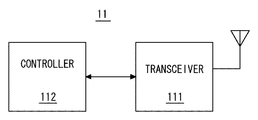
- the M2M terminal includes a wireless communication unit and a control unit.
- the wireless communication unit is configured to communicate with a base station.
- the control unit depends on whether or not a predetermined coverage improvement process is necessary, or whether or not the coverage improvement process is supported in at least one of the cell where the M2M terminal stays and its neighboring cells. Thus, at least one of the cell selection operation, the cell reselection operation, and the handover operation is changed.
- the base station apparatus includes a wireless communication unit and a control unit.
- the wireless communication unit is configured to communicate with an M2M terminal.
- the control unit supports the coverage improvement process according to whether or not a predetermined coverage improvement process is necessary for the M2M terminal, or at least one of a cell where the M2M terminal stays and its neighboring cells.
- the M2M terminal is configured to support the M2M terminal so that at least one of a cell selection operation, a cell reselection operation, and a handover operation by the M2M terminal is changed according to whether or not the M2M terminal is operating.
- the method performed by the M2M terminal is based on whether a predetermined coverage improvement process is necessary for the M2M terminal, or at least one of a cell in which the M2M terminal stays and its neighboring cells And changing at least one of a cell selection operation, a cell reselection operation, and a handover operation according to whether the coverage improvement processing is supported in FIG.
- the method performed by the base station apparatus is based on whether or not a predetermined coverage improvement process is necessary for the M2M terminal, or at least one of the cell in which the M2M terminal stays and its neighboring cells Supporting the M2M terminal such that at least one of a cell selection operation, a cell reselection operation, and a handover operation by the M2M terminal is changed according to whether the coverage improvement processing is supported in FIG. .
- the M2M terminal includes a wireless communication unit and a control unit.
- the wireless communication unit is configured to communicate with a base station.
- the control unit is configured to receive from the base station first and second values that are substituted into a first parameter used for cell reselection or handover.
- the first value is substituted into the first parameter in the control unit when a predetermined coverage improvement process is not necessary for the M2M terminal.
- the second value is substituted into the first parameter in the control unit when the predetermined coverage improvement processing is necessary for the M2M terminal.
- the base station apparatus includes a wireless communication unit and a control unit.
- the wireless communication unit is configured to communicate with an M2M terminal.
- the control unit is configured to notify the M2M terminal of first and second values to be substituted into a first parameter used by the M2M terminal for cell reselection or handover.
- the first value is substituted into the first parameter in the M2M terminal when a predetermined coverage improvement process is not necessary for the M2M terminal.
- the second value is substituted into the first parameter in the M2M terminal when the predetermined coverage improvement processing is necessary for the M2M terminal.
- the method performed by the M2M terminal includes receiving from the base station first and second values substituted for the first parameter used for cell reselection or handover.
- the first value is substituted into the first parameter in the M2M terminal when a predetermined coverage improvement process is not necessary for the M2M terminal.
- the second value is substituted into the first parameter in the M2M terminal when the predetermined coverage improvement processing is necessary for the M2M terminal.
- the method performed by the base station apparatus notifies the M2M terminal of first and second values to be substituted into a first parameter used by the M2M terminal for cell reselection or handover. Including doing.
- the first value is substituted into the first parameter in the M2M terminal when a predetermined coverage improvement process is not necessary for the M2M terminal.
- the second value is substituted into the first parameter in the M2M terminal when the predetermined coverage improvement processing is necessary for the M2M terminal.
- the base station apparatus includes a wireless communication unit and a control unit.
- the wireless communication unit is configured to communicate with an M2M terminal.
- the control unit is configured to notify the M2M terminal of a cell reselection parameter or a handover parameter adjusted according to whether a predetermined coverage improvement process is necessary for the M2M terminal.
- the method performed by the base station apparatus includes a cell reselection parameter or a handover parameter adjusted according to whether or not a predetermined coverage improvement process is required for the M2M terminal, to the M2M terminal. Including notification.
- the program includes a group of instructions (software code) for causing the computer to perform any of the methods described above when read by the computer.
- the MTC UE (M2M terminal) improved to allow the MTC UE that supports the special coverage improvement processing (eg, coverage improvement processing in ECM) to stay in an appropriate cell
- special coverage improvement processing eg, coverage improvement processing in ECM
- Base stations, methods, and programs can be provided. It should be noted that this effect is only one of a plurality of effects expected to be brought about by a plurality of embodiments disclosed in this specification.
- the plurality of embodiments described below can be implemented independently or in appropriate combinations.
- the plurality of embodiments have different novel features. Therefore, these multiple embodiments contribute to solving different purposes or problems and contribute to producing different effects.
- FIG. 1 shows a configuration example of a wireless communication system according to the present embodiment.
- the wireless communication system provides communication services such as voice communication and / or packet data communication.
- the wireless communication system includes an M2M terminal 11 (11A, 11B), a normal wireless terminal 12 that is not an M2M terminal, a base station 13, a base station 14, and a core network 15.
- the wireless terminal 12 is, for example, a mobile phone, a smartphone, a tablet computer, or a notebook PC.
- description will be given assuming that the wireless communication system is a 3GPP LTE system.
- the M2M terminal 11 corresponds to an MTC UE
- the wireless terminal 12 corresponds to a normal UE that is not an MTC UE
- the base stations 13 and 14 correspond to eNodeB (eNB)
- the core network 15 corresponds to an evolved packet core (EPC). ).
- FIG. 1 shows an example of a heterogeneous network (HetNet). That is, the eNB 13 manages the cell 130, and the eNB 14 manages the cell 140 that covers a narrower range than the cell 130.
- HetNet heterogeneous network
- the eNB 13 manages the cell 130
- the eNB 14 manages the cell 140 that covers a narrower range than the cell 130.
- eNB13 is a macro base station
- eNB14 is a pico base station.
- the present embodiment may be applied to a homogeneous network in which the cell 130 and the cell 140 have the same size.
- MTC UE 11A is fixedly installed near the boundary between cell 130 of eNB 13 and cell 140 of eNB 14, and it is assumed that the radio quality is relatively poor. If the MTC 11 UE 11A has limited capability or function (eg, maximum transmission power is small, the number of receiving antennas is small, does not support high-order modulation, etc.) compared to the normal UE 12, the radio quality further deteriorates. Expect to be prominent.
- the MTC UE 11B is mounted on a transport machine such as an automobile, a railway vehicle, or a ship, and thus has mobility. The MTC UE 11B is moving in the direction from the cell 130 to the cell 140.
- MTC-UE11B has a limited capability or function compared with normal UE12, a mobility characteristic may also be lower than normal terminal 12.
- FIG. Therefore, it is expected that the communication characteristics of the MTC UE 11 will be deteriorated by being significantly affected by the change in radio quality accompanying movement. Therefore, the MTC UE 11 (11A and 11B) according to the present embodiment supports the above-described Enhanced Coverage Mode (ECM), and is configured to perform coverage improvement processing in ECM.
- ECM Enhanced Coverage Mode
- the coverage improvement process in ECM can be said to be a process for improving or improving the communication characteristics (communication quality) of the MTC UE.
- the coverage improvement processing in ECM may include at least one of the following (a) to (d), and includes other processing different from these, for example, (e) to (f).
- A Repeat transmission of broadcast information by PBCH a predetermined number of times more than usual, (B) repeating PPACH (PRACH preamble) transmission a predetermined number of times; (C) repeating PDSCH transmission over multiple subframes; (D) repeating PUSCH transmission over multiple subframes; (E) Increasing the power spectral density (PSD) of PDSCH or PUSCH or both (PSD boosting), (F) Frequency hopping between repeated transmissions of PDSCH or PUSCH or both.
- PSD power spectral density
- the subframe is a unit constituting an LTE radio frame.
- the length of one radio frame is 10 milliseconds, and one radio frame is composed of 10 subframes. Therefore, the length of one subframe is 1 millisecond.
- One subframe includes 14 symbols in the time domain (single carrier frequency, division, multiple access (SC-FDMA) symbol in the uplink, or orthogonal frequency, division, multiplexing symbol (OFDM) in the downlink).
- SC-FDMA single carrier frequency, division, multiple access
- OFDM orthogonal frequency, division, multiplexing symbol
- the MTC-UE 11 determines whether the ECM (coverage improvement process in ECM) is necessary for the MTC-UE 11, or a cell (serving cell) in which the MTC-UE 11 stays (eg, the cell 130). ) And its neighboring cells (eg, cell 140) change at least one of cell selection operation, cell reselection operation, and handover operation depending on whether ECM is supported or not .
- the determination of whether ECM is necessary for MTCMTUE11 may be performed by MTC UE11 or may be performed by eNB13.
- the cell selection operation by the MTC UE 11 includes cell selection in a state where the MTC UE 11 is not camping on any cell (or eNB).
- the cell reselection operation by MTC UE11 includes a cell change that is performed after MTC UE11 has successfully camped on any cell.
- the handover operation by the MTC UE 11 includes a handover request transmission operation or a measurement report transmission operation that triggers the handover.
- execution of a handover is determined by a device on the network side (eg, base station), not a wireless terminal (UE), and the wireless terminal (UE)
- a measurement report for triggering is sent to the network (eg, base station).
- the measurement report generally indicates the radio quality of the serving cell where the radio terminal (UE) stays and the radio quality of the neighboring cell.
- the MTC UE 11 performs these operations (that is, cell selection operation, cell re-operation) when it determines that ECM (that is, coverage improvement processing in ECM) is necessary for itself and when it does not. At least one of the selection operation and the handover operation may be changed. Further, the MTC UE 11 may change at least one of these operations depending on whether or not it is executing ECM. Moreover, MTC
- the eNB 13 determines whether the ECM is required for the MTC ⁇ ⁇ UE 11 or at least one of the cell where the MTC UE 11 stays (eg, the cell 130) and its neighboring cells (eg, the cell 140). Depending on whether coverage improvement processing is supported, the MTC UE 11 may be supported so that at least one of the cell selection operation, cell reselection operation, and handover operation by the MTC UE 11 is changed.
- eNB14 may operate similarly to eNB13. For example, eNB13 may transmit the notification which shows that ECM is supported in the cell 130 (or eNB13) in the cell 130 so that MTC
- ECM coverage improvement processing in ECM
- operations performed in MTC UE11 are referred to as “normal” cell selection operation and “normal” cell selection operation. And “normal” handover operation.
- ECM coverage improvement processing in ECM
- the operations performed in MTC UE11 are “ECM specific” cell selection operation, “ECM specific” cell selection operation, and “ECM specific” handover.
- ECM-specific cell selection operation, ECM-specific cell reselection operation, and ECM-specific handover operation are such that MTC UE11 stays in a cell (or eNB) that supports ECM compared to a cell (or eNB) that does not support this. It may be adjusted so that it can be easily selected as a target to be (camped on) or handed over.
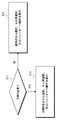
- FIG. 2 is a flowchart showing an example of the operation of the MTC UE 1 according to the present embodiment.
- MTC UE 11 recognizes whether or not ECM is required by itself. As already described, the necessity of ECM (or the necessity of execution of ECM) may be determined by the MTC UE 11 itself, or after being determined by the eNB 13, it is notified (instructed) from the eNB 13 to the MTC UE 11. Also good. And when ECM is not required in MTC
- UE11 performs the cell selection operation
- the MTC UE 11 determines whether or not ECM is supported in at least one of a cell (serving cell) (eg, cell 130) and a neighboring cell (eg, cell 140) in which the MTC UE 11 stays. You may recognize. When both the cell in which the user stays (eg, cell 130) and its neighboring cells (eg, cell 140) do not support ECM, the MTC UE 11 performs normal cell selection operation, cell reselection operation, or A handover operation may be performed.
- a cell serving cell
- a neighboring cell eg, cell 140
- the MTC UE 11 when at least one of the cell (eg, cell 130) and the neighboring cell (eg, cell 140) where it stays supports ECM, the MTC UE 11 performs cell selection operation and cell reselection peculiar to ECM. An operation or a handover operation may be performed.
- the MTC UE 11 changes at least one of the cell selection operation, the cell reselection operation, and the handover operation depending on whether or not the ECM is necessary for the MTC UE 11 itself.
- the MTC UE 11 performs the cell selection operation and the cell reselection depending on whether ECM is supported in at least one of the cell (eg, the cell 130) and the neighboring cell (eg, the cell 140) where the MTC UE 11 stays. At least one of the operation and the handover operation is changed. Therefore, when the ECM is required, the MTC11UE 11 stays in an appropriate cell (eg, a cell that supports the ECM, or a cell in which good communication characteristics are expected due to coverage improvement processing by the ECM). be able to.
- an appropriate cell eg, a cell that supports the ECM, or a cell in which good communication characteristics are expected due to coverage improvement processing by the ECM.
- ECM-specific cell selection operation ECM-specific cell reselection operation
- ECM-specific handover operation ECM-specific handover operation
- eNB eNB13, 14
- the MTC UE 11 determines whether each of the cells 130 and 140 (or eNBs 13 and 14) supports ECM in an ECM-specific operation (cell selection operation, cell reselection operation, or handover operation).
- ECM-specific operation cell selection operation, cell reselection operation, or handover operation.
- Each of the eNBs 13 and 14 transmits, to the cells 130 and 140, notifications indicating whether or not the ECM is supported in order to support the operation specific to the ECM in the MTC UE 11.
- the MTC UE 11 may receive a notification indicating whether or not the ECM is supported from the eNBs 13 and 14 and preferentially select a cell that supports the ECM.
- the MTC UE 11 may receive a notification indicating whether or not the ECM is supported from the eNBs 13 and 14 and report a list of cells to be preferentially selected to the eNB 13.
- eNB13 may select the cell which MTC UE11 should camp on based on the cell list reported from MTC UE11.
- the notification indicating whether or not the cell supports ECM is preferably transmitted through a broadcast channel that does not have a radio connection (RRC connection) with the eNB, that is, can be received by the idle MTC UE11.
- the notification is preferably broadcast information that can be received by the MTC UE 11 in the idle state (RRC_IDLE).
- BCCH Broadcast Control Channel
- BCCH Broadcast Control Channel
- the idle state is a state in which the radio connection between the UE and the eNB is released. Therefore, eNB does not have the information (UE context) regarding UE in an idle state.
- the position of the UE in the idle state is ascertained in units of position registration areas (e.g., eaves tracking area or routing area) in the core network.
- the core network can reach idle UEs by paging.
- UE in an idle state cannot perform unicast data transfer between eNBs. Therefore, an idle UE must transition to the connected state in order to perform unicast data transfer.
- idle states are (1) RRC_idle state in Universal Terrestrial Radio Access Network (UTRAN), (2) RRC_IDLE state in Evolved UTRAN (E-UTRAN), and (3) WiMAX (IEEE 802.16-2004), Mobile WiMAX (IEEE 802.16e-2005) and Idle state in WiMAX2 (IEEE 802.16m).
- UTRAN Universal Terrestrial Radio Access Network
- E-UTRAN Evolved UTRAN
- WiMAX IEEE 802.16-2004
- Mobile WiMAX IEEE 802.16e-2005
- Idle state in WiMAX2 IEEE 802.16m
- the connected state is a state in which the UE is connected to the eNB. Accordingly, the eNB holds information (UE context) on the connected UE.
- the position of the UE in the connected state is known in the tracking area (TA) unit (or base station unit) in the core network.
- TA tracking area
- a connected UE can perform unicast data transfer with an eNB.
- the UE context is maintained by the base station controller (Radio Network Controller (RNC)), but no dedicated channel is assigned to the UE in both uplink and downlink. State.
- RNC Radio Network Controller
- Examples of connected states include (1) RRC connected state in UTRAN, (2) RRC_CONNECTED state in E-UTRAN, and (3) Connected state in WiMAX, mobile WiMAX and WiMAX2.
- the RRC connected state in UTRAN includes CELL_DCH state, CELL_FACH state, CELL_PCH state, and URA_PCH state.
- the notification indicating whether or not the cell supports ECM is transmitted through a broadcast channel that can be received even in the MTC UE 11 in the idle state (RCC_IDLE) and the detached state (EMM-DEREGISTERED).
- the detached state represents the EPS EPS Mobility Management (EMM) state of LTE. That is, in the detached state (EMM-DEREGISTERED), the UE is not registered in the mobility management element (eg, Mobility Management Entity (MME)) in the core network (eg, PC EPC), and the mobility management of the UE is performed. Means no state.
- MME Mobility Management Entity
- the UE in the detached state is unreachable by paging from the core network (EPC) because the location information is not grasped in the MME.
- EPC core network
- the UE in the detached state has to perform initial cell selection (that is, initial cell search), establish a wireless connection with the eNB, and perform location registration with the core network (EPC).
- BCCH can also be received in MTC UE 11 in the idle state (RCC_IDLE) and in the detached state (EMM-DEREGISTERED).
- BCCH is mapped to Transport Channel (BCH) or Downlink Shared Channel (DL-SCH) which is a transport channel. Further, the BCH to which the BCCH is mapped is transmitted from each eNB using a Physical Broadcast Channel (PBCH) that is a physical channel.
- PBCH Physical Broadcast Channel
- the PBCH is transmitted using a predetermined resource block of the first subframe of each radio frame, and is updated at a period of 40 milliseconds (4 radio frame periods). Broadcast information transmitted using PBCH is Master Information Block (MIB). Accordingly, a notification indicating whether the cell supports ECM may be included in the MIB.
- MIB Master Information Block
- the DL-SCH to which the BCCH is mapped is transmitted from each eNB using a physical-downlink-shared channel (PDSCH).
- PDSCH physical-downlink-shared channel
- the normal use of PDSCH is transmission of user data, but transmission of BCCH (that is, broadcast information) is defined as one of special uses of PDSCH (special use).
- the resource block used for BCCH (broadcast information) is indicated by a control message in Physical Downlink Control Channel (PDCCH). Broadcast information transmitted using PDSCH is System Information Blocks (SIBs).
- SIBs System Information Blocks
- the notification indicating whether or not the cell supports ECM may be included in any of existing SIBs, for example, System Information Block 1 Type (SIB1).
- SIB1 System Information Block 1 Type
- the information may be included in a newly defined SIB for M2M, MTC UE, or ECM.
- the notification indicating whether or not the cell supports ECM may explicitly indicate whether or not ECM is supported by the cell 130 or 140 (or eNB 13 or 14) (eg, flag bit) or implicitly. May be shown.
- the implicit information may include setting information (ECM radio resource configuration or ECM configuration) for coverage improvement processing in ECM.
- the ECM configuration or ECM configuration may include, for example, at least one of the following information: ⁇ Setting information related to reception of broadcast information (PBCH), ⁇ Setting information related to receiving system information (System Information Block (SIB)), ⁇ Paging (Paging Channel (PCH)) setting information related to reception, ⁇ Setting information related to reception of downlink control information (Physical Downlink Control Channel (PDCCH)), ⁇ Setting information regarding reception of downlink data (PDSCH), ⁇ Setting information related to transmission of uplink control information (Physical Uplink Control Channel (PUCCH)), ⁇ Setting information related to uplink data (PUSCH) transmission, Setting information related to a radio quality measurement report (Measurement Report).
- PBCH Broadband
- SIB System Information Block
- PCH Paging Channel
- the setting information related to paging reception may be, for example, information indicating in which subframe paging is repeatedly transmitted.
- the setting information related to the reception of downlink control information (PDCCH) and the reception of downlink data (PDSCH) may be, for example, information indicating how many times they are repeatedly transmitted, or in which subframe is repeatedly transmitted. It may be information indicating.
- the setting information related to transmission of uplink control information (PUCCH) and uplink data (PUSCH) may be, for example, information indicating how many times they are repeatedly transmitted, or in which subframe is repeatedly transmitted. It may be information indicating.
- the setting information related to the radio quality measurement report may be an offset value or a threshold value for the radio quality measurement result (measurement result) applied during ECM execution, or the radio quality measurement application applied during ECM execution. It may be an offset value or a threshold value in determination of report of the measurement result.
- the MTC UE 11 uses the same judgment criteria (common cell selection operation, cell reselection operation, and handover operation) in each of the ECM-specific cell selection operation, cell reselection operation, and handover operation ( criterion).
- the value assigned to the first parameter that is, the cell selection parameter, the cell reselection parameter, or the handover parameter
- the second value to be assigned to the first parameter is that the cell (or eNB) that supports ECM stays (camps) compared to the cell (or eNB) that does not support this. on) or to be easily selected as a target to be handed over.
- the eNB 13 has both a first value to be substituted for the first parameter in the normal operation and a second value to be substituted for the first parameter in the ECM-specific operation. May be notified to MTC UE11.
- the eNB 13 adds an ECM-specific cell selection parameter (ECM) in addition to a normal cell selection parameter (normal cell-reselection (CR) parameters) and a normal handover parameter (normal handover (HO) parameters).
- ECM-specific cell selection parameter normal cell-reselection (CR) parameters
- HO normal handover parameter
- -specific (CR) parameters) and normal handover parameters ECM-specific (HO) parameters
- the MTC UE 11 receives normal cell selection and handover parameters and ECM-specific cell selection and handover parameters, and uses them for the cell selection operation and the handover operation in the MTC UE 11.
- the common criterion for cell selection operations may be LTE cell selection criterion S (S-criterion).
- S-criterion is defined in 3GPP TS 36.304 V9.11.0.
- the UE selects a cell in which both Srxlev and Squal exceed 0 dB.
- Srxlev and Squal are defined by the following equations (1) and (2).
- Q rxlevmeas is the measured received power level value of the cell.
- Q rxlevmin is the minimum received cell power level value required.
- Q qualmeas is the received quality value of the measured cell.
- Q qualmin is the required reception quality value of the minimum cell.
- Q rxlevoffset and Q qualoffset are offset parameters to avoid ping-pong in cell selection.
- Pcompensation is defined as max (P EMAX -P powerclass , 0).
- P EMAX is the maximum transmission power level allowed for the UE in the cell.
- P powerclass is the maximum transmission power level of the UE according to the UE power class.
- the eNB 13 may make a value to be substituted for Q rxlevoffset or Q qualoffset or both different between normal operation and ECM-specific operation.
- the common criterion for cell reselection operation may be LTE cell-ranking criterion R (R-criterion).
- R-criterion is defined in 3GPP TS 36.304 V9.11.0.
- the UE calculates the R metric (Rs) of the serving cell and the R metric (Rn) of the neighbor cell according to the following equations (3) and (4).
- R s and R n mean the ranking of the serving cell and the neighboring cell. The UE selects the highest ranked cell.
- Q meas, s and Q meas, n are measured qualities of the serving cell and the neighboring cell, respectively.
- Q hyst, s is a hysteresis parameter applied to the quality of the serving cell.
- Qoffset is an offset parameter applied to the quality of neighboring cells.
- Qoffset s, n is an offset value applied to a combination of a serving cell and an adjacent cell.
- Qoffset freqency is a frequency-specific offset.
- the eNB 13 may make a value to be substituted for Q hyst, s or Qoffset or both different between a normal operation and an ECM-specific operation.
- the common criterion for the handover operation may be a transmission condition for a handover request by the MTC UE 11 or a transmission condition for a measurement report that triggers a handover. More specifically, the common criterion for handover operations may be LTE measurement report triggering conditions for Events A1 to A6.
- Measurement report triggering condition for Events A1 to A6 is a measurement report transmission condition by UE, and is defined in 3GPP TS 36.331 V11.6.0.
- the essential part of the measurement report event defined as Event A3 (Neighbor becomes offset better than serving) is represented by the following equation (5).
- Ms and Mn are the measured qualities of the serving cell and the neighboring cell, respectively. Ofs and Ofn are frequency-specific offsets of the serving cell and the neighboring cell, respectively. Ofs and Ofn correspond to “offsetFreq” defined in measObjectEUTRA information element (information element (IE)).
- Ocs and Ocn are cell-specific offsets of the serving cell and the neighboring cell, respectively.
- Ocs and Ocn correspond to “cellIndividualOffset” defined in the measObjectEUTRA information element.
- Hys is a hysteresis parameter for Event A3.
- Hys corresponds to “hysteresis” defined in the reportConfigEUTRA information element.
- Off is an offset parameter for Event A3.
- Off corresponds to “a3-Offset” defined in the reportConfigEUTRA information element.
- the eNB 13 may make a value to be assigned to Ofs, Ofn, Ocs, Ocn, Hys, or Off, or any combination thereof different between normal operation and ECM-specific operation.
- the eNB 13 gives the MTC UE 11 the cell reselection parameter or the handover parameter adjusted according to whether or not ECM (that is, coverage improvement processing in ECM) is necessary for the MTC UE 11. Notice.
- the MTC UE 11 uses the adjusted cell reselection parameter or handover parameter received from the eNB 13 in the ECM-specific cell reselection operation or handover operation.
- the third example described above is that the MTC UE 11 does not have to receive both the normal first value and the ECM-specific second value for a specific cell reselection parameter or handover parameter. It should be noted that it differs from the second example.
- MTC UE 11 when eCM 13 requires ECM for MTC UE 11, MTC UE 11 should camp on a cell (or eNB) that supports ECM compared to a cell (or eNB) that does not support this.
- the cell selection parameter or the handover parameter may be adjusted so that it can be easily selected as a target to be handed over.
- the eNB 13 adjusts the value to be assigned to the Q hyst, s and / or Qoffset used in the above R-criterion according to whether ECM is required for the MTC UE 11 or not. Also good.
- the eNB 13 sets values to be substituted for Ofs, Ofn, Ocs, Ocn, Hys, or Off, or any combination thereof used for determination of the measurement report event (eg, Event A3) of the MTC UE 11. Therefore, it may be adjusted according to whether ECM is necessary.
- FIG. 4 is a flowchart showing an example of the operation of the eNB 13 regarding the third example.
- the eNB 134 recognizes whether or not ECM is necessary for the MTC UE 11 staying in the cell 130. As already described, whether ECM is necessary (or whether ECM is necessary) may be determined by the MTC UE 11 or may be determined by the eNB 13. The eNB 13 may receive from the MTC UE 11 a notification that explicitly or implicitly indicates that the ECM is required or is being executed in the MTC UE 11. If no ECM is required for MTC UE 11 (NO in step S31), the eNB 13 notifies the MTC UE 11 of normal cell selection parameters and / or normal handover parameters (step S32). On the other hand, when ECM is required for MTC UE11 (YES in step S32), the eNB 13 sets the cell selection parameter adjusted for ECM and / or the handover parameter adjusted for ECM to MTC UE11. (Step S33).
- the configuration example of the wireless communication system according to the present embodiment may be the same as that of FIG. 1 described with respect to the first embodiment.
- an example of detailed procedures related to the ECM-specific cell reselection operation and the ECM-specific handover operation described in the first embodiment will be described.
- the MTC UE 21 receives notifications from the eNBs 23 and 24 indicating whether ECM is supported in the respective cells of the eNBs 23 and 24.
- the cell of eNB 23 is called a first cell (Cell (1)
- the cell of eNB 24 is called a second cell (Cell 2).
- the MTC UE 21 determines whether or not each of the first and second cells (or eNBs 23 and 24) supports ECM in an ECM-specific operation (cell selection operation, cell reselection operation, or handover operation).
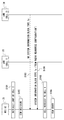
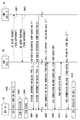
- FIG. 5 is a sequence diagram showing an example of operations of the MTC UE 21, eNB 23, and eNB 24 according to the present embodiment. Note that FIG. 5 shows only messages necessary for the description of the present embodiment, and does not show some messages included in the procedure defined by LTE.
- the cell (Cell ⁇ ⁇ 1) of the eNB 23 supports ECM, but the cell (Cell 2) of the eNB 24 does not support ECM.
- the MTC UE 21 determines whether or not the ECM is necessary for the MTC UE 21 (or whether or not to execute the ECM) by itself, and when it is determined to execute the ECM, the cell that supports the ECM (or The eNB that manages the cell is preferentially selected.
- step S101 the MTC UE 21 is in an idle state (RRC_IDLE) as an initial state, and decides to stay in the eNB 24 cell (second cell (Cell 2)) based on the normal cell selection criteria (Initially 2).
- step S102 MTC
- a periodic or aperiodic communication opportunity for example, a periodic communication permission period, generation of aperiodic uplink transmission data, or reception of paging
- step S102 If the MTC UE 21 determines in step S102 that ECM is necessary, the MTC UE 21 confirms whether or not the ECM is supported in the staying cell (that is, Cell IV 2).
- step S103 MTC
- step S105 the MTC UE 21 reselects the cell (Cell 1) of the eNB 23 and stays in Cell 1 (Cell reselect 1 to Cell 1).
- step S106 the MTC UE 21 starts executing ECM (SECM start).
- the MTC UE 21 preferentially selects a cell supporting the ECM when the ECM is necessary. Therefore, the communication characteristics of MTC UE 21 are improved.
- MTC UE21 selects either the currently staying cell (Cell ⁇ 2) or the neighboring cell (Cell 1) that supports ECM. Whether to select may be determined according to any of the following. As an example, when the radio quality of a neighboring cell (neighboring cell) that supports ECM is better than the radio quality of a staying cell (serving cell) by a predetermined offset value, the MTC UE 21 moves to a neighboring cell that supports ECM ( Cell re-select).
- the MTC-UE 21 has a radio quality of a staying cell (serving cell) smaller than a first predetermined threshold, and a radio quality of a neighboring cell (neighboring cell) supporting ECM is lower than a second predetermined threshold. If larger, move to neighboring cell that supports ECM (cell reselection).
- the above-described offset value or threshold used for cell reselection may be broadcast as system information (SIB) from the eNB 23, or in the MTC-UE 21 as dedicated information (dedicated information). Or may be set in advance in MTC UE21.
- SIB system information
- dedicated information dedicated information
- the eNB 23 may transmit a cell reselection parameter specific to ECM using SIB 1x shown in step S104.
- ECM-specific cell reselection parameters include, for example, cellReselectionInfoCommon, cellReselectionServingFreqInfo, intraFreqCellReselectionInfo, q-QualMin, and threshServingLowQ included in SIB3, IntraFreqNeighCellInfo included in SIB4, and InterFreqCarrierFreqInfo and InterFreqNeigh included in SIB5 Good.
- the eNB 23 may transmit both a first value to be substituted for these cell reselection parameters in a normal cell reselection operation and a second value to be substituted in an ECM-specific cell selection operation. .
- ECM coverage improvement processing by ECM
- the determination of the necessity of ECM (coverage improvement processing in ECM) in the MTC-UE 21 is, for example, the access factor (Access-cause), terminal capability (UE-capability), terminal information (UE-information), communication characteristics (Communication-performance) of the MTC-UE 21 ) And radio quality (Radio quality) may be taken into consideration.
- access factors specific examples of access factors, terminal capabilities, terminal information, communication characteristics, and wireless quality are described below. However, the contents of access factors, terminal capabilities, terminal information, communication characteristics, and wireless quality are not limited to these examples.
- the access factor may include at least one of the following two, for example.
- ⁇ RRC connection establishment purpose (Establishment cause) ⁇ Service type
- RRC connection establishment is, for example, (a) emergency call (emergency), (b) high priority access (highPriorityAccess), (c) access for terminal termination communication (mt-Access), signaling by terminal transmission ( mo-Signalling), (d) Data transmission by terminal transmission (mo-Data), (e) Delay-tolerant access (delayTolerantAccess), (f) Low priority access (lowPriorityAccess), (g) Access for small data communication (SmallDataAccess), (h) Access for small packet communication (smallPacketAccess), (i) Limited access (limitedAccess), (j) Access for limited service (limitedService), (k) M2M type access (M2mAccess) or (l) ECM access (ecmAccess) may be specified.
- the service type may specify, for example, (a) real-time service, (b) non-real-time service, or (c) M2M type communication.
- the terminal capability may include at least one of the following three, for example. ⁇ Radio access capability ⁇ Device capability ⁇ Device category (UE category)
- the radio access capability is, for example, (a) information indicating whether the UE supports a terminal function defined by 3GPP LTE (for example, a flag bit), or (b) whether the UE supports ECM. May be included.
- an information element (Information Element (IE)) “EcmSupport” may be defined.
- IE Information Element
- a true value of “EcmSupport” indicates that ECM is supported (Supported), and a false value indicates that ECM is not supported (NotSupported).
- an IE “EnhancedCoverageMode” may be defined. For example, when EcmSupport is set to Supported, this indicates that the UE supports ECM. Further, when the UE does not support ECM, EcmSupport may be set as NotSupported, or unsupported may be indicated by not transmitting the IE.
- the device capability is, for example, (a) information indicating that the UE is MTC UE, (b) information indicating that the UE communication performance is limited (compared to the normal UE), or (c) specific information Information indicating that only communication (for example, M2M type communication) is performed may be included.
- the terminal category may include (a) information indicating any one of terminal categories defined by 3GPP LTE, or (b) information indicating any access class (Access Class) defined by 3GPP LTE. Good.
- the terminal category or access class may be newly defined for MTC-UE that performs M2M type communication. For example, a new category (eg, category 0) for MTC UE whose function is restricted to be implemented at low cost may be specified, or it is assumed that communication is performed at low frequency or only low frequency communication is performed.
- a new access class (AC) may be defined.
- the terminal information may include at least one of the following three, for example.
- -Terminal type (UE type)
- Device type ⁇ Terminal context (UE context)
- the terminal type is, for example, (a) information indicating whether the UE is a normal UE (non-MTC-UE) or MTC-UE, and (b) information indicating whether the UE moves (or the UE does not move). Or (c) information indicating whether or not there is power supply to the UE.
- the device type is, for example, (a) information indicating the type of Operating System (OS) installed in the UE, or (b) information indicating the type of M2M type communication performed by the UE (that is, M2M subcategory information). May be included.
- OS Operating System
- M2M subcategory information M2M subcategory information
- the terminal context includes, for example, (a) information on the terminal capability described above, (b) RRC control information set in the UE (information included in RadioResrouceConfigCommon IE and RaioResourceConfigDediacted IE), and (c) information on mobility of the UE (mobility) information), (d) information indicating whether or not the UE is executing ECM (ECM execution) information), or (e) indicating whether or not the UE has previously executed ECM (for example, when it was previously RRC_CONNECTED) Information (ECM status information) may be included.
- ECM execution ECM
- ECM status information ECM status information
- the communication characteristics may include at least one of the following two, for example.
- Performance measurement result eg, L2 measurement
- Statistical communication quality eg, KPI
- the characteristic measurement results are: (a) block error rate measurement result (Block (Error Rate), (b) packet error rate measurement result (Packet Error Rate), (c) throughput measurement result (eg, Scheduled IP Throughput), (d) The packet loss measurement result (Packet Loss Rate) or (e) the packet discard measurement result (Packet Discard Rate) may be included.
- the communication statistical quality is, for example, (a) the number of handover attempts or the handover trial rate, (b) the handover success rate or the handover failure rate, (c) the communication interval or communication frequency, (d) the packet generation interval or packet generation frequency, ( e) packet arrival interval (packet inter-arrival time) or packet arrival frequency (packet inter-arrival rate), (f) access interval or access frequency, or (g) interval or frequency of RRC connection establishment or NAS connection establishment May be included.
- the radio quality may include at least one of the following two, for example. ⁇ Reference Signal (RS) received quality -Channel quality index (CQI)
- the reception quality of the reference signal may include, for example, downlink RS reception power (RSRP), (b) reception quality (RSRQ), or reception power strength (RSSI) at the UE.
- RSRP downlink RS reception power
- RSSI reception power strength
- the operation executed on the ECM may be defined in advance in multiple stages (multilevel).
- the MTC UE 21 not only determines whether or not ECM is necessary (or whether or not to execute ECM), but also what level (level) of operation is required (or which level of operation is performed). It is also possible to determine whether or not to execute, and report the determined stage (level) to the eNB 23.
- the eNB 23 may allow the ECM operation stage (level) reported from the MTC UE 21 based on the notification from the MTC ⁇ UE 21, or a stage different from the ECM operation stage (level) reported from the MTC UE 21.
- the determined stage may be notified to the MTC UE 21. That is, the eNB 23 may have the authority to finally determine the ECM operation stage that the MTC UE 21 should perform.
- the MTC-UE 21 may continue to execute the ECM even after the RRC_CONNECTED is changed to RRC_IDLE. Good.
- UE21 determines that MTC
- MTC UE 21 first determines whether or not ECM is necessary (or whether or not to execute ECM), and then determines whether or not to continue to execute ECM based on its own communication characteristics or radio quality. You may judge. For example, MTC
- the configuration example of the wireless communication system according to the present embodiment may be the same as that of FIG. 1 described with respect to the first embodiment.
- an example of detailed procedures related to the ECM-specific cell reselection operation and the ECM-specific handover operation described in the first embodiment will be described.
- the eNB 33 determines whether or not ECM is necessary for the MTC UE 31, in other words, whether or not to cause the MTC UE 31 to execute ECM.
- the MTC UE 31 performs an ECM-specific cell reselection operation when instructed by the eNB 33 to execute ECM.
- the ECM-specific cell reselection operation of the present embodiment includes preferentially selecting a cell (or an eNB that manages the cell) that supports ECM. More specifically, the ECM-specific cell reselection operation of this embodiment supports ECM after a connected state (RRC_CONNECTED) is changed to an idle state (RRC_IDLE) in a cell that supports ECM. Including continuing to stay in the cell and not reselecting another cell.
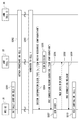
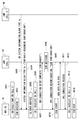
- FIG. 6 is a sequence diagram showing an example of operations of the MTC UE 31, eNB 33, and eNB 34 according to the present embodiment. Note that FIG. 6 shows only messages necessary for the description of the present embodiment, and does not show some messages included in the procedure defined by LTE. In the example of FIG. 6, the eNB 33 cell (Cell ⁇ 1) supports ECM, but the eNB34 cell (Cell 2) does not support ECM.
- step S201 the MTC UE 31 is in the idle state (RRC_IDLE) as an initial state, and decides to stay in the eNB 34 cell (second cell (Cell 2)) based on the normal cell selection criteria (Initially 2).
- step S202 the MTC UE 31 transmits and receives a message necessary for attaching to the network, and completes attachment (Attach procedure on Cell 2).
- step S203 the eNB 34 determines that the MTC-UE 31 in the connected state (RRC_CONNECTED) is to be handed over to the cell (Cell 1) of the eNB 33, and the MTC-UE 31 is handed over to the Cell-1.
- the MTC UE 31 may receive the system information when the radio resource setting information for ECM (ECM radio resource config) is transmitted as the system information in the Cell 1 (step S204: System Information Block) Type 1x).
- step S205 the eNB 33 determines whether or not coverage improvement processing in the ECM is necessary for the MTC UE 31, in other words, whether or not the MTC UE 31 executes the ECM (ECM decision).
- FIG. 6 shows a case where ECM is necessary for MTC UE 31. Therefore, in step S206, the eNB 33 transmits ECM setting information (ECM configuration) to the MTC UE 31 (RRC Connection Reconfiguration).
- ECM setting information ECM configuration
- the eNB 33 may include information that explicitly instructs the MTC UE 21 to execute ECM.
- step S207 the MTC UE 31 starts executing ECM according to the radio resource setting information and the ECM setting information (ECM start).
- step S208 MTC
- step S209 the eNB 33 transmits an instruction for moving the MTC UE 31 to the idle state (RRC_IDLE) to the MTC UE 31 (RRC Connection Release).
- the MTC UE 31 changes from the connected state (RRC_CONNECTED) to the idle state (RRC_IDLE).
- step S210 MTC UE1 continues to stay in the cell (Cell 1) of the eNB 33 that supports ECM as an ECM-specific cell reselection operation (Keep ⁇ ⁇ camping on Cell 1).
- the MTC UE 31 may continue ECM even after becoming RRC_IDLE.
- the MTC UE 31 may suspend the ECM at RRC_IDLE and resume the ECM when it becomes RRC_CONNECTED or after it becomes RRC_CONNECTED.
- the MTC UE 31 preferentially selects a cell supporting the ECM when instructed from the eNB 33 that the ECM needs to be executed. Therefore, the communication characteristics of MTC UE 31 are improved.
- the configuration example of the wireless communication system according to the present embodiment may be the same as that of FIG. 1 described with respect to the first embodiment.
- an example of detailed procedures related to the ECM-specific cell reselection operation and the ECM-specific handover operation described in the first embodiment will be described.
- the MTC UE 41 requests the eNB to preferentially stay in an appropriate cell among cells that support ECM (or an eNB that manages this). For example, the MTC 41 UE 41 may select at least one cell suitable for staying and may transmit a list indicating at least one suitable cell to the eNB.
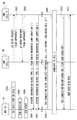
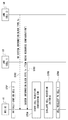
- FIG. 7 is a sequence diagram illustrating an example of operations of the MTC UE 41, eNB 43, and eNB 44 according to the present embodiment. Note that FIG. 7 shows only messages necessary for the description of the present embodiment, and illustration of some messages included in the procedure defined by LTE is omitted. In the example of FIG. 7, both the cell of eNB 43 (Cell 1) and the cell of eNB44 (Cell 2) support ECM. The MTC UE 41 determines whether or not ECM is necessary for the MTC UE 41 (or whether or not to execute ECM).
- step S301 the eNB 43 directly transmits a request for establishing an interface (X2 interface) to the eNB 44 (X2 Setup Request).
- step S302 the eNB 44 transmits an X2 interface establishment response to the eNB 43 (X2 Setup Response).
- the message transmitted in steps S301 and S302 may include information indicating that ECM is supported (for example, ECM supported).
- the information indicating that ECM is supported may be in eNB units or cell units (that is, serving cell units).
- step S303 the MTC UE 41 is in an idle state (RRC_IDLE) as an initial state, and decides to stay in the cell of the eNB 43 (first cell (Cell 1)) based on the normal cell selection criterion (Initially camp on Cell). 1).
- step S304 the MTC UE 41 determines whether or not ECM needs to be executed (ECM decision).
- FIG. 6 shows a case where ECM is required in MTC UE 41. Therefore, in step S305, MTC
- the MTC UE 41 confirms whether or not ECM is supported in the neighboring cell (for example, the cell (Cell 2) of the eNB 44). If radio resource configuration information (ECM radio resource configuration-1) for ECM is transmitted as system information in the cell (Cell 2) of the eNB44, the MTC UE41 may receive the information (System Information Block Type) 1x). Or eNB43 may add the information of whether ECM is supported to the list
- ECM radio resource configuration-1 for ECM is transmitted as system information in the cell (Cell 2) of the eNB44
- the MTC UE41 may receive the information (System Information Block Type) 1x). Or eNB43 may add the information of whether ECM is supported to the list
- the MTC UE 41 determines whether there is an appropriate (preferred) cell for performing communication while executing ECM in addition to the current serving cell (that is, the cell (Cell 1) of the eNB 43). When there is an appropriate cell, the MTC UE 41 reports to the eNB 43 a list of cells (Preferred Cell List) that the MTC UE 41 preferably stays with using a message indicating the completion of establishment of the radio connection (RRC connection). (Step S308: RRC Connection Setup Complete).
- the list of preferred cells to stay (Preferred Cell List) may include a cell identifier (PCI or ECGI) or frequency information (EUTRA Absolute Radio Frequency Channel Number (EARFCN)) for cell identification. Further, the cell list may indicate the radio quality (RSRP or RSRQ) of each cell.
- the MTC UE 41 may report the list of the cells to the eNB 43 using a message (RRC Connection Request) for requesting establishment of a wireless connection.
- the eNB 43 receives a cell list (Preferred Cell List) from the MTC UE 41 and determines whether to hand over the MTC UE 41 to one of the cells that the MTC UE 41 claims to be preferable.
- FIG. 7 illustrates a case where handover of the eNB 44 to the cell (Cell 2) is determined. Therefore, in step S309, eNB43 signals with eNB44 and MTC
- ECM activated information
- step S310 the eNB 44 transmits ECM setting information (ECM configuration) to the MTC UE 41 (RRC Connection Reconfiguration).
- ECM setting information ECM configuration
- the eNB 44 sends radio resource setting information (Radio (resource configuration) (also called HandoverHandCommand) related to Cell 2 including ECM setting information (ECM configuration) to the eNB43. You may send it.
- Radio resource configuration
- ECM setting information ECM configuration
- the MTC UE 41 receives the ECM configuration regarding the Cell 2 of the eNB 44 via the eNB 43.
- step S311 the MTC UE 41 performs data communication accompanied by coverage improvement processing in ECM according to the radio resource setting information and the ECM setting information (M2M data with ECM).
- the MTC UE 41 reports to the serving eNB 43 a cell that supports ECM preferable for the MTC UE 41. And eNB43 performs a hand-over in order to make MTC UE41 stay in a cell preferable for MTC UE41. Therefore, it can be expected that the communication characteristics of MTC UE 41 are improved.
- the eNB 43 may adjust the offset value or threshold applied to the report condition (for example, Event A3 or A5) of the radio quality measurement report (Measurement report), that is, the handover parameter to a value specific to ECM.
- the report condition for example, Event A3 or A5
- the radio quality measurement report Measurement report
- the ECM-specific handover parameters include, for example, offset values (for example, a3-offset) and threshold values (for example, a1-Threshold) in various events (Events-A1-A6) included in the ReportConfigEUTRA-information element (IE), and MeasObjectEUTRA-information element (IE ) May include at least one of offset values (for example, offsetFreq and cellIndividualOffset).
- the eNB 43 may transmit both the first value to be substituted for the handover parameter in the normal handover operation and the second value to be substituted for the handover parameter in the ECM-specific handover operation.
- the MTC UE 41 may perform a radio quality measurement report (Measurement report) based on the ECM-specific handover parameter (second value) when executing ECM.
- FIG. 8 is a sequence diagram showing another example of the operation of the MTC UE 41, eNB 43, and eNB 44 according to the present embodiment.
- the eNB 43 starts the handover of the MTC-UE 41 in order to make the MTC-UE 41 stay in a cell preferable for the MTC-UE 41.
- the eNB 43 uses the cell reselection operation of the MTC UE 41 to make the MTC UE 41 stay in a cell preferable for the MTC UE 41.
- FIG. 8 shows only messages necessary for the description of the present embodiment, and does not show some messages included in the procedure defined by LTE.
- both the cell of eNB 43 (Cell 1) and the cell of eNB 44 (Cell EC 2) support ECM.
- step S409 eNB43 transmits ECM setting information (ECM configuration) to MTC UE41 (RRC Connection Reconfiguration).
- ECM setting information ECM configuration
- UE41 performs the data communication accompanying the coverage improvement process in ECM according to radio
- the eNB 43 transmits a radio connection (RRC connection) release instruction to the MTC UE 41 (RRC connection Release).
- the instruction in step S411 may include information on the priority (for example, Dedicated cell priority for Cell 2) for other cells (for example, the cell (Cell 2) of eNB44) that preferably supports ECM for MTC UE2. Good.
- the information on the priority may be information indicating that a predetermined cell or frequency is preferentially selected when the MTC UE 41 performs cell reselection, or information indicating that a predetermined cell or frequency is necessarily selected. But you can. Instead, the information on the priority may indicate a cell reselection parameter applied to a predetermined cell or frequency.
- the information on the priority is only when MTC-UE 41 is executing ECM, only when MTC-UE 41 stays in a cell that supports ECM, or only when MTC-UE 41 stays in a cell that does not support ECM, etc. May be used selectively in certain situations.
- step S412 the MTC UE 41 performs cell reselection in the idle state (RRC_IDLE), and changes the staying cell to the cell (Cell 2) of the eNB 44 (Cell Reselect 2 Cell 2).
- the MTC UE 41 reports to the serving eNB 43 a cell that supports ECM preferable for the MTC UE 41. And eNB43 controls the cell reselection operation
- the configuration example of the wireless communication system according to the present embodiment may be the same as that of FIG. 1 described with respect to the first embodiment.
- an example of detailed procedures related to the ECM-specific cell reselection operation and the ECM-specific handover operation described in the first embodiment will be described.
- the MTC UE 51 When the ETC is executed, the MTC UE 51 according to the present embodiment changes the staying cell between the idle state (RRC_IDLE) and the connected state (RC_CONNECTED).
- FIG. 9 is a sequence diagram illustrating an example of operations of the MTC UE 51, the eNB 53, and the eNB 54 according to the present embodiment. Note that FIG. 9 shows only messages necessary for the description of the present embodiment, and does not show some messages included in the procedure defined by LTE. In the example of FIG. 9, the eNB 53 cell (CellNB1) supports ECM, but the eNB54 cell (Cell 2) does not support ECM. The MTC UE 51 determines whether or not the ECM is necessary for the MTC UE 51 (or whether or not to execute the ECM).
- the MTC UE 51 preferentially selects a cell that supports ECM (or an eNB that manages the cell).
- step S501 the MTC UE 51 is in an idle state (RRC_IDLE) as an initial state, and decides to stay in the cell of the eNB 54 (second cell (Cell 2)) based on the normal cell selection criteria (Initially camp on Cell). 2).
- step S502 MTC
- ECM ECM
- the MTC UE 51 performs the determination in step S502 while in the idle state (RRC_IDLE).
- a periodic or aperiodic communication opportunity for example, periodic communication permission period, generation of aperiodic uplink transmission data, or reception of paging
- the MTC UE 51 receives a step S502. The determination may be made.
- step S502 If the MTC UE 51 determines in step S502 that ECM is necessary, the MTC UE 51 confirms whether or not the ECM is supported in the staying cell (that is, Cell IV 2). In step S503, the MTC UE 51 recognizes that ECM is not supported because the ECM radio resource configuration information (ECM radio resource configuration) is not broadcasted in Cell 2 (No System Information Block 1 Type). Therefore, MTC UE 51 confirms whether or not ECM is supported in the neighboring cell (for example, Cell 1) (step S504).
- ECM radio resource configuration information ECM radio resource configuration information
- step S505 uplink data to be transmitted is generated.
- uplink data to be transmitted arrives at the MTC UE 51 (UL data arrivals).
- the MTC UE 51 reselects a Cell 1 that supports ECM (or another cell that supports ECM).
- step S507 the MTC UE 51 starts executing ECM.
- step S505 may be another transmission opportunity different from the generation of uplink data (for example, the arrival of a periodic communication permission period or the reception of paging).
- step S508 the MTC UE 51 transmits and receives a message for establishing a wireless connection (RRC connection) to and from the eNB 53, and finally transmits a completion message indicating completion of establishment of the wireless connection (RRC Connection Setup Complete).
- the completion message in step S508 may include information (for example, ECM activated) indicating that MTC UE 51 is executing ECM.
- step S509 the eNB 53 transmits ECM configuration information (ECM configuration) to the MTC UE 51 in response to receiving the completion message in step S508 indicating that the MTC UE 51 is executing ECM (RRC Connection Reconfiguration).
- ECM configuration information ECM configuration
- UE51 performs the data communication accompanying the coverage improvement process in ECM according to radio
- M2M ECM setting information
- the eNB 53 may determine whether or not an ECM is really necessary for the MTC UE 51. That is, the eNB 53 may verify the validity of the ECM necessity determination in the MTC UE 51 and cancel the invalid determination.
- step S511 the eNB 53 transmits an instruction to release the radio connection (RRC connection) to the MTC UE 51 in order to move the MTC UE 51 to the idle state (RRC_IDLE) (RRC Connection Release).
- step S512 the MTC UE 51 enters an idle state (RRC_IDLE) and reselects the cell (Cell 2) of the eNB 54 (Cell reselect 2 to Cell 2).
- step S513 the MTC UE 51 interrupts (or cancels) the execution of the ECM (ECM stop).
- MTC UE 51 may start ECM after receiving ECM configuration information (ECM configuration) in step S509 without starting ECM at the time of step S507.
- ECM configuration information ECM configuration information
- the completion message in step S508 may include a notification (for example, ECM request) indicating that ECM is required.
- the MTC UE 51 when the MTC UE 51 needs to execute the ECM and is in the connected state (RRC_CONNECTED), the MTC UE 51 reselects a cell supporting the ECM. Accordingly, the communication characteristics of the MTC UE 51, particularly in the connected state, are improved.
- FIG. 10 is a sequence diagram showing another example of operations of the MTC UE 51, eNB 53, and eNB 54 according to the present embodiment.
- the MTC UE 51 itself determines whether or not ECM is necessary for the MTC UE 51.
- the eNB 53 determines whether ECM is necessary for the MTC UE 51.
- FIG. 10 shows only messages necessary for the description of the present embodiment, and illustration of some messages included in the procedure defined by LTE is omitted.
- the eNB 53 cell (Cell 1) supports ECM
- the eNB54 cell (Cell 2) does not support ECM.
- step S607 the MTC UE 51 transmits and receives a message for establishing a wireless connection (RRC connection) to and from the eNB 53, and finally transmits a completion message indicating completion of establishment of the wireless connection (RRC Connection Setup Complete).
- the completion message in step S607 may include a notification (for example, ECM request) indicating that ECM is required in MTC UE51.
- step S608 the eNB 53 determines whether or not ECM is necessary for the MTC51UE 51 (or whether or not the MTC UE 51 executes ECM) (ECM decision).
- ECM decision the eNB 53 determines whether or not ECM is necessary for the MTC51UE 51 (or whether or not the MTC UE 51 executes ECM) (ECM decision).
- FIG. 10 shows a case where ECM is required for MTC UE 51. Therefore, in step S609, the eNB 53 transmits ECM setting information (ECM configuration) to the MTC UE 51 (RRC Connection Reconfiguration).
- ECM configuration ECM setting information
- step S610 the MTC UE 51 starts ECM execution according to the radio resource setting information and the ECM setting information (ECM start).
- step S611 the MTC UE 51 performs data communication involving coverage improvement processing in ECM (M2M data with ECM).
- step S612 the eNB 53 transmits an instruction to release the wireless connection (RRC connection) to the MTC UE 51 in order to move the MTC UE 51 to the idle state (RRC_IDLE) (RRC Connection Release).
- RRC_IDLE idle state
- UE51 will be in an idle state (RRC_IDLE), and will reselect the cell (Cell
- step S614 the MTC UE 51 interrupts (or stops) the ECM execution (ECM stop).
- the MTC UE 51 reselects a cell supporting the ECM when it is necessary to execute the ECM and is in the connected state (RRC_CONNECTED). Accordingly, the communication characteristics of the MTC UE 51, particularly in the connected state, are improved.
- the configuration example of the wireless communication system according to the present embodiment may be the same as that of FIG. 1 described with respect to the first embodiment.
- an example of detailed procedures related to the ECM-specific cell reselection operation and the ECM-specific handover operation described in the first embodiment will be described.
- the MTC UE 61 supports ECM in at least one of a cell (serving cell) (eg, eNB 63 cell) and a neighboring cell (eg, eNB 64 cell) in which the MTC UE 61 stays.
- a cell selection operation eg, eNB 63 cell
- a neighboring cell eg, eNB 64 cell
- at least one of a cell selection operation, a cell reselection operation, and a handover operation is changed. That is, in this embodiment, it is determined in MTC UE 61 or eNB (eNB 64 or 65) that ECM is necessary for MTC UE 61.
- the cell selection operation, cell reselection operation, and handover operation in MTC UE 61 It is not an essential condition for changing at least one of the above.
- FIG. 11 is a sequence diagram illustrating an example of operations of the MTC UE 61, eNB 63, and eNB 64 according to the present embodiment. Note that FIG. 11 shows only messages necessary for the description of the present embodiment, and does not show some messages included in the procedure defined by LTE. In the example of FIG. 11, the eNB 63 cell (CellNB1) supports ECM, but the eNB64 cell (Cell 2) does not support ECM.
- step S701 the MTC UE 61 is in the idle state (RRC_IDLE) as an initial state, and decides to stay in the eNB64 cell (second cell (Cell 2)) based on the normal cell selection criteria (Initially 2).
- step S702 the MTC UE 61 confirms whether or not ECM is supported in the cell in which it is staying (cell of the eNB 64 (Cell 2)).
- the MTC UE 61 recognizes that ECM is not supported because the ECM radio resource configuration information (ECM radio resource configuration) is not broadcasted in the Cell 2 (No System Information Block 1 Type). Therefore, in step S703, the MTC UE 61 confirms whether ECM is supported in the neighboring cell (for example, the cell (Cell 1) of the eNB 63).
- the MTC UE 61 recognizes that the ECM is supported since the ECM radio resource setting information is broadcasted in the Cell 1 (System Information Block 1 Type).
- step S704 the MTC UE 61 starts a cell reselection operation considering ECM (ECM-specific cell reselection operation) in response to recognizing a neighboring cell (Cell IV1) supporting ECM.
- step S705 the MTC UE 61 evaluates cell reselection criteria. Note that the ECM-specific cell reselection operation performed in steps S704 and S705 may be any one of the first to third examples described in the first embodiment.
- step S706 as a result of the ECM-specific cell reselection operation, the MTC UE 61 reselects the cell (Cell 1) of the eNB 63.
- the MTC UE 61 when ECM is supported in at least one of the cell (eg, eNB 63 cell) and its neighboring cells (eg, eNB 64 cell) in which it stays, At least one of ECM-specific cell selection operation, cell reselection operation, and handover operation is performed.
- MTC UE 61 that supports ECM is expected to be more advantageous if it stays in a cell that supports ECM, whether or not it is actually necessary to perform ECM. This is because ECM can be started immediately when the radio quality or communication characteristics of MTC UE 61 deteriorate.
- the operation described in this embodiment can contribute to the MTC UE 61 supporting ECM staying in an appropriate cell (e.g., cell supporting ECM).
- Each of the MTC UEs 11, 21, 31, 41, 51, and 61 described in the first to sixth embodiments may include a transceiver for communicating with the eNB and a controller coupled to the transceiver.
- the controller executes communication control related to ECM by the MTC UE 11, 21, 31, 41, 51, or 61 described in the first to fifth embodiments.
- Each of the eNBs 13, 14, 23, 24, 33, 34, 43, 44, 53, 54, 63, and 64 described in the first to sixth embodiments communicates with a plurality of UEs including MTC-UEs. And a controller coupled to the transceiver. The controller executes communication control related to ECM by the eNBs 13, 14, 23, 24, 33, 34, 43, 44, 53, 54, 63, or 64 described in the first to fourth embodiments.
- the MTC UE 11 includes a transceiver 111 and a controller 112.
- the transceiver 111 is configured to communicate with the eNB 13.
- the controller 112 is configured to control the execution of coverage improvement processing related to ECM in the MTC UE 11 in accordance with an instruction from the eNB 13. Specifically, the controller 112 determines at least one of a cell selection operation, a cell reselection operation, and a handover operation depending on whether or not ECM (coverage improvement processing in ECM) is necessary for the MTC UE 11. Is configured to change.
- the eNB 13 includes a transceiver 131 and a controller 132.
- the transceiver 131 is configured to communicate with a plurality of UEs including the MTC UE 11 and the normal UE 12.
- the controller 132 is configured to control communication involving coverage improvement processing related to ECM between the MTC UE 1 and the eNB 13. Specifically, the controller 132 changes at least one of the cell selection operation, the cell reselection operation, and the handover operation by the MTC UE 11 depending on whether or not ECM is necessary for the MTC UE 11. It is comprised so that the said MTC UE11 may be supported.
- Each of the controllers included in the MTC UE and eNB causes a computer including at least one processor (eg, microprocessor, Micro Processing Unit (MPU), Central Processing Unit (CPU)) to execute a program. It may be realized. Specifically, one or a plurality of programs including a group of instructions for causing a computer to execute an algorithm related to MTC UE and eNB described using a sequence diagram or the like may be supplied to the computer.
- processor eg, microprocessor, Micro Processing Unit (MPU), Central Processing Unit (CPU)
- Non-transitory computer readable media include various types of tangible storage media (tangible storage medium). Examples of non-transitory computer-readable media are magnetic recording media (eg flexible disks, magnetic tapes, hard disk drives), magneto-optical recording media (eg magneto-optical discs), Compact Disc Read Only Memory (CD-ROM), CD-ROM R, CD-R / W, semiconductor memory (for example, mask ROM, Programmable ROM (PROM), Erasable PROM (EPROM), flash ROM, Random Access Memory (RAM)).
- the program may also be supplied to the computer by various types of temporary computer-readable media. Examples of transitory computer readable media include electrical signals, optical signals, and electromagnetic waves.
- the temporary computer-readable medium can supply the program to the computer via a wired communication path such as an electric wire and an optical fiber, or a wireless communication path.
- a special operation mode that is, Enhanced Coverage Mode (ECM) is set in the MTC UE, and coverage improvement processing related to ECM (eg, RACH repetition, PDSCH / PUSCH repetition) is performed in the MTC UE.
- ECM Enhanced Coverage Mode
- the MTC UE only needs to be configured to execute special coverage improvement processing (eg, RACH repetition, PDSCH / PUSCH repetition), and a special operation mode (that is, ECM) is not set. It is not always necessary.
- the MTC UEs 11, 21, 31, 41, and 51 perform special radio resource setting without setting a special operation mode such as ECM or without being instructed by a special operation mode.
- Coverage improvement processing eg, RACH repetition, PDSCH / PUSCH repetition
- RACH repetition, PDSCH / PUSCH repetition may be executed.
- ECM was assumed in the above-described embodiments, the technical idea described in these embodiments is that the wireless network (for example, eNB) performs some special processing different from ECM on the M2M terminal (MTCMTUE). It may be applied when executed.
- the wireless network for example, eNB
- MTCMTUE M2M terminal
- a normal terminal UE
- M2M terminal MTC UE
- the LTE system has mainly been described.
- these embodiments may be applied to wireless communication systems other than the LTE system, for example, 3GPP UMTS, 3GPP2 CDMA2000 system (1xRTT, HRPD), GSM / GPRS system, or WiMAX system.
- the operation of the eNB (eNB 13, 14, 23, 24, 33, 34, 43, 44, 53, 54, 63, or 64) in the above-described embodiment is NodeB.
- it may be performed by RNC or a combination thereof.
- the term base station as used in this specification and claims refers to one or more entities located in a radio access network, and in one example, a UMTS NodeB or RNC or a combination thereof. means.
- MTC UE 11, 21, 31, 41 M2M terminal (MTC UE) 13, 14, 23, 24, 33, 34, 43, 44 Base station (eNB) 15 Core network (EPC) 130 cell 140 cell 111 transceiver 112 controller 131 transceiver 132 controller
Landscapes
- Engineering & Computer Science (AREA)
- Computer Networks & Wireless Communication (AREA)
- Signal Processing (AREA)
- Multimedia (AREA)
- Databases & Information Systems (AREA)
- Mobile Radio Communication Systems (AREA)
Abstract
Description
図1は、本実施形態に係る無線通信システムの構成例を示している。当該無線通信システムは通信サービス、例えば音声通信若しくはパケットデータ通信又はこれら両方を提供する。図1を参照すると、当該無線通信システムは、M2M端末11(11A、11B)、M2M端末ではない通常の無線端末12、基地局13、基地局14、及びコアネットワーク15を含む。無線端末12は、例えば、携帯電話、スマートフォン、タブレットコンピュータ、又はノートブックPCである。なお、本実施形態では、当該無線通信システムが3GPP LTEのシステムであるとして説明する。すなわち、M2M端末11はMTC UEに相当し、無線端末12はMTC UEではない通常のUEに相当し、基地局13及び14はeNodeB (eNB)に相当し、コアネットワーク15はEvolved Packet Core(EPC)に相当する。
(a)通常よりも所定回数だけ余分にPBCHによる報知情報の送信を繰り返すこと、
(b)PPACH(PRACHプリアンブル)の送信を所定回数だけ繰り返すこと、
(c)複数サブフレームにわたってPDSCHの送信を繰り返すこと、
(d)複数サブフレームにわたってPUSCHの送信を繰り返すこと、
(e)PDSCH若しくはPUSCH又は両方の電力スペクトル密度(power spectral density(PSD))を高くすること(PSD boosting)、
(f)PDSCH若しくはPUSCH又は両方の繰り返し送信の間に周波数ホッピングをすること。
第1の例では、MTC UE11は、ECM特有の動作(セル選択動作、セル再選択動作、又はハンドオーバ動作)において、セル130及び140(又はeNB13及び14)の各々がECMをサポートしているか否かを考慮する。eNB13及び14の各々は、MTC UE11におけるECM特有の動作を支援するために、ECMをサポートしているか否かを示す通知をセル130及び140にそれぞれ送信する。MTC UE11は、例えば、ECMをサポートしているか否かを示す通知をeNB13及び14から受信し、ECMをサポートしているセルを優先的に選択してもよい。これに代えて、MTC UE11は、ECMをサポートしているか否かを示す通知をeNB13及び14から受信し、優先的に選択したいセルのリストをeNB13に報告してもよい。この場合、eNB13は、MTC UE11から報告されたセルリストに基づいて、MTC UE11がキャンプオンするべきセルを選択してもよい。
・報知情報(PBCH)の受信に関する設定情報、
・システム情報(System Information Block(SIB))の受信に関する設定情報、
・ページング(Paging Channel(PCH))の受信に関する設定情報、
・下り制御情報(Physical Downlink Control Channel(PDCCH))の受信に関する設定情報、
・下りデータ(PDSCH)の受信に関する設定情報、
・上り制御情報(Physical Uplink Control Channel(PUCCH))の送信に関する設定情報、
・上りデータ(PUSCH)の送信に関する設定情報、
・無線品質測定報告(Measurement Report)に関する設定情報。
第2の例では、MTC UE11は、ECM特有のセル選択動作、セル再選択動作、及びハンドオーバ動作の各々において、通常のセル選択動作、セル再選択動作、及びハンドオーバ動作とそれぞれ共通の判断基準(criterion)を使用する。ただし、共通の判断基準に含まれる第1のパラメータ(つまり、セル選択パラメータ、セル再選択パラメータ、又はハンドオーバ・パラメータ)に代入される値は、通常の動作とECM特有の動作とで異なる。例えば、ECM特有の動作において第1のパラメータに代入されるべき第2の値は、ECMをサポートするセル(又はeNB)がこれをサポートしないセル(又はeNB)に比べてMTC UE11が滞在(camp on)するべき又はハンドオーバするべきターゲットとして選択されやすいように調整されてもよい。

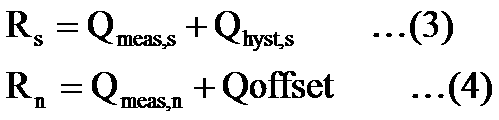

第3の例では、eNB13は、ECM(つまり、ECMでのカバレッジ改善処理)がMTC UE11のために必要であるか否かに応じて調整されたセル再選択パラメータ又はハンドオーバ・パラメータをMTC UE11に通知する。MTC UE11は、eNB13から受信した、調整されたセル再選択パラメータ又はハンドオーバ・パラメータをECM特有のセル再選択動作又はハンドオーバ動作において使用する。なお、当該第3の例は、MTC UE11が特定のセル再選択パラメータ又はハンドオーバ・パラメータについて通常の第1の値とECM特有の第2の値の両方を受信しなくてもよい点で上述の第2の例と異なることに留意されるべきである。
本実施形態に係る無線通信システムの構成例は、第1の実施形態に関して説明された図1と同様とすればよい。本実施形態では、第1の実施形態で説明されたECM特有のセル再選択動作、及びECM特有のハンドオーバ動作に関する詳細な手順の一例が説明される。
・RRC接続確立の目的(Establishment cause)
・サービス種別(Service type)
・無線アクセス能力(Radio access capability)
・デバイス能力(Device capability)
・端末カテゴリ(UE category)
・端末種別(UE type)
・デバイス種別(Device type)
・端末コンテキスト(UE context)
・特性測定結果(Performance measurement result (e.g., L2 measurement))
・通信統計品質(Statistical communication quality (e.g., KPI))
・参照信号の受信品質(Reference Signal (RS) received quality)
・通信路品質指標(CQI)
本実施形態に係る無線通信システムの構成例は、第1の実施形態に関して説明された図1と同様とすればよい。本実施形態では、第1の実施形態で説明されたECM特有のセル再選択動作、及びECM特有のハンドオーバ動作に関する詳細な手順の一例が説明される。
本実施形態に係る無線通信システムの構成例は、第1の実施形態に関して説明された図1と同様とすればよい。本実施形態では、第1の実施形態で説明されたECM特有のセル再選択動作、及びECM特有のハンドオーバ動作に関する詳細な手順の一例が説明される。
本実施形態に係る無線通信システムの構成例は、第1の実施形態に関して説明された図1と同様とすればよい。本実施形態では、第1の実施形態で説明されたECM特有のセル再選択動作、及びECM特有のハンドオーバ動作に関する詳細な手順の一例が説明される。
本実施形態に係る無線通信システムの構成例は、第1の実施形態に関して説明された図1と同様とすればよい。本実施形態では、第1の実施形態で説明されたECM特有のセル再選択動作、及びECM特有のハンドオーバ動作に関する詳細な手順の一例が説明される。
上述の実施形態では、MTC UEにおいて特別な動作モード、つまりEnhanced Coverage Mode(ECM)が設定され、ECMに関するカバレッジ改善処理(e.g., RACHの繰り返し、PDSCH/PUSCHの繰り返し)がMTC UEにおいて行われることを前提として説明された。しかしながら、MTC UEは、特別なカバレッジ改善処理(e.g., RACHの繰り返し、PDSCH/PUSCHの繰り返し)を実行できるよう構成されていればよく、特別な動作モード(つまり、ECM)を設定されることは必ずしも必要ではない。言い換えると、MTC UE11、21、31、41、及び51は、ECMのような特別な動作モードを設定することなく、或いは特別な動作モードを指示されることなく、無線リソース設定を行うことで特別なカバレッジ改善処理(e.g., RACHの繰り返し、PDSCH/PUSCHの繰り返し)を実行してもよい。
13、14、23、24、33、34、43、44 基地局(eNB)
15 コアネットワーク(EPC)
130 セル
140 セル
111 トランシーバ
112 コントローラ
131 トランシーバ
132 コントローラ
Claims (51)
- Machine-to-machine(M2M)通信を行うM2M端末であって、
基地局と通信する無線通信手段と、
所定のカバレッジ改善処理が必要であるか否かに応じて、又は前記M2M端末が滞在するセル及びその周辺セルの少なくとも一方で前記カバレッジ改善処理がサポートされているか否かに応じて、セル選択動作、セル再選択動作、及びハンドオーバ動作の少なくとも1つを変更する制御手段と、
を備えるM2M端末。 - 前記制御手段は、
前記所定のカバレッジ改善処理が必要でない場合に、又は前記滞在するセル及び前記周辺セルが共に前記カバレッジ改善処理をサポートしていない場合に、第1のセル選択動作、第1のセル再選択動作、又は第1のハンドオーバ動作を行い、
前記所定のカバレッジ改善処理が必要である場合に、又は前記滞在するセル及び前記周辺セルの少なくとも一方が前記カバレッジ改善処理をサポートしている場合に、前記所定のカバレッジ改善処理をサポートするセル又は基地局が選択されやすいように調整された第2のセル選択動作、第2のセル再選択動作、又は第2のハンドオーバ動作を行う、
請求項1に記載のM2M端末。 - 前記第2のセル選択動作、前記第2のセル再選択動作、及び前記第2のハンドオーバ動作の少なくとも1つは、前記所定のカバレッジ改善処理が前記基地局においてサポートされているか否かを示す通知を前記基地局から受信して考慮することを含む、請求項2に記載のM2M端末。
- 前記第2のセル再選択動作は、前記第1のセル再選択動作と共通の判断基準(criterion)を使用するが、前記第2のセル再選択動作において前記判断基準に含まれる第1のパラメータに代入される第2の値は、前記第1のセル再選択動作において前記第1のパラメータに代入される第1の値と異なる、請求項2又は3に記載のM2M端末。
- 前記第2のハンドオーバ動作は、前記第1のハンドオーバ動作と共通の判断基準(criterion)を使用するが、前記第2のハンドオーバ動作において前記判断基準に含まれる第1のパラメータに代入される第2の値は、前記第1のハンドオーバ動作において前記第1のパラメータに代入される第1の値と異なる、請求項2又は3に記載のM2M端末。
- 前記第2の値は、前記第1の値に比べて、前記所定のカバレッジ改善処理をサポートするセル又は基地局が選択されやすいように調整されている、請求項4又は5に記載のM2M端末。
- 前記第1のパラメータは、サービングセルの品質に作用するオフセット・パラメータ、隣接セル個別の品質に作用するオフセット・パラメータ、及び前記判断基準を成立しやすく又は成立し難くするためのヒステリシス・パラメータのうち少なくとも1つを含む、請求項4~6のいずれか1項に記載のM2M端末。
- 前記制御手段は、前記第1及び第2の値を前記基地局から受信する請求項4~7のいずれか1項に記載のM2M端末。
- 前記第2のセル再選択動作は、前記所定のカバレッジ改善処理をサポートするセルに前記M2M端末が留まるために、前記M2M端末においてセル再選択を実行しないことを含む、請求項2に記載のM2M端末。
- 前記制御手段は、前記M2M端末においてセル再選択を実行しないことを示す指示を前記基地局から受信する、請求項9に記載のM2M端末。
- 前記制御手段は、前記基地局と前記M2M端末の間の個別シグナリングにおいて前記指示を受信する、請求項10に記載のM2M端末。
- 前記個別シグナリングは、Radio Resource Connection(RRC) Releaseメッセージを含む、請求項11に記載のM2M端末。
- 前記第2のセル再選択動作は、基地局との無線接続を有していないアイドル状態に留まっている間に前記M2M端末が滞在するセルと、前記無線接続が確立されたコネクテッド状態であるときに前記M2M端末が滞在するセルを独立に選択することを含む、請求項2に記載のM2M端末。
- 前記第2のセル再選択動作は、
前記M2M端末がアイドル状態に留まっている間は、前記所定のカバレッジ改善処理がサポートされている否かを考慮せずに滞在するセルを選択すること、及び
前記M2M端末がデータ通信のために前記アイドル状態からコネクテッド状態になるときに、前記所定のカバレッジ処理をサポートするセルを再選択すること、
を含む、
請求項2に記載のM2M端末。 - 前記第2のハンドオーバ動作は、ハンドオーバ要求の送信条件、又はハンドオーバをトリガーする測定報告の送信条件が前記第1のハンドオーバ動作と異なる、請求項2~14のいずれか1項に記載のM2M端末。
- 前記所定のカバレッジ改善処理は、Enhanced Coverage Mode(ECM)をサポートする無線端末によって行われる処理を含む、請求項1~15のいずれか1項に記載のM2M端末。
- 前記所定のカバレッジ改善処理は、(a)Physical Broadcast Channel(PBCH)による報知情報の送信を通常よりも余分に繰り返すこと、(b)Physical Random Access Channel(PRACH)プリアンブルの送信を所定回数だけ繰り返すこと、(c)複数のサブフレームにわたってPhysical Uplink Shared Channel (PUSCH)を繰り返し送信すること、及び(d)複数のサブフレームにわたってPhysical Downlink Shared Channel (PDSCH)を繰り返し送信すること、のうち少なくとも1つを含む、請求項1~16のいずれか1項に記載のM2M端末。
- Machine-to-machine(M2M)端末と通信する無線通信手段と、
所定のカバレッジ改善処理が前記M2M端末のために必要であるか否かに応じて、又は前記M2M端末が滞在するセル及びその周辺セルの少なくとも一方で前記カバレッジ改善処理がサポートされているか否かに応じて、前記M2M端末によるセル選択動作、セル再選択動作、及びハンドオーバ動作の少なくとも1つが変更されるように前記M2M端末を支援する制御手段と、
を備える基地局装置。 - 前記支援することは、前記基地局装置のセルにおいて前記所定のカバレッジ改善処理がサポートされていることを示す通知を前記M2M端末に送信することを含む、請求項18に記載の基地局装置。
- 前記支援することは、セル再選択又はハンドオーバのために前記M2M端末によって使用される第1のパラメータに代入される第1及び第2の値を前記M2M端末に通知することを含み、
前記第1の値は、前記所定のカバレッジ改善処理が前記M2M端末のために必要でない場合に、前記M2M端末において使用され、
前記第2の値は、前記所定のカバレッジ改善処理が前記M2M端末のために必要である場合に、前記M2M端末において使用される、
請求項18又は19に記載の基地局装置。 - 前記第2の値は、前記第1の値に比べて、前記所定のカバレッジ改善処理をサポートするセル又は基地局が選択されやすいように調整されている、請求項20に記載の基地局装置。
- 前記第1のパラメータは、セル個別の品質に作用するオフセット・パラメータ、サービングセルの品質に作用するオフセット・パラメータ、隣接セル個別の品質に作用するオフセット・パラメータ、及びセル再選択基準又はハンドオーバ基準を成立しやすく又は成立し難くするためのヒステリシス・パラメータのうち少なくとも1つを含む、請求項20又は21に記載の基地局装置。
- 前記支援することは、前記所定のカバレッジ改善処理が前記M2M端末のために必要であるか否かに応じて、前記M2M端末に通知されるセル再選択パラメータ又はハンドオーバ・パラメータを調整することを含む、請求項18又は19に記載の基地局装置。
- 前記支援することは、前記所定のカバレッジ改善処理が必要であるときに特有のセル再選択基準を前記M2M端末に指示することを含む、請求項18又は19に記載の基地局装置。
- 前記特有のセル再選択基準は、前記所定のカバレッジ改善処理をサポートするセルに前記M2M端末を留まらせるために、前記M2M端末にセル再選択を実行させないことを含む、請求項24に記載の基地局装置。
- 前記制御手段は、前記基地局装置と前記M2M端末の間の個別シグナリングにおいて前記指示を前記M2M端末に送信する、請求項25に記載の基地局装置。
- 前記個別シグナリングは、Radio Resource Connection(RRC) Releaseメッセージを含む、請求項26に記載の基地局装置。
- Machine-to-machine(M2M)通信を行うM2M端末により行われる方法であって、
所定のカバレッジ改善処理が前記M2M端末のために必要であるか否かに応じて、又は前記M2M端末が滞在するセル及びその周辺セルの少なくとも一方で前記カバレッジ改善処理がサポートされているか否かに応じて、セル選択動作、セル再選択動作、及びハンドオーバ動作の少なくとも1つを変更することを備える、方法。 - Machine-to-machine(M2M)端末と通信する基地局により行われる方法であって、
所定のカバレッジ改善処理が前記M2M端末のために必要であるか否かに応じて、又は前記M2M端末が滞在するセル及びその周辺セルの少なくとも一方で前記カバレッジ改善処理がサポートされているか否かに応じて、前記M2M端末によるセル選択動作、セル再選択動作、及びハンドオーバ動作の少なくとも1つが変更されるように前記M2M端末を支援することを備える、方法。 - Machine-to-machine(M2M)通信を行うM2M端末に関する方法をコンピュータに行わせるためのプログラムを格納した非一時的なコンピュータ可読媒体であって、
前記方法は、所定のカバレッジ改善処理が前記M2M端末のために必要であるか否かに応じて、又は前記M2M端末が滞在するセル及びその周辺セルの少なくとも一方で前記カバレッジ改善処理がサポートされているか否かに応じて、セル選択動作、セル再選択動作、及びハンドオーバ動作の少なくとも1つを変更することを備える、
非一時的なコンピュータ可読媒体。 - Machine-to-machine(M2M)端末と通信する基地局に関する方法をコンピュータに行わせるためのプログラムを格納した非一時的なコンピュータ可読媒体であって、
前記方法は、所定のカバレッジ改善処理が前記M2M端末のために必要であるか否かに応じて、又は前記M2M端末が滞在するセル及びその周辺セルの少なくとも一方で前記カバレッジ改善処理がサポートされているか否かに応じて、前記M2M端末によるセル選択動作、セル再選択動作、及びハンドオーバ動作の少なくとも1つが変更されるように前記M2M端末を支援することを備える、
非一時的なコンピュータ可読媒体。 - Machine-to-machine(M2M)通信を行うM2M端末と、
前記M2M端末と通信する基地局と、
を備え、
前記M2M端末は、所定のカバレッジ改善処理が前記M2M端末のために必要であるか否かに応じて、又は前記M2M端末が滞在するセル及びその周辺セルの少なくとも一方で前記カバレッジ改善処理がサポートされているか否かに応じて、セル選択動作、セル再選択動作、及びハンドオーバ動作の少なくとも1つを変更するよう構成され、
前記基地局は、前記所定のカバレッジ改善処理が前記M2M端末のために必要であるか否かに応じて、又は前記滞在するセル及び前記周辺セルの少なくとも一方で前記カバレッジ改善処理がサポートされているか否かに応じて、前記セル選択動作、前記セル再選択動作、及び前記ハンドオーバ動作の少なくとも1つが変更されるように前記M2M端末を支援するよう構成されている、
無線通信システム。 - Machine-to-machine(M2M)通信を行うM2M端末であって、
基地局と通信する無線通信手段と、
セル再選択又はハンドオーバのために使用される第1のパラメータに代入される第1及び第2の値を前記基地局から受信する制御手段と、
を備え、
前記第1の値は、所定のカバレッジ改善処理が前記M2M端末のために必要でない場合に、前記制御手段において前記第1のパラメータに代入され、
前記第2の値は、前記所定のカバレッジ改善処理が前記M2M端末のために必要である場合に、前記制御手段において前記第1のパラメータに代入される、
M2M端末。 - 前記第2の値は、前記第1の値に比べて、前記所定のカバレッジ改善処理をサポートするセル又は基地局が選択されやすいように調整されている、請求項33に記載のM2M端末。
- 前記第1のパラメータは、セル個別の品質に作用するオフセット・パラメータ、サービングセルの品質に作用するオフセット・パラメータ、隣接セル個別の品質に作用するオフセット・パラメータ、及びセル再選択基準又はハンドオーバ基準を成立しやすく又は成立し難くするためのヒステリシス・パラメータのうち少なくとも1つを含む、請求項33又は34に記載のM2M端末。
- 前記所定のカバレッジ改善処理は、Enhanced Coverage Mode(ECM)をサポートする無線端末によって行われる処理を含む、請求項33~35のいずれか1項に記載のM2M端末。
- 前記所定のカバレッジ改善処理は、(a)Physical Broadcast Channel(PBCH)による報知情報の送信を通常よりも余分に繰り返すこと、(b)Physical Random Access Channel(PRACH)プリアンブルの送信を所定回数だけ繰り返すこと、(c)複数のサブフレームにわたってPhysical Uplink Shared Channel (PUSCH)を繰り返し送信すること、及び(d)複数のサブフレームにわたってPhysical Downlink Shared Channel (PDSCH)を繰り返し送信すること、のうち少なくとも1つを含む、請求項33~36のいずれか1項に記載のM2M端末。
- Machine-to-machine(M2M)端末と通信する無線通信手段と、
セル再選択又はハンドオーバのために前記M2M端末によって使用される第1のパラメータに代入される第1及び第2の値を前記M2M端末に通知する制御手段と、
を備え、
前記第1の値は、所定のカバレッジ改善処理が前記M2M端末のために必要でない場合に、前記M2M端末において前記第1のパラメータに代入され、
前記第2の値は、前記所定のカバレッジ改善処理が前記M2M端末のために必要である場合に、前記M2M端末において前記第1のパラメータに代入される、
基地局装置。 - 前記第2の値は、前記第1の値に比べて、前記所定のカバレッジ改善処理をサポートするセル又は基地局が選択されやすいように調整されている、請求項38に記載の基地局装置。
- 前記第1のパラメータは、セル個別の品質に作用するオフセット・パラメータ、サービングセルの品質に作用するオフセット・パラメータ、隣接セル個別の品質に作用するオフセット・パラメータ、及びセル再選択基準又はハンドオーバ基準を成立しやすく又は成立し難くするためのヒステリシス・パラメータのうち少なくとも1つを含む、請求項38又は39に記載の基地局装置。
- Machine-to-machine(M2M)通信を行うM2M端末により行われる方法であって、
セル再選択又はハンドオーバのために使用される第1のパラメータに代入される第1及び第2の値を基地局から受信することを備え、
前記第1の値は、所定のカバレッジ改善処理が前記M2M端末のために必要でない場合に、前記M2M端末において前記第1のパラメータに代入され、
前記第2の値は、前記所定のカバレッジ改善処理が前記M2M端末のために必要である場合に、前記M2M端末において前記第1のパラメータに代入される、
方法。 - Machine-to-machine(M2M)端末と通信する基地局により行われる方法であって、
セル再選択又はハンドオーバのために前記M2M端末によって使用される第1のパラメータに代入される第1及び第2の値を前記M2M端末に通知することを備え、
前記第1の値は、所定のカバレッジ改善処理が前記M2M端末のために必要でない場合に、前記M2M端末において前記第1のパラメータに代入され、
前記第2の値は、前記所定のカバレッジ改善処理が前記M2M端末のために必要である場合に、前記M2M端末において前記第1のパラメータに代入される、
方法。 - Machine-to-machine(M2M)通信を行うM2M端末に関する方法をコンピュータに行わせるためのプログラムを格納した非一時的なコンピュータ可読媒体であって、
前記方法は、セル再選択又はハンドオーバのために使用される第1のパラメータに代入される第1及び第2の値を基地局から受信することを備え、
前記第1の値は、所定のカバレッジ改善処理が前記M2M端末のために必要でない場合に、前記M2M端末において前記第1のパラメータに代入され、
前記第2の値は、前記所定のカバレッジ改善処理が前記M2M端末のために必要である場合に、前記M2M端末において前記第1のパラメータに代入される、
非一時的なコンピュータ可読媒体。 - Machine-to-machine(M2M)端末と通信する基地局に関する方法をコンピュータに行わせるためのプログラムを格納した非一時的なコンピュータ可読媒体であって、
前記方法は、セル再選択又はハンドオーバのために前記M2M端末によって使用される第1のパラメータに代入される第1及び第2の値を前記M2M端末に通知することを備え、
前記第1の値は、所定のカバレッジ改善処理が前記M2M端末のために必要でない場合に、前記M2M端末において前記第1のパラメータに代入され、
前記第2の値は、前記所定のカバレッジ改善処理が前記M2M端末のために必要である場合に、前記M2M端末において前記第1のパラメータに代入される、
非一時的なコンピュータ可読媒体。 - Machine-to-machine(M2M)端末と通信する無線通信手段と、
所定のカバレッジ改善処理が前記M2M端末のために必要であるか否かに応じて調整されたセル再選択パラメータ又はハンドオーバ・パラメータを前記M2M端末に通知する制御手段と、
を備える基地局装置。 - 前記所定のカバレッジ改善処理は、Enhanced Coverage Mode(ECM)をサポートする無線端末によって行われる処理を含む、請求項45に記載の基地局装置。
- 前記所定のカバレッジ改善処理は、(a)Physical Broadcast Channel(PBCH)による報知情報の送信を通常よりも余分に繰り返すこと、(b)Physical Random Access Channel(PRACH)プリアンブルの送信を所定回数だけ繰り返すこと、(c)複数のサブフレームにわたってPhysical Uplink Shared Channel (PUSCH)を繰り返し送信すること、及び(d)複数のサブフレームにわたってPhysical Downlink Shared Channel (PDSCH)を繰り返し送信すること、のうち少なくとも1つを含む、請求項45又は46に記載の基地局装置。
- 前記制御手段は、前記所定のカバレッジ改善処理が前記M2M端末のために必要である場合に、前記所定のカバレッジ改善処理をサポートするセル又は基地局が前記M2M端末によって選択されやすいように前記セル再選択パラメータ又は前記ハンドオーバ・パラメータを調整する、請求項45~47のいずれか1項に記載の基地局装置。
- 前記セル再選択パラメータ又は前記ハンドオーバ・パラメータは、セル個別の品質に作用するオフセット・パラメータ、サービングセルの品質に作用するオフセット・パラメータ、隣接セル個別の品質に作用するオフセット・パラメータ、及びセル再選択基準又はハンドオーバ基準を成立しやすく又は成立し難くするためのヒステリシス・パラメータのうち少なくとも1つを含む、請求項45~48のいずれか1項に記載の基地局装置。
- Machine-to-machine(M2M)端末と通信する基地局により行われる方法であって、
所定のカバレッジ改善処理が前記M2M端末のために必要であるか否かに応じて調整されたセル再選択パラメータ又はハンドオーバ・パラメータを前記M2M端末に通知することを備える、方法。 - Machine-to-machine(M2M)端末と通信する基地局に関する方法をコンピュータに行わせるためのプログラムを格納した非一時的なコンピュータ可読媒体であって、
前記方法は、所定のカバレッジ改善処理が前記M2M端末のために必要であるか否かに応じて調整されたセル再選択パラメータ又はハンドオーバ・パラメータを前記M2M端末に通知することを備える、
非一時的なコンピュータ可読媒体。
Priority Applications (16)
| Application Number | Priority Date | Filing Date | Title |
|---|---|---|---|
| CN201480074671.0A CN105940695A (zh) | 2014-01-30 | 2014-09-04 | 机器对机器(m2m)终端、基站、方法和计算机可读介质 |
| JP2015559619A JP6551236B2 (ja) | 2014-01-30 | 2014-09-04 | Machine−to−machine(M2M)端末、基地局、方法、及びプログラム |
| US15/114,694 US10341916B2 (en) | 2014-01-30 | 2014-09-04 | Machine-to-machine (M2M) terminal, base station, method, and computer readable medium |
| EP19193184.9A EP3609212A1 (en) | 2014-01-30 | 2014-09-04 | Machine-to-machine (m2m) terminal, base station, method, and computer readable medium |
| CN202010800180.7A CN112105002B (zh) | 2014-01-30 | 2014-09-04 | 通信装置、用户设备、及其方法 |
| EP18162992.4A EP3370451B1 (en) | 2014-01-30 | 2014-09-04 | Machine-to-machine (m2m) terminal, base station, method and computer readable medium |
| EP14881069.0A EP3101937B1 (en) | 2014-01-30 | 2014-09-04 | Machine-to-machine (m2m) terminal, base station, method and computer readable medium |
| AU2014380889A AU2014380889A1 (en) | 2014-01-30 | 2014-09-04 | Machine-to-machine (M2M) terminal, base station, method and computer readable medium |
| CA2938389A CA2938389C (en) | 2014-01-30 | 2014-09-04 | Machine-to-machine (m2m) terminal, base station, method, and computer readable medium |
| US15/585,832 US10757620B2 (en) | 2014-01-30 | 2017-05-03 | Machine-to-machine (M2M) terminal, base station, method, and computer readable medium |
| US15/704,901 US10750417B2 (en) | 2014-01-30 | 2017-09-14 | Machine-to-machine (M2M) terminal, base station, method, and computer readable medium |
| AU2018204917A AU2018204917B2 (en) | 2014-01-30 | 2018-07-05 | Machine-to-machine (M2M) terminal, base station, method and computer readable medium |
| US16/934,688 US11166214B2 (en) | 2014-01-30 | 2020-07-21 | Machine-to-machine (M2M) terminal, base station, method, and computer readable medium |
| US17/450,355 US12022345B2 (en) | 2014-01-30 | 2021-10-08 | Machine-to-machine (M2M) terminal, base station, method, and computer readable medium |
| US18/122,470 US12335805B2 (en) | 2014-01-30 | 2023-03-16 | Machine-to-machine (M2M) terminal, base station, method, and computer readable medium |
| US19/208,755 US20250274830A1 (en) | 2014-01-30 | 2025-05-15 | Machine-to-machine (m2m) terminal, base station, method, and computer readable medium |
Applications Claiming Priority (2)
| Application Number | Priority Date | Filing Date | Title |
|---|---|---|---|
| JP2014015867 | 2014-01-30 | ||
| JP2014-015867 | 2014-01-30 |
Related Child Applications (2)
| Application Number | Title | Priority Date | Filing Date |
|---|---|---|---|
| US15/114,694 A-371-Of-International US10341916B2 (en) | 2014-01-30 | 2014-09-04 | Machine-to-machine (M2M) terminal, base station, method, and computer readable medium |
| US15/585,832 Continuation US10757620B2 (en) | 2014-01-30 | 2017-05-03 | Machine-to-machine (M2M) terminal, base station, method, and computer readable medium |
Publications (1)
| Publication Number | Publication Date |
|---|---|
| WO2015114693A1 true WO2015114693A1 (ja) | 2015-08-06 |
Family
ID=53756319
Family Applications (1)
| Application Number | Title | Priority Date | Filing Date |
|---|---|---|---|
| PCT/JP2014/004540 Ceased WO2015114693A1 (ja) | 2014-01-30 | 2014-09-04 | Machine-to-machine(M2M)端末、基地局、方法、及びコンピュータ可読媒体 |
Country Status (8)
| Country | Link |
|---|---|
| US (7) | US10341916B2 (ja) |
| EP (3) | EP3370451B1 (ja) |
| JP (5) | JP6551236B2 (ja) |
| CN (3) | CN105940695A (ja) |
| AU (2) | AU2014380889A1 (ja) |
| CA (1) | CA2938389C (ja) |
| ES (1) | ES2769237T3 (ja) |
| WO (1) | WO2015114693A1 (ja) |
Cited By (6)
| Publication number | Priority date | Publication date | Assignee | Title |
|---|---|---|---|---|
| JPWO2016121776A1 (ja) * | 2015-01-28 | 2017-11-02 | 株式会社Nttドコモ | ユーザ端末および無線通信方法 |
| JP2019528006A (ja) * | 2016-08-12 | 2019-10-03 | 華為技術有限公司Huawei Technologies Co.,Ltd. | 信号送信モード切替方法、基地局、および端末デバイス |
| CN110945911A (zh) * | 2017-07-07 | 2020-03-31 | 索尼公司 | 基于对于每个候选小区包括相应至少一个经调整重复级别的接入限制从候选小区选择目标小区 |
| US10728811B2 (en) | 2014-06-23 | 2020-07-28 | Samsung Electronics Co., Ltd. | Method and device for supporting machine type communication in wireless communication system |
| JP2020526130A (ja) * | 2017-06-30 | 2020-08-27 | 華為技術有限公司Huawei Technologies Co.,Ltd. | 通信方法及び装置 |
| US11064397B2 (en) * | 2011-10-05 | 2021-07-13 | Samsung Electronics Co., Ltd. | Method and apparatus for reselecting a cell in heterogeneous networks in a wireless communication system |
Families Citing this family (40)
| Publication number | Priority date | Publication date | Assignee | Title |
|---|---|---|---|---|
| DE102009039252A1 (de) * | 2009-08-28 | 2011-03-10 | Dürkopp Adler AG | Nähmaschine |
| EP3092853B1 (en) * | 2014-02-07 | 2017-10-25 | Sony Corporation | Communications devices and methods for selecting a wireless access interface |
| CN106465212B (zh) * | 2014-03-21 | 2021-03-12 | 寰发股份有限公司 | 用于lc-mtc通信ue的小区选择和重选方法及用户设备 |
| WO2016056968A1 (en) * | 2014-10-06 | 2016-04-14 | Telefonaktiebolaget L M Ericsson (Publ) | Activation and deactivation of a secondary cell for device-to-device user equipment, depending on load |
| JP6538865B2 (ja) | 2014-11-06 | 2019-07-03 | 華為技術有限公司Huawei Technologies Co.,Ltd. | セルの選択および再選択の方法および装置 |
| WO2016108504A1 (ko) * | 2014-12-30 | 2016-07-07 | 엘지전자 주식회사 | 커버리지 확장 영역에 있는 단말이 측정 결과를 보고하는 방법 및 장치 |
| US10419990B2 (en) * | 2015-01-16 | 2019-09-17 | Sharp Kabushiki Kaisha | Wireless terminals, base stations, communication systems, communication methods, and integrated circuits |
| WO2016144099A1 (ko) * | 2015-03-10 | 2016-09-15 | 엘지전자 주식회사 | 단말이 셀을 재 선택하는 방법 및 장치 |
| CN106162687B (zh) * | 2015-04-01 | 2021-06-11 | 索尼公司 | 用于无线通信的用户设备侧和基站侧的装置和方法 |
| JP6507230B2 (ja) * | 2015-04-09 | 2019-04-24 | 株式会社Nttドコモ | ユーザ端末、無線基地局及び無線通信方法 |
| CN108353328B (zh) * | 2015-11-09 | 2021-05-11 | 瑞典爱立信有限公司 | 尤其在扩展覆盖下的自适应小区搜索 |
| US10959118B2 (en) * | 2016-02-02 | 2021-03-23 | Lg Electronics Inc. | Method and device for performing measurement in wireless communication system |
| US10887805B2 (en) * | 2016-04-01 | 2021-01-05 | Htc Corporation | Device and method of handling handover |
| CN107343299B (zh) * | 2016-05-03 | 2021-01-05 | 株式会社Kt | 用于改变ue的连接状态的方法和装置 |
| US10015070B1 (en) * | 2016-06-28 | 2018-07-03 | Sprint Spectrum L.P. | Systems and methods for extending a handover trigger point for a wireless device operating in a connected mode |
| CN108024234B (zh) * | 2016-11-04 | 2021-01-08 | 上海诺基亚贝尔股份有限公司 | 用于mtc设备的相邻小区测量的方法和设备 |
| US10244385B2 (en) * | 2016-12-05 | 2019-03-26 | Verizon Patent And Licensing Inc. | Coverage enhancement having call continuity |
| EP3955697B1 (en) | 2017-01-05 | 2024-07-31 | NEC Corporation | Radio terminal, base station, and methods and non-transitory computer-readable media therefor |
| EP3355599A1 (en) | 2017-01-31 | 2018-08-01 | Gemalto M2M GmbH | User equipment for searching a suitable base station |
| US10411795B2 (en) * | 2017-03-14 | 2019-09-10 | Qualcomm Incorporated | Coverage enhancement mode switching for wireless communications using shared radio frequency spectrum |
| US10779198B1 (en) * | 2017-08-16 | 2020-09-15 | Sprint Spectrum L.P. | Adjusting handover thresholds for high power class wireless devices |
| CN110149676B (zh) * | 2018-02-11 | 2022-03-25 | 华为技术有限公司 | 一种选择驻留小区的方法及装置 |
| CN113286318B (zh) * | 2018-03-16 | 2023-12-22 | 维沃移动通信有限公司 | 测量方法、测量配置方法、终端及网络设备 |
| US11418998B2 (en) * | 2018-04-17 | 2022-08-16 | Telefonaktiebolaget Lm Ericsson (Publ) | Wireless device, network node, core node and methods for handling radio communication of data |
| CN111247868B (zh) * | 2018-06-20 | 2023-11-10 | 谷歌有限责任公司 | 释放信息以改善在不同的资源控制状态下的小区选择 |
| CN117295188A (zh) * | 2018-08-09 | 2023-12-26 | 苹果公司 | Ran条件和小区复合负载指示符 |
| EP3881594A1 (en) * | 2018-11-12 | 2021-09-22 | Telefonaktiebolaget LM Ericsson (publ) | Wireless device, management server and methods therein for determining transmission of uplink data |
| WO2020191717A1 (zh) * | 2019-03-28 | 2020-10-01 | 华为技术有限公司 | 监听寻呼消息、唤醒信号、切换覆盖模式的方法及装置 |
| US11562313B2 (en) | 2019-09-11 | 2023-01-24 | T-Mobile Usa, Inc. | Wireless communication network audio data packet loss diagnostics and visualization system |
| CN112752241B (zh) * | 2019-10-31 | 2022-11-11 | 成都鼎桥通信技术有限公司 | 一种eMTC终端的覆盖模式切换方法和装置 |
| FI20205232A1 (en) * | 2020-03-04 | 2021-09-05 | Nokia Solutions & Networks Oy | Machine learning based handover parameter optimization |
| US12574837B2 (en) * | 2020-07-20 | 2026-03-10 | Telefonaktiebolaget Lm Ericsson (Publ) | Cell selection with coverage recovery for reduced capability user equipment |
| US11722911B2 (en) * | 2020-07-23 | 2023-08-08 | Qualcomm Incorporated | Coverage enhancement indication via wake-up signaling |
| US11388633B1 (en) | 2020-08-11 | 2022-07-12 | T-Mobile Innovations Llc | Managing frequency band assignment based on wireless device characteristics |
| CN114599048B (zh) * | 2020-12-04 | 2023-07-14 | 中国联合网络通信集团有限公司 | 一种通信方法和设备 |
| US12563476B2 (en) * | 2020-12-17 | 2026-02-24 | Beijing Xiaomi Mobile Software Co., Ltd. | Access control method and device |
| WO2023013609A1 (ja) * | 2021-08-02 | 2023-02-09 | 京セラ株式会社 | セル再選択方法及びユーザ装置 |
| WO2025000389A1 (zh) * | 2023-06-29 | 2025-01-02 | Oppo广东移动通信有限公司 | 一种无线通信方法、装置及通信设备 |
| WO2025210705A1 (ja) * | 2024-04-01 | 2025-10-09 | 株式会社Nttドコモ | ネットワーク装置、無線通信システム及び無線通信方法 |
| GB2643062A (en) * | 2024-07-31 | 2026-02-04 | Nokia Technologies Oy | Method, apparatus and computer program |
Citations (1)
| Publication number | Priority date | Publication date | Assignee | Title |
|---|---|---|---|---|
| JP2014015867A (ja) | 2012-07-06 | 2014-01-30 | Toyota Motor Corp | 可変動弁装置 |
Family Cites Families (33)
| Publication number | Priority date | Publication date | Assignee | Title |
|---|---|---|---|---|
| FI108104B (fi) * | 1999-01-15 | 2001-11-15 | Nokia Networks Oy | Solunvalinta pakettiradioverkossa |
| EP1743440B1 (en) * | 2004-08-05 | 2009-10-07 | LG Electronics, Inc. | Interrupting use of frequency layer convergence scheme |
| TWI261469B (en) * | 2005-01-18 | 2006-09-01 | Mediatek Inc | Handoff control method, and device utilizing same |
| US7608807B2 (en) * | 2005-05-05 | 2009-10-27 | Leviton Manufacturing Co., Inc. | Closed loop daylight harvesting light control system having auto-calibration |
| US9161212B2 (en) * | 2006-10-03 | 2015-10-13 | Qualcomm Incorporated | Method and apparatus for re-synchronizing of temporary UE IDs in a wireless communication system |
| US20080170526A1 (en) | 2007-01-12 | 2008-07-17 | Qualcomm Incorporated | Method and apparatus for extending standby battery life of a wireless device |
| US8934915B2 (en) | 2007-01-31 | 2015-01-13 | Qualcomm Incorporated | Method and apparatus for reducing call setup delay by improved SIB7 and SIB14 scheduling |
| CN102318232B (zh) * | 2007-06-15 | 2014-12-10 | Lg电子株式会社 | 用于通过单频网络模式的点对多点业务的网络信令 |
| WO2009088332A1 (en) | 2008-01-07 | 2009-07-16 | Telefonaktiebolaget Lm Ericsson (Publ) | Identification of unique cell identity for building neighbour cell relation |
| US8311053B2 (en) | 2008-09-15 | 2012-11-13 | Infineon Technologies Ag | Methods for controlling an uplink signal transmission power and communication devices |
| IL206455A (en) | 2010-01-28 | 2016-11-30 | Elta Systems Ltd | Cellular communication system with moving base stations and methods and useful devices in collaboration with the above |
| US8929339B2 (en) * | 2010-05-04 | 2015-01-06 | Lg Electronics Inc. | M2M device which performs communication during network entry and handover, and corresponding method for performing communication |
| CN103120004B (zh) * | 2010-09-27 | 2016-05-11 | 富士通株式会社 | 用于机器类型通信的无线电承载 |
| US8606322B2 (en) | 2010-10-25 | 2013-12-10 | Raytheon Applied Signal Technology, Inc. | Portable cellular base station configuration |
| WO2012060655A2 (ko) * | 2010-11-05 | 2012-05-10 | 엘지전자 주식회사 | 무선 통신 시스템에서 핸드 오버를 수행하는 방법 |
| EP2640152A4 (en) | 2010-11-08 | 2016-08-24 | Lg Electronics Inc | RRC CONNECTING METHOD AND ASSOCIATED DEVICE IN WIRELESS COMMUNICATION SYSTEM |
| EP2636250B1 (en) * | 2010-12-03 | 2017-04-26 | Huawei Technologies Co., Ltd. | System and method for user equipment mobility support in a heterogeneous network |
| KR20120094369A (ko) * | 2011-02-16 | 2012-08-24 | 주식회사 팬택 | Mtc에 있어서 rrc 연결 처리 방법 및 장치 |
| WO2013025055A2 (ko) * | 2011-08-18 | 2013-02-21 | 엘지전자 주식회사 | 기기간통신을 지원하는 무선접속시스템에서 그룹 대표 지원 방법 및 장치 |
| US8797966B2 (en) | 2011-09-23 | 2014-08-05 | Ofinno Technologies, Llc | Channel state information transmission |
| US20130084850A1 (en) * | 2011-10-03 | 2013-04-04 | Renesas Mobile Corporation | Prioritizing Radio Access Technologies For Measurement |
| US8892109B2 (en) * | 2012-05-02 | 2014-11-18 | Alcatel Lucent | Method and apparatus of dynamic spectrum sharing in cellular networks |
| KR101335018B1 (ko) * | 2011-12-01 | 2013-12-05 | 창원대학교 산학협력단 | 단말기의 핸드오버 방법 및 시스템 |
| JP6155555B2 (ja) | 2012-05-30 | 2017-07-05 | 日本電気株式会社 | 情報処理システム、情報処理方法、情報処理装置、携帯端末およびその制御方法と制御プログラム |
| JP6262752B2 (ja) * | 2012-10-18 | 2018-01-17 | エルジー エレクトロニクス インコーポレイティド | 無線lanシステムにおいてチャネルアクセス方法及び装置 |
| US9917616B2 (en) * | 2013-01-17 | 2018-03-13 | Telefonaktiebolaget L M Ericsson (Publ) | Synchronization signal design for wireless devices in a long range extension mode |
| US20150079989A1 (en) | 2013-09-18 | 2015-03-19 | Qualcomm Incorporated | Apparatus and methods of cell reselection when camping on a small coverage cell |
| US9775134B2 (en) | 2013-09-20 | 2017-09-26 | Samsung Electronics Co., Ltd. | System and method for coverage enhancements of broadcast channels |
| EP3098994B1 (en) | 2013-10-31 | 2021-01-27 | HTC Corporation | Method of handling coverage enhancement in wireless communication system |
| EP2869655B1 (en) | 2013-11-01 | 2016-06-29 | HTC Corporation | Methods of handling random access in wireless communication system and corresponding communication device and server |
| WO2015084046A1 (ko) | 2013-12-04 | 2015-06-11 | 엘지전자 주식회사 | 셀 선택 방법 및 셀 재선택을 위한 측정 방법 |
| US20150289127A1 (en) * | 2014-04-02 | 2015-10-08 | Innovative Sonic Corporation | Method and apparatus for providing proximity information in a wireless communication system |
| CN106664595B (zh) * | 2014-08-08 | 2020-08-25 | 创新技术实验室株式会社 | 支持终端间通信的无线通信系统中缓冲区状态报告的运用方法和装置 |
-
2014
- 2014-09-04 WO PCT/JP2014/004540 patent/WO2015114693A1/ja not_active Ceased
- 2014-09-04 CN CN201480074671.0A patent/CN105940695A/zh active Pending
- 2014-09-04 CN CN202010800180.7A patent/CN112105002B/zh active Active
- 2014-09-04 JP JP2015559619A patent/JP6551236B2/ja active Active
- 2014-09-04 US US15/114,694 patent/US10341916B2/en active Active
- 2014-09-04 ES ES18162992T patent/ES2769237T3/es active Active
- 2014-09-04 EP EP18162992.4A patent/EP3370451B1/en active Active
- 2014-09-04 EP EP19193184.9A patent/EP3609212A1/en active Pending
- 2014-09-04 CN CN201710017959.XA patent/CN107071694B/zh active Active
- 2014-09-04 AU AU2014380889A patent/AU2014380889A1/en not_active Abandoned
- 2014-09-04 EP EP14881069.0A patent/EP3101937B1/en active Active
- 2014-09-04 CA CA2938389A patent/CA2938389C/en active Active
-
2017
- 2017-05-03 US US15/585,832 patent/US10757620B2/en active Active
- 2017-09-14 US US15/704,901 patent/US10750417B2/en active Active
-
2018
- 2018-07-05 AU AU2018204917A patent/AU2018204917B2/en active Active
- 2018-10-02 JP JP2018187475A patent/JP2018201258A/ja active Pending
-
2019
- 2019-04-19 JP JP2019080075A patent/JP6835132B2/ja active Active
-
2020
- 2020-02-05 JP JP2020018103A patent/JP7010316B2/ja active Active
- 2020-07-21 US US16/934,688 patent/US11166214B2/en active Active
-
2021
- 2021-10-08 US US17/450,355 patent/US12022345B2/en active Active
- 2021-11-04 JP JP2021180261A patent/JP7279766B2/ja active Active
-
2023
- 2023-03-16 US US18/122,470 patent/US12335805B2/en active Active
-
2025
- 2025-05-15 US US19/208,755 patent/US20250274830A1/en active Pending
Patent Citations (1)
| Publication number | Priority date | Publication date | Assignee | Title |
|---|---|---|---|---|
| JP2014015867A (ja) | 2012-07-06 | 2014-01-30 | Toyota Motor Corp | 可変動弁装置 |
Non-Patent Citations (7)
| Title |
|---|
| "3rd Generation Partnership Project; Technical Specification Group Radio Access Network; Study on provision of low-cost Machine-Type Communications (MTC) User Equipments (UEs) based on LTE (Release 12", 3GPP TR 36.888 V12.0.0, June 2013 (2013-06-01) |
| "3rd Generation Partnership Project; Technical Specification Group Radio Access Network; Study on RAN Improvements for Machine-type Communications; (Release 11", 3GPP TR 37.868 VLL.0.0, September 2011 (2011-09-01) |
| ALCATEL -LUCENT ET AL.: "Mobility issues of low complexity UE with/ without enhanced coverage mode", 3GPP TSG-RAN WG2#84 R2-134330, XP050737055, Retrieved from the Internet <URL:http://www.3gpp.org/ftp/tsg_ran/WG2_RL2/TSGR2_84/Docs/R2-134330.zip> [retrieved on 20141127] * |
| SONY: "Enhanced Coverage Mobility Issues", 3GPP TSG-RAN WG2#84 R2-133821, 1 November 2013 (2013-11-01), XP050736666, Retrieved from the Internet <URL:http://www.3gpp.org/ftp/tsg_ran/WG2_RL2/TSGR2_84/Docs/R2-133821.zip> [retrieved on 20141127] * |
| VODAFONE ET AL.: "Way forward on PDCC,H, PDSCH, PUCCH and PUSCH for MTC enhanced coverage", 3GPP TSG RAN WG1 #75, SAN FRANCISCO, USA, 11 November 2013 (2013-11-11) |
| VODAFONE: "Way Forward on P-BCH for MTC enhanced coverage", 3GPP RL-135943, 11 November 2013 (2013-11-11) |
| VODAFONE: "Way Forward on PRACH for MTC enhanced coverage", 3GPP TSG RAN WG1 #75, 11 November 2013 (2013-11-11) |
Cited By (10)
| Publication number | Priority date | Publication date | Assignee | Title |
|---|---|---|---|---|
| US11064397B2 (en) * | 2011-10-05 | 2021-07-13 | Samsung Electronics Co., Ltd. | Method and apparatus for reselecting a cell in heterogeneous networks in a wireless communication system |
| US10728811B2 (en) | 2014-06-23 | 2020-07-28 | Samsung Electronics Co., Ltd. | Method and device for supporting machine type communication in wireless communication system |
| US11122476B2 (en) | 2014-06-23 | 2021-09-14 | Samsung Electronics Co., Ltd. | Method and device for supporting machine type communication in wireless communication system |
| JPWO2016121776A1 (ja) * | 2015-01-28 | 2017-11-02 | 株式会社Nttドコモ | ユーザ端末および無線通信方法 |
| JP2019528006A (ja) * | 2016-08-12 | 2019-10-03 | 華為技術有限公司Huawei Technologies Co.,Ltd. | 信号送信モード切替方法、基地局、および端末デバイス |
| JP2020526130A (ja) * | 2017-06-30 | 2020-08-27 | 華為技術有限公司Huawei Technologies Co.,Ltd. | 通信方法及び装置 |
| US11330502B2 (en) | 2017-06-30 | 2022-05-10 | Huawei Technologies Co., Ltd. | Communication method and apparatus |
| CN110945911A (zh) * | 2017-07-07 | 2020-03-31 | 索尼公司 | 基于对于每个候选小区包括相应至少一个经调整重复级别的接入限制从候选小区选择目标小区 |
| US11337143B2 (en) | 2017-07-07 | 2022-05-17 | Sony Group Corporation | Selection of target cell from candidate cells based on access restrictions including at least one respective regulated repetition level for each candidate cell |
| CN110945911B (zh) * | 2017-07-07 | 2022-07-26 | 索尼集团公司 | 通信设备及其操作方法、基站及其操作方法、通信系统 |
Also Published As
Similar Documents
| Publication | Publication Date | Title |
|---|---|---|
| JP7279766B2 (ja) | 無線端末、基地局、及びこれらの方法 | |
| JP6465238B2 (ja) | eNodeB、モビリティ管理装置、及びこれらの方法 | |
| US10057938B2 (en) | Method for device-to-device (D2D) operation performed by terminal in wireless communication system and terminal using the method | |
| WO2014098531A1 (ko) | 무선 통신 시스템에서 이동 방법 및 이를 지원하는 장치 | |
| WO2014098535A1 (ko) | 무선 통신 시스템에서 통신 방법 및 이를 지원하는 장치 |
Legal Events
| Date | Code | Title | Description |
|---|---|---|---|
| 121 | Ep: the epo has been informed by wipo that ep was designated in this application |
Ref document number: 14881069 Country of ref document: EP Kind code of ref document: A1 |
|
| ENP | Entry into the national phase |
Ref document number: 2015559619 Country of ref document: JP Kind code of ref document: A |
|
| WWE | Wipo information: entry into national phase |
Ref document number: 15114694 Country of ref document: US |
|
| ENP | Entry into the national phase |
Ref document number: 2014380889 Country of ref document: AU Date of ref document: 20140904 Kind code of ref document: A |
|
| ENP | Entry into the national phase |
Ref document number: 2938389 Country of ref document: CA |
|
| NENP | Non-entry into the national phase |
Ref country code: DE |
|
| REEP | Request for entry into the european phase |
Ref document number: 2014881069 Country of ref document: EP |
|
| WWE | Wipo information: entry into national phase |
Ref document number: 2014881069 Country of ref document: EP |
|
| WWG | Wipo information: grant in national office |
Ref document number: 2014881069 Country of ref document: EP |