WO2015046659A1 - 흡수속도를 개선한 3차 아민 이산화탄소 흡수제 - Google Patents
흡수속도를 개선한 3차 아민 이산화탄소 흡수제 Download PDFInfo
- Publication number
- WO2015046659A1 WO2015046659A1 PCT/KR2013/008862 KR2013008862W WO2015046659A1 WO 2015046659 A1 WO2015046659 A1 WO 2015046659A1 KR 2013008862 W KR2013008862 W KR 2013008862W WO 2015046659 A1 WO2015046659 A1 WO 2015046659A1
- Authority
- WO
- WIPO (PCT)
- Prior art keywords
- carbon dioxide
- tertiary amine
- amine
- absorption
- absorbent
- Prior art date
- Legal status (The legal status is an assumption and is not a legal conclusion. Google has not performed a legal analysis and makes no representation as to the accuracy of the status listed.)
- Ceased
Links
Images
Classifications
-
- B—PERFORMING OPERATIONS; TRANSPORTING
- B01—PHYSICAL OR CHEMICAL PROCESSES OR APPARATUS IN GENERAL
- B01D—SEPARATION
- B01D53/00—Separation of gases or vapours; Recovering vapours of volatile solvents from gases; Chemical or biological purification of waste gases, e.g. engine exhaust gases, smoke, fumes, flue gases, aerosols
- B01D53/14—Separation of gases or vapours; Recovering vapours of volatile solvents from gases; Chemical or biological purification of waste gases, e.g. engine exhaust gases, smoke, fumes, flue gases, aerosols by absorption
- B01D53/1456—Removing acid components
- B01D53/1475—Removing carbon dioxide
-
- B—PERFORMING OPERATIONS; TRANSPORTING
- B01—PHYSICAL OR CHEMICAL PROCESSES OR APPARATUS IN GENERAL
- B01D—SEPARATION
- B01D53/00—Separation of gases or vapours; Recovering vapours of volatile solvents from gases; Chemical or biological purification of waste gases, e.g. engine exhaust gases, smoke, fumes, flue gases, aerosols
- B01D53/14—Separation of gases or vapours; Recovering vapours of volatile solvents from gases; Chemical or biological purification of waste gases, e.g. engine exhaust gases, smoke, fumes, flue gases, aerosols by absorption
- B01D53/1493—Selection of liquid materials for use as absorbents
-
- B—PERFORMING OPERATIONS; TRANSPORTING
- B01—PHYSICAL OR CHEMICAL PROCESSES OR APPARATUS IN GENERAL
- B01D—SEPARATION
- B01D2252/00—Absorbents, i.e. solvents and liquid materials for gas absorption
- B01D2252/20—Organic absorbents
- B01D2252/204—Amines
- B01D2252/20405—Monoamines
-
- B—PERFORMING OPERATIONS; TRANSPORTING
- B01—PHYSICAL OR CHEMICAL PROCESSES OR APPARATUS IN GENERAL
- B01D—SEPARATION
- B01D2252/00—Absorbents, i.e. solvents and liquid materials for gas absorption
- B01D2252/20—Organic absorbents
- B01D2252/204—Amines
- B01D2252/20426—Secondary amines
-
- B—PERFORMING OPERATIONS; TRANSPORTING
- B01—PHYSICAL OR CHEMICAL PROCESSES OR APPARATUS IN GENERAL
- B01D—SEPARATION
- B01D2252/00—Absorbents, i.e. solvents and liquid materials for gas absorption
- B01D2252/20—Organic absorbents
- B01D2252/204—Amines
- B01D2252/20431—Tertiary amines
-
- B—PERFORMING OPERATIONS; TRANSPORTING
- B01—PHYSICAL OR CHEMICAL PROCESSES OR APPARATUS IN GENERAL
- B01D—SEPARATION
- B01D2252/00—Absorbents, i.e. solvents and liquid materials for gas absorption
- B01D2252/20—Organic absorbents
- B01D2252/204—Amines
- B01D2252/20478—Alkanolamines
- B01D2252/20484—Alkanolamines with one hydroxyl group
-
- B—PERFORMING OPERATIONS; TRANSPORTING
- B01—PHYSICAL OR CHEMICAL PROCESSES OR APPARATUS IN GENERAL
- B01D—SEPARATION
- B01D2252/00—Absorbents, i.e. solvents and liquid materials for gas absorption
- B01D2252/20—Organic absorbents
- B01D2252/204—Amines
- B01D2252/20478—Alkanolamines
- B01D2252/20489—Alkanolamines with two or more hydroxyl groups
-
- B—PERFORMING OPERATIONS; TRANSPORTING
- B01—PHYSICAL OR CHEMICAL PROCESSES OR APPARATUS IN GENERAL
- B01D—SEPARATION
- B01D2252/00—Absorbents, i.e. solvents and liquid materials for gas absorption
- B01D2252/50—Combinations of absorbents
- B01D2252/504—Mixtures of two or more absorbents
-
- B—PERFORMING OPERATIONS; TRANSPORTING
- B01—PHYSICAL OR CHEMICAL PROCESSES OR APPARATUS IN GENERAL
- B01D—SEPARATION
- B01D2257/00—Components to be removed
- B01D2257/50—Carbon oxides
- B01D2257/504—Carbon dioxide
-
- B—PERFORMING OPERATIONS; TRANSPORTING
- B01—PHYSICAL OR CHEMICAL PROCESSES OR APPARATUS IN GENERAL
- B01D—SEPARATION
- B01D2258/00—Sources of waste gases
- B01D2258/02—Other waste gases
- B01D2258/0283—Flue gases
-
- B—PERFORMING OPERATIONS; TRANSPORTING
- B01—PHYSICAL OR CHEMICAL PROCESSES OR APPARATUS IN GENERAL
- B01D—SEPARATION
- B01D53/00—Separation of gases or vapours; Recovering vapours of volatile solvents from gases; Chemical or biological purification of waste gases, e.g. engine exhaust gases, smoke, fumes, flue gases, aerosols
- B01D53/34—Chemical or biological purification of waste gases
- B01D53/46—Removing components of defined structure
- B01D53/62—Carbon oxides
-
- Y—GENERAL TAGGING OF NEW TECHNOLOGICAL DEVELOPMENTS; GENERAL TAGGING OF CROSS-SECTIONAL TECHNOLOGIES SPANNING OVER SEVERAL SECTIONS OF THE IPC; TECHNICAL SUBJECTS COVERED BY FORMER USPC CROSS-REFERENCE ART COLLECTIONS [XRACs] AND DIGESTS
- Y02—TECHNOLOGIES OR APPLICATIONS FOR MITIGATION OR ADAPTATION AGAINST CLIMATE CHANGE
- Y02A—TECHNOLOGIES FOR ADAPTATION TO CLIMATE CHANGE
- Y02A50/00—TECHNOLOGIES FOR ADAPTATION TO CLIMATE CHANGE in human health protection, e.g. against extreme weather
- Y02A50/20—Air quality improvement or preservation, e.g. vehicle emission control or emission reduction by using catalytic converters
-
- Y—GENERAL TAGGING OF NEW TECHNOLOGICAL DEVELOPMENTS; GENERAL TAGGING OF CROSS-SECTIONAL TECHNOLOGIES SPANNING OVER SEVERAL SECTIONS OF THE IPC; TECHNICAL SUBJECTS COVERED BY FORMER USPC CROSS-REFERENCE ART COLLECTIONS [XRACs] AND DIGESTS
- Y02—TECHNOLOGIES OR APPLICATIONS FOR MITIGATION OR ADAPTATION AGAINST CLIMATE CHANGE
- Y02C—CAPTURE, STORAGE, SEQUESTRATION OR DISPOSAL OF GREENHOUSE GASES [GHG]
- Y02C20/00—Capture or disposal of greenhouse gases
- Y02C20/40—Capture or disposal of greenhouse gases of CO2
Definitions
- the present invention relates to a carbon dioxide absorbent having improved absorption rate by adding a reaction activator to a tertiary amine.
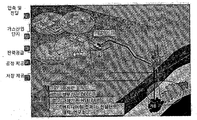
- CCS technology as shown in Figure 1 is a capture technology for separating and recovering the carbon dioxide generated by the use of fossil fuel, a transport technology for transporting the collected carbon dioxide to the reservoir, and injected and transported carbon dioxide into the ground or ocean to isolate and monitor It can be divided into storage technology.
- the CO2 capture cost accounts for 75 to 85% of the total cost, so the low cost capture process is very important for the commercialization of the CCS technology.
- CCS technology can also be classified into pre-combustion, post-combustion and oxy-combustion, depending on the capture method.
- Pre-combustion technology is a technology that separates the high concentration of carbon dioxide and hydrogen produced in connection with IGCC power generation and requires long-term utilization when considering commercialization of power generation technology.
- post-combustion technology can be applied in connection with pulverized coal-fired power plants, which are currently applied in most power plants, it is possible to apply it in the short term.
- post-combustion technology for early practical use in 2020 are actively conducted worldwide. .
- the post-combustion technology uses a separator to remove carbon dioxide, dust and sulfur oxides from the combustion flue gases (carbon dioxide concentration 3-15%) that is emitted after burning coal using air in a boiler, How to separate.
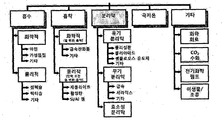
- a separator As a method of separating carbon dioxide, as shown in FIG. 2, absorption, adsorption, membrane separation, and low temperature cooling may be divided into technologies.
- an absorption technology currently used as a commercialization technology is used.
- ethanolamine is used in the process of removing CO2 and H2S gas from natural gas or refinery gas, or from removing ammonia from ammonia such as fertilizer plant. Ethanolamine absorbs acid gas very well and has a property of discharging it again when heated. Typically, 15-30 wt% aqueous ethanolamine solution is used.
- MDEA monoethanolamine
- TIPA triisopropanolamine
- MDEA mono-ethanol amine
- ABB Lummus process using the absorbent liquid of 20% MEA was initially used, but with the development of corrosion additives, Fluor using 30% MEA as the absorbent liquid
- the Daniel process has been developed and is currently used as a representative reference amine process.
- the amine process using the MEA absorbent liquid which is typically used, has a disadvantage in that a large amount of energy is consumed in order to capture carbon dioxide, and thus the increase in the collection cost is an obstacle to commercialization.
- the capture process using MEA absorbents consumes 4.0 GJ of energy to recover one tonne of carbon dioxide.
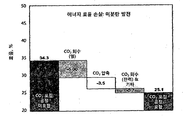
- the energy consumption of the amine-based pulverized coal with post-combustion CO2 capture including the carbon dioxide capture process is lowered from 34.3% to 25.1% when the carbon dioxide capture process is included.
- the power generation efficiency is lowered.
- the present invention has been made to solve the above problems, it is intended to provide a fast absorbent carbon dioxide by adding a reaction activator to the tertiary amine.
- this invention completed this invention by adding a reaction activator to a tertiary amine.
- the present invention provides a tertiary amine carbon dioxide absorbent having an improved absorption rate, which is an aqueous solution of a mixture in which 3-dimethylamino-1-propanol, a tertiary amine, is added with a reaction activator. to provide.
- the present invention also provides a tertiary amine carbon dioxide absorbent having improved absorption rate, wherein the reaction activator is monoethanol amine (Monoethanolamine, MEA).
- the reaction activator is monoethanol amine (Monoethanolamine, MEA).
- the present invention also adds 10 to 45 parts by weight of the monoethanol amine (Monoethanolamine (MEA)) based on 100 parts by weight of the 3-dimethylamino-1-propane in the mixture.
- MEA monoethanol amine
- a tertiary amine carbon dioxide absorbent with improved speed.
- the present invention also provides a tertiary amine carbon dioxide absorbent having improved absorption rate, wherein the reaction activator is diethanolamine (DEA).
- DEA diethanolamine
- the present invention also adds 10 to 45 parts by weight of the diethanolamine (DEA) based on 100 parts by weight of the 3-dimethylamino-1-propane in the mixture.
- DEA diethanolamine
- a tertiary amine carbon dioxide absorbent with improved speed.
- the mixture concentration of the aqueous solution is 20 to 50wt%
- the carbon dioxide absorbent of the present invention is a monoethanol amine (Monoethanolamine, MEA) which is a primary amine in 3-dimethylamino-1-propane, a tertiary amine, or a diethanolamine which is a secondary amine ( Diethanolamine (DEA) is mixed to have a fast carbon dioxide absorption rate.
- MEA monoethanol amine
- DEA Diethanolamine
- FIG. 1 is a schematic diagram of a CCS technology.
- FIG. 2 is a schematic diagram of a carbon dioxide separation technique.
- Figure 3 is a graph of the energy efficiency of the amine-based pulverized coal power generation including a carbon dioxide capture process.
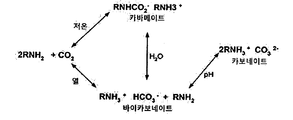
- FIG. 4 is a schematic diagram showing the absorption and regeneration pathways in a three-component system of amine, carbon dioxide, and water.
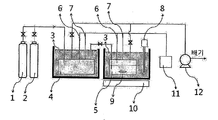
- FIG. 5 is a schematic diagram of a gas-liquid absorption equilibrium apparatus.
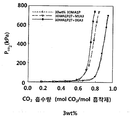
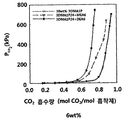
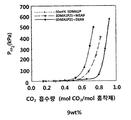
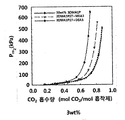
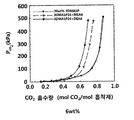
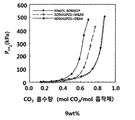
- Figure 6 shows the absorption of carbon dioxide when (a) 3wt%, (b) 6wt%, and (c) 9wt% of primary amine MEA or secondary amine DEA are mixed with tertiary amine 3DMA1P and tertiary amine 3DMA1P at 40 ° C, respectively.
- Figure 7 shows the absorption of carbon dioxide when (a) 3wt%, (b) 6wt%, and (c) 9wt% of primary amine MEA or secondary amine DEA are mixed with tertiary amine 3DMA1P and tertiary amine 3DMA1P at 60 ° C, respectively.
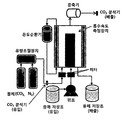
- WWC 8 is a schematic diagram of a wet wall (WWC) device for absorption rate measurement.
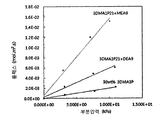
- FIG. 9 is a graph showing carbon dioxide absorption rates when primary amine MEA or secondary amine DEA is mixed with tertiary amine 3DMA1P and tertiary amine 3DMA1P at 40 ° C.
- the present invention relates to a carbon dioxide absorbent having improved absorption rate by adding a reaction activator to a tertiary amine.
- the amine (amine) is an organic compound having nitrogen bonded to 1, 2 or 3 carbons.
- a compound in which a hydrogen atom of ammonia (NH 3 ) is substituted with a hydrocarbon group R, and the number of primary amines (RNH 2 ), secondary amines (R 2 NH), and tertiary amines (R 3 N) depending on the number of substituted hydrogen atoms Are divided into
- RNH 2 primary amines
- R 2 NH secondary amines
- R 3 N tertiary amines
- the secondary amine and carbon dioxide reactions are reacted by two main mechanisms: OH -, CN -, NH 3 , the cycle easy matter electrons, such as H 2 O by the old nuclear reaction to attack the low electron density portion of the external material is formed carbamate (Carbamate), to meet the acid and base salts with Bicarbonate is formed by an acid-base neutralization reaction in which water is formed. The carbamate is then converted to bicarbonate and carbonate by hydrolysis with water.
- tertiary amines do not have amino-hydrogen atoms, no carbamate is produced, and by such a mechanism, tertiary amines have higher absorption than primary and secondary amines. However, tertiary amines have a disadvantage of low absorption rate.
- the present invention is an absorption solution of a mixture of 3-dimethylamino-1-propanol, which is a tertiary amine, with monoethanol amine (MEA) added as a reaction activator.
- MEA monoethanol amine
- Tertiary amine carbon dioxide absorbent with improved speed.
- the concentration of the mixture is 20 to 50 wt%, and the monoethanolamine (100 ethanol) of 100 parts by weight of the 3-dimethylamino-1-propane (3-dimethylamino-1-propanol) of the mixture ( 10 to 45 parts by weight of Monoethanolamine (MEA) is added.
- the present invention is an aqueous solution of a mixture obtained by adding diethanolamine (DEA) to 3-dimethylamino-1-propanol, a tertiary amine, as a reaction activator, It is a tertiary amine carbon dioxide absorbent with improved absorption rate.
- concentration of the mixture is 20 to 50 wt%, and the diethanolamine (100 ethanol) of 100 parts by weight of the 3-dimethylamino-1-propane (3-dimethylamino-1-propanol) of the mixture ( Diethanolamine (DEA) 10 to 45 parts by weight is added.
- the gas-liquid absorption equilibrium apparatus used in this embodiment is shown in FIG. 5, and may be classified into a simulated gas injection device, a mixed gas preliminary storage tank, a gas-liquid equilibrium reactor, and an accessory device.
- the simulated gas injection device is composed of a carbon dioxide storage tank (1) and a nitrogen gas storage tank (2) as a gas storage tank for injecting measurement gas into a gas-liquid equilibrium reactor. It can be injected into the mixed gas reserve reservoir.
- the mixed gas preliminary reservoir is a device for maintaining a constant temperature and pressure before injecting the mixed gas injected from the simulated gas storage cylinder into the gas-liquid equilibrium reactor (5).
- a reservoir was installed in the tank 3.
- the gas-liquid equilibrium reactor is a small reactor equipped with a temperature and pressure gauge. The reactor is installed in a water tank to maintain a constant temperature, and an immersing heater 8 is mounted in the water tank for temperature control.
- the accessory consists of a data reservoir 11 which measures and stores the temperature and pressure of the reservoir and the reactor and a vacuum pump 12 to maintain the vacuum state before the experiment.
- the absorbent liquid prepared by the gas-liquid equilibrium experiment was placed in a reactor and sealed, and then the remaining gas in the reactor was removed using a vacuum pump. Carbon dioxide in the reservoir was injected into the balancer at a constant pressure in the absorption balancer containing only the absorbent liquid. When the pressure inside the reactor reaches an equilibrium state that does not change for a period of time, the temperature and equilibrium pressure are measured. At this time, the equilibrium pressure is assumed to be the absorbent vapor pressure at the experimental temperature and the absorbed vapor pressure is subtracted from the final equilibrium pressure after the experiment. The pressure was calculated.
- the absorption temperature was set to 40 ° C and 60 ° C as operating conditions, and to 3-dimethylamino-1-propanol, a tertiary amine, and monoethanolamine (MEA) as a reaction activator.
- the concentration of the aqueous solution of the mixture added was set to 30wt%. 3wt%, 6wt%, 9wt% of monoethanolamine (MEA) as primary amine as a reaction activator to 3-dimethylamino-1-propanol (3DMA1P) Carbon dioxide absorption experiments were performed after mixing.
- Carbon dioxide absorption performance was carried out in the same manner as in Example 1.
- Absorption temperature was set to 40 ° C and 60 ° C as operating conditions, and to 3-dimethylamino-1-propanol, a tertiary amine, and diethanolamine (DEA) as a reaction activator.
- the concentration of the aqueous solution of the mixture to which was added was set to 30wt%. 3 wt%, 6 wt%, 9 wt% of a secondary amine, Diethanolamine (DEA), as a reaction activator for 3-dimethylamino-1-propanol (3DMA1P) Carbon dioxide absorption experiments were performed after mixing.
- DEA diethanolamine
- FIG. 6 shows the change in absorption performance when primary amine MEA or secondary amine DEA was mixed with 3DMA1P, the tertiary amine, and tertiary amine 3DMA1P at 40 ° C.
- the graph shows the change in absorbent performance of the absorbent as the gas-liquid equilibrium pressure changes.
- absorption performance of carbon dioxide at 15 kPa or less is 0.6 mol CO 2 / mol absorbent High absorption performance is shown.
- FIG. 7 shows the change in absorption performance when primary amine MEA or secondary amine DEA was mixed with tertiary amine 3DMA1P and tertiary amine 3DMA1P at 60 ° C.
- Absorption performance for carbon dioxide shows a similar trend to FIG. At 60 ° C, the absorption capacity is lower than 40 ° C at the same pressure. That is, in Figure 7 (a) to have the absorption capacity of 0.6 mol CO 2 / mol absorbent when mixed with 3wt% of primary and secondary amines, it is possible at a pressure of 15kPa at 40 °C but at a high pressure of 68kPa at 60 °C. As the operating temperature increases, the absorption capacity of carbon dioxide decreases.
- FIG. 7 (b) and 7 (c) show similar tendencies to those of FIG. 7 (a) as absorbents mixed with 6 wt% and 9 wt% of primary and secondary amines, respectively.
- the absorption of carbon dioxide by mixing primary and secondary amines with tertiary amines was the highest in the absorption of tertiary amines and lowered as the primary and secondary amines were mixed. This is because the tertiary amine is bicarbonate is formed by the acid-base neutralization reaction, the absorption is high, the primary and secondary amine was found to be lower than the tertiary amine because carbamate is formed by the nucleophilic reaction.
- WWC wet wall
- the wet-wall (WWC) device used in the present embodiment is shown in FIG. 8, and the device may be classified into a simulated gas and an absorbent liquid injection device, an absorption rate measurement column, and an analysis device.
- Mosagas mixed with carbon dioxide and nitrogen was injected into the velocity measurement column through a mixer at a constant speed using a mass flow controller (MFC).
- MFC mass flow controller
- the absorbent is injected into the velocity measurement column at a constant rate through a pump, and the absorbent that passes through the velocity measurement column is collected in a reservoir.
- Absorption rate measuring device is a double tube type, and a temperature circulator is installed outside to maintain a constant measurement temperature.
- the double pipe for velocity measurement enables the gas-liquid contact by injecting the simulated gas to be measured externally, and the absorbent flowing from the inside to the outside, and using the continuous analysis device before and after injection into the absorption rate measurement column.
- the composition of the gas was analyzed.
- the absorption rate was measured after mixing 3 wt% of 3DMA1P, a tertiary amine, with 9 wt% of MEA, a primary amine, as a reaction activator.
- Carbon dioxide absorption rate experiment was carried out in the same manner as in Example 2. The absorption rate was measured after mixing 9 wt% of secondary amine DEA with 21 wt% of tertiary amine 3DMA1P as a reaction activator.
- FIG. 9 shows the results of measuring the absorption rate of the absorbent after mixing the primary amine 3DMA1P 21wt% at 40 ° C with 9 wt% of primary and secondary amines MEA and DEA, respectively.
- Absorption rate is shown in the order of 3DMA1P 21wt% + MEA 9wt%> 3DMA1P 21wt% + DEA 9wt%> 3DMA1P 30wt%. It can be seen that when the primary and secondary amines are used as the reaction activator to increase the absorption rate in the tertiary amine absorbent having a high carbon dioxide absorption rate, the absorption rate is superior to that of the tertiary amine alone. It can be seen that the absorption rate is the fastest when the primary amine MEA is added to the primary amine 3DMAP.
Landscapes
- Chemical & Material Sciences (AREA)
- Engineering & Computer Science (AREA)
- Analytical Chemistry (AREA)
- General Chemical & Material Sciences (AREA)
- Oil, Petroleum & Natural Gas (AREA)
- Chemical Kinetics & Catalysis (AREA)
- Treating Waste Gases (AREA)
- Gas Separation By Absorption (AREA)
Abstract
본 발명은 3차 아민에 반응활성화제를 첨가하여 흡수속도를 개선한 이산화탄소 흡수제에 관한 것으로, 3차 아민인 3-디메틸아미노-1-프로페놀(3-dimethylamino-1-propanol)에, 반응활성화제로 1차 아민인 모노에탄올 아민(Monoethanolamine, MEA) 또는 2차 아민인 디에탄올아민(Diethanolamine, DEA)을 첨가한 혼합물의 수용액인, 흡수속도를 개선한 3차 아민 이산화탄소 흡수제이다.
Description
본 발명은 3차 아민에 반응활성화제를 첨가하여 흡수속도를 개선한 이산화탄소 흡수제에 관한 것이다.
산업화가 시작되면서 에너지 산업에 사용되는 석탄, 석유 등의 화석연료의 사용이 증가하고 있으며, 이로 인하여 대기 중에 이산화탄소의 농도가 급격하게 증가되어 지구 온난화 현상이 가속되고 있다. 1990년대부터 선진국에서는 이산화탄소를 포함한 지구 온난화 가스 배출 저감계획이 제시되고 있다. 일례로서 1997년에는 기후변화에 관한 UN 규약의 교토의정서가 채택되어 2005년에 발효되었는데, 교토의정서에서는 온실효과를 보이는 6종의 온실가스 배출량 감소 목표치를 정하고, 2008 내지 2012년 사이에 선진국의 온실가스 배출량을 1990년대 대비 최소한 5.2%를 감축할 것을 목표로 하고 있다. 한국 역시 2002년이 이 조약을 비준하여 온실가스 배출량을 감축할 의무를 가지고 있다.
따라서 이산화탄소의 배출량을 감소시키기 위한 여러 가지 처리 공정이 연구되고 있는데, 이산화탄소의 배출을 감소시키기 위한 에너지 절약기술, 배출가스로부터 이산화탄소를 분리 회수하는 기술, 이산화탄소를 이용하거나 고정화시키는 기술, 이산화탄소를 배출하지 않는 대체에너지 기술 등이 있다. 이산화탄소를 배출하지 않는 대체에너지 기술 개발이 지구온난화로 인한 기후변화 문제를 풀 수 있는 열쇠인 것은 사실이나, 경제성 있는 대체에너지가 개발될 때까지 안정적 화석연료의 사용을 위해서는 이산화탄소 포집 및 저장(CCS, Carbon Capture and Storage) 기술 개발이 절실한 상황이다.
CCS 기술은 도 1에서 나타내는 바와 같이 화석연료 사용에 따라 발생되는 이산화탄소를 분리하고 회수하는 포집기술과 포집된 이산화탄소를 저장소까지 이동하는 수송기술 및 수송된 이산화탄소를 지중 또는 해양에 주입하여 격리시키고 감시하는 저장기술로 구분할 수 있다. CCS기술은 전체 비용 중에서 이산화탄소 포집비용이 75 내지 85%를 차지하고 있어, 저비용 포집공정이 CCS 기술 상용화에 매우 중요하다.
또한 CCS 기술은 포집 방법에 따라 연소 전, 연소 후 및 순산소연소로 구분할 수 있다. 연소 전 기술은 IGCC 발전과 연계된 고농도 이산화탄소를 분리하고 수소를 생산하는 기술로, 발전 기술의 상용화를 고려할 때 장기적인 활용이 요구된다. 반면에 연소 후 기술은 현재 대부분의 발전소에서 적용하고 있는 미분탄화력발전에 연계되어 적용할 수 있으므로 단기적 적용이 가능하여 현재 전 세계적으로 2020년 조기 실용화를 위한 연소 후 기술의 실증 연구가 활발히 진행되고 있다. 연소 후 기술은 보일러에서 공기를 이용하여 석탄을 연소한 후 배출되는 연소배가스(이산화탄소 농도 3∼15%) 중 질소산화물, 먼지 및 황산화물을 제거하고 대기 중으로 방출하기 전에 분리 장치를 이용하여 이산화탄소를 분리하는 방법이다. 이산화탄소 분리 방법으로 도 2와 같이 흡수, 흡착, 막분리, 저온냉각 등의 기술로 구분할 수 있으며, 대량의 이산화탄소를 처리할 수 있는 방법으로는 현재 상용화 기술로 활용되고 있는 흡수 기술이 이용되고 있다. 흡수법에서는 에탄올아민을 사용하는 공정이 이용되고 있는데, 에탄올아민은 천연가스나 정유공장 가스에서의 CO2및 H2S 가스의 제거나 비료공장 등의 암모니아로부터 CO2를 제거하는 공정에서 사용된다. 에탄올아민은 산성가스를 매우 잘 흡수하고 가열시 이를 다시 배출하는 성질을 가지고 있는데, 통상적으로 15 내지 30wt% 에탄올아민 수용액이 사용된다.
일반적으로 1차 아민인 모노에탄올아민(monoethanolamine, MEA)이 가장 염기성이 높고 당량이 작기 때문에 가장 많이 사용되고 있고, 2차 아민인 디에탄올아민(diethaolamine, DEA), 3차 아민인 트리에탄올아민(triethanolamine, TEA), N-메틸디에탄올아민(N-methyl diethanolamine, MDEA), 및 트리이소프로판올아민(triisopropanolamine, TIPA) 등도 사용된다. MDEA의 경우에는 부식성과 재생열은 낮지만, 흡수속도가 낮다는 단점을 갖고있다. 흡수기술은 MEA(Mono Ethanol Amine) 흡수액을 이용하는 기술이 대표적으로 이용되고 있는데, 초기에는 MEA 20%의 흡수액을 이용한 ABB Lummus 공정이 이용되었으나, 부식 첨가제의 개발과 더불어 MEA 30%를 흡수액으로 하는 Fluor Daniel 공정이 개발되어 현재 대표적인 기준 아민 공정으로 활용되고 있다.
그러나 대표적으로 사용되고 있는 MEA 흡수액을 이용한 아민 공정은 이산화탄소를 포집하기 위하여 많은 에너지가 소비된다는 단점을 가지고 있으며, 이에 따른 포집 비용 상승은 상용화에 장애가 되고 있다. 현재 MEA 흡수액을 이용한 포집 공정은 1톤의 이산화탄소를 재생하는데 4.0GJ의 에너지가 소비되고 있다. 이와 같은 에너지 소비는 도 3 에서 보는 바와 같이 이산화탄소 포집 공정을 포함한 아민계 미분탄 발전(subcritical pulverized coal with post-combustion CO2 capture)에서의 효율이 기존 34.3%에서 이산화탄소 포집 공정 포함 시 25.1%로 저하된다. 상기와 같이 기존 포집 기술을 적용한 이산화탄소 처리 시 발전 효율의 저하로 상용화 기술로 활용할 경우 많은 어려움을 내포하고 있다.
일본공개특허 제2,871,335호에서는 아민이 3차 탄소원자에 결합되어 입체장애가 큰 2-아미노-2-메틸프로판올(AMP) 또는 (2-아미노에틸)에탄올 등과 같은 2차 아민에 피페라진 유도를 반응촉진제로 사용한 기술을 개시하고 있다. 하지만, 이 경우 2차 아민의 입체장애로 인하여 반응속도가 빠르지 못하다는 단점이 있다. 이와 같은 단점을 극복하기 위하여 혁신적인 흡수제 및 공정 기술 개발이 수행되어야 한다.
[선행기술문헌]
[특허문헌]
일본공개특허 제2,871,335호
본원은 상기 문제점을 해결하기 위해 안출된 것으로, 3차 아민에 반응활성화제를 첨가하여 이산화탄소 흡수속도가 빠른 흡수제를 제공하고자 한다.
상기 과제를 해결하기 위하여, 본 발명은 3차 아민에 반응활성화제를 첨가함으로써, 본 발명을 완성하였다.
본 발명은, 3차 아민인 3-디메틸아미노-1-프로페놀(3-dimethylamino-1-propanol)에, 반응활성화제를 첨가한 혼합물의 수용액인, 흡수속도를 개선한 3차 아민 이산화탄소 흡수제를 제공한다.
본 발명은 또한, 상기 반응활성화제는 모노에탄올 아민(Monoethanolamine, MEA)인, 흡수속도를 개선한 3차 아민 이산화탄소 흡수제를 제공한다.
본 발명은 또한, 상기 혼합물의 상기 3-디메틸아미노-1-프로페놀(3-dimethylamino-1-propanol) 100중량부에 대하여 상기 모노에탄올 아민(Monoethanolamine, MEA) 10 내지 45중량부를 첨가하는, 흡수속도를 개선한 3차 아민 이산화탄소 흡수제를 제공한다.
본 발명은 또한, 상기 반응활성화제는 디에탄올 아민(Diethanolamine, DEA)인, 흡수속도를 개선한 3차 아민 이산화탄소 흡수제를 제공한다.
본 발명은 또한, 상기 혼합물의 상기 3-디메틸아미노-1-프로페놀(3-dimethylamino-1-propanol) 100중량부에 대하여 상기 디에탄올아민(Diethanolamine, DEA) 10 내지 45중량부를 첨가하는, 흡수속도를 개선한 3차 아민 이산화탄소 흡수제를 제공한다.
본 발명은 또한, 상기 수용액의 상기 혼합물 농도는 20 내지 50wt%인,
흡수속도를 개선한 3차 아민 이산화탄소 흡수제를 제공한다.
본 발명의 이산화탄소 흡수제는 3차 아민인 3-디메틸아미노-1-프로페놀(3-dimethylamino-1-propanol)에 1차 아민인 모노에탄올 아민(Monoethanolamine, MEA) 또는 2차 아민인 디에탄올아민(Diethanolamine, DEA)를 혼합하여 이산화탄소 흡수 속도가 빠른 효과가 있다.
도 1은 CCS기술에 대한 개요도이다.
도 2는 이산화탄소 분리 기술에 대한 개요도이다.
도 3은 이산화탄소 포집 공정을 포함한 아민계 미분탄 발전의 에너지 효율에 대한 그래프이다.
도 4는 아민, 이산화탄소, 물의 3성분계에서의 흡수 및 재생 경로를 나타내는 개요도이다.
도 5는 기액 흡수 평형장치의 개요도이다.
도 6은 40℃에서 3차 아민인 3DMA1P와 3차 아민 3DMA1P에 1차 아민 MEA 또는 2차 아민 DEA를 각각 (a)3wt%, (b)6wt%, (c)9wt% 혼합 했을 때 이산화탄소 흡수성능을 나타내는 그래프이다.
도 7은 60℃에서 3차 아민인 3DMA1P와 3차 아민 3DMA1P에 1차 아민 MEA 또는 2차 아민 DEA를 각각 (a)3wt%, (b)6wt%, (c)9wt% 혼합 했을 때 이산화탄소 흡수성능을 나타내는 그래프이다.
도 8은 흡수 속도 측정을 위한 젖은 벽(WWC) 장치의 개요도이다.
도 9는 40℃에서 3차 아민인 3DMA1P와 3차 아민 3DMA1P에 1차 아민 MEA 또는 2차 아민 DEA를 혼합 했을 때 이산화탄소 흡수 속도를 나타내는 그래프이다.
이하, 본 발명이 속하는 기술 분야에서 통상의 지식을 가진 자가 용이하게 실시할 수 있을 정도로 바람직한 실시예를 도면을 참조하여 상세하게 설명하면 다음과 같다.
본 발명의 상세한 설명에 앞서, 이하에서 설명되는 본 명세서 및 청구범위에 사용된 용어나 단어는 통상적이거나 사전적인 의미로 한정해서 해석되어서는 아니 된다. 따라서, 본 명세서에 기재된 실시예와 도면에 도시된 구성은 본 발명의 가장 바람직한 일실시예에 불과할 뿐이고 본 발명의 기술적 사상을 모두 대변하는 것은 아니므로, 본 출원시점에 있어서 이들을 대체할 수 있는 다양한 균등물과 변형예들이 있을 수 있음을 이해하여야 한다.
여기서, 본원의 실시 형태를 설명하기 위한 전체 도면에 있어서, 동일한 기능을 갖는 것은 동일한 부호를 붙이고, 그에 대한 상세한 설명은 생략하기로 한다.
본 발명은 3차 아민에 반응활성화제를 첨가하여 흡수속도를 개선한 이산화탄소 흡수제에 관한 것이다. 본 발명에서 아민(amine)은 1, 2 또는 3개의 탄소들과 결합한 질소를 가지고 있는 유기화합물. 암모니아 (NH3)의 수소원자를 탄화수소기 R로 치환한 화합물이며, 치환된 수소원자에 수에 따라 1차 아민(RNH2), 2차 아민(R2NH), 3차 아민(R3N)으로 나뉜다. 아민흡수제와 이산화 탄소 반응에 대한 이해를 위하여 아민, 이산화탄소, 물의 3성분계에서 흡수 및 재생경로를 도 4에 나타내었다. 일반적으로 1. 2차 아민과 이산화탄소 반응은 다음의 2가지 주요 메커니즘으로 반응한다. OH-, CN-, NH3, H2O 등과 같은 전자를 주기 쉬운 물질이 상대 물질의 전자밀도가 낮은 부분을 공격하는 구핵반응에 의하여 카바메이트(Carbamate)가 형성되고, 산과 염기가 만나 염과 물이 형성되는 산-염기 중화 반응에 의하여 바이카보네이트(Bicarbonate)가 형성된다. 이때 카바메이트는 물과의 가수분해에 의하여 바이카보네이트와 카보네이트로 전환된다.
액상 아민 흡수제와 이산화탄소의 전체 흡수 반응은 다음과 같다.
물의 해리반응:
2H2O H3O+ + OH- (1)
중탄산염의 가수분해 반응:
HCO3 + H2O CO3
-2 + H3O+ (2)
알카놀아민의 탈양자화 반응:
RNH3
+ + H2O RNH2 + H3O+ (3)
중탄산염 형성반응:
CO2 + OH- HCO3
- (4)
중탄산염의 탈리 반응:
HCO3
- CO2 + OH- (5)
카바메이트 이온 형성반응:
MEA + CO2 + H2O MEACOO- + H3O+ (6)
카바메이트의 탈리 반응:
RNH2
+COO- + H3O+ MEA + CO2 + H2O (7)
바이카보네이트 형성:
RNH2
+COO- + H2O RNH3 + HCO3
- (8)
흡수제를 이용하여 이산화탄소 분리 시 카바메이트와 바이카보네이트가 형성이 되는데, 카바메이트 반응 쪽으로 진행이 많이 될 경우에 흡수속도는 빠르나 흡수량이 낮으며, 바이카보네이트 반응 쪽으로 많이 진행될 경우에는 흡수속도는 늦으나 흡수량은 높다.
3차 아민은 아미노-수소 원자(amino hydrogen atom)가 없기 때문에 카바메이트가 생성되지 않으며, 상기와 같은 메커니즘에 의하여 3차 아민은 1, 2차 아민보다 높은 흡수성능을 가지게 된다. 그러나 3차 아민은 흡수속도가 낮은 단점이 있다.
한 양태에서 본 발명은 3차 아민인 3-디메틸아미노-1-프로페놀(3-dimethylamino-1-propanol)에, 반응활성화제로 모노에탄올 아민(Monoethanolamine, MEA)를 첨가한 혼합물의 수용액인, 흡수속도를 개선한 3차 아민 이산화탄소 흡수제이다. 본 발명의 구현예에서 상기 혼합물의 농도는 20 내지 50 wt%이며, 상기 혼합물의 상기 3-디메틸아미노-1-프로페놀(3-dimethylamino-1-propanol) 100중량부에 대하여 상기 모노에탄올아민(Monoethanolamine, MEA) 10 내지 45중량부를 첨가한다.
또 다른 양태에서 본 발명은 3차 아민인 3-디메틸아미노-1-프로페놀(3-dimethylamino-1-propanol)에, 반응활성화제로 디에탄올아민(Diethanolamine, DEA)를 첨가한 혼합물의 수용액인, 흡수속도를 개선한 3차 아민 이산화탄소 흡수제이다. 본 발명의 구현예에서 상기 혼합물의 농도는 20 내지 50 wt%이며, 상기 혼합물의 상기 3-디메틸아미노-1-프로페놀(3-dimethylamino-1-propanol) 100중량부에 대하여 상기 디에탄올아민(Diethanolamine, DEA) 10 내지 45중량부를 첨가한다.
이하, 실시예를 통하여 본 발명을 더욱 상세히 설명하고자 한다. 이들 실시예는 오로지 본 발명을 보다 구체적으로 설명하기 위한 것으로서, 본 발명의 요지에 따라 본 발명의 범위가 이들 실시예에 의해 제한되지 않는다는 것은 본 발명이 속하는 기술 분야에서 통상의 지식을 가진 자에게 있어서 자명할 것이다.
실시예 1. 3차 아민 + 1차 아민의 이산화탄소 흡수성능 실험
기액 평형실험을 통하여 3차 아민에 반응활성화제를 첨가하여 흡수속도를 개선한 이산화탄소 흡수제의 흡수성능 실험을 수행하였다. 본 실시예에서 사용된 기액 흡수 평형장치는 도 5에 나타내었으며, 모사가스 주입장치, 혼합가스 예비 저장조, 기액 평형 반응기, 부속 장치로 구분할 수 있다.
모사가스 주입 장치로는 기액 평형 반응기에 측정가스를 주입하기 위한 가스 저장조로써 이산화탄소 저장조(1)와 질소 가스 저장조(2)로 구성되어 있으며, 부수적으로 압력 조절기(4)가 부착되어 있어 일정한 압력을 혼합가스 예비 저장조에 주입할 수 있다. 혼합가스 예비 저장조는 모사가스 저장 봄베에서 주입된 혼합가스를 기액 평형 반응기(5)로 주입하기 전에 일정한 온도와 압력을 유지하는 장치로써 저장조내에 온도측정기(6)와 압력 측정기(7)가 부착되어 있으며, 일정한 온도를 유지하기 위하여 수조(3)내에 저장조를 장착하였다. 기액 평형 반응기는 온도와 압력 측정기가 부착된 소형 반응기로써, 반응기를 일정한 온도를 유지하기 위하여 수조에 장치하였으며 온도 제어를 위하여 수조내에 이머싱 히터(8)(immersing heater)를 장착하였다. 부속장치로는 저장조와 반응기의 온도 및 압력을 측정하고 저장하는 데이터 저장소(11)와 실험전에 진공 상태를 유지하기 위하여 진공펌프(12)로 구성되어 있다.
실험에 앞서 저장조와 흡수 평형기의 부피를 측정하기 위하여 99.99% 질소가스와 물을 이용하였다. CO2는 반응기에 주입되기 전 공급기에 채워져 항온 수조에 의해 40℃로 예열된 후 주입하였다. 저장조 및 반응기 내부의 온도 측정에는 T-type의 열전대를, 압력측정에는 0.15%의 분해능을 가지는 Sensys사의 PSHFC 모델 (range: 15150 psig) 압력 센서를 사용하였다. 흡수액의 부피는 100ml로 동일하게 하였으며, 반응기에 흡수액을 넣은 후 이산화탄소를 주입하기 전 진공펌프를 이용하여 반응기 내부의 잔존 기체를 제거하였다. 또한 이산화탄소와 흡수액의 혼합 효과를 최대화하여 물질전달 계면 저항을 최소화하기 위해 기액 흡수 반응이 진행되는 동안에 흡수액을 일정한 속도로 자석(9)을 이용하는 교반기(10)를 사용하여 교반하였다.
기액 평형 실험으로 제조된 흡수액은 반응기에 넣고 밀폐시킨 다음 진공 펌프를 이용하여 반응기 내부의 잔존기체를 제거하였다. 흡수액만 있는 흡수 평형기에 저장조에 있는 이산화탄소를 일정 압력으로 평형기에 주입하였다. 반응기 내부의 압력이 일정시간 동안 변하지 않는 평형 상태에 도달하면 온도 및 평형 압력을 측정하는데, 이때의 평형압력은 실험온도에서의 흡수액 증기압 가정하고 실험 후 최종 평형 압력에서 흡수액 증기압을 빼줌으로써 이산화탄소의 평형압력을 계산하였다. 조업조건으로 흡수온도를 40℃와 60℃로 선정하고, 3차 아민인 3-디메틸아미노-1-프로페놀(3-dimethylamino-1-propanol)에, 반응활성화제로 모노에탄올 아민(Monoethanolamine, MEA)를 첨가한 혼합물의 수용액의 농도는 30wt%로 정하였다. 3차 아민인 3-디메틸아미노-1-프로페놀(3-dimethylamino-1-propanol, 3DMA1P)에 반응활성화제로 1차 아민인 모노에탄올 아민(Monoethanolamine, MEA)을 3wt%, 6wt%, 9wt%로 혼합한 후 이산화탄소 흡수 실험을 수행하였다.
실시예 2. 3차 아민 + 2차 아민의 이산화탄소 흡수성능 실험
상기 실시예 1과 같은 방법으로 이산화탄소 흡수성능을 실험을 수행하였다. 조업조건으로 흡수온도를 40℃와 60℃로 선정하고, 3차 아민인 3-디메틸아미노-1-프로페놀(3-dimethylamino-1-propanol)에, 반응활성화제로 디에탄올아민(Diethanolamine, DEA)를 첨가한 혼합물의 수용액의 농도를 30wt%로 정하였다. 3차 아민인 3-디메틸아미노-1-프로페놀(3-dimethylamino-1-propanol, 3DMA1P)에 반응활성화제로 2차 아민인 디에탄올아민(Diethanolamine, DEA)를 3wt%, 6wt%, 9wt%로 혼합한 후 이산화탄소 흡수 실험을 수행하였다.
도 6은 40℃에서 3차 아민인 3DMA1P와 3차 아민 3DMA1P에 1차 아민 MEA 또는 2차 아민 DEA를 혼합 했을 때 흡수성능 변화를 나타내었다. 그래프에서는 기액 평형압이 변화함에 따라 흡수제의 흡수성능의 변화를 보이고 있다. 도 6의 (a)에서는 3DMA1P 30wt%, 3DMA1P 27wt%+MEA 3wt%, 3DMA1P 27wt%+DEA 3wt%에 대한 실험결과로써, 이산화탄소의 압력이 15kPa 이하에서 흡수성능이 0.6 mol CO2/mol absorbent로 높은 흡수성능을 나타내고 있다. 이와 같은 흡수성능은 화학 흡수제의 전형적인 흡수특성을 나타내고 있으며, 구체적으로 흡수제의 아민기 (-NHn, n=1,2,3)에 의해 낮은 압력에서도 높은 이산화탄소 흡수성능을 나타내고 있음을 알 수 있다.
동일한 압력에서 흡수성능은 3DMA1P 30wt% > 3DMA1P 27wt% + MEA 3wt% > 3DMA1P 27wt% + DEA 3wt% 순으로 나타내고 있다. 이는 3차 아민이 높은 흡수성능을 보이며, 다음으로 1차, 2차 아민을 혼합한 흡수제 순이다. 도 6(b)와 도 6(c)는 각각 MEA와 DEA를 6wt%, 9wt% 혼합한 흡수제로써, (a)와 유사한 경향을 보이고 있다. 그러나 1, 2차 아민의 혼합이 증가할수록 흡수성능은 감소하고 있음을 보이고 있다.
도 7은 60℃에서 3차 아민인 3DMA1P와 3차 아민 3DMA1P에 1차 아민 MEA 또는 2차 아민 DEA를 혼합 했을 때 흡수성능 변화를 나타내었다. 이산화탄소에 대한 흡수성능은 도 6과 유사한 경향을 나타내고 있다. 60℃에서는 40℃보다 동일 압력에서 낮은 흡수능을 보이고 있다. 즉, 도 7(a)에서 1, 2차 아민 3wt% 혼합 시 0.6 mol CO2/mol absorbent의 흡수능을 가지려면 40℃에서는 15kPa의 압력에서 가능하지만 60℃에서는 68kPa로 높은 압력에서 가능함을 보이고 있으며, 조업 온도가 증가할수록 이산화탄소 흡수성능은 감소하고 있음을 알 수 있다. 도 7(b)와 도 7(c)는 각각 1, 2차 아민 6wt%, 9wt% 혼합한 흡수제로써 도 7(a)와 유사한 경향을 보인다. 3차 아민에 1, 2차 아민 혼합에 따른 이산화탄소 흡수성능은 3차 아민이 흡수량이 가장 높으며, 1, 2차 아민을 혼합함에 따라 흡수량이 낮아졌다. 이는 3차 아민은 산-염기 중화 반응으로 바이카보네이트가 형성되어 흡수량이 높으며, 1, 2차 아민은 구핵반응으로 카바메이트가 형성되므로 3차 아민보다 흡수량이 낮음을 알 수 있었다.
실시예
2. 3차 아민 + 1차
아민의
이산화탄소 흡수속도 실험
젖은 벽 (WWC, Wetted-Wall Column) 장치를 이용하여 3차 아민에 반응활성화제를 첨가하여 흡수속도를 개선한 이산화탄소 흡수제의 흡수속도 실험을 수행하였다. 본 실시예에서 사용된 젖은 벽 (WWC, Wetted-Wall Column) 장치는 도 8에 나타내었으며, 장치는 모사 가스와 흡수액 주입장치, 흡수속도 측정 컬럼, 분석장치로 구분할 수 있다. 이산화탄소와 질소로 혼합된 모사가스는 유량조절장치(MFC, Mass Flow Controller)를 이용하여 일정한 속도로 혼합기를 통과하여 속도 측정 컬럼에 주입되었다. 또한 흡수제는 펌프를 통하여 일정한 속도로 속도 측정 컬럼에 주입하고 속도 측정 컬럼을 통과한 흡수제는 저장조(reservoir)에 모아진다. 흡수속도 측정 장치는 이중 관형으로 되어 있으며, 측정 온도를 일정하게 유지하기 위하여 외부에 온도 순환기(circulator)를 설치하였다. 속도 측정을 위한 이중관은 외부에 측정할 모사가스를 주입하고, 흡수제를 내부에서 외부로 흘러 보내면서 기-액 접촉을 할 수 있게 하였고, 연속 분석 장치를 이용하여 흡수 속도 측정 컬럼에 주입 전, 후의 가스의 조성을 분석하였다. 3차 아민인 3DMA1P 21wt%에 반응활성화제로 1차 아민인 MEA를 9wt%로 혼합한 후 흡수속도를 측정하였다.
비교예 2. 3차 아민 + 2차 아민의 이산화탄소 흡수속도 실험
상기 실시예 2와 같은 방법으로 이산화 탄소 흡수속도 실험을 수행하였다. 3차 아민인 3DMA1P 21wt%에 반응활성화제로 2차 아민인 DEA를 9wt%로 혼합한 후 흡수속도를 측정하였다.
도 9는 40℃에서 3차 아민인 3DMA1P 21wt%에 반응활성화제로 1, 2차 아민인 MEA, DEA를 각각 9wt%로 혼합한 후 흡수제의 흡수 속도를 측정한 결과를 나타내고 있다. 흡수속도는 3DMA1P 21wt% + MEA 9wt% > 3DMA1P 21wt% + DEA 9wt% > 3DMA1P 30wt% 순으로 나타내고 있다. 이는 이산화탄소 흡수량이 높은 3차 아민 흡수제에 흡수속도를 증가시키기 위하여 1, 2차 아민을 반응활성화제로 쓸 경우에 3차 아민을 단독으로 쓰는 것보다 우수한 흡수 속도를 나타내고 있음을 알 수 있으며, 특히 3차 아민인 3DMAP에 1차 아민인 MEA를 첨가한 경우에 가장 흡수속도가 빠르다는 사실을 알 수 있다.
이상에서 본원의 예시적인 실시예에 대하여 상세하게 설명하였지만 본원의 권리범위는 이에 한정되는 것은 아니고 다음의 청구범위에서 정의하고 있는 본원의 기본 개념을 이용한 당업자의 여러 변형 및 개량 형태 또한 본원의 권리범위에 속하는 것이다.
본 발명에서 사용되는 모든 기술용어는, 달리 정의되지 않는 이상, 본 발명의 관련 분야에서 통상의 당업자가 일반적으로 이해하는 바와 같은 의미로 사용된다. 본 명세서에 참고문헌으로 기재되는 모든 간행물의 내용은 본 발명에 도입된다.
[부호의 설명]
1.이산화탄소 저장조
2.질소 가스 저장조
3.수조
4.압력 조절기
5.기액 평형 반응기
6.온도측정기
7.압력 측정기
8.이머싱 히터(immersing heater)
9.자석
10.교반기
11.데이터 저장소
12.진공펌프
Claims (6)
- 3차 아민인 3-디메틸아미노-1-프로페놀(3-dimethylamino-1-propanol)에, 반응활성화제를 첨가한 혼합물의 수용액인,흡수속도를 개선한 3차 아민 이산화탄소 흡수제.
- 제 1 항에 있어서,상기 반응활성화제는 모노에탄올 아민(Monoethanolamine, MEA)인,흡수속도를 개선한 3차 아민 이산화탄소 흡수제.
- 제 2 항에 있어서,상기 혼합물의 상기 3-디메틸아미노-1-프로페놀(3-dimethylamino-1-propanol) 100중량부에 대하여 상기 모노에탄올 아민(Monoethanolamine, MEA) 10 내지 45중량부를 첨가하는,흡수속도를 개선한 3차 아민 이산화탄소 흡수제.
- 제 1 항에 있어서,상기 반응활성화제는 디에탄올 아민(Diethanolamine, DEA)인,흡수속도를 개선한 3차 아민 이산화탄소 흡수제.
- 제 4 항에 있어서,상기 혼합물의 상기 3-디메틸아미노-1-프로페놀(3-dimethylamino-1-propanol) 100중량부에 대하여 상기 디에탄올아민(Diethanolamine, DEA) 10 내지 45중량부를 첨가하는,흡수속도를 개선한 3차 아민 이산화탄소 흡수제.
- 제 1 항에 있어서,상기 수용액의 상기 혼합물 농도는 20 내지 50wt%인,흡수속도를 개선한 3차 아민 이산화탄소 흡수제.
Applications Claiming Priority (2)
| Application Number | Priority Date | Filing Date | Title |
|---|---|---|---|
| KR10-2013-0115058 | 2013-09-27 | ||
| KR20130115058 | 2013-09-27 |
Publications (1)
| Publication Number | Publication Date |
|---|---|
| WO2015046659A1 true WO2015046659A1 (ko) | 2015-04-02 |
Family
ID=52743776
Family Applications (1)
| Application Number | Title | Priority Date | Filing Date |
|---|---|---|---|
| PCT/KR2013/008862 Ceased WO2015046659A1 (ko) | 2013-09-27 | 2013-10-04 | 흡수속도를 개선한 3차 아민 이산화탄소 흡수제 |
Country Status (1)
| Country | Link |
|---|---|
| WO (1) | WO2015046659A1 (ko) |
Cited By (2)
| Publication number | Priority date | Publication date | Assignee | Title |
|---|---|---|---|---|
| WO2019070526A1 (en) * | 2017-10-02 | 2019-04-11 | Battelle Energy Alliance, Llc | METHODS AND SYSTEMS FOR ELECTROCHEMICAL REDUCTION OF CARBON DIOXIDE USING SWITCHABLE POLARITY MATERIALS |
| CN118161956A (zh) * | 2024-04-22 | 2024-06-11 | 华北电力大学(保定) | 一种具有良好的吸收解吸综合性能的低能耗杂二胺相变吸收剂 |
Citations (5)
| Publication number | Priority date | Publication date | Assignee | Title |
|---|---|---|---|---|
| US5277885A (en) * | 1988-05-24 | 1994-01-11 | Elf Aquitaine Production | Liquid absorbing acidic gases and use thereof in deacidification of gases |
| US20090068078A1 (en) * | 2006-03-16 | 2009-03-12 | Basf Se | Process for contacting two phases whose contact is accompanied by heat evolution |
| US20090199713A1 (en) * | 2006-05-18 | 2009-08-13 | Basf Se | Carbon dioxide absorbent requiring less regeneration energy |
| US20090211447A1 (en) * | 2005-12-12 | 2009-08-27 | Basf Se | Process for the recovery of carbon dioxide |
| CN101804286B (zh) * | 2010-02-10 | 2012-05-23 | 清华大学 | 一种捕集或分离二氧化碳的混合吸收剂 |
-
2013
- 2013-10-04 WO PCT/KR2013/008862 patent/WO2015046659A1/ko not_active Ceased
Patent Citations (5)
| Publication number | Priority date | Publication date | Assignee | Title |
|---|---|---|---|---|
| US5277885A (en) * | 1988-05-24 | 1994-01-11 | Elf Aquitaine Production | Liquid absorbing acidic gases and use thereof in deacidification of gases |
| US20090211447A1 (en) * | 2005-12-12 | 2009-08-27 | Basf Se | Process for the recovery of carbon dioxide |
| US20090068078A1 (en) * | 2006-03-16 | 2009-03-12 | Basf Se | Process for contacting two phases whose contact is accompanied by heat evolution |
| US20090199713A1 (en) * | 2006-05-18 | 2009-08-13 | Basf Se | Carbon dioxide absorbent requiring less regeneration energy |
| CN101804286B (zh) * | 2010-02-10 | 2012-05-23 | 清华大学 | 一种捕集或分离二氧化碳的混合吸收剂 |
Cited By (3)
| Publication number | Priority date | Publication date | Assignee | Title |
|---|---|---|---|---|
| WO2019070526A1 (en) * | 2017-10-02 | 2019-04-11 | Battelle Energy Alliance, Llc | METHODS AND SYSTEMS FOR ELECTROCHEMICAL REDUCTION OF CARBON DIOXIDE USING SWITCHABLE POLARITY MATERIALS |
| US10975477B2 (en) | 2017-10-02 | 2021-04-13 | Battelle Energy Alliance, Llc | Methods and systems for the electrochemical reduction of carbon dioxide using switchable polarity materials |
| CN118161956A (zh) * | 2024-04-22 | 2024-06-11 | 华北电力大学(保定) | 一种具有良好的吸收解吸综合性能的低能耗杂二胺相变吸收剂 |
Similar Documents
| Publication | Publication Date | Title |
|---|---|---|
| WO2011081228A1 (ko) | 입체장애 시클릭 아민이 첨가된 알칼리탄산염계 이산화탄소 흡수제 및 이를 이용한 이산화탄소 제거방법 | |
| KR101239380B1 (ko) | 복수의 아민기를 갖는 아미노산 및 금속 수화물을 포함하는 이산화탄소 포집용 흡수제 | |
| ES2444400T3 (es) | Procedimiento para la retirada de dióxido de carbono de corrientes de gas con presiones parciales reducidas de dióxido de carbono | |
| AU2011254003B2 (en) | Acid gas absorbent, acid gas removal method, and acid gas removal device | |
| AU2014202413B2 (en) | Acid gas absorbent, acid gas removal method, and acid gas removal device | |
| RU2423170C2 (ru) | Абсорбирующая жидкость, устройство и способ удаления со2, или h2s из газа посредством применения абсорбирующей жидкости | |
| CN1050528C (zh) | 从燃烧废气中除去二氧化碳的方法 | |
| CN104853830B (zh) | 一种含有2-氨基-2-甲基-1-丙醇和3-氨基丙醇或2-氨基-2-甲基-1-丙醇和4-氨基丁醇的含水的co2吸收剂 | |
| WO2016060508A2 (ko) | 트리아민을 포함하는 이산화탄소 흡수제 | |
| AU2015255195A1 (en) | Acidic gas absorbing agent, method for removing acidic gas and apparatus for removing acidic gas | |
| WO2018048032A1 (ko) | 코크스 오븐 가스 정제 방법 및 정체 장치 | |
| WO2014104792A1 (ko) | 폴리알킬렌 글리콜 모노메틸 에테르를 포함하는 알칸올아민계 이산화탄소 흡수제와 이를 이용한 이산화탄소 흡수방법 및 분리방법 | |
| Zhang et al. | Experimental research on chemical desorption based on CO2-rich absorption solutions | |
| WO2016060509A2 (ko) | 함산소디아민을 포함하는 이산화탄소 흡수제 | |
| WO2015064793A1 (ko) | 산소분리 장치를 구비한 이산화탄소 분리 회수 장치 및 이를 이용한 연도가스에서 이산화탄소 분리 회수 방법 | |
| WO2019164081A1 (ko) | 이산화탄소 흡수제와 이를 이용한 이산화탄소의 분리방법 | |
| ITFI20100190A1 (it) | Processo di separazione e rimozione di co2 da miscele gassose mediante ammine in soluzione di alcoli | |
| WO2015080324A1 (ko) | 분리수를 활용한 에너지 절감형 산성 가스 포집 시스템 및 방법 | |
| WO2015046659A1 (ko) | 흡수속도를 개선한 3차 아민 이산화탄소 흡수제 | |
| KR20180053161A (ko) | 이산화탄소 흡수 히드라진 수용액의 상분리 현상을 이용한 이산화탄소 분리 회수 장치 및 방법 | |
| WO2015133666A1 (ko) | 흡수제 재순환을 이용한 저에너지형 산성가스 포집 시스템 및 방법 | |
| WO2011049281A1 (ko) | 이산화탄소 분리 장치 및 방법 | |
| JP2005296897A (ja) | 吸収助剤、吸収液、吸収液を用いたco2又はh2s又はその双方の除去装置及び方法 | |
| JP2006150298A (ja) | 吸収液、吸収液を用いたco2又はh2s除去装置及び方法 | |
| CN104415653A (zh) | 一种用于捕集低浓度二氧化碳的捕集溶剂 |
Legal Events
| Date | Code | Title | Description |
|---|---|---|---|
| 121 | Ep: the epo has been informed by wipo that ep was designated in this application |
Ref document number: 13894306 Country of ref document: EP Kind code of ref document: A1 |
|
| NENP | Non-entry into the national phase |
Ref country code: DE |
|
| 122 | Ep: pct application non-entry in european phase |
Ref document number: 13894306 Country of ref document: EP Kind code of ref document: A1 |