WO2015034038A1 - 細胞増殖抑制活性を有する化合物、医薬組成物及びスクリーニング方法 - Google Patents
細胞増殖抑制活性を有する化合物、医薬組成物及びスクリーニング方法 Download PDFInfo
- Publication number
- WO2015034038A1 WO2015034038A1 PCT/JP2014/073456 JP2014073456W WO2015034038A1 WO 2015034038 A1 WO2015034038 A1 WO 2015034038A1 JP 2014073456 W JP2014073456 W JP 2014073456W WO 2015034038 A1 WO2015034038 A1 WO 2015034038A1
- Authority
- WO
- WIPO (PCT)
- Prior art keywords
- cells
- group
- tmp
- cell
- compound
- Prior art date
- Legal status (The legal status is an assumption and is not a legal conclusion. Google has not performed a legal analysis and makes no representation as to the accuracy of the status listed.)
- Ceased
Links
Images








Classifications
-
- A—HUMAN NECESSITIES
- A61—MEDICAL OR VETERINARY SCIENCE; HYGIENE
- A61K—PREPARATIONS FOR MEDICAL, DENTAL OR TOILETRY PURPOSES
- A61K33/00—Medicinal preparations containing inorganic active ingredients
- A61K33/24—Heavy metals; Compounds thereof
- A61K33/243—Platinum; Compounds thereof
-
- C—CHEMISTRY; METALLURGY
- C07—ORGANIC CHEMISTRY
- C07H—SUGARS; DERIVATIVES THEREOF; NUCLEOSIDES; NUCLEOTIDES; NUCLEIC ACIDS
- C07H19/00—Compounds containing a hetero ring sharing one ring hetero atom with a saccharide radical; Nucleosides; Mononucleotides; Anhydro-derivatives thereof
- C07H19/02—Compounds containing a hetero ring sharing one ring hetero atom with a saccharide radical; Nucleosides; Mononucleotides; Anhydro-derivatives thereof sharing nitrogen
- C07H19/04—Heterocyclic radicals containing only nitrogen atoms as ring hetero atom
- C07H19/06—Pyrimidine radicals
- C07H19/073—Pyrimidine radicals with 2-deoxyribosyl as the saccharide radical
-
- A—HUMAN NECESSITIES
- A61—MEDICAL OR VETERINARY SCIENCE; HYGIENE
- A61K—PREPARATIONS FOR MEDICAL, DENTAL OR TOILETRY PURPOSES
- A61K31/00—Medicinal preparations containing organic active ingredients
- A61K31/185—Acids; Anhydrides, halides or salts thereof, e.g. sulfur acids, imidic, hydrazonic or hydroximic acids
- A61K31/19—Carboxylic acids, e.g. valproic acid
- A61K31/195—Carboxylic acids, e.g. valproic acid having an amino group
- A61K31/196—Carboxylic acids, e.g. valproic acid having an amino group the amino group being directly attached to a ring, e.g. anthranilic acid, mefenamic acid, diclofenac, chlorambucil
-
- A—HUMAN NECESSITIES
- A61—MEDICAL OR VETERINARY SCIENCE; HYGIENE
- A61K—PREPARATIONS FOR MEDICAL, DENTAL OR TOILETRY PURPOSES
- A61K31/00—Medicinal preparations containing organic active ingredients
- A61K31/33—Heterocyclic compounds
- A61K31/335—Heterocyclic compounds having oxygen as the only ring hetero atom, e.g. fungichromin
- A61K31/337—Heterocyclic compounds having oxygen as the only ring hetero atom, e.g. fungichromin having four-membered rings, e.g. taxol
-
- A—HUMAN NECESSITIES
- A61—MEDICAL OR VETERINARY SCIENCE; HYGIENE
- A61K—PREPARATIONS FOR MEDICAL, DENTAL OR TOILETRY PURPOSES
- A61K31/00—Medicinal preparations containing organic active ingredients
- A61K31/33—Heterocyclic compounds
- A61K31/395—Heterocyclic compounds having nitrogen as a ring hetero atom, e.g. guanethidine or rifamycins
- A61K31/40—Heterocyclic compounds having nitrogen as a ring hetero atom, e.g. guanethidine or rifamycins having five-membered rings with one nitrogen as the only ring hetero atom, e.g. sulpiride, succinimide, tolmetin, buflomedil
- A61K31/407—Heterocyclic compounds having nitrogen as a ring hetero atom, e.g. guanethidine or rifamycins having five-membered rings with one nitrogen as the only ring hetero atom, e.g. sulpiride, succinimide, tolmetin, buflomedil condensed with other heterocyclic ring systems, e.g. ketorolac, physostigmine
-
- A—HUMAN NECESSITIES
- A61—MEDICAL OR VETERINARY SCIENCE; HYGIENE
- A61K—PREPARATIONS FOR MEDICAL, DENTAL OR TOILETRY PURPOSES
- A61K31/00—Medicinal preparations containing organic active ingredients
- A61K31/33—Heterocyclic compounds
- A61K31/395—Heterocyclic compounds having nitrogen as a ring hetero atom, e.g. guanethidine or rifamycins
- A61K31/435—Heterocyclic compounds having nitrogen as a ring hetero atom, e.g. guanethidine or rifamycins having six-membered rings with one nitrogen as the only ring hetero atom
- A61K31/47—Quinolines; Isoquinolines
- A61K31/4738—Quinolines; Isoquinolines ortho- or peri-condensed with heterocyclic ring systems
- A61K31/4745—Quinolines; Isoquinolines ortho- or peri-condensed with heterocyclic ring systems condensed with ring systems having nitrogen as a ring hetero atom, e.g. phenantrolines
-
- A—HUMAN NECESSITIES
- A61—MEDICAL OR VETERINARY SCIENCE; HYGIENE
- A61K—PREPARATIONS FOR MEDICAL, DENTAL OR TOILETRY PURPOSES
- A61K31/00—Medicinal preparations containing organic active ingredients
- A61K31/33—Heterocyclic compounds
- A61K31/395—Heterocyclic compounds having nitrogen as a ring hetero atom, e.g. guanethidine or rifamycins
- A61K31/435—Heterocyclic compounds having nitrogen as a ring hetero atom, e.g. guanethidine or rifamycins having six-membered rings with one nitrogen as the only ring hetero atom
- A61K31/47—Quinolines; Isoquinolines
- A61K31/475—Quinolines; Isoquinolines having an indole ring, e.g. yohimbine, reserpine, strychnine, vinblastine
-
- A—HUMAN NECESSITIES
- A61—MEDICAL OR VETERINARY SCIENCE; HYGIENE
- A61K—PREPARATIONS FOR MEDICAL, DENTAL OR TOILETRY PURPOSES
- A61K31/00—Medicinal preparations containing organic active ingredients
- A61K31/33—Heterocyclic compounds
- A61K31/395—Heterocyclic compounds having nitrogen as a ring hetero atom, e.g. guanethidine or rifamycins
- A61K31/495—Heterocyclic compounds having nitrogen as a ring hetero atom, e.g. guanethidine or rifamycins having six-membered rings with two or more nitrogen atoms as the only ring heteroatoms, e.g. piperazine or tetrazines
- A61K31/505—Pyrimidines; Hydrogenated pyrimidines, e.g. trimethoprim
- A61K31/519—Pyrimidines; Hydrogenated pyrimidines, e.g. trimethoprim ortho- or peri-condensed with heterocyclic rings
-
- A—HUMAN NECESSITIES
- A61—MEDICAL OR VETERINARY SCIENCE; HYGIENE
- A61K—PREPARATIONS FOR MEDICAL, DENTAL OR TOILETRY PURPOSES
- A61K31/00—Medicinal preparations containing organic active ingredients
- A61K31/66—Phosphorus compounds
- A61K31/675—Phosphorus compounds having nitrogen as a ring hetero atom, e.g. pyridoxal phosphate
-
- A—HUMAN NECESSITIES
- A61—MEDICAL OR VETERINARY SCIENCE; HYGIENE
- A61K—PREPARATIONS FOR MEDICAL, DENTAL OR TOILETRY PURPOSES
- A61K31/00—Medicinal preparations containing organic active ingredients
- A61K31/70—Carbohydrates; Sugars; Derivatives thereof
- A61K31/7042—Compounds having saccharide radicals and heterocyclic rings
- A61K31/7048—Compounds having saccharide radicals and heterocyclic rings having oxygen as a ring hetero atom, e.g. leucoglucosan, hesperidin, erythromycin, nystatin, digitoxin or digoxin
-
- A—HUMAN NECESSITIES
- A61—MEDICAL OR VETERINARY SCIENCE; HYGIENE
- A61K—PREPARATIONS FOR MEDICAL, DENTAL OR TOILETRY PURPOSES
- A61K31/00—Medicinal preparations containing organic active ingredients
- A61K31/70—Carbohydrates; Sugars; Derivatives thereof
- A61K31/7042—Compounds having saccharide radicals and heterocyclic rings
- A61K31/7052—Compounds having saccharide radicals and heterocyclic rings having nitrogen as a ring hetero atom, e.g. nucleosides, nucleotides
- A61K31/706—Compounds having saccharide radicals and heterocyclic rings having nitrogen as a ring hetero atom, e.g. nucleosides, nucleotides containing six-membered rings with nitrogen as a ring hetero atom
- A61K31/7064—Compounds having saccharide radicals and heterocyclic rings having nitrogen as a ring hetero atom, e.g. nucleosides, nucleotides containing six-membered rings with nitrogen as a ring hetero atom containing condensed or non-condensed pyrimidines
- A61K31/7068—Compounds having saccharide radicals and heterocyclic rings having nitrogen as a ring hetero atom, e.g. nucleosides, nucleotides containing six-membered rings with nitrogen as a ring hetero atom containing condensed or non-condensed pyrimidines having oxo groups directly attached to the pyrimidine ring, e.g. cytidine, cytidylic acid
-
- A—HUMAN NECESSITIES
- A61—MEDICAL OR VETERINARY SCIENCE; HYGIENE
- A61K—PREPARATIONS FOR MEDICAL, DENTAL OR TOILETRY PURPOSES
- A61K31/00—Medicinal preparations containing organic active ingredients
- A61K31/70—Carbohydrates; Sugars; Derivatives thereof
- A61K31/7042—Compounds having saccharide radicals and heterocyclic rings
- A61K31/7052—Compounds having saccharide radicals and heterocyclic rings having nitrogen as a ring hetero atom, e.g. nucleosides, nucleotides
- A61K31/706—Compounds having saccharide radicals and heterocyclic rings having nitrogen as a ring hetero atom, e.g. nucleosides, nucleotides containing six-membered rings with nitrogen as a ring hetero atom
- A61K31/7064—Compounds having saccharide radicals and heterocyclic rings having nitrogen as a ring hetero atom, e.g. nucleosides, nucleotides containing six-membered rings with nitrogen as a ring hetero atom containing condensed or non-condensed pyrimidines
- A61K31/7068—Compounds having saccharide radicals and heterocyclic rings having nitrogen as a ring hetero atom, e.g. nucleosides, nucleotides containing six-membered rings with nitrogen as a ring hetero atom containing condensed or non-condensed pyrimidines having oxo groups directly attached to the pyrimidine ring, e.g. cytidine, cytidylic acid
- A61K31/7072—Compounds having saccharide radicals and heterocyclic rings having nitrogen as a ring hetero atom, e.g. nucleosides, nucleotides containing six-membered rings with nitrogen as a ring hetero atom containing condensed or non-condensed pyrimidines having oxo groups directly attached to the pyrimidine ring, e.g. cytidine, cytidylic acid having two oxo groups directly attached to the pyrimidine ring, e.g. uridine, uridylic acid, thymidine, zidovudine
-
- A—HUMAN NECESSITIES
- A61—MEDICAL OR VETERINARY SCIENCE; HYGIENE
- A61K—PREPARATIONS FOR MEDICAL, DENTAL OR TOILETRY PURPOSES
- A61K45/00—Medicinal preparations containing active ingredients not provided for in groups A61K31/00 - A61K41/00
- A61K45/06—Mixtures of active ingredients without chemical characterisation, e.g. antiphlogistics and cardiaca
-
- A—HUMAN NECESSITIES
- A61—MEDICAL OR VETERINARY SCIENCE; HYGIENE
- A61P—SPECIFIC THERAPEUTIC ACTIVITY OF CHEMICAL COMPOUNDS OR MEDICINAL PREPARATIONS
- A61P35/00—Antineoplastic agents
-
- C—CHEMISTRY; METALLURGY
- C07—ORGANIC CHEMISTRY
- C07H—SUGARS; DERIVATIVES THEREOF; NUCLEOSIDES; NUCLEOTIDES; NUCLEIC ACIDS
- C07H15/00—Compounds containing hydrocarbon or substituted hydrocarbon radicals directly attached to hetero atoms of saccharide radicals
- C07H15/20—Carbocyclic rings
- C07H15/24—Condensed ring systems having three or more rings
-
- C—CHEMISTRY; METALLURGY
- C07—ORGANIC CHEMISTRY
- C07H—SUGARS; DERIVATIVES THEREOF; NUCLEOSIDES; NUCLEOTIDES; NUCLEIC ACIDS
- C07H15/00—Compounds containing hydrocarbon or substituted hydrocarbon radicals directly attached to hetero atoms of saccharide radicals
- C07H15/20—Carbocyclic rings
- C07H15/24—Condensed ring systems having three or more rings
- C07H15/244—Anthraquinone radicals, e.g. sennosides
-
- C—CHEMISTRY; METALLURGY
- C07—ORGANIC CHEMISTRY
- C07H—SUGARS; DERIVATIVES THEREOF; NUCLEOSIDES; NUCLEOTIDES; NUCLEIC ACIDS
- C07H17/00—Compounds containing heterocyclic radicals directly attached to hetero atoms of saccharide radicals
- C07H17/04—Heterocyclic radicals containing only oxygen as ring hetero atoms
-
- C—CHEMISTRY; METALLURGY
- C07—ORGANIC CHEMISTRY
- C07H—SUGARS; DERIVATIVES THEREOF; NUCLEOSIDES; NUCLEOTIDES; NUCLEIC ACIDS
- C07H19/00—Compounds containing a hetero ring sharing one ring hetero atom with a saccharide radical; Nucleosides; Mononucleotides; Anhydro-derivatives thereof
- C07H19/02—Compounds containing a hetero ring sharing one ring hetero atom with a saccharide radical; Nucleosides; Mononucleotides; Anhydro-derivatives thereof sharing nitrogen
- C07H19/04—Heterocyclic radicals containing only nitrogen atoms as ring hetero atom
- C07H19/06—Pyrimidine radicals
- C07H19/10—Pyrimidine radicals with the saccharide radical esterified by phosphoric or polyphosphoric acids
-
- C—CHEMISTRY; METALLURGY
- C07—ORGANIC CHEMISTRY
- C07H—SUGARS; DERIVATIVES THEREOF; NUCLEOSIDES; NUCLEOTIDES; NUCLEIC ACIDS
- C07H19/00—Compounds containing a hetero ring sharing one ring hetero atom with a saccharide radical; Nucleosides; Mononucleotides; Anhydro-derivatives thereof
- C07H19/02—Compounds containing a hetero ring sharing one ring hetero atom with a saccharide radical; Nucleosides; Mononucleotides; Anhydro-derivatives thereof sharing nitrogen
- C07H19/04—Heterocyclic radicals containing only nitrogen atoms as ring hetero atom
- C07H19/06—Pyrimidine radicals
- C07H19/10—Pyrimidine radicals with the saccharide radical esterified by phosphoric or polyphosphoric acids
- C07H19/11—Pyrimidine radicals with the saccharide radical esterified by phosphoric or polyphosphoric acids containing cyclic phosphate
-
- C—CHEMISTRY; METALLURGY
- C07—ORGANIC CHEMISTRY
- C07H—SUGARS; DERIVATIVES THEREOF; NUCLEOSIDES; NUCLEOTIDES; NUCLEIC ACIDS
- C07H19/00—Compounds containing a hetero ring sharing one ring hetero atom with a saccharide radical; Nucleosides; Mononucleotides; Anhydro-derivatives thereof
- C07H19/02—Compounds containing a hetero ring sharing one ring hetero atom with a saccharide radical; Nucleosides; Mononucleotides; Anhydro-derivatives thereof sharing nitrogen
- C07H19/04—Heterocyclic radicals containing only nitrogen atoms as ring hetero atom
- C07H19/16—Purine radicals
- C07H19/20—Purine radicals with the saccharide radical esterified by phosphoric or polyphosphoric acids
Definitions
- the present invention relates to a nucleoside derivative compound having high selectivity for cytostatic activity on tumor cells, and a pharmaceutical composition for treating and / or preventing tumors containing the compound as an active ingredient.
- the present invention also relates to a compound that is incorporated into cells by being metabolized by an enzyme present on the cell membrane of tumor cells and / or an enzyme secreted extracellularly from tumor cells, and exhibits a cell growth inhibitory action.
- the present invention relates to a screening method.
- Nucleoside (adenosine, guanosine, thymidine, uridine, and cytidine) phosphorylated ester derivatives are abundant in living organisms as components of DNA and RNA that are responsible for the preservation and expression of genetic information. It is known to play an important role in the phenomenon. For example, adenosine 5'-triphosphate is involved in energy metabolism in vivo as a high energy substance. Moreover, cAMP and cGMP, which are cyclic phosphate derivatives, are involved in intracellular signal transmission as second messengers in the cell.
- a derivative in which a part of the structure of the purine base or pyrimidine base of the nucleoside is modified, a derivative in which the hydroxyl group of the sugar moiety is substituted or modified, and a derivative of the purine base or pyrimidine base itself without the sugar moiety It is used as an antitumor agent by utilizing the properties acting in vivo as a pseudo compound. Specifically, many compounds such as cytarabine (Ara-C), gemcitabine, 5-fluorouracil (5-FU) and the like are used in the chemotherapy for tumor treatment as the antitumor agent (Patent Document 1). ⁇ 3).
- Non-Patent Document 1 Non-Patent Document 1
- gemcitabine directly and indirectly inhibits DNA synthesis
- Non-Patent Document 2 gemcitabine directly and indirectly inhibits DNA synthesis
- 5-fluorouracil inhibits thymidylate synthesis and inhibits tumor cells.
- these drugs have a problem that they act on cells other than tumor cells in vivo and develop side effects.
- cells have a self-repair and self-healing function represented by DNA damage repair, which is an ability required for individual cells to live.
- DNA damage repair an ability required for individual cells to live.
- self-repair and self-healing can be performed to some extent. This is the same at the tissue and organ levels, and it is well known that the trauma is healed or the liver partially removed by surgery is restored to its original size.
- Non-patent Document 4 5'-nucleotidase is observed to increase in serum concentration of tumor patients (Non-patent Document 4), it is involved in the preservation and expression of genetic information as a compound responsible for this information transmission, and is normally in vivo.
- Existing nucleoside derivatives were expected to be utilized. That is, the nucleoside derivative was considered to have some property of stopping its activity on tumorized cells.
- it is expected to create an antitumor agent or a pharmaceutical composition for tumor treatment having superior properties that are not found in conventional antitumor agents, with improved selective action on tumor cells. It was done.
- An object of the present invention is to contain, as an active ingredient, a compound that is resident in a living body, has a small effect on normal cells, tissues, and organs, can suppress or kill only tumor cells, and has no side effects and is highly safe.
- a pharmaceutical composition for the treatment and / or prevention of tumors and a screening method for the compound.
- the present inventors have developed a nucleoside, which is a compound in which normal cells are resident in vivo as a cell growth candidate compound for tumor cells, and is a compound in which the activity of its metabolic enzyme is enhanced in tumor patients. Derivatives, particularly nucleotide derivatives, were selected. Then, the present inventors evaluated the inhibitory effect of the in vivo resident compound on tumor cells, and the thymidine derivative selectively inhibits cell growth and induces cell death at a concentration that does not affect normal cells. The present invention was completed by clarifying the structure-activity relationship.
- the present invention provides a compound represented by the following formula 1, or a pharmaceutically acceptable salt or solvate thereof.
- X is O or S
- n is 0, 1 or 2
- m is an integer from 0 to 5
- l is 0, 1 or 2
- R is H, —CH 3 , —CH 2 OH, a hydroxymethyl group esterified with a phosphate group, or a hydroxymethyl group esterified with a phosphate group shared with the phosphate group of R 1 ;
- R 1 is H, —CH 3 , —CH 2 OH, a hydroxymethyl group esterified with a phosphate group, or a hydroxymethyl group esterified with a phosphate group sharing the phosphate group of R
- R 2 is H, —CH 3 or —CH 2 OH
- R 3 is F, —NH 2 or N 3
- W represents a heterocyclic ring and a derivative thereof.
- W may be a pyrimidine group or a derivative thereof.
- the W may be represented by the following formula 2.
- R 4 and R 5 independently represent H, —OH, —NH 2 , —CH 3 , —CH 2 CH 3 , —CH 2 OH, —NHCOCH 3 , —OCOCH 3 or —CH 2 represents OCOCH 3
- R 4 in the formula 2 may be an amino group.
- X is O
- n is 1
- m is 1
- l is 0,
- R is H
- R 1 is —CH 2 OH, a hydroxymethyl group esterified with a phosphate group, or a hydroxymethyl group esterified with a phosphate group sharing the phosphate group of R
- R 2 may be H.
- 2-deoxy-D-ribose and 2-hydroxy-D-ribose, or a 5'-monophosphate thereof may bind to W.
- the compound represented by Formula 1 may be metabolized to thymidine by a nucleotidase secreted on the cell membrane of a tumor cell or extracellularly and may be taken up by the cell.
- the present invention provides a medicament containing the compound of the present invention and / or a pharmaceutically acceptable salt or solvate thereof.
- the present invention provides the compound of formula 1 or formula 2 for the treatment and / or prevention of malignant tumors.
- the present invention comprises an effective amount of the compound of the above formula 1 or the above formula 2 or a pharmaceutically acceptable salt or solvate thereof, for treating and / or preventing malignant tumors
- a pharmaceutical composition is provided.
- the present invention provides a pharmaceutical composition for the treatment and / or prevention of malignant tumors, which comprises the compound represented by the above formula 1 and further another compound having cytostatic activity.
- the other compounds having antitumor activity include paclitaxel, taxadiene, baccatin III, docetaxel, taxinin A, brevifoliol, taxapine D, vinblastine, vincristine, vindesine, cisplatin, mucin, cyclohexane Phosphamide, chlorambucil, busulfan, mitomycin C, actinomycin D, doxorubicin (adriamycin), daunorubicin (daunomycin), mitramycin, bleomycin, procarbazine, methotrexate, etoposide, irinotecan, tamoxifen, imatinib, aphidimab, ofatumumab Bevacizumab, ibritumomab, chiuxetane, trastuzumab, panitumumab, mogum rhythm , Gemtuzuma
- the present invention relates to a method for screening a compound that is incorporated into cells by being metabolized by an enzyme present on the cell membrane of the cultured cell and / or an enzyme secreted outside the cell from the cultured cell and exerts a cell growth inhibitory action.
- I will provide a.
- the cultured cells may be tumor cells.
- the enzyme may be a nucleotidase.
- the compound may be a compound represented by the following formula 1, or a pharmaceutically acceptable salt or solvate thereof.
- X is O or S
- n is 0, 1 or 2
- m is an integer from 0 to 5
- l is 0, 1 or 2
- R is H, —CH 3 , —CH 2 OH, a hydroxymethyl group esterified with a phosphate group, or a hydroxymethyl group esterified with a phosphate group shared with the phosphate group of R 1 ;
- R 1 is H, —CH 3 , —CH 2 OH, a hydroxymethyl group esterified with a phosphate group, or a hydroxymethyl group esterified with a phosphate group sharing the phosphate group of R
- R 2 is H, —CH 3 or —CH 2 OH
- R 3 is F, —NH 2 or N 3
- W represents a heterocyclic ring and a derivative thereof.
- the invention relates to the treatment, progression prevention and / or prevention of malignant tumors, comprising administering to a patient in need thereof an effective amount of a compound of the invention or a pharmaceutically acceptable salt or solvate thereof.
- a method comprising administering to a patient in need thereof an effective amount of a compound of the invention or a pharmaceutically acceptable salt or solvate thereof.
- the pharmaceutical composition may contain an effective amount of a compound represented by the following formula 1 or a pharmaceutically acceptable salt thereof.
- X is O or S
- n is 0, 1 or 2
- m is an integer from 0 to 5
- l is 0, 1 or 2
- R is H, —CH 3 , —CH 2 OH, a hydroxymethyl group esterified with a phosphate group, or a hydroxymethyl group esterified with a phosphate group shared with the phosphate group of R 1 ;
- R 1 is H, —CH 3 , —CH 2 OH, a hydroxymethyl group esterified with a phosphate group, or a hydroxymethyl group esterified with a phosphate group sharing the phosphate group of R
- R 2 is H, —CH 3 or —CH 2 OH
- R 3 is F, —NH 2 or N 3
- W represents a heterocyclic ring and a derivative thereof.
- W may be a pyrimidine group or a derivative thereof.
- W may be represented by the following formula 2.
- R 4 and R 5 independently represent H, —OH, —NH 2 , —CH 3 , —CH 2 CH 3 , —CH 2 OH, —NHCOCH 3 , —OCOCH 3 or —CH 2 represents OCOCH 3
- R 4 in the formula 2 may be an amino group.
- X is O, n is 1, m is 1, l is 0, R is H, R 1 is —CH 2 OH, a hydroxymethyl group esterified with a phosphate group, or a hydroxymethyl group esterified with a phosphate group sharing the phosphate group of R, and R 2 may be H.
- 2-deoxy-D-ribose and 2-hydroxy-D-ribose, or a 5'-monophosphate thereof may bind to W.
- the compound represented by the formula 1 may be metabolized to thymidine by a nucleotidase secreted on the cell membrane of the tumor cell or from the tumor cell and taken into the cell.
- the present invention provides a compound represented by the above formula 1 in combination with another compound having antitumor activity and a pharmaceutically acceptable additive for treating, preventing and / or preventing malignant tumors.
- the present invention provides a method for treating, preventing progression and / or preventing malignant tumors, comprising administering an effective amount thereof to a patient in need thereof.
- the other compounds having antitumor activity are paclitaxel, taxadiene, baccatin III, docetaxel, taxtinin A, brevifoliol, taxapine D, vinblastine, vincristine, vindesine, Cisplatin, mucin, cyclophosphamide, chlorambucil, busulfan, mitomycin C, actinomycin D, doxorubicin (adriamycin), daunorubicin (daunomycin), mitramycin, bleomycin, procarbazine, methotrexate, etoposide, irinotecan, tamoxifen, imatinib , Ofatumumab, cetuximab, bevacizumab, ibritumomab tiuxetane, trastuzumab, panitum Bed, mogamulizumab, gem
- the present invention provides the use of a compound represented by the following formula 1, a pharmaceutically acceptable salt thereof, and a solvate thereof for the manufacture of a medicament for the treatment and / or prevention of malignant tumors: To do.
- X is O or S
- n is 0, 1 or 2
- m is an integer from 0 to 5
- l is 0, 1 or 2
- R is H, —CH 3 , —CH 2 OH, a hydroxymethyl group esterified with a phosphate group, or a hydroxymethyl group esterified with a phosphate group shared with the phosphate group of R 1 ;
- R 1 is H, —CH 3 , —CH 2 OH, a hydroxymethyl group esterified with a phosphate group, or a hydroxymethyl group esterified with a phosphate group sharing the phosphate group of R
- R 2 is H, —CH 3 , or —CH 2 OH
- R 3 is F, —NH 2 or N 3
- the W may be a pyrimidine group or a derivative thereof.
- the W may be represented by the following formula 2.
- R 4 and R 5 independently represent H, —OH, —NH 2 , —CH 3 , —CH 2 CH 3 , —CH 2 OH, —NHCOCH 3 , —OCOCH 3 or —CH 2 represents OCOCH 3
- R 4 in the formula 2 may be an amino group.
- X is O, n is 1, m is 1, l is 0, R is H, R 1 is —CH 2 OH, a hydroxymethyl group esterified with a phosphate group, or a hydroxymethyl group esterified with a phosphate group sharing the phosphate group of R, and R 2 may be H.
- 2-deoxy-D-ribose and 2-hydroxy-D-ribose, or a 5'-monophosphate thereof may be bonded to W.
- the compound represented by the formula 1 may be metabolized to thymidine by a nucleotidase secreted from the tumor cell membrane or from the tumor cell and taken into the cell.
- the present invention further relates to a compound represented by the following formula 1 for producing a medicament for the treatment and / or prevention of malignant tumor, which contains another compound having cytostatic activity, its pharmaceutically acceptable Use of such salts and their solvates.
- the other compounds having antitumor activity are paclitaxel, taxadiene, baccatin III, docetaxel, taxinin A, brevifoliol, taxapine D, vinblastine, vincristine, vindesine, cisplatin, mucin, cyclophosphamis
- Do chlorambucil, busulfan, mitomycin C, actinomycin D, doxorubicin (adriamycin), daunorubicin (daunomycin), mitramycin, bleomycin, procarbazine, methotrexate, etoposide, irinotecan, tamoxifen, imatinib, aphidicumab, otatumumab, offatumumab, Ibritumomab Chiuxetane, Trastuzumab, Panitumumab, Mogum Rizumab, Ge Ozogamicin,
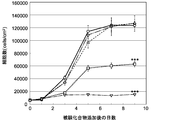
- a to I in FIG. 1 show experimental groups under culture conditions each containing the following test compound.
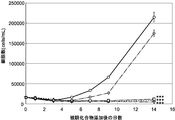
- the graph showing the time-dependent change of the number of living cells (average value +/- standard error, each n 6) of the NHDF cell in the culture conditions to which 1 mM AMP, GMP, TMP, or CMP was added.
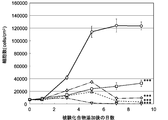
- Each plot in FIG. 2A shows an experimental group under culture conditions containing the following test compounds.
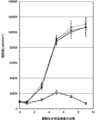
- the graph showing the time-dependent change of the number of viable cells (average value ⁇ standard error, each n 6) of NHDF cells under the culture condition to which 10 mM AMP, GMP, TMP or CMP is added.
- FIG. 2B show experimental groups under the following culture conditions, respectively.
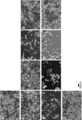
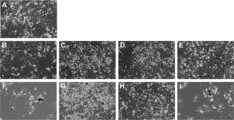
- a to J in FIG. 3 show experimental groups under culture conditions each containing the following test compound.
- A Control
- B 1 mM AMP
- C 1 mM GMP
- D 1 mM TMP
- E 1 mM CMP
- F 10 mM AMP
- G 10 mM GMP
- H 10 mM TMP
- I 10 mM CMP
- J Control.
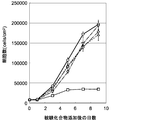
- Each plot in FIG. 4A shows an experimental group under culture conditions containing the following test compounds.
- ⁇ Control, ⁇ : 1 mM AMP, ⁇ : 1 mM GMP, ⁇ : 1 mM TMP, ⁇ : 1 mM CMP.
- the plots in FIG. 2B show experimental groups under culture conditions each containing the following test compound.
- ⁇ Control, ⁇ : 10 mM AMP, ⁇ : 10 mM GMP, ⁇ : 10 mM TMP, ⁇ : 10 mM CMP.
- the graph showing the time-dependent change of the viable cell number (average value +/- standard error, each n 6) of the HL60 cell in the culture conditions to which 10 mM AMP, GMP, TMP, or CMP was added.
- the plots in FIG. 5 show experimental groups under culture conditions each containing the following test compound. ⁇ : Control, ⁇ : 10 mM AMP, ⁇ : 10 mM GMP, ⁇ : 10 mM TMP, ⁇ : 10 mM CMP.
- FIG. 7A shows an experimental group under culture conditions containing the following test compounds.
- ⁇ Control, ⁇ : 1 mM TMP, ⁇ : 1 mM TTP, ⁇ : 1 mM TDP, ⁇ : 1 mM thymidine, ⁇ : 1 mM thymine.
- Each plot in FIG. 7B shows an experimental group under culture conditions containing the following test compounds.
- ⁇ Control, ⁇ : 1 mM thymine, ⁇ : 1 mM 2-deoxy-D-ribose, ⁇ : 1 mM thymine + 1 mM 2-deoxy-D-ribose, ⁇ : 1 mM TMP, ⁇ : 1 mM thymidine.
- Each plot in FIG. 8A shows an experimental group under culture conditions containing the following test compounds.
- ⁇ Control, ⁇ : 1 mM TMP, ⁇ : 1 mM cTMP, ⁇ : 1 mM UMP, ⁇ : 1 mM 3′-TMP, ⁇ : 1 mM rTMP.
- the plots in FIG. 8B show experimental groups under culture conditions each containing the following test compound.
- ⁇ Control, ⁇ : 1 mM TMP, ⁇ : 1 mM dUMP, ⁇ : 1 mM UMP, ⁇ : 1 mM rTMP.
- a to I in FIG. 9 show experimental groups under culture conditions each containing the following test compound.
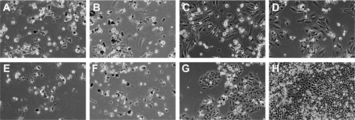
- a to H in FIG. 10 show experimental groups under culture conditions each containing the following test compound.
- a to F in FIG. 11 show experimental groups under culture conditions each containing the following test compound.
- a to H in FIG. 12 show experimental groups under culture conditions each containing the following test compound.
- a to J in FIG. 13 show experimental groups under the following culture conditions, respectively.
- a nucleoside derivative refers to a compound in which a nucleoside is chemically modified, a compound that is metabolized in vivo, and that exhibits a cell growth inhibitory action and / or a cell death-inducing action, and salts thereof.
- the nucleosides include, but are not limited to, adenosine, thymidine, guanosine, cytidine, uridine and vitamin B2.
- the nucleoside derivative includes a phosphate ester derivative.
- the nucleoside derivatives include adenosine 5′-monophosphate, adenosine 5′-diphosphate, adenosine 5′-triphosphate, guanosine 5′-monophosphate, guanosine 5′-diphosphate, guanosine 5′-three.
- Phosphoric acid thymidine 5′-monophosphate, thymidine 5′-diphosphate, thymidine 5′-triphosphate, uridine 5′-monophosphate, uridine 5′-diphosphate, uridine 5′-triphosphate Cytidine 5′-monophosphate, cytidine 5′-diphosphate, cytidine 5′-triphosphate, deoxyadenosine 5′-monophosphate, deoxyadenosine 5′-diphosphate, deoxyadenosine 5′-triphosphate Acid, deoxyguanosine 5′-monophosphate, deoxyguanosine 5′-diphosphate, deoxyguanosine 5′-triphosphate, 2′-hydroxythymidine 5′-monophosphate, 2′-hydroxythymidine '-Diphosphate, 2'-hydroxythymidine 5'-triphosphate, deoxyuridine 5'-monophosphate
- the nucleoside derivative includes an enantiomer, a diastereomer, and / or a mixture thereof.
- the phosphate ester derivative may be dephosphorylated to exhibit specific antitumor activity against tumor cells.
- the phosphate ester derivative may be dephosphorylated by nucleotidase.
- the nucleotidase can hydrolyze phosphodiester bonds.
- Thymidine as a nucleotide derivative that is derivatized with the phosphoric acid ester derivative and dephosphorylated with a nucleotidase secreted from or secreted from a tumor cell, and exhibits a growth inhibitory activity specific to the tumor cell.
- cytarabine capecitabine, ancitabine hydrochloride, nelarabine, pentostatin and phosphorylated ester derivatives of broxuridine.
- nucleotide derivatives are based on, for example, thymidine, cytarabine, zidovudine, adriamycin (doxorubicin), capecitabine, ancitabine hydrochloride, gemcitabine, nelarabine, clofarabine, pentostatin based on, for example, the method described in JP-A-55-002601. And broxuridine can be synthesized by phosphorylation or derivatives thereof, but is not limited thereto.
- the nucleotide derivative is a compound represented by the following formula 3, a pharmaceutically acceptable salt thereof, and a solvate thereof.
- R 6 is —H or —COR 8 (R 8 is an optionally substituted C 1 to C 3 alkyl group), and R 7 is — (PO 2 —O) n R 9 (N is an integer of 1 to 3, R 9 is —H or —COR 10 , and R 10 is an optionally substituted C 1 -C 3 alkyl group), or R 6 and R 7 may combine with the atoms to which they are attached to form a heterocycle containing P.
- the nucleoside derivative is a thymidine derivative
- the thymidine derivative is thymidine 5′-monophosphate, thymidine 5′-diphosphate, thymidine 5′-triphosphate, thymidine 3 ′, 5′-phosphate.
- Thymidine 5′-diphosphate, thymidine 5′-triphosphate, and thymidine 3 ′, 5′-phosphate are rapidly phosphated by nucleotidase on or secreted from tumor cells. Hydrolyzed and metabolized to thymidine 5'-monophosphate.
- the thymidine derivative is thymidine 5'-monophosphate.
- Thymidine 5'-monophosphate may be metabolized to thymidine.
- the compound of Formula 1 can be converted into a pharmaceutically acceptable salt by a conventional method.
- Pharmaceutically acceptable salts include organic acid salts such as acetate, malonate and tartrate, inorganic acid salts such as hydrochloride, sulfate and phosphate, amino acid salts such as aspartate and glutamate, etc. Including, but not limited to.
- the nucleoside derivative having a phosphate group can be made into a salt with various alkali metals, alkaline earth metals or amino acids by a conventional method.
- the salt of the compound of Formula 1 is a pharmaceutically acceptable salt, which may be, but is not limited to, sodium salt, potassium salt, calcium salt, asparagine salt, glutamine salt and the like.
- the compound of formula 1 can also form hydrates or various pharmaceutically acceptable solvates and are included in the present invention.
- the pharmaceutical composition of the present invention is an oral preparation such as a powder, granule, pill, tablet or liquid for internal use, or an injection (intravenous, intramuscular etc.), suppository, ointment, transdermal patch.
- an oral preparation such as a powder, granule, pill, tablet or liquid for internal use, or an injection (intravenous, intramuscular etc.), suppository, ointment, transdermal patch.
- the pharmaceutical composition of the present invention contains pharmaceutical carriers, excipients and the like that are usually used in the art as a preparation.
- the active ingredient may be mixed with at least one diluent such as lactose, mannitol, glucose, microcrystalline cellulose, croscarmellose sodium, starch, light anhydrous silicic acid, magnesium aluminate metasilicate and the like.
- diluent such as lactose, mannitol, glucose, microcrystalline cellulose, croscarmellose sodium, starch, light anhydrous silicic acid, magnesium aluminate metasilicate and the like.
- the pharmaceutical composition of the present invention comprises additives other than the diluent, for example, a binder such as hydroxypropylcellulose, hydroxypropylmethylcellulose, hypromellose or macrogol 6000, a lubricant such as magnesium stearate, calcium stearate or talc.
- a binder such as hydroxypropylcellulose, hydroxypropylmethylcellulose, hypromellose or macrogol 6000
- a lubricant such as magnesium stearate, calcium stearate or talc.
- Disintegrants such as crospovidone, stabilizers such as lactose, solubilizers such as glutamic acid or aspartic acid, plasticizers such as Tween 80, brighteners such as titanium oxide or carnauba wax, macrogol 6000
- Such a coating agent or a coloring agent such as iron sesquioxide may be contained.
- Tablets or pills may be coated with a sugar coating such as sucrose, gelatin or agar, or a film of a gastric or enteric substance, if necessary.
- a sugar coating such as sucrose, gelatin or agar, or a film of a gastric or enteric substance, if necessary.
- Oral liquids for oral administration include pharmaceutically acceptable syrups, suspension syrups, dry syrups, emulsions, suspensions, limonades or elixirs.
- the said liquid for internal use contains an inert diluent generally used, for example, purified water and ethanol, However It can adjust with the solvent which is not limited to these.
- the internal solution may contain solubilizers, wetting agents, auxiliary agents such as suspending agents, sweeteners, flavors, fragrances, preservatives and the like in addition to the inert diluent.
- Injectable preparations for parenteral administration include, but are not limited to, sterile aqueous or non-aqueous solution injections, suspension injections, or emulsion injections.
- aqueous solution or suspension include distilled water for injection and physiological saline.
- water-insoluble solution or suspension include alcohols such as propylene glycol, polyethylene glycol, and ethanol, or polysorbate 80 (a pharmacopeia name), trometamol, and the like.
- These injections may further contain isotonic agents, preservatives, wetting agents, emulsifiers, dispersants, stabilizers, or solubilizing agents.
- injections are sterilized by, for example, regular filtration, blending of bactericides, or irradiation. These injections may be used by dissolving or suspending a sterile solid composition produced in advance in sterile water or a sterile solvent for injection at the time of use.
- known compounds other than the exemplified pharmaceutical additives are used in known usages and dosages (for example, Pharmaceutical Additives Dictionary 2007 (edited by Japan Pharmaceutical Additives Association, Yakuji Nippo, Tokyo, 2007)). Can be used.
- the production of the pharmaceutical composition of the present invention is preferably carried out under conditions (good manufacturing practice, GMP standards) conforming to the production management and quality control norms of pharmaceuticals and quasi drugs.
- Preferred examples of the oral preparation and parenteral preparation of the present invention include, but are not limited to, the following preparation examples.
- preferable examples of the oral preparation include carnauba wax, croscarmellose sodium, light anhydrous silicic acid, titanium oxide, magnesium stearate in 300 mg of thymidine 5′-monophosphate in 1 tablet (weight 0.6 g).
- Hydroxypropylcellulose, hypromellose (substitution type: 2910), macrogol 6000, D-mannitol, and the like were added, tableted, and film-coated.
- a preferable formulation example of the above parenteral preparation is as follows: 1 g of thymidine 5′-monophosphate is dissolved in 20 mL of purified water containing 1694 mg of trometamol, and the pH is adjusted to 8.2 to 8.6 with a tonicity agent. An osmotic pressure ratio: an injection adjusted to about 4.
- proliferation inhibition refers to the action of inhibiting cell growth, inhibiting the growth of tumor cells, causing cell death of tumor cells or killing tumor cells, and inhibiting tumor formation.
- Treatment includes curative treatment and prophylactic treatment, and prophylaxis includes, but is not limited to, onset prevention, progression prevention, metastasis prevention and recurrence prevention.
- tumor refers to AIDS-related Kaposi's sarcoma, malignant lymphoma (non-Hodgkin lymphoma, reticulosarcoma, lymphosarcoma, Hodgkin's disease), malignant bone / soft tissue tumor, liver cancer, acute leukemia, colorectal cancer , Osteosarcoma, cervical cancer, small cell lung cancer, leukemia (such as acute myeloid leukemia, acute lymphocytic leukemia, and malignant lymphoma), childhood malignant solid tumor (Ewing sarcoma family tumor, rhabdomyosarcoma, neuroblastoma, Retinoblastoma, hepatoblastoma and other primary malignant tumors of the liver, nephroblastoma and other malignant tumors of the kidney), gastrointestinal cancer (stomach cancer, gallbladder / bile duct cancer, pancreatic cancer, liver cancer, colon cancer,
- patient is an animal having the tumor.
- the animal is not particularly limited, and is preferably a human, such as monkey, mouse, rat, rabbit, hamster, goat, pig, sheep, camel, horse, cow, cat and dog.
- the “effective amount” in the present specification is a dose of a compound represented by the following formula 1 or a pharmaceutically acceptable salt thereof necessary for exerting the effects of the present invention in the patient, Between the minimum effective amount that produces an effect and the maximum effective amount that produces a drug effect and does not produce an addictive effect.
- the dose (daily dose) of the nucleoside derivative or pharmaceutically acceptable salt and / or solvate thereof is individual in consideration of disease symptoms, age, race, sex, etc. of the administration subject.
- the dose is appropriately determined according to the dose, and is administered once (administration once a day) or multiple times a day.
- the dosage of the nucleoside derivative or a pharmaceutically acceptable salt thereof and / or a solvate thereof is usually about 0.01 to 20 g per day for an adult, preferably 0.1 to about 0.1 to 1 day. 10.0 g.
- the dose is orally or parenterally divided into 1 to 4 times a day.
- compounds prepared from microorganisms, fungi, plants and animals, chemically synthesized compounds, etc. can be evaluated as nucleoside derivatives. These compounds can be prepared or synthesized according to a conventional method. For example, it can be synthesized from commercially available raw materials by the method described in JP-A-55-002601 and the like, but is not limited to these methods.
- cultured cells can be prepared and cultured by methods standard to those skilled in the art. The culture method and culture conditions are appropriately selected depending on the type of cells to be cultured. Examples of the cultured cells include, but are not limited to, cells collected from humans and experimental animals and cultured, and cell lines.
- the cultured cell is a tumor cell.
- the origin of the cultured cells is not particularly limited, such as monkeys, mice and rats, but is preferably human.
- Human tumor cell lines are available from, for example, the American Type Culture Collection (ATCC) and the cell bank of the RIKEN BioResource Center.
- ATCC American Type Culture Collection
- Hep G2 cells, HEK293 cells, HeLa cells, Jurkat cells, HL-60 cells Including, but not limited to.
- the cell growth inhibitory effect is determined by the number of cells in the experimental group to which the test compound (nucleoside derivative) is added, the amount of DNA, the amount of mRNA or the amount of protein in the control group to which no test compound is added.
- the amount of DNA, amount of mRNA, or amount of protein is evaluated in comparison with the amount of DNA, amount of mRNA, or amount of protein.
- the measured values of the number of cells, the amount of DNA, the amount of mRNA, and the amount of protein in the experimental group and the control group may be compared after standardization by a standard method.
- the number of cells, the amount of DNA, the amount of mRNA or the amount of protein can be measured by a conventional method.
- the number of cells can be measured by microscopic observation, cell sorter, FACS or the like.
- the amount of DNA can be measured by PCR, Southern blot, or the like.
- the amount of mRNA can be measured by RT-PCR, Northern blot, etc.
- the amount of protein can be measured by ELISA, Western blot, immunoprecipitation method, immunoturbidimetric method and the like.
- screening conditions for example, the type and concentration of a compound other than the test compound, the culture temperature, time, endpoint, etc.
- experimental animal individuals for example, knockout mice, transgenic mice, nude mice transplanted with tumor cells, etc.
- tumor tissues excised from these animals are used.
- the cell growth inhibitory action, cell death-inducing action, side effects, etc. of the nucleoside derivative may be evaluated.
- AMP adenosine 5′-monophosphate
- GMP guanosine 5′-monophosphate disodium
- TMP thymidine 5′-monophosphate monosodium
- CMP cytidine 5′-monophosphate disodium
- DMEM 1,000 mg / L D-glucose, L-glutamine, 5 mM HEPES buffer and 110 mg / L sodium pyruvate
- 10% FBS Life Technologies Japan Co., Ltd.
- the AMP, GMP, TMP and CMP were added to the basal medium (DMEM, 10% FBS, no antibiotics) so as to be 1 mM or 10 mM, respectively, and a test compound-containing medium was prepared.
- NHDF cells human normal skin fibroblasts: Lonza Walkersville, Inc., Walkersville, MD, USA
- test compound-containing medium 1 mM or 10 mM AMP, GMP, TMP or CMP.
- the NHDF cells were cultured in a basal medium not containing the test compound.
- FIG. 1 is a photomicrograph of NHDF cells cultured for 7 days under culture conditions to which 1 mM or 10 mM AMP, GMP, TMP or CMP has been added.
- the cells spread and adhered to the bottom surface of the control group, the 1 mM AMP experimental group, and the 1 mM CMP experimental group, and the number of cells increased little.
- the cell morphology was the same as the control group, 1 mM AMP experimental group, and 1 mM CMP experimental group, but became confluent with overall low density.
- the number of cells in the 1 mM TMP experimental group was smaller than that in the control group, the 1 mM AMP experimental group, and the 1 mM CMP experimental group (FIGS. 1 and 2A).
- 10 mM AMP the cells proliferated at a slower rate than the control group until 5 days after the start of culture, but cell death was induced on the 7th day after the culture.
- 10 mM GMP experimental group the cells hardly proliferated until 3 days after the culture, and cell death was induced on the 5th day after the culture.
- the cells grew at a lower density than the control group until 7 days after culturing, and were in a net-like form 9 days after culturing. The number of cells gradually increased until 9 days after culture (FIGS. 1 and 2B).
- the 10 mM CMP experimental group cells increased at a slow rate until 5 days after culturing, but cell death was induced 7 days after culturing. Regarding the number of cells, a statistically significant difference was observed in all 10 mM groups compared to the control group (p ⁇ 0.0001).
- FIG. 3 is a photomicrograph of HeLa cells cultured for 9 days under culture conditions to which 1 mM or 10 mM AMP, GMP, TMP or CMP was added.
- the 1 mM AMP experimental group the 1 mM GMP experimental group, and the 1 mM CMP experimental group, the cells grew in the same manner as the control group. Cell proliferation was suppressed in the 1 mM TMP experimental group compared to the other experimental groups.
- the cells grew rapidly up to 9 days after culture.
- the AMP experimental group cell proliferation was suppressed, and the cells grew at a lower rate until 9 days after the culture compared to the control group.
- the GMP experimental group cells hardly proliferated, but a change in cell shape appeared on the third day after the culture, and cell death was induced on the fifth day after the culture.
- TMP is a compound that is resident in the living body. Therefore, these results indicate that TMP that does not kill normal cells but kills tumor cells is useful as an antitumor agent with few side effects.
- AMP Nucleoside Derivatives
- GMP GMP
- TMP TMP
- CMP CMP
- RPMI1640 L-glutamine, 25 mM HEPES buffer
- the AMP, GMP, TMP, and CMP were each added to a suspension culture basic medium (PRMI1640, 10% FBS, free of antibiotics) to a concentration of 10 mM to prepare a test compound-containing medium.
- HL60 cells human promyelocytic leukemia cells
- JCRB cell bank human promyelocytic leukemia cells
- test compound-containing medium 10 mM AMP, GMP, TMP or CMP.
- the HL60 cells were cultured in a basal medium not containing the test compound.
- the number of cells there was no statistically significant difference in the CMP experimental group compared with the control group, but there was a statistically significant difference in the AMP experimental group, the GMP experimental group, and the TMP experimental group. (P ⁇ 0.0001 for all 3 groups). That is, AMP, GMP, and TMP have a growth inhibitory effect on HL60 cells as well as HeLa cells, but CMP did not have a growth inhibitory effect.
- the influence of the in vivo resident nucleotide compound differs depending on the cell type, particularly between normal cells and tumor cells, and 10 mM TMP kills tumor cells and 1 mM TMP was found to suppress tumor cell growth. Moreover, it was shown that the cell growth inhibitory effect of TMP is similar between HeLa cells and HL60 cells.
- Nucleoside Derivative (Nucleotide) on Confluent Normal Cells
- the confluent state of NHDF cells was used as a normal tissue model.
- the influence of the high concentration nucleoside derivative (nucleotide) was evaluated in the state where NHDF cells are dense.
- NHDF cells human normal dermal fibroblasts
- PBS calcium / magnesium free, Life Technologies Japan, Tokyo
- the NHDF cells are cultured in the test compound-containing medium (1 mM or 10 mM AMP, GMP, TMP or CMP), and changes in NHDF cells are observed after 0, 1, 3, 5, 7, 9 and 14 days after the medium change. Observed over time.
- FIG. 6 is a photomicrograph of NHDF cells cultured for 7 days under culture conditions of 1 mM or 10 mM AMP, GMP, TMP or CMP.
- 1 mM AMP experimental group the 1 mM GMP experimental group, the 1 mM TMP experimental group, the 1 mM CMP experimental group, the non-medium exchange control group, and the medium exchange control group, there is no clear change and is typical for fibroblasts. A confluent state was maintained.
- the cell state of the 10 mM AMP experimental group was the same as that of the non-medium exchange control group and the medium exchange control group until 1 day after the medium exchange.
- the adhesion weakened from 3 days after the medium exchange, and the number of adherent cells gradually decreased and the cells became dense after 5 days after the medium exchange.
- the cells were arranged in a net shape having no orientation.
- the cell state of the 10 mM TMP experimental group was the same as that of both control groups, but an intercellular gap was observed 7 days after the medium change.
- nucleotides showed changes in cell morphology, and that this concentration did not affect dense normal cells, that is, normal tissues. All four nucleotides at 10 mM had some form change from the confluent state. Although the form was different depending on the type of nucleotide, it was shown that 10 mM nucleotide may affect normal tissues. In addition, the effect of nucleotides on cells may differ depending on whether the culture is started with a test compound-containing medium in a state where there is sufficient space between cells, and when the culture is started with a test compound-containing medium from a confluent state. It became clear.
- TTP thymidine 5′-sodium triphosphate
- TDP Thymidine 5′-diphosphate trisodium
- rTMP 5-methyl-uridine 5′-monophosphate monosodium
- DMEM 1,000 mg / L D-glucose, L-glutamine, 5 mM HEPES buffer and 110 mg / L sodium pyruvate
- FBS Life Technologies Japan Co., Ltd.
- the basic TMP, TTP, TDP, thymidine, thymine, 2-deoxy-D-ribose, rTMP, 3′-TMP, UMP, cTMP and / or dUMP are 1 mM, 2 mM, 5 mM or 10 mM, respectively.
- a test compound-containing medium was prepared by adding to a medium (DMEM, 10% FBS, no antibiotics).
- Thymine, 2-deoxy-D-ribose, thymine (1 mM) + 2-deoxy-D-ribose (1 mM), TMP and thymidine were each used at a final concentration of 1 mM.
- TMP, cTMP, UMP, 3′-TMP and rTMP exposure experiments FIG. 8A
- HeLa cells were seeded in 12-well plates at 13,000 cells / cm 2 .
- TMP, cTMP, UMP, 3′-TMP and rTMP were each used at a final concentration of 1 mM.
- dUMP, UMP and rTMP exposure experiments FIG. 8B, FIG.
- HeLa cells were seeded in 12-well plates at 7,000 cells / cm 2 .
- TMP, dUMP, UMP and rTMP were used at final concentrations of 1 mM or 10 mM, respectively.
- TMP and rTMP exposure experiment FIG. 10
- HeLa cells were seeded in 12-well plates at 6,500 cells / cm 2 .
- TMP and rTMP were used at final concentrations of 1 mM, 2 mM, 5 mM and 10 mM, respectively.
- the TMP experimental group, the TDP experimental group, the TTP experimental group, and the thymidine experimental group showed a statistically significant cytostatic effect (p ⁇ 0. 0001), the thymine experimental group showed no statistically significant difference.
- the TTP experimental group, the TDP experimental group, and the thymidine experimental group did not have a statistically significant effect.
- FIG. 9 is a photomicrograph of HeLa cells cultured for 7 days under culture conditions to which 1 mM or 10 mM TMP, dUMP, UMP or rTMP has been added.
- the 10 mM rTMP experimental group and the TMP experimental group the cells died.
- the 10 mM dUMP experimental group cells were inhibited from growth as much as in the 1 mM dUMP experimental group, but did not die.
- the 10 mM UMP experimental group the cells grew to the same extent as the control group.
- FIG. 10 is a photomicrograph of HeLa cells cultured for 7 days under culture conditions to which 1 mM, 2 mM, 5 mM, or 10 mM TMP or rTMP has been added.
- 5 mM and 10 mM TMP experimental groups cells began to die 7 days after the start of culture.
- 1 mM and 2 mM TMP experimental groups the cells were inhibited from growth but did not die.
- 5 mM and 10 mM rTMP experimental groups the cells started to die on the fifth day after the start of the culture and almost died on the seventh day after the start of the culture.
- the 2 mM rTMP experimental group cells were inhibited from growth but did not die.
- the 1 mM rTMP experimental group the cells were not inhibited from growth and grew to the same extent as in the control group.
- test compound-containing medium Preparation of test compound-containing medium, cell culture, and observation were performed in the same manner as in Example 2 in principle.
- cell culture HeLa cells were seeded in 12-well plates at 6,500 cells / cm 2 . Thereafter, the HeLa cells were cultured in the test compound-containing medium (1 mM or 10 mM TMP).
- test compound-containing medium (1 mM or 10 mM TMP).
- One experimental group was replaced with fresh test compound-containing medium every 24 hours (medium exchange experimental group).
- Another experimental group was cultured in the same medium without replacing with a fresh test compound-containing medium (non-medium exchange experimental group).
- FIG. 11 is a photomicrograph showing the effect of TMP on HeLa cells cultured for 7 days with medium exchange and HeLa cells cultured for 7 days without medium exchange.
- the medium exchange experiment group as in the result of Example 2, cell death was induced on the 7th day after culturing with 10 mM TMP. Moreover, 1 mM TMP suppressed cell growth.
- the non-medium exchange experimental group cell death was not induced on the 7th day after culturing at either 1 mM or 10 mM TMP, and the cells grew to the same extent as the non-medium exchange control group.
- test compound-containing medium a control group (medium exchange control group) exchanged with a fresh basic medium every 24 hours and a control group (non-medium exchange control group) not exchanged with a fresh basic medium were used. It was done.
- FIG. 12 is a photomicrograph showing the effect of thymidine or TMP on HeLa cells cultured for 7 days with medium exchange and HeLa cells cultured for 7 days without medium exchange.
- the thymidine medium exchange experiment group (1 mM and 10 mM)
- the thymidine non-medium exchange experiment group (1 mM and 10 mM)
- the growth of tumor cells was suppressed, and the tumor cell inhibitory effect of thymidine was concentration-dependent.
- cell death was induced on the 5th day after culturing with 10 mM thymidine.
- the growth inhibitory effect of tumor cells was almost the same. Furthermore, cell death was not induced in the medium exchange control group, the non-medium exchange control group, and the TMP non-medium exchange experiment group (1 mM).
- HeLa cells which are tumor cells also release nucleotidase out of the cells, and nucleoside derivatives, particularly TMP, TDP and TTP are metabolized (eg, dephosphorylated) to thymidine by the nucleotidase.
- Thymidine, TMP, TDP, and TTP are all considered to have killed tumor cells and / or exhibited growth inhibition (see FIG. 7).
- nucleotidase itself and thymidine are removed in the TMP, TDP and TTP-added medium exchange experiment group, and thus tumor cell death and / or growth inhibition is not induced (see FIGS. 11 and 12). . Therefore, to develop nucleoside derivative antitumor agents with high selective toxicity to tumor cells by chemically modifying nucleosides (eg, phosphorylation) and being metabolized by nucleotidase that is elevated in tumor tissue Can do.
- nucleoside derivative antitumor agents with high selective toxicity to tumor cells by chemically modifying nucleosides (eg, phosphorylation) and being metabolized by nucleotidase that is elevated in tumor tissue Can do.
- test compound-containing medium 1 mM
- cis-diammineplatinum (II) dichloride 1 ⁇ M and 10 ⁇ M
- mitomycin C Sigma Aldrich Japan Co., Ltd.
- paclitaxel Sigma Aldrich Japan Co., Ltd.
- HeLa cells were seeded in 12-well plates at 7,800 cells / cm 2 .
- HeLa cells were seeded in a 12-well plate at 7,000 cells / cm 2 .
- FIG. 13 is a photomicrograph of HeLa cells cultured for 3 or 7 days under culture conditions to which various concentrations of TMP and / or antitumor agent were added. Compared with the control group, in the 10 ⁇ M cisplatin experimental group and the 0.1 ⁇ g / mL mitomycin C experimental group, flat and wide-spread cells appeared 3 days after the culture. Similarly, in the 1 mM TMP experimental group, flat and greatly expanded cells appeared on the 7th day after culture.
- TMP and its derivatives are different from other nucleotides, and have a cell growth inhibitory action and a cell death-inducing action on tumor cells at a concentration that does not affect normal cells.
- TMP and its derivatives do not act on dense normal cells, which are normal tissue models, at a concentration of 1 mM.
- TMP and its derivatives TDP, TTP, cTMP, rTMP, etc.
- a nucleoside having a ribose or deoxyribose sugar and thymine is required. And the number of phosphate groups in the phosphate ester is not affected.
- TMP and the like must be metabolized for the expression of TMP and its derivatives to inhibit the growth of tumor cells, and this metabolic enzyme is a nucleotidase whose concentration is increased in tumor tissues. It was done.
- the expression of the growth inhibitory effect on tumor cells compared to normal cells by TMP and its derivatives involves the metabolism of the active expression by nucleotidase increased in the tumor tissue.
- TMP as an active ingredient of a pharmaceutical composition for tumor treatment and / or prevention. That is, if cell death can be induced only in tumor cells without acting on normal tissues, it is possible to treat the patient without burdening it.
- TDP TTP
- cTMP or salts and / or solvates thereof, which are metabolized by nucleotidase on the tumor cell membrane or extracellularly, are active ingredients.
- Using the contained pharmaceutical composition indicates that only tumor cells can be killed without affecting normal cells, tissues and organs.
Landscapes
- Health & Medical Sciences (AREA)
- Chemical & Material Sciences (AREA)
- Life Sciences & Earth Sciences (AREA)
- General Health & Medical Sciences (AREA)
- Organic Chemistry (AREA)
- Animal Behavior & Ethology (AREA)
- Pharmacology & Pharmacy (AREA)
- Public Health (AREA)
- Veterinary Medicine (AREA)
- Medicinal Chemistry (AREA)
- Epidemiology (AREA)
- Molecular Biology (AREA)
- Biotechnology (AREA)
- Biochemistry (AREA)
- Genetics & Genomics (AREA)
- Engineering & Computer Science (AREA)
- Inorganic Chemistry (AREA)
- Chemical Kinetics & Catalysis (AREA)
- General Chemical & Material Sciences (AREA)
- Nuclear Medicine, Radiotherapy & Molecular Imaging (AREA)
- Pharmaceuticals Containing Other Organic And Inorganic Compounds (AREA)
- Saccharide Compounds (AREA)
- Medicines That Contain Protein Lipid Enzymes And Other Medicines (AREA)
Abstract
【課題】生体内に常在し、細胞情報伝達系に影響する化合物を利用することにより、正常な細胞、組織及び器官への影響が小さく、腫瘍細胞のみを増殖抑制又は死滅可能であり、副作用がなく安全性の高い、悪性腫瘍の治療及び /又は予防のための医薬組成物を開発すること。 【解決手段】下記式1で表される化合物又はその薬学的に許容可能な塩の有効量を含む、悪性腫瘍の治療及び/又は予防のための医薬組成物を提供する。 前記式1において、 Xは、O又はS、 nは0、1又は2、 mは0ないし5の整数、 lは0、1又は2 RはH等、 R1はH等、 R2はH等、 R3はF等、及び、 Wは複素環及びその誘導体を表す。
Description
本発明は、腫瘍細胞への細胞増殖抑制活性の選択性の高いヌクレオシド誘導体化合物、及び該化合物を有効成分として含有する腫瘍の治療及び/又は予防のための医薬組成物に関する。また、本発明は、腫瘍細胞の細胞膜上に存在する酵素及び/又は腫瘍細胞から細胞外に分泌される酵素により代謝されることにより、細胞内に取り込まれ、細胞増殖抑制作用を発現する化合物のスクリーニング方法に関する。
現在、我が国における死因の第一位は、悪性腫瘍であり、悪性腫瘍に対する治療及び/又は予防のために多くの抗腫瘍剤が開発されている。そして、これらの抗腫瘍剤として、多くのヌクレオシド誘導体が開発されている。
ヌクレオシド(アデノシン、グアノシン、チミジン、ウリジン、及び、シチジン)のリン酸化エステル誘導体であるヌクレオチドは、遺伝情報の保存や発現をつかさどるDNAやRNAの構成成分として生体内に豊富に存在し、種々の生命現象で重要な役割を果たしていることが知られている。例えば、アデノシン5’-三リン酸は、高エネルギー物質として生体内のエネルギー代謝に関与している。また、環状リン酸エステル誘導体であるcAMP及びcGMPは細胞内でセカンドメッセンジャーとして細胞内情報伝達に関与している。
また、ヌクレオシドのプリン塩基やピリミジン塩基の構造の一部を修飾した誘導体、糖部分の水酸基を置換又は修飾した誘導体、及び、糖部分を伴わないプリン塩基やピリミジン塩基自体の誘導体が、前記ヌクレオチドの疑似化合物として生体内で作用する特性を利用して、抗腫瘍剤として使用されている。具体的には、前記抗腫瘍剤としてシタラビン(Ara-C)、ゲムシタビン、5-フルオロウラシル(5-FU)等をはじめとした多くの化合物が腫瘍治療の化学療法で使用されている(特許文献1~3)。
しかし、一般的にこれらの薬剤を用いる化学療法では、副作用が深刻な問題となる。例えば、シタラビンはDNAポリメラーゼを阻害し(非特許文献1)、ゲムシタビンはDNA合成を直接的及び間接的に阻害し(非特許文献2)、5-フルオロウラシルは、チミジル酸合成を阻害して腫瘍細胞の増殖を抑制することを目的とする(非特許文献3)が、これらの薬物は生体内の腫瘍細胞以外の細胞に作用し、副作用を発現するとの問題を有する。
一方、細胞には、DNA損傷修復に代表される自己修復・自己治癒機能が存在し、個々の細胞が生きていくために必要とされる能力である。これにより、細胞内で問題が生じた場合でも、ある程度までは自己修復・自己治癒することが可能である。これは組織や器官レベルにおいても同様であり、外傷が治癒したり、手術で一部摘出された肝臓が元の大きさに回復したりする現象がよく知られている。
このような自己修復・自己治癒機能は、腫瘍形成に対しても発揮されると考えられ、正常細胞から腫瘍細胞への何らかの情報伝達が存在すると予想された。そして、5’-ヌクレオチダーゼは、腫瘍患者の血清濃度の上昇が認められるところから(非特許文献4)、この情報伝達を担う化合物として、遺伝情報の保存や発現に関与し、生体内に常在するヌクレオシド誘導体が利用されると予想された。すなわち、ヌクレオシド誘導体は、腫瘍化した細胞に対してその活動を停止させる何らかの特性を有すると考えられた。また、この特性を有する化合物を利用することにより、腫瘍細胞への選択的作用の向上との従来の抗腫瘍剤にない優れた特性を有する抗腫瘍剤又は腫瘍治療用医薬組成物の創製が期待された。
Higashigawa M.ら、Med.Oncol. & Tumor Pharmacother.、7、223(1990)
Plunkett,W.ら、Cancer Research、51、6110(1991)
Hartmann K.U.ら、J.Biol.Chem.、236、3006(1961)
Schwartz MKら、Cancer、18:886(1965)
本発明の課題は、生体内に常在し、正常な細胞、組織及び器官への影響が小さく、腫瘍細胞のみを増殖抑制又は死滅可能な、副作用がなく安全性の高い化合物を有効成分として含有する腫瘍の治療及び/又は予防のための医薬組成物、及び、前記化合物のスクリーニング方法を開発することである。
本発明者らは、正常細胞が腫瘍細胞に対して細胞増殖候補化合物として、生体内に常在する化合物であり、かつ、腫瘍患者でその代謝系酵素の活性が亢進している化合物であるヌクレオシド誘導体、特にヌクレオチド誘導体を選択した。そして、本発明者らは、生体内常在性化合物の腫瘍細胞に対する抑制効果を評価し、チミジン誘導体が、正常細胞に影響しない濃度で腫瘍細胞に選択的に細胞増殖抑制作用及び細胞死惹起作用を有することを見出し、その構造活性相関を明らかにすることにより本発明を完成させた。
具体的には、本発明は、下記式1で表される化合物又はその薬学的に許容可能な塩若しくは溶媒和物を提供する。
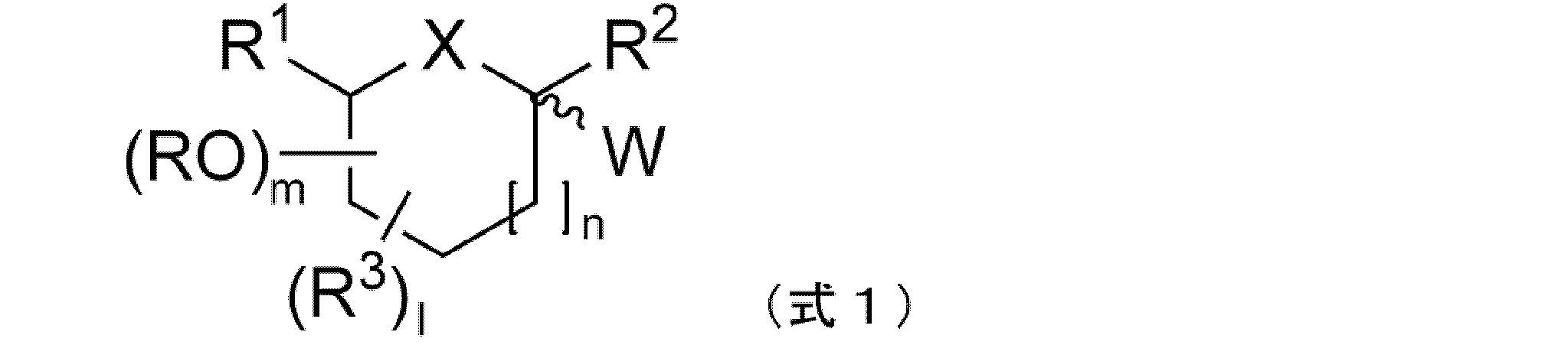
前記式1において、
Xは、O又はS、
nは0、1又は2、
mは0ないし5の整数、
lは0、1又は2
RはH、-CH3、-CH2OH、リン酸基でエステル化されたヒドロキシメチル基、又はR1のリン酸基と共有するリン酸基でエステル化されたヒドロキシメチル基、
R1はH、-CH3、-CH2OH、リン酸基でエステル化されたヒドロキシメチル基、又は、前記Rのリン酸基を共有するリン酸基でエステル化されたヒドロキシメチル基、
R2はH、-CH3又は-CH2OH、
R3はF、-NH2又はN3、及び、
Wは複素環及びその誘導体を表す。
前記式1において、
Xは、O又はS、
nは0、1又は2、
mは0ないし5の整数、
lは0、1又は2
RはH、-CH3、-CH2OH、リン酸基でエステル化されたヒドロキシメチル基、又はR1のリン酸基と共有するリン酸基でエステル化されたヒドロキシメチル基、
R1はH、-CH3、-CH2OH、リン酸基でエステル化されたヒドロキシメチル基、又は、前記Rのリン酸基を共有するリン酸基でエステル化されたヒドロキシメチル基、
R2はH、-CH3又は-CH2OH、
R3はF、-NH2又はN3、及び、
Wは複素環及びその誘導体を表す。
本発明の前記化合物において、前記Wは、ピリミジン基又はその誘導体の場合がある。
本発明の前記化合物において、前記Wは、下記式2で表される場合がある。

前記式2において、R4及びR5は、独立して、H、-OH、-NH2、-CH3、-CH2CH3、-CH2OH、-NHCOCH3、-OCOCH3又は-CH2OCOCH3を表す。
前記式2において、R4及びR5は、独立して、H、-OH、-NH2、-CH3、-CH2CH3、-CH2OH、-NHCOCH3、-OCOCH3又は-CH2OCOCH3を表す。
本発明の前記化合物において、前記式2のR4はアミノ基の場合がある。
本発明の前記化合物において、
前記式1の、
XはO、
nは1、
mは1、
lは0、
RはH、
R1は-CH2OH、リン酸基でエステル化されたヒドロキシメチル基、又は、前記Rのリン酸基を共有するリン酸基でエステル化されたヒドロキシメチル基、及び、
R2はHの場合がある。
前記式1の、
XはO、
nは1、
mは1、
lは0、
RはH、
R1は-CH2OH、リン酸基でエステル化されたヒドロキシメチル基、又は、前記Rのリン酸基を共有するリン酸基でエステル化されたヒドロキシメチル基、及び、
R2はHの場合がある。
本発明の前記化合物において、前記式1では、2-デオキシ-D-リボース及び2-ヒドロキシ-D-リボース、又は、その5’-一リン酸エステル体がWに結合する場合がある。
本発明の前記化合物において、前記式1で表される化合物は、腫瘍細胞の細胞膜上の又は細胞外へ分泌されたヌクレオチダーゼでチミジンに代謝され、細胞に取り込まれる場合がある。
本発明は、本発明の前記化合物及び/又はその薬学的に許容可能な塩若しくは溶媒和物を含有する医薬を提供する。
本発明は、悪性腫瘍の治療及び/又は予防のための前記式1若しくは前記式2の化合物を提供する。
本発明は、前記式1若しくは前記式2の化合物又はそれらの薬学的に許容可能な塩若しくは溶媒和物の有効量を含有することを特徴とする、悪性腫瘍の治療及び/又は予防のための医薬組成物を提供する。
本発明は、前記式1で表される化合物に、さらに、細胞増殖抑制活性を有する他の化合物を含有する、悪性腫瘍の治療及び/又は予防のための医薬組成物を提供する。
本発明の前記医薬組成物において、前記抗腫瘍活性を有する他の化合物は、パクリタキセル、タキサジエン、バッカチンIII、ドセタキセル、タクスチニンA、ブレビフォリオール、タキサスパインD、ビンブラスチン、ビンクリスチン、ビンデシン、シスプラチン、ムスチン、シクロホスファミド、クロラムブシル、ブスルファン、マイトマイシンC、アクチノマイシンD、ドキソルビシン(アドリアマイシン)、ダウノルビシン(ダウノマイシン)、ミトラマイシン、ブレオマイシン、プロカルバジン、メトトレキサート、エトポシド、イリノテカン、タモキシフェン、イマチニブ、アフィディコリン、オファツムマブ、セツキシマブ、ベバシズマブ、イブリツモマブ チウキセタン、トラスツズマブ、パニツムマブ、モガムリズマブ、ゲムツズマブオゾガマイシン、及び、リツキシマブからなる群から選択される1種以上の化合物の場合がある。
本発明は、培養細胞の細胞膜上に存在する酵素及び/又は培養細胞から細胞外に分泌される酵素により代謝されることにより、細胞内に取り込まれ、細胞増殖抑制作用を発揮する化合物のスクリーニング方法を提供する。
本発明の前記スクリーニング方法において、前記培養細胞は、腫瘍細胞の場合がある。
本発明の前記スクリーニング方法において、前記酵素は、ヌクレオチダーゼの場合がある。
本発明の前記スクリーニング方法において、前記化合物は、下記式1で表される化合物又はその薬学的に許容可能な塩若しくは溶媒和物の場合がある。
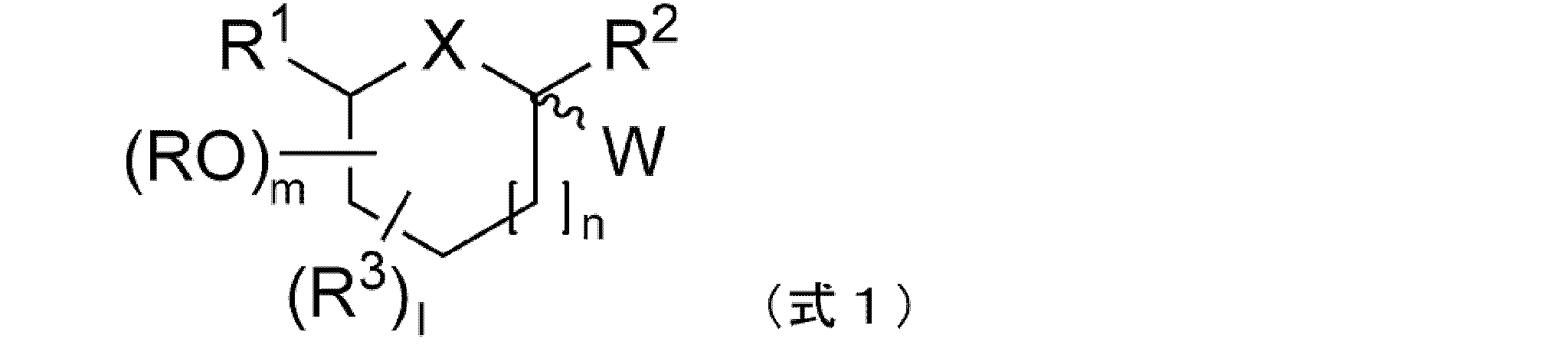
前記式1において、
Xは、O又はS、
nは0、1又は2、
mは0ないし5の整数、
lは0、1又は2
RはH、-CH3、-CH2OH、リン酸基でエステル化されたヒドロキシメチル基、又はR1のリン酸基と共有するリン酸基でエステル化されたヒドロキシメチル基、
R1はH、-CH3、-CH2OH、リン酸基でエステル化されたヒドロキシメチル基、又は、前記Rのリン酸基を共有するリン酸基でエステル化されたヒドロキシメチル基、
R2はH、-CH3又は-CH2OH、
R3はF、-NH2又はN3、及び、
Wは複素環及びその誘導体を表す。
前記式1において、
Xは、O又はS、
nは0、1又は2、
mは0ないし5の整数、
lは0、1又は2
RはH、-CH3、-CH2OH、リン酸基でエステル化されたヒドロキシメチル基、又はR1のリン酸基と共有するリン酸基でエステル化されたヒドロキシメチル基、
R1はH、-CH3、-CH2OH、リン酸基でエステル化されたヒドロキシメチル基、又は、前記Rのリン酸基を共有するリン酸基でエステル化されたヒドロキシメチル基、
R2はH、-CH3又は-CH2OH、
R3はF、-NH2又はN3、及び、
Wは複素環及びその誘導体を表す。
本発明は、本発明の化合物又はその薬学的に許容可能な塩若しくは溶媒和物の有効量を、これを必要とする患者に投与することを含む、悪性腫瘍の治療、進行予防及び/又は予防方法を提供する。
本発明の治療、進行予防及び/又は予防方法において、前記医薬組成物は、下記式1で表される化合物又はその薬学的に許容可能な塩の有効量を含む場合がある。
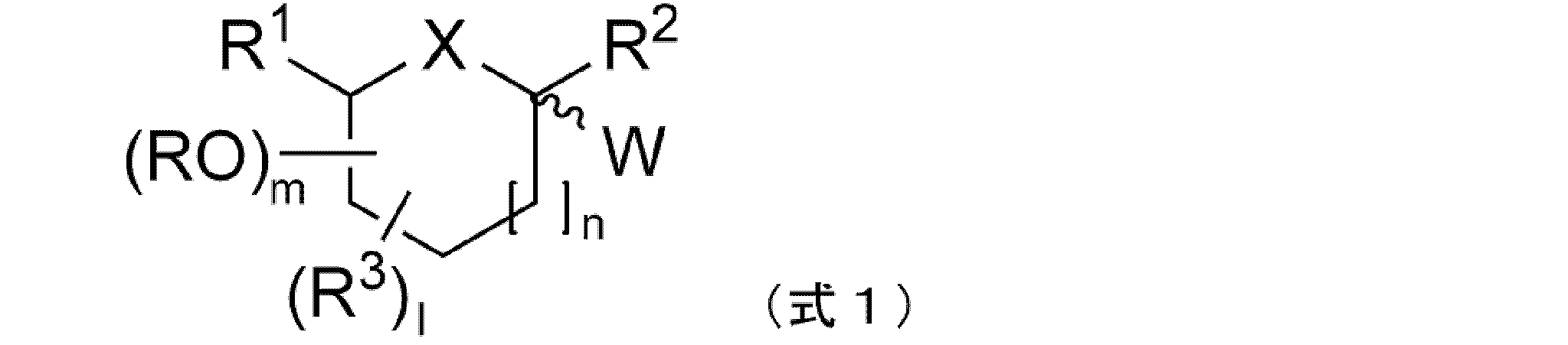
前記式1において、
Xは、O又はS、
nは0、1又は2、
mは0ないし5の整数、
lは0、1又は2
RはH、-CH3、-CH2OH、リン酸基でエステル化されたヒドロキシメチル基、又はR1のリン酸基と共有するリン酸基でエステル化されたヒドロキシメチル基、
R1はH、-CH3、-CH2OH、リン酸基でエステル化されたヒドロキシメチル基、又は、前記Rのリン酸基を共有するリン酸基でエステル化されたヒドロキシメチル基、
R2はH、-CH3又は-CH2OH、
R3はF、-NH2又はN3、及び、
Wは複素環及びその誘導体を表す。
前記式1において、
Xは、O又はS、
nは0、1又は2、
mは0ないし5の整数、
lは0、1又は2
RはH、-CH3、-CH2OH、リン酸基でエステル化されたヒドロキシメチル基、又はR1のリン酸基と共有するリン酸基でエステル化されたヒドロキシメチル基、
R1はH、-CH3、-CH2OH、リン酸基でエステル化されたヒドロキシメチル基、又は、前記Rのリン酸基を共有するリン酸基でエステル化されたヒドロキシメチル基、
R2はH、-CH3又は-CH2OH、
R3はF、-NH2又はN3、及び、
Wは複素環及びその誘導体を表す。
本発明の前記方法において、前記Wは、ピリミジン基又はその誘導体の場合がある。
本発明の前記方法において、前記Wは、下記式2で表される場合がある。
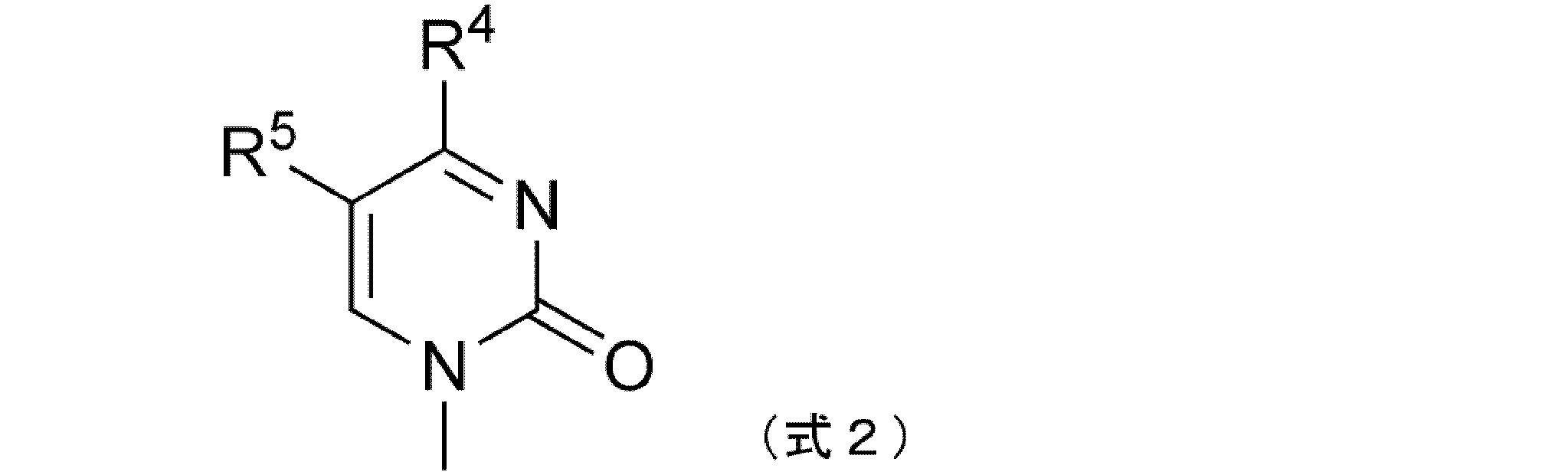
前記式2において、R4及びR5は、独立して、H、-OH、-NH2、-CH3、-CH2CH3、-CH2OH、-NHCOCH3、-OCOCH3又は-CH2OCOCH3を表す。
前記式2において、R4及びR5は、独立して、H、-OH、-NH2、-CH3、-CH2CH3、-CH2OH、-NHCOCH3、-OCOCH3又は-CH2OCOCH3を表す。
本発明の前記方法において、前記式2のR4はアミノ基の場合がある。
本発明の前記方法の前記式1において、
XはO、
nは1、
mは1、
lは0、
RはH、
R1は-CH2OH、リン酸基でエステル化されたヒドロキシメチル基、又は、前記Rのリン酸基を共有するリン酸基でエステル化されたヒドロキシメチル基、及び、
R2はHの場合がある。
XはO、
nは1、
mは1、
lは0、
RはH、
R1は-CH2OH、リン酸基でエステル化されたヒドロキシメチル基、又は、前記Rのリン酸基を共有するリン酸基でエステル化されたヒドロキシメチル基、及び、
R2はHの場合がある。
本発明の前記方法において、前記式1では、2-デオキシ-D-リボース及び2-ヒドロキシ-D-リボース、又は、その5’-一リン酸エステル体がWに結合する場合がある。
本発明の前記方法において、前記式1で表される化合物は、腫瘍細胞の細胞膜上又は腫瘍細胞から分泌されたヌクレオチダーゼでチミジンに代謝され、細胞に取り込まれる場合がある。
本発明は、前記式1で表される化合物に、さらに、抗腫瘍活性を有する他の化合物及び薬学的に許容可能な添加物を併せて、悪性腫瘍の治療、進行予防及び/又は予防のためにその有効量を、これらを必要とする患者に投与することを含む、悪性腫瘍の治療、進行予防及び/又は予防方法を提供する。
本発明の治療、進行予防及び/又は予防方法において、前記抗腫瘍活性を有する他の化合物は、パクリタキセル、タキサジエン、バッカチンIII、ドセタキセル、タクスチニンA、ブレビフォリオール、タキサスパインD、ビンブラスチン、ビンクリスチン、ビンデシン、シスプラチン、ムスチン、シクロホスファミド、クロラムブシル、ブスルファン、マイトマイシンC、アクチノマイシンD、ドキソルビシン(アドリアマイシン)、ダウノルビシン(ダウノマイシン)、ミトラマイシン、ブレオマイシン、プロカルバジン、メトトレキサート、エトポシド、イリノテカン、タモキシフェン、イマチニブ、アフィディコリン、オファツムマブ、セツキシマブ、ベバシズマブ、イブリツモマブ チウキセタン、トラスツズマブ、パニツムマブ、モガムリズマブ、ゲムツズマブオゾガマイシン、及び、リツキシマブからなる群から選択される1種以上の化合物の場合がある。
本発明は、悪性腫瘍の治療及び/又は予防のための医薬を製造するための下記式1で表される化合物、その薬学的に許容可能な塩、及び、それらの溶媒和物の使用を提供する。

前記式1において、
Xは、O又はS、
nは0、1又は2、
mは0ないし5の整数、
lは0、1又は2
RはH、-CH3、-CH2OH、リン酸基でエステル化されたヒドロキシメチル基、又はR1のリン酸基と共有するリン酸基でエステル化されたヒドロキシメチル基、
R1はH、-CH3、-CH2OH、リン酸基でエステル化されたヒドロキシメチル基、又は、前記Rのリン酸基を共有するリン酸基でエステル化されたヒドロキシメチル基、
R2はH、-CH3、又は、-CH2OH、
R3はF、-NH2又はN3、及び、
Wは複素環及びその誘導体を表す。
前記式1において、
Xは、O又はS、
nは0、1又は2、
mは0ないし5の整数、
lは0、1又は2
RはH、-CH3、-CH2OH、リン酸基でエステル化されたヒドロキシメチル基、又はR1のリン酸基と共有するリン酸基でエステル化されたヒドロキシメチル基、
R1はH、-CH3、-CH2OH、リン酸基でエステル化されたヒドロキシメチル基、又は、前記Rのリン酸基を共有するリン酸基でエステル化されたヒドロキシメチル基、
R2はH、-CH3、又は、-CH2OH、
R3はF、-NH2又はN3、及び、
Wは複素環及びその誘導体を表す。
本発明の前記使用において、前記Wは、ピリミジン基又はその誘導体の場合がある。
前記Wは、下記式2で表される場合がある。

前記式2において、R4及びR5は、独立して、H、-OH、-NH2、-CH3、-CH2CH3、-CH2OH、-NHCOCH3、-OCOCH3又は-CH2OCOCH3を表す。
前記式2において、R4及びR5は、独立して、H、-OH、-NH2、-CH3、-CH2CH3、-CH2OH、-NHCOCH3、-OCOCH3又は-CH2OCOCH3を表す。
本発明の前記使用において、前記式2のR4はアミノ基の場合がある。
本発明の前記使用における前記式1において、
XはO、
nは1、
mは1、
lは0、
RはH、
R1は-CH2OH、リン酸基でエステル化されたヒドロキシメチル基、又は、前記Rのリン酸基を共有するリン酸基でエステル化されたヒドロキシメチル基、及び、
R2はHの場合がある。
XはO、
nは1、
mは1、
lは0、
RはH、
R1は-CH2OH、リン酸基でエステル化されたヒドロキシメチル基、又は、前記Rのリン酸基を共有するリン酸基でエステル化されたヒドロキシメチル基、及び、
R2はHの場合がある。
本発明の前記使用における前記式1において、2-デオキシ-D-リボース及び2-ヒドロキシ-D-リボース、又は、その5’-一リン酸エステル体がWに結合する場合がある。
本発明の前記使用において、前記式1で表される化合物は、腫瘍細胞の細胞膜上の、又は腫瘍細胞から分泌されたヌクレオチダーゼでチミジンに代謝され、細胞に取り込まれる場合がある。
本発明は、さらに、細胞増殖抑制活性を有する他の化合物を含有する悪性腫瘍の治療及び/又は予防のための医薬を製造するための下記式1で表される化合物、その薬学的に許容可能な塩、及び、それらの溶媒和物の使用を提供する。
本発明の前記使用において、前記抗腫瘍活性を有する他の化合物は、パクリタキセル、タキサジエン、バッカチンIII、ドセタキセル、タクスチニンA、ブレビフォリオール、タキサスパインD、ビンブラスチン、ビンクリスチン、ビンデシン、シスプラチン、ムスチン、シクロホスファミド、クロラムブシル、ブスルファン、マイトマイシンC、アクチノマイシンD、ドキソルビシン(アドリアマイシン)、ダウノルビシン(ダウノマイシン)、ミトラマイシン、ブレオマイシン、プロカルバジン、メトトレキサート、エトポシド、イリノテカン、タモキシフェン、イマチニブ、アフィディコリン、オファツムマブ、セツキシマブ、ベバシズマブ、イブリツモマブ チウキセタン、トラスツズマブ、パニツムマブ、モガムリズマブ、ゲムツズマブオゾガマイシン、及び、リツキシマブからなる群から選択される1種以上の化合物の場合がある。
本明細書において、ヌクレオシド誘導体とは、ヌクレオシドが化学的に修飾された化合物であって、生体内で代謝され、細胞増殖抑制作用及び/又は細胞死惹起作用を発揮する化合物及びその塩をいう。前記ヌクレオシドは、アデノシン、チミジン、グアノシン、シチジン、ウリジン及びビタミンB2を含むが、これらに限定されない。前記ヌクレオシド誘導体は、リン酸エステル誘導体を含む。前記ヌクレオシド誘導体は、アデノシン5’-一リン酸、アデノシン5’-二リン酸、アデノシン5’-三リン酸、グアノシン5’-一リン酸、グアノシン5’-二リン酸、グアノシン5’-三リン酸、チミジン5’-一リン酸、チミジン5’-二リン酸、チミジン5’-三リン酸、ウリジン5’-一リン酸、ウリジン5’-二リン酸、ウリジン5’-三リン酸、シチジン5’-一リン酸、シチジン5’-二リン酸、シチジン5’-三リン酸、デオキシアデノシン5’-一リン酸、デオキシアデノシン5’-二リン酸、デオキシアデノシン5’-三リン酸、デオキシグアノシン5’-一リン酸、デオキシグアノシン5’-二リン酸、デオキシグアノシン5’-三リン酸、2’-ヒドロキシチミジン5’-一リン酸、2’-ヒドロキシチミジン5’-二リン酸、2’-ヒドロキシチミジン5’-三リン酸、デオキシウリジン5’-一リン酸、デオキシウリジン5’-二リン酸、デオキシウリジン5’-三リン酸、デオキシシチジン5’-一リン酸、デオキシシチジン5’-二リン酸、デオキシシチジン5’-三リン酸、2’-デオキシチミジン3’-一リン酸、チミジン3’,5’-環状一リン酸、シタラビン(Ara-C)、ゲムシタビン、2’3’-ジデオキシチミジン5’-三リン酸、ブチルフェニルデオキシグアノシン三リン酸、カペシタビン、塩酸アンシタビン、ネララビン、ペントスタチン、及び、ブロクスウリジンを含むが、これらに限定されない。
本明細書において、ヌクレオシド誘導体は、エナンチオマー、ジアステレオマー、及び/又は、それらの混合物を含む。
本明細書において、リン酸エステル誘導体は脱リン酸化され、腫瘍細胞に対して特異的な抗腫瘍活性を発揮する場合がある。前記リン酸エステル誘導体は、ヌクレオチダーゼによって脱リン酸化される場合がある。前記ヌクレオチダーゼはホスホジエステル結合を加水分解できる。
前記リン酸エステル誘導体に誘導化されることにより、腫瘍細胞膜上の、又は腫瘍細胞から分泌されたヌクレオチダーゼで脱リン酸化され、腫瘍細胞に特異的な増殖抑制活性を発揮するヌクレオチド誘導体として、チミジン、シタラビン、カペシタビン、塩酸アンシタビン、ネララビン、ペントスタチン及びブロクスウリジンのリン酸化エステル誘導体が挙げられるが、これらに限定されない。
これらのヌクレオチド誘導体は、例えば、特開昭55-002601号公報等に記載の方法や定法に基づき、チミジン、シタラビン、ジドブジン、アドリアマイシン(ドキソルビシン)、カペシタビン、塩酸アンシタビン、ゲムシタビン、ネララビン、クロファラビン、ペントスタチン及びブロクスウリジンをリン酸エステル化又はその誘導体とすることにより、合成することができるが、これらに限定されない。
好ましくは、前記ヌクレオチド誘導体は、下記式3で表される化合物、その薬学的に許容可能な塩、及び、それらの溶媒和物である。
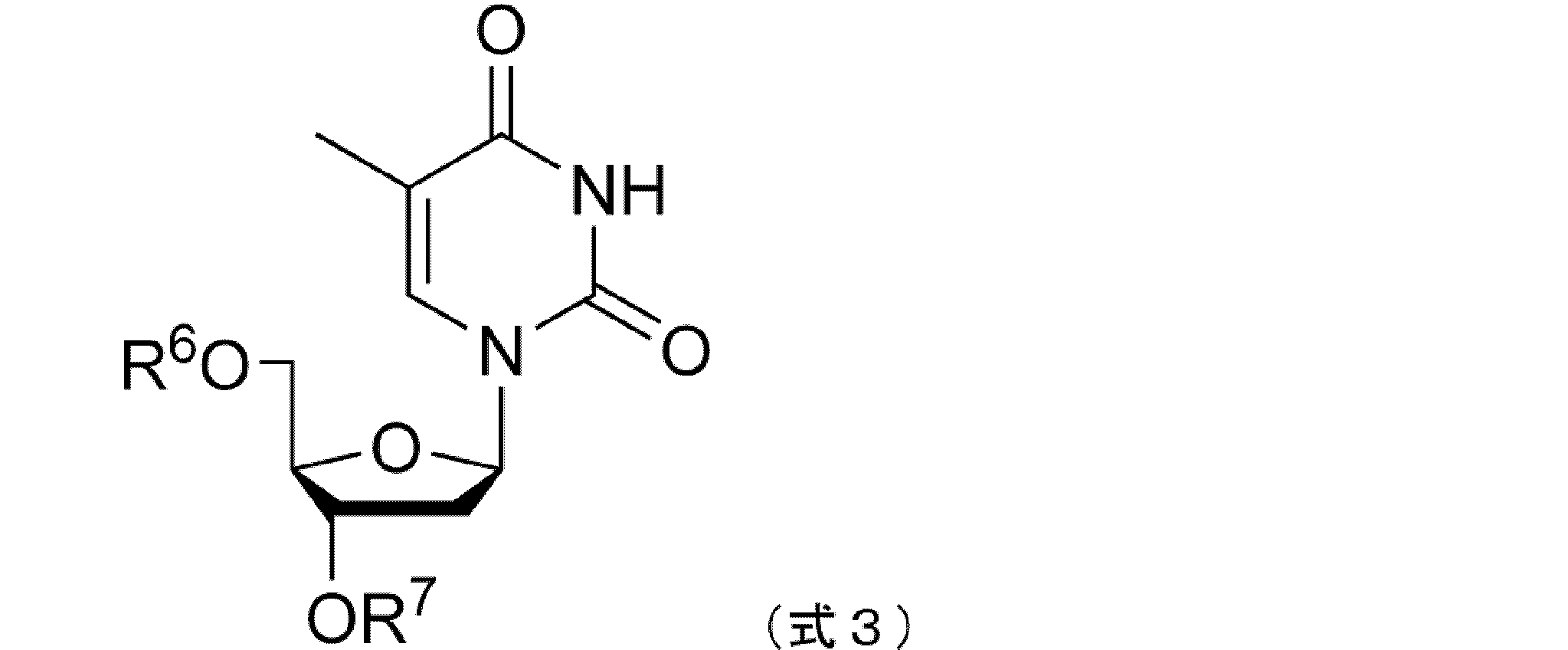
式3において、R6は-Hもしくは-COR8(R8は、置換基を有していてもよいC1~C3のアルキル基)、R7は-(PO2-O)nR9(nは、1ないし3の整数、R9は-Hもしくは-COR10、R10は置換基を有していてもよいC1~C3のアルキル基)を表し、又は、R6とR7はこれらが結合する原子と一緒になってPを含むヘテロ環を形成してもよい。
式3において、R6は-Hもしくは-COR8(R8は、置換基を有していてもよいC1~C3のアルキル基)、R7は-(PO2-O)nR9(nは、1ないし3の整数、R9は-Hもしくは-COR10、R10は置換基を有していてもよいC1~C3のアルキル基)を表し、又は、R6とR7はこれらが結合する原子と一緒になってPを含むヘテロ環を形成してもよい。
好ましくは、前記ヌクレオシド誘導体はチミジン誘導体であり、該チミジン誘導体は、チミジン5’-一リン酸、チミジン5’-二リン酸、チミジン5’-三リン酸、チミジン3’,5’-リン酸及びその薬学的に許容可能な塩を含むが、これらに限定されない。チミジン5’-二リン酸、チミジン5’-三リン酸、及び、チミジン3’,5’-リン酸は、腫瘍細胞膜上の、又は腫瘍細胞から分泌されたヌクレオチダーゼにより速やかにリン酸エステルが加水分解され、チミジン5’-一リン酸に代謝される。好ましくは、前記チミジン誘導体はチミジン5’-一リン酸である。チミジン5’-一リン酸は、チミジンに代謝される場合がある。
前記式1の化合物は定法により薬学的に許容可能な塩にすることができる。薬学的に許容可能な塩は、酢酸塩、マロン酸塩、酒石酸塩等の有機酸塩、塩酸塩、硫酸塩、リン酸塩等の無機酸塩、アスパラギン酸塩、グルタミン酸塩等のアミノ酸塩等を含むが、これらに限定されない。
また、リン酸基を有するヌクレオシド誘導体は定法により種々のアルカリ金属、アルカリ土類金属又はアミノ酸との塩にすることができる。具体的には、式1の化合物の塩は薬学的に許容可能な塩であり、ナトリウム塩、カリウム塩、カルシウム塩、アスパラギン塩、グルタミン塩等の場合があるが、これらに限定されない。
さらに、式1の化合物は、水和物又は薬学的に許容可能な各種溶媒和物も形成でき、本発明に含まれる。
本発明の医薬組成物は、散剤、顆粒剤、丸剤、錠剤若しくは内用液剤等の経口製剤、又は、注射剤(静脈内、筋肉内等)、坐剤、軟膏剤、経皮用貼付剤等の非経口投与製剤のいずれの形態であってもよいが、これらに限定されない。本発明の医薬組成物は、製剤として、当分野において通常用いられている薬剤用担体、賦形剤等を含む。
前記経口製剤において、有効成分は、乳糖、マンニトール、ブドウ糖、微結晶セルロース、クロスカルメロースナトリウム、デンプン、軽質無水ケイ酸、メタケイ酸アルミン酸マグネシウム等の少なくとも1つの希釈剤と混合されてもよい。
本発明の医薬組成物は、前記希釈剤以外の添加剤、例えばヒドロキシプロピルセルロース、ヒドロキシプロピルメチルセルロース、ヒプロメロース若しくはマクロゴール6000のような結合剤、ステアリン酸マグネシウム、ステアリン酸カルシウム若しくはタルクのような滑沢剤、クロスポピドンのような崩壊剤、ラクトースのような安定化剤、グルタミン酸又はアスパラギン酸のような溶解補助剤、ツイーン80のような可塑剤、酸化チタン若しくはカルナウバロウのような光沢剤、マクロゴール6000のような被覆剤、又は、三二酸化鉄のような着色剤を含有してもよい。
錠剤又は丸剤は、必要により、ショ糖、ゼラチン若しくは寒天などの糖衣又は胃溶性若しくは腸溶性物質のフィルムで被膜されてもよい。
経口投与のための内用液剤は、薬学的に許容可能なシロップ剤、懸濁シロップ剤、ドライシロップ、乳剤、懸濁剤、リモナーデ剤又はエリキシル剤等を含む。また、前記内用液剤は、一般的に用いられる不活性な希釈剤、例えば精製水及びエタノールを含むが、これらに限定されない溶剤で調整できる。さらに、前記内用液剤は、不活性な希釈剤以外に可溶化剤、湿潤剤、懸濁剤のような補助剤、甘味剤、風味剤、芳香剤又は防腐剤等を含有してもよい。
非経口投与製剤としての注射剤は、無菌の水性又は非水性の溶液性注射剤、懸濁性注射剤又は乳濁性注射剤を含むが、これらに限定されない。水性の溶液剤又は懸濁剤には、例えば注射用蒸留水及び生理食塩液等が含まれる。非水溶性の溶液剤又は懸濁剤には、プロピレングリコール、ポリエチレングリコール、エタノールのようなアルコール類、又はポリソルベート80(局方名)、トロメタモール等が含まれる。これらの注射剤は、さらに等張化剤、防腐剤、湿潤剤、乳化剤、分散剤、安定化剤、又は溶解補助剤を含んでもよい。これらの注射剤は、例えば定法の濾過、殺菌剤の配合又は照射によって無菌化される。また、これらの注射剤は、予め製造された無菌の固体組成物を、使用時に無菌水又は無菌の注射用溶媒に溶解又は懸濁して使用されてもよい。
前記医薬品添加剤は、前記例示された医薬品添加剤以外の公知の化合物を、公知の用法及び用量(例えば、医薬品添加物辞典2007(日本医薬品添加剤協会編、薬事日報社、東京、2007)に記載)で使用できる。本発明の医薬組成物の製造は、好ましくは、医薬品及び医薬部外品の製造管理及び品質管理規範に適合した条件(good manufacturing practice、GMP基準)で実施される。
本発明の経口用製剤及び非経口用製剤の好ましい処方例は、以下の処方例を含むが、これらに限定されない。例えば、前記経口用製剤の好ましい処方例は、1錠(重量0.6g)中、チミジン5’-一リン酸300mgに、カルナウバロウ、クロスカルメロースナトリウム、軽質無水ケイ酸、酸化チタン、ステアリン酸マグネシウム、ヒドロキシプロピルセルロース、ヒプロメロース(置換度タイプ:2910)、マクロゴール6000、D-マンニトールなどを添加し、打錠した後に、フィルムコーティングした錠剤である。例えば、前記非経口用製剤の好ましい処方例は、トロメタモール1694mgを含む精製水20mLにチミジン5’-一リン酸1gを溶解し、pH調整剤と等張化剤で、pH8.2~8.6、浸透圧比:約4に調整した注射剤である。
本明細書において「増殖抑制」とは、細胞増殖を抑制する作用をいい、腫瘍細胞の増殖を抑制すること、及び、腫瘍細胞の細胞死を惹起又は腫瘍細胞を死滅すること、腫瘍形成を抑制すること、腫瘍の成長を抑制すること、並びに、腫瘍、悪性腫瘍、がん又は癌の治療又は予防を行うことを含む。治療は、根治的治療及び予防的治療を含み、予防は、発症予防、進行予防、転移予防及び再発予防を含むが、これらに限定されない。
本明細書における「腫瘍」は、エイズ関連カポジ肉腫、悪性リンパ腫(非ホジキンリンパ腫、細網肉腫、リンパ肉腫、ホジキン病)、悪性骨・軟部腫瘍、肝臓がん、急性白血病、結腸・直腸がん、骨肉腫、子宮頸がん、小細胞肺がん、白血病(急性骨髄性白血病、急性リンパ性白血病、及び悪性リンパ腫等)、小児悪性固形腫瘍(ユーイング肉腫ファミリー腫瘍,横紋筋肉腫,神経芽腫,網膜芽腫,肝芽腫その他肝原発悪性腫瘍,腎芽腫その他腎原発悪性腫瘍等)、消化器がん(胃がん、胆のう・胆管がん、膵臓がん、肝がん、結腸がん、直腸がん等)、食道がん、腎腫瘍、成人急性非リンパ性白血病骨髄異形成症候群(Myelodysplastic Syndrome)、前立腺がん、多発性骨髄腫、胆管がん・胆道がん、乳がん、尿路上皮がん、肺がん、肺小細胞がん、非小細胞肺がん、有棘細胞がん、卵黄嚢腫瘍、卵管がん、卵巣がん、睾丸腫瘍、絨毛がん、胚細胞腫瘍(精巣腫瘍,卵巣腫瘍,性腺外腫瘍)、膀胱がん、膵がん、顆粒膜細胞腫、脳腫瘍を含むが、これらに限定されない。好ましくは、前記腫瘍は、子宮頸がん、ならびに、急性骨髄性白血病、急性リンパ性白血病及び悪性リンパ腫などの白血病を含む。
本明細書における「患者」は、前記腫瘍を有する動物である。前記動物は、サル、マウス、ラット、ウサギ、ハムスター、ヤギ、ブタ、ヒツジ、ラクダ、ウマ、ウシ、ネコ及びイヌ等、特に限定されないが、好ましくはヒトである。
本明細書における「有効量」は、前記患者体内で本発明の効果を発揮するために必要な下記式1で表される化合物又はその薬学的に許容可能な塩の投与量であって、薬物作用を生じる最小有効量から、薬物作用を生じ、かつ、中毒作用を生じない最大有効量までの間をいう。
前記ヌクレオシド誘導体又はその薬学的に許容可能な塩及び/又はその溶媒和物の投与量(1日量)は、疾患の症状、投与対象の年齢、人種、性別等を考慮して個々の場合に応じて適宜決定され、単回投与(1日1回投与)又は1日複数回投与される。
前記ヌクレオシド誘導体は又はその薬学的に許容可能な塩及び/又はその溶媒和物の投与量は、通常、成人1人あたり約1日量0.01~20g、好ましくは1日量0.1~10.0gである。そして、前記投与量が1日1~4回に分けて経口又は非経口投与される。
本発明のスクリーニング方法において、ヌクレオシド誘導体として、微生物、菌類、植物及び動物から調製される化合物、化学的に合成される化合物等が評価できる。これらの化合物は、定法に従い調製又は合成できる。例えば、特開昭55-002601号公報等に記載の方法により市販の原料より合成できるが、これらに記載の方法に限定されない。本発明のスクリーニング方法において、培養細胞は、当業者に標準的な方法で調製し、培養できる。培養方法及び培養条件は、培養する細胞の種類によって適切に選択される。前記培養細胞は、ヒト、実験動物から採取され、培養された細胞、及び、細胞株を含むが、これらに限定されない。好ましくは、前記培養細胞は、腫瘍細胞である。前記培養細胞の由来は、サル、マウス及びラット等、特に限定されないが、好ましくはヒトである。ヒトの腫瘍細胞株は、例えば、American Type Culture Collection(ATCC)や理化学研究所バイオリソースセンターの細胞バンクから入手可能であり、例えば、Hep G2細胞、HEK293細胞、HeLa細胞、Jurkat細胞、HL-60細胞を含むが、これらに限定されない。本発明のスクリーニング方法において、細胞増殖抑制作用は、被験化合物(ヌクレオシド誘導体)を添加した実験群の細胞数、DNA量、mRNA量又はタンパク質量を、被験化合物を添加していない対照群の細胞数、DNA量、mRNA量又はタンパク質量と比較して評価される場合がある。前記実験群及び対照群の細胞数、DNA量、mRNA量及びタンパク質量の測定値は、定法により標準化した後に比較される場合がある。細胞数、DNA量、mRNA量又はタンパク質量は、定法により測定できる。例えば、細胞数は、顕微鏡観察、セルソーター、FACS等によって測定できる。例えば、DNA量は、PCR、サザンブロット等によって測定できる。例えば、mRNA量は、RT?PCR、ノザンブロット等によって測定できる。例えば、タンパク質量は、ELISA、ウェスタンブロット、免疫沈降法、免疫比濁法等によって測定できる。本発明のスクリーニング方法において、スクリーニング条件(例えば、被験化合物以外の化合物の種類、濃度や、培養の温度、時間や、エンドポイント等)が変更される場合がある。なお、本発明のスクリーニング方法において、培養細胞の代わりに、実験動物個体(例えば、ノックアウトマウス、トランスジェニックマウス、腫瘍細胞を移植されたヌードマウス等)、又はこれらの動物から摘出した腫瘍組織を用いて、ヌクレオシド誘導体の細胞増殖抑制作用、細胞死惹起作用、副作用等が評価されてもよい。
以下に説明する本発明を実施するための形態及び実施例は例示のみを目的とし、本発明の技術的範囲を限定するものではない。本発明の技術的範囲は特許請求の範囲の記載によってのみ限定される。本発明の主旨を逸脱しないことを条件として、本発明の変更、例えば、本発明の構成要件の追加、削除及び置換を行うことができる。
本明細書において言及される全ての文献はその全体が引用により本明細書に取り込まれる。
NHDF細胞の増殖に対するヌクレオシド誘導体(ヌクレオチド)の影響
材料及び方法
被験化合物含有培地の調製
被験化合物として、市販のアデノシン5’-一リン酸二ナトリウム(以下AMPと記載)(306-50741、和光純薬工業株式会社)、グアノシン5’-一リン酸二ナトリウム(以下GMPと記載)(078-04361、和光純薬工業株式会社)、チミジン5’-一リン酸二ナトリウム(以下TMPと記載)(T7004、シグマ アルドリッチ ジャパン株式会社)、及び、シチジン5’-一リン酸二ナトリウム(以下CMPと記載)(030-05363、和光純薬工業株式会社)が使用された。基本培地として、10%FBS(ライフテクノロジーズジャパン株式会社)を含むDMEM(1,000mg/L D-グルコース、L-グルタミン、5mM HEPES緩衝液、及び、110mg/L ピルビン酸ナトリウム)(ライフテクノロジーズジャパン株式会社)が使用された。前記AMP、GMP、TMP及びCMPは、それぞれ、1mM又は10mMとなるように前記基本培地(DMEM、10%FBS、抗生物質不含)に添加され、被験化合物含有培地が調製された。
材料及び方法
被験化合物含有培地の調製
被験化合物として、市販のアデノシン5’-一リン酸二ナトリウム(以下AMPと記載)(306-50741、和光純薬工業株式会社)、グアノシン5’-一リン酸二ナトリウム(以下GMPと記載)(078-04361、和光純薬工業株式会社)、チミジン5’-一リン酸二ナトリウム(以下TMPと記載)(T7004、シグマ アルドリッチ ジャパン株式会社)、及び、シチジン5’-一リン酸二ナトリウム(以下CMPと記載)(030-05363、和光純薬工業株式会社)が使用された。基本培地として、10%FBS(ライフテクノロジーズジャパン株式会社)を含むDMEM(1,000mg/L D-グルコース、L-グルタミン、5mM HEPES緩衝液、及び、110mg/L ピルビン酸ナトリウム)(ライフテクノロジーズジャパン株式会社)が使用された。前記AMP、GMP、TMP及びCMPは、それぞれ、1mM又は10mMとなるように前記基本培地(DMEM、10%FBS、抗生物質不含)に添加され、被験化合物含有培地が調製された。
細胞培養
市販のNHDF細胞(ヒト正常皮膚線維芽細胞:Lonza Walkersville, Inc., Walkersville,MD, USA)が、6500細胞個/cm2となるように12穴プレート(旭硝子、東京)に播種された(各群n=6)。その後、前記NHDF細胞は、前記被験化合物含有培地(1mM又は10mMのAMP、GMP、TMP又はCMP)で培養された。対照として、前記NHDF細胞は、前記被験化合物を含まない基本培地で培養された。
市販のNHDF細胞(ヒト正常皮膚線維芽細胞:Lonza Walkersville, Inc., Walkersville,MD, USA)が、6500細胞個/cm2となるように12穴プレート(旭硝子、東京)に播種された(各群n=6)。その後、前記NHDF細胞は、前記被験化合物含有培地(1mM又は10mMのAMP、GMP、TMP又はCMP)で培養された。対照として、前記NHDF細胞は、前記被験化合物を含まない基本培地で培養された。
観察
前記NHDF細胞の変化が、ヌクレオチド存在下0、1、3、5、7及び9日後に倒立位相差顕微鏡(ライカマイクロシステムズ株式会社 DM IL LED)で経時的に観察された。
前記NHDF細胞の変化が、ヌクレオチド存在下0、1、3、5、7及び9日後に倒立位相差顕微鏡(ライカマイクロシステムズ株式会社 DM IL LED)で経時的に観察された。
細胞数の測定
観察後、各ウェルの細胞が0.25%トリプシン溶液(ライフテクノロジーズジャパン株式会社)で剥離され、生存細胞数が血球計算盤を用いて細胞数を測定することにより求められた。
観察後、各ウェルの細胞が0.25%トリプシン溶液(ライフテクノロジーズジャパン株式会社)で剥離され、生存細胞数が血球計算盤を用いて細胞数を測定することにより求められた。
統計解析
各実験群と対照群とについて、ポストホックな双方向性の繰り返しのある分散分析(two-way repeated ANOVA with post-hoc analysis)が行われた。ポストホック分析には、Tukey HSD testが使用された。
各実験群と対照群とについて、ポストホックな双方向性の繰り返しのある分散分析(two-way repeated ANOVA with post-hoc analysis)が行われた。ポストホック分析には、Tukey HSD testが使用された。
結果
図1は、1mM又は10mMのAMP、GMP、TMP又はCMPが添加された培養条件で7日間培養したNHDF細胞の顕微鏡写真である。図2Aは、1mMのAMP、GMP、TMP又はCMPが存在する培養条件におけるNHDF細胞の生存細胞数(平均値±標準誤差、各n=6)の経時変化を表すグラフである。1mMのAMP実験群及び1mMのCMP実験群では、細胞は対照群と変わらずに増殖した。1mMのGMP実験群では、細胞は、対照群、1mMのAMP実験群、及び、1mMのCMP実験群よりも底面に広がって接着し、細胞数の増加は少なかった。1mMのTMP実験群では、細胞形態は、対照群、1mMのAMP実験群、及び、1mMのCMP実験群と変わらないが、全体的に密度が低いままコンフルエントになった。また、1mMのTMP実験群の細胞数は、対照群、1mMのAMP実験群、及び、1mMのCMP実験群に比べて少なかった(図1、図2A)。細胞数について、対照群と比較して、1mMのAMP実験群及び1mMのCMP実験群は統計学的な有意差が認められなかったが、1mMのGMP実験群及び1mMのTMP実験群は統計学的な有意差が認められた(p<0.0001)。すなわち、1mMのAMP及びCMPはNHDF細胞に作用しなかった。また、1mMのGMP及びTMPは細胞増殖を抑制したが、細胞死を惹起しなかった。
図1は、1mM又は10mMのAMP、GMP、TMP又はCMPが添加された培養条件で7日間培養したNHDF細胞の顕微鏡写真である。図2Aは、1mMのAMP、GMP、TMP又はCMPが存在する培養条件におけるNHDF細胞の生存細胞数(平均値±標準誤差、各n=6)の経時変化を表すグラフである。1mMのAMP実験群及び1mMのCMP実験群では、細胞は対照群と変わらずに増殖した。1mMのGMP実験群では、細胞は、対照群、1mMのAMP実験群、及び、1mMのCMP実験群よりも底面に広がって接着し、細胞数の増加は少なかった。1mMのTMP実験群では、細胞形態は、対照群、1mMのAMP実験群、及び、1mMのCMP実験群と変わらないが、全体的に密度が低いままコンフルエントになった。また、1mMのTMP実験群の細胞数は、対照群、1mMのAMP実験群、及び、1mMのCMP実験群に比べて少なかった(図1、図2A)。細胞数について、対照群と比較して、1mMのAMP実験群及び1mMのCMP実験群は統計学的な有意差が認められなかったが、1mMのGMP実験群及び1mMのTMP実験群は統計学的な有意差が認められた(p<0.0001)。すなわち、1mMのAMP及びCMPはNHDF細胞に作用しなかった。また、1mMのGMP及びTMPは細胞増殖を抑制したが、細胞死を惹起しなかった。
図2Bは、10mMのAMP、GMP、TMP又はCMPが添加された培養条件におけるNHDF細胞の生存細胞数(平均値±標準誤差、各n=6)の経時変化を表すグラフである。10mMのAMP実験群では、細胞は培養開始後5日まで対照群と比較すると低速に増殖したが、細胞死が培養後7日に惹起された。10mMのGMP実験群では、細胞は培養後3日まで殆ど増殖せず、細胞死が培養後5日に惹起された。10mMのTMP実験群では、細胞は培養後7日までは対照群より密度が低い状態で増殖し、培養後9日で全体的に網状の形態であった。細胞数は培養後9日まで緩やかに増加した(図1、図2B)。10mMのCMP実験群では、細胞は培養後5日まで低速で増加したが、細胞死が培養後7日に惹起された。細胞数について、対照群と比較して、10mMの4群全は統計学的な有意差が認められた(p<0.0001)。
以上の結果から、1mMのAMP実験群及び1mMのCMP実験群では正常細胞の増殖への影響が認められなかった。lmMのGMP実験群では、対照群を含む他群と相違して、細胞は底面に大きく広がって接着したため、一定面積あたりの細胞数は減少した。しかし、細胞密度の増加は認められず、細胞間隙を認めた。本結果は、細胞同士のコンタクトインヒビションによる増殖阻害の可能性を示すものである。
一方、1mMのTMP実験群では、NHDF細胞は細胞密度が低い状態でコンフルエントになった。本結果は、細胞がお互いにより強固に接着し、細胞そのものが他群よりも大きくなった可能性、若しくはコンタクトインヒビションにより細胞数が少なくなった可能性を示すものである。
10mMのAMP実験群、10mMのGMP実験群及び10mMのCMP実験群それぞれで細胞が死滅した。一方、10mMのTMP実験群では観察期間中に細胞死が惹起されなかった。また、培養後9日では細胞密度が不均一になったが、細胞死は惹起されなかった。TMPは他のヌクレオチド(AMP、GMP及びCMP)と比較して高濃度においてもNHDF細胞に対して細胞死を惹起しなかった。すなわち、10mMのAMP、GMP及びCMPはNHDF細胞を死滅するため、AMP、GMP及びCMPは、腫瘍細胞以外の正常細胞に細胞死を惹起することが認められた。10mMのTMPは、NHDF細胞を死滅しないため、正常細胞に対して細胞死を惹起しないことが認められた。
HeLa細胞の増殖に対するヌクレオシド誘導体(ヌクレオチド)の影響
材料及び方法
被験化合物含有培地の調製、細胞培養、観察、細胞数の測定、及び、統計解析は、原則として実施例1と同様に行われた。前記細胞培養では、HeLa細胞(ヒト子宮頸がん細胞)(JCRB細胞バンク、大阪)が7,000細胞個/cm2で12穴プレート(旭硝子、東京)に播種された(各群n=6)。
材料及び方法
被験化合物含有培地の調製、細胞培養、観察、細胞数の測定、及び、統計解析は、原則として実施例1と同様に行われた。前記細胞培養では、HeLa細胞(ヒト子宮頸がん細胞)(JCRB細胞バンク、大阪)が7,000細胞個/cm2で12穴プレート(旭硝子、東京)に播種された(各群n=6)。
結果
図3は、1mM又は10mMのAMP、GMP、TMP又はCMPが添加された培養条件で9日間培養されたHeLa細胞の顕微鏡写真である。図4Aは、1mMのAMP、GMP、TMP又はCMPが存在する培養条件におけるHeLa細胞の生存細胞数(平均値±標準誤差、各n=6)の経時変化を表すグラフである。1mMのAMP実験群、1mMのGMP実験群、及び、1mMのCMP実験群では、細胞は対照群と同様に増殖した。1mMのTMP実験群では他の実験群に比べて細胞増殖が抑制された。細胞数について、対照群と比較して、1mMのAMP実験群、1mMのGMP実験群、及び、1mMのCMP実験群は統計学的な有意差が認められなかったが、1mMのTMP実験群のみ統計学的な有意差が認められた(P<0.0001)(図3、図4A)。すなわち、1mMのAMP、GMP及びCMPはHeLa細胞に作用せず、1mMのTMPのみが細胞の増殖を抑制することが明らかとなった。
図3は、1mM又は10mMのAMP、GMP、TMP又はCMPが添加された培養条件で9日間培養されたHeLa細胞の顕微鏡写真である。図4Aは、1mMのAMP、GMP、TMP又はCMPが存在する培養条件におけるHeLa細胞の生存細胞数(平均値±標準誤差、各n=6)の経時変化を表すグラフである。1mMのAMP実験群、1mMのGMP実験群、及び、1mMのCMP実験群では、細胞は対照群と同様に増殖した。1mMのTMP実験群では他の実験群に比べて細胞増殖が抑制された。細胞数について、対照群と比較して、1mMのAMP実験群、1mMのGMP実験群、及び、1mMのCMP実験群は統計学的な有意差が認められなかったが、1mMのTMP実験群のみ統計学的な有意差が認められた(P<0.0001)(図3、図4A)。すなわち、1mMのAMP、GMP及びCMPはHeLa細胞に作用せず、1mMのTMPのみが細胞の増殖を抑制することが明らかとなった。
図4Bは、10mMのAMP、GMP、TMP又はCMPが添加された培養条件におけるHeLa細胞の生存細胞数(平均値±標準誤差、各n=6)の経時変化を表すグラフである。対照群では細胞は培養後9日まで急速に増殖した。AMP実験群では細胞増殖が抑制され、細胞は、対照群と比較して培養後9日まで低速で増殖した。GMP実験群では細胞は殆ど増殖しなかったが、細胞形状の変化が培養後3日に現れ、細胞死が培養後5日に惹起された。TMP実験群では細胞は培養後5日までAMP実験群とほぼ同じ速度で増殖したが、細胞死が培養後7日に惹起された。CMP実験群では細胞の増殖速度は培養後5日まで対照群とほぼ同じであったが、それ以降は対照群に比べて遅かった。細胞数について、対照群と比較して、AMP実験群(p<0.0001)、GMP実験群(p<0.0001)、TMP実験群(p<0.0001)、及び、CMP群(p=0.001)は統計学的な有意差が認められた(図3及び図4B)。すなわち、10mMのAMP、GMP及びTMPは腫瘍細胞のHeLa細胞を死滅し、CMPは増殖をわずかに抑制することが明らかとなった。
実施例1及び2の結果から、TMP及びCMPに対する感受性が、正常細胞と、腫瘍細胞とでは異なることが明らかとなった。ここで、TMPは、生体に常在する化合物である。したがって、これらの結果は、正常細胞を死滅させず、腫瘍細胞を死滅させるTMPは、副作用の少ない抗腫瘍剤として有用であることを示すものである。
HL60細胞の増殖に対するヌクレオシド誘導体(ヌクレオチド)の影響
材料及び方法
被験化合物含有培地の調製
被験化合物として、市販のAMP、GMP、TMP及びCMPが使用された。浮遊培養用基本培地として、市販のPRMI1640(L-グルタミン、25mM HEPES緩衝液)(ライフテクノロジーズジャパン株式会社、東京)が使用された。前記AMP、GMP、TMP及びCMPは、それぞれ、10mMとなるように浮遊培養用基本培地(PRMI1640、10%FBS、抗生物質不含)に添加され、被験化合物含有培地が調製された。
材料及び方法
被験化合物含有培地の調製
被験化合物として、市販のAMP、GMP、TMP及びCMPが使用された。浮遊培養用基本培地として、市販のPRMI1640(L-グルタミン、25mM HEPES緩衝液)(ライフテクノロジーズジャパン株式会社、東京)が使用された。前記AMP、GMP、TMP及びCMPは、それぞれ、10mMとなるように浮遊培養用基本培地(PRMI1640、10%FBS、抗生物質不含)に添加され、被験化合物含有培地が調製された。
細胞培養
HL60細胞(ヒト前骨髄性白血病細胞)(JCRB細胞バンク、大阪)が、160,000細胞個/mlで浮遊培養用12穴プレート(BD,Franklin Lakes,NJ,USA)に播種された(各群n=6)。その後、前記HL60細胞は、前記被験化合物含有培地(10mMのAMP、GMP、TMP又はCMP)で培養された。対照として、前記HL60細胞は、前記被験化合物を含まない基本培地で培養された。
HL60細胞(ヒト前骨髄性白血病細胞)(JCRB細胞バンク、大阪)が、160,000細胞個/mlで浮遊培養用12穴プレート(BD,Franklin Lakes,NJ,USA)に播種された(各群n=6)。その後、前記HL60細胞は、前記被験化合物含有培地(10mMのAMP、GMP、TMP又はCMP)で培養された。対照として、前記HL60細胞は、前記被験化合物を含まない基本培地で培養された。
観察
前記HL60細胞の変化が、0、1、3、5、7、9及び14日後に経時的に観察された。
前記HL60細胞の変化が、0、1、3、5、7、9及び14日後に経時的に観察された。
細胞数の測定
培地中に浮遊している細胞が培地中に均一に分布するように懸濁された後、細胞数が血球計算盤を用いて測定することにより求められた。
培地中に浮遊している細胞が培地中に均一に分布するように懸濁された後、細胞数が血球計算盤を用いて測定することにより求められた。
統計解析
各実験群と対照群とについて、ポストホックな双方向性の繰り返しのある分散分析(Two-way repeated ANOVA with post-hoc analysis)が行われた。ポストホック分析には、Tukey HSD testが使用された。
各実験群と対照群とについて、ポストホックな双方向性の繰り返しのある分散分析(Two-way repeated ANOVA with post-hoc analysis)が行われた。ポストホック分析には、Tukey HSD testが使用された。
結果
図5は、10mMのAMP、GMP、TMP又はCMPが添加された培養条件におけるHL60細胞の生存細胞数(平均値±標準誤差、各n=6)の経時変化を表すグラフである。細胞数について、対照群と比較して、CMP実験群では統計学的な有意差が認められなかったが、AMP実験群、GMP実験群及びTMP実験群は統計学的な有意差が認められた(3群ともにp<0.0001)。つまり、AMP、GMP及びTMPは、HeLa細胞に対してと同様に、HL60細胞に対して増殖抑制効果を有するが、CMPは増殖抑制効果を有さなかった。
図5は、10mMのAMP、GMP、TMP又はCMPが添加された培養条件におけるHL60細胞の生存細胞数(平均値±標準誤差、各n=6)の経時変化を表すグラフである。細胞数について、対照群と比較して、CMP実験群では統計学的な有意差が認められなかったが、AMP実験群、GMP実験群及びTMP実験群は統計学的な有意差が認められた(3群ともにp<0.0001)。つまり、AMP、GMP及びTMPは、HeLa細胞に対してと同様に、HL60細胞に対して増殖抑制効果を有するが、CMPは増殖抑制効果を有さなかった。
以上の結果から、生体内常在性のヌクレオチド化合物による影響が、細胞の種類で、特に正常細胞と腫瘍細胞との間で異なること、及び、10mMのTMPは、腫瘍細胞を死滅し、1mMのTMPは、腫瘍細胞の増殖を抑制することが明らかとなった。また、TMPの細胞増殖抑制効果は、HeLa細胞及びHL60細胞で類似することが示された。
コンフルエント状態の正常細胞に対するヌクレオシド誘導体(ヌクレオチド)の影響
本実施例では、NHDF細胞のコンフルエント状態を正常組織のモデルとした。そして、NHDF細胞が密集している状態で高濃度ヌクレオシド誘導体(ヌクレオチド)の影響が評価された。
本実施例では、NHDF細胞のコンフルエント状態を正常組織のモデルとした。そして、NHDF細胞が密集している状態で高濃度ヌクレオシド誘導体(ヌクレオチド)の影響が評価された。
材料及び方法
被験化合物含有培地の調製、細胞培養、観察、細胞数の測定、及び、統計解析は、原則として実施例1と同様に行われた。NHDF細胞(ヒト正常皮膚線維芽細胞)は6,500細胞個/cm2となるように12穴プレート(旭硝子、東京)に播種され、コンフルエントになるまで基本培地で培養された(各群n=6)。その後、前記NHDF細胞はPBS(カルシウム/マグネシウム フリー、ライフテクノロジーズジャパン株式会社、東京)で2回洗浄され、細胞培養培地が、培養後7日に基本培地から被験化合物含有培地に切り換えられた。前記NHDF細胞は、前記被験化合物含有培地(1mM又は10mMのAMP、GMP、TMP又はCMP)で培養され、NHDF細胞の変化が、培地交換0、1、3、5、7、9及び14日後に経時的に観察された。
被験化合物含有培地の調製、細胞培養、観察、細胞数の測定、及び、統計解析は、原則として実施例1と同様に行われた。NHDF細胞(ヒト正常皮膚線維芽細胞)は6,500細胞個/cm2となるように12穴プレート(旭硝子、東京)に播種され、コンフルエントになるまで基本培地で培養された(各群n=6)。その後、前記NHDF細胞はPBS(カルシウム/マグネシウム フリー、ライフテクノロジーズジャパン株式会社、東京)で2回洗浄され、細胞培養培地が、培養後7日に基本培地から被験化合物含有培地に切り換えられた。前記NHDF細胞は、前記被験化合物含有培地(1mM又は10mMのAMP、GMP、TMP又はCMP)で培養され、NHDF細胞の変化が、培地交換0、1、3、5、7、9及び14日後に経時的に観察された。
結果
図6は、1mM又は10mMのAMP、GMP、TMP又はCMPの培養条件で7日間培養されたNHDF細胞の顕微鏡写真である。1mMのAMP実験群、1mMのGMP実験群、1mMのTMP実験群、1mMのCMP実験群、非培地交換対照群、及び、培地交換対照群では、明確な変化はなく、線維芽細胞に典型的なコンフルエント状態が維持された。
図6は、1mM又は10mMのAMP、GMP、TMP又はCMPの培養条件で7日間培養されたNHDF細胞の顕微鏡写真である。1mMのAMP実験群、1mMのGMP実験群、1mMのTMP実験群、1mMのCMP実験群、非培地交換対照群、及び、培地交換対照群では、明確な変化はなく、線維芽細胞に典型的なコンフルエント状態が維持された。
10mMのAMP実験群の細胞の状態は、培地交換後1日まで非培地交換対照群と培地交換対照群と同様であった。しかし、培地交換後3日から接着が弱化し、培地交換後5日以降は徐々に接着細胞数が減少し、細胞間が疎密になった。培地交換後14日では細胞が配向性を持たない網状に並んだ。
10mMのGMP実験群では、コンフルエント状態から、培地交換3日後に細胞が存在しない空白エリアが出現した。同エリアは徐々に大きくなり、細胞がやがて死滅した(培地交換14日後)。
10mMのTMP実験群の細胞の状態は両対照群と同様であったが、培地交換7日後から細胞間間隙が認められた。
10mMのCMP実験群では細胞が存在しない空白エリアは培地交換7日後には認めなかった。しかし、前記空白エリアは培地交換9日後に出現し、培地交換14日後まで拡大した。
以上の結果から、1mMのヌクレオチドのいずれも細胞の形態の変化を認めず、本濃度では密集した正常細胞、すなわち正常組織には影響しないことが示された。10mMの4種のヌクレオチドの全てで、コンフルエント状態から何らかの形態変化があった。ヌクレオチドの種類によって形態は異なったが、10mMのヌクレオチドは正常組織に影響を与える可能性があることが示された。また、細胞間に十分な間隔がある状態で被験化合物含有培地で培養を開始した場合と、コンフルエント状態から被験化合物含有培地で培養を開始した場合とで、ヌクレオチドの細胞への影響が異なることが明らかとなった。
腫瘍細胞の増殖に対するチミジン関連分子の影響
材料及び方法
被験化合物含有培地の調製
被験化合物として、市販のTMP、チミジン5’-三リン酸ナトリウム(以下TTPと記載)(T0251、シグマ アルドリッチ ジャパン株式会社)、チミジン5’-二リン酸三ナトリウム(以下TDPと記載)(152139、和光純薬工業株式会社)、チミジン(205-08091、和光純薬工業株式会社)、チミン(205-01391、和光純薬工業株式会社)、2-デオキシ-D-リボース(045-00473、和光純薬工業株式会社)、5-メチル-ウリジン5’-一リン酸二ナトリウム(以下rTMPと記載)(Hongene Biotechnology、上海)、2’-デオキシチミジン3’-一リン酸二ナトリウム(以下3’-TMPと記載)(Hongene Biotechnology、上海)、ウリジン5’-一リン酸二ナトリウム(以下UMPと記載)(214-00284、和光純薬工業株式会社)、チミジン3’,5’-環状一リン酸ナトリウム(以下cTMPと記載)(T6754、シグマ アルドリッチ ジャパン株式会社)、及び、2’-デオキシウリジン5’-一リン酸二ナトリウム(以下dUMPと記載)(D3876、シグマ アルドリッチ ジャパン株式会社)が使用された。基本培地として、10%FBS(ライフテクノロジーズジャパン株式会社)を含むDMEM(1,000mg/L D-グルコース、L-グルタミン、5mM HEPES緩衝液、及び、110mg/L ピルビン酸ナトリウム)(ライフテクノロジーズジャパン株式会社)が使用された。前記TMP、TTP、TDP、チミジン、チミン、2-デオキシ-D-リボース、rTMP、3’-TMP、UMP、cTMP及び/又はdUMPは、それぞれ、1mM、2mM、5mM又は10mMとなるように前記基本培地(DMEM、10%FBS、抗生物質不含)に添加され、被験化合物含有培地が調製された。
材料及び方法
被験化合物含有培地の調製
被験化合物として、市販のTMP、チミジン5’-三リン酸ナトリウム(以下TTPと記載)(T0251、シグマ アルドリッチ ジャパン株式会社)、チミジン5’-二リン酸三ナトリウム(以下TDPと記載)(152139、和光純薬工業株式会社)、チミジン(205-08091、和光純薬工業株式会社)、チミン(205-01391、和光純薬工業株式会社)、2-デオキシ-D-リボース(045-00473、和光純薬工業株式会社)、5-メチル-ウリジン5’-一リン酸二ナトリウム(以下rTMPと記載)(Hongene Biotechnology、上海)、2’-デオキシチミジン3’-一リン酸二ナトリウム(以下3’-TMPと記載)(Hongene Biotechnology、上海)、ウリジン5’-一リン酸二ナトリウム(以下UMPと記載)(214-00284、和光純薬工業株式会社)、チミジン3’,5’-環状一リン酸ナトリウム(以下cTMPと記載)(T6754、シグマ アルドリッチ ジャパン株式会社)、及び、2’-デオキシウリジン5’-一リン酸二ナトリウム(以下dUMPと記載)(D3876、シグマ アルドリッチ ジャパン株式会社)が使用された。基本培地として、10%FBS(ライフテクノロジーズジャパン株式会社)を含むDMEM(1,000mg/L D-グルコース、L-グルタミン、5mM HEPES緩衝液、及び、110mg/L ピルビン酸ナトリウム)(ライフテクノロジーズジャパン株式会社)が使用された。前記TMP、TTP、TDP、チミジン、チミン、2-デオキシ-D-リボース、rTMP、3’-TMP、UMP、cTMP及び/又はdUMPは、それぞれ、1mM、2mM、5mM又は10mMとなるように前記基本培地(DMEM、10%FBS、抗生物質不含)に添加され、被験化合物含有培地が調製された。
細胞培養
細胞培養は、原則として実施例2と同様に行われた。TMP、TTP、TDP、チミジン及びチミンの曝露実験(図7A)の細胞培養では、HeLa細胞が7,800細胞個/cm2で12穴プレートに播種された。TMP、TTP、TDP、チミジン及びチミンは、それぞれ、1mMの最終濃度で使用された。チミン、2-デオキシ-D-リボース、チミン+2-デオキシ-D-リボース、TMP、及び、チミジンの曝露実験(図7B)の細胞培養では、HeLa細胞が9,000細胞個/cm2で12穴プレートに播種された。チミン、2-デオキシ-D-リボース、チミン(1mM)+2-デオキシ-D-リボース(1mM)、TMP、及び、チミジンは、それぞれ、1mMの最終濃度で使用された。TMP、cTMP、UMP、3’-TMP及びrTMPの曝露実験(図8A)の細胞培養では、HeLa細胞が13,000細胞個/cm2で12穴プレートに播種された。TMP、cTMP、UMP、3’-TMP及びrTMPは、それぞれ、1mMの最終濃度で使用された。TMP、dUMP、UMP及びrTMPの曝露実験(図8B、図9)の細胞培養では、HeLa細胞が7,000細胞個/cm2で12穴プレートに播種された。TMP、dUMP、UMP及びrTMPは、それぞれ、1mM又は10mMの最終濃度で使用された。TMP及びrTMPの曝露実験(図10)の細胞培養では、HeLa細胞が6,500細胞個/cm2で12穴プレートに播種された。TMP及びrTMPは、それぞれ、1mM、2mM、5mM及び10mMの最終濃度で使用された。
細胞培養は、原則として実施例2と同様に行われた。TMP、TTP、TDP、チミジン及びチミンの曝露実験(図7A)の細胞培養では、HeLa細胞が7,800細胞個/cm2で12穴プレートに播種された。TMP、TTP、TDP、チミジン及びチミンは、それぞれ、1mMの最終濃度で使用された。チミン、2-デオキシ-D-リボース、チミン+2-デオキシ-D-リボース、TMP、及び、チミジンの曝露実験(図7B)の細胞培養では、HeLa細胞が9,000細胞個/cm2で12穴プレートに播種された。チミン、2-デオキシ-D-リボース、チミン(1mM)+2-デオキシ-D-リボース(1mM)、TMP、及び、チミジンは、それぞれ、1mMの最終濃度で使用された。TMP、cTMP、UMP、3’-TMP及びrTMPの曝露実験(図8A)の細胞培養では、HeLa細胞が13,000細胞個/cm2で12穴プレートに播種された。TMP、cTMP、UMP、3’-TMP及びrTMPは、それぞれ、1mMの最終濃度で使用された。TMP、dUMP、UMP及びrTMPの曝露実験(図8B、図9)の細胞培養では、HeLa細胞が7,000細胞個/cm2で12穴プレートに播種された。TMP、dUMP、UMP及びrTMPは、それぞれ、1mM又は10mMの最終濃度で使用された。TMP及びrTMPの曝露実験(図10)の細胞培養では、HeLa細胞が6,500細胞個/cm2で12穴プレートに播種された。TMP及びrTMPは、それぞれ、1mM、2mM、5mM及び10mMの最終濃度で使用された。
観察、細胞数の測定、及び、統計解析は、実施例2と同様に行われた。
結果
TMP、TTP、TDP、チミジン及びチミンの曝露実験
図7Aは、1mMのTMP、TTP、TDP、チミジン又はチミンが添加された培養条件におけるHeLa細胞の生存細胞数(平均値±標準誤差、各n=6)の経時変化を表すグラフである。細胞数について、対照群と比較して、TMP実験群、TDP実験群、TTP実験群、及び、チミジン実験群は統計学的有意な細胞増殖抑制作用が認められ(4実験群ともにp<0.0001)、チミン実験群は統計学的な有意差が認められなかった。また、TMP実験群と比較して、TTP実験群、TDP実験群、及び、チミジン実験群は統計学的有意な作用が認められなかった。
TMP、TTP、TDP、チミジン及びチミンの曝露実験
図7Aは、1mMのTMP、TTP、TDP、チミジン又はチミンが添加された培養条件におけるHeLa細胞の生存細胞数(平均値±標準誤差、各n=6)の経時変化を表すグラフである。細胞数について、対照群と比較して、TMP実験群、TDP実験群、TTP実験群、及び、チミジン実験群は統計学的有意な細胞増殖抑制作用が認められ(4実験群ともにp<0.0001)、チミン実験群は統計学的な有意差が認められなかった。また、TMP実験群と比較して、TTP実験群、TDP実験群、及び、チミジン実験群は統計学的有意な作用が認められなかった。
チミン、2-デオキシ-D-リボース、チミン+2-デオキシ-D-リボース、TMP、及び、チミジンの曝露実験
図7Bは、1mMのチミン、2-デオキシ-D-リボース、チミン+2-デオキシ-D-リボース、TMP、又は、チミジンが添加された培養条件におけるHeLa細胞の生存細胞数(平均値±標準誤差、各n=6)の経時変化を表すグラフである。細胞数について、対照群と比較して、TMP実験群、及び、チミジン実験群は統計学的な有意差が認められ(2実験群ともにp<0.0001)、チミン実験群、2-デオキシ-D-リボース実験群、チミン+2-デオキシ-D-リボース実験群は統計学的有意な作用が認められなかった。
図7Bは、1mMのチミン、2-デオキシ-D-リボース、チミン+2-デオキシ-D-リボース、TMP、又は、チミジンが添加された培養条件におけるHeLa細胞の生存細胞数(平均値±標準誤差、各n=6)の経時変化を表すグラフである。細胞数について、対照群と比較して、TMP実験群、及び、チミジン実験群は統計学的な有意差が認められ(2実験群ともにp<0.0001)、チミン実験群、2-デオキシ-D-リボース実験群、チミン+2-デオキシ-D-リボース実験群は統計学的有意な作用が認められなかった。
TMP、cTMP、UMP、3’-TMP及びrTMPの曝露実験
図8Aは、1mMのTMP、cTMP、UMP、3’-TMP又はrTMPが添加された培養条件におけるHeLa細胞の生存細胞数(平均値±標準誤差、各n=6)の経時変化を表すグラフである。細胞数について、対照群と比較して、TMP実験群(p<0.0001)、3’-TMP実験群(p<0.0001)、及び、cTMP実験群(p=0.0004)は統計学的有意な細胞増殖抑制作用が認められた。cTMP実験群では細胞増殖は、培養開始後5日まで対照群と同様であった。その後、細胞数が減少し、細胞数は培養開始後9日でTMP実験群と同程度になった。rTMP実験群及びUMP実験群は対照群と比較して統計学的な有意差が認められなかった。TMP実験群と比較して、3’-TMP実験群は統計学的な有意差が認められずTMP実験群と同様の細胞増殖抑制作用が認められた。
図8Aは、1mMのTMP、cTMP、UMP、3’-TMP又はrTMPが添加された培養条件におけるHeLa細胞の生存細胞数(平均値±標準誤差、各n=6)の経時変化を表すグラフである。細胞数について、対照群と比較して、TMP実験群(p<0.0001)、3’-TMP実験群(p<0.0001)、及び、cTMP実験群(p=0.0004)は統計学的有意な細胞増殖抑制作用が認められた。cTMP実験群では細胞増殖は、培養開始後5日まで対照群と同様であった。その後、細胞数が減少し、細胞数は培養開始後9日でTMP実験群と同程度になった。rTMP実験群及びUMP実験群は対照群と比較して統計学的な有意差が認められなかった。TMP実験群と比較して、3’-TMP実験群は統計学的な有意差が認められずTMP実験群と同様の細胞増殖抑制作用が認められた。
TMP、dUMP、UMP及びrTMPの曝露実験
図8Bは、1mMのTMP、dUMP、UMP又はrTMPが添加された培養条件におけるHeLa細胞の生存細胞数(平均値±標準誤差、各n=6)の経時変化を表すグラフである。細胞数について、対照群と比較して、TMP実験群(p<0.0001)のみで統計学的有意な細胞増殖抑制作用が認められた。dUMP実験群では細胞増殖が培養開始後5日からわずかに抑制されたが、対照群と比較して統計学的な有意差は認められなかった。対照群と比較して、UMP実験群及びrTMP実験群は統計学的な有意差が認められなかった。
図8Bは、1mMのTMP、dUMP、UMP又はrTMPが添加された培養条件におけるHeLa細胞の生存細胞数(平均値±標準誤差、各n=6)の経時変化を表すグラフである。細胞数について、対照群と比較して、TMP実験群(p<0.0001)のみで統計学的有意な細胞増殖抑制作用が認められた。dUMP実験群では細胞増殖が培養開始後5日からわずかに抑制されたが、対照群と比較して統計学的な有意差は認められなかった。対照群と比較して、UMP実験群及びrTMP実験群は統計学的な有意差が認められなかった。
図9は、1mM又は10mMのTMP、dUMP、UMP又はrTMPが添加された培養条件で7日間培養したHeLa細胞の顕微鏡写真である。10mMのrTMP実験群及びTMP実験群では、細胞が死滅した。10mMのdUMP実験群では、細胞は1mMのdUMP実験群と同程度に増殖抑制されたが、死滅しなかった。10mMのUMP実験群では、細胞は対照群と同程度に増殖した。
TMP及びrTMPの曝露実験
図10は、1mM、2mM、5mM又は10mMのTMP又はrTMPが添加された培養条件で7日間培養したHeLa細胞の顕微鏡写真である。5mM及び10mMのTMP実験群では細胞が培養開始後7日に死滅し始めた。1mM及び2mMのTMP実験群では、細胞は増殖抑制されたが、死滅しなかった。5mM及び10mMのrTMP実験群では、細胞が培養開始後5日に死滅し始め、培養開始後7日にほぼ死滅した。2mMのrTMP実験群では、細胞は増殖抑制されたが、死滅しなかった。1mMのrTMP実験群では、細胞は増殖抑制されず、対照群と同程度に増殖した。
図10は、1mM、2mM、5mM又は10mMのTMP又はrTMPが添加された培養条件で7日間培養したHeLa細胞の顕微鏡写真である。5mM及び10mMのTMP実験群では細胞が培養開始後7日に死滅し始めた。1mM及び2mMのTMP実験群では、細胞は増殖抑制されたが、死滅しなかった。5mM及び10mMのrTMP実験群では、細胞が培養開始後5日に死滅し始め、培養開始後7日にほぼ死滅した。2mMのrTMP実験群では、細胞は増殖抑制されたが、死滅しなかった。1mMのrTMP実験群では、細胞は増殖抑制されず、対照群と同程度に増殖した。
以上の結果から、細胞増殖は、チミン実験群及び対照群で相違が認められず、チミンは細胞増殖抑制作用を有しないことが示された。したがって、細胞増殖抑制作用の発現には、チミジン型のヌクレオチド構造が必要であり、糖部分に結合したリン酸基の数は細胞増殖抑制効果に関係しないことが明らかとなった。1mMのcTMP実験群では、HeLa細胞は培養開始後5日まで対照群と同様に増加した後、細胞数が減少した。この結果は、cTMPはTMPと比較して細胞内への取込又は活性型への変換に時間を要するためである。また、rTMPも同様の理由により、細胞増殖抑制効果を発揮するまでに時間を要するため、培養開始後7日において、1mMのrTMP実験群では細胞増殖が抑制されず、10mMのrTMP実験群では細胞増殖が抑制された。そして、これらの結果は、cTMP及びrTMPはプロドラッグとして使用できることを示すものである。
腫瘍細胞の増殖に対する培地交換の影響(1)
材料及び方法
被験化合物含有培地の調製、細胞培養、及び、観察は、原則として実施例2と同様に行われた。細胞培養では、HeLa細胞が6,500細胞個/cm2で12穴プレートに播種された。その後、前記HeLa細胞は、前記被験化合物含有培地(1mM又は10mMのTMP)で培養された。1つの実験群は24時間ごとに新鮮な被験化合物含有培地に交換された(培地交換実験群)。別の実験群は新鮮な被験化合物含有培地に交換せずに、同一の培地で培養した(非培地交換実験群)。
材料及び方法
被験化合物含有培地の調製、細胞培養、及び、観察は、原則として実施例2と同様に行われた。細胞培養では、HeLa細胞が6,500細胞個/cm2で12穴プレートに播種された。その後、前記HeLa細胞は、前記被験化合物含有培地(1mM又は10mMのTMP)で培養された。1つの実験群は24時間ごとに新鮮な被験化合物含有培地に交換された(培地交換実験群)。別の実験群は新鮮な被験化合物含有培地に交換せずに、同一の培地で培養した(非培地交換実験群)。
結果
図11は、培地交換して7日間培養したHeLa細胞、及び、培地交換せずに7日間培養したHeLa細胞に対するTMPの影響を示す顕微鏡写真である。培地交換実験群では、実施例2の結果と同様に、細胞死が10mMのTMPで培養後7日に惹起された。また、1mMのTMPは細胞増殖を抑制した。非培地交換実験群では、細胞死は1mM及び10mMのいずれの濃度のTMPにおいても培養後7日に惹起されず、細胞は非培地交換対照群と同程度に増殖した。
図11は、培地交換して7日間培養したHeLa細胞、及び、培地交換せずに7日間培養したHeLa細胞に対するTMPの影響を示す顕微鏡写真である。培地交換実験群では、実施例2の結果と同様に、細胞死が10mMのTMPで培養後7日に惹起された。また、1mMのTMPは細胞増殖を抑制した。非培地交換実験群では、細胞死は1mM及び10mMのいずれの濃度のTMPにおいても培養後7日に惹起されず、細胞は非培地交換対照群と同程度に増殖した。
腫瘍細胞の増殖に対する培地交換の影響(2)
材料及び方法
被験化合物含有培地の調製、細胞培養、及び、観察は、原則として実施例6と同様に行われた。細胞培養では、HeLa細胞が6,500細胞個/cm2で12穴プレートに播種された。その後、前記HeLa細胞は、前記被験化合物含有培地(1mM又は10mMのチミジン、又は、1mMのTMP)で培養された。1つの実験群は24時間ごとに新鮮な被験化合物含有培地に交換された(培地交換実験群)。別の実験群は新鮮な被験化合物含有培地に交換せずに、同一の培地で培養した(非培地交換実験群)。また、前記細胞培養では、24時間ごとに新鮮な基本培地に交換された対照群(培地交換対照群)と、新鮮な基本培地に交換されなかった対照群(非培地交換対照群)とが使用された。
材料及び方法
被験化合物含有培地の調製、細胞培養、及び、観察は、原則として実施例6と同様に行われた。細胞培養では、HeLa細胞が6,500細胞個/cm2で12穴プレートに播種された。その後、前記HeLa細胞は、前記被験化合物含有培地(1mM又は10mMのチミジン、又は、1mMのTMP)で培養された。1つの実験群は24時間ごとに新鮮な被験化合物含有培地に交換された(培地交換実験群)。別の実験群は新鮮な被験化合物含有培地に交換せずに、同一の培地で培養した(非培地交換実験群)。また、前記細胞培養では、24時間ごとに新鮮な基本培地に交換された対照群(培地交換対照群)と、新鮮な基本培地に交換されなかった対照群(非培地交換対照群)とが使用された。
結果
図12は、培地交換して7日間培養したHeLa細胞、及び、培地交換せずに7日間培養したHeLa細胞に対するチミジン又はTMPの影響を示す顕微鏡写真である。チミジン培地交換実験群(1mM及び10mM)では、チミジン非培地交換実験群(1mM及び10mM)の結果と同様に、腫瘍細胞の増殖が抑制され、チミジンの腫瘍細胞抑制効果は濃度依存的であった。チミジン非培地交換実験群では、細胞死が10mMのチミジンで培養後5日に惹起された。また、チミジン培地交換実験群(1mM)、チミジン非培地交換実験群(1mM)、及び、TMP培地交換実験群(1mM)では、腫瘍細胞の増殖抑制効果は、ほぼ同一であった。さらに、培地交換対照群、非培地交換対照群、及び、TMP非培地交換実験群(1mM)では、細胞死は惹起されなかった。
図12は、培地交換して7日間培養したHeLa細胞、及び、培地交換せずに7日間培養したHeLa細胞に対するチミジン又はTMPの影響を示す顕微鏡写真である。チミジン培地交換実験群(1mM及び10mM)では、チミジン非培地交換実験群(1mM及び10mM)の結果と同様に、腫瘍細胞の増殖が抑制され、チミジンの腫瘍細胞抑制効果は濃度依存的であった。チミジン非培地交換実験群では、細胞死が10mMのチミジンで培養後5日に惹起された。また、チミジン培地交換実験群(1mM)、チミジン非培地交換実験群(1mM)、及び、TMP培地交換実験群(1mM)では、腫瘍細胞の増殖抑制効果は、ほぼ同一であった。さらに、培地交換対照群、非培地交換対照群、及び、TMP非培地交換実験群(1mM)では、細胞死は惹起されなかった。
前記のとおり、悪性腫瘍患者では、健常者と比較して、血中のヌクレオチダーゼ濃度が高いことが知られている。そこで、腫瘍細胞であるHeLa細胞もヌクレオチダーゼを細胞外に放出しており、ヌクレオシド誘導体、特にTMP、TDP及びTTPは、前記ヌクレオチダーゼによってチミジンに代謝(例えば、脱リン酸化)されるために、チミジン、TMP、TDP及びTTPはいずれも腫瘍細胞を死滅及び/又は増殖抑制を示したものと考えられる(図7参照)。そして、培地交換実験群では、ヌクレオチダーゼ自体並びにTMP、TDP及びTTP添加培地交換実験群ではチミジンが除去されるために、腫瘍細胞の死滅及び/又は増殖抑制が惹起されない(図11及び12参照)。したがって、ヌクレオシドを化学的に修飾し(例えば、リン酸化)、腫瘍組織でその上昇を認めるヌクレオチダーゼにより代謝されることによって、腫瘍細胞に対する高い選択毒性を有するヌクレオシド誘導体の抗腫瘍剤を開発することができる。
腫瘍細胞の形態に対する抗腫瘍剤及びTMPの影響
材料及び方法
被験化合物含有培地の調製、細胞培養、及び、観察は、原則として実施例2と同様に行われた。前記被験化合物として、TMP(1mM)、シス-ジアンミン白金(II)ジクロリド(以下シスプラチンと記載)(シグマ アルドリッチ ジャパン株式会社)(1μM及び10μM)、マイトマイシンC(シグマ アルドリッチ ジャパン株式会社)(0.01μg/mL及び0.1μg/mL)、又は、パクリタキセル(シグマ アルドリッチ ジャパン株式会社)(10nM及び100nM)が培養培地に添加された。前記細胞培養において、TMP実験群、シスプラチン実験群及びマイトマイシンC実験群では、HeLa細胞が7,800細胞個/cm2で12穴プレートに播種された。また、パクリタキセル実験群ではHeLa細胞が7,000細胞個/cm2で12穴プレートに播種された。
材料及び方法
被験化合物含有培地の調製、細胞培養、及び、観察は、原則として実施例2と同様に行われた。前記被験化合物として、TMP(1mM)、シス-ジアンミン白金(II)ジクロリド(以下シスプラチンと記載)(シグマ アルドリッチ ジャパン株式会社)(1μM及び10μM)、マイトマイシンC(シグマ アルドリッチ ジャパン株式会社)(0.01μg/mL及び0.1μg/mL)、又は、パクリタキセル(シグマ アルドリッチ ジャパン株式会社)(10nM及び100nM)が培養培地に添加された。前記細胞培養において、TMP実験群、シスプラチン実験群及びマイトマイシンC実験群では、HeLa細胞が7,800細胞個/cm2で12穴プレートに播種された。また、パクリタキセル実験群ではHeLa細胞が7,000細胞個/cm2で12穴プレートに播種された。
結果
図13は、種々の濃度のTMP及び/又は抗腫瘍剤が添加された培養条件で3日間又は7日間培養されたHeLa細胞の顕微鏡写真である。対照群と比較して、10μMのシスプラチン実験群及び0.1μg/mLのマイトマイシンC実験群では、扁平で大きく広がった形態の細胞が培養後3日に出現した。同様に、1mMのTMP実験群では、扁平で大きく広がった形態の細胞が培養後7日に出現した。
図13は、種々の濃度のTMP及び/又は抗腫瘍剤が添加された培養条件で3日間又は7日間培養されたHeLa細胞の顕微鏡写真である。対照群と比較して、10μMのシスプラチン実験群及び0.1μg/mLのマイトマイシンC実験群では、扁平で大きく広がった形態の細胞が培養後3日に出現した。同様に、1mMのTMP実験群では、扁平で大きく広がった形態の細胞が培養後7日に出現した。
シスプラチン実験群、マイトマイシンC実験群では、これらの化合物を添加して増殖抑制した細胞で典型的に観察される、扁平で大きく広がった形態の細胞が出現した。したがって、TMP実験群では、ヌクレオチダーゼにより代謝された後、シスプラチンやマイトマイシンCと同様の作用機序(DNAの複製及び/又は転写の阻害)で、腫瘍細胞の増殖が抑制されることを示すものである。
まとめ
以上の結果より、以下の点が明らかとなった。
(1)高濃度ヌクレオチド処理による細胞への影響は、細胞増殖及び細胞死惹起作用を指標とした場合、正常細胞と腫瘍細胞とで異なる。
(2)これらの細胞への影響に対して、AMP、GMP、TMP、及び、CMPとで各々影響が異なる。
(3)TMP及びその誘導体は、他のヌクレオチドと相違し、正常細胞に影響しない濃度で、腫瘍細胞に対して細胞増殖抑制作用、及び、細胞死惹起作用が認められる。
(4)さらに、TMP及びその誘導体は、正常組織モデルである密集正常細胞には1mMの濃度では作用しない。
(5)TMP及びその誘導体(TDP、TTP、cTMP、rTMP等)による腫瘍細胞に選択性の高い増殖抑制作用の発現には、リボース又はデオキシリボースの糖とチミンとを有するヌクレオシドであることが必要であり、リン酸エステルのリン酸基の数は影響しない。
(6)TMP及びその誘導体による腫瘍細胞の増殖抑制作用の発現には、TMP等が代謝される必要があり、この代謝酵素は、腫瘍組織で濃度が上昇しているヌクレオチダーゼであることが示された。
(7)TMP及びその誘導体による正常細胞と比較した場合の腫瘍細胞への増殖抑制作用の発現は、腫瘍組織で上昇したヌクレオチダーゼによる活性発現体への代謝が関与する。
以上の結果より、以下の点が明らかとなった。
(1)高濃度ヌクレオチド処理による細胞への影響は、細胞増殖及び細胞死惹起作用を指標とした場合、正常細胞と腫瘍細胞とで異なる。
(2)これらの細胞への影響に対して、AMP、GMP、TMP、及び、CMPとで各々影響が異なる。
(3)TMP及びその誘導体は、他のヌクレオチドと相違し、正常細胞に影響しない濃度で、腫瘍細胞に対して細胞増殖抑制作用、及び、細胞死惹起作用が認められる。
(4)さらに、TMP及びその誘導体は、正常組織モデルである密集正常細胞には1mMの濃度では作用しない。
(5)TMP及びその誘導体(TDP、TTP、cTMP、rTMP等)による腫瘍細胞に選択性の高い増殖抑制作用の発現には、リボース又はデオキシリボースの糖とチミンとを有するヌクレオシドであることが必要であり、リン酸エステルのリン酸基の数は影響しない。
(6)TMP及びその誘導体による腫瘍細胞の増殖抑制作用の発現には、TMP等が代謝される必要があり、この代謝酵素は、腫瘍組織で濃度が上昇しているヌクレオチダーゼであることが示された。
(7)TMP及びその誘導体による正常細胞と比較した場合の腫瘍細胞への増殖抑制作用の発現は、腫瘍組織で上昇したヌクレオチダーゼによる活性発現体への代謝が関与する。
これらの結果から、腫瘍治療及び/又は予防用医薬組成物の有効成分としてのTMPの有用性が明らかとなった。即ち、正常組織には作用せず腫瘍細胞のみに細胞死を惹起出来れば、患者に負荷をかけずに治療することが可能である。
生体内、特に細胞内に豊富に存在するヌクレオチドは、副作用がなく安全性が高い。前記結果は、生体内常在性のTMP、もしくは、腫瘍細胞膜上の、又は細胞外でヌクレオチダーゼにより代謝されるTDP、TTP、cTMP、又は、これらの塩及び/又は溶媒和物を有効成分として含有する医薬組成物を用いれば、正常な細胞、組織及び器官には影響を与えずに腫瘍細胞のみを死滅させることができることを示すものである。
また、本結果は、腫瘍細胞の細胞膜上の、又は腫瘍細胞から分泌されたヌクレオチダーゼによる脱リン酸化により活性体に代謝され、抗腫瘍活性を発現するヌクレオシド類似構造を有する抗腫瘍剤のリン酸エステル誘導体、又は、これら化合物の塩及び/又は溶媒和物も、プロドラッグとして、正常な細胞、組織及び器官には影響を与えずに腫瘍細胞のみを死滅させることができることを示すものである。
Claims (15)
- 下記式1で表される化合物又はその薬学的に許容可能な塩若しくは溶媒和物。

前記式1において、
Xは、O又はS、
nは0、1又は2、
mは0ないし5の整数、
lは0、1又は2
RはH、-CH3、-CH2OH、リン酸基でエステル化されたヒドロキシメチル基、又はR1のリン酸基と共有するリン酸基でエステル化されたヒドロキシメチル基、
R1はH、-CH3、-CH2OH、リン酸基でエステル化されたヒドロキシメチル基、又は、前記Rのリン酸基を共有するリン酸基でエステル化されたヒドロキシメチル基、
R2はH、-CH3又は-CH2OH、
R3はF、-NH2又はN3、及び、
Wは複素環及びその誘導体を表す。
- 前記Wは、ピリミジン基又はその誘導体であることを特徴とする、請求項1に記載の化合物。
- 前記Wは、下記式2で表されることを特徴とする、請求項1又は2に記載の化合物。

前記式2において、R4及びR5は、独立して、H、-OH、-NH2、-CH3、-CH2CH3、-CH2OH、-NHCOCH3、-OCOCH3又は-CH2OCOCH3を表す。
- 前記式2において、R4はアミノ基であることを特徴とする、請求項1ないし3に記載の化合物。
- 前記式1において、
XはO、
nは1、
mは1、
lは0、
RはH、
R1は-CH2OH、リン酸基でエステル化されたヒドロキシメチル基、又は、前記Rのリン酸基を共有するリン酸基でエステル化されたヒドロキシメチル基、及び、
R2はHであることを特徴とする、請求項1ないし4に記載の化合物。
- 前記式1において、2-デオキシ-D-リボース及び2-ヒドロキシ-D-リボース、又は、その5’-一リン酸エステル体がWに結合することを特徴とする、請求項1ないし5に記載の化合物。
- 前記式1で表される化合物は、腫瘍細胞の細胞膜上の、又は細胞外に分泌されたヌクレオチダーゼによりチミジンに代謝され、細胞に取り込まれることを特徴とする、請求項1に記載の化合物。
- 請求項1ないし7に記載の化合物及び/又は薬学的に許容可能な塩若しくは溶媒和物を含有することを特徴とする、医薬。
- 請求項1ないし7に記載の化合物及び/又は薬学的に許容可能な塩若しくは溶媒和物を含有することを特徴とする、悪性腫瘍の治療及び/又は予防のための医薬組成物。
- 前記式1で表される化合物に、さらに、細胞増殖抑制活性を有する他の化合物を含有することを特徴とする、悪性腫瘍の治療及び/又は予防のための医薬組成物。
- 前記抗腫瘍活性を有する他の化合物は、パクリタキセル、タキサジエン、バッカチンIII、ドセタキセル、タクスチニンA、ブレビフォリオール、タキサスパインD、ビンブラスチン、ビンクリスチン、ビンデシン、シスプラチン、ムスチン、シクロホスファミド、クロラムブシル、ブスルファン、マイトマイシンC、アクチノマイシンD、ドキソルビシン(アドリアマイシン)、ダウノルビシン(ダウノマイシン)、ミトラマイシン、ブレオマイシン、プロカルバジン、メトトレキサート、エトポシド、イリノテカン、タモキシフェン、イマチニブ、アフィディコリン、オファツムマブ、セツキシマブ、ベバシズマブ、イブリツモマブ チウキセタン、トラスツズマブ、パニツムマブ、モガムリズマブ、ゲムツズマブオゾガマイシン、及び、リツキシマブからなる群から選択される1種以上の化合物であることを特徴とする、請求項10の医薬組成物。
- 培養細胞の細胞膜上に存在する酵素及び/又は培養細胞から細胞外に分泌される酵素により代謝されることにより、細胞内に取り込まれ、細胞増殖抑制作用を発揮することを特徴とする化合物のスクリーニング方法。
- 前記培養細胞は、腫瘍細胞であることを特徴とする、請求項12に記載の方法。
- 前記酵素は、ヌクレオチダーゼであることを特徴とする、請求項12又は13に記載の方法。
- 前記化合物は、下記式1で表される化合物又はその薬学的に許容可能な塩であることを特徴とする、請求項12ないし14に記載の方法。
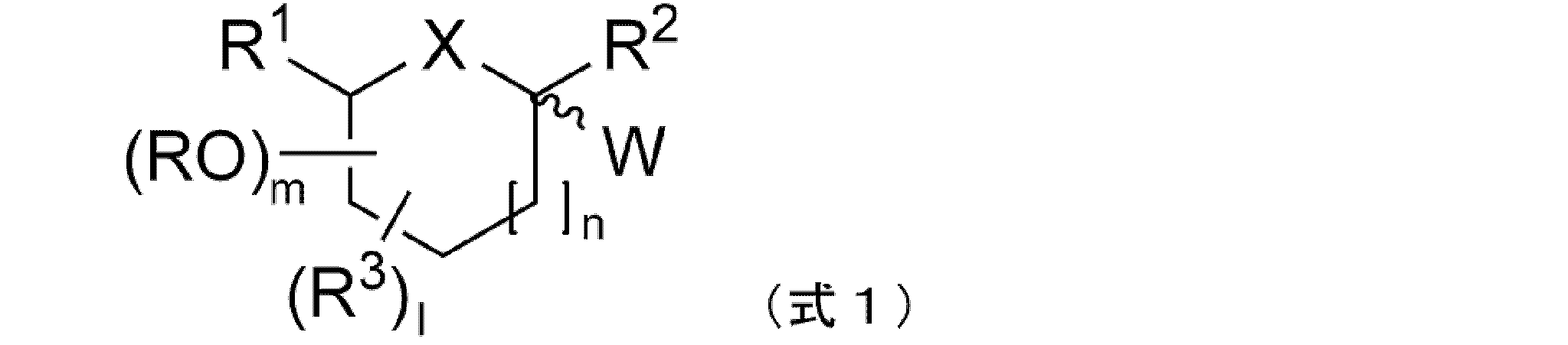
前記式1において、
Xは、O又はS、
nは0、1又は2、
mは0ないし5の整数、
lは0、1又は2
RはH、-CH3、-CH2OH、リン酸基でエステル化されたヒドロキシメチル基、又はR1のリン酸基と共有するリン酸基でエステル化されたヒドロキシメチル基、
R1はH、-CH3、-CH2OH、リン酸基でエステル化されたヒドロキシメチル基、又は、前記Rのリン酸基を共有するリン酸基でエステル化されたヒドロキシメチル基、
R2はH、-CH3又は-CH2OH、
R3はF、-NH2又はN3、及び、
Wは複素環及びその誘導体を表す。
Applications Claiming Priority (2)
| Application Number | Priority Date | Filing Date | Title |
|---|---|---|---|
| JP2013185327A JP2015051946A (ja) | 2013-09-06 | 2013-09-06 | 細胞増殖抑制活性を有する化合物、医薬組成物及びスクリーニング方法 |
| JP2013-185327 | 2013-09-06 |
Publications (1)
| Publication Number | Publication Date |
|---|---|
| WO2015034038A1 true WO2015034038A1 (ja) | 2015-03-12 |
Family
ID=52628499
Family Applications (1)
| Application Number | Title | Priority Date | Filing Date |
|---|---|---|---|
| PCT/JP2014/073456 Ceased WO2015034038A1 (ja) | 2013-09-06 | 2014-09-05 | 細胞増殖抑制活性を有する化合物、医薬組成物及びスクリーニング方法 |
Country Status (2)
| Country | Link |
|---|---|
| JP (1) | JP2015051946A (ja) |
| WO (1) | WO2015034038A1 (ja) |
Citations (2)
| Publication number | Priority date | Publication date | Assignee | Title |
|---|---|---|---|---|
| WO2003013488A2 (en) * | 2001-08-09 | 2003-02-20 | Pangene Corporation | Methods and compositions for inhibiting rad51 |
| CN102125579A (zh) * | 2010-12-22 | 2011-07-20 | 中国科学院广州生物医药与健康研究院 | 5位修饰的2’脱氧胞苷衍生物或其磷酸盐在制药中的新应用 |
Family Cites Families (1)
| Publication number | Priority date | Publication date | Assignee | Title |
|---|---|---|---|---|
| EP1761281A1 (en) * | 2004-06-04 | 2007-03-14 | Pfizer Products Incorporated | Method for treating abnormal cell growth |
-
2013
- 2013-09-06 JP JP2013185327A patent/JP2015051946A/ja active Pending
-
2014
- 2014-09-05 WO PCT/JP2014/073456 patent/WO2015034038A1/ja not_active Ceased
Patent Citations (2)
| Publication number | Priority date | Publication date | Assignee | Title |
|---|---|---|---|---|
| WO2003013488A2 (en) * | 2001-08-09 | 2003-02-20 | Pangene Corporation | Methods and compositions for inhibiting rad51 |
| CN102125579A (zh) * | 2010-12-22 | 2011-07-20 | 中国科学院广州生物医药与健康研究院 | 5位修饰的2’脱氧胞苷衍生物或其磷酸盐在制药中的新应用 |
Non-Patent Citations (3)
| Title |
|---|
| BERES, J. ET AL.: "Synthesis and cytostatic and antiviral activities of 1-beta-D-ribofuranosyl-5- alkylcytosine (5-alkylcytidine) cyclic 3',5'- monophosphates", JOURNAL OF MEDICINAL CHEMISTRY, vol. 32, 1989, pages 224 - 228 * |
| PIVAZYAN, A. D. ET AL.: "Inhibition of poly(ADP- ribose)polymerase activity by nucleoside analogs of thymidine", BIOCHEMICAL PHARMACOLOGY, vol. 44, no. 5, 1992, pages 947 - 953 * |
| RODRIGUEZ, R. ET AL.: "Thymidine selectively enhances growth suppressive effects of camptothecin/irinotecan in MSI+ cells and tumors containing a mutation of MRE11", CLINICAL CANCER RESEARCH, vol. 14, 2008, pages 5476 - 5483 * |
Also Published As
| Publication number | Publication date |
|---|---|
| JP2015051946A (ja) | 2015-03-19 |
Similar Documents
| Publication | Publication Date | Title |
|---|---|---|
| JP6006938B2 (ja) | スパシタビン(cndac)と、デシタビン及びプロカイン等のdnaメチルトランスフェラーゼ阻害剤との組合せ | |
| CA3214918A1 (en) | Thionucleosides as antiviral agents | |
| TW200844108A (en) | Compounds and pharmaceutical compositions for the treatment of liver disorders | |
| AU2018282469A1 (en) | Beta-D-2'-deoxy-2'alpha-fluoro-2'-beta-C-substituted-2-modified-N6-substituted purine nucleotides for HCV treatment | |
| CA2836579A1 (en) | Purine monophosphate prodrugs for treatment of viral infections | |
| JP2006508184A (ja) | Cdk阻害剤及びゲムシタビンを含む医薬組成物 | |
| KR20160002896A (ko) | Hcv를 치료하는데 유용한 중수소화 뉴클레오시드 전구약물 | |
| CA2983769C (en) | Novel use of aryl-quinolin derivatives as inhibitors of vasculogenic mimicry | |
| US11248016B2 (en) | Glycolipids and pharmaceutical compositions thereof for use in therapy | |
| KR102011105B1 (ko) | 고시폴 및 펜포르민을 유효성분으로 포함하는 췌장암 예방 및 치료용 약학적 조성물 | |
| JP6093755B2 (ja) | 急性骨髄性白血病を治療するためのサパシタビンとデシタビンの組合せの投与計画 | |
| TWI557128B (zh) | 組成物在製備用於預防或治療非小細胞肺癌之藥物之用途 | |
| US10342790B2 (en) | Use of ceranib-2 in the treatment of lung cancer | |
| WO2015034038A1 (ja) | 細胞増殖抑制活性を有する化合物、医薬組成物及びスクリーニング方法 | |
| CN117881403A (zh) | 作为抗病毒剂的硫代核苷 | |
| CN106573923B (zh) | 苯氨基嘧啶衍生化合物,用于生产其的方法,所述化合物用于治疗癌症的用途和治疗方法 | |
| US8642572B2 (en) | Cytidine derivative-containing antitumor agent for continuous intravenous administration | |
| WO2023170413A1 (en) | Inhibitors of eif4a | |
| AU2009230499B2 (en) | Anti-tumor agent comprising cytidine derivative and carboplatin |
Legal Events
| Date | Code | Title | Description |
|---|---|---|---|
| 121 | Ep: the epo has been informed by wipo that ep was designated in this application |
Ref document number: 14843017 Country of ref document: EP Kind code of ref document: A1 |
|
| NENP | Non-entry into the national phase |
Ref country code: DE |
|
| 122 | Ep: pct application non-entry in european phase |
Ref document number: 14843017 Country of ref document: EP Kind code of ref document: A1 |