WO2014199746A1 - 吸着材及びそれを用いた分析システム - Google Patents
吸着材及びそれを用いた分析システム Download PDFInfo
- Publication number
- WO2014199746A1 WO2014199746A1 PCT/JP2014/062237 JP2014062237W WO2014199746A1 WO 2014199746 A1 WO2014199746 A1 WO 2014199746A1 JP 2014062237 W JP2014062237 W JP 2014062237W WO 2014199746 A1 WO2014199746 A1 WO 2014199746A1
- Authority
- WO
- WIPO (PCT)
- Prior art keywords
- group
- adsorbent
- phase extraction
- solute
- side chain
- Prior art date
- Legal status (The legal status is an assumption and is not a legal conclusion. Google has not performed a legal analysis and makes no representation as to the accuracy of the status listed.)
- Ceased
Links
Images

Classifications
-
- B—PERFORMING OPERATIONS; TRANSPORTING
- B01—PHYSICAL OR CHEMICAL PROCESSES OR APPARATUS IN GENERAL
- B01J—CHEMICAL OR PHYSICAL PROCESSES, e.g. CATALYSIS OR COLLOID CHEMISTRY; THEIR RELEVANT APPARATUS
- B01J20/00—Solid sorbent compositions or filter aid compositions; Sorbents for chromatography; Processes for preparing, regenerating or reactivating thereof
- B01J20/281—Sorbents specially adapted for preparative, analytical or investigative chromatography
-
- B—PERFORMING OPERATIONS; TRANSPORTING
- B01—PHYSICAL OR CHEMICAL PROCESSES OR APPARATUS IN GENERAL
- B01D—SEPARATION
- B01D15/00—Separating processes involving the treatment of liquids with solid sorbents; Apparatus therefor
- B01D15/08—Selective adsorption, e.g. chromatography
-
- B—PERFORMING OPERATIONS; TRANSPORTING
- B01—PHYSICAL OR CHEMICAL PROCESSES OR APPARATUS IN GENERAL
- B01J—CHEMICAL OR PHYSICAL PROCESSES, e.g. CATALYSIS OR COLLOID CHEMISTRY; THEIR RELEVANT APPARATUS
- B01J20/00—Solid sorbent compositions or filter aid compositions; Sorbents for chromatography; Processes for preparing, regenerating or reactivating thereof
- B01J20/22—Solid sorbent compositions or filter aid compositions; Sorbents for chromatography; Processes for preparing, regenerating or reactivating thereof comprising organic material
- B01J20/26—Synthetic macromolecular compounds
- B01J20/264—Synthetic macromolecular compounds derived from different types of monomers, e.g. linear or branched copolymers, block copolymers, graft copolymers
-
- B—PERFORMING OPERATIONS; TRANSPORTING
- B01—PHYSICAL OR CHEMICAL PROCESSES OR APPARATUS IN GENERAL
- B01J—CHEMICAL OR PHYSICAL PROCESSES, e.g. CATALYSIS OR COLLOID CHEMISTRY; THEIR RELEVANT APPARATUS
- B01J20/00—Solid sorbent compositions or filter aid compositions; Sorbents for chromatography; Processes for preparing, regenerating or reactivating thereof
- B01J20/28—Solid sorbent compositions or filter aid compositions; Sorbents for chromatography; Processes for preparing, regenerating or reactivating thereof characterised by their form or physical properties
-
- B—PERFORMING OPERATIONS; TRANSPORTING
- B01—PHYSICAL OR CHEMICAL PROCESSES OR APPARATUS IN GENERAL
- B01J—CHEMICAL OR PHYSICAL PROCESSES, e.g. CATALYSIS OR COLLOID CHEMISTRY; THEIR RELEVANT APPARATUS
- B01J20/00—Solid sorbent compositions or filter aid compositions; Sorbents for chromatography; Processes for preparing, regenerating or reactivating thereof
- B01J20/28—Solid sorbent compositions or filter aid compositions; Sorbents for chromatography; Processes for preparing, regenerating or reactivating thereof characterised by their form or physical properties
- B01J20/28014—Solid sorbent compositions or filter aid compositions; Sorbents for chromatography; Processes for preparing, regenerating or reactivating thereof characterised by their form or physical properties characterised by their form
- B01J20/28016—Particle form
- B01J20/28019—Spherical, ellipsoidal or cylindrical
-
- B—PERFORMING OPERATIONS; TRANSPORTING
- B01—PHYSICAL OR CHEMICAL PROCESSES OR APPARATUS IN GENERAL
- B01J—CHEMICAL OR PHYSICAL PROCESSES, e.g. CATALYSIS OR COLLOID CHEMISTRY; THEIR RELEVANT APPARATUS
- B01J20/00—Solid sorbent compositions or filter aid compositions; Sorbents for chromatography; Processes for preparing, regenerating or reactivating thereof
- B01J20/28—Solid sorbent compositions or filter aid compositions; Sorbents for chromatography; Processes for preparing, regenerating or reactivating thereof characterised by their form or physical properties
- B01J20/28014—Solid sorbent compositions or filter aid compositions; Sorbents for chromatography; Processes for preparing, regenerating or reactivating thereof characterised by their form or physical properties characterised by their form
- B01J20/28042—Shaped bodies; Monolithic structures
-
- B—PERFORMING OPERATIONS; TRANSPORTING
- B01—PHYSICAL OR CHEMICAL PROCESSES OR APPARATUS IN GENERAL
- B01J—CHEMICAL OR PHYSICAL PROCESSES, e.g. CATALYSIS OR COLLOID CHEMISTRY; THEIR RELEVANT APPARATUS
- B01J20/00—Solid sorbent compositions or filter aid compositions; Sorbents for chromatography; Processes for preparing, regenerating or reactivating thereof
- B01J20/281—Sorbents specially adapted for preparative, analytical or investigative chromatography
- B01J20/286—Phases chemically bonded to a substrate, e.g. to silica or to polymers
- B01J20/288—Polar phases
-
- B—PERFORMING OPERATIONS; TRANSPORTING
- B01—PHYSICAL OR CHEMICAL PROCESSES OR APPARATUS IN GENERAL
- B01J—CHEMICAL OR PHYSICAL PROCESSES, e.g. CATALYSIS OR COLLOID CHEMISTRY; THEIR RELEVANT APPARATUS
- B01J20/00—Solid sorbent compositions or filter aid compositions; Sorbents for chromatography; Processes for preparing, regenerating or reactivating thereof
- B01J20/30—Processes for preparing, regenerating, or reactivating
- B01J20/32—Impregnating or coating ; Solid sorbent compositions obtained from processes involving impregnating or coating
- B01J20/3202—Impregnating or coating ; Solid sorbent compositions obtained from processes involving impregnating or coating characterised by the carrier, support or substrate used for impregnation or coating
- B01J20/3206—Organic carriers, supports or substrates
- B01J20/3208—Polymeric carriers, supports or substrates
- B01J20/321—Polymeric carriers, supports or substrates consisting of a polymer obtained by reactions involving only carbon to carbon unsaturated bonds
-
- B—PERFORMING OPERATIONS; TRANSPORTING
- B01—PHYSICAL OR CHEMICAL PROCESSES OR APPARATUS IN GENERAL
- B01J—CHEMICAL OR PHYSICAL PROCESSES, e.g. CATALYSIS OR COLLOID CHEMISTRY; THEIR RELEVANT APPARATUS
- B01J20/00—Solid sorbent compositions or filter aid compositions; Sorbents for chromatography; Processes for preparing, regenerating or reactivating thereof
- B01J20/30—Processes for preparing, regenerating, or reactivating
- B01J20/32—Impregnating or coating ; Solid sorbent compositions obtained from processes involving impregnating or coating
- B01J20/3202—Impregnating or coating ; Solid sorbent compositions obtained from processes involving impregnating or coating characterised by the carrier, support or substrate used for impregnation or coating
- B01J20/3206—Organic carriers, supports or substrates
- B01J20/3208—Polymeric carriers, supports or substrates
- B01J20/3212—Polymeric carriers, supports or substrates consisting of a polymer obtained by reactions otherwise than involving only carbon to carbon unsaturated bonds
-
- B—PERFORMING OPERATIONS; TRANSPORTING
- B01—PHYSICAL OR CHEMICAL PROCESSES OR APPARATUS IN GENERAL
- B01J—CHEMICAL OR PHYSICAL PROCESSES, e.g. CATALYSIS OR COLLOID CHEMISTRY; THEIR RELEVANT APPARATUS
- B01J20/00—Solid sorbent compositions or filter aid compositions; Sorbents for chromatography; Processes for preparing, regenerating or reactivating thereof
- B01J20/30—Processes for preparing, regenerating, or reactivating
- B01J20/32—Impregnating or coating ; Solid sorbent compositions obtained from processes involving impregnating or coating
- B01J20/3231—Impregnating or coating ; Solid sorbent compositions obtained from processes involving impregnating or coating characterised by the coating or impregnating layer
- B01J20/3242—Layers with a functional group, e.g. an affinity material, a ligand, a reactant or a complexing group
- B01J20/3244—Non-macromolecular compounds
- B01J20/3246—Non-macromolecular compounds having a well defined chemical structure
- B01J20/3248—Non-macromolecular compounds having a well defined chemical structure the functional group or the linking, spacer or anchoring group as a whole comprising at least one type of heteroatom selected from a nitrogen, oxygen or sulfur, these atoms not being part of the carrier as such
-
- B—PERFORMING OPERATIONS; TRANSPORTING
- B01—PHYSICAL OR CHEMICAL PROCESSES OR APPARATUS IN GENERAL
- B01J—CHEMICAL OR PHYSICAL PROCESSES, e.g. CATALYSIS OR COLLOID CHEMISTRY; THEIR RELEVANT APPARATUS
- B01J20/00—Solid sorbent compositions or filter aid compositions; Sorbents for chromatography; Processes for preparing, regenerating or reactivating thereof
- B01J20/30—Processes for preparing, regenerating, or reactivating
- B01J20/32—Impregnating or coating ; Solid sorbent compositions obtained from processes involving impregnating or coating
- B01J20/3231—Impregnating or coating ; Solid sorbent compositions obtained from processes involving impregnating or coating characterised by the coating or impregnating layer
- B01J20/3242—Layers with a functional group, e.g. an affinity material, a ligand, a reactant or a complexing group
- B01J20/3244—Non-macromolecular compounds
- B01J20/3246—Non-macromolecular compounds having a well defined chemical structure
- B01J20/3248—Non-macromolecular compounds having a well defined chemical structure the functional group or the linking, spacer or anchoring group as a whole comprising at least one type of heteroatom selected from a nitrogen, oxygen or sulfur, these atoms not being part of the carrier as such
- B01J20/3253—Non-macromolecular compounds having a well defined chemical structure the functional group or the linking, spacer or anchoring group as a whole comprising at least one type of heteroatom selected from a nitrogen, oxygen or sulfur, these atoms not being part of the carrier as such comprising a cyclic structure not containing any of the heteroatoms nitrogen, oxygen or sulfur, e.g. aromatic structures
-
- G—PHYSICS
- G01—MEASURING; TESTING
- G01N—INVESTIGATING OR ANALYSING MATERIALS BY DETERMINING THEIR CHEMICAL OR PHYSICAL PROPERTIES
- G01N30/00—Investigating or analysing materials by separation into components using adsorption, absorption or similar phenomena or using ion-exchange, e.g. chromatography or field flow fractionation
- G01N30/02—Column chromatography
- G01N30/50—Conditioning of the sorbent material or stationary liquid
- G01N30/52—Physical parameters
-
- G—PHYSICS
- G01—MEASURING; TESTING
- G01N—INVESTIGATING OR ANALYSING MATERIALS BY DETERMINING THEIR CHEMICAL OR PHYSICAL PROPERTIES
- G01N30/00—Investigating or analysing materials by separation into components using adsorption, absorption or similar phenomena or using ion-exchange, e.g. chromatography or field flow fractionation
- G01N30/02—Column chromatography
- G01N30/88—Integrated analysis systems specially adapted therefor, not covered by a single one of the groups G01N30/04 - G01N30/86
-
- B—PERFORMING OPERATIONS; TRANSPORTING
- B01—PHYSICAL OR CHEMICAL PROCESSES OR APPARATUS IN GENERAL
- B01J—CHEMICAL OR PHYSICAL PROCESSES, e.g. CATALYSIS OR COLLOID CHEMISTRY; THEIR RELEVANT APPARATUS
- B01J2220/00—Aspects relating to sorbent materials
- B01J2220/50—Aspects relating to the use of sorbent or filter aid materials
- B01J2220/54—Sorbents specially adapted for analytical or investigative chromatography
-
- B—PERFORMING OPERATIONS; TRANSPORTING
- B01—PHYSICAL OR CHEMICAL PROCESSES OR APPARATUS IN GENERAL
- B01J—CHEMICAL OR PHYSICAL PROCESSES, e.g. CATALYSIS OR COLLOID CHEMISTRY; THEIR RELEVANT APPARATUS
- B01J2220/00—Aspects relating to sorbent materials
- B01J2220/80—Aspects related to sorbents specially adapted for preparative, analytical or investigative chromatography
- B01J2220/82—Shaped bodies, e.g. monoliths, plugs, tubes, continuous beds
-
- G—PHYSICS
- G01—MEASURING; TESTING
- G01N—INVESTIGATING OR ANALYSING MATERIALS BY DETERMINING THEIR CHEMICAL OR PHYSICAL PROPERTIES
- G01N30/00—Investigating or analysing materials by separation into components using adsorption, absorption or similar phenomena or using ion-exchange, e.g. chromatography or field flow fractionation
- G01N2030/009—Extraction
-
- G—PHYSICS
- G01—MEASURING; TESTING
- G01N—INVESTIGATING OR ANALYSING MATERIALS BY DETERMINING THEIR CHEMICAL OR PHYSICAL PROPERTIES
- G01N30/00—Investigating or analysing materials by separation into components using adsorption, absorption or similar phenomena or using ion-exchange, e.g. chromatography or field flow fractionation
- G01N30/02—Column chromatography
- G01N2030/022—Column chromatography characterised by the kind of separation mechanism
- G01N2030/027—Liquid chromatography
-
- G—PHYSICS
- G01—MEASURING; TESTING
- G01N—INVESTIGATING OR ANALYSING MATERIALS BY DETERMINING THEIR CHEMICAL OR PHYSICAL PROPERTIES
- G01N30/00—Investigating or analysing materials by separation into components using adsorption, absorption or similar phenomena or using ion-exchange, e.g. chromatography or field flow fractionation
- G01N30/02—Column chromatography
- G01N30/62—Detectors specially adapted therefor
- G01N30/72—Mass spectrometers
Definitions
- the present invention relates to an adsorbent and an analysis system using the adsorbent.
- TDM therapeutic drug monitoring
- Non-patent Document 1 As a method for measuring the blood concentration of TDM drugs, immunoassay using antibodies against the drug to be measured, separation analysis using mass spectrometer (Mass Spectrometry: MS), high performance liquid chromatography (High Performance Liquid Chromatography: HPLC), etc. The law is mainly used. As a technique for compensating for sensitivity reduction such as MS analysis, a sample pretreatment method using solid phase extraction (SPE) is proposed in (Non-patent Document 1).
- SPE solid phase extraction
- solid phase extraction is a useful separation technique, in addition to the pretreatment in TDM described above, analysis of trace organic substances, for example, water quality It is a useful technique for analysis of trace components such as soil and soil, quantitative analysis of trace additives, poisons, pesticides, etc., environmental pollution, pharmaceutical development, food nutrition evaluation, functional food nutrition evaluation, drinking water purity evaluation, and biotechnology Used in a wide range of fields, including technology.
- silica particles and porous silica particles surface-modified with hydrophobic octyl (C8) functional group or octadecyl (C18) functional group are known. Yes.
- the ability to retain a solute is reduced due to aggregation of hydrophobic functional groups, and separation by solid phase extraction becomes difficult. For this reason, it is necessary to perform solid phase extraction while the surface of the adsorbent is always kept (conditioned) in a sufficiently solvated state with a polar organic solvent.
- Resin particles having a main chain of styrene-divinylbenzene or methacrylic acid ester are known (Patent Document 1). Resin particles have higher stability against the influence of pH and ionic strength than silica particles, and are high surface area particles, and therefore have a higher solute retention capacity than silica particles. On the other hand, since the surface becomes hydrophobic, a complicated operation such as conditioning with a polar organic solvent is required in the same manner as the surface-modified silica particles. Further, each particle has a problem that the solute retention ability varies depending on the polarity of the solute and the solid phase extraction conditions, and the measurement reliability varies depending on the solid phase extraction conditions.
- an adsorbent comprising a hydrophobic-hydrophilic monomer copolymer in which a hydrophilic monomer such as N-vinylpyrrolidone or vinylpyridine is introduced into a hydrophobic monomer such as divinylbenzene ( It is disclosed in Patent Document 2).
- a hydrophilic monomer such as N-vinylpyrrolidone or vinylpyridine
- a hydrophobic monomer such as divinylbenzene
- the adsorbent contains a hydrophilic molecular structure, the wettability between the polar solvent such as water and the adsorbent is improved, the solvent retention ability by the hydrophilic group is high, and excessive conditioning as described above is not performed. It becomes unnecessary.
- some drugs for example, drugs having a cyclic structure or a large molecular weight
- compounds having a highly polar structure such as drug metabolites cannot be sufficiently retained on the surface of the adsorbent, so that During the introduction and / or washing step of the drug solution, polar solute molecules are unintentionally desorbed and eluted, and the solute recovery rate decreases.
- the recovery rate is lowered, the loss of the sample due to the solid phase extraction is large, and the reliability of the analysis is lost.
- the hydrophilic adsorption site is small and isolated in the copolymer, so that it does not form strong adsorption of molecules due to hydrophilic interaction, and adsorption with highly polar molecules is weak. It is estimated that.
- the hydrophilic side chain functional group contained in the adsorbent has a bulky structure, it is considered that the solute recovery rate decreases due to steric hindrance during the adsorption of the drug.
- adsorbent According to the adsorbent described above (Patent Document 2), conditioning can be simplified by improving the wettability of the adsorbent surface, and solid phase extraction with excellent processability can be performed.
- adsorption due to sufficient hydrophilic interaction between a solute such as a drug and a hydrophilic structure does not occur, and the higher the polarity, the lower the amount of sample recovered by solid phase extraction.
- a molecule that dissolves in water water-soluble molecule
- Drugs that are targets of TDM analysis include substances that are water-soluble molecules, and in order to realize a wider range of drug monitoring, adsorbents that can be used for solid phase extraction with high efficiency are also available for these drugs. Development is strongly required.
- an object of the present invention is to provide an adsorbent capable of high-efficiency and excellent selectivity for water-soluble molecules and an analysis system using the same.
- the present inventors have conducted extensive studies on an adsorbent capable of solid-phase extraction of water-soluble molecules. As a result, an aromatic side in which an electron-donating functional group such as a hydroxy group and a nitro group are directly bonded to one aromatic ring.
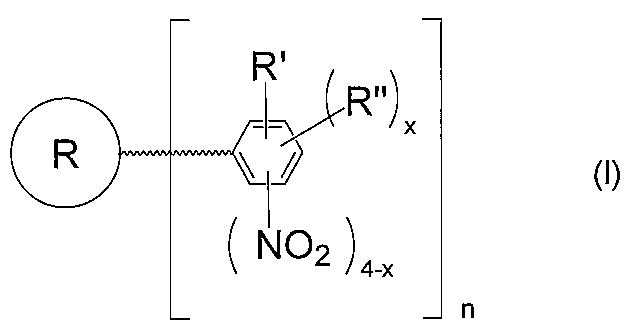
- the present inventors have found that an adsorbent containing a chain functional group enables solid-phase extraction of water-soluble molecules. That is, the adsorbent according to the present invention has the formula I (In Formula I, R is a carrier component, and the portion other than R is a side chain functional group, and R and the benzene ring in the side chain functional group are directly bonded or via one or more atoms.
- R ′ is selected from the group consisting of a hydroxy group, an alkoxy group, an amino group, an alkylamino group, a thiol group and an alkyl sulfide group
- R ′′ is independently a hydroxy group, an alkoxy group, an alkyl group Selected from the group consisting of a group, an amino group, an alkylamino group, a dialkylamino group, a trialkylamino group, a thiol group, an alkylsulfide group and a hydrogen atom
- x is an integer of 0 or more and 3 or less
- n is a carrier component It is the number of the side chain functional groups contained).
- a solute having a wide range of chromatographic polarities including water-soluble solute molecules that could not be recovered by conventional adsorbents, can be obtained. It becomes possible to separate and recover efficiently and selectively. Further, in the analysis system, by performing solid phase extraction using the adsorbent as a pretreatment, it is possible to efficiently analyze solutes such as water-soluble molecules in the specimen. Problems, configurations, and effects other than those described above will be clarified by the following description of embodiments.
- the adsorbent of the present invention includes a structure having an aromatic side chain functional group. By bringing this structure into contact with a specimen having an organic molecule as a solute, one or more kinds of solutes in the specimen can be adsorbed and held.
- the aromatic side chain functional group has an electron donating group such as a hydroxy group and a nitro group which is an electron withdrawing group.
- the electron donating group generally has an effect of increasing the electron density of a benzene ring contained in the side chain functional group.
- a sulfo group, a cyano group, and the like can be considered as candidates for the electron withdrawing group, but the functional group that can achieve the effects of the present invention is a nitro group.
- the nitro group binds to the benzene ring to take various resonance structures, and electrons tend to be biased toward the nitro group.
- the polarization in the molecule is further increased, and this makes the adsorbent suitable for the adsorption of a solute easily soluble in water, that is, a solute having a low logP value described later.
- the adsorbent of the present invention has the formula I
- R is a carrier component.
- the portion other than R is a side chain functional group, and R and the benzene ring in the side chain functional group are directly bonded or bonded via one or more atoms
- R ′ is a hydroxy group.
- x is an integer of 0 or more and 3 or less
- n is the number of side chain functional groups contained in the carrier component.
- the alkyl group in the case of an alkyl group or a functional group containing an alkyl group structure, may be linear or branched and have 1 to 6 carbon atoms. preferable.
- the side chain functional groups can be located on the surface of the structure, inside or both, and the molecular structures of the side chain functional groups may be the same or different.
- the structure is porous, the function of the side chain functional group can be efficiently utilized because the side chain functional group is also located inside the structure.
- the molecular structure of the structure may be the same or different in each structure.
- the molecular weight of the side chain functional group and the structure may have a distribution.
- the carrier component R in the structure is not particularly limited as long as it is a carrier capable of holding a side chain functional group in Formula I, such as inorganic compounds such as silicon oxide and aluminum oxide, and polymers (resins) of organic compounds.
- a side chain functional group in Formula I such as inorganic compounds such as silicon oxide and aluminum oxide, and polymers (resins) of organic compounds.
- the structure of formula I can be formed by functional group modification to a cross-linked polystyrene resin or the like.
- the carrier component and the side chain functional group may be directly bonded or may be bonded via any one or more atoms.
- numerator reactive with a carrier component by a silane coupling process, an addition reaction, etc. is mentioned.
- the support is preferably a porous structure having a large surface area.
- the adsorbent of the present invention comprises a resin structure prepared by copolymerization of a monomer component constituting a carrier capable of holding or forming a side chain functional group and another monomer component.
- a monomer having one or a plurality of functional groups that can cause a copolymerization reaction with the above-mentioned monomer having a side chain functional group is preferably used.
- Specific examples of such monomers include styrene, vinyltoluene, ⁇ -methylstyrene, m-divinylbenzene, p-divinylbenzene, 1,2-diisopropenylbenzene, 1,3-diisopropenylbenzene.
- 1,4-diisopropenylbenzene 1,3-divinylnaphthalene, 1,8-divinylnaphthalene, 1,4-divinylnaphthalene, 1,5-divinylnaphthalene, 2,3-divinylnaphthalene, 2,7-divinyl Naphthalene, 2,6-divinylnaphthalene, 4,4'-divinylbiphenyl, 4,3'-divinylbiphenyl, 4,2'-divinylbiphenyl, 3,2'-divinylbiphenyl, 3,3'-divinylbiphenyl, 2 , 2'-divinylbiphenyl, 2,4-divinylbiphenyl, 1,2-divinyl-3,4-di Tylbenzene, 1,3-divinyl-4,5,8-tributylnaphthalene, 2,2'-divinyl-4-eth
- monomers such as acrylic acid, methacrylic acid, itaconic acid, fumaric acid, glycidyl methacrylate, vinyl pyridine, diethylaminoethyl acrylate, N-methyl methacrylamide, acrylonitrile, and the like are exemplified, but the invention is not limited thereto.
- These can be selected as appropriate by combining any one or a plurality of types according to the structure of the adsorbent and the desired physical property value.
- an adsorbent suitable for solid phase extraction As a result, it is possible to provide an adsorbent suitable for solid phase extraction. Further, a stronger crosslinked network structure is formed in the resin, and an adsorbent excellent in mechanical strength and thermal stability can be obtained. Further, swelling due to a solvent or the like can be suppressed, and deformation, modification, softening, dissolution, or the like of the adsorbent can be suppressed.
- the above resin structure can be formed by a known copolymerization reaction. Examples include random polymerization, alternating copolymerization, block copolymerization, and graft polymerization. Among the above polymerization methods, random polymerization and alternating copolymerization in which the polymerization reaction is easily controlled are particularly preferably used. Moreover, formation of a side chain functional group can be performed by a well-known method. For example, K. According to the method shown in Technol., 20 (2), 227-243 (1997), there is a method of forming a copolymer having a phenol side chain, followed by nitration in nitric acid or a mixed acid of sulfuric acid and nitric acid. .
- a side chain functional group having a nitrophenol structure which is one of the constitutions of the present invention.
- a part of a cross-linked polystyrene is nitrated in a mixed acid of sulfuric acid-nitric acid, followed by reduction in a hydrochloric acid-iron catalyst to form an aniline structure in the side chain, and further in the presence of acetic anhydride.
- acetylation is followed by nitration in nitric acid or a mixed acid of sulfuric acid and nitric acid to deprotect the acetyl group by hydrolysis.
- a side chain functional group having a nitroaniline structure which is one of the constitutions of the present invention. Any of them may contain a plurality of structural isomers and structures having different numbers of substituents, and the structure can be controlled by the treatment method and conditions.
- the number of nitro groups contained in the side chain functional group of formula I and the method of introducing the nitro group are not particularly limited and can be appropriately adjusted depending on the type of solute.
- the resin structure can be prepared using a known polymerization method.
- examples include suspension polymerization, emulsion polymerization, emulsion polymerization, spray drying method, pulverization, crushing, bulk polymerization, solution polymerization and the like.
- a method that can obtain uniform spherical particles is more preferable, and suspension polymerization and emulsion polymerization are more preferable.
- a process involving ring-opening reaction, dehydration condensation, intermolecular bonding, and other intramolecular structure changes may be included, and is not particularly limited in the present invention.
- the copolymerization ratio between the monomer having a side chain functional group according to the present invention and another monomer varies depending on the type of monomer and is not particularly limited, but the proportion of the monomer having a side chain functional group is too small. Since the effects of the present invention cannot be obtained, these points are set appropriately. For example, it is preferable that a repeating unit derived from a monomer component having a side chain functional group occupies 5 mol% or more, particularly 10 mol% or more in the copolymer.
- Adsorption in the present invention refers to a state in which a solute and an adsorbent are reversibly bound by interaction between molecules.
- Intermolecular interactions mainly include hydrogen bonds, dipole-dipole interactions, ion-dipole interactions, dipole-induced dipole interactions, and intermolecular forces that involve polar structures such as London dispersion forces. Point to.
- Solutes composed of water-soluble molecules contain many atoms with high electronegativity, and molecules with higher water solubility have higher intramolecular polarization.
- the ability to adsorb to water-soluble molecules is exhibited by introducing a molecular structure that has a high electronegativity like water-soluble molecules and matches the polarization structure of water-soluble molecules. That is, by introducing an aromatic side chain functional group in which an electron donating functional group and a nitro group are directly bonded to the molecular structure of the adsorbent, a side chain molecular structure suitable for adsorption has been constructed. .
- the polarity of the solute in the present invention is defined as follows based on the octanol / water partition coefficient (log P).
- a water-soluble solute molecule means a molecule having a log P value of around 0 or minus.
- the log P value numerically indicates the polarity of the solute, and any of a molecular structure calculation value and an actual measurement value can be applied. Even a molecule having a log P value of 0 or more may exhibit the same behavior as a water-soluble molecule for a molecule having a large polarization locally.
- solute molecules with high polarity exhibit solid-phase extraction performance.
- the target of application of the adsorbent of the present invention is not limited by the range of log P values of solute molecules, but exhibits solid-phase extraction performance for solute molecules having a log P value in the range of approximately -3.0 to 3.0.
- the solute targeted by the adsorbent of the present invention is a substance that is desired to be recovered by solid phase extraction, and is not particularly limited.
- Suitable target solutes are water-soluble organic molecules as described above, specifically drugs, drugs, antibacterial agents, antiviral agents, anticancer agents, drugs, insecticides, herbicides, poisons, biomolecules, Protein, vitamins, hormones, polypeptides, polynucleotides, lipids, carbohydrates, contaminants, metabolic drugs, metabolite degradation products, antiepileptics, immunosuppressants, antioxidants, anti-inflammatory agents, blood circulation promoters, whitening Pharmacological effects such as agents, anti-skinning agents, anti-aging agents, hair growth-promoting agents, moisturizers, vaccine preparations, etc., and dyes / fluorescent dyes, chelating agents, stabilizers, preservatives, etc.
- a wide variety of substances such as substances that do not have
- the adsorbent of the present invention preferably has a spherical or massive particle size.
- the 50% average particle diameter of the adsorbent particles is preferably within the range of 0.5 ⁇ m to 100 ⁇ m. If the particle size is too large, solution outflow occurs before solute adsorption occurs in the process of solution introduction, and the effective surface area of the adsorbent is small, so that sufficient solid-phase extraction performance cannot be exhibited. On the other hand, if the particle size is too small, the pressure loss in the flow path is significantly increased, so that the solid-phase extraction efficiency is impaired.
- the 50% average particle diameter of the particles is more preferably 1 ⁇ m to 90 ⁇ m, and still more preferably 10 ⁇ m to 80 ⁇ m.
- the solid-phase extraction performance tends to be insufficient.
- the extraction efficiency is further improved by controlling the particle size distribution of the adsorbent particles and lowering the content of particles of 100 ⁇ m or more.
- particle distribution conditions are more desirable in which the 50% average particle size of the particles is 0.5 ⁇ m to 80 ⁇ m and the 80% average particle size is 0.5 ⁇ m to 100 ⁇ m.
- the solution penetrates into the particles, the effective surface area of the adsorbent involved in the adsorption is increased, and solute adsorption with higher efficiency is possible.
- Optimization of the particle distribution conditions is performed, for example, by adjusting the polymerization conditions so that the particle size of the particles is within a predetermined range, or by applying a known classification technique (for example, classification sieve, wet classification, dry classification, etc.).
- a known classification technique for example, classification sieve, wet classification, dry classification, etc.
- the adsorbent of the present invention only needs to have a specific side chain functional group, and needless to say, it exhibits solid-phase extraction performance even when the adsorbent has a shape other than particles.
- a porous bulk polymer prepared by bulk polymerization or solution polymerization excellent solid-phase extraction performance is exhibited.
- An example of such a porous bulk polymer is a monolithic polymer porous structure that is integrated with a column to reduce pressure loss during fluid permeation. Although the structure requires dimensional control in accordance with the column shape, the continuity of the pores is high, the size thereof is not biased, and there is no need to consider voids or the like as in particle packing.
- the adsorbent is easier to handle than the particulate adsorbent.
- the adsorbent by making the adsorbent a film-like polymer porous membrane structure by bulk polymerization, solution polymerization, or solid phase polymerization, it can be applied to a carrier such as thin layer chromatography or a solid phase adsorption film for simple testing. Conceivable.
- the adsorbent of the present invention can exhibit adsorption performance by various shapes and forms as mentioned above.
- FTIR Fourier transform infrared spectroscopy
- solid phase 13 C nuclear magnetic resonance method solid phase 13 C nuclear magnetic resonance method
- elemental analysis by combustion method
- the sample to be measured is not particularly limited, but is usually a solution.
- the adsorbent of the present invention has a complex component analysis (analysis of trace components such as water quality and soil, quantitative analysis of trace additives, poisons, agricultural chemicals, environmental pollution assessment, pharmaceutical development, food nutrition assessment, functional food It is suitable for isolating a solute as a substance to be measured from a specimen for nutritional evaluation, drinking water purity evaluation, TDM analysis, and the like.
- the sample include a biological substrate containing a target solute such as a drug.
- the specimen includes an environmental sample such as drinking water or contaminated water. Specific examples of specimens include plasma, serum, blood, urine, spinal fluid, synovial fluid, biological tissue extract, aqueous solution, ground water, surface water, soil extract, cosmetics, food substance, or food substance extract. Can be mentioned.
- Solid phase extraction for isolating a solute as a measurement object from a specimen includes a step of bringing a solution containing solute molecules into contact with an adsorbent and selectively adsorbing and holding the solute. More specifically, the four adsorbents are washed with four general steps, that is, a step of conditioning an adsorbent using a solvent that enhances surface characteristics, a step of introducing a specimen, and a washing solvent (water or organic solvent). And a step of desorbing the solute with an elution solvent (water or an organic solvent).
- the kind of the solvent, the washing solvent and the elution solvent used for conditioning is not particularly limited, but a polar solvent is more preferable from the viewpoint of maintaining the hydrophilicity of the surface.
- a polar solvent is more preferable from the viewpoint of maintaining the hydrophilicity of the surface.
- water-containing solvents such as polar organic solvents such as sulfoxide or mixed solvents of these polar organic solvents and water.
- the adsorbent surface can be adjusted by washing the adsorbent with a polar organic solvent and then washing the adsorbent with water.
- a preferred example of conditioning is performed by filling a support such as a column with an adsorbent, first treating with methanol, and then treating with water (eg, 1 ml each). Methanol moderately swells the adsorbent and increases the effective surface area. Water treatment hydrates the surface while removing excess methanol. Thereby, excess solvent is removed and the adsorbent can be kept in a completely hydrated state.
- the specimen that is the target of solid phase extraction is a low-viscosity solution such as a drug solution, whole blood component or the like from which serum or protein components have been removed, it can be introduced into the adsorbent without any particular treatment.
- a high-viscosity solution such as, it is desirable to introduce it as a dilute aqueous solution (at least 1: 1 dilution).
- plasma since plasma has high viscosity, it may inhibit adsorption of adsorbents and solutes.
- proteins in plasma components may be denatured and precipitated by organic solvents to contaminate the adsorbent surface, it is desirable to avoid dilution with organic solvents.
- it is desirable to adjust the flow rate of the sample solution so as to ensure a time suitable for adsorbing and holding the solute.
- the solute eg, drug
- the solute can be present at a level of 1 ng to 10 ⁇ g per mL of sample.
- the amount of the solid phase extraction unit containing the adsorbent depends on the volume of the adsorbent, but about 1 ⁇ L to 100 ⁇ L of the sample is obtained on the solid phase extraction plate, and about 100 ⁇ L to 1 mL is obtained on the solid phase extraction column.
- a specimen can be introduced.
- the adsorbent adsorbed with the solute can be washed with water and an organic solvent. More preferably, it is washed with water.
- An arbitrary amount of solvent can be used for washing, but preferably about 50 to 500 ⁇ L of solvent is used.
- impurities such as salts and water-soluble substrates and proteinaceous substances that are not measured and may exist in the specimen are removed.
- a sample contains a substrate component or an organic impurity that adheres to the surface of the adsorbent and is insoluble in water, it can be washed and removed using an organic solvent. At this time, it is preferable to adjust the cleaning conditions so as not to destroy the adsorption between the adsorbent surface and the solute.
- a large number of conventional silica adsorbents and polymer adsorbents are used for separation, there is a possibility that many solutes to be measured are removed from the adsorbent in the cleaning process.
- the eluent is used to desorb the solute from the adsorbent surface.
- Desorption occurs when the elution solvent reaches and contacts the adsorption interface between the solute and the adsorbent, and can be performed by passing a certain amount of the elution solvent.
- exemplary elution solvents include water, polar organic solvents, and aqueous solutions.
- the polar organic solvent comprises at least about 80% to 90% by weight of organic components.
- Typical polar organic solvents include, but are not limited to, alcohol solutions such as methanol, ethanol, 2-propanol, acetonitrile, and the like.
- Trifluoroacetic acid or the like can also be used as an elution solvent and is known to be useful for efficiently destroying the polar interaction between the solute and the adsorbent.
- an arbitrary amount of solvent can be used for elution, for example, in the case of a solid phase extraction plate, approximately 50 ⁇ L to 200 ⁇ L of solvent is preferably used. By using the solvent, 90% to almost the entire amount of the solute retained in the adsorbent can be recovered.
- the solute can be desorbed from the adsorbent surface without using a polar organic solvent. That is, by passing an aqueous solution in which a basic salt or compound is dissolved or dispersed as an elution solvent, the electron density of the aromatic side chain functional group changes, and as a result, the coloration and molecular structure of the adsorbent change. Newly found. For example, in the adsorbent having a nitrophenol structure as a side chain functional group, the color changed from yellow (yellowish brown) to red, and significant changes were also confirmed in the specific surface area and pore diameter.
- the adsorption material which has the nitrophenol structure which showed red by the said process does not show the adsorption performance of a water-soluble solute unlike the adsorption material before a process.
- the adsorption performance of the adsorbent having a side chain functional group was changed by the influence of the basic elution solvent.
- By passing an acidic solvent through the red adsorbent it becomes a yellow (yellowish brown) adsorbent again, and the adsorption performance can be restored to the same level as before passing through the basic elution solvent. It is.
- the degree of basicity of the elution solvent suitable for desorption varies depending on the type of solute and the structure of the adsorbent, it is desirable to use a basic elution solvent having a hydrogen ion index (pH) greater than 8.0, more desirably. Has a pH of 9.0 or higher. If the pH of the basic elution solvent becomes too high, the solute and the adsorbent may be denatured. Therefore, it is desirable to adjust the pH within a range that does not affect these. By using the solvent, 90% to almost the entire amount of the solute retained in the adsorbent can be recovered.
- pH hydrogen ion index
- solute desorption method for example, a method by heating, vibration, light irradiation or the like can be mentioned, and it can be appropriately used depending on the structure and physical properties of the side chain functional group.
- the method using the polar organic solvent described above and the method based on pH change are desirable, but the desorption method can be used without any particular limitation.
- the adsorbent has a function of showing a color change due to external stimulation such as heating, vibration, light irradiation, etc.
- the adsorption-desorption monitoring is further performed. It can be performed simply.
- an analysis system can be constructed by combining solid-phase extraction with the adsorbent of the present invention.
- This analysis system includes an adsorbent of the present invention, a solid phase extraction unit for selectively adsorbing a solute in a specimen to the adsorbent, and a solute released from the adsorbent for analysis. And an analyzer.
- the pretreatment of the specimen containing impurities can be performed using the adsorbent of the present invention.
- the elution solution from the part can be collected, and the identity of the solute adsorbed and held by the adsorbent can be determined. Moreover, even when a predetermined solute is present in a very small amount ( ⁇ 1 ng) in the specimen, the eluted solution can be evaporated and re-dissolved, and introduced into the LC or LC / MS mobile phase for analysis. . In the microanalysis, it is important to keep the solute loss due to pretreatment as low as possible. Although depending on the sensitivity and content of the detection target, the solute loss before and after pretreatment is preferably 20% or less, more preferably 10% or less, and even more preferably 5% or less, based on the total amount of solute. .
- FIG. 1 shows an embodiment of a solid phase extraction cartridge
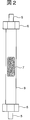
- FIG. 2 shows an embodiment of a solid phase extraction column.
- the solid-phase extraction cartridge of FIG. 1 is roughly composed of a cartridge container upper part 1, an adsorbent support filter 2, an adsorbent filling part 3, and a cartridge container lower part 4. The color change of the adsorbent in the adsorbent filling unit 3 is visible from the outside.
- an embodiment of the solid-phase extraction column shown in FIG. 2 includes a flow path 5 for introducing and eluting a sample, a column-integrated hand-tightening nut, an adsorbent visualizing window 7, and an adsorbent-filled column 8. .
- the color change of the adsorbent filled in the adsorbent packed column 8 is visible through the adsorbent visualizing window 7.
- adsorbent filling portion 3 and the adsorbent visualizing window 7 are not particularly limited in shape, structure, and material as long as the adsorbent visibility is ensured. For the purpose of enhancing visibility, it is desirable to use a translucent or transparent material.
- the color change can also be detected by techniques using spectroscopy, such as transmitted light, reflected light, and absorption in the ultraviolet, visible, and infrared regions. It can be selected appropriately according to the system configuration.
- the solvent in the washing and elution processes can be provided with a gradient of hydrogen ion concentration as needed, or adapted to special separation modes such as linear gradient elution and stepwise elution. The detachment state of the solute can be confirmed by coloration.
- the advantage of the analysis system of the present invention is that the eluted solution can be directly passed through an analyzer for solute identification. This is a feature that could not be realized by the prior art adsorbents, and because an adsorbent that was compatible with a water-soluble solute was obtained by introducing a specific aromatic side chain functional group.
- adsorbent due to the ion suppression effect of the adsorbent in MS analysis and the polarity dependence of the solute, adsorption and retention of a wide range of solutes and separation and recovery by solid phase extraction were difficult. That is, due to the ion suppression effect, unnecessary components are contained in the eluted solution, and the solute identification operation becomes extremely difficult.
- LC-UV liquid phase chromatography / ultraviolet spectroscopic analyzer
- LC-MS mass spectrometer by liquid phase chromatography
- FIA-MS mass spectrometer
- the adsorbent has the function of showing a color change in the adsorption-desorption process
- the color change can be visually recognized from the outside in the solid-phase extraction unit, thereby monitoring the adsorption-desorption. Can be performed more easily.
- the particle size of the adsorbent particles was measured using a Nikkiso Co., Ltd. Microtrac particle size distribution analyzer (Microtrac FRA, laser diffraction scattering type). Measurement range 0.1 ⁇ m to 700 ⁇ m, 50% median particle size (accumulated curve is obtained by taking the total volume of the powder population as 100%, and the particle diameter at the point where the cumulative curve becomes 50%) is the particle size of the adsorbent particles It was.
- Infrared spectroscopic measurement of adsorbent particles is performed using a Fourier transform infrared spectrometer (Spectrum 100, Attenuated Total Reflection: ATR) manufactured by PerkinElmer Co., Ltd. went.
- IR Infrared
- ATR Attenuated Total Reflection
- the specific surface area and pore distribution measurement were performed using a specific surface area measuring device (AUTOSORB-1, multipoint method (40-point measurement) measurement) manufactured by QUANTACHROME.
- the pretreatment of the measurement sample was performed at 120 ° C. for 10 minutes (under reduced pressure).
- the specific surface area was measured from the BET plot slope and intercept using the BET (Brunauer, Emmett, Teller) adsorption isotherm.
- the pore diameter was measured by calculating the pore distribution from the amount of change in the cumulative pore volume using the BJH (Barrett, Joyner, Halenda) method, and the peak diameter of the distribution was taken as the pore diameter.
- the copolymerization ratio of adsorbent particles is determined by quantifying the element ratio of carbon (C), hydrogen (H), nitrogen (N) and oxygen (O) by a combustion method.
- the copolymerization ratio was determined from the composition ratio of the particles.
- the CHN elemental analysis was performed using an element analyzer (MT-5) manufactured by Yanagimoto Seisakusho, and the O elemental analysis was performed using an element analyzer (JM10 type) manufactured by J Science Lab.
- adsorbent was filled by the following method. 4 mg of the adsorbent to be evaluated was slurried in methanol (100 ⁇ L to 200 ⁇ L) and filled in a solid phase extraction plate (OASIS (registered trademark) ⁇ -Elution plate manufactured by Waters).
- OASIS registered trademark
- Solute adsorption evaluation of adsorbent solid phase extraction
- Solid phase extraction was performed by the following method. 200 ⁇ L of methanol and then 200 ⁇ L of pure water were passed through the solid phase extraction plate filled with the adsorbent. Next, 100 ⁇ L of the solution was added to the plate, and after allowing to stand for 1 minute, the solution was sucked and passed through. Next, 200 ⁇ L of pure water was passed through the plate to wash the adsorbent. After washing, 100 ⁇ L of methanol was passed through the plate, and the solute adsorbed on the adsorbent was collected. The amount of solute recovered by this operation relative to the charged amount was defined as the recovery rate of solid phase extraction. Each aqueous solution may be added with pH adjustment or additives as necessary.
- the amount of adsorbent adsorbed on serum phospholipid was evaluated by the following method. 200 ⁇ L of methanol and then 200 ⁇ L of pure water were passed through the solid phase extraction plate filled with the adsorbent. Next, 100 ⁇ L of the solution was added to the plate, 100 ⁇ L of commercially available control serum was collected, and after standing for 1 minute, the solution was aspirated and passed through. Next, 200 ⁇ L of pure water was passed through the plate to wash the adsorbent.
- phosphatidylcholine adsorption amount the peak height of the LC-MS signal intensity corresponding to the mass-to-charge ratio (m / z 758) of phosphatidylcholine was defined as the phosphatidylcholine adsorption amount.
- phosphatidylcholine adsorption was compared based on the relative intensity of the signal, with the signal intensity having the highest peak height being 100% among the data obtained by phospholipid adsorption under the same conditions. Each measurement was performed three times, and the average value was taken as the measurement result.
- LC-MS measurement a solution to which an internal standard suitable for the target solute was appropriately added was used.
- LC-UV measurement was performed by Hitachi High-Technologies L-2000 series liquid chromatograph (L-2100 type pump (low pressure gradient, with degasser), L-2200 type autosampler (with cooling unit), L-2400 type UV detector ( D-2000 HPLC system manager) with a semi-micro flow cell) was used.
- L-2100 type pump low pressure gradient, with degasser
- L-2200 type autosampler with cooling unit
- L-2400 type UV detector D-2000 HPLC system manager
- As the LC column Shiseido Capcell PAK C18 MG (particle size 3 ⁇ m, inner diameter 2.0 mm ⁇ length 75 mm) was used.
- LC-MS measurement is L-2000 series liquid chromatograph manufactured by Hitachi High-Technologies (L-2100 type pump (low pressure gradient, with degasser), L-2200 type autosampler (with cooling unit), D-2000 type HPLC system manager) + Measurement was performed in combination with an Applied Biosystems 3200Qtrap mass spectrometer.
- As the LC column Shiseido Capcell PAK C18 MG (particle size 3 ⁇ m, inner diameter 2.0 mm ⁇ length 75 mm) was used.
- the ionization conditions were electrospray ionization and positive ion measurement, and the mass spectrometry scan mode was mass scan (MS) + product ion scan (MS / MS).
- the measurement conditions for LC-MS are as follows.
- FIA-MS measurement is L-2000 series liquid chromatograph manufactured by Hitachi High-Technologies (L-2100 type pump (low pressure gradient, with degasser), L-2200 type autosampler (with cooling unit), D-2000 type HPLC system manager) + Measurement was performed in combination with an Applied Biosystems 3200Qtrap mass spectrometer.
- the ionization conditions were performed by electrospray ionization and positive ion measurement, and the mass spectrometry scan mode was performed by multiple reaction monitoring (MRM).
- MRM multiple reaction monitoring
- divinylbenzene manufactured by Aldrich, 80% divinylbenzene + 19% ethylvinylbenzene mixture
- 4-vinylphenylacetate manufactured by Tokyo Chemical Industry Co., Ltd.
- toluene manufactured by Wako Pure Chemical Industries, Ltd.
- azoisobutyronitrile AIBN, manufactured by Tokyo Chemical Industry Co., Ltd.
- a nitrogen introduction tube and a cooling tube were connected to the separable flask, and the polymerization system was stirred with a stirring blade for 30 minutes while purging with nitrogen. After the solution in the flask became uniformly dispersed, polymerization was performed at 70 ° C. for 20 hours at a stirring speed of 400 rpm. After stopping the stirring, the polymerization solution and the resin particles were separated by filtration with a glass filter. The resin particles are repeatedly washed with pure water until the surfactant is completely removed, and then repeated in the order of 2-butanone (manufactured by Wako Pure Chemical Industries), toluene (manufactured by Wako Pure Chemical Industries), and 2-butanone. Washing was performed. After drying at room temperature, it was dried under reduced pressure at 110 ° C. for 15 hours to obtain DVB-VPA resin particles (yield 95-99%).
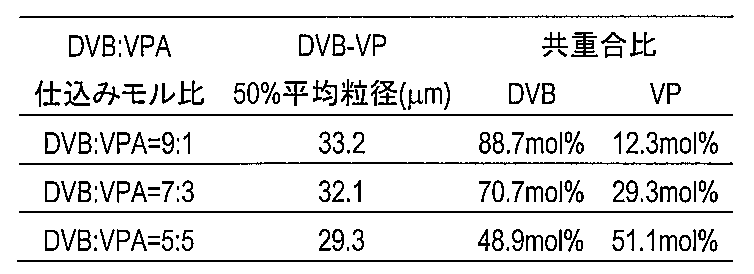
- Table 1 shows the charge ratio of DVB and VPA, the 50% average particle diameter of DVB-VP, and the copolymerization ratio (molar ratio) of DVB and VP determined by elemental analysis after hydrolysis.
- molecular structure identification by infrared spectroscopy and particle observation by a microscope were carried out, and it was confirmed that all particles were spherical particles.
- Example 1 Preparation of nitrated product of divinylbenzene-vinylphenol copolymer particles
- the DVB-VP copolymer particles prepared in Reference Example 1 were nitrated by the following method. Concentrated sulfuric acid (95 +%, Wako Pure Chemical Industries, Ltd.) 5 g and concentrated nitric acid (about 1.38 g / ml, Wako Pure Chemical Industries, Ltd.) 20 g were mixed while stirring well to prepare a mixed acid.
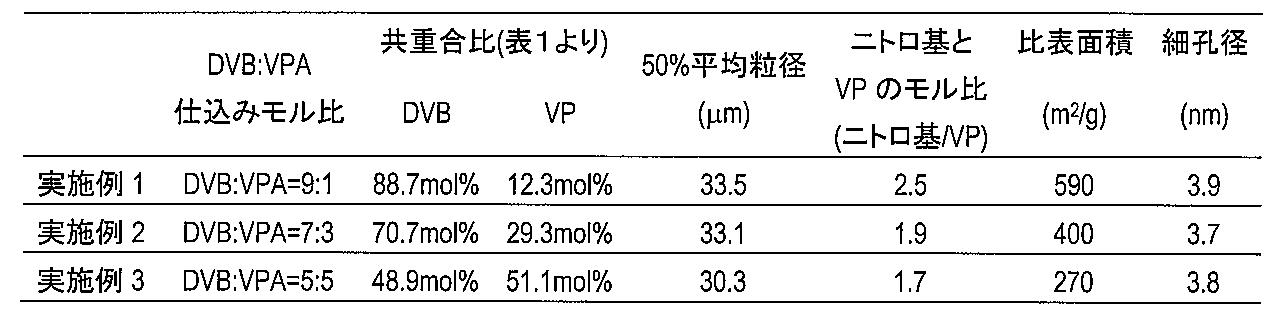
- the molar ratio of nitro group to VP was 1.7 to 2.5.
- the phenolic hydroxyl group is an electron-donating functional group, it is presumed that the nitro group was preferentially introduced into the phenol side chain. That is, it is presumed that the phenolic side chain functional group includes mononitrophenol, dinitrophenol, trinitrophenol, and tetranitrophenol.
- divinylbenzene manufactured by Aldrich, 80% divinylbenzene + 19% ethylvinylbenzene mixture
- vinyltoluene monomer m, p mixture, manufactured by Tokyo Chemical Industry Co., Ltd.
- toluene Wako Pure 20 g of Yakuhin Kogyo
- azoisobutyronitrile AIBN, Tokyo Kasei Kogyo
- a nitrogen introduction tube and a cooling tube were connected to the separable flask, and the polymerization system was stirred with a stirring blade for 30 minutes while purging with nitrogen. After the solution in the flask was uniformly dispersed, polymerization was performed at 70 ° C. for 20 hours at a stirring speed of 300 rpm. After stopping the stirring, the polymerization solution and the resin particles were separated by filtration with a glass filter. The resin particles are repeatedly washed with pure water until the surfactant is completely removed, and then repeated in the order of 2-butanone (manufactured by Wako Pure Chemical Industries), toluene (manufactured by Wako Pure Chemical Industries), and 2-butanone. Washing was performed.
- a 0.1M aqueous solution of potassium hydroxide (manufactured by Wako Pure Chemical Industries) is added dropwise to the resin particle dispersion to neutralize it, followed by washing in 0.1M hydrochloric acid (manufactured by Wako Pure Chemical Industries) and pure water. And resin particles were collected. After washing, it was dried at 110 ° C. for 15 hours to prepare a nitrated DVB-VT precursor.
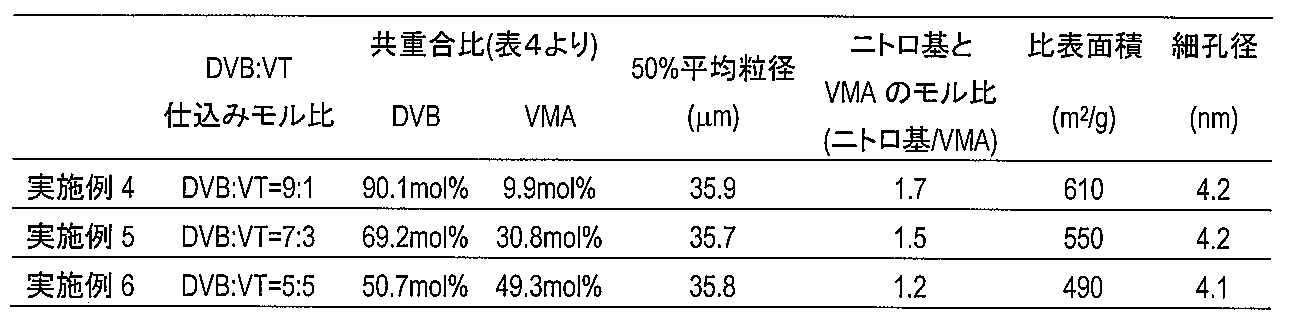
- Table 4 shows the 50% average particle diameter determined by elemental analysis and the copolymerization ratio (molar ratio) of DVB and VMA. Further, molecular structure identification by infrared spectroscopy and particle observation by a microscope were performed on each sample, and it was confirmed that all the particles were spherical particles.
- Example 4 Preparation of nitrated divinylbenzene-vinylmethylaniline copolymer particles
- the DVB-VMA copolymer particles prepared in Reference Example 3 were nitrated by the following method. First, acetic anhydride (manufactured by Wako Pure Chemical Industries, Ltd.) and aniline of DVB-VMA copolymer particles of Reference Example 3 were reacted to carry out acetyl protection.
- the resin particles were collected by filtration, and then again stirred for 30 minutes in pure water to wash the resin particles.
- 1 M hydrochloric acid (manufactured by Wako Pure Chemical Industries, Ltd.) was added to the resin particle dispersion, and the mixture was heated to reflux for 30 minutes to remove the acetyl protecting group.
- the resin particles are recovered by filtration, and after stirring again in pure water for 30 minutes to wash the resin particles, a 1M aqueous solution of potassium hydroxide (manufactured by Wako Pure Chemical Industries) is further added dropwise. Neutralization was performed, followed by washing in pure water to recover resin particles. After washing, it was dried at 90 ° C.
- Table 5 shows the physical property values of the nitrated DVB-VMA copolymer prepared in Reference Example 3. Based on the DVB-VMA copolymerization ratio (molar ratio) in Table 4, the molar ratio of nitro group to VMA (nitro group / VMA) was 1.2 to 1.7 from the results of elemental analysis.
- the methyl group and the amino group are electron donating functional groups, it is presumed that the nitro group was preferentially introduced into the methylaniline side chain. That is, it is presumed that the methylaniline side chain functional group includes mononitromethylaniline, dinitromethylaniline, and trinitromethylaniline.
- Example 7 Preparation of side chain nitrated product of silica particles having phenol side chains Silica particles having phenol side chains and the nitration method thereof are shown below. Methanol (manufactured by Wako Pure Chemical Industries) solution containing 3% of silica gel carrier for column chromatography (Wako Pure Chemicals, Wakogel (registered trademark) C-400HG) and silane coupling agent (Shin-Etsu Chemical, KBM-503). And the silica gel carrier was subjected to a coupling treatment by drying at 80 ° C.
- THF borane-tetrahydrofuran
- VPA vinylphenol acetate
- the borane-THF complex is known as a polymerization initiator exhibiting living radical polymerization, and the methacrylic group on the coupling-treated surface acts as a polymerization initiation terminal of VPA by hydroboration by this method.
- the silica particles on which VPA is immobilized are repeatedly washed with pure water until the surfactant is completely removed, and then 2-butanone (manufactured by Wako Pure Chemical Industries), toluene (manufactured by Wako Pure Chemical Industries), 2- Washing was repeated in the order of butanone. After drying at room temperature, it was dried under reduced pressure at 110 ° C. for 15 hours to obtain resin particles.
- the yield was 11.2 g, and the weight increased by about 10% compared to before immobilization of VPA.
- molecular structure identification by infrared spectroscopy and particle observation by a microscope were performed on each sample, and it was confirmed that the particles were spherical.
- Example 8 Preparation of a nitrated divinylbenzene-vinylphenol copolymer monolithic column
- a method for preparing a monolithic column comprising divinylbenzene (DVB) -vinylphenol (VP) and a nitration method thereof are shown below. .
- the cured cylindrical molded body was hydrolyzed and nitrated into vinylphenol (VP) in the same manner as in Reference Example 1 and Examples 1 to 3, and the nitrated divinylbenzene-vinylphenol copolymer was then used.
- a polymer monolithic column was prepared.
- nitrophenol side chains were formed by nitration of VP.
- Each sample was identified with a molecular structure by infrared spectroscopy and observed with a microscope to confirm that the intended structure was formed.
- Comparative Example 1 Divinylbenzene Polymer As Comparative Example 1, a resin made of a homopolymer of divinylbenzene (DVB) was prepared. In a 500 mL separable flask, 2.0 g of hydroxypropylcellulose (HPC, manufactured by Aldrich, average molecular weight ⁇ 10,000, viscosity 5 cP (2 wt% aqueous solution, 20 ° C.)) and 100 mL of water were mixed and stirred until completely dissolved.
- HPC hydroxypropylcellulose
- a nitrogen introduction tube and a cooling tube were connected to the separable flask, and the polymerization system was stirred with a stirring blade for 30 minutes while purging with nitrogen. After the solution in the flask was uniformly dispersed, polymerization was performed at 70 ° C. for 20 hours at a stirring speed of 300 rpm. After stopping the stirring, the polymerization solution and the resin particles were separated by filtration with a glass filter. The resin particles are repeatedly washed with pure water until the surfactant is completely removed, and then repeated in the order of 2-butanone (manufactured by Wako Pure Chemical Industries), toluene (manufactured by Wako Pure Chemical Industries), and 2-butanone. Washing was performed.
- Comparative Example 3 Nitration Treatment of Divinylbenzene Polymer
- resin particles obtained by nitrated DVB homopolymer resin were prepared.
- 30 g of concentrated sulfuric acid (95 +%, manufactured by Wako Pure Chemical Industries, Ltd.) and 20 g of concentrated nitric acid (about 1.38 g / ml, manufactured by Wako Pure Chemical Industries, Ltd.) were mixed while stirring well to prepare a mixed acid.
- Test Example 1 Comparison of Solid Phase Extraction Performance for Prepared Particles and Monolithic Column Solutes with Various Polarities
- each solute was evaluated using FIA-MS.
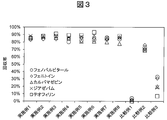
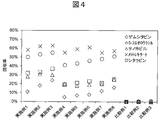
- the results of comparison of the solid-phase extraction performance for pharmaceutical aqueous solutions 1 to 5) are shown in FIGS. 3 to 4 and Table 6.
- the adsorbents of Examples 1 to 8 showed solid-phase extraction performance for all drugs. It is presumed that an unusual polarization structure was formed due to the electron donating and electron withdrawing properties of the nitrated side chain functional group, and as a result, drug recovery performance was exhibited.
- the resin particles having nitrophenol in the side chain show a recovery performance of about 10 to 20% even for a drug such as 5-fluorouracil, which is normally difficult to adsorb the drug. It was.
- the solid-phase extraction is carried out only by passing the aqueous chemical solution, washing and desorption, and no special solid-phase extraction protocol is used. For this reason, it is considered that the separation and recovery of the drug occurred due to the drug adsorption ability unique to the adsorbent in each example.
- the present invention can be applied regardless of the type of drug as long as the drug is not limited to the value of logP but is in a range in which hydrophilicity and water solubility are similar.
- the adsorbed drug was easily detached by passing a highly polar organic solvent such as methanol.
- a highly polar organic solvent such as methanol.
- acid and alkaline components there is no addition of acid and alkaline components to the eluent, and it is suggested that the adsorption and retention of the drug is performed by a mechanism different from the adsorption mechanism by ion exchange using a conventional ion exchange resin. Is done.
- the adsorption performance showed a tendency to change depending on the log P and molecular structure of the drug, for example, the recovery rate of 5-fluorouracil increased as the adsorbent containing more side chain functional groups.
- the particles shown in Comparative Example 1 did not show any drug recovery performance for any drug.
- the particles shown in Comparative Examples 2 and 3 also showed drug recovery performance in the group of evaluation drug aqueous solutions 1 and 2 with relatively high log P, but the test drug aqueous solutions 3 to 5 showed drug recovery performance. Not shown. This is presumably because the polarity and hydrophilicity of the side chain functional group contained in the adsorbent did not reach the level at which the drug group can be adsorbed and retained.
- the adsorbent of this invention can control a structure and a side chain introduction rate according to the kind of chemical
- the side chain functional group as shown in the present invention is a structure that is also found in a drug, and is considered to have a high affinity with the drug.
- By controlling the molecular structure it is possible to form a specific structure using intermolecular interactions such as association, hydrogen bonding, and self-assembly.
- structure selectivity and molecular recognition It can also be expected for application to functions.
- Test Example 2 Comparison of solid-phase extraction performance of nitrated particles by detection device
- the drug aqueous solution for evaluation 1 measured using LC-UV, LC-MS and FIA-MS Table 7 shows the result of comparison of the solid-phase extraction performance for.
- the recovery performance of the drug by solid phase extraction was almost the same, indicating that it can be accurately quantified by any measurement method.
- various configurations can be adopted as the analysis system of the present invention, and the hydrophilic and water-soluble solutes can be used. Solid phase extraction and quantification are possible.
- a phospholipid signal peak (a signal peak corresponding to a mass-to-charge ratio (m / z 758) of phosphatidylcholine (PC), which is a kind of phospholipid)
- PC phosphatidylcholine
- Table 8 the relative intensity of PC is a relative intensity when the peak height of Comparative Example 2 where the peak height of the signal intensity of LC-MS is the highest is 100%. From these results, the serum samples treated under the same conditions showed a tendency that the peak intensities of Examples 1 to 3 were lower than those of the comparative adsorbent.
- Test Example 4 Structure and color change of nitration adsorbent by alkali immersion
- the particles prepared in Examples 1 to 3 and 7 and the monolithic column of Example 8 the molecular structure change and coloration by dilute aqueous alkaline solution immersion
- the results of verifying color change and drug recovery performance are shown below.
- Table 9 shows the color change of the sample before and after the alkali treatment, the 50% average particle diameter, the molar ratio of the nitro group and the side chain functional group determined by elemental analysis, and the specific surface area and pore diameter only for Examples 1 to 3.
- the measurement results are shown. By immersing in dilute alkaline aqueous solution, all samples changed from yellow (yellowish brown) to red. On the other hand, there was no particular change in the 50% average particle diameter and the molar ratio of the nitro group and the side chain functional group, and no change was seen in the appearance and the elemental composition ratio. From this, it is considered that there is no structural change caused by decomposition or oxidation in each sample.
- Table 10 summarizes the results of comparison of the solid-phase extraction performance for each solute (evaluation drug aqueous solution 1 to 5) measured using FIA-MS.
- suction performance fell remarkably by being immersed in dilute alkaline aqueous solution.
- Table 9 shows a comparison of physical properties when immersed in a 0.1 M aqueous hydrochloric acid solution again, and Table 10 shows measurement results of drug recovery rate.
- Table 11 summarizes the results of evaluating the solid-phase extraction performance of the aqueous drug solutions for evaluation 1 to 5 using FIA-MS. Unlike the results of Test Example 4, it was shown that the drug can be recovered from the drug aqueous solution under any conditions. The aqueous potassium hydroxide solution passed therethrough was dilute and showed an effect in a very small amount, suggesting that it greatly affected the surface molecular state and adsorption performance. Further, the change in the surface state has the same effect as when methanol is passed, and it is presumed that drug elution has occurred as a result. Compared with the result of Test Example 1, approximately 90% or more of the drug can be recovered, and the drug can be separated with the same performance as the extraction with methanol.
- the present invention is not limited to the above-described embodiment, and includes various modifications. For example, with respect to a part of the configuration of the embodiment, it is possible to add, delete, or replace another configuration.
Landscapes
- Chemical & Material Sciences (AREA)
- Analytical Chemistry (AREA)
- Chemical Kinetics & Catalysis (AREA)
- Organic Chemistry (AREA)
- Biochemistry (AREA)
- Life Sciences & Earth Sciences (AREA)
- Health & Medical Sciences (AREA)
- General Health & Medical Sciences (AREA)
- General Physics & Mathematics (AREA)
- Immunology (AREA)
- Pathology (AREA)
- Physics & Mathematics (AREA)
- Solid-Sorbent Or Filter-Aiding Compositions (AREA)
Abstract
Description

吸着材粒子の粒径測定は、日機装(株)製マイクロトラック粒度分布測定装置(Microtrac FRA、レーザー回折散乱式)を用いて行った。測定範囲0.1μm~700μm、50%中位粒径(粉体の集団の全体積を100%として累積カーブを求め、累積カーブが50%となる点の粒子径)を吸着材粒子の粒径とした。
吸着材粒子の赤外(IR)分光測定は、(株)パーキンエルマー製フーリエ変換赤外分光計(Spectrum100、減衰全反射法(Attenuated Total Reflection:ATR))を用いて行った。以下の各参考例、実施例及び比較例に示した全ての試料について、分子構造及び官能基の導入をIR測定によって確認した。
比表面積及び細孔分布測定は、QUANTACHROME製比表面積測定装置(AUTOSORB-1、多点法(40点測定)測定)を用いて行った。測定試料の前処理は120℃、10分(減圧下)の条件で行った。比表面積の測定は、BET(Brunauer, Emmett, Teller)吸着等温式を用い、BETプロットの勾配と切片より算出した。細孔径の測定は、累積細孔容積の変化量より、BJH(Barrett, Joyner, Halenda)法を用いて細孔分布を計算により求め、分布のピーク径を細孔径とした。
吸着材粒子の共重合比は、燃焼法によって炭素(C)、水素(H)、窒素(N)及び酸素(O)の元素比を定量し、ポリマー粒子の組成比から共重合比を求めた。CHN元素分析は(株)柳本製作所製元素分析計(MT-5)を、O元素分析はジェイ・サイエンス・ラボ製元素分析計(JM10型)を用いて行った。
吸着材の充填は、次の方法により行った。評価対象の吸着材4mgをメタノール(100μL~200μL)中でスラリー状にして、固相抽出プレート(ウォーターズ社製OASIS(登録商標)μ-Elution plate)に充填した。
吸着材の溶質吸着評価(固相抽出)のターゲットは次に示す溶質とした。評価用薬剤水溶液1(フェノバルビタール(logP=1.7、25ng/mL)、フェニトイン(logP=2.5、25ng/mL)、カルバマゼピン(logP=2.5、2.5ng/mL)、ジアゼパム(logP=2.9、2.5ng/mL)、溶媒:20%メタノール水溶液)、評価用薬剤水溶液2(テオフィリン(logP=-0.25、5000ng/mL)、溶媒:水)、評価用薬剤水溶液3(ゲムシタビン(logP=0.14、1000ng/mL)、5-フルオロウラシル(logP=-0.57、1000ng/mL)、テノホビル(logP=-1.5、1000ng/mL)、溶媒:水)、評価用薬剤水溶液4(メトトレキサート(MTX)(logP=-0.91、1000ng/mL)、溶媒:水)、評価用薬剤水溶液5:シタラビン(logP=-2.7、1000ng/mL)、溶媒:水)をそれぞれ調製し、各水溶液について固相抽出を行った。
ジビニルベンゼン(DVB)-ビニルフェノール(VP)粒子の合成は、ジビニルベンゼンと4-ビニルフェニルアセテート(VPA)の共重合及びアセチル基の加水分解によって行った。500mLセパラブルフラスコにヒドロキシプロピルセルロース(HPC、アルドリッチ製、平均分子量~10,000、粘度5cP(2wt%水溶液、20℃))2.0gと水100mLを混合し、完全に溶解するまで攪拌した。次に、ジビニルベンゼン(アルドリッチ製、80%ジビニルベンゼン+19%エチルビニルベンゼン混合物)、4-ビニルフェニルアセテート(東京化成工業製)を総量30gとなるように混合し、さらにトルエン(和光純薬工業製)20g、アゾイソブチロニトリル(AIBN、東京化成工業製)0.4gを加えて完全に溶解後、セパラブルフラスコ中に加えた。セパラブルフラスコに窒素導入管、冷却管を接続し、重合系内を窒素置換しながら攪拌羽根で30分攪拌した。フラスコ内の溶液が均一な分散状態となった後、70℃、20時間、攪拌速度400rpmで重合を行った。攪拌を停止後、重合溶液と樹脂粒子をガラスフィルタでろ過して分離した。樹脂粒子について、界面活性剤を完全に除去するまで純水で洗浄を繰り返し行った後、2-ブタノン(和光純薬工業製)、トルエン(和光純薬工業製)、2-ブタノンの順で繰り返し洗浄を行った。室温で乾燥した後、110℃、15時間減圧乾燥して、DVB-VPA樹脂粒子を得た(収率95~99%)。
参考例1にて調製したDVB-VP共重合体粒子について、次の方法によりニトロ化を実施した。濃硫酸(95+%、和光純薬工業製)5g、濃硝酸(約1.38g/ml、和光純薬工業製)20gを良くかき混ぜながら混合し、混酸を調製した。次に、300mL丸底フラスコに、DVB-VP粒子10g、メタノール(和光純薬工業製)10mL、水10mLを混合し分散させた後、水浴中で混酸25gをスポイトで少量ずつ滴下した。全量滴下後10分間混合し、その後フラスコを50℃に加熱して、1時間ニトロ化を行った。反応終了後には樹脂粒子をろ過にて回収後、再度純水中で30分撹拌して樹脂粒子の洗浄を行った。樹脂粒子の分散液に水酸化カリウム(和光純薬工業製)の0.1M水溶液を滴下して中和を行った後、0.1M塩酸(和光純薬工業製)及び純水中で洗浄を行い、樹脂粒子を回収した。洗浄後に90℃で15時間乾燥し、目的とするニトロ化DVB-VP樹脂粒子を得た。表2に、参考例1で調製したDVB-VP共重合体のニトロ化物の各実施例における物性値比較を示す。また、赤外分光による分子構造の同定及び顕微鏡による粒子観察を実施し、いずれの粒子も球形状の粒子であることを確認した。表1のDVB-VP共重合比(モル比)に基づくと、元素分析の結果から求めたニトロ基とVPのモル比(ニトロ基/VP)は1.7~2.5となった。ここで、フェノール性水酸基は電子供与性の官能基であるため、ニトロ基はフェノール側鎖に優先的に導入されたものと推定される。すなわち、フェノール性側鎖官能基としてはモノニトロフェノール、ジニトロフェノール、トリニトロフェノール及びテトラニトロフェノールが含まれる構成であると推定される。
参考例2として、ジビニルベンゼン(DVB)とビニルトルエン(VT)の共重合体樹脂を次の方法で調製した。500mLセパラブルフラスコにヒドロキシプロピルセルロース(HPC、アルドリッチ製、平均分子量~10,000、粘度5cP(2wt%水溶液、20℃))2.0gと水100mLを混合し、完全に溶解するまで攪拌した。次に、ジビニルベンゼン(アルドリッチ製、80%ジビニルベンゼン+19%エチルビニルベンゼン混合物)、ビニルトルエンモノマー(m,p混合物、東京化成工業製)を総量30gとなるように混合し、さらトルエン(和光純薬工業製)20g、アゾイソブチロニトリル(AIBN、東京化成工業製)0.4gを加えて、完全に溶解後、セパラブルフラスコ中に加えた。セパラブルフラスコに窒素導入管、冷却管を接続し、重合系内を窒素置換しながら攪拌羽根で30分攪拌した。フラスコ内の溶液が均一な分散状態となった後、70℃、20時間、攪拌速度300rpmで重合を行った。攪拌を停止後、重合溶液と樹脂粒子をガラスフィルタでろ過して分離した。樹脂粒子について、界面活性剤を完全に除去するまで純水で洗浄を繰り返し行った後、2-ブタノン(和光純薬工業製)、トルエン(和光純薬工業製)、2-ブタノンの順で繰り返し洗浄を行った。室温で乾燥した後、110℃で15時間、減圧乾燥して、樹脂粒子を得た。収率は95~99%であった。表3にDVBとVTの仕込み比と、50%平均粒径を示す。また、赤外分光による分子構造の同定及び顕微鏡による粒子観察を実施し、いずれの粒子も球形状の粒子であることを確認した。

参考例3として、DVB-VT共重合体のアニリン化を次の方法で実施した。濃硫酸(95+%、和光純薬工業製)5g、濃硝酸(約1.38g/ml、和光純薬工業製)25gを良くかき混ぜながら混合し、混酸を調製した。次に、300mL丸底フラスコに、参考例2のDVB-VT粒子20g、メタノール(和光純薬工業製)20mL、水10mLを加えて分散させた後、水浴中で混酸30gをスポイトで少量ずつ滴下した。全量滴下後10分間混合した後、フラスコを50℃に加熱して、30分ニトロ化を行った。反応終了後には樹脂粒子をろ過にて回収後、再度純水中で30分撹拌して樹脂粒子の洗浄を行った。樹脂粒子の分散液に水酸化カリウム(和光純薬工業製)の0.1M水溶液を滴下して中和を行った後、0.1M塩酸(和光純薬工業製)及び純水中で洗浄を行い、樹脂粒子を回収した。洗浄後に110℃で15時間乾燥し、ニトロ化DVB-VT前駆体を調製した。

参考例3にて調製したDVB-VMA共重合体粒子について、次の方法によりニトロ化を実施した。まず、無水酢酸(和光純薬製)と、参考例3のDVB-VMA共重合体粒子のアニリンとを反応させてアセチル保護を実施した。続いて、濃硫酸(95+%、和光純薬工業製)5g、濃硝酸(約1.38g/ml、和光純薬工業製)20gを良くかき混ぜながら混合し、混酸を調製した。次に、300mL丸底フラスコに、DVB-VMA粒子10g、メタノール(和光純薬工業製)10mL、水10mLを加えて分散させた後、水浴中で混酸25gをスポイトで少量ずつ滴下した。全量滴下後10分間混合し、その後、室温で1時間ニトロ化を行った。反応終了後には樹脂粒子をろ過にて回収後、再度純水中で30分撹拌して樹脂粒子の洗浄を行った。次に、樹脂粒子の分散液に1M塩酸(和光純薬工業製)を加え、30分加熱還流してアセチル保護基を除去した。反応終了後には樹脂粒子をろ過にて回収後、再度純水中で30分撹拌して樹脂粒子の洗浄を行った後、さらに水酸化カリウム(和光純薬工業製)の1M水溶液を滴下して中和を行い、その後に純水中で洗浄を行い、樹脂粒子を回収した。洗浄後に90℃で15時間乾燥し、目的とするニトロ化DVB-VMA樹脂粒子を得た。また、各試料に対し赤外分光による分子構造の同定及び顕微鏡による粒子観察を実施し、いずれの粒子も球形状の粒子であることを確認した。
フェノール側鎖を有するシリカ粒子及びそのニトロ化方法を以下に示す。カラムクロマトグラフ用シリカゲル担体(和光純薬製、Wakogel(登録商標)C-400HG)を、シランカップリング剤(信越化学製、KBM-503)を3%添加したメタノール(和光純薬工業製)溶液に浸漬し、さらに80℃で乾燥してシリカゲル担体のカップリング処理を行った。当該担体10gを、窒素雰囲気下でボラン-テトラヒドロフラン(THF)錯体(1.0M-THF溶液、アルドリッチ製)に浸漬後10分間撹拌した。空気中でろ過した後に、ビニルフェノールアセテート(VPA)を20%添加したTHF(和光純薬工業製)溶液中で分散し、窒素雰囲気中60℃で1時間、加熱撹拌してシリカ粒子表面にVPAを固定化した。ここで、ボラン-THF錯体はリビングラジカル重合性を示す重合開始剤として知られ、当該方法によってカップリング処理表面のメタクリル基がヒドロホウ素化によってVPAの重合開始末端として作用する。VPAを固定化したシリカ粒子について、界面活性剤を完全に除去するまで純水で洗浄を繰り返し行った後、2-ブタノン(和光純薬工業製)、トルエン(和光純薬工業製)、2-ブタノンの順で繰り返し洗浄を行った。室温で乾燥した後、110℃で15時間、減圧乾燥して、樹脂粒子を得た。収量は11.2gであり、VPA固定化前に比べて10%程度重量が増加した。また、各試料に対し赤外分光による分子構造の同定及び顕微鏡による粒子観察を実施し、球形状の粒子であることを確認した。
ジビニルベンゼン(DVB)-ビニルフェノール(VP)からなるモノリス状カラムの調製方法、及びそのニトロ化方法を以下に示す。ジビニルベンゼン(アルドリッチ製、80%ジビニルベンゼン+19%エチルビニルベンゼン混合物)13.0g、4-ビニルフェニルアセテート(東京化成工業製)7.0gを混合し、さらにトルエン(和光純薬工業製)10g、アゾイソブチロニトリル(AIBN、東京化成工業製)0.4gを加えて完全に溶解後、溶液を窒素置換した。固相抽出プレートの充填部と同一形状の筒状金型にモノマー溶液を流し込み、金型中で80℃、6時間、窒素雰囲気下でバルク重合を行った。
比較例1として、ジビニルベンゼン(DVB)の単独重合体からなる樹脂を調製した。500mLセパラブルフラスコにヒドロキシプロピルセルロース(HPC、アルドリッチ製、平均分子量~10,000、粘度5cP(2wt%水溶液、20℃))2.0gと水100mLを混合し、完全に溶解するまで攪拌した。次に、ジビニルベンゼン(DVB、アルドリッチ製、80%ジビニルベンゼン+19%エチルビニルベンゼン混合物)35.0g(0.28mol)、トルエン(和光純薬工業製)24.2g、アゾイソブチロニトリル(AIBN、東京化成工業製)0.4gを混合し、完全に溶解後、セパラブルフラスコ中に加えた。セパラブルフラスコに窒素導入管、冷却管を接続し、重合系内を窒素置換しながら攪拌羽根で30分攪拌した。フラスコ内の溶液が均一な分散状態となった後、70℃、20時間、攪拌速度300rpmで重合を行った。攪拌を停止後、重合溶液と樹脂粒子をガラスフィルタでろ過して分離した。樹脂粒子について、界面活性剤を完全に除去するまで純水で洗浄を繰り返し行った後、2-ブタノン(和光純薬工業製)、トルエン(和光純薬工業製)、2-ブタノンの順で繰り返し洗浄を行った。室温で乾燥した後、110℃で15時間、減圧乾燥して、樹脂粒子を得た(収率95.3%、50%平均粒径50.3μm、比表面積895m2/g、平均細孔径233Å)。
比較例2として、ジビニルベンゼン(DVB)とN-ビニルピロリドン(NVP)の共重合体樹脂を調製した。500mLセパラブルフラスコにヒドロキシプロピルセルロース(HPC、アルドリッチ製、平均分子量~10,000、粘度5cP(2wt%水溶液、20℃))2.0gと水100mLを混合し、完全に溶解するまで攪拌した。次に、ジビニルベンゼン(DVB、アルドリッチ製、80%ジビニルベンゼン+19%エチルビニルベンゼン混合物)17.5g(0.14mol)、N-ビニルピロリドン(NVP、東京化成工業製)10.2g(0.09mol)、トルエン(和光純薬工業製)24.2g、アゾイソブチロニトリル(AIBN、東京化成工業製)0.2gを混合し、完全に溶解後、セパラブルフラスコ中に加えた。セパラブルフラスコに窒素導入管、冷却管を接続し、重合系内を窒素置換しながら攪拌羽根で30分攪拌した。フラスコ内の溶液が均一な分散状態となった後、70℃、20時間、攪拌速度300rpmで重合を行った。攪拌を停止後、重合溶液と樹脂粒子をガラスフィルタでろ過して分離した。樹脂粒子について、界面活性剤を完全に除去するまで純水で洗浄を繰り返し行った後、2-ブタノン(和光純薬工業製)、トルエン(和光純薬工業製)、2-ブタノンの順で繰り返し洗浄を行った。室温で乾燥した後、110℃で15時間、減圧乾燥して、樹脂粒子を得た(収率81.2%、50%平均粒径66.5μm、80%平均粒径78.9μm、共重合比DVB/NVP=81.7mol%/18.7mol%(元素分析)、比表面積527m2/g、平均細孔径153Å)。
比較例3として、DVB単独重合体樹脂をニトロ化した樹脂粒子を調製した。まず、濃硫酸(95+%、和光純薬工業製)30g、濃硝酸(約1.38g/ml、和光純薬工業製)20gを良くかき混ぜながら混合し、混酸を調製した。次に、300mL丸底フラスコに、DVB粒子10g、メタノール(和光純薬工業製)15mLを加えて分散させた後、水浴中で混酸50gをスポイトで少量ずつ滴下した。全量滴下後10分間混合した後、フラスコを65℃に加熱して、2時間ニトロ化を行った。反応終了後に樹脂粒子をろ過にて回収後、再度純水中で30分撹拌して樹脂粒子の洗浄を行った。樹脂粒子の分散液に水酸化カリウム(和光純薬工業製)の0.1M水溶液を滴下して中和を行った後、0.1M塩酸(和光純薬工業製)及び純水中で洗浄を行い、樹脂粒子を回収した。洗浄後、90℃で15時間乾燥し、目的とするニトロ化DVB樹脂粒子を得た(収量13.1g、50%平均粒径51.4μm、比表面積752m2/g、平均細孔径242Å、元素分析により求めたニトロ基とDVBのモル比(ニトロ基/DVB)=0.88)。
実施例1~8に示した粒子、モノリス状カラムについて、FIA-MSを用いて各溶質(評価用薬剤水溶液1~5)に対する固相抽出性能を比較した結果を図3~4及び表6にまとめて示す。実施例1~8の吸着材については、全ての薬剤に対して固相抽出性能を示す結果となった。ニトロ化した側鎖官能基の電子供与性及び電子求引性によって通常とは異なる分極構造が形成され、結果として薬剤回収性能を示すようになったものと推定される。特に、ニトロフェノールを側鎖に有する樹脂粒子(実施例1~3)では、通常では薬剤吸着が困難とされる5-フルオロウラシル等の薬剤に対しても、10~20%程度の回収性能を示した。当該固相抽出は、薬剤水溶液の通液、洗浄及び脱離過程によってのみ実施しており、特別な固相抽出プロコトルは用いていない。そのため、各実施例における吸着材特有の薬剤吸着能によって薬剤の分離回収が起こったものと考えられる。また、logPの値に限らず、親水性及び水溶性が類似した範囲内である薬剤であれば、薬剤の種類に関係なく適用できることが分かった。
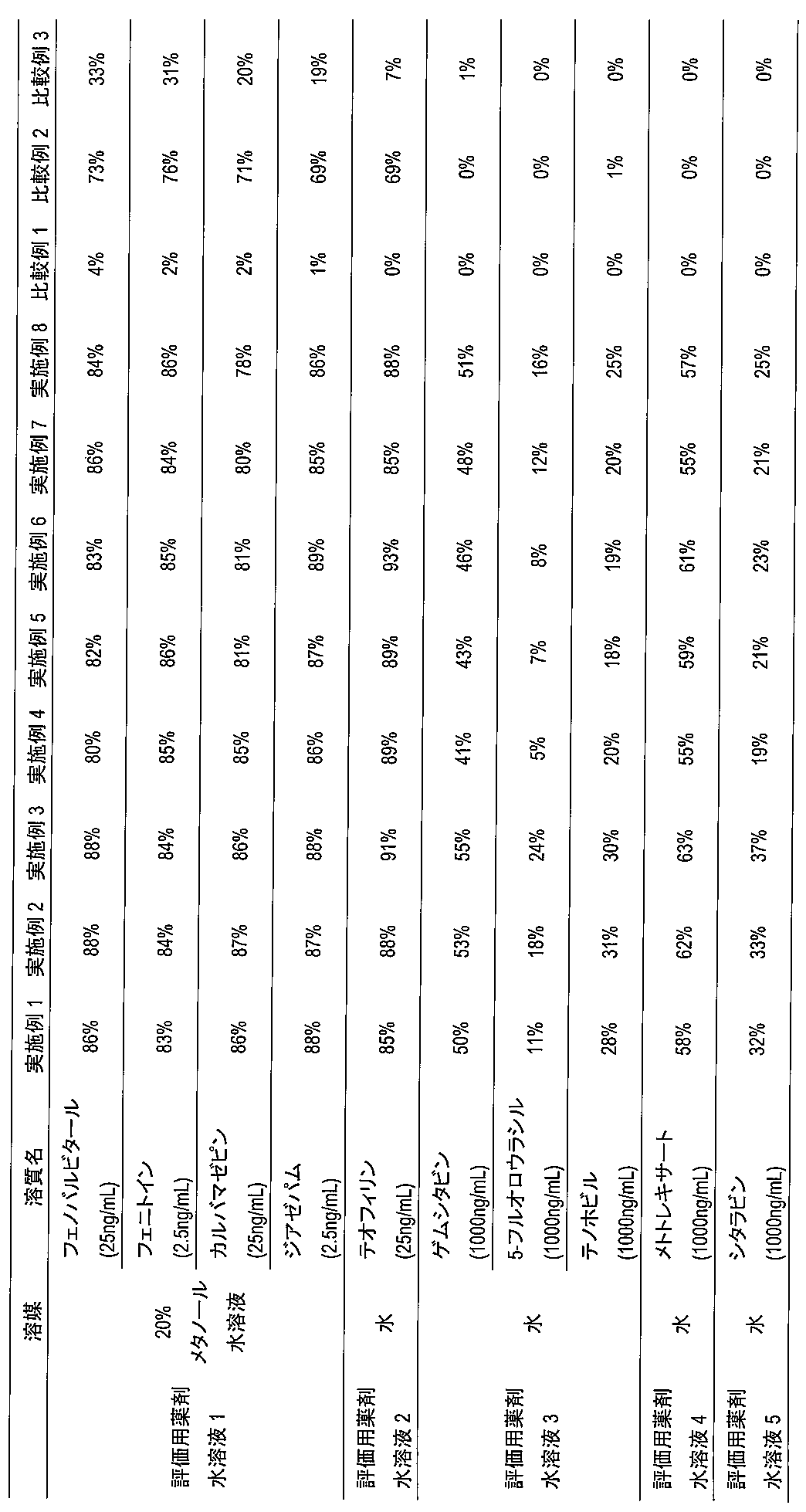
実施例1~3で調製した粒子について、LC-UV、LC-MS及びFIA-MSを用いて測定した評価用薬剤水溶液1に対する固相抽出性能を比較した結果を表7に示す。実施例1~3におけるいずれの粒子についても、固相抽出による薬剤の回収性能はほぼ一致し、いずれの測定方法においても正確に定量することが可能であることが示された。また、他の評価用薬剤水溶液に関しても同様に、薬剤の回収性能はほぼ一致していることから、本発明の分析システムとして種々の構成を採用することができ、親水性及び水溶性の溶質に対する固相抽出及び定量が可能となる。
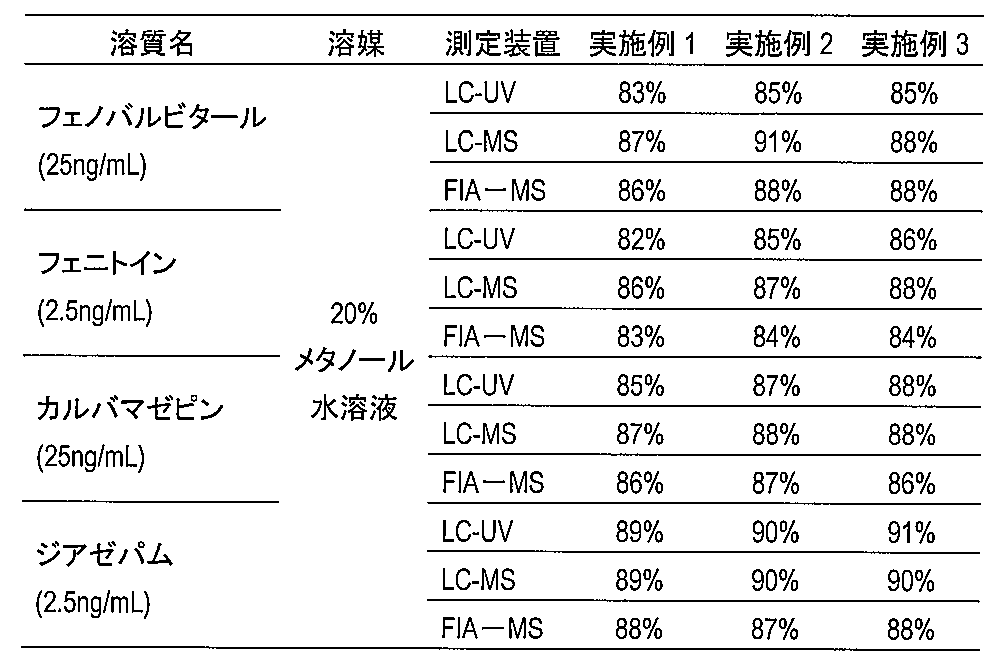
血清や全血成分等の溶質分析では、リン脂質等の不純物成分が含まれる。リン脂質等の不純物は、質量分析の際に測定対象物のイオン化を阻害する(イオンサプレッション)成分である。LC-MS等のクロマトグラフ分離過程を含む装置では、測定対象物と不純物成分は分離されるため影響は低くなるが、FIA-MSのようなフローインジェクション方式の分析では、イオンサプレッションによる感度低下の影響が特に大きい。以下に示すように、本発明により、リン脂質等の不純物成分の吸着を低減することができる。

実施例1~3及び7において調製した粒子、並びに実施例8のモノリス状カラムについて、希薄アルカリ水溶液浸漬による分子構造変化及び呈色変化、薬剤回収性能の変化について検証した結果を以下に示す。pH=8.0に調整した水酸化カリウム希薄水溶液中に、実施例1~3及び7に示した粒子、並びに実施例8のモノリス状カラムを浸漬し、洗浄後に90℃で15時間乾燥してアルカリ水溶液浸漬試料を調製した。表9に、アルカリ処理前後の試料の呈色変化、50%平均粒径、元素分析より求めたニトロ基と側鎖官能基のモル比、並びに実施例1~3についてのみ比表面積及び細孔径を測定した結果を示す。希薄アルカリ水溶液に浸漬することで、試料はいずれも黄色(黄褐色)から赤色へと変化した。一方で、50%平均粒径及びニトロ基と側鎖官能基のモル比には特段の変化はなく、外観及び元素の組成比は変化が見られなかった。このことから、各試料において分解や酸化に伴う構造変化は生じていないと考えられる。一方で、アルカリ処理前後で比表面積の低下及び細孔径の変化が見られ、この傾向は特にニトロ基の多い試料ほど顕著となった。また、赤外吸収スペクトルにもシフトが確認されたことから、希薄アルカリ水溶液への浸漬によって、フェノール性水酸基のプロトン脱離が生じ、試料内部の分極構造変化や水素結合の誘起等により、呈色、比表面積、細孔径に影響したものと推定される。
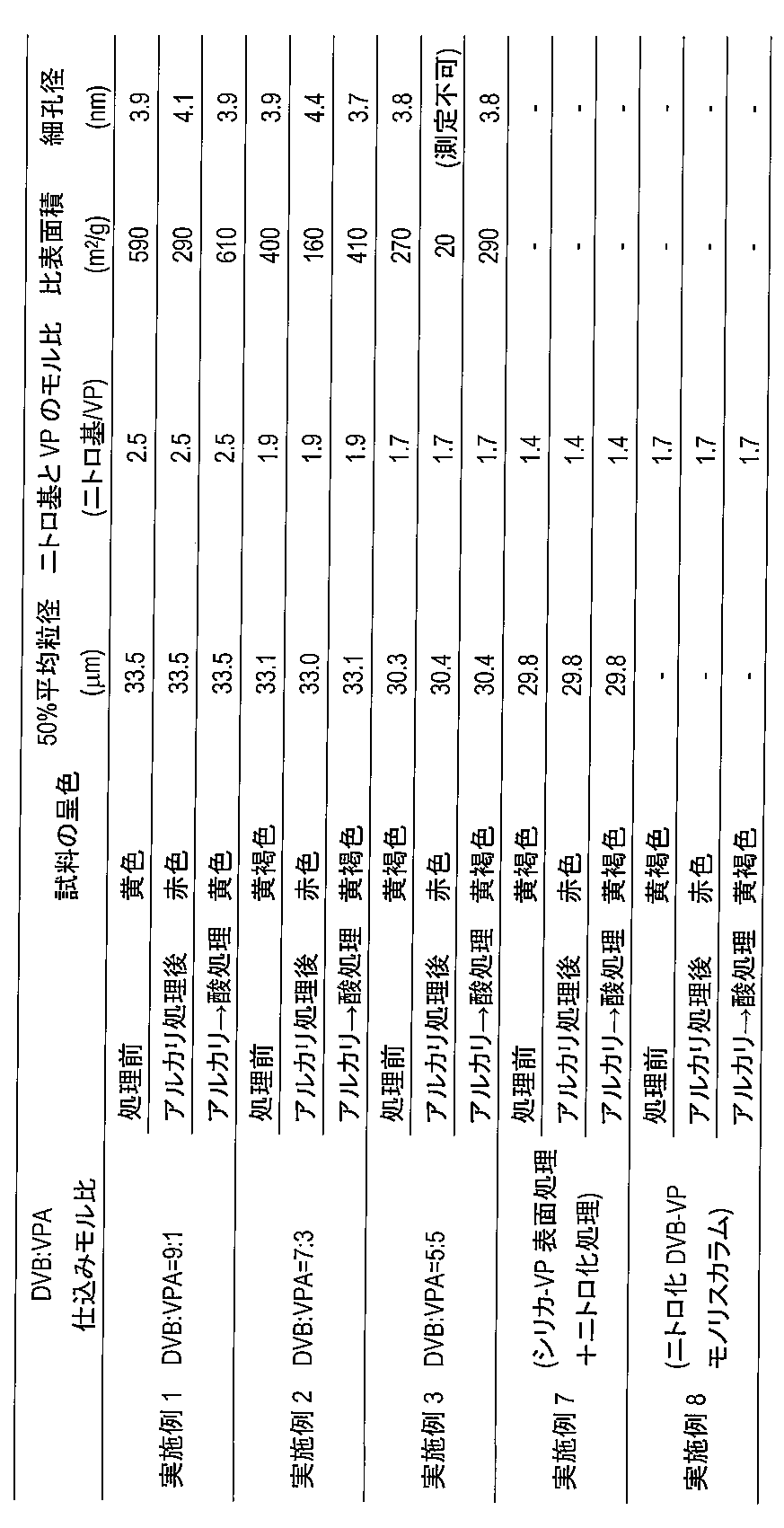


実施例1~3及び7に示した粒子、並びに実施例8のモノリス状カラムについて、希薄アルカリ水溶液による呈色変化を利用した薬剤の固相抽出の実験を以下に示す。固相抽出に際し、上記「(6)吸着材の溶質吸着評価(固相抽出)」に示した操作のうち、吸着材に吸着した薬剤を回収する過程で、プレートにメタノール100μLを通液する代わりに、水素イオン濃度をpH=8.0に調整した水酸化カリウム希薄水溶液100μLを使用し、吸着材に吸着した溶質を回収した。FIA-MSを用いて評価用薬剤水溶液1~5に対する固相抽出性能を評価した結果を表11にまとめて示す。試験例4の結果と異なり、いずれの条件でも薬剤水溶液中からの薬剤の回収が可能であることが示された。その際に通液した水酸化カリウム水溶液は、希薄かつ極めて少量で効果を示しており、表面の分子状態及び吸着性能を大きく影響したことが示唆される。また、当該表面状態の変化はメタノールを通液した場合と同様の効果をもたらし、結果として薬剤の溶離が生じたものと推定される。また、試験例1の結果と比較しても、概ね90%以上の薬剤が回収できており、メタノールによる抽出と同等性能による薬剤の分離が可能である。

2 支持フィルタ
3 吸着材充填部
4 カートリッジ容器下部
5 流路
6 カラム一体成型手締めナット
7 吸着材視認窓
8 吸着材充填カラム
Claims (14)
- 式I

で表される構造体を含む吸着材。 - 式I中、Rは樹脂からなる担体成分である、請求項1に記載の吸着材。
- 式I中、R’はヒドロキシ基であり、R’’はそれぞれ独立してヒドロキシ基、アルコキシ基、アルキル基及び水素原子からなる群から選択される、請求項1に記載の吸着材。
- 式I中、R’アミノ基であり、R’’はそれぞれ独立してヒドロキシ基、アルコキシ基、アルキル基及び水素原子からなる群から選択される、請求項1に記載の吸着材。
- 外部からの刺激により呈色が変化する、請求項1に記載の吸着材。
- 水素イオン指数が8.0より大きい塩基性溶液に接触することで呈色が変化する、請求項1に記載の吸着材。
- 球状又は塊状の粒子形状である、請求項1に記載の吸着材。
- モノリス状高分子多孔質構造又は高分子多孔質膜構造を有する、請求項2に記載の吸着材。
- 請求項1~8のいずれかに記載の吸着材を含み、該吸着材に検体中の溶質を選択的に吸着させるための固相抽出部と、該吸着材から脱離させた溶質を導入し分析するための分析装置と、を備える分析システム。
- 分析装置が、液相クロマトグラフィ/紫外分光分析装置、液相クロマトグラフィによる質量分析装置、又はフローインジェクション方式による質量分析装置である、請求項9に記載の分析システム。
- 検体が、血漿、血清、血液、尿、髄液、滑液、生体組織抽出物、水溶液、地下水、地表水、土壌抽出物、化粧品、食品物質、又は食品物質の抽出物を含む、請求項9に記載の分析システム。
- 溶質が、薬品、薬剤、抗菌剤、抗ウィルス剤、抗がん剤、薬物、殺虫剤、除草剤、毒物、生体分子、タンパク質、ビタミン、ホルモン、ポリペプチド、ポリヌクレオチド、脂質、炭水化物、汚染物、代謝薬剤、又は代謝産物の分解生成物である、請求項9に記載の分析システム。
- 固相抽出部が、固相抽出カートリッジ又は固相抽出カラムである、請求項9に記載の分析システム。
- 固相抽出部が、吸着材の呈色変化を外部から視認可能である、請求項9に記載の分析システム。
Priority Applications (4)
| Application Number | Priority Date | Filing Date | Title |
|---|---|---|---|
| CN201480031413.4A CN105392557B (zh) | 2013-06-14 | 2014-05-07 | 吸附材料和使用其的分析系统 |
| US14/894,633 US10024828B2 (en) | 2013-06-14 | 2014-05-07 | Adsorbent and analysis method using same |
| GB1521243.4A GB2534022B (en) | 2013-06-14 | 2014-05-07 | Analysis system with solid phase extration unit |
| DE112014002268.3T DE112014002268T5 (de) | 2013-06-14 | 2014-05-07 | Adsorptionsmittel und Analysenverfahren unter Verwendung dieses Mittels |
Applications Claiming Priority (2)
| Application Number | Priority Date | Filing Date | Title |
|---|---|---|---|
| JP2013-125505 | 2013-06-14 | ||
| JP2013125505A JP6193004B2 (ja) | 2013-06-14 | 2013-06-14 | 吸着材及びそれを用いた分析システム |
Publications (1)
| Publication Number | Publication Date |
|---|---|
| WO2014199746A1 true WO2014199746A1 (ja) | 2014-12-18 |
Family
ID=52022048
Family Applications (1)
| Application Number | Title | Priority Date | Filing Date |
|---|---|---|---|
| PCT/JP2014/062237 Ceased WO2014199746A1 (ja) | 2013-06-14 | 2014-05-07 | 吸着材及びそれを用いた分析システム |
Country Status (6)
| Country | Link |
|---|---|
| US (1) | US10024828B2 (ja) |
| JP (1) | JP6193004B2 (ja) |
| CN (1) | CN105392557B (ja) |
| DE (1) | DE112014002268T5 (ja) |
| GB (1) | GB2534022B (ja) |
| WO (1) | WO2014199746A1 (ja) |
Cited By (1)
| Publication number | Priority date | Publication date | Assignee | Title |
|---|---|---|---|---|
| CN115814467A (zh) * | 2022-11-29 | 2023-03-21 | 黄山邦森新材料有限公司 | 一种树脂吸附纯化n-乙烯基吡咯烷酮的装置和方法 |
Families Citing this family (9)
| Publication number | Priority date | Publication date | Assignee | Title |
|---|---|---|---|---|
| EP2842614A1 (en) * | 2013-08-30 | 2015-03-04 | Biotage AB | Sample preparation method for analysis of acrylamide |
| KR102069868B1 (ko) * | 2018-02-28 | 2020-01-23 | 고려대학교 산학협력단 | 합성가스 발효 균의 합성가스 발효 시의 대사체 분석을 위한 대사체 샘플링 및 분석 방법 |
| CN110297057A (zh) * | 2019-07-25 | 2019-10-01 | 苏州艾迪迈医疗科技有限公司 | 一种新型在线固相萃取柱及其制备方法 |
| EP4100163A2 (en) * | 2020-02-06 | 2022-12-14 | Waters Technologies Corporation | Modular sample preparation devices and methods |
| CN114414681B (zh) * | 2021-12-30 | 2024-10-11 | 珠海天祥粤澳质量技术服务有限公司 | 一种同时测定化妆品中的多种色素的方法 |
| KR102536496B1 (ko) * | 2022-09-30 | 2023-06-01 | 서강대학교 산학협력단 | 공기 중 분사되는 사차 암모늄 염의 농도 측정을 위한 수동 채취기 및 이를 이용한 사차 암모늄 염 농도의 측정 방법 |
| CN115586275B (zh) * | 2022-10-17 | 2024-09-27 | 中国水产科学研究院东海水产研究所 | 水产品中甲基睾酮的液相色谱-串联质谱测定方法 |
| CN115920861B (zh) * | 2022-12-23 | 2024-07-12 | 中美华世通生物医药科技(武汉)股份有限公司 | 一种吸附剂、其制备方法及应用 |
| CN118666442B (zh) * | 2024-06-03 | 2025-10-03 | 上海市农业科学院 | 一种利用分子筛去除水中地西泮的方法 |
Citations (3)
| Publication number | Priority date | Publication date | Assignee | Title |
|---|---|---|---|---|
| JPS5323891A (en) * | 1976-08-19 | 1978-03-04 | Kanebo Ltd | Production of heavy metal adsorbent |
| JP2000055897A (ja) * | 1998-08-06 | 2000-02-25 | Showa Denko Kk | 充填剤及びその製造方法 |
| WO2013115334A1 (ja) * | 2012-01-31 | 2013-08-08 | 株式会社資生堂 | 分離剤及びその製造方法 |
Family Cites Families (8)
| Publication number | Priority date | Publication date | Assignee | Title |
|---|---|---|---|---|
| JPH05264531A (ja) * | 1992-03-17 | 1993-10-12 | Showa Denko Kk | クロマトグラフィー用吸着担体 |
| JPH05323891A (ja) * | 1992-05-25 | 1993-12-07 | Sony Corp | Crtモニター回路 |
| EP0758261B1 (en) | 1994-05-05 | 1998-08-26 | Minnesota Mining And Manufacturing Company | Chemically modified solid phase extraction particles and articles containing same |
| US5882521A (en) | 1996-04-18 | 1999-03-16 | Waters Investment Ltd. | Water-wettable chromatographic media for solid phase extraction |
| US20050093189A1 (en) * | 2001-08-27 | 2005-05-05 | Vo Toan P. | Adsorbents for removing heavy metals and methods for producing and using the same |
| WO2009084243A1 (ja) * | 2007-12-28 | 2009-07-09 | Panasonic Corporation | 通信装置、通信システム、画像提示方法およびプログラム |
| JP2010137207A (ja) * | 2008-12-15 | 2010-06-24 | Hitachi High-Technologies Corp | ミックスモード型吸着剤 |
| CN102883805A (zh) * | 2010-04-28 | 2013-01-16 | 株式会社日立高新技术 | 吸附材料及其制造方法 |
-
2013
- 2013-06-14 JP JP2013125505A patent/JP6193004B2/ja not_active Expired - Fee Related
-
2014
- 2014-05-07 US US14/894,633 patent/US10024828B2/en not_active Expired - Fee Related
- 2014-05-07 GB GB1521243.4A patent/GB2534022B/en not_active Expired - Fee Related
- 2014-05-07 WO PCT/JP2014/062237 patent/WO2014199746A1/ja not_active Ceased
- 2014-05-07 DE DE112014002268.3T patent/DE112014002268T5/de not_active Withdrawn
- 2014-05-07 CN CN201480031413.4A patent/CN105392557B/zh not_active Expired - Fee Related
Patent Citations (3)
| Publication number | Priority date | Publication date | Assignee | Title |
|---|---|---|---|---|
| JPS5323891A (en) * | 1976-08-19 | 1978-03-04 | Kanebo Ltd | Production of heavy metal adsorbent |
| JP2000055897A (ja) * | 1998-08-06 | 2000-02-25 | Showa Denko Kk | 充填剤及びその製造方法 |
| WO2013115334A1 (ja) * | 2012-01-31 | 2013-08-08 | 株式会社資生堂 | 分離剤及びその製造方法 |
Cited By (2)
| Publication number | Priority date | Publication date | Assignee | Title |
|---|---|---|---|---|
| CN115814467A (zh) * | 2022-11-29 | 2023-03-21 | 黄山邦森新材料有限公司 | 一种树脂吸附纯化n-乙烯基吡咯烷酮的装置和方法 |
| CN115814467B (zh) * | 2022-11-29 | 2023-07-28 | 黄山邦森新材料有限公司 | 一种树脂吸附纯化n-乙烯基吡咯烷酮的装置和方法 |
Also Published As
| Publication number | Publication date |
|---|---|
| CN105392557B (zh) | 2018-06-29 |
| GB2534022B (en) | 2018-07-18 |
| GB2534022A (en) | 2016-07-13 |
| DE112014002268T5 (de) | 2016-02-18 |
| GB201521243D0 (en) | 2016-01-13 |
| JP2015000363A (ja) | 2015-01-05 |
| JP6193004B2 (ja) | 2017-09-06 |
| US10024828B2 (en) | 2018-07-17 |
| CN105392557A (zh) | 2016-03-09 |
| US20160109417A1 (en) | 2016-04-21 |
Similar Documents
| Publication | Publication Date | Title |
|---|---|---|
| JP6193004B2 (ja) | 吸着材及びそれを用いた分析システム | |
| Bayramoglu et al. | Removal of bisphenol A from aqueous medium using molecularly surface imprinted microbeads | |
| Li et al. | Application of deep eutectic solvents in hybrid molecularly imprinted polymers and mesoporous siliceous material for solid-phase extraction of levofloxacin from green bean extract | |
| Dakova et al. | Solid phase selective separation and preconcentration of Cu (II) by Cu (II)-imprinted polymethacrylic microbeads | |
| EP2564923A1 (en) | Adsorbent and method for producing same | |
| US10023714B2 (en) | Porous polymeric separation material | |
| Mendes et al. | Synthesis and characterization of a new magnetic restricted access molecularly imprinted polymer for biological sample preparation | |
| Santos et al. | Restricted access molecularly imprinted polymers obtained by bovine serum albumin and/or hydrophilic monomers’ external layers: a comparison related to physical and chemical properties | |
| Gu et al. | Synthesis of surface nano-molecularly imprinted polymers for sensitive baicalin detection in biological samples | |
| Dong et al. | Novel synthesized attapulgite nanoparticles–based hydrophobic monolithic column for in-tube solid-phase microextraction of thiosildenafil, pseudovardenafil, and norneosildenafil in functional foods: Dong L. et al. | |
| Lv et al. | Fast clean-up and selective enrichment of florfenicol in milk by restricted access media molecularly imprinted magnetic microspheres based on surface-initiated photoiniferter-mediated polymerization | |
| Guo et al. | High selectivity molecularly imprinted polymer based on short amylose as bio-based functional monomers for selective extraction of λ-cyhalothrin | |
| Hashemi-Moghaddam et al. | Application of a magnetic molecularly imprinted polymer for the removal of sulfanilamide as major impurity in eye drops (sulfacetamide) | |
| Zuo et al. | Preparation of a novel RAM-MIP for selective solid-phase extraction and gas chromatography determination of heptachlor, endosulfan and their metabolite residues in pork | |
| Panahi et al. | Fabrication of new drug imprinting polymer beads for selective extraction of naproxen in human urine and pharmaceutical samples | |
| Neagu et al. | Adsorption studies of some inorganic and organic salts on new zwitterionic ion exchangers with carboxybetaine moieties | |
| Zhang et al. | Improving imprinting effect by reducing sites embedding: Selective extraction of 1, 2, 3, 4, 6-penta-O-galloyl-β-d-glucose from Paeonia lactiflora Pall by hydrophilic molecularly imprinted polymers based on macromonomer and metal ion pivot | |
| Wang et al. | Surface amphiphilic hybrid porous polymers based on cage-like organosiloxanes for pipette tip solid-phase extraction of microcystins in water | |
| Wang et al. | Fabrication of diverse pH-sensitive functional mesoporous silica for selective removal or depletion of highly abundant proteins from biological samples | |
| Ji et al. | Superhydrophilic molecularly imprinted polymers based on a single cross-linking monomer for the recognition of iridoid glycosides in Di-huang pills: Ji W. et al. | |
| Saleem et al. | Extraction of Pb (II) from water samples by ionic liquid-modified silica sorbents | |
| Ozbek et al. | A practical application of solid-phase extraction using a syringe filled with sorbent for the determination of lead and cadmium in water | |
| Setayeshfar et al. | Application of flow injection analysis-solid phase extraction based on ion-pair formation for selective preconcentration of trace amount of anti-HIV drug | |
| Minhas et al. | Imprinting-based smart syringe: A fast, efficient, and selective approach for extraction of methyl gallate from Caesalpinia pulcherrima extract | |
| Tikhonov et al. | New approach to the synthesis of a functional macroporous poly (vinyl alcohol) network and design of boronate affinity sorbent for protein separation |
Legal Events
| Date | Code | Title | Description |
|---|---|---|---|
| WWE | Wipo information: entry into national phase |
Ref document number: 201480031413.4 Country of ref document: CN |
|
| 121 | Ep: the epo has been informed by wipo that ep was designated in this application |
Ref document number: 14811124 Country of ref document: EP Kind code of ref document: A1 |
|
| WWE | Wipo information: entry into national phase |
Ref document number: 112014002268 Country of ref document: DE Ref document number: 1120140022683 Country of ref document: DE |
|
| WWE | Wipo information: entry into national phase |
Ref document number: 14894633 Country of ref document: US |
|
| ENP | Entry into the national phase |
Ref document number: 201521243 Country of ref document: GB Kind code of ref document: A Free format text: PCT FILING DATE = 20140507 |
|
| 122 | Ep: pct application non-entry in european phase |
Ref document number: 14811124 Country of ref document: EP Kind code of ref document: A1 |