WO2014156901A1 - 医用情報表示システム、サーバ装置、及び可搬型端末 - Google Patents
医用情報表示システム、サーバ装置、及び可搬型端末 Download PDFInfo
- Publication number
- WO2014156901A1 WO2014156901A1 PCT/JP2014/057598 JP2014057598W WO2014156901A1 WO 2014156901 A1 WO2014156901 A1 WO 2014156901A1 JP 2014057598 W JP2014057598 W JP 2014057598W WO 2014156901 A1 WO2014156901 A1 WO 2014156901A1
- Authority
- WO
- WIPO (PCT)
- Prior art keywords
- medical information
- room
- unit
- display
- portable terminal
- Prior art date
- Legal status (The legal status is an assumption and is not a legal conclusion. Google has not performed a legal analysis and makes no representation as to the accuracy of the status listed.)
- Ceased
Links
Images





Classifications
-
- G—PHYSICS
- G16—INFORMATION AND COMMUNICATION TECHNOLOGY [ICT] SPECIALLY ADAPTED FOR SPECIFIC APPLICATION FIELDS
- G16H—HEALTHCARE INFORMATICS, i.e. INFORMATION AND COMMUNICATION TECHNOLOGY [ICT] SPECIALLY ADAPTED FOR THE HANDLING OR PROCESSING OF MEDICAL OR HEALTHCARE DATA
- G16H40/00—ICT specially adapted for the management or administration of healthcare resources or facilities; ICT specially adapted for the management or operation of medical equipment or devices
- G16H40/20—ICT specially adapted for the management or administration of healthcare resources or facilities; ICT specially adapted for the management or operation of medical equipment or devices for the management or administration of healthcare resources or facilities, e.g. managing hospital staff or surgery rooms
-
- G—PHYSICS
- G16—INFORMATION AND COMMUNICATION TECHNOLOGY [ICT] SPECIALLY ADAPTED FOR SPECIFIC APPLICATION FIELDS
- G16H—HEALTHCARE INFORMATICS, i.e. INFORMATION AND COMMUNICATION TECHNOLOGY [ICT] SPECIALLY ADAPTED FOR THE HANDLING OR PROCESSING OF MEDICAL OR HEALTHCARE DATA
- G16H10/00—ICT specially adapted for the handling or processing of patient-related medical or healthcare data
- G16H10/60—ICT specially adapted for the handling or processing of patient-related medical or healthcare data for patient-specific data, e.g. for electronic patient records
- G16H10/65—ICT specially adapted for the handling or processing of patient-related medical or healthcare data for patient-specific data, e.g. for electronic patient records stored on portable record carriers, e.g. on smartcards, RFID tags or CD
-
- G—PHYSICS
- G16—INFORMATION AND COMMUNICATION TECHNOLOGY [ICT] SPECIALLY ADAPTED FOR SPECIFIC APPLICATION FIELDS
- G16H—HEALTHCARE INFORMATICS, i.e. INFORMATION AND COMMUNICATION TECHNOLOGY [ICT] SPECIALLY ADAPTED FOR THE HANDLING OR PROCESSING OF MEDICAL OR HEALTHCARE DATA
- G16H40/00—ICT specially adapted for the management or administration of healthcare resources or facilities; ICT specially adapted for the management or operation of medical equipment or devices
- G16H40/60—ICT specially adapted for the management or administration of healthcare resources or facilities; ICT specially adapted for the management or operation of medical equipment or devices for the operation of medical equipment or devices
- G16H40/67—ICT specially adapted for the management or administration of healthcare resources or facilities; ICT specially adapted for the management or operation of medical equipment or devices for the operation of medical equipment or devices for remote operation
Definitions
- Embodiments of the present invention relate to a medical information display system, a server device, and a portable terminal.
- hospitals are often building thin client hospital systems.
- various medical information electronic medical records, examination information, medical images, etc.
- Each application and medical information is stored in the server device.
- the portable terminal can access the server device as a thin client terminal and use each application and medical information.
- the embodiment has been made to solve the above-described problems, and an object thereof is to provide a technique for easily performing display control according to a place where a portable terminal is located.
- the medical information display system described in the embodiment includes a storage unit, a medical information acquisition unit, a specifying unit, and a display control unit.
- the storage unit stores a medical information processing application for displaying a processing result or medical information on a display device in a hospital in association with a room in the hospital.
- the medical information acquisition unit acquires medical information to be displayed on the display device.
- the specifying unit specifies a room where the portable terminal is located.
- the display control unit executes the medical information processing application associated with the room specified by the specifying unit, and displays the processing result or the medical information on the display device by executing the medical information processing application.
- the server device described in the embodiment includes a storage unit, a specifying unit, and a display control unit.
- the storage unit stores a medical information processing application for displaying a processing result or medical information on a display device in a hospital in association with a room in the hospital.
- the specifying unit specifies a room where the portable terminal is located.
- the display control unit executes the medical information processing application associated with the room specified by the specifying unit, and displays the processing result or the medical information on the display device by executing the medical information processing application.
- the portable terminal described in the embodiment includes a position information acquisition unit and a display unit.
- the position information acquisition unit acquires position information indicating the current location.
- the display unit displays the processing result by executing the medical information processing application searched based on the position information among the plurality of medical information processing applications for displaying the processing result or the medical information on the display device in each room in the hospital. Or medical information is displayed.
- FIG. 1 is an overall view showing a medical information display system according to a first embodiment. It is a figure which shows the portable terminal which concerns on 1st Embodiment. It is a figure which shows the server apparatus which concerns on 1st Embodiment. It is a figure which shows an example of the display apparatus which concerns on 1st Embodiment. It is a figure which shows an example of the display apparatus which concerns on 1st Embodiment. It is a flowchart which shows operation
- the configuration of the medical information display system 1 according to the first embodiment will be described with reference to FIGS.
- the medical information display system 1 includes a portable terminal 10 and a server device 20.
- a thin client method in which the portable terminal 10 accesses the server device 20 and performs various processes on the server device 20 side will be described as an example.
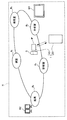
- FIG. 1 is a schematic diagram showing an entire hospital H including a medical information display system 1 according to the present embodiment.
- the hospital H has a plurality of rooms according to purposes such as examinations and examinations.
- FIG. 1 shows a hospital room R 1 , an examination room R 2 , an operating room R 3 , an examination room R 4 , and a medical office R 5 .
- an external display device is arranged in some rooms.
- large monitor M1 is arranged in the operating room R 3.
- On the large monitor M1 an image to be referred to at the time of surgery and an actual surgery image are displayed.
- the high-resolution monitor M2 is disposed in the medical office R 5.
- the high-definition monitor M2, image, etc. obtained in laboratory R 2 is displayed for the interpretation.
- the room where the external display device is arranged is not limited to these rooms.
- the external display device (large monitor M1 and high-definition monitor M2) in the present embodiment is an example of a “display device”. Further, “external” of the external display device indicates that the device is provided in addition to the portable terminal 10.
- the portable terminal 10 is a tablet PC or the like (mobile terminal) carried by the operator S.
- the operator S is a doctor or the like who uses the portable terminal 10 (hereinafter, a doctor will be described as an example of the operator S).
- a doctor will be described as an example of the operator S.
- the doctor When moving in the hospital H, the doctor carries the portable terminal 10 and uses it in each room. Details of the portable terminal 10 will be described later.
- the server device 20 manages a plurality of applications and medical information in a thin client environment. Details of the server device 20 will be described later.
- the server device 20 may be provided outside the hospital H.
- the portable terminal 10 and the server device 20 are communicably connected via a network such as a LAN (Local Area Network).
- the communication preferably conforms to DICOM (Digital Imaging and Communications in Medicine) which is a standard for medical images, but other standards may be applied as appropriate.
- Information communication is industry standard TCP / IP (Transmission Control Protocol / Internet Protocol) communication, and data is exchanged in packets (basic unit of information to be transferred) via the network.
- TCP / IP Transmission Control Protocol / Internet Protocol
- data is exchanged in packets (basic unit of information to be transferred) via the network.
- the portable terminal 10 and the server device 20 in this embodiment are examples of a “medical information display system”.
- the portable terminal 10 in the present embodiment includes a position information calculation unit 10a, a transmission / reception unit 10b, a display unit 10c, and an operation unit 10d.
- the position information calculation unit 10 a acquires position information by calculating position information indicating the current location of the portable terminal 10.
- the current location is a position of the portable terminal 10 in the hospital H (a place where a doctor carrying the portable terminal 10 is present).
- the position information calculation unit 10a calculates position information as a three-dimensional coordinate value using GPS (Global Positioning System). Specifically, the position information calculation unit 10a receives signals from a plurality of satellites (not shown), and determines the distance to each satellite based on the signals, whereby the three-dimensional coordinates of the portable terminal 10 are obtained. Calculate the value.
- the calculation of the position information may be performed continuously or may be performed every predetermined time set in advance. The calculation of position information is not limited to using GPS.
- the location information calculation unit 10a may calculate location information based on a signal from a radio base station.
- the position information calculation unit 10a may calculate the position information based on an identification signal from an RF tag provided for each room.
- the RF tag stores room position information (three-dimensional coordinate values) in advance.
- the position information calculation unit 10a in the present embodiment is an example of a “position information acquisition unit”. Note that the position information is not limited to that obtained by calculating as described above.
- the transmission / reception unit 10 b transmits and receives signals and data between the portable terminal 10 and the server device 20.
- the transmission / reception unit 10b transmits the position information calculated by the position information calculation unit 10a to the server device 20.
- the medical information transmitted from the server device 20 is received.
- the medical information is information indicating data related to the patient, such as an electronic medical record, examination information, and a medical image.
- the medical information includes at least one of an electronic medical record, examination information, and a medical image.
- the medical information can include any information used in the hospital H as a medical institution.
- the transmission / reception unit 10b in the present embodiment is an example of a “medical information acquisition unit”.
- the transmission of the position information may be performed according to the acquisition timing of the position information, or the position information may be temporarily stored in a memory (not shown) and the stored position information may be transmitted at a predetermined timing. .
- a configuration in which the server device 20 retrieves position information stored in a memory (not shown) at a predetermined timing is also possible.
- the display unit 10 c is a display that displays medical information and the like transmitted from the server device 20.
- the display unit 10c in the present embodiment is an example of a “display device”.
- the operation unit 10d is used as an input device for inputting instructions to the portable terminal 10.
- the operation unit 10d is composed of, for example, a keyboard, a mouse, a trackball, a joystick, and the like.
- a GUI Graphic User Interface
- displayed on the display unit 10c can be used as the operation unit 10d.
- the server device 20 in the present embodiment includes a storage unit 20a, a specifying unit 20b, a search unit 20c, a display control unit 20d, and a transmission / reception unit 20e.
- the storage unit 20a is configured by a semiconductor storage device such as a RAM or a ROM.
- the storage unit 20a is associated with a room in the hospital H, and is displayed by a plurality of applications for setting the type of medical information to be displayed on the display device and executing predetermined medical information processing, and applications Setting information for setting a display mode of medical information to be stored is stored.
- the application is software for setting the type of medical information to be displayed on the display device (what kind of medical information is displayed on the display device) and executing predetermined medical information processing.
- Medical information processing includes processing for creating medical information by receiving input of new information such as examination information and doctor findings, processing for updating the contents of already registered medical information, and already registered medical information. There is processing to process.
- the storage unit 20a stores a plurality of applications associated with rooms in the hospital H. For example, the storage unit 20a as an application for the hospital room R 1 software that can be displayed on the display device an electronic medical record and a medical image are stored in association with the coordinate values of the hospital room R 1.
- the storage unit 20a is a software that enables input of information findings of the input and doctors patient information such as patient's body temperature and blood pressure as an application for hospital room R 1, association with the coordinate values of the hospital room R 1 May be remembered. In this case, doctors and nurses, etc., it is possible to create such as medical information by entering the information of the patient in the patient's body temperature and blood pressure Island in the hospital room R 1. Furthermore, the storage unit 20a, as the application for the operating room R 3 software that allows displaying the examination information and the medical image on the display device, are stored in association with the coordinate values of the operating room R 3.
- the application in the present embodiment is an example of a “medical information processing application”.
- the setting information is information for setting the display mode of medical information displayed by the application (how to display medical information).
- the storage unit 20a stores setting information for displaying examination information on the display unit 10c and displaying a medical image on the large monitor M1.
- the storage unit 20a stores setting information of a plurality of patterns for setting different display modes. The doctor can select setting information for setting a predetermined display mode from a plurality of patterns via the operation unit 10d and the like. Alternatively, specific setting information may be set in advance for each room.
- the storage unit 20a may store a plurality of applications corresponding to the type of medical information to be displayed.
- the medical information can be displayed on the display device in correspondence with the display specific to the medical information by each application.
- the storage unit 20a stores installation information indicating whether or not an external display device is installed in a room in the hospital H.
- the storage unit 20a also stores medical information of a plurality of patients, positions (coordinate values) of rooms in the hospital H, and the like.
- the specifying unit 20b receives the position information and specifies the room where the portable terminal 10 is located. Specifically, the specifying unit 20b includes the position information (three-dimensional coordinate values) calculated by the position information calculation unit 10a and the position of each room of the hospital H stored in the storage unit 20a (having a predetermined area). And the room corresponding to the region including the position information is specified as the room where the portable terminal 10 is located. That is, the room in which the portable terminal 10 is located can include an area near the room.
- the search unit 20c searches the storage unit 20a for an application associated with the specified room. Specifically, the search unit 20c selects a dedicated application having the same coordinate value as the coordinate value of the room specified by the specifying unit 20b from a plurality of applications in the storage unit 20a.
- the search unit 20c searches for the presence / absence of installation of an external display device in the specified room based on the installation information. Specifically, the search unit 20c reads installation information corresponding to the room specified by the specifying unit 20b from the storage unit 20a, and determines whether there is an external display device in the specified room.
- the display control unit 20d executes the searched application and causes the display device to display the processing result or medical information of the application in a predetermined display mode based on the setting information. More specifically, when an external display device is installed in the specified room, the display control unit 20d displays the processing result or medical information of the searched application on the external display device and the display unit 10c, and specifies If no external display device is installed in the room, the processing result of the searched application or medical information is displayed on the display unit 10c.
- the processing result of the application in this embodiment is the result of medical information processing.
- medical information processing is processing that creates new medical information by receiving input of new information such as examination information or doctor's findings
- the processing result of the application is the new information that has been accepted or the created medical information. is there.
- the processing result of the application is the updated medical information.
- the processing result of the application is the processing result of the medical information.
- the display control unit 20d reads the application for operating room R 3 retrieved by the search unit 20c (applications for displaying examination information and a medical image) from the storage unit 20a.
- the display control unit 20d receives a search result on the presence / absence of an external display device in the specified room from the search unit 20c, and displays a large monitor M1 and a portable terminal as a display device for displaying medical information (examination information or medical image).
- Ten display units 10c are specified.
- the display control unit 20d executes the read application on the large monitor M1 and the display unit 10c of the portable terminal 10 and performs a predetermined display mode based on the setting information selected via the operation unit 10d and the like.
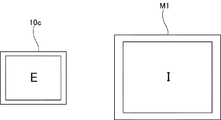
- a predetermined display mode the display control unit 20d displays the medical image I on the large monitor M1 and displays the examination information E on the display unit 10c (see FIG. 4A).
- the display control unit 20d can display medical information on only one of the display devices by selecting a predetermined display mode even when an external display device is installed. .
- the display control unit 20d either or large monitors M1 is in fact ready for use (or large monitors M1 from the operating room R 3 is not moved, large monitor M1 has not failed before the above operation Etc.) is preferably confirmed.
- the display control unit 20d sends the confirmation signal to the external display device in the specified room, and executes the above operation when confirmation is obtained by detecting a response to the confirmation signal.
- the display control unit 20d can check whether there is an external display device in the specified room each time the above operation is performed without using the installation information.
- the display control unit 20d reads the application for hospital room R 1 retrieved by the search unit 20c (application for displaying a medical image and an electronic medical record) from the storage unit 20a.
- the display control unit 20d receives a search result of the presence or absence of an external display device in the specified room from the search unit 20c, and displays the medical information (medical image or electronic medical record) as a display unit of the portable terminal 10 Only 10c is specified.
- the display control unit 20d executes the read application on the display unit 10c of the portable terminal 10, and displays the medical image and the medical image in a predetermined display mode based on the setting information selected via the operation unit 10d and the like.
- Display electronic medical records For example, the display control unit 20d displays the electronic medical chart C on the display unit 10c as a predetermined display mode. Then, the display control unit 20d switches the electronic medical chart C to the medical image I based on an instruction input from the operation unit 10d or the like (see FIG. 4B).
- the display control unit 20d reads the application for hospital room R 1 retrieved by the search unit 20c (applications for updating medical information) from the storage unit 20a.
- the display control unit 20d receives a search result of the presence or absence of an external display device in the specified room from the search unit 20c, and displays the medical information (medical image or electronic medical record) as a display unit of the portable terminal 10 Only 10c is specified.
- the display control unit 20d executes the read application on the display unit 10c of the portable terminal 10, and displays the medical image and the medical image in a predetermined display mode based on the setting information selected via the operation unit 10d and the like.
- the electronic medical record is displayed, the input of patient information (body temperature, blood pressure, etc.) via the operation unit 10d is accepted, the medical information is updated, and the display content is updated.
- the display control unit 20d displays the application being executed. Terminate. Then, the display control unit 20d executes an application associated with the room specified based on the new position information.
- the display control unit 20d switches to another setting information based on an instruction input from the operation unit 10d, and in a display mode based on the setting information. It is also possible to display a medical image (change the display mode of medical information displayed earlier). That is, the operation unit 10d can be used to select arbitrary setting information from a plurality of setting information.
- the transmission / reception unit 20e transmits and receives signals and data between the portable terminal 10 and the server device 20. For example, when the doctor inputs the patient ID of the patient in the specified room using the operation unit 10d or the like, the display control unit 20d reads medical information corresponding to the input patient ID from the storage unit 20a. The transmission / reception unit 20 e transmits the read medical information to the portable terminal 10. The transmitted medical information is displayed on the display unit 10c based on the control of the display control unit 20d.
- the doctor carries the portable terminal 10 and moves in the hospital H according to the schedule planned in advance.
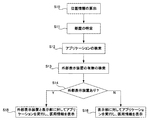
- the location information calculation unit 10a calculates location information indicating the current location of the portable terminal 10 using GPS (S10).
- the transmission / reception unit 10 b transmits the calculated position information to the server device 20.
- the specifying unit 20b receives the position information calculated in S10, and specifies a room in the hospital H corresponding to the position information (S11).
- the search unit 20c searches the storage unit 20a for an application associated with the room specified in S11 (S12).
- the search unit 20c searches whether or not an external display device is installed in the room specified in S11 (presence / absence of installation) based on the installation information stored in the storage unit 20a (S13). Note that S12 and S13 may be performed simultaneously or in the reverse order.
- the display control unit 20d compared large monitors M1 and a display unit 10c, the search in S12
- the executed application is executed to display medical information (for example, examination information and medical image) in a predetermined display mode based on the setting information (S15).
- the display control unit 20d is to the display unit 10c, is searched in S12
- the application is executed, and medical information (for example, medical images and electronic medical records) is displayed in a predetermined display mode based on the setting information (S16).
- the display control unit 20d reads the medical information corresponding to the input patient ID from the storage unit 20a, and the large monitor M1 and the display unit 10c (or only the display unit 10c) are displayed.
- an application processing result may be displayed.
- the structure of the portable terminal 10 and the server apparatus 20 is not restricted above.
- the display control unit 20d for starting the application can be provided on the portable terminal 10 side. That is, the medical information display system 1 in the present embodiment is not limited to a thin client system.
- the medical information display system 1 includes a position information calculation unit 10a, a storage unit 20a, a specifying unit 20b, a search unit 20c, and a display control unit 20d.
- the position information calculation unit 10 a calculates position information indicating the current location of the portable terminal 10.
- the storage unit 20a stores a plurality of applications that are associated with a room in the hospital H and set the type of medical information to be displayed on the display device, and setting information that sets the display mode of the medical information displayed by the application. To do.
- the specifying unit 20b receives the position information and specifies the room where the portable terminal 10 is located.
- the search unit 20c searches the storage unit 20a for an application associated with the specified room.
- the display control unit 20d executes the searched application and causes the display device to display medical information in a predetermined display mode based on the setting information.
- the application associated with the room where the portable terminal 10 is located is automatically executed based on the position information of the portable terminal 10, and the medical information is displayed on the display device. Can be displayed. Therefore, it is not necessary for a doctor or the like to execute a necessary application each time in a destination room. That is, according to the medical information display system 1 according to the present embodiment, it is possible to easily perform display control according to the location where the portable terminal 10 is located.
- the medical information display system 1 includes a portable terminal 10 and a server device 20 connected to the portable terminal 10 so as to be communicable.
- the portable terminal 10 includes a position information calculation unit 10a.
- the position information calculation unit 10 a calculates position information indicating the current location of the portable terminal 10.
- the server device 20 includes a storage unit 20a, a specifying unit 20b, a search unit 20c, and a display control unit 20d.
- the storage unit 20a stores a plurality of applications that are associated with a room in the hospital H and set the type of medical information to be displayed on the display device, and setting information that sets the display mode of the medical information displayed by the application. To do.
- the specifying unit 20b receives the position information and specifies the room where the portable terminal 10 is located.
- the search unit 20c searches the storage unit 20a for an application associated with the specified room.
- the display control unit 20d executes the searched application and causes the display device to display medical information in a predetermined display mode based on the setting information.
- the so-called thin client type medical information display system 1 in which the portable terminal 10 used by a doctor or the like performs the minimum necessary processing and the server device 20 performs other processing is also used. It becomes possible to easily perform display control according to the place where the is located.
- the display device includes an external display device (a large monitor M1, a high-definition monitor M2, etc.) provided in a room in the hospital H and a display unit 10c of the portable terminal 10. It is.
- the storage unit 20a stores installation information indicating whether or not an external display device is installed in the room.
- the search unit 20c searches for the presence / absence of installation of the external display device in the specified room based on the installation information.
- the display control unit 20d displays the medical information on the external display device and the display unit 10c, and the external display device is not installed in the specified room. In this case, the medical information is displayed on the display unit 10c.
- the searched application can be executed and medical information can be displayed on the display device according to the presence or absence of the external display device. Therefore, even if there is an external display device such as a large monitor in the destination room, there is no need to log in to a new dedicated terminal. That is, according to the medical information display system 1 according to the present embodiment, it is possible to easily perform display control according to the location where the portable terminal 10 is located.
- the medical information display system 1 includes a storage unit 20a, a transmission / reception unit 10b, a specifying unit 20b, and a display control unit 20d.
- the storage unit 20a stores an application (medical information processing application) for displaying a processing result or medical information on the display device in each room in the hospital in association with the room in the hospital.
- the transmission / reception unit 10b acquires medical information to be displayed on the display device.
- the specifying unit 20b specifies the room where the portable terminal 10 is located.
- the display control unit 20d executes an application associated with the room specified by the specifying unit 20b, and displays the processing result or medical information on the display device by executing the application.
- the medical information display system 1 may include a position information calculation unit 10a (position information acquisition unit).
- the position information calculation unit 10 a acquires position information indicating the current location of the portable terminal 10.
- the specifying unit 20b specifies the room in which the portable terminal 10 is located based on the position information acquired by the position information calculating unit 10a.
- the portable terminal 10 may include a display unit 10c.
- the display unit 10c displays the processing result of the application or medical information.
- the display control unit 20d displays the processing result or the medical information on the display unit 10c.
- the storage unit 20a stores installation information of the display device installed in the room corresponding to the room
- the display control unit 20d stores the specified room.
- the processing result or medical information may be displayed on the display device.
- the storage unit 20a may store a plurality of applications corresponding to the types of medical information to be displayed.
- the medical information may include at least one of an electronic medical record, examination information, and a medical image.
- the display device includes a plurality of display devices
- the display control unit includes a plurality of display devices that display the medical information according to the type of medical information to be displayed. It may be specified from among the display devices, and the processing result or medical information may be displayed on the specified display device.
- the server device 20 includes a storage unit 20a, a specifying unit 20b, a search unit 20c, a display control unit 20d, and a transmission / reception unit 20e.
- the storage unit 20a in the present embodiment stores medical information associated with a room in the hospital H.
- the storage unit 20a stores in association with medical information about the patients admitted to the hospital room R 1 to the coordinate values of the hospital room R 1.
- the search unit 20c searches the storage unit 20a for medical information associated with the identified room. Specifically, the search unit 20c selects medical information having the same coordinate value as the specified room coordinate value from a plurality of pieces of medical information stored in the storage unit 20a.
- the display control unit 20d causes the display device to display the searched medical information based on the type of medical information set in the searched application. For example, the case where the patient A is hospitalized in the hospital room R 1 where no external display device is installed will be described. In this case, when the hospital room R 1 is identified as a room portable terminal 10 is located, the display control unit 20d is to the display unit 10c of the portable terminal 10, the application (medical images and electronic medical record in the hospital room R 1 Execute the application to be displayed. Then, the display control unit 20d causes the display unit 10c to display the retrieved medical information (electronic medical record or medical image) of the patient A based on the executed application.
- the display control unit 20d causes the display unit 10c to display the retrieved medical information (electronic medical record or medical image) of the patient A based on the executed application.
- doctors who make rounds may visit multiple hospital rooms.
- the type of medical information required is determined. That is, since the application used in each hospital room is the same, it is desirable to execute it as it is.
- the display control unit 20d displays the medical information displayed on the display unit 10c. It is also possible to delete only the information. In this case, the display control unit 20d causes the display unit 10c to display medical information associated with the room specified based on the new position information. Thereby, the inconvenience that the medical information of the patient in the previous hospital room is touched by the patient in the previous hospital room can be prevented.
- the doctor carries the portable terminal 10 and visits a plurality of hospital rooms in accordance with a scheduled schedule.
- the location information calculation unit 10a calculates location information indicating the current location of the portable terminal 10 using GPS (S20).
- the transmission / reception unit 10 b transmits the calculated position information to the server device 20.
- Specifying unit 20b receives the position information calculated by the S20, it specifies a hospital room R 1 corresponding to the position information (S21).
- Searching section 20c searches the application associated with the hospital room R 1 identified in S21 (the application for displaying the medical images and electronic medical records) from the storage unit 20a (S22).
- the search unit 20c searches whether or not an external display device is installed in the room specified in S21 (presence / absence of installation) based on the installation information stored in the storage unit 20a (S23).
- S21 Presence / absence of installation
- S23 installation information stored in the storage unit 20a
- the search unit 20c searches the medical information associated with the hospital room R 1 identified in S21 (i.e., the electronic medical record and a medical image of a patient admitted to a hospital room R 1) (S24). Note that S22 to S24 may be performed simultaneously or in an arbitrary order.
- the display control unit 20d executes the application searched in S22, and displays the medical information searched in S24 on the display unit 10c based on the type of medical information set in the application (S25).
- the search unit 20c searches for new medical information associated with the specified new room R 1 ′ (S27).
- the display control unit 20d displays the medical information searched in S27 on the display unit 10c based on the type of medical information set in the application searched in S22 (S28).
- the storage unit 20a stores medical information associated with a room in the hospital H.
- the search unit 20c searches for medical information associated with the specified room.
- the display control unit 20d causes the display device to display the searched medical information based on the type of medical information set in the searched application.
- the medical information associated with the room in which the portable terminal 10 is located can be automatically displayed based on the position information of the portable terminal 10. Therefore, it is not necessary for the doctor to display necessary medical information each time in the destination room. That is, according to the medical information display system 1 according to the present embodiment, it is possible to easily perform display control according to the location where the portable terminal 10 is located.
- the storage unit 20a stores medical information associated with a room in the hospital, and the transmission / reception unit 10b (medical information acquisition unit) is stored in the specified room.
- the associated medical information may be acquired from the storage unit 20a.
- the server device 20 includes a storage unit 20a, a specifying unit 20b, a search unit 20c, a display control unit 20d, and a transmission / reception unit 20e.
- the storage unit 20a in the present embodiment stores a plurality of applications associated with both the room in the hospital H and the operator of the portable terminal 10, as shown in FIG. In other words, the storage unit 20 a stores a plurality of applications associated with combinations of rooms in the hospital H and operators of the portable terminal 10.
- the operator of the portable terminal 10 is specified by the login ID of the portable terminal 10.
- a user attribute and a sub attribute are assigned in advance to the login ID.
- the user attribute D represents “doctor”
- the user attribute T represents “engineer”
- the user attribute N represents “nurse”.
- “Doctor” is classified into, for example, an attending doctor (sub-attribute D1) and a trainee (sub-attribute D2) according to the sub-attribute.
- “engineer” is divided into sub-attributes T1 and T2, for example, and “nurse” is divided into sub-attributes N1 and N2.
- Storage unit 20a stores associated with sub-attributes associated with the operator of the portable terminal 10 for each room, such as a hospital room R 1 and laboratory R 2 applications.
- FIG. 7 illustrates the hospital room R 1 and the examination room R 2 , the same applies to the operating room R 3 , the examination room R 4 , and the medical office R 5 . Therefore, the application associated with the login ID of the portable terminal 10 can be specified from the storage unit 20a.
- the transmission / reception unit 10 b transmits the login ID of the portable terminal 10 together with the position information to the server device 20.
- the specifying unit 20b receives the position information and specifies the room where the portable terminal 10 is located. Further, the search unit 20c receives the login ID, and searches the storage unit 20a for an application associated with both the room specified by the specifying unit 20b and the user attribute and sub-attribute associated with the login ID. The display control unit 20d executes the application searched by the search unit 20c, and displays the processing result or the medical information on the display device by executing the application.
- the doctor carries the portable terminal 10 logged in in advance, and visits a plurality of hospital rooms according to a schedule planned in advance.
- the location information calculation unit 10a calculates location information indicating the current location of the portable terminal 10 using GPS (S30).
- the transmission / reception unit 10 b transmits the calculated position information and the login ID of the doctor who has logged into the portable terminal 10 to the server device 20.
- Specifying unit 20b receives the position information calculated by the S30, it specifies a hospital room R 1 corresponding to the position information (S31).
- the search unit 20c Upon receiving the login ID transmitted by the portable terminal 10 in S30, the search unit 20c specifies an operator corresponding to the login ID (S32). In this embodiment, user attributes and sub attributes associated with the operator are specified.
- Searching section 20c searches the application associated with both the user attributes and sub-attributes identified in hospital room R 1 and S32 identified in S31 (the application for displaying the medical images and electronic medical records) from the storage unit 20a (S33).
- the search unit 20c searches whether or not an external display device is installed in the room specified in S31 (presence / absence of installation) based on the installation information stored in the storage unit 20a (S34).
- the display control unit 20d executes the application searched in S33, and displays the processing result or medical information of the application on the display device or the external display device based on the installation information searched in S34 (S35).
- FIG. 8 demonstrated the case where a doctor looks around a several hospital room while carrying the portable terminal 10 which logged in beforehand, it is not limited to this.
- the portable terminal 10 sends the login ID together with the position information to the server device 20, so that the application associated with both the room in the hospital H and the operator can be executed each time. .
- the storage unit 20a stores an application associated with both the room specified by the specifying unit 20b and the operator of the portable terminal 10.
- the display control unit 20d executes an application associated with both the room specified by the specifying unit 20b and the operator of the portable terminal 10, and displays the processing result or medical information of the application by executing this application. Display on the device.
- an application corresponding to the operator of the portable terminal 10 can be executed for the room specified by the specifying unit 20b. This eliminates the need for a doctor or the like to execute a necessary application each time in a destination room. That is, according to the medical information display system 1 according to the present embodiment, it is possible to easily perform display control according to the location where the portable terminal 10 is located and the operator.
- ⁇ Modification> For example, when a plurality of patients are hospitalized in one hospital room, the configuration of the second embodiment cannot specify the medical information for each person.
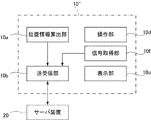
- the portable terminal 10 ′ includes a position information calculation unit 10a, a transmission / reception unit 10b, a display unit 10c, an operation unit 10d, and a patient ID acquisition unit 10e.
- the patient ID acquisition unit 10e acquires the patient ID when the patient ID is input by a doctor or the like using the operation unit 10d.
- the transmission / reception unit 10b transmits the patient ID together with the position information to the server device 20.
- the search unit 20c searches for medical information corresponding to the patient ID input from the medical information associated with the specified room.
- the display control unit 20d causes the display device to display the searched medical information (medical information only on the target patient).
- the patient ID acquisition unit 10e is not limited to the one that acquires the patient ID by inputting the patient ID via the operation unit 10d.
- the patient ID acquisition unit 10e may acquire the patient ID by reading a barcode or the like for specifying the patient.
- the search unit 20c based on the identification signal from the RF tag provided to the patient (subject), medical information corresponding to the identification signal from the medical information of a plurality of patients associated with the specified room. It is also possible to search.
- the portable terminal 10 ′′ includes a position information calculation unit 10a, a transmission / reception unit 10b, a display unit 10c, an operation unit 10d, and a signal acquisition unit 10f.
- the signal acquisition unit 10f acquires an identification signal from an RF tag provided on a patient (subject).
- the signal acquisition unit 10f detection unit
- the transmission / reception unit 10b sends the received identification signal to the server device 20 together with the position information.
- the identification signal sent to the server device 20 is sent to the search unit 20c.
- the search unit 20c searches for medical information of the patient corresponding to the identification signal from the medical information associated with the specified room.
- the display control unit 20d displays only the medical information of the patient corresponding to the identification signal on the display device.
- the transmission / reception unit 10b transmits the new patient identification signal detected by the signal acquisition unit 10f to the server device 20.
- the display control unit 20d receives a new patient identification signal, the display control unit 20d erases the currently displayed medical information and causes the display device to display the new patient medical information searched by the search unit 20c.
- the identification signal of the RF tag even when the position information of the portable terminal 10 ′′ is the same, only specific medical information can be easily obtained from a plurality of pieces of medical information associated with the position. Can be taken out.
- the medical information displayed earlier is automatically deleted, so that the inconvenience that the medical information of a patient can be seen by another patient can be solved.
- the work list indicates the work contents in time series in order to manage the work performed by the doctor (operator). For each work described in the work list, a scheduled time for performing the work is set.
- the created work list is stored in the storage unit 20a of the server device 20, for example. The doctor can refer to his / her work list at any time by accessing the server device 20 from the portable terminal 10 (portable terminal 10 ′, portable terminal 10 ′′).
- the search unit 20c can search medical information corresponding to the time from the medical information associated with the specified room based on the time indicated in the work list. For example, it is assumed that the patient's round visit time in the room R 1 is set to 14:30, the patient's round visit time is 14:45, and the patient's round visit time is 15:00 in the work list. If the current time is 14:45, the search unit 20c searches for the medical information of a specific patient from the medical information associated with the specified room at the current time (14:45). Based on this, the patient's medical information is retrieved. The display control unit 20d causes the display device to display only the retrieved medical information of the patient B.
- the specifying unit 20b can also specify the room where the portable terminal 10 (portable terminal 10 ′, portable terminal 10 ′′) is located without receiving position information.
- the portable terminal 10 portable terminal 10 ′, portable terminal 10 ′′ located in the room in each room is detected, and the portable terminal 10 (portable terminal 10) is detected from each room to the server device 20.
- the detection result of the portable terminal 10 ′′) may be sent.
- the portable terminal 10 portable terminal 10 ′, portable terminal 10 ′′
- the portable terminal 10 is provided with a transmitter that transmits its own identification signal.
- the specifying unit 20b specifies the room in which the portable terminal 10 (portable terminal 10 ′, portable terminal 10 ′′) is located based on the detection result from each room. Even in this case, it is not limited to the detection means which detects whether the portable terminal 10 (portable terminal 10 ', portable terminal 10 ") entered into the room.
- each portable terminal may be included in each portable terminal instead of the server device.
- a transmitter for transmitting room identification information such as a room number for identifying the room is provided in each room, preferably near the entrance, and each portable terminal receives the room identification information from the transmitter. It is possible to identify the room.
- the storage unit 20a included in the server device 20 stores the medical information processing application associated with the room.
- each portable terminal is not a server device but a storage unit corresponding to the storage unit 20a. You may make it have.
- the medical information processing application and each room are directly associated with each other.
- application identification information such as an application ID for identifying the medical information processing application may be associated with each room.
- the medical information processing application is stored in association with the application identification information.
Landscapes
- Health & Medical Sciences (AREA)
- Engineering & Computer Science (AREA)
- Business, Economics & Management (AREA)
- General Business, Economics & Management (AREA)
- Biomedical Technology (AREA)
- Epidemiology (AREA)
- General Health & Medical Sciences (AREA)
- Medical Informatics (AREA)
- Primary Health Care (AREA)
- Public Health (AREA)
- Medical Treatment And Welfare Office Work (AREA)
- Stored Programmes (AREA)
Abstract
可搬型端末が位置する場所に応じた表示制御を容易に行う技術を提供する。実施形態に記載の医用情報表示システムは、記憶部と、医用情報取得部と、特定部と、表示制御部とを有する。記憶部は、病院内で表示装置に処理結果又は医用情報を表示させる医用情報処理アプリケーションを病院内の部屋に対応付けて記憶する。医用情報取得部は、表示装置に表示させる医用情報を取得する。特定部は、可搬型端末が位置する部屋を特定する。表示制御部は、特定部により特定された部屋に対応付けられた医用情報処理アプリケーションを実行し、医用情報処理アプリケーションを実行することにより処理結果又は医用情報を表示装置に表示させる。
Description
本発明の実施形態は、医用情報表示システム、サーバ装置、及び可搬型端末に関する。
近年、医療分野においては、可搬型端末(タブレットPC等)の病院内での利用が急速に普及し始めている。病院内において、医師は、可搬型端末を携帯し、病室や手術室等で利用する。
一方、各病院は、シンクライアント方式の院内システムを構築している場合が多くなってきている。院内システムにおいて、病院内の様々な医用情報(電子カルテ、検査情報、医用画像等)は医用情報処理用のアプリケーションで表示される。各アプリケーション及び医用情報は、サーバ装置に格納される。この場合、可搬型端末は、シンクライアント端末としてサーバ装置にアクセスし、各アプリケーション及び医用情報を利用できるようになっている。
また、医局でのカンファレンス等では、多人数でのディスカッションが必要となる。よって、医局に設けられている大型モニタやプロジェクタ(外部出力機器)へ電子カルテや医用画像を出力して表示させることが行われる。可搬型端末は、それら外部出力機器に対して有線若しくは無線通信にて電子カルテ等を出力する。
可搬型端末の登場により、医師は、病院内の様々な場所から院内システムにアクセスすることが可能となった。しかし、可搬型端末を使用する医師が用いるアプリケーションや医用情報は使用場所(検査室、手術室等)毎に異なる。よって、可搬型端末の使用場所を変える度に、アプリケーションや医用情報の切り替えを手動で行う必要がある。このような作業は、医師等の可搬型端末を所持する者にとって煩雑であるという問題がある。
また、病室への回診時には、その病室の患者の電子カルテ及び検査結果等が、入室した時点で準備されていることが回診を行う効率の点で望ましい。しかし、医師は、複数の病室(複数の入院患者)を回診するため、病室毎(或いは入院患者毎)に電子カルテ等の切り替えを行わなければならない。ここで、電子カルテ等の切り替えは、入院患者の問診中や病室間の移動中等に行うことは困難である。よって、電子カルテ等の切り替えは、実際には病室に到着した後(或いは、問診する入院患者が変わる度)に手動で行う必要がある。このような作業は、可搬型端末を所持する者(医師等)にとって煩雑であるという問題がある。
更に、医局でのカンファレンスのように、外部出力機器が要求されるケース等、可搬型端末以外の装置を使用する場合、専用端末にログインし直す等の作業が必要となる。このような作業は、可搬型端末を所持する者(医師等)にとって煩雑であるという問題がある。
実施形態は、前述の問題点を解決するためになされたもので、可搬型端末が位置する場所に応じた表示制御を容易に行う技術を提供することを目的とする。
上記課題を解決するために、実施形態に記載の医用情報表示システムは、記憶部と、医用情報取得部と、特定部と、表示制御部とを有する。記憶部は、病院内で表示装置に処理結果又は医用情報を表示させる医用情報処理アプリケーションを病院内の部屋に対応付けて記憶する。医用情報取得部は、表示装置に表示させる医用情報を取得する。特定部は、可搬型端末が位置する部屋を特定する。表示制御部は、特定部により特定された部屋に対応付けられた医用情報処理アプリケーションを実行し、医用情報処理アプリケーションを実行することにより処理結果又は医用情報を表示装置に表示させる。
また、上記課題を解決するために、実施形態に記載のサーバ装置は、記憶部と、特定部と、表示制御部とを有する。記憶部は、病院内で表示装置に処理結果又は医用情報を表示させる医用情報処理アプリケーションを病院内の部屋に対応付けて記憶する。特定部は、可搬型端末が位置する部屋を特定する。表示制御部は、特定部により特定された部屋に対応付けられた医用情報処理アプリケーションを実行し、医用情報処理アプリケーションを実行することにより処理結果又は医用情報を表示装置に表示させる。
また、上記課題を解決するために、実施形態に記載の可搬型端末は、位置情報取得部と、表示部とを有する。位置情報取得部は、現在地を示す位置情報を取得する。表示部は、病院内の各部屋で表示装置に処理結果又は医用情報を表示させる複数の医用情報処理アプリケーションのうち、位置情報に基づいて検索された医用情報処理アプリケーションが実行されることにより処理結果又は医用情報を表示する。
<第1実施形態>
図1から図5を参照して、第1実施形態に係る医用情報表示システム1の構成について述べる。医用情報表示システム1は、可搬型端末10と、サーバ装置20とを含んで構成されている。本実施形態では、可搬型端末10がサーバ装置20にアクセスし、サーバ装置20側で様々な処理を行うシンクライアント方式を例に説明する。
図1から図5を参照して、第1実施形態に係る医用情報表示システム1の構成について述べる。医用情報表示システム1は、可搬型端末10と、サーバ装置20とを含んで構成されている。本実施形態では、可搬型端末10がサーバ装置20にアクセスし、サーバ装置20側で様々な処理を行うシンクライアント方式を例に説明する。
[医用情報表示システムの全体構成]
図1は、本実施形態に係る医用情報表示システム1を含む病院H全体を示す概略図である。
図1は、本実施形態に係る医用情報表示システム1を含む病院H全体を示す概略図である。
病院Hには、診察や検査等、目的に応じた複数の部屋がある。一例として、図1には病室R1、検査室R2、手術室R3、診察室R4、医局R5を示している。
ここで、部屋によっては、外部表示装置が配置されている。たとえば、手術室R3には大型モニタM1が配置されている。大型モニタM1には、手術の際に参照すべき画像や、実際の手術画像が表示される。また、医局R5には高精細モニタM2が配置されている。高精細モニタM2には、検査室R2で得られた画像等が読影用として表示される。なお、外部表示装置が配置される部屋はこれらの部屋に限られない。本実施形態における外部表示装置(大型モニタM1及び高精細モニタM2)は、「表示装置」の一例である。また、外部表示装置の「外部」とは、可搬型端末10の他に設けられている機器であることを示している。
可搬型端末10は、操作者Sが携帯するタブレットPC等(携帯端末)である。操作者Sは、可搬型端末10を使用する医師等である(以下、操作者Sとして医師を例に説明する)。病院H内を移動する際、医師は可搬型端末10を携帯し、各部屋で利用する。可搬型端末10の詳細については後述する。
サーバ装置20は、シンクライアント環境下において、複数のアプリケーションや医用情報を管理している。サーバ装置20の詳細については後述する。なお、サーバ装置20は、病院Hの外部に設けられていてもよい。
可搬型端末10及びサーバ装置20間はLAN(Local Area Network)等のネットワークを介して通信可能に接続されている。通信は、医用画像の標準規格であるDICOM(Digital Imaging and Communications in Medicine)に準拠することが望ましいが、適宜、他の標準規格を適用してもよい。情報通信は、業界標準規格のTCP/IP(Transmission Control Protocol/Internet Protocol)通信で、データはネットワークを介してパケット(転送する情報の基本単位)でやり取りされる。本実施形態における可搬型端末10及びサーバ装置20は、「医用情報表示システム」の一例である。
[可搬型端末10の構成]
図2に示すように、本実施形態における可搬型端末10は、位置情報算出部10aと、送受信部10bと、表示部10cと、操作部10dとを有する。
図2に示すように、本実施形態における可搬型端末10は、位置情報算出部10aと、送受信部10bと、表示部10cと、操作部10dとを有する。
位置情報算出部10aは、可搬型端末10の現在地を示す位置情報を算出することにより位置情報を取得する。現在地とは、病院H内における可搬型端末10の位置(可搬型端末10を携帯する医師がいる場所)である。本実施形態において、位置情報算出部10aは、GPS(Global Positioning System)を利用して位置情報を三次元の座標値として算出する。具体的には、位置情報算出部10aは、複数の衛星(図示無し)からの信号を受信し、その信号に基づいて、各衛星との距離を割り出すことにより、可搬型端末10の三次元座標値を算出する。位置情報の算出は、連続的に行われてもよいし、予め設定された所定時間毎に行われてもよい。なお、位置情報の算出は、GPSを利用することに限られない。たとえば、位置情報算出部10aは、無線基地局からの信号に基づいて位置情報を算出してもよい。或いは、位置情報算出部10aは、部屋毎に設けられたRFタグからの識別信号に基づいて位置情報を算出してもよい。この場合、RFタグは、予め部屋の位置情報(三次元座標値)を記憶している。本実施形態における位置情報算出部10aは、「位置情報取得部」の一例である。なお、位置情報は、上記のように算出することにより取得されるものに限定されない。
送受信部10bは、可搬型端末10及びサーバ装置20間において、信号やデータの送受信を行う。たとえば、送受信部10bは、位置情報算出部10aで算出された位置情報をサーバ装置20に送信する。また、サーバ装置20から送信された医用情報を受信する。医用情報は、電子カルテ、検査情報、医用画像等、患者に関するデータを示す情報である。本実施形態では、医用情報は、電子カルテ、検査情報、医用画像の少なくとも1つを含む。また、医用情報は、医療機関としての病院H内で用いられる任意の情報を含むことが可能である。本実施形態における送受信部10bは、「医用情報取得部」の一例である。位置情報の送信は、位置情報の取得タイミングに応じて行われてもよいし、一旦、位置情報をメモリ(図示無し)に記憶し、記憶された位置情報を所定のタイミングで送信することでもよい。なお、サーバ装置20が、メモリ(図示無し)に記憶された位置情報を所定のタイミングで取りにくる構成も可能である。
表示部10cは、サーバ装置20から送信された医用情報等を表示するディスプレイである。本実施形態における表示部10cは、「表示装置」の一例である。
操作部10dは、可搬型端末10に対する指示入力を行う入力デバイスとして用いられる。操作部10dは、たとえばキーボード、マウス、トラックボール、ジョイスティック等により構成される。或いは、操作部10dとして、表示部10cに表示されたGUI(Graphical User Interface)を用いることも可能である。
[サーバ装置20の構成]
図3に示すように、本実施形態におけるサーバ装置20は、記憶部20aと、特定部20bと、検索部20cと、表示制御部20dと、送受信部20eとを有する。
図3に示すように、本実施形態におけるサーバ装置20は、記憶部20aと、特定部20bと、検索部20cと、表示制御部20dと、送受信部20eとを有する。
記憶部20aは、RAMやROM等の半導体記憶装置によって構成される。記憶部20aは、病院H内の部屋に対応付けられ、表示装置に表示するための医用情報の種類を設定したり所定の医用情報処理を実行したりするための複数のアプリケーション、及びアプリケーションによって表示する医用情報の表示態様を設定する設定情報を記憶する。
アプリケーションは、表示装置に表示するための医用情報の種類(どのような医用情報を表示装置に表示するか)を設定したり、所定の医用情報処理を実行したりするためのソフトウエアである。医用情報処理には、検査情報や医師の所見等の新規の情報の入力を受け付けて医用情報を作成する処理や、既に登録された医用情報の内容を更新する処理や、既に登録された医用情報を加工する処理などがある。記憶部20aは、病院H内の部屋に対応付けられたアプリケーションを複数記憶している。たとえば、記憶部20aは、電子カルテ及び医用画像を表示装置に表示可能とするソフトウエアを病室R1用のアプリケーションとして、病室R1の座標値と関連付けて記憶している。また、記憶部20aは、患者の体温や血圧等の患者の情報の入力や医師の所見等の情報を入力可能とするソフトウエアを病室R1用のアプリケーションとして、病室R1の座標値と関連付けて記憶していてもよい。この場合、医師や看護師等が、病室R1内で患者の体温や血圧島の患者の情報を入力して医用情報の作成等が可能になる。更に、記憶部20aは、検査情報及び医用画像を表示装置に表示可能とするソフトウエアを手術室R3用のアプリケーションとして、手術室R3の座標値と関連付けて記憶している。本実施形態におけるアプリケーションは、「医用情報処理アプリケーション」の一例である。
設定情報は、アプリケーションによって表示する医用情報の表示態様(医用情報をどのように表示するか)を設定するための情報である。たとえば、記憶部20aは、表示部10cに検査情報を表示させ、大型モニタM1に医用画像を表示させる設定情報を記憶している。記憶部20aは、異なる表示態様を設定する複数パターンの設定情報を記憶している。医師は、操作部10d等を介して、複数パターンから所定の表示態様を設定する設定情報を選択することが可能である。或いは、部屋毎に予め特定の設定情報が設定されていてもよい。
また、記憶部20aは、表示する医用情報の種別に対応した複数のアプリケーションを記憶するようにしてもよい。この場合、各アプリケーションによって医用情報特有の表示対応で医用情報を表示装置に表示させることが可能になる。
更に、本実施形態において、記憶部20aは、病院H内の部屋における外部表示装置の設置の有無を示す設置情報を記憶する。また、記憶部20aは、複数の患者の医用情報や、病院H内の各部屋の位置(座標値)等も記憶している。
特定部20bは、位置情報を受けて、可搬型端末10が位置する部屋を特定する。具体的には、特定部20bは、位置情報算出部10aで算出された位置情報(三次元の座標値)と記憶部20aに記憶されている病院Hの各部屋の位置(所定の領域を有する三次元の座標値)とを比較し、位置情報が含まれる領域に対応する部屋を可搬型端末10が位置する部屋として特定する。すなわち、可搬型端末10が位置する部屋は、その部屋近傍の領域も含むことが可能である。
検索部20cは、特定された部屋に対応付けられたアプリケーションを記憶部20aから検索する。具体的には、検索部20cは、特定部20bで特定された部屋の座標値と同じ座標値を有する専用のアプリケーションを記憶部20aの複数のアプリケーションから選択する。
また、本実施形態において、検索部20cは、設置情報に基づき、特定された部屋における外部表示装置の設置の有無を検索する。具体的には、検索部20cは、特定部20bで特定された部屋に対応する設置情報を記憶部20aから読み出し、特定された部屋における外部表示装置の有無を判別する。
表示制御部20dは、検索されたアプリケーションを実行し、設定情報に基づく所定の表示態様でアプリケーションの処理結果又は医用情報を表示装置に表示させる。より具体的には、表示制御部20dは、特定された部屋に外部表示装置が設置されている場合、検索されたアプリケーションの処理結果又は医用情報を外部表示装置及び表示部10cに表示させ、特定された部屋に外部表示装置が設置されていない場合、検索されたアプリケーションの処理結果又は医用情報を表示部10cに表示させる。本実施形態におけるアプリケーションの処理結果は、医用情報処理の結果である。医用情報処理が検査情報や医師の所見等の新規の情報の入力を受け付けて医用情報を作成する処理の場合、アプリケーションの処理結果は、入力が受け付けられた新規の情報や作成された医用情報である。医用情報処理が既に登録された医用情報の内容を更新する処理の場合、アプリケーションの処理結果は、更新された医用情報である。医用情報処理が既に登録された医用情報を加工する処理の場合、アプリケーションの処理結果は、医用情報の加工結果である。
たとえば、可搬型端末10が位置する部屋として、大型モニタM1が設置されている手術室R3が特定された場合について述べる。この場合、表示制御部20dは、検索部20cで検索された手術室R3用のアプリケーション(検査情報及び医用画像を表示させるアプリケーション)を記憶部20aから読み出す。また、表示制御部20dは、特定された部屋における外部表示装置の有無の検索結果を検索部20cから受け取り、医用情報(検査情報又は医用画像)を表示させる表示装置として大型モニタM1及び可搬型端末10の表示部10cを特定する。そして、表示制御部20dは、大型モニタM1及び可搬型端末10の表示部10cに対し、読み出されたアプリケーションを実行し、操作部10d等を介して選択された設定情報に基づく所定の表示態様で検査情報及び医用画像を表示させる。たとえば、表示制御部20dは、所定の表示態様として、大型モニタM1には医用画像Iを表示させ、表示部10cには検査情報Eを表示させる(図4A参照)。なお、表示制御部20dは、外部表示装置が設置されている場合であっても、所定の表示態様を選択することにより、いずれか一方の表示装置にのみ医用情報を表示させることも可能である。また、表示制御部20dは、上記動作を行う前に大型モニタM1が実際に使える状態にあるか(手術室R3から大型モニタM1が移動されていないか、大型モニタM1が故障していないか等)を確認することが好ましい。この場合、表示制御部20dは、特定された部屋にある外部表示装置に確認信号を送り、この確認信号に対する応答を検出する等して確認がとれた時点で上記動作を実行する。或いは、表示制御部20dは、設置情報を利用せず、上記動作を実行する度に特定された部屋に外部表示装置があるかないかを確認することも可能である。
一方、可搬型端末10が位置する部屋として、外部表示装置が設置されていない病室R1が特定された場合について述べる。この場合、表示制御部20dは、検索部20cで検索された病室R1用のアプリケーション(医用画像及び電子カルテを表示させるアプリケーション)を記憶部20aから読み出す。また、表示制御部20dは、特定された部屋における外部表示装置の有無の検索結果を検索部20cから受け取り、医用情報(医用画像又は電子カルテ)を表示させる表示装置として可搬型端末10の表示部10cのみを特定する。そして、表示制御部20dは、可搬型端末10の表示部10cに対し、読み出されたアプリケーションを実行し、操作部10d等を介して選択された設定情報に基づく所定の表示態様で医用画像及び電子カルテを表示させる。たとえば、表示制御部20dは、所定の表示態様として、表示部10cに電子カルテCを表示させる。そして、表示制御部20dは、操作部10dからの指示入力等に基づいて、電子カルテCを医用画像Iに切り換えて表示させる(図4B参照)。
或いは、表示制御部20dは、検索部20cで検索された病室R1用のアプリケーション(医用情報を更新するアプリケーション)を記憶部20aから読み出す。また、表示制御部20dは、特定された部屋における外部表示装置の有無の検索結果を検索部20cから受け取り、医用情報(医用画像又は電子カルテ)を表示させる表示装置として可搬型端末10の表示部10cのみを特定する。そして、表示制御部20dは、可搬型端末10の表示部10cに対し、読み出されたアプリケーションを実行し、操作部10d等を介して選択された設定情報に基づく所定の表示態様で医用画像及び電子カルテを表示させ、操作部10dを介した患者の情報(体温や血圧等)の入力を受け付け、医用情報を更新するとともに表示内容を更新する。
なお、位置情報算出部10aからの位置情報(座標値)が特定された部屋(座標値)から外れた場合(医師が部屋を移動した場合)、表示制御部20dは、実行しているアプリケーションを終了させる。そして、表示制御部20dは、新たな位置情報に基づいて特定された部屋に対応付けられたアプリケーションを実行する。
また、ある設定情報に基づいて表示装置に医用情報を表示させた後、表示制御部20dは、操作部10dからの指示入力に基づいて別の設定情報に切り換え、当該設定情報に基づく表示態様で医用画像を表示させる(先に表示された医用情報の表示態様を変更する)ことも可能である。すなわち、操作部10dは、複数の設定情報から任意の設定情報を選択するために用いることができる。
送受信部20eは、可搬型端末10及びサーバ装置20間において、信号やデータの送受信を行う。たとえば、医師が操作部10d等により、特定された部屋に居る患者の患者IDを入力した場合、表示制御部20dは、入力された患者IDに対応する医用情報を記憶部20aから読み出す。送受信部20eは、読み出された医用情報を可搬型端末10に送信する。送信された医用情報は、表示制御部20dの制御に基づいて、表示部10cに表示される。
[動作]
次に、図5を参照して、本実施形態に係る医用情報表示システム1の動作について説明する。
次に、図5を参照して、本実施形態に係る医用情報表示システム1の動作について説明する。
医師は、可搬型端末10を携帯し、予め計画されたスケジュールに沿って病院H内を移動する。
位置情報算出部10aは、GPSを利用して可搬型端末10の現在地を示す位置情報を算出する(S10)。送受信部10bは、算出された位置情報をサーバ装置20に送信する。
特定部20bは、S10で算出された位置情報を受けて、当該位置情報に対応する病院H内の部屋を特定する(S11)。
検索部20cは、S11で特定された部屋に対応付けられたアプリケーションを記憶部20aから検索する(S12)。
また、検索部20cは、S11で特定された部屋に外部表示装置が設置されているか否か(設置の有無)を記憶部20aに記憶された設置情報に基づいて検索する(S13)。なお、S12とS13は、同時に行われてもよいし、逆の順番で行われてもよい。
外部表示装置が設置されている場合(たとえば、特定された部屋が手術室R3の場合。S14でYの場合)、表示制御部20dは、大型モニタM1及び表示部10cに対し、S12で検索されたアプリケーションを実行し、設定情報に基づく所定の表示態様で医用情報(たとえば、検査情報及び医用画像)を表示させる(S15)。
逆に、外部表示装置が設置されていない場合(たとえば、特定された部屋が病室R1の場合。S14でNの場合)、表示制御部20dは、表示部10cに対し、S12で検索されたアプリケーションを実行し、設定情報に基づく所定の表示態様で医用情報(たとえば、医用画像及び電子カルテ)を表示させる(S16)。
ここで、操作部10d等により、特定された部屋に居る患者の患者IDが入力されると、表示制御部20dは、入力された患者IDに対応する医用情報を記憶部20aから読み出し、大型モニタM1及び表示部10c(或いは、表示部10cのみ)に表示させる。図5では、医用情報を表示させる例を説明したが、アプリケーションの処理結果を表示させるようにしてもよい。
なお、可搬型端末10及びサーバ装置20の構成は、上記に限られない。たとえば、アプリケーションを起動する表示制御部20dを可搬型端末10側に設けることも可能である。すなわち、本実施形態における医用情報表示システム1は、シンクライアント方式のシステムに限られない。
[作用・効果]
第1実施形態に係る医用情報表示システム1の作用及び効果について説明する。
第1実施形態に係る医用情報表示システム1の作用及び効果について説明する。
本実施形態に係る医用情報表示システム1は、位置情報算出部10aと、記憶部20aと、特定部20bと、検索部20cと、表示制御部20dとを有する。位置情報算出部10aは、可搬型端末10の現在地を示す位置情報を算出する。記憶部20aは、病院H内の部屋に対応付けられ、表示装置に表示するための医用情報の種類を設定する複数のアプリケーション、及びアプリケーションによって表示する医用情報の表示態様を設定する設定情報を記憶する。特定部20bは、位置情報を受けて、可搬型端末10が位置する部屋を特定する。検索部20cは、特定された部屋に対応付けられたアプリケーションを記憶部20aから検索する。表示制御部20dは、検索されたアプリケーションを実行し、設定情報に基づく所定の表示態様で医用情報を表示装置に表示させる。
このように、本実施形態による医用情報表示システム1によれば、可搬型端末10の位置情報により可搬型端末10が位置する部屋に対応付けられたアプリケーションを自動で実行し、表示装置に医用情報を表示することができる。よって、医師等が移動先の部屋で都度、必要なアプリケーションを実行する必要がない。すなわち、本実施形態に係る医用情報表示システム1によれば、可搬型端末10が位置する場所に応じた表示制御を容易に行うことが可能となる。
また、本実施形態に係る医用情報表示システム1は、可搬型端末10と、可搬型端末10と通信可能に接続されるサーバ装置20とを有する。可搬型端末10は、位置情報算出部10aを有する。位置情報算出部10aは、可搬型端末10の現在地を示す位置情報を算出する。サーバ装置20は、記憶部20aと、特定部20bと、検索部20cと、表示制御部20dとを有する。記憶部20aは、病院H内の部屋に対応付けられ、表示装置に表示するための医用情報の種類を設定する複数のアプリケーション、及びアプリケーションによって表示する医用情報の表示態様を設定する設定情報を記憶する。特定部20bは、位置情報を受けて、可搬型端末10が位置する部屋を特定する。検索部20cは、特定された部屋に対応付けられたアプリケーションを記憶部20aから検索する。表示制御部20dは、検索されたアプリケーションを実行し、設定情報に基づく所定の表示態様で医用情報を表示装置に表示させる。
このように、医師等が使用する可搬型端末10に必要最小限の処理をさせ、その他の処理をサーバ装置20で行う、所謂シンクライアント方式の医用情報表示システム1であっても可搬型端末10が位置する場所に応じた表示制御を容易に行うことが可能となる。
また、本実施形態に係る医用情報表示システム1において、表示装置は、病院H内の部屋に設けられた外部表示装置(大型モニタM1、高精細モニタM2等)及び可搬型端末10の表示部10cである。また、記憶部20aは、部屋における外部表示装置の設置の有無を示す設置情報を記憶する。検索部20cは、設置情報に基づき、特定された部屋における外部表示装置の設置の有無を検索する。そして、表示制御部20dは、特定された部屋に外部表示装置が設置されている場合、医用情報を外部表示装置及び表示部10cに表示させ、特定された部屋に外部表示装置が設置されていない場合、医用情報を表示部10cに表示させる。
このように、本実施形態による医用情報表示システム1によれば、外部表示装置の有無に応じて、検索されたアプリケーションを実行し、表示装置に医用情報を表示することができる。よって、移動先の部屋に大型モニタ等の外部表示装置がある場合にも新たな専用端末にログインし直す必要がない。すなわち、本実施形態に係る医用情報表示システム1によれば、可搬型端末10が位置する場所に応じた表示制御を容易に行うことが可能となる。
また、本実施形態に係る医用情報表示システム1は、記憶部20aと、送受信部10bと、特定部20bと、表示制御部20dとを有する。記憶部20aは、病院内の各部屋で表示装置に処理結果又は医用情報を表示させるアプリケーション(医用情報処理アプリケーション)を病院内の部屋に対応付けて記憶する。送受信部10bは、表示装置に表示させる医用情報を取得する。特定部20bは、可搬型端末10が位置する部屋を特定する。表示制御部20dは、特定部20bにより特定された部屋に対応付けられたアプリケーションを実行し、アプリケーションを実行することにより処理結果又は医用情報を表示装置に表示させる。
また、本実施形態に係る医用情報表示システム1において、位置情報算出部10a(位置情報取得部)を含んでもよい。位置情報算出部10aは、可搬型端末10の現在地を示す位置情報を取得する。特定部20bは、位置情報算出部10aにより取得された位置情報に基づいて、可搬型端末10が位置する部屋を特定する。
また、本実施形態に係る医用情報表示システム1において、可搬型端末10は、表示部10cを有していてもよい。表示部10cは、アプリケーションの処理結果又は医用情報を表示する。表示制御部20dは、表示部10cに処理結果又は医用情報を表示させる。
また、本実施形態に係る医用情報表示システム1において、記憶部20aは、部屋に対応して当該部屋に設置されている表示装置の設置情報を記憶し、表示制御部20dは、特定された部屋に表示装置が設置されている場合、当該表示装置に処理結果又は医用情報を表示させてもよい。
また、本実施形態に係る医用情報表示システム1において、記憶部20aは、表示する医用情報の種別に対応した複数のアプリケーションを記憶してもよい。
また、本実施形態に係る医用情報表示システム1において、医用情報は、電子カルテ、検査情報、医用画像の少なくとも1つを含んでもよい。
また、本実施形態に係る医用情報表示システム1において、表示装置は、複数の表示装置からなり、表示制御部は、表示する医用情報の種別に応じて当該医用情報を表示させる表示装置を複数の表示装置の中から特定し、特定された表示装置に処理結果又は医用情報を表示させてもよい。
<第2実施形態>
次に、図6を参照して、第2実施形態に係る医用情報表示システム1の構成について説明する。本実施形態では、特定された部屋に対応付けられた医用情報を表示することができる医用情報表示システム1について説明を行う。第1実施形態と同様の構成については、詳細な説明を省略する場合がある。
次に、図6を参照して、第2実施形態に係る医用情報表示システム1の構成について説明する。本実施形態では、特定された部屋に対応付けられた医用情報を表示することができる医用情報表示システム1について説明を行う。第1実施形態と同様の構成については、詳細な説明を省略する場合がある。
[サーバ装置20の構成]
サーバ装置20は、第1実施形態と同様、記憶部20aと、特定部20bと、検索部20cと、表示制御部20dと、送受信部20eとを有する。
サーバ装置20は、第1実施形態と同様、記憶部20aと、特定部20bと、検索部20cと、表示制御部20dと、送受信部20eとを有する。
本実施形態における記憶部20aは、病院H内の部屋に対応付けられた医用情報を記憶する。たとえば、記憶部20aは、病室R1に入院している患者に関する医用情報を病室R1の座標値に関連付けて記憶している。
検索部20cは、特定された部屋に対応付けられた医用情報を記憶部20aから検索する。具体的には、検索部20cは、特定された部屋の座標値と同じ座標値を有する医用情報を記憶部20aに記憶された複数の医用情報から選択する。
表示制御部20dは、検索されたアプリケーションに設定された医用情報の種類に基づき、検索された医用情報を表示装置に表示させる。たとえば、外部表示装置が設置されていない病室R1に、患者甲が入院している場合について述べる。この場合、可搬型端末10が位置する部屋として病室R1が特定されると、表示制御部20dは、可搬型端末10の表示部10cに対し、病室R1におけるアプリケーション(医用画像及び電子カルテを表示させるアプリケーション)を実行する。そして、表示制御部20dは、実行されたアプリケーションに基づいて、検索された患者甲の医用情報(電子カルテ又は医用画像)を表示部10cに表示させる。
ここで、回診を行う医師は複数の病室を回る場合がある。一般に病室では、必要とされる医用情報の種類は決まっている。つまり、各病室で使用するアプリケーションは同じであるため、そのまま実行させておくことが望ましい。一方、医用情報を可搬型端末10の表示部10cに表示したままにしておくことは、個人情報保護の観点から望ましくない。よって、位置情報算出部10aからの位置情報(座標値)が特定された部屋の範囲から外れた場合(医師が部屋を移動した場合)、表示制御部20dは、表示部10cに表示された医用情報のみを消去することも可能である。この場合、表示制御部20dは、新たな位置情報に基づいて特定された部屋に対応付けられた医用情報を表示部10cに表示させる。これにより、前の病室の患者の医用情報が移動した先の病室の患者の目に触れるという不都合を防止することができる。
[動作]
次に、図6を参照して、本実施形態に係る医用情報表示システム1の動作について説明する。以下では、各病室には、一人の入院患者しか居ないものとして述べる。
次に、図6を参照して、本実施形態に係る医用情報表示システム1の動作について説明する。以下では、各病室には、一人の入院患者しか居ないものとして述べる。
医師は、可搬型端末10を携帯し、予め計画されたスケジュールに沿って複数の病室を回診する。
位置情報算出部10aは、GPSを利用して可搬型端末10の現在地を示す位置情報を算出する(S20)。送受信部10bは、算出された位置情報をサーバ装置20に送信する。
特定部20bは、S20で算出された位置情報を受け取ると、当該位置情報に対応する病室R1を特定する(S21)。
検索部20cは、S21で特定された病室R1に対応付けられたアプリケーション(医用画像及び電子カルテを表示させるアプリケーション)を記憶部20aから検索する(S22)。
また、検索部20cは、S21で特定された部屋に外部表示装置が設置されているか否か(設置の有無)を記憶部20aに記憶された設置情報に基づいて検索する(S23)。ここでは、病室に外部表示装置が設置されていないものとして説明する。
更に、検索部20cは、S21で特定された病室R1に対応付けられた医用情報(即ち、病室R1に入院している患者の電子カルテ及び医用画像)を検索する(S24)。なお、S22~S24は、同時に行われてもよいし、任意の順番で行われてもよい。
表示制御部20dは、S22で検索されたアプリケーションを実行し、アプリケーションに設定された医用情報の種類に基づき、S24で検索された医用情報を表示部10cに表示させる(S25)。
病室R1での回診が終わり、医師が病室R1から退室すると(可搬型端末10の位置情報が病室R1の座標値に含まれなくなると)、表示制御部20dは、S25で表示されている医用情報を消去する(S26)。
そして、特定部20bにより、新たな病室R1´が特定された場合、検索部20cは、特定された新たな病室R1´対応付けられた新たな医用情報を検索する(S27)。表示制御部20dは、S22で検索されたアプリケーションに設定された医用情報の種類に基づき、S27で検索された医用情報を表示部10cに表示させる(S28)。
[作用・効果]
第2実施形態に係る医用情報表示システム1の作用及び効果について説明する。
第2実施形態に係る医用情報表示システム1の作用及び効果について説明する。
本実施形態に係る医用情報表示システム1において、記憶部20aは、病院H内の部屋に対応付けられた医用情報を記憶する。検索部20cは、特定された部屋に対応付けられた医用情報を検索する。表示制御部20dは、検索されたアプリケーションに設定された医用情報の種類に基づき、検索された医用情報を表示装置に表示させる。
このように、本実施形態による医用情報表示システム1によれば、可搬型端末10の位置情報により可搬型端末10が位置する部屋に対応付けられた医用情報を自動で表示させることができる。よって、医師が移動先の部屋で都度、必要な医用情報を表示させる必要がない。すなわち、本実施形態に係る医用情報表示システム1によれば、可搬型端末10が位置する場所に応じた表示制御を容易に行うことが可能となる。
また、本実施形態に係る医用情報表示システム1において、記憶部20aは、病院内の部屋に対応付けられた医用情報を記憶し、送受信部10b(医用情報取得部)は、特定された部屋に対応付けられた医用情報を記憶部20aから取得するようにしてもよい。
<第3実施形態>
次に、図7から図8を参照して、第3実施形態に係る医用情報表示システム1の構成について説明する。本実施形態では、特定された部屋に対応付けられた複数のアプリケーションのうち可搬型端末10の操作者によって異なるアプリケーションの実行が可能な医用情報表示システム1について説明する。第1実施形態と同様の構成については、詳細な説明を省略する場合がある。
次に、図7から図8を参照して、第3実施形態に係る医用情報表示システム1の構成について説明する。本実施形態では、特定された部屋に対応付けられた複数のアプリケーションのうち可搬型端末10の操作者によって異なるアプリケーションの実行が可能な医用情報表示システム1について説明する。第1実施形態と同様の構成については、詳細な説明を省略する場合がある。
[サーバ装置20の構成]
サーバ装置20は、第1実施形態と同様、記憶部20aと、特定部20bと、検索部20cと、表示制御部20dと、送受信部20eとを有する。
サーバ装置20は、第1実施形態と同様、記憶部20aと、特定部20bと、検索部20cと、表示制御部20dと、送受信部20eとを有する。
本実施形態における記憶部20aは、図7に示すように、病院H内の部屋及び可搬型端末10の操作者の双方に対応付けられた複数のアプリケーションを記憶する。すなわち、記憶部20aは、病院H内の部屋及び可搬型端末10の操作者の組み合わせに対応付けられた複数のアプリケーションを記憶する。
可搬型端末10の操作者は、可搬型端末10のログインIDにより特定される。本実施形態では、ログインIDには、ユーザ属性及びサブ属性が予め付与されている。たとえば、ユーザ属性Dは「医師」を表し、ユーザ属性Tは「技師」を表し、ユーザ属性Nは「看護師」を表す。「医師」は、たとえば、サブ属性により、主治医(サブ属性D1)と研修医(サブ属性D2)とに分けられる。同様に、「技師」は、たとえば、サブ属性T1、T2によりに分けられ、「看護師」は、サブ属性N1、N2より分けられる。
記憶部20aは、病室R1や検査室R2等の各部屋について可搬型端末10の操作者に関連付けられたサブ属性に対応付けられたアプリケーションを記憶する。なお、図7では病室R1及び検査室R2について図示されているが、手術室R3、診察室R4、医局R5についても同様である。従って、可搬型端末10のログインIDに対応付けられたアプリケーションを記憶部20aから特定することが可能である。
具体的には、可搬型端末10では、送受信部10bが位置情報とともに可搬型端末10のログインIDをサーバ装置20に送信する。
サーバ装置20では、特定部20bが、位置情報を受けて、可搬型端末10が位置する部屋を特定する。また、検索部20cが、ログインIDを受け、特定部20bにより特定された部屋とログインIDに関連付けられたユーザ属性及びサブ属性との双方に対応付けられたアプリケーションを記憶部20aから検索する。表示制御部20dは、検索部20cにより検索されたアプリケーションを実行し、このアプリケーションを実行することにより処理結果又は医用情報を前記表示装置に表示させる。
これにより、特定部20bにより特定された部屋について、可搬型端末10の操作者に応じたアプリケーションを実行させることが可能になる。
[動作]
次に、図8を参照して、本実施形態に係る医用情報表示システム1の動作について説明する。
次に、図8を参照して、本実施形態に係る医用情報表示システム1の動作について説明する。
医師は、事前にログインした可搬型端末10を携帯し、予め計画されたスケジュールに沿って複数の病室を回診する。
位置情報算出部10aは、GPSを利用して可搬型端末10の現在地を示す位置情報を算出する(S30)。送受信部10bは、算出された位置情報と、可搬型端末10にログインした医師のログインIDとをサーバ装置20に送信する。
特定部20bは、S30で算出された位置情報を受け取ると、当該位置情報に対応する病室R1を特定する(S31)。
検索部20cは、S30で可搬型端末10によって送信されたログインIDを受け取ると、当該ログインIDに対応した操作者を特定する(S32)。本実施形態では、操作者に関連付けられたユーザ属性及びサブ属性が特定される。
検索部20cは、S31で特定された病室R1及びS32で特定されたユーザ属性及びサブ属性の双方に対応付けられたアプリケーション(医用画像及び電子カルテを表示させるアプリケーション)を記憶部20aから検索する(S33)。
また、検索部20cは、S31で特定された部屋に外部表示装置が設置されているか否か(設置の有無)を記憶部20aに記憶された設置情報に基づいて検索する(S34)。
表示制御部20dは、S33で検索されたアプリケーションを実行し、S34で検索された設置情報に基づいて、表示装置又は外部表示装置にアプリケーションの処理結果又は医用情報を表示させる(S35)。
なお、図8では、医師が事前にログインした可搬型端末10を携帯しながら複数の病室を回診する場合について説明したが、これに限定されるものではない。操作者が切り替わる度に可搬型端末10が位置情報とともにログインIDをサーバ装置20に送ることにより、その都度、病院H内の部屋及び操作者の双方に対応付けられたアプリケーションの実行が可能になる。
[作用・効果]
第3実施形態に係る医用情報表示システム1の作用及び効果について説明する。
第3実施形態に係る医用情報表示システム1の作用及び効果について説明する。
本実施形態に係る医用情報表示システム1において、記憶部20aは、特定部20bにより特定された部屋及び可搬型端末10の操作者の双方に対応付けられたアプリケーションを記憶する。表示制御部20dは、特定部20bにより特定された部屋及び可搬型端末10の操作者の双方に対応付けられたアプリケーションを実行し、このアプリケーションを実行することによりアプリケーションの処理結果又は医用情報を表示装置に表示させる。
このように、本実施形態による医用情報表示システム1によれば、特定部20bにより特定された部屋について、可搬型端末10の操作者に応じたアプリケーションを実行させることが可能になる。これにより、医師等が移動先の部屋で都度、必要なアプリケーションを実行する必要がない。すなわち、本実施形態に係る医用情報表示システム1によれば、可搬型端末10が位置する場所とその操作者に応じた表示制御を容易に行うことが可能となる。
<変形例>
たとえば、一つの病室に複数人の患者が入院している場合、第2実施形態の構成では、一人一人の医用情報まで特定することができない。
たとえば、一つの病室に複数人の患者が入院している場合、第2実施形態の構成では、一人一人の医用情報まで特定することができない。
この場合、医師等は、可搬型端末を用いて対象となる患者を指定する患者IDを入力する。具体的には、図9に示すように、可搬型端末10´は、位置情報算出部10aと、送受信部10bと、表示部10cと、操作部10dと、患者ID取得部10eとを備える。患者ID取得部10eは、操作部10dを用いて医師等により患者IDが入力されることにより患者IDを取得する。送受信部10bは、位置情報とともに患者IDをサーバ装置20に送信する。サーバ装置20において、検索部20cは、特定された部屋に対応付けられた医用情報から入力された患者IDに対応する医用情報を検索する。表示制御部20dは、検索された医用情報(対象となる患者のみの医用情報)を表示装置に表示させる。
なお、患者ID取得部10eは、操作部10dを介した患者IDの入力により患者IDを取得するものに限定されない。たとえば、患者ID取得部10eは、患者を特定するためのバーコード等を読み取ることにより、患者IDを取得するようにしてもよい。
また、入院患者は、患者識別用のために名札や腕にRFタグを付けている場合がある。そこで、検索部20cは、患者(被検体)に設けられたRFタグからの識別信号に基づいて、特定された部屋に対応付けられた複数の患者の医用情報から当該識別信号に対応する医用情報を検索することも可能である。具体的には、図10に示すように、可搬型端末10´´は、位置情報算出部10aと、送受信部10bと、表示部10cと、操作部10dと、信号取得部10fとを備える。信号取得部10fは、患者(被検体)に設けられたRFタグからの識別信号を取得する。可搬型端末10´´を携帯する医師がRFタグを付けた患者に近づくと、可搬型端末10´´の信号取得部10f(検出部)で識別信号を受信する。送受信部10bは、位置情報とともに、受信した識別信号をサーバ装置20に送る。サーバ装置20に送られた識別信号は、検索部20cに送られる。検索部20cは、特定された部屋に対応付けられた医用情報の中から、識別信号に対応する患者の医用情報を探し出す。表示制御部20dは、識別信号に対応する患者の医用情報のみを表示装置に表示させる。なお、ある患者の医用情報を表示させた状態において、可搬型端末10´´の信号取得部10fが異なる識別信号を受信した場合(或いは、識別信号を受信できなくなった場合)、その患者への回診は終了し、新たな患者の回診が始まるものと判断できる。そこで、送受信部10bは、信号取得部10fで検出された新たな患者の識別信号をサーバ装置20へ送信する。表示制御部20dは、新たな患者の識別信号を受け取った場合には、現在表示している医用情報を消去し、検索部20cで検索された新たな患者の医用情報を表示装置に表示させる。このように、RFタグの識別信号を使用することで、可搬型端末10´´の位置情報が同じ場合であっても、その位置に関連付けられた複数の医用情報から特定の医用情報のみを容易に取り出すことが可能となる。また、異なる識別信号を受信した場合に、先に表示された医用情報を自動で消去することで、ある患者の医用情報が他の患者の目に触れるという不都合も解消することができる。
或いは、病院で作成されるワークリストを使用する例も可能である。ワークリストとは、医師(操作者)が行う作業を管理するために、その作業内容を時系列に示すものである。ワークリストに記された各作業には、その作業を行う予定時刻が設定されている。作成されたワークリストは、たとえば、サーバ装置20の記憶部20aに記憶されている。医師は、可搬型端末10(可搬型端末10´、可搬型端末10´´)からサーバ装置20にアクセスすることで、いつでも自分のワークリストを参照することができる。
この場合、検索部20cは、ワークリストに示された時刻に基づいて、特定された部屋に対応付けられた医用情報から当該時刻に対応する医用情報を検索することができる。たとえば、ワークリストに、病室R1における患者甲の回診時刻が14:30、患者乙の回診時刻が14:45、患者丙の回診時刻が15:00と設定されているとする。そして現在時刻が14:45であるとすると、検索部20cは、特定された部屋に関連付けられた医用情報の中から特定の患者の医用情報を検索する場合に、現在時刻(14:45)に基づいて、患者乙の医用情報を検索する。表示制御部20dは、検索された患者乙の医用情報のみを表示装置に表示させる。
また、特定部20bは、位置情報を受けることなく、可搬型端末10(可搬型端末10´、可搬型端末10´´)が位置する部屋を特定することも可能である。たとえば、各部屋で部屋内に位置する可搬型端末10(可搬型端末10´、可搬型端末10´´)を検出し、各部屋からサーバ装置20に対して可搬型端末10(可搬型端末10´、可搬型端末10´´)の検出結果を送るようにしてもよい。この場合、可搬型端末10(可搬型端末10´、可搬型端末10´´)には、自己の識別信号を発信する発信機が設けられる。サーバ装置20では、特定部20bが、各部屋からの検出結果に基づいて、可搬型端末10(可搬型端末10´、可搬型端末10´´)が位置する部屋を特定する。この場合でも、可搬型端末10(可搬型端末10´、可搬型端末10´´)が部屋内に入室したか否かを検出する検出手段に限定されるものではない。
また、可搬型端末が位置する部屋を特定する特定部は、サーバ装置ではなく、各可搬型端末が有してもよい。この場合、たとえば各部屋に、好ましくは入口付近に、当該部屋を特定する部屋番号等の部屋識別情報を発信する発信機を設け、各可搬型端末が発信機から部屋識別情報を受信することで、部屋を特定することが可能である。
上記実施形態では、サーバ装置20が有する記憶部20aが、部屋に対応付けられた医用情報処理アプリケーションを記憶したが、サーバ装置ではなく、個々の可搬型端末が、記憶部20aに相当する記憶部を有するようにしてもよい。
また、上記実施形態では、医用情報処理アプリケーションと各部屋とを直接対応付けたが、医用情報処理アプリケーションを識別するアプリケーションIDのようなアプリケーション識別情報と各部屋とを対応付けるようにしてもよい。この場合、医用情報処理アプリケーションは、アプリケーション識別情報に対応付けて記憶されている。これにより、部屋が特定されると、部屋に対応付けられているアプリケーション識別情報が特定され、そのアプリケーション識別情報に対応する医用情報処理アプリケーションが起動する。
<実施形態に共通の効果>
以上述べた少なくともひとつの実施形態の構成によれば、可搬型端末の位置情報により可搬型端末が位置する部屋に対応付けられたアプリケーションを自動で実行し、表示装置に医用情報を表示することができる。よって、医師が移動先の部屋で都度、必要なアプリケーションを実行する必要がない。すなわち、本実施形態に係る医用情報表示システムによれば、可搬型端末が位置する場所に応じた表示制御を容易に行うことが可能となる。
以上述べた少なくともひとつの実施形態の構成によれば、可搬型端末の位置情報により可搬型端末が位置する部屋に対応付けられたアプリケーションを自動で実行し、表示装置に医用情報を表示することができる。よって、医師が移動先の部屋で都度、必要なアプリケーションを実行する必要がない。すなわち、本実施形態に係る医用情報表示システムによれば、可搬型端末が位置する場所に応じた表示制御を容易に行うことが可能となる。
本発明のいくつかの実施形態を説明したが、これら実施形態は、例として提示したものであり、発明の範囲を限定することは意図していない。これら新規な実施形態は、その他の様々な形態で実施されることが可能であり、発明の要旨を逸脱しない範囲で、種々の省略、置き換え、変更を行うことができる。これら実施形態やその変形は、発明の範囲や要旨に含まれるとともに、特許請求の範囲に記載された発明とその均等の範囲に含まれる。
1 医用情報表示システム
10、10´、10´´ 可搬型端末
10a 位置情報算出部
10b 送受信部
10c 表示部
10d 操作部
10e 患者ID取得部
10f 信号取得部
20 サーバ装置
20a 記憶部
20b 特定部
20c 検索部
20d 表示制御部
20e 送受信部
H 病院
M1 大型モニタ
M2 高精細モニタ
R1 病室
R2 検査室
R3 手術室
R4 診察室
R5 医局
10、10´、10´´ 可搬型端末
10a 位置情報算出部
10b 送受信部
10c 表示部
10d 操作部
10e 患者ID取得部
10f 信号取得部
20 サーバ装置
20a 記憶部
20b 特定部
20c 検索部
20d 表示制御部
20e 送受信部
H 病院
M1 大型モニタ
M2 高精細モニタ
R1 病室
R2 検査室
R3 手術室
R4 診察室
R5 医局
Claims (14)
- 病院内で表示装置に処理結果又は医用情報を表示させる医用情報処理アプリケーションを前記病院内の部屋に対応付けて記憶する記憶部と、
前記表示装置に表示させる医用情報を取得する医用情報取得部と、
可搬型端末が位置する前記部屋を特定する特定部と、
前記特定部により特定された部屋に対応付けられた医用情報処理アプリケーションを実行し、前記医用情報処理アプリケーションを実行することにより前記処理結果又は前記医用情報を前記表示装置に表示させる表示制御部と、
を有することを特徴とする医用情報表示システム。 - 前記可搬型端末の現在地を示す位置情報を取得する位置情報取得部を含み、
前記特定部は、前記位置情報取得部により取得された前記位置情報に基づいて、前記可搬型端末が位置する前記部屋を特定すること
を特徴とする請求項1記載の医用情報表示システム。 - 前記記憶部は、病院内の部屋に対応付けられた医用情報を記憶し、
前記医用情報取得部は、前記特定された部屋に対応付けられた医用情報を前記記憶部から取得すること
を特徴とする請求項1記載の医用情報表示システム。 - 前記記憶部は、前記部屋及び前記可搬型端末の操作者の双方に対応付けられた前記医用情報処理アプリケーションを記憶し、
前記表示制御部は、前記特定部により特定された部屋及び前記可搬型端末の操作者の双方に対応付けられた医用情報処理アプリケーションを実行し、前記医用情報処理アプリケーションを実行することにより前記処理結果又は前記医用情報を前記表示装置に表示させること
を特徴とする請求項1に記載の医用情報表示システム。 - 前記可搬型端末は、患者IDを取得する患者ID取得部を備え、
前記医用情報取得部は、前記患者IDに対応する医用情報を取得すること
を特徴とする請求項1記載の医用情報表示システム。 - 前記可搬型端末は、被検体に設けられたRFタグから識別信号を取得する信号取得部を備え、
前記医用情報取得部は、前記識別信号に対応する医用情報を取得すること
を特徴とする請求項1記載の医用情報表示システム。 - 前記記憶部は、操作者が行う作業内容を時系列に示すワークリストを記憶し、
前記医用情報取得部は、前記ワークリストに示された時刻に基づいて、特定された前記部屋に対応付けられた医用情報を取得すること
を特徴とする請求項1記載の医用情報表示システム。 - 前記可搬型端末は、前記処理結果又は前記医用情報を表示する表示部を有し、
前記表示制御部は、前記表示部に前記処理結果又は前記医用情報を表示させること
を特徴とする請求項1記載の医用情報表示システム。 - 前記記憶部は、前記部屋に対応して当該部屋に設置されている表示装置の設置情報を記憶し、
前記表示制御部は、前記特定された部屋に表示装置が設置されている場合、当該表示装置に前記処理結果又は前記医用情報を表示させること
を特徴とする請求項1記載の医用情報表示システム。 - 前記記憶部は、表示する医用情報の種別に対応した複数の医用情報処理アプリケーションを記憶すること
を特徴とする請求項1記載の医用情報表示システム。 - 前記医用情報は、電子カルテ、検査情報、医用画像の少なくとも1つを含むこと
を特徴とする請求項10記載の医用情報表示システム。 - 前記表示装置は、複数の表示装置からなり、
前記表示制御部は、表示する医用情報の種別に応じて当該医用情報を表示させる表示装置を前記複数の表示装置の中から特定し、特定された表示装置に前記処理結果又は前記医用情報を表示させること
を特徴とする請求項10記載の医用情報表示システム。 - 病院内で表示装置に処理結果又は医用情報を表示させる医用情報処理アプリケーションを前記病院内の部屋に対応付けて記憶する記憶部と、
可搬型端末が位置する前記部屋を特定する特定部と、
前記特定部により特定された部屋に対応付けられた医用情報処理アプリケーションを実行し、前記医用情報処理アプリケーションを実行することにより前記処理結果又は前記医用情報を前記表示装置に表示させる表示制御部と、
を有することを特徴とするサーバ装置。 - 現在地を示す位置情報を取得する位置情報取得部と、
病院内の各部屋で表示装置に処理結果又は医用情報を表示させる複数の医用情報処理アプリケーションのうち、前記位置情報に基づいて検索された医用情報処理アプリケーションが実行されることにより前記処理結果又は前記医用情報を表示する表示部と、
を有することを特徴とする可搬型端末。
Priority Applications (1)
| Application Number | Priority Date | Filing Date | Title |
|---|---|---|---|
| US14/852,154 US20150379217A1 (en) | 2013-03-28 | 2015-09-11 | Medical information display system, server, and portable terminal |
Applications Claiming Priority (2)
| Application Number | Priority Date | Filing Date | Title |
|---|---|---|---|
| JP2013069626A JP6188375B2 (ja) | 2013-03-28 | 2013-03-28 | 医用情報表示システム及びサーバ装置 |
| JP2013-069626 | 2013-03-28 |
Related Child Applications (1)
| Application Number | Title | Priority Date | Filing Date |
|---|---|---|---|
| US14/852,154 Continuation US20150379217A1 (en) | 2013-03-28 | 2015-09-11 | Medical information display system, server, and portable terminal |
Publications (1)
| Publication Number | Publication Date |
|---|---|
| WO2014156901A1 true WO2014156901A1 (ja) | 2014-10-02 |
Family
ID=51623880
Family Applications (1)
| Application Number | Title | Priority Date | Filing Date |
|---|---|---|---|
| PCT/JP2014/057598 Ceased WO2014156901A1 (ja) | 2013-03-28 | 2014-03-19 | 医用情報表示システム、サーバ装置、及び可搬型端末 |
Country Status (3)
| Country | Link |
|---|---|
| US (1) | US20150379217A1 (ja) |
| JP (1) | JP6188375B2 (ja) |
| WO (1) | WO2014156901A1 (ja) |
Cited By (2)
| Publication number | Priority date | Publication date | Assignee | Title |
|---|---|---|---|---|
| WO2019150685A1 (ja) * | 2018-02-05 | 2019-08-08 | コニカミノルタ株式会社 | 被監視者監視支援システムおよび該方法 |
| CN115565663A (zh) * | 2022-10-26 | 2023-01-03 | 深圳麦科田生物医疗技术股份有限公司 | 便携式医疗设备的管理设备及其控制方法 |
Families Citing this family (3)
| Publication number | Priority date | Publication date | Assignee | Title |
|---|---|---|---|---|
| JP2016218742A (ja) * | 2015-05-20 | 2016-12-22 | 富士通株式会社 | カルテ情報提供プログラム、カルテ情報提供方法、およびカルテ情報提供装置 |
| JP2020109568A (ja) * | 2019-01-04 | 2020-07-16 | エヌ・ティ・ティ・コムウェア株式会社 | 患者情報提供システム、および患者情報提供方法 |
| JP7366967B2 (ja) * | 2020-02-25 | 2023-10-23 | 株式会社東芝 | ユニット、ユニットの制御方法およびユニットの通信方法 |
Citations (3)
| Publication number | Priority date | Publication date | Assignee | Title |
|---|---|---|---|---|
| JP2002318820A (ja) * | 2001-04-19 | 2002-10-31 | Aloka Co Ltd | 医療情報提供システム |
| JP2004357869A (ja) * | 2003-06-03 | 2004-12-24 | Olympus Corp | 情報送信システム |
| JP2010287138A (ja) * | 2009-06-15 | 2010-12-24 | Asahikawa Medical College | サーバ装置、情報処理方法、およびプログラム |
Family Cites Families (6)
| Publication number | Priority date | Publication date | Assignee | Title |
|---|---|---|---|---|
| US5924074A (en) * | 1996-09-27 | 1999-07-13 | Azron Incorporated | Electronic medical records system |
| EP1631929B1 (en) * | 2003-06-11 | 2013-08-07 | Draeger Medical Systems, Inc. | A portable patient monitoring system including location identification capability |
| KR101313407B1 (ko) * | 2005-03-29 | 2013-10-01 | 스트라이커 커네이디언 매니지먼트 인크. | 환자 핸들링 디바이스를 위한 위치 검출 시스템 |
| US20120290311A1 (en) * | 2011-05-13 | 2012-11-15 | Saurabh Tara | Method and Apparatus for Physician Location Tracking |
| US9215225B2 (en) * | 2013-03-29 | 2015-12-15 | Citrix Systems, Inc. | Mobile device locking with context |
| US20130268283A1 (en) * | 2012-04-05 | 2013-10-10 | Welch Allyn, Inc. | Process to Streamline Workflow for Continuous Monitoring of a Patient |
-
2013
- 2013-03-28 JP JP2013069626A patent/JP6188375B2/ja active Active
-
2014
- 2014-03-19 WO PCT/JP2014/057598 patent/WO2014156901A1/ja not_active Ceased
-
2015
- 2015-09-11 US US14/852,154 patent/US20150379217A1/en not_active Abandoned
Patent Citations (3)
| Publication number | Priority date | Publication date | Assignee | Title |
|---|---|---|---|---|
| JP2002318820A (ja) * | 2001-04-19 | 2002-10-31 | Aloka Co Ltd | 医療情報提供システム |
| JP2004357869A (ja) * | 2003-06-03 | 2004-12-24 | Olympus Corp | 情報送信システム |
| JP2010287138A (ja) * | 2009-06-15 | 2010-12-24 | Asahikawa Medical College | サーバ装置、情報処理方法、およびプログラム |
Cited By (2)
| Publication number | Priority date | Publication date | Assignee | Title |
|---|---|---|---|---|
| WO2019150685A1 (ja) * | 2018-02-05 | 2019-08-08 | コニカミノルタ株式会社 | 被監視者監視支援システムおよび該方法 |
| CN115565663A (zh) * | 2022-10-26 | 2023-01-03 | 深圳麦科田生物医疗技术股份有限公司 | 便携式医疗设备的管理设备及其控制方法 |
Also Published As
| Publication number | Publication date |
|---|---|
| JP2014191803A (ja) | 2014-10-06 |
| JP6188375B2 (ja) | 2017-08-30 |
| US20150379217A1 (en) | 2015-12-31 |
Similar Documents
| Publication | Publication Date | Title |
|---|---|---|
| US12443895B2 (en) | System for dynamic location-aware patient care process controls and dynamic location-aware tracking | |
| US11914656B1 (en) | Systems and methods for generating hypermedia-based graphical user interfaces for mobile devices | |
| EP3486916A1 (en) | Method and system for localizing a handheld analytical device | |
| US20190122003A1 (en) | Information processing apparatus, information processing method and program | |
| CN104754501B (zh) | 一种数据传输方法及装置 | |
| WO2014156901A1 (ja) | 医用情報表示システム、サーバ装置、及び可搬型端末 | |
| US11610671B2 (en) | System and method for locating equipment in a healthcare facility | |
| JP2005293034A (ja) | 医療情報管理方法及びサーバ及びプログラム | |
| US10553099B2 (en) | Information providing apparatus and information providing system | |
| JP6453024B2 (ja) | 備品管理装置、及び備品情報提供方法 | |
| JP6190517B1 (ja) | 通信端末、データ管理システム、データ処理方法及びプログラム | |
| US20200013497A1 (en) | Method and system to facilitate patient care | |
| US10152548B2 (en) | Locating mobile users | |
| KR101460174B1 (ko) | 영상검사자료 통합검색기능이 구비된 병원진료검색시스템 및 그 제어방법 | |
| US20180046760A1 (en) | Data management device and image display system | |
| KR20160028135A (ko) | 단말 장치, 의료 장치, 및 의료 정보 시스템 | |
| US20170116382A1 (en) | Patient care reconnaissance system | |
| US9438651B2 (en) | Content display method, program, and content display system | |
| KR102631540B1 (ko) | 심리스 모바일 pacs 접속 시스템 | |
| KR20160098610A (ko) | 애완 동물 진단 서비스를 제공하는 전자 장치 및 방법 | |
| JP2019174879A (ja) | 医療情報管理サーバー及び医療情報管理システム | |
| JP2017148163A (ja) | 患者識別端末、患者識別方法、および患者識別プログラム | |
| KR20240018193A (ko) | 중요도와 관련된 영상 처리 방법, 서버 및 기록매체 | |
| JP6507478B2 (ja) | メッセージ送信プログラム、メッセージ送信方法およびメッセージ送信装置 | |
| WO2009128295A1 (ja) | 地域医療連携システム、管理端末及びプログラム |
Legal Events
| Date | Code | Title | Description |
|---|---|---|---|
| 121 | Ep: the epo has been informed by wipo that ep was designated in this application |
Ref document number: 14773942 Country of ref document: EP Kind code of ref document: A1 |
|
| NENP | Non-entry into the national phase |
Ref country code: DE |
|
| 122 | Ep: pct application non-entry in european phase |
Ref document number: 14773942 Country of ref document: EP Kind code of ref document: A1 |