WO2014097449A1 - 運動効果分析システム - Google Patents
運動効果分析システム Download PDFInfo
- Publication number
- WO2014097449A1 WO2014097449A1 PCT/JP2012/083084 JP2012083084W WO2014097449A1 WO 2014097449 A1 WO2014097449 A1 WO 2014097449A1 JP 2012083084 W JP2012083084 W JP 2012083084W WO 2014097449 A1 WO2014097449 A1 WO 2014097449A1
- Authority
- WO
- WIPO (PCT)
- Prior art keywords
- age
- lung age
- lung
- exercise
- information
- Prior art date
- Legal status (The legal status is an assumption and is not a legal conclusion. Google has not performed a legal analysis and makes no representation as to the accuracy of the status listed.)
- Ceased
Links
Images



Classifications
-
- A—HUMAN NECESSITIES
- A61—MEDICAL OR VETERINARY SCIENCE; HYGIENE
- A61B—DIAGNOSIS; SURGERY; IDENTIFICATION
- A61B5/00—Measuring for diagnostic purposes; Identification of persons
- A61B5/72—Signal processing specially adapted for physiological signals or for diagnostic purposes
- A61B5/7271—Specific aspects of physiological measurement analysis
- A61B5/7275—Determining trends in physiological measurement data; Predicting development of a medical condition based on physiological measurements, e.g. determining a risk factor
-
- A—HUMAN NECESSITIES
- A61—MEDICAL OR VETERINARY SCIENCE; HYGIENE
- A61B—DIAGNOSIS; SURGERY; IDENTIFICATION
- A61B10/00—Instruments for taking body samples for diagnostic purposes; Other methods or instruments for diagnosis, e.g. for vaccination diagnosis, sex determination or ovulation-period determination; Throat striking implements
-
- A—HUMAN NECESSITIES
- A61—MEDICAL OR VETERINARY SCIENCE; HYGIENE
- A61B—DIAGNOSIS; SURGERY; IDENTIFICATION
- A61B5/00—Measuring for diagnostic purposes; Identification of persons
- A61B5/02—Detecting, measuring or recording for evaluating the cardiovascular system, e.g. pulse, heart rate, blood pressure or blood flow
- A61B5/0205—Simultaneously evaluating both cardiovascular conditions and different types of body conditions, e.g. heart and respiratory condition
-
- A—HUMAN NECESSITIES
- A61—MEDICAL OR VETERINARY SCIENCE; HYGIENE
- A61B—DIAGNOSIS; SURGERY; IDENTIFICATION
- A61B5/00—Measuring for diagnostic purposes; Identification of persons
- A61B5/02—Detecting, measuring or recording for evaluating the cardiovascular system, e.g. pulse, heart rate, blood pressure or blood flow
- A61B5/024—Measuring pulse rate or heart rate
-
- A—HUMAN NECESSITIES
- A61—MEDICAL OR VETERINARY SCIENCE; HYGIENE
- A61B—DIAGNOSIS; SURGERY; IDENTIFICATION
- A61B5/00—Measuring for diagnostic purposes; Identification of persons
- A61B5/08—Measuring devices for evaluating the respiratory organs
-
- A—HUMAN NECESSITIES
- A61—MEDICAL OR VETERINARY SCIENCE; HYGIENE
- A61B—DIAGNOSIS; SURGERY; IDENTIFICATION
- A61B5/00—Measuring for diagnostic purposes; Identification of persons
- A61B5/08—Measuring devices for evaluating the respiratory organs
- A61B5/083—Measuring rate of metabolism by using breath test, e.g. measuring rate of oxygen consumption
- A61B5/0833—Measuring rate of oxygen consumption
-
- A—HUMAN NECESSITIES
- A61—MEDICAL OR VETERINARY SCIENCE; HYGIENE
- A61B—DIAGNOSIS; SURGERY; IDENTIFICATION
- A61B5/00—Measuring for diagnostic purposes; Identification of persons
- A61B5/22—Ergometry; Measuring muscular strength or the force of a muscular blow
-
- A—HUMAN NECESSITIES
- A61—MEDICAL OR VETERINARY SCIENCE; HYGIENE
- A61B—DIAGNOSIS; SURGERY; IDENTIFICATION
- A61B5/00—Measuring for diagnostic purposes; Identification of persons
- A61B5/74—Details of notification to user or communication with user or patient; User input means
- A61B5/742—Details of notification to user or communication with user or patient; User input means using visual displays
-
- A—HUMAN NECESSITIES
- A61—MEDICAL OR VETERINARY SCIENCE; HYGIENE
- A61B—DIAGNOSIS; SURGERY; IDENTIFICATION
- A61B5/00—Measuring for diagnostic purposes; Identification of persons
- A61B5/74—Details of notification to user or communication with user or patient; User input means
- A61B5/7475—User input or interface means, e.g. keyboard, pointing device, joystick
-
- A—HUMAN NECESSITIES
- A61—MEDICAL OR VETERINARY SCIENCE; HYGIENE
- A61B—DIAGNOSIS; SURGERY; IDENTIFICATION
- A61B2503/00—Evaluating a particular growth phase or type of persons or animals
- A61B2503/10—Athletes
Definitions
- the present invention relates to an exercise effect analysis system that analyzes and displays the effect of exercise from the lung function information of a user.
- Patent document 1 is disclosing the apparatus which displays a physical strength determination value (physical strength age) from a pulse, the maximum oxygen uptake, and age.
- lung age calculated from the amount per second, sex, and age
- spirometry a device that effectively analyzes and displays exercise effects from lung age information
- the present invention provides an exercise effect analysis system that effectively analyzes and displays the effect of exercise from the user's lung function information and supports the user's exercise execution and continuation.
- the present application includes a plurality of means for solving the above-described problems.
- an exercise effect analysis system for analyzing and displaying an exercise effect from the lung function information of the user is provided.
- the exercise effect analysis system includes an input unit for inputting at least user exercise information and lung age information, and an exercise amount change that is a difference between the first exercise information and the second exercise information input by the input unit.
- An exercise amount change calculating unit for calculating an amount; a lung age change calculating unit for calculating an amount of lung age change that is a difference between the first lung age information and the second lung age information; and the exercise information and the exercise amount of the user
- An output unit for displaying at least one of the change amount and the lung age change amount is provided.
- the exercise effect analysis system includes an input unit for inputting at least user exercise information and lung age information, and first exercise information and second exercise input by the input unit.
- a momentum change calculation unit that calculates a momentum change amount that is a difference from the information;
- a lung age change calculation unit that calculates a lung age change amount that is a difference between the first lung age information and the second lung age information;
- a difference calculating unit for calculating a difference between a lung age and a real age, which is a difference between the age information of the user and the lung age information, user record information recording at least exercise information and lung age information of the user, and exercise
- a storage device storing information, an age, a lung age, an estimation formula indicating a relationship between an estimated lung age change amount, and a lung age error distribution information indicating an error distribution of lung age change amounts of a plurality of users; Substituting the difference between lung age and actual age into the estimation formula
- a lung age error range calculation unit that calculates a constant lung age and calculates a lung
- the exercise effect analysis system includes an input unit for inputting at least user exercise information and lung age information, and first exercise information and second exercise input by the input unit.
- a momentum change calculation unit that calculates a momentum change amount that is a difference from the information;
- a lung age change calculation unit that calculates a lung age change amount that is a difference between the first lung age information and the second lung age information;
- a weight change calculation unit that calculates a weight change amount that is a difference between the first weight information and the second weight information, and a difference between a lung age and a real age that is a difference between the age information of the user and the lung age information
- a storage device storing lung age error distribution information indicating the calculated lung age by substituting the difference between the lung age
- improvement of lung age due to exercise can be accurately determined by inputting exercise information and lung age information that can be easily measured by the user. Thereby, it becomes possible to support execution and continuation of a user's exercise
- the exercise effect analysis system includes an information processing apparatus such as a workstation or a personal computer.
- the information processing apparatus includes a central processing unit, a storage unit such as a memory, and a storage medium.
- the central processing unit is composed of a processor such as a CPU (Central Processing Unit).
- the storage medium is, for example, a nonvolatile storage medium. Non-volatile storage media include magnetic disks, non-volatile memories, and the like.
- the storage medium stores a program that realizes the function of the exercise effect analysis system, a calculation result when the program is executed, and the like.
- a program stored in the storage medium is expanded in the memory.
- the CPU executes the program expanded in the memory. Therefore, each processing unit of the exercise effect analysis system described below is realized as a program executed on a computer.
- the configuration of the embodiment may be realized by hardware, for example, by designing a part or all of them with an integrated circuit.
- FIG. 1 shows a configuration diagram of an exercise effect analysis system according to the present embodiment.
- the exercise effect analysis system includes an exercise effect analysis terminal 101 and a database 106.
- the exercise effect analysis terminal 101 includes an input unit 102, an exercise effect analysis unit 105, and an output unit 104.
- As the input unit 102 a mouse, a keyboard, or the like is used.
- As the output unit 104 a display that displays information input by the input unit 102 and a calculation result of the exercise effect analysis unit 105, a printer that prints the input information and the calculation result, and the like are used.
- the exercise effect analysis unit 105 is realized as a program executed on a computer as described above.
- the program and the database 106 are stored in a storage medium.
- the exercise effect analyzer 105 includes a lung age change calculator 110, a weight change calculator 111, an exercise time change calculator 112, a lung age error range calculator 113, a lung age improvement determination unit 114, and a lung age error.
- a range update unit 115, a lung age error distribution calculation unit 116, a difference calculation unit 117, and an estimation formula creation unit 118 are provided.
- the database 106 includes a medical examination data management unit 120, a lung age error distribution management unit 121, a recording data management unit 122, and an estimated expression management unit 123.
- the information of each management unit 120, 121, 122, 123 in the database 106 will be described using a “table” structure. However, these information are not necessarily expressed by a data structure using a table. It may also be expressed by a data structure such as a list or a queue, or other data structures. Therefore, “table”, “list”, “DB”, “queue”, etc. may be simply referred to as “information” to indicate that they do not depend on the data structure.
- the lung age change calculation unit 110 calculates a lung age decrease amount from the lung age of the user input by the input unit 102.
- the weight change calculation unit 111 calculates the weight loss from the user's weight input by the input unit 102.
- the exercise time change calculation unit 112 calculates an exercise time increase amount from the user's exercise time input by the input unit 102.
- the difference calculation unit 117 calculates the difference between the lung age and the actual age from the lung age and the actual age of the user input by the input unit 102.
- the lung age error range calculation unit 113 includes a difference between the calculated lung age and the actual age, a lung age decrease estimation formula 801 and a lung age estimation formula 803 (see FIG. 8) managed by the estimation formula management unit 123, A lung age error range is calculated from the lung age error distribution managed by the age error distribution management unit 121.
- the lung age improvement determination unit 114 determines whether or not lung age has been improved based on the calculated lung age error range and the lung age decrease amount calculated by the lung age change calculation unit 110.
- the lung age error range update unit 115 updates the lung age error range calculated by the lung age error range calculation unit 113 when the lung age improvement determination unit 114 determines that the lung age has improved.
- the estimation formula creation unit 118 includes a plurality of persons managed by the medical examination data management unit 120, a decrease in lung age, an amount of weight loss, an increase in exercise time, and a difference between the lung age and the actual age calculated from a plurality of medical examination information.
- the lung age reduction formula, weight loss estimation formula, and lung age estimation formula are created. Details of these estimation equations will be described later.
- the lung age error distribution calculation unit 116 analyzes the relationship between the lung age decrease amount, the weight loss amount, the exercise time increase amount, and the difference between the lung age and the actual age from the medical examination information managed by the medical examination data management unit 120. Calculate the lung age error distribution. Details of the lung age error distribution information will be described later.
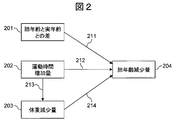
- FIG. 2 is a diagram illustrating an example of the relationship among lung age, exercise time, and weight.
- FIG. 2 shows the influence relationship between the difference 201 between the lung age and the actual age, the exercise time increase amount 202, the weight loss amount 203, and the lung age decrease amount 204.
- the influence 211 on the lung age decrease amount 204 from the difference 201 between the lung age and the actual age indicates that the lung age decrease amount 204 increases when the difference 201 between the lung age and the actual age is large. Since this relationship indicates that the lung age decreases due to the difference between the lung age and the actual age that are not related to exercise, it is necessary to exclude this relationship and determine the lung age improvement due to exercise.
- the effect 212 from the exercise time increase amount 202 to the lung age decrease amount 204 indicates that the lung age decrease amount 204 increases as the exercise time increase amount 202 increases. In other words, it shows that exercise directly affects lung age reduction. This relationship can be explained by exercising the respiratory muscles such as the intercostal muscles through exercise to improve lung function and decrease lung age.
- the influence 213 of the exercise time increase amount 202 on the weight loss amount 203 and the influence 214 of the weight loss amount 203 on the lung age decrease amount 204 increase as the exercise time increase amount 202 increases. Further, it is shown that the lung age decrease amount 204 increases.
- This relationship indicates that exercise affects lung age reduction indirectly through weight. This can be explained as an increase in exercise leads to a decrease in body weight (decrease in visceral fat), thereby making the diaphragm, which is a respiratory muscle, contract smoothly, resulting in improved lung function and decreased lung age.
- These influence relationships can be found by acquiring and analyzing lung age, exercise time, weight, and age from the medical examination information managed by the medical examination data management unit 120. Specific analysis processing will be described later.
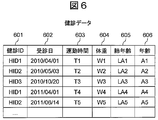
- FIG. 6 shows an example of information managed by the medical examination data management unit 120.
- the medical examination data management unit 120 provides medical examination information such as lung age, weight, exercise time, and age for each medical examination ID (or for each individual) for each medical examination ID regarding the medical examination information for a plurality of times. to manage.
- the medical examination data management unit 120 includes a medical examination ID 601 that uniquely identifies a medical examination, a medical examination date 602, exercise time 603 inquired on the medical examination date, and weight measured on the medical examination date. 604, the lung age 605 measured on the date of the visit, and the age 606 as of the date of the visit are included as constituent items.
- FIG. 7 shows an example of information managed by the recording data management unit 122.
- the recorded data management unit 122 manages the daily exercise time, lung age, and weight measured by the user.
- the recording data management unit 122 includes a user ID 701 that uniquely identifies the user, a recording date 702, an exercise time 703, a weight 704, and a lung age 705 as constituent items.
- the exercise time 703, the weight 704, and the lung age 705 are managed for each user ID 701 and each recording date 702.
- FIG. 8 shows an example of an estimation formula managed by the estimation formula management unit 123.
- the estimation formula management unit 123 manages the lung age decrease estimation formula, the weight loss estimation formula, and the lung age estimation formula created by the estimation formula creation unit 118. These estimation formulas express the relationship between the lung age, exercise time, and weight in FIG. 2 described above.
- lung age decrease A x exercise time increase + B x weight loss + C x difference between lung age and actual age + E
- estimation formula management unit 123 stores the following formula as a lung age estimation formula 803 that estimates the lung age from the previous lung age and lung age decrease amount.
- Estimated lung age previous lung age-lung age decrease
- A, B, C, and D are regression coefficients, and E and F are constant terms.
- FIG. 9 shows an example of lung age error distribution information managed by the lung age error distribution management unit 121.
- the lung age error distribution management unit 121 manages the lung age error distribution calculated by the lung age error distribution calculation unit 116. Specifically, the lung age error distribution management unit 121 includes an error 903 of lung age decrease amount and an error distribution 904 of lung age decrease amount as configuration items.
- the lung age decrease amount error 903 is a value based on the difference between the lung age and the actual age that is not related to exercise.
- the error distribution 904 of the lung age decrease amount indicates a value (%) obtained by dividing the frequency for each value of the lung age decrease amount error 903 by the total frequency.
- This lung age error distribution information is calculated by performing the process shown in the flowchart of FIG. 5 using the medical examination information of FIG. Specific processing will be described later.
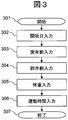
- FIG. 3 is a flowchart showing a flow of inputting information at the start of the exercise effect analysis system.
- FIG. 10 is a diagram showing an example of a user information input screen 1001 at the start of the exercise effect analysis system.
- the user information input screen 1001 includes a start date input field 1002 for inputting a start date, an actual age input field 1003 for inputting an actual age, a lung age input field 1004 for inputting a lung age, and a weight input field for inputting a weight. 1005, an exercise time input field 1006 for inputting exercise time, and an input confirmation button 1007 for confirming these inputs.
- step 301 when the exercise effect analysis terminal 101 of the present invention is started, the exercise effect analysis terminal 101 displays a user information input screen 1001 as shown in FIG.
- step 302 the exercise effect analysis terminal 101 causes the user to input the start date in the start date input field 1002 of FIG.
- step 303 the exercise effect analysis terminal 101 causes the user to input the actual age in the actual age input field 1003 of FIG.
- the exercise effect analysis terminal 101 causes the user's lung age to be measured by spirometry, and then inputs the lung age to the lung age input field 1004 in FIG.
- the exercise effect analysis terminal 101 is not necessarily provided with spirometry, and the user may input a lung age measured in advance.
- step 305 the exercise effect analysis terminal 101 causes the user to input the weight in the weight input field 1005 of FIG. 10 via the input unit 102.
- the exercise effect analysis terminal 101 causes the user to input exercise time into the exercise time input field 1006 of FIG. 10 via the input unit 102.
- the user may measure an exercise time such as walking with a pedometer or the like, and the user may input the measured value.
- a measuring instrument such as a pedometer is not necessarily required, and the user may input the exercise time performed on that day.
- step 307 after the above information input is completed, the exercise effect analysis terminal 101 causes the user to press the input confirmation button 1007 in FIG. 10 to confirm the input.
- the exercise effect analysis terminal 101 stores the input information in the recording data management unit 122 in a format as shown in FIG.
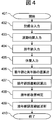
- FIG. 4 is a flowchart showing a flow from daily user information input to lung age improvement determination.
- FIG. 11 is a diagram showing an example of a recording screen 1101 for recording daily information of the user.
- the recording screen 1101 includes a date input field 1103 for inputting a recording date, a lung age input field 1104 for inputting the lung age of the day, an exercise time input field 1105 for inputting the exercise time of the day, A weight input field 1106 for inputting the weight of the day and an input confirmation button 1107 for confirming the input are provided.
- the recording screen 1101 includes daily lung age line graphs 1111 to 1113 and daily exercise time graphs 1130 to 1131 input by the user.
- the left-most start lung age graph point 1111 and exercise time graph 1130 are the user's start lung age and exercise time input in steps 304 and 306 of the flowchart of FIG. Further, the actual age of the user input in step 303 of the flowchart of FIG.
- error ranges 1121 and 1122 of lung age are displayed.
- the lung age error range 1121 indicates the lung age error range at the lung age graph point 1111
- the lung age error range 1122 indicates the lung age error range at the lung age graph point 1112.
- This error range is calculated using the estimation formula of FIG. 8 managed by the estimation formula management unit 123 and the information on the lung age error distribution of FIG. 9 managed by the lung age error distribution management unit 121. Specific processing will be described later.
- a graph of change in lung age, a graph of change in exercise time, and a graph of change in body weight are also provided. It may be displayed on the recording screen 1101.
- step 401 when the exercise effect analysis terminal 101 is started, the exercise effect analysis terminal 101 displays a recording screen 1101 as shown in FIG. 11 on the output unit 104.
- step 402 the exercise effect analysis terminal 101 causes the user to input the date of recording in the date input field 1103 of FIG.
- the exercise effect analysis terminal 101 causes the user to input exercise time into the exercise time input field 1105 of FIG. 11 via the input unit 102.
- the user may measure an exercise time such as walking with a pedometer or the like, and the user may input the measured value. Further, a measuring instrument such as a pedometer is not necessarily required, and the user may input the exercise time performed on that day.
- This input result is displayed as a bar graph as in the exercise time graphs 1130 to 1131 in FIG.
- the exercise effect analysis terminal 101 causes the user to measure the lung age by spirometry, and inputs the lung age to the lung age input field 1104 in FIG.
- the input results are displayed as lung age graphs 1111 to 1113 in FIG.
- the exercise effect analysis terminal 101 is not necessarily provided with spirometry, and the user may input a lung age measured in advance.
- step 405 the exercise effect analysis terminal 101 causes the user to input the weight in the weight input field 1106 of FIG.
- the user presses the input confirmation button 1107 in FIG. 11 to confirm the input.
- the exercise effect analysis terminal 101 stores the input information in the recording data management unit 122 in a format as shown in FIG.
- step 406 the difference calculation unit 117 subtracts the actual age from the lung age of the previous recording date to calculate the difference between the lung age and the actual age (lung age ⁇ actual age).
- the actual age may be calculated by recording the actual age input in step 303 in FIG.
- the lung age error range calculation unit 113 acquires the lung age decrease amount estimation formula 801 and the lung age estimation formula 803 of FIG. 8 managed by the estimation formula management unit 123 from the database 106.
- the lung age error range calculator 113 calculates the difference between the lung age calculated by the difference calculator 117 and the actual age (previous lung age ⁇ actual age), exercise time increase “0”, and weight loss “0”. Is substituted into the lung age decrease amount estimation formula 801, and an estimated lung age decrease amount based on the difference between the lung age that is not related to exercise and the actual age is calculated.
- the lung age error range calculation unit 113 substitutes the estimated lung age reduction amount due to the difference between the calculated lung age and the actual age and the previous lung age into the lung age estimation formula 803, and the lung age and the actual age are substituted. Calculate the estimated lung age based on the difference between the two.
- the lung age error range calculation unit 113 calculates a lung age error range from the estimated lung age based on the difference between the calculated lung age and the actual age, and the lower limit value and the upper limit value of the error 903.
- the error range of lung age is (estimated lung age ⁇ lower limit value of error 903) to (estimated lung age ⁇ upper limit value of error 903).
- the calculated lung age error range is displayed as a lung age error range 1121 in FIG. Thereby, the error range of the lung age reduction
- the lung age improvement determination unit 114 compares the current lung age input in the lung age input step 404 with the lung age error range calculated in the lung age error range calculation unit 113. .
- the lung age improvement determination unit 114 determines that the lung age has improved when the current lung age decreases beyond (estimated lung age ⁇ the upper limit value of the error). If not, it is determined that lung age has not improved.
- the lung age graph point 1112 since the lung age graph point 1112 has decreased beyond the lung age error range 1121 with respect to the lung age graph point 1111, it is determined that the lung age graph point 1112 has improved.
- the lung age error range update unit 115 updates the display position of the lung age error range of FIG. 11 when the lung age improvement determination unit 114 determines that the lung age has improved. Specifically, the lung age error range is changed to a range centering on the value of the lung age graph determined to be lung age improvement. In addition, the error range is calculated by the lung age error range calculation unit 113 by performing the above-described processing. In the example of FIG. 11, since it is determined that the lung age graph point 1112 has improved with respect to the lung age graph point 1111, the lung age error range 1121 is changed to a lung age error range 1122 centered on the lung age graph point 1112. Be changed.
- the process from the user's daily information input to the lung age improvement determination is completed (410). This process is executed by the exercise effect analysis terminal 101 every time the user records daily.
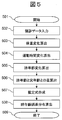
- FIG. 5 is a flowchart showing a flow from input of medical examination information to calculation of lung age error distribution.
- step 502 the exercise effect analysis terminal 101 acquires the medical examination information of FIG. 6 managed by the medical examination data management unit 120.
- step 503 the weight change calculation unit 111 calculates the weight loss between two time points on different checkup dates for each checkup ID 601 from the checkup weight 604 of the checkup information in FIG.
- step 504 the exercise time change calculation unit 112 calculates an increase in exercise time between two time points on different consultation dates for each medical examination ID 601 from the exercise time 603 of the obtained medical examination information in FIG. To do.
- step 505 the lung age change calculation unit 110 calculates a decrease in lung age between two time points on different consultation dates for each medical examination ID 601 from the lung age 605 of the obtained medical examination information in FIG. 6. To do.
- step 506 the difference calculation unit 117 determines the difference between the lung age and the actual age on the same consultation date for each medical examination ID 601 from the lung age 605 and age 606 of the obtained medical examination information in FIG. Calculate lung age 605-age 606).
- the estimation formula creation unit 118 calculates the lung age decrease calculated by the lung age change calculation unit 110 as an objective variable, the exercise time increase calculated by the exercise time change calculation unit 112, and the weight change calculation.
- the regression analysis process is executed using the weight loss calculated by the unit 111 and the difference between the lung age calculated by the difference calculation unit 117 and the actual age as explanatory variables.
- the lung age decrease amount estimation formula 801 in FIG. 8 is created.
- the estimation formula creation unit 118 executes a regression analysis process using the weight loss calculated by the weight change calculator 111 as an objective variable and the exercise time increase calculated by the exercise time change calculator 112 as an explanatory variable. To do. Thereby, the weight loss estimation formula 802 in FIG. 8 is created.
- the estimation formula creation unit 118 creates a lung age estimation formula 803 that estimates the lung age from the previous lung age and lung age decrease amount.
- the created estimation formula is registered in the database 106 in the format of FIG. 8 and managed by the estimation formula management unit 123.
- the lung age decrease amount, the weight loss amount, and the lung age can be estimated.
- step 508 first, the lung age error distribution calculation unit 116 acquires a lung age decrease amount estimation formula 801 managed by the estimation formula management unit 123.
- the term of the exercise time increase amount and the weight loss amount of the lung age decrease amount estimation formula 801 are moved to the left side to create the following formula.
- Lung age decrease-A x exercise time increase-B x weight loss C x difference between lung age and actual age + E
- the lung age error distribution calculation unit 116 calculates the lung age decrease amount calculated by the lung age change calculation unit 110, the weight decrease amount calculated by the weight change calculation unit 111, and the exercise time change calculation unit 112.
- the amount of exercise time increase and the difference between the lung age calculated by the difference calculation unit 117 and the actual age are substituted into the created formula.
- the created formula the values of the right side and the left side for each medical examination ID 501 are calculated.
- the distribution of the difference between the value on the right side and the value on the left side is obtained, and the error distribution of the lung age is calculated.
- the value on the right side shows the lung age reduction effect due to the difference between lung age and actual age not related to exercise
- the value on the left side shows the reduction effect due to exercise time from the actual lung age reduction amount
- the value obtained by removing the reduction effect via body weight is shown.
- the calculated lung age error distribution is registered in the database 106 in the format of FIG. 9 and is managed by the lung age error distribution management unit 121.
- the exercise effect analysis system of the present embodiment can accurately determine improvement in lung age due to exercise from lung age and lung age error distribution. For this reason, it is possible to accurately determine the improvement degree of lung age due to exercise, and to analyze and display the user's exercise effect, simply by inputting exercise information and lung age information that can be easily measured by the user.
- the present invention is not limited to the above-described embodiments, and includes various modifications.
- the above-described embodiments have been described in detail for easy understanding of the present invention, and are not necessarily limited to those having all the configurations described. Further, it is possible to add, delete, and replace other configurations for a part of the configuration of each embodiment.
- the exercise effect analysis system includes an input unit 102, an exercise time change calculation unit 112, and lung age. What is necessary is just to provide the change calculation part 110 and the output part 104 at least.
- the user's exercise information and lung age information are input by the input unit 102.
- the exercise time change calculation unit 112 calculates an exercise time change amount that is a difference between the first exercise information and the second exercise information
- the lung age change calculation unit 110 calculates the first lung age information and the second exercise information.
- the lung age change amount which is the difference between the lung age information, is calculated, and the output unit 104 displays at least one of the user's exercise information and exercise time change amount, and the lung age change amount.
- the exercise effect analysis unit 105 may include a lung age estimation unit that estimates lung age from exercise time and weight information.
- the lung age estimation unit estimates the lung age using the lung age decrease amount estimation formula 801 and the lung age estimation formula 803 in FIG. 8 managed by the estimation formula management unit 123.
- the exercise time change calculation unit 112 first calculates an exercise time increase amount from the exercise time on the user's start date and the current exercise time.
- the weight change calculation unit 111 calculates the weight loss from the previous weight and the current weight.
- the difference calculation unit 117 calculates the difference between the lung age and the actual age from the previous estimated lung age and the actual age. Then, the estimated amount of decrease in exercise time, the amount of weight loss, and the difference between the lung age and the actual age are substituted into the lung age decrease amount estimation formula 801 to calculate the estimated lung age decrease amount. Further, the estimated lung age decrease amount and the previous estimated lung age are substituted into the lung age estimation formula 803 to calculate and display the estimated lung age.
- the age of the lungs may be estimated from only the exercise time without recording the weight.
- the lung age estimation unit estimates the lung age using the weight loss estimation formula 802 in addition to the lung age decrease estimation formula 801 and the lung age estimation formula 803 of FIG. Specifically, first, the amount of increase in exercise time calculated by the exercise time change calculation unit 112 is substituted into the weight loss amount estimation formula 802 to calculate the estimated amount of weight loss. Then, using the estimated weight loss amount instead of the actual weight loss amount, the estimated lung age decrease amount and the estimated lung age are calculated and displayed as described above. Thus, estimating the lung age from only the exercise time has an effect of saving the user the trouble of measuring and recording the weight in addition to the daily lung age.
- the lung age measured and recorded by the user is compared with the lung age error range, and the presence or absence of improvement in the lung age is simply binary (binary “present” and “absent”).
- the lung age improvement determination unit 114 compares the previous lung age with the current lung age to calculate the improvement level (displaying what percentage improvement) or displays a comment corresponding to the improvement level. Also good. This is to determine the lung age decrease amount by exercise by subtracting the estimated lung age calculated by the lung age error range calculation unit 113 and the estimated lung age from the lung age measured by the user and the estimated lung age, This can be realized by checking the lung age error distribution information in FIG.
- the cumulative ratio of the error distribution 904 of the lung age decrease amount from the minimum value of the lung age decrease amount error to the calculated lung age decrease amount due to exercise is obtained, and this value is displayed as the improvement degree.
- a table storing the degree of improvement and the corresponding comment is prepared, and a comment such as “I am a little older with lung age” is displayed according to the calculated degree of improvement.
- the lung age improvement determination unit 114 calculates and outputs an increase in exercise time necessary to improve the user's lung age to the actual age or a target value set by the user in advance. You may display on the part 104.
- FIG. This can be realized by using the lung age decrease estimation formula 801 and the weight loss estimation formula 802 in FIG. Specifically, it can be calculated by the following formulas created by modifying the lung age decrease estimation formula 801 and the weight loss estimation formula 802.
- Exercise time increase (target lung age decrease amount ⁇ C ⁇ difference between lung age and actual age ⁇ EB ⁇ F) / (A + B ⁇ D)
- the estimation formula is not limited to that shown in FIG. Other estimation formulas may be created using the relationship shown in FIG.
- the estimation formula may be created in consideration of the effect 211 on the lung age decrease amount from the difference between the lung age and the actual age in FIG. 2 and the effect 212 on the lung age decrease amount from the exercise time increase amount.
- the estimation formula creation unit 118 may execute the regression analysis process using the lung age change amount as an objective function and the difference between the exercise amount change amount, the lung age and the actual age as an explanatory variable, and create an estimation formula.
- the lung age error distribution calculation unit 116 substitutes the difference between the lung age and the actual age, the lung age change amount, and the exercise amount change amount into the created estimation formula to create lung age error distribution information. May be.
- the configuration of the embodiments can be realized in hardware by designing a part or all of them in an integrated circuit, for example.
- the present invention may be realized by software program code that implements the functions of the embodiments.
- a storage medium in which the program code is recorded is provided to the information processing apparatus, and the information processing apparatus (or CPU) reads the program code stored in the storage medium.
- the program code itself read from the storage medium realizes the functions of the above-described embodiments, and the program code itself and the storage medium storing it constitute the present invention.
- the program code is stored in a storage device of an information processing device or a storage medium such as a CD-RW or CD-R, and is used when used.
- the CPU of the information processing apparatus may read and execute the program code stored in the storage device or the storage medium.
Landscapes
- Health & Medical Sciences (AREA)
- Life Sciences & Earth Sciences (AREA)
- Engineering & Computer Science (AREA)
- General Health & Medical Sciences (AREA)
- Animal Behavior & Ethology (AREA)
- Surgery (AREA)
- Public Health (AREA)
- Pathology (AREA)
- Veterinary Medicine (AREA)
- Biomedical Technology (AREA)
- Heart & Thoracic Surgery (AREA)
- Medical Informatics (AREA)
- Molecular Biology (AREA)
- Biophysics (AREA)
- Physics & Mathematics (AREA)
- Physiology (AREA)
- Cardiology (AREA)
- Pulmonology (AREA)
- Emergency Medicine (AREA)
- Obesity (AREA)
- Physical Education & Sports Medicine (AREA)
- Artificial Intelligence (AREA)
- Computer Vision & Pattern Recognition (AREA)
- Psychiatry (AREA)
- Signal Processing (AREA)
- Measurement Of The Respiration, Hearing Ability, Form, And Blood Characteristics Of Living Organisms (AREA)
Abstract
Description
実施例に係る運動効果分析システムは、ワークステーションやパーソナルコンピュータなどの情報処理装置によって構成される。情報処理装置は、中央処理装置と、メモリなどの記憶部と、記憶媒体とを備える。中央処理装置は、CPU(Central Processing Unit)などのプロセッサで構成されている。記憶媒体は、例えば不揮発性記憶媒体等である。不揮発性記憶媒体には、磁気ディスク、不揮発性メモリ等が含まれる。記憶媒体には、運動効果分析システムの機能を実現するプログラム、及び、そのプログラムを実行した際の算出結果などが格納される。メモリには、記憶媒体に格納されているプログラムが展開される。CPUは、メモリに展開されたプログラムを実行する。したがって、以下で説明する運動効果分析システムの各処理部は、コンピュータ上で実行されるプログラムとして実現される。なお、実施例の構成は、それらの一部や全部を、例えば、集積回路で設計する等によりハードウェアで実現されてもよい。
図2は、肺年齢と運動時間と体重との関係の一例を示す図である。図2では、肺年齢と実年齢との差201、運動時間増加量202、及び体重減少量203と、肺年齢減少量204との間の影響関係が示されている。
次に、図を用いてデータベース106において管理される情報を説明する。図6は、健診データ管理部120で管理される情報の一例を示す。健診データ管理部120は、複数人の複数回分の健診情報に関して、健診ID毎(あるいは個人別に)に、受診日別で、肺年齢、体重、運動時間、年齢などの健診情報を管理する。具体的には、健診データ管理部120は、健康診断を一意に識別する健診ID601と、受診日602と、その受診日に問診された運動時間603と、その受診日に測定された体重604と、その受診日に測定された肺年齢605と、受診日時点の年齢606とを構成項目として含んでいる。
肺年齢減少量 = A×運動時間増加量+B×体重減少量+C×肺年齢と実年齢の差+E
推定体重減少量 = D×運動時間増加量+F
推定肺年齢 = 前回の肺年齢-肺年齢減少量
以下に、本実施例の運動効果分析システムの処理の流れを説明する。図3は、運動効果分析システムの開始時に情報を入力する流れを示すフローチャートである。図10は、運動効果分析システムの開始時のユーザ情報入力画面1001の一例を示す図である。ユーザ情報入力画面1001は、開始日を入力する開始日入力欄1002と、実年齢を入力する実年齢入力欄1003と、肺年齢を入力する肺年齢入力欄1004と、体重を入力する体重入力欄1005と、運動時間を入力する運動時間入力欄1006と、これらの入力を確定する入力確定ボタン1007とを備えている。
肺年齢減少量-A×運動時間増加量-B×体重減少量=C×肺年齢と実年齢の差+E
運動時間増加量=(目標肺年齢減少量-C×肺年齢と実年齢の差-E-B×F)/(A+B×D)
102 入力部
104 出力部
105 運動効果分析部
106 データベース
110 肺年齢変化算出部
111 体重変化算出部
112 運動時間変化算出部
113 肺年齢誤差範囲算出部
114 肺年齢改善判定部
115 肺年齢誤差範囲更新部
116 肺年齢誤差分布算出部
117 差分算出部
118 推定式作成部
120 健診データ管理部
121 肺年齢誤差分布管理部
122 記録データ管理部
123 推定式管理部
201 肺年齢と実年齢の差
202 運動時間増加量
203 体重減少量
204 肺年齢減少量
211 肺年齢と実年齢の差から肺年齢減少量への影響
212 運動時間増加量から肺年齢減少量への影響
213 運動時間増加量から体重減少量への影響
214 体重減少量から肺年齢減少量への影響
302 開始日入力ステップ
303 実年齢入力ステップ
304 肺年齢入力ステップ
305 体重入力ステップ
306 運動時間入力ステップ
406 肺年齢と実年齢の差算出ステップ
407 肺年齢誤差範囲算出ステップ
408 肺年齢改善判定ステップ
409 肺年齢誤差範囲更新ステップ
502 健診データ入力ステップ
503 体重変化算出ステップ
504 運動時間変化算出ステップ
505 肺年齢変化算出ステップ
506 肺年齢と実年齢との差算出ステップ
507 推定式作成ステップ
508 肺年齢誤差分布算出ステップ
601 健診ID
602 受診日
603 運動時間
604 体重
605 肺年齢
606 年齢
701 ユーザID
702 記録日
703 運動時間
704 体重
705 肺年齢
801 肺年齢減少量推定式
802 体重減少量推定式
803 肺年齢推定式
903 肺年齢減少量の誤差
904 肺年齢減少量の誤差分布
1001 ユーザ情報入力画面
1002 開始日入力欄
1003 実年齢入力欄
1004 肺年齢入力欄
1005 体重入力欄
1006 運動時間入力欄
1007 入力確定ボタン
1101 記録画面
1103 日付入力欄
1104 肺年齢入力欄
1105 運動時間入力欄
1106 体重入力欄
1107 入力確定ボタン
1111~1113 肺年齢記録グラフ
1121~1122 肺年齢誤差範囲
1131 運動時間
1141 実年齢(目標値)
Claims (15)
- ユーザの肺機能情報から運動効果を分析及び表示する運動効果分析システムであって、
少なくともユーザの運動情報と肺年齢情報を入力するための入力部と、
前記入力部で入力された第1の運動情報と第2の運動情報との差である運動量変化量を算出する運動量変化算出部と、
第1の肺年齢情報と第2の肺年齢情報との差である肺年齢変化量を算出する肺年齢変化算出部と、
前記ユーザの運動情報及び前記運動量変化量の少なくとも一方と、前記肺年齢変化量とを表示するための出力部と、
を備えることを特徴とする運動効果分析システム。 - 請求項1に記載の運動効果分析システムにおいて、
前記ユーザの年齢情報と前記肺年齢情報との差である肺年齢と実年齢との差を算出する差分算出部と、
前記ユーザの少なくとも運動情報と肺年齢情報を記録したユーザ記録情報と、運動情報と年齢と肺年齢と推定肺年齢変化量との関係を示す推定式と、複数のユーザの肺年齢変化量の誤差の分布を示す肺年齢誤差分布情報とが格納された記憶装置と、
前記肺年齢と実年齢との差を前記推定式に代入して推定肺年齢を算出し、前記推定肺年齢と前記肺年齢誤差分布情報とから肺年齢誤差範囲を算出する肺年齢誤差範囲算出部と、
前記肺年齢変化量と前記肺年齢誤差範囲とを比較し、前記ユーザの肺年齢の改善を判定する肺年齢改善判定部と、
を更に備え、
前記出力部が、前記ユーザ記録情報の前記運動情報及び前記運動量変化量の少なくとも一方と、前記肺年齢変化量と、前記肺年齢誤差範囲とを表示することを特徴とする運動効果分析システム。 - 請求項2に記載の運動効果分析システムにおいて、
前記運動量変化量から前記第2の肺年齢情報を推定する肺年齢推定部を更に備え、
前記差分算出部は、前記ユーザ記録情報に記録された肺年齢情報と実年齢との差である肺年齢と実年齢との差を算出し、
前記肺年齢推定部は、前記肺年齢と実年齢との差と、前記運動量変化量とを前記推定式に代入し、前記第2の肺年齢情報を推定し、
前記肺年齢変化算出部は、前記肺年齢変化量として、前記第1の肺年齢情報と前記推定された第2の肺年齢情報との差を算出することを特徴とする運動効果分析システム。 - 請求項2に記載の運動効果分析システムにおいて、
前記推定式を作成する推定式作成部を更に備え、
前記推定式作成部は、前記肺年齢変化量を目的関数、前記運動量変化量と前記肺年齢と実年齢との差を説明変数として回帰分析処理を実行し、前記推定式を作成することを特徴とする運動効果分析システム。 - 請求項2に記載の運動効果分析システムにおいて、
前記肺年齢と実年齢との差と、前記肺年齢変化量と、前記運動量変化量とを前記推定式に代入し、前記肺年齢誤差分布情報を作成する肺年齢誤差分布算出部を更に備えることを特徴とする運動効果分析システム。 - 請求項2に記載の運動効果分析システムにおいて、
前記ユーザの肺年齢が改善されたと前記肺年齢改善判定部によって判定された場合、前記肺年齢誤差範囲を更新する肺年齢誤差範囲更新部を更に備えることを特徴とする運動効果分析システム。 - 請求項2に記載の運動効果分析システムにおいて、
前記肺年齢改善判定部が、前記肺年齢誤差分布情報における所定の範囲の累積割合を改善度として算出し、
前記出力部が、前記改善度も更に表示することを特徴とする運動効果分析システム。 - 請求項2に記載の運動効果分析システムにおいて、
前記肺年齢改善判定部が、前記肺年齢と実年齢との差と、前記ユーザによって設定された目標肺年齢変化量とを前記推定式に代入し、前記目標肺年齢変化量の改善のために必要な必要運動量変化量を算出し、
前記出力部が、前記必要運動量変化量も更に表示することを特徴とする運動効果分析システム。 - 請求項1に記載の運動効果分析システムにおいて、
第1の体重情報と第2の体重情報の差である体重変化量を算出する体重変化算出部と、
前記ユーザの年齢情報と前記肺年齢情報との差である肺年齢と実年齢との差を算出する差分算出部と、
前記ユーザの少なくとも運動情報と体重情報と肺年齢情報を記録したユーザ記録情報と、運動情報と体重情報と年齢と肺年齢と推定肺年齢変化量との関係を示す推定式と、複数のユーザの肺年齢変化量の誤差の分布を示す肺年齢誤差分布情報とが格納された記憶装置と、
前記肺年齢と実年齢との差を前記推定式に代入して推定肺年齢を算出し、前記推定肺年齢と前記肺年齢誤差分布情報とから肺年齢誤差範囲を算出する肺年齢誤差範囲算出部と、
前記肺年齢変化量と前記肺年齢誤差範囲とを比較し、前記ユーザの肺年齢の改善を判定する肺年齢改善判定部と、
を更に備え、
前記出力部が、前記ユーザ記録情報の前記運動情報及び前記運動量変化量の少なくとも一方と、前記肺年齢変化量と、前記肺年齢誤差範囲とを表示することを特徴とする運動効果分析システム。 - 請求項9に記載の運動効果分析システムにおいて、
前記運動量変化量及び前記体重変化量から前記第2の肺年齢情報を推定する肺年齢推定部を更に備え、
前記差分算出部は、前記ユーザ記録情報に記録された肺年齢情報と実年齢との差である肺年齢と実年齢との差を算出し、
前記肺年齢推定部は、前記肺年齢と実年齢との差と、前記運動量変化量と、前記体重変化量とを前記推定式に代入し、前記第2の肺年齢情報を推定し、
前記肺年齢変化算出部は、前記肺年齢変化量として、前記第1の肺年齢情報と前記推定された第2の肺年齢情報との差を算出することを特徴とする運動効果分析システム。 - 請求項9に記載の運動効果分析システムにおいて、
前記推定式を作成する推定式作成部を更に備え、
前記推定式作成部は、前記肺年齢変化量を目的関数とし、前記運動量変化量と前記体重変化量と前記肺年齢と実年齢との差を説明変数として回帰分析処理を実行し、前記推定式を作成することを特徴とする運動効果分析システム。 - 請求項9に記載の運動効果分析システムにおいて、
前記肺年齢と実年齢との差と、前記肺年齢変化量と、前記運動量変化量と、前記体重変化量とを前記推定式に代入し、前記肺年齢誤差分布情報を作成する肺年齢誤差分布算出部を更に備えることを特徴とする運動効果分析システム。 - 請求項9に記載の運動効果分析システムにおいて、
前記ユーザの肺年齢が改善されたと前記肺年齢改善判定部によって判定された場合、前記肺年齢誤差範囲を更新する肺年齢誤差範囲更新部を更に備えることを特徴とする運動効果分析システム。 - 請求項9に記載の運動効果分析システムにおいて、
前記肺年齢改善判定部が、前記肺年齢誤差分布情報における所定の範囲の累積割合を改善度として算出し、
前記出力部が、前記改善度も更に表示することを特徴とする運動効果分析システム。 - 請求項9に記載の運動効果分析システムにおいて、
前記肺年齢改善判定部が、前記肺年齢と実年齢との差と、前記ユーザによって設定された目標肺年齢変化量とを前記推定式に代入し、前記目標肺年齢変化量の改善のために必要な必要運動量変化量を算出し、
前記出力部が、前記必要運動量変化量も更に表示することを特徴とする運動効果分析システム。
Priority Applications (4)
| Application Number | Priority Date | Filing Date | Title |
|---|---|---|---|
| US14/649,748 US20150320362A1 (en) | 2012-12-20 | 2012-12-20 | Exercise effect analysis system |
| PCT/JP2012/083084 WO2014097449A1 (ja) | 2012-12-20 | 2012-12-20 | 運動効果分析システム |
| JP2014552835A JP5976130B2 (ja) | 2012-12-20 | 2012-12-20 | 運動効果分析システム |
| GB1509702.5A GB2523682A (en) | 2012-12-20 | 2012-12-20 | Exercise effect analysis system |
Applications Claiming Priority (1)
| Application Number | Priority Date | Filing Date | Title |
|---|---|---|---|
| PCT/JP2012/083084 WO2014097449A1 (ja) | 2012-12-20 | 2012-12-20 | 運動効果分析システム |
Publications (1)
| Publication Number | Publication Date |
|---|---|
| WO2014097449A1 true WO2014097449A1 (ja) | 2014-06-26 |
Family
ID=50977827
Family Applications (1)
| Application Number | Title | Priority Date | Filing Date |
|---|---|---|---|
| PCT/JP2012/083084 Ceased WO2014097449A1 (ja) | 2012-12-20 | 2012-12-20 | 運動効果分析システム |
Country Status (4)
| Country | Link |
|---|---|
| US (1) | US20150320362A1 (ja) |
| JP (1) | JP5976130B2 (ja) |
| GB (1) | GB2523682A (ja) |
| WO (1) | WO2014097449A1 (ja) |
Cited By (2)
| Publication number | Priority date | Publication date | Assignee | Title |
|---|---|---|---|---|
| JP2018503413A (ja) * | 2014-11-14 | 2018-02-08 | コーニンクレッカ フィリップス エヌ ヴェKoninklijke Philips N.V. | 心肺適応能評価 |
| JP2021087464A (ja) * | 2019-12-02 | 2021-06-10 | コニカミノルタ株式会社 | 医用画像解析システム、プログラム及び医用画像解析方法 |
Families Citing this family (2)
| Publication number | Priority date | Publication date | Assignee | Title |
|---|---|---|---|---|
| CN105117007B (zh) * | 2015-08-20 | 2019-02-12 | 小米科技有限责任公司 | 显示设备的控制方法、装置及智能垫体 |
| JP7422643B2 (ja) * | 2020-11-04 | 2024-01-26 | 株式会社日立製作所 | 統合装置、統合方法、および統合プログラム |
Citations (4)
| Publication number | Priority date | Publication date | Assignee | Title |
|---|---|---|---|---|
| JP2010233677A (ja) * | 2009-03-30 | 2010-10-21 | Fujitsu Ltd | 体力判定装置、体力判定方法、体力判定プログラム及び携帯端末装置 |
| JP2011161079A (ja) * | 2010-02-12 | 2011-08-25 | Nippon Telegr & Teleph Corp <Ntt> | 運動指標測定方法および装置 |
| JP2012179264A (ja) * | 2011-03-02 | 2012-09-20 | Akoozu:Kk | 活動量計 |
| JP2012235920A (ja) * | 2011-05-12 | 2012-12-06 | Hitachi Ltd | 生体データ処理システム、及び、生体データ処理方法 |
Family Cites Families (2)
| Publication number | Priority date | Publication date | Assignee | Title |
|---|---|---|---|---|
| EP0293068A1 (en) * | 1987-05-27 | 1988-11-30 | Teijin Limited | An electric therapeutic apparatus |
| US8652040B2 (en) * | 2006-12-19 | 2014-02-18 | Valencell, Inc. | Telemetric apparatus for health and environmental monitoring |
-
2012
- 2012-12-20 GB GB1509702.5A patent/GB2523682A/en not_active Withdrawn
- 2012-12-20 US US14/649,748 patent/US20150320362A1/en not_active Abandoned
- 2012-12-20 WO PCT/JP2012/083084 patent/WO2014097449A1/ja not_active Ceased
- 2012-12-20 JP JP2014552835A patent/JP5976130B2/ja not_active Expired - Fee Related
Patent Citations (4)
| Publication number | Priority date | Publication date | Assignee | Title |
|---|---|---|---|---|
| JP2010233677A (ja) * | 2009-03-30 | 2010-10-21 | Fujitsu Ltd | 体力判定装置、体力判定方法、体力判定プログラム及び携帯端末装置 |
| JP2011161079A (ja) * | 2010-02-12 | 2011-08-25 | Nippon Telegr & Teleph Corp <Ntt> | 運動指標測定方法および装置 |
| JP2012179264A (ja) * | 2011-03-02 | 2012-09-20 | Akoozu:Kk | 活動量計 |
| JP2012235920A (ja) * | 2011-05-12 | 2012-12-06 | Hitachi Ltd | 生体データ処理システム、及び、生体データ処理方法 |
Non-Patent Citations (1)
| Title |
|---|
| KYOKO HAYASHI: "Investigation of Life-style Factors that Worsen Lung Age in Non-smokers", NINGEN DOCK, vol. 26, no. 1, 30 June 2011 (2011-06-30), pages 87 - 93 * |
Cited By (2)
| Publication number | Priority date | Publication date | Assignee | Title |
|---|---|---|---|---|
| JP2018503413A (ja) * | 2014-11-14 | 2018-02-08 | コーニンクレッカ フィリップス エヌ ヴェKoninklijke Philips N.V. | 心肺適応能評価 |
| JP2021087464A (ja) * | 2019-12-02 | 2021-06-10 | コニカミノルタ株式会社 | 医用画像解析システム、プログラム及び医用画像解析方法 |
Also Published As
| Publication number | Publication date |
|---|---|
| US20150320362A1 (en) | 2015-11-12 |
| JP5976130B2 (ja) | 2016-08-23 |
| GB2523682A (en) | 2015-09-02 |
| GB201509702D0 (en) | 2015-07-22 |
| JPWO2014097449A1 (ja) | 2017-01-12 |
Similar Documents
| Publication | Publication Date | Title |
|---|---|---|
| Jacobs et al. | The society of thoracic surgeons congenital heart surgery database: 2017 update on outcomes and quality | |
| US20140195472A1 (en) | Information processing apparatus, generating method, medical diagnosis support apparatus, and medical diagnosis support method | |
| JP6854747B2 (ja) | 計算機システム、認知機能の評価方法、及びプログラム | |
| JP5891305B2 (ja) | 診療プロセス分析システム | |
| JP6282783B2 (ja) | 分析システム及び分析方法 | |
| JP5976130B2 (ja) | 運動効果分析システム | |
| Han et al. | Parametric latent class joint model for a longitudinal biomarker and recurrent events | |
| JP2020004126A (ja) | ヘルスケアデータ分析システム、ヘルスケアデータ分析方法、ヘルスケアデータ分析プログラム、学習済みモデル、情報処理装置、情報処理方法および情報処理プログラム | |
| JP7027359B2 (ja) | ヘルスケアデータ分析装置及びヘルスケアデータ分析方法 | |
| WO2020066724A1 (ja) | データ処理装置、データ処理方法およびプログラム | |
| WO2022172529A1 (ja) | 情報処理システム及び情報処理方法 | |
| JP6301171B2 (ja) | 薬物動態パラメータの推定プログラム | |
| El-Rajab et al. | Camera-based mobile applications for movement screening in healthy adults: a systematic review | |
| Rathnayake et al. | Tolerance bands for functional data | |
| EP3718116B1 (en) | Apparatus for patient data availability analysis | |
| JP7352957B2 (ja) | 障害判定装置及び障害判定用プログラム | |
| JP5388564B2 (ja) | 糖尿病診療支援システム、コンピュータプログラム、及び記録媒体 | |
| WO2020054115A1 (ja) | 分析システム及び分析方法 | |
| JP6231657B2 (ja) | サービス利用効果予測方法及びサービス利用効果予測装置 | |
| Maruthappu et al. | A monitoring tool for performance improvement in plastic surgery at the individual level | |
| JP7084861B2 (ja) | 評価処理システムおよび評価処理方法 | |
| JP2019012493A (ja) | 保険設計支援システム及び保険設計支援方法 | |
| Cipriani et al. | Dynamic Prediction in Mixture Cure Models: A Model-Based Landmarking Approach | |
| Gold | Cost-effectiveness analysis in implementation science | |
| JP6960369B2 (ja) | 分析システム及び分析方法 |
Legal Events
| Date | Code | Title | Description |
|---|---|---|---|
| 121 | Ep: the epo has been informed by wipo that ep was designated in this application |
Ref document number: 12890402 Country of ref document: EP Kind code of ref document: A1 |
|
| ENP | Entry into the national phase |
Ref document number: 2014552835 Country of ref document: JP Kind code of ref document: A |
|
| ENP | Entry into the national phase |
Ref document number: 1509702 Country of ref document: GB Kind code of ref document: A Free format text: PCT FILING DATE = 20121220 |
|
| WWE | Wipo information: entry into national phase |
Ref document number: 1509702.5 Country of ref document: GB Ref document number: 14649748 Country of ref document: US |
|
| NENP | Non-entry into the national phase |
Ref country code: DE |
|
| 122 | Ep: pct application non-entry in european phase |
Ref document number: 12890402 Country of ref document: EP Kind code of ref document: A1 |
|
| ENPC | Correction to former announcement of entry into national phase, pct application did not enter into the national phase |
Ref country code: GB |