WO2014086104A1 - 一种ampk激活剂及其在制备治疗糖尿病和/或糖尿病并发症的药物中的应用 - Google Patents
一种ampk激活剂及其在制备治疗糖尿病和/或糖尿病并发症的药物中的应用 Download PDFInfo
- Publication number
- WO2014086104A1 WO2014086104A1 PCT/CN2013/070166 CN2013070166W WO2014086104A1 WO 2014086104 A1 WO2014086104 A1 WO 2014086104A1 CN 2013070166 W CN2013070166 W CN 2013070166W WO 2014086104 A1 WO2014086104 A1 WO 2014086104A1
- Authority
- WO
- WIPO (PCT)
- Prior art keywords
- diabetes
- hsd
- compound
- ampk
- formula
- Prior art date
- Legal status (The legal status is an assumption and is not a legal conclusion. Google has not performed a legal analysis and makes no representation as to the accuracy of the status listed.)
- Ceased
Links
- 0 *c1c(*=O)cccc1 Chemical compound *c1c(*=O)cccc1 0.000 description 5
Classifications
-
- A—HUMAN NECESSITIES
- A61—MEDICAL OR VETERINARY SCIENCE; HYGIENE
- A61K—PREPARATIONS FOR MEDICAL, DENTAL OR TOILETRY PURPOSES
- A61K31/00—Medicinal preparations containing organic active ingredients
- A61K31/33—Heterocyclic compounds
- A61K31/395—Heterocyclic compounds having nitrogen as a ring hetero atom, e.g. guanethidine or rifamycins
- A61K31/435—Heterocyclic compounds having nitrogen as a ring hetero atom, e.g. guanethidine or rifamycins having six-membered rings with one nitrogen as the only ring hetero atom
- A61K31/44—Non condensed pyridines; Hydrogenated derivatives thereof
- A61K31/4427—Non condensed pyridines; Hydrogenated derivatives thereof containing further heterocyclic ring systems
- A61K31/4436—Non condensed pyridines; Hydrogenated derivatives thereof containing further heterocyclic ring systems containing a heterocyclic ring having sulfur as a ring hetero atom
-
- A—HUMAN NECESSITIES
- A61—MEDICAL OR VETERINARY SCIENCE; HYGIENE
- A61K—PREPARATIONS FOR MEDICAL, DENTAL OR TOILETRY PURPOSES
- A61K31/00—Medicinal preparations containing organic active ingredients
- A61K31/33—Heterocyclic compounds
- A61K31/38—Heterocyclic compounds having sulfur as a ring hetero atom
- A61K31/385—Heterocyclic compounds having sulfur as a ring hetero atom having two or more sulfur atoms in the same ring
-
- A—HUMAN NECESSITIES
- A61—MEDICAL OR VETERINARY SCIENCE; HYGIENE
- A61P—SPECIFIC THERAPEUTIC ACTIVITY OF CHEMICAL COMPOUNDS OR MEDICINAL PREPARATIONS
- A61P13/00—Drugs for disorders of the urinary system
- A61P13/12—Drugs for disorders of the urinary system of the kidneys
-
- A—HUMAN NECESSITIES
- A61—MEDICAL OR VETERINARY SCIENCE; HYGIENE
- A61P—SPECIFIC THERAPEUTIC ACTIVITY OF CHEMICAL COMPOUNDS OR MEDICINAL PREPARATIONS
- A61P15/00—Drugs for genital or sexual disorders; Contraceptives
-
- A—HUMAN NECESSITIES
- A61—MEDICAL OR VETERINARY SCIENCE; HYGIENE
- A61P—SPECIFIC THERAPEUTIC ACTIVITY OF CHEMICAL COMPOUNDS OR MEDICINAL PREPARATIONS
- A61P25/00—Drugs for disorders of the nervous system
-
- A—HUMAN NECESSITIES
- A61—MEDICAL OR VETERINARY SCIENCE; HYGIENE
- A61P—SPECIFIC THERAPEUTIC ACTIVITY OF CHEMICAL COMPOUNDS OR MEDICINAL PREPARATIONS
- A61P3/00—Drugs for disorders of the metabolism
- A61P3/04—Anorexiants; Antiobesity agents
-
- A—HUMAN NECESSITIES
- A61—MEDICAL OR VETERINARY SCIENCE; HYGIENE
- A61P—SPECIFIC THERAPEUTIC ACTIVITY OF CHEMICAL COMPOUNDS OR MEDICINAL PREPARATIONS
- A61P3/00—Drugs for disorders of the metabolism
- A61P3/08—Drugs for disorders of the metabolism for glucose homeostasis
- A61P3/10—Drugs for disorders of the metabolism for glucose homeostasis for hyperglycaemia, e.g. antidiabetics
-
- A—HUMAN NECESSITIES
- A61—MEDICAL OR VETERINARY SCIENCE; HYGIENE
- A61P—SPECIFIC THERAPEUTIC ACTIVITY OF CHEMICAL COMPOUNDS OR MEDICINAL PREPARATIONS
- A61P9/00—Drugs for disorders of the cardiovascular system
-
- A—HUMAN NECESSITIES
- A61—MEDICAL OR VETERINARY SCIENCE; HYGIENE
- A61P—SPECIFIC THERAPEUTIC ACTIVITY OF CHEMICAL COMPOUNDS OR MEDICINAL PREPARATIONS
- A61P9/00—Drugs for disorders of the cardiovascular system
- A61P9/10—Drugs for disorders of the cardiovascular system for treating ischaemic or atherosclerotic diseases, e.g. antianginal drugs, coronary vasodilators, drugs for myocardial infarction, retinopathy, cerebrovascula insufficiency, renal arteriosclerosis
-
- A—HUMAN NECESSITIES
- A61—MEDICAL OR VETERINARY SCIENCE; HYGIENE
- A61P—SPECIFIC THERAPEUTIC ACTIVITY OF CHEMICAL COMPOUNDS OR MEDICINAL PREPARATIONS
- A61P9/00—Drugs for disorders of the cardiovascular system
- A61P9/12—Antihypertensives
Definitions
- the present invention relates to the field of medicine, and in particular to an AMPK activator and its preparation in therapy and
- Diabetes is a disease process caused by multiple causes, affecting 6% of the world's population. It is estimated that by 2025, the number of patients will double to 300 million. The most important clinical pathological feature of diabetes is an increase in plasma glucose (blood sugar) concentrations. Increased blood glucose levels are the leading cause of various clinical symptoms of diabetes. Uncontrolled hyperglycemia causes many complications of diabetes, such as increased risk of microvascular and macrovascular disease, including kidney disease, neuropathy, retinopathy, hypertension, cerebral ischemia, and coronary heart disease. Therefore, lowering blood sugar is the key to treating and preventing diabetes and its complications.
- Type I diabetes is diabetes caused by various causes of insulin deficiency.
- Type II diabetes is also called non-insulin-dependent diabetes, accounting for the total number of diabetics.
- the basic factors of the disease are relative insulin deficiency and/or insulin resistance (ie, the body's ability to respond to insulin decreases).
- islet ⁇ cells initially compensate for excessive insulin secretion due to insulin resistance, and then lead to insulin deficiency and blood glucose increase due to islet ⁇ cell failure over time. Therefore, type 2 diabetes is not caused by the absolute lack of insulin, but because the body's ability to respond to insulin stimuli is insufficient, resulting in a decrease in the body's ability to metabolize and utilize glucose, leading to hyperglycemia.
- Insulin is the most important promotion in Portugal Glucose utilization and metabolism of endogenous hormones. Insulin is more effective for type 1 diabetes, that is, diabetes due to various causes of insulin deficiency. However, for type 2 diabetes, if exogenous insulin is administered inappropriately, tolerance to glucose can be irreparable, further aggravating the condition. Therefore, an important strategy for the treatment of type 2 diabetes is to improve the body's ability to respond to insulin.
- AMPK is involved in a variety of metabolic processes as an important protein kinase. AMPK plays a major role in regulating the balance of energy metabolism in the body. In muscle and liver, activation of AMPK enhances glucose uptake, fatty acid oxidation and insulin sensitivity, and reduces the production of glucose, cholesterol and triglycerides. Therefore, AMPK and its signaling pathway are targets for effective drugs for type II diabetes.
- biguanide hypoglycemic agents such as diterpene, phenformin and butylformin, which are currently widely used clinically, are AMPK activators.
- Dioxin is the most widely used first-line anti-diabetic drug in clinical practice. It is not only the first choice for diabetes treatment, but also has no effect on normal blood sugar. This suggests that AMPK is a key target for the treatment of type 2 diabetes.
- Lactic acidosis is a serious class of metabolic diseases that can be life-threatening if they occur. It is precisely because it can cause lactic acidosis, bismuth AMPK activators such as phenformin have been discontinued in clinical applications in Europe and the United States. Although diazepam is less likely to cause lactic acidosis than phenformin, it has the highest number of clinical reports of severe toxic and side effects and deaths in oral hypoglycemic agents. Therefore, the development of novel, non-biguanide AMPK activation As a therapeutic drug for diabetes, it has important clinical significance.
- the 3H-1 , 2-dithiol-3-thione compound has the structure shown in Formula I, and such compounds have the same pharmacophore: i.e., 5-p-hydroxyphenyl-3H-1, 2-Dithiocyclopentene-3-thione, but does not contain a biguanide group.
- R is selected from -CH 3 , -H,
- R is -CH 3
- the compound is named 5-p-methoxyphenyl-3H-1 , 2-dithiolen-3-indolone (HSD);
- R When R is -H, the compound is named 5-p-hydroxyphenyl-3H-1,2-dithiolene-3-thione (HSD-OH for short; when R is, the compound is named pyridine- 3-decanoic acid 4- ( 3H-1 , 2-disulfide
- Heterocyclic pentene -3-thione -5-yl)-phenyl ester ester of nicotinic acid, abbreviated as HSD-3;
- HSD-4 2, -Dithiazine-3-thione-5-yl)-phenyl ester (ester of aspirin, abbreviated as HSD-4).
- HSD-OH is an in vivo metabolite of HSD.
- HSD is a clinical drug for the treatment of cholestasis and acute and chronic hepatitis.
- the pharmacological effects of HSD are currently known to be: 1) promote bile excretion, significantly increase the secretion of solid components such as bile acid, bile pigment and cholesterol, especially increase bile pigment secretion; 2) significantly enhance glutamylcysteine Acid synthase, glutathione reductase and other activities, thereby enhancing liver glutathione levels, liver cell viability; 3) stimulating digestive action, anti-psychotic drug-induced saliva reduction is particularly effective; can promote gastrointestinal motility And gas discharge in the intestine can eliminate the symptoms of dyspepsia; 4) Detoxification; It can promote the rapid metabolism of alcohols in the body and eliminate it, and has good detoxification and anti-allergic effects on alcohol, drugs, food and other poisoning, 5 Reduce blood cholesterol levels and prevent them from sinking or adhering to the inner wall of blood vessels.
- the 3H-1,2-dithiocyclopentene-3-thione compound does not contain a biguanide group; wherein HSD is a clinical drug for treating cholestasis and acute and chronic hepatitis. HSD has never been found to cause lactic acidosis in long-term clinical applications. Therefore, compared with the currently widely used biguanide AMPK activators, 3H-1, 2-dithiocyclopentene-3-thione compounds are used as AMPK activators, as well as therapeutic and/or preventative preparations. Drugs for diabetes and its complications are safer.
- the present invention provides the use of a compound having the structure of Formula I as an AMPK activator
- R is selected from -CH 3 , -
- the compound having the structure of Formula I is a 3H-1,2-dithiocyclopentene-3-thione compound, wherein HSD is currently used as a drug for treating cholestasis and acute hepatitis, but HSD, HSD-OH, The role of HSD-3 and HSD-4 in activating AMPK and lowering blood glucose has never been reported.
- the invention also provides the use of a compound having the structure of formula I for the manufacture of a medicament for the treatment and/or prevention of diabetes and/or diabetic complications
- R is selected from -CH 3 , -H,
- the diabetes having the structural compound of formula I which is treatable and/or preventable is type II diabetes.
- the compound having the structure shown in Formula I to treat and / or prevention of complications of diabetes include hypertension, cardiovascular disease, obesity, neuropathy, retinopathy, diabetic nephropathy or ovarian syndrome t
- the structural compound represented by the formula I has an AMPK activating activity and a hypoglycemic action, and thus has a therapeutic and/or preventive effect on diabetes. Because the complications of diabetes are mainly caused by hyperglycemia, lowering blood glucose is also a key measure for the treatment and prevention of diabetic complications. In addition, excessive activation of inflammatory cells is also an important cause of complication and development, and AMPK activation is an inhibitor of inflammatory cells. The key mechanism of activation. Since the structural compound of the formula I provided by the present invention has the effect of lowering blood glucose and activating inflammatory cell AMPK, the compound of the structure of formula I can treat and/or prevent diabetic complications associated with type 2 diabetes, such as hypertension. , cardiovascular and cerebrovascular diseases, obesity, neuropathy, retinal diseases, diabetic nephropathy or polymorphous ovarian syndrome, and symptoms caused by type 2 diabetes, including insulin resistance, glucose intolerance, hyperinsulinemia, and the like.
- 3H-1,2-dithiocyclopentene-3-thione compounds can significantly reduce blood glucose levels in STZ-induced type 2 diabetic mice.
- the experimental data of the present invention also showed that 3H-1,2-dithiocyclopentene-3-thione compounds can activate inflammatory cells AMPK in a cell inflammatory model induced by LPS. Because the complications of diabetes are mainly caused by hyperglycemia, lowering blood glucose is a key measure to treat and prevent diabetes complications. In addition, excessive activation of inflammatory cells is also an important factor leading to complications, and AMPK activation is an inhibitor of excessive activation of inflammatory cells. Key mechanism.
- 3H-1,2-dithiocyclopentene-3-thione compounds have hypoglycemic effects and inhibit inflammation by activating AMPK, and thus it can be inferred that such compounds have therapeutic and/or therapeutic complications for diabetes. Preventive effect.
- the present invention further exemplifies cerebral ischemia, indicating that 1,2-dithiocyclopentane Alkenyl-3-thione compounds have significant brain protective effects on cerebral ischemia in patients with type II diabetes And can effectively reduce the mortality of type 2 diabetic mice after cerebral ischemia.
- the invention also provides a medicament for the treatment and/or prevention of diabetes and/or diabetic complications, comprising a compound of the structure of formula I and a pharmaceutically acceptable excipient
- R is selected from -CH 3 , -
- the adjuvant added to the medicament for treating and/or preventing diabetes and/or diabetic complications provided by the present invention is a disintegrant, a lubricant, an emulsifier, a binder.
- the present invention provides a pharmaceutical composition for treating and/or preventing diabetes and/or diabetic complications having a mass fraction of 0.05% to 99% of the compound of formula I.
- the medicament for the treatment and/or prevention of diabetes and/or diabetic complications provided by the present invention is administered by topical administration, digestive administration or parenteral administration.
- the administration of the medicament for treating and/or preventing diabetes and/or diabetic complications provided by the present invention includes oral administration, injection, input, rectal administration, nasal administration, oral administration, sublingual administration. medicine.
- the dosage form of the medicament for treating and/or preventing diabetes and/or diabetic complications provided by the present invention includes an oral preparation, an injection, a suppository or an inhalation.
- oral preparations are capsules, micro-pills, pills, tablets, decoctions, granules, ointments, dispersible powders, lotions, oral liquids, pills, liposomes.
- the injection is a powder injection or an injection.
- the present invention provides an injection for treating and/or preventing diabetes and/or diabetic complications for subcutaneous injection or input, intravenous injection or input, monthly injection or input, intraperitoneal injection or input, Intrathecal injection or input, intraventricular injection or input, intrasternal injection or loss Intravenous, intracranial injection or input or use of an explanted reservoir.
- the amount of the medicament for treating and/or preventing diabetes and/or diabetic complications provided by the present invention is 0.005 mg/kg/day to 5000 mg/kg/based on the amount of the structural compound represented by formula I.
- the dosage of the compound having the structure of I per kilogram of animal body weight per day is 0.005 mg to 5000 mg.
- the present invention provides the use of a compound having the structure of formula I as an AMPK activator, wherein the compound of formula I is a 3H-1,2-dithiocyclopentene-3-thione compound, which does not contain a biguanide group.
- HSD is currently used as a drug for the treatment of cholestasis and acute and chronic hepatitis. HSD has never been found to cause lactic acidosis in long-term clinical applications. Therefore, compared with the currently widely used biguanide AMPK, 3H-1, 2-dithiocyclopentene-3-thione compounds are used as AMPK activators, and the prepared drugs for treating diabetes have higher Security.
- 3H-1,2-dithiocyclopentene-3-thione compounds can effectively activate AMPK on cell models, and the activation efficiency is higher than that of the first-line antidiabetic drug diterpene, which is widely used in clinical practice.
- 3H-1,2-dithiocyclopentene-3-thione compounds can be significantly reduced blood sugar.
- 3H-1,2-dithiocyclopentene-3-thione compounds significantly reduced mortality and cerebral infarction volume in diabetic mice in STZ-induced ICR mice with type 2 diabetes and cerebral ischemia. It is indicated that 3H-1,2-dithiocyclopentene-3-thione compounds also have therapeutic and/or prophylactic effects on complications of diabetes.
- Figure 1 shows the level of activation of AMPK in 3H-1,2-dithiocyclopentene-3-thione compounds in LPS-stimulated macrophage cells; wherein, Figure 1 (a) shows that HSD is not added.
- the level of activation of AMPK in LPS-stimulated macrophage cells P-AMPK indicates the level of AMPK activation (the deeper the band indicates the higher degree of activation), AMPK indicates total AMPK, ⁇ -actin indicates internal reference, and 0 indicates no addition.
- Macrophage of HSD-4 1 shows the macrophage pack after 30 min of 50 ⁇ /L HSD treatment, 2 lists the macrophage pack after 60 min of 50 ⁇ /LHSD treatment, 3 lists Macrophage was collected after 120 min of HSD treatment, and 4 macrophages after treatment with 50 ⁇ /L HSD for 240 min;
- the level of activation of AMPK in phagocytes indicates AMPK activation level
- AMPK indicates total AMPK
- ⁇ -actin indicates internal reference
- 0 indicates macrophages without HSD-OH
- 1 indicates addition of 50 ⁇ /L Macrophages after 30 min treatment with HSD-OH
- Figure 1 (c) shows the activation level of AMPK in HSD-3 in LPS-stimulated macrophage cells
- P-AMPK shows AMPK activation level
- AMPK shows total AMPK
- ⁇ -actin shows internal reference
- 0 shows no HSD-3 macrophages were added
- 1 shows the macrophage packs treated with 50 ⁇ /L HSD-4 for 30 min
- 2 lists the macrophage after 60 min of 50 ⁇ /L HSD-3 treatment.
- FIG. 1 shows the activation level of AMPK in HSD-4 in LPS-stimulated macrophage cells, P-AMPK shows AMPK activation level, AMPK shows total A MPK, ⁇ -actin shows internal reference, 0 lists macrophage packets without HSD-4, 1 shows macrophage packets after 30 min of 50 mol/L HSD-4 treatment, and 2 shows 50 ⁇ /L HSD-4 treated macrophages after 60 min, 3 showed macrophages after 120 min treatment with 50 ⁇ /L HSD-4, and 4 showed addition of 50 ⁇ /L HSD-4 for 240 min.
- Macrophage pack 5 lists macrophages treated with 50 ⁇ /L HSD-4 for 480 min;
- Figure 2 shows the comparison of AMPK activation levels between 3H-1,2-dithiocyclopentene-3-thione and diterpene in the LPS-stimulated macrophage inflammatory cell model;
- Figure 2 (a) The level of activation of AMPK by HSD at a final concentration of 50 ⁇ /L on a LPS-stimulated macrophage inflammatory cell model, P-AMPK indicates AMPK activation level, AMPK indicates total AMPK, ⁇ -actin indicates internal reference, and 0 indicates no Stimulated normal macrophages, 1 shows the results of 30 minutes after LPS inflammation treatment, 2 shows the results after 60 minutes of LPS inflammation treatment, and 3 shows the results after 120 minutes of LPS inflammation treatment, 4 Listed the results of LPS-induced inflammation after 240 min, 5 shows the results of LPS-induced inflammation after 480 min, and 6 shows LPS-induced conditions with 5 ( ⁇ mol/L of HSD for 30 min) 7 shows the results of HSD treatment with 50 ⁇ /L for 60 min under
- FIG. 2 (b) shows the giant LPS stimulation.
- Macrophages 1 showed the results after 30 minutes of LPS-induced inflammation treatment, 2 showed the results after 60 minutes of LPS-induced inflammation treatment, 3 showed the results after 120 minutes of LPS-induced inflammation treatment, and 4 showed LPS-induced inflammation treatment.
- the results were detected after 240 min, 5 showed the results after 480 min of LPS-induced inflammation treatment, 6 showed the results of HSD-OH supplementation with 50 ⁇ /L for 30 min under LPS-induced conditions, and 7 ⁇ l showed LPS-induced inflammation. Under the condition of adding 50 ⁇ /L HSD-OH for 60 min, the results showed that 8 showed LPS-induced conditions to add 50 ⁇ /L HSD-OH for 120 min, and 9 showed LPS-induced conditions.
- results were detected after 60 min of treatment with /L diterpene and sputum, and the results were detected after adding 1000 ⁇ /L diterpene for 120 min under LPS-induced conditions, and 9 were added for 1000 ⁇ /L dimers under LPS-induced conditions.
- the results were detected after 240 min of double-twisting treatment, and 10 results showed that the results were obtained after adding 480 min of 1000 ⁇ /L diterpene in the LPS-induced conditions.
- Figure 3 shows that HSD (5 ( ⁇ mol/L) activates AMPK in human cell KEK293T.
- P-AMPK shows AMPK activation level
- AMPK shows total AMPK
- ⁇ -actin shows internal reference
- 0 shows no HSD-treated control.
- the cell group, 1 shows the test results after 30 minutes of administration in the experimental group
- 2 shows the test results after 60 minutes of administration in the test group
- 3 shows the test results after 120 minutes of administration in the test group, 4 columns.
- the results of the test after 240 minutes of administration in the experimental group were shown, and 5 were shown after the administration of the experimental group for 480 minutes;
- Figure 4 shows the effect of 3H-1,2-dithiocyclopentene-3-thione on blood glucose levels in mice in a low-dose STZ-induced type II diabetes ICR mouse model.
- Figure 4 (a) shows the effect of HSD on non-fasting blood glucose levels in mice with STZ-induced ICR mouse model of type II diabetes, in which the ordinate is the non-fasting blood glucose level in mice, and the column 1 shows the mice in the solvent injection group.
- Non-fasting blood glucose levels, column 2 showed non-fasting blood glucose levels in HSD-administered mice, * showed a significant difference at p ⁇ 0.05;
- Figure 4 (b) shows STZ-induced type II diabetes ICR mouse models The effect of HSD on the fasting blood glucose level of mice, wherein the abscissa is the time after injection, the ordinate is the fasting blood glucose level of the mouse, the curve 1 shows the fasting blood glucose level of the mice in the solvent injection group, and the curve 2 indicates the small HSD administration group. Rat fasting blood glucose levels, * showed a significant difference at p ⁇ 0.05 level;
- Figure 5 shows the incidence of cerebral infarction volume and mouse mortality in low-dose STZ-induced type 2 diabetes mellitus and ICR mouse animal models with cerebral ischemia in 3H-1,2-dithiocyclopentene-3-thione
- Figure 5 (a) shows the effect of HSD on the volume of cerebral infarction in type I diabetes mellitus and ICR mouse models with cerebral ischemia, where the ordinate is the cerebral infarct volume, Ch ⁇ HSD administration group
- the volume of cerebral infarction in mice, the area of cerebral infarction in mice showed that there was a significant difference at p ⁇ 0.05.
- Column 1 showed cortical infarct size
- column 2 showed striatum infarct volume
- column 3 showed hemisphere.
- Figure 5 (b) shows ICR mice with type 2 diabetes and cerebral ischemia The effect of HSD on mortality in mice on animal models, wherein the ordinate is mouse mortality, column 1 shows mortality in mice in the solvent-injected group, and column 2 shows mortality in mice in the HSD-administered group.
- the present invention provides the use of a compound having the structure of Formula I as an AMPK activator, and in the preparation of a medicament for the treatment and/or prevention of diabetes and/or diabetic complications.
- a compound having the structure of Formula I as an AMPK activator
- Those skilled in the art can learn from the contents of this paper and appropriately improve the process parameters. It is to be understood that all such alternatives and modifications are obvious to those skilled in the art and are considered to be included in the present invention.
- the method and the application of the present invention have been described by the preferred embodiments, and it is obvious that the method and application described herein may be modified or appropriately modified and combined without departing from the scope of the present invention. The technique of the present invention is applied.
- the present invention provides the use of a compound having the structure of Formula I as an AMPK activator
- R is selected from -CH 3 , -H,
- the compound having the structure of the formula I is a 3H-1,2-dithiocyclopentene-3-thione compound and does not contain a biguanide group.
- HSD is currently used as a drug for the treatment of cholestasis and acute and chronic hepatitis. HSD has never been found to cause lactic acidosis in long-term clinical applications. Therefore, compared with the currently widely used biguanide AMPK, 3H-1, 2-dithiocyclopentene-3-thione compounds are safer to use as AMPK activators and to prepare drugs for treating diabetes. .
- the invention also provides the use of a compound having the structure of formula I for the preparation of a medicament for the treatment and/or prevention of diabetes and/or diabetic complications
- R is selected from -CH 3 , -H,
- Type II diabetes is non-insulin-dependent diabetes mellitus due to the relative deficiency of insulin. Therefore, diabetes having the structural compound represented by Formula I can be used for the treatment and/or prevention of type 2 diabetes.
- diabetic complications which can be treated and/or prevented by the structural compound represented by Formula I include hypertension, cardiovascular and cerebrovascular diseases, obesity, neuropathy, retinal diseases, diabetic nephropathy or polymorphous ovarian syndrome.
- the structural compound represented by the formula I has an AMPK activating activity and a hypoglycemic action, and thus has a therapeutic and/or preventive effect on diabetes. Because the complications of diabetes are mainly caused by hyperglycemia, lowering blood glucose is also a key measure for the treatment and prevention of diabetic complications. In addition, excessive activation of inflammatory cells is also an important cause of the development and progression of diabetic complications. AMPK activation is the inhibition of excessive inflammatory cells. The key mechanism of activation. Since the structural compound of the formula I provided by the present invention has the effect of lowering blood glucose and activating inflammatory cell AMPK, the compound of the structure of formula I can treat and/or prevent diabetic complications associated with type 2 diabetes, such as hypertension. , cardiovascular and cerebrovascular diseases, obesity, neuropathy, retinal diseases, diabetic nephropathy or polymorphic ovarian syndrome, and symptoms caused by type 2 diabetes, including insulin resistance, glucose intolerance, hyperinsulinemia, and the like.
- 3H-1, 2-dithiocyclopentene-3-thione compounds can significantly reduce blood glucose levels in type 2 diabetic mice induced by low doses of STZ; and can also be achieved by lowering blood glucose and by activating AMPK Excessive activation of inflammatory cells to treat and/or prevent diabetic complications.
- the invention also provides a medicament for the treatment and/or prevention of diabetes and/or diabetic complications, comprising a compound of the structure of formula I and a pharmaceutically acceptable excipient
- R is selected from -CH 3 , -H,
- excipients added in the medicament for treating and/or preventing diabetes and/or diabetic complications provided by the present invention are disintegrants, lubricants, emulsifiers, binders.
- the present invention provides a pharmaceutical composition for treating and/or preventing diabetes and/or diabetic complications having a mass fraction of 0.05% to 99% of the compound of formula I.
- the present invention provides a pharmaceutical composition for the treatment and/or prevention of diabetes and/or diabetic complications having a mass fraction of the structural compound of formula I of from 15% to 60%.
- the medicament for the treatment and/or prevention of diabetes and/or diabetic complications provided by the present invention is administered by topical administration, digestive administration or parenteral administration.
- the modes of administration of the medicaments for treating and/or preventing diabetes and/or diabetic complications provided by the present invention include oral administration. , injection, input, rectal administration, nasal administration, oral administration, sublingual administration.
- Dosage forms for the treatment and/or prevention of diabetes and/or diabetic complications provided by the present invention include oral preparations, injections, suppositories or inhalants.
- oral preparations are capsules, micro-pills, pills, tablets, decoctions, granules, ointments, dispersible powders, lotions, oral liquids, pills, liposomes.
- the injection is a powder injection or an injection.
- the present invention provides for the treatment and/or prevention of diabetes and/or diabetes Injectables for complication of the disease for subcutaneous injection or input, intravenous or enter, intramuscular or enteral, intraperitoneal or enteral, intrathecal or enteral, intraventricular injection or input, intrasternal injection or input, intracranial injection or Enter or use the explanted reservoir for medication.
- the amount of the drug for treating and/or preventing diabetes and/or diabetic complications provided by the present invention is 0.005 mg/kg/day based on the amount of the compound of the formula I according to the therapeutic effect and the severity of the disease ⁇ 5000 mg/kg/day, that is, a dose of 0.005 mg to 5000 mg per kg of animal body weight per day using the compound of the structure shown by I.
- a serious side effect of the presently widely used biguanide AMPK activators is lactic acidosis.
- the 3H-1,2-dithiocyclopentene-3-thione compound provided by the present invention does not contain a biguanide group, and HSD is currently used as a clinical drug for treating cholestasis and acute and chronic hepatitis. HSD has never been found to cause lactic acidosis in long-term clinical applications. Therefore, 3H-1,2-dithiocyclopentene-3-thione compounds are more safe as AMPK activators and to prepare drugs for treating diabetes than the currently widely used biguanide AMPK.
- 3H-1,2-dithiocyclopentene-3-thione compounds can effectively activate AMPK in cell models, and the activation efficiency is higher than that of the first-line antidiabetic drug diterpenoids currently widely used in clinical practice.
- 3H-1,2-dithiocyclopentene-3-thione compounds can be significantly reduced blood sugar.
- 3H-1,2-dithiocyclopentene-3-thione compounds significantly reduced diabetic mice in STZ-induced ICR mice with type 2 diabetes and cerebral ischemia.
- Mortality and cerebral infarction volume indicate that 3H-1,2-dithiocyclopentene-3-thione compounds also have therapeutic and preventive effects on diabetic complications.
- Example 1 Activation of macrophage cell AMPK by a compound of formula I
- the mouse macrophage cell line was taken out from the liquid nitrogen tank and quickly thawed in warm water at 37 °C, centrifuged at 1000 rpm for 3 min, the supernatant was discarded, and the mass fraction of the cells in the FBS was 10%.
- the medium was cultured in DMEM, and subcultured when the cells were covered in the culture Jnr at a rate of 60% to 70%. After passage of the cell coverage rate of 60% to 70%, the cells were harvested by centrifugation at 1000 rpm for 3 min, stained with trypan blue, and counted under a microscope using a hemocytometer. The counted cells were diluted to a concentration of 150,000 / mL to 200,000 / mL, and a 96-well plate was plated, 15,000 / hole ⁇ 2.0 million / hole.
- a solution of 3H-1,2-dithiocyclopentene-3-thione compound was prepared, and the compound of the formula I was weighed and dissolved in DMSO so that the final concentration of the solution was 100 mmol/L in terms of mass concentration.
- the compound of formula I is a 3H-1,2-dithiocyclopentene-3-thione compound, wherein R is selected From -C3 ⁇ 4, -H, when R is -CH 3 , the compound is HSD,
- HSD solution HSD-OH solution
- HSD-3 solution HSD-4 solution
- HSD-4 solution were added to make the final concentration in the cells 50 ⁇ /L, and an equal volume of DMSO was added to the control cells.
- the cells were sampled and extracted with RIPA lysate by adding 40 L of RIPA lysate, repeatedly blowing the cells, and blowing the cells.
- the slurry was placed in a 50 ( ⁇ L) centrifuge tube and allowed to stand on ice for 30 min to fully lyse the cells.
- the centrifuge tube was transferred to a high-speed centrifuge, and centrifuged at 13200 rpm for 20 min to 25 min at 4 ° C for aspiration.
- the supernatant was also (containing cell proteins) into another centrifuge tube and stored in a -80 ° C refrigerator.
- the extracted cell protein was measured for protein concentration using diquinolinic acid (BCA).
- SDS-poly(propylene) protein electrophoresis gel was prepared. After gel polymerization, 30 mg of cell protein sample was added to each well, and electrophoresis was carried out at a constant pressure of 60 V. After the protein molecular weight marker runs away, use a constant voltage of 100V. After the electrophoresis was completed, the protein on the SDS-poly(propylene) protein electrophoresis gel was transferred to the PVDF fiber membrane at a constant current of 350 mA, and the membrane was continuously transferred for 115 min. After the transfer was completed, the PVDF membrane was taken out and blocked with a volume fraction of 5% IxTBST blocking solution for 2 hours.
- the PVDF membrane was washed 3 times with IxTBST for 10 min/time, and the AMPK antibody was incubated separately [1000 times with IxTBST diluted solution containing 0.5% BSA (mass fraction)], anti-AMPK 172 Thr phosphorylation ( Phospho) antibody [diluted 1000 times with IxTBST dilution containing 0.5% BSA (mass fraction)], overnight at 4 °C.
- the PVDF membrane was washed 3 times with IxTBST, and after 10 min/time, the HRP horseradish peroxidase-conjugated anti-rabbit IgG antibody was incubated.
- Figure 1 shows the level of activation of AMPK by HSD in macrophage cells without LPS stimulation
- Figure 1 (b) shows the giant HSD-OH stimulated without LPS The level of activation of AMPK in phagocytes
- Figure 1 (c) shows the level of activation of AMPK by HSD-3 in macrophage cells without LPS stimulation
- Figure 1 (d) shows that HSD-4 is stimulated without LPS
- the level of activation of AMPK in macrophage cells, P-AMPK indicates the level of AMPK activation.
- HSD was added at a final concentration of 50 ⁇ /L compared to the control cells (0 min) added [Fig. 1 (a)], HSD-OH [Fig.
- mouse macrophage AMPK172Thr phosphorylation
- the level increased significantly, while the total AMPK internal standard ⁇ -actin remained unchanged. Since the phosphorylation level of AMPK172Thr represents the level of activation of AMPK kinase, this result indicates that 3H-1,2-dithiocyclopentene-3-thione significantly activates AMPK on a cell model. --actin is an internal reference, indicating that the total amount of detected protein is the same.
- Example 2 Activation of macrophage AMPK by a compound of formula I under LPS-induced conditions
- the mouse macrophage cell line was taken out from the liquid nitrogen tank and quickly thawed in warm water at 37 ° C, centrifuged at 1000 rpm for 3 min, the supernatant was discarded, and the cells were in DMEM medium with a mass fraction of FBS of 10%.
- Medium culture subculture when cells cover 60% to 70% of culture Jnr. After passage of the cell coverage rate of 60% to 70%, the cells were harvested by centrifugation at 1000 rpm for 3 min, stained with trypan blue, and counted under a microscope using a hemocytometer. The counted cells were diluted to a concentration of 150,000 / mL to 200,000 / mL, and a 96-well plate was plated, 15,000 / hole ⁇ 2.0 million / well.
- a solution of 3H-1,2-dithiocyclopentene-3-thione compound was prepared, and the compound of the formula I was weighed and dissolved in DMSO so that the final concentration of the solution was 100 mmol/L in terms of mass concentration.
- the compound of formula I is a 3H-1,2-dithiocyclopentene-3-thione compound, wherein R is selected
- HSD solution and HSD-OH solution respectively to make the final concentration in the cells 50 ⁇ /L, or add diterpene guanidine to make the final concentration in the cells 500 ⁇ /L and ⁇ /L;
- LPS was added to a final concentration of 100 ng/mL in the cells, and DMSO and physiological saline were added to the control cells to make the volume equal to the control group.
- the cells were sampled and extracted with RIPA lysate by adding RIPA lysate 40 ⁇ , repeatedly pipetting the cells, and blowing the cells down.
- the slurry was placed in a 500-centrifuge tube, allowed to stand on ice for 30 min to fully lyse the cells, and then the centrifuge tube was transferred to a high-speed centrifuge, centrifuged at 13200 rpm for 20 min to 25 min at 4 ° C, and the supernatant was aspirated. (containing cell proteins) into another centrifuge tube and stored in a -80 ° C refrigerator.
- the extracted cellular protein was measured for protein concentration using diquinolinic acid (BCA).
- SDS-poly(propylene) protein electrophoresis gel was prepared. After gel polymerization, 30 mg of cell protein sample was added to each well, and electrophoresis was carried out at a constant pressure of 60 V. After the protein molecular weight marker runs away, use a constant voltage of 100 V. After electrophoresis, SDS-poly(propylene) protein electrophoresis was performed at a constant current of 350 mA. The protein on the gel was transferred to the PVDF fiber membrane and the membrane was continuously transferred for 115 min. After the transfer was completed, the PVDF membrane was taken out and blocked with 5% milk (1 x TBST) blocking solution for 2 hours.
- the PVDF membrane was washed 3 times with lxTBST for 10 min/time, and the AMPK antibody was incubated separately [1000 times with 1 x TBST diluted solution containing 0.5% BSA (mass fraction)], anti-AMPK 172 Thr phosphorylation ( Phospho ) antibody [diluted 1000 times with 1 x TBST dilution containing 0.5% BSA (mass fraction)], overnight at 4 °C.
- the PVDF membrane was washed 3 times with lxTBST, and after 10 min/time, the HRP horseradish peroxidase-conjugated anti-rabbit IgG antibody was diluted with a dilution of lxTBST containing 0.5% BSA (mass fraction) 2000. Double], incubate for 2 hours at room temperature.
- the PVDF membrane was washed 3 times with lxTBST for 10 min/time, then ECL developer was added and developed with a Koda gel imaging system.
- Fig. 2 shows the activation level of AMPK by HSD-OH at a final concentration of 50 ⁇ /L on the LPS-stimulated macrophage inflammation model
- FIG. 2 (b) shows Activation of AMPK by HSD-OH at a final concentration of 50 ⁇ /L on a LPS-stimulated macrophage inflammatory cell model
- Figure 2 (c) shows a final concentration of 500 ⁇ /L on a LPS-stimulated macrophage inflammatory cell model The level of activation of AMPK by diterpenoids
- Figure 2(d) shows the level of activation of AMPK by diterpene in a final concentration of 1000 ⁇ /L on a LPS-stimulated macrophage inflammatory cell model.
- ⁇ -actin is an internal reference, indicating that the total amount of detected protein is the same, only cells treated with LPS, at different time points (30 min, 60 min, 120 min, 240 min or 480 min) AMPK
- the 172Thr phosphorylation level was significantly lower.
- AMPK phosphorylation (P-AMPK) levels in macrophages with both LPS and 50 ⁇ /L HSD or HSD-OH were significantly increased at each time point compared to control cells supplemented with LPS only, while total AMPK
- the level (AMPK) is essentially unchanged, indicating that HSD or HSD-OH at 50 ⁇ /L can also activate AMPK in the case of LPS:.
- the results showed that 50 ⁇ /L HSD [Fig. 2(a)] and HSD-OH [Fig. 2(b)] significantly increased AMPK phosphorylation (activation) levels in LPS-stimulated macrophage inflammatory cell models.
- the KEK293T cells were taken out from the liquid nitrogen tank and quickly thawed in warm water at 37 ° C, centrifuged at 1000 rpm for 3 min, the supernatant was discarded, and the cells were cultured in DMEM medium with a FBS mass fraction of 10%. The cells were subcultured when the coverage of the cultured Jnr reached 60% to 70%. After passage of the cell coverage rate of 60% - ⁇ 70%, the cells were harvested by centrifugation at 1000 rpm for 3 min, stained with trypan blue, and counted 150,000/mL to 200,000/mL under a microscope using a hemocytometer. Board, 15,000 / hole ⁇ 2.0 million / hole.
- a solution of 3H-1,2-dithiocyclopentene-3-thione compound was prepared, and the compound of the formula I was weighed and dissolved in DMSO so that the final concentration of the solution was 50 mmol/L by mass concentration.
- the compound of formula I is a 3H-1,2-dithiocyclopentene-3-thione compound, wherein R is selected From -C3 ⁇ 4, -H, .
- R is -CH 3
- the compound is HSD
- the compound is HSD-4.
- HSD-OH solution was added to give a final concentration of 50 ⁇ /L in the cells, and cells with only an equal volume of DMSO were used as controls.
- the cells were cultured in an incubator. At 30 min, 60 min, 120 min, 240 min, and 480 mim, the cells were sampled and extracted with RIPA lysate by adding RIPA lysate 40 ⁇ . The cells were repeatedly beaten, and the blown cell pellet was placed in a 500-centrifuge tube, allowed to stand on ice for 30 min to fully lyse the cells, and then the centrifuge tube was transferred to a high-speed centrifuge at 4 ° C, 13200 rpm, 20 min to 25 min. Aspirate the supernatant (containing cell proteins) into another centrifuge tube and store in a -80 ° C refrigerator. The extracted cellular protein was measured for protein concentration using diquinolinic acid (BCA).
- BCA diquinolinic acid
- SDS-poly(propylene) protein electrophoresis gel was prepared. After gel polymerization, 30 mg of cell protein sample was added to each well, and electrophoresis was carried out at a constant pressure of 60 V. After the protein molecular weight marker runs away, use a constant voltage of 100 V. After the electrophoresis was completed, the protein on the SDS-poly(propylene) protein electrophoresis gel was transferred to the PVDF fiber membrane at a constant current of 350 mA, and the membrane was continuously transferred for 115 min. After the transfer was completed, the PVDF membrane was taken out and blocked with 5% milk (1 x TBST) blocking solution for 2 hours.
- the PVDF membrane was washed 3 times with lxTBST for 10 min/time, and the AMPK antibody was incubated separately [1000 times with 1 x TBST diluted solution containing 0.5% BSA (mass fraction)], anti-AMPK 172 Thr phosphorylation ( Phospho ) antibody [1000 times diluted with 1 x TBST solution containing 0.5% BSA (mass fraction)], overnight at 4 °C.
- the PVDF membrane was washed 3 times with lxTBST, and after 10 min/time, the HRP horseradish peroxidase-conjugated anti-rabbit IgG antibody was diluted with a dilution of lxTBST containing 0.5% BSA (mass fraction) 2000. Double], incubate at room temperature 2 hour. After the incubation of the secondary antibody, the PVDF membrane was washed 3 times with lxTBST for 10 min/time, then ECL developer was added and developed with a Koda gel imaging system.
- AMPK phosphorylation was added to macrophages at a final concentration of 50 ⁇ /L HSD-OH at the time of detection (30 min, 60 min, 120 min, 240 min, 480 min) compared to the control cells to which the solvent was added. The level is significantly increased, while the total AMPK level (AMPK) is basically unchanged. Indicates that HSD-OH activates human AMPK:. In combination with Examples 1 to 2, it was shown that HSD-OH has no species specificity for the activation of AMPK.
- mice The purchased ICR mice were placed in the animal room to adjust to the environment for 24 hours, the food was removed, and the water was taken. After 15 hours, the STZ was intraperitoneally injected. The injection amount was 90 mg/kg according to the weight of the mice, and the feeding was resumed. , induces type 2 diabetes in mice.
- mice after STZ injection were randomly divided into two groups, a solvent injection group and an HSD administration group, and 7 mice were randomly selected from each group.
- the solvent injection group was only injected with the solvent for dissolving HSD, and the HSD-administered group was injected with the prepared HSD solution at a dose of 50 mg/kg/day (50 mg per kilogram of animal body weight per day).
- After 6 hours of STZ administration they were administered separately in groups, for a total of 4 weeks.
- the preparation method of HSD solution is as follows: 12 mg of HSD is first dissolved in 80 ⁇ DMSO, and then diluted with 920 ⁇ corn oil to a solution with a final solubility of 12 mg/mL.
- the compound of formula I is a 3H-1,2-dithiocyclopentene-3-thione compound, wherein R is selected
- the fasting blood glucose of the mice was measured on the 3rd, 7th, 14th, 21st, and 28th days after the injection of the HSD solution.
- the method is as follows: the food of the mice was removed the night before the blood glucose measurement, only for water. After 15 hours, the mice were fixed with a mouse holder (avoid the mouse cage to prevent other mice from being frightened by blood sugar) ), use a blood collection needle to puncture the tail to a hemorrhage of about 10 microliters, then drop the blood on the test paper that has been inserted into the blood glucose meter, and record the degree after 5 seconds.
- the non-fasting blood glucose was measured.
- the blood was not removed one night before the blood glucose measurement, the normal water supply was performed, and the blood glucose was measured.
- the other methods were the same as the fasting blood glucose measurement.
- Fig. 4(a) and Fig. 4(b) show the results of non-fasting blood glucose measurement of the mice 28 days after the injection of the HSD solution
- Fig. 4(b) shows the results after the injection of the HSD solution.
- Fasting blood glucose was significantly reduced in type 2 diabetic mice 14 and 28 days after HSD injection [Fig. 4(b)].
- * indicates a significant difference at the p ⁇ 0.05 level.
- HSD has the same pharmacophores as HSD-OH, HSD-3, HSD-4, and the data provided by Example 1 of the present invention and Example 2 of the present invention indicate HSD and HSD-OH, HSD-3 and HSD- 4 has the same pharmacological effects: that is, both can activate AMPK, and AMPK activation is the key mechanism of action of diabetes drugs for hypoglycemic.
- mice The purchased ICR mice were placed in the animal room to adjust to the environment for 24 hours, the food was removed, and the water was taken. After 15 hours, the STZ was intraperitoneally injected. The injection amount was 90 mg/kg according to the weight of the mice, and the feeding was resumed. , induces type 2 diabetes in mice.
- mice injected with STZ were randomly divided into two groups, the solvent injection group and the HSD administration group, and 7 mice were randomly selected from each group.
- the solvent injection group only injected the solvent for dissolving HSD;
- the HSD administration group injected the prepared HSD solution at a dose of 50 mg/kg/day (50 mg per kilogram of animal body weight per day).
- After 6 hours of STZ administration they were administered separately in groups, for a total of 4 weeks. These mice were subjected to middle cerebral artery embolization 4 weeks later.
- the compound of formula I is a 3H-1,2-dithiocyclopentene-3-thione compound, wherein R is selected From -C3 ⁇ 4, -H, when R is -CH 3 , the compound is HSD,
- the compound is HSD-4.
- the HSD solution was prepared by dissolving 12 mg of HSD first in 80 ⁇ DMSO and then diluting it into 920 ⁇ of corn oil to a final solubility of 12 mg/mL in O CM.
- mice model of middle cerebral artery occlusion was made by Longa method and other improved suture method. The procedure is as follows: After the mice are anesthetized with isoflurane. The anesthetized mice were fixed in the upright position and routinely broke the wine to disinfect the skin of the neck and the skin of the head. The laser Doppler cerebral blood flow measurement probe was fixed at the midpoint of the right ear line of the mouse to monitor the blood flow of the cerebral cortex in real time.
- the internal carotid artery was temporarily clamped with a type of blood vessel clamp, and the carotid sheath was not opened, and the pterygopalatine artery was not separated and ligated.
- a suture was ligated between the common bifurcation of the common carotid artery and the distal ligature of the external carotid artery. The suture was not tightened, and then a small opening was made inside the distal ligature of the external carotid artery with an ophthalmic scissors.
- the external carotid artery enters the internal carotid artery through the bifurcation until there is light resistance and A sudden drop in blood flow in the cerebral cortex was observed on the laser Doppler cerebral blood flow tester (blood flow should drop below 25% of the baseline value), indicating that the head of the striate head has reached the beginning of the middle cerebral artery, Broken blood flow to the middle cerebral artery.
- mice Animal mortality was counted 24 hours after reperfusion of the middle cerebral artery occlusion (MCAO) in mice. After anesthetizing the surviving mice, the brain was quickly decapitated, and the brain tissue was removed to remove the olfactory bulb, cerebellum and low brain stem. Five coronal sections were made at intervals of 1 mm and placed in a TTC solution with a volume fraction of 2%. °C away from the light bath, turn it every 15 minutes, and keep the bath for 30 minutes. The size of the cerebral infarction area was determined by TTC staining. TTC is reduced by mitochondrial catalase, which causes the normal brain tissue to stain red, while the ischemic infarct tissue is white.
- MCAO middle cerebral artery occlusion
- Figure 5(a) shows the statistical results of cerebral infarction volume indicating that non-insulin-dependent (type II) diabetic mice were induced in low-dose STZ (90 mg/kg) ICR mice.
- Figure 5(a) shows the statistical results of cerebral infarction volume indicating that non-insulin-dependent (type II) diabetic mice were induced in low-dose STZ (90 mg/kg) ICR mice.
- injection of HSD for 28 days (50 mg/kg/day) 24 hours after occlusion of the middle cerebral artery, injection of 50 mg/kg HSD significantly reduced cortex, striatum and cerebral hemisphere compared with type II diabetic mice injected only with the solvent control group.
- Infarct volume indicating that HSD has a significant protective effect on cerebral ischemia complications of type II diabetes.
- Figure 5 (b) shows the mortality of type 2 diabetic mice after middle cerebral artery occlusion.
- the results showed that: low-dose STZ (90 mg/kg) induced non-insulin-dependent (type II) diabetes in ICR mice, HSD (50 mg/kg/day) was injected into the mice, and middle cerebral artery occlusion was performed 4 weeks later, HSD injection (50 mg/kg/day) reduced mortality in type 2 diabetic mice.
- This example only detects the protective effect of HSD on cerebral ischemia in STZ-induced diabetic mice.
- the results show that HSD has a significant protective effect on the cerebral ischemia of type II diabetes and can effectively reduce type II after middle cerebral artery occlusion. Mortality in diabetic mice.
- HSD has the same pharmacophores as HSD-OH, HSD-3 and HSD-4, and inventive examples 1 and
- inventive examples 1 and The data provided in Inventive Example 2 indicates that HSD, HSD-3, and HSD-4 and HSD-OH have the same pharmacological action, that is, both activate AMPK:.
- AMPK activation is a key mechanism of action for diabetes drugs to reduce blood sugar, and lowering blood sugar is also a key measure to treat and prevent diabetes and its complications.
- Example 6 A compound of formula I for use in the preparation of a tablet for the treatment and/or prevention of diabetes and/or diabetic complications
- the compound of formula I is a 3H-1,2-dithiocyclopentene-3-thione compound, wherein R is selected from -C3 ⁇ 4, -H,
- a triterpene-1,2-dithiocyclopentene-3-thione compound is added to a conventional excipient, and a tablet is obtained by a conventional method.
- Example 7 A compound of formula I is used to prepare a capsule for the treatment and/or prevention of diabetes and/or diabetes complications.
- the compound of formula I is a 3H-1,2-dithiocyclopentene-3-thione compound, wherein R is selected
- a 3H-1,2-dithiocyclopentene-3-thione compound is added to a conventional excipient, and a capsule is prepared by a conventional method.
- EXAMPLE 8 Micro-tanning agents for the treatment and/or prevention of diabetes and/or diabetes complications
- the compound of formula I is a 3H-1,2-dithiocyclopentene-3-thione compound, wherein R is selected
- a 3H-1,2-dithiocyclopentene-3-thione compound is added to a conventional excipient, and a micro-twisting agent is obtained by a conventional method.
- Example 9 A compound of formula I for use in the preparation of granules for the treatment and/or prevention of diabetes and/or diabetic complications
- the compound of formula I is a 3H-1,2-dithiocyclopentene-3-thione compound, wherein R is selected from -C3 ⁇ 4, -H,
- the granules are prepared by a conventional method by adding a conventional excipient to the 3H-1,2-dithiocyclopentene-3-thione compound.
- Example 10 A compound of formula I for use in the preparation of a dispersion powder for the treatment and/or prevention of diabetes and/or diabetic complications
- the compound of formula I is a 3H-1,2-dithiocyclopentene-3-thione compound, wherein R is selected
- a 3H-1,2-dithiocyclopentene-3-thione compound is added to a conventional excipient, and a dispersed powder is obtained by a conventional method.
- Example 11 A compound of the formula I is used for the preparation of an injection for the treatment and/or prevention of diabetes and/or diabetes complications.
- the compound of formula I is a 3H-1,2-dithiocyclopentene-3-thione compound, wherein R is selected From -C3 ⁇ 4, -H,
- the 3H-1,2-dithiocyclopentene-3-thione compound was added to a conventional excipient, and an injection solution was prepared by a conventional method.
- Example 12 A compound of formula I is used to prepare liposomes for the treatment and/or prevention of diabetes and/or diabetes complications.
- the compound of formula I is a 3H-1,2-dithiocyclopentene-3-thione compound, wherein R is selected from -C3 ⁇ 4, -H,
- a 3H-1,2-dithiocyclopentene-3-thione compound is added to a conventional excipient, and a liposome is obtained by a conventional method.
- EXAMPLE 13 Compounds of formula I are used in the preparation of oral solutions for the treatment and/or prevention of diabetes and/or diabetes complications
- the compound of formula I is a 3H-1,2-dithiocyclopentene-3-thione compound, wherein R is selected Eight
- the 3H-1,2-dithiocyclopentene-3-thione compound is added to a conventional excipient, and an oral solution is prepared by a conventional method.
- O CN Example 14 A compound of formula I is used to prepare a pill for the treatment and/or prevention of diabetes and/or diabetes complications.
- the compound of formula I is a 3H-1,2-dithiocyclopentene-3-thione compound, wherein R is selected
- a 3H-1,2-dithiocyclopentene-3-thione compound is added to a conventional excipient, and a pellet is obtained by a conventional method.
- Example 15 A compound of formula I is used to prepare a decoction for the treatment and/or prevention of diabetes and/or diabetes complications.
- the compound of formula I is a 3H-1,2-dithiocyclopentene-3-thione compound, wherein R is selected from eight
- a 3H-1,2-dithiocyclopenta-0 CN-enethione compound is added to a conventional excipient, and a decoction is prepared by a conventional method.
- Embodiment 16 A compound of formula I is used for the preparation of a cream for the treatment and/or prevention of diabetes and/or diabetes complications.
- the compound of formula I is a 3H-1,2-dithiocyclopentene-3-thione compound, wherein R is selected
- a 3H-1,2-dithiocyclopentene-3-thione compound is added to a conventional excipient, and a paste is prepared by a conventional method.
- Example 17 A compound of formula I is used to prepare a decoction for the treatment and/or prevention of diabetes and/or diabetes complications.
- the compound of formula I is a 3H-1,2-dithiocyclopentene-3-thione compound, wherein R is selected Eight
- the 3H-1,2-dithiocyclopentene-3-thione compound is added to a conventional excipient, and a dew is prepared by a conventional method.
- a dew is prepared by a conventional method.
- a compound of formula I is used to prepare a pill for the treatment and/or prevention of diabetes and/or diabetes complications.
- the compound of formula I is a 3H-1,2-dithiocyclopentene-3-thione compound, wherein R is selected
- the 3 ⁇ -1,2-dithiocyclopentene-3-thione compound is added to a conventional excipient, and a dropping pill is prepared by a conventional method.
- Example 19 A compound of formula I is used to prepare a powder for the treatment and/or prevention of diabetes and/or diabetes complications.
- the compound of formula I is a 3H-1,2-dithiocyclopentene-3-thione compound, wherein R is selected Eight
- a 3H-1,2-dithiocyclopentene-3-thione compound is added to a conventional excipient, and a powder injection is prepared by a conventional method.
- O CN Example 20 A compound of formula I is used to prepare a suppository for the treatment and/or prevention of diabetes and/or diabetes complications.
- the compound of formula I is a 3H-1,2-dithiocyclopentene-3-thione compound, wherein R is selected
- a 3H-1,2-dithiocyclopentene-3-thione compound is added to a conventional excipient, and a suppository is prepared by a conventional method.
- EXAMPLE 21 Compounds of formula I are useful in the preparation of inhalants for the treatment and/or prevention of diabetes and/or diabetes complications
- the compound of formula I is a 3H-1,2-dithiocyclopentene-3-thione compound, wherein R is selected Eight
Landscapes
- Health & Medical Sciences (AREA)
- Life Sciences & Earth Sciences (AREA)
- Pharmacology & Pharmacy (AREA)
- Public Health (AREA)
- General Health & Medical Sciences (AREA)
- Veterinary Medicine (AREA)
- Chemical & Material Sciences (AREA)
- Animal Behavior & Ethology (AREA)
- Medicinal Chemistry (AREA)
- Bioinformatics & Cheminformatics (AREA)
- Engineering & Computer Science (AREA)
- General Chemical & Material Sciences (AREA)
- Nuclear Medicine, Radiotherapy & Molecular Imaging (AREA)
- Chemical Kinetics & Catalysis (AREA)
- Organic Chemistry (AREA)
- Diabetes (AREA)
- Heart & Thoracic Surgery (AREA)
- Cardiology (AREA)
- Urology & Nephrology (AREA)
- Endocrinology (AREA)
- Obesity (AREA)
- Epidemiology (AREA)
- Hematology (AREA)
- Emergency Medicine (AREA)
- Child & Adolescent Psychology (AREA)
- Biomedical Technology (AREA)
- Neurology (AREA)
- Neurosurgery (AREA)
- Reproductive Health (AREA)
- Vascular Medicine (AREA)
- Pharmaceuticals Containing Other Organic And Inorganic Compounds (AREA)
Abstract
本发明涉及药物领域,尤其涉及一种AMPK激活剂及其在制备治疗和/或预防糖尿病和/或糖尿病并发症的药物中的应用。本发明提供了具有式(I)所示结构的3H-1,2-二硫杂环戊烯-3-硫酮类化合物作为AMPK激活剂的应用,以及这类3H-1,2-二硫杂环戊烯-3-硫酮化合物在制备治疗和/或预防糖尿病和/或糖尿病并发症的药物中的应用。由于该类化合物中不含有双胍基团,因此,在作为AMPK激活剂使用时,不会引起乳酸性酸中毒,制备的治疗和/或预防糖尿病和/或糖尿病并发症的药物具有更高的安全性。
Description
一种 AMPK激活剂及其在制备治疗糖尿病和 /或糖尿病并发症的药 物中的应用 本申请要求于 2012年 12月 05日提交中国专利局、 申请号为 201210516800.X,发明名称为 "一种 AMPK激活剂及其在制备治疗糖尿病 和 /或糖尿病并发症的药物中的应用" 的中国专利申请的优先权, 其全部 内容通过引用结合在本申请中。 技术领域
本发明涉及药物领域,尤其涉及一种 AMPK激活剂及其在制备治疗和
/或预防糖尿病和 /或糖尿病并发症的药物中的应用。 背景技术
糖尿病是由多病因引起的疾病过程, 影响到全球 6%的人口。 预计到 2025年, 患病人数会再增加一倍达到 3亿。 糖尿病的最重要的临床病理特 征是血浆葡萄糖(血糖)浓度增高。血糖浓度增高是导致糖尿病的各种临 床症状的主要原因。未控制的高血糖导致诸多糖尿病并发症,如增加微血 管和大血管疾病风险, 包括肾病, 神经病, 视网膜病, 高血压, 脑缺血和 冠心病等。 因此, 降低血糖是治疗和预防糖尿病及其并发症的关键。
糖尿病主要分为 I型糖尿病和 II型糖尿病两大类, 其中, I型糖尿病是 由于各种病因导致的胰岛素绝对缺乏的糖尿病; II型糖尿病又称非胰岛素 依赖性糖尿病, 约占糖尿病人总数的 90%, 虽然 II型糖尿病的病因与遗传 背景和生活方式有关, 但其发病的基本因素均为胰岛素相对不足和 (或)胰 岛素抵抗(即机体对于胰岛素的反应能力下降)。 在 II型糖尿病的自然病 程中, 起初胰岛 β细胞由于胰岛素抵抗而代偿分泌过多的胰岛素, 然后随 着时间的延长由于胰岛 β细胞衰竭而导致胰岛素缺乏和血糖增高。 因此 II 型糖尿病并非由于胰岛素绝对缺乏而导致,而是由于机体对胰岛素刺激的 反应能力不足,从而导致机体对葡萄糖的代谢和利用能力下降,进而导致 高血糖。
目前对于糖尿病的治疗策略主要有两大类:一是给予外源性胰岛素治 疗,二是提高机体对胰岛素的反应能力。胰岛素是机体内最重要的促进葡
萄糖利用与代谢的内源性激素。 胰岛素对于 I型糖尿病, 即由于各种病因 导致的胰岛素绝对缺乏的糖尿病疗效较好。 但对于 II型糖尿病, 如果不适 当地再给予外源胰岛素治疗,会出现对葡萄糖不可修复的耐受性,从而进 一步加重病情。 因此, 对 II型糖尿病治疗的重要策略的是提高机体对胰岛 素的反应能力。
AMPK作为一种重要的蛋白激酶参与多种代谢过程。 AMPK在调节肌 体能量代谢的平衡方面起总开关作用。在肌肉和肝脏中, AMPK的活化增 强了葡萄糖的摄取、脂肪酸氧化作用和胰岛素敏感性,并且减少了葡萄糖、 胆固醇和甘油三酯的产生。 因此, AMPK及其信号通路是 II型糖尿病有效 药物作用靶点。 事实上, 目前在临床上广泛应用的双胍类降糖药, 如二曱 双胍、苯乙双胍和丁福明治就是 AMPK激活剂。其中二曱双胍是目前临床 上应用最广泛的一线抗糖尿病药物,不仅是首选的糖尿病治疗药物而且对 正常血糖无影响。 这表明 AMPK是 II型糖尿病药物治疗的关键作用靶点。
但是,目前这些在临床上广泛使用的双胍类 AMPK激活剂的一个严重 的副作用是会导致乳酸性酸中毒。 乳酸性酸中毒是一类严重的代谢类疾 病,一旦发生将危及生命。 正是由于可导致乳酸性酸中毒, 苯乙双胍等双 胍类 AMPK激活剂在欧美等国已被终止临床应用。虽然二曱双胍导致乳酸 性酸中毒的几率较苯乙双胍低,但在口服降糖药中,其导致严重毒副反应 及导致死亡的临床报告数最多, 因此, 研发新型、 非双胍类 AMPK激活剂 作为糖尿病的治疗药物具有及其重要的临床意义。
3H-1 , 2-二硫杂环戊烯 -3-硫酮类化合物具有式 I所示的结构, 这类化 合物具有相同的药效基团: 即 5-对羟基苯基 -3H-1,2-二硫环戊烯 -3-硫酮, 但不包含有双胍基团。


当 R为- CH3时, 化合物命名为 5-对曱氧基苯基 -3H-1 , 2-二硫杂环戊烯 -3-石克酮 (简称 HSD ) ;
当 R为 -H时, 化合物命名为 5-对羟基苯基 -3H-1 , 2-二硫杂环戊烯 -3- 硫酮 (简称 HSD-OH ; 当 R为 时, 化合物命名为吡啶 -3-曱酸 4- ( 3H-1 , 2-二硫

杂环戊烯 -3-硫酮 -5-基) -苯酯(烟酸的酯, 简称 HSD-3 );
当 R为 时,化合物命名为 2-乙酰氧基苯曱酸 4-( 3Η-1 ,

2, -二硫杂环戊烯 -3-硫酮 -5-基) -苯酯(阿司匹林的酯, 简称 HSD-4 )。 HSD-OH是 HSD的体内代谢产物。 HSD是临床上治疗胆嚢炎和急慢 性肝炎的药物。 目前已知的 HSD 的药理作用有: 1 )促进胆汁排出, 使 胆酸、胆色素及胆固醇等固体成分的分泌量显著增加,特别是增加胆色素 分泌; 2 )显著增强谷氨酰半胱氨酸合成酶、 谷胱甘肽还原酶等活性, 从 而增强肝脏谷胱甘肽水平、 肝细胞活力; 3 )催涎促消化作用, 对抗精神 病药物引起的唾液减少特别有效; 能促进胃肠道蠕动和肠管内气体排出, 可消除消化不良症状; 4 )解毒作用; 能促进体内醇类物质快速代谢而消 除,对酒精、药物、食物等引起的中毒具有很好的解毒作用和抗过敏作用, 5 ) 降低血中胆固醇含量并防止其沉着或附着于血管内壁。 但迄今从未有 研究表明 HSD以及其它 3H-1 , 2-二硫杂环戊烯 -3-硫酮类化合物具有激活 AMPK的药理活性以及在治疗和 /或预防糖尿病及其并发症中的作用。 发明内容
有鉴于此,本发明要解决的技术问题在于提供一类新的不含双胍基团 的的 AMPK激活剂 ,以及 3H-1 , 2-二硫环戊烯 -3-硫酮类化合物作为 AMPK 激活剂的应用及其在制备治疗和 /或预防糖尿病及其并发症的药物中的应 用。 3H-1 , 2-二硫环戊烯 -3-硫酮类化合物不含双胍基团; 其中 HSD是治 疗胆嚢炎和急慢性肝炎的临床药物。 HSD在长期临床应用中从未被发现 导致乳酸性酸中毒。 因此, 与目前临床上广泛使用的双胍类 AMPK激活 剂相比, 3H- 1 , 2-二硫环戊烯 -3-硫酮类化合物作为 AMPK激活剂使用时, 以及制备的治疗和 /或预防糖尿病及其并发症的药物具有更高的安全性。
本发明提供了具有式 I所示结构的化合物作为 AMPK激活剂的应用
其中, R选自 -CH3、 -

具有式 I所示结构的化合物为 3H-1,2-二硫环戊烯 -3-硫酮类化合物, 其中 HSD目前作为治疗胆嚢炎和急曼性肝炎的药物,但 HSD、 HSD-OH、 HSD-3和 HSD-4激活 AMPK及降血糖的作用从未见报道。
本发明还提供了具有式 I所示结构的化合物在制备治疗和 /或预防糖 尿病和 /或糖尿病并发症的药物中的应用


优选地, 具有式 I所示结构化合物可治疗和 /或预防的糖尿病为 II型 糖尿病。
优选地, 具有式 I所示结构化合物可治疗和 /或预防的糖尿病并发症 包括高血压、 心脑血管疾病、 肥胖、 神经病、 视网膜疾病、 糖尿病肾病或 多 性卵巢综合症 t
具有式 I所示结构化合物具有 AMPK激活活性和降血糖的作用, 故 对糖尿病起治疗和 /或预防作用。 由于糖尿病的并发症主要是由高血糖导 致, 降低血糖也是糖尿病并发症治疗和预防的关键措施; 另外, 炎症细胞 的过度激活也是并发症发生和发展的重要原因, 而 AMPK激活是抑制炎 症细胞过度激活的关键机制。由于本发明提供的具有式 I所示结构化合物 具有降低血糖和激活炎症细胞 AMPK的作用, 故式 I所示结构的化合物 可治疗和 /或预防与 II型糖尿病相关的糖尿病并发症, 如高血压、 心脑血 管疾病、肥胖、神经病、视网膜疾病、糖尿病肾病或多嚢性卵巢综合症等, 以及 II型糖尿病所导致的症状, 包括胰岛素抗性、 葡萄糖不耐受性、 高 胰岛素血症等。
实验表明, 3H-1 , 2-二硫环戊烯 -3-硫酮类化合物可显著降低由 STZ 诱导的 II型糖尿病小鼠的血糖水平。 本发明的实验数据还表明 3H-1 , 2- 二硫环戊烯 -3-硫酮类化合物在 LPS导致的细胞炎症模型中能激活炎症细 胞 AMPK:。 由于糖尿病的并发症主要是由高血糖导致, 降低血糖是治疗 和预防糖尿病并发症的关键措施; 另外, 炎症细胞的过度激活也是导致并 发症的重要因素, 而 AMPK激活是抑制炎症细胞过度激活的关键机制。 因此, 3H-1 , 2-二硫环戊烯 -3-硫酮类化合物具有降血糖和通过激活 AMPK 抑制炎症的作用,由此可以推理这类化合物对糖尿病的并发症也具有治疗 和 /或预防作用。 为了证实 3H-1 , 2-二硫环戊烯 -3-硫酮类对糖尿病并发症 的治疗和 /或预防作用, 本发明进一步以脑缺血为例, 表明 1 , 2-二硫环戊 烯 -3-硫酮类化合物对 II型糖尿病的并发症脑缺血具有显著的脑保护作用
且可有效降低大脑缺血后 II型糖尿病小鼠的死亡率。
本发明还提供了一种用于治疗和 /或预防糖尿病和 /或糖尿病并发症 的药物, 包括如式 I所示结构的化合物和药学上可接受的辅料
其中, R选自 -CH3、 -

优选地, 本发明提供的用于治疗和 /或预防糖尿病和 /或糖尿病并发症 的药物中添加的辅料为崩解剂、 润滑剂、 乳化剂、 粘合剂。
优选地, 本发明提供的用于治疗和 /或预防糖尿病和 /或糖尿病并发症 的药物中具有式 I所示结构化合物的质量分数为 0.05%〜99%。
优选地, 本发明提供的用于治疗和 /或预防糖尿病和 /或糖尿病并发症 的药物的给药方式为局部给药、 消化道给药或非消化道给药。
更优选地, 本发明提供的用于治疗和 /或预防糖尿病和 /或糖尿病并发 症的药物的给药方式包括口服、 注射、 输入、 直肠给药、 鼻腔给药、 口腔 给药、 舌下给药。
优选地, 本发明提供的用于治疗和 /或预防糖尿病和 /或糖尿病并发症 的药物的剂型包括口服制剂、 注射剂、 栓剂或吸入剂。
其中, 口服制剂为胶嚢剂、 微嚢剂、 丸剂、 片剂、 汤剂、 颗粒剂、 膏 剂、 分散粉末、 露剂、 口月良液、 滴丸剂、 脂质体。
其中, 注射剂为粉针剂或注射液。
更优选地, 本发明提供的用于治疗和 /或预防糖尿病和 /或糖尿病并发 症的注射剂用于皮下注射或输入、静永注射或输入、月几肉注射或输入、腹 膜内注射或输入、鞘内注射或输入、 心室内注射或输入、胸骨内注射或输
入、 颅内注射或输入或借助外植的储器用药。
优选地, 本发明提供给的用于治疗和 /或预防糖尿病和 /或糖尿病并发 症的药物的用量以具有式 I 所示结构化合物的量计为 0.005 mg/kg/天 〜5000 mg/kg/天, 即每天每千克动物体重使用具有 I所示结构化合物的剂 量为 0.005mg〜5000mg。
本发明提供了具有式 I所示结构的化合物作为 AMPK激活剂的应用, 其中式 I所示化合物为 3H-1 , 2-二硫环戊烯 -3-硫酮类化合物, 不含有双 胍基团。 其中 HSD目前作为治疗胆嚢炎和急慢性肝炎的药物。 HSD在长 期临床应用中从未被发现导致乳酸性酸中毒。 因此,与目前临床上广泛使 用的双胍类 AMPK相比, 3H-1 , 2-二硫环戊烯 -3-硫酮类化合物作为 AMPK 激活剂使用时, 以及制备的治疗糖尿病的药物具有更高的安全性。 实验表 明,在细胞模型上 3H-1,2-二硫环戊烯 -3-硫酮类化合物能有效激活 AMPK, 且激活效率高于目前在临床上广泛使用的一线抗糖尿病药物二曱双胍。在 低剂量链脲佐菌素(STZ )诱导的 ICR小鼠非胰岛素依赖性 (II型)糖尿病 动物模型中, 3H-1,2-二硫环戊烯 -3-硫酮类化合物能明显降低血糖。 此外, 在 STZ诱导的 ICR小鼠 II型糖尿病合并脑缺血动物模型中, 3H-1,2-二硫 环戊烯 -3-硫酮类化合物显著降低糖尿病小鼠死亡率和脑梗死体积, 表明 3H-1,2-二硫环戊烯 -3-硫酮类化合物对糖尿病的并发症也有治疗和 /或预 防作用。 附图说明
图 1示 3H-1,2-二硫环戊烯 -3-硫酮类化合物在不加 LPS刺激的巨噬细 胞细胞中对 AMPK的活化水平; 其中, 图 1 ( a )示 HSD在不加 LPS刺 激的巨噬细胞细胞中对 AMPK的活化水平 , P-AMPK示 AMPK活化水平 (条带越深, 表明活化程度越高), AMPK示总 AMPK, β-actin示内参, 0列示未添加 HSD-4的巨噬细胞, 1列示添加 50 μηιοΙ/L HSD处理 30 min 后的巨噬细月包, 2列示添加 50 μηιοΙ/LHSD处理 60 min后的巨噬细月包, 3 列示添加 HSD处理 120 min后的巨噬细月包, 4列示添加 50 μηιοΙ/L HSD 处理 240 min后的巨噬细胞; 图 1 ( b )示 HSD-OH在不加 LPS刺激的巨
噬细胞细胞中对 AMPK的活化水平 , P-AMPK示 AMPK活化水平 , AMPK 示总 AMPK, β-actin示内参, 0列示未添加 HSD-OH的巨噬细胞, 1列示 添加 50 μηιοΙ/L HSD-OH处理 30 min后的巨噬细胞, 2列示添加 50 μηιοΙ/L HSD-OH处理 60 min后的巨噬细胞, 3列示添加 50 mol/LHSD-4处理 120 min后的巨噬细胞; 图 1(c)示 HSD-3在不加 LPS刺激的巨噬细胞细胞中 对 AMPK的活化水平 , P-AMPK示 AMPK活化水平 , AMPK示总 AMPK, β-actin示内参, 0列示未添加 HSD-3的巨噬细胞, 1列示添加 50 μηιοΙ/L HSD-4处理 30 min后的巨噬细月包, 2列示添加 50 μηιοΙ/L HSD-3处理 60 min后的巨噬细月 , 3列示添加 HSD-3处理 50 μηιοΙ/L 120 min后的巨噬 细胞, 4列示添加 50 μηιοΙ/L HSD-3处理 240 min后的巨噬细胞, 5列示 添加 50 μηιοΙ/L HSD-3处理 480 min后的巨噬细胞;图 1(d)示 HSD-4在不 加 LPS刺激的巨噬细胞细胞中对 AMPK的活化水平, P-AMPK示 AMPK 活化水平, AMPK示总 AMPK, β-actin示内参, 0列示未添加 HSD-4的 巨噬细月包, 1列示添加 50 mol/LHSD-4处理 30 min后的巨噬细月包, 2列 示添加 50 μηιοΙ/L HSD-4处理 60 min后的巨噬细胞, 3列示添加 50 μηιοΙ/L HSD-4处理 120 min后的巨噬细胞, 4列示添加 50 μηιοΙ/L HSD-4处理 240 min后的巨噬细月包, 5列示添加 50 μηιοΙ/L HSD-4处理 480 min后的巨噬 细胞;
图 2示在 LPS刺激的巨噬细胞炎症细胞模型上, 3H-1,2-二硫环戊烯 -3-硫酮类化合物与二曱双胍对 AMPK活化水平比较; 其中, 图 2 ( a )示 LPS 刺激的巨噬细胞炎症细胞模型上终浓度为 50 μηιοΙ/L 的 HSD 对 AMPK的活化水平 , P-AMPK示 AMPK活化水平 , AMPK示总 AMPK, β-actin示内参, 0列示未经刺激的正常巨噬细胞, 1 列示 LPS致炎处理 30 min后的检测结果, 2列示 LPS致炎处理 60 min后的检测结果, 3列 示 LPS致炎处理 120 min后的检测结果, 4列示 LPS致炎处理 240 min后 的检测结果, 5列示 LPS致炎处理 480 min后的检测结果, 6列示 LPS致 炎条件下添加 5(^mol/L的 HSD处理 30 min后检测结果, 7列示 LPS致 炎条件下添加 50 μηιοΙ/L的 HSD处理 60 min后检测结果, 8列示 LPS致 炎条件下添加 50 μηιοΙ/L的 HSD处理 120 min后检测结果, 9列示 LPS
致炎条件下添加 50 μηιοΙ/L的 HSD处理 240 min后检测结果, 10列示 LPS 致炎条件下添加 50 μηιοΙ/L的 HSD处理 480 min后检测结果; 图 2 ( b ) 示 LPS刺激的巨噬细胞炎症细胞模型上终浓度为 50 μηιοΙ/L的 HSD-OH 对 AMPK的活化水平 , P-AMPK示 AMPK活化水平 , AMPK示总 AMPK, β-actin示内参, 0列示未经刺激的正常巨噬细胞, 1 列示 LPS致炎处理 30 min后检测结果, 2列示 LPS致炎处理 60 min后检测结果, 3列示 LPS 致炎处理 120 min后检测结果, 4列示 LPS致炎处理 240 min后检测结果, 5列示 LPS致炎处理 480 min后检测结果, 6列示 LPS致炎条件下添加 50 μηιοΙ/L的 HSD-OH处理 30 min后检测结果, 7歹l示 LPS致炎条件下 添加 50 μηιοΙ/L的 HSD-OH处理 60 min后检测结果, 8列示 LPS致炎条 件下添加 50 μηιοΙ/L的 HSD-OH处理 120 min后检测结果, 9列示 LPS致 炎条件下添加 50 μηιοΙ/L的 HSD-OH处理 240 min后检测结果, 10列示 LPS致炎条件下添加 50 μηιοΙ/L的 HSD-OH处理 480 min后检测结果; 图 2 ( c )示 LPS刺激的巨噬细胞炎症细胞模型上终浓度为 500 μηιοΙ/L的二 曱双胍对 AMPK的活化水平 , P-AMPK示 AMPK活化水平 , AMPK示总 AMPK, β-actin示内参, 0列示未经刺激的正常巨噬细胞, 1列示 LPS致 炎处理 30 min后检测结果, 2列示 LPS致炎处理 60 min后检测结果, 3 列示 LPS致炎处理 120 min后检测结果, 4列示 LPS致炎处理 240 min后 检测结果, 5列示 LPS致炎处理 480 min后检测结果, 6列示 LPS致炎条 件下添加 500 μηιοΙ/L二曱双胍处理 30 min后检测结果, Ί列示 LPS致炎 条件下添加 500 μηιοΙ/L二曱双胍处理 60 min后检测结果, 8列示 LPS致 炎条件下添加 500 μηιοΙ/L二曱双胍处理 120 min后检测结果, 9列示 LPS 致炎条件下添加 500 μηιοΙ/L二曱双胍处理 240 min后检测结果, 10列示 LPS致炎条件下添加 500 μηιοΙ/L二曱双胍处理 480 min后检测结果; 图 2 ( d )示 LPS刺激的巨噬细胞炎症细胞模型上终浓度为 1000 μηιοΙ/L的二 曱双胍对 AMPK的活化水平 , P-AMPK示 AMPK活化水平 , AMPK示总 AMPK, β-actin示内参, 0列示未经刺激的正常巨噬细胞, 1列示 LPS致 炎处理 30 min后检测结果, 2列示 LPS致炎处理 60 min后检测结果, 3 列示 LPS致炎处理 120 min后检测结果, 4列示 LPS致炎处理 240 min后
检测结果, 5列示 LPS致炎处理 480 min后检测结果, 6列示 LPS致炎条 件下添加 1000 μηιοΙ/L二曱双胍处理 30 min后检测结果, Ί列示 LPS致 炎条件下添加 1000 μηιοΙ/L二曱双胍处理 60 min后检测结果, 8列示 LPS 致炎条件下添加 1000 μηιοΙ/L二曱双胍处理 120 min后检测结果, 9列示 LPS致炎条件下添加 1000 μηιοΙ/L二曱双胍处理 240 min后检测结果, 10 列示 LPS致炎条件下添加 1000 μηιοΙ/L二曱双胍处理 480 min后检测结 果;
图 3示 HSD ( 5(^mol/L )对人源细胞 KEK293T中 AMPK的激活作 用 P-AMPK示 AMPK活化水平, AMPK示总 AMPK, β-actin示内参, 0 列示未加 HSD处理的对照细胞组, 1列示给药实验组给药 30 min后检测 结果, 2列示给药实验组给药 60 min后检测结果, 3列示给药实验组给药 120 min后检测结果, 4列示给药实验组给药 240 min后试验结果, 5列示 给药实验组给药 480 min后试验结果;
图 4示低剂量 STZ诱导的 II型糖尿病 ICR小鼠模型上, 3H-1,2-二硫 环戊烯 -3-硫酮类化合物对小鼠血糖水平的影响。 图 4 ( a )示在 STZ诱导 的 II型糖尿病 ICR小鼠模型上, HSD对小鼠非空腹血糖水平的影响, 其 中,纵坐标为小鼠非空腹血糖值,柱 1示溶剂注射组小鼠非空腹血糖水平, 柱 2示 HSD给药组小鼠非空腹血糖水平, *示在 p<0.05水平下有显著性 差异; 图 4 ( b )示在 STZ诱导的 II型糖尿病 ICR小鼠模型上, HSD对 小鼠空腹血糖水平的影响, 其中,横坐标为注射后的时间, 纵坐标为小鼠 空腹血糖值, 曲线 1示溶剂注射组小鼠空腹血糖水平, 曲线 2示 HSD给 药组小鼠空腹血糖水平, *示在 p<0.05水平下有显著性差异;
图 5示低剂量 STZ诱导的 II型糖尿病及合并脑缺血的 ICR小鼠动物 模型上 3H-1,2-二硫环戊烯 -3-硫酮类化合物对脑梗死体积和小鼠死亡率的 影响; 其中, 图 5 ( a ) 示在 II型糖尿病及合并脑缺血的 ICR小鼠动物模 型上 HSD对脑梗死体积的影响, 其中, 纵坐标为脑梗死体积, Ch^ HSD 给药组小鼠脑梗死体积,國示溶剂注射组小鼠脑梗死面积, *示在 p<0.05 水平下有显著性差异, 柱 1示皮层梗死面积,柱 2示纹状体梗死体积,柱 3示半球梗死体积; 图 5 ( b ) 示在 II型糖尿病及合并脑缺血的 ICR小鼠
动物模型上 HSD对小鼠死亡率的影响, 其中, 纵坐标为小鼠死亡率, 柱 1示溶剂注射组小鼠死亡率, 柱 2示 HSD给药组小鼠死亡率。 具体实施方式
本发明提供了具有式 I所示结构的化合物作为 AMPK激活剂的应用, 及在制备治疗和 /或预防糖尿病和 /或糖尿病并发症的药物中的应用。 本领 域技术人员可以借鉴本文内容,适当改进工艺参数实现。特别需要指出的 是,所有类似的替换和改动对本领域技术人员来说是显而易见的,它们都 被视为包括在本发明。本发明的方法及应用已经通过较佳实施例进行了描 述,相关人员明显能在不脱离本发明内容、精神和范围内对本文所述的方 法和应用进行改动或适当变更与组合, 来实现和应用本发明技术。
本发明提供了具有式 I所示结构的化合物作为 AMPK激活剂的应用

式 I 其中, R选自 -CH3、 -H、

具有式 I所示结构的化合物为 3H-1 , 2-二硫环戊烯 -3-硫酮类化合物, 不包含双胍基团。 其中 HSD目前作为治疗胆嚢炎和急慢性肝炎的药物。 HSD在长期临床应用中从未被发现导致乳酸性酸中毒。 因此, 与目前临 床上广泛使用的双胍类 AMPK相比 , 3H-1 , 2-二硫环戊烯 -3-硫酮类化合 物作为 AMPK激活剂使用并制备治疗糖尿病的药物具有更高的安全性。 本发明还提供了具有式 I所示结构的化合物在制备治疗和 /或预防糖尿病 和 /或糖尿病并发症的药物中的应用

其中, R选自 -CH3、 -H、

II型糖尿病为非胰岛素依赖糖尿病, 因胰岛素相对不足导致, 因此, 具有式 I所示结构化合物可用于治疗和 /或预防的糖尿病为 II型糖尿病。
其中, 具有式 I所示结构化合物可治疗和 /或预防的糖尿病并发症包 括高血压、 心脑血管疾病、 肥胖、 神经病、 视网膜疾病、 糖尿病肾病或多 嚢性卵巢综合症等。
具有式 I所示结构化合物具有 AMPK激活活性和降血糖的作用, 故 对糖尿病起治疗和 /或预防作用。 由于糖尿病的并发症主要是由高血糖导 致, 降低血糖也是糖尿病并发症治疗和预防的关键措施; 另外, 炎症细胞 的过度激活也是糖尿病并发症发生和发展的重要原因, AMPK激活是抑 制过度炎症细胞激活的关键机制。由于本发明提供的具有式 I所示结构化 合物具有降低血糖和激活炎症细胞 AMPK的作用, 故式 I所示结构的化 合物可治疗和 /或预防与 II型糖尿病相关的糖尿病并发症, 如高血压、 心 脑血管疾病、 肥胖、 神经病、 视网膜疾病、 糖尿病肾病或多嚢性卵巢综合 症等, 以及 II型糖尿病所导致的症状, 包括胰岛素抗性、 葡萄糖不耐受 性、 高胰岛素血症等。
研究表明, 3H-1 , 2-二硫环戊烯 -3-硫酮类化合物可显著降低由低剂 量 STZ诱导的 II型糖尿病小鼠的血糖水平; 并且还可通过降低血糖、 通 过激活 AMPK抑制炎症细胞的过度激活从而治疗和 /或预防糖尿病并发 症。
本发明还提供了一种用于治疗和 /或预防糖尿病和 /或糖尿病并发症 的药物, 包括如式 I所示结构的化合物和药学上可接受的辅料

其中, R选自 -CH3、 -H、

本发明提供的用于治疗和 /或预防糖尿病和 /或糖尿病并发症的药物 中添加的辅料为崩解剂、 润滑剂、 乳化剂、 粘合剂。
为达到治疗或预防效果, 本发明提供的用于治疗和 /或预防糖尿病和 / 或糖尿病并发症的药物中具有式 I 所示结构化合物的质量分数为 0.05%〜99%。
为达到更好的治疗或预防效果, 本发明提供的用于治疗和 /或预防糖 尿病和 /或糖尿病并发症的药物中具有式 I所示结构化合物的质量分数为 15%〜60%。
为了使用方便且有效, 本发明提供的用于治疗和 /或预防糖尿病和 /或 糖尿病并发症的药物的给药方式为局部给药、 消化道给药或非消化道给 药。
本发明提供的用于治疗和 /或预防糖尿病和 /或糖尿病并发症的药物 的给药方式本发明提供的用于治疗和 /或预防糖尿病和 /或糖尿病并发症 的药物的给药方式包括口服、 注射、 输入、 直肠给药、 鼻腔给药、 口腔给 药、 舌下给药。
本发明提供的用于治疗和 /或预防糖尿病和 /或糖尿病并发症的药物 的剂型包括口服制剂、 注射剂、 栓剂或吸入剂。
其中, 口服制剂为胶嚢剂、 微嚢剂、 丸剂、 片剂、 汤剂、 颗粒剂、 膏 剂、 分散粉末、 露剂、 口月良液、 滴丸剂、 脂质体。
其中, 注射剂为粉针剂或注射液。
为满足使用要求, 本发明提供的用于治疗和 /或预防糖尿病和 /或糖尿
病并发症的注射剂用于皮下注射或输入、静脉注射或输入、肌肉注射或输 入、 腹膜内注射或输入、 鞘内注射或输入、 心室内注射或输入、 胸骨内注 射或输入、 颅内注射或输入或借助外植的储器用药。
根据治疗效果和疾病严重程度, 本发明提供给的用于治疗和 /或预防 糖尿病和 /或糖尿病并发症的药物的用量以具有式 I所示结构化合物的量 计为 0.005 mg/kg/天〜 5000 mg/kg/天, 即每天每千克动物体重使用具有 I 所示结构化合物的剂量为 0.005mg〜5000mg。
目前在临床上广泛应用的双胍类 AMPK激活剂的一个严重副作用是 乳酸性酸中毒。 本发明提供的 3H-1 , 2-二硫环戊烯 -3-硫酮类化合物不含 有双胍基团, 其中 HSD目前作为治疗胆嚢炎和急慢性肝炎的临床药物。 HSD在长期临床应用中从未被发现导致乳酸性酸中毒。 因此, 与目前临 床上广泛使用的双胍类 AMPK相比 , 3H-1 , 2-二硫环戊烯 -3-硫酮类化合 物作为 AMPK激活剂并制备治疗糖尿病的药物具有更高的安全性。 实验 表明, 在细胞模型上 3H-1,2-二硫环戊烯 -3-硫酮类化合物能有效激活 AMPK,且激活效率高于目前在临床上广泛使用的一线抗糖尿病药物二曱 双胍。 在低剂量链脲佐菌素 (STZ )诱导的 ICR 小鼠非胰岛素依赖性 (II 型)糖尿病动物模型中, 3H-1,2-二硫环戊烯 -3-硫酮类化合物能明显降低血 糖。 此外 , 以脑缺血为例 , 在 STZ诱导的 ICR小鼠 II型糖尿病合并脑缺 血动物模型中, 3H-1,2-二硫环戊烯 -3-硫酮类化合物显著降低糖尿病小鼠 死亡率和脑梗死体积, 表明 3H-1, 2-二硫环戊烯 -3-硫酮类化合物对糖尿病 的并发症也有治疗和预防作用。
本发明所用试剂或材料皆为普通市售品, 皆可由市场购得。 其中: 小 鼠巨噬细胞系购自美国标准生物品收藏中心 ( ATCC ); 人源 HEK293T细 胞购自中国科学院细胞库; ICR小鼠, 雄性, 周龄 8周, 体重 34±2.0g, 购自中科院上海实验动物中心,饲养于室温环境下, 明暗周期 12 h, 自由 进食, 饮水不限; 6孔和 96孔细胞培养板购自美国 Corning公司; 高糖 DMEM购自美国 GIBCO公司; 胎牛血清( FBS )购自美国 Hyclone公司; 0.25%胰酶、 链霉素-青霉素、 磷酸盐緩冲液(PBS, 0.01M, pH=7.40 )、 Western Blot装置、 酶标仪、 凝胶成像仪购自美国 BIO-RAD公司; RIPA
裂解液、蛋白酶抑制剂 ( PMSF, 100 μηιοΙ/L )、磷酸酶抑制剂 ( 100 μηιοΙ/L ) 购自中国碧云天公司; 高速冷冻离心机购自德国 Eppendorf 公司; BCA 蛋白浓度测试试剂盒、 恒温培养箱、 ECL显影液(RPN2232 )购自美国 Thermo公司;二曱亚砜( DMSO )、玉米油、 2,3,5-氯化三苯基四氮唑 (TTC) 购自 sigma公司; 链脲菌素( STZ )购自 Solarbio LIFE SCIENCE公司; 1 mL注射器购自上海米沙瓦医科工业医科有限公司; 普通饲料购自苏州双 狮实验动物饲料科技有限公司; 小鼠固定器、血糖仪、血糖试纸及采血针 购自 ACCU-CHEK公司; 体重计购自 METTLER TOLEDO公司; 0.9%生 理盐水购自安徽双鹤药业; 异氟烷购自山东科源制药公司; 4 %多聚曱酸 购自国药集团化学试剂有限公司; XTS-4A手术显微镜购自江苏镇江中天 光学仪器有限责任公司; 电热恒温水槽 SSW-600-2S购自上海博讯实业有 限公司; 数码相机购自 Canon公司, 激光多普勒脑血流测定仪 PeriFlux system 5000购自 PERIMAD AB公司。
下面结合实施例进一步阐述本发明: 实施例 1 式 I所示化合物对巨噬细胞细胞 AMPK的激活
将小鼠巨噬细胞系细胞由液氮罐中取出后迅速置于 37 °C温水中轻轻 摇晃解冻, 1000转离心 3 min, 弃除上清, 将细胞在 FBS的质量分数为 10%的 DMEM培养基中培养,当细胞在培养 Jnr中覆盖率达 60%〜70%时进 行传代培养。 传代的细胞覆盖率达 60%〜70%后, 1000转离心 3 min获取 细胞, 用台盼蓝染色, 用血球计数仪于显微镜下计数。 将计数后的细胞稀 释至浓度为 15万 /mL〜20万 /mL, 进行铺 96孔板, 1.5万 /孔〜 2.0万 /孔。
配制 3H-1,2-二硫环戊烯 -3-硫酮类化合物溶液,称取式 I所示化合物, 以 DMSO溶解, 使溶液的终浓度以质量浓度计为 100 mmol/L。


当 R为 -Η时,化合物为 HSD-OH;当 R为 ^^^ 时,化合物为 HSD-3:
II
0
.ococ 当 R为 时, 化合物为 HSD-4。

细胞培养 24 h后, 分别加入 HSD溶液、 HSD-OH溶液、 HSD-3溶液 和 HSD-4溶液使在细胞中的终浓度为 50 μηιοΙ/L ,并在对照组细胞中加入 等体积的 DMSO, 在培养箱中继续培养。 在加药后 30 min、 60 min、 120 min、 240 min及 480 min时, 取样并以 RIPA裂解液提取细胞蛋白, 方法 为: 加入 RIPA裂解液 40 L, 反复吹打细胞, 将吹打下来的细胞勾浆置 于 50(^L离心管中, 在冰上静置 30 min以充分裂解细胞, 30 min后转移 离心管至高速离心机, 在 4°C条件下, 13200rpm离心 20 min〜25 min, 吸 取上清也(含细胞蛋白质) 至另一个离心管中, 并储存于 -80°C冰箱。 提 取的细胞蛋白采用二喹啉曱酸(BCA )测蛋白浓度。
制备 SDS-聚乙丙烯蛋白电泳胶, 待凝胶聚合后, 每个加样孔加入 30 mg细胞蛋白样品,先以恒压 60 V进行电泳。 待蛋白分子量标记跑开后, 改用恒压 100V。 电泳结束后, 以恒流 350 mA将 SDS-聚乙丙烯蛋白电泳 胶上的蛋白转移至 PVDF纤维膜上, 持续转膜 115 min。 转膜结束后, 取 出 PVDF膜, 用牛奶的体积分数为 5%的 IxTBST封闭液封闭 2小时。 封 闭结束后 ,用 IxTBST洗涤 PVDF膜 3次, 10 min/次,分别孵育 AMPK抗 体 [用含 0.5% BSA(质量分数)的 IxTBST稀译液稀译 1000倍],抗 AMPK 172位 Thr磷酸化( Phospho )的抗体 [用含 0.5% BSA(质量分数)的 IxTBST 稀释液稀释 1000倍], 4°C过夜。一抗孵育结束后,用 IxTBST洗涤 PVDF 膜 3次, 10 min/次后, 孵育 HRP辣根过氧化物酶偶联的抗兔 IgG抗体用
含 0.5% BSA (质量分数) 的 lxTBST稀释液稀释 2000倍], 室温孵育 2 小时。 二抗孵育结束后, 用 lxTBST洗涤 PVDF膜 3次, 10 min/次, 然 后加入 ECL显影液, 用 Koda凝胶成像系统显影。
显影结果如图 1所示, 其中, 图 1 ( a )示 HSD在不加 LPS刺激的巨 噬细胞细胞中对 AMPK的活化水平; 图 1 ( b ) 示 HSD-OH在不加 LPS 刺激的巨噬细胞细胞中对 AMPK的活化水平;图 1(c)示 HSD-3在不加 LPS 刺激的巨噬细胞细胞中对 AMPK的活化水平;图 1(d)示 HSD-4在不加 LPS 刺激的巨噬细胞细胞中对 AMPK的活化水平, P-AMPK示 AMPK活化水 平。 由图可知, 与加入溶剂的对照细胞相比(0 min )相比, 加入终浓度 为 50 μηιοΙ/L 的 HSD [图 1(a)]、 HSD-OH [图 1(b)]、 HSD-3 [图 1(c)]或 HSD-4 [图 1(d)], 在各检测时间点 (30 min, 60 min, 120 min, 240 min 或 480 min ), 小鼠巨噬细胞 AMPK172Thr磷酸化水平明显上升, 而总 AMPK内标 β-actin水平保持不变。 由于 AMPK172Thr磷酸化水平代表了 AMPK激酶的活化水平, 所以这一结果表明, 3H-1,2-二硫环戊烯 -3-硫酮 在细胞模型上显著激活 AMPK。 β-actin为内参, 表明总的检测蛋白量是 相同的。 实施例 2在 LPS致炎条件下式 I所示化合物对巨噬细胞 AMPK的激活 作用
将小鼠巨噬细胞系细胞由液氮罐中取出后迅速置于 37°C温水中轻轻 摇晃解冻, 1000转离心 3min, 弃上清, 细胞在 FBS的质量分数为 10% 的 DMEM培养基中培养, 当细胞在培养 Jnr中覆盖率达 60%〜70%时进行 传代培养。 传代的细胞覆盖率达 60%〜70%后, 1000转离心 3 min获取细 胞, 用台盼蓝染色, 用血球计数仪于显微镜下计数。 将计数后的细胞稀释 至浓度为 15万 /mL〜20万 /mL, 进行铺 96孔板, 1.5万 /孔〜 2.0万 /孔。
配制 3H-1,2-二硫环戊烯 -3-硫酮类化合物溶液,称取式 I所示化合物, 以 DMSO溶解, 使溶液的终浓度以质量浓度计为 100 mmol/L。

式 I
式 I所示化合物为 3H- 1,2-二硫环戊烯 -3-硫酮类化合物, 其中, R选
自 -C¾ 3时,化合物为 HSD,
当 R为 - 时,化合物为 HSD-3:
当 R为

细胞培养 24 h后, 分别加入 HSD溶液、 HSD-OH溶液使在细胞中的 终浓度为 50 μηιοΙ/L, 或加入二曱双胍使在细胞中的终浓度为 500 μηιοΙ/L 和 ΙΟΟΟμηιοΙ/L; 再同时加入 LPS使其在细胞中的终浓度为 100 ng/mL, 并在对照组细胞中加入 DMSO及生理盐水使其体积与对照组相等。 在加 药后 30 min、 60 min、 120 min、 240 min及 480 min时, 取样并以 RIPA 裂解液提取细胞蛋白, 方法为: 加入 RIPA裂解液 40 μΙ^, 反复吹打细胞, 将吹打下来的细胞勾浆置于 500 离心管中,在冰上静置 30 min以充分 裂解细胞, 然后转移离心管至高速离心机, 在 4°C条件下, 13200 rpm离 心 20 min〜25 min, 吸取上清也(含细胞蛋白质 )至另一个离心管中, 并 储存于 -80°C冰箱。 提取的细胞蛋白采用二喹啉曱酸(BCA )测蛋白浓度。
制备 SDS-聚乙丙烯蛋白电泳胶, 待凝胶聚合后, 每个加样孔加入 30 mg细胞蛋白样品,先以恒压 60 V进行电泳。 待蛋白分子量标记跑开后, 改用恒压 100 V。 电泳结束后, 以恒流 350 mA将 SDS-聚乙丙烯蛋白电泳
胶上的蛋白转移至 PVDF纤维膜上, 持续转膜 115 min。 转膜结束后, 取 出 PVDF膜, 用 5%牛奶 ( l xTBST配制 )封闭液封闭 2小时。 封闭结束 后,用 lxTBST洗涤 PVDF膜 3次, lO min/次,分别孵育 AMPK抗体 [用 含 0.5% BSA (质量分数 )的 1 xTBST稀译液稀译 1000倍] ,抗 AMPK 172 位 Thr磷酸化 ( Phospho )的抗体 [用含 0.5% BSA (质量分数 )的 1 xTBST 稀释液稀释 1000倍], 4°C过夜。一抗孵育结束后,用 lxTBST洗涤 PVDF 膜 3次, 10 min/次后, 孵育 HRP辣根过氧化物酶偶联的抗兔 IgG抗体用 含 0.5% BSA (质量分数) 的 lxTBST稀释液稀释 2000倍], 室温孵育 2 小时。 二抗孵育结束后, 用 lxTBST洗涤 PVDF膜 3次, 10 min/次, 然 后加入 ECL显影液, 用 Koda凝胶成像系统显影。
显影结果如图 2所示, 其中, 其中, 图 2 ( a ) 示 LPS刺激的巨噬细 胞炎症模型上终浓度为 50 μηιοΙ/L的 HSD-OH对 AMPK的活化水平; 图 2 ( b ) 示 LPS 刺激的巨噬细胞炎症细胞模型上终浓度为 50 μηιοΙ/L 的 HSD-OH对 AMPK的活化水平; 图 2 ( c )示 LPS刺激的巨噬细胞炎症细 胞模型上终浓度为 500 μηιοΙ/L的二曱双胍对 AMPK的活化水平;图 2( d ) 示 LPS刺激的巨噬细胞炎症细胞模型上终浓度为 1000 μηιοΙ/L的二曱双胍 对 AMPK的活化水平。 由图可知, 其中, β-actin为内参, 表明总的检测 蛋白量是相同的,仅以 LPS处理细胞,在不同的时间点( 30 min, 60 min, 120 min, 240 min或 480 min ) AMPK 172Thr磷酸化水平明显较低。 与仅 加 LPS的对照细胞相比,同时加入 LPS和 50 μηιοΙ/L 的 HSD或 HSD-OH 的巨噬细胞的 AMPK磷酸化 ( P-AMPK )水平在各个检测时间点均明显 上升, 而总 AMPK水平 (AMPK)基本没有变化, 表明 50 μηιοΙ/L 的 HSD 或 HSD-OH在 LPS的情况下也可激活 AMPK:。 结果表明: 在 LPS刺激的 巨噬细胞炎症细胞模型上, 50 μηιοΙ/L的 HSD [图 2(a)]和 HSD-OH [图 2(b)] 明显提高 AMPK磷酸化 (活化 ) 水平。
如图 2所示, LPS刺激的巨噬细胞细胞炎症模型上, 与仅加 LPS (终 浓度为 100 ng/ml ) 的对照细胞相比, 同时加入 LPS和 1000 μηιοΙ/L二曱 双胍的巨噬细胞的 AMPK磷酸化 ( P-AMPK )水平明显上升, 而加入 500 μηιοΙ/L二曱双胍的巨噬细胞的 AMPK磷酸化 ( P-AMPK )水平无明显上
升。 表明临床上抗糖尿病的一线药物、 公认的 AMPK激活剂二曱双胍在 500 μηιοΙ/L时并不能在 LPS致炎条件下活化 AMPK [图 2(c)], 1000 μηιοΙ/L 的二曱双胍才能在 LPS致炎条件下活化 AMPK[图 2(d)]。说明二曱双胍激 活 AMPK的作用明显弱于 3H-1,2-二硫环戊烯 -3-硫酮类化合物。
本实施例仅检测了 HSD-OH和 HSD在 LPS致炎条件下对巨噬细胞 AMPK的激活作用, 结果表明 HSD-OH和 HSD在 LPS的情况下也可激 活 AMPK且效果强于二曱双胍。 由于 HSD-OH与 HSD、 HSD-3、 HSD-4 具有相同的药效基团, 且本发明实施例 1提供的数据表明 HSD、 HSD-3 及 HSD-4和 HSD-OH具有相同的药理作用, 均能激活 AMPK:。 故可以推 理 3H-1,2-二硫环戊烯 -3-硫酮类化合物在 LPS的情况下皆可激活 AMPK, 其实验结果在此不作赘述。 实施例 3 式 I所示化合物对人源细胞 KEK293T AMPK的激活作用
将 KEK293T细胞由液氮罐中取出后迅速置于 37°C温水中轻轻摇晃 解冻, 1000转离心 3 min, 弃除上清, 细胞在 FBS的质量分数为 10%的 DMEM培养基中培养,细胞在培养 Jnr中覆盖率达 60%〜70%时进行传代培 养。 传代的细胞覆盖率达 60% -〜 70%后, 1000转离心 3 min获取细胞, 用 台盼蓝染色, 用血球计数仪于显微镜下计数 15万 /mL〜20万 /mL, 进行铺 96孔板, 1.5万 /孔〜 2.0万 /孔。
配制 3H-1,2-二硫环戊烯 -3-硫酮类化合物溶液,称取式 I所示化合物 , 以 DMSO溶解, 使溶液的终浓度以质量浓度计为 50 mmol/L。

式 I所示化合物为 3H- 1,2-二硫环戊烯 -3-硫酮类化合物, 其中, R选
自 -C¾、-H、 。当 R为 -CH3时,化合物为 HSD,

当 R为 -H时,化合物为 HSD-OH;当 R为 ^^^ 时,化合物为 HSD-3:
II
0
当 时, 化合物为 HSD-4。

制备 SDS-聚乙丙烯蛋白电泳胶, 待凝胶聚合后, 每个加样孔加入 30 mg细胞蛋白样品,先以恒压 60 V进行电泳。 待蛋白分子量标记跑开后, 改用恒压 100 V。 电泳结束后, 以恒流 350 mA将 SDS-聚乙丙烯蛋白电泳 胶上的蛋白转移至 PVDF纤维膜上, 持续转膜 115 min。 转膜结束后, 取 出 PVDF膜, 用 5%牛奶 ( l xTBST配制 )封闭液封闭 2小时。 封闭结束 后,用 lxTBST洗涤 PVDF膜 3次, 10 min/次,分别孵育 AMPK抗体 [用 含 0.5% BSA (质量分数 )的 1 xTBST稀译液稀译 1000倍] ,抗 AMPK 172 位 Thr磷酸化 ( Phospho )的抗体 [用含 0.5% BSA (质量分数 )的 1 xTBST 稀译液稀译 1000倍], 4°C过夜。一抗孵育结束后,用 lxTBST洗涤 PVDF 膜 3次, 10 min/次后, 孵育 HRP辣根过氧化物酶偶联的抗兔 IgG抗体用 含 0.5% BSA (质量分数) 的 lxTBST稀释液稀释 2000倍], 室温孵育 2
小时。 二抗孵育结束后, 用 lxTBST洗涤 PVDF膜 3次, 10 min/次, 然 后加入 ECL显影液, 用 Koda凝胶成像系统显影。
显影结果如图 3所示: 其中, β-actin为内参, 表明总的检测蛋白量 是相同的。与加入溶剂的对照细胞相比,加入终浓度为 50 μηιοΙ/L HSD-OH 的巨噬细胞在检测时间点(30 min、 60 min、 120 min、 240 min、 480min ) AMPK磷酸化 ( P-AMPK )水平明显上升 , 而总 AMPK水平 (AMPK)基本 没有变化。 表明 HSD-OH 可激活人源 AMPK:。 结合实施例 1〜2, 表明 HSD-OH对 AMPK的激活作用没有种属特异性。
本实施例仅检测了 HSD-OH对人源细胞 KEK293T中 AMPK的激活 作用, 结果表明 HSD-OH可激活人源 AMPK:。 由于 HSD-OH与 HSD、 HSD-3、 HSD-4具有相同的药效基团,且本发明实施例 1提供的数据表明 HSD、 HSD-3、 HSD-4和 HSD-OH均能激活 AMPK, 故可以推理可以推 理 3H-1,2-二硫环戊烯 -3-硫酮类化合物对人源 AMPK有激活作用,其实验 结果在此不作贅述。 实施例 4 式 I所示化合物在 STZ诱导的 ICR小鼠糖尿病模型中的降糖作 用
将购买回的 ICR小鼠放于动物房中适应环境 24小时, 移去食物, 仅 供水, 15小时后腹腔注射 STZ, 注射量根据小鼠体重而定, 为 90 mg/kg, 同时恢复供食, 诱导小鼠 II型糖尿病。
将注射 STZ后的小鼠随机分成 2组,分别为溶剂注射组和 HSD给药 组,每组随机取 7只小鼠。其中溶剂注射组仅注射溶解 HSD的溶剂, HSD 给药组小鼠注射配制好的 HSD溶液, 给药量为 50 mg/kg/天 (每天每千克 动物体重给药 50 mg )。 给予 STZ 6 小时后, 按照分组分别给药, 总计 4 周。 HSD溶液的配制方法为: 12 mg的 HSD首先以 80 μ∑ DMSO溶解, 再以 920 μ∑玉米油稀释成终溶度为 12 mg/mL的溶液, 即得。

式 I所示化合物为 3H- 1,2-二硫环戊烯 -3-硫酮类化合物, 其中, R选
自 -C¾、 -H、 ^: 。当 R为 -CH3时,化合物为 HSD,

当 R为 -Η时,化合物为 HSD-OH;当 R为 时,化合物为 HSD-3
当 R为 时, 化合物为 HSD-4。

在注射 HSD溶液后的第 3天、 7天、 14天、 21天和 28天测定小鼠 的空腹血糖。方法如下:测血糖的前一天晚上将小鼠的食物移去,仅供水, 15 小时后, 将小鼠用小鼠固定器固定(避开小鼠笼子, 以免其他小鼠因 受惊吓血糖升高), 用采血针刺破尾部, 至出血 10微升左右, 然后将血滴 在已插在血糖仪上的试纸上, 5秒后记录度数。
注射 HSD溶液 28天后测定非空腹血糖, 测血糖前一天晚上不移去 食物, 正常供水, 进行血糖测定, 其他方法同空腹血糖的测定。
血糖测试结果如图 4(a)和图 4(b)所示, 其中, 图 4(a)示注射 HSD溶 液 28天后小鼠的非空腹血糖测定结果, 图 4(b)示注射 HSD溶液后的第 3 天、 7天、 14天、 21天和 28天小鼠的空腹血糖测定结果。 结果表明, 与 溶剂对照组小鼠相比, HSD在注射后 28天显著降低 II型糖尿病小鼠的非 空腹血糖 [图 4(a)]; 在注射后 3天、 7天、 14天、 21天和 28天测定空腹
血糖。 HSD注射后 14天和 28天显著降低 II型糖尿病小鼠的空腹血糖 [图 4(b)]。 其中, *表示在 p<0.05水平下有显著性差异。
本实施例仅检测了 HSD对低剂量 STZ诱导的 II型糖尿病 ICR小鼠 的降糖作用,结果表明 HSD可有效降低 STZ诱导的 II型糖尿病小鼠的血 糖。 由于 HSD与 HSD-OH、 HSD-3、 HSD-4具有相同的药效基团, 且本 发明实施例 1和本发明实施例 2提供的数据表明 HSD和 HSD-OH、HSD-3 及 HSD-4具有相同的药理作用: 即均能激活 AMPK, 而 AMPK激活正是 糖尿病药物降糖的关键作用机制。 因此, 可以推理 3H-1,2-二硫环戊烯 -3- 硫酮类化合物对在 STZ诱导的 ICR小鼠 II型糖尿病模型中具有降糖作用, 其实验结果在此不作贅述。 实施例 5 式 I所示化合物对 STZ诱导的糖尿病小鼠的脑缺血 (大脑中动 脉堵塞)保护作用
将购买回的 ICR小鼠放于动物房中适应环境 24小时, 移去食物, 仅 供水, 15小时后腹腔注射 STZ, 注射量根据小鼠体重而定, 为 90 mg/kg, 同时恢复供食, 诱导小鼠 II型糖尿病。
将注射 STZ后的小鼠随机分成 2组,分别为溶剂注射组和 HSD给药 组,每组随机取 7只小鼠。其中溶剂注射组仅注射溶解 HSD的溶剂; HSD 给药组小鼠注射配制好的 HSD溶液, 给药量为 50 mg/kg/天 (每天每千克 动物体重给药 50 mg )。 给予 STZ 6小时后, 按照分组分别给药, 总计 4 周。 4周后对这些小鼠行大脑中动脉栓塞手术。

式 I所示化合物为 3H- 1,2-二硫环戊烯 -3-硫酮类化合物, 其中, R选
自 -C¾、 -H、 当 R为 -CH3时,化合物为 HSD,

当 R为 -H时,化合物为 HSD-OH;当 R为 时,化合物为 HSD-3;
时 化合物为 HSD-4。

HSD溶液的配制方法为:取 12 mg的 HSD首先以 80 μ DMSO溶解, 再以 920 μ 玉米油稀译成终溶度为 12 mg/mL的O CM溶液, 即得。
参照 Longa法及其他改良线栓法制作小鼠右侧大脑中动脉栓 (middle cerebral artery occlusion, MCAO )模型。 操作步骤为: 小鼠以异氟烷麻醉 后。麻醉小鼠仰位固定, 常规破酒消毒颈部皮肤及头部皮肤。 将激光多普 勒脑血流测定探头固定于小鼠右侧耳眼连线的中点处,以实时监测大脑皮 层血流。 在颈部正中作约 1.5 cm切口, 暴露右侧颈动脉三角, 在手术显 微镜下逐层分离组织, 首先分离出颈总动脉,用微型血管夹在近动脉分叉 处临时夹闭颈总动脉,再分离右侧颈外动脉和颈内动脉,分离颈外动脉主 干, 结扎颈外动脉的分枝枕动脉、 曱状腺上动脉和咽升动脉, 在其远端 0.5 cm处用 5-0缝线结扎颈外动脉。同时用 型血管夹临时夹闭颈内动脉, 不打开颈动脉鞘,不分离和结扎翼腭动脉。并在颈总动脉分叉口与颈外动 脉远端结扎线之间结扎一道缝合线,不打紧, 随后用眼科剪在颈外动脉远 端结扎线内侧剪一小口,用显微镊持住栓线(采用加热法使头端稍微膨大, 再包被硅胶、 酒精消毒, 栓线长度约为 2cm, 线头直径 0.22±0.01cm )。 由 颈外动脉切口进线,提拉颈外动脉远端结扎线,至栓线头端进入颈总动脉 分叉口后,扎紧缝合线。再由颈外动脉切口处剪断颈外动脉, 并松开颈内 动脉血管夹,轻轻牵拉颈外动脉残端以增大它于颈内动脉的夹角,緩緩推 进栓线使之由颈外动脉通过分叉处进入颈内动脉,直至有轻 阻力、并在
激光多普勒脑血流测定仪上观察到大脑皮层血流突然急剧下降(血流应下 降到基值的 25%以下), 表明栓线头部已抵达大脑中动脉的起始部为, 阻 断大脑中动脉的血流。 记录栓塞开始时间, 将颈外动脉上缝合线扎紧, 并 松开颈总动脉血管夹, 再次消毒, 缝合切口皮肤。 中动脉堵塞 60min后, 拔出栓线,恢复大脑中动脉血供进行再灌注。术中和术后用电热板保持肛 温在 (37.0士 0.5)°C范围内, 直至动物苏醒。
小鼠大脑中动脉堵塞(MCAO )再灌注 24h后, 计数动物死亡率。 对存活小鼠麻醉后迅速断头取脑,脑组织剥取后去除嗅球、小脑和低位脑 干, 间隔 1 mm连续做 5个脑冠状切片, 置于体积分数为 2%的 TTC溶液 中, 37°C避光温浴, 每隔 15 min翻面一次, 共温浴 30 min。 以 TTC染色 法测定脑梗死区域大小。 TTC被线粒体过氧化氢酶还原, 可使正常脑组 织染色呈红色, 而缺血梗死组织则呈白色。 染色后用 4%多聚曱醛溶液固 定 24h, 数码相机拍照, 用软件分析计算梗死体积百分比, 结果表示为缺 血侧梗死体积与对侧脑体积的比值。 所有数据均采用均值士标准差 (SD ) 来表示。各组间差异比较采用 t检验。 PO.05认为统计学上有显著性差异。
统计结果如图 5所示, 其中, 图 5(a)示脑梗死体积的统计结果表明, 对低剂量 STZ ( 90 mg/kg )诱导的 ICR小鼠非胰岛素依赖性( II型)糖尿 病小鼠注射 HSD 28天(50mg/kg/天), 大脑中动脉堵塞 24小时后, 与仅 注射溶剂对照组的 II型糖尿病小鼠相比, 注射 50mg/kg HSD显著降低皮 层、 纹状体及大脑半球梗死体积 , 表明 HSD对 II型糖尿病的并发症脑缺 血具有显著的保护作用。
图 5(b)示大脑中动脉阻塞后 II型糖尿病小鼠的死亡率。 结果表明: 低剂量 STZ ( 90 mg/kg )诱导 ICR小鼠非胰岛素依赖性( II型)糖尿病后, 对小鼠注射 HSD(50 mg/kg/天), 4周后行大脑中动脉阻塞, HSD注射 (50 mg/kg/天 )可降低 II型糖尿病小鼠的死亡率。
本实施例仅检测了 HSD对 STZ诱导的糖尿病小鼠的脑缺血保护作 用, 结果表明 HSD对 II型糖尿病的并发症脑缺血具有显著的保护作用且 可有效降低大脑中动脉阻塞后 II型糖尿病小鼠的死亡率。 由于 HSD与 HSD-OH, HSD-3、 HSD-4具有相同的药效基团, 且本发明实施例 1和本
发明实施例 2提供的数据表明 HSD、 HSD-3及 HSD-4和 HSD-OH具有相 同的药理作用, 即均能激活 AMPK:。 AMPK激活是糖尿病药物降糖的关 键作用机制, 而降低血糖也是治疗和预防糖尿病及其并发症的关键措施。 另外, AMPK激活还是抑制炎症细胞过度激活的关键机制, 而炎症细胞 的过度激活也是导致o 因此, 可以推理 3H-1,2-二硫环 戊烯—3—硫酮类化合物对糖尿病小鼠的脑缺血(大脑中动脉堵塞)保护作 用以及对其它糖尿病并发症的治疗和预防作用, 其实验结果在此不作赞 述。 实施例 6 式 I所示化合物用于制备治疗和 /或预防糖尿病和 /或糖尿病并发 症的片剂

式 I
式 I所示化合物为 3H- 1,2-二硫环戊烯 -3-硫酮类化合物, 其中, R选 自 -C¾、 -H、

取 3Η-1,2-二硫环戊烯 -3-硫酮类化合物添加常规辅料, 采用常规方法 制得片剂。 实施例 7 式 I所示化合物用于制备治疗和 /或预防糖尿病和 /或糖尿病并发 症的胶嚢剂
s
s
式 I所示化合物为 3H- 1,2-二硫环戊烯 -3-硫酮类化合物, 其中, R选
自 -C¾、 -H、

取 3H-1,2-二硫环戊烯 -3-硫酮类化合物添加常规辅料, 采用常规方法 制得胶嚢剂。 实施例 8 式 疗和 /或预防糖尿病和 /或糖尿病并发 症的微嚢剂

式 I所示化合物为 3H- 1,2-二硫环戊烯 -3-硫酮类化合物, 其中, R选
自 -C¾、 -H、


式 I
式 I所示化合物为 3H- 1,2-二硫环戊烯 -3-硫酮类化合物, 其中, R选 自 -C¾、 -H、


式 I所示化合物为 3H- 1,2-二硫环戊烯 -3-硫酮类化合物, 其中, R选

取 3H-1,2-二硫环戊烯 -3-硫酮类化合物添加常规辅料, 采用常规方法 制得分散粉末。 实施例 11 式 I所示化合物用于制备治疗和 /或预防糖尿病和 /或糖尿病并 发症的注射液

式 I所示化合物为 3H- 1,2-二硫环戊烯 -3-硫酮类化合物, 其中, R选
自 -C¾、 -H、
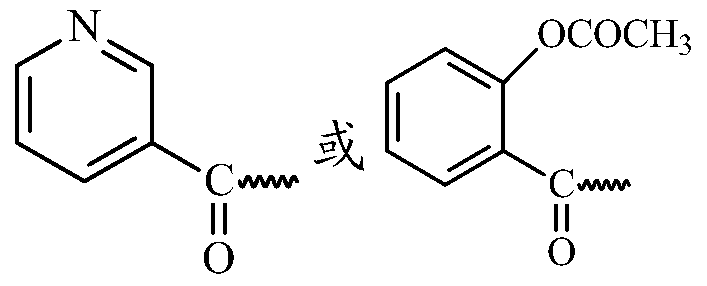
取 3H-1,2-二硫环戊烯 -3-硫酮类化合物添加常规辅料, 采用常规方法 制得注射液。
实施例 12 式 I所示化合物用于制备治疗和 /或预防糖尿病和 /或糖尿病并 发症的脂质体

式 I所示化合物为 3H- 1,2-二硫环戊烯 -3-硫酮类化合物, 其中, R选 自 -C¾、 -H、

取 3H-1,2-二硫环戊烯 -3-硫酮类化合物添加常规辅料, 采用常规方法 制得脂质体。 实施例 13 式 I所示化合物用于制备治疗和 /或预防糖尿病和 /或糖尿病并 发症的口服液

式 I所示化合物为 3H- 1,2-二硫环戊烯 -3-硫酮类化合物, 其中, R选
八
自 -C¾ -H

取 3H-1,2-二硫环戊烯 -3-硫酮类化合物添加常规辅料, 采用常规方法 制得口服液。 O CN 实施例 14 式 I所示化合物用于制备治疗和 /或预防糖尿病和 /或糖尿病并 发症的丸剂

式 I所示化合物为 3H- 1,2-二硫环戊烯 -3-硫酮类化合物, 其中, R选
自 -C¾ -H

取 3H-1,2-二硫环戊烯 -3-硫酮类化合物添加常规辅料, 采用常规方法 制得丸剂。 实施例 15 式 I所示化合物用于制备治疗和 /或预防糖尿病和 /或糖尿病并 发症的汤剂

自 -C¾ -H

取 3H-1,2-二硫环戊O CN烯 -3-硫酮类化合物添加常规辅料, 采用常规方法 制得汤剂。
实施例 16 式 I所示化合物用于制备治疗和 /或预防糖尿病和 /或糖尿病并 发症的膏剂

式 I所示化合物为 3H- 1,2-二硫环戊烯 -3-硫酮类化合物, 其中, R选
自 -C¾ -H

取 3H-1,2-二硫环戊烯 -3-硫酮类化合物添加常规辅料, 采用常规方法 制得膏剂。 实施例 17 式 I所示化合物用于制备治疗和 /或预防糖尿病和 /或糖尿病并 发症的露剂

式 I
式 I所示化合物为 3H- 1,2-二硫环戊烯 -3-硫酮类化合物, 其中, R选
八
自 -C¾ -H

取 3H-1,2-二硫环戊烯 -3-硫酮类化合物添加常规辅料, 采用常规方法 制得露剂。 OO C CNN 实施例 18 式 I所示化合物用于制备治疗和 /或预防糖尿病和 /或糖尿病并 发症的滴丸剂

式 I
式 I所示化合物为 3H- 1,2-二硫环戊烯 -3-硫酮类化合物, 其中, R选
N OCOCH3 自 -C¾ -H、 -
取 3Η-1,2-二硫环戊烯 -3-硫酮类化合物添加常规辅料, 采用常规方法 制得滴丸剂。 实施例 19 式 I所示化合物用于制备治疗和 /或预防糖尿病和 /或糖尿病并 发症的粉针剂

式 I所示化合物为 3H- 1,2-二硫环戊烯 -3-硫酮类化合物, 其中, R选
八
自 -C¾ -H

取 3H-1,2-二硫环戊烯 -3-硫酮类化合物添加常规辅料, 采用常规方法 制得粉针剂。 O CN 实施例 20 式 I所示化合物用于制备治疗和 /或预防糖尿病和 /或糖尿病并 发症的栓剂

式 I所示化合物为 3H- 1,2-二硫环戊烯 -3-硫酮类化合物, 其中, R选
自 -C¾ -H

取 3H-1,2-二硫环戊烯 -3-硫酮类化合物添加常规辅料, 采用常规方法 制得栓剂。 实施例 21 式 I所示化合物用于制备治疗和 /或预防糖尿病和 /或糖尿病并 发症的吸入剂

式 I
式 I所示化合物为 3H- 1,2-二硫环戊烯 -3-硫酮类化合物, 其中, R选
八
自 -C¾、 -H、

取 3H-1,2-二硫环戊烯 -3-硫酮类化合物添加常规辅料, 采用常规方法 制得吸入剂。 O CN 以上所述仅是本发明的优选实施方式,应当指出,对于本技术领域的 普通技术人员来说,在不脱离本发明原理的前提下,还可以做出若干改进 和润饰, 这些改进和润饰也应视为本发明的保护范围。
-I-
Claims
1、 具有式 I所示结构的化合物作为 AMPK激活剂的应用

式 I
,OCOCH3 其中, R选自 -CH3、 -H、 O CN a. !· 人

2、具有式 I所示结构的化合物在制备治疗和 /或预防糖尿病和 /或糖尿 病并发症的药物中的应用 O CN


3、 根据权利要求 2所述的应用, 其特征在于, 所述糖尿病为 II型糖 尿病。
4、 根据权利要求 2所述的应用, 其特征在于, 所述糖尿病并发症包 括高血压、 心脑血管疾病、 肥胖、 神经病、 视网膜疾病、 糖尿病肾病或多 嚢性卵巢综合症。
5、 一种用于治疗和 /或预防糖尿病和 /或糖尿病并发症的药物, 其特 征在于, 包括如式 I所示结构的化合物和药学上可接受的辅料


6、 根据权利要求 5所述的药物, 其特征在于, 所述药物中所述具有 式 I所示结构化合物的质量分数为 0.05%〜99%。
7、 根据权利要求 5所述的药物, 其特征在于, 所述药物的给药方式 为局部给药、 消化道给药或非消化道给药。
8、 根据权利要求 5所述的药物, 其特征在于, 所述药物的剂型包括 口月良制剂、 注射剂、 栓剂或吸入剂。
9、 根据权利要求 8所述的药物, 其特征在于, 所述口服制剂为胶嚢 剂、 微嚢剂、 丸剂、 片剂、 汤剂、 颗粒剂、 膏剂、 分散粉末、 露剂、 口服 液、 滴丸剂、 脂质体。
10、根据权利要求 8所述的药物, 其特征在于, 所述注射剂为粉针剂 或注射液。
Applications Claiming Priority (2)
| Application Number | Priority Date | Filing Date | Title |
|---|---|---|---|
| CN201210516800.X | 2012-12-05 | ||
| CN201210516800.XA CN102961375B (zh) | 2012-12-05 | 2012-12-05 | 一种ampk激活剂及其在制备治疗糖尿病和/或糖尿病并发症的药物中的应用 |
Publications (1)
| Publication Number | Publication Date |
|---|---|
| WO2014086104A1 true WO2014086104A1 (zh) | 2014-06-12 |
Family
ID=47791994
Family Applications (1)
| Application Number | Title | Priority Date | Filing Date |
|---|---|---|---|
| PCT/CN2013/070166 Ceased WO2014086104A1 (zh) | 2012-12-05 | 2013-01-07 | 一种ampk激活剂及其在制备治疗糖尿病和/或糖尿病并发症的药物中的应用 |
Country Status (2)
| Country | Link |
|---|---|
| CN (1) | CN102961375B (zh) |
| WO (1) | WO2014086104A1 (zh) |
Cited By (5)
| Publication number | Priority date | Publication date | Assignee | Title |
|---|---|---|---|---|
| EP3347100A1 (en) * | 2015-09-08 | 2018-07-18 | Op2 Drugs | Compounds for the treatment of diseases linked to mitochondrial reactive oxygen species (ros) production |
| FR3063641A1 (fr) * | 2017-03-07 | 2018-09-14 | Olivier Petitjean | Prevention des lesions cutanees dues aux uv et des melanomes a l'aide d'un inhibiteur selectif de la production d'especes reactives de l'oxygene d'origine mitochondriale |
| FR3063644A1 (fr) * | 2017-03-07 | 2018-09-14 | Gregoire Petitjean | Prevention des effets adverses des statines a l'aide d'un inhibiteur specifique de la production de ros d'origine mitochondriale |
| WO2020244454A1 (zh) | 2019-06-06 | 2020-12-10 | 中国药科大学 | 五环三萜皂苷化合物的医药用途及其药物组合物 |
| RU2775597C2 (ru) * | 2015-09-08 | 2022-07-05 | Оп2 Дрэгс | Ингибитор продукции реактивных форм кислорода для лечения заболеваний, связанных со свободными радикалами кислорода |
Families Citing this family (5)
| Publication number | Priority date | Publication date | Assignee | Title |
|---|---|---|---|---|
| WO2018162581A1 (en) * | 2017-03-07 | 2018-09-13 | OP2 Drugs | Desmethylanethole trithione derivatives for the treatment of diseases linked to mitochondrial reactive oxygen species (ros) production |
| CA3055122A1 (en) | 2017-03-07 | 2018-09-13 | OP2 Drugs | Desmethylanethole trithione derivatives for the treatment of diseases linked to mitochondrial reactive oxygen species (ros) production |
| CN108398549A (zh) * | 2018-02-24 | 2018-08-14 | 苏州大学 | 获得具有线粒体解偶联作用的药物的方法 |
| CN110339200A (zh) * | 2019-08-23 | 2019-10-18 | 成都贝诺科成生物科技有限公司 | 一种茴三硫衍生物的应用 |
| CN113101295A (zh) * | 2020-03-20 | 2021-07-13 | 上海疆云医疗健康科技有限公司 | 二苯乙烯类似物在治疗糖尿病肾脏疾病中的用途 |
Citations (1)
| Publication number | Priority date | Publication date | Assignee | Title |
|---|---|---|---|---|
| WO2006066894A1 (en) * | 2004-12-24 | 2006-06-29 | Ctg Pharma S.R.L. | Compounds for treating metabolic syndrome |
Family Cites Families (1)
| Publication number | Priority date | Publication date | Assignee | Title |
|---|---|---|---|---|
| CN1244325C (zh) * | 2001-05-11 | 2006-03-08 | 成都国嘉联合制药有限公司 | 胆维他在制药中的应用 |
-
2012
- 2012-12-05 CN CN201210516800.XA patent/CN102961375B/zh active Active
-
2013
- 2013-01-07 WO PCT/CN2013/070166 patent/WO2014086104A1/zh not_active Ceased
Patent Citations (1)
| Publication number | Priority date | Publication date | Assignee | Title |
|---|---|---|---|---|
| WO2006066894A1 (en) * | 2004-12-24 | 2006-06-29 | Ctg Pharma S.R.L. | Compounds for treating metabolic syndrome |
Non-Patent Citations (1)
| Title |
|---|
| GE, BIN ET AL.: "AMPK acts as a new target for the treatment of type 2 diabetes", CHINESE PHARMACOLOGICAL BULLETIN, vol. 24, no. 5, 31 May 2008 (2008-05-31), pages 580 - 583 * |
Cited By (5)
| Publication number | Priority date | Publication date | Assignee | Title |
|---|---|---|---|---|
| EP3347100A1 (en) * | 2015-09-08 | 2018-07-18 | Op2 Drugs | Compounds for the treatment of diseases linked to mitochondrial reactive oxygen species (ros) production |
| RU2775597C2 (ru) * | 2015-09-08 | 2022-07-05 | Оп2 Дрэгс | Ингибитор продукции реактивных форм кислорода для лечения заболеваний, связанных со свободными радикалами кислорода |
| FR3063641A1 (fr) * | 2017-03-07 | 2018-09-14 | Olivier Petitjean | Prevention des lesions cutanees dues aux uv et des melanomes a l'aide d'un inhibiteur selectif de la production d'especes reactives de l'oxygene d'origine mitochondriale |
| FR3063644A1 (fr) * | 2017-03-07 | 2018-09-14 | Gregoire Petitjean | Prevention des effets adverses des statines a l'aide d'un inhibiteur specifique de la production de ros d'origine mitochondriale |
| WO2020244454A1 (zh) | 2019-06-06 | 2020-12-10 | 中国药科大学 | 五环三萜皂苷化合物的医药用途及其药物组合物 |
Also Published As
| Publication number | Publication date |
|---|---|
| CN102961375A (zh) | 2013-03-13 |
| CN102961375B (zh) | 2015-01-14 |
Similar Documents
| Publication | Publication Date | Title |
|---|---|---|
| WO2014086104A1 (zh) | 一种ampk激活剂及其在制备治疗糖尿病和/或糖尿病并发症的药物中的应用 | |
| Hu et al. | The roles of GRP81 as a metabolic sensor and inflammatory mediator | |
| Niu et al. | Network pharmacology-based analysis of the anti-hyperglycemic active ingredients of roselle and experimental validation | |
| US20120295985A1 (en) | Methods for improving blood glucose control | |
| KR20190113955A (ko) | 장-외 증상을 갖는 염증성 장질환의 치료를 위한 화합물 및 방법 | |
| US20230130144A1 (en) | Pharmaceutical combination and use thereof | |
| CN101669960B (zh) | 木通皂苷d及其组合物在制备防治老年痴呆药中的应用 | |
| US20250073211A1 (en) | Use of ergothioneine to suppress deleterious effects of senescence | |
| WO2025223439A1 (zh) | 柚皮素在制备治疗子宫肌瘤或子宫肉瘤药物方面的应用 | |
| CN106860449B (zh) | 苦参碱衍生物在治疗糖尿病中的用途 | |
| CN113557019B (zh) | 取代的稠和咪唑衍生物和治疗镰状细胞病和相关并发症的方法 | |
| CN117017936B (zh) | 一种糖苷类化合物微乳软胶囊及其制备方法 | |
| JP6279591B2 (ja) | 健康を促進するための緑茶抽出物と紅茶抽出物との混合物 | |
| WO2025098221A1 (zh) | 苯丙酸类似物在治疗或预防代谢紊乱中的用途 | |
| CN107468681B (zh) | 预防或治疗前驱糖尿病的药物和药物组合物 | |
| CN102283836A (zh) | 索拉非尼在治疗蛛网膜下腔出血后发生的早期脑损伤的应用 | |
| JP2009501795A (ja) | 高尿酸血に関連する健康状態の治療及び予防のための組成物及び方法 | |
| WO2024109153A1 (zh) | Ly2922470在制备预防或治疗肾脏疾病药物中的应用 | |
| CN117653650A (zh) | 三乙酰基-3-羟基苯基腺苷在治疗肥胖症中的应用 | |
| CN117100740A (zh) | 双氢青蒿素在治疗肝脏糖代谢的药物的用途 | |
| US12370152B2 (en) | Pharmaceutical composition for preventing or treating metabolic diseases | |
| CN110384705B (zh) | 山楂酸在制备治疗2型糖尿病胰岛细胞损伤药物中的应用 | |
| EP3466433B1 (en) | Triacetyl-3-hydroxyl phenyl adenosine for use in treating acute vascular inflammations | |
| KR102497760B1 (ko) | 발데콕시브를 포함하는 당뇨병 예방 또는 치료용 약학적 조성물 | |
| WO2022104780A1 (zh) | 脂质化合物在预防或治疗糖尿病中的用途 |
Legal Events
| Date | Code | Title | Description |
|---|---|---|---|
| 121 | Ep: the epo has been informed by wipo that ep was designated in this application |
Ref document number: 13861225 Country of ref document: EP Kind code of ref document: A1 |
|
| NENP | Non-entry into the national phase |
Ref country code: DE |
|
| 122 | Ep: pct application non-entry in european phase |
Ref document number: 13861225 Country of ref document: EP Kind code of ref document: A1 |
|
| 32PN | Ep: public notification in the ep bulletin as address of the adressee cannot be established |
Free format text: NOTING OF LOSS OF RIGHTS PURSUANT TO RULE 112(1) EPC (EPO FORM 1205N DATED 22/01/2016) |