WO2014083734A1 - 位置情報管理システム、移動局、サービス管理サーバ、移動検知方法及び非一時的なコンピュータ可読媒体 - Google Patents
位置情報管理システム、移動局、サービス管理サーバ、移動検知方法及び非一時的なコンピュータ可読媒体 Download PDFInfo
- Publication number
- WO2014083734A1 WO2014083734A1 PCT/JP2013/005653 JP2013005653W WO2014083734A1 WO 2014083734 A1 WO2014083734 A1 WO 2014083734A1 JP 2013005653 W JP2013005653 W JP 2013005653W WO 2014083734 A1 WO2014083734 A1 WO 2014083734A1
- Authority
- WO
- WIPO (PCT)
- Prior art keywords
- mobile station
- station
- movement detection
- area
- information
- Prior art date
- Legal status (The legal status is an assumption and is not a legal conclusion. Google has not performed a legal analysis and makes no representation as to the accuracy of the status listed.)
- Ceased
Links
Images



Classifications
-
- H—ELECTRICITY
- H04—ELECTRIC COMMUNICATION TECHNIQUE
- H04W—WIRELESS COMMUNICATION NETWORKS
- H04W4/00—Services specially adapted for wireless communication networks; Facilities therefor
- H04W4/02—Services making use of location information
- H04W4/025—Services making use of location information using location based information parameters
- H04W4/027—Services making use of location information using location based information parameters using movement velocity, acceleration information
-
- H—ELECTRICITY
- H04—ELECTRIC COMMUNICATION TECHNIQUE
- H04M—TELEPHONIC COMMUNICATION
- H04M3/00—Automatic or semi-automatic exchanges
- H04M3/42—Systems providing special services or facilities to subscribers
-
- H—ELECTRICITY
- H04—ELECTRIC COMMUNICATION TECHNIQUE
- H04W—WIRELESS COMMUNICATION NETWORKS
- H04W4/00—Services specially adapted for wireless communication networks; Facilities therefor
- H04W4/02—Services making use of location information
- H04W4/021—Services related to particular areas, e.g. point of interest [POI] services, venue services or geofences
-
- H—ELECTRICITY
- H04—ELECTRIC COMMUNICATION TECHNIQUE
- H04W—WIRELESS COMMUNICATION NETWORKS
- H04W4/00—Services specially adapted for wireless communication networks; Facilities therefor
- H04W4/02—Services making use of location information
- H04W4/025—Services making use of location information using location based information parameters
-
- H—ELECTRICITY
- H04—ELECTRIC COMMUNICATION TECHNIQUE
- H04W—WIRELESS COMMUNICATION NETWORKS
- H04W4/00—Services specially adapted for wireless communication networks; Facilities therefor
- H04W4/02—Services making use of location information
- H04W4/029—Location-based management or tracking services
-
- H—ELECTRICITY
- H04—ELECTRIC COMMUNICATION TECHNIQUE
- H04W—WIRELESS COMMUNICATION NETWORKS
- H04W60/00—Affiliation to network, e.g. registration; Terminating affiliation with the network, e.g. de-registration
-
- H—ELECTRICITY
- H04—ELECTRIC COMMUNICATION TECHNIQUE
- H04W—WIRELESS COMMUNICATION NETWORKS
- H04W64/00—Locating users or terminals or network equipment for network management purposes, e.g. mobility management
-
- H—ELECTRICITY
- H04—ELECTRIC COMMUNICATION TECHNIQUE
- H04W—WIRELESS COMMUNICATION NETWORKS
- H04W64/00—Locating users or terminals or network equipment for network management purposes, e.g. mobility management
- H04W64/003—Locating users or terminals or network equipment for network management purposes, e.g. mobility management locating network equipment
-
- H—ELECTRICITY
- H04—ELECTRIC COMMUNICATION TECHNIQUE
- H04W—WIRELESS COMMUNICATION NETWORKS
- H04W64/00—Locating users or terminals or network equipment for network management purposes, e.g. mobility management
- H04W64/006—Locating users or terminals or network equipment for network management purposes, e.g. mobility management with additional information processing, e.g. for direction or speed determination
Definitions
- the present invention relates to a position information management system, a mobile station, a service management server, a movement detection method, and a program.
- Non-Patent Document 1 discloses a positioning system that obtains latitude, longitude, and altitude information by performing triangulation on the ground using radio waves from a satellite.
- a mobile phone or the like is connected to a nearby base station when using a mobile communication network. Base stations are generally arranged at intervals of several hundred meters to several kilometers. Therefore, the approximate position of the mobile phone can be specified by specifying the base station with which the mobile phone is communicating, that is, the base station to which the mobile phone is connected.
- Non-Patent Document 2 discloses that the direction of a mobile phone is measured at a plurality of base stations, and the position of the mobile phone is measured from the measured direction.
- the mobile phone in order to identify the base station to which the mobile phone is connected and manage the location of the mobile phone, the mobile phone must always be connected to the base station. That is, when the mobile phone is not connected to the base station, the base station that manages the cell in which the mobile phone is located cannot be specified, and therefore the location of the mobile phone cannot be estimated. .
- a mobile phone is connected to a base station when communicating via a mobile communication network. That is, when it is in a standby state or the like and does not communicate, it is not connected to the base station.
- the present invention has been made to solve at least one of these problems, and can manage the position of a mobile phone terminal without using a GPS device and without being connected to a base station.
- An object of the present invention is to provide a position information management system, a mobile station, a service management server, a movement detection method, and a program.
- the position information management system includes a movement detection that detects movement of the mobile station from a mobile station located in the mobile communication network and a service providing server arranged in the external communication network.
- a service management server for notifying the service providing server that the mobile station has detected movement when the mobile station moves after receiving the request, and the mobile station is in the area where the mobile station is located After receiving the first area information included in the information periodically transmitted to all mobile stations located in the area from the base station that forms the area, the first area information and When different second area information is received, it is detected that the own station has moved, and the movement management of the own station is notified to the service management server.
- the mobile station includes a first mobile station that is included in information that is periodically transmitted from a base station that forms a communication area to all mobile stations located in the communication area. After receiving area information, when receiving second area information different from the first area information, an area information monitoring unit for detecting that the own station has moved, and detecting movement of the own station, A communication unit that notifies a service management server that communicates with a service providing server arranged in the communication network.
- the service management server provides information periodically transmitted from a base station that forms an area where a mobile station is located to all mobile stations located within the area.
- a movement detection notification is received from the mobile station that detects that the own station has moved.
- the movement detection method is a first method included in information periodically transmitted from a base station forming a communication area to all mobile stations located in the communication area.
- the second area information different from the first area information is received after the area information is received, it is detected that the own station has moved, and the movement detection of the own station is detected in the external communication network. This is a notification to the service management server that communicates with the arranged service providing server.
- the program according to the fifth aspect of the present invention is a first area included in information periodically transmitted from a base station forming a communication area to all mobile stations located in the communication area. After receiving the information, when receiving the second area information different from the first area information, the step of detecting that the own station has moved, and the movement detection of the own station are set in the external communication network. And causing the computer to execute a step of notifying the service management server communicating with the arranged service providing server.
- a position information management system capable of managing the position of a mobile phone terminal without using a GPS device and not connected to a base station. can do.
- FIG. 1 is a configuration diagram of a location information management system according to a first exemplary embodiment; 1 is a configuration diagram of a 3GPP network according to a first embodiment.
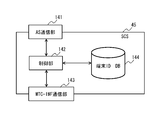
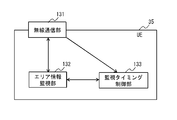
- FIG. 1 is a configuration diagram of an SCS according to a first embodiment. It is a block diagram of UE concerning Embodiment 1.
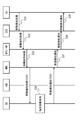
- FIG. It is a figure explaining the flow of the movement detection process concerning Embodiment 1.
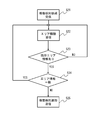
- FIG. It is a figure explaining the flow of the movement detection process in UE concerning Embodiment 1.
- FIG. It is a figure explaining the flow of the movement detection process concerning Embodiment 2.
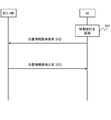
- FIG. It is a figure explaining the flow of the positional infomation acquisition process of UE concerning Embodiment 3.
- the location information management system includes a device arranged in the mobile communication network 100 and a device arranged in the external communication network 200.
- the mobile communication network 100 includes a base station 10, a base station 11, and a service management server 40. Further, a mobile station 30 is located in the mobile communication network 100.
- the external communication network 200 has a service providing server 50.
- the external communication network 200 is a network different from the mobile communication network 100, and may be, for example, a fixed communication network or a network managed by an Internet provider.
- the service providing server 50 is a server device that provides a service using information held by each device in the mobile communication network 100 or analysis information analyzed using a plurality of pieces of information.
- the service management server 40 detects the movement of the mobile station 30 located in the mobile communication network 100 and provides a service for providing analysis information based on the movement detection result of the mobile station 30.
- the service providing server 50 is shown as one server device, but a service providing server group may be configured using a plurality of server devices.
- the mobile station 30 is a communication device capable of performing communication via radio.
- the mobile station 30 may be a mobile phone terminal, a smartphone terminal, a tablet terminal, a personal computer, or the like.
- the mobile station 30 may be a car equipped with a communication module, a vending machine, or a luggage collected by a carrier.
- the mobile station 30 may be an animal to which a communication module is added.
- the type of mobile station 30 is not limited as long as the mobile station 30 is equipped with or added with a communication module that enables communication with the base station 10 or the base station 11.
- the service management server 40 receives a movement detection request for detecting movement of the mobile station 30 from the service providing server 50. Further, when it is detected that the mobile station 30 has moved from the current position, the detection result is transmitted to the service providing server 50.
- the mobile station 30 When the mobile station 30 is located in the cell 20 formed by the base station 10, the mobile station 30 receives information periodically transmitted from the base station 10.
- the information periodically transmitted from the base station 10 includes area information associated with the base station 10.
- the area information may be a cell ID that identifies the cell 20 formed by the base station 10.
- the area information may be a TAID that identifies a tracking area (TA) that is an area where a paging signal is transmitted to call the mobile station 30 when the mobile station 30 receives an incoming call.
- TA tracking area
- the mobile station 30 when the mobile station 30 moves into the cell 21 formed by the base station 11, the mobile station 30 receives information periodically transmitted from the base station 11. Similarly to the base station 10, the base station 11 periodically transmits information including area information.
- the area information is the cell ID
- the mobile station 30 receives the cell ID indicating the cell 21 from the base station 11 by moving into the cell 21. Accordingly, the mobile station 30 receives area information different from that before moving to the cell 21.
- the mobile station 30 detects that its own device has moved.
- the area information is TAID and the base station 10 and the base station 11 belong to different TAs
- the mobile station 30 receives different area information from the base station 10 and the base station 11, respectively.
- the mobile station 30 When detecting that the mobile station 30 has moved, the mobile station 30 notifies the service management server 40 that the movement has been detected.
- the information periodically transmitted from the base station 10 is information transmitted to all mobile stations located in the cell 20, and the destination is not specified. Further, since the information periodically transmitted from the base station 10 is information unilaterally distributed from the base station 10 to all the mobile stations in the cell 20, the mobile station 30 is connected to the base station 10. Even when the mobile station 30 is not connected, the mobile station 30 can receive the information.
- the state in which the mobile station 30 is connected to the base station 10 means that communication resources for the mobile station 30 are allocated in the base station 10 so that the base station 10 transmits data with the mobile station 30 as a destination. State. That is, the mobile station 30 can receive the area information unilaterally distributed from the base station 10 even in a state where it is not connected to the base station 10.
- the base station 11 unilaterally distributes information including area information to all mobile stations located in the cell 21. Thereby, the mobile station 30 can recognize which area it is in by checking the area information transmitted from the base station 10 and the base station 11. Therefore, the mobile station 30 can detect that it has moved to a different area.
- the service providing server 50 can provide the following service by using the movement information of the mobile station 30.
- the carrier manages the package by staying at one place for a predetermined time until it is delivered the next morning.
- the carrier also manages the package by adding a communication module.
- the service providing server 50 can estimate that the package has been stolen. Therefore, when the service providing server 50 detects that the package has moved to another position, the service providing server 50 can notify the carrier of the possibility that the package has been stolen from the service providing server 50.
- a service is an example, and the movement information of the mobile station 30 may be used for other services.
- the mobile station 30 in FIG. 1 can detect the movement of its own device without using a GPS device. Therefore, the mobile station 30 can reduce the cost as compared with a device equipped with a GPS function, and can further reduce the size of the device.
- the mobile station 30 monitors the area information transmitted from the base station even when the mobile station 30 is waiting for communication and is not connected to the base station. Even if it is not connected to a station, it is possible to detect the movement of its own device. Therefore, the number of times of communication with the base station can be reduced as compared with a terminal device that always needs to be connected to the base station in order to manage location information, and thus battery consumption can be suppressed.
- the network shown in FIG. 2 includes a UE (User Equipment) 35, an eNB (evolved NodeB) 15, an MME 60, an MTC-IWF 65, an SCS 45, and an AS (Application Server) 55.
- the eNB 15, the MME 60, the MTC-IWF 65, and the SCS 45 are devices that constitute a network defined in 3GPP.
- the 3GPP technical specifications define the functions of the eNB 15, the MME 60, the MTC-IWF 65, and the SCS 45.
- the MME 60, the MTC-IWF 65, and the SCS 45 constitute a core network.
- UE 35 is a device name used to indicate the mobile station 30 in 3GPP.
- the AS 55 is an application server managed by an operator different from the mobile communication operator, and corresponds to the service providing server 50.
- ENB 15 is a base station that operates in a wireless system using LTE (Long Term Term Evolution).
- the SCS 45 communicates with the AS 55 and corresponds to the service management server 40.
- the MME 60 mainly performs mobility management of the UE 35.
- the MTC-IWF 65 is used to relay communication between the SCS 45 and the devices constituting the eNB 15 and the core network.
- the SCS 45 includes an AS communication unit 141, a control unit 142, an MTC-IWF communication unit 143, and a terminal ID database (terminal ID (DB) 144.
- AS communication unit 141 communicates with AS 55.
- the AS communication unit 141 receives a message related to the movement detection request from the AS 55.
- the UE 35 that desires movement detection is specified.
- the AS communication unit 141 notifies the AS 55 of the detection result.
- the terminal ID DB 144 manages the UE 35 specified from the AS 55 and the identifier of the UE 35 used in the mobile communication network 100 in association with each other.
- the AS 55 may specify the UE 35 using a telephone number, and each device in the mobile communication network 100 may identify the UE 35 using a machine number.
- each device in the mobile communication network 100 may use IMSI (International Mobile Subscriber Identity) or the like instead of the machine number, or may identify the UE 35 using an identifier uniquely determined in the mobile communication network 100.
- IMSI International Mobile Subscriber Identity
- the terminal ID DB 144 manages a plurality of telephone numbers and machine numbers or IMSIs in association with each other.
- the control unit 142 receives the movement detection request via the AS communication unit 141.
- the control unit 142 specifies an identifier used in the mobile communication network 100 of the UE 35 specified in the movement detection request.
- the control unit 142 extracts the identifier of the UE 35 used in the mobile communication network 100 managed in association with the identifier of the UE 35 included in the movement detection request from the terminal ID DB 144.
- the control unit 142 transmits the extracted identifier used in the mobile communication network 100 of the UE 35 to the MTC-IWF 65 via the MTC-IWF communication unit 143.
- the MTC-IWF communication unit 143 communicates with the MTC-IWF 65.
- the MTC-IWF communication unit 143 transmits the identifier of the UE 35 extracted by the control unit 142 to the MTC-IWF 65.
- the MTC-IWF communication unit 143 receives the movement detection notification of the UE 35 transmitted from the MTC-IWF 65 and outputs the movement detection notification to the control unit 142.
- the control unit 142 transmits a movement detection notification to the AS 55 via the AS communication unit 141.
- the UE 35 includes a wireless communication unit 131, an area information monitoring unit 132, and a monitoring timing control unit 133.
- the wireless communication unit 131 communicates with the eNB 15 via a wireless line.
- the radio communication unit 131 receives broadcast information, for example, as information periodically transmitted from the eNB 15.
- the broadcast information is information transmitted from the eNB 15 to all the UEs 35 that are in the cell formed by the eNB 15. Further, the broadcast information includes information necessary for a communication terminal such as the UE 35 to start communication.
- the broadcast information includes a plurality of SIBs (System Information Block). Further, in the SIB 1 among the plurality of SIBs, the Cell ID (cell ID) and TAID of the eNB 15 are set as area information.
- the Cell ID is a different ID for each cell formed by the eNB. Therefore, Cell IDs transmitted from different eNBs are different.
- TAID is an ID indicating a location registration area of the UE 35.
- TA is composed of a plurality of cells. Therefore, different eNBs may transmit the same TAID.
- UE35 performs a location registration process, when moving to different TA. Further, when an incoming call is made to the UE 35, the UE is called for each TAID. That is, the MME 60 transmits a paging signal to all UEs located in the same TA via a plurality of eNBs.
- the wireless communication unit 131 receives the movement detection request transmitted from the SCS 45 via the eNB 15.
- the area information monitoring unit 132 monitors the area information set in the SIB1.
- the area information monitoring unit 132 monitors the area information after receiving the movement detection request.
- the UE 35 determines that the UE 35 is not moving.
- the area information monitoring part 132 detects that UE35 moved, when the area information received last time and the newly received area information differ. That is, the area information monitoring unit 132 detects that the UE 35 has moved when the received Cell ID or TAID changes.
- the area information monitoring unit 132 transmits a message indicating a movement detection notification to the eNB via the wireless communication unit 131.
- the movement detection notification is transmitted to the SCS 45 and further transmitted from the SCS 45 to the AS 55.
- the monitoring timing control unit 133 controls the timing at which the area information monitoring unit 132 monitors the area information. That is, the monitoring timing control unit 133 controls the interval at which the area information monitoring unit 132 monitors the area information.
- the UE 35 is activated only at the timing of receiving the broadcast information, and deactivated at other timings.
- the activated state is a state in which each functional unit constituting the UE 35 is activated, for example. That is, the monitoring timing control unit 133 controls the timing at which the wireless communication unit 131 receives the notification information by controlling the timing at which the wireless communication unit 131 and the area information monitoring unit 132 are activated, and the area information is displayed at a predetermined timing. You may receive it.
- the timing for monitoring the area information may be included in the movement detection request transmitted from the SCS 45.
- the monitoring timing control unit 133 may receive a movement detection request via the wireless communication unit 131 and extract information regarding the timing for monitoring the area information.
- the monitoring timing control unit 133 may activate the area information monitoring unit 132 only at the timing for monitoring the area information, and stop the area information monitoring unit 132 at other timings.
- the AS 55 transmits a movement detection request to the SCS 45 (S11).
- the movement detection request transmitted from the AS 55 to the SCS 45 includes information on the UE that desires movement detection and a detection policy.
- the detection policy is information indicating, for example, an interval for monitoring the UE or a time or period for monitoring the UE.
- the SCS 45 transmits a movement detection request to the UE 35 (S12).
- the SCS 45 transmits a movement detection request as application data such as OMA-DM.
- application data such as OMA-DM
- the movement detection request is not terminated in the relay device between the SCS 45 and the UE 35. That is, when application data such as OMA-DM is used for transmission of the movement detection request, the AS 55 transmits the movement detection request to the UE 35 through the relay device between the SCS 45 and the UE 35.
- the movement detection request includes a detection policy.
- the UE 35 executes a movement detection process (S13). The flow of the movement detection process will be described in detail later. If the UE 35 detects movement within the monitoring time designated by the SCS 45, the UE 35 transmits a movement detection notification to the SCS 45 (S14). For example, the UE 35 transmits a movement detection notification as application data such as OMA-DM as in the movement detection request.
- the movement detection notification includes information on the current position after movement.
- the SCS 45 transmits a movement detection notification to the AS 55 (S15).
- the movement detection notification transmitted by the SCS 45 to the AS 55 includes information on the UE that has detected movement and information on the current position of the UE. In this way, the AS 55 can detect whether or not the UE specified in the movement detection request has moved within a predetermined time.
- the area information monitoring unit 132 receives a movement detection request from the SCS 45 (S21).
- the area information monitoring unit 132 receives area information included in broadcast information from neighboring eNBs (S22). If the monitoring timing is specified in the movement detection request, the area information monitoring unit 132 may receive the area information at the specified monitoring timing.
- the area information monitoring unit 132 determines whether or not the previously received area information is held (S23). When the area information monitoring unit 132 determines that the previously received area information is not held, the area information monitoring unit 132 repeats the process of step S22. If it is determined that the previously received area information is held, the area information monitoring unit 132 determines whether the currently received area information matches the previously received area information (S24).
- the area information monitoring unit 132 determines that the currently received area information matches the previously received area information, the area information monitoring unit 132 determines that the UE 35 has not moved and repeats the process of step S22. The area information monitoring unit 132 determines that the UE 35 has moved when determining that the currently received area information and the previously received area information do not match, and transmits a movement detection notification to the SCS 45 (S25).
- the area information monitoring unit 132 determines whether or not the monitoring time set in the movement detection request has elapsed. May be. If the area information monitoring unit 132 determines that the monitoring time set in the movement detection request has elapsed, the area information monitoring unit 132 may end the process without repeating the process of step S22. If the area information monitoring unit 132 determines that the monitoring time set in the movement detection request has not elapsed, the area information monitoring unit 132 may repeat the process of step S22.
- the SCS 45 may transmit a message to the UE 35 to stop the movement detection at the timing to stop the movement detection.
- the UE 35 stops the movement detection process shown in FIG.
- the UE detects the movement of its own device without using the GPS and without always connecting to the eNB. Can do.
- the SCS 45 setting a detection policy from the SCS 45 to the UE 35, it is possible to change the time during which UE movement detection is continued, or the interval at which the UE executes movement detection processing.
- the UE decreases the number of times that the process of determining whether the area information included in the broadcast information matches the previously received area information is performed. Can be made. Thereby, the power consumption of UE can be reduced.
- the AS 55 transmits a movement detection request to the SCS 45 (S31).
- the movement detection request transmitted from the AS 55 to the SCS 45 includes information on the UE that desires movement detection and a detection policy.
- the detection policy is, for example, information indicating an interval for monitoring the UE or a time for monitoring the UE.
- the SCS 45 transmits a movement detection request to the MTC-IWF 65 (S32).
- the SCS 45 transmits a movement detection request using an interface defined with the MTC-IWF 65.
- an interface between the SCS 45 and the MTC-IWF 65 for example, a Tsp interface defined in 3GPP may be used.
- the SCS 45 transmits a movement detection request as control data.
- the MTC-IWF 65, the MME 60, and the like use the movement detection request as control data.
- the movement detection request transmitted from the SCS 45 to the MTC-IWF 65 includes a UE identifier and a detection policy.
- the identifier of the UE is an identifier used in the mobile communication network 100 in association with the UE specified by the AS 55.
- the MTC-IWF 65 specifies the MME 60 to which the movement detection request is to be transmitted, and transmits the movement detection request to the specified MME 60 (S33).
- the MTC-IWF 65 specifies the MME 60 that manages the UE specified in the movement detection request transmitted from the SCS 45 as the MME 60 to be transmitted.
- the MTC-IWF 65 transmits a movement detection request using an interface defined with the MME 60.
- a T5 interface defined in 3GPP may be used as an interface between the MTC-IWF 65 and the MME 60.
- the movement detection request transmitted from the MTC-IWF 65 to the MME 60 includes a UE identifier used in the mobile communication network 100 and a detection policy.
- the MME 60 transmits a movement detection request to the designated UE 35 (S34).
- the MME 60 transmits a movement detection request using an interface defined between the MME 60 and the UE 35.
- the MME 60 transmits a movement detection request using a NAS (Non-Access Stratum) protocol defined in 3GPP.
- the movement detection request includes a detection policy.
- the UE 35 executes a movement detection process based on the detection policy (S35). For example, the area information monitoring unit 132 may execute the movement detection process at each monitoring timing set in the detection policy. If the UE 35 detects movement in the movement detection process, the UE 35 transmits a movement detection notification to the MME 60 using the NAS protocol (S36).
- the MME 60 transmits a movement detection notification to the MTC-IWF 65 using the same route as in Step S33 (S37).
- the MTC-IWF 65 transmits a movement detection notification to the SCS 45 using the same route as in step S32 (S38).
- the SCS 45 transmits a movement detection notification to the AS 55 using the same route as in step S31 (S39).
- the UE receives a movement detection request, without using GPS, and without always being connected to the eNB.
- the movement of the own device can be detected.
- the UE can notify the AS 55 of a movement detection notification.
- the second embodiment of the present invention is different from the first embodiment in the protocol used for transmitting the movement detection request and the movement detection notification. That is, in the first embodiment, the movement detection request and the movement detection notification are transmitted as application data or user data between the AS 55 and the UE 35, whereas in the second embodiment, the SCS 45, the MTC-IWF 65, Each device transmits and receives a movement detection request and a movement detection notification via a protocol used to transmit a control signal between each of the MME 60 and the UE 35. Thereby, the effect similar to Embodiment 1 can be acquired.
- the SCS 45 detects or recognizes that the designated UE has moved (S41). For example, as described in FIG. 5 or FIG. 7, the SCS 45 detects that the designated UE has moved by receiving a movement detection notification from the UE 35 or the MTC-IWF 65.
- the SCS 45 transmits a position information acquisition request to the MTC-IWF 65 (S42).
- the SCS 45 may transmit to the MTC-IWF 65 a location information acquisition request in which the identification information of the UE that has detected the movement, the interval for acquiring the location information, and the like are set.
- the MTC-IWF 65 detects the position information of the designated UE 35.
- the UE 35 may autonomously connect to the eNB 15 when detecting the movement of the own device in the movement detection process described in FIG. 6.
- the MME 60 may control the eNB 15 and the UE 35 to be connected when the movement detection notification is received from the UE 35.
- MTC-IWF65 notifies SCS45 of the positional information acquisition response which set the information regarding eNB15 to which UE35 is connected (S43).
- the MTC-IWF 65 may transmit a position information acquisition response to the SCS 45 at each specified interval.
- the SCS 45 can recognize the approximate position of the UE 35 by recognizing the eNB 15 to which the UE 35 is connected.
- a specific charging rate may be set for the AS 55 that desires to acquire the location information.
- the SCS 45 may notify a charging information processing server or the like of a charging rate set for the AS 55 that desires to acquire position information.
- the charging rate may be changed according to the interval for acquiring position information, the number of UEs for acquiring position information, and the like.
- the position of the UE 35 that has started moving can be tracked by using the flow of the position information acquisition process of the UE according to the third embodiment of the present invention.
- AS55 can track the position of UE35, for example, when UE35 is stolen.
- Non-transitory computer readable media include various types of tangible storage media (tangible storage medium).
- non-transitory computer-readable media examples include magnetic recording media (eg flexible disks, magnetic tapes, hard disk drives), magneto-optical recording media (eg magneto-optical discs), CD-ROMs (Read Only Memory), CD-Rs, CD-R / W, semiconductor memory (for example, mask ROM, PROM (Programmable ROM), EPROM (Erasable ROM), flash ROM, RAM (random access memory)) are included.
- the program may also be supplied to the computer by various types of temporary computer-readable media. Examples of transitory computer readable media include electrical signals, optical signals, and electromagnetic waves.
- the temporary computer-readable medium can supply the program to the computer via a wired communication path such as an electric wire and an optical fiber, or a wireless communication path.
Landscapes
- Engineering & Computer Science (AREA)
- Signal Processing (AREA)
- Computer Networks & Wireless Communication (AREA)
- Mobile Radio Communication Systems (AREA)
- Telephonic Communication Services (AREA)
- Telephone Function (AREA)
- Position Fixing By Use Of Radio Waves (AREA)
Priority Applications (5)
| Application Number | Priority Date | Filing Date | Title |
|---|---|---|---|
| EP13858922.1A EP2928168B1 (en) | 2012-11-29 | 2013-09-25 | Location-information management system, service management server, movement detection method, and non-transitory computer-readable medium |
| US14/443,758 US9693199B2 (en) | 2012-11-29 | 2013-09-25 | Location information management system, mobile station, service management server, movement sensing method, and non-transitory computer readable medium |
| IN3953DEN2015 IN2015DN03953A (https=) | 2012-11-29 | 2013-09-25 | |
| CN201380062521.3A CN104823435A (zh) | 2012-11-29 | 2013-09-25 | 位置信息管理系统、移动站、服务管理服务器、移动感测方法以及非瞬时计算机可读介质 |
| JP2014549766A JP6274110B2 (ja) | 2012-11-29 | 2013-09-25 | 位置情報管理システム、移動局、サービス管理サーバ、移動検知方法及びプログラム |
Applications Claiming Priority (2)
| Application Number | Priority Date | Filing Date | Title |
|---|---|---|---|
| JP2012-260720 | 2012-11-29 | ||
| JP2012260720 | 2012-11-29 |
Publications (1)
| Publication Number | Publication Date |
|---|---|
| WO2014083734A1 true WO2014083734A1 (ja) | 2014-06-05 |
Family
ID=50827400
Family Applications (1)
| Application Number | Title | Priority Date | Filing Date |
|---|---|---|---|
| PCT/JP2013/005653 Ceased WO2014083734A1 (ja) | 2012-11-29 | 2013-09-25 | 位置情報管理システム、移動局、サービス管理サーバ、移動検知方法及び非一時的なコンピュータ可読媒体 |
Country Status (6)
| Country | Link |
|---|---|
| US (1) | US9693199B2 (https=) |
| EP (1) | EP2928168B1 (https=) |
| JP (3) | JP6274110B2 (https=) |
| CN (1) | CN104823435A (https=) |
| IN (1) | IN2015DN03953A (https=) |
| WO (1) | WO2014083734A1 (https=) |
Cited By (1)
| Publication number | Priority date | Publication date | Assignee | Title |
|---|---|---|---|---|
| JPWO2016009579A1 (ja) * | 2014-07-14 | 2017-05-25 | 日本電気株式会社 | モビリティ管理のための方法および装置 |
Families Citing this family (1)
| Publication number | Priority date | Publication date | Assignee | Title |
|---|---|---|---|---|
| EP3264804B1 (en) * | 2016-06-27 | 2020-08-05 | Vodafone GmbH | Delivering a message to a mobile device in a mobile communication network |
Citations (5)
| Publication number | Priority date | Publication date | Assignee | Title |
|---|---|---|---|---|
| JP2010263262A (ja) * | 2009-04-30 | 2010-11-18 | Nec Corp | サービス制御サーバ装置、携帯端末利用制限システム及びそれらに用いる携帯端末利用制限サービス制御方法 |
| JP2011091720A (ja) * | 2009-10-26 | 2011-05-06 | Nec Corp | 災害安否確認システム及び方法 |
| JP2011188064A (ja) * | 2010-03-05 | 2011-09-22 | Nec Corp | 移動機、並びにこれに用いる位置情報の収集方法及びプログラム |
| JP2012005048A (ja) * | 2010-06-21 | 2012-01-05 | Nippon Telegr & Teleph Corp <Ntt> | 無線通信装置 |
| JP2012181087A (ja) * | 2011-03-01 | 2012-09-20 | Sharp Corp | 移動体端末、制御方法、およびプログラム |
Family Cites Families (15)
| Publication number | Priority date | Publication date | Assignee | Title |
|---|---|---|---|---|
| JP2002217811A (ja) * | 2001-01-15 | 2002-08-02 | Hitachi Ltd | 状態検知方法、状態検知装置、移動端末装置及び移動状態観察システム |
| JP3826807B2 (ja) * | 2002-02-13 | 2006-09-27 | 日本電気株式会社 | 移動通信ネットワークにおける測位システム |
| WO2006097987A1 (ja) | 2005-03-14 | 2006-09-21 | Mitsubishi Denki Kabushiki Kaisha | 通信ネットワークシステムおよび移動端末 |
| KR100814762B1 (ko) | 2006-11-07 | 2008-03-19 | 에스케이 텔레콤주식회사 | G-pCell 데이터베이스를 이용하여 이동통신 단말기에네트워크 기반의 위치 측위를 제공하는 방법 및 시스템 |
| EP2156211A4 (en) | 2007-04-12 | 2010-06-16 | Ericsson Telefon Ab L M | DETERMINING THE POSITIONING OF A WIRELESS TERMINAL IN A TELECOMMUNICATION NETWORK |
| JP5116509B2 (ja) | 2007-08-31 | 2013-01-09 | パナソニック株式会社 | 無線通信端末装置、無線通信基地局装置及び無線通信方法 |
| JP2011039588A (ja) * | 2009-08-06 | 2011-02-24 | Nippon Conlux Co Ltd | 電子マネーチャージ装置の盗難監視システムおよび電子マネーチャージ装置 |
| JP2011044007A (ja) * | 2009-08-21 | 2011-03-03 | Nippon Conlux Co Ltd | 電子マネーチャージ装置の盗難監視システムおよび電子マネーチャージ装置 |
| JP2011096026A (ja) * | 2009-10-30 | 2011-05-12 | Nippon Conlux Co Ltd | カード処理装置の盗難監視システム |
| JP5232187B2 (ja) * | 2010-03-10 | 2013-07-10 | エヌ・ティ・ティ・コミュニケーションズ株式会社 | 設置位置移動検出システムおよび通信装置 |
| JP5397535B2 (ja) * | 2010-03-17 | 2014-01-22 | 富士通株式会社 | 無線通信システム、通信制御方法、移動管理装置、移動端末及び基地局 |
| WO2012026086A1 (ja) * | 2010-08-26 | 2012-03-01 | 日本電気株式会社 | 通信システム、該通信システムにおける情報処理装置とフェムト基地局並びにその制御方法と制御プログラム、及びフェムト基地局への情報送信方法 |
| JP2012103138A (ja) | 2010-11-11 | 2012-05-31 | Sony Corp | 位置情報検出装置、通信装置、並びに通信システム |
| KR20120072044A (ko) * | 2010-12-23 | 2012-07-03 | 한국전자통신연구원 | 개방형 무선 액세스 네트워크 장치 및 그를 이용한 접속방법 |
| WO2012118610A1 (en) | 2011-02-28 | 2012-09-07 | Siemens Enterprise Communications Gmbh & Co. Kg | Apparatus and mechanism for dynamic assignment of survivability services to mobile devices |
-
2013
- 2013-09-25 IN IN3953DEN2015 patent/IN2015DN03953A/en unknown
- 2013-09-25 JP JP2014549766A patent/JP6274110B2/ja active Active
- 2013-09-25 US US14/443,758 patent/US9693199B2/en active Active
- 2013-09-25 WO PCT/JP2013/005653 patent/WO2014083734A1/ja not_active Ceased
- 2013-09-25 CN CN201380062521.3A patent/CN104823435A/zh active Pending
- 2013-09-25 EP EP13858922.1A patent/EP2928168B1/en active Active
-
2017
- 2017-11-22 JP JP2017224400A patent/JP6299924B1/ja active Active
-
2018
- 2018-02-28 JP JP2018034305A patent/JP6729614B2/ja active Active
Patent Citations (5)
| Publication number | Priority date | Publication date | Assignee | Title |
|---|---|---|---|---|
| JP2010263262A (ja) * | 2009-04-30 | 2010-11-18 | Nec Corp | サービス制御サーバ装置、携帯端末利用制限システム及びそれらに用いる携帯端末利用制限サービス制御方法 |
| JP2011091720A (ja) * | 2009-10-26 | 2011-05-06 | Nec Corp | 災害安否確認システム及び方法 |
| JP2011188064A (ja) * | 2010-03-05 | 2011-09-22 | Nec Corp | 移動機、並びにこれに用いる位置情報の収集方法及びプログラム |
| JP2012005048A (ja) * | 2010-06-21 | 2012-01-05 | Nippon Telegr & Teleph Corp <Ntt> | 無線通信装置 |
| JP2012181087A (ja) * | 2011-03-01 | 2012-09-20 | Sharp Corp | 移動体端末、制御方法、およびプログラム |
Non-Patent Citations (2)
| Title |
|---|
| AKIO YASUDA: "The Transactions of the Institute of Electronics, Information and Communication Engineers B, Communications", vol. J84-B, 1 December 2001, THE INSTITUTE OF ELECTRONICS, INFORMATION AND COMMUNICATION ENGINEERS, article "Prospect of GPS technique", pages: 2082 - 2091 |
| See also references of EP2928168A4 |
Cited By (1)
| Publication number | Priority date | Publication date | Assignee | Title |
|---|---|---|---|---|
| JPWO2016009579A1 (ja) * | 2014-07-14 | 2017-05-25 | 日本電気株式会社 | モビリティ管理のための方法および装置 |
Also Published As
| Publication number | Publication date |
|---|---|
| JP6274110B2 (ja) | 2018-02-07 |
| IN2015DN03953A (https=) | 2015-10-02 |
| JPWO2014083734A1 (ja) | 2017-01-05 |
| JP6729614B2 (ja) | 2020-07-22 |
| JP2018125858A (ja) | 2018-08-09 |
| JP2018061274A (ja) | 2018-04-12 |
| EP2928168B1 (en) | 2020-02-19 |
| JP6299924B1 (ja) | 2018-03-28 |
| EP2928168A1 (en) | 2015-10-07 |
| CN104823435A (zh) | 2015-08-05 |
| EP2928168A4 (en) | 2016-07-27 |
| US9693199B2 (en) | 2017-06-27 |
| US20150296345A1 (en) | 2015-10-15 |
Similar Documents
| Publication | Publication Date | Title |
|---|---|---|
| CN105075335B (zh) | 用于无线通信网络中合作定位的方法和装置 | |
| US9462567B2 (en) | Network-level device proximity detection | |
| US9883338B2 (en) | Proximity detection in a device to device network | |
| EP3437428B1 (en) | A base station for a communication network and a core network apparatus | |
| US12120051B2 (en) | MTC-IWF entity, SCS entity, signaling method, and computer readable medium | |
| KR102459543B1 (ko) | 무선 통신 시스템에서 웨어러블 디바이스를 위한 통신 방법 및 장치 | |
| US20150358837A1 (en) | Mobile communication system, service platform, network parameter control method, and computer readable medium | |
| US10117210B2 (en) | Apparatus and method for controlling congestion of machine-type communication in a radio access network | |
| EP4325993A2 (en) | Communication processing methods and devices | |
| JP6299924B1 (ja) | コアネットワーク装置 | |
| US10382982B2 (en) | Mobile communication system, detection server, control apparatus, mobile communication apparatus, network optimizing method, and non-transitory computer readable medium having program stored thereon | |
| JPWO2016009579A1 (ja) | モビリティ管理のための方法および装置 | |
| US9538447B2 (en) | Methods and apparatus for device monitoring | |
| JP6476864B2 (ja) | 通信制御システム、サービスサーバ、通信制御方法及びプログラム | |
| KR20140041052A (ko) | 단말의 위치 정보 획득 시스템 및 방법 | |
| WO2014155219A1 (en) | Local wireless connectivity for the maintenance and location of a radio equipment of a base station in a cellular communications network |
Legal Events
| Date | Code | Title | Description |
|---|---|---|---|
| 121 | Ep: the epo has been informed by wipo that ep was designated in this application |
Ref document number: 13858922 Country of ref document: EP Kind code of ref document: A1 |
|
| ENP | Entry into the national phase |
Ref document number: 2014549766 Country of ref document: JP Kind code of ref document: A |
|
| WWE | Wipo information: entry into national phase |
Ref document number: 14443758 Country of ref document: US |
|
| WWE | Wipo information: entry into national phase |
Ref document number: 2013858922 Country of ref document: EP |
|
| NENP | Non-entry into the national phase |
Ref country code: DE |