WO2014021119A1 - 希土類元素の分離回収方法及び分離回収装置 - Google Patents
希土類元素の分離回収方法及び分離回収装置 Download PDFInfo
- Publication number
- WO2014021119A1 WO2014021119A1 PCT/JP2013/069584 JP2013069584W WO2014021119A1 WO 2014021119 A1 WO2014021119 A1 WO 2014021119A1 JP 2013069584 W JP2013069584 W JP 2013069584W WO 2014021119 A1 WO2014021119 A1 WO 2014021119A1
- Authority
- WO
- WIPO (PCT)
- Prior art keywords
- precipitate
- inorganic salt
- flocculant
- tank
- rare earth
- Prior art date
- Legal status (The legal status is an assumption and is not a legal conclusion. Google has not performed a legal analysis and makes no representation as to the accuracy of the status listed.)
- Ceased
Links
Images





Classifications
-
- B—PERFORMING OPERATIONS; TRANSPORTING
- B01—PHYSICAL OR CHEMICAL PROCESSES OR APPARATUS IN GENERAL
- B01D—SEPARATION
- B01D21/00—Separation of suspended solid particles from liquids by sedimentation
- B01D21/01—Separation of suspended solid particles from liquids by sedimentation using flocculating agents
-
- C—CHEMISTRY; METALLURGY
- C22—METALLURGY; FERROUS OR NON-FERROUS ALLOYS; TREATMENT OF ALLOYS OR NON-FERROUS METALS
- C22B—PRODUCTION AND REFINING OF METALS; PRETREATMENT OF RAW MATERIALS
- C22B3/00—Extraction of metal compounds from ores or concentrates by wet processes
- C22B3/20—Treatment or purification of solutions, e.g. obtained by leaching
- C22B3/44—Treatment or purification of solutions, e.g. obtained by leaching by chemical processes
-
- C—CHEMISTRY; METALLURGY
- C22—METALLURGY; FERROUS OR NON-FERROUS ALLOYS; TREATMENT OF ALLOYS OR NON-FERROUS METALS
- C22B—PRODUCTION AND REFINING OF METALS; PRETREATMENT OF RAW MATERIALS
- C22B59/00—Obtaining rare earth metals
-
- B—PERFORMING OPERATIONS; TRANSPORTING
- B01—PHYSICAL OR CHEMICAL PROCESSES OR APPARATUS IN GENERAL
- B01D—SEPARATION
- B01D21/00—Separation of suspended solid particles from liquids by sedimentation
- B01D21/26—Separation of sediment aided by centrifugal force or centripetal force
- B01D21/262—Separation of sediment aided by centrifugal force or centripetal force by using a centrifuge
-
- Y—GENERAL TAGGING OF NEW TECHNOLOGICAL DEVELOPMENTS; GENERAL TAGGING OF CROSS-SECTIONAL TECHNOLOGIES SPANNING OVER SEVERAL SECTIONS OF THE IPC; TECHNICAL SUBJECTS COVERED BY FORMER USPC CROSS-REFERENCE ART COLLECTIONS [XRACs] AND DIGESTS
- Y02—TECHNOLOGIES OR APPLICATIONS FOR MITIGATION OR ADAPTATION AGAINST CLIMATE CHANGE
- Y02P—CLIMATE CHANGE MITIGATION TECHNOLOGIES IN THE PRODUCTION OR PROCESSING OF GOODS
- Y02P10/00—Technologies related to metal processing
- Y02P10/20—Recycling
Definitions
- the present invention relates to a technology for separating and recovering rare earth elements, and in particular, a method for separating and recovering rare earth elements capable of preferentially separating and recovering Dy from an aqueous solution containing Nd and / or Pr and Dy. And a separation and recovery apparatus.
- Rare earth elements are elements whose demand has rapidly increased in recent years. Its main use has been added to a small amount of magnesium-aluminum alloy for aircraft since about the 1920s-1940s, and has been effective in suppressing the heat resistance and creep resistance (strain to continuous load) of the alloy. It has also been used for fluorescent materials such as cathode ray tubes and plasma discharge displays. Since neodymium (Nd) and dysprosium (Dy) noted here can be mixed with a magnetic metal to prevent the reduction of the magnetic force at high temperatures, motors used at high temperatures as high-temperature resistant magnets (for example, It is used for hybrid power car motor).
- neodymium and dysprosium both have limited supply because the main production areas are unevenly distributed. As a result, prices have risen and it has become difficult to obtain them. Recently, it has been reported that rare earth elements are accumulated in very large amounts in mud deposited on the sea floor in the open sea, but it is difficult to inexpensively mine solids from the sea floor several thousand meters deep on the open sea is expected.
- Patent Document 1 discloses a rare earth metal flocculant formed by combining a water-soluble polymer having an amino group in a side chain and having a linear main chain, and a water-soluble polymer or cation exchange resin having an acid group. Is disclosed. According to Patent Document 1, only a specific rare earth metal can be separated and recovered in a large amount at a high speed from an aqueous solution containing plural kinds of rare earth metals, and in particular, only an Dy from an aqueous solution containing Nd and Dy Can be separated and recovered in large quantities at high speed.
- Patent Document 2 discloses a selective recovery method of rare metals (molybdenum, vanadium and tungsten) characterized by including the following step (1) and step (2). That is, (1) a method of bringing an aqueous solution containing a metal component containing a rare metal into contact with a chelating resin or an adsorbent, or forming a precipitate of a metal compound in an aqueous solution containing a metal component containing a rare metal A step of adsorbing or occluding the metal component to the solid phase, (2) a step of contacting the solid phase having adsorbed or occluded the metal component including the rare metal obtained in the step (1) with an aqueous solution containing the peroxy compound It is disclosed.
- Patent Document 2 it is believed that specific rare metals such as molybdenum, vanadium and tungsten can be selectively separated and recovered from an aqueous solution in which many types of metal ions coexist in addition to the rare metals. For this reason, according to the method described in Patent Document 2, efficient recovery of rare metals is possible, and it is said that cost reduction can be achieved in the purification process after recovery.
- the method described in Patent Document 2 is an advantageous method also for the purification of rare metals, and further, the peroxy compound which is an active ingredient in the eluate is a substance which is inexpensive and easy to handle, and is acid resistant. It is said that the cost can be reduced because the device of the sex is unnecessary.
- the flocculation product is separated by filtration or magnetic separation to separate it from the liquid phase, but the magnetic separation method is used when the ion exchange resin contains magnetic powder. Otherwise it is separated by filtration. Generally, separation by filtration takes 1 to 2 days. For this reason, in order to improve the separation and recovery efficiency of the rare earth elements, an improvement to further accelerate the processing speed has been desired.
- Patent Document 2 Although it is possible to recover many kinds of metals such as molybdenum, vanadium and tungsten and rare earth elements from an aqueous solution in which many kinds of metal ions coexist, many kinds of metal ions can be used. There is no disclosure of a method of preferentially separating and recovering Dy from a coexistent aqueous solution and an aqueous solution containing Nd and / or Pr.
- Rare earth magnets in particular Nd-Fe-B sintered magnets, contain Dy, Nd and Pr as rare earth elements, but they have similar chemical and physical properties. For this reason, it is important to preferentially separate and recover Dy effective as a magnet component of a high-temperature resistant magnet from an aqueous solution containing Nd and / or Pr.
- an object of the present invention is to provide a high separation rate (60% or more separation rate) and a high recovery rate (recovery rate 80) from an aqueous solution containing at least one of Nd and Pr and Dy as metal elements. It is an object of the present invention to provide a separation and recovery method and separation and recovery apparatus of rare earth elements capable of preferentially separating and recovering Dy at% or more.
- Nd and / or Pr and Dy are separated from an aqueous solution containing at least one of Nd and Pr as metal elements and Dy to preferentially carry out Dy.
- a method for separating and recovering rare earth elements to be recovered comprising Adding an inorganic salt to an aqueous solution containing at least one of Nd and Pr and Dy and stirring (inorganic salt adding step); After the inorganic salt addition step, a first flocculant containing an organic substance having a carboxyl group and a second flocculant containing an organic substance having an amino group are added in this order to contain Dy more than Nd and / or Pr.
- a method of separating and recovering rare earth elements comprising a centrifugal separation step of separating into a liquid phase containing a large amount of Dy by centrifugation and collecting the liquid phase after the coagulant addition step, provide.
- Another example of the first aspect of the present invention is to achieve the above object by adding an inorganic salt and a coagulant to an aqueous solution containing at least one of Nd and Pr as metal elements and Dy, And Pr and at least one of Pr and Dy are separated into a precipitate and a liquid phase, and the rare earth element separation and recovery device preferentially recovers Dy from the precipitate,
- a first reaction vessel for containing an aqueous solution containing at least one of Nd and Pr and Dy;
- First stirring means provided in the first reaction vessel;
- a separation and recovery apparatus for rare earth elements comprising at least a first centrifugal separator for separating a liquid phase and
- Nd and / or Pr and Dy are separated from an aqueous solution containing at least one of Nd and Pr as metal elements and Dy to preferentially carry out Dy.
- a method for separating and recovering rare earth elements to be recovered comprising In an aqueous solution containing at least one of Nd and Pr and Dy, A first flocculant containing an organic substance having a carboxyl group and a second flocculant containing an organic substance having an amino group are added in this order to generate an aggregate containing more Dy than Nd and / or Pr, Precipitating aggregates (aggregating agent addition step); Freezing and thawing the precipitate containing a large amount of Dy and the liquid phase after the coagulant addition step (freeze and thawing step); A separation and recovery of rare earth elements comprising a step of separating the precipitate containing a large amount of Dy by filtration and the liquid phase after the freezing and thawing steps and recovering the precipitate and the
- a coagulant is added to an aqueous solution containing at least one of Nd and Pr as a metal element and Dy to achieve the above object, and the Nd and / or
- An apparatus for separating and recovering rare earth elements, which separates an aqueous solution containing Pr and Dy into a precipitate and a liquid phase, and preferentially recovers Dy from the precipitate A first reaction vessel for containing an aqueous solution containing at least one of Nd and Pr and Dy; First stirring means provided in the first reaction vessel; A first flocculant tank containing a first flocculant containing an organic substance having a carboxyl group as the flocculant; A second flocculant tank containing a second flocculant containing an organic group having an amino group as the flocculant; A freezing / thawing device for freezing and thawing the precipitate and liquid phase obtained in the first reaction tank, and filtration for separating the precipitate and liquid phase into a precipitate and
- a high separation rate (60% or more separation rate) and a high recovery rate (recovery rate 80% or more) from an aqueous solution containing at least one of Nd and Pr and Dy as metal elements can provide a separation recovery method and separation recovery apparatus of rare earth elements capable of preferentially separating and recovering Dy.
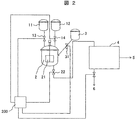
- FIG. 2 is a schematic cross-sectional view showing a first example of the rare earth separation and recovery apparatus according to the present invention (first aspect). It is a cross-sectional schematic diagram which shows the 2nd example of the rare earth separation collection
- separation time of precipitation and liquid phase is compared with the case of using conventional filtration by using centrifugation for separation of precipitation and liquid phase. Can be significantly shortened. Specifically, in the conventional filtration, the treatment time of 1-2 days was required for the separation of the precipitate and the liquid phase, but in the centrifugation, the treatment time can be shortened to 1-2 hours. Become.
- the precipitate in order to use centrifugation, the precipitate must be sufficiently solidified. For this purpose, it is also necessary to precipitate fine powders contained in the liquid phase.
- a first flocculant a flocculant containing an organic substance having a carboxyl group
- a second flocculant flocculant containing an organic substance having an amino group
- an aqueous solution containing at least one of Nd and Pr as metal elements and Dy can be obtained at high speed and It becomes possible to preferentially separate and recover Dy with a high separation rate (separation rate of 60% or more) and a high recovery rate (recovery rate of 80% or more).
- the present invention can add the following improvements and changes to the method for separating and recovering rare earth elements according to the above (first aspect).
- the organic substance having a carboxyl group is polyacrylic acid, and the organic substance having an amino group is polyallylamine.
- the total of the addition amount of the first flocculant and the addition amount of the second flocculant is 0.01 to 30 wt% with respect to an aqueous solution containing at least one of Nd and Pr and Dy. It is.
- the inorganic salt is sodium chloride.
- the addition amount of the inorganic salt is 1 to 7 wt% with respect to an aqueous solution containing at least one of Nd and Pr and Dy.
- a centrifugation step (third centrifugation step) of separating into a Dy-rich precipitate and liquid phase by centrifugation after the second flocculant addition step, and recovering the precipitate and liquid phase respectively;
- a step baking step of baking the precipitate containing a large amount of Dy collected in the third centrifugation step in a heating furnace.
- the present invention can add the following improvement or change in the separation and recovery apparatus for the rare earth element according to the above (first aspect).
- the organic substance having a carboxyl group is polyacrylic acid, and the organic substance having an amino group is polyallylamine.
- the total of the addition amount of the first flocculant and the addition amount of the second flocculant is 0.01 to 30 wt% with respect to an aqueous solution containing at least one of Nd and Pr and Dy. It is.
- the inorganic salt is sodium chloride.
- the addition amount of the inorganic salt is 1 to 7 wt% with respect to an aqueous solution containing at least one of the Nd and Pr and Dy.
- (X) a second reaction vessel for further containing the precipitate obtained in the first centrifugal separator, and a second stirring means provided in the second reaction vessel;
- a base tank for storing a base A second inorganic salt tank containing inorganic salt, A second centrifuge for separating the precipitate obtained in the second reaction vessel and the liquid phase;
- An acid tank for storing acid A means for supplying an acid from the acid tank to the precipitate obtained by the second centrifugal separator;
- Third stirring means provided in the third reaction vessel;
- a fourth flocculant tank containing the second flocculant It has a third centrifugal separator for separating the precipitate obtained in the third reaction tank and the liquid phase.
- the inorganic salt and the flocculant are added to the precipitate containing Dy recovered by the third centrifugal separator, and the precipitate is separated into a precipitate and a liquid phase by centrifugation, and then the precipitate obtained is obtained.
- the reaction is performed such that a series of operations of adding the acid to the obtained precipitate and performing centrifugation may be performed multiple times.
- a stirring means provided in the tank and the reaction tank, an inorganic salt tank, a coagulant tank containing the first coagulant, a coagulant tank containing the second coagulant, a base tank, an acid tank and a centrifugal separator There are multiple stages.
- the inorganic salt is not particularly limited, but is preferably an alkali metal halide such as sodium chloride or potassium chloride, or ammonium chloride.
- the addition amount of the inorganic salt is preferably 1 to 7 wt% with respect to the aqueous solution containing at least one of Nd and Pr and Dy.
- “1 to 7 wt%” means that the content is 1 wt% or more and 7 wt% or less.
- the addition amount of the inorganic salt is less than 1 wt%, the salting-out effect is small, and the aggregates in the liquid phase can not be sufficiently precipitated. Also, if it is more than 7 wt%, not only Dy contained in the liquid phase but also Nd and / or Pr will be precipitated, so the separation effect of Dy is lost.
- a first flocculant containing an organic substance having a carboxyl group and a second flocculant containing an organic substance having an amino group are added in this order to obtain Dy rather than Nd and / or Pr.
- To generate agglomerates containing a large amount of coagulant (flocculant addition step).
- Dy and the carboxyl group and amino group are in an ionic association.
- the addition of the first flocculant and the addition of the second flocculant need to be performed in the above order.
- organic substance having a carboxyl group polyacrylic acid, dicarboxylic acid, polyaspartic acid, polyglutamic acid, cation exchange resin and the like are preferable.
- organic substance having an amino group polyethyleneimine, polyvinylamine, chitosan, polylysine, polyarginine, polyallylamine, anion exchange resin and the like are preferable.
- the structure of the organic substance having the carboxyl group or the organic substance having the amino group is not limited. It may be linear, cyclic or have an aromatic ring. Moreover, it is preferable that the weight average molecular weight of the organic substance which has these carboxyl groups, or the organic substance which has an amino group is about 1000. It is particularly preferable to use polyacrylic acid as the organic substance having a carboxyl group and polyallylamine as the organic substance having an amino group.
- the total amount of the first flocculant and the second flocculant added is preferably 0.01 to 30 wt% with respect to the aqueous solution containing Nd and / or Pr and Dy.
- it is less than 0.01 wt% the effect of aggregation can not be sufficiently obtained, and a large amount of an aqueous solution containing Nd and / or Pr and Dy is required, which causes problems in workability.
- it exceeds 30 wt% the viscosity becomes high, and it becomes difficult to separate Nd and / or Pr and Dy by centrifugation described later.
- FIG. 1A is a schematic view showing the relationship between the recovery of Dy and Nd and the ratio of a coagulant to a metal according to the present invention (first aspect).
- FIG. 1B is a schematic view showing the relationship between the recovery of Dy and Nd when the inorganic salt is not added, and the ratio of a coagulant to a metal.
- the “flocculant to metal ratio (flocculant / metal ratio)” is a value obtained by dividing the addition amount of the flocculant by the total number of atoms of Dy and Nd contained in an aqueous solution containing Nd and Dy. It is. This value represents the addition amount of flocculant per one metal atom (Dy or Nd).
- FIGS. 1A and 1B recovery rates of Dy and Nd differ depending on the addition amount of the coagulant. Moreover, FIG. 1A which concerns on this invention is large compared with FIG. 1B which does not add inorganic salt, the isolation
- a base (basic aqueous solution) may be added to the precipitate obtained after the centrifugation step (base addition step).
- the base (basic aqueous solution) to be added at this time is not particularly limited as long as it can generate a hydroxide of Dy, but a strong base having a pH of more than 9 is preferable. More specifically, an aqueous solution of sodium hydroxide is preferred.
- the inorganic salt added at the previous process is contained in the precipitation containing the hydroxide of Dy
- the precipitate of Dy hydroxide can be solidified.
- the precipitate containing the hydroxide of Dy obtained above is separated into the precipitate containing the hydroxide of Dy and the liquid phase by centrifugation and collected respectively (second centrifugation step).
- An acid is added to the precipitate containing the hydroxide to neutralize the hydroxide of Dy with acid to a salt of Dy.
- the acid added at this time is not particularly limited, but a mineral acid is preferable.
- An inorganic salt is further added to the salt of Dy and stirred (third inorganic salt addition step), a first flocculant and a second flocculant are added (second flocculant addition step), and centrifugation A separation step is performed to separate the precipitate containing Dy and the liquid phase, and the centrifugation step (third centrifugation step) of recovering the precipitate and the liquid phase is performed.
- the precipitate obtained as described above is subjected twice to a series of steps of the inorganic salt addition step, the coagulant addition step and the centrifugation step, and a higher purity Dy can be obtained.
- a separation rate of 60% or more and a recovery rate of 80% or more can be achieved by performing a series of steps of the inorganic salt addition step, the coagulant addition step and the centrifugation step only once, but the above series of steps
- the number of times of separation may be increased as the number of cycles increases, and the separation rate and recovery rate may be improved.
- FIG. 2 is a schematic cross-sectional view showing a first example of the rare earth separation and recovery apparatus according to the present invention (first aspect). The apparatus will be described below according to the procedure of the rare earth element recovery method according to the present invention.
- an aqueous solution containing at least one of Nd and Pr as a metal element and Dy is charged into the first reaction tank 2.
- the inorganic salt stored in the first inorganic salt tank 3 is supplied to the first reaction tank 2.
- the supply amount of the inorganic salt is adjusted by the first inorganic salt supply adjustment valve 31.
- the inside of the first reaction tank 2 is stirred by the first stirring means 21.
- the first flocculant containing an organic substance having a carboxyl group stored in the first flocculant tank 11 is supplied to the first reaction tank 2, and the first reaction tank is operated by the first stirring unit 21. Stir the inside of 2. At this time, the supply amount of the first flocculant containing an organic substance having a carboxyl group is adjusted by the first flocculant supply amount adjusting valve 13. Subsequently, the second flocculant containing an organic group having an amino group stored in the second flocculant tank 12 is supplied to the first reaction tank 2, and the first reaction is performed by the first stirring unit 21. Stir the inside of tank 2. At this time, the supply amount of the second flocculant containing the organic substance having an amino group is adjusted by the second flocculant supply amount adjusting valve 14.
- the precipitate and liquid phase obtained above are supplied to the first centrifugal separator 4.
- the supply amounts of the precipitate and the liquid phase are controlled by the first precipitate / liquid phase supply control valve 22.
- the centrifugal separator separates the precipitate containing a large amount of Dy into the pipe 5, and separates the liquid phase containing a large amount of Nd and / or Pr into the pipe 6, and is collected.
- Dy and Nd and / or Pr can be separated from an aqueous solution containing at least one of Nd and Pr as metal elements and Dy, and Dy can be recovered.
- the pipe 6 may be supplied to the reaction tank again.
- the rare earth element separation and recovery apparatus of the present invention further includes a control device 200, and the control device 200 controls the first inorganic salt supply amount adjustment valve 31, the first coagulant supply amount adjustment valve 13, and the second The liquid amount adjustment in the coagulant supply amount adjustment valve 14 and the first precipitation / liquid phase supply amount adjustment valve 22 may be controlled.
- the controller 200 may be connected to the first reaction tank 2, the first stirring means 21 and the first centrifugal separator 4 to control their operation.
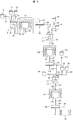
- FIG. 3 is a schematic cross-sectional view showing a second example of the rare earth separation and recovery apparatus according to the present invention (first aspect).
- the configuration is the same as that of FIG. 2 until it is separated into a Dy-rich precipitate and a liquid phase containing Nd and / or Pr in a centrifugal separator.
- the precipitate containing a large amount of Dy is introduced into the second reaction tank 7 through the pipe 5.
- the base stored in the base tank 8 is supplied to the second reaction tank 7, and the inside of the second reaction tank 7 is stirred by the second stirring unit 71.
- the amount of base supplied to the second reaction tank 7 is controlled by a base supply control valve 81.
- the addition of a base to the Dy-rich aggregate produces a precipitate containing a Dy hydroxide.
- inorganic salt is supplied from the second inorganic salt tank 32 to the second reaction tank 7.
- the supply amount of inorganic salt is adjusted by the second inorganic salt supply adjustment valve 33.
- the inside of the second reaction tank 7 is stirred by the second stirring means 71.
- the addition of the inorganic salt facilitates the formation of a precipitate due to the salting-out effect, but if the inorganic salt is added before the first flocculant addition step, the precipitate recovered in the pipe 5 is originally inorganic Since the salt is contained, the addition of the inorganic salt may be omitted here.
- the precipitate and liquid phase obtained above are introduced into the second centrifuge 9, and the precipitate containing the hydroxide of Dy is separated into the pipe 10, and the liquid phase other than the precipitate is separated into the pipe 11.
- the supply amount of the liquid phase including the precipitate is controlled by the second precipitation / liquid phase supply control valve 72.
- an acid is supplied from the acid tank 710 to the precipitate obtained above to neutralize it.
- the method of supplying the acid there is no particular limitation on the method of supplying the acid, and as an example, as shown in FIG. 3, it is possible to directly supply the pipe 10 from which the precipitate is discharged from the second centrifuge 9. At this time, the amount of acid supplied is adjusted by the acid supply amount adjustment valve 711.
- the precipitate obtained above is charged into the third reaction tank 17.
- the inorganic salt stored in the third inorganic salt tank 34 is supplied to the third reaction tank 17, and the inside of the third reaction tank 17 is stirred by the third stirring unit 171. At this time, the amount of inorganic salt supplied to the third reaction tank 17 is adjusted by the third inorganic salt supply control valve 35.
- the first flocculant containing an organic substance having a carboxyl group stored in the first flocculant tank 15 is supplied to the third reaction tank 17, and the third reaction tank is operated by the third stirring means 171. Stir the inside of 17. At this time, the supply amount of the first flocculant containing the organic substance having a carboxyl group is adjusted by the third flocculant supply amount adjusting valve 151. Subsequently, the second flocculant containing an organic group having an amino group stored in the fourth flocculant tank 16 is supplied to the third reaction tank 17, and the third reaction is performed by the third stirring unit 171. Stir the inside of the tank 17. At this time, the supply amount of the second flocculant containing the organic substance having an amino group is adjusted by the fourth flocculant supply amount adjustment valve 161.
- the aqueous solution containing the precipitate obtained above is supplied to the third centrifugal separator 19.
- the supply amount of the liquid phase containing the precipitate is controlled by the third precipitation / liquid phase supply control valve 18.
- the third centrifugal separator 19 separates the precipitate containing Dy into the pipe 20, and the liquid phase containing Nd and / or Pr into the pipe 21, which are collected.
- the inorganic salt and the coagulant are added to the precipitate containing Dy recovered by the third centrifugal separator, and the precipitate and the liquid are separated by centrifugation. After separating into phases, the base and the inorganic salt are added to the obtained precipitate, and after separation into a precipitate and a liquid phase by centrifugation, the acid is added to the obtained precipitate to carry out centrifugation.
- Agitating means provided in the reaction tank and the reaction tank, an inorganic salt tank, a coagulant tank containing the first coagulant, and a coagulant tank containing the second coagulant so that the work can be performed multiple times It is possible to have multiple stages of the base tank, the acid tank and the centrifugal separator. Also, the pipes 6, 11 and 21 for recovering the liquid phase containing Nd and / or Pr in FIG. 3 are supplied into the reaction tank so that the series of processing operations can be performed multiple times, It is possible to install piping.
- the heating furnace 22 for roasting the precipitate which contains many Dy after 3rd centrifugation operation.
- a controller may be provided as in the case shown in FIG. 2, and the controller may be connected to the supply control valve of each tank to control the valve adjustment.
- the control device may be connected to each reaction vessel, each stirring means, each centrifugal device, and a heating furnace to control their operation.
- the aqueous solution containing the precipitate and the liquid phase is frozen and thawed and then filtered.
- the method makes it possible to reduce the processing time to 1 to 2 hours.
- the reason why the filtration time can be shortened by freezing and thawing is that when an aqueous solution containing a precipitate and a liquid phase is frozen, a fine (impossible filtration by filtration) precipitates from the liquid phase and precipitates. This is because particle growth occurs. Thus, the increase in precipitated particles reduces clogging of the filter during filtration and enables quick filtration.
- a first flocculant a coagulant containing an organic substance having a carboxyl group
- a second flocculant locculant containing an organic substance having an amino group
- a predetermined amount of inorganic salt may be added to an aqueous solution containing at least one of Nd and Pr as a metal element and Dy.
- the addition of inorganic salts makes it possible to form a hard precipitate.
- the present invention can add the following improvements and changes to the method for separating and recovering rare earth elements according to the above (second aspect).
- the organic substance having a carboxyl group is polyacrylic acid, and the organic substance having an amino group is polyallylamine.
- the total addition amount of the first flocculant and the second flocculant is 0.01 to 30 wt% with respect to an aqueous solution containing at least one of Nd and Pr and Dy.
- the amount of the inorganic salt added is 1 to 7 wt% with respect to an aqueous solution containing at least one of Nd and Pr and Dy.
- the inorganic salt is sodium chloride.
- a step of adding a base to the precipitate containing a large amount of Dy recovered in the filtration step after the filtration step to generate a hydroxide of Dy to precipitate a hydroxide of the Dy base addition step
- a step of adding and stirring an inorganic salt after the base addition step (a second inorganic salt addition step); Freezing and thawing the precipitation of the hydroxide of Dy and the liquid phase after the second inorganic salt addition step (second freezing and thawing step); After the freezing and thawing step, the precipitate of Dy and the liquid phase are separated by filtration, and the precipitate and the liquid phase are respectively recovered (a second filtration step); Adding an acid to the precipitate containing the hydroxide of Dy (acid addition step); A step of adding
- Second flocculant addition step Freezing and thawing the precipitate containing a large amount of Dy and the liquid phase after the second flocculant addition step (second freezing and thawing step); After the second freezing / thawing step, separating into a precipitate containing a large amount of Dy and a liquid phase by filtration, and recovering the precipitate and the liquid phase respectively (third filtration step); After the third filtration step, there is a step (baking step) of baking the precipitate containing a large amount of Dy recovered in the third filtration step in a heating furnace.
- the present invention can add the following improvements and changes in the separation and recovery apparatus for rare earth elements according to the above (second aspect).
- the organic substance having a carboxyl group is polyacrylic acid, and the organic substance having an amino group is polyallylamine.
- the total of the addition amount of the first coagulant and the addition amount of the second coagulant is 0.01 to 30 wt% with respect to an aqueous solution containing at least one of Nd and Pr and Dy. It is.
- (Xxii) Furthermore, it has the 1st mineral salt tank which stores mineral salt.
- the amount of the inorganic salt added is 1 to 7 wt% with respect to an aqueous solution containing at least one of Nd and Pr and Dy.
- the inorganic salt is sodium chloride.
- a second reaction vessel containing the precipitate obtained by the filtration means is a second reaction vessel containing the precipitate obtained by the filtration means.
- Second stirring means provided in the second reaction vessel; A base tank for storing a base, A second inorganic salt tank containing inorganic salt, A second freezing and thawing device for freezing and thawing the precipitate obtained in the second reaction tank and the liquid phase; A second filtering means for separating the precipitate and the liquid phase into a precipitate and a liquid phase after the second freezing and thawing; An acid tank for storing acid, A means for supplying an acid from the acid tank to the precipitate obtained by the second filtration means; A third reaction vessel containing the precipitate obtained by the second filtration means; Third stirring means provided in the third reaction vessel; A third inorganic salt tank for containing the inorganic salt; A third flocculant tank containing the first flocculant; A fourth flocculant tank containing the second flocculant; A third freezing and thawing apparatus for freezing and thawing the precipitate and liquid phase obtained in the third reaction vessel; After the third freezing and thawing, it has a third filtering means for
- the inorganic salt and the coagulant are added to the precipitate containing a large amount of Dy recovered by the third filtration means, and the precipitate containing a large amount of Dy and a liquid phase are filtered after freezing and thawing
- the base and the inorganic salt are added to the obtained precipitate
- the precipitate containing a large amount of Dy and the liquid phase are frozen and thawed and filtered to separate the precipitate and the liquid phase
- the inorganic salt and the flocculant are added to the Dy-rich precipitate
- the Dy-rich precipitate and liquid phase are filtered after freezing and thawing to obtain a precipitate and a liquid Stirring means provided in the reaction tank and the reaction tank, an inorganic salt tank, a coagulant tank containing the first coagulant, and a second coagulant so that a series of operations for separating into phases can be performed multiple times , Coagulant
- (Xxvii) It further has a heating furnace for roasting the precipitate containing Dy obtained by filtration.
- Xxviii A valve for adjusting the amount of liquid supplied from the inorganic salt tank, the coagulant tank containing the first coagulant, the coagulant tank containing the second coagulant, the base tank, and the acid tank And a control device connected to the valve for controlling the supply amount.
- Xxix It is further connected to the freezing and thawing device to control the operation of the freezing and thawing device.
- organic substance having a carboxyl group polyacrylic acid, dicarboxylic acid, polyaspartic acid, polyglutamic acid, cation exchange resin and the like are preferable.
- organic substance having an amino group polyethyleneimine, polyvinylamine, chitosan, polylysine, polyarginine, polyallylamine, anion exchange resin and the like are preferable.
- the structure of the organic substance having the carboxyl group or the organic substance having the amino group is not limited. It may be linear, cyclic or have an aromatic ring. Moreover, it is preferable that the weight average molecular weight of the organic substance which has these carboxyl groups, or the organic substance which has an amino group is about 1000. It is particularly preferable to use polyacrylic acid as the organic substance having a carboxyl group and polyallylamine as the organic substance having an amino group.
- the addition amount of the first flocculant and the second flocculant is preferably 0.01 to 30 wt% with respect to the aqueous solution containing Nd and / or Pr and Dy.
- it is less than 0.01 wt% the effect of aggregation can not be sufficiently obtained, and a large amount of an aqueous solution containing Nd and / or Pr and Dy is required, which causes problems in workability.
- it exceeds 30 wt% the viscosity becomes high, and it becomes difficult to separate Nd and / or Pr and Dy by centrifugation described later.
- the flocculating agent addition step After the flocculating agent addition step, after the flocculate precipitates, freezing and thawing of the aqueous solution containing the precipitate are performed as a freezing and thawing step.
- the fine particles remaining in the liquid phase without forming a precipitate cause clogging of the filter in the filtration process described later, making rapid separation and recovery impossible.
- the present invention by performing the freezing and thawing steps, it is possible to grow precipitated particles and reduce clogging of the filter in filtration.
- the container which stores aqueous solution should just perform freezing and thawing, and there is no special restriction.
- freezing can use the thing of the same structure as a household freezer. It can also be frozen by spraying liquid nitrogen.
- the thawing may be natural thawing or an electric heater may be used. For faster processing, it is desirable to freeze with liquid nitrogen spray and thaw with an electric heater. The precipitated particles frozen and grown by freezing do not return to the liquid phase by thawing.
- the filterable method can use a conventional method using a filter, and there is no particular limitation.
- the filtration may be performed while pressurizing with a gas such as nitrogen.
- a step of adding an inorganic salt may be further performed after the above-mentioned flocculant addition step.
- the inorganic salt is not particularly limited, but is preferably an alkali metal halide such as sodium chloride or potassium chloride, or ammonium chloride.
- the addition amount of the inorganic salt is preferably 1 to 7 wt%.
- the addition amount of the inorganic salt is less than 1 wt%, the salting-out effect is small, and the aggregates in the liquid phase can not be sufficiently precipitated.
- it is more than 7 wt% Nd and / or Pr contained in the liquid phase are also precipitated, and the separation effect is lost.
- FIG. 4 is a schematic cross-sectional view showing a first example of the rare earth separation and recovery apparatus according to the present invention (second aspect). The apparatus will be described below according to the procedure of the rare earth element recovery method according to the present invention.
- an aqueous solution containing at least one of Nd and Pr as a metal element and Dy is charged into the first reaction tank 2.
- the first flocculant containing an organic substance having a carboxyl group stored in the first flocculant tank 11 is supplied to the first reaction tank 2, and the first reaction tank 2 is operated by the first stirring unit 21. Stir the inside.
- the supply amount of the first flocculant containing an organic substance having a carboxyl group is adjusted by the first flocculant supply amount adjusting valve 13.
- the second flocculant containing the organic substance having an amino group stored in the second flocculant tank 12 is supplied to the first reaction tank 2, and the first reaction tank 2 is operated by the first stirring unit 21. Stir the inside.
- the supply amount of the second flocculant containing the organic substance having an amino group is adjusted by the second flocculant supply amount adjusting valve 14.
- the precipitate and liquid phase obtained above are supplied to the container 41, and freezing and thawing are performed by the freezing and thawing device 51.
- the amount of precipitate and liquid phase supplied to the container 41 is controlled by the first precipitate / liquid phase supply control valve 22.
- the filter 54 which is a filtering means.
- the amounts of the precipitate and the liquid phase supplied to the filter 54 are adjusted by the second precipitate / liquid phase supply control valves 53 and 53 '.
- the precipitate containing a large amount of Dy is separated into the pipe 55, and the liquid phase containing Nd and / or Pr is separated and collected into the pipe 56.
- the effects of the present invention (high speed and high separation rate (60% or more separation rate) and high recovery rate (80% or more recovery rate) to preferentially separate and recover Dy are achieved. It is possible that the inorganic salt supplied from the first inorganic salt tank 3 and the inorganic salt tank to the first reaction tank so that the inorganic salt can be further added before the coagulant addition step. You may have the mineral salt supply control valve 31 which adjusts a supply amount.
- the rare earth element separation and recovery apparatus of the present invention further includes a control device 200, and the control device 200 controls the first inorganic salt supply amount adjustment valve 31, the first coagulant supply amount adjustment valve 13, and the second The liquid amount adjustment may be controlled by the coagulant supply amount adjusting valve 14, the first precipitation / liquid phase supply amount adjusting valve 22, and the second precipitation / liquid phase supply amount adjusting valves 53, 53 '. .
- the control device 200 may be connected to the freezing and thawing device 51 to control the operation of the freezing and thawing device 51.
- the controller 200 may be connected to the first reaction vessel 2 and the first stirring means 21 to control their operation.
- FIG. 5 is a schematic cross-sectional view showing a second example of the rare earth element separation and recovery apparatus according to the present invention (second aspect).
- the same configuration as in FIG. 4 is obtained until separation into a Dy-rich precipitate and a liquid phase containing Nd and / or Pr by filtration.
- the precipitate containing a large amount of Dy is introduced into the second reaction tank 7 through the pipe 5.
- the base stored in the base tank 8 is supplied to the second reaction tank 7, and the inside of the second reaction tank 7 is stirred by the second stirring unit 71.
- the amount of base supplied to the second reaction tank 7 is controlled by a base supply control valve 81.
- the addition of a base to the Dy-rich aggregate produces a precipitate containing a Dy hydroxide.
- inorganic salt is supplied from the second inorganic salt tank 32 to the second reaction tank 7.
- the supply amount of inorganic salt is adjusted by the second inorganic salt supply adjustment valve 33.
- the inside of the second reaction tank 7 is stirred by the second stirring means 71.
- the addition of the inorganic salt facilitates the formation of a precipitate due to the salting-out effect, but if the inorganic salt is added before the first flocculant addition step, the precipitate recovered in the pipe 5 is originally inorganic Since the salt is contained, the addition of the inorganic salt may be omitted here.
- the precipitate and the liquid phase obtained above are introduced into the second freezing and thawing apparatus 101, and freezing and thawing are performed.
- the amount of the precipitate and the liquid phase supplied to the second freezing and thawing device 101 is adjusted by the third precipitation and liquid phase supply amount adjusting valve 73.
- the precipitate after freezing and thawing and the liquid phase are supplied to a filter 111 which is a second filtering means.
- the amounts of precipitate and liquid phase supplied to the filter 111 are controlled by the second precipitate / liquid phase supply control valves 92 and 92 '.
- the precipitate obtained above is neutralized by supplying an acid from an acid tank 710.
- an acid tank 710 There is no particular limitation on the method of supplying the acid, and as an example, as shown in FIG. 5, it can be supplied directly to the pipe 114 from which the precipitate is discharged from the filter 111. At this time, the amount of acid supplied is adjusted by the acid supply amount adjustment valve 711.
- the first flocculant containing an organic substance having a carboxyl group stored in the first flocculant tank 15 is supplied to the third reaction tank 17, and the third reaction tank is operated by the third stirring means 171. Stir the inside of 17. At this time, the supply amount of the first flocculant containing the organic substance having a carboxyl group is adjusted by the third flocculant supply amount adjusting valve 151. Subsequently, the second flocculant containing an organic group having an amino group stored in the fourth flocculant tank 16 is supplied to the third reaction tank 17, and the third reaction is performed by the third stirring unit 171. Stir the inside of the tank 17. At this time, the supply amount of the second flocculant containing the organic substance having an amino group is adjusted by the fourth flocculant supply amount adjustment valve 161.
- inorganic salt is supplied to the third reaction tank 17 from the third inorganic salt tank 34.
- the supply amount of inorganic salt is adjusted by the third inorganic supply amount adjustment valve 35.
- the inside of the third reaction tank 7 is stirred by the third stirring means 171.
- the addition of the inorganic salt facilitates the formation of a precipitate due to the salting-out effect, but if the inorganic salt is added before the first flocculant addition step, the precipitate recovered by the pipe 114 is originally inorganic Since the salt is contained, the addition of the inorganic salt may be omitted here.
- the precipitate and liquid phase obtained above are supplied to the third freezing and thawing apparatus 120.
- the supply amounts of the precipitate and the liquid phase are controlled by the fifth precipitate / liquid phase supply control valve 172.
- the precipitate and liquid phase frozen and thawed by the third freezing and thawing device 120 are supplied to the filter 130 which is the third filtering means.
- the amounts of precipitate and liquid phase supplied to the filter 130 are adjusted by the third precipitation / liquid phase supply control valves 191 and 191 ′.
- the filter 130 separates the precipitate containing a large amount of Dy into the pipe 20, and the liquid phase containing a large amount of Nd and / or Pr into a pipe 21 to be collected.
- the inorganic salt and the coagulant are further added to the precipitate containing Dy recovered by the third filtration means, and the precipitate is After liquid phase freezing and thawing, the precipitate and the liquid phase are separated by filtration, the base and the inorganic salt are added to the obtained precipitate, and the precipitate and the liquid phase are separated by centrifugation, and then the obtained precipitate is obtained Agitating means provided in the reaction tank and the reaction tank, the inorganic salt tank, and the first flocculant are stored so that a series of operations of freezing, thawing and filtering can be performed a plurality of times by adding the acid.
- a coagulant tank, a coagulant tank containing a second coagulant, a base tank, an acid tank, a freezing / thawing device and a filtration means, a pipe connecting these, and a pipe provided with liquid phase and precipitate Have multiple stages of control valves It is possible. Also, the pipes 21, 56 and 113 for recovering the liquid phase containing Nd and / or Pr in FIG. 5 are supplied into the reaction tank so that the series of processing operations can be performed multiple times, It is possible to install piping.
- a controller may be provided as in the case shown in FIG. 4, and the controller may be connected to the supply control valve of each tank to control the valve adjustment.
- the control device may be connected to each reaction tank, each stirring means, each freezing / thawing device, and the heating furnace to control their operation.
- Dy and Nd and / or Pr can be separated from an aqueous solution containing at least one of Nd and Pr as metal elements and Dy, and Dy can be recovered.
- Example 1 An experiment was conducted to separate Dy from an aqueous solution containing Nd, using the method for separating and recovering rare earth elements of the present invention. As the separation and recovery apparatus, one shown in FIG. 3 was used, and the precipitate and the liquid phase separated by the second centrifugal separator 9 were recovered from the pipes 10 and 11, respectively.
- aqueous solution (pH 3 to 7) containing 500 ppm of dysprosium chloride hexahydrate and neodymium chloride hexahydrate each having a concentration ratio Dy: Nd of dysprosium to neodymium of 1: 1 was adjusted as a solution to be separated. .
- the weight of the solution to be separated is adjusted so that the addition amount of the first flocculant and the second flocculant described later is 0.01 to 30 wt% with respect to the solution to be separated.
- the solution to be separated is first weighed to the first reaction tank 2 by a predetermined weight, and sodium chloride (NaCl) as an inorganic salt is added to the solution to be separated to 1 wt%, while the first stirring means 21 The solution was stirred for 1-2 minutes. Subsequently, using a polyacrylic acid aqueous solution as a first flocculant containing an organic substance having a carboxyl group, 0.3 mol was dropped to the first reaction tank 2 with respect to 1 mol of Dy in the solution to be separated. Subsequently, 1.5 mol was dropped to the first reaction tank 2 with respect to 1 mol of Dy in the solution to be separated, using polyallylamine as a second flocculant containing an organic substance having an amino group. With the dropping, a skin-colored aggregate was generated in the white solution, and finally, a skin-colored aggregate was formed and precipitated.
- NaCl sodium chloride
- the solution containing the aggregates is distributed from the first reaction vessel 2 to the 250 mL centrifuge tube at a maximum of 110 mL, A centrifuge tube containing water was prepared so as to have the same weight with an error of 3 mg with respect to the tube, and it was rotated for 60 minutes at a rotation speed of 11,000 revolutions per minute by the first centrifuge 4.
- the precipitate solidified hard in the centrifuge tube, and the separation of the filtrate (liquid phase) was easily performed with a syringe. The precipitate and the liquid phase were thereby separated into pipes 5 and 6, respectively.
- the precipitate of the pipe 5 was charged into another second reaction tank 7.
- sodium hydroxide was supplied to the second reaction tank 7 as a basic aqueous solution, neutralization yielded sodium chloride, a hydroxide of Dy and a hydroxide of Nd.
- the solution was stirred for 1 to 2 minutes while appropriately adding sodium hydroxide to 1 wt% of the solution to be separated.
- slightly purple dysprosium hydroxide was produced in the white solution in the reaction vessel 7.
- the solution containing the aggregates is distributed from the reaction vessel to a 250 mL centrifuge tube at a maximum of 110 mL, and for each centrifuge tube A centrifuge tube containing water was prepared so as to have the same weight with an error of 3 mg, and was rotated for 60 minutes at a rotation speed of 11,000 revolutions per minute by the second centrifuge 9. The time required for centrifugation was 1-2 hours.
- the dysprosium hydroxide solidified hard in the centrifuge tube, and the filtrate was easily separated by a syringe. This separated into the hydroxide 10 of dysprosium and the filtrate 11.
- the main component is dysprosium hydroxide, and the Dy separation rate is 65. %, The recovery was found to be 97%.
- TOC Total Organic Carbon
- the separation rate and the recovery rate are values calculated by the following (formula 1) or (formula 2).
- Example 2 Inorganic salt and its concentration used in Example 1, first flocculant and its concentration, second flocculant and its concentration, separation method of precipitation and liquid phase, separation rate (%) of Dy and recovery of Dy (%) Is shown in Table 1 described later. Further, in the table, those having a Dy separation rate of 60% or more and a Dy recovery rate of 80% or more were evaluated as “pass”, and those that did not satisfy either one were evaluated as “fail”. . (Example 2) An experiment was conducted to recover Dy in the same manner as in Example 1 except that 7 wt% of sodium chloride as an inorganic salt was added to the solution to be separated. The time required for centrifugation was 1-2 hours. The results are shown in Table 1.
- the “reference example” refers to a condition which is not known per se, but which deviates from the preferred embodiment of the present invention.
- Reference Example 2 An experiment was conducted to recover Dy in the same manner as in Example 1 except that no inorganic salt was added, and filtration was performed using a PTFE filter instead of centrifugation in order to separate the precipitate and the liquid phase. Aggregates were precipitated from the liquid phase by filtration. It took about 1-2 days for filtration. Also, the aggregates softened and precipitated, clogging of the filter occurred during filtration, and it was necessary to pressurize the solution depending on the resistance for filtration. Furthermore, the filtrate was a lot of turbidity, and determination of the concentration of rare earths by absorption spectroscopy was not used for examination because of large errors. The results are shown in Table 1.
- the addition amount (number of moles) of the first flocculant and the second flocculant is the number of moles relative to 1 mol of Dy.
- FIG. 6 is a graph showing the relationship between the separation rate of Dy and the amount of NaCl added according to the present invention (first aspect).
- the separation rate of Dy is less than 60%.
- the separation rate of Dy is 65% or more.
- aqueous solution (pH 3 to 7) containing 500 ppm of dysprosium chloride hexahydrate and neodymium chloride hexahydrate each having a concentration ratio Dy: Nd of dysprosium to neodymium of 1: 1 was adjusted as a solution to be separated. .
- the weight of the solution to be separated is adjusted so that the addition amount of the first flocculant and the second flocculant described later is 0.01 to 30 wt% with respect to the solution to be separated.
- the solution to be separated is first weighed to the first reaction tank 2 by a predetermined weight, and a polyacrylic acid aqueous solution is used as a first flocculant containing an organic substance having a carboxyl group, and it is 0 with respect to 1 mol of Dy in the solution to be separated. .3 mol was dropped to the first reaction tank 2; Moreover, 1.5 mol was dripped at the 1st reaction tank 2 with respect to 1 mol of Dy in the isolation
- the precipitate formed as described above contains a large amount of water, it is frozen to precipitate the precipitate from the aqueous phase and then thawed and filtered with a PTFE (polytetrafluoroethylene (tetrafluorinated)) filter did.
- the required time was about one hour in total of the freezing and thawing process and the separation and recovery process by filtration.
- the hydroxide produced as described above contains a large amount of water, it was frozen to precipitate the hydroxide from the aqueous solution phase, then it was thawed and filtered through a PTFE filter. The required time was about one hour in total of the freezing and thawing process and the separation and recovery process by filtration.
- Example 4 Inorganic salt and its concentration used in Example 1, first flocculant and its concentration, second flocculant and its concentration, separation method of precipitation and liquid phase, separation rate (%) of Dy and recovery of Dy (%) Is shown in Table 1 described later. Further, in the table, those having a Dy separation rate of 60% or more and a Dy recovery rate of 80% or more were evaluated as “pass”, and those that did not satisfy either one were evaluated as “fail”. . (Example 4) Before the coagulant addition step, an experiment was conducted to collect Dy in the same manner as in Example 3 except that sodium chloride as an inorganic salt was supplied at 1 wt% to the solution to be separated. The results are shown in Table 2.
- Example 5 Before the coagulant addition step, an experiment was conducted to recover Dy in the same manner as in Example 3 except that sodium chloride as an inorganic salt was supplied at 7 wt% to the solution to be separated. The results are shown in Table 2.
- Reference Example 1 After the flocculating agent addition step, the separation and recovery experiment of Dy was performed in the same manner as in Example 3 except that the freezing and thawing steps were not performed, and the precipitation and the liquid phase were separated by centrifugation. The aggregates after the flocculant addition step precipitate softly and the surface aggregates are again dispersed in the liquid by the slight vibration of the removal operation of the container after the end of centrifugation, and complete separation of the liquid layer and the precipitate by absorption of the liquid Was difficult. The results are shown in Table 2.
- the “reference example” refers to a condition which is not known per se, but which deviates from the preferred embodiment of the present invention.
- Reference Example 2 An experiment was conducted to recover Dy in the same manner as in Example 3 except that the freezing and thawing steps were not performed. Aggregates were precipitated from the liquid phase by filtration. It took about 1-2 days for filtration. Also, the aggregates softened and precipitated, clogging of the filter occurred during filtration, and it was necessary to pressurize the solution depending on the resistance for filtration. Furthermore, the filtrate was a lot of turbidity, and determination of the concentration of rare earths by absorption spectroscopy was not used for examination because of large errors. The results are shown in Table 2.
- the addition amount (number of moles) of the first flocculant and the second flocculant is the number of moles relative to 1 mol of Dy.
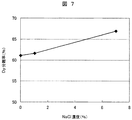
- FIG. 7 is a graph showing the relationship between the separation ratio of Dy and the amount of NaCl added according to the present invention (second aspect).
- the separation rate of Dy is 60% or more even if NaCl is not added at all, and the separation rate of Dy increases when 1% by weight or more of NaCl is added.
- first 2 reaction tank 71 second stirring means 8: base tank 81: base supply valve 72: second precipitation / liquid phase supply valve 9: second centrifugal separator 710: acid tank 711 ... Acid supply valve, 7 ... 3rd reaction tank, 171 ... 3rd stirring means, 34 ...
- sixth precipitation / liquid Phase supply valve 54 filter, piping through which precipitate containing a large amount of 20, 55, 114, ..., Dy, piping through which liquid phase including Nd and / or Pr, 101: second freezing / thawing Device, 111: second filter, 120: third refrigeration Decompressor, 130 ... third filter, 172 ... fifth precipitation, liquid-phase feed valve, 200 ... control device.
Landscapes
- Chemical & Material Sciences (AREA)
- Engineering & Computer Science (AREA)
- Environmental & Geological Engineering (AREA)
- Metallurgy (AREA)
- Organic Chemistry (AREA)
- General Life Sciences & Earth Sciences (AREA)
- Life Sciences & Earth Sciences (AREA)
- Geology (AREA)
- Chemical Kinetics & Catalysis (AREA)
- Manufacturing & Machinery (AREA)
- Materials Engineering (AREA)
- Mechanical Engineering (AREA)
- Geochemistry & Mineralogy (AREA)
- General Chemical & Material Sciences (AREA)
- Separation Of Suspended Particles By Flocculating Agents (AREA)
- Manufacture And Refinement Of Metals (AREA)
- Removal Of Specific Substances (AREA)
- Treatment Of Sludge (AREA)
Description
本発明は、希土類元素を分離及び回収する技術に関し、特に、Nd及び/又はPrとDyとを含む水溶液からDyを優先的に高い効率で分離及び回収することが可能な希土類元素の分離回収方法及び分離回収装置に関する。
希土類元素は近年需要が急激に増大した元素である。その主用途は古くは1920‐1940年代頃航空機用マグネシウム-アルミニウム合金に微量に添加され、該合金の耐熱性やクリープ抵抗(連続負荷に対するひずみ)抑制に効果を上げた。またブラウン管やプラズマ放電ディスプレイなどの蛍光発光材料にも用いられてきた。ここで注目したネオジム(Nd)、ジスプロシウム(Dy)は磁性金属と混合焼結することで高温での磁力低下を防止することができるため、耐高温磁石として、高温で使用されるモータ(例えば、ハイブリッド動力自動車用モータ)に利用されている。
近年の二酸化炭素削減目標設定により、高効率低燃費の自動車が一般的になり、月あたりの国内出荷台数統計の上位にもハイブリッド動力自動車が登場するようになったことを背景として、上述した耐高温磁石の需要も急増し、それに伴って希土類元素の使用量も急増している。
一方ネオジム、ジスプロシウムはともに主な産出地が偏在していることから供給量に制約が生じ、その結果価格はいずれも高騰し、入手は困難となってきている。最近公海上の海底に堆積した泥の中に希土類元素が非常に大量に集積しているとの報告があるが、公海上の深度数千mの海底から固体を安価に採掘することが困難と予想される。
これまで高耐熱磁石中の希土類元素は、投入原料のうち30%が加工くずとして処理されてきたが、この中に含有される希土類元素(特にDy)を回収できれば、希土類元素資源を有効に活用できる。このため、希土類元素を分離回収する技術に関する研究が活発に行われている。
従来、希土類元素の分離回収の手段としては溶媒抽出法が用いられてきた。しかし溶媒抽出法は強酸と揮発性有機溶媒を大量に使用することから、環境への負荷が懸念される。この課題を克服するため、特許文献1記載のように凝集剤を用いた分離方法が提案されている。
特許文献1には、側鎖にアミノ基を有し、主鎖が直鎖である水溶性高分子と、酸性基を有する水溶性高分子又は陽イオン交換樹脂とを組み合わせてなる希土類金属凝集剤が開示されている。特許文献1によると、複数種の希土類金属が含まれる水溶液から特定の希土類金属のみを高速で大量に分離・回収することができるとされており、特に、Nd及びDyが含まれる水溶液からDyのみを高速で大量に分離・回収することができるとしている。
また、特許文献2には、下記工程(1)及び工程(2)を含むことを特徴とするレアメタル(モリブデン、バナジウム及びタングステン)の選択的回収方法が開示されている。すなわち、(1)レアメタルを含む金属成分を含有する水溶液をキレート樹脂又は吸着剤に接触させる方法、又はレアメタルを含む金属成分を含有する水溶液中において、金属化合物の沈殿を形成する方法によって、レアメタルを含む金属成分を固相に吸着又は吸蔵させる工程、(2)上記工程(1)で得られた、レアメタルを含む金属成分を吸着又は吸蔵した固相をペルオキシ化合物を含有する水溶液に接触させる工程が開示されている。
特許文献2によると、レアメタル以外に多種類の金属イオンが共存する水溶液から、モリブデン、バナジウム及びタングステンという特定のレアメタルを選択性よく分離回収することができるとされている。このため、特許文献2記載の方法によれば、レアメタルの効率のよい回収が可能となり、回収後の精製プロセスでのコスト削減を図ることができるとされている。また、特許文献2記載の方法は、レアメタルの高純度化にも有利な方法であり、さらに、溶出液における有効成分であるペルオキシ化合物は、安価であり、かつ取り扱いが容易な物質であり、耐酸性の装置が不要であるために、コストの削減を図ることができるとされている。
しかしながら、上述した特許文献1の方法では、凝集生成物を液相から分離するためにろ過又は磁気分離法により分離しているが、磁気分離法はイオン交換樹脂が磁性粉を含有する場合に使用され、その他の場合はろ過により分離している。一般的にろ過による分離は1~2日の時間を要する。このため、希土類元素の分離回収の効率を向上させるために、より一層処理速度を迅速化する改良が望まれていた。
また、特許文献2では、多種類の金属イオンが共存する水溶液から、モリブデン、バナジウム及びタングステンや希土類元素等の多数種の金属を回収することができるとされているが、多種類の金属イオンが共存する水溶液で、かつNd及び/又はPrが含まれる水溶液から、Dyを優先的に分離して回収する方法については開示されていない。
希土類磁石、特にNd‐Fe‐B焼結磁石には希土類元素としてDy、Nd及びPrが含まれるが、これらは化学的・物理的性質が類似する。このため、特に耐高温磁石の磁石成分として有効なDyを、Nd及び/又はPrが含まれる水溶液から優先的に分離、回収することが重要である。
したがって、本発明の目的は、金属元素としてNd、Prのうち少なくとも1つと、Dyとが含まれる水溶液から、高速で、かつ高い分離率(分離率60%以上)及び高い回収率(回収率80%以上)でDyを優先的に分離及び回収することが可能な希土類元素の分離回収方法及び分離回収装置を提供することにある。
本発明の第一の態様は、上記目的を達成するため、金属元素としてNd、Prのうち少なくとも1つと、Dyとを含む水溶液からNd及び/又はPrとDyを分離してDyを優先的に回収する希土類元素の分離回収方法であって、
前記Nd、Prのうち少なくとも1つと、Dyとを含む水溶液に、無機塩を添加して撹拌する工程(無機塩添加工程)と、
前記無機塩添加工程後に、カルボキシル基を有する有機物を含む第1の凝集剤及びアミノ基を有する有機物を含む第2の凝集剤をこの順で添加し、Nd及び/又はPrよりもDyを多く含む凝集物を発生させ、該凝集物を沈殿させる工程(凝集剤添加工程)と、
前記凝集剤添加工程後に、遠心分離にてDyを多く含む沈殿と液相に分離して、沈殿と液相をそれぞれ回収する遠心分離工程とを有することを特徴とする希土類元素の分離回収方法を提供する。
前記Nd、Prのうち少なくとも1つと、Dyとを含む水溶液に、無機塩を添加して撹拌する工程(無機塩添加工程)と、
前記無機塩添加工程後に、カルボキシル基を有する有機物を含む第1の凝集剤及びアミノ基を有する有機物を含む第2の凝集剤をこの順で添加し、Nd及び/又はPrよりもDyを多く含む凝集物を発生させ、該凝集物を沈殿させる工程(凝集剤添加工程)と、
前記凝集剤添加工程後に、遠心分離にてDyを多く含む沈殿と液相に分離して、沈殿と液相をそれぞれ回収する遠心分離工程とを有することを特徴とする希土類元素の分離回収方法を提供する。
本発明の第一の態様の他の例は、上記目的を達成するため、金属元素としてNd、Prのうち少なくとも1つと、Dyとを含む水溶液に、無機塩と凝集剤を添加し、前記Nd、Prのうち少なくとも1つと、Dyとを含む水溶液を沈殿と液相に分離し、前記沈殿からDyを優先的に回収する希土類元素の分離回収装置であって、
前記Nd、Prのうち少なくとも1つと、Dyとを含む水溶液を収納するための第1の反応槽と、
前記第1の反応槽に設けられた第1の撹拌手段と、
前記無機塩を収納する第1の無機塩タンクと、
前記凝集剤として、カルボキシル基を有する有機物を含む第1の凝集剤を収納する第1の凝集剤タンクと、
前記凝集剤として、アミノ基を有する有機物を含む第2の凝集剤を収納する第2の凝集剤タンクと、
前記第1の反応槽で得られた沈殿と液相を分離するための第1の遠心分離装置とを少なくとも有することを特徴とする希土類元素の分離回収装置を提供する。
前記Nd、Prのうち少なくとも1つと、Dyとを含む水溶液を収納するための第1の反応槽と、
前記第1の反応槽に設けられた第1の撹拌手段と、
前記無機塩を収納する第1の無機塩タンクと、
前記凝集剤として、カルボキシル基を有する有機物を含む第1の凝集剤を収納する第1の凝集剤タンクと、
前記凝集剤として、アミノ基を有する有機物を含む第2の凝集剤を収納する第2の凝集剤タンクと、
前記第1の反応槽で得られた沈殿と液相を分離するための第1の遠心分離装置とを少なくとも有することを特徴とする希土類元素の分離回収装置を提供する。
本発明の第二の態様は、上記目的を達成するため、金属元素としてNd、Prのうち少なくとも1つと、Dyとを含む水溶液からNd及び/又はPrとDyを分離してDyを優先的に回収する希土類元素の分離回収方法であって、
前記Nd、Prのうち少なくとも1つと、Dyとを含む水溶液に、
カルボキシル基を有する有機物を含む第1の凝集剤及びアミノ基を有する有機物を含む第2の凝集剤をこの順で添加し、Nd及び/又はPrよりもDyを多く含む凝集物を発生させ、該凝集物を沈殿させる工程(凝集剤添加工程)と、
前記凝集剤添加工程後に、前記Dyを多く含む沈殿及び液相を冷凍及び解凍する工程(冷凍・解凍工程)と、
前記冷凍・解凍工程後に、ろ過にて前記Dyを多く含む沈殿と液相に分離して、沈殿と液相をそれぞれ回収する工程(ろ過工程)とを含むことを特徴とする希土類元素の分離回収方法を提供する。
前記Nd、Prのうち少なくとも1つと、Dyとを含む水溶液に、
カルボキシル基を有する有機物を含む第1の凝集剤及びアミノ基を有する有機物を含む第2の凝集剤をこの順で添加し、Nd及び/又はPrよりもDyを多く含む凝集物を発生させ、該凝集物を沈殿させる工程(凝集剤添加工程)と、
前記凝集剤添加工程後に、前記Dyを多く含む沈殿及び液相を冷凍及び解凍する工程(冷凍・解凍工程)と、
前記冷凍・解凍工程後に、ろ過にて前記Dyを多く含む沈殿と液相に分離して、沈殿と液相をそれぞれ回収する工程(ろ過工程)とを含むことを特徴とする希土類元素の分離回収方法を提供する。
本発明の第二の態様の他の例は、上記目的を達成するため、金属元素としてNd、Prのうち少なくとも1つと、Dyとを含む水溶液に、凝集剤を添加し、前記Nd及び/又はPrとDyとを含む水溶液を沈殿と液相に分離し、前記沈殿からDyを優先的に回収する希土類元素の分離回収装置であって、
前記Nd、Prのうち少なくとも1つと、Dyとを含む水溶液を収納するための第1の反応槽と、
前記第1の反応槽に設けられた第1の撹拌手段と、
前記凝集剤として、カルボキシル基を有する有機物を含む第1の凝集剤を収納する第1の凝集剤タンクと、
前記凝集剤として、アミノ基を有する有機物を含む第2の凝集剤を収納する第2の凝集剤タンクと、
前記第1の反応槽で得られた沈殿及び液相を冷凍及び解凍するための冷凍・解凍装置と、前記冷凍・解凍後に、前記沈殿及び液相を、沈殿と液相に分離するためのろ過手段と
を少なくとも有することを特徴とする希土類元素の分離回収装置を提供する。
前記Nd、Prのうち少なくとも1つと、Dyとを含む水溶液を収納するための第1の反応槽と、
前記第1の反応槽に設けられた第1の撹拌手段と、
前記凝集剤として、カルボキシル基を有する有機物を含む第1の凝集剤を収納する第1の凝集剤タンクと、
前記凝集剤として、アミノ基を有する有機物を含む第2の凝集剤を収納する第2の凝集剤タンクと、
前記第1の反応槽で得られた沈殿及び液相を冷凍及び解凍するための冷凍・解凍装置と、前記冷凍・解凍後に、前記沈殿及び液相を、沈殿と液相に分離するためのろ過手段と
を少なくとも有することを特徴とする希土類元素の分離回収装置を提供する。
本発明によれば、金属元素としてNd、Prのうち少なくとも1つと、Dyとが含まれる水溶液から、高速で、かつ高い分離率(分離率60%以上)及び高い回収率(回収率80%以上)でDyを優先的に分離及び回収することが可能な希土類元素の分離回収方法及び分離回収装置を提供することができる。
(第一の態様)
本願発明(第一の態様)の希土類元素の分離回収方法では、沈殿と液相の分離に遠心分離法を用いることで、従来のろ過を用いる場合と比較して、沈殿と液相の分離時間を大幅に短縮することが可能となる。具体的には、従来のろ過では、沈殿と液相の分離には、1‐2日の処理時間を要していたところ、遠心分離では処理時間を1‐2時間に短縮することが可能となる。
本願発明(第一の態様)の希土類元素の分離回収方法では、沈殿と液相の分離に遠心分離法を用いることで、従来のろ過を用いる場合と比較して、沈殿と液相の分離時間を大幅に短縮することが可能となる。具体的には、従来のろ過では、沈殿と液相の分離には、1‐2日の処理時間を要していたところ、遠心分離では処理時間を1‐2時間に短縮することが可能となる。
ただし、遠心分離法を用いるためには、沈殿を十分に固めなくてはならない。そのためには液相中に含まれる微細な粉末も沈殿させる必要がある。本願発明では金属元素としてNd、Prのうち少なくとも1つと、Dyとを含む水溶液に無機塩を所定量添加することによって、固い沈殿を形成することが可能となる。
さらに本願発明では、金属元素としてNd、Prのうち少なくとも1つと、Dyとを含む水溶液からDyを優先的に分離及び回収するために、第1の凝集剤(カルボキシル基を有する有機物を含む凝集剤)及び第2の凝集剤(アミノ基を有する有機物を含む凝集剤)をこの順で所定量添加する。このような凝集剤を添加することで、Nd及び/又はPrよりもDyを多く含む沈殿を形成することができる。
上述したように本願発明は、遠心分離法、無機塩及び本発明に係る凝集剤を用いることによって、金属元素としてNd、Prのうち少なくとも1つと、Dyとが含まれる水溶液から、高速で、かつ高い分離率(分離率60%以上)及び高い回収率(回収率80%以上)でDyを優先的に分離及び回収することが可能となるものである。
本発明は、上記の(第一の態様)に係る希土類元素の分離回収方法において、以下のような改良や変更を加えることができる。
(i)前記カルボキシル基を有する有機物はポリアクリル酸であり、前記アミノ基を有する有機物はポリアリルアミンである。
(ii)前記第1の凝集剤の添加量及び前記第2の凝集剤の添加量の合計が、前記Nd、Prのうち少なくとも1つと、Dyとを含む水溶液に対して0.01~30wt%である。
(iii)前記無機塩が塩化ナトリウムである。
(iv)前記無機塩の添加量が、前記Nd、Prのうち少なくとも1つと、Dyとを含む水溶液に対して1~7wt%である。
(v)さらに前記遠心分離工程後に、前記遠心分離工程において回収した前記Dyを含む沈殿に塩基を添加してDyの水酸化物を沈殿させる工程(塩基添加工程)と、
前記塩基添加工程後に、無機塩を添加して撹拌する工程(第2の無機塩添加工程)と、
前記第2の無機塩添加工程後に、遠心分離にてDyの水酸化物を含む沈殿と液相に分離してそれぞれ回収する工程(第2の遠心分離工程)と、
前記Dyの水酸化物を含む沈殿に酸を添加して中和する工程(酸添加工程)と、
前記酸添加工程後に、無機塩を添加して撹拌する工程(第3の無機塩添加工程)と、
前記第3の無機塩添加工程後に、カルボキシル基を有する有機物を含む第1の凝集剤及びアミノ基を有する有機物を含む第2の凝集剤をこの順で添加し、Nd及び/又はPrよりもDyを多く含む凝集物を発生させ、該凝集物を沈殿させる工程(第2の凝集剤添加工程)と、
前記第2の凝集剤添加工程後に、遠心分離にてDyを多く含む沈殿と液相に分離して、沈殿と液相をそれぞれ回収する遠心分離工程(第3の遠心分離工程)と、
前記第3の遠心分離工程後に、前記第3の遠心分離工程で回収したDyを多く含む沈殿を加熱炉で焼成する工程(焙焼工程)とを有する。
(i)前記カルボキシル基を有する有機物はポリアクリル酸であり、前記アミノ基を有する有機物はポリアリルアミンである。
(ii)前記第1の凝集剤の添加量及び前記第2の凝集剤の添加量の合計が、前記Nd、Prのうち少なくとも1つと、Dyとを含む水溶液に対して0.01~30wt%である。
(iii)前記無機塩が塩化ナトリウムである。
(iv)前記無機塩の添加量が、前記Nd、Prのうち少なくとも1つと、Dyとを含む水溶液に対して1~7wt%である。
(v)さらに前記遠心分離工程後に、前記遠心分離工程において回収した前記Dyを含む沈殿に塩基を添加してDyの水酸化物を沈殿させる工程(塩基添加工程)と、
前記塩基添加工程後に、無機塩を添加して撹拌する工程(第2の無機塩添加工程)と、
前記第2の無機塩添加工程後に、遠心分離にてDyの水酸化物を含む沈殿と液相に分離してそれぞれ回収する工程(第2の遠心分離工程)と、
前記Dyの水酸化物を含む沈殿に酸を添加して中和する工程(酸添加工程)と、
前記酸添加工程後に、無機塩を添加して撹拌する工程(第3の無機塩添加工程)と、
前記第3の無機塩添加工程後に、カルボキシル基を有する有機物を含む第1の凝集剤及びアミノ基を有する有機物を含む第2の凝集剤をこの順で添加し、Nd及び/又はPrよりもDyを多く含む凝集物を発生させ、該凝集物を沈殿させる工程(第2の凝集剤添加工程)と、
前記第2の凝集剤添加工程後に、遠心分離にてDyを多く含む沈殿と液相に分離して、沈殿と液相をそれぞれ回収する遠心分離工程(第3の遠心分離工程)と、
前記第3の遠心分離工程後に、前記第3の遠心分離工程で回収したDyを多く含む沈殿を加熱炉で焼成する工程(焙焼工程)とを有する。
また本発明は、上記の(第一の態様)に係る希土類元素の分離回収装置において、以下のような改良や変更を加えることができる。
(vi)前記カルボキシル基を有する有機物はポリアクリル酸であり、前記アミノ基を有する有機物はポリアリルアミンである。
(vii)前記第1の凝集剤の添加量及び前記第2の凝集剤の添加量の合計が、前記Nd、Prのうち少なくとも1つと、Dyとを含む水溶液に対して0.01~30wt%である。
(viii)前記無機塩が塩化ナトリウムである。
(ix)前記無機塩の添加量が、前記Nd、Prのうち少なくとも1つと、Dyとを含む水溶液に対して1~7wt%である。
(x)さらに前記第1の遠心分離装置において得られた沈殿を収納する第2の反応槽と、前記第2の反応槽に設けられた第2の撹拌手段と、
塩基を収納する塩基タンクと、
無機塩を収納する第2の無機塩タンクと、
前記第2の反応槽で得られた沈殿と液相を分離するための第2の遠心分離装置と、
酸を収納する酸タンクと、
前記第2の遠心分離装置にて得られた沈殿に前記酸タンクから酸を供給する手段と、
前記第2の遠心分離装置で得られた沈殿を収納する第3の反応槽と、
前記第3の反応槽に設けられた第3の撹拌手段と、
前記無機塩を収納する第3の無機塩タンクと、
前記第1の凝集剤を収納する第3の凝集剤タンクと、
前記第2の凝集剤を収納する第4の凝集剤タンクと、
前記第3の反応槽で得られた沈殿と液相を分離するための第3の遠心分離装置と
を有する。
(xi)さらに、前記第3の遠心分離装置にて回収されたDyを含む沈殿に前記無機塩、前記凝集剤を添加し、遠心分離で沈殿と液相に分離した後、得られた沈殿に前記塩基及び前記無機塩を添加し、遠心分離で沈殿と液相に分離した後、得られた沈殿に前記酸を添加して遠心分離を行う一連の作業を複数回行うことができるよう、反応槽及び反応槽に設けられた撹拌手段と、無機塩タンク、第1の凝集剤を収納する凝集剤タンク、第2の凝集剤を収納する凝集剤タンク、塩基タンク、酸タンク及び遠心分離装置を複数段有する。
(xii)遠心分離して得られたDyを含む沈殿を焙焼するための加熱炉をさらに有する。
(xiii)前記無機塩タンク、第1の凝集剤を収納する凝集剤タンク、第2の凝集剤を収納する凝集剤タンク、塩基タンク、酸タンクから供給する液の供給量を調節するためのバルブと、該バルブに接続され、前記供給量を制御するための制御装置とを有する。
(vi)前記カルボキシル基を有する有機物はポリアクリル酸であり、前記アミノ基を有する有機物はポリアリルアミンである。
(vii)前記第1の凝集剤の添加量及び前記第2の凝集剤の添加量の合計が、前記Nd、Prのうち少なくとも1つと、Dyとを含む水溶液に対して0.01~30wt%である。
(viii)前記無機塩が塩化ナトリウムである。
(ix)前記無機塩の添加量が、前記Nd、Prのうち少なくとも1つと、Dyとを含む水溶液に対して1~7wt%である。
(x)さらに前記第1の遠心分離装置において得られた沈殿を収納する第2の反応槽と、前記第2の反応槽に設けられた第2の撹拌手段と、
塩基を収納する塩基タンクと、
無機塩を収納する第2の無機塩タンクと、
前記第2の反応槽で得られた沈殿と液相を分離するための第2の遠心分離装置と、
酸を収納する酸タンクと、
前記第2の遠心分離装置にて得られた沈殿に前記酸タンクから酸を供給する手段と、
前記第2の遠心分離装置で得られた沈殿を収納する第3の反応槽と、
前記第3の反応槽に設けられた第3の撹拌手段と、
前記無機塩を収納する第3の無機塩タンクと、
前記第1の凝集剤を収納する第3の凝集剤タンクと、
前記第2の凝集剤を収納する第4の凝集剤タンクと、
前記第3の反応槽で得られた沈殿と液相を分離するための第3の遠心分離装置と
を有する。
(xi)さらに、前記第3の遠心分離装置にて回収されたDyを含む沈殿に前記無機塩、前記凝集剤を添加し、遠心分離で沈殿と液相に分離した後、得られた沈殿に前記塩基及び前記無機塩を添加し、遠心分離で沈殿と液相に分離した後、得られた沈殿に前記酸を添加して遠心分離を行う一連の作業を複数回行うことができるよう、反応槽及び反応槽に設けられた撹拌手段と、無機塩タンク、第1の凝集剤を収納する凝集剤タンク、第2の凝集剤を収納する凝集剤タンク、塩基タンク、酸タンク及び遠心分離装置を複数段有する。
(xii)遠心分離して得られたDyを含む沈殿を焙焼するための加熱炉をさらに有する。
(xiii)前記無機塩タンク、第1の凝集剤を収納する凝集剤タンク、第2の凝集剤を収納する凝集剤タンク、塩基タンク、酸タンクから供給する液の供給量を調節するためのバルブと、該バルブに接続され、前記供給量を制御するための制御装置とを有する。
以下、本発明に係る実施形態を説明する。ただし、本発明は、ここで取り上げた実施の形態に限定されることはなく、要旨を変更しない範囲で適宜組み合わせや改良が可能である。
(第一の態様)
(希土類元素の分離回収方法)
本発明(第一の態様)の希土類元素の分離回収方法について説明する。まず、金属元素としてNd、Prのうち少なくとも1つと、Dyとを含む水溶液に、無機塩を添加して撹拌(無機塩添加工程)する。このように無機塩を添加しておくことで、塩析効果で凝集物の沈殿が発生しやすくなり、後述する分離回収工程における遠心分離において、Dyの凝集物の沈殿を高い分離率及び回収率で回収可能となる。
(第一の態様)
(希土類元素の分離回収方法)
本発明(第一の態様)の希土類元素の分離回収方法について説明する。まず、金属元素としてNd、Prのうち少なくとも1つと、Dyとを含む水溶液に、無機塩を添加して撹拌(無機塩添加工程)する。このように無機塩を添加しておくことで、塩析効果で凝集物の沈殿が発生しやすくなり、後述する分離回収工程における遠心分離において、Dyの凝集物の沈殿を高い分離率及び回収率で回収可能となる。
無機塩としては、特に限定はないが、塩化ナトリウム、塩化カリウム、などのハロゲン化アルカリ金属や、塩化アンモニウムが好適である。
無機塩の添加量は、Nd、Prのうち少なくとも1つと、Dyとを含む水溶液に対して1~7wt%が好ましい。なお、本明細書において「1~7wt%」とは、1wt%以上、7wt%以下であることを意味する。
無機塩の添加量が1wt%未満であると、塩析効果が小さく、液相中の凝集物を十分に沈殿させることができない。また、7wt%超であると、液相中に含まれるDyのみならず、Nd及び/又はPrをも沈殿させてしまうので、Dyの分離効果が失われてしまう。
次に、前記無機塩添加工程後に、カルボキシル基を有する有機物を含む第1の凝集剤及びアミノ基を有する有機物を含む第2の凝集剤をこの順で添加し、Nd及び/又はPrよりもDyを多く含む凝集物を発生させる(凝集剤添加工程)。このような操作によって、なぜNd及び/又はPrよりもDyを多く含む凝集物が生成するか詳細な機構は不明であるが、Dyとカルボキシル基及びアミノ基がイオン会合していると考えられる。なお第1の凝集剤の添加及び第2の凝集剤の添加は上記順番で行う必要がある。
カルボキシル基を有する有機物としては、ポリアクリル酸、ジカルボン酸、ポリアスパラギン酸、ポリグルタミン酸、陽イオン交換樹脂などが好適である。また、アミノ基を有する有機物としてはポリエチレンイミン、ポリビニルアミン、キトサン、ポリリシン、ポリアルギニン、ポリアリルアミン、陰イオン交換樹脂などが好適である。これらカルボキシル基を有する有機物又はアミノ基を有する有機物の構造は限定されるものではない。鎖状、環状であっても、芳香環を有していてもよい。また、これらカルボキシル基を有する有機物又はアミノ基を有する有機物の重量平均分子量は1000程度であることが好ましい。カルボキシル基を有する有機物としてはポリアクリル酸が、アミノ基を有する有機物としてはポリアリルアミンを用いることが特に好ましい。
前記第1の凝集剤及び第2の凝集剤の合計添加量は、前記Nd及び/又はPrとDyとを含む水溶液に対して0.01~30wt%であることが好ましい。凝集剤の添加量が少ないほど凝集剤を水溶液に均一に混合しやすくなる。しかし0.01wt%未満であると、凝集の効果を十分に得ることができず、また、Nd及び/又はPrとDyとを含む水溶液の量が大量に必要となり、作業性に問題が生じる。また、30wt%超であると粘性が高くなり、後述する遠心分離でNd及び/又はPrとDyを分離することが困難になる。
次に、前記凝集剤添加工程後に、凝集物が沈殿した後、遠心分離にて沈殿と液相に分離して、沈殿と液相をそれぞれ回収する。遠心分離法、遠心分離装置に特段の限定はなく、従来の方法及び装置を使用することができる。また、沈殿と液相の供給を連続的に行うことができる連続遠心分離装置を使用することも可能である。
図1Aは本発明(第一の態様)に係るDy及びNdの回収率と、凝集剤と金属の比の関係を示す模式図である。また図1Bは、無機塩を添加しない場合のDy及びNdの回収率と、凝集剤と金属の比の関係を示す模式図である。ここで、「凝集剤と金属の比(凝集剤/金属比)」とは、凝集剤の添加量を、Nd及びDyを含む水溶液中に含まれるDyとNdの原子の総数で割った値のことである。この値はすなわち、金属原子(Dy又はNd)1個に対する凝集剤の添加量を表わしている。
図1A及び図1Bに示したように、凝集剤の添加量によってDyとNdの回収率が異なる。また本発明に係る図1Aは、無機塩を添加しない図1Bと比較して、DyとNdの分離率が大きく、回収率も大きい。これは、無機塩を添加していないと沈殿が十分に固まらず、結果としてDy及びNdを十分に分離することができなくなるためであると考えられる。
また、本発明では上記遠心分離工程後に、さらに以下の工程を有していてもよい。すなわち、上記遠心分離工程後に得た沈殿に、塩基(塩基性水溶液)を添加する(塩基添加工程)を有していてもよい。このようにすることで、沈殿に含まれるDyと塩基が反応し、Dyの水酸化物が生じ、沈殿する。このとき添加する塩基(塩基性水溶液)としては、Dyの水酸化物を生じさせることができるものであれば特に限定されないが、pHが9よりも大きい強塩基が好ましい。より具体的には、水酸化ナトリウム水溶液が好適である。
なお、Dyの水酸化物を含む沈殿には、先の工程(無機塩添加工程)で添加した無機塩が含まれているが、上記塩基添加工程の後に、さらに無機塩を添加するために、無機塩を添加して撹拌する工程(第2の無機塩添加工程)を有していてもよい。無機塩を添加することで、前述したようにDyの水酸化物の沈殿を固めることができる。
次に、上記で得たDyの水酸化物を含む沈殿を、遠心分離にてDyの水酸化物を含む沈殿と液相に分離してそれぞれ回収し(第2の遠心分離工程)、Dyの水酸化物を含む沈殿に酸を添加して、Dyの水酸化物を酸で中和し、Dyの塩にする。このとき添加する酸は特に限定されないが、鉱酸が好適である。該Dyの塩に、さらに無機塩を添加して撹拌し(第3の無機塩添加工程)、第1の凝集剤及び第2の凝集剤を添加し(第2の凝集剤添加工程)、遠心分離にてDyを含む沈殿と液相に分離して、沈殿と液相をそれぞれ回収する遠心分離工程(第3の遠心分離工程)とを実施する。
上記のようにして得た沈殿は、無機塩添加工程、凝集剤添加工程及び遠心分離工程の一連の工程を2回行っており、より純度の高いDyが得られる。無機塩添加工程、凝集剤添加工程及び遠心分離工程の一連の工程を1回行うのみでも、分離率60%以上、回収率80%以上を達成することができるが、上記一連の工程は、時間やコストに余裕があればさらに何回行っても良く、回数が多いほどより分離率及び回収率は向上するものと考えられる。
また、上記Dyを含む塩を加熱炉で焼成する工程(焙焼工程)とを有していてもよい。このようにDyを含む塩を焙焼することで、Dyの酸化物を得ることができる。
(希土類元素の分離回収装置)
本発明(第一の態様)の希土類元素の分離回収装置について説明する。図2は本発明(第一の態様)に係る希土類分離回収装置の第1例を示す断面模式図である。以下に、本発明に係る希土類元素回収方法の手順にしたがって、該装置について説明する。
(希土類元素の分離回収装置)
本発明(第一の態様)の希土類元素の分離回収装置について説明する。図2は本発明(第一の態様)に係る希土類分離回収装置の第1例を示す断面模式図である。以下に、本発明に係る希土類元素回収方法の手順にしたがって、該装置について説明する。
まず、第1の反応槽2に金属元素としてNd、Prのうち少なくとも1つと、Dyとを含む水溶液を投入する。次に、第1の無機塩タンク3に収納されている無機塩を第1の反応槽2に供給する。このとき、無機塩の供給量は、第1の無機塩供給量調節バルブ31によって調節される。無機塩を投入した後、第1の撹拌手段21により、第1の反応槽2内を撹拌する。
次に、第1の凝集剤タンク11に収納されているカルボキシル基を有する有機物を含む第1の凝集剤を第1の反応槽2に供給し、第1の撹拌手段21により第1の反応槽2内を撹拌する。このとき、カルボキシル基を有する有機物を含む第1の凝集剤の供給量は、第1の凝集剤供給量調節バルブ13によって調節される。続いて、第2の凝集剤タンク12に収納されているアミノ基を有する有機物を含む第2の凝集剤を、第1の反応槽2に供給し、第1の撹拌手段21により第1の反応槽2内を撹拌する。このとき、アミノ基を有する有機物を含む第2の凝集剤の供給量は、第2の凝集剤供給量調節バルブ14によって調節される。
上記凝集剤添加工程後、第1の反応槽2内の水溶液内には、Nd及び/又はPrよりもDyを多く含む凝集物が生成し、沈殿する。また、水溶液の液相には、Dyよりも、Nd及び/又はPrが多く残る。
次に、上記で得た沈殿と液相を、第1の遠心分離装置4に供給する。このとき、沈殿と液相の供給量は、第1の沈殿・液相供給量調節バルブ22によって調節される。遠心分離装置によって、Dyを多く含む沈殿は配管5に、Nd及び/又はPrを多く含む液相は配管6に分離し、それぞれ回収される。以上の操作により、金属元素としてNd、Prのうち少なくとも1つと、Dyとを含む水溶液から、Dyと、Nd及び/又はPrを分離し、Dyを回収することができる。なお図示しないが、配管6は、再び反応槽に供給されるようにされていてもよい。
本発明の希土元素の分離回収装置は、さらに制御装置200を備え、該制御装置200によって、第1の無機塩供給量調節バルブ31、第1の凝集剤供給量調節バルブ13、第2の凝集剤供給量調節バルブ14及び第1の沈殿・液相供給量調節バルブ22での液量調節が制御されるようにしてもよい。また、図示しないが、制御装置200は第1の反応槽2、第1の撹拌手段21及び第1の遠心分離装置4に接続され、それらの運転を制御するようにしてもよい。
図3は、本発明(第一の態様)に係る希土類分離回収装置の第2例を示す断面模式図である。図3において、遠心分離装置にてDyを多く含む沈殿と、Nd及び/又はPrを含む液相に分離するまでは図2と同じ構成である。本態様では、その後、Dyを多く含む沈殿を、配管5を経て第2の反応槽7に投入する。次に塩基タンク8に収納されている塩基を、第2の反応槽7に供給し、第2の撹拌手段71により第2の反応槽7内を撹拌する。第2の反応槽7に供給される塩基の量は、塩基供給量調節バルブ81によって調節される。このようにDyを多く含む凝集物に塩基を添加することで、Dyの水酸化物を含む沈殿が生成する。
次に、第2の無機塩タンク32から、第2の反応槽7に無機塩を供給する。このとき、無機塩の供給量は、第2の無機塩供給量調節バルブ33によって調節される。無機塩添加後、第2の撹拌手段71により第2の反応槽7内を撹拌する。なお、無機塩を添加することによって塩析効果で沈殿が生成しやすくなるが、第1の凝集剤添加工程前に無機塩を添加していれば、配管5で回収される沈殿にはもともと無機塩が含まれているため、ここで無機塩を添加することは省略してもよい。
次に、上記で得られた沈殿及び液相を、第2の遠心分離機9に投入し、Dyの水酸化物を含む沈殿を配管10に、沈殿以外の液相を配管11に分離する。このとき、沈殿を含む液相の供給量は、第2の沈殿・液相供給量調節バルブ72によって調節される。
次に、上記で得た沈殿に、酸タンク710から、酸を供給して中和する。酸の供給方法としては特段の制限はなく、一例として、図3に示したように、第2の遠心分離機9から沈殿が排出される配管10に直接供給することが可能である。このとき、供給される酸の量は、酸供給量調節バルブ711によって調節される。
次に、上記で得た沈殿を第3の反応槽17に投入する。第3の無機塩タンク34に収納されている無機塩を、第3の反応槽17に供給し、第3の撹拌手段171によって第3の反応槽17内を撹拌する。このとき、第3の反応槽17に供給される無機塩の量は、第3の無機塩供給量調節バルブ35によって調節される。
次に、第1の凝集剤タンク15に収納されているカルボキシル基を有する有機物を含む第1の凝集剤を第3の反応槽17に供給し、第3の撹拌手段171により第3の反応槽17内を撹拌する。このとき、カルボキシル基を有する有機物を含む第1の凝集剤の供給量は、第3の凝集剤供給量調節バルブ151によって調節される。続いて、第4の凝集剤タンク16に収納されているアミノ基を有する有機物を含む第2の凝集剤を、第3の反応槽17に供給し、第3の撹拌手段171により第3の反応槽17内を撹拌する。このとき、アミノ基を有する有機物を含む第2の凝集剤の供給量は、第4の凝集剤供給量調節バルブ161によって調節される。
次に、上記で得た沈殿を含む水溶液を、第3の遠心分離装置19に供給する。このとき、沈殿を含む液相の供給量は、第3の沈殿・液相供給量調節バルブ18によって調節される。第3の遠心分離装置19によって、Dyを含む沈殿は配管20へ、Nd及び/又はPrを含む液相は配管21に分離し、それぞれ回収される。
なお、図3には図示していないが、本願発明ではさらに上記第3の遠心分離装置にて回収されたDyを含む沈殿に前記無機塩、前記凝集剤を添加し、遠心分離で沈殿と液相に分離した後、得られた沈殿に前記塩基及び前記無機塩を添加し、遠心分離で沈殿と液相に分離した後、得られた沈殿に前記酸を添加して遠心分離を行う一連の作業を複数回行うことができるよう、反応槽及び反応槽に設けられた撹拌手段と、無機塩タンク、第1の凝集剤を収納する凝集剤タンク、第2の凝集剤を収納する凝集剤タンク、塩基タンク、酸タンク及び遠心分離装置とを複数段有することが可能である。また、一連の処理作業を複数回行うことができるよう、図3中の、Nd及び/又はPrを含む液相を回収する配管6、11及び21は、それぞれ反応槽内に供給されるよう、配管を設置することが可能である。
また、第3の遠心分離操作後、Dyを多く含む沈殿を焙焼するための加熱炉22をさらに備えていてもよい。加熱炉22で沈殿を焙焼することで、Dyの酸化物を得ることができる。
さらに、図示しないが図2に示したときと同様に制御装置を備え、該制御装置を各タンクの供給量調節バルブに接続し、バルブの調節を制御するようにしてもよい。また、該御装置は各反応槽、各撹拌手段及び各遠心分離装置、加熱炉に接続され、それらの運転を制御するようにしてもよい。
(第二の態様)
本願発明(第二の態様)の希土類元素の分離回収方法では、Dyを多く含む沈殿と、Nd及び/又はPrを多く含む液相とを含む水溶液を、冷凍及び解凍した後、ろ過にて分離することで、従来の冷凍及び解凍をせずにろ過を行う場合と比較して、沈殿と液相の分離時間を大幅に短縮することが可能となる。具体的には、従来のろ過では、沈殿と液相の分離には、1‐2日の処理時間を要していたところ、沈殿と液相を含む水溶液を冷凍及び解凍した後、ろ過を行う方法では処理時間を1‐2時間に短縮することが可能となる。
(第二の態様)
本願発明(第二の態様)の希土類元素の分離回収方法では、Dyを多く含む沈殿と、Nd及び/又はPrを多く含む液相とを含む水溶液を、冷凍及び解凍した後、ろ過にて分離することで、従来の冷凍及び解凍をせずにろ過を行う場合と比較して、沈殿と液相の分離時間を大幅に短縮することが可能となる。具体的には、従来のろ過では、沈殿と液相の分離には、1‐2日の処理時間を要していたところ、沈殿と液相を含む水溶液を冷凍及び解凍した後、ろ過を行う方法では処理時間を1‐2時間に短縮することが可能となる。
このように冷凍・解凍によってろ過時間を短縮できる理由は、沈殿と液相を含む水溶液を冷凍すると、液相から微細な(ろ過によるろ別不可能な)沈殿が析出し、凝集することで沈殿粒子の成長が生じるためである。このように沈殿粒子が大きくなることで、ろ過をする際のフィルターの目詰まりを低減し、迅速なろ別が可能となる。
また本願発明では、金属元素としてNd、Prのうち少なくとも1つと、Dyとを含む水溶液からDyを優先的に分離及び回収するために、第1の凝集剤(カルボキシル基を有する有機物を含む凝集剤)及び第2の凝集剤(アミノ基を有する有機物を含む凝集剤)をこの順で所定量添加する。このような凝集剤を添加することで、Nd及び/又はPrよりもDyを多く含む沈殿を形成することができる。
さらに本願発明では金属元素としてNd、Prのうち少なくとも1つと、Dyとを含む水溶液に無機塩を所定量添加してもよい。無機塩を添加することによって、固い沈殿を形成することが可能となる。
さらに本発明は、上記の(第二の態様)に係る希土類元素の分離回収方法において、以下のような改良や変更を加えることができる。
(xiv)前記カルボキシル基を有する有機物はポリアクリル酸であり、前記アミノ基を有する有機物はポリアリルアミンである。
(xv)前記第1の凝集剤及び第2の凝集剤の添加量の合計が、前記Nd、Prのうち少なくとも1つと、Dyとを含む水溶液に対して0.01~30wt%である。
(xvi)前記凝集剤添加工程前に、前記金属元素としてNd、Prのうち少なくとも1つと、Dyとを含む水溶液に、無機塩を添加する工程(無機塩添加工程)を有する。
(xvii)前記無機塩の添加量が、前記Nd、Prのうち少なくとも1つと、Dyとを含む水溶液に対して1~7wt%である。
(xviii)前記無機塩が塩化ナトリウムである。
(xix)さらに前記ろ過工程後に、前記ろ過工程において回収した前記Dyを多く含む沈殿に塩基を添加してDyの水酸化物を発生させて該Dyの水酸化物を沈殿させる工程(塩基添加工程)と、
前記塩基添加工程後に、無機塩を添加して撹拌する工程(第2の無機塩添加工程)と、
前記第2の無機塩添加工程後に、Dyの水酸化物の沈殿及び液相を冷凍及び解凍する工程(第2の冷凍・解凍工程)と、
前記冷凍・解凍工程後に、ろ過にてDyの水酸化物の沈殿と液相に分離して、沈殿と液相をそれぞれ回収する工程(第2のろ過工程)と、
前記Dyの水酸化物を含む沈殿に酸を添加する工程(酸添加工程)と、
前記酸添加工程後に、無機塩を添加して撹拌する工程(第3の無機塩添加工程)と、
前記第3の無機塩添加工程後に、カルボキシル基を有する有機物を含む第1の凝集剤及びアミノ基を有する有機物を含む第2の凝集剤をこの順で添加し、Nd及び/又はPrよりもDyを多く含む凝集物を発生させ、該凝集物を沈殿させる工程(第2の凝集剤添加工程)と、
前記第2の凝集剤添加工程後に、前記Dyを多く含む沈殿及び液相を冷凍及び解凍する工程(第2の冷凍・解凍工程)と、
前記第2の冷凍・解凍工程後に、ろ過にて前記Dyを多く含む沈殿と液相に分離して、沈殿と液相をそれぞれ回収する工程(第3のろ過工程)と、
前記第3のろ過工程後に、前記第3のろ過工程で回収したDyを多く含む沈殿を加熱炉で焼成する工程(焙焼工程)とを有する。
(xiv)前記カルボキシル基を有する有機物はポリアクリル酸であり、前記アミノ基を有する有機物はポリアリルアミンである。
(xv)前記第1の凝集剤及び第2の凝集剤の添加量の合計が、前記Nd、Prのうち少なくとも1つと、Dyとを含む水溶液に対して0.01~30wt%である。
(xvi)前記凝集剤添加工程前に、前記金属元素としてNd、Prのうち少なくとも1つと、Dyとを含む水溶液に、無機塩を添加する工程(無機塩添加工程)を有する。
(xvii)前記無機塩の添加量が、前記Nd、Prのうち少なくとも1つと、Dyとを含む水溶液に対して1~7wt%である。
(xviii)前記無機塩が塩化ナトリウムである。
(xix)さらに前記ろ過工程後に、前記ろ過工程において回収した前記Dyを多く含む沈殿に塩基を添加してDyの水酸化物を発生させて該Dyの水酸化物を沈殿させる工程(塩基添加工程)と、
前記塩基添加工程後に、無機塩を添加して撹拌する工程(第2の無機塩添加工程)と、
前記第2の無機塩添加工程後に、Dyの水酸化物の沈殿及び液相を冷凍及び解凍する工程(第2の冷凍・解凍工程)と、
前記冷凍・解凍工程後に、ろ過にてDyの水酸化物の沈殿と液相に分離して、沈殿と液相をそれぞれ回収する工程(第2のろ過工程)と、
前記Dyの水酸化物を含む沈殿に酸を添加する工程(酸添加工程)と、
前記酸添加工程後に、無機塩を添加して撹拌する工程(第3の無機塩添加工程)と、
前記第3の無機塩添加工程後に、カルボキシル基を有する有機物を含む第1の凝集剤及びアミノ基を有する有機物を含む第2の凝集剤をこの順で添加し、Nd及び/又はPrよりもDyを多く含む凝集物を発生させ、該凝集物を沈殿させる工程(第2の凝集剤添加工程)と、
前記第2の凝集剤添加工程後に、前記Dyを多く含む沈殿及び液相を冷凍及び解凍する工程(第2の冷凍・解凍工程)と、
前記第2の冷凍・解凍工程後に、ろ過にて前記Dyを多く含む沈殿と液相に分離して、沈殿と液相をそれぞれ回収する工程(第3のろ過工程)と、
前記第3のろ過工程後に、前記第3のろ過工程で回収したDyを多く含む沈殿を加熱炉で焼成する工程(焙焼工程)とを有する。
さらに本発明は、上記の(第二の態様)に係る希土類元素の分離回収装置において、以下のような改良や変更を加えることができる。
(xx)前記カルボキシル基を有する有機物はポリアクリル酸であり、前記アミノ基を有する有機物はポリアリルアミンである。
(xxi)前記第1の凝集剤の添加量及び前記第2の凝集剤の添加量の合計が、前記Nd、Prのうち少なくとも1つと、Dyとを含む水溶液に対して0.01~30wt%である。
(xxii)さらに、無機塩を収納する第1の無機塩タンクを有する。
(xxiii)前記無機塩の添加量が、前記Nd、Prのうち少なくとも1つと、Dyとを含む水溶液に対して1~7wt%である。
(xxiv)前記無機塩が塩化ナトリウムである。
(xxv)さらに前記ろ過手段において得られた沈殿を収納する第2の反応槽と、
前記第2の反応槽に設けられた第2の撹拌手段と、
塩基を収納する塩基タンクと、
無機塩を収納する第2の無機塩タンクと、
前記第2の反応槽で得られた沈殿と液相を冷凍及び解凍するための第2の冷凍・解凍装置と、
前記第2の冷凍・解凍後に、前記沈殿及び液相を、沈殿と液相に分離するための第2のろ過手段と、
酸を収納する酸タンクと、
前記第2のろ過手段にて得られた沈殿に前記酸タンクから酸を供給する手段と、
前記第2のろ過手段で得られた沈殿を収納する第3の反応槽と、
前記第3の反応槽に設けられた第3の撹拌手段と、
前記無機塩を収納する第3の無機塩タンクと、
前記第1の凝集剤を収納する第3の凝集剤タンクと、
前記第2の凝集剤を収納する第4の凝集剤タンクと、
前記第3の反応槽で得られた沈殿及び液相を冷凍及び解凍するための第3の冷凍・解凍装置と、
前記第3の冷凍・解凍後に、前記沈殿及び液相を、沈殿と液相に分離するための第3のろ過手段とを有する。
(xxvi)さらに、前記第3のろ過手段にて回収されたDyを多く含む沈殿に前記無機塩、前記凝集剤を添加し、該Dyを多く含む沈殿及び液相を冷凍・解凍後にろ過して沈殿と液相に分離した後、得られた沈殿に前記塩基及び前記無機塩を添加し、該Dyを多く含む沈殿及び液相を冷凍・解凍後にろ過して沈殿と液相に分離した後、得られた沈殿に前記酸を添加した後、該Dyを多く含む沈殿に前記無機塩、前記凝集剤を添加し、該Dyを多く含む沈殿及び液相を冷凍・解凍後にろ過して沈殿と液相に分離する一連の作業を複数回行うことができるよう、反応槽及び反応槽に設けられた撹拌手段と、無機塩タンク、第1の凝集剤を収納する凝集剤タンク、第2の凝集剤を収納する凝集剤タンク、塩基タンク、酸タンク及び冷凍・解凍装置及びろ過手段とを複数段有する。
(xxvii)ろ過して得られたDyを含む沈殿を焙焼するための加熱炉をさらに有する。
(xxviii)前記無機塩タンク、第1の凝集剤を収納する凝集剤タンク、第2の凝集剤を収納する凝集剤タンク、塩基タンク、酸タンクから供給する液の供給量を調節するためのバルブと、該バルブに接続され、前記供給量を制御するための制御装置とを有する。(xxix)さらに前記冷凍・解凍装置に接続され、該冷凍・解凍装置の運転を制御する。
(xx)前記カルボキシル基を有する有機物はポリアクリル酸であり、前記アミノ基を有する有機物はポリアリルアミンである。
(xxi)前記第1の凝集剤の添加量及び前記第2の凝集剤の添加量の合計が、前記Nd、Prのうち少なくとも1つと、Dyとを含む水溶液に対して0.01~30wt%である。
(xxii)さらに、無機塩を収納する第1の無機塩タンクを有する。
(xxiii)前記無機塩の添加量が、前記Nd、Prのうち少なくとも1つと、Dyとを含む水溶液に対して1~7wt%である。
(xxiv)前記無機塩が塩化ナトリウムである。
(xxv)さらに前記ろ過手段において得られた沈殿を収納する第2の反応槽と、
前記第2の反応槽に設けられた第2の撹拌手段と、
塩基を収納する塩基タンクと、
無機塩を収納する第2の無機塩タンクと、
前記第2の反応槽で得られた沈殿と液相を冷凍及び解凍するための第2の冷凍・解凍装置と、
前記第2の冷凍・解凍後に、前記沈殿及び液相を、沈殿と液相に分離するための第2のろ過手段と、
酸を収納する酸タンクと、
前記第2のろ過手段にて得られた沈殿に前記酸タンクから酸を供給する手段と、
前記第2のろ過手段で得られた沈殿を収納する第3の反応槽と、
前記第3の反応槽に設けられた第3の撹拌手段と、
前記無機塩を収納する第3の無機塩タンクと、
前記第1の凝集剤を収納する第3の凝集剤タンクと、
前記第2の凝集剤を収納する第4の凝集剤タンクと、
前記第3の反応槽で得られた沈殿及び液相を冷凍及び解凍するための第3の冷凍・解凍装置と、
前記第3の冷凍・解凍後に、前記沈殿及び液相を、沈殿と液相に分離するための第3のろ過手段とを有する。
(xxvi)さらに、前記第3のろ過手段にて回収されたDyを多く含む沈殿に前記無機塩、前記凝集剤を添加し、該Dyを多く含む沈殿及び液相を冷凍・解凍後にろ過して沈殿と液相に分離した後、得られた沈殿に前記塩基及び前記無機塩を添加し、該Dyを多く含む沈殿及び液相を冷凍・解凍後にろ過して沈殿と液相に分離した後、得られた沈殿に前記酸を添加した後、該Dyを多く含む沈殿に前記無機塩、前記凝集剤を添加し、該Dyを多く含む沈殿及び液相を冷凍・解凍後にろ過して沈殿と液相に分離する一連の作業を複数回行うことができるよう、反応槽及び反応槽に設けられた撹拌手段と、無機塩タンク、第1の凝集剤を収納する凝集剤タンク、第2の凝集剤を収納する凝集剤タンク、塩基タンク、酸タンク及び冷凍・解凍装置及びろ過手段とを複数段有する。
(xxvii)ろ過して得られたDyを含む沈殿を焙焼するための加熱炉をさらに有する。
(xxviii)前記無機塩タンク、第1の凝集剤を収納する凝集剤タンク、第2の凝集剤を収納する凝集剤タンク、塩基タンク、酸タンクから供給する液の供給量を調節するためのバルブと、該バルブに接続され、前記供給量を制御するための制御装置とを有する。(xxix)さらに前記冷凍・解凍装置に接続され、該冷凍・解凍装置の運転を制御する。
以下、本発明に係る実施形態を説明する。ただし、本発明は、ここで取り上げた実施の形態に限定されることはなく、要旨を変更しない範囲で適宜組み合わせや改良が可能である。
(希土類元素の分離回収方法)
本発明(第二の態様)の希土類元素の分離回収方法について説明する。まず、金属元素としてNd、Prのうち少なくとも1つと、Dyとを含む水溶液に、カルボキシル基を有する有機物を含む第1の凝集剤及びアミノ基を有する有機物を含む第2の凝集剤をこの順で添加し、Nd及び/又はPrよりもDyを多く含む凝集物を発生させる(凝集剤添加工程)。このような操作によって、なぜNd及び/又はPrよりもDyを多く含む凝集物が生成するか詳細な機構は不明であるが、Dyとカルボキシル基及びアミノ基がイオン会合していると考えられる。なお第1の凝集剤の添加及び第2の凝集剤の添加は上記順番で行う必要がある。
(希土類元素の分離回収方法)
本発明(第二の態様)の希土類元素の分離回収方法について説明する。まず、金属元素としてNd、Prのうち少なくとも1つと、Dyとを含む水溶液に、カルボキシル基を有する有機物を含む第1の凝集剤及びアミノ基を有する有機物を含む第2の凝集剤をこの順で添加し、Nd及び/又はPrよりもDyを多く含む凝集物を発生させる(凝集剤添加工程)。このような操作によって、なぜNd及び/又はPrよりもDyを多く含む凝集物が生成するか詳細な機構は不明であるが、Dyとカルボキシル基及びアミノ基がイオン会合していると考えられる。なお第1の凝集剤の添加及び第2の凝集剤の添加は上記順番で行う必要がある。
カルボキシル基を有する有機物としては、ポリアクリル酸、ジカルボン酸、ポリアスパラギン酸、ポリグルタミン酸、陽イオン交換樹脂などが好適である。また、アミノ基を有する有機物としてはポリエチレンイミン、ポリビニルアミン、キトサン、ポリリシン、ポリアルギニン、ポリアリルアミン、陰イオン交換樹脂などが好適である。これらカルボキシル基を有する有機物又はアミノ基を有する有機物有機物の構造は限定されるものではない。鎖状、環状であっても、芳香環を有していてもよい。また、これらカルボキシル基を有する有機物又はアミノ基を有する有機物の重量平均分子量は1000程度であることが好ましい。カルボキシル基を有する有機物としてはポリアクリル酸が、アミノ基を有する有機物としてはポリアリルアミンを用いることが特に好ましい。
前記第1の凝集剤及び第2の凝集剤の添加量は、前記Nd及び/又はPrとDyとを含む水溶液に対して0.01~30wt%であることが好ましい。凝集剤の添加量が少ないほど凝集剤を水溶液に均一に混合しやすくなる。しかし0.01wt%未満であると、凝集の効果を十分に得ることができず、また、Nd及び/又はPrとDyとを含む水溶液の量が大量に必要となり、作業性に問題が生じる。また、30wt%超であると粘性が高くなり、後述する遠心分離でNd及び/又はPrとDyを分離することが困難になる。
次に、前記凝集剤添加工程後に、凝集物が沈殿した後、冷凍・解凍工程として沈殿を含む水溶液の冷凍及び解凍を行う。上述した凝集剤添加工程のみでは、沈殿を生成せず液相に残留する微細な粒子によって、後述するろ過処理においてフィルターの目詰まりを起こし、迅速な分離回収が不可能となる。本発明では、冷凍・解凍工程を行うとことで、沈殿粒子を成長させ、ろ過におけるフィルターの目詰まりを低減することが可能となる。
冷凍及び解凍を行う装置としては、水溶液を収納する容器ごと冷凍・解凍を行えばよく、特段の制限はない。例えば冷凍は、家庭用の冷凍庫と同じ構造のものを使用することができる。また、液体窒素を噴霧することで冷凍することもできる。解凍は、自然解凍でもよく、電気ヒータを使用してもよい。より迅速な処理を行うためには、冷凍は液体窒素噴霧で行い、解凍は電気ヒータで行うことが望ましい。冷凍によって凍結して成長した沈殿粒子は、解凍によって液相に戻ることはない。
次に、冷凍・解凍工程を経た沈殿及び液相を、ろ過によって沈殿と液相に分離して回収する(分離回収工程)。ろ可の方法はフィルターを用いた従来の方法を使用することができ、特段の制限はない。またろ過は、窒素等のガスで加圧しながら行ってもよい。
本発明では、さらに上記凝集剤添加工程後に、無機塩を添加する工程を行ってもよい。無機塩を添加することで、塩析効果で凝集物の沈殿が発生しやすくなる。無機塩としては、特に限定はないが、塩化ナトリウム、塩化カリウム、などのハロゲン化アルカリ金属や、塩化アンモニウムが好適である。
無機塩の添加量は、1~7wt%が好ましい。無機塩の添加量が1wt%未満であると、塩析効果が小さく、液相中の凝集物を十分に沈殿させることができない。また、7wt%超であると、液相中に含まれるNd及び/又はPrをも沈殿させてしまうので、分離効果が失われてしまう。
(希土類元素の分離回収装置)
本発明(第二の態様)の希土類元素の分離回収装置について説明する。図4は本発明(第二の態様)に係る希土類分離回収装置の第1例を示す断面模式図である。以下に、本発明に係る希土類元素回収方法の手順にしたがって、該装置について説明する。
(希土類元素の分離回収装置)
本発明(第二の態様)の希土類元素の分離回収装置について説明する。図4は本発明(第二の態様)に係る希土類分離回収装置の第1例を示す断面模式図である。以下に、本発明に係る希土類元素回収方法の手順にしたがって、該装置について説明する。
まず、第1の反応槽2に金属元素としてNd、Prのうち少なくとも1つと、Dyとを含む水溶液を投入する。次に第1の凝集剤タンク11に収納されているカルボキシル基を有する有機物を含む第1の凝集剤を第1の反応槽2に供給し、第1の撹拌手段21により第1の反応槽2内を撹拌する。このとき、カルボキシル基を有する有機物を含む第1の凝集剤の供給量は、第1の凝集剤供給量調節バルブ13によって調節される。続いて第2の凝集剤タンク12に収納されているアミノ基を有する有機物を含む第2の凝集剤を第1の反応槽2に供給し、第1の撹拌手段21により第1の反応槽2内を撹拌する。このとき、アミノ基を有する有機物を含む第2の凝集剤の供給量は、第2の凝集剤供給量調節バルブ14によって調節される。
上記凝集剤添加工程後、反応槽内2の水溶液内には、Nd及び/又はPrよりもDyを多く含む凝集物が生成し、沈殿する。また、水溶液の液相には、Dyよりも、Nd及び/又はPrが多く残る。
次に、上記で得た沈殿及び液相を、容器41に供給し、冷凍・解凍装置51にて冷凍・解凍を行う。このとき、容器41に供給する沈殿及び液相の量は、第1の沈殿・液相供給量調節バルブ22によって調節される。沈殿及び液相を冷凍・解凍後、ろ過手段であるフィルター54に供給する。このとき、フィルター54に供給される沈殿及び液相の量は、第2の沈殿・液相供給量調節バルブ53及び53´によって調節される。ろ過後、Dyを多く含む沈殿は配管55へ、Nd及び/又はPrを含む液相は配管56へ分離して回収される。
上述した構成によって、本願発明の効果(高速で、かつ高い分離率(分離率60%以上)及び高い回収率(回収率80%以上)でDyを優先的に分離及び回収すること)を達成することが可能であるが、さらに凝集剤添加工程前に、無機塩を添加することができるよう、第1の無機塩タンク3及び前記無機塩タンクから前記第1の反応槽に供給する無機塩の供給量を調節する無機塩供給量調節バルブ31を有していてもよい。金属元素としてNd、Prのうち少なくとも1つと、Dyとを含む水溶液に無機塩を添加しておくことで、塩析効果で凝集物の沈殿が発生しやすくなり、後述する分離回収工程におけるろ過において、Dyの凝集物の沈殿を高い分離率及び回収率で回収可能となる。
本発明の希土元素の分離回収装置は、さらに制御装置200を備え、該制御装置200によって、第1の無機塩供給量調節バルブ31、第1の凝集剤供給量調節バルブ13、第2の凝集剤供給量調節バルブ14、第1の沈殿・液相供給量調節バルブ22及び第2の沈殿・液相供給量調節バルブ53、53´での液量調節が制御されるようにしてもよい。また、制御装置200は冷凍・解凍装置51に接続され、該冷凍・解凍装置51の運転を制御するようにしてもよい。さらに、図示しないが、制御装置200は第1の反応槽2、第1の撹拌手段21に接続され、それらの運転を制御するようにしてもよい。
図5は、本発明(第二の態様)に係る希土類元素分離回収装置の第2例を示す断面模式図である。図5において、ろ過にてDyを多く含む沈殿と、Nd及び/又はPrを含む液相に分離するまでは図4と同じ構成である。本態様では、その後、Dyを多く含む沈殿を、配管5を経て第2の反応槽7に投入する。次に塩基タンク8に収納されている塩基を、第2の反応槽7に供給し、第2の撹拌手段71により第2の反応槽7内を撹拌する。第2の反応槽7に供給される塩基の量は、塩基供給量調節バルブ81によって調節される。このようにDyを多く含む凝集物に塩基を添加することで、Dyの水酸化物を含む沈殿が生成する。
次に、第2の無機塩タンク32から、第2の反応槽7に無機塩を供給する。このとき、無機塩の供給量は、第2の無機塩供給量調節バルブ33によって調節される。無機塩添加後、第2の撹拌手段71により第2の反応槽7内を撹拌する。なお、無機塩を添加することによって塩析効果で沈殿が生成しやすくなるが、第1の凝集剤添加工程前に無機塩を添加していれば、配管5で回収される沈殿にはもともと無機塩が含まれているため、ここで無機塩を添加することは省略してもよい。
次に、上記で得た沈殿及び液相を、第2の冷凍・解凍装置101に投入し、冷凍及び解凍を行う。このとき、第2の冷凍・解凍装置101に投入する沈殿及び液相の量は、第3の沈殿・液相供給量調節バルブ73によって調節される。次に、冷凍・解凍後の沈殿及び液相を、第2のろ過手段であるフィルター111に供給する。このとき、フィルター111に供給する沈殿及び液相の量は、第2の沈殿・液相供給量調節バルブ92及び92´によって調節される。フィルター111によって、Dyを多く含む沈殿は配管114に、Nd及び/又はPrを多く含む液相が配管113に分離して回収される。
続いて、上記で得られた沈殿を、酸タンク710から酸を供給して中和する。酸の供給方法としては特段の制限はなく、一例として、図5に示したように、フィルター111から沈殿が排出される配管114に直接供給することができる。このとき、供給される酸の量は、酸供給量調節バルブ711によって調節される。
次に、第1の凝集剤タンク15に収納されているカルボキシル基を有する有機物を含む第1の凝集剤を第3の反応槽17に供給し、第3の撹拌手段171により第3の反応槽17内を撹拌する。このとき、カルボキシル基を有する有機物を含む第1の凝集剤の供給量は、第3の凝集剤供給量調節バルブ151によって調節される。続いて、第4の凝集剤タンク16に収納されているアミノ基を有する有機物を含む第2の凝集剤を、第3の反応槽17に供給し、第3の撹拌手段171により第3の反応槽17内を撹拌する。このとき、アミノ基を有する有機物を含む第2の凝集剤の供給量は、第4の凝集剤供給量調節バルブ161によって調節される。
次に、第3の無機塩タンク34から、第3の反応槽17に無機塩を供給する。このとき、無機塩の供給量は、第3の無機供給量調節バルブ35によって調節される。無機塩添加後、第3の撹拌手段171により第3の反応槽7内を撹拌する。なお、無機塩を添加することによって塩析効果で沈殿が生成しやすくなるが、第1の凝集剤添加工程前に無機塩を添加していれば、配管114で回収される沈殿にはもともと無機塩が含まれているため、ここで無機塩を添加することは省略してもよい。
次に、上記で得た沈殿及び液相を、第3の冷凍・解凍装置120に供給する。このとき、沈殿及び液相の供給量は、第5の沈殿・液相供給量調節バルブ172によって調節される。続いて、第3の冷凍・解凍装置120によって冷凍及び解凍された沈殿及び液相を、第3のろ過手段であるフィルター130に供給する。このとき、フィルター130に供給する沈殿及び液相の量は、第3の沈殿・液相供給量調節バルブ191及び191´によって調節される。フィルター130によって、Dyを多く含む沈殿は配管20に、Nd及び/又はPrを多く含む液相が配管21に分離して回収される。
なお、図5には図示していないが、本願発明ではさらに上記第3のろ過手段にて回収されたDyを含む沈殿に前記無機塩、前記凝集剤を添加し、冷凍・解凍装置で沈殿及び液相冷凍・解凍した後、ろ過によって沈殿及び液相を分離し、得られた沈殿に前記塩基及び前記無機塩を添加し、遠心分離で沈殿と液相に分離した後、得られた沈殿に前記酸を添加して冷凍・解凍及びろ過を行う一連の作業を複数回行うことができるよう、反応槽及び反応槽に設けられた撹拌手段と、無機塩タンク、第1の凝集剤を収納する凝集剤タンク、第2の凝集剤を収納する凝集剤タンク、塩基タンク、酸タンク、冷凍・解凍装置及びろ過手段と、これらを接続する配管及び該配管に設けられ、投入する液相及び沈殿の量を調節する調節バルブを複数段有することが可能である。また、一連の処理作業を複数回行うことができるよう、図5中の、Nd及び/又はPrを含む液相を回収する配管21、56及び113は、それぞれ反応槽内に供給されるよう、配管を設置することが可能である。
また、第3のろ過手段の後に、Dyを多く含む沈殿を焙焼するための加熱炉22をさらに備えていてもよい。加熱炉22で沈殿を焙焼することで、Dyの酸化物を得ることができる。
さらに、図示しないが図4に示したときと同様に制御装置を備え、該制御装置を各タンクの供給量調節バルブに接続し、バルブの調節を制御するようにしてもよい。また、該御装置は各反応槽、各撹拌手段及び各冷凍・解凍装置及び加熱炉に接続され、それらの運転を制御するようにしてもよい。
以上の操作により、金属元素としてNd、Prのうち少なくとも1つと、Dyとを含む水溶液から、Dyと、Nd及び/又はPrを分離し、Dyを回収することができる。
以下、実施例及び比較例により本発明をさらに具体的に説明する。なお、本発明はこれらの実施例に限定されるものではない。
(第一の態様)
(実施例1)
本発明の希土類元素の分離回収方法を用いて、Ndを含む水溶液からDyを分離する実験を行った。分離回収装置としては図3に示したものを用い、第2の遠心分離装置9で分離された沈殿及び液相を、それぞれ配管10及び11から回収した。
(第一の態様)
(実施例1)
本発明の希土類元素の分離回収方法を用いて、Ndを含む水溶液からDyを分離する実験を行った。分離回収装置としては図3に示したものを用い、第2の遠心分離装置9で分離された沈殿及び液相を、それぞれ配管10及び11から回収した。
塩化ジスプロシウム六水和物、塩化ネオジム六水和物を、それぞれ500ppm、すなわちジスプロシウムとネオジムの濃度比Dy:Ndが1:1である水溶液(pHが3~7)を分離対象溶液とした調整した。なお分離対象溶液の重量は、後述する第1の凝集剤及び第2の凝集剤の添加量が分離対象溶液に対して0.01~30wt%となるよう、調整されている。分離対象溶液を所定の重量だけまず第1の反応槽2に秤取し、無機塩として塩化ナトリウム(NaCl)を、分離対象溶液に対して1wt%になるよう加えながら、第1の撹拌手段21にて溶液を1‐2分攪拌した。続いてカルボキシル基を有する有機物を含む第1の凝集剤としてポリアクリル酸水溶液を用い、分離対象溶液中のDy1molに対して0.3molを第1の反応槽2に滴下した。続いてアミノ基を有する有機物を含む第2の凝集剤としてポリアリルアミンを用い、分離対象溶液中のDy1molに対して1.5molを第1の反応槽2に滴下した。滴下に伴い白色溶液中に肌色の凝集物が発生し、最終的に肌色の凝集物が生じて沈殿した。
上記のようにして生成した沈殿は大量の水分を含んでいるため、本実施例では凝集物を含む溶液を第1の反応槽2から250mLの遠沈管に、最大110mLで分配し、それぞれの遠沈管に対して誤差3mgで同じ重量になるように水を入れた遠沈管を用意して、第1の遠心分離装置4で毎分11000回転の回転速度で、60分回転させた。沈殿は遠沈管内に硬く凝固し、濾液(液相)の分離はスポイトで容易に行えた。これにより沈殿と液相を、それぞれ配管5及び6に分離した。
次に、配管5の沈殿を別の第2の反応槽7に投入した。塩基性水溶液として水酸化ナトリウムを第2の反応槽7に供給すると、中和により塩化ナトリウム、Dyの水酸化物及びNdの水酸化物が生成された。更に、分離対象溶液の1wt%になるよう適宜水酸化ナトリウムを添加しながら溶液を1‐2分攪拌した。上記の操作により反応槽7内の白色溶液中にやや紫色のジスプロシウム水酸化物が生じた。
上記のようにして生成させた水酸化物は大量の水分を含んでいるため、本実施例では凝集物を含む溶液を反応槽から250mL遠沈管に最大110mLで分配し、それぞれの遠沈管に対して誤差3mgで同じ重量になるように水を入れた遠沈管を用意して、第2の遠心分離装置9で毎分11000回転の回転速度で、60分回転させた。遠心分離に要した時間は、1‐2時間であった。ジスプロシウム水酸化物は遠沈管内に硬く凝固し、濾液の分離はスポイトで容易に行えた。これによりジスプロシウムの水酸化物10と濾液11に分離された。
上記で得たジスプロシウムの水酸化物をICP‐AES(誘導結合プラズマ発光分光:Inductively Coupled Plasma-Atomic Emission Spectrometry)元素分析にて組成を調べた結果、主成分は水酸化ジスプロシウムでDy分離率は65%、回収率は97%であることがわかった。またTOC(全有機炭素:Total Organic Carbon)分析の結果、有機物起因の微量の炭素が検出された。この炭素の由来はジスプロシウムが有機化合物凝集物から水酸化物に組成変化する際、水酸化物のゲル状表面に吸着されたポリアクリル酸またはポリアリルアミンであることがわかった。
なお、本明細書において、分離率及び回収率は、下記(式1)又は(式2)により算出される値のことである。


実施例1で使用した無機塩とその濃度、第1の凝集剤とその濃度、第2の凝集剤とその濃度、沈殿と液相の分離法、Dyの分離率(%)及びDyの回収率(%)を、後述する表1に示す。また表中、Dyの分離率が60%以上であり、かつDyの回収率が80%以上であるものを「合格」と評価し、どちらか一方でも満たさないものは「不合格」と評価した。
(実施例2)
無機塩として塩化ナトリウムを分離対象溶液に対して7wt%添加したこと以外は実施例1と同様にしてDyを回収する実験を行った。遠心分離に要した時間は、1‐2時間であった。結果を表1に併記する。
(参考例1)
無機塩を添加しなかったこと以外は実施例1と同様にしてDyを回収する実験を行った。このようにして生成させた凝集物は軟らかく沈殿し、遠心終了後の容器の取り出し操作の微かな振動で表面の凝集物が再び液中に分散し、液の吸い取りによる液層と沈殿の完全な分離は困難であった。結果を表1に併記する。
(実施例2)
無機塩として塩化ナトリウムを分離対象溶液に対して7wt%添加したこと以外は実施例1と同様にしてDyを回収する実験を行った。遠心分離に要した時間は、1‐2時間であった。結果を表1に併記する。
(参考例1)
無機塩を添加しなかったこと以外は実施例1と同様にしてDyを回収する実験を行った。このようにして生成させた凝集物は軟らかく沈殿し、遠心終了後の容器の取り出し操作の微かな振動で表面の凝集物が再び液中に分散し、液の吸い取りによる液層と沈殿の完全な分離は困難であった。結果を表1に併記する。
なお、本発明において「参考例」とは、それ自体公知ではないが本発明の好ましい実施形態からは外れている条件のもののことである。
(参考例2)
無機塩を添加せず、さらに沈殿と液相を分離するために遠心分離ではなくPTFE製フィルターで濾過したこと以外は実施例1と同様にしてDyを回収する実験を行った。濾過にて液相から凝集物を析出させた。濾過には1‐2日程度必要であった。また凝集物は軟らかく沈殿し、濾過中にフィルターの詰まりが発生し、濾過には抵抗に応じて溶液に加圧する必要があった。更に濾液は濁りが多く、吸収分光による希土類の濃度決定は誤差が大きく検討に用いられなかった。結果を表1に併記する。
(参考例2)
無機塩を添加せず、さらに沈殿と液相を分離するために遠心分離ではなくPTFE製フィルターで濾過したこと以外は実施例1と同様にしてDyを回収する実験を行った。濾過にて液相から凝集物を析出させた。濾過には1‐2日程度必要であった。また凝集物は軟らかく沈殿し、濾過中にフィルターの詰まりが発生し、濾過には抵抗に応じて溶液に加圧する必要があった。更に濾液は濁りが多く、吸収分光による希土類の濃度決定は誤差が大きく検討に用いられなかった。結果を表1に併記する。

表中、第1の凝集剤及び第2の凝集剤の添加量(モル数)は、Dy1molに対するmol数である。
表1に示したように、本発明に係る希土類分離回収方法を用いた場合、Dyの分離率は60%以上を達成し、かつ回収率は80%以上を達成した。これに対し、本発明に係る希土類の分離回収方法の条件から外れている参考例1及び参考例2は、Dyの分離率が60%以上、かつ回収率が80%以上を達成することはできなかった。具体的には、無機塩を添加していない参考例1では、回収率は80%以上を達成したが、分離率は60%未満となった。また、参考例2では沈殿を液相から分離して回収することが不可能であった。
図6は、本発明(第一の態様)に係るDyの分離率とNaCl添加量の関係を示すグラフである。図中、NaCl=0wt%のデータは参考例1で、NaCl=1wt%のデータは実施例1、NaCl=7wt%のデータは実施例2のデータである。図6に示したように、NaClを全く添加しないと、Dyの分離率は60%未満となる。一方、NaClを1wt%以上添加すると、Dyの分離率は65%以上となることがわかる。
以上の結果から、本発明に係る希土類元素の分離回収方法を用いた場合には、金属元素としてNd、Prのうち少なくとも1つと、Dyとを含む水溶液から、迅速に、高い分離率及び高い回収率でDyを分離及び回収できることが示された。
(第二の態様)
(実施例3)
本発明の希土類の分離回収方法を用いて、Ndを含む水溶液からDyを分離する実験を行った。分離回収装置としては図5に示したものを用い、フィルター111で回収した沈殿及び液相を、それぞれ配管114及び113に分離して回収した。
(第二の態様)
(実施例3)
本発明の希土類の分離回収方法を用いて、Ndを含む水溶液からDyを分離する実験を行った。分離回収装置としては図5に示したものを用い、フィルター111で回収した沈殿及び液相を、それぞれ配管114及び113に分離して回収した。
塩化ジスプロシウム六水和物、塩化ネオジム六水和物を、それぞれ500ppm、すなわちジスプロシウムとネオジムの濃度比Dy:Ndが1:1である水溶液(pHが3~7)を分離対象溶液とした調整した。なお分離対象溶液の重量は、後述する第1の凝集剤及び第2の凝集剤の添加量が分離対象溶液に対して0.01~30wt%となるよう、調整されている。分離対象溶液を所定の重量だけまず第1の反応槽2に秤取し、カルボキシル基を有する有機物を含む第1の凝集剤としてポリアクリル酸水溶液を用い、分離対象溶液中のDy1molに対して0.3molを第1の反応槽2に滴下した。またアミノ基を有する有機物を含む第2の凝集剤としてポリアリルアミンを用い、分離対象溶液中のDy1molに対して1.5molを第1の反応槽2に滴下した。滴下に伴い白色溶液中に肌色の凝集物が発生し、最終的に肌色の凝集物が生じて沈殿した。
上記のようにして生成させた沈殿は大量の水分を含んでいるため、凍結させて水溶液相から沈殿を析出させた後解凍し、PTFE(ポリテトラフルオロエチレン(4フッ化))製フィルターで濾過した。所要時間は、冷凍・解凍工程及びろ過による分離回収工程を合わせて1時間程度であった。
次に、一旦鉱酸で溶解させた液を別の反応槽に投入した。これに水酸化ナトリウムなどの塩基水溶液を供給すると、中和により塩化ナトリウム、Dyの水酸化物及びNdの水酸化物が生成した。この操作により反応槽内の白色溶液中にやや紫色のDyの水酸化物及びNdの水酸化物が生じた。
上記のようにして生成させた水酸化物は大量の水分を含んでいるため、凍結させて水溶液相から水酸化物を析出させた後解凍、PTFE製フィルターで濾過した。所要時間は、冷凍・解凍工程及びろ過による分離回収工程を合わせて1時間程度であった。
実施例1で使用した無機塩とその濃度、第1の凝集剤とその濃度、第2の凝集剤とその濃度、沈殿と液相の分離法、Dyの分離率(%)及びDyの回収率(%)を、後述する表1に示す。また表中、Dyの分離率が60%以上であり、かつDyの回収率が80%以上であるものを「合格」と評価し、どちらか一方でも満たさないものは「不合格」と評価した。
(実施例4)
凝集剤添加工程前に、無機塩として塩化ナトリウムを分離対象溶液に対して1wt%供給した以外は実施例3と同様にしてDyを回収する実験を行った。結果を表2に併記する。
(実施例5)
凝集剤添加工程前に、無機塩として塩化ナトリウムを分離対象溶液に対して7wt%供給した以外は実施例3と同様にしてDyを回収する実験を行った。結果を表2に併記する。
(参考例1)
凝集剤添加工程後、冷凍・解凍工程を行わず、遠心分離にて沈殿と液相の分離を行ったこと以外は、実施例3と同様にしてDyの分離及び回収実験を行った。凝集剤添加工程後の凝集物は軟らかく沈殿し、遠心終了後の容器の取り出し操作の微かな振動で表面の凝集物が再び液中に分散し、液の吸い取りによる液層と沈殿の完全な分離は困難であった。結果を表2に併記する。
(実施例4)
凝集剤添加工程前に、無機塩として塩化ナトリウムを分離対象溶液に対して1wt%供給した以外は実施例3と同様にしてDyを回収する実験を行った。結果を表2に併記する。
(実施例5)
凝集剤添加工程前に、無機塩として塩化ナトリウムを分離対象溶液に対して7wt%供給した以外は実施例3と同様にしてDyを回収する実験を行った。結果を表2に併記する。
(参考例1)
凝集剤添加工程後、冷凍・解凍工程を行わず、遠心分離にて沈殿と液相の分離を行ったこと以外は、実施例3と同様にしてDyの分離及び回収実験を行った。凝集剤添加工程後の凝集物は軟らかく沈殿し、遠心終了後の容器の取り出し操作の微かな振動で表面の凝集物が再び液中に分散し、液の吸い取りによる液層と沈殿の完全な分離は困難であった。結果を表2に併記する。
なお、本発明において「参考例」とは、それ自体公知ではないが本発明の好ましい実施形態からは外れている条件のもののことである。
(参考例2)
冷凍・解凍工程を行わなかったこと以外は実施例3と同様にしてDyを回収する実験を行った。濾過にて液相から凝集物を析出させた。濾過には1‐2日程度必要であった。また凝集物は軟らかく沈殿し、濾過中にフィルターの詰まりが発生し、濾過には抵抗に応じて溶液に加圧する必要があった。更に濾液は濁りが多く、吸収分光による希土類の濃度決定は誤差が大きく検討に用いられなかった。結果を表2に併記する。
(参考例2)
冷凍・解凍工程を行わなかったこと以外は実施例3と同様にしてDyを回収する実験を行った。濾過にて液相から凝集物を析出させた。濾過には1‐2日程度必要であった。また凝集物は軟らかく沈殿し、濾過中にフィルターの詰まりが発生し、濾過には抵抗に応じて溶液に加圧する必要があった。更に濾液は濁りが多く、吸収分光による希土類の濃度決定は誤差が大きく検討に用いられなかった。結果を表2に併記する。
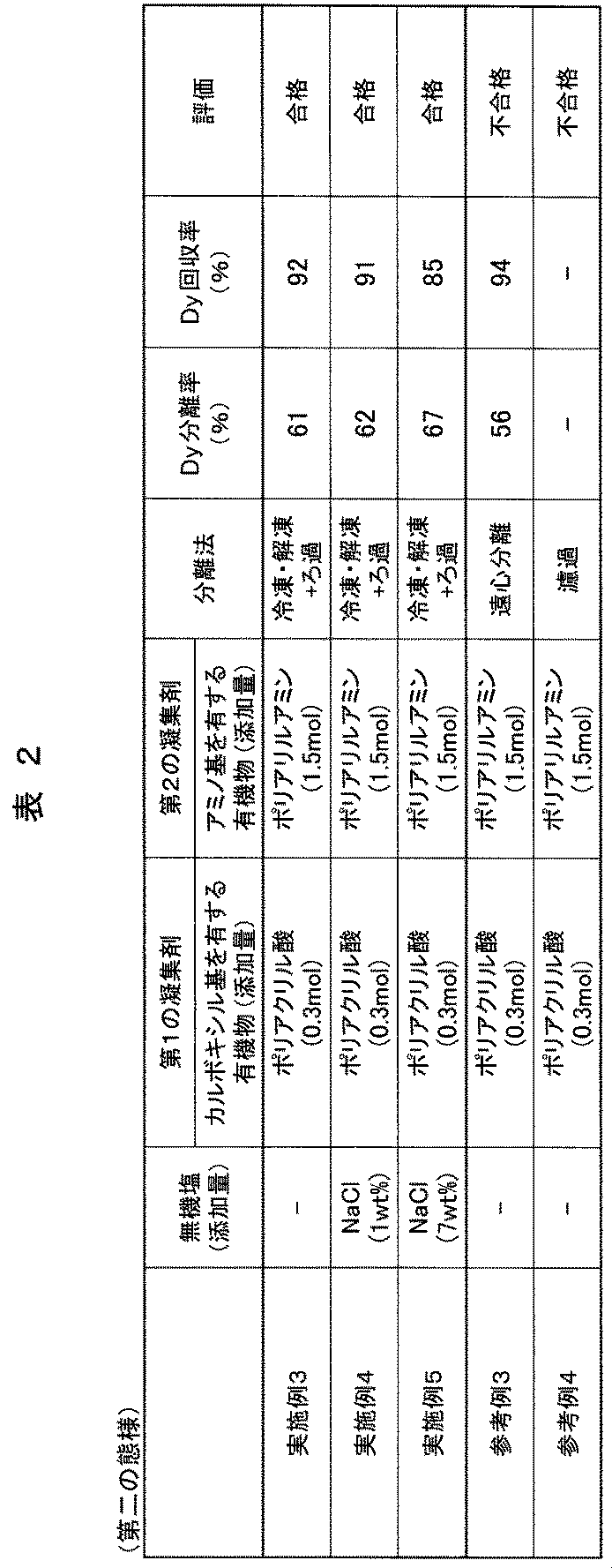
表中、第1の凝集剤及び第2の凝集剤の添加量(モル数)は、Dy1molに対するmol数である。
表2に示したように、本発明に係る希土類分離回収方法を用いた場合、Dyの分離率は60%以上を達成し、かつ回収率は80%以上を達成した。これに対し、本発明に係る希土類の分離回収方法の条件から外れている参考例1及び参考例2は、Dyの分離率が60%以上、かつ回収率が80%以上を達成することはできなかった。具体的には、無機塩を添加していない参考例1では、回収率は80%以上を達成したが、分離率は60%未満となった。また、参考例2では沈殿を液相から分離して回収することが不可能であった。
図7は、本発明(第二の態様)に係るDyの分離率とNaCl添加量の関係を示すグラフである。図中、NaCl=0wt%のデータは実施例1で、NaCl=1wt%のデータは実施例2、NaCl=7wt%のデータは実施例3のデータである。図7に示したように、NaClを全く添加していなくてもDyの分離率は60%以上となり、NaClを1wt%以上添加すると、Dyの分離率は上昇することがわかる。
以上の結果から、本発明に係る希土類元素の分離回収方法を用いた場合には、金属元素としてNd、Prのうち少なくとも1つと、Dyとを含む水溶液から、迅速に、高い分離率及び高い回収率でDyを分離及び回収できることが示された。
2…第1の反応槽、21…第1の撹拌手段、11…第1の凝集剤タンク、12…第2の凝集剤タンク、13…第1の凝集剤供給バルブ、14…第2の凝集剤供給バルブ、3…第1の無機塩タンク、31…第1の無機塩供給バルブ、22…第1の沈殿・液相供給バルブ、4…第1の遠心分離装置、5、10、20…Dyを多く含む沈殿を通す配管、6、11、21…Nd及び/又はPrを含む液相を通す配管、32…第2の無機塩タンク、33…第2の無機塩供給バルブ、7…第2の反応槽、71…第2の撹拌手段、8…塩基タンク、81…塩基供給バルブ、72…第2の沈殿・液相供給バルブ、9…第2の遠心分離装置、710…酸タンク、711…酸供給バルブ、7…第3の反応槽、171…第3の撹拌手段、34…第3の無機塩タンク、35…第3の無機塩供給バルブ、15…第3の凝集剤タンク、16…第4の凝集剤タンク、151…第3の凝集剤供給バルブ、161…第4の凝集剤供給バルブ、18…第3の沈殿・液相供給バルブ、19…第3の遠心分離装置、22…加熱炉、41、91、119…容器、51…冷凍・解凍装置、52、102、121…ヒーター、73…第3の沈殿・液相供給バルブ、53、53´…第2の沈殿・液相供給バルブ、92、92´…第4の沈殿・液相供給バルブ、191、191´…第6の沈殿・液相供給バルブ、54…フィルター、20、55、114…Dyを多く含む沈殿を通す配管、21、56、113…Nd及び/又はPrを含む液相を通す配管、101…第2の冷凍・解凍装置、111…第2のフィルター、120…第3の冷凍・解凍装置、130…第3のフィルター、172…第5の沈殿・液相供給バルブ、200…制御装置。
Claims (33)
- 金属元素としてNd、Prのうち少なくとも1つと、Dyとを含む水溶液からNd及び/又はPrとDyを分離してDyを優先的に回収する希土類元素の分離回収方法であって、
前記Nd、Prのうち少なくとも1つと、Dyとを含む水溶液に、無機塩を添加して撹拌する工程(無機塩添加工程)と、
前記無機塩添加工程後に、カルボキシル基を有する有機物を含む第1の凝集剤及びアミノ基を有する有機物を含む第2の凝集剤をこの順で添加し、Nd及び/又はPrよりもDyを多く含む凝集物を発生させ、該凝集物を沈殿させる工程(凝集剤添加工程)と、
前記凝集剤添加工程後に、遠心分離にてDyを多く含む沈殿と液相に分離して、沈殿と液相をそれぞれ回収する遠心分離工程とを有することを特徴とする希土類元素の分離回収方法。 - 請求項1に記載の希土類元素の分離回収方法において、前記カルボキシル基を有する有機物はポリアクリル酸であり、前記アミノ基を有する有機物はポリアリルアミンであることを特徴とする希土類元素の分離回収方法。
- 請求項1又は請求項2に記載の希土類元素の分離回収方法において、前記第1の凝集剤の添加量及び前記第2の凝集剤の添加量の合計が、前記Nd、Prのうち少なくとも1つと、Dyとを含む水溶液に対して0.01~30wt%であることを特徴とする希土類元素の分離回収方法。
- 請求項1乃至請求項3のいずれか1項に記載の希土類元素の分離回収方法において、前記無機塩が塩化ナトリウムであることを特徴とする希土類元素の分離回収方法。
- 請求項1乃至請求項4のいずれか1項に記載の希土類元素の分離回収方法において、前記無機塩の添加量が、前記Nd、Prのうち少なくとも1つと、Dyとを含む水溶液に対して1~7wt%であることを特徴とする希土類元素の分離回収方法。
- 請求項1乃至請求項5のいずれか1項に記載の希土類元素の分離回収方法において、さらに前記遠心分離工程後に、前記遠心分離工程において回収した前記Dyを含む沈殿に塩基を添加してDyの水酸化物を沈殿させる工程(塩基添加工程)と、
前記塩基添加工程後に、無機塩を添加して撹拌する工程(第2の無機塩添加工程)と、
前記第2の無機塩添加工程後に、遠心分離にてDyの水酸化物を含む沈殿と液相に分離してそれぞれ回収する工程(第2の遠心分離工程)と、
前記Dyの水酸化物を含む沈殿に酸を添加して中和する工程(酸添加工程)と、
前記酸添加工程後に、無機塩を添加して撹拌する工程(第3の無機塩添加工程)と、
前記第3の無機塩添加工程後に、カルボキシル基を有する有機物を含む第1の凝集剤及びアミノ基を有する有機物を含む第2の凝集剤をこの順で添加し、Nd及び/又はPrよりもDyを多く含む凝集物を発生させ、該凝集物を沈殿させる工程(第2の凝集剤添加工程)と、
前記第2の凝集剤添加工程後に、遠心分離にてDyを多く含む沈殿と液相に分離して、沈殿と液相をそれぞれ回収する遠心分離工程(第3の遠心分離工程)と、
前記第3の遠心分離工程後に、前記第3の遠心分離工程で回収したDyを多く含む沈殿を加熱炉で焼成する工程(焙焼工程)とを有することを特徴とする希土類元素の分離回収方法。 - 金属元素としてNd、Prのうち少なくとも1つと、Dyとを含む水溶液に、無機塩と凝集剤を添加し、前記Nd、Prのうち少なくとも1つと、Dyとを含む水溶液を沈殿と液相に分離し、前記沈殿からDyを優先的に回収する希土類元素の分離回収装置であって、
前記Nd、Prのうち少なくとも1つと、Dyとを含む水溶液を収納するための第1の反応槽と、
前記第1の反応槽に設けられた第1の撹拌手段と、
前記無機塩を収納する第1の無機塩タンクと、
前記凝集剤として、カルボキシル基を有する有機物を含む第1の凝集剤を収納する第1の凝集剤タンクと、
前記凝集剤として、アミノ基を有する有機物を含む第2の凝集剤を収納する第2の凝集剤タンクと、
前記第1の反応槽で得られた沈殿と液相を分離するための第1の遠心分離装置とを少なくとも有することを特徴とする希土類の分離回収装置。 - 請求項7に記載の希土類元素の分離回収装置において、前記カルボキシル基を有する有機物はポリアクリル酸であり、前記アミノ基を有する有機物はポリアリルアミンであることを特徴とする希土類元素の分離回収装置。
- 請求項7又は請求項8に記載の分離回収装置において、前記第1の凝集剤の添加量及び前記第2の凝集剤の添加量の合計が、前記Nd、Prのうち少なくとも1つと、Dyとを含む水溶液に対して0.01~30wt%であることを特徴とする希土類元素の分離回収装置。
- 請求項7乃至請求項9のいずれか1項に記載の希土類元素の分離回収装置において、前記無機塩が塩化ナトリウムであることを特徴とする希土類元素の分離回収装置。
- 請求項7乃至請求項10のいずれか1項に記載の希土類元素の分離回収装置において、前記無機塩の添加量が、前記前記Nd、Prのうち少なくとも1つと、Dyとを含む水溶液に対して1~7wt%であることを特徴とする希土類元素の分離回収装置。
- 請求項7に記載の希土類の分離回収装置において、
さらに前記第1の遠心分離装置において得られた沈殿を収納する第2の反応槽と、
前記第2の反応槽に設けられた第2の撹拌手段と、
塩基を収納する塩基タンクと、
無機塩を収納する第2の無機塩タンクと、
前記第2の反応槽で得られた沈殿と液相を分離するための第2の遠心分離装置と、
酸を収納する酸タンクと、
前記第2の遠心分離装置にて得られた沈殿に前記酸タンクから酸を供給する手段と、
前記第2の遠心分離装置で得られた沈殿を収納する第3の反応槽と、
前記第3の反応槽に設けられた第3の撹拌手段と、
前記無機塩を収納する第3の無機塩タンクと、
前記第1の凝集剤を収納する第3の凝集剤タンクと、
前記第2の凝集剤を収納する第4の凝集剤タンクと、
前記第3の反応槽で得られた沈殿と液相を分離するための第3の遠心分離装置と
を有することを特徴とする希土類の分離回収装置。 - 請求項12に記載の希土類の分離回収装置において、
さらに、前記第3の遠心分離装置にて回収されたDyを含む沈殿に前記無機塩、前記凝集剤を添加し、遠心分離で沈殿と液相に分離した後、得られた沈殿に前記塩基及び前記無機塩を添加し、遠心分離で沈殿と液相に分離した後、得られた沈殿に前記酸を添加して遠心分離を行う一連の作業を複数回行うことができるよう、反応槽及び反応槽に設けられた撹拌手段と、無機塩タンク、第1の凝集剤を収納する凝集剤タンク、第2の凝集剤を収納する凝集剤タンク、塩基タンク、酸タンク及び遠心分離装置を複数段有することを特徴とする希土類の分離回収装置。 - 請求項12又は請求項13に記載の希土類の分離回収装置において、遠心分離して得られたDyを含む沈殿を焙焼するための加熱炉をさらに有することを特徴とする希土類の分離回収装置。
- 請求項7乃至請求項14のいずれか1項に記載の希土類の分離回収装置において、前記無機塩タンク、第1の凝集剤を収納する凝集剤タンク、第2の凝集剤を収納する凝集剤タンク、塩基タンク、酸タンクから供給する液の供給量を調節するためのバルブと、該バルブに接続され、前記供給量を制御するための制御装置とを有することを特徴とする希土類の分離回収装置。
- 金属元素としてNd、Prのうち少なくとも1つと、Dyとを含む水溶液からNd及び/又はPrとDyを分離してDyを優先的に回収する希土類元素の分離回収方法であって、
前記Nd、Prのうち少なくとも1つと、Dyとを含む水溶液に、
カルボキシル基を有する有機物を含む第1の凝集剤及びアミノ基を有する有機物を含む第2の凝集剤をこの順で添加し、Nd及び/又はPrよりもDyを多く含む凝集物を発生させ、該凝集物を沈殿させる工程(凝集剤添加工程)と、
前記凝集剤添加工程後に、前記Dyを多く含む沈殿及び液相を冷凍及び解凍する工程(冷凍・解凍工程)と、
前記冷凍・解凍工程後に、ろ過にて前記Dyを多く含む沈殿と液相に分離して、沈殿と液相をそれぞれ回収する工程(ろ過工程)とを含むことを特徴とする希土類元素の分離回収方法。 - 請求項16に記載の希土類元素の分離回収方法において、前記カルボキシル基を有する有機物はポリアクリル酸であり、前記アミノ基を有する有機物はポリアリルアミンであることを特徴とする希土類元素の分離回収方法。
- 請求項16又は請求項17に記載の希土類元素の分離回収方法において、前記第1の凝集剤の添加量及び前記第2の凝集剤の添加量の合計が、前記Nd、Prのうち少なくとも1つと、Dyとを含む水溶液に対して0.01~30wt%であることを特徴とする希土類元素の分離回収方法。
- 請求項16乃至請求項18のいずれか1項に記載の希土類元素の分離回収方法において、前記凝集剤添加工程前に、前記金属元素としてNd、Prのうち少なくとも1つと、Dyとを含む水溶液に、無機塩を添加する工程(無機塩添加工程)を有することを特徴とする希土類元素の分離回収方法。
- 請求項19に記載の希土類元素の分離回収方法において、前記無機塩の添加量が、前記Nd、Prのうち少なくとも1つと、Dyとを含む水溶液に対して1~7wt%であることを特徴とする希土類元素の分離回収方法。
- 請求項19又は請求項20に記載の希土類元素の分離回収方法において、前記無機塩が塩化ナトリウムであることを特徴とする希土類元素の分離回収方法。
- 請求項16乃至請求項21のいずれか1項に記載の希土類元素の分離回収方法において、さらに前記ろ過工程後に、前記ろ過工程において回収した前記Dyを多く含む沈殿に塩基を添加してDyの水酸化物を発生させて該Dyの水酸化物を沈殿させる工程(塩基添加工程)と、
前記塩基添加工程後に、無機塩を添加して撹拌する工程(第2の無機塩添加工程)と、
前記第2の無機塩添加工程後に、Dyの水酸化物の沈殿及び液相を冷凍及び解凍する工程(第2の冷凍・解凍工程)と、
前記冷凍・解凍工程後に、ろ過にてDyの水酸化物の沈殿と液相に分離して、沈殿と液相をそれぞれ回収する工程(第2のろ過工程)と、
前記Dyの水酸化物を含む沈殿に酸を添加する工程(酸添加工程)と、
前記酸添加工程後に、無機塩を添加して撹拌する工程(第3の無機塩添加工程)と、
前記第3の無機塩添加工程後に、カルボキシル基を有する有機物を含む第1の凝集剤及びアミノ基を有する有機物を含む第2の凝集剤をこの順で添加し、Nd及び/又はPrよりもDyを多く含む凝集物を発生させ、該凝集物を沈殿させる工程(第2の凝集剤添加工程)と、
前記第2の凝集剤添加工程後に、前記Dyを多く含む沈殿及び液相を冷凍及び解凍する工程(第2の冷凍・解凍工程)と、
前記第2の冷凍・解凍工程後に、ろ過にて前記Dyを多く含む沈殿と液相に分離して、沈殿と液相をそれぞれ回収する工程(第3のろ過工程)と、
前記第3のろ過工程後に、前記第3のろ過工程で回収したDyを多く含む沈殿を加熱炉で焼成する工程(焙焼工程)とを有することを特徴とする希土類元素の分離回収方法。 - 金属元素としてNd、Prのうち少なくとも1つと、Dyとを含む水溶液に、凝集剤を添加し、前記Nd及び/又はPrとDyとを含む水溶液を沈殿と液相に分離し、前記沈殿からDyを優先的に回収する希土類元素の分離回収装置であって、
前記Nd、Prのうち少なくとも1つと、Dyとを含む水溶液を収納するための第1の反応槽と、
前記第1の反応槽に設けられた第1の撹拌手段と、
前記凝集剤として、カルボキシル基を有する有機物を含む第1の凝集剤を収納する第1の凝集剤タンクと、
前記凝集剤として、アミノ基を有する有機物を含む第2の凝集剤を収納する第2の凝集剤タンクと、
前記第1の反応槽で得られた沈殿及び液相を冷凍及び解凍するための冷凍・解凍装置と、前記冷凍・解凍後に、前記沈殿及び液相を、沈殿と液相に分離するためのろ過手段と
を少なくとも有することを特徴とする希土類の分離回収装置。 - 請求項23に記載の希土類元素の分離回収装置において、前記カルボキシル基を有する有機物はポリアクリル酸であり、前記アミノ基を有する有機物はポリアリルアミンであることを特徴とする希土類元素の分離回収装置。
- 請求項23又は請求項24に記載の分離回収装置において、前記第1の凝集剤の添加量及び前記第2の凝集剤の添加量の合計が、前記Nd、Prのうち少なくとも1つと、Dyとを含む水溶液に対して0.01~30wt%であることを特徴とする希土類元素の分離回収装置。
- 請求項23乃至請求項25のいずれか1項に記載の希土類元素の分離回収装置において、さらに、無機塩を収納する第1の無機塩タンクを有することを特徴とする希土類元素の分離回収装置。
- 請求項26に記載の希土類元素の分離回収装置において、前記無機塩の添加量が、前記Nd、Prのうち少なくとも1つと、Dyとを含む水溶液に対して1~7wt%であることを特徴とする希土類元素の分離回収装置。
- 請求項26又は請求項27に記載の希土類元素の分離回収方法において、前記無機塩が塩化ナトリウムであることを特徴とする希土類元素の分離回収装置。
- 請求項26に記載の希土類の分離回収装置において、
さらに前記ろ過手段において得られた沈殿を収納する第2の反応槽と、
前記第2の反応槽に設けられた第2の撹拌手段と、
塩基を収納する塩基タンクと、
無機塩を収納する第2の無機塩タンクと、
前記第2の反応槽で得られた沈殿と液相を冷凍及び解凍するための第2の冷凍・解凍装置と、
前記第2の冷凍・解凍後に、前記沈殿及び液相を、沈殿と液相に分離するための第2のろ過手段と、
酸を収納する酸タンクと、
前記第2のろ過手段にて得られた沈殿に前記酸タンクから酸を供給する手段と、
前記第2のろ過手段で得られた沈殿を収納する第3の反応槽と、
前記第3の反応槽に設けられた第3の撹拌手段と、
前記無機塩を収納する第3の無機塩タンクと、
前記第1の凝集剤を収納する第3の凝集剤タンクと、
前記第2の凝集剤を収納する第4の凝集剤タンクと、
前記第3の反応槽で得られた沈殿及び液相を冷凍及び解凍するための第3の冷凍・解凍装置と、
前記第3の冷凍・解凍後に、前記沈殿及び液相を、沈殿と液相に分離するための第3のろ過手段とを有することを特徴とする希土類の分離回収装置。 - 請求項29に記載の希土類の分離回収装置において、
さらに、前記第3のろ過手段にて回収されたDyを多く含む沈殿に前記無機塩、前記凝集剤を添加し、該Dyを多く含む沈殿及び液相を冷凍・解凍後にろ過して沈殿と液相に分離した後、得られた沈殿に前記塩基及び前記無機塩を添加し、該Dyを多く含む沈殿及び液相を冷凍・解凍後にろ過して沈殿と液相に分離した後、得られた沈殿に前記酸を添加した後、該Dyを多く含む沈殿に前記無機塩、前記凝集剤を添加し、該Dyを多く含む沈殿及び液相を冷凍・解凍後にろ過して沈殿と液相に分離する一連の作業を複数回行うことができるよう、反応槽及び反応槽に設けられた撹拌手段と、無機塩タンク、第1の凝集剤を収納する凝集剤タンク、第2の凝集剤を収納する凝集剤タンク、塩基タンク、酸タンク及び冷凍・解凍装置及びろ過手段とを複数段有することを特徴とする希土類の分離回収装置。 - 請求項29又は請求項30に記載の希土類の分離回収装置において、ろ過して得られたDyを含む沈殿を焙焼するための加熱炉をさらに有することを特徴とする希土類の分離回収装置。
- 請求項29乃至請求項31のいずれか1項に記載の希土類の分離回収装置において、前記無機塩タンク、第1の凝集剤を収納する凝集剤タンク、第2の凝集剤を収納する凝集剤タンク、塩基タンク、酸タンクから供給する液の供給量を調節するためのバルブと、該バルブに接続され、前記供給量を制御するための制御装置とを有することを特徴とする希土類の分離回収装置。
- 請求項32に記載の希土類の分離回収装置において、前記制御装置が、さらに前記冷凍・解凍装置に接続され、該冷凍・解凍装置の運転を制御することを特徴とする希土類の分離回収装置。
Applications Claiming Priority (2)
| Application Number | Priority Date | Filing Date | Title |
|---|---|---|---|
| JP2012171904A JP2014031536A (ja) | 2012-08-02 | 2012-08-02 | 希土類元素の分離回収方法及び分離回収装置 |
| JP2012-171904 | 2012-08-02 |
Publications (1)
| Publication Number | Publication Date |
|---|---|
| WO2014021119A1 true WO2014021119A1 (ja) | 2014-02-06 |
Family
ID=50027801
Family Applications (1)
| Application Number | Title | Priority Date | Filing Date |
|---|---|---|---|
| PCT/JP2013/069584 Ceased WO2014021119A1 (ja) | 2012-08-02 | 2013-07-19 | 希土類元素の分離回収方法及び分離回収装置 |
Country Status (2)
| Country | Link |
|---|---|
| JP (1) | JP2014031536A (ja) |
| WO (1) | WO2014021119A1 (ja) |
Cited By (6)
| Publication number | Priority date | Publication date | Assignee | Title |
|---|---|---|---|---|
| CN105439273A (zh) * | 2015-12-16 | 2016-03-30 | 安徽省化工设计院 | 加药中和水处理装置 |
| RU2610205C1 (ru) * | 2015-12-02 | 2017-02-08 | Акционерное общество "Ведущий научно-исследовательский институт химической технологии" | Способ сорбционного извлечения редкоземельных элементов из растворов |
| RU2610203C1 (ru) * | 2015-12-02 | 2017-02-08 | Акционерное общество "Ведущий научно-исследовательский институт химической технологии" | Способ сорбционного извлечения редкоземельных элементов из пульп |
| CN107619956A (zh) * | 2017-10-10 | 2018-01-23 | 云南省核工业二0九地质大队 | 一种稀土矿沉淀焙烧提取工艺 |
| WO2020014300A1 (en) * | 2018-07-12 | 2020-01-16 | Intelligent Material Solutions, Inc. | Tagging of fracking sand |
| CN117089729A (zh) * | 2023-10-07 | 2023-11-21 | 河南省龙峰新材料有限公司 | 一种从废料混合液中回收稀土用沉淀装置 |
Families Citing this family (1)
| Publication number | Priority date | Publication date | Assignee | Title |
|---|---|---|---|---|
| CN109701739B (zh) * | 2018-11-29 | 2020-07-24 | 赣州富尔特电子股份有限公司 | 一种稀土金属元素质量偏转吸引与磁性拦截分离装置 |
Citations (8)
| Publication number | Priority date | Publication date | Assignee | Title |
|---|---|---|---|---|
| JPH01249200A (ja) * | 1988-03-31 | 1989-10-04 | Dowa Mining Co Ltd | 難濾過性物質の凍結脱水法 |
| JP2004330031A (ja) * | 2003-05-02 | 2004-11-25 | Takuma Co Ltd | 汚泥の乾燥方法 |
| JP2009297667A (ja) * | 2008-06-16 | 2009-12-24 | Sankyo Giken Kogyo Kk | 金属研磨液のろ過脱水方法及びその装置 |
| WO2010087094A1 (ja) * | 2009-01-29 | 2010-08-05 | 株式会社日立製作所 | 排水浄化用凝集剤、並びにこれを用いた排水浄化方法及び排水浄化装置 |
| JP2011132573A (ja) * | 2009-12-25 | 2011-07-07 | Hitachi Ltd | 金属回収用薬剤,金属回収方法および金属回収用薬剤を用いた金属分離回収装置 |
| JP2012025995A (ja) * | 2010-07-22 | 2012-02-09 | Univ Of Tokushima | レアメタルの選択的回収方法 |
| JP2012030139A (ja) * | 2010-07-28 | 2012-02-16 | Hitachi Ltd | 希土類金属凝集剤 |
| JP2013194272A (ja) * | 2012-03-19 | 2013-09-30 | Hitachi Ltd | 希土類分離回収方法およびこれを用いた装置 |
-
2012
- 2012-08-02 JP JP2012171904A patent/JP2014031536A/ja active Pending
-
2013
- 2013-07-19 WO PCT/JP2013/069584 patent/WO2014021119A1/ja not_active Ceased
Patent Citations (8)
| Publication number | Priority date | Publication date | Assignee | Title |
|---|---|---|---|---|
| JPH01249200A (ja) * | 1988-03-31 | 1989-10-04 | Dowa Mining Co Ltd | 難濾過性物質の凍結脱水法 |
| JP2004330031A (ja) * | 2003-05-02 | 2004-11-25 | Takuma Co Ltd | 汚泥の乾燥方法 |
| JP2009297667A (ja) * | 2008-06-16 | 2009-12-24 | Sankyo Giken Kogyo Kk | 金属研磨液のろ過脱水方法及びその装置 |
| WO2010087094A1 (ja) * | 2009-01-29 | 2010-08-05 | 株式会社日立製作所 | 排水浄化用凝集剤、並びにこれを用いた排水浄化方法及び排水浄化装置 |
| JP2011132573A (ja) * | 2009-12-25 | 2011-07-07 | Hitachi Ltd | 金属回収用薬剤,金属回収方法および金属回収用薬剤を用いた金属分離回収装置 |
| JP2012025995A (ja) * | 2010-07-22 | 2012-02-09 | Univ Of Tokushima | レアメタルの選択的回収方法 |
| JP2012030139A (ja) * | 2010-07-28 | 2012-02-16 | Hitachi Ltd | 希土類金属凝集剤 |
| JP2013194272A (ja) * | 2012-03-19 | 2013-09-30 | Hitachi Ltd | 希土類分離回収方法およびこれを用いた装置 |
Cited By (8)
| Publication number | Priority date | Publication date | Assignee | Title |
|---|---|---|---|---|
| RU2610205C1 (ru) * | 2015-12-02 | 2017-02-08 | Акционерное общество "Ведущий научно-исследовательский институт химической технологии" | Способ сорбционного извлечения редкоземельных элементов из растворов |
| RU2610203C1 (ru) * | 2015-12-02 | 2017-02-08 | Акционерное общество "Ведущий научно-исследовательский институт химической технологии" | Способ сорбционного извлечения редкоземельных элементов из пульп |
| CN105439273A (zh) * | 2015-12-16 | 2016-03-30 | 安徽省化工设计院 | 加药中和水处理装置 |
| CN107619956A (zh) * | 2017-10-10 | 2018-01-23 | 云南省核工业二0九地质大队 | 一种稀土矿沉淀焙烧提取工艺 |
| WO2020014300A1 (en) * | 2018-07-12 | 2020-01-16 | Intelligent Material Solutions, Inc. | Tagging of fracking sand |
| US11993748B2 (en) | 2018-07-12 | 2024-05-28 | Intelligent Material Solutions, Inc. | Tagging of fracking sand |
| CN117089729A (zh) * | 2023-10-07 | 2023-11-21 | 河南省龙峰新材料有限公司 | 一种从废料混合液中回收稀土用沉淀装置 |
| CN117089729B (zh) * | 2023-10-07 | 2024-05-28 | 河南省龙峰新材料有限公司 | 一种从废料混合液中回收稀土用沉淀装置 |
Also Published As
| Publication number | Publication date |
|---|---|
| JP2014031536A (ja) | 2014-02-20 |
Similar Documents
| Publication | Publication Date | Title |
|---|---|---|
| WO2014021119A1 (ja) | 希土類元素の分離回収方法及び分離回収装置 | |
| Wang et al. | Recovery of rare earth elements with ionic liquids | |
| EP2903710B1 (en) | Desalination of aqueous media using ionic liquids | |
| CN102011020B (zh) | 从钕铁硼废料中回收稀土元素的方法 | |
| CN104583428B (zh) | 稀土元素的分离方法及分离装置 | |
| Alemrajabi et al. | Recovery of rare earth elements from nitrophosphoric acid solutions | |
| CN103443305B (zh) | 重稀土元素的回收方法 | |
| CN106636689A (zh) | 一种从稀土废水池沉淀渣中提取稀土的方法 | |
| JP2024516048A (ja) | ヒ素含有固形廃棄物から短いプロセスで高純度の金属ヒ素を調製する方法 | |
| CN117339992B (zh) | 一种基于磁性材料原位去除污染土壤中稀土元素的方法 | |
| US20240392409A1 (en) | Methods of separating metals from a lithium-ion battery leachate | |
| CN107109523A (zh) | 用于铁和铝的选择性分离的方法 | |
| JP2012237053A (ja) | 希土類元素の回収方法 | |
| JP5478240B2 (ja) | 金属回収方法および金属分離回収装置 | |
| JP5677345B2 (ja) | 希土類分離回収方法およびこれを用いた装置 | |
| Fryxell et al. | Design and synthesis of chelating diamide sorbents for the separation of lanthanides | |
| CN111315500A (zh) | 重金属的分离方法 | |
| CN110770175A (zh) | 吸附方法 | |
| CN113039170A (zh) | 液体肥料的制造方法 | |
| EP0467180A2 (en) | Rare earth/transition metal alloy scrap treatment method | |
| Wahyudi et al. | Lithium extraction from Dieng geothermal brine using solvent extraction–a preliminary study | |
| CN113582318B (zh) | 一种重金属去除剂及其合成方法和应用 | |
| CN117778754A (zh) | 一种强酸性含锂溶液中锂资源的回收方法 | |
| KR20140069874A (ko) | 인듐함유 용액 또는 혼합물으로부터의 인듐의 회수 방법 | |
| CN107922997A (zh) | 分离轻稀土元素和重稀土元素有用的方法 |
Legal Events
| Date | Code | Title | Description |
|---|---|---|---|
| 121 | Ep: the epo has been informed by wipo that ep was designated in this application |
Ref document number: 13825048 Country of ref document: EP Kind code of ref document: A1 |
|
| NENP | Non-entry into the national phase |
Ref country code: DE |
|
| 122 | Ep: pct application non-entry in european phase |
Ref document number: 13825048 Country of ref document: EP Kind code of ref document: A1 |