WO2014003472A1 - 무선랜 시스템에서 액세스 포인트의 검색 방법 - Google Patents
무선랜 시스템에서 액세스 포인트의 검색 방법 Download PDFInfo
- Publication number
- WO2014003472A1 WO2014003472A1 PCT/KR2013/005733 KR2013005733W WO2014003472A1 WO 2014003472 A1 WO2014003472 A1 WO 2014003472A1 KR 2013005733 W KR2013005733 W KR 2013005733W WO 2014003472 A1 WO2014003472 A1 WO 2014003472A1
- Authority
- WO
- WIPO (PCT)
- Prior art keywords
- access point
- terminal
- probe response
- probe
- response frame
- Prior art date
- Legal status (The legal status is an assumption and is not a legal conclusion. Google has not performed a legal analysis and makes no representation as to the accuracy of the status listed.)
- Ceased
Links
Images





Classifications
-
- H—ELECTRICITY
- H04—ELECTRIC COMMUNICATION TECHNIQUE
- H04W—WIRELESS COMMUNICATION NETWORKS
- H04W48/00—Access restriction; Network selection; Access point selection
- H04W48/16—Discovering, processing access restriction or access information
Definitions
- the present invention relates to a method for searching for an access point, and more particularly, to a method for searching for an access point using an active search method in a WLAN system.
- wireless local area network is based on radio frequency technology such as personal digital assistant (PDA), laptop computer, portable multimedia player (PMP), etc. It is a technology that allows a user to access the Internet wirelessly at home, a business, or a specific service area by using a portable terminal.
- PDA personal digital assistant
- PMP portable multimedia player
- IEEE 802.11a provides a transmission rate of 54 Mbps using an unlicensed band at 5 GHz.
- IEEE 802.11b applies a direct sequence spread spectrum (DSSS) at 2.4 GHz to provide a transmission rate of 11 Mbps.
- IEEE 802.11g applies orthogonal frequency division multiplexing (OFDM) at 2.4 GHz to provide a transmission rate of 54 Mbps.
- IEEE 802.11n applies multiple input multiple output OFDM (MIMO-OFDM) to provide a transmission rate of 300 Mbps for two spatial streams.
- IEEE 802.11n supports a channel bandwidth of up to 40 MHz, in which case it provides a transmission rate of 600 Mbps.
- VHT Very high throughput
- IEEE 802.11ac is being developed as a standard for providing very high throughput in the band below 5 GHz
- IEEE 802.11ad is being developed as a standard for providing very high throughput in the 60 GHz band.
- a search method of an access point includes an active scan method and a passive scan method.
- the station transmits a probe request frame and the access point receiving the response responds with a probe response frame.
- the UE receives the probe response frame from the access point for the maximum probe response time (Max_Probe_Response_Time), and receives the probe response frame.
- Max_Probe_Response_Time the maximum probe response time
- the wireless environment makes a connection request to the best access point. That is, even when a probe response frame is received from an access point having a good wireless environment, the terminal must wait until the maximum probe response time and then request an access to the access point. Therefore, unnecessary time is wasted.
- An object of the present invention for solving the above problems is to provide an active search method of the access point for performing an active search using a probe request frame including the output information of the terminal.
- Another object of the present invention for solving the above problems is to provide an active search method of an access point for performing an active search using a probe response frame including output information of the access point.
- An active searching method for achieving the above object includes generating a probe request frame including signal strength information of a terminal and transmitting the probe request frame to an access point.
- the signal strength information may include transmission power information of the terminal.
- the active scanning method may further include receiving a probe response frame corresponding to the probe request frame from any access point and performing a connection with the arbitrary access point, wherein the arbitrary access point is included in the random access point.
- connection with the arbitrary access point may be performed before the maximum probe response time passes.
- the active search method receiving a probe response frame corresponding to the probe request frame from any access point, obtaining a downlink path loss based on the signal strength of the probe response frame and the downlink If the path loss satisfies a predefined criterion, the method may further include performing a connection with the arbitrary access point.
- the probe response frame may include target path loss information which is the predefined reference.
- the connection with the arbitrary access point may be performed before the maximum probe response time elapses.
- the arbitrary access point may be an access point for which uplink quality for the terminal satisfies a predefined criterion.
- an active scanning method comprising: transmitting a probe request frame to an access point, receiving a probe response frame corresponding to the probe request frame from an access point; Acquiring downlink quality information based on the signal strength of the probe response frame; and performing connection with the arbitrary access point when the downlink quality satisfies a predefined criterion.
- the downlink quality information may include downlink path loss information.
- the probe response frame may include target path loss information which is the predefined reference.
- An active search response method for achieving the another object, receiving a probe request frame from the terminal, the uplink quality based on the signal strength information of the terminal included in the probe request frame Acquiring information and transmitting a probe response frame to the terminal when the uplink quality satisfies a predefined criterion.
- the signal strength information may include transmission power information of the terminal.
- the uplink quality information may include uplink path loss information.
- the probe response frame including target path loss information may be transmitted.
- the access point may respond with a probe response frame only to a terminal in which an uplink path loss for a probe request frame satisfies a predetermined criterion, thereby preventing unnecessary radio resources from being wasted.
- the terminal may immediately connect to the corresponding access point without waiting for the maximum probe response time, thereby preventing unnecessary waste of time. Can be.
- FIG. 1 is a conceptual diagram illustrating an embodiment of a configuration of an IEEE 802.11 WLAN system.
- FIG. 2 is a conceptual diagram illustrating a connection process of a terminal in an infrastructure BSS.
- FIG. 3 is a conceptual diagram illustrating an embodiment of a data transmission process of an access point.
- FIG. 4 is a conceptual diagram illustrating an embodiment of an active search method.
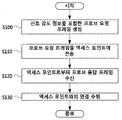
- FIG. 5 is a flowchart illustrating an active search method according to an embodiment of the present invention.
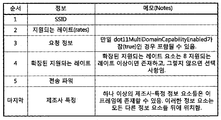
- FIG. 6 is a conceptual diagram illustrating a configuration of a probe request frame.
- FIG. 7 is a flowchart illustrating an active search method according to another embodiment of the present invention.
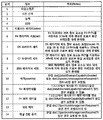
- FIG. 8 is a conceptual diagram illustrating the configuration of the probe response frames 1 to 14.
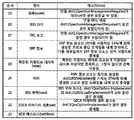
- 9 is a conceptual diagram illustrating the configuration of the probe response frames 15 to 23.
- FIG. 10 is a flowchart illustrating an active search method according to another embodiment of the present invention.
- FIG. 11 is a flowchart illustrating an active search response method according to an embodiment of the present invention.
- FIG. 12 is a flowchart illustrating an active search method of an access point according to an embodiment of the present invention.
- first and second may be used to describe various components, but the components should not be limited by the terms. The terms are used only for the purpose of distinguishing one component from another.
- the first component may be referred to as the second component, and similarly, the second component may also be referred to as the first component.
- a station is a physical layer for medium access control (MAC) and wireless medium that conforms to the Institute of Electrical and Electronics Engineers (IEEE) 802.11 standard. By any functional medium that includes an interface.
- the station STA may be divided into a station that is an access point (AP) and a station that is a non-access point (STA).
- a station (STA), which is an access point (AP), may simply be called an access point (AP), and a station (STA), which is a non-AP, may simply be called a terminal.
- the station STA may include a processor and a transceiver, and may further include a user interface and a display device.
- a processor refers to a unit designed to generate a frame to be transmitted through a wireless network or to process a frame received through a wireless network, and performs various functions for controlling a station (STA).
- a transceiver is a unit that is functionally connected to a processor and is designed to transmit and receive a frame through a wireless network for a station (STA).
- An access point may refer to a centralized controller, a base station (BS), a node-B, an e-node-B, a base transceiver system (BTS), or a site controller, and the like. Some or all of the features may be included.
- BS base station
- BTS base transceiver system
- the terminal may be a wireless transmit / receive unit (WTRU), a user equipment (UE), a user terminal (UT), an access terminal (AT), a mobile station (MS), May refer to a mobile terminal, a subscriber unit, a subscriber station (SS), a wireless device, or a mobile subscriber unit, and some of them. Or all of the functions may be included.
- WTRU wireless transmit / receive unit
- UE user equipment
- UT user terminal
- AT access terminal
- MS mobile station
- SS subscriber station
- wireless device or a mobile subscriber unit, and some of them. Or all of the functions may be included.
- a desktop computer a laptop computer, a tablet PC, a wireless phone, a mobile phone, a smart phone, and an e-communication capable of communicating with a terminal
- book readers portable multimedia players (PMPs), portable game consoles, navigation devices, digital cameras, digital multimedia broadcasting (DMB) players, digital audio recorders, digital audio players ),
- DMB digital multimedia broadcasting
- a digital picture recorder, a digital picture player, a digital video recorder, a digital video player, and the like can be used.
- FIG. 1 is a conceptual diagram illustrating an embodiment of a configuration of an IEEE 802.11 WLAN system.
- an IEEE 802.11 WLAN system includes at least one basic service set (BSS).
- BSS means a set of stations (STA 1, STA 2 (AP 1), STA 3, STA 4, STA 5 (AP 2)) that can be successfully synchronized to communicate with each other, the concept of a specific area is no.
- BSS can be classified into Infrastructure BSS (Independent BSS) and Independent BSS (IBSS), and BSS 1 and BSS 2 represent Infrastructure BSS.
- BSS 1 connects a terminal (STA 1), an access point (STA 2 (AP 1)) providing a distribution service and a plurality of access points (STA 2 (AP 1), STA 5 (AP 2)) It may include a distribution system (DS).
- STA 2 an access point STA 2 (AP 1) manages a terminal STA 1.
- BSS 2 connects a terminal (STA 3, STA 4), an access point (STA 5 (AP 2)) providing a distribution service and a plurality of access points (STA 2 (AP 1), STA 5 (AP 2)) It may include a distribution system.
- an access point STA 5 (AP 2) manages terminals STA 3 and STA 4.
- the independent BSS is a BSS operating in an ad-hoc mode. Since the IBSS does not include an access point, there is no centralized management entity. That is, in the IBSS, terminals are managed in a distributed manner. In IBSS, all terminals may be mobile terminals, and thus, are not allowed to be connected to the distribution system (DS), thereby forming a self-contained network.
- DS distribution system
- the access points STA 2 (AP 1) and STA 5 (AP 2) provide access to the distributed system DS through the wireless medium for the terminals STA 1, STA 3, and STA 4 coupled thereto. .
- Communication between terminals STA 1, STA 3, and STA 4 in BSS 1 or BSS 2 is generally performed through an access point STA 2 (AP 1) or STA 5 (AP 2), but a direct link (direct link) If the link is configured, direct communication between the terminals STA 1, STA 3, and STA 4 is possible.
- the plurality of infrastructure BSSs may be interconnected through a distribution system (DS).
- DS distribution system
- a plurality of BSSs connected through a distribution system (DS) is called an extended service set (ESS).
- Stations included in the ESS may communicate with each other, and the UE may move from one BSS to another BSS while seamlessly communicating within the same ESS.
- the distribution system (DS) is a mechanism for one access point to communicate with another access point, whereby the access point transmits frames to, or moves to, another BSS for the terminals that are associated with the BSS it manages.
- a frame may be transmitted for one arbitrary terminal.
- the access point may transmit and receive frames with an external network such as a wired network.
- Such a distribution system (DS) does not necessarily need to be a network, and there is no limitation on its form as long as it can provide a predetermined distribution service defined in the IEEE 802.11 standard.
- the distribution system may be a wireless network such as a mesh network or a physical structure that connects access points to each other.
- the active discovery method of an access point according to an embodiment of the present invention to be described later can be applied to the IEEE 802.11 WLAN system described above, and in addition to the IEEE 802.11 WLAN system, a wireless personal area network (WPAN) and a wireless body (WBAN) It can be applied to various networks such as an area network).
- WLAN wireless personal area network
- WBAN wireless body
- FIG. 2 is a conceptual diagram illustrating a connection process of a terminal in an infrastructure BSS.
- the terminal STA In order for the STA to transmit and receive data in the intra-structure BSS, the terminal STA must first be connected to the access point AP.
- connection process of the STA in the infrastructure BSS is largely 1) a probe step (AP), 2) an authentication step with the detected access point (AP). ) And 3) an association step with an authenticated access point (AP).
- the STA may first detect neighboring access points (APs) through a detection process.
- the detection process is divided into a passive scanning method and an active scanning method.
- the passive scanning method may be performed by overhearing beacons transmitted by neighboring access points (APs).
- the active scanning method may be performed by broadcasting a probe request frame.
- the AP that receives the probe request frame may transmit a probe response frame corresponding to the probe request frame to the corresponding STA.
- the STA may know the presence of neighboring access points (APs) by receiving a probe response frame.
- the terminal STA may perform authentication with the detected access point AP and may perform authentication with the plurality of detected access points APs.
- An authentication algorithm according to the IEEE 802.11 standard is divided into an open system algorithm for exchanging two authentication frames and a shared key algorithm for exchanging four authentication frames. Through the process of exchanging an authentication request frame and an authentication response frame based on the authentication algorithm, the terminal STA may perform authentication with the access point AP.
- the terminal STA selects one of the authenticated access points APs and performs a connection process with the selected access point AP. That is, the terminal STA transmits an association request frame to the selected access point AP, and the access point AP that receives the association request frame receives an association response frame corresponding to the association request frame. frame is transmitted to the corresponding STA. As such, through the process of exchanging the connection request frame and the connection response frame, the STA may perform a connection process with the access point AP.
- FIG. 3 is a conceptual diagram illustrating an embodiment of a data transmission process of an access point.
- the AP may broadcast a beacon periodically, and may broadcast a beacon including a DTIM at three beacon intervals.
- Terminals STA 1 and STA 2 of a power save mode (PSM) periodically wake up to receive a beacon, check the TIM or DTIM included in the beacon, and send data to the access point to the access point. Check that it is buffered. In this case, when the buffered data is present, the terminals STA 1 and STA 2 remain awake to receive data from the access point AP, and when the buffered data does not exist, the terminals STA 1 and STA 2. ) Returns to the power saving state (ie the doze state).
- PSM power save mode
- the STA (STA 1, STA 2) is a PS (Power Save) -Poll frame (notifying that it is awake and ready to receive data) Or, transmit a trigger (trigger frame) to the access point (AP), the access point (AP) confirms that the terminal (STA 1, STA 2) is ready for data reception by receiving a PS-Poll frame, Data or an acknowledgment (ACK) may be transmitted to the terminals STA 1 and STA 2.
- the access point AP transmits data to the terminals STA 1 and STA 2 at an appropriate time.
- the terminals STA 1 and STA 2 return to the power saving state.
- FIG. 4 is a conceptual diagram illustrating an embodiment of an active search method.
- the terminal STA may broadcast a probe request frame, and the access points AP 1 and AP 2 that receive the probe request frame may respond with a probe response frame. If the STA does not receive the probe response frame for the minimum probe response time min_probe_response_time, the terminal STA may transmit the probe request frame again.
- the terminal STA receives a probe response frame for a maximum probe response time (max_probe_response_time), and requests access to an access point having the best wireless environment among the access points AP 1 and AP 2 that have transmitted the probe response frame. That is, even when a probe response frame is received from an access point having a good wireless environment, the terminal must wait until the maximum probe response time before requesting an access to the access point, which wastes unnecessary time.
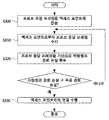
- FIG. 5 is a flowchart illustrating an active search method according to an embodiment of the present invention.
- an active search method performed in a terminal includes generating a probe request frame including signal strength information of the terminal (S100) and transmitting a probe request frame to an access point (S110). Include.
- the active search method may further include the step of receiving a probe response frame corresponding to the probe request frame from any access point (S120) and performing an access (access) with any access point (S130). have.
- the terminal may generate a probe request frame including its signal strength information, and the signal strength information may include transmission power (Tx power) information. That is, the signal strength may mean transmission power.
- Tx power transmission power
- FIG. 6 is a conceptual diagram illustrating a configuration of a probe request frame.
- the probe request frame includes transmission power (5, Tx Power) information. That is, the terminal may generate a probe request frame including transmission power information as shown in FIG. 6.
- the terminal may transmit a probe request frame to the access point.
- the terminal may transmit a probe request frame to a specific access point, or transmit (ie broadcast) a probe request frame to an unspecified access point.
- the terminal may receive a probe response frame corresponding to the probe request frame from any access point.
- Any access point refers to one of the access points that received the probe request frame.
- any access point may refer to an access point for which an uplink quality (eg, path loss) for the terminal satisfies a predetermined criterion.
- the predefined criterion means (uplink) target pathloss, and any access point may mean an access point having an uplink path loss less than or equal to the target path loss.
- the terminal may perform connection (ie, an authentication process and an association process) with any access point.
- the terminal may perform connection with any access point before the preset maximum probe response time elapses. That is, the terminal may immediately connect with any access point after receiving the probe response frame. If the uplink path loss satisfies a predefined criterion, the uplink quality between the arbitrary access point and the terminal is good, and thus, the terminal does not receive another probe response frame for the remaining maximum probe response time. Can be connected to.
- FIG. 7 is a flowchart illustrating an active search method according to another embodiment of the present invention.
- the active search method performed in the terminal may include generating a probe request frame including signal strength information of the terminal (S200), transmitting a probe request frame to an access point (S210), and random access. Receiving a probe response frame corresponding to the probe request frame from the point (S220), obtaining a downlink path loss based on the signal strength of the probe response frame (S230) and the downlink path loss based on a predefined criteria If satisfied, a step (S240) of performing a connection with an arbitrary access point.
- the terminal may generate a probe request frame including its signal strength information, and the signal strength information may include transmission power information. That is, the signal strength may mean transmission power.
- the terminal may transmit a probe request frame to the access point.
- the terminal may transmit a probe request frame to a specific access point, or transmit (ie broadcast) a probe request frame to an unspecified access point.
- the terminal may receive a probe response frame corresponding to the probe request frame from any access point.
- Any access point refers to one of the access points that received the probe request frame.
- any access point may refer to an access point for which an uplink quality (eg, path loss) for the terminal satisfies a predetermined criterion.
- the predefined criterion means (uplink) target path loss
- any access point may mean an access point having an uplink path loss that is less than or equal to the target path loss.
- the terminal may obtain the downlink path loss based on the signal strength of the probe response frame. If the transmission power of any access point is known, the terminal may acquire the downlink path loss through a difference between the transmission power of any access point and the received signal strength of the probe response frame. Here, the terminal may obtain the transmission power of any access point through the probe response frame. That is, any access point may generate and transmit a probe response frame including its own transmission power information to the terminal, and the terminal may acquire the transmission power of any access point through the probe response frame.
- the terminal may perform connection with an arbitrary access point.
- the predefined criterion means (downlink) target path loss, and the target path loss may be included in the probe response frame and transmitted to the terminal.
- FIGS. 8 and 9 are conceptual diagrams illustrating the configuration of a probe response frame.
- the probe response frame includes target pathloss information. That is, any access point may generate a probe response frame including target path loss information as shown in FIGS. 8 and 9, and may provide the generated probe response frame to the terminal.
- the terminal may perform connection (that is, authentication process and connection process) with any access point.
- the terminal may perform connection with any access point before the preset maximum probe response time elapses. That is, when the terminal receives a probe response frame that satisfies a predefined criterion, the terminal may immediately connect with an arbitrary access point.
- the downlink quality between the arbitrary access point and the terminal is good, and thus, the terminal does not receive another probe response frame for the remaining maximum probe response time. Can be connected to.
- the terminal may receive a probe response frame from another access point.
- FIG. 10 is a flowchart illustrating an active search method according to another embodiment of the present invention.
- the active search method performed in the terminal may include transmitting a probe request frame to an access point (S300), receiving a probe response frame corresponding to the probe request frame from an access point (S310), Acquiring downlink quality information based on the signal strength of the probe response frame (S320) and performing access with an arbitrary access point when the downlink quality satisfies a predefined criterion (S330). .
- the terminal may transmit a probe request frame to the access point.
- the terminal may transmit a probe request frame to a specific access point, or transmit (ie broadcast) a probe request frame to an unspecified access point.
- the terminal may receive a probe response frame corresponding to the probe request frame from any access point.
- Any access point refers to one of the access points that received the probe request frame.
- the terminal may acquire downlink quality information based on the received signal strength of the probe response frame.
- the downlink quality information includes downlink path loss information. That is, downlink quality may mean downlink path loss. If the transmission power of any access point is known, the terminal may acquire the downlink path loss through a difference between the transmission power of any access point and the received signal strength of the probe response frame. Here, the terminal may obtain the transmission power of any access point through the probe response frame. That is, any access point may generate and transmit a probe response frame including its own transmission power information to the terminal, and the terminal may acquire the transmission power of any access point through the probe response frame.
- the terminal may perform connection with an arbitrary access point.
- the predefined criterion means (downlink) target path loss, and the target path loss may be included in the probe response frame and transmitted to the terminal.
- the terminal may perform an access (ie, an authentication process and a connection process) with any access point.
- the terminal may perform connection with any access point before the preset maximum probe response time elapses. That is, when the terminal receives a probe response frame that satisfies a predefined criterion, the terminal may immediately connect with an arbitrary access point.
- the downlink quality between the arbitrary access point and the terminal is good, and thus, the terminal does not receive another probe response frame for the remaining maximum probe response time. Can be connected to.
- the terminal may receive a probe response frame from another access point.
- FIG. 11 is a flowchart illustrating an active search response method according to an embodiment of the present invention.
- the method may include transmitting a probe response frame to the terminal (S420).
- the access point may receive a probe request frame from the terminal. That is, when the SSID included in the probe request frame is its SSID or when the SSID is set to null, the access point may receive the probe request frame.
- the access point may acquire uplink quality information based on signal strength information of the terminal included in the probe request frame.
- signal strength information of the terminal means transmission power information of the terminal
- uplink quality information means uplink path loss. That is, the access point may obtain an uplink path loss through a difference between the transmit power of the terminal included in the probe request frame and the received signal strength of the probe request frame.
- the access point may transmit a probe response frame to the terminal when the uplink quality satisfies a predetermined criterion.
- the predefined criterion means (uplink) target path loss. That is, the access point may transmit a probe response frame to the terminal when the uplink quality (ie, path loss) is less than or equal to the target path loss. On the other hand, if the uplink quality (ie, path loss) is greater than the target path loss, the access point does not transmit a probe response frame to the terminal.
- the access point may transmit a probe response frame including the (downlink) target path loss information to the terminal.
- the target path loss information included in the probe response frame may be used for acquiring downlink quality in the terminal.
- FIG. 12 is a flowchart illustrating an active search method of an access point according to an embodiment of the present invention.
- the terminal 10 may broadcast a probe request frame (S500).
- the access points 20, 21, and 22 may calculate the uplink link loss based on the received probe request frame. That is, the uplink path loss may be calculated based on the transmission power of the terminal 10 included in the probe request frame and the received signal strength of the probe request frame. If the uplink path loss is less than or equal to a predetermined criterion (ie, uplink target path loss), the corresponding access point may transmit a probe response frame to the terminal 10 (S510).
- a predetermined criterion ie, uplink target path loss
- the first access point 20 may transmit a probe response frame to the terminal 10.
- the terminal 10 may receive a probe response frame from the first access point 20, and immediately after receiving the probe response frame, performs a connection (that is, an authentication process and a connection process) with the first access point 20. It may be (S520). That is, the terminal may perform connection with the first access point 20 before the preset maximum probe response time passes. If the uplink path loss satisfies a predefined criterion, the uplink quality between the first access point 20 and the terminal is good. Therefore, the terminal does not receive another probe response frame for the remaining maximum probe response time. 1 The connection with the access point 20 can be performed.
Landscapes
- Engineering & Computer Science (AREA)
- Computer Security & Cryptography (AREA)
- Computer Networks & Wireless Communication (AREA)
- Signal Processing (AREA)
- Mobile Radio Communication Systems (AREA)
Description
Claims (15)
- 단말(station)에서 수행되는 능동 검색 방법으로서,상기 단말의 신호 강도(signal strength) 정보를 포함하는 프로브 요청 프레임(probe request frame)을 생성하는 단계; 및상기 프로브 요청 프레임을 액세스 포인트(access point)에 전송하는 단계를 포함하는 것을 특징으로 하는 능동 검색 방법.
- 청구항 1에 있어서,상기 신호 강도 정보는 상기 단말의 전송 파워(Tx power) 정보를 포함하는 것을 특징으로 하는 능동 검색 방법.
- 청구항 1에 있어서,상기 능동 검색 방법은,임의의 액세스 포인트로부터 상기 프로브 요청 프레임에 대응된 프로브 응답 프레임(probe response frame)을 수신하는 단계; 및상기 임의의 액세스 포인트와의 접속을 수행하는 단계를 더 포함하되,상기 임의의 액세스 포인트는 상기 단말에 대한 상향링크 품질이 미리 정의된 기준을 만족하는 액세스 포인트인 것을 특징으로 하는 능동 검색 방법.
- 청구항 3에 있어서,상기 임의의 액세스 포인트와의 접속을 수행하는 단계는,최대 프로브 응답 시간(max probe response time)이 지나기 전에 상기 임의의 액세스 포인트와의 접속을 수행하는 것을 특징으로 하는 능동 검색 방법.
- 청구항 1에 있어서,상기 능동 검색 방법은,임의의 액세스 포인트로부터 상기 프로브 요청 프레임에 대응된 프로브 응답 프레임을 수신하는 단계;상기 프로브 응답 프레임의 신호 강도를 기반으로 하향링크 경로손실을 획득하는 단계; 및상기 하향링크 경로손실이 미리 정의된 기준을 만족하는 경우, 상기 임의의 액세스 포인트와의 접속을 수행하는 단계를 더 포함하는 것을 특징으로 하는 능동 검색 방법.
- 청구항 5에 있어서,상기 프로브 응답 프레임은 상기 미리 정의된 기준인 목표 경로손실(target pathloss) 정보를 포함하는 것을 특징으로 하는 능동 검색 방법.
- 청구항 5에 있어서,상기 제1 액세스 포인트와의 접속을 수행하는 단계는,최대 프로브 응답 시간이 지나기 전에 상기 임의의 액세스 포인트와의 접속을 수행하는 것을 특징으로 하는 능동 검색 방법.
- 청구항 5에 있어서,상기 임의의 액세스 포인트는 상기 단말에 대한 상향링크 품질이 미리 정의된 기준을 만족하는 액세스 포인트인 것을 특징으로 하는 능동 검색 방법.
- 단말(station)에서 수행되는 능동 검색 방법으로서,프로브 요청 프레임(probe request frame)을 액세스 포인트(access point)에 전송하는 단계;임의의 액세스 포인트로부터 상기 프로브 요청 프레임에 대응된 프로브 응답 프레임(probe response frame)을 수신하는 단계;상기 프로브 응답 프레임의 신호 강도를 기반으로 하향링크 품질 정보를 획득하는 단계; 및하향링크 품질이 미리 정의된 기준을 만족하는 경우, 상기 임의의 액세스 포인트와의 접속을 수행하는 단계를 포함하는 것을 특징으로 하는 능동 검색 방법.
- 청구항 9에 있어서,상기 하향링크 품질 정보는 하향링크 경로손실 정보를 포함하는 것을 특징으로 하는 능동 검색 방법.
- 청구항 9에 있어서,상기 프로브 응답 프레임은 상기 미리 정의된 기준인 목표 경로손실(target pathloss) 정보를 포함하는 것을 특징으로 하는 능동 검색 방법.
- 액세스 포인트(access point)에서 수행되는 능동 검색 응답 방법으로서,단말(station)로부터 프로브 요청 프레임(probe request frame)을 수신하는 단계;상기 프로브 요청 프레임에 포함된 상기 단말의 신호 강도 정보를 기반으로 상향링크 품질 정보를 획득하는 단계; 및상향링크 품질이 미리 정의된 기준을 만족하는 경우, 상기 단말에 프로브 응답 프레임(probe response frame)을 전송하는 단계를 포함하는 것을 특징으로 하는 능동 검색 응답 방법.
- 청구항 12에 있어서,상기 신호 강도 정보는 상기 단말의 전송 파워(Tx power) 정보를 포함하는 것을 특징으로 하는 능동 검색 응답 방법.
- 청구항 12에 있어서,상기 상향링크 품질 정보는 상향링크 경로손실 정보를 포함하는 것을 특징으로 하는 능동 검색 응답 방법.
- 청구항 12에 있어서,상기 프로브 응답 프레임을 전송하는 단계는,목표 경로손실(target pathloss) 정보를 포함하는 상기 프로브 응답 프레임을 전송하는 것을 특징으로 하는 능동 검색 응답 방법.
Priority Applications (2)
| Application Number | Priority Date | Filing Date | Title |
|---|---|---|---|
| US14/411,278 US9717037B2 (en) | 2012-06-28 | 2013-06-27 | Method for scanning for access point in wireless LAN system |
| US15/618,443 US10051556B2 (en) | 2012-06-28 | 2017-06-09 | Method for scanning for access point in wireless LAN system |
Applications Claiming Priority (4)
| Application Number | Priority Date | Filing Date | Title |
|---|---|---|---|
| KR20120070043 | 2012-06-28 | ||
| KR10-2012-0070043 | 2012-06-28 | ||
| KR1020130063860A KR102055865B1 (ko) | 2012-06-28 | 2013-06-04 | 무선랜 시스템에서 액세스 포인트의 검색 방법 |
| KR10-2013-0063860 | 2013-06-04 |
Related Child Applications (2)
| Application Number | Title | Priority Date | Filing Date |
|---|---|---|---|
| US14/411,278 A-371-Of-International US9717037B2 (en) | 2012-06-28 | 2013-06-27 | Method for scanning for access point in wireless LAN system |
| US15/618,443 Continuation US10051556B2 (en) | 2012-06-28 | 2017-06-09 | Method for scanning for access point in wireless LAN system |
Publications (1)
| Publication Number | Publication Date |
|---|---|
| WO2014003472A1 true WO2014003472A1 (ko) | 2014-01-03 |
Family
ID=49783524
Family Applications (1)
| Application Number | Title | Priority Date | Filing Date |
|---|---|---|---|
| PCT/KR2013/005733 Ceased WO2014003472A1 (ko) | 2012-06-28 | 2013-06-27 | 무선랜 시스템에서 액세스 포인트의 검색 방법 |
Country Status (1)
| Country | Link |
|---|---|
| WO (1) | WO2014003472A1 (ko) |
Cited By (3)
| Publication number | Priority date | Publication date | Assignee | Title |
|---|---|---|---|---|
| CN106162550A (zh) * | 2015-05-15 | 2016-11-23 | 财团法人资讯工业策进会 | 使用者装置、移动热点装置、后端装置及其路径损耗模型数据库建立方法 |
| CN112040470A (zh) * | 2020-09-14 | 2020-12-04 | 普联技术有限公司 | 一种漫游评估的方法、网络管理设备及接入点设备 |
| CN114158112A (zh) * | 2021-12-22 | 2022-03-08 | 珠海格力电器股份有限公司 | 一种网络连接方法、装置、电子设备及存储介质 |
Citations (4)
| Publication number | Priority date | Publication date | Assignee | Title |
|---|---|---|---|---|
| KR20110071884A (ko) * | 2009-12-22 | 2011-06-29 | 한국전자통신연구원 | 무선 통신 시스템에서 접속 지원 장치 및 방법 |
| KR20110085836A (ko) * | 2010-01-20 | 2011-07-27 | 엘지전자 주식회사 | 무선랜에서 능동 스캐닝 방법 및 장치 |
| KR20110090734A (ko) * | 2010-02-02 | 2011-08-10 | 엘지전자 주식회사 | 무선랜에서 전송 파워 조절 방법 및 장치 |
| KR20110111033A (ko) * | 2010-04-02 | 2011-10-10 | 삼성전자주식회사 | 무선통신 시스템에서 채널 스캐닝 방법 및 장치 |
-
2013
- 2013-06-27 WO PCT/KR2013/005733 patent/WO2014003472A1/ko not_active Ceased
Patent Citations (4)
| Publication number | Priority date | Publication date | Assignee | Title |
|---|---|---|---|---|
| KR20110071884A (ko) * | 2009-12-22 | 2011-06-29 | 한국전자통신연구원 | 무선 통신 시스템에서 접속 지원 장치 및 방법 |
| KR20110085836A (ko) * | 2010-01-20 | 2011-07-27 | 엘지전자 주식회사 | 무선랜에서 능동 스캐닝 방법 및 장치 |
| KR20110090734A (ko) * | 2010-02-02 | 2011-08-10 | 엘지전자 주식회사 | 무선랜에서 전송 파워 조절 방법 및 장치 |
| KR20110111033A (ko) * | 2010-04-02 | 2011-10-10 | 삼성전자주식회사 | 무선통신 시스템에서 채널 스캐닝 방법 및 장치 |
Cited By (4)
| Publication number | Priority date | Publication date | Assignee | Title |
|---|---|---|---|---|
| CN106162550A (zh) * | 2015-05-15 | 2016-11-23 | 财团法人资讯工业策进会 | 使用者装置、移动热点装置、后端装置及其路径损耗模型数据库建立方法 |
| CN112040470A (zh) * | 2020-09-14 | 2020-12-04 | 普联技术有限公司 | 一种漫游评估的方法、网络管理设备及接入点设备 |
| CN112040470B (zh) * | 2020-09-14 | 2023-08-08 | 普联技术有限公司 | 一种漫游评估的方法、网络管理设备及接入点设备 |
| CN114158112A (zh) * | 2021-12-22 | 2022-03-08 | 珠海格力电器股份有限公司 | 一种网络连接方法、装置、电子设备及存储介质 |
Similar Documents
| Publication | Publication Date | Title |
|---|---|---|
| WO2014014281A1 (ko) | 무선랜 시스템에서 능동 검색 방법 | |
| KR102121049B1 (ko) | 무선랜 시스템에서 능동 검색 방법 | |
| WO2010140742A1 (en) | Method for providing information of access point selection | |
| KR102055865B1 (ko) | 무선랜 시스템에서 액세스 포인트의 검색 방법 | |
| WO2018048202A1 (ko) | 무선랜에서 액세스 포인트의 탐색 방법 및 장치 | |
| WO2014027765A1 (ko) | 무선랜 시스템에서 채널 액세스 방법 | |
| WO2014137172A1 (ko) | 무선랜 시스템에서 스테이션의 신호 수신 방법 및 장치 | |
| WO2014182090A1 (ko) | 무선랜 시스템에서 숨겨진 노드 문제의 완화 방법 | |
| WO2013191439A1 (ko) | 무선랜 시스템에서 채널 액세스 제어 방법 및 장치 | |
| JP6106270B2 (ja) | 無線lanシステムでアクセスポイントの検索方法 | |
| WO2015005675A1 (ko) | 무선랜 시스템에서 데이터 전송 방법 및 장치 | |
| WO2015005677A1 (ko) | 무선랜 시스템에서 데이터 전송 방법 및 장치 | |
| WO2021246656A1 (ko) | 선호 링크 정보 전송 방법 | |
| WO2017209463A1 (ko) | 무선랜에서 동적 연결 변경 방법 및 장치 | |
| WO2017043820A1 (ko) | 무선랜 시스템에서 빔포밍 전송을 위한 사운딩 방법 및 이를 위한 장치 | |
| WO2013183931A1 (en) | Method of active scanning and associating based on configuration information | |
| WO2023014052A1 (ko) | 사이드링크 통신에서 인터-ue 조정 정보의 생성 및 전송을 위한 방법 및 장치 | |
| WO2016085243A1 (ko) | 무선랜에서 스테이션의 동작 방법 | |
| WO2014163285A1 (ko) | 무선랜 시스템에서 액세스 수행 방법 및 장치 | |
| WO2014003479A1 (ko) | Aid 재할당 방법 및 aid 재할당 방법을 수행하는 장치 | |
| WO2017209462A1 (ko) | 무선랜 품질 관리 방법 및 장치 | |
| WO2016111558A1 (ko) | 무선랜 시스템에서 멀티 유저 전송에 관련된 프레임 송수신 방법 및 장치 | |
| WO2014003472A1 (ko) | 무선랜 시스템에서 액세스 포인트의 검색 방법 | |
| WO2014163282A1 (ko) | 무선랜 시스템에서 스테이션의 신호 수신 방법 및 장치 | |
| WO2014168321A1 (ko) | 무선랜 시스템에서 액세스 수행 방법 및 장치 |
Legal Events
| Date | Code | Title | Description |
|---|---|---|---|
| 121 | Ep: the epo has been informed by wipo that ep was designated in this application |
Ref document number: 13808763 Country of ref document: EP Kind code of ref document: A1 |
|
| WWE | Wipo information: entry into national phase |
Ref document number: 14411278 Country of ref document: US |
|
| NENP | Non-entry into the national phase |
Ref country code: DE |
|
| 32PN | Ep: public notification in the ep bulletin as address of the adressee cannot be established |
Free format text: NOTING OF LOSS OF RIGHTS PURSUANT TO RULE 112(1) EPC (EPO FORM 1205A DATED13.05.15) |
|
| 122 | Ep: pct application non-entry in european phase |
Ref document number: 13808763 Country of ref document: EP Kind code of ref document: A1 |