WO2013183697A1 - 表示制御装置、表示制御方法、表示システム、表示制御プログラム、記録媒体およびメタデータ。 - Google Patents
表示制御装置、表示制御方法、表示システム、表示制御プログラム、記録媒体およびメタデータ。 Download PDFInfo
- Publication number
- WO2013183697A1 WO2013183697A1 PCT/JP2013/065655 JP2013065655W WO2013183697A1 WO 2013183697 A1 WO2013183697 A1 WO 2013183697A1 JP 2013065655 W JP2013065655 W JP 2013065655W WO 2013183697 A1 WO2013183697 A1 WO 2013183697A1
- Authority
- WO
- WIPO (PCT)
- Prior art keywords
- display
- component
- display control
- user
- content
- Prior art date
- Legal status (The legal status is an assumption and is not a legal conclusion. Google has not performed a legal analysis and makes no representation as to the accuracy of the status listed.)
- Ceased
Links
Images










Classifications
-
- H—ELECTRICITY
- H04—ELECTRIC COMMUNICATION TECHNIQUE
- H04N—PICTORIAL COMMUNICATION, e.g. TELEVISION
- H04N21/00—Selective content distribution, e.g. interactive television or video on demand [VOD]
- H04N21/40—Client devices specifically adapted for the reception of or interaction with content, e.g. set-top-box [STB]; Operations thereof
- H04N21/43—Processing of content or additional data, e.g. demultiplexing additional data from a digital video stream; Elementary client operations, e.g. monitoring of home network or synchronising decoder's clock; Client middleware
- H04N21/431—Generation of visual interfaces for content selection or interaction; Content or additional data rendering
-
- H—ELECTRICITY
- H04—ELECTRIC COMMUNICATION TECHNIQUE
- H04N—PICTORIAL COMMUNICATION, e.g. TELEVISION
- H04N21/00—Selective content distribution, e.g. interactive television or video on demand [VOD]
- H04N21/40—Client devices specifically adapted for the reception of or interaction with content, e.g. set-top-box [STB]; Operations thereof
- H04N21/43—Processing of content or additional data, e.g. demultiplexing additional data from a digital video stream; Elementary client operations, e.g. monitoring of home network or synchronising decoder's clock; Client middleware
- H04N21/436—Interfacing a local distribution network, e.g. communicating with another STB or one or more peripheral devices inside the home
Definitions
- the present invention relates to a display control device, a display control method, and a display control program for displaying each component constituting content on a display device such as a television.
- the present invention also relates to a display system including such a display control device, a recording medium in which such a display control program is recorded, and metadata handled by such a display control device.
- Patent Document 1 various techniques for displaying content distributed through a communication network on a display device have been proposed.
- Patent Document 3 discloses a system including a server and a plurality of mobile phone terminals arranged side by side.
- the server generates divided videos of the same number as the number of mobile phone terminals by dividing the entire video to be distributed into strips, and is arranged on the left side (more right side).
- the divided video located on the left side (more right side) in the video is distributed toward the terminal.
- the mobile phone terminals arranged on the left and right display the distributed divided video.
- the user can browse a video having a size larger than that of browsing with one mobile phone terminal.
- Japanese Patent Gazette “Specifications of Japanese Patent No. 4218637” (released on July 13, 2006)
- Japanese Patent Gazette “Special Table 2010-534958 Gazette” (announced on November 11, 2010)
- Japanese Patent Publication “JP 2003-5947 A” (published January 10, 2003)
- the multi-screen type can be controlled on the content provider side so that a video that is preferable to be viewed on a large screen is displayed on a large screen and a video that is preferable to be viewed on a mobile terminal at hand is displayed on the mobile terminal.
- Broadcasting technology has not been established. Therefore, it is not easy to display an image on an optimal display device in a multi-screen display system.
- the present invention has been made in view of the above problems, and its main purpose is to display components included in content on an appropriate display device corresponding to the component among a plurality of display devices. It is to realize a possible display control device.
- a display control device includes a first acquisition unit that acquires, from a distribution device, content including one or more components displayed on a display unit, and the one or more components.
- Second acquisition means for acquiring, from each distribution device, a unique value that is unique for each class related to the recommended viewing distance determined by the content provider and that indicates the class to which the recommended viewing distance of the component belongs;
- Display control means for displaying a component included in the content acquired by the first acquisition means on a plurality of display devices that can be controlled by the own device or a part of the display devices, and the display control means comprises: For each of the one or more components, the component should be displayed based on the magnitude of the component's unique value.
- a display device and select from among the plurality of display devices, is characterized in being configured so as to display the component to the selected display device.
- both the creator of the content that provides the content to the distributor and the content distributor that provides the content to the user of the display control apparatus may correspond to the “provider of the content”.
- the display control device of the present invention may be one of the plurality of display devices, or may be a device separate from the plurality of display devices.
- the display device is a liquid crystal television, for example, the recommended viewing distance of the display device is generally three times the vertical length of the display unit (display screen), but is not limited thereto.
- the display control device has an effect that the component included in the content can be displayed on an appropriate display device corresponding to the component among the plurality of display devices.
- a display control method for a display control device includes a first acquisition step of acquiring content including one or more components displayed on a display unit from a distribution device, and the above one For each of the above components, a second unique value is obtained from the distribution device that is a unique value that is unique for each class related to the recommended viewing distance determined by the content provider and that indicates the class to which the recommended viewing distance of the component belongs.
- the component is determined based on the size of the unique value of the component.
- a display device to be displayed Component, select from among the plurality of display devices to display the component to the selected display device is characterized in that.
- the display control method according to the present invention has the same effects as the display control device according to the present invention.
- the display control device further includes third acquisition means for acquiring a measured value of the distance between the display unit on which the component is displayed by the display device and the user from each of the plurality of display devices.
- the display control means for each of the one or more components, refers to the unique value of the component and displays the display device that is the acquisition destination of the measurement value belonging to the class closest to the class indicated by the unique value. It is desirable to select from a plurality of display devices and display the component on the selected display device.
- the display control device has the further effect that the component included in the content can be displayed on an appropriate display device according to the position where the user is.
- the display control device is configured such that the third acquisition unit periodically or irregularly executes a process of acquiring the measurement value from each of the plurality of display devices. It is desirable that the display control unit is configured to select a display device that displays the component for each of the one or more components each time the third acquisition unit executes the process.
- the display control device displays the components included in the content on the appropriate display device corresponding to the position after the movement for each movement even when the user repeats the movement. There is a further effect that it is possible.
- the display control device further includes a face distance measurement unit that measures a face distance, which is a distance between a display unit on which a component is displayed by the own device and a user's face, and the display control unit includes
- a face distance measurement unit measures a face distance, which is a distance between a display unit on which a component is displayed by the own device and a user's face
- the display control unit includes
- the display control device has the further effect that the user who is lying on the bed can browse the text of an appropriate size for the user just by moving the face back and forth.
- the display control means when the display control means includes a text component in the one or more components, the measured value of the distance from the display unit on which the text component is displayed to the user increases. It is desirable to be configured to display text contained in the text component with a relatively large character size.
- the display control apparatus which concerns on this invention has the further effect that a text can be displayed with the suitable size according to the distance from a display part to a user, wherever a user moves. .
- the display control unit when the display control unit includes a video component in the one or more components, the display unit is included in the entire displayable area of the display unit on which the video component is displayed. It is desirable that the video component is displayed so as to occupy a relatively large area as the measured value of the distance from the user to the user increases.
- the display control apparatus which concerns on this invention can further display the image
- information indicating the recommended viewing distance regarding each of the plurality of display devices is recorded in a storage unit accessible by the display control device.
- a display device having the recommended viewing distance closest to the recommended viewing distance of the component is selected from the plurality of display devices based on the size of the unique value of the component and the information.
- the component is displayed on the selected display device.
- the display control device is a display device that displays a component, and a display device whose recommended viewing distance is relatively close to the recommended viewing distance determined by the content provider for the component. Can be selected from a plurality of display devices. Therefore, the display control device according to the present invention has an effect that the component included in the content can be displayed on an appropriate display device corresponding to the component among the plurality of display devices.
- the plurality of display devices are composed of a portable display terminal and other display devices, and the display control means is configured so that each of the one or more components The component is displayed on the portable display terminal when the unique value is less than the first threshold, and is displayed on the other display device when the unique value is greater than or equal to the first threshold. It is desirable that
- the plurality of display devices include a projector, a television set, and a portable display terminal
- the display control unit has a unique component for each of the one or more components. If the value is greater than or equal to a second threshold greater than the first threshold, the component is displayed by the projector, and if the unique value is greater than or equal to the first threshold and less than the second threshold, the component is displayed on the television. It is desirable to be configured to display.
- the one or more components include a component uploaded to the distribution device by a viewer of the content and the unique value being less than the first threshold value. It is desirable that
- the display control device further includes identification means for identifying a user who is using the display control device, and the storage unit accessible by the display control device includes visual acuity information indicating the visual acuity of the user.
- the display control means has a weak visual acuity indicated by the visual acuity information in the entire displayable area of the display unit on which the video component is displayed. It is desirable to display the video component so as to occupy a relatively large area.
- the display control device has the further effect that an image of an appropriate size according to the visual acuity of the user can be displayed in the display unit.
- the display control device further includes identification means for identifying a user who is using the display control device, and the storage unit accessible by the display control device includes visual acuity information indicating the visual acuity of the user.
- the display control means displays the text included in the text component with a relatively large character size as the visual acuity indicated by the visual acuity information is weaker. It is desirable to be configured to display.
- the display control device has the further effect of being able to display text in an appropriate size according to the user's visual acuity.
- the content includes an audio component, and output control means for outputting the audio component to a display device having an audio output function capable of outputting the audio component, and the display control.
- Identification means for identifying a user who is using the device, wherein the output control means is configured to control an audio output level when outputting the audio component based on the hearing level of the user. It is desirable that
- the display control apparatus has the further effect of being able to output sound at an appropriate sound output level corresponding to the user's hearing level.
- the display control apparatus is preferably configured such that the second acquisition unit acquires metadata indicating the unique value for each of the one or more components.
- the present invention is a display system including the display control device, including the plurality of display devices, and as one of the plurality of display devices or the plurality of display devices. It can also be realized as a display system including the display control device as a device separate from the display device.
- a program for operating a computer as a display control apparatus characterized by causing a computer to function as each means of the display control apparatus, and a computer recording such a program,
- a readable recording medium is also included in the scope of the present invention.
- each of one or more components displayed on the display unit is a unique value for each class related to the recommended viewing distance determined by the content provider, and the class to which the recommended viewing distance of the component belongs.
- the display control device has an effect that a component included in content can be displayed on an appropriate display device corresponding to the component among a plurality of display devices.
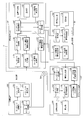
- FIG. 1 is a diagram showing a main configuration of a distribution device and a display system according to an embodiment of the present invention.
- FIG. 2 is a diagram schematically showing a usage image of the display system.
- FIG. 3A is a diagram illustrating metadata received by the television of FIG. 1, and FIG. 3B shows the maximum and minimum recommended viewing distances belonging to each class.
- FIG. 4 is a diagram schematically illustrating a part of the system configuration information recorded on the television of FIG.
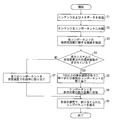
- FIG. 5 is a flowchart showing the overall operation of the display system of FIG.
- FIG. 6 is a diagram schematically illustrating metadata that the distribution device according to the modification transmits to the television according to the modification.
- FIG. 6 is a diagram exemplifying metadata transmitted from the distribution apparatus according to the modification of the distribution apparatus of FIG. 1 to the television according to the modification of the television of FIG. It is also a figure which illustrates the metadata which the delivery apparatus which concerns on this modification transmits to the television which concerns on the modification of the television of FIG. It is the figure which illustrated typically the system configuration information which the television which concerns on the modification of the television of FIG. 1 has memorize
- FIG. 14 is a diagram showing a main configuration of a distribution device and a display system according to another embodiment of the present invention.
- FIG. 15 is a diagram schematically illustrating a part of user information recorded on the television shown in FIG.
- FIG. 16 is a diagram schematically illustrating a part of the system configuration information recorded on the television shown in FIG. FIG.
- FIG. 17 is a diagram schematically showing a usage image of the display system of FIG.
- FIG. 18 is a flowchart showing the overall operation of the display system of FIG. It is the figure which illustrated typically the system configuration information which the television which concerns on the modification of the television of FIG. 14 has memorize
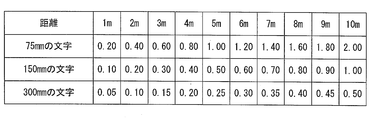
- FIG. 26 is a diagram illustrating the relationship between the distance from the position where the character is written and the visual acuity necessary to identify the character for characters of sizes of 75 mm, 150 mm, and 300 mm.
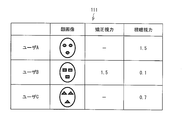
- FIG. 27 is a diagram schematically illustrating a part of user information recorded on a television according to another embodiment.
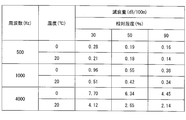
- FIG. 28 is a diagram showing the relationship among temperature, humidity, and sound pressure attenuation rate for each of the low sound range, medium sound range, and high sound range.
- Embodiment 1 A display system according to an embodiment of the present invention will be described below with reference to FIGS.
- the display system according to the present embodiment is a display system that displays content distributed from a distribution device using multi-screen broadcast technology.
- the content distributed in this embodiment includes a plurality of components. Specifically, four components, each component (display component) of a main video and two sub-videos displayed on the display unit, and an audio component output from the audio output unit are included.
- the above four components are only examples for carrying out the present invention.
- the content may include other types of display components such as text (subtitles, etc.) and data (BML, web information, etc.), and the content may include only video components.
- the display system according to the present embodiment includes a popular television that combines the roles of a receiving device, a presentation device (display device), and a presentation control device that controls other presentation devices.
- the display system according to the present embodiment includes a tablet terminal that plays a role as a presentation device (display device) and a super-large screen display.
- a 40-inch screen size television (a television with a recommended viewing distance of about 1.5 m) is assumed as a popular television, and a 100-inch screen size display (a recommended viewing distance) as an ultra-large screen display. Is assumed to be a display of about 3.8 m).
- the popular television, the tablet terminal, and the super large screen display used in the present embodiment are merely examples of a display device that should be used in carrying out the present invention.
- a projector may be used instead of the super large screen display.
- MMT MPEG Media Transport
- asset a transport system for hybrid distribution, which is being standardized in MPEG.
- MMT MPEG Media Transport
- content is defined as “package”
- component is defined as “asset”.
- description will be made using the terminology of MMT as necessary, but it should be mentioned in advance that the present invention is not an invention based on the technology of MMT. That is, the present invention is not limited to the MMT, and can be applied to various standards and operation techniques.
- FIG. 1 is a block diagram illustrating configurations of the display system 1 and the distribution apparatus 200 according to the present embodiment
- FIG. 2 is a diagram schematically illustrating a use image of the display system 1 according to the present embodiment.
- the display system 1 includes a popular television 100, a super-large screen display 150, and a tablet terminal 160.
- the popular television 100 receives content transmitted by the distribution device 200 through a broadcast wave. It is supposed to receive.
- the tablet terminal 160 is at the user's hand sitting on the seat, and the popular television 100 is placed 1.5 meters ahead of the seat (advancing by the recommended viewing distance of the television 100), which is extremely large.
- the screen display 150 is arranged in front of the seat 3.8 m (in front of the recommended viewing distance of the display 150).
- the distribution device 200 includes a content storage unit 201, a metadata storage unit 202, and a content transmission unit 203.
- the content storage unit 201 stores main video, two sub-videos (first sub-video and second sub-video), and audio components.
- Metadata related to content is recorded.
- This metadata is configuration information (Composition Information) in the MMT.
- Composition Information configuration information
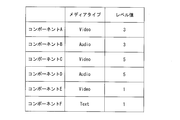
- FIG. 3A for each component (asset), a level value indicating the class related to the recommended viewing distance of the component (attribute “view_dist_level” attribute surrounded by a dotted line) Value).
- “5” is included as the level value of the audio component (corresponding to “unique value” in the claims), and “2” is included as the level value of the main video component.
- the recommended viewing distance of each component included in the content is determined in advance by the provider of the content.
- the number of classes and the maximum and minimum values of each class are defined in advance, and the content provider replaces the recommended viewing distance of each content with a level value based on this rule. It shall be described in. For example, a content provider who sets the recommended viewing distance of the main video as “2 m” describes “2” as the level value of the main video as shown in FIG.
- a content provider who defines the recommended viewing distance of the first sub-picture as “3.5 m” because he / she prefers viewing on a large screen describes “3” as the level value of the first sub-picture.
- the content transmission unit 203 reads the content from the content storage unit 201, reads the metadata related to the content from the metadata storage unit 202, and distributes the content on the broadcast wave together with the metadata.
- the popular television 100 includes a content reception unit 101, a component separation unit 102, a content presentation control unit 103, an information input unit 104, a system configuration information storage unit 105, a component transmission unit 106, a display unit 107, and an audio output unit 108. Yes.
- the content receiving unit 101 is a tuner that receives content and metadata transmitted on a broadcast wave.
- the component separation unit 102 separates each component from the content supplied from the content reception unit 101.
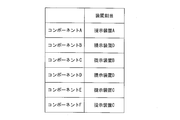
- the content presentation control unit 103 sets the recommended viewing distance to the level value i for each i from 1 to 5 (hereinafter simply abbreviated as “for each i”). It is determined which presentation device should display the components belonging to the class. Specifically, the presentation device having the class to which the manufacturer recommended viewing distance belongs is closest to the class having the level value i is determined as the device to display the component belonging to the class having the level value i. Then, the level value i is recorded in the system configuration information storage unit 105 as part of the system configuration information related to the presentation device. If the level value has already been recorded as part of the system configuration information related to the presentation device, the content presentation control unit 103 updates the level value to i.
- the content presentation control unit 103 includes, for each component included in the content, a device that should present the component, metadata about the content, and a system configuration of each presentation device recorded in the system configuration information storage unit 105. And based on the information. Specifically, the level value of each component described in the metadata is referred to, and the component in which the level value i is described is presented to a presentation device that includes the level value i as part of the system configuration information. Decide that.
- the content presentation control unit 103 transmits the component to the device that should present the component via the component transmission unit 106. Further, when the device to present the component is the popular television 100, when the component is a display component, the component is displayed on the display unit 107, and when the component is an audio component, the component is output as audio. Output from the unit 108. At this time, for example, when a plurality of video components are allocated to the same presentation device and information on the screen layout is included in the configuration information (CI), the content presentation control unit 103 includes the information. Based on this, display or audio output is performed.
- the information input unit 104 is an input device provided to allow the user to input information.
- the user can input the system configuration information of the presentation device registered in the television 100 using the information input unit 104.
- system configuration information storage unit 105 (corresponding to “storage unit” in the claims), system configuration information of the television 100 itself and system configuration information of other presentation devices registered in the television 100 are recorded.
- the manufacturer's recommended viewing distance (about three times the vertical size of the display screen) and the level value of the component to be displayed are recorded.
- system configuration information of the three presentation devices of the television 100, the display 150, and the tablet terminal 160 is recorded in the system configuration information storage unit 105.
- the component transmission unit 106 is a communication interface that transmits components to the presentation device determined by the content presentation control unit 103.
- the communication interface may be a wireless LAN module, a Bluetooth (registered trademark) communication module, or may be a communication module that complies with a communication standard regardless of wired or wireless.
- the display unit 107 is a 40-inch display screen on which display components are displayed.
- the audio output unit 108 is a speaker that outputs audio components.
- the super large screen display 150 includes a component receiving unit 151, a component presentation control unit 152, a display unit 153, and an audio output unit 154.
- the component reception unit 151 is a communication interface that receives components transmitted from the television 100.
- the component presentation control unit 152 displays the component on the display unit 153, and when the component supplied from the component receiving unit 151 is an audio component. Outputs the component from the audio output unit 154.
- the display unit 153 is a 100-inch display screen on which display components are displayed.
- the audio output unit 154 is a speaker that outputs audio components.
- the tablet terminal 160 includes a component receiving unit 161, a component presentation control unit 162, a display unit 163, and an audio output unit 164.
- the component receiver 161 is a communication interface that receives components transmitted from the television 100.
- the component presentation control unit 162 displays the component on the display unit 163, and when the component supplied from the component receiving unit 161 is an audio component. Outputs the component from the audio output unit 164.
- the display unit 163 is a small display screen on which display components are displayed.
- the audio output unit 164 is a speaker that outputs audio components.
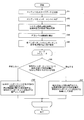
- FIG. 5 is a flowchart showing the operation of the display system 1 according to the present embodiment.
- the content receiving unit 101 of the television 100 receives the content and metadata related to the content, and supplies the received content to the component separating unit 102 (S1).
- the component separation unit 102 separates each component from the content supplied from the content reception unit 101, and supplies each component to the content presentation control unit 103 together with metadata (S2).
- the content presentation control unit 103 refers to the metadata supplied from the component separation unit 102, and confirms the class (level value) related to the recommended viewing distance of each component (S3).
- the content presentation control unit 103 determines whether or not the display system 1 includes a presentation device other than the reception device (television 100). That is, the content presentation control unit 103 determines whether or not one or more presentation devices are registered in the television 100 (S4).
- the content presentation control unit 103 determines that one or more presentation devices are registered in the television 100 (YES in S4), and proceeds to S5. . If it is determined that no presentation device is registered in the television 100 (NO in S4), the content presentation control unit 103 determines to present all components on the television 100 (S7). Proceed to S8.
- the content presentation control unit 103 selects, from each presentation device, a presentation device that should present a component for each component, based on the system configuration information of each presentation device recorded in the system configuration information storage unit. . Specifically, for each component, a presentation device in which a level value equal to the level value of the target component confirmed in S3 is recorded as part of the system configuration information is selected as a presentation device to present the target component. To do.
- the content presentation control unit 103 determines that the main video component whose level value is 2 based on the system configuration information in FIG. Is selected as a device that should present “2” as the level value of the component to be displayed. Similarly, the content presentation control unit 103 selects the display 150 as a device to present the audio component and the first sub-video component, and selects the tablet terminal 160 as a device to present the second sub-video component.
- the content presentation control unit 103 transmits the component to be presented by the presentation device to each registered presentation device selected in S5.
- the content presentation control unit 103 transmits the audio component and the first sub-video component to the display 150, and transmits the second sub-video component to the tablet terminal 160.
- the content presentation control unit 103 transmits information for synchronization control to each presentation device together with the component. May be.
- the display system 1 proceeds to the process of S8.
- each presentation device selected in S5 presents the component to be presented by the device, and ends the process.
- the content presentation control unit 103 of the television 100 displays the main video component on the display unit 107
- the component presentation control unit 162 of the tablet terminal 160 displays the second sub-video component on the display unit 107. 163 is displayed.
- the component presentation control unit 152 of the display 150 outputs the audio component from the audio output unit 154 while displaying the first sub-video component on the display unit 153.
- the presentation apparatus to which the information for synchronous control was transmitted with the component from the television 100 controls the timing which presents a component based on the information.
- the first sub-picture that the content provider thinks should be viewed on a large screen is displayed on the super-large screen display 150, and the content provider has a portable display at hand.
- the second sub-picture that should be viewed using the terminal is displayed on the tablet terminal 160.
- the main video that the content provider should view on a medium-sized screen is displayed on the popular television 100.
- the display component is displayed on each of the three presentation devices, but there are cases where the display component is displayed only on one or two presentation devices.
- the BML display component is displayed on the tablet terminal 160. The display component is not displayed on the television 100 and the display 150.
- the content receiving unit 101 receives content including one or more display components displayed on the display unit 107 from the distribution device 200.
- the content receiving unit 101 is a level value indicating a class relating to the recommended viewing distance determined by the content provider for each of the one or more display components, and the recommended viewing distance of the display component is The metadata indicating the level value indicating the class to which it belongs is received from the distribution apparatus 200.
- the content presentation control unit 103 of the television 100 displays the components included in the content received by the content reception unit 101 on the three display devices of the television 100, the display 150, and the tablet terminal 160 or a part of the display devices.
- the content presentation control unit 103 determines, for each of the one or more display components, the class to which the manufacturer recommended viewing distance belongs is the recommended view of the display component based on the level value of the display component.
- the display device closest to the class to which the distance belongs is selected from the three display devices, and the display component is displayed on the selected display device.
- the television 100 is a display device that displays a component, and a display device whose manufacturer's recommended viewing distance is relatively close to the recommended viewing distance determined by the content provider for the component is a popular television 100.
- the user selects from among the super large screen display 150 and the tablet terminal 160.
- a display component that is preferable to be viewed on a display device having a small screen size at hand is displayed on the tablet terminal 160, and a display component that is preferably viewed on a display device having a large screen size that is located away from the user is an ultra-large screen display. 150.
- the television 100 has an effect that the component included in the content can be displayed on an appropriate display device corresponding to the component among the popular television 100, the super large screen display 150, and the tablet terminal 160.
- Modification of Distribution Device 200 and Display System 1 According to Embodiment 1 Modification examples of the distribution device 200 and the display system 1 will be described below. In the following, the distribution device and the display system according to the modification will be described with a focus on differences from the distribution device 200 and the display system 1.
- the metadata related to content recorded in the metadata storage unit included in the distribution device includes not only the level value of the target component but also the media type indicating the type of the target component for each component constituting the content. ing.
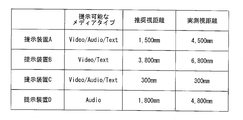
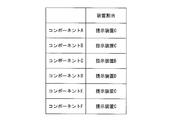
- the metadata includes, for example, information as shown in a table format in FIG.
- system configuration information recorded in the system configuration information storage unit included in the popular television includes each presentation device registered in the popular television.
- information indicating the recommended viewing distance of the presentation device information indicating the type (media type) of the component that can be presented by the presentation device is included.
- system configuration information as illustrated in FIG. 7 is recorded in the system configuration information storage unit.
- the popular television determines a presentation device that presents the component for each component constituting the content transmitted from the distribution device.
- the algorithm will be described in detail below with reference to FIG. FIG. 8 is a flowchart illustrating an operation in which the popular television determines a presentation device that presents a component for each component.
- the algorithm will be described by taking as an example a case where the metadata transmitted from the distribution apparatus is the metadata shown in FIG.
- the content receiver of the popular television receives the metadata (specifically, the level value and the media type for each component) from the distribution device and supplies it to the component separator. (S11).
- the component separation unit separates each component from the content supplied from the content reception unit, and supplies the target component, the level value of the target component, and the media type to the content presentation control unit for each component (S12). ).
- the content presentation control unit refers to the system configuration information, and for each presentation device registered in the popular television, information indicating the type of component that can be presented by the presentation device and the recommendation of the presentation device Information indicating the viewing distance is acquired (S13).
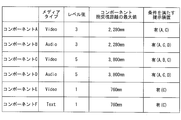
- the content presentation control unit divides the maximum recommended viewing distance acquired in S13 by the maximum level value acquired in S12 (S14). A value obtained by this division is referred to as “unit level distance value” in the description of the first embodiment.
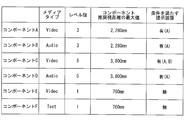
- the maximum recommended viewing distance is set. “760 mm” obtained by dividing a certain “3800 mm” by “5” which is the maximum level value is set as a unit level distance value. Further, for example, the same applies to the case where the metadata received from the distribution apparatus is the metadata in FIG. 6 and the system configuration information is the system configuration information in FIG.
- the content presentation control unit multiplies the level value of the target component by the unit level distance value for each component (S15).
- the content presentation control unit sets the value obtained by this multiplication as the maximum component recommended viewing distance.
- the maximum value of the component recommended viewing distance of each component is a value as shown in FIG. 10, and in the case of the latter example, the maximum value of the component recommended viewing distance of each component is a figure. The value is as shown in FIG.
- the content presentation control unit After S15, the content presentation control unit performs the following processing of S16 and S17 or S18 for each component based on the information acquired in S12.
- the content presentation control unit is a presentation device capable of presenting a component of the type represented by the media type of the target component, and the recommended viewing distance is less than or equal to the maximum recommended component viewing distance of the target component. It is determined whether one or more devices are registered in the popular television.
- the content presentation control unit displays one or more presentation devices.
- the presentation device with the maximum recommended viewing distance is selected from the devices, and the selected presentation device is determined as the device that presents the target component (S17).
- the content presentation control unit recommends the recommended view from all presentation devices that can present the component of the type represented by the media type of the target component.
- the presentation device with the shortest distance is selected, and the selected presentation device is determined as a device that presents the target component (S18).
- the presentation device that presents the component is determined.
- the presentation device that presents the component is determined as illustrated in FIG.
- the content provider does not have to describe the level value according to a predetermined rule when describing the level value in the metadata. That is, the content provider provides the user with a short recommended viewing distance (that is, a small screen size (in many cases, the housing is small and the speaker attached to the housing is a small output type)) If you want to watch video or audio through, enter a relatively small level value and a long recommended viewing distance (ie, a large screen size (large casing, often attached to the casing) The speaker is a high-output type)))
- a relatively large level value may be described. Even in such a case, the television according to the present modification can cause each component to be presented on an optimum presentation device according to the configuration of the display system.
- the display system according to the present embodiment is also a display system that displays the content distributed from the distribution device using the multi-screen broadcast technology, similarly to the display system 1 according to the first embodiment.
- the display system according to the present embodiment also serves as a popular television and a presentation device that also serve as a reception device, a presentation device (display device), and a presentation control device (display control device) that controls other presentation devices. It includes a tablet terminal and a super large screen display.
- the display system according to the present embodiment measures the distance from the position of each presentation device to the position where the user is present, and for each display component included in the content, the distance measurement value (hereinafter referred to as “user distance value” “ The display system is different from the display system 1 in that the display component is displayed on the display device closest to the class to which the recommended viewing distance of the display component belongs. That is, unlike the display system 1, the display system according to the present embodiment determines a presentation device that displays a display component regardless of the manufacturer's recommended viewing distance of each presentation device.
- the content distributed in the present embodiment includes a user component related to the content in addition to the audio, main video, and two sub-video components.
- the user component is a component that includes information on a viewer who has browsed content in the past, and a text component that includes a viewer's comment uploaded to the distribution device by the viewer is an example.
- FIG. 14 is a block diagram illustrating the configuration of the display system 1 ′ and the distribution device 200 ′ according to the present embodiment.
- the display system 1 ′ includes a popular television 100 ′, a super large screen display 150 ′, and a tablet terminal 160 ′.
- the popular television 100 ′ mediates a broadcast wave by the distribution device 200 ′. The content transmitted as is received.
- the tablet terminal 160 ′ is at the user's hand, and the positional relationship between the popular television 100 ′ and the super large screen display 150 ′ is the same as that of the display system 1.
- the distribution apparatus 200 ′ includes a content storage unit 201, a metadata storage unit 202, a content transmission unit 203, and a user component reception unit 204.
- the content storage unit 201 stores content including main video, two sub-videos (first sub-video and second sub-video), audio and text components.
- the text component here is a component including a viewer's comment given as an example of the user component.
- Metadata related to content is recorded.
- the content transmission unit 203 reads the content from the content storage unit 201, reads the metadata related to the content from the metadata storage unit 202, and distributes the content on the broadcast wave together with the metadata.
- the user component receiving unit 204 is a communication interface that accepts an upload from the user of the text component, which is a user component.
- the popular television 100 ′ includes a content reception unit 101, a component separation unit 102, a content presentation control unit 103 ′, an information input unit 104, a system configuration information storage unit 105 ′, a component transmission unit 106, a display unit 107, and an audio output unit 108.
- the user distance measuring unit 109 includes an imaging sensor, recognizes the user using a face image detection technique, and measures the distance to the recognized user.
- the user distance measurement unit 109 generates a distance measurement value (user distance value, actual distance value) and supplies it to the content presentation control unit 103 ′. Note that the user distance measurement unit 109 is provided in the immediate vicinity of the display unit 107, and the imaging sensor is directed in the forward direction of the display unit.
- the user distance information receiving unit 110 is a communication interface for receiving a user distance value from each presentation device registered in the television 100 ′.
- user information of each user registered in the television 100 ′ is recorded. Specifically, as shown in FIG. 15, each user's face image and visual acuity information are recorded in the user information storage unit 111 as a part of the user information. Is also recorded as part of the user information.
- the content presentation control unit 103 ′ acquires each user distance value through the user distance measurement unit 109 and the user distance information reception unit 110, and for each i, which presentation component belongs to the class of which the recommended viewing distance is the level value i. Decide whether to display on the device.
- the user distance value to which the class to which the user distance value belongs is closest to the class of the level value i
- the presentation device that generated the user distance value is designated as the class of the level value i. Is determined as a device to be displayed.
- the presentation device having the largest screen size should be displayed with the component belonging to the class of the level value i. Determine as a device.
- the level value i is recorded in the system configuration information storage unit 105 ′ as part of the system configuration information related to the presentation device.
- the content presentation control unit 103 ′ updates the level value to i.
- the content presentation control unit 103 ′ For each component included in the content, the content presentation control unit 103 ′ indicates the device that should present the component, the metadata regarding the content, and the system configuration of each presentation device recorded in the system configuration information storage unit 105 ′. And based on the information. Specifically, the level value of each component described in the metadata is referred to, and the component in which the level value i is described is presented to a presentation device that includes the level value i as part of the system configuration information. Decide that.
- the content presentation control unit 103 ′ transmits the component to the device to be presented via the component transmission unit 106.
- the device to present the component is the popular television 100 ′
- the component is displayed on the display unit 107
- the component is an audio component
- the component is audio.
- system configuration information storage unit 105 ′ In the system configuration information storage unit 105 ′, the system configuration information of the television 100 ′ itself and the system configuration information of other presentation devices registered in the television 100 are recorded. The user distance value and the most recently acquired user distance value are recorded. Specifically, system configuration information of three presentation devices including a television 100 ′, a display 150 ′, and a tablet terminal 160 ′ is recorded in the system configuration information storage unit 105 ′.
- the content receiving unit 101, the component separating unit 102, the information input unit 104, the component transmitting unit 106, the display unit 107, and the audio output unit 108 have already been described in the first embodiment, and thus description thereof is omitted here.
- the super-large screen display 150 ′ includes a component reception unit 151, a component presentation control unit 152, a display unit 153, an audio output unit 154, a user distance measurement unit 155, and a user distance information transmission unit 156.
- the user distance measuring unit 155 includes an imaging sensor, recognizes the user using a face image detection technique, and measures the distance to the recognized user.
- the user distance measurement unit 155 generates a distance measurement value (user distance value, actual measurement distance value) and supplies it to the user distance information transmission unit 156.
- the user distance measuring unit 155 is provided in the immediate vicinity of the display unit 153, and the image sensor is directed in the front direction of the display unit.
- the user distance information transmission unit 156 is a communication interface for transmitting the user measurement value supplied from the user distance measurement unit 155 to the television 100 ′.
- the tablet terminal 160 ′ includes a component reception unit 161, a component presentation control unit 162, a display unit 163, an audio output unit 164, a user distance measurement unit 165, a user distance information transmission unit 166, an information input unit 167, and a user component transmission unit 168. I have.
- the user distance measuring unit 165 includes an imaging sensor, recognizes the user using a face image detection technique, and measures the distance to the recognized user.
- the user distance measurement unit 165 generates a distance measurement value (user distance value, actual measurement distance value) and supplies it to the user distance information transmission unit 166. Note that the user distance measuring unit 165 is provided in the immediate vicinity of the display unit 163, and the imaging sensor is directed in the forward direction of the display unit.
- the user distance information transmission unit 166 is a communication interface for transmitting the user measurement value supplied from the user distance measurement unit 165 to the television 100 ′.
- the information input unit 167 is an input device provided for allowing the user to input information. Using the information input unit 167, the user can input his / her comments regarding the content being viewed.
- the user component transmission unit 168 is a communication interface for transmitting a text component including a user comment input through the information input unit 167 to the distribution apparatus 200 ′ via the Internet 500.
- FIG. 17 is a diagram schematically showing a usage image of the display system 1 ′
- FIG. 18 is a flowchart showing the operation of the display system 1 ′.
- the content receiving unit 101 of the television 100 ′ receives the content and the metadata related to the content, and supplies it to the component separating unit 102 (S 21).
- the component separation unit 102 separates each component from the content supplied from the content receiving unit 101, and supplies each component together with metadata to the content presentation control unit 103 '(S22).
- the content presentation control unit 103 ′ refers to the metadata supplied from the component separation unit 102 and confirms the class (level value) regarding the recommended viewing distance of each component (S 23).
- the content presentation control unit 103 ′ refers to the user distance value (default value) that is a part of the system configuration information for each presentation device, and updates the system configuration information by performing the processing described below. .
- the content presentation control unit 103 ′ specifies the user distance value whose class is closest to the class of the level value i among the referred user distance values, and generates the user distance value. Is determined as a device to display a component belonging to the class of the level value i. Further, the level value i is recorded as a part of the system configuration information related to the presentation device that is determined to display the component belonging to the class of the level value i.
- the user distance values (default values) of the television 100 ′, the display 150 ′, and the tablet terminal 160 ′ the values “1.5 m”, “3.8 m”, and “30 cm” are stored in the system configuration information storage unit 105 ′. When the process of S25 is performed in the recorded state, the system configuration information is updated as shown in FIG.
- the content presentation control unit 103 determines whether or not the display system 1' includes a presentation device other than the reception device (television 100 '). That is, the content presentation control unit 103 'determines whether one or more presentation devices are registered in the television 100' (S26).
- the content presentation control unit 103 ′ determines that one or more presentation devices are registered in the television 100 (YES in S26). , Go to S27. When it is determined that no presentation device is registered in the television 100 ′ (NO in S26), the content presentation control unit 103 ′ determines to present all components on the television 100 ′ ( The process proceeds to S28) and S29.
- the content presentation control unit 103 ′ selects a presentation device that should present a component for each component based on the system configuration information of each presentation device recorded in the system configuration information storage unit 105 ′. Select from. Specifically, for each i, the content presentation control unit 103 ′ refers to the level value of each component described in the metadata for each i, and determines the component in which the level value i is described as the level value i. It is determined to be presented to the presentation device included as part of the configuration information.
- the process proceeds to the process of S29.
- the content presentation control unit 103 requests the user distance measurement unit 109 and each presentation device to transmit a user distance value, and acquires the user distance value generated by each presentation device.
- the content presentation control unit 103 ′ specifies the user distance value whose class is closest to the class whose level value is i among the acquired user distance values, and generates the user distance value. Is determined as a device to display a component belonging to the class of the level value i.
- the content presentation control unit 103 ′ displays the user distance value generated by the presentation device and the level value of the component to be displayed by the presentation device, as part of the system configuration information related to the presentation device. Record as.
- the content presentation control unit 103 ′ receives user distance values “4.5 m”, “6.8 m”, and “30 cm” from the user distance measurement unit 109, the display 150 ′, and the tablet terminal 160 ′, respectively. Will get. Then, the device that should display the component that belongs to the class of the level value 1 or 2 is determined as the tablet terminal 160 ′, and the device that should display the component that belongs to the class of the level value 4 or 5 is determined as the display 150 ′. The component belonging to the class of value 3 is determined as the television 100 ′. As a result, the system configuration information in FIG. 16A is updated as shown in FIG.
- the content presentation control unit 103 ′ determines whether or not a presentation device that should present a component belonging to the class for any one or more classes has been switched to another presentation device. (S30).
- the content presentation control unit 103 ′ presents a component for each component based on the system configuration information of each presentation device recorded in the system configuration information storage unit 105 ′ in the same manner as the process in S27.
- a presentation device to be selected is selected from each presentation device. Then, if the presentation device that should present the component is other than the television 100 ′, the content presentation control unit 103 ′ transmits the component to the presentation device.
- the television 100 ′ displays the display component on the display unit 107, and when there is an audio component to be output from the own device, the audio component is output as audio. Output from the unit 108.
- the content presentation control unit 103 determines whether or not the reproduction of the content is finished after a lapse of a certain period after the processing of S32 is finished (S33). If the content presentation control unit 103 ′ determines that the reproduction of the content has not yet ended (NO in S33), the process returns to S29. If the content presentation control unit 103 ′ determines that the reproduction of the content has ended (YES in S33), the process Exit.
- the content presentation control unit 103 ′ of the popular television 100 ′ includes a display unit and a user who display components on the display device from the display devices of the television 100 ′ itself, the display 150 ′, and the tablet terminal 160 ′. Get a measurement of the distance between.
- the content presentation control unit 103 ′ refers to the level value of the display component, and the display device that is the acquisition destination of the measurement value belonging to the class closest to the class indicated by the level value Is selected from the three display devices, and the component is displayed on the selected display device.
- the popular television 100 ′ displays the main video on the display unit 107 when the user is in a seat separated from the popular television 100 ′ by the recommended viewing distance, as shown in the image diagram of FIG.
- the tablet terminal 160 may display the main video together with the second sub-video on the tablet terminal 160 at the user's hand.
- the popular television 100 ′ can show the main video to the user through the optimal display device according to the place where the user is.
- the popular television 100 ′ controls the tablet terminal 160 ′ so that the text component is displayed on the tablet terminal 160 ′ when the user is in a seat separated from the popular television 100 ′ by the recommended viewing distance.
- the text component is displayed on the television 100 'when it is near the type television 100'. Therefore, a user who has a weak visual acuity and has difficulty in reading the characters displayed on the tablet terminal 160 ′ can easily read the characters just by approaching the television 100 ′.
- the content includes a voice component representing the user's comment, a user's face, or the like as a subject as a user component, together with a text component representing the user's comment, or instead of such a text component.
- Video components and the like may be included.
- the user component transmission unit 168 transmits user components such as an audio component generated through a microphone (not shown) and an image component generated through a camera (not shown) to the Internet 500. To the distribution device 200 ′.
- Each user distance measurement unit may use any measurement technique as long as it can measure the distance to the user.
- the user distance measuring unit performs grid irradiation, distortion measurement, and three-dimensional space recognition (gesture recognition) using radar and infrared rays, so that the distance to the user (for example, between the user's face) It may be a distance sensor that measures a face distance, which is a distance.
- the user distance measuring unit measures the distance from the user based on the amount of deviation between the face image portion in the left-eye image and the face image portion in the right-eye image captured by the binocular stereoscopic camera. It may be.
- the user distance measurement unit may measure the distance to the user by infrared distance measurement using UWB. Specifically, a pulse signal having a short pulse width (for example, 1 ns or less) is continuously transmitted to the user for a relatively long time, and the time from transmission of each pulse signal to reception by reflection is measured. You may measure the distance between.
- a pulse signal having a short pulse width for example, 1 ns or less
- the user distance measurement unit may include an optical position sensor configured by an infrared light emitting device and an infrared detection array.
- the optical position sensor is configured to be able to automatically control the position and orientation so as to follow the user.
- Modification of Distribution Device 200 ′ and Display System 1 ′ According to Embodiment 2 Modification examples of the distribution device 200 ′ and the display system 1 ′ will be described below. In the following, the distribution device and the display system according to the modification will be described with a focus on differences from the distribution device 200 ′ and the display system 1 ′.
- the content-related metadata recorded in the metadata storage unit included in the distribution apparatus is configured as shown in FIG.
- Each component to be processed includes not only the level value of the target component but also a media type indicating the type of the target component.
- system configuration information recorded in the system configuration information storage unit included in the popular television includes each presentation device registered in the popular television.
- information indicating the type (media type) of the component that can be presented by the presenting device is included.
- system configuration information as illustrated in FIG. 19 is recorded in the system configuration information storage unit.
- the popular television determines a presentation device that presents the component for each component constituting the content transmitted from the distribution device.
- the algorithm will be described in detail below with reference to FIG. FIG. 20 is a flowchart illustrating an operation in which the popular television determines a presentation device that presents a component for each component.
- the algorithm will be described by taking as an example a case where the metadata transmitted from the distribution apparatus is the metadata shown in FIG.
- the content receiver of the popular television receives the metadata (specifically, the level value and the media type for each component) from the distribution device and supplies it to the component separator. (S41).
- the component separation unit separates each component from the content supplied from the content reception unit, and supplies the target component, the level value of the target component, and the media type to the content presentation control unit for each component (S42). ).
- the content presentation control unit refers to the system configuration information, and for each presentation device registered in the popular television, information indicating the type of component that can be presented by the presentation device and the recommendation of the presentation device Information indicating the viewing distance and information indicating the actual viewing distance of the presentation device are acquired (S43).
- the content presentation control unit divides the maximum measured viewing distance acquired in S43 by the maximum level value acquired in S12 (S44).
- the value obtained by this division is referred to as “unit level distance value” in the description of the second embodiment.
- the metadata received from the distribution apparatus is the metadata of FIG. 6 and the system configuration information recorded on the popular television is the system configuration information of FIG. “1360 mm” obtained by dividing a certain “6800 mm” by “5” which is the maximum level value is set as a unit level distance value.
- the metadata received from the distribution apparatus is the metadata of FIG. 6 and the system configuration information is the system configuration information of FIG. 21, the level of “2800 mm” that is the maximum value of the actually measured viewing distance is set. “560 mm” divided by “5” which is the maximum value is set as the unit level distance value.
- the content presentation control unit multiplies the level value of the target component by the unit level distance value for each component (S45).
- the content presentation control unit sets the value obtained by this multiplication as the maximum component recommended viewing distance.
- the maximum value of the component recommended viewing distance of each component is a value as shown in FIG. 22, and in the case of the latter example, the maximum value of the component recommended viewing distance of each component is a figure. The value is as shown in FIG.
- the content presentation control unit After S45, the content presentation control unit performs the following S46 and S47 or S48 for each component based on the information acquired in S42.
- the content presentation control unit is a presentation device capable of presenting a component of the type represented by the media type of the target component, and the actual viewing distance is less than the maximum component recommended viewing distance of the target component. It is determined whether one or more devices are registered in the popular television.
- the content presentation control unit displays one or more presentation devices.
- a presentation device with the maximum measured viewing distance is selected from the devices, and the selected presentation device is determined as a device that presents the target component (S47).
- the content presentation control unit performs a measurement view from all presentation devices that can present the component of the type represented by the media type of the target component.
- the presentation device with the shortest distance is selected, and the selected presentation device is determined as a device that presents the target component (S48).
- the presentation device that presents the component is determined.
- the presentation device that presents the component is determined as shown in FIG.
- the content provider does not have to describe the level value according to a predetermined rule when describing the level value in the metadata. That is, when a content provider wants a user to view video or audio through a presentation device near the user, the content provider describes a relatively small level value and is located far from the user. A relatively large level value may be described when it is desired to view the video or audio through. Even in such a case, the television according to the present modification can cause each component to be presented to the optimum presentation device according to the configuration of the display system and the position where the user is present.
- the content presentation control unit 103 ′ accesses the user information storage unit 111 and searches for user information including the face image based on the feature amount of the face image detected by the user distance measurement unit 109. It may be configured. Then, the content presentation control unit 103 ′ refers to the visual acuity information included in the user information when such user information is hit as a result of the search, and displays the display component according to the visual acuity strength represented by the visual acuity information. You may be comprised so that control may be performed.
- the content presentation control unit 103 ′ changes the size of the display area in which the video component on the display screen (corresponding to “displayable area” in the claims) is displayed according to the strength of vision. May be. That is, the content presentation control unit 103 ′ reduces the size of the display area from the default when the visual acuity is stronger than the predetermined reference, and reduces the display area size from the default when the visual acuity is weaker than the predetermined reference. May also be enlarged.
- the content presentation control unit 103 ′ (corresponding to “identification means” in the claims) hits the user information including the face image of the user A (that is, the user who uses the television 100 ′ has 1 (When it is identified that the user A has a visual acuity of .5), the size of the display area may be reduced from the default.
- the display area is set as the default. You may enlarge more.
- the content presentation control unit 103 ′ may change the character size of the text to be displayed when displaying the text component according to the strength of the visual acuity. That is, the content presentation control unit 103 ′ displays the text in a size smaller than the default when the visual acuity is stronger than the predetermined reference, and displays the text in a size larger than the default when the visual acuity is weaker than the predetermined reference. May be.
- the television 100 ′ has an effect of making it easy for a person with low vision to view the display component.
- the television 100 ′ may include a measuring unit that measures the visual acuity of the user, and the visual acuity measured by the measuring unit. May be recorded in the user information storage unit 111.
- the television 100 ′ may be configured to periodically update the vision information of each user. That is, the measuring means measures the user's visual acuity again when a certain period or more has elapsed from the time when the user's visual acuity was last measured, and obtains the user's visual acuity information recorded in the user information storage unit 111. You may update with the obtained visual acuity information.
- the content presentation control unit 103 ′ changes the size of the display area in which the video component on the display screen is displayed according to the distance from the user measured by the user distance measurement unit 109. May be. That is, the content presentation control unit 103 ′ increases the size of the display area in stages as the distance to the user measured by the user distance measurement unit 109 increases, You may reduce the size of a display area in steps as the distance between them becomes short.
- the content presentation control unit 103 ′ may change the character size of the text displayed when displaying the text component according to the distance between the user and the user measured by the user distance measurement unit 109. That is, the content presentation control unit 103 ′ increases the text display size stepwise as the distance to the user measured by the user distance measurement unit 109 increases, and the user distance measurement unit 109 measures the user. The display size of the text may be reduced stepwise as the distance between them decreases.
- the television 100 ′ may be configured as follows.
- the content presentation control unit 103 ′ gradually reduces the size of the display area as the face distance measured by the user distance measurement unit 109 increases, and the face distance measured by the user distance measurement unit 109.
- the size of the display area may be increased step by step as the length becomes shorter.
- the content presentation control unit 103 ′ increases the character size of the text to be displayed when displaying the text component, and gradually increases the text display size (character size) as the face distance measured by the user distance measurement unit 109 increases.
- the display size (character size) of the text may be increased stepwise as the face distance measured by the user distance measuring unit 109 becomes shorter.
- the television 100 ′ has an effect of making it easy for a viewer of a hospital bed or a person with a disability to view the display component.
- the content presentation control unit 103 ′ displays text to be displayed when a text component is displayed based on both the distance between the user measured by the user distance measurement unit 109 and the strength of the user's visual acuity. You may adjust the character size.
- data indicating the relationship between the distance from the position where the character is written and the visual acuity necessary for identifying the character is stored in a storage unit (not shown).
- the display size of the text may be adjusted using this data.
- the content presentation control unit 103 ′ sets the minimum value of the text display size to about 8.8 points when the user B whose visual acuity is 0.7 is in the seat from the television 100 ′, and the visual acuity When the user C who is 0.1 is in the seat from the television 100 ′, the minimum value of the text display size may be about 53 points.
- the user information storage unit 111 may record a visual acuity value for naked eye vision and a visual acuity value for corrected visual acuity as visual acuity information. That is, as shown in FIG. 27, for a user (user C) who corrects his or her visual acuity with glasses, the visual acuity value of the naked eye and the visual acuity value of the corrected visual acuity are recorded, and the user who does not correct the visual acuity (user A and user A) For B), only the visual acuity value of the naked eye visual acuity may be recorded.
- the content presentation control unit 103 ′ accesses the user information storage unit 111, specifies the user based on the face image detected by the user distance measurement unit 109, and determines whether the user is wearing glasses. Also good. Then, the content presentation control unit 103 ′ determines that the specified user is wearing glasses, and if the corrected visual acuity value is recorded as the user information of the user, the corrected visual acuity value
- the display of the display component may be controlled based on the above.
- the content presentation control unit 103 ′ changes the audio output level of the audio component output from the audio output unit 108 according to the magnitude of the distance from the user measured by the user distance measurement unit 109. Also good. That is, the content presentation control unit 103 ′ increases the audio output level in stages as the distance from the user measured by the user distance measuring unit 109 increases, and the distance from the user measured by the user distance measuring unit 109 The sound output level may be decreased step by step as becomes shorter.
- the television 100 ′ is configured to be capable of measuring the user's hearing level in each of the low sound range (for example, 500 Hz), medium sound range (for example, 1 kHz), and high sound range (for example, 4 kHz) within the audible band. May be.
- the content presentation control unit 103 ′ may increase the sound output level in a range where the user's hearing level is weaker than a predetermined reference value.
- the television 100 ′ is configured to be able to measure the ambient humidity and temperature, and records information on the attenuation rate of the sound pressure corresponding to the humidity and temperature shown in FIG. 28 in a storage unit (not shown). You may do it.
- the content presentation control unit 103 ′ may derive the attenuation rate of the low range, the mid range, and the high range within the audible range at the time of measurement based on the measured humidity and temperature and the above information. Then, the content presentation control unit 103 ′ may increase the sound output level of each sound range by a ratio corresponding to the magnitude of the attenuation rate of the sound range.
- a portable display terminal such as a smartphone or a tablet terminal and a stationary display device such as a television or a display can be adopted as the presentation device, but is recorded in the system configuration information storage unit 105 of the television 100.
- type information indicating the type of each presentation device (either a portable display terminal, a stationary display device, or a projector) is recorded instead of information on the manufacturer's recommended viewing distance. May be.
- the content presentation control part 103 selects a tablet terminal or a smart phone as a presentation apparatus which presents the component of the level value 1 based on the classification information of each presentation apparatus, and television as a presentation apparatus which presents the component of the level value 2
- a projector may be selected as a presentation device that selects a display and presents a component having a level value of 3 or more.
- the component when the level value of the component to be presented is less than 2 (first threshold value), the component is displayed on the portable display terminal, and the level value of the component to be presented is 2 or more and 3 (second threshold value).
- the component may be displayed on the television or the display if it is less than the level, and the component may be displayed on the projector if the level value of the component to be presented is 3 or more.
- a user component to which a level value 1 is given by the content provider as it should be displayed on the portable display terminal that is, a text component including a comment of the content viewer
- a distance measuring device that measures the distance to the user is provided beside the screen at a position away from the projector, and the distance measuring device provides data indicating the distance measurement value. You may transmit to a projector by wired communication or wireless communication.
- the user inputs the system configuration information of the presentation apparatus registered using the information input unit 104, but the present invention is not limited to this.
- the television 100 or 100 ′ may register the presentation device by pairing. Good. That is, the television 100 or 100 ′ may record the system configuration information of the presentation device obtained at the time of pairing in the system configuration information storage unit 105 or 105 ′.
- the television 100 when each presentation device is configured to use Wi-Fi (registered trademark) communication for communication with other presentation devices and supports the UPnP (registered trademark) function, the television 100 Alternatively, 100 ′ may acquire the system configuration information of each presentation device by the UPnP function and record it in the system configuration information storage unit 105 or 105 ′. Furthermore, when each presentation device is configured to use HDMI (registered trademark) communication for communication with other presentation devices, the television 100 or 100 ′ has EDID data in which system configuration information is described. May be acquired from each presentation device, and the system configuration information may be recorded in the system configuration information storage unit 105 or 105 ′. Alternatively, the television 100 or 100 ′ may acquire system configuration information of each presentation device using a wired communication or wireless communication technique such as UWB, IEEE 1394, or USB.
- a wired communication or wireless communication technique such as UWB, IEEE 1394, or USB.
- the televisions 100 and 100 ′ may periodically acquire the system configuration information of the presentation device from each registered presentation device.
- Each presentation device may incorporate a position measurement module (for example, a GPS module) or an orientation measurement module (for example, an electronic compass).
- the system configuration information may include information such as the address (for example, IP address, MAC address, etc.), product number, shape, performance, position information, and orientation information of each registered presentation device.
- each presentation device may be configured as follows.
- each presentation device including the television 100 ′ including the position measurement module exchanges the position information of the own device with other presentation devices regularly or irregularly by wired communication or wireless communication.
- the television 100 ′ may select a portable display terminal that should handle the position information as position information representing the position of the user from the registered portable display terminals through the information input unit 104. It may be configured to be able to.
- the television 100 'notifies each presentation device of the address of the portable display terminal selected by the user.
- the user distance measurement part of each presentation apparatus measures the distance between the own apparatus and the portable display terminal from the positional information of the own apparatus and the positional information of the portable display terminal notified of the address from the television 100 ′. To do.
- the user distance measurement unit 109 supplies the obtained measurement value to the content presentation control unit 103 ′ as a user distance value, and the user distance measurement unit of each presentation device registered in the television 100 ′ is obtained.
- the measurement value is supplied as a user distance value to the user distance information transmission unit.
- the television 100 ′ includes each content included in the content based on an arrangement map showing an arrangement relationship of each presentation device in a room where the display system is arranged. You may determine the presentation apparatus which should show a component about a component.
- the arrangement map includes position information indicating the arrangement position of each presentation device in the room.
- the television 100 ′ may have a function for a user to manually create a layout map, or may be configured to automatically generate a layout map.
- An example of a function for creating manually is a GUI-based arrangement map editing function.
- this function the user selects a room image representing a room closest to the room where the display system is arranged from room images of various sizes prepared in advance in a storage unit (not shown). Can be displayed on the map editing screen. Then, the user can arrange various types of icons (for example, an icon imitating a television, an icon imitating a projector, etc.) prepared in advance on the room image on the map editing screen.
- the television 100 can generate position information based on the size of the room corresponding to the room image selected by the user and the position of each icon arranged on the room image. . Thereby, the television 100 ′ can generate an arrangement map. Moreover, since the television 100 can specify the size of the room from the room image selected by the user, the distance between the two presentation devices can be derived from the coordinate information of the two presentation devices.
- each presentation device generates a captured image with the user as a subject
- the television 100 combines the captured image generated by the own device and the captured image acquired from each presentation device with reference to the user. May be.
- the television 100 may derive
- Each presentation device preferably generates a captured image including a left-eye image and a right-eye image as a captured image. This is because the positions of various objects captured in the captured image can be more accurately specified from the captured image, and as a result, the positions of the presentation devices can be more accurately specified.
- the position information measured by the position measurement module of each presentation device may be used as an arrangement map, or a plurality of methods described above may be combined in order to obtain more accurate position information. Further, an IC tag may be attached to each presentation device.
- the television receives the content transmitted on the broadcast wave from the distribution device, but the present invention is not limited to this. That is, the television may receive content from the distribution device by communication.
- the distribution device transmits some components included in the content on the broadcast wave and transmits the remaining components by communication, and the television sets all the components transmitted using the hybrid transmission technology in this way. It may be configured to receive.
- the device that receives the content from the distribution device is not limited to the television, but may be another presentation device such as a tablet terminal.
- the tablet terminal 160 may be installed with a remote control application for operating the television 100 as shown in FIG.
- the present invention is also applied to a set-top box or a stationary game machine having the two roles of the receiving device and the presentation control device. Can be implemented.
- the distribution device 200 (200 ′) distributes content to the display system 1 (1 ′) after receiving a login request from the user of the display system 1 (1 ′) using the account information given to the user. It is desirable to be configured as described above.
- the distribution device 200 (200 ′) and the display system 1 (1 ′) are configured so that the users who are present can communicate with each other about the content.
- the distribution apparatus 200 (200 ') and the display system 1 (1') support the social viewing function.
- data indicating each user's remarks is in the form of voice, text, or the like in the user's popular television 100 (100 ′) with a microphone (not shown). ) Or the information input unit 104. Then, the popular television 100 (100 ′) uploads the input data to the distribution device 200 (200 ′), and the distribution device 200 (200 ′) views the received data to other users (view the same content). It is desirable to deliver to the display system 1 (1 ′) of a specific user or all users who are doing this.
- the popular television 100 (100 ′) of the display system 1 (1 ′) that has received the data indicating the statement uses the recommended viewing distance among all the presentation devices constituting the display system 1 (1 ′).
- the presentation apparatus which received supply of the data which show a statement to show the data. That is, the tablet terminal 160 (160 ′) outputs the voice represented by the voice data from the voice output unit 164 when the data indicating the voice is voice data, and the text when the data indicating the voice is the text data. It is desirable to display the text represented by the data on the display unit 163.
- Each block of the television 100, 100 ′ may be realized by hardware by a logic circuit formed on an integrated circuit (IC chip), or may be realized by software using a CPU (Central Processing Unit). Also good.
- IC chip integrated circuit
- CPU Central Processing Unit
- the televisions 100 and 100 ′ include a CPU that executes program instructions for realizing each function, a ROM (Read Memory) that stores the program, a RAM (Random Access Memory) that expands the program, and the program. And a storage device (recording medium) such as a memory for storing various data.
- An object of the present invention is a recording medium in which program codes (execution format program, intermediate code program, source program) of a control program for the televisions 100 and 100 ′, which are software for realizing the functions described above, are recorded in a computer-readable manner Can also be achieved by reading the program code recorded on the recording medium and executing it by the computer (or CPU or MPU).
- Examples of the recording medium include tapes such as magnetic tapes and cassette tapes, magnetic disks such as floppy (registered trademark) disks / hard disks, and disks including optical disks such as CD-ROM / MO / MD / DVD / CD-R.
- IC cards including memory cards) / optical cards, semiconductor memories such as mask ROM / EPROM / EEPROM (registered trademark) / flash ROM, or PLD (Programmable logic device) and FPGA (Field Programmable Gate Logic circuits such as (Array) can be used.
- the program code may be supplied to the televisions 100 and 100 'via a communication network.
- the communication network is not particularly limited as long as it can transmit the program code.
- the Internet intranet, extranet, LAN, ISDN, VAN, CATV communication network, virtual private network (Virtual Private Network), telephone line network, mobile communication network, satellite communication network, etc. can be used.
- the transmission medium constituting the communication network may be any medium that can transmit the program code, and is not limited to a specific configuration or type.
- wired lines such as IEEE 1394, USB, power line carrier, cable TV line, telephone line, ADSL (Asymmetric Digital Subscriber Line) line, infrared rays such as IrDA and remote control, Bluetooth (registered trademark), IEEE 802.11 wireless, HDR ( It can also be used by wireless such as High Data Rate, NFC (Near Field Communication), DLNA (Digital Living Network Alliance), mobile phone network, satellite line, terrestrial digital network.
- wired lines such as IEEE 1394, USB, power line carrier, cable TV line, telephone line, ADSL (Asymmetric Digital Subscriber Line) line, infrared rays such as IrDA and remote control, Bluetooth (registered trademark), IEEE 802.11 wireless, HDR ( It can also be used by wireless such as High Data Rate, NFC (Near Field Communication), DLNA (Digital Living Network Alliance), mobile phone network, satellite line, terrestrial digital network.
- the present invention can be suitably applied to a display system that displays a plurality of types of video distributed by multi-screen broadcasting using a plurality of display devices (for example, a television and a smartphone) having different screen sizes. .
Landscapes
- Engineering & Computer Science (AREA)
- Multimedia (AREA)
- Signal Processing (AREA)
- Two-Way Televisions, Distribution Of Moving Picture Or The Like (AREA)
Abstract
テレビ(100)のコンテンツ受信部(101)は、表示部(107)に表示される表示コンポーネントを含むコンテンツを配信装置(200)から受信する。受信部(101)は、コンテンツとともにコンテンツの提供者が定めた表示コンポーネントの推奨視距離に関する階級が示されたメタデータを配信装置(200)から受信する。テレビ(100)のコンテンツ提示制御部(103)は、テレビ(100)、ディスプレイ(150)およびタブレット端末(160)の3台の表示装置が連携してコンテンツを表示するよう各表示装置を制御する。これにより、コンテンツに含まれるコンポーネントを、複数台の表示装置のうちそのコンポーネントに応じた適切な表示装置に表示させることが可能な表示制御装置を実現する。
Description
本発明は、コンテンツを構成する各コンポーネントをテレビ等の表示装置に表示させる表示制御装置、表示制御方法および表示制御プログラムに関する。また、本発明は、そのような表示制御装置を含む表示システム、そのような表示制御プログラムが記録されている記録媒体、およびそのような表示制御装置が取り扱うメタデータに関する。
従来、コンテンツは、放送により配信されていたが、通信技術の発達により今日では放送のみならず通信網を通じて配信されるようになっている。
これに伴い、特許文献1および特許文献2に例示されるように、通信網を通じて配信されたコンテンツを表示装置に表示させる様々な技術が提案されている。
また、配信された映像コンテンツを複数台の表示装置を連携して表示させるシステムも提案されている。例えば、特許文献3には、サーバと、左右に並べられる複数台の携帯電話端末とで構成されるシステムが開示されている。
特許文献3のシステムでは、サーバが、配信すべき映像全体を短冊状に分割することによって携帯電話端末の台数と同じ個数の分割映像を生成するとともに、より左側(より右側)に並べられる携帯電話端末に向けて、映像内のより左側(より右側)に位置する分割映像を配信する。そして、左右に並べられた各携帯電話端末は、配信された分割映像を表示する。これにより、ユーザは、1台の携帯電話端末で閲覧する場合よりも大きいサイズの映像を閲覧することができる。
ところで、映像には、プロジェクタ等を用いて大画面のスクリーンで見るほうが好ましい映像もあれば、手元にある携帯表示端末(スマートフォンやタブレット端末等)で見るほうが好ましい映像もある。
例えば、多視点カメラ撮影を用いて配信される野球中継の番組の場合、球場内の大勢の観客が被写体となった映像は大画面のスクリーンで見るほうが実際に球場にいるかのような臨場感を一層味わえると考えられる。また、料理番組の番組中に提供されるレシピ情報のような文字が主体となる映像は手元にある携帯表示端末で見るほうが文字を見易いという利点がある。
しかしながら、現状では、大画面で見るほうが好ましい映像を大画面のスクリーンに表示させ、手元にある携帯端末で見るほうが好ましい映像を携帯端末に表示させるようにコンテンツ提供者側で制御可能なマルチスクリーン型放送の技術は確立されていない。したがって、マルチスクリーン型の表示システムにおいて、最適な表示デバイスに映像を表示させることは容易ではない。
本発明は、上記課題に鑑みて成されたものであり、その主な目的は、コンテンツに含まれるコンポーネントを、複数台の表示装置のうちそのコンポーネントに応じた適切な表示装置に表示させることが可能な表示制御装置を実現することにある。
本発明に係る表示制御装置は、上記課題を解決するために、表示部に表示される1つ以上のコンポーネントを含むコンテンツを配信装置から取得する第1取得手段と、上記1つ以上のコンポーネントの各々について、上記コンテンツの提供者が定めた推奨視距離に関する階級毎に一意なユニーク値であって該コンポーネントの推奨視距離が属する階級を示すユニーク値を配信装置から取得する第2取得手段と、自装置が制御可能な複数台の表示装置またはその一部の表示装置に、上記第1取得手段が取得したコンテンツに含まれるコンポーネントを表示させる表示制御手段と、を備え、上記表示制御手段は、上記1つ以上のコンポーネントの各々について、該コンポーネントのユニーク値の大きさに基づいて、該コンポーネントを表示すべき表示装置を、上記複数台の表示装置の中から選択し、選択した表示装置に該コンポーネントを表示させるように構成されている、を特徴としている。ここで、配信者に上記コンテンツを提供する上記コンテンツの作成者も、表示制御装置のユーザに上記コンテンツを提供する上記コンテンツの配信者も、「上記コンテンツの提供者」に該当し得る。また、本発明の表示制御装置は、上記複数台の表示装置のうちの1台であってもよいし、上記複数台の表示装置とは別個の装置であってもよい。さらに、表示装置の推奨視距離は、例えば表示装置が液晶テレビの場合、一般には表示部(表示画面)の縦の長さの3倍とされているが、これに限定されるものではない。
上記の構成によれば、本発明に係る表示制御装置は、コンテンツに含まれるコンポーネントを、複数台の表示装置のうちそのコンポーネントに応じた適切な表示装置に表示させることができるという効果を奏する。
本発明に係る表示制御装置の表示制御方法は、上記課題を解決するために、表示部に表示される1つ以上のコンポーネントを含むコンテンツを配信装置から取得する第1取得工程と、上記1つ以上のコンポーネントの各々について、上記コンテンツの提供者が定めた推奨視距離に関する階級毎に一意なユニーク値であって該コンポーネントの推奨視距離が属する階級を示すユニーク値を配信装置から取得する第2取得工程と、自装置が制御可能な複数台の表示装置またはその一部の表示装置に、上記第1取得工程にて取得したコンテンツに含まれるコンポーネントを表示させる表示制御工程と、を含み、上記表示制御工程にて、上記1つ以上のコンポーネントの各々について、該コンポーネントのユニーク値の大きさに基づいて、該コンポーネントを表示すべき表示装置を、上記複数台の表示装置の中から選択し、選択した表示装置に該コンポーネントを表示させる、ことを特徴としている。
上記の構成によれば、本発明に係る表示制御方法は、本発明に係る表示制御装置と同様の作用効果を奏する。
本発明に係る表示制御装置は、上記複数台の表示装置の各々から、該表示装置によってコンポーネントが表示される表示部とユーザとの間の距離の測定値を取得する第3取得手段を更に備え、上記表示制御手段は、上記1つ以上のコンポーネントの各々について、該コンポーネントのユニーク値を参照して該ユニーク値が示す階級に最も近い階級に属する測定値の取得先となった表示装置を上記複数台の表示装置の中から選択するとともに、選択した表示装置に該コンポーネントを表示させる、ことが望ましい。
上記の構成によれば、本発明に係る表示制御装置は、コンテンツに含まれるコンポーネントをユーザが居る位置に応じた適切な表示装置に表示させることができるというさらなる効果を奏する。
本発明に係る表示制御装置は、上記第3取得手段が、上記複数台の表示装置の各々から上記測定値を取得する処理を定期的または非定期的に実行するように構成されており、
上記表示制御手段が、上記第3取得手段が上記処理を実行するたびに、上記1つ以上のコンポーネントの各々について該コンポーネントを表示する表示装置を選択するように構成されている、ことが望ましい。
上記表示制御手段が、上記第3取得手段が上記処理を実行するたびに、上記1つ以上のコンポーネントの各々について該コンポーネントを表示する表示装置を選択するように構成されている、ことが望ましい。
上記の構成によれば、本発明に係る表示制御装置は、ユーザが移動を繰り返す場合であっても、移動毎に移動後の位置に応じた適切な表示装置にコンテンツに含まれるコンポーネントを表示させることができるというさらなる効果を奏する。
本発明に係る表示制御装置は、自装置によってコンポーネントが表示される表示部とユーザの顔との間の距離である顔距離を測定する顔距離測定手段をさらに備え、上記表示制御手段は、上記1つ以上のコンポーネントにテキストコンポーネントが含まれる場合であって、且つ、該テキストコンポーネントを該表示部に表示する場合には、上記顔距離測定手段による顔距離の測定値が小さくなるにつれて、段階的に大きい文字サイズで該テキストコンポーネントに含まれるテキストを表示するように構成されている、ことが望ましい。
上記の構成によれば、本発明に係る表示制御装置は、病床に臥しているユーザに、顔を前後させるだけでそのユーザにとって適切なサイズのテキストを閲覧させることができるというさらなる効果を奏する。
本発明に係る表示制御装置は、上記表示制御手段が、上記1つ以上のコンポーネントにテキストコンポーネントが含まれる場合に、該テキストコンポーネントが表示される表示部からユーザまでの距離の測定値が大きいほど相対的に大きい文字サイズで該テキストコンポーネントに含まれるテキストを表示するように構成されている、ことが望ましい。
上記の構成によれば、本発明に係る表示制御装置は、ユーザがどこに移動しても、表示部からユーザまでの距離に応じた適切なサイズでテキストを表示することができるというさらなる効果を奏する。
本発明に係る表示制御装置は、上記表示制御手段が、上記1つ以上のコンポーネントに映像コンポーネントが含まれる場合に、該映像コンポーネントが表示される表示部の表示可能領域全体の中で該表示部からユーザまでの距離の測定値が大きいほど相対的に広い領域を占めるように、該映像コンポーネントを表示するように構成されている、ことが望ましい。
上記の構成によれば、本発明に係る表示制御装置は、ユーザがどこに移動しても、表示部からユーザまでの距離に応じた適切なサイズの映像を表示部内に表示することができるというさらなる効果を奏する。
本発明に係る表示制御装置は、上記表示制御装置がアクセス可能な記憶部に上記複数台の表示装置の各々に関する上記推奨視距離を示す情報が記録されており、上記表示制御手段が、上記1つ以上のコンポーネントの各々について、該コンポーネントのユニーク値の大きさと上記情報とに基づいて上記複数台の表示装置の中から上記推奨視距離が該コンポーネントの推奨視距離に最も近い表示装置を選択し、選択した表示装置に該コンポーネントを表示させる、ことが望ましい。
上記の構成によれば、本発明に係る表示制御装置は、コンポーネントを表示する表示装置として、その推奨視距離が、コンテンツの提供者がそのコンポーネントについて定めた推奨視距離に相対的に近い表示装置を、複数台の表示装置の中から選択することができる。したがって、本発明に係る表示制御装置は、コンテンツに含まれるコンポーネントを、複数台の表示装置のうちそのコンポーネントに応じた適切な表示装置に表示させることができるという効果を奏する。
本発明に係る表示制御装置は、上記複数台の表示装置が、携帯表示端末とその他の表示装置とから構成されており、上記表示制御手段が、上記1つ以上のコンポーネントの各々について、該コンポーネントのユニーク値が第1の閾値未満である場合には該コンポーネントを上記携帯表示端末に表示させ、該ユニーク値が第1の閾値以上である場合には上記その他の表示装置に表示させるように構成されている、ことが望ましい。
本発明に係る表示制御装置は、上記複数台の表示装置が、プロジェクタ、テレビおよび携帯表示端末から構成されており、上記表示制御手段が、上記1つ以上のコンポーネントの各々について、該コンポーネントのユニーク値が第1の閾値より大きい第2の閾値以上である場合には該コンポーネントをプロジェクタにより表示させ、該ユニーク値が第1の閾値以上第2の閾値未満である場合には該コンポーネントをテレビに表示させるように構成されている、ことが望ましい。
本発明に係る表示制御装置では、上記1つ以上のコンポーネントの中に上記コンテンツの閲覧者により上記配信装置にアップロードされたコンポーネントであって上記ユニーク値が上記第1の閾値未満であるコンポーネントが含まれている、ことが望ましい。
本発明に係る表示制御装置は、上記表示制御装置を使用しているユーザを識別する識別手段をさらに備え、上記表示制御装置がアクセス可能な記憶部に上記ユーザの視力を示す視力情報が含まれており、上記表示制御手段は、上記1つ以上のコンポーネントに映像コンポーネントが含まれる場合に、該映像コンポーネントが表示される表示部の表示可能領域全体の中で上記視力情報によって示される視力が弱いほど相対的に広い領域を占めるように、該映像コンポーネントを表示するように構成されている、ことが望ましい。
上記の構成によれば、本発明に係る表示制御装置は、ユーザの視力に応じた適切なサイズの映像を表示部内に表示することができるというさらなる効果を奏する。
本発明に係る表示制御装置は、上記表示制御装置を使用しているユーザを識別する識別手段をさらに備え、上記表示制御装置がアクセス可能な記憶部に上記ユーザの視力を示す視力情報が含まれており、上記表示制御手段は、上記1つ以上のコンポーネントにテキストコンポーネントが含まれる場合に、上記視力情報によって示される視力が弱いほど相対的に大きい文字サイズで、該テキストコンポーネントに含まれるテキストを表示するように構成されている、ことが望ましい。
上記の構成によれば、本発明に係る表示制御装置は、ユーザの視力に応じた適切なサイズでテキストを表示することができるというさらなる効果を奏する。
本発明に係る表示制御装置では、上記コンテンツには音声コンポーネントが含まれており、上記音声コンポーネントを出力可能な音声出力機能を備えた表示装置に音声コンポーネントを出力させる出力制御手段と、上記表示制御装置を使用しているユーザを識別する識別手段と、をさらに備え、上記出力制御手段は、上記ユーザの聴力レベルに基づいて、上記音声コンポーネントを出力する際の音声出力レベルを制御するように構成されている、ことが望ましい。
上記の構成によれば、本発明に係る表示制御装置は、ユーザの聴力レベルに応じた適切な音声出力レベルで音声を出力することができるというさらなる効果を奏する。
本発明に係る表示制御装置は、上記第2取得手段が、上記1つ以上のコンポーネントの各々に関する上記ユニーク値が示されたメタデータを取得するように構成されている、ことが望ましい。
なお、本発明は、上記表示制御装置を含んでいる表示システムであって、上記複数台の表示装置を含んでおり、上記複数台の表示装置のうちの1台として、または、上記複数台の表示装置とは別個の装置として上記表示制御装置を含んでいる表示システムとしても実現することができる。
また、本発明に係る表示制御装置としてコンピュータを動作させるプログラムであって、コンピュータを上記表示制御装置の各手段として機能させることを特徴とするプログラム、および、そのようなプログラムを記録した、コンピュータが読み取り可能な記録媒体も本発明の範疇に含まれる。
さらに、コンテンツを表示装置に表示させるために本発明に係る表示制御装置が取り扱うメタデータも本発明の範疇に含まれる。具体的には、表示部に表示される1つ以上のコンポーネントの各々について、上記コンテンツの提供者が定める推奨視距離に関する階級毎に一意なユニーク値であって該コンポーネントの推奨視距離が属する階級を示すユニーク値が示されたメタデータも本発明の範疇に含まれる。
以上のように、本発明に係る表示制御装置は、コンテンツに含まれるコンポーネントを、複数台の表示装置のうちそのコンポーネントに応じた適切な表示装置に表示させることができるという効果を奏する。
〔実施形態1〕
本発明の一実施形態に係る表示システムについて図1~図5を参照しながら以下に説明する。
本発明の一実施形態に係る表示システムについて図1~図5を参照しながら以下に説明する。
本実施形態に係る表示システムは、マルチスクリーン型放送の技術を用いて配信装置から配信されたコンテンツを表示する表示システムである。
本実施形態で配信されるコンテンツには複数のコンポーネントが含まれている。具体的には、表示部に表示される主映像および2つの副映像の各コンポーネント(表示コンポーネント)と、音声出力部から出力される音声のコンポーネントとの4つのコンポーネントが含まれている。なお、上記4つのコンポーネントは本発明を実施する上での一例に過ぎない。例えば、コンテンツにはテキスト(字幕等)やデータ(BML、ウェブ情報等)といった他の種類の表示コンポーネントが含まれていてもよいし、コンテンツには、映像コンポーネントのみが含まれていてもよい。
また、本実施形態に係る表示システムには、受信装置、提示装置(表示装置)、および、他の提示装置を制御する提示制御装置の各装置の役割を兼ね備える普及型テレビが含まれている。さらに、本実施形態に係る表示システムには、提示装置(表示装置)としての役割を担うタブレット端末および超大画面ディスプレイが含まれている。なお、普及型テレビとしては40型程度の画面サイズのテレビ(推奨視距離が約1.5mのテレビ)を想定しており、超大画面ディスプレイとしては100型程度の画面サイズのディスプレイ(推奨視距離が約3.8mのディスプレイ)を想定している。また、本実施形態で用いる普及型テレビ、タブレット端末および超大画面ディスプレイは本発明を実施する上で用いるべき表示装置の一例に過ぎない。例えば、超大画面ディスプレイの代わりにプロジェクタを用いてもよい。
また、普及型テレビは、MPEGにおいて標準化作業が進められている、ハイブリッド配信のためのトランスポート方式であるMPEG Media Transport(以下、MMTと表記する)に基づくコンテンツ再生をサポートしている。同様に、配信装置は、MMTに基づくコンテンツ配信をサポートしている。MMTにおいては、コンテンツが「パッケージ」として定義されており、コンポーネントが「アセット」として定義されている。以下では、必要に応じてMMTの用語を用いて説明を行うが、本発明は、MMTの技術を前提として成された発明ではないことを予め述べておく。即ち、本発明が適用されるのはMMTに限らず、様々な規格や運用技術に適用可能である。
まず、本実施形態に係る配信装置および表示システムの構成、並びに、表示システムの各装置の配置について図1および図2を参照しながら説明する。図1は本実施形態に係る表示システム1および配信装置200の構成を示すブロック図であり、図2は、本実施形態に係る表示システム1の利用イメージを模式的に示した図である。
図1に示すように、表示システム1は、普及型テレビ100、超大画面ディスプレイ150およびタブレット端末160を含んでおり、普及型テレビ100が、配信装置200によって放送波を媒介として送信されたコンテンツを受信するようになっている。また、図2に示すように、タブレット端末160は座席に座っているユーザの手元にあり、普及型テレビ100は座席の1.5m前方(テレビ100の推奨視距離だけ前方)に配置され、超大画面ディスプレイ150は座席の3.8m前方(ディスプレイ150の推奨視距離だけ前方)に配置されている。
(配信装置200)
配信装置200は、コンテンツ記憶部201、メタデータ記憶部202、およびコンテンツ送信部203を備えている。
配信装置200は、コンテンツ記憶部201、メタデータ記憶部202、およびコンテンツ送信部203を備えている。
コンテンツ記憶部201には、主映像、2つの副映像(第1副映像、第2副映像)、音声の各コンポーネントが記録されている。
メタデータ記憶部202には、コンテンツに関するメタデータが記録されている。このメタデータは、MMTにおける構成情報(Composition Information)である。このメタデータには、図3(a)に例示されているように、各コンポーネント(アセット)について、そのコンポーネントの推奨視距離に関する階級を示すレベル値(点線で囲まれた属性「view_dist_level」の属性値)が含まれている。図3の例では、音声コンポーネントのレベル値(特許請求の範囲の「ユニーク値」に対応)として「5」が含まれており、主映像コンポーネントのレベル値として「2」が含まれている。
なお、コンテンツに含まれる各コンポーネントの推奨視距離は、そのコンテンツの提供者によって前もって定められている。また、階級の個数、および、各階級の最大値および最小値は、予め規定されており、コンテンツの提供者はこの規定に基づいて、各コンテンツの推奨視距離をレベル値に置き換えてメタデータ内に記述しておくものとする。例えば、主映像の推奨視距離を「2m」と定めたコンテンツの提供者は、図3(a)に示したように、主映像のレベル値として「2」を記述する。また、大画面で鑑賞したほうが好ましいと考えて第1副映像の推奨視距離を「3.5m」と定めたコンテンツの提供者は、第1副映像のレベル値として「3」を記述する。
コンテンツ送信部203は、コンテンツをコンテンツ記憶部201から読み出すとともに、そのコンテンツに関するメタデータをメタデータ記憶部202から読み出して、コンテンツをメタデータとともに放送波に乗せて配信する。
(普及型テレビ100)
普及型テレビ100は、コンテンツ受信部101、コンポーネント分離部102、コンテンツ提示制御部103、情報入力部104、システム構成情報記憶部105、コンポーネント送信部106、表示部107および音声出力部108を含んでいる。
普及型テレビ100は、コンテンツ受信部101、コンポーネント分離部102、コンテンツ提示制御部103、情報入力部104、システム構成情報記憶部105、コンポーネント送信部106、表示部107および音声出力部108を含んでいる。
コンテンツ受信部101は、放送波に乗せて送信されたコンテンツおよびメタデータを受信するチューナである。
コンポーネント分離部102は、コンテンツ受信部101から供給されたコンテンツから各コンポーネントを分離する。
コンテンツ提示制御部103は、新たな提示装置がテレビ100に登録されるたびに、1から5までの各iについて(以下、単に「各iについて」と略記する)、推奨視距離がレベル値iの階級に属するコンポーネントを、どの提示装置に表示させるべきかを決定する。具体的には、メーカー推奨視距離が属する階級がレベル値iの階級に最も近い提示装置を、レベル値iの階級に属するコンポーネントを表示すべき装置として決定する。そして、その提示装置に関するシステム構成情報の一部として、レベル値iをシステム構成情報記憶部105に記録する。なお、その提示装置に関するシステム構成情報の一部としてレベル値が記録済みの場合は、コンテンツ提示制御部103は、レベル値をiに更新する。
また、コンテンツ提示制御部103は、コンテンツに含まれる各コンポーネントについて、そのコンポーネントを提示すべき装置を、そのコンテンツに関するメタデータと、システム構成情報記憶部105に記録されている各提示装置のシステム構成情報と、に基づいて決定する。具体的には、メタデータ内に記述されている各コンポーネントのレベル値を参照し、レベル値iが記述されているコンポーネントを、レベル値iをシステム構成情報の一部として含む提示装置に提示させることを決定する。
コンテンツ提示制御部103は、コンポーネントを提示すべき装置が普及型テレビ100に登録された提示装置である場合には、コンポーネント送信部106を介して、そのコンポーネントを提示すべき装置に送信する。また、コンポーネントを提示すべき装置が普及型テレビ100である場合には、そのコンポーネントが表示コンポーネントであるときはコンポーネントを表示部107に表示し、そのコンポーネントが音声コンポーネントであるときはコンポーネントを音声出力部108から出力する。その際、例えば、複数の映像コンポーネントが同じ1つの提示装置に割り当てられ、かつ、構成情報(CI)内等に画面レイアウトに関する情報が含まれる場合には、コンテンツ提示制御部103は、当該情報に基づいて、表示または音声出力を行う。
情報入力部104は、ユーザに情報を入力させるために設けられている入力デバイスである。ユーザは、情報入力部104を用いて、テレビ100に登録する提示装置のシステム構成情報を入力できるようになっている。
システム構成情報記憶部105(特許請求の範囲の「記憶部」に対応)には、テレビ100自身のシステム構成情報とテレビ100に登録された他の提示装置のシステム構成情報とが記録されており、システム構成情報の一部として、メーカー推奨視距離(表示画面の縦サイズの約3倍)と、表示するコンポーネントのレベル値と、が記録されている。具体的には、図4に示すような、テレビ100、ディスプレイ150およびタブレット端末160の3台の提示装置のシステム構成情報がシステム構成情報記憶部105に記録されている。
コンポーネント送信部106は、コンテンツ提示制御部103によって決定された提示装置に向けてコンポーネントを送信する通信インタフェースである。通信インタフェースは、無線LANモジュールであってもよいし、Bluetooth(登録商標)通信モジュールであってもよいし、その他、有線、無線に関わらず、通信規格に準拠した通信モジュールであってもよい。
表示部107は、表示コンポーネントが表示される40インチの表示画面である。
音声出力部108は、音声コンポーネントが出力されるスピーカである。
(超大画面ディスプレイ150)
超大画面ディスプレイ150は、コンポーネント受信部151、コンポーネント提示制御部152、表示部153および音声出力部154を備えている。
超大画面ディスプレイ150は、コンポーネント受信部151、コンポーネント提示制御部152、表示部153および音声出力部154を備えている。
コンポーネント受信部151は、テレビ100から送信されてきたコンポーネントを受信する通信インタフェースである。
コンポーネント提示制御部152は、コンポーネント受信部151から供給されたコンポーネントが表示コンポーネントである場合にはそのコンポーネントを表示部153に表示し、コンポーネント受信部151から供給されたコンポーネントが音声コンポーネントである場合にはそのコンポーネントを音声出力部154から出力する。
表示部153は、表示コンポーネントが表示される100インチの表示画面である。
音声出力部154は、音声コンポーネントが出力されるスピーカである。
(タブレット端末160)
タブレット端末160は、コンポーネント受信部161、コンポーネント提示制御部162、表示部163および音声出力部164を備えている。
タブレット端末160は、コンポーネント受信部161、コンポーネント提示制御部162、表示部163および音声出力部164を備えている。
コンポーネント受信部161は、テレビ100から送信されてきたコンポーネントを受信する通信インタフェースである。
コンポーネント提示制御部162は、コンポーネント受信部161から供給されたコンポーネントが表示コンポーネントである場合にはそのコンポーネントを表示部163に表示し、コンポーネント受信部161から供給されたコンポーネントが音声コンポーネントである場合にはそのコンポーネントを音声出力部164から出力する。
表示部163は、表示コンポーネントが表示される小型の表示画面である。
音声出力部164は、音声コンポーネントが出力されるスピーカである。
以上、本実施形態に係る配信装置および表示システムの構成、並びに、表示システムの各装置の配置について説明した。
次に、本実施形態に係る表示システム1が、配信装置200からコンテンツを受信して各コンポーネントを再生する動作について図5を参照しながら説明する。図5は、本実施形態に係る表示システム1の上記動作を示すフローチャート図である。
図5に示すように、テレビ100のコンテンツ受信部101は、コンテンツとそのコンテンツに関するメタデータとを受信し、コンポーネント分離部102に供給する(S1)。
コンポーネント分離部102は、コンテンツ受信部101から供給されたコンテンツから各コンポーネントを分離し、各コンポーネントをメタデータとともにコンテンツ提示制御部103に供給する(S2)。
コンテンツ提示制御部103は、コンポーネント分離部102から供給されたメタデータを参照し、各コンポーネントの推奨視距離に関する階級(レベル値)を確認する(S3)。
S3の後、コンテンツ提示制御部103は、表示システム1に受信装置(テレビ100)以外の提示装置が含まれているか否かを判定する。すなわち、コンテンツ提示制御部103は、テレビ100に1台以上の提示装置が登録されているか否かを判定する(S4)。
テレビ100にはディスプレイ150およびタブレット端末160が登録されているので、コンテンツ提示制御部103は、テレビ100に1台以上の提示装置が登録されていると判定し(S4においてYES)、S5に進む。なお、テレビ100に1台も提示装置が登録されていないと判定した場合には(S4においてNO)、コンテンツ提示制御部103は全てのコンポーネントをテレビ100で提示することを決定し(S7)、S8に進むことになる。
S5において、コンテンツ提示制御部103は、システム構成情報記憶部に記録されている各提示装置のシステム構成情報に基づいて、各コンポーネントについてコンポーネントを提示すべき提示装置を各提示装置の中から選択する。具体的には、各コンポーネントについて、S3で確認した対象コンポーネントのレベル値と同じ値のレベル値がシステム構成情報の一部として記録されている提示装置を、対象コンポーネントを提示すべき提示装置として選択する。
例えば、コンテンツ受信部101がS1で図3(a)に示すメタデータを受信した場合、コンテンツ提示制御部103は、図4のシステム構成情報に基づいて、レベル値が2である主映像のコンポーネントを提示すべき装置として、表示するコンポーネントのレベル値として「2」が記録されているテレビ100を選択する。同様に、コンテンツ提示制御部103は、音声コンポーネントおよび第1副映像のコンポーネントを提示すべき装置としてディスプレイ150を選択し、第2副映像のコンポーネントを提示すべき装置としてタブレット端末160を選択する。
S6において、コンテンツ提示制御部103は、S5で選択された登録済みの各提示装置に向けて、その提示装置が提示すべきコンポーネントを送信する。前述の例に則して言えば、コンテンツ提示制御部103は、音声コンポーネントおよび第1副映像のコンポーネントをディスプレイ150に送信し、第2副映像のコンポーネントをタブレット端末160に送信する。なお、コンテンツ提示制御部103は、コンテンツに含まれる各コンポーネントが表示システム1全体で同期をとりながら再生されるべきコンポーネントである場合には、同期制御のための情報をコンポーネントとともに各提示装置に送信してもよい。S6の処理の後、表示システム1は、S8の処理に進む。
S8において、S5で選択された各提示装置は、自装置が提示すべきコンポーネントを提示し、処理を終了する。前述の例に則して言えば、テレビ100のコンテンツ提示制御部103が主映像のコンポーネントを表示部107に表示し、タブレット端末160のコンポーネント提示制御部162が第2副映像のコンポーネントを表示部163に表示することになる。同様に、ディスプレイ150のコンポーネント提示制御部152が、第1副映像のコンポーネントを表示部153に表示しながら音声コンポーネントを音声出力部154から出力することになる。なお、テレビ100からコンポーネントとともに同期制御のための情報が送信された提示装置は、その情報に基づいてコンポーネントを提示するタイミングを制御する。
その結果、図2のイメージ図に示されているように、コンテンツ提供者が大画面で鑑賞すべきであると考える第1副映像が超大画面ディスプレイ150に表示され、コンテンツ提供者が手元の携帯表示端末を用いて見るべきであると考える第2副映像がタブレット端末160に表示されることになる。また、コンテンツ提供者が中程度のサイズの画面で鑑賞すべきであると考える主映像が普及型テレビ100に表示されることになる。
なお、「コンテンツに主映像、第1副映像および第2副映像の3つの表示コンポーネントが含まれており、コンテンツのメタデータに各表示コンポーネントのレベル値が記述されているケース」を例に挙げて説明を行った。上記例では、3つの提示装置の各々で表示コンポーネントが表示されることになるが、1台または2台の提示装置でしか表示コンポーネントが表示されないケースもある。例えば、「コンテンツにBMLの表示コンポーネントのみが含まれており、コンテンツのメタデータにその表示コンポーネントのレベル値として“1”が記述されているケース」では、BMLの表示コンポーネントがタブレット端末160で表示され、テレビ100およびディスプレイ150では表示コンポーネントは表示されない。
(テレビ100の利点)
以上のように、テレビ100では、コンテンツ受信部101が表示部107に表示される1つ以上の表示コンポーネントを含むコンテンツを配信装置200から受信する。
以上のように、テレビ100では、コンテンツ受信部101が表示部107に表示される1つ以上の表示コンポーネントを含むコンテンツを配信装置200から受信する。
また、コンテンツ受信部101は、コンテンツとともに、上記1つ以上の表示コンポーネントの各々について、上記コンテンツの提供者が定めた推奨視距離に関する階級を示すレベル値であって該表示コンポーネントの推奨視距離が属する階級を示すレベル値が示されたメタデータを配信装置200から受信する。
そして、テレビ100のコンテンツ提示制御部103は、テレビ100、ディスプレイ150およびタブレット端末160の3台の表示装置またはその一部の表示装置に、コンテンツ受信部101が受信したコンテンツに含まれるコンポーネントを表示させる。
具体的には、コンテンツ提示制御部103は、上記1つ以上の表示コンポーネントの各々について、該表示コンポーネントのレベル値の大きさに基づいて、メーカー推奨視距離が属する階級が該表示コンポーネントの推奨視距離が属する階級に最も近い表示装置を、3台の表示装置の中から選択し、選択した表示装置に該表示コンポーネントを表示させる。
上記の構成によって、テレビ100は、コンポーネントを表示する表示装置として、そのメーカー推奨視距離が、コンテンツの提供者がそのコンポーネントについて定めた推奨視距離に相対的に近い表示装置を、普及型テレビ100、超大画面ディスプレイ150およびタブレット端末160の中から選択することになる。例えば、手元にある画面サイズの小さい表示装置で見ることが好ましい表示コンポーネントはタブレット端末160に表示され、ユーザから離れた位置にある画面サイズの大きい表示装置で見ることが好ましい表示コンポーネントは超大画面ディスプレイ150に表示される。
したがって、テレビ100は、コンテンツに含まれるコンポーネントを、普及型テレビ100、超大画面ディスプレイ150およびタブレット端末160のうちそのコンポーネントに応じた適切な表示装置に表示させることができるという効果を奏する。
(実施形態1に係る配信装置200および表示システム1の変形例)
配信装置200および表示システム1の変形例について以下に説明する。なお、以下では、変形例に係る配信装置および表示システムについて、配信装置200および表示システム1と相違する部分を中心に説明することにする。
配信装置200および表示システム1の変形例について以下に説明する。なお、以下では、変形例に係る配信装置および表示システムについて、配信装置200および表示システム1と相違する部分を中心に説明することにする。
まず、配信装置が備えるメタデータ記憶部に記録される、コンテンツに関するメタデータには、そのコンテンツを構成するコンポーネント毎に、対象コンポーネントのレベル値だけでなく対象コンポーネントの種別を示すメディアタイプが含まれている。例えばコンテンツが6つのコンポーネント(コンポーネントA~F)で構成される場合、メタデータは、例えば、図6にテーブル形式で示したような情報を含むことになる。
また、変形例に係る普及型テレビ(図中では「提示装置A」と表記)が備えるシステム構成情報記憶部に記録されるシステム構成情報には、普及型テレビに登録されている提示装置毎に、その提示装置の推奨視距離を示す情報だけでなく、その提示装置が提示可能なコンポーネントの種別(メディアタイプ)を示す情報が含まれている。例えば、システム構成情報記憶部には、図7に例示されるようなシステム構成情報が記録されることになる。
普及型テレビは、配信装置から送信されるメタデータおよび自機に記録されているシステム構成情報に基づいて、配信装置から送信されるコンテンツを構成する各コンポーネントについてコンポーネントを提示する提示装置を決定するが、そのアルゴリズムについて図8を参照して以下に詳細に説明する。図8は、普及型テレビが各コンポーネントについて、コンポーネントを提示する提示装置を決定する動作を示すフローチャート図である。なお、以下では、配信装置から送信されるメタデータが図6に示されるメタデータであるケースを適宜例に挙げながらアルゴリズムの説明を行うことにする。
最初に、普及型テレビのコンテンツ受信部は、コンテンツを受信した後に、そのコンテンツに関するメタデータ(具体的には、コンポーネント毎のレベル値およびメディアタイプ)を配信装置から受信し、コンポーネント分離部に供給する(S11)。
S11の後、コンポーネント分離部は、コンテンツ受信部から供給されたコンテンツから各コンポーネントを分離し、各コンポーネントについて、対象コンポーネントと対象コンポーネントのレベル値およびメディアタイプとをコンテンツ提示制御部に供給する(S12)。
S12の後、コンテンツ提示制御部は、システム構成情報を参照し、普及型テレビに登録されている各提示装置について、その提示装置が提示可能なコンポーネントの種別を示す情報と、その提示装置の推奨視距離を示す情報と、を取得する(S13)。
S13の後、コンテンツ提示制御部は、S13で取得した推奨視距離の最大値を、S12で取得したレベル値の最大値で割り算する(S14)。この割り算により得られた値を実施形態1の説明中では「単位レベル距離値」と称する。
例えば、配信装置から受信するメタデータが図6のメタデータであって、普及型テレビに記録されているシステム構成情報が図7のシステム構成情報である場合には、推奨視距離の最大値である「3800mm」をレベル値の最大値である「5」で割った「760mm」を単位レベル距離値として設定する。また、例えば、配信装置から受信するメタデータが図6のメタデータであって、システム構成情報が図9のシステム構成情報である場合にも同様である。
S14の後、コンテンツ提示制御部は、各コンポーネントについて、対象コンポーネントのレベル値に単位レベル距離値を乗算する(S15)。コンテンツ提示制御部は、この乗算により得られた値をコンポーネント推奨視距離の最大値として設定する。上述した前者の例の場合には各コンポーネントのコンポーネント推奨視距離の最大値は図10に示されるような値になり、後者の例の場合には各コンポーネントのコンポーネント推奨視距離の最大値は図11に示されるような値になる。
S15の後、コンテンツ提示制御部は、S12で取得した各情報に基づいて、各コンポーネントについて、以下のS16並びにS17若しくはS18の処理を行う。
すなわち、S16において、コンテンツ提示制御部は、対象コンポーネントのメディアタイプが表す種別のコンポーネントを提示可能な提示装置であって、その推奨視距離が対象コンポーネントのコンポーネント推奨視距離の最大値以下である提示装置が普及型テレビに1台以上登録されているか否かを判定する。
そのような提示装置(図8、図10、図11において「条件を満たす提示装置」と称する)が1台以上登録されていると判定された場合、コンテンツ提示制御部は、1台以上の提示装置の中から、推奨視距離が最大の提示装置を選択し、選択した提示装置を、対象コンポーネントを提示する装置に決定する(S17)。
一方、そのような提示装置が1台も登録されていないと判定された場合、コンテンツ提示制御部は、対象コンポーネントのメディアタイプが表す種別のコンポーネントを提示可能な全提示装置の中から、推奨視距離が最小の提示装置を選択し、選択した提示装置を、対象コンポーネントを提示する装置に決定する(S18)。
以上の処理の結果、各コンポーネントについて、コンポーネントを提示する提示装置が決定されることになるが、コンポーネントを提示する提示装置は、前述の前者の例では図12に示したように決定され、後者の例では図13に示したように決定されることになる。
すなわち、各コンポーネントは、メーカーによって規定された推奨視距離がそのコンポーネントの推奨視距離に近い提示装置において提示されることになる。
すなわち、各コンポーネントは、メーカーによって規定された推奨視距離がそのコンポーネントの推奨視距離に近い提示装置において提示されることになる。
また、本変形例では、コンテンツ提供者は、メタデータ内にレベル値を記載する際に、予め定められた規定に従ってレベル値を記載しなくともよい。すなわち、コンテンツ提供者は、ユーザに、推奨視距離が短い(すなわち、画面サイズが小さい(多くの場合、筐体も小さく、筐体に取り付けられているスピーカーも小出力タイプである))提示装置を通じて映像または音声を鑑賞させたい場合には相対的に小さいレベル値を記載し、推奨視距離が長い(すなわち、画面サイズが大きい(筐体が大きく、多くの場合、筐体に取り付けられているスピーカーは大出力タイプである))提示装置を通じて映像または音声を鑑賞させたい場合には相対的に大きいレベル値を記載すればよい。このような場合であっても、本変形例に係るテレビは、表示システムの構成に応じた最適な提示装置に各コンポーネントを提示させることができる。
〔実施形態2〕
本発明の別の一実施形態に係る表示システムについて図14~図18を参照しながら以下に説明する。
本発明の別の一実施形態に係る表示システムについて図14~図18を参照しながら以下に説明する。
本実施形態に係る表示システムも、実施形態1に係る表示システム1と同様に、マルチスクリーン型放送の技術を用いて配信装置から配信されたコンテンツを表示する表示システムである。また、本実施形態に係る表示システムも、受信装置、提示装置(表示装置)、および、他の提示装置を制御する提示制御装置(表示制御装置)の役割を兼ね備える普及型テレビ、提示装置としての役割を担うタブレット端末および超大画面ディスプレイが含まれている。
一方、本実施形態に係る表示システムは、各提示装置の位置からユーザが居る位置までの距離を測定し、コンテンツに含まれる各表示コンポーネントについて、距離の測定値(以下、「ユーザ距離値」「実測距離値」等とも称する)が属する階級が表示コンポーネントの推奨視距離が属する階級に最も近い表示装置に、表示コンポーネントを表示させる点で、表示システム1とは異なっている。すなわち、本実施形態に係る表示システムは、表示システム1とは異なり、各提示装置のメーカー推奨視距離とは無関係に表示コンポーネントを表示する提示装置を決定する。
さらに、本実施形態で配信されるコンテンツには、音声、主映像および2つの副映像の各コンポーネントに加え、コンテンツに関するユーザコンポーネントが含まれている。ここで、ユーザコンポーネントとは、過去にコンテンツを閲覧した閲覧者に関する情報を含むコンポーネントであり、閲覧者が配信装置にアップロードした閲覧者のコメントを含むテキストコンポーネントが一例に挙げられる。
以下、本実施形態に係る配信装置および表示システムの構成、並びに、表示システムの各装置の配置について図14を参照しながら説明する。図14は本実施形態に係る表示システム1’および配信装置200’の構成を示すブロック図である。
図14に示すように、表示システム1’は、普及型テレビ100’、超大画面ディスプレイ150’およびタブレット端末160’を含んでおり、普及型テレビ100’が、配信装置200’によって放送波を媒介として送信されたコンテンツを受信するようになっている。また、表示システム1と同様にタブレット端末160’はユーザの手元にあり、普及型テレビ100’および超大画面ディスプレイ150’の位置関係も表示システム1と同じである。
(配信装置200’)
配信装置200’は、コンテンツ記憶部201、メタデータ記憶部202、コンテンツ送信部203およびユーザコンポーネント受信部204を備えている。
配信装置200’は、コンテンツ記憶部201、メタデータ記憶部202、コンテンツ送信部203およびユーザコンポーネント受信部204を備えている。
コンテンツ記憶部201には、主映像、2つの副映像(第1副映像、第2副映像)、音声およびテキストの各コンポーネントを含むコンテンツが記録されている。ここでのテキストのコンポーネントは、ユーザコンポーネントの一例として挙げた閲覧者のコメントを含むコンポーネントである。
メタデータ記憶部202には、コンテンツに関するメタデータが記録されている。このメタデータはassetタグの下に、さらに<asset xml:id=“text” view_dist_level=“1”>というテキストコンポーネントのレベル値を示すassetタグが記述されている点を除き、図3(a)のメタデータと同一である。
コンテンツ送信部203は、コンテンツをコンテンツ記憶部201から読み出すとともに、そのコンテンツに関するメタデータをメタデータ記憶部202から読み出して、コンテンツをメタデータとともに放送波に乗せて配信する。
ユーザコンポーネント受信部204は、ユーザコンポーネントである前述のテキストコンポーネントのユーザからのアップロードを受け付ける通信インタフェースである。
(普及型テレビ100’)
普及型テレビ100’は、コンテンツ受信部101、コンポーネント分離部102、コンテンツ提示制御部103’、情報入力部104、システム構成情報記憶部105’、コンポーネント送信部106、表示部107、音声出力部108、ユーザ距離測定部109、ユーザ距離情報受信部110およびユーザ情報記憶部111を備えている。
普及型テレビ100’は、コンテンツ受信部101、コンポーネント分離部102、コンテンツ提示制御部103’、情報入力部104、システム構成情報記憶部105’、コンポーネント送信部106、表示部107、音声出力部108、ユーザ距離測定部109、ユーザ距離情報受信部110およびユーザ情報記憶部111を備えている。
ユーザ距離測定部109は、撮像センサーを備え、顔画像検出技術を用いてユーザを認識し、認識したユーザとの間の距離を測定する。ユーザ距離測定部109は、距離の測定値(ユーザ距離値、実測距離値)を生成してコンテンツ提示制御部103’に供給する。なお、ユーザ距離測定部109は、表示部107のすぐ傍に設けられ、撮像センサーは表示部の前方方向に向けられている。
ユーザ距離情報受信部110は、テレビ100’に登録されている各提示装置からユーザ距離値を受信するための通信インタフェースである。
ユーザ情報記憶部111(特許請求の範囲の「記憶部」に対応)には、テレビ100’に登録されている各ユーザのユーザ情報が記録されている。具体的には、ユーザ情報記憶部111には、図15に示すように各ユーザの顔画像および視力情報がユーザ情報の一部として記録されており、図示はしていないがその他のユーザの特性を示す情報(嗜好情報等)もユーザ情報の一部として記録されている。
コンテンツ提示制御部103’は、ユーザ距離測定部109およびユーザ距離情報受信部110を通じて、各ユーザ距離値を取得し、各iについて、推奨視距離がレベル値iの階級に属するコンポーネントを、どの提示装置に表示させるべきかを決定する。
具体的には、各ユーザ距離値のうち、ユーザ距離値が属する階級がレベル値iの階級に最も近いユーザ距離値を特定し、そのユーザ距離値を生成した提示装置を、レベル値iの階級に属するコンポーネントを表示すべき装置として決定する。なお、レベル値iの階級に最も近いユーザ距離値を生成して提示装置が2台以上存在する場合には、画面サイズの最も大きい提示装置を、レベル値iの階級に属するコンポーネントを表示すべき装置として決定する。そして、その提示装置に関するシステム構成情報の一部として、レベル値iをシステム構成情報記憶部105’に記録する。なお、その提示装置に関するシステム構成情報の一部としてレベル値が記録済みの場合は、コンテンツ提示制御部103’は、レベル値をiに更新する。
コンテンツ提示制御部103’は、コンテンツに含まれる各コンポーネントについて、そのコンポーネントを提示すべき装置を、そのコンテンツに関するメタデータと、システム構成情報記憶部105’に記録されている各提示装置のシステム構成情報と、に基づいて決定する。具体的には、メタデータ内に記述されている各コンポーネントのレベル値を参照し、レベル値iが記述されているコンポーネントを、レベル値iをシステム構成情報の一部として含む提示装置に提示させることを決定する。
コンテンツ提示制御部103’は、コンポーネントを提示すべき装置が普及型テレビ100’に登録された提示装置である場合には、コンポーネント送信部106を介して、そのコンポーネントを提示すべき装置に送信する。また、コンポーネントを提示すべき装置が普及型テレビ100’である場合には、そのコンポーネントが表示コンポーネントであるときはコンポーネントを表示部107に表示し、そのコンポーネントが音声コンポーネントであるときはコンポーネントを音声出力部108から出力する。
システム構成情報記憶部105’には、テレビ100’自身のシステム構成情報とテレビ100に登録された他の提示装置のシステム構成情報とが記録されており、システム構成情報の一部として、デフォルトのユーザ距離値と、直近で取得したユーザ距離値と、が記録されている。具体的には、テレビ100’、ディスプレイ150’およびタブレット端末160’からなる3台の提示装置のシステム構成情報がシステム構成情報記憶部105’に記録されている。
なお、コンテンツ受信部101、コンポーネント分離部102、情報入力部104、コンポーネント送信部106、表示部107および音声出力部108については、実施形態1で説明済みであるので、ここでは説明を省略する。
(超大画面ディスプレイ150’)
超大画面ディスプレイ150’は、コンポーネント受信部151、コンポーネント提示制御部152、表示部153、音声出力部154、ユーザ距離測定部155およびユーザ距離情報送信部156を備えている。
超大画面ディスプレイ150’は、コンポーネント受信部151、コンポーネント提示制御部152、表示部153、音声出力部154、ユーザ距離測定部155およびユーザ距離情報送信部156を備えている。
ユーザ距離測定部155は、撮像センサーを備え、顔画像検出技術を用いてユーザを認識し、認識したユーザとの間の距離を測定する。ユーザ距離測定部155は、距離の測定値(ユーザ距離値、実測距離値)を生成してユーザ距離情報送信部156に供給する。なお、ユーザ距離測定部155は、表示部153のすぐ傍に設けられ、撮像センサーは表示部の前方方向に向けられている。
ユーザ距離情報送信部156は、ユーザ距離測定部155から供給されたユーザ測定値をテレビ100’に送信するための通信インタフェースである。
なお、コンポーネント受信部151、コンポーネント提示制御部152、表示部153および音声出力部154については、実施形態1で説明済みであるので、ここでは説明を省略する。
(タブレット端末160’)
タブレット端末160’は、コンポーネント受信部161、コンポーネント提示制御部162、表示部163、音声出力部164、ユーザ距離測定部165、ユーザ距離情報送信部166、情報入力部167およびユーザコンポーネント送信部168を備えている。
タブレット端末160’は、コンポーネント受信部161、コンポーネント提示制御部162、表示部163、音声出力部164、ユーザ距離測定部165、ユーザ距離情報送信部166、情報入力部167およびユーザコンポーネント送信部168を備えている。
ユーザ距離測定部165は、撮像センサーを備え、顔画像検出技術を用いてユーザを認識し、認識したユーザとの間の距離を測定する。ユーザ距離測定部165は、距離の測定値(ユーザ距離値、実測距離値)を生成してユーザ距離情報送信部166に供給する。なお、ユーザ距離測定部165は、表示部163のすぐ傍に設けられ、撮像センサーは表示部の前方方向に向けられている。
ユーザ距離情報送信部166は、ユーザ距離測定部165から供給されたユーザ測定値をテレビ100’に送信するための通信インタフェースである。
情報入力部167は、ユーザに情報を入力させるために設けられている入力デバイスである。ユーザは、情報入力部167を用いて、視聴中のコンテンツに関する自身のコメントを入力できるようになっている。
ユーザコンポーネント送信部168は、情報入力部167を通じて入力されたユーザのコメントを含むテキストコンポーネントを、インターネット500を介して配信装置200’に送信するための通信インタフェースである。
以上、本実施形態に係る配信装置および表示システムの構成、並びに、表示システムの各装置の配置について説明した。
次に、本実施形態に係る表示システム1’が、配信装置200’からコンテンツを受信して各コンポーネントを再生する動作について図17および図18を参照しながら説明する。図17は表示システム1’の利用イメージを模式的に示した図であり、図18は、表示システム1’の上記動作を示すフローチャート図である。
図18に示すように、テレビ100’のコンテンツ受信部101は、コンテンツとそのコンテンツに関するメタデータとを受信し、コンポーネント分離部102に供給する(S21)。
コンポーネント分離部102は、コンテンツ受信部101から供給されたコンテンツから各コンポーネントを分離し、各コンポーネントをメタデータとともにコンテンツ提示制御部103’に供給する(S22)。
コンテンツ提示制御部103’は、コンポーネント分離部102から供給されたメタデータを参照し、各コンポーネントの推奨視距離に関する階級(レベル値)を確認する(S23)。
S23の後、コンテンツ提示制御部103’は、システム構成情報記憶部105’から各提示装置のシステム構成情報を取得する(S24)。S25において、コンテンツ提示制御部103’は、各提示装置について、システム構成情報の一部であるユーザ距離値(デフォルト値)を参照し、以下に説明する処理を行うことでシステム構成情報を更新する。
すなわち、コンテンツ提示制御部103’は、各iについて、参照した各ユーザ距離値のうち、その階級がレベル値iの階級に最も近いユーザ距離値を特定し、そのユーザ距離値を生成した提示装置を、レベル値iの階級に属するコンポーネントを表示すべき装置として決定する。さらに、レベル値iの階級に属するコンポーネントを表示すべきであると決定した提示装置に関するシステム構成情報の一部としてレベル値iを記録する。テレビ100’、ディスプレイ150’およびタブレット端末160’の各ユーザ距離値(デフォルト値)として“1.5m”、“3.8m”、および“30cm”の各値がシステム構成情報記憶部105’に記録されている状態でS25の処理が成されると、システム構成情報は図16(a)に示すように更新されることになる。
S25の後、コンテンツ提示制御部103’は、表示システム1’に受信装置(テレビ100’)以外の提示装置が含まれているか否かを判定する。すなわち、コンテンツ提示制御部103’は、テレビ100’に1台以上の提示装置が登録されているか否かを判定する(S26)。
テレビ100’にはディスプレイ150’およびタブレット端末160’が登録されているので、コンテンツ提示制御部103’は、テレビ100に1台以上の提示装置が登録されていると判定し(S26においてYES)、S27に進む。なお、テレビ100’に1台も提示装置が登録されていないと判定した場合には(S26においてNO)、コンテンツ提示制御部103’は全てのコンポーネントをテレビ100’で提示することを決定し(S28)、S29に進むことになる。
S27において、コンテンツ提示制御部103’は、システム構成情報記憶部105’に記録されている各提示装置のシステム構成情報に基づいて、各コンポーネントについてコンポーネントを提示すべき提示装置を各提示装置の中から選択する。具体的には、コンテンツ提示制御部103’は、各iについて、メタデータ内に記述されている各コンポーネントのレベル値を参照し、レベル値iが記述されているコンポーネントを、レベル値iをシステム構成情報の一部として含む提示装置に提示させることを決定する。
コンテンツ提示制御部103’は、S27の処理を終えると、S29の処理に進む。S29において、コンテンツ提示制御部103’は、ユーザ距離測定部109および各提示装置に対して、ユーザ距離値を送信するよう要求し、各提示装置で生成されたユーザ距離値を取得する。そして、コンテンツ提示制御部103’は、各iについて、取得した各ユーザ距離値のうち、その階級がレベル値iの階級に最も近いユーザ距離値を特定し、そのユーザ距離値を生成した提示装置を、レベル値iの階級に属するコンポーネントを表示すべき装置として決定する。さらに、コンテンツ提示制御部103’は、各提示装置について、その提示装置で生成されたユーザ距離値とその提示装置で表示すべきコンポーネントのレベル値とを、その提示装置に関するシステム構成情報の一部として記録する。
S29の時点でユーザが座席から3m後方に居るケースを例に挙げる。この場合、コンテンツ提示制御部103’は、ユーザ距離測定部109、ディスプレイ150’およびタブレット端末160’から、それぞれ、“4.5m”、“6.8m”、および“30cm”というユーザ距離値を取得することになる。そして、レベル値1または2の階級に属するコンポーネントを表示すべき装置をタブレット端末160’に決定し、レベル値4または5の階級に属するコンポーネントを表示すべき装置をディスプレイ150’に決定し、レベル値3の階級に属するコンポーネントをテレビ100’に決定する。その結果、図16(a)のシステム構成情報は図16(b)に示すように更新されることになる。
S29での処理の結果に基づいて、コンテンツ提示制御部103’は、いずれかの1つ以上の階級についてその階級に属するコンポーネントを提示すべき提示装置が別の提示装置に切り替わったか否かを判定する(S30)。
コンテンツ提示制御部103’は、S30において「切り替わった」と判定した場合(S30においてYES)、S26の処理に戻る。一方、S30において「切り替わっていない」と判定した場合(S30においてNO)、コンテンツ提示制御部103’は、S31の処理に進む。
S31において、コンテンツ提示制御部103’は、S27の処理と同様の方法で、システム構成情報記憶部105’に記録されている各提示装置のシステム構成情報に基づいて、各コンポーネントについてコンポーネントを提示すべき提示装置を各提示装置の中から選択する。そして、コンテンツ提示制御部103’は、コンポーネントを提示すべき提示装置がテレビ100’以外である場合にはそのコンポーネントをその提示装置に送信する。
S32において、コンポーネントをテレビ100’から受信した提示装置は、そのコンポーネントを再生する。また、テレビ100’は、自装置で表示すべき表示コンポーネントがある場合にはその表示コンポーネントを表示部107に表示し、自装置から出力すべき音声コンポーネントがある場合にはその音声コンポーネントを音声出力部108から出力する。
S32の処理を終えてから一定期間経過後、コンテンツ提示制御部103’はコンテンツの再生が終了するか否かを判定する(S33)。コンテンツ提示制御部103’は、コンテンツの再生がまだ終了しないと判定した場合には(S33においてNO)S29の処理に戻り、コンテンツの再生が終了すると判定した場合には(S33においてYES)、処理を終了する。
(テレビ100’の利点)
以上のように、普及型テレビ100’のコンテンツ提示制御部103’は、テレビ100’自身、ディスプレイ150’およびタブレット端末160’の各表示装置から、表示装置によってコンポーネントが表示される表示部とユーザとの間の距離の測定値を取得する。
以上のように、普及型テレビ100’のコンテンツ提示制御部103’は、テレビ100’自身、ディスプレイ150’およびタブレット端末160’の各表示装置から、表示装置によってコンポーネントが表示される表示部とユーザとの間の距離の測定値を取得する。
コンテンツ提示制御部103’は、1つ以上の表示コンポーネントの各々について、該表示コンポーネントのレベル値を参照して該レベル値が示す階級に最も近い階級に属する測定値の取得先となった表示装置を上記3台の表示装置の中から選択するとともに、選択した表示装置に該コンポーネントを表示させる。
上記の構成により、普及型テレビ100’は、ユーザが普及型テレビ100’から推奨視距離だけ離れた座席に居るときには主映像を表示部107に表示し、図17のイメージ図に示されているようにユーザが座席の3m後方(普及型テレビ100’から遠く離れた位置)に居る場合には、ユーザの手元にあるタブレット端末160に第2副映像とともに主映像が表示されるよう、タブレット端末160を制御する。
したがって、普及型テレビ100’は、ユーザに、ユーザが居る場所に応じた最適な表示装置を通じて主映像を見せることができる。
また、普及型テレビ100’は、ユーザが普及型テレビ100’から推奨視距離だけ離れた座席に居るときにはテキストコンポーネントがタブレット端末160’に表示されるようタブレット端末160’を制御し、ユーザが普及型テレビ100’の傍に居るときにはテキストコンポーネントがテレビ100’に表示される。したがって、視力が弱くてタブレット端末160’に表示される文字を読むのに苦労するユーザは、テレビ100’に近づくだけで容易に文字を読むことができる。
(ユーザコンポーネントについて)
コンテンツ記憶部201に、主映像、2つの副映像(第1副映像、第2副映像)、音声およびテキストの各コンポーネントを含むコンテンツが記録されており、テキストコンポーネントのみがユーザコンポーネントである例を挙げて本実施形態の説明を行ったが、本発明がこれに限定されないことは言うまでもない。
コンテンツ記憶部201に、主映像、2つの副映像(第1副映像、第2副映像)、音声およびテキストの各コンポーネントを含むコンテンツが記録されており、テキストコンポーネントのみがユーザコンポーネントである例を挙げて本実施形態の説明を行ったが、本発明がこれに限定されないことは言うまでもない。
すなわち、コンテンツには、ユーザコンポーネントとして、ユーザのコメントを表すテキストコンポーネントとともに、または、そのようなテキストコンポーネントに代えて、ユーザのコメントを表す音声のコンポーネントや、ユーザの顔等が被写体として写っている映像のコンポーネント等が含まれていてもよい。この場合、ユーザコンポーネント送信部168は、マイク(図示せず)を通じて生成したそのような音声のコンポーネントや、カメラ(図示せず)を通じて生成したそのような映像のコンポーネント等のユーザコンポーネントを、インターネット500を介して配信装置200’に送信することになる。
(ユーザ距離測定部109、155、165について)
各ユーザ距離測定部は、ユーザとの間の距離を測定できるものであれば、どのような測定技術を用いるものであってもかまわない。例えば、ユーザ距離測定部は、レーダと赤外線とを用いて、グリッド照射、歪み計測および立体空間認識(ジェスチャ認識)を行うことで、ユーザとの間の距離(例えば、ユーザの顔との間の距離である顔距離)を測定する距離センサであってもよい。あるいは、ユーザ距離測定部は、2眼立体カメラで撮影した左目用画像内の顔画像部分と右目用画像内の顔画像部分との間のズレ量から、ユーザとの間の距離を測定するものであってもよい。
各ユーザ距離測定部は、ユーザとの間の距離を測定できるものであれば、どのような測定技術を用いるものであってもかまわない。例えば、ユーザ距離測定部は、レーダと赤外線とを用いて、グリッド照射、歪み計測および立体空間認識(ジェスチャ認識)を行うことで、ユーザとの間の距離(例えば、ユーザの顔との間の距離である顔距離)を測定する距離センサであってもよい。あるいは、ユーザ距離測定部は、2眼立体カメラで撮影した左目用画像内の顔画像部分と右目用画像内の顔画像部分との間のズレ量から、ユーザとの間の距離を測定するものであってもよい。
あるいは、ユーザ距離測定部は、UWBを用いた赤外線測距離によりユーザとの間の距離を測定するものであってもよい。具体的には、短いパルス幅(例えば1ns以下)のパルス信号を比較的長い時間継続してユーザに向けて発信し、各パルス信号の発信から反射による受信までの時間を計測することで、ユーザとの間の距離を測定してもよい。
あるいは、ユーザ距離測定部は、赤外線発光デバイスと赤外線検知アレイとで構成されている光位置センサを含んでいてもよい。この場合、光位置センサは、ユーザを追従するように位置および向きを自動的に制御可能に構成されていることが望ましい。
(実施形態2に係る配信装置200’および表示システム1’の変形例)
配信装置200’および表示システム1’の変形例について以下に説明する。なお、以下では、変形例に係る配信装置および表示システムについて、配信装置200’および表示システム1’と相違する部分を中心に説明することにする。
配信装置200’および表示システム1’の変形例について以下に説明する。なお、以下では、変形例に係る配信装置および表示システムについて、配信装置200’および表示システム1’と相違する部分を中心に説明することにする。
実施形態1に係る配信装置200および表示システム1の変形例と同様に、配信装置が備えるメタデータ記憶部に記録される、コンテンツに関するメタデータには、図6に示すように、そのコンテンツを構成するコンポーネント毎に、対象コンポーネントのレベル値だけでなく対象コンポーネントの種別を示すメディアタイプが含まれている。
また、変形例に係る普及型テレビ(図中では「提示装置A」と表記)が備えるシステム構成情報記憶部に記録されるシステム構成情報には、普及型テレビに登録されている提示装置毎に、その提示装置の推奨視距離および実測視距離に関する情報だけでなく、その提示装置が提示可能なコンポーネントの種別(メディアタイプ)を示す情報が含まれている。例えば、システム構成情報記憶部には、図19に例示されるようなシステム構成情報が記録されることになる。
普及型テレビは、配信装置から送信されるメタデータおよび自機に記録されているシステム構成情報に基づいて、配信装置から送信されるコンテンツを構成する各コンポーネントについてコンポーネントを提示する提示装置を決定するが、そのアルゴリズムについて図20を参照して以下に詳細に説明する。図20は、普及型テレビが各コンポーネントについて、コンポーネントを提示する提示装置を決定する動作を示すフローチャート図である。なお、以下では、配信装置から送信されるメタデータが図6に示されるメタデータであるケースを適宜例に挙げながらアルゴリズムの説明を行うことにする。
最初に、普及型テレビのコンテンツ受信部は、コンテンツを受信した後に、そのコンテンツに関するメタデータ(具体的には、コンポーネント毎のレベル値およびメディアタイプ)を配信装置から受信し、コンポーネント分離部に供給する(S41)。
S41の後、コンポーネント分離部は、コンテンツ受信部から供給されたコンテンツから各コンポーネントを分離し、各コンポーネントについて、対象コンポーネントと対象コンポーネントのレベル値およびメディアタイプとをコンテンツ提示制御部に供給する(S42)。
S42の後、コンテンツ提示制御部は、システム構成情報を参照し、普及型テレビに登録されている各提示装置について、その提示装置が提示可能なコンポーネントの種別を示す情報と、その提示装置の推奨視距離を示す情報と、その提示装置の実測視距離を示す情報と、を取得する(S43)。
S43の後、コンテンツ提示制御部は、S43で取得した実測視距離の最大値を、S12で取得したレベル値の最大値で割り算する(S44)。この割り算により得られた値を実施形態2の説明中では、「単位レベル距離値」と称する。
例えば、配信装置から受信するメタデータが図6のメタデータであって、普及型テレビに記録されているシステム構成情報が図19のシステム構成情報である場合には、実測視距離の最大値である「6800mm」をレベル値の最大値である「5」で割った「1360mm」を単位レベル距離値として設定する。また、例えば、配信装置から受信するメタデータが図6のメタデータであって、システム構成情報が図21のシステム構成情報である場合には、実測視距離の最大値である「2800mm」をレベル値の最大値である「5」で割った「560mm」を単位レベル距離値として設定する。
S44の後、コンテンツ提示制御部は、各コンポーネントについて、対象コンポーネントのレベル値に単位レベル距離値を乗算する(S45)。コンテンツ提示制御部は、この乗算により得られた値をコンポーネント推奨視距離の最大値として設定する。上述した前者の例の場合には各コンポーネントのコンポーネント推奨視距離の最大値は図22に示されるような値になり、後者の例の場合には各コンポーネントのコンポーネント推奨視距離の最大値は図23に示されるような値になる。
S45の後、コンテンツ提示制御部は、S42で取得した各情報に基づいて、各コンポーネントについて、以下のS46並びにS47若しくはS48の処理を行う。
すなわち、S46において、コンテンツ提示制御部は、対象コンポーネントのメディアタイプが表す種別のコンポーネントを提示可能な提示装置であって、その実測視距離が対象コンポーネントのコンポーネント推奨視距離の最大値以下である提示装置が普及型テレビに1台以上登録されているか否かを判定する。
そのような提示装置(図20、図22、図23において「条件を満たす提示装置」と称する)が1台以上登録されていると判定された場合、コンテンツ提示制御部は、1台以上の提示装置の中から、実測視距離が最大の提示装置を選択し、選択した提示装置を、対象コンポーネントを提示する装置に決定する(S47)。
一方、そのような提示装置が1台も登録されていないと判定された場合、コンテンツ提示制御部は、対象コンポーネントのメディアタイプが表す種別のコンポーネントを提示可能な全提示装置の中から、実測視距離が最小の提示装置を選択し、選択した提示装置を、対象コンポーネントを提示する装置に決定する(S48)。
以上の処理の結果、各コンポーネントについて、コンポーネントを提示する提示装置が決定されることになるが、コンポーネントを提示する提示装置は、前述の前者の例では図24に示したように決定され、後者の例では図25に示したように決定されることになる。すなわち、各コンポーネントは、そのコンポーネントの推奨視距離に近い距離だけユーザから離れた位置にある提示装置において提示されることになる。
また、本変形例では、コンテンツ提供者は、メタデータ内にレベル値を記載する際に、予め定められた規定に従ってレベル値を記載しなくともよい。すなわち、コンテンツ提供者は、ユーザに、そのユーザの近くにある提示装置を通じて映像または音声を鑑賞させたい場合には相対的に小さいレベル値を記載し、そのユーザから遠く離れた位置にある提示装置を通じて映像または音声を鑑賞させたい場合には相対的に大きいレベル値を記載すればよい。このような場合であっても、本変形例に係るテレビは、表示システムの構成とユーザが居る位置とに応じた最適な提示装置に各コンポーネントを提示させることができる。
(付記事項1)
テレビ100’では、コンテンツ提示制御部103’が、ユーザ情報記憶部111にアクセスし、ユーザ距離測定部109で検出した顔画像の特徴量に基づいて、その顔画像を含むユーザ情報を検索するように構成されていてもよい。そして、コンテンツ提示制御部103’は、検索の結果そのようなユーザ情報がヒットした場合にユーザ情報内に含まれる視力情報を参照し、視力情報が表す視力の強さに応じた表示コンポーネントの表示制御を行うように構成されていてもよい。
テレビ100’では、コンテンツ提示制御部103’が、ユーザ情報記憶部111にアクセスし、ユーザ距離測定部109で検出した顔画像の特徴量に基づいて、その顔画像を含むユーザ情報を検索するように構成されていてもよい。そして、コンテンツ提示制御部103’は、検索の結果そのようなユーザ情報がヒットした場合にユーザ情報内に含まれる視力情報を参照し、視力情報が表す視力の強さに応じた表示コンポーネントの表示制御を行うように構成されていてもよい。
具体的には、コンテンツ提示制御部103’は、表示画面(特許請求の範囲の「表示可能領域」に対応)中の映像コンポーネントが表示される表示領域のサイズを視力の強さに応じて変えてもよい。すなわち、コンテンツ提示制御部103’は、視力が所定の基準よりも強い場合には表示領域のサイズをデフォルトよりも縮小し、視力が所定の基準よりも弱い場合には表示領域のサイズをデフォルトよりも拡大してもよい。例えば、コンテンツ提示制御部103’(特許請求の範囲の「識別手段」に対応)は、ユーザAの顔画像を含むユーザ情報がヒットした場合(すなわち、テレビ100’を使用しているユーザが1.5の視力を有するユーザAであると識別した場合)には表示領域のサイズをデフォルトよりも縮小してもよい。あるいは、ユーザCの顔画像を含むユーザ情報がヒットした場合(すなわち、テレビ100’を使用しているユーザが0.1の視力を有するユーザCであると識別した場合)には表示領域をデフォルトよりも拡大してもよい。
あるいは、コンテンツ提示制御部103’は、テキストコンポーネントを表示する場合に表示するテキストの文字サイズを視力の強さに応じて変えてもよい。すなわち、コンテンツ提示制御部103’は、視力が所定の基準よりも強い場合にはテキストをデフォルトより小さいサイズで表示し、視力が所定の基準よりも弱い場合にはテキストをデフォルトより大きいサイズで表示してもよい。
上記の構成によって、視力の弱い人であっても、表示コンポーネントを苦労することなく閲覧することができる。したがって、テレビ100’は、視力の弱い人が表示コンポーネントを閲覧することを容易にするという効果を奏する。
なお、各ユーザの視力情報は、情報入力部104を通じて入力されたものであってもよいが、テレビ100’は、ユーザの視力を測定する測定手段を備えていてよく、測定手段が測定した視力を表す視力情報をユーザ情報記憶部111に記録してもよい。この場合、テレビ100’は、各ユーザの視力情報を定期的に更新するように構成されていてもよい。すなわち、測定手段は、ユーザの視力を最後に測定した時点から一定期間以上が経過した場合に、そのユーザの視力を再度測定し、ユーザ情報記憶部111に記録されているそのユーザの視力情報を得られた視力情報で更新してもよい。
(付記事項2)
テレビ100’では、コンテンツ提示制御部103’は、ユーザ距離測定部109が測定したユーザとの間の距離の大きさに応じて、表示画面中の映像コンポーネントが表示される表示領域のサイズを変えてもよい。すなわち、コンテンツ提示制御部103’は、ユーザ距離測定部109が測定するユーザとの間の距離が長くなるにつれて段階的に表示領域のサイズを拡大し、ユーザ距離測定部109が測定するユーザとの間の距離が短くなるにつれて段階的に表示領域のサイズを縮小してもよい。
テレビ100’では、コンテンツ提示制御部103’は、ユーザ距離測定部109が測定したユーザとの間の距離の大きさに応じて、表示画面中の映像コンポーネントが表示される表示領域のサイズを変えてもよい。すなわち、コンテンツ提示制御部103’は、ユーザ距離測定部109が測定するユーザとの間の距離が長くなるにつれて段階的に表示領域のサイズを拡大し、ユーザ距離測定部109が測定するユーザとの間の距離が短くなるにつれて段階的に表示領域のサイズを縮小してもよい。
あるいは、コンテンツ提示制御部103’は、テキストコンポーネントを表示する場合に表示するテキストの文字サイズを、ユーザ距離測定部109が測定したユーザとの間の距離の大きさに応じて変えてもよい。すなわち、コンテンツ提示制御部103’は、ユーザ距離測定部109が測定するユーザとの間の距離が長くなるにつれてテキストの表示サイズを段階的に大きくし、ユーザ距離測定部109が測定するユーザとの間の距離が短くなるにつれてテキストの表示サイズを段階的に小さくしてもよい。
(付記事項3)
ユーザ距離測定部109として、ユーザの顔までの距離である顔距離を測定する測距装置を採用する場合に以下のようにテレビ100’を構成してもよい。
ユーザ距離測定部109として、ユーザの顔までの距離である顔距離を測定する測距装置を採用する場合に以下のようにテレビ100’を構成してもよい。
すなわち、テレビ100’では、コンテンツ提示制御部103’は、ユーザ距離測定部109が測定する顔距離が長くなるにつれて段階的に表示領域のサイズを縮小し、ユーザ距離測定部109が測定する顔距離が短くなるにつれて段階的に表示領域のサイズを拡大してもよい。
あるいは、コンテンツ提示制御部103’は、テキストコンポーネントを表示する場合に表示するテキストの文字サイズを、ユーザ距離測定部109が測定する顔距離が長くなるにつれてテキストの表示サイズ(文字サイズ)を段階的に小さくし、ユーザ距離測定部109が測定する顔距離が短くなるにつれてテキストの表示サイズ(文字サイズ)を段階的に大きくしてもよい。
上記の構成によって、病床の視聴者や障害を持った視聴者は、その場に居たまま顔を前後させるだけで、閲覧が容易になるように表示コンポーネントの表示を調整することができる。したがって、テレビ100’は、病床の視聴者や障害を持った人が表示コンポーネントを閲覧することを容易にするという効果を奏する。
(付記事項4)
コンテンツ提示制御部103’は、ユーザ距離測定部109が測定したユーザとの間の距離の大きさと、ユーザの視力の強さとの両方の情報に基づいて、テキストコンポーネントを表示する場合に表示するテキストの文字サイズを調整してもよい。
コンテンツ提示制御部103’は、ユーザ距離測定部109が測定したユーザとの間の距離の大きさと、ユーザの視力の強さとの両方の情報に基づいて、テキストコンポーネントを表示する場合に表示するテキストの文字サイズを調整してもよい。
具体的には、図26に示されているような、文字が記されている位置からの距離と文字を識別するのに必要な視力との関係を示したデータを記憶部(図示せず)に記録しておき、このデータを用いてテキストの表示サイズを調整してもよい。
例えば、視力が1.5であるユーザAがテレビ100’から1.5m離れた座席に居る場合、コンテンツ提示制御部103’は、表示部107に表示するテキストの表示サイズを以下のように算出してもよい。すなわち、ユーザAは、7.5m離れた距離から75mm以上の文字を判読できることに基づき、表示部107に表示するテキストの表示サイズの最小値を約4.4ポイント(=75mm×1500mm÷7500mm×25.4÷72)に設定してもよい。同様に、コンテンツ提示制御部103’は、視力が0.7であるユーザBがテレビ100’から上記座席に居る場合にはテキストの表示サイズの最小値を約8.8ポイントに設定し、視力が0.1であるユーザCがテレビ100’から上記座席に居る場合にはテキストの表示サイズの最小値を約53ポイントにしてもよい。
(付記事項5)
ユーザ情報記憶部111には、視力情報として、裸眼視力の視力値と矯正視力の視力値とが記録されていてもよい。すなわち、図27に示すように、眼鏡で視力を矯正しているユーザ(ユーザC)については裸眼視力の視力値と矯正視力の視力値とが記録され、視力を矯正しないユーザ(ユーザAおよびユーザB)については裸眼視力の視力値のみが記録されていてもよい。
ユーザ情報記憶部111には、視力情報として、裸眼視力の視力値と矯正視力の視力値とが記録されていてもよい。すなわち、図27に示すように、眼鏡で視力を矯正しているユーザ(ユーザC)については裸眼視力の視力値と矯正視力の視力値とが記録され、視力を矯正しないユーザ(ユーザAおよびユーザB)については裸眼視力の視力値のみが記録されていてもよい。
コンテンツ提示制御部103’は、ユーザ情報記憶部111にアクセスし、ユーザ距離測定部109で検出した顔画像に基づいて、ユーザを特定するとともに、ユーザが眼鏡をかけているか否かを判定してもよい。そして、コンテンツ提示制御部103’は、特定したユーザが眼鏡をかけていると判定し、且つ、そのユーザのユーザ情報として矯正視力の視力値が記録されている場合には、矯正視力の視力値に基づいて、表示コンポーネントの表示を制御してもよい。
(付記事項6)
テレビ100’では、コンテンツ提示制御部103’は、ユーザ距離測定部109が測定したユーザとの間の距離の大きさに応じて、音声出力部108から出力する音声コンポーネントの音声出力レベルを変えてもよい。すなわち、コンテンツ提示制御部103’は、ユーザ距離測定部109が測定するユーザとの間の距離が長くなるにつれて段階的に音声出力レベルを大きくし、ユーザ距離測定部109が測定するユーザとの距離が短くなるにつれて段階的に音声出力レベルを小さくしてもよい。
テレビ100’では、コンテンツ提示制御部103’は、ユーザ距離測定部109が測定したユーザとの間の距離の大きさに応じて、音声出力部108から出力する音声コンポーネントの音声出力レベルを変えてもよい。すなわち、コンテンツ提示制御部103’は、ユーザ距離測定部109が測定するユーザとの間の距離が長くなるにつれて段階的に音声出力レベルを大きくし、ユーザ距離測定部109が測定するユーザとの距離が短くなるにつれて段階的に音声出力レベルを小さくしてもよい。
また、テレビ100’は、可聴帯域内の低音域(例えば、500Hz)、中音域(例えば、1kHz)、高音域(例えば、4kHz)の各々について、その音域におけるユーザの聴力レベルを測定可能に構成されていてもよい。この場合、コンテンツ提示制御部103’は、ユーザの聴力レベルが所定の基準値より弱い音域の音声出力レベルを上げてもよい。
また、テレビ100’は、周囲の湿度および温度を測定可能に構成されており、図28に示された湿度および温度に応じた音圧の減衰率の情報を記憶部(図示せず)に記録していてもよい。この場合、コンテンツ提示制御部103’は、測定した湿度および温度と上記情報とに基づいて、測定時の可聴帯域内の低音域、中音域およい高音域の減衰率を導出してもよい。そして、コンテンツ提示制御部103’は、各音域の音声出力レベルを、その音域の減衰率の大きさに応じた割合だけ上げるようにしてもよい。
(付記事項7)
前述したように提示装置としては、スマートフォンやタブレット端末等の携帯表示端末、および、テレビやディスプレイ等の据え置き型表示装置を採用することができるが、テレビ100のシステム構成情報記憶部105に記録される各提示装置のシステム構成情報の中に、メーカー推奨視距離に関する情報に代えて、各提示装置の種別(携帯表示端末、据え置き型表示装置、プロジェクタのいずれか)を示す種別情報が記録されていてもよい。
前述したように提示装置としては、スマートフォンやタブレット端末等の携帯表示端末、および、テレビやディスプレイ等の据え置き型表示装置を採用することができるが、テレビ100のシステム構成情報記憶部105に記録される各提示装置のシステム構成情報の中に、メーカー推奨視距離に関する情報に代えて、各提示装置の種別(携帯表示端末、据え置き型表示装置、プロジェクタのいずれか)を示す種別情報が記録されていてもよい。
そして、コンテンツ提示制御部103は、各提示装置の種別情報に基づいて、レベル値1のコンポーネントを提示する提示装置としてタブレット端末またはスマートフォンを選択し、レベル値2のコンポーネントを提示する提示装置としてテレビまたはディスプレイを選択し、レベル値3以上のコンポーネントを提示する提示装置としてプロジェクタを選択してもよい。
すなわち、提示すべきコンポーネントのレベル値が2(第1の閾値)未満である場合にはそのコンポーネントを携帯表示端末に表示させ、提示すべきコンポーネントのレベル値が2以上3(第2の閾値)未満である場合にはそのコンポーネントをテレビまたはディスプレイに表示させ、提示すべきコンポーネントのレベル値が3以上である場合にはそのコンポーネントをプロジェクタに表示させてもよい。
また、コンテンツに含まれるコンポーネントの中には、携帯表示端末に表示すべきであるとしてコンテンツの提供者によりレベル値1が付与されたユーザコンポーネント(すなわち、コンテンツの閲覧者のコメントを含むテキストコンポーネント)が含まれていてもよい。
なお、提示装置としてプロジェクタを用いる場合には、プロジェクタから離れた位置にあるスクリーンの傍にユーザとの間の距離を測定する測距装置を設け、測距装置が距離の測定値を示すデータをプロジェクタに有線通信または無線通信で送信してもよい。
(付記事項8)
上記各実施形態では、ユーザが情報入力部104を用いて登録する提示装置のシステム構成情報を入力するものとしたが、本発明はこれに限られない。例えば、各提示装置が他の提示装置との通信にBluetooth(登録商標)通信を使用するように構成されている場合には、テレビ100または100’は、ペアリングにより提示装置を登録してもよい。すなわち、テレビ100または100’は、ペアリング時に得られる提示装置のシステム構成情報をシステム構成情報記憶部105または105’に記録してもよい。
上記各実施形態では、ユーザが情報入力部104を用いて登録する提示装置のシステム構成情報を入力するものとしたが、本発明はこれに限られない。例えば、各提示装置が他の提示装置との通信にBluetooth(登録商標)通信を使用するように構成されている場合には、テレビ100または100’は、ペアリングにより提示装置を登録してもよい。すなわち、テレビ100または100’は、ペアリング時に得られる提示装置のシステム構成情報をシステム構成情報記憶部105または105’に記録してもよい。
また、各提示装置が、他の提示装置との通信にWi-Fi(登録商標)通信を使用するように構成されており、UPnP(登録商標)機能をサポートしている場合には、テレビ100または100’は、各提示装置のシステム構成情報をUPnP機能により取得して、システム構成情報記憶部105または105’に記録してもよい。さらに、各提示装置が、他の提示装置との通信にHDMI(登録商標)通信を使用するように構成されている場合には、テレビ100または100’は、システム構成情報が記述されたEDIDデータを各提示装置から取得し、システム構成情報を、システム構成情報記憶部105または105’に記録してもよい。あるいは、テレビ100または100’は、UWB、IEEE1394やUSB等の有線通信または無線通信の技術を用いて、各提示装置のシステム構成情報を取得してもよい。
テレビ100、100’は、登録済みの各提示装置から提示装置のシステム構成情報を定期的に取得してもよい。
各提示装置は、位置測定モジュール(例えば、GPSモジュール)や方位測定モジュール(例えば、電子コンパス等)を内蔵していてもよい。また、システム構成情報には、登録済みの各提示装置のアドレス(例えば、IPアドレス、MACアドレス等)、品番、形状、性能、位置情報、方位情報等の情報が含まれていてもよい。
(付記事項9)
コンテンツを視聴しているときにはユーザは常に携帯表示端末を携帯していると仮定して、以下のように各提示装置を構成してもよい。
コンテンツを視聴しているときにはユーザは常に携帯表示端末を携帯していると仮定して、以下のように各提示装置を構成してもよい。
すなわち、位置測定モジュールを備えた各提示装置(テレビ100’を含む)は、他の提示装置との間で自装置の位置情報を定期的または非定期的に有線通信または無線通信で交換するように構成されていてもよく、テレビ100’は、登録済みの携帯表示端末の中から、その位置情報をユーザの位置を表す位置情報として取り扱うべき携帯表示端末を、情報入力部104を通じてユーザが選択できるように構成されていてもよい。
この場合、テレビ100’は、ユーザに選択された携帯表示端末のアドレスを各提示装置に通知することになる。そして、各提示装置のユーザ距離測定部は、自装置の位置情報とテレビ100’からアドレスが通知された携帯表示端末の位置情報とから、自装置とその携帯表示端末との間の距離を測定する。そして、ユーザ距離測定部109は、得られた測定値をユーザ距離値としてコンテンツ提示制御部103’に供給し、テレビ100’に登録されている各提示装置のユーザ距離測定部は、得られた測定値をユーザ距離値としてユーザ距離情報送信部に供給する。
上記の構成によれば、例えば、リビングにあるテレビ100’でコンテンツに含まれる映像を閲覧していたユーザが、携帯表示端末を携帯してリビングから離れた自室に移動した場合であっても、引き続き携帯表示端末で映像を閲覧することができる。
これにより、映像を再生しているテレビのある部屋から離れた場合にはその映像を引き続き閲覧することができなかった、という従来の課題を解決することができる。
(付記事項10)
テレビ100’は、システム構成情報とコンテンツのメタデータ(構成情報)とに加えて、表示システムが配置される部屋における各提示装置の配置関係を示した配置マップに基づいて、コンテンツに含まれる各コンポーネントについてコンポーネントを提示すべき提示装置を決定してもよい。
テレビ100’は、システム構成情報とコンテンツのメタデータ(構成情報)とに加えて、表示システムが配置される部屋における各提示装置の配置関係を示した配置マップに基づいて、コンテンツに含まれる各コンポーネントについてコンポーネントを提示すべき提示装置を決定してもよい。
配置マップは、部屋内の各提示装置の配置位置を示す位置情報で構成されている。
テレビ100’は、ユーザが配置マップを手動で作成するための機能を備えていてもよいし、配置マップを自動的に生成するように構成されていてもよい。
手動で作成するための機能の一例としては、GUIベースの配置マップ編集機能が挙げられる。ユーザは、この機能を用いると、記憶部(図示せず)に予め用意されている様々な広さの部屋画像から、表示システムが配置される部屋に最も近い部屋を表す部屋画像を選択して、マップ編集画面上に表示できる。そして、ユーザは、マップ編集画面上の部屋画像の上で、予め用意されている様々な種類のアイコン(例えば、テレビを模したアイコン、プロジェクタを模したアイコン等)を配置することができる。
ユーザがアイコンの配置を完了すると、テレビ100は、ユーザが選択した部屋画像に対応する部屋のサイズと、部屋画像上に配置された各アイコンの位置に基づいて、位置情報を生成することができる。これにより、テレビ100’は、配置マップを生成することができる。また、テレビ100は、ユーザが選択した部屋画像から部屋のサイズを特定することができるので、2台の提示装置の座標情報から2台の提示装置間の距離を導出することできる。
また、配置マップを自動的に生成する方法としては、以下のような例が挙げられる。
すなわち、各提示装置のユーザ距離測定部でユーザを被写体とする撮像画像を生成し、テレビ100は、自装置で生成した撮像画像と各提示装置から取得した撮像画像とをユーザを基準に画像合成してもよい。そして、テレビ100は、得られた合成画像から各提示装置の位置情報を導出してもよい。なお、各提示装置は撮像画像として左目用画像および右目用画像からなる撮像画像を生成することが好ましい。撮像画像内に写った様々なオブジェクトの位置を撮像画像からより正確に特定でき、ひいては、各提示装置の位置もより正確に特定できるからである。
なお、各提示装置の位置測定モジュールで測定した位置情報を配置マップとしてもよく、より正確な位置情報を取得するために上述した複数の方法を組み合わせてもよい。また、各提示装置にICタグをつけておいてもよい。
(付記事項11)
上記各実施形態では、配信装置から放送波に乗せて送信されたコンテンツをテレビが受信するものとしたが、本発明はこれに限定されない。すなわち、テレビはコンテンツを配信装置から通信で受信してもよい。また、配信装置は、コンテンツに含まれる一部のコンポーネントを放送波に乗せて送信するとともに残りのコンポーネントを通信で送信し、テレビは、このようにハイブリッド伝送技術を用いて送信された全コンポーネントを受信するように構成されていてもよい。
上記各実施形態では、配信装置から放送波に乗せて送信されたコンテンツをテレビが受信するものとしたが、本発明はこれに限定されない。すなわち、テレビはコンテンツを配信装置から通信で受信してもよい。また、配信装置は、コンテンツに含まれる一部のコンポーネントを放送波に乗せて送信するとともに残りのコンポーネントを通信で送信し、テレビは、このようにハイブリッド伝送技術を用いて送信された全コンポーネントを受信するように構成されていてもよい。
また、配信装置からコンテンツを受信する装置は、テレビに限らず、タブレット端末等の他の提示装置であってもよい。
タブレット端末160には、図2に示されているようなテレビ100を操作するためのリモコンアプリがインストールされていてもよい。
また、受信装置、提示制御装置および提示装置の3つの役割を兼ね備えたテレビ100に代えて、受信装置および提示制御装置の2つの役割を兼ね備えたセットトップボックスまたは据え置き型ゲーム機としても本発明を実施することができる。
(付記事項12)
配信装置200(200’)は、表示システム1(1’)のユーザから、そのユーザに付与されたアカウント情報を用いたログイン要求を受け付けてから、表示システム1(1’)にコンテンツを配信するように構成されていることが望ましい。
配信装置200(200’)は、表示システム1(1’)のユーザから、そのユーザに付与されたアカウント情報を用いたログイン要求を受け付けてから、表示システム1(1’)にコンテンツを配信するように構成されていることが望ましい。
ここで、多数のユーザが、自身の表示システム1(1’)を自宅等に構築していることが想定されるが、配信装置200(200’)にログインし、同一のコンテンツの配信を受けているユーザ同士は、そのコンテンツの内容について互いにコミュニケーションをとることができるように配信装置200(200’)および表示システム1(1’)が構成されていることが望ましい。換言すれば、配信装置200(200’)および表示システム1(1’)は、ソーシャル視聴機能をサポートしていることが望ましい。
この場合、各ユーザの発言を示すデータ(コンテンツを構成する各コンポーネントとは別個のデータ)は、音声やテキスト等の形式で、当該ユーザの普及型テレビ100(100’)にマイク(図示せず)または情報入力部104を通じて入力されることが望ましい。そして、普及型テレビ100(100’)は、入力されたデータを、配信装置200(200’)にアップロードし、配信装置200(200’)は、受信したデータを他のユーザ(同一コンテンツを視聴している特定のユーザまたは全ユーザ)の表示システム1(1’)に配信することが望ましい。そして、発言を示すデータを受け付けた表示システム1(1’)の普及型テレビ100(100’)は、そのデータを、表示システム1(1’)を構成する全提示装置の中で推奨視距離が最も短い提示装置(すなわち、実施形態1ではタブレット端末160であり、実施形態2ではタブレット端末160’)に供給することが望ましい。そして、発言を示すデータの供給を受けた提示装置は、そのデータを提示することが望ましい。すなわち、タブレット端末160(160’)は、発言を示すデータが音声データである場合には音声データが表す音声を音声出力部164から出力し、発言を示すデータがテキストデータである場合にはテキストデータが表すテキストを表示部163に表示することが望ましい。
(プログラム、記憶媒体)
テレビ100、100’の各ブロックは、集積回路(ICチップ)上に形成された論理回路によってハードウェア的に実現してもよいし、CPU(Central Processing Unit)を用いてソフトウェア的に実現してもよい。
テレビ100、100’の各ブロックは、集積回路(ICチップ)上に形成された論理回路によってハードウェア的に実現してもよいし、CPU(Central Processing Unit)を用いてソフトウェア的に実現してもよい。
後者の場合、テレビ100、100’は、各機能を実現するプログラムの命令を実行するCPU、上記プログラムを格納したROM(Read Only Memory)、上記プログラムを展開するRAM(Random Access Memory)、上記プログラムおよび各種データを格納するメモリ等の記憶装置(記録媒体)などを備えている。そして、本発明の目的は、上述した機能を実現するソフトウェアであるテレビ100、100’の制御プログラムのプログラムコード(実行形式プログラム、中間コードプログラム、ソースプログラム)をコンピュータで読み取り可能に記録した記録媒体を、テレビ100、100’に供給し、そのコンピュータ(またはCPUやMPU)が記録媒体に記録されているプログラムコードを読み出し実行することによっても、達成可能である。
上記記録媒体としては、例えば、磁気テープやカセットテープ等のテープ類、フロッピー(登録商標)ディスク/ハードディスク等の磁気ディスクやCD-ROM/MO/MD/DVD/CD-R等の光ディスクを含むディスク類、ICカード(メモリカードを含む)/光カード等のカード類、マスクROM/EPROM/EEPROM(登録商標)/フラッシュROM等の半導体メモリ類、あるいはPLD(Programmable logic device)やFPGA(Field Programmable Gate Array)等の論理回路類などを用いることができる。
また、上記プログラムコードは、通信ネットワークを介してテレビ100、100’に供給してもよい。この通信ネットワークは、プログラムコードを伝送可能であればよく、特に限定されない。例えば、インターネット、イントラネット、エキストラネット、LAN、ISDN、VAN、CATV通信網、仮想専用網(Virtual Private Network)、電話回線網、移動体通信網、衛星通信網等が利用可能である。また、この通信ネットワークを構成する伝送媒体も、プログラムコードを伝送可能な媒体であればよく、特定の構成または種類のものに限定されない。例えば、IEEE1394、USB、電力線搬送、ケーブルTV回線、電話線、ADSL(Asymmetric Digital Subscriber Line)回線等の有線でも、IrDAやリモコンのような赤外線、Bluetooth(登録商標)、IEEE802.11無線、HDR(High Data Rate)、NFC(Near Field Communication)、DLNA(Digital Living Network Alliance)、携帯電話網、衛星回線、地上波デジタル網等の無線でも利用可能である。
なお、ここで開示された実施の形態はすべての点で例示であって制限的なものではないと考えられるべきである。本発明の範囲は、上記した説明だけではなく、特許請求の範囲によって示され、特許請求の範囲と均等の意味および範囲内でのすべての変更が含まれることが意図される。
本発明は、マルチスクリーン型放送によって配信された複数種類の映像を、画面サイズの異なる複数台の表示装置(例えば、テレビとスマートフォン等)を用いて表示する表示システムに好適に適用することができる。
1、1’ 表示システム
100、100’ 普及型テレビ(表示装置、表示制御装置)
101 コンテンツ受信部(第1取得手段、第2取得手段)
102 コンポーネント分離部
103、103’ コンテンツ提示制御部(表示制御手段、第3取得手段、
識別手段、出力制御手段)
104 情報入力部
105、105’ システム構成情報記憶部
106 コンポーネント送信部
107 表示部
108 音声出力部
109 ユーザ距離測定部(顔距離測定手段)
110 ユーザ距離情報受信部
111 ユーザ情報記憶部
150、150’ 超大画面ディスプレイ(表示装置)
160、160’ タブレット端末(表示装置、携帯表示端末)
151、161 コンポーネント受信部
152、162 コンポーネント提示制御部
153、163 表示部
154、164 音声出力部
155、165 ユーザ距離測定部(識別手段)
156、166 ユーザ距離情報送信部
167 情報入力部
168 ユーザコンポーネント送信部
200、200’ 配信装置
201 コンテンツ記憶部
202 メタデータ記憶部
203 コンテンツ送信部
204 ユーザコンポーネント受信部
100、100’ 普及型テレビ(表示装置、表示制御装置)
101 コンテンツ受信部(第1取得手段、第2取得手段)
102 コンポーネント分離部
103、103’ コンテンツ提示制御部(表示制御手段、第3取得手段、
識別手段、出力制御手段)
104 情報入力部
105、105’ システム構成情報記憶部
106 コンポーネント送信部
107 表示部
108 音声出力部
109 ユーザ距離測定部(顔距離測定手段)
110 ユーザ距離情報受信部
111 ユーザ情報記憶部
150、150’ 超大画面ディスプレイ(表示装置)
160、160’ タブレット端末(表示装置、携帯表示端末)
151、161 コンポーネント受信部
152、162 コンポーネント提示制御部
153、163 表示部
154、164 音声出力部
155、165 ユーザ距離測定部(識別手段)
156、166 ユーザ距離情報送信部
167 情報入力部
168 ユーザコンポーネント送信部
200、200’ 配信装置
201 コンテンツ記憶部
202 メタデータ記憶部
203 コンテンツ送信部
204 ユーザコンポーネント受信部
Claims (19)
- 表示部に表示される1つ以上のコンポーネントを含むコンテンツを配信装置から取得する第1取得手段と、
上記1つ以上のコンポーネントの各々について、上記コンテンツの提供者が定めた推奨視距離に関する階級毎に一意なユニーク値であって該コンポーネントの推奨視距離が属する階級を示すユニーク値を配信装置から取得する第2取得手段と、
自装置が制御可能な複数台の表示装置またはその一部の表示装置に、上記第1取得手段が取得したコンテンツに含まれるコンポーネントを表示させる表示制御手段と、を備え、
上記表示制御手段は、上記1つ以上のコンポーネントの各々について、該コンポーネントのユニーク値の大きさに基づいて、該コンポーネントを表示すべき表示装置を上記複数台の表示装置の中から選択し、選択した表示装置に該コンポーネントを表示させる、ことを特徴とする表示制御装置。 - 上記複数台の表示装置の各々から、該表示装置によってコンポーネントが表示される表示部とユーザとの間の距離の測定値を取得する第3取得手段を更に備え、
上記表示制御手段は、上記1つ以上のコンポーネントの各々について、該コンポーネントのユニーク値を参照して該ユニーク値が示す階級に最も近い階級に属する測定値の取得先となった表示装置を上記複数台の表示装置の中から選択するとともに、選択した表示装置に該コンポーネントを表示させる、ことを特徴とする請求項1に記載の表示制御装置。 - 上記第3取得手段は、上記複数台の表示装置の各々から上記測定値を取得する処理を定期的または非定期的に実行するように構成されており、
上記表示制御手段は、上記第3取得手段が上記処理を実行するたびに、上記1つ以上のコンポーネントの各々について該コンポーネントを表示する表示装置を選択するように構成されている、ことを特徴とする請求項2に記載に表示制御装置。 - 自装置によってコンポーネントが表示される表示部とユーザの顔との間の距離である顔距離を測定する顔距離測定手段をさらに備え、
上記表示制御手段は、上記1つ以上のコンポーネントにテキストコンポーネントが含まれる場合であって、且つ、該テキストコンポーネントを該表示部に表示する場合には、上記顔距離測定手段による顔距離の測定値が小さくなるにつれて、段階的に大きい文字サイズで該テキストコンポーネントに含まれるテキストを表示するように構成されている、ことを特徴とする、請求項2または3に記載の表示制御装置。 - 上記表示制御手段は、上記1つ以上のコンポーネントにテキストコンポーネントが含まれる場合に、該テキストコンポーネントが表示される表示部からユーザまでの距離の測定値が大きいほど相対的に大きい文字サイズで該テキストコンポーネントに含まれるテキストを表示するように構成されている、ことを特徴とする、請求項2または3に記載の表示制御装置。
- 上記表示制御手段は、上記1つ以上のコンポーネントに映像コンポーネントが含まれる場合に、該映像コンポーネントが表示される表示部の表示可能領域全体の中で該表示部からユーザまでの距離の測定値が大きいほど相対的に広い領域を占めるように、該映像コンポーネントを表示するように構成されている、ことを特徴とする、請求項2から5のいずれか1項に記載の表示制御装置。
- 上記表示制御装置がアクセス可能な記憶部に上記複数台の表示装置の各々に関する上記推奨視距離を示す情報が記録されており、
上記表示制御手段は、上記1つ以上のコンポーネントの各々について、該コンポーネントのユニーク値の大きさと上記情報とに基づいて上記複数台の表示装置の中から上記推奨視距離が該コンポーネントの推奨視距離に最も近い表示装置を選択し、選択した表示装置に該コンポーネントを表示させる、ことを特徴とする請求項1から6のいずれか1項に記載の表示制御装置。 - 上記複数台の表示装置は、携帯表示端末とその他の表示装置とから構成されており、
上記表示制御手段は、上記1つ以上のコンポーネントの各々について、該コンポーネントのユニーク値が第1の閾値未満である場合には該コンポーネントを上記携帯表示端末に表示させ、該ユニーク値が第1の閾値以上である場合には上記その他の表示装置に表示させるように構成されている、ことを特徴とする請求項1に記載の表示制御装置。 - 上記複数台の表示装置は、プロジェクタ、テレビおよび携帯表示端末から構成されており、
上記表示制御手段は、上記1つ以上のコンポーネントの各々について、該コンポーネントのユニーク値が第1の閾値より大きい第2の閾値以上である場合には該コンポーネントをプロジェクタにより表示させ、該ユニーク値が第1の閾値以上第2の閾値未満である場合には該コンポーネントをテレビに表示させるように構成されている、ことを特徴とする請求項8に記載の表示制御装置。 - 上記1つ以上のコンポーネントの中には、上記コンテンツの閲覧者により上記配信装置にアップロードされたコンポーネントであって上記ユニーク値が上記第1の閾値未満であるコンポーネントが含まれている、ことを特徴とする請求項8または9に記載の表示制御装置。
- 上記表示制御装置を使用しているユーザを識別する識別手段をさらに備え、
上記表示制御装置がアクセス可能な記憶部に上記ユーザの視力を示す視力情報が含まれており、
上記表示制御手段は、上記1つ以上のコンポーネントに映像コンポーネントが含まれる場合に、該映像コンポーネントが表示される表示部の表示可能領域全体の中で上記視力情報によって示される視力が弱いほど相対的に広い領域を占めるように、該映像コンポーネントを表示するように構成されている、ことを特徴とする請求項1から10のいずれか1項に記載の表示制御装置。 - 上記表示制御装置を使用しているユーザを識別する識別手段をさらに備え、
上記表示制御装置がアクセス可能な記憶部に上記ユーザの視力を示す視力情報が含まれており、
上記表示制御手段は、上記1つ以上のコンポーネントにテキストコンポーネントが含まれる場合に、上記視力情報によって示される視力が弱いほど相対的に大きい文字サイズで、該テキストコンポーネントに含まれるテキストを表示するように構成されている、ことを特徴とする請求項1から10のいずれか1項に記載の表示制御装置。 - 上記コンテンツには音声コンポーネントが含まれており、
上記音声コンポーネントを出力可能な音声出力機能を備えた表示装置に音声コンポーネントを出力させる出力制御手段と、
上記表示制御装置を使用しているユーザを識別する識別手段と、をさらに備え、
上記出力制御手段は、上記ユーザの聴力レベルに基づいて、上記音声コンポーネントを出力する際の音声出力レベルを制御するように構成されている、ことを特徴とする請求項1から10のいずれか1項に記載の表示制御装置。 - 上記第2取得手段は、上記1つ以上のコンポーネントの各々に関する上記ユニーク値が示されたメタデータを取得するように構成されている、ことを特徴とする請求項1から13のいずれか1項に記載の表示制御装置。
- 請求項1から14のいずれか1項に記載の表示制御装置を含んでいる表示システムであって、
上記複数台の表示装置を含んでおり、
上記複数台の表示装置のうちの1台として、または、上記複数台の表示装置とは別個の装置として上記表示制御装置を含んでいる、ことを特徴とする表示システム。 - 表示部に表示される1つ以上のコンポーネントを含むコンテンツを配信装置から取得する第1取得工程と、
上記1つ以上のコンポーネントの各々について、上記コンテンツの提供者が定めた推奨視距離に関する階級毎に一意なユニーク値であって該コンポーネントの推奨視距離が属する階級を示すユニーク値を配信装置から取得する第2取得工程と、
自装置が制御可能な複数台の表示装置またはその一部の表示装置に、上記第1取得工程にて取得したコンテンツに含まれるコンポーネントを表示させる表示制御工程と、を含み、
上記表示制御工程にて、上記1つ以上のコンポーネントの各々について、該コンポーネントのユニーク値の大きさに基づいて、該コンポーネントを表示すべき表示装置を上記複数台の表示装置の中から選択し、選択した表示装置に該コンポーネントを表示させる、ことを特徴とする表示制御装置の表示制御方法。 - 請求項14に記載の表示制御装置が取得するメタデータであって、
上記1つ以上のコンポーネントの各々について、上記コンテンツの提供者が定める推奨視距離に関する階級毎に一意なユニーク値であって該コンポーネントの推奨視距離が属する階級を示すユニーク値が示されたメタデータ。 - 請求項1から14のいずれか1項に記載の表示制御装置としてコンピュータを動作させるプログラムであって、コンピュータを上記各手段として機能させるためのプログラム。
- 請求項18に記載のプログラムが記録されているコンピュータ読み取り可能な記録媒体。
Applications Claiming Priority (2)
| Application Number | Priority Date | Filing Date | Title |
|---|---|---|---|
| JP2012131400A JP5941760B2 (ja) | 2012-06-08 | 2012-06-08 | 表示制御装置、表示制御方法、表示システム、プログラム、および記録媒体 |
| JP2012-131400 | 2012-06-08 |
Publications (1)
| Publication Number | Publication Date |
|---|---|
| WO2013183697A1 true WO2013183697A1 (ja) | 2013-12-12 |
Family
ID=49712086
Family Applications (1)
| Application Number | Title | Priority Date | Filing Date |
|---|---|---|---|
| PCT/JP2013/065655 Ceased WO2013183697A1 (ja) | 2012-06-08 | 2013-06-06 | 表示制御装置、表示制御方法、表示システム、表示制御プログラム、記録媒体およびメタデータ。 |
Country Status (2)
| Country | Link |
|---|---|
| JP (1) | JP5941760B2 (ja) |
| WO (1) | WO2013183697A1 (ja) |
Cited By (1)
| Publication number | Priority date | Publication date | Assignee | Title |
|---|---|---|---|---|
| JP2019528387A (ja) * | 2016-10-12 | 2019-10-10 | 株式会社デンソー | 車両用パッシブエントリ/パッシブスタートシステムおよび方法 |
Families Citing this family (5)
| Publication number | Priority date | Publication date | Assignee | Title |
|---|---|---|---|---|
| JP6498882B2 (ja) * | 2013-07-22 | 2019-04-10 | パナソニック インテレクチュアル プロパティ コーポレーション オブ アメリカPanasonic Intellectual Property Corporation of America | 蓄積方法、再生方法、蓄積装置、および再生装置 |
| JP6371560B2 (ja) * | 2014-03-31 | 2018-08-08 | 日本放送協会 | 画像表示装置 |
| JP2016092719A (ja) * | 2014-11-10 | 2016-05-23 | シャープ株式会社 | 受信装置、放送システム、受信方法及びプログラム |
| CN108353199B (zh) * | 2016-02-08 | 2021-06-29 | 麦克赛尔株式会社 | 内容发送装置及其内容发送方法 |
| JP2025155067A (ja) * | 2024-03-31 | 2025-10-14 | InnoJin株式会社 | 情報処理システム、情報処理方法及びプログラム |
Citations (4)
| Publication number | Priority date | Publication date | Assignee | Title |
|---|---|---|---|---|
| JP2007288379A (ja) * | 2006-04-14 | 2007-11-01 | Sharp Corp | 複数画面表示機能付きテレビジョン装置 |
| JP2009176020A (ja) * | 2008-01-24 | 2009-08-06 | Kyocera Corp | 映像表示機能付き端末装置 |
| JP2010016713A (ja) * | 2008-07-04 | 2010-01-21 | Sharp Corp | コンテンツ配信装置および表示装置 |
| JP2010072783A (ja) * | 2008-09-17 | 2010-04-02 | Nec Personal Products Co Ltd | 情報処理装置、情報処理システム、及び、表示制御プログラム |
-
2012
- 2012-06-08 JP JP2012131400A patent/JP5941760B2/ja not_active Expired - Fee Related
-
2013
- 2013-06-06 WO PCT/JP2013/065655 patent/WO2013183697A1/ja not_active Ceased
Patent Citations (4)
| Publication number | Priority date | Publication date | Assignee | Title |
|---|---|---|---|---|
| JP2007288379A (ja) * | 2006-04-14 | 2007-11-01 | Sharp Corp | 複数画面表示機能付きテレビジョン装置 |
| JP2009176020A (ja) * | 2008-01-24 | 2009-08-06 | Kyocera Corp | 映像表示機能付き端末装置 |
| JP2010016713A (ja) * | 2008-07-04 | 2010-01-21 | Sharp Corp | コンテンツ配信装置および表示装置 |
| JP2010072783A (ja) * | 2008-09-17 | 2010-04-02 | Nec Personal Products Co Ltd | 情報処理装置、情報処理システム、及び、表示制御プログラム |
Cited By (1)
| Publication number | Priority date | Publication date | Assignee | Title |
|---|---|---|---|---|
| JP2019528387A (ja) * | 2016-10-12 | 2019-10-10 | 株式会社デンソー | 車両用パッシブエントリ/パッシブスタートシステムおよび方法 |
Also Published As
| Publication number | Publication date |
|---|---|
| JP5941760B2 (ja) | 2016-06-29 |
| JP2013255204A (ja) | 2013-12-19 |
Similar Documents
| Publication | Publication Date | Title |
|---|---|---|
| US12417513B2 (en) | Systems, methods, and media for adjusting one or more images displayed to a viewer | |
| US20240428542A1 (en) | Systems and methods for presentation of augmented reality supplemental content in combination with presentation of media content | |
| US8913171B2 (en) | Methods and systems for dynamically presenting enhanced content during a presentation of a media content instance | |
| CN106576184B (zh) | 信息处理装置、显示装置、信息处理方法、程序和信息处理系统 | |
| JP5941760B2 (ja) | 表示制御装置、表示制御方法、表示システム、プログラム、および記録媒体 | |
| JP5302285B2 (ja) | 立体映像出力装置、立体映像出力方法、立体映像出力プログラムおよびコンピュータ読み取り可能な記録媒体、ならびに、立体映像表示装置 | |
| US20140168277A1 (en) | Adaptive Presentation of Content | |
| US10306303B2 (en) | Tailored audio content delivery | |
| JP5166611B2 (ja) | 番組情報表示装置、テレビジョン受像機、番組情報表示方法、番組情報表示プログラム、記憶媒体 | |
| CN105847938A (zh) | 一种视频显示方法及装置 | |
| CN103188454A (zh) | 用于显示的装置和方法 | |
| WO2013054371A1 (ja) | 立体字幕処理装置および立体字幕処理方法 | |
| KR20150011943A (ko) | 방송 제공 장치, 방송 제공 시스템 및 이들의 방송 제공 방법 | |
| CN107181984A (zh) | 用于生成显示设备的环境设置信息的方法和装置 | |
| CN105191298B (zh) | 使用2d‑3d多维内容文件的多维内容服务提供系统、该服务提供方法以及该多维内容文件 | |
| US8872903B2 (en) | Stereoscopic video processor and stereoscopic video processing method | |
| CN115942063B (zh) | 观影位置提示方法、装置、电视设备及可读存储介质 | |
| JP5562452B2 (ja) | 表示方法、表示プログラム | |
| JP5010022B2 (ja) | 立体映像出力装置、立体映像出力方法、立体映像出力プログラムおよびコンピュータ読み取り可能な記録媒体、ならびに、立体映像表示装置 | |
| KR20150117354A (ko) | 가상 공동 체감형 관람 시스템 | |
| US20120313929A1 (en) | Electronic apparatus, control method of an electronic apparatus, and computer-readable medium | |
| JP2013038702A (ja) | 制御装置、表示装置、及び制御方法 |
Legal Events
| Date | Code | Title | Description |
|---|---|---|---|
| 121 | Ep: the epo has been informed by wipo that ep was designated in this application |
Ref document number: 13800181 Country of ref document: EP Kind code of ref document: A1 |
|
| NENP | Non-entry into the national phase |
Ref country code: DE |
|
| 122 | Ep: pct application non-entry in european phase |
Ref document number: 13800181 Country of ref document: EP Kind code of ref document: A1 |