WO2013172011A1 - リモートエンジン始動装置および車載機 - Google Patents
リモートエンジン始動装置および車載機 Download PDFInfo
- Publication number
- WO2013172011A1 WO2013172011A1 PCT/JP2013/003032 JP2013003032W WO2013172011A1 WO 2013172011 A1 WO2013172011 A1 WO 2013172011A1 JP 2013003032 W JP2013003032 W JP 2013003032W WO 2013172011 A1 WO2013172011 A1 WO 2013172011A1
- Authority
- WO
- WIPO (PCT)
- Prior art keywords
- vehicle
- engine
- idling
- remote
- vehicle information
- Prior art date
- Legal status (The legal status is an assumption and is not a legal conclusion. Google has not performed a legal analysis and makes no representation as to the accuracy of the status listed.)
- Ceased
Links
Images



Classifications
-
- F—MECHANICAL ENGINEERING; LIGHTING; HEATING; WEAPONS; BLASTING
- F02—COMBUSTION ENGINES; HOT-GAS OR COMBUSTION-PRODUCT ENGINE PLANTS
- F02N—STARTING OF COMBUSTION ENGINES; STARTING AIDS FOR SUCH ENGINES, NOT OTHERWISE PROVIDED FOR
- F02N11/00—Starting of engines by means of electric motors
- F02N11/08—Circuits specially adapted for starting of engines
- F02N11/0803—Circuits specially adapted for starting of engines characterised by means for initiating engine start or stop
- F02N11/0807—Remote means
-
- F—MECHANICAL ENGINEERING; LIGHTING; HEATING; WEAPONS; BLASTING
- F02—COMBUSTION ENGINES; HOT-GAS OR COMBUSTION-PRODUCT ENGINE PLANTS
- F02N—STARTING OF COMBUSTION ENGINES; STARTING AIDS FOR SUCH ENGINES, NOT OTHERWISE PROVIDED FOR
- F02N2200/00—Parameters used for control of starting apparatus
- F02N2200/12—Parameters used for control of starting apparatus said parameters being related to the vehicle exterior
- F02N2200/123—Information about vehicle position, e.g. from navigation systems or GPS signals
Definitions
- the present disclosure relates to a remote engine starting device and an in-vehicle device for starting a vehicle engine by remote control.
- a remote engine When a user gets on a vehicle, a remote engine is used to start an engine of the vehicle in advance, thereby operating an air conditioner in the vehicle interior to set the temperature in the vehicle interior to an appropriate temperature, or to perform a warm-up operation of the engine.
- an engine starter There is an engine starter.
- this remote engine starting device is a highly convenient device, the user may start the engine without grasping the situation around the vehicle, which may be undesirable.
- the idling stop ordinance has come into effect in various countries, states and local governments. This ordinance aims to reduce environmental pollution caused by exhaust gas and noise caused by engine noise. Due to the recent increase in environmental problems, users are becoming more aware of efforts to reduce idling operation time to reduce exhaust gas volume or engine noise. However, every time the user starts the engine by remote operation, it is very troublesome to grasp the regulation information, the situation around the vehicle, etc. and set the idling duration, the air conditioning capacity in the passenger compartment, the engine speed, etc. Cost.
- the present disclosure has been made in view of the above circumstances, and an object thereof is to provide a remote engine starter and an in-vehicle device that can reduce the influence on the environment when the engine is started and the idling operation is performed.
- the remote engine starting device is a device that starts the engine of the vehicle by a remote operation, and includes a vehicle information acquisition unit, a control unit, and a transmission unit.
- the vehicle information acquisition unit acquires vehicle information indicating the situation around the vehicle including the current position of the vehicle and the state of the vehicle itself in response to an engine start request.
- the control unit determines the idling duration from engine start to engine stop, the ability to air-condition the passenger compartment, the upper limit of engine speed during idling, and the exhaust gas limit that can be discharged during idling. At least one of the control parameters indicating the upper limit value of the vehicle noise during idling is set.
- the transmission unit transmits a start command signal for instructing engine start and the set control parameter to the in-vehicle device.
- the vehicle-mounted device is configured to start the engine in accordance with a start command signal, and to control at least one of engine stop, air conditioning capability in the vehicle interior, and engine speed in accordance with control parameters.
- the in-vehicle device of the remote engine starter starts the engine according to the start command signal transmitted from the remote engine starter, and the idling time from the engine start is transmitted from the remote engine starter.
- the engine is configured to be stopped so that the engine is stopped when the set idling duration is reached.
- the in-vehicle device of the remote engine starting device acquires vehicle information indicating a noise level around the vehicle when idling after the engine is started, and the noise level is transmitted from the remote engine starting device. If the vehicle noise is higher than the upper limit value of the vehicle noise, the ability to air-condition the vehicle interior is reduced, and the engine speed is reduced or the engine is stopped.
- the in-vehicle device of the remote engine starter detects and accumulates the amount of exhaust gas discharged from the vehicle when idling after the engine is started, and the accumulated amount is calculated from the remote engine starter. It is configured to control the engine to stop when the transmitted exhaust gas limit is reached.
- the remote engine starter when receiving the engine start request, acquires vehicle information including the current position of the vehicle, and sets various control parameters that affect the environment based on the information.
- the in-vehicle device starts the engine according to the start command signal, and controls the idling operation according to the set control parameter.
- FIG. 1 is a configuration diagram of a remote engine start system according to the first embodiment.
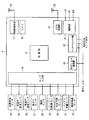
- FIG. 2 is a configuration diagram of the in-vehicle device.
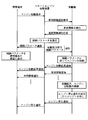
- FIG. 3 is a sequence diagram when starting the engine according to the first embodiment.
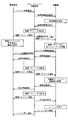
- FIG. 4 is a sequence diagram when starting the engine according to the second embodiment.
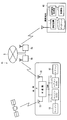
- FIG. 5 is a configuration diagram of a remote engine starting system according to the third embodiment.
- FIG. 6 is a configuration diagram of a remote engine start system according to the fourth embodiment.
- FIG. 7 is a configuration diagram of an in-vehicle device according to the fourth embodiment.
- the remote engine starting system 1 includes a mobile communication terminal device 2 possessed by a user, a remote engine starting device 3 installed in a center, and an in-vehicle device 4 mounted on a vehicle.
- the mobile communication terminal device 2 (hereinafter referred to as a terminal device or a mobile terminal) has a function of connecting to a mobile phone network 5 such as a mobile phone (smart phone).
- the remote engine starting device 3 is mainly composed of a computer, and includes a database 6 and a communication device 7 connected to the mobile phone network 5.
- the database 6 stores the latest map data and regulation data.
- the map data is map data that is classified into a region where vehicle noise due to idling is a problem and a region where vehicle noise due to idling is not a problem (or unlikely to be a problem).
- the areas where vehicle noise due to idling is a problem are further divided into residential areas, that is, areas where a plurality of houses are close to each other, adjacent areas of libraries and nurseries, and the like.
- the areas where vehicle noise due to idling does not become a problem (or is unlikely to be a problem) are further classified into busy areas, that is, areas where commercial facilities and stores gather, areas along main roads, and the like.
- Regulation data is exhaust gas or noise regulation information that is applied in each area, such as the idling stop regulations that are in effect in each country, state, and local government.
- This regulation information includes idling duration limit from engine start to engine stop (for example, 5 minutes), idling duration exception rule (for example, relaxation of time limit when temperature is above or below the specified value) ⁇ Exemption, relaxation of time limit for public vehicles such as buses, exemption, and reduction of time limit for vehicles conforming to emission regulations (exemption).
- the remote engine starter 3 installed in the center functions as a vehicle information acquisition unit (vehicle information acquisition unit) 8 and a control unit (control unit) 9 by a computer reading and executing a program.
- vehicle information acquisition unit 8 receives an engine start request from the terminal device 2
- the vehicle information acquisition unit 8 acquires vehicle information indicating the situation around the vehicle including the current position of the vehicle and the state of the vehicle itself.
- the control unit 9 sets at least one of a plurality of control parameters based on the acquired vehicle information.
- the control parameter is an operation state of the vehicle that affects exhaust gas generated by idling operation or vehicle noise.
- the control parameters include the idling duration, the ability to air-condition the vehicle interior, the upper limit value of the engine speed during idling, the exhaust gas limit amount that can be discharged during idling, and the upper limit value of vehicle noise during idling.
- the ability to air-condition the passenger compartment is the cooling ability or heating ability according to the preset temperature or preset air volume of the air conditioner.
- the communication device 7 acquires the vehicle information detected by the in-vehicle device 4 by communicating with the in-vehicle device 4 via the mobile phone network 5, and obtains a start command signal for instructing engine start and the set control parameter. It is a transmission part (transmission means) which transmits to the vehicle equipment 4.
- the in-vehicle device 4 used in combination with the remote engine starter 3 is configured as an independent ECU (Electronic Control Unit).
- the ECU communicates with an engine ECU 11 that controls the engine 10 and an air conditioner ECU 13 that controls an air conditioner 12 (air conditioner in the vehicle interior) via an in-vehicle LAN such as CAN.
- the in-vehicle device 4 includes a processing unit 14 composed of a microcomputer, a memory 15, a sensor input unit 16, a wireless communication unit 17, a GPS processing unit 18, an in-vehicle LAN communication unit 19, an interface unit 20, and a power supply unit 21. Etc.
- the wireless communication unit 17 is connected to the mobile phone network 5 via the antenna 22.
- the GPS processing unit 18 receives a signal from a GPS satellite by the antenna 23 and obtains the current position of the vehicle.
- the interface unit 20 exchanges control signals and monitor signals with other in-vehicle devices.
- the power supply unit 21 receives the battery voltage + B from the in-vehicle battery and receives the IG signal and the Acc signal via the IG switch and the Acc switch.
- the sensor input unit 16 includes a position information sensor 24, a vehicle exterior temperature sensor 25, a vehicle interior temperature sensor 26, an exhaust gas sensor 27, a noise sensor 28, an engine speed sensor 29, an ambient space sensor 30, a battery remaining amount provided in the vehicle. Detection signals or detection values are input from the sensor 31 and the remaining fuel amount sensor 32, respectively.
- the position information sensor 24 detects the current position of the vehicle separately from the GPS processing unit 18. Instead of the position information sensor 24, the current position of the vehicle may be acquired from the in-vehicle navigation device. Moreover, you may acquire the present position of a vehicle based on the position data of base station 5a, 5b, ... when the radio
- the vehicle exterior temperature sensor 25 detects the temperature outside the vehicle compartment (the temperature around the vehicle).
- the vehicle interior temperature sensor 26 detects the temperature in the vehicle interior.
- the exhaust gas sensor 27 detects the amount of gas components (contaminants) such as HC, CO, and NOx in the exhaust gas.
- the noise sensor 28 detects environmental noise around the vehicle and vehicle noise generated by itself.
- the engine speed sensor 29 detects the engine speed. Instead of the engine speed sensor 29, the engine speed may be acquired from the engine ECU via the in-vehicle LAN.
- the surrounding space sensor 30 detects whether or not the vehicle is in a closed space such as a garage (garage) by distance sensors provided at the corners, both sides, and the roof of the vehicle.
- the battery remaining amount sensor 31 detects the remaining capacity of the battery.
- the remaining fuel sensor 32 detects the remaining amount of fuel. The remaining capacity of the battery and the remaining amount of fuel may be obtained from another ECU via the in-vehicle LAN.
- the terminal device 2, the communication device 7 of the remote engine starting device 3, and the wireless communication unit 17 of the in-vehicle device 4 can communicate with each other via the mobile phone network 5.
- a transmission operation from the terminal device 2 to the remote engine starter 3 is performed.
- a vehicle engine start request is transmitted from the terminal device 2 to the remote engine starter 3.
- the vehicle information acquisition unit 8 of the remote engine starter 3 receives the engine start request, the vehicle information acquisition unit 8 detects and notifies the vehicle information indicating the vehicle surroundings including the current position of the vehicle and the state of the vehicle itself to the in-vehicle device 4. Request that.
- the in-vehicle device 4 can receive an incoming call to the wireless communication unit 17 even when the ignition switch is turned off.
- the processing unit 14 of the in-vehicle device 4 detects the current position of the vehicle by the GPS processing unit 18 or the position information sensor 24. Further, the temperature outside the vehicle compartment is detected by the outside temperature sensor 25, the environmental noise around the vehicle is detected by the noise sensor 28, and whether or not the vehicle is in a closed space such as a garage is detected by the ambient space sensor 30. . Furthermore, the relevance to the public vehicle (bus, emergency vehicle, etc.) and the conformity of the exhaust gas regulations stored in advance in the memory 15 are read out. The in-vehicle device 4 transmits a notification response including the detected or read vehicle information to the remote engine starting device 3.
- the control unit 9 of the remote engine starting device 3 sets control parameters based on the received vehicle information.
- the control unit 9 reads the restriction data applied at the current position of the vehicle from the database 6 and obtains the idling state continuation time defined in the restriction information.
- the restriction may be relaxed so as to increase the duration, or application of the duration may be excluded.
- the control unit 9 sets the idling duration (control parameter) within a range that does not exceed the allowable duration of the idling state defined in the regulation information regarding idling, including such exception rules.
- the control unit 9 reads map data around the current position of the vehicle from the database 6 and determines whether or not the current position of the vehicle is an area where vehicle noise due to idling is a problem.
- areas where vehicle noise due to idling is a problem are residential areas, areas close to libraries and nurseries, and areas where vehicle noise due to idling is not a problem are busy areas, areas along main roads, and the like.
- the control unit 9 determines whether or not the detected noise level around the vehicle (the own vehicle noise is not included because the engine is stopped) is lower than a specified value. This is because even if the map data indicates a downtown area or a main road area, there may actually be a quiet area.
- the control unit 9 determines that the current position of the vehicle is an area where the vehicle noise is a problem or the noise level around the vehicle is lower than a specified value
- the air conditioning capability of the vehicle interior causing the noise and the engine during idling At least one of the upper limit value of the rotational speed and the upper limit value of the vehicle noise during idling (both are control parameters) is set to be lower than the specified value.
- the control unit 9 reads the exhaust gas restriction amount during the idling period specified in the restriction information regarding idling, and sets the exhaust gas restriction amount (control parameter) that can be discharged during idling within a range not exceeding the exhaust gas restriction amount. In this case, if it is determined that the current position of the vehicle is in a residential area or the vehicle is in a closed space such as a garage, the exhaust gas limit amount that can be discharged during idling is set lower than a specified value. When it is determined that the vehicle is in a closed space such as a garage, transmission of an engine start command signal may be prohibited.
- the remote engine starting device 3 transmits the control parameter to the terminal device 2 when the control parameter setting is completed.
- the terminal device 2 includes a display unit, and displays the received control parameter on the screen. For example, “The idling operation duration is 5 minutes due to regulations”, “The capacity of the air conditioner is reduced because the vehicle is in a residential area”, “The engine is started because the vehicle is in a narrow space,” It was not possible. "
- the remote engine starter 3 transmits the engine start command signal and the set control parameters to the in-vehicle device 4.
- the processing unit 14 of the in-vehicle device 4 requests the engine ECU 11 to start the engine and starts the engine.
- the engine speed during idling operation is suppressed to be equal to or lower than the upper limit value of the engine speed determined by the control parameter.
- the air conditioner ECU 13 starts the operation of the air conditioner 12.
- the air conditioning capability during idling operation can be suppressed below the air conditioning capability determined by the control parameter.
- the in-vehicle device 4 transmits a start result indicating whether or not the engine 10 and the air conditioner 12 have started normally to the remote engine starter 3, and the remote engine starter 3 transmits the start result to the terminal device 2.
- the terminal device 2 displays the start result on the screen. This display is, for example, “the engine has started normally”, “the air conditioner has started operation”, or the like.
- the vehicle-mounted device 4 continuously (for example, periodically) detects vehicle information such as the temperature outside the vehicle compartment, the temperature inside the vehicle cabin, the remaining battery capacity, and the remaining fuel amount to the remote engine starter 3.
- vehicle information such as the temperature outside the vehicle compartment, the temperature inside the vehicle cabin, the remaining battery capacity, and the remaining fuel amount to the remote engine starter 3.
- the remote engine starting device 3 transmits the vehicle information to the terminal device 2.
- the terminal device 2 displays the vehicle information useful for the user on the screen.
- the processing unit 14 instructs the engine ECU 11 to stop the engine when the idling duration time received from the remote engine starting device 3 has elapsed after the engine is started.
- the processing unit 14 also detects the exhaust gas amount of the vehicle by the exhaust gas sensor 27 during the idling operation after starting the engine, and the engine ECU 11 also detects when the accumulated amount reaches the exhaust gas limit amount received from the remote engine starting device 3. To stop the engine.
- the processing unit 14 detects the noise level by the noise sensor 28 even after the engine is started.
- This noise level includes environmental noise and vehicle noise due to engine start. Therefore, the processing unit 14 obtains vehicle noise by subtracting the noise level detected before starting the engine from the detected noise level.
- the processing unit 14 instructs the air conditioner ECU 13 to lower the air conditioning capability, or instructs the engine ECU 11 to lower the engine speed. . If the vehicle noise level is still higher than the upper limit value of the vehicle noise, the engine is stopped.
- the in-vehicle device 4 transmits an engine stop notification to the remote engine starter 3, and the remote engine starter 3 transmits the engine stop notification to the terminal device 2.
- the terminal device 2 displays an engine stop notification on the screen. This display is, for example, “the engine has been stopped because the idling operation has reached 5 minutes”, “the engine has been stopped because the exhaust gas amount during the idling operation has reached the limit value”, and the like.
- the remote engine starting device 3 provided in the center receives vehicle information including the current position of the vehicle from the in-vehicle device 4 when receiving an engine start request by remote operation, Based on this, various control parameters that affect the environment are set.
- the in-vehicle device 4 starts the engine according to the start command signal received from the remote engine starter 3, and controls the idling operation according to the control parameter.
- the engine can be started and the idling operation thereafter can be performed while reducing the influence on the environment without the user setting the control parameter himself / herself.
- the control unit 9 may set at least one of the control parameters indicating the idling duration, the air conditioning capacity in the passenger compartment, the upper limit value of the engine speed, the exhaust gas limit amount that can be discharged, and the upper limit value of the vehicle noise.
- the in-vehicle device 4 controls the idling operation time according to the control parameter, so that it conforms to the regulations (laws and regulations) concerning idling applied at the current position of the vehicle. Can do.
- the vehicle noise can be reduced by setting at least one of the air conditioning capability in the passenger compartment, the upper limit value of the engine speed, and the upper limit value of the vehicle noise.
- the database 6 of the remote engine starter 3 stores map data that distinguishes between regions where vehicle noise due to idling is a problem and regions where it is not a problem.
- the control unit 9 sets the air conditioning capability in the passenger compartment, the upper limit value of the engine speed, or the upper limit value of the vehicle noise according to which region the current position of the vehicle belongs to or according to the detected vehicle noise level. .
- the present embodiment controls the idling operation mainly by the remote engine starter 3 even after the start command signal is transmitted and the engine is started. It differs in the structure which commands.
- the in-vehicle device 4 transmits the noise level detected by the noise sensor 28 and the exhaust gas amount of the vehicle detected by the exhaust gas sensor 27 continuously (for example, periodically) to the remote engine starting device 3 even after the engine is started.
- vehicle information such as the temperature outside the passenger compartment, the temperature inside the passenger compartment, the remaining capacity of the battery, and the remaining amount of fuel may be transmitted.
- the control unit 9 obtains vehicle noise by subtracting the received noise level before starting the engine from the received noise level. If the obtained vehicle noise level is higher than the upper limit value of the vehicle noise, at least one of the upper limit value of the air conditioning capacity and the engine speed in the passenger compartment is reduced, and the control parameter whose setting has been changed is set. It transmits to the vehicle equipment 4.
- the in-vehicle device 4 instructs the air conditioner ECU 13 to decrease the air conditioning capacity or instructs the engine ECU 11 to decrease the engine speed according to the control parameter. This feedback control is continuously executed.
- the control unit 9 measures the elapsed time from the time when the start result indicating that the engine has started normally from the in-vehicle device 4 is received. When the idling duration time has elapsed, the control unit 9 sends an engine stop command signal to the in-vehicle device 4. Send. The control unit 9 also integrates the exhaust gas amount received from the in-vehicle device 4 and transmits an engine stop command signal to the in-vehicle device 4 even when the integrated amount reaches the exhaust gas limit amount. The in-vehicle device 4 stops the engine in accordance with the received stop command signal.
- the remote engine starter 3 that can use a computer device with high processing capability controls engine start-up and the subsequent idling operation, so that the processing burden on the in-vehicle device 4 can be reduced.
- operations and effects similar to those of the first embodiment can be obtained.
- the remote engine start system 41 of the present embodiment is different from the first embodiment in the configuration in which the mobile communication terminal device and the remote engine start device are integrated as functions.
- the mobile communication terminal device 42 (hereinafter referred to as the terminal device 42) includes, in addition to the well-known mobile phone functions, the communication device 7 that is wirelessly connected to the database 6 and the mobile phone network 5, and the vehicle information acquisition unit 8 And a control unit 9.
- the database 6 is composed of a semiconductor memory or the like.
- the vehicle information acquisition unit 8 of the terminal device 42 transmits a vehicle information notification request to the in-vehicle device 4.
- the in-vehicle device 4 transmits a notification response including the detected vehicle information to the terminal device 42.
- the vehicle information acquisition unit 8 receives vehicle information, and the control unit 9 sets control parameters based on the received vehicle information.
- the terminal device 42 transmits the engine start command signal and the set control parameter to the in-vehicle device 4.
- the remote engine start system 51 of the present embodiment is different from the first embodiment in the configuration in which the in-vehicle device and the remote engine start device are integrated as functions. That is, the in-vehicle device 52 stores a database including the above-described map data and restriction data in the memory 15.
- the processing unit 53 formed of a microcomputer functions as a vehicle information acquisition unit (vehicle information acquisition unit) and a control unit (control unit).
- a transmission unit (transmission unit) that transmits control parameters by integrating the vehicle-mounted device and the remote engine starter corresponds to the internal wiring of the processing unit 53.
- the vehicle-mounted device 52 executes all the processes executed by the remote engine starter 3 and the vehicle-mounted device 4. That is, when the onboard device 52 receives the engine start request, it detects necessary vehicle information, and sets a control parameter based on the vehicle information. When the setting of the control parameters is completed, the engine is started, and the engine is stopped when the idling duration time has elapsed or when the integrated amount of exhaust gas reaches the exhaust gas limit. Further, when the vehicle noise level is higher than the upper limit value of the vehicle noise, at least one of the air conditioning capacity in the passenger compartment and the upper limit value of the engine speed is reduced.
- the control unit 9 of the first to third embodiments and the processing unit 53 of the fourth embodiment are each an idling duration, an air conditioning capacity, an upper limit value of the engine speed, an exhaust gas restriction amount, and an upper limit value of the vehicle noise. At least one of the control parameters may be set. In this case, the in-vehicle devices 4 and 52, the terminal device 42, or the remote engine starting device 3 performs idling operation control related to the at least one set control parameter.
- the in-vehicle device 4 may be configured to transmit at least one of the noise level detected by the noise sensor 28 and the exhaust gas amount of the vehicle detected by the exhaust gas sensor 27.
- the terminal device 42 may be configured to control engine start-up and subsequent idling operation.
- the communication between the terminal device 42 and the vehicle-mounted device 4 and the communication between the terminal device 2 and the vehicle-mounted device 52 are short-range wireless communication instead of the communication via the mobile phone network 5.
- Bluetooth (registered trademark) communication or wireless LAN communication may be used.
- the noise sensor 28 may be divided into a noise sensor that mainly detects environmental noise around the vehicle and a noise sensor that mainly detects vehicle noise.
- map data and the regulation data may be downloaded from another database, a WEB page, or the like.
- Vehicle information and control parameters are not limited to those described above.
- 3 is a remote engine starting device
- 4 is an in-vehicle device
- 7 is a communication device (an example of a transmission unit and a transmission means)
- 8 is a vehicle information acquisition unit (an example of a vehicle information acquisition unit or means)
- 9 is Control unit (an example of control unit and control means)
- 10 is an engine
- 42 is a portable communication terminal device (an example of a remote engine starter)
- 52 is an in-vehicle device (an example of a remote engine starter)
- 53 is a processing unit (vehicle)
Landscapes
- Engineering & Computer Science (AREA)
- Chemical & Material Sciences (AREA)
- Combustion & Propulsion (AREA)
- Mechanical Engineering (AREA)
- General Engineering & Computer Science (AREA)
- Control Of Vehicle Engines Or Engines For Specific Uses (AREA)
Abstract
車両情報取得部(8,53)と、制御部(9,53)と、伝送部(7)と、を備えるリモートエンジン始動装置を開示する。車両情報取得部は、エンジン(10)の始動要求に応じて車両情報を取得する。制御部(9,53)は、取得した車両情報に基づいて、エンジン(10)の始動からエンジン(10)の停止までのアイドリング継続時間、車室内を空調する能力、アイドリング時のエンジン回転数の上限値、アイドリング時に排出可能な排ガス制限量およびアイドリング時の車両騒音の上限値を示す各制御パラメータのうち少なくとも1つを設定する。伝送部(7)は、エンジン(10)の始動を指令する始動指令信号と設定した制御パラメータを、車載機(4,52)に伝送する。
Description
本出願は、2012年5月16日に出願された日本国特許出願2012-112431号に基づくものであり、ここにその記載内容を参照により援用する。
本開示は、遠隔操作により車両のエンジンを始動させるリモートエンジン始動装置および車載機に関する。
ユーザが車両に乗車するにあたり、遠隔操作により事前に車両のエンジンを始動させることにより、車室内の空調装置を動作させて車室内の温度を適温に設定し、或いはエンジンの暖機運転を行うリモートエンジン始動装置がある。このリモートエンジン始動装置は利便性の高い装置であるが、ユーザが車両周囲の状況等を把握することなくエンジンを始動させることがあり、好ましくない場合が生じ得る。
例えば、ガレージに車両が駐車されている場合にエンジンを始動すると、ガレージ内の人に不快感を与える虞がある。そこで、車両の現在位置に基づいてエンジンの始動が適切か否かを判定し、適切でないと判定した場合には、リモートエンジン始動装置が視覚的または聴覚的に判定結果を報知し、或いはエンジンの始動を禁止する手段がある(特許文献1参照)。
近年、様々な国、州、自治体などでアイドリングストップ条例が発効されている。この条例は、排ガスによる環境汚染、エンジン音による騒音を抑えることなどを目的としている。近年の環境問題の高まりから、ユーザにおいても、アイドリング運転の時間を短縮して排ガス量を低減し、またはエンジン騒音を低減することに努める意識が高まっている。しかしながら、ユーザが、リモート操作でエンジンを始動させるたびに、規制情報、車両周囲の状況などを把握し、アイドリング継続時間、車室内の空調能力、エンジン回転数などを設定することは非常に手間を要する。
本開示は上記事情に鑑みてなされたもので、その目的は、エンジンを始動してアイドリング運転を行う際の環境への影響を低減可能なリモートエンジン始動装置および車載機を提供することにある。
本開示の第1の例によれば、リモートエンジン始動装置は、遠隔操作により車両のエンジンを始動させる装置であって、車両情報取得部と、制御部と、伝送部とを備える。車両情報取得部は、エンジンの始動要求に応じて車両の現在位置を含む車両周囲の状況および車両自体の状態を示す車両情報を取得する。制御部は、取得した車両情報に基づいて、エンジンの始動からエンジンの停止までのアイドリング継続時間、車室内を空調する能力、アイドリング時のエンジン回転数の上限値、アイドリング時に排出可能な排ガス制限量およびアイドリング時の車両騒音の上限値を示す各制御パラメータのうち少なくとも1つを設定する。伝送部は、エンジンの始動を指令する始動指令信号と設定した制御パラメータを車載機に伝送する。車載機は、始動指令信号に従ってエンジンを始動し、制御パラメータに従ってエンジンの停止、車室内の空調能力およびエンジンの回転数のうち少なくとも1つを制御可能に構成されている。
本開示の第2の例によれば、リモートエンジン始動装置の車載機は、リモートエンジン始動装置から伝送された始動指令信号に従ってエンジンを始動させ、エンジン始動からのアイドリング時間がリモートエンジン始動装置から伝送されたアイドリング継続時間に達した時にエンジンを停止させるように制御するように構成される。
本開示の第3の例によれば、リモートエンジン始動装置の車載機は、エンジン始動後のアイドリング時に、車両周囲の騒音レベルを示す車両情報を取得し、その騒音レベルがリモートエンジン始動装置から伝送された車両騒音の上限値よりも高い場合には、車室内を空調する能力を低減し、エンジンの回転数を低下させ、またはエンジンを停止させるように制御するように構成される。
本開示の第4の例によれば、リモートエンジン始動装置の車載機は、エンジン始動後のアイドリング時に、車両から排出される排ガス量を検出して積算し、その積算量がリモートエンジン始動装置から伝送された排ガス制限量に達した時にエンジンを停止させるように制御するように構成される。
これらの構成によれば、リモートエンジン始動装置は、エンジンの始動要求を受けると、車両の現在位置を含む車両情報を取得し、それに基づいて環境に影響を及ぼす種々の制御パラメータを設定する。車載機は、始動指令信号に応じてエンジンを始動し、設定された制御パラメータに従ってアイドリング運転を制御する。その結果、ユーザが自ら制御パラメータを設定することなく、アイドリング運転を行うことによる環境への影響を低減できる。
本開示についての上記および他の目的、特徴や利点は、添付の図面を参照した下記の詳細な説明から、より明確になる。添付図面において
図1は、第1の実施形態に係るリモートエンジン始動システムの構成図であり、
図2は、車載機の構成図であり、
図3は、第1の実施形態に係るエンジン始動時のシーケンス図であり、
図4は、第2の実施形態に係るエンジン始動時のシーケンス図であり、
図5は、第3の実施形態に係るリモートエンジン始動システムの構成図であり、
図6は、第4の実施形態に係るリモートエンジン始動システムの構成図であり、
図7は、第4の実施形態に係る車載機の構成図である。
各実施形態において実質的に同一部分には同一符号を付して説明を省略する。
(第1の実施形態)
以下、第1の実施形態について図1ないし図3を参照しながら説明する。リモートエンジン始動システム1は、図1に示すようにユーザが所持する携帯通信端末装置2、センターに設置されたリモートエンジン始動装置3、および車両に搭載された車載機4を備える。携帯通信端末装置2(以下、端末装置又は携帯端末と称す)は、携帯電話機(スマートフォン)など携帯電話網5に接続する機能を有している。
(第1の実施形態)
以下、第1の実施形態について図1ないし図3を参照しながら説明する。リモートエンジン始動システム1は、図1に示すようにユーザが所持する携帯通信端末装置2、センターに設置されたリモートエンジン始動装置3、および車両に搭載された車載機4を備える。携帯通信端末装置2(以下、端末装置又は携帯端末と称す)は、携帯電話機(スマートフォン)など携帯電話網5に接続する機能を有している。
リモートエンジン始動装置3は、コンピュータを主体に構成されており、データベース6と、携帯電話網5に接続する通信装置7を備えている。データベース6には最新の地図データと規制データが記憶されている。地図データは、アイドリングによる車両騒音が問題となる地域と、アイドリングによる車両騒音が問題とならない(或いは問題となりにくい)地域とに区別された地図データである。アイドリングによる車両騒音が問題となる地域は、さらに住宅街すなわち複数の住宅が近接して存在する地域、図書館や保育園の近接地域などに区別されている。アイドリングによる車両騒音が問題とならない(或いは問題となりにくい)地域は、さらに繁華街すなわち商業施設や店舗などが集まる地域、幹線道路の沿線地域などに区別されている。
規制データは、各国、州、自治体などが発効しているアイドリングストップ条例のように、それぞれの地域において適用される排ガスまたは騒音の規制情報である。この規制情報は、エンジンの始動からエンジンの停止までのアイドリング継続時間の制限(例えば5分)、アイドリング継続時間の例外規定(例えば、気温が規定値以上または規定値以下の場合の制限時間の緩和・適用除外、バスなどの公共車両の場合の制限時間の緩和・適用除外、排ガス規制に適合した車両の制限時間の緩和・適用除外)などを含んでいる。
センターに設置されたリモートエンジン始動装置3は、コンピュータがプログラムを読み込んで実行することにより、車両情報取得部(車両情報取得手段)8および制御部(制御手段)9として機能する。車両情報取得部8は、端末装置2からエンジンの始動要求を受けると、車両の現在位置を含む車両周囲の状況および車両自体の状態を示す車両情報を取得する。
制御部9は、取得した車両情報に基づいて、複数の制御パラメータのうち少なくとも1つを設定する。制御パラメータとは、アイドリング運転により発生する排ガスまたは車両騒音に影響する車両の動作状態である。制御パラメータには、アイドリング継続時間、車室内を空調する能力、アイドリング時のエンジン回転数の上限値、アイドリング時に排出可能な排ガス制限量およびアイドリング時の車両騒音の上限値がある。このうち車室内を空調する能力とは、エアコンの設定温度または設定風量に応じた冷房能力または暖房能力である。
通信装置7は、携帯電話網5を介して車載機4と通信することにより、車載機4が検出した上記車両情報を取得し、エンジンの始動を指令する始動指令信号と上記設定した制御パラメータを車載機4に送信する伝送部(伝送手段)である。
リモートエンジン始動装置3と組み合わされて用いられる車載機4は、独立したECU(Electronic Control Unit)として構成されている。このECUは、エンジン10を制御するエンジンECU11、エアコン12(車室内の空調装置)を制御するエアコンECU13などとの間でCANなどの車内LANを介して通信を行う。車載機4は、図2に示すように、マイコンからなる処理部14、メモリ15、センサ入力部16、無線通信部17、GPS処理部18、車内LAN通信部19、インターフェース部20、電源部21などを備える。
無線通信部17は、アンテナ22を介して携帯電話網5に接続する。GPS処理部18は、アンテナ23によりGPS衛星からの信号を受信して車両の現在位置を得る。インターフェース部20は、他の車載機器との間で制御信号やモニタ信号などの授受を行う。電源部21は、車載バッテリからバッテリ電圧+Bの供給を受けるとともに、IGスイッチおよびAccスイッチを介してIG信号、Acc信号を受ける。
センサ入力部16は、車両に設けられた位置情報センサ24、車室外温度センサ25、車室内温度センサ26、排ガスセンサ27、騒音センサ28、エンジン回転数センサ29、周囲空間センサ30、バッテリ残量センサ31、燃料残量センサ32などからそれぞれ検出信号または検出値を入力する。位置情報センサ24は、GPS処理部18とは別に車両の現在位置を検出する。この位置情報センサ24に替えて、車載ナビゲーション装置から車両の現在位置を取得してもよい。また、無線通信部17が携帯電話網5に接続する際の基地局5a、5b、…の位置データに基づいて車両の現在位置を取得してもよい。
車室外温度センサ25は、車室外の温度(車両周囲の気温)を検出する。車室内温度センサ26は、車室内の温度を検出する。排ガスセンサ27は、排気ガス中のHCやCO、NOxなどのガス成分(汚染物質)の量を検出する。騒音センサ28は、車両周囲の環境騒音および自ら発する車両騒音を検出する。エンジン回転数センサ29は、エンジンの回転数を検出する。このエンジン回転数センサ29に替えて、エンジンECUから車内LANを介してエンジン回転数を取得してもよい。
周囲空間センサ30は、車両のコーナー、両サイド、屋根などに設けた距離センサにより、車両がガレージ(車庫)などの閉空間内にあるか否かを検出する。バッテリ残量センサ31は、バッテリの残容量を検出する。燃料残量センサ32は、燃料の残量を検出する。これらバッテリの残容量と燃料の残量は、車内LANを介して他のECUから取得してもよい。
次に、本実施形態の作用について図3を参照しながら説明する。端末装置2、リモートエンジン始動装置3の通信装置7および車載機4の無線通信部17は、携帯電話網5を介して相互に通信可能である。ユーザが遠隔操作により車両のエンジンを始動させる場合、端末装置2からリモートエンジン始動装置3への発信操作を行う。これにより、端末装置2からリモートエンジン始動装置3に対し車両のエンジン始動要求が送信される。リモートエンジン始動装置3の車両情報取得部8は、エンジン始動要求を受信すると、車載機4に対し車両の現在位置を含む車両周囲の状況および車両自体の状態を示す車両情報を検出して通知するよう要求する。
車載機4は、イグニッションスイッチがオフされていても、無線通信部17への着信を受けることができる。車載機4の処理部14は、車両情報の通知要求を受信すると、GPS処理部18または位置情報センサ24により車両の現在位置を検出する。また、車室外温度センサ25により車室外の温度を検出し、騒音センサ28により車両周囲の環境騒音を検出し、周囲空間センサ30により車両がガレージなどの閉空間内にあるか否かを検出する。さらに、メモリ15に予め記憶されている公共車両(バス、緊急車両など)への該当性および排ガス規制の適合性を読み出す。車載機4は、検出しまたは読み出した車両情報からなる通知応答をリモートエンジン始動装置3に送信する。
リモートエンジン始動装置3の制御部9は、受信した車両情報に基づいて制御パラメータを設定する。制御部9は、データベース6から車両の現在位置で適用される規制データを読み出し、規制情報に規定されたアイドリング状態の継続可能時間を求める。適用される規制情報によっては、車室外の温度(気温)が規定値以上または規定値以下の場合、バスなどの公共車両の場合、救急車などの緊急車両の場合、排ガス規制に適合した車両の場合などに、継続可能時間を長くするように制限が緩和され、または継続可能時間の適用自体が除外されることもある。制御部9は、こうした例外規定を含め、アイドリングに関する規制情報において規定されたアイドリング状態の継続可能時間を超えない範囲内で、アイドリング継続時間(制御パラメータ)を設定する。
制御部9は、データベース6から車両の現在位置周辺の地図データを読み出し、車両の現在位置が、アイドリングによる車両騒音が問題となる地域か否かを判定する。ここで、アイドリングによる車両騒音が問題となる地域とは住宅街、図書館や保育園の近接地域などであり、アイドリングによる車両騒音が問題とならない地域とは繁華街、幹線道路の沿線地域などである。また、制御部9は、検出された車両周囲の騒音レベル(エンジン停止中なので自身の車両騒音は含まれていない)が規定値よりも低いか否かを判定する。地図データでは繁華街、幹線道路の沿線地域とされていても、実際には閑静な地域もあり得るからである。
制御部9は、車両の現在位置が車両騒音の問題となる地域であるまたは車両周囲の騒音レベルが規定値よりも低いと判定すると、騒音の原因となる車室内の空調能力とアイドリング時のエンジン回転数の上限値およびアイドリング時の車両騒音の上限値(何れも制御パラメータ)のうち少なくとも1つを規定値よりも低く設定する。
制御部9は、アイドリングに関する規制情報に規定されたアイドリング期間における排ガス規制量を読み出し、この排ガス規制量を超えない範囲内でアイドリング時に排出可能な排ガス制限量(制御パラメータ)を設定する。この場合、車両の現在位置が住宅街である、または車両がガレージなどの閉空間内にあると判定すると、アイドリング時に排出可能な排ガス制限量を規定値よりも低く設定する。車両がガレージなどの閉空間内にあると判定した場合には、エンジンの始動指令信号の送信を禁止してもよい。
リモートエンジン始動装置3は、制御パラメータの設定が終了すると、その制御パラメータを端末装置2に送信する。端末装置2は表示部を備えており、受信した制御パラメータを画面に表示する。この表示は、例えば「規制によりアイドリング運転の継続時間は5分間です。」、「車両が住宅街にあるためエアコンの能力を下げています。」、「車両が狭い空間内にあるためエンジンを始動できませんでした。」などである。
リモートエンジン始動装置3は、エンジンの始動指令信号と設定した制御パラメータを車載機4に送信する。車載機4の処理部14は、始動指令信号を受信すると、エンジンECU11に対しエンジンの始動を要求してエンジンを始動させる。アイドリング運転時のエンジン回転数は、制御パラメータにより定められたエンジン回転数の上限値以下に抑えられる。また、エアコンECU13に対しエアコン12の運転を開始させる。アイドリング運転時の空調能力は、制御パラメータにより定められた空調能力以下に抑えられる。
車載機4は、エンジン10およびエアコン12が正常に始動したか否かを示す始動結果をリモートエンジン始動装置3に送信し、リモートエンジン始動装置3はその始動結果を端末装置2に送信する。端末装置2は、始動結果を画面に表示する。この表示は、例えば「エンジンが正常に始動しました。」、「エアコンが運転を開始しました。」などである。
エンジンの始動後、車載機4は、車両情報例えば車室外の温度、車室内の温度、バッテリの残容量および燃料の残量を継続的(例えば定期的)に検出してリモートエンジン始動装置3に送信し、リモートエンジン始動装置3はその車両情報を端末装置2に送信する。端末装置2は、ユーザに有用な当該車両情報を画面に表示する。
処理部14は、エンジンの始動後、リモートエンジン始動装置3から受信したアイドリング継続時間が経過すると、エンジンECU11に対しエンジンの停止を指令する。また、処理部14は、エンジン始動後のアイドリング運転時に、排ガスセンサ27により車両の排ガス量を検出し、その積算量がリモートエンジン始動装置3から受信した排ガス制限量に達したときも、エンジンECU11に対しエンジンの停止を指令する。
処理部14は、エンジンの始動後も騒音センサ28により騒音レベルを検出する。この騒音レベルは、環境騒音とエンジン始動による車両騒音とを含んでいる。そこで、処理部14は、検出した騒音レベルからエンジン始動前に検出した騒音レベルを減算して車両騒音を求める。処理部14は、求めた車両騒音のレベルが受信した車両騒音の上限値よりも高い場合、エアコンECU13に対し空調能力の低下を指令し、またはエンジンECU11に対しエンジンの回転数の低下を指令する。これによってもなお車両騒音のレベルが車両騒音の上限値よりも高い場合には、エンジンを停止させる。
エンジン10を停止した場合、車載機4は、エンジン停止通知をリモートエンジン始動装置3に送信し、リモートエンジン始動装置3はそのエンジン停止通知を端末装置2に送信する。端末装置2は、エンジン停止通知を画面に表示する。この表示は、例えば「アイドリング運転が5分に達しましたのでエンジンを停止しました。」、「アイドリング運転の排ガス量が制限値に達しましたのでエンジンを停止しました。」などである。
以上説明した本実施形態によれば、センターに設けられたリモートエンジン始動装置3は、遠隔操作によりエンジンの始動要求を受けると、車載機4から車両の現在位置を含む車両情報を取得し、それに基づいて環境に影響を及ぼす種々の制御パラメータを設定する。車載機4は、リモートエンジン始動装置3から受信した始動指令信号に応じてエンジンを始動し、制御パラメータに従ってアイドリング運転を制御する。この構成により、ユーザが自ら制御パラメータを設定することなく、環境への影響を低減しながらエンジンの始動とその後のアイドリング運転を行うことができる。
制御部9は、アイドリング継続時間、車室内の空調能力、エンジン回転数の上限値、排出可能な排ガス制限量および車両騒音の上限値を示す各制御パラメータのうち少なくとも1つを設定すればよい。アイドリング継続時間および/または排ガス制限量を設定し、車載機4が当該制御パラメータに従ってアイドリング運転時間を制御することにより、車両の現在位置で適用されるアイドリングに関する規制(法、条例)に適合させることができる。
また、車室内の空調能力、エンジン回転数の上限値および車両騒音の上限値の少なくとも1つを設定することにより、車両騒音を低減することができる。リモートエンジン始動装置3のデータベース6は、アイドリングによる車両騒音が問題となる地域と問題とならない地域とを区別した地図データを記憶している。制御部9は、車両の現在位置が何れの地域に属するかに応じてまたは検出した車両騒音レベルに応じて、車室内の空調能力、エンジン回転数の上限値または車両騒音の上限値を設定する。これにより、車両騒音が問題となる地域に駐車している場合に限りアイドリング時の車両騒音を低減でき、車室内の温度調節や暖機運転が不必要に制限されることを回避できる。
(第2の実施形態)
第2の実施形態について図4を参照しながら説明する。本実施形態は、第1の実施形態に対し、始動指令信号を送信してエンジンを始動した後もリモートエンジン始動装置3が主体となってアイドリング運転を制御し、車載機4に対しエンジンの停止を指令する構成において異なる。
(第2の実施形態)
第2の実施形態について図4を参照しながら説明する。本実施形態は、第1の実施形態に対し、始動指令信号を送信してエンジンを始動した後もリモートエンジン始動装置3が主体となってアイドリング運転を制御し、車載機4に対しエンジンの停止を指令する構成において異なる。
車載機4は、エンジンの始動後もリモートエンジン始動装置3に対し継続的(例えば定期的)に、騒音センサ28により検出した騒音レベルおよび排ガスセンサ27により検出した車両の排ガス量を送信する。第1の実施形態と同様に、車室外の温度、車室内の温度、バッテリの残容量、燃料の残量などの車両情報を送信してもよい。
制御部9は、受信した騒音レベルからエンジン始動前に受信した騒音レベルを減算して車両騒音を求める。そして、求めた車両騒音のレベルが車両騒音の上限値よりも高い場合には、車室内の空調能力およびエンジン回転数の上限値のうち少なくとも1つを低減し、その設定変更された制御パラメータを車載機4に送信する。車載機4は、この制御パラメータに従ってエアコンECU13に対し空調能力の低下を指令し、またはエンジンECU11に対しエンジンの回転数の低下を指令する。このフィードバック制御は継続的に実行される。
制御部9は、車載機4からエンジンが正常に始動したことを示す始動結果を受信した時点からの経過時間を計測し、アイドリング継続時間が経過すると、車載機4に対しエンジンの停止指令信号を送信する。また、制御部9は、車載機4から受信した排ガス量を積算し、その積算量が排ガス制限量に達したときも、車載機4に対しエンジンの停止指令信号を送信する。車載機4は、受信した停止指令信号に従ってエンジンを停止させる。
本実施形態によれば、処理能力の高いコンピュータ装置を利用可能なリモートエンジン始動装置3が、エンジンの始動およびその後のアイドリング運転を制御するので、車載機4の処理負担を軽減できる。その他、第1の実施形態と同様の作用および効果が得られる。
(第3の実施形態)
第3の実施形態について図5を参照しながら説明する。本実施形態のリモートエンジン始動システム41は、携帯通信端末装置とリモートエンジン始動装置とが機能として一体化されている構成において第1の実施形態と異なる。すなわち、携帯通信端末装置42(以下、端末装置42と称す)は、周知の携帯電話機の機能に加え、既述したデータベース6、携帯電話網5に無線接続する通信装置7、車両情報取得部8および制御部9を備えている。データベース6は、半導体メモリ等から構成されている。
(第3の実施形態)
第3の実施形態について図5を参照しながら説明する。本実施形態のリモートエンジン始動システム41は、携帯通信端末装置とリモートエンジン始動装置とが機能として一体化されている構成において第1の実施形態と異なる。すなわち、携帯通信端末装置42(以下、端末装置42と称す)は、周知の携帯電話機の機能に加え、既述したデータベース6、携帯電話網5に無線接続する通信装置7、車両情報取得部8および制御部9を備えている。データベース6は、半導体メモリ等から構成されている。
ユーザが端末装置42を操作してエンジンの始動要求を入力すると、端末装置42の車両情報取得部8は、車載機4に対し車両情報の通知要求を送信する。車載機4は、検出した車両情報からなる通知応答を端末装置42に送信する。車両情報取得部8は車両情報を受信し、制御部9は、受信した車両情報に基づいて制御パラメータを設定する。端末装置42は、制御パラメータの設定が終了すると、エンジンの始動指令信号と設定した制御パラメータを車載機4に送信する。各動作の詳細およびその効果は、第1の実施形態で述べた通りである。本実施形態によれば、センターの利用が不要となり、より簡易なリモートエンジン始動システムを構築できる。
(第4の実施形態)
第4の実施形態について図6および図7を参照しながら説明する。本実施形態のリモートエンジン始動システム51は、車載機とリモートエンジン始動装置とが機能として一体化されている構成において第1の実施形態と異なる。すなわち、車載機52は、上述した地図データと規制データとからなるデータベースをメモリ15に記憶している。マイコンからなる処理部53は、、車両情報取得部(車両情報取得手段)および制御部(制御手段)として機能する。また、車載機とリモートエンジン始動装置との一体化により、制御パラメータを伝送する伝送部(伝送手段)は、処理部53の内部配線に相当する。
(第4の実施形態)
第4の実施形態について図6および図7を参照しながら説明する。本実施形態のリモートエンジン始動システム51は、車載機とリモートエンジン始動装置とが機能として一体化されている構成において第1の実施形態と異なる。すなわち、車載機52は、上述した地図データと規制データとからなるデータベースをメモリ15に記憶している。マイコンからなる処理部53は、、車両情報取得部(車両情報取得手段)および制御部(制御手段)として機能する。また、車載機とリモートエンジン始動装置との一体化により、制御パラメータを伝送する伝送部(伝送手段)は、処理部53の内部配線に相当する。
端末装置2から車載機52に対し車両のエンジン始動要求が送信されると、リモートエンジン始動装置3と車載機4とで実行されていた処理を全て車載機52が実行する。すなわち、車載機52は、エンジン始動要求を受信すると必要な車両情報を検出し、その車両情報に基づいて制御パラメータを設定する。制御パラメータの設定が終了するとエンジンを始動し、アイドリング継続時間が経過した時または排ガス量の積算量が排ガス制限量に達した時にエンジンを停止する。また、車両騒音のレベルが車両騒音の上限値よりも高い場合には、車室内の空調能力およびエンジン回転数の上限値のうち少なくとも1つを低減する。本実施形態によっても、センターの利用が不要となり、より簡易なリモートエンジン始動システムを構築できる。その他、第1の実施形態と同様の作用および効果が得られる。
(その他の実施形態)
以上、本開示の実施形態を例示したが、本開示の実施形態は上述した実施形態に限定されるものではなく、本開示の要旨を逸脱しない範囲内で種々の変形、拡張を行うことができる。
(その他の実施形態)
以上、本開示の実施形態を例示したが、本開示の実施形態は上述した実施形態に限定されるものではなく、本開示の要旨を逸脱しない範囲内で種々の変形、拡張を行うことができる。
第1ないし第3の実施形態の制御部9および第4の実施形態の処理部53は、アイドリング継続時間、空調能力、エンジン回転数の上限値、排ガス制限量および車両騒音の上限値を示す各制御パラメータのうち少なくとも1つを設定すればよい。この場合、車載機4、52、端末装置42またはリモートエンジン始動装置3は、当該少なくとも1つ設定された制御パラメータに係るアイドリング運転の制御を実行する。
アイドリング継続時間を設定する場合、車両の現在位置の他に、規制情報に応じて車室外の温度、公共車両への該当性および排ガス規制の適合性のうちの少なくとも1つの車両情報を取得すればよい。規制情報にその他の規制ある場合には、その規制に応じて他の車両情報を取得すればよい。
第2の実施形態において、車載機4は、騒音センサ28により検出した騒音レベルおよび排ガスセンサ27により検出した車両の排ガス量のうち少なくとも1つを送信する構成としてもよい。
第3の実施形態においても、第2の実施形態と同様に、端末装置42がエンジンの始動およびその後のアイドリング運転を制御するように構成してもよい。
第3、第4の実施形態において、端末装置42と車載機4との間の通信、端末装置2と車載機52との間の通信は、携帯電話網5による通信に替えて近距離無線通信例えばBluetooth(登録商標)通信、無線LANによる通信を用いてもよい。
騒音センサ28は、主として車両周囲の環境騒音を検出する騒音センサと、主として車両騒音を検出する騒音センサとに分けて設けてもよい。
データベース6やメモリ15から地図データと規制データを読み出すことに替えて、他のデータベース、WEBページなどから地図データと規制データをダウンロードする構成としてもよい。
車両情報および制御パラメータは上述したものに限られない。
なお、図面中、3はリモートエンジン始動装置、4は車載機、7は通信装置(伝送部および伝送手段の一例)、8は車両情報取得部(車両情報取得部又は手段の一例)、9は制御部(制御部および制御手段の一例)、10はエンジン、42は携帯通信端末装置(リモートエンジン始動装置の一例)、52は車載機(リモートエンジン始動装置の一例)、53は処理部(車両情報取得部および車両情報取得手段の一例、制御部および制御手段の一例)である。
以上、本開示に係る実施の形態および構成を例示したが、本開示に係る実施の形態および構成は、上述した各実施の形態および各構成に限定されるものではない。異なる実施の形態および構成にそれぞれ開示された技術的要素を適宜組み合わせて得られる実施の形態および構成についても本開示に係る実施の形態および構成の範囲に含まれる。
Claims (14)
- 遠隔操作により車両のエンジン(10)を始動させるリモートエンジン始動装置において、
エンジン(10)の始動要求に応じて車両の現在位置を含む車両周囲の状況および車両自体の状態を示す車両情報を取得する車両情報取得部(8,53)と、
前記取得した車両情報に基づいて、エンジン(10)の始動からエンジン(10)の停止までのアイドリング継続時間、車室内を空調する能力、アイドリング時のエンジン回転数の上限値、アイドリング時に排出可能な排ガス制限量およびアイドリング時の車両騒音の上限値を示す各制御パラメータのうち少なくとも1つを設定する制御部(9,53)と、
エンジン(10)の始動を指令する始動指令信号と前記設定した制御パラメータを、前記始動指令信号に従ってエンジン(10)を始動し、前記制御パラメータに従ってエンジン(10)の停止、車室内の空調能力およびエンジン(10)の回転数のうち少なくとも1つを制御可能な車載機(4,52)に伝送する伝送部(7)と、を備えるリモートエンジン始動装置。 - 前記制御部(9,53)は、前記取得した車両の現在位置において適用されるアイドリングに関する規制情報において規定されたアイドリング状態の継続可能時間を超えない範囲内で、前記取得した車両情報に基づいて前記アイドリング継続時間を設定する請求項1記載のリモートエンジン始動装置。
- 前記車両情報取得部(8,53)は、車両の現在位置の他に車室外の温度、公共車両への該当性および排ガス規制の適合性のうちの少なくとも1つの車両情報を取得し、
前記制御部(9,53)は、前記車両の現在位置の他に取得した少なくとも1つの車両情報と前記取得した規制情報に基づいて前記アイドリング継続時間を設定する請求項2記載のリモートエンジン始動装置。 - 前記車両情報取得部(8,53)は、車両の現在位置の他に車両周囲の騒音レベルを示す車両情報を取得し、
前記制御部(9,53)は、前記取得した車両の現在位置が住宅街である場合または前記取得した車両周囲の騒音レベルが低い場合に、前記車室内を空調する能力、前記アイドリング時のエンジン回転数の上限値および前記アイドリング時の車両騒音の上限値のうち少なくとも1つを低く設定する請求項1ないし3の何れかに記載のリモートエンジン始動装置。 - 前記車両情報取得部(8,53)は、前記始動指令信号が前記車載機に伝送された後も車両周囲の騒音レベルを示す車両情報を取得し、
前記制御部(9,53)は、前記始動指令信号が前記車載機に伝送された後も、前記取得した車両周囲の騒音レベルに応じて前記車室内を空調する能力および前記アイドリング時のエンジン回転数の上限値のうち少なくとも1つを継続的に設定し、
前記伝送部(7)は、前記設定した制御パラメータを前記車載機に継続的に伝送する請求項4記載のリモートエンジン始動装置。 - 前記制御部(9,53)は、前記取得した車両の現在位置が住宅街である場合に前記アイドリング時に排出可能な排ガス制限量を低く設定する請求項1ないし5の何れかに記載のリモートエンジン始動装置。
- 前記車両情報取得部(8,53)は、車両の現在位置の他に車両が閉じた空間内にあるか否かを示す車両情報を取得し、
前記制御部(9,53)は、車両が閉じた空間内にある場合には前記アイドリング時に排出可能な排ガス制限量を低く設定し、またはエンジン(10)の始動を禁止する請求項1ないし6の何れかに記載のリモートエンジン始動装置。 - 前記制御部(9,53)は、前記取得した車両の現在位置において適用されるアイドリングに関する規制情報において規定されたアイドリング期間における排ガス規制量を超えない範囲内で、前記アイドリング時に排出可能な排ガス制限量を設定する請求項6または7記載のリモートエンジン始動装置。
- 前記車載機(4)および前記エンジン(10)の始動要求を行う装置(2)とは別体の装置として設けられており、
前記車両情報取得部(8)は、前記エンジン(10)の始動要求に応じて前記車載機に対し前記車両情報を要求し、前記車載機から送られる前記車両情報を受信するように構成されている請求項1ないし8の何れかに記載のリモートエンジン始動装置。 - 前記エンジン(10)の始動要求を行う装置(42)と一体化されており、
前記車両情報取得部(8)は、前記エンジン(10)の始動要求に応じて前記車載機(4)に対し前記車両情報を要求し、前記車載機から送られる前記車両情報を受信するように構成されている請求項1ないし8の何れかに記載のリモートエンジン始動装置。 - 前記車載機(52)と一体化されており、前記始動指令信号に従ってエンジン(10)を始動し、前記制御パラメータに従ってエンジン(10)の停止、車室内の空調能力およびエンジン(10)の回転数のうち少なくとも1つを制御可能に構成されている請求項1ないし8の何れかに記載のリモートエンジン始動装置。
- 請求項2または3記載のリモートエンジン始動装置の車載機(4,52)であって、
前記リモートエンジン始動装置(3,52)から伝送された始動指令信号に従ってエンジン(10)を始動させ、エンジン始動からのアイドリング時間が前記リモートエンジン始動装置から伝送されたアイドリング継続時間に達した時にエンジン(10)を停止させるように制御するリモートエンジン始動装置の車載機。 - 請求項4記載のリモートエンジン始動装置の車載機(4,52)であって、
エンジン始動後のアイドリング時に、車両の騒音レベルを示す車両情報を取得し、その騒音レベルが前記リモートエンジン始動装置から伝送された車両騒音の上限値よりも高い場合には、車室内を空調する能力を低減し、エンジン(10)の回転数を低下させ、またはエンジン(10)を停止させるように制御するリモートエンジン始動装置の車載機。 - 請求項6ないし8の何れかに記載のリモートエンジン始動装置の車載機(4,52)であって、
エンジン始動後のアイドリング時に、車両から排出される排ガス量を検出して積算し、その積算量が前記リモートエンジン始動装置から伝送された排ガス制限量に達した時にエンジン(10)を停止させるように制御するリモートエンジン始動装置の車載機。
Applications Claiming Priority (2)
| Application Number | Priority Date | Filing Date | Title |
|---|---|---|---|
| JP2012-112431 | 2012-05-16 | ||
| JP2012112431A JP5846042B2 (ja) | 2012-05-16 | 2012-05-16 | リモートエンジン始動装置および車載機 |
Publications (1)
| Publication Number | Publication Date |
|---|---|
| WO2013172011A1 true WO2013172011A1 (ja) | 2013-11-21 |
Family
ID=49583440
Family Applications (1)
| Application Number | Title | Priority Date | Filing Date |
|---|---|---|---|
| PCT/JP2013/003032 Ceased WO2013172011A1 (ja) | 2012-05-16 | 2013-05-13 | リモートエンジン始動装置および車載機 |
Country Status (2)
| Country | Link |
|---|---|
| JP (1) | JP5846042B2 (ja) |
| WO (1) | WO2013172011A1 (ja) |
Cited By (5)
| Publication number | Priority date | Publication date | Assignee | Title |
|---|---|---|---|---|
| CN115467749A (zh) * | 2021-06-10 | 2022-12-13 | 丰田自动车株式会社 | 汽车 |
| CN115539266A (zh) * | 2021-06-30 | 2022-12-30 | 上海汽车集团股份有限公司 | 一种启动车辆的系统、方法、介质及车辆 |
| US11572846B2 (en) | 2016-12-21 | 2023-02-07 | Robert Bosch Gmbh | System and method to calibrate an engine control unit (ECU) of a vehicle |
| CN116480476A (zh) * | 2023-05-06 | 2023-07-25 | 中国第一汽车股份有限公司 | 一种基于客户感知的智能汽车怠速性能控制方法和装置 |
| US12128764B2 (en) | 2021-06-09 | 2024-10-29 | Toyota Jidosha Kabushiki Kaisha | Vehicle |
Families Citing this family (13)
| Publication number | Priority date | Publication date | Assignee | Title |
|---|---|---|---|---|
| DE102014017789A1 (de) * | 2014-12-03 | 2016-06-09 | Man Truck & Bus Ag | Verfahren und Vorrichtung zum Betreiben eines Fahrzeugs, insbesondere eines Wasserfahrzeugs |
| JP6638664B2 (ja) | 2017-02-03 | 2020-01-29 | トヨタ自動車株式会社 | リモート空調始動システム、サーバ |
| JP6915996B2 (ja) | 2017-02-03 | 2021-08-11 | トヨタ自動車株式会社 | リモート空調始動システム、サーバ |
| JP6747323B2 (ja) | 2017-02-03 | 2020-08-26 | トヨタ自動車株式会社 | リモート空調始動システム、センタサーバ |
| JP6888383B2 (ja) * | 2017-04-12 | 2021-06-16 | トヨタ自動車株式会社 | リモート始動システム、センタサーバ、車両 |
| JP2018178852A (ja) | 2017-04-12 | 2018-11-15 | トヨタ自動車株式会社 | リモート始動システム、センタサーバ |
| JP6805969B2 (ja) | 2017-05-31 | 2020-12-23 | トヨタ自動車株式会社 | リモート始動システム、端末、車両、リモート始動方法 |
| JP6812906B2 (ja) | 2017-05-31 | 2021-01-13 | トヨタ自動車株式会社 | リモート始動システム、センタサーバ、リモート始動方法 |
| JP6844425B2 (ja) * | 2017-05-31 | 2021-03-17 | トヨタ自動車株式会社 | リモート始動システム、車両、リモート始動方法 |
| JP6819467B2 (ja) | 2017-05-31 | 2021-01-27 | トヨタ自動車株式会社 | リモート始動システム、センタサーバ、リモート始動方法 |
| JP2021008883A (ja) * | 2020-10-19 | 2021-01-28 | トヨタ自動車株式会社 | リモート始動システム、センタサーバ、リモート始動方法 |
| JP7619040B2 (ja) | 2020-12-22 | 2025-01-22 | スズキ株式会社 | 遠隔操作装置、通信環境発信装置、及び通信環境確認プログラム |
| JP7038442B2 (ja) * | 2021-01-12 | 2022-03-18 | 株式会社ユピテル | 中継システム、中継機およびプログラム |
Citations (5)
| Publication number | Priority date | Publication date | Assignee | Title |
|---|---|---|---|---|
| JPH06307316A (ja) * | 1993-04-28 | 1994-11-01 | Kansei Corp | 遠隔エンジン始動システム |
| JPH1193811A (ja) * | 1997-09-19 | 1999-04-06 | Tokai Rika Co Ltd | 車両用エンジンの遠隔始動装置 |
| JP2003042046A (ja) * | 2001-07-27 | 2003-02-13 | Mazda Motor Corp | 車両の遠隔操作用サーバ、車両の遠隔操作方法、車両の遠隔操作用プログラム、及び、車載遠隔操作装置 |
| JP2005163702A (ja) * | 2003-12-04 | 2005-06-23 | Denso Corp | リモートエンジンスターター |
| JP2011213308A (ja) * | 2010-04-01 | 2011-10-27 | Toyota Motor Corp | センタ、エンジン始動システム、エンジン始動方法、プログラム及び媒体 |
-
2012
- 2012-05-16 JP JP2012112431A patent/JP5846042B2/ja not_active Expired - Fee Related
-
2013
- 2013-05-13 WO PCT/JP2013/003032 patent/WO2013172011A1/ja not_active Ceased
Patent Citations (5)
| Publication number | Priority date | Publication date | Assignee | Title |
|---|---|---|---|---|
| JPH06307316A (ja) * | 1993-04-28 | 1994-11-01 | Kansei Corp | 遠隔エンジン始動システム |
| JPH1193811A (ja) * | 1997-09-19 | 1999-04-06 | Tokai Rika Co Ltd | 車両用エンジンの遠隔始動装置 |
| JP2003042046A (ja) * | 2001-07-27 | 2003-02-13 | Mazda Motor Corp | 車両の遠隔操作用サーバ、車両の遠隔操作方法、車両の遠隔操作用プログラム、及び、車載遠隔操作装置 |
| JP2005163702A (ja) * | 2003-12-04 | 2005-06-23 | Denso Corp | リモートエンジンスターター |
| JP2011213308A (ja) * | 2010-04-01 | 2011-10-27 | Toyota Motor Corp | センタ、エンジン始動システム、エンジン始動方法、プログラム及び媒体 |
Cited By (6)
| Publication number | Priority date | Publication date | Assignee | Title |
|---|---|---|---|---|
| US11572846B2 (en) | 2016-12-21 | 2023-02-07 | Robert Bosch Gmbh | System and method to calibrate an engine control unit (ECU) of a vehicle |
| US12128764B2 (en) | 2021-06-09 | 2024-10-29 | Toyota Jidosha Kabushiki Kaisha | Vehicle |
| CN115467749A (zh) * | 2021-06-10 | 2022-12-13 | 丰田自动车株式会社 | 汽车 |
| JP2022189031A (ja) * | 2021-06-10 | 2022-12-22 | トヨタ自動車株式会社 | 自動車 |
| CN115539266A (zh) * | 2021-06-30 | 2022-12-30 | 上海汽车集团股份有限公司 | 一种启动车辆的系统、方法、介质及车辆 |
| CN116480476A (zh) * | 2023-05-06 | 2023-07-25 | 中国第一汽车股份有限公司 | 一种基于客户感知的智能汽车怠速性能控制方法和装置 |
Also Published As
| Publication number | Publication date |
|---|---|
| JP5846042B2 (ja) | 2016-01-20 |
| JP2013238184A (ja) | 2013-11-28 |
Similar Documents
| Publication | Publication Date | Title |
|---|---|---|
| JP5846042B2 (ja) | リモートエンジン始動装置および車載機 | |
| JP5660349B2 (ja) | 車両情報取得装置、車両情報供給装置、車両情報取得装置及び車両情報供給装置を備えた車両の情報通信システム | |
| US10737550B2 (en) | Remote air conditioning start system, center server and method for controlling remote air conditioning start system | |
| US9085215B2 (en) | Air-conditioner remote control system for vehicle, server, mobile terminal, and vehicle | |
| US20210173628A1 (en) | Program updating device, program updating system and program updating method | |
| CN111688710B (zh) | 基于驾驶员注意力的车内娱乐系统的配置 | |
| US20130268139A1 (en) | Vehicular remote start system | |
| JP2014069592A (ja) | 車載機器の遠隔操作システム | |
| JP2001253320A (ja) | 車両監視システム | |
| JP6965669B2 (ja) | 空調制御システム | |
| EP3409543A1 (en) | Remote startup system, centre server, vehicle, and remote startup method | |
| EP3932760A1 (en) | Control system and control method for hybrid vehicle | |
| US20160177908A1 (en) | Remote engine starting system | |
| JP2014125098A (ja) | 車載機器の遠隔操作システム | |
| US11378049B2 (en) | Control device, vehicle, control system, program, and control method | |
| CN110858959B (zh) | 一种管理车辆处的短程无线通信srwc的方法 | |
| CN111770127A (zh) | 车辆控制系统 | |
| CN110217237A (zh) | 车辆远程控制系统和车辆远程控制方法 | |
| WO2015194166A1 (ja) | 制御装置 | |
| US12587014B2 (en) | Systems and methods for enabling energy transfer from a vehicle | |
| JP2019081469A (ja) | 空調制御システム | |
| JP7225937B2 (ja) | 空調制御システム | |
| CA2921332C (en) | Multi-controller data bus adaptor operable based upon data bus adaptor communication determined adaptor codes and related methods | |
| US20260034948A1 (en) | Systems and methods for mitigating vehicle battery drain | |
| KR20130141067A (ko) | 상용차 무시동 장치 원격 제어 시스템 |
Legal Events
| Date | Code | Title | Description |
|---|---|---|---|
| 121 | Ep: the epo has been informed by wipo that ep was designated in this application |
Ref document number: 13790253 Country of ref document: EP Kind code of ref document: A1 |
|
| NENP | Non-entry into the national phase |
Ref country code: DE |
|
| 122 | Ep: pct application non-entry in european phase |
Ref document number: 13790253 Country of ref document: EP Kind code of ref document: A1 |