WO2013024743A1 - 通信システム、移動局装置、基地局装置、同期状態管理方法及び集積回路 - Google Patents
通信システム、移動局装置、基地局装置、同期状態管理方法及び集積回路 Download PDFInfo
- Publication number
- WO2013024743A1 WO2013024743A1 PCT/JP2012/070069 JP2012070069W WO2013024743A1 WO 2013024743 A1 WO2013024743 A1 WO 2013024743A1 JP 2012070069 W JP2012070069 W JP 2012070069W WO 2013024743 A1 WO2013024743 A1 WO 2013024743A1
- Authority
- WO
- WIPO (PCT)
- Prior art keywords
- station apparatus
- handover
- cell
- transmission timing
- mobile station
- Prior art date
- Legal status (The legal status is an assumption and is not a legal conclusion. Google has not performed a legal analysis and makes no representation as to the accuracy of the status listed.)
- Ceased
Links
Images


Classifications
-
- H—ELECTRICITY
- H04—ELECTRIC COMMUNICATION TECHNIQUE
- H04W—WIRELESS COMMUNICATION NETWORKS
- H04W36/00—Hand-off or reselection arrangements
- H04W36/0005—Control or signalling for completing the hand-off
- H04W36/0055—Transmission or use of information for re-establishing the radio link
- H04W36/0072—Transmission or use of information for re-establishing the radio link of resource information of target access point
-
- H—ELECTRICITY
- H04—ELECTRIC COMMUNICATION TECHNIQUE
- H04W—WIRELESS COMMUNICATION NETWORKS
- H04W56/00—Synchronisation arrangements
- H04W56/004—Synchronisation arrangements compensating for timing error of reception due to propagation delay
- H04W56/0045—Synchronisation arrangements compensating for timing error of reception due to propagation delay compensating for timing error by altering transmission time
-
- H—ELECTRICITY
- H04—ELECTRIC COMMUNICATION TECHNIQUE
- H04W—WIRELESS COMMUNICATION NETWORKS
- H04W74/00—Wireless channel access
- H04W74/08—Non-scheduled access, e.g. ALOHA
- H04W74/0833—Random access procedures, e.g. with 4-step access
-
- H—ELECTRICITY
- H04—ELECTRIC COMMUNICATION TECHNIQUE
- H04W—WIRELESS COMMUNICATION NETWORKS
- H04W74/00—Wireless channel access
- H04W74/08—Non-scheduled access, e.g. ALOHA
- H04W74/0833—Random access procedures, e.g. with 4-step access
- H04W74/0838—Random access procedures, e.g. with 4-step access using contention-free random access [CFRA]
Definitions
- the present invention relates to a communication system, a mobile station apparatus, a base station apparatus, a synchronization state management method, and an integrated circuit, and in particular, the synchronization state when the mobile station apparatus is wirelessly connected to the base station apparatus using a plurality of cells.
- the management method .
- EUTRA Evolved Universal Terrestrial Radio Access
- Carrier Aggregation is a method of receiving data of a transmission device transmitted in a plurality of different frequency bands (also referred to as “carrier frequency” and “component carrier”) at reception devices corresponding to different frequency bands. This is a technique for improving the data rate.
- a receiving apparatus in downlink transmission is referred to as a “mobile station apparatus”, and a transmitting apparatus is referred to as a “base station apparatus”.
- a receiving device in uplink transmission is referred to as a “base station device”, and a transmitting device in uplink transmission is referred to as a “mobile station device”.
- the scope of application of the present invention need not be limited to these devices.
- the receiving apparatus in downlink transmission and the transmitting apparatus in uplink transmission may be relay station apparatuses.
- one cell is configured by combining one downlink component carrier and one uplink component carrier.
- a single cell can be configured with only one downlink component carrier.
- the mobile station apparatus is allocated (configured) from the base station apparatus by RRC layer signaling.
- the cell assigned to the mobile station apparatus has two states, an inactive state where radio transmission cannot be performed and an active state where radio transmission can be performed.
- the mobile station apparatus communicates with the base station apparatus using a cell called one primary cell and zero or more cells called secondary cells, but the primary cell is always active.
- all secondary cells allocated to the mobile station apparatus are inactivated at the time of handover, and are activated by explicit activation signaling from the base station apparatus after handover.
- the EUTRA mobile station apparatus performs random access at the time of initial connection to the base station apparatus, at the time of handover, and when uplink data transmission or downlink data reception needs to be performed while uplink synchronization is out of synchronization.
- Processing for uplink transmission timing adjustment (establishment of uplink synchronization) called a procedure is performed.
- a timer (referred to as a “transmission timing timer”) that is restarted each time uplink transmission timing adjustment is performed (a signal for transmission timing adjustment called a TA command is received from the base station apparatus).
- Node B Node B
- EUTRA EUTRA
- eNode B EUTRA
- the base station device manages a cell that is an area in which the mobile station device can communicate, and the cell is also referred to as “femto cell”, “pico cell”, or “nano cell” depending on the size of the area that can communicate with the mobile station device. Is done.
- the cell of the base station device is a cell in the mobile station device, and other base station devices or cells of different frequencies are “peripheral cells”. It is called.
- the random access procedure is processed only in a cell called a primary cell, and the uplink transmission timing is adjusted for a plurality of cells allocated to the mobile station apparatus. Has been made. Furthermore, since uplink transmission in the secondary cell after the handover is also at the same timing as the primary cell, complicated control is not necessary.
- the reception timing of data from the downlink component carrier in the mobile station device is The transmission timing to the base station apparatus is different for each cell (or for each cell group in which one or more cells are bundled), and for each uplink component carrier of each cell (or for each uplink component carrier of the cell group). It becomes.
- the transmission timing or the reception timing is also different when the communication apparatus is interposed only in either the uplink or the downlink. Therefore, the mobile station device needs to adjust the transmission timing for each cell group and manage the synchronization state. In this case, the mobile station apparatus must perform complex control (synchronization state management) regarding a plurality of transmission timings during handover.
- the present invention provides a radio communication system, a mobile station apparatus, a base station apparatus, and a mobile station apparatus that are capable of efficiently managing a synchronization state in a mobile station apparatus to which a plurality of cell groups having different timings are assigned. It is an object to provide a synchronization state management method and an integrated circuit.
- a base station apparatus and a mobile station apparatus communicate by aggregating cells of a plurality of different frequency bands.
- the cells in the plurality of different frequency bands are grouped into any one of cell groups indicating cells having the same transmission timing.
- the mobile station apparatus adjusts transmission timing for each of the plurality of cell groups set by the base station apparatus.
- the base station apparatus notifies information indicating whether or not to apply the transmission timing before handover for each of the plurality of cell groups of the mobile station apparatus after handover.
- the mobile station apparatus sets whether to apply the transmission timing adjusted for each cell group after handover based on the notified information.
- the information is information for designating the active or inactive state of the cell after the handover for each cell group or for each cell in the cell group.
- the transmission timing before the handover is applied after the handover.
- the information is information that specifies whether or not a random access procedure after handover is necessary for each cell group or for each cell in the cell group.
- the transmission timing of the cell group in which the random access procedure is not required by the information or the cell group of the cell in which the random access procedure is unnecessary is also applied after the handover.
- the base station apparatus and the mobile station apparatus perform communication by aggregating cells of different frequency bands.
- the cells in the plurality of different frequency bands are grouped into any one of cell groups indicating cells having the same transmission timing.
- the mobile station apparatus adjusts transmission timing for each of the plurality of cell groups set by the base station apparatus.
- the base station apparatus allocates only the cells of the cell group to which the transmission timing of the mobile station apparatus is applied after the handover to the mobile station apparatus.
- the mobile station apparatus applies the transmission timing of the allocated cell group of the cell even after handover.
- the cell state to which the transmission timing is applied after the handover is continued after the handover.
- the mobile station apparatus of the present application aggregates cells of different frequency bands and communicates with the base station apparatus.
- the cells in the plurality of different frequency bands are grouped into any one of cell groups indicating cells having the same transmission timing.
- the mobile station apparatus adjusts transmission timing for each of the plurality of cell groups set by the base station apparatus.
- the mobile station apparatus adjusts the transmission adjusted for each cell group based on information notified from the base station apparatus and indicating whether the transmission timing before handover is applied after handover for each cell group. Sets whether to apply timing after handover.
- the mobile station apparatus of the present application aggregates cells of different frequency bands and communicates with the base station apparatus.
- the cells in the plurality of different frequency bands are grouped into any one of cell groups indicating cells having the same transmission timing.
- the mobile station apparatus adjusts the transmission timing for each of the plurality of cell groups set by the base station apparatus, and applies the transmission timing of the cell group of the cell assigned at the time of handover after the handover.
- the base station apparatus of the present application aggregates cells of a plurality of different frequency bands and communicates with the mobile station apparatus.
- the cells in the plurality of different frequency bands are grouped into any one of cell groups indicating cells having the same transmission timing.
- the base station apparatus notifies information indicating whether or not to apply the transmission timing before handover for each of the plurality of cell groups of the mobile station apparatus after handover.
- the base station apparatus of the present application aggregates cells of different frequency bands and communicates with the mobile station apparatus.
- the cells in the plurality of different frequency bands are grouped into any one of cell groups indicating cells having the same transmission timing.
- the base station apparatus allocates only the cells of the cell group to which the transmission timing of the mobile station apparatus is applied after the handover to the mobile station apparatus.
- the synchronization state management method of the present application is a synchronization state management method for a mobile station apparatus that aggregates cells of a plurality of different frequency bands and communicates with a base station apparatus.
- the cells in the plurality of different frequency bands are grouped into any one of cell groups indicating cells having the same transmission timing.
- the mobile station apparatus adjusts transmission timing for each of the plurality of cell groups set by the base station apparatus, and before the handover from the base station apparatus for each cell group.
- the synchronization state management method of the present application is a synchronization state management method for a mobile station apparatus that aggregates cells of different frequency bands and communicates with a base station apparatus.
- the cells in the plurality of different frequency bands are grouped into any one of cell groups indicating cells having the same transmission timing.
- the mobile station apparatus adjusts transmission timing for each of the plurality of cell groups set by the base station apparatus, and performs handover of the cell group transmission timing allocated at the time of handover. And a step to be applied later.
- the integrated circuit of the present application is an integrated circuit of a mobile station apparatus that aggregates cells of different frequency bands and communicates with the base station apparatus.
- the cells in the plurality of different frequency bands are grouped into any one of cell groups indicating cells having the same transmission timing.
- the integrated circuit performs a function of adjusting a transmission timing for each of the plurality of cell groups set by the base station apparatus, and handovers a transmission timing before a handover for each cell group notified from the base station apparatus. And a function for setting whether or not to apply the transmission timing adjusted for each cell group after handover based on information indicating whether or not to apply later.
- the integrated circuit of the present application is an integrated circuit of a mobile station apparatus that aggregates cells of different frequency bands and communicates with the base station apparatus.
- the cells in the plurality of different frequency bands are grouped into any one of cell groups indicating cells having the same transmission timing.
- the integrated circuit has a function of adjusting a transmission timing for each of the plurality of cell groups set by the base station apparatus, and a function of applying a transmission timing of a cell group of a cell assigned at the time of handover after the handover. Prepare.
- a radio communication system capable of efficiently managing a synchronization state in a mobile station apparatus to which a plurality of cell groups having different timings are assigned.
- a synchronization state management method and an integrated circuit can be provided.
- the physical channel includes a downlink channel in the downlink transmitted from the base station apparatus to the mobile station apparatus, and an uplink channel in the uplink transmitted from the mobile station apparatus to the base station apparatus.
- the physical channel may be added or changed in the future in EUTRA and Advanced EUTRA. However, even if the physical channel is changed, the description of each embodiment of the present invention is not affected.
- Synchronization signals are composed of three types of primary synchronization signals and secondary synchronization signals composed of 31 types of codes arranged alternately in the frequency domain.
- the combination of the primary synchronization signal and the secondary synchronization signal indicates 504 physical cell identifiers (PCI: Physical Cell Identify) for identifying the base station apparatus and frame timing for radio synchronization.
- PCI Physical Cell Identify
- the mobile station apparatus specifies the physical cell ID of the synchronization signal received by the cell search.
- the physical broadcast information channel (PBCH: Physical Broadcast Channel) is transmitted for the purpose of notifying control parameters (broadcast information (system information): System Information) commonly used in mobile station apparatuses in the cell. Broadcast information that is not notified on the physical broadcast information channel is transmitted as a layer 3 message using the downlink shared channel, with the radio resource notified on the downlink control channel.
- Broadcast information a cell global identifier (CGI) indicating a cell-specific identifier, a tracking area identifier (TAI) for managing a standby area for paging, and the like are notified.
- CGI cell global identifier
- TAI tracking area identifier
- the downlink reference signal is a pilot signal transmitted at a predetermined power for each cell.
- the downlink reference signal is a known signal that is periodically repeated at a frequency and a time position based on a predetermined rule.
- the mobile station apparatus measures the reception quality for each cell by receiving the downlink reference signal.
- the mobile station apparatus uses the downlink reference signal as a reference signal for demodulating the downlink control channel or the downlink shared channel transmitted simultaneously with the downlink reference signal.
- As a sequence used for the downlink reference signal a sequence that can be identified for each cell is used.
- the downlink reference signal may be described as a cell-specific RS (Cell-specific reference signals), but its use and meaning are the same.
- the downlink control channel (PDCCH: Physical Downlink Control Channel) is transmitted in several OFDM symbols from the top of each subframe.
- the downlink control channel is used for purposes such as notification of radio resource allocation information according to scheduling of the base station apparatus, instruction to increase / decrease transmission power, and instruction to start a random access procedure to the mobile station apparatus.
- the mobile station apparatus monitors (monitors) a downlink control channel addressed to the mobile station apparatus before transmitting and receiving layer 3 messages (paging, handover command, etc.) that are downlink data and downlink control data.
- the mobile station apparatus needs to acquire radio resource allocation information called an uplink grant at the time of transmission and a downlink grant at the time of reception by receiving the downlink control channel addressed to itself.
- the downlink shared channel (PDSCH: Physical Downlink Shared Channel) is used to notify paging and broadcast information as a layer 3 message that is downlink control data in addition to downlink data.
- the radio resource allocation information of the downlink data channel is indicated by the downlink control channel.
- An uplink shared channel (PUSCH: Physical Uplink Shared Channel) mainly transmits uplink data and uplink control data, and can include downlink reception quality and control data such as ACK / NACK. Similarly to the downlink, the radio resource allocation information of the uplink data channel is indicated by the downlink control channel.
- PUSCH Physical Uplink Shared Channel
- a physical random access channel (PRACH: Physical Random Access Channel) is a channel used to notify a preamble sequence and has a guard time.
- the physical random access channel is used as a means for accessing the base station apparatus of the mobile station apparatus.
- the mobile station device uses a physical random access channel for a transmission data scheduling request when the uplink control channel is not set and a request for transmission timing adjustment information necessary to match the uplink transmission timing with the reception timing window of the base station device. Use.
- the mobile station apparatus that has received the transmission timing adjustment information (TA command) sets the effective time (value of the transmission timing timer) of the transmission timing adjustment information, and during the effective time (during the transmission timing timer timing), the transmission timing adjustment state, Outside the valid period (when the transmission timing timer expires or when the transmission timing timer is stopped), the uplink state is managed as a transmission timing non-adjusted state.
- the base station device can also allocate a dedicated preamble sequence (Dedicated preamble) to the mobile station device and start a random access procedure. Since other physical channels are not related to each embodiment of the present invention, detailed description thereof is omitted.
- Carrier aggregation is a technology that aggregates (aggregates) cells (component carriers) of a plurality of different frequency bands and treats them as one frequency band. For example, when five component carriers having a frequency bandwidth of 20 MHz are aggregated by carrier aggregation, the mobile station apparatus can access the mobile station apparatus by regarding it as a frequency bandwidth of 100 MHz.
- the component carriers to be aggregated may be a continuous frequency band, or may be a frequency band in which all or part of them are discontinuous.
- the usable frequency band is the 800 MHz band, the 2.4 GHz band, and the 3.4 GHz band
- one component carrier is the 800 MHz band
- another component carrier is the 2 GHz band
- another component carrier is 3.4 GHz. It may be transmitted in a band.
- each component carrier may be a frequency bandwidth narrower than 20 MHz, or may be different from each other.
- one downlink component carrier and one uplink component carrier are combined to form one cell.
- a single cell can be configured with only one downlink component carrier.
- the base station apparatus can allocate a plurality of cells suitable for the communication capability and / or communication conditions of the mobile station apparatus and communicate with the mobile station apparatus via the allocated cells.
- one cell is a primary cell and the other cells are secondary cells.
- special functions such as allocation of the uplink control channel PUCCH and access permission to the random access channel RACH are set in the primary cell.
- the base station apparatus can notify the mobile station apparatus of addition of a component carrier (secondary cell) to the mobile station apparatus, correction of parameters, and release of the component carrier.
- a layer 3 message radio resource control message; RRC message
- RRC message radio resource control message
- a base station apparatus adds a component carrier to a mobile station apparatus and corrects a parameter, as a parameter for the secondary cell number (sCellIndex) and the secondary cell number, parameters for physical cell identifiers, carrier frequency information, and radio resources are set. Notifies the mobile station device of setting information and the like.
- the notified mobile station apparatus When the notified mobile station apparatus has already set the secondary cell of the notified secondary cell number in its own station, it is regarded as a modification of the parameter of the secondary cell, and the notified secondary cell number is not set. In the case, it is regarded as addition of a secondary cell.
- the secondary cell number When performing cell release, the secondary cell number is notified from the base station apparatus to the mobile station apparatus, and the mobile station apparatus releases the secondary cell information of the notified secondary cell number.
- two states of an active state (Activate state) and an inactive state (Deactivate state) are defined for the cell.
- the secondary cell immediately after allocation (immediately after addition) is in an inactive state.
- the mobile station apparatus does not perform downlink reception processing (or ignores the radio resource allocation information indicated by the downlink control channel) in the inactive secondary cell, and does not perform uplink transmission processing.
- a mobile station apparatus makes the said secondary cell active state by instruct
- the mobile station apparatus starts downlink reception processing for the active secondary cell (or operates in accordance with the radio resource allocation information indicated by the downlink control channel), and the uplink synchronization state is established. If so, transmission processing can be performed. Moreover, a mobile station apparatus makes the said secondary cell an inactive state by the deactivation instruction
- downlink component carrier reception quality (until the mobile station apparatus receives the power of the radio signal transmitted from the base station apparatus).
- a path loss value indicating the amount of attenuation is used.
- the transmission power adjustment of the primary cell the downlink reception quality of the primary cell is used.
- the transmission power adjustment of the secondary cell is based on either the primary cell or the downlink reception quality of the secondary cell. Whether the downlink reception quality of the primary cell or the secondary cell is used for adjusting the transmission power of the secondary cell is determined by broadcast information or an individual layer 3 message (RRC message) for each mobile station apparatus. Notification from the station apparatus to the mobile station apparatus.
- RRC message individual layer 3 message
- the mobile station apparatus may connect to the base station apparatus via a relay station apparatus or a repeater.
- the reception timing of the downlink component carrier in the mobile station device and / or the transmission timing to the base station device for each uplink component carrier are combined for each cell (or one or more cells are bundled).
- the transmission timing to the base station apparatus is different for each uplink component carrier of each cell (or for each uplink component carrier of the cell group). Therefore, the mobile station apparatus needs to manage the synchronization state by adjusting the transmission timing and the transmission power for each cell (or cell group).
- the cell group may be referred to as a TA group because the timing can be adjusted with the same transmission timing adjustment information (TA command).
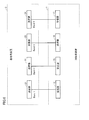
- FIG. 6 is a diagram illustrating an example of a communication network configuration according to the embodiment of the present invention.
- a certain base station apparatus 2 is used as a communication network configuration.
- a configuration in which transmitters 21 to 24 (and receivers not shown) corresponding to each frequency band are provided and control of each frequency band is performed by one base station apparatus 2 is preferable from the viewpoint of simplification of control.
- the base station apparatus 2 may be configured to transmit a plurality of frequency bands with a single transmission apparatus because the frequency bands are continuous frequency bands.
- each frequency band controlled by the transmission apparatus of the base station apparatus 2 is regarded as a cell and exists in the same spatial area. At this time, the areas (cells) covered by each frequency band may have different sizes and shapes.
- the mobile station apparatus 1 communicates with the base station apparatus 2 using the receivers 14 to 17 (and a transmitter not shown) from the viewpoint of simplification of control. It may be configured to receive the frequency band. A similar configuration is possible for uplink communication.
- each area covered by the frequency of the component carrier formed by the base station apparatus 2 is referred to as a cell, and this is the definition of a cell in a communication system that is actually operated. Note that it can be different. For example, in some communication systems, some of the component carriers used by carrier aggregation may be defined simply as additional radio resources rather than cells. By referring to the component carrier as a cell in the present invention, even if a case different from the definition of the cell in the actually operated communication system occurs, the gist of the present invention is not affected.
- the mobile station apparatus 1 may be wirelessly connected to the base station apparatus 2 via a relay station apparatus (or repeater) as shown in the figure.
- FIG. 7 is a diagram showing an example of a wireless communication configuration according to the embodiment of the present invention.
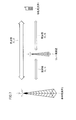
- the cells having the frequencies f1 and f2 assigned to the mobile station apparatus 1 and the cells having the frequencies f3 and f4 have different transmission / reception timings. Therefore, the base station apparatus 2 and the mobile station apparatus 1 manage the cells of the frequencies f1 and f2 as one cell group and the cells of the frequencies f3 and f4 as another cell group.
- an example of managing as two cell groups has been shown, but of course, it may be managed as three or more cell groups.
- Random Access Procedure There are two random access procedures: contention based random access (Contention based Random Access) and non-contention based random access (Non-Contention based Random Access).
- Contention-based random access is a random access procedure that may collide between mobile station devices, and is initially connected from a state where it is not connected (communication) with the base station device, and is connected to the base station device. Is performed at the time of a scheduling request when uplink data transmission occurs in the mobile station apparatus in a state where uplink synchronization is not adjusted.
- non-contention based random access is a random access procedure in which no collision occurs between mobile station devices.
- Non-contention based random access is a method for quickly performing uplink synchronization between a mobile station apparatus and a base station apparatus when the base station apparatus and the mobile station apparatus are connected but uplink synchronization is not adjusted. Used to take.
- Non-contention based random access is instructed from the base station apparatus mainly in a special case such as when handover or the transmission timing of the mobile station apparatus is not effective, and the mobile station apparatus starts a random access procedure (Non-patent Document 1). .
- Non-contention based random access is indicated by RRC layer messages or downlink control channel PDCCH control data.
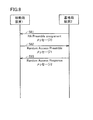
- the base station apparatus notifies the mobile station apparatus of information necessary for the random access procedure as downlink control information (DCI: Downlink Control Information) using the downlink control channel PDCCH of the primary cell (message 0, Step S81).
- DCI Downlink Control Information
- the DCI for the random access procedure is notified in a predetermined format (Format 1A), and includes random access preamble transmission resource allocation information (PRACH Mask Index) and preamble number (Preamble Index).
- the mobile station apparatus that has received the PDCCH including the DCI addressed to itself transmits a random access preamble corresponding to the designated preamble number using the uplink resource assigned to the primary cell (message 1, step S82). ).
- the base station apparatus When the base station apparatus detects a random access preamble from the mobile station apparatus, the base station apparatus calculates a transmission timing shift amount between the mobile station apparatus and the base station apparatus from the random access preamble.
- the base station apparatus uses random access response identification information (RA-RNTI: Random Access-Radio Network Identity) to indicate a response (random access response) addressed to the mobile station apparatus that has transmitted the random access preamble to the downlink control channel PDCCH. ).
- RA-RNTI Random Access-Radio Network Identity
- the base station apparatus transmits, to the downlink shared channel PDSCH, a random access response message including transmission timing adjustment information based on the timing deviation amount, scheduling information, and identifier information of the received random access preamble (message 2). Step S83).
- the mobile station apparatus When the mobile station apparatus detects that the RA-RNTI is present in the downlink control channel PDCCH, the mobile station apparatus confirms the contents of the random access response message arranged in the downlink shared channel PDSCH. When the transmitted random access preamble information is included, the mobile station apparatus adjusts the uplink transmission timing from the transmission timing adjustment information included in the random access response message. When receiving the transmission timing adjustment information, the mobile station apparatus starts (or restarts) the transmission timing timer if the received transmission timing adjustment information is valid. Note that when this transmission timing timer expires, the adjusted transmission timing becomes invalid. While the transmission timing is valid, the mobile station apparatus can transmit data to the base station apparatus. When the transmission timing is invalid, only random access preamble transmission is possible. In addition, a period in which the transmission timing adjustment information is valid is referred to as an “uplink synchronization state”, and a period in which the transmission timing is not valid is also referred to as an “uplink asynchronous state”.
- Update of the uplink transmission timing after completion of the random access procedure for example, by measuring the uplink reference signal (measurement reference signal or demodulation reference signal) transmitted from the mobile station device by the base station device, This is done by calculating transmission timing adjustment information and notifying the mobile station apparatus of a transmission timing message including the calculated transmission timing adjustment information.
- the mobile station apparatus adjusts the uplink transmission timing from the transmission timing adjustment information notified from the base station apparatus, the mobile station apparatus restarts the transmission timing timer.
- the base station apparatus also holds the same transmission timing timer as that of the mobile station apparatus, and starts or restarts the transmission timing timer when a transmission timing message is transmitted. By doing so, the uplink synchronization state is managed by the base station apparatus and the mobile station apparatus.
- the transmission timing timer expires, the adjusted transmission timing becomes invalid, and the mobile station apparatus stops uplink transmission other than transmission of the random access preamble.
- FIG. 1 is a block diagram showing an example of a mobile station apparatus 1 according to the embodiment of the present invention.
- the mobile station apparatus 1 includes a reception unit 101, a demodulation unit 102, a decoding unit 103, a component carrier management unit 104, a control unit 105, a random access processing unit 106, a coding unit 107, a modulation unit 108, a transmission unit 109, and an upper layer 110. , And a wireless transmission setting unit 111.
- the upper layer 110 Prior to reception, the upper layer 110 outputs mobile station apparatus control information to the control unit 105.
- the control unit 105 appropriately outputs the mobile station apparatus control information related to reception to the reception unit 101, the demodulation unit 102, and the decoding unit 103 as reception control information.
- the reception control information includes information such as demodulation information, decoding information, reception frequency band information, reception timing for each channel, multiplexing method, and radio resource arrangement information as reception schedule information.
- the receiving unit 101 receives a signal from the base station apparatus 2 to be described later through one or more receivers (not shown) in the frequency band notified by the reception control information, and converts the received signal into a baseband digital signal.
- Demodulation section 102 demodulates the received signal and outputs it to decoding section 103.
- Decoding section 103 correctly decodes the demodulated signal based on the reception control information, appropriately separates it into downlink traffic data and downlink control data, and outputs each to upper layer 110.
- the upper layer 110 activates / deactivates information such as addition, modification, or release of a component carrier in downlink control data and / or an allocated component carrier (or a cell in which uplink and downlink component carriers are combined).
- the component carrier management unit 104 is notified of the information. Based on the notified contents, the component carrier management unit 104 (i) corrects the parameter of the component carrier (cell) of the secondary cell number already assigned to the own station or releases the component carrier, or (ii) The parameter of the component carrier (cell) having a secondary cell number is stored, or (iii) the active / inactive state of each secondary cell is stored. Further, when a plurality of assigned secondary cells have different transmission / reception timings, information on a cell group constituted by one or more cells having the same transmission / reception timing is stored. The information on the cell group includes information such as transmission / reception timing for each cell group, transmission timing timer timing status, and the like. The activation / deactivation information of the component carrier may be notified from the decoding unit 103 to the component carrier management unit 104 without passing through the upper layer 110.
- the upper layer 110 outputs mobile station apparatus control information to the control unit 105.
- the control unit 105 appropriately outputs the mobile station apparatus control information related to transmission to the random access processing unit 106, the encoding unit 107, the modulation unit 108, and the transmission unit 109 as transmission control information.
- the transmission control information includes information such as encoding information, modulation information, transmission frequency band information, transmission timing for each channel, multiplexing method, and radio resource arrangement information as uplink scheduling information of the transmission signal.
- the upper layer 310 appropriately outputs the uplink traffic data and the uplink control data to the encoding unit 107 according to the uplink channel.
- the encoding unit 107 appropriately encodes each data according to the transmission control information and outputs the data to the modulation unit 108.
- Modulation section 108 modulates the signal encoded by encoding section 107. Also, the modulation unit 108 multiplexes the downlink reference signal with the modulated signal and maps it to the frequency band.
- the transmission unit 109 converts the frequency band signal output from the modulation unit 108 into a time domain signal, places the converted signal on a carrier wave of a predetermined frequency, performs power amplification, and at least one transmitter (not shown) Send from.
- the signal decoded by the decoding unit 103 includes information indicating a cell group to which the transmission timing before the handover is applied even after the handover, the information is transmitted through the higher layer 110 (or directly from the decoding unit 103).
- the carrier management unit 104 and the random access processing unit 106 are notified.
- the random access processing unit 106 determines whether or not the random access procedure after the handover is necessary based on the notified information and each component carrier information acquired from the component carrier management unit 104.
- the component carrier management unit 104 performs a process of bringing the cell group to which the transmission timing before the handover is applied into an active state.
- the transmission timing timer is counting.
- the timing of the transmission timing timer may be continued while inactive after handover.
- the demodulator 102 demodulates a signal instructing activation of the cell group from the base station apparatus 2
- the corresponding cell is activated, and the activated cell is Performs uplink transmission without performing a random access procedure.
- Only one transmission timing timer may be prepared for each mobile station apparatus or may be prepared for each cell group.
- the uplink shared channel in which the uplink control data is arranged typically constitutes a layer 3 message (radio resource control message; RRC message).
- the RRC unit of the mobile station device 1 exists as part of the upper layer 110.
- the random access processing unit 106 exists as part of a MAC (Medium Access Control) that manages the data link layer of the mobile station apparatus 1.
- the other components of the mobile station apparatus 1 are omitted because they are not related to the present embodiment.
- FIG. 2 is a block diagram showing an example of the base station apparatus 2 according to the embodiment of the present invention.
- the base station apparatus 2 includes a reception unit 201, a demodulation unit 202, a decoding unit 203, a control unit 204, a coding unit 205, a modulation unit 206, a transmission unit 207, a network signal processing unit 208, and an upper layer 209.
- the upper layer 209 outputs the downlink traffic data and the downlink control data to the encoding unit 205.
- the encoding unit 205 encodes each input data and outputs it to the modulation unit 206.
- Modulation section 206 modulates the encoded signal.
- the modulation unit 206 multiplexes the downlink reference signal with the modulated signal and maps it to the frequency band.
- the transmission unit 207 converts the frequency band signal output from the modulation unit 206 into a time domain signal, and amplifies the power by placing the converted signal on a carrier having a predetermined frequency from one or more transmitters (not shown). Send with.
- a downlink shared channel in which downlink control data is arranged typically constitutes a layer 3 message (RRC message).
- the receiving unit 201 receives a signal from the mobile station apparatus 1 through one or more receivers (not shown) in the frequency band notified by the reception control information, and converts the received signal into a baseband digital signal.
- the demodulator 202 demodulates the digital signal and outputs it to the decoder 203.
- the decoding unit 203 decodes the demodulated signal, appropriately separates it into uplink traffic data and uplink control data, and outputs them to the upper layer 209, respectively.
- the upper layer 209 outputs base station apparatus control information necessary for controlling these blocks to the control unit 204.
- the control unit 204 appropriately outputs base station apparatus control information related to transmission to each block of the coding unit 205, the modulation unit 206, and the transmission unit 207 as transmission control information.
- the control unit 204 appropriately outputs base station apparatus control information related to reception to each block of the reception unit 201, the demodulation unit 202, and the decoding unit 203 as reception control information.
- the network signal processing unit 208 transmits or receives a control message between a plurality of base station apparatuses 2 (or control station apparatus (MME), gateway apparatus (Gateway), MCE) and the base station apparatus 2. .
- Control messages are transmitted and received via a network line. Control messages are exchanged on logical interfaces called “S1 interface”, “X2 interface”, “M1 interface”, or “M2 interface”.
- the RRC unit of the base station device 2 exists as a part of the upper layer 209.
- the other components of the base station apparatus 2 are omitted because they are not related to the present embodiment.
- this embodiment demonstrates the example in which the mobile station apparatus 1 moves to the cell when the base station apparatus before handover (Source eNB) and the base station apparatus after handover (Target eNB) are different due to handover
- the present invention is not limited to this, and can be applied to movement between cells in the same base station apparatus, in particular, change of a primary cell.
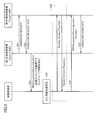
- the first base station apparatus notifies the second base station apparatus of a handover request message (HANDOVER REQUEST) of the mobile station apparatus (step S31).
- the handover request message includes information related to the communication capability of the mobile station apparatus, network resource allocation information, and radio resource allocation information (such as secondary cell allocation information).
- the second base station apparatus approves the handover, the second base station apparatus notifies the first base station apparatus of a handover request approval message (HANDOVER REQUEST ACK) (step S32).
- the handover request approval message includes information on secondary cell allocation information, cell group information on the cell, and transmission timing setting after handover for the cell group (when change is necessary).
- the first base station apparatus that has received the handover request acknowledgment message notifies the mobile station apparatus of an RRC connection reconfiguration message (RRCConfigurationReconfiguration) including information on the transmission timing setting, and instructs the mobile station apparatus to perform handover. (Step S33).
- RRCConfigurationReconfiguration RRC connection reconfiguration message
- the mobile station apparatus that has received the RRC connection reconfiguration message sets the synchronization state of the handover destination cell based on the information about the transmission timing setting included in the message (step S34).
- the mobile station apparatus determines whether the transmission timing of the cell group to which the primary cell after the handover belongs is instructed to apply the transmission timing of the same cell group before the handover. If the primary cell is not a cell in the cell group instructed to apply the transmission timing before the handover, the mobile station apparatus performs non-contention based random access to the handover target primary cell as in the conventional case (step S35). ).
- the mobile station apparatus When the connection to the handover destination cell is successful, the mobile station apparatus notifies the RRC connection reconfiguration completion message (RRCConfigurationReconfigurationComplete) in the cell in which the connection is successful (step S36).
- the second base station apparatus that has received the RRC connection reconfiguration completion message notifies the first base station apparatus of handover completion (HANDOVER COMPLETE) (step S37).
- step S34 when the transmission timing of the cell group to which the primary cell after the handover belongs is a cell of the cell group instructed to apply the transmission timing of the cell group before the handover, the mobile station device Random access processing in step S35 is not performed, and an RRC connection reconfiguration completion message notification in step S36 is performed.
- the mobile station apparatus does not have uplink resource allocation for notifying the RRC connection reconfiguration completion message, it is necessary to make an uplink resource allocation request by a random access procedure.
- step S34 the mobile station apparatus applies (i) the transmission timing before the handover after the handover to the cell groups other than the cell group to which the primary cell belongs based on the information on the transmission timing setting.
- the cells in the cell group maintain the active state or the cell state before the handover (active state or inactive state), and (ii) apply the transmission timing before the handover after the handover.
- the cells in the cell group are brought into an inactive state as in the past after handover.
- the second base station apparatus allocates resources to the mobile station apparatus based on the cell state and cell synchronization state of the mobile station apparatus. That is, when allocating resources to the mobile station apparatus to the cells of the cell group instructed to apply the transmission timing before handover after the handover, if the cell is in the active state, normal allocation is performed. Is inactive, the activation of the cell is instructed and uplink resources are allocated without executing the random access procedure.
- the cells other than the primary cell are transitioned to the inactive state, and the transmission timing timer is counted for the cells in the cell group instructed to apply the transmission timing before the handover after the handover. It may be continued.
- the mobile station apparatus receives a message from the base station apparatus for activating the cell of the cell group instructed to apply the transmission timing before the handover after the handover, the mobile station apparatus activates the cell, Uplink transmission can be performed without performing a random access procedure.
- the mobile station apparatus receives information for each cell group whether or not to apply the transmission timing before handover after the handover, so that the cell state after handover based on the information ( (Active state or inactive state) and cell synchronization state (whether or not a random access procedure is necessary) can be set. Further, the base station apparatus can also determine whether or not there is a necessity for resource allocation to the mobile station apparatus and a random access procedure instruction based on the information. Therefore, unnecessary activation instructions and random access procedures can be omitted, and efficient resource utilization and synchronization state management can be achieved.
- the information for each cell group whether or not to apply the transmission timing before the handover after the handover may be information on whether or not to continue the timing of the transmission timing timer, and the random access procedure It may be information on whether or not it is necessary.
- the information may be included in the RRC connection reconfiguration message as 1-bit information for each cell or cell group.
- the MRC Mobility Control Info
- the MCI is not included (primary cell not by handover but by cell parameter change)
- the mobile station The apparatus may perform the RRC connection reconfiguration completion message notification in step S36 without performing the random access process in step S35.
- the configurations of the mobile station device 1 and the base station device 2 used in the present embodiment may be the same as those in the first embodiment shown in FIGS.
- the example in which the cell group information to which the transmission timing before the handover is applied after the handover is notified from the first base station apparatus is shown.
- the cell group is activated after the handover.
- An example in which a cell or a cell group is notified is shown. That is, in the present embodiment, when the signal decoded by the decoding unit 103 of the mobile station apparatus 1 includes cell or cell group information to be activated after handover, the information is transmitted through the higher layer 110 (or the decoding unit).
- the component carrier management unit 104 is informed (directly from 103).
- the random access processing unit 106 determines whether to apply the transmission timing before the handover after the handover based on the state of each cell acquired from the component carrier management unit 104.
- the handover procedure in the communication system of this embodiment will be described with reference to FIG.
- the handover source base station apparatus (Source eNB) and the handover destination base station apparatus (Target eNB) are the same (example suitable for operation when changing the primary cell) will be described.
- the present invention is not limited to this, and can be applied to movement between cells between different base station apparatuses.
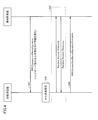
- the base station apparatus notifies the mobile station apparatus of an RRC connection reconfiguration message (RRCConfigurationReconfiguration) including information indicating the cell state after the handover, and instructs the mobile station apparatus to perform handover (step S41).
- RRCConfigurationReconfiguration RRC connection reconfiguration message
- the mobile station apparatus that has received the RRC connection reconfiguration message sets the handover destination cell and the cell state of the cell based on the information indicating the cell state after the handover included in the message (step S42).
- the mobile station apparatus determines whether the handover destination primary cell or the cell group to which the primary cell belongs is activated according to the information.
- the mobile station apparatus performs non-contention based random access to the handover destination primary cell as in the past (step S43).
- the mobile station apparatus notifies the RRC connection reconfiguration completion message (RRCConfigurationReconfigurationComplete) in the cell in which the connection is successful (step S44).
- the mobile station apparatus sets the transmission timing before the handover to the cell group to which the primary cell belongs even after the handover. Applying, the RRC connection reconfiguration completion message notification in step S44 is performed without performing the random access processing in step S43.
- the mobile station device does not have an uplink resource assigned to notify the RRC connection reconfiguration completion message, the mobile station device needs to make an uplink resource assignment request according to a random access procedure.
- step S42 the mobile station apparatus performs a cell or cell group other than the primary cell on the basis of the information about the cell state (active state or inactive state) after the handover notified by the RRC connection reconfiguration message. Even the cell state is set.
- the mobile station apparatus sets the transmission timing before the handover to be applied even after the handover to the cell or cell group set to the active state by the above information, and sets the cell or cell group set to the inactive state to the cell or cell group On the other hand, the transmission timing before the handover is set not to be applied after the handover.
- the base station apparatus allocates resources to the mobile station apparatus based on the cell state set in the mobile station apparatus. That is, when a resource of a mobile station apparatus is allocated to a cell or cell group instructed to be in an active state, the resource is allocated without executing a random access procedure.
- the mobile station apparatus receives the setting information of the cell state after the handover at the time of the handover, so that the cell state and the cell synchronization state after the handover (whether the random access procedure is necessary) based on the information. ) Can be set.
- the base station apparatus can also determine whether or not there is a need for resource allocation and random access procedure instruction to the mobile station apparatus based on the information. Therefore, unnecessary activation instructions and random access procedures can be omitted, and efficient resource utilization and synchronization state management can be achieved.
- the cell state setting information after the handover may be included in the RRC connection reconfiguration message as 1-bit information for each cell or cell group.
- step S41 it is assumed in step S41 that the MRC is included in the RRC connection reconfiguration message.
- the MCI is not included (in the case of primary cell change not by handover but by cell parameter change). It is also possible to apply to.
- the mobile station apparatus does not perform the random access process in step S43, and sends an RRC connection reconfiguration completion message notification in step S44. You just have to do it.
- the configurations of the mobile station device 1 and the base station device 2 used in this embodiment may be the same as those in the first embodiment shown in FIGS.
- the example in which the information of the cell group to which the transmission timing before the handover is applied after the handover is notified from the first base station apparatus is shown.
- An example will be shown in which only cells in a cell group to which transmission timing is applied after handover are allocated to the mobile station apparatus. That is, in the present embodiment, when cell assignment information after handover is included in the signal decoded by the decoding unit 103 of the mobile station apparatus 1, the information is transmitted through the higher layer 110 (or directly from the decoding unit 103). The management unit 104 is notified. After the handover, the random access processing unit 106 applies the transmission timing before the handover to all the cells acquired from the component carrier management unit 104 after the handover.
- the handover procedure in the communication system of this embodiment will be described with reference to FIG.
- the handover source base station apparatus (Source eNB) and the handover destination base station apparatus (Target eNB) are the same (example suitable for operation when changing the primary cell) will be described.
- the present invention is not limited to this, and can be applied to movement between cells between different base station apparatuses.
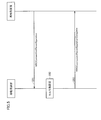
- the base station apparatus notifies the mobile station apparatus of an RRC connection reconfiguration message (RRCConfigurationReconfiguration) including information for allocating only the cell group to which the transmission timing before handover is applied after the handover, and the mobile station apparatus performs the handover. (Step S51).
- RRCConfigurationReconfiguration an RRC connection reconfiguration message
- the mobile station apparatus that has received the RRC connection reconfiguration message sets the handover destination cell and cell state based on the cell allocation information included in the message (step S52).
- the mobile station apparatus applies the transmission timing before handover of each cell group to all cell groups after handover, does not perform random access processing, and performs an RRC connection reconfiguration completion message in the connected handover destination cell. (RRCConfigurationReconfigurationComplete) is notified (step S53).
- the mobile station apparatus applies the transmission timing before handover to all assigned cell groups even after handover.
- the mobile station apparatus may transition all the secondary cells to the inactive state after the handover, or may maintain the active state.
- the base station apparatus allocates resources to the mobile station apparatus based on the cell state and the cell synchronization state. That is, when the base station apparatus allocates resources to the cell allocated to the mobile station apparatus at the time of handover, since the transmission timing before the handover is applied to the cell after the handover, the mobile station apparatus Uplink transmission can be performed without performing an access procedure.
- a cell or a cell group that needs to execute a random access procedure is assigned by an RRC connection reconfiguration message after handover. That is, when a cell that does not belong to the cell group allocated at the time of handover is allocated after the handover, the mobile station apparatus needs to perform a random access procedure and adjust the transmission timing in order to perform uplink transmission.
- the mobile station device does not need to perform complicated processing for setting the transmission timing by assigning only the cells of the cell group to which the transmission timing before the handover can be applied after the handover at the time of handover, Efficient resource usage and synchronization status management is possible.
- the present invention is not limited to this, and the conventional handover is performed when the MCI is included.
- the processing of the present technology may be performed only when MCI is not included.
- information regarding transmission timing setting may not be explicitly included in the RRC connection reconfiguration message, and cell groups that are in a synchronized state before handover may be implicitly set to have the same transmission timing after handover.
- the mobile station apparatus and the base station apparatus of the embodiment have been described using functional block diagrams, but the functions of each part of the mobile station apparatus and the base station apparatus or a part of these functions are realized.
- the mobile station apparatus and the base station apparatus may be controlled by recording a program for recording on a computer-readable recording medium, causing the computer system to read and execute the program recorded on the recording medium.
- the “computer system” includes an OS and hardware such as peripheral devices.
- the “computer-readable recording medium” refers to a semiconductor medium (eg, RAM, nonvolatile memory card, etc.), an optical recording medium (eg, DVD, MO, MD, CD, BD, etc.), a magnetic recording medium (eg, , A magnetic tape, a flexible disk, etc.) and a storage device such as a disk unit built in a computer system. Furthermore, the “computer-readable recording medium” means that a program is dynamically held for a short time, like a communication line when a program is transmitted via a network such as the Internet or a communication line such as a telephone line.
- a network such as the Internet
- a communication line such as a telephone line.
- the program may be a program for realizing a part of the functions described above, and may be a program capable of realizing the functions described above in combination with a program already recorded in a computer system. .
- each functional block of the mobile station apparatus and the base station apparatus used in the above embodiments may be realized as an LSI that is typically an integrated circuit.
- Each functional block may be individually formed into chips, or a part or all of them may be integrated into a chip.
- the method of circuit integration is not limited to LSI, and may be realized by a dedicated circuit or a general-purpose processor.
- an integrated circuit based on the technology can also be used.
Landscapes
- Engineering & Computer Science (AREA)
- Computer Networks & Wireless Communication (AREA)
- Signal Processing (AREA)
- Mobile Radio Communication Systems (AREA)
Priority Applications (3)
| Application Number | Priority Date | Filing Date | Title |
|---|---|---|---|
| CN201280039278.9A CN103718625B (zh) | 2011-08-12 | 2012-08-07 | 移动台装置、基站装置及同步状态管理方法 |
| US14/238,385 US9854484B2 (en) | 2011-08-12 | 2012-08-07 | Mobile station, base station, and method for managing synchronization state |
| EP12823965.4A EP2744282B1 (en) | 2011-08-12 | 2012-08-07 | Communication system, mobile station, base station, synchronization state management method and integrated circuit |
Applications Claiming Priority (2)
| Application Number | Priority Date | Filing Date | Title |
|---|---|---|---|
| JP2011-176624 | 2011-08-12 | ||
| JP2011176624A JP5667011B2 (ja) | 2011-08-12 | 2011-08-12 | 通信システム、移動局装置、基地局装置、同期状態管理方法及び集積回路 |
Publications (1)
| Publication Number | Publication Date |
|---|---|
| WO2013024743A1 true WO2013024743A1 (ja) | 2013-02-21 |
Family
ID=47715063
Family Applications (1)
| Application Number | Title | Priority Date | Filing Date |
|---|---|---|---|
| PCT/JP2012/070069 Ceased WO2013024743A1 (ja) | 2011-08-12 | 2012-08-07 | 通信システム、移動局装置、基地局装置、同期状態管理方法及び集積回路 |
Country Status (5)
| Country | Link |
|---|---|
| US (1) | US9854484B2 (https=) |
| EP (1) | EP2744282B1 (https=) |
| JP (1) | JP5667011B2 (https=) |
| CN (1) | CN103718625B (https=) |
| WO (1) | WO2013024743A1 (https=) |
Cited By (3)
| Publication number | Priority date | Publication date | Assignee | Title |
|---|---|---|---|---|
| WO2014208732A1 (ja) * | 2013-06-27 | 2014-12-31 | シャープ株式会社 | 端末装置、基地局装置、通信システム、制御方法および集積回路 |
| WO2015096775A1 (zh) * | 2013-12-26 | 2015-07-02 | 华为技术有限公司 | 一种随机接入的干扰控制方法、设备及系统 |
| CN105264978A (zh) * | 2013-06-04 | 2016-01-20 | Lg电子株式会社 | 在无线通信系统中由基站发送用于用户设备同步的信息的方法及其设备 |
Families Citing this family (22)
| Publication number | Priority date | Publication date | Assignee | Title |
|---|---|---|---|---|
| JP5454123B2 (ja) * | 2009-12-16 | 2014-03-26 | ソニー株式会社 | ハンドオーバのための方法、端末装置及び無線通信システム |
| WO2014069587A1 (ja) * | 2012-11-02 | 2014-05-08 | シャープ株式会社 | 基地局装置、端末装置、通信システム、送信方法、受信方法、通信方法および集積回路 |
| JP6192288B2 (ja) * | 2012-11-30 | 2017-09-06 | 株式会社Nttドコモ | 移動局及び制御方法 |
| JP6159530B2 (ja) * | 2013-01-17 | 2017-07-05 | Kddi株式会社 | 端末装置、基地局装置、通信システム及び通信方法 |
| JP2016515779A (ja) * | 2013-04-03 | 2016-05-30 | 華為技術有限公司Huawei Technologies Co.,Ltd. | ダウンリンク情報の処理方法およびデバイス |
| CN110266445B (zh) | 2013-11-01 | 2022-09-27 | 三星电子株式会社 | 用于重新配置承载的方法及设备 |
| JP6264860B2 (ja) | 2013-11-27 | 2018-01-24 | セイコーエプソン株式会社 | 記録装置 |
| US20170078933A1 (en) * | 2014-03-14 | 2017-03-16 | Telefonaktiebolaget Lm Ericsson (Publ) | Method and Apparatus for a Handover using Dedicated Random Access Resource |
| US9942016B2 (en) | 2014-03-21 | 2018-04-10 | Futurewei Technologies, Inc. | Device, network, and method for network adaptation and discovery |
| US9538431B2 (en) * | 2014-09-24 | 2017-01-03 | Intel Corporation | Handover at spectrum release for licensed shared access |
| US10128919B2 (en) * | 2014-11-06 | 2018-11-13 | Ntt Docomo, Inc. | User terminal, radio base station, radio communication system, and radio communication method |
| US10064145B2 (en) * | 2015-01-26 | 2018-08-28 | Electronics And Telecommunications Research Institute | Method of receiving downlink signal of high speed moving terminal, adaptive communication method and adaptive communication apparatus in mobile wireless backhaul network |
| US11051259B2 (en) | 2015-11-02 | 2021-06-29 | Qualcomm Incorporated | Methods and apparatuses for an access procedure |
| WO2017130852A1 (ja) * | 2016-01-25 | 2017-08-03 | 京セラ株式会社 | 無線端末及び基地局 |
| CN107371210A (zh) * | 2016-05-13 | 2017-11-21 | 中兴通讯股份有限公司 | 切换方法及装置 |
| US10455558B2 (en) * | 2016-05-13 | 2019-10-22 | Qualcomm Incorporated | Handling for interruption due to carrier switching and carrier switching capability indication |
| US10855399B2 (en) * | 2016-06-03 | 2020-12-01 | Htc Corporation | Device and method of handling dual connectivity |
| CN108811040B (zh) * | 2017-05-04 | 2020-11-03 | 维沃移动通信有限公司 | 系统信息变更指示方法、网络侧设备及终端 |
| WO2020144786A1 (ja) * | 2019-01-09 | 2020-07-16 | 株式会社Nttドコモ | 端末及び通信方法 |
| US12028283B2 (en) * | 2019-01-10 | 2024-07-02 | Panasonic Intellectual Property Corporation Of America | Base station, terminal and communication method |
| WO2021066699A1 (en) * | 2019-10-01 | 2021-04-08 | Telefonaktiebolaget Lm Ericsson (Publ) | Group signalling aspects for nr-nr dual connectivity (nr-dc) and reconfiguration |
| WO2026053056A1 (en) * | 2024-09-04 | 2026-03-12 | Nokia Technologies Oy | Apparatus and method for priorities on cell allocation in fragmented carrier aggregation |
Family Cites Families (9)
| Publication number | Priority date | Publication date | Assignee | Title |
|---|---|---|---|---|
| DE60102275T2 (de) * | 2000-10-18 | 2004-12-30 | Lg Electronics Inc. | Verfahren zur Steuerung des Weiterreichens in einem Schema für synchrone Aufwärtsübertragung |
| US20100142485A1 (en) * | 2007-08-13 | 2010-06-10 | Eun Jong Lee | Method for performing handover in wireless communication system |
| CN101808374B (zh) * | 2009-02-17 | 2012-05-30 | 电信科学技术研究院 | 多载波聚合系统中小区切换方法及装置 |
| CN101925130A (zh) * | 2009-06-16 | 2010-12-22 | 中兴通讯股份有限公司 | 多载波配置信息的发送方法及辅载波分配方法 |
| CN101932052B (zh) | 2009-06-23 | 2016-08-24 | 华为技术有限公司 | 一种切换方法、用户终端及网络侧设备 |
| CN101646234A (zh) * | 2009-09-01 | 2010-02-10 | 中兴通讯股份有限公司 | 一种定时提前量的获取方法 |
| KR102073027B1 (ko) * | 2011-04-05 | 2020-02-04 | 삼성전자 주식회사 | 반송파 집적 기술을 사용하는 무선통신시스템에서 복수 개의 타임 정렬 타이머 운용 방법 및 장치 |
| CN102118801B (zh) * | 2011-03-31 | 2013-07-24 | 电信科学技术研究院 | 多载波聚合系统中的上行传输方法和设备 |
| US20130303230A1 (en) * | 2012-05-10 | 2013-11-14 | Samsung Electronics Co., Ltd | Method and apparatus for aggregated cqi for coordinated multipoint transmission |
-
2011
- 2011-08-12 JP JP2011176624A patent/JP5667011B2/ja not_active Expired - Fee Related
-
2012
- 2012-08-07 EP EP12823965.4A patent/EP2744282B1/en active Active
- 2012-08-07 WO PCT/JP2012/070069 patent/WO2013024743A1/ja not_active Ceased
- 2012-08-07 US US14/238,385 patent/US9854484B2/en active Active
- 2012-08-07 CN CN201280039278.9A patent/CN103718625B/zh active Active
Non-Patent Citations (3)
| Title |
|---|
| HUAWEI: "Multiple Timing Advance Impact on RAN2", 3GPP TSG RAN WG2 MEETING#68BIS R2-100110, 22 January 2010 (2010-01-22), XP050420934 * |
| NTT DOCOMO,INC.: "CA support for multi-TA", 3GPP TSG-RAN2 #69 R2-101567, 26 February 2010 (2010-02-26), XP050421923 * |
| QUALCOMM INCORPORATED: "Supporting multiple timing advance group", 3GPP TSG-RAN WG2 MEETING#68BIS R2-100423, 22 January 2010 (2010-01-22), XP050421077 * |
Cited By (6)
| Publication number | Priority date | Publication date | Assignee | Title |
|---|---|---|---|---|
| CN105264978A (zh) * | 2013-06-04 | 2016-01-20 | Lg电子株式会社 | 在无线通信系统中由基站发送用于用户设备同步的信息的方法及其设备 |
| CN105264978B (zh) * | 2013-06-04 | 2019-09-03 | Lg电子株式会社 | 由基站发送用于用户设备同步的信息的方法及其设备 |
| WO2014208732A1 (ja) * | 2013-06-27 | 2014-12-31 | シャープ株式会社 | 端末装置、基地局装置、通信システム、制御方法および集積回路 |
| JPWO2014208732A1 (ja) * | 2013-06-27 | 2017-02-23 | シャープ株式会社 | 端末装置、基地局装置、通信システム、制御方法および集積回路 |
| US10064163B2 (en) | 2013-06-27 | 2018-08-28 | Sharp Kabushiki Kaisha | Terminal apparatus, base station apparatus, communication system, control method, and integrated circuit |
| WO2015096775A1 (zh) * | 2013-12-26 | 2015-07-02 | 华为技术有限公司 | 一种随机接入的干扰控制方法、设备及系统 |
Also Published As
| Publication number | Publication date |
|---|---|
| EP2744282A1 (en) | 2014-06-18 |
| US20140194126A1 (en) | 2014-07-10 |
| CN103718625B (zh) | 2019-03-19 |
| EP2744282B1 (en) | 2018-05-02 |
| JP5667011B2 (ja) | 2015-02-12 |
| JP2013042264A (ja) | 2013-02-28 |
| US9854484B2 (en) | 2017-12-26 |
| CN103718625A (zh) | 2014-04-09 |
| EP2744282A4 (en) | 2015-05-27 |
Similar Documents
| Publication | Publication Date | Title |
|---|---|---|
| JP5667011B2 (ja) | 通信システム、移動局装置、基地局装置、同期状態管理方法及び集積回路 | |
| JP5329598B2 (ja) | 通信システム、移動局装置、基地局装置、ランダムアクセス処理方法及び集積回路 | |
| JP6547883B2 (ja) | UE、eNodeB、及びこれらの方法 | |
| JP6504509B2 (ja) | 端末装置及び通信方法 | |
| US9433027B2 (en) | Systems and methods for establishing multiple radio connections | |
| US9357460B2 (en) | Systems and methods for establishing multiple radio connections | |
| JP5425679B2 (ja) | 移動局装置、基地局装置、通信システム、通信方法、集積回路および移動局装置の制御プログラム | |
| JP6409231B2 (ja) | 端末装置、基地局装置、通信システム、制御方法および集積回路 | |
| JP2018085545A (ja) | 端末装置、基地局装置、通信システム、通信方法および集積回路 | |
| KR20140039887A (ko) | 통신 시스템에서 복수의 셀을 이용하는 방법 및 장치 | |
| WO2015133579A1 (ja) | 端末装置、基地局装置、通信システム、制御方法および集積回路 | |
| WO2012039289A1 (ja) | 通信システム、基地局装置、移動局装置、ランダムアクセス送信方法、および集積回路 | |
| WO2016121800A1 (ja) | 端末装置、集積回路、および、通信方法 | |
| WO2012111596A1 (ja) | 通信システム、基地局装置、移動局装置、パワーヘッドルーム報告方法、および集積回路 | |
| WO2012128205A1 (ja) | 通信システム、基地局装置、移動局装置、移動局装置処理能力の管理方法および集積回路 | |
| JP2014236366A (ja) | 端末装置、基地局装置、通信システム、通信方法および集積回路 | |
| JP5960781B2 (ja) | 通信システム、移動局装置、基地局装置、同期状態管理方法及び集積回路 | |
| JP6230516B2 (ja) | 基地局装置、移動局装置、及び処理方法 | |
| JP2012004767A (ja) | 通信システム、移動局装置、基地局装置及び測定設定管理方法 | |
| JP6532154B2 (ja) | 移動局装置 | |
| JP5695167B2 (ja) | 移動局装置、基地局装置及び処理方法 |
Legal Events
| Date | Code | Title | Description |
|---|---|---|---|
| 121 | Ep: the epo has been informed by wipo that ep was designated in this application |
Ref document number: 12823965 Country of ref document: EP Kind code of ref document: A1 |
|
| WWE | Wipo information: entry into national phase |
Ref document number: 2012823965 Country of ref document: EP |
|
| WWE | Wipo information: entry into national phase |
Ref document number: 14238385 Country of ref document: US |
|
| NENP | Non-entry into the national phase |
Ref country code: DE |