WO2012173354A2 - 인휠 모터 구동 전기자동차의 롤 운동 제어장치 - Google Patents
인휠 모터 구동 전기자동차의 롤 운동 제어장치 Download PDFInfo
- Publication number
- WO2012173354A2 WO2012173354A2 PCT/KR2012/004473 KR2012004473W WO2012173354A2 WO 2012173354 A2 WO2012173354 A2 WO 2012173354A2 KR 2012004473 W KR2012004473 W KR 2012004473W WO 2012173354 A2 WO2012173354 A2 WO 2012173354A2
- Authority
- WO
- WIPO (PCT)
- Prior art keywords
- wheel
- vehicle
- torque
- roll
- force
- Prior art date
- Legal status (The legal status is an assumption and is not a legal conclusion. Google has not performed a legal analysis and makes no representation as to the accuracy of the status listed.)
- Ceased
Links
Images

Classifications
-
- B—PERFORMING OPERATIONS; TRANSPORTING
- B60—VEHICLES IN GENERAL
- B60W—CONJOINT CONTROL OF VEHICLE SUB-UNITS OF DIFFERENT TYPE OR DIFFERENT FUNCTION; CONTROL SYSTEMS SPECIALLY ADAPTED FOR HYBRID VEHICLES; ROAD VEHICLE DRIVE CONTROL SYSTEMS FOR PURPOSES NOT RELATED TO THE CONTROL OF A PARTICULAR SUB-UNIT
- B60W10/00—Conjoint control of vehicle sub-units of different type or different function
- B60W10/04—Conjoint control of vehicle sub-units of different type or different function including control of propulsion units
- B60W10/08—Conjoint control of vehicle sub-units of different type or different function including control of propulsion units including control of electric propulsion units, e.g. motors or generators
-
- B—PERFORMING OPERATIONS; TRANSPORTING
- B60—VEHICLES IN GENERAL
- B60G—VEHICLE SUSPENSION ARRANGEMENTS
- B60G17/00—Resilient suspensions having means for adjusting the spring or vibration-damper characteristics, for regulating the distance between a supporting surface and a sprung part of vehicle or for locking suspension during use to meet varying vehicular or surface conditions, e.g. due to speed or load
- B60G17/015—Resilient suspensions having means for adjusting the spring or vibration-damper characteristics, for regulating the distance between a supporting surface and a sprung part of vehicle or for locking suspension during use to meet varying vehicular or surface conditions, e.g. due to speed or load the regulating means comprising electric or electronic elements
- B60G17/016—Resilient suspensions having means for adjusting the spring or vibration-damper characteristics, for regulating the distance between a supporting surface and a sprung part of vehicle or for locking suspension during use to meet varying vehicular or surface conditions, e.g. due to speed or load the regulating means comprising electric or electronic elements characterised by their responsiveness, when the vehicle is travelling, to specific motion, a specific condition, or driver input
- B60G17/0162—Resilient suspensions having means for adjusting the spring or vibration-damper characteristics, for regulating the distance between a supporting surface and a sprung part of vehicle or for locking suspension during use to meet varying vehicular or surface conditions, e.g. due to speed or load the regulating means comprising electric or electronic elements characterised by their responsiveness, when the vehicle is travelling, to specific motion, a specific condition, or driver input mainly during a motion involving steering operation, e.g. cornering, overtaking
-
- B—PERFORMING OPERATIONS; TRANSPORTING
- B60—VEHICLES IN GENERAL
- B60G—VEHICLE SUSPENSION ARRANGEMENTS
- B60G17/00—Resilient suspensions having means for adjusting the spring or vibration-damper characteristics, for regulating the distance between a supporting surface and a sprung part of vehicle or for locking suspension during use to meet varying vehicular or surface conditions, e.g. due to speed or load
- B60G17/015—Resilient suspensions having means for adjusting the spring or vibration-damper characteristics, for regulating the distance between a supporting surface and a sprung part of vehicle or for locking suspension during use to meet varying vehicular or surface conditions, e.g. due to speed or load the regulating means comprising electric or electronic elements
- B60G17/0152—Resilient suspensions having means for adjusting the spring or vibration-damper characteristics, for regulating the distance between a supporting surface and a sprung part of vehicle or for locking suspension during use to meet varying vehicular or surface conditions, e.g. due to speed or load the regulating means comprising electric or electronic elements characterised by the action on a particular type of suspension unit
- B60G17/0157—Resilient suspensions having means for adjusting the spring or vibration-damper characteristics, for regulating the distance between a supporting surface and a sprung part of vehicle or for locking suspension during use to meet varying vehicular or surface conditions, e.g. due to speed or load the regulating means comprising electric or electronic elements characterised by the action on a particular type of suspension unit non-fluid unit, e.g. electric motor
-
- B—PERFORMING OPERATIONS; TRANSPORTING
- B60—VEHICLES IN GENERAL
- B60K—ARRANGEMENT OR MOUNTING OF PROPULSION UNITS OR OF TRANSMISSIONS IN VEHICLES; ARRANGEMENT OR MOUNTING OF PLURAL DIVERSE PRIME-MOVERS IN VEHICLES; AUXILIARY DRIVES FOR VEHICLES; INSTRUMENTATION OR DASHBOARDS FOR VEHICLES; ARRANGEMENTS IN CONNECTION WITH COOLING, AIR INTAKE, GAS EXHAUST OR FUEL SUPPLY OF PROPULSION UNITS IN VEHICLES
- B60K7/00—Disposition of motor in, or adjacent to, traction wheel
- B60K7/0007—Disposition of motor in, or adjacent to, traction wheel the motor being electric
-
- B—PERFORMING OPERATIONS; TRANSPORTING
- B60—VEHICLES IN GENERAL
- B60L—PROPULSION OF ELECTRICALLY-PROPELLED VEHICLES; SUPPLYING ELECTRIC POWER FOR AUXILIARY EQUIPMENT OF ELECTRICALLY-PROPELLED VEHICLES; ELECTRODYNAMIC BRAKE SYSTEMS FOR VEHICLES IN GENERAL; MAGNETIC SUSPENSION OR LEVITATION FOR VEHICLES; MONITORING OPERATING VARIABLES OF ELECTRICALLY-PROPELLED VEHICLES; ELECTRIC SAFETY DEVICES FOR ELECTRICALLY-PROPELLED VEHICLES
- B60L15/00—Methods, circuits, or devices for controlling the traction-motor speed of electrically-propelled vehicles
- B60L15/002—Methods, circuits, or devices for controlling the traction-motor speed of electrically-propelled vehicles for control of propulsion for monorail vehicles, suspension vehicles or rack railways; for control of magnetic suspension or levitation for vehicles for propulsion purposes
-
- B—PERFORMING OPERATIONS; TRANSPORTING
- B60—VEHICLES IN GENERAL
- B60L—PROPULSION OF ELECTRICALLY-PROPELLED VEHICLES; SUPPLYING ELECTRIC POWER FOR AUXILIARY EQUIPMENT OF ELECTRICALLY-PROPELLED VEHICLES; ELECTRODYNAMIC BRAKE SYSTEMS FOR VEHICLES IN GENERAL; MAGNETIC SUSPENSION OR LEVITATION FOR VEHICLES; MONITORING OPERATING VARIABLES OF ELECTRICALLY-PROPELLED VEHICLES; ELECTRIC SAFETY DEVICES FOR ELECTRICALLY-PROPELLED VEHICLES
- B60L15/00—Methods, circuits, or devices for controlling the traction-motor speed of electrically-propelled vehicles
- B60L15/20—Methods, circuits, or devices for controlling the traction-motor speed of electrically-propelled vehicles for control of the vehicle or its driving motor to achieve a desired performance, e.g. speed, torque, programmed variation of speed
-
- B—PERFORMING OPERATIONS; TRANSPORTING
- B60—VEHICLES IN GENERAL
- B60L—PROPULSION OF ELECTRICALLY-PROPELLED VEHICLES; SUPPLYING ELECTRIC POWER FOR AUXILIARY EQUIPMENT OF ELECTRICALLY-PROPELLED VEHICLES; ELECTRODYNAMIC BRAKE SYSTEMS FOR VEHICLES IN GENERAL; MAGNETIC SUSPENSION OR LEVITATION FOR VEHICLES; MONITORING OPERATING VARIABLES OF ELECTRICALLY-PROPELLED VEHICLES; ELECTRIC SAFETY DEVICES FOR ELECTRICALLY-PROPELLED VEHICLES
- B60L15/00—Methods, circuits, or devices for controlling the traction-motor speed of electrically-propelled vehicles
- B60L15/20—Methods, circuits, or devices for controlling the traction-motor speed of electrically-propelled vehicles for control of the vehicle or its driving motor to achieve a desired performance, e.g. speed, torque, programmed variation of speed
- B60L15/2009—Methods, circuits, or devices for controlling the traction-motor speed of electrically-propelled vehicles for control of the vehicle or its driving motor to achieve a desired performance, e.g. speed, torque, programmed variation of speed for braking
-
- B—PERFORMING OPERATIONS; TRANSPORTING
- B60—VEHICLES IN GENERAL
- B60L—PROPULSION OF ELECTRICALLY-PROPELLED VEHICLES; SUPPLYING ELECTRIC POWER FOR AUXILIARY EQUIPMENT OF ELECTRICALLY-PROPELLED VEHICLES; ELECTRODYNAMIC BRAKE SYSTEMS FOR VEHICLES IN GENERAL; MAGNETIC SUSPENSION OR LEVITATION FOR VEHICLES; MONITORING OPERATING VARIABLES OF ELECTRICALLY-PROPELLED VEHICLES; ELECTRIC SAFETY DEVICES FOR ELECTRICALLY-PROPELLED VEHICLES
- B60L15/00—Methods, circuits, or devices for controlling the traction-motor speed of electrically-propelled vehicles
- B60L15/20—Methods, circuits, or devices for controlling the traction-motor speed of electrically-propelled vehicles for control of the vehicle or its driving motor to achieve a desired performance, e.g. speed, torque, programmed variation of speed
- B60L15/2036—Electric differentials, e.g. for supporting steering vehicles
-
- B—PERFORMING OPERATIONS; TRANSPORTING
- B60—VEHICLES IN GENERAL
- B60W—CONJOINT CONTROL OF VEHICLE SUB-UNITS OF DIFFERENT TYPE OR DIFFERENT FUNCTION; CONTROL SYSTEMS SPECIALLY ADAPTED FOR HYBRID VEHICLES; ROAD VEHICLE DRIVE CONTROL SYSTEMS FOR PURPOSES NOT RELATED TO THE CONTROL OF A PARTICULAR SUB-UNIT
- B60W10/00—Conjoint control of vehicle sub-units of different type or different function
- B60W10/22—Conjoint control of vehicle sub-units of different type or different function including control of suspension systems
-
- B—PERFORMING OPERATIONS; TRANSPORTING
- B60—VEHICLES IN GENERAL
- B60W—CONJOINT CONTROL OF VEHICLE SUB-UNITS OF DIFFERENT TYPE OR DIFFERENT FUNCTION; CONTROL SYSTEMS SPECIALLY ADAPTED FOR HYBRID VEHICLES; ROAD VEHICLE DRIVE CONTROL SYSTEMS FOR PURPOSES NOT RELATED TO THE CONTROL OF A PARTICULAR SUB-UNIT
- B60W30/00—Purposes of road vehicle drive control systems not related to the control of a particular sub-unit, e.g. of systems using conjoint control of vehicle sub-units
- B60W30/02—Control of vehicle driving stability
- B60W30/04—Control of vehicle driving stability related to roll-over prevention
-
- B—PERFORMING OPERATIONS; TRANSPORTING
- B60—VEHICLES IN GENERAL
- B60W—CONJOINT CONTROL OF VEHICLE SUB-UNITS OF DIFFERENT TYPE OR DIFFERENT FUNCTION; CONTROL SYSTEMS SPECIALLY ADAPTED FOR HYBRID VEHICLES; ROAD VEHICLE DRIVE CONTROL SYSTEMS FOR PURPOSES NOT RELATED TO THE CONTROL OF A PARTICULAR SUB-UNIT
- B60W40/00—Estimation or calculation of non-directly measurable driving parameters for road vehicle drive control systems not related to the control of a particular sub unit, e.g. by using mathematical models
- B60W40/10—Estimation or calculation of non-directly measurable driving parameters for road vehicle drive control systems not related to the control of a particular sub unit, e.g. by using mathematical models related to vehicle motion
- B60W40/112—Roll movement
-
- B—PERFORMING OPERATIONS; TRANSPORTING
- B60—VEHICLES IN GENERAL
- B60G—VEHICLE SUSPENSION ARRANGEMENTS
- B60G2204/00—Indexing codes related to suspensions per se or to auxiliary parts
- B60G2204/10—Mounting of suspension elements
- B60G2204/30—In-wheel mountings
-
- B—PERFORMING OPERATIONS; TRANSPORTING
- B60—VEHICLES IN GENERAL
- B60G—VEHICLE SUSPENSION ARRANGEMENTS
- B60G2300/00—Indexing codes relating to the type of vehicle
- B60G2300/50—Electric vehicles; Hybrid vehicles
-
- B—PERFORMING OPERATIONS; TRANSPORTING
- B60—VEHICLES IN GENERAL
- B60L—PROPULSION OF ELECTRICALLY-PROPELLED VEHICLES; SUPPLYING ELECTRIC POWER FOR AUXILIARY EQUIPMENT OF ELECTRICALLY-PROPELLED VEHICLES; ELECTRODYNAMIC BRAKE SYSTEMS FOR VEHICLES IN GENERAL; MAGNETIC SUSPENSION OR LEVITATION FOR VEHICLES; MONITORING OPERATING VARIABLES OF ELECTRICALLY-PROPELLED VEHICLES; ELECTRIC SAFETY DEVICES FOR ELECTRICALLY-PROPELLED VEHICLES
- B60L2220/00—Electrical machine types; Structures or applications thereof
- B60L2220/40—Electrical machine applications
- B60L2220/44—Wheel Hub motors, i.e. integrated in the wheel hub
-
- B—PERFORMING OPERATIONS; TRANSPORTING
- B60—VEHICLES IN GENERAL
- B60L—PROPULSION OF ELECTRICALLY-PROPELLED VEHICLES; SUPPLYING ELECTRIC POWER FOR AUXILIARY EQUIPMENT OF ELECTRICALLY-PROPELLED VEHICLES; ELECTRODYNAMIC BRAKE SYSTEMS FOR VEHICLES IN GENERAL; MAGNETIC SUSPENSION OR LEVITATION FOR VEHICLES; MONITORING OPERATING VARIABLES OF ELECTRICALLY-PROPELLED VEHICLES; ELECTRIC SAFETY DEVICES FOR ELECTRICALLY-PROPELLED VEHICLES
- B60L2240/00—Control parameters of input or output; Target parameters
- B60L2240/10—Vehicle control parameters
- B60L2240/14—Acceleration
- B60L2240/20—Acceleration angular
-
- B—PERFORMING OPERATIONS; TRANSPORTING
- B60—VEHICLES IN GENERAL
- B60L—PROPULSION OF ELECTRICALLY-PROPELLED VEHICLES; SUPPLYING ELECTRIC POWER FOR AUXILIARY EQUIPMENT OF ELECTRICALLY-PROPELLED VEHICLES; ELECTRODYNAMIC BRAKE SYSTEMS FOR VEHICLES IN GENERAL; MAGNETIC SUSPENSION OR LEVITATION FOR VEHICLES; MONITORING OPERATING VARIABLES OF ELECTRICALLY-PROPELLED VEHICLES; ELECTRIC SAFETY DEVICES FOR ELECTRICALLY-PROPELLED VEHICLES
- B60L2240/00—Control parameters of input or output; Target parameters
- B60L2240/10—Vehicle control parameters
- B60L2240/22—Yaw angle
-
- B—PERFORMING OPERATIONS; TRANSPORTING
- B60—VEHICLES IN GENERAL
- B60L—PROPULSION OF ELECTRICALLY-PROPELLED VEHICLES; SUPPLYING ELECTRIC POWER FOR AUXILIARY EQUIPMENT OF ELECTRICALLY-PROPELLED VEHICLES; ELECTRODYNAMIC BRAKE SYSTEMS FOR VEHICLES IN GENERAL; MAGNETIC SUSPENSION OR LEVITATION FOR VEHICLES; MONITORING OPERATING VARIABLES OF ELECTRICALLY-PROPELLED VEHICLES; ELECTRIC SAFETY DEVICES FOR ELECTRICALLY-PROPELLED VEHICLES
- B60L2240/00—Control parameters of input or output; Target parameters
- B60L2240/10—Vehicle control parameters
- B60L2240/24—Steering angle
-
- B—PERFORMING OPERATIONS; TRANSPORTING
- B60—VEHICLES IN GENERAL
- B60L—PROPULSION OF ELECTRICALLY-PROPELLED VEHICLES; SUPPLYING ELECTRIC POWER FOR AUXILIARY EQUIPMENT OF ELECTRICALLY-PROPELLED VEHICLES; ELECTRODYNAMIC BRAKE SYSTEMS FOR VEHICLES IN GENERAL; MAGNETIC SUSPENSION OR LEVITATION FOR VEHICLES; MONITORING OPERATING VARIABLES OF ELECTRICALLY-PROPELLED VEHICLES; ELECTRIC SAFETY DEVICES FOR ELECTRICALLY-PROPELLED VEHICLES
- B60L2240/00—Control parameters of input or output; Target parameters
- B60L2240/40—Drive Train control parameters
- B60L2240/42—Drive Train control parameters related to electric machines
- B60L2240/423—Torque
-
- B—PERFORMING OPERATIONS; TRANSPORTING
- B60—VEHICLES IN GENERAL
- B60L—PROPULSION OF ELECTRICALLY-PROPELLED VEHICLES; SUPPLYING ELECTRIC POWER FOR AUXILIARY EQUIPMENT OF ELECTRICALLY-PROPELLED VEHICLES; ELECTRODYNAMIC BRAKE SYSTEMS FOR VEHICLES IN GENERAL; MAGNETIC SUSPENSION OR LEVITATION FOR VEHICLES; MONITORING OPERATING VARIABLES OF ELECTRICALLY-PROPELLED VEHICLES; ELECTRIC SAFETY DEVICES FOR ELECTRICALLY-PROPELLED VEHICLES
- B60L2240/00—Control parameters of input or output; Target parameters
- B60L2240/60—Navigation input
- B60L2240/64—Road conditions
- B60L2240/647—Surface situation of road, e.g. type of paving
-
- B—PERFORMING OPERATIONS; TRANSPORTING
- B60—VEHICLES IN GENERAL
- B60W—CONJOINT CONTROL OF VEHICLE SUB-UNITS OF DIFFERENT TYPE OR DIFFERENT FUNCTION; CONTROL SYSTEMS SPECIALLY ADAPTED FOR HYBRID VEHICLES; ROAD VEHICLE DRIVE CONTROL SYSTEMS FOR PURPOSES NOT RELATED TO THE CONTROL OF A PARTICULAR SUB-UNIT
- B60W50/00—Details of control systems for road vehicle drive control not related to the control of a particular sub-unit, e.g. process diagnostic or vehicle driver interfaces
- B60W2050/0001—Details of the control system
- B60W2050/0002—Automatic control, details of type of controller or control system architecture
- B60W2050/0008—Feedback, closed loop systems or details of feedback error signal
- B60W2050/001—Proportional integral [PI] controller
-
- B—PERFORMING OPERATIONS; TRANSPORTING
- B60—VEHICLES IN GENERAL
- B60W—CONJOINT CONTROL OF VEHICLE SUB-UNITS OF DIFFERENT TYPE OR DIFFERENT FUNCTION; CONTROL SYSTEMS SPECIALLY ADAPTED FOR HYBRID VEHICLES; ROAD VEHICLE DRIVE CONTROL SYSTEMS FOR PURPOSES NOT RELATED TO THE CONTROL OF A PARTICULAR SUB-UNIT
- B60W2520/00—Input parameters relating to overall vehicle dynamics
- B60W2520/16—Pitch
-
- B—PERFORMING OPERATIONS; TRANSPORTING
- B60—VEHICLES IN GENERAL
- B60W—CONJOINT CONTROL OF VEHICLE SUB-UNITS OF DIFFERENT TYPE OR DIFFERENT FUNCTION; CONTROL SYSTEMS SPECIALLY ADAPTED FOR HYBRID VEHICLES; ROAD VEHICLE DRIVE CONTROL SYSTEMS FOR PURPOSES NOT RELATED TO THE CONTROL OF A PARTICULAR SUB-UNIT
- B60W2520/00—Input parameters relating to overall vehicle dynamics
- B60W2520/18—Roll
-
- B—PERFORMING OPERATIONS; TRANSPORTING
- B60—VEHICLES IN GENERAL
- B60W—CONJOINT CONTROL OF VEHICLE SUB-UNITS OF DIFFERENT TYPE OR DIFFERENT FUNCTION; CONTROL SYSTEMS SPECIALLY ADAPTED FOR HYBRID VEHICLES; ROAD VEHICLE DRIVE CONTROL SYSTEMS FOR PURPOSES NOT RELATED TO THE CONTROL OF A PARTICULAR SUB-UNIT
- B60W2710/00—Output or target parameters relating to a particular sub-units
- B60W2710/08—Electric propulsion units
- B60W2710/083—Torque
-
- B—PERFORMING OPERATIONS; TRANSPORTING
- B60—VEHICLES IN GENERAL
- B60W—CONJOINT CONTROL OF VEHICLE SUB-UNITS OF DIFFERENT TYPE OR DIFFERENT FUNCTION; CONTROL SYSTEMS SPECIALLY ADAPTED FOR HYBRID VEHICLES; ROAD VEHICLE DRIVE CONTROL SYSTEMS FOR PURPOSES NOT RELATED TO THE CONTROL OF A PARTICULAR SUB-UNIT
- B60W2720/00—Output or target parameters relating to overall vehicle dynamics
- B60W2720/16—Pitch
-
- B—PERFORMING OPERATIONS; TRANSPORTING
- B60—VEHICLES IN GENERAL
- B60W—CONJOINT CONTROL OF VEHICLE SUB-UNITS OF DIFFERENT TYPE OR DIFFERENT FUNCTION; CONTROL SYSTEMS SPECIALLY ADAPTED FOR HYBRID VEHICLES; ROAD VEHICLE DRIVE CONTROL SYSTEMS FOR PURPOSES NOT RELATED TO THE CONTROL OF A PARTICULAR SUB-UNIT
- B60W2720/00—Output or target parameters relating to overall vehicle dynamics
- B60W2720/18—Roll
-
- B—PERFORMING OPERATIONS; TRANSPORTING
- B60—VEHICLES IN GENERAL
- B60Y—INDEXING SCHEME RELATING TO ASPECTS CROSS-CUTTING VEHICLE TECHNOLOGY
- B60Y2200/00—Type of vehicle
- B60Y2200/90—Vehicles comprising electric prime movers
- B60Y2200/91—Electric vehicles
-
- Y—GENERAL TAGGING OF NEW TECHNOLOGICAL DEVELOPMENTS; GENERAL TAGGING OF CROSS-SECTIONAL TECHNOLOGIES SPANNING OVER SEVERAL SECTIONS OF THE IPC; TECHNICAL SUBJECTS COVERED BY FORMER USPC CROSS-REFERENCE ART COLLECTIONS [XRACs] AND DIGESTS
- Y02—TECHNOLOGIES OR APPLICATIONS FOR MITIGATION OR ADAPTATION AGAINST CLIMATE CHANGE
- Y02T—CLIMATE CHANGE MITIGATION TECHNOLOGIES RELATED TO TRANSPORTATION
- Y02T10/00—Road transport of goods or passengers
- Y02T10/60—Other road transportation technologies with climate change mitigation effect
- Y02T10/64—Electric machine technologies in electromobility
-
- Y—GENERAL TAGGING OF NEW TECHNOLOGICAL DEVELOPMENTS; GENERAL TAGGING OF CROSS-SECTIONAL TECHNOLOGIES SPANNING OVER SEVERAL SECTIONS OF THE IPC; TECHNICAL SUBJECTS COVERED BY FORMER USPC CROSS-REFERENCE ART COLLECTIONS [XRACs] AND DIGESTS
- Y02—TECHNOLOGIES OR APPLICATIONS FOR MITIGATION OR ADAPTATION AGAINST CLIMATE CHANGE
- Y02T—CLIMATE CHANGE MITIGATION TECHNOLOGIES RELATED TO TRANSPORTATION
- Y02T10/00—Road transport of goods or passengers
- Y02T10/60—Other road transportation technologies with climate change mitigation effect
- Y02T10/72—Electric energy management in electromobility
Definitions
- the present invention relates to a roll motion control apparatus for an in-wheel motor-driven electric vehicle, and more particularly, to a technology for reducing rolling generated when turning a vehicle through torque control of an in-wheel motor.
- the electric drive motor is a device that generates a driving force to rotate the wheel by replacing the engine of the existing internal combustion engine vehicle with its original function.
- the electric drive motor has the advantage of producing the commanded torque very quickly and accurately as compared to the engine of the internal combustion engine, and in the case of the in-wheel motor in which the electric drive motor is installed in the wheels, each wheel can be independently driven.
- the in-wheel motor-driven electric vehicle has excellent controllability and independent driving force of the in-wheel motor. For this reason, in the field of in-wheel motor-driven electric vehicles, technologies for wheel slip control and yaw movement control during vehicle turning have been actively developed using the excellent controllability and independent driving force of an electric drive motor.
- a roll motion control apparatus for an in-wheel motor-driven electric vehicle which reduces the phenomenon in which the vehicle body is turned left and right when turning the vehicle by using independent braking force or driving force control characteristics of each wheel of the in-wheel motor.
- the roll motion control apparatus for an in-wheel motor-driven electric vehicle includes a driving force or a braking force of a wheel generated by friction between a wheel that rotates according to the torque of an in-wheel motor and a road surface for each wheel.
- the suspension device is provided with a spring that extends or compresses as it acts on the vehicle body by a force that prevents the up and down movement of the vehicle body due to the roll movement when the vehicle turns.
- the direction of the braking force or driving force of each wheel generated by the torque direction of the in-wheel motor of each wheel and the friction with the road surface for producing the component force acting on the vehicle body is the left front wheel and the right rear wheel when the vehicle turns left.
- the driving force acts on and the braking force acts on the left rear wheel and the right front wheel, and when the vehicle turns right, the braking force acts on the left front wheel and the right rear wheel, and the driving force may act on the left rear wheel and the right front wheel.
- a roll motion control apparatus for an in-wheel motor driven electric vehicle, including: a first subtractor configured to output a deviation between a target roll angle of a driver and a roll angle of a vehicle output from a vehicle; A second subtractor configured to output a deviation between a target longitudinal speed of the driver and a longitudinal speed of the vehicle output from the vehicle; A first PI controller configured to proportionally integrate and control a value output from the first subtractor, thereby outputting a component force that hinders vertical movement of the vehicle body; A torque converter that outputs a roll motion control torque to be applied to the left front wheel and the right front wheel for the roll motion control by multiplying the component force that hinders the up and down motion of the vehicle body by the radius of the front left and right front wheels of the same magnitude.
- a second PI controller configured to proportionally integrate a value output from the second subtractor to output a driving torque for following a target longitudinal speed of the driver;
- a torque forming unit for obtaining torque of each wheel by using the roll movement control torque, the drive torque output from the second PI controller, and the roll angle of the vehicle output from the vehicle; And for each wheel, the driving force or braking force of the wheel generated by friction between the wheel and the road surface rotating according to the torque of the in-wheel motor is as much as the angle between the virtual link of the suspension system and the road surface.
- Suspension device is provided with a spring is elongated or compressed by acting on the vehicle body by the component force that prevents the up and down movement of the vehicle body due to, the vehicle turning during the driving by the rotation of each wheel according to the torque of each wheel And a vehicle for measuring and outputting the roll angle of the vehicle and the longitudinal velocity of the vehicle by the centrifugal force of the vehicle body using the vehicle roll angle sensor and the vehicle speed sensor, respectively.
- the target roll angle of the driver may be set to 0 degrees.
- the torque of each wheel may be obtained using the following equation according to the torque direction and roll angle of each wheel.
- Roll movement control torque Is the driving torque for following the driver's target longitudinal speed
- Left front wheel torque Is the right front wheel torque
- Is the left rear wheel torque Represents the right rear wheel torque
- the vehicle When the roll angle is greater than 0 degrees, the vehicle may turn left. When the roll angle is smaller than 0 degrees, the vehicle may turn right.
- the direction of braking or driving force of each wheel caused by the torque direction of the in-wheel motor of each wheel and the friction with the road surface for producing the component force acting on the vehicle body, the left front wheel and the right rear wheel when the vehicle turns left
- the driving force acts on and the braking force acts on the left rear wheel and the right front wheel, and when the vehicle turns right, the braking force acts on the left front wheel and the right rear wheel, and the driving force may act on the left rear wheel and the right front wheel.
- the roll motion control apparatus of an in-wheel motor driven electric vehicle by using the independent braking force or driving force control characteristics of the in-wheel motor by reducing the roll angle accompanying the roll motion of the vehicle body generated when the vehicle is turning As a result, the rolling phenomenon in which the vehicle body is turned left and right when turning the vehicle can be reduced.
- FIG. 2 is a view showing the direction and pitching angle of the inertia force during vehicle braking.
- 3 is a diagram illustrating a rolling motion during vehicle turning.
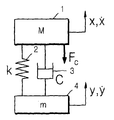
- FIG. 5 is a view showing a suspension model according to an embodiment of the present invention.
- FIG. 6 is a view showing the configuration of a roll motion control apparatus for an in-wheel motor-driven electric vehicle according to an embodiment of the present invention.
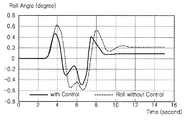
- FIG. 7 is a view showing simulation results for a rolling motion during vehicle turning.
- the roll motion control apparatus for an in-wheel motor-driven electric vehicle includes a suspension device that enables vertical movement for each wheel of the left and right front wheels and the left and right rear wheels.
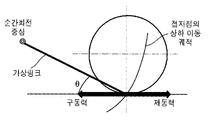
- the road-grounding center point of the wheel tire can have a vertical movement trajectory of the ground point as shown in FIG. 1 when the wheel is viewed from the side.
- the up-and-down movement trajectory of this ground point is related to the anti-dive / anti-lift characteristics in the movement of the vehicle, and is moved by the rotation of the virtual link as shown in FIG.
- the road surface has a predetermined angle ( )
- the virtual link of the front wheel suspension and the virtual wheel of the rear wheel suspension receiving the braking force due to the braking force acting on the road surface are respectively provided with a predetermined first angle ( ) And second angle ( ),
- the component force is generated in the upward direction of the vehicle body by the first angle
- the front wheel suspension spring is extended (stretched) by the component force generated in this upward direction
- the component force is generated downward in the vehicle body by the second angle.
- the rear wheel suspension spring is compressed by the component force generated in the downward direction, thereby reducing the dive phenomenon of the vehicle.
- the instantaneous rotation center of the virtual link of the front wheel suspension ( Instantaneous rotation center of the virtual link of the rear suspension, so that the position of If the position of) is designed to be in front of the rear wheels, it can produce a force that interferes with the pitching motion of the body caused by the braking of the vehicle. This component reduces the vertical movement of the body, which is the anti-dive / anti-lift characteristics.
- the braking force or driving force generated by friction with the road surface of the wheel rotated by the torque of the in-wheel motor is the angle between the virtual link of the suspension device and the road surface.
- the spring of the suspension device can be stretched or compressed by acting on the vehicle body by the component force in the vertical direction of the vehicle body.
- the roll motion control apparatus of the in-wheel motor-driven electric vehicle is intended to limit the vertical motion of the vehicle body supported by the suspension spring to suppress the roll movement of the vehicle body generated when the vehicle turns. .
- the direction of torque of the in-wheel motor that is, the direction of braking force or driving force that each wheel receives from the road surface is a driving force for the left front wheel, a braking force for the left rear wheel, and a braking force for the right front wheel.
- the driving force is to be generated.
- the braking force or driving force of each wheel generated for controlling such a roll motion does not generate the original turning speed and turning moment of the vehicle. This is because the sum of the braking force or driving force of each wheel generated to control the roll motion becomes "zero" and the turning moment by the braking force or driving force of each wheel also becomes “zero". This is the principle that can control the roll motion of the vehicle without disturbing the original direction of movement of the vehicle.
- Means for limiting the vertical movement of the vehicle body in the existing internal combustion engine vehicle is to directly control the force in the vertical direction acting on the vehicle body, for this purpose it is possible to vary the damping coefficient of the damping force of the damper as a suspension element Skyhook control technique is used to determine damping coefficient with variable damper. Let's look at this.
- Skyhook control is performed by installing a virtual Skyhook manual damper on the virtual Inertia Reference and the spring mass M of the vehicle, as shown in FIG. This is a method of generating damping force directly proportional to speed.
- Equation 1 The equivalent damping coefficient in the actual suspension model can be obtained through Equation 1 below.
- the equivalent damping force ego Occurs when all the cases are satisfied, or ego This may occur when all of the following conditions are satisfied. That is, an equivalent damping force may occur when the direction of the vehicle's up-down speed and the direction of the vehicle between the vehicle's up-down speed and the wheel's up-and-down speed coincide.
- the roll motion control apparatus of the in-wheel motor-driven electric vehicle uses the sky hook control method, and according to the vehicle body tilting from side to side when turning the vehicle, By generating a force in the direction of reducing the vertical motion of the vehicle body to apply to the vehicle body, it is possible to reduce the vertical angle of each suspension spring to reduce the roll angle of the vehicle body due to the vehicle turn.
- FIG. 1 A model of the suspension applied to an embodiment of the present invention is shown in FIG.
- the suspension model according to the embodiment of the present invention includes a spring for supporting the wheel 4 and the electric vehicle body 1 of the electric vehicle having an in-wheel motor. (2) and a damper (3) for absorbing the up and down vibration of the electric vehicle body (1).
- the wheel 4 is a case where the left front and rear wheels and the right front and rear wheels of the electric vehicle are formed as a quarter model to display only one of the left front and rear wheels and the right front and rear wheels. This is an example, and it is obvious that other embodiments are possible.
- the driving force or braking force generated by the friction between the wheel and the road surface rotated by the torque of the in-wheel motor acts on the vehicle body by the component force that hinders the up and down movement of the vehicle body by the angle between the virtual link of the suspension device and the road surface.
- the spring of the suspension can be stretched or compressed.
- the component force hindering the vertical movement of the body Is a force applied to the vehicle body in order to reduce the vertical movement of the vehicle body due to the tilting of the vehicle body generated during the vehicle turning. Accordingly, the component force which hinders the up and down movement of the body Acts on the vehicle body, the spring of the suspension is stretched or compressed in a direction that hinders the rolling motion of the vehicle body. As a result, the rolling angle of the vehicle body generated when the vehicle is turned is reduced, thereby reducing the rolling motion of the vehicle.
- the component force hindering the vertical movement of the vehicle body generated by each of the left front and rear wheels is the driving force or braking force of each of the left front and rear wheels generated by friction between the left and right front wheels rotated by the torque of the in-wheel motor and the road surface.
- the springs of the left front and rear wheel suspensions are extended or compressed.
- the component force hindering the vertical movement of the vehicle body generated by each of the right front and rear wheels is that the driving force or braking force of each of the right front and rear wheels generated by the friction between the road surface and each of the right front and rear wheels rotated by the torque of the in-wheel motor is right.
- the angle between the virtual links and the road surface of each of the front and rear wheel suspensions acts on the vehicle body with a force that interferes with the vertical movement of the vehicle body, the springs of the right front and rear wheel suspensions are extended or compressed.
- the direction of braking force or driving force of each wheel caused by friction with the road surface and the direction of the in-wheel motor torque of each wheel to produce the component force acting on the vehicle body to control the roll movement is left when the vehicle turns left.
- the component force that hinders the up and down movement of the body generated by each of the front and rear wheels should act as a force to lower the vehicle body, and the component force that hinders the up and down movement of the body generated by each of the right front and rear wheels raises the body. Since it should act as a force to raise in the direction, the driving force acts on the left front wheel and the right rear wheel, and the braking force should act on the left rear wheel and the right front wheel.
- braking force is applied to the left front wheel and the right rear wheel, and driving force must be applied to the left rear wheel and the right front wheel.
- FIG. 6 is a view showing the configuration of the roll motion control apparatus for an in-wheel motor-driven electric vehicle according to an embodiment of the present invention.
- a roll motion control apparatus for an in-wheel motor-driven electric vehicle includes a first subtractor 10, a second subtractor 11, a first PI controller 12, and a first motion controller. 2 PI controller 13, torque converter 14, torque forming unit 15 and the vehicle 16.
- the first subtractor 10 is the target roll angle of the driver And roll angle of the vehicle output from the vehicle 16 Output the deviation of.
- the target roll angle of the driver may be "0 (zero) degree". This is for the vehicle occupant to have a comfortable ride so as not to be affected by the roll motion.
- the second subtractor 11 is the target longitudinal speed of the driver And longitudinal speed of the vehicle output from the vehicle 16 Output the deviation of.
- the target longitudinal speed of the driver Means the vehicle speed desired by the driver while driving the vehicle.
- the driver is the current vehicle speed of the vehicle being driven, i.e. the longitudinal speed of the vehicle It will keep the vehicle speed or accelerate or decelerate.
- the state of the current accelerator pedal is maintained, the accelerator pedal is further pressed for acceleration, and the deceleration pedal is mainly operated for deceleration.
- the operation of the driver's acceleration / deceleration pedal is the same as that of increasing or decreasing the torque of the in-wheel motor or the command of the regenerative braking torque, and thus is equivalent to the role of the second PI controller of FIG. 6. Because the PI controller applies the torque applied to the in-wheel motor from the driver's target longitudinal speed and the current vehicle's longitudinal speed deviation, that is, drive torque for following the driver's target longitudinal speed. This is because
- the first PI controller 12 proportionally integrates the value output from the first subtractor 10 and outputs a component force that prevents the up and down movement of the vehicle body.
- the torque converting unit 14 multiplies the components of the front and rear wheels of the same size and the front and rear wheels of the same magnitude by the component force that hinders the up and down movement of the vehicle body.
- the second PI controller 13 proportionally integrates the value output from the second subtractor 11 to drive the target torque to follow the target longitudinal speed of the driver.
- the torque forming unit 15 is a roll motion control torque output from the torque converting unit 14. And torque output from the PI controller 13 And the roll angle of the vehicle output from the vehicle 16 Torque of left front wheel Torque on right front wheel , Left rear wheel torque And right rear wheel torque Obtain
- the torque of the left front wheel, the torque of the right front wheel, the torque of the left rear wheel and the torque of the right rear wheel can be obtained using the following equation (3) according to the torque direction and roll angle of each of the front and rear wheels.
- Roll movement control torque Is the driving torque for following the driver's target longitudinal speed
- Left front wheel torque Is the right front wheel torque
- Is the left rear wheel torque Represents the right rear wheel torque
- the roll angle of the vehicle When the roll angle of the vehicle has a positive value, it means the left turn of the vehicle as shown in FIG. 3, and therefore the torque of the left front wheel and the torque of the right rear wheel are roll motion control torques having a negative value.
- Drive torque to follow the target longitudinal speed of the driver Is divided into four equal parts and determined as the sum of them, and the torque of the right front wheel and the torque of the left rear wheel are the roll motion control torque having a positive value.
- Drive torque to follow the driver's target longitudinal speed It can be determined as the sum of four parts of each of the four wheels.
- the vehicle 16 has, for each wheel, the driving force or braking force of the wheel generated by friction between the wheel that rotates according to the torque of the in-wheel motor and the road surface by the angle between the virtual link of the suspension device and the road surface, It includes a suspension provided with a spring that extends or compresses as it acts on the vehicle body by the component force that prevents the vertical movement of the vehicle body due to the roll movement during the vehicle turning.
- the vehicle 16 measures the roll angle of the vehicle and the longitudinal speed of the vehicle body by the centrifugal force of the vehicle body when the vehicle is turning while the vehicle is driven by the rotation of each wheel according to each torque value obtained by the torque forming unit 15. It is measured and output by using the roll angle sensor and the car speed sensor.
- FIG. 7 is a view showing a simulation result for the rolling motion during vehicle turning.
- Figure 7 is a result of the vehicle 70kph Double Lane Change, the rolling motion control (with control) according to the embodiment of the present invention (with control), the rolling motion is reduced compared to the case where the control is not made Able to know.
- the present invention can be used in the field of development of electric vehicles.
Landscapes
- Engineering & Computer Science (AREA)
- Mechanical Engineering (AREA)
- Transportation (AREA)
- Chemical & Material Sciences (AREA)
- Combustion & Propulsion (AREA)
- Power Engineering (AREA)
- Automation & Control Theory (AREA)
- Physics & Mathematics (AREA)
- Mathematical Physics (AREA)
- Vehicle Body Suspensions (AREA)
- Electric Propulsion And Braking For Vehicles (AREA)
Abstract
인휠 모터 구동 전기자동차의 롤 운동 제어장치가 개시된다. 본 발명의 실시예에 따른 인휠 모터 구동 전기자동차의 롤 운동 제어장치는, 차륜마다, 인휠(In-Wheel) 모터의 토크에 따라 회전하는 차륜과 노면과의 마찰에 의해 발생하는 차륜의 구동력 또는 제동력이 현가장치의 가상링크와 노면이 이루는 사잇각 만큼, 차량 선회시 롤 운동으로 인한 차체의 상하방향 운동을 방해하는 분력으로 차체에 작용함에 따라 신장 또는 압축되는 스프링이 구비된 현가장치를 포함한다.
Description
본 발명은 인휠 모터 구동 전기자동차의 롤 운동 제어장치에 관한 것으로, 더욱 자세하게는 인휠 모터의 토크 제어를 통하여 차량 선회시 발생하는 롤링을 저감하는 기술에 관한 것이다.
전기자동차에 있어서 전기구동모터는 본래의 기능으로 기존의 내연기관차량의 엔진을 대체하여 차륜을 회전시키는 구동력을 발생시키는 장치이다. 전기구동 모터는 내연기관의 엔진과 비교할 때 명령받은 토크를 매우 빠르고 정확히 만들어내는 장점이 있으며, 특히 전기구동모터를 차륜 내에 설치하는 인휠 모터의 경우는 전후좌우 각 차륜을 독립적으로 구동할 수 있다. 따라서 인휠 모터 구동 전기자동차는 인휠 모터의 우수한 제어성과 독립적인 구동력을 가지게 된다. 이로 인해서 최근 인휠 모터 구동 전기 자동차 분야에서는 전기구동모터의 우수한 제어성과 독립적인 구동력을 이용하여 차륜 슬립 제어 및 차량 선회시 요(yaw) 운동제어에 대한 기술이 개발 및 연구가 활발히 이루어지고 있다.
그러나, 인휠 모터 구동 전기 자동차 분야에서 차량 선회시 발생하는 롤링을 저감시켜 탑승자가 차량의 선회시 좌우 방향으로 쏠리는 현상을 방지하는 것에 대한 기술개발 및 연구가 이루어지지 않고 있다.
인휠 모터의 각 차륜의 독립적인 제동력 또는 구동력 제어 특성을 이용하여 차량의 선회시 발생하는 차체가 좌우로 쏠리는 현상을 저감 하는, 인휠 모터 구동 전기자동차의 롤 운동 제어장치가 제안된다.
본 발명의 일 양상에 따른 인휠 모터 구동 전기자동차의 롤 운동 제어장치는, 차륜마다, 인휠(In-Wheel) 모터의 토크에 따라 회전하는 차륜과 노면과의 마찰에 의해 발생하는 차륜의 구동력 또는 제동력이 현가장치의 가상링크와 노면이 이루는 사잇각 만큼, 차량 선회시 롤 운동으로 인한 차체의 상하방향 운동을 방해하는 분력으로 차체에 작용함에 따라 신장 또는 압축되는 스프링이 구비된 현가장치를 포함한다.
상기 차체에 작용하는 분력을 만들기 위한 각 차륜의 인휠 모터의 토크 방향 및 상기 노면과의 마찰에 의해 발생하는 각 차륜의 제동력 또는 구동력의 방향은, 차량이 좌 선회를 하는 경우, 좌측전륜 및 우측후륜에 구동력이 작용하며 좌측후륜 및 우측전륜에 제동력이 작용하며, 차량이 우 선회를 하는 경우, 좌측전륜 및 우측후륜에 제동력이 작용하며 좌측후륜 및 우측전륜에 구동력이 작용할 수 있다.
상기 노면과의 마찰에 의해 발생하는 각 차륜의 구동력 또는 제동력의 합이 "0"이 되며, 상기 노면과의 마찰에 의해 발생하는 각 차륜의 구동력 또는 제동력이 만드는 선회 모멘트 합이 "0"이 될 수 있다.
본 발명의 다른 양상에 따른 인휠 모터 구동 전기자동차의 롤 운동 제어장치는, 운전자의 목표 롤각과 차량에서 출력된 차량의 롤각의 편차를 출력하는 제1감산기; 운전자의 목표 종방향 속도와 차량에서 출력되는 차량의 종방향 속도의 편차를 출력하는 제2감산기; 상기 제1감산기에서 출력된 값을 비례 적분 제어하여, 차체의 상하방향 운동을 방해하는 분력을 출력하는 제 1 PI 제어기; 차체의 상하방향 운동을 방해하는 분력에 동일한 크기의 좌측 전후륜 및 우측 전후륜의 반경을 곱하여, 롤 운동 제어를 위하여 좌측 전후륜 및 우측 전후륜에 적용될 롤 운동 제어 토크를 출력하는, 토크 변환부; 상기 제2감산기에서 출력된 값을 비례 적분 제어하여 운전자의 목표 종방향 속도를 추종하기 위한 구동 토크를 출력하는, 제 2 PI 제어기; 상기 롤 운동 제어 토크과 제 2 PI 제어기에서 출력된 구동 토크 및 차량에서 출력된 차량의 롤각을 이용하여, 각 차륜의 토크를 구하는, 토크 형성부; 및 차륜마다, 인휠(In-Wheel) 모터의 토크에 따라 회전하는 차륜과 노면과의 마찰에 의해 발생하는 차륜의 구동력 또는 제동력이 현가장치의 가상링크와 노면이 이루는 사잇각 만큼, 차량 선회시 롤 운동으로 인한 차체의 상하방향 운동을 방해하는 분력으로 차체에 작용함에 따라 신장 또는 압축되는 스프링이 구비된 현가장치를 포함하며, 상기 각 차륜의 토크에 따라 각 차륜의 회전에 의한 주행 중, 차량의 선회시 차체의 원심력에 의한 차량의 롤각 및 차체의 종방향 속도를 각각 차체 롤각 감지센서 및 자동차 속도 감지센서를 이용하여 측정해서 출력하는 차량을 포함한다.
상기 운전자의 목표 롤각은, 0도로 설정될 수 있다.
상기 각 차륜의 토크는 각 차륜의 토크 방향 및 롤각에 따라 아래의 수학식을 이용하여 구해질 수 있다.
[수학식]
[규칙 제91조에 의한 정정 17.08.2012]
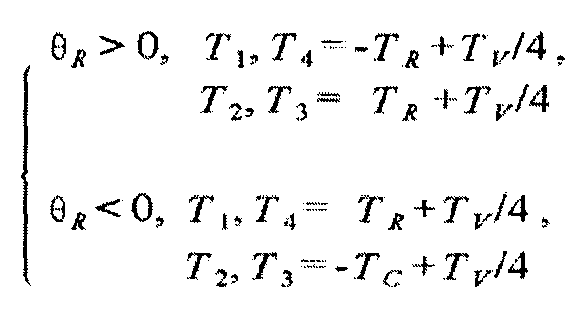
이때,  는 롤 운동 제어 토크,
  는 운전자의 목표 종방향 속도를 추종하기 위한 구동 토크,
  은 좌측전륜 토크,
  는 우측전륜 토크,
  는 좌측후륜 토크,
  는 우측후륜 토크를 나타내며,
  은 롤각을 나타낸다.
상기 롤각이 0도보다 큰 경우는 차량이 좌 선회하는 경우이며, 상기 롤각이 0도보다 작은 경우는 차량이 우 선회하는 경우일 수 있다.
상기 차체에 작용하는 분력을 만들기 위한 각 차륜의 인휠 모터의 토크 방향 및 상기 노면과의 마찰에 의해 발생하는 각 차륜의 제동력 또는 구동력의 방향은, 차량이 좌 선회를 하는 경우, 좌측전륜 및 우측후륜에 구동력이 작용하며 좌측후륜 및 우측전륜에 제동력이 작용하며, 차량이 우 선회를 하는 경우, 좌측전륜 및 우측후륜에 제동력이 작용하며 좌측후륜 및 우측전륜에 구동력이 작용할 수 있다.
상기 노면과의 마찰에 의해 발생하는 각 차륜의 구동력 또는 제동력의 합이 "0"이 되며, 상기 노면과의 마찰에 의해 발생하는 각 차륜의 구동력 또는 제동력이 만드는 선회 모멘트 합이 "0"이 될 수 있다.
본 발명의 실시예에 따른 인휠 모터 구동 전기자동차의 롤 운동 제어장치에 따르면, 인휠 모터의 독립적인 제동력 또는 구동력 제어 특성을 이용하여 차량의 선회시 발생하는 차체의 롤 운동으로 수반되는 롤각을 저감 함으로써, 차량 선회시 차체가 좌우로 쏠리는 롤링 현상을 감소시킬 수 있다.
도 1은 후륜 타이어 노면 접지점의 상하운동과 현가장치의 가상링크의 관계도.
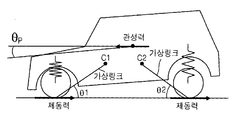
도 2는 차량 제동시에 관성력의 방향과 피칭각을 나타낸 도면.
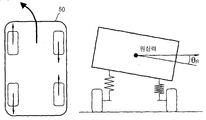
도 3은 차량 선회시의 롤링운동을 예시한 도면.
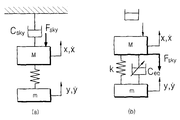
도 4는 이상적인 현가장치 모델과 실제적인 현가장치 모델을 나타낸 도면.
도 5는 본 발명의 실시예에 따른 현가장치 모델을 나타낸 도면.
도 6은 본 발명의 실시예에 따른 인휠 모터 구동 전기자동차의 롤 운동 제어장치의 구성을 나타낸 도면.
도 7은 차량 선회시의 롤링 운동에 대한 시뮬레이션 결과를 나타낸 도면.
이하에서는 첨부한 도면을 참조하여 본 발명의 실시예를 상세히 설명한다. 본 발명의 실시예를 설명함에 있어 관련된 공지 기능 또는 구성에 대한 구체적인 설명이 본 발명의 요지를 흐릴 수 있다고 판단되는 경우에는 그 상세한 설명을 생략할 것이다. 또한, 후술 되는 용어들은 본 발명에서의 기능을 고려하여 정의된 용어들로서 이는 사용자, 운용자의 의도 또는 관례 등에 따라 달라질 수 있다. 그러므로 그 정의는 본 명세서 전반에 걸친 내용을 토대로 내려져야 할 것이다.
본 발명의 실시예에 따른 인휠 모터 구동 전기자동차의 롤 운동 제어장치는, 좌우전륜 및 좌우후륜 각 차륜별로 상하운동을 가능하게 하는 현가장치를 구비한다. 이 현가장치에 의해 차륜 타이어의 노면접지 중심점은, 차륜을 옆에서 보았을 때, 도 1에 도시된 바와 같은 접지점의 상하 이동궤적을 가질 수 있다. 이 접지점의 상하 이동궤적은 차량의 운동에 있어서 안티다이브(anti-dive)/안티리프트(anti-lift) 특성과 관계되며, 도 1에 도시된 바와 같이 가상링크의 회전에 의해 움직이며, 가상링크와 노면은 소정의 각도( )를 이루고 있다.
이 안티다이브/안티리프트 특성에 대해서 살펴보기로 한다.
차량이 가속하거나 감속하게 되면 차량의 무게중심에 작용하는 관성력으로 인하여 차체는 피칭운동을 하게 된다.
예를 들어 도 2에 도시된 바와 같이, 차량이 제동력에 의해 감속을 하게 되면 감속도에 의한 차량의 관성력이 차량의 전진방향으로 작용하여 차체가 앞으로 기울어지는 방향의 모멘트가 되어, 전륜의 경우 하중이 증가하고 후륜의 경우 하중이 작아져서, 결국 차량은 다이브(dive, 차체가 진행방향으로 기울어지게 되는 현상) 된다.
이때, 노면에 작용하는 제동력으로 인하여 이 제동력을 받는 전륜 현가장치의 가상링크 및 후륜 현가장치의 가상링크는, 각각 노면과 이루는 소정의 제1각도( ) 및 제2각도(
 )를 이루고, 제1각도만큼 차체의 윗 방향으로 분력이 발생하며 이 윗 방향으로 발생된 분력에 의해서 전륜 현가장치 스프링이 신장되고(늘어나고) 제2각도만큼 차체의 아래 방향으로 분력이 발생하며 이 아래 방향으로 발생된 분력에 의해 후륜 현가장치 스프링이 압축되어서, 결국 차량의 다이브 현상이 저감 된다.
도 2에 도시된 바와 같이, 전륜 현가장치의 가상링크의 순간 회전중심( )의 위치가 전륜의 후방에 있도록, 후륜 현가장치의 가상링크의 순간 회전중심(
 )의 위치가 후륜의 전방에 있도록 설계된 경우, 차량의 제동으로 인해 발생하는 차체의 피칭 운동을 방해하는 분력을 만들어 낼 수 있다. 이러한 분력으로 인해서 차체의 상하운동이 저감 되는데, 이것이 바로 안티다이브/안티리프트 특성이다.
즉, 현가장치가 만들어 내는 안티다이브/안티리프트 특성을 이용하면, 인휠 모터의 토크에 의해 회전하는 차륜이 노면과의 마찰에 의해서 발생하는 제동력 또는 구동력이, 현가장치의 가상링크와 노면이 이루는 사잇각 만큼, 차체의 상하 방향의 분력으로 차체에 작용하여, 현가장치의 스프링이 늘어나거나 압축될 수 있다.
한편, 차량이 선회할 때 원심력에 의하여 차체가 차량 선회 외측 방향으로 기울어진 각도, 즉 롤각 만큼 차체가 기울어지는 롤링 운동이 발생한다. 이로 인해서 차체가 기울어진 방향의 현가장치 스프링은 압축되고 반대편 방향의 현가장치 스프링은 신장 된다. 이 롤링 운동은 차량 탑승자의 승차감에 나쁜 영향을 줄 수 있고 심한 경우 차량 전복의 원인으로 작용할 수 있다.
예를 들어, 도 3에 도시된 바와 같이 차량(50)이 진행방향의 좌측으로 선회하는 경우 진행방향의 우측 방향으로 발생하는 원심력에 의한 롤각  만큼 차체가 우측방향으로 기울어지는 롤링 운동이 발생한다. 이로 인해서 차량의 좌측 전후륜 현가장치 스프링은 신장되고 우측 전후륜 현가장치의 스프링은 압축된다.
이에 따라, 본 발명의 실시예에 따른 인휠 모터 구동 전기자동차의 롤 운동제어장치는, 차량 선회시 발생하는 차체의 롤 운동을 억제하기 위하여 현가장치 스프링에 의해 지지 되는 차체의 상하운동을 제한하려는 것이다.
다시 도 3에서, 차량이 좌 선회하면 우측방향으로 롤 각이 발생하게 된다. 즉, 좌측 전후륜 현가장치의 스프링은 신장되며 우측 전후륜 현가장치의 스프링은 압축된다. 이러한 롤 운동을 저감 시키기 위해서는 도 3에 도시된 바와 같이 인휠모터의 토크의 방향 즉 각 차륜이 노면으로부터 받는 제동력 또는 구동력의 방향은 좌측 전륜의 경우 구동력, 좌측 후륜의 경우 제동력, 우측 전륜의 경우 제동력, 우측 후륜의 경우 구동력이 발생 되도록 하여야 한다.
이러한 롤 운동을 제어하기 위해 발생시킨 각 차륜의 제동력 또는 구동력은 차량의 본래의 선회속도와 선회모멘트를 발생시키지 않은 것이 된다. 왜냐하면 롤 운동을 제어하기 위해 발생시킨 각 차륜의 제동력 또는 구동력의 합은 "0(Zero)"가 되며 또한 각 차륜의 제동력 또는 구동력에 의한 선회모멘트 역시 "0(Zero)"가 되기 때문이다. 이것이 바로 차량 본래의 운동 방향을 저해하지 않고 차량의 롤 운동을 제어할 수 있는 원리가 되는 것이다.
기존 내연기관 차량에 있어서 차체의 상하운동을 제한하기 위한 수단은, 차체에 작용하는 상하방향의 힘을 직접 제어하는 것으로서, 이를 위해 현가장치 요소인 댐퍼의 댐핑력을 이루는 댐핑계수를 가변할 수 있는 가변댐퍼를 두고 댐핑계수를 결정하는 알고리즘으로 스카이훅 제어 기법이 사용되고 있다. 이에 대해서 살펴보기로 한다.
스카이훅 제어는 도 4의 (a)에 도시된 바와 같이 가상의 관성기준(Inertia Reference)과 차량의 스프링 상중량(Sprung mass)(차체) M에 가상의 스카이훅 수동 댐퍼를 설치하여 차체 M의 속도에 직접 비례하는 감쇄력을 발생시키는 방법이다.
그러나 실제로는 이것이 가능하지 않기 때문에, 도 4의 (b)에 도시된 바와 같이 현가장치의 가변 댐퍼를 이용하여 이와 등가 적인 감쇄력을 발생시킨다.
실제 현가장치 모델에서의 등가 댐핑 계수는 아래의 수학식 1을 통해서 구해질 수 있다.
[규칙 제91조에 의한 정정 17.08.2012]
수학식 1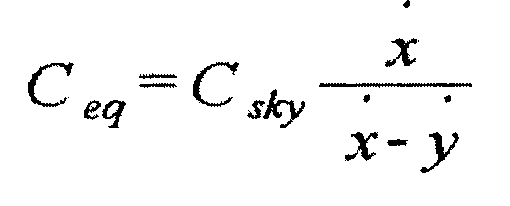
수학식 1
[규칙 제91조에 의한 정정 17.08.2012]
이때, 는 실제 현가장치 모델에서의 등가 댐핑 계수,
  는 이상적인 현가장치 모델에서의 등가 댐핑 계수,
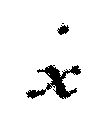 는 차체(스프링 상중량)의 상하방향 속도,
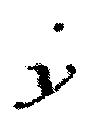 는 차륜(스프링 하중량)의 상하방향 속도를 나타낸다.
이때,
또한, 도 4의 (b)에서 등가적인 감쇄력은 아래의 수학식 2와 같은 조건에서만 구해질 수 있다.
수학식 2 
[규칙 제91조에 의한 정정 17.08.2012]
이때, 등가적인 감쇄력은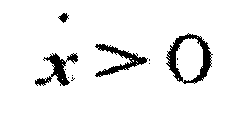 이고
이고 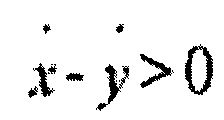 인 경우를 모두 만족하는 경우에 발생하거나,
 이고
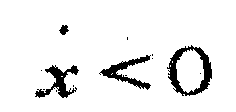
이고  인 경우를 모두 만족하는 경우에 발생할 수 있다. 즉, 차체의 상하방향 속도의 방향과, 차체의 상하방향 속도와 차륜 상하방향 속도 간 차의 방향이 모두 일치한 경우에 등가적인 감쇄력이 발생할 수 있다.
이때, 등가적인 감쇄력은
이에 본 발명의 실시예에 따른 인휠 모터 구동 전기자동차의 롤 운동 제어장치는, 스카이 훅 제어기법을 이용하여 차량 선회시 차체가 좌우로 기울어짐에 따라 각 차륜 현가장치 스프링의 신장 및 압축에 의한 전기자동차 차체의 상하방향의 운동을 감소시키는 방향으로 힘을 발생하여 차체에 인가함으로써, 각 현가장치 스프링의 상하방향 운동을 감소시켜 차량 선회로 인한 차체의 롤각을 저감할 수 있게 된다.
본 발명의 실시예에 적용되는 현가장치의 모델이 도 5에 도시되어 있다.
도 5에 도시된 바와 같이, 본 발명의 실시예에 따른 현가장치 모델은, 인휠(In-Wheel) 모터를 구비한 전기자동차의 차륜(4), 전기자동차 차체(1)를 지지하는 스프링(spring)(2) 및 전기자동차 차체(1)의 상하방향의 진동을 흡수하는 댐퍼(damper)(3)를 구비할 수 있다. 이때, 차륜(4)은 전기자동차의 좌측 전후륜 및 우측 전후륜을 쿼터(quarter) 모델화하여 좌측 전후륜 및 우측 전후륜 중 하나의 차륜으로만 표시한 경우이다. 이는 예시에 해당하며 다른 실시예도 가능함은 당연하다.
인휠 모터의 토크에 의해 회전하는 차륜과 노면 사이의 마찰에 의해 발생하는 구동력 또는 제동력이, 현가장치의 가상링크가 노면과 이루는 사잇각 만큼, 차체의 상하방향 운동을 방해하는 분력으로 차체에 작용하여, 현가장치의 스프링이 신장되거나 압축될 수 있다.
이때, 차체의 상하방향 운동을 방해하는 분력  는, 차량 선회시 발생하는 차체가 기울어짐으로 인한 차체의 상하방향의 운동을 감소시키기 위해 차체에 인가되는 힘이 된다. 이에 따라, 차체의 상하방향 운동을 방해하는 분력
  가 차체에 작용하여, 현가장치의 스프링이 차체의 롤링 운동을 방해하는 방향으로 신장되거나 압축된다. 이에 따라 차량 선회시 발생하는 차체의 롤각이 감소됨으로써 차량의 롤링 운동이 저감될 수 있게 된다.
그리고 차체의 상하방향 운동을 방해하는 분력  는 차량의 선회로 인해서, 차량의 좌측 전후륜 각각에 의해 발생하는 차체의 상하방향 운동을 방해하는 분력과, 차량의 우측 전후륜 각각에 의해 발생하는 차체의 상하방향 운동을 방해하는 분력으로 나뉠 수 있다.
좌측 전후륜 각각에 의해 발생하는 차체의 상하방향 운동을 방해하는 분력은, 인휠 모터의 토크에 의해 회전하는 좌측 전후륜 각각과 노면 간 마찰에 의해 발생하는 좌측 전후륜 각각의 구동력 또는 제동력이, 좌측 전후륜 현가장치 각각의 가상링크와 노면이 이루는 사잇각 만큼, 차체의 상하운동을 방해하는 분력으로 차체에 작용하여, 좌측 전후륜 현가장치 각각의 스프링을 신장하거나 압축하는 힘을 나타낸다.
우측 전후륜 각각에 의해 발생하는 차체의 상하방향 운동을 방해하는 분력은, 인휠 모터의 토크에 의해 회전하는 우측 전후륜 각각과 노면 간 마찰에 의해 발생하는 우측 전후륜 각각의 구동력 또는 제동력이, 우측 전후륜 현가장치 각각의 가상링크와 노면이 이루는 사잇각 만큼, 차체의 상하운동을 방해하는 분력으로 차체에 작용하여, 우측 전후륜 현가장치 각각의 스프링을 신장하거나 압축하는 힘을 나타낸다.
롤 운동을 제어하기 위해 차체에 작용하는 분력을 만들기 위한 각 차륜의 인휠모터 토크의 방향 및 노면과의 마찰에 의해 발생하는 각 차륜의 제동력 또는 구동력의 방향은, 차량이 좌 선회를 하는 경우, 좌측 전후륜 각각에 의해 발생하는 차체의 상하 방향 운동을 방해하는 분력이 차체를 하방향으로 내리려는 힘으로 작용하여야 하며 우측 전후륜 각각에 의해 발생하는 차체의 상하 방향 운동을 방해하려는 분력이 차체를 상방향으로 올리려는 힘으로 작용하여야 하므로, 좌측전륜 및 우측후륜에 구동력이 작용하며 좌측후륜 및 우측전륜에 제동력이 작용하여야 한다. 차량이 우 선회를 하는 경우, 차량이 좌 선회를 하는 경우와 반대로, 좌측전륜 및 우측후륜에 제동력이 작용하며 좌측후륜 및 우측전륜에 구동력이 작용하여야 한다.
차량의 좌 선회 또는 우 선회시에 롤 운동을 제어하기 위한 각 차륜의 제동력 또는 구동력의 방향을 적용하고 이들의 크기가 같도록 적용하여 이들이 만드는 차량의 제동력 또는 구동력의 합, 즉 노면과의 마찰에 의해 발생하는 각 차륜의 구동력 또는 제동력의 합이 "0"이 되며, 또한 노면과의 마찰에 의해 발생하는 각 차륜의 구동력 또는 제동력이 만드는 선회 모멘트 합이 "0"이 됨으로써, 차량의 본래의 진행 속도 및 선회 방향을 방해하지 않고 차량의 롤 운동을 저감시킬 수 있게 된다.
도 6은 본 발명의 실시예에 따른 인휠 모터 구동 전기자동차의 롤 운동 제어장치의 구성을 나타낸 도면이다.
도 6에 도시된 바와 같이, 본 발명의 실시예에 따른 인휠 모터 구동 전기자동차의 롤 운동 제어장치는, 제1감산기(10), 제2감산기(11), 제 1 PI제어기(12), 제 2 PI제어기(13), 토크 변환부(14), 토크 형성부(15) 및 차량(16)을 포함한다.
제1감산기(10)는 운전자의 목표 롤각  과 차량(16)에서 출력된 차량의 롤각
  의 편차를 출력한다. 이때, 운전자의 목표 롤각은 "O(Zero)도"일 수 있다. 이는 차량 탑승자가 롤 운동의 영향을 받지 않도록 하여 안락한 승차감을 갖도록 하기 위해서이다.
제2감산기(11)는 운전자의 목표 종방향 속도  와 차량(16)에서 출력되는 차량의 종방향 속도
  의 편차를 출력한다. 이때, 운전자의 목표 종방향 속도
  는 차량 주행 중에 운전자가 원하는 차량 속도를 의미한다. 운전자는 운전중인 차량의 현재 차속, 즉 차량의 종방향 속도
 를 인지하여 차량의 속도를 유지하거나 가속 또는 감속을 하게 된다. 차량의 속도를 유지하기 위해서는 현재의 가속 페달의 상태를 유지하며, 가속을 위해서는 가속페달을 더욱 밟으며, 감속을 위해서는 주로 감속페달을 조작하게 된다. 이러한 운전자의 가감속 페달의 조작은, 인휠 모터의 토크를 증대시키거나 감소시키는 것 또는 회생 제동 토크의 명령과 동일하므로, 도 6의 제 2 PI 제어기의 역할과 동일하다. 왜냐하면 PI 제어기는 운전자의 목표 종방향 속도와 현재 차량의 종방향 속도의 편차로부터 인휠 모터에 인가되는 토크, 즉 운전자의 목표 종방향 속도를 추종하기 위한 구동 토크
  를 출력하기 때문이다.
제 1 PI 제어기(12)는 제1감산기(10)에서 출력된 값을 비례 적분 제어하여, 차체의 상하방향 운동을 방해하는 분력을 출력한다.
토크 변환부(14)는 차체의 상하방향 운동을 방해하는 분력에 동일한 크기의 좌측 전후륜 및 우측 전후륜의 반경을 곱하여, 롤 운동 제어를 위하여 좌측 전후륜 및 우측 전후륜에 적용될 롤 운동 제어 토크  를 출력한다.
제 2 PI 제어기(13)는 제2감산기(11)에서 출력된 값을 비례 적분 제어하여 운전자의 목표 종방향 속도를 추종하기 위한 구동 토크  를 출력한다.
토크 형성부(15)는 토크 변환부(14)에서 출력된 롤 운동 제어 토크 과 PI 제어기(13)에서 출력된 구동 토크
  및 차량(16)에서 출력된 차량의 롤각
  를 이용하여, 좌측전륜의 토크
  , 우측전륜의 토크
  , 좌측후륜의 토크
  및 우측후륜의 토크
  을 구한다.
이때, 좌측전륜의 토크, 우측전륜의 토크, 좌측후륜의 토크 및 우측후륜의 토크는 전후좌우 각 차륜의 토크 방향 및 롤각에 따라 아래의 수학식 3을 이용하여 구할 수 있다.
[규칙 제91조에 의한 정정 17.08.2012]
수학식 3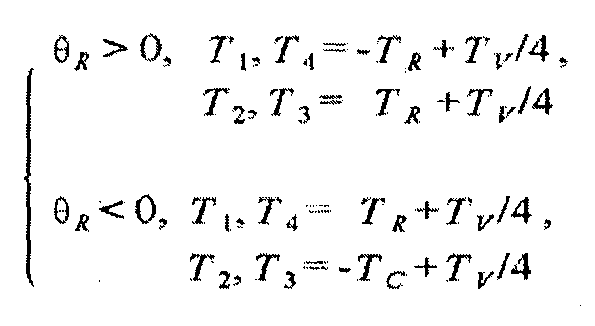
수학식 3
이때,  는 롤 운동 제어 토크,
  는 운전자의 목표 종방향 속도를 추종하기 위한 구동 토크,
  은 좌측전륜 토크,
  는 우측전륜 토크,
  는 좌측후륜 토크,
  는 우측후륜 토크를 나타내며,
  은 롤각을 나타낸다.
차량의 롤각이 양의 값을 갖는 경우, 도 3에 도시된 바와 차량의 좌선회를 의미하므로, 좌측전륜의 토크 및 우측후륜의 토크는, 음의 값을 갖는 롤 운동제어 토크  에, 운전자의 목표종방향 속도를 추종하기 위한 구동 토크
  를 각 4개의 차륜에 4등분하여 이를 합한 값으로 결정하고, 우측전륜의 토크 및 좌측후륜의 토크는, 양의 값을 갖는 롤 운동 제어 토크
  에, 운전자의 목표 종방향 속도를 추종하기 위한 구동 토크
  를 각 4개의 차륜에 4등분하여 이를 합한 값으로 결정할 수 있다.
차량의 롤각이 음의 값을 갖는 경우, 도 3에 도시된 경우와 반대로 차량이 우선회를 하는 경우이므로, 좌측전륜의 토크 및 우측후륜의 토크는, 양의 값을 갖는 롤 운동제어 토크  에, 운전자의 목표종방향 속도를 추종하기 위한 구동 토크
  를 각 4개의 차륜에 4등분하여 이를 합한 값으로 결정하고, 우측전륜의 토크 및 좌측후륜의 토크는, 양의 값을 갖는 롤 운동제어 토크
  에, 운전자의 목표 종방향 속도를 추종하기 위한 구동 토크
  를 각 4개의 차륜에 4등분하여 이를 합한 값으로 결정할 수 있다.
차량(16)은, 차륜마다, 인휠(In-Wheel) 모터의 토크에 따라 회전하는 차륜과 노면과의 마찰에 의해 발생하는 차륜의 구동력 또는 제동력이 현가장치의 가상링크와 노면이 이루는 사잇각 만큼, 차량 선회시 롤 운동으로 인한 차체의 상하방향 운동을 방해하는 분력으로 차체에 작용함에 따라 신장 또는 압축되는 스프링이 구비된 현가장치를 포함한다.
또한 차량(16)은, 토크 형성부(15)에서 구해진 각 토크 값에 따라 각 차륜의 회전에 의한 차량 주행 중, 차량의 선회시 차체의 원심력에 의한 차량의 롤각 및 차체의 종방향 속도를 각각 차체 롤각 감지센서 및 자동차 속도 감지센서를 이용하여 측정해서 출력한다.
도 7은 차량 선회시의 롤링 운동에 대한 시뮬레이션 결과를 나타낸 도면이다.
도시된 바와 같이, 도 7은 차량이 70kph의 Double Lane Change한 결과로서, 본 발명의 실시예에 따른 롤 운동제어가 이루어진 경우(with control), 제어가 이루어지지 않은 경우에 비해서 롤링 운동이 저감 됨을 알 수 있다.
이제까지 본 발명에 대하여 실시예들을 중심으로 살펴보았다. 본 발명이 속하는 기술분야에서 통상의 지식을 가진 자는 본 발명의 본질적인 특성에서 벗어나지 않는 범위에서 변형된 형태로 구현될 수 있음을 이해할 수 있을 것이다. 그러므로 개시된 실시예들은 한정적인 관점이 아니라 설명적인 관점에서 고려되어야 한다. 따라서 본 발명의 범위는 전술한 실시예에 한정되지 않고 특허청구범위에 기재된 내용 및 그와 동등한 범위 내에 있는 다양한 실시 형태가 포함되도록 해석되어야 할 것이다.
본 발명은 전기자동차의 개발분야에 이용될 수 있다.
Claims (9)
- 차륜마다, 인휠(In-Wheel) 모터의 토크에 따라 회전하는 차륜과 노면과의 마찰에 의해 발생하는 차륜의 구동력 또는 제동력이 현가장치의 가상링크와 노면이 이루는 사잇각 만큼, 차량 선회시 롤 운동으로 인한 차체의 상하방향 운동을 방해하는 분력으로 차체에 작용함에 따라 신장 또는 압축되는 스프링이 구비된 현가장치를 포함하는, 인휠 모터 구동 전기자동차의 롤 운동 제어장치.
- 제 1 항에 있어서,상기 차체에 작용하는 분력을 만들기 위한 각 차륜의 인휠 모터의 토크 방향 및 상기 노면과의 마찰에 의해 발생하는 각 차륜의 제동력 또는 구동력의 방향은, 차량이 좌 선회를 하는 경우, 좌측전륜 및 우측후륜에 구동력이 작용하며 좌측후륜 및 우측전륜에 제동력이 작용하며, 차량이 우 선회를 하는 경우, 좌측전륜 및 우측후륜에 제동력이 작용하며 좌측후륜 및 우측전륜에 구동력이 작용하는 것을 특징으로 하는, 인휠 모터 구동 전기자동차의 롤 운동 제어장치.
- 제 1 항 또는 제 2 항에 있어서,상기 노면과의 마찰에 의해 발생하는 각 차륜의 구동력 또는 제동력의 합이 "0"이 되며, 상기 노면과의 마찰에 의해 발생하는 각 차륜의 구동력 또는 제동력이 만드는 선회 모멘트 합이 "0"이 되는 것을 특징으로 하는, 인휠 모터 구동 전기자동차의 롤 운동 제어장치.
- 운전자의 목표 롤각과 차량에서 출력된 차량의 롤각의 편차를 출력하는 제1감산기;운전자의 목표 종방향 속도와 차량에서 출력되는 차량의 종방향 속도의 편차를 출력하는 제2감산기;상기 제1감산기에서 출력된 값을 비례 적분 제어하여, 차체의 상하방향 운동을 방해하는 분력을 출력하는 제 1 PI 제어기;차체의 상하방향 운동을 방해하는 분력에 동일한 크기의 좌측 전후륜 및 우측 전후륜의 반경을 곱하여, 롤 운동 제어를 위하여 좌측 전후륜 및 우측 전후륜에 적용될 롤 운동 제어 토크를 출력하는, 토크 변환부;상기 제2감산기에서 출력된 값을 비례 적분 제어하여 운전자의 목표 종방향 속도를 추종하기 위한 구동 토크를 출력하는, 제 2 PI 제어기;상기 롤 운동 제어 토크과 제 2 PI 제어기에서 출력된 구동 토크 및 차량에서 출력된 차량의 롤각을 이용하여, 각 차륜의 토크를 구하는, 토크 형성부; 및차륜마다, 인휠(In-Wheel) 모터의 토크에 따라 회전하는 차륜과 노면과의 마찰에 의해 발생하는 차륜의 구동력 또는 제동력이 현가장치의 가상링크와 노면이 이루는 사잇각 만큼, 차량 선회시 롤 운동으로 인한 차체의 상하방향 운동을 방해하는 분력으로 차체에 작용함에 따라 신장 또는 압축되는 스프링이 구비된 현가장치를 포함하며, 상기 각 차륜의 토크에 따라 각 차륜의 회전에 의한 주행 중, 차량의 선회시 차체의 원심력에 의한 차량의 롤각 및 차체의 종방향 속도를 각각 차체 롤각 감지센서 및 자동차 속도 감지센서를 이용하여 측정해서 출력하는 차량을 포함하는, 인휠 모터 구동 전기자동차의 롤 운동 제어장치.
- 제 4 항에 있어서,상기 운전자의 목표 롤각은, 0도로 설정되는 것을 특징으로 하는, 인휠 모터 구동 전기자동차의 롤 운동 제어장치.
- [규칙 제91조에 의한 정정 17.08.2012]
제 4 항에 있어서,상기 각 차륜의 토크는, 각 차륜의 토크 방향 및 롤각에 따라 아래의 수학식을 이용하여 구해지는 것을 특징으로 하는, 인휠 모터 구동 전기자동차의 롤 운동 제어장치.[수학식]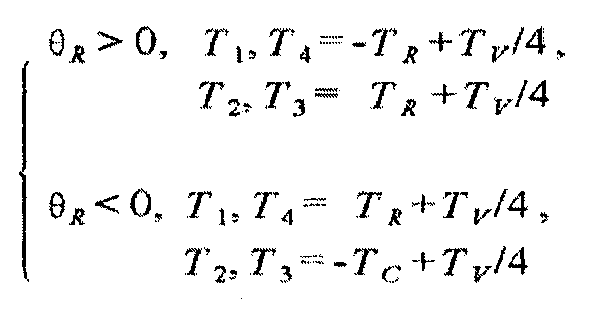 이때, 는 롤 운동 제어 토크, 는 운전자의 목표 종방향 속도를 추종하기 위한 구동 토크, 은 좌측전륜 토크, 는 우측전륜 토크, 는 좌측후륜 토크, 는 우측후륜 토크를 나타내며, 은 롤각을 나타낸다.


- 제 6 항에 있어서,상기 롤각이 0도보다 큰 경우는 차량이 좌 선회하는 경우이며, 상기 롤각이 0도보다 작은 경우는 차량이 우 선회하는 경우인 것을 특징으로 하는, 인휠 모터 구동 전기자동차의 롤 운동 제어장치.
- 제 7 항에 있어서,상기 차체에 작용하는 분력을 만들기 위한 각 차륜의 인휠 모터의 토크 방향 및 상기 노면과의 마찰에 의해 발생하는 각 차륜의 제동력 또는 구동력의 방향은, 차량이 좌 선회를 하는 경우, 좌측전륜 및 우측후륜에 구동력이 작용하며 좌측후륜 및 우측전륜에 제동력이 작용하며, 차량이 우 선회를 하는 경우, 좌측전륜 및 우측후륜에 제동력이 작용하며 좌측후륜 및 우측전륜에 구동력이 작용하는 것을 특징으로 하는, 인휠 모터 구동 전기자동차의 롤 운동 제어장치.
- 제 4 항 내지 제 8 항 중 어느 한 항에 있어서,상기 노면과의 마찰에 의해 발생하는 각 차륜의 구동력 또는 제동력의 합이 "0"이 되며, 상기 노면과의 마찰에 의해 발생하는 각 차륜의 구동력 또는 제동력이 만드는 선회 모멘트 합이 "0"이 되는 것을 특징으로 하는, 인휠 모터 구동 전기자동차의 롤 운동 제어장치.
Applications Claiming Priority (2)
| Application Number | Priority Date | Filing Date | Title |
|---|---|---|---|
| KR1020110057399A KR20120138095A (ko) | 2011-06-14 | 2011-06-14 | 인휠 모터 구동 전기자동차의 롤 운동 제어장치 |
| KR10-2011-0057399 | 2011-06-14 |
Publications (2)
| Publication Number | Publication Date |
|---|---|
| WO2012173354A2 true WO2012173354A2 (ko) | 2012-12-20 |
| WO2012173354A3 WO2012173354A3 (ko) | 2013-02-07 |
Family
ID=47357574
Family Applications (1)
| Application Number | Title | Priority Date | Filing Date |
|---|---|---|---|
| PCT/KR2012/004473 Ceased WO2012173354A2 (ko) | 2011-06-14 | 2012-06-07 | 인휠 모터 구동 전기자동차의 롤 운동 제어장치 |
Country Status (2)
| Country | Link |
|---|---|
| KR (1) | KR20120138095A (ko) |
| WO (1) | WO2012173354A2 (ko) |
Cited By (4)
| Publication number | Priority date | Publication date | Assignee | Title |
|---|---|---|---|---|
| CN108773376A (zh) * | 2018-05-07 | 2018-11-09 | 南京航空航天大学 | 一种融合驾驶意图的汽车多目标分层协同控制与优化方法 |
| CN110001417A (zh) * | 2019-04-24 | 2019-07-12 | 山西零度智控设备有限公司 | 双直流电机驱动器电子差速防止车体倾覆控制系统及方法 |
| CN113978196A (zh) * | 2021-12-27 | 2022-01-28 | 北京理工大学深圳汽车研究院(电动车辆国家工程实验室深圳研究院) | 一种用于无人驾驶车辆的悬架侧倾抑制方法和系统 |
| CN115243907A (zh) * | 2020-03-12 | 2022-10-25 | 三菱电机株式会社 | 使用独立致动车轮实现主动悬架的方法和系统 |
Families Citing this family (1)
| Publication number | Priority date | Publication date | Assignee | Title |
|---|---|---|---|---|
| CN112477982B (zh) * | 2019-09-12 | 2022-05-24 | 宇通客车股份有限公司 | 一种车辆及其差动转向的扭矩分配控制方法与系统 |
Family Cites Families (5)
| Publication number | Priority date | Publication date | Assignee | Title |
|---|---|---|---|---|
| JP4228864B2 (ja) * | 2003-09-30 | 2009-02-25 | 三菱ふそうトラック・バス株式会社 | 車両のロールオーバ抑制制御装置 |
| JP4539564B2 (ja) * | 2006-01-13 | 2010-09-08 | トヨタ自動車株式会社 | 車両および車両の制御装置 |
| JP5007576B2 (ja) * | 2007-02-21 | 2012-08-22 | 株式会社アドヴィックス | 車両挙動制御装置 |
| JP5187479B2 (ja) * | 2007-02-22 | 2013-04-24 | 株式会社アドヴィックス | 車両挙動制御装置 |
| KR20110020968A (ko) * | 2009-08-25 | 2011-03-04 | 대동공업주식회사 | 차량 전복 방지 장치 및 방법 |
-
2011
- 2011-06-14 KR KR1020110057399A patent/KR20120138095A/ko not_active Ceased
-
2012
- 2012-06-07 WO PCT/KR2012/004473 patent/WO2012173354A2/ko not_active Ceased
Cited By (7)
| Publication number | Priority date | Publication date | Assignee | Title |
|---|---|---|---|---|
| CN108773376A (zh) * | 2018-05-07 | 2018-11-09 | 南京航空航天大学 | 一种融合驾驶意图的汽车多目标分层协同控制与优化方法 |
| CN110001417A (zh) * | 2019-04-24 | 2019-07-12 | 山西零度智控设备有限公司 | 双直流电机驱动器电子差速防止车体倾覆控制系统及方法 |
| CN110001417B (zh) * | 2019-04-24 | 2022-10-11 | 山西零度智控设备有限公司 | 双直流电机驱动器电子差速防止车体倾覆控制系统及方法 |
| CN115243907A (zh) * | 2020-03-12 | 2022-10-25 | 三菱电机株式会社 | 使用独立致动车轮实现主动悬架的方法和系统 |
| EP4117940B1 (en) * | 2020-03-12 | 2025-04-16 | Mitsubishi Electric Corporation | Method and vehicle for controlling motions of the vehicle |
| CN113978196A (zh) * | 2021-12-27 | 2022-01-28 | 北京理工大学深圳汽车研究院(电动车辆国家工程实验室深圳研究院) | 一种用于无人驾驶车辆的悬架侧倾抑制方法和系统 |
| CN113978196B (zh) * | 2021-12-27 | 2022-05-10 | 北京理工大学深圳汽车研究院(电动车辆国家工程实验室深圳研究院) | 一种用于无人驾驶车辆的悬架侧倾抑制方法和系统 |
Also Published As
| Publication number | Publication date |
|---|---|
| KR20120138095A (ko) | 2012-12-24 |
| WO2012173354A3 (ko) | 2013-02-07 |
Similar Documents
| Publication | Publication Date | Title |
|---|---|---|
| WO2012173354A2 (ko) | 인휠 모터 구동 전기자동차의 롤 운동 제어장치 | |
| US9233689B2 (en) | Vehicle braking/driving force control apparatus | |
| CN104504191B (zh) | 基于AMESim的四轮驱动电动汽车仿真建模方法 | |
| CN100549652C (zh) | 6轴道路模拟装置检测系统 | |
| CN102958717A (zh) | 车辆减振控制装置 | |
| CN105659306A (zh) | 自行驶的、高动态的行驶模拟器 | |
| KR20140108016A (ko) | 하이브리드 차량의 정속 주행 제어 시스템 및 방법 | |
| JP2007161032A (ja) | 走行装置 | |
| EP3705388A1 (en) | Vehicle | |
| US11760207B2 (en) | Control device and method of electric vehicle for realizing virtual drive system sensibility | |
| CN102862507B (zh) | 车辆前照灯的光轴控制器 | |
| CN111268011B (zh) | 自平衡车辆及其静态平衡控制方法、装置、介质及设备 | |
| WO2013005903A1 (ko) | 인휠 모터 구동 전기자동차의 피치운동 제어장치 | |
| JP2009273274A (ja) | 車両の制御装置 | |
| CN111727125A (zh) | 用于电动车辆中行驶控制混合的系统和方法 | |
| US9597942B2 (en) | Rotational damper for a motor vehicle | |
| CN106809382A (zh) | 一种飞行器及其控制方法 | |
| JP7832846B2 (ja) | 車体挙動制御装置 | |
| WO2012169783A2 (ko) | 인휠 모터 구동 전기자동차의 승차감 향상장치 | |
| KR20240033823A (ko) | 차량의 주행 제어 방법 | |
| KR20240044554A (ko) | 차량의 주행 제어 방법 | |
| JP6468438B2 (ja) | 車両のばね上制振制御装置 | |
| CN105644290B (zh) | 车辆悬挂衰减力控制装置以及车辆悬挂衰减力控制方法 | |
| CN117549705B (zh) | 一种分布式车高调节方法及系统 | |
| WO2018212186A1 (ja) | 車両 |
Legal Events
| Date | Code | Title | Description |
|---|---|---|---|
| 121 | Ep: the epo has been informed by wipo that ep was designated in this application |
Ref document number: 12800859 Country of ref document: EP Kind code of ref document: A2 |
|
| NENP | Non-entry into the national phase |
Ref country code: DE |
|
| 122 | Ep: pct application non-entry in european phase |
Ref document number: 12800859 Country of ref document: EP Kind code of ref document: A2 |