WO2012165131A1 - 新規海洋微生物及びポリヒドロキシアルカノエートの製造方法 - Google Patents
新規海洋微生物及びポリヒドロキシアルカノエートの製造方法 Download PDFInfo
- Publication number
- WO2012165131A1 WO2012165131A1 PCT/JP2012/062308 JP2012062308W WO2012165131A1 WO 2012165131 A1 WO2012165131 A1 WO 2012165131A1 JP 2012062308 W JP2012062308 W JP 2012062308W WO 2012165131 A1 WO2012165131 A1 WO 2012165131A1
- Authority
- WO
- WIPO (PCT)
- Prior art keywords
- vibrio
- pha
- structural unit
- following formula
- unit represented
- Prior art date
- Legal status (The legal status is an assumption and is not a legal conclusion. Google has not performed a legal analysis and makes no representation as to the accuracy of the status listed.)
- Ceased
Links
Images


Classifications
-
- C—CHEMISTRY; METALLURGY
- C12—BIOCHEMISTRY; BEER; SPIRITS; WINE; VINEGAR; MICROBIOLOGY; ENZYMOLOGY; MUTATION OR GENETIC ENGINEERING
- C12N—MICROORGANISMS OR ENZYMES; COMPOSITIONS THEREOF; PROPAGATING, PRESERVING, OR MAINTAINING MICROORGANISMS; MUTATION OR GENETIC ENGINEERING; CULTURE MEDIA
- C12N1/00—Microorganisms; Compositions thereof; Processes of propagating, maintaining or preserving microorganisms or compositions thereof; Processes of preparing or isolating a composition containing a microorganism; Culture media therefor
- C12N1/20—Bacteria; Culture media therefor
-
- C—CHEMISTRY; METALLURGY
- C12—BIOCHEMISTRY; BEER; SPIRITS; WINE; VINEGAR; MICROBIOLOGY; ENZYMOLOGY; MUTATION OR GENETIC ENGINEERING
- C12N—MICROORGANISMS OR ENZYMES; COMPOSITIONS THEREOF; PROPAGATING, PRESERVING, OR MAINTAINING MICROORGANISMS; MUTATION OR GENETIC ENGINEERING; CULTURE MEDIA
- C12N1/00—Microorganisms; Compositions thereof; Processes of propagating, maintaining or preserving microorganisms or compositions thereof; Processes of preparing or isolating a composition containing a microorganism; Culture media therefor
- C12N1/20—Bacteria; Culture media therefor
- C12N1/205—Bacterial isolates
-
- C—CHEMISTRY; METALLURGY
- C12—BIOCHEMISTRY; BEER; SPIRITS; WINE; VINEGAR; MICROBIOLOGY; ENZYMOLOGY; MUTATION OR GENETIC ENGINEERING
- C12P—FERMENTATION OR ENZYME-USING PROCESSES TO SYNTHESISE A DESIRED CHEMICAL COMPOUND OR COMPOSITION OR TO SEPARATE OPTICAL ISOMERS FROM A RACEMIC MIXTURE
- C12P7/00—Preparation of oxygen-containing organic compounds
- C12P7/62—Carboxylic acid esters
- C12P7/625—Polyesters of hydroxy carboxylic acids
-
- C—CHEMISTRY; METALLURGY
- C12—BIOCHEMISTRY; BEER; SPIRITS; WINE; VINEGAR; MICROBIOLOGY; ENZYMOLOGY; MUTATION OR GENETIC ENGINEERING
- C12R—INDEXING SCHEME ASSOCIATED WITH SUBCLASSES C12C - C12Q, RELATING TO MICROORGANISMS
- C12R2001/00—Microorganisms ; Processes using microorganisms
- C12R2001/01—Bacteria or Actinomycetales ; using bacteria or Actinomycetales
- C12R2001/63—Vibrio
Definitions
- the present invention relates to a novel marine bacterium Vibrio genus having bioplastic production ability.
- the present invention also relates to a method for producing bioplastic (polyhydroxyalkanoate) using the marine bacteria.
- the present invention further relates to a novel bioplastic.
- P (3HB) Poly [(R) -3-hydroxybutyrate]
- PHAs poly (hydroxyalkanoates)
- P (3HB) Poly [(R) -3-hydroxybutyrate]
- PHAs poly (hydroxyalkanoates)
- P (3HB) the most widely known among PHA, is one of the most studied bio-based biodegradable plastics, and its properties have also been extensively studied.
- ⁇ P (3HB) was initially recognized as a hard and brittle material and is not compatible with polyethylene or polystyrene. Identifying hydroxyalkanoate (HA) units other than (R) -3-hydroxybutyrate (3HB) units as constituents of microbial storage polyesters has a strong impact on the research and development of this type of microbial polyester This is because the mechanical and thermal properties can be changed by incorporating different HA units into P (3HB) (Non-patent Documents 4 and 5). Its mechanical properties have recently been improved by using a new stretching technique, which has resulted in a tensile strength of 1.32 GPa, an elongation at break of 31%, and a Young's modulus of 8.1 GPa when pulled.
- Non-patent document 6 These mechanical properties of PHA are comparable to those of industrial grade polyethylene, polystyrene and poly (glycolic acid) used for surgical suturing. Therefore, PHA is a fairly attractive material with respect to environmental impact, carbon dioxide emissions and mechanical strength.
- Typical PHA synthesis genes such as genes from Ralstonia eutropha are present in operons including ⁇ -ketothiolase (phaA), acetoacetyl-coenzyme (CoA) reductase (phaB) and synthase (phaC).
- the thiolase and reductase synthesize 3-hydroxybutyl CoA (3HBCoA), which is a monomer substrate, and the synthase polymerizes the monomer into PHA.
- Other proteins involved in PHA synthesis are intracellular PHA depolymerase, fasine protein and regulatory protein, which are often encoded in the vicinity of phaA, phaB and phaC.
- the phaJ and fabG genes encoding (R) -specific 2-enoyl-CoA hydratase and 3-ketoacyl-acyl carrier protein (ACP) reductase are also 3-enoyl-CoA, respectively.
- 3-ketoacyl-CoA is known to function to convert (R) -3-hydroxy-CoA (Non-patent Documents 7 and 8).
- the substrate specificity of the synthase PhaC differs among various PHA synthases that affect the monomer composition of the final product PHA copolymer (Non-patent Document 9).
- Non-patent Document 10 Bacillus megaterium as a microbial storage polyester
- many types of bacteria such as Bacillus spp., Pseudomonas spp., Cupriavidus spp., Aeromonas spp., Etc.
- PHA Bacillus megaterium
- many types of bacteria such as Bacillus spp., Pseudomonas spp., Cupriavidus spp., Aeromonas spp., Etc.
- Studies have been conducted on the use of these bacteria (Non-Patent Documents 11 to 14).
- a few species of marine bacteria have also been studied for the production of PHA under marine conditions, but the resulting PHA has not been characterized in detail (Non-Patent Documents 15-17).
- the benefits of biosynthesizing PHA under marine conditions include avoiding contamination by bacteria that lack seawater resistance, and the ability to use filtered seawater as a culture medium, thus enabling industrial PHA production on a large scale It is included.
- a further possible advantage is that some marine bacteria, such as recombinant Alcanivorax borkumensis, can produce PHA extracellularly, thereby simplifying the industrial process of producing PHA (Non-patent Document 18).
- marine bacteria have recently attracted attention as candidates for producing practical substances from marine ecosystems including the oceanic carbon dioxide cycle (Non-Patent Documents 19 to 21).
- Vibrio species such as V. cholerae, V. parahaemolyticus and V. vulnificus This is because it contains various human pathogens.
- Virio species such as V. cholerae, V. parahaemolyticus and V. vulnificus
- V. fischeri several Vibrio species such as V. fischeri have not shown pathogenicity.
- PHA production ability V. harveyi has been shown to form PHA granules at high cell density during the development of luminescence (Non-patent Document 22).
- the object of the present invention is to provide a novel marine bacterium having a bioplastic producing ability, which is different from V. harveyi.
- the present invention also aims to provide a method for producing bioplastic using the marine bacteria.
- the present invention further aims to provide a novel bioplastic.
- the present invention has the following features.
- a Vibrio genus bacterium having the following properties (a) and (b): (a) Closely related to Vibrio sp. Ex25 in phylogenetic classification based on 16S rDNA sequence (b) Poly (3-hydroxybutyrate) homologues under aerobic conditions when the bacteria are cultured in an inorganic salt medium containing 15-20 g / L NaCl using soybean oil as the single carbon source. Producing a polymer, while producing a poly (hydroxyalkanoate) copolymer comprising 3-hydroxybutyrate units, 3-hydroxypropionate units, and 5-hydroxyvalerate units under aerobic-anaerobic conditions be able to
- the bacterium may produce a poly (3-hydroxybutyrate) homopolymer under aerobic conditions or aerobic-anaerobic conditions. Vibrio genus bacteria according to (1) above.
- Vibrio spsp KN01-5 (deposit number NITE BP-1101) or a Vibrio genus bacterium according to (1) or (2) above, which is a mutant strain having the properties (a) and (b) above.
- a method for producing polyhydroxyalkanoate comprising culturing the Vibrio genus bacterium according to any one of (1) to (3) above.
- the culture is carried out using one or more substances selected from the group consisting of sugars, sugar acids, fatty acids and fats and oils as a carbon source, according to any one of (4) to (6) above the method of.
- fatty acid is a saturated fatty acid, an unsaturated fatty acid, or a mixture thereof.
- a polyhydroxyalkanoate copolymer comprising a structural unit represented by the following formula (a), a structural unit represented by the following formula (b), and a structural unit represented by the following formula (c). (In the formula, R is an alkyl group, and n is 4 or 6.)
- a polyhydroxyalkano having at least a structural unit represented by the following formula (a) and a structural unit represented by the following formula (c), wherein the composition ratio of the structural unit (a) is 70 to 95% Ate copolymer.
- R is an alkyl group, and n is 4 or 6.
- the present invention relates to a novel Vibrio genus bacterium that produces polyhydroxyalkanoate isolated from seawater, and bioplastics can be produced by using this bacterium.
- seawater can be used as a medium at that time, and by limiting the dissolved oxygen concentration, the mechanical properties and / or the thermal properties are improved, such as polyhydroxyalkanoate copolymers composed of a plurality of different monomer units, etc.
- Bioplastics can be produced.
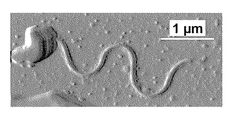
- An AFM amplitude image of Vibrio sp. KN01 5 strain supported on mica at 25 ° C in air is shown.
- the phylogenetic tree obtained by the neighbor binding analysis of 16S rDNA sequence is shown.
- This figure shows the location of Vibrio sp. KN01 5 isolated strain among other Vibrio spp.
- the bootstrap value is over 50%.
- the scale bar represents 0.01 nucleotide substitutions per site.
- 1 shows the 1 H-NMR spectrum of P (3HB) produced from an isolated strain using soybean oil as the single carbon source under anaerobic conditions.
- the numbers described in the structural formula indicate the peak positions of hydrogen atoms.
- the present invention relates to a novel Vibrio genus bacterium that produces a poly (hydroxyalkanoate) polymer (sometimes referred to as “PHA”) isolated from seawater (ie, derived from the ocean).
- PHA poly (hydroxyalkanoate) polymer isolated from seawater (ie, derived from the ocean).
- the Vibrio bacterium of the present invention is characterized by having the following properties (a) and (b).
- the term “related” is preferably 90% to 94% or more, more preferably 95% to 98% or more, and further preferably 99% to 99.5%, when comparing 16S rDNA sequences between bacteria. Used when the sequence identity is as described above. Sequence identity is expressed as a percentage (%) of the number of identical nucleotides relative to the total number of nucleotides, including gaps, when the two sequences are aligned for maximum agreement. Identity can be determined, for example, by utilizing the BLAST algorithm (Altschul et al., 1990).
- the bacterium of the present invention can further have the following property (c).
- the present inventors are a novel Gram-negative Vibrio genus bacterium that is different from V. harveyi from seawater collected at Akajima Hizushi Beach in Okinawa Prefecture, Vibrio having the above properties (a), (b) and (c) Sp KN01N5 strain was found this time.
- Vibrio sp KN01 5 was deposited on May 12, 2011 at the Patent Evaluation Microorganism Deposit Center (NITE), National Institute of Technology and Evaluation (2-5-8, Kazusa Kamaashi, Kisarazu, Chiba, Japan) Deposit number NITE P-1101. This strain was transferred to an international deposit under the Budapest Treaty on May 10, 2012, and the deposit number NITE ⁇ BP-1101 (international deposit date, May 12, 2011) was assigned.
- Vibrio sp KN01 5 strain morphologically has a polar flagella and a curved rod-like (rod-like) shape (Fig. 1), Vibrio spp. Selection TCBS agar medium (see Examples below) Incubate at about 35 ° C to form large yellow colonies. This strain was also found to be most closely related to Vibrio sp. Ex25 as a result of 16S rDNA sequence analysis (Fig. 2).
- the Vibrio sp KN01 5 strain of the present invention is a kind of marine bacteria and can grow even under conditions of a high NaCl concentration of 10 g / L or more, for example, about 19.5 g / L.
- a normal marine bacterial culture medium Vibrio genus bacterial culture medium (TCBS Agar (for example, Fluka code No. 86348), Vibrio agar medium, etc.) and the like can be used.
- the Vibrio bacterium of the present invention is characterized by having at least the above properties (a) and (b), preferably at least the above properties (a), (b) and (c). Therefore, as long as it has such a property, the mutant strain having the properties (a) and (b) described above, which is obtained by subjecting the isolated strain Vibrio sp KN01 5 to mutation treatment, is also a Vibrio genus bacterium of the present invention. include.
- Mutations include irradiation of high energy rays such as ultraviolet rays (UV), methyl ethyl sulfonic acid (EMS), methyl methane sulfonic acid (MMS), N-methyl-N'-nitro-N-nitrosoguanidine (MNNG), etc. It can be performed by treating the strain on the medium for a certain period of time by a usual method such as contact with a chemical mutagenic agent.
- UV ultraviolet rays
- EMS methyl ethyl sulfonic acid
- MMS methyl methane sulfonic acid
- NNG N-methyl-N'-nitro-N-nitrosoguanidine
- the Vibrio genus bacterium of the present invention is an inorganic salt medium that is reduced or depleted with a nitrogen source and supplemented with a carbon source.
- PHA having a number average molecular weight ranging from about 50 to 150 ⁇ 10 3 , particularly poly ( 3-hydroxybutyrate) homopolymer can be produced.
- substances such as saccharides, fatty acids, oils and fats can be used as the carbon source.
- the bacterium of the present invention When the bacterium of the present invention is cultured under conditions controlled so as to gradually reduce the dissolved oxygen concentration (see below), that is, an aerobic-anaerobic condition, the bacterium becomes poly (3- (3) when saccharides are used as a carbon source. Hydroxybutyrate) homopolymers, but polyhydroxyalkanoate copolymers can be produced when fatty acids or fats are used as the carbon source.
- this copolymer may be, for example, 3-hydroxypropionate (3HP) units, 5-hydroxyvalerate (5HV) units, 3-hydroxyvalerate (3HV) units, 3 -Hydroxyhexanoate (3HH) units, 7-hydroxyheptanoate (7H0) units, and multiple (ie, two or more) HA units selected from the group consisting of other hydroxyalkanoate (HA) units Can be included.
- 3-HP 3-hydroxypropionate
- 5HV 5-hydroxyvalerate
- 3-HV 3-hydroxyvalerate
- 3HH 3 -Hydroxyhexanoate
- 7H0 7-hydroxyheptanoate
- multiple (ie, two or more) HA units selected from the group consisting of other hydroxyalkanoate (HA) units Can be included.
- soybean oil including linoleic acid, oleic acid, ⁇ -linoleic acid, palmitic acid, stearic acid
- a PHA copolymer with 3HB: 3HP: 5HV of 83: 14: 3 (mol%) is produced.
- the term “aerobic-anaerobic condition” means that the Vibrio bacterium of the present invention proliferates under both aerobic conditions with oxygen (air) and anaerobic conditions with oxygen (air) deficiency Although it can be carried out, it refers to a condition in which the culture is started under certain conditions of oxygen (air), and the dissolved oxygen concentration is gradually reduced as oxygen is consumed, for example, by sealing the culture system.
- the present invention also provides a method for producing bioplastic, comprising culturing the above-mentioned Vibrio genus bacteria to produce bioplastic, and collecting the plastic.
- the culture is a medium containing NaCl of about 3 g / L or more, preferably 10 g / L or more, more preferably 15 to 20 g / L or more, such as a medium containing seawater or artificial seawater or an inorganic salt medium. It is preferable to use a medium containing a carbon source but with a nitrogen source reduced or depleted more than usual.
- the medium may be, for example, an agar-based solid medium or a liquid medium, preferably a liquid medium.
- the seawater When seawater is contained in the medium, the seawater is filtered using a membrane filter to remove organic matter including microorganisms such as plankton, bacteria, mold, and yeast.
- a membrane filter to remove organic matter including microorganisms such as plankton, bacteria, mold, and yeast.
- compositions of the medium are 2.80 g / L KH 2 PO 4 , 3.32 g / L Na 2 HPO 4 , 0.54 g / L (NH 2 ) 2 CO, 0.25 g / L MgSO 4 ⁇ 7H 2 O, 19.45 g / L NaCl, 1.0 mL / L Trace element (0.22 g / L CoCl 2 ⁇ 6H 2 O, 9.70 g / L FeCl 3 , 7.80 g / L CaCl 2 , 0.12 g / L NiCl 2 ⁇ 6H 2 O, 0.11 g / L CrCl 3 ⁇ 6H 2 O, 0.16 g / L CuSO 4 ⁇ 5H 2 O).
- the pH of the medium is usually 6 to 8, preferably 7.0 to 7.4.
- Examples of the carbon source added to the medium include, but are not limited to, sugars, saturated or unsaturated fatty acids, oils and fats, sugar derivatives, fatty acid derivatives, and the like. These substances can be used alone or in any combination as a carbon source.
- saccharides include monosaccharides, disaccharides, oligosaccharides, polysaccharides, and the like, such as glucose, fructose, sucrose, lactose, maltose, and starch.
- fatty acids are saturated or unsaturated fatty acids such as butyric acid, caproic acid, caprylic acid, capric acid, lauric acid, myristic acid having 1 to 30 or more carbon atoms in the fatty chain portion, preferably 7 to 20 carbon atoms.
- fats and oils are animal fats and oils, vegetable fats and oils, examples of animal fats and oils are fish oil, beef tallow, pork fat and herring oil.
- vegetable fats and oils are soybean oil, rapeseed oil, sesame oil, corn oil, palm oil. , Jatropha oil, olive oil, cottonseed oil, coconut oil, castor oil, linseed oil, tung oil, and mixtures thereof.
- sugar derivatives are sugar acids such as gluconic acid.
- fatty acid derivatives are alkyl groups (methyl, ethyl, etc.), hydroxy groups, halogen groups (F, Cl, Br or I), phenyl groups, naphthyl groups, heterocyclic groups (eg furyl groups, thiophenyl groups, pyrrolyl groups). , Etc.) and the like, which contain an aryl group as a substituent. These functional groups may be further substituted with an arbitrary group.
- the concentration of the carbon source is 1 g / L to 40 g / L, preferably 15 g / L to 25 g / L, but is not limited to this range.
- the culture temperature is preferably in the range of about 20 ° C to about 40 ° C, more preferably about 25 ° C to 35 ° C.
- the culture time is not particularly limited, but is, for example, about 5 hours to 48 hours or more.
- Cultivation is performed under aerobic conditions or aerobic-anaerobic conditions. Under aerobic conditions, it may be in the air, and if necessary, ventilation is possible. In the aerobic-anaerobic condition, the condition can be set so that the dissolved oxygen concentration is reduced from about 20% in the initial stage of culture to about 5% in the final stage of culture, but this is only an example. If conditions for gradually reducing the density are set, the condition is not limited to the above range.
- the poly (3-hydroxybutyrate) homopolymer as a main component is used when the saccharides, sugar acids, fatty acids, fats and oils described above are used as the carbon source. 100%).
- PHA having a number average molecular weight in the range of about 110 to 120 ⁇ 10 3 can be produced.
- PHA having a smaller number average molecular weight for example, 50 to 60 ⁇ 10 3
- the yield of PHA is determined by the relationship between the weight of the growing cells and the PHA content in the cells, but suitable carbon sources that can further increase the PHA yield include sugar acids, fatty acids, vegetable oils, and the like.
- a poly (3-hydroxybutyrate) homopolymer as a main component (almost 100) is used when the saccharides, sugar acids and the like are used as a carbon source. %).
- the number average molecular weight of the PHA obtained is in the range of about 85-100 ⁇ 10 3 and is somewhat smaller than that obtained under aerobic conditions (see Table 1).
- the carbon source is a saccharide
- the PHA yield tends to increase compared to the aerobic condition.
- PHA copolymers mainly random copolymers
- the PHA copolymer includes, for example, a 3-hydroxypropionate (3HP) unit, a 5-hydroxyvalerate (5HV) unit, a 3-hydroxyvalerate (3HV) unit, Multiple (ie, two or more) HA units selected from the group consisting of 3-hydroxyhexanoate (3HH) units, 7-hydroxyheptanoate (7H0) units, and other hydroxyalkanoate (HA) units including.
- the ratio and position of each structural unit are not limited.
- One of the characteristics of the polymer obtained using the bacterium of the present invention is that it can produce a PHA copolymer containing 3HP units.
- the PHA polymer produced in the microbial cells as described above recovers the polymer after mechanically or chemically destroying the microbial cells.
- a chemical method includes a method using an enzyme such as lysozyme
- a physical method includes an ultrasonic treatment method, a method using a homogenizer, and a method using a French press. is there.
- the polymer can be recovered by, for example, dissolving it in an organic solvent that dissolves PHA such as chloroform and then adding a solvent insoluble in PHA such as hexane or methanol to cause polymer precipitation.
- Bioplastic The bioplastic produced by the above method, that is, the PHA polymer, can change the polymer unit composition depending on the type of carbon source added to the culture.
- the PHA copolymer can be produced under aerobic-anaerobic conditions.
- Such polymers are expected to be mechanically and / or thermally superior to P (3HB) homopolymers.
- the carbon source is soybean oil
- a polyHPA copolymer containing at least 3HB units, 3HP units, and 5HV units can be obtained, but the carbon source is changed to other fatty acids and fats and oils.
- 3HB units More characteristic 3HB units, 3HP units (this constituent unit may be present or absent), and a group consisting of 5HV units, 3HH units, 3HV units and 7HO units
- Biopolymers such as PHA copolymers composed of multiple (ie, two or more) other HA units selected from can be produced.
- the present invention provides the following PHA copolymers.
- a PHA copolymer comprising a structural unit represented by the following formula (a), a structural unit represented by the following formula (b), and a structural unit represented by the following formula (c).
- R is an alkyl group, and n is 4 or 6.
- composition ratio of the structural unit (a) is 70 to 95%, preferably 75 to 90%.
- a PHA copolymer In the formula, R is an alkyl group, and n is 4 or 6.
- the structural unit (a) is an R configuration in absolute configuration, and the alkyl group in the unit is saturated or unsaturated alkyl, and the number of carbons is not limited to the following, but for example, the number of carbons is 1 to 10, preferably Is 1-4, more preferably 1-3 (ie methyl, ethyl or propyl group).
- the arrangement or position of each structural unit is arbitrary and generally forms a random copolymer, but may be a block copolymer.
- the above PHA copolymer is not limited to the following, but the number average molecular weight is, for example, 40,000 to 200,000. Further, when mol% of the structural unit (a), the structural unit (b), and the structural unit (c) is x, y, z, respectively, or the structural unit (a), the structural unit (b), the structural unit ( When the mol% of c1) and structural unit (c2) is x, y, z1, and z2, respectively, the ratio of x: y: z or x: y: (z1 + z2) is as follows: Although not limited, for example, (70 to 90): (5 to 20): (1 to 10) or (70 to 95): (0 to 15): (1 to 15).
- the composition of MM is 2.80 g / L KH 2 PO 4 , 3.32 g / L Na 2 HPO 4 , 0.54 g / L (NH 2 ) 2 CO, 0.25 g / L MgSO 4 7H 2 O, 19.45 g / L NaCl And 1.0 mL / L trace elements (0.22 g / L CoCl 2 ⁇ 6H 2 O, 9.70 g / L FeCl 3 , 7.80 g / L CaCl 2 , 0.12 g / L NiCl 2 ⁇ 6H 2 O, 0.11 g / L CrCl 3 ⁇ Contains 6H 2 O and 0.16 g / L CuSO 4 .5H 2 O.) Accumulation of PHA was detected by Nile red staining under UV light and proved by 1 H nuclear magnetic resonance spectra ( 1 H-NMR) (Spiekermann et al., 1999).
- the accumulated PHA was extracted from the dried cells with chloroform at 70 ° C. for 72 hours, and purified by precipitation with hexane.
- the obtained PHA was dissolved in chloroform and purified by precipitation with methanol.
- the PHA content was determined based on the weight of purified PHA and the dry cell weight.
- PHA ⁇ Characteristics of PHA> Purified PHA was characterized for molecular weight and chemical structure. The molecular weight of PHA was measured by gel permeation chromatography (Shimadzu Corporation, Kyoto). PHA was analyzed by 1 H-NMR (JNM-Excalibur270; JEOL) to determine its exact chemical structure and composition.
- Genomic DNA was extracted from PHA-producing bacteria isolated from seawater as described above.
- the 16S rDNA gene was amplified based on the E. coli sequence using a universal primer set (Rainey and Stackebrandt, 1993).
- the DNA sequence of the plasmid was determined using a DNA sequencing service (RIKEN Brain Science Institute Research Resources Center Support Unit for Bio-Material Analysis, Saitama, Japan). All sequences were compared to sequences deposited in the GenBank DNA database using the BLAST algorithm (Altschul et al., 1990).
- the full-length sequence of 16S rDNA from KN01 strain 5 is shown as SEQ ID NO: 1 (1431 bp).
- a phylogenetic tree was constructed using the neighbor-joining method of Saitou and Nei (Saitou and Nei, 1987). Three topologies were tested by boost trap analysis with 1000 resampling. Photobacterium damselae subsp. was used as an out group.
- TCBS agar contains 5 g / L yeast extract, 5 g / L casein pancreatin digest, 5 g / L animal tissue peptin digest, 10 g / L sodium citrate, 10 g / L sodium thiosulfate, 3 g / L sodium cholate, 5g / L oxgall, 20g / L sucrose, 10g / L sodium chloride, 1g / L ferric citrate, 0.04g / L thymol blue, 0.04g / L bromo Contains thymol blue and 14 g / L agar (Kobayashi et al., 1963; Nakanishi, 1963).
- the strain also grew very well under marine conditions containing 19.45 g / L NaCl, but never seen in the case of Vibrio alginolyticus (Molitoris et al., 1985).
- AFM was observed to characterize the morphology of the strain, it had a curved rod-like (rod-like) shape with polar flagella (FIG. 1).
- the isolated PHA producing strain was identified as a member of Vibrio spp. And a phylogenetic tree was constructed using Vibrio spp. And other related strains ( Figure 2). This phylogenetic tree confirms that the 16S rDNA sequence of the isolated strain is highly similar to Vibrio sp.
- the isolated strain showed good cell growth (about 2.4 g / L) when soybean oil was used as the single carbon source, while cell growth with other carbon sources was relatively low, about 1.4-1.7. It was in the range of g / L. PHA accumulation is observed with all four carbon sources, and 1 H-NMR spectra show that all of these products are like medium chain length hydroxyalkanoates (HA), even with PHA from soybean oil. It consisted only of 3HB with no major second monomer unit (Figure 3). P (3HB) homopolymer production using vegetable oils such as soybean oil has been identified among PHA producing bacteria, including Pseudomonas spp. And Cupriavidus spp. (Cupriavidus necator is officially known as Ralstonia eutropha). It is a rare characteristic.
- the molecular weight and polydispersity index (PDI) of P (3HB) extracted from Vibrio sp. KN01 5 under various conditions were measured by GPC and listed in Table 1.
- the difference in molecular weight when using different carbon sources, ie sugars and fatty acids, is that the ⁇ -oxidation pathway has high enough activity and efficiency to convert fatty acids to acetyl-CoA under aerobic conditions. As a result, it was shown that there was almost no hydroxyacyl CoA (HACoA) polymerized to PHA.
- HACoA hydroxyacyl CoA
- the strains cultured under aerobic-anaerobic conditions showed approximately the same cell growth rate regardless of whether glucose, fructose or gluconate was used as the single carbon source, Cell growth with soybean oil was relatively low, and its dry cell weight (DCW) was about 0.4 g / L (Table 1).
- DCW dry cell weight
- PHA accumulation is observed under aerobic-anaerobic conditions using each of the four carbon sources, and the average PHA content of isolated strains cultured in soybean oil is significantly higher than that of natural bacteria It was over 40% by weight.
- the PHA content of all samples under aerobic-anaerobic conditions is 8 ⁇ 2 under such conditions by limiting the amount of dissolved oxygen, especially when soybean oil is used as the single carbon source. It increased from wt% (aerobic conditions) to 40 ⁇ 6 wt% (aerobic-anaerobic conditions) (Table 1). These weight% shows the ratio per total dry cell weight.
- PHA synthesized from soybean oil under aerobic-anaerobic conditions is based on 1 H-NMR spectra and is assigned 3-hydroxypropionate (3HP) and 5-hydroxyvalerate (5HV) in addition to 3HB (Fig. 4). Attribution is reduced by the lower amount of dissolved oxygen in the ⁇ -oxidation pathway under aerobic-anaerobic conditions according to the procedure described in the literature (Doi et al., 1987; Fukui et al., 2009).
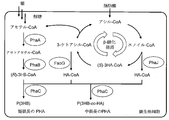
- the temporarily accumulated 3-ketoacyl-CoA and / or enoyl-CoA can then be converted to HACoA by 3-ketoacylacyl carrier protein (ACP) reductase (FabG) and / or enoyl-CoA hydratase (PhaJ). It shows that there was ( Figure 5).
- ACP 3-ketoacylacyl carrier protein
- FGS 3-ketoacylacyl carrier protein
- PhaJ enoyl-CoA hydratase
- KN01 5 in the 16S rDNA sequence has been shown to contain genes encoding FabG and PhaJ in addition to PhaA, PhaB and PhaC . Even under anaerobic conditions, the glycolytic pathway producing 3HB-CoA became active, resulting in PHA consisting of 3HB and HA units. The resulting HA monomer units (3HP and 5HV) had an odd number of carbon atoms.
- the main fatty acids in soybean oil are about 50% linoleic acid (C 17 H 31 COOH), 23% oleic acid (C 17 H 33 COOH), 7-10% ⁇ -linoleic acid (C 17 H 29 COOH) 10% palmitic acid (C 15 H 31 COOH) and 4% stearic acid (C 17 H 35 COOH).
- These fatty acids are metabolized inefficiently under aerobic-anaerobic conditions and can be converted to 3HPCoA and 5HVCoA via the ⁇ -oxidation pathway that liberates the two-carbon unit acetyl-CoA in each of the cycles (Fig. Five). This finding indicates that biosynthesis of long main chain PHA can be controlled by changing the activity of the ⁇ -oxidation pathway, which is also tunable by changing the dissolved oxygen concentration.
- PHA synthases which are important enzymes of PHA biosynthesis, fall into four classes with respect to primary structure (Rehm, 2003).
- V. cholera, V. parahaemolyticus and V. harveyi have been reported to be included in class I PHA synthases (Rehm, 2003; Sun et al., 1995).
- Vibrio sp. Ex25 which shows 99.9% similarity to Vibrio sp. KN01 5 strain with respect to the 16S rDNA sequence, has been shown to contain class I according to the revealed chromosomal sequence.
- Class I PhaC is composed of a single subunit with a molecular weight between 61 kDa and 68 kDa.
- PhaCs from R. eutropha and A. caviae are typical class I PhaCs, known to exhibit strict and broad substrate specificities, respectively (Fukui and Doi, 1997; Fukui et al ., 1999; Rehm, 2003).
- PhaC from A. caviae is one of the class I exceptional PhaCs because of its low similarity (about 45% sequence identity) to other class I PHA synthases (Steinbuchel et al , 1993; Liebergesell and Steinbuchel, 1993).
- the facultative anaerobe Vibrio sp. KN01 5 strain, produces PHA under aerobic and aerobic-anaerobic conditions when artificial seawater is used as the culture medium.
- the PHA content of all samples under aerobic-anaerobic conditions was increased by limiting the amount of dissolved oxygen, especially when using soybean oil as the single carbon source.
- PHA accumulated using soybean oil as a single carbon source under aerobic-anaerobic conditions contains 14% 3HP and 3% 5HV units in addition to 3HB units and has a number average molecular weight of 42 ⁇ 10 3 Had.
- a novel PHA such as a PHA copolymer containing multiple (ie, two or more) HAs selected from the group consisting of (HA) units in any ratio can be synthesized by adjusting anaerobic conditions .
- a novel PHA copolymer containing a plurality of (ie, two or more) HAs selected from the group consisting of (HA) units in any ratio can be produced.
- Table 2 below shows the biosynthesis results of the PHA copolymer by Vibrio sp. KN015 strain when oleic acid is used as the fatty acid and Jatropha oil is used as the fat and oil.
- a marine bacterium accumulates polyhydroxyalkanoate consisting of mainly 3-hydroxydodecanoate and 3-hydroxydecanoate. World J Microb Biot, 26: 1149-1153.
- the present invention provides a novel marine bacterium belonging to the genus Vibrio that can produce polyhydroxyalkanoates, and is therefore useful for producing characteristic bioplastics.
Landscapes
- Chemical & Material Sciences (AREA)
- Engineering & Computer Science (AREA)
- Life Sciences & Earth Sciences (AREA)
- Organic Chemistry (AREA)
- Health & Medical Sciences (AREA)
- Zoology (AREA)
- Wood Science & Technology (AREA)
- Genetics & Genomics (AREA)
- Bioinformatics & Cheminformatics (AREA)
- Biotechnology (AREA)
- General Health & Medical Sciences (AREA)
- Biochemistry (AREA)
- General Engineering & Computer Science (AREA)
- Microbiology (AREA)
- Medicinal Chemistry (AREA)
- Tropical Medicine & Parasitology (AREA)
- Virology (AREA)
- Biomedical Technology (AREA)
- Chemical Kinetics & Catalysis (AREA)
- General Chemical & Material Sciences (AREA)
- Preparation Of Compounds By Using Micro-Organisms (AREA)
- Micro-Organisms Or Cultivation Processes Thereof (AREA)
Abstract
この発明は、(a)16S rDNA配列に基づく系統分類においてVibrio sp. Ex25と近縁である、(b)15~20g/LのNaClを含有する無機塩培地で、単一炭素源として大豆油を使用して該細菌を培養したとき、好気性条件下でポリ(3-ヒドロキシブチレート)ホモポリマーを生成し、一方、好気性-嫌気性条件下で、3-ヒドロキシブチレート単位、3-ヒドロキシプロピオネート単位、及び5-ヒドロキシバレレート単位を含むポリヒドロキシアルカノエートコポリマーを生成することができる、Vibrio属細菌、並びに、この細菌を用いてポリヒドロキシアルカノエートを製造する方法に関する。
Description
本発明は、バイオプラスチック生産能を有する新規の海洋細菌Vibrio属細菌に関する。
本発明はまた、該海洋細菌を用いてバイオプラスチック(ポリヒドロキシアルカノエート)を製造する方法に関する。
本発明はさらに、新規のバイオプラスチックに関する。
現在、プラスチックは種々の領域で繊維やフィルムとして広く利用されており、プラスチック廃棄物の処理が最近、地球環境の重要な問題となっている。したがってバイオベースの生分解性ポリエステルに対する要望が高まっているが、その目的は、プラスチック廃棄物からの二酸化炭素の排出を減らし永続的な社会を構築することである。
ポリ[(R)-3-ヒドロキシブチレート](P(3HB))及びそのコポリマーなどのポリ(ヒドロキシアルカノエート)(PHAs)は、炭素やエネルギーの細胞内貯蔵物質として種々の細菌が合成する典型的な環境にやさしいポリマー材料である。PHAのなかで最も広く一般的に知られるP(3HB)は、最も研究されたバイオベースの生分解性プラスチックのひとつであり、その性質も広く研究されている(特許文献1、非特許文献1~3)。
P(3HB)は当初、堅くて脆い材料であると認識されており、ポリエチレン又はポリスチレンと相容性でない。微生物の貯蔵ポリエステルの構成成分としての(R)-3-ヒドロキシブチレート(3HB)単位以外のヒドロキシアルカノエート(HA)単位を同定することは、この種の微生物ポリエステルの研究開発に対し強い影響力を及ぼしたが、これは、異なるHA単位をP(3HB)に取り込むことによってその機械的かつ熱的性質を変えることができるからである(非特許文献4及び5)。その機械的性質が、最近、新しい伸張技術を用いることによって改善されており、それによって引っ張り強度1.32 GPa、破断点伸度31%、引っ張り時のPHA繊維のヤング率8.1 GPaの性質が得られている(非特許文献6)。PHAのこれらの機械的性質は、手術時の縫合のために使用される、産業レベルのポリエチレンやポリスチレン及びポリ(グリコール酸)の性質と同等である。従って、PHAは環境への影響、二酸化炭素の排出及び機械的強度に関してかなり魅力的な材料であるといえる。
Ralstonia eutropha由来の遺伝子などの典型的なPHA合成遺伝子は、β-ケトチオラーゼ(phaA)、アセトアセチル-コエンザイム(CoA)レダクターゼ(phaB)及び合成酵素(phaC)を含むオペロン内に存在する。このチオラーゼとレダクターゼは、モノマー基質である3-ヒドロキシブチルCoA(3HBCoA)を合成し、この合成酵素は、そのモノマーをPHAに重合する。また、PHA合成に関与する他のタンパク質類は細胞内PHAデポリメラーゼ、ファシンタンパク質及び調節タンパク質であり、これらはしばしば、phaA、phaB及びphaCの近傍にコードされる。β-酸化経路を介するPHA合成に関して、(R)-特異的2-エノイル-CoAヒドラターゼ及び3-ケトアシル-アシルキャリアプロテイン(ACP)レダクターゼをコードするphaJ及びfabG遺伝子もまたそれぞれ、3-エノイル-CoA及び3-ケトアシル-CoAを(R)-3-ヒドロキシ-CoAに変換するために機能していることが知られている(非特許文献7及び8)。合成酵素PhaCの基質特異性は、最終産物であるPHAコポリマーのモノマー組成に影響を及ぼす種々のPHA合成酵素間で異なる(非特許文献9)。
P(3HB)は、Bacillus megateriumから微生物貯蔵ポリエステルとして初めて単離された(非特許文献10)。P(3HB)の発見後、多くの種類の細菌、例えばBacillus spp.、Pseudomonas spp.、Cupriavidus spp.、Aeromonas spp.などが、工業的に使用するためにより効率的にPHAを製造するうえでのこれら細菌類の利用について研究されている(非特許文献11~14)。2、3の種類の海洋細菌もまた海洋条件下でPHAの生産について研究されているけれども、得られたPHAは詳細に特徴づけられていない(非特許文献15~17)。海洋条件下でPHAを生合成する利点には、海水耐性を欠く細菌による汚染を避けること、並びに、ろ過した海水を培養培地として使用できること、そのために大スケールでの工業的PHA製造を可能にすることが含まれる。また、さらに可能な利点は、組換えAlcanivorax borkumensisなどのいくつかの海洋細菌がPHAを細胞外に産生可能であり、これによってPHA製造の工業プロセルを簡易にさせることである(非特許文献18)。さらに、海洋細菌は最近、大洋性二酸化炭素サイクルを含めた海洋エコシステムから実用性のある物質を製造するための候補として注目されている(非特許文献19~21)。
Vibrio種の医学的、環境的及び分類学的な研究が過去数十年間に増大したが、これは、V. cholerae、V. parahaemolyticus及びV. vulnificusなどの数種のVirio種は臨床的に重要なヒト病原体を含むからである。一方、V. fischeriなどの数種のVibrio種は病原性を示していない。PHAの生産能については、V. harveyiがルミネッセンスの開発の際に高細胞密度でPHA顆粒を形成することが示されている(非特許文献22)。
Doi, Y. and Steinbuchel, A. (Eds.) (2001), Biopolymers, Weinheim, Germany: Wiley-VCH
Steinbuchel, A. et al. (2001), FEMS Microbiol Rev, 10: 347-350
Lenz, R.W. and Marchessault, R.H. (2005), Biomacromolecules, 6: 1-8
Pizzoli, M. et al. (1994), Macromolecules, 27: 4755-4761
Nakamura, S. et al. (1992), Macromolecules, 25: 4237-4241
Iwata, T. et al. (2004), Macromol Rapid Comm, 25: 1100-1104
Fiedler, S. et al. (2002), Arch Microbiol, 178: 149-160
Tsuge, T. et al. (2000), Fems Microbiol Lett, 184: 193-198
Rehm, B.H. (2003), The Biochemical journal, 376: 15-33
Lemoignei, M. (1926), Bull Soc Chim Biol 8: 770-782
Shimamura, E. et al. (1994), Macromolecules, 27: 878-880
Abe, H. et al. (1994), Int J Biol Macromol, 16: 115-119
Saito, Y. and Doi, Y. (1994), Int J Biol Macromol, 16: 99-104
Fuchtenbusch, B. et al. (2000), Appl Microbiol Biot, 53: 167-172
Gonzalez-Garcia, Y. et al. (2008), J IndMicrobiol Biot, 35: 629-633
Wang, Q. et al. (2010), World J Microb Biot, 26: 1149-1153
Lopez, N.I. et al. (2009), Curr Microbiol, 59: 514-519
Sabirova, J.S. et al. (2006), J Bacteriol, 188: 8452-8459
Karl, D.M. (2007), Nat Rev Microbiol, 5: 759-769
Moran, M.A. and Miller, W.L. (2007), Nat Rev Microbiol, 5: 792-800
Umani, S.F. et al. (2007), Aquat Microb Ecol, 46: 163-175
Sun, W.Q. et al. (1995), Can J Microbiol, 41: 131-137
本発明は、バイオプラスチック生産能を有する、V. harveyiと異なる新規の海洋細菌を提供することを目的とする。
本発明はまた、該海洋細菌を用いてバイオプラスチックを製造する方法を提供することを目的とする。
本発明はさらに、新規のバイオプラスチックを提供することを目的とする。
本発明は、以下の特徴を有する。
(1) 下記の性質(a)及び (b)を有する、Vibrio属細菌。
(a)16S rDNA配列に基づく系統分類においてVibrio sp. Ex25と近縁である
(b)15~20g/LのNaClを含有する無機塩培地で、単一炭素源として大豆油を使用して該細菌を培養したとき、好気性条件下でポリ(3-ヒドロキシブチレート)ホモポリマーを生成し、一方、好気性-嫌気性条件下で、3-ヒドロキシブチレート単位、3-ヒドロキシプロピオネート単位、及び5-ヒドロキシバレレート単位を含むポリ(ヒドロキシアルカノエート)コポリマーを生成することができる
(a)16S rDNA配列に基づく系統分類においてVibrio sp. Ex25と近縁である
(b)15~20g/LのNaClを含有する無機塩培地で、単一炭素源として大豆油を使用して該細菌を培養したとき、好気性条件下でポリ(3-ヒドロキシブチレート)ホモポリマーを生成し、一方、好気性-嫌気性条件下で、3-ヒドロキシブチレート単位、3-ヒドロキシプロピオネート単位、及び5-ヒドロキシバレレート単位を含むポリ(ヒドロキシアルカノエート)コポリマーを生成することができる
(2) 単一炭素源がグルコース、フルクトース又はグルコン酸塩である場合、上記細菌が好気性条件下又は好気性-嫌気性条件下でポリ(3-ヒドロキシブチレート)ホモポリマーを生成することができる、上記(1)に記載のVibrio属細菌。
(3) Vibrio sp KN01 5(寄託番号NITE BP-1101)又は、前記(a)及び(b)の性質を有するその変異株である、上記(1)又は(2)に記載のVibrio属細菌。
(4) 上記(1)~(3)のいずれかに記載のVibrio属細菌を培養することを含む、ポリヒドロキシアルカノエートの製造方法。
(5) 上記培養を、炭素源を含む、海水若しくは人工海水を含む培地又は無機塩培地で行う、上記(4)に記載の方法。
(6) 上記培養を好気性条件下又は好気性-嫌気性条件下で行う、上記(4)又は(5)に記載の方法。
(7) 上記培養を、糖類、糖酸、脂肪酸類及び油脂類からなる群から選択される1若しくは複数の物質を炭素源として用いて行う、上記(4)~(6)のいずれかに記載の方法。
(8) 上記脂肪酸が、飽和脂肪酸、不飽和脂肪酸又はその混合物である、上記(7)に記載の方法。
(9) 上記油脂が植物油である、上記(7)に記載の方法。
(10) 上記ポリヒドロキシアルカノエートがホモポリマー又はコポリマーである、上記(4)~(9)のいずれかに記載の方法。
(11) 下記式(a)で表される構成単位、下記式(b)で表される構成単位、及び下記式(c)で表される構成単位を含むポリヒドロキシアルカノエートコポリマー。
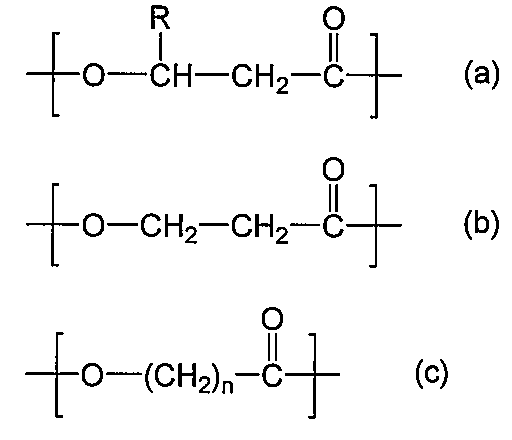
(式中、Rはアルキル基であり、nは4又は6である。)
(12) 下記式(a)で表される構成単位、下記式(b)で表される構成単位、下記式(c1)で表される構成単位、及び下記式(c2)で表される構成単位を含むポリヒドロキシアルカノエートコポリマー。

(式中、Rはアルキル基である。)
(13) 少なくとも下記式(a)で表される構成単位及び下記式(c)で表される構成単位を含む、但し構成単位(a)の組成割合が70~95%である、ポリヒドロキシアルカノエートコポリマー。

(式中、Rはアルキル基であり、nは4又は6である。)
本発明は、海水から単離された、ポリヒドロキシアルカノエートを生成する新規のVibrio属細菌に関するものであり、この細菌を用いることによってバイオプラスチックを製造することが可能となる。また、その際に海水を培地とすることができ、溶存酸素濃度を制限することにより、機械的性質及び/又は熱的性質を改善する、複数の異なるモノマー単位からなるポリヒドロキシアルカノエートコポリマーなどのバイオプラスチックを製造することが可能である。
本明細書は本願の優先権の基礎である日本国特許出願2011-119748号の明細書および/または図面に記載される内容を包含する。
本発明をさらに詳細に説明する。
本発明は、海水から単離された(すなわち、海洋由来の)、ポリ(ヒドロキシアルカノエート)ポリマー(「PHA」と称する場合もある。)を生成する新規のVibrio属細菌に関する。
1.Vibrio属細菌
本発明のVibrio属細菌は、以下の性質(a)及び (b)を有することを特徴とする。
(a)16S rDNA配列に基づく系統分類においてVibrio sp. Ex25と近縁である
(b)15~20g/LのNaClを含有する無機塩培地で、単一炭素源として大豆油を使用して該細菌を培養したとき、好気性条件下でポリ(3-ヒドロキシブチレート)ホモポリマーを生成し、一方、好気性-嫌気性条件下で、3-ヒドロキシブチレート単位、3-ヒドロキシプロピオネート単位、及び5-ヒドロキシバレレート単位を含むポリヒドロキシアルカノエートコポリマーを生成することができる
(a)16S rDNA配列に基づく系統分類においてVibrio sp. Ex25と近縁である
(b)15~20g/LのNaClを含有する無機塩培地で、単一炭素源として大豆油を使用して該細菌を培養したとき、好気性条件下でポリ(3-ヒドロキシブチレート)ホモポリマーを生成し、一方、好気性-嫌気性条件下で、3-ヒドロキシブチレート単位、3-ヒドロキシプロピオネート単位、及び5-ヒドロキシバレレート単位を含むポリヒドロキシアルカノエートコポリマーを生成することができる
本明細書において「近縁」という用語は、細菌間で16S rDNA配列を比較したとき、好ましくは90%~94%以上、より好ましくは95%~98%以上、さらに好ましくは99%~99.5%以上の配列同一性であるときに使用する。配列同一性は、2つの配列を最大の一致度となるようにアラインメントしたとき、ギャップも含めた総ヌクレオチド数に対する同一ヌクレオチド数のパーセンテージ(%)で表す。同一性は、例えばBLASTアルゴリズム(Altschul et al., 1990)を利用することによって決定することができる。
本発明の細菌はさらに、以下の性質(c)をさらに有することができる。
(c)単一炭素源がグルコース、フルクトース又はグルコン酸塩である場合、好気性条件下又は好気性-嫌気性条件下でポリ(3-ヒドロキシブチレート)ホモポリマーを生成することができる
上記の「背景技術」に記載したように、PHA生産が知られる公知のVibrio属細菌は、海洋細菌であるV. harveyi(Umani, S.F. et al., 2007)のみである。この細菌は、生物発光性のグラム陰性細菌であり、それによるPHA生産についてはあまり注目されていなかった。
上記の「背景技術」に記載したように、PHA生産が知られる公知のVibrio属細菌は、海洋細菌であるV. harveyi(Umani, S.F. et al., 2007)のみである。この細菌は、生物発光性のグラム陰性細菌であり、それによるPHA生産についてはあまり注目されていなかった。
本発明者らは、沖縄県阿嘉島ヒズシビーチで採取した海水から、V. harveyiとは異なるグラム陰性の新規のVibrio属細菌で、上記の性質(a)、(b)及び(c)を有するVibrio sp KN01 5株を今回見出した。Vibrio sp KN01 5株は、独立行政法人製品評価技術基盤機構特許微生物寄託センター(NITE)(日本国千葉県木更津市かずさ鎌足2-5-8)に2011年5月12日付けで寄託されており、寄託番号NITE P-1101が付与されている。また、この菌株は、ブダペスト条約に基づく国際寄託に2012年5月10日付けで移管され、寄託番号NITE BP-1101(国際寄託日2011年5月12日)が付与されている。
Vibrio sp KN01 5株は、形態学的に、極性鞭毛を有し湾曲した桿状(棒状)の形状を有しており(図1)、Vibrio spp.選択用TCBS寒天培地(後述の実施例参照)で約35℃で培養すると大型の黄色いコロニーを形成する。この株はまた、16S rDNA配列の解析の結果、Vibrio sp. Ex25と最も近縁であることが判明した(図2)。
本発明のVibrio sp KN01 5株は海洋細菌の1種であり、10g/L以上、例えば約19.5g/Lの高NaCl濃度の条件でさえ増殖しうる。増殖用培地は、通常の海洋細菌培養用の培地、Vibrio属細菌培養用培地(TCBS Agar(例えばFluka code No. 86348)、Vibrio寒天培地、等)などを用いることができる。
本発明のVibrio属細菌は、少なくとも上記の性質(a)及び(b)、好ましくは少なくとも上記の性質(a)、(b)及び(c)を有することを特徴とする。従ってこのような性質をもつ限り、単離菌株Vibrio sp KN01 5に突然変異処理を施して得られるような、上記(a)及び(b)の性質を有するその変異株も本発明のVibrio属細菌に含まれる。突然変異は、紫外線(UV)などの高エネルギー線の照射、メチルエチルスルホン酸(EMS)、メチルメタンスルホン酸(MMS)、N-メチル-N'-ニトロ-N-ニトロソグアニジン(MNNG)等の化学変異原性剤との接触などの通常方法により培地上の菌株を一定時間処理することによって行うことができる。固体培地上に形成される各コロニーについて、例えばNile red(脂肪染色試薬)を加えた無機塩培地を用いて約30℃で培養したのち、UV光下でNile red染色を指標にしてPHAの蓄積を調べるなどの方法を用いることによって、PHAの生成能を検出することができる。
本発明のVibrio属細菌は、窒素源を低減若しくは欠乏し、炭素源を補充した無機塩培地で、好気性条件で、約50~150×103の範囲の数平均分子量のPHA、とりわけポリ(3-ヒドロキシブチレート)ホモポリマーを生成することができる。このとき、炭素源として糖類、脂肪酸類、油脂類などの物質を使用することができる。
本発明の細菌を、溶存酸素濃度を次第に低減するように制御した条件(下記参照)、すなわち好気性-嫌気性条件で培養すると、該細菌は、炭素源として糖類を使用するときポリ(3-ヒドロキシブチレート)ホモポリマーを生成するが、炭素源として脂肪酸類又は油脂類を使用するときポリヒドロキシアルカノエートコポリマーを生成することができる。このコポリマーは、3-ヒドロキシブチレート(3HB)単位の他に、例えば3-ヒドロキシプロピオネート(3HP)単位、5-ヒドロキシバレレート(5HV)単位、3-ヒドロキシバレレート(3HV)単位、3-ヒドロキシヘキサノエート(3HH)単位、7-ヒドロキシヘプタノエート(7H0)単位、及びその他のヒドロキシアルカノエート(HA)単位からなる群から選択される複数種(すなわち、2種以上)のHA単位を含むことができる。例えば、後述の実施例の表1(Vibrio sp KN01 5株使用)に記載されるように、炭素源として大豆油(リノール酸、オレイン酸、α-リノール酸、パルミチン酸、ステアリン酸を含む)を使用したときに、3HB:3HP:5HVが83:14:3(mol%)のPHAコポリマーが生成される。また、後述の実施例の表2(Vibrio sp KN01 5株使用)に記載されるように、炭素源としてヤトロファ油を使用するとき、3HB:3HP:5HV:他のHAが84:0:5:12(mol%)のPHAコポリマーを製造することができ、オレイン酸を使用するとき、3HB:3HP:5HV:他のHAが78:2:2:18(mol%)のPHAコポリマーを製造することができる。
本明細書中で使用される「好気性-嫌気性条件」とは、本発明のVibrio属細菌は酸素(空気)のある好気性条件及び酸素(空気)の欠乏した嫌気性条件のいずれでも増殖することができるが、酸素(空気)のある条件で培養を開始し、例えば培養系を密閉するなどして酸素の消費に伴い溶存酸素濃度が次第に低減するようにした条件をいう。
2.バイオプラスチックの製造
本発明はまた、上記のVibrio属細菌を培養してバイオプラスチックを生成し、該プラスチックを回収することを含む、バイオプラスチックの製造方法を提供する。
本発明はまた、上記のVibrio属細菌を培養してバイオプラスチックを生成し、該プラスチックを回収することを含む、バイオプラスチックの製造方法を提供する。
培養は、海水若しくは人工海水を含む培地、無機塩培地などの、約3g/L以上、好ましくは10g/L以上、さらに好ましくは15~20g/L又はそれ以上のNaClを含有する培地であって、炭素源を含むが窒素源を通常より低減させるか若しくは欠乏させた培地で行うことが好ましい。培地は、例えば寒天ベースの固体培地でもよいし、液体培地でもよく、好ましくは液体培地である。
培地に海水を含有させる場合には、メンブレンフィルターを用いて海水をろ過しプランクトン、細菌、カビ、酵母などの微生物類を含む有機物を除去する。
培地の好ましい例(組成)は、2.80 g/L KH2PO4, 3.32 g/L Na2HPO4, 0.54 g/L (NH2)2CO, 0.25 g/L MgSO4・7H2O, 19.45 g/L NaCl, 1.0 mL/L 微量元素(0.22 g/L CoCl2・6H2O, 9.70 g/L FeCl3, 7.80 g/L CaCl2, 0.12 g/L NiCl2・6H2O, 0.11 g/L CrCl3・6H2O, 0.16 g/L CuSO4・5H2O)である。
培地のpHは、通常、6~8、好ましくは7.0~7.4である。
培地に添加する炭素源の例は、糖類、飽和若しくは不飽和脂肪酸類、油脂類の他に、糖誘導体、脂肪酸誘導体などを挙げることできるが、これらに限定されないものとする。これらの物質を単独に又は任意に組み合わせて炭素源として使用することができる。
糖類の例は、単糖類、二糖類、オリゴ糖、多糖などを含み、例えばグルコース、フルクトース、スクロース、ラクトース、マルトース、デンプンなどである。
脂肪酸の例は、脂肪鎖部分の炭素数1~30若しくはそれ以上、好ましくは炭素数7~20の、飽和又は不飽和脂肪酸、例えば酪酸、カプロン酸、カプリル酸、カプリン酸、ラウリン酸、ミリスチン酸、パルミチン酸、ステアリン酸、アラキン酸、ベヘン酸、カプロレイン酸、ミリストレイン酸、パルミトレイン酸、エライジン酸、シスバクセン酸、カドレイン酸、エルカ酸、クロトン酸、オレイン酸、リノール酸、γ-リノレン酸、α-リノレン酸、アラキドン酸、ペンタエン酸、ヘキサエン酸、イワシ酸、ドコサヘキサン酸、ニシン酸、それらの混合物などである。
油脂の例は、動物油脂、植物油脂などであり、動物油脂の例は魚油、牛脂、豚脂、ニシン油などであり、植物油脂の例は大豆油、ナタネ油、ゴマ油、コーン油、パーム油、ヤトロファ油、オリーブ油、綿実油、ヤシ油、ひまし油、アマニ油、桐油、それらの混合物などである。
糖誘導体の例は、糖酸、例えばグルコン酸などである。
脂肪酸誘導体の例は、アルキル基(メチル、エチル、等)、ヒドロキシ基、ハロゲン基(F, Cl, Br若しくはI)、フェニル基、ナフチル基、複素環基(例えばフリル基、チオフェニル基、ピロリル基、等)などのアリール基を置換基として含む脂肪酸などである。これらの官能基はさらに任意の基(group)で置換されていてもよい。
炭素源の濃度は、1 g/L~40 g/L、好ましくは15 g/L~25 g/Lであるが、この範囲に制限されないものとする。
培養温度は、好ましくは約20℃~約40℃、さらに好ましくは約25℃~35℃の範囲である。
培養時間は、特に制限されないが、例えば約5時間~48時間又はそれ以上である。
培養は、好気性条件下又は好気性-嫌気性条件下で行う。好気性条件では、空気中であればよく、必要であれば通気も可能である。好気性-嫌気性条件では、溶存酸素濃度が培養初期段階の約20%から培養最終段階の約5%に低減するような条件を設定することができるが、これは一例に過ぎず、溶存酸素濃度を徐々に低減する条件を設定するならば上記の範囲に制限されない。
本発明の細菌を、好気性条件下で培養するときには、炭素源として上記の糖類、糖酸類、脂肪酸類、油脂類などを使用するときポリ(3-ヒドロキシブチレート)ホモポリマーを主成分(ほぼ100%)として製造することができる。後述の実施例では表1に示されるように、糖類や糖酸類を使用すると数平均分子量約110~120×103の範囲のPHAを製造することができる。また、脂肪酸や油脂(特に植物油)を使用すると数平均分子量がより小さい(例えば50~60×103)PHAを製造することができる。PHAの収量は、増殖する菌体重量と菌体内PHA含量との関係によって決まるが、PHA収量をより高める好適な炭素源は糖酸類、脂肪酸類、植物油類などである。
一方、本発明の細菌を、好気性-嫌気性条件下で培養するときには、炭素源として上記の糖類、糖酸類などを使用するときポリ(3-ヒドロキシブチレート)ホモポリマーを主成分(ほぼ100%)として製造することができる。得られるPHAの数平均分子量は、約85~100×103の範囲であり、好気性条件の場合に得られたものより幾分小さい(表1参照)。炭素源が糖類である場合には、好気性条件の場合と比べてPHA収量は増加する傾向にある。これに対して、炭素源として脂肪酸類や油脂類を使用するときには、PHAコポリマー(ランダムコポリマーが主である。)を製造することができる。PHAコポリマーは、3-ヒドロキシブチレート(3HB)単位の他に、例えば、3-ヒドロキシプロピオネート(3HP)単位、5-ヒドロキシバレレート(5HV)単位、3-ヒドロキシバレレート(3HV)単位、3-ヒドロキシヘキサノエート(3HH)単位、7-ヒドロキシヘプタノエート(7H0)単位、その他のヒドロキシアルカノエート(HA)単位からなる群から選択される複数種(すなわち、2種以上)のHA単位を含む。各構成単位の比率や位置は制限されないものとする。また、本発明の細菌を用いて得られるポリマーの特徴のひとつとして、3HP単位を含むPHAコポリマーを製造可能であることが挙げられる。後述の実施例では、炭素源として大豆油を使用するとき、3HB:3HP:5HVが83:14:3(mol%)のPHAコポリマー(数平均分子量約40~45×103)を製造することができる。また、炭素源としてヤトロファ油を使用するとき、3HB:3HP:5HV:他のHAが84:0:5:12(mol%)のPHAコポリマーを製造することができ、オレイン酸を使用するとき、3HB:3HP:5HV:他のHAが78:2:2:18(mol%)のPHAコポリマーを製造することができる。
上記のように菌体内に生成されたPHAポリマーは、菌体を機械的又は化学的に破壊したのち、ポリマーを回収する。菌体の破壊としては、化学的な方法には、リゾチーム等の酵素を用いる方法などがあり、物理的な方法には、超音波処理法、ホモゲナイザーを用いる方法、フレンチ・プレスを用いる方法などがある。ポリマーは、例えばクロロホルムなどのPHAを溶解する有機溶剤に溶解したのち、ヘキサン又はメタノールなどのPHAが不溶性の溶剤を加えてポリマー沈殿させることによって回収可能である。
3.バイオプラスチック
上記の方法によって製造されたバイオプラスチック、すなわちPHAポリマーは、上記の培養に添加される炭素源の種類によってポリマー単位組成を変更可能である。特に、炭素源として脂肪酸類や油脂類を使用するときには、好気性-嫌気性条件下でPHAコポリマーを製造することができる。このようなポリマーは、P(3HB)ホモポリマーと比べて機械的及び/又は熱的に優れていることが期待されている。本発明の方法によって、炭素源を大豆油とするとき、少なくとも3HB単位、3HP単位、及び5HV単位を含むポリHPAコポリマーを得ることができるが、炭素源を他の脂肪酸類や油脂類に変更することによってさらに特徴的な3HB単位、3HP単位(この構成単位は、存在してもよいし、又は非存在であってもよい。)、並びに5HV単位、3HH単位、3HV単位及び7HO単位からなる群から選択される複数種(すなわち、2種以上)の他のHA単位、からなるPHAコポリマーなどのバイオポリマーを製造することができる。
上記の方法によって製造されたバイオプラスチック、すなわちPHAポリマーは、上記の培養に添加される炭素源の種類によってポリマー単位組成を変更可能である。特に、炭素源として脂肪酸類や油脂類を使用するときには、好気性-嫌気性条件下でPHAコポリマーを製造することができる。このようなポリマーは、P(3HB)ホモポリマーと比べて機械的及び/又は熱的に優れていることが期待されている。本発明の方法によって、炭素源を大豆油とするとき、少なくとも3HB単位、3HP単位、及び5HV単位を含むポリHPAコポリマーを得ることができるが、炭素源を他の脂肪酸類や油脂類に変更することによってさらに特徴的な3HB単位、3HP単位(この構成単位は、存在してもよいし、又は非存在であってもよい。)、並びに5HV単位、3HH単位、3HV単位及び7HO単位からなる群から選択される複数種(すなわち、2種以上)の他のHA単位、からなるPHAコポリマーなどのバイオポリマーを製造することができる。
具体的には、本発明は、以下のPHAコポリマーを提供する。
下記式(a)で表される構成単位、下記式(b)で表される構成単位、及び下記式(c)で表される構成単位を含むPHAコポリマー。
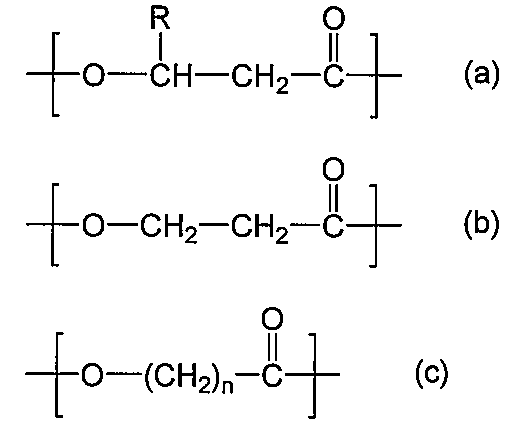
(式中、Rはアルキル基であり、nは4又は6である。)
あるいは、下記式(a)で表される構成単位、下記式(b)で表される構成単位、下記式(c1)で表される構成単位、及び下記式(c2)で表される構成単位を含むPHAコポリマー。
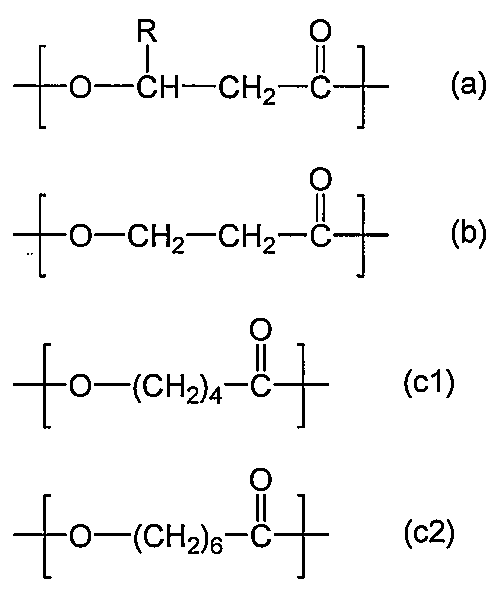
(式中、Rはアルキル基である。)
あるいは、少なくとも下記式(a)で表される構成単位及び下記式(c)で表される構成単位を含む、但し構成単位(a)の組成割合が70~95%、好ましくは75~90%である、PHAコポリマー。

(式中、Rはアルキル基であり、nは4又は6である。)
上記の構成単位(a)は、絶対配置R体であり、該単位におけるアルキル基は、飽和又は不飽和アルキルであり、炭素数は以下のものに限定されないが例えば炭素数は1~10、好ましくは1~4であり、より好ましくは1~3(すなわち、メチル、エチルもしくはプロピル基)である。また、各構成単位の配置又は位置は任意であり、一般にランダムコポリマーを形成しているが、ブロックコポリマーであってもよい。
上記のPHAコポリマーは、以下のものに限定されないが、数平均分子量は例えば40,000~200,000である。また、構成単位(a)、構成単位(b)及び構成単位(c)のmol%をそれぞれx,y,zとしたとき、あるいは、構成単位(a)、構成単位(b)、構成単位(c1)及び構成単位(c2)のmol%をそれぞれx,y,z1,z2としたとき、x:y:zの比、あるいはx:y:(z1+z2)の比は、以下のものに限定されないが、例えば(70~90):(5~20):(1~10)または(70~95):(0~15):(1~15)である。
本発明を、以下の実施例によってさらに具体的に説明するが、本発明の範囲は、これらの実施例によって制限されない。
1.材料と方法
<サンプリング地と単離法>
沖縄県阿嘉島ヒズシビーチで採取した海水を、PHA生産細菌についてスクリーニングした。海水サンプルを海水寒天 (Difco, BD, Franklin Lakes, NJ)上に置き、30℃でインキュベートした。プレートから得たコロニーを0.5μg/mL Nile red (Sigma, St. Louis, MO)を補充した無機塩培地(MM)上に画線し30℃でインキュベートした。MMの組成は、2.80 g/L KH2PO4、3.32 g/L Na2HPO4、0.54 g/L (NH2)2CO、0.25 g/L MgSO4・7H2O、19.45 g/L NaCl 及び1.0 mL/L微量元素(0.22 g/L CoCl2・6H2O, 9.70 g/L FeCl3, 7.80 g/L CaCl2, 0.12 g/L NiCl2・6H2O, 0.11 g/L CrCl3・6H2O及び0.16 g/L CuSO4・5H2Oを含有する。)であった。PHAの蓄積を、UV光下でNileレッド染色により検出し、1H核磁気共鳴スペクトル(1H-NMR)によって証明した(Spiekermann et al., 1999)。
<サンプリング地と単離法>
沖縄県阿嘉島ヒズシビーチで採取した海水を、PHA生産細菌についてスクリーニングした。海水サンプルを海水寒天 (Difco, BD, Franklin Lakes, NJ)上に置き、30℃でインキュベートした。プレートから得たコロニーを0.5μg/mL Nile red (Sigma, St. Louis, MO)を補充した無機塩培地(MM)上に画線し30℃でインキュベートした。MMの組成は、2.80 g/L KH2PO4、3.32 g/L Na2HPO4、0.54 g/L (NH2)2CO、0.25 g/L MgSO4・7H2O、19.45 g/L NaCl 及び1.0 mL/L微量元素(0.22 g/L CoCl2・6H2O, 9.70 g/L FeCl3, 7.80 g/L CaCl2, 0.12 g/L NiCl2・6H2O, 0.11 g/L CrCl3・6H2O及び0.16 g/L CuSO4・5H2Oを含有する。)であった。PHAの蓄積を、UV光下でNileレッド染色により検出し、1H核磁気共鳴スペクトル(1H-NMR)によって証明した(Spiekermann et al., 1999)。
<PHAの製造>
PHAの製造を、500mL振とうフラスコ中で、単一炭素源として20g/Lのグルコース、フルクトース、グルコン酸塩(グルコン酸ナトリウム)又は大豆油のいずれかを加えた100mLの無機塩培地を用いて、30℃、140rpmの一定の振とう速度で、48時間、好気性条件及び好気性-嫌気性条件下で行った。このとき、好気性-嫌気性条件は、空気中で調製された菌株を含むフラスコを密封した状態で菌株の培養を行った。培養後、細胞を回収し、ミリQ水又はエタノールで洗浄して残存する炭素源及び培地塩を除去し、その後、凍結乾燥した。凍結乾燥した菌体の重量を測ったあとで、蓄積したPHAを乾燥菌体から70℃、72時間クロロホルムで抽出し、ヘキサンを用いて沈殿させることにより精製した。得られたPHAをクロロホルムに溶解し、メタノールで沈殿させて精製した。PHA含量は、精製されたPHAの重量と乾燥菌体重量に基づいて決定された。
PHAの製造を、500mL振とうフラスコ中で、単一炭素源として20g/Lのグルコース、フルクトース、グルコン酸塩(グルコン酸ナトリウム)又は大豆油のいずれかを加えた100mLの無機塩培地を用いて、30℃、140rpmの一定の振とう速度で、48時間、好気性条件及び好気性-嫌気性条件下で行った。このとき、好気性-嫌気性条件は、空気中で調製された菌株を含むフラスコを密封した状態で菌株の培養を行った。培養後、細胞を回収し、ミリQ水又はエタノールで洗浄して残存する炭素源及び培地塩を除去し、その後、凍結乾燥した。凍結乾燥した菌体の重量を測ったあとで、蓄積したPHAを乾燥菌体から70℃、72時間クロロホルムで抽出し、ヘキサンを用いて沈殿させることにより精製した。得られたPHAをクロロホルムに溶解し、メタノールで沈殿させて精製した。PHA含量は、精製されたPHAの重量と乾燥菌体重量に基づいて決定された。
<PHAの特徴づけ>
精製されたPHAは、分子量及び化学構造について特徴付けられた。PHAの分子量は、ゲル浸透クロマトグラフィー(島津製作所、京都)によって測定された。また、PHAを1H-NMR (JNM-Excalibur270; JEOL)によって分析し、その精確な化学構造と組成を決定した。
精製されたPHAは、分子量及び化学構造について特徴付けられた。PHAの分子量は、ゲル浸透クロマトグラフィー(島津製作所、京都)によって測定された。また、PHAを1H-NMR (JNM-Excalibur270; JEOL)によって分析し、その精確な化学構造と組成を決定した。
<系統分類解析>
上記のように海水から単離されたPHA生産細菌からゲノムDNAを抽出した。16S rDNA遺伝子をユニバーサルプライマーセットを用いて大腸菌配列に基づき増幅した(Rainey and Stackebrandt, 1993)。プラスミドのDNA配列は、DNA配列決定サービス (RIKEN Brain Science Institute Research Resources Center Support Unit for Bio-Material Analysis、埼玉、日本)を用いて決定された。すべての配列を、BLASTアルゴリズム(Altschul et al., 1990)を用いてGenBank DNAデータベースに寄託された配列と比較した。KN01 5株からの16S rDNAの全長配列を配列番号1(1431bp)として示した。系統樹を、SaitouとNei (Saitou and Nei, 1987)の近隣結合法(neighbor-joining method)を用いて構築した。3つのトポロジーを1000回の再サンプリングのブーストトラップ分析によって試験した。Photobacterium damselae subsp.をアウトグループとして使用した。
上記のように海水から単離されたPHA生産細菌からゲノムDNAを抽出した。16S rDNA遺伝子をユニバーサルプライマーセットを用いて大腸菌配列に基づき増幅した(Rainey and Stackebrandt, 1993)。プラスミドのDNA配列は、DNA配列決定サービス (RIKEN Brain Science Institute Research Resources Center Support Unit for Bio-Material Analysis、埼玉、日本)を用いて決定された。すべての配列を、BLASTアルゴリズム(Altschul et al., 1990)を用いてGenBank DNAデータベースに寄託された配列と比較した。KN01 5株からの16S rDNAの全長配列を配列番号1(1431bp)として示した。系統樹を、SaitouとNei (Saitou and Nei, 1987)の近隣結合法(neighbor-joining method)を用いて構築した。3つのトポロジーを1000回の再サンプリングのブーストトラップ分析によって試験した。Photobacterium damselae subsp.をアウトグループとして使用した。
<菌株の形態学的及び生化学的特徴づけ>
得られた菌株を、Vibrio spp.の選択的単離用の改良型Thiosulfate Citrate Bile Salts Sucrose (TCBS)寒天を用いて試験した。TCBS寒天は、5g/Lの酵母エキス、5g/Lのカゼインのパンクレアチン消化物、5g/Lの動物組織のペプチン消化物、10g/Lのクエン酸ナトリウム、10g/Lのチオ硫酸ナトリウム、3g/Lのコール酸ナトリウム、5g/Lのoxgall、20g/Lのスクロース、10g/Lの塩化ナトリウム、1g/Lのクエン酸第二鉄、0.04g/Lのチモールブルー、0.04g/Lのブロモチモールブルー及び14g/Lの寒天を含む(Kobayashi et al., 1963; Nakanishi, 1963)。この菌株は酸性環境に敏感であるため、pHを高めてVibrio choleraの増殖性を増大させた(Morris et al., 1979)。また、マイカ支持体上に担持した菌株を直接、空気中で原子間力顕微鏡 (AFM) (Seiko Instruments Inc. SPI3800/SPA 300HV)によって観察した。長さ400μm、スプリング定数15N/mのシリコンカンチレバーをdynamic force mode (tapping mode) AFMで使用した。スキャン速度は0.8 Hzに設定された。本実験では、light tapping force (set-point values = 0.85)をすべてのAFM観察で使用して、カンチレバーチップによる細胞への損傷を回避した。
得られた菌株を、Vibrio spp.の選択的単離用の改良型Thiosulfate Citrate Bile Salts Sucrose (TCBS)寒天を用いて試験した。TCBS寒天は、5g/Lの酵母エキス、5g/Lのカゼインのパンクレアチン消化物、5g/Lの動物組織のペプチン消化物、10g/Lのクエン酸ナトリウム、10g/Lのチオ硫酸ナトリウム、3g/Lのコール酸ナトリウム、5g/Lのoxgall、20g/Lのスクロース、10g/Lの塩化ナトリウム、1g/Lのクエン酸第二鉄、0.04g/Lのチモールブルー、0.04g/Lのブロモチモールブルー及び14g/Lの寒天を含む(Kobayashi et al., 1963; Nakanishi, 1963)。この菌株は酸性環境に敏感であるため、pHを高めてVibrio choleraの増殖性を増大させた(Morris et al., 1979)。また、マイカ支持体上に担持した菌株を直接、空気中で原子間力顕微鏡 (AFM) (Seiko Instruments Inc. SPI3800/SPA 300HV)によって観察した。長さ400μm、スプリング定数15N/mのシリコンカンチレバーをdynamic force mode (tapping mode) AFMで使用した。スキャン速度は0.8 Hzに設定された。本実験では、light tapping force (set-point values = 0.85)をすべてのAFM観察で使用して、カンチレバーチップによる細胞への損傷を回避した。
<PHA合成酵素遺伝子の分類>
Vibrio sp. Ex25(寄託番号YP_003287668.1)、Ralstonia eutropha (Cupriavidus necator, YP_725940)及びAeromonas caviae (Aeromonas punctate, BAA21815)に由来するphaCの配列アラインメントをClustalW2 (European Bioinformatics Institute)を用いて行った。アミノ酸の同一性と正値性(positivities)をBLASTアルゴリズム(Altschul et al., 1990)によって計算した。
Vibrio sp. Ex25(寄託番号YP_003287668.1)、Ralstonia eutropha (Cupriavidus necator, YP_725940)及びAeromonas caviae (Aeromonas punctate, BAA21815)に由来するphaCの配列アラインメントをClustalW2 (European Bioinformatics Institute)を用いて行った。アミノ酸の同一性と正値性(positivities)をBLASTアルゴリズム(Altschul et al., 1990)によって計算した。
2.結果と考察
<PHA生産菌株のスクリーニングと同定>
PHA生産細菌の1つの菌株を、沖縄県阿嘉島ヒズシビーチの海水からNileレッド染色によって単離した。この単離菌株をTCBS寒天プレート上に画線し35℃で48時間インキュベートして大型の黄色いコロニーを得た。このコロニーの生化学的特性決定により、単離菌株がグラム陰性菌であることが示された。このことは、胆汁酸塩、ナトリウム塩及びコール酸ナトリウムの混合物を含む天然物であるoxgallの取り込みによるグラム陽性細菌の阻害のためである。コロニーの黄色い色は、該菌株がスクロースを分解して酸性条件が生じたことを示した。また、該菌株は19.45 g/L NaClを含む海洋条件下で非常によく増殖したが、Vibrio alginolyticusの場合には決してみられないことであった(Molitoris et al., 1985)。該菌株の形態を特徴付けるため、AFMを観察したところ、それは極性鞭毛を有する湾曲した桿状(棒状)の形状を有していた(図1)。16S rDNA分析に基づいて、単離されたPHA生産菌株は、Vibrio spp.のメンバーであると同定され、Vibrio spp.と他の近縁株を用いて系統樹を作成した(図2)。この系統樹によって、単離菌株の16S rDNA配列が、Vibrio sp. Ex25株(99.9%の同一性)と、生化学的かつ形態学的特徴の同一性の点で高い類似性を示すことが確認された。したがって、この単離菌株は、Vibrio sp. KN01 5株であると提案された。この単離菌株は、V. choleraeやV. vulnificusとは分類学的にも生化学的にも異なっていた。この単離菌株は、ほとんど病原性がないと予想できたし、また海洋条件下で工業的使用のための実用的な細菌としての可能性を有している。
<PHA生産菌株のスクリーニングと同定>
PHA生産細菌の1つの菌株を、沖縄県阿嘉島ヒズシビーチの海水からNileレッド染色によって単離した。この単離菌株をTCBS寒天プレート上に画線し35℃で48時間インキュベートして大型の黄色いコロニーを得た。このコロニーの生化学的特性決定により、単離菌株がグラム陰性菌であることが示された。このことは、胆汁酸塩、ナトリウム塩及びコール酸ナトリウムの混合物を含む天然物であるoxgallの取り込みによるグラム陽性細菌の阻害のためである。コロニーの黄色い色は、該菌株がスクロースを分解して酸性条件が生じたことを示した。また、該菌株は19.45 g/L NaClを含む海洋条件下で非常によく増殖したが、Vibrio alginolyticusの場合には決してみられないことであった(Molitoris et al., 1985)。該菌株の形態を特徴付けるため、AFMを観察したところ、それは極性鞭毛を有する湾曲した桿状(棒状)の形状を有していた(図1)。16S rDNA分析に基づいて、単離されたPHA生産菌株は、Vibrio spp.のメンバーであると同定され、Vibrio spp.と他の近縁株を用いて系統樹を作成した(図2)。この系統樹によって、単離菌株の16S rDNA配列が、Vibrio sp. Ex25株(99.9%の同一性)と、生化学的かつ形態学的特徴の同一性の点で高い類似性を示すことが確認された。したがって、この単離菌株は、Vibrio sp. KN01 5株であると提案された。この単離菌株は、V. choleraeやV. vulnificusとは分類学的にも生化学的にも異なっていた。この単離菌株は、ほとんど病原性がないと予想できたし、また海洋条件下で工業的使用のための実用的な細菌としての可能性を有している。
<好気性条件でのPHA製造>
上記の単離菌株は、好気性条件下、30℃、48時間の培養で、グルコース、フルクトース、グルコン酸塩又は大豆油からのPHA生産能について調べた(表1)。
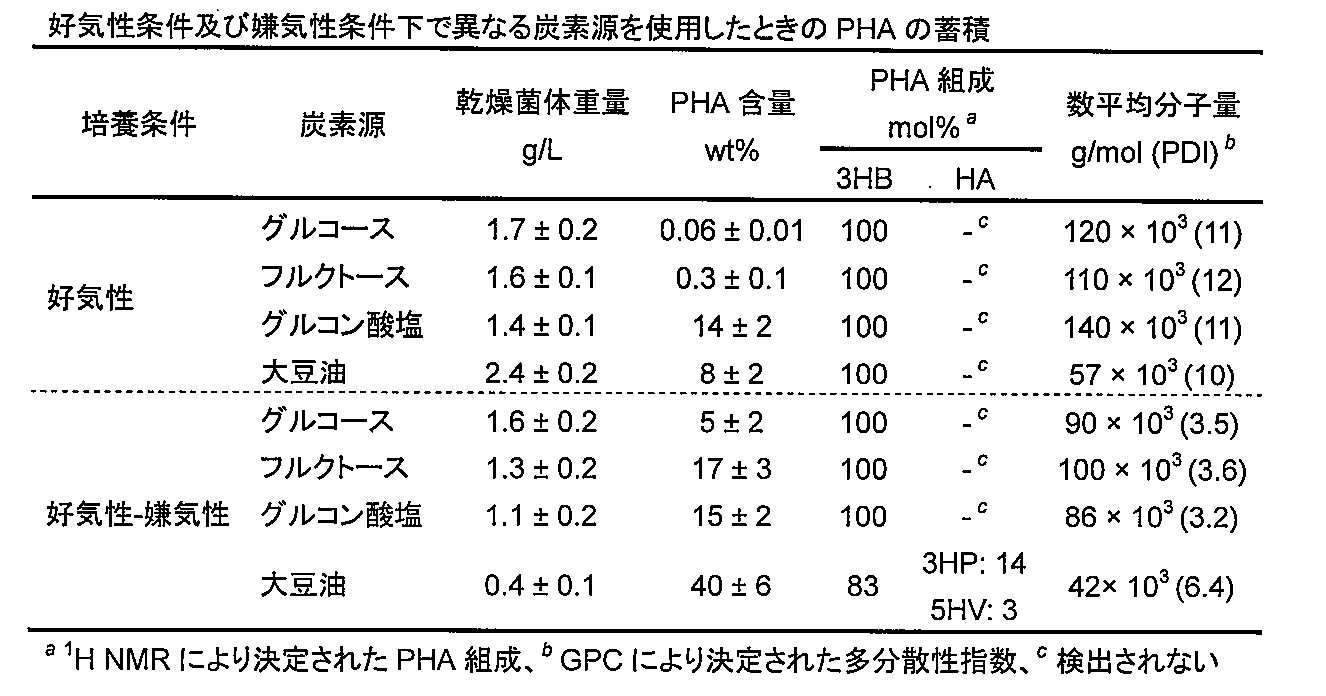
上記の単離菌株は、好気性条件下、30℃、48時間の培養で、グルコース、フルクトース、グルコン酸塩又は大豆油からのPHA生産能について調べた(表1)。
単離菌株は、大豆油を単一の炭素源として使用したとき良好な細胞増殖(約2.4 g/L)を示したが、一方、その他の炭素源による細胞増殖は比較的低く約1.4~1.7 g/Lの範囲であった。PHAの蓄積は、4種の炭素源すべてで観察され、1H-NMRスペクトルは、これらの生産物のすべてが、大豆油からのPHAでさえ、中鎖長のヒドロキシアルカノエート(HA)のような主要な第2モノマー単位を有さない3HBのみからなっていた(図3)。大豆油などの植物油を使用するP(3HB)ホモポリマー生産は、Pseudomonas spp.及びCupriavidus spp. (Cupriavidus necatorは、公式にはRalstonia eutrophaとして知られている。)を含めてPHA生産細菌のなかでまれな特性である。
種々の条件下でVibrio sp. KN01 5株から抽出されたP(3HB)の分子量及び多分散性指数(PDI)を、GPCによって測定し、表1にリストした。大豆油を用いる好気性条件下で蓄積されたP(3HB)の分子量は、グルコース、フルクトース又はグルコン酸塩を用いて蓄積された他のP(3HB)の分子量と比べてなり小さいものであった。異なる炭素源、すなわち糖類と脂肪酸を使用した場合の分子量の違いは、β-酸化経路が、好気性条件下で脂肪酸からアセチル-CoAに変換するのに十分に高い活性と効率性を有していることを示しており、その結果、PHAに重合されるヒドロキシアシルCoA(HACoA)がほとんど存在しなかったことを示している。分子量のPDIは他のPHA生産細菌から抽出されたPHAと比較してかなり高いものであったことは注目すべきである(Doi and Steinbuechel, 2001)。抽出されたP(3HB)の分子量に関するこれらの結果は、2つの可能性を示している。その一つは、Vibrio sp. KN01 5株の菌体内にモノマー(3HBCoA)の重合反応のための大量の連鎖移動剤が存在していることである。他の一つは、Vibrio sp. KN01 5株由来の細胞内脱重合酵素の消化機構が他の公知のPHA生産細菌と異なっている、すなわち、エキソ型ではなくエンド型であり、その結果、非常に広いPDIをもつP(3HB)が産生されることである。
<好気性-嫌気性条件でのPHA製造>
好気性-嫌気性条件下でのVibrio sp. KN01 5株のPHA生産性もまた検討したが、これは、Vibrio spp.が好気性条件及び嫌気性条件下で増殖できる通性嫌気性菌として知られているからである。Parkらは、PHA合成遺伝子を有する組換え大腸菌で溶存酸素濃度を40%から5%に低下させると、細胞増殖が抑制されPHA含量が10wt%から27wt%に高まったことを報告しており(Park et al., 2001)、PHA生産は、彼らが使用した好気性-嫌気性条件と類似した条件下で向上させうることを示している。この実験では、好気性-嫌気性条件下で培養された上記菌株が単一炭素源としてグルコース、フルクトース又はグルコン酸塩を使用することに関わらずほぼ同じ細胞増殖速度を示したが、一方、大豆油での細胞増殖は比較的低く、その乾燥菌体重量(DCW)は約0.4g/Lであった(表1)。PHAの蓄積は、4種類の炭素源のそれぞれを用いる好気性-嫌気性条件下で観察され、大豆油で培養された単離菌株の平均PHA含量は天然の細菌のなかでかなり高いPHA生産性である40重量%を超えるものであった。好気性-嫌気性条件下でのすべてのサンプルのPHA含量は、特に大豆油が単一炭素源として使用されたとき、溶存酸素の量を制限することによって、そのような条件下で8±2重量%(好気性条件)から40±6重量%(好気性-嫌気性条件)に増大した(表1)。これらの重量%は、全乾燥菌体重量あたりの割合を示す。
好気性-嫌気性条件下でのVibrio sp. KN01 5株のPHA生産性もまた検討したが、これは、Vibrio spp.が好気性条件及び嫌気性条件下で増殖できる通性嫌気性菌として知られているからである。Parkらは、PHA合成遺伝子を有する組換え大腸菌で溶存酸素濃度を40%から5%に低下させると、細胞増殖が抑制されPHA含量が10wt%から27wt%に高まったことを報告しており(Park et al., 2001)、PHA生産は、彼らが使用した好気性-嫌気性条件と類似した条件下で向上させうることを示している。この実験では、好気性-嫌気性条件下で培養された上記菌株が単一炭素源としてグルコース、フルクトース又はグルコン酸塩を使用することに関わらずほぼ同じ細胞増殖速度を示したが、一方、大豆油での細胞増殖は比較的低く、その乾燥菌体重量(DCW)は約0.4g/Lであった(表1)。PHAの蓄積は、4種類の炭素源のそれぞれを用いる好気性-嫌気性条件下で観察され、大豆油で培養された単離菌株の平均PHA含量は天然の細菌のなかでかなり高いPHA生産性である40重量%を超えるものであった。好気性-嫌気性条件下でのすべてのサンプルのPHA含量は、特に大豆油が単一炭素源として使用されたとき、溶存酸素の量を制限することによって、そのような条件下で8±2重量%(好気性条件)から40±6重量%(好気性-嫌気性条件)に増大した(表1)。これらの重量%は、全乾燥菌体重量あたりの割合を示す。
好気性-嫌気性条件下で大豆油から合成されたPHAは、1H-NMRスペクトルに基づいた帰属により、3HBの他に3-ヒドロキシプロピオネート(3HP)と5-ヒドロキシバレレート(5HV)から構成されていた(図4)。帰属は文献(Doi et al., 1987; Fukui et al., 2009)に記載された手法に従って好気性-嫌気性条件下でのβ-酸化経路が、より低い量の溶存酸素のために低下し、その後一時的に蓄積した3-ケトアシル-CoA及び/又はエノイル-CoAが、3-ケトアシルアシルキャリアプロテイン(ACP)レダクターゼ(FabG)及び/又はエノイル-CoAヒドラターゼ(PhaJ)によりHACoAに変換可能であったことを示している(図5)。PHA合成酵素により、得られたHACoA及び3HBCoAが、5HVなどの長い主鎖モノマー単位を含むPHAに重合された。16S rDNA配列においてVibrio sp. KN01 5株と99.9%の類似性を示すVibrio sp. Ex25の染色体が、PhaA、PhaB及びPhaCの他に、FabG及びPhaJをコードする遺伝子を含むことが示されている。嫌気性条件下でさえ、3HB-CoAを生成する解糖系経路が活性となり、その結果、3HB及びHA単位からなるPHAが生じた。生じたHAモノマー単位(3HP及び5HV)は奇数の炭素原子数を有していた。大豆油中の主脂肪酸は約50%のリノール酸 (C17H31COOH)、23%のオレイン酸 (C17H33COOH)、7~10%のα-リノール酸 (C17H29COOH)、10%のパルミチン酸 (C15H31COOH)及び4%のステアリン酸(C17H35COOH)である。これらの脂肪酸は、好気性-嫌気性条件下で非効率的に代謝されて、そのサイクルの各々において二炭素単位アセチルCoAを遊離させるβ-酸化経路を介して3HPCoA及び 5HVCoAに変換されうる(図5)。この知見は、溶存酸素濃度を変えることによって調節可能でもあるβ-酸化経路の活性を変えることにより、長い主鎖PHAの生合成を制御できることを示している。
3-ヒドロキシヘキサノエートなどの中鎖長単位を含むPHAの合成は、A. caviae (Fukui and Doi, 1997; Fukui et al., 1999)由来のPhaCなどのPhaCの基質特異性に依存すると考えられた。しかし、この結果は、PHAのモノマー組成が、PhaCの基質特異性ではなくβ-酸化経路からの5HVCoA及び3HPCoAのモノマー供給に依存的であった。これらの結果は、モノマーの供給が、PhaCの基質特異性ではなく、5HVCoA及び3HPCoA(すなわちHA単位は長主鎖構造及び短主鎖構造を含む)を重合するためにより重要であることを示している。
<PHA合成酵素(PhaC)>
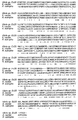
PHA生合成の重要な酵素であるPHA合成酵素は、一次構造に関して4つのクラスに分類される(Rehm, 2003)。 V. cholera、V. parahaemolyticus及びV. harveyiは、クラスI PHA合成酵素に含まれることが報告されている(Rehm, 2003; Sun et al., 1995)。同様に、16S rDNA配列についてVibrio sp. KN01 5株と99.9%の類似性を示すVibrio sp. Ex25は、明らかにされた染色体配列によりクラスIを含むことが示されている。クラスI PhaCは、61kDaと68kDaの間の分子量をもつ単一のサブユニットから構成される。R. eutropha及びA. caviae由来のPhaCは、典型的なクラスI PhaCであり、それぞれ厳格な基質特異性及び広い基質特異性を示すことが知られている(Fukui and Doi, 1997; Fukui et al., 1999; Rehm, 2003)。A. caviae由来のPhaCは、クラスIで例外的なPhaCのひとつであるが、それは他のクラスI PHA合成酵素と低い類似性(配列同一性約45%)であるからである(Steinbuchel et al., 1993; Liebergesell and Steinbuchel, 1993)。Vibrio sp. Ex25、R. eutropha及びA. caviae由来のPhaCのアミノ酸配列の多重アラインメントを図6に示した。Vibrio sp. Ex25由来のPhaCのアミノ酸配列は、R. eutropha及びA. caviae由来のPhaCとそれぞれ31%、54%同一性を示した。R. eutropha由来のPhaCのタンパク質モデルを推定することにより、活性部位Cys-319と、保存されたAsp-485及びHis-513が隣接し、触媒三つ組みを形成すると推定される(Qi and Rehm, 2001; Rehm, 2003) (図6の矢印参照)。Vibrio sp. Ex25由来のPhaCのアミノ酸配列は、 R. eutropha 由来のPhaCと比較して、触媒三つ組みを形成可能な、特にこれら3つのアミノ酸残基の周辺について、はるかに高く同一であった。このことから、A. caviae 由来のPhaCと類似するVibrio sp. Ex25由来のPhaCの、特に、長い主鎖HA単位に関して潜在的に広い基質特異性を示す。
PHA生合成の重要な酵素であるPHA合成酵素は、一次構造に関して4つのクラスに分類される(Rehm, 2003)。 V. cholera、V. parahaemolyticus及びV. harveyiは、クラスI PHA合成酵素に含まれることが報告されている(Rehm, 2003; Sun et al., 1995)。同様に、16S rDNA配列についてVibrio sp. KN01 5株と99.9%の類似性を示すVibrio sp. Ex25は、明らかにされた染色体配列によりクラスIを含むことが示されている。クラスI PhaCは、61kDaと68kDaの間の分子量をもつ単一のサブユニットから構成される。R. eutropha及びA. caviae由来のPhaCは、典型的なクラスI PhaCであり、それぞれ厳格な基質特異性及び広い基質特異性を示すことが知られている(Fukui and Doi, 1997; Fukui et al., 1999; Rehm, 2003)。A. caviae由来のPhaCは、クラスIで例外的なPhaCのひとつであるが、それは他のクラスI PHA合成酵素と低い類似性(配列同一性約45%)であるからである(Steinbuchel et al., 1993; Liebergesell and Steinbuchel, 1993)。Vibrio sp. Ex25、R. eutropha及びA. caviae由来のPhaCのアミノ酸配列の多重アラインメントを図6に示した。Vibrio sp. Ex25由来のPhaCのアミノ酸配列は、R. eutropha及びA. caviae由来のPhaCとそれぞれ31%、54%同一性を示した。R. eutropha由来のPhaCのタンパク質モデルを推定することにより、活性部位Cys-319と、保存されたAsp-485及びHis-513が隣接し、触媒三つ組みを形成すると推定される(Qi and Rehm, 2001; Rehm, 2003) (図6の矢印参照)。Vibrio sp. Ex25由来のPhaCのアミノ酸配列は、 R. eutropha 由来のPhaCと比較して、触媒三つ組みを形成可能な、特にこれら3つのアミノ酸残基の周辺について、はるかに高く同一であった。このことから、A. caviae 由来のPhaCと類似するVibrio sp. Ex25由来のPhaCの、特に、長い主鎖HA単位に関して潜在的に広い基質特異性を示す。
結論として、通性嫌気性菌であるVibrio sp. KN01 5株は、人工海水を培養培地として使用するときに、好気性条件及び好気性-嫌気性条件下でPHAを産生する。好気性-嫌気性条件下のすべてのサンプルのPHA含量は、特に単一炭素源として大豆油を使用するとき、溶存酸素の量を制限することによって高くなった。好気性-嫌気性条件下で単一炭素源として大豆油を用いて蓄積されたPHAは、3HB単位の他に、14% 3HP及び3% 5HV単位を含み、42×103の数平均分子量を有していた。この結果は、好気性-嫌気性条件下のβ-酸化経路が、溶存酸素の低下のために抑制され、その後、一次的に蓄積した3-ケトアシル-CoA及び/又はエノイル-CoAがFabG及び/又はPhaJによりHACoAに変換可能であることを示している。HACoA及び3HB-CoAは、PHA合成酵素により、3HP及び5HVを含むPHAに重合された。この知見は、溶存酸素濃度によって調節可能でもあるβ-酸化経路の活性により、長主鎖PHAの生合成を調節できることを提供する。例えば、ポリ(5-ヒドロキシバレレート)、ポリ(7-ヒドロキシヘプタノエート)などのPHAホモポリマー、3-ヒドロキシブチレート(3HB)単位の他に、3-ヒドロキシプロピオネート(3HP)単位、5-ヒドロキシバレレート(5HV)単位、3-ヒドロキシバレレート(3HV)単位、3-ヒドロキシヘキサノエート(3HH)単位、7-ヒドロキシヘプタノエート(7-H0)単位、その他のヒドロキシアルカノエート(HA)単位からなる群から選択される複数種(すなわち、2種以上)のHAを任意の比率で含むPHAコポリマー、などの新規のPHAを、嫌気性条件を調節することによって合成することができる。
さらにまた、炭素源として脂肪酸や油脂の種類を変更することによって、好気性-嫌気性条件下で、3-ヒドロキシブチレート(3HB)単位の他に、3-ヒドロキシプロピオネート(3HP)単位、5-ヒドロキシバレレート(5HV)単位、3-ヒドロキシバレレート(3HV)単位、3-ヒドロキシヘキサノエート(3HH)単位、7-ヒドロキシヘプタノエート(7-H0)単位、その他のヒドロキシアルカノエート(HA)単位からなる群から選択される複数種(すなわち、2種以上)のHAを任意の比率で含む新規のPHAコポリマーを製造することができる。例えば、脂肪酸としてオレイン酸を、また油脂としてヤトロファ油をそれぞれ使用したときのVibrio sp. KN01 5株によるPHAコポリマーの生合成結果を、下記の表2に示す。

以下に、明細書に記載された参考文献を列挙する。
Abe, H., Doi, Y., Fukushima, T. & Eya, H. (1994). Int J Biol Macromol, 16: 115-119.
Altschul, S.F., Gish, W., Miller, W., Myers, E.W. & Lipman, D.J. (1990). Basic Local Alignment Search Tool. J Mol Biol, 215: 403-410.
Doi, Y. (Ed.) (1990). Microbial polyesters, New York, USA: VCH Publishers.
Doi, Y. & Steinbuchel, A. (Eds.) (2001). Biopolymers, Weinheim, Germany: Wiley-VCH.
Doi, Y., Tamaki, A., Kunioka, M. & Soga, K. (1987). Biosynthesis of an Unusual Copolyester (10 Mol-Percent 3-Hydroxybutyrate and 90 Mol-Percent 3-Hydroxyvalerate Units) in Alcaligenes-Eutrophus from Pentanoic Acid. J Chem Soc Chem Comm: 1635-1636.
Fiedler, S., Steinbuchel, A. & Rehm, B.H. (2002). The role of the fatty acid beta-oxidation multienzyme complex from Pseudomonas oleovorans in polyhydroxyalkanoate biosynthesis: molecular characterization of the fadBA operon from P. oleovorans and of the enoyl-CoA hydratase genes phaJ from P. oleovorans and Pseudomonas putida. Arch Microbiol, 178: 149-60.
Fuchtenbusch, B., Wullbrandt, D. & Steinbuchel, A. (2000). Production of polyhydroxyalkanoic acids by Ralstonia eutropha and Pseudomonas oleovorans from an oil remaining from biotechnological rhamnose production. Appl Microbiol Biot, 53: 167-172.
Fukui, T. & Doi, Y. (1997). Cloning and analysis of the poly(3-hydroxybutyrate-co-3-hydroxyhexanoate) biosynthesis genes of Aeromonas caviae. J Bacteriol, 179: 4821-30.
Fukui, T., Suzuki, M., Tsuge, T. & Nakamura, S. (2009). Microbial Synthesis of Poly((R)-3-hydroxybutyrate-co-3-hydroxypropionate) from Unrelated Carbon Sources by Engineered Cupriavidus necator. Biomacromolecules, 10: 700-706.
Fukui, T., Yokomizo, S., Kobayashi, G. & Doi, Y. (1999). Co-expression of polyhydroxyalkanoate synthase and (R)-enoyl-CoA hydratase genes of Aeromonas caviae establishes copolyester biosynthesis pathway in Escherichia coli. Fems Microbiol Lett, 170: 69-75.
Gonzalez-Garcia, Y., Nungaray, J., Cordova, J., Gonzalez-Reynoso, O., Koller, M., Atlic, A. & Braunegg, G. (2008). Biosynthesis and characterization of polyhydroxyalkanoates in the polysaccharide-degrading marine bacterium Saccharophagus degradans ATCC 43961. J IndMicrobiol Biot, 35: 629-633.
Iwata, T., Aoyagi, Y., Fujita, M., Yamane, H., Doi, Y., Suzuki, Y., Takeuchi, A. & Uesugi, K. (2004). Processing of a strong biodegradable poly[(R)-3-hydroxybutyrate] fiber and a new fiber structure revealed by micro-beam X-ray diffraction with synchrotron radiation. Macromol Rapid Comm, 25: 1100-1104.
Karl, D.M. (2007). Microbial oceanography: paradigms, processes and promise. Nat Rev Microbiol, 5: 759-769.
Kobayashi, T., Enomoto, S., Sakarazaki, R. & Kuwahara, S. (1963). A new selective medium for pathogenic vibrios: T.C.B.S. agar. Jap J Bacteriol, 18: 387-391.
Lemoignei, M. (1926). Products of Dehydration and of Polymerization of β-Hydroxybutyric Acid. Bull Soc Chim Biol 8: 770-782.
Lenz, R.W. & Marchessault, R.H. (2005). Bacterial polyesters: biosynthesis, biodegradable plastics and biotechnology. Biomacromolecules, 6: 1-8.
Liebergesell, M. & Steinbuchel, A. (1993). Cloning and molecular analysis of the poly(3-hydroxybutyric acid) biosynthetic genes of Thiocystis violacea. Appl Microbiol Biot, 38: 493-501.
Lopez, N.I., Pettinari, M.J., Stackebrandt, E., Tribelli, P.M., Potter, M., Steinbuchel, A. & Mendez, B.S. (2009). Pseudomonas extremaustralis sp. nov., a Poly(3-hydroxybutyrate) producer isolated from an antarctic environment. Curr Microbiol, 59: 514-9.
Molitoris, E., Joseph, S.W., Krichevsky, M.I., Sindhuhardja, W. & Colwell, R.R. (1985). Characterization and Distribution of Vibrio-Alginolyticus and Vibrio-Parahaemolyticus Isolated in Indonesia. Appl Environ Microb, 50: 1388-1394.
Moran, M.A. & Miller, W.L. (2007). Resourceful heterotrophs make the most of light in the coastal ocean. Nat Rev Microbiol, 5: 792-800.
Morris, G.K., Merson, M.H., Huq, I., Kibrya, A.K.M.G. & Black, R. (1979). Comparison of 4 Plating Media for Isolating Vibrio-Cholerae. J Clin Microbiol, 9: 79-83.
Nakamura, S., Doi, Y. & Scandola, M. (1992). Microbial Synthesis and Characterization of Poly(3-Hydroxybutyrate-co-4-Hydroxybutyrate). Macromolecules, 25: 4237-4241.
Nakanishi, Y. (1963). An isolation agar medium for cholera and enteropathogenic halophilic vibrios. Modern Media, 9: 246.
Park, S.J., Ahn, W.S., Green, P.R. & Lee, S.Y. (2001). Production of poly(3-hydroxybutyrate-co-3-hydroxyhexanoate) by metabolically engineered Escherichia coli strains. Biomacromolecules, 2: 248-254.
Pizzoli, M., Scandola, M. & Ceccorulli, G. (1994). Crystallization Kinetics and Morphology of Poly(3-Hydroxybutyrate) Cellulose Ester Blends. Macromolecules, 27: 4755-4761.
Qi, Q. & Rehm, B.H. (2001). Polyhydroxybutyrate biosynthesis in Caulobacter crescentus: molecular characterization of the polyhydroxybutyrate synthase. Microbiology, 147: 3353-8.
Rainey, F.A. & Stackebrandt, E. (1993). 16s Rdna Analysis Reveals Phylogenetic Diversity among the Polysaccharolytic Clostridia. Fems Microbiol Lett, 113: 125-128.
Rehm, B.H. (2003). Polyester synthases: natural catalysts for plastics. The Biochemical journal, 376: 15-33.
Sabirova, J.S., Ferrer, M., Lunsdorf, H., Wray, V., Kalscheuer, R., Steinbuchel, A., Timmis, K.N. & Golyshin, P.N. (2006). Mutation in a "tesB-like" hydroxyacyl-coenzyme A-specific thioesterase gene causes hyperproduction of extracellular polyhydroxyalkanoates by Alcanivorax borkumensis SK2. J Bacteriol, 188: 8452-9.
Saito, Y. & Doi, Y. (1994). Microbial Synthesis and Properties of Poly(3-Hydroxybutyrate-co-4-Hydroxybutyrate) in Comamonas-Acidovorans. Int J Biol Macromol, 16: 99-104.
Saitou, N. & Nei, M. (1987). The neighbor-joining method: a new method for reconstructing phylogenetic trees. Mol Biol Evol, 4: 406-25.
Shimamura, E., Kasuya, K., Kobayashi, G., Shiotani, T., Shima, Y. & Doi, Y. (1994). Physical-Properties and Biodegradability of Microbial Poly(3-Hydroxybutyrate-co-3-Hydroxyhexanoate). Macromolecules, 27: 878-880.
Spiekermann, P., Rehm, B.H.A., Kalscheuer, R., Baumeister, D. & Steinbuchel, A. (1999). A sensitive, viable-colony staining method using Nilered for direct screening of bacteria that accumulate polyhydroxyalkanoic acids and other lipid storage compounds. Arch Microbiol, 171: 73-80.
Steinbuchel, A., Hustede, E., Liebergesell, M., Pieper, U., Timm, A. & Valentin, H. (1993). Molecular basis for biosynthesis and accumulation of polyhydroxyalkanoic acids in bacteria. FEMS Microbiol Rev, 10: 347-50.
Sun, W.Q., Teng, K. & Meighen, E. (1995). Detection of Poly(3-Hydroxybutyrate) Granules by Electron-Microscopy of Vibrio-Harveyi Stained with Malachite Green. Can J Microbiol, 41: 131-137.
Tsuge, T., Fukui, T., Matsusaki, H., Taguchi, S., Kobayashi, G., Ishizaki, A. & Doi, Y. (2000). Molecular cloning of two (R)-specific enoyl-CoA hydratase genes from Pseudomonas aeruginosa and their use for polyhydroxyalkanoate synthesis. Fems Microbiol Lett, 184: 193-8.
Umani, S.F., Del Negro, P., Larato, C., De Vittor, C., Cabrini, M., Celio, M., Falconi, C., Tamberlich, F. & Azam, F. (2007). Major inter-annual variations in microbial dynamics in the Gulfof Trieste (northern Adriatic Sea) and their ecosystem implications. Aquat Microb Ecol, 46: 163-175.
Wang, Q., Zhang, H.X., Chen, Q., Chen, X.L., Zhang, Y.Z. & Qi, Q.S. (2010). A marine bacterium accumulates polyhydroxyalkanoate consisting of mainly 3-hydroxydodecanoate and 3-hydroxydecanoate. World J Microb Biot, 26: 1149-1153.
Altschul, S.F., Gish, W., Miller, W., Myers, E.W. & Lipman, D.J. (1990). Basic Local Alignment Search Tool. J Mol Biol, 215: 403-410.
Doi, Y. (Ed.) (1990). Microbial polyesters, New York, USA: VCH Publishers.
Doi, Y. & Steinbuchel, A. (Eds.) (2001). Biopolymers, Weinheim, Germany: Wiley-VCH.
Doi, Y., Tamaki, A., Kunioka, M. & Soga, K. (1987). Biosynthesis of an Unusual Copolyester (10 Mol-Percent 3-Hydroxybutyrate and 90 Mol-Percent 3-Hydroxyvalerate Units) in Alcaligenes-Eutrophus from Pentanoic Acid. J Chem Soc Chem Comm: 1635-1636.
Fiedler, S., Steinbuchel, A. & Rehm, B.H. (2002). The role of the fatty acid beta-oxidation multienzyme complex from Pseudomonas oleovorans in polyhydroxyalkanoate biosynthesis: molecular characterization of the fadBA operon from P. oleovorans and of the enoyl-CoA hydratase genes phaJ from P. oleovorans and Pseudomonas putida. Arch Microbiol, 178: 149-60.
Fuchtenbusch, B., Wullbrandt, D. & Steinbuchel, A. (2000). Production of polyhydroxyalkanoic acids by Ralstonia eutropha and Pseudomonas oleovorans from an oil remaining from biotechnological rhamnose production. Appl Microbiol Biot, 53: 167-172.
Fukui, T. & Doi, Y. (1997). Cloning and analysis of the poly(3-hydroxybutyrate-co-3-hydroxyhexanoate) biosynthesis genes of Aeromonas caviae. J Bacteriol, 179: 4821-30.
Fukui, T., Suzuki, M., Tsuge, T. & Nakamura, S. (2009). Microbial Synthesis of Poly((R)-3-hydroxybutyrate-co-3-hydroxypropionate) from Unrelated Carbon Sources by Engineered Cupriavidus necator. Biomacromolecules, 10: 700-706.
Fukui, T., Yokomizo, S., Kobayashi, G. & Doi, Y. (1999). Co-expression of polyhydroxyalkanoate synthase and (R)-enoyl-CoA hydratase genes of Aeromonas caviae establishes copolyester biosynthesis pathway in Escherichia coli. Fems Microbiol Lett, 170: 69-75.
Gonzalez-Garcia, Y., Nungaray, J., Cordova, J., Gonzalez-Reynoso, O., Koller, M., Atlic, A. & Braunegg, G. (2008). Biosynthesis and characterization of polyhydroxyalkanoates in the polysaccharide-degrading marine bacterium Saccharophagus degradans ATCC 43961. J IndMicrobiol Biot, 35: 629-633.
Iwata, T., Aoyagi, Y., Fujita, M., Yamane, H., Doi, Y., Suzuki, Y., Takeuchi, A. & Uesugi, K. (2004). Processing of a strong biodegradable poly[(R)-3-hydroxybutyrate] fiber and a new fiber structure revealed by micro-beam X-ray diffraction with synchrotron radiation. Macromol Rapid Comm, 25: 1100-1104.
Karl, D.M. (2007). Microbial oceanography: paradigms, processes and promise. Nat Rev Microbiol, 5: 759-769.
Kobayashi, T., Enomoto, S., Sakarazaki, R. & Kuwahara, S. (1963). A new selective medium for pathogenic vibrios: T.C.B.S. agar. Jap J Bacteriol, 18: 387-391.
Lemoignei, M. (1926). Products of Dehydration and of Polymerization of β-Hydroxybutyric Acid. Bull Soc Chim Biol 8: 770-782.
Lenz, R.W. & Marchessault, R.H. (2005). Bacterial polyesters: biosynthesis, biodegradable plastics and biotechnology. Biomacromolecules, 6: 1-8.
Liebergesell, M. & Steinbuchel, A. (1993). Cloning and molecular analysis of the poly(3-hydroxybutyric acid) biosynthetic genes of Thiocystis violacea. Appl Microbiol Biot, 38: 493-501.
Lopez, N.I., Pettinari, M.J., Stackebrandt, E., Tribelli, P.M., Potter, M., Steinbuchel, A. & Mendez, B.S. (2009). Pseudomonas extremaustralis sp. nov., a Poly(3-hydroxybutyrate) producer isolated from an antarctic environment. Curr Microbiol, 59: 514-9.
Molitoris, E., Joseph, S.W., Krichevsky, M.I., Sindhuhardja, W. & Colwell, R.R. (1985). Characterization and Distribution of Vibrio-Alginolyticus and Vibrio-Parahaemolyticus Isolated in Indonesia. Appl Environ Microb, 50: 1388-1394.
Moran, M.A. & Miller, W.L. (2007). Resourceful heterotrophs make the most of light in the coastal ocean. Nat Rev Microbiol, 5: 792-800.
Morris, G.K., Merson, M.H., Huq, I., Kibrya, A.K.M.G. & Black, R. (1979). Comparison of 4 Plating Media for Isolating Vibrio-Cholerae. J Clin Microbiol, 9: 79-83.
Nakamura, S., Doi, Y. & Scandola, M. (1992). Microbial Synthesis and Characterization of Poly(3-Hydroxybutyrate-co-4-Hydroxybutyrate). Macromolecules, 25: 4237-4241.
Nakanishi, Y. (1963). An isolation agar medium for cholera and enteropathogenic halophilic vibrios. Modern Media, 9: 246.
Park, S.J., Ahn, W.S., Green, P.R. & Lee, S.Y. (2001). Production of poly(3-hydroxybutyrate-co-3-hydroxyhexanoate) by metabolically engineered Escherichia coli strains. Biomacromolecules, 2: 248-254.
Pizzoli, M., Scandola, M. & Ceccorulli, G. (1994). Crystallization Kinetics and Morphology of Poly(3-Hydroxybutyrate) Cellulose Ester Blends. Macromolecules, 27: 4755-4761.
Qi, Q. & Rehm, B.H. (2001). Polyhydroxybutyrate biosynthesis in Caulobacter crescentus: molecular characterization of the polyhydroxybutyrate synthase. Microbiology, 147: 3353-8.
Rainey, F.A. & Stackebrandt, E. (1993). 16s Rdna Analysis Reveals Phylogenetic Diversity among the Polysaccharolytic Clostridia. Fems Microbiol Lett, 113: 125-128.
Rehm, B.H. (2003). Polyester synthases: natural catalysts for plastics. The Biochemical journal, 376: 15-33.
Sabirova, J.S., Ferrer, M., Lunsdorf, H., Wray, V., Kalscheuer, R., Steinbuchel, A., Timmis, K.N. & Golyshin, P.N. (2006). Mutation in a "tesB-like" hydroxyacyl-coenzyme A-specific thioesterase gene causes hyperproduction of extracellular polyhydroxyalkanoates by Alcanivorax borkumensis SK2. J Bacteriol, 188: 8452-9.
Saito, Y. & Doi, Y. (1994). Microbial Synthesis and Properties of Poly(3-Hydroxybutyrate-co-4-Hydroxybutyrate) in Comamonas-Acidovorans. Int J Biol Macromol, 16: 99-104.
Saitou, N. & Nei, M. (1987). The neighbor-joining method: a new method for reconstructing phylogenetic trees. Mol Biol Evol, 4: 406-25.
Shimamura, E., Kasuya, K., Kobayashi, G., Shiotani, T., Shima, Y. & Doi, Y. (1994). Physical-Properties and Biodegradability of Microbial Poly(3-Hydroxybutyrate-co-3-Hydroxyhexanoate). Macromolecules, 27: 878-880.
Spiekermann, P., Rehm, B.H.A., Kalscheuer, R., Baumeister, D. & Steinbuchel, A. (1999). A sensitive, viable-colony staining method using Nilered for direct screening of bacteria that accumulate polyhydroxyalkanoic acids and other lipid storage compounds. Arch Microbiol, 171: 73-80.
Steinbuchel, A., Hustede, E., Liebergesell, M., Pieper, U., Timm, A. & Valentin, H. (1993). Molecular basis for biosynthesis and accumulation of polyhydroxyalkanoic acids in bacteria. FEMS Microbiol Rev, 10: 347-50.
Sun, W.Q., Teng, K. & Meighen, E. (1995). Detection of Poly(3-Hydroxybutyrate) Granules by Electron-Microscopy of Vibrio-Harveyi Stained with Malachite Green. Can J Microbiol, 41: 131-137.
Tsuge, T., Fukui, T., Matsusaki, H., Taguchi, S., Kobayashi, G., Ishizaki, A. & Doi, Y. (2000). Molecular cloning of two (R)-specific enoyl-CoA hydratase genes from Pseudomonas aeruginosa and their use for polyhydroxyalkanoate synthesis. Fems Microbiol Lett, 184: 193-8.
Umani, S.F., Del Negro, P., Larato, C., De Vittor, C., Cabrini, M., Celio, M., Falconi, C., Tamberlich, F. & Azam, F. (2007). Major inter-annual variations in microbial dynamics in the Gulfof Trieste (northern Adriatic Sea) and their ecosystem implications. Aquat Microb Ecol, 46: 163-175.
Wang, Q., Zhang, H.X., Chen, Q., Chen, X.L., Zhang, Y.Z. & Qi, Q.S. (2010). A marine bacterium accumulates polyhydroxyalkanoate consisting of mainly 3-hydroxydodecanoate and 3-hydroxydecanoate. World J Microb Biot, 26: 1149-1153.
本発明は、ポリヒドロキシアルカノエートを製造可能なVibrio属の新規海洋細菌を提供するため、特徴のあるバイオプラスチックの生産のために有用である。
本明細書で引用した全ての刊行物、特許および特許出願をそのまま参考として本明細書にとり入れるものとする。
Claims (13)
- 下記の性質(a)及び(b)を有する、Vibrio属細菌。
(a)16S rDNA配列に基づく系統分類においてVibrio sp. Ex25と近縁である
(b) 15~20g/LのNaClを含有する無機塩培地で、単一炭素源として大豆油を使用して該細菌を培養したとき、好気性条件下でポリ(3-ヒドロキシブチレート)ホモポリマーを生成し、一方、好気性-嫌気性条件下で、3-ヒドロキシブチレート単位、3-ヒドロキシプロピオネート単位、及び5-ヒドロキシバレレート単位を含むポリ(ヒドロキシアルカノエート)コポリマーを生成することができる - 単一炭素源がグルコース、フルクトース又はグルコン酸塩である場合、前記細菌が好気性条件下又は好気性-嫌気性条件下でポリ(3-ヒドロキシブチレート)ホモポリマーを生成することができる、請求項1に記載のVibrio属細菌。
- Vibrio sp KN01 5(寄託番号NITE BP-1101)又は、前記(a)及び(b)の性質を有するその変異株である、請求項1又は2に記載のVibrio属細菌。
- 請求項1~3のいずれか1項に記載のVibrio属細菌を培養することを含む、ポリヒドロキシアルカノエートの製造方法。
- 上記培養を、炭素源を含む、海水若しくは人工海水を含む培地又は無機塩培地で行う、請求項4に記載の方法。
- 上記培養を好気性条件下又は好気性-嫌気性条件下で行う、請求項4又は5に記載の方法。
- 上記培養を、糖類、糖酸、脂肪酸類及び油脂類からなる群から選択される1若しくは複数の物質を炭素源として用いて行う、請求項4~6のいずれか1項に記載の方法。
- 上記脂肪酸が、飽和脂肪酸、不飽和脂肪酸又はその混合物である、請求項7に記載の方法。
- 上記油脂が植物油である、請求項7に記載の方法。
- 上記ポリヒドロキシアルカノエートがホモポリマー又はコポリマーである、請求項4~9のいずれか1項に記載の方法。
- 下記式(a)で表される構成単位、下記式(b)で表される構成単位、及び下記式(c)で表される構成単位を含むポリヒドロキシアルカノエートコポリマー。
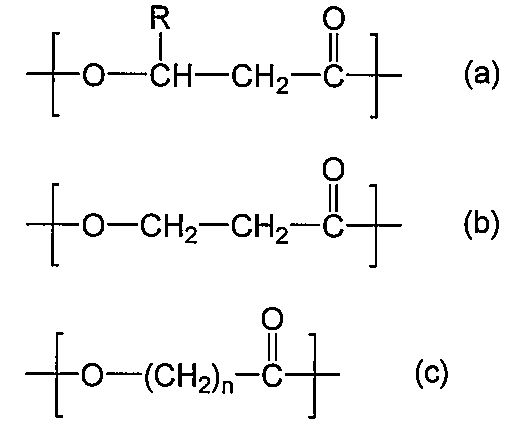
- 下記式(a)で表される構成単位、下記式(b)で表される構成単位、下記式(c1)で表される構成単位、及び下記式(c2)で表される構成単位を含むポリヒドロキシアルカノエートコポリマー。

- 少なくとも下記式(a)で表される構成単位及び下記式(c)で表される構成単位を含む、但し構成単位(a)の組成割合が70~95%である、ポリヒドロキシアルカノエートコポリマー。

Applications Claiming Priority (2)
| Application Number | Priority Date | Filing Date | Title |
|---|---|---|---|
| JP2011-119748 | 2011-05-27 | ||
| JP2011119748 | 2011-05-27 |
Publications (1)
| Publication Number | Publication Date |
|---|---|
| WO2012165131A1 true WO2012165131A1 (ja) | 2012-12-06 |
Family
ID=47258994
Family Applications (1)
| Application Number | Title | Priority Date | Filing Date |
|---|---|---|---|
| PCT/JP2012/062308 Ceased WO2012165131A1 (ja) | 2011-05-27 | 2012-05-14 | 新規海洋微生物及びポリヒドロキシアルカノエートの製造方法 |
Country Status (1)
| Country | Link |
|---|---|
| WO (1) | WO2012165131A1 (ja) |
Cited By (7)
| Publication number | Priority date | Publication date | Assignee | Title |
|---|---|---|---|---|
| JPWO2013035372A1 (ja) * | 2011-09-05 | 2015-03-23 | 独立行政法人理化学研究所 | 長主鎖構造を有するポリヒドロキシアルカン酸の製造方法 |
| CN111849808A (zh) * | 2020-07-06 | 2020-10-30 | 北京大学深圳研究院 | 海洋源产pha菌富集培养及接种、pcr扩增基因方法 |
| CN113088475A (zh) * | 2021-05-25 | 2021-07-09 | 北京化工大学 | 一种盐弧菌及其应用 |
| CN113265356A (zh) * | 2021-05-25 | 2021-08-17 | 北京化工大学 | 一种利用挥发性脂肪酸的盐弧菌及其应用 |
| WO2021193847A1 (ja) * | 2020-03-27 | 2021-09-30 | 住友林業株式会社 | 海水を用いたphaの製造方法 |
| CN113832084A (zh) * | 2021-09-29 | 2021-12-24 | 北京化工大学 | 一种生产聚羟基脂肪酸酯的溶藻弧菌及其应用 |
| JPWO2022080282A1 (ja) * | 2020-10-12 | 2022-04-21 |
Citations (1)
| Publication number | Priority date | Publication date | Assignee | Title |
|---|---|---|---|---|
| JPH03224492A (ja) * | 1990-01-29 | 1991-10-03 | Showa Denko Kk | 共重合体およびその製造法 |
-
2012
- 2012-05-14 WO PCT/JP2012/062308 patent/WO2012165131A1/ja not_active Ceased
Patent Citations (1)
| Publication number | Priority date | Publication date | Assignee | Title |
|---|---|---|---|---|
| JPH03224492A (ja) * | 1990-01-29 | 1991-10-03 | Showa Denko Kk | 共重合体およびその製造法 |
Non-Patent Citations (2)
| Title |
|---|
| KEIJI NUMATA ET AL.: "Kaiyo Biseibutsu Vibrio sp. ni yoru Bio Plastic Seisan Oyobi sono Kanren Idenshi ni Kansuru Kenkyu", DAI 14 KAI JAPANESE SOCIETY FOR MARINE BIOTECHNOLOGY TAIKAI MARINE BIO SHIZUOKA 2011 KOEN YOSHISHU, 28 May 2011 (2011-05-28), pages 63 * |
| MIWA YAMADA ET AL.: "Cho Shusa Monomer Unit o Yusuru Polyhydroxyalkanoate no Biseibutsu Gosei", DAI 60 KAI THE SOCIETY OF POLYMER SCIENCE, 23 September 2011 (2011-09-23), pages 5245 - 5246 * |
Cited By (14)
| Publication number | Priority date | Publication date | Assignee | Title |
|---|---|---|---|---|
| JPWO2013035372A1 (ja) * | 2011-09-05 | 2015-03-23 | 独立行政法人理化学研究所 | 長主鎖構造を有するポリヒドロキシアルカン酸の製造方法 |
| WO2021193847A1 (ja) * | 2020-03-27 | 2021-09-30 | 住友林業株式会社 | 海水を用いたphaの製造方法 |
| JPWO2021193847A1 (ja) * | 2020-03-27 | 2021-09-30 | ||
| CN115279913A (zh) * | 2020-03-27 | 2022-11-01 | 住友林业株式会社 | 使用海水的pha的制造方法 |
| CN111849808A (zh) * | 2020-07-06 | 2020-10-30 | 北京大学深圳研究院 | 海洋源产pha菌富集培养及接种、pcr扩增基因方法 |
| JPWO2022080282A1 (ja) * | 2020-10-12 | 2022-04-21 | ||
| US12600993B2 (en) | 2020-10-12 | 2026-04-14 | Kaneka Corporation | Method for producing poly(3-hydroxyalkanoate) |
| JP7804584B2 (ja) | 2020-10-12 | 2026-01-22 | 株式会社カネカ | ポリ(3-ヒドロキシアルカノエート)の製造方法 |
| CN113088475B (zh) * | 2021-05-25 | 2022-05-17 | 北京化工大学 | 一种盐弧菌及其应用 |
| CN113265356B (zh) * | 2021-05-25 | 2022-04-08 | 北京化工大学 | 一种利用挥发性脂肪酸的盐弧菌及其应用 |
| CN113265356A (zh) * | 2021-05-25 | 2021-08-17 | 北京化工大学 | 一种利用挥发性脂肪酸的盐弧菌及其应用 |
| CN113088475A (zh) * | 2021-05-25 | 2021-07-09 | 北京化工大学 | 一种盐弧菌及其应用 |
| CN113832084A (zh) * | 2021-09-29 | 2021-12-24 | 北京化工大学 | 一种生产聚羟基脂肪酸酯的溶藻弧菌及其应用 |
| CN113832084B (zh) * | 2021-09-29 | 2024-01-05 | 北京化工大学 | 一种生产聚羟基脂肪酸酯的溶藻弧菌及其应用 |
Similar Documents
| Publication | Publication Date | Title |
|---|---|---|
| Numata et al. | Biosynthesis of polyhydroxyalkanaotes by a novel facultatively anaerobic Vibrio sp. under marine conditions | |
| Moorkoth et al. | Production and characterization of poly (3-hydroxy butyrate-co-3 hydroxyvalerate)(PHBV) by a novel halotolerant mangrove isolate | |
| Abd El-malek et al. | Polyhydroxyalkanoates (PHA) from Halomonas pacifica ASL10 and Halomonas salifodiane ASL11 isolated from Mariout salt lakes | |
| Chien et al. | Production of poly-β-hydroxybutyrate (PHB) by Vibrio spp. isolated from marine environment | |
| Van‐Thuoc et al. | Polyester production by halophilic and halotolerant bacterial strains obtained from mangrove soil samples located in N orthern V ietnam | |
| Sindhu et al. | Microbial poly-3-hydroxybutyrate and related copolymers | |
| Ojha et al. | Process optimization and characterization of polyhydroxyalkanoate copolymers produced by marine Pichia kudriavzevii VIT-NN02 using banana peels and chicken feather hydrolysate | |
| Sangkharak et al. | Screening and identification of polyhydroxyalkanoates producing bacteria and biochemical characterization of their possible application | |
| Thomas et al. | Complete genome sequence of the halophilic PHA-producing bacterium Halomonas sp. SF2003: insights into its biotechnological potential | |
| Tao et al. | Production of polyhydroxyalkanoates by a moderately halophilic bacterium of Salinivibrio sp. TGB10 | |
| Ng et al. | Identification of a new polyhydroxyalkanoate (PHA) producer Aquitalea sp. USM4 (JCM 19919) and characterization of its PHA synthase | |
| Ilham et al. | Characterization of polyhydroxyalkanoate synthases from Halomonas sp. O-1 and Halomonas elongata DSM2581: Site-directed mutagenesis and recombinant expression | |
| JP7669112B2 (ja) | 4-ヒドロキシブチレート単位を含むポリエステル | |
| US20110104767A1 (en) | METHOD FOR PRODUCING POLYHYDROXYALKANOATE (PHAs) USING HALOBACTERIUM AND HALOBACTERIUM | |
| KR102606951B1 (ko) | 폴리에스테르의 제조방법 | |
| Thuoc et al. | Bioconversion of crude fish oil into poly-3-hydroxybutyrate by Ralstonia sp. M91 | |
| Porras et al. | Bioconversion of glycerol to poly (HB-co-HV) copolymer in an inexpensive medium by a Bacillus megaterium strain isolated from marine sediments | |
| Esposito et al. | Enhanced production of biobased, biodegradable, Poly (3-hydroxybutyrate) using an unexplored marine bacterium Pseudohalocynthiibacter aestuariivivens, isolated from highly polluted coastal environment | |
| Kung et al. | Isolation of polyhydroxyalkanoates‐producing bacteria using a combination of phenotypic and genotypic approach | |
| Ino et al. | Mechanical properties of cold-drawn films of ultrahigh-molecular-weight poly (3-hydroxybutyrate-co-3-hydroxyvalerate) produced by Haloferax mediterranei | |
| Bhubalan et al. | Cloning and expression of the PHA synthase gene from a locally isolated Chromobacterium sp. USM2 | |
| Chia et al. | Biosynthesis and characterization of novel polyhydroxyalkanoate polymers with high elastic property by Cupriavidus necator PHB− 4 transformant | |
| Lau et al. | Biosynthesis and mobilization of a novel polyhydroxyalkanoate containing 3-hydroxy-4-methylvalerate monomer produced by Burkholderia sp. USM (JCM15050) | |
| Tay et al. | Polyhydroxyalkanoate (PHA) accumulating bacteria from the gut of higher termite Macrotermes carbonarius (Blattodea: Termitidae) | |
| Amirul et al. | Synthesis of biodegradable polyesters by Gram negative bacterium isolated from Malaysian environment |
Legal Events
| Date | Code | Title | Description |
|---|---|---|---|
| 121 | Ep: the epo has been informed by wipo that ep was designated in this application |
Ref document number: 12793100 Country of ref document: EP Kind code of ref document: A1 |
|
| NENP | Non-entry into the national phase |
Ref country code: DE |
|
| 122 | Ep: pct application non-entry in european phase |
Ref document number: 12793100 Country of ref document: EP Kind code of ref document: A1 |
|
| NENP | Non-entry into the national phase |
Ref country code: JP |