WO2012128056A1 - タイヤ成形方法 - Google Patents
タイヤ成形方法 Download PDFInfo
- Publication number
- WO2012128056A1 WO2012128056A1 PCT/JP2012/055971 JP2012055971W WO2012128056A1 WO 2012128056 A1 WO2012128056 A1 WO 2012128056A1 JP 2012055971 W JP2012055971 W JP 2012055971W WO 2012128056 A1 WO2012128056 A1 WO 2012128056A1
- Authority
- WO
- WIPO (PCT)
- Prior art keywords
- rubber
- kneading
- extruder
- tire
- continuously
- Prior art date
- Legal status (The legal status is an assumption and is not a legal conclusion. Google has not performed a legal analysis and makes no representation as to the accuracy of the status listed.)
- Ceased
Links
Images




Classifications
-
- B—PERFORMING OPERATIONS; TRANSPORTING
- B29—WORKING OF PLASTICS; WORKING OF SUBSTANCES IN A PLASTIC STATE IN GENERAL
- B29D—PRODUCING PARTICULAR ARTICLES FROM PLASTICS OR FROM SUBSTANCES IN A PLASTIC STATE
- B29D30/00—Producing pneumatic or solid tyres or parts thereof
- B29D30/06—Pneumatic tyres or parts thereof (e.g. produced by casting, moulding, compression moulding, injection moulding, centrifugal casting)
- B29D30/08—Building tyres
- B29D30/20—Building tyres by the flat-tyre method, i.e. building on cylindrical drums
- B29D30/30—Applying the layers; Guiding or stretching the layers during application
- B29D30/3028—Applying the layers; Guiding or stretching the layers during application by feeding a continuous band and winding it helically, i.e. the band is fed while being advanced along the drum axis, to form an annular element
-
- B—PERFORMING OPERATIONS; TRANSPORTING
- B29—WORKING OF PLASTICS; WORKING OF SUBSTANCES IN A PLASTIC STATE IN GENERAL
- B29B—PREPARATION OR PRETREATMENT OF THE MATERIAL TO BE SHAPED; MAKING GRANULES OR PREFORMS; RECOVERY OF PLASTICS OR OTHER CONSTITUENTS OF WASTE MATERIAL CONTAINING PLASTICS
- B29B7/00—Mixing; Kneading
- B29B7/30—Mixing; Kneading continuous, with mechanical mixing or kneading devices
- B29B7/34—Mixing; Kneading continuous, with mechanical mixing or kneading devices with movable mixing or kneading devices
- B29B7/38—Mixing; Kneading continuous, with mechanical mixing or kneading devices with movable mixing or kneading devices rotary
- B29B7/40—Mixing; Kneading continuous, with mechanical mixing or kneading devices with movable mixing or kneading devices rotary with single shaft
- B29B7/42—Mixing; Kneading continuous, with mechanical mixing or kneading devices with movable mixing or kneading devices rotary with single shaft with screw or helix
-
- B—PERFORMING OPERATIONS; TRANSPORTING
- B29—WORKING OF PLASTICS; WORKING OF SUBSTANCES IN A PLASTIC STATE IN GENERAL
- B29B—PREPARATION OR PRETREATMENT OF THE MATERIAL TO BE SHAPED; MAKING GRANULES OR PREFORMS; RECOVERY OF PLASTICS OR OTHER CONSTITUENTS OF WASTE MATERIAL CONTAINING PLASTICS
- B29B9/00—Making granules
- B29B9/02—Making granules by dividing preformed material
- B29B9/06—Making granules by dividing preformed material in the form of filamentary material, e.g. combined with extrusion
-
- B—PERFORMING OPERATIONS; TRANSPORTING
- B29—WORKING OF PLASTICS; WORKING OF SUBSTANCES IN A PLASTIC STATE IN GENERAL
- B29C—SHAPING OR JOINING OF PLASTICS; SHAPING OF MATERIAL IN A PLASTIC STATE, NOT OTHERWISE PROVIDED FOR; AFTER-TREATMENT OF THE SHAPED PRODUCTS, e.g. REPAIRING
- B29C48/00—Extrusion moulding, i.e. expressing the moulding material through a die or nozzle which imparts the desired form; Apparatus therefor
- B29C48/022—Extrusion moulding, i.e. expressing the moulding material through a die or nozzle which imparts the desired form; Apparatus therefor characterised by the choice of material
-
- B—PERFORMING OPERATIONS; TRANSPORTING
- B29—WORKING OF PLASTICS; WORKING OF SUBSTANCES IN A PLASTIC STATE IN GENERAL
- B29C—SHAPING OR JOINING OF PLASTICS; SHAPING OF MATERIAL IN A PLASTIC STATE, NOT OTHERWISE PROVIDED FOR; AFTER-TREATMENT OF THE SHAPED PRODUCTS, e.g. REPAIRING
- B29C48/00—Extrusion moulding, i.e. expressing the moulding material through a die or nozzle which imparts the desired form; Apparatus therefor
- B29C48/25—Component parts, details or accessories; Auxiliary operations
- B29C48/36—Means for plasticising or homogenising the moulding material or forcing it through the nozzle or die
- B29C48/362—Means for plasticising or homogenising the moulding material or forcing it through the nozzle or die using static mixing devices
-
- B—PERFORMING OPERATIONS; TRANSPORTING
- B29—WORKING OF PLASTICS; WORKING OF SUBSTANCES IN A PLASTIC STATE IN GENERAL
- B29C—SHAPING OR JOINING OF PLASTICS; SHAPING OF MATERIAL IN A PLASTIC STATE, NOT OTHERWISE PROVIDED FOR; AFTER-TREATMENT OF THE SHAPED PRODUCTS, e.g. REPAIRING
- B29C48/00—Extrusion moulding, i.e. expressing the moulding material through a die or nozzle which imparts the desired form; Apparatus therefor
- B29C48/25—Component parts, details or accessories; Auxiliary operations
- B29C48/36—Means for plasticising or homogenising the moulding material or forcing it through the nozzle or die
- B29C48/375—Plasticisers, homogenisers or feeders comprising two or more stages
- B29C48/387—Plasticisers, homogenisers or feeders comprising two or more stages using a screw extruder and a gear pump
-
- B—PERFORMING OPERATIONS; TRANSPORTING
- B29—WORKING OF PLASTICS; WORKING OF SUBSTANCES IN A PLASTIC STATE IN GENERAL
- B29C—SHAPING OR JOINING OF PLASTICS; SHAPING OF MATERIAL IN A PLASTIC STATE, NOT OTHERWISE PROVIDED FOR; AFTER-TREATMENT OF THE SHAPED PRODUCTS, e.g. REPAIRING
- B29C48/00—Extrusion moulding, i.e. expressing the moulding material through a die or nozzle which imparts the desired form; Apparatus therefor
- B29C48/25—Component parts, details or accessories; Auxiliary operations
- B29C48/36—Means for plasticising or homogenising the moulding material or forcing it through the nozzle or die
- B29C48/395—Means for plasticising or homogenising the moulding material or forcing it through the nozzle or die using screws surrounded by a cooperating barrel, e.g. single screw extruders
-
- B—PERFORMING OPERATIONS; TRANSPORTING
- B29—WORKING OF PLASTICS; WORKING OF SUBSTANCES IN A PLASTIC STATE IN GENERAL
- B29C—SHAPING OR JOINING OF PLASTICS; SHAPING OF MATERIAL IN A PLASTIC STATE, NOT OTHERWISE PROVIDED FOR; AFTER-TREATMENT OF THE SHAPED PRODUCTS, e.g. REPAIRING
- B29C48/00—Extrusion moulding, i.e. expressing the moulding material through a die or nozzle which imparts the desired form; Apparatus therefor
- B29C48/25—Component parts, details or accessories; Auxiliary operations
- B29C48/36—Means for plasticising or homogenising the moulding material or forcing it through the nozzle or die
- B29C48/50—Details of extruders
- B29C48/695—Flow dividers, e.g. breaker plates
- B29C48/70—Flow dividers, e.g. breaker plates comprising means for dividing, distributing and recombining melt flows
-
- B—PERFORMING OPERATIONS; TRANSPORTING
- B29—WORKING OF PLASTICS; WORKING OF SUBSTANCES IN A PLASTIC STATE IN GENERAL
- B29C—SHAPING OR JOINING OF PLASTICS; SHAPING OF MATERIAL IN A PLASTIC STATE, NOT OTHERWISE PROVIDED FOR; AFTER-TREATMENT OF THE SHAPED PRODUCTS, e.g. REPAIRING
- B29C48/00—Extrusion moulding, i.e. expressing the moulding material through a die or nozzle which imparts the desired form; Apparatus therefor
- B29C48/25—Component parts, details or accessories; Auxiliary operations
- B29C48/92—Measuring, controlling or regulating
-
- B—PERFORMING OPERATIONS; TRANSPORTING
- B29—WORKING OF PLASTICS; WORKING OF SUBSTANCES IN A PLASTIC STATE IN GENERAL
- B29C—SHAPING OR JOINING OF PLASTICS; SHAPING OF MATERIAL IN A PLASTIC STATE, NOT OTHERWISE PROVIDED FOR; AFTER-TREATMENT OF THE SHAPED PRODUCTS, e.g. REPAIRING
- B29C2948/00—Indexing scheme relating to extrusion moulding
- B29C2948/92—Measuring, controlling or regulating
- B29C2948/92009—Measured parameter
- B29C2948/92209—Temperature
-
- B—PERFORMING OPERATIONS; TRANSPORTING
- B29—WORKING OF PLASTICS; WORKING OF SUBSTANCES IN A PLASTIC STATE IN GENERAL
- B29C—SHAPING OR JOINING OF PLASTICS; SHAPING OF MATERIAL IN A PLASTIC STATE, NOT OTHERWISE PROVIDED FOR; AFTER-TREATMENT OF THE SHAPED PRODUCTS, e.g. REPAIRING
- B29C2948/00—Indexing scheme relating to extrusion moulding
- B29C2948/92—Measuring, controlling or regulating
- B29C2948/92009—Measured parameter
- B29C2948/92219—Degree of crosslinking, solidification, crystallinity or homogeneity
-
- B—PERFORMING OPERATIONS; TRANSPORTING
- B29—WORKING OF PLASTICS; WORKING OF SUBSTANCES IN A PLASTIC STATE IN GENERAL
- B29C—SHAPING OR JOINING OF PLASTICS; SHAPING OF MATERIAL IN A PLASTIC STATE, NOT OTHERWISE PROVIDED FOR; AFTER-TREATMENT OF THE SHAPED PRODUCTS, e.g. REPAIRING
- B29C48/00—Extrusion moulding, i.e. expressing the moulding material through a die or nozzle which imparts the desired form; Apparatus therefor
- B29C48/03—Extrusion moulding, i.e. expressing the moulding material through a die or nozzle which imparts the desired form; Apparatus therefor characterised by the shape of the extruded material at extrusion
- B29C48/07—Flat, e.g. panels
-
- B—PERFORMING OPERATIONS; TRANSPORTING
- B29—WORKING OF PLASTICS; WORKING OF SUBSTANCES IN A PLASTIC STATE IN GENERAL
- B29C—SHAPING OR JOINING OF PLASTICS; SHAPING OF MATERIAL IN A PLASTIC STATE, NOT OTHERWISE PROVIDED FOR; AFTER-TREATMENT OF THE SHAPED PRODUCTS, e.g. REPAIRING
- B29C48/00—Extrusion moulding, i.e. expressing the moulding material through a die or nozzle which imparts the desired form; Apparatus therefor
- B29C48/25—Component parts, details or accessories; Auxiliary operations
- B29C48/285—Feeding the extrusion material to the extruder
- B29C48/288—Feeding the extrusion material to the extruder in solid form, e.g. powder or granules
-
- B—PERFORMING OPERATIONS; TRANSPORTING
- B29—WORKING OF PLASTICS; WORKING OF SUBSTANCES IN A PLASTIC STATE IN GENERAL
- B29C—SHAPING OR JOINING OF PLASTICS; SHAPING OF MATERIAL IN A PLASTIC STATE, NOT OTHERWISE PROVIDED FOR; AFTER-TREATMENT OF THE SHAPED PRODUCTS, e.g. REPAIRING
- B29C48/00—Extrusion moulding, i.e. expressing the moulding material through a die or nozzle which imparts the desired form; Apparatus therefor
- B29C48/25—Component parts, details or accessories; Auxiliary operations
- B29C48/355—Conveyors for extruded articles
-
- B—PERFORMING OPERATIONS; TRANSPORTING
- B29—WORKING OF PLASTICS; WORKING OF SUBSTANCES IN A PLASTIC STATE IN GENERAL
- B29C—SHAPING OR JOINING OF PLASTICS; SHAPING OF MATERIAL IN A PLASTIC STATE, NOT OTHERWISE PROVIDED FOR; AFTER-TREATMENT OF THE SHAPED PRODUCTS, e.g. REPAIRING
- B29C48/00—Extrusion moulding, i.e. expressing the moulding material through a die or nozzle which imparts the desired form; Apparatus therefor
- B29C48/25—Component parts, details or accessories; Auxiliary operations
- B29C48/36—Means for plasticising or homogenising the moulding material or forcing it through the nozzle or die
- B29C48/50—Details of extruders
- B29C48/68—Barrels or cylinders
- B29C48/685—Barrels or cylinders characterised by their inner surfaces, e.g. having grooves, projections or threads
- B29C48/687—Barrels or cylinders characterised by their inner surfaces, e.g. having grooves, projections or threads having projections with a short length in the barrel direction, e.g. pins
-
- B—PERFORMING OPERATIONS; TRANSPORTING
- B29—WORKING OF PLASTICS; WORKING OF SUBSTANCES IN A PLASTIC STATE IN GENERAL
- B29C—SHAPING OR JOINING OF PLASTICS; SHAPING OF MATERIAL IN A PLASTIC STATE, NOT OTHERWISE PROVIDED FOR; AFTER-TREATMENT OF THE SHAPED PRODUCTS, e.g. REPAIRING
- B29C48/00—Extrusion moulding, i.e. expressing the moulding material through a die or nozzle which imparts the desired form; Apparatus therefor
- B29C48/25—Component parts, details or accessories; Auxiliary operations
- B29C48/36—Means for plasticising or homogenising the moulding material or forcing it through the nozzle or die
- B29C48/50—Details of extruders
- B29C48/69—Filters or screens for the moulding material
- B29C48/693—Substantially flat filters mounted at the end of an extruder screw perpendicular to the feed axis
Definitions
- the present invention relates to a tire molding method having a step of kneading non-vulcanizable rubber and a step of continuously kneading the non-vulcanizable rubber with an extruder.
- a rubber product such as a component of an automobile tire is first manufactured by using a kneader such as a Banbury mixer to add additives such as a reinforcing agent, a filler, and a plasticizer to the raw rubber (however, a vulcanizing agent, A sheet-like non-vulcanizable rubber is produced by blending and kneading (excluding vulcanization accelerators) (non-pro rubber kneading).
- this non-vulcanizable rubber sheet is re-supplied to a Banbury mixer or kneader, and a vulcanizing agent and a vulcanization accelerator are added and kneaded (final rubber kneading) to obtain a sheet-like vulcanizable rubber. .
- this vulcanizable rubber sheet is supplied to an extruder, extruded into a desired cross-sectional shape (profile molding), and a rubber product having a desired shape is manufactured.
- the present invention has been made in view of the above circumstances, and its object is to provide a tire molding method that can eliminate intermediate stock generated between final rubber kneading and profile molding and can realize a significant reduction in cycle time. is there.
- a tire molding method is as follows.
- non-vulcanizable rubber which is, for example, kneaded by a Banbury mixer to produce a sheet-like non-vulcanizable rubber (non-pro rubber).
- this non-vulcanizable rubber is put into an extruder and kneaded.
- vulcanizing chemicals are supplied and vulcanizable rubber is continuously kneaded, aging is performed inside the extruder, and rubber having a predetermined cross-sectional shape is extruded (profile molding).
- the molding of the tire constituent member can be performed by the extruder.
- the present inventors have found that final kneading and profile forming can be continuously performed by an extruder by setting conditions (described later) necessary for aging. As a result, it is possible to provide a tire molding method capable of eliminating the intermediate stock generated between the final rubber kneading and the profile molding and realizing a significant reduction in cycle time.
- the temperature of the rubber to be extruded is set to 80 ° C. or less.
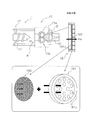
- FIG. 1 is a diagram showing equipment for performing the tire molding method according to the first embodiment.
- the extruder 1 has a screw 10 and is driven by a drive device 11.
- the non-pro rubber is a non-vulcanizable rubber, and the non-pro rubber itself is kneaded by, for example, a Banbury mixer.
- the obtained non-pro rubber is formed into a sheet having a predetermined cross-sectional shape.
- pins 17 are planted on the inner wall surface of the barrel 12.
- the pin 17 is located between the blades of the screw 10 and can increase the pressure when kneading rubber.
- the location and number of pins 17 can be selectively performed.
- the shape of the pin 17 is cylindrical, but the shape and size can be determined as appropriate.
- FIG. 2 is a detailed cross-sectional view showing the configuration around the gear pump 15.
- the gear pump 15 includes a pair of gears 15a and 15b, and rotates in the direction of the arrow in FIG. 2 so that a constant amount of rubber can be supplied downstream.
- the amount of rubber discharged from the gear pump 15 can be controlled by controlling the rotation speed of the gears 15a and 15b.
- a filtration mechanism 18 is provided in a rubber flow path between the gear pump 15 and the mold 16.
- the filtration mechanism 18 includes a mesh 180 disposed on the upstream side and a breaker plate 181 disposed on the downstream side.
- the mesh 180 is fitted in a recess 181 a formed in the breaker plate 181.
- the mesh 180 is made of metal, and a large number of fine meshes are formed.
- the breaker plate 181 has a large number of through holes 181b through which filtered rubber passes.
- the vulcanizing chemical refers to a vulcanizing agent or a vulcanization accelerator, and the vulcanizing chemical formed in a pellet form is supplied together with the sheet-like non-pro rubber.
- a gear pump 15 and a mold 16 are provided on the distal end side of the screw 10.
- the mold 16 has a predetermined cross-sectional shape corresponding to the tire constituent member, and the tire constituent member continuously extruded is taken up by the conveyor 2.
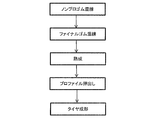
- FIG. 3 is a flowchart showing the molding procedure.
- Non-pro rubber kneading is the same as the conventional one, but continuous kneading by an extruder is different from the conventional one.
- final kneading, ripening, and profile extrusion were separate and independent processes.
- it is performed in the extruder 1 from final kneading to profile extrusion. Therefore, there is no intermediate stock for aging.
- the aging step can be omitted as in the prior art because the aging can be performed inside the extruder 1. Therefore, the reason why “improving the uniform dispersibility of the vulcanizing chemical (compounding agent) in the vulcanizable rubber”, which is one of the reasons for aging, is as follows.
- the rotation speed of the gear pump 15 and the rotation speed of the screw 10 are adjusted, and the inlet (upstream side) pressure of the gear pump 15 is set to an optimum condition for rubber kneading.
- the inlet pressure of the gear pump 15 when the rotational speed is changed as in the conditions (1), (2), and (3) changes as 6 MPa, 12 MPa, and 18 MPa.
- the condition (3) was most suitable for kneading.
- a rotational speed detection sensor for detecting the rotational speed of the gear pump 15 and the rotational speed of the screw 10 is provided, and a pressure sensor is provided on the inlet side of the gear pump 15 so that a desired pressure is obtained. It is preferable to provide a control unit for controlling the rotational speed.
- the temperature of the tire component extruded from the mold 16 is controlled to be 80 ° C. or lower. As a result, it is possible to obtain a tire constituent member having required characteristics without a aging period. Therefore, the cycle time can be greatly reduced.
- FIG. 6 is a diagram showing how rubber is kneaded in the space between the barrel 12 and the blades of the screw 10.
- the rubber is caught on the inner wall surface of the barrel 12 due to the cooling effect, and the shearing force by the rubber acts. It is considered that the viscosity reduction is promoted and the kneading effect is improved.
- the barrel 12 is set to 60 ° C.
- the screw 10 is set to 80 ° C.
- the gear pump 15 is set to 80 ° C.
- FIG. 3 is a diagram showing equipment for performing the tire forming method according to the second embodiment.
- the difference from the first embodiment is the facility for sticking rubber directly to the molding drum. Specifically, a strip-shaped strip rubber is extruded from the mold 16 and directly attached to a molding drum.
Landscapes
- Engineering & Computer Science (AREA)
- Mechanical Engineering (AREA)
- Extrusion Moulding Of Plastics Or The Like (AREA)
- Tyre Moulding (AREA)
Abstract
本発明は、ファイナルゴム混練とプロファイル成形の間に発生する中間在庫をなくしサイクルタイムの大幅削減を実現可能なタイヤ成形方法を提供することを目的とする。本発明のタイヤ成形方法は、非加硫性ゴムを混練する工程と、この非加硫性ゴムを押出機1により連続混錬する工程と、を有する。押出機1による工程は、加硫系薬品を供給し、加硫性ゴムを連続混練する工程と、加硫性ゴムを熟成する工程と、熟成された加硫性ゴムを所定の断面形状のタイヤ部材として連続押し出し成形する工程と、を有する。
Description
本発明は、非加硫性ゴムを混練する工程と、この非加硫性ゴムを押出機により連続混錬する工程と、を有するタイヤ成形方法に関するものである。
自動車のタイヤの構成部材のようなゴム製品の製造方法は、まず、バンバリーミキサー等の混練機を用いて、原料ゴムに補強剤、充填剤、可塑剤等の添加剤(但し、加硫剤や加硫促進剤を除く)を配合・混練(ノンプロゴム混練)してシート状の非加硫性ゴムを製造する。次に、この非加硫性のゴムシートをバンバリーミキサーや混練機に再供給し、加硫剤及び加硫促進剤を添加・混練(ファイナルゴム混練)し、シート状の加硫性ゴムを得る。そして、この加硫性ゴムシートを押出機に供給し、所望の断面形状にして押し出し成形(プロファイル成形)し、所望の形状のゴム製品を製造する。
上記において、ファイナルゴム混練を行った後、直ちにプロファイル成形を行うのではなく、数時間から1日かけて熟成が行われる。これは、加硫系薬品を均一に分散させてファイナルゴムの特性を安定させるためと、必要以上の熱履歴によるゴム焼けの問題を防止するためである。また、加硫性ゴムの疲労回復と可塑度の均一化を図るためである。
しかし、上記熟成期間をわざわざ設けることで、ファイナルゴム混練とプロファイル成形の間に中間在庫が発生し、保管場所の確保等の問題があった。
例えば、下記特許文献1の特許請求の範囲及び段落0002~0003では、押し出し成形機等のゴム混練装置を用いて、ベースゴムを連続的に投入し、続いてファイナル薬品を連続的に加えて、ゴム混練装置内で連続的に混合する方法を開示している。この方法によれば、ベースゴムを連続的に投入するので、ファイナルゴム混練を行うまでの中間在庫はなくすことができる。
しかしながら、ファイナルゴム混練後、プロファイル成形を行うまでの間に発生する中間在庫の問題は解決されていない。
本発明は上記実情に鑑みてなされたものであり、その課題は、ファイナルゴム混練とプロファイル成形の間に発生する中間在庫をなくしサイクルタイムの大幅削減を実現可能なタイヤ成形方法を提供することである。
上記課題を解決するため本発明に係るタイヤ成形方法は、
非加硫性ゴムを混練する工程と、
この非加硫性ゴムを押出機により連続混錬する工程と、を有するタイヤ成形方法であって、
前記押出機による工程は、
加硫系薬品を供給し、加硫性ゴムを連続混練する工程と、
前記加硫性ゴムを熟成する工程と、
熟成された加硫性ゴムを所定の断面形状のタイヤ部材として連続押し出し成形する工程と、を有することを特徴とするものである。
非加硫性ゴムを混練する工程と、
この非加硫性ゴムを押出機により連続混錬する工程と、を有するタイヤ成形方法であって、
前記押出機による工程は、
加硫系薬品を供給し、加硫性ゴムを連続混練する工程と、
前記加硫性ゴムを熟成する工程と、
熟成された加硫性ゴムを所定の断面形状のタイヤ部材として連続押し出し成形する工程と、を有することを特徴とするものである。
この構成によるタイヤ成形方法の作用・効果を説明する。まず、非加硫性ゴムを混練する工程を有し、これは、例えば、バンバリーミキサーにより混練されシート状の非加硫性ゴム(ノンプロゴム)を作製する。次に、この非加硫性ゴムを押出機に投入して混練する。この押出機で、加硫系薬品を供給し加硫性ゴムを連続混練しつつ、押出機の内部にて、熟成させ、さらに、所定の断面形状を有するゴムを押し出し成形(プロファイル成形)する。すなわち、一旦、熟成させるという工程をなくし、プロファイル成形を行うので、上記押出機によりタイヤ構成部材の成形まで行うことができる。熟成させるために必要な条件(後述)を設定することで、押出機によりファイナル混練とプロファイル成形を連続的に行うことができることを本発明者は見出した。これにより、ファイナルゴム混練とプロファイル成形の間に発生する中間在庫をなくしサイクルタイムの大幅削減を実現可能なタイヤ成形方法を提供することができる。
本発明において、前記押し出し成形されるゴムの温度が80℃以下に設定されていることが好ましい。
かかる温度に設定することで、熟成期間を単独に設定しなくても、所望の物性が得られることを見出した。これにより、サイクルタイムの大幅削減を実現することができる。
本発明に係るタイヤ成形方法の好適な実施形態を図面を用いて説明する。図1は、第1実施形態に係るタイヤ成形方法を行うための設備を示す図である。
<第1実施形態>
図1において、押出機1は、スクリュー10を有し駆動装置11により駆動される。スクリュー10が収容されるバレル12には、ホッパー13が設けられており、薬品供給機14から加硫系薬品とノンプロゴムが投入される。ここで、ノンプロゴムとは、非加硫性ゴムのことであり、ノンプロゴム自体は、例えば、バンバリーミキサーにより混練される。得られたノンプロゴムは所定断面形状のシート状に形成される。
図1において、押出機1は、スクリュー10を有し駆動装置11により駆動される。スクリュー10が収容されるバレル12には、ホッパー13が設けられており、薬品供給機14から加硫系薬品とノンプロゴムが投入される。ここで、ノンプロゴムとは、非加硫性ゴムのことであり、ノンプロゴム自体は、例えば、バンバリーミキサーにより混練される。得られたノンプロゴムは所定断面形状のシート状に形成される。
バレル12の内壁面にはピン17が多数植設されている。ピン17は、スクリュー10の羽根と羽根の間に位置しており、ゴムを混練するときの圧力を高めることができる。ピン17の配置場所や個数については、選択的に行うことができる。ピン17の形状は円柱状であるが、形状や大きさについては、適宜決めることができる。
図2は、ギアポンプ15の周辺の構成を示す詳細な断面図である。ギアポンプ15は、一対のギヤ15a,15bを備えており、図2の矢印方向に回転し、下流側へゴムの定量供給を行うことができる。ギヤ15a,15bの回転数を制御することで、ギアポンプ15から排出されるゴムの量を制御することができる。
ギアポンプ15と金型16の間のゴム流路に濾過機構18が設けられている。この濾過機構18は、上流側に配置されるメッシュ180と、下流側に配置されるブレーカープレート181により構成される。メッシュ180は、ブレーカープレート181に形成された凹部181aにはめ込まれている。メッシュ180は金属製であり、微細な網の目が多数形成されている。ブレーカープレート181には、多数の貫通孔181bが形成されており、濾過されたゴムが通過する。
加硫系薬品とは、加硫剤や加硫促進剤のことを指し、ペレット状に形成された加硫系薬品がシート状のノンプロゴムと共に供給される。スクリュー10の先端側にはギヤーポンプ15と金型16が設けられる。金型16は、タイヤ構成部材に対応した所定断面形状を有しており、連続的に押し出し成形されたタイヤ構成部材は、コンベア2により引き取られる。
図3は、成形手順を示すフローチャートである。ノンプロゴム混練は、従来と同じであるが、押出機による連続混練は従来と異なる。従来は、図8に示すように、ファイナル混練と熟成とプロファイル押出しは、別々の独立した工程であった。しかし、本発明においては、ファイナル混練からプロファイル押出しまで、押出機1において行われる。従って、熟成を行うための中間在庫は発生しない。
<熟成工程を押出機内部でできる理由>
本発明に係る成形方法において、従来技術のように熟成工程を省略できるのは、押出機1の内部で熟成を行うことができるからである。そこで、熟成を行う理由の1つである「加硫性ゴム中の加硫系薬品(配合剤)の均一分散性の向上」が可能な理由は、次の通りである。
本発明に係る成形方法において、従来技術のように熟成工程を省略できるのは、押出機1の内部で熟成を行うことができるからである。そこで、熟成を行う理由の1つである「加硫性ゴム中の加硫系薬品(配合剤)の均一分散性の向上」が可能な理由は、次の通りである。
ギアポンプ15の回転数と、スクリュー10の回転数を調整し、ギアポンプ15の入口(上流側)圧力をゴム混練に最適な条件にしている。図4に示す表において、条件(1)(2)(3)のように回転数を変えた場合の、ギアポンプ15の入口圧力は、6MPa,12MPa,18MPaのように変化する。ギアポンプ15の入口側のゴムの分散や物性を測定したところ、条件(3)が最も混練に適していた。
上記のことから、ギアポンプ15の回転数と、スクリュー10の回転数を検出する回転数検出センサーを夫々設け、また、ギアポンプ15の入口側に圧力センサーを設けて、所望の圧力になるように、上記回転数を制御する制御部を設けておくことが好ましい。
ちなみに、図2においてSで示されるのは滞留空間である。ギアポンプ15によるゴム排出量(回転数に依存)と、スクリュー10によるゴムの供給量(回転数に依存)の差で、滞留空間Sにゴムの滞留が発生する。ここに圧力センサーを配置すれば、上記ギアポンプ15の入口における圧力変動となって検出される。
また、熟成を行うもう1つの理由である「加硫性ゴムの疲労回復および可塑度の均一性の向上」が可能な理由は次の通りである。従来は、バンバリーミキサーで配合しており、すりつぶす等の過度の応力をその時々で局所的に与えていた。そのため、排出時に可塑度の不均一により、別途、熟成工程を設ける必要があった。しかし、本発明の場合は、押出機1によるプロファイル押し出し時に可塑度の均一化が可能になった。
具体的には、ギアポンプ15を設けていること、および、バレル12の内壁面にピン17を植設していることから、ギアポンプ15の入口において、ゴムに均一な圧力をかけることができるためである。また、滞留空間Sを形成することで、ゴムの可塑度の時間的なばらつきを減少させることができるためである。
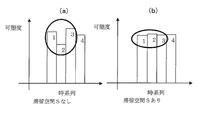
これを図5に示す。滞留空間Sがない場合は、(a)に示すように、時系列的に可塑度が異なるゴムが混練された場合、滞留しないので、前後のゴムの混ざりがなく(ゾーン(2)のゴムが前後のゾーン(1,3)のゴムと混ざることがなく)、可塑度は時間的にばらついたままである。一方、滞留空間Sがある場合は、(b)に示すように、ゾーン(1,2,3)が混ざり合い、前後の可塑度の差がなくなる。すなわち、上記の現象が連続的に発生することで、時間的に可塑度の均一なゴムを押し出すことができる。さらに、濾過機構18を設けていることで、上記の効果をより促進させることができる。
金型16から押し出されるタイヤ構成部材の温度は、80℃以下の温度になるように制御される。これにより、熟成期間を置かなくても、要求される特性を有するタイヤ構成部材を得ることができる。従って、サイクルタイムの大幅削減が可能になる。
具体的には、スクリュー10、バレル12、ギアポンプ15等の温度の調整を行っているためである。図6は、バレル12とスクリュー10の羽根の間の空間でゴムが混練される様子を示す図である。
スクリュー10側の温度と、バレル12の温度とギアポンプ15の温度に差(10~20℃)をつけることで、冷却効果によりゴムがバレル12の内壁面に引っかかり、ゴムによる剪断力が作用し、粘度低下を促進し、混練効果が向上すると考えられる。例えば、バレル12を60℃、スクリュー10を80℃、ギアポンプ15を80℃に設定する。
<第2実施形態>
図3は、第2実施形態に係るタイヤ成形方法を行うための設備を示す図である。第1実施形態と異なる点は、成形ドラムに直接ゴムを貼り付けていく設備である。具体的には、金型16から、帯状のストリップゴムを押し出し成形し、直接成形ドラムに貼り付ける。
図3は、第2実施形態に係るタイヤ成形方法を行うための設備を示す図である。第1実施形態と異なる点は、成形ドラムに直接ゴムを貼り付けていく設備である。具体的には、金型16から、帯状のストリップゴムを押し出し成形し、直接成形ドラムに貼り付ける。
この場合も第1実施形態と同様に中間在庫は発生しない。
1 押出機
2 ベルトコンベア
3 成形ドラム
10 スクリュー
12 バレル
13 ホッパー
14 薬品供給機
15 ギアポンプ
16 金型
17 ピン
18 濾過機構
180 メッシュ
181 ブレーカープレート
S 滞留空間
2 ベルトコンベア
3 成形ドラム
10 スクリュー
12 バレル
13 ホッパー
14 薬品供給機
15 ギアポンプ
16 金型
17 ピン
18 濾過機構
180 メッシュ
181 ブレーカープレート
S 滞留空間
Claims (2)
- 非加硫性ゴムを混練する工程と、
この非加硫性ゴムを押出機により連続混錬する工程と、を有するタイヤ成形方法であって、
前記押出機による工程は、
加硫系薬品を供給し、加硫性ゴムを連続混練する工程と、
前記加硫性ゴムを熟成する工程と、
熟成された加硫性ゴムを所定の断面形状のタイヤ部材として連続押し出し成形する工程と、を有することを特徴とするタイヤ成形方法。 - 前記押し出し成形されるゴムの温度が80℃以下に設定されていることを特徴とする請求項1に記載のタイヤ成形方法。
Applications Claiming Priority (2)
| Application Number | Priority Date | Filing Date | Title |
|---|---|---|---|
| JP2011066412A JP5651513B2 (ja) | 2011-03-24 | 2011-03-24 | タイヤ構成部材の成形方法 |
| JP2011-066412 | 2011-03-24 |
Publications (1)
| Publication Number | Publication Date |
|---|---|
| WO2012128056A1 true WO2012128056A1 (ja) | 2012-09-27 |
Family
ID=46879210
Family Applications (1)
| Application Number | Title | Priority Date | Filing Date |
|---|---|---|---|
| PCT/JP2012/055971 Ceased WO2012128056A1 (ja) | 2011-03-24 | 2012-03-08 | タイヤ成形方法 |
Country Status (2)
| Country | Link |
|---|---|
| JP (1) | JP5651513B2 (ja) |
| WO (1) | WO2012128056A1 (ja) |
Cited By (3)
| Publication number | Priority date | Publication date | Assignee | Title |
|---|---|---|---|---|
| EP3040361A4 (en) * | 2013-08-28 | 2017-07-12 | Nippon Shokubai Co., Ltd. | Gel pulverization device, method for manufacturing polyacrylic acid (polyacrylate) superabsorbent polymer powder, and superabsorbent polymer powder |
| EP3040362A4 (en) * | 2013-08-28 | 2017-09-06 | Nippon Shokubai Co., Ltd. | Gel pulverization device, method for manufacturing polyacrylic acid (polyacrylate) superabsorbent polymer powder, and superabsorbent polymer powder |
| WO2023198518A1 (fr) * | 2022-04-15 | 2023-10-19 | Compagnie Generale Des Etablissements Michelin | Procédé de décontamination de caoutchouc naturel par filtration d'un coagulum humide de caoutchouc naturel |
Families Citing this family (2)
| Publication number | Priority date | Publication date | Assignee | Title |
|---|---|---|---|---|
| JP6958006B2 (ja) * | 2017-06-13 | 2021-11-02 | 住友ゴム工業株式会社 | タイヤ用ゴム組成物の製造方法 |
| JP6958005B2 (ja) * | 2017-06-13 | 2021-11-02 | 住友ゴム工業株式会社 | タイヤ用ゴム組成物の製造方法 |
Citations (3)
| Publication number | Priority date | Publication date | Assignee | Title |
|---|---|---|---|---|
| JP2000043032A (ja) * | 1998-07-31 | 2000-02-15 | Toyo Tire & Rubber Co Ltd | ゴムの連続混練押出し装置 |
| JP2005001229A (ja) * | 2003-06-11 | 2005-01-06 | Toyo Tire & Rubber Co Ltd | ゴム連続混練方法及びゴム連続混練設備 |
| JP2007260963A (ja) * | 2006-03-27 | 2007-10-11 | Toyo Tire & Rubber Co Ltd | タイヤ成形方法 |
-
2011
- 2011-03-24 JP JP2011066412A patent/JP5651513B2/ja not_active Expired - Fee Related
-
2012
- 2012-03-08 WO PCT/JP2012/055971 patent/WO2012128056A1/ja not_active Ceased
Patent Citations (3)
| Publication number | Priority date | Publication date | Assignee | Title |
|---|---|---|---|---|
| JP2000043032A (ja) * | 1998-07-31 | 2000-02-15 | Toyo Tire & Rubber Co Ltd | ゴムの連続混練押出し装置 |
| JP2005001229A (ja) * | 2003-06-11 | 2005-01-06 | Toyo Tire & Rubber Co Ltd | ゴム連続混練方法及びゴム連続混練設備 |
| JP2007260963A (ja) * | 2006-03-27 | 2007-10-11 | Toyo Tire & Rubber Co Ltd | タイヤ成形方法 |
Cited By (6)
| Publication number | Priority date | Publication date | Assignee | Title |
|---|---|---|---|---|
| EP3040361A4 (en) * | 2013-08-28 | 2017-07-12 | Nippon Shokubai Co., Ltd. | Gel pulverization device, method for manufacturing polyacrylic acid (polyacrylate) superabsorbent polymer powder, and superabsorbent polymer powder |
| EP3040362A4 (en) * | 2013-08-28 | 2017-09-06 | Nippon Shokubai Co., Ltd. | Gel pulverization device, method for manufacturing polyacrylic acid (polyacrylate) superabsorbent polymer powder, and superabsorbent polymer powder |
| US10406256B2 (en) | 2013-08-28 | 2019-09-10 | Nippon Shokubai Co., Ltd. | Gel pulverization device, method for manufacturing polyacrylic acid (polyacrylate) superabsorbent polymer powder, and superabsorbent polymer powder |
| US10624983B2 (en) | 2013-08-28 | 2020-04-21 | Nippon Shokubai Co., Ltd. | Water absorbent resin powder |
| WO2023198518A1 (fr) * | 2022-04-15 | 2023-10-19 | Compagnie Generale Des Etablissements Michelin | Procédé de décontamination de caoutchouc naturel par filtration d'un coagulum humide de caoutchouc naturel |
| FR3134533A1 (fr) * | 2022-04-15 | 2023-10-20 | Compagnie Generale Des Etablissements Michelin | Procédé de décontamination de caoutchouc naturel par filtration d’un coagulum humide de caoutchouc naturel. |
Also Published As
| Publication number | Publication date |
|---|---|
| JP5651513B2 (ja) | 2015-01-14 |
| JP2012200949A (ja) | 2012-10-22 |
Similar Documents
| Publication | Publication Date | Title |
|---|---|---|
| CN101903145B (zh) | 生产弹性体胶料的方法与装置 | |
| JP4063412B2 (ja) | ゴムの連続混練押出し装置 | |
| EP2338655B1 (en) | Continuous mixing apparatus and method | |
| JP5651513B2 (ja) | タイヤ構成部材の成形方法 | |
| US12391821B2 (en) | Method for the devulcanization of a vulcanized rubber mixture, device for carrying out the method and use of the device for the devulcanization of a vulcanized rubber mixture | |
| CN102529061B (zh) | 用于成型轮胎部件的挤出机装置 | |
| CN102281999A (zh) | 生产轮胎的方法和装置 | |
| JP5802271B2 (ja) | 弾性半完成品を製造するための押出成形デバイスの加熱を制御するための方法 | |
| EP2338660A1 (en) | Method and apparatus for applying rubber mixture on a core | |
| US10723091B2 (en) | Method and apparatus for continuously producing a semi-finished product for the production of self-sealing tyres | |
| JP4527800B1 (ja) | ウェットマスターバッチの製造方法 | |
| WO2005118242A1 (ja) | 連続混練装置及びこれを用いた混練システム | |
| JP4781724B2 (ja) | 連続混練装置及び該装置を有する混練システム | |
| EP2468476B1 (en) | Method for forming tyre components | |
| JP6408203B2 (ja) | 未加硫ゴムからの異物除去方法および装置 | |
| JP2019081287A (ja) | ゴム押出装置および方法 | |
| JP2005001228A (ja) | ゴム連続混練設備及びゴム連続混練方法 | |
| RU2462358C2 (ru) | Способ и установка для получения эластомерного компаунда | |
| EP1799427B1 (en) | Process for manufacturing elastomeric tire components | |
| JP2003164746A (ja) | ゴムあるいはゴム系組成物の混練装置 | |
| EP2516131B1 (en) | Extrusion process and device for producing elastomeric compounds | |
| JP5869998B2 (ja) | ゴムストリップの製造装置及び製造方法 | |
| JP6345000B2 (ja) | タイヤ用ゴム材料の混練り方法およびタイヤ製造方法 | |
| JP2015074150A (ja) | 未加硫ゴムの混練方法および装置 | |
| JP2010248327A (ja) | ゴム組成物の調製方法 |
Legal Events
| Date | Code | Title | Description |
|---|---|---|---|
| 121 | Ep: the epo has been informed by wipo that ep was designated in this application |
Ref document number: 12760278 Country of ref document: EP Kind code of ref document: A1 |
|
| DPE1 | Request for preliminary examination filed after expiration of 19th month from priority date (pct application filed from 20040101) | ||
| NENP | Non-entry into the national phase |
Ref country code: DE |
|
| 122 | Ep: pct application non-entry in european phase |
Ref document number: 12760278 Country of ref document: EP Kind code of ref document: A1 |